
Volvo Australia has been rated one of the country’s best places to work.
The car-focused arm of the Swedish marque was among the most popular employers in the 2022 Best Places to Work report released this week by WRK+.
The WRK+ ranking is based on a range of key measures, including; employee benefits, learning and development policies, office environment, parental leave and flexible work arrangements, diversity and inclusion.
In addition to being a certified ‘Family Friendly Workplace’, Volvo provides a range of support to its staff via its innovative Family Bond policy.
Under said policy, Volvo Car Australia staff can access extended leave entitlements including 24 weeks of paid leave (at 80 per cent of salary) for all parents, including same-sex, surrogate, adoptive and permanent foster parents, as well as paid miscarriage leave, and family and domestic violence leave.
“We are pleased that Volvo’s ranking in the 2022 WRK+ study recognises Volvo’s ongoing commitment to its staff and their welfare in the workplace, and at home” said Volvo’s Managing Director Stephen Connor.
“One of the few positives that has emerged from the global pandemic is reminding everyone of what is really important. We have all lived through a period of disconnection, separated from each other by distance or circumstance.
“People everywhere are dividing their time between their jobs and the important people in their lives. It is hard to get the right balance. Having the support of your employer can make all the difference.
“Volvo understands this, especially the critical need for our staff to be with the people they love, by creating flexible policies that drive real change. “Our two key priorities are focused on understanding people’s needs at home, and providing a workplace where they feel safe, supported and appreciated.”
Volvo was the only car company to make this year’s list, coming 16th. Other recognised firms includes Vietnamese food chain Roll’d, hotel firm Quest, and Jetts gym franchise.
The CEO of Mitsubishi believes urgent changes are needed before Australia is ready for a surge in the popularity of electric cars.
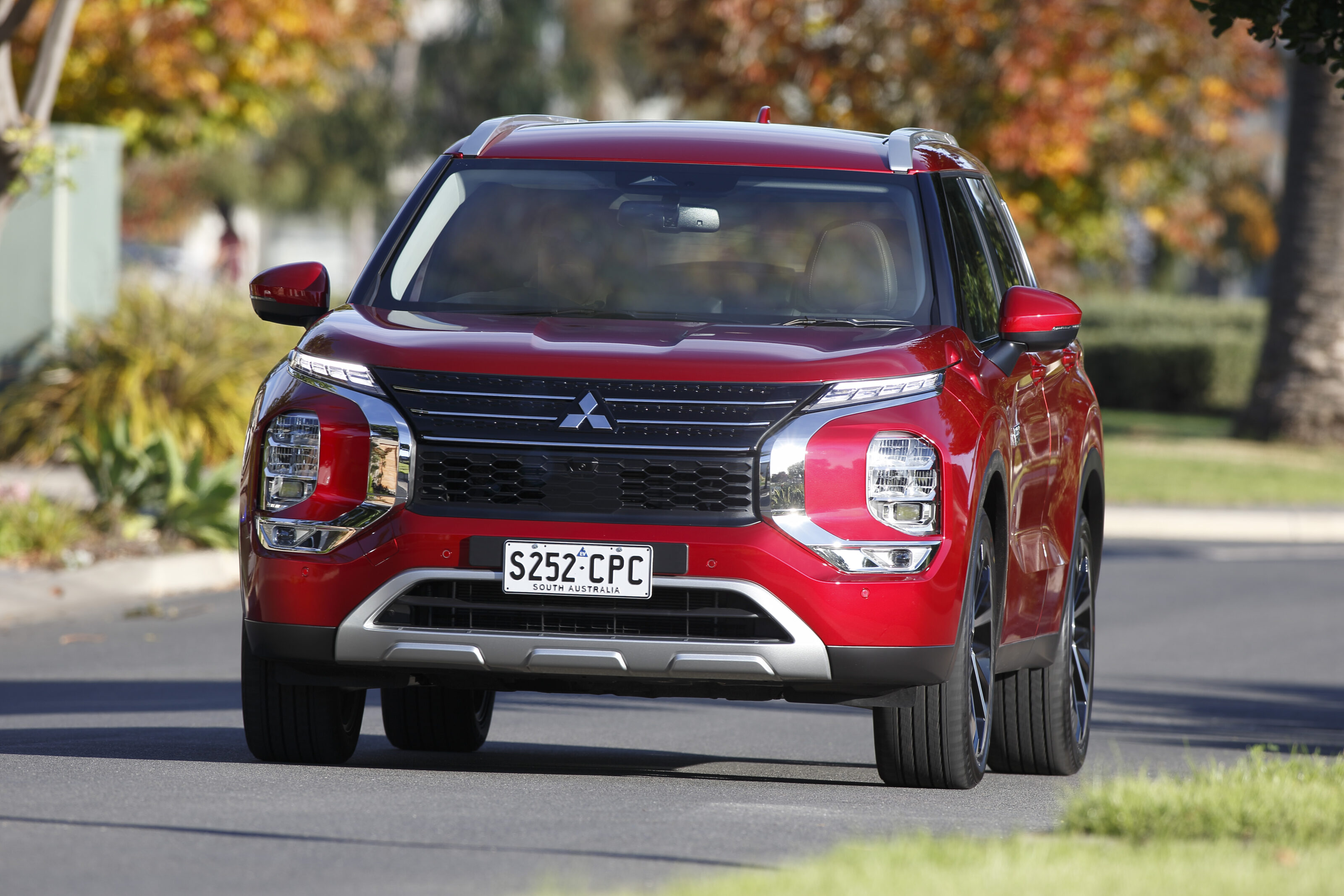
Speaking at the launch of the Mitsubishi’s new plug-in hybrid, the Outlander PHEV, Shaun Westcott delivered a withering appraisal of the challenges facing electric cars in Australia and said that, despite increasing sales, we’re still years behind the rest of the developed world.
High purchase prices, slow charging times, the need for more infrastructure and Australia’s reliance on ‘dirty’ energy were Westcott’s key points – although he also called for an overhaul of the current taxation and incentive schemes being rolled out across the country.
“The reality with EVs is Australia has a lot of catching up to do,” he said. “A lot has to happen and I think with the new Government there’s a higher desire to move the dial, but I’m afraid the harsh reality is there are limitations in how quickly we can adopt because we’re starting so far behind the curve.”
The sale of pure electric cars has more than tripled in Australia over the last three years to total 20,665 in 2021, but they still only account for around two per cent of the total market. Westcott says Australia shouldn’t just be encouraging the transition towards electric cars, but also addressing our reliance on coal power stations.
“We still have 75 per cent dirty power,” he said. “There’s a lot of pressure on the motor industry to reduce emissions at the tailpipe. But if all we’re doing is transferring it to the power station then what are we doing guys?
“That’s not net zero. All we’re doing is shifting the dirty emissions from the tailpipe to the power station. So as a country we need to invest heavily in power stations that use renewable energy; whether that’s solar, wind or hydrogen it doesn’t matter. We need to get green and we need to get green fast.
“That’s billion of dollars. I won’t say it’ll take decades because I don’t know how long it takes to build a power station, but it’s going to take years to get our supply clean and sufficient.”
Despite building one of the world’s first mass produced electric cars in 2009 with the i-Miev, Mitsubishi currently has no plans to bring a fully-electric model to market in the near future. Instead it plans to focus on plug-in hybrid electric vehicles, like the new Outlander PHEV. Westcott says more needs to be done to encourage the uptake of all electrified cars in Australia, be that hybrid, plug-in hybrid or full EV.
“We also need equitable incentive and usage charges for all electric vehicles across all states consistently in Australia,” he said. “We need to incentivise the uptake of electric vehicles, not dis-incentivise or create obstacles or hurdles.”
Australia currently has no formal national electric car policy or incentive scheme. Each state or territory has instead introduced its own policies, but Westcott says there are current inconsistencies that could actually turn customers away. He also argued incentive schemes should be more attractive if Australia wants to meaningfully increase EV sales.
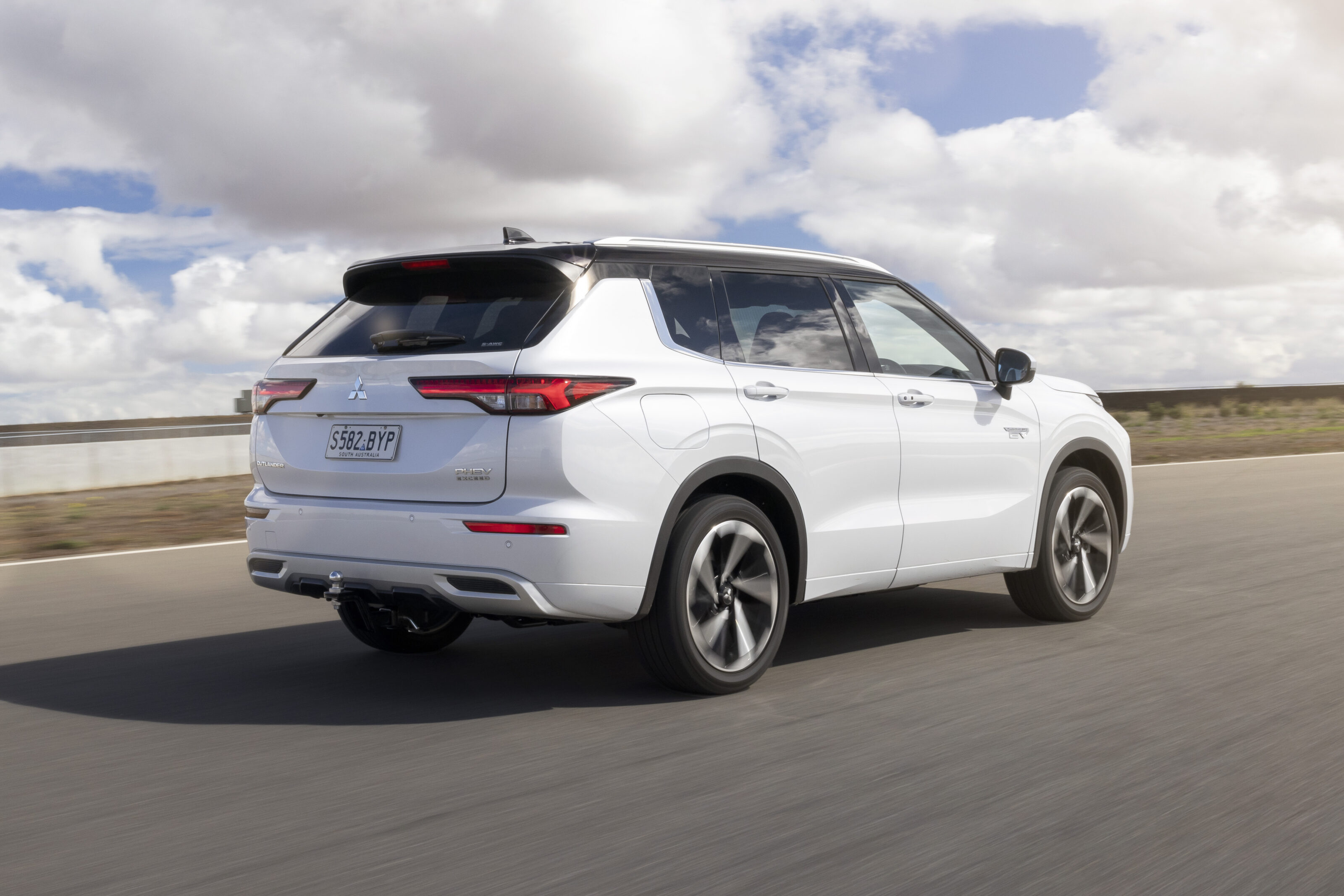
“The axe we have to grind at Mitsubishi with PHEVs is that when it gets to taxing our vehicles they class it as an EV, but when it comes to incentivising it in some states, it’s not an EV. So isn’t that a double standard?” Westcott asked.
“I believe incentives have a place until you reach critical mass…and we need to step up the pace to get us there. And incentives don’t just have to be cash. These are down to things like preferential lane driving. Giving people preferential access.
“We need road user charges. We need to pay for our roads, no one is saying we don’t. But not to the extent that you penalise or it becomes an obstacle or prevents people from getting into a technology. It should be the opposite. Particularly in the beginning.
“So I’m not a guy that believes in subsidies ad nauseam forever. It should be a tapering curve to stimulate and encourage an initiative. So we do believe there are opportunities to rationalise, improve, standardise and harmonise across all EV platforms. We need to have a level playing field.”
Snapshot
- Just 40 facelifted Focus ST cars coming
- Fiesta ST still available but allocation will taper off
- At least the Mustang isn’t going anywhere!
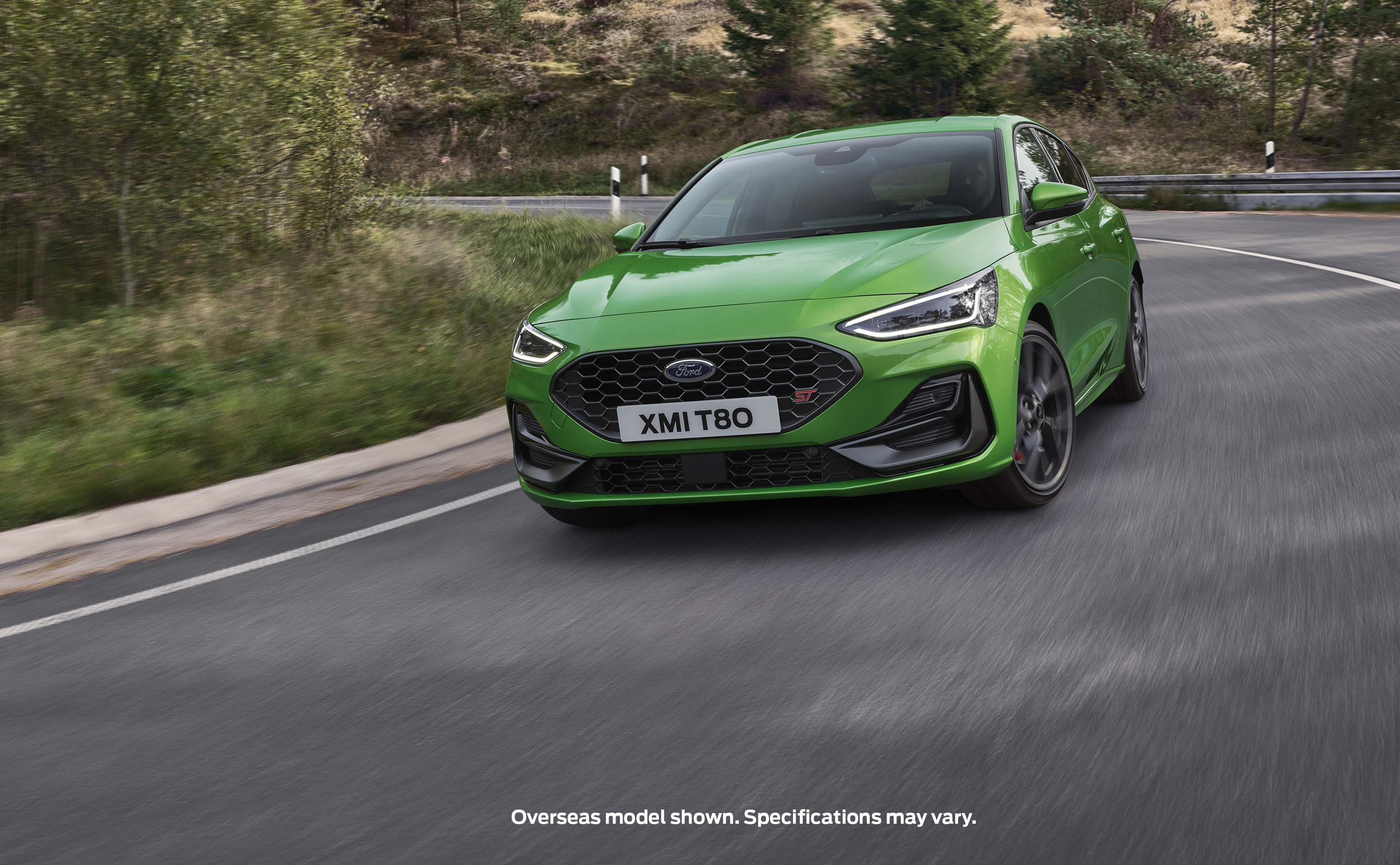
The Ford Focus ST will leave Australia this year after having first been confirmed for a global end by 2025 as part of a broader decision to end the Focus line.
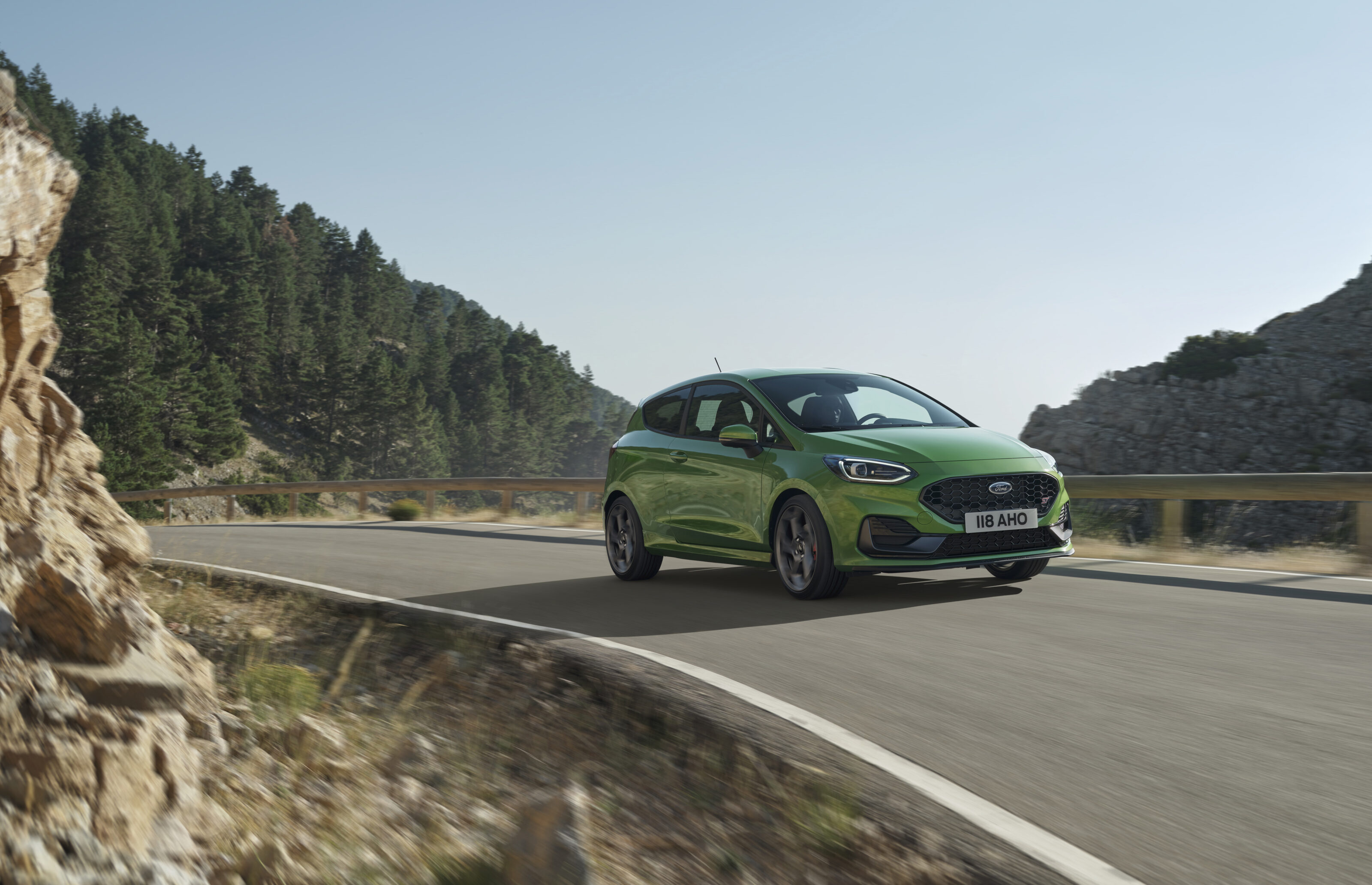
The Focus ST will be joined by the smaller Fiesta ST in departing our market early, with both being retired by the end of the year.
Availability will surely end much sooner, however, with just 40 examples of the new facelifted Focus ST secured for Australia. With new looks and new tech, the MY22 Focus ST will likely become a collector’s item over time.
Specific numbers for the Fiesta ST are less clear. Speaking with Wheels Media today, a Ford spokesperson confirmed all existing orders will be fulfilled and new orders can still be placed, but availability is expected to taper off towards the end of 2022.
Hot hatch fans are sure to miss the Focus ST and Fiesta ST, but thanks to models like the Hyundai i30 N and i20 N, and the new Toyota GR Yaris – all relative newcomers – the number of options in the segment remains decent. The future of the Megane RS could be a little shaky, but at the same time, Honda’s new-generation Civic Type R is bound for Australia.
The game of hot-hatch musical chairs goes on…
Sales performance
Ford says it sold 285 Focus ST models in 2021 and 72 year-to-date in 2022, all pre-facelift examples.
Numbers for the compact Fiesta ST are similar: 290 were sold in 2021 and 71 have been sold year-to-date in 2022.
Semi-conductors and sad goodbyes
“Both the Focus ST and Fiesta ST have been segment-defining hot hatches for Ford Australia and have put smiles on the faces of enthusiasts across the country, and we want to thank those fans for their passion,” said Andrew Birkic, President and CEO, Ford Australia.
“But with semi-conductor-related supply shortages and our focus on emerging areas of growth, we’ve made the difficult decision to call time on these iconic hot hatches in Australia. We look forward to sharing more about the next era of our performance vehicle line-up soon,” Birkic said.
This latest announcement follows the retirement of the regular Fiesta range in 2018, and last year’s axing of all Focus variants below the hero ST hatch.
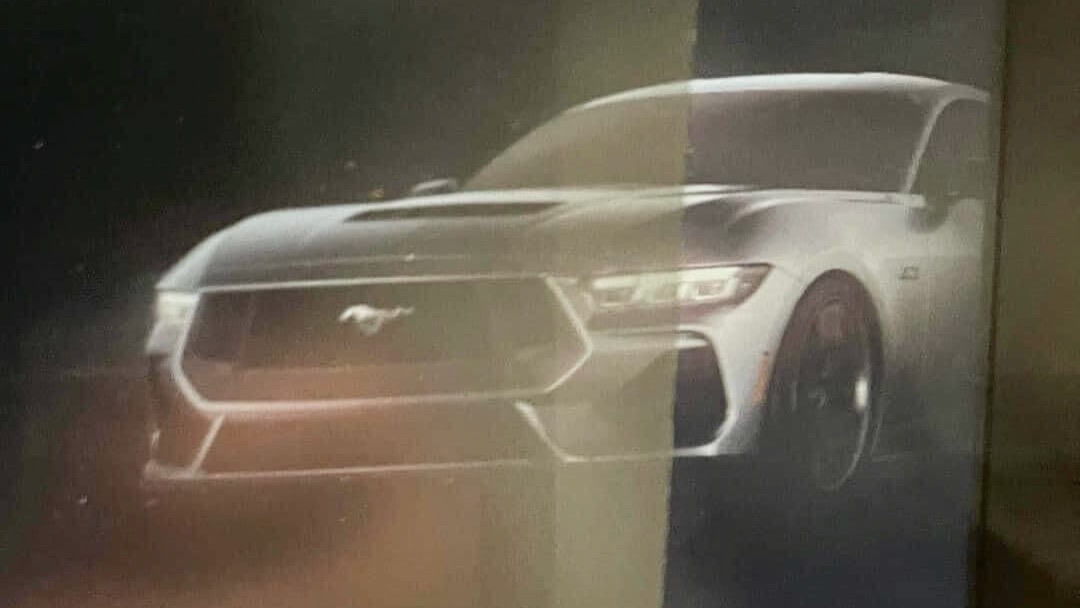
Mustang!
Birkic’s mention of a ‘next era of performance vehicles’ is sure to be a reference to the new-generation Mustang. The new S650 generation is expected to come to Australia next year after its big reveal next month.
SUVs, utes, vans… and the Mach-E?
The exit of both its hot hatches will see Ford focus its local strategy on – mostly – SUVs, commercial vehicles (utes and vans) and electrification.
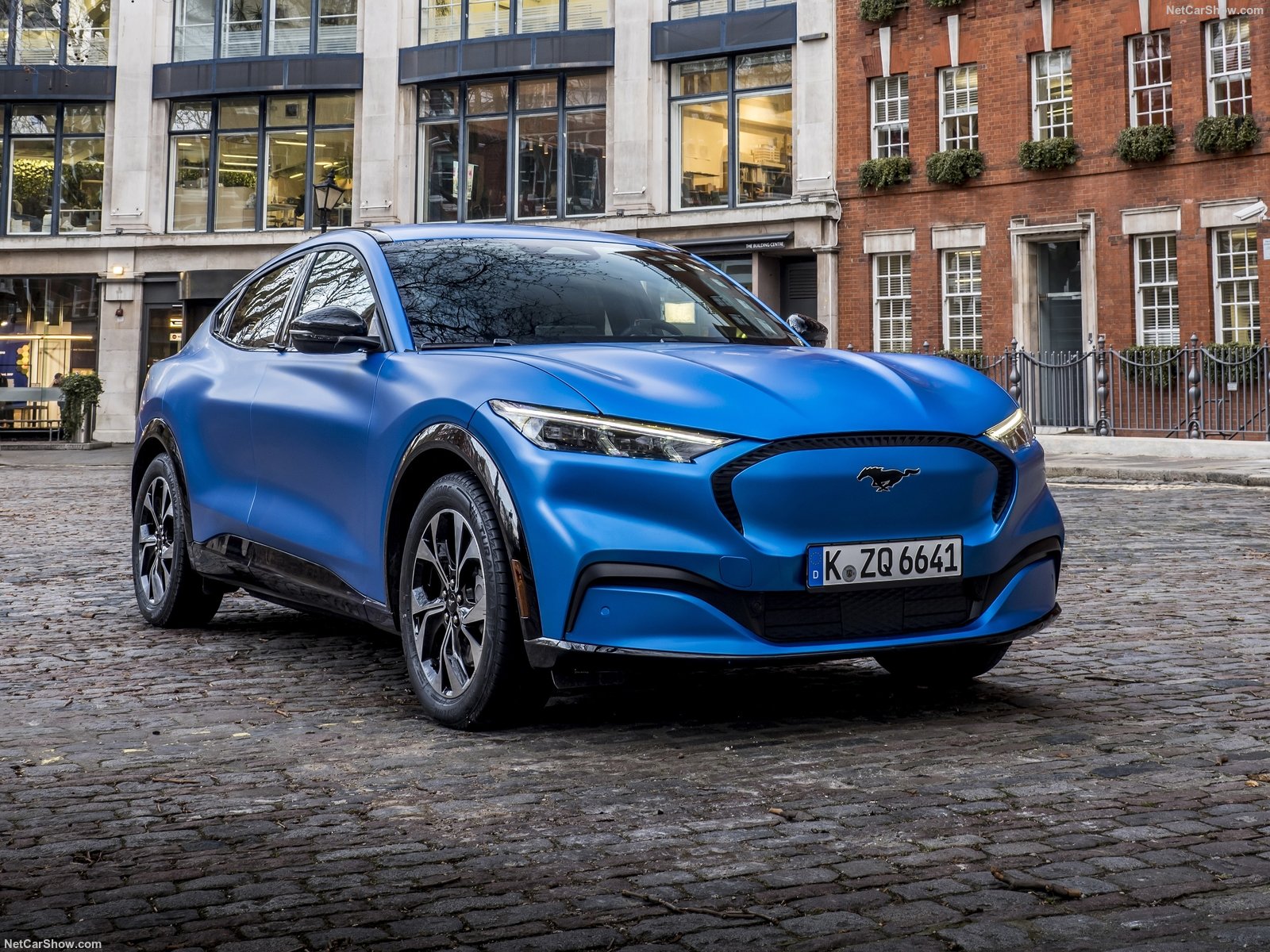
Confirmation on an Australian launch of the electric Mustang Mach-E has yet to be offered, but with right-hand-drive production already in play, speculation remains strong.
Parts and maintenance plan assured
Ford has confirmed Focus ST, ST X and Fiesta ST owners will continue to be supported with access to spare parts and maintenance – as is the company’s obligation under the Australian Consumer Law.
In anticipation of the incoming new 2023 Nissan Z, the Japanese carmaker’s Australian arm has released a gallery celebrating the iconic badge’s history in Australia. (Although the Z31 is absent – Nissan was unable to secure a suitable car in time for its shoot.)
Sounds like a good excuse for us to revive our own story, offering a more detailed look at the Z’s journey from launch in Australia.
The Datsun 240Z was a watershed model that redefined buyer perceptions towards the brand around the world, and kicked off one of Nissan’s most enduring nameplates.
Famously aimed at the US market, Australia also represented a key right-hand drive export market for the fledgling Yokohama brand, receiving some of the earliest Zed builds. On local soil, the original Zed had a profound effect on owners, with its iconic lineage still bolstered by legions of enthusiasts around the nation to this day.
So, let’s take a trip down memory lane – and watch for our Australian launch review of the new Z to land later this month.
First Generation: Datsun S30 240Z and 260Z – 1969-1978
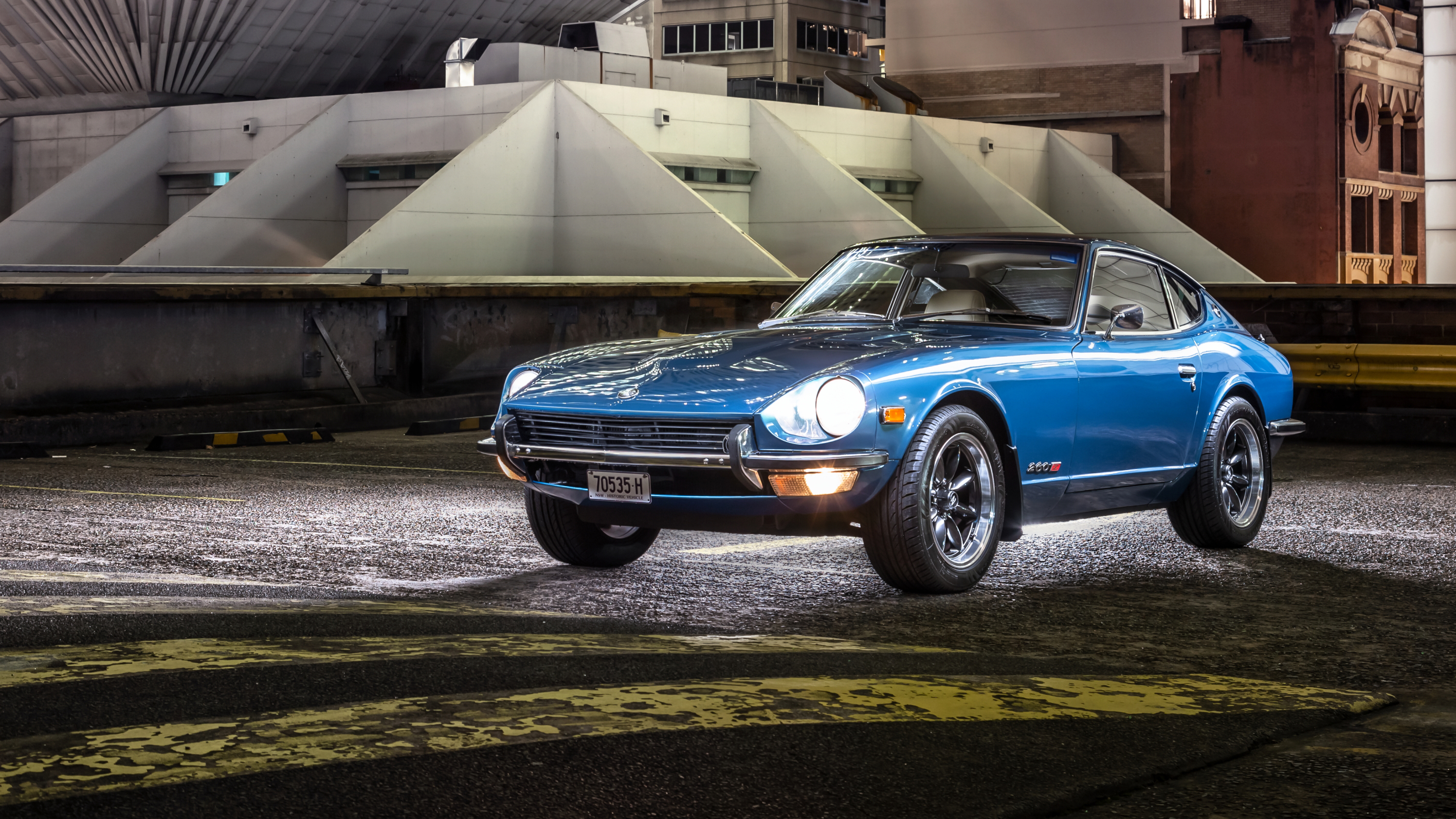
The genesis of Z dates back to a 1964 open-top concept car penned by famed designer Albrecht Goertz. The German industrial designer already had BMW’s 503 and 507 Roadster to his name, and consulted with Nissan throughout the 60s. He is credited with further contributions to the original CSP311 Silvia and a defunct sports car joint-project with Yamaha that eventuated in Toyota’s 2000GT.
Launched locally in September 1970, the 240Z was a genuine 200km/h car in its day and, at $4567, was priced in line with the Triumph TR6 – a car it could comfortably outperform. Australia was the prime right-hand drive export market, receiving 2358 units in total, accounting for the third largest 240Z market in the world, behind USA and Canada.
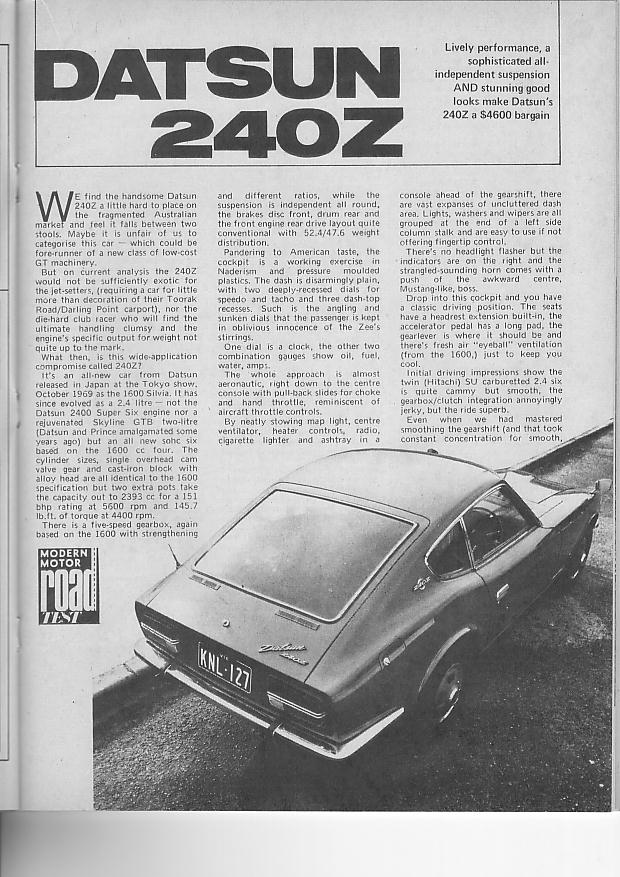
The original shipment of 319 cars in 1970 included some of the earliest RHD builds in existence. This snippet from Modern Motor’s road test from April 1971 features chassis #4.
Some Zed specialists argue that early production for the Australian market also streamlined development for other RHD export markets. Subsequently, some assert that, without Australia, the 240Z’s global reach and impact would have been significantly diminished.
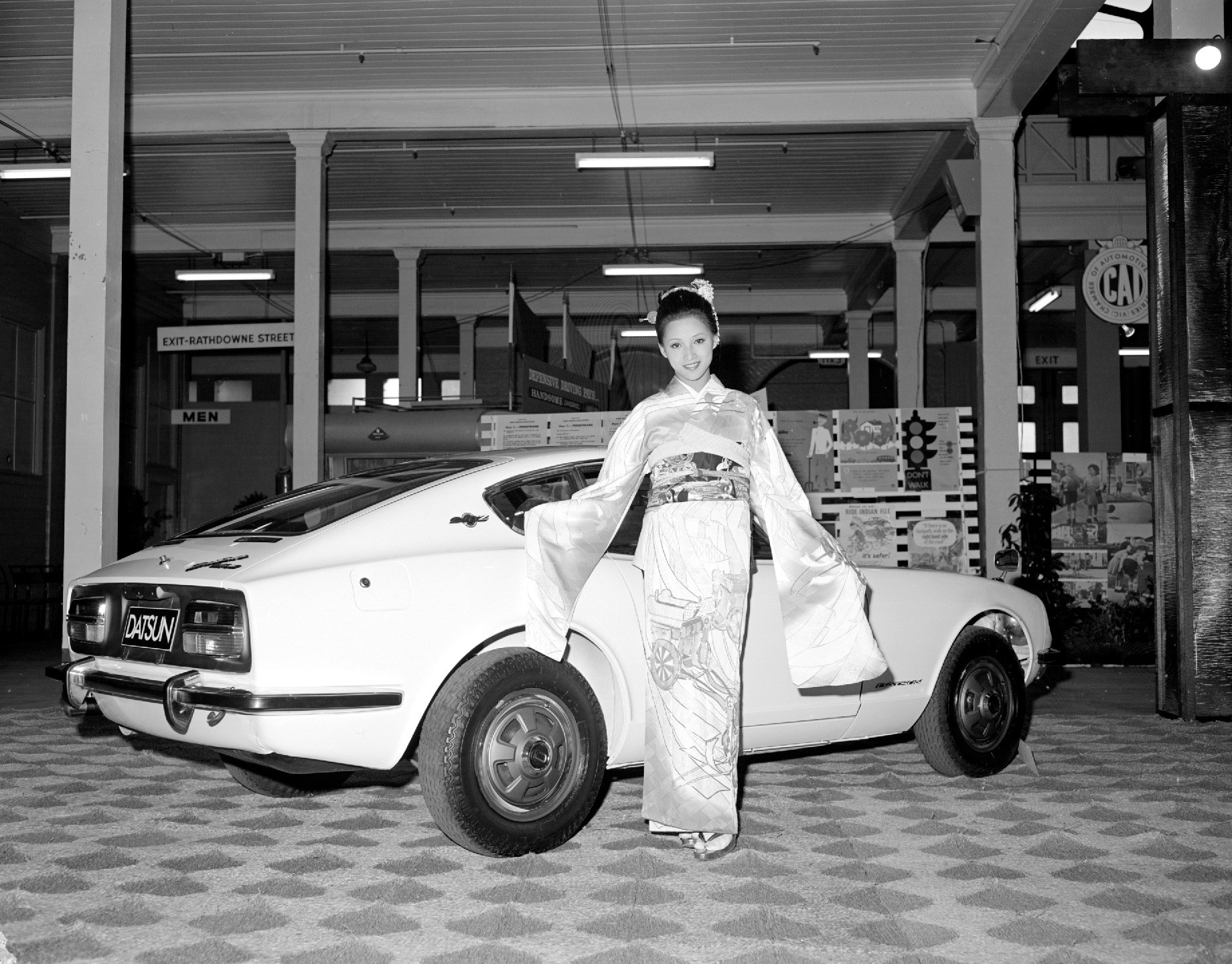
Despite its reputation as a democratic champion of affordable performance, in the heyday of 1970, the Zed was a costly machine, exceeding the as-new list price of local heroes like the XW Phase I Falcon, Torana XU-1, and Chrysler E38 Charger.
Globally, the 240Z was a hit, becoming the world’s fastest selling sports coupe within three years of production.
Tightening US emissions regulations throughout the 70s forced an update in the form of the Datsun 260Z.
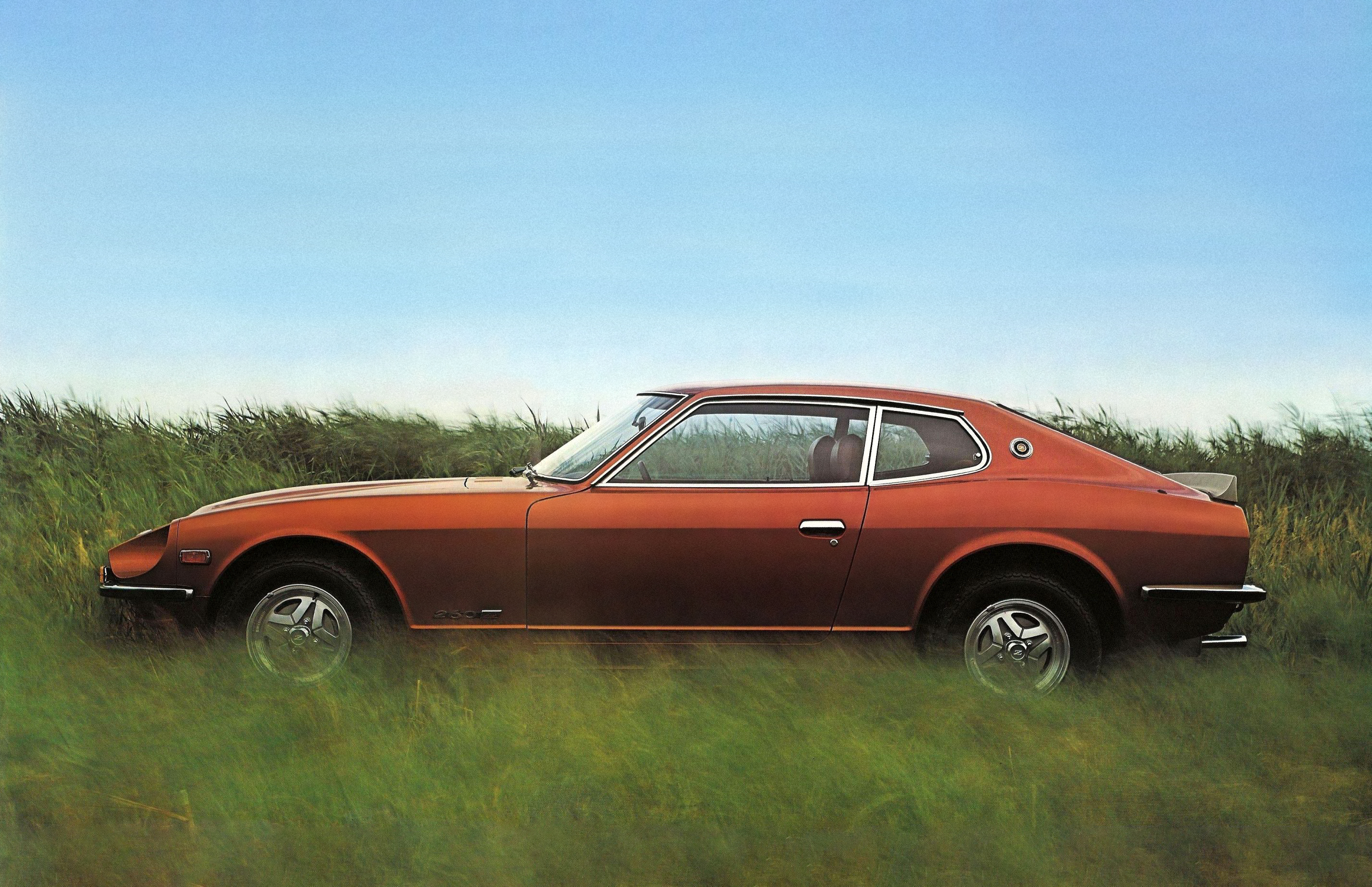
Again, aimed at the US market, the 260Z’s engine was bored out to 2565cc with a 2+2 variant introduced with an elongated notched roofline and an extra 302mm of wheelbase.
Launched locally in mid-1974, in the midst of fears of global fuel shortages and new US safety regulations, just 1123 260Zs were sent Down Under.
The final iteration of the Zed’s first generation was a US-only 280Z, released from 1975. As the name suggests, it housed a larger 2.8-litre inline-six and introduced fuel-injection to the existing body shape. Australia continued selling the 260Z until 1978.
Second Generation: Datsun S130 280ZX – 1978-1983
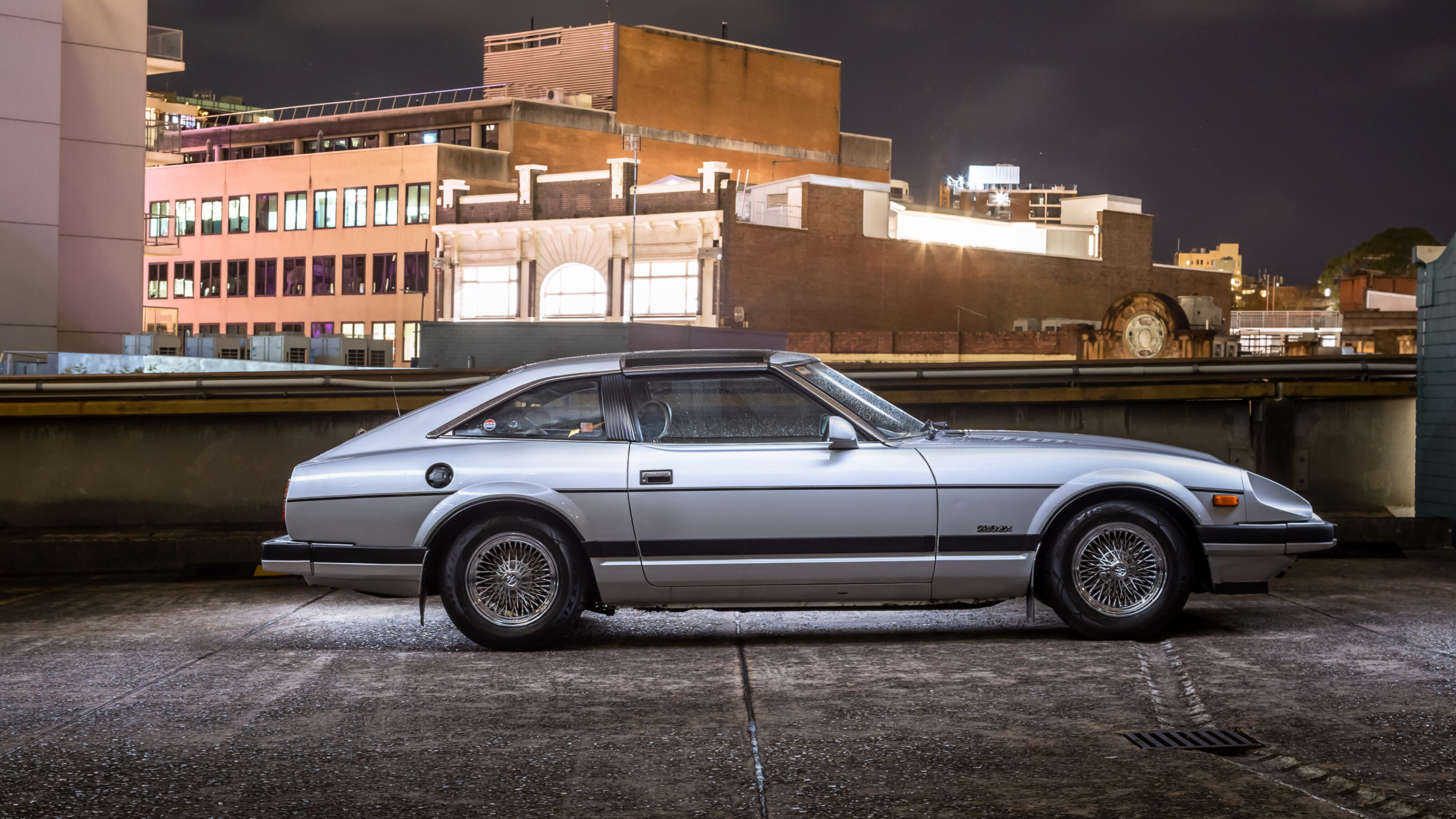
The second-generation Zed, the 280ZX, appeared on the local market in 1978 and marked the slow departure from the badge’s sporting roots to a more rounded grand tourer.
The 103kW drawn from the familiar SOHC L28 didn’t make headlines but it was deemed a smooth and strong unit, and delivered respectable performance from the 1265kg coupe. The speedometer could still reach north of 190km/h, and local road testers celebrated its outstanding fuel economy. An 80-litre fuel tank yielded great cruising range and seemed well suited to Australia, too.
Strides were made in regards to interior materials and amenities, introducing power windows and mirrors, air-conditioning, comfier seats and an automatic gearbox. Officially, Australia only received the 2+2 long-wheelbase body however some Japanese-spec HS130 coupes have been imported over the years.
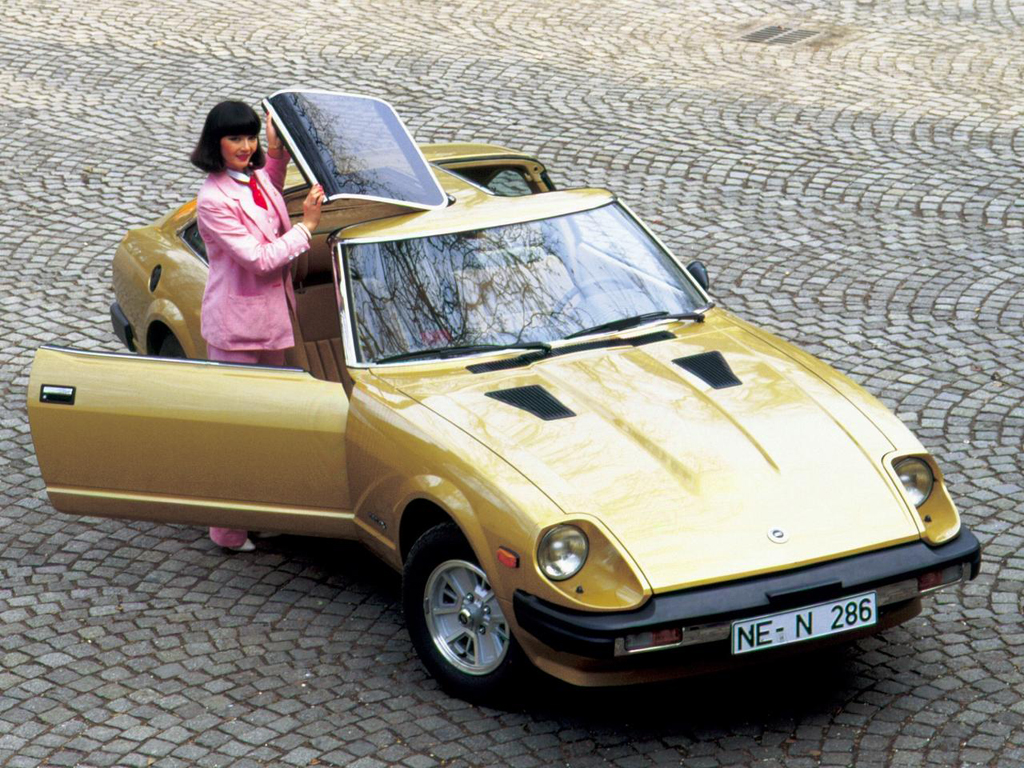
February 1980 saw the brand badge switch from Datsun to Nissan, and also introduced the optional pop-out targa roof panels.
Third Generation: Nissan Z31 300ZX – 1983-1989
EDITOR’S NOTE: Nissan Australia did not include a Z31 in its recent shoot
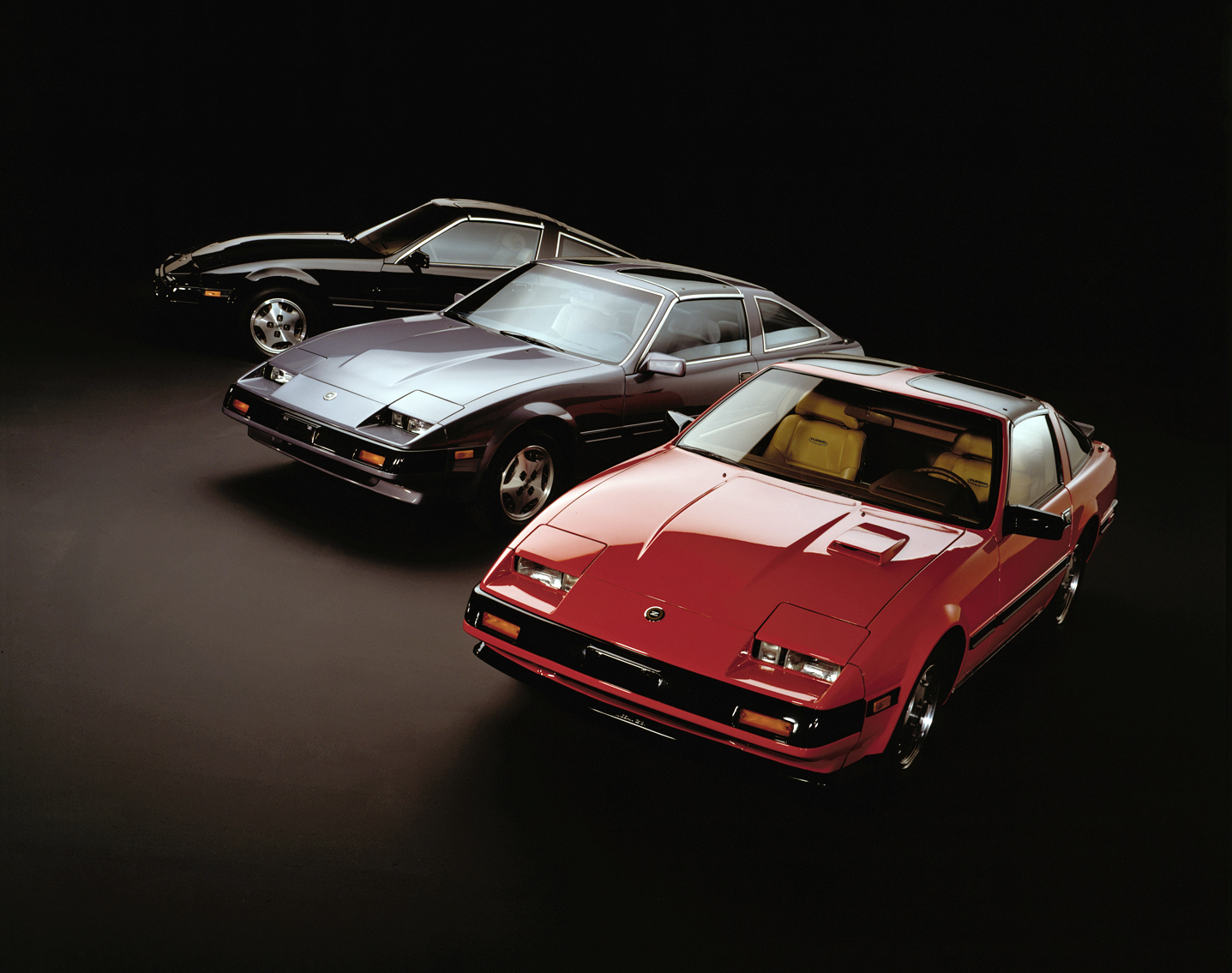
The Z31 300ZX boasted a modern new face but remained largely based on the preceding 280ZX, albeit with a new 3.0-litre VG30 V6, new suspension and a wider stance. It continued to market itself on its American boulevardier image.
Again, Australia’s comparatively small market received just one body option: the 2+2 Targa top. Initially, Australian buyers were solely offered the naturally aspirated V6 yielding a modest 124kW.
From 1986, however, buyers were treated to the 155kW turbocharged version sans adjustable shocks which featured in overseas markets.
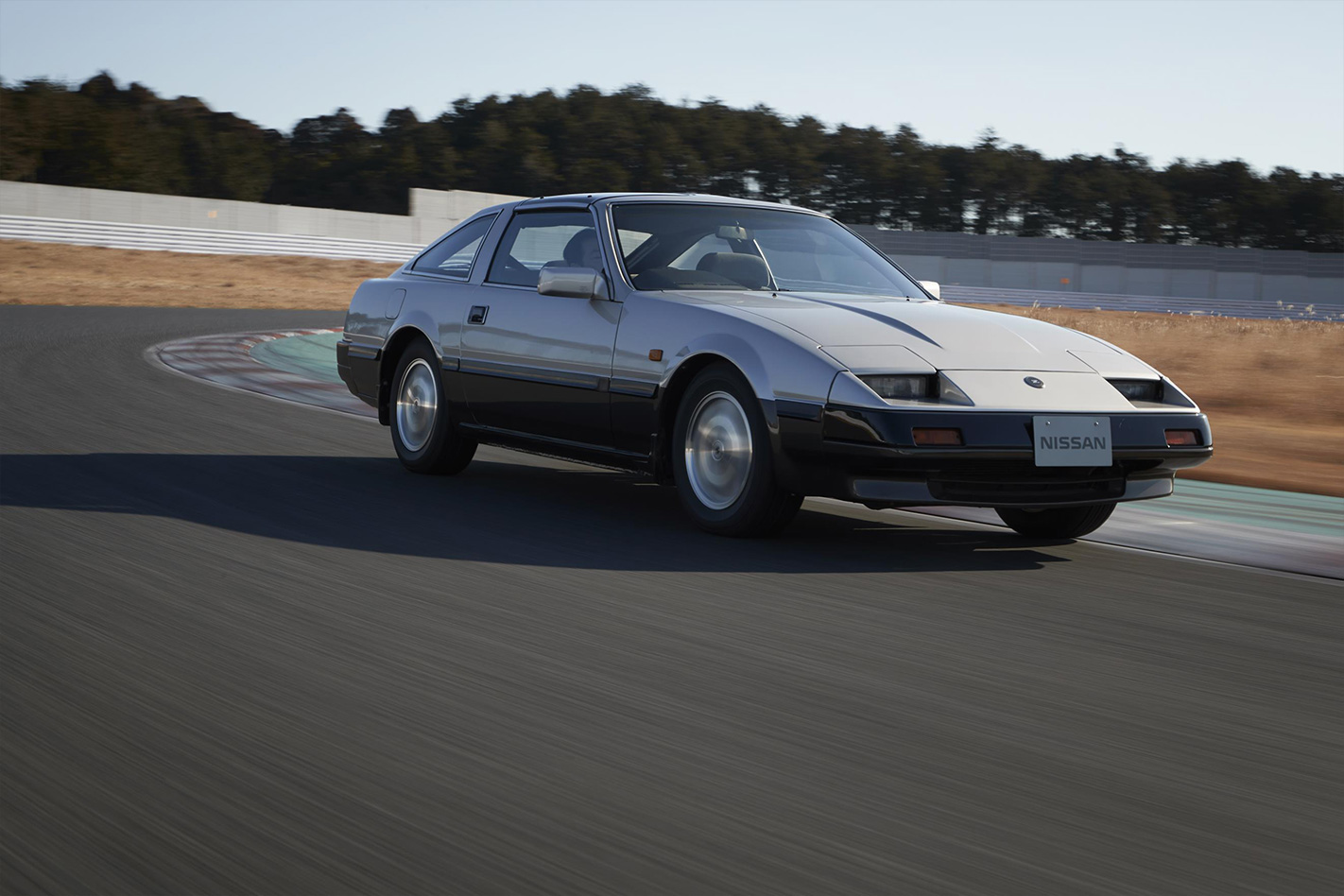
At almost $28,000 new, the 300ZX was a costly machine, offered in just one spec with the only options including climate control and a digital instrument cluster.
Australia uniquely offered the “Californian” special edition, to commemorate the final 200 units of Series III cars sold in Australia.
Fourth Generation: Nissan Z32 300ZX – 1990-1996
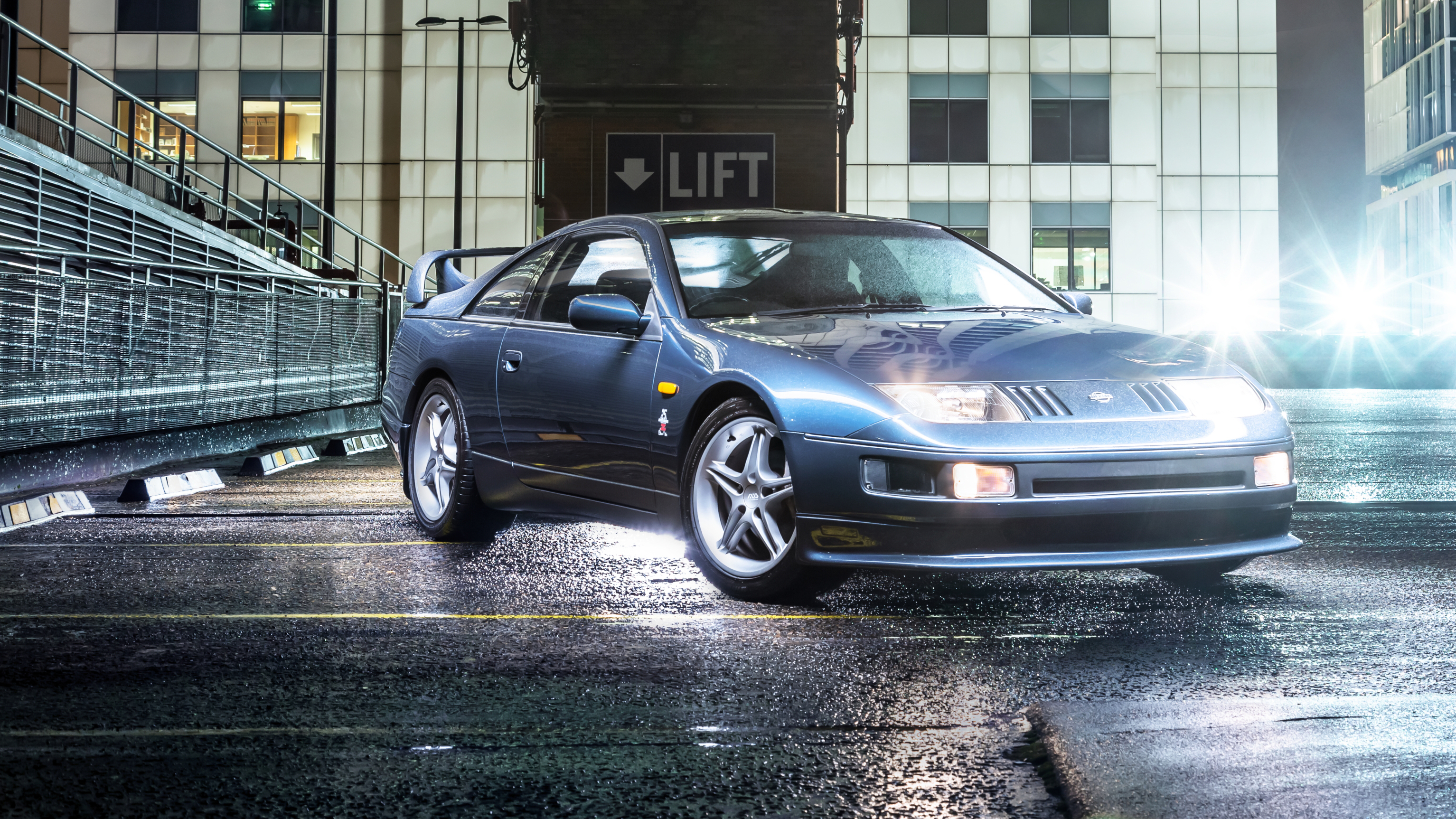
1989 represented a bumper year for the Yokohama brand, perhaps most famously marking the debut of the game-changing Skyline R32 GT-R. The same year also saw the release of the all-new Z32 300ZX, bolstering Nissan’s multi-pronged attack on the Japanese sports car market.
Locally, the radically new 300ZX launched in early 1990 and represented a welcome return to sporting form.
Like the GT-R, the clean-sheet 300ZX also borrowed heavily from the developments learned Nissan learned from its Mid4 concept, and housed all-new multi-link suspension, rack-and-pinion steering, a viscous differential and anti-lock brakes. Nissan had a genuine Porsche (928) beater on its hands.
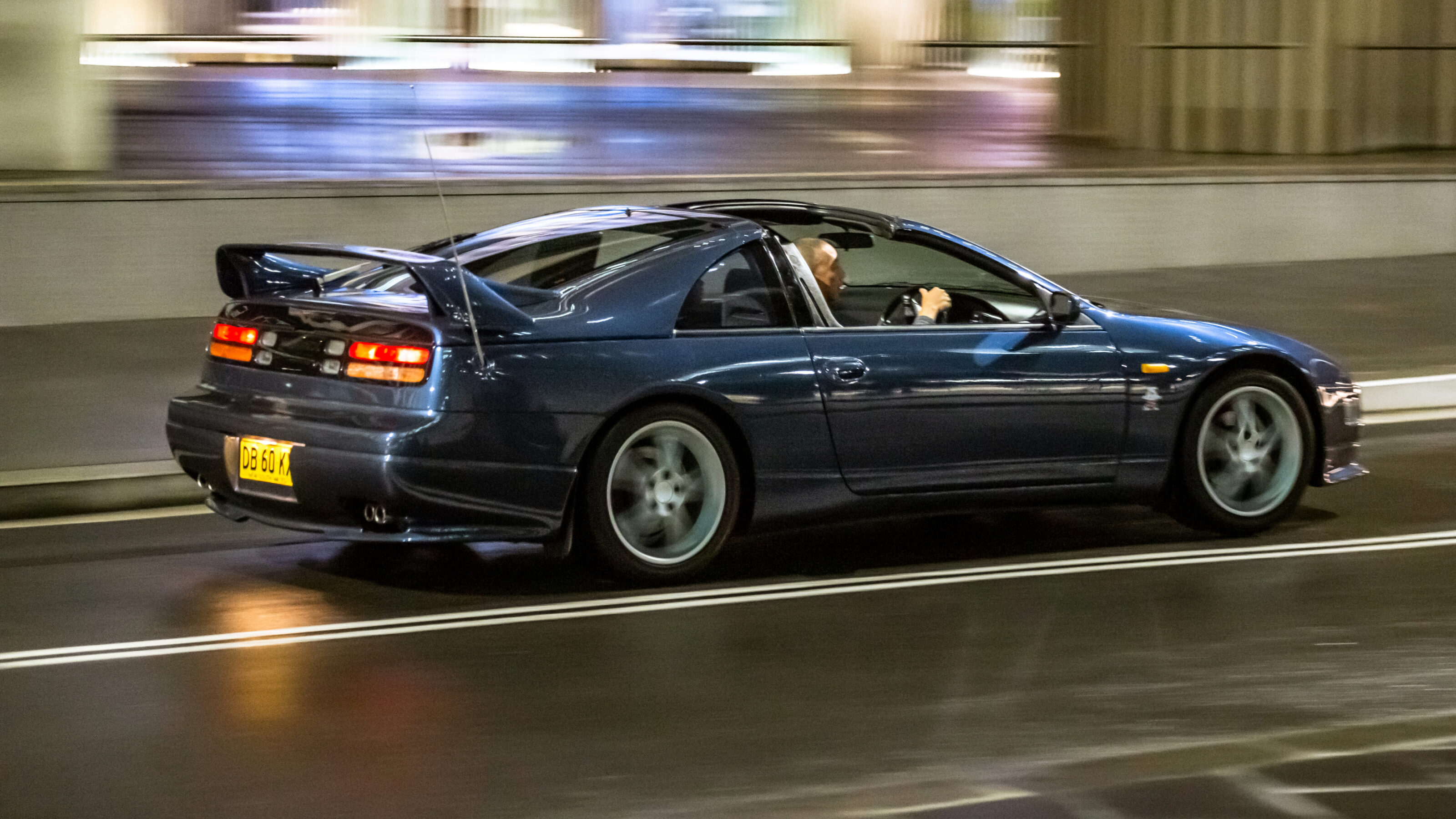
The VG30 V6 was now fitted with dual-overhead cams and variable valve timing, and produced 166kW in naturally aspirated form. Again, the Australian market was only offered the 2+2 LWB variant in naturally aspirated configuration.
A local 25th anniversary edition gained a bespoke body kit, 17-inch AVS alloy wheels and Steve Millen-designed suspension. It’s believed 122 25th anniversary editions were sold to the tune of $92,995 when new. Sales were slow at less than 100 cars per annum. Nissan withdrew the Z32 300ZX from sale in 1996, opening the floodgates for JDM-spec 224kW twin-turbo grey-imports.
Fifth Generation: Nissan Z33 350Z – 2002-2009
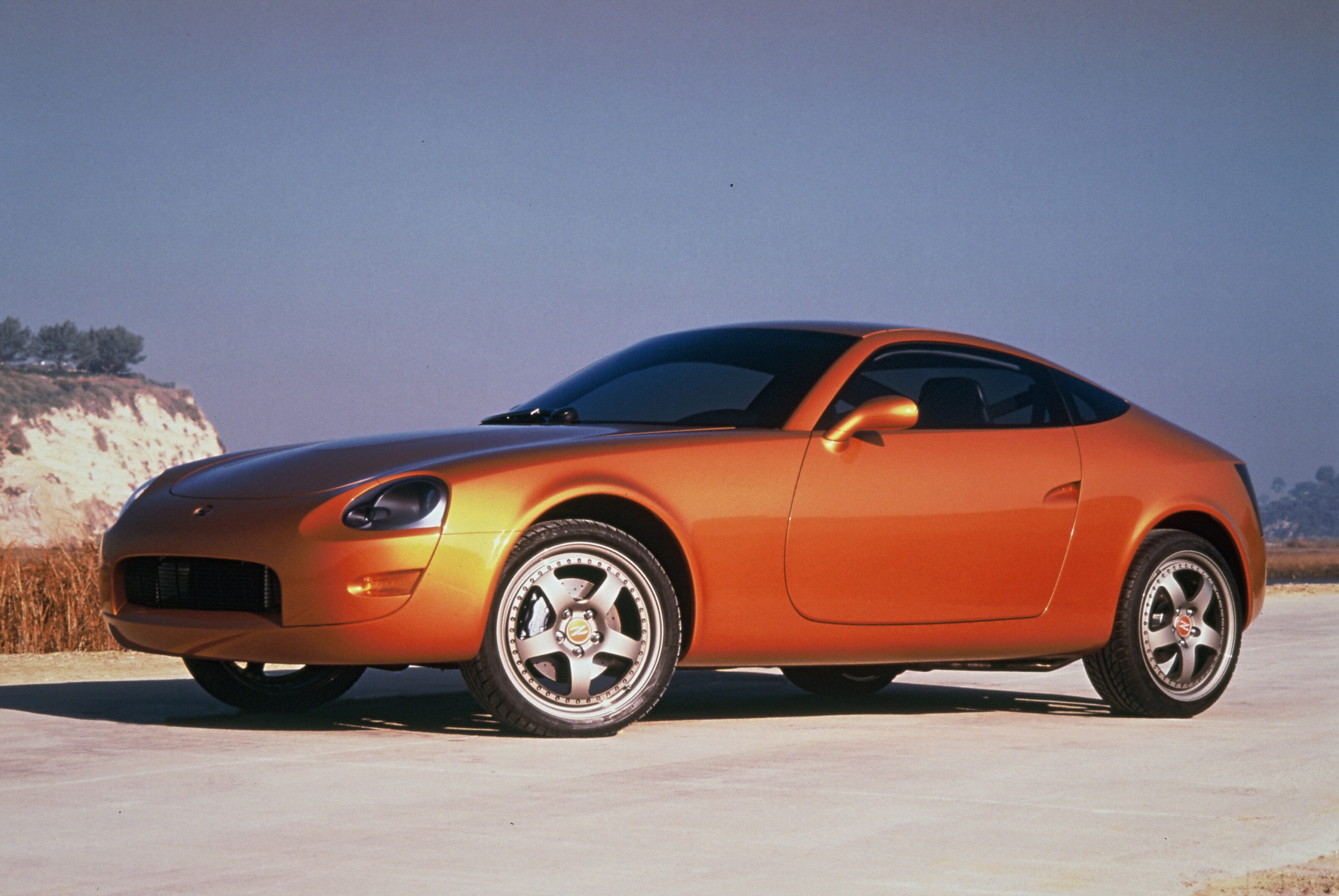
Following the Z32, Zed enthusiasts would have to wait another six years for the follow-up. Nissan USA, in late-90s, attempted to maintain the buzz by selling 37 ‘new’ fastidiously restored examples of the original 240Z, for US$27,000 with a 12-month/12,000-mile warranty.
The Z Concept was revealed in 1999 but the economic climate was vastly different, and it was ultimately deemed ‘too backward’ for a company in desperate need of financial security.
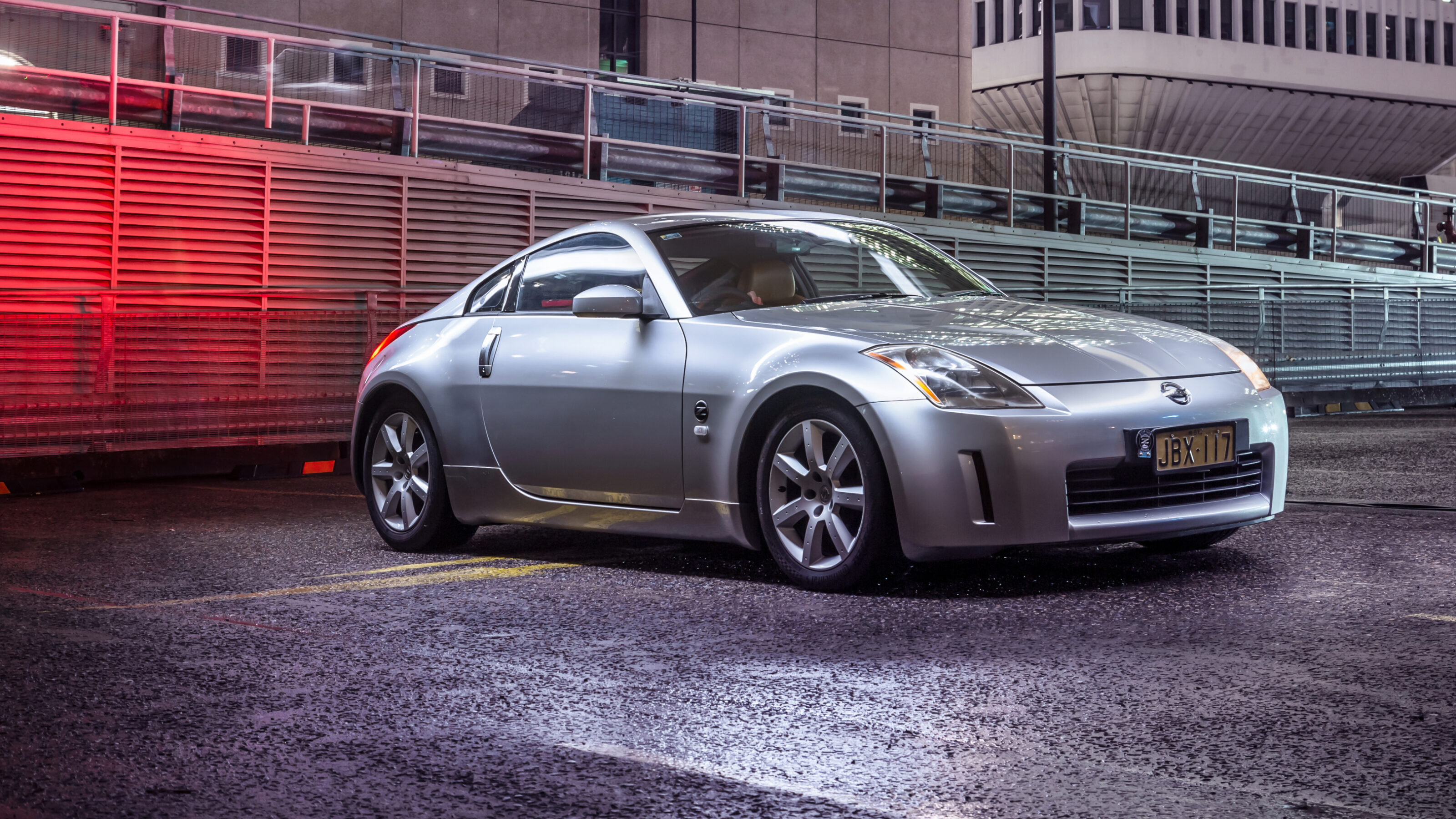
The Z33 350Z arrived midway through 2002, and was deemed by former CEO Carlos Ghosn as a car that would assist the company’s recovery into the future.
A modern interpretation of the iconic long bonnet and short rear deck silhouette, the 350Z was a dynamic delight, sneaking into fourth place at MOTOR’s 2004 PCOTY. Like many Zs before it, the Z33 found favour with various tuners and modifiers around the world, and makes a compelling case for an affordable ‘future classic’.
Sixth Generation: Nissan Z34 370Z – 2009-2020
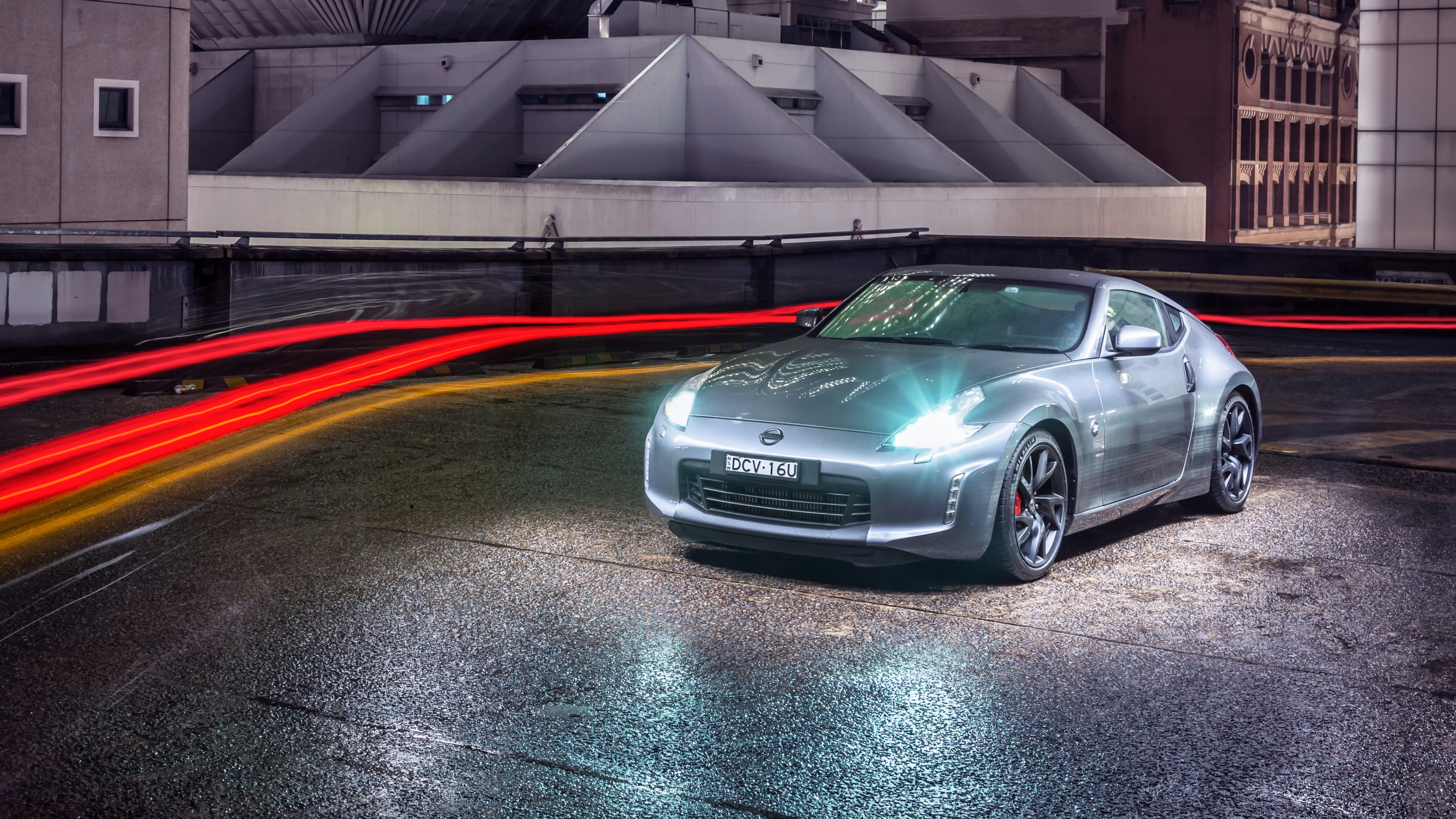
The Nissan 370Z represented a significant facelift of Nissan’s millennial star. The visual links are clear, however, look closer and you’ll notice that the car is shorter and wider with almost every panel redesigned.
More extensive use of aluminium throughout panels, engine cradle and subframes yielded a weight saving of 110kgs with a significant improvement to torsional stiffness.
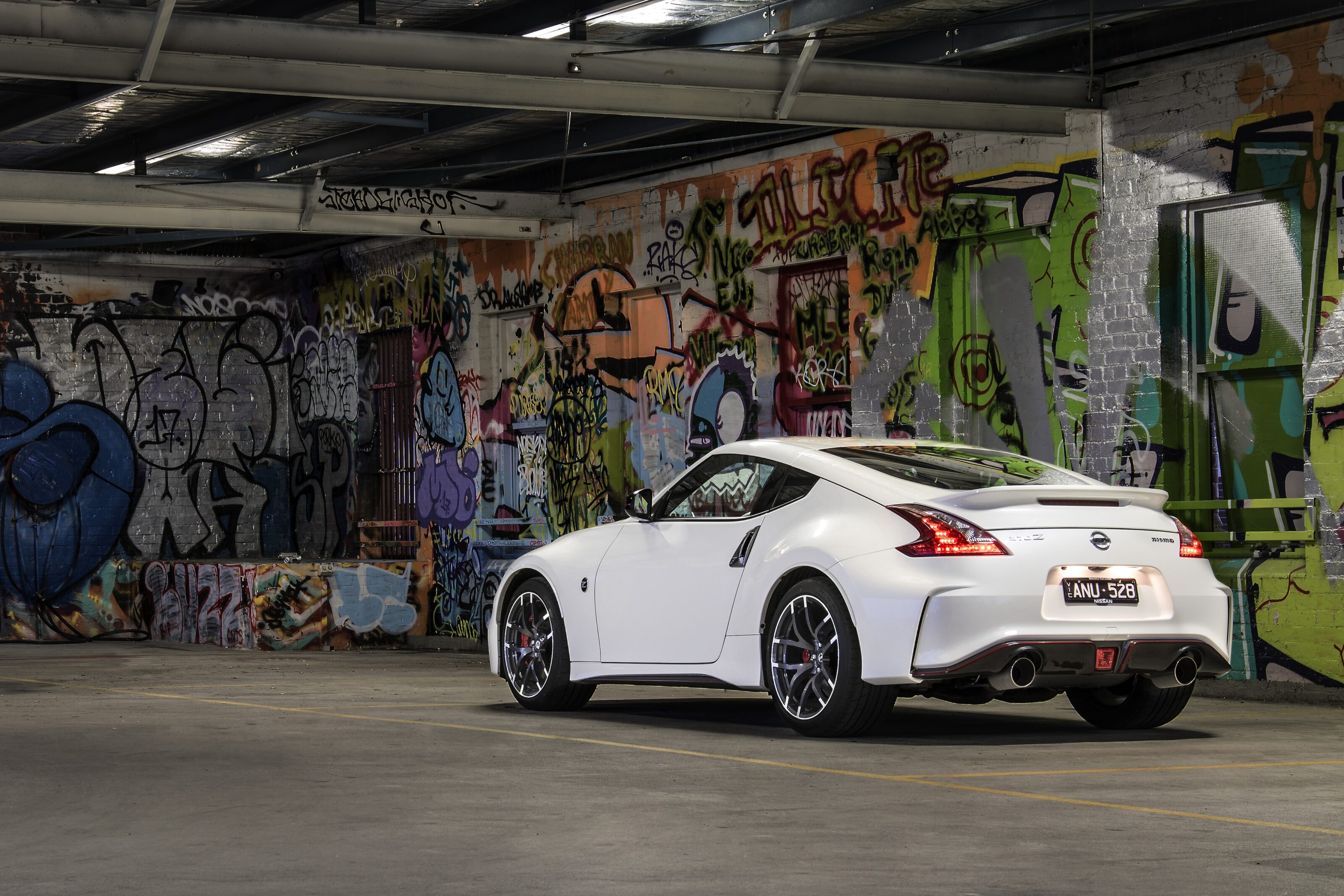
The VQ V6 now measured 3.7-litres in displacement and produced 261kW, making the 370Z the fastest Z-car yet.
Nissan’s SynchroRev Match which featured in manual cars from launch, represented the first auto-blip function ever fitted to a production car. Over 4500 have been sold since its introduction locally in 2009.
Despite its age, the driving experience still stands up today.
Seventh Generation: Nissan Z34 Z – 2021
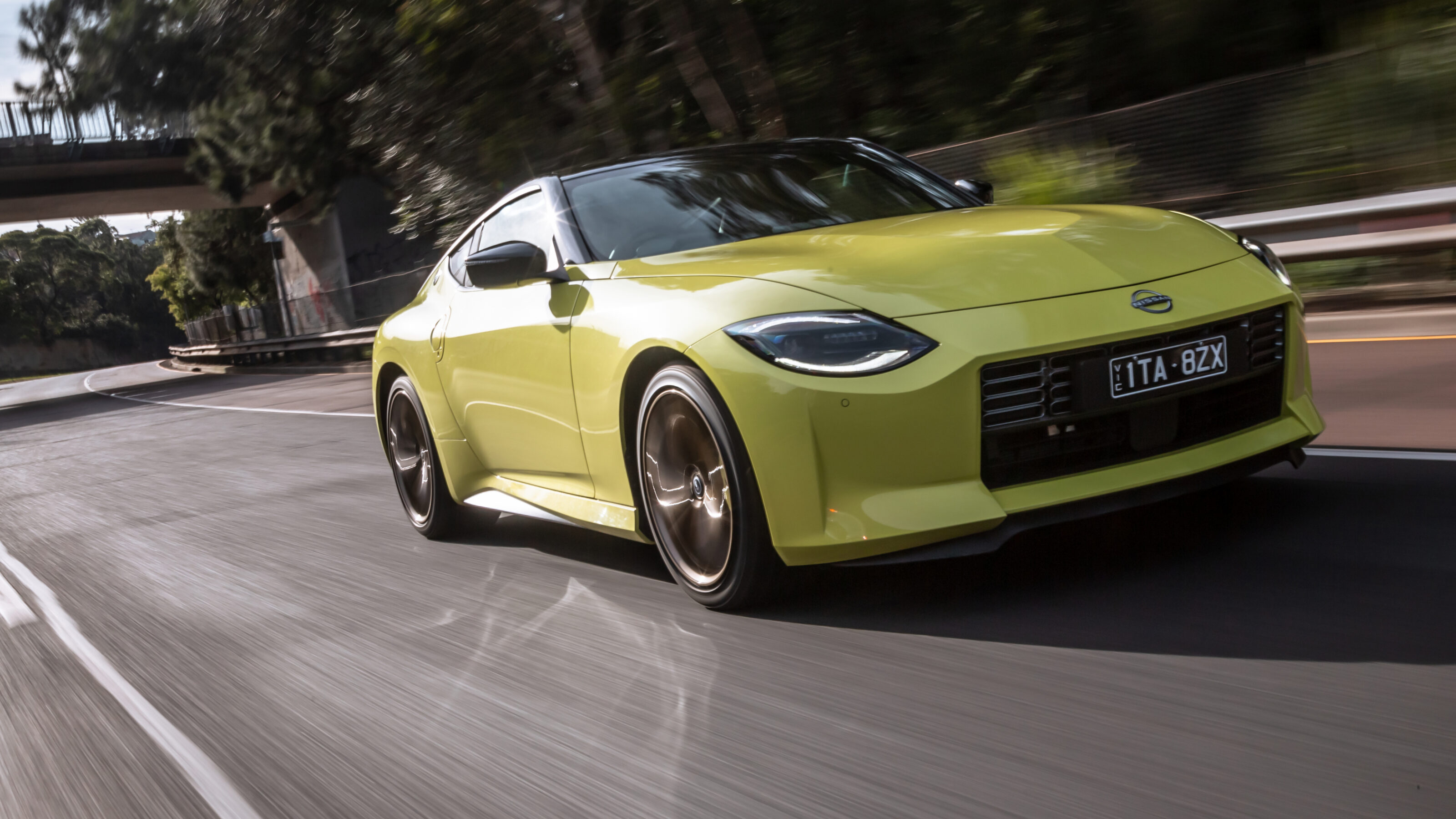
The enduring Z legacy is set to continue, as the hotly-anticipated 2022 Nissan Z readies to launch midway through next year.
Gone is the old VQ37 V6, instead transplanting the thumping twin-turbo 3.0-litre VR30DDTT from the bombastic Infiniti Q60 Red Sport. On paper, it sounds like a winner: a sub-$100k sports car, almost 300kW, rear-driven with the choice of a manual gearbox.
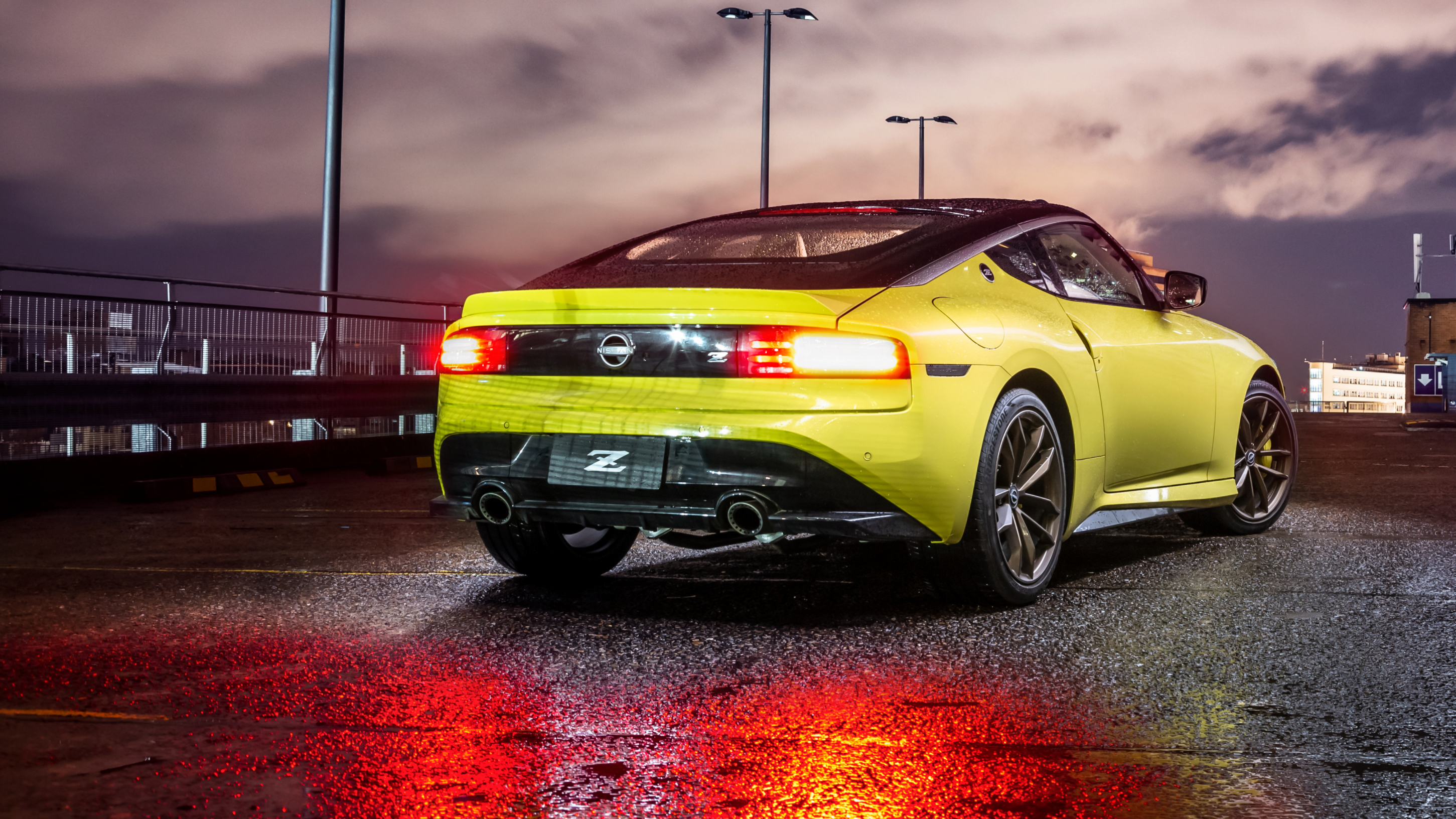
Final details including local pricing are yet to be confirmed, however Nissan has confirmed that Australia will receive a single-spec range, plus a Z Proto Spec launch edition, with some basic specs already revealed.
We love the way it looks, and will ultimately hold judgement until we finally get our hands on it, but the 2022 Nissan Z is already one of the cars we’re most eager to drive next year. As the car industry continues its march towards a greener future, the 2022 Nissan Z might be the last of its kind we ever see, and it could very well emerge as a car that the motoring fraternity will miss long after it’s gone.
Keen on buying a 2023 Audi RS3 Sportback or sedan but haven’t placed an order yet? Prepare to join the back of a long line.
Audi says it’s enjoying unprecedented demand for the latest generation of its iconic hyper hatch and that means it’s effectively sold out until late 2023.
While some dealer stock might still be available, Audi says the huge upswell in demand and ongoing global supply issues mean that if you were to place a bespoke order on an RS3 today you should expect to wait at least 12 months for your car to arrive.
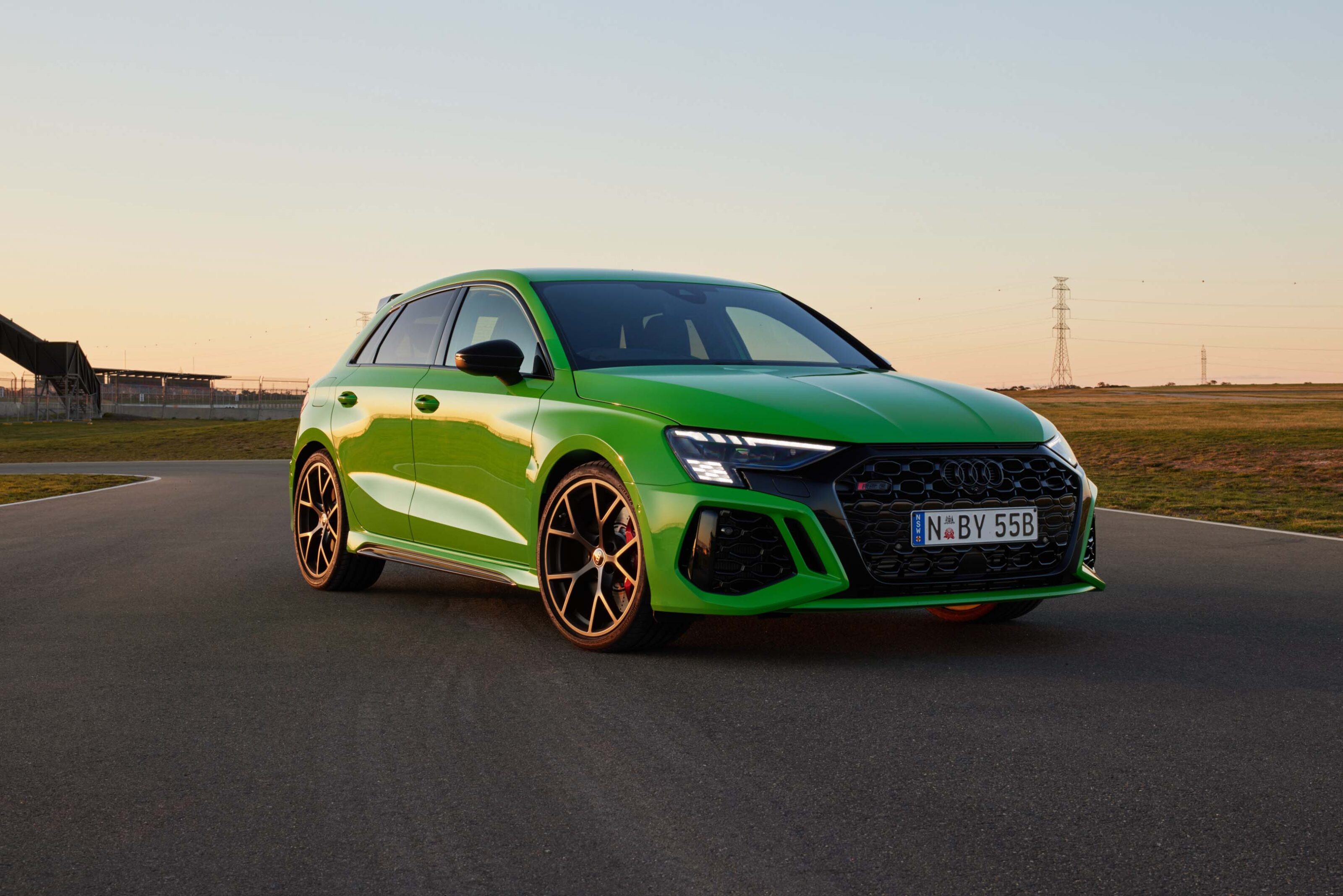
“Supply is still pretty tight really,” said Audi’s MD of marketing Nicholas Reid. “We have very strong demand for the car [RS3] and we have a very healthy order bank. So our focus at the moment is on clearing that order bank.
“It’s a new product and it’s a very nice product so it’s in very high demand,” he added. “I think we have around 800 orders which is obviously huge.”
Initial demand sees a fairly even split between the RS3’s two body styles with 55 percent of orders going to the sedan and 45 percent for the Sportback. Both share the same 294kW/500Nm five-cylinder engine but the sedan has a larger boot: 321L plays 281L.
“If you’re placing a new order now, a specific order, you’re looking at a 12 month wait,” added Audi’s product communications manager Shaun Cleary. “So it’s a while but we do expect some stock will still be available once shipments arrive – but the majority of cars are already sold to customers.”
Cleary added Audi is constantly working with head office to secure more supply and that wait times on other models throughout the range has improved since the beginning of the year.
“I think we’re getting back to now, for most models, five or six months is about standard depending on equipment and features,” he said.
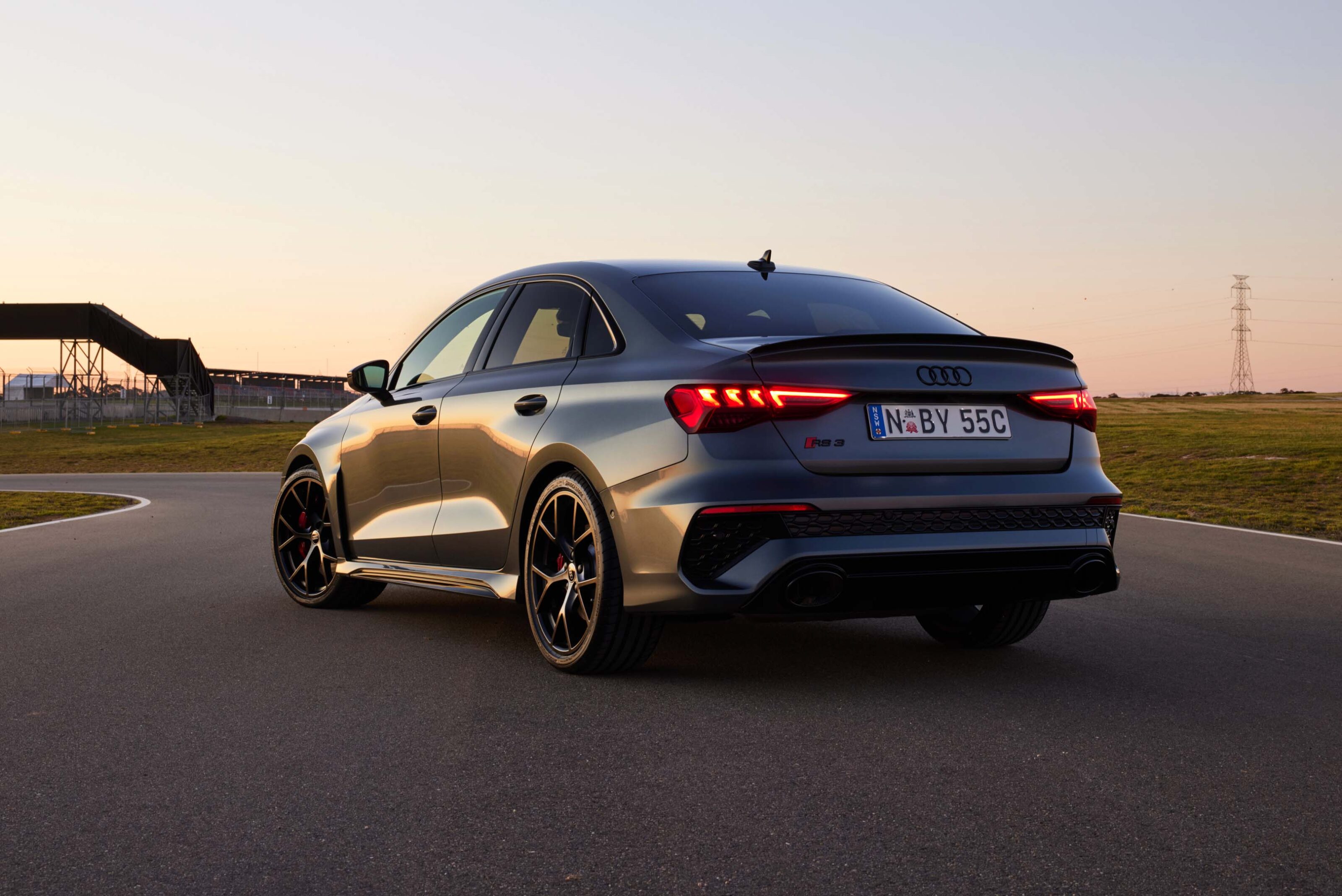
“A clear stance we’ve taken with customers is we haven’t deleted features for our line-up [due to the semi-conductor shortage].”
“Where things have been unavailable, dealers have been having conversations with customers and saying ‘If you’d really like this piece of equipment then it remains in your order but we can’t give you a delivery date until it becomes available.’
“Some customers have said that equipment isn’t important or I’m not prepared to wait and we’ve removed it and then the car is delivered. So that’s where the flexibility comes into it.”
Demand for the new RS3 is in roughly the same ballpark as what AMG experienced when it introduced the A45 to the Aussie market in in 2022, although AMG’s sales figures were for the A45 hatchback only and didn’t include the CLA 45.
The new generation Audi RS3 and AMG A45 are remarkably close in the performance stakes. The RS3 boasts a turbocharged five-cylinder engine with 294kW/500Nm and it can rocket from 0-100km/h in a class-leading 3.8seconds.
Related video
The 2023 Hyundai Palisade lineup will not gain a hybrid variant in this generation, the company has confirmed.
The facelifted large SUV, which launched locally this week, continues to be powered by a either a 3.8-litre naturally-aspirated V6 petrol or a 2.2-litre, turbocharged diesel four-cylinder.
Though Hyundai said it was “evaluating hybrids for every model in the range” it was not possible to add electrification to the Palisade because its platform could not easily accommodate the technology.
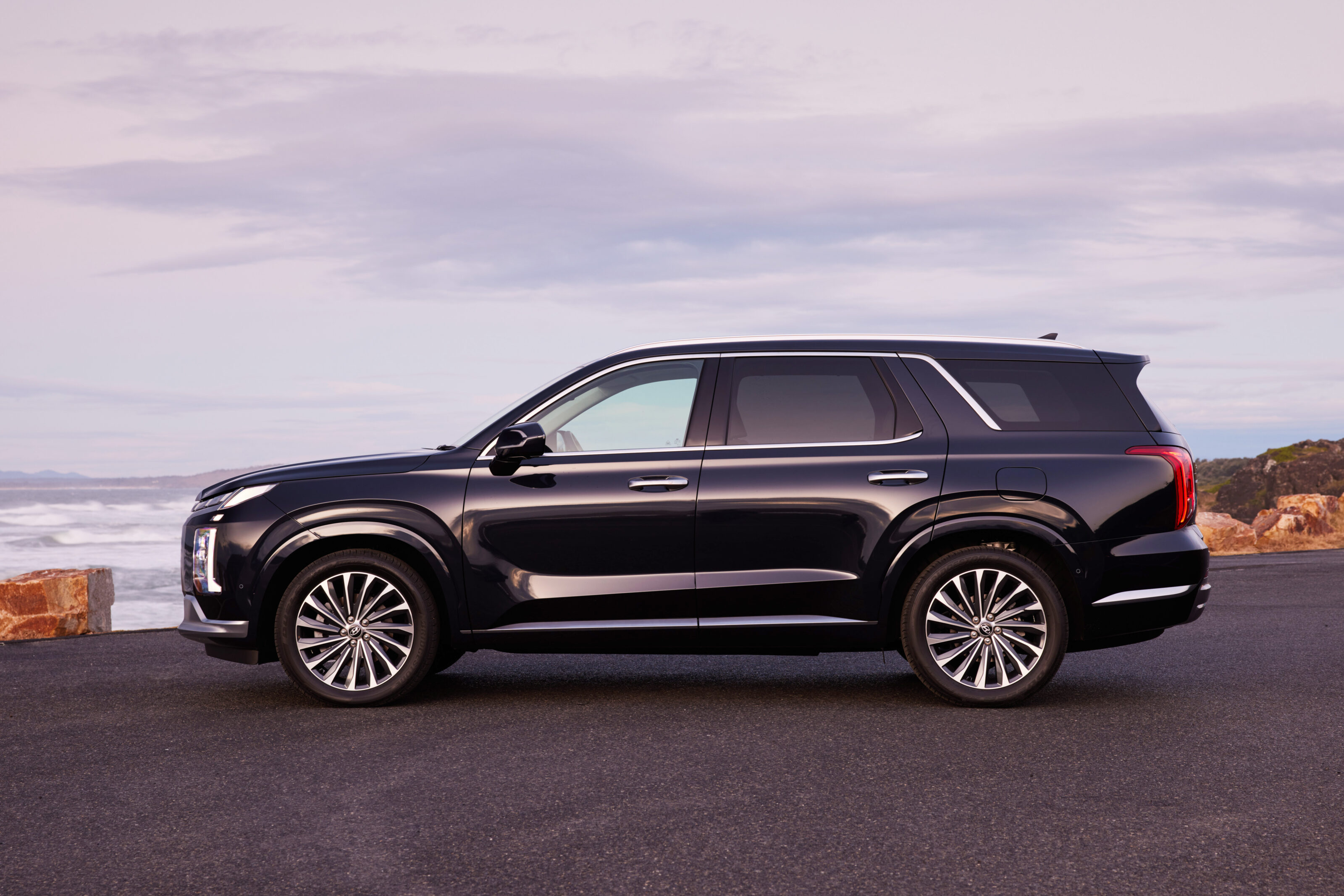
“Is there a hybrid option anywhere else? No,” said Hyundai Australia’s chief product planner, Andrew Tuitahi.
“The power trains that you see in the car here in Australia are consistent globally. Does a hybrid Palisade make sense? Sure. I think there’s definitely an opportunity there when that options presents itself, but not for this generation.”
Currently, Hyundai’s electrified model range includes the recently discontinued Ioniq sedan’s hybrid, plug-in hybrid (PHEV) and full-EV lineup, the Kona Electric, Ioniq 5 EV and hydrogen fuel-cell Nexo – the last of which is available for fleets only at present.
Hyundai’s Santa Fe Hybrid large SUV is now set to arrive in Australian showrooms later this year after a delay.
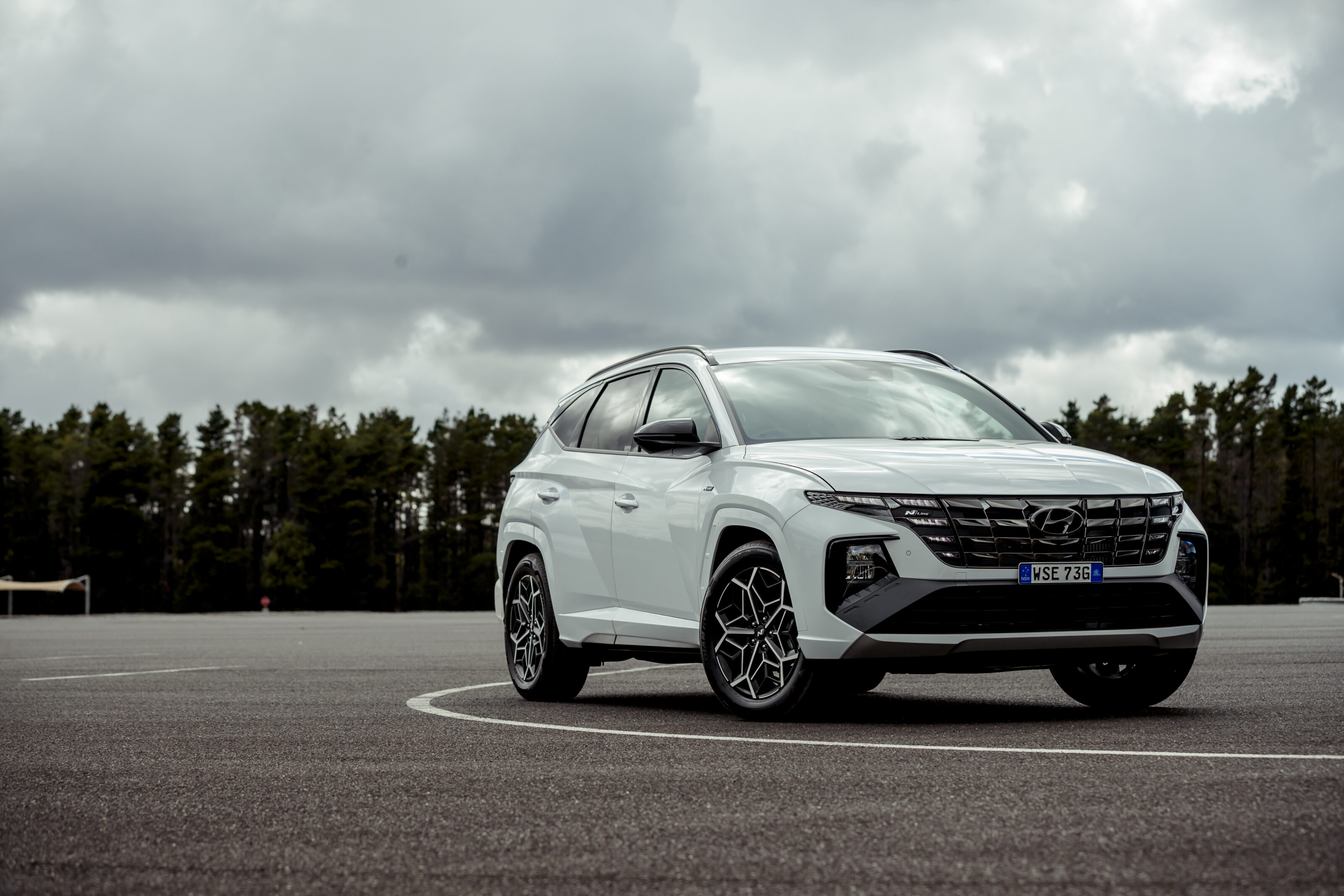
Meanwhile, the brand’s overall most popular model is its Tucson mid-sized SUV, which sold 2186 units last month and 9541 year-to-date.
Hyundai currently sells two Tucson hybrid models in the US and Europe – a traditional ‘self-charging’ hybrid with 172kW of power, as well as a turbocharged plug-in hybrid with 198kW of power.
Hyundai insiders told Wheels that the firm is “working very hard to get a Tucson hybrid for Australia”, as it wants to extend the number of hybrid vehicles in its local offering.
However, the roadblock at present is that the electrified Tucson is only available so far in left-hand-drive, with a local (or even overseas) conversion to right-hand-drive proving too expensive and “would just not make sense”.
Hyundai models are manufactured from the beginning for RHD markets globally, they are not converted from one form to the other. Unlike vehicles such as the F-150 ute, which Ford will convert to RHD for our market.
Snapshot
- One-third of Australians driving less due to inflation and high petrol costs, study finds
- One-fourth considering electrified vehicles as next purchase, including hybrids and EVs
- Many placing general maintenance and vehicle purchases on the back-burner
The high cost of petrol and inflation is causing one-third of Australians to drive less, according to new research.
A nationwide study by customer research firm Toluna found 33 per cent of those surveyed had reduced their use of a vehicle, in a bid to cut skyrocketing costs led by inflation and current petrol prices.
In addition, one in four respondents said they would consider electrification – such as a hybrid, plug-in hybrid or battery-electric vehicle – for their next purchase.
EDITOR’S NOTE: The research surveyed 1005 Australians in July 2022. This is considered a statistically valid sample size.
The rising cost of living means 16 per cent had delayed plans to buy a new vehicle, while 14 per cent are putting general vehicle maintenance and repairs on the back-burner.
To the end of July, VFACTS data shows 10,289 electric vehicles have been sold in Australia this year, compared to 2732 over the same period in 2021 – an increase of 276.6 per cent.
Overall, the new vehicle market is down 4.5 per cent, with 622,319 registrations year-to-date, compared with 651,629 in 2021, largely hampered by supply shortages caused by the semiconductor chip shortage.

“[The] research shows that consumers are truly feeling the pinch of rising inflation,” said Toluna Australia and New Zealand director Sej Patel.
“Australians are doing everything they can to cut back and financially safeguard themselves as much as possible – delaying travel, driving less, eating in, and putting off any unnecessary spending.”
At the time of writing, the price of unleaded petrol has been consistently dropping following record highs in May and June, but diesel remains costly.
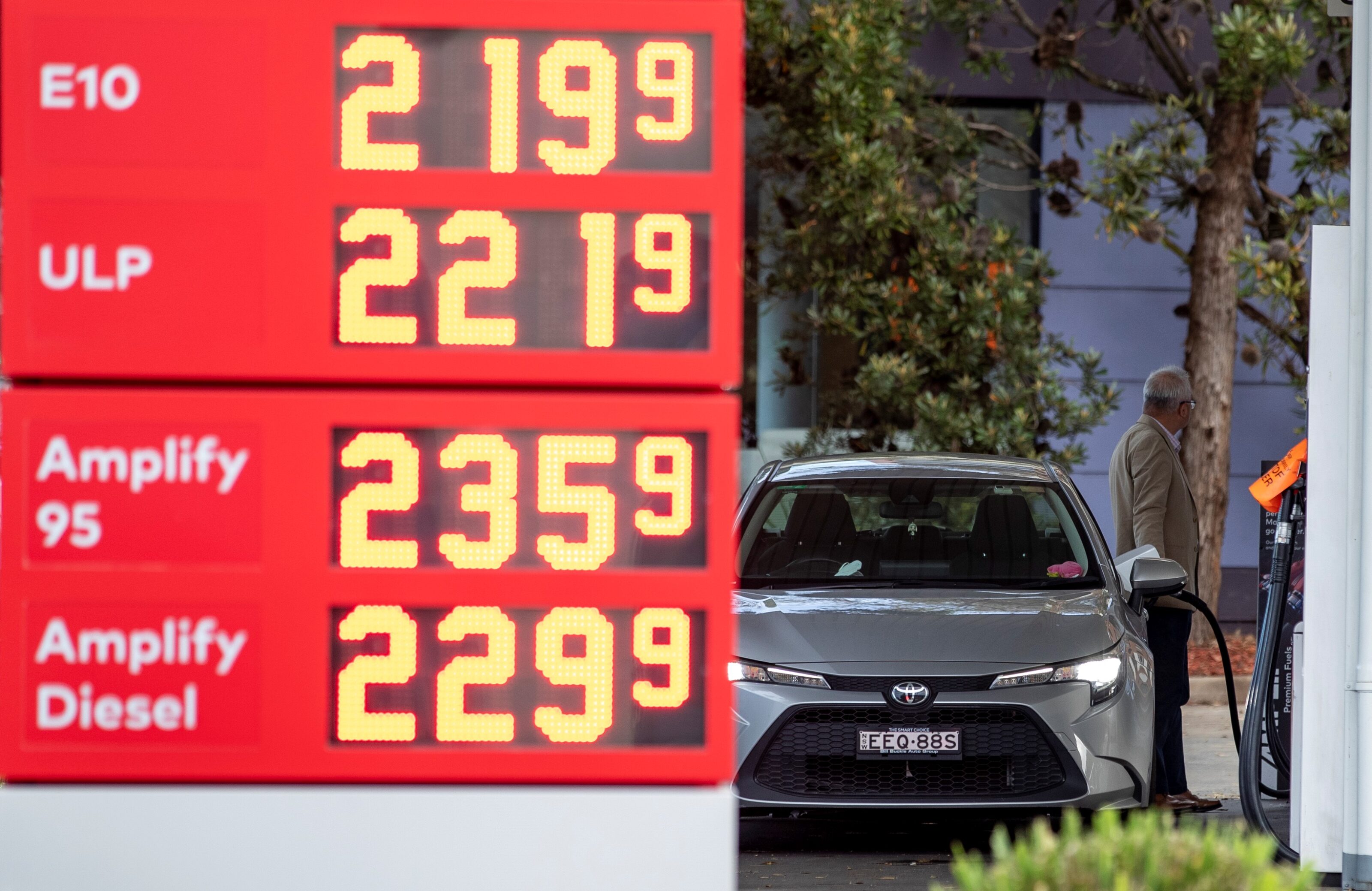
According to the Australian Institute of Petroleum, the average weekly national retail price of 91RON petrol is $1.82 per litre, with diesel currently sitting at $2.19 per litre.
Across the capital cities, Canberra is experiencing the highest 91RON unleaded prices at $2.07 per litre, while Adelaide is the lowest at $1.61 per litre.
The average price of diesel is currently the highest in the Northern Territory, at $2.40 per litre, followed by Queensland, Victoria, New South Wales and the ACT, Tasmania, Western Australia and South Australia.
However, the relief in petrol prices could be short-lived, with the former LNP Federal Government’s 22.1 cent cut to the fuel excise likely to end on September 28 as planned.

In June, the Australian Competition and Consumer Commission (ACCC) reported that the cut to the fuel excise had been passed on to Australian motorists in most locations.
“Retail petrol prices will still fluctuate with changes in international prices and the price cycles in the largest capital cities, even though the excise cut has flowed through to the bowser,” said ACCC Chair Gina Cass-Gottlieb.
“Our monitoring will continue for the duration of the excise cuts. Petrol retailers who fail to maintain the cuts can expect to hear from us.”
The plug-in hybrid Peugeot 508 Sport Engineered remains under local evaluation – but it is still no closer to reaching Australian showrooms.
Speaking with Wheels, a spokesperson for Peugeot Australia said global headquarters is keen to expand the performance-orientated 508 Sport Engineered (PSE) into new markets, but had no news to share for Australia.
“Globally, [Peugeot HQ] is keen to see the 508 PSE in a market like Australia that has a real love for performance vehicles, as are we,” they said.
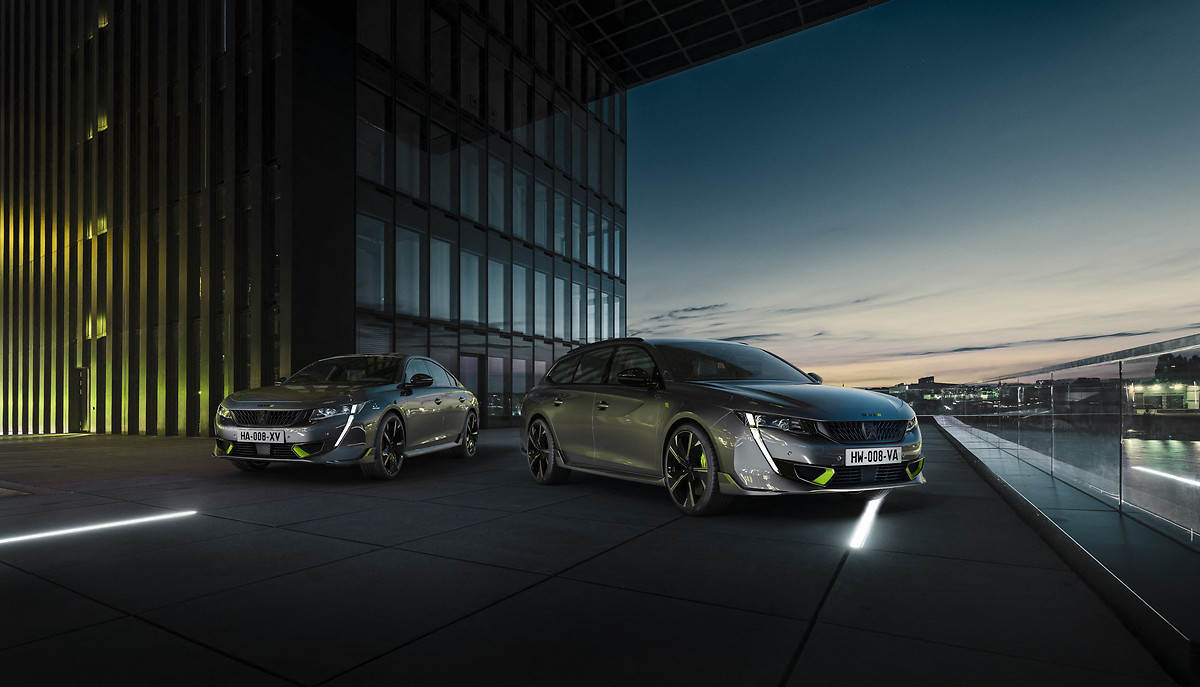
“A study regarding the potential introduction to Australia is still underway, but when we have more to share, we absolutely will.”
Under the bonnet, the 508 Sport Engineered features a 147kW 1.6-litre turbocharged petrol engine, and two electric motors – 81kW front and 83kW rear – for a combined system output of 265kW of power and 520Nm of torque.
The addition of an electric motor mounted to the back axle brings all-wheel drive – a first for the 508 – with a claimed 0-100km/h time of 5.2 seconds.
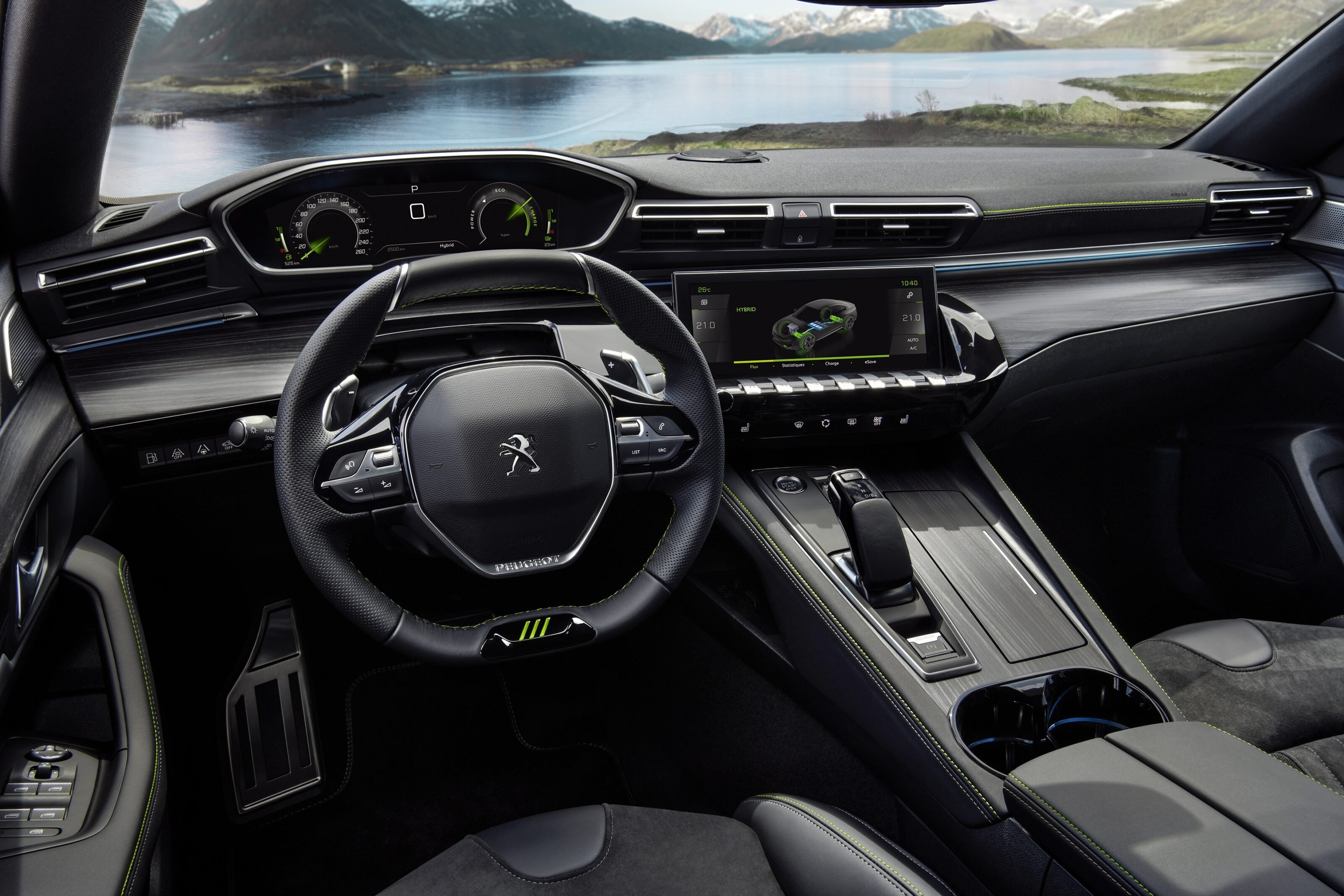
With an 11.5kWh lithium-ion battery, the 508 Sport Engineered has a 42-kilometre electric-only driving range – compared to 55km for the regular 508 GT PHEV, which arrived in Australia earlier this year.
The plug-in hybrid, front-wheel drive 508 GT is powered by the same 1.6-litre turbo-petrol, but with a less-potent single electric motor for a combined 165kW and 300Nm. It is priced from $76,990 before on-road costs.
Using overseas pricing as a guide, the Sport Engineered is likely to near the $100,000 mark in Australia, should it reach local shores.
Kate Gillis, general manager of Peugeot Citroen Australia, has previously supported the launch of the hot 508 in Australia, stating: “I can say that study has been favourable in supporting the local introduction of the 508 Sport Engineered.”
With the demise of the 308 GTi hot hatch in 2020, Peugeot currently offers no dedicated performance cars in this market.
While high-performance internal combustion variants are officially dead due to France’s carbon dioxide emissions-based taxation rules, ex-Peugeot CEO Jean-Phillipe Imparato said in 2021 that the brand would launch additional electrified vehicles under its Sport Engineered line.
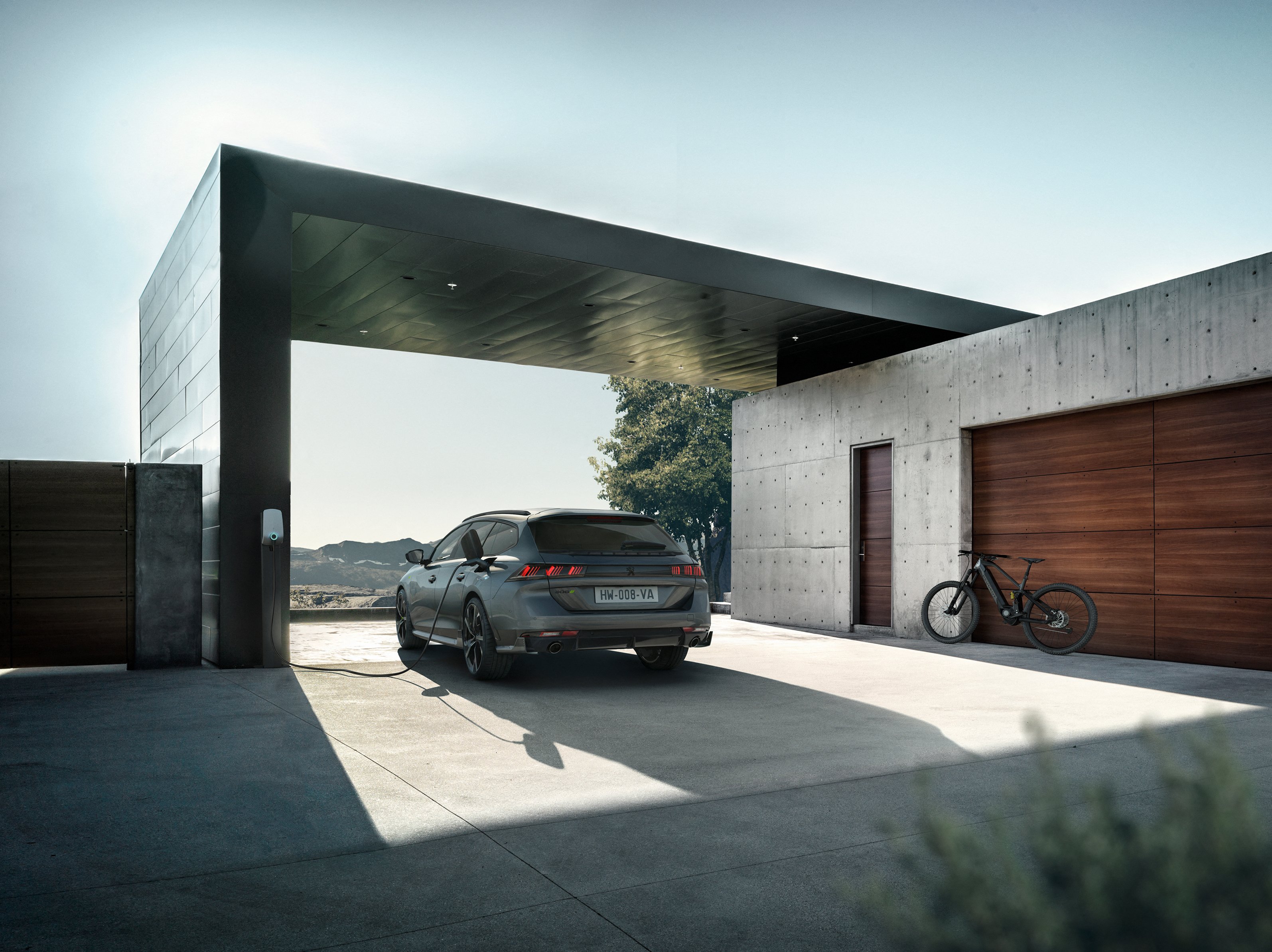
“With each and every car, starting with 508, I’m aiming to put as an umbrella a performance/sporting version of the car,” he said.
“We will launch at the beginning of 2021 with the 508 Peugeot Sport Engineered to send a message to the market.”
A potential Peugeot 308 Sport Engineered hatch could utilise a more-powerful version of the all-wheel-drive PHEV powertrain seen in the 3008 GT Sport, to match the power-to-weight figure of the previous-generation GTi.
Stay tuned to Wheels for the latest Peugeot 508 Sport Engineered updates.
Hang on a second…this is very un-Audi-like. I’m at the wheel of a Kyalami green Audi RS3 and it’s oversteering. Actually, scrap that. It’s power sliding. Audi’s new mega hatch is tracing big, graceful arcs around a skidpad and I’m using the throttle, not the steering, to change the angle of attack.
This newfound slidey-ness is courtesy of a ‘drift mode’ function and the fitment of a tricky torque-splitting rear differential but here’s the thing: the ability to perform lurid slides isn’t the best part about the new RS3. This car is a lot more sophisticated and polished than that.
Built on the fresh MQB Evo underpinnings of the new A3, Audi’s third-generation RS3 is now bigger, smarter and faster. But, and this is the best bit, it’s also more fun and more comfortable.
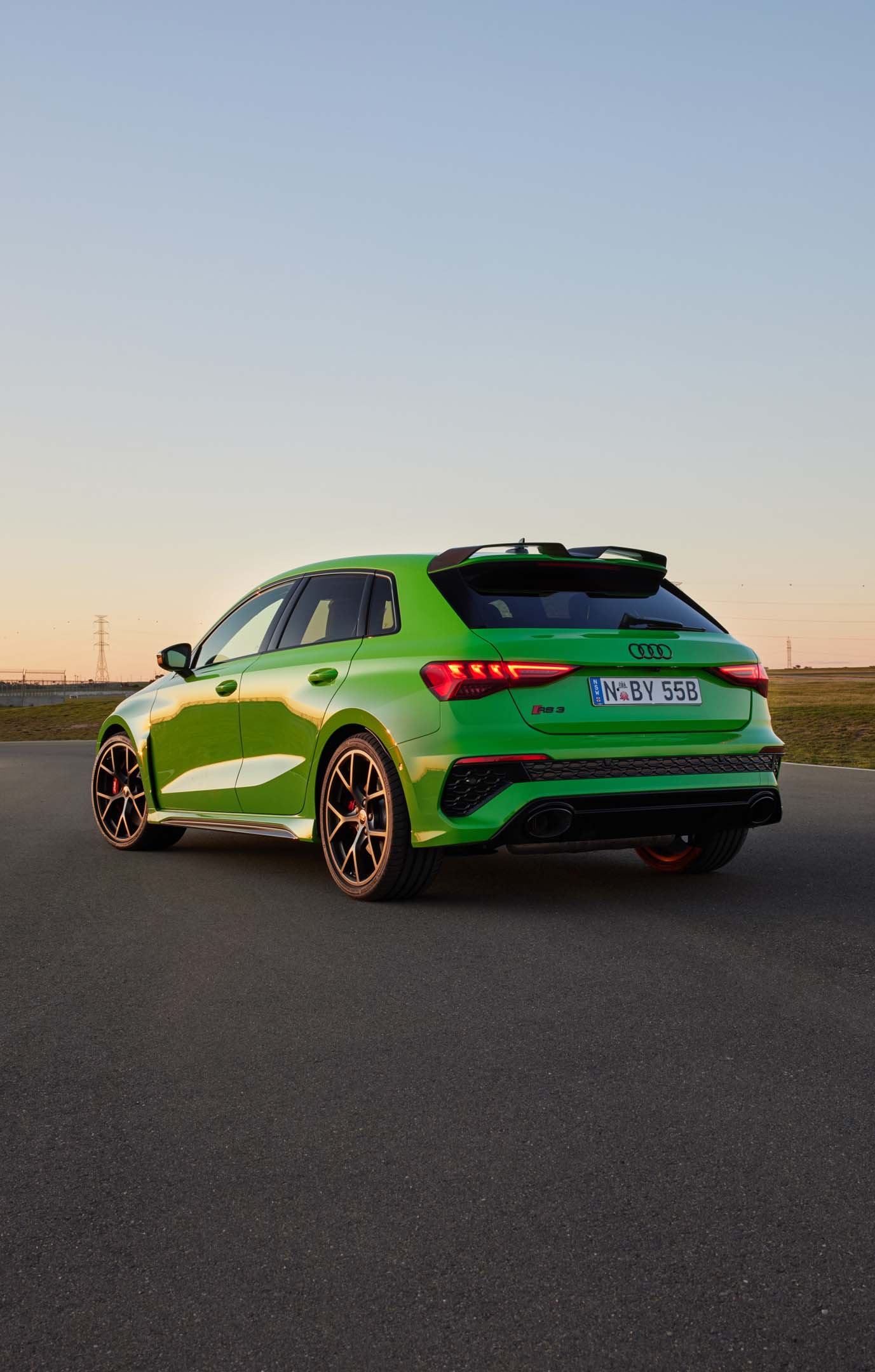
Unlike the manic Mercedes-AMG A45, which does its best to beat you up on the way to the shops, Audi’s new hyper hatch also has a softer side. Want the quickest hot hatch you can buy but also need an acceptable degree of ride comfort? This could be the car for you.
Question is, can a hot hatch really ever be worth six figures? Or should you consider an Audi S3 or a VW Golf instead, given they offer similar thrills for considerably less cash?
We flew to Adelaide to drive the new RS3 on track and on some twisty tarmac rally stages to find out.
How much is it and what do you get?
There’s no easy way to say this, so we’ll just blurt it out. The RS3 now costs $91,391 for the hatch and $93,891 for the sedan, before on-road costs.
It’s a huge amount of money for a grocery-getter and also a sharp spike of around $8000-9000 over the car it replaces. Ouch.
The value equation gets even stickier when you factor in models like the $65,990 VW Golf R and Audi’s own $72,391 S3 (both before on-road costs). Like the RS3 both are all-wheel drive, are only around a second slower from 0-100km/h, and in the VW’s case, also include a drift mode for sideways shenanigans.
But if ultimate performance is your goal, the RS3 is in a league of its own. It’ll rocket from 0-100km/h in 3.8 seconds, making it the quickest hot hatch you can buy, and it also has one of the most charismatic petrol engines currently on sale.
In a world of four-cylinder rivals, the RS3 continues with its iconic 2.5-litre five-cylinder turbo petrol.
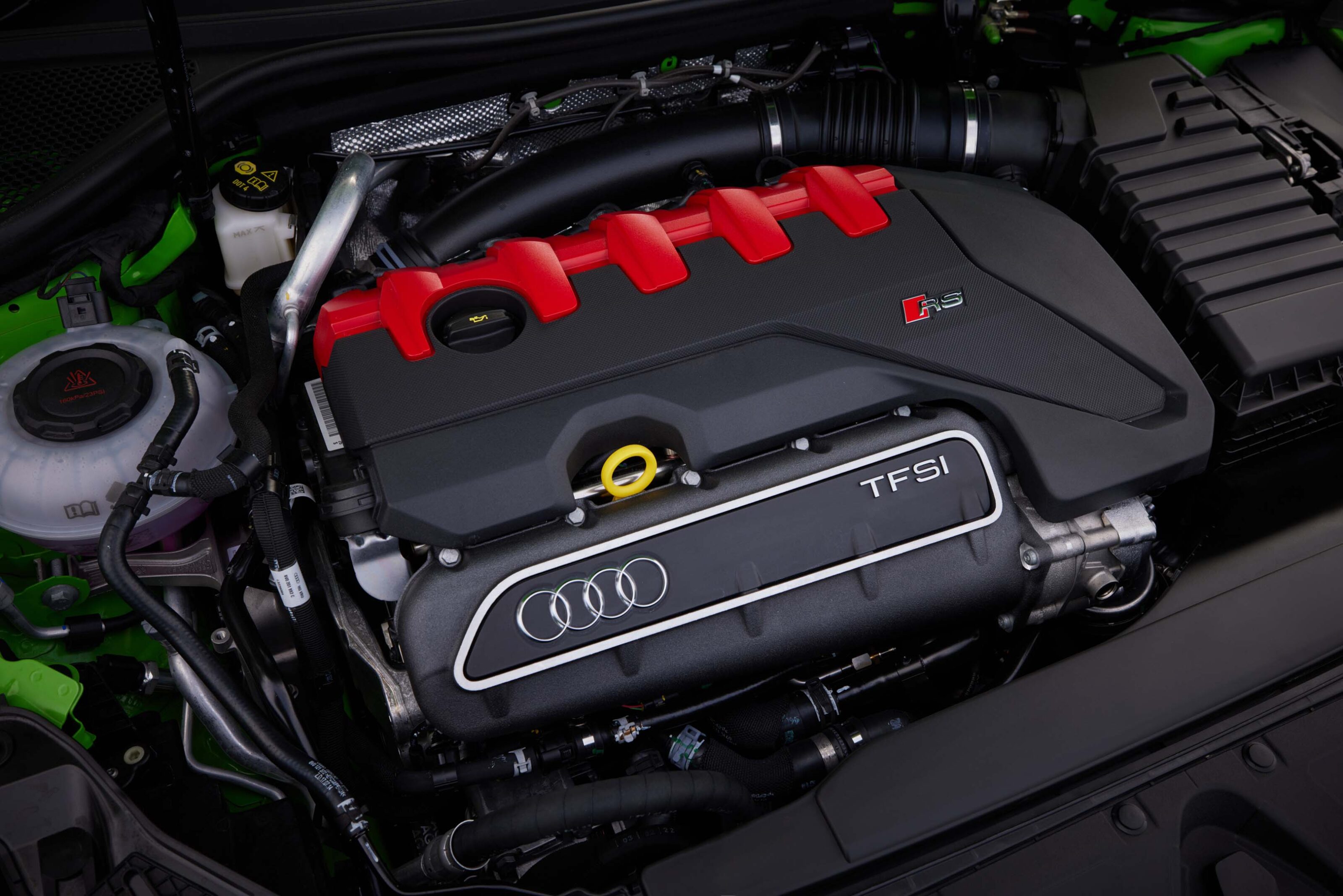
Power is identical to the old RS3 at 294kW but it’s not quite a direct transplant from the previous car. Tweaked software and a bump in boost pressure have liberated an additional 20Nm for a total output of 500Nm and that full wallop of twist is available over a usefully broad torque band.
There’s also a new variable exhaust that dials up the aural aggression as you cycle through the drive modes. The previous RS3 was a bit tame in the soundtrack department due to its petrol particulate filter. This new model is noticeably louder.
Quattro all-wheel drive is standard, which helps the RS3 achieve its headline-grabbing 0-100km/h time but as we discovered on the skidpad, for this generation the system includes a new ‘RS Torque Splitter’ rear differential. Torque is still divided 50:50 front-rear but of the drive that’s sent to the rear axle, the new diff can send 100 per cent to the outside wheel.
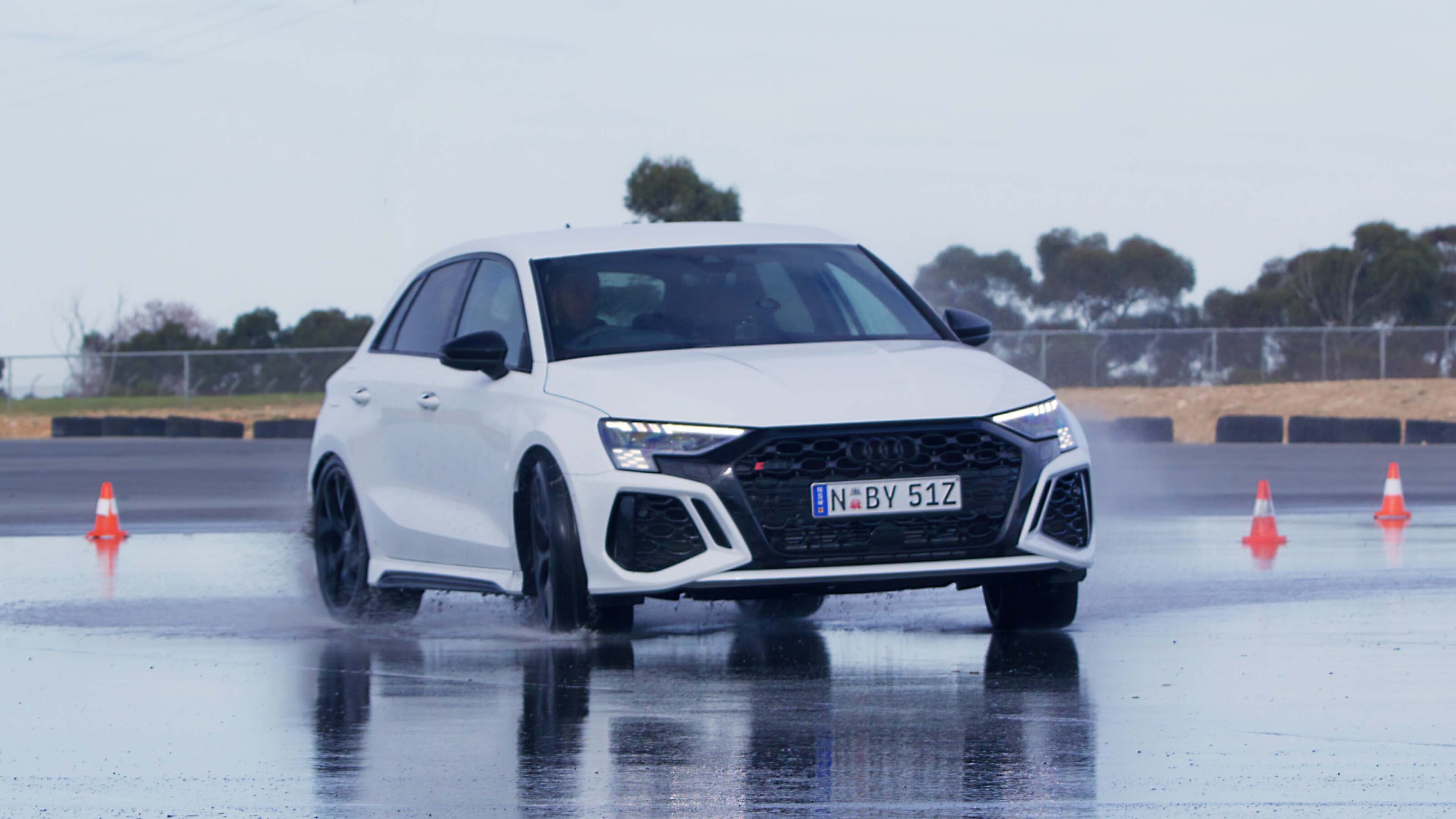
It’s a clever piece of tech that helps to kick the car sideways in its ‘torque rear’ setting, but you don’t have to be sliding around a skidpad to reap its benefits. The diff also controls torque across the rear axle during fast road and track driving and the way the new RS3’s all-wheel-drive system works to control under- and oversteer is genuinely excellent.
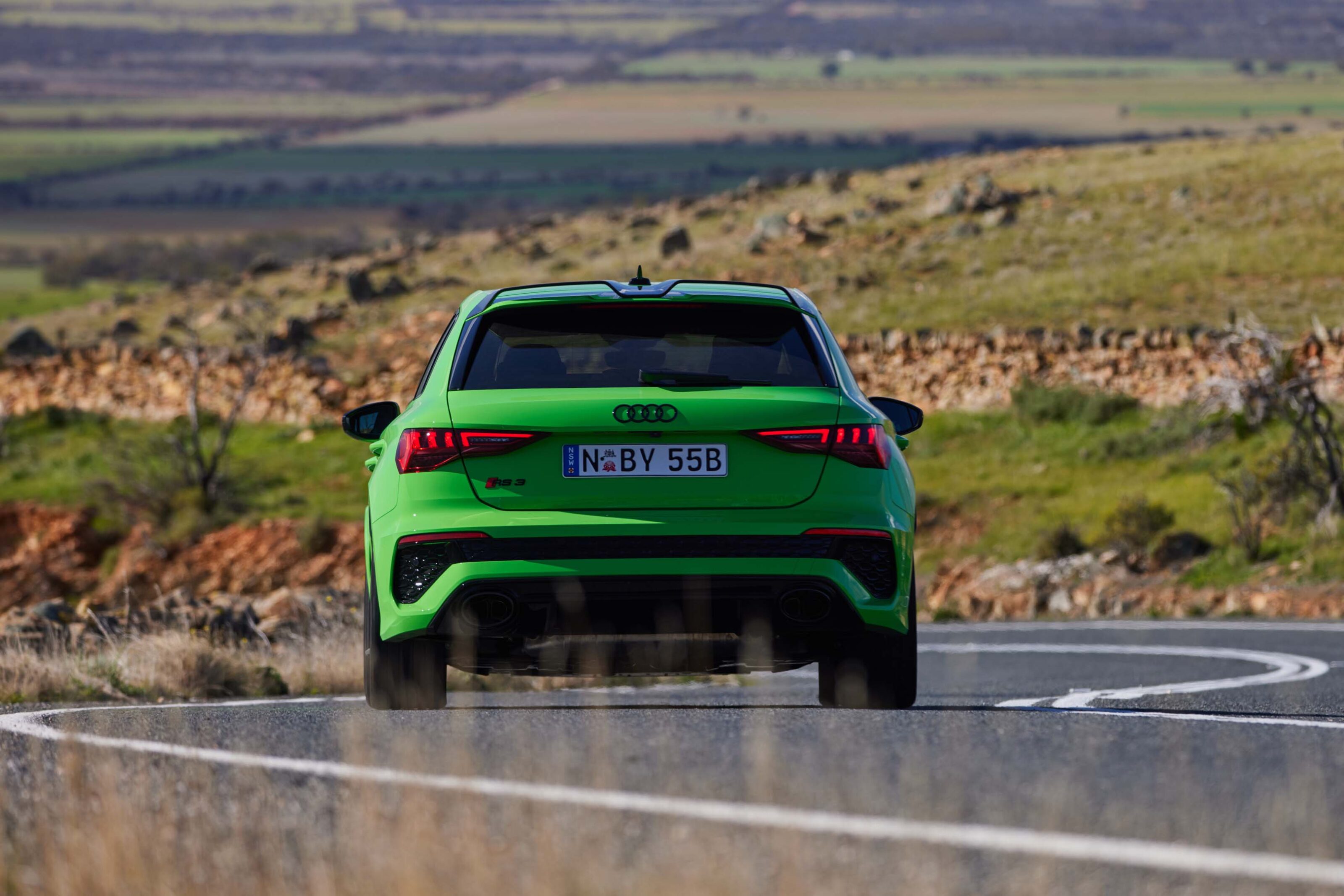
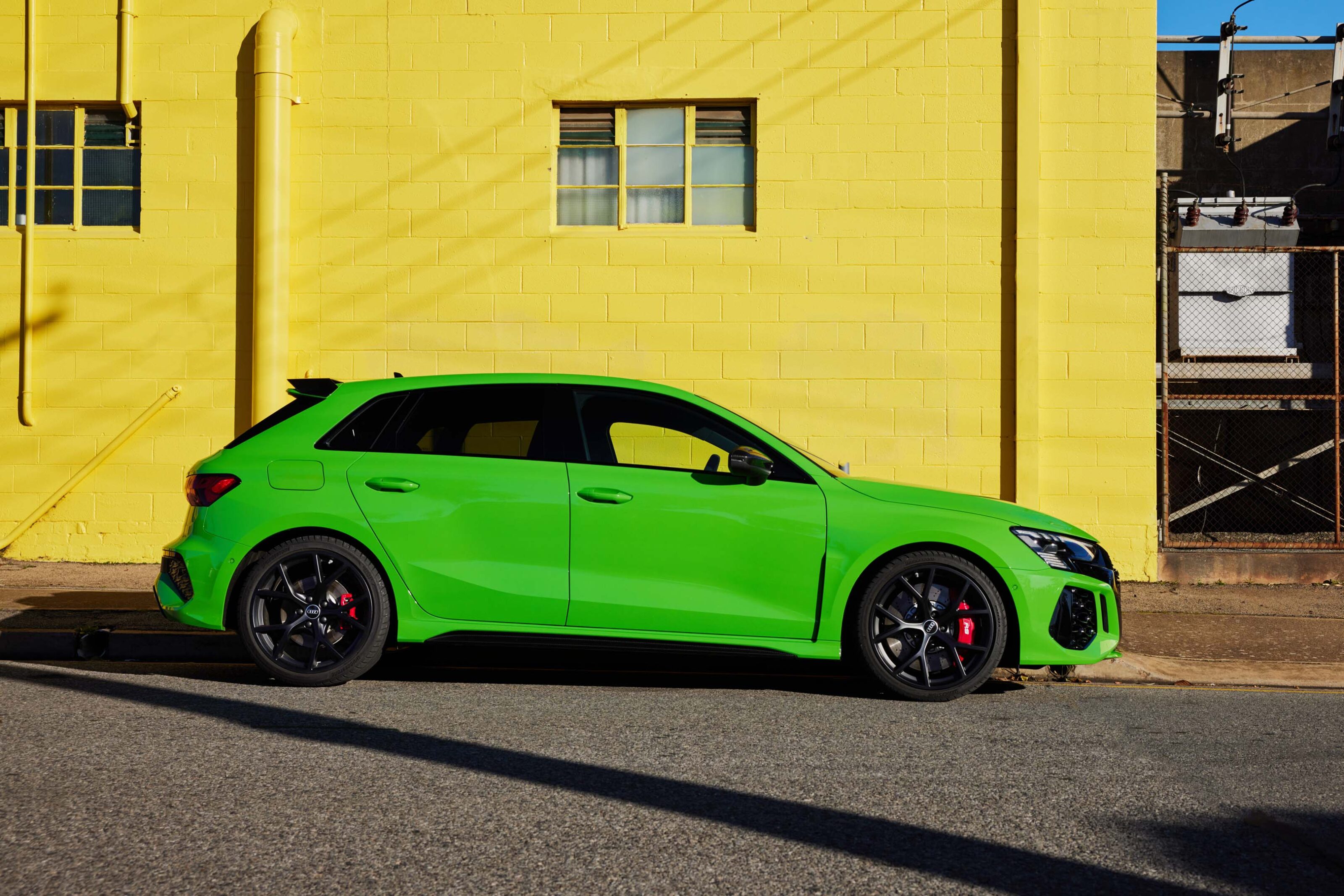
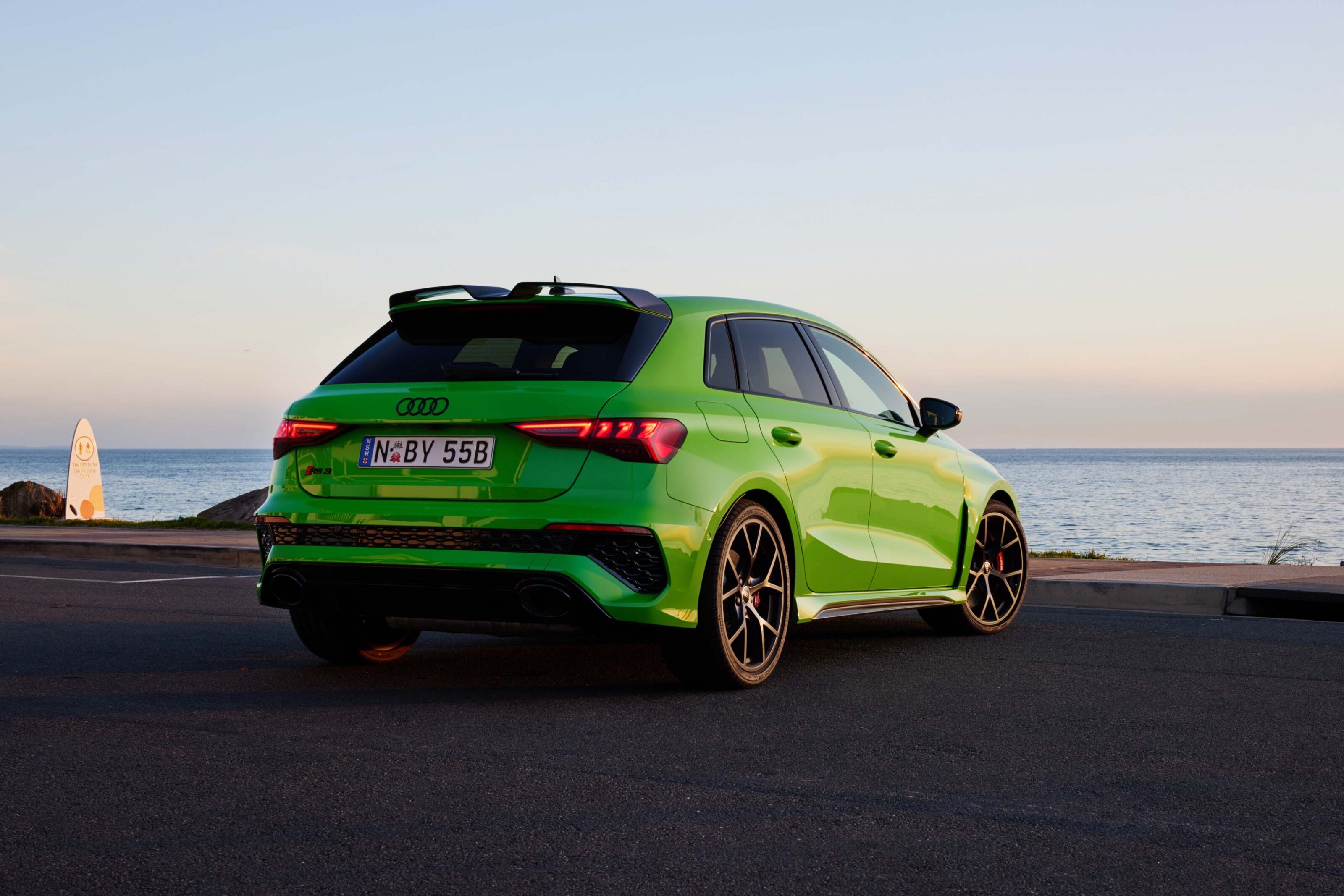
There’s plenty of visual aggression on offer, too. Clock a new RS3 in the metal and it looks properly angry. It sits 10mm lower than an S3 (and 25mm lower than a regular A3) while the wider front track gives it a muscular, four-square stance.
Alloys are 19-inches all round and like the previous RS3 they’re actually wider up front than they are out back, which helps to quell understeer. The Bridgestones fitted to our car measured 265/30 ZR19s at the front and 245/35 ZR19s for the rear.
Clock a new RS3 in the metal and it looks properly angry.
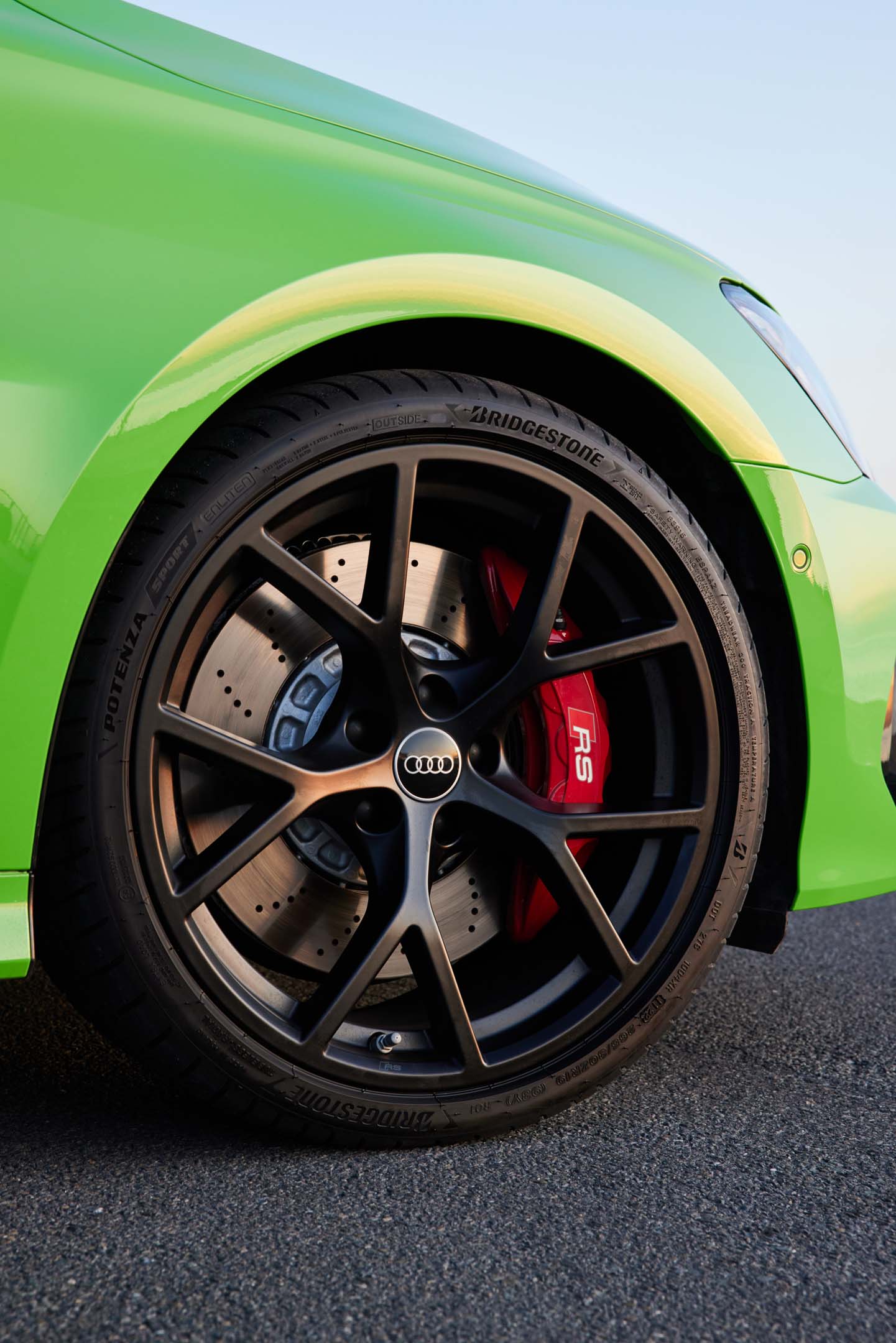
Matrix LED headlights are also standard in Australia and they don’t only offer excellent illumination and the ability to mask out oncoming traffic but they also spell out ‘RS3’ in cool 8-bit graphics when you unlock the car, which is a nice feature.
A final piece of exterior design worth mentioning? There’s a new square cooling vent on the trailing edge of the front wheelarches that looks brilliant in the metal. It’s the small things, sometimes.
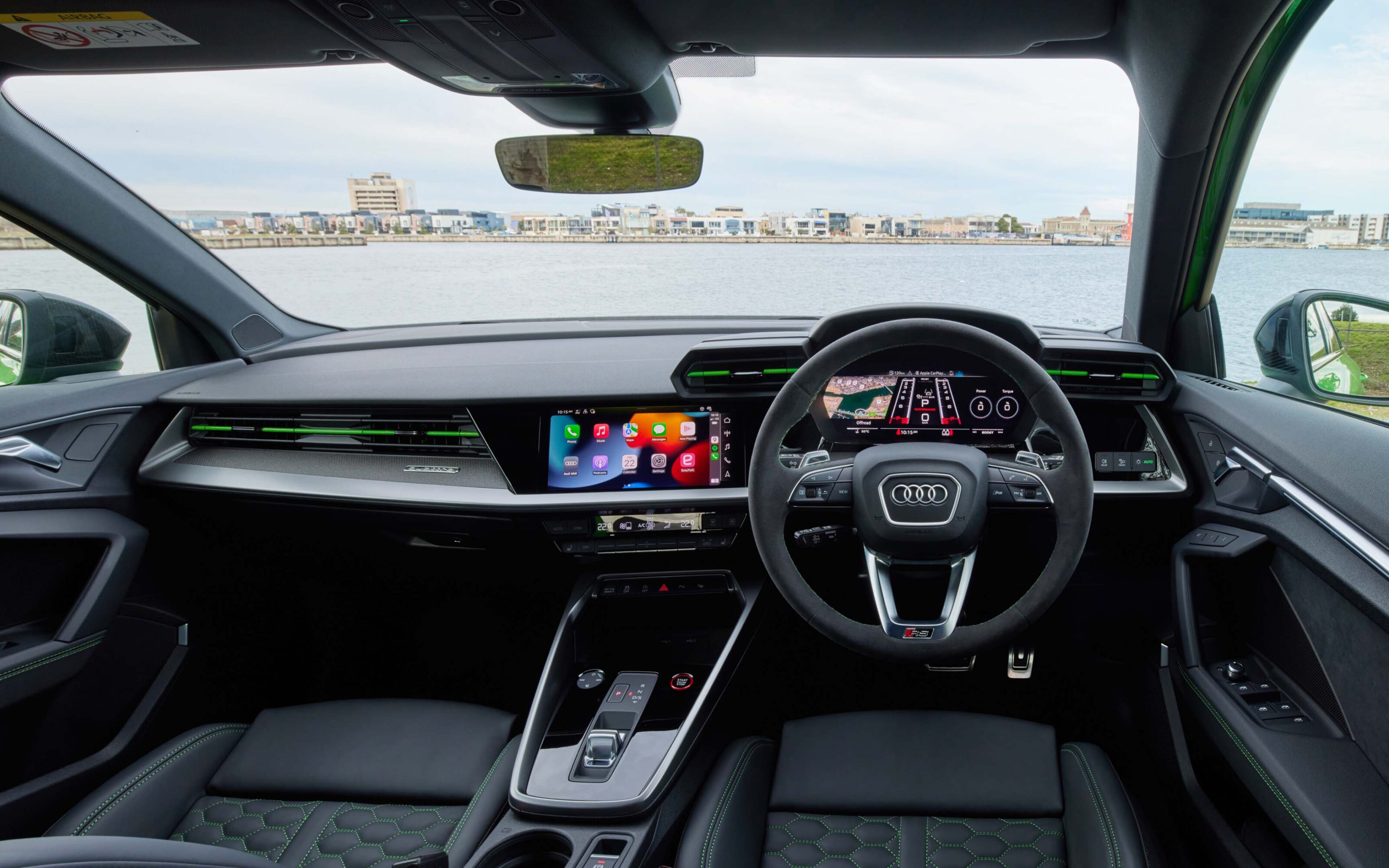
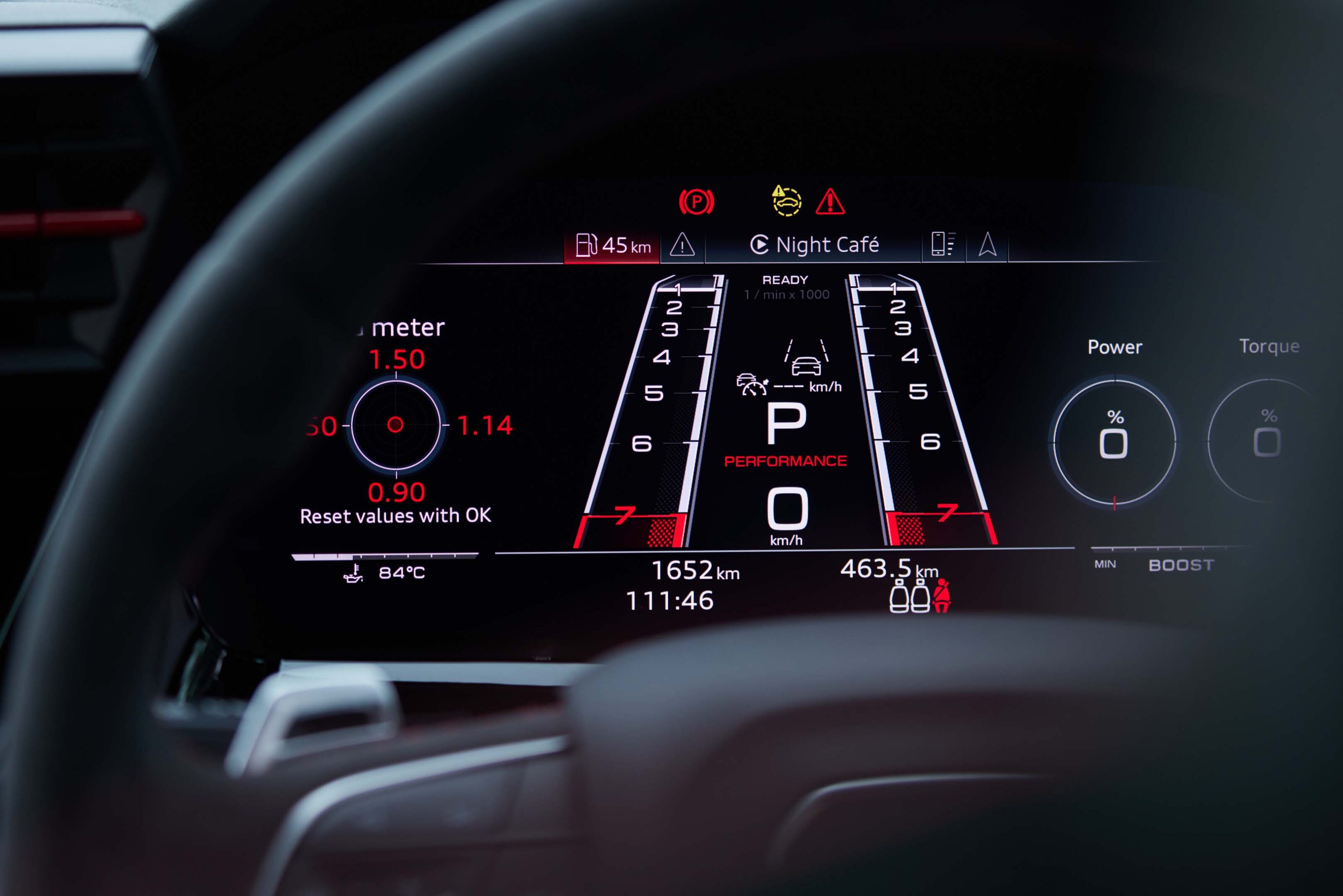
Inside, the RS3 is richly trimmed and well equipped. The driver scores fully configurable digital dials, there’s a head-up display as standard (a first for the RS3) and the central infotainment screen measures 10.1-inches.
Apple CarPlay is wireless – though annoyingly Android Auto requires a cable – and you also score a powerful 680-watt, 15-speaker Bang & Olufsen sound system.
How do rivals compare on value?
This is where things get interesting. While the RS3 might seem expensive in isolation, it’s actually cheaper than its key rival from AMG – and by a useful sum. Where the RS3 hatch starts from $91,391 before on-road costs, you’ll need an additional $7694 to buy an AMG A45 S.
It’s an even bigger jump between the sedan versions of both cars: the CLA 45 S is priced at $117,687 before on-road costs, making it $23,796 pricier than the RS3 sedan.
Across virtually every other metric, the RS3 and A45 go tit-for-tat. The AMG has more power (310kW plays 294) but the Audi is quicker to 100km/h (3.8sec vs 3.9).
In virtually every other metric, the RS3 and A45 go tit-for-tat. The AMG has more power but the Audi is quicker to 100km/h (3.8sec vs 3.9).
Both cars have drift modes, officially drink about the same amount of fuel and measure up as roughly equal for standard equipment and safety gear.
Another rival worth considering is the BMW M240i xDrive that starts at $89,900 before on-road costs. Like the RS3 and A45, it offers all-wheel drive but is armed with BMW’s silky-smooth B58 3.0-litre six-cylinder turbo that produces 285kW/500Nm.
The downsides? It’s a coupe-only proposition and the 4.3sec 0-100km/h time means it can’t match the others in acceleration stakes.
Interior comfort, space and storage
Audi makes beautiful interiors so this should be a slam dunk, right? Weirdly, though, the RS3 makes a few missteps inside.
First up, the good stuff. Slip into the driver’s seat and the RS3 makes a brilliant first impression.
The touchpoints are finished with high-quality materials, build quality seems top notch and the cabin design feels modern and tech-infused but it’s also easy to navigate. Want to adjust the temperature or fan speed? Simply reach for a neat rocker switch below the HVAC screen.
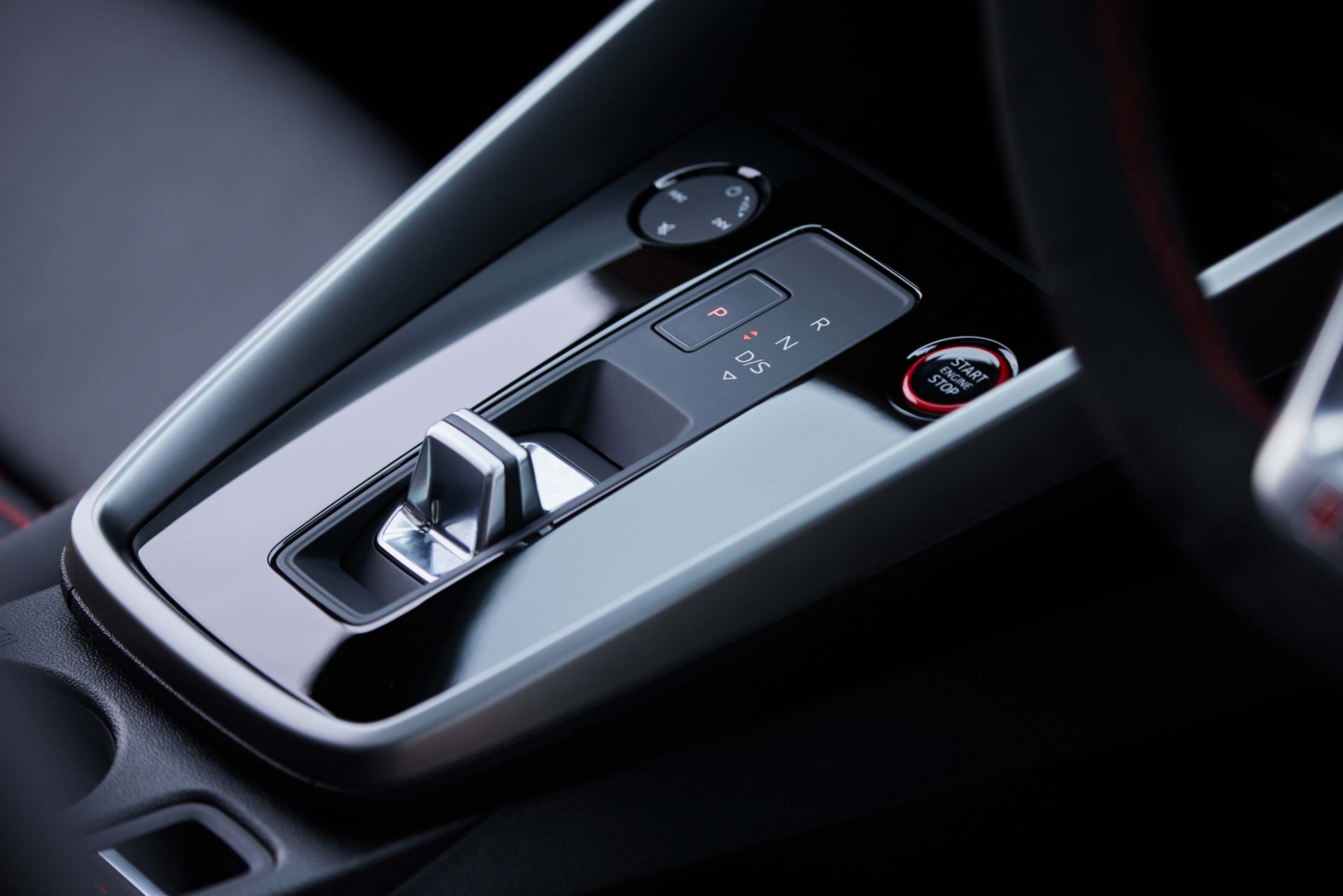
Want to change the drive mode? Look for the Drive Select button on the far left or press a button on the steering wheel.
These might sound like minor details but in a world where many car-makers seem hell-bent on burying as many functions as possible into the central touchscreen, getting the basics right isn’t a given.
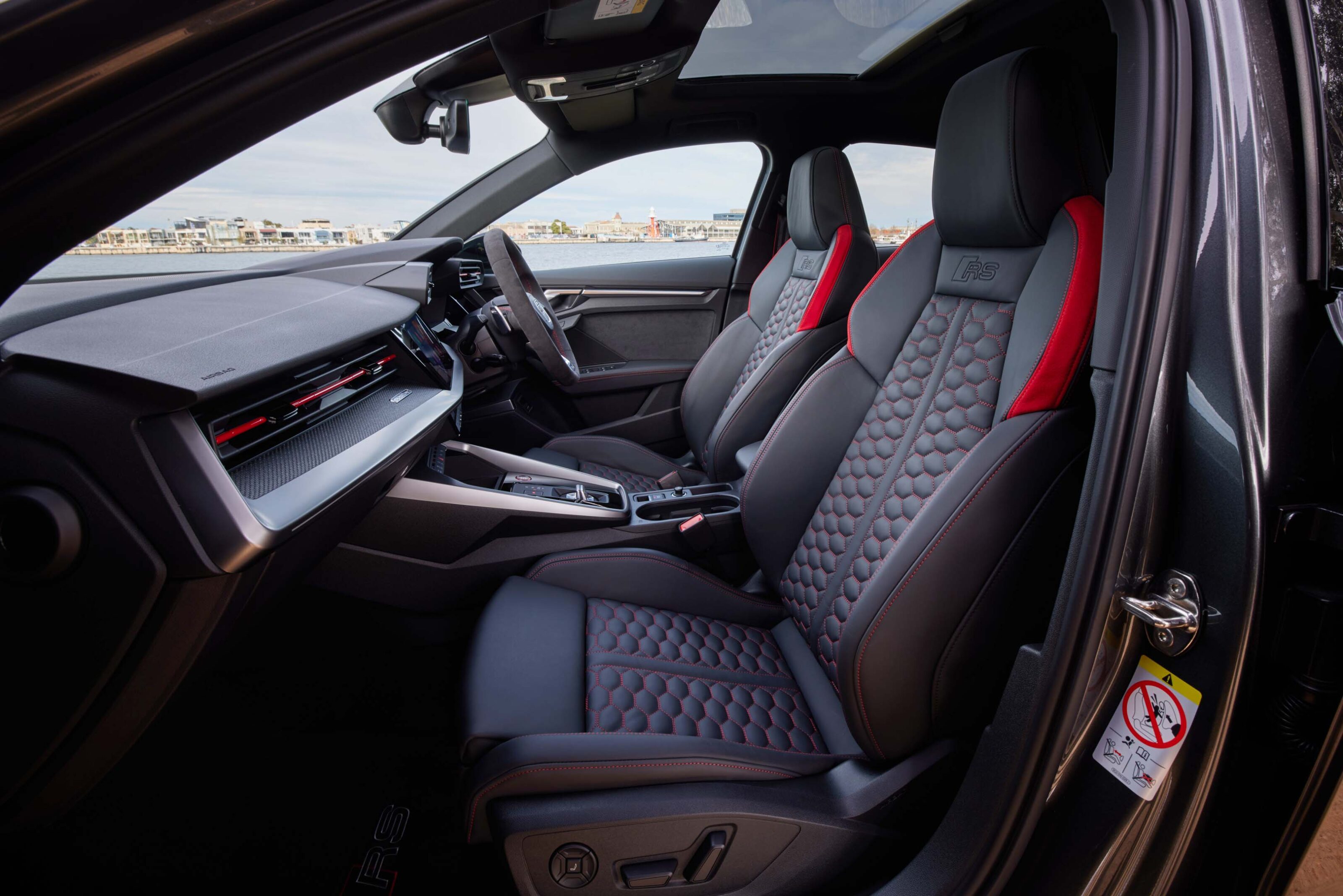
Seat comfort in the RS3 is a highlight thanks to heavily bolstered buckets trimmed in soft Nappa leather and the driving position is mostly spot on thanks to ample reach and height adjustment from the steering wheel.
A minor complaint? We wish the driver’s seat went a touch lower. It’s not a dealbreaker but strangely the passenger seat seems to drop lower than the driver’s pew.
Cabin storage is decent, without being overly generous. There’s a large centre cubby ahead of the stubby gearshifter that houses two USB-C ports and a wireless charging pad. There are two central cup holders and the door bins are roomy, although weirdly, they aren’t rubber-lined or flocked so objects can slide about and rattle.
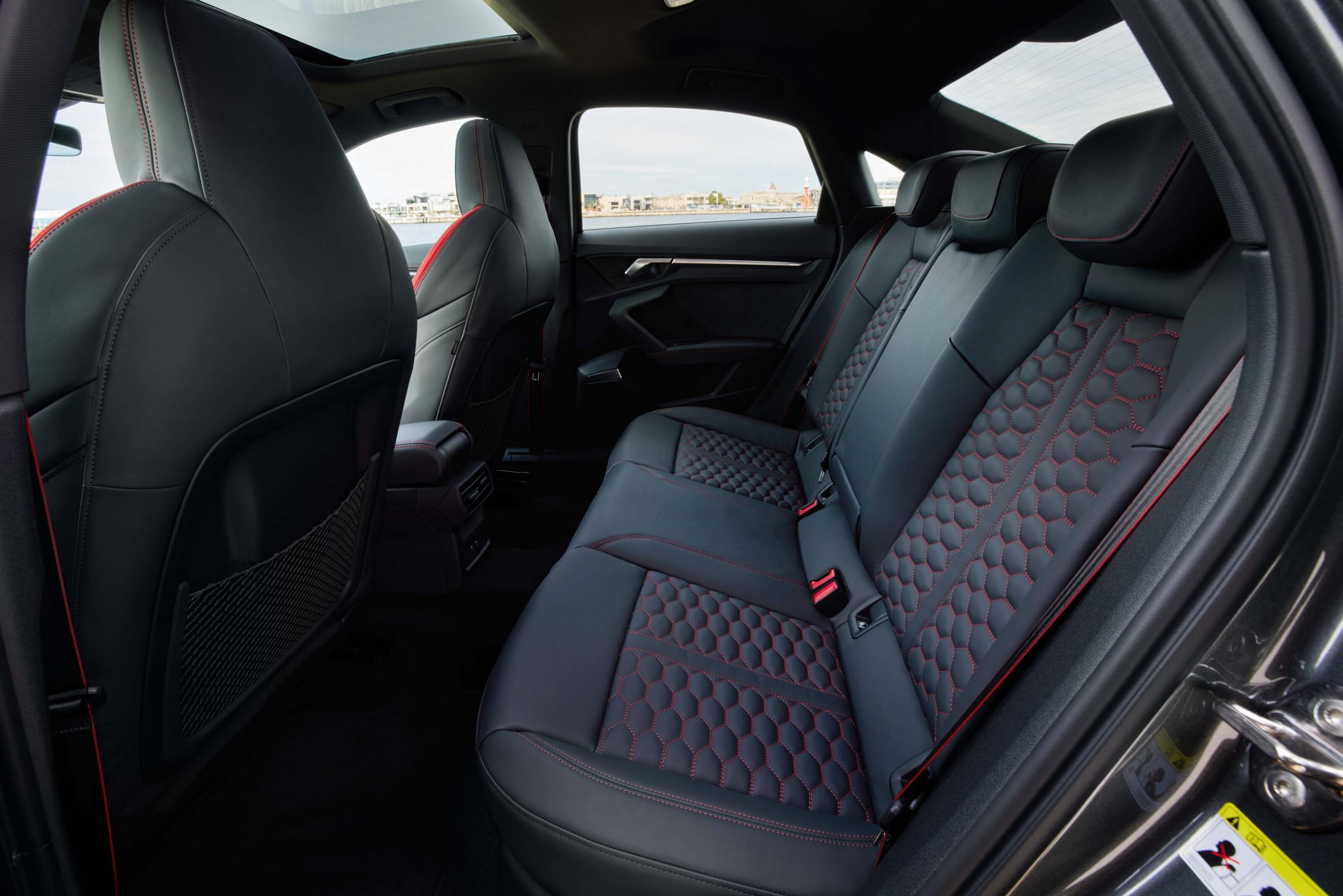
As for general cabin space, the new RS3 rides on the same MQB Evo platform as the new A3 and it has grown in every dimension. There’s decent room up front and six-foot passengers can easily fit in the rear seats thanks to generous levels of head and toe room.
Knee room is on the snug side, though, with our legs falling just short of touching the seat in front. It’s also worth noting that we only tested the rear bench in the hatch. We’ll jump into a sedan soon.
As for those missteps I mentioned? The first concerns the quality of some cabin plastics. While the cabin seems richly trimmed initially, search below the beltline and you notice that the plastics on the lower doors and central console feel harder and scratchier than you might expect in a car costing six figures.
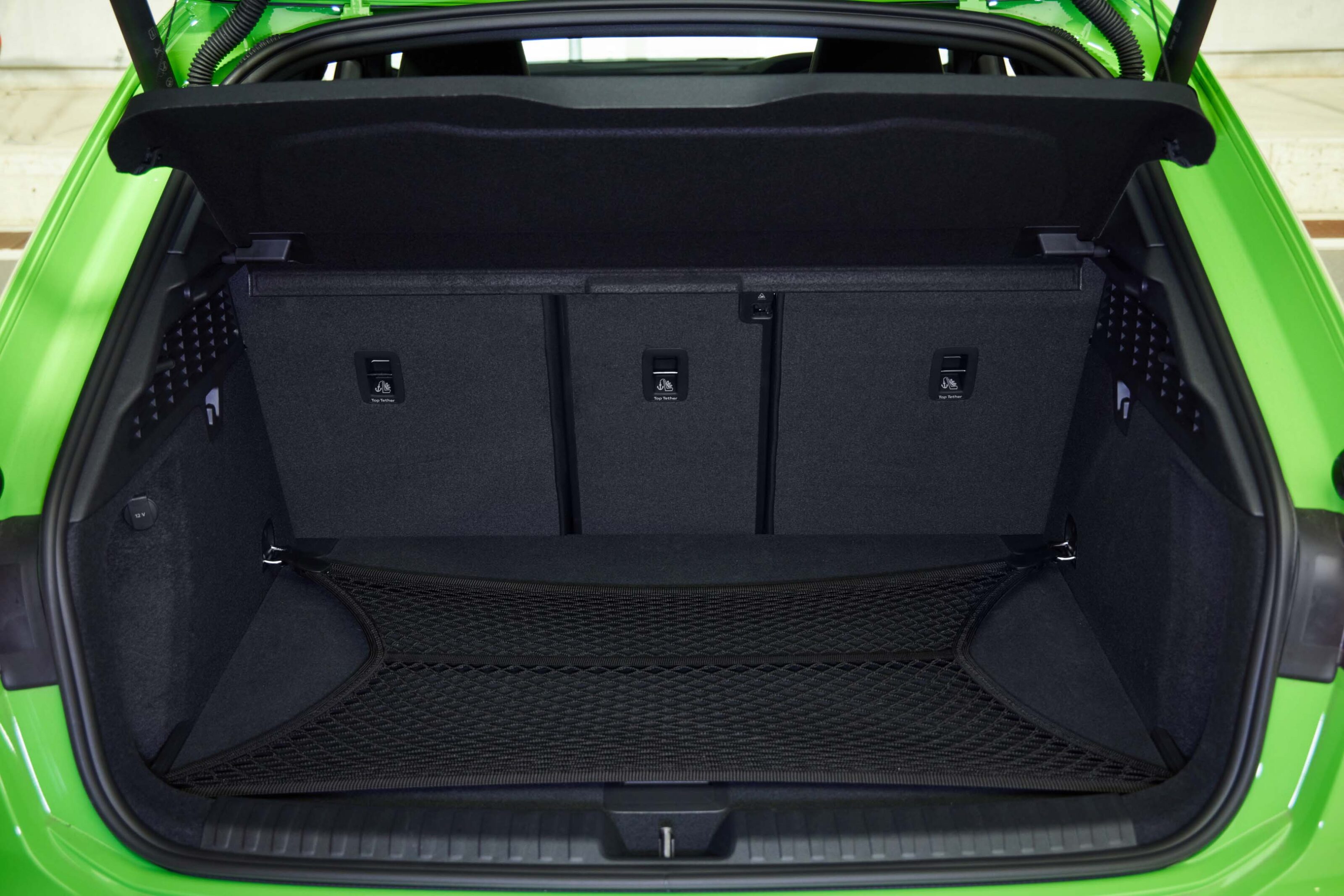
There’s also an unwelcome amount of tyre roar on coarse-chip roads but by far the biggest compromise with the new RS3 is boot space. Fitting the new ‘torque splitting’ rear diff has eaten up some valuable space and in the hatchback, the boot now only measures 281 litres.
That’s around 100L less than you get in the AMG A45 or a Hyundai i30 N, while a Golf R offers 340L. Happily, the RS3 sedan fares marginally better, with 321L of boot space, but neither car is what you’d call commodious when it comes to lugging stuff about.
What’s it like to drive?
In short, it’s deeply impressive.
Our first taste of the new RS3 is on track and it only takes a few laps to understand that this is quite a different car to the models that have gone before it.
Previous versions of the RS3 have always been blisteringly quick but they haven’t been the sharpest or most engaging cars at the limit. This time around, though, there’s both speed and chassis talent to exploit.
The steering is on the light side but it’s quick and unwaveringly accurate, grip levels are high and the traction and punch out of tighter turns is addictively immense.
Push too hard and the underlying chassis balance falls into safe understeer, but trim your entry speeds a touch and the RS3 is an accurate and fun track car.
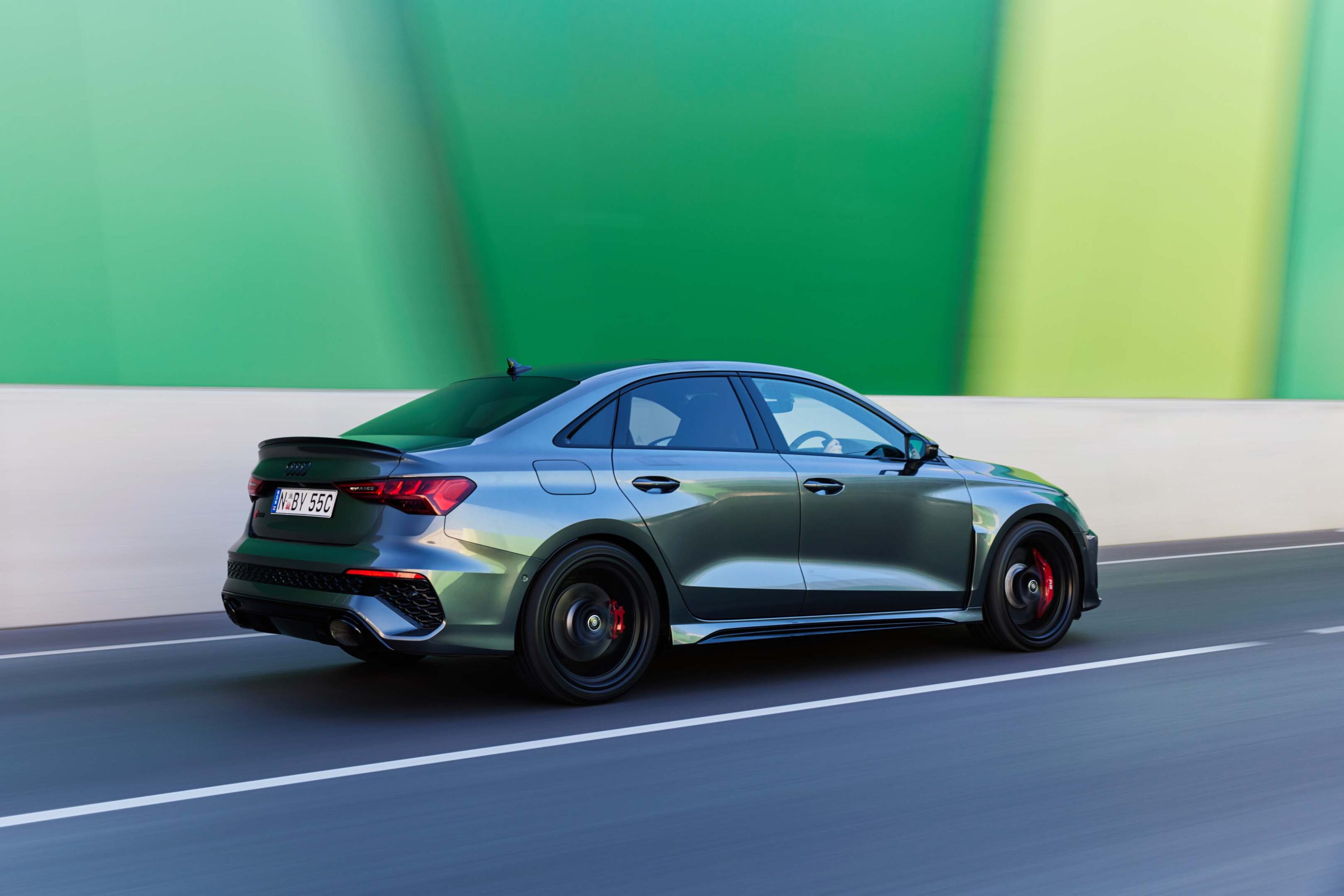
You can also alter the balance by cycling through the many drive modes that, among other things, tweak the behaviour of the new rear diff. Three new ‘RS’ modes join the usual suite of Comfort, Efficiency, Auto and Dynamic.
RS Individual allows you to configure the aggression of the powertrain and chassis through multiple stages and RS Torque Rear is how you tap into the drift mode function.
But it’s RS Performance that’s the most fun on track. It exploits the new rear differential to make the chassis as neutral as possible and it also winds back the stability control so you can enjoy small slides on the way in and out of corners.
If regular track days are your thing, Audi also offers two performance upgrades: stickier Pirelli P Zero Trofeo R tyres and larger carbon-ceramic brakes. The rubber is worth considering but we’d question the value of the bigger stoppers, which are part of the RS Dynamic Plus package for $13,000.
Push too hard and the underlying chassis balance falls into safe understeer, but trim your entry speeds a touch and the RS3 is an accurate and fun track car.
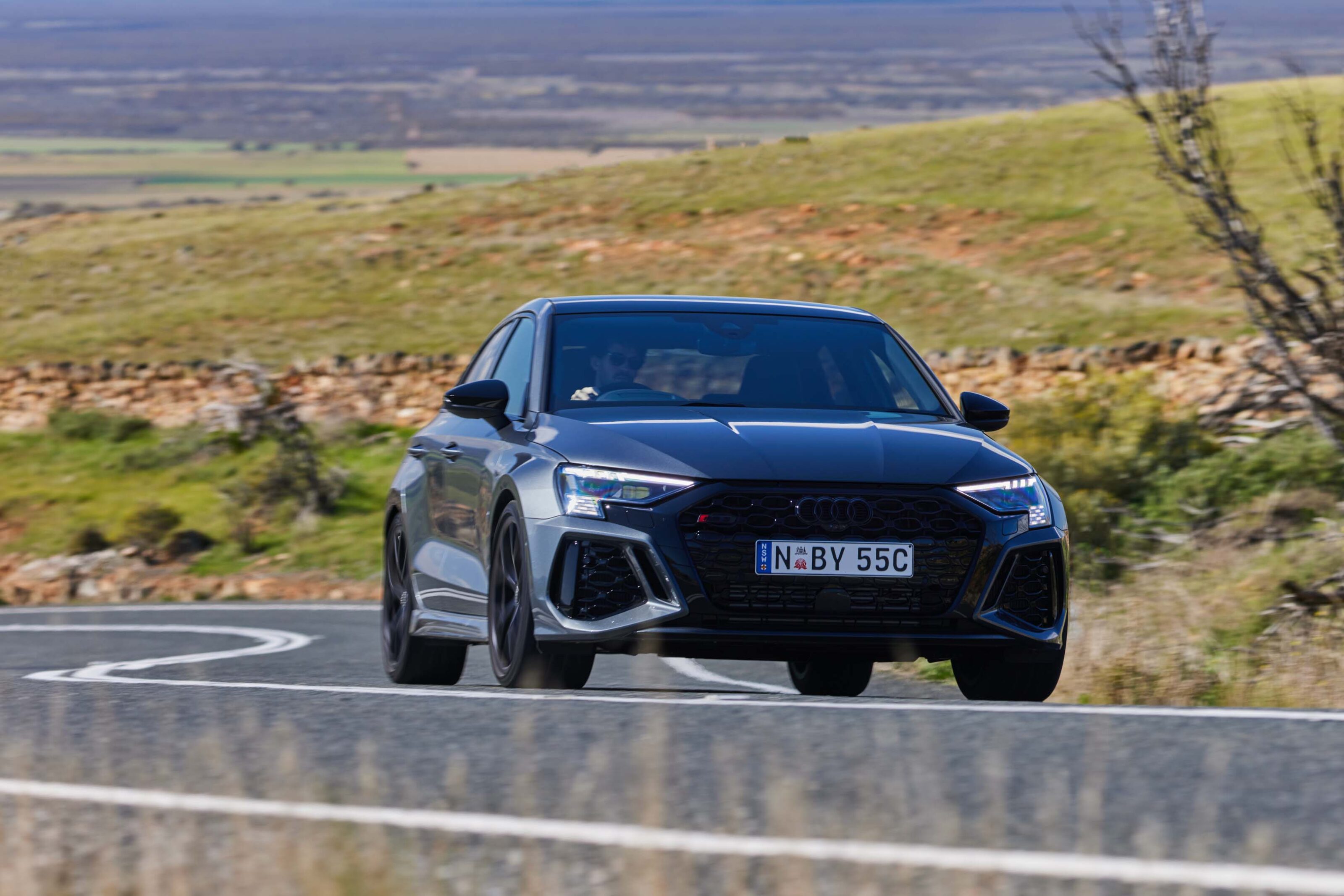
As standard, the RS3 is fitted with 375mm steel discs with six-piston calipers up front and they provided excellent stopping power and modulation during our brief stint on track.
Even better news is how the RS3 performs on the public road. This has to be one of the quickest point-to-point performance cars you can buy, especially across Australia’s network of gnarly back roads. And much of that is down to how this new RS3 soaks up bumps.
The old RS3’s magnetic ride control has been replaced with a more sophisticated adaptive damper set-up and the wheel control and compliance on offer are superb.
Unlike an A45, which can skip and jump on poor surfaces, the RS3 breathes with the road and rarely feels harsh or jarring even in its firmest drive modes.
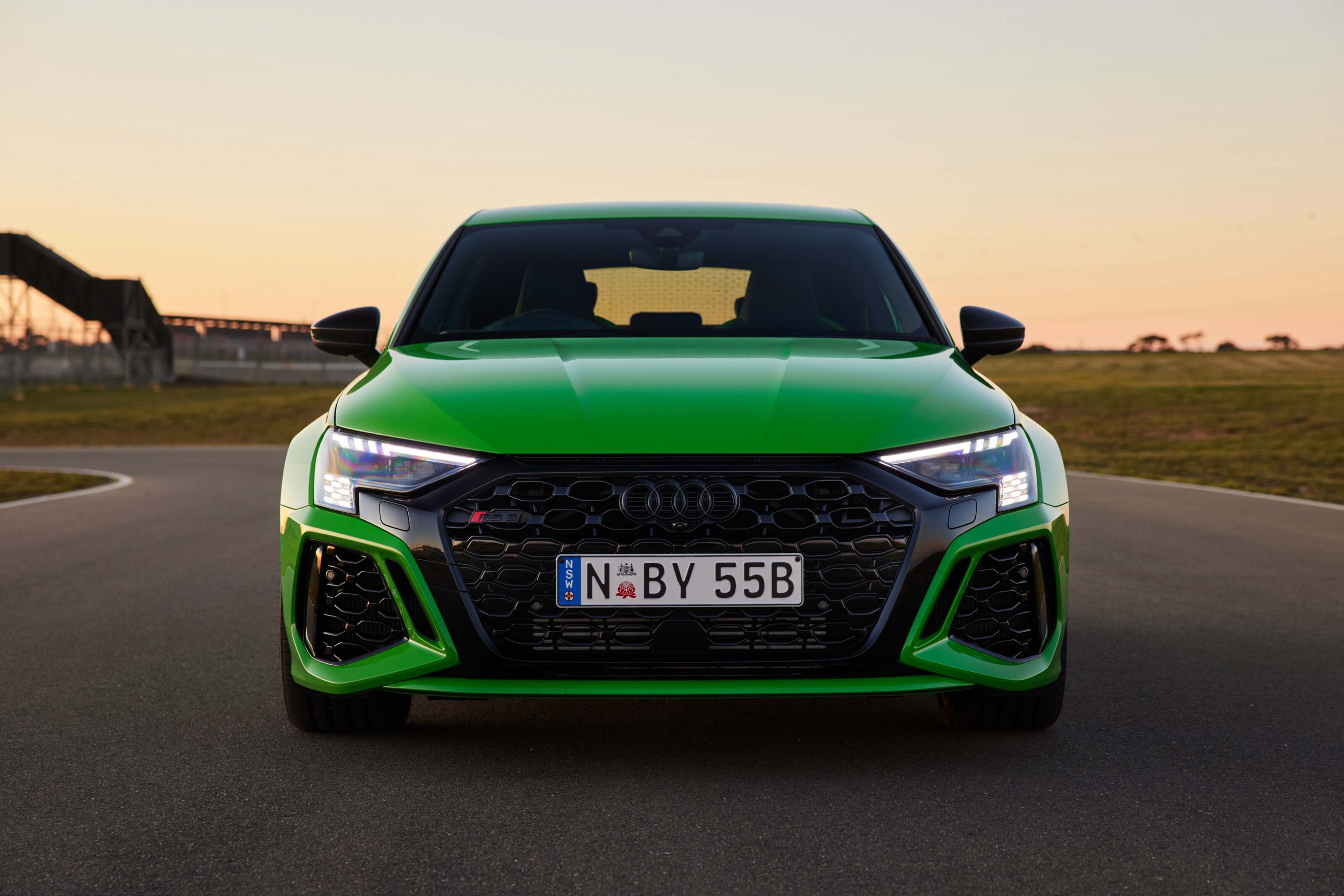
Does that make it less exciting than its rival from AMG? Possibly. The RS3 certainly feels more polished and less manic but, given its superior ability to keep all four wheels in contact with the road, we’d also wager it’s probably the quicker hyper hatch to hustle in the real world.
Then there’s the engine. Audi’s oddball 2.5-litre turbo has long been a core RS3 attraction and, as ever, it feels and sounds properly muscular and exciting.
Ample low-down torque is there to exploit too, which isn’t only a benefit out of tight corners but means the RS3 is a doddle to drive about town.
Throw in the extra bandwidth with which Audi’s engineers have gifted the chassis and this is a hardcore performance car that you could easily drive every day.
How is it on fuel?
Saving fuel isn’t a top priority for performance cars but Audi’s powertrain boffins have included some useful features to help you save money at the bowser. When you switch the car into its Efficiency drive mode, for example, the all-wheel-drive system favours the front axle in order to save fuel.
Power and torque are also trimmed to 80 per cent, although you still get the full whack if you deliver a large enough press of the throttle. Efficiency mode also allows for a coasting function that drops the engine to its idle speed in certain situations.
Officially Audi says the new RS3 Sportback drinks 8.3L/100km on the combined cycle, while the RS3 sedan is marginally more frugal at 8.2L.
From our long-term experience in driving the previous RS3 over a number of months, we’d wager you can expect a real-world fuel usage of around 10L/100km.
Warranty and running costs
Like all Audis, the 2022 RS3 Sportback and sedan come with a five-year, unlimited-kilometre warranty.
Capped-price servicing schemes are also available and can be purchased at any time in the first 12 months of ownership. A five-year service plan costs $3580, which works out at around $700 per service.
Owners can also buy an additional two-year Audi Advantage pack for $3800. This provides an extra two years of servicing and a further two years of factory warranty.
Audi also allows buyers to purchase two of these packs to use back-to-back. So for an additional $7600 you can effectively increase the factory warranty from five years to nine years and also cover your service costs.
VERDICT
Is it the best hyper hatch you can buy? That’s a tougher one to answer.
It’s a deceptively complex and deeply impressive thing, this new RS3. At first blush, it’s easy to dismiss it as a lightly reworked version of the old car that’s been fitted with a fancy new diff. But that’s selling it short.
This is a distinctly different machine to previous RS3s. It still offers incredible pace and grip but thanks to its new all-wheel-drive system, it’s not only more capable than ever but also more fun. Throw in a ride and handling balance that is surprisingly polished and comfortable and this new RS3 delivers enough of a leap over the S3 or Golf R to justify its lofty price tag.
Is it the best hyper hatch you can buy? That’s a tougher one to answer. While the RS3 offers a subtly different character to the AMG A45, the two rivals are so similar in performance and pace that it almost feels like a dead heat.
We feel a comparison test coming on…
2023 Audi RS3 specifications
UPDATE, August 4: 2022 Mitsubishi Outlander hit by $1000 price rise
Mitsubishi has increased pricing by $1000 across its latest-generation Outlander medium SUV range.
The latest rise follows a previous $500 and $1000 hike to the flagship Exceed and Exceed Tourer variants, respectively, earlier this year.
Wheels has contacted Mitsubishi Australia for comment; however, the price changes are a likely result of the ongoing semiconductor chip shortage, which continues to impact the entire automotive industry.
In addition, the company has released pricing and features for the new-generation Outlander PHEV set to launch in mid-August. For more information, click on the link below:
Our previous coverage of the 2022.5 Mitsubishi Outlander has been updated to reflect the latest pricing.
The story to here
February 15: ‘2022.5’ Mitsubishi Outlander price and features
Snapshot
- ES, LS and Aspire variants affected
- Exceed grades remain unchanged despite price increase
- First updated arrivals expected in April
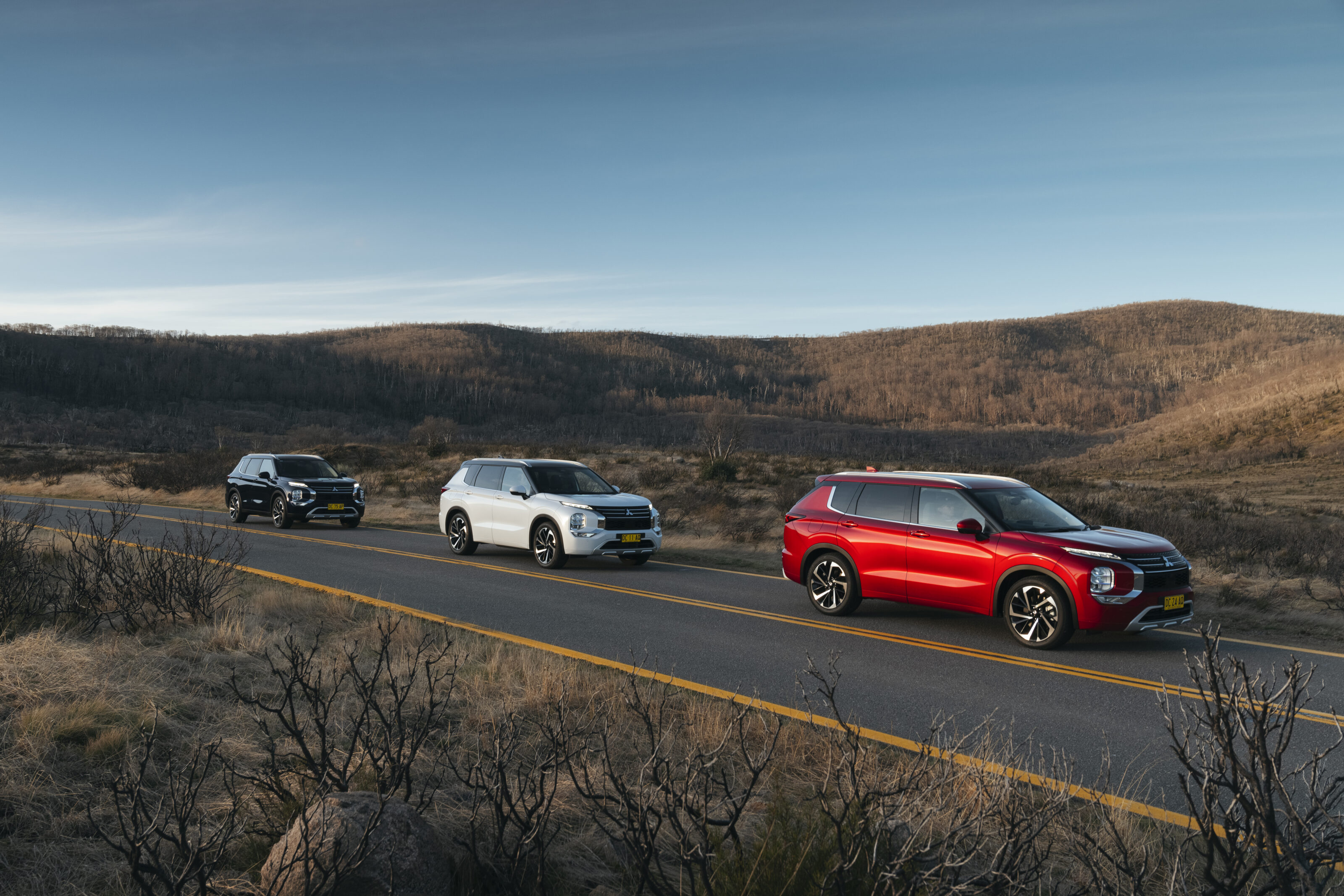
The 2022 Mitsubishi Outlander has had to lose some standard features as the Japanese manufacturer battles against the global semiconductor shortage.
Mitsubishi Motors Australia has announced a number of minor equipment changes will come for its MY22.5 Outlander as it looks to keep production rolling, with only the Exceed and Exceed Tourer variants remaining unchanged.
Affecting the ES, LS and Aspire variants, individual tweaks have been made to each grade to ensure units continue to arrive in dealerships, as the updates are expected to turn up on local shores from April.

The entry-level ES will now only have one-touch power window operation for the driver’s side window, rather than both sides as per 2022 models.
For the LS, it is now without a power tailgate, stepping back down to a manual operation as the Aspire’s full-digital driver display is replaced by a seven-inch multi-function instrument cluster.
Mitsubishi has also bumped up the price of its range-topping Exceed and Exceed Tourer variants, with the increased premiums of $500 and $1000 respectively coming thanks to higher production costs.
“These changes to MY22.5 Outlander specification ensure Mitsubishi Motors Australia can secure timely production in these popular grades for our dealer network and customers,” said Mitsubishi Australia CEO, Shaun Westcott.
Mitsubishi’s fourth-generation Outlander launched last year and was followed by the reveal of a plug-in hybrid variant, with the latter’s timing still unconfirmed for Australia.
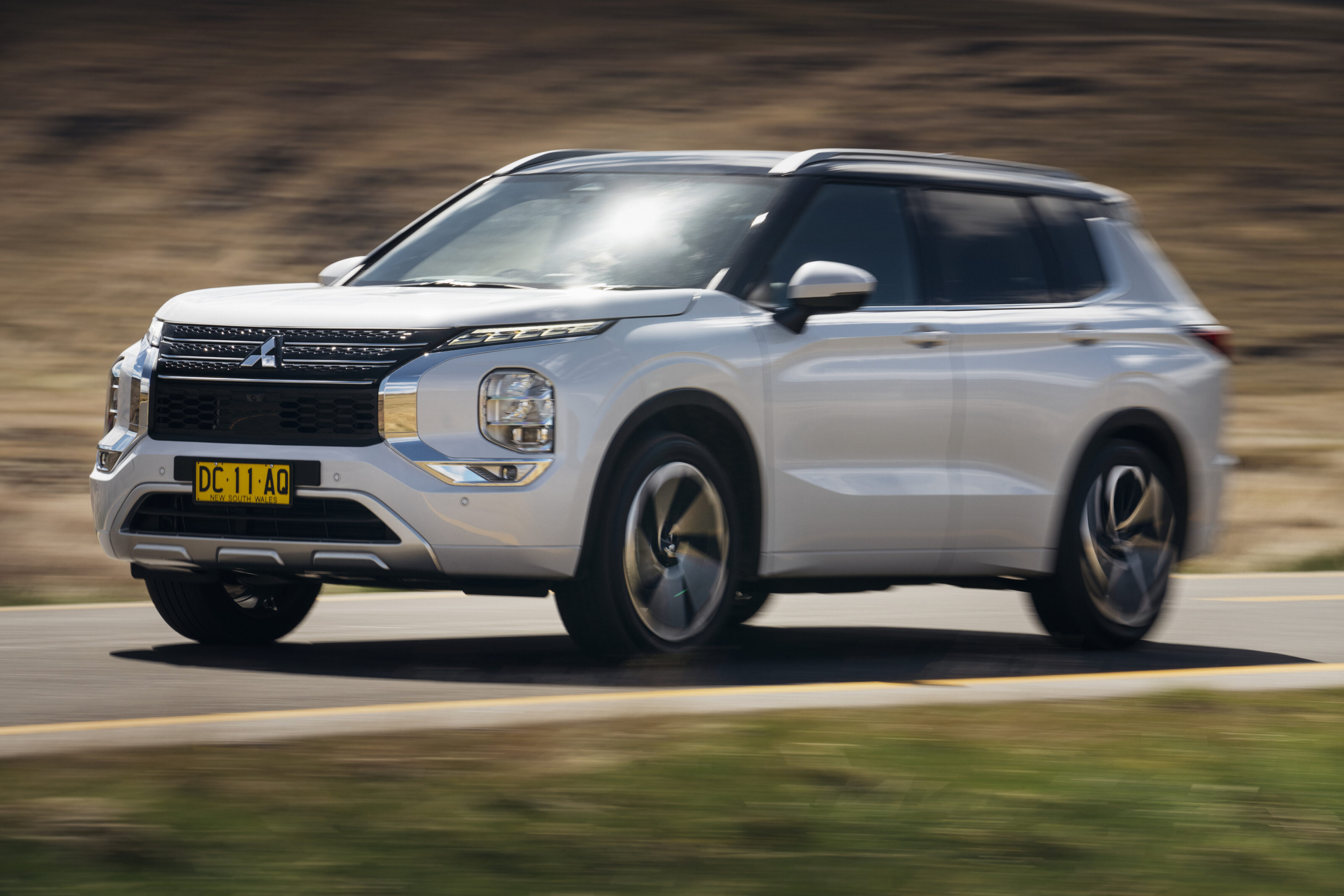
2022.5 Mitsubishi Outlander pricing
Prices exclude on-road costs.
