
Snapshot
- 3500 EV wall chargers on offer in regional NSW
- Grants available for 75 per cent of the cost of installation
- Priced $1990 for the 7kW and $2090 for the 11kW
MG is to subsidise the cost of its electric vehicle chargers in New South Wales for local councils that take up the State Government’s latest incentive scheme.
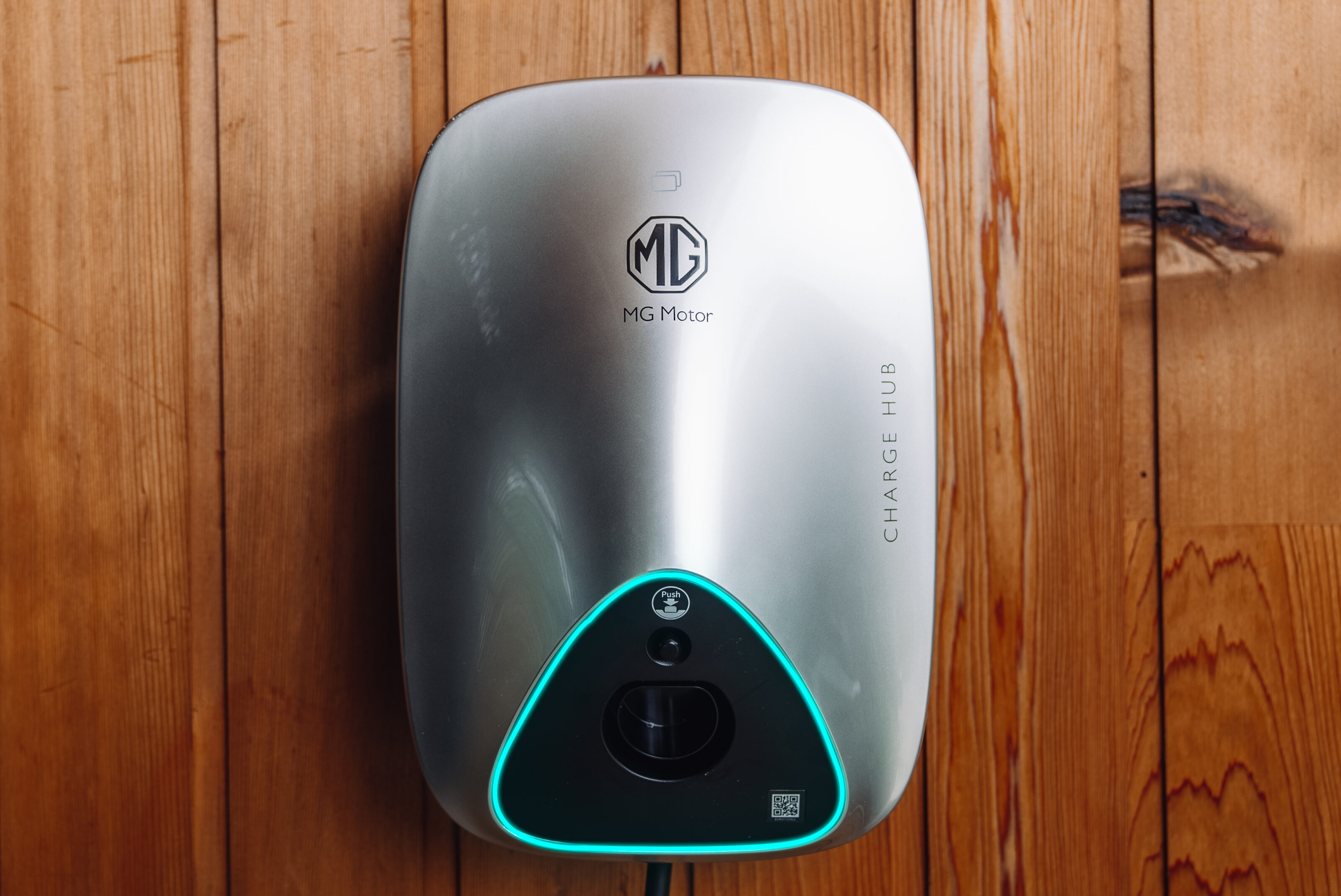
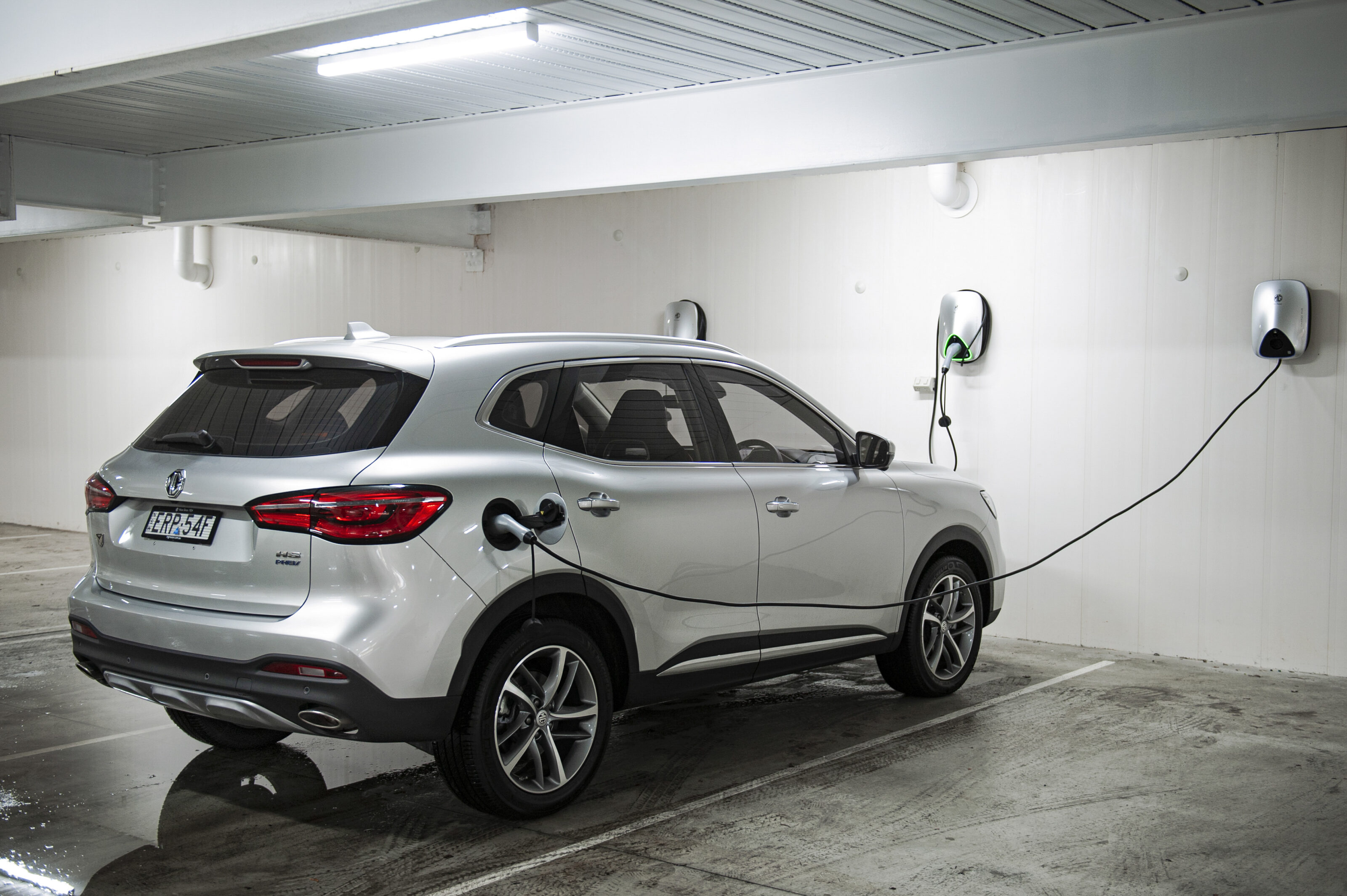
Under the new initiative, the NSW Government will pay out 75 per cent of the cost of an MG ChargeHub and its installation, as well as 50 per cent towards the price of a two-year charging software subscription.
The carmaker will then foot the remaining 25 per cent of the cost of the charger, leaving only the last 25 per cent of the installation bill to be paid.
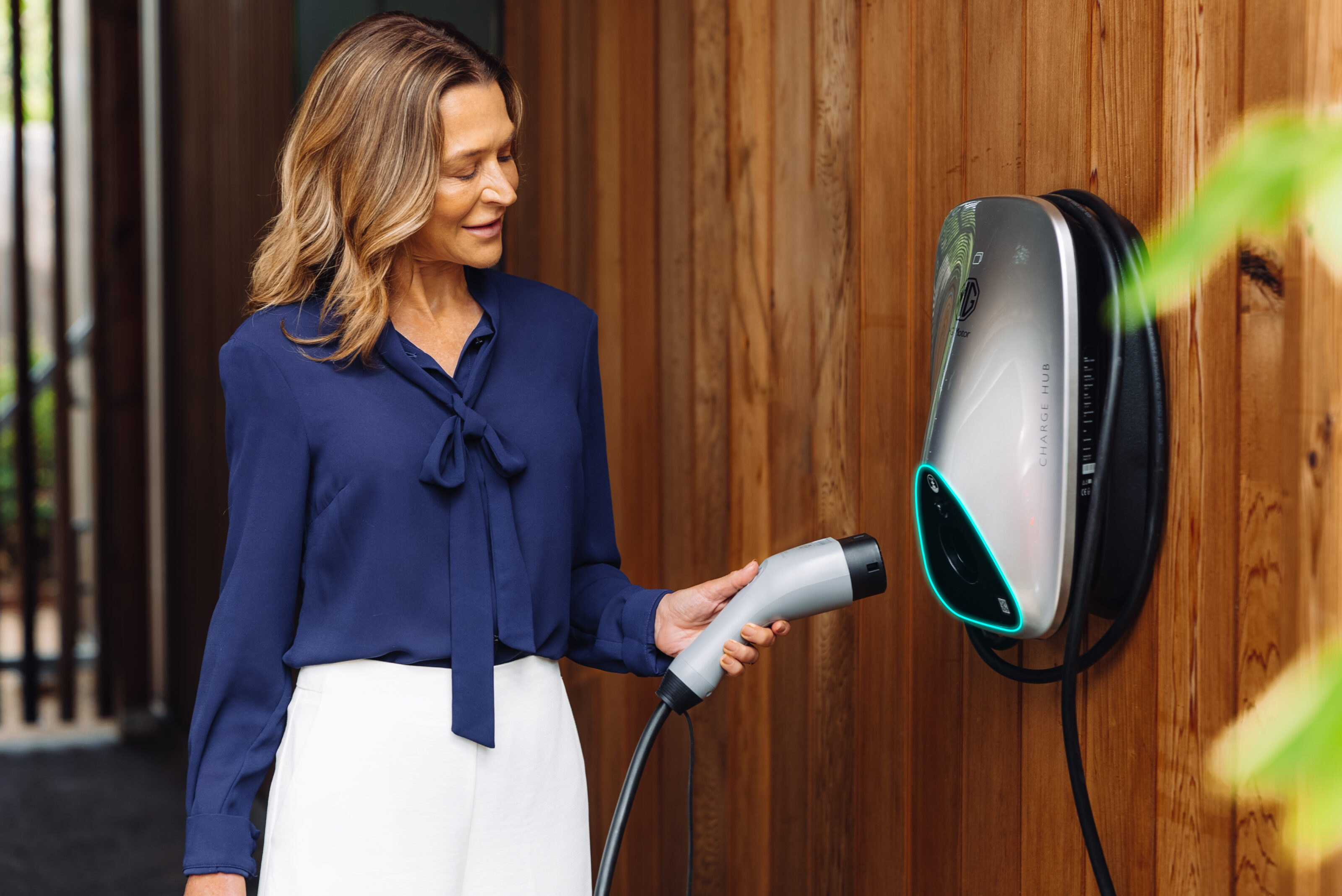
The grants will be made available to regional councils, who can apply to install up to four AC chargers at places such as motels, wineries, cafés, restaurants, natural attractions, and museums.
The offer follows MG’s Hotel Subsidy Scheme announced late last year in which a further 3000 chargers were discounted for regional hoteliers across the country.
Peter Ciao, CEO for MG Motor Australia and New Zealand, said its latest initiatives build on what the company has previously been doing to help promote EV travel locally.
“We want to grow local economies and support small businesses in areas impacted by COVID-19, bushfires and floods, and that’s why we’re filling the gap in cost for our MG EV ChargeHub in conjunction with the grant.
“This initiative underlines MG Motor’s commitment to the Australian community which has supported us.
“When we launched the MG ZS EV in late 2020, we offered the model at a price that delivered great value to customers. This has, in turn, changed the conversation about pricing of electric vehicles in Australia.”
The NSW grants recently announced will mean up to 3500 electric vehicle chargers introduced in a bid to boost tourism in regional areas.
The offer has already been taken up by some local businesses in regional NSW in an effort to make themselves more appealing to customers.
“We wanted to provide a greener service for our visitors,” said Neil Druce, Managing Director of Junee Licorice and Chocolate Factory in southern NSW.
“Part of being organic and conserving the planet aligns with our personal and professional philosophy for being kind to it.”At present, the MG EV chargers cost $1990 for the 7kW unit and $2090 for the 11kW, with both prices excluding installation.
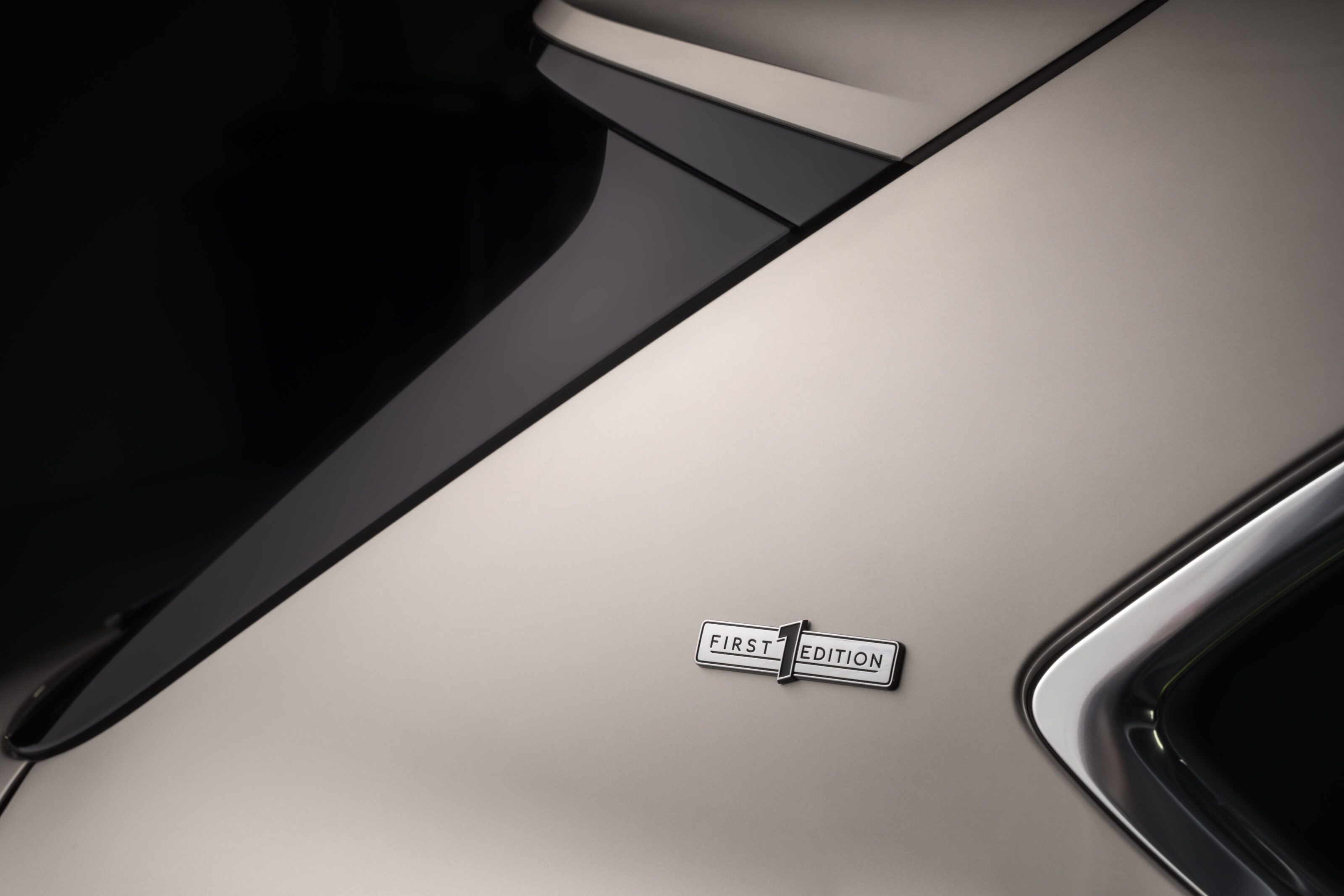
Bentley has made its upcoming Bentayga EWB (extended wheelbase) even more opulent with the First Edition variant joining the line-up.
Set to only be available for the first 12 months of the Bentayga EWB’s production run, the First Edition will be given a number of exclusive Bentley features which won’t be replicated on other grades of the luxury SUV.
For starters, First Edition badging is prominent around the exterior, standing out just as much as the unique 22-inch, 10-spoke directional wheels and bright lower bumper grilles – each feature remaining the only constant among a choice of over 16 standard exterior colours and more than 60 when including the extended paint range.
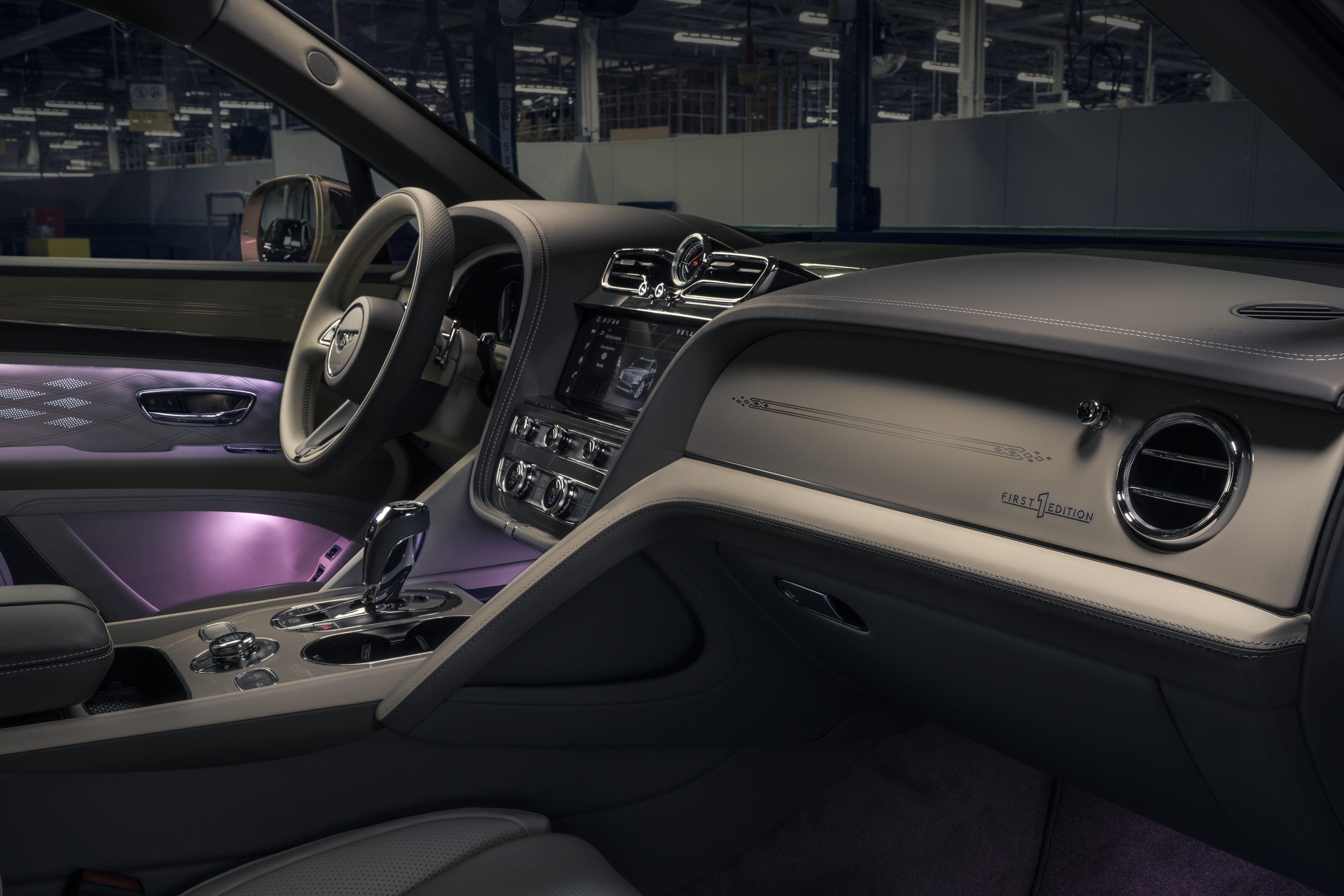
First Edition contrast stitching and embroidery adorns the quilted seats, as two-tone colour splits highlighting the range of upholstrey piping and hand cross-stitching.
Bentley says its full range of veneers is available, allowing the choice of high-gloss wood and open-pore options such as; crown cut walnut, dark burr walnut and koa, although more contemporary materials (including the pearl-like piano linen by Mulliner or dark tint diamond brushed aluminium) are also on the options list.
Mood lighting through LED lights with 30 user-controlled colours helps to set the mood inside the cabin, with a heated steering wheel added as a useful creature comfort.
Rear seat passengers can benefit from Bentley’s optional entertainment system, a piece of non-standard equipment which lets those in the second row to stream content from their WiFi-enabled device to a pair of 10.1-inch touchscreens behind the front headrests.
Bentley’s Australian arm hasn’t confirmed whether the First Edition Bentayga EWBs will be launched locally, although it’s likely the 12-month allocation could be snapped up soon by affluent overseas buyers.
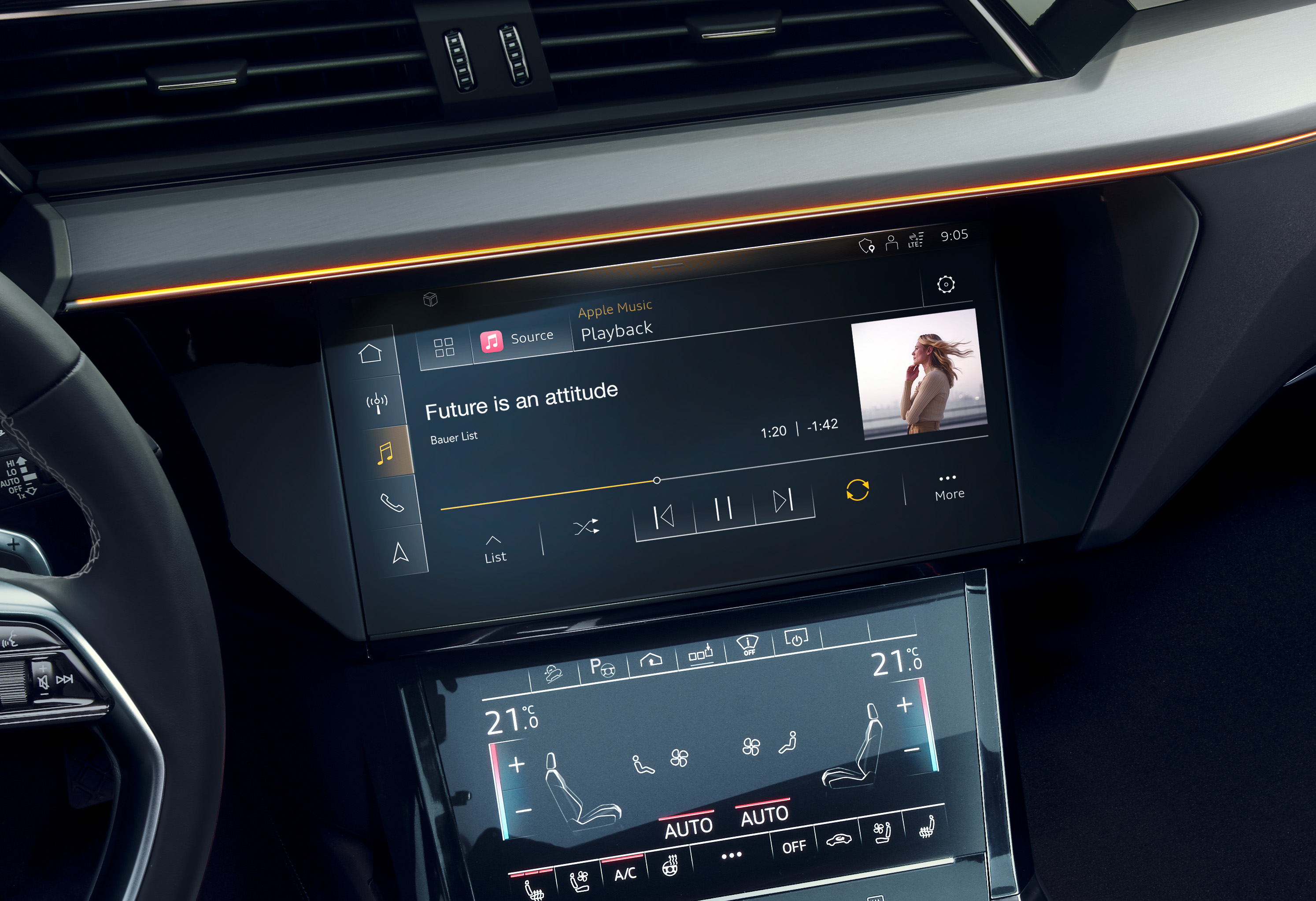
Audi is set to become the first manufacturer to use integrated Apple Music in its model range, announcing it will roll out the feature to its MY22 vehicles.
As opposed to Apple CarPlay and Android Auto, which effectively mirror the screen and applications of a smartphone onto a car’s infotainment screen, Apple Music can be accessed in full through Audi’s Multi-Media Interface (MMI) system without needing to connect an external device.
While Audi Australia hasn’t provided a timeline on when the feature will be available in its local models, Audi’s European, North American and Japanese customers can benefit from Apple Music in all new 2022 vehicles, with an over-the-air update set to be rolled out in the near future.
“Integrating Apple Music into the audio infotainment system marks the next step in the collaboration between Audi and Apple,” said Audi’s head of product marketing, Christiane Zorn.
“For our customers, it means that we are offering them direct access to their own personalised listening experience. This is our understanding of a premium digital in-car experience.
“At Audi we are systematically driving the digitalisation of the vehicle and we are convinced that the interior is increasingly developing into a third living space.”
Audi is pushing to be an industry leader for in-car entertainment, having recently announced a collaboration with holoride to implement virtual reality capabilities in some models, launching from the middle of 2022.
“39% price hike is plenty unreasonable. We need to stop being apologists for greedy car companies jacking up prices to crazy levels” came the comment on MOTOR’s Facebook in response to a recent Volkswagen Golf R review. Well, here’s why that comment is wrong.
Some clarification first: I was perhaps being a little mischievous in framing the Golf R as being 39 per cent more expensive than its predecessor. The car I cherrypicked for that particular statistic was a Golf R Grid Edition manual from 2018.
That was a car that had been built down to a price, stripped of its leather seat trim, digital instrument cluster, silver mirror covers, electric driver’s seat adjustment, seat heating, and even the passenger’s seat under-drawer.
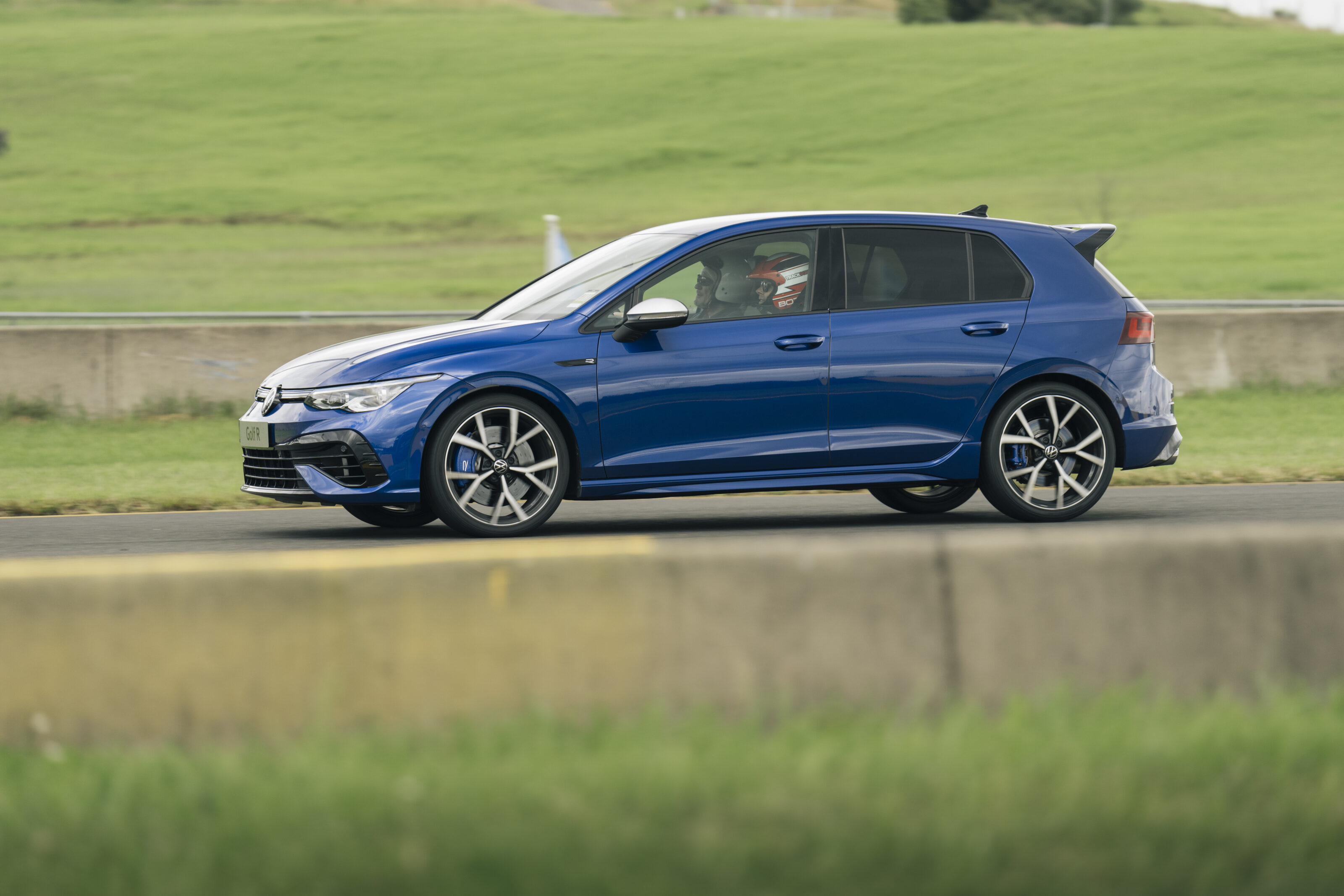
Should you prefer a more like-for-like comparison, try the very last of the outgoing Mk7.5 Golf R models, which retailed at $55,990. The step up to the new car is then 17.8 per cent.
Yes, you’re getting 10.3 per cent more power now, although dyno tests suggest the actual figure hovers around, yes, 17 per cent more. But can that still be justified? Some readers clearly think not and Golf R pricing seems to be a bit of a hot-button topic.
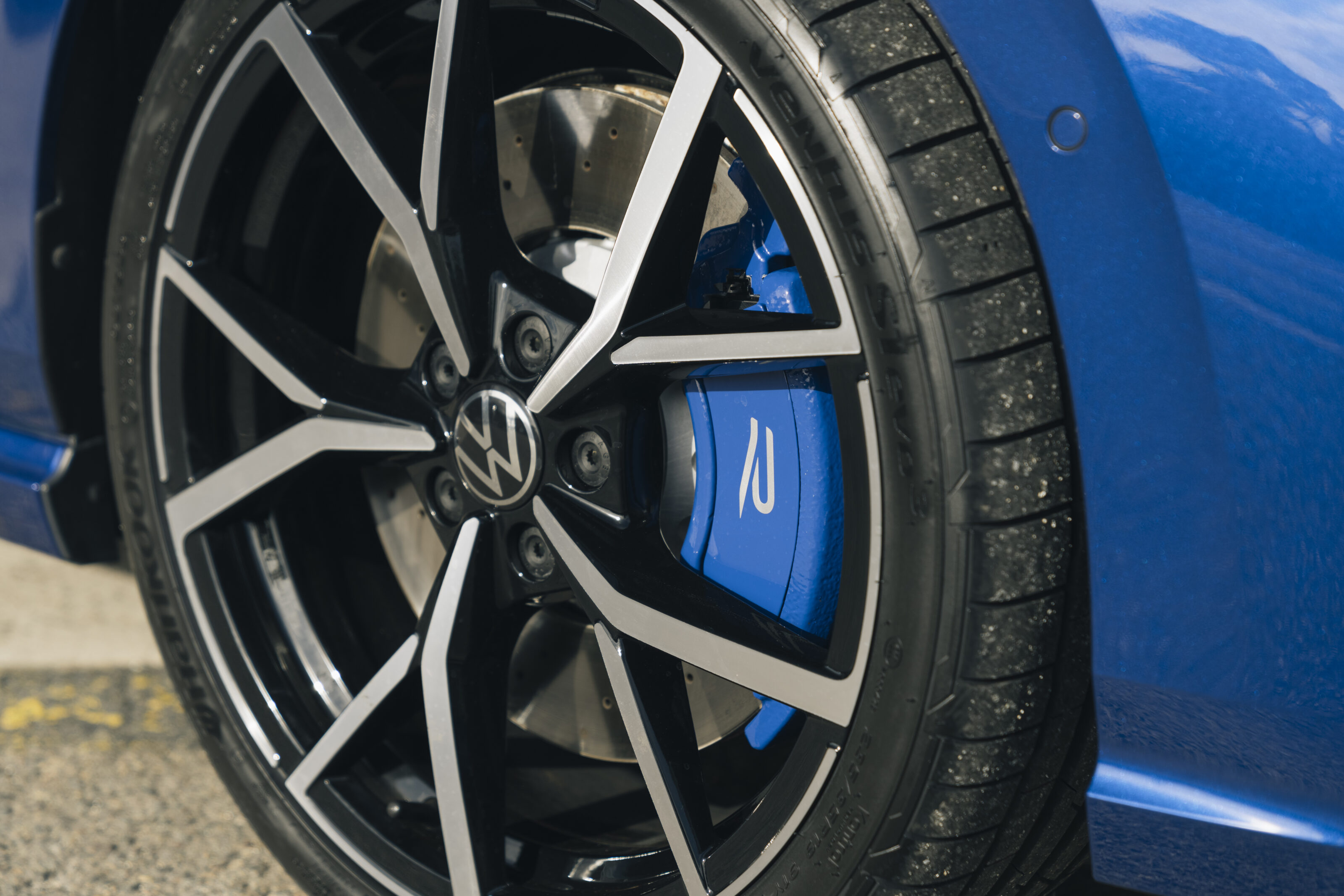
The first argument in its favour is that the Mk8 Golf R is a very different car to its predecessor, in terms of dynamic capability. The clever all-wheel drive system with dual oil-bathed clutch packs at the back is a very different piece of engineering to that which underpins the Golf 7.5.
It’s not a million miles away from the underpinnings of the departed Ford Focus RS which, let’s not forget, cost $56,990 when we ran one as a long termer in 2018 and which proved more than half a second slower than the Golf R against the clock to 100km/h.
The first question we asked when we secured the Golf R was what to compare it to. It operates in a gap in the market between the typical $42-$58k hot hatches like the Hyundai i30N and the Ford Focus ST and the $90-$110k superhatches like the Audi RS3 and Mercedes-AMG A45 S.
Now that the Civic Type-R has temporarily departed the market, there’s not really anything that will beat the Golf R for the money. Not the more expensive Mercedes-AMG A35, not BMW’s M135i XDrive and not even the new Audi S3, with its older chassis tech.
If you’re still unhappy with the price, ask yourself where the Mk8 Golf R should be in the market. At the $63k level of the markedly slower and cruder Megane 300? Come on.
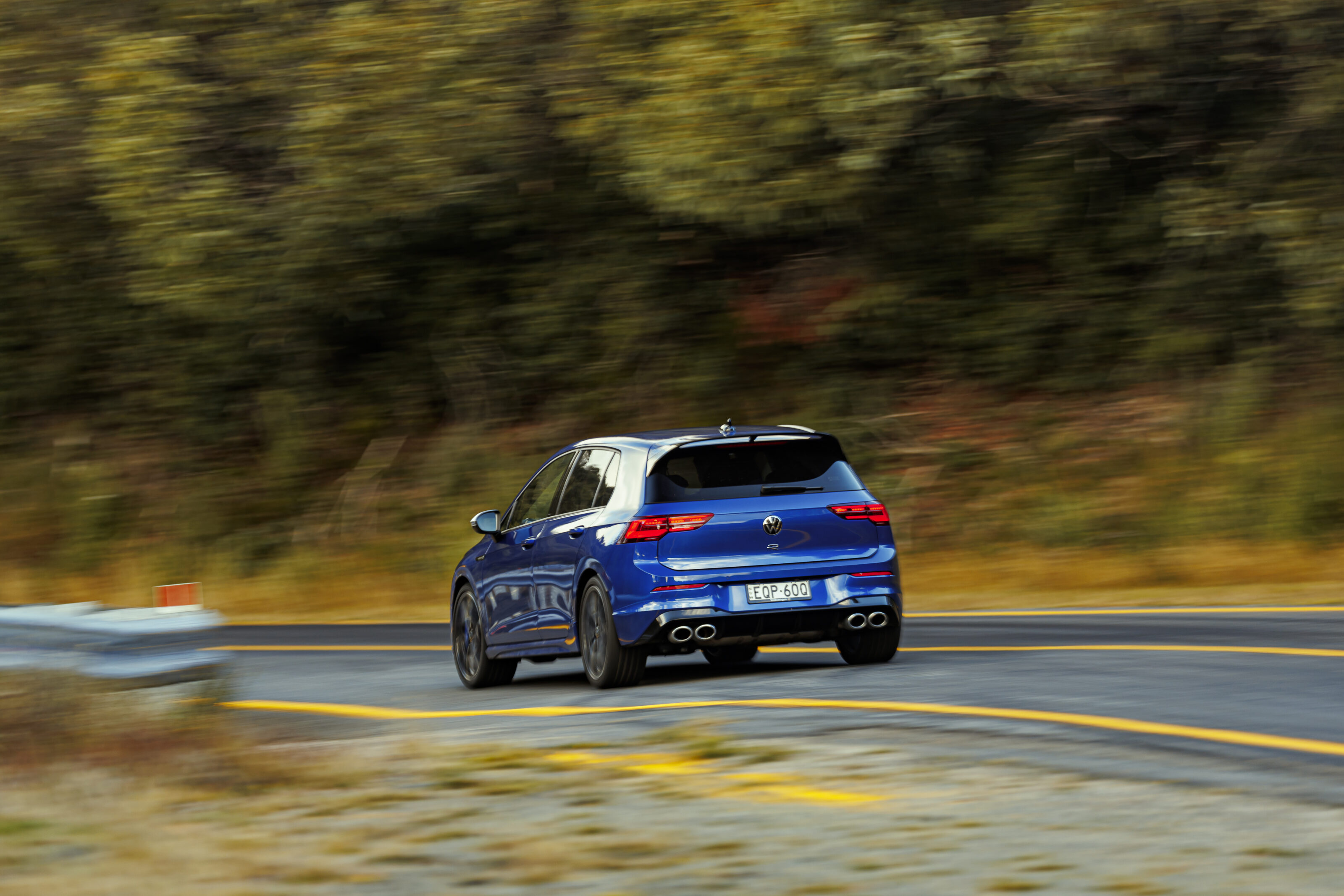
When Honda does bring us a new Type R, it may well eclipse the Golf R dynamically, but it plays to a different crowd. And that’s the thing about the Golf R. It has such bandwidth. It’s everyday useable without feeling overly compromised as a result.
At present, you’d probably need to spend $89,900 on a BMW M240i xDrive to put yourself in something that’s similarly capable. That’s a 36 per cent uptick in price. And even then, you’d be getting a similar level of dynamic ability at the expense of the Golf’s practicality.
And that form factor is key. Even if you’ve managed to move your thinking to the fact that this is a different car with different capabilities to the Golf Mk7.5, there’s often that residual thought that this is still $66k for a hot hatch. Not that Volkswagen asks $66k for a car that can – in the real world – pull down the pants of most of the $100k sports coupes available today.
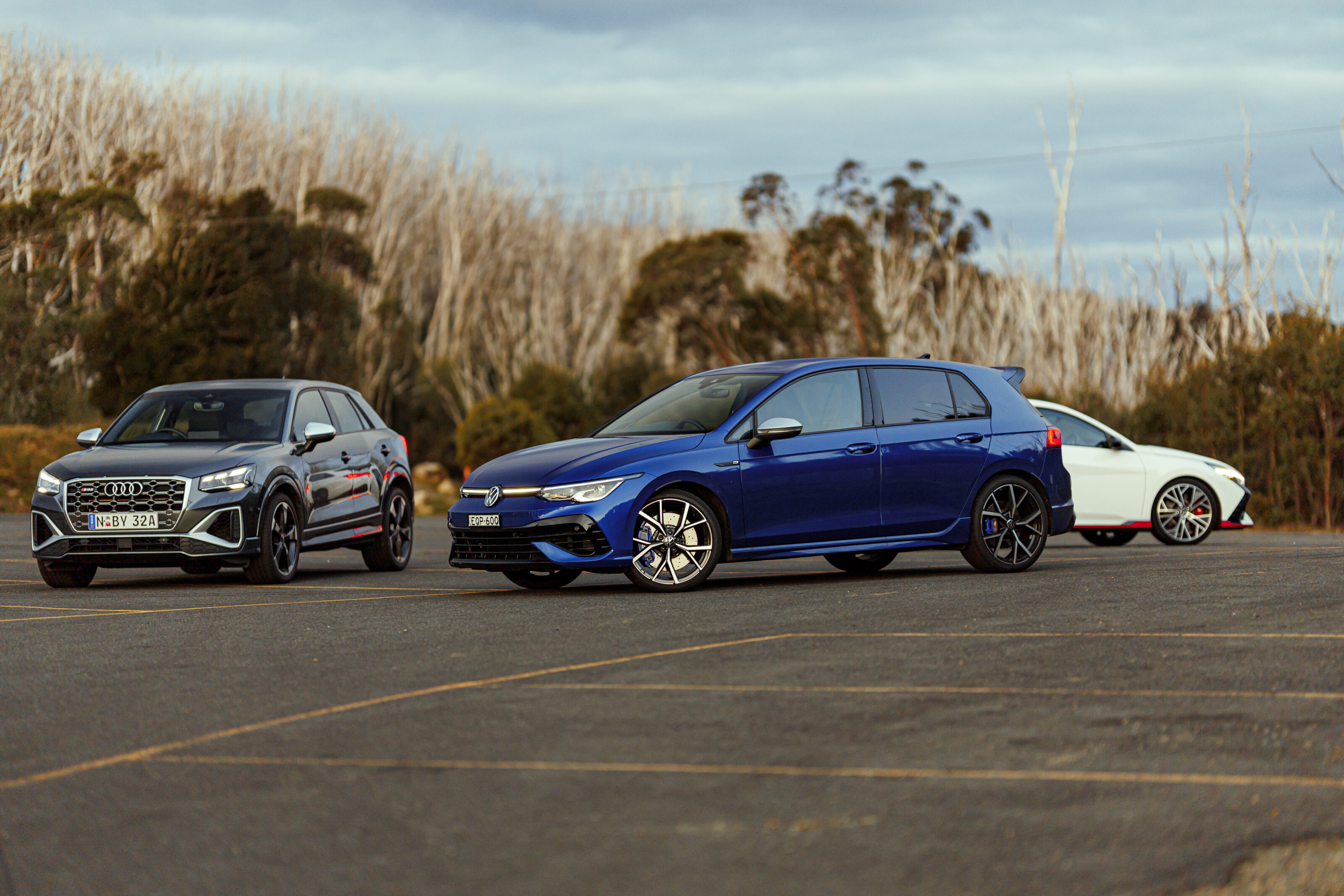
It’s not perfect by any means. There’s evidence of cost cutting in the cabin and the road noise is ever present, especially on coarse chip or open-pore surfaces. The interior haptics are bizarre and there are some odd ergonomic decisions. The drift mode is a bit of a gimmick as are the array of sound symposer modes.
Yet despite all this, viewed in terms of pure all-round capability – performance, dynamics, finish, practicality, technology, equipment; the lot – name me anything in the market at present that gets close to the Volkswagen Golf R for $66k. You can’t because it doesn’t exist.
And offering something better than all of your rivals for less money would appear to be all the pricing justification Volkswagen needs. Judging by demand for the new R, it seems that many agree. As ever, your mileage may vary.
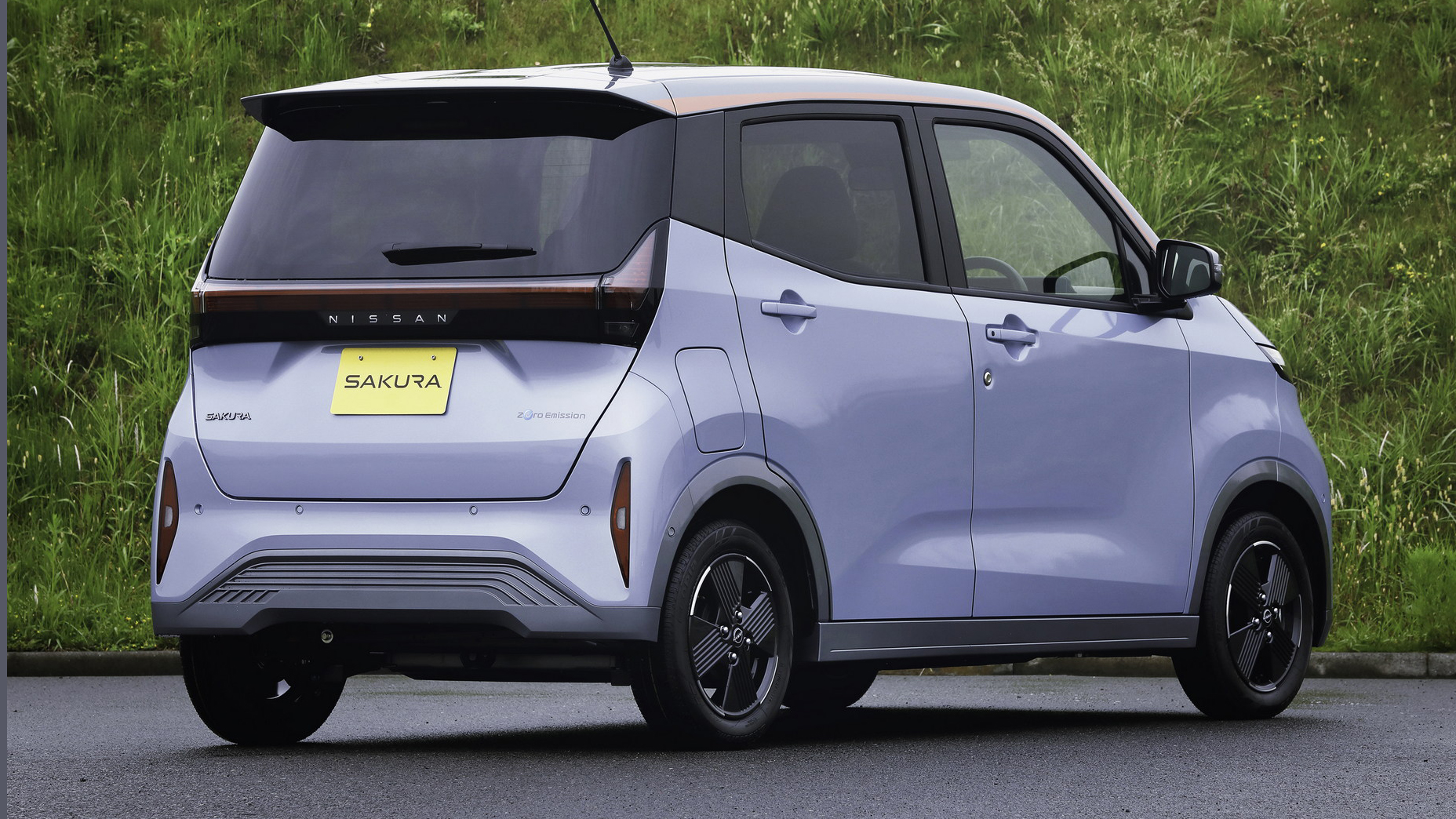
Nissan has unveiled a tiny electric city car, the Sakura, as a new entrant in its home market in Japan.
Named for the unofficial national flower of Japan, known locally as cherry blossoms, the Sakura enters the ‘kei’ segment, which comes with a legal requirement that eligible vehicles be built under a certain size and – per the latest version of the rules – with power outputs no greater than 47kW.
As a kei car, the Sakura is properly tiny, with its length of 3395mm and width of 1475mm making it markedly smaller than the already diminutive Fiat 500 (3546mm long, 1627mm wide).
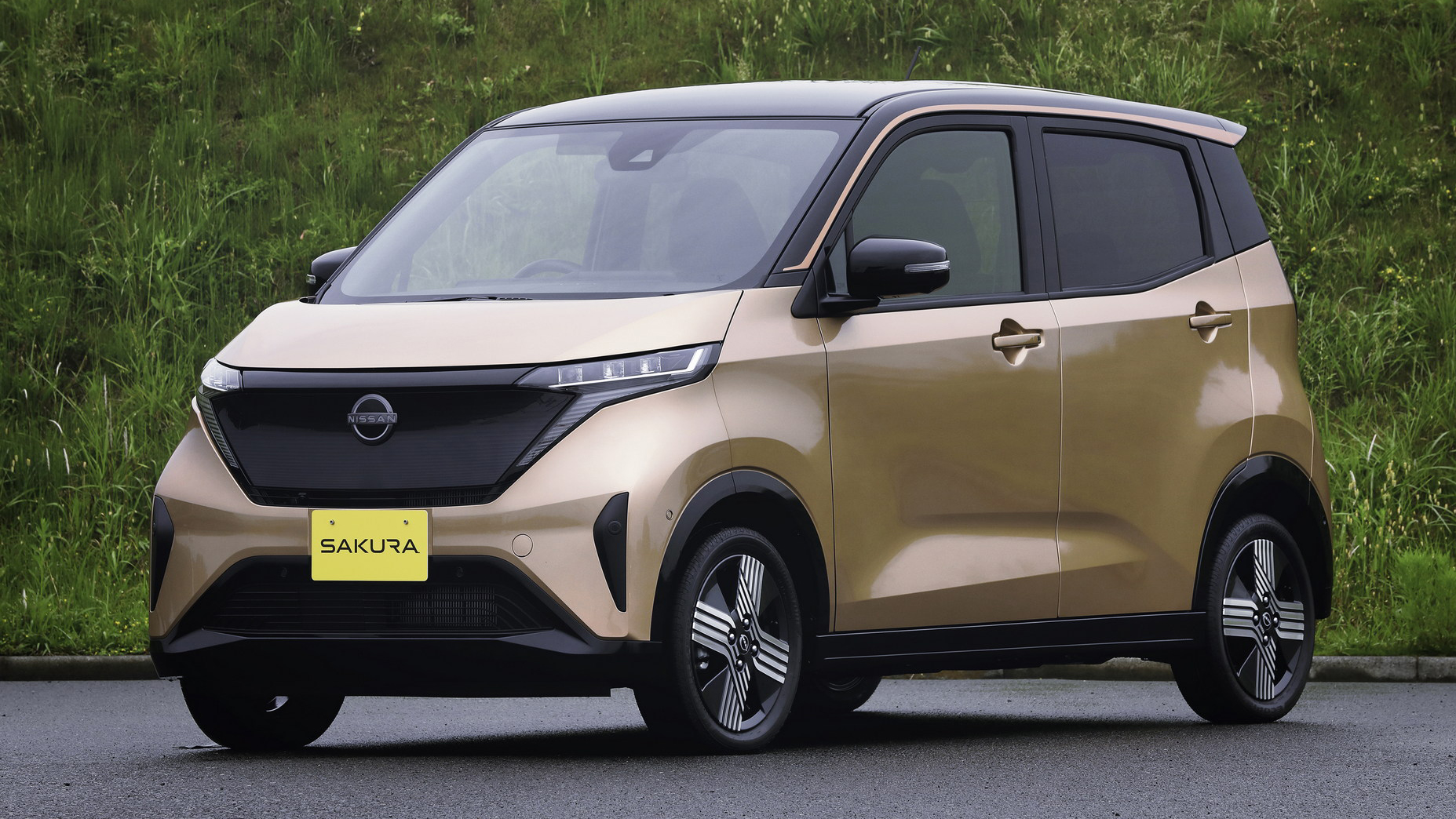
On the styling front, the Sakura takes its cues from Nissan’s new Australia-bound Ariya electric SUV, with those design elements seemingly thrown into a flower press (ironic…) to create the extra-narrow shape expected of kei cars.
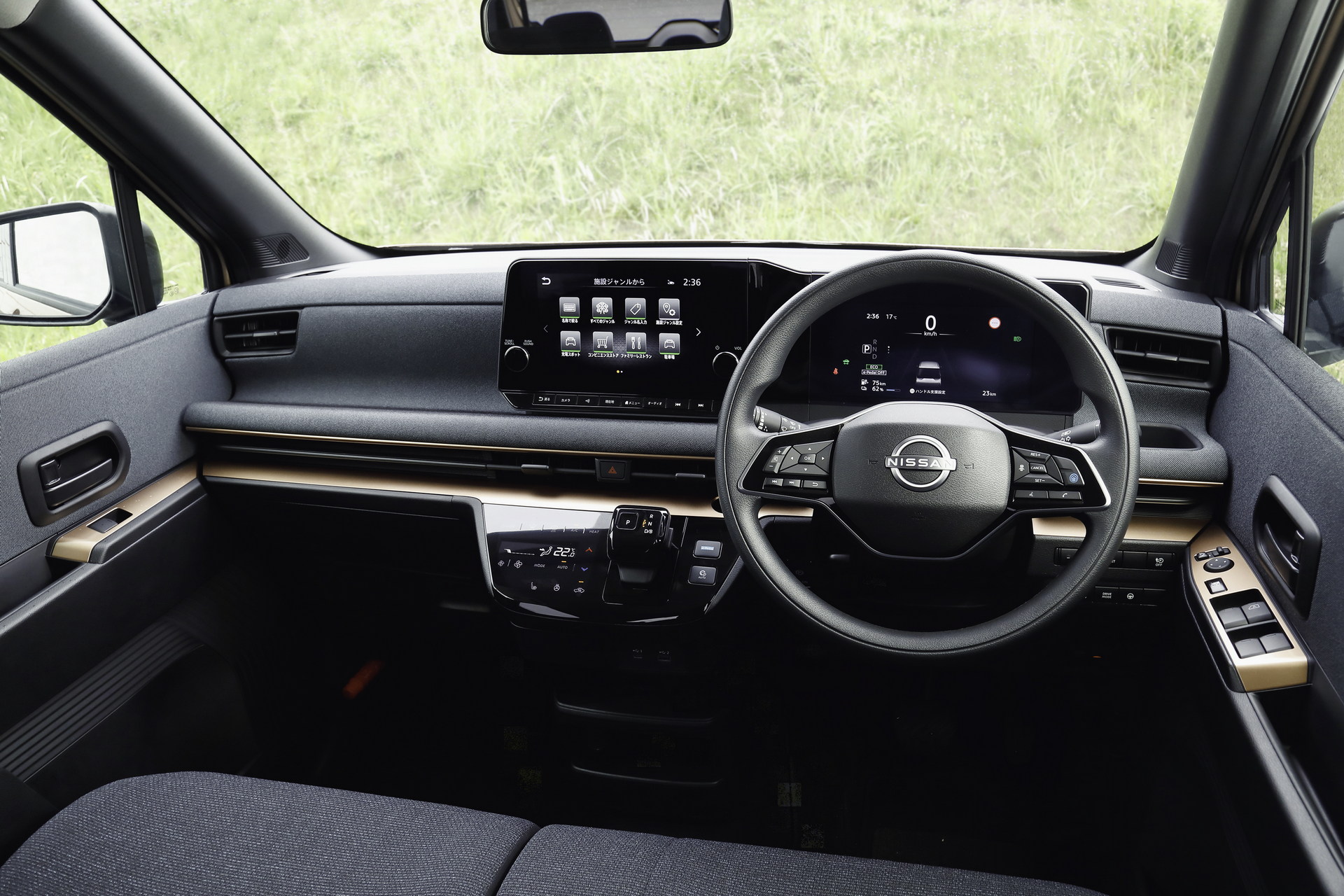
As required, the 1070kg Sakura produces 47kW, with its electric motor also developing 195Nm of torque. Driving range is listed at 180 kilometres, delivered thanks to a 20kWh battery pack. Nissan says the Sakura can also provide a full day of power (depending on usage) to a home if needed.
In Japan, the Sakura will be priced from the equivalent of $26,000 – about as much as an Abarth 595 in Australia.
Will we see the Nissan Sakura in Australia?
As with most kei cars, the tiny Sakura would likely be deemed ill-suited to the needs of Australian buyers, who generally require more interior space, more power, more range and, well, a jacked-up SUV body.
Do you think the Sakura could sell well in Australia? Tell us below.
When the W204-generation C63 AMG arrived in Australia in sedan and wagon forms in 2008, it put AMG properly on the map. Packing a 336kW 6208cc M156 V8 – with a stump-pulling 600Nm of torque – this was a bad-ass Benz that shredded rear tyres at will, punched holes through time and had a raucous soundtrack that tore the heads of beers when blasting past the pub.
At the wheel, the sound made the punch utterly addictive, the throttle a volume switch that meant the C63 could be heard coming from blocks away, its blast sending a shockwave that echoed long after it had left the scene in a mysterious haze of smoke…
Yet it wouldn’t quite topple the king: the BMW M3. Riding on a platform of proven racing pedigree, the E92 was a sharper, more precise tool than the extroverted Benz. The delectable metallic rustle from its 4.0-litre 309kW V8 grew as it spun to 8300rpm – beyond the C63’s 6800rpm redline – but it never bellowed quite like the bellicose AMG’s V8.
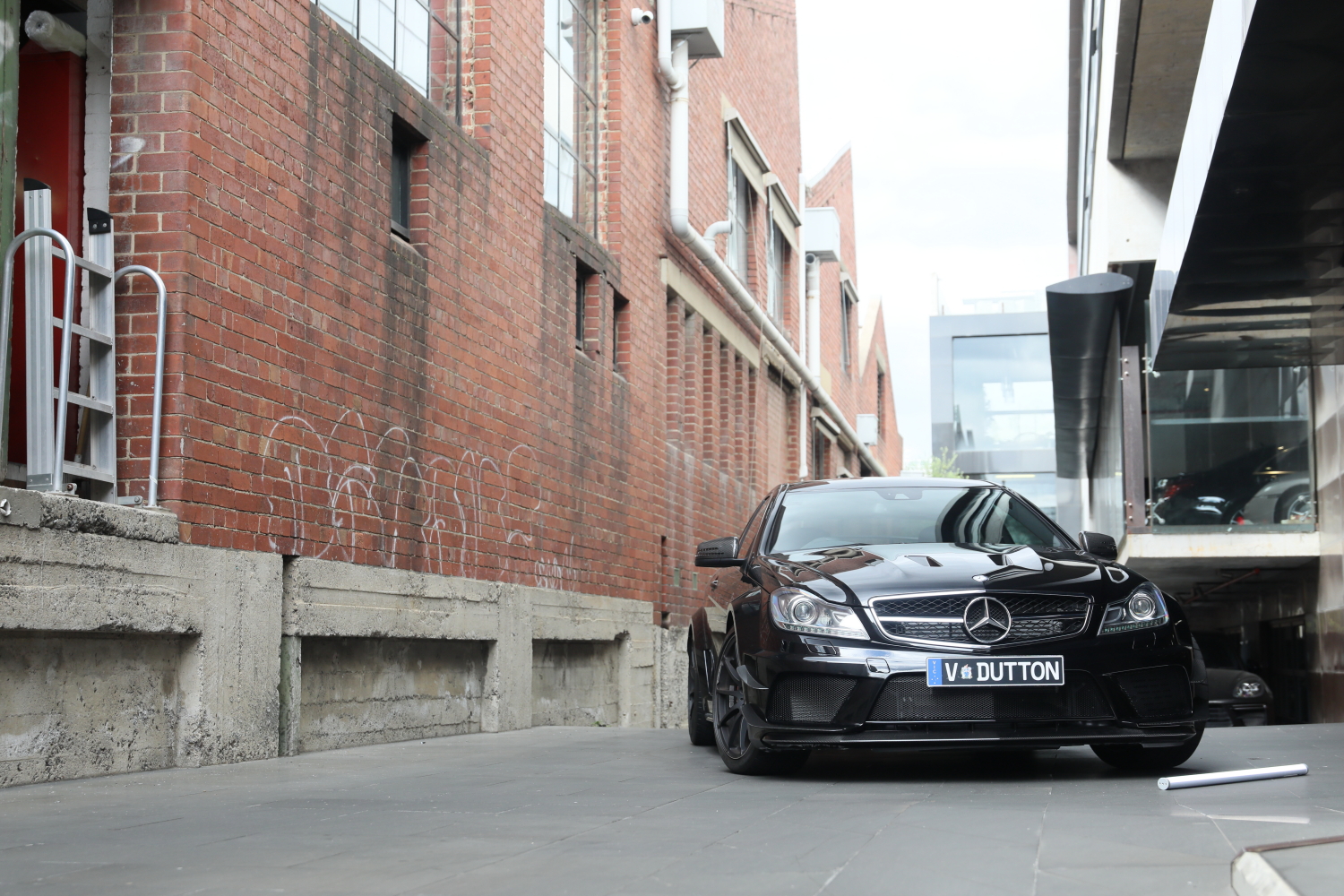
Both were salivating performance cars but carried out their role in different ways: the Mercedes was the great entertainer, but the BMW was the more accomplished, complete performer.
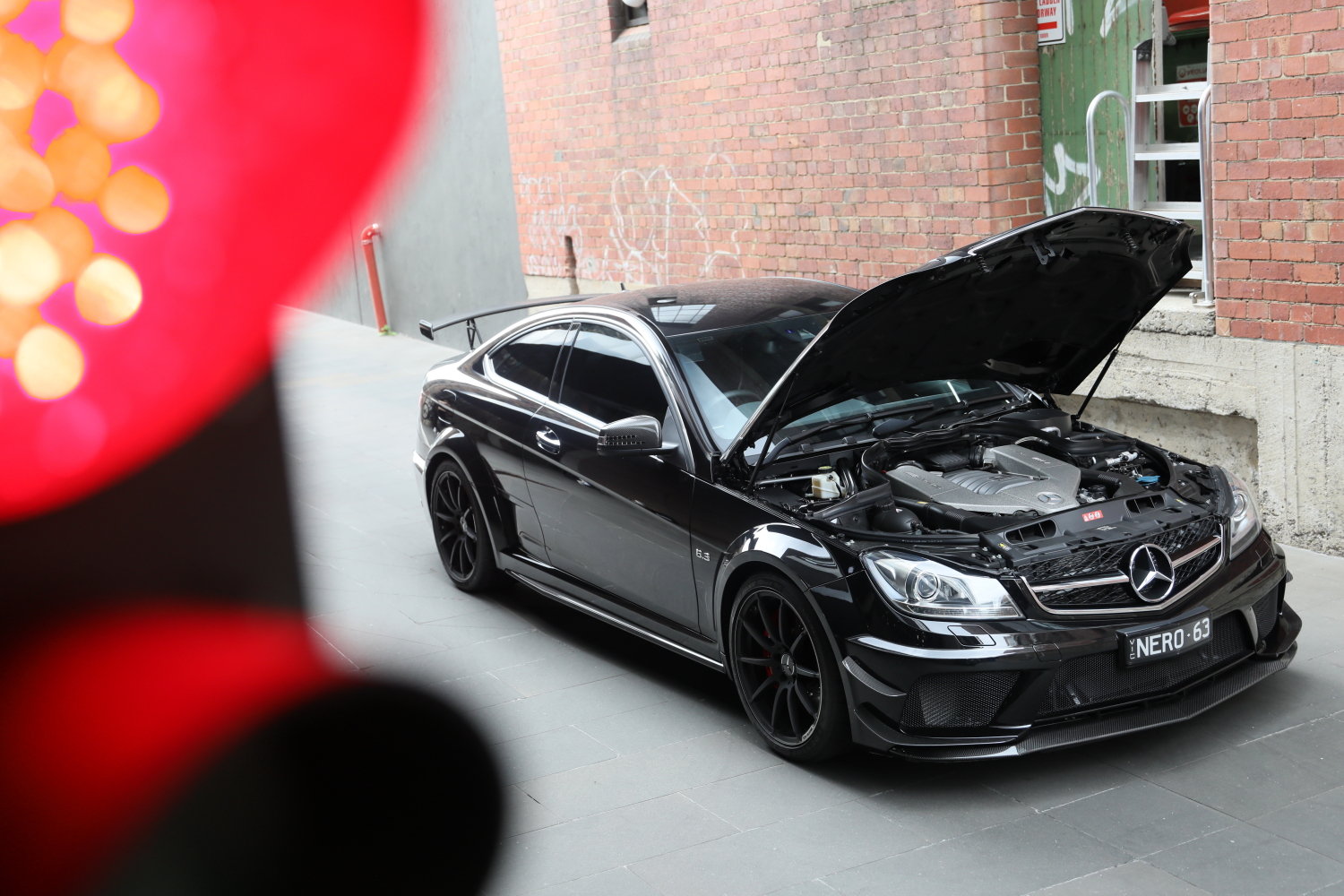
That was until the arrival of this, the C63 Black Series; a seriously hardcore variant which was the most powerful C-Class ever built. It’s a title it still holds a decade later. Now it was game on.
The C63 AMG Black Series came out of the AMG Performance Studio that was created when Mercedes took outright ownership of AMG in 2005. That’s when a confident, ambitious factory-backed AMG began development of its very first in-house engine, the M156 V8, which spearheaded an arms race with BMW’s M Division and Audi’s strengthening RS department.
Not only did AMG’s new parentage enable the V8’s development, it also saw a stronger line of ultimate performance models: the Black Series badge was a way of delivering more exclusive, track-oriented versions of the brand’s most potent machinery to thirsty buyers.
The C63 Coupe (C204) was the starting point for what would be the fourth Black Series model. The first was the 2004 SLK 55 AMG with its unique fixed roof, followed by the 2007 CLK 63 Black Series before the SL65 was given the Black treatment in 2008.
To earn Black Series status, three conditions had to be met: a fixed roof, two doors and two seats. The C204’s arrival meant the C-Class had the mandated coupe body that made the Black Series possible. Now it just needed to ditch the back seat and add the track elements.
It was all about harnessing that hand-built 6.2-litre engine which, for a time, was the most powerful naturally aspirated V8 on the planet
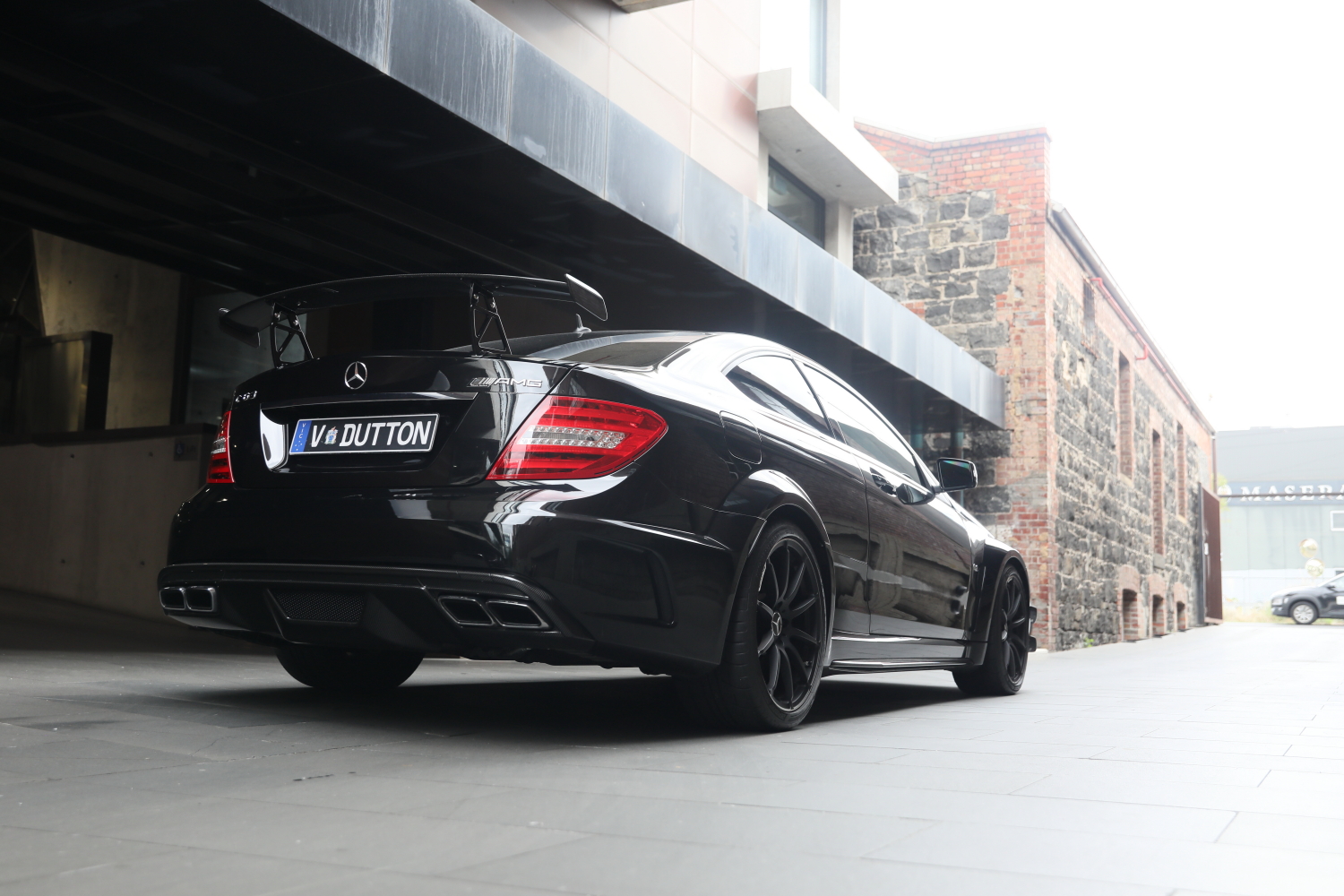
That started with the Black’s menacing body, widened by 56mm up front and 84mm out back with pumped guards, fronted by a vented bonnet and unique bumper. Revised suspension geometry and recalibrated hydraulic steering gave the Black Series the front-end intimacy that the regular C63 lacked, connecting to 19-inch rubber and six-piston 390mm cross-drilled brakes.
There were six-way adjustable coil-overs at all four corners, while the rear axle was taken from the E63 sedan including its clever locking limited-slip diff and 360mm brakes, capped by wider rear guards, unique rear diffuser and quad exhaust.
The larger adjustable rear spoiler came in tandem with the cabin’s shell seats – which can be optioned out – otherwise the Black Series has a subtle carbon lip-spoiler instead.

Yet it was all about harnessing that hand-built 6.2-litre, which for a time, was the most powerful naturally-aspirated V8 on the planet. Technically 6208cc, the M156 was badged as a 6.3-litre as homage to the 6332cc M100 engine, Mercedes’ first production V8, which powered the original 300 SEL ‘Plastic Pig’ that AMG raced to class victory at the 1971 Spa 24 hours.
The M156 90-degree V8 – AMG’s debut clean-sheet engine –first appeared in the MY07 W211 E63 and was a closed-deck design with an aluminium block and heads. It also used ‘Nanoslide’, the name for the world-first twin-wire-arc cylinder coating, while all M156s boasted variable valve timing on both inlet and exhaust sides.
The new engine also reverted to a single spark-plug per cylinder, unlike the twin-plug M113K that came before it.
What also made it so remarkable beyond that gloriously uncouth exhaust note was an overall mass of just over 200kg, making it within three kilograms of the M3’s smaller 4.0-litre S65 V8 – quite remarkable.
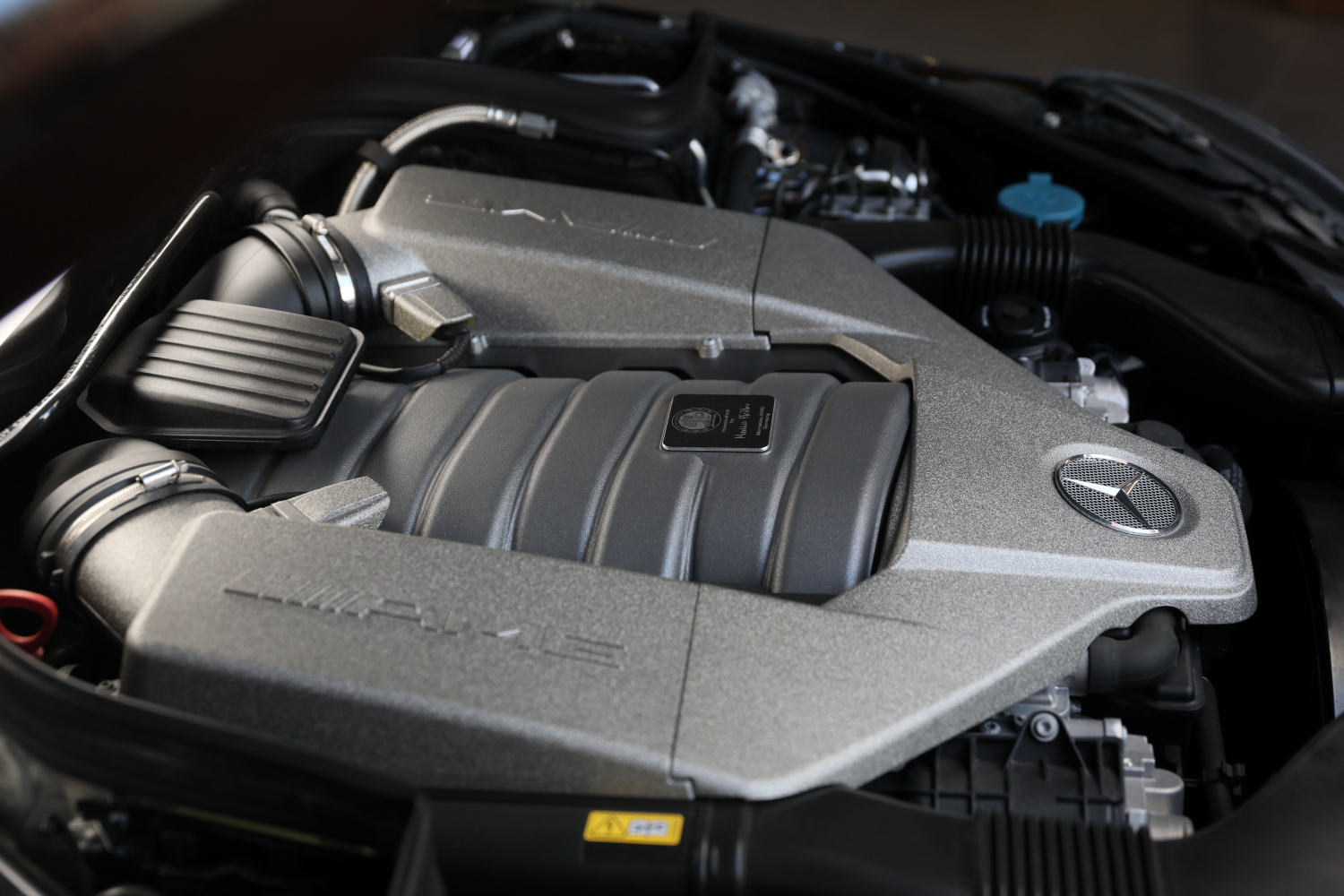
For the Black Series, the award-winning engine was treated to a 50-percent larger oil cooler, but where it really lifted its game was with a new ECU that managed the lightweight forged crank, forged conrods and forged pistons taken from the flagship SLS’s M159.
The lighter internals could spin to a raucous 7200rpm redline, 400rpm above the regular C63, where they’d been available as a Performance Pack option from 2010.
The Performance Pack delivered a rise from the standard C63’s 336kW to a brawnier 358kW, but for the Black Series power spiked to 380kW – the most powerful C-Class ever built. The Black also added 20Nm for max torque of 620Nm, making it break traction – and M3 drivers’ hearts – any which way it sought.
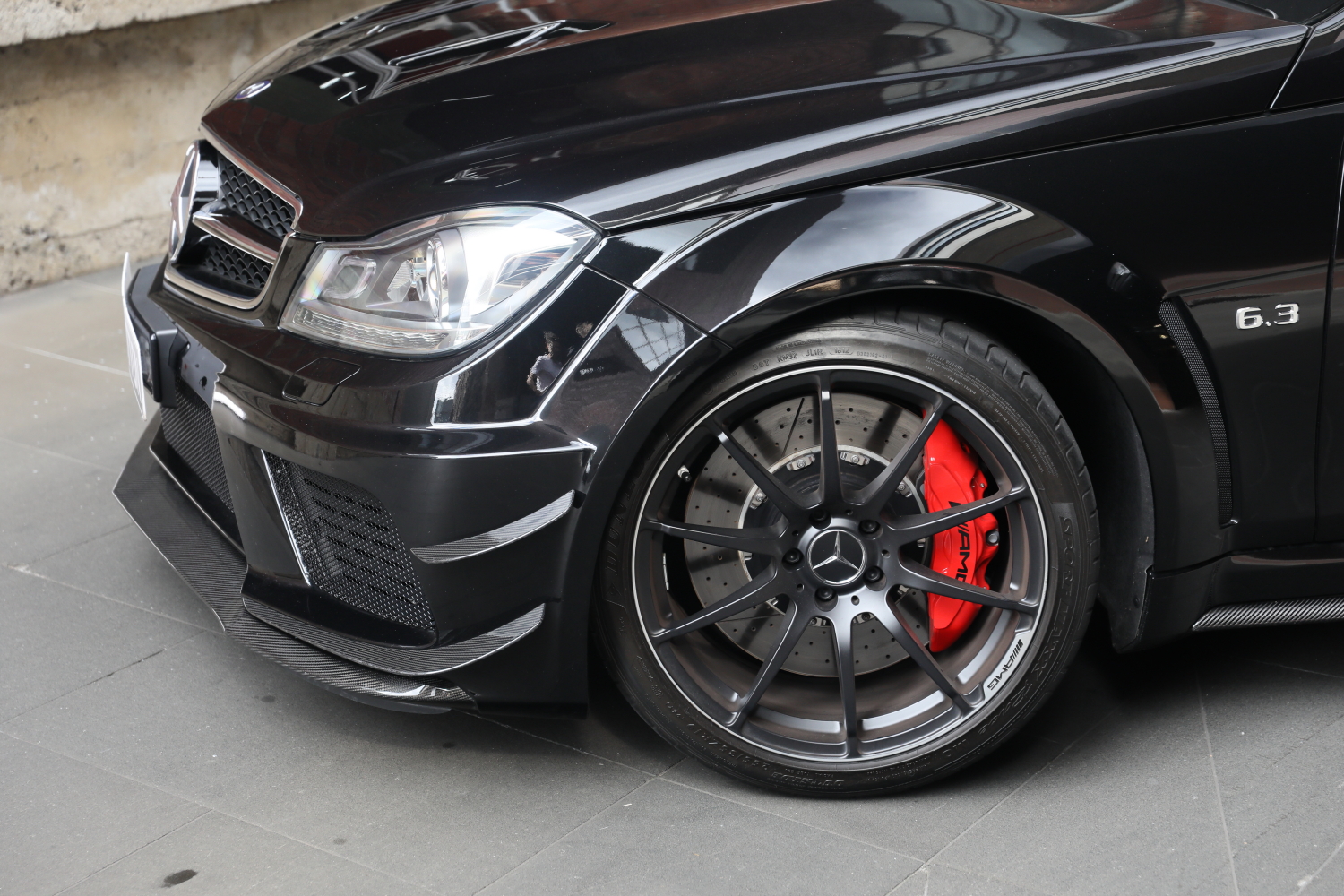
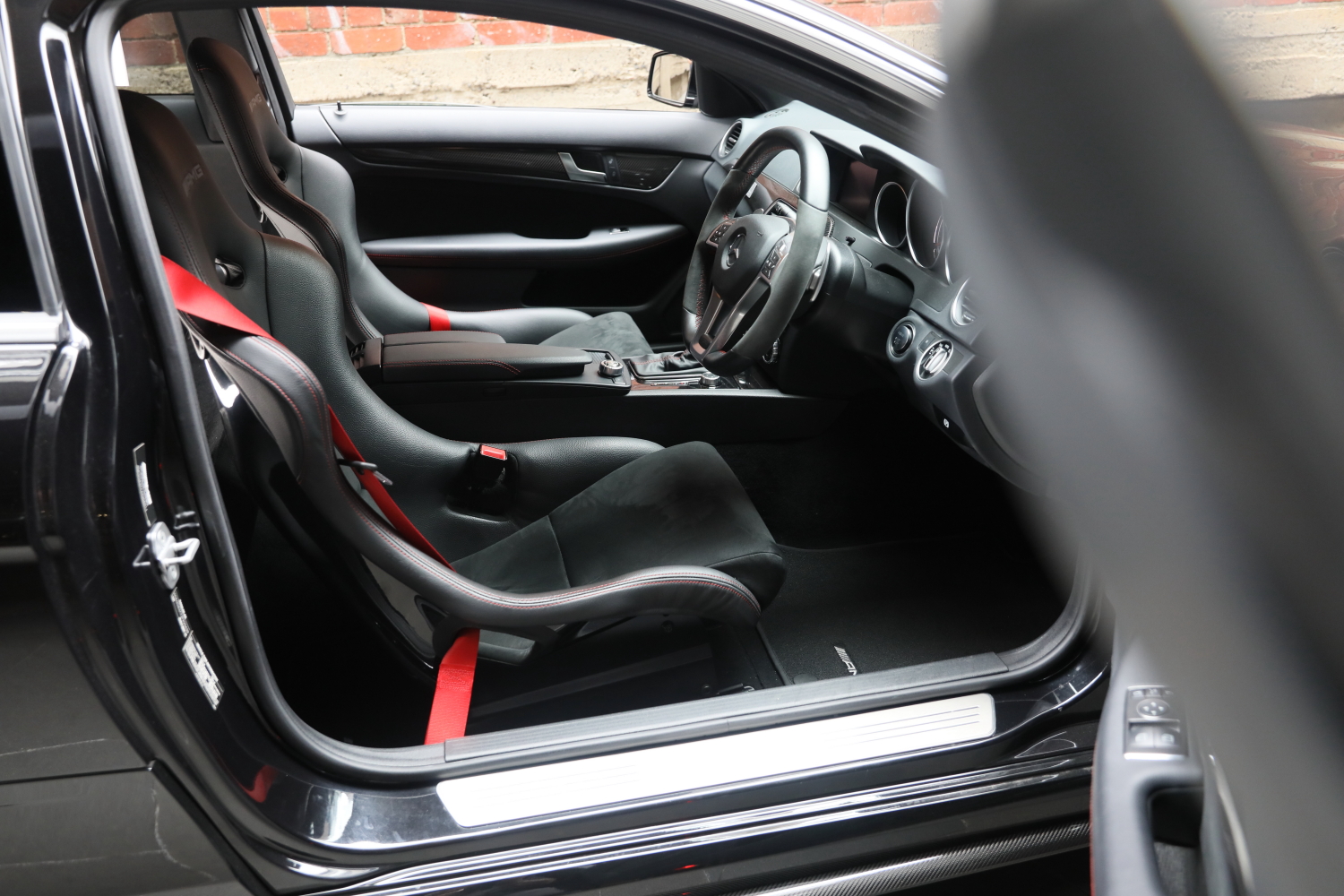
That torque was needed because at 1635kg, the Black Series still carried significant heft, even after the removal of the back seat saved 20kg (you could re-option it, but honestly…). Around the cabin, there wasn’t the Nappa leather, sunroof or the brushed aluminium of the regular C63 either.
Instead, the front leather electric memory chairs were traded for lightweight shell buckets complete with provisions for racing harnesses – and requisite red stitching and matching red seatbelts.
As the sports-luxury persona gave way to die-hard racer, a three-spoke wheel that was both flat-topped and flat-bottomed kept your hands well-placed for the paddle shifters that commanded the seven-speed dual-clutch transmission – which benefitted from AMG’s own clutch packs for swifter changes before feeding grunt rearwards.

Also managing the fire and brimstone was the three-mode ESP, which could be completely switched off, prompting your local tyre shop owner to add another storey to their house each time you did so.
For the ultimate take-off, the Black Series’ Launch Control ensured it optimised its 19-inch Continental rubber. Performance? A claimed 4.2sec 0-100km/h sprint as it took the standing 400m in 12.0sec flat and a governed – yes, governed – 300km/h v-max. It was sharp, instant and more fun than Oktoberfest.
To play devil’s advocate, that brisk 4.2sec was only two-tenths better than the regular C63 Coupe, but this grew to a 0.8sec advantage over the quarter as it stretched its legs. Yet the Track Pack option – which added stickier Dunlops and a rear-axle trans cooler – saw sub-4.0sec results from some media tests, but more importantly confirmed the Black Series as a commanding cornering machine.
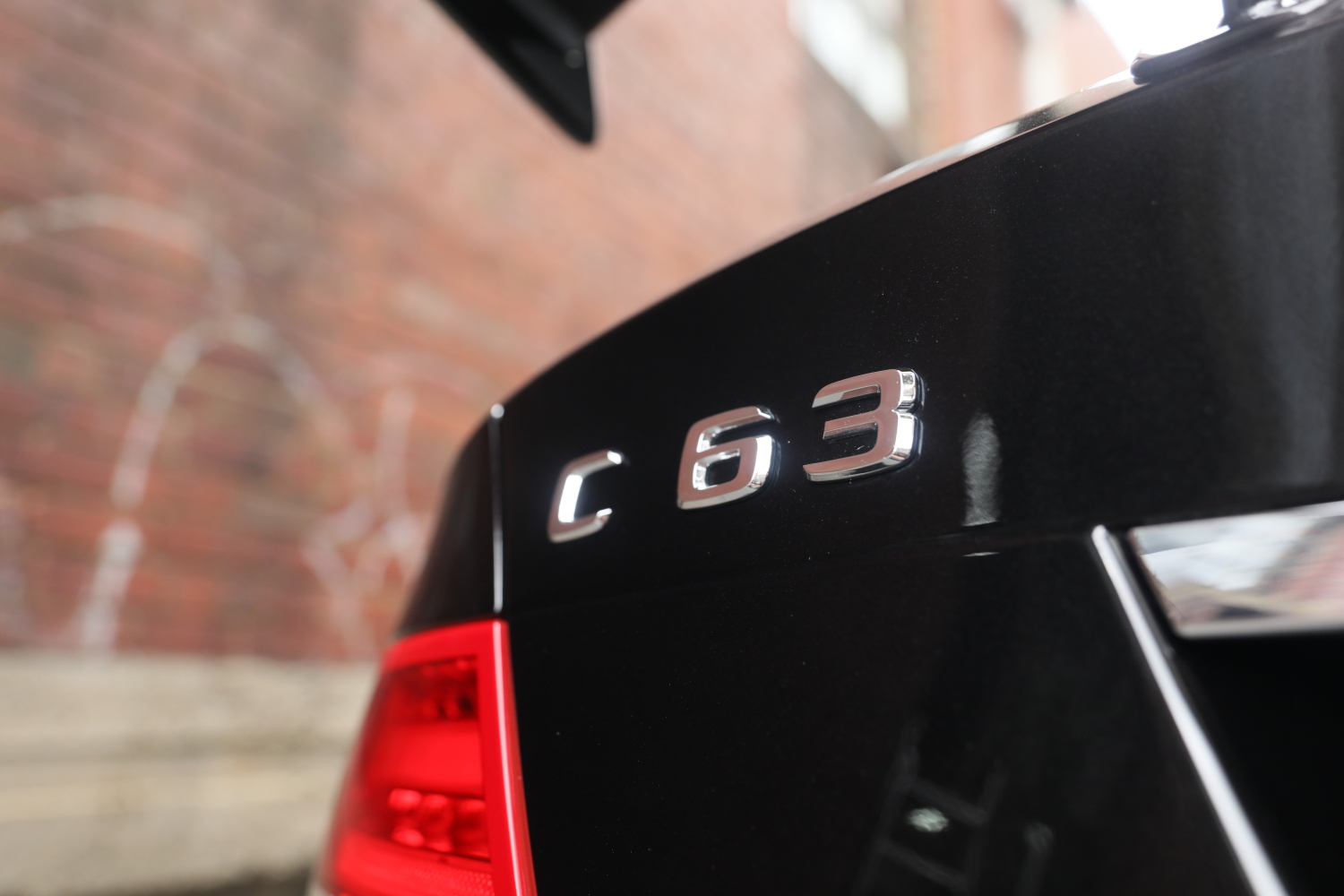
“Punch now came with precision, the sledgehammer now laser-guided”
Enter its closest natural rival, the BMW E92 M3 GTS. If you remember this searing orange Leviathan, with its 4.4-litre stroked V8 packing 331kW, it too was M-Division’s track-honed race weapon. Yet while there was little between the GTS and the Black Series on paper, the AMG had the edge when it came to point-to-point capability.
The Nurburgring Nordschleife lap battle saw its 7:46 time a clear four seconds ahead of the GTS – with the same Horst von Saurma at the wheel of both cars. Again, an optional Aerodynamics Package promised potentially better lap times, but AMG never specified just how much additional downforce it created.
Sadly we can’t compare these two on local racetracks, as none of the 150 M3 GTSs built in Munich made it to Australia. The 32 C63 Black Series initially delivered here sold out before they were built – prompting Mercedes Australia to order more, but it could only secure another 10, despite additional customer orders.
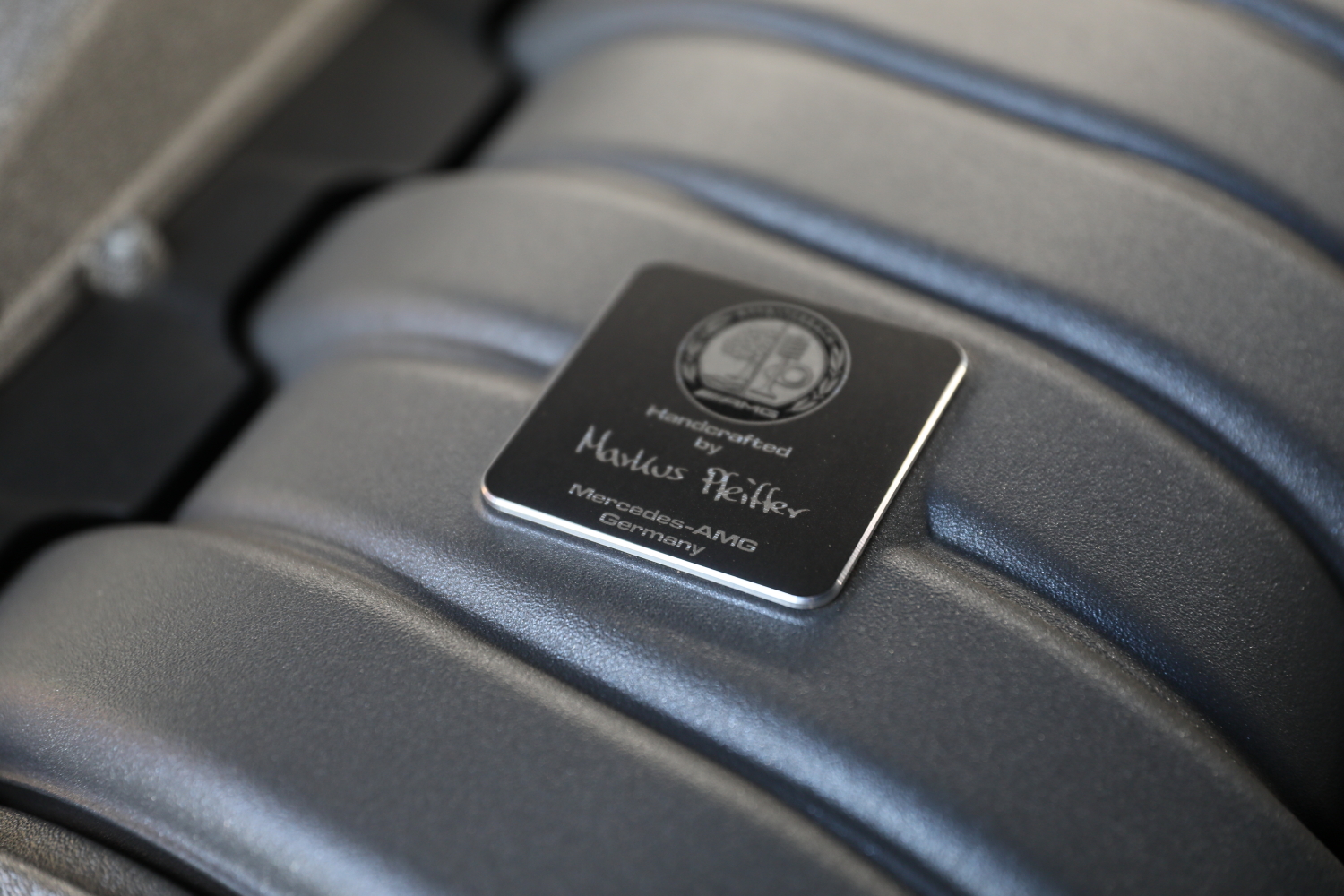
The C63 Black Series’ desirability came from both its ferocious straight-line strength and unique apex-hunting prowess.
Uncompromising, brutish, even less civilised that a regular C63, it was maniacal, extroverted and unashamedly loud all while feeding its driver a comprehensive set of markers – from sight to sound, steering to brake feel – in a signal set like no other C-Class before it. Punch now came with precision; the sledgehammer now laser-guided.
As the automotive world continues to downsize, electrify and devour SUVs and cumbersome pick-ups, there’s been no successor to the C63 Black. With the AMG GT taking over the fixed-roof, two-seat, two-door role since 2014, apparently there’s no longer a need for a track-focused C-Class.
Yet there’s so much lust for such a car like the C63 Black Series, one that unashamedly shocked and awed from bonnet to bootlid, created during a critical period in AMG’s history. That alone means there’ll never be another car like it, from anyone anywhere.
Heavy-metal thunder
The C204 C63 and E92 M3 are enshrined in history as the last naturally-aspirated V8 German coupes, and while their successors both saw downsized turbocharged engines, they followed markedly different paths. The F80 M3/M4 swapped V8 power for the admittedly excellent S55B30 twin-turbo 3.0-litre straight-six, but its soundtrack went from Nirvana to NSYNC.
Meanwhile, Affalterbach introduced the M178 bi-turbo 4.0-litre V8 complete with head-turning trademark bark. Then AMG boss Tobias Moers understood what M-Division didn’t: “The sound is part of the brand.”

Chart Topper
Australians all let us rejoice, for we love AMG. The Black Series came as AMG was in a state of expansion – and sales Down Under showed we couldn’t get enough. With the C63’s arrival in 2008, a staggering 7500 C63s were sold across all body types in a single calendar year, the coupe arriving in 2012.
In 2021, AMG models made up 30 percent of all cars sold by Mercedes-Benz here – meaning AMG alone outsold brands including Jaguar, Porsche, Jeep, Peugeot, Land Rover and Alfa Romeo.
This story appeared in the May 2022 edition of Wheels magazine.
Mercedes-Benz C63 AMG Black Series specifications
Peugeot has officially unveiled the 9X8 Hypercar, confirming it is now poised for racing action.
The brand has revealed the 9X8 will first debut at the Six Hours of Monza in July – the fourth round of the World Endurance Championship – ahead of its appearance at Le Mans in 2023.
It was originally set to race at this year’s 24 Hours of Le Mans, however, Peugeot delayed the launch to ensure reliability before homologation.
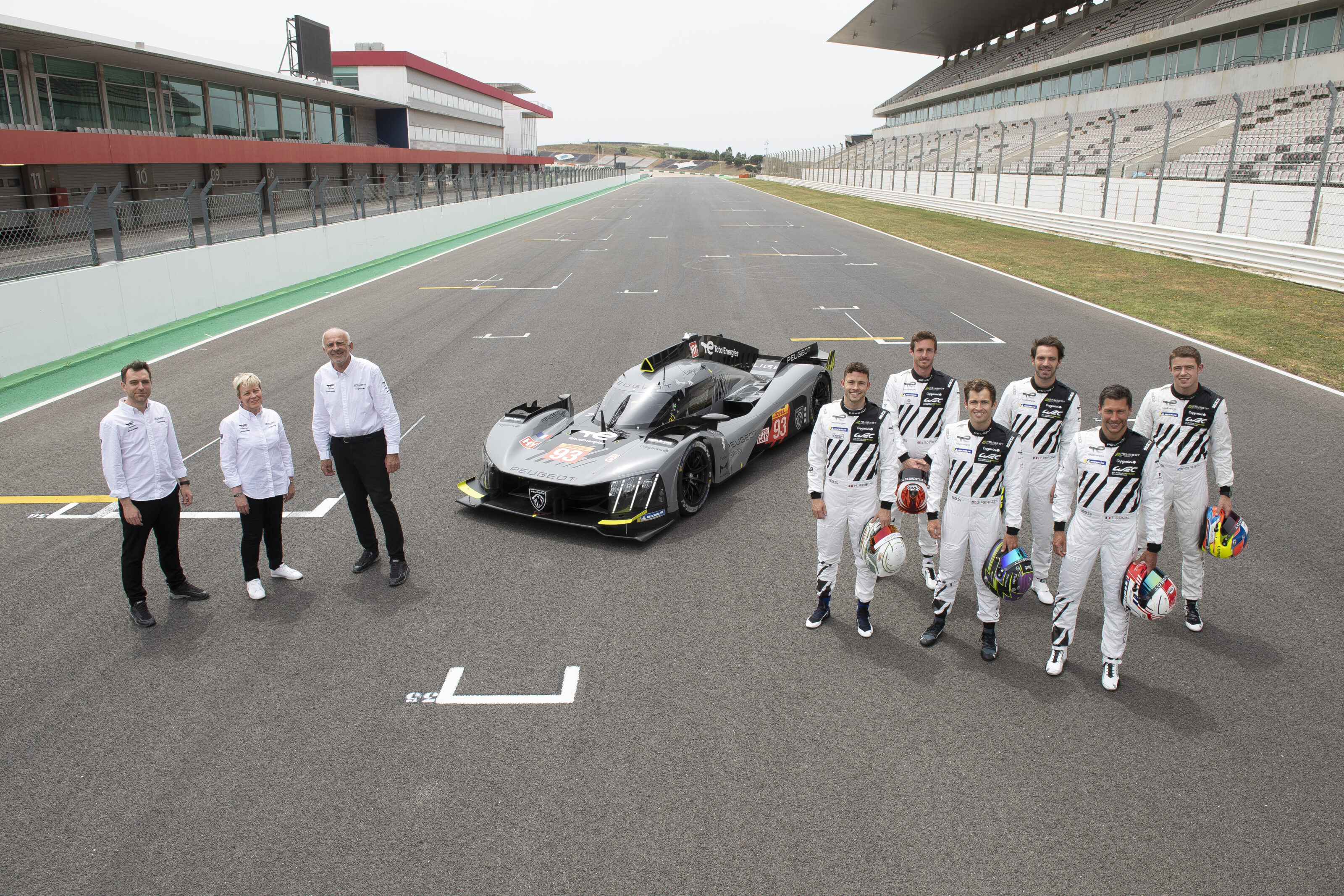
However, the French marque has announced the 9X8 will still appear at the 2022 event, but as a static display only.
Showcasing a futuristic design, the 9X8 foregoes a traditional rear-wing, instead placing a strong reliance on underbody aerodynamics for downforce.
Earlier this year, Peugeot’s technical director, Olivier Jansonnie, said this was a step in the correct direction.
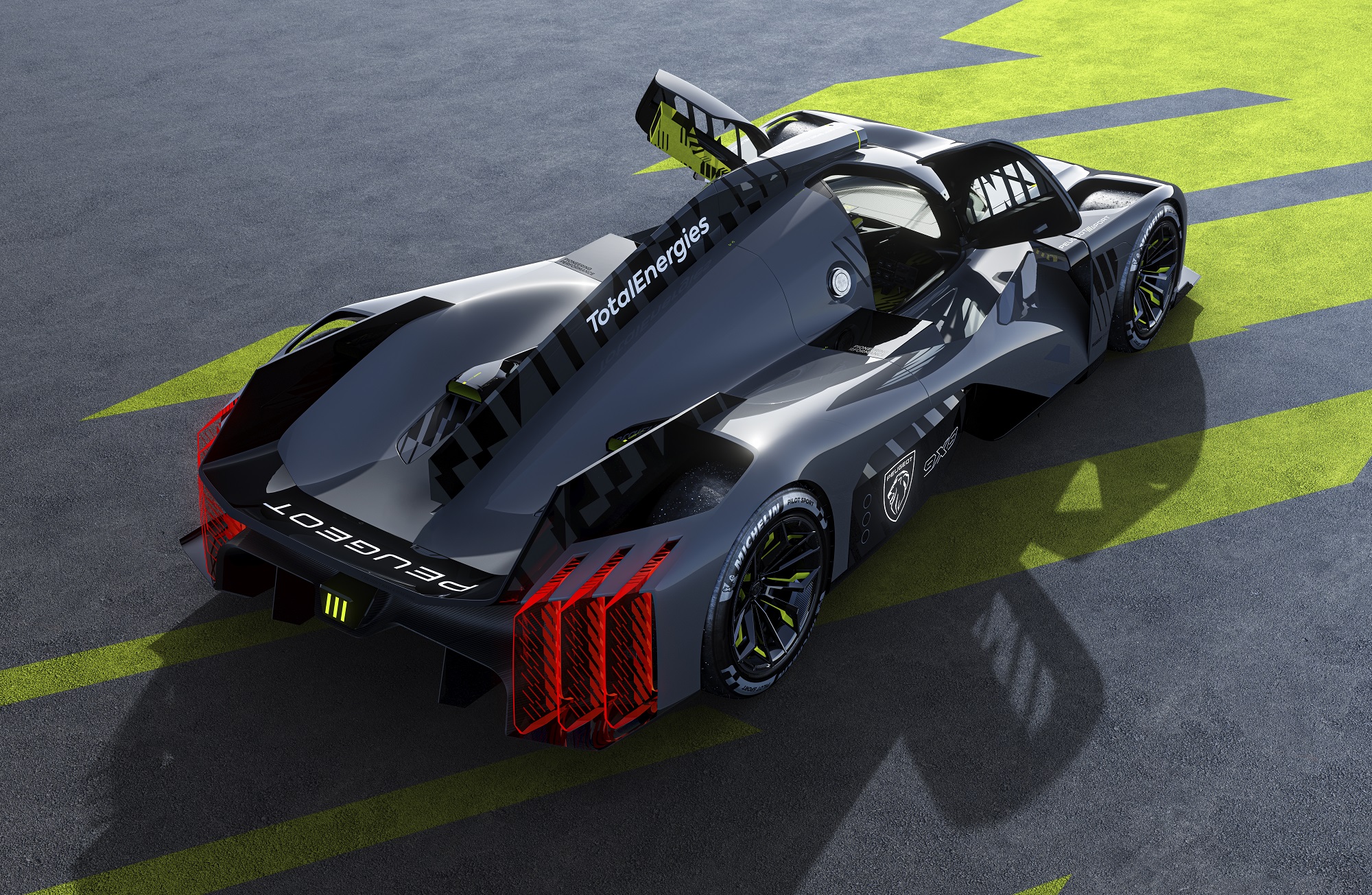
“Our calculations and wind-tunnel work have confirmed the pertinence of our decision to run without a rear wing,” he said.
Despite being a race-ready hypercar, the 9X8 shares elements with the road-going Peugeot line-up, including the brand’s signature ‘three-claw’ light design and a dashboard inspired by its ‘i-Cockpit’ layout.
Featuring an all-wheel-drive petrol-electric hybrid system, the 9X8 includes a rear-mid-mounted 2.6-litre twin-turbo V6 engine producing 520kW, and a 200kW electric motor-generator on the front axle.
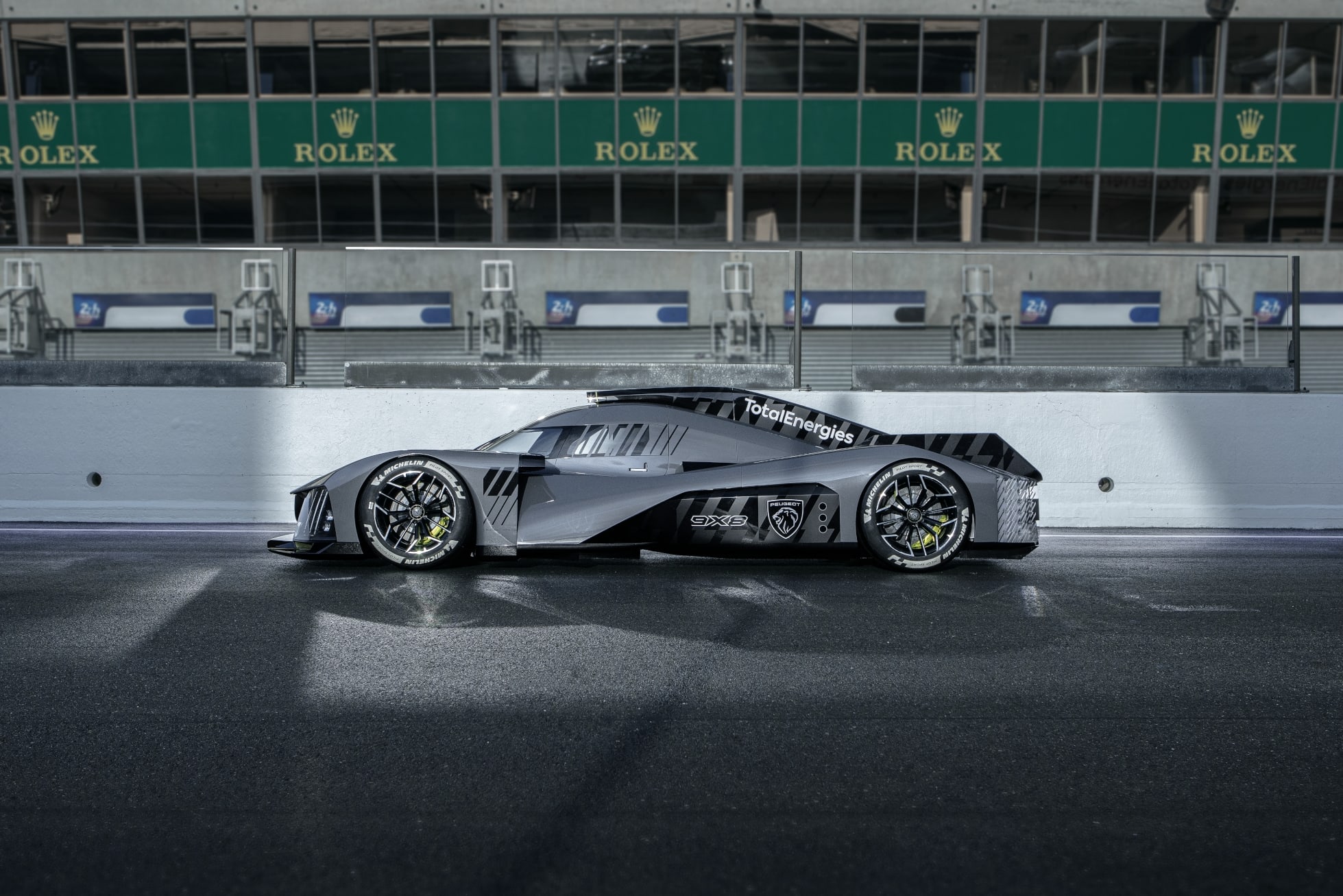
The internal-combustion engine is matched with a seven-speed sequential transmission with paddle shifters sending power to the rear wheels.
Set to compete against entries from Toyota and Glickenhaus in ACO and FIA’s newly-created Le Mans Hypercar (LMH) category, the 9X8 is relatively large – as with the remainder of the field – at 4995mm long and 2000mm wide.
Peugeot is expected to face additional competition from Ferrari, Porsche and Cadillac when it finally returns to the famous French racetrack in 2023.
When chatting to someone who’s just finished a lengthy car build, very rarely do you hear them say it was pretty straight forward, no hiccups at all, a pleasure to build in fact. As rare as this can be, this was the case when chatting to Chuck Cheadle about his VK Group C creation.
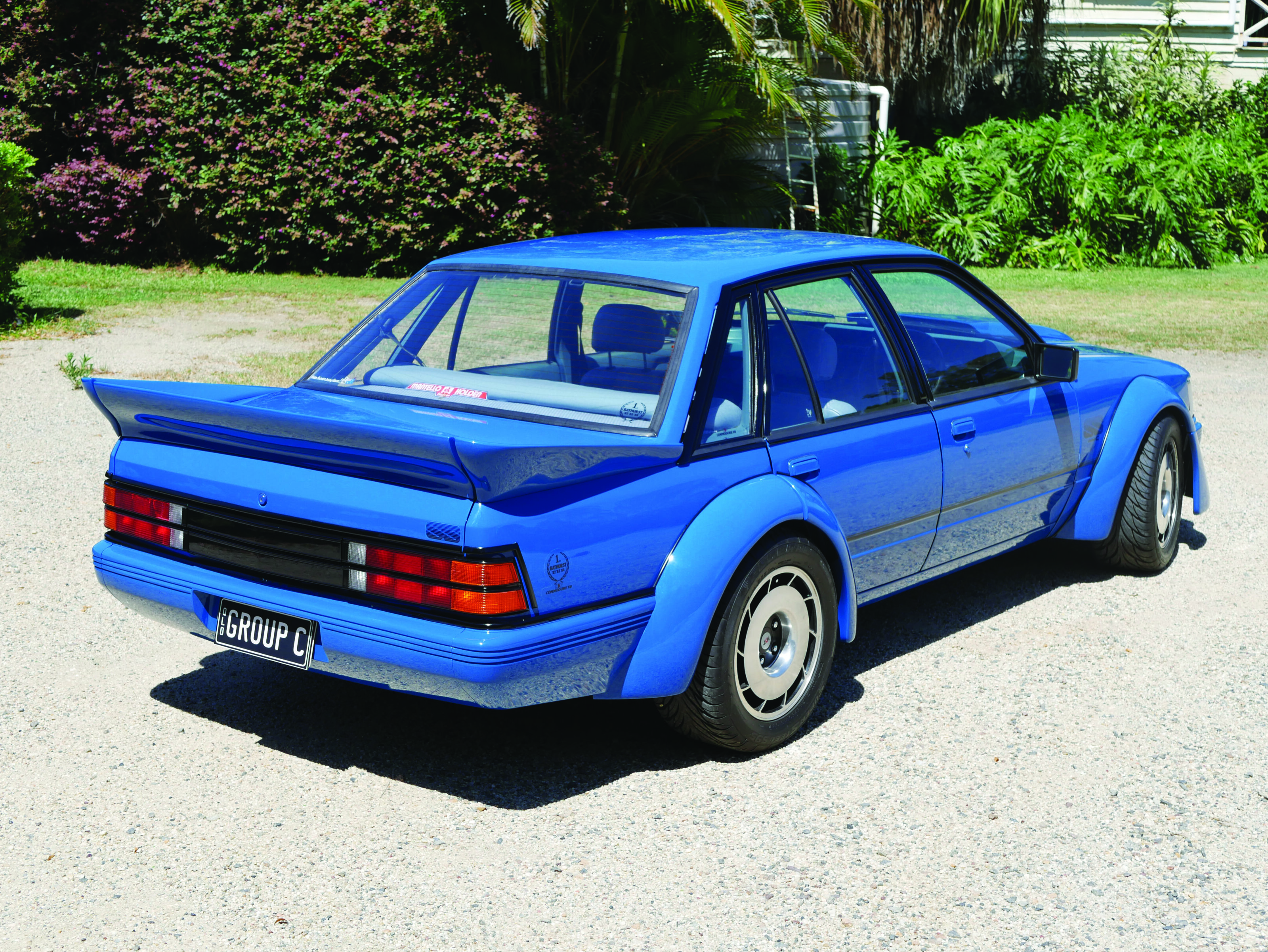
Chuck envisioned the car some years ago and took less than two years to turn a stock standard six-cylinder VK Executive into a Blue Meanie Group C inspired ‘Big Banger’ with huge street presence and a crackling exhaust note to match.
Chuck’s love affair with fast cars started like a lot of us, with an introduction to a multitude of iconic cars through his dad. “My dad was a car man, every year he used to buy a new car. He had a 350 Bathurst Monaro, Thunderbird, All the LTDs models and was also the second person in Australia to have a 64 notchback Mustang.”
With no allegiance to any particular brand Chuck admits, “I like fast cars, but good looking cars too. I appreciate what people put into cars to get them there”. With a list of previously owned icons like the Phase II, Phase III, a 12-second, pink 74 HQ, MGA, a Valiant and a Cobra, he’s not wrong.
Chuck’s interest in fast cars spilled over into racing and he competed in plenty of street and open sprints in a Hyundai Excel and was a regular at Lakeside in his other VK over the years. “I’ve still got my old VK race car, I’ve “de-raced it”, taken the roll cage out of it, everything out of it so all the interior’s back into it and it’s registered on the road again now” Chuck mentioned with a grin.
With a love of the Big Banger VK Group C cars and an appreciation for the presence of the Blue Meanies, Chuck was set on building his own amalgamation of the two.
“I had the idea quite a few years ago,” Chuck said. “I wanted to build a Blue Meanie on steroids with a Group C body kit, just to cruise around in, take to car shows and have some fun. But I also wanted to build it to a budget; I wasn’t worried about all original parts, so long as it looks the part, does the job. That’s all you want.”
With that in mind Chuck went searching for the right platform for his dream machine, this came in the way of a 1984 VK Executive, six-cylinder, auto in Atlantis Blue. “It was a rust free, straight and overall good original car with no missing bits’’, Chuck said.
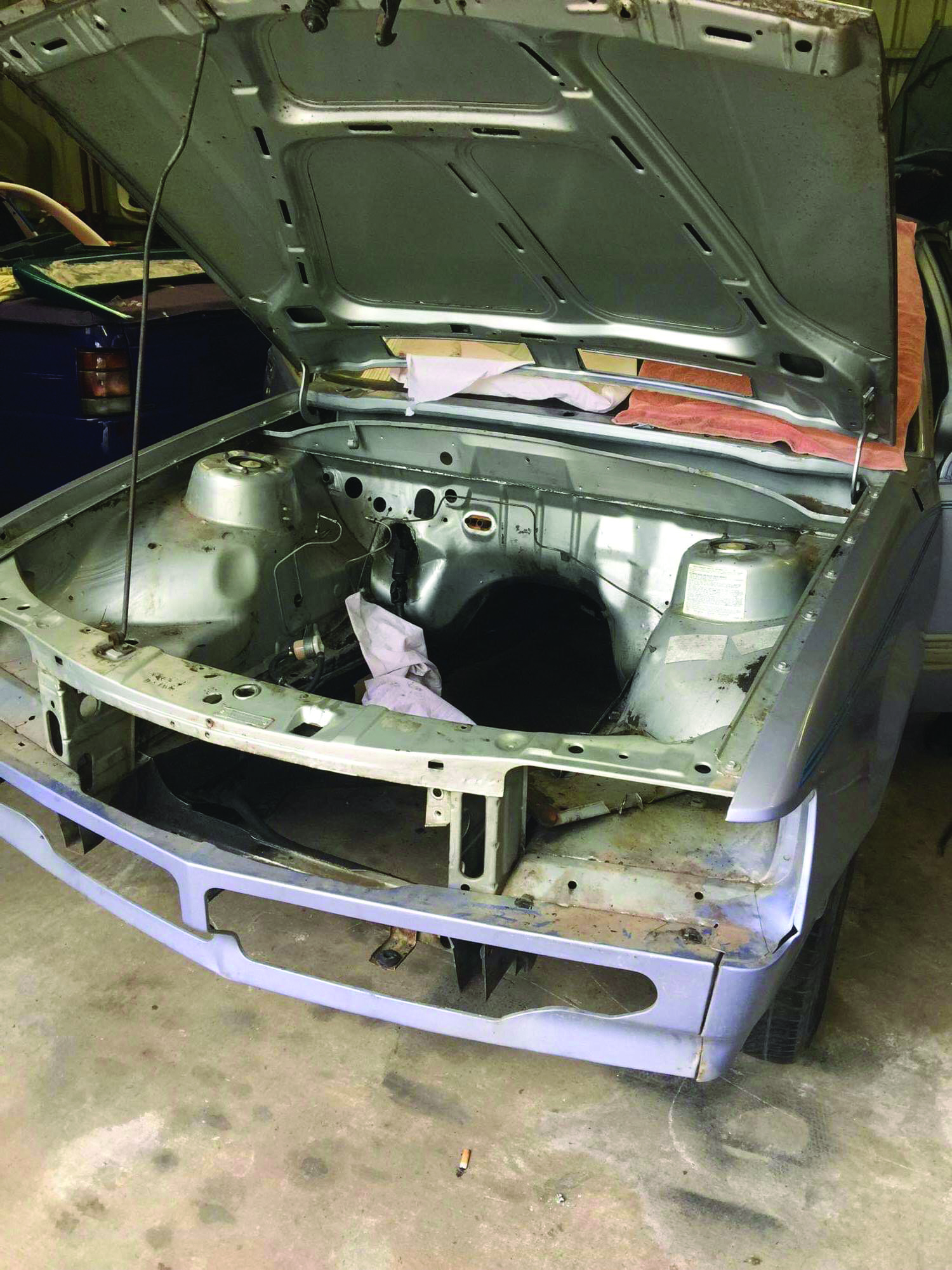
With a plan and a perfect starting point, Chuck didn’t waste any time in getting the project underway. “I brought it home and completely pulled it apart, everything out of it, all the glass out of it, completely bare shell, front end out of it, rear end out of it. I then put it on a rack, wheels and all and shipped it to Advanced Collision Repairs in Caloundra to fit the Group C kit and do the paint and panel.
They had the car for about three months, it was the first time they’d fitted a Group C Kit to a VK, but it all went relatively easy. I then brought it home and started piecing it all together.”
| Watch next: Commodore VK SS Group A review
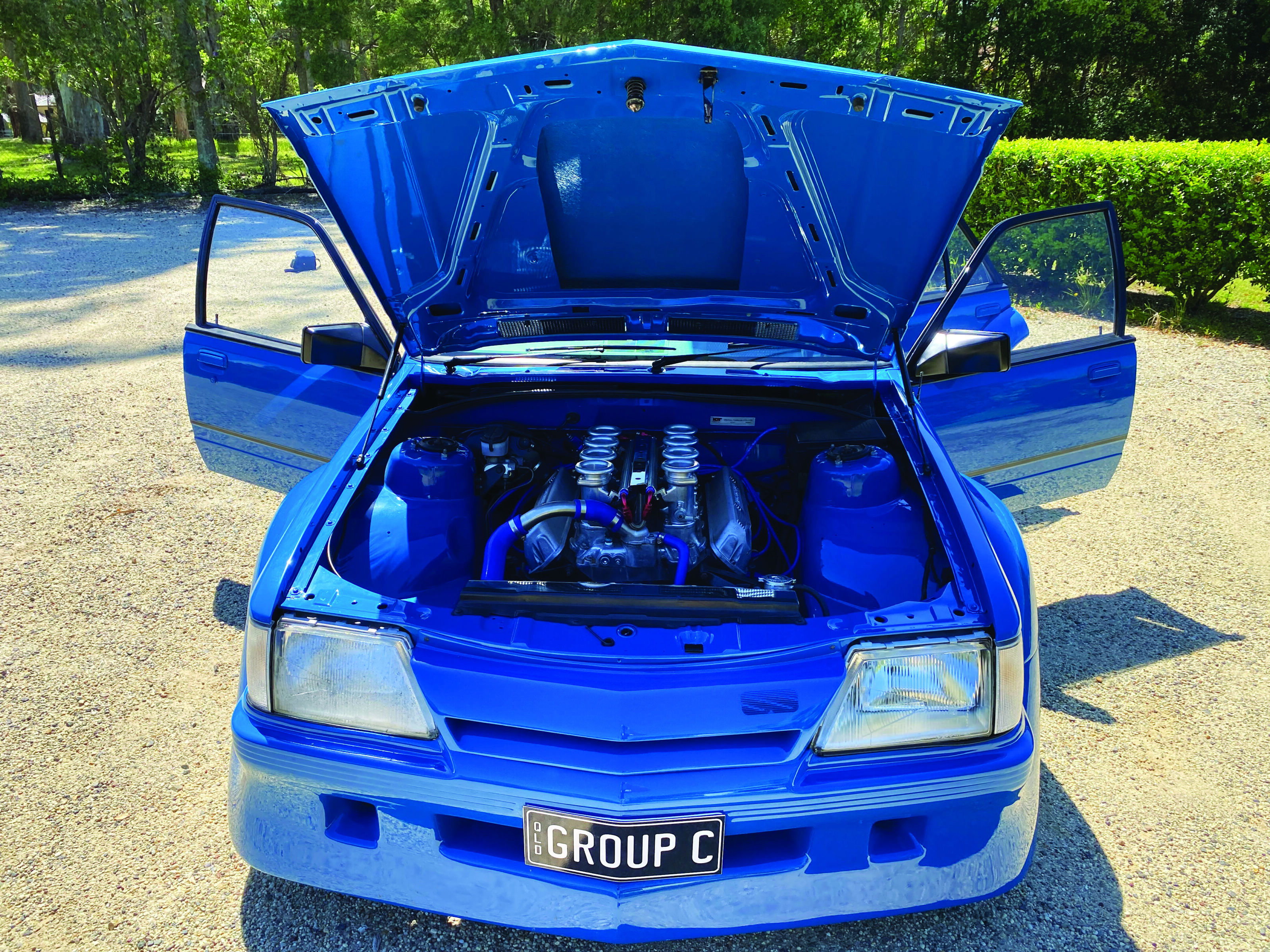
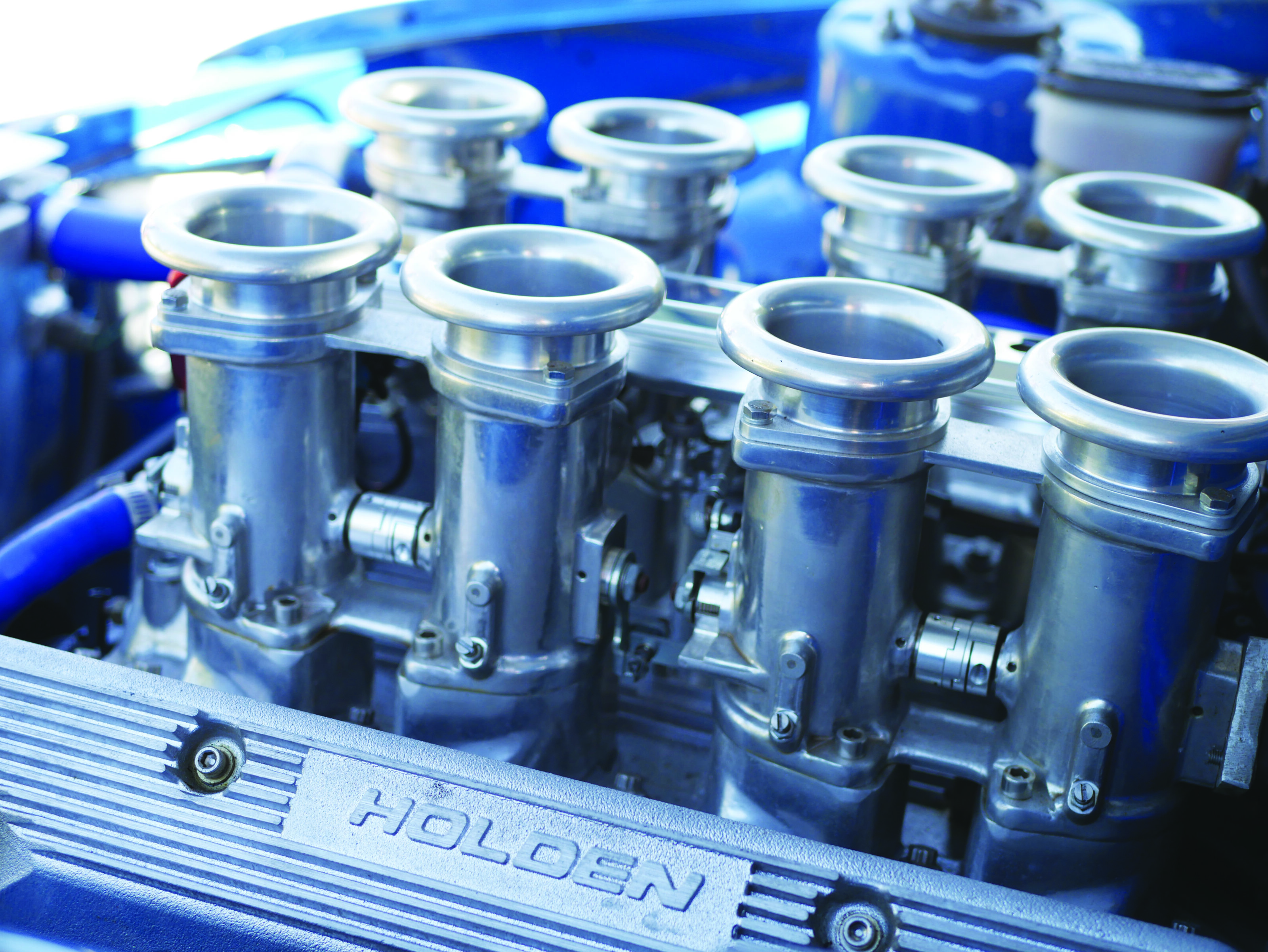
The VK Group C tribute makes a statement wherever it goes, with eight chrome skyscraper sized throttle bodies garnering a lot of attention when the bonnet is up. The engine itself is a VP 5L V8, rebuilt by Chuck’s mate and business partner, drag racing legend Russell Schaffer.
Chuck mentioned it was a thorough rebuild. “Russell is a wizard, the motor was pulled down, balanced, new rings, new bearings, heads all redone, new cam, new springs, new lifters, complete top end done with the downdraft injection and new wiring loom.”
The VK does still need a final tune and will be heading to ChipTorque on the Gold Coast, Chuck reckons they’ve got the magic touch when it comes to a tricky throttle body set up like his.
| Read next: VK Commodore SS Group A review
With a stout V8 Chuck still wanted something driveable and opted for a fully electronic auto transmission out of a VS Commodore. “The VS auto makes it a pleasure to drive. I also fitted a VS brake kit, VS suspension and a VL turbo 4:3 diff.
The VS suspension widened the track to sit perfectly under the Group C kit and the result is fantastic. The exhaust out the side gives it a cracking note too, it gets a fair amount of attention cruising round” Chuck said with a laugh.
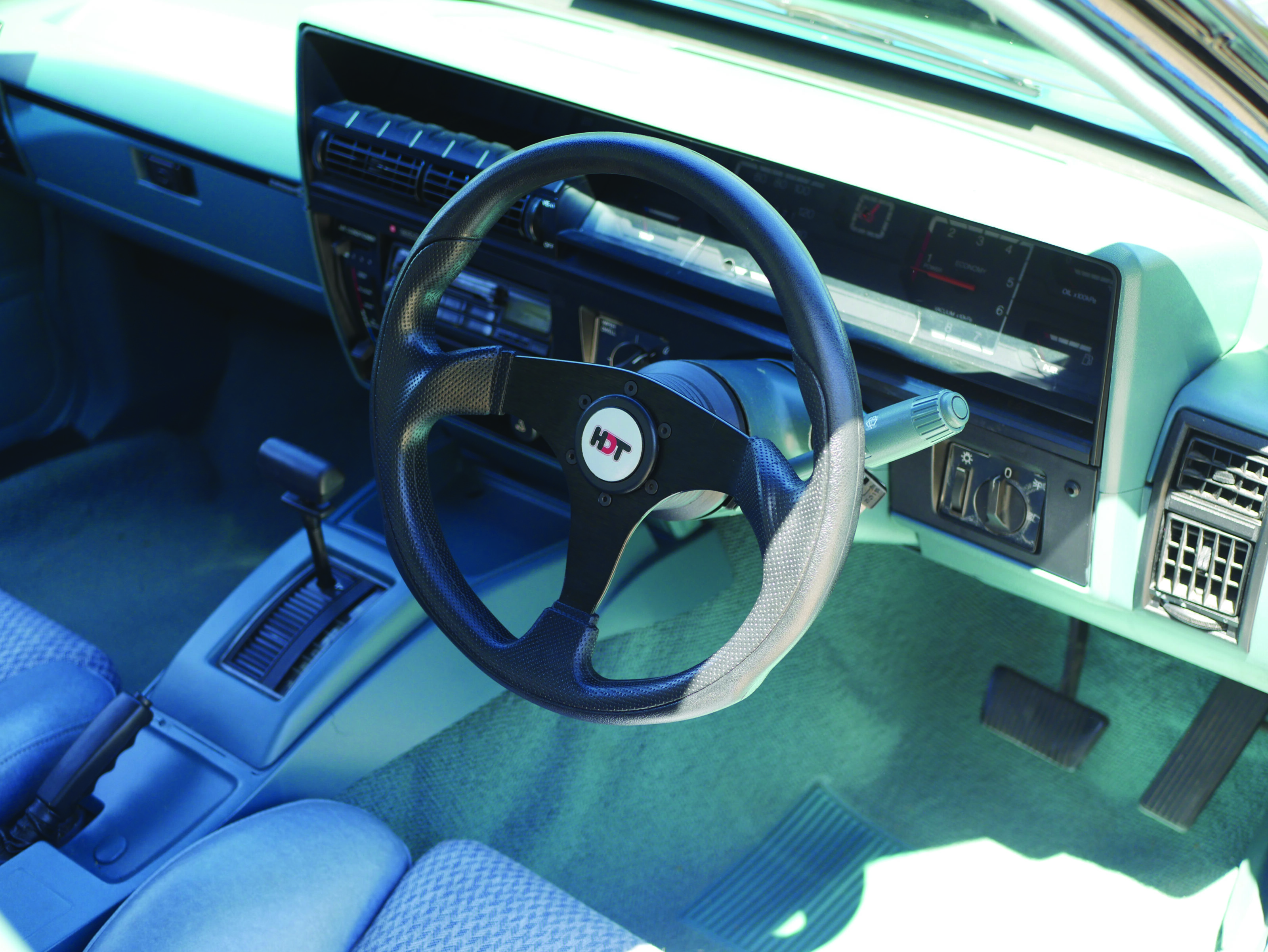
The VK Executive came with a full interior and as luck would have it the same blue dash, roof lining and door cards as the VK Blue Meanies run. However as Chuck will attest, the seats are the furthest things from a Blue Meanie you could think of.
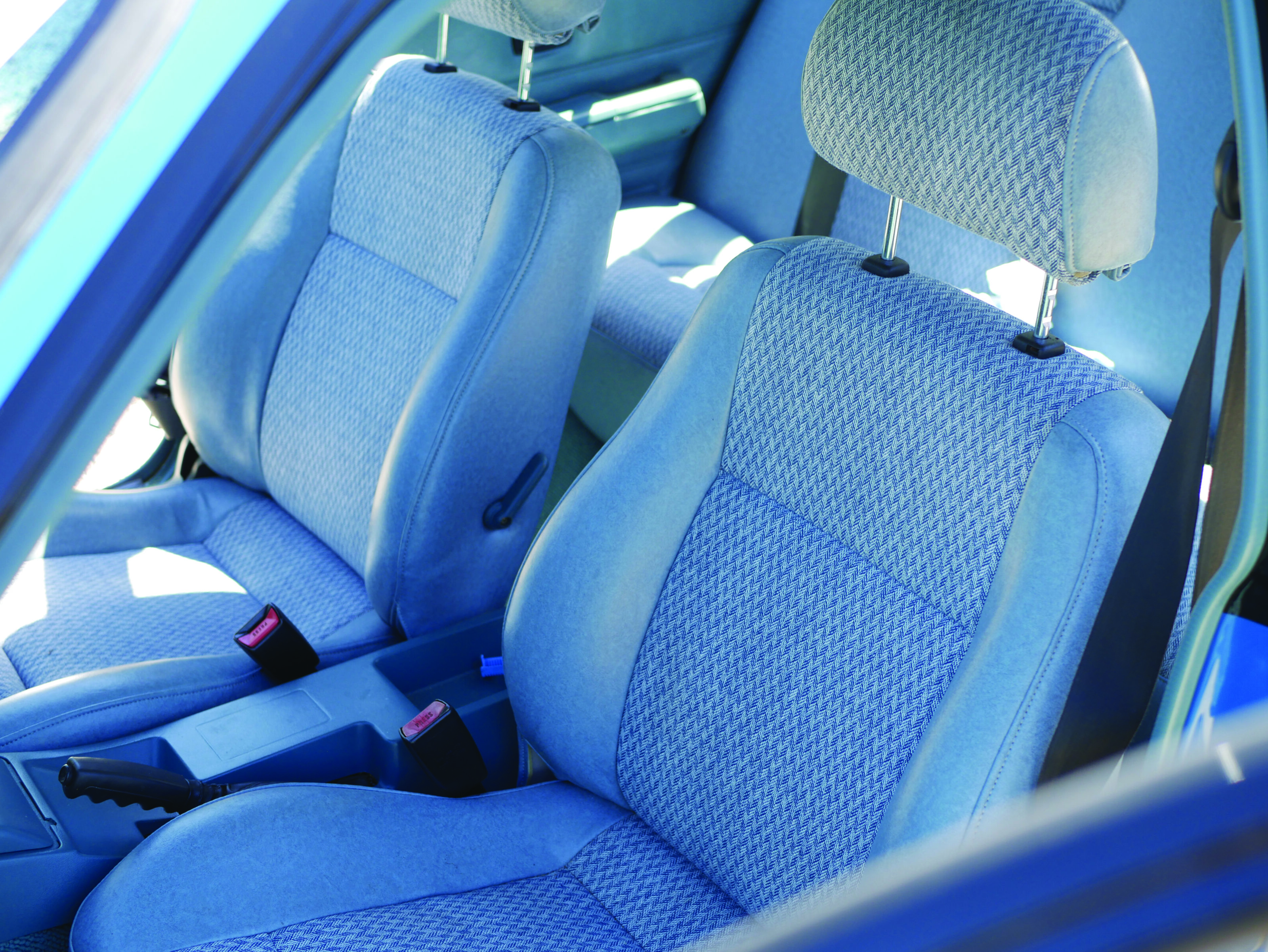
Chuck had a good laugh when he was explaining what the seats were. “They’re seats from a Hyundai Getz, retrimmed in a pattern from an EA Falcon which is as close as I could get. The proper material for Group A is as dear as poison, let alone a set of seats, I think the retrimmed Getz seats turned out quite well.”
Working with a budget in mind and wanting a somewhat genuine look Chuck had to look for clever alternatives for the rarer and sometimes expensive genuine parts.
The ‘Falcondai’ seats are not the only part of the car that has been reimagined, the wheels are Corvette slanted 10 slots running HDT centre caps, but certainly don’t look out of place on Chuck’s creation. “There are parts galore for VK’s but the proper Brock seats and wheels are getting harder to come by and the prices are skyrocketing.”
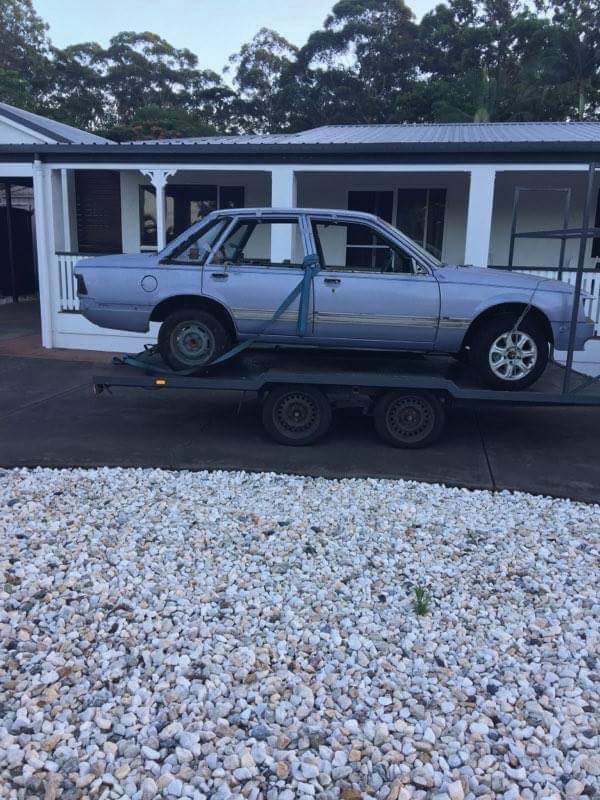
As part of the build process Chuck acquired a run down white VK as a parts car for the odd little bits and pieces you need along the way. When little things inevitably broke as they do when pulling a car apart, the sacrificial VK turned out to be a great source for little replacement parts.
Unfortunately the VK parts car has definitely seen better days and sits in the back corner of the property as more of a lawn ornament than a car, however Chuck still reckons he gets the occasional salvageable part off it when needed.
You can take solus in the fact that not everyone struggles to build a car and you may just be starting the next straightforward build. Chuck’s reimagined VK Blue Meanie is a great example of a project car being built on time, on budget and with no real issues along the way. If you start out with a good base, have a bit of imagination and know what you want, it is possible.
THE RESTO:
Paint in blue
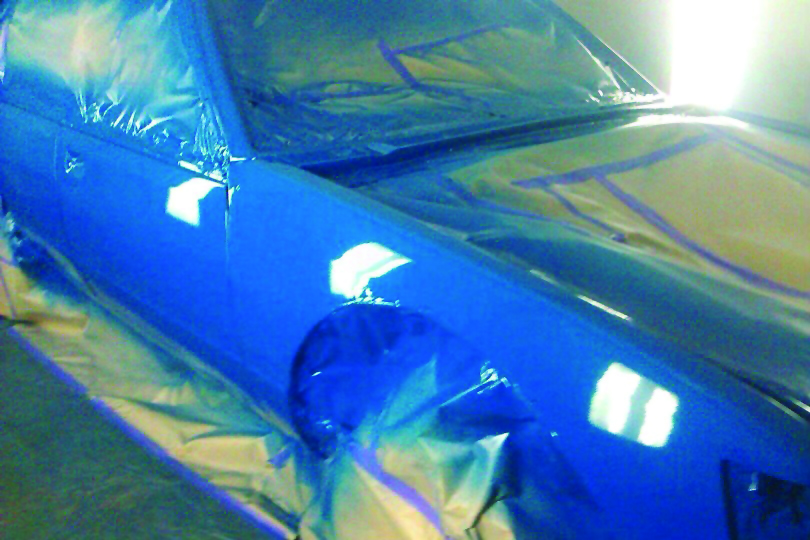
Brock Blue as some know it.
Underbelly
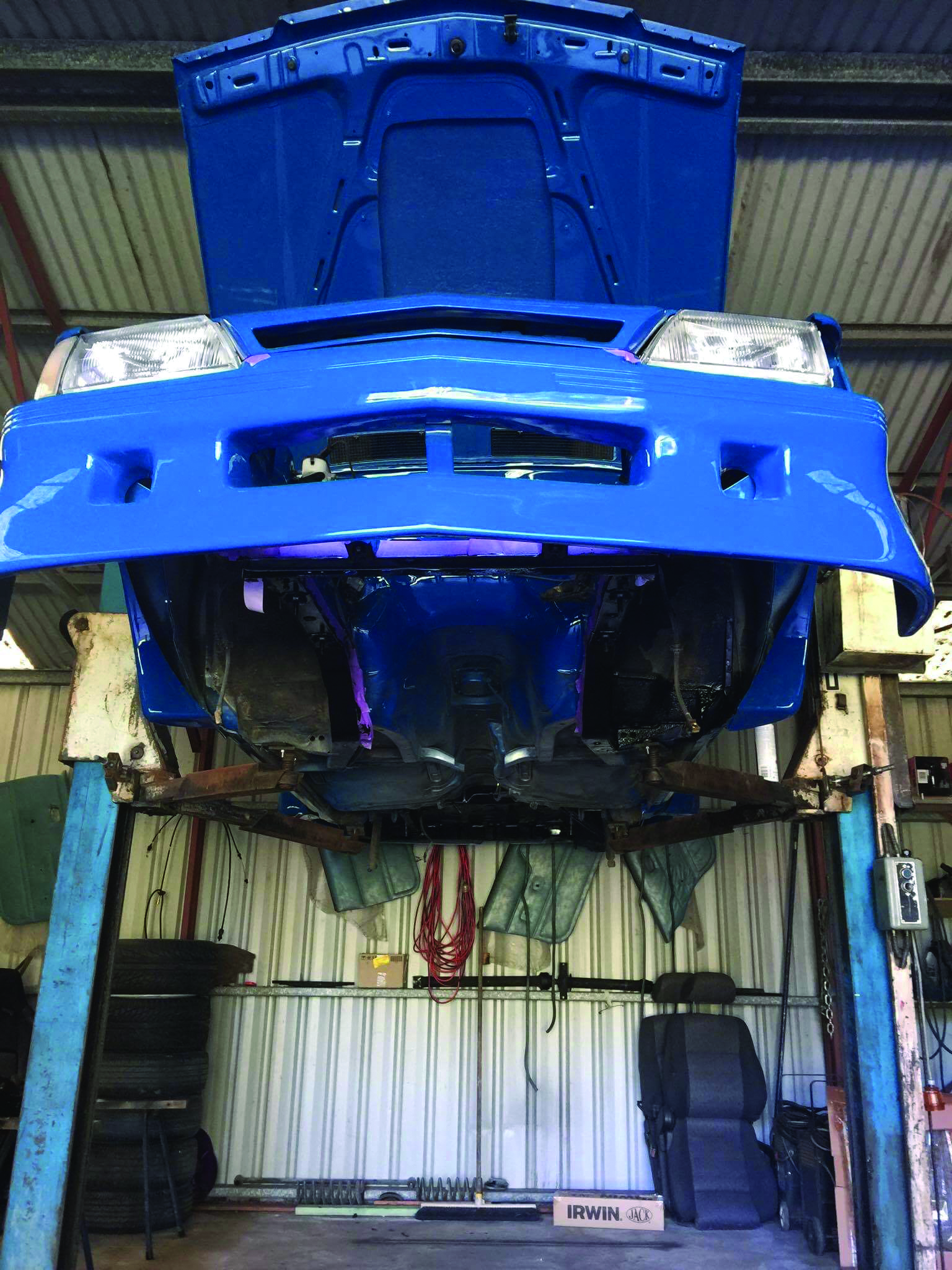
Now with its HDT bumper and grille.
Tied down
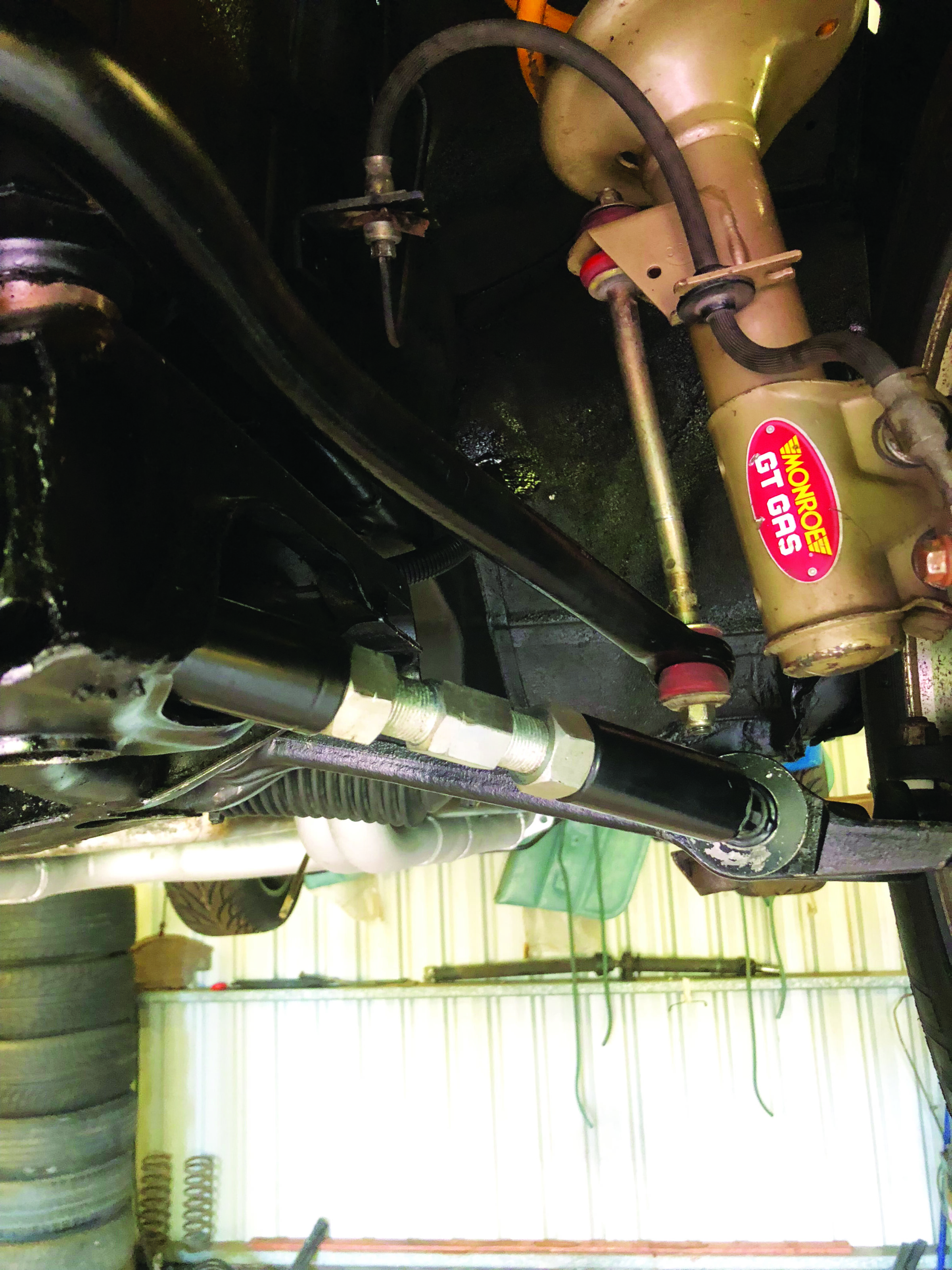
IRS for upped cornering capability.
Wheelie nice
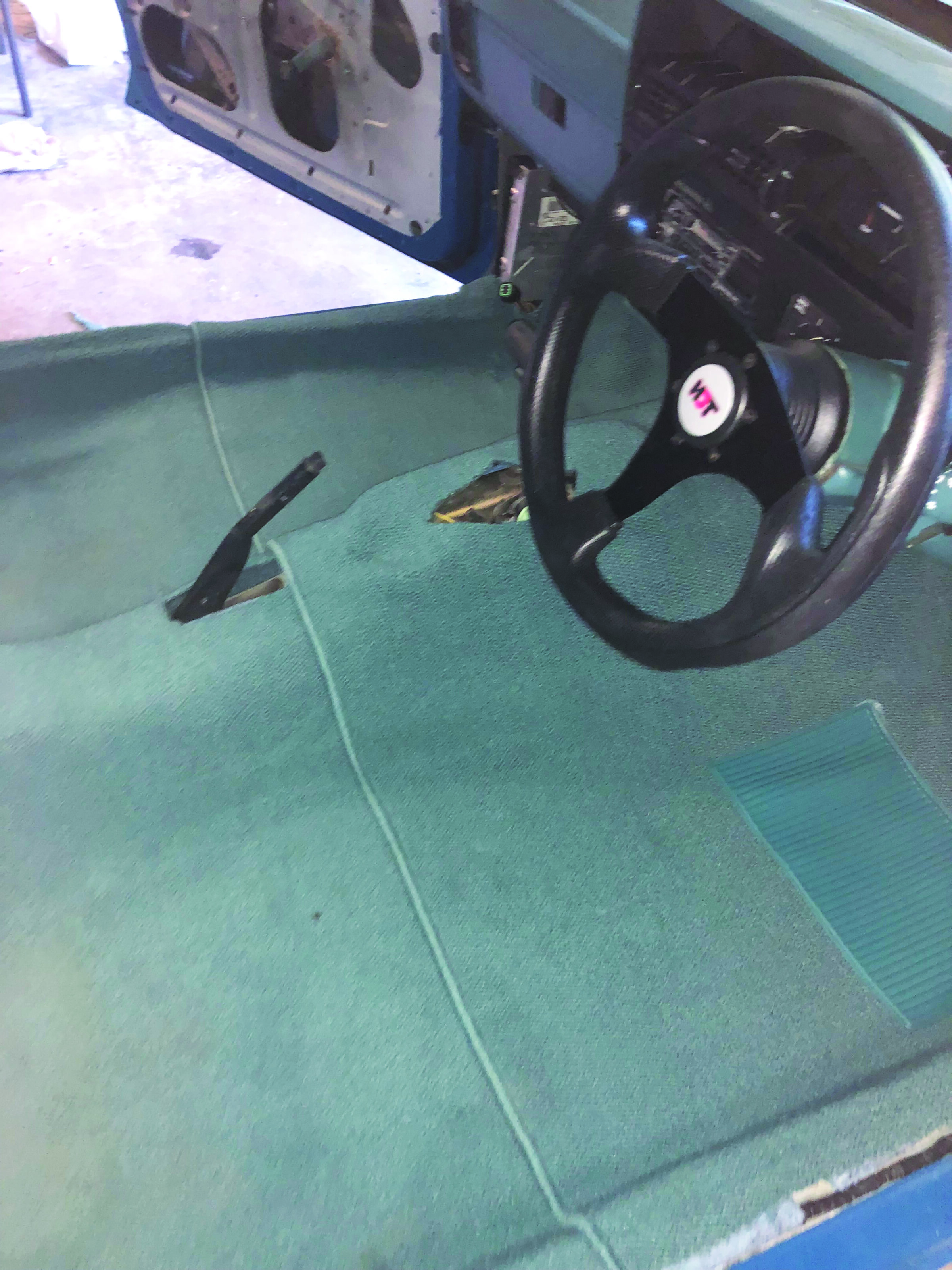
Momo tiller like the original.
Decals
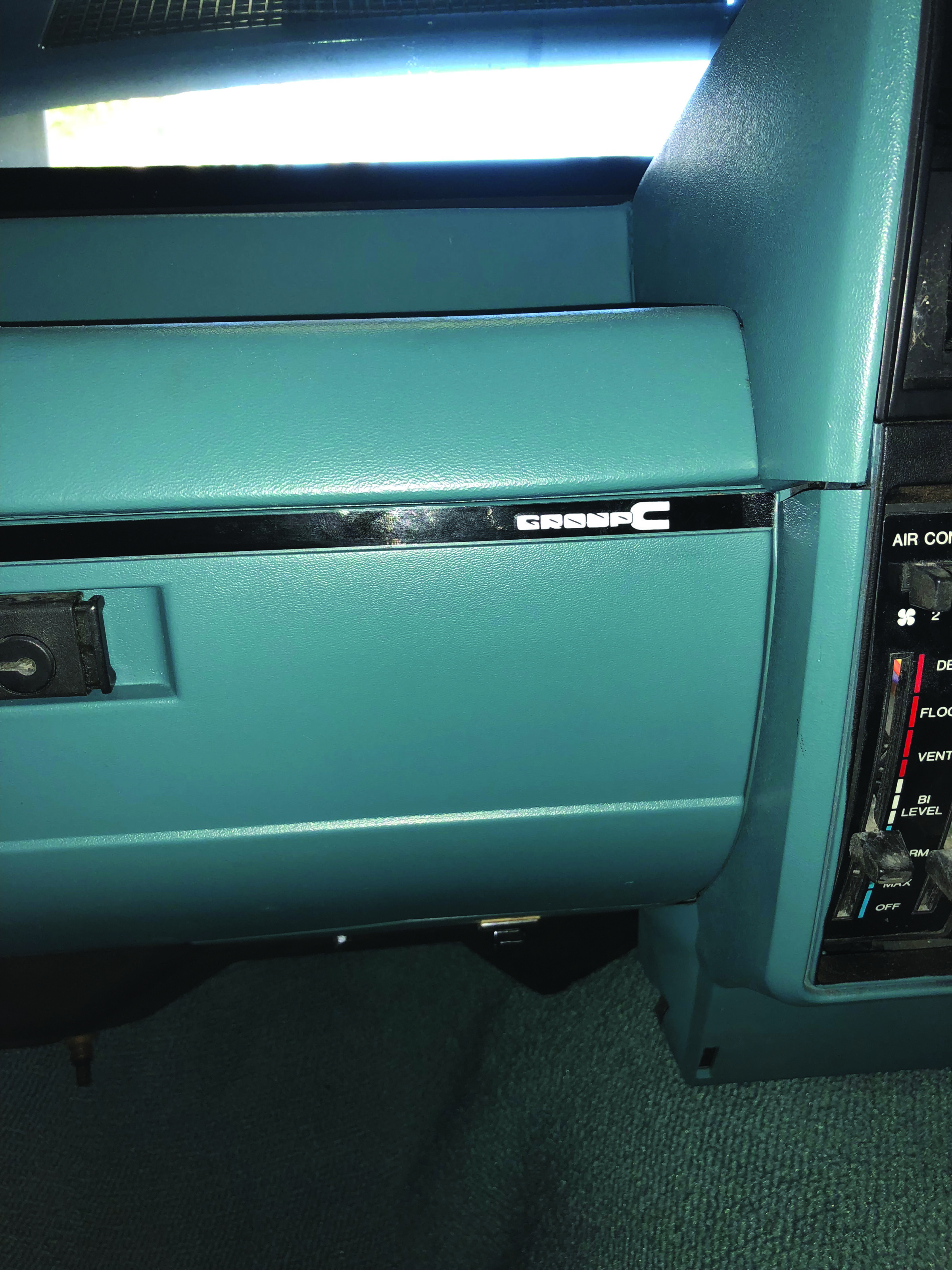
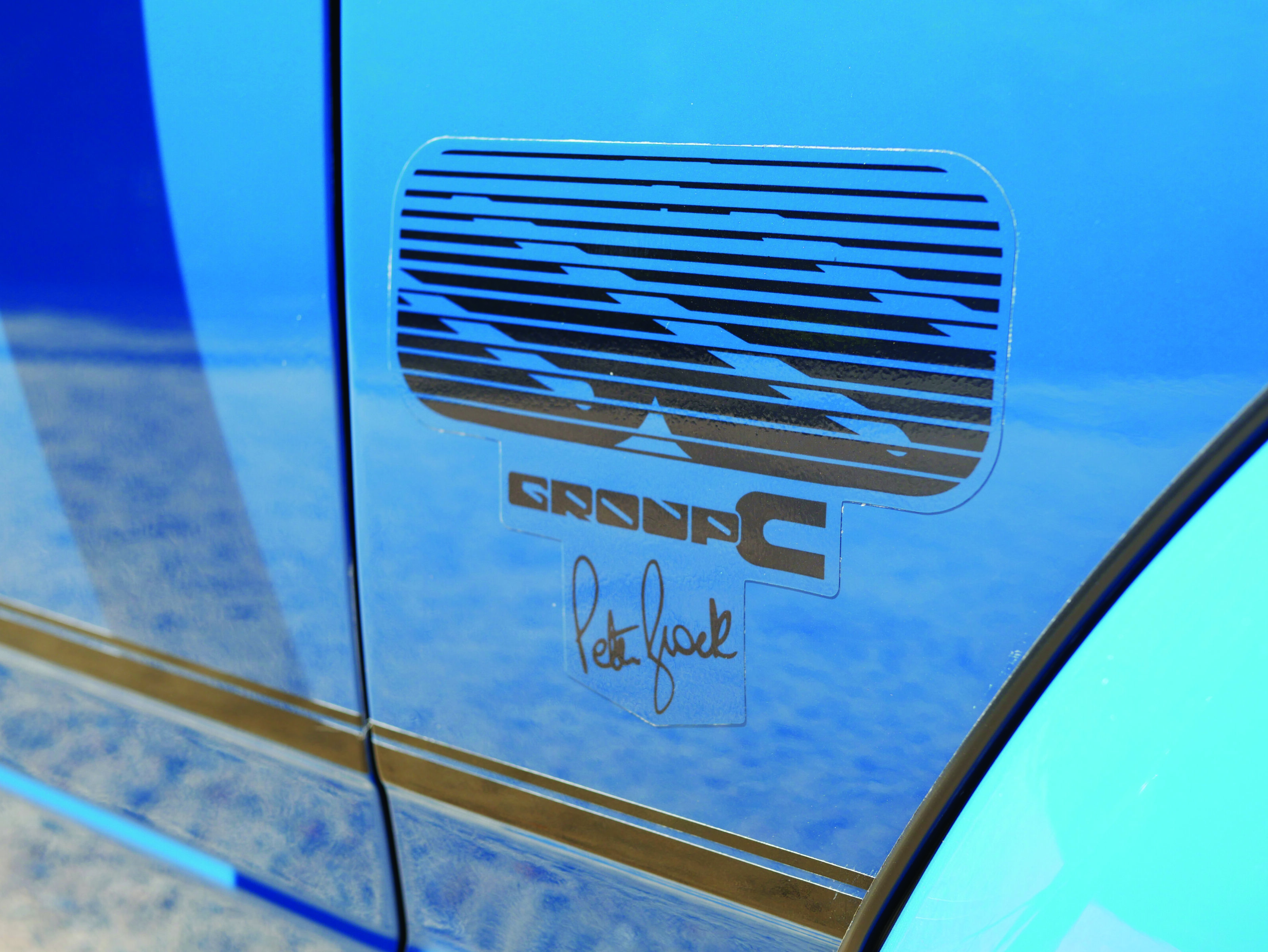
Group C for Chuck. Nice touch.
Five litre v8
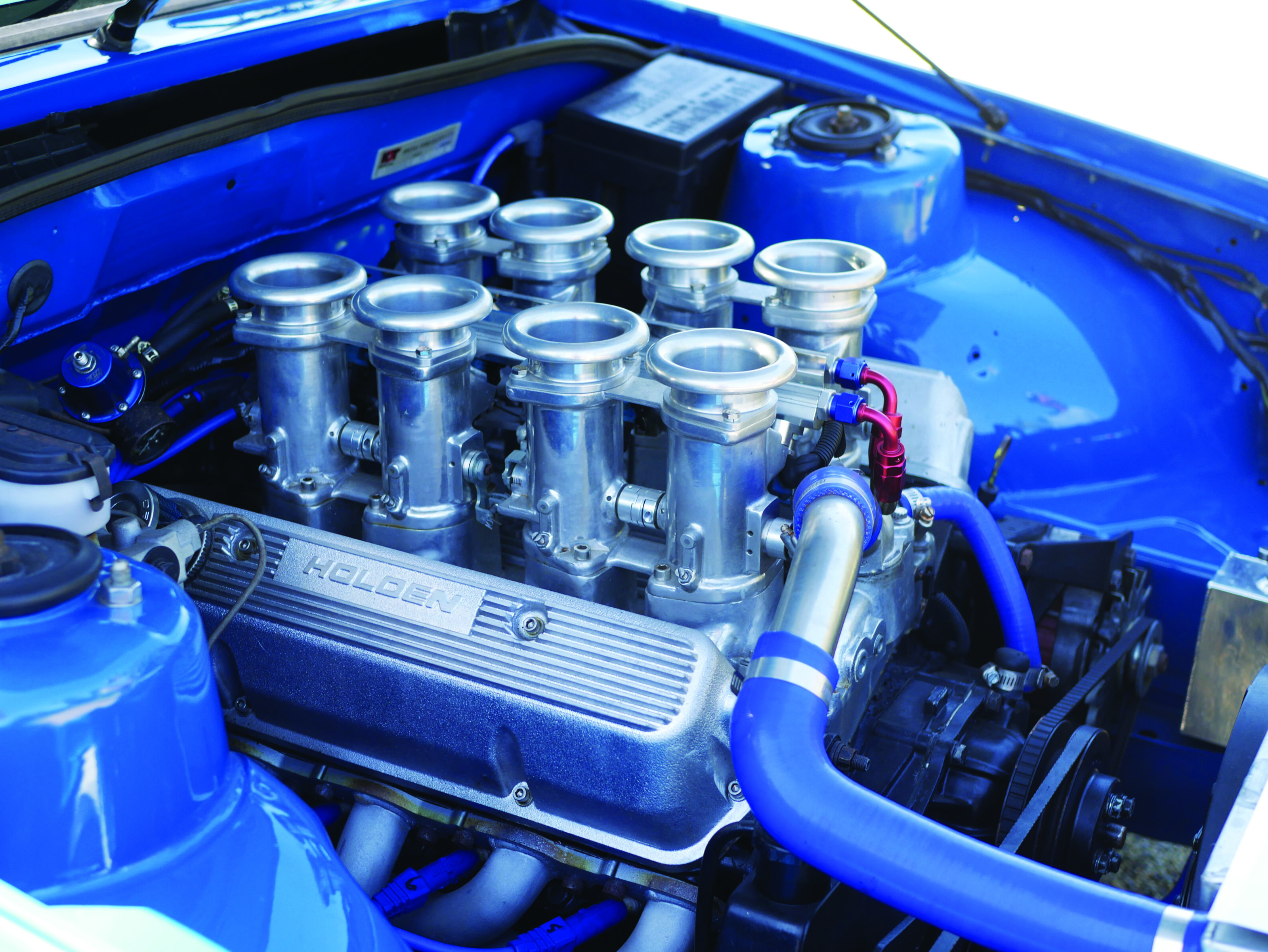
Built by drag racer Russell Schaffer.
Seat dilemas
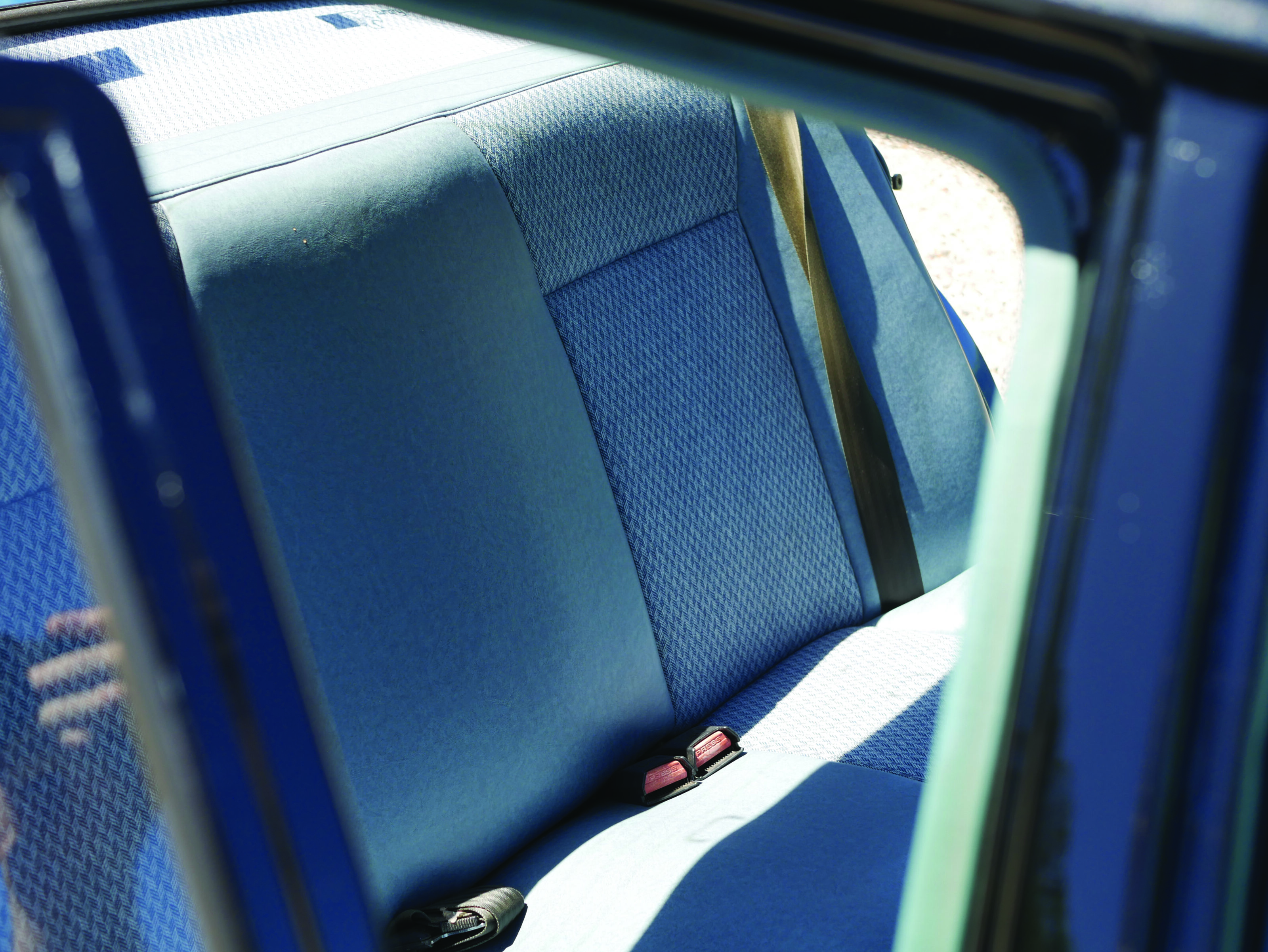
A pattern not normally seen in here.
Replica
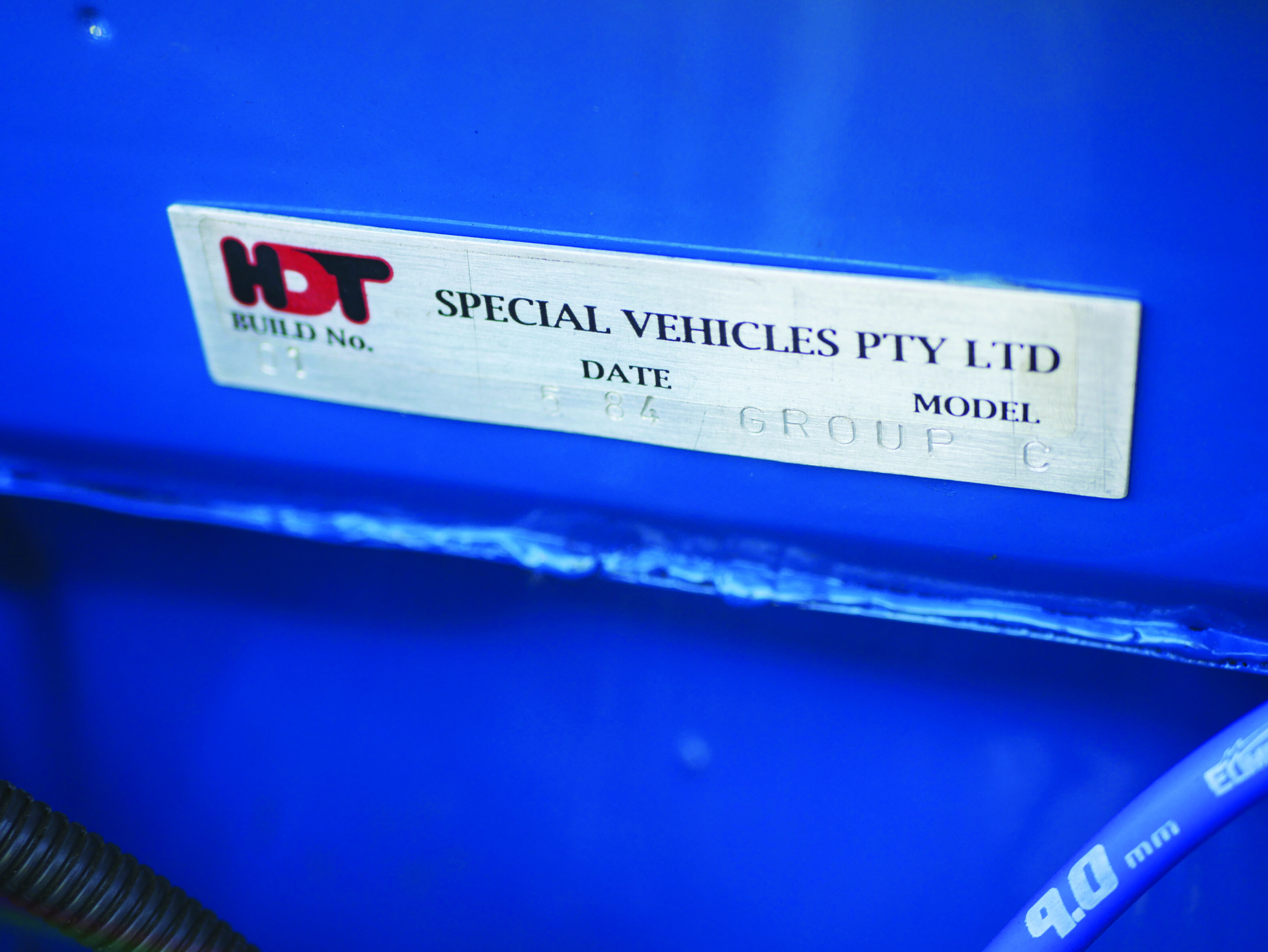
There is even has a tribute build plate.
Flares
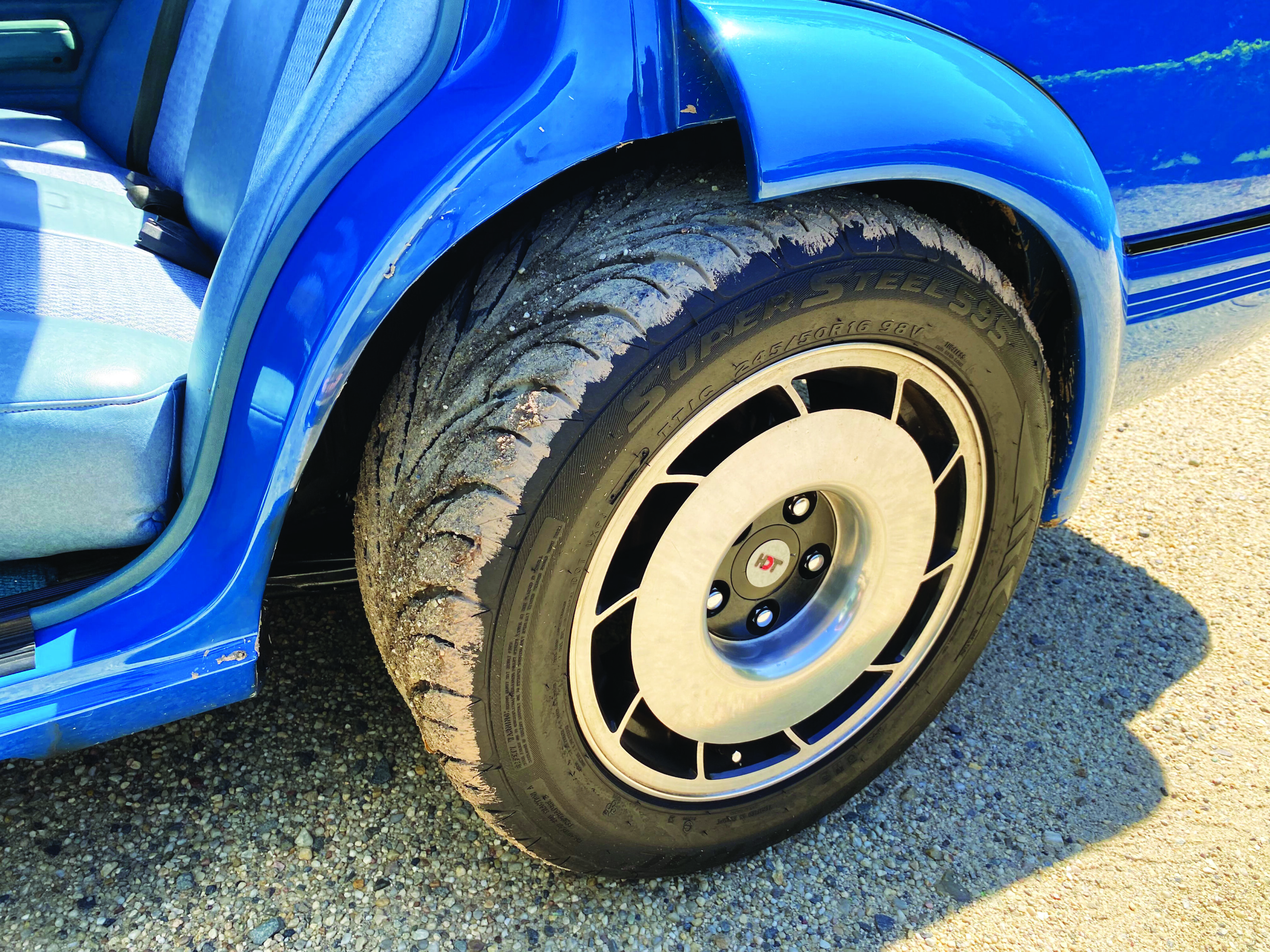
Were all the rage in the 1980s.
Original car: 1984 VK Executive Commodore now Blue Meanie Group C inspired ‘Big Banger’ Length of restoration: two years
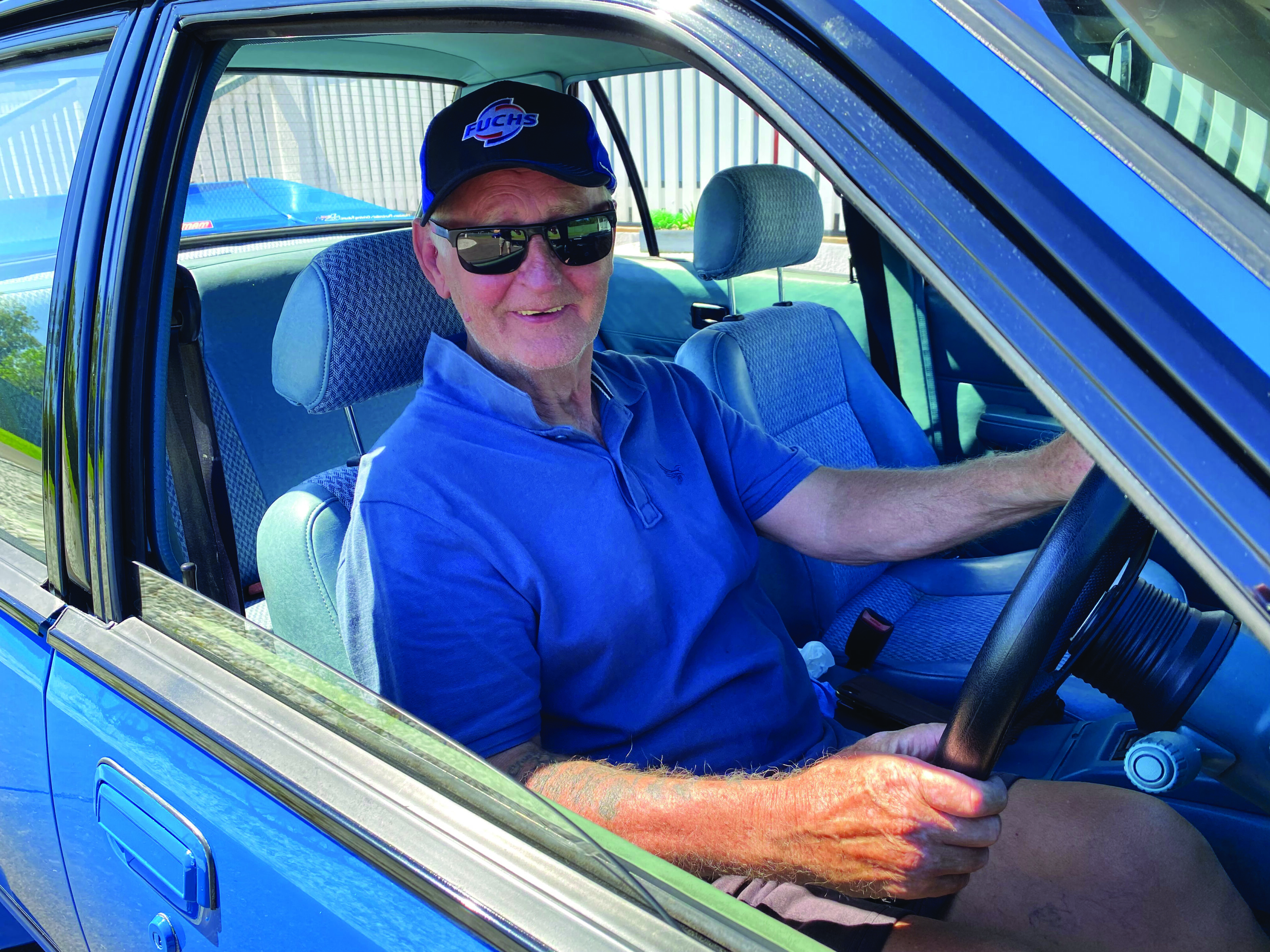
1984 Holden VK Group C tribute
From Unique Cars #463, March 2022
Originally published at our sister site, Unique Cars
In 1982 Ford put its ageing and boxy Cortina to rest, replacing it with a jellybean shaped car named Sierra: Spanish for mountain range.
Designed by Uwe Bahnsen and Patrick le Quement the all-new Ford was introduced at the 1982 British Motorshow in Birmingham mid-September and a week later at the Paris Motorshow.
Initial pushback wasn’t as bad as the AU Falcon but buyers weren’t storming Ford dealerships to get their hands on one. For starters the new styling was controversial and, secondly, it took a while to sell off the remaining Cortina stock.
| Bathurst legends: Ford Sierra
Like its predecessor, the Sierra’s aim was to capture a big chunk of the lucrative fleet market as repmobiles and pick up family buyers along the way.
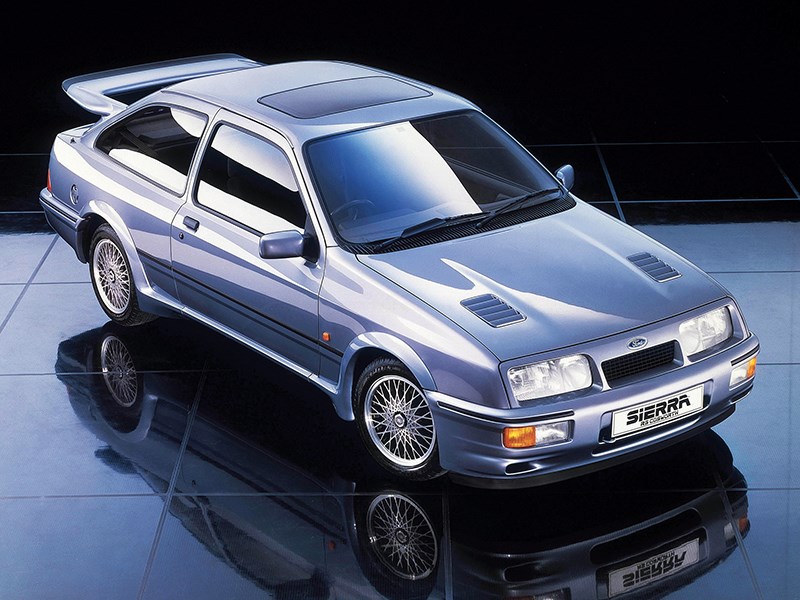
Bragging rights for Sierra-driving reps were thin on the ground with the base model four-door hatchback copping a lowly 44kW 1.3-litre Pinto engine. Luckier reps might have been able to stretch to a 92kW two-litre four.
Some may even have ascended to the two-door XR4i with its 2.8-litre Capri engine and double rear spoilers in a restyled three-door body.
| Read next: Ford Sierra Group A
Over in South Africa the landscape looked brighter with an XR6 version powered by a 3.0-litre V6 and, built to qualify with local race rules an XR8. Only 250 were made, sporting a 302 V8.
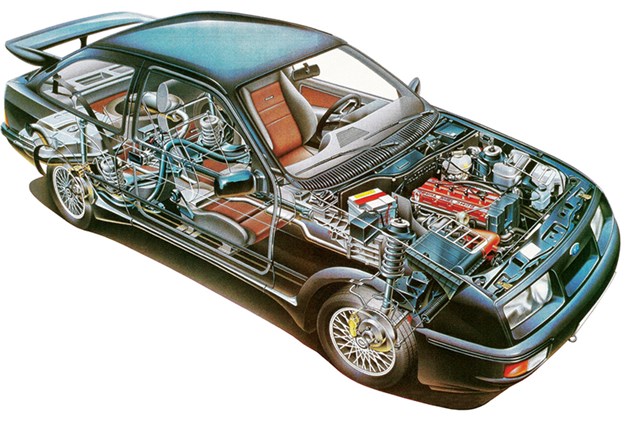
From past tintop experience with the Cortina and Escort, Ford knew the value of motorsport as a successful promotional tool and the lack of competitiveness in touring car racing, saw Ford hatch a plan in 1983 to return the marque to the top with a built for racing Ford Sierra.
Influential Ford PR vice president Walter Hayes helped guide the project through the corridors of senior management.
| Read next: Ford Sierra Cosworth RS500
Hayes, a Ford veteran, played key roles in the development of the GT40 and Cosworth DFV F1 engine and was keen to see this project happen.
Given the victorious Hayes-Cosworth collaboration on the DFV F1 engine, it was a given their long-term partnership would reignite with this project.
Unbeknown to Ford, Cosworth was well advanced on a two-litre engine dubbed YAA, using a twin-cam, 16-valve head screwed onto a Ford T88 Pinto block. It seemed a good base for a potential Group A winner.
| Read next: Bathurst Ford Sierras – Dick Johnson & John Bowe
Ford looked at the YAA but gave Cosworth the green light to develop a turbocharged version instead. Going by the code YBB, Ford advised its engine partner it expected the road goers to have 132kW and race cars 220kW.
Cosworth told Ford the road car would have no less then 150kW and demanded a contract to build 15,000 engines, not the 5000 Ford wanted.
In the end Ford approved the extra 10,000 engines that were gobbled up with a second-generation, four-door Sapphire version.
The standard Sierra had a major aero issue generating rear end lift even at moderate speeds, so Lothar Pinske was given the task of not only styling the Sierra RS Cosworth but ensuring it was nailed down tight at racing speeds.
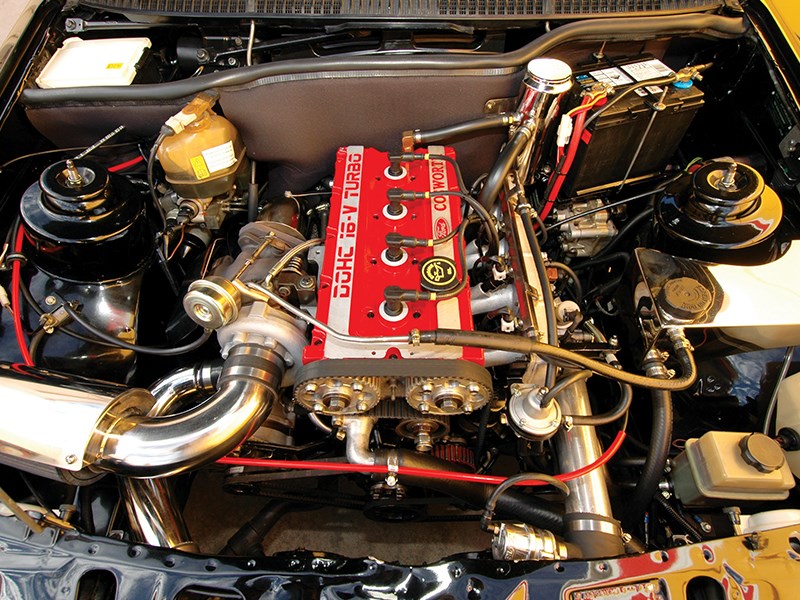
Extensive wind tunnel work and high-speed test runs at the Nardo circuit in Italy honed the design. However, when it was presented to Ford management they were appalled and dealers that saw photos of it weren’t any keener. On the premise if it won on the track, it would sell, Ford made the brave decision to press on and go into production.
Behind the blue oval badge on the mesh grille lay the double overhead-cam two-litre four-cylinder engine with Cosworth fettling, a Cosworth Garrett turbocharger and the promised 150kW.
Now it was one helluva repmobile!
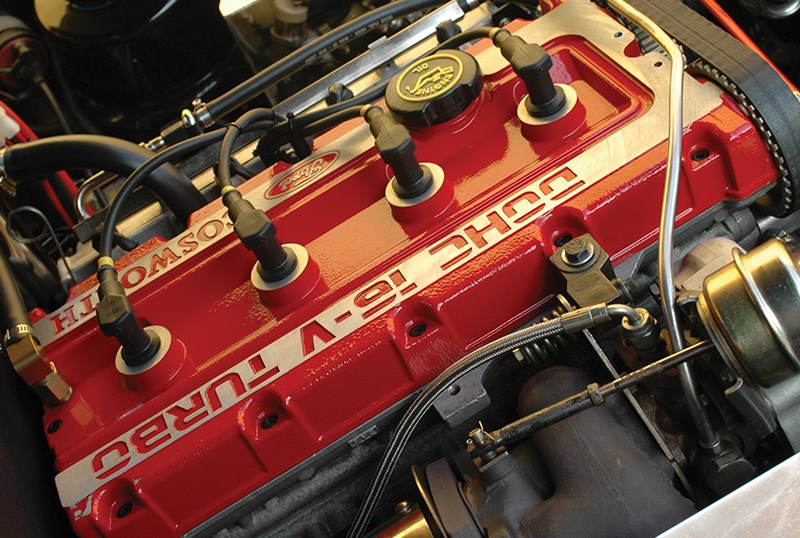
Gearboxes were an issue so to cope with the power, torque and rigours of racing the proven Borg-Warner T5 was given the nod and a special production line was created. The Sierra RS Cosworth also had many race proven suspension components.
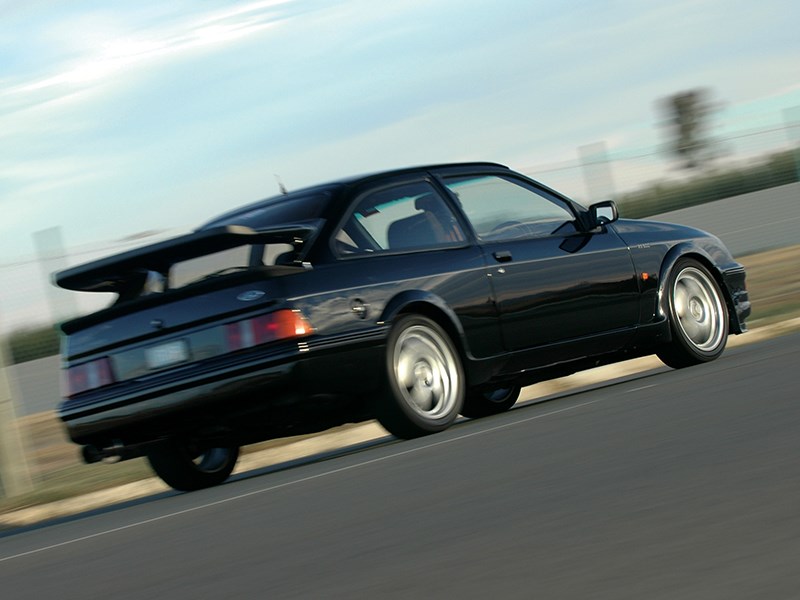
First displayed at the 1985 Geneva Motorshow, the three-door production version Sierra RS Cosworth rolling out of Ford’s Genk plant in Belgium July 1986 wearing its huge single plane rear wing.
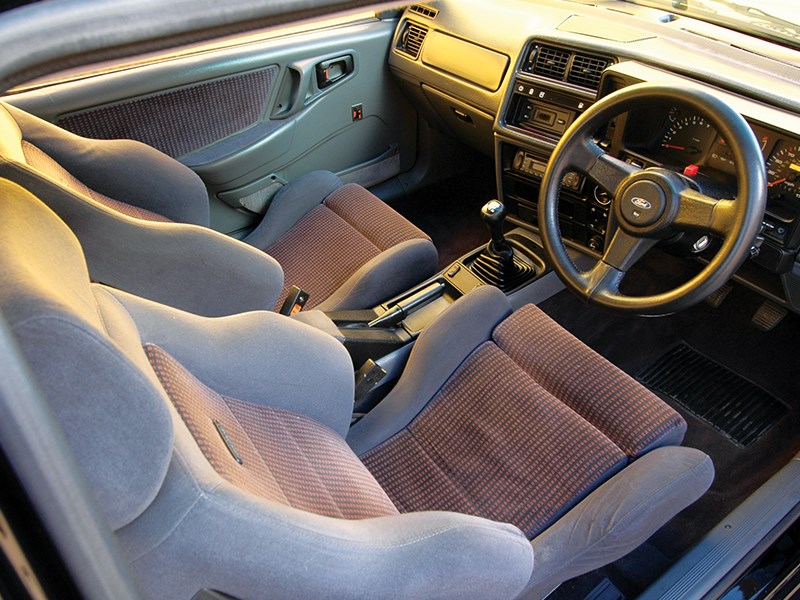
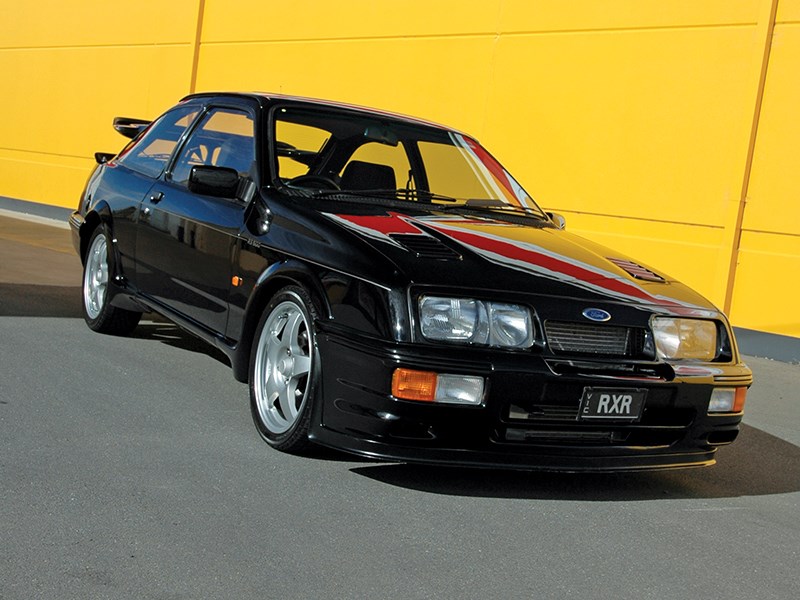
It had a lowered ride height, hot air escape louvers in the bonnet, and flared wheel arches to accommodate 10-inch wide racing wheels. Behind the wheels sat 283mm ventilated front discs with four-piston callipers and at the rear solid 273mm rear discs with single floating callipers. The Cossie also featured deep side sills, a bespoke front bumper and spoiler and, unlike the repmobile models, between the headlights was a grille – necessary to ram air into the turbo.
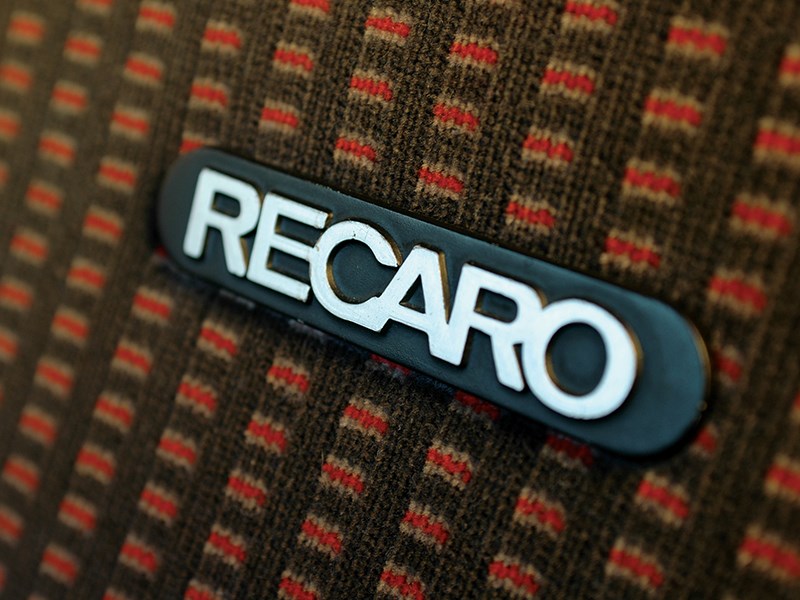
Inside it was decked out like the top spec Ghia model but with snug fitting Recaro sports seats, a three-spoke sports steering wheel and the speedo had a turbo boost gauge within the dial.
In a quest to make the Sierra Cosworth unbeatable, March 1987 saw Ford create the evolution model RS500 and assign Aston Martin Tickford the job of converting 500 road cars (to be eligible for racing) with homologation taking place August 1987. All were right-hand drive and built in Genk.
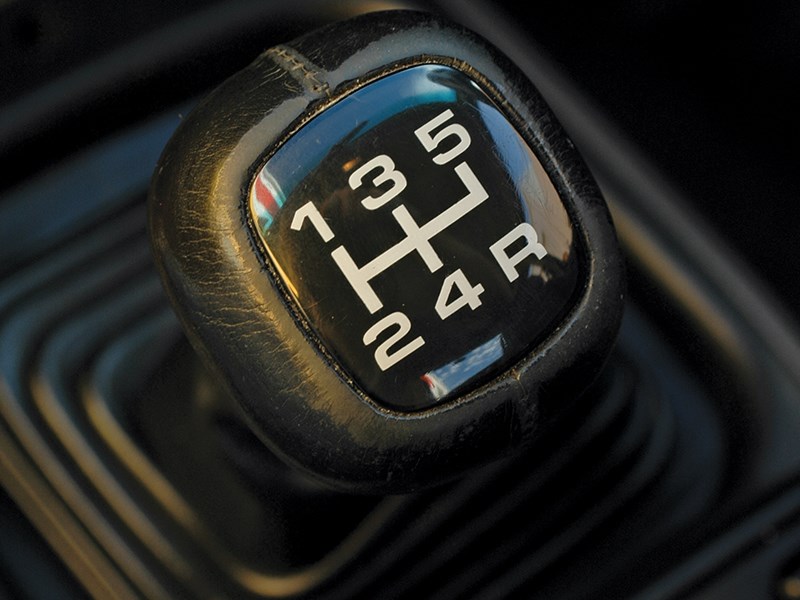
More competition focused, the RS500 featured a thicker walled cylinder block, a larger turbo and intercooler, a second set of fuel injectors and a second fuel rail (inactive in road cars), an uprated fuel pump, reworked cooling and induction systems. This increased power to 167kW and 277Nm on the road car.
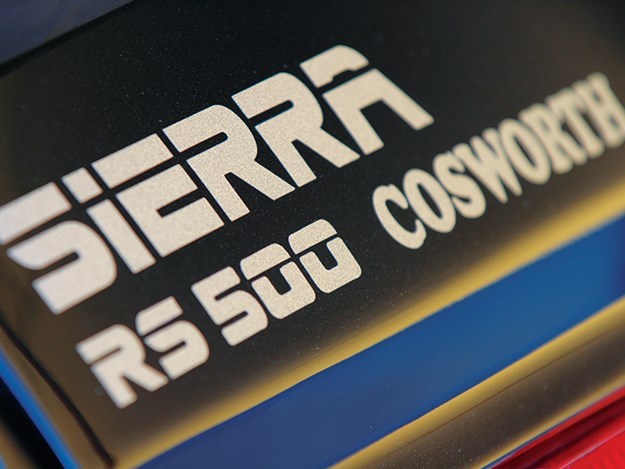
Cosmetically the RS500 has an additional lower rear spoiler, revised front bumper to aid engine cooling with extra intakes for brake ducts where the foglights sat. Of the 500 made, 56 were white, 52 Moonstone blue and the rest black.
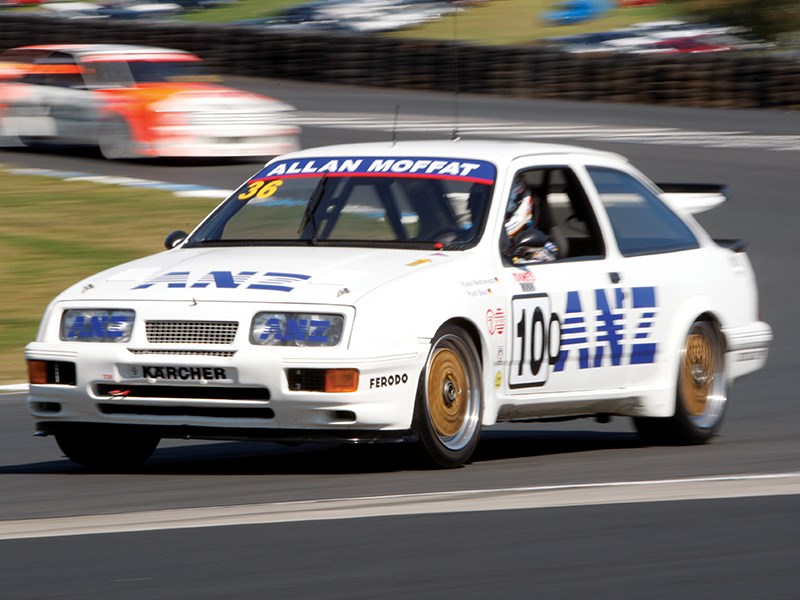
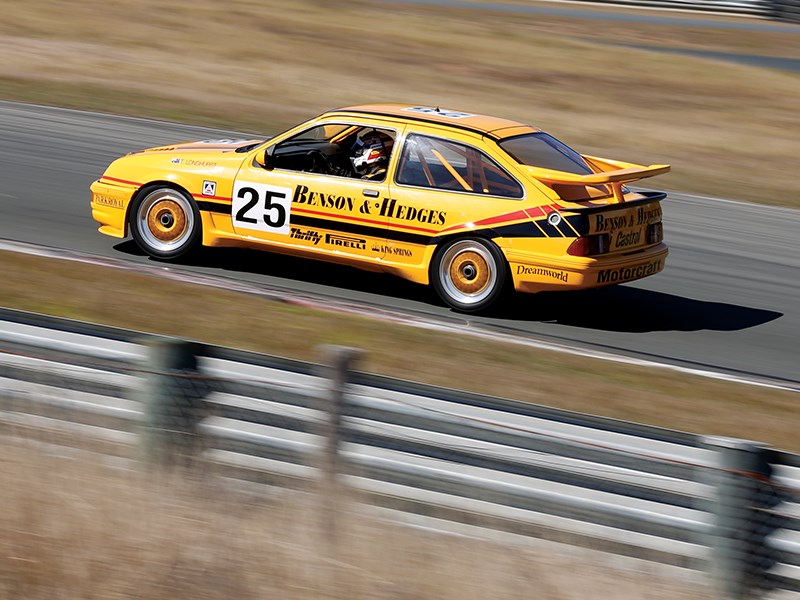
Bred for racing, the Ford Sierra Cosworth has an outstanding record including three NZ Touring Car Championships two Australian and Japanese Touring Car Championships and victories in the German and British series. Amaroo Park’s (NSW) AMSCAR series was won three times by a Cosworth Sierra. Major race wins include Sandown 500 and Bathurst 1000 twice, the Fuji InterTEC and Pukekohe 500 three times, and single wins in the Tourist Trophy, Spa 24 Hours and Guia Race of Macau.
So successful was this car, Holden hero Peter Brock raced one and in Japan on November 12, 1989, two days after his 50th birthday, Allan Moffat started and won his final race, the Inter-Tec 500, aboard an RS500 Cossie.
The Cosworth version was the shot in the arm the Sierra and Ford needed to skyrocket its perception from humdrum to one with an impeccable pedigree. Simply put, the Ford Sierra RS Cosworth and its RS500 sibling rank as two of the finest blue oval badged road cars and most successful touring cars of all time. A future classic.

Turbo lag. And winning Bathurst
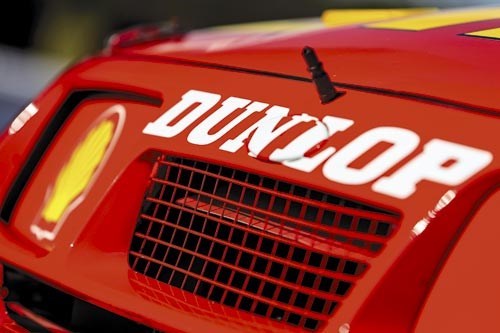
They’re the lasting memories John Bowe has of his five seasons at the wheel of Dick Johnson Racing Shell Sierra Cosworth.
“Towards the end of 1987 Dick rang me and said come up to Brisbane and have a drive at Lakeside. So I did and I remember I was slower than him and I was really shocked,” Bowe says with a laugh.
“In hindsight Dick was a fantastic driver but growing up in the open wheeler field, I didn’t really take that much notice of touring cars, until then.”
| Watch next: Bathurst Sierras at Lakeside Raceway with Johnson & Bowe
In Bowe’s second full season of touring car competition, he finished second to team boss Johnson in the touring car championship, a year the pair were streets ahead of the opposition, thanks to a lot of R&D on the engine management system by Dick and Neal Lowe.
“The Sierra was a very different beast to the Nissan and Volvo I’d previously driven. They both had small turbos and 330-340hp whereas the Sierra had a big turbo and made 550 to 600hp, but with turbo lag to die for.”
To offset the lag Bowe developed his own cornering technique.
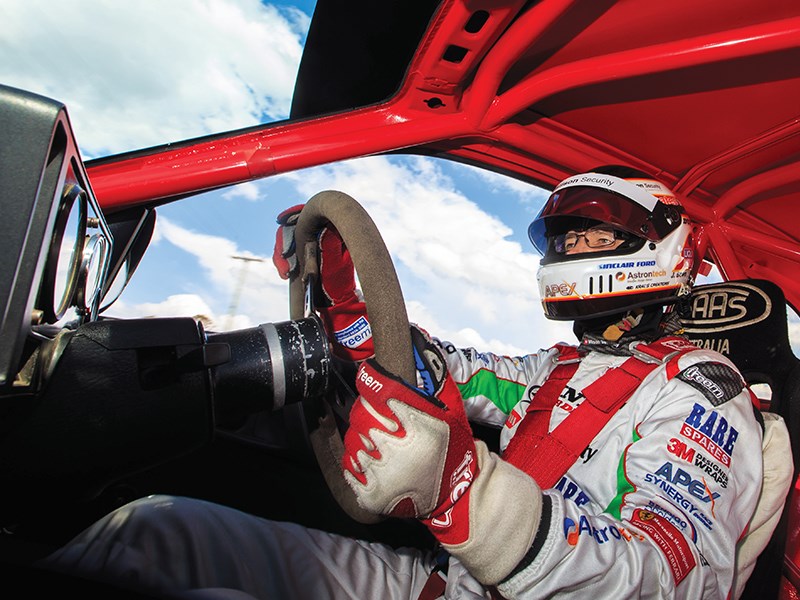
“Say you are coming into turn one at Sandown. You’d brake normally change into whatever gear you want to go round the corner, which in this case was probably third. Then as you turn the wheel towards the apex you put your foot flat on the accelerator and nothing would happen. Just as you were crossing the apex to start your run out towards the exit the boost would come on so you back off the throttle as the boost came on, otherwise you’d be facing the wrong way. It was an unusual technique but it was the only way to drive it.”
In the wet it was simply terrifying, Bowe continued. “As soon as the boost gauge came up you change gears, that was about 4500rpm.
“When the engine went on the dyno to run it in, without the turbo it made around 90hp. Hooking up the turbo with 2.2 bar gave them 600hp and it all happened between 4500 and 7500rpm, along with mega torque.”
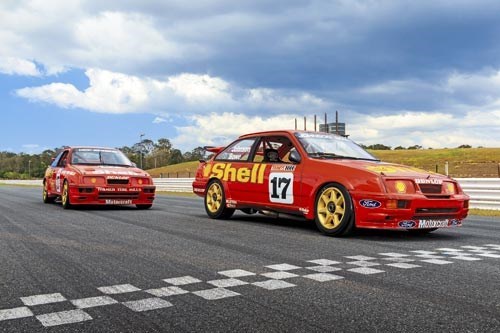
Johnson and Bowe took a Sierra to the UK to race in the Tourist Trophy event. In a coals to Newcastle moment, they were up against the best Poms and Europeans in their homegrown Sierras.
The DJR Shell car was quick but retired with a leaking water pump, but not before giving the opposition a lesson in how to build and race one of these things.
“I clearly remember passing Andy Rouse who won the race and then passing Klaus Ludwig in the factory Texaco car, Bowe says. Those guys were at the top of their game so at the time I guess we had the world’s fastest Sierra.
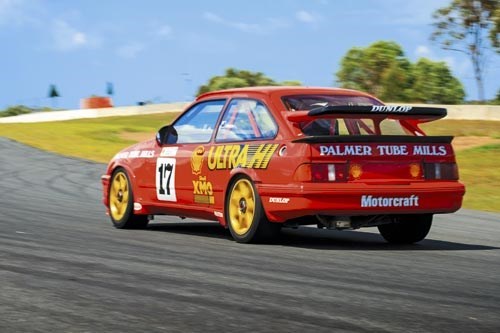
“Looking back, the Bathurst win was terrific. At the time you go to Bathurst with the expectation of doing well and if a few things fell your way you were going to win it.
“In 1989 when we won Bathurst, we led every lap of the race, never lost a lead. Around lap 100 a turbo impeller twisted or broke. So, it had a turbo problem for the last third of the race and normally they crap themselves but this time it kept going, so we were meant to win. It just worked out I was in the car when it went across the finish line.
“Dick was happy to have race cam in the car and talk to the commentators but I hated it. But Mike Raymond (Ch7) started talking to me on Conrod straight on the last lap and congratulated me as I crossed the finish line and I remember saying, ‘fancy doing that’.”
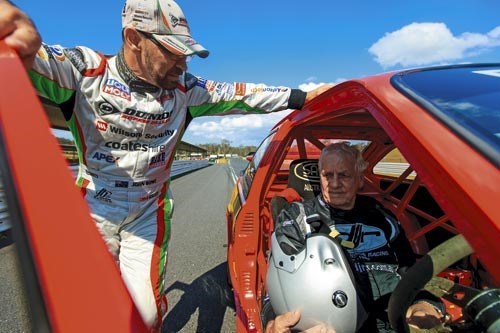
“It was like when you watch it as a kid then you go racing there and then suddenly you win it. It’s a pretty big deal.”
1986-1992 Ford Sierra RS /RS500 Cosworth
From Unique Cars #463, March 2022
Originally published at our sister site, Unique Cars.
UPDATE: It’s confirmed, the Polestar 3 electric SUV will make its global debut in October.
No new details have been offered, but the Volvo spinoff brand announced the October schedule this week as a cherry on top of its first-quarter 2022 sales call.
According to its announcement, Polestar recorded 13,600 sales globally in the first quarter of 2022, with “customer reservations” reaching 23,000 over the same period.
So far this year, Polestar has grown its global presence from 19 to 23 markets, on the way to a target of 30 markets by the end of 2023.
In Australia, Polestar has recorded 208 sales (to the end of April) since the jacked-up 2 sedan went on sale in January.
The story to here: Polestar 3 rendered
December, 2022: Just a handful of days after Polestar teased its new SUV, we now have a better idea of the all-electric crossover’s looks.
Thanks to independent designer Theottle, the heavily-camouflaged teaser has now been turned into something which reflects a possible production-ready vehicle, with the Polestar 3 set to take many of its design cues from the existing 1 and 2 models.
While there are some subtle links to the offerings of parent company Volvo, the front end of the 3 is unmistakably Polestar – its ‘grille’ and headlights are reminiscent of the smaller Polestar 2, which recently arrived in Australia, while also drawing inspiration from the Precept concept.
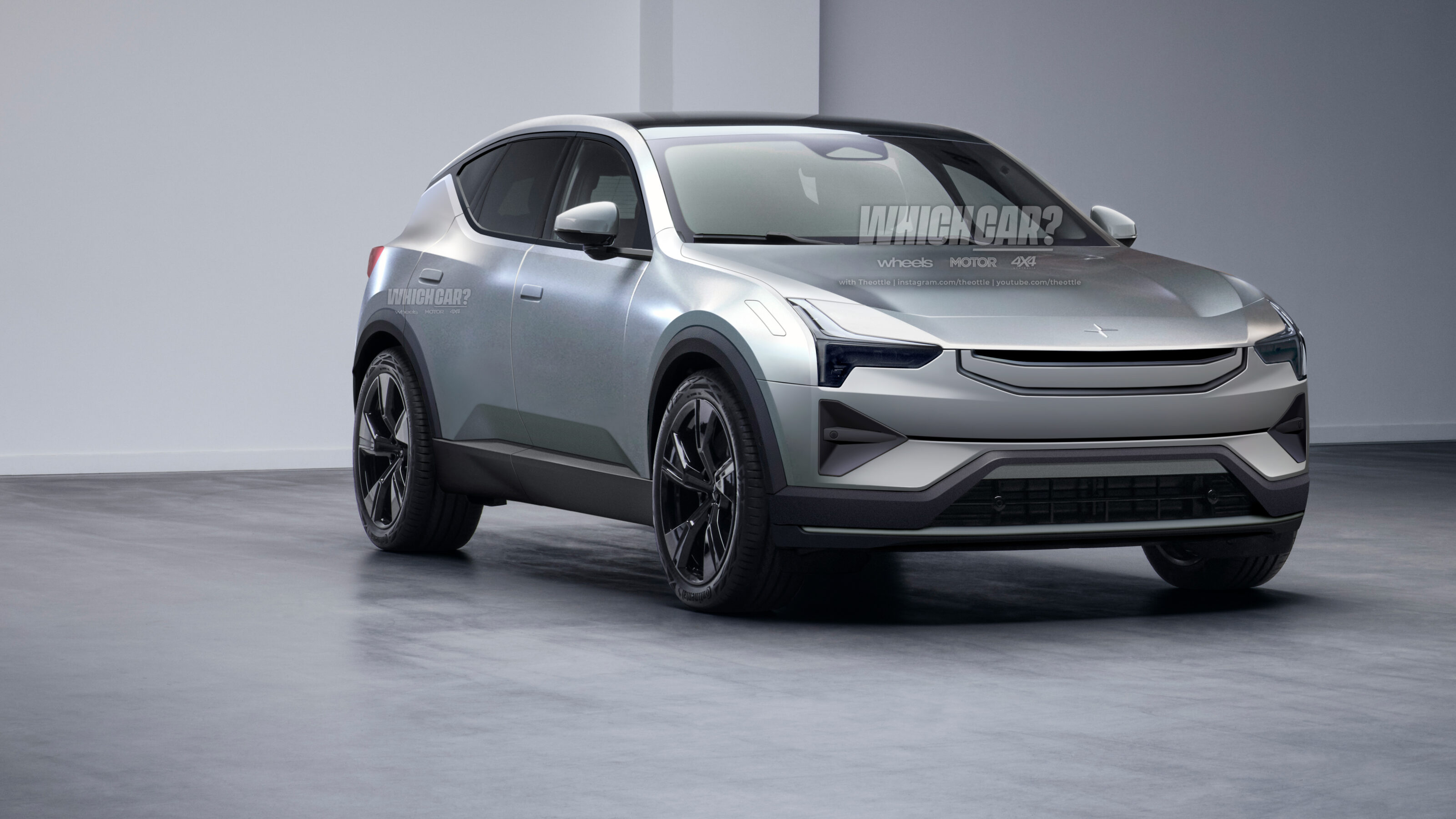
Set to be put into production next year, the Polestar 3 will share its platform with the Volvo XC90 EV, with manufacturing of the SUV to be undertaken in China for local deliveries and in South Carolina for the North American market.
Last week Polestar announced it had opened reservations for the Polestar 2 in Australia, setting up experience centres and test drive locations up and down the east coast for potential customers to look at its first local offering.
