
UPDATE, May 21 2022: Super powerful BMW XM spied in production body
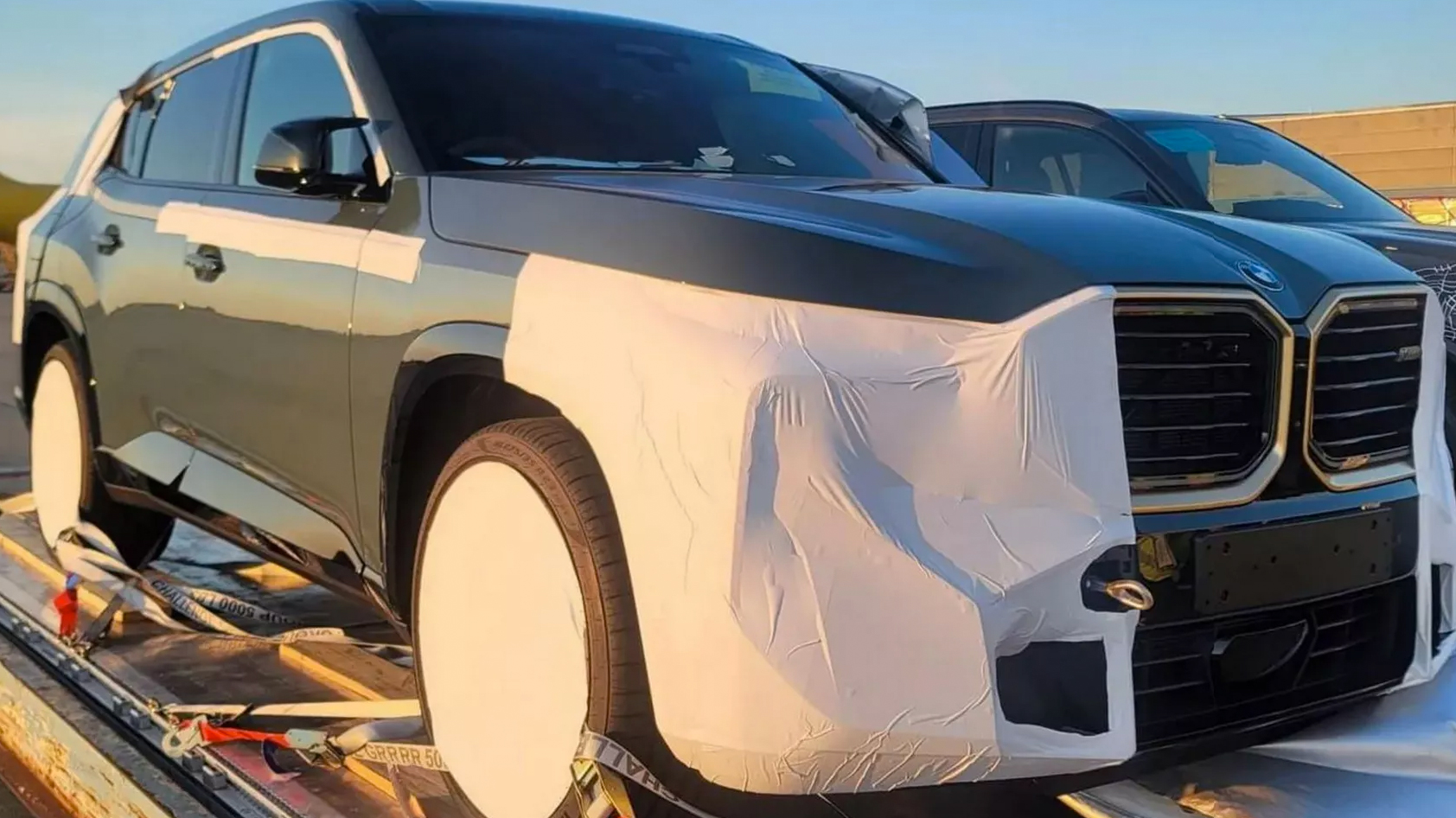
Just days after we published a first-drive review of the new BMW XM hero SUV in a disguised version of its production body, a new example has been spied with very little camouflage.
The example here, published to CarScoops, first appeared on Instagram – although it looks as if the original post has since been removed.
Check it out in the photo below, and catch our original reveal story further down. What do you think of the bold new M car design?
The story to here: 2023 BMW XM revealed as a bold concept
Snapshot
- 2023 BMW XM to headline range
- Plug-in hybrid V8 promises to be the most powerful BMW M vehicle ever
- XM to enter production in late 2022

November 2021: The 2023 BMW XM has been shown off in concept form, with the model set to be the most powerful BMW M car to ever go into production.
BMW will offer the XM exclusively with a plug-in hybrid twin-turbo V8 engine producing 550kW and 1000Nm, and up to 80 kilometres of pure-electric driving available.
With the performance arm celebrating its 50th birthday in 2022, the XM will go into production at the end of next year as the first dedicated M model since the M1 supercar, as well as being the first electrified high-performance model from BMW M.

Like the M1, the XM gets two BMW roundels at the rear, with the shape of the tailgate reminiscent of the back-end of the original M supercar.
As with recent SUVs from the carmaker, an oversized set of kidney grilles dominates the front of the car – illuminated for the XM – with prism surfaces echoed in the bumper and LED headlight design. A set of LED “searchlights” mounted in the roof are reminiscent of BMW’s first luxury off-road prototype, the E34 530iX Enduro Touring from 1993.
A thick ‘black belt’ contour line at the vehicle’s shoulder evokes the M1’s profile, separating the upper matte gold-bronze paint and the lower space grey metallic paint, while also drawing the eye lower to appear to increase the window aperture and reducing the impact of the XM’s overall size. Finishing the look is a set of 23-inch alloy wheels.
“The design of the BMW Concept XM is an extravagant statement by BMW M in the heart of the luxury segment,” Head of BMW Design Domagoj Dukec said at the car’s unveiling.
“It has a unique identity and embodies an expressive lifestyle like no other model in the BMW line-up.”
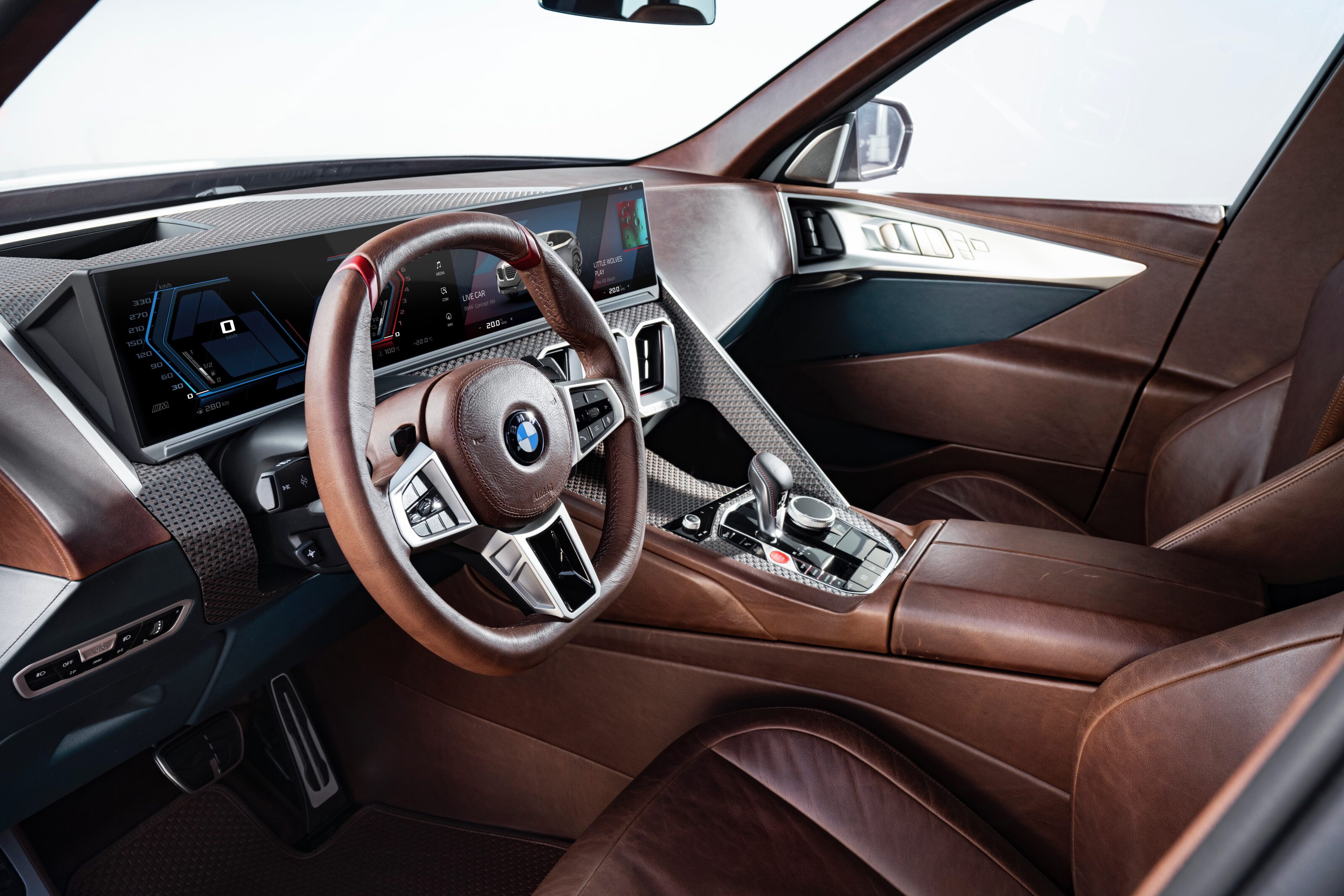
The vehicle’s cabin has been named the ‘M Lounge’, offering second-row passengers a luxurious place to relax, while the front has been designed to be driver-focused. Brown leather dominates the first row, and a “sculptural, illuminated headliner” extends to the rear compartment.
The 2023 BMW XM will enter production in late 2022, with pricing and final specification to be unveiled next year.
The new, fourth-generation Nissan X-Trail arrives at the end of 2022, bringing a sizeable improvement for interior quality, equipment, and space – as well as better fuel economy and sharper performance.
Buyer anticipation of that new model has no doubt contributed partly to X-Trail sales having more than halved year-on-year despite a steady 2021, when nearly 14,000 units were sold.
Yet with about half a year to go – and with the chip shortage continuing to hamper vehicle supply – is the outgoing model still worth considering if you can negotiate a super-sharp run-out deal?
We grabbed ourselves an MY22 Nissan X-Trail ST+ model to find out.
Pricing and Features
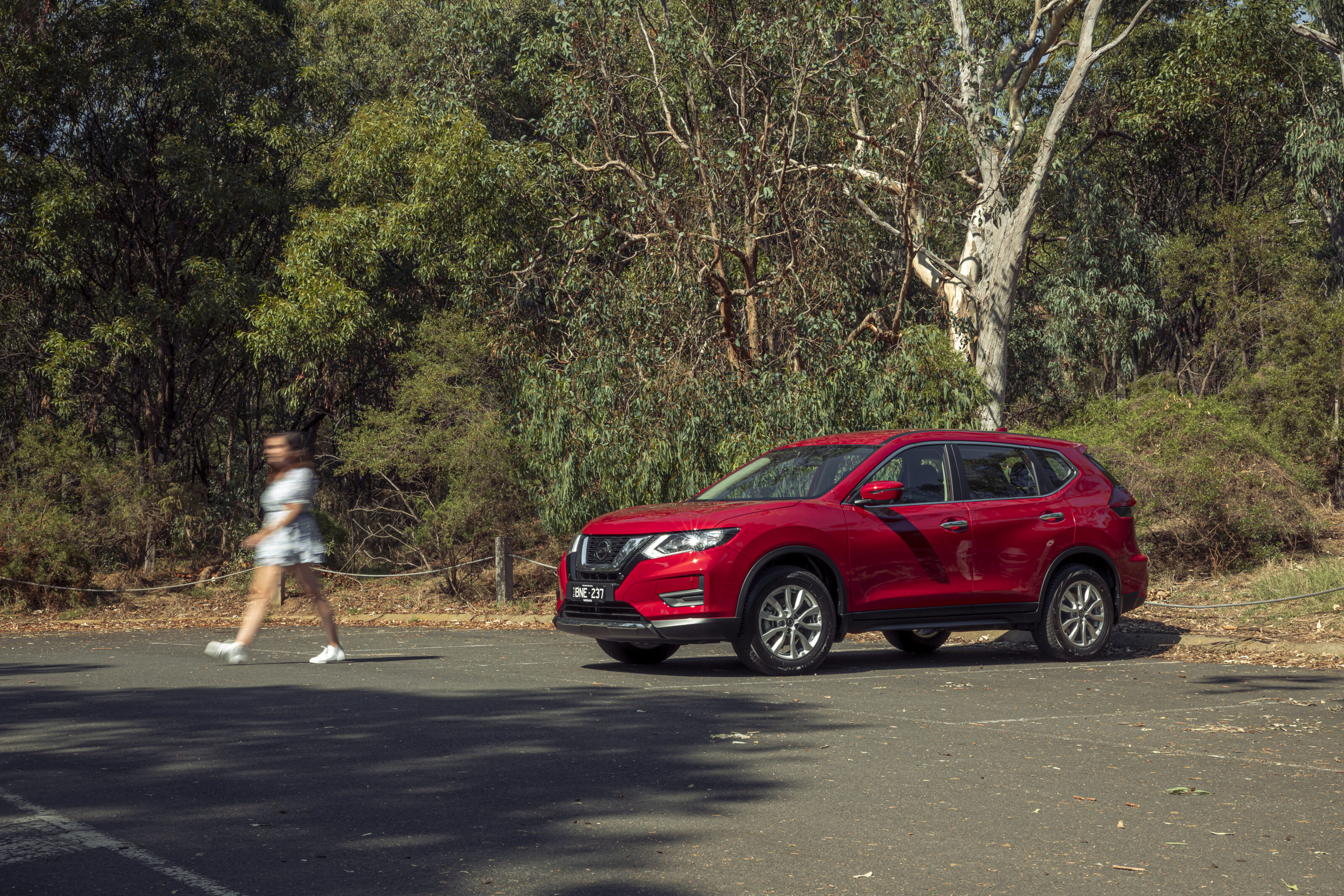
The 2022 Nissan X-Trail line-up consists of four grades: the entry-level ST, mid-range ST+ and ST-L, and top-spec Ti.
Pricing ranges from $30,665 for the base-spec ST when configured with the manual transmission (ours was a CVT auto – more on drivetrain options later), to $46,115 for the range-topping Ti – all before on-road costs.
The ST+ variant costs $34,140 with front-wheel drive (as we had here), or $36,140 with all-wheel drive. The grade was new with MY22, bringing with it increased active safety systems and improved cabin tech, such as an around-view monitor, moving object detection, sat-nav and front and rear parking sensors.
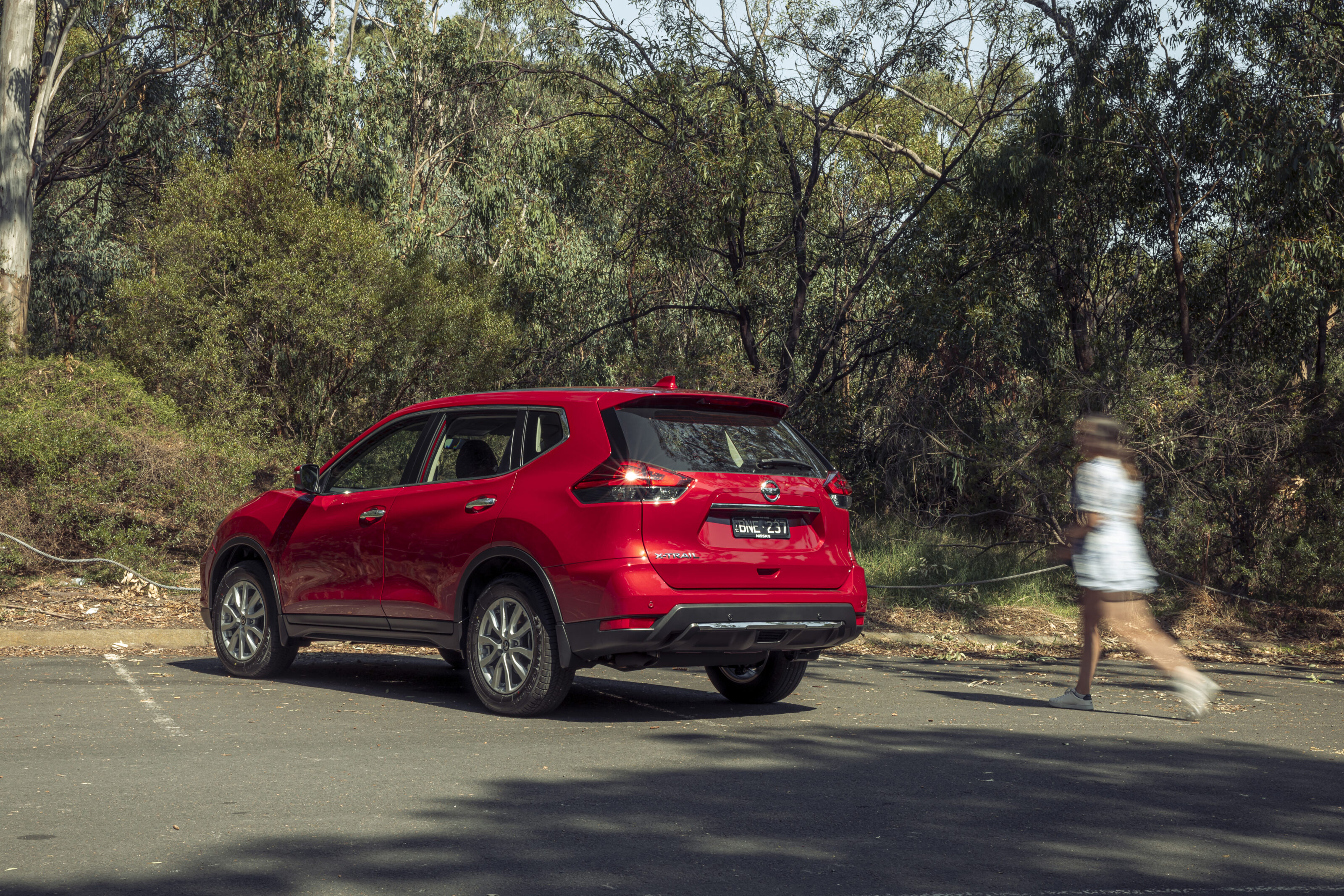
With the current third generation having served Australians since 2013, the X-Trail’s looks are familiar to us by now, and haven’t changed in years
Best-sellers in the segment, such as the Mazda CX-5, are pricier, with the roughly equivalent CX-5 Maxx Sport commanding around $3500 and$4500 more in FWD and AWD guise respectively before on-road costs.
By comparison, Australia’s favourite SUV, the Toyota RAV4, costs $44,956 for the FWD GXL variant or $48,082 in AWD – but it’s worth noting these prices are drive-away, so factor in a few thousand dollars at least of difference.
Meanwhile, the jazzy new 2022 Kia Sportage’s second-tier SX grade starts from $39,483 (also drive-away), though it’s an all-round more impressive offering despite the increased cost.
The new Mitsubishi Outlander, however, if chosen in ES form with FWD and five seats, would cost $34,490, $35,490 for FWD and seven seats, or $36,990 for AWD before on-road costs. Though we’ll touch on this later, it’s worth noting that seven-seater options are available in the X-Trail range, just not on the ST+ we have here.
Of course, these all differ slightly on spec, and the Toyota offers only a 2.5-litre petrol hybrid drivetrain.
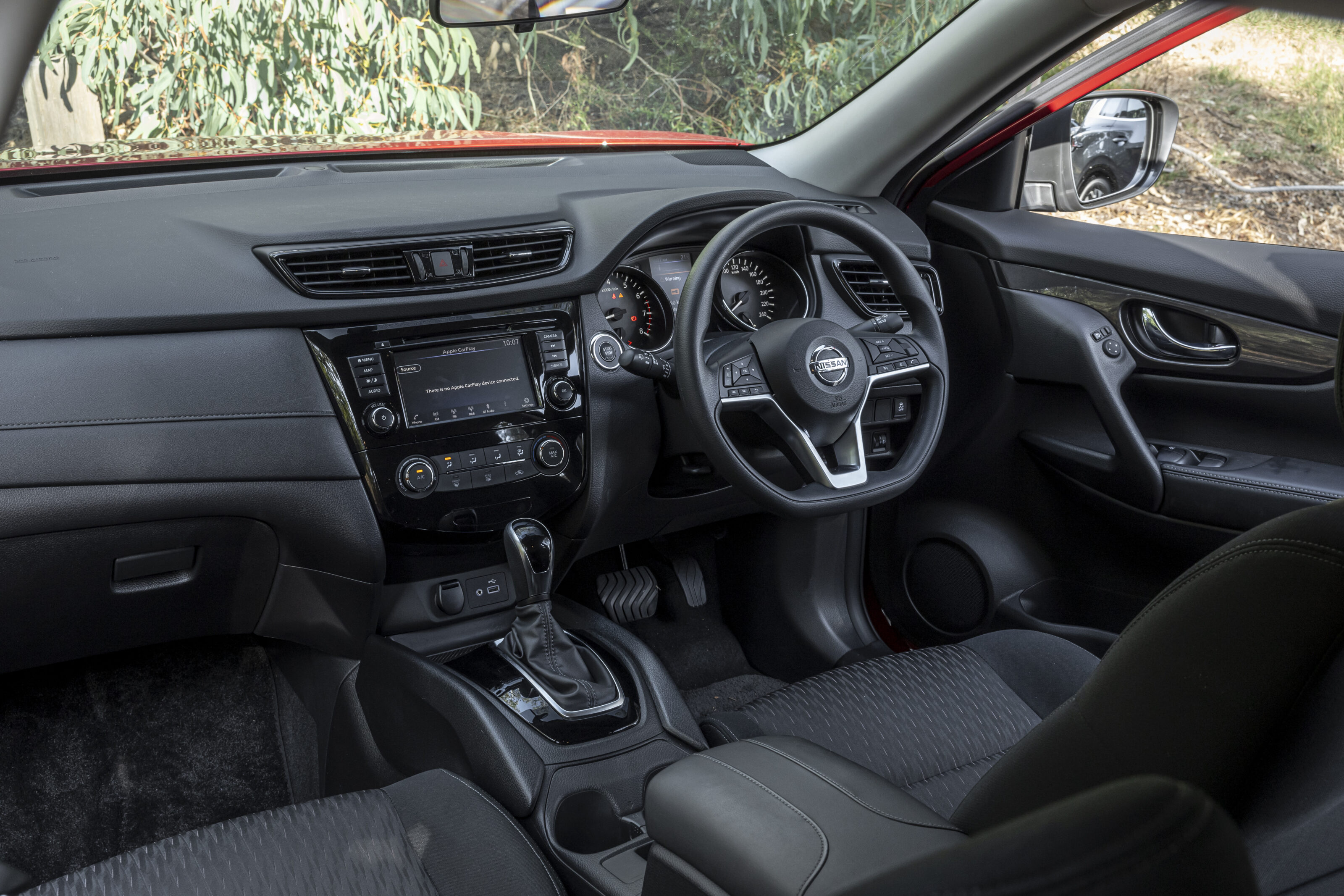
As standard, the ST+ gets; 17-inch alloy wheels, daytime running lights, body-coloured electrically adjustable mirrors, a rear roof spoiler, 7.0-inch infotainment screen with Apple CarPlay/Android Auto capability, digital radio and Bluetooth, voice recognition, intelligent key, push-button start and for AWD models, a multi-mode 4×4 system.
The 7.0-inch touchscreen unit feels very small for a vehicle of this size and price point, showing its age where updated or newer rivals’ technology feels more in keeping with the times. Though it operates perfectly well and is simple enough to use (including in Apple CarPlay mode), it also looks quite cluttered and old-fashioned – stunning then that it is, in fact, Nissan’s ‘next-gen’ infotainment system introduced in MY21 cars.
Fortunately, good news is on the horizon – the MY23 gets a much bigger, more modern infotainment unit as well as a digital dash.

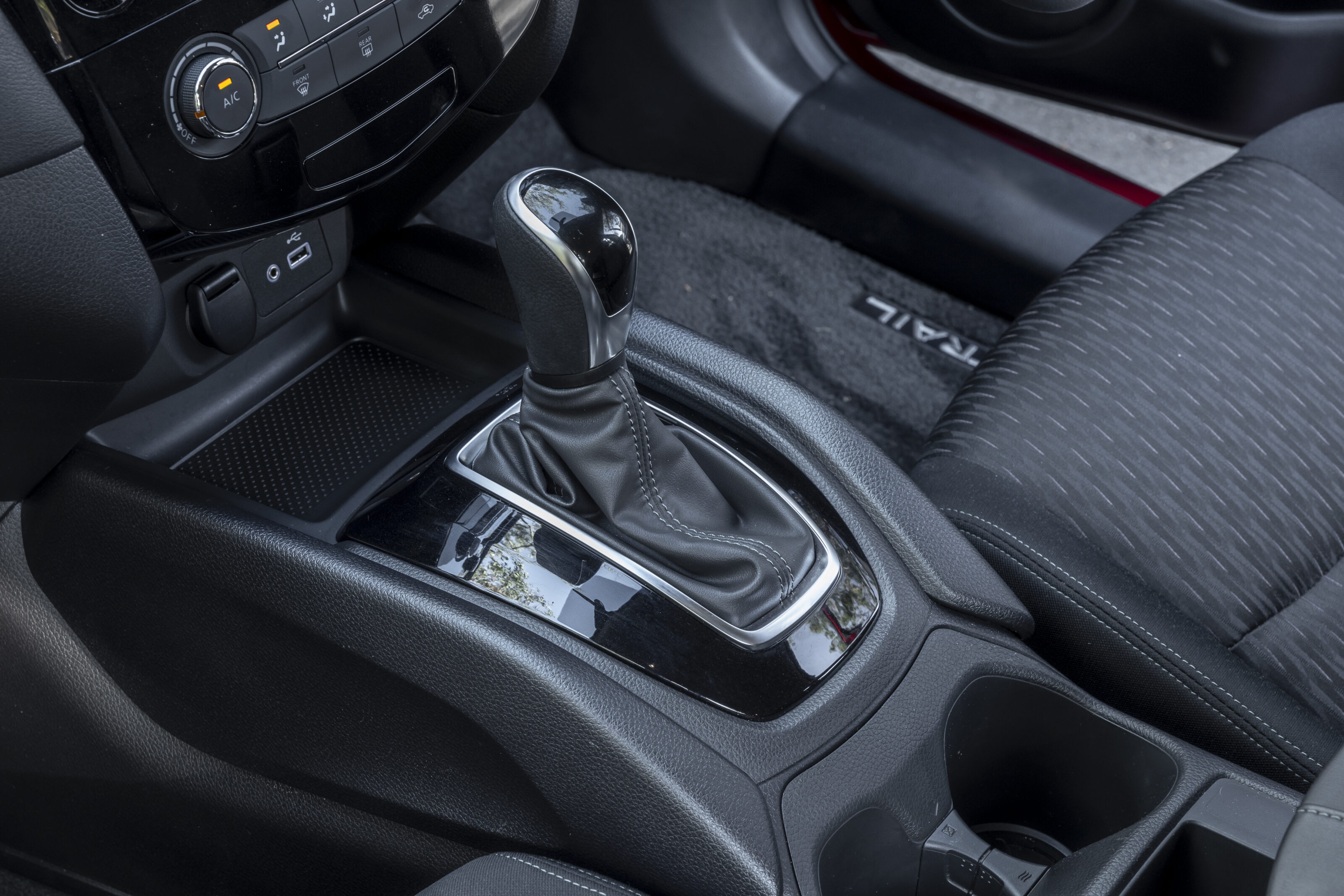
This 2022 model also has a traditional gearstick for the auto box (nothing wrong with that – plenty of cars do at this price point) but you’ll have to wait until MY23 for the much more modern rocker-lever style shifter – along with an electronic parking brake button to replace the rather clunky foot contraption (only the manual ST+ gets an electric one at present), and digital climate controls in lieu of the hard plastic buttons found in the current generation.
Although it comes with an ‘intelligent key’, the two-step unlocking feature was less than ideal in practice as you need to click the unlock button twice to get any other door to open other than the driver’s, which, being new to the car, you’ll constantly forget – meaning your passengers are left waiting to get in on group trips out. The locking noise is also very quiet, so quiet in fact you can barely hear it and it left us doubting ourselves time and time again as to whether we’d locked it. Both things you’d probably get used to with long term ownership.
With a five-star ANCAP rating awarded in 2017, it’s not surprising the ST+ we had on test has access to a solid range of safety systems

With the current third-generation model having served Australians since 2013, the X-Trail’s looks are very familiar to us by now, and haven’t changed in recent years. Inside is a similar picture, with an array of hard plastics on offer – though credit where it is due, they aren’t particularly cheap-looking, aiming for an inoffensive rather than stylish environment.
What the ST+ sadly misses out on compared to the ST-L are features such as rear privacy glass, roof rails (capable of holding 100kg) heated door mirrors, 18-inch alloy wheels, leather accented seats and steering wheel, heated front seats, dual-zone climate control and power-adjusted seats – six-way for the driver and four for the front passenger.
The Ti additionally gains things like adaptive LED headlights, a powered sunroof, 19-inch alloys, a powered/motion-activated tailgate, heated steering wheel, heated rear seats and a Bose eight-speaker sound system.
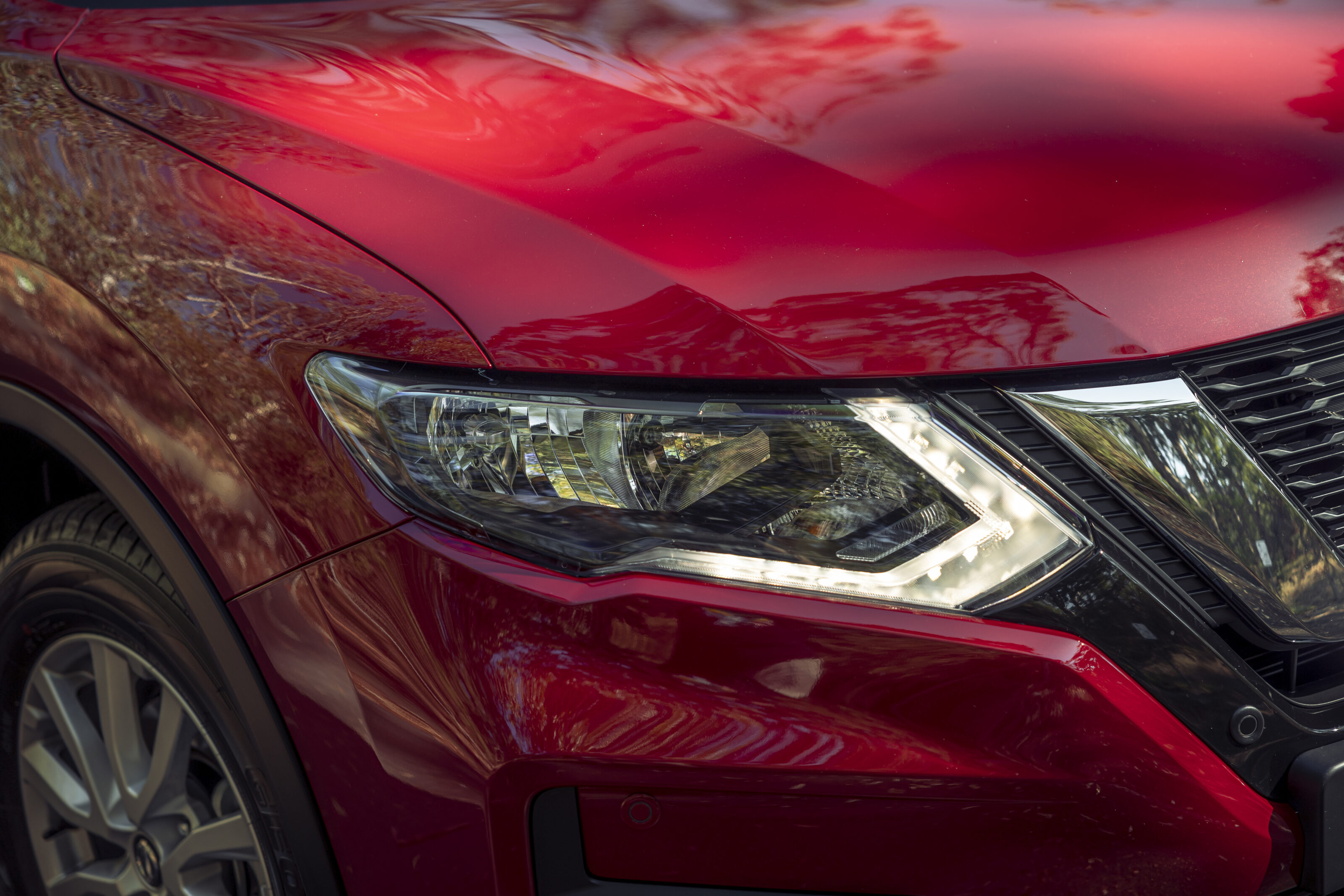
With a five-star ANCAP rating awarded in 2017, it’s not surprising the ST+ we had on test has access to a solid range of safety systems, including; a top-down/rear-view camera (which is very useful to have as a parking aid, even if the quality is a little murky), cruise control, ISOFIX and top tether child seat anchors (trickier to locate than we’d like), ABS, EBD and brake assist, forward autonomous emergency braking (AEB) with forward collision warning, hill start assist, vehicle dynamic control, active trace control – which independently brakes each wheel before sharp corners for greater stability – with active engine brake and body motion control.
However, it misses out on the blind-spot monitoring and rear cross-traffic alert found in the ST-L, as well as lane departure warning and prevention, AEB with pedestrian detection, adaptive cruise control and high beam assist.
The only option available for this variant, bar a choice of seven paint colours (six of which are premium for added cost) – this example is the standard ruby red – is all-wheel drive with hill descent control, which comes as an added extra on all grades except the Ti. The Ti can also be had with an optional tan leather interior.
Comfort and Space
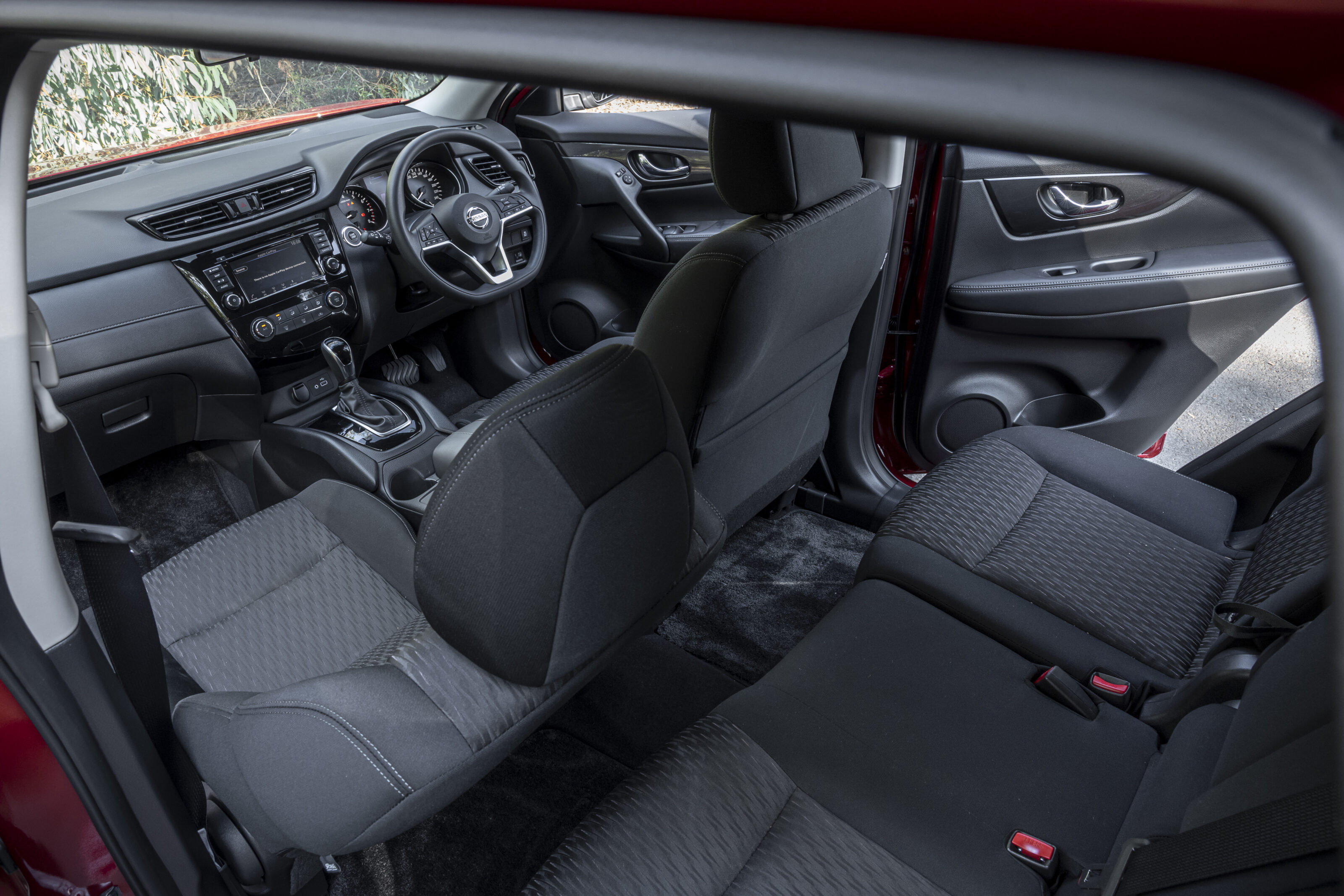
While the ST+ grade lacks some of the finer things in life such as heated and electrically adjustable seats, rear USB ports, and back seat climate controls (it has vents only), it does exceptionally well as a family car with acres of space.
A two-hour drive with four adults and a small child in an average-sized car seat was an absolute breeze. In the second row there’s 978mm of headroom and 963mm of legroom, making for a comfortable and not at all squished experience.
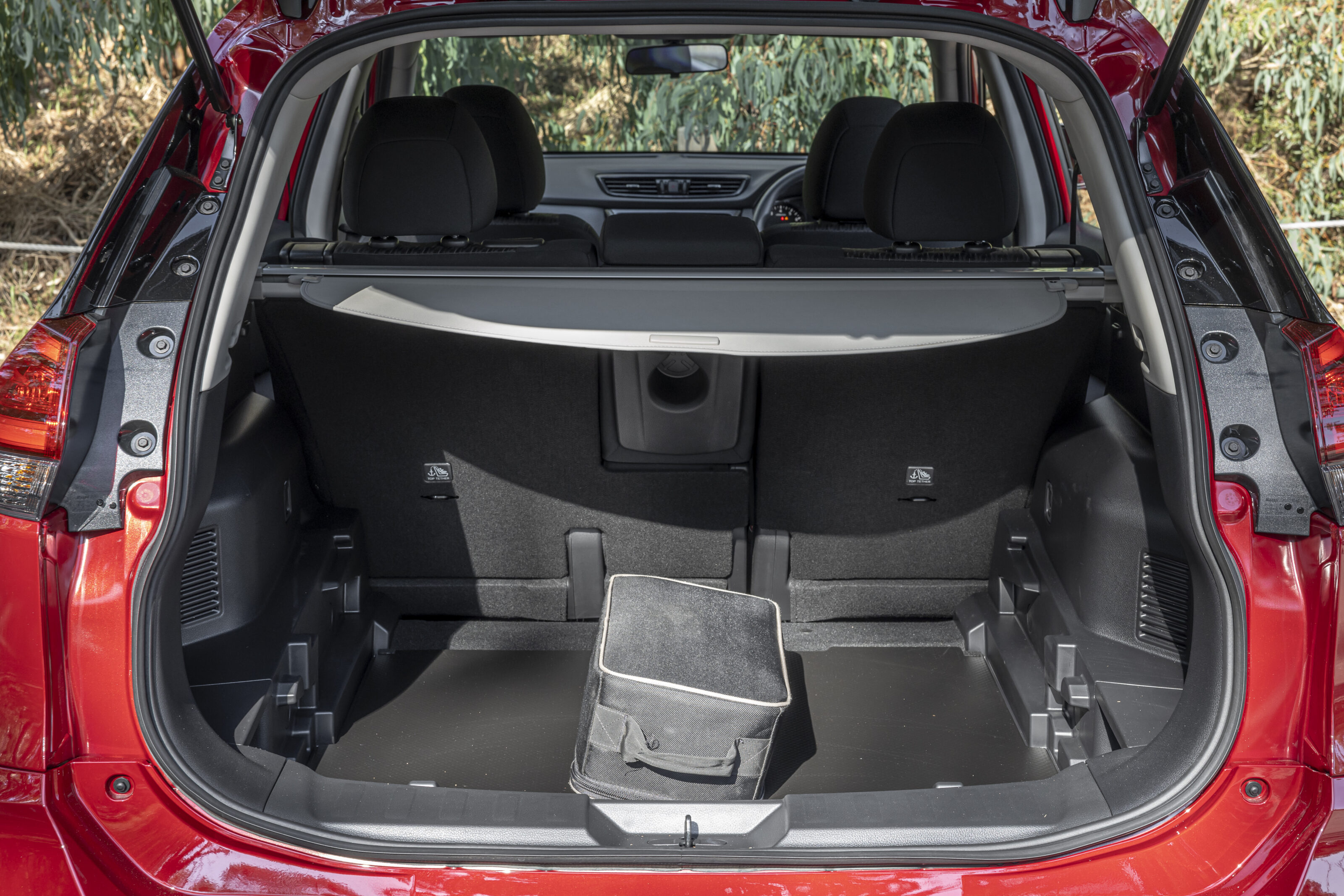
Meanwhile, boot space is 565L – more than sufficient for days out, holidays, baby/toddler gear or whatever your routine needs may be, and it has a secret underfloor compartment for additional storage. This is further boosted to 945L with the second row folded flat, and that can be split 40:20:40 with a sliding/reclining rear bench which is neat.
Another fun quirk of the rear row is that it sits higher than the front, which is unusual, and kind of makes you feel like you’re riding in a bus. It makes journeys for little ones that bit more fun as they can easily see out of the window.
The minor plot twist to this “there’s so much space, isn’t it fantastic?” story, is that the cup holders in the doors are too small for a large drinks bottle – and one won’t fit in the central storage bin either without losing the armrest and that’s a no deal situation.
Thankfully the holders in the centre console are larger, though still not quite big enough.
Front row passengers also get use of one USB A port and a 12V socket.
In the second row, there are map pockets on the backs of both front seats which can be handy (though admittedly mostly for shoving your kids’ snack wrappers that you’ll forget about and find later), and you can access the boot through the ski hatch behind the middle seat if needed (we’re thinking Bluey tablet scenarios).
The seats themselves are also perfectly comfortable for long or short drives. They’re not made of a scratchy fabric as found in rivals such as the base- or mid-spec Sportage, though the pattern on the black cloth trim does feel like it’s from another time – and by that we mean more like the ‘90s, not the futuristic vibes you get in a Hyundai Ioniq 5.
The seats themselves are also perfectly comfortable for long or short drives. They’re not made of a scratchy fabric as found in rivals

Overall wind, road and tyre noise are kept to a respectable minimum, it’s quiet and unobtrusive. The radio however is one of those that gets loud straight away at what, in theory, is a low notch on the dial – you’ll only need to set it at 10 for a comfortable level of sound compared to 41 in the Sportage. Another weirdly keen-to-get-going feature is the air-con, which will absolutely blast you with a cold gale – lovely on a roasting hot Australian summer’s day, less so on an autumnal sub-20 degrees Celsius morning in Melbourne.
On the Road
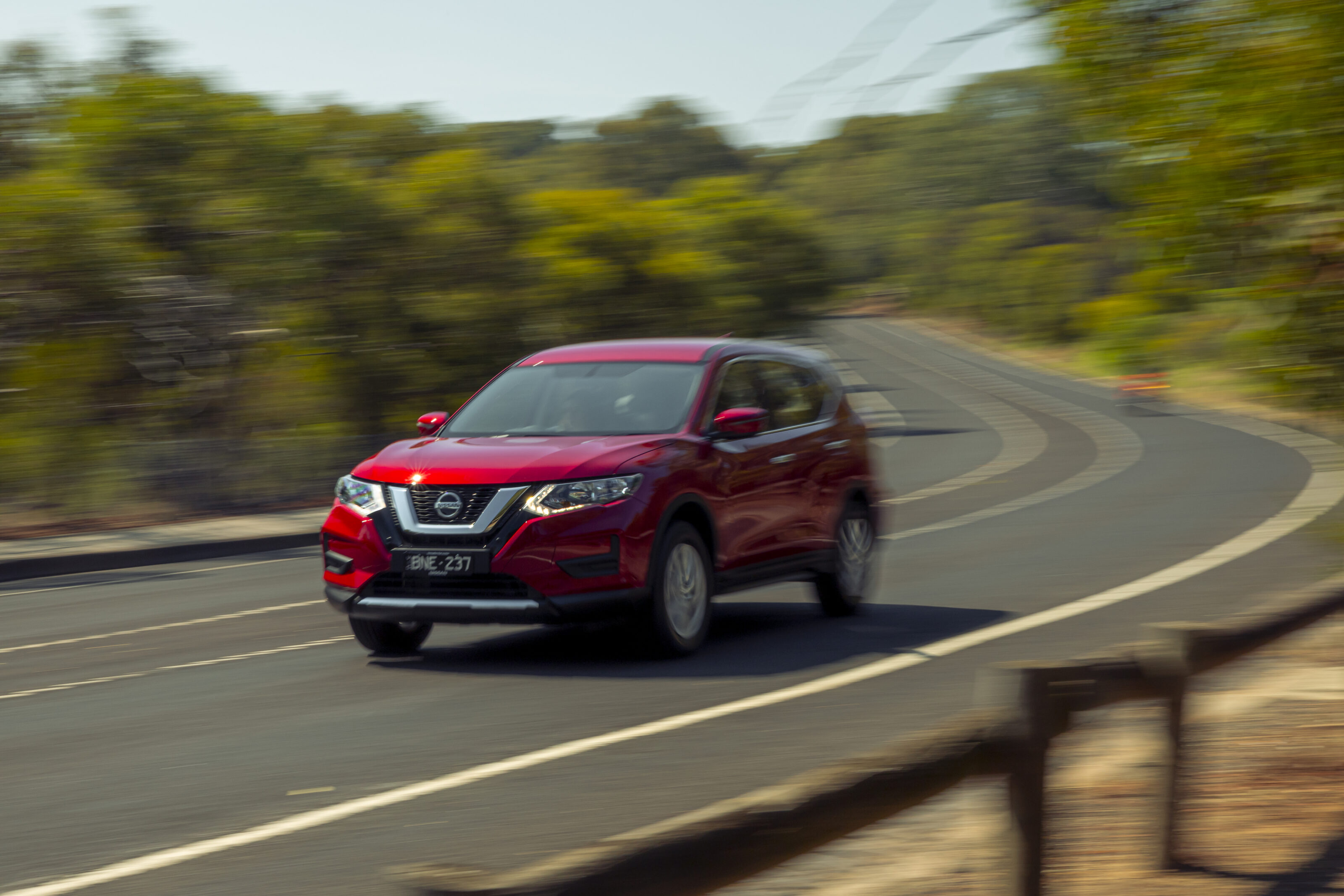
The 2022 Nissan X-Trail line-up is powered by two four-cylinder petrol engines: a 2.0-litre with a six-speed manual and a 2.5-litre paired to Nissan’s automatic XTronic continuously variable transmission (CVT).
A base-spec ST can be had with either engine, with front- or all-wheel drive, and also as a seven-seater. Meanwhile, the ST+ we had only utilises the 2.5-litre donk and solely comes in five-seat configuration – though it can be had with 2WD or AWD (ours was the 2WD).
The second-from-top ST-L uses the 2.5-litre too, with either 2WD or AWD and a choice of five or seven seats, but the flagship Ti is a five-seat, AWD variant only.
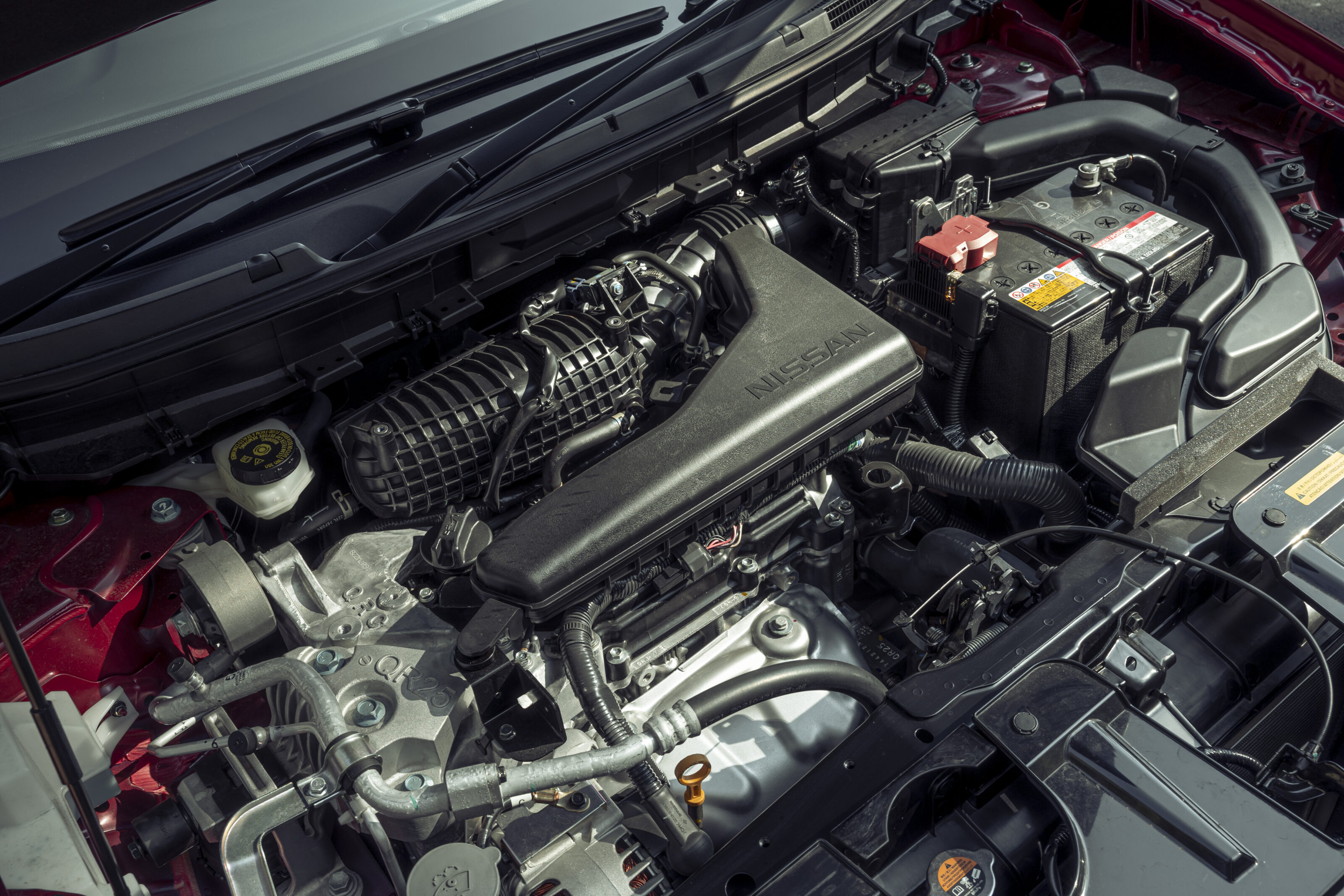
The 2.0-litre unit is good for 106kW of power and 200Nm of torque, while the 2.5-litre we had makes 126kW and 233Nm – not enough to call it quick off the mark, or even brisk once up to speed, but it’s not underpowered either. Don’t be fooled into thinking a larger displacement makes it sound more appealing either. More torque for a vehicle of its size, as offered in competitor models with a diesel powertrain, would make it a more compelling experience to drive.
Although we’re not normally a fan of a CVT, the XTronic set-up is surprisingly capable, with no noticeable lag at any point and doesn’t feature the unbearable whine so often found with this kind of transmission – the exception being under harder acceleration when the strained noise is more obvious.
The ride is comfortable and smooth, with the X-Trail pretty unfazed by all surfaces we tried it on
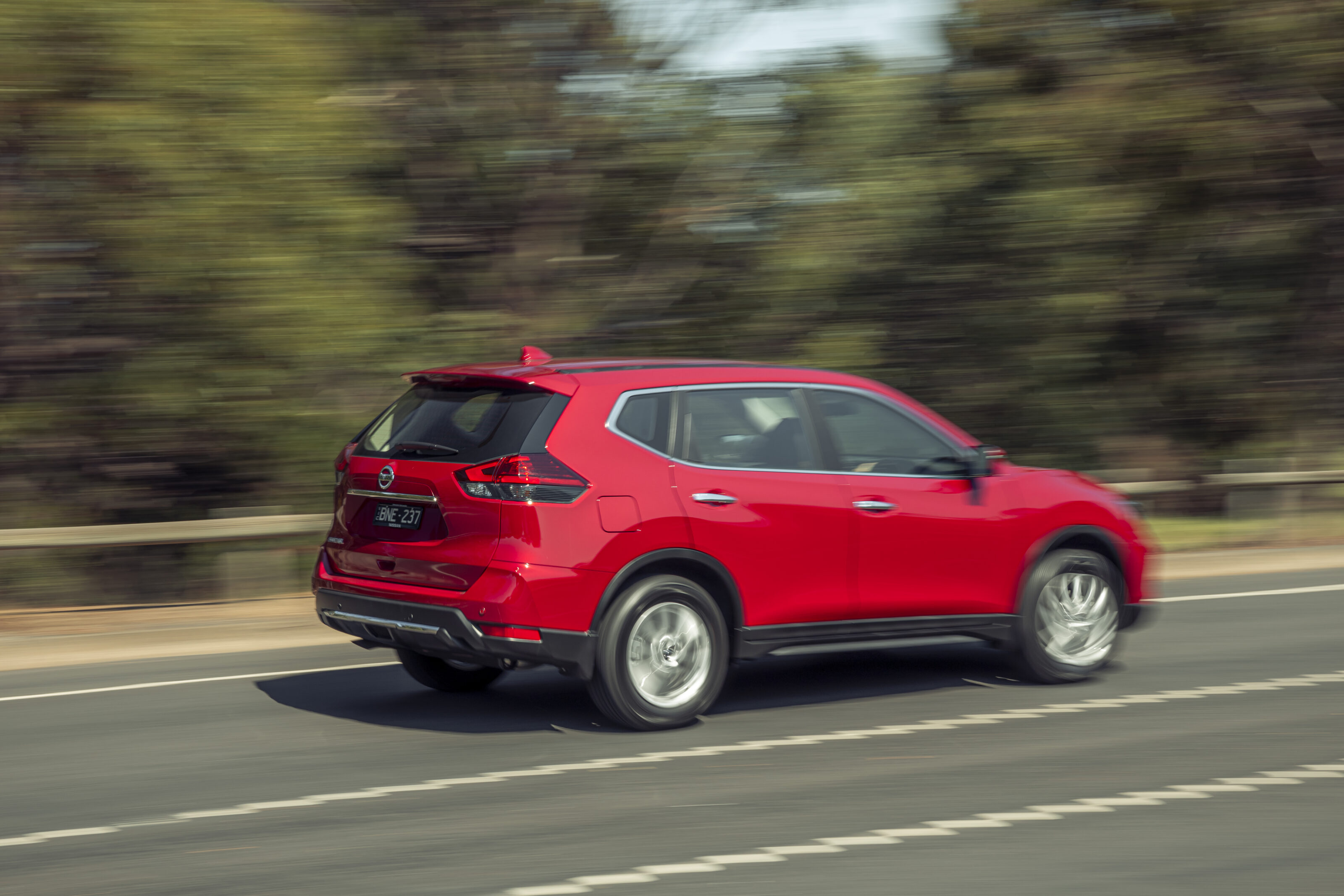
The ride is comfortable and smooth, with the X-Trail pretty unfazed by all surfaces we tried it on (including gravel tracks, pothole-ridden city roads and flat suburban bitumen). The only time this varied was when the body rolls somewhat through tighter corners, throwing both driver and passengers around more than is ideal.
Unfortunately, the steering is far too light and fairly vague, and it takes a lot of turns of the wheel to get around a bend, causing the aforementioned body roll issue to leave you with that feeling of disconnect between what you’re trying to get the car to do and what it is actually doing.
There is just one configurable driving mode to speak of here (though is that a bad thing? Most of the time there are too many that don’t do all that much), and that’s Eco. Unless you’re completely content with all the power of a damp squib, then don’t turn it on.

We tried it multiple times during our (admittedly short) time with the car and found it to make no significant difference to the fuel economy, yet to go anywhere you had to put your foot flat to the floor to get moving. Just not worth it. Incidentally, this button is hidden down by the driver’s right knee rather than being controlled via the steering wheel – which has limited functionality. It’s almost as if Nissan doesn’t want you to push it either.
Fuel economy is rated at 8.2L/100km on the combined cycle for the 2.0-litre manual, or 7.9-8.1L/100km for the 2.5-litre CVT. Our absolute best during the seven days we had it was 5.8L/100km which is nifty, and our average was spot on at 7.9L/100km – a very impressive effort and in these troubling times of high prices at the bowser, is nothing to be sniffed at.
Ownership
Nissan Australia offers a five-year/unlimited-kilometre warranty, with five years’ free roadside assistance and capped-price servicing.
Capped-price servicing costs for the 2.5-litre petrol X-Trail ST+
- One year/12,000km $246
- Two years/24,000km $378
- Three years/36,000km $255
- Four years/48,000km $496
- Five years/60,000km $266
- Six years/72,000km $411
VERDICT
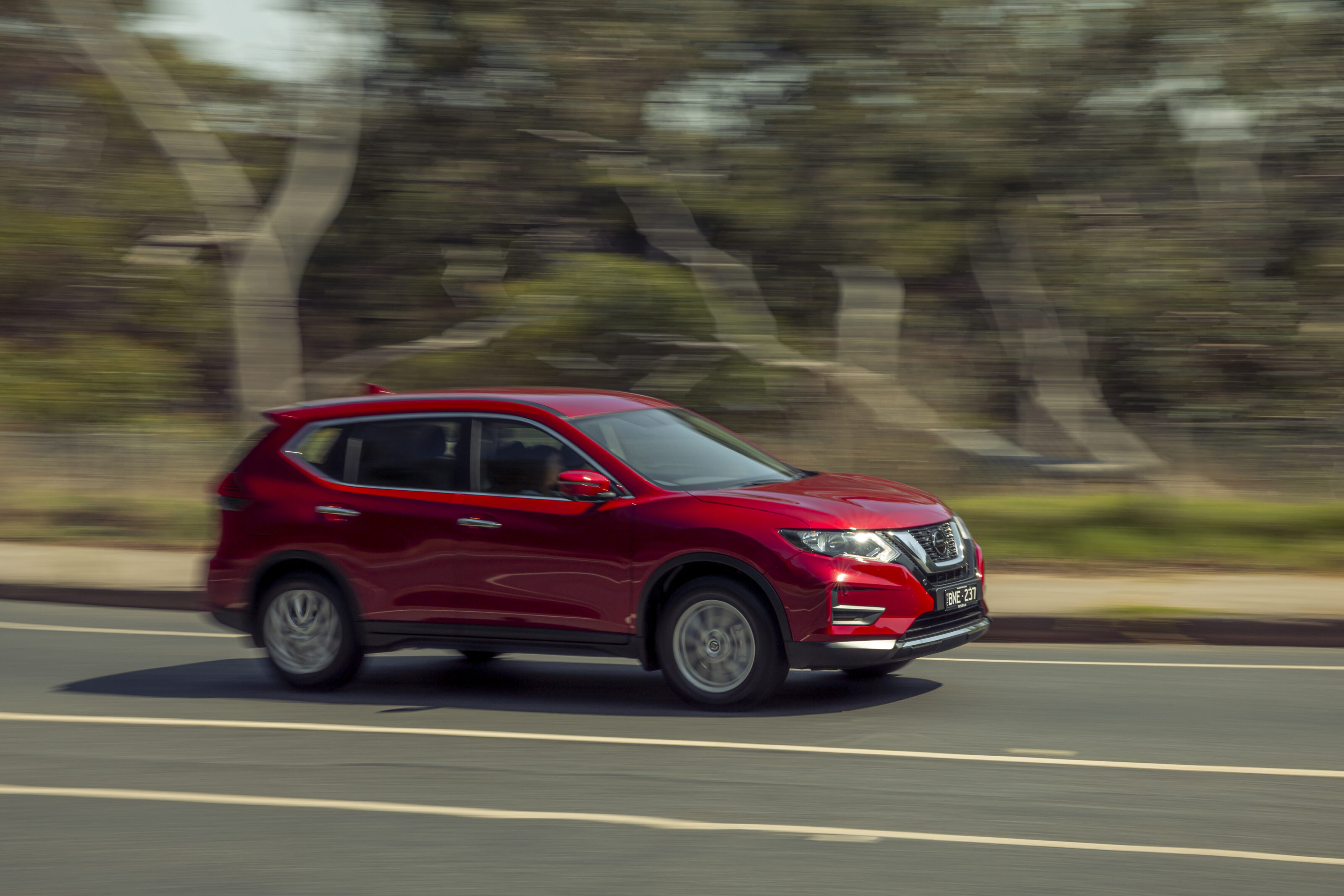
There are obvious reasons the Nissan X-Trail continues to do well year after year with Australian buyers. It’s enormous for a medium-sized car, it’s affordable for families needing a large (yet not intimidatingly massive) vehicle at a lower price point, and it’s straightforward – everything is where you’d expect it to be and works in the way you’d expect it to. It’s a safe choice.
But for many models in this segment, such as the Kia Sportage, the in-car tech and outside looks have moved on leaps and bounds in recent years to offer a more premium package, and without upping its game, the X-Trail risks being left behind.
Let’s hope the fourth generation changes all that. We’re excited to see if it can shake things up with the MY23.
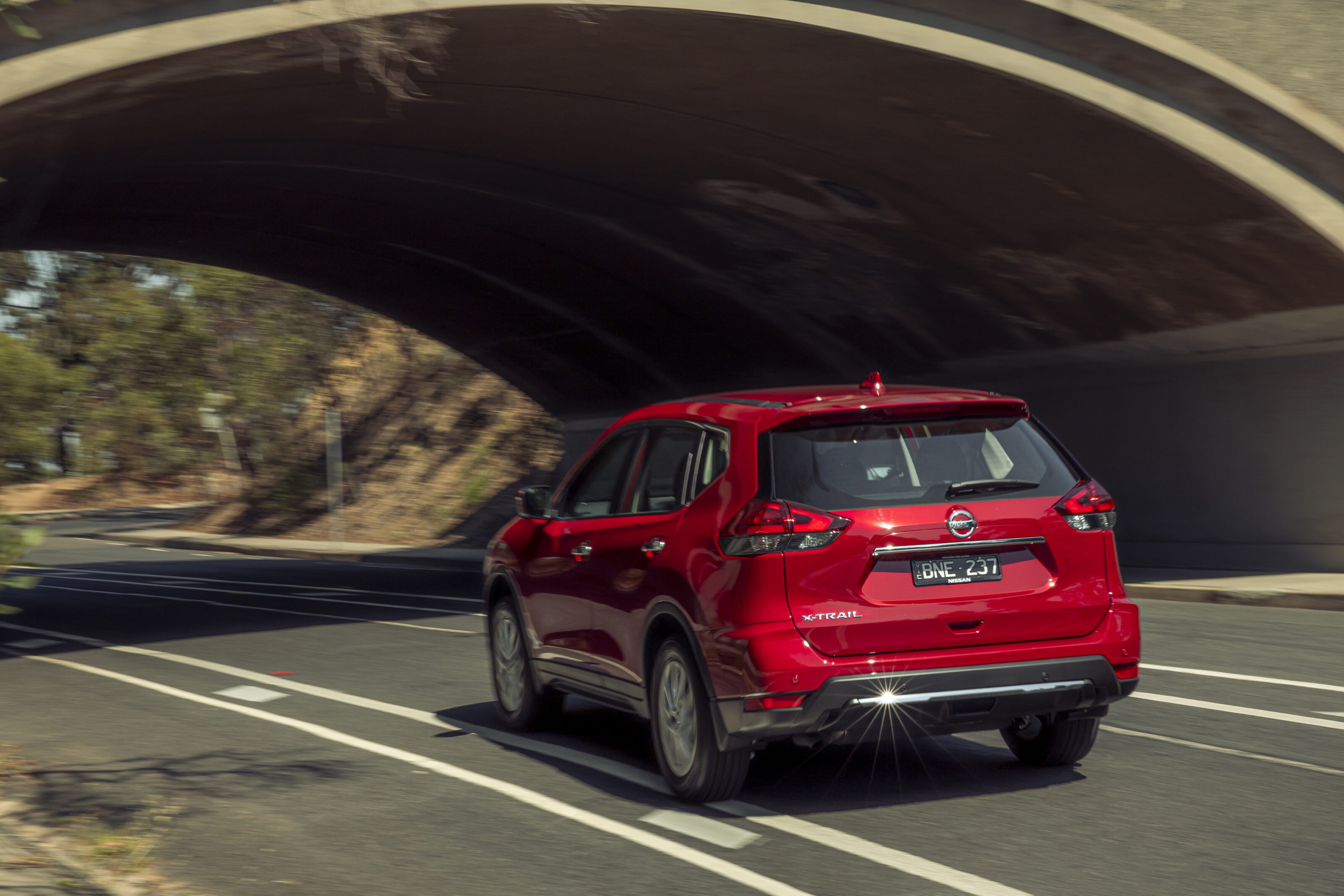
If you want an X-Trail now though and can’t wait (though we’d still advise checking with a dealer on current wait times factoring in global delays being felt across the industry) we’d go for the next step up – the ST-L – as it offers the same 2.5-litre petrol engine and CVT plus a lot more features for only $4500 more.
The 2023 Nissan X-Trail, from what we know so far, really is so much more impressive though – so if you can hold your horses, it might be worth it in the long run. After all, a new car is a huge investment for most, and you don’t want to feel like it’s out of date too quickly.
2022 Nissan X-Trail ST+ 2WD specifications
| Attribute | Value |
|---|---|
| Body | 5-door, 5-seat medium SUV |
| Drive | front-wheel |
| Engine | 2.5-litre 16-valve four-cylinder petrol |
| Power | 126kW @ 6000rpm |
| Torque | 233Nm @ 4000rpm |
| Transmission | continuously variable |
| Weight | 1503kg (kerb) |
| Fuel consumption | 7.9L/100km (combined) |
| Suspension | strut front/multilink rear |
| L/W/H | 4690/1820/1740mm |
| Wheelbase | 2705mm |
| Brakes | four wheel ventilated discs |
| Wheels | 17-inch alloy |
| Tyres | 225/65 R17 all-season tyres |
| Price | $34,140 drive-away (VIC) |
1994 BMW 850 CSi
Sold: $309,000 Bring A Trailer
The 850 CSi seen here, with 10,000km on the clock, is one of just 225 built for the USA. Finished in red with black leather interior, its considerable urge comes from the 5.6-litre V12 that’s paired with a six-speed manual and slippery diff. Prices on this model have leaped in the last year and are over double the stock 850i/Ci series. This however is an exceptional result.
2022 The Ford Falcon XY GT-HO Phase III Register (no.001 of 300)
Sold: $16,000 Shannons Autumn Memorabilia Online Auction

A virtual bible about a fabulous car and raising money for a fabulous cause. Donated by the man who gave the GT-HO its iconic status and amazing success, Allan Moffat, this is book 1 of 300 of the Ross Vasse encyclopedia on the Ford Falcon GT-HO Phase III. The money raised went to Dementia Australia. Adding greater provenance to this superb book, it was signed by Moffat. A once in a lifetime opportunity.
1982 Ford XE Fairmont Ghia ESP
Sold: $170,000 Grays
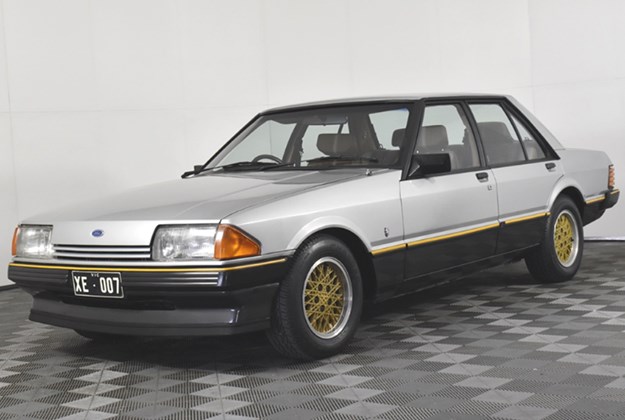
This XE Ghia ESP with a 351 and four-speed manual combo became Ford’s official press car and given to the journos to thrash around in. Since then, the silver over charcoal Falcon with tan interior has led a quieter life. Although it has had many drivers, it has only had two owners, the first being Ford. With 129,149kms on the clock it sold with a swag of documents, including an internal ‘Own-a-Ford’, doco offering the car to staff at wholesale price.
2003 Ferrari 360 Spider F1
Sold: $150,000 Collecting Cars
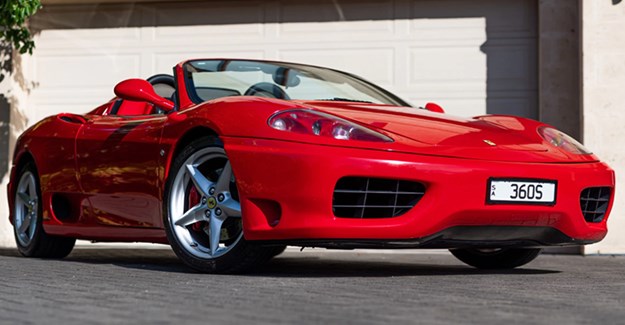
This is the Pininfarina-penned car that drove Ferrari into the 21st century. Tucked behind the driver’s head is a 3.6-litre V8, coupled to a six-speed ‘F1’ single-clutch automated manual gearbox. This Rosso Corsa over Nero leather with five-spoke starfish alloys has travelled a mere 57,780 kilometres and was imported from the UK in 2008. Original and glorious it sold with a complete service history stored in a leather-bound Ferrari folder.
On the block:
2000 Lamborghini Diablo GTR #4/30
Shannons Classic Auction May 17-24, 2022 Lot: 191
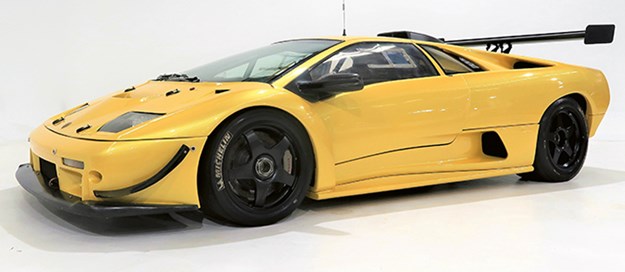
Launched at the 1999 Bologna Auto Show, the GTR version of the mighty Dablo was billed as a near enough to race-ready special. It claimed 440kW at 7300rpm from its 6.0lt V12 and a 338km/h top speed. Any Lambo is going to be one of a limited number, but this was just one of 30, which of course is catnip for collectors. This example has seen competition and is fitted with a sequential transmission as per GT race regs.
From Unique Cars #465, April 2022
Originally published at our sister site, Unique Cars
Maybe it is just me, but I have not ever experienced peak strangeness when trying to buy a car as I have in the last five months. I blame the madness that surrounds the recent global pandemic that my older relatives call ‘COVIS’.
Having just been through COVIS-craziness selling my Range Rover (UC, Issue 453) but now a cashed-up buyer, I assumed latching onto a classic would be a piece of cake. In fact, I already had one lined up.
We all know that unloved, tired old Aussie classic that Nan and Pop drove is now worth more than a modest bungalow. But the car I wanted was nowhere near such a hot-ticket item. How hard could it be?
I am one of three people identified by UNESCO as lusting after a Peugeot 604. In late January, I stumbled over such a Unicorn for sale.
The ad did not have any photos with it, but some investigation revealed that the same car had been advertised – but not sold – 10 long years before. Why couldn’t the seller move it on?
Perhaps because the car was conveniently situated in the middle of nowhere. It was a solid 20 hours’ drive away. The seller didn’t have cellular reception to send photos, let alone possess a mobile phone to send them.
All I had to go on from a chat with the seller via morse code was that it was ‘beautiful’. I agreed to buy it, if someone I trusted could see it and assure me, preferably with a photo or two sent via carrier pigeon, that it was in fact beautiful.
The to-and-fro dragged on for six weeks. A friend offered to check it out as he was planning an expedition out that way, but then couldn’t. I couldn’t justify four days on the road to go have a half-hour look at it. Eventually a few fresh pics turned up via the bush telegraph.
The car had tell-tale signs of a respray. On a 44-year-old car, that could be good, or bad. Without being sure what I was buying, I reduced my offer to an amount I was pre pared to lose if the thing turned out to be a freshly-painted rust bucket. That was rejected and to my surprise, the 604 immediately sold. Someone needs to inform UNESCO.
I found a nice Peugeot 505 much closer to home. It was basically sound, but still needed about $3k thrown at it for me to be happy. But then the seller told me he had to increase the asking price by $500, with an ‘at least’ in front of it. I was prepared to make a close offer, but now was suddenly involved in a tender process. I didn’t want to be part of that.
| Buyer’s Guide: Peugeot 504 1969-82
I then looked at more modern but just as Lord-weird cars, such as a Volvo S80 V8. I sent a message to the seller of said Volvo and waited. And waited some more. About 10 days later, the seller sent a message, saying that the car was still very much for sale.
We arranged a time for me to see it and when I texted for the address, no response. I tried later, waited some more and then gave up. That frustrating, ’I want to sell but no, I don’t really want to sell’ theme happened with another two cars.
I had my eye on an E60 BMW 545i. It had been for sale for weeks. Just as I was to look at it, it sold. Then the new owner advertised the same car for $7000 more.
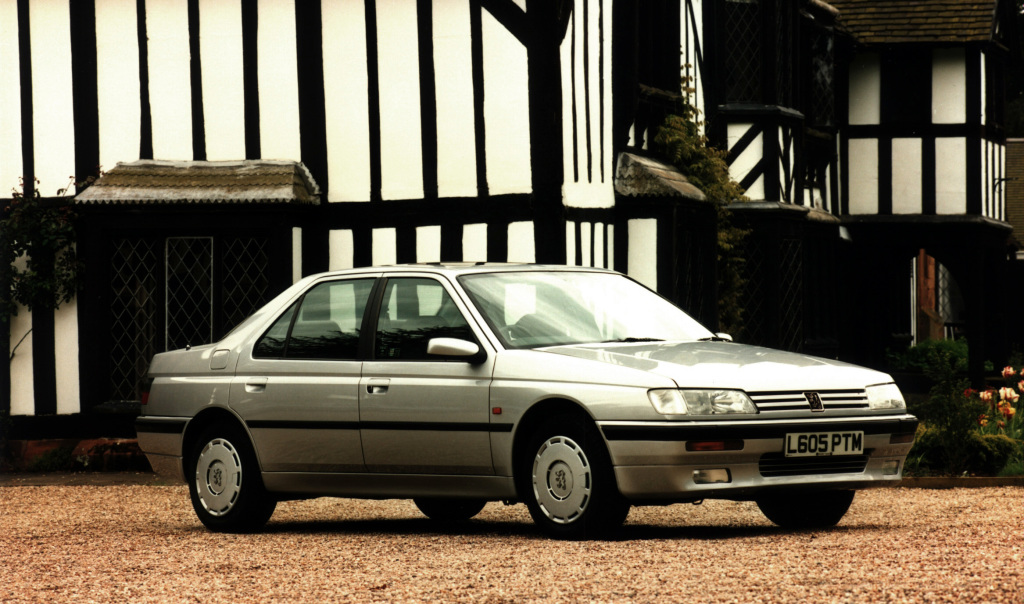
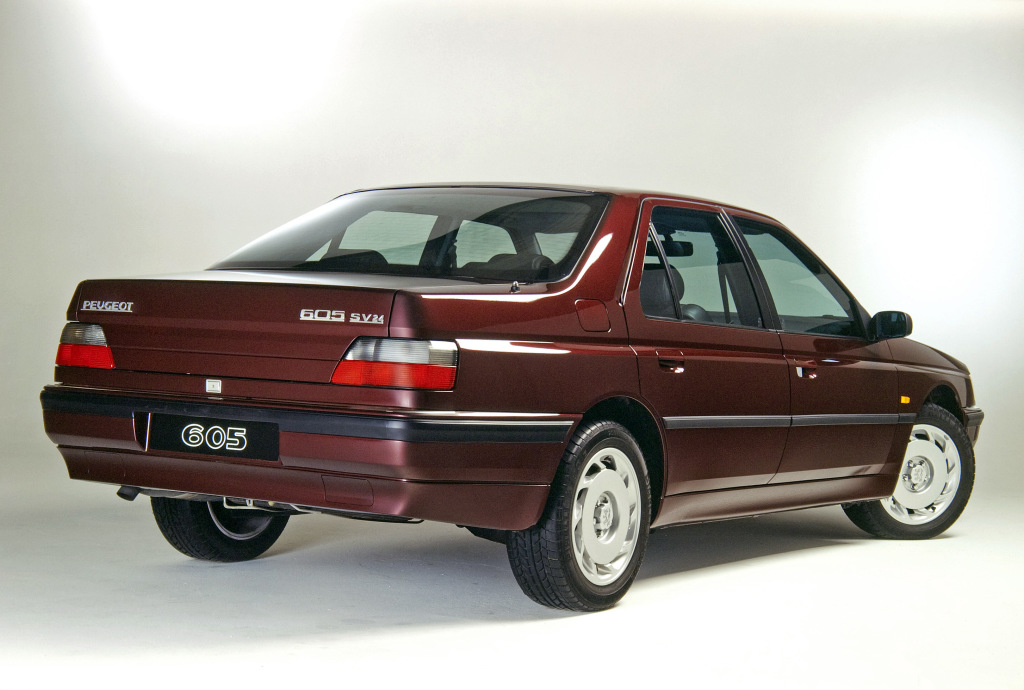
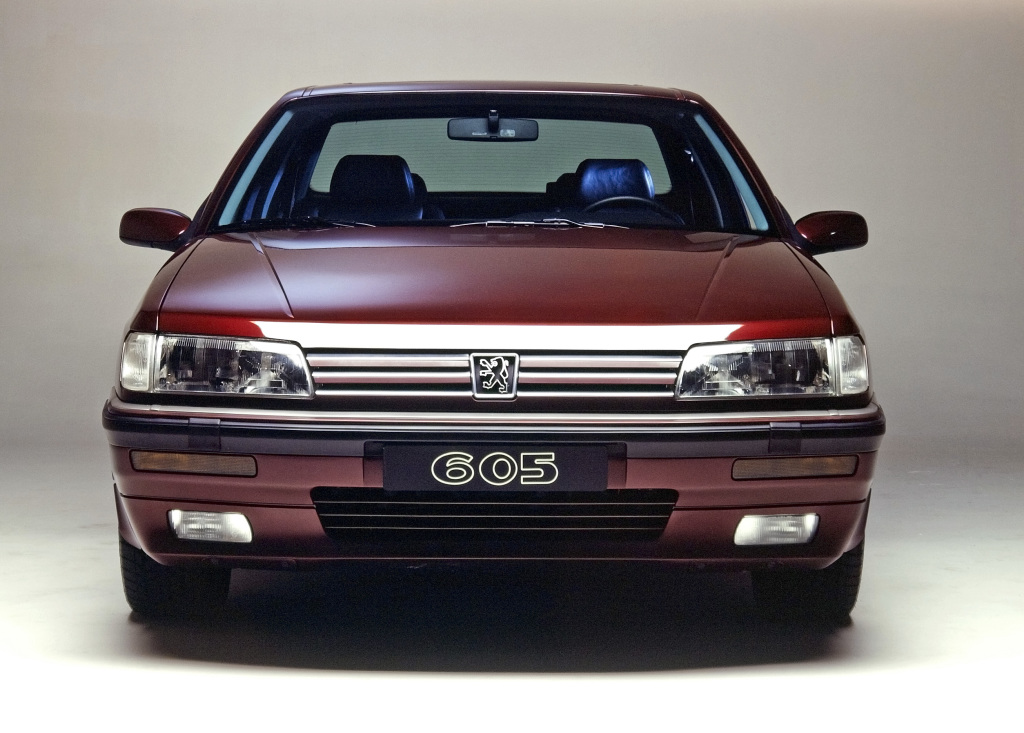
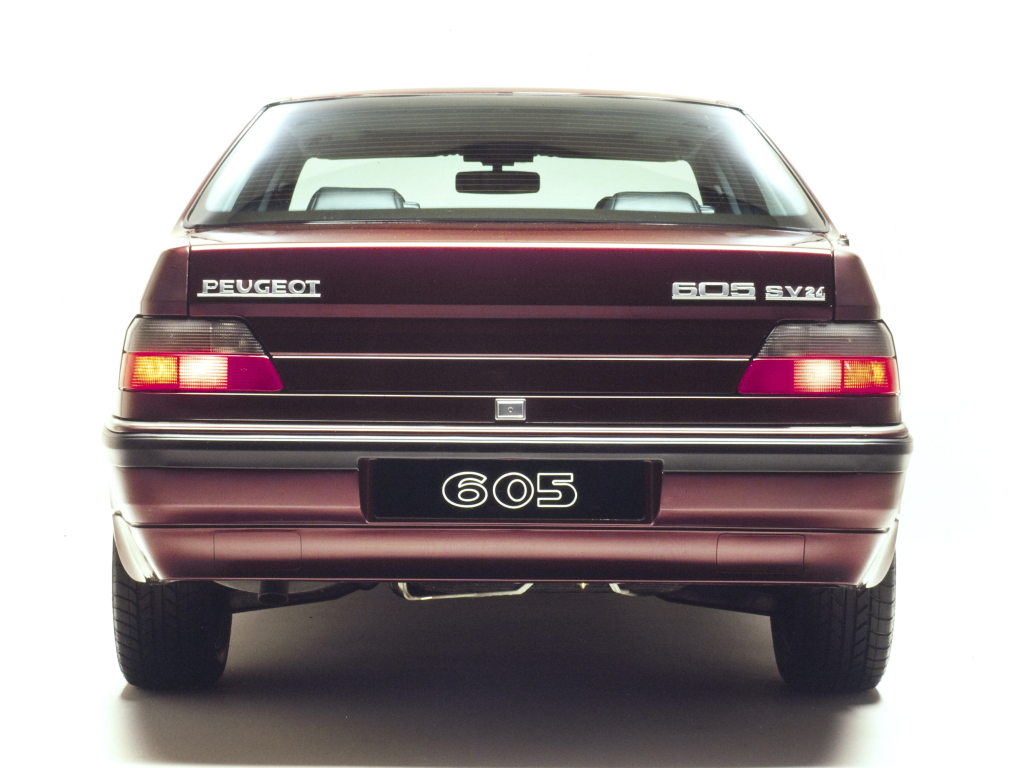
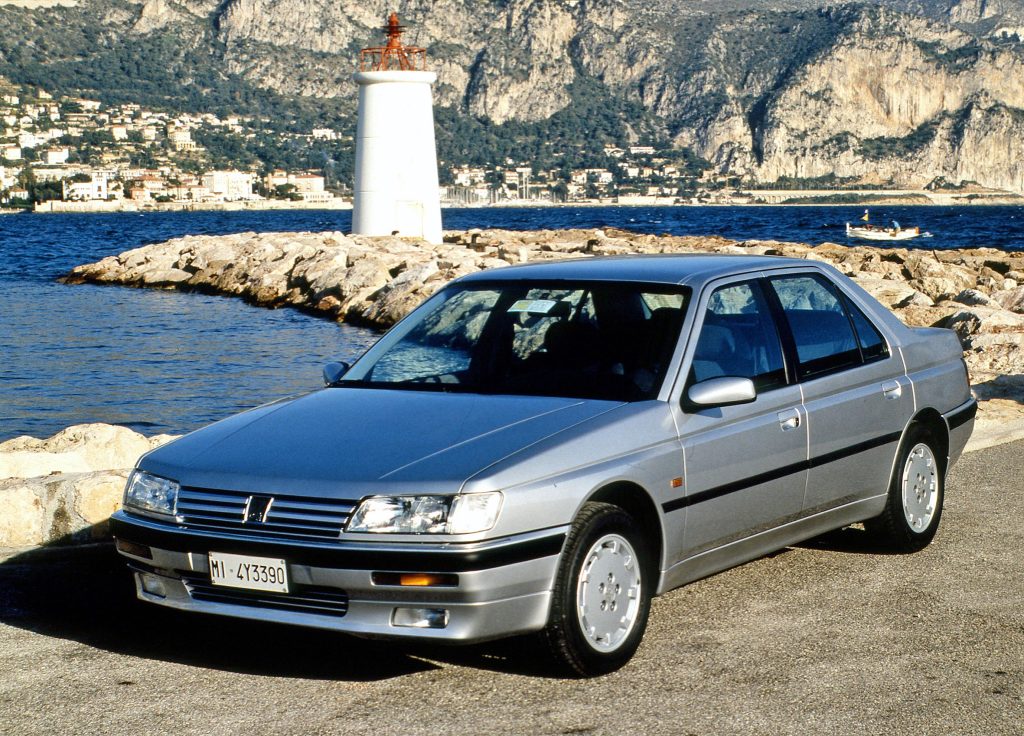
Back when I was trying to buy the 604, a very low-kilometre Peugeot 605 popped up for sale in Melbourne. I spoke to a nice lady who said she was selling on behalf of an elderly parent. While my interest was piqued, the price was too high and the car was too far. Then, the ad was pulled.
What had to be the same car came up again a couple months later, this time with a much more realistic price but a different seller. This time-warp car was not a 604, but was in the same bloodline, and its very low kilometres were reflected by the photos.
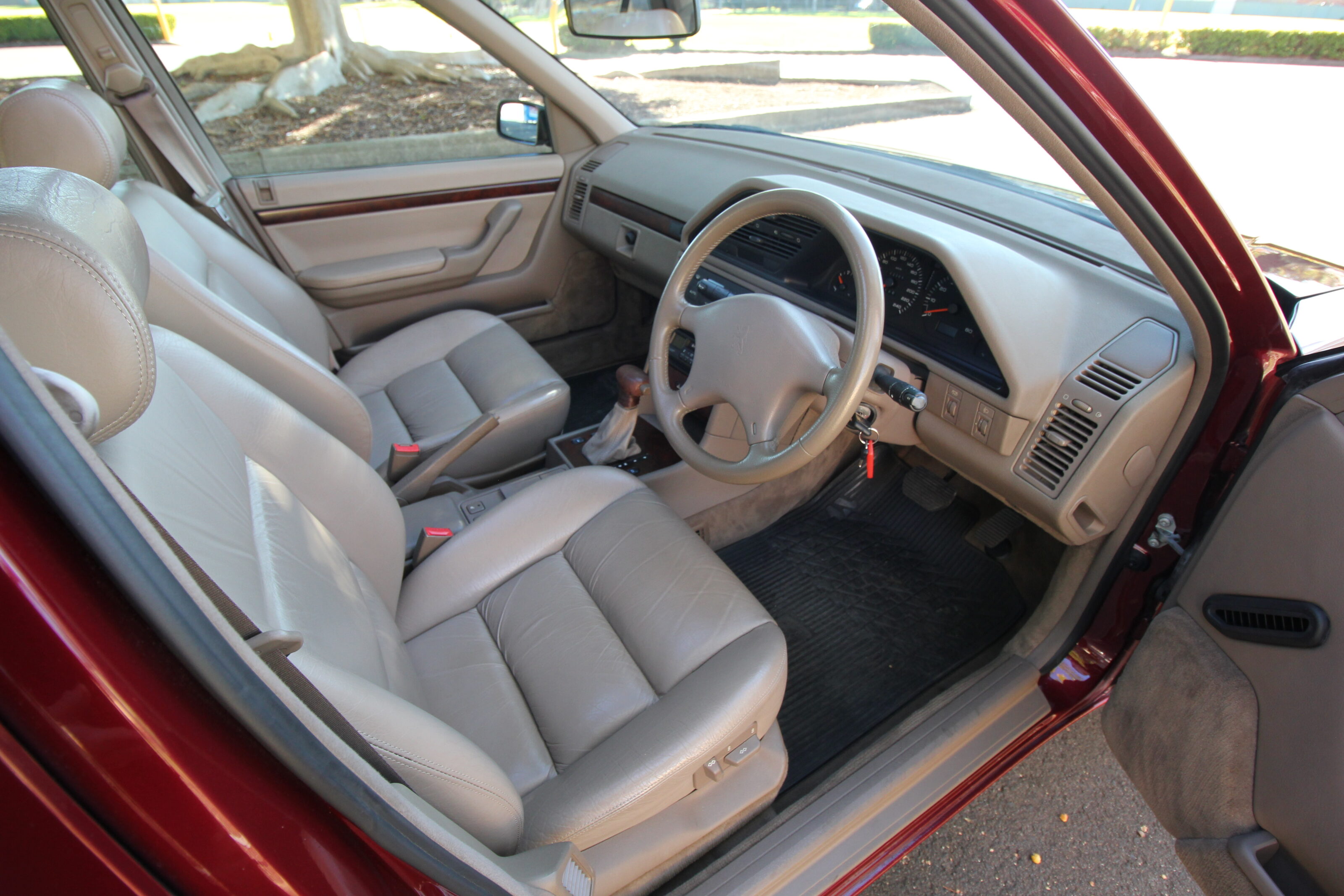
The seller said he was broking the sale for an elderly friend, whose now-deceased husband bought it used some time ago. He didn’t know who advertised the car a couple months before.
Before proceeding, I wanted to speak with the actual owner. So the broker organised a call. It all seemed kosher; the elderlysounding owner appeared to be lucid and she hoped I would take care of her Peugeot.
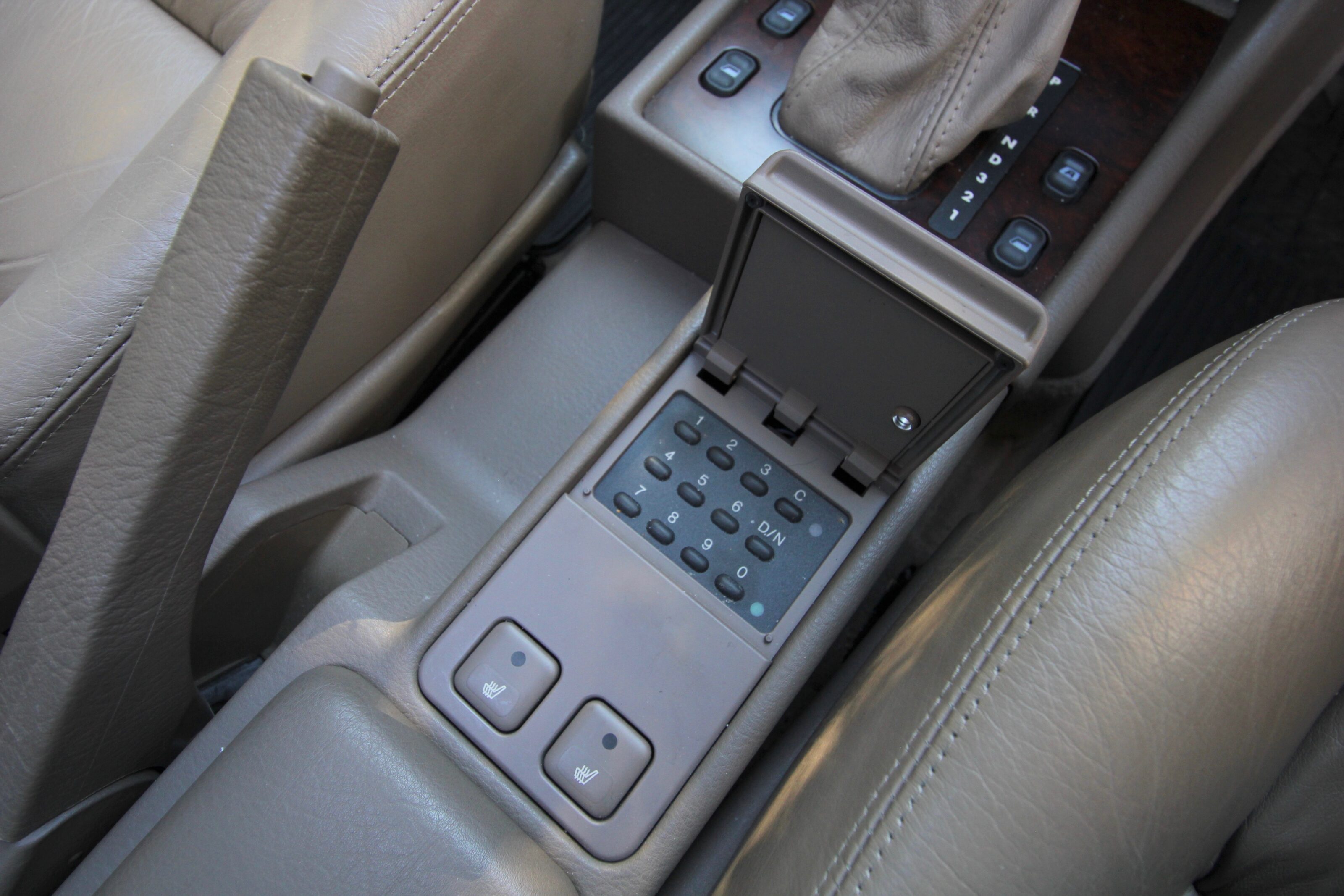
I have been burnt buying cars sight-unseen before, so when striking the deal, the condition was that I would EFT a deposit but pay the balance after flying to Melbourne to pick the car up. If the car was not as described, no harm, no foul.
Then the broker said there was a problem. Another buyer had offered to pay the full asking price, and the little-old-lady owner was upset with the broker for not taking it. What did I want to do? Not before stumbling down a few more strange side tracks, did we continue with finalising the sale – at the already agreed price.
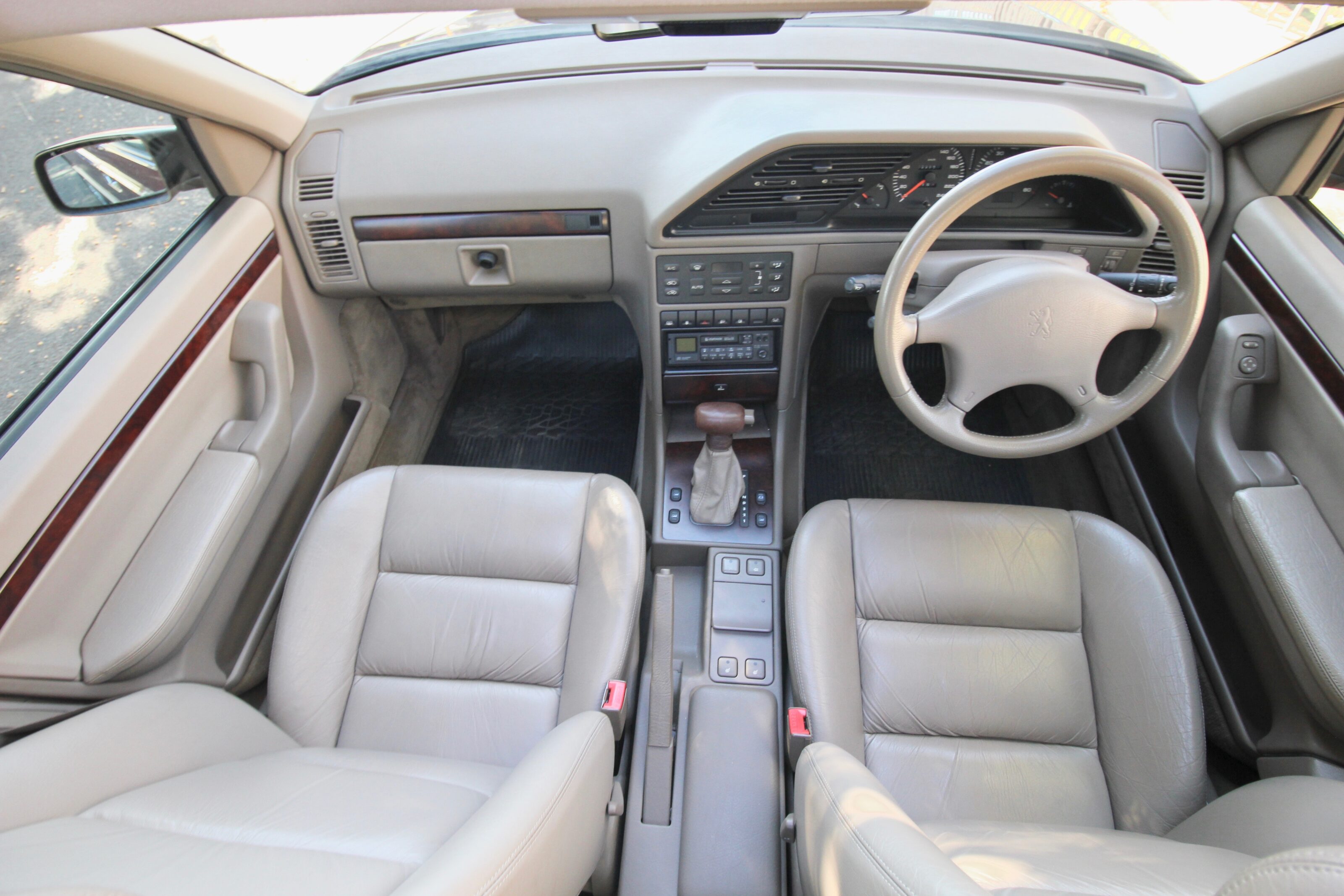
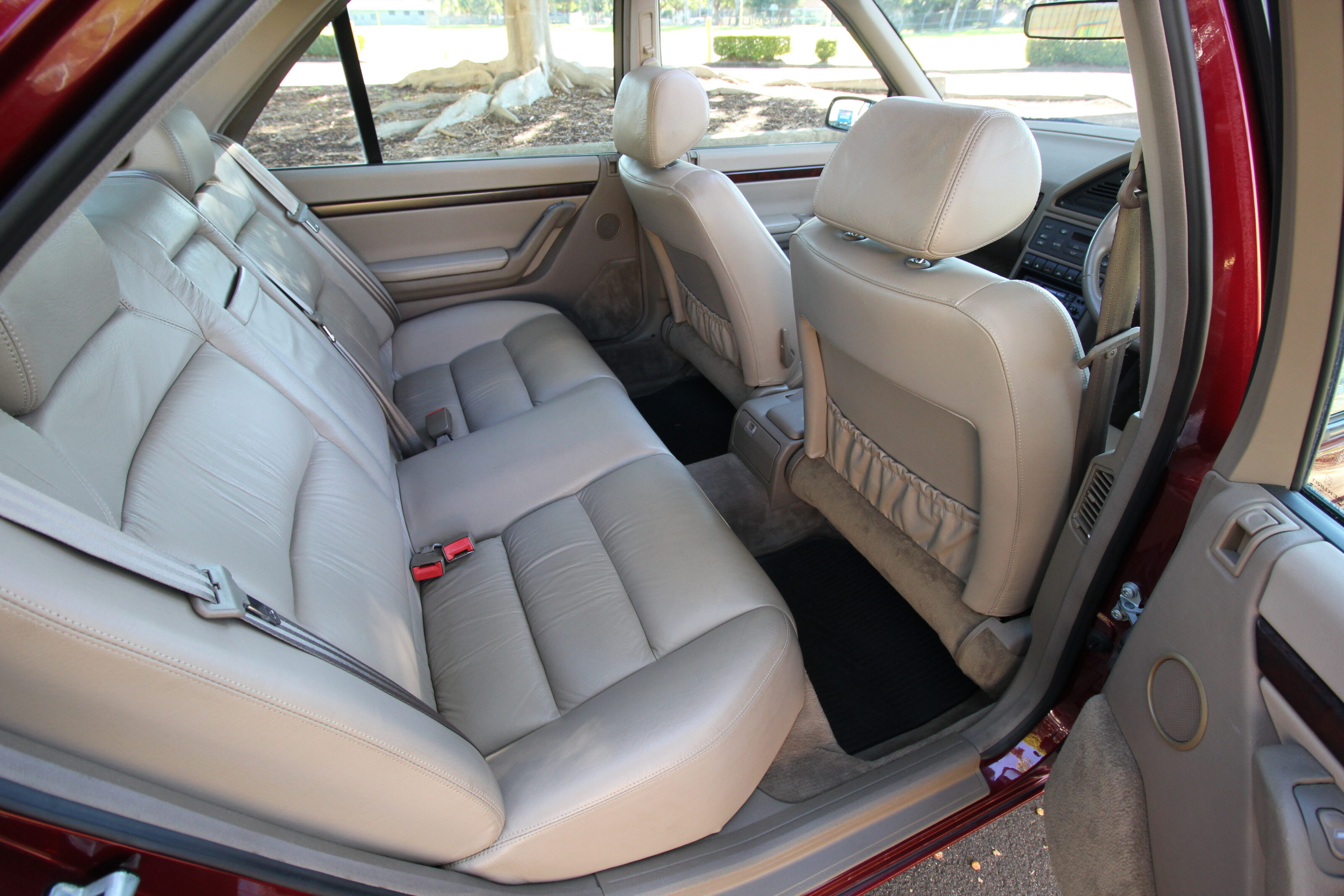
Too busy with the rollicking ride that was this Peugeot deal to watch the news, I didn’t know the COVID bug was back in Melbourne. Lockdown would come, and did. If I wanted this car anytime soon, I would have to buy it sight unseen. While some of the deal was peculiar, I had the feeling that the guts of it was right.
Later, I was able to contact the original owner. He knew the ‘broker’, because he recently sold the car to him and his wife. I still wonder who that little old lady was.
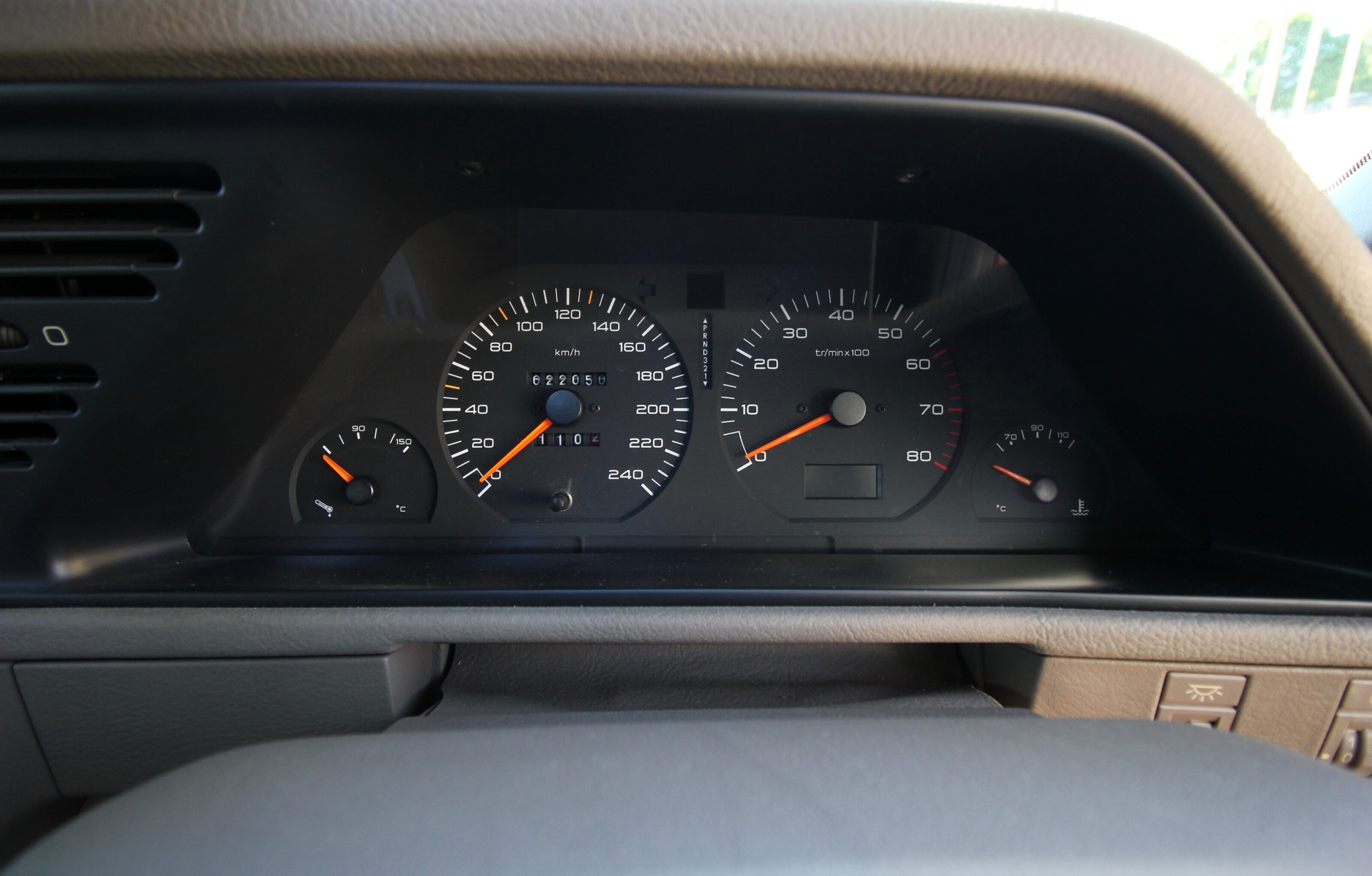
Perhaps the explanation for the mystifying Logie-winning act was that when the 605 arrived at Lord HQ, it had an engine misfire. The fix was simple: new spark plugs.In hindsight, the sure-fire vaccine for buying or selling a car in this current post-COVID climate is obvious. Don’t!
From Unique Cars #464, March 2022
Originally published at our sister site, Unique Cars
Snapshot
- Scenic Vision becomes Renault’s first hydrogen concept
- Production model to launch in 2024
- Renault commits to being carbon neutral by 2030
Renault has uncovered its first hydrogen concept car – the Scenic Vision.
Set to become a production model in 2024, the Scenic borrows the name of Renault’s long-serving people-carrier which was discontinued overseas earlier this month – however, this Scenic is powered by a hydrogen fuel-cell and electric motors.
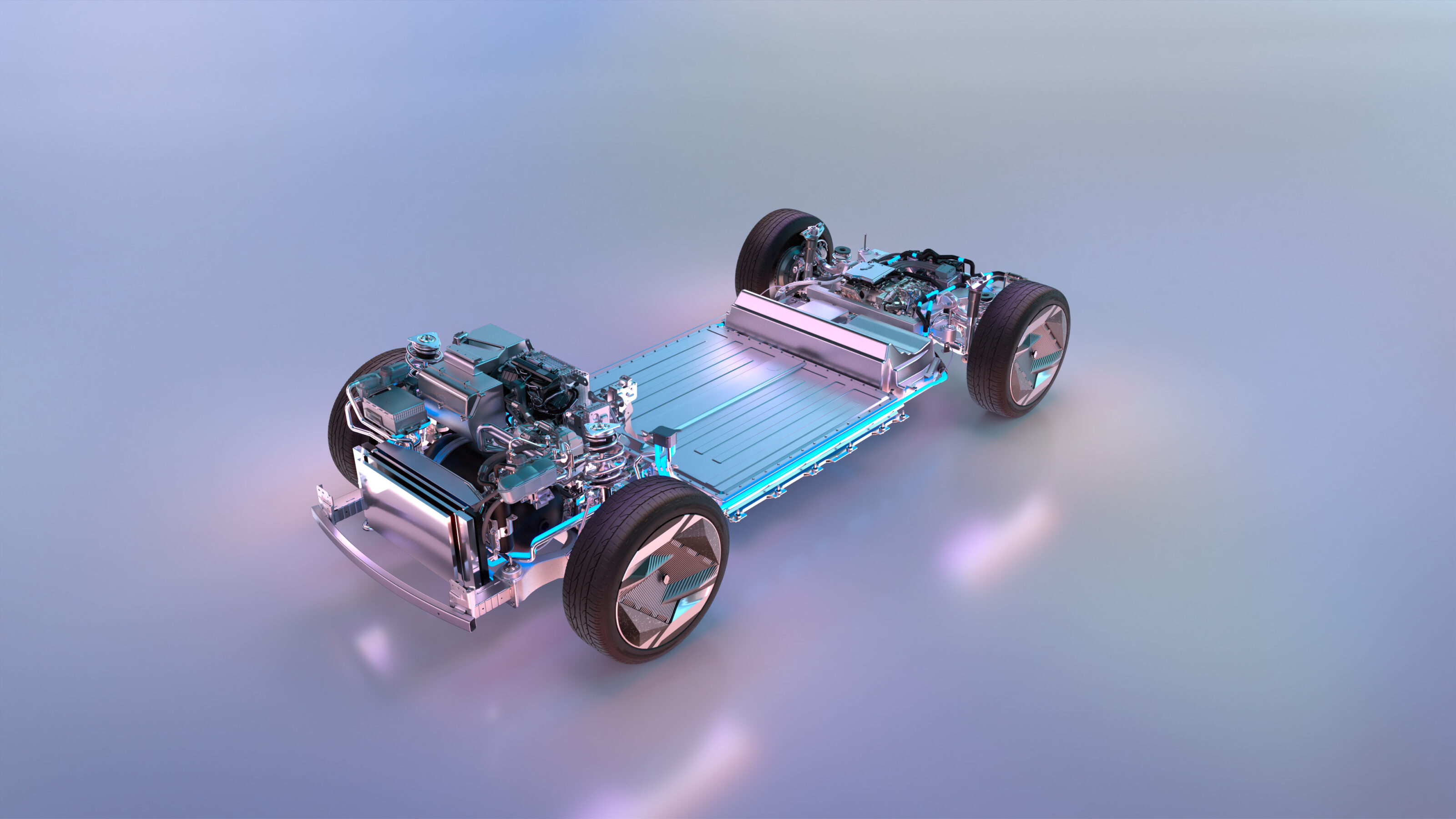
Utilising green hydrogen, the Scenic Vision uses a 2.5 kilogram hydrogen tank up front feeding its 15kW fuel-cell – which is in turn connected to a 40kWh battery pack delivering power to the 160kW front motor. The same setup has been lifted from the upcoming Mégane E-Tech.
Although a production model is in the pipeline for 2024, Renault believes having a larger network of hydrogen filling stations throughout Europe from 2030 would allow the Scenic to achieve a driving range of 800 kilometres.
It seems the French manufacturer has a keen interest in hydrogen, claiming its Scenic is designed to have a carbon footprint which is 75 per cent lower than a battery-electric vehicle (BEV) – aided by the concept’s 70 per cent renewable foundations.
On top of this, 95 per cent of the Scenic Vision’s parts are recyclable, allowing its lifecycle to be as clean as possible, which helps Renault’s plan to of go carbon neutral in Europe by 2040, and worldwide by 2050.
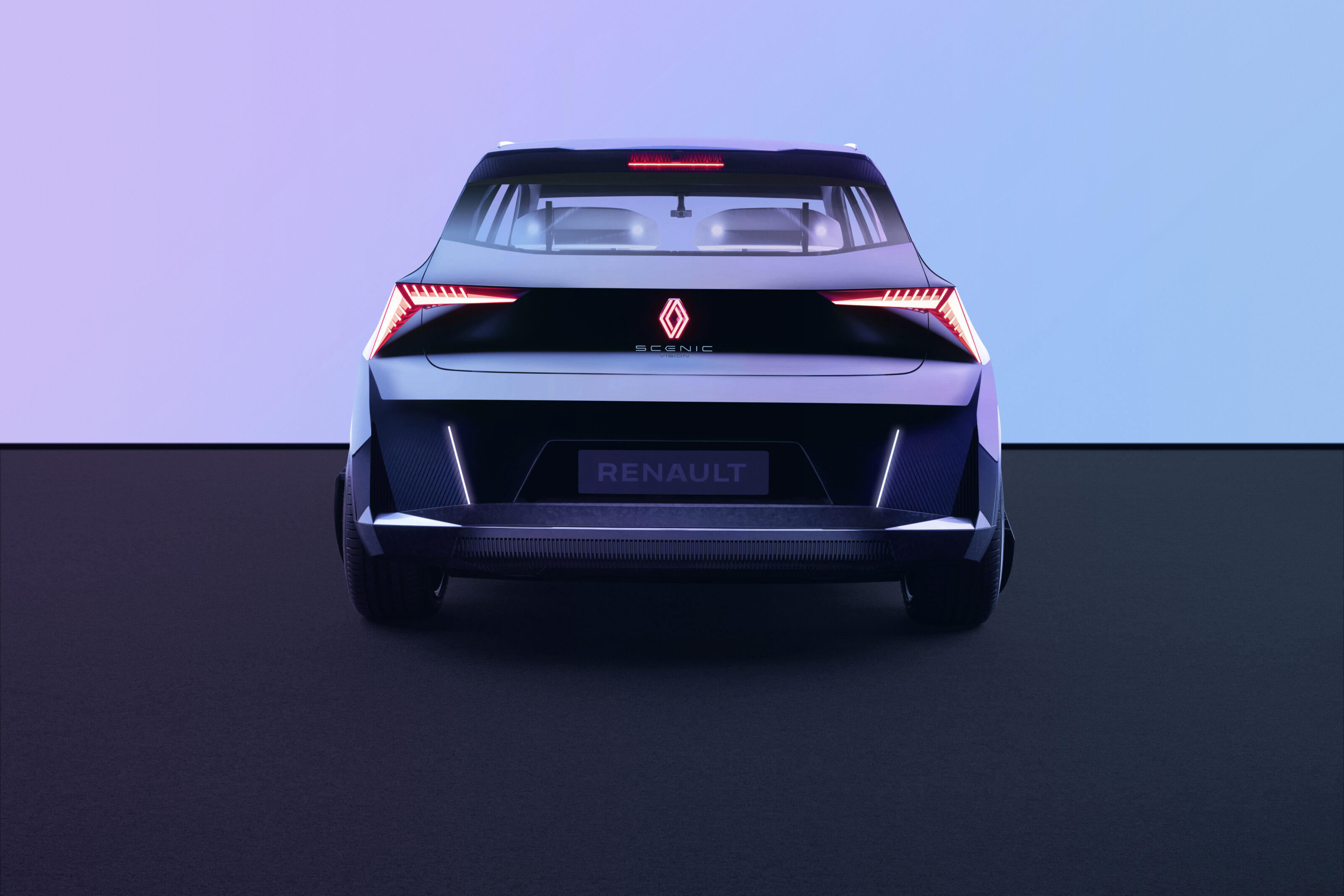
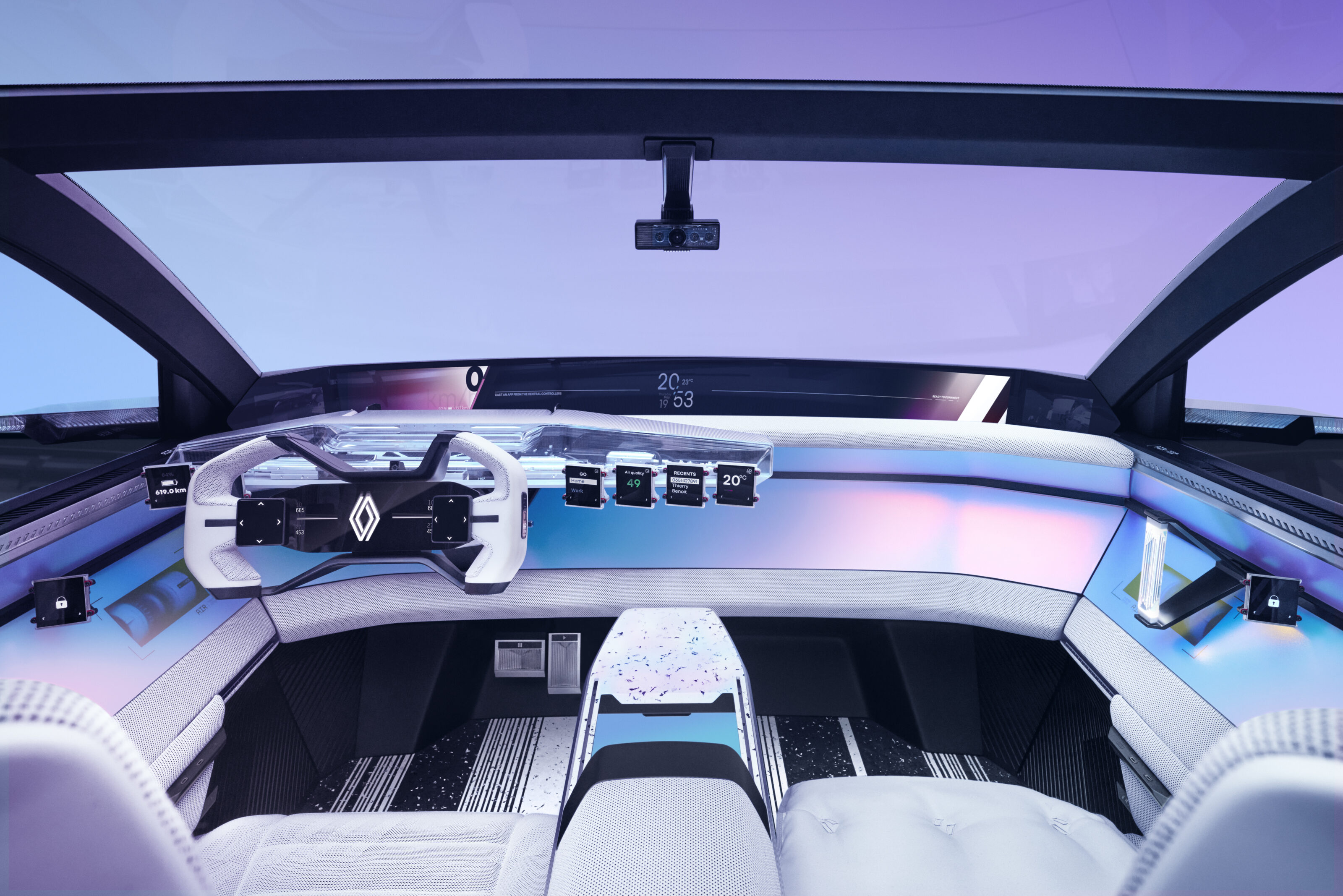
Measuring up at 4.49 metres in length, 1.9 metres wide and 1.59 metres high, the Scenic rides on 21-inch wheels and features unique design quirks, such as reverse-hinged doors, no B-pillar and short overhands – optimising space inside the cabin.
Innovative technology, such as Safety Score and Safety Coach systems, is also featured – the former of which uses sensors to “help drivers improve…and provides personalised advice on the various risks associated with their style”, while the latter “gives drivers more room to plan ahead, avoid the risk, change speed to suit the specific situation and take stock of the various visual, audible, or tactile warnings.”
Renault has previously outlined its plans to have a fully-electric vehicle range by 2030, previewed by concepts such as the Scenic Vision as well as the Megane E-Tech and new Renault 5, both of which will end up in production over the coming years.
Performance sub-brand Alpine has also hinted at hydrogen models, although its only effort thus far has been a concept designed by Italian students.
Snapshot
- BMW reveals latest CSL creation, limited to 1000 units worldwide
- New M4 CSL comes in 100kg lighter than standard car
- Australian pricing to start at $303,900 before on-road costs
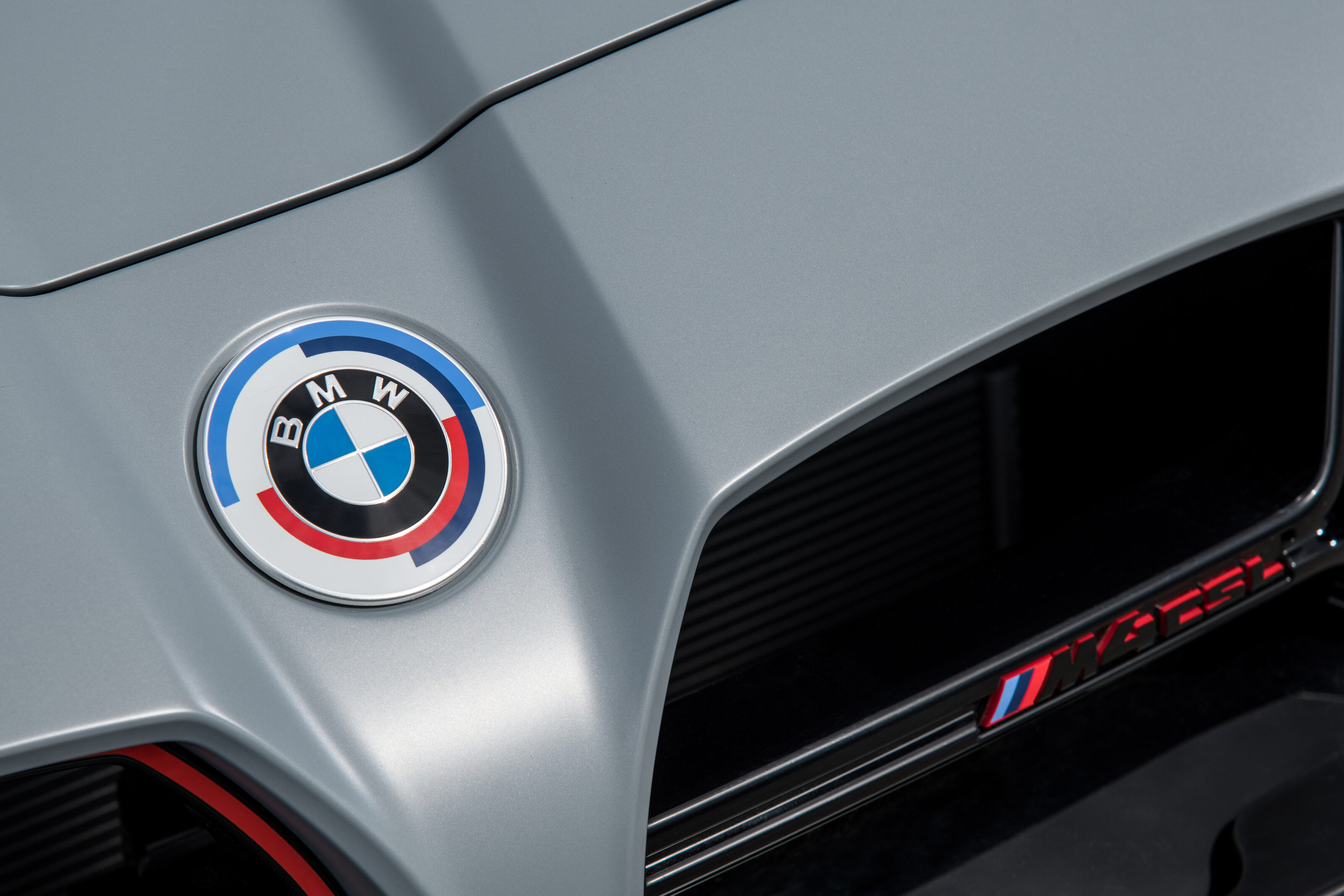
BMW has reforged the coveted CSL badge more than two decades since its last resurrection to create a two-seater version of the M4 coupe that is lighter, more powerful and faster than any before, for maximum track-attack and peak performance.
Launched at the Concorso d’Eleganza Villa d’Este in Italy, the 2023 BMW M4 CSL has finally revealed its secrets after months of speculation, but M4 fans wanting to buy a piece of BMW M history had better have deep pockets and good contacts.
BMW Australia has not yet confirmed how many of the ultra-exclusive M4 CSL production will be allocated for customers Down Under, but just 1000 will be produced worldwide and sold locally for a price that’s as serious as its performance.
Kicking off from $303,900 before on-road costs, the new CSL is the most expensive M4 to be offered by BMW to date – narrowly usurping the $295,000 M4 GTS of 2016, and costs about double the price of the current champion of the 4-Series range the, M4 Competition, which is priced from $165,900.
The latest iteration of the evocative CSL family does, however, offer some compelling features that will likely guarantee all allocation will be spoken for, if not already.
For a start, boost pressure of the twin-turbo 3.0-litre inline six-cylinder petrol is increased from 1.7 bar to 2.1, pushing power up by 30kW to a new peak output of 405kW and 650Nm. That’s the most powerful road-going 3 Series or 4 Series to date.
But key to the CSL performance-enhancing mantra, weight has also been addressed with 100 kilograms dropped from the overall mass. For the CSL conversion, rear seats went in the bin resulting in a strictly two-seat coupe and cutting 21kg.
Another 24kg was saved in the front row with BMW’s most Spartan carbon-fibre race seats replacing the standard items, while special lighter wheels, carbon ceramic brakes and revised suspension slashed a further 21 kilos.
Removed sound insulation, as well as the introduction of lighter sound deadening material where it couldn’t be spared, chopped 11 more kilos, while the remaining weight-saving was found in a carbon-fibre roof, boot lid and bonnet and titanium exhaust. All up, the new M4 CSL weighs in at 1625kg.
The crash diet and power boost has had a quantifiable effect on the M4’s potency, cutting the zero to 100km/h acceleration time to just 3.7 seconds, while enabling the model to set a new road-going M4 lap record at the Nürburgring.
With a best lap of 7.20.207, the newest member of the M4 family has lapped the Green Hell about 10 seconds faster than the previous best M4 time, and the quickest clocked by any series production BMW yet.
In addition to the weight-reduction and power increasing attention, the M4 CSL has been comprehensively revised to maximise the new performance. Ride-height has been lowered by eight millimeters, bespoke alloy wheels measure 19-inches at the front and 20-inches at the rear, while adaptive dampers are standard all-round.
Unsurprisingly, the CSL has been shod in tyres that have been specifically developed for the newest M4, but BMW is yet to reveal the maker and model. Power is fed to the rear wheels via an eight-speed torque-converter automatic transmission.
At the front end, the engine and transmission are bolted in using stiffer mounts, while chassis and body rigidity are increased through unique cast aluminium bracing and a completely new suspension spring and damper tune.
Beyond the more traditional track-enhancing tricks, the CSL also adopts some technological upgrades – including M Traction Control similar to Mercedes-AMG’s nine-stage system, enabling the driver to dial in the amount of wheel-slip intervention in 10 steps.
BMW has also jumped on the drift bandwagon with a new M Drift Analyser function that allows the full appreciation of power oversteer long after the smoke has cleared, and an M laptimer for polishing those best laps.
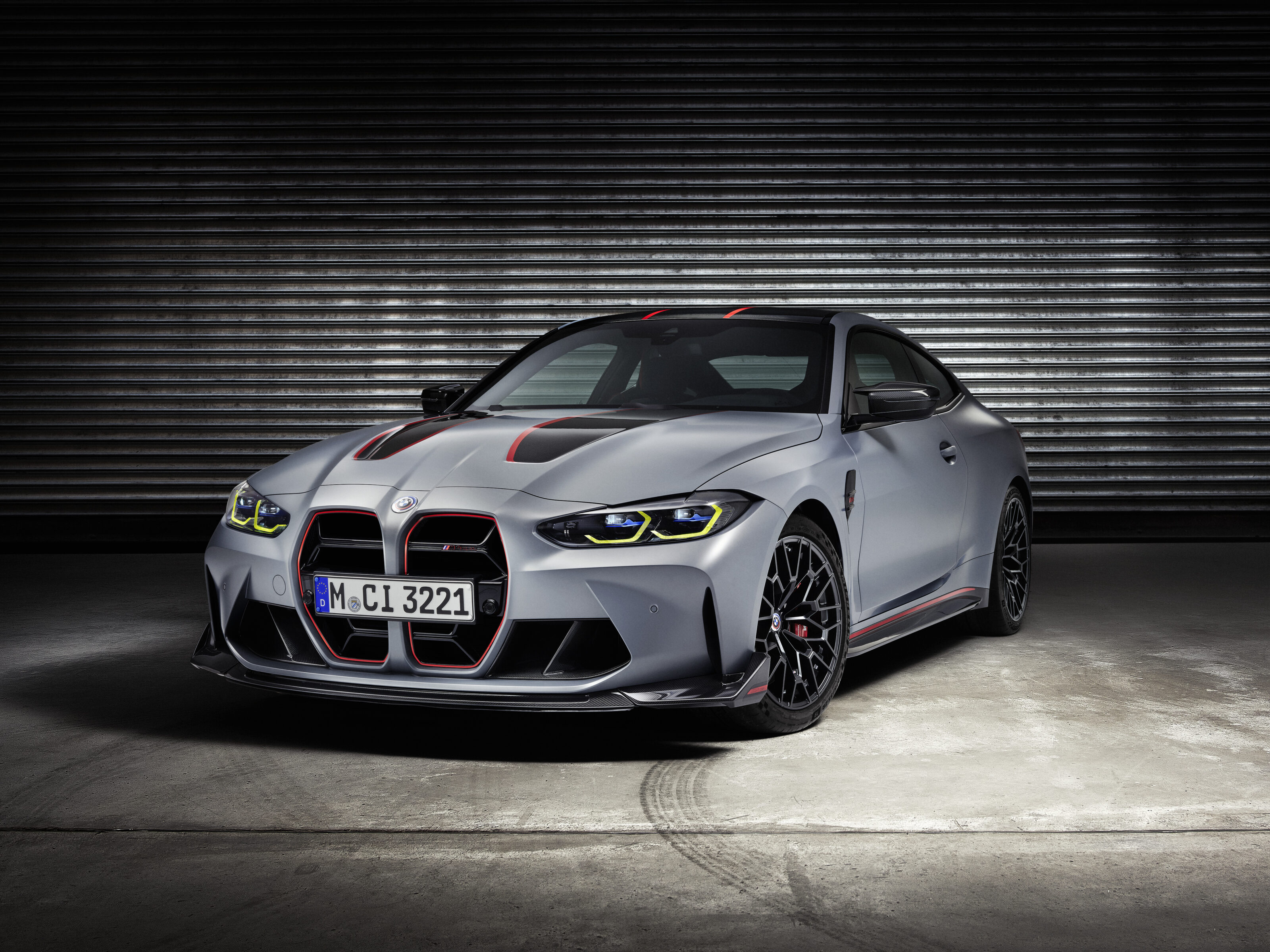
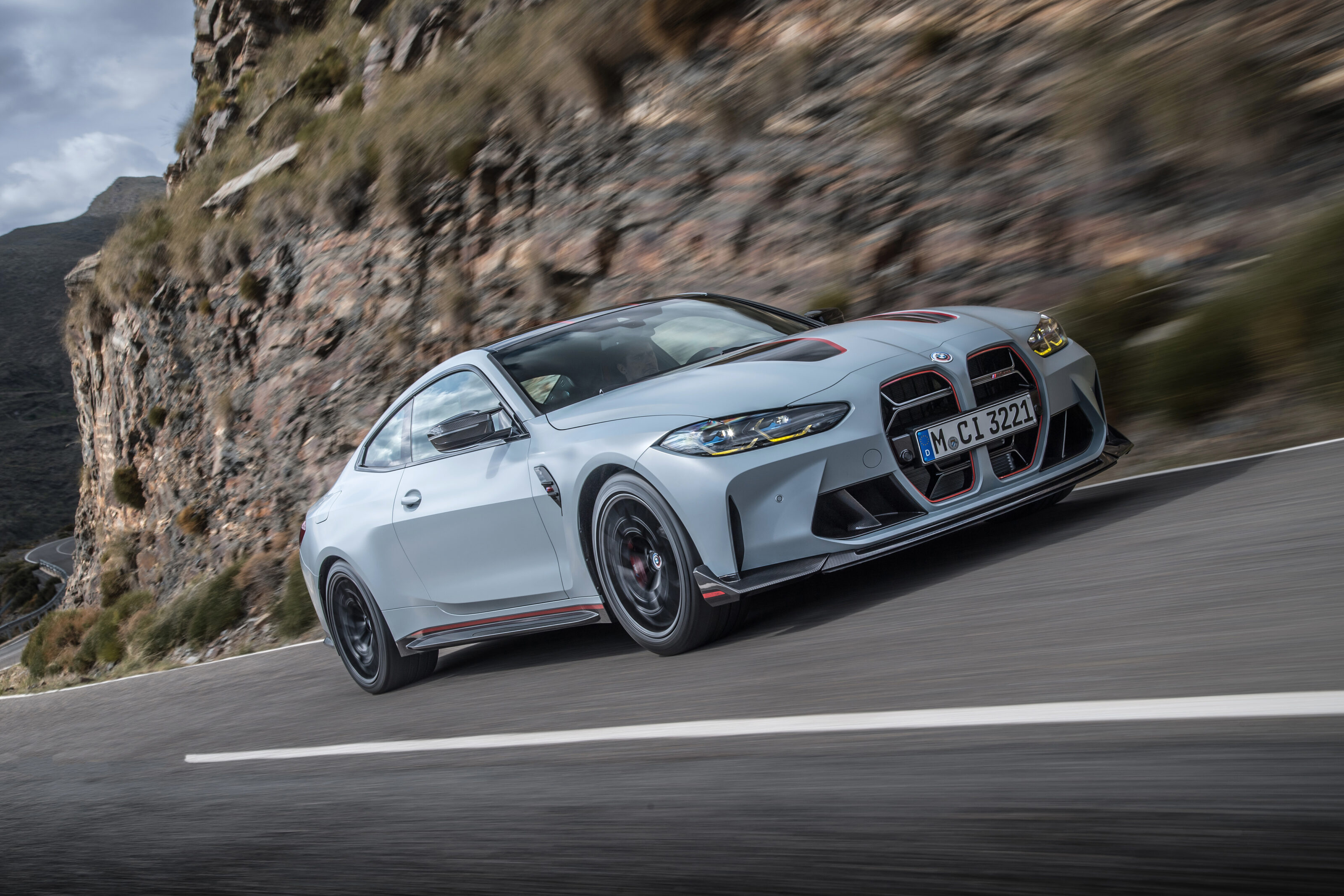
On the outside, the M4 CSL shows its credentials with optional Laserlight headlights with yellow accents recently introduced by the M5 CS, while, at the back end, a new feature is introduced with light threads and actual laser technology creates a new ‘highly distinctive’ feature. Extensive carbon-fibre equipment is included, with a front splitter and ‘air curtain’ featuring, as well as a more pronounced rear spoiler.
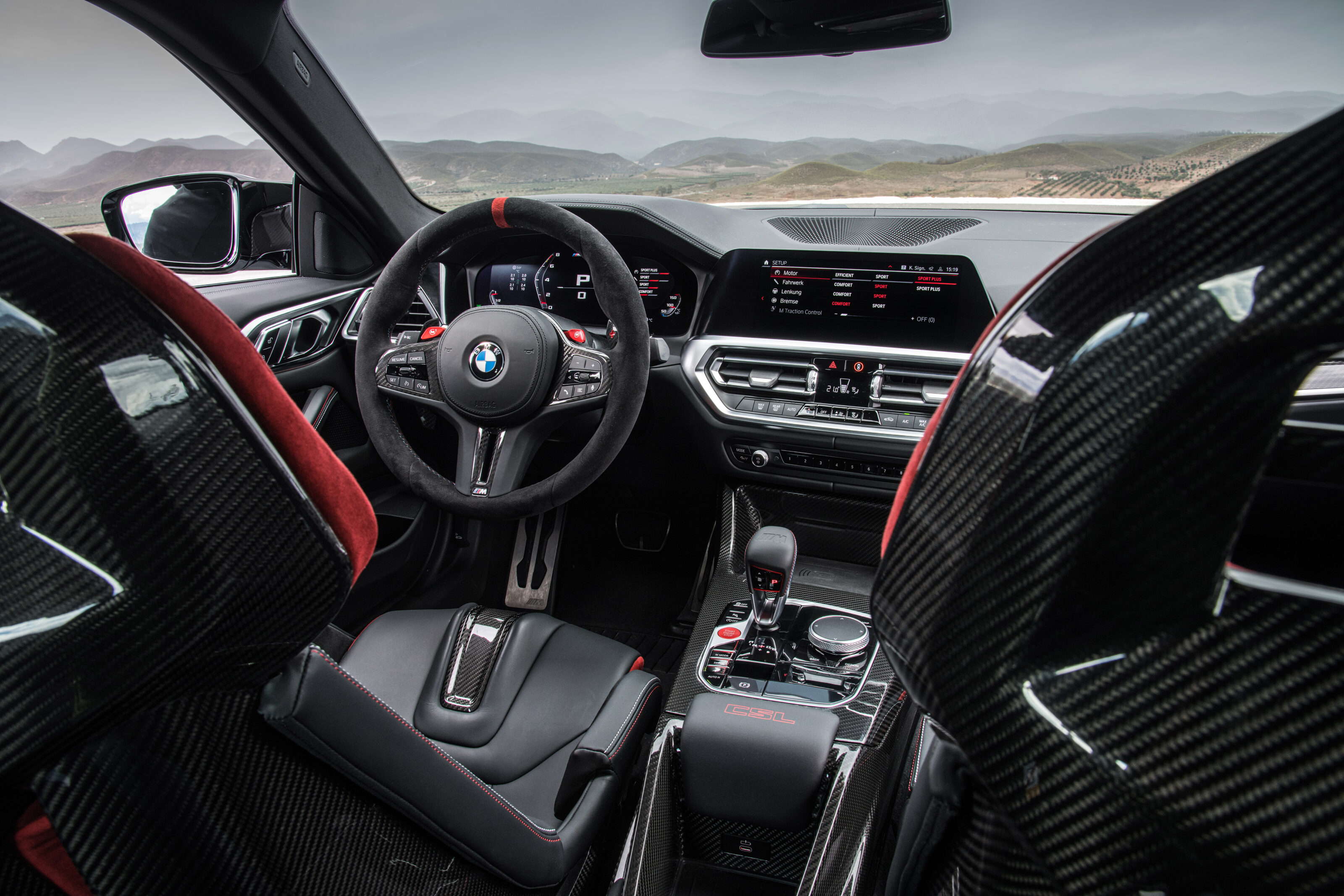
And it continues on the inside with black leather upholstery and red Alcantara highlights, seat positions that can only be adjusted with tools, helmet storage, and the option to install six-point racing harnesses.
Snapshot
- One-of-two Mercedes 300 SLR Coupu00e9s sells for u20ac135 million (AU$203m)
- Sale is over three-times higher than the $66m Ferrari 250 GTO sold in 2018
- Mercedes-Benz Fund will be set up to provide scholarships into the industry
UPDATE, May 20, 2022: Mercedes confirms $200 million sale of 300 SLR ‘Uhlenhaut Coupé’
It’s official – the bar for the world’s most expensive car has been reset, now resting at more than AU$200 million.
After reports emerged last week of a one-of-two 1955 Mercedes-Benz 300 SLR Uhlenhaut Coupé selling at a private auction for €135 million (AU$203m), with Mercedes confirming the sale overnight.
While the private collector remains anonymous, the Stuttgart-based manufacturer announced it would establish the “Mercedes‑Benz Fund” with proceeds from the sale, aiming to “provide educational and research scholarships in the areas of environmental science and decarbonisation for young people.”
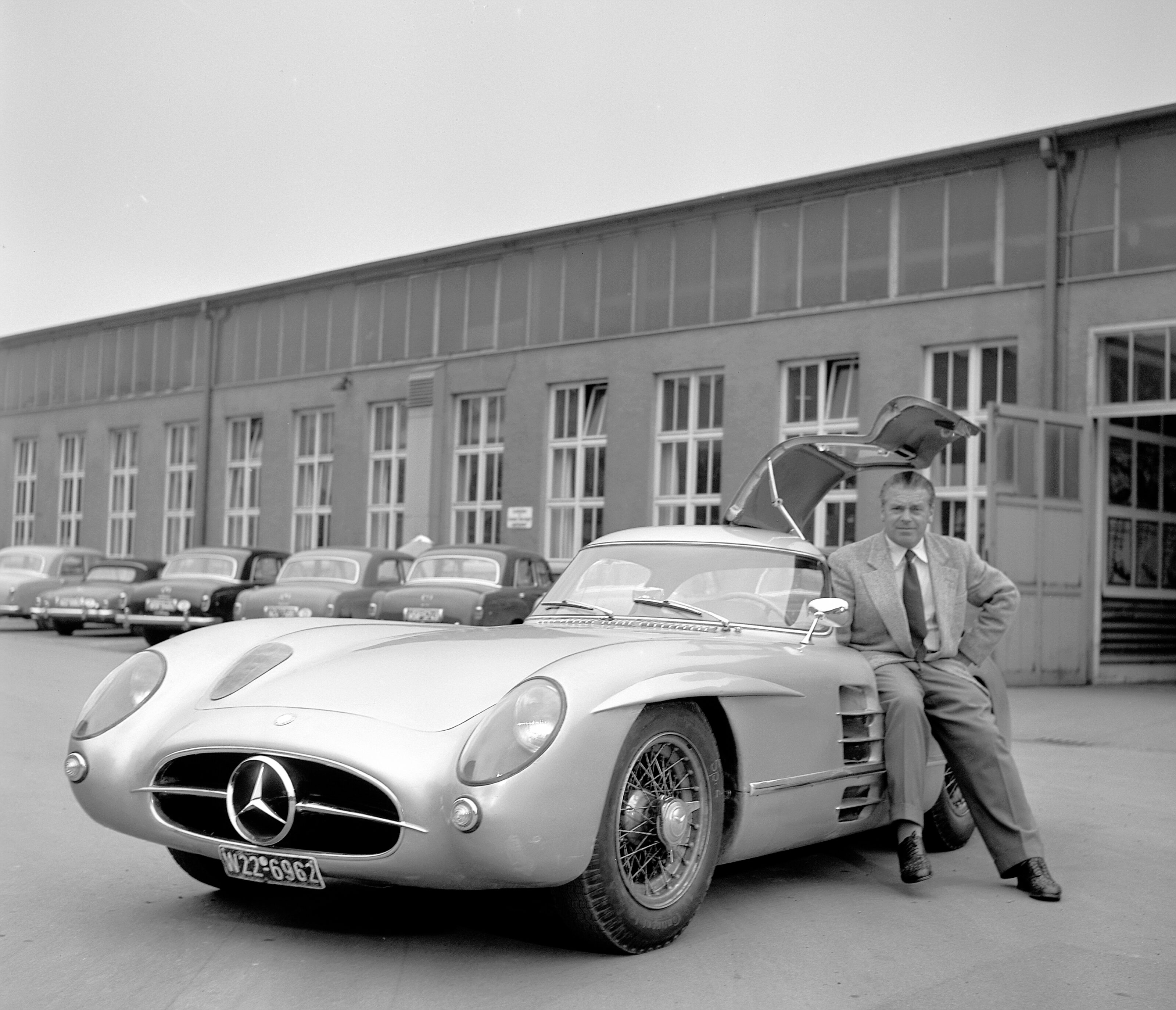
Mercedes-Benz CEO Ola Källenius said the scholarship fund would allow more people from around the world to follow in the footsteps of the car’s creator, Rudolf Uhlenhaut.
“The 300 SLR Uhlenhaut Coupés are milestones in sports car development and key historical elements that have shaped our brand,” said Källenius.
“The decision to sell one of these two unique sports cars was taken with very sound reasoning – to benefit a good cause. The proceeds from the auction will fund a global scholarship programme.
“With the Mercedes-Benz Fund we would like to encourage a new generation to follow in Rudolf Uhlenhaut’s innovative footsteps and develop amazing new technologies, particularly those that support the critical goal of decarbonisation and resource preservation.”
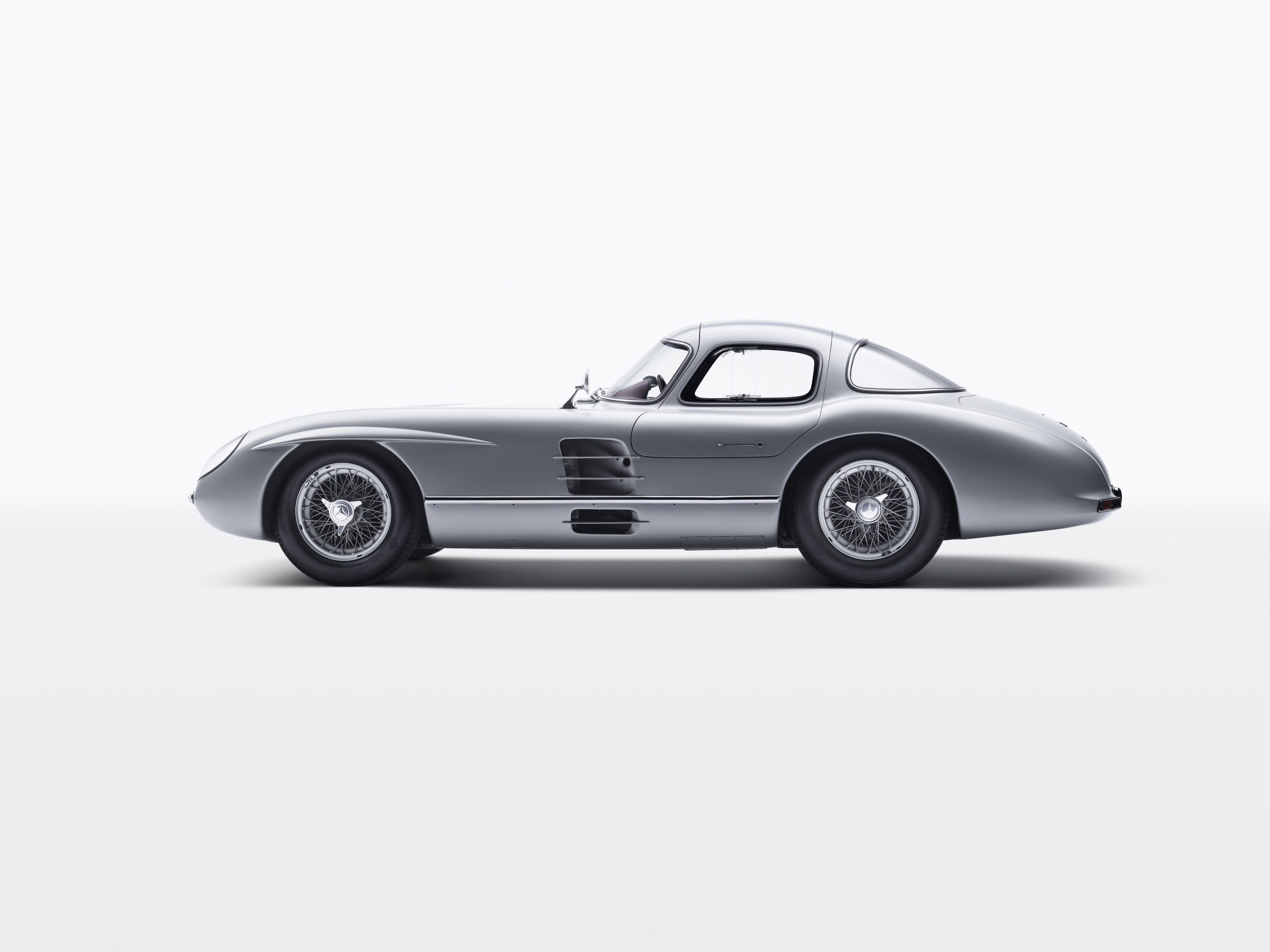
The Mercedes-Benz Fund will be divided into two sub-categories: one for university scholarships, which will focus on environmental science, and the other for schools – dedicated to pupils realising local environment projects in their communities.
Mercedes-Benz has already committed to going fully-electric by 2030 in most major markets, although links to its heritage will remain as it also confirmed the 300 SLR sold will be available for public viewing on special occasions, while its twin continues to be displayed at the Mercedes-Benz Museum in Stuttgart.
The story to here
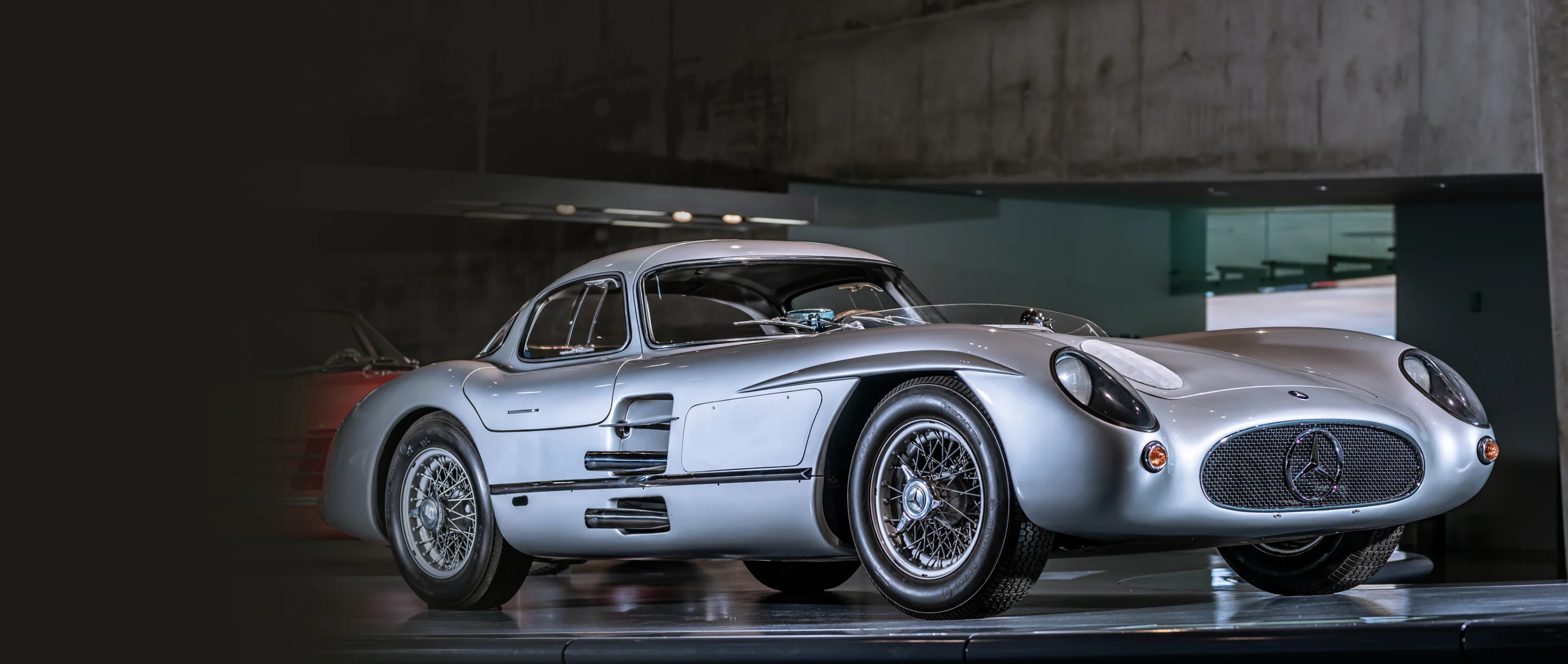
May 13, 2022: Mercedes 300 SLR ‘Uhlenhaut Coupé’ reportedly becomes world’s most expensive car
The record for the most expensive car to have ever been sold has reportedly been broken with a super-rare, one-of-two 1955 Mercedes-Benz 300 SLR allegedly now holding the title.
As reported by Hagerty Insider, a private auction event at Mercedes-Benz’s Stuttgart museum for keen collectors ended in the Uhlenhaut Coupé selling for an eye-watering €135 million (AU$203m).
While the reports are currently unverified, if it turns out to be true this would reset the bar by a hefty margin, with the current official record held by a Ferrari 250 GTO, sold at Monterey Car Week in 2018 for $66m.
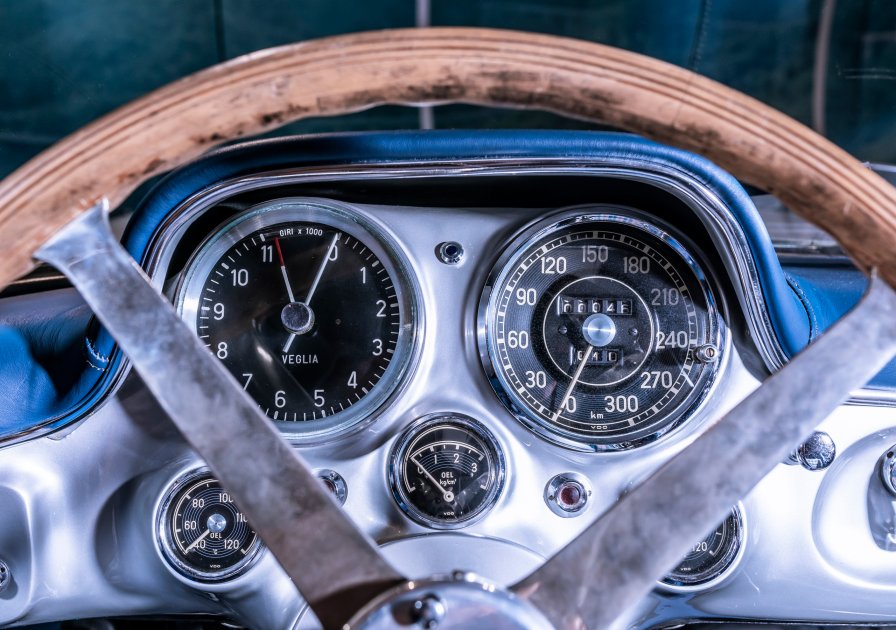
Just two of the Rudolf Uhlenhaut-designed 300 SLR Coupés were built in 1955 as a hybrid between the dominant 300 SLR racer and the 300 SL ‘Gullwing’ road car, powered by a 3.0-litre straight-eight engine which was strong enough to push out 222kW.
According to Hagerty, the auction was held as a private event for select collectors at its museum in Stuttgart, forcing the temporary closure of the facility.
The last Mercedes-Benz to hold an auction record was a 1954 W196, previously raced to victory by Juan Manuel Fangio and having been uncovered in 2013, selling at that year’s Goodwood Festival of Speed for AU$43m in today’s money.
Snapshot
- Ford’s first electrified vehicle finally arrives in Australia
- Expands Escape’s line-up to six variants
- Prices start at $53,440 before on-road costs
UPDATE, May 20, 2022
Ford has confirmed the new Escape plug-in hybrid has arrived on Australian shores, going on sale across the country this month.
The Escape PHEV is the first electrified model in Ford’s local range, with four more set to join the line-up by 2025.
The story to here
May 13, 2022
A plug-in hybrid version of the Ford Escape midsized SUV has finally arrived in Australia, marking a milestone as the company’s first electrified model down-under.
The PHEV variant heads the 2022 Escape line-up, priced from $53,440 before on-road costs. The price will increase to $54,440 before charges from July 1.
The petrol-electric variant – which was initially expected as early as late 2020 – carries a $14,950 premium over the ST-Line FWD turbo petrol model with which it shares its trim grade.
In addition to its more advanced drivetrain, the PHEV adds extra items including an electrically adjustable driver’s seat, fabric and artificial leather upholstery (in place of cloth), a B&O Play audio system, and a rear centre armrest.
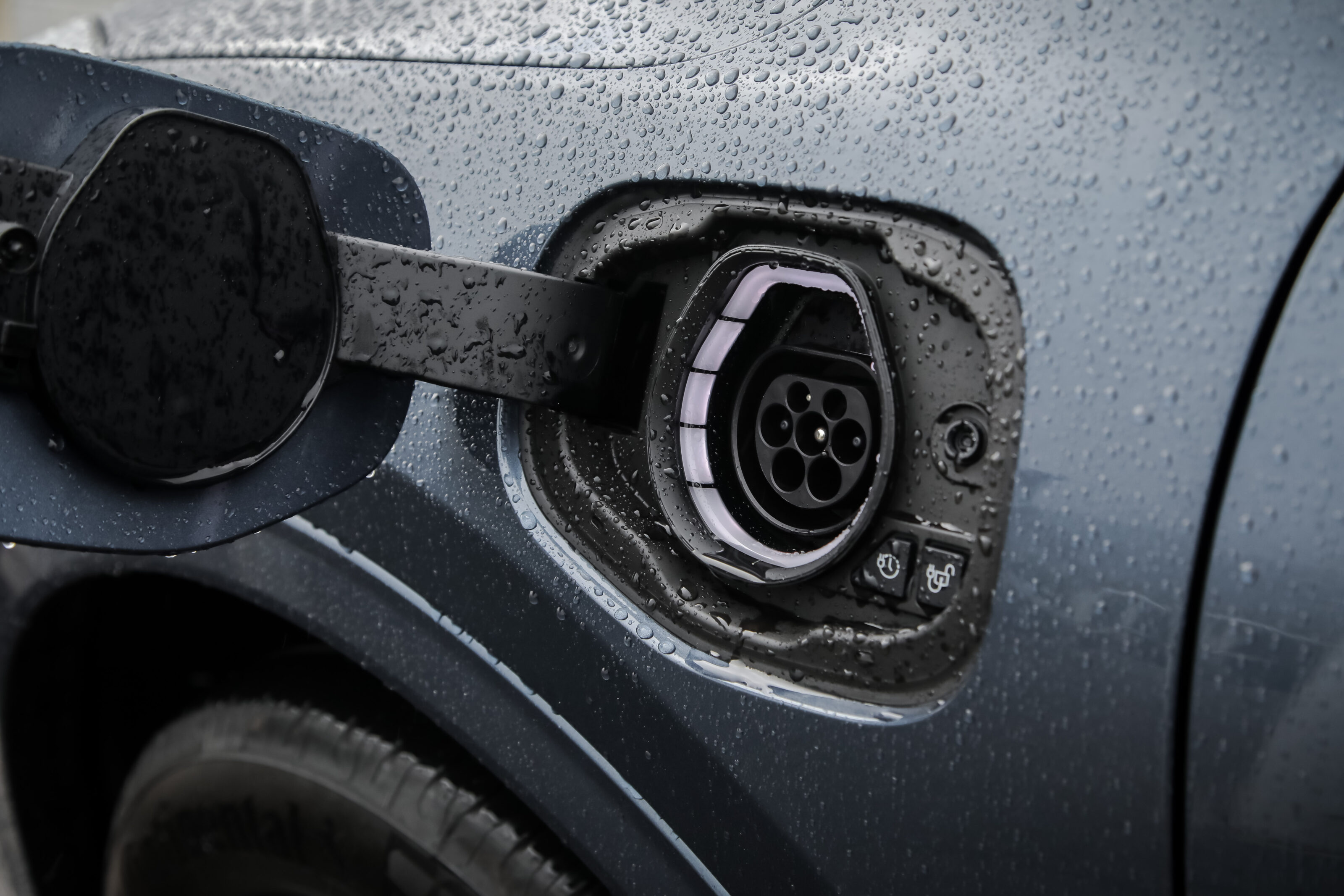
A $1950 ST-Line Option Pack adds a head-up display, advanced “glare-free” LED headlights, electric tailgate, and heated front seats. The features are standard on Vignale models.
A $1500 Parking Pack brings semi-auto parking capability, a front camera, and door-edge guards.
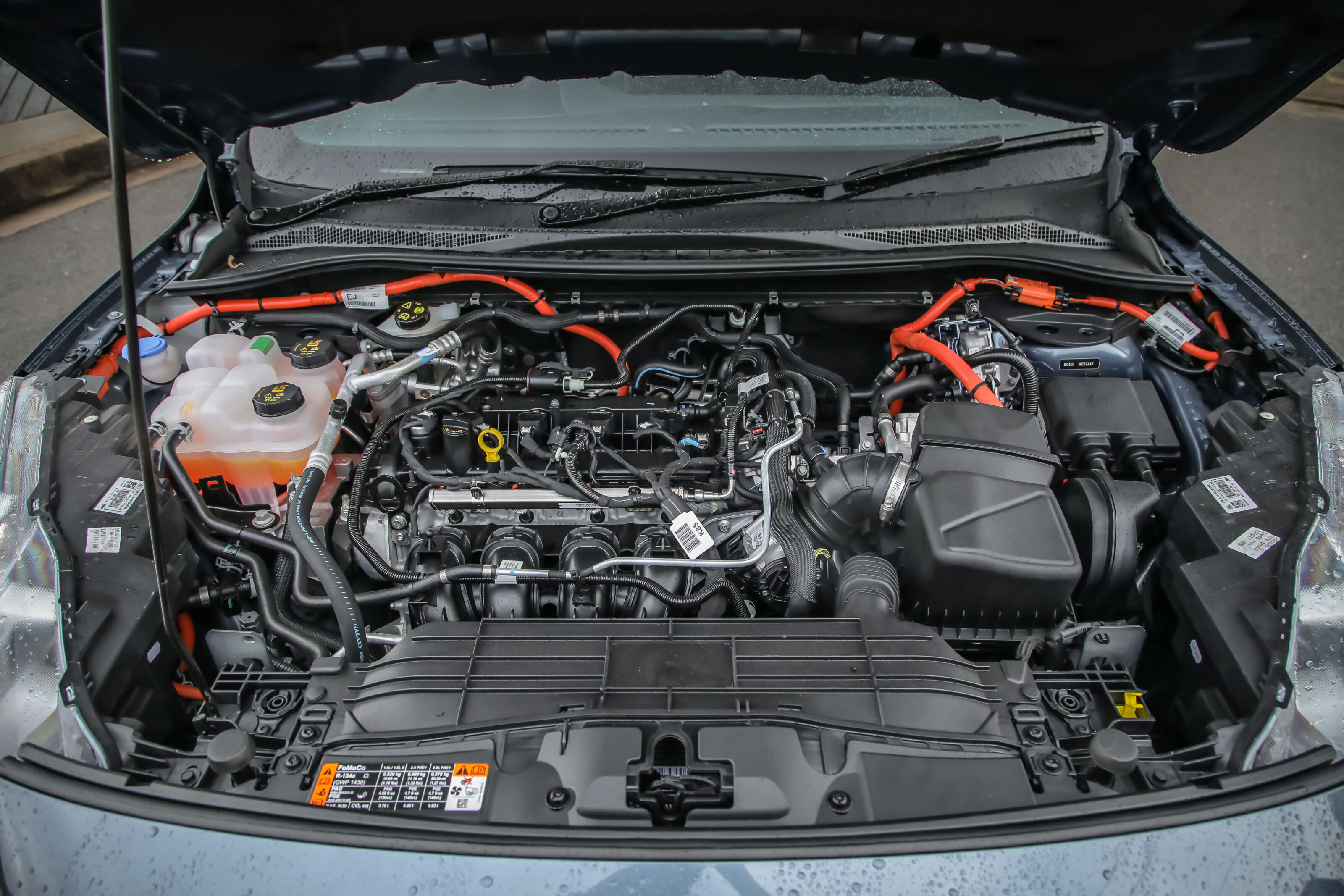
The Ford Escape ST-Line PHEV combines a 2.5-litre Atkinson Cycle four-cylinder engine with an electric motor that’s powered by a 14.4kWh battery. A combined output of 167kW is sent to the front wheels via an e-CVT auto.
The pure-electric driving range is 56km according to the WLTP test cycle, with combined fuel consumption rated at 1.5 litres per 100km.
This compares with 8.6L/100km consumption for regular versions of the Escape which are powered by a 183kW/370Nm 2.0-litre turbocharged four-cylinder petrol engine.
Ford of Europe quotes 9.2 seconds for the PHEV Escape’s 0-100km/h acceleration performance.
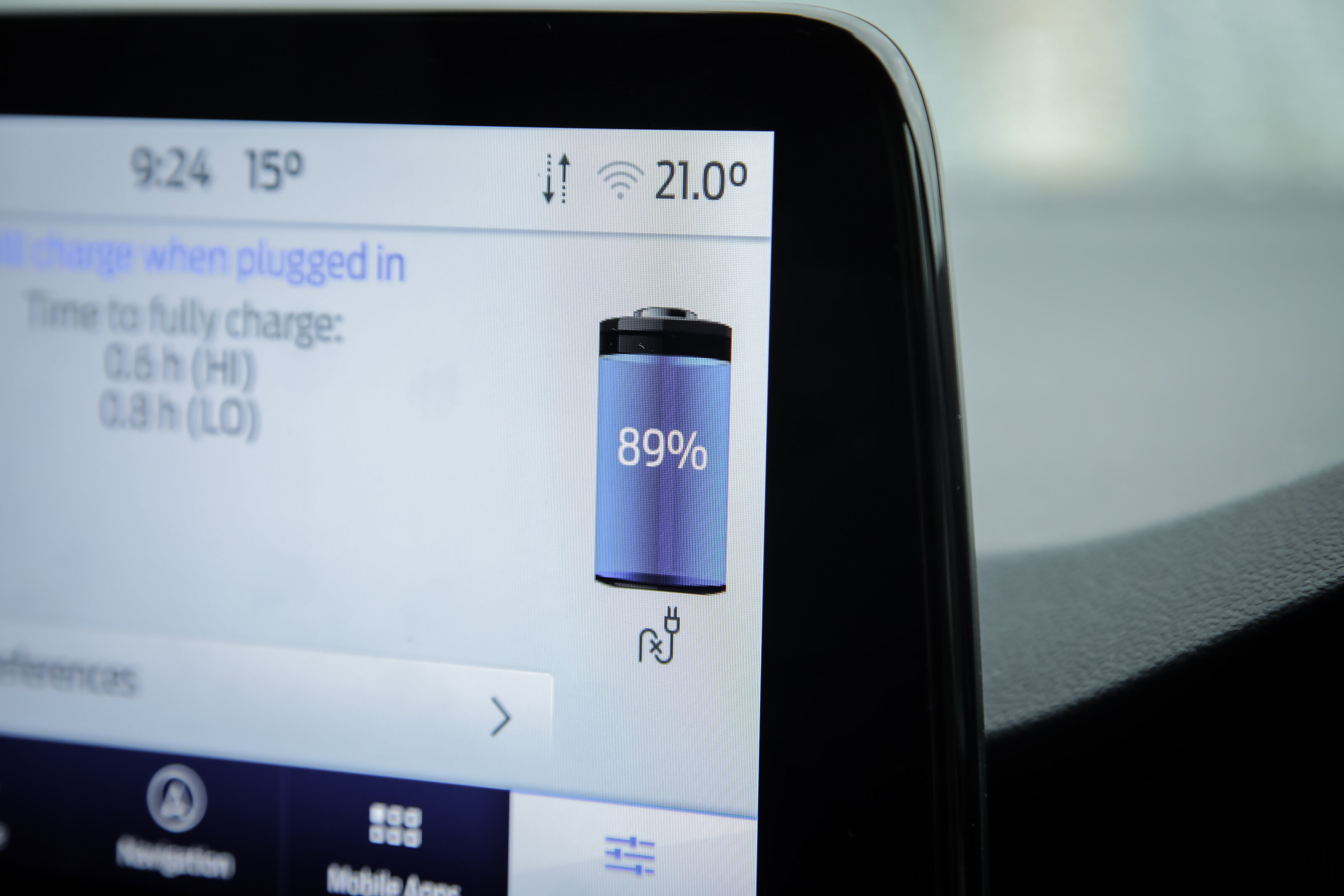
According to Ford, recharging the battery takes about six hours using a regular 230-volt power socket, or about two hours using 22kW AC unit.
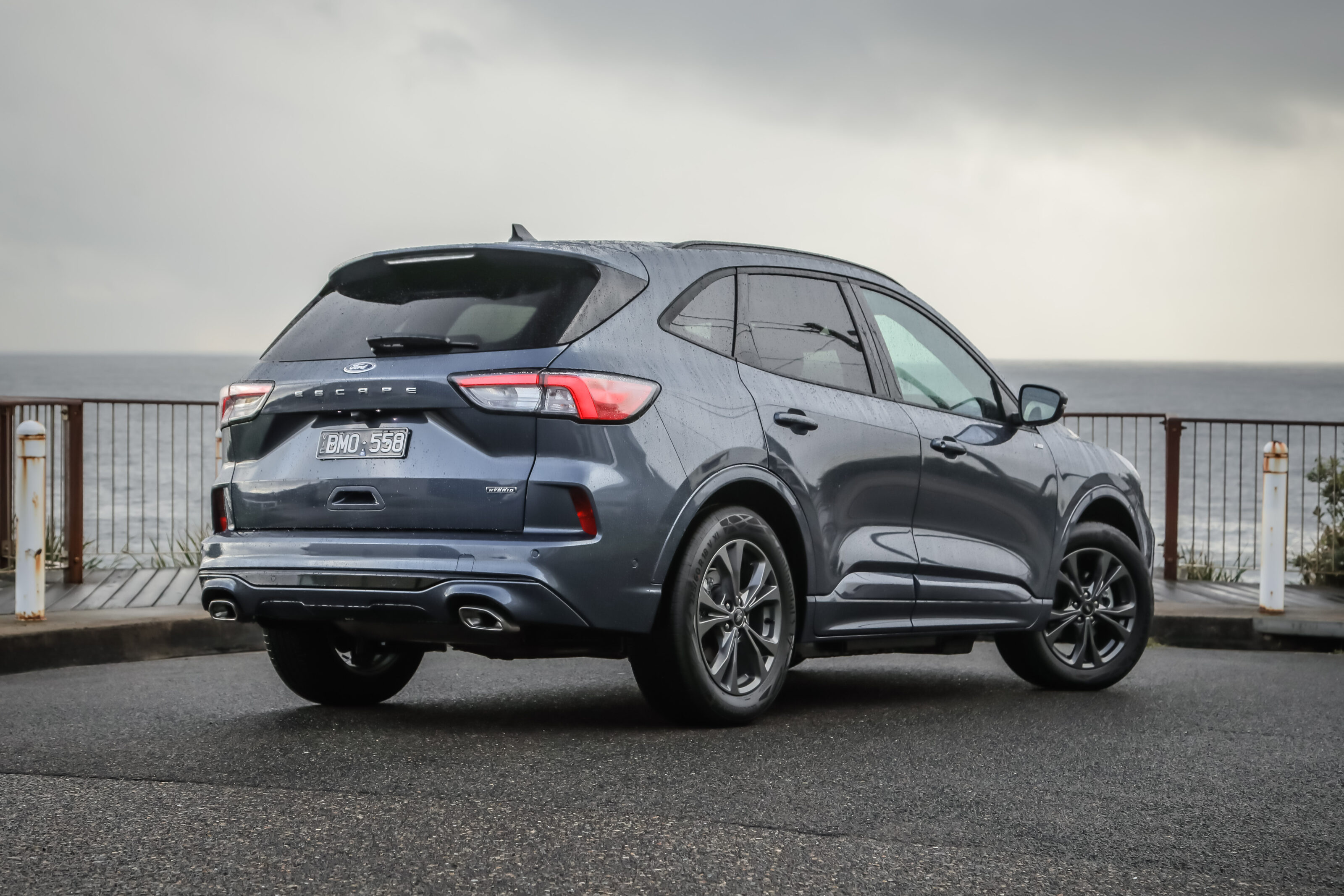
The PHEV variant has a lower ground clearance than other Escapes – 160mm versus 178mm (ST-Line turbo) and 190mm (Vignale) – and its braked towing capacity is reduced by one-third – 1200kg versus 1800kg.
The Ford Escape PHEV becomes a rival for other midsized plug-in SUVs which includes the MG HS Plus EV, Kia Niro PHEV, Mini Countryman PHEV, Peugeot 3008 GT Sport PHEV, and the soon-to-be-launched Mitsubishi Outlander PHEV.
A regular, non-plug-in hybrid version of the Escape which would be a direct rival for the hugely popular petrol-electric Toyota RAV4 is not currently being considered for Australia.
Last year, Ford Australia confirmed the E-Transit van will become its first fully-electric vehicle on sale locally towards the end of 2022. It will be joined in 2024 by the E-Transit Custom, announced this week.
Ford Australia has committed to five electrified vehicles by the end of 2024, leaving two to be confirmed. One is expected to be the Mustang Mach-E electric SUV, which is already available in some overseas markets.
2022 Ford Escape Australian pricing
Prices exclude on-road costs.
| Model | Price (exc. on-road costs) |
| Escape | $36,490 |
| ST-Line FWD | $38,490 |
| ST-Line AWD | $41,490 |
| Vignale FWD | $47,090 |
| Vignale AWD | $50,090 |
| ST-Line PHEV | $53,440 |
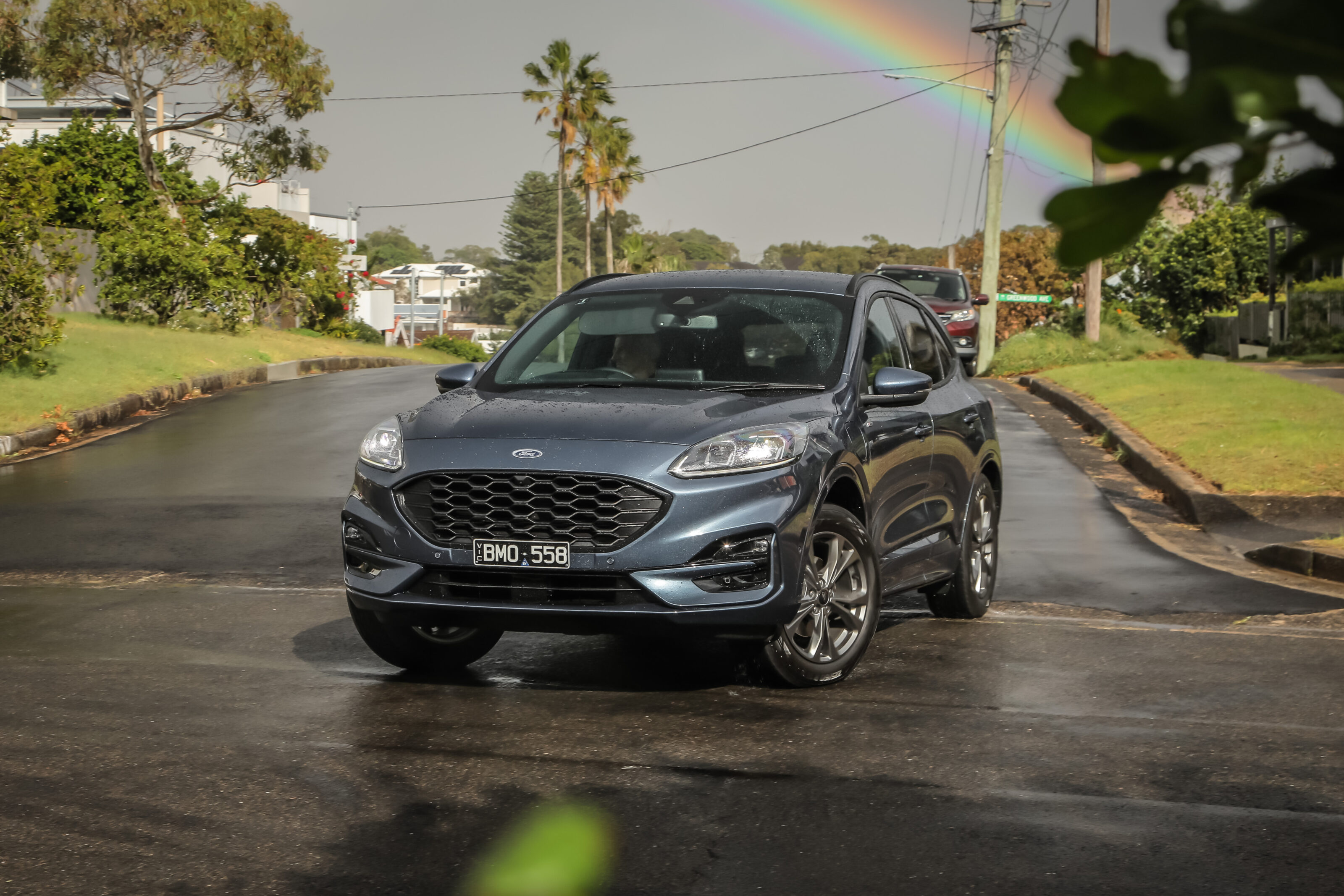
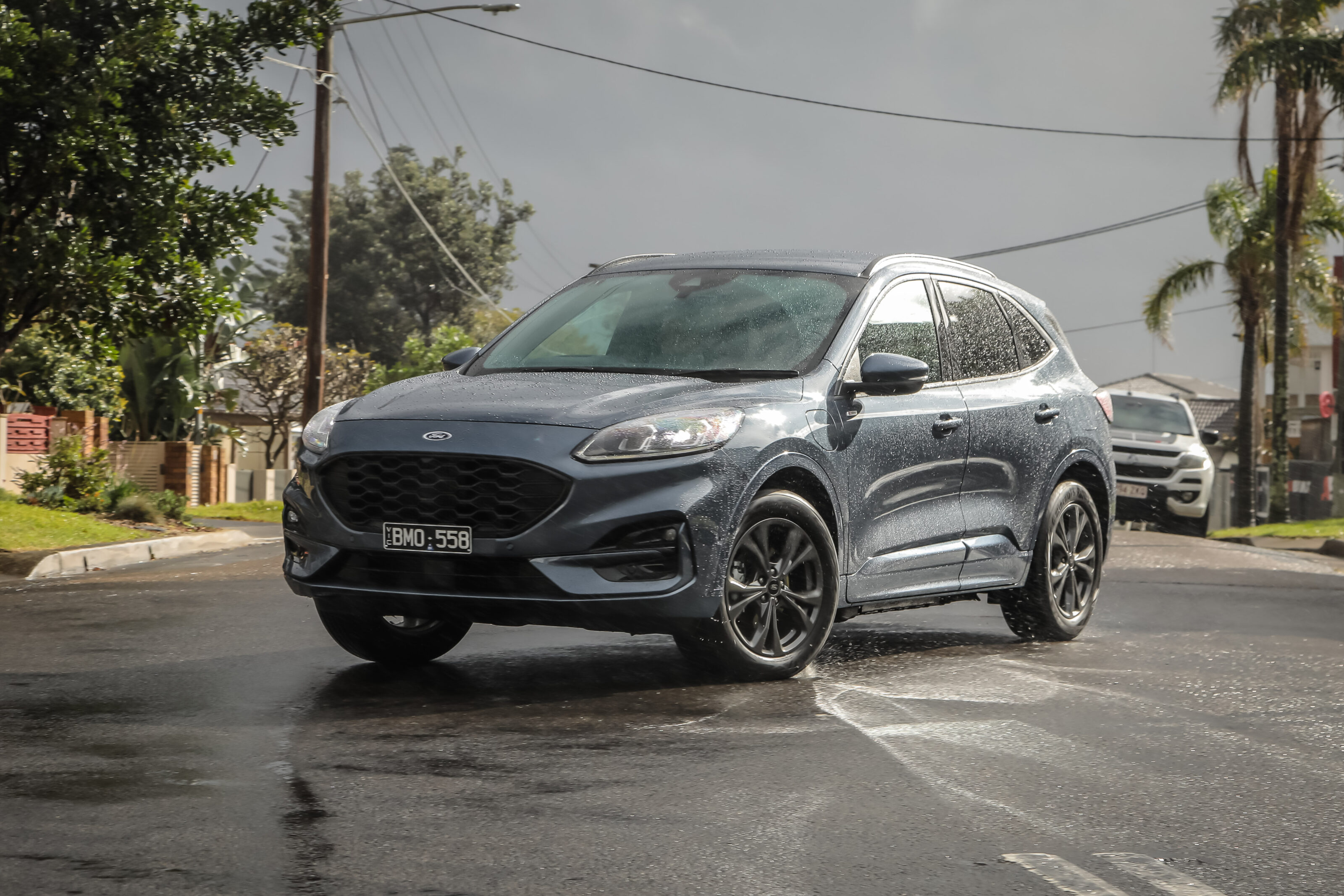
The 2022 Ford Escape ST-Line PHEV brings electrification at last to the Blue Oval brand in Australia, joining the Escape medium SUV line-up about a year later than originally planned.
For the foreseeable future, this plug-in hybrid will be the only Ford passenger car or SUV to feature an electric motor. Ford Australia has yet to commit to the all-electric Mustang Mach-E available overseas, confirming only all-electric versions of its Transit van.
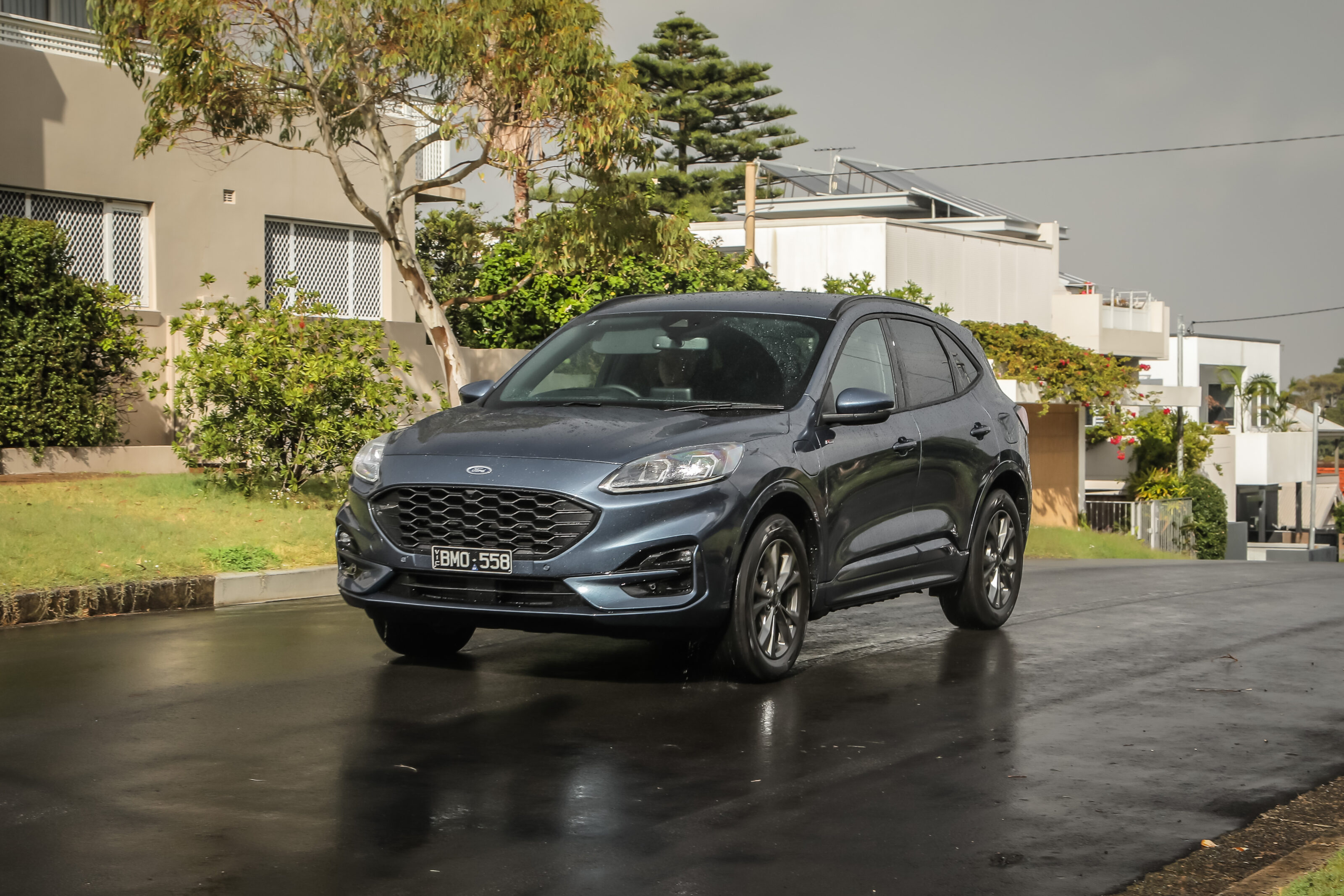
The Ford Escape PHEV shoots straight to the top of the range on price, though adopts the mid-range ST-Line trim grade rather than the top-grade Vignale.
Natural competitors are plug-in versions of the Kia Niro, MG HS, Mini Countryman, Peugeot 3008 and the forthcoming second-generation Mitsubishi Outlander.
Ford Australia has chosen not to import the regular hybrid version of the Escape that would have been a direct rival for the hugely popular petrol-electric Toyota RAV4.
Pricing and Features
Plug-in hybrids traditionally carry a hefty premium owing to their battery packs and electric motors, and Ford’s Escape PHEV is no exception.
The Escape ST-Line FWD PHEV costs $14,950 more than the regular petrol-only ST-Line FWD. It’s priced at $53,440 before on-road costs, or $58,347 drive-away (based on a Sydney postcode).
For perspective, MG charges an extra $12,000 for the PHEV version of the HS and Peugeot asks nearly $20,000 extra for the PHEV version of the 3008 GT Sport.
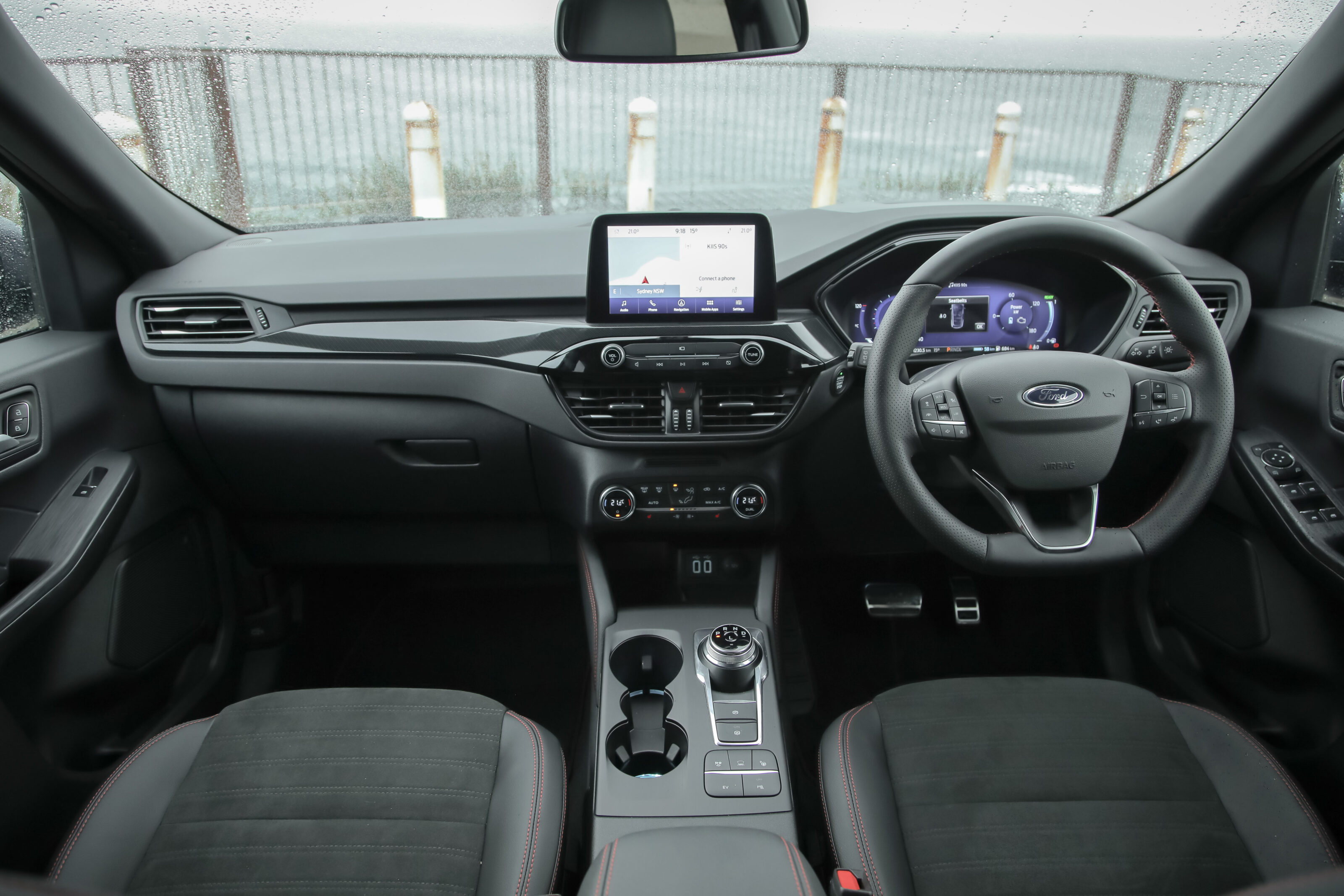
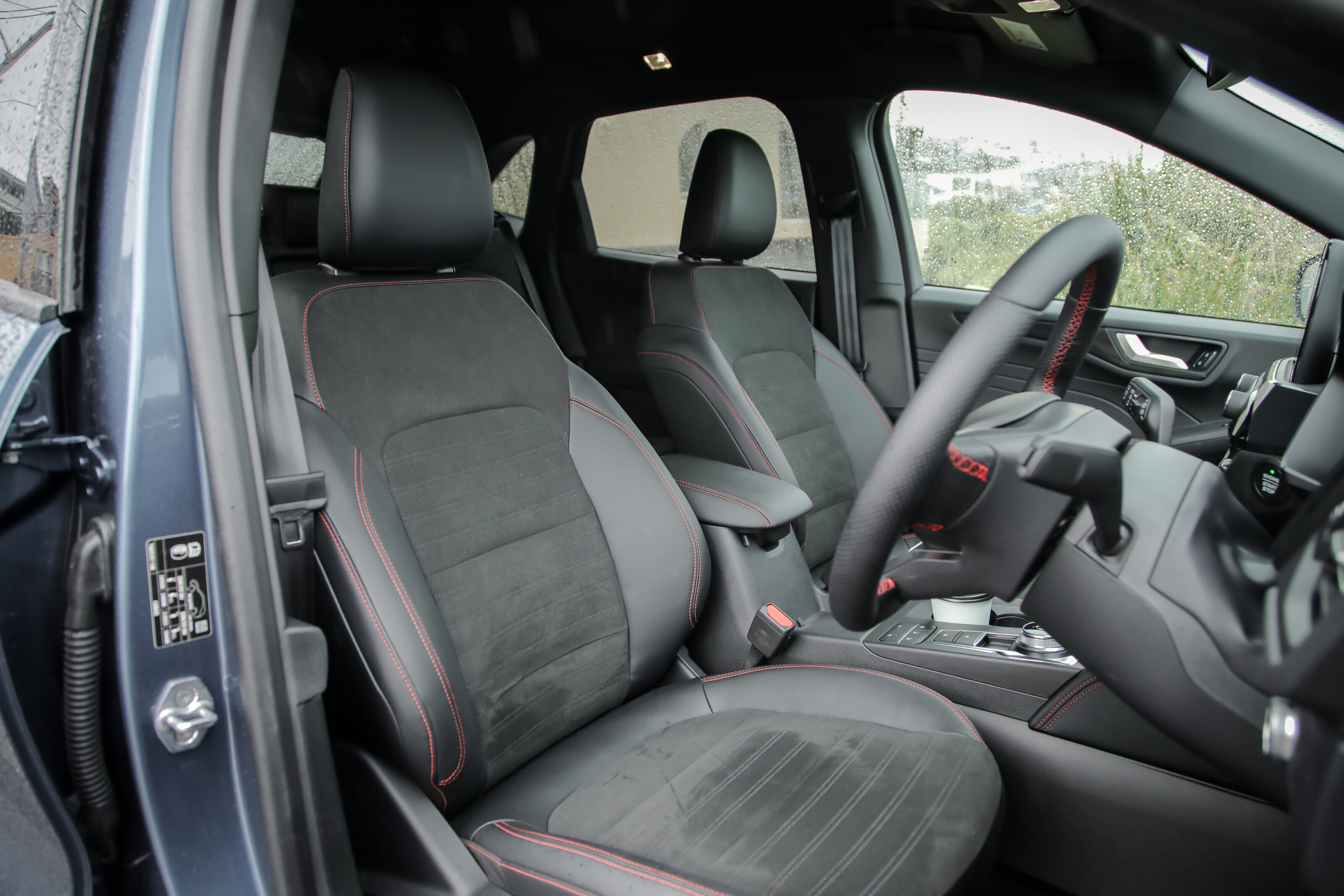
A handful of equipment additions have been added to the PHEV over the regular ST-Line: B&O premium audio system, electric driver’s seat adjustment, rear centre armrest and a fabric/artificial leather upholstery combination instead of cloth seats.
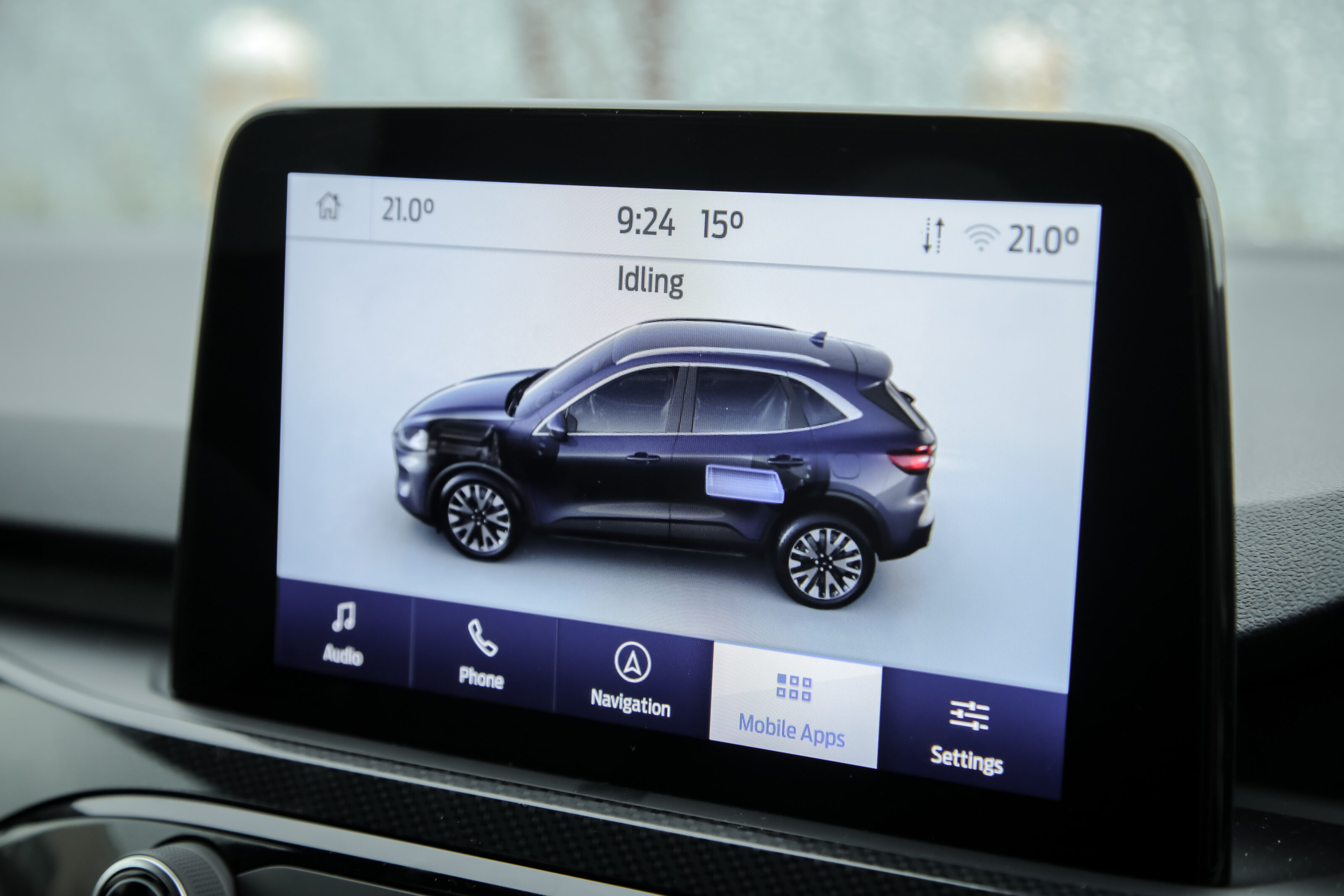
Other key standard features include 18-inch alloy wheels, keyless entry with push-button start, dual-zone climate control, dual digital cabin displays, embedded Ford Pass modem, wireless phone charging, adaptive cruise control, traffic sign notification, blind-spot monitoring, attention monitor, and parking sensors at both ends.
While the PHEV variant might be expected to be the technological leader in the line-up, it misses out on the head-up display, advanced LED headlights and auto tailgate included on the Vignale that’s priced lower, from $46,590 before on-road costs.
The Vignale also comes with a panoramic sunroof and bigger 19-inch wheels.
A $1950 ST-Line Option Pack can add the HUD, LED headlights and electric tailgate, plus heated front seats.
A Parking Pack, costing $1500, adds semi-auto parking capability, front camera, and (Skoda-like) door-edge guards.
Comfort and Space
While Ford’s smallest SUV, the Puma, can be an effective family car, the mid-sized Escape is a significant step up in both cabin and boot space.
There’s extra versatility, too, with a sliding (60:40 split) second-row bench that allows owners to balance rear legroom and luggage capacity.
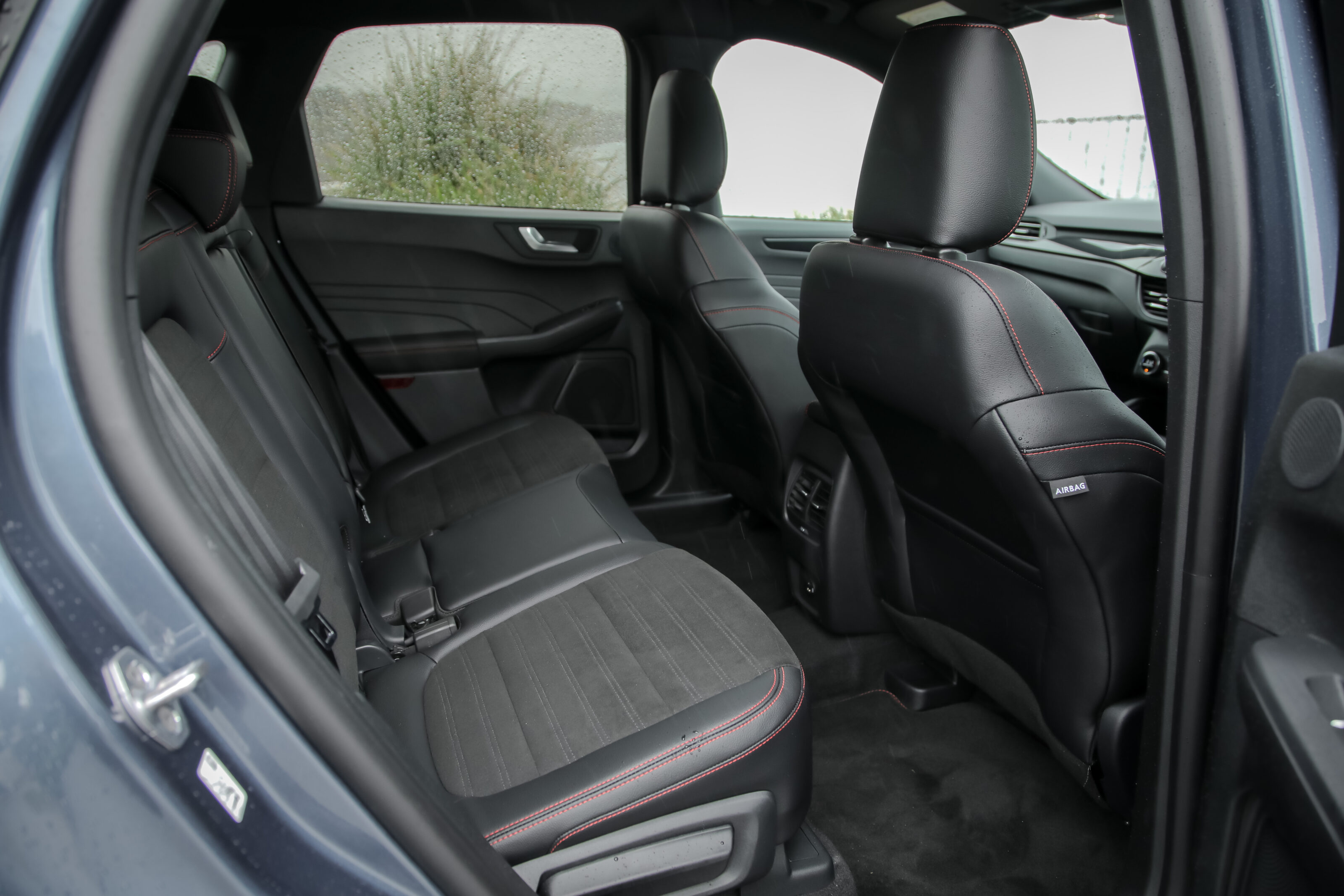
With the bench forward, there’s still generous room for knees and good headroom. The backrest angle is also adjustable in the same 60:40 arrangement. Rear air-con vents are standard.
Some passengers may just find the bench’s relatively short cushion doesn’t provide as much under-thigh support as ideal.
On a more granular practicality level, storage options are plentiful throughout the cabin. Door compartments up front include moulded sections for a small bottle, large bottle, and assorted smaller items such as a wallet.
A tall/deep cubby kicks off a centre console that features three cup holders (including middle ‘piccolo’ holder) and three trays, one of which will charge your smartphone. Next to this tray are 12V and USB-A sockets.
The Escape’s glovebox is also larger than average.
Rear passengers get seatback pouches, door storage, and cup holders in the pull-down centre armrest.
The interior presentation has its good points, including its sporty fabric and fake leather upholstery combination and the chubby, squidgy steering wheel.
Quality doesn’t make a huge leap over the Puma. While soft touchpoints include the upper dash, upper front doors, console cubby and armrests, hard and uninspiring plastics – including the rear doors – are prominent.
This results in the Escape falling short of plusher-looking cabins found elsewhere in the segment, notably models such as the Mazda CX-5, Peugeot 3008 and Volkswagen Tiguan.
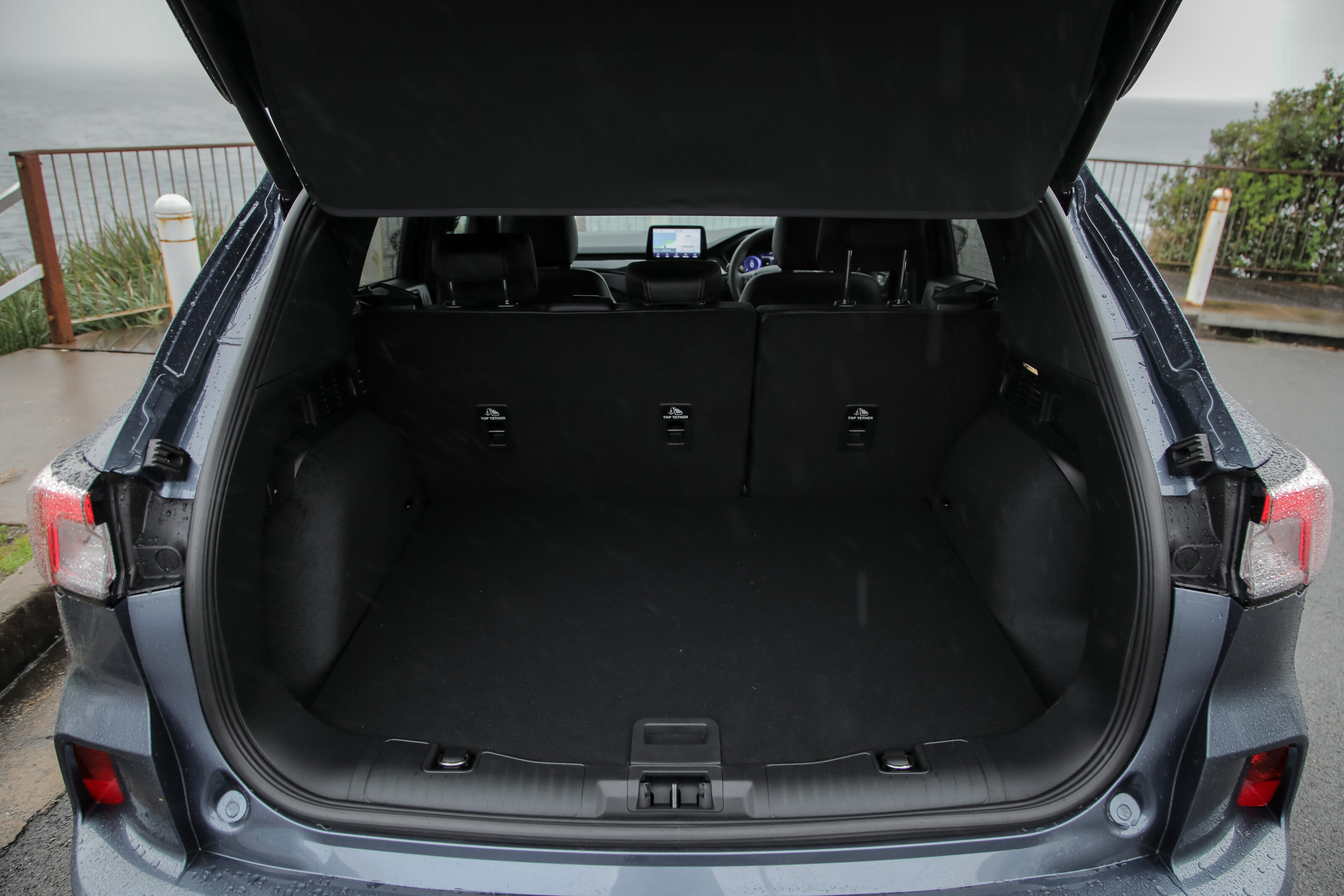
Ford quotes 556 litres for the Escape’s boot when measured up to the roof. It’s not particularly deep but the boot offers plenty of width and length – and a flush loading lip.
Release levers are a big bonus, and they drop the rear seats fully flat to expand boot capacity.
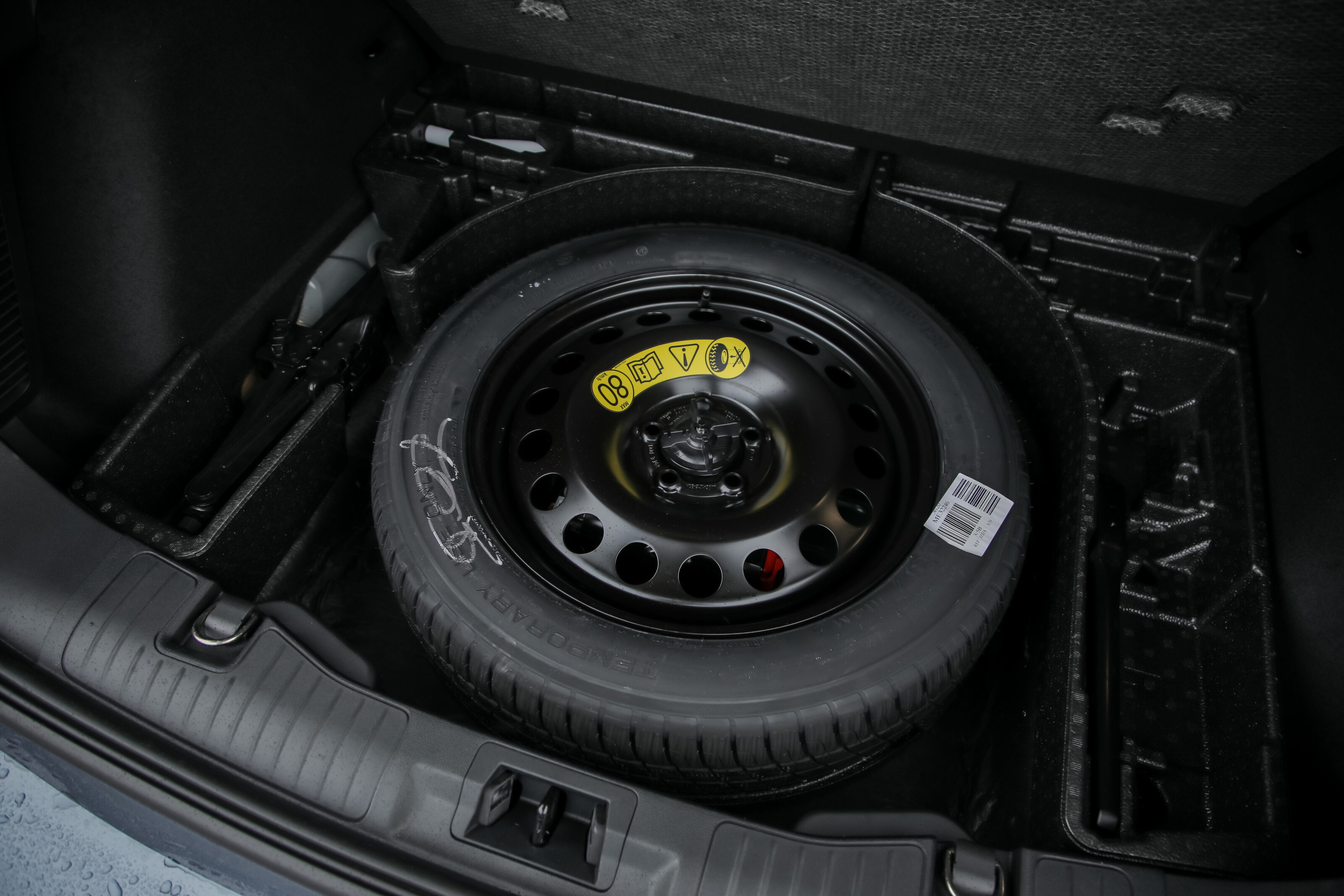
There’s a light, 12V socket and, under the floor, a temporary spare wheel.
On the Road
The Ford Escape PHEV’s key drawcard is up to 56km of electric driving. That’s realistic, too; we achieved a best of 57km on test.
As with other plug-in hybrids – and unlike regular hybrids such as the Toyota RAV4 Hybrid – higher speeds are possible while using the electric motor only. This includes the freeway limit of 110km/h.
The petrol engine kicks in only to support the driver’s request for urgent acceleration, or when the Escape’s 14.4kWh battery has been depleted to the point where the vehicle then acts as a regular hybrid.
In Hybrid mode, the electric motor will operate at lower speeds but the petrol engine becomes the primary form of propulsion above 40km/h.
Ford’s 2.5-litre four-cylinder uses the same economy-focused Atkinson cycle combustion process as Toyota’s hybrid drivetrains, though it sounds more civilised – even sportier – than the petrol engine in the RAV4, for direct comparison.
We averaged 3.2 litres per 100km during longer testing that included exhaustion of the electric range and dynamic driving. Official fuel consumption is 1.5L/100km, which makes the PHEV vastly more frugal than the 8.6L/100km of petrol Escapes.
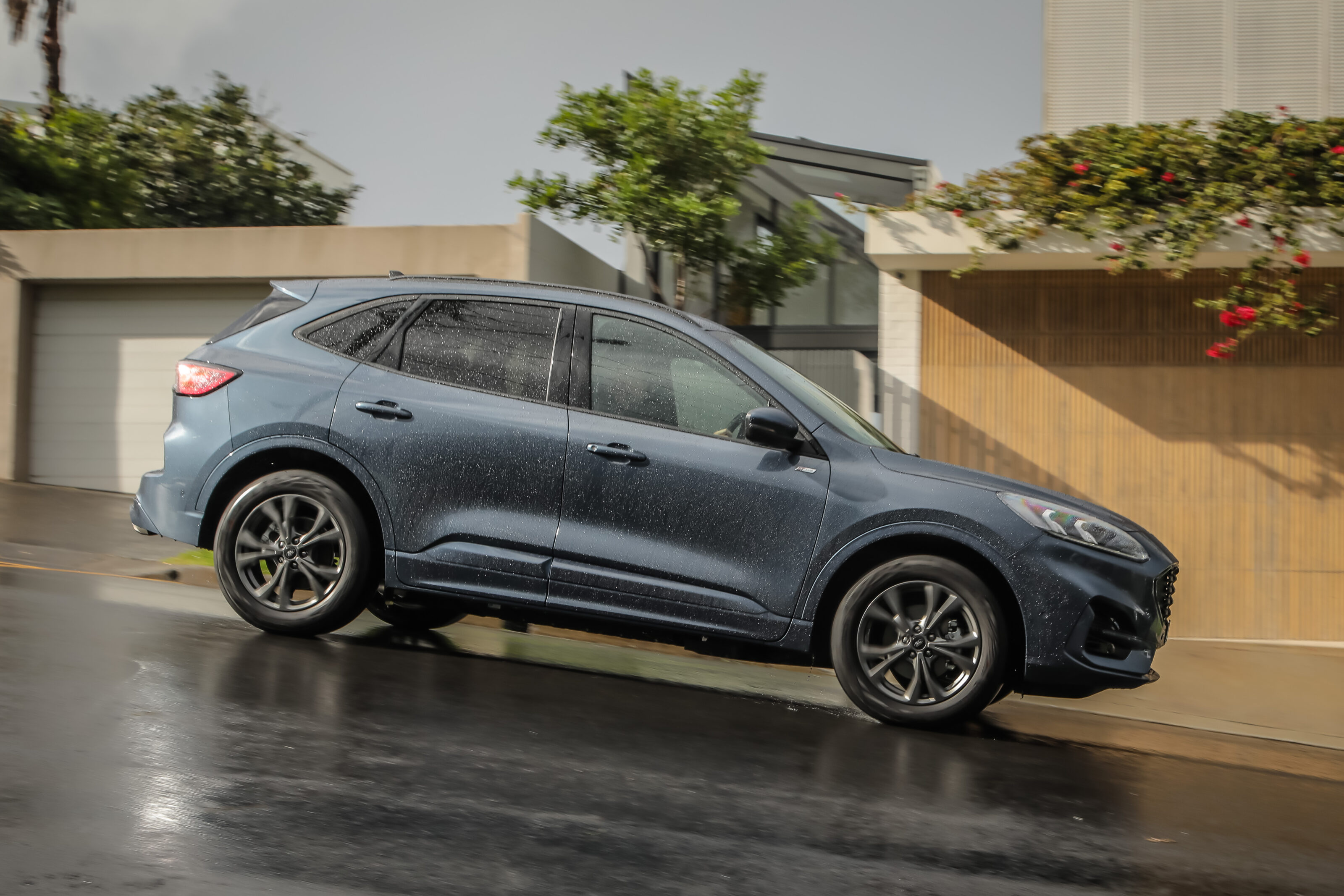
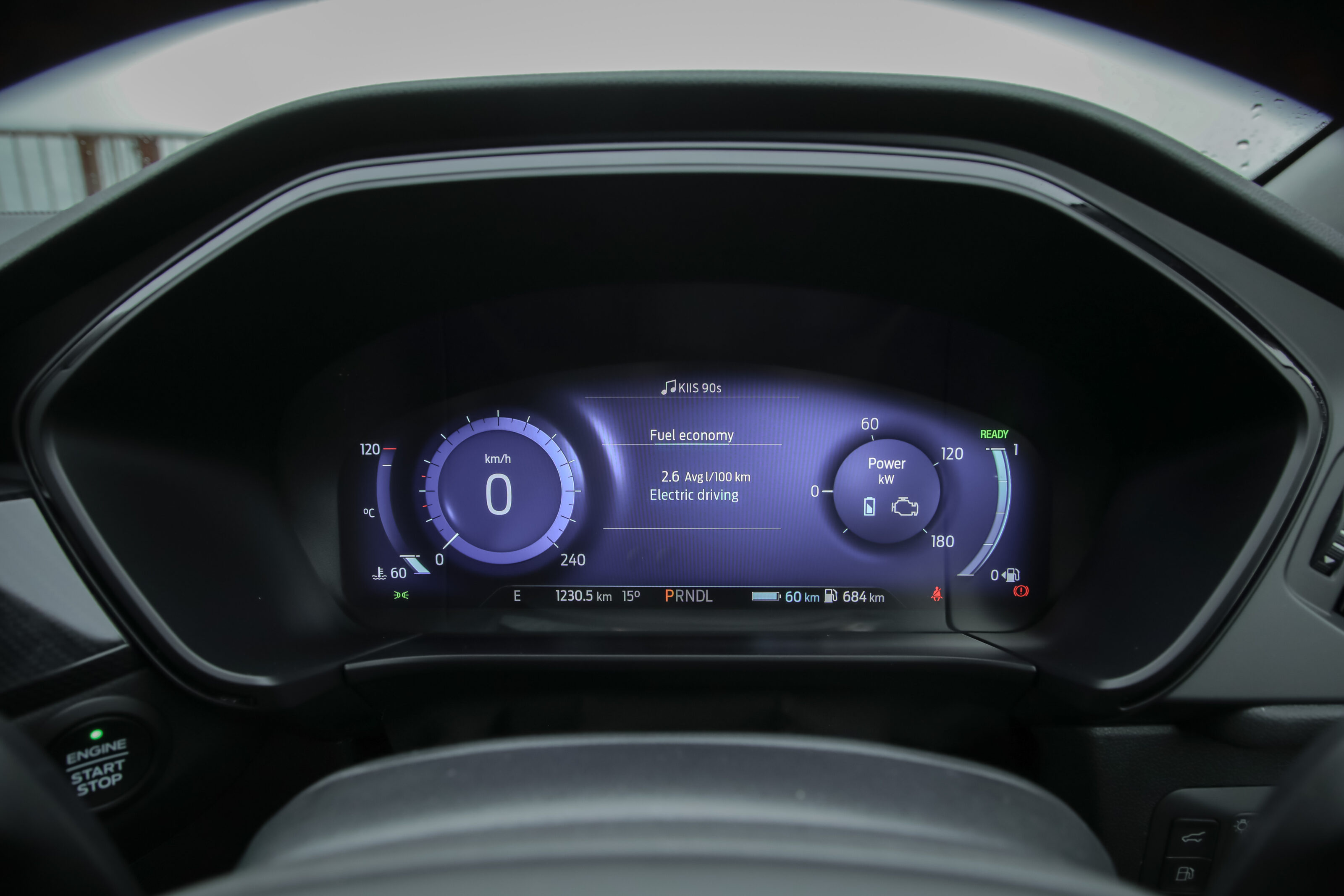
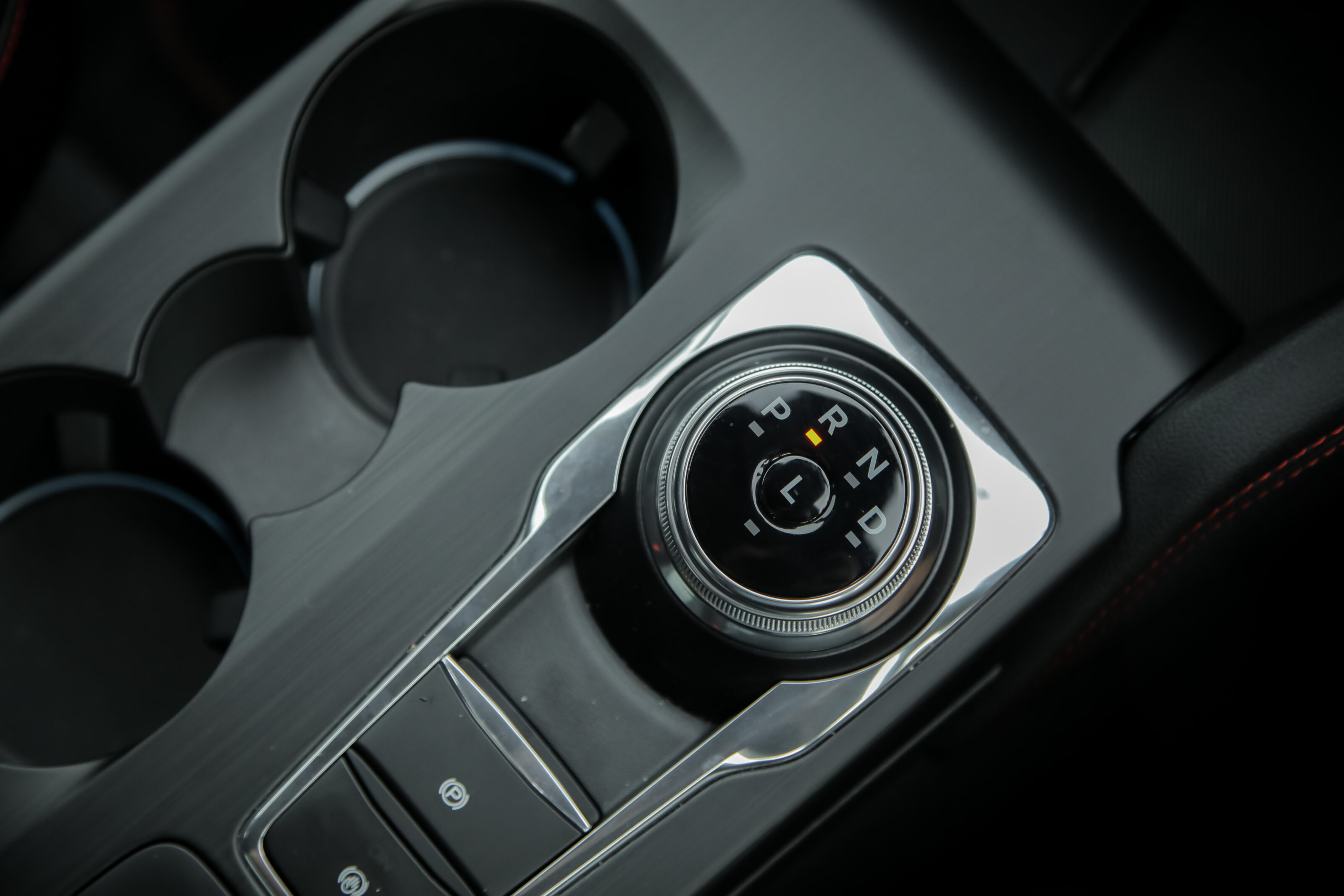
The digital driver display is a variation on the one found in other Escapes, providing information on whether the vehicle is using electric power, recharging via regenerative braking (when lifting off the throttle or actually braking), or acting in Hybrid mode. It also indicates the estimated electric range available.
It’s possible to use no fuel at all, of course, if your daily drives are limited in distance and you’re happy to regularly charge the vehicle.
The Escape PHEV can be fully charged in up to six hours simply using a household socket, or about two hours if owners invest in a 22kW AC wallbox unit.
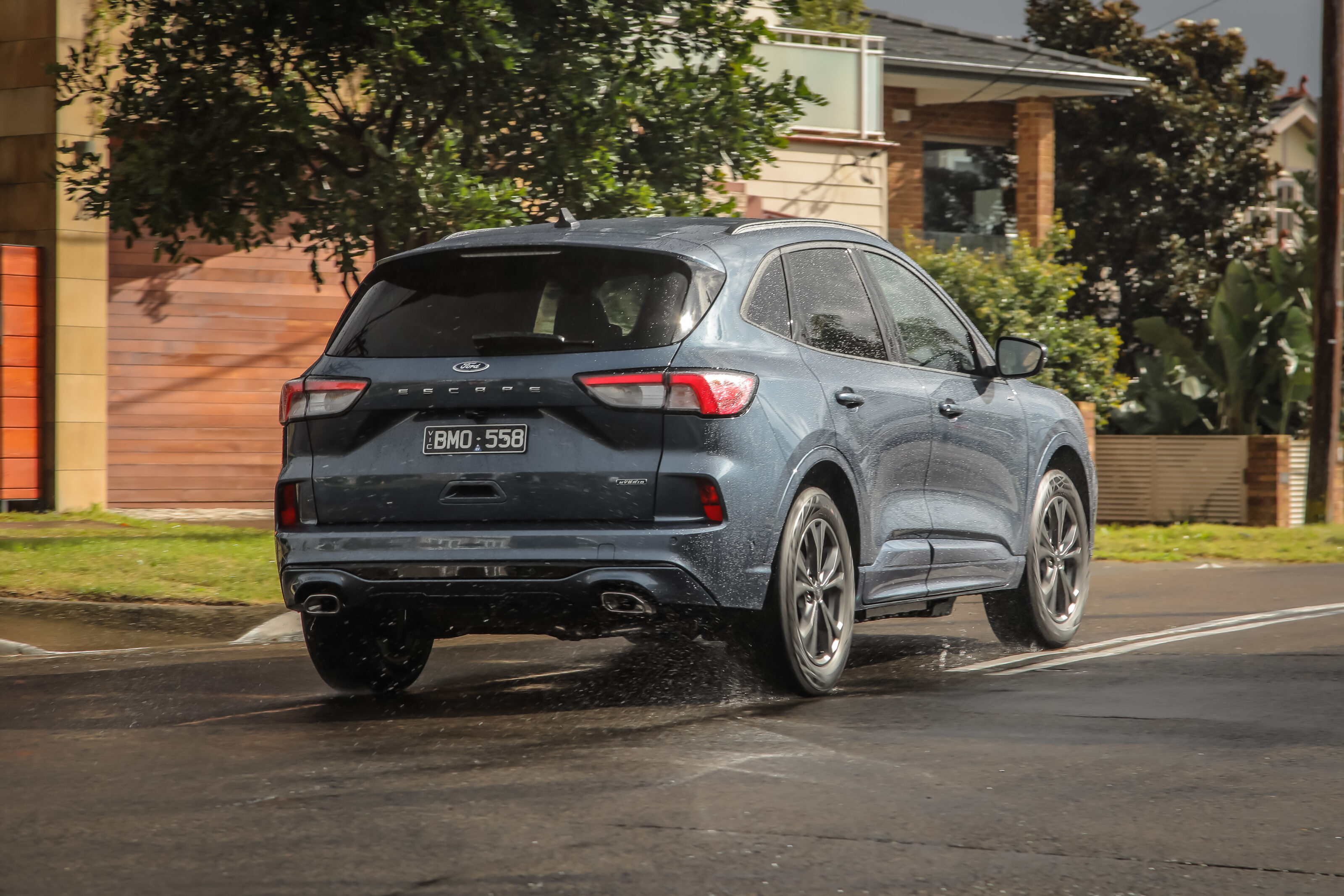
Going for the PHEV brings a couple of advantages over regular Escapes; throttle response is smoother, where the petrol Escape’s accelerator pedal is overly sensitive. And when comparing the two front-wheel-drive models, the PHEV variant is less prone to overwhelming its front wheels – manifested by either torque steer or wheelspin.
However, expect the traction control to cut power if trying to accelerate quickly in the wet.
The Escape PHEV employs an automatic e-CVT (continuously variable transmission) and isn’t as responsive as a fully electric SUV of a similar size. Even when the petrol engine joins the action for maximum performance, the Ford is brisk rather than rapid.
Ford of Europe states the PHEV, which has a combined power output of 167kW, achieves the 0-100km/h run in 9.2 seconds.
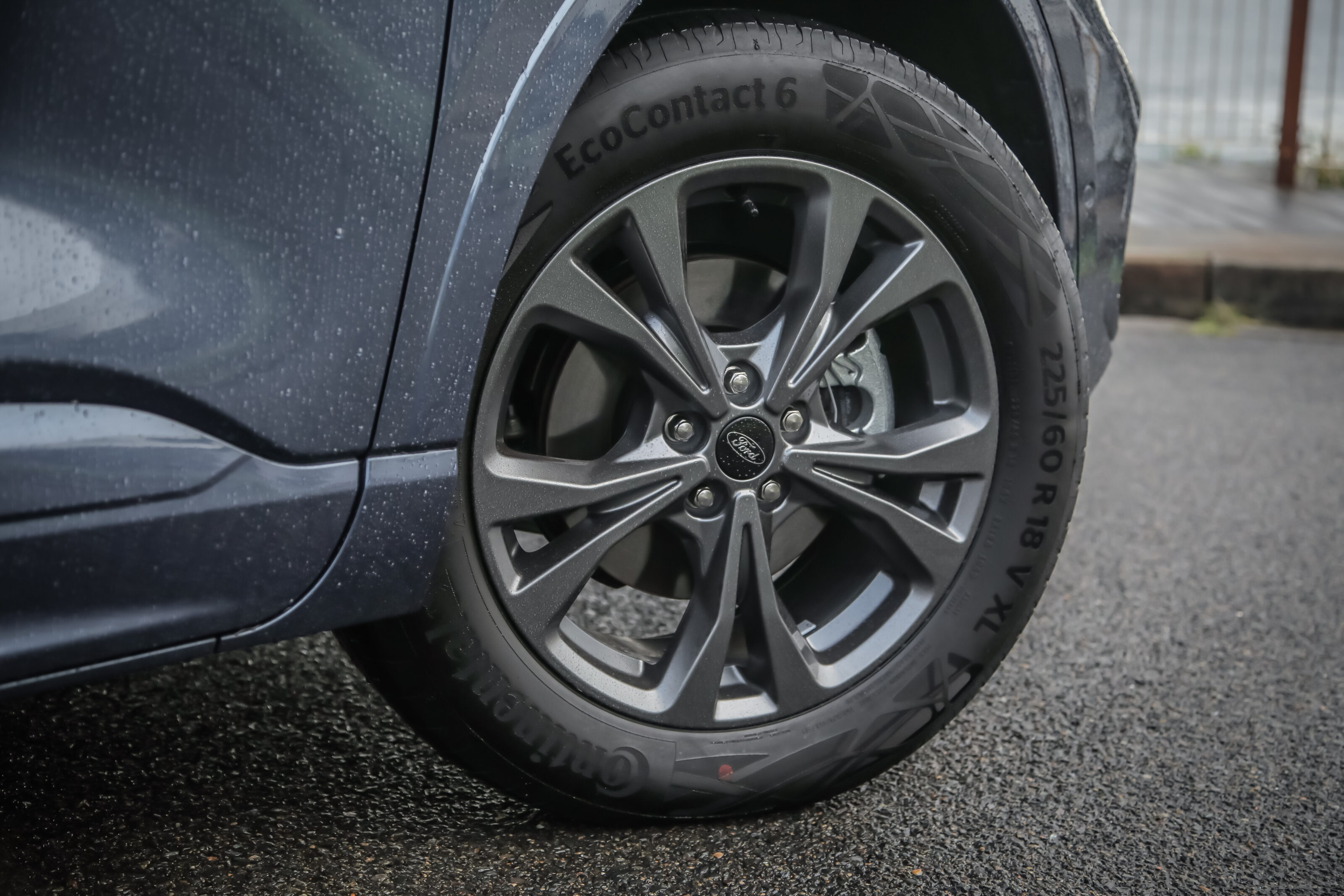
While a figure for the 2.0-litre 183kW/387Nm petrol Escape is unavailable, we’d wager the non-electrified version is significantly quicker. It certainly feels that way from behind the wheel (the petrol Escape is one of the quickest models in its segment).
The direct steering seems more settled around the straight-ahead compared with the turbo Escape, though the PHEV also has issues in the areas of ride and braking.
There’s a generally tense feeling to the Escape’s ‘sports-tuned’ suspension, though it’s the SUV’s tendency to jar over sharper or bigger suburban bumps that can often make the drive uncomfortable.
A rear suspension that made a surprising switch last year from a segment-standard multi-link arrangement to a cheaper torsion beam set-up (for front-drive Escapes only) is particularly culpable. The suspension isn’t helped by a need to support an extra 222kg of electrification componentry in the case of the PHEV Escape.
The mediocre ride quality is a shame, as the Escape otherwise lives up to Ford’s reputation for fine-handling vehicles.
Its brakes are also very grabby – becoming more linear beyond the initial press of the pedal – and the Ford lurches to a standstill with a slightly unedifying creak.
The ST-Line seats offer more comfort than the Escape’s suspension and a combination of direct steering and a tight turning circle make Ford’s mid-sized SUV easy to manoeuvre.
Two key points to note for buyers towing or off-road excursions: the PHEV variant has a lower ground clearance than other Escapes and its braked towing capacity is reduced by a third – 1200kg versus 1800kg.
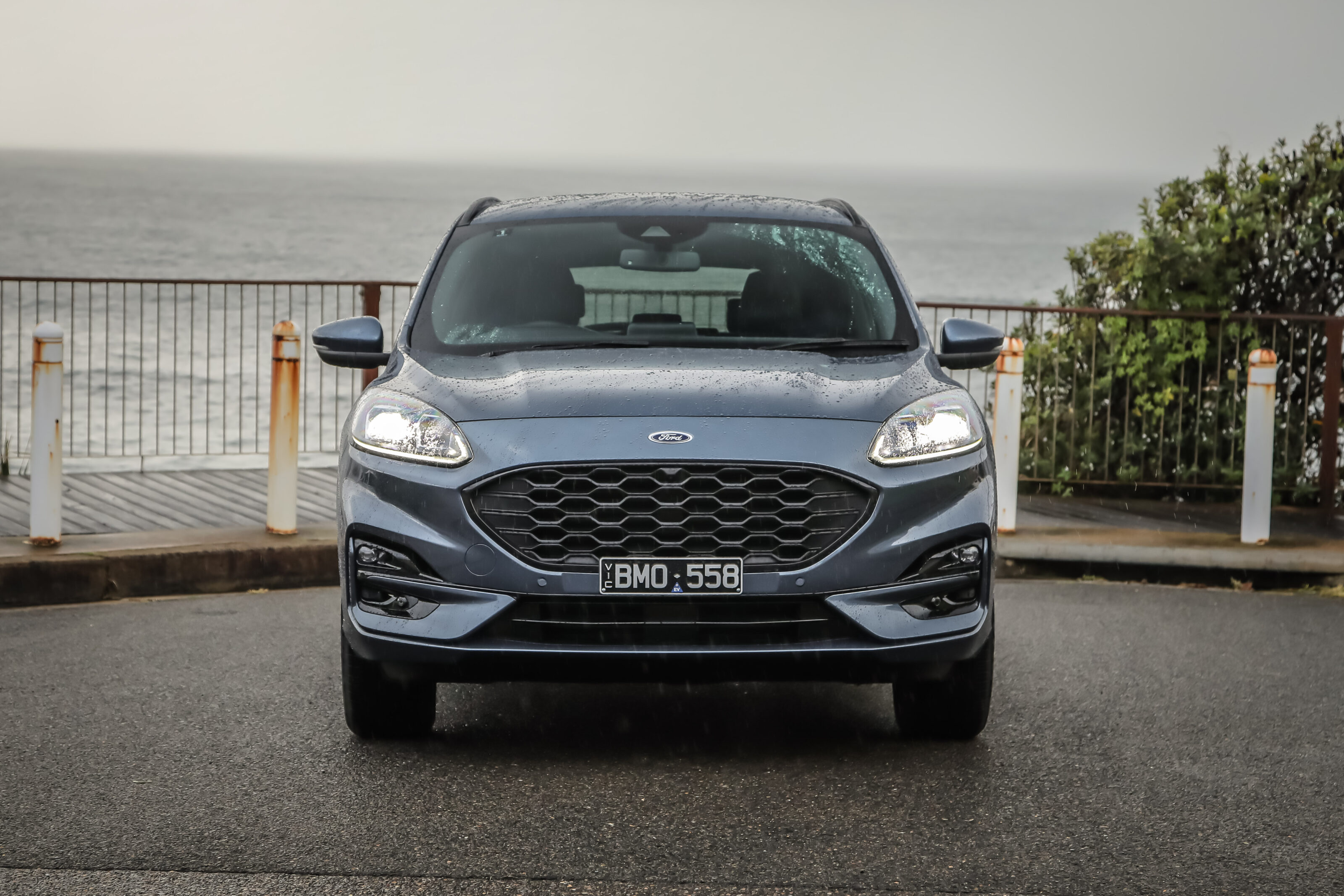
Ownership
Capped-price servicing for the Escape PHEV varies between $315 and $620 annually (or every 15,000km). It’s $1010 over three years or a total of $1945 over five years – all reasonable pricing.
Ford also offers a loan car service while the Escape is booked in for maintenance, and roadside assistance is complimentary for up to seven years provided owners stick to the annual schedule.
Ford Australia backs the Escape with a five-year warranty.
VERDICT
Plug-in hybrids remain a tempting option for buyers looking to achieve lower fuel bills than a regular hybrid and a longer range than a fully electric vehicle can currently provide.
Recouping the Escape PHEV’s high cost of entry will take plenty of time, though – more than 10 years, in fact, based on 10,000km annual mileage and the respective fuel consumption figures of the plug-in and turbo variants.
The PHEV brings a few extra features and some improved driveability over the turbo petrol ST-Line Escape, though braking and ride comfort remain disappointing aspects.
It’s worth checking out the much cheaper and more powerful MG HS Plus EV, or wait to see how Mitsubishi’s upcoming second-generation Outlander PHEV stacks up.
Or, for those willing to forgo the plug-in option (and wait some months for delivery), the flagship RAV4 Edge Hybrid is a strong all-rounder.
2022 Ford Escape ST-Line PHEV specifications
Snapshot
- Off-road hybrid Juke pays tribute to iconic Japanese racer
- Nissan’s 240Z raced in the East African Rally 50 years ago
- Front-wheel drive only but who cares?!
Nissan has done it – it’s made the Juke Hybrid Rally Tribute a reality.
First teased as a digital concept in the middle of 2021, the Japanese manufacturer decided to go all-in and promote its upcoming Juke hybrid by harking back to the 240Z, which took part in the East African Rally half a century ago.
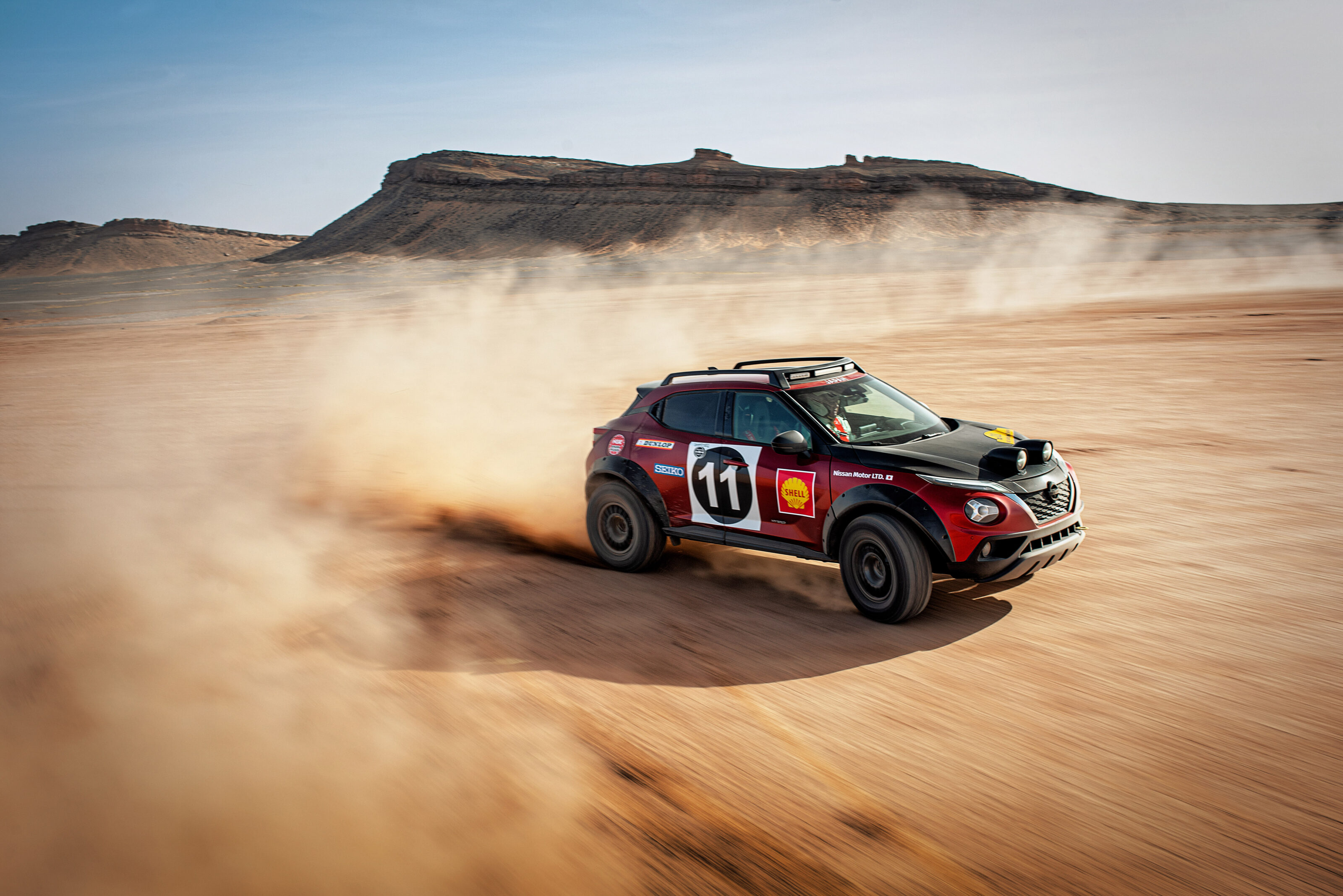
While Nissan could have used the new Z coupe as the base of its project, the naturally high-riding Juke is probably a better candidate, as its 69kW/148Nm petrol engine combines with a 36kW/205Nm electric motor to deliver 25 per cent more power than the current petrol-only Juke.
Just like a typical racecar, the Juke’s gearbox uses dog clutches rather than synchros to feed through its four gears for the combustion engine and two for the electric motor.
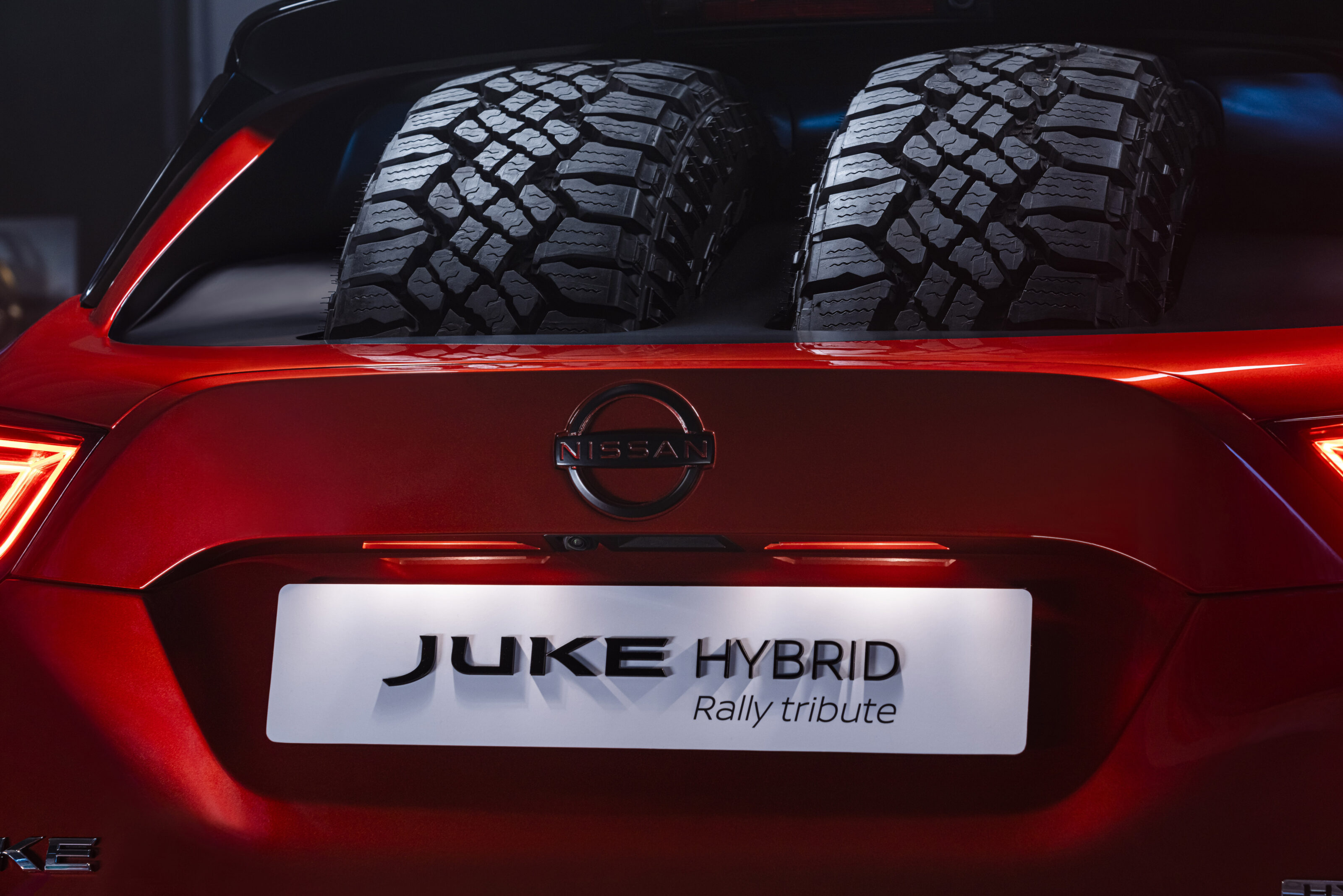
Visually, there are a number of non-standard parts on this crossover to make it look like it could take on whatever the desert throws at it – from reinforced, long-travel suspension to chunky 265/70R16 tyres and underbody protection.
Painted in red, the black bonnet and wheels pay tribute to the 1971 Africa-spec 240Z, as do the vintage sponsor logos and numbering – although safety has come a long with the removal of rear seats, the addition of four-point harnesses and a competition-grade interior with a hydraulic handbrake.
Unfortunately there’s no chance of the Juke going into production like this, and Nissan Australia has already ruled out the new hybrid variant for local buyers.
