
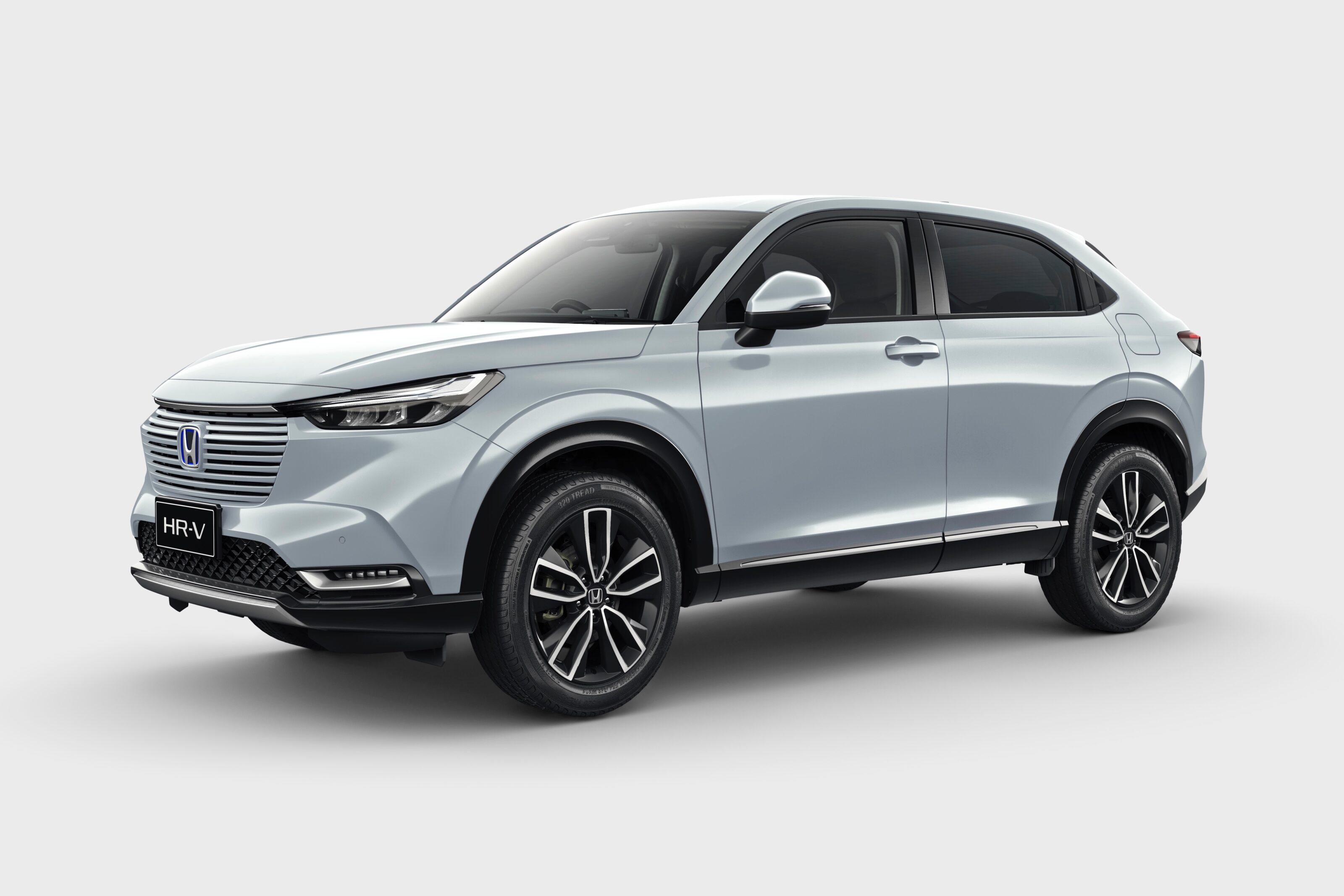
The 2022 Honda HR-V e:HEV L adds hybrid technology to the Japanese manufacturer’s small SUV range as part of an important, and compelling, all-new generation model update.
Honda’s HR-V is just one of two SUVs in the brand’s line-up at this point (though that should change in the near future), meaning it has to do plenty of heavy lifting in terms of sales. When faced with refined and impressive competition such as the Mazda MX-30, Kia Seltos and Toyota C-HR, that’s no small task.
From our first impressions of the new HR-V, Honda is able to stand tall against those well-liked and popular rivals with a product that provides practical solutions to consumers along with a genuine step up in fit and finish compared to the outgoing model.
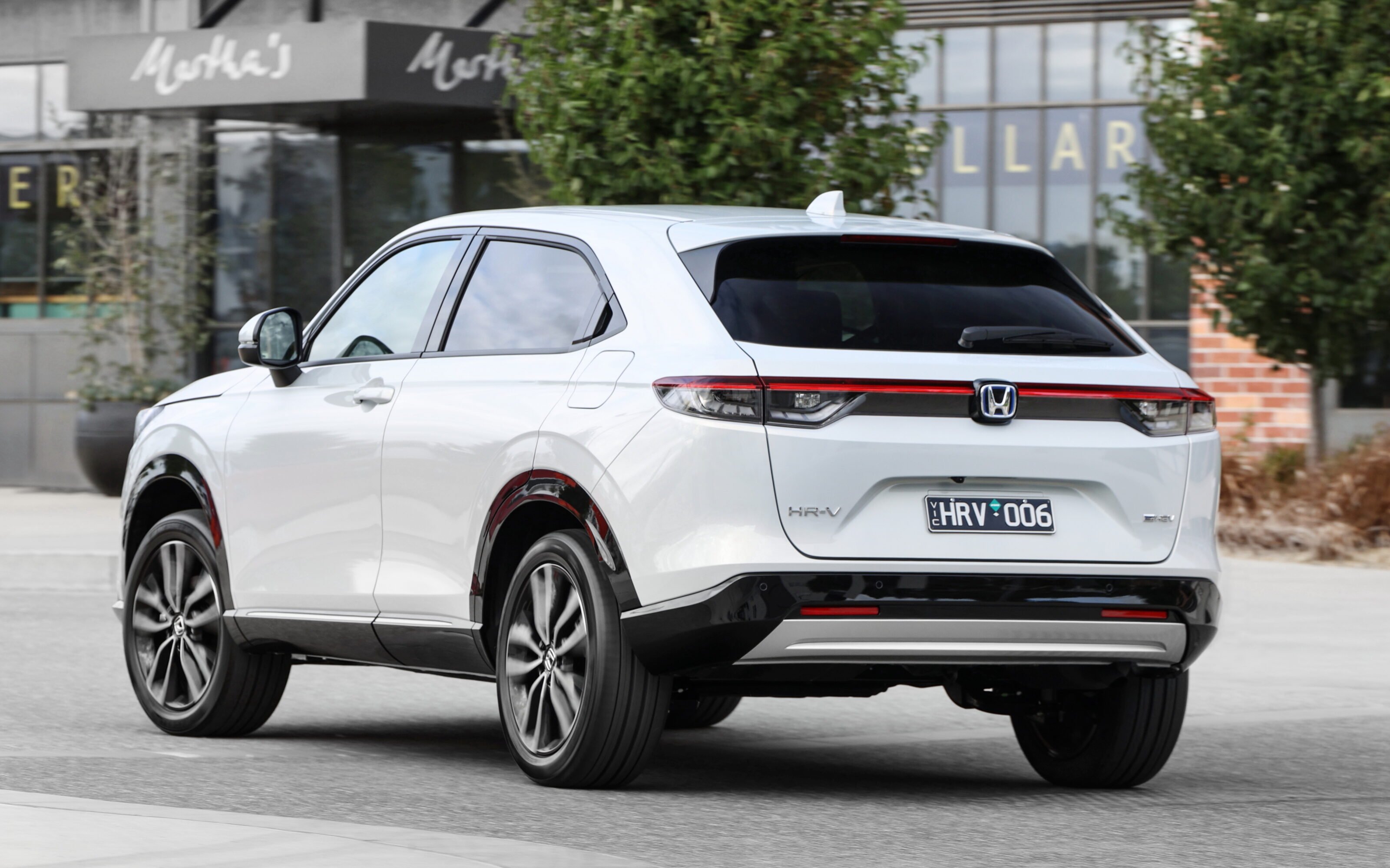
Making up the new HR-V range are just two variants. The non-hybrid Vi X with its $36,700 drive-away pricing, and the e:HEV L for $45,000. It’s the latter – with its jumbled badging and hybrid powertrain – that we have driven.
Previously the HR-V had a four-model line-up, starting with the base VTi model grade with a $31,300 price tag, walking all the way to the range-topping $41,000 drive-away VTI-LX. This means both the price of entry and ultimate flagship cost have risen.
All of the previous-generation cars utilised a 1.8-litre naturally aspirated four-cylinder engine producing 105kW and 172Nm, which we were quite fond of. Both new variants utilise a 1.5-litre naturally aspirated four-cylinder at the core of their powertrains.
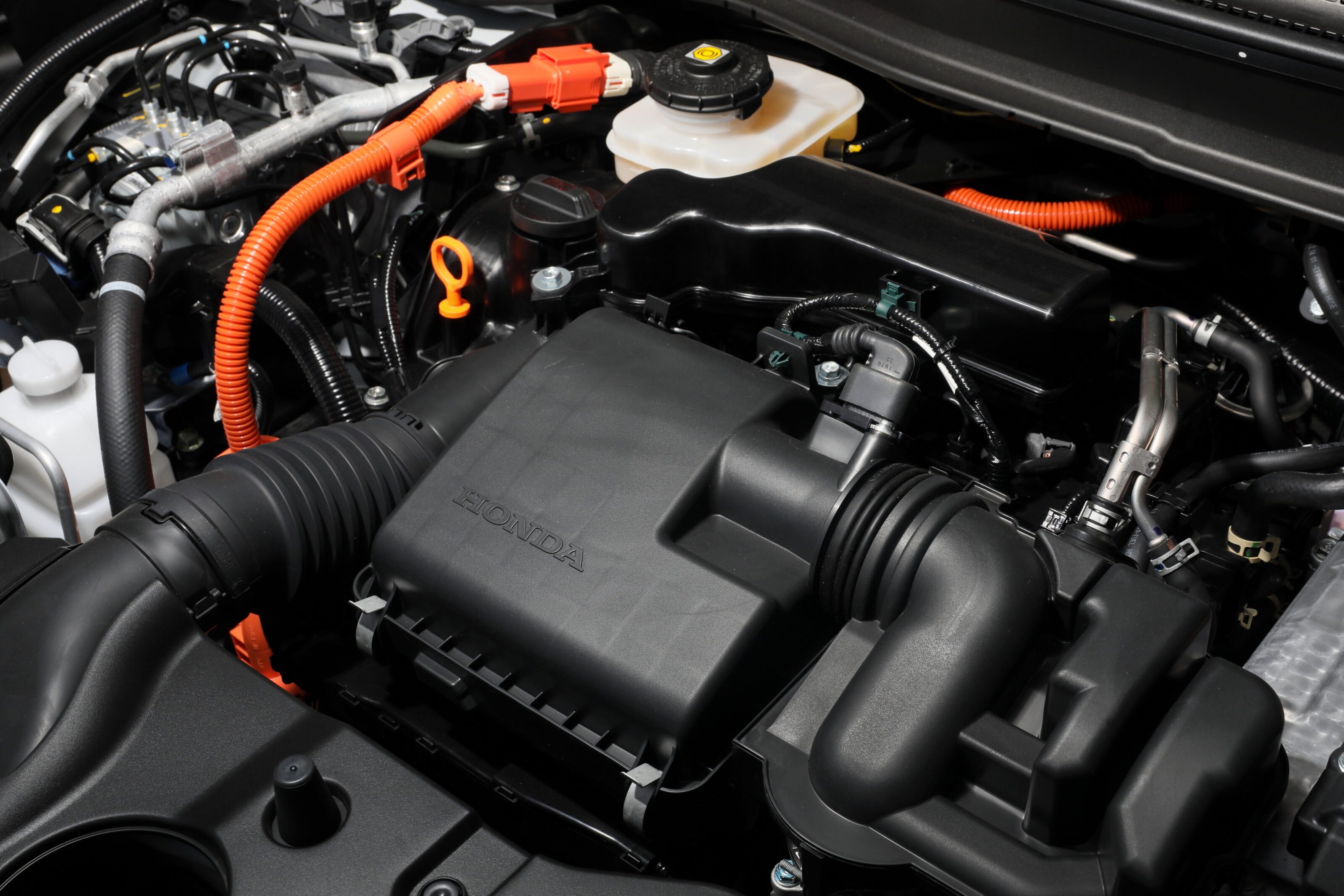
In the Vi X, it produces 89kW and 145Nm, while the addition of a 1.1kWh lithium-ion battery and electric motor allows the e:HEV L to claim a total system output of 96kW and 253Nm.
What does this mean day-to-day? Well, this isn’t a plug-in hybrid, which means you won’t be charging its battery from a wall socket or roadside charger. Instead, the lithium-ion battery gains charge via either regenerative braking or by the combustion engine, which acts as a power generator at low speeds.
This can sometimes result in a slightly odd driving experience where the combustion engine holds its revs at a steady state to produce energy for the battery, while the electric motor shifts you along by itself. It’s different to the norm but easy to acclimatise to.
Other than the noise of the combustion engine, it’s a clever way to keep the hybrid battery topped up so that it remains helpful in minimising fuel use.
While we were previously endeared to the gutsy-for-its-class engine, the outgoing HR-V was an overall loud and firm drive. Honda has ultimately reversed these criticisms for its newest generation small SUV.
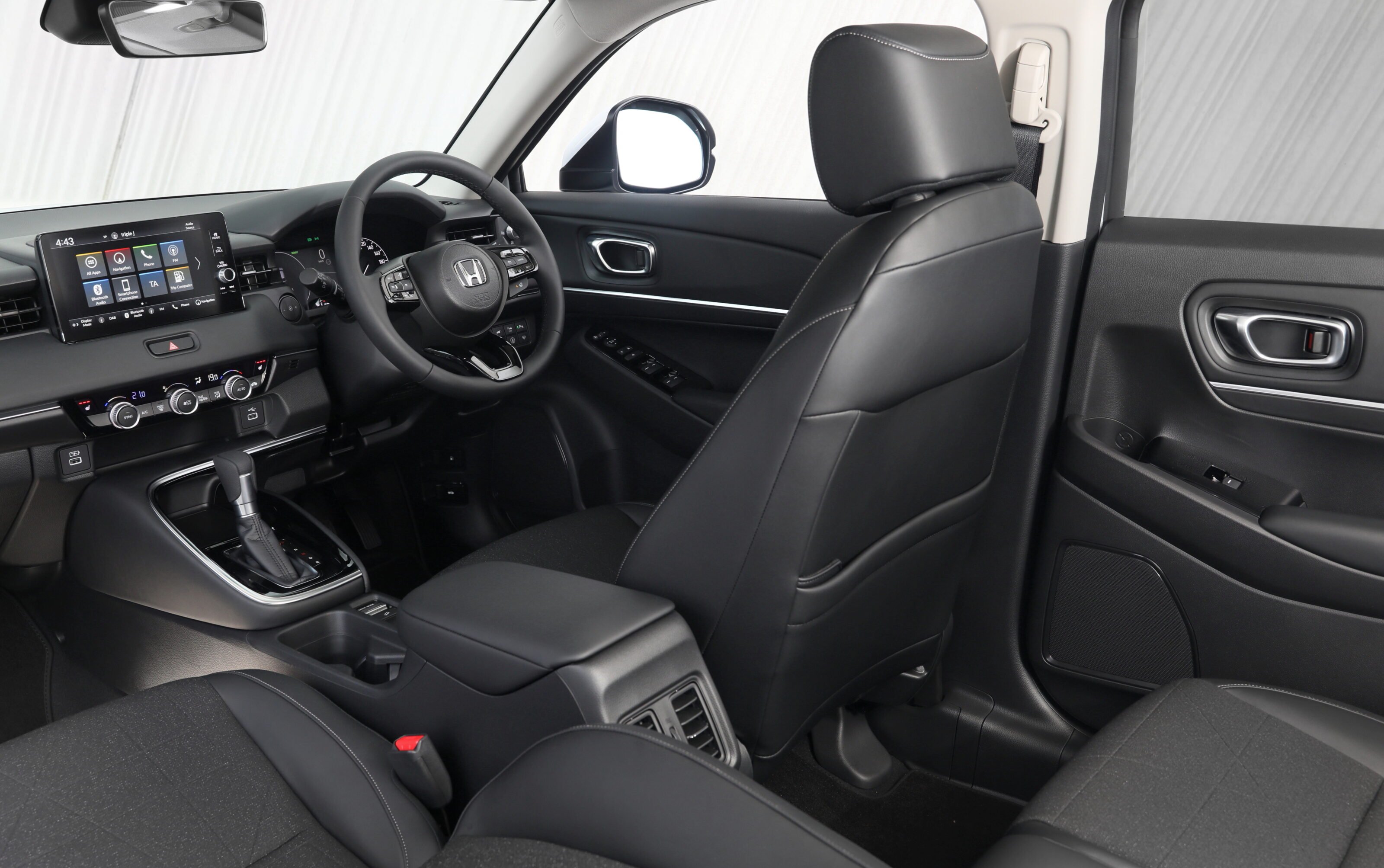
The driving experience itself is as unremarkable as it comes, but the HR-V presents a cabin that you’d happily soak in for hours. The interior treatment feels remarkably upmarket for the price. Generous servings of leather abound, while the switchgear has a reassuringly slick movement.
Yes, prices have inflated, but so has the quality of the product. Honda has clearly been peering at Mazda’s homework of late. And we mean that as a compliment.
It’s not just material choices that speak to this either, with the standard equipment list being incredibly generous. Head-up display, heated steering wheel and front seats, adaptive cruise control, Apple CarPlay and Android Auto, lane-keep assist, traffic sign recognition, hill descent control, sat-nav with over-the-air map and system updates, and a six-speaker sound system.
You’ll spend most of your time in the HR-V controlling features through the central 9.0-inch infotainment touchscreen. During our loan, the system was easy to navigate and responsive to touch – which isn’t always the case at this price point.
As it is so often said, beauty is in the eye of the beholder. But in this case, we can’t help but argue that Honda has penned a handsome, striking design that stands up as an alluring visual offering. Our only notes would be a soft tut-tut to the swooping coupe-esque fastback cut to the roofline behind the C-pillar.
With such a strong shoulder line and an interior design so heavily biased toward practicality, this shave of rear boot space runs at odds to the HR-V’s overt capabilities.

Official boot capacity is 304 litres with the rear seats in place, 956 litres with the rear seats folded and luggage loaded to the windows, and a total of 1274 litres of available space when loading to the roofline with the rear seats stowed.
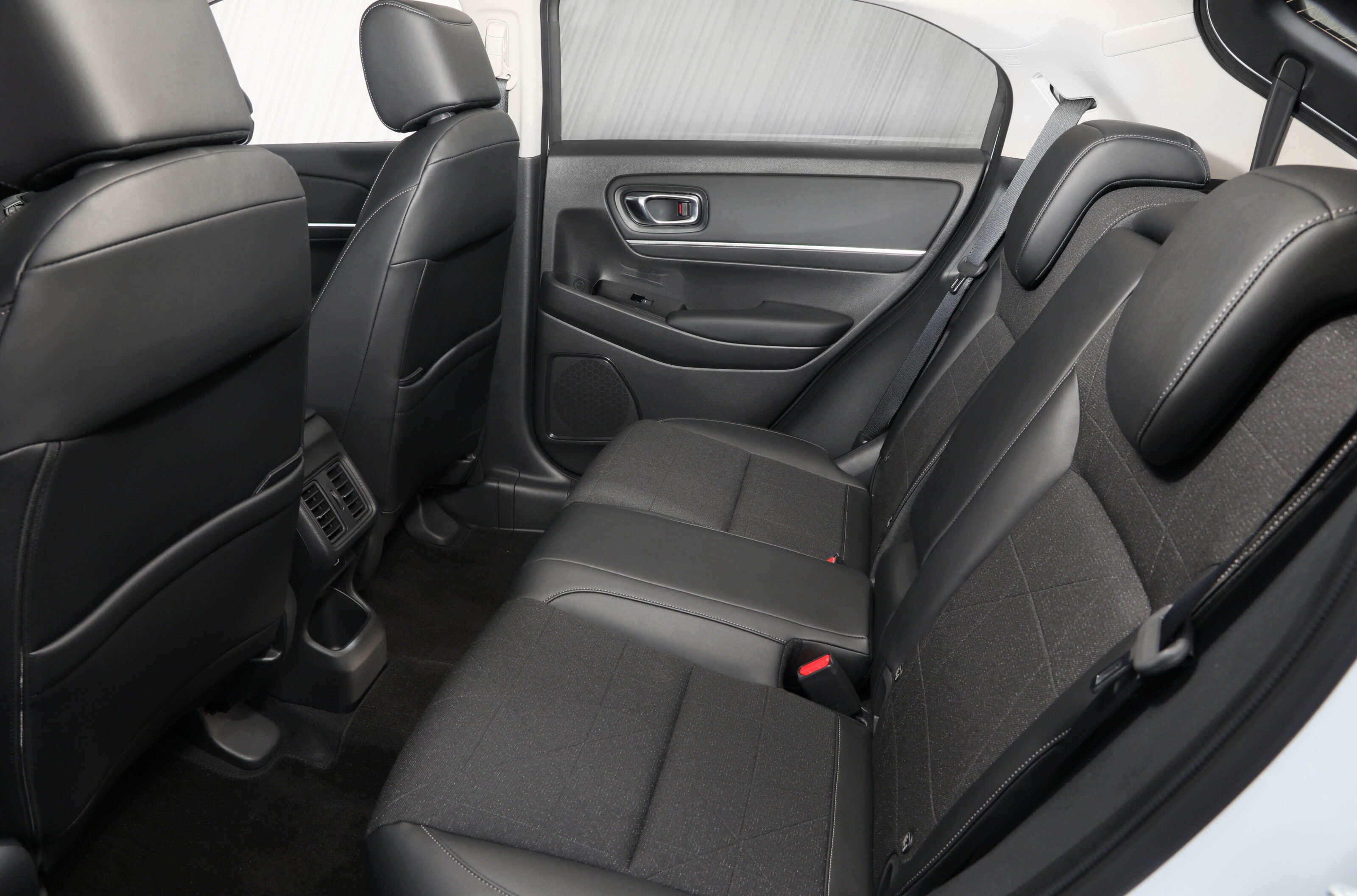
That simple reading of capacity somewhat undersells the HR-V’s party trick, which many will know as ‘Magic Seats’.
Interior storage solutions in the Honda small SUV are as ample as they are simple to execute. Tug here, pull there, and the entire interior of the HR-V can be rearranged to suit your abundant needs. There are plenty of smart cubbies and storage solutions hidden throughout the cabin.
You won’t be going anywhere too quickly off the line in the HR-V. Even compared to rivals, the Honda feels lethargic on step-off. It’s not a major dealbreaker but feeds into our major criticism of this car, which is the sometimes-uncouth way the combustion engine flares when you request some semblance of urgency from the HR-V in terms of forward motion.

The ride is well-judged. Not a magic carpet, but it does an impressive job of smoothing out the harder edges of Australia’s often patchy road conditions. Vertical movement is well controlled, and there is little fore, aft, or lateral pitching during urban driving.
Impressive outward visibility in the HR-V is in part due to raising the driving position by 10mm between generations and moving the mirrors from the A-pillar to the door itself. A large glasshouse aids no end and even with the swooping boot, rearward vision isn’t hampered heavily.
2022 Honda HR-V: VERDICT
Honda should be proud of the way it has updated the HR-V and consumers in the market for a small SUV should put this handsome contender on their shortlist.
If you can live with the quirks of how its electric and combustion componentry interact and want a premium-feeling product that doesn’t scrimp on the interior storage solutions, the HR-V could be the ticket you are looking for.
2022 Honda HR-V e:HEV L specifications
| Body | 5-door, 5-seat small SUV |
|---|---|
| Drive | front-wheel |
| Engine | 1498cc 4cyl, dohc, 16V + hybrid |
| Compression | 13.5:1 |
| Power | 96kW @ 4000-8000rpm |
| Torque | 253Nm @ 0-3500rpm |
| Transmission | Electric continuously variable automatic |
| Weight | 1382kg |
| Fuel consumption | 4.3L/100km |
| Front suspension | MacPherson strut, coil springs, anti-roll bar |
| Rear suspension | Torsion beam, coil springs, anti-roll bar |
| L/W/H | 4335/1790/1590mm |
| Wheelbase | 1535mm |
| Brakes | ventilated discs (front), solids discs (rear) |
| Wheels | 18-inch alloy |
| Tyres | 225/50R18 Michelin Primacy 4 |
| Price | $45,000 drive away |
Snapshot
- 2022 Honda HR-V pricing and specifications announced
- Two variants available, including a hybrid model
- Priced from $36,700 drive-away
UPDATE, May 12: 2022 Honda HR-V launches in Australia
The 2022 Honda HR-V has arrived in Australia, and with it comes the introduction of a new hybrid powertrain.
Note: This article has been updated following the vehicle’s local launch this week.
Following in the footsteps of the recently-launched Civic, the all-new HR-V range has been stripped back to just two variants – a petrol-only Vi X grade, and the petrol-electric hybrid e:HEV L grade – as Honda looks to reposition its line-up with more premium offerings.
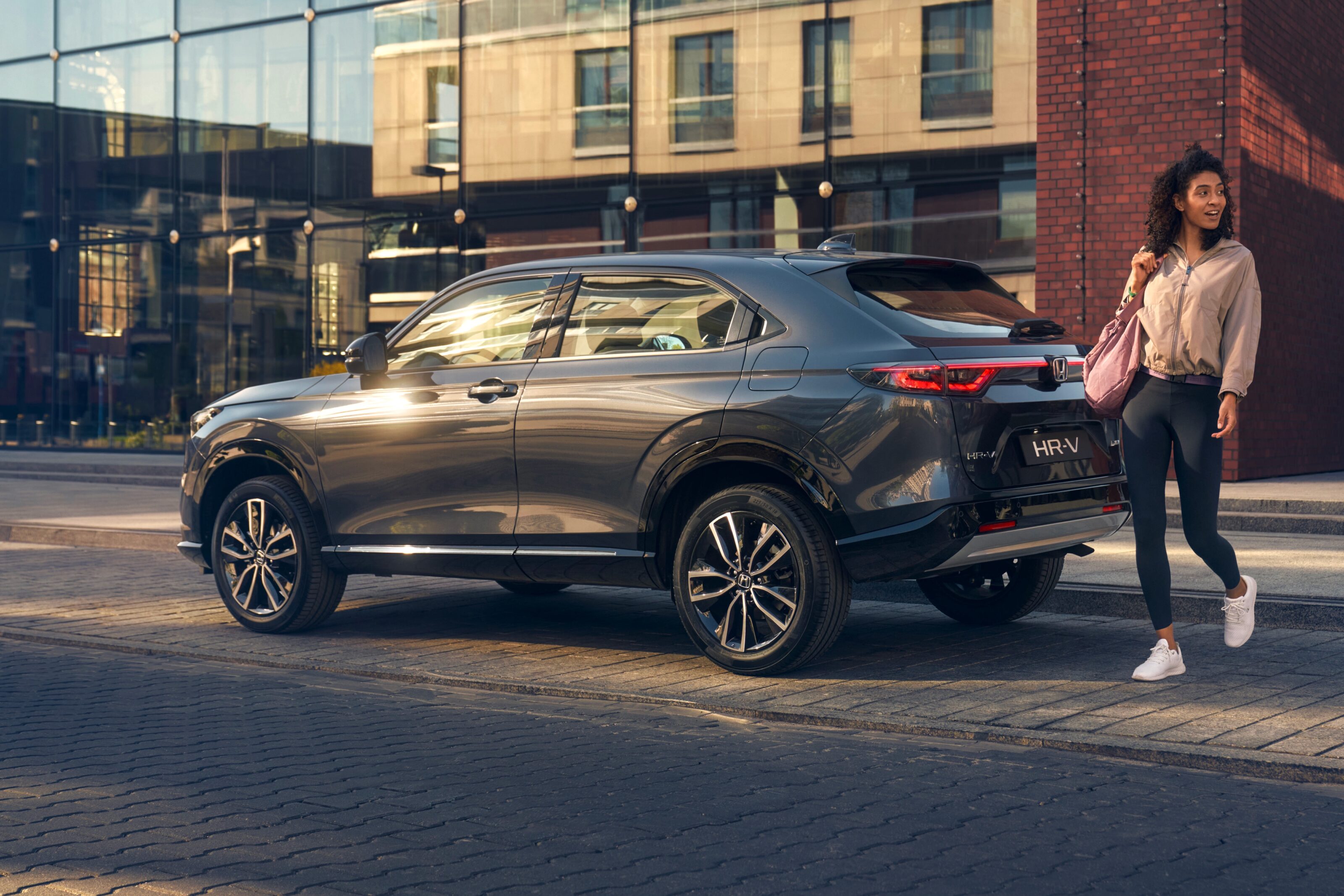
While the cost of entry into an HR-V is $5400 more than it was previously, at $36,700 drive-away, the equivalent HR-V Vi X lies somewhere between the defunct VTi-S and RS grades, with its pricing positioned to reflect the change.
Both variants receive LED headlights, a 9.0-inch infotainment touchscreen with satellite navigation, wireless Apple CarPlay, wired Android Auto, keyless entry and start, radar cruise control, autonomous emergency braking, lane-keep assist, and 18-inch alloy wheels.
The small SUV has increased in size, but seating capacity has been reduced to just four – a driver and passenger in the front row, and just two occupants for the second row of seats.
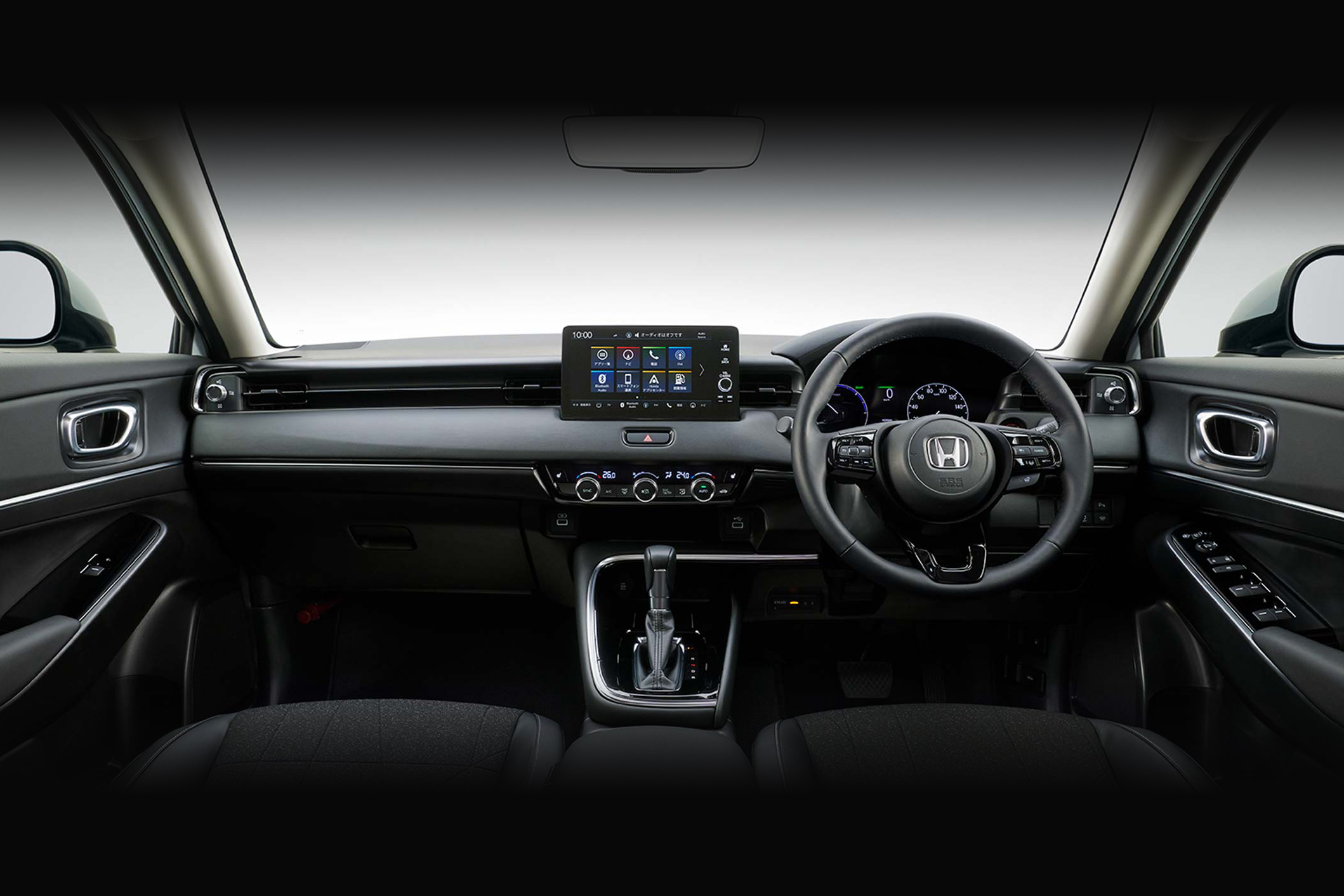
Performance has also seen a reduction in the new HR-V compared with the outgoing model, though fuel economy figures have been improved (see engine and driveline information below).
Buyers have a choice of five exterior colours: platinum white, premium opal silver, crystal black, meteroid grey and premium crystal red.
2022 Honda HR-V Australian pricing
Note: Drive-away pricing listed.
| Model | Price |
|---|---|
| HR-V Vi X | $36,700 |
| HR-V e:HEV L | $45,000 |
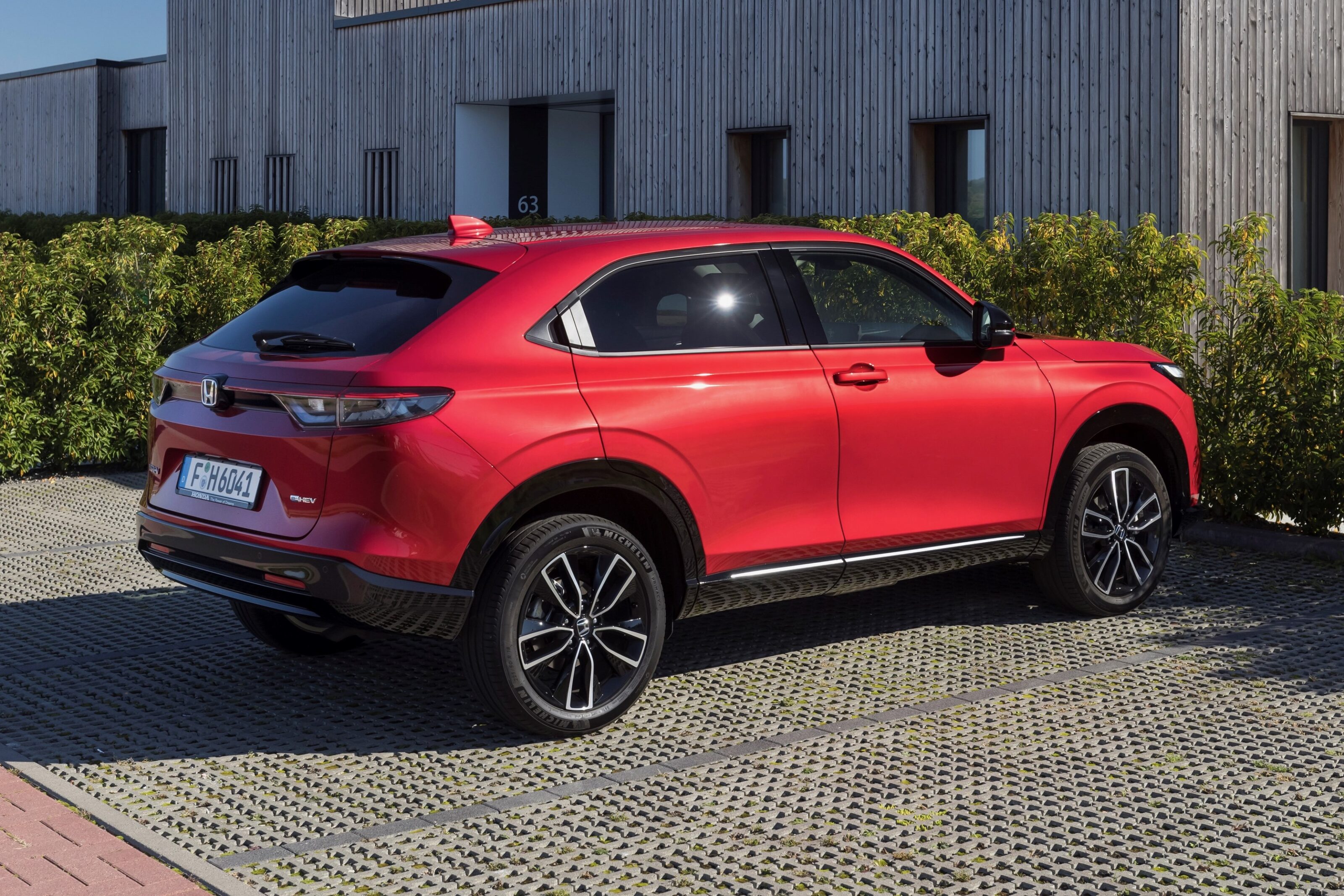
Features
HR-V Vi X
| 1.5-litre non-turbo petrol engine |
| Auto LED headlights |
| Keyless entry and start |
| 9.0-inch infotainment touchscreen |
| Wireless Apple CarPlay and wired Android Auto |
| Satellite navigation |
| Tinted windows |
| 18-inch alloy wheels |
HR-V e:HEV L, in addition to Vi X
| 1.5-litre non-turbo petrol-electric hybrid engine |
| Auto-dimming rear-view mirror |
| Automatic wipers |
| Automaitc power-folding heated door mirrors |
| Heated front seats |
| Heated leather steering wheel |
| Acoustic windscreen |
| Rear air vents and USB ports |
| Hands-free power tailgate with walk-away close |
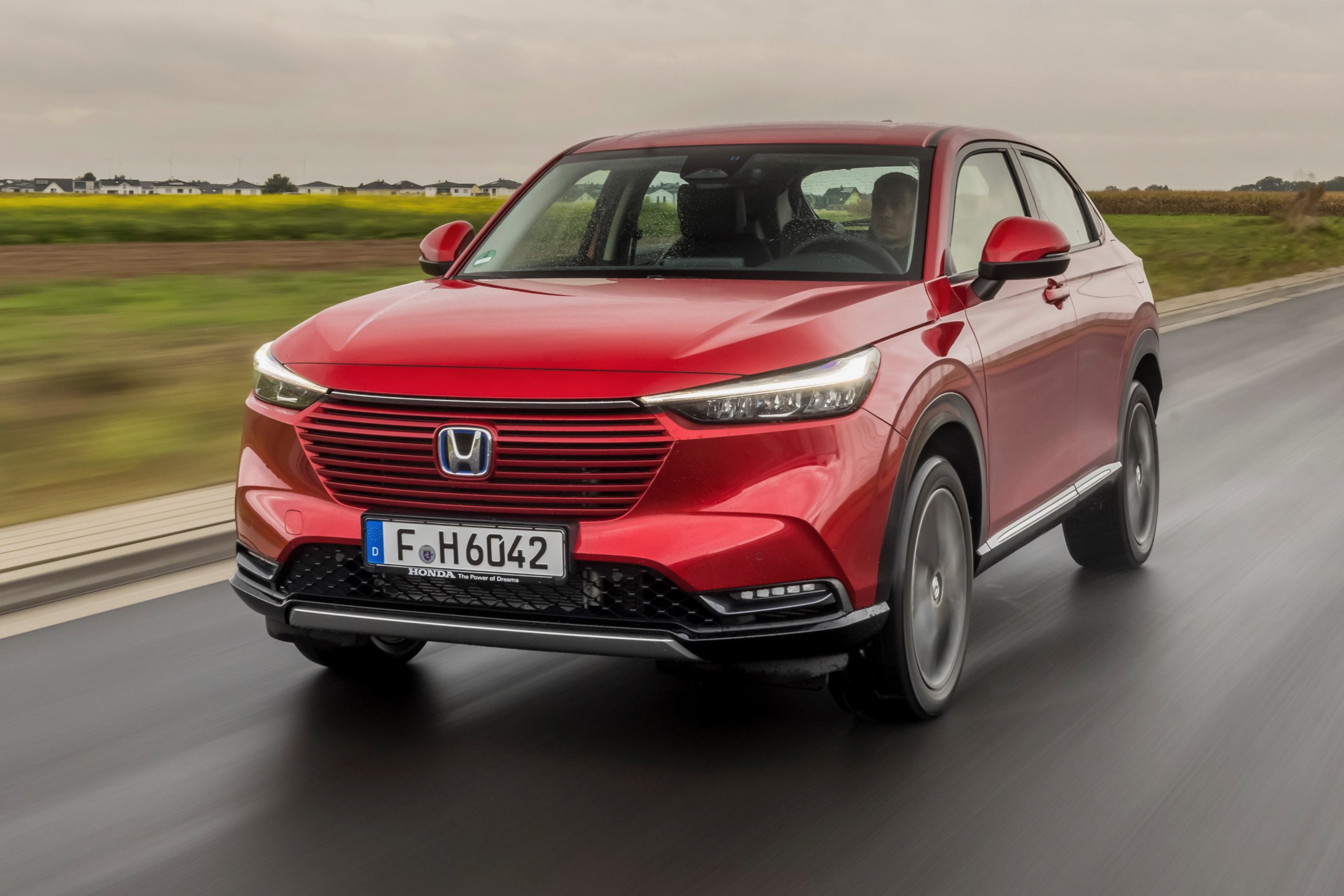
Engine and driveline
A new 1.5-litre, naturally-aspirated, four-cylinder petrol engine is fitted to the 2022 Honda HR-V Vi X, producing 89kW and 145Nm – a power drop of 15 per cent compared with the outgoing 1.8-litre – but with it comes improved fuel economy, down to 5.8L/100km on the combined cycle.
As expected, fuel economy for the HR-V e:HEV L hybrid is even better, using a claimed 4.3L/100km combined, thanks to the 1.5-litre petrol engine gaining two electric motors, for a total power output of 96kW and 253Nm.
Power for both models is sent through a CVT automatic transmission to the front wheels.
Dimensions
The new HR-V has been on a diet, dropping nearly 60 kilograms from its tare weight, which should help improve ride and handling, while also offsetting the new model’s power reduction.
The small Honda SUV is 4335 millimetres long, 1790mm wide, has a height of 1590mm, and a wheelbase of 2610mm.
Safety
HR-V Vi X
| Forward collision warning |
| Autonomous emergency braking |
| Lake-keep assist |
| Lane departure warning |
| Road departure mitigation system |
| Radar cruise control with stop & go |
| Automatic high beams |
| Traffic sign recognition |
| Hill descent control |
HR-V e:HEV L, in addition to Vi X
| Blind-spot monitoring |
| Rear cross-traffic alert |
| Intelligent speed assist |
| Acoustic vehicle alerting system |
Availability
The 2022 Honda HR-V is available to order now.
Jeep’s commitment to reviving the seven-slot grille glory days in Australia appears to be paying dividends, with rebounding sales and recovering customer satisfaction, and the once mighty brand has set its sights on some ambitious targets for the future.
By the end of 2019, Jeep sales were languishing after five years of decline, just over 5500 vehicles sold and 0.5 per cent of the overall market, but the tide appears to have turned with more than 2100 Jeeps finding driveways to the end of April 2022.
Promising trends are, in part, attributed to the ‘COVID-effect’ and the phenomenal demand experienced by almost all brands during the pandemic, but the company says those figures could have been even more positive if it weren’t for the semiconductor shortage that’s severely restricting production throughout the industry.
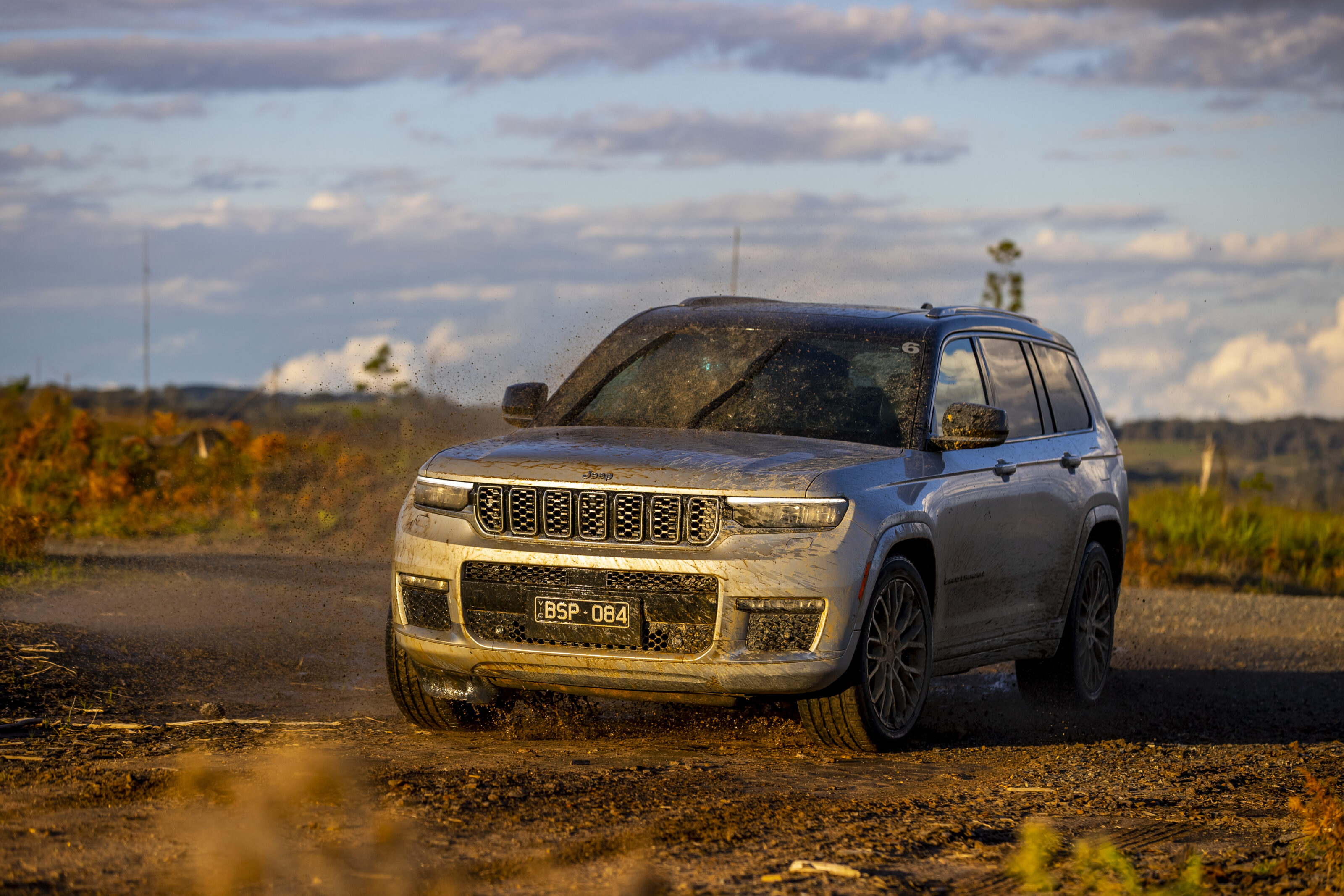
Jeep Australia’s managing director, Kevin Flynn, told WhichCar the numbers are a sign that a progressive three-part strategy it initiated in 2019 is taking effect, but registrations of any brand do not paint the full picture while the industry is in turmoil.
“I would argue they [sales] are more representing boat arrivals and production availability rather than anything else,” he said. “That’s frustrating … but it’s not stopping the orders and we’re still on plan.
“We ended the quarter [Q1 2022] with not one single wholesaleable vehicle in our stock. This month we had an objective we wanted to fulfill and that is completely based on what’s built, shipped and will arrive. It’s not about share – that’s irrelevant at the moment.”
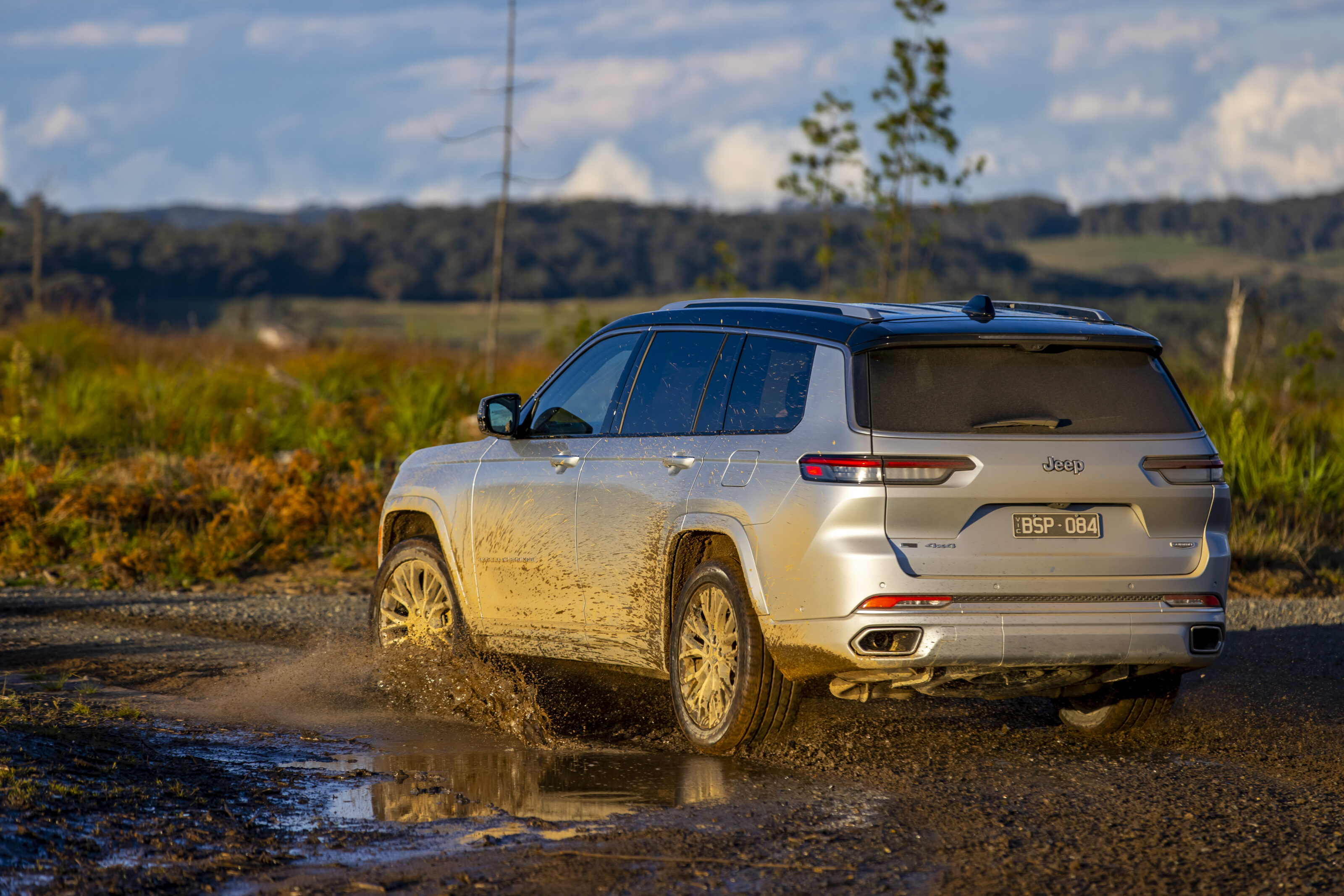
But while the company’s focus is not on market share until there is considerable “easing” of the production constraints – hopefully at the end of the year – Flynn revealed he has grand plans to grow and exceed Jeep’s previous presence in Australia.
“Looking at what’s coming and the plans we’re making, my first step is four [per cent]”.
Flynn would not reveal in what timeframe the goal would be achieved, but if the company can pull it off, Jeep will grow from its current 0.6 per cent share into an operation similar in size to Nissan or Volkswagen.
It’s not without precedent. With an aggressive market integration strategy, previously impotent brand MG has successfully penetrated the Australian market and now enjoys almost 5.0 per cent of overall sales, but while the Chinese brand has succeeded through a range of affordable SUVs, Jeep’s approach is different.
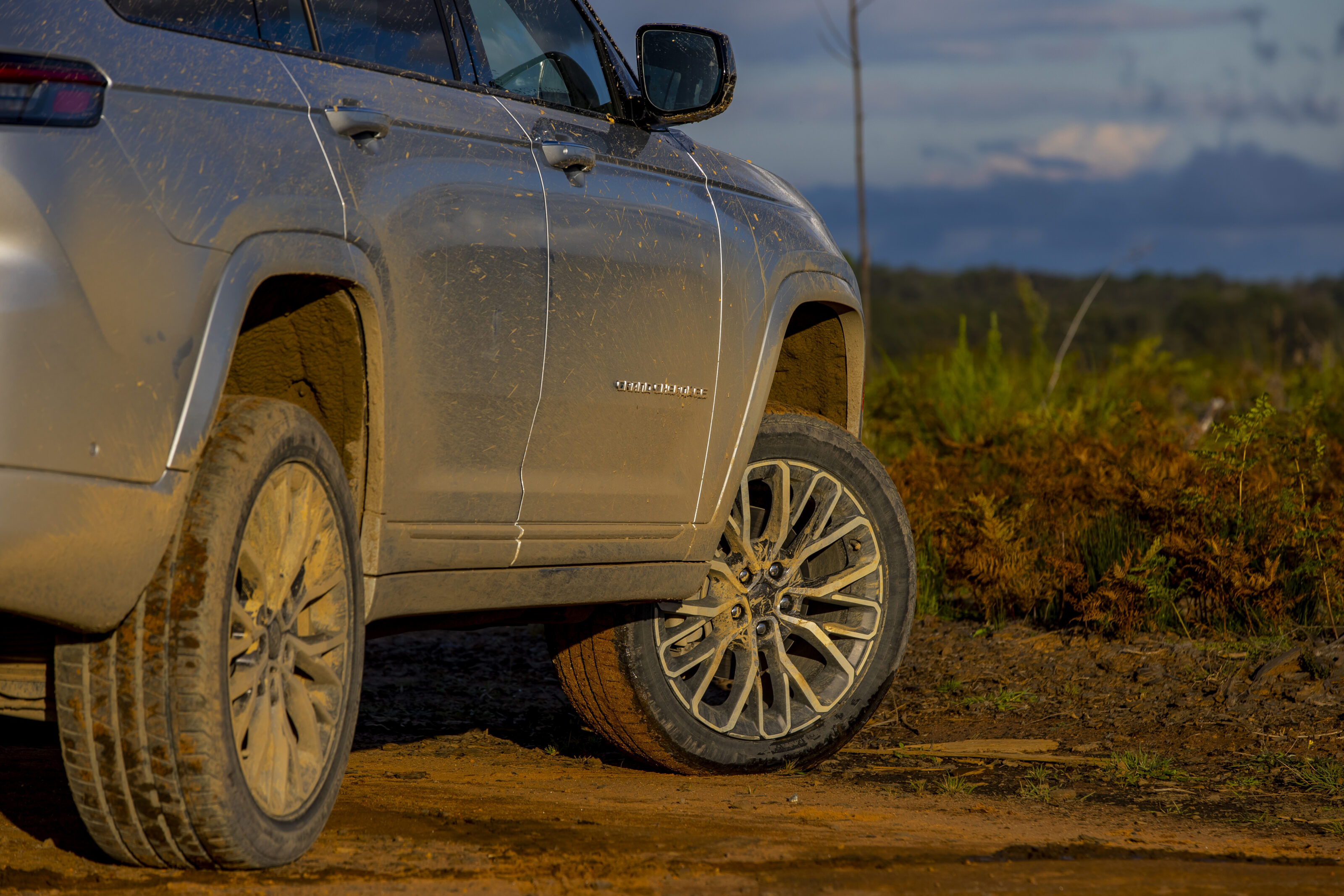
When Flynn took the top job at Jeep nearly three years ago, he immediately set about touring the country and meeting the dealers to establish what was wrong and how to fix it. From that, the team took a “consistent messaging” plan to the global board and the three-part strategy was given the green light for launch in February 2020.
Part-one was ‘apology’, says Flynn, followed by ‘affirmation’ of the company’s intentions in part two. “Now we’re moving into ‘promise’. We’ve got all of those things that we said we would change packaged – and you can rely on it”.
Key to the growth is product, says Flynn, and with the arrival of the Compass in 2018, the new JL Wrangler and its ute cousin Gladiator after that, and now the all-new Grand Cherokee, the transformative product onslaught is well underway, but it’s just the start.
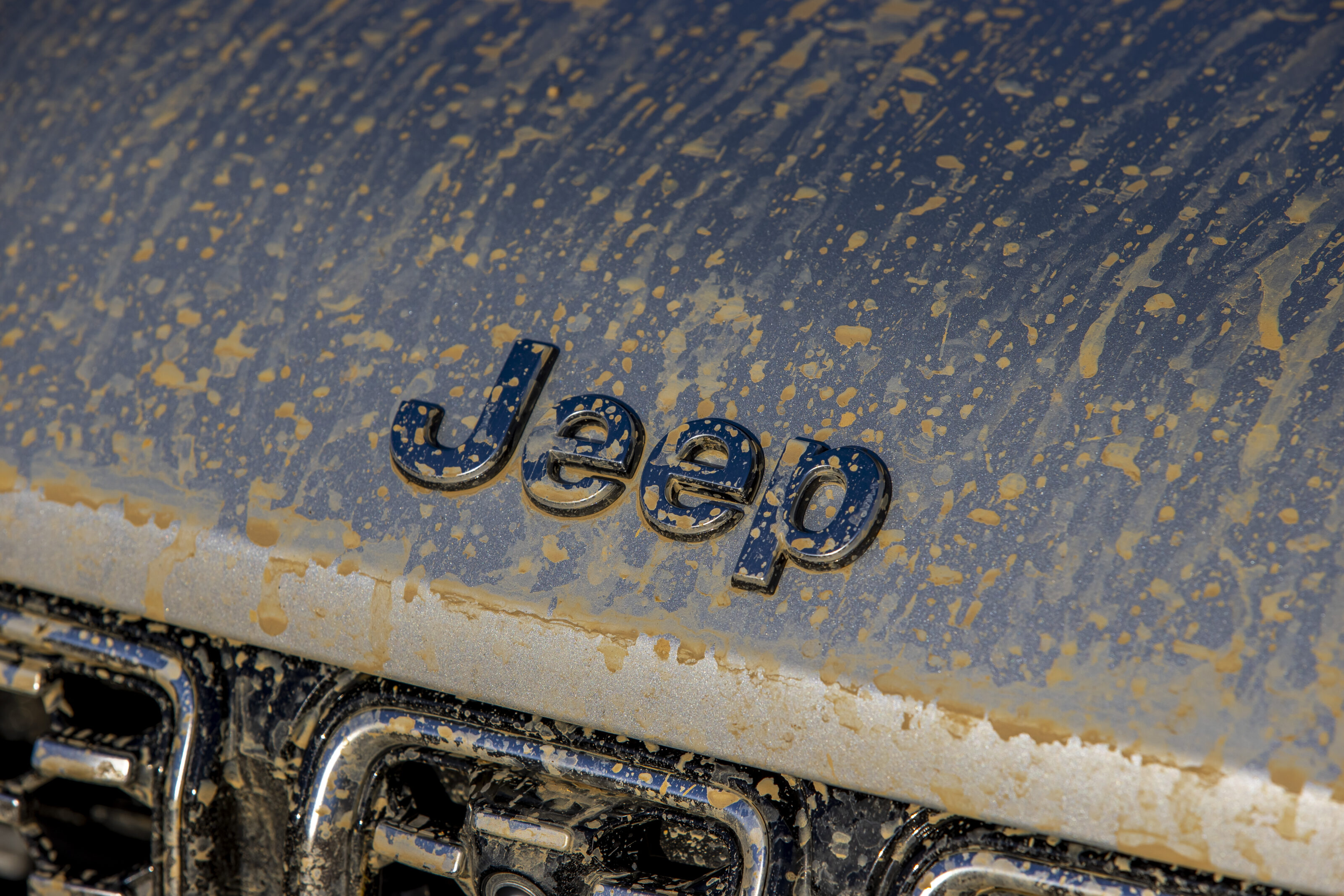
Over the next few years, Jeep will introduce a consistent stream of fresh metal including a plug-in hybrid version of its Grand Cherokee alongside more conventional versions of its models, while continuing to sure-up its dealer network and constantly monitor customer satisfaction with everything from an improved digital experience to mystery shoppers in dealerships.
With a more free-flowing production path on the horizon and the challenges of the pandemic hopefully behind, Flynn is looking forward to demonstrating exactly what the brand is capable of.
“I still feel we’re in a position where next year we can start talking about what do we want to look like and what do we want to be, and how that is going to be delivered”.
Snapshot
- Hyundai IONIQ disappearing from Australia this year
- Local examples of the electrified model started in 2018
- Fully-electric variant remains one of the cheapest EVs on sale
Hyundai’s Australian range of electrified vehicles is set to be reduced, with its IONIQ set to go off sale this year.
Not to be confused with the new IONIQ 5, the IONIQ was first launched locally in 2018 as Hyundai’s first model to ride on a dedicated platform for electrified powertrains – available in conventional hybrid, plug-in hybrid and fully-electric variants.
Hyundai Australia told Wheels the decision to drop the IONIQ from local showrooms was based on the model going out of production globally at the end of its lifecycle, with the local arm of the Korean manufacturer putting in its final order for deliveries in the second half of the year.
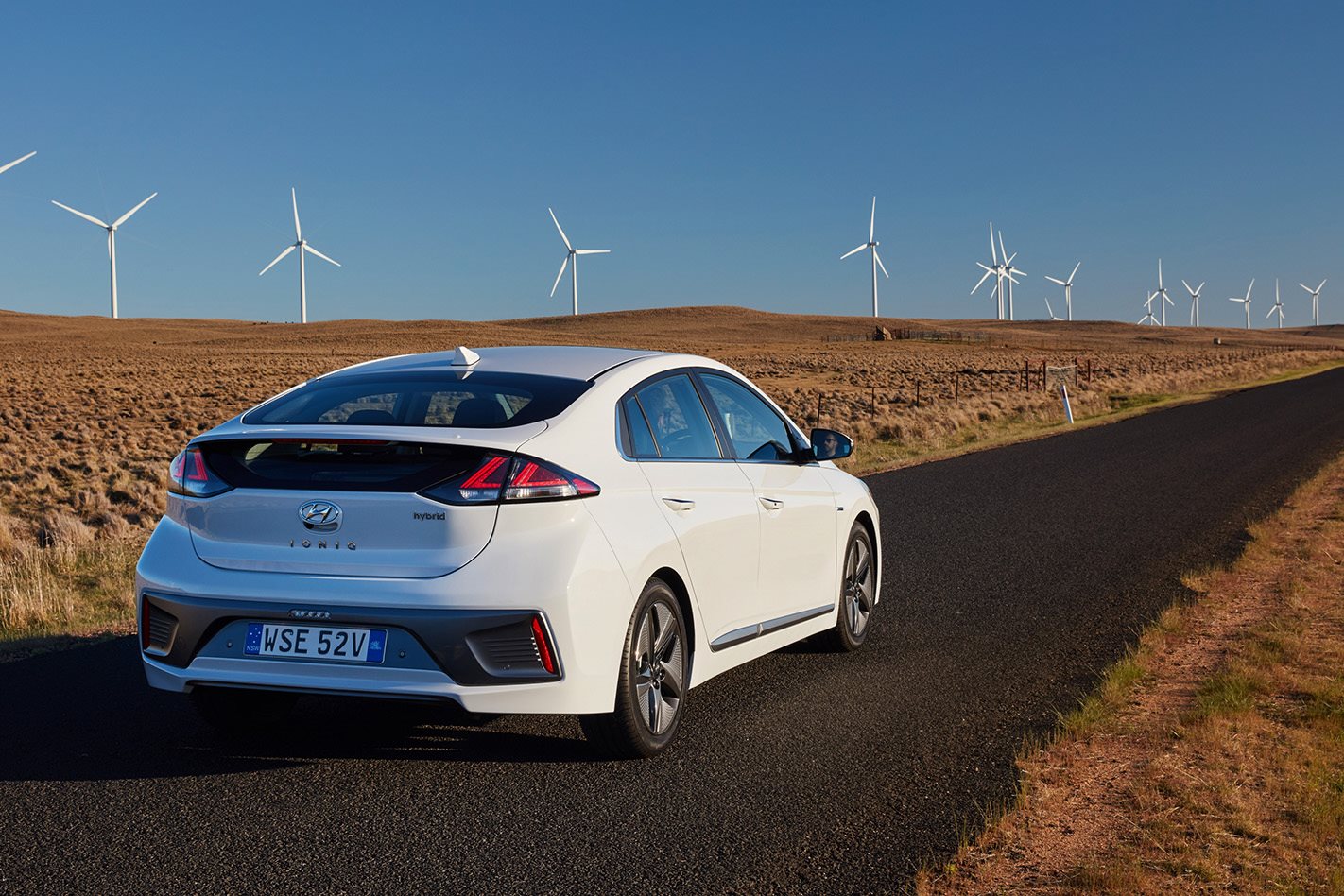
No replacement has been announced for the IONIQ, as Hyundai says it is instead putting its efforts into the IONIQ sub-brand for dedicated electric vehicles – having already spawned the IONIQ 5 and the 6 and 7 set to later join the fold.
Having sold 192 examples of all variants in 2018, the IONIQ recorded its best year of sales in 2019 with 546 units shifted, dropping in the years after to 526 and 484 in 2020 and 2021 respectively.
However, the if it were to continue, the outgoing model would still be on track for its best year yet – as Hyundai has managed to sell 333 cars to the end of April, 196 of which are its IONIQ electric variant, pinning the popularity on incentives for EVs in Australian states and territories.
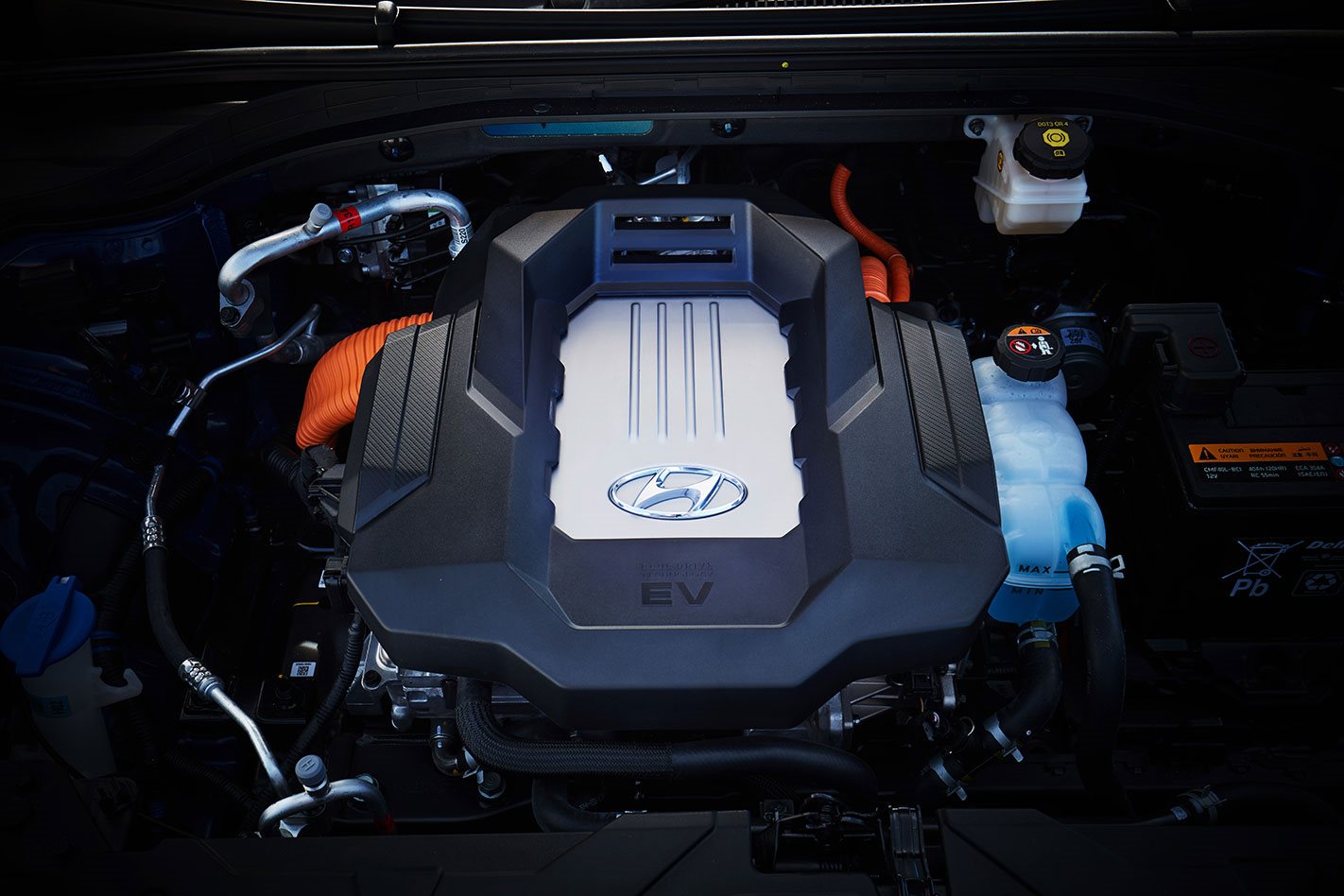
The conventional hybrid IONIQ remains as the model’s cheapest variant at $41,390 before on-road costs, with buyers having to fork out an extra $6590 for the plug-in hybrid, available from $47,950.
Closing out the range, the two fully-electric variants made the IONIQ one of just a handful of EVs in Australia to come in under $60,000, currently remaining on-sale for $49,970 in Elite guise and $54,010 in its Premium grade, both of which are before on-road costs.
While the electric Kona remains as Hyundai’s sole sub-$60k EV offering, the IONIQ 5 is now its only dedicated electric vehicle, starting at a considerably higher price than the outgoing IONIQ – with the single-motor rear-wheel-drive grade opening the account at $71,900, while the dual-motor all-wheel-drive variant is $75,900 before on-road costs.
Hyundai’s all-electric push for the IONIQ sub-brand models is a part of the marque’s drive to become carbon neutral by 2045, with battery-electric and hydrogen fuel-cell vehicles expected to make up 80 per cent of sales by 2040.
On the same day that Apple discontinued the iPod after 21 years, Toyota Australia retired another cultural icon and household name – the Prius hybrid.
The petrol-electric Prius debuted in Australia in 2001, the same year Apple’s digital music player was born.
Toyota’s hybrid sedan wasn’t as revolutionary as the iPod, and it certainly wasn’t as popular initially, yet the Prius can claim to have single-handedly dragged hybrid vehicles from the realm of early adopters and deep into the mainstream.
While not a car loved by all, the Prius’s immense influence on the car industry can’t be ignored.
And with that in mind, here’s a quick Wheels guide to the history of Toyota’s genuine game-changer.
Toyota’s first hybrids
The Prius wasn’t Toyota’s first effort at creating a hybrid.
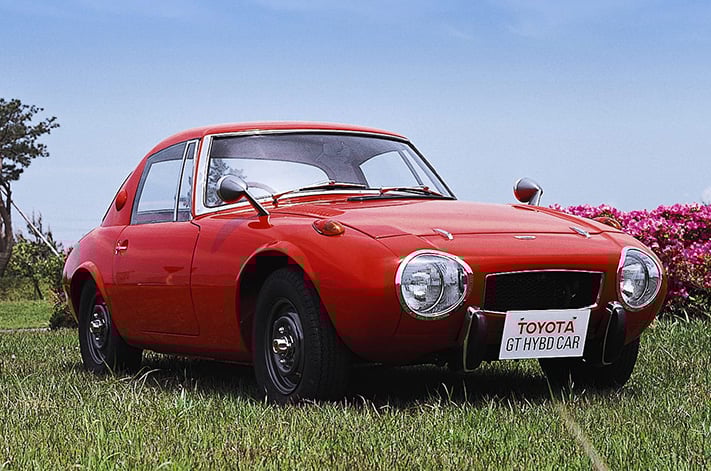
One of Toyota’s earliest experiments with hybrid propulsion involved engineers jamming a jet engine into the tiny Sports 800 two-door, to run a generator that in turn supplied volts to an electric motor.
The Prius would never be as cool as a jet-powered sports car, though.
Nor would it be Toyota’s first road-going hybrid vehicle. That honour goes to the Coaster Hybrid EV minibus, which launched just a few months before the Prius in August 1997.
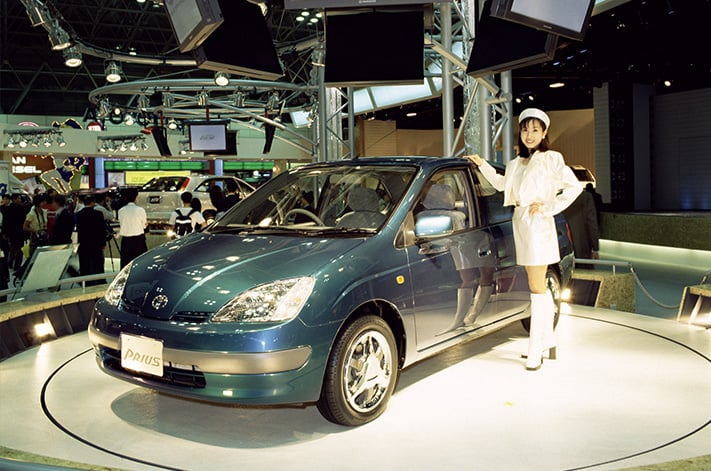
First-generation Toyota Prius (2001-2003)
The name Prius is virtually a synonym for “hybrid” these days, though it’s actually Latin for “to go before”.
Petrol-electric hybrids weren’t exactly a new idea by the time the first-generation Prius launched in Japan in 1997, yet the Prius did something that other manufacturers had so far failed to do – it made hybrids not only available, but affordable. A claimed average consumption of 3.57L/100km was revolutionary for the time, too.
A US launch followed in 2000, before it reached Australia in 2001.
The Prius wasn’t the first hybrid car to go on sale here, though. It was pipped by the Honda Insight by about six months, though its even quirkier, three-door, three-cylinder hybrid rival lasted just three years.
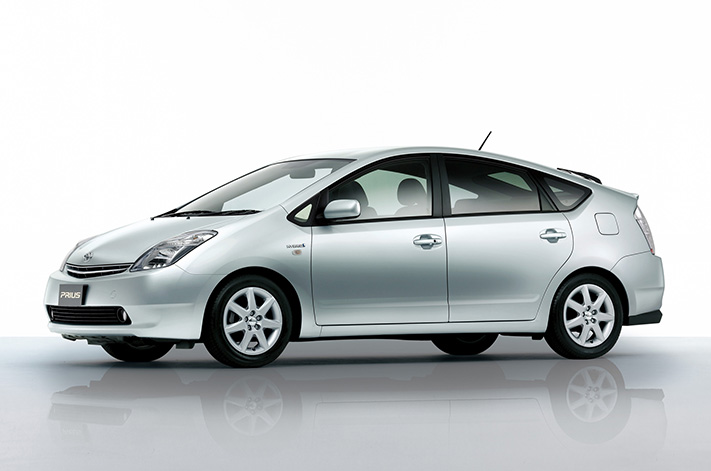
Second-generation Prius (2003-2009)
The second-generation Prius took Toyota’s hybrid tech global in 2003. This was also the car that established the aerodynamically arched roof profile that would later typify the Prius, and it was the model that would eventually make the Prius a household name.
Its claimed average fuel consumption of 2.8L/100km helped, but Hollywood also had a big part to play in the Prius’s fortunes. Celebrity owners keen to wear their eco-friendliness on their high-profile sleeves adopted the Prius as a status symbol, with the likes of Harrison Ford, Matt Damon, Julia Roberts, Natalie Portman and Leonardo DiCaprio all spotted behind the wheel of Toyota’s hybrid hunchback. Its aero-optimised shape was unmistakeable in traffic – a handy thing for when you want people to notice your choice of wheels.
A perceived righteousness of some Prius owners spawned the appearance of a Toyonda Pious in a 2006 episode of Canadian animated series South Park.
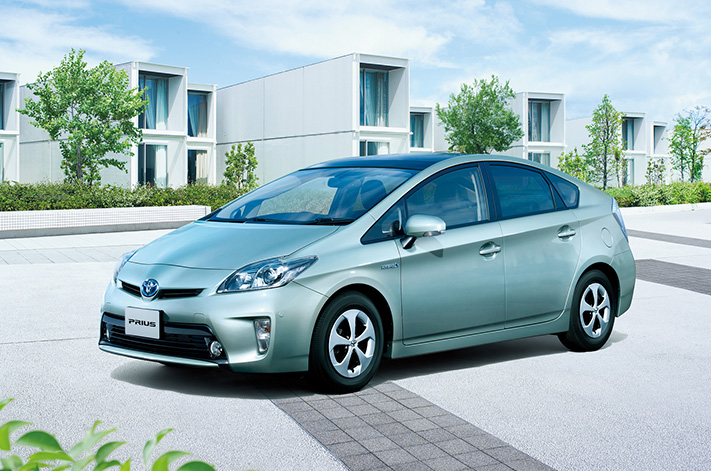
Third-generation Prius (2009-2015)
A third-generation Prius launched in 2009, with its Atkinson-cycle four-cylinder engine growing from 1.5 litres to 1.8 litres while average consumption further improved by more than 10 per cent to 3.9L/100km.
At launch, this Prius – at the time the world’s most aerodynamically efficient car with a 0.25 co-efficient of drag – was the only car in Australia to have an emissions figure below 100 grams per kilometre (89g/km).
The bigger engine also contributed to a 21 per cent bump in combined power to 100kW, though the Prius remained relatively slow with a 0-100km/h time of 10.4 seconds (previously 10.8sec).
Standard safety improved and new technology included a head-up display.
By now, however, some of the technology aboard the Prius was starting to look old. Nickel-metal hydride batteries only supplied enough juice for a few kilometres of EV-mode travel at most.
Although this generation did see the gradual introduction of lithium-ion batteries, these versions weren’t imported to Australia.
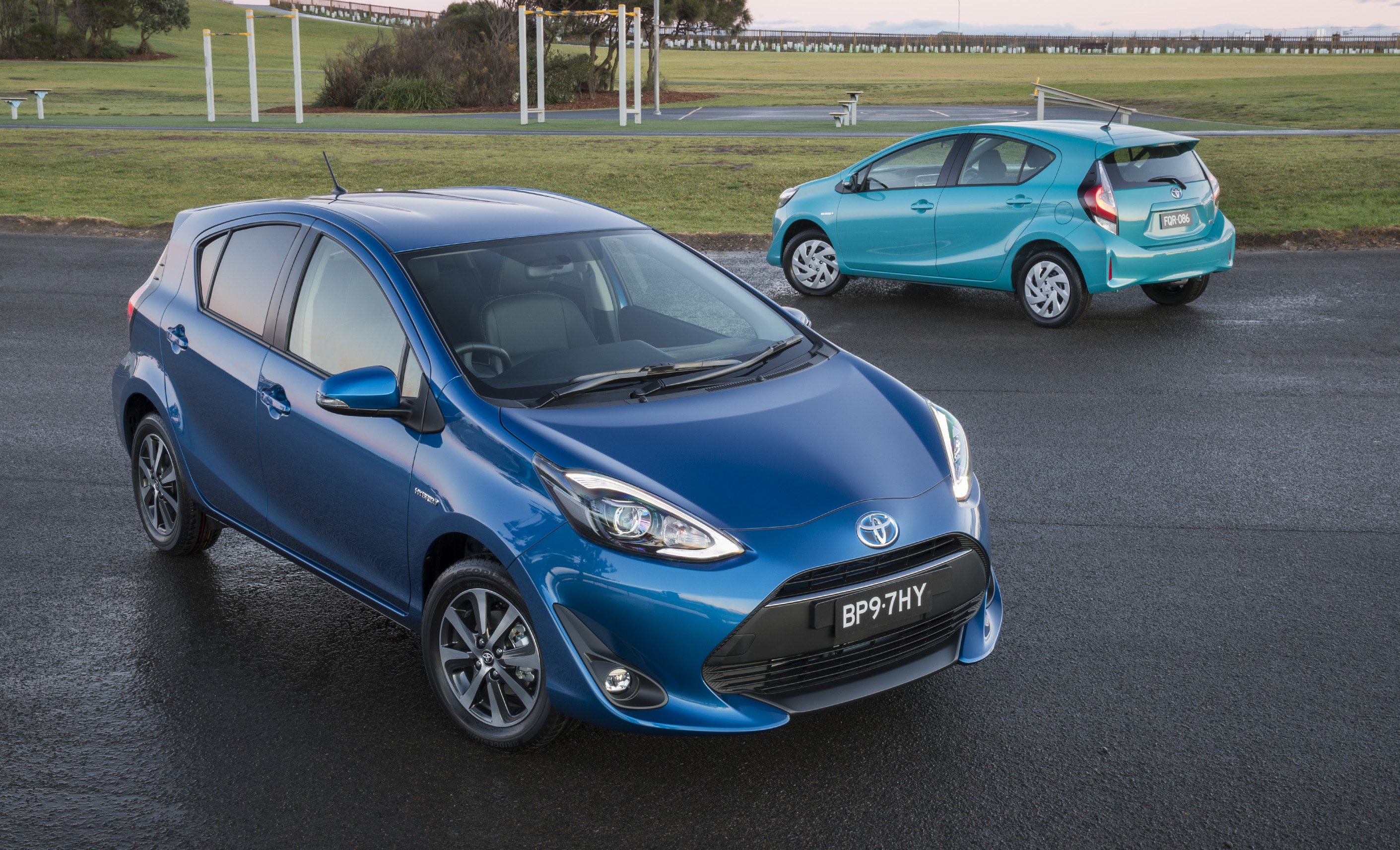
A Prius family!
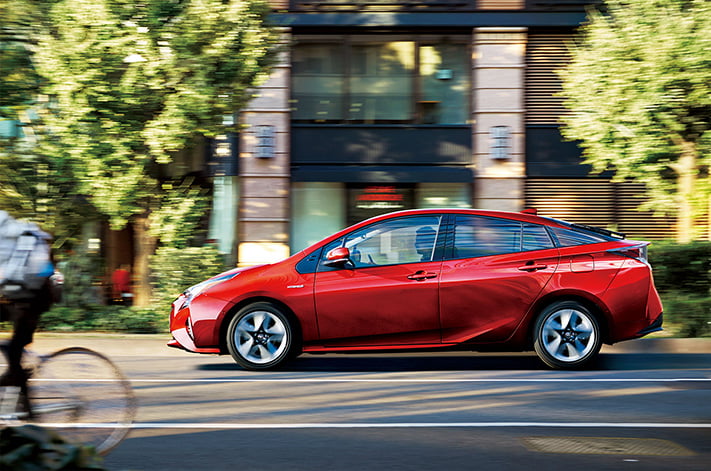
The growing popularity of the Prius prompted Toyota to create a whole family – introducing the Prius C hatchback and Prius V people-mover in 2012.
Toyota’s city-sized Prius C was pitched as Australia’s most affordable hybrid, though it was relatively expensive for this class of vehicle – priced between $22,990 and $26,990 during its lifetime.
With a fuel economy figure of 3.9L/100km its efficiency wasn’t that remarkable considering it was identical to the much larger Prius.
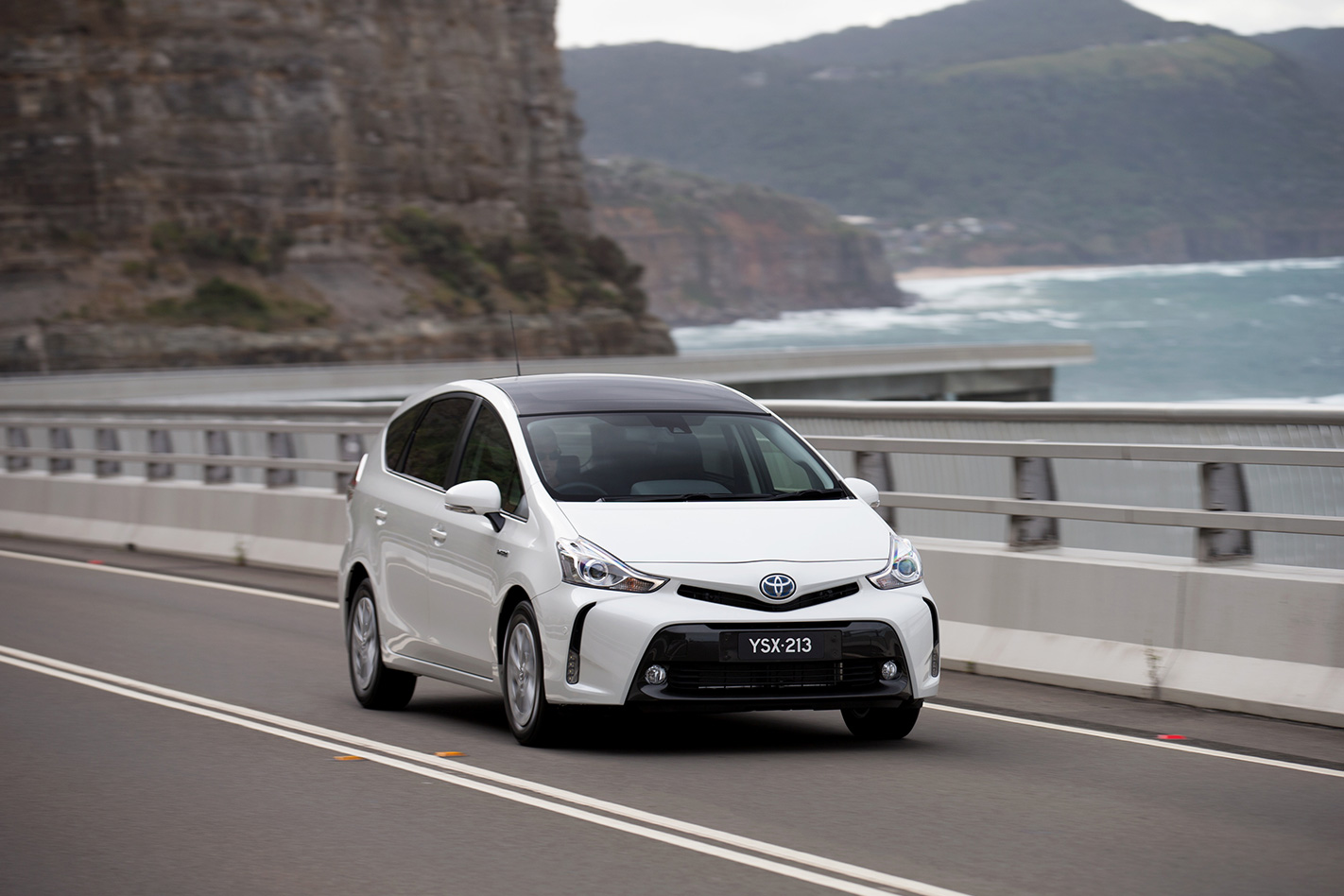
The Prius V offered families seven-seater practicality and 4.4L/100km economy, though never surpassed 1000 units in a year – its peak of 943 units achieved in 2014.
Frustratingly, the plug-in hybrid Prius Prime, with an EV range of some 23km, was only for select overseas markets.
In Australia, the Prius C was dropped in 2020, with the Prius V joining it in retirement a year later.
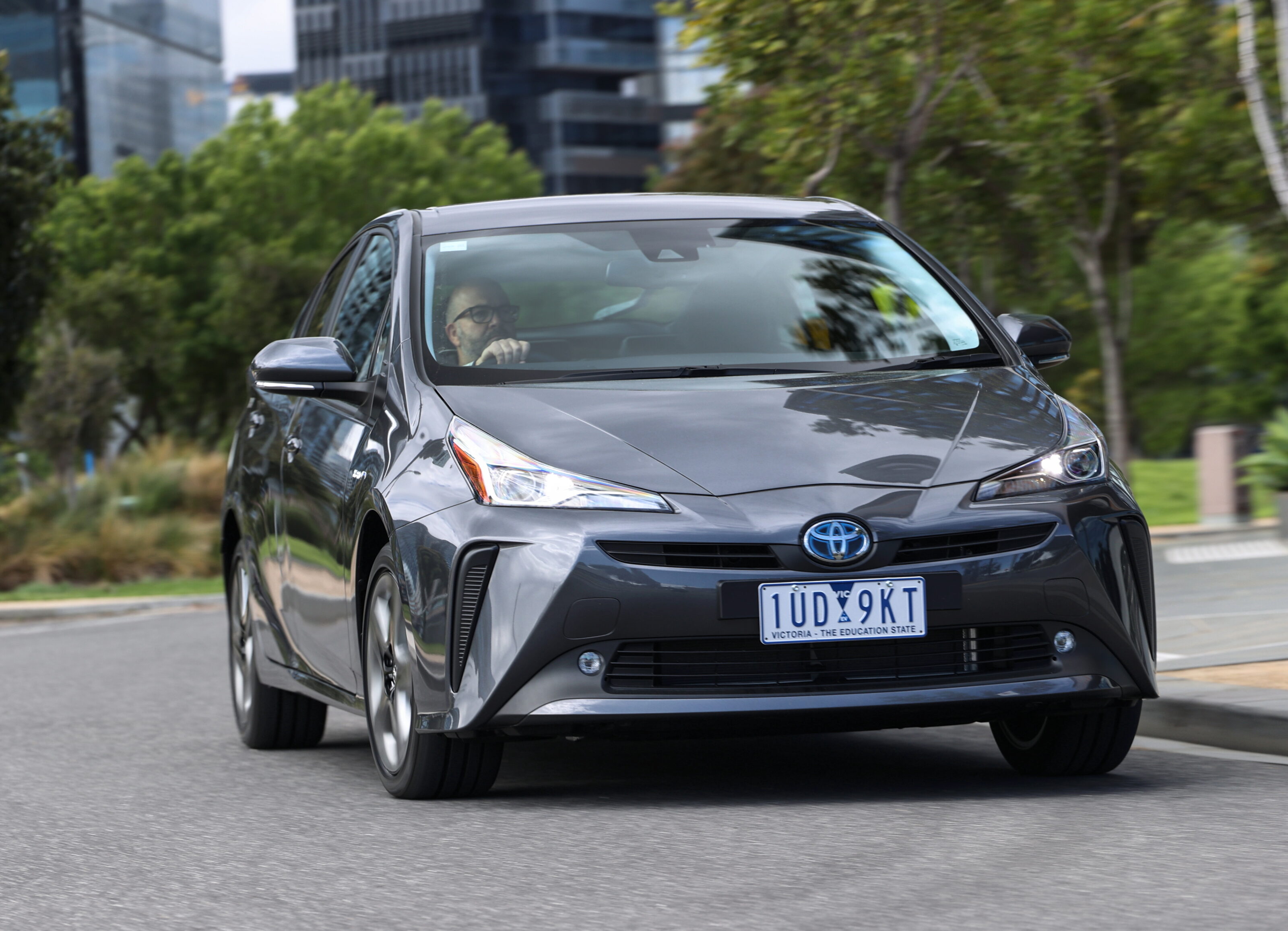
Fourth-generation Prius (2016-2022)
The fourth-generation Prius arrived in Australia in 2016, one of the first models to be built on Toyota’s TNGA modular platform.
The format was familiar, but enhanced through a lower centre of gravity, stiffer bodyshell, and all-independent suspension that was designed to impart some handling talent.
While this was easily the most enjoyable Prius to drive of any generation, the improvement was relative to predecessors that offered highly mediocre dynamics. The Prius remained a choice for buyers who kept a keener eye on the fuel gauge than the rev counter.
And for this generation, fuel economy improved to an impressive 3.4L/100km.
The Prius is gone but it won’t be forgotten, having helped Toyota shift more than 10 million hybrids globally.
And hybrid versions of the RAV4, Kluger, Yaris Cross, Corolla and co all have the poster child of ‘green’ motoring to thank for their current success.
Snapshot
- 68 vehicles built in 2018 recalled
- Manufacturing fault could lead to fuel pump issues
- Fiat Chrysler Australia contacting affected owners
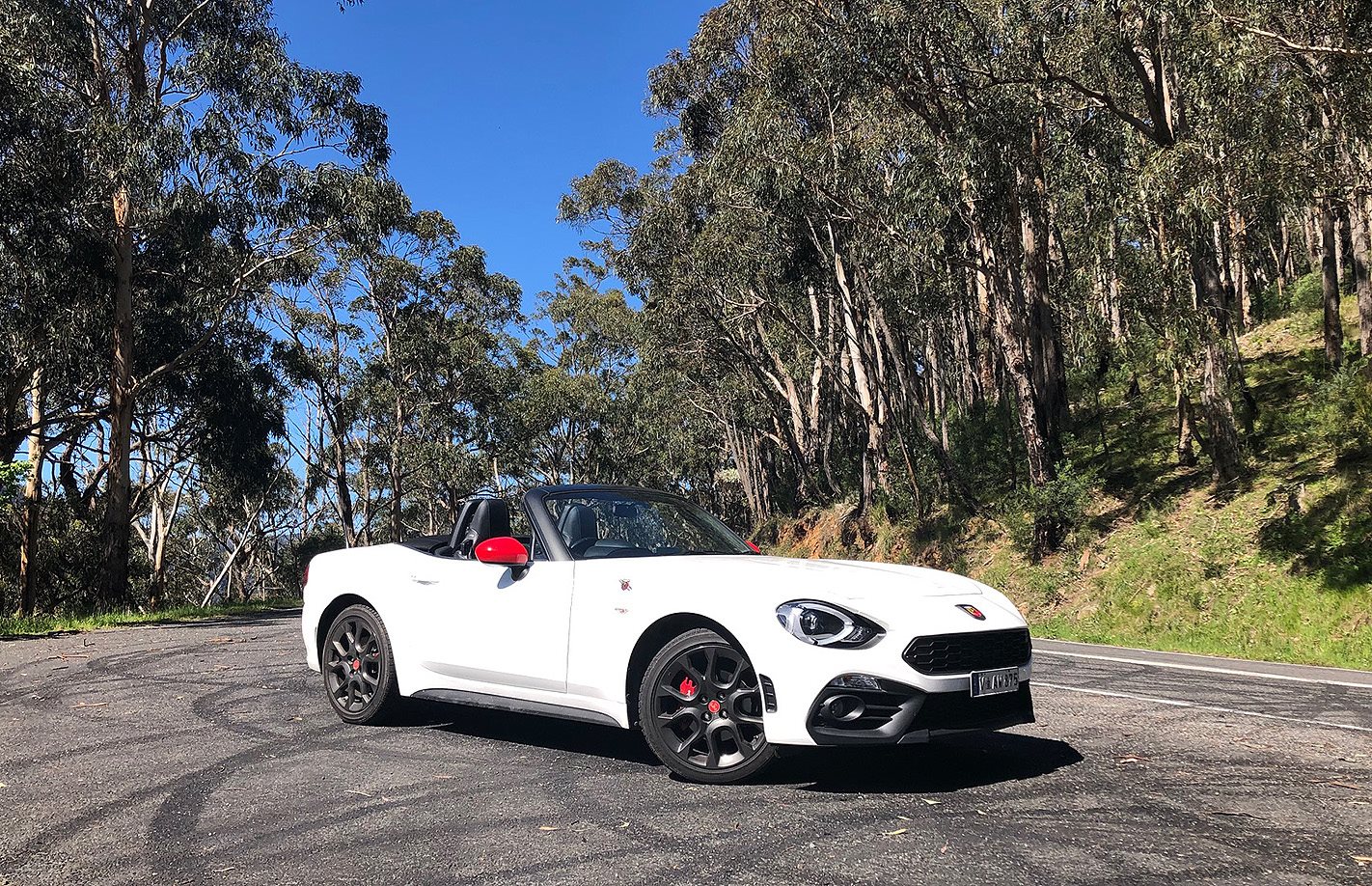
The 2018 Fiat Abarth 124 Spider is currently under recall, three years after it was last on sale in Australia.
Affecting a total of 68 units built and sold in 2018, the Abarth 124 Spider’s recall notice has been put out due to a manufacturing fault with the vehicle’s fuel pump inside the fuel delivery module, potentially leading it to fail.
If the pump fails, it would result in a loss of engine power with the vehicle losing drive, increasing the risk of its occupants and other road users coming to harm.
Fiat Chrysler Australia is currently contacting known owners of the affected vehicles.
Owners are encouraged to contact their preferred Fiat and Abarth dealership to arrange the fitment of a new fuel pump.
A list of VINs for affected vehicles can be found here.
Snapshot
- ‘Failure to stop’ recorded as the most common reason for failing a driving test
- One fifth didn’t pass their written test for a learner licence first time
- Male learner drivers over twice as likely to be in an ‘at-fault’ accident
A study of learner drivers and their habits has raised concerns about how the next generation of motorists is faring on Australian roads.
Conducted by Budget Direct, 1000 Australians who currently hold a driving licence were surveyed about their time as learner drivers, exposing shortcomings in the system which allows them to progress.
While more than three-quarters of learners passed their written test on the first go, with 15.9 per cent getting it on the second try.
| Number of attempts on written test | Percentage of Australians passed |
|---|---|
| 1 | 78.8 |
| 2 | 15.9 |
| 3 | 3.5 |
| 4 | 1 |
| 5+ | 0.8 |
However, this success didn’t directly translate to securing a provisional licence, with 29.2 per cent of holders needing at least one more attempt to move up from their Ls.
| Number of attempts on practical test | Percentage of Australians passed |
|---|---|
| 1 | 71.8 |
| 2 | 21 |
| 3 | 5.4 |
| 4 | 1.1 |
| 5+ | 0.7 |
Of those who got knocked back on the driving test, a failing to stop was the most common single reason behind why they didn’t pass, although various “other” reasons also played a major part.
| Critical errors recorded on practical driving test | Percentage of Australians recording error |
|---|---|
| Failure to stop | 23.1 |
| Failure to look over shoulder | 19.2 |
| Failure to indicate/signal | 10.6 |
| Speeding | 9.6 |
| Collision | 8.9 |
| Other | 34 |
| None | 12.1 |

Despite automatic new car sales far outweighing manuals, 55.7 per cent of learners were tested on a manual licence, with both male and female responders more likely to be driving a three-pedal car.
Comparing automatic and manual drivers, there was an eight per cent disparity between the two choices of transmission for which drivers passed the first time, landing in favour of those who row their own.
While the two-pedal auto drivers passed their tests at the first time of asking 74 per cent of the time, manual operators nailed the practical exam in 82 per cent of initial tests.
Even though learners are a high risk on the roads due to their lack of experience, just 5.5 per cent reported being in a traffic incident on their Ls, with 3.7 saying they were at fault while 1.8 per cent were not.
Males were far more likely to be in a crash and at fault compared to their female counterparts though, with over double reporting they were the cause of an incident.
| No crash on Ls | Crash on Ls (at fault) | Crash on Ls (not at fault) | |
|---|---|---|---|
| Female | 96.1% | 2.4% | 1.6% |
| Male | 92.9% | 5.1% | 2.0% |
Those who want to see the full results of the study and interact with Budget Direct’s data can view it here.
The new Aston Martin V12 Vantage was never part of the plan. The current Vantage, unveiled in late 2017, was always intended to be powered by Aston-tweaked versions of the versatile Mercedes-AMG 4.0-litre twin-turbo V8.
Former AMG boss Tobias Moers’ tenure as Aston Martin CEO may have been brief, but one of the things he did while in the job was to rip up the plan. The V12 Vantage is his car. And this staggeringly fast Aston Martin is a fitting legacy.
The starter motor spins with that curious keening whirr you only get with a V12 before the 5.2-litre twin-turbo engine fires up and settles down to a brisk metallic idle that betrays an edgy intensity under the bonnet.

As well it might: Though it doesn’t boast quite the ultimate muscle of the version in the big and beautiful DBS Superleggera, the V12 in the Vantage pumps out a healthy 515kW at 6500rpm and 753Nm of torque from 1800rpm to 6000rpm.
Stuff a big engine into a small car – it’s a performance formula that’s worked for more than a century. The V12 Vantage is more than just a simple engine swap, though.
To ensure the suspension has the best possible platform to work with, overall body stiffness has been increased with additional front and rear shear panels, a rear suspension tower strut brace and fuel tank bracing. Suspension changes include new adaptive dampers, revised bushing and stiffer front top mounts.

The track has been widened 41mm, and spring rates have been increased by 50 per cent at the front and 40 per cent at the rear, while the front stabiliser bar is five per cent stiffer. The rear stabiliser bar is 41 per cent softer, and an additional spring with a lower rate than the main spring has been added to ensure ride comfort without compromising dynamic performance.
Standard wheels are 21-inch alloys in two new designs, each available in satin black with diamond-turned highlights, or simply satin black, with a lightweight wheel available as an option. Standard tyres are Michelin Pilot 4S, 275/35 R21 at the front and 315/30 R21 at the rear.
Twelve cylinders and two turbochargers generate a lot of heat in an engine compartment originally intended for a V8. That explains the full-width, rear-facing vent on the redesigned bonnet, the redesigned front bumper framing a 25 per cent larger grille and the larger vents in the redesigned front guards.

Visual changes over other Vantages also include large, single-piece side sills extending from the side vents, a new rear bumper with an integrated diffuser, and central twin exhaust outlets.
The dramatic rear wing, whose softly contoured form echoes that of the rear wing on the Aston Martin AMR22 F1 car, isn’t just there to impress your mates; it’s been designed to work with the new front splitter to generate more than 200kg of downforce at the car’s 320km/h top speed.
Much of the interior is shared with the V8 Vantage and is highly customisable. The woven leather or Alcantara seat inserts, trim inlays and the anodised rotary dials found in the centre console can be configured to match or contrast with the exterior body or graphic colour.

Optional lightweight sports seats with exposed carbon-fibre shells are unique to the V12 Vantage, however. Unless you are snake-hipped and limber, don’t bother with them; clambering over those hard edges is bruising.
The big V12, designed and engineered in-house at Aston Martin to power the DB11 coupe launched in 2016, almost fills the Vantage’s engine bay. Almost. Less than 50mm of the engine, which weighs significantly more than the V8, extends over the front axle centre line, which explains why the front to rear weight distribution has shifted only marginally from the V8 Vantage’s perfect 50:50 to 52:48.
Aston’s engineers haven’t just relied on the V12’s abundance of power and torque to deliver improved performance over the V8 Vantage. Weight-saving measures include standard 410mm front and 360mm rear carbon-ceramic brakes that remove 23kg of unsprung mass, a stainless steel exhaust that’s 7.2kg lighter than the regular Vantage system, and carbonfibre bonnet, front guards, bootlid and front and rear bumpers. The optional forged alloy wheels save a further 8kg.

The 393kW Vantage F1 Edition was, until now, the most powerful car in the current Vantage line-up. The V12 Vantage has pretty much a whole Toyota Corolla’s worth of extra grunt under the bonnet – 122kW extra, to be precise. That means that despite weighing 216kg more, it has a 20 per cent better power to weight ratio. And you can feel it, though not quite in the way you might expect.
Next to the growling gut-punch you get from the F1 edition’s V8 at what seems little more than idle speeds, the V12 Vantage’s engine feels curiously languid at first, even though its 68Nm greater peak torque is being produced from 200rpm lower in the rev band.
It’s perception rather than reality, amplified by the different power and torque characteristics of the two engines. V12s, even turbocharged ones, like to rev. While the torque output of the F1 Edition’s V8 begins to taper after 5000rpm and its power peak comes at 6000rpm, the V12 holds on to its maximum torque until 6000rpm and makes its peak power at 6500rpm.

There’s a touch of turbo lag if you punch the throttle hard below 2000rpm, but once everything’s spooled up, the acceleration shoves you hard back into the seat. Aston claims a 0-100km/h acceleration time of 3.5 seconds, making it the quickest-accelerating Vantage ever.
The massive thrust from 3000rpm to 6000rpm means the V12 Vantage is astoundingly fast on any road, compressing time and space between corners as only a car with more than 500kW can.
Yet, this is no hardcore, racer’s edge experience like, say, a Porsche 911 GT2 RS; there’s a velvety edge to the V12’s snarl and surprising compliance to the ride, even with the suspension in the stiffest of its three settings, that makes it feel almost like a gran turismo. A gran turismo on steroids.

It’s fast on the track, too, even on road-optimised tyres. The mechanical limited-slip differential deftly funnels all that power and torque to the tarmac the instant you want more.
Those giant carbon-ceramic brakes deliver unquenchable stopping power as the corners rush towards you, and the front end responds to the meaty steering with impressive calmness and authority, despite the extra weight over the front axle.
There aren’t too many 515kW rear-drive road cars in which you can confidently switch off the traction and stability controls on a track after only a handful of laps, but the V12 Vantage is one of them.
Yes, there’s power enough to smoke the rear tyres almost any time you want. But the sensitivity of the throttle and the clarity of the feedback through the chassis is such that you can feel exactly where the limits of adhesion are and modulate your inputs accordingly.

Will it drift? Of course. But what makes the V12 Vantage so much fun on the track is that you can drift it more like Sebastian Vettel than Ken Block, more subtly and with much higher absolute corner speeds.
It’s an easy car to drive fast, this Aston, but it’s not just because of the power. Confidence comes from a chassis that’s fundamentally well-sorted rather than constantly slapped into line by an assortment of electronic nannies.
Track time exposes the one weak link in the V12 Vantage’s performance arsenal, however: The eight-speed automatic transmission. As automatics go, the ZF eight-speed used by Aston Martin is a benchmark, but when you start to push the V12 Vantage, the upshifts feel laggardly and the downshifts woolly, even in Track Mode. It only takes a couple of laps to understand that mighty V12 demands the crisp precision of a dual-clutch transmission.

Aston Martin is building just 333 V12 Vantages. And every single one is already sold, despite a price tag that starts north of half a million bucks.
That’s because the 2023 V12 Vantage is destined to be a classic Aston Martin. There won’t be another small Aston with a V12 under the bonnet, and the engine itself is unlikely to stay in production beyond 2026 or 2027.
Nice way to say goodbye, Tobias.
UPDATE, November 2022: New-gen Prius unveiled
Toyota has revealed its new-generation Prius hybrid, revealing what is surely the most stylish iteration yet of what has historically been an awkwardly styled line of cars. Alas, this is also the first generation of Prius that won’t come to Australia. Get all the details at the link below.
Story continues
Snapshot
- Toyota to discontinue Prius locally after 21 years
- First examples landed in 2001
- Over 20,000 Prius sales recorded since its Australian launch
Toyota has announced its ground-breaking Prius hybrid vehicle is set to depart Australia after a 21-year run.
Launched internationally in 1997 as the world’s first mass-produced hybrid vehicle and introduced locally in October 2001, the Prius notched up 20,847 units sold in Australia across its four generations. In addition, its Prius C hatch and Prius V people-mover bumped the figure up to 35,947, although both were killed off in the past two years due to low sales.
Thanks to the Prius kick-starting Toyota’s hybrid obsession, halfway through last year the manufacturer reached a milestone of 200,000 overall hybrid sales in Australia, going on to record 65,491 hybrids sold last year alone – accounting for all bar 4975 such vehicles sold in the segment and setting a new brand record.
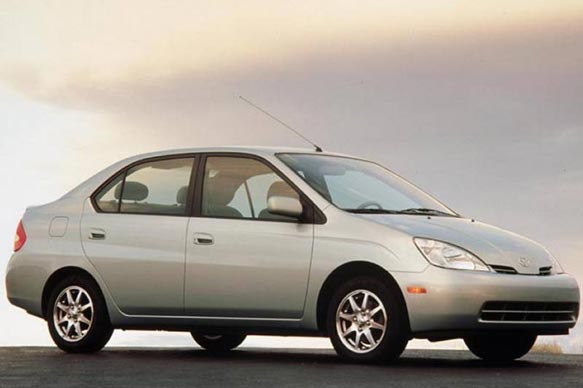
Year-to-date, just 26 examples of the model have been sold and just 77 units were shifted last year. Less than a year ago, Toyota Australia said the model would live on and it had no intention of dropping the nameplate, although its position has been swayed by poor sales.
Toyota Australia Vice President Sales, Marketing and Franchise Operations, Sean Hanley, said the Prius’s legacy would live on across the manufacturer’s other hybrid models.
“When we launched the Prius in October 2001, it was difficult to predict the enormous impact that Toyota hybrids would eventually have on the Australian automotive landscape,” said Hanley.
“In 2001, we sold just a handful of Prius cars, taking until mid-2018 to reach 100,000 Toyota hybrid-electric vehicle sales and surpassing the 200,000 sales mark in 2021.
“The Prius blazed a trail by offering Australian motorists a more efficient and low-emissions motoring experience – traits that have resonated with buyers more and more over time.
“In fact, hybrid-electric vehicle technology, in terms of market acceptance, was not an overnight success. It has taken more than twenty years, but it still forms an important part of Toyota’s electrification strategy.
“It recognises practicality, performance and affordability whilst reducing the CO2 footprint of our vehicles. It enables Australian customers to have access to a technology that plays an important role in not leaving anyone behind, as we forge a future towards carbon neutral mobility.
“Last year Toyota sold more than 60,000 hybrid-electric vehicles and we expect that 2022 will continue Toyota’s strong leadership in the sales of electrified vehicles. We look forward to continuing the Prius legacy through our broad range of powerful and efficient hybrid-electric offerings.”
Toyota plans to continue selling hybrid cars in the future despite the emerging popularity of electric vehicles, however the manufacturer is also heavily investing in EVs and hydrogen fuel-cell technology to ensure it has a stake in each.
The current line-up of Toyota’s hybrid vehicles in Australia includes the Corolla, Camry, RAV4, Kluger, C-HR, Yaris and Yaris Cross.
Vinesh Bhindi is being treated like royalty.
We’re at the launch of the Mazda CX-60 in Lisbon and the rockstar designers and engineers from MME (Mazda Motor Europe) all have an air of deference to the Fijian-born local CEO. It doesn’t normally work like this.
Usually country managers are seen as interchangeable shiny-suited salespeople, but Mazda in Australia is different. In Europe Mazda commands a 1.2 per cent market share with a 2.2 per cent claim in the US, here in Australia, however, it commands around 10 per cent of the passenger car market.
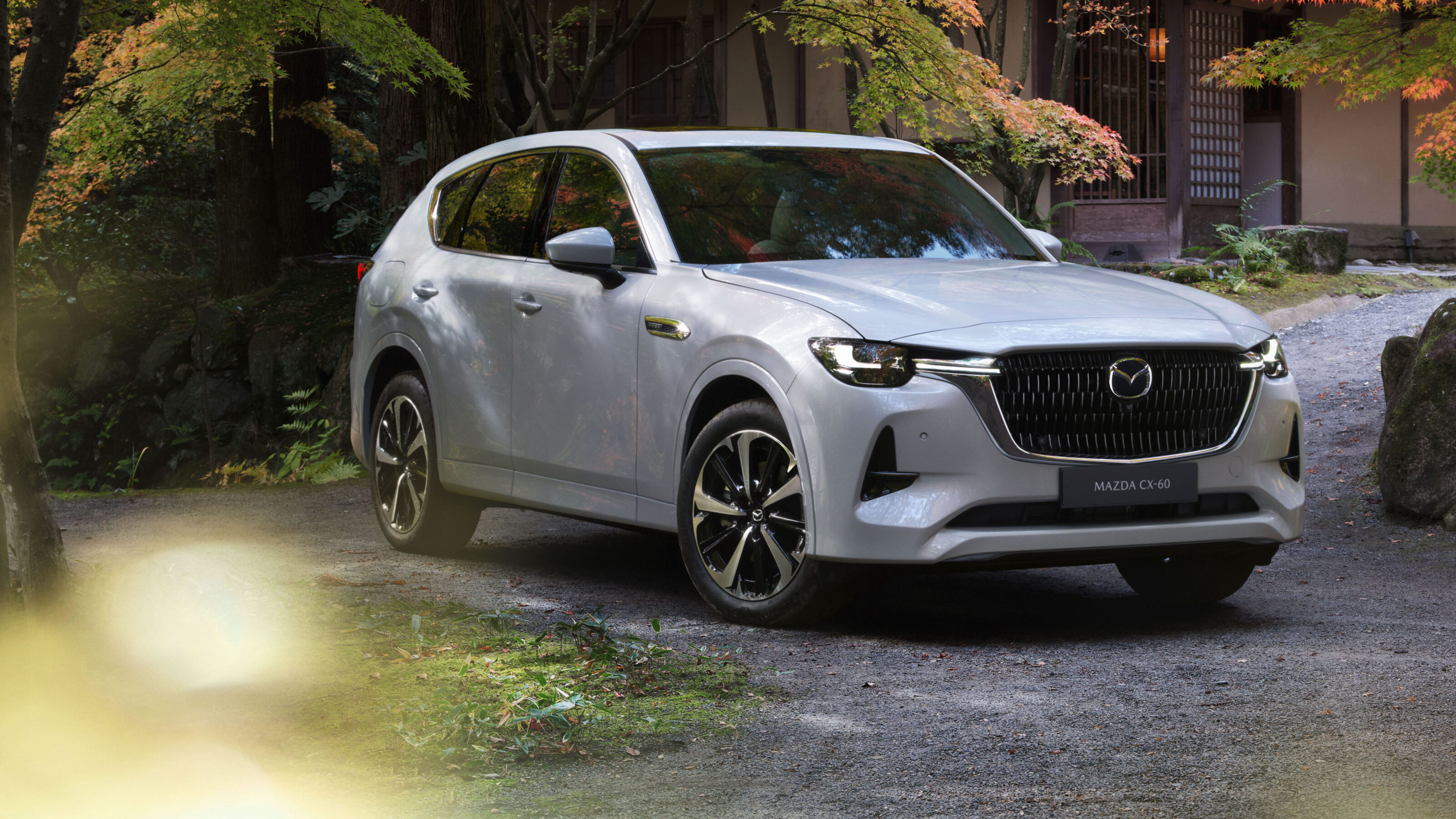
I ask Bhindi why we’re such an outlier market and he looks at me and his eyes widen. It’s as if I’ve just asked Colonel Sanders what’s in the KFC secret recipe.
“There’s not one thing in particular,” he deadpans. “Our success in Australia has been built over decades. Australia was the first country that Mazda went to outside of Japan so we’ve been there since 1959. Longer than the US, longer than Europe.”
It can’t be just longevity in market though. Citroën has been here since 1923 and isn’t exactly crushing it in terms of sales.
Bhindi points to three key elements that have always drawn Aussie customers to Mazda, and which are being underscored once again for a new generation of vehicles.
“When the Mazda engineers and the Mazda corporation, people talk about Mazda premium, we get excited because we know what it is. It’s down to three things. It’s about the design element, and design has been a top tick for our customers in Australia for many years. Then the second part of it is the, I suppose, the engineering skills and talents.
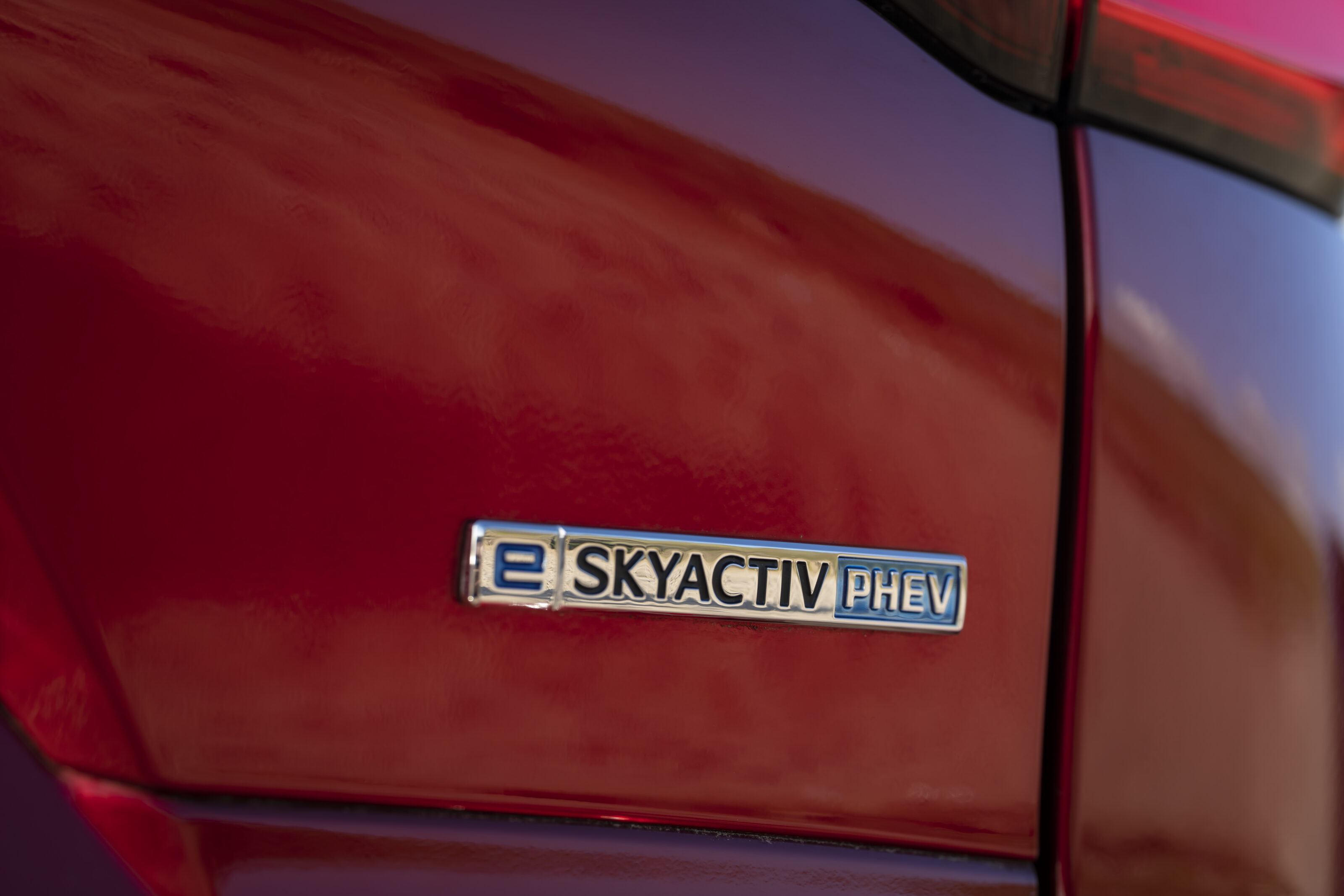
“You experienced today how we’re making the plug-in hybrid motor work compared to some others. And then the third element is the craftsmanship part of it, the courage to use materials that are unique and different, how the interiors are put together and the effort that goes in. So all of those elements add to the success that we’ve experienced in Australia. It’s not one little thing that I can point to.”
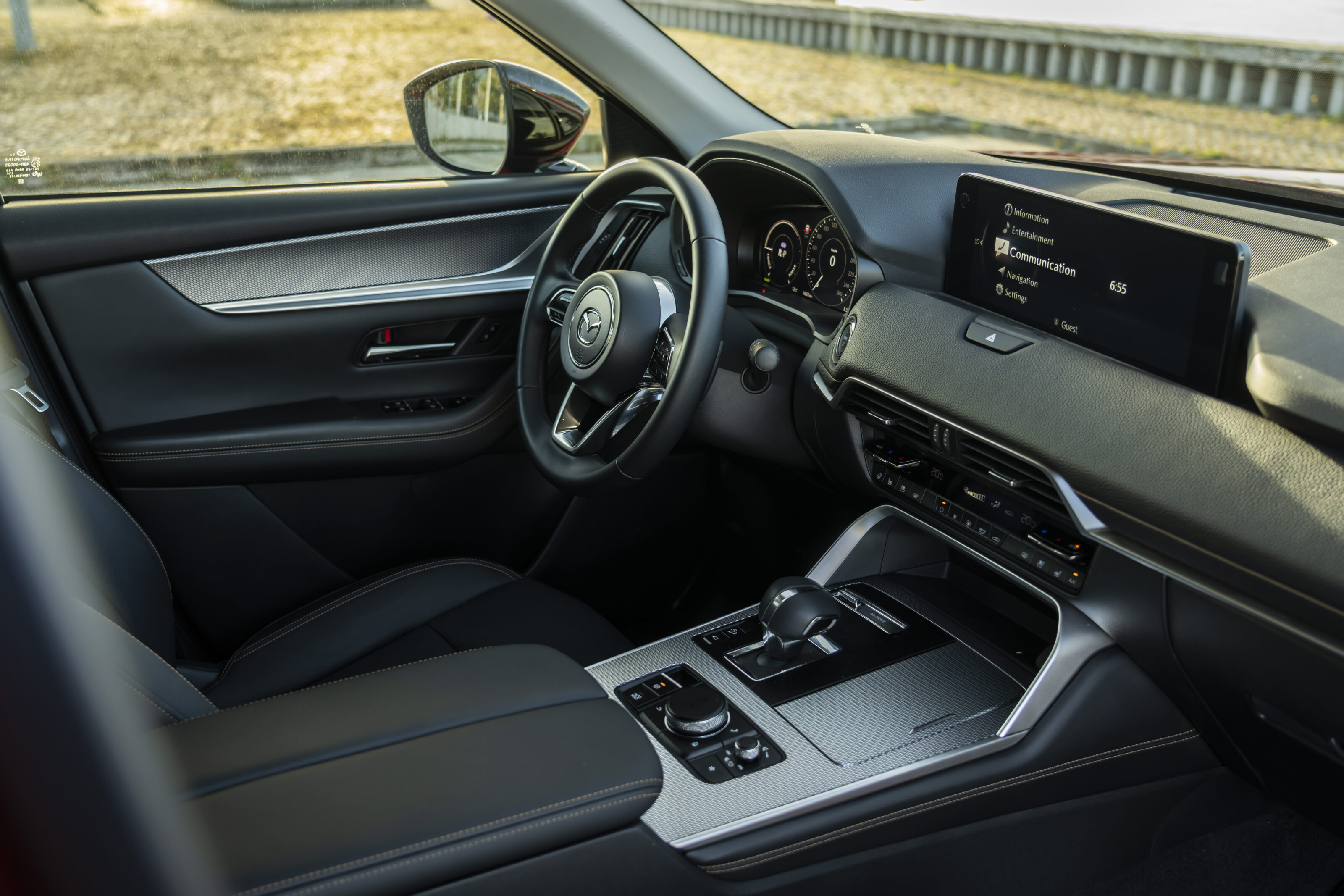
Mazda’s keen to underscore its premium story with the CX-60, in effect subtly highlighting that Lexus doesn’t retain a monopoly on Japanese craftsmanship.
I ask Bhindi whether Mazda’s healthy volumes here could actually work against it when trying to weave a narrative based on premium quality.
“When we have the volume and the success we’ve had, we’ve already got many converted Mazda fans, and then to be able to give them the next level on what Mazda engineers and designers and craftsmen think is the next premium product is an amazing opportunity,” explains Bhindi.
“It’s basically giving customers something else to consider rather than saying: ‘Well, we need to go and look at another brand because there’s nothing here for me: I need that next level.’ That’s what CX-60, or the large platform, will provide. The opportunity for us is around that hundred thousand vehicle sales annually in the market of about a million, putting aside all the supply challenges, because that’s on everyone, assuming despite all of that, we are able to have a market of a million.”

A push to premium is often a business model which trades off a reduction or levelling off of overall volumes in exchange for increased margins. Bhindi is quick to point out that Mazda is not abandoning those who shop at the more affordable end of its range.
“That’s not how that strategy works,” he interjects when he grasps the implication of the line of questioning.
“The strategy we have is this product is an add-on, an expansion of what we have in our portfolio. So our base is already solid. And our overarching strategy is about giving customers as many options as we can. But that doesn’t mean at any cost. It’s got to make business sense, but we don’t go in to say, we won’t give that option because we can only sell a handful of those. We go in to say, well, bring it to the market and let the customers decide.
“Yes, we do all our homework before we launch it. There’s a product team that does all sorts of analysis, but in the end, we bring to market with the best knowledge we have with the options we think will satisfy a broad customer base.
“Then we can always evolve that as we go on, because the customers may tell us this is really good. And we call it being a small percentage. We can always change it. And the factory is nimble enough to cater for that. Where your customers are saying they would prefer this, this, this, and this and not that, well, we’ll just change it at the first opportunity to cater for it.”
The CX-60 is the first vehicle to be launched from that particular platform and CX-70, CX-80 and CX-90 are waiting in the wings. I ask Bhindi whether he feels these products could also work for the Aussie market.
“Look, we are currently evaluating. So yes, in terms of 70, 80, and 90, we are still evaluating how that fits. The proposition is we should consider all of them and how we can make it work. So going with a yes, rather than a no, but we still have to do our homework on it. They may all work, but maybe a handful of them will work, so we’ll make that call in the coming months.”
Another issue that arises with a manufacturer’s push to premium is that the product can outstrip the retail environment. I ask whether Mazda is working at developing both in parallel.
“Yes, our dealers have been investing in their facilities, in their people, in their experiences for customers,” says Bhindi. “Well and truly over the last 10 or 15 years in fact. The latest round of upgrades are about to be completed, I think only a handful are pending and they’re pending because building materials have become harder to get hold of, but you can see all our dealerships have upgraded their corporate signage into the new look and feel, the customer waiting areas, the cafes – they have really upgraded.”
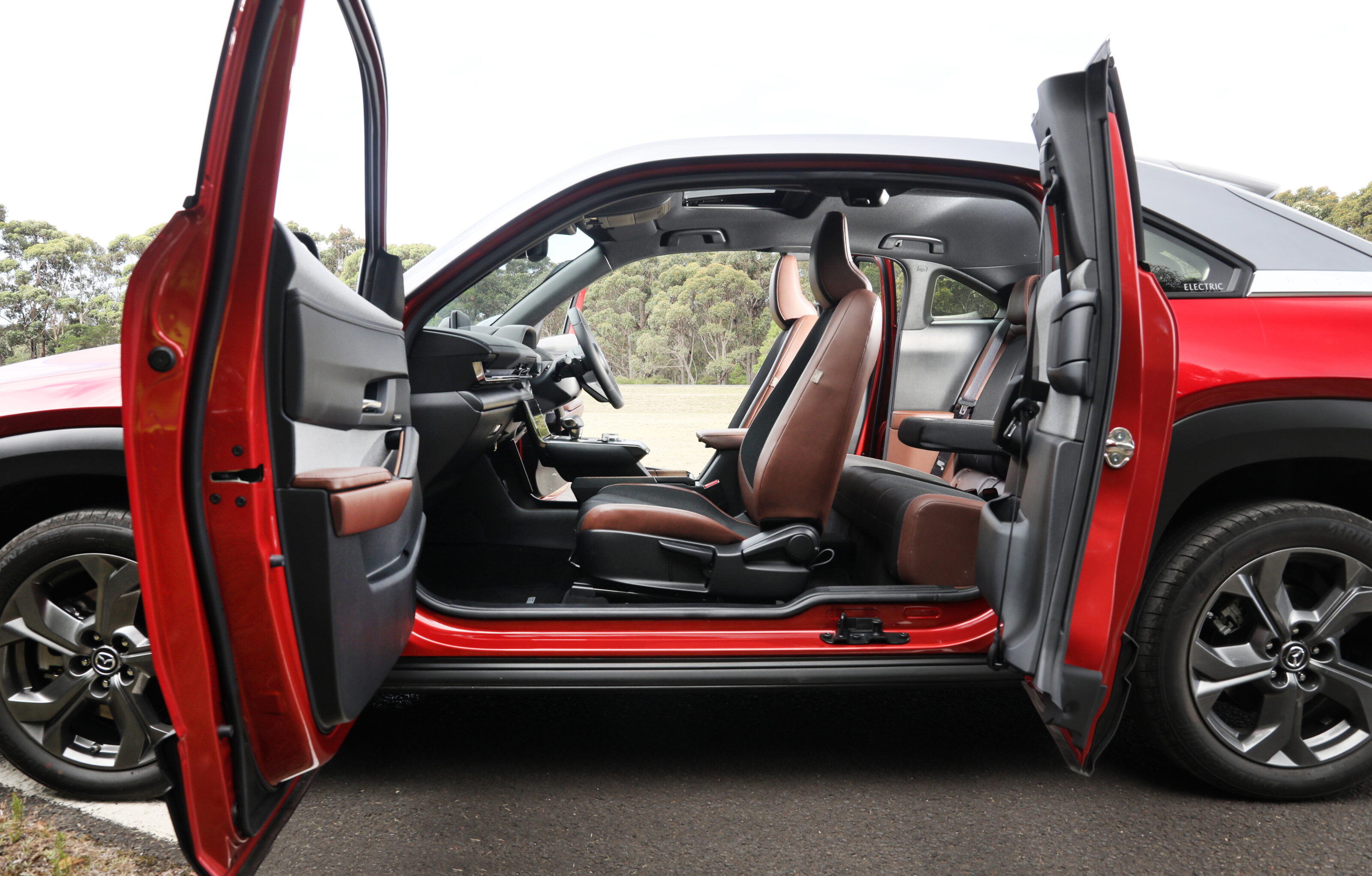
There’s little doubt that the CX-60, especially in range-topping Takumi trim, offers an intriguing insight into Mazda’s future design direction. Still, there remains a risk of delivering too much choice. There’s an inherent cost in bringing vehicles to Australia and, as the MX-30 experience has shown, the market analysts can get things wrong.
Mazda has turned its back on customer clinics for new cars, convinced that these processes deliver what customers think they want in the shortest of terms rather than where the market is going to be at the end of a lengthy vehicle development cycle. Bhindi’s been with Mazda for 27 years and tends to get more of these big calls right than wrong. Little wonder MME’s top brass tends to value to his opinion.
