
Snapshot
- Geely acquires 34 per cent stake in Renault Korea
- United States exports on the cards for Geely
- Renault to rebrand Geely hybrid vehicles in China
May 11, 2022: Geely purchases stake in Renault with plans to export to US
Chinese automotive manufacturer Geely has purchased 34.02 per cent of Renault Korea, with expansions throughout South-East Asia and North America planned.
After the two manufactuers signed a memorandum of understanding earlier this year, the Chinese brand moved to take over one-third of Renault Korea’s share capital, although the Korean arm of the French manufacturer will remain as the majority shareholder.
The joint venture will result in an “all-new vehicle line-up of fuel-efficient hybrid-electric vehicles (HEV) and internal combustion engine (ICE) models” from Geely to enter the South Korean market, with Renault’s existing facility in Busan, South Korea, to kick off production in 2024.
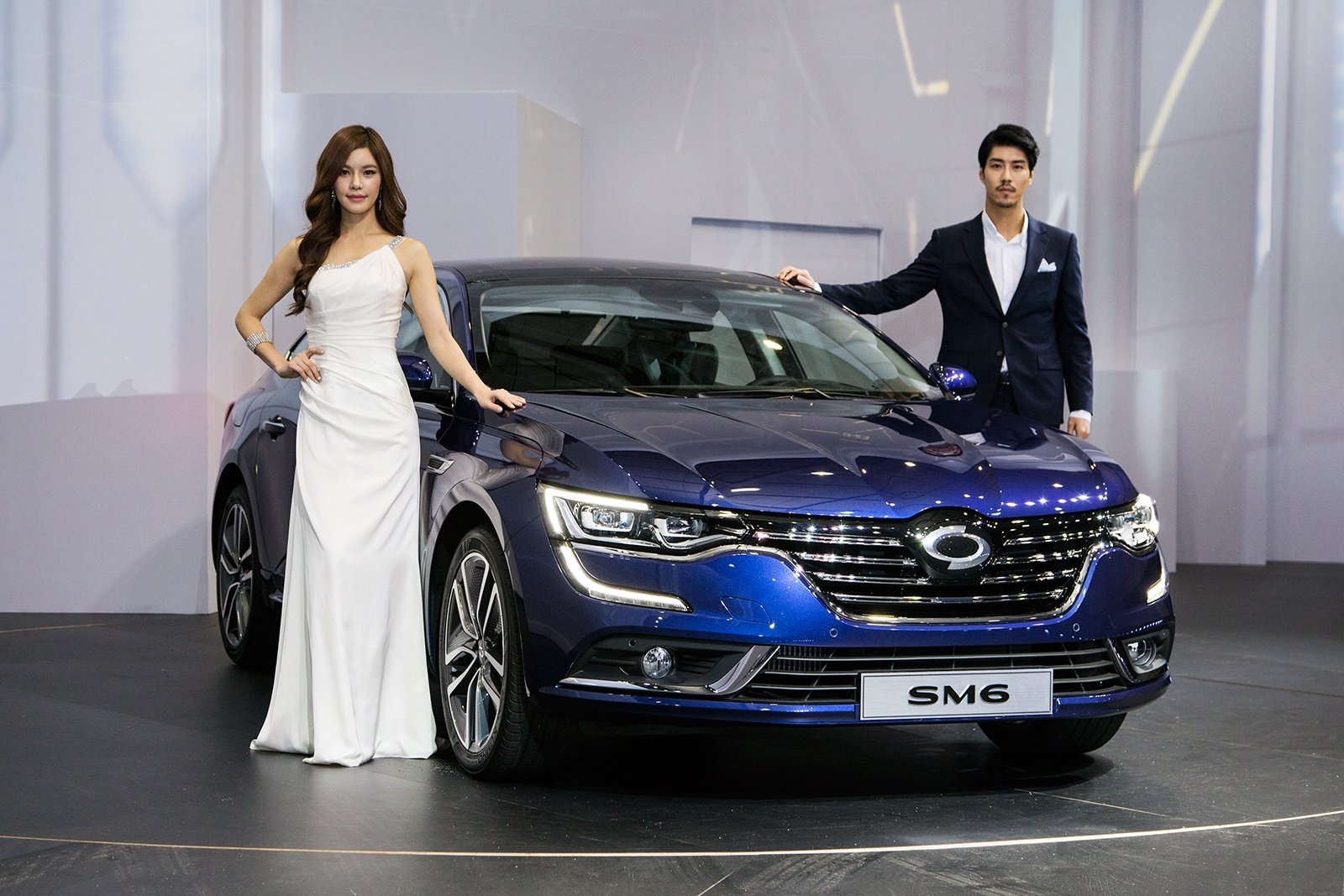
Geely says the new models will be underpinned by its Swedish-developed Compact Modular Architecture (CMA) and hybrid powertrains, while Renault’s input comes from its “cutting-edge technologies, expertise in design and customer experience, to exceed the local market expectations”.
While Geely’s statement doesn’t expand on its intentions to explore overseas markets, Automotive News Europe reports the United States is a major target, with the Renault partnership allowing Geely to gain easier passage to North America.
Read on below to find out more about the two manufacturers announcing the first stage of their partnership last year, which focused on Renault expanding in China.
The story to here

August 10, 2021: Renault to produce hybrid vehicles for China in joint co-operation with Geely
A memorandum of understanding between Chinese manufacturer Geely and French firm Renault has been signed, seeing the latter return to China after scaling back operations last year.
Through sharing information with each other, Renault plans to build on Geely’s local product knowledge to thrive in the country, rebranding the Chinese company’s hybrid vehicles as its own.
The joint co-operation won’t only favour Renault, with Geely set to build on the success of the French marque’s Samsung Motors in South Korea by introducing vehicles in the local market based on sub-brand Lynk & Co’s energy-efficient platforms.
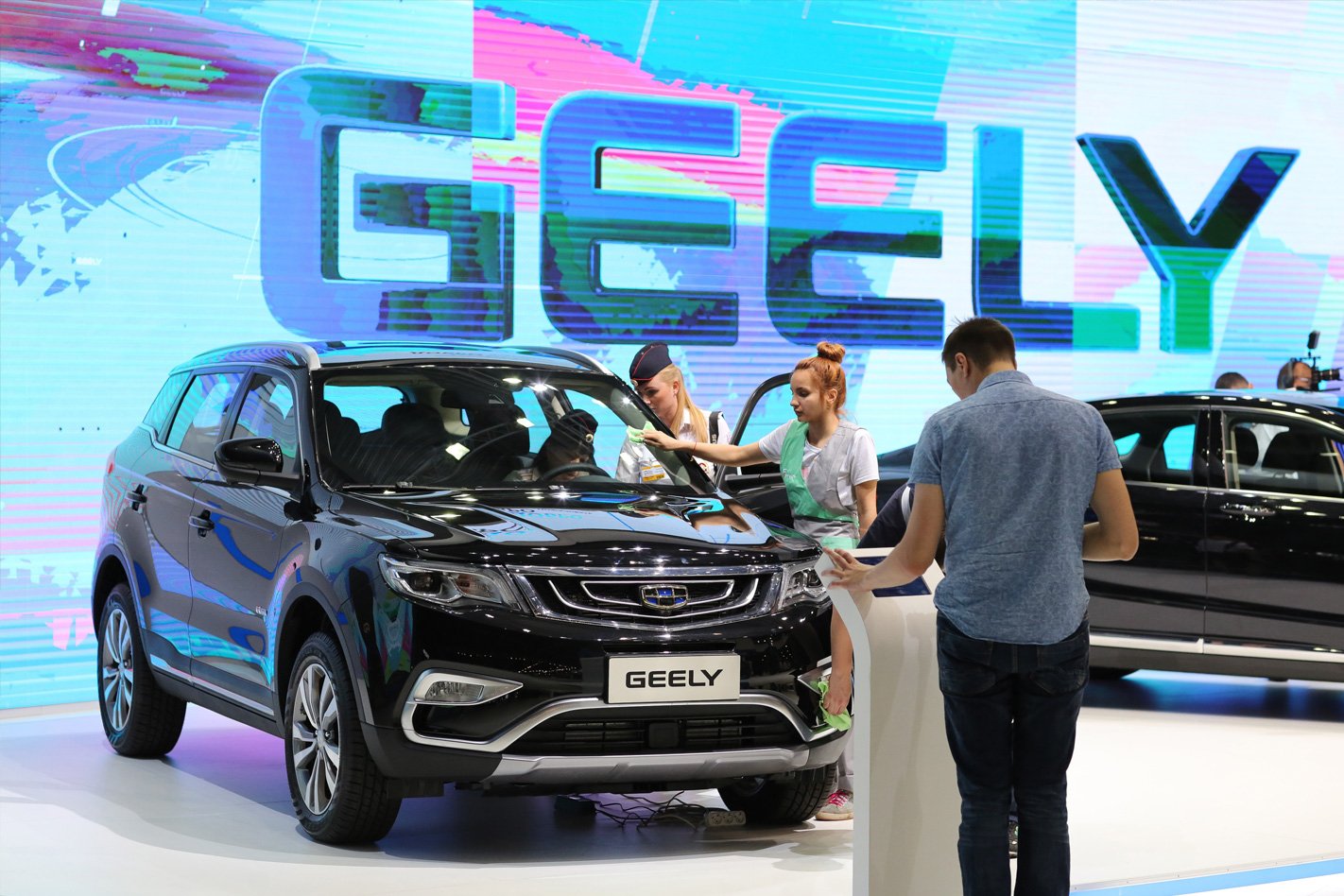
Until last year, Renault and partner Nissan had been in a joint venture with Chinese manufacturer Dongfeng Motor Group, with the former dissolving the venture while the latter remains engaged in the partnership.
Geely recently had 50 per cent of its shares in subsidiary Volvo bought out, with the Swedish manufacturer taking full ownership of its Chinese production facilities from 2023 – a year after the Chinese Government lifts its requirement for foreign carmakers to engage in a joint venture to operate in the country.
Renault has already set a target of reaching 90 per cent EV production by 2030, doing so with the use of new architecture which will be implemented in its vehicles over the coming years.
Snapshot
- Pricing for new Z to start from $73,300 before on-roads
- Just two variants on offer here, one for a limited time only
- Number of units remains unconfirmed
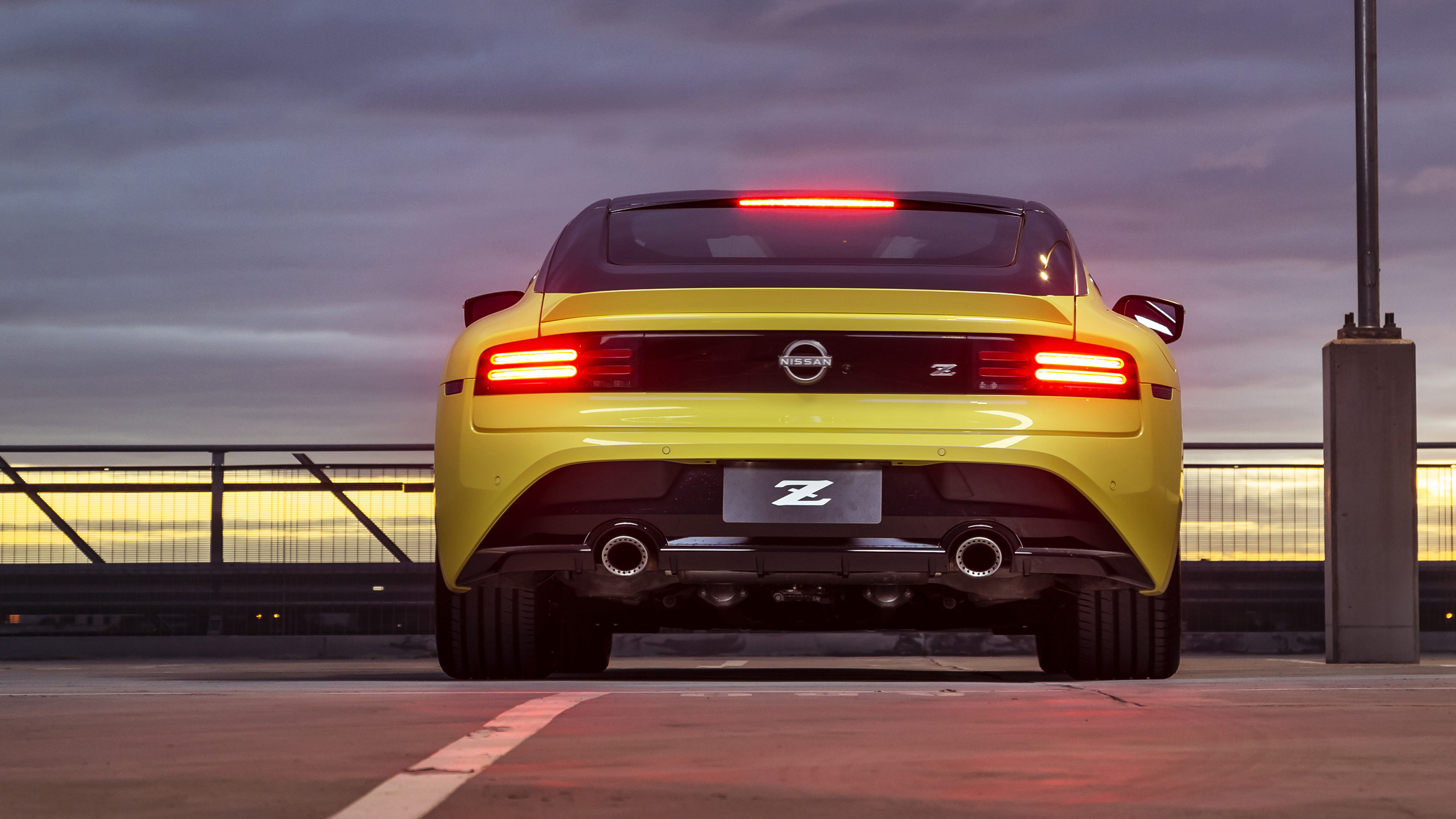
The 2023 Nissan Z will be priced from $73,300 in Australia, before on road costs, when it arrives in the coming months.
That means the reborn sportscar, which is the first new Z car in more than a decade, will undercut its chief rival in the Toyota Supra by a hefty margin.
Exact arrival timing for the new Nissan Z is yet to be confirmed, though Wheels understands the first shipment is due to dock in Australia imminently.
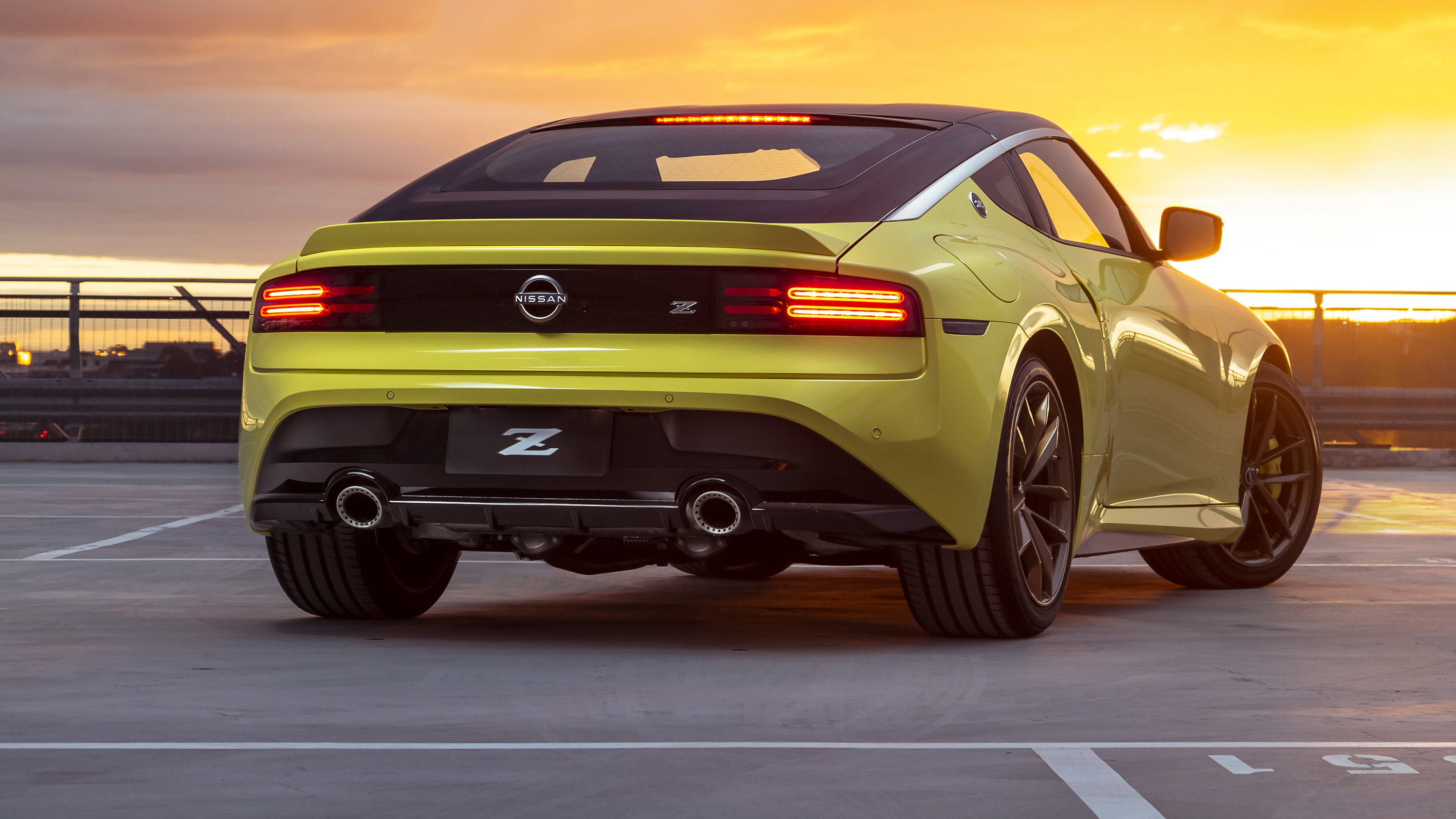
It’s also believed the first shipment is already sold out. Nissan says it has more than 3000 expressions of interest in the reborn Nissan Z and “more than” 1000 of those have already put money down at dealerships.
Nissan executives wouldn’t confirm how many units of the Z will arrive this year due to the current unpredictability of global supply chains, but the first shipload will include a mix of regular Z coupes and limited-edition Proto Spec models.
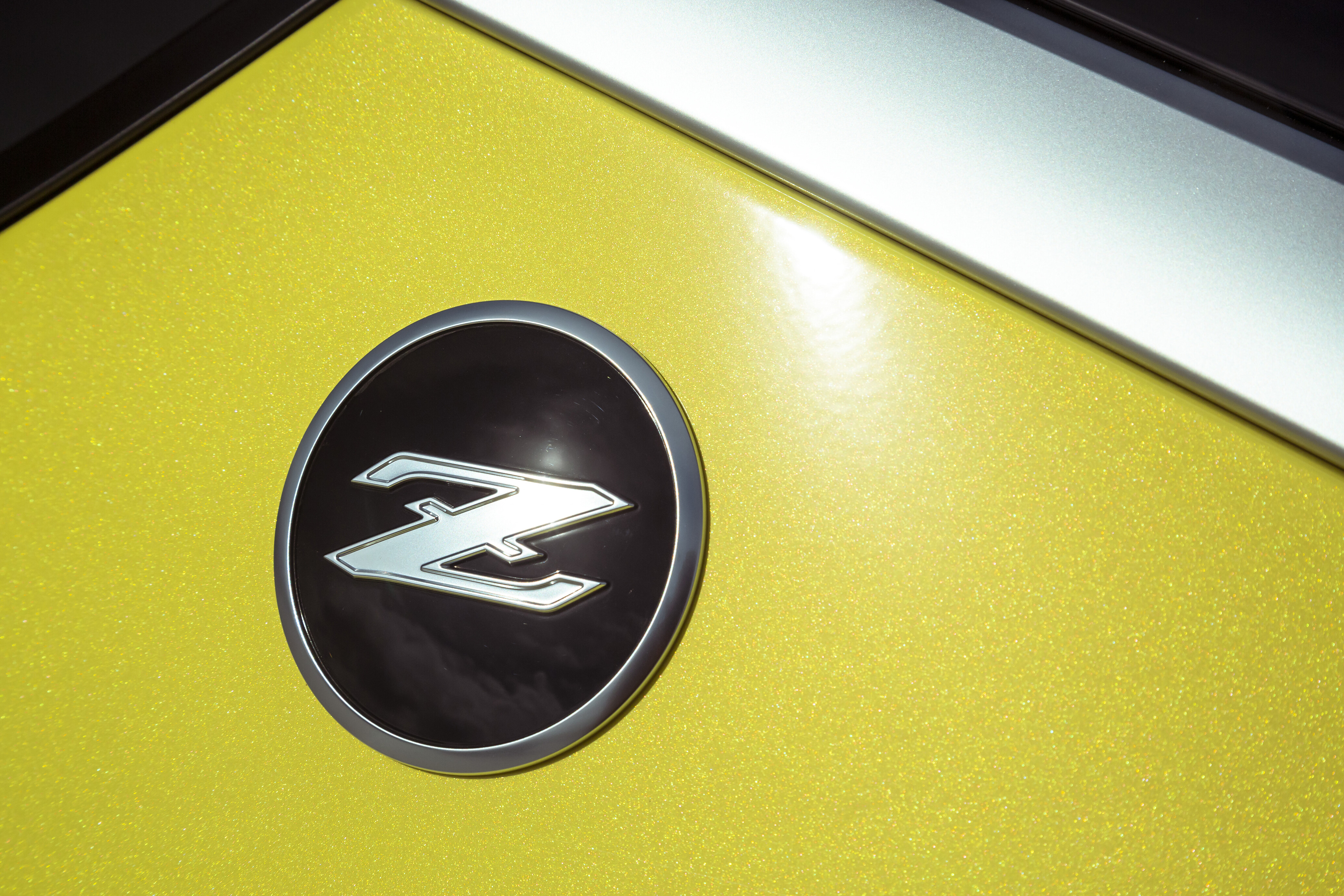
The Proto Spec is priced at $80,700 before on-road and gains a handful of visual upgrades over the standard car, including; forged 19-inch wheels, yellow brake calipers and a two-tone colour scheme with ‘Ikazuchi’ yellow exterior paint paired with a black roof.
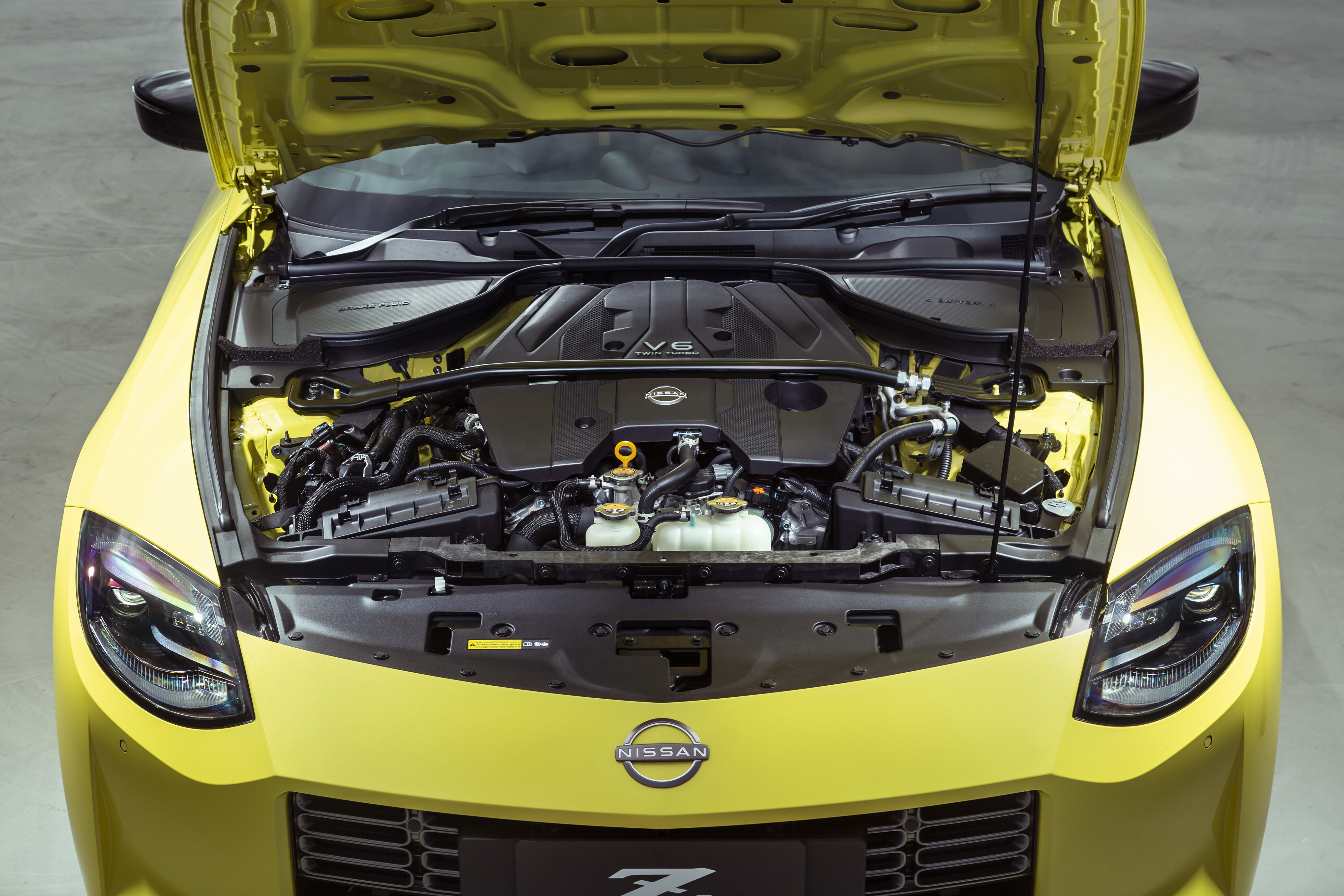
Again, Nissan wouldn’t confirm how many of the limited-edition Proto Specs will be available, but did say it’s “over 100”.
Nissan’s price positioning for the seventh-gen Z sees it undercut the Toyota Supra by as much as $24,000. The Supra is priced at $87,303 for the GT variant and $97,303 for the GTS in automatic guise.
Despite the price discrepancy, the two Japanese sports cars offer similar levels of performance, with roughly 300kW and 500Nm a piece from 3.0-litre turbocharged six-cylinder engines.
But while the Nissan seems strong value when compared with the Supra, today’s announcement is a substantial increase over the outgoing model. The previous 370Z started at $50,490, making the new model a 45 per cent increase when you compare the old and new entry-level variants.
Nissan Oceania managing director Adam Paterson defended the increase, telling Wheels the new Nissan Z is fitted with parts that are more advanced and expensive.
‘We think it’s really competitive, especially when you compare it with what’s in the market from other Japanese OEMs,” said Paterson. “Customers would like anything to start with the lowest possible number, but there’s significant updates with this new model.
“I’d say the engine is the most significant of those. It’s a motor only offered in Nissan’s premium brand [Infiniti]… and isn’t sold in large number of Nissans or other products, so that obviously drives the price up.”
Nissan also pointed to the new Z’s tech-laden cabin and new safety systems as key factors in the price rise. An upgraded safety package now includes AEB with pedestrian detection, lane-departure warning, blind-spot monitoring and rear-cross traffic alert.
Aside from the limited-edition Proto Spec, Nissan will only offer one richly equipped variant of the new Z. Aussie cars are based on the higher of the two specs sold in America (known as Sport or Performance), with a few minor differences.
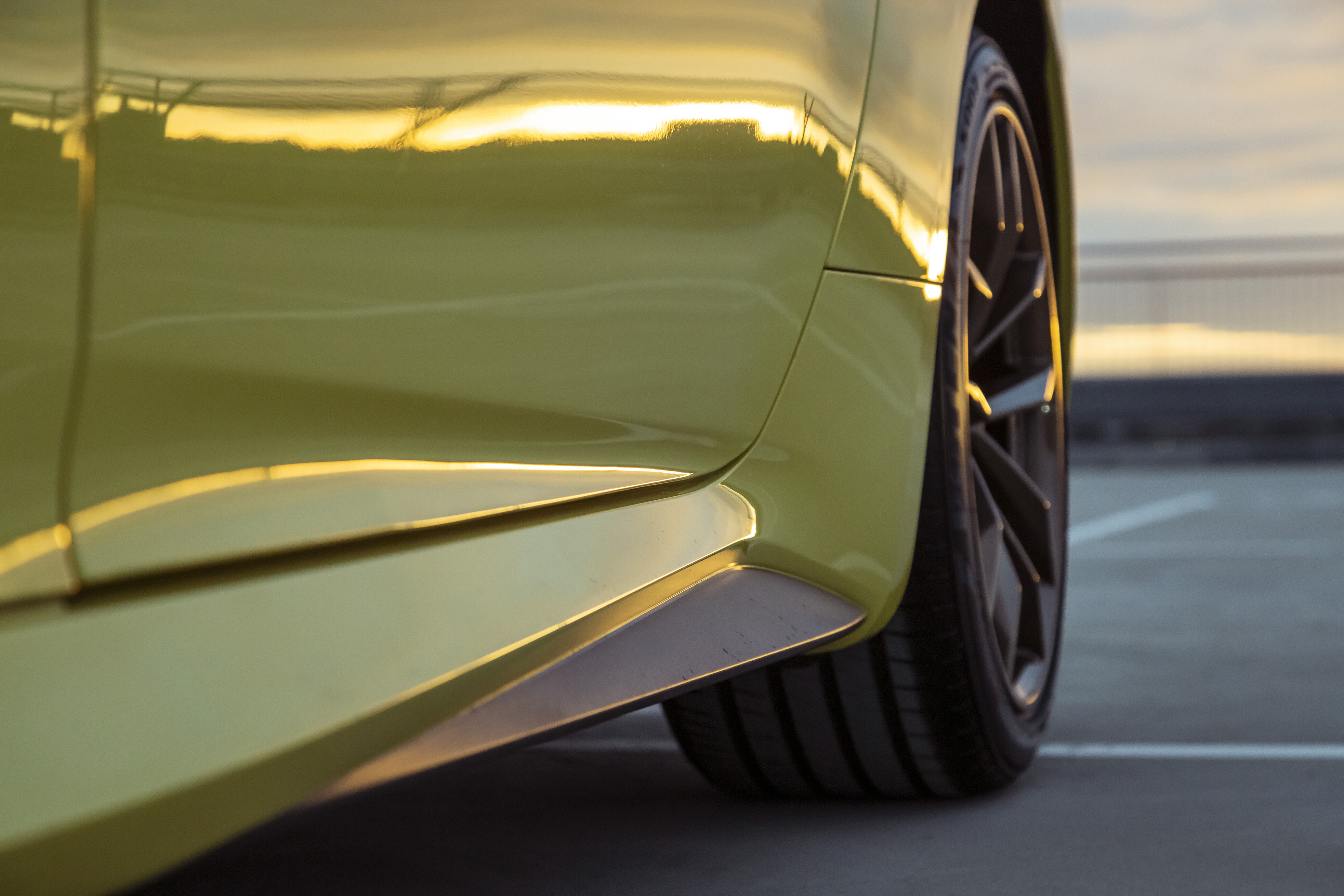
Mechanically our cars score the more powerful brake package (two-piston front calipers with bigger discs) and larger 19-inch wheels wrapped in sticky Potenza S007 rubber.
Buyers will have the choice of either a six-speed manual or an optional nine-speed automatic to pair with the new VR30DETT 3.0-litre twin-turbo V6.
Unusually, Nissan won’t charge a premium if you opt for the automatic gearbox, with both versions costing the same $73,300.
Nissan expects 70 per cent of buyers to select the six-speed manual over the first year of sale, but tips that the automatic will eventually become the more popular gearbox over the sports car’s lifespan.
All Australian-delivered Zs also have a mechanical limited-slip differential and launch control as standard.
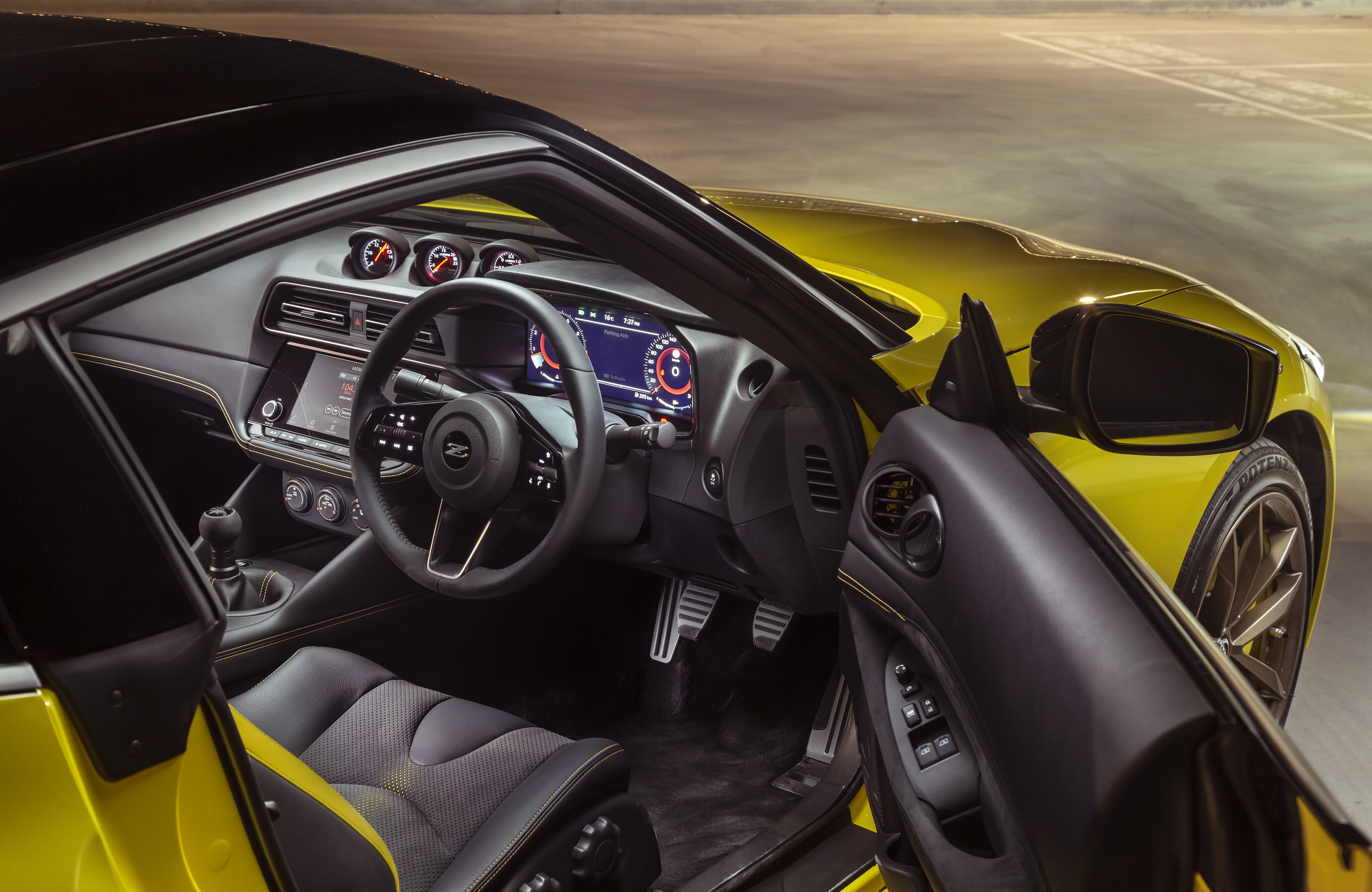
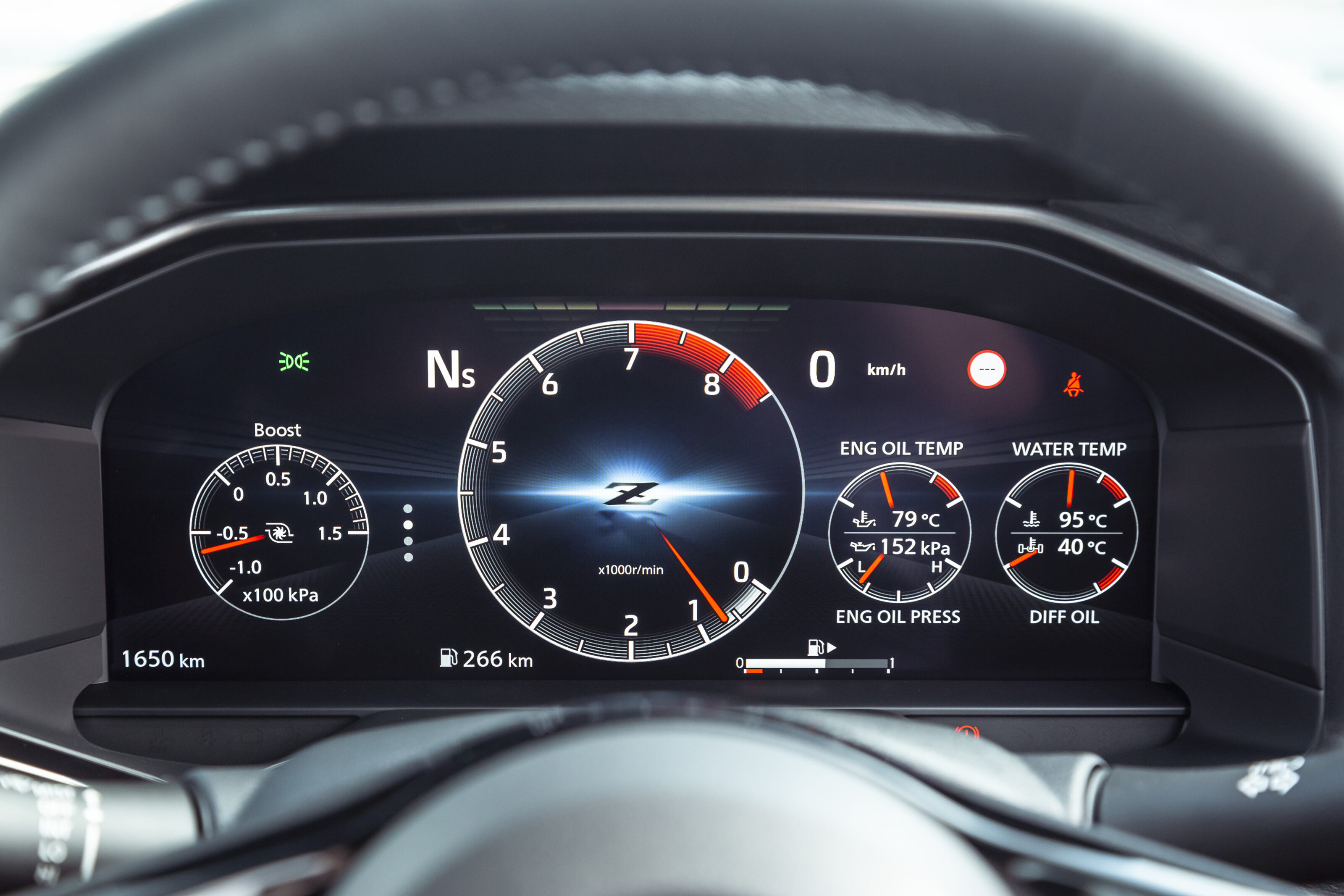
Inside, the new Z delivers a sizeable improvement over the old car when it comes to material quality and equipment. A 12.3-inch digital instrument cluster now features, and the centre screen is compatible with Apple CarPlay and Android Auto.
One difference for Australian cars is we only get the 8.0-inch central touch screen, whereas a larger 9.0-inch unit is available in America. Nissan says the larger screen simply wasn’t available for our market.
Media drives of the new-gen Nissan Z are scheduled soon, so be sure to check out WhichCar.com.au for our full written and video reviews.
2023 Nissan Z Australian pricing
| Variant | Price |
| Z (6-speed manual) | $73,300 |
| Z (9-speed automatic) | $73,300 |
| Z Proto Spec | $80,700 |
Get more on Nissan’s big 2022 line-up refresh
Snapshot
- Toyota’s Japanese plants to produce 50,000 less vehicles throughout May
- 14 lines across eight plants to shut for six days
- Strict lockdowns in Shanghai pinned as the main source of production pauses
Production issues for Toyota and Lexus continue, as the Japanese manufacturers announced they are suspending production at some plants throughout May.
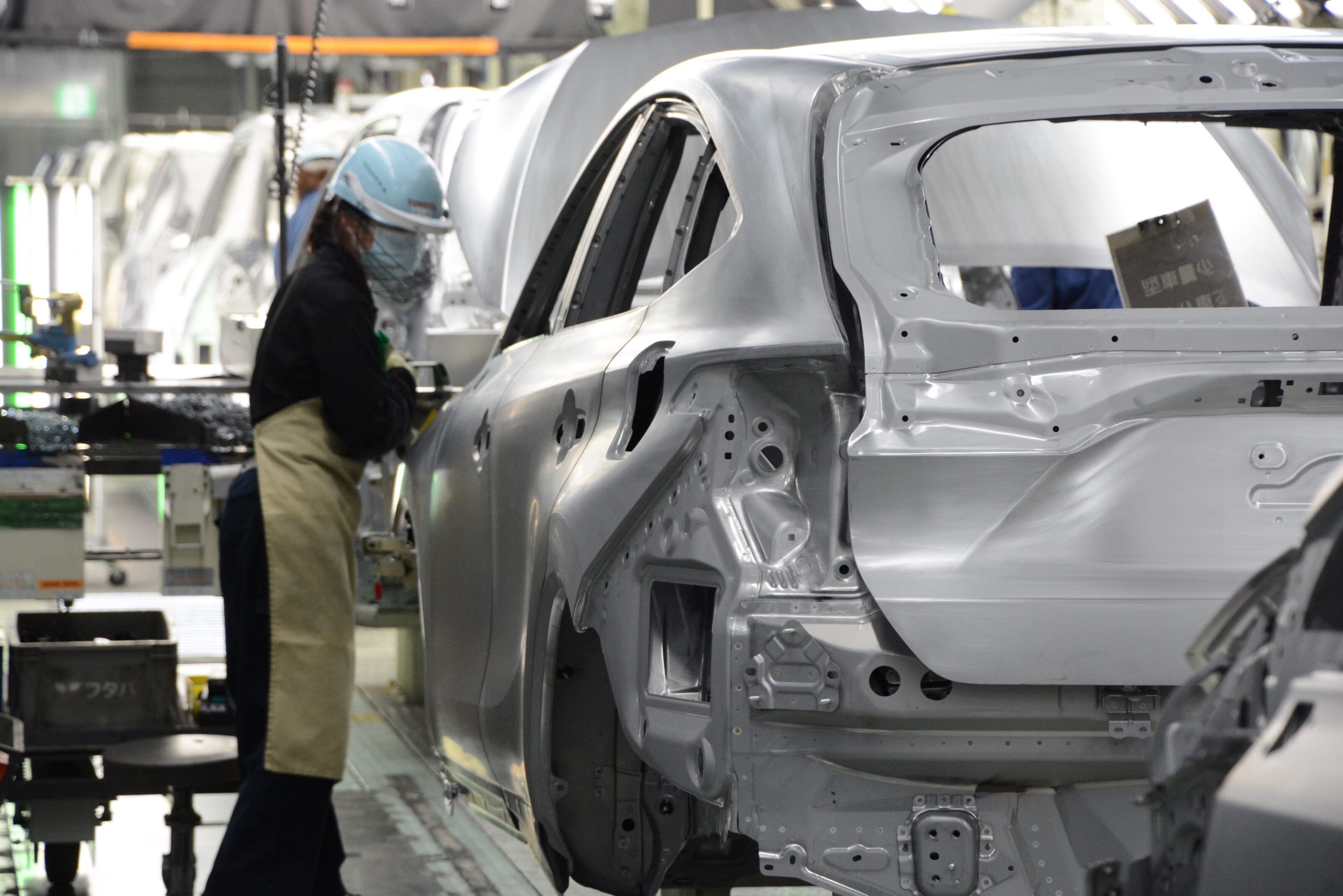
Affecting a total of 14 production lines across eight sites in Japan, the suspension of operations will take place from May 16 to 21 with Toyota pinning the blame on lockdowns in Shanghai, China, preventing it from securing parts necessary to keep cars rolling off the production line.
The six-day shutdown has reduced the month’s projected output of vehicles by 50,000, with roughly 700,000 units now expected to roll off the production lines by the end of May.
Although it’s not known whether the Australian market will be impacted, a number of Toyota models are caught up in the problem, including; the Mirai, GR Yaris, LandCruiser, Corolla, RAV4, Prius, Prado, C-HR and Hiace.
Luxury sub-brand Lexus is also facing production shortages, covering its LS, IS, RC, RC F, NX, UX, ES, RX and LX lines.
The announcement comes less than two months after Toyota had already confirmed plans to cut production volumes in the second quarter of 2022, reducing May output by 10 per cent ahead of an expected five per cent drop across June.
Snapshot
- MY22 Subaru Forester sold out in Australia
- 2023 Forester to go on sale later this year
- No major updates expected, but price rises likely
New car buyers interested in the 2022 Subaru Forester will need to wait, with the brand confirming it has sold out in Australia.
An update to the marque’s local consumer website states the model-year 2022 Forester is currently unavailable for purchase, with local allocation exhausted across each of the popular medium SUV’s model range.
“MY22 Forester has now sold out,” said a spokesperson for Subaru Australia.

“Interested customers are encouraged to speak to their local Subaru retailer about registering their interest for the upcoming MY23 Forester.”
The updated Subaru Forester is expected to launch in the second half of 2022, although the brand is yet to confirm timing or specification changes.
A facelifted version of the Forester launched in Australia less than 12 months ago for model-year 2022, meaning few changes are expected for MY23 versions.
Japanese variants are available with a new 1.8-litre turbocharged petrol engine – shared with the domestic market Levorg, badged WRX Sportswagon in Australia – although the range is likely to remain familiar in Australia, consisting of a 2.5-litre naturally-aspirated petrol and 2.0-litre petrol-electric hybrid.

However, cost adjustments can be expected following Subaru’s recent price hikes across the BRZ, Outback, Impreza and XV line-ups.
The now-unavailable 2022 Subaru Forester could be had with the choice of seven variants, starting from $35,990 before on-road costs for the entry-level 2.5i AWD and stretching to $47,190, plus on-roads, for the flagship Hybrid S AWD.
VFACTS data shows Subaru sold 564 examples of the Forester during April 2022, a decrease of 57.5 per cent over the same month in 2021.
Stay tuned to Wheels for the latest information on the 2023 Subaru Forester.
With the exception of a milk float my brother and I unintentionally carjacked when I was about eight, BMW’s i3 was the first production electric vehicle I drove and, at the time, I realised EVs themselves are not the problem. The German carmaker’s sophisticated five-door proved that the vehicle was no longer the missing part of the equation and, although there were still many components yet to add before battery power reached tipping point, I could live with BMW’s foray.
The truth was and still is, however, that while the range, choice and supporting infrastructure of electric vehicles has progressed in the ensuing eight years, a vehicle powered exclusively by a battery is not quite feasible as the only car on the driveway for many. What BMW and many other brands have identified, is that there’s a middle ground between pure combustion power and pure battery with potential to be tapped.
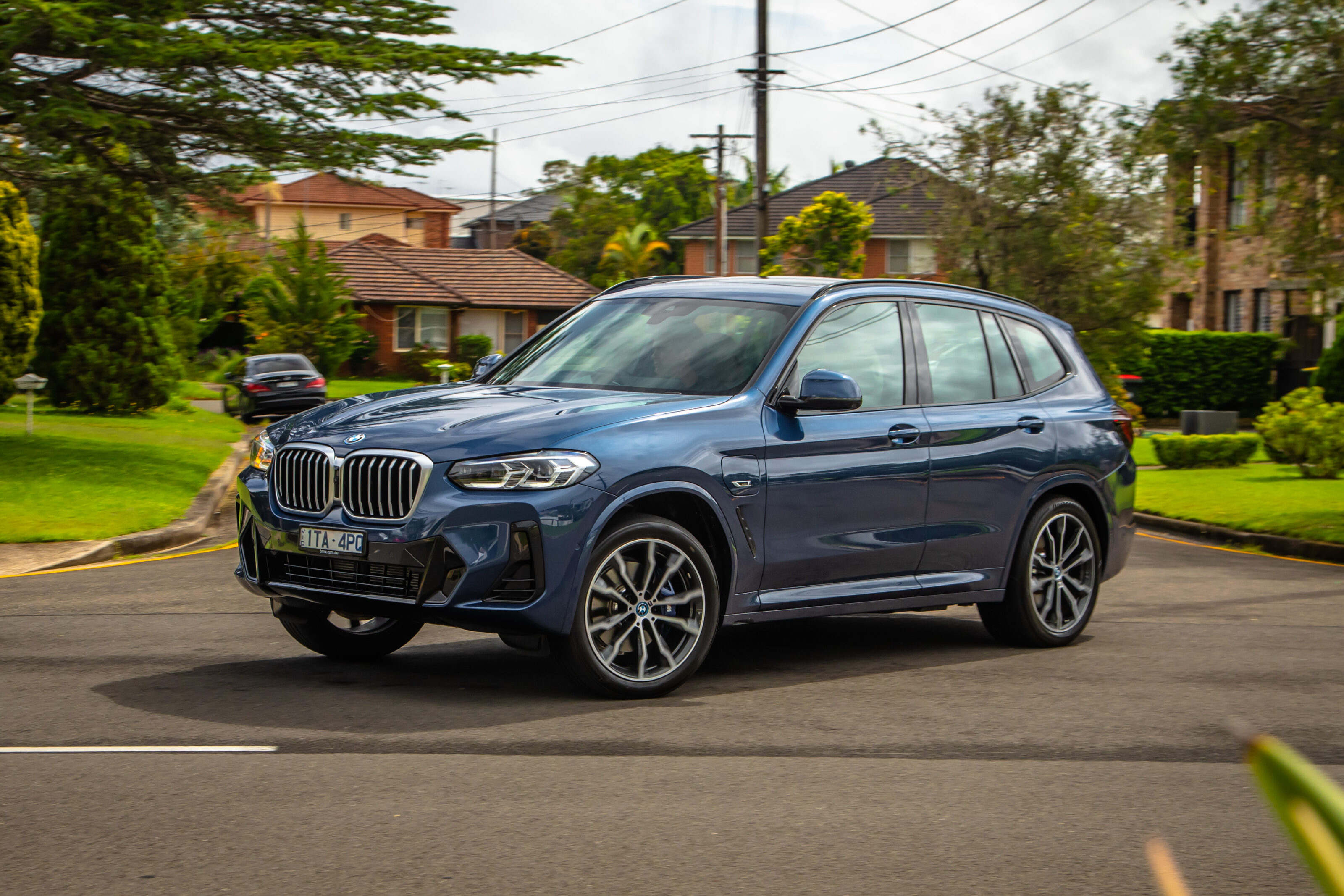
That’s where this car comes in. Unlike the i3 which could be bought as a range-extended hybrid, the new BMW X3 xDrive 30e is a more mainstream plug-in hybrid, meaning it can be charged at home and driven about 41km using its 12kWh battery alone. After that, a 2.0-litre turbo-petrol four-cylinder takes over for a more conventional driving experience.
This particular variant is therefore two X3s in one. It has essentially the same engine and transmission as the entry-level sDrive 20i but with xDrive all-wheel drive, and a little of the new pure-electric iX3’s soul albeit packing a significantly reduced zero-emissions range.
This variant is two X3s in one – essentially the same engine and transmission as the sDrive 20i, all-wheel drive, and a little of the pure-electric iX3’s soul
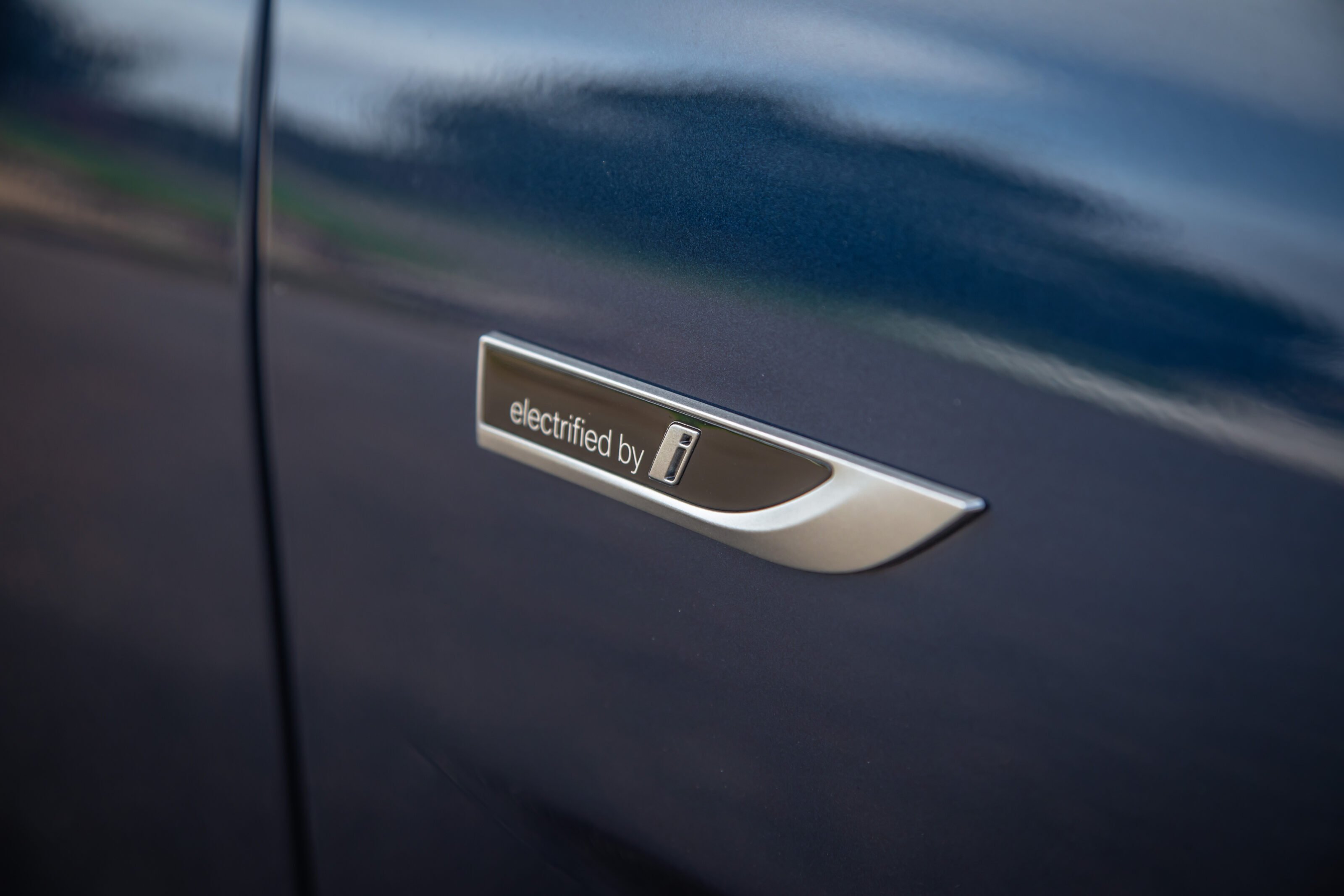
BMW claims that range to be 41km and while some other manufacturers’ models require a hypermile driving style to achieve their claimed figures, that’s not the case in the X3. We managed exactly 40km before needing a recharge when driving mostly on suburban roads where there’s minimal drag on the boxy body and the effect of regenerative braking can be maximised.
Regen is mild and the hybrid powertrain seems to favour more efficient coasting rather than trying to recapture power that’s already been spent and we particularly like how the calibration only resorts to supplementary petrol power as a last resort. Unlike some milder hybrids, most of our driving was with the engine off and that was without having to switch from the default drivel mode to pure electric.
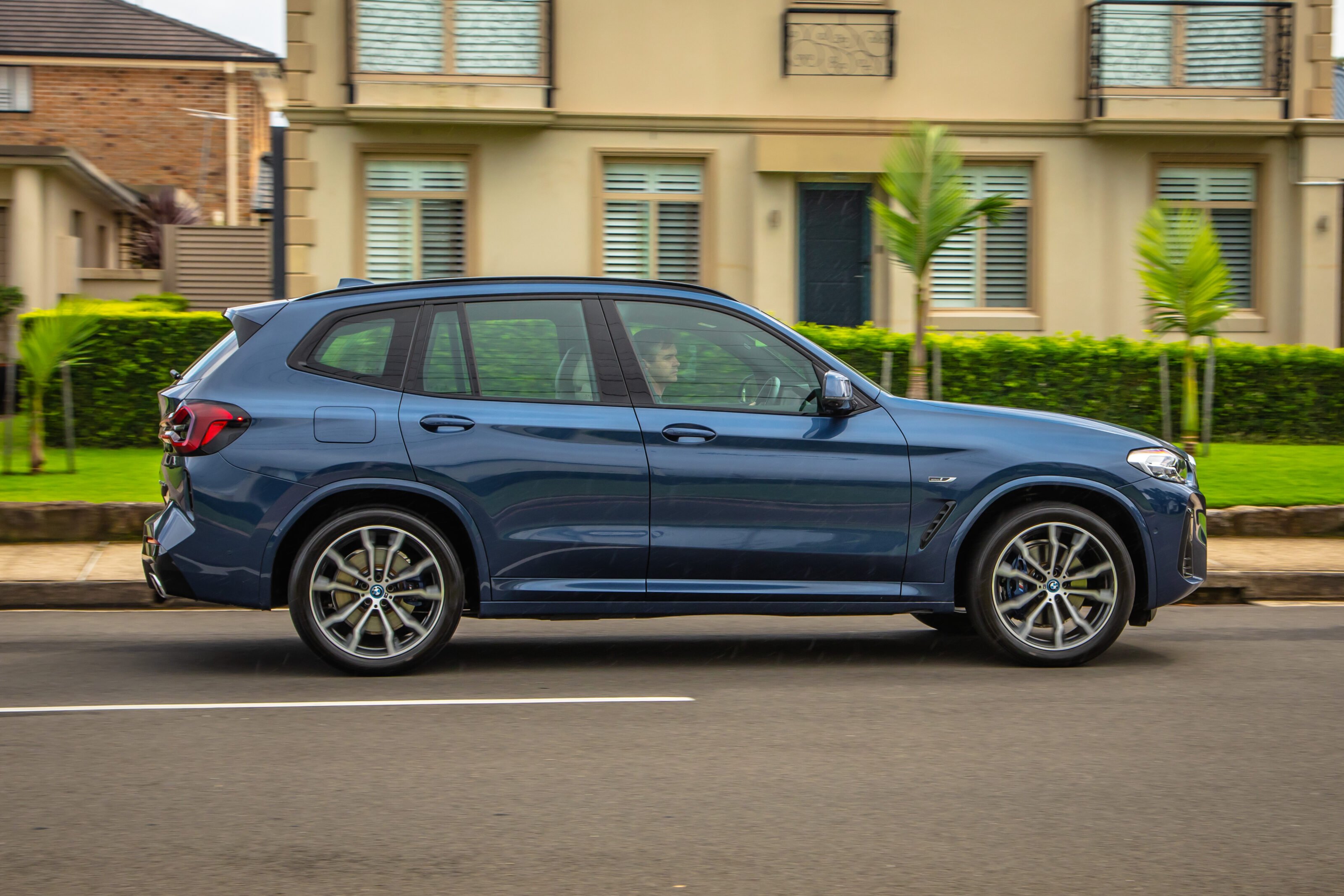
The various driving modes are easily accessed through hard buttons rather than having to scroll through a list or dive into submenus. Our favourite was Sport with XtraBoost, which was sufficiently aggressive to get the most out of the X3’s well-tuned chassis.
A firm ride was easy to live with and while the steering is a little numb it’s direct nonetheless, while the previously dormant engine wakes up with a satisfying, purposeful note.
Acceleration has a good sense of urgency even in pure electric mode, while the full combined effect of petrol and electric working in unison is strong and linear. Its full 215kW and 420Nm output is the most available from a combustion-powered X3 without straying into the coveted M Power family and is good for a zero to 100km/h dash in 6.1 seconds.
The eight-speed automatic transmission also deserves praise with a deft calibration that works wonderfully with the changing electric and hybrid power delivery.
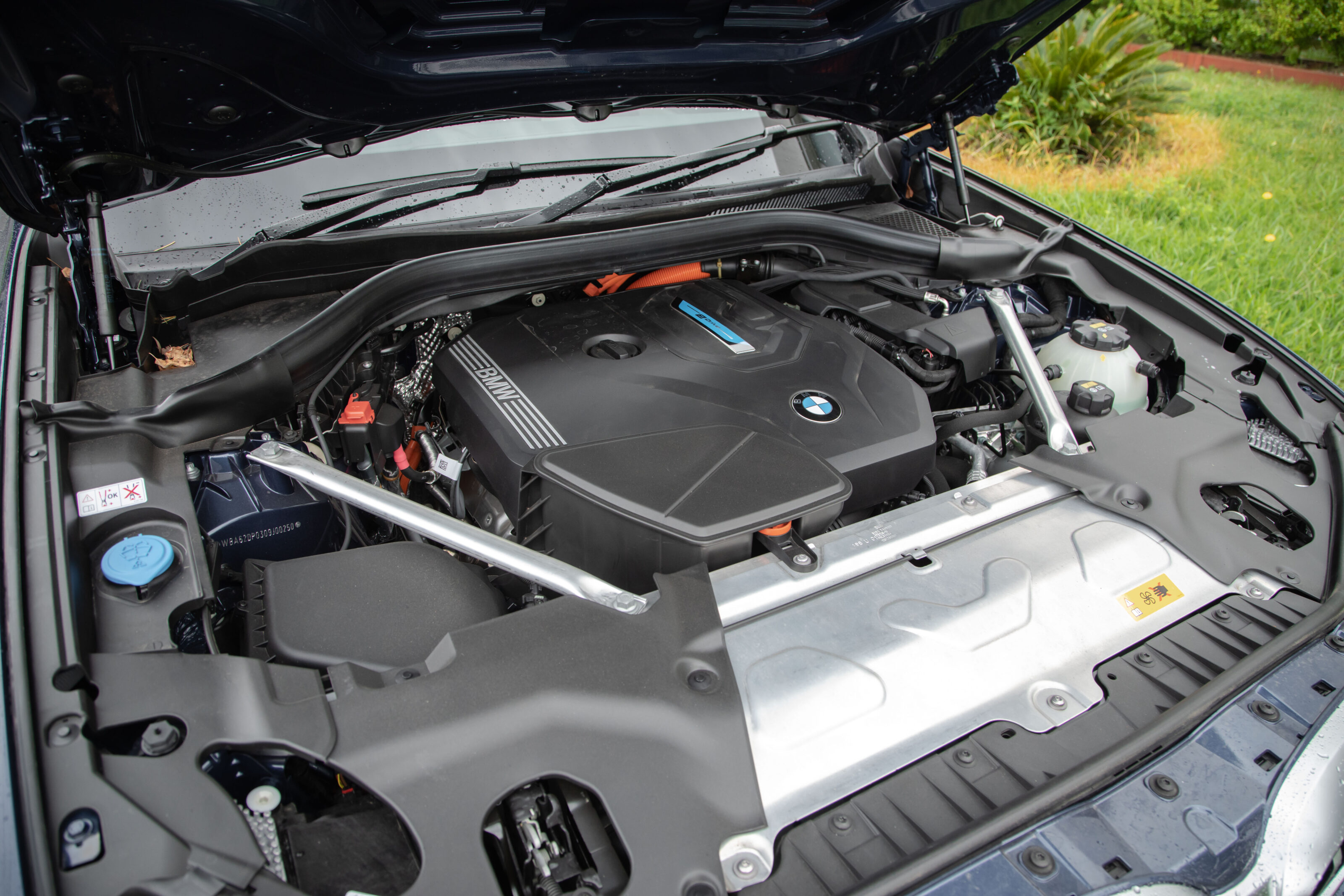
When it comes to economy, the focus with this car was more on functionality of the hybrid system than overall figures on paper, but during our short time with the X3, its engine mostly fired when the full dose of performance was required and the car was returned with an indicated 560km of total range remaining in the 50-litre tank. That’s pretty good by any scale.
Perhaps related to the mild regenerative braking was a slightly weird-feeling pedal that seems under-assisted until the vehicle is almost at a standstill, at which point the braking becomes more aggressive. As a result, it’s hard to drive the 30e smoothly at low speeds and in stop-start traffic.
Acceleration has a good sense of urgency in pure electric mode, while the combined effect of petrol and electric in unison is strong and linear
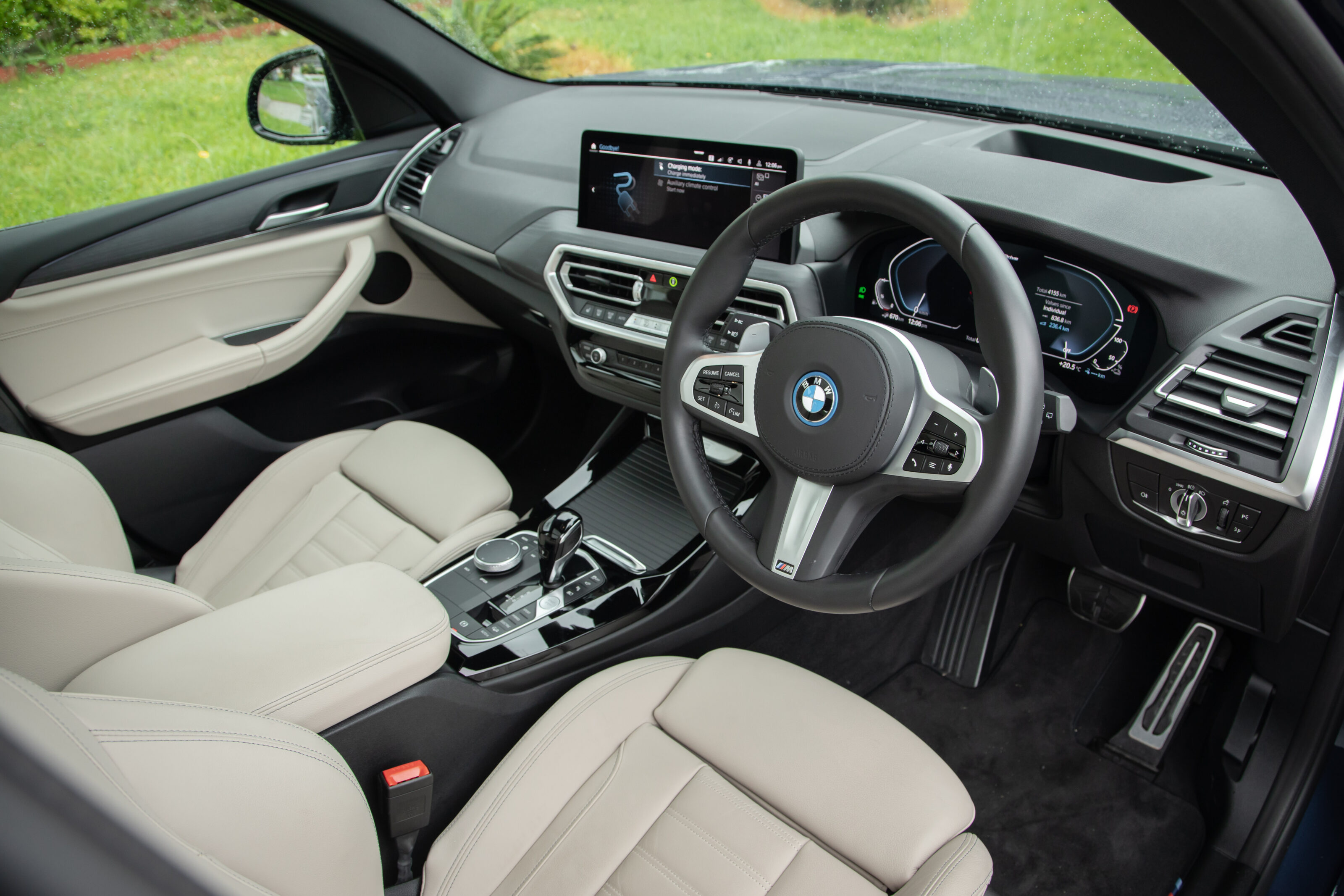
Technologically though, the 30e really stands out. Its cabin is well-appointed and beautifully designed, your eye drawn to the impressive digital displays first. There’s a whopping 12.3-inch screen for the central information and entertainment systems, while the driver gets a second equally sharp 10.3-inch Live Cockpit Professional screen for instrumentation.
The X3 wasn’t quite late enough for the next generation of BMW’s excellent iDrive operating system, but version 7 is still crisp and intuitive. Enough options and controls are available through submenus but none of the most frequently accessed functions, which thankfully are confined to buttons on the dash, centre console and steering wheel.
A massive head-up display complements the digital screens with full colour and heaps of information options via a customisation menu, while ambient lighting lifts the cabin feel and sophistication after dark. The parking assistance was the only black mark on the comprehensive list of tech with operation that was far too paranoid to be useful in a lot of instances.
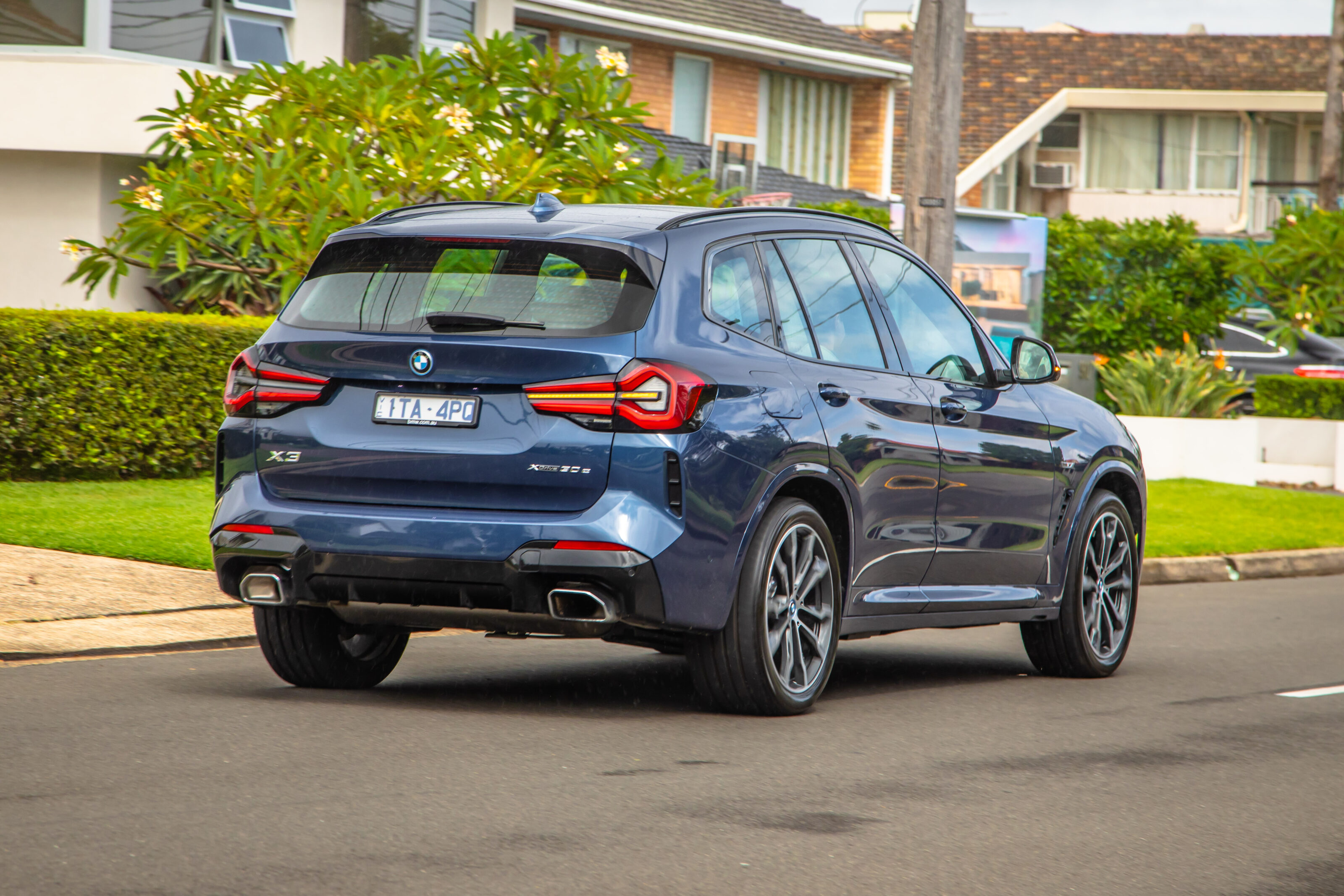
Practically, the 30e has virtually all of the ‘standard’ X3’s virtues with a decent second row for adults and a good scattering of charging and storage options.
The boot is the only compromised point, with volume shrinking by a significant 100 litres to 450L. The raised boot floor also makes it possible for items to fall out when the electric tailgate is opened if they have moved in transit.
That aside, the X3 is a vehicle that has been comprehensively thought out and its hybridisation doesn’t feel like an afterthought clumsily thrown into the line-up between the petrols, diesels and the EV.
Its chassis feels as though it was developed specifically for the extra weight of 2065kg, the engine and transmission are well programmed for the electric assistance and the styling is subtle but nods at something a little different going on under the bonnet.
Oh, and the option to leave the air-conditioning running even when the car is switched off is another very welcome feature during the most savage summer months. Coming back to a cool cabin after a short shopping trip is a trick we would never tire of.
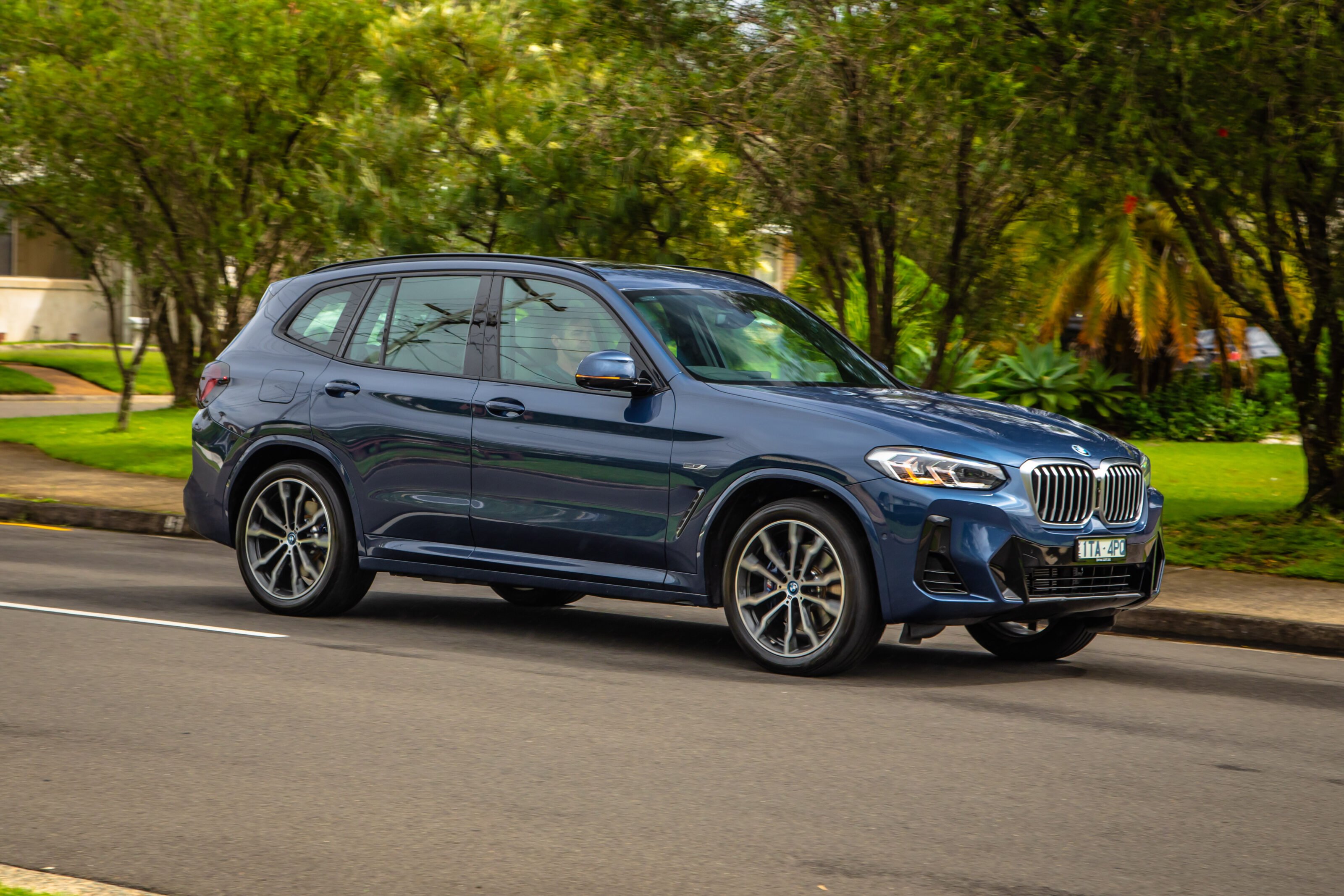
It might appear, therefore, that the xDrive 30e is the X3 largely without compromise but that’s not quite the case.
With any plug-in, you’re still paying for a full engine and drivetrain similar if not identical to petrol-only versions, but with the added cost of the electric parts too, which is why the starting price for BMW’s PHEV X3 is a hefty $104,900 before on-road costs.
As for alternatives, the 30e almost has the stage to itself. The only threat in the segment comes from Mercedes-Benz which offers a plug-in version of its GLC with a suspiciously similar 300e boot badge. Opt for the Merc and you’ll get a similar package but for a price that’s more than $9000 cheaper.
For fans of the X3 with just one parking spot, its pure electric range is perfect for negotiating suburbia but has the legs for an occasional getaway
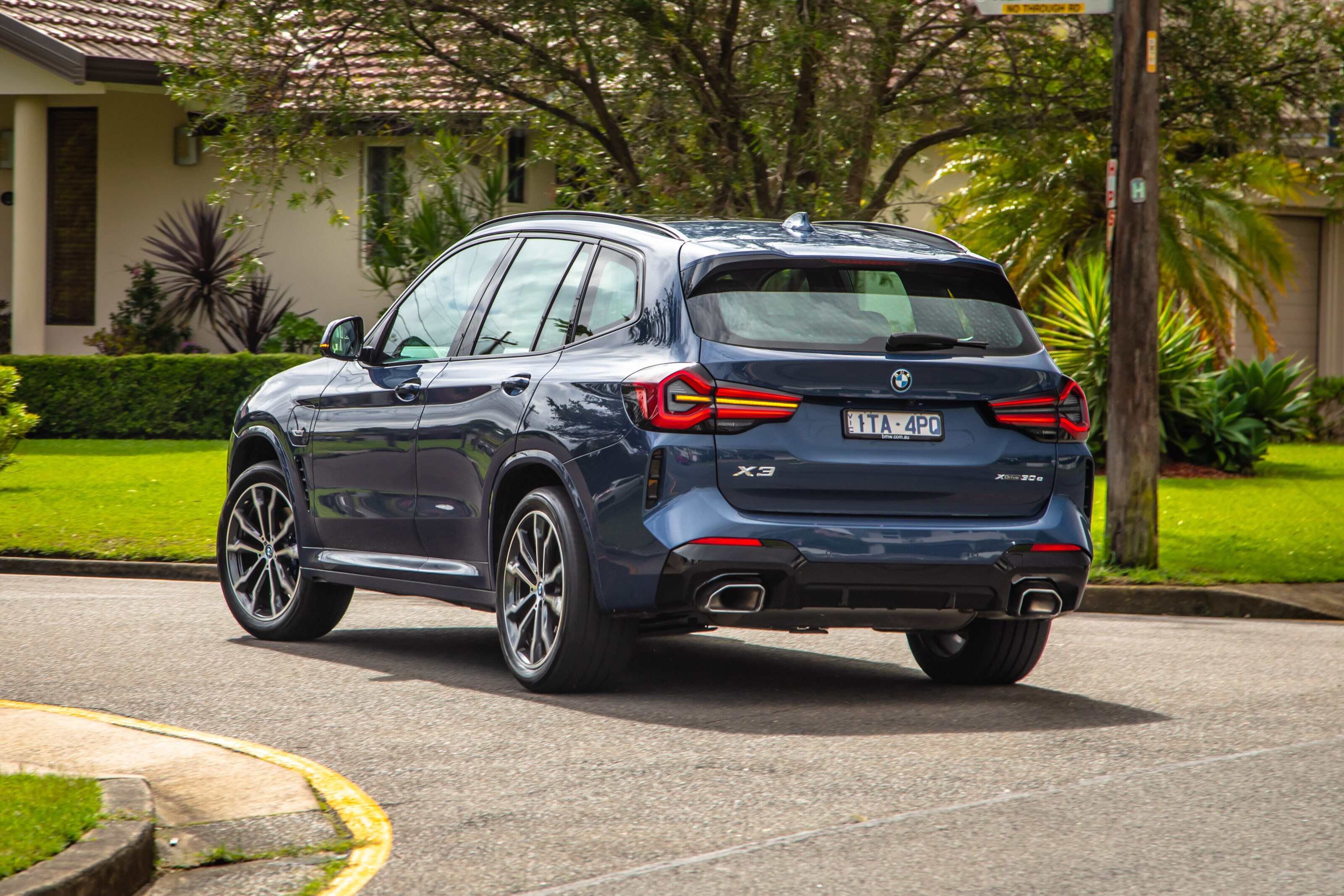
The value proposition is even harder to balance when you consider the full-electric iX3 is ‘only’ 10 per cent more expensive, priced from $114,900 plus on-road costs.
Ownership costs don’t help either. The plug-in will still need oils and filters when it’s time to service and cop rising fuel prices whenever a top-up is necessary, while the more expensive EV version has a cheaper servicing schedule along with the potential to save on electricity costs using home solar and power walls, for example.
So who is the X3 30e for? A majority of PHEV owners of all kinds learn fairly quickly that even the relatively limited pure electric range is more than enough for their weekly commute, and an EV with a longer range would actually suit their lifestyle.
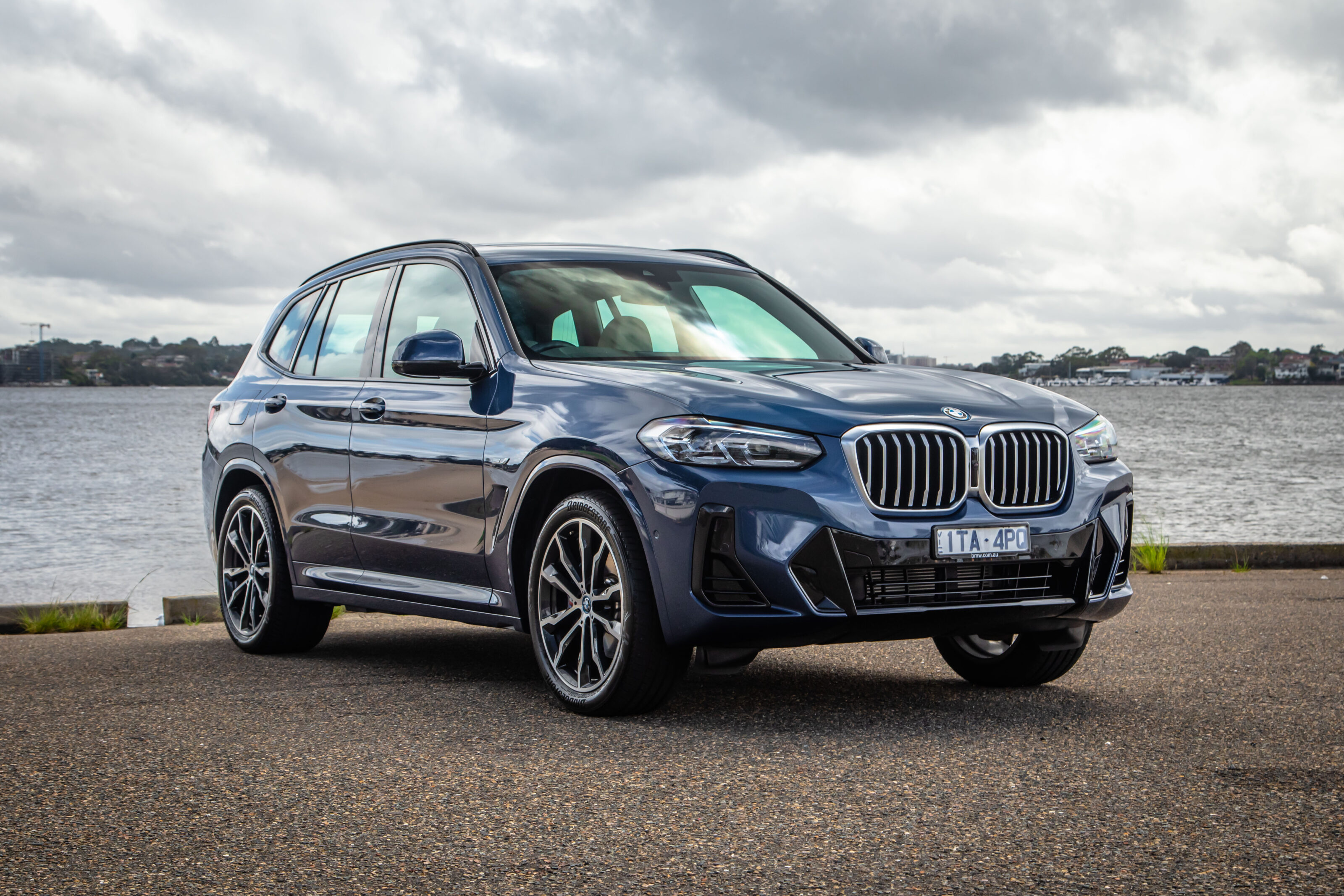
If you like what the X3 model has to offer but haven’t yet decided whether it’s time to make the switch to electric, the 30e is an expensive way to make up your mind, but the plug-in certainly still does have a place.
For fans of the X3 with just one parking spot, including inner-city dwellers and residents in other high-density areas, its pure-electric range is perfect for negotiating suburbia but still has the legs of petrol power for an occasional getaway.
Add to that almost exactly the same practicality proposition of the petrol and diesel X3 variants, as well as the xDrive advantages to take you further.
There are multiple compelling sides to the plug-in X3’s personality if you’re still sitting on the fence between electric and combustion power, but its versatility comes at a cost.
Land Rover has sold more than 800,000 Range Rover Sports worldwide since the second-generation model launched in 2013.
That’s why the third-generation Range Rover Sport looks very familiar at first glance – you don’t mess with success.
Up close and in the metal, however, the 2023 Range Rover Sport is a very different beast.
Though its basic proportion and stance are very similar to the outgoing model, JLR’s chief creative officer Gerry McGovern’s reductionist design philosophy has resulted in an exterior defined by beautifully rendered surfaces and sophisticated details, and a significantly more luxurious, modernist interior.

The front end features a narrower grille framed by narrower headlights, and bumper fascias that wrap smoothly around to the body sides.
As with the Range Rover, the tops of the doors roll over to meet the flush side glass without a visible seam or rubber seal, and the D-pillar is hidden under glass. At the rear are new horizontal format LED tail-lights linked by a black panel. The number plate has been repositioned from the tailgate to the bumper.
The rear graphic is not as overtly dramatic as that of the new Range Rover. But, like the rest of the body design, the execution is superb. Look closely and you’ll notice a gentle crease that effectively wraps around the rear of the car, subtly adding strength to the whole rear end.

One touch of visual flamboyance is the longest roof spoiler ever fitted to a Rangie. It makes the trademark rearward rake of the Range Rover Sport roofline look even more dramatic. The optional Dynamic appearance pack delivers a sportier, more dramatic treatment of the front splitter and rear faux diffuser.
That smoothly finished exterior isn’t just for show: The new Range Rover Sport boasts an impressive drag coefficient of just 0.29, a 15 per cent improvement over the outgoing model.

The re-architected interior has been designed to deliver a sportier, more driver-focused ambience than the ultra-lux vibe of the big Range Rover. The steering wheel has three spokes and is of a slightly smaller diameter than the Range Rover wheel, and the high centre console, which puts the transmission shifter and various minor controls within easy reach, unapologetically delineates the driver and passenger zones in the front cabin.
The key dimensional changes over the outgoing Range Rover Sport – a 74 millimetre increase in the wheelbase and a 67mm increase in overall length – mean rear seat passengers benefit from 20mm more legroom and 15mm more knee room, and the rear load space has 55 litres more capacity.

At the centre of the dash is a curved 13.1-inch haptic response touch screen to control the Pivi Pro infotainment system that Nick Collins, JLR’s executive director of vehicle programs, says makes the Range Rover Sport “a powerful connected device in your daily life”.
Among the apps the system can run is Amazon’s Alexa, and with its 12 ultra-sonic sensors and four cameras, the system will allow the Range Rover Sport to park itself with the driver standing outside the car.
Standard audio is Meridian’s very good 400W 15-speaker system, but those who want the ultimate sound can opt for the 1430-watt, 29-speaker Meridian Signature Sound System.
You’ll hear the difference rather than see it – many of the speakers are hidden behind a new woven acoustic fabric on the door panels. Speakers hidden in the headrests are used for a noise cancellation system that counters tyre noise picked up by microphones in each wheel well.

It’s a Range Rover, so of course the seats are leather trimmed. But in addition to the three leather grades – standard, Windsor, and semi-analine – the Sport’s reprofiled seats can be trimmed in a leather-like Ultrafabrics trim that JLR’s colour and materials manager, Mel McWhirter, says is odour-free, anti-microbial, anti-allergenic, weighs 30 per cent less than traditional leather, and produces one-quarter the CO2 in its journey from raw materials to finished product.
Codenamed L461, the new Range Rover Sport has been developed almost in tandem with the new full-size L460 Range Rover, sharing its aluminium intensive MLA-Flex vehicle architecture and powertrain components. MLA-Flex has been designed to accommodate mild-hybrid, plug-in hybrid, and full battery-electric powertrains, and JLR’s powerful EVA 2.0 electronic architecture.

Powertrains start with the 3.0-litre Ingenium turbocharged straight-six petrol and diesel engines with the 48V mild-hybrid (MHEV) system. The petrol Ingenium is available in P360 trim with 265kW and 500Nm of torque, and P400 trim with 294kW and 550Nm. The diesel line-up comprises the 183kW/ 600Nm D250, the 221kW/650Nm D300 and the 258kW/700Nm D350 versions.
The top petrol engine is a BMW-sourced 4.4-litre twin-turbo V8 that powers the P530 model. It produces 390kW and 750Nm and JLR says it will hustle the Sport from 0 to 100km/h in 4.5 seconds. That makes the P530 as quick as the outgoing Sport SVR, yet the engine is claimed to be 17 per cent more fuel efficient.

The most interesting powertrain, however, is the plug-in hybrid (PHEV) that marries the 3.0-litre petrol Ingenium straight-six with a 105kW e-motor to deliver a total system output of 375kW and 700Nm, enough to scoot the PHEV Sport to 100km/h in 5.4 seconds on the way to a 242km/h top speed.
A 31.8kWh battery (that’s its usable capacity, which is three-times previous PHEV Land Rover battery packs) delivers a 125 kilometre pure-electric driving range, and helps achieve a total real world distance of 740km.
The range will later be expanded with the addition of an all-electric model in 2024. JLR insiders remain tight-lipped on the details, but the electric-powered Sport will have e-motors front and rear to deliver the mandatory all-wheel drive, and sophisticated control systems that will allow infinitely variable torque splits to ensure good handling on the road and good capability off it.
Outputs north of 375kW and 700Nm seem logical, along with a 500km or better driving range courtesy of a battery pack that looks to have around 100kWh capacity.
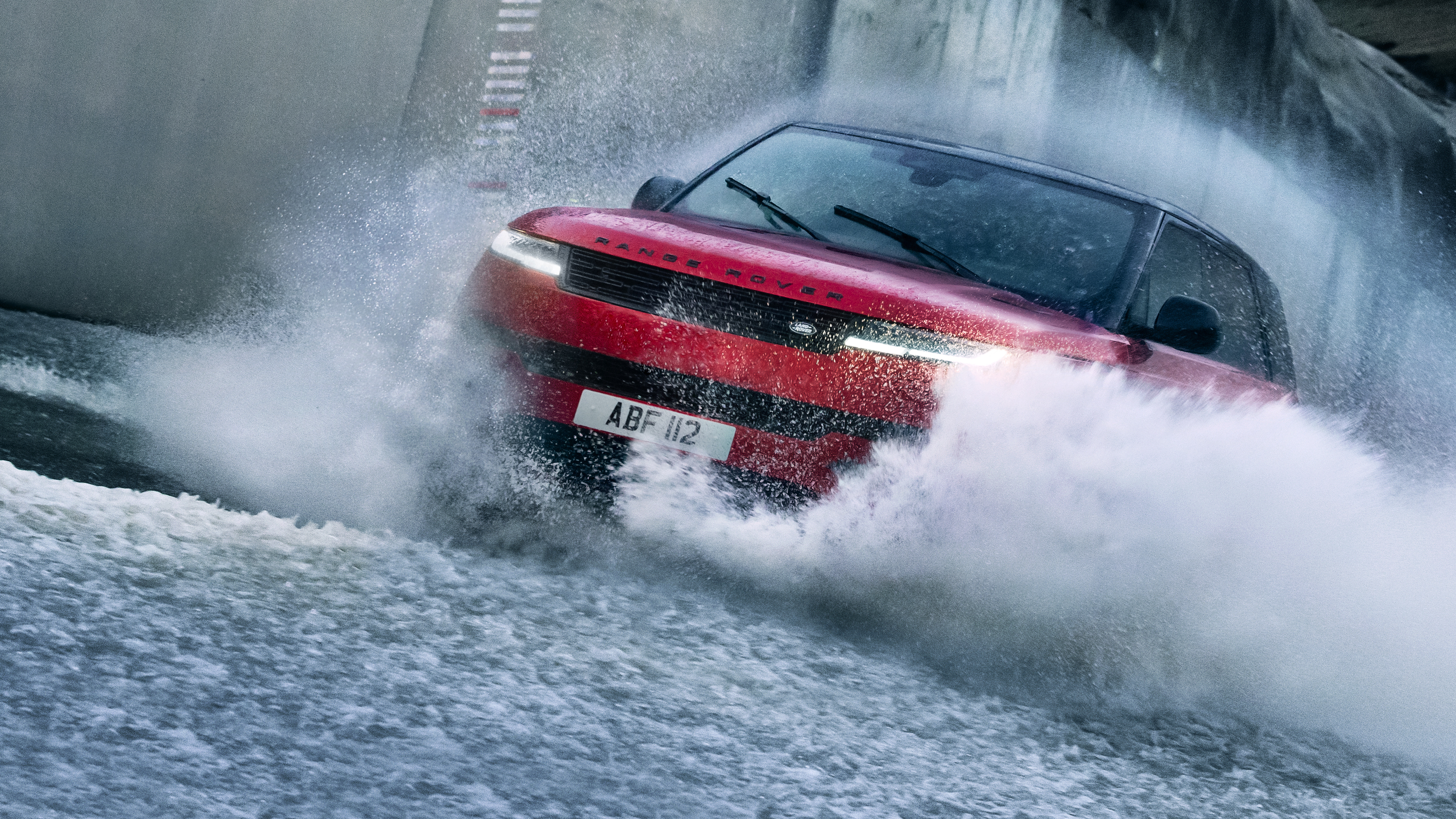
The MLA-Flex architecture and revised suspension hardware gives the new Sport on-road dynamic capability far beyond that of the outgoing car, says vehicle programs chief Nick Collins. The body structure is 35 per cent stiffer, and the dynamic air suspension features two chamber air springs to help reduce pitch and roll, and Bilstein dampers to better control body motions.
Off-road capability hasn’t been compromised, however. All models come with a high/low range transfer case, wheel articulation is 546mm, and the air suspension can hoist the Sport 135mm above its standard ride height to give it 281mm of ground clearance. It will climb a 45-degree gradient, and wade through 900mm of water.
“No other SUV has the Range Rover Sport’s breadth of capability,” insists Nick Collins.

The optional Stormer Handling Pack – named after the dramatic 2004 Range Stormer concept that previewed the original Range Rover Sport – adds active stabiliser bars with electric motors that can apply 900Nm of twisting force in 200 milliseconds, and a maximum of 1400Nm helps control roll during cornering, plus torque vectoring by braking, an active e-diff at the rear, and rear-wheel steering to improve agility.
Rear-wheel steering will be standard on P510e and P530 models. The system turns the rear wheels up to 7.3 degrees in the opposite direction to the fronts at speeds up to 50km/h to make the Range Rover Sport feel even sportier in the twisty bits and reduce the turning circle. Above 50km/h the wheels are steered in the same direction to improve stability on high-speed changes of direction.

The new Range Rover Sport is available to order now, with prices starting from $139,160 plus on-road costs, and first deliveries are expected in the fourth quarter of this year.
A First Edition model will be available in D350 form throughout the first year of production, and a limited-edition P530 model will be available in an exclusive online sales event later this year. Both will be based on the lavish Autobiography trim level.
We’ll wait until we drive it, of course, but at first acquaintance the new Range Rover Sport looks like a thorough and deeply thoughtful rework of a formula that’s found favour around the world. And with good reason: You don’t mess with success.

Snapshot
- 2023 Range Rover Sport on sale now
- Pricing starts from $139,160
- Choice of petrol, diesel, mild-hybrid and plug-in hybrid powertrains on offer
The 2023 Range Rover Sport has gone on sale in Australia priced from $139,160, with deliveries set to commence in the fourth quarter.
Though there will be a choice of petrol, diesel, mild-hybrid and plug-in hybrid (PHEV) powertrains on offer in the seven-strong line-up, just four can be had from launch – with the three petrol-powered variants not available until 2023.
Hot on its heels will also be a fully-electric Rangie Sport, due to arrive on our shores in 2024.

2023 Range Rover Sport Australian pricing
All prices are before on-road costs.
| Model | Price |
|---|---|
| SE D250 | $139,160 |
| Dynamic SE D300 | $151,026 |
| Dynamic HSE D350 | $168,638 |
| Autobiography D350 | $191,141 |
| First Edition D350 | $196,359 |
| Dynamic HSE P510 PHEV | $198,097 |
| SE P360 | TBC u2013 arrives 2023 |
| Dynamic SE P400 | TBC u2013 arrives 2023 |
| Dynamic HSE P400 | TBC u2013 arrives 2023 |
| Dynamic HSE P530 | TBC u2013 arrives 2023 |
| Autobiography P530 | TBC u2013 arrives 2023 |
| First Edition P530 | TBC u2013 arrives late 2022 |
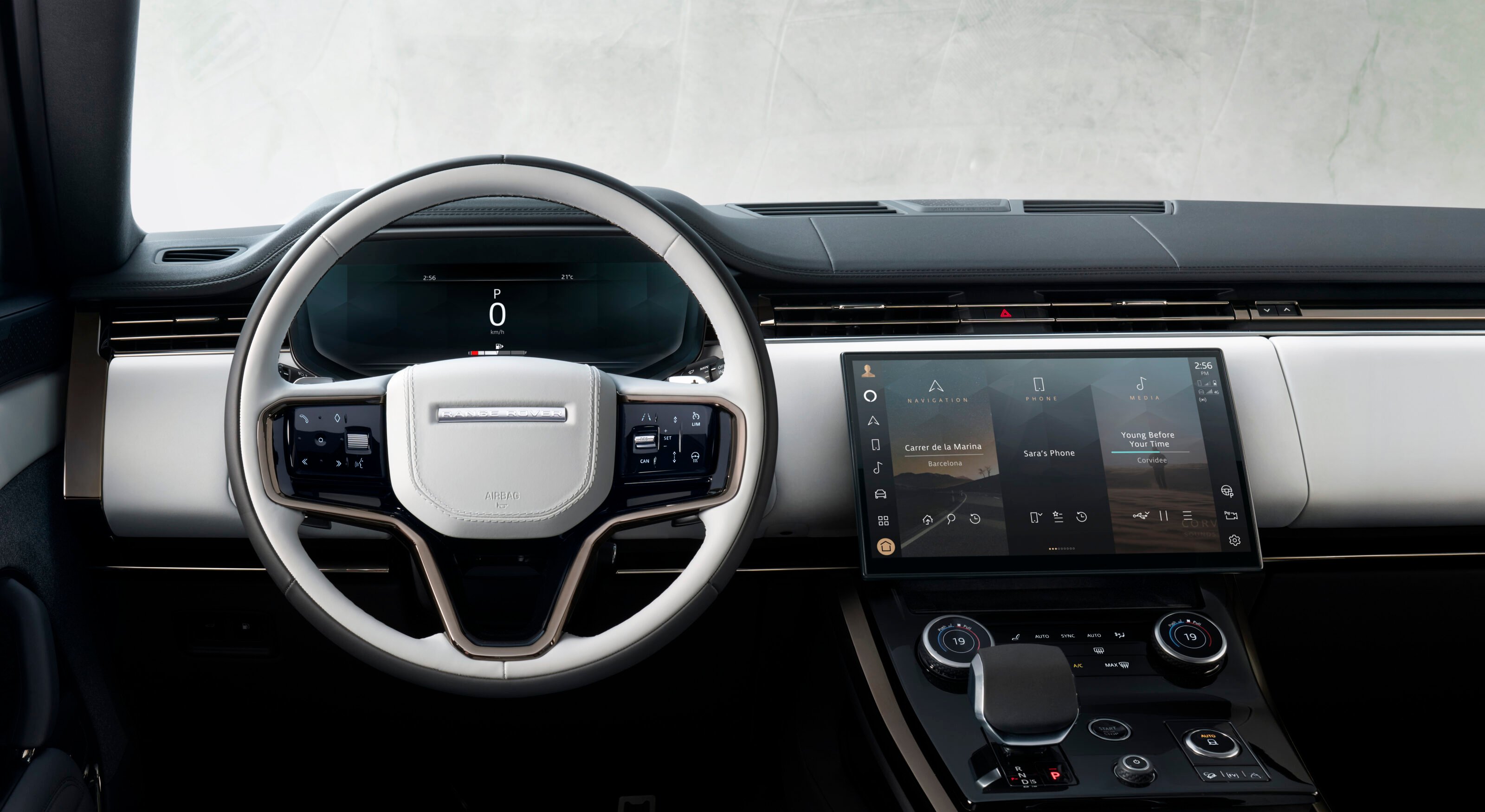
2023 Range Rover Sport features
The 2023 Range Rover Sport comes in three main trims, SE, Dynamic SE and Dynamic HSE. Two additional choices, Autobiography and First Edition, will be available on limited-edition models.
SE
Dynamic SE
Dynamic HSE
Autobiography
First Edition
Powertrains, transmission and fuel economy
Under the bonnet, the entry-level D250 features a 3.0-litre turbocharged inline-six diesel with mild-hybrid technology.
It produces 183kW of power and 600Nm of torque, with Land Rover claiming the D250 can complete the 0-100km/h sprint in 8.0 seconds.
The D300 and D350 include higher-output versions of the 3.0-litre diesel engine producing 221kW/650Nm and 258kW/700Nm, respectively.
A 0-100km/h time of 6.6 seconds is estimated for the D300, while the D350 can reach the speed in 5.9 seconds.
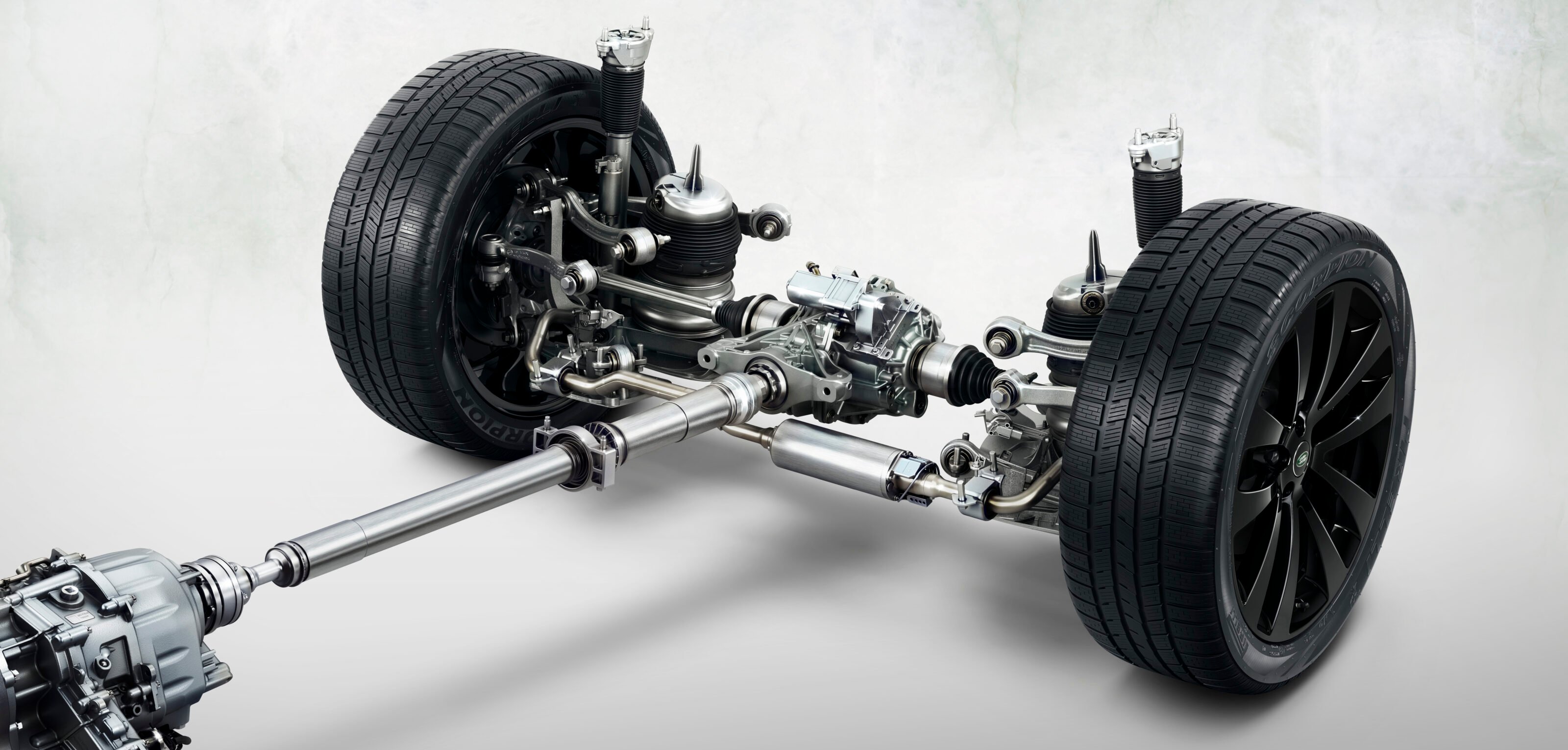
Stepping up to the plug-in hybrid P510e sees the diesel mill replaced with a 3.0-litre turbocharged straight-six petrol engine mated to a 105kW electric motor, allowing for a combined system output of 375kW/700Nm.
At 38.2kWh, the battery pack in the P510e is nearly three times larger than the model it replaces – allowing for a NEDC-rated electric driving range of up to 125km.
It can reach 100km/h in 5.4 seconds on the way to a top speed of 242km/h, with up to 140km/h available on EV power only before the petrol engine kicks in.
A mild-hybrid version of the 3.0-litre turbo-petrol is available in P360 and P400 guise, while the flagship P530 features a BMW-sourced 4.4-litre turbocharged V8 – without mild-hybrid technology – as first introduced on the larger Range Rover.
Both petrol engines will become available in 2023, although limited numbers of the P530 in First Edition specification will arrive towards the back-end of 2022.
Power is rated at 265kW/500Nm in the P360 and 294kW/550Nm in the P400, while the V8 P530 produces 390kW/750Nm.
When launch mode is engaged, the P530 can complete the 0-100km/h sprint in a spritely 4.5 seconds, with the P400 and P360 following behind at 5.7s and 6.0s, respectively.
Across the entire line-up, the third-generation Range Rover Sport includes an eight-speed ZF-sourced torque-converter automatic transmission sending power to all four wheels.
Fuel economy figures can be found in the table below:
| D250 | 7.2L |
| D300 | 7.2L |
| D350 | 7.2L |
| P510e | 1.6L |
| P360 | 9.4L |
| P400 | 9.4L |
| P530 | 11.8L |
Safety
The third-generation Range Rover Sport is yet to be tested by ANCAP or Euro NCAP.
Each variant includes the following active safety equipment as standard:
Warranty and servicing
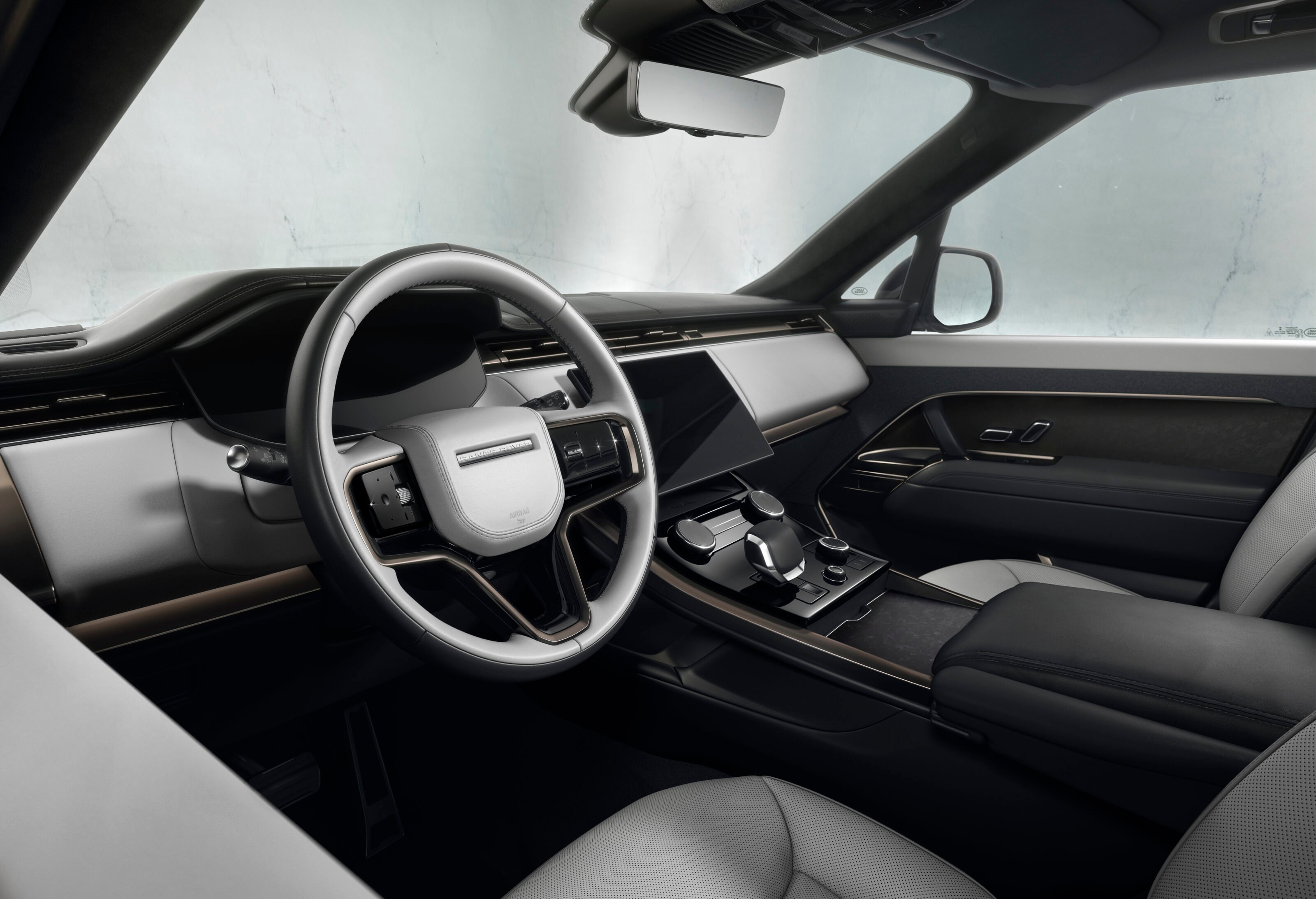
As per the wider Land Rover range, the Range Rover Sport is covered by the marque’s five-year/unlimited-kilometre warranty, along with a five-year/unlimited-kilometre roadside assistance program.
Jaguar Land Rover is yet to confirm servicing details for the new-generation model, but a five-year/130,000km service package similar to that offered across the outgoing Range Rover Sport range is expected.
Availability
The all-new 2023 Range Rover Sport is available to order now, with prices starting from $139,160 plus on-road costs, and first deliveries are expected in the fourth quarter of this year.
A First Edition model will be available in D350 form throughout the first year of production, and a limited-edition P530 model will be available at an exclusive online sales event later this year. Both will be based on the Autobiography trim level.
UPDATE: 2023 Subaru Outback XT turbo review
After going on sale in September last year, the refreshed Outback range is finally in Australia – and now we’ve driven the reborn turbocharged XT model. Get our full review at the link below.
Things we like
- Talented on-road and off
- Feels rugged and suited for Australian conditions
- New turbo 2.4L puts welcome pep in its step; more cohesive with CVT
Not so much…
- Lacks wireless phone charging
- Infotainment graphics functional but not pretty
- No head-up display
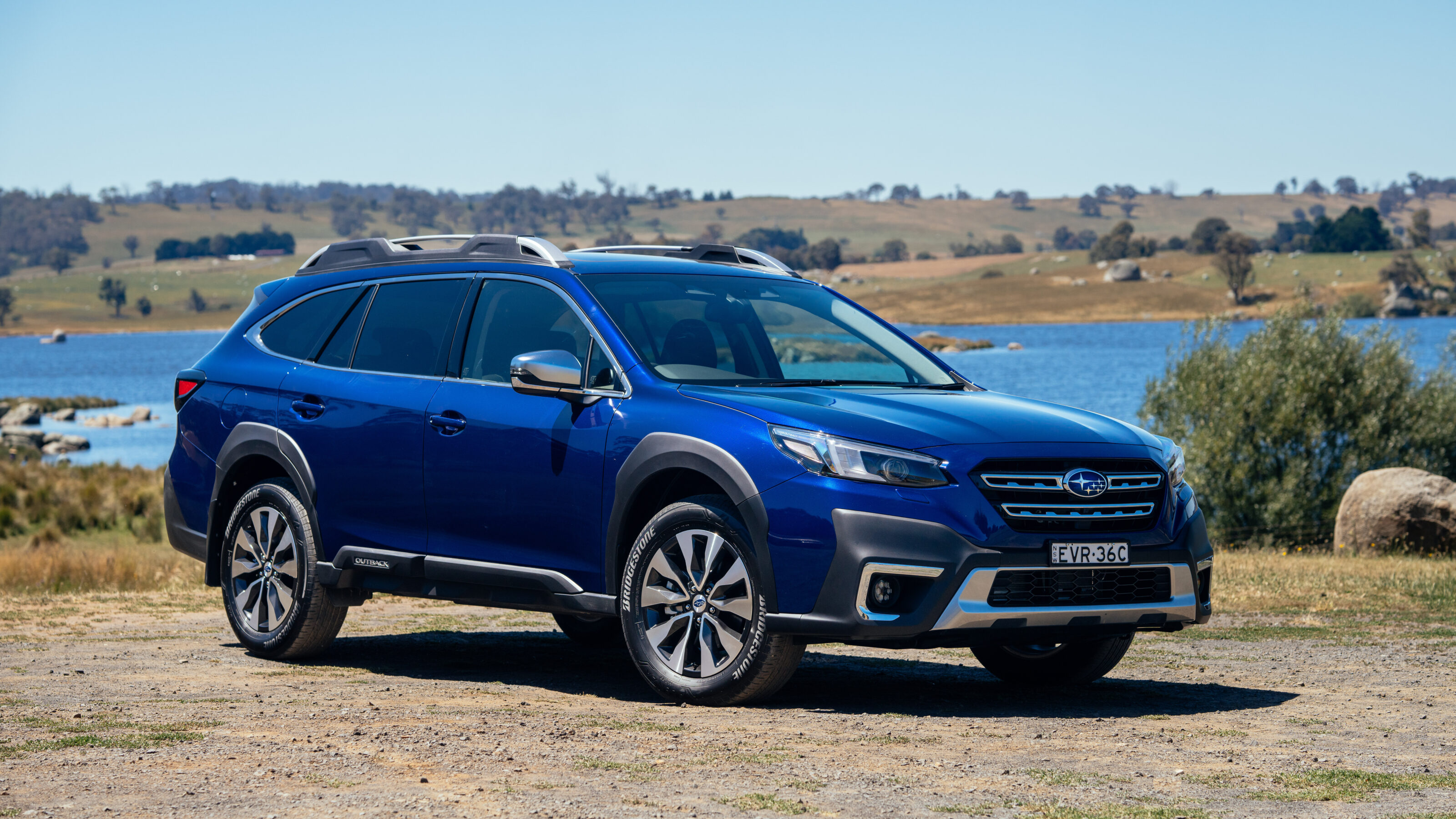
THE STORY TO HERE
September 2022: Australian pricing for updated Outback range and new turbocharged XT variants
Snapshot
- XT turbo arrives as powerful new flagship
- Prices up across the range
- Welcome infotainment upgrade
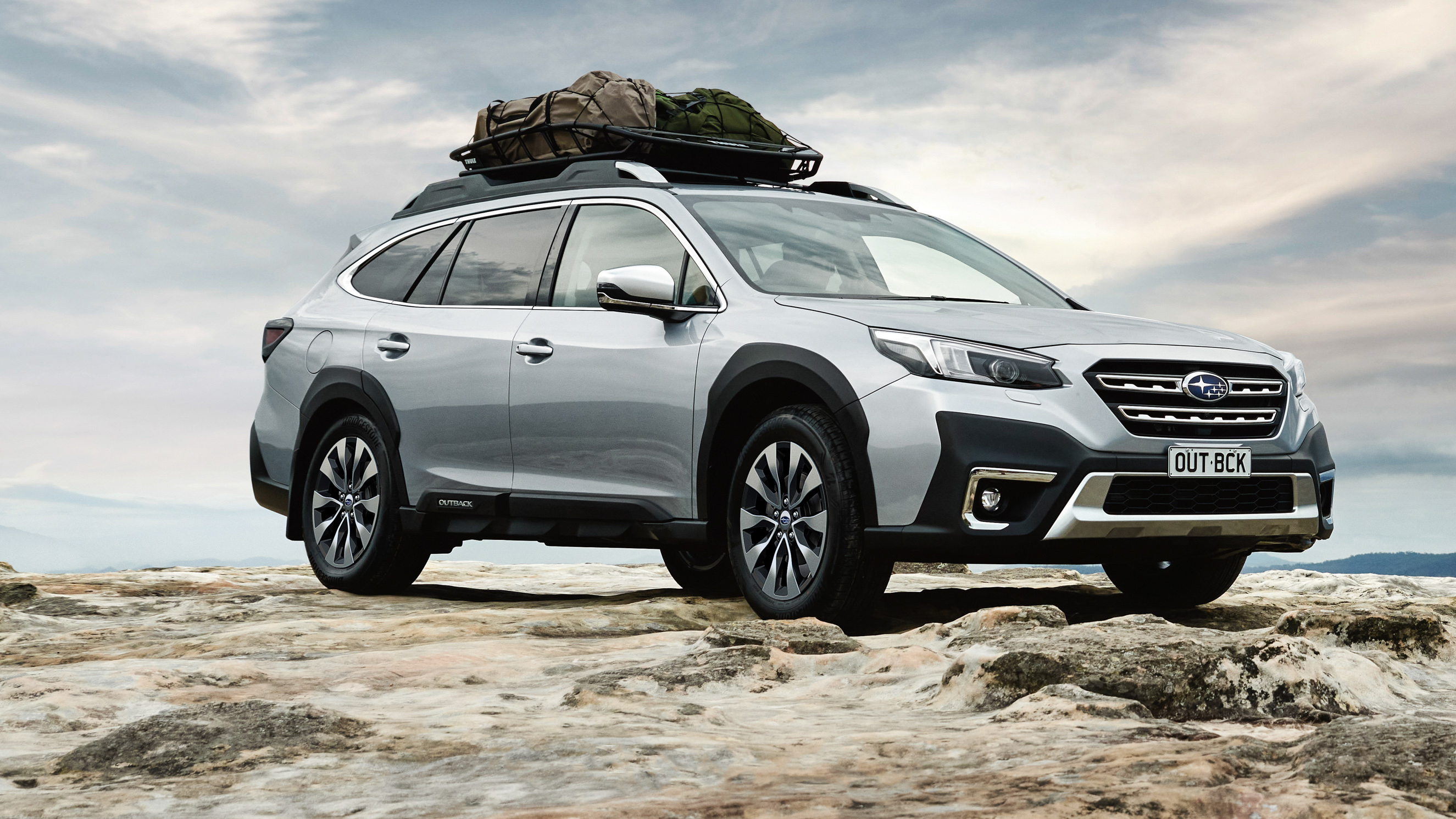
The updated 2023 Outback SUV is now on sale in Australia, debuting the anticipated new 2023 Subaru Outback XT petrol turbo models.
The new variants arrive in two trim grades: Outback AWD Sport XT and Outback AWD Touring XT, effectively mirroring the middle and top-spec grades already offered with the existing variants.
Prices are up across the range, however, increasing by around $3000 on existing models.
| Outback AWD | $42,690 (2021: $39,990) |
|---|---|
| Outback AWD Sport | $47,190 (2021: $44,490) |
| Outback AWD Touring | $50,990 (2021: $47,790) |
| Outback AWD Sport XT | $52,190 (new variant) |
| Outback AWD Touring XT | $55,990 (new variant) |
In XT form, the Outback is blessed with a 2.4-litre turbo four-cylinder petrol engine producing 183kW between 5200-6000rpm and 350Nm between 2000Nm-4800rpm.
Both numbers represent a significant step up from the 138kW/245Nm outputs offered with the existing cheaper and less powerful 2.5-litre naturally-aspirated petrol models.
To complement the turbo boost, XT models also get re-tuned suspension, with revisions to damping force front and rear, and the spring constant of the front coils.
“We have heard our customer’s request for a turbocharged Outback loud and clear, so we are extremely pleased to add two all-new, turbocharged Subaru Outback variants to the MY23 Subaru Outback line-up,” said Subaru Australia boss, Blair Read.
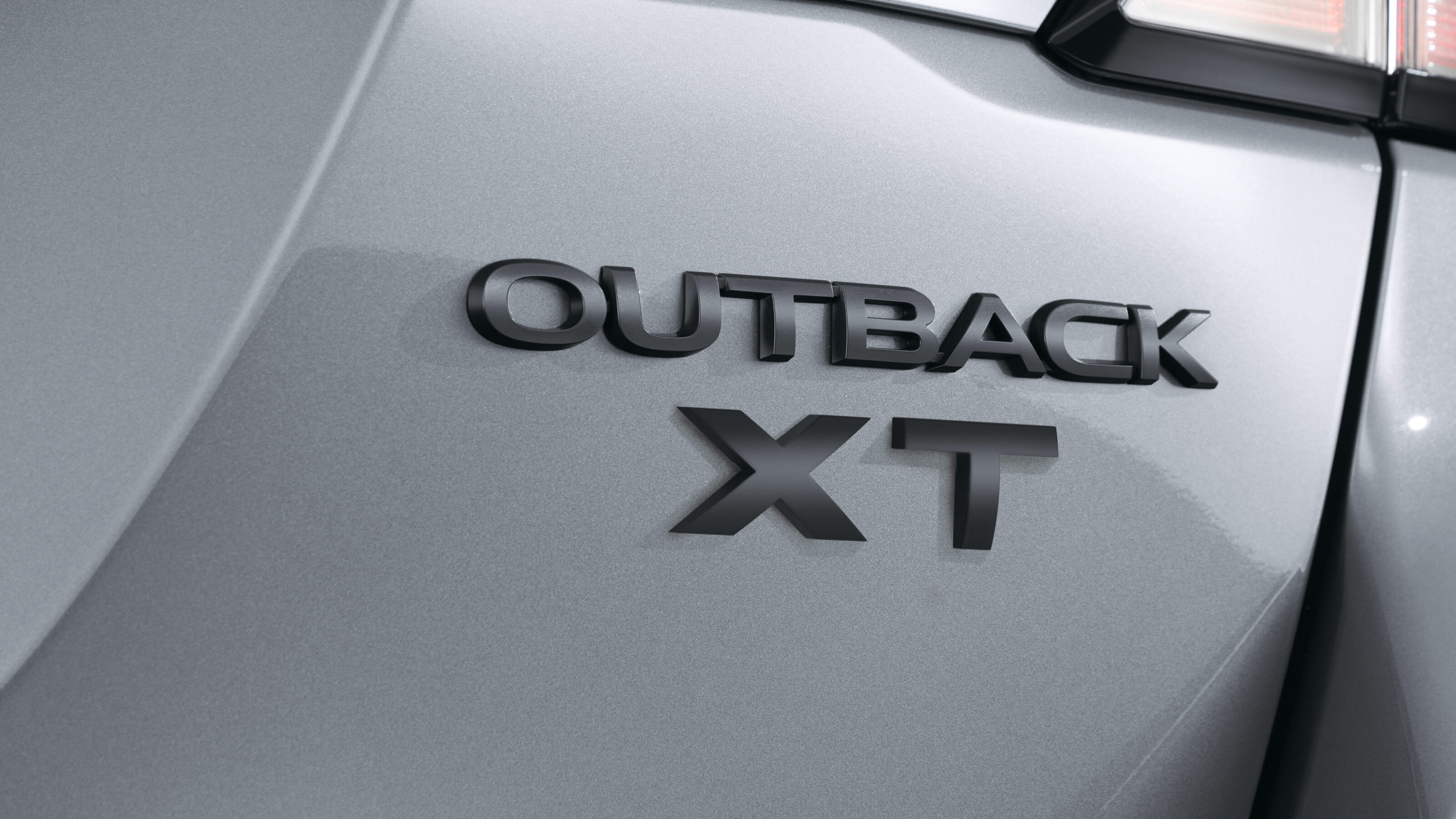
On the styling front, the XT models are made distinct from their non-turbo siblings through the addition of dual tailpipes, XT badging, and LED fog lamps with six LEDs.
Infotainment tweaked for 2023
The 2023 Outback’s equipment and safety list is largely unchanged from the early 2021 launch range, with new features limited (a very welcome) upgrade to wireless Apple Carplay and Android Auto, along with a new 3.0A USB-C port replacing one USB-A port in the front row.
There’s also a light update to the 11.6-inch infotainment display, including new shortcut buttons, updated climate control buttons, and – finally – full-screen Android Auto. (Click here to see how little space Android Auto is given in the new 2022 Subaru WRX, compared to the larger Carplay space. We’ve asked Subaru if the WRX is due for a firmware update.)
The steering wheel gets a redesigned button layout on the left and right spokes, and removes the mid-mounted buttons.
The integrated navigation now allows address and point of interest searches to be performed via the same text field, and lastly, there’s an expanded range of voice control features:
- Auto Start Stop
- Lane Departure
- Cruise Control
- High/Medium/Low Fan Speed level settings
- Search for closest location
- Seat heater/seat ventilation settings
2023 Subaru Outback equipment highlights
| Central information display with 11.6-inch tablet-like infotainment touchscreen |
| Wireless Apple CarPlay and Android Auto connectivity |
| Auto Stop-Start |
| Subaru Intelligent Drive (SI-Drive) featuring Intelligent (I) and Sport (S) mode |
| X-Mode (two mode) |
| Auto-folding door mirrors |
| Hands-free powered tailgate |
The Outback AWD Touring XT also adds auto door mirror adjustment and auto driver seat adjustment.
2023 Subaru Outback safety features
| SRS airbags: dual front, dual front side, dual curtain, driver’s knee, and front passenger cushion |
| Subaru Vision Assist featuring: |
| Adaptive Driving Beam (ADB) |
| Blind Spot Monitor (BSM) |
| Eyesightu00ae Assist Monitor |
| Front View Monitor (FVM) |
| Lane Change Assist (LCA) |
| Side View Monitor (SVM) |
| Rear Cross Traffic Alert (RCTA) |
| Reverse Automatic Braking (RAB) |
| Subaru Eyesightu00ae Assist featuring: |
| Adaptive Cruise Control |
| Emergency Lane Keep Assist |
| Lane Centring Function |
| Lane Departure Prevention |
| Lane Departure Warning |
| Lane Sway Warning |
| Lead Vehicle Stay Alert |
| Pre-Collision Brake Assist |
| Pre-Collision Throttle Management |
| Autonomous Emergency Steering |
| Brake Light Recognition |
| Intelligent Speed Limiter |
| Speed Limiter |
| Speed Sign Recognition |
| Driver Monitoring System featuring: |
| Distraction warning |
| Drowsiness warning |
| Facial recognition |
| Climate control setting (last used) |
| MID display (last used) |
Warranty
The new Subaru Outback is offered as standard with a five-year / unlimited-kilometre warranty, along with 12 months complimentary Subaru Roadside Assistance.
Towing
The Outback AWD, Outback AWD Sport and Outback AWD Touring offer a 2000kg braked towing capacity.
Moving to the Outback AWD Sport XT and Outback AWD Touring XT upgrades that to a 2400kg braked towing capacity, but it requires the installation of an electric brake controller if the towing mass is greater than 2000kgs – and can only tow a trailer with a maximum of two axles.
2023 Subaru Outback pricing
All listed prices exclude on-road costs
| Outback AWD | $42,690 (2021: $39,990) |
|---|---|
| Outback AWD Sport | $47,190 (2021: $44,490) |
| Outback AWD Touring | $50,990 (2021: $47,790) |
| Outback AWD Sport XT | $52,190 (new variant) |
| Outback AWD Touring XT | $55,990 (new variant) |
The story to here
May, 2022: Outback XT confirmed for Australia
Snapshot
- XT to join MY23 line-up
- 2.4-litre mated to auto transmission only
- Lands locally fourth quarter 2022
The 2023 Subaru Outback is set to gain turbo power in Australia, with the marque’s XT variant confirmed to join the model range by the year’s end.
The 2.4-litre turbo-petrol, which has previously never been offered here, will be mated to an automatic transmission only.
Citing customer demand as one of the main reasons for bringing the XT Down Under, Subaru said it would join the MY23 Outback’s line-up as its top-spec grade when it lands locally at the end of 2022.
At this stage it is expected it would sit above the current Touring grade, though the company has not confirmed any further details of what the MY23 range will look like.
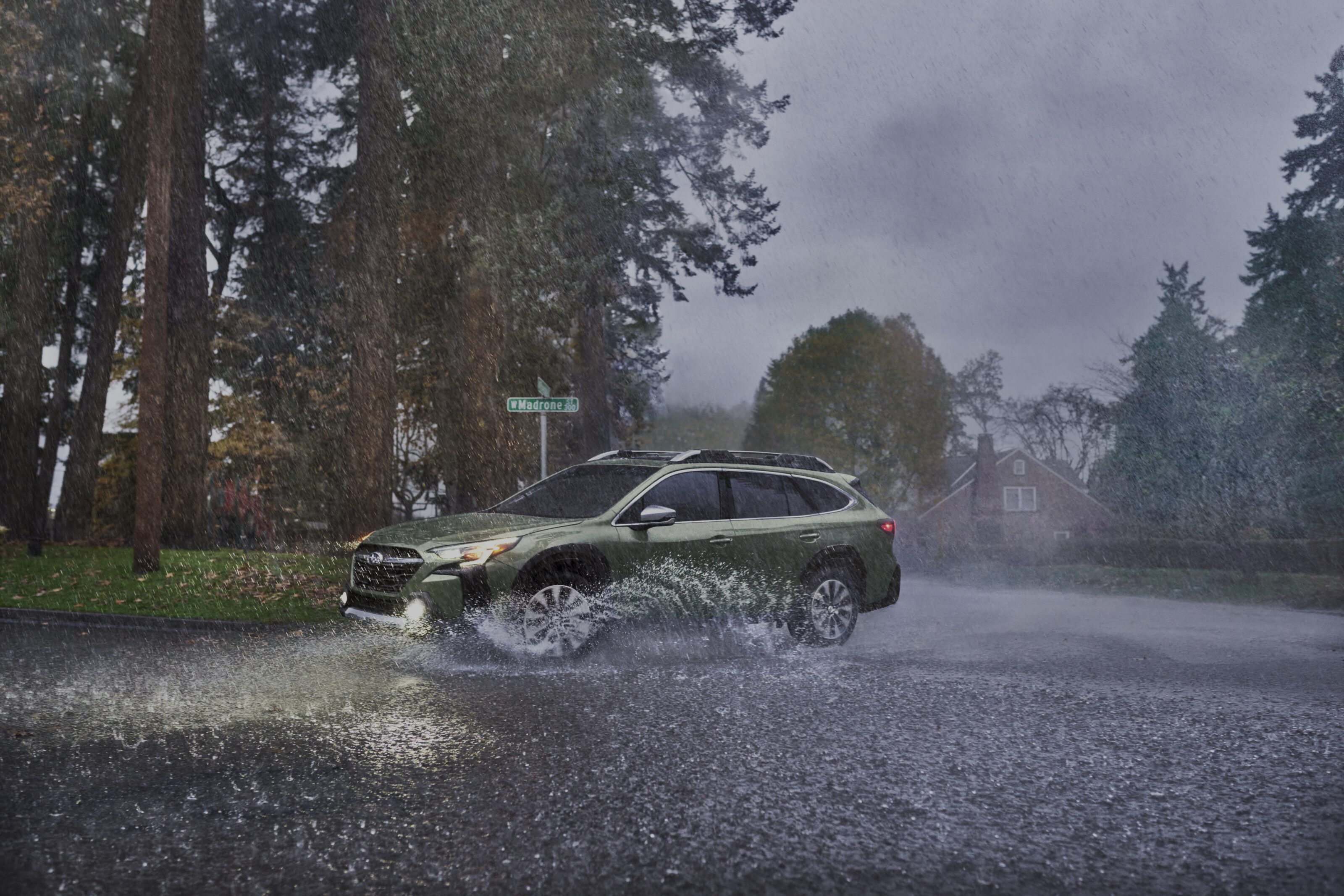
Until now, Subaru’s North American division has offered two engines in the Outback – a 2.5-litre naturally-aspirated donk and the 2.4-litre turbocharged engine (both four-cylinder petrols), with Australian buyers having to make do with the former’s 138kW/245Nm offering – as the US wagon is produced in Lafayette, Indiana, while Australian-delivered examples come from the manufacturer’s native Japan.
“We heard customers wanted us to bring it [XT] to the Outback, and we knew there was demand from Australian customers for the turbo model from people who were looking for more towing capacity or power. So, with great support from Subaru Corporation, we’ve been able to make it happen for the 2023 model year,” Subaru Australia’s General Manager, Blair Read, told Wheels this week at the launch of the new WRX.
“[Previously] it [the 2.4-litre engine] was only being produced in the American plant. It wasn’t available in the Japanese plant where our vehicles are sourced. So there are some big differences between the American spec Outback and the Australian spec Outback. The two markets [America and Japan] were on different development cycles.”
Asked if there was potential for the XT grade to join other models in Subaru’s local portfolio, Read said he could not comment on what might be in the pipeline, but that if a Forester XT was available, the Australian arm would jump at the chance to get it for our market.
“Well first of all, it’s great for XT to return and great to offer it on Outback and to bring the 2.4. XT is an iconic nameplate for Subaru,” the boss added.
“Is there a Forester XT in the pipeline? Nothing we can comment on this stage. But yes, if it was available, we’d be interested.”
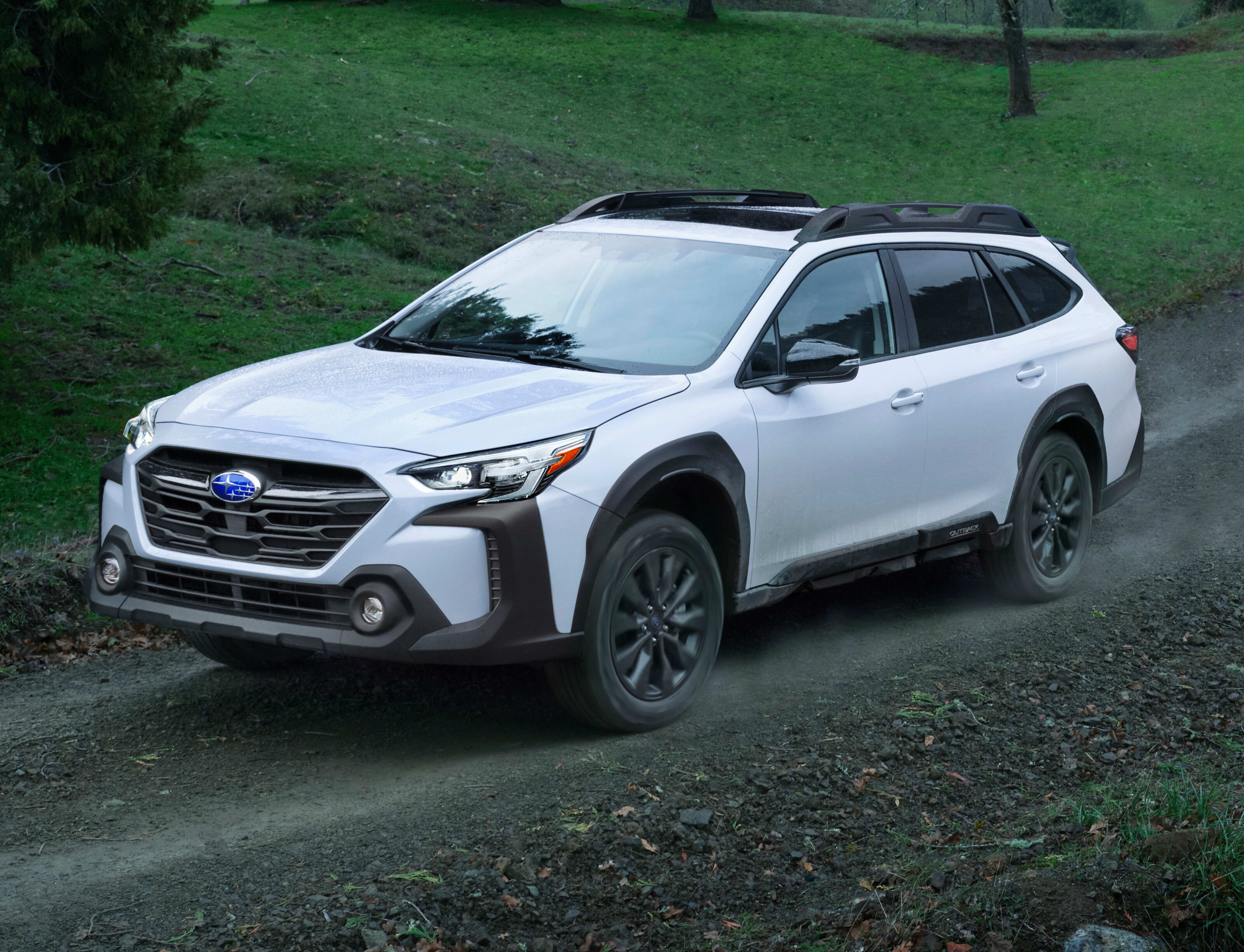
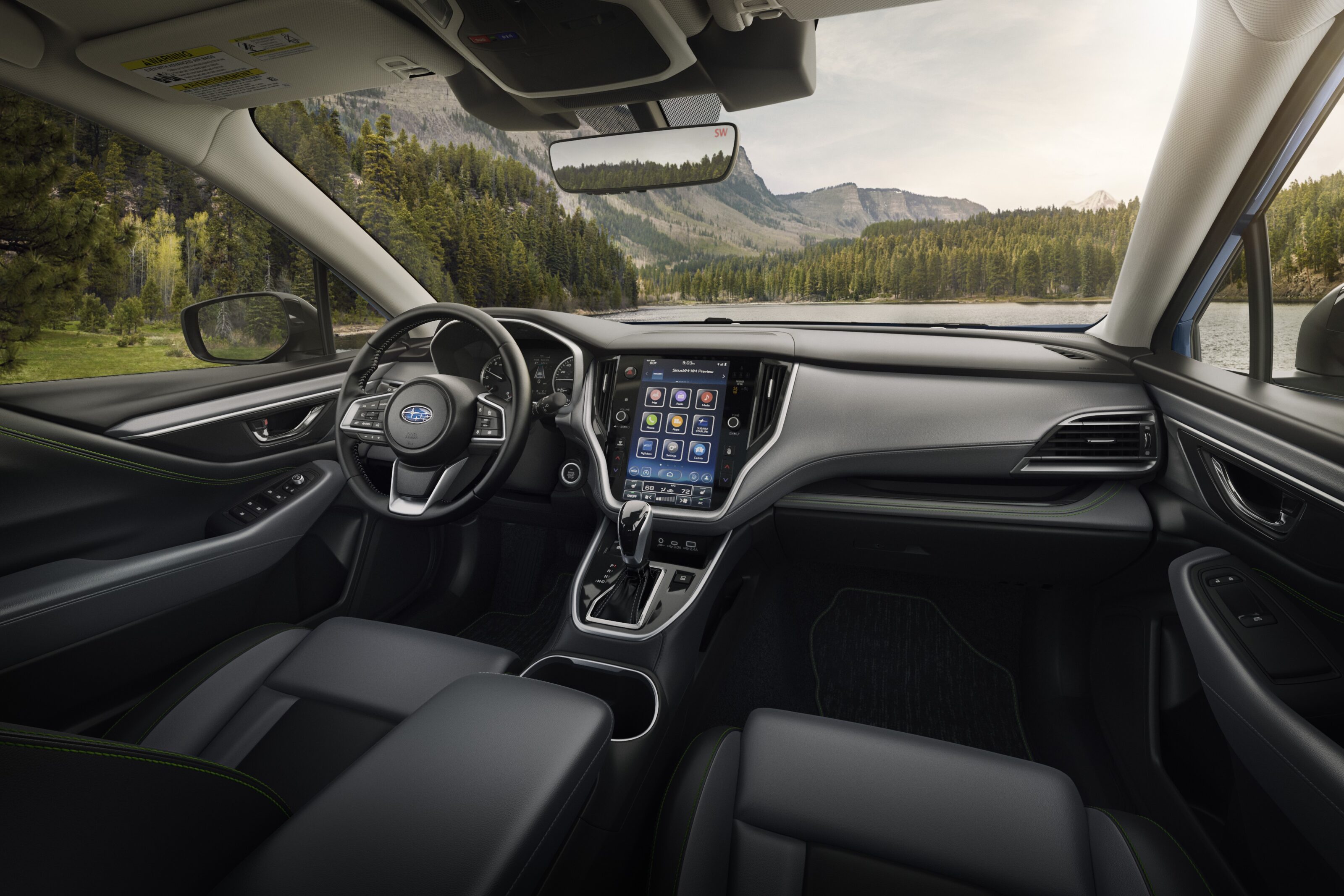
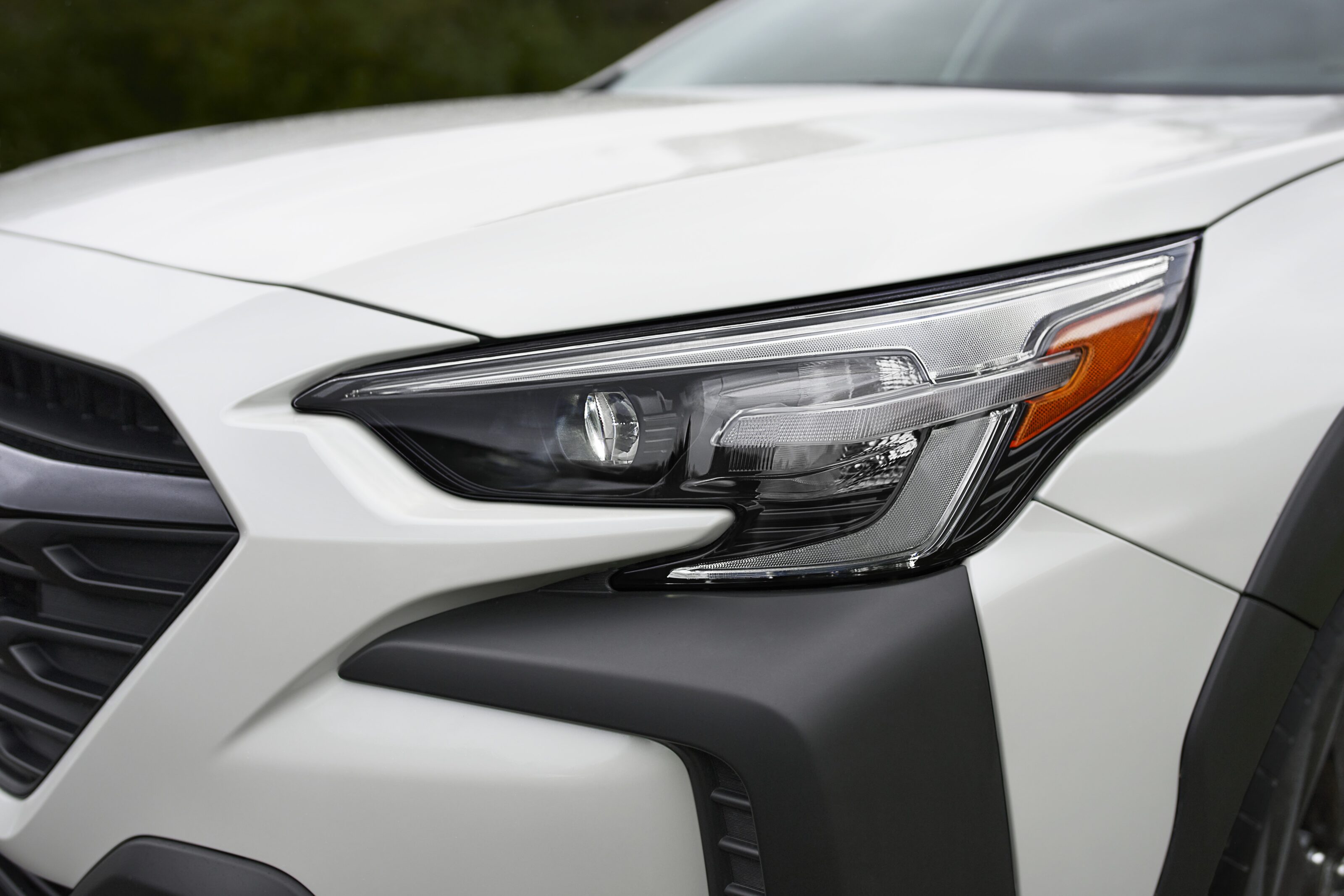
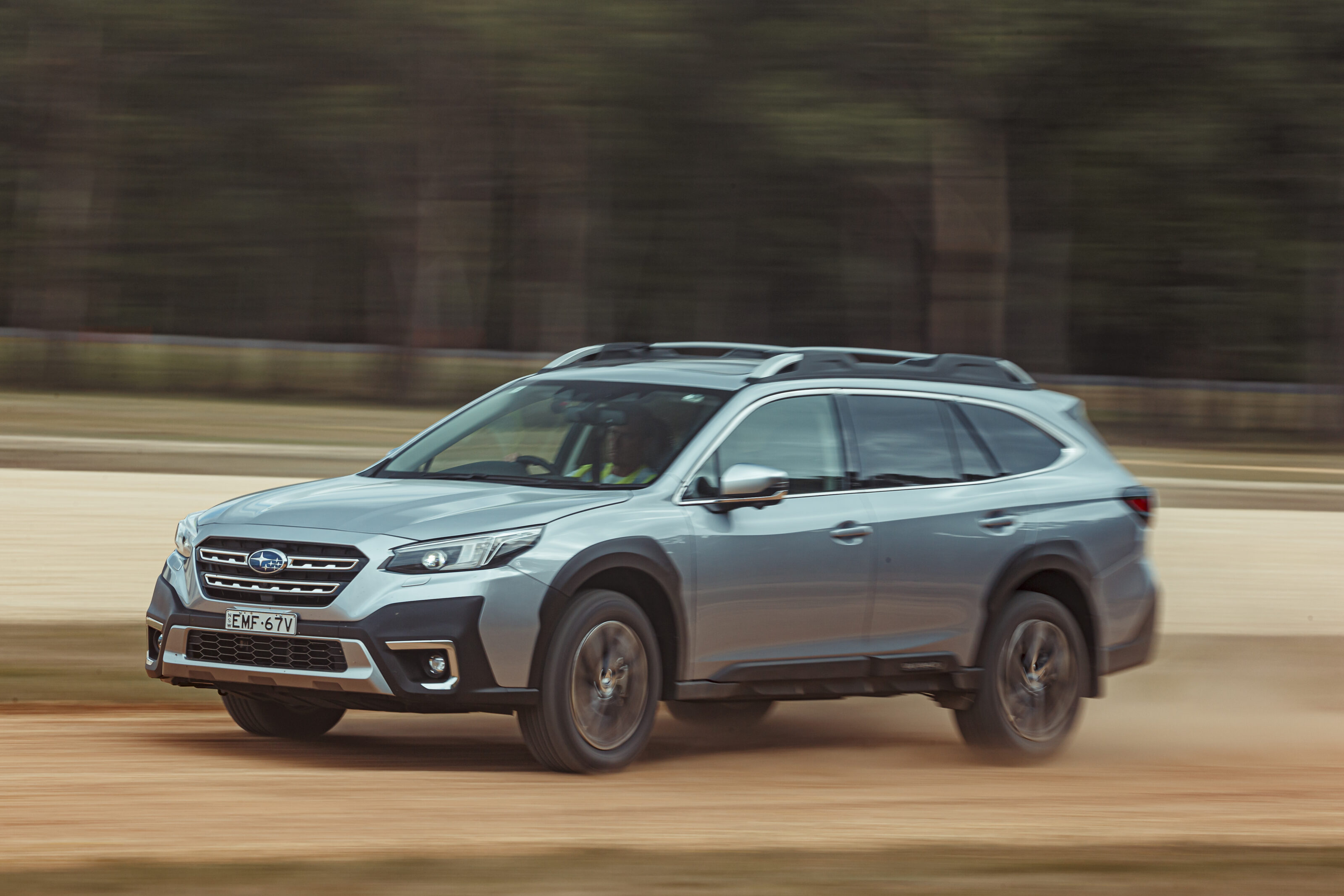
Designed primarily with the North American market in mind, the 2023 model-year update to the Outback sees its front end redesigned to fall in line with Subaru’s recent releases such as the new WRX, while extra black plastic cladding is aimed at both providing a more aggressive stance on top of extra protection.
On top of the cosmetic changes, a number of equipment upgrades and improvements have been made to the 2023 model, with the latest version of Subaru’s EyeSight driver assist tech standard across the range, including a wider field of view for the camera, updated control software, and an electric brake booster.
At the back end of 2021, Subaru added the Outback Premium Special Edition into the local MY22 line-up, dropping it in between the base Outback and the Outback Sport in both price and features, going on sale from $44,190 before on-road costs.
For the extra $3500 on top of the entry-level Outback, the Premium variant gains black Nappa leather seat accents, heated front and rear outboard seats, satellite navigation and a hands-free powered tailgate.
As yet full pricing and features for MY23, including the new XT grade, have not been revealed and are likely to be confirmed closer to local launch later this year.
Subaru’s 2022 model range, however, has been hit with a cost increase in recent weeks, as supply chain issues force the Japanese manufacturer to readjust its list prices.
Off the back of the BRZ coupe going on sale recently for $1300 to $1400 more than last year, Subaru has awarded the Impreza, XV, and Outback ranges with higher premiums, each up by $800 before on-road costs.
Last year, Subaru revealed it had sold 150,000 examples of its Outback lifted wagon Down Under, 25 years after the model first went on sale here. In 2021, the Subaru Outback passed the ANCAP safety test with flying colours, being allocated the full five-star safety rating.
Snapshot
- WA Government to allocate $36.5 million for zero emissions vehicle rebates
- $22.6 million committed to improve EV charging infrastructure
- Road user charge to be implemented from 2027
The Western Australian Government has unveiled a $60 million electric vehicle package ahead of its State Budget later this week, featuring both rebates and investments in infrastructure.
Becoming the latest Australian state to offer incentives for new vehicle buyers, the WA Government has also followed other states’ leads in introducing a controversial road user charge – as first adopted in Victoria last year with $200,000 set to be invested in developing systems to monitor and collect the tax.
Set to come into effect from July 1, 2027, owners of zero-emissions vehicles such as fully-electric vehicles (EVs) and hydrogen fuel-cell vehicles (FCEVs) will be charged 2.5 cents for every kilometre driven, while hybrid drivers are hit with a two cent charge.
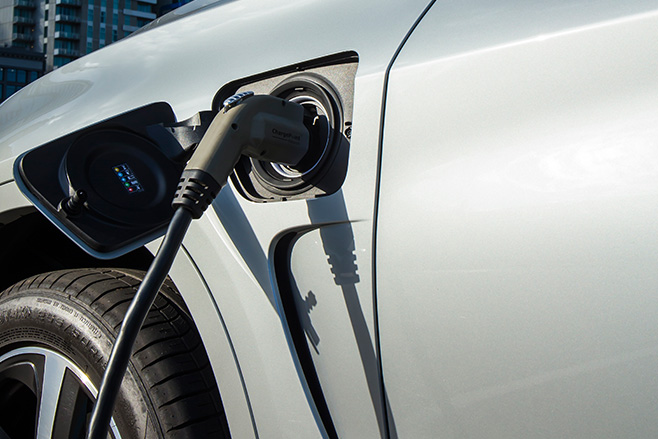
To offset this, the WA Government will offer the largest rebates in Australia, with an incentive of $3500 for the first 10,000 Western Australians to buy an EV or FCEV from today (May 10), applying to vehicles under $70,000 before on-road costs.
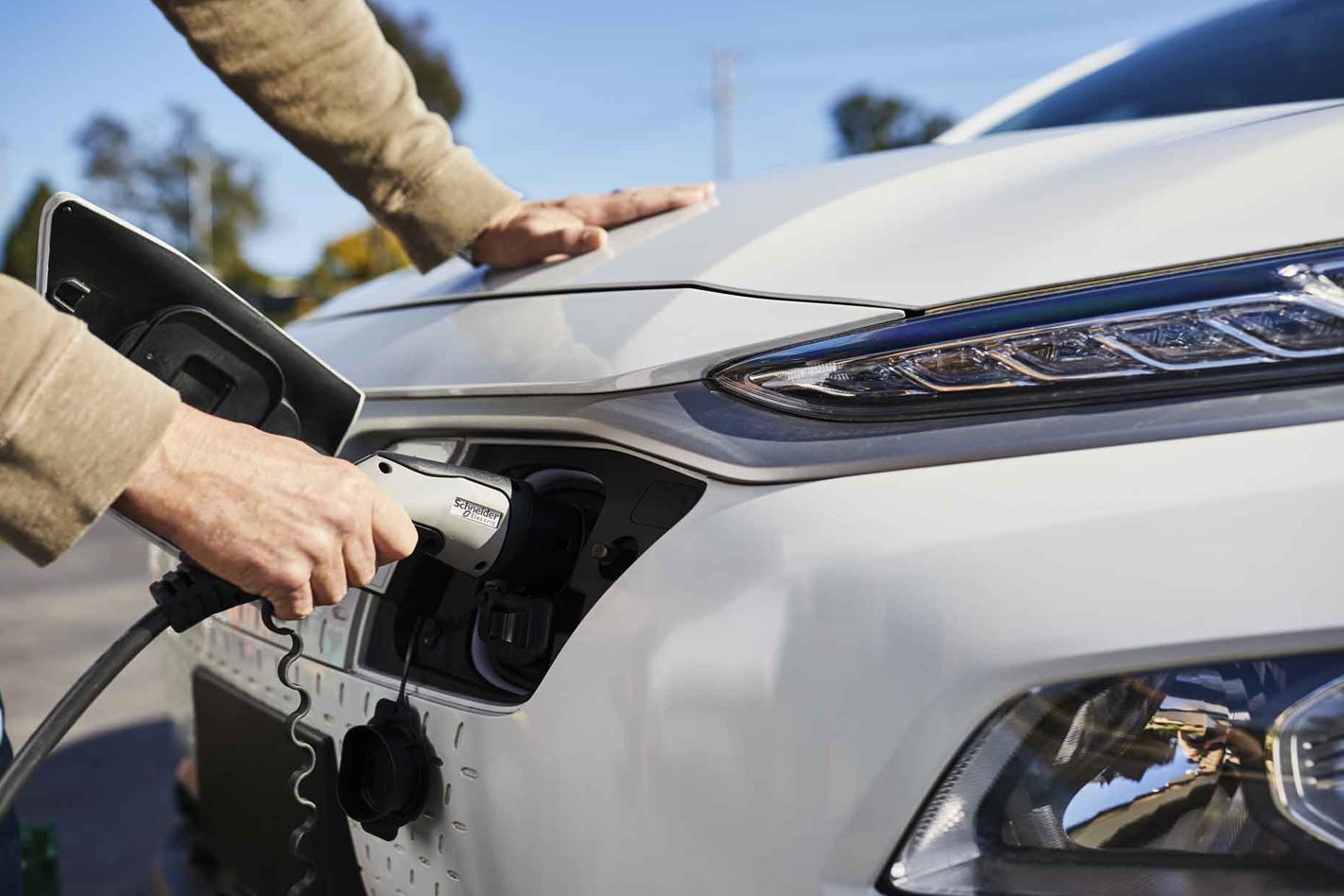
While this $36.5 million investment makes up over half of the package, an additional $22.6 million will be put towards upgrading, expanding and improving WA’s electric vehicle charging infrastructure.
A sizeable $10 million chunk of this fund is set to be allocated towards supporting not-for-profit and small to medium-sized businesses with grants of up to half of the cost of installing charging infrastructure.
On top of this, $5 million will go towards grants of 50 per cent of local government chargers; $4 million for the Public Transport Authority to trial the installation of up to 20 charging bays at four train stations; and more than $2.9 million for eight new charging stations across four locations on a section of National Highway 1 between Norseman and Eucla.
Western Australia’s Premier, Mark McGowan, said the significant rebates reiterated the State Government’s commitment towards reducing its carbon emissions.
“My Labor Government is taking climate action to secure WA’s low carbon future,” said Premier McGowan.
“Building on our $750 million Climate Action Fund that was announced last year, we are implementing further initiatives to significantly reduce our carbon emissions and progress towards net zero emissions.
“Our $3500 rebates are one of the most generous grants on offer in the nation and will see an extra 10,000 electric and hydrogen fuel-cell vehicles on our roads.
“This will assist WA with reducing greenhouse gas emissions to net zero, while also reducing the pressure of high petrol prices on WA households that utilise the rebate.”
Last week the Australian Labor Party announced it would introduce an ‘Electric Car Discount’ if elected on May 21, with a further $500 million to be allocated for its ‘Driving the Nation Fund’ for renewable fuels.
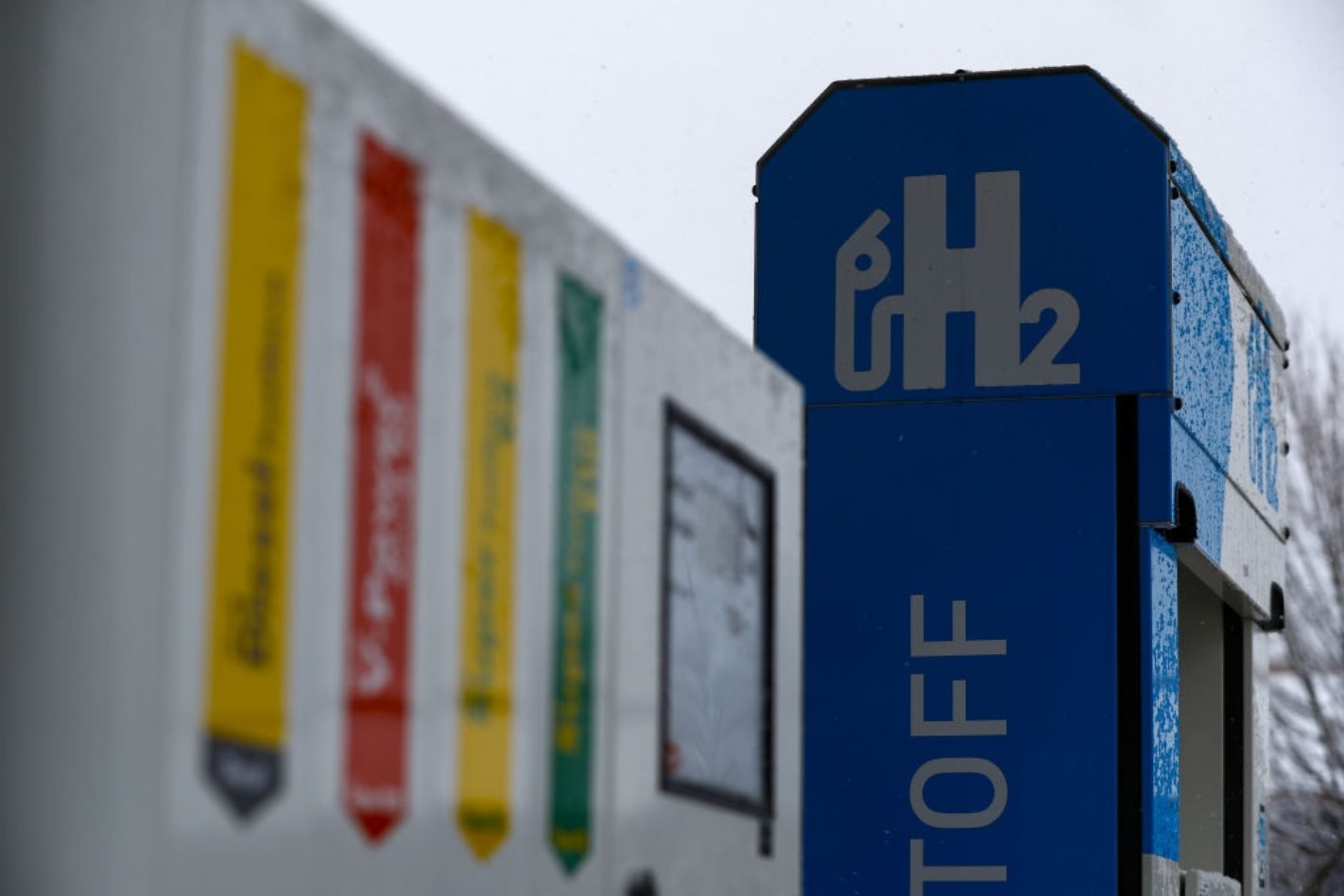
The Federal Chamber of Automotive Industries supported the WA Government’s package, although it reiterated calls for a unified road user charge beyond zero and low-emissions vehicles.
“The McGowan Government’s commitment of $22.6 million to expand charging infrastructure is a proactive step towards preparing for the future electrification of our road network,” said FCAI’s Chief Executive, Tony Weber.
“The inclusion of 10,000 rebates of $3500 for Western Australians who purchase a new electric or hydrogen fuel-cell vehicle is positive for automotive manufacturers and Western Australians alike.
“These rebates are going to help make owning an electric or hydrogen fuel-cell vehicle possible for more Western Australian road users. It sends a positive signal for car manufacturers and motorists that electrification will be a key element in Australia’s transport future.
“However, the FCAI maintains that all taxes and charges related to motor vehicles should be replaced with one road user charge which can apply to any type of vehicle powertrain.”
BMW is once again being hit by the semiconductor shortage – this time involving its connectivity system.
According to Automotive News Europe, certain models fitted with BMW’s iDrive infotainment system won’t have access to Apple CarPlay or Android Auto, leaving buyers to use the vehicle’s integrated systems for the time being.
This issue has come about thanks to a switch in chip suppliers by BMW to ensure it could keep cars rolling off the production line, although those affected by the loss of Apple and Android functions have been told an over-the-update will be available “by the end of June at the latest”.
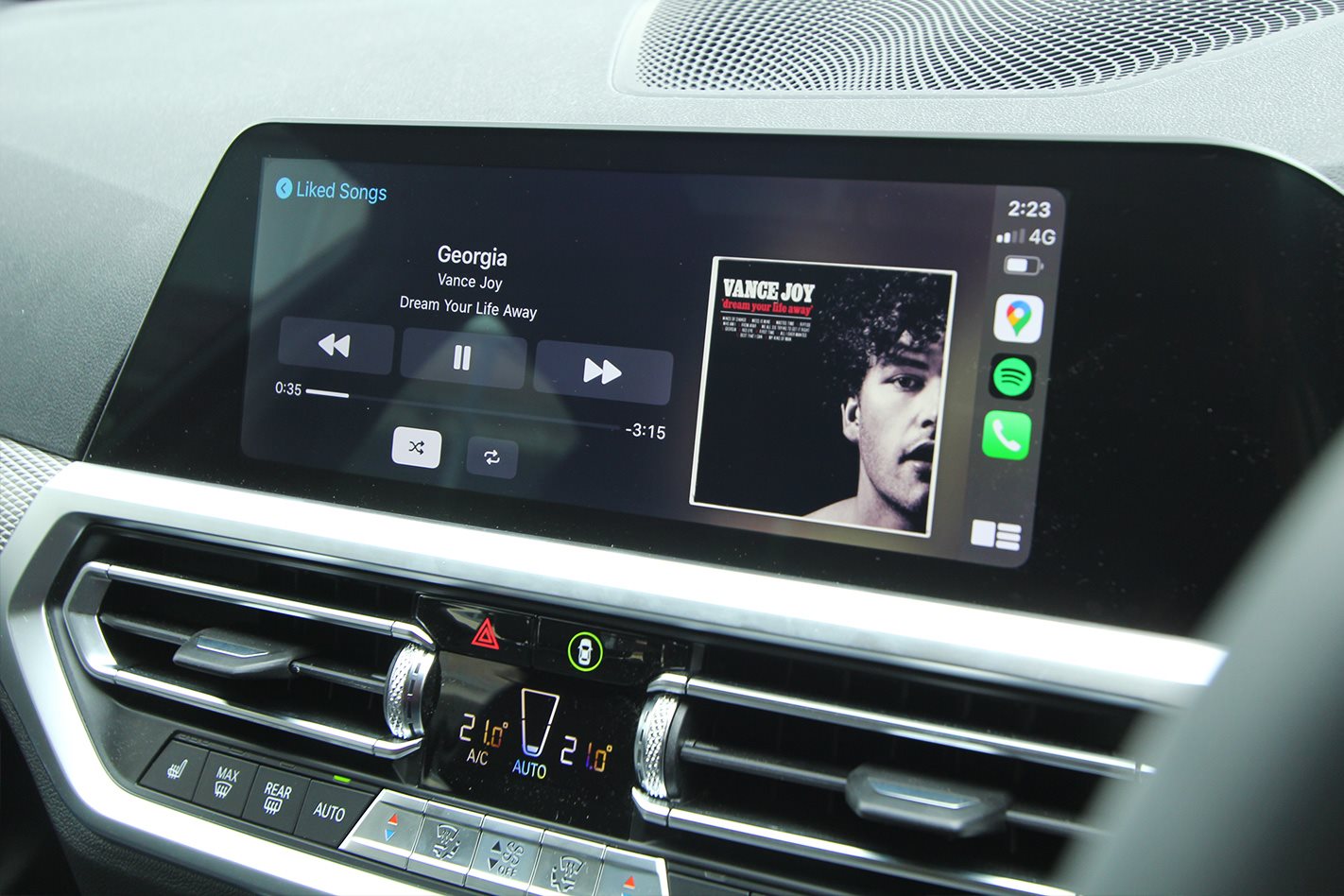
While customers from the United States, Italy, Spain, the United Kingdom and France have reported their vehicles being delivered without the functionality, BMW Australia says it’s not a problem expected to hamper local models.
“Our market is unaffected by this issue,” confirmed a spokesperson for BMW Group Australia.
Late last year, BMW reported it was changing specifications and features on locally-delivered vehicles to ensure production could continue, affecting a wide range of its Australian model line-up.
