
There’s a new model on the way from British carmaker Bentley.
Bentley has teased the vehicle ahead of its May 10 reveal, with whispers it could be a long-wheelbase (LWB) version of the marque’s Bentayga SUV.
“The company’s designers, engineers and craftspeople have gone to new lengths to combine luxury, technology and performance in a way that only Bentley can deliver,” a statement from the company said.
“With an extra dimension of on-board wellness, the new model will sit in sumptuous comfort at the pinnacle of its range and deliver a breadth of capabilities beyond anything previously offered.”
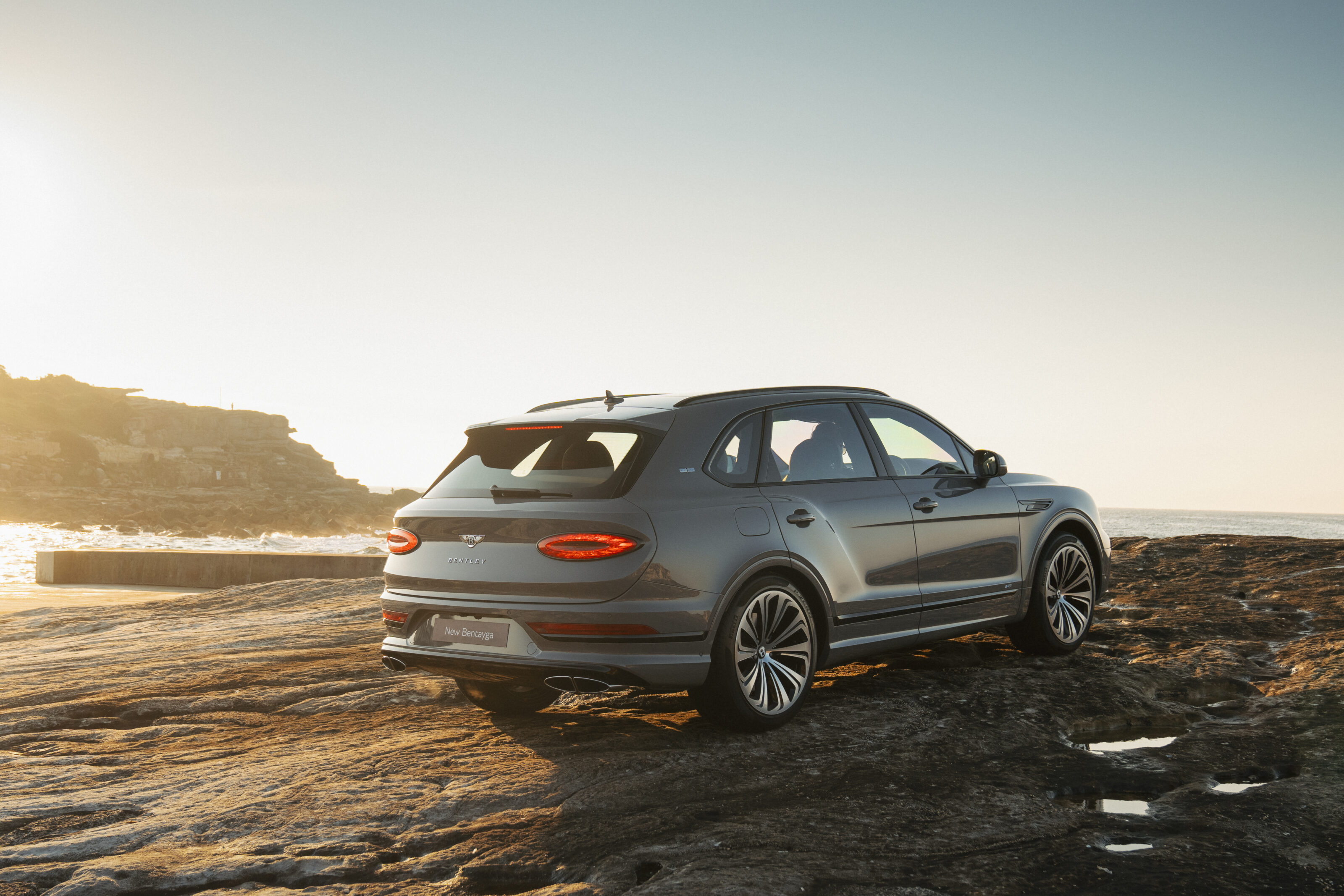
While Bentley says the mysterious vehicle will be the fifth model in its line-up, all this talk of going to “new lengths” and adding an “extra dimension” point to the Bentayga LWB as the likely choice.
Long-wheelbase cars have become increasingly popular in China, with LWB models being introduced in recent years from Rolls-Royce, BMW, and Mercedes-Benz to target buyers from the country.
Bentley will unveil the new model late on May 10, 2022.
Snapshot
- 2023 Hyundai i30 N Drive-N Limited Edition announced
- Interior and exterior styling package based on i30 N Premium
- Small allocation for Australia, here in late 2022
The 2023 Hyundai i30 N Drive-N Limited Edition has been unveiled to the world, with less than 200 vehicles bound for Australia later this year.
The i30 N Drive-N offers a unique exterior styling package, with Hyundai adding 19-inch forged alloy wheels in a dark bronze matte paint, black Hyundai badges, and AMG-esque decals down the sides.
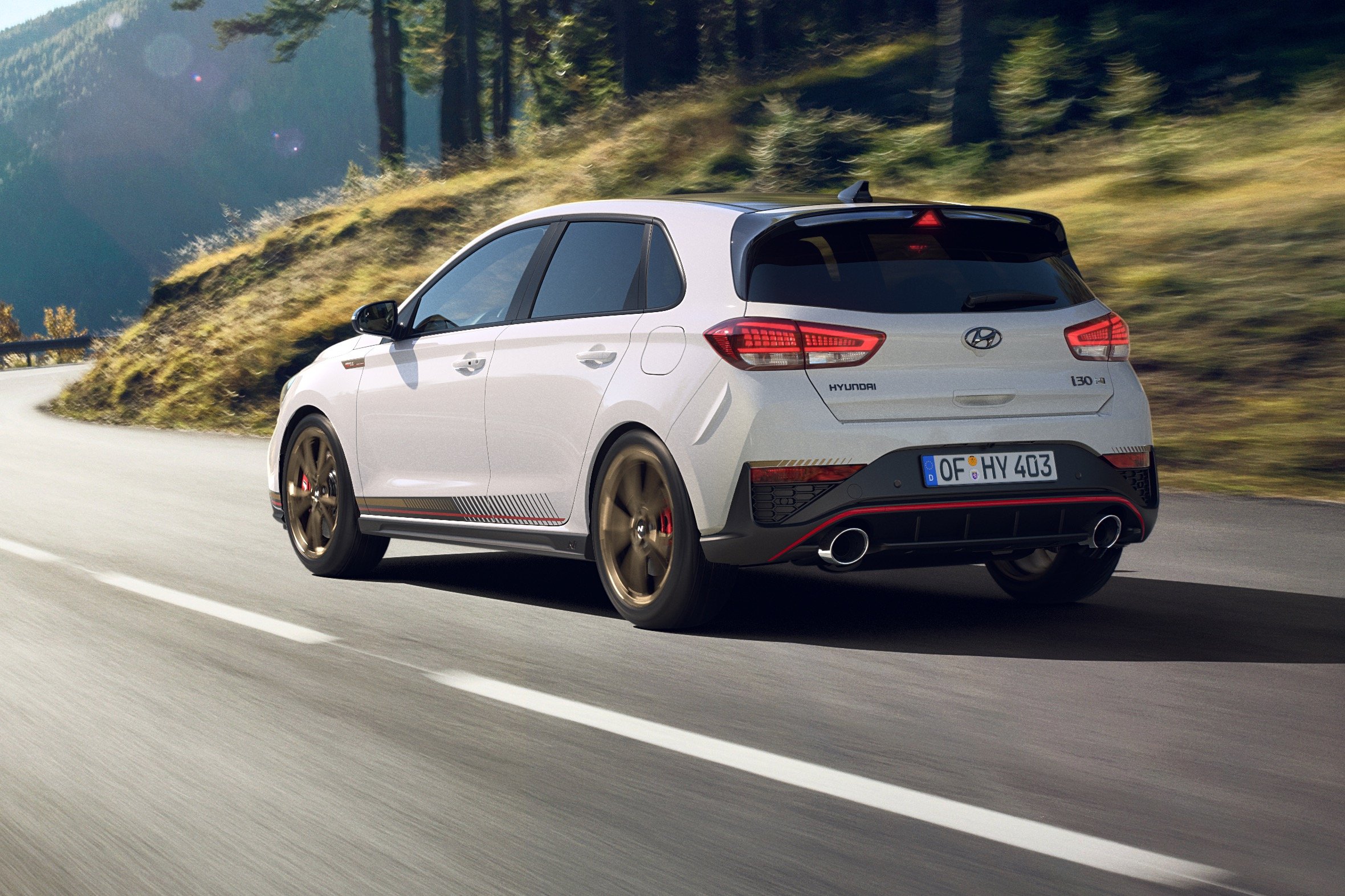
Also fitted to the car are badges which display the GPS co-ordinates of Hyundai’s European testing facility located at the German circuit Nürburgring.
The Drive-N Limited Edition comes exclusively in a choice of phantom black pearl or serenity white pearl.
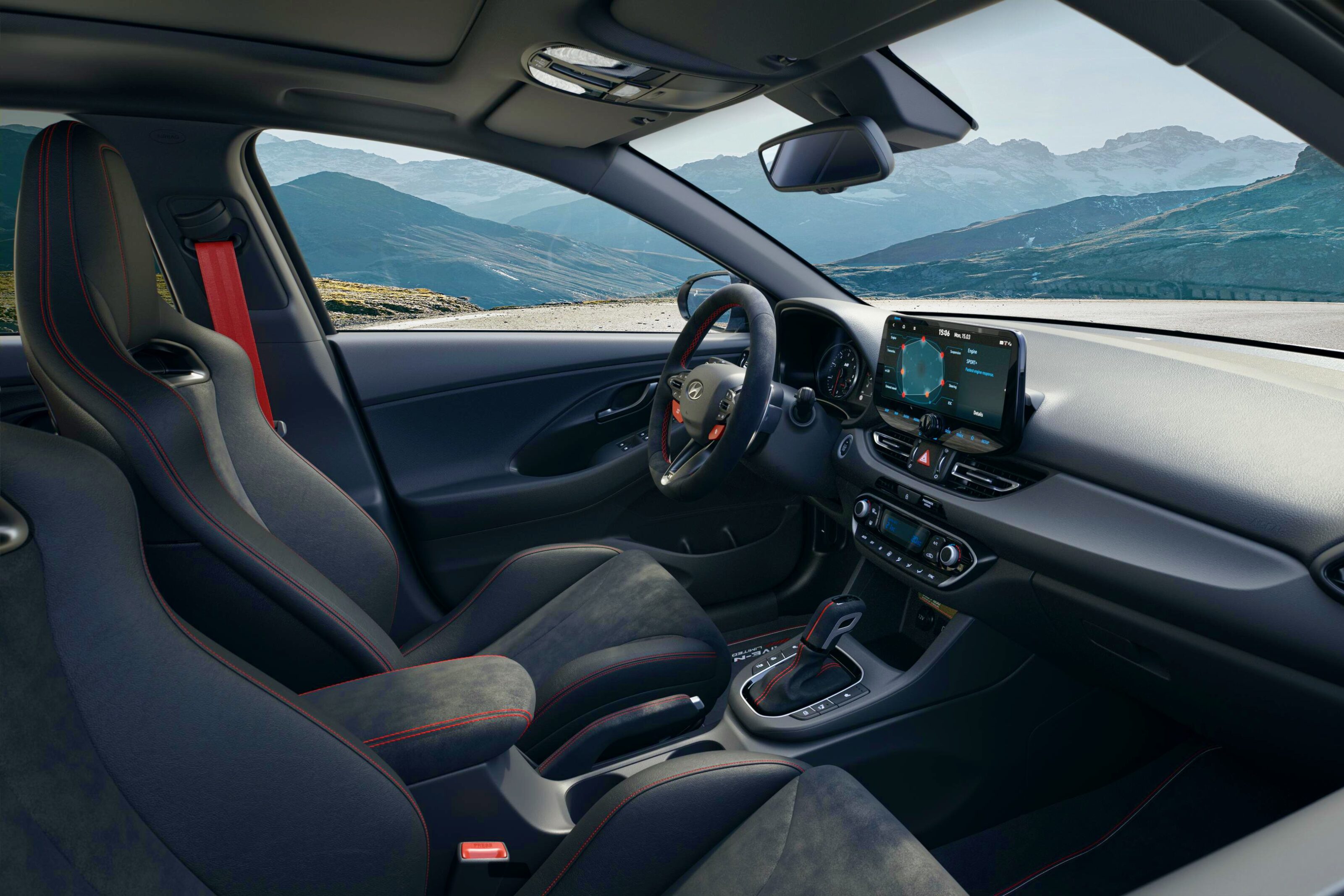
In the cabin, occupants are greeted with Alcantara with red contrast stitching on the steering wheel, shifter, armrest, handbrake, and seats – along with red seatbelts and trims, and a numbered badge.
As the Drive-N edition is based on the 2021 Hyundai i30 N Premium, a sunroof is also standard equipment.
As with the i30 N hatch, the Drive-N is powered by a 2.0-litre turbocharged four-cylinder petrol engine, which sends 206kW and 392Nm to the front wheels.
Buyers can choose between a six-speed manual or an eight-speed dual-clutch automatic transmission, allowing the hot hatch to hit 100km/h from a standstill in 5.9 or 5.4 seconds respectively.
Those who opt for the dual-clutch transmission gain three selectable performance levels to choose from: N Power Shift, N Grin Shift, and N Track Sense Shift.
Hyundai says N Grin Shift acts like an overboost function, delivering the car’s maximum power and sharpest transmission tune for 20 seconds.
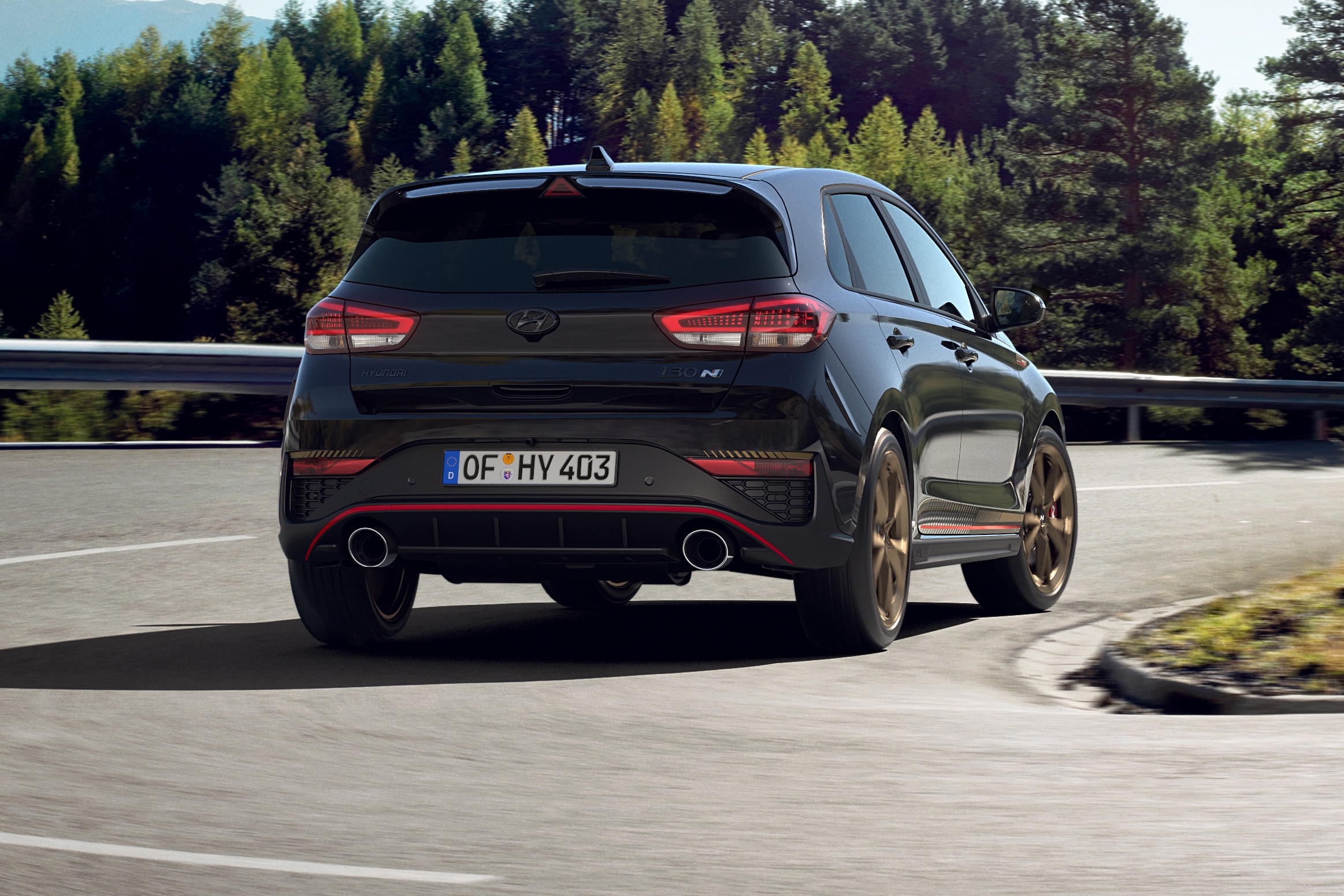
Of the 800 vehicles being made, just 180 are coming to Australia – with 70 per cent getting the automatic transmission. Less than a third will be finished in black, meaning a manual black Drive-N would be the rarest combination available.
Pricing for the 2023 Hyundai i30 N Drive-N Limited Edition is expected to be announced closer to the car’s arrival in the fourth quarter of 2022.
UPDATE: The manual isn’t dead, but you might have to wait
A spokesperson for Mini Australia has confirmed the transmission will be making a return.
“The six-speed manual transmission has not been deleted from our product offer, however clients wanting to order a vehicle with this specification will be looking at a production date early next year,” the spokesperson told Wheels.
“We expect the situation to improve by early next year, possibly sooner.”
The original story continues below.
The story to here
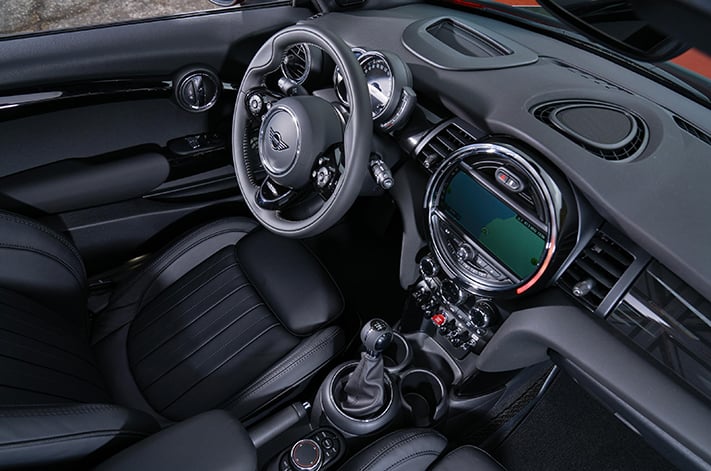
Mini has stopped manufacturing vehicles with a manual transmission, citing supply-chain issues as the reason for the decision.
Mini says it has removed manual cars from sale to “ensure production stability,” according to the UK’s Autocar, but has yet to confirm whether this will be a temporary or permanent fixture.
The report says the global semiconductor shortage, coupled with supply issues caused by the Ukraine conflict, forced the company to consolidate its line-up.
While the majority of its competitors have reduced the option for a manual transmission to performance cars, Mini was one of the few to offer three pedals across its range.
In Australia, Mini offers roughly 43 vehicles with an automatic, with around 27 variants available with a clutch.
“Current circumstances, including the war in Ukraine and semiconductor shortages, are causing supply chain restrictions across the global automotive industry,” a spokesperson for Mini told Autocar.
“In order to secure maximum production output to meet increasing customer demand, our product offer needs to be simplified.
“This solution is the most effective way to ensure production stability so that we can continue to supply all our customers with new Minis.”
The company’s fully-electric Mini SE is one of the few hatchback models only available with an automatic, and it could be a sign of things to come, with the British brand set to drop petrol and diesel engines by 2030.
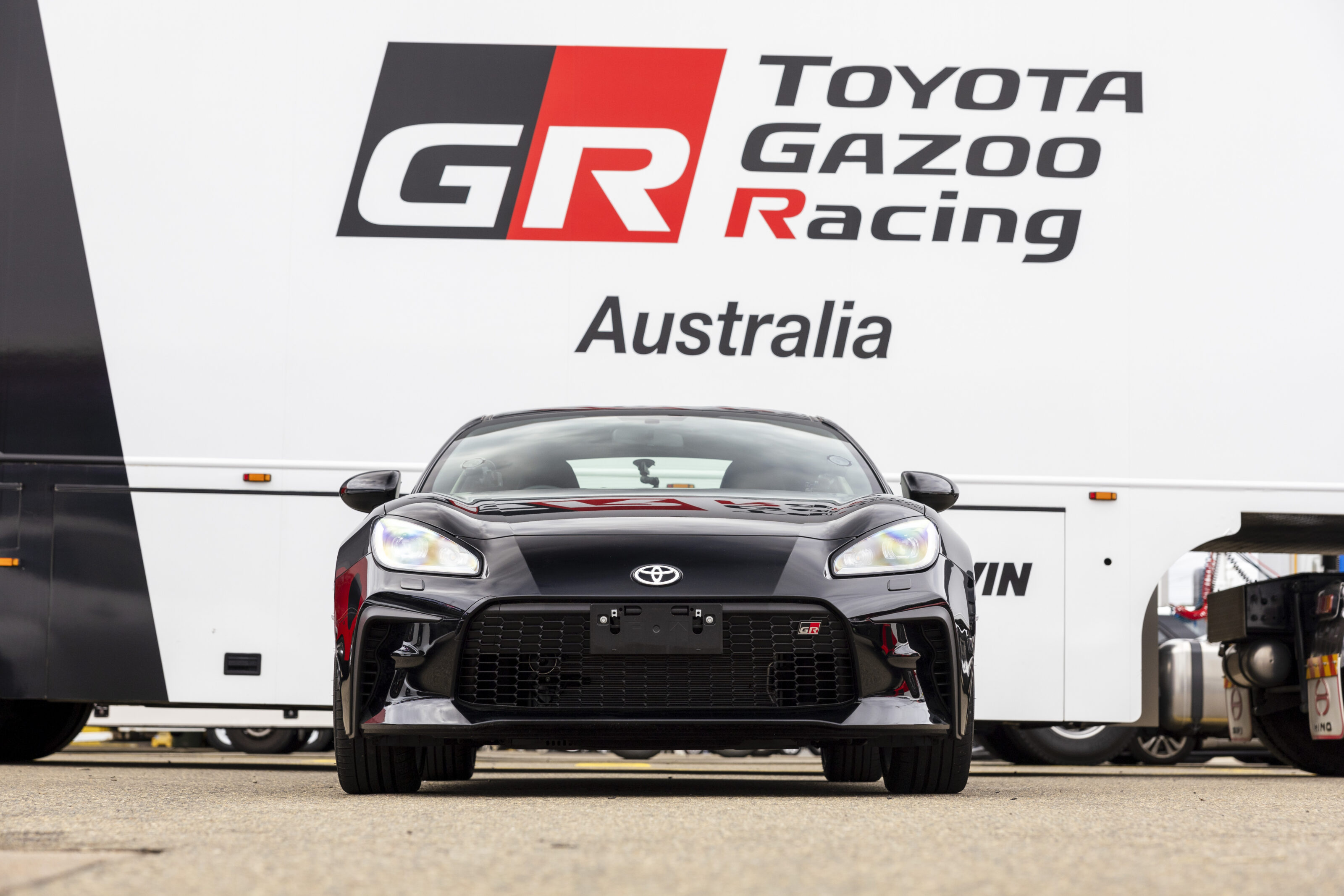
Cards on table time. I’m a complete newbie when it comes to Sydney Motorsport Park. As a Melburnian, I’ve never driven as much as a metre of its length. But I now have a mere out- and in-lap in which to not only gain some vague approximation of which way this fiendish circuit goes, but also to form some sort of impression of Toyota’s box-fresh GR86.
I’m sitting in pit lane reading MOTOR‘s guide to the circuit, but I don’t get the impression that it’s going to render much assistance when there’s just 7860 metres to drive. To make this assessment even less definitive, the car that Toyota has bowled up is a pre-production vehicle, so it’s not exactly representative of what will arrive in dealers come the end of Q3 this year.
UPDATE, September 23, 2022: New GR86 on sale in Oz, and DRIVEN!
The new 2023 Toyota GR86 has finally launched in Australia, and we’ve now driven the version buyers will get. See our full review at the link below.
Story continues
As I park myself in the driver’s seat, oversized Stilo lid clouting the Alcantara roof liner, I realise that this car is also suffering a bit of a shortfall when it comes to pedals. Given that MOTOR readers will doubtless flock to the six-speed manual model over this auto version, that would normally be another annoyance, but on this occasion, I’m happy to leave the ‘box to its own devices.
I know the question you’re keen to have answered. How much is this car different to the Subaru BRZ that recently carried off our inaugural Sports Car of the Year award? Toyota insists that the variance between this car and its Subaru sibling is wider than with the first generation. Final specifications and therefore prices have yet to be finalised for the Australian market but the bones of the GR86 do indeed diverge from the BRZ.
Part of the reason the GR86 has been beaten to the punch by the BRZ is that Toyota has been keen to finesse the ride and handling package of its coupe
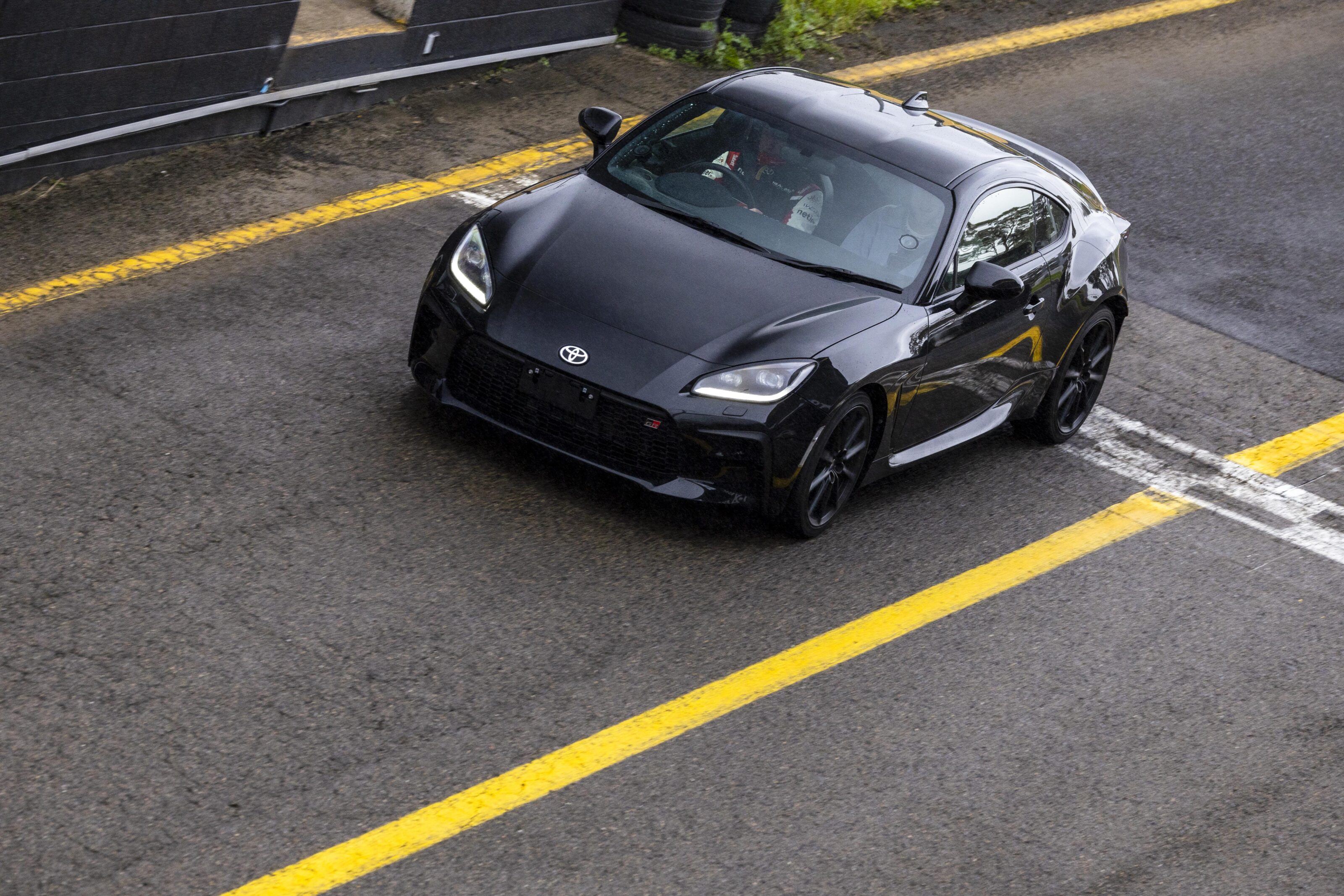
Part of the reason the GR86 has been beaten to the punch by the BRZ over here is that Toyota has been keen to finesse the ride and handling package of its coupe. The GR86 features a 7 per cent lower front spring rate and an 11 per cent higher rear spring rate which manifests in more front-end grip and a little less at the rear. There are quite significant differences in terms of roll stiffness.
The front anti-roll bars of the two cars measure 18 millimetres in the GR86 and 18.3mm in the BRZ which would suggest that the Subaru offers greater roll resistance up front, but look a little closer and the construction of the two bars is markedly different. Whereas the BRZ features a tubular bar, the Toyota’s is solid. This means that the BRZ nets a reduction in unsprung weight (typically around 10 per cent of total bar weight), but the GR86 will be stiffer in roll, the exact amount dependent on the materials choice of the two bars.
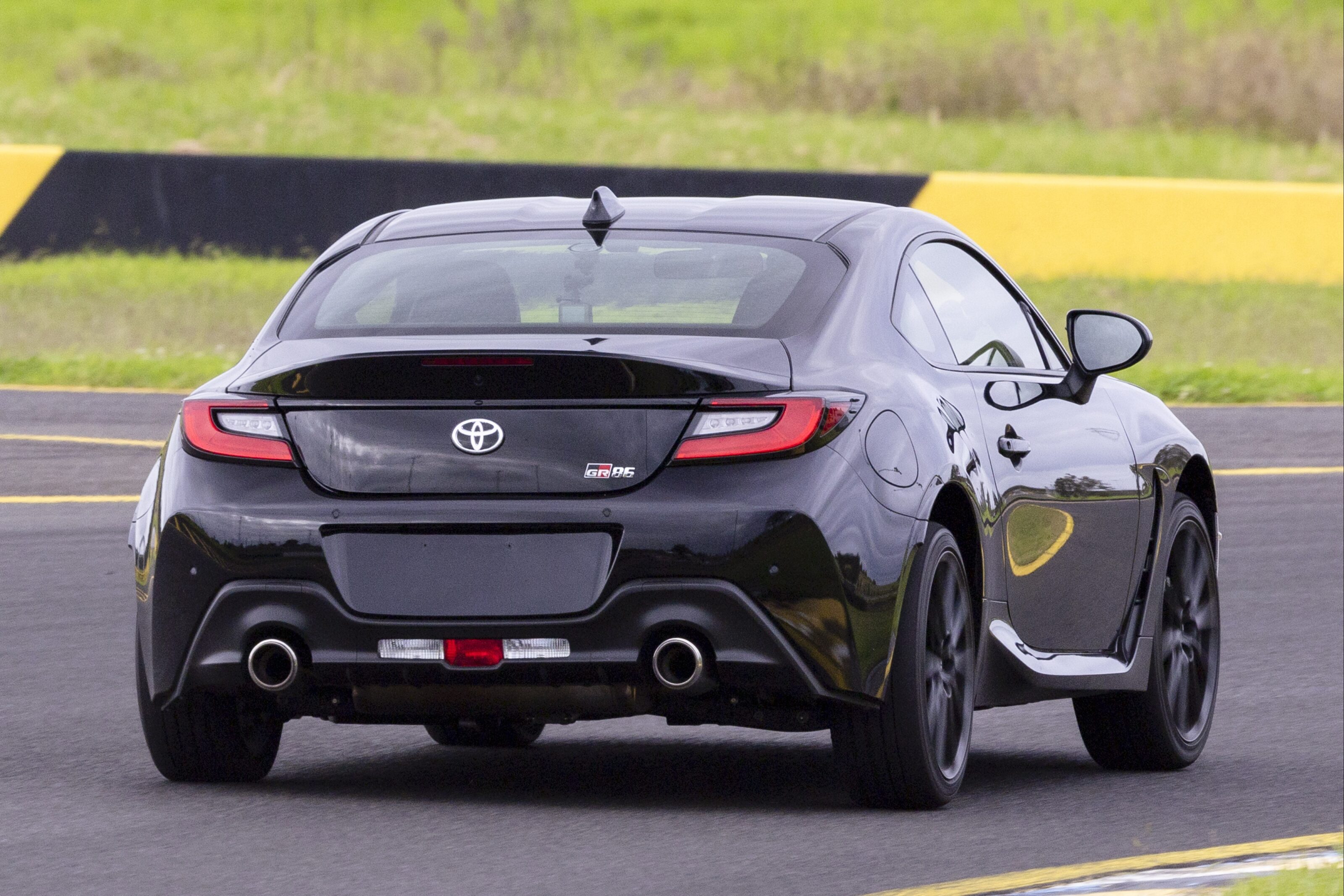
At the back, Toyota has adopted an anti-roll bar that’s 15mm rather than the Subaru’s 14mm and it’s mounted in a different manner, Toyota affixing the anti-roll bar to the unibody rather than the rear subframe. The BRZ features aluminium front knuckles and stiffer rear trailing link bushings versus iron knuckles and carry-over bushings on the Toyota. The materials choice for the knuckles was apparently decided very late in the process at Toyota but, hey, if iron knuckles work for Lotus, they can probably work here.
More will be revealed in due course, but did the Toyota feel notably pointier and sharper than the Subaru at SMP? Not really. It did oversteer more than the BRZ did when I last drove one at Phillip Island, but that was more due to my poor lines through corners than anything to do with the car’s fundamental chassis balance. Once it does start sliding, the steering is clean and accurate and the communication through the chassis is so uncorrupted that it’s a doddle to catch back. What’s more, now that the GR86 has a good deal more torque (250Nm) than before, there’s no longer that frustratingly inconsistent throttle response if you’re trying to prolong a bit of oversteer.
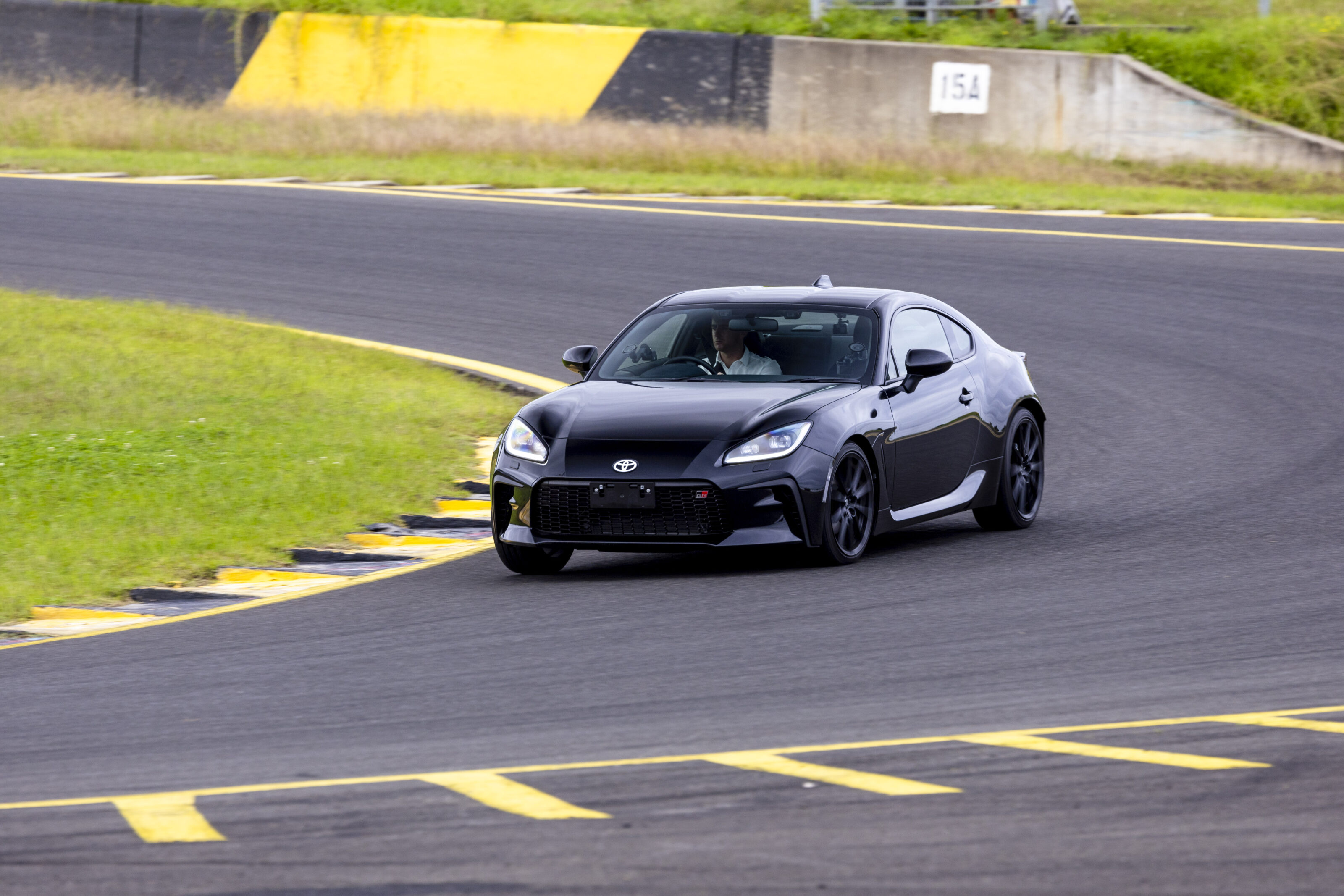
Having impressed the instructor with my ability to enter a 90-degree right as if it’s a 180-degree hairpin, I decide to fall back on Plan B: call on somebody who knows what they’re doing here. I duly insert rally driver Harry Bates into the driver’s seat. It’s started raining by now but I think he’s good for it. Having just sampled how slippery the track is under the Michelin Pilot Sport 4 boots (215/40 R18 front and rear), Bates switches the GR86 into its ESC Sport mode, which still offers enough leeway to send the tail lazily wide at Turn Six. Might have been Five or Seven. Not sure.
“I think it sounds great at the top end,” he notes, agreeing that the sound symposer in this car is, like the BRZ, one of the few that don’t sound as if it’s channelling an OutRun arcade game through its speakers. “I’m not going to go crazy, as this is the only car in the country.” I seem to remember using much the same excuse to my instructor about 20 minutes prior.
Even on a damp track, the GR86’s front-end bite is impressive … its ability to accept more steering input mid-corner is something you’d have never have executed in the previous car
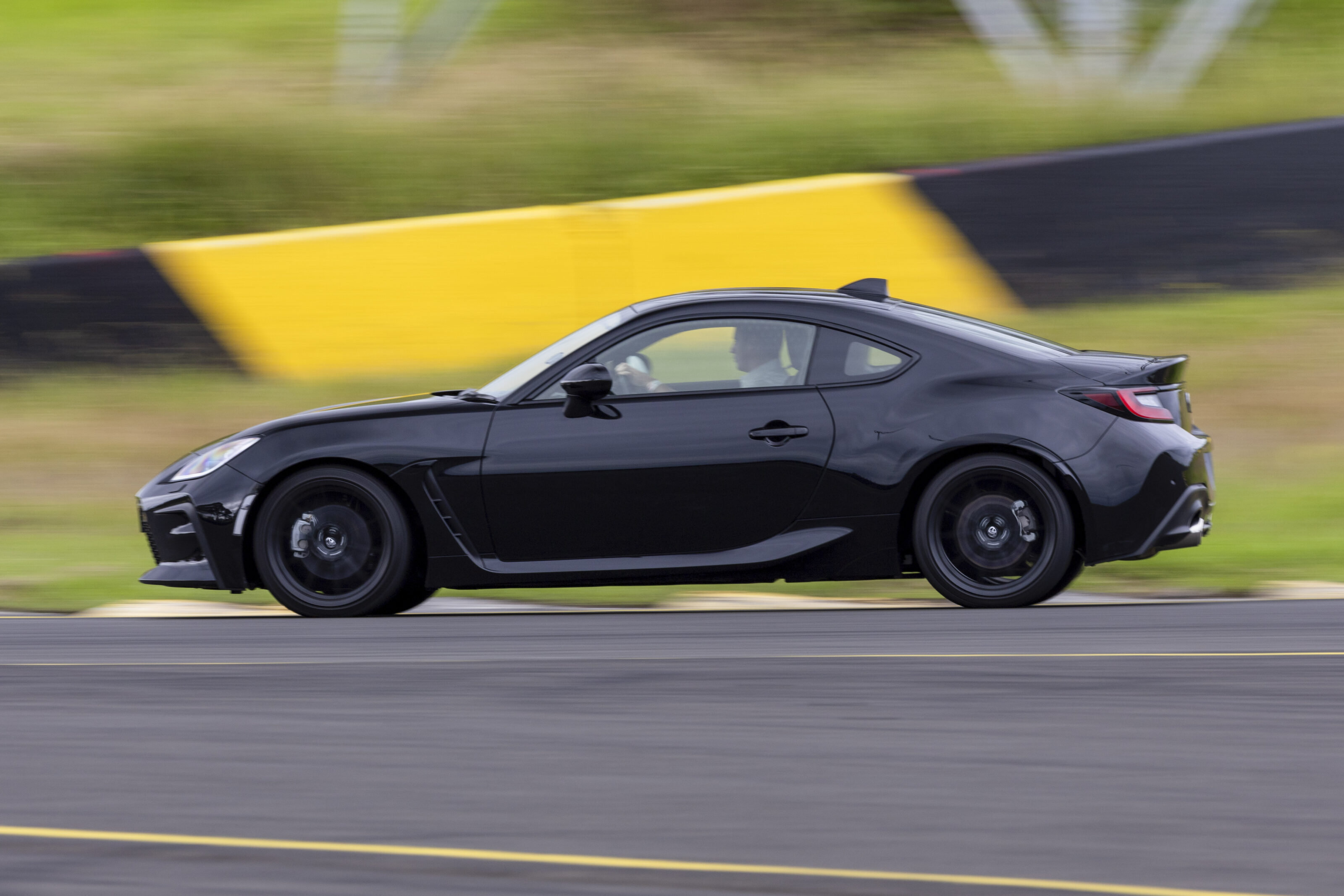
Even on a damp track, the GR86’s front-end bite is impressive. Through the double apex of Turns Two and Three, its ability to accept more steering input mid-corner is something you’d have never have executed in the previous car, especially if it was shod with Michelin Primacy rubber. Toyota still hasn’t made it clear whether it’ll adopt a similar philosophy in offering a base model on modest rubber and then a premium version on more focused tyres.
The automatic gearbox is best marshalled manually with the stubby wheel-mounted metal paddles rather than leaving it to its own devices. The GR86 is now an easy car to drive by ear, keeping the revs plugged into its zone of peak torque. Still, unless 95 per cent of your GR86 driving is an urban schlep, you ought to choose the TL70 manual box. It’s both lighter and geared more aggressively than the auto, paring 0.5s from the 0-100km/h time. The torque bump is offset a little by the fact that the final drive ratio is taller, changing from 4.3/4.1 (man/auto) in the first generation car to 4.1/3.9 now. So while it looks like you’ll get a 20 per cent torque bump in each gear, real world it’s about 12.5 per cent net. It’s enough.
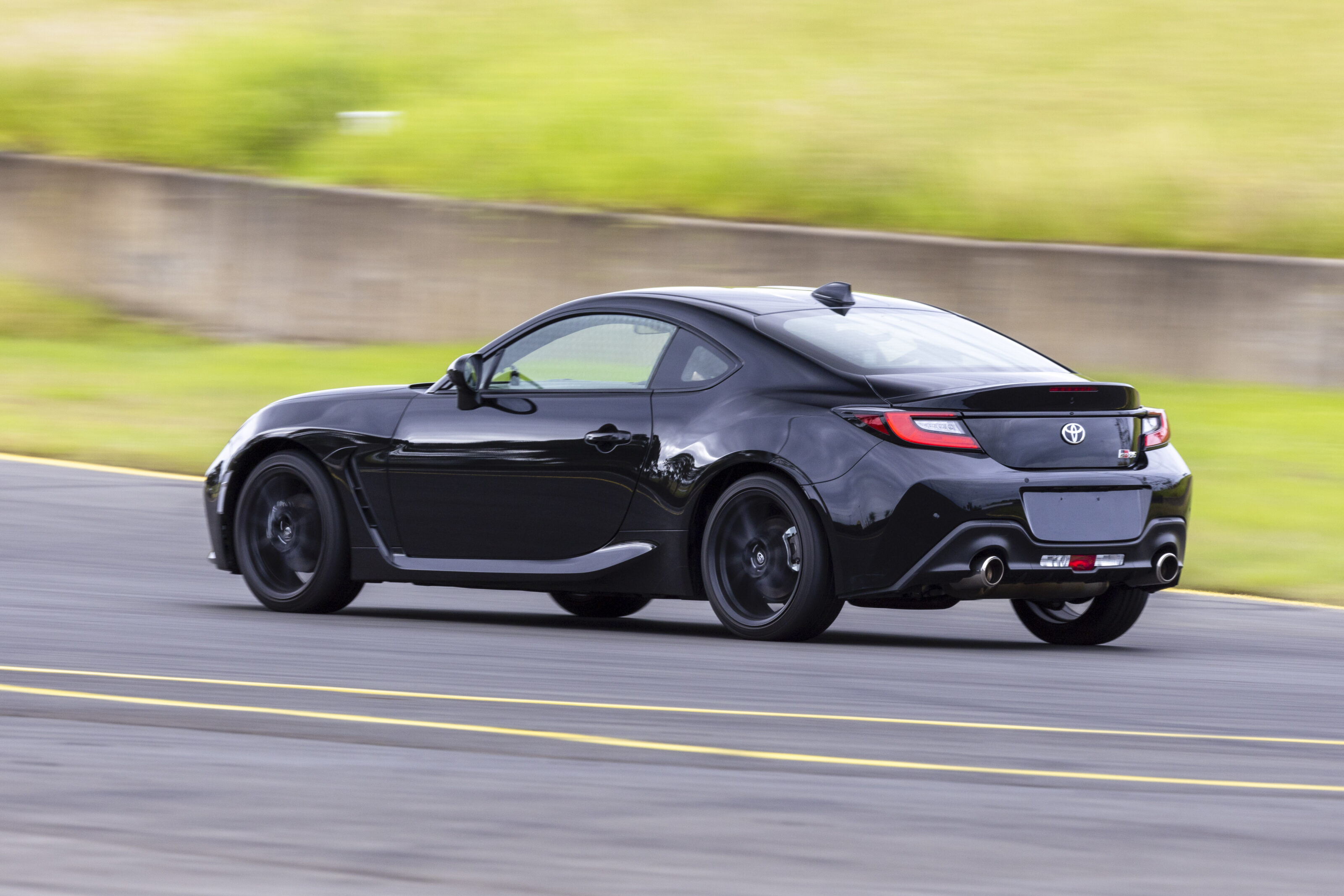
So what do we emerge with from this? I’m clearly going to need a bit more seat time to evaluate exactly how the GR86’s dynamics differ from those of a Subaru BRZ. Given that the BRZ waltzed away with our first SCOTY title, you can take it as read that the GR86 is an extremely good thing. Whether it’s a better thing is laden with caveats, many of which we can’t assess right now. Pricing is one big ‘un. Australian spec is another. These will be clarified shortly.
While at SMP, Toyota announced that it would continue its backing for the 86 racing series for another four years through to the end of 2026. The second generation race car will debut in the 2024 season, and a feeder Toyota Gazoo Racing Australia scholarship series will act as a grassroots way onto the oversubscribed grids of the main series. This in turn gives young Aussie racers 15 chances a year to show what they can do in front of Supercars team owners, with talent like Broc Feeney and Will Brown having used the series as a stepping stone to Australia’s premier tin top series.
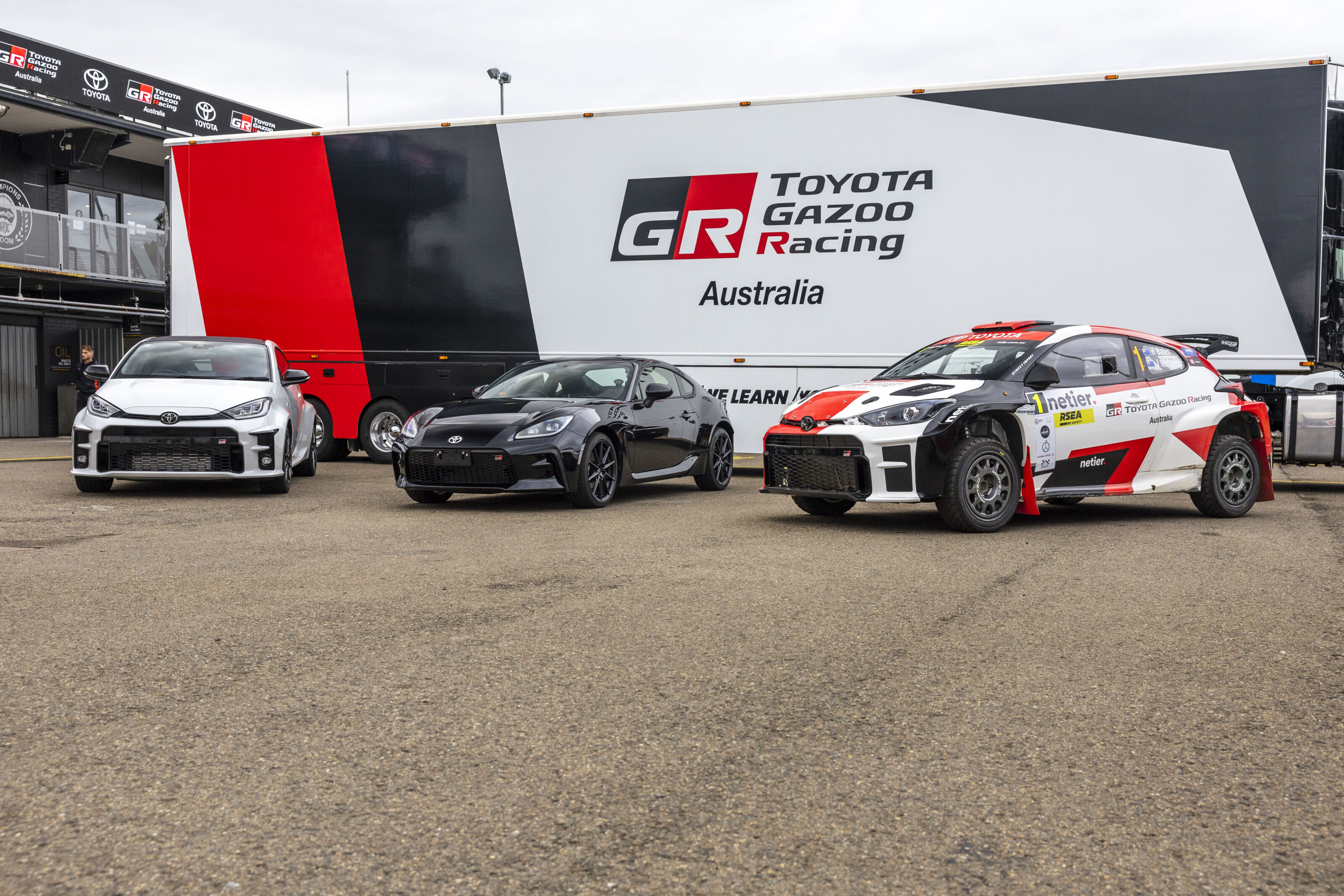
This graduation path for Australian racing talent is just one area where the GR86 elevates itself from the mainstream. It’s a car that has become more than the sum of its parts. My brief wobble around SMP in the first second-gen car to make these shores is but the merest taster of what’s to come. If this car is around as long as its predecessor, you can count us very happy indeed.
Snapshot
- ALP will drop import tariffs and FBT for EVs
- $500m fund for hydrogen, biofuels, and EV infrastructure
- 150km intervals for EV chargers on major arterials
At its official election launch over the weekend, the Australian Labor Party announced it will introduce an ‘Electric Car Discount’ if elected, which will exempt brand-new electric vehicles (EVs) from import tariffs and Fringe Benefits Tax.
The move is expected to reduce the cost of some new EVs for Australian buyers.
However, a number of electric vehicles are already exempt to import tariffs, including the Nissan Leaf and Mini Cooper SE, thanks to a Free Trade Agreement formed with the United Kingdom in June 2021.
If it wins the upcoming Federal Election, the ALP says it will also create a $500 million ‘Driving the Nation Fund’ to support renewable fuels.
The policy would double the $250 million pledged to the Future Fuels Fund by the current coalition government, with the money to be spent on hydrogen, biofuels, and electric vehicle infrastructure.
If elected, Labor has promised a $39.3 million investment – matched by the NRMA in New South Wales – which it says will result in EV chargers built at an average interval of 150 kilometres on major roads around the country.
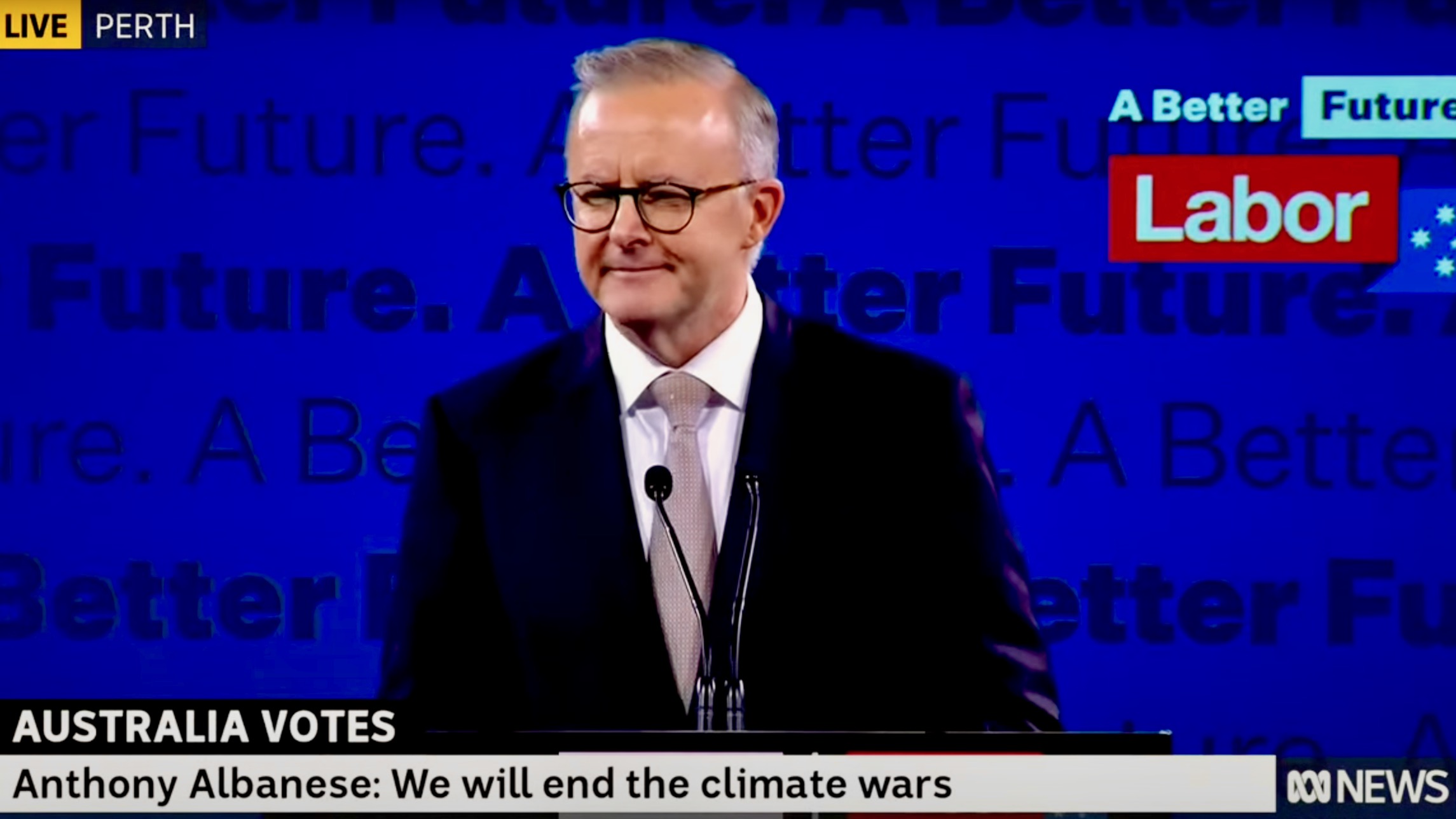
Highways across regional areas of Western Australia, Northern Territory, South Australia, and Queensland are expected to benefit, along with additional chargers set to be placed across the Nullarbor between Perth and Adelaide.
“We know range anxiety remains a major impediment to Australians purchasing EVs,” CEO of the Electric Vehicle Council, Behyad Jafari, said following the announcement.
“Although much of this anxiety is misplaced, building a modern network of charging infrastructure would send a strong signal that there’s nothing to fear,” said Jafari.
“City drivers are flocking to EVs because the benefits are so clear and obvious. For regional drivers, hesitancy is stronger, but that’s why it’s excellent to see the NRMA committing to partnering with the Federal Government to roll out regional charging infrastructure and make EVs an option for all Australians.”
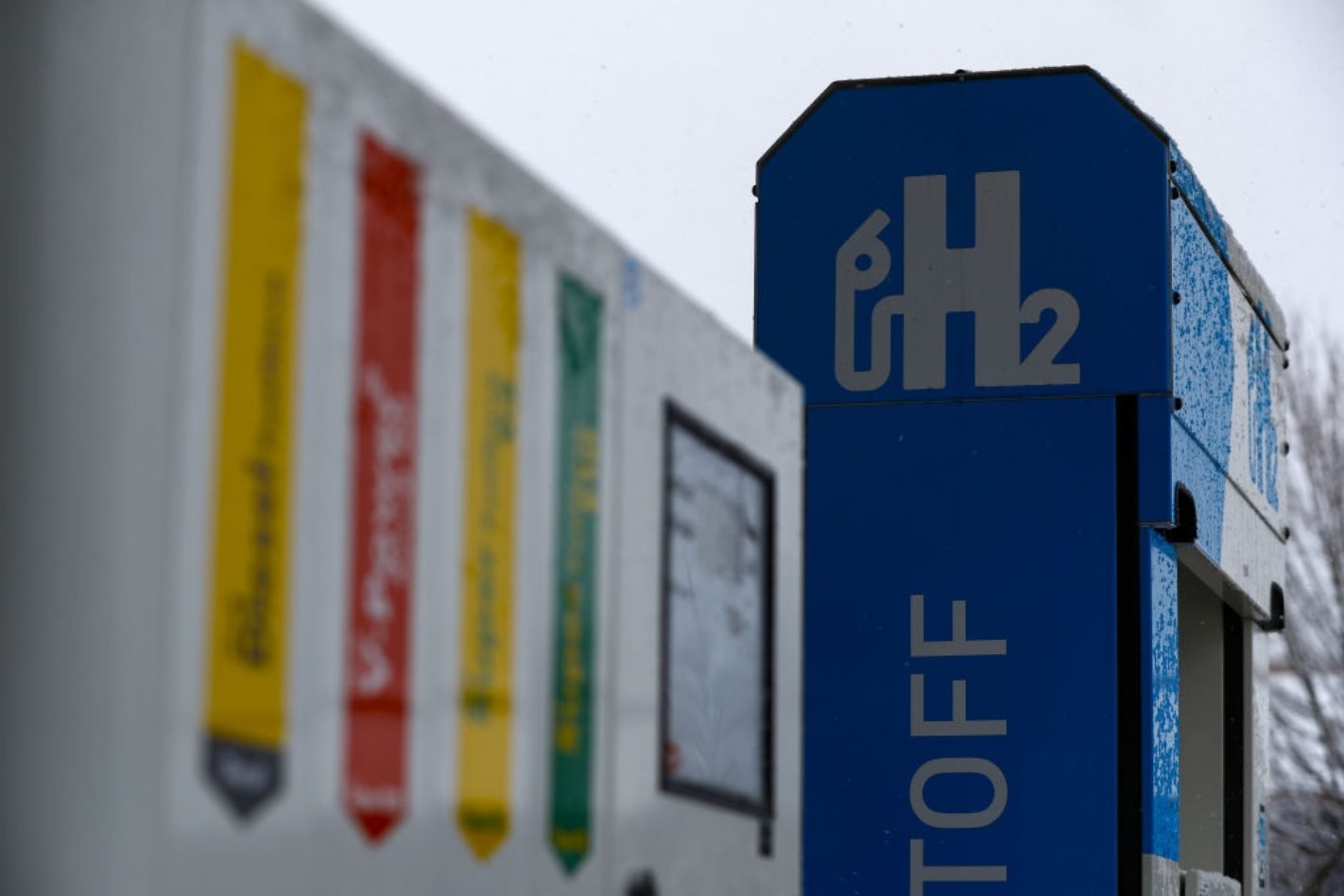
Labor said the Driving the Nation Fund will also invest $80 million to deliver up to 16 hydrogen refuelling stations along Australia’s busiest freight routes.
A Memorandum of Understanding was created between Queensland, New South Wales, and Victoria in March to build a hydrogen superhighway for heavy vehicles, though it’s not clear whether the announcement over the weekend is directly related to this project.
“The future of road transport is hydrogen and electric,” said Catherine King, Shadow Minister for Infrastructure, Transport and Regional Development.
“But to take advantage of the future, we have to prepare for it now,” she said, explaining how the ALP will work with State and Territory Governments to “build a cleaner, cheaper road network for Australian families and Australian businesses”.
The recent Federal Budget 2022-23 outlined by the Federal Government –currently led by the Liberal National Party – announced $1.5 billion for the hydrogen industry in Australia, but made no provisions for electric vehicles.
Coupe sedans like this BMW 430i Gran Coupe have found a niche in the market, catering to those who value driveability over practicality but aren’t quite ready to sacrifice a couple of doors.
One model that provided an excellent compromise between sedan and coupe was the first-generation F36 BMW 4 Series Gran Coupe. But while that was essentially a reshaped BMW 3 Series, its G20 replacement has been penned to distinguish itself from the sedan with a brasher and more upscale appearance.
It shares plenty with the 3 Series though, including powertrains and performance, so we drove the mid-spec 430i M Sport, which is arguably the sweet spot of the range, to see why you’d choose it over the much-esteemed 330i sedan.
Pricing and Features

The Gran Coupe is the third in a trio of second-generation BMW 4 Series models, which also include the Coupe and Convertible. The Coupe and Gran Coupe are available in Australia with three petrol-powered variants, the two-litre four-cylinder 420i and 430i, and the sportier 3.0-litre six-pot M440i. Convertibles miss out on the entry-level 420i spec.
Before on-road costs are added, the Gran Coupe is priced from $76,900 for the 420i or $84,900 and $118,900 for 430i and M440i respectively.
The 430i’s price tag is $5000 more than the 330i sedan and shares the quintessential BMW model’s M Sport package that brings sporty M-Car bling.

Standard features across the range include ‘Cockpit Professional Connected Package’ with 12.3-inch digital instrument display, high-res 10.25-inch touchscreen, 10-speaker sound system, wireless charging, digital radio and wireless connection to Apple CarPlay and Android Auto.
You also get M Sport Suspension, 19-inch M alloy wheels with run-flat tyres, power-adjusted sports front seats, head-up display, LED headlights, auto high beam, power-operated hatch, ambient interior lighting and three-zone climate control.
As well as the beefier 190kW engine, 430i spec adds premium ‘Vernasca’ leather upholstery, adaptive M suspension, keyless entry and start with digital smartphone key, M Sport brakes, the Driving Assistant Professional tech suite and Parking Assistant.

Our test vehicle also came with the Visibility Package that for $5800 brings metallic paintwork, sunroof, and BMW Laserlight adaptive headlights ($1100), which took pricing before on-road costs to $90,800.
The BMW 430i requires pricier 95 or 98 RON premium unleaded petrol but has a relatively frugal official combined fuel consumption rating of 6.6L/100km.
It’s covered by a three-year, unlimited-kilometre warranty, which seems a little miserly these days, though you do get three years of roadside assist coverage with that.

Instead of set service intervals, visits to the service centre are determined by sensors that let the driver know when servicing is required based on kilometres covered and driving style.
BMW offers a five-year/80,000km basic service package for $1565, or $4110 for an expanded Service Inclusive Plus package that covers additional parts such as windscreen wiper blades, brake pads and discs, and clutch disc/plate.
Comfort and Space

Apart from the sloping roofline, the BMW 4 Series Gran Coupe’s interior is a dead ringer for that of the 3 Series.
This of course means it’s a nice place to be, particularly when nestled in the 430i’s plush and well-bolstered ‘Vernasca’ leather sports front seats.
The rear seats are nicely moulded too, so you’re sitting in them rather than on, and they offer good legroom.
As you’d expect with coupe styling, headroom is a little tight – more so with the optional sunroof – but it’s more generous than the two-door coupe’s.

Rear-seat amenities include bespoke air-conditioning settings and vents, an illuminated footwell, a pair of USB-C ports and a fold-down armrest with cup holders.
Behind the rear seats, boot space is 470 litres, which is 30 litres bigger than the coupe’s and 10 litres less than the 3 Series sedan. While you lose a bit of height compared to the latter, the floor space is longer and will easily fit a couple of big suitcases lying down, with the broad, high-opening hatch making it easier to load and unload. Folding the 40:20:40 split rear seats down will bring up to 1290 litres of space.

If you’re new to BMW, the in-car technology could take a bit of getting used to, particularly when negotiating the different menus. But once you get it you’ll find operation quite intuitive through the iDrive rotary dial on the centre console or the ‘Hey BMW’ voice activation that includes the ability to select certain functions such as drive modes without taking your eyes off the road. What you won’t be able to do is operate the screen directly, with touchscreen capability unavailable due to the global semiconductor shortage.
In short, this feels every bit like an $80,000-plus luxury coupe sedan should.
On the Road

Like its coupe sibling, the 4 Series Gran Coupe has been engineered to deliver perkier driving dynamics over the 3 Series, despite sharing the same powertrains.
It has a bigger footprint than the sedan, with a 5mm-longer wheelbase and front and rear tracks stretched by 16mm and 55mm respectively, which brings a reduced centre of gravity despite its 4mm higher ride height.
The 4 Series also has enhanced aerodynamics and increased body rigidity made possible by stiffening the suspension struts, resulting in noticeably tighter handling.

Adaptive dampers that are part of the 430i’s standard kit improve handling further, compared to the 420i.
The Comfort setting ensures a smooth ride without compromising handling. As with the two-door coupe, you’d really have to overcook a bend to feel any kind of body roll meaning there were few times when I felt it necessary to switch to the stiffer Sport or Sport Plus settings.
Individual drive mode allows you to select the Comfort suspension with sportier engine performance and stiffer steering settings, for example.

The steering is excellent and whether you have it in Comfort or stiffer Sport mode it’s well-weighted and direct, backed up by the noticeable body stiffness and a compliant rear end.
Despite a little lag on takeoff, the 190kW/400Nm 2.0-litre turbocharged petrol engine is a perky but refined unit that once going responds quickly to pedal inputs through the eight-speed Steptronic automatic transmission.
While not as brutish as the 285kW 3.0-litre straight-six M440i, the 430i has more than enough oomph that will get you from a standing start to 100km/h in 6.2 seconds, which is less than half a second slower than the sleeker 430i Coupe.
Safety

Because it’s technically a 3 Series variant, the 4 Series Gran Coupe shares the sedan’s five-star ANCAP rating from 2019.
Standard safety equipment across the range includes autonomous emergency braking, lane departure warning, blind-spot monitoring, rear cross-traffic alert and rear collision prevention.
The 430i also comes standard with the Driving Assistant Professional package that brings adaptive cruise with stop and go function, lane-keep assist, front cross-traffic alert and ‘evasion aid’ that helps the driver when they are trying to avoid a collision.
VERDICT

The BMW 430i Coupe was one of my favourite cars in 2021 and a year on, its four-door sibling didn’t disappoint.
Although the Gran Coupe isn’t quite as nimble as the two-door, it feels more sprightly than the 330i and offers a very satisfying driving experience that makes it a great grand tourer that you’ll happily drive for hours on end.
In terms of looks, I liked that giant kidney grille treatment when it first showed up on the coupe and I reckon it looks even better in front of the four-door shell. It also succeeds in making the Gran Coupe appear a lot more upmarket than the 330i, which makes the $5000 price difference a bit of a bargain.
Manufacturing conglomerate Stellantis is poised to begin producing electric vehicles in Serbia after signing a deal with the country’s government.
Stellantis will convert its current plant in Kragujevac, Serbia, to focus on producing an electric model – tipped to be a replacement for the Fiat 500L, one of the few cars exported from the facility.
The upgrades will come thanks to a €190 million (AU$280m) investment from the Serbian Government, with President Aleksandar Vučič signing the deal with Stellantis CEO Carlos Tavares to put the first vehicle into production from 2024.

Tavares said the yet-to-be-announced vehicle set to go into production at the facility will ride on one of the manufacturer’s planned EV platforms.
“This new platform for electric vehicles will fit perfectly with products from A, B and C categories and will improve efficient and clean solutions for urban mobility of our brands,” said Tavares.
“Together with stakeholders from Serbia, we will offer citizens freedom of movement and the fight against global warming through clean, safe and affordable solutions.
“This requires a 360-degree approach, from energy prices to incentives that support the market turn towards electric vehicles. The combination of these activities will put Serbia and Europe in a firm position in terms of the energy transition to affordable and sustainable mobility.”
Stellantis has previously announced a target of 100 per cent of its sales in Europe to come from EVs by 2030, with an aim of 75 models across its brands delivering five million units, helping it to deliver on its goal to go net-zero by 2038.
UPDATE, April 29: 2023 Nissan Z Nismo revealed for racing series
A pair of 2023 Nissan Z racing cars modified by Nismo will take part in the Japanese Super Taikyu Series, the company has announced.
While Nismo – Nissan’s motorsport division – didn’t supply any images of the rear of the Z, it does appear likely it was the vehicle spotted in a three-second video posted to YouTube earlier this month.
Nismo says the Z racing car will make its debut at the 24-hour race at Japan’s Fuji Speedway on June 4, 2022.
The story to here
April 29: Video of Nissan Z Nismo spied testing
The 2023 Nissan Z Nismo has long been rumoured about, but a short video may have just spied a prototype testing for the first time.
Nissan is preparing to launch the new Z coupe in the coming months, complete with a 298kW/475Nm 3.0-litre twin-turbo V6 powering the rear wheels, and a high-performance variant from the company’s motorsports arm is expected to follow – just as with the 370Z Nismo and R35 GT-R Nismo.
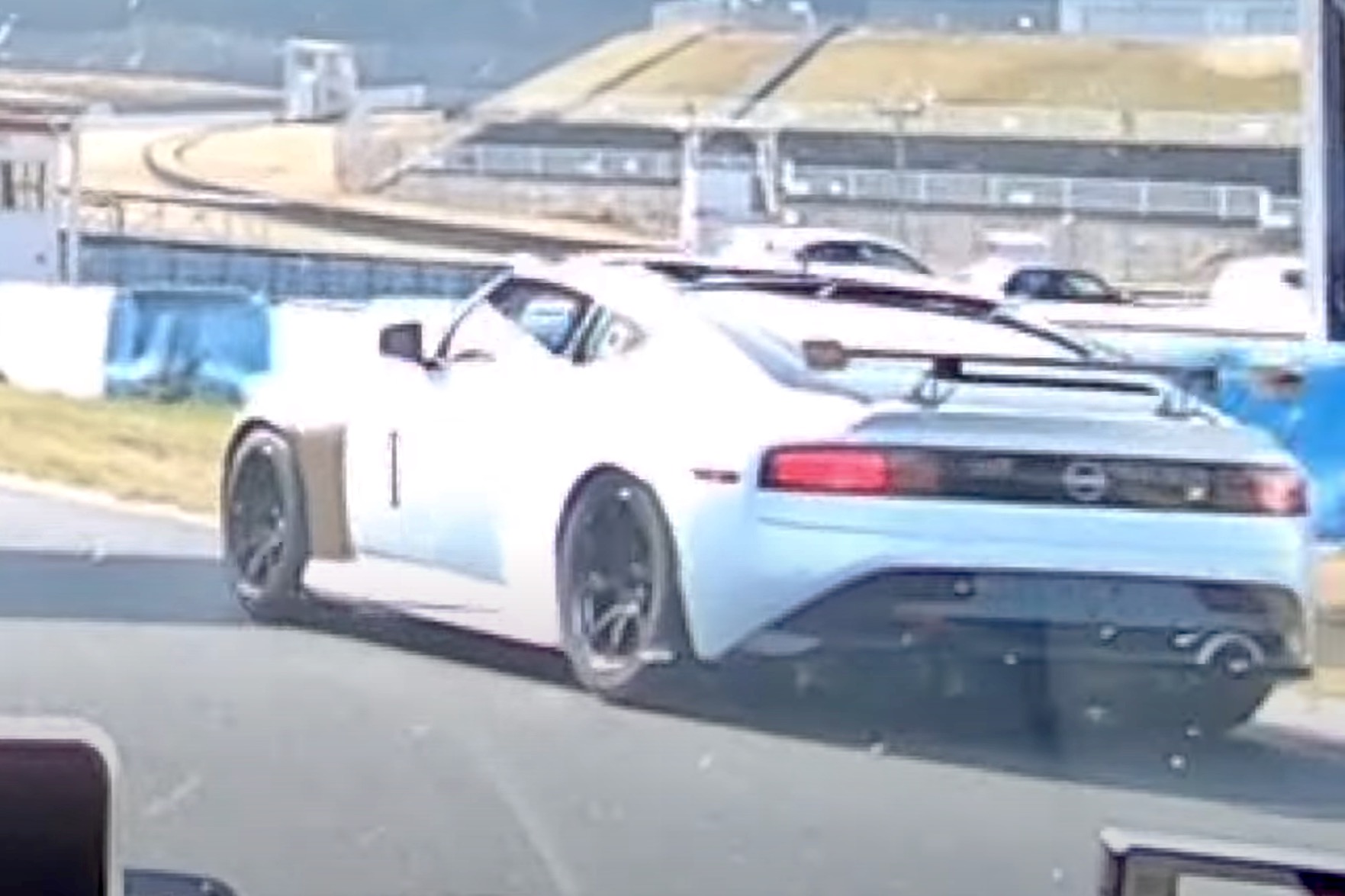
Now, a three-second video has emerged from Japan which could well be a pre-production Z Nismo testing on track.
The brief glimpse from YouTube channel R Gelan shows a mysterious Z fitted with what appears to be carbon fibre front quarter panels and a mid-size rear wing, as well as wider black wheels and a more aggressive stance.
Something also seems to be going on at the rear diffuser, with highlighting around the exhaust cut-out.
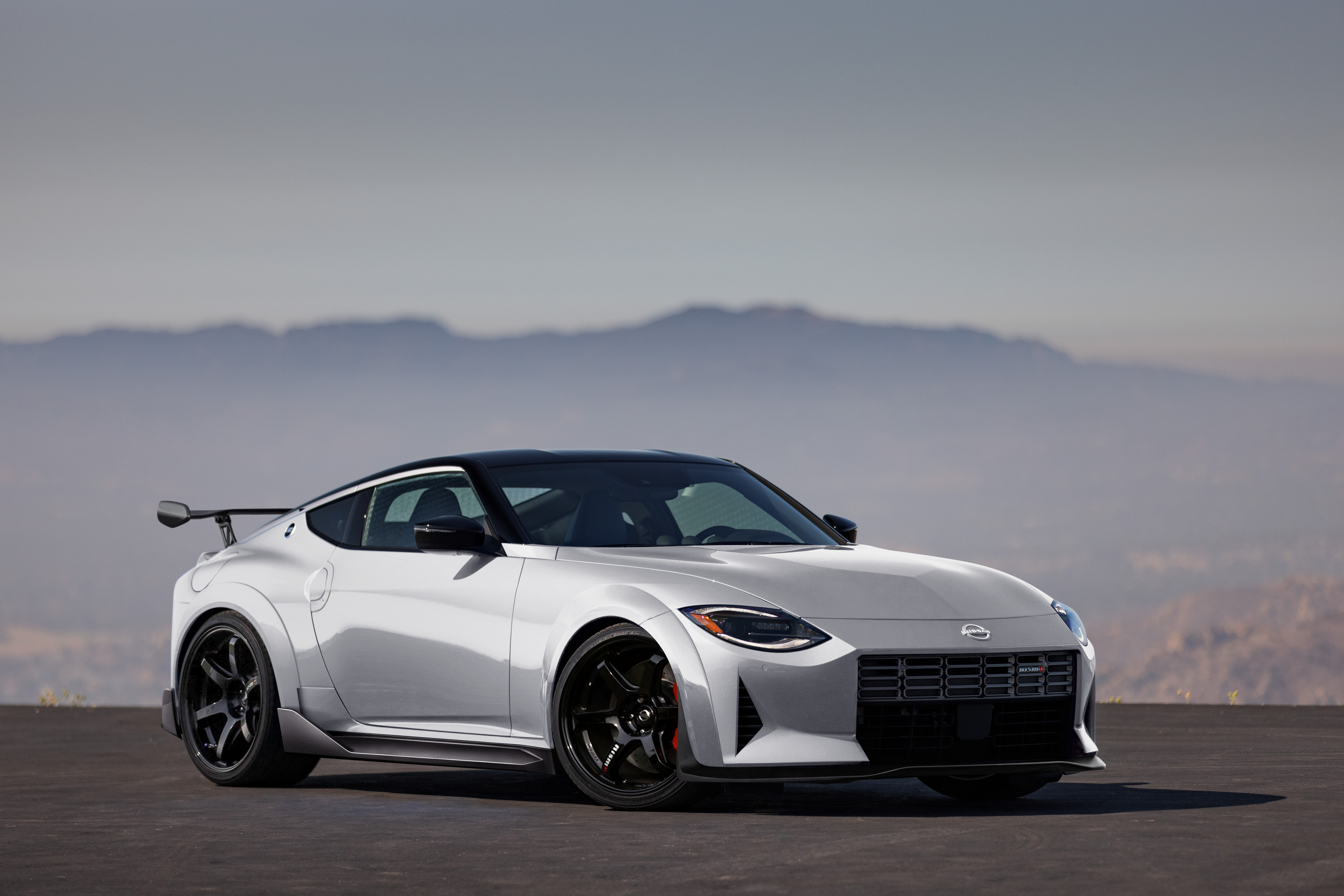
Curiously, the white Nissan Z caught on tape in the past week looks eerily similar to these digital renderings of a Z Nismo produced for MOTOR in November 2021.
The 2023 Nissan Z will launch in Australia in the middle of the year, with local pricing to be announced closer to the date.
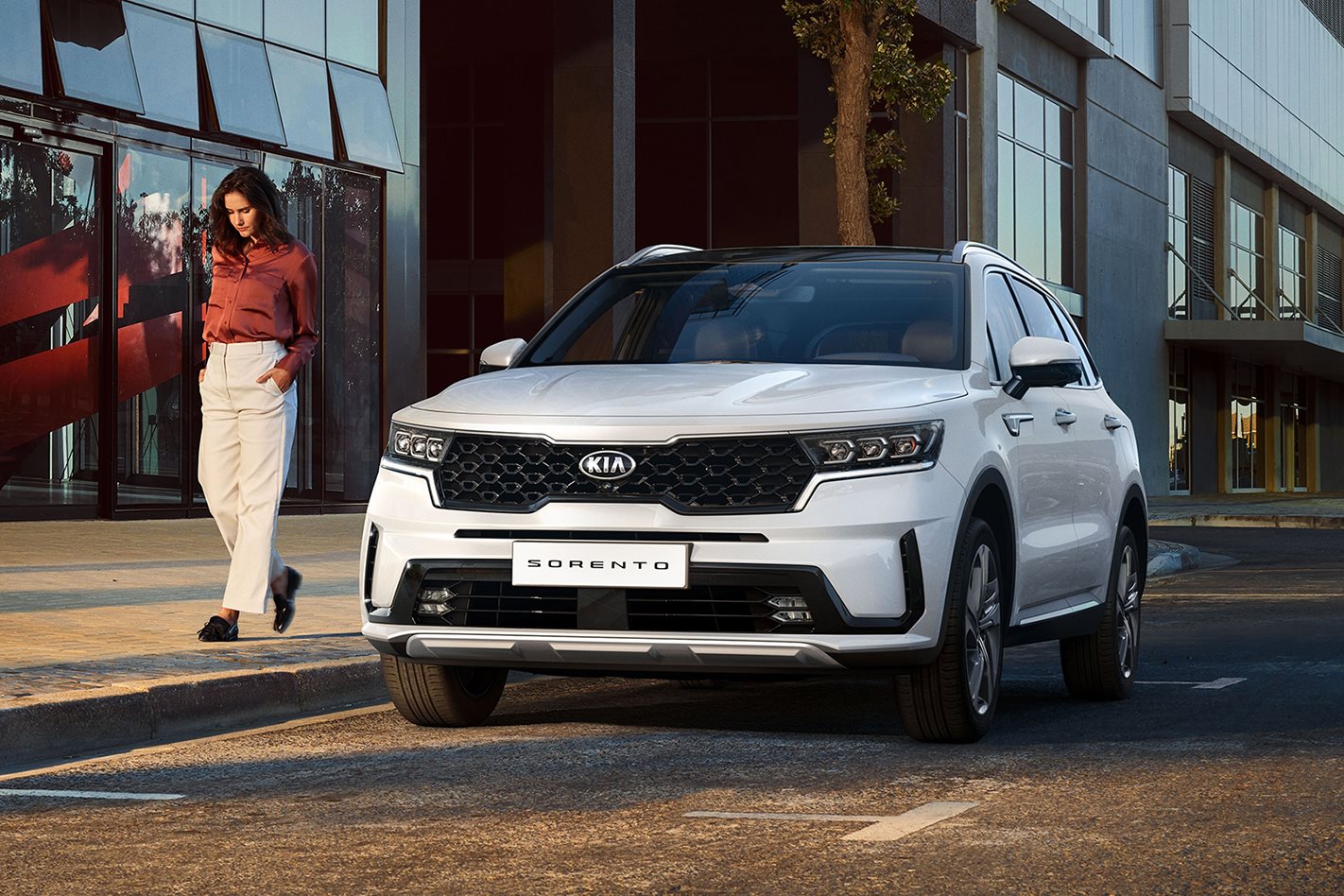
Kia is recalling more than 2500 examples of its Sorento and Carnival models over a possible fire risk.
The issue affects 2667 MY20 cars across all variants of the two models.
Due to manufacturing defect, a fuel leak could occur from the low-pressure fuel line hose clamp, and, if that happens, may result in an engine bay fire.
Owners should contact their preferred Kia dealer to arrange to have the fuel rail replaced free of charge, or alternatively can call the firm on 131 542 or email on [email protected]
A list of VINs is available here.
Audi’s first supercar, the original Type 42 R8, was a shot heard round the motoring world when the striking 2003 Le Mans quattro Concept materialised in production form as a lightweight midship V8 supercar back in 2006.
It was big news for Audi to venture into supercar territory back then, with little precedence to be found in the Ingolstadt giant’s back catalogue. Yet, the ambitious breakout new car was able to dissect the perennial sports icon, the Porsche 911, with ease and quickly earned rafts of praise – including a joint win with Nissan’s GT-R at MOTOR’s 2009 PCOTY.
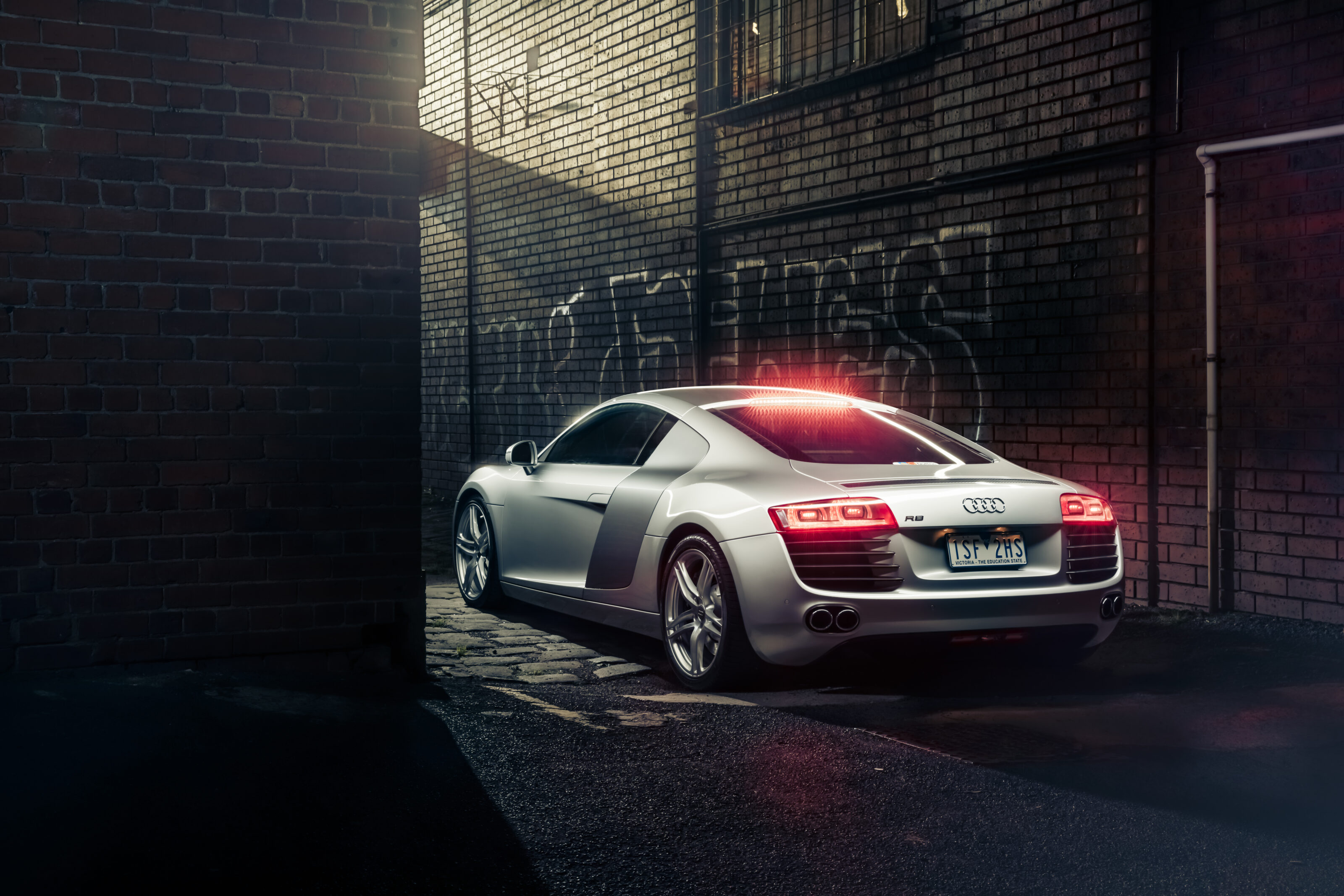
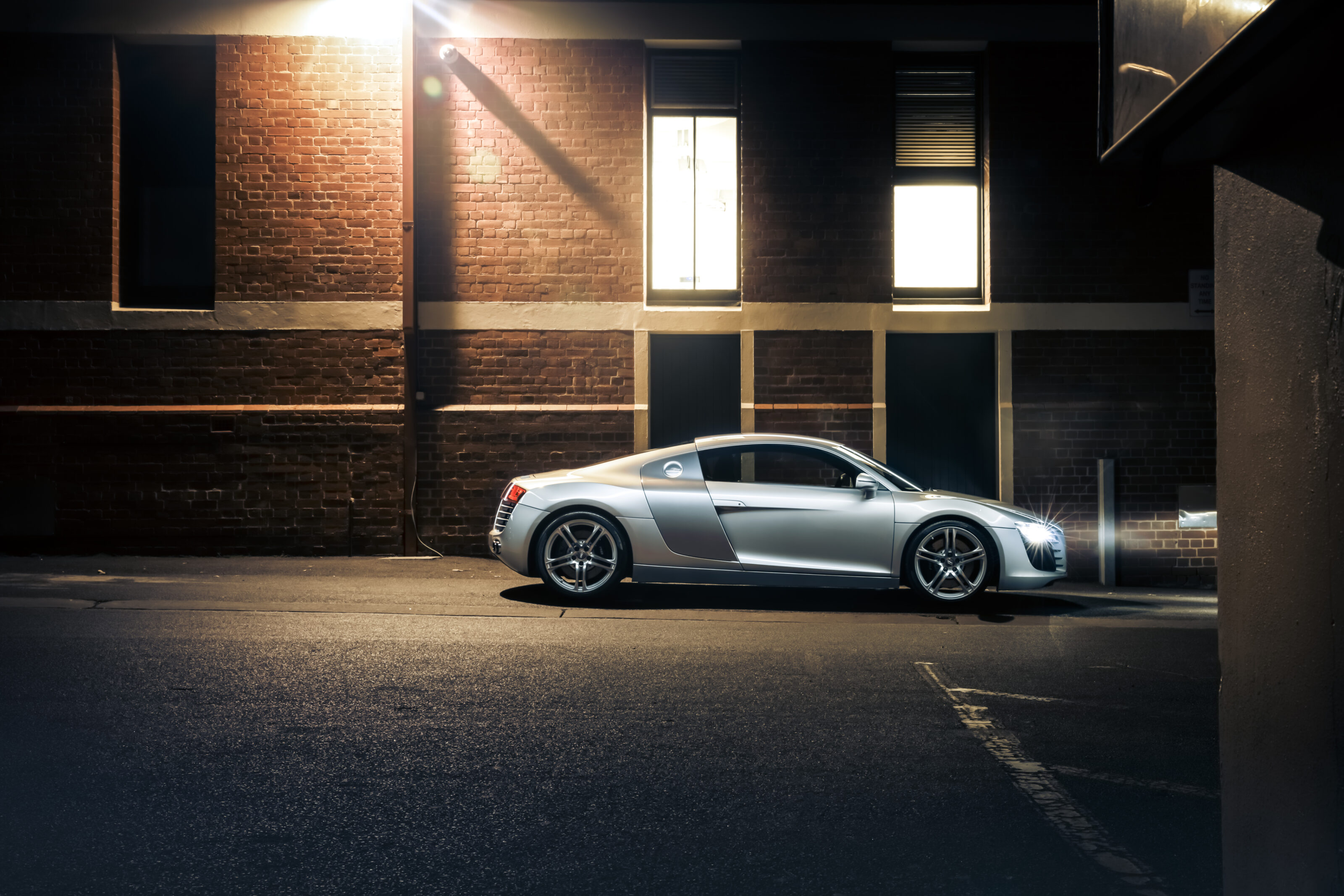
You can revisit Andy Enright’s stirring sojourn with the outgoing GT-R and second-generation Type 4S R8 on this significant car’s legacy. Today, however, we consider the classic credentials of the original Type 42 R8, produced from 2006 to 2015. Here you can choose between two engines, eight or 10 cylinders, and three transmissions, the desirable six-speed manual, Audi’s R tronic automated manual or the later S tronic.
While the R8 was new territory for Audi, development was aided by a seasoned supercar stalwart. Many of the underpinnings were shared with the Lamborghini Gallardo, and its aluminium chassis, body and double wishbone suspension yielded a modest kerb weight of 1565kg. Armed, initially, with a 309kW/430Nm 4.2-litre V8 from the Audi RS4, the German supercar yielded a 73kW/80Nm deficit to its V10 Italian cousin, but clocked triple digits from a standstill in 4.6 seconds.
Breakout success saw the R8 range bolstered late in 2008, with the introduction of the updated Gallardo’s 5.2-litre V10, albeit detuned to 391kW/530Nm (the Gallardo LP 560-4 produced 412kW/540Nm at the time). In a neat bit of added trivia, its LED headlights were a production car ‘world-first’, too.
The 5.2-litre R8 V10 Spyder appeared the following year in 2010, with the 4.2-litre V8 added in drop-top form one year later. Limited Edition R8 GTs were revealed in 2011, and were 100kg lighter with power uncorked to a Lamborghini-matching 412kW. Just 333 Coupes and 333 Spyders were produced worldwide. A mid-2012 facelift introduced Audi’s own S-Tronic dual-clutch DSG transmission to the range.
Essential checks
Entry to the R8 market begins at around $100k for an R tronic 4.2 V8 car with more than 100,000kms on the odo.
About $130k-$170k buys most R tronic V8 cars with much lower odometer readings. Even at this price point, that sounds rather attractive given the exotic ownership appeal, ease of use and well-regarded build quality.
Search north of $170k and you begin getting into V10 vehicles with little price disparity observed between Spyder and Coupe variants.
Manual V8 cars are lauded for their driving experience, and command a significant premium, frequently priced above or alongside equivalent R tronic V10 vehicles. A lone Manual V10 Spyder tops the standard R8 market, observed asking $220k. A couple of limited edition R8 GT Spyders were also spied on the market, listed for more than $260k.
Body and Chassis
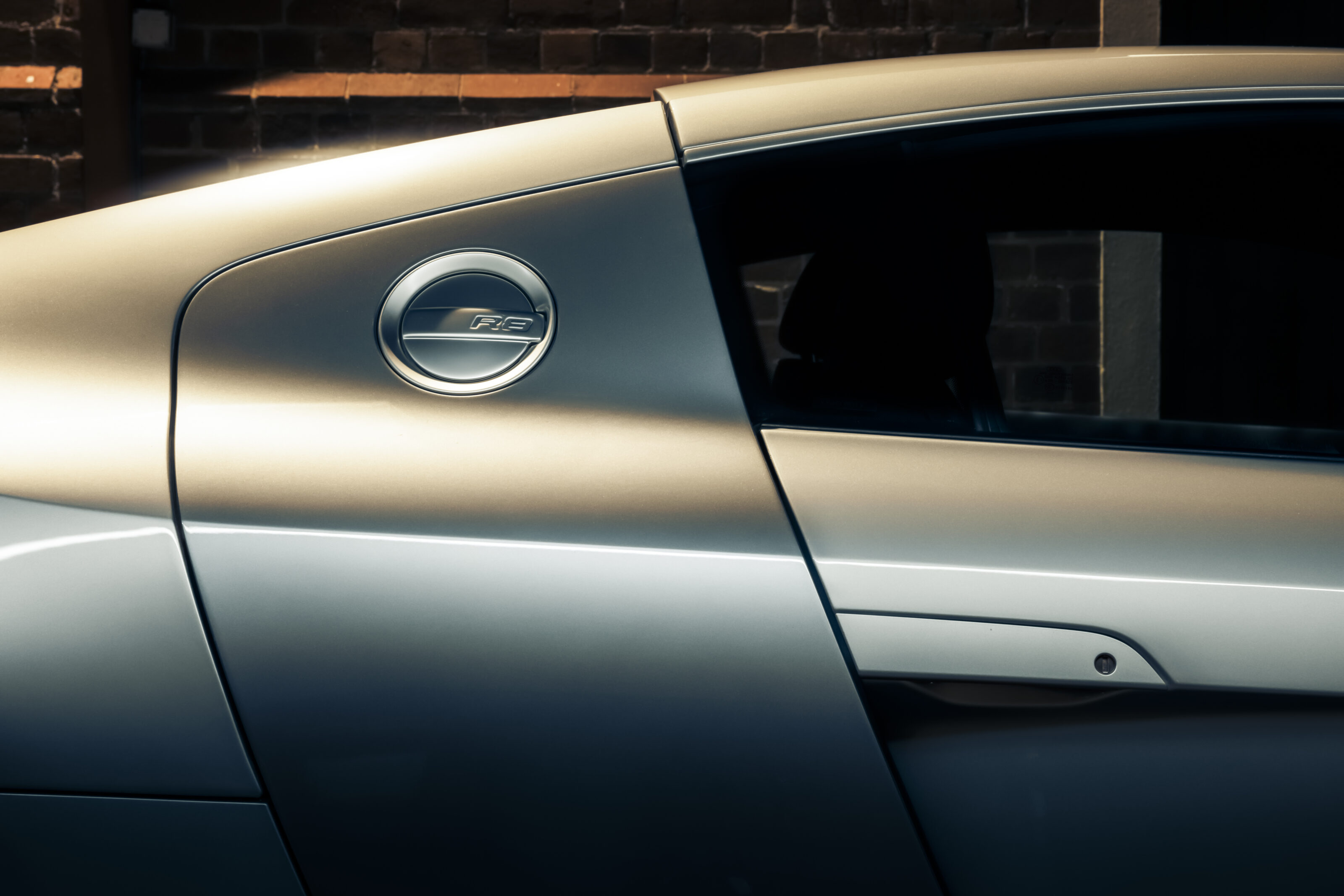
Aluminium is extensively utilised throughout the body and is expensive to repair, so inspect closely for parking dents and any imperfections.
Long doors are prone to paint chips along the trailing edge and, although rare, some owners report of paint bubbling along door panel edges.
Engine and Transmission
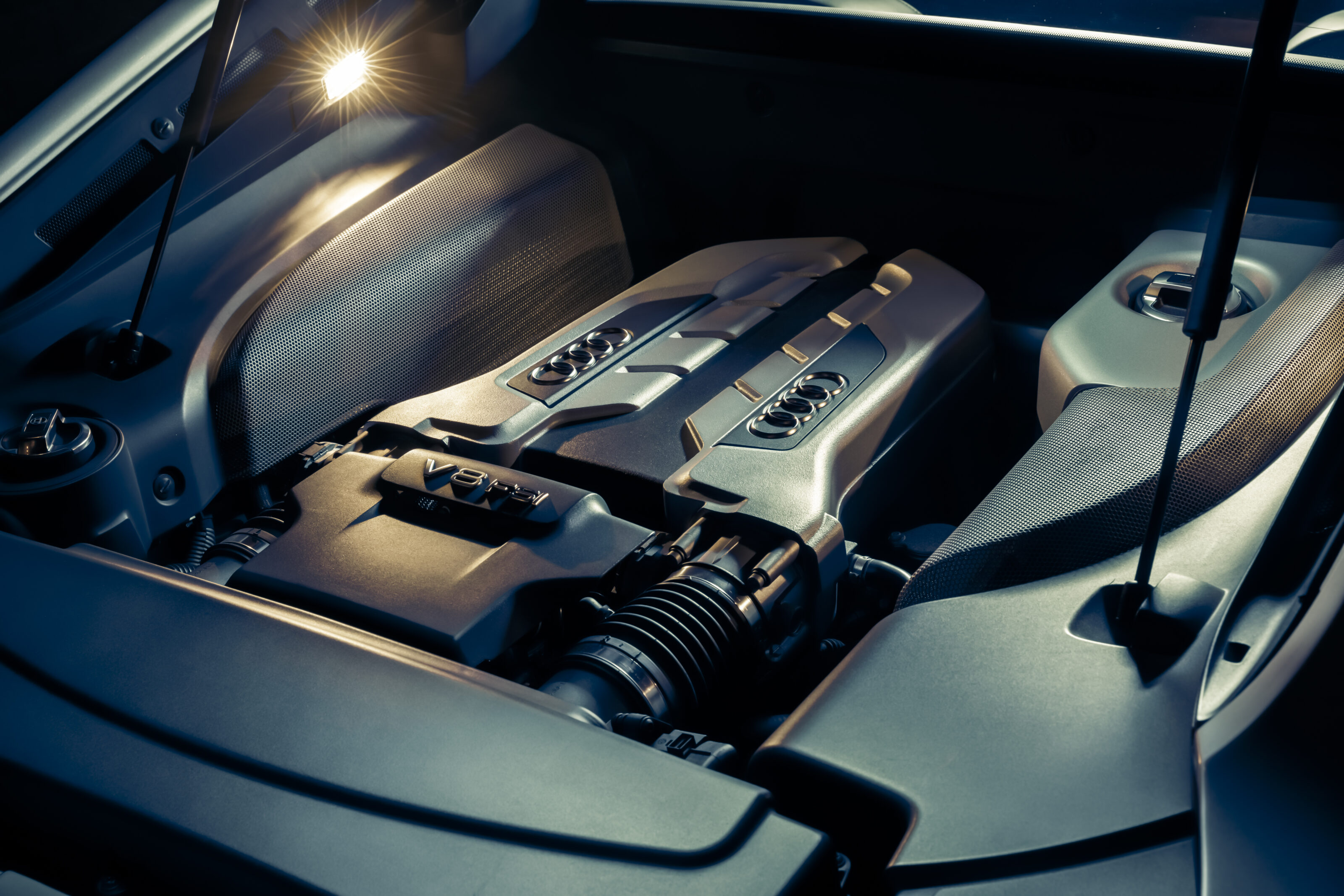
V8s are well-regarded for their durability, however, a few examples have suffered bottom-end bearing failure. Oil lines can also corrode and misfires may signal faulty ignition coils. Oil consumption is common, with V8s drinking about one litre per 1600kms and V10s consuming about half that.
V10s can also suffer failure to ignition coils and timing chain tensioner.
Manual gearbox clutches generally last around 65000kms, while R tronic automated manual clutch packs will begin to wear after around 40,000kms.
R tronic gearboxes divide opinion, as many testers and owners find it jerky at low-speeds. As an early single-clutch automated manual, a considered approach to driving it ‘like a manual’ produces far smoother sailing. The S tronic dual-clutch ’box is more palatable and durable, but was only introduced from 2014.
Suspension and Brakes
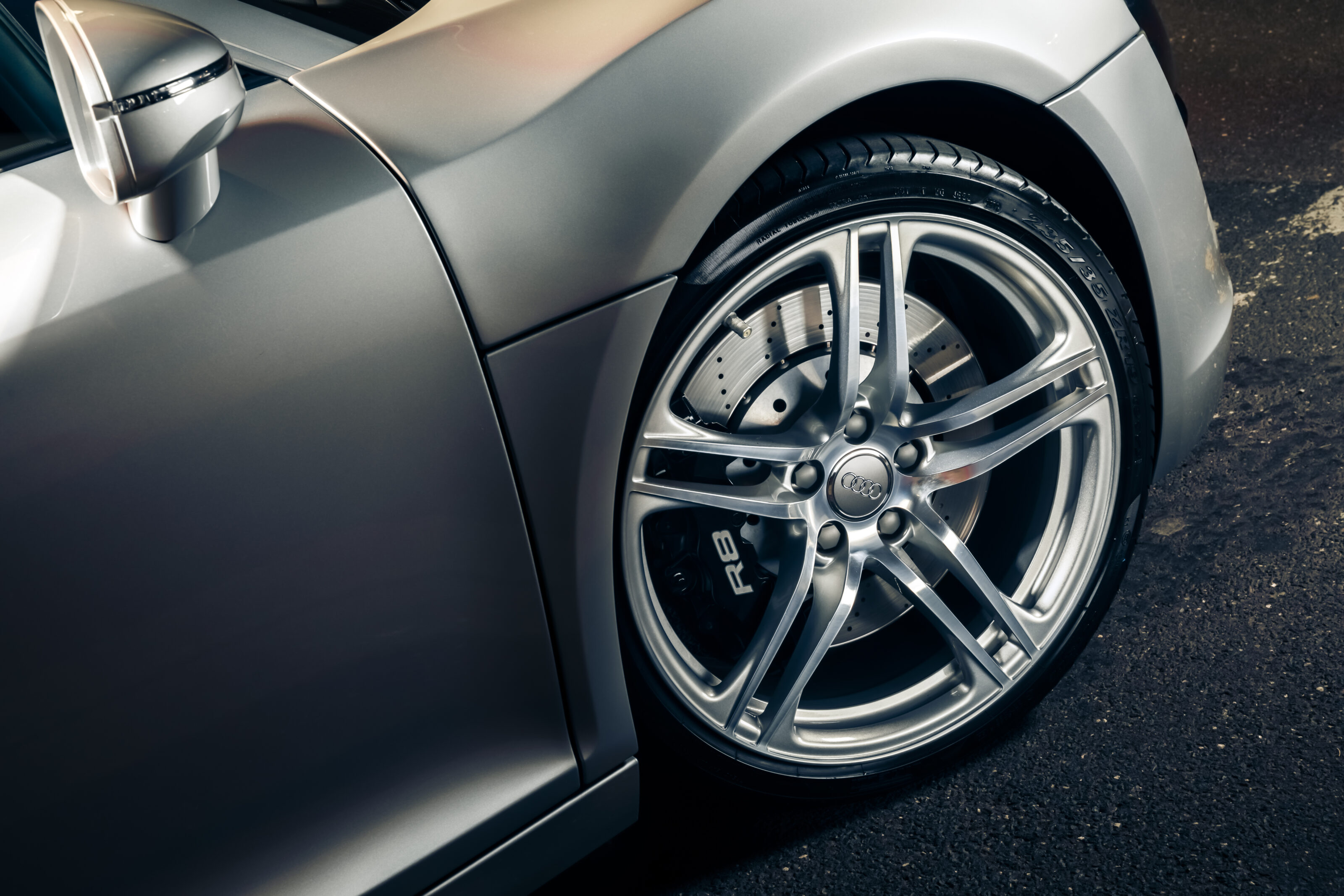
Suspension and braking components are long-lasting with little known faults to cause for concern. Audi’s Magnetic Ride Control, standard on V10 cars and optional on V8s, are divisive amongst owners and are known to grow leaky.
Factor in costs of any worn consumables into your purchase, as Audi-specific Pirelli P Zeros (stamped R02) can cost upwards of $1200 for a pair of 295-section rear tyres.
Interior and electronics
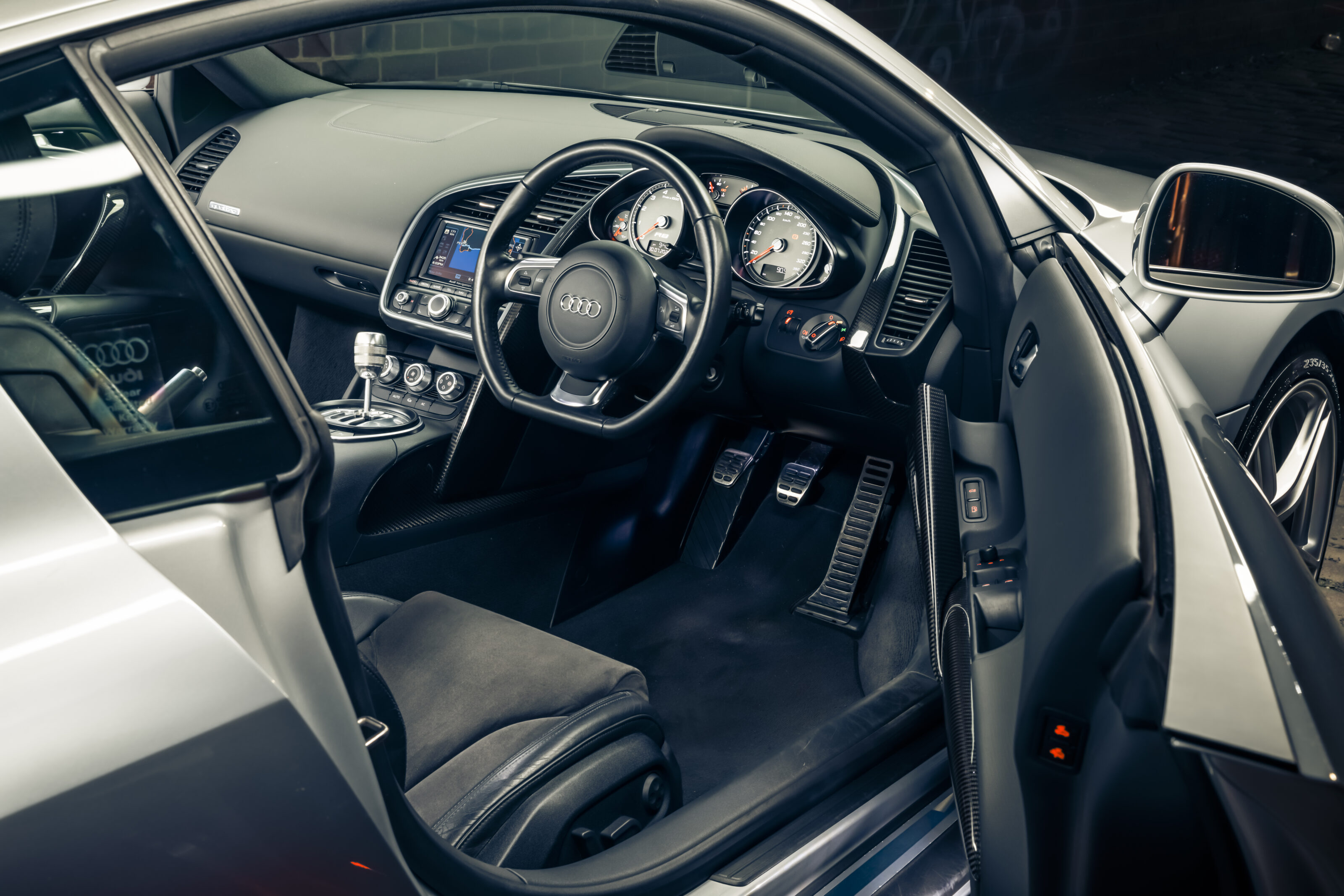
R8 interiors share many components and controls with mainstream Audi models. Some owners lament this fact, however, it makes for a tremendously useable, everyday cabin that’s easy to navigate.
Quality is high, although soft leather seat bolsters will be the first to show signs of wear and tear. Factory SatNav, especially in earlier MMI models, is one of the more unintuitive native systems and is a frequent point of criticism from owners.
2006-2015 Audi R8 specifications
| BODY:u00a0 | 2-door, 2-seat coupe/roadster |
|---|---|
| ENGINE:u00a0 | 4163cc V8, DOHC, 32v / 5204cc V10, DOHC, 40v |
| POWER:u00a0 | 309kW / 391kW @ 8000rpm |
| TORQUE: | 430Nm / 530Nm @6500 |
| TRANSMISSION:u00a0 | 6-speed manual/automated manual / 7-speed dual-clutch |
| WEIGHT: | 1565kg |
| USED RANGE: | $100,000-$270,000 |
Three options you may consider
1. The Obvious: Porsche 997
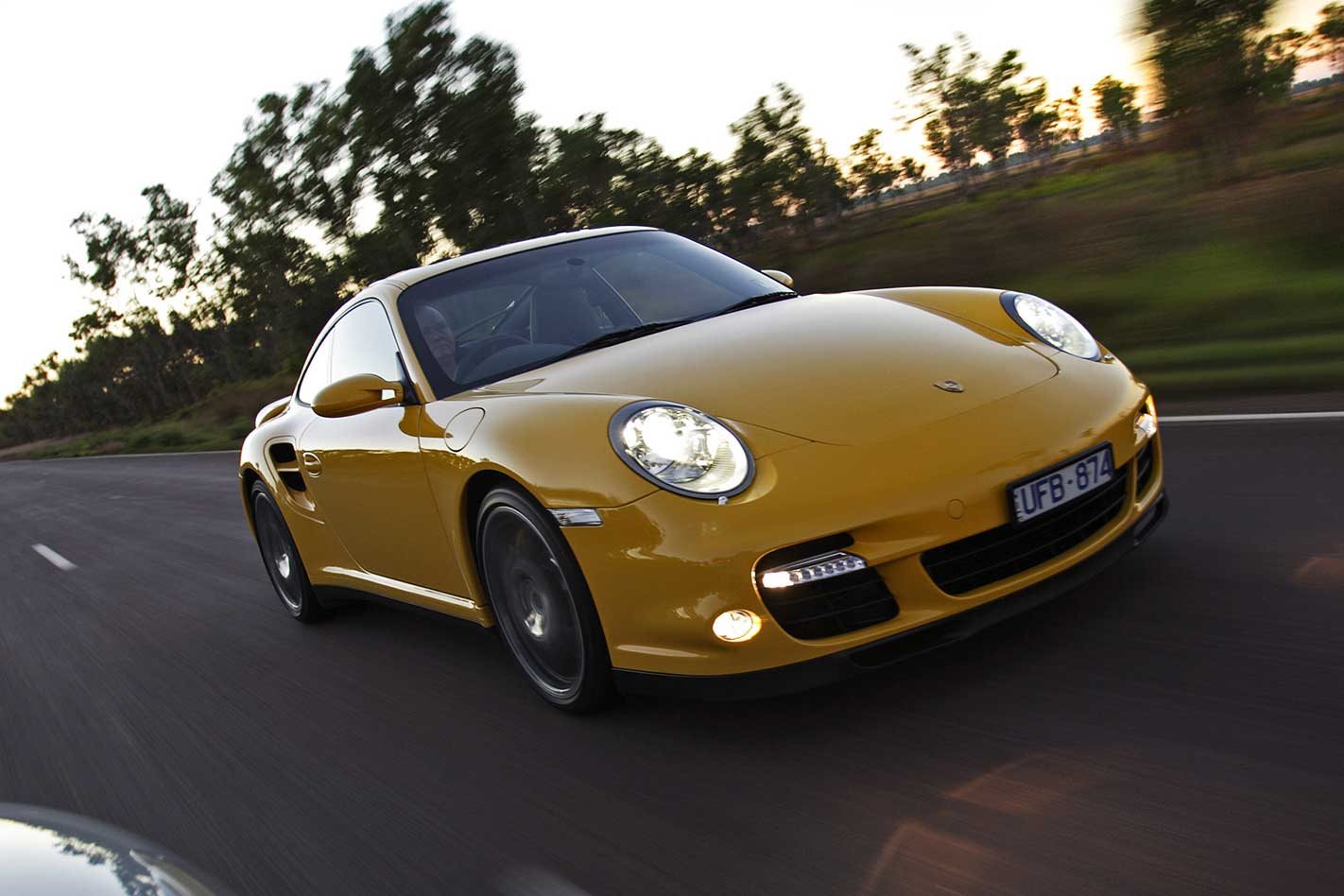
The natural rival of the R8: the market for 997 Porsches is much larger, beginning at $90k for an auto cabriolet. Top end R8 GT values will also see you into a tidy 997 Turbo (GT3 commands upwards of $300k).
2. The Unexpected: Aston Martin DB9
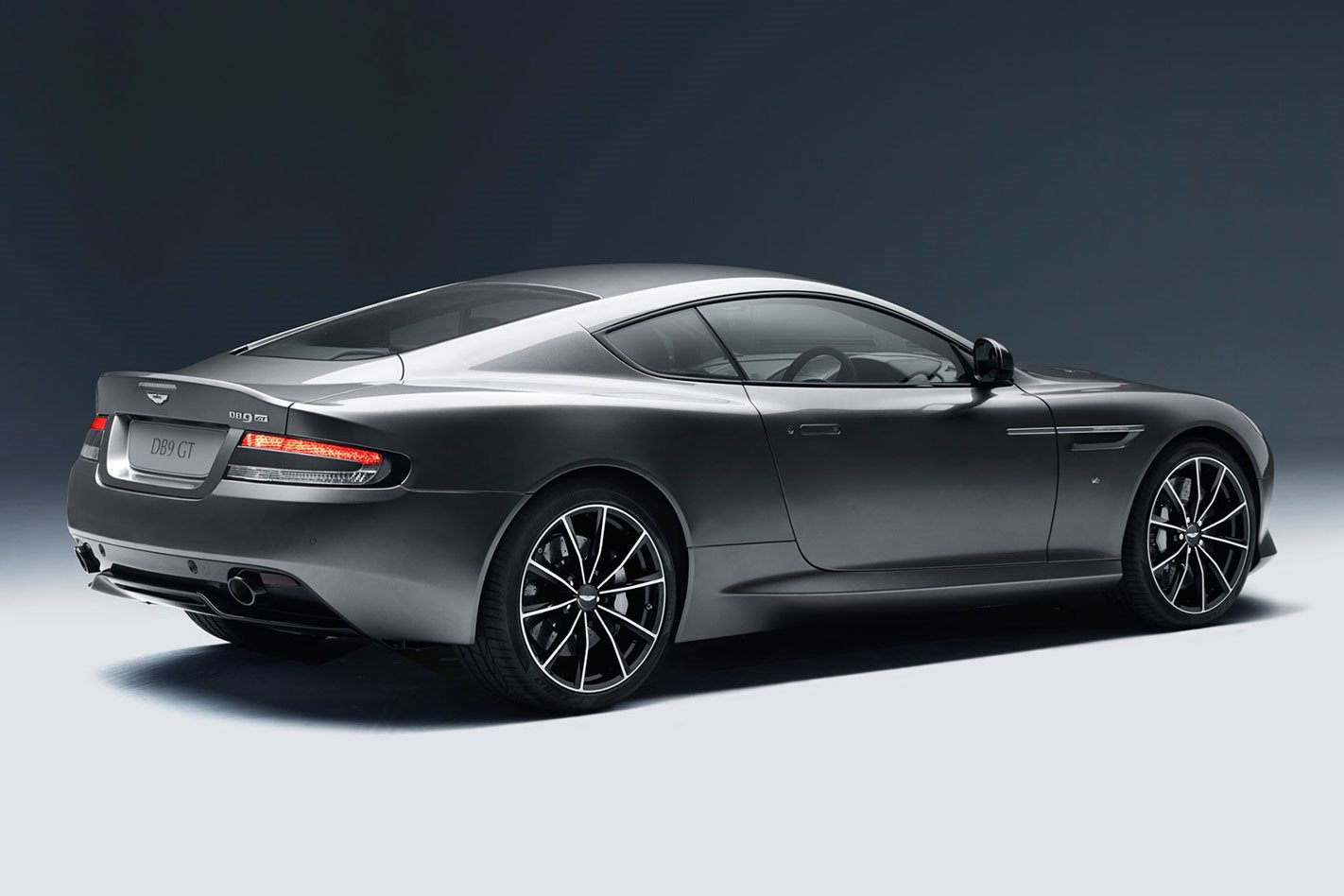
Aston Martin’s DB9 carries a more luxury GT-persona, but affords you entry into the hallowed 12-cylinder club. Prices begin around $120k for pre-facelift models.
3. The Oddball: Ferrari 360
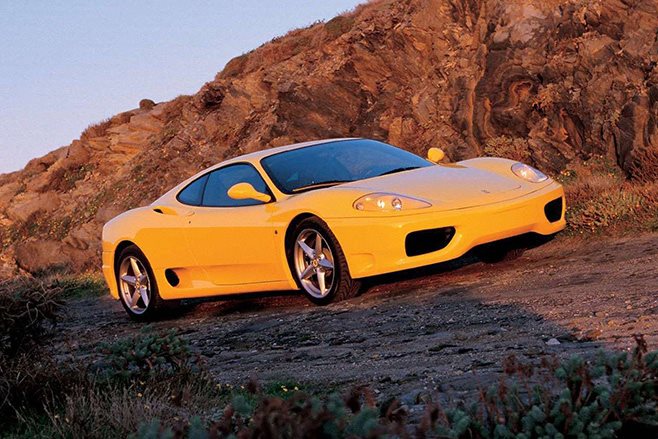
The pointy end of the R8 market will also see you into the Maranello owner’s club, with asking prices for the V8 mid-engined 360 beginning around $170k. Rare and desirable manual examples will nudge $200k.
