
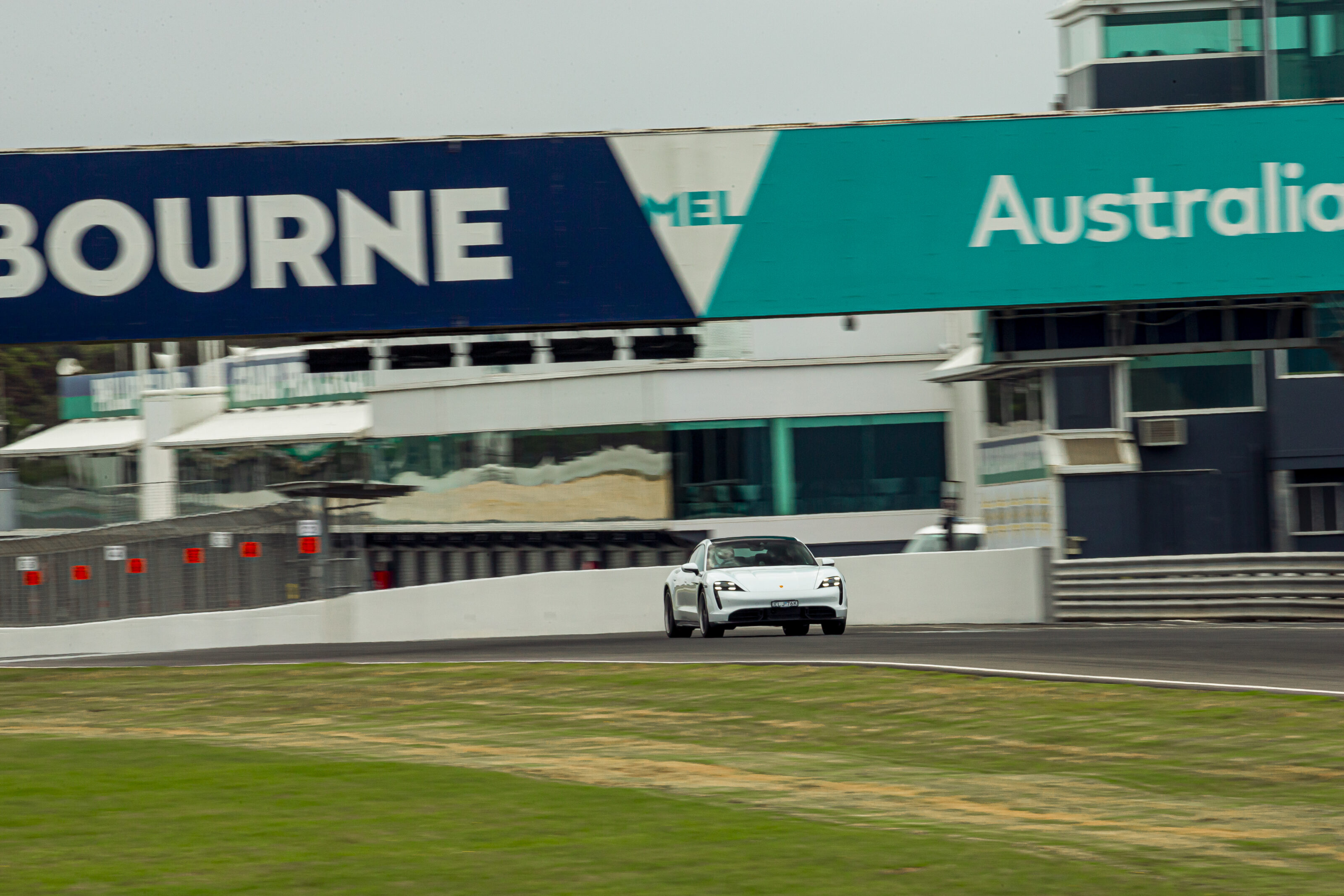
Savage. That’s the word that comes to mind when the Porsche Taycan Turbo S launches down Phillip Island’s Gardner Straight. It really is like nothing else when the four Pirelli P Zero tyres are charged with getting a primed 560kW and 1050Nm to the ground effectively. It’s utterly ferocious and beggars belief how it finds purchase.
At 2.55 seconds, the Taycan Turbo S is the fastest car MOTOR has ever tested to 100km/h. However, that number was recorded at Tailem Bend in 2021, with the PCOTY ’22 marker of 2.82sec being recorded on Gardner Straight at Phillip Island. So violent is the launch control, which ups the kilowatt count by 100kW from 460kW in an overboost function, that it actually makes you ill in repartition.
Yet, it’s how the Taycan Turbo S attained its 1:45.89 lap time that’s the real genius, especially when you consider the 2295kg weight bestowed on the four-door body. In theory EVs are less complicated than conventional ICE products, however, a lot of clever trickery goes into the Taycan.
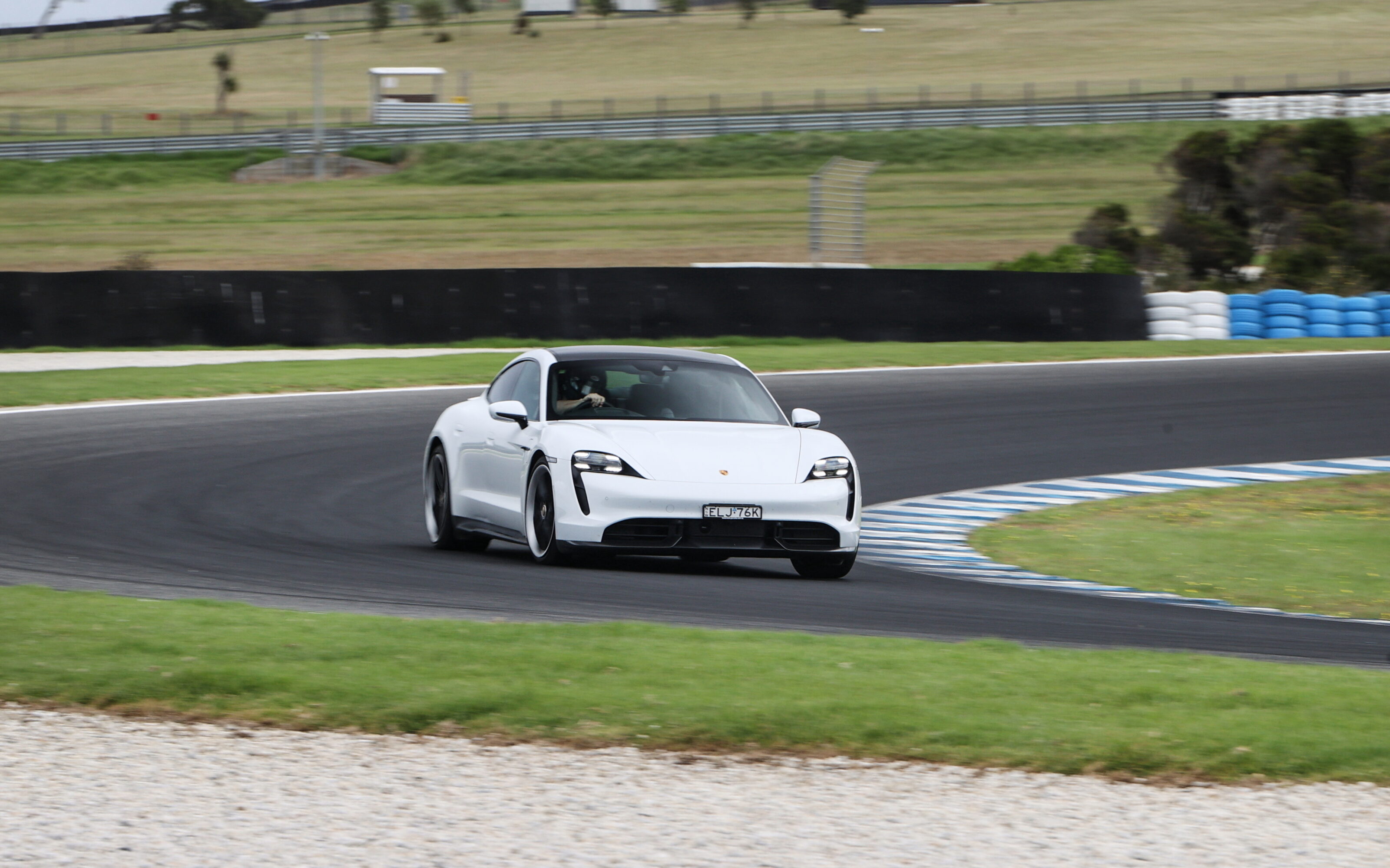
A permanently excited synchronous electric motor is placed on both the front and rear axle (essentially creating all-wheel drive) with both gaining life from a 93.4kWh (gross) battery pack located in the floor of the chassis. A single-speed gearbox resides up front, while a two-speed unit is fitted to the rear axle, affording the Taycan Turbo S staggering top speeds (we saw 249.9km/h down PI’s front straight, only 7km/h down on the GT3). It’s safe to say the Porsche has, ahem, electrifying straight-line prowess.
However, the braking forces at play, to arrest 2.3 tonne, are astronomical. In fact, as an example of how hard the re-generative braking is working, it feeds back up to 265kW into the battery pack. For reference, that’s three times that of a Tesla Model 3.
On top of that, the Porsche Ceramic Composite Brakes are nothing short of H.U.G.E, measuring 420mm up front and 410mm at the back – with 10- and four-piston calipers forward and aft. The amount of dive under hard braking is proof of the physics at play.
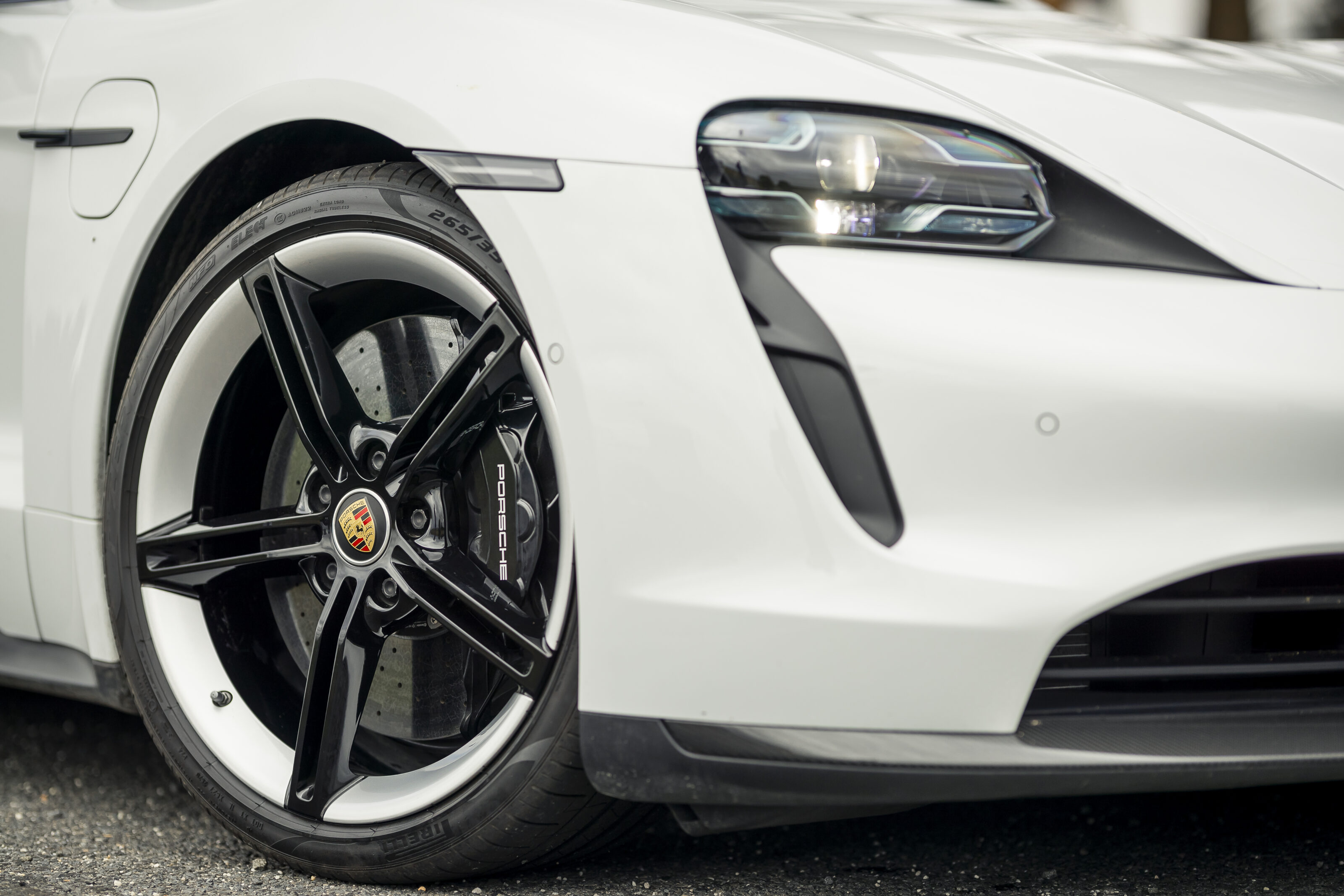
Those physics also need to be controlled laterally. Therefore Porsche has fitted expensive double wishbone front suspension with multi-links at the back combined with sophisticated air suspension and active anti-roll bars.
Essentially the Taycan Turbo S is constantly calculating how to best maintain cornering forces in the name of ultimate body control. It’s all in the name of making a Porsche EV still feel like a Porsche – despite having to deal with so much heft.
Luffy stated that it is a little tyre limited more than the Taycan’s chassis lacking mechanical grip. And with the bulk of the weight centrally located, it almost, and we mean almost, displays mid-engined characteristics. Helping the rear end remain stuck are 305-section P Zeros wrapping 11.5-inch wide 21.0-inch alloys.
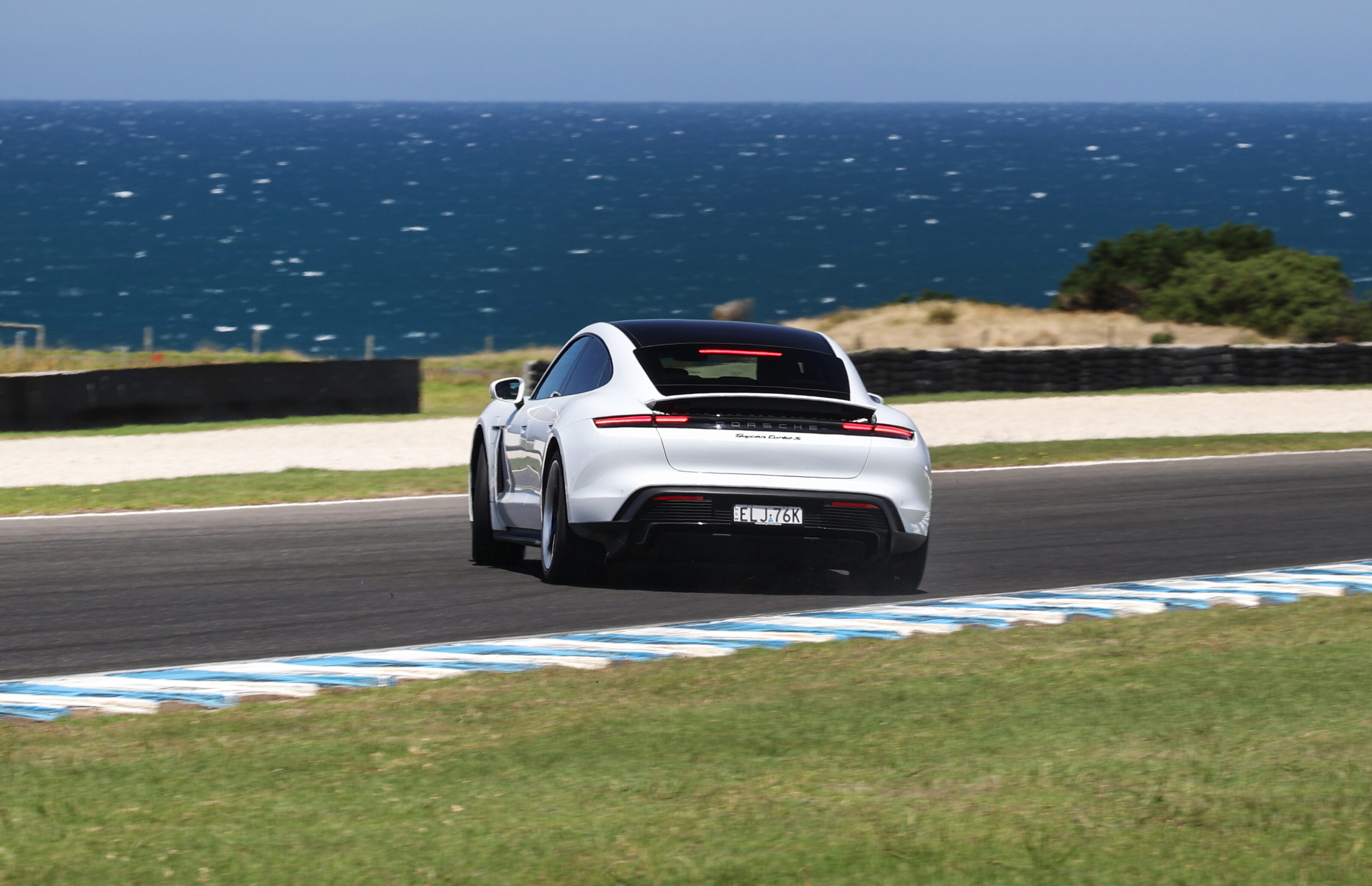
It makes gains over the likes of the BMW M3 on corner exit and, for example, reaches a top speed 11km/h higher out of Honda (Turn Four) on the approach to Siberia (Turn Five).
However, don’t think it’s overtly tied down, with Porsche’s Torque Vectoring Plus apportioning power and torque across the rear axle. Helping to shrink the 2900mm wheelbase is rear-steering, which can be a little harder to acclimatise to on road than it is on track. Surprisingly it’s actually quite easy, and controllable, to get a four-wheel drift happening.
A constant remark from the judges regarding the Taycan Turbo S was that it’s hard to discern what’s actually happening underneath you. The layman’s answer is ‘a lot’. And when you break it down, it’s clear that way of thinking rings true by the sheer computing might at play. Yet, there’s enough traditional Porsche in there to make it feel like a product straight out of Stuttgart.
The MG TC Midget is the archetypal, funny old pre-World War 2 sports car, except that it was launched just weeks after the end of World War 2, in October 1945. MG, whose Abingdon factory had spent the previous six years overhauling tanks and armoured cars, was not the only car maker to reissue a pre-war model, but a range of factors conspired to make the TC a worldwide watershed moment for sports cars.
MG had launched its first Midget model, the M-Type, in 1929. With a chassis and engine derived from the 1928 Morris Minor, it was fun and very affordable. It led to the J-Type Midget of 1932, with a modern (but delicate) 1.0-litre Wolseley overhead cam engine, and the P-Type of 1934.
In early-1936 came the TA Midget, more user-friendly and cost-effective to produce with its Morris components, including a 1.3-litre pushrod overhead valve engine. Advances included an all-synchro, four-speed ’box and hydraulic brakes. More than 3000 TAs were built.
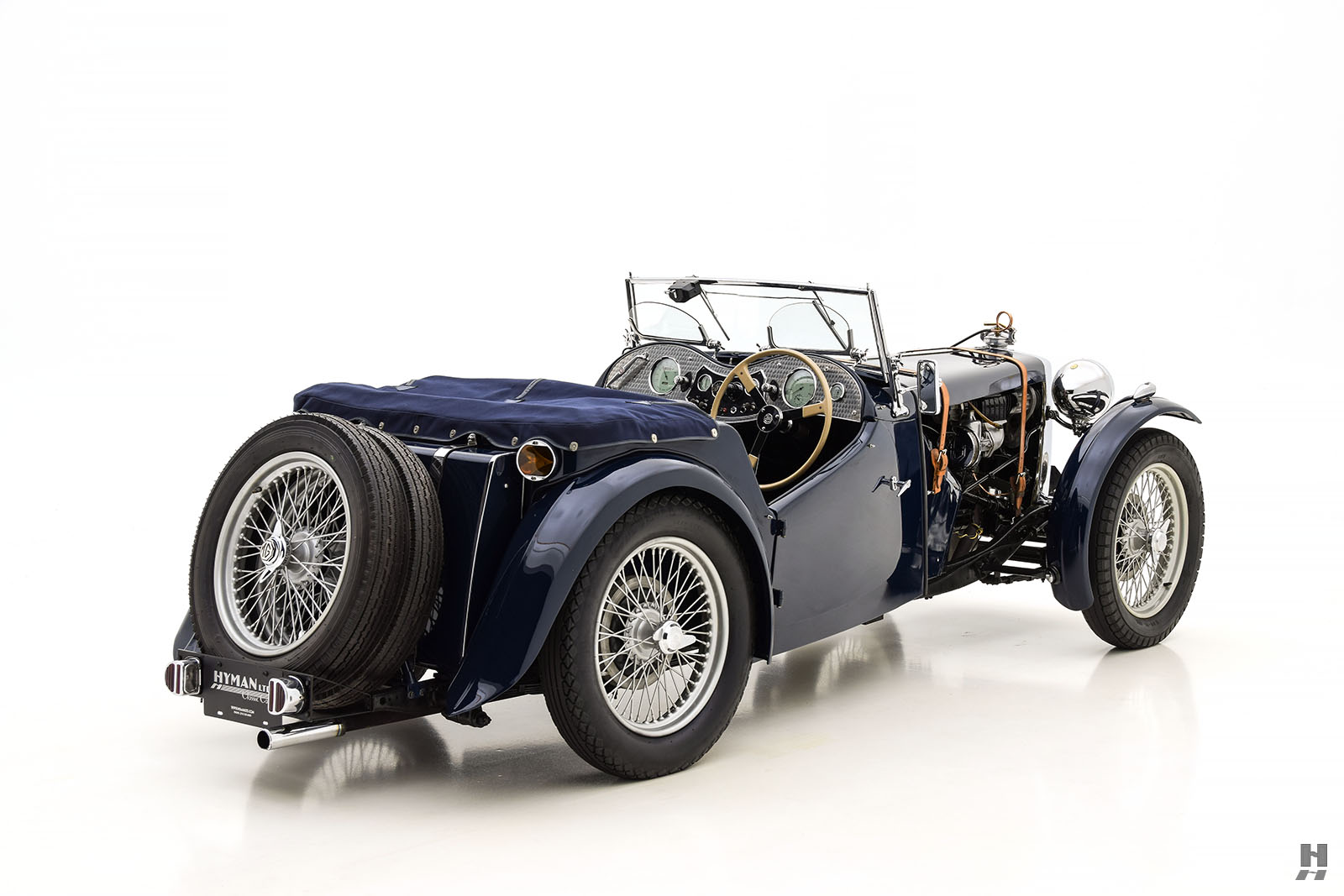
A new Morris Ten sedan, with a vastly superior 1.25-litre ‘XPAG’ pushrod engine, prompted the upgraded MG TB of 1939 – but just 379 were built before WW2 intervened.
(By the way, if you’ve been googling these as we go, you’re not alone in thinking they all look the bloody same.)
It’s a credit to MG, given the rationing of materials, that the TC was launched and 81 cars built by the end of 1945. The main differences from the TB were the body – still sheet steel over an ash frame, but now 10cm wider at the cockpit, and with rubber engine mounts and suspension bushes.
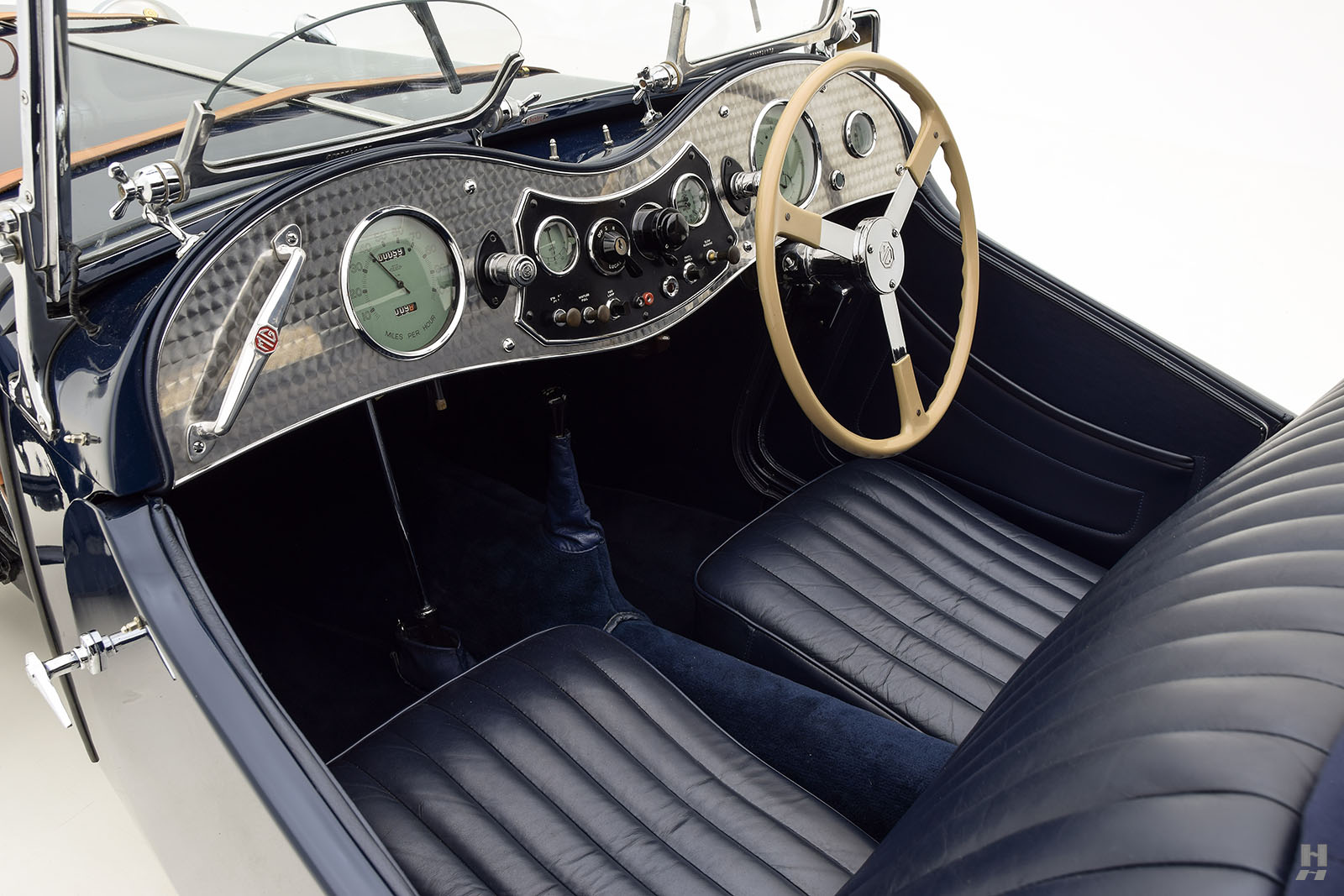
Being quick to market – rather than quick – gave the TC a huge free kick. But getting materials relied on the government, which was urging manufacturers to ‘export or die’. Australia was a keen customer and TCs launched many local racing careers, including those of Harry Firth and Lex Davison.
But the little right-hand-drive roadster had also awakened a sleeping giant … America’s GIs now knew about British and European sports cars. While many were hot-rodding pre-war Ford V8s for affordable fun, almost 2000 others would buy this bubbly little Brit. The TC paved the way for the Jaguars, Austin-Healeys, Triumphs and others that followed.
Exactly 10,001 MG TCs were built between 1945 and 1949, of which 66 percent went to export markets.
Pushrods with shove
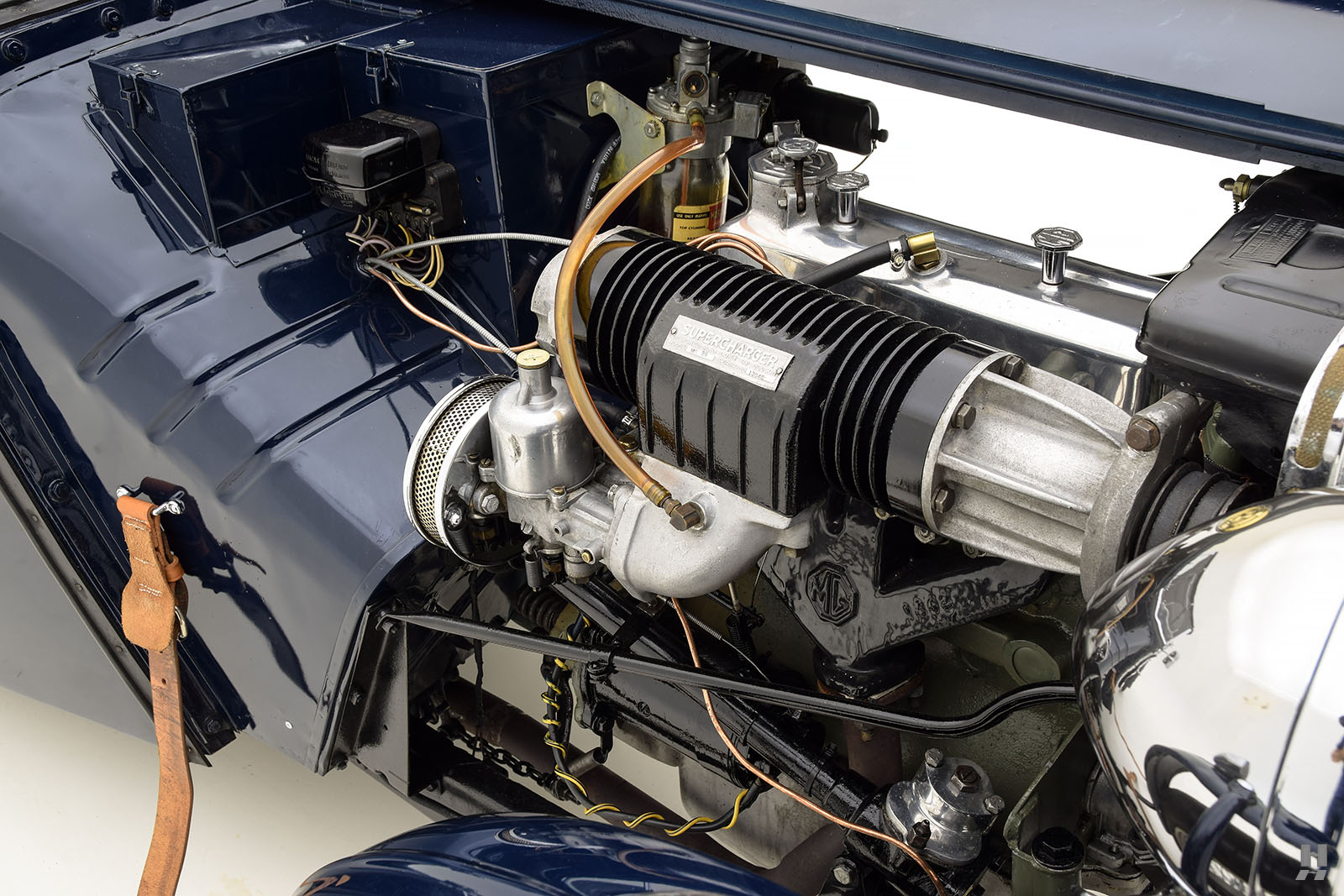
The TC’s 1250cc, pushrod ohv four-cylinder XPAG engine had a relatively short stroke, a good cylinder head design and a strong bottom end – a rev-hungry revelation to racers. Fed by twin SU carbs, it produced 40.5kW at 5200rpm and 87Nm at 2700rpm and via a four-speed synchro ’box. Top speed (125km/h) and 0-100km/h acceleration (21 secs) were modest, but the 840kg roadster was all about agility and fun – and tuneability.
Right of way
All TCs were built in right-hand drive, in spite of US export success. The interior was traditional with a capital T: a narrow, leather split bench seat, sprung steering wheel and wood-veneer dashboard. A big Jaeger tacho sat ahead of the driver and the speedo ahead of the passenger. Quaintly, to the left of the tacho was a warning light that illuminated above 30mph, Britain’s urban speed limit, replaced by a map light on US-bound cars.
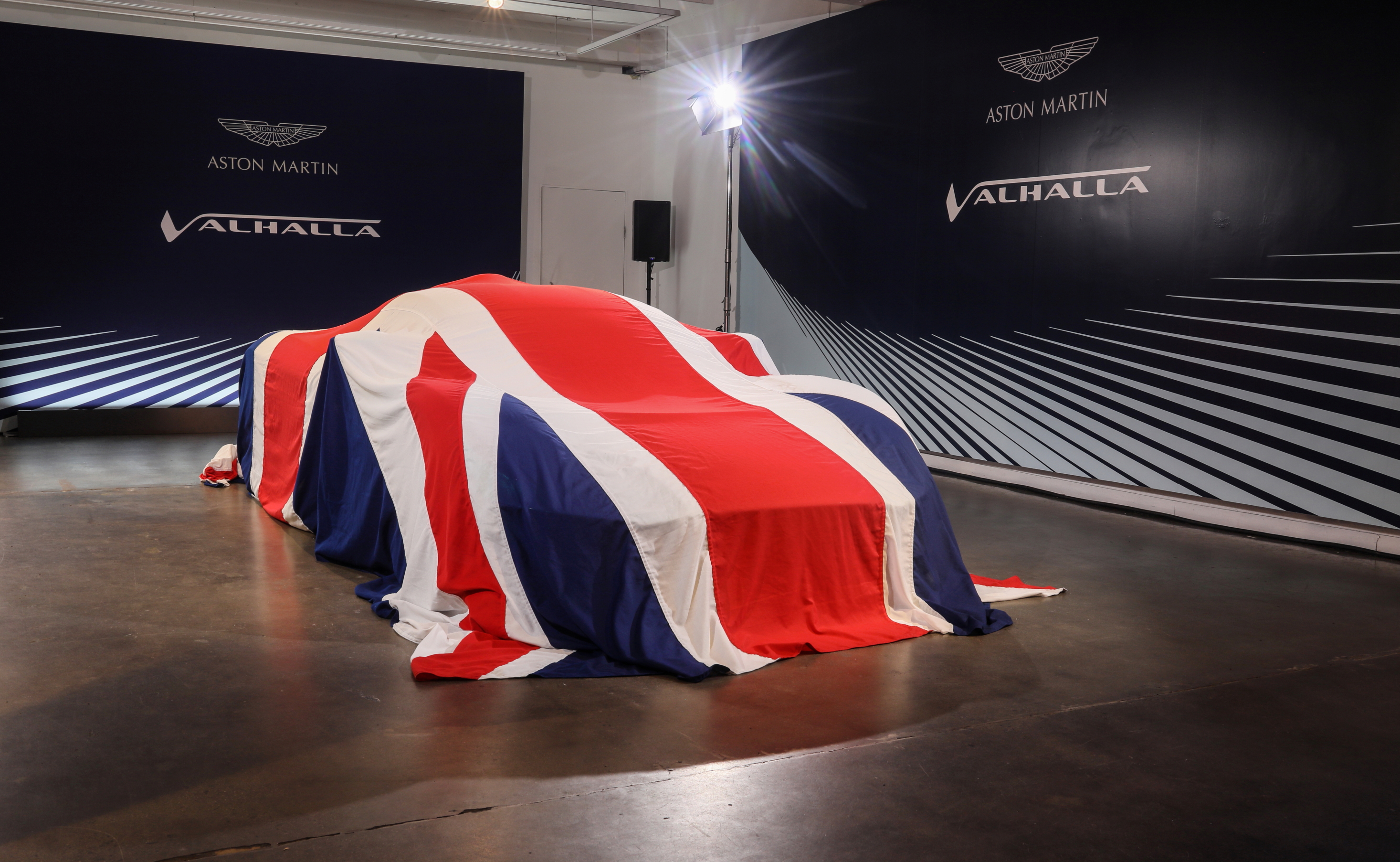
When we first walked in, the Valhalla was under a cover and the proportions are unusual. The length to height ratio – it’s not like a usual mid-engined supercar shape is it?
I normally do that as one of my lines – you’ve stolen it! I ask people to look at a car under a cover because then your mind is not influenced by the graphic language, the colour, the proportion of glass to body, the wheels – it’s purely the form. That’s the first thing your brain sees.
That’s how you define beauty – the ‘under the cover’ look. The wheels, the headlamp shape – they suggest technology, but the form is the beauty bit.
Tell us a bit more about how the Valhalla’s shape developed because this car we see here looks very different to the original show car.
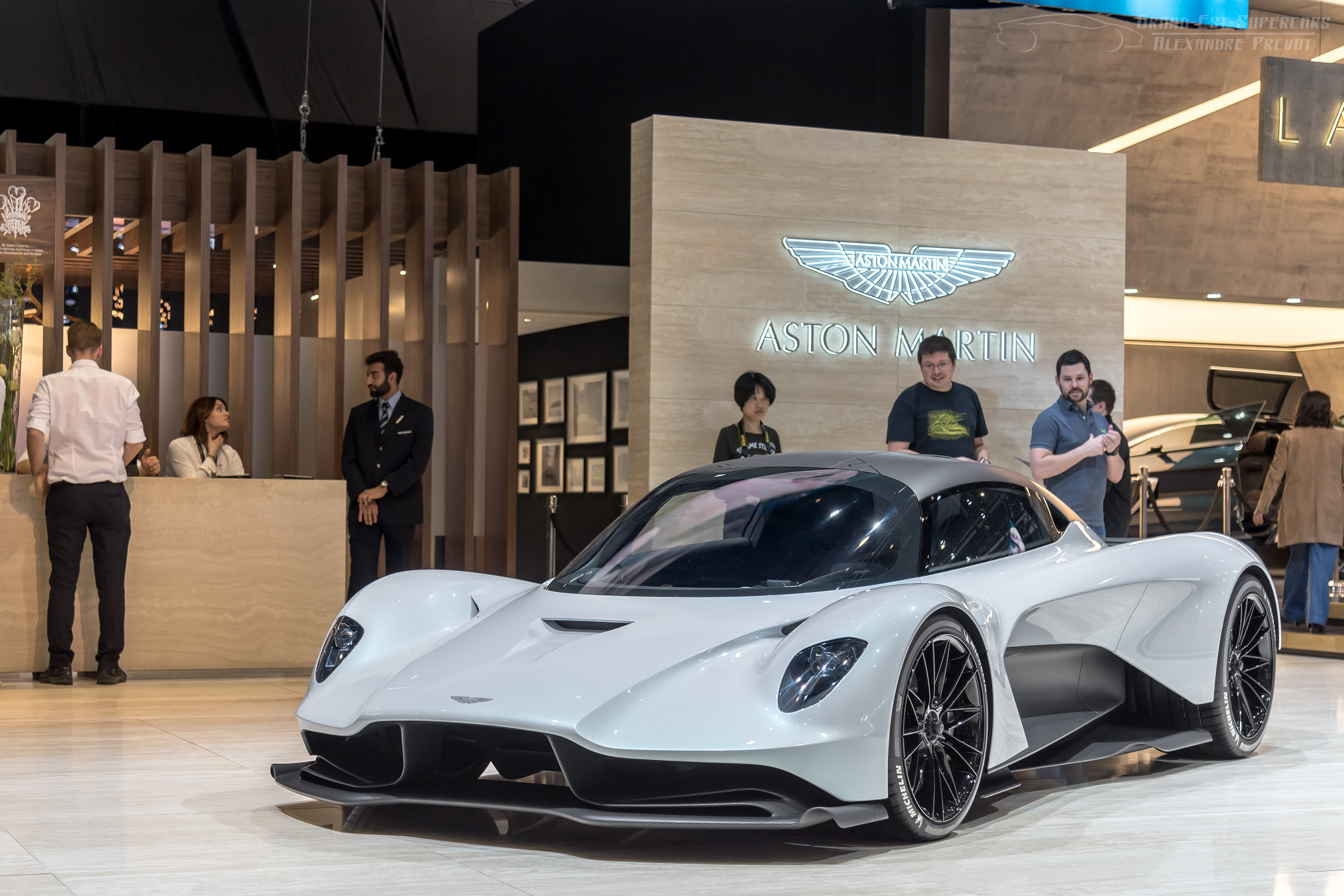
First of all the engine has two more cylinders, which brings a very specific challenge. I would say through the concept car [which appeared at the 2019 Geneva Show] the journey changes.
As it started to develop, you saw from some of the sketches, I wanted it to be more assertive in its language, have more mass, more volume, which is really, really important. It’s part of a journey from concept to production exactly as I would have planned in terms of giving more reality to the production car. It’s now, visually speaking, a more exciting car than the concept.
I’d heard that Adrian Newey was famously hard to pin down on the Valkyrie design freeze. Is there a set design freeze you’re working towards on Valhalla?
Valkyrie’s design freeze was always intended to be where it was because you have a Q3/Q4 [2023] delivery which means that into this region by early ’24. When you define a programme you have an end date to that because you’re investing an amount of money. Now if you keep extending that period, you’re investing more and more money. We can’t do that because we run a business so your design freeze is really, really important.
And it’s not just based on investment. It’s also based on legislation because each year the legislation will change, so the ADAS systems, the emission on the engine all have a start and an end date so you have to comply with that, because you may well then be investing in a product that you can’t sell because you’ve missed one of those dates.
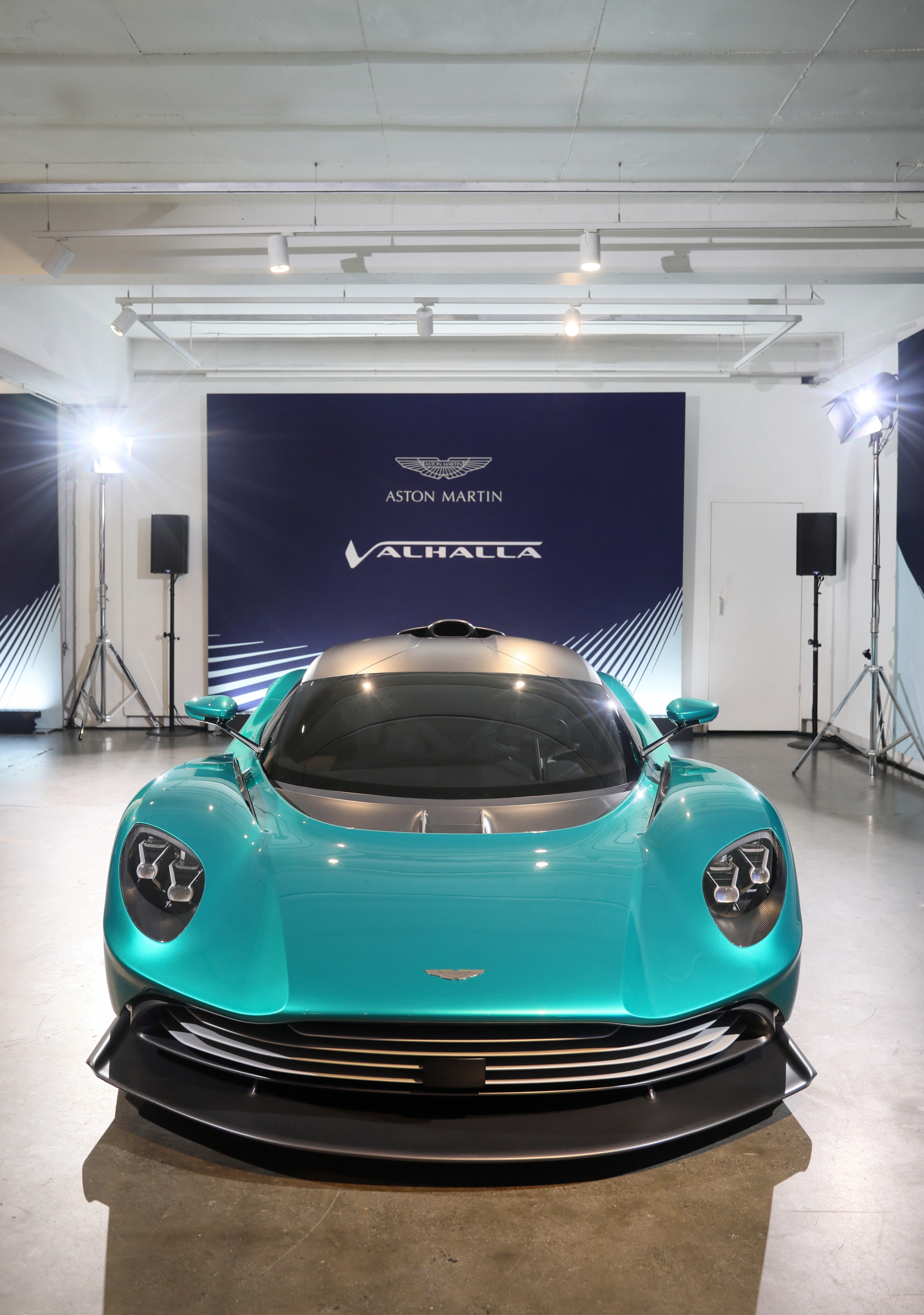
So this is end of Q3 ’23 and it’s on track.That’s the first time people will see the inside and some of the exterior development, which is not so much the overall form but some of the additional items that the aero team wants to develop. You’ll see the interior in August of this year, so you’ll have an inside/outside view.
What will change in the interim?
The shape of the front wing will develop. It may have to go up a little bit in the centre. The grille form won’t change particularly. The side scoops down the sides – the dark carbon line that goes in – that has to come out to take more air in.
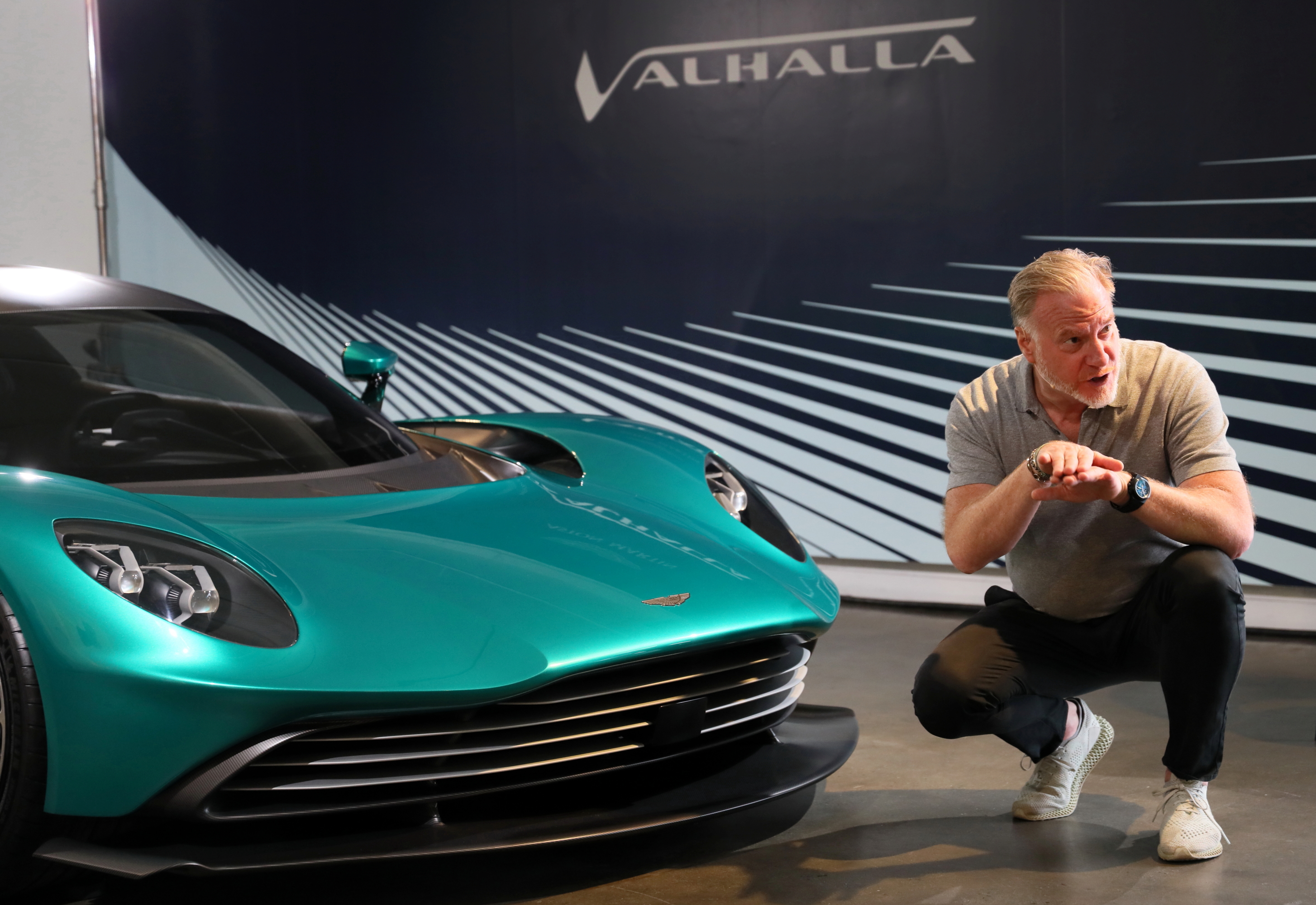
If I showed you the new car and this one and took this one away, you’d think it was exactly the same car. It’s what we call surface intent frozen, the rest of the aero development below the margin line will develop just because of aero improvements that we need to do.
What was Adrian Newey’s exterior design input into Valkyrie, because that car’s form flowed into the first Geneva Show versions of the Valhalla and Vanquish Vision?
Adrian was involved at the very beginning of Valkyrie and then we were contracted with Red Bull Advanced Technologies for his inputs into Valkyrie. From a design perspective, the visual language of the car was my responsibility but Adrian’s responsibility was performance and aerodynamics. A lot of times those paths crossed. It was really about developing the most beautiful car that met all the aerodynamic and performance criteria that Adrian set: weight targets, performance targets, downforce targets etc.
At the end of the day, it’s a partnership and sometimes in partnerships you have a bit of a tussle and one wins one week and the other wins the next week. That’s how Valkyrie developed. It was then our internal learning from that experience that led us to Valhalla and Vanquish Concepts. Adrian’s input was solely on Valkyrie at the beginning of that story.
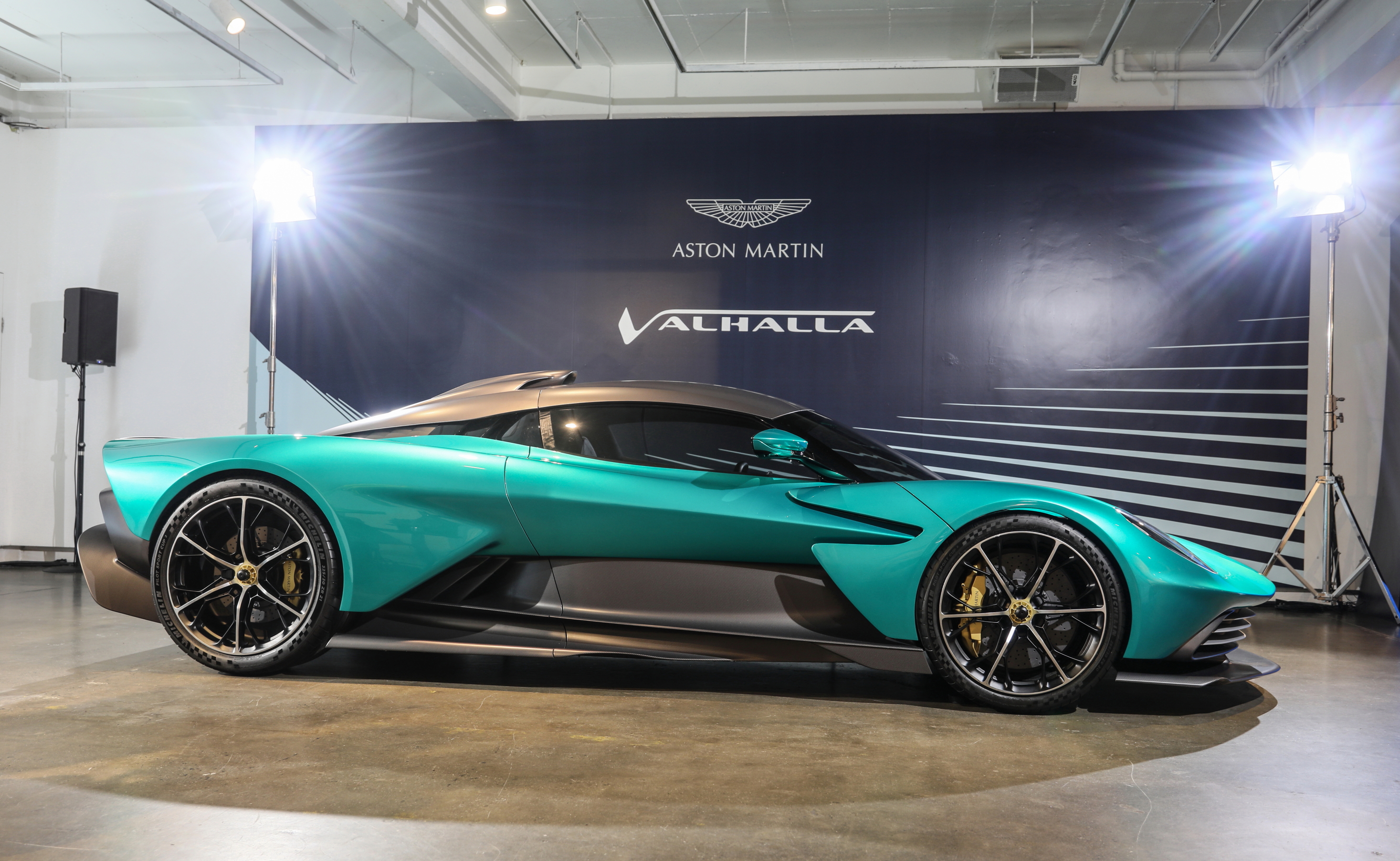
I have to say that both of us pushing created something very unusual and unique and we took all of that learning into this car [Valhalla] but without his pressure to say, “I want this lighter, I want that smaller, I want this more unique”, at the end of the day Valkyrie is a once in 30 years car, it really is. It’s a magical thing.
I drove it two weeks ago and I’ve lived with it for six years. I’m still blown away every time I drive it. I get out of it and look at it and I’m 6’4” and I look at it and I say “I just fit into that!” That’s the magic of that car.
Some of that transformed into my learning and the Aston Martin Lagonda engineers’ learning about packaging, about how far can you push the boundaries and Valkyrie is extreme.
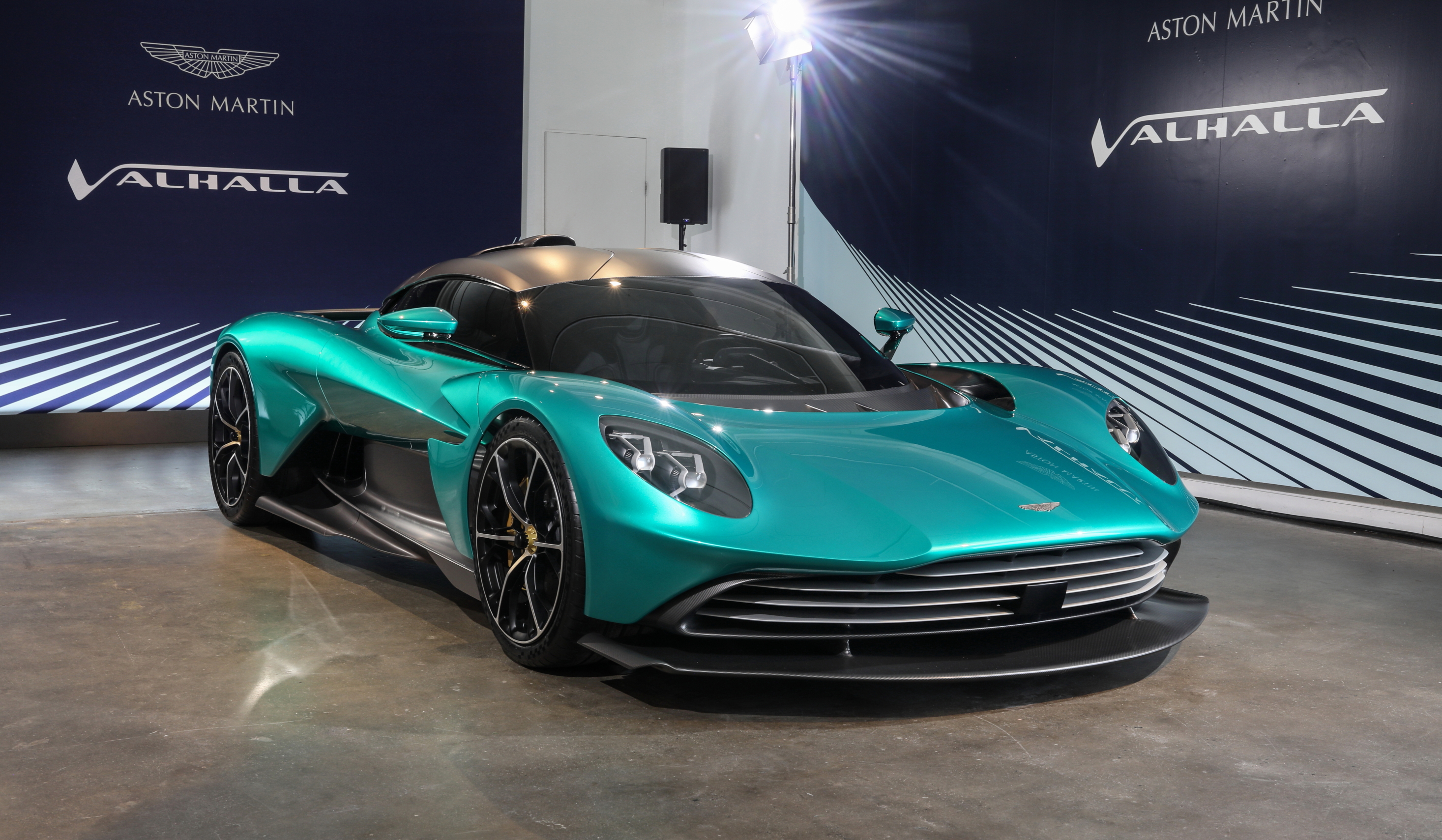
Extreme is a Formula 1 car for the road. The Valkyrie AMR Pro that was running around in Bahrain, the driver wasn’t particularly pushing but it was extremely quick. So as an aerodynamic beast, the Valkyrie is incredible. So that’s extreme and if you pull back from extreme you still have exceptional and exceptional is Valhalla. All of that learning comes from what we were able to achieve with Valkyrie.
Are the diffusers and underbody aero going to be materially functional?
It has to be. It’s about generating the high air pressure to suck the air through. On a performance car like this we’ve stated a target of 6m30s for the Nurburgring which is very fast.
And do you think you’ll hit that?
[pauses, furrows brow] Never say never. It’s a challenge but even at 6m40s we’re still way above everyone else. We set a target of 6m31s or 6m32s and we’ll get as close to it as we possibly can. That’s without the addition of big wings, front splitters etc because you can always go faster the more aero you add. That has to be functional on a car like this. For me as a designer, my history as a designer says that form and function have to go together to create beauty.
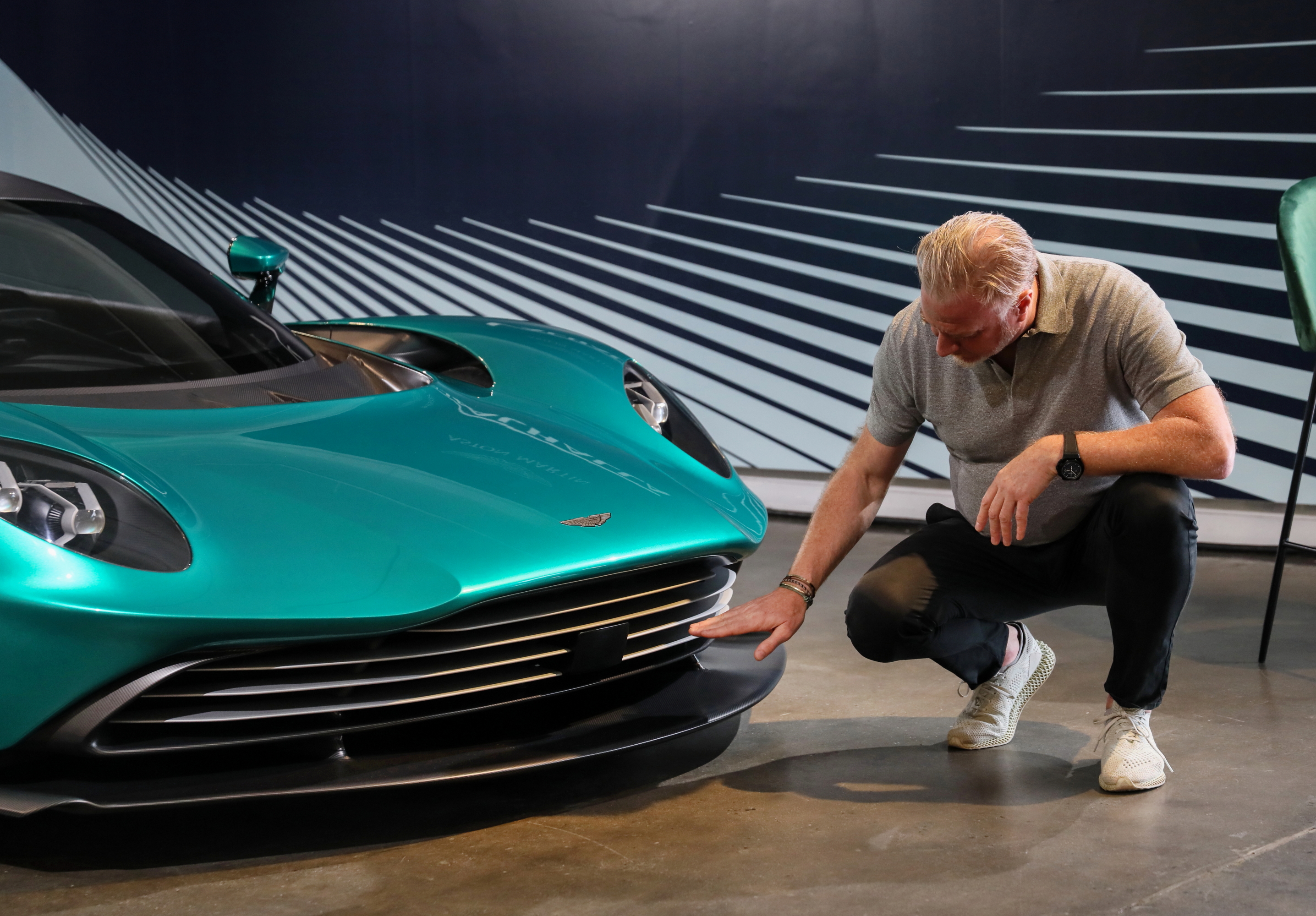
In my past life I was responsible for some Land Rovers and their functionality is so important. Two generations ago Range Rover was my responsibility. Range Rover is now this pinnacle. They are as competent off road as they look comfortable on road so the functionality of those products is so important. So if I was to do a frivolous piece of styling, well, that’s just not me.
If any of my team sketches something that’s a hole which isn’t an air outlet, I’d say “What’s that? Do the aero guys need it? No? Get rid of it.”
Then you can have purity in the surface language of the car and let aero be aero. You’ll notice on this car [Valhalla] and Valkyrie, the green bit, the body coloured bit – there are very, very few outlets, very few additions.
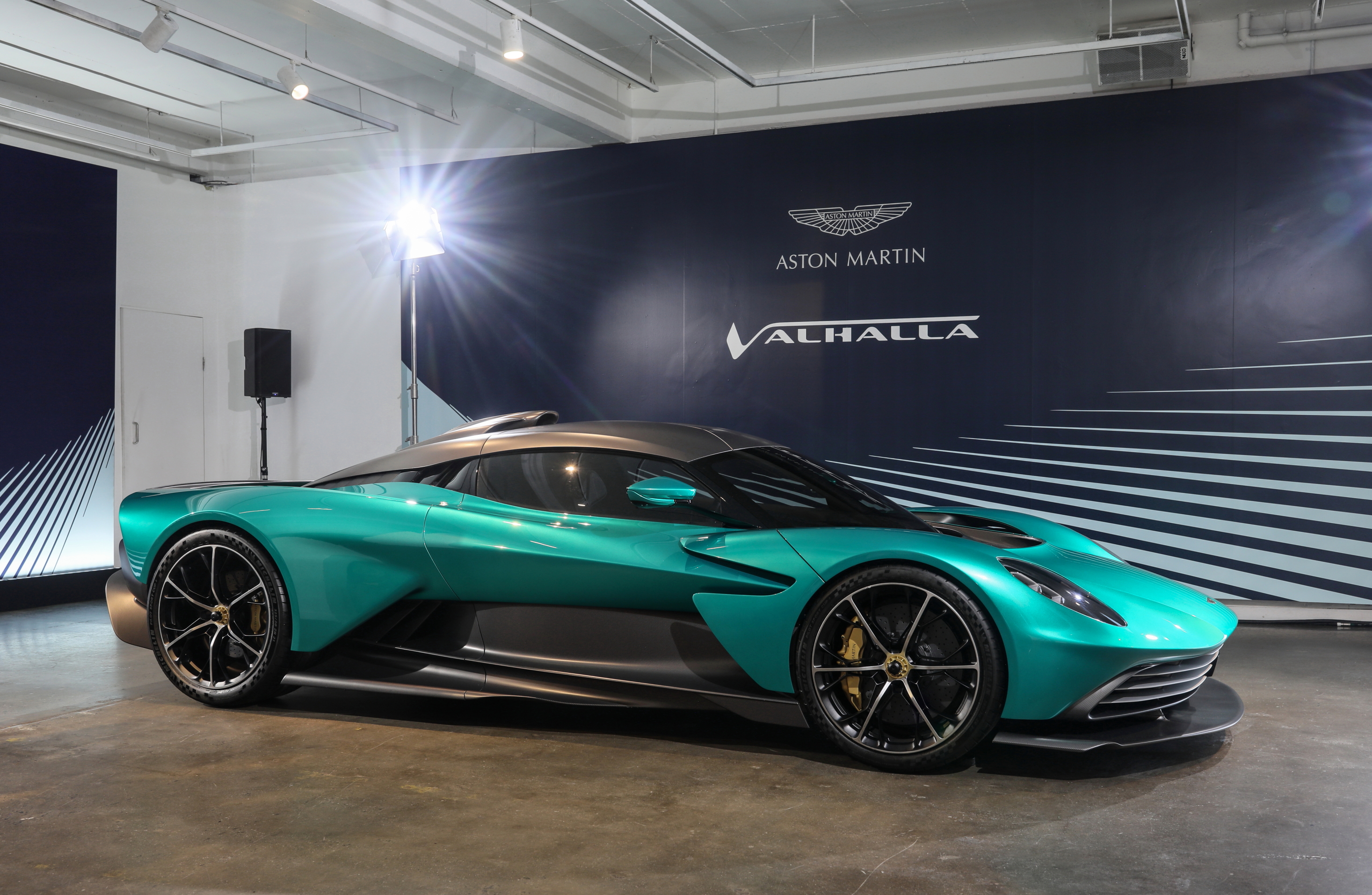
Everything to do with aero is done in the black bit, the carbon bit. It’s exactly the same on Valkyrie because I want the engineering to be embedded into the core of the car and the body to be the beauty. That’s so vital.
Did you want to draw mid-engined shapes throughout your career?
One of the things I’ve learned as a designer is to never wish for something because it never happens. But always be prepared. One of my favourite cars is the Lamborghini Miura and it’s not because it’s a Miura.
It’s my favourite car because of the design, and the Miura and the Countach was the same designer [Marcello Gandini] and when I was growing up I looked at those two cars and said “How can that brain do this incredible sculptural, sensual, sexual shape and then this wedge which has none of that sensitivity. He’s done a wedge.”
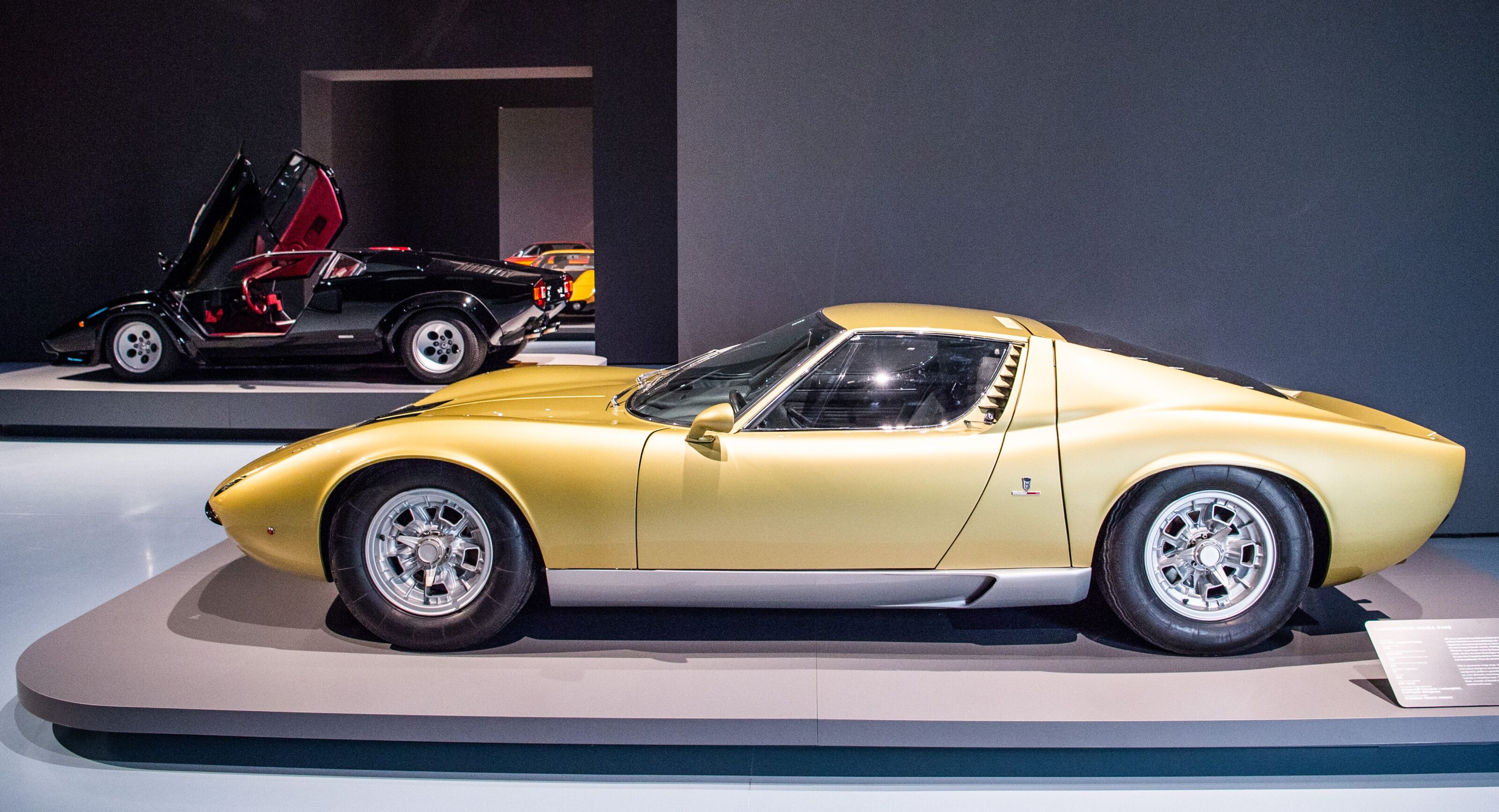
When I was a kid, I wanted to be one of those guys because if your brain can do those two things, what great life you’re going to have.
Peter Robinson tells an interesting story about visiting Giugiaro, who pulled out a drawer in his studio with original sketches of Miura that he claimed was his work. He said that Gandini just did some of the details like the eyelashes.
Yeah, well, no! [laughs] Don’t forget that Giugiaro had his own business so he needed to sell his own business. Nothing against Giugiaro – he’s a genius, absolutely.
We talked about Newey’s involvement in the design process. Was there a third influence in the shape of Tobias Moers?
Tobias came after the Valkyrie, so we were signed, sealed and delivered on that car well before he came along. One of our biggest technical partners is Daimler and the AMG engines.
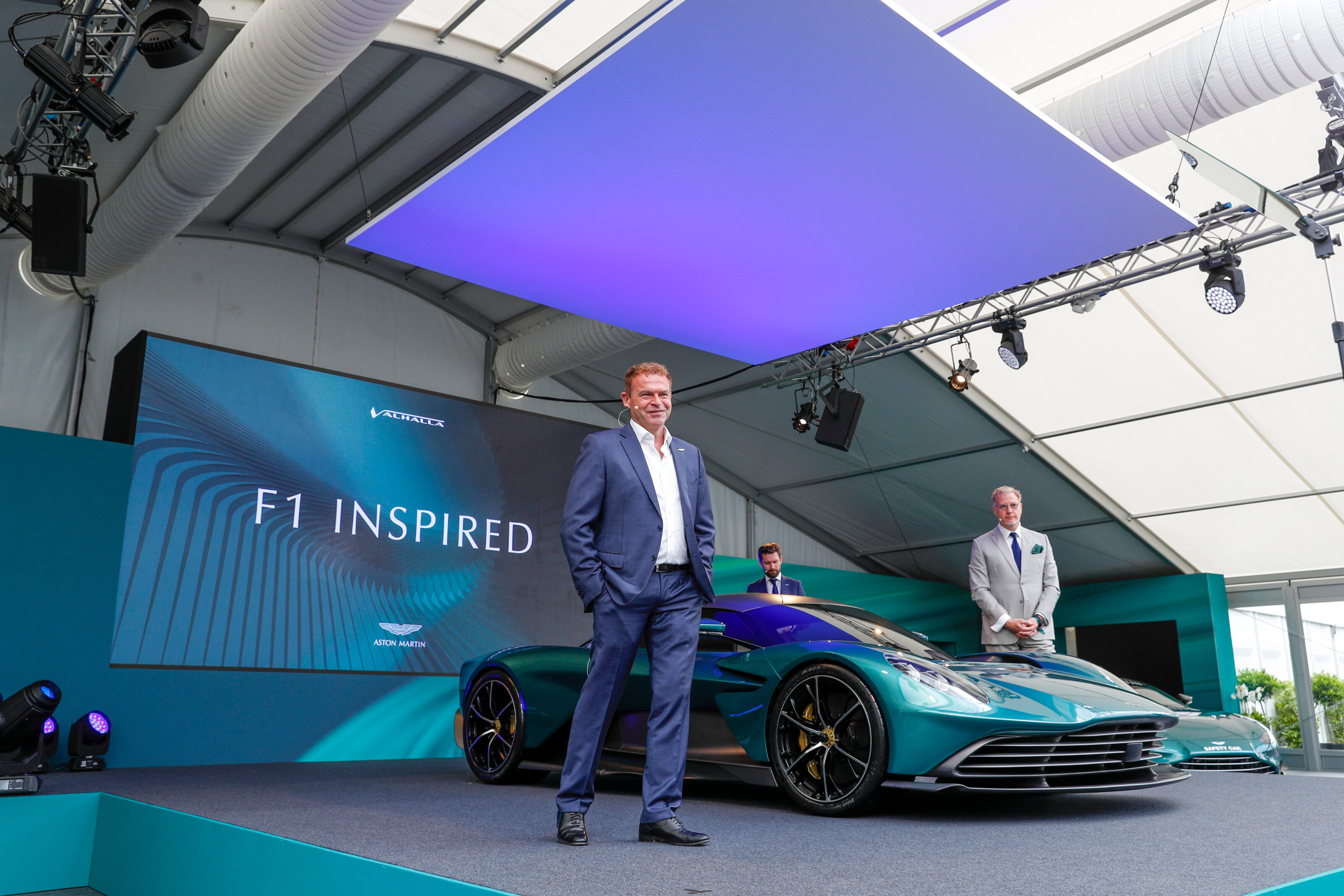
Tobias came from AMG so he knows those engines inside out. With Tobias on board we have more access, just because of his internal knowledge, to the systems we’re using. Before Tobias there were a thousand layers you had to get through to get to that information. Now that information is instantaneous and that means your speed of delivery is better.
Is there a reason we now have 707 horses in a DBX? There you go.
Cheap and cheerful doesn’t cut it in the Australian new-car market like it once did, with Aussies increasingly shopping with a bigger budget in search of premium features. It’s why manufacturers like Mazda and Honda are going further upmarket with each successive model launch and commanding a corresponding shift in pricing.
The strategy to meet and perhaps beat the Germans at their own game is a long play and only time will tell if it’s a solid plan, but that won’t stop other brands from joining the premium reinvention revolution. And one of the latest is Peugeot.
In its current ranks, the French challenger has a trio of bohemian SUVs to compete among the most popular segments as well as a contender in a more esoteric arena – the 508. This mid-sizer is available as a wagon and five-door Fastback and has already proved it has a lot to offer for those willing to peer outside the mainstream brands. But now it’s available as a plug-in hybrid, demonstrating Peugeot’s commitment to an electrified future.
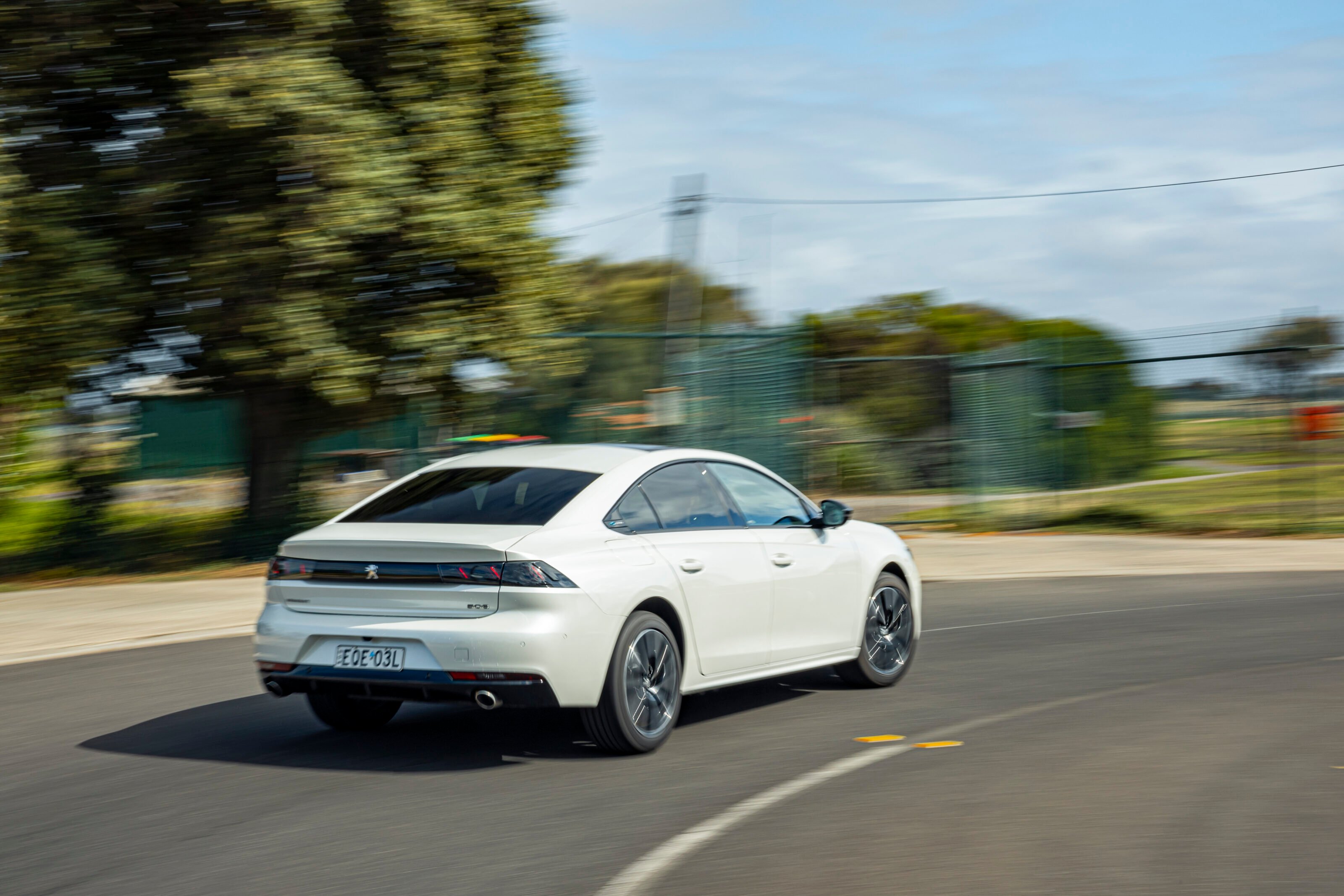
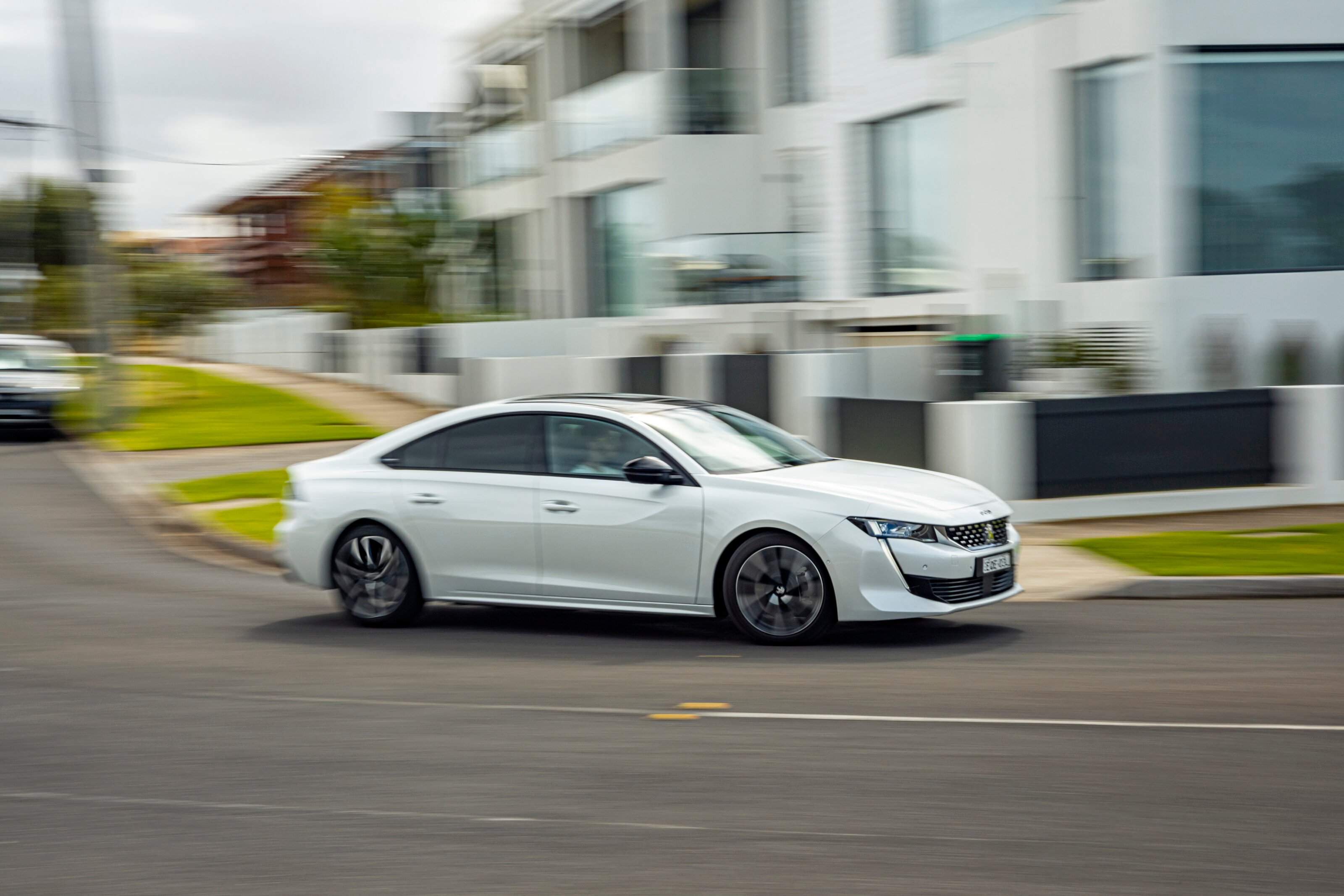
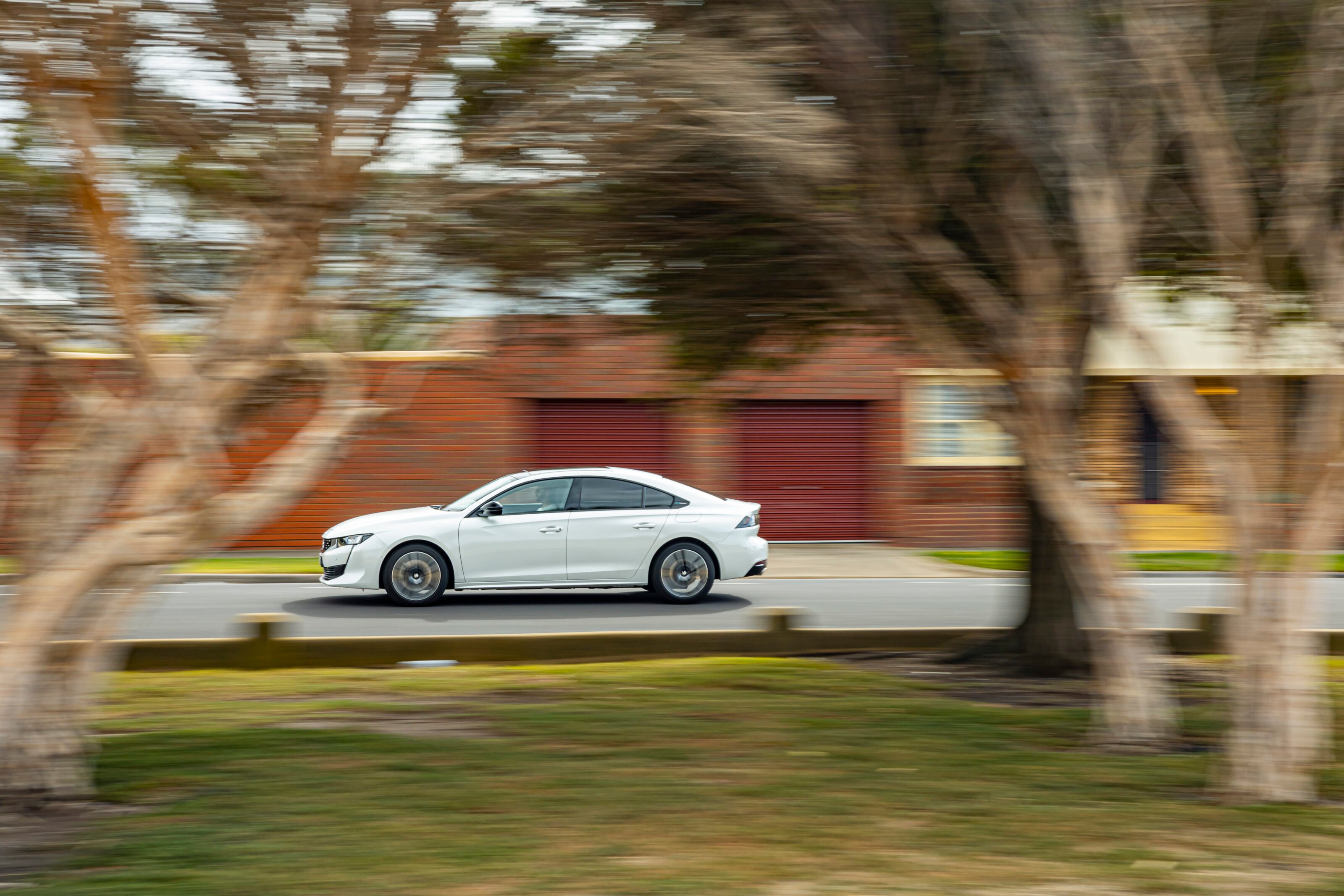
It’s possible to see how Peugeot is positioning this car without even setting foot inside as the exterior styling stands out for all the right reasons. If you’re bored of cookie-cutter cars that either look a lot like their rivals or simply different-sized versions of other models, the 508 may have already grabbed your attention.
Whether it’s the wagon or the liftback, both are beautiful with proportions and finer details that work equally well. There’s definitely no mistaking the 508 on the road and you’re very unlikely to get that feeling of arriving at a party in the same outfit as another guest.
Pleasantly unorthodox styling continues on the inside. A single GT grade is offered across the three-variant 508 range and it is kit-rich. Lovely quality quilted leather seats are snug in the front row but firm and comfortable with heaters, electric adjustment and a superb massage function for the driver.
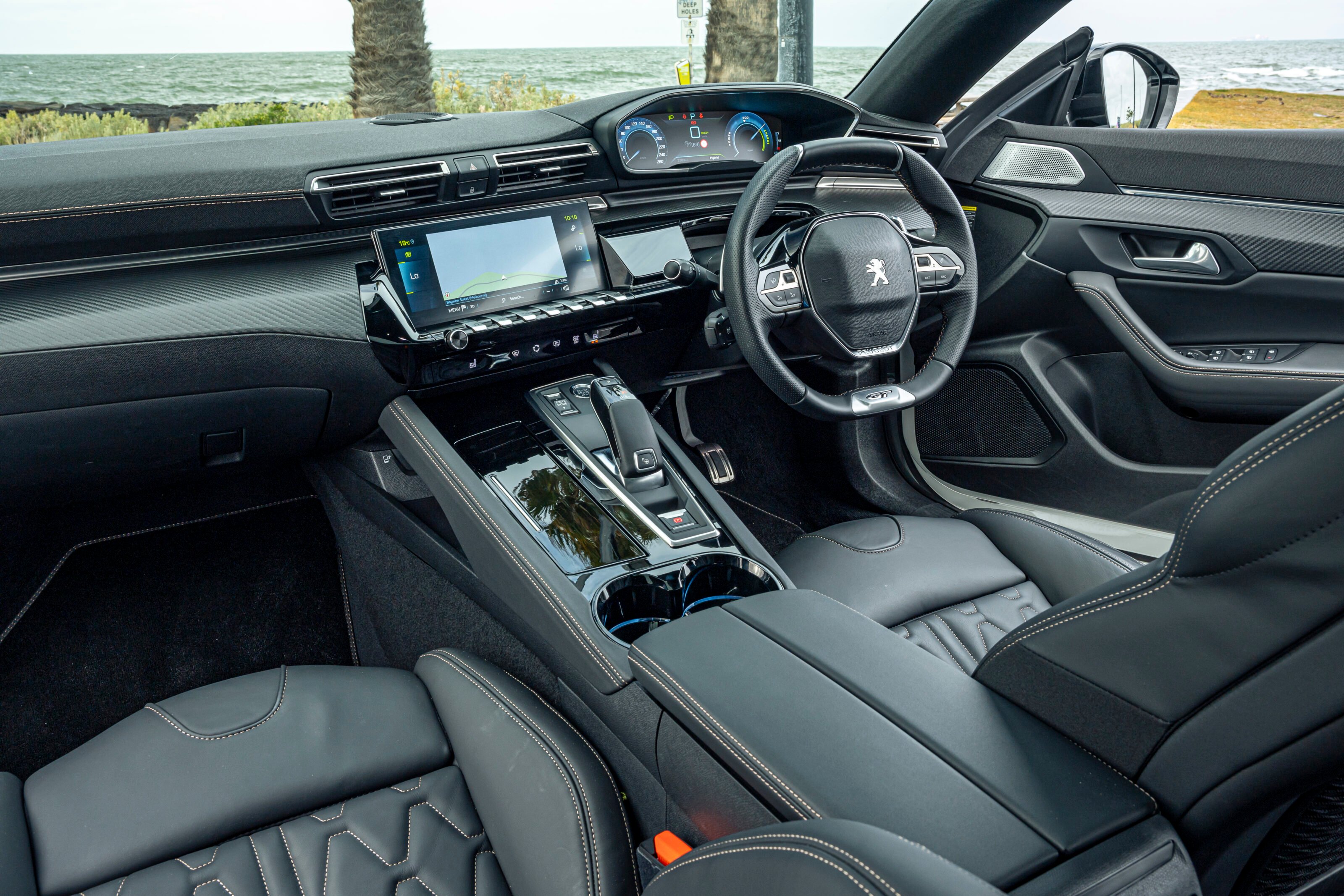
The predominantly black cabin is cosy but a massive panoramic roof prevents it from feeling claustrophobic and there’s a surprising amount of room in the second row for adults although it’s possible to feel a little lost in the roof.
Also included are automatic parking, 18-inch wheels, a top-quality Focal sound system and a new fully-digital instrument cluster that gives the driver the option to disband Peugeot’s strange desire to make the tachometer needle more the opposite way to the speedometer.
The various customisable instrument arrangements are highly unusual and very likeable, with the ‘Driving’ design a particular favourite by displaying weird revolving barrels instead of conventional gauges.
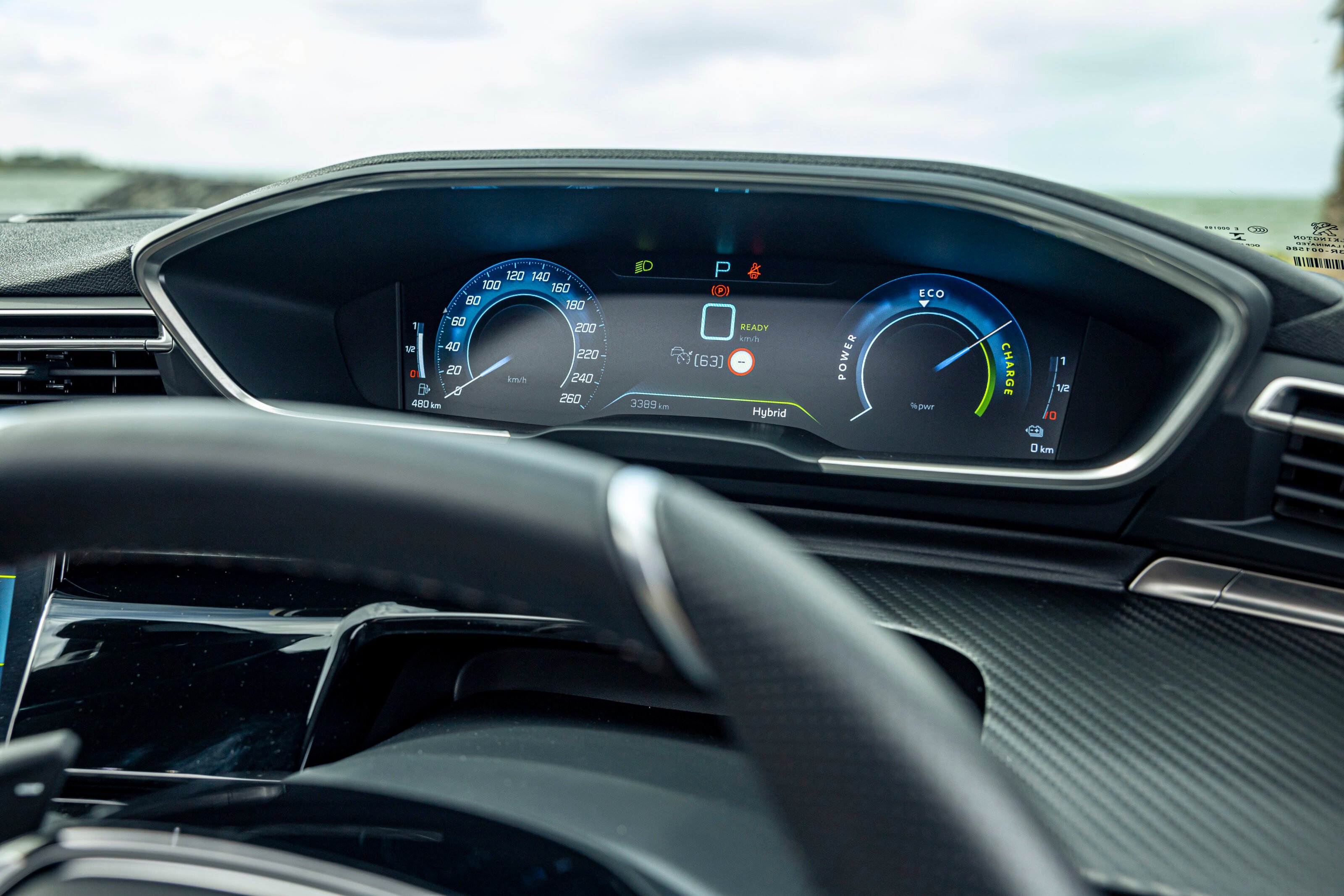
Speaking of quirky Peugeot calling cards, the tiny steering wheel remains, as does the view over the top rather than through. This unusual approach allows an almost unobscured view of the dials and road as well as a pleasant low positioning of hands on the wheel, which is perfectly complemented by a laidback yet purposeful driving position.
Capping off the best cabin features, a generous 487-litre boot is easily accessed by the hatchback-like lid. Unfortunately, there’s no ‘real’ spare wheel but that’s a price for an above-average load area.
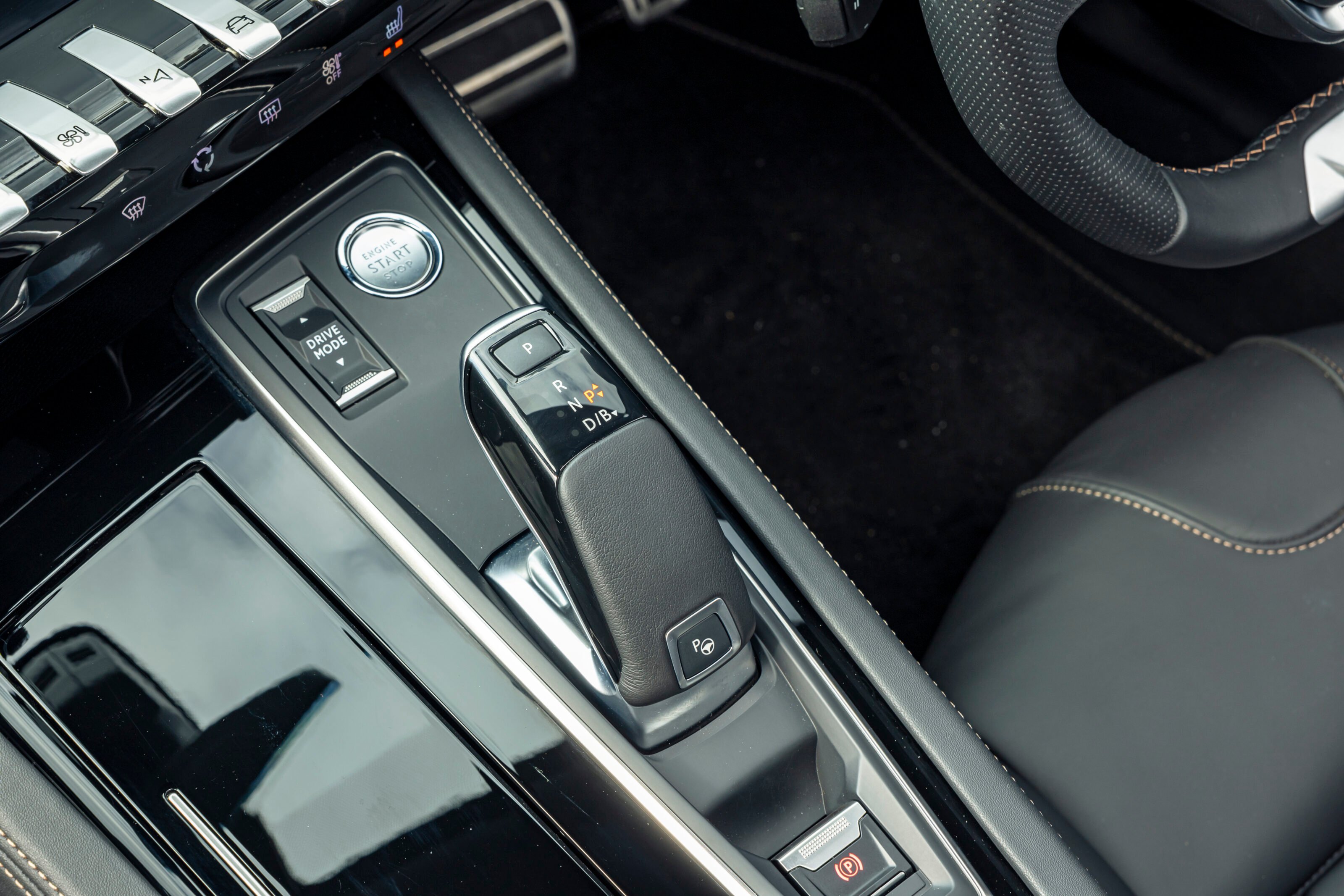
There are a couple of classic French functional anomalies such as the start/stop button and gear selector that require a slightly annoying press-and-hold to comply, and a parking assistance system that is so paranoid of nearby objects that it’s rendered almost less useful than good old mirrors alone.
Plenty of redeeming qualities reveal themselves once you are up and rolling, though. Up front, the 1.6-litre turbocharged four-cylinder petrol lives on from the BMW/Mini collaboration days but is still a relatively refined and powerful unit.
Things get a little thrashy toward the redline but the addition of a new hybrid system and useful torque avoids the need to wring out the engine for the majority of driving.
With electrification increasing weight to 1745kg, the PHEV is the slowest 508 variant to 100km/h, but the instant electric urge makes this version feel the most athletic off the mark
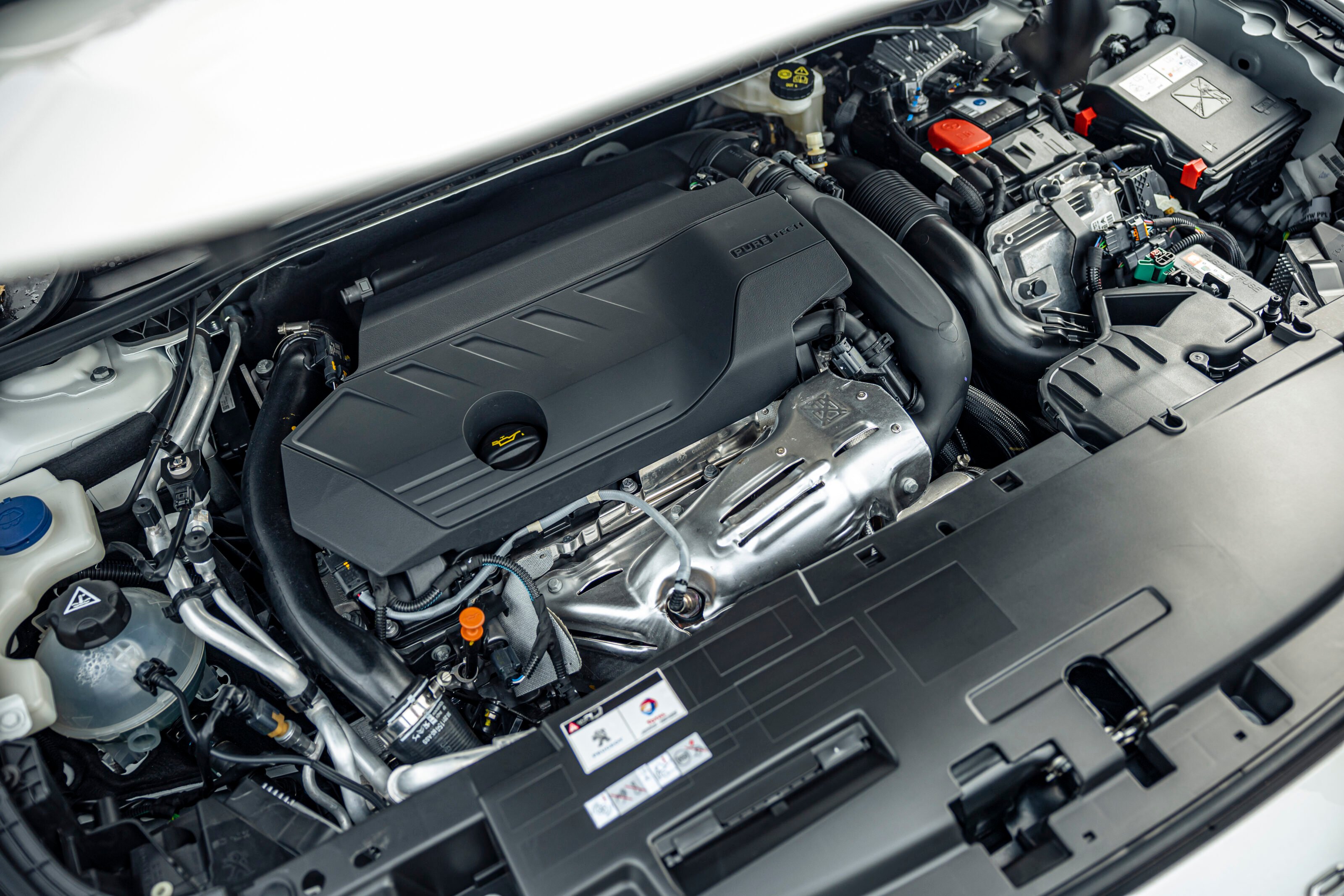
Power, compared with the more conventional 508 powertrain, remains the same at 165kW sent through the front wheels but grunt is boosted by 60Nm to 360Nm.
With the extra mass of electrification increasing kerb weight to a hefty 1745kg, the PHEV is the slowest 508 variant to 100km/h, doing the dash in 8.3s, but the instant electric urge makes this version feel like the most athletic off the mark.
Initial surge is strong and the electric-biased drivetrain resists the temptation to bring in petrol help unless really provoked.
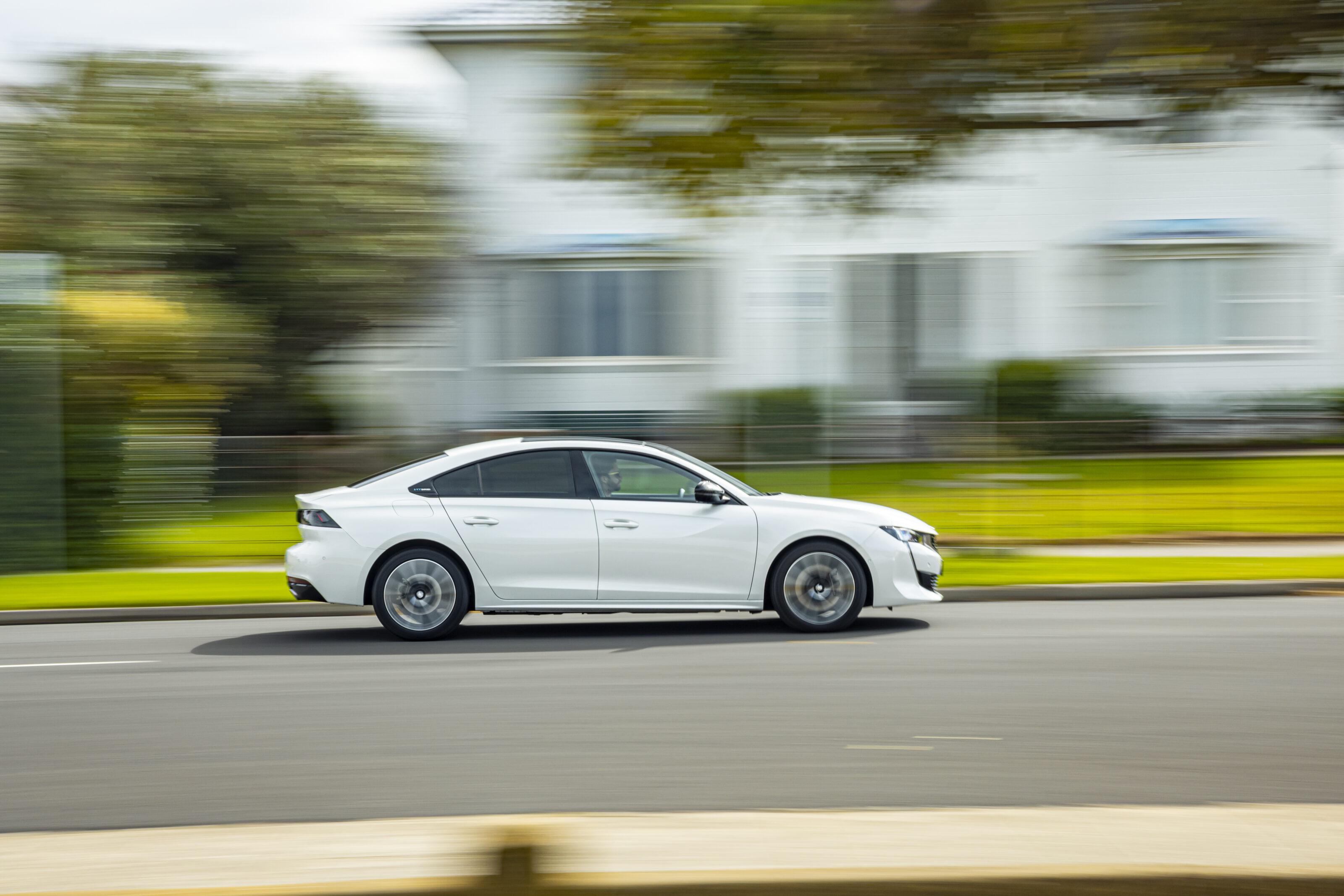
While other plug-ins revert to hybrid power more readily, the 508 allows pure electric driving for more of the time without feeling like you are teetering on the petrol engine firing up under light loads.
Peugeot’s claim of about 55km on battery power alone seems about right and, for most suburban owners, would mean an easy zero-emissions commute.
For all other types of usage, there are a few useful driving modes. Sport enlists the help of combustion along with optimised electric power for peak progress, as well as modifying the excellent eight-speed auto transmission’s shift points. Hybrid is the default and favours electric power, Comfort has a similar powertrain map but softens the steering edge and adaptive dampers, while Electric mode locks out the four-cylinder entirely.
Further sub-modes allow the battery to be pinned into Max, 10 per cent and 20 per cent conservation selections that will reserve a portion of power for later use in cities or clean-air restricted areas.
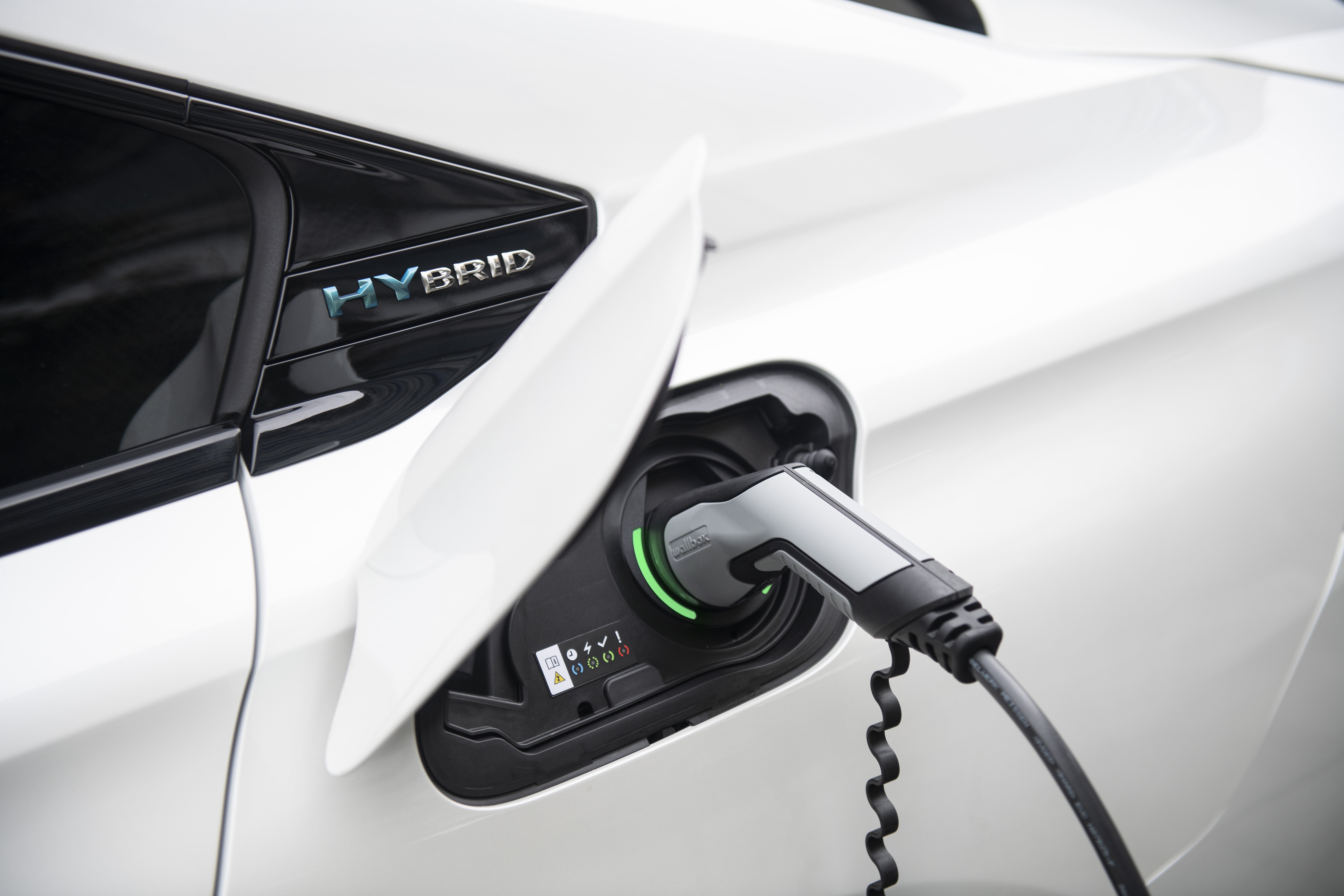
With a relatively generous 11.8kWh battery, home fast charging is recommended if a full top-up is required in about three hours, although a standard mains plug will do the job in about the same time as your smartphone.
Hitting some A-roads, the 508 quickly reveals its relaxed nature with very low cabin noise and a smooth ride
Hitting some A-roads, the 508 quickly reveals its relaxed nature with very low cabin noise and a smooth ride, although the front axle produces some strange vibration noises over particular roads – not unlike a worn ball joint. It doesn’t impact the smooth and direct steering that feels sporty along with the little steering wheel.
There’s some vagueness about the dead-ahead mark but feedback quickly weights up into corners for a lively and responsive front end. Some dynamic quality has been sacrificed over the pure-petrol version due to the hybrid’s significantly increased mass, but the 508 is still clearly geared for a driving enthusiast.
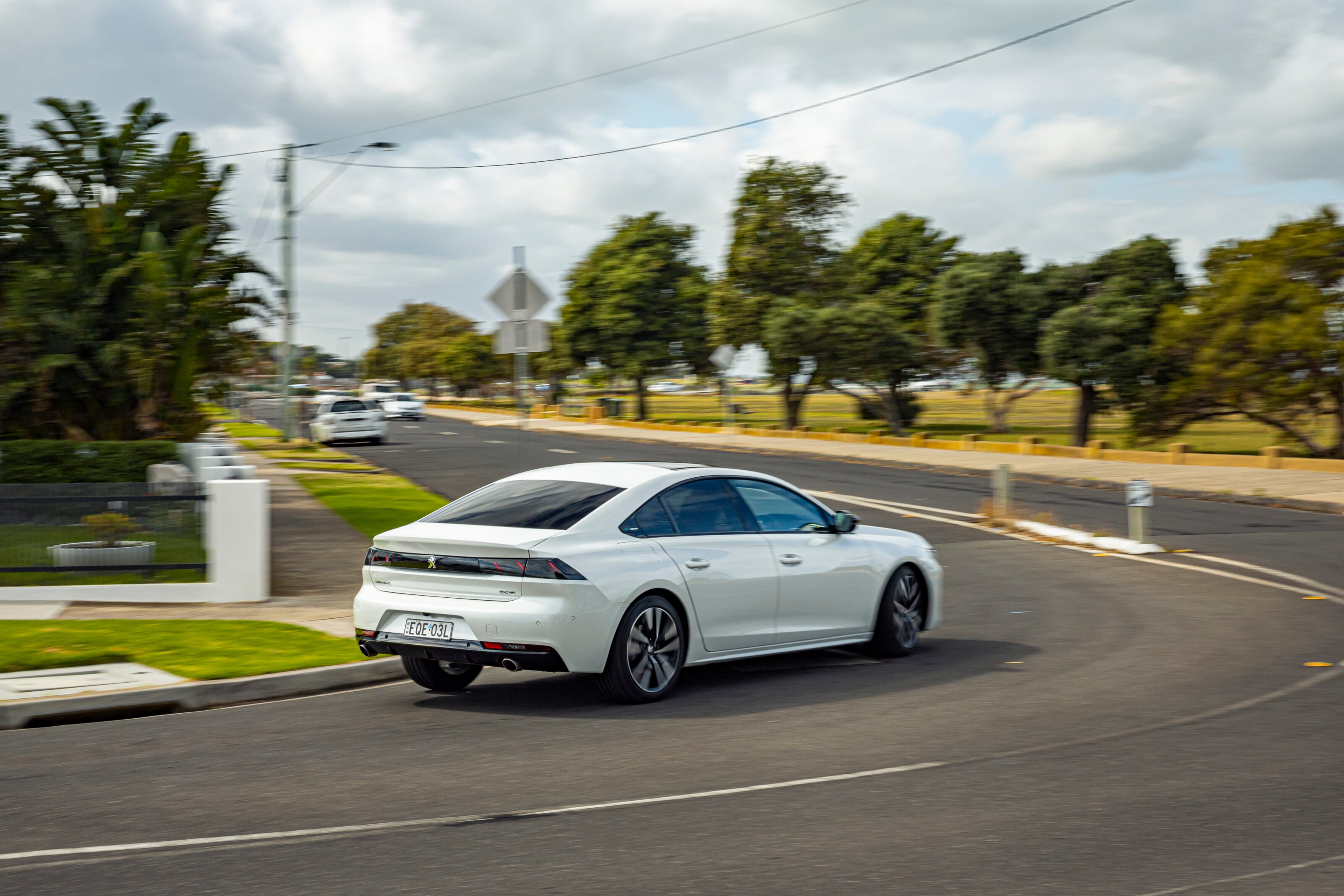
Only the brake pedal feel detracts from an otherwise commendable nature, regardless of driving style. Its excessive travel goes from soggy to firm and grabby in a manner that’s hard to modulate and results in unintentionally abrupt stopping.
It’s harder to find the black marks to the 508’s character than simply enjoying the far greater number of strengths it has in its repertoire. Its weirdly charming approach to transport is refreshing and will certainly appeal to those who appreciate good design that compromises little in the way of practicality.
It’s harder to find the black marks to the 508’s character than simply enjoying the far greater number of strengths it has in its repertoire
Add into the recipe a little glimpse of Peugeot’s electric horizon, boosted efficiency and environmental responsibility, and you’re looking at a car that can hold its head high. Pricing is perhaps the most confronting facet of its package, however.
The 508 is, without doubt, a premium offering with apparent quality and equipment levels to warrant a premium price but $76,990 (before on-road costs) will likely seem like a bridge too far for many.
Finding rivals in this extremely niche segment is not easy but for context, BMW offers the 330e for $84,900, while the Mercedes C300e is $85,100 (both before on-road costs).

Peugeot’s challenge is not in convincing a pragmatic audience that its new 508 PHEV is a luxury contender with much to offer. Its superior design, generous equipment and rewarding drive are quick to emerge but any mid-sized sedan with a plug-in hybrid powertrain and premium price is among the most esoteric and abstruse found in Australia’s competitive automotive landscape.
As a demonstration of what the company is capable of, the 508 GT Fastback Plug-in Hybrid is an impressive flagship but it’s unlikely to muscle its SUV siblings out of the picture – especially the updated 3008, which is now on offer with a seriously muscular PHEV drivetrain as well.
Snapshot
- 2023 Smart #1 electric crossover unveiled
- Mercedes-Benz designed and Geely built
- 440km driving range with 200kW of power
The 2023 Smart #1 has been revealed for European and Chinese markets overnight.
The #1 is an all-new fully-electric compact SUV from Smart – now a joint venture between Mercedes-Benz and Geely – with the model offering up to 440 kilometres from a single charge based on the WLTP test cycle.
The electric motor delivers 200kW and 343Nm to the rear wheels, powered by a 66kWh nickel-cobalt-manganese battery pack.
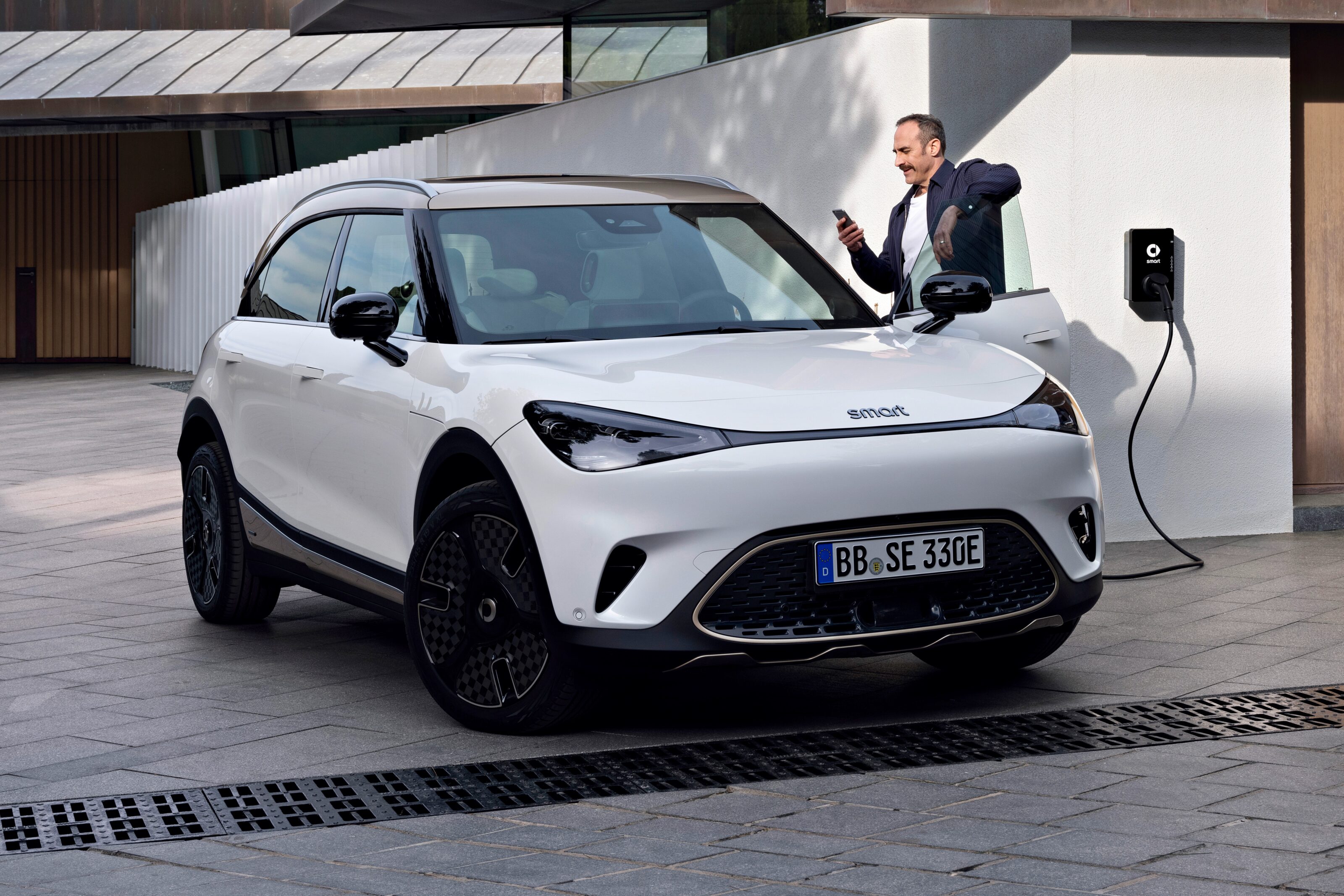
Charging from 10 to 80 per cent takes as little as 30 minutes when using a 150kW DC fast charger, or around 3.5 hours on a 22kW AC charger.
Inside, occupants are greeted with a 12.8-inch customisable infotainment touchscreen, a 13-speaker Beats premium sound system with subwoofer, a panoramic glass roof, and a floating centre console.
Along with seven airbags, the Smart #1 comes with radar cruise control with stop and go, lane-keep assist, blind-spot assist, active traffic monitoring, semi-autonomous parking, and automatic high-beams.
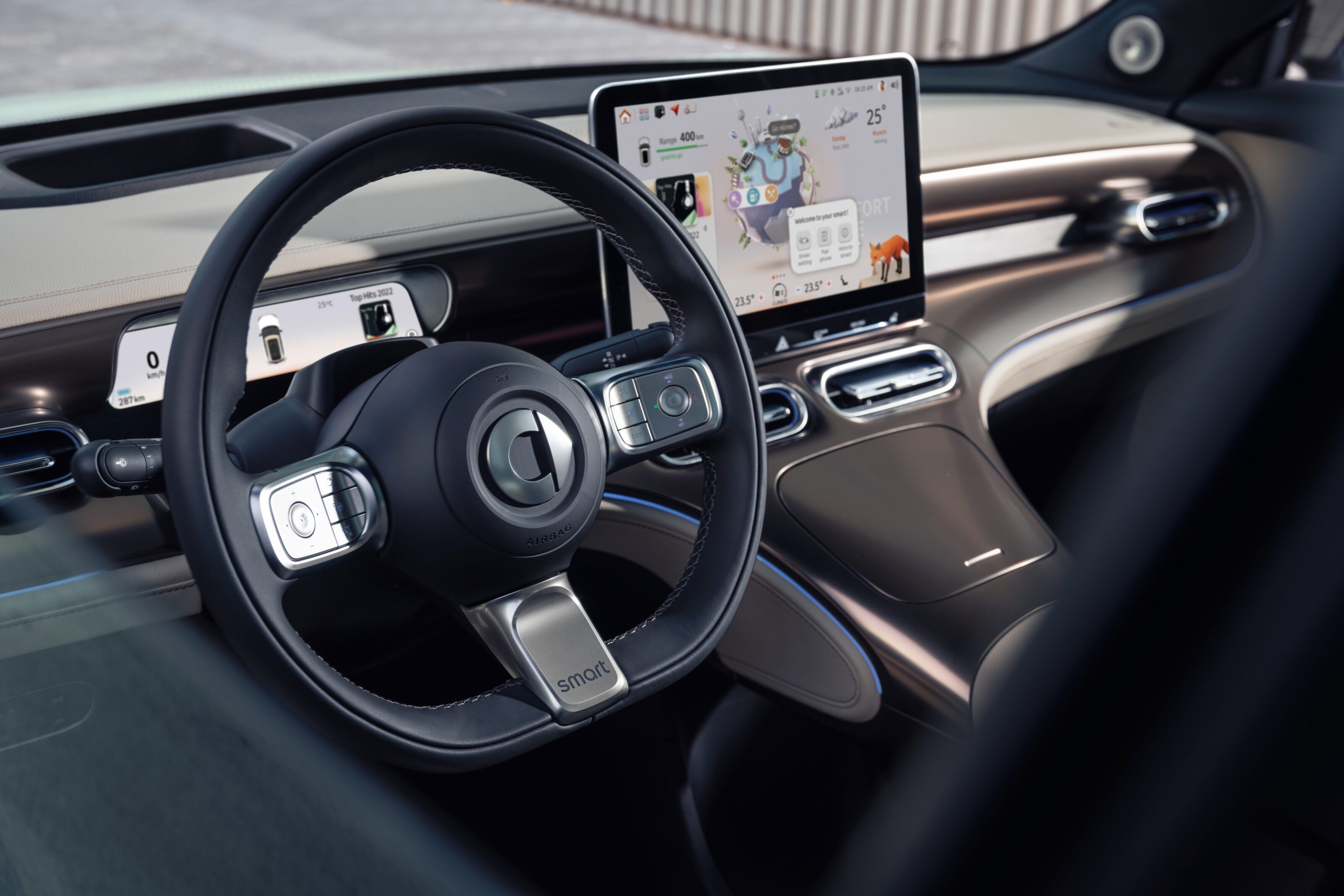
“The new Smart #1 stands for the re-start of the Smart brand and showcases our new design DNA of ‘Sensual Product’,” Mercedes-Benz Group Chief Design Officer Gorden Wagener said at the unveiling.
“It is grown up, cool and embodies beauty with smart solutions. Therefore, it is new, fresh, and enchanting. Our new Smart #1 has the potential to make Smart a leading design brand.”
The 2023 Smart #1 is expected to go on sale in Europe and China in late 2022, though no plans have been announced for an Australian launch.
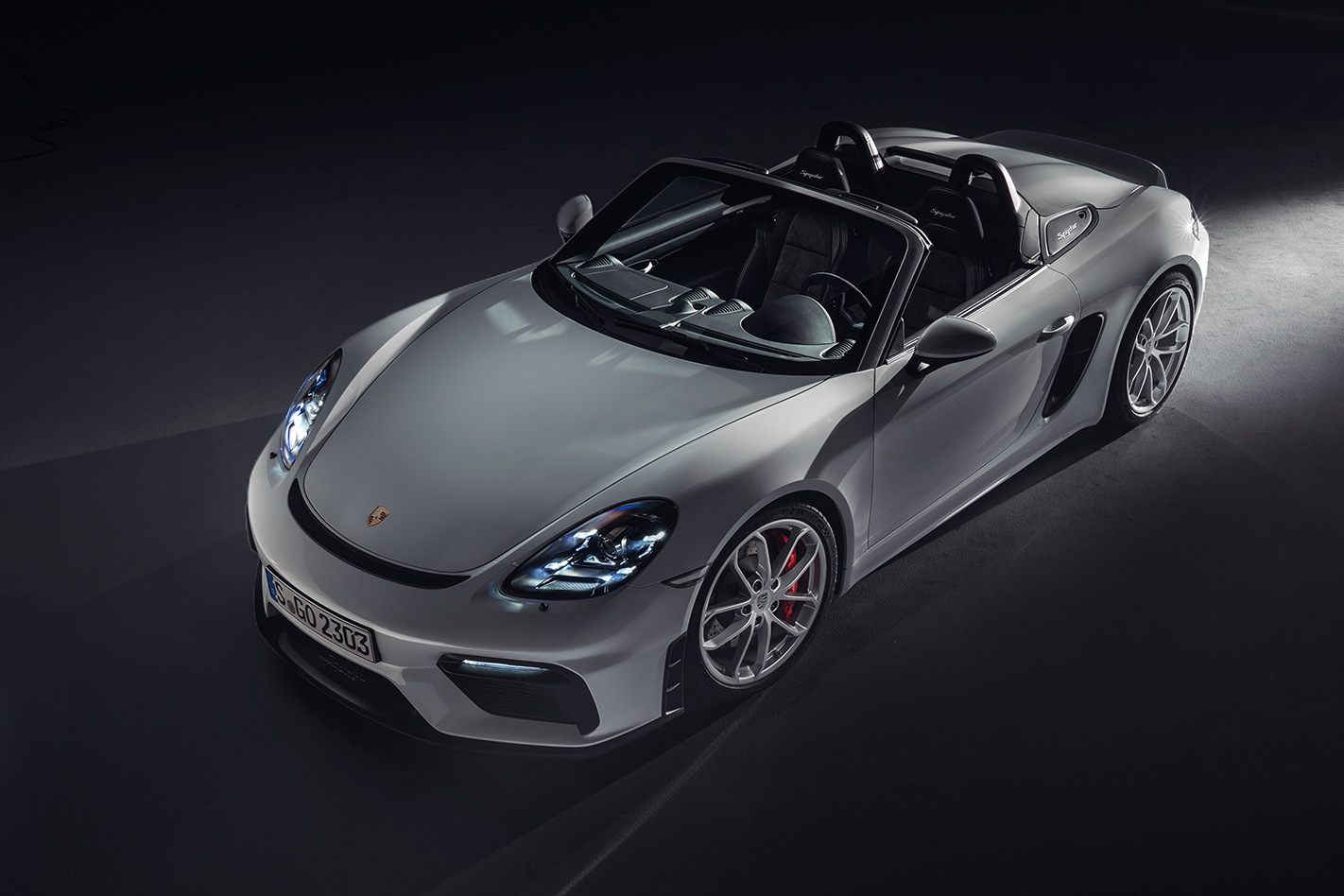
A 2023 Porsche Carrera RS looks to be in the works, along with a 2023 Porsche Boxster Spyder RS, as the German sports car company celebrates the 50th anniversary of the RS badge next year.
While a 911 prototype has been spotted testing with a ducktail rear spoiler and Fuchs-style wheels over the past year, many have assumed Porsche was working on a new Sport Classic.
A report from MotorTrend in November 2021 raised the prospect of Porsche offering a 911 RS, being based on the all-wheel-drive 911 Turbo S – but instead offering the car with rear-wheel drive and a manual transmission.
Spy videos dating back to 2020 back the claim, with what appears to be a 911 Turbo S with a ducktail spoiler testing at the Nurburgring, and what sounds like gears being changed manually by the test driver.
However, more recently a prototype has been seen testing based on what appears to be a 911 Carrera body and a ducktail rear spoiler, meaning a Sport Classic similar to the 997.2 version can’t be ruled out.
According to a February report from The Supercar Blog, Porsche is also planning a soft-top version of the 718 Cayman GT4 RS, to be named the 718 Spyder RS.
While earlier iterations of the Spyder were somewhat softer versions of the Cayman GT4, the new Spyder RS is said to be a ‘true’ RS model, retaining the GT4’s 4.0-litre naturally-aspirated engine shared with the 911 GT3.
The Spyder RS will also borrow the GT4 RS’s dual-clutch transmission, upgraded chassis, Bilstein shock absorbers, and 20-inch centerlock alloy wheels.
With the European Union set to introduce strict Euro 7 emissions laws from 2025, it seems Porsche has given its engineers carte blanche to create the high-performance cars of their dreams.
Speaking to MOTOR in February, Porsche GT boss Andreas Preuninger said there was scope to expand the 718 and 992 line-ups with some special models.
“I think we pretty much spread out pretty good through the two sports car ranges (718 Cayman and Boxster, and 911) that we have with all the derivatives now opening up with the Touring as the driver’s car side, and we have some more ideas for the future to come to even expand that a little bit, but stay true to the core,” Preuninger said at the time.
“Make it a motorsport product with motorsport technology. If not for the racer, then for the absolute diehard, enthusiast, and purist lover.
“So this is what GT is about, so we don’t want to soften that up too much.”
Data logging is a crucial aspect of Performance Car of the Year, with each car testing its merit against the stopwatch.
Under review is their real-world performance compared to their manufacturer’s claims, as well as providing integral points of comparison.
Testing was conducted on the main straight of Phillip Island, with each car measured across the same 400m stretch of tarmac. Conditions were sunny and clear, with temperatures between approximately 20 and 25 degrees. Inconsistent gusts from the Bass Strait saw some cars battling against headwinds while others benefitted from a tailwind.
Why is there a McLaren here?
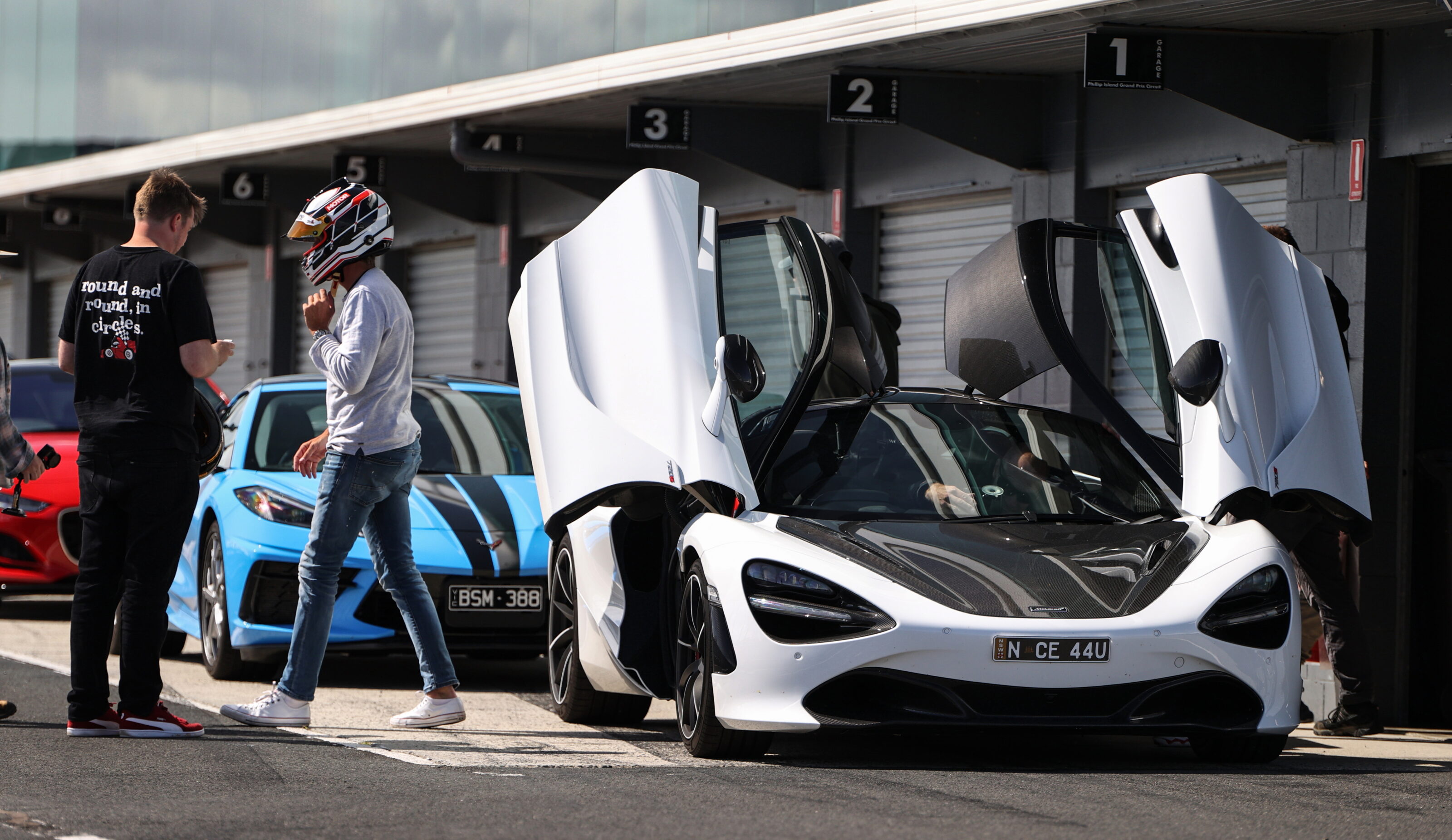
The McLaren 720S isn’t a part of this year’s PCOTY, but given that it’s been the supercar performance benchmark for the last few years, we performance tested Kirby’s long-termer and sent Luffy out for a hot lap just to add some frame of reference as to how our PCOTY contenders stacked up against it. While nothing could touch the Big Mac’s terminal velocities, three cars – the all-wheel drive Taycan and Huracán and the rear-engined GT3 beat it to 100km/h.
0-400m
Drivers: Andy Enright, Louis Cordony
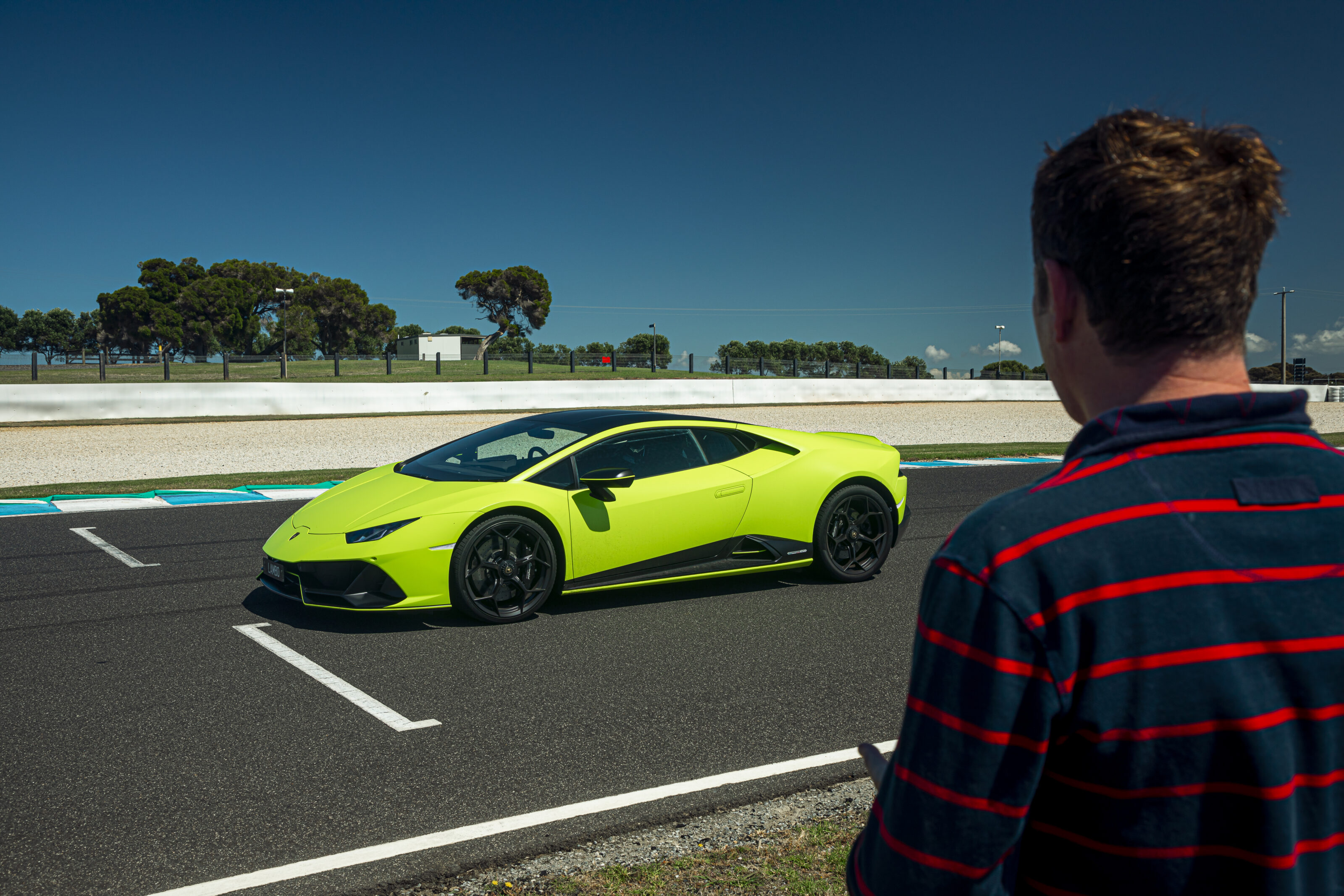
The 470kW all-wheel drive Lamborghini Huracan Evo topped the ranks in various disciplines, scorching the 400m dash in just 10.57-seconds. The Taycan Turbo S follows closely, leveraging its instant torque delivery and four-wheel traction to nail a 10.73-second pass.
https://infogram.com/1pn0vyz2qqyz72sz626g3j55wrummm57myj
0-400m V-Max
Drivers: Andy Enright, Louis Cordony
The Huracan, again, tops the PCOTY field, but is significantly overshadowed by the wildcard McLaren. Despite only two driven wheels, the 720S’ 520kW makes up for a slow start off the mark, eclipsing the Lamborghini’s 400m V-Max by a full 12.1km/h.
https://infogram.com/1pyy210z1wr9l7b3w5n1zd3peeuy5jev1e7
0-100km/h
Drivers: Andy Enright, Louis Cordony
A dominant performance from the Taycan Turbo S was expected, but the biggest surprise came from the Alpina B3 sleeper – clocking triple digit speeds within tenths of the more powerful C8 Corvette and 911 GT3.
A mid-field result from the McLaren makes its 400m stats all the more remarkable. That car is all about the top-end.
https://infogram.com/1pqddwrdy70xx2cq6d0g0rj7x7i0k3wy25k
Lap Time
Driver: Warren Luff
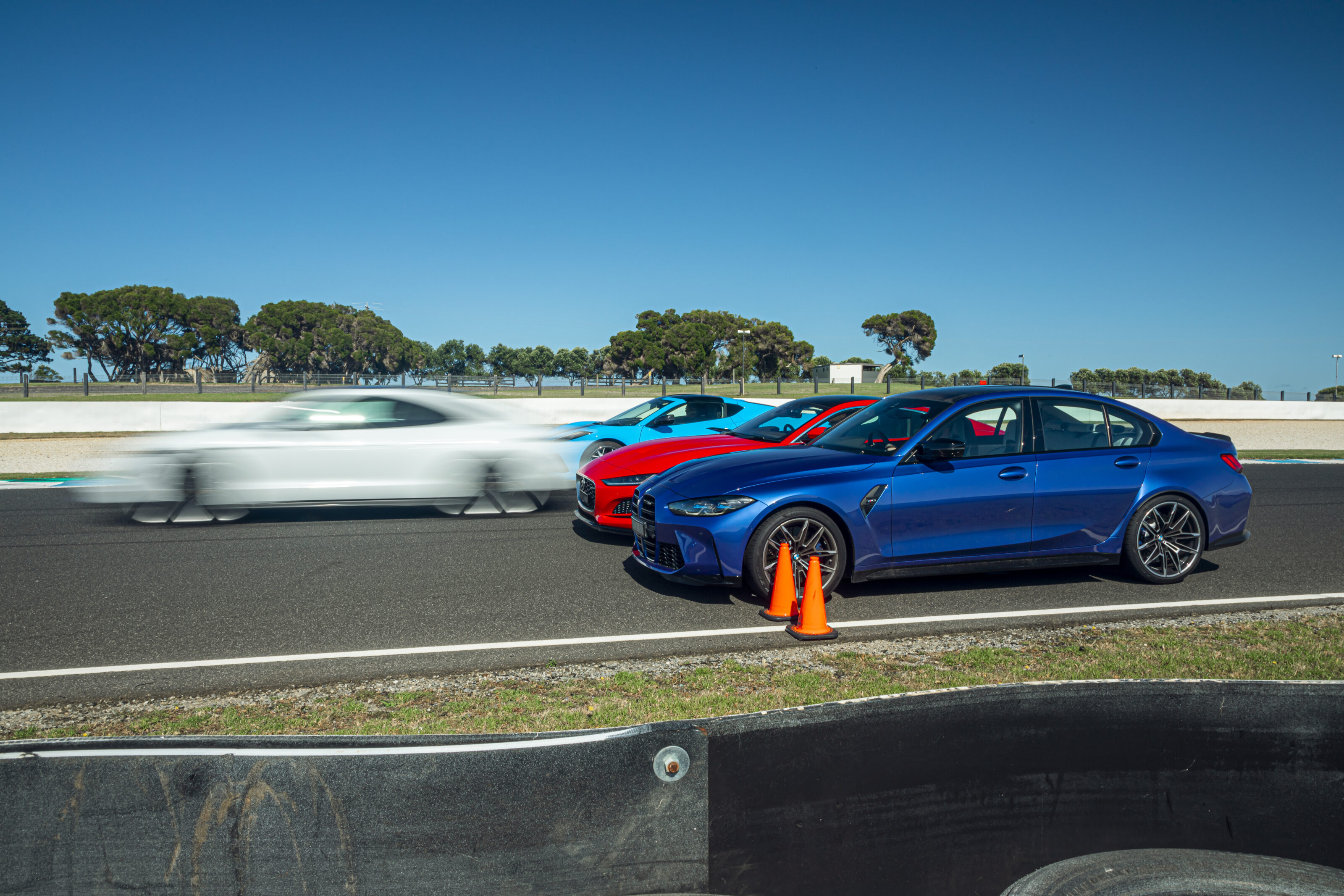
No prizes for predicting that the ultra-focused 992-generation of GT3 would emerge as 2022’s hot lap hero. The Huracan Evo trails by three seconds, with its modest footprint and standard Pirelli P Zero rubber limiting its ambitions.
The rear-drive manual M3 was the biggest surprise, finishing third within the PCOTY field and besting the capable Corvette and Boxster 25.
The McLaren’s lap time was also hampered by comparatively narrow Pirelli P Zeros and, amazingly, could have eclipsed the heroic Porsche with an upgrade in rubber.
| Porsche 911 GT3 | 1:39.74 |
|---|---|
| McLaren 720S* | 1:40.19 |
| Lamborghini Huracan Evo | 1:43.09 |
| BMW M3 | 1:45.04 |
| Corvette C8 | 1:45.22 |
| Porsche Boxster 25 | 1:45.60 |
| Porsche Taycan Turbo S | 1:45.89 |
| Alpina B3 | 1:48.71 |
| Jaguar F-Type | 1:49.69 |
Lap V-Max
Driver: Warren Luff
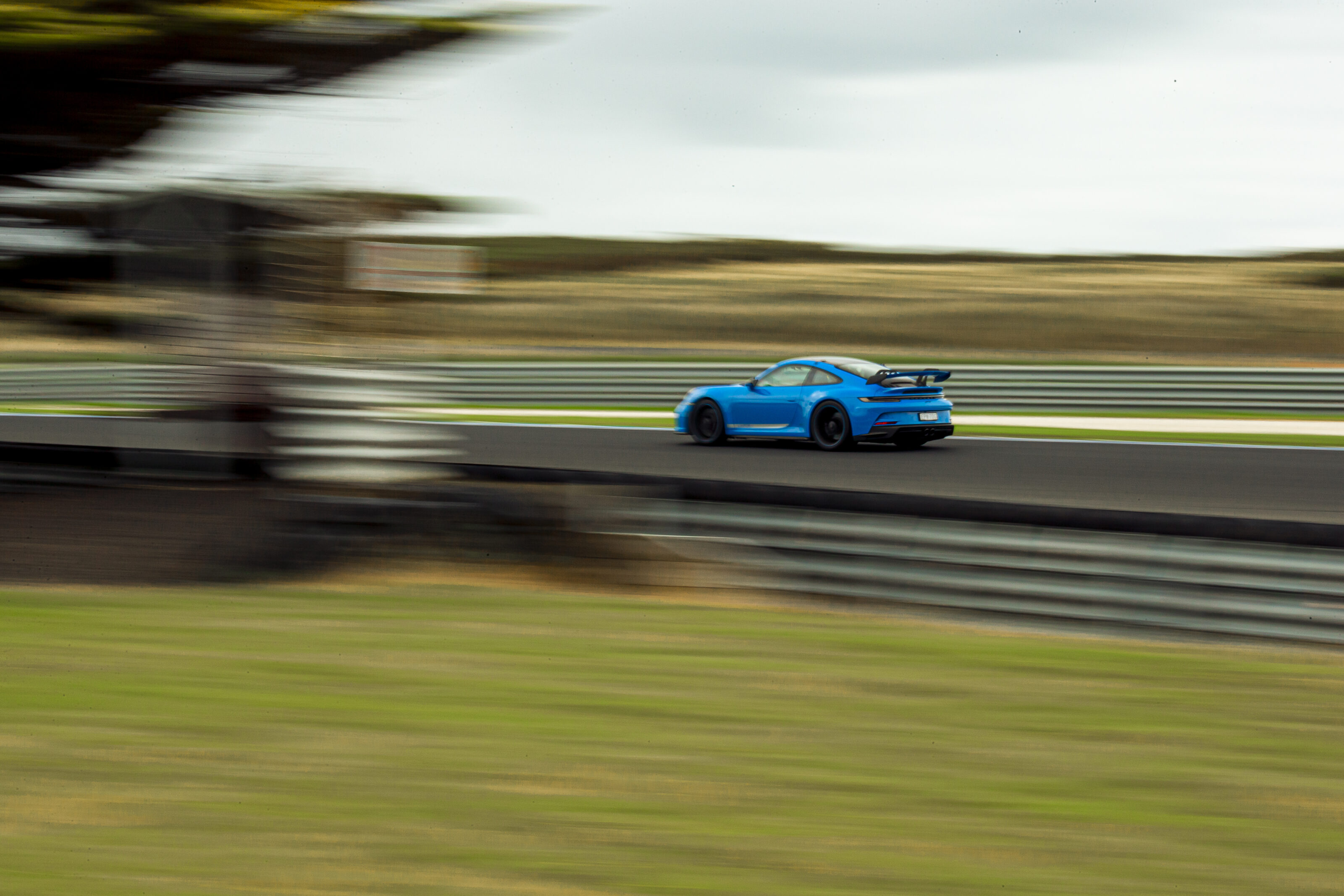
While the GT3 achieves its dominant lap times with Cup 2 tyres and clever aero, the Huracan Evo’s V-Max figures indicate that it makes its time in very different areas of the track.
https://infogram.com/1py1w21j9p6l3zc3m3dvp73vg3tykd97g9x
100-0km/h
Drivers: Andy Enright, Louis Cordony
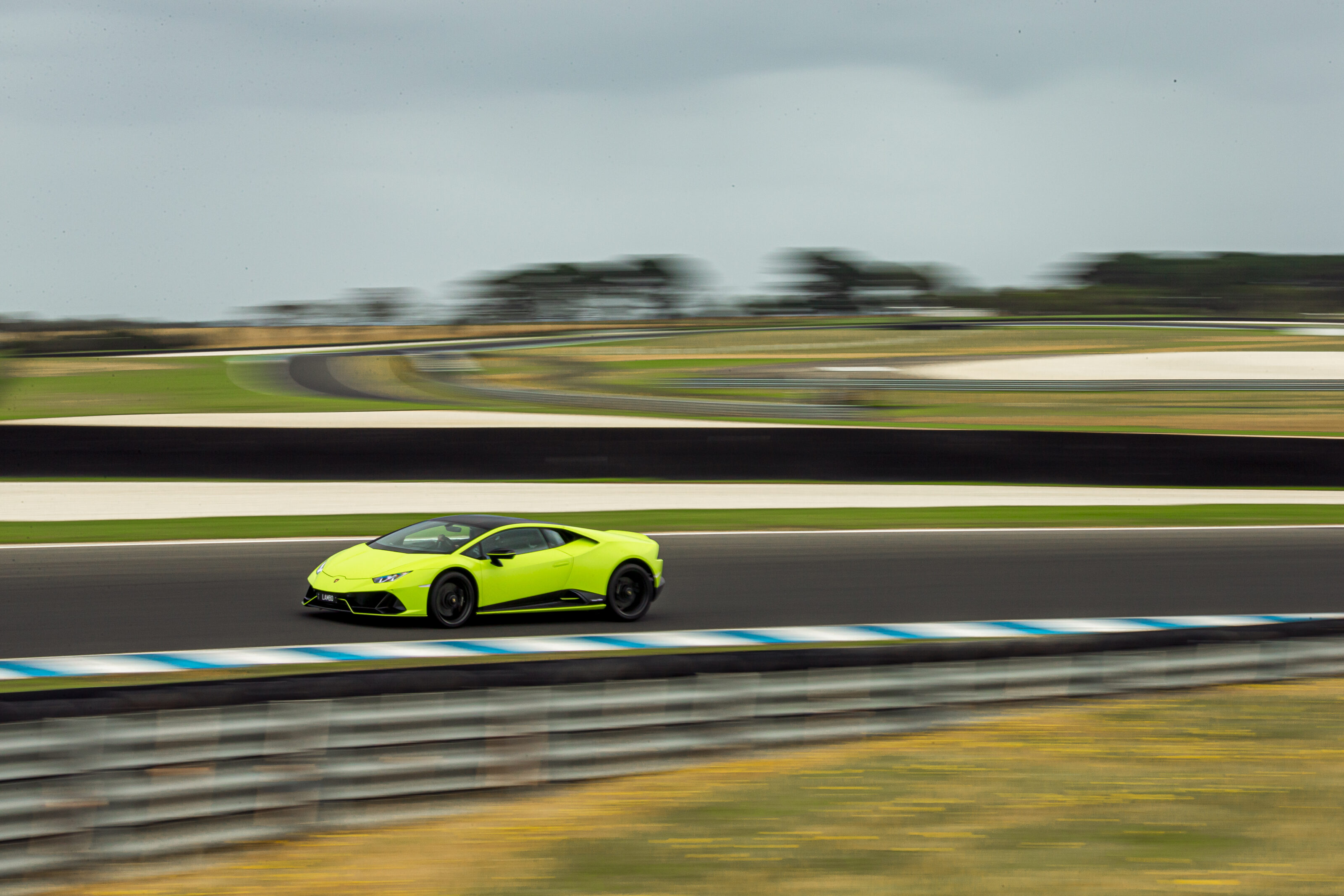
A modest kerb weight of 1422kg, combined with monstrous carbon-ceramic brakes (one of two sets in the field) saw the Huracan Evo pull up stumps in the shortest distance from a 100km/h roll.
Porsche fills out the following three spots, with the Boxster coming to a stop 1.02 metres further than the Huracan. The Taycan, the only other competitor with carbon-clad stoppers, trails almost a metre behind, matching its GT3 sibling exactly despite carring an extra 800kg on board.
https://infogram.com/1pv1vz7n6qq0dvfxngw3w55k32hr150eyew
Technical Data
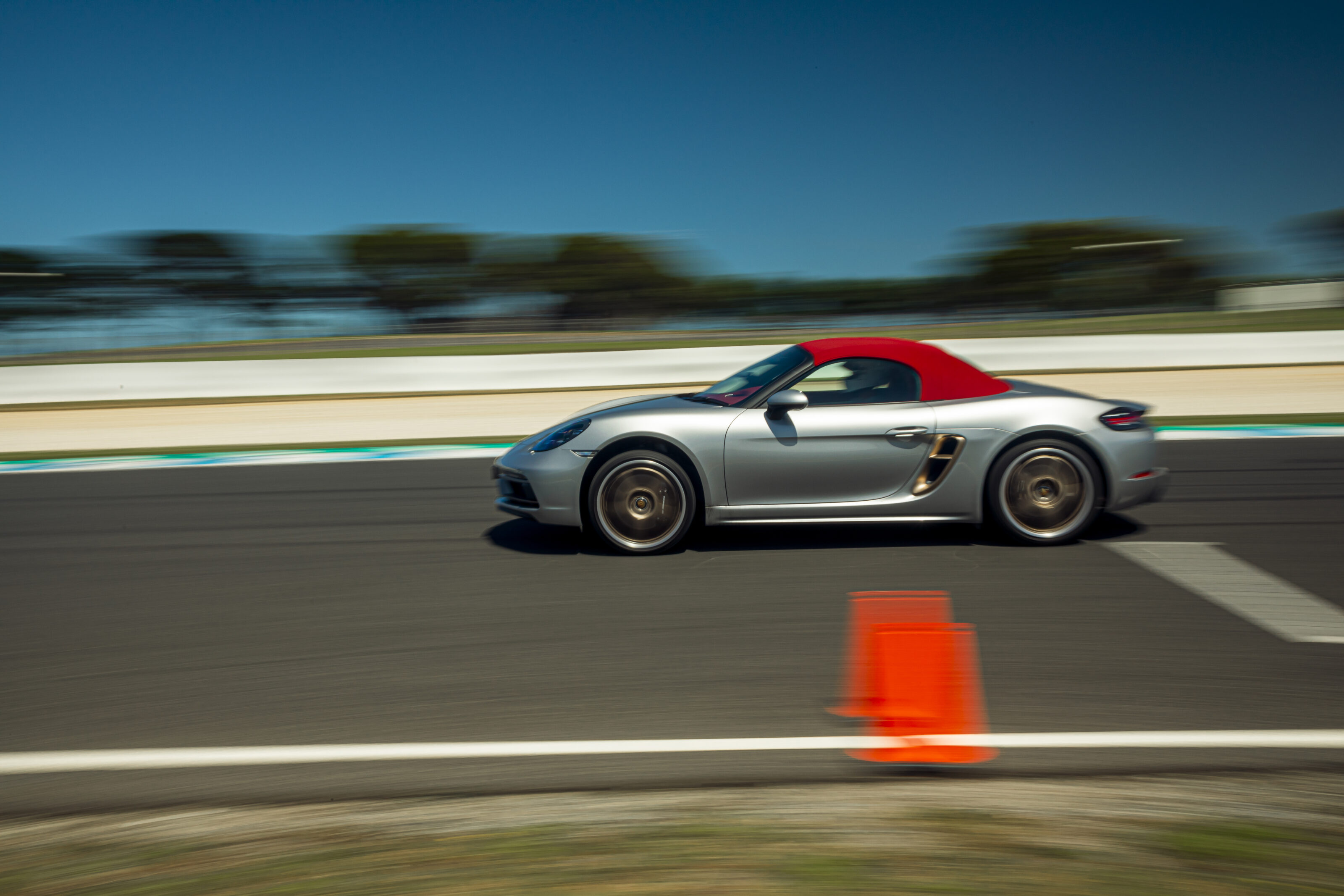
| Alpina B3 | BMW M3 | Corvette C8 | Jaguar F-Type | Lamborghini Huracan Evo | Porsche Boxster 25 Years | Porsche Taycan Turbo S | Porsche 911 GT3 | |
| Body | 4-door, 5-seat sedan | 4-door, 5-seat sedan | 2-door, 2-seat targa | 2-door, 2-seat coupe | 2-door, 2-seat coupe | 2-door, 2-seat convertible | 4-door, 5-seat sedan | 2-door, 2-seat coupe |
| Drive | all-wheel | rear-drive | rear-drive | rear-drive | all-wheel | rear-drive | all-wheel | rear-drive |
| Engine | 2993cc inline-6, DOHC, 24v, twin-turbo | 2993cc inline-6, DOHC, 24v, twin-turbo | 6162cc V8, DOHC, 32v | 5000cc V8, DOHC, 32v, s/c | 5204cc V10, DOHC, 40v | 3995cc flat-6, DOHC, 24v | 93.4kWh Permanent synchronous magnet (f/r) | 3996cc flat-6, DOHC, 24v |
| Bore/Stroke | 84.0mm x 90.0mm | 84.0mm x 90.0mm | 103.25mm x 92.0 mm | 92.5mm x 93.0mm | 84.5mm x 92.8mm | 102.0mm x 81.5mm | N/A | 102.0mm x 81.5mm |
| Compression | 9.3:1 | 9.3:1 | 11.5:1 | 9.5:1 | 12.7:1 | 13.0:1 | N/A | 13.3:1 |
| Power | 340kW @ 5500-7000rpm | 353kW @ 6250rpm | 369kW @ 5500-6000rpm | 331kW @ 6000rpm | 470kW @ 8000rpm | 294kW @ 7000rpm | 560kW | 375kW @ 8400rpm |
| Torque | 700Nm @ 2500-4500rpm | 550Nm @ 2750-5500rpm | 637Nm @ 1800-4600rpm | 580Nm @ 2500rpm | 600Nm @ 6500rpm | 420Nm @ 5000-6500rpm | 1050Nm | 470Nm @ 6100rpm |
| Power/Weight | 183kW/tonne | 207kW/tonne | 239kW/tonne | 194kW/tonne | 331kW/tonne | 204kW/tonne | 253kW/tonne | 261kW/tonne |
| Transmission | 8-speed automatic | 6-speed manual | 8-speed dual-clutch | 8-speed automatic | 7-speed dual-clutch | 7-speed dual-clutch | 2-speed automatic | 7-speed dual-clutch |
| Weight | 1860kg | 1705kg | 1545kg | 1706kg | 1422kg | 1435kg | 2295kg | 1435kg |
| Suspension | MacPherson strut, adaptive dampers, anti-roll bar (f); Multi-link, adaptive dampers, anti-roll bar (r) | MacPherson strut, adaptive dampers, anti-roll bar (f); Multi-link, adaptive dampers, anti-roll bar (r) | Double-wishbones, adaptive dampers, anti-roll bar (f); Double-wishbones, adaptive dampers, anti-roll bar (r) | Double-wishbone, adaptive dampers, anti-roll bar (f); Double-wishbone, adaptive dampers, anti-roll bar (r) | Double-wishbone, adaptive dampers, anti-roll bar (f/r) | MacPherson strut, adaptive dampers, anti-roll bar (f/r) | Double-wishbones, air adaptive dampers, anti-roll bar (f); Multi-link, air adaptive dampers, anti-roll bar (r) | Double-wishbones, anti-roll bar (f); multi-link, anti-roll |
| Brakes | 395mm solid discs, 4-piston calipers (f); 345mm solid discs, 1-piston calipers (r) | 380mm ventilated discs, 6-piston calipers (f); 370mm ventilated discs, 1-piston calipers (r) | 338mm discs, 4-piston calipers (f); 351mm discs, 4-piston calipers (r) | 355mm discs, 4-piston calipers (f); 325mm discs, 1-piston calipers(r) | 380mm carbon-ceramic discs, 6-piston calipers (f); 356mm carbon-ceramic discs, 4-piston calipers(r) | 350mm ventilated discs, 6-piston calipers (f); 350mm ventilated discs, 4-piston calipers (r) | 420mm carbon-ceramic discs, 10-piston calipers (f); 410mm carbon-ceramic discs, 4-piston calipers (r) | 408mm ventilated discs, 6-piston calipers (f); 380mm ventilated discs, 4-piston calipers (r) |
| Wheels | 19.0 x 8.5 (f); | 19.0 x 9.5-inch (f); | 19.0 x 8.5-inch (f); | 20.0 x 9.0-inch (f); | 20.0 x 8.5-inch (f); | 20.0 x 8.5-inch (f); | 21.0 x 9.5-inch (f); | 20.0 x 9.5-inch (f); |
| Tyres | 255/35/19 (f), 265/35/19 (r) Pirelli P Zero ALP | 275/35/19 (f), 285/30/20 (r) Pirelli P Zero | 245/35 ZR19 (f), 305/30 ZR20 (r) Michelin Pilot Sport 4S | 255/35 ZR20 (f); 295/30 ZR20 Pirelli P Zero | 245/30 ZR20 (f), 305/30 ZR20 (r) Pirelli P Zero | 235/35 ZR20 (f); 265/35 ZR20 (r) Pirelli P Zero N1 | 265/35 ZR21 (f); 305/30 ZR21 (r) Pirelli P Zero Elect | 255/35 ZR20 (f), 315/30 ZR21 (r) Michelin Pilot Sport Cup 2 |
| Price | $142,900 | $144,900 | $160,500 | $159,900 | $498,665 | $187,200 | $345,800 | $369,600 |
A number of Volkswagen Group’s luxury performance brands may be carved out to form their own entity, with formative plans to publicly list the new group.
Earmarked for 2024, but dependent on the geo-political and economical development, the plan is to float the so-called Premium-Luxury-Supersport Group (PLS) on the stock exchange.
This still-to-be-formed, but repeatedly discussed, entity would include; Audi, Bentley, Lamborghini, Ducati and, possibly, McLaren, leaving the Volkswagen Group to focus on volume-selling brands.
According to the Zuffenhausen grapevine, the Porsche initial public offering (IPO) is a blueprint for the next element of the future holding structure.
But the purchase of McLaren by Audi, and the plan to go F1 racing together, has yet to be confirmed. And as far as Lamborghini goes, Porsche is apparently still open to taking the Italian sports carmaker under its wings.
Although the Audi CEO Markus Duesmann has recently acknowledged that neither an Audi motorbike (with Ducati?) nor an Audi pick-up (with Ford?) can be ruled out in the not too distant future, the key to sustainable profitability and extended synergies is the Bentley connection.
Porsche has for various reasons withdrawn from this cooperation. Instead, the team from Weissach is now proceeding with its own highly dynamic, made-to-measure, electric vehicle architecture – dubbed SSP6.
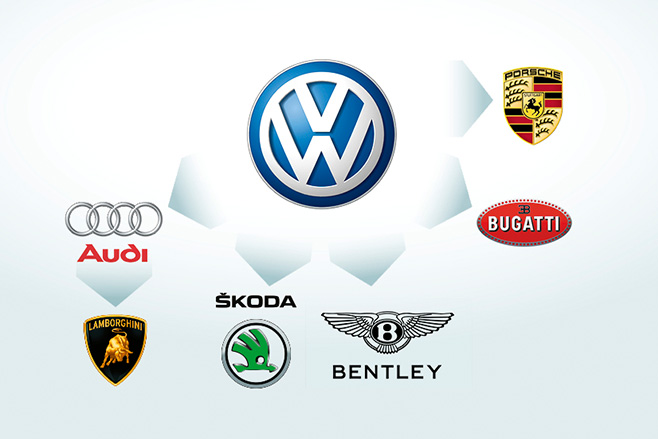
Herbert Diess has always been a great fan of the holding structure. After all, fanning the brands out over a wider spectrum which is trading on the stock exchange is potentially one of the simplest and safest ways to at least double the group’s fledgling sub €100 billion market value, which still makes investors frown.
When the Porsche IPO is complete by the end of the year, the group could net up to €20bn by selling a minority interest, which would equal roughly a quarter of the estimated €80bn overall yield.
Add this to the current €8bn cash-flow and the reassuring liquidity reserve of more than €26bn, and even major tasks like building six new European battery factories look quite manageable.
But in the long run, the Volkswagen Group will need even more fresh funds to countervail the seemingly bottomless staggered paradigm shift, the huge investments in autonomous driving, access to future battery technology and to sort out the troublesome multi-brand Cariad operating system.
Lamborghini was recently valued by analysts at between €8bn and €16bn, Ducati is worth a claimed €5bn, but cash-poor McLaren may initially not even be deemed a financial asset at all. This leaves Audi (valued at around €35bn) and Bentley (worth approximately €15bn) as the main secondary protagonists of an IPO – the success of which depends primarily on the performance of Audi.
Right now, the numbers are still in line with expectations, but the outlook is clouded by home-made cost problems, leadership issues and process-related setbacks.
What is going to happen to the proposed volume group headed by the Volkswagen brand? The short answer is: probably nothing for a relatively long time.
According to financial analysts, the stock market would at this point clobber VW, Seat, Cupra and Skoda for their below-par average net return on investment of three to five per cent.
The beefier margins secured by competitors like Hyundai/Kia or Stellantis are right now an unrealistic target for the VW volume brands. But if the volume group does get its act together, this asset conservatively valued at €60bn should drive the group’s net worth to around €220bn.
UPDATE, July 21, 2022: Civic Type R revealed!
The new-generation Honda Civic Type R has now been revealed. Get all the pics and details at the link below!
The story to here
April 7, 2022: The incoming new 2022 Honda Civic Type R is now a record-setter, beating the previous best lap time at Suzuka for a front-wheel-drive car – which was set by the outgoing Civic Type R in Limited Edition form.
Still in its lightly camouflaged form, the new ‘CTR’ lapped Suzuka’s full 3.6-mile figure-eight layout, achieving a record time of 2:23.120 (two minutes, 23.120 seconds).
The important thing for fans to note of course is that while the Limited Edition is a lighter and more track-focused car, this new best time was set in the new generation’s standard form (albeit as a prototype).
Catch the full video and noise, with telemetry data on screen, below. And if you want to know how other production cars have fared at Suzuka, check out this page here. (And scroll down past the actual race cars!)
December 14, 2021: Honda has continued development of the next Civic Type R, releasing teasers of the hot hatch at the Suzuka Circuit.
Owned by the Japanese manufacturer, the figure-eight track is being used to shake down the performance variant of the 11th-generation Civic Type R, expected to go on sale late next year.
Videos of the turbocharged hatch (above and below) have fuelled speculation about what powerplant will be adopted by the next Type R, with a 2.0-litre four-pot being the most likely engine under its bonnet.

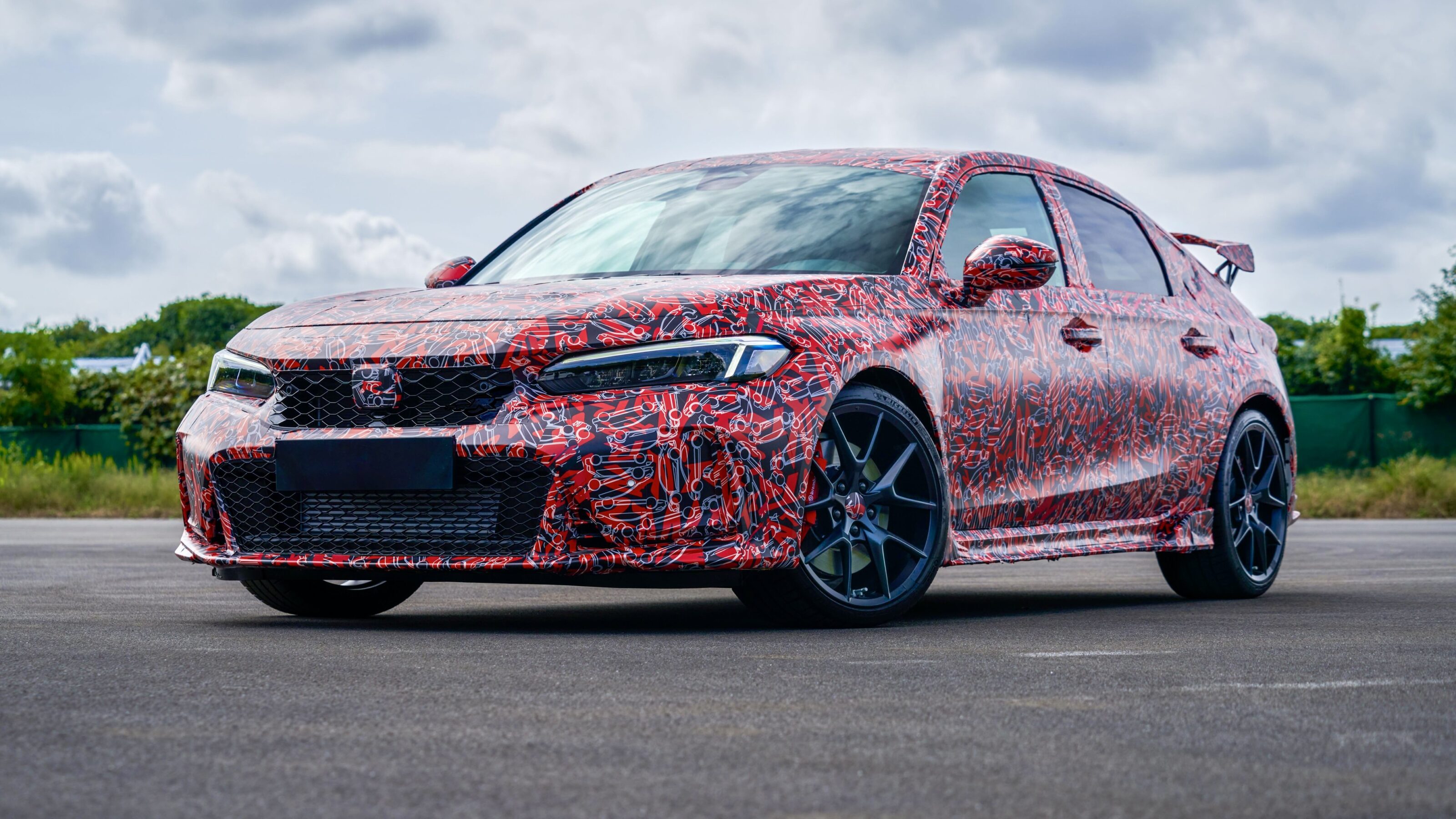
October 5, 2021: The 2022 Honda Civic Type R has been teased by the carmaker overnight, complete in a camouflage made up of the ‘R’ insignia and silhouettes of previous models.
A video of the new Civic Type R testing on roads in Europe was also captured by YouTube channel CarSpyMedia, allowing us to hear a preview of what the new Honda hot hatch will sound like.
The CTR doesn’t stray too far from the outgoing version, with a large rear wing, black alloy wheels, and a trio of exhaust tips – this time, with the outer pipes being smaller than the centre outlet.
While Honda has yet to confirm what’s under the bonnet, industry whispers suggest the 2.0-litre turbocharged four-cylinder engine could see a return, albeit with some major additions.
Japan’s CarSensor reported back in April 2021 the new model would use a 48-volt mild-hybrid system – an increasingly common technology used most often to improve fuel consumption figures and acceleration – but it remains to be seen what we can expect from the new hero hatch.
Earlier this year a Honda representative let slip on social media the new Type R would be offered with a manual transmission.
Although Honda was one of the very few manufacturers to ever offer a hybrid powertrain with a manual transmission with the sporty CR-Z, no carmaker has offered a three-pedal plug-in hybrid – adding credibility to the suggestion of a mild-hybrid powertrain.
The exhaust note coming from the prototype in the video also shares a close resemblance to the outgoing model’s soundtrack – indicating the 2.0-litre turbo engine will continue in some form – while breaks in throttle input all but confirm a manual gearbox.
The 2022 Honda Civic Type R is expected to be unveiled in the coming months, with the model likely to arrive in the second half of next year.
Capturing straightline data is a fixture of Performance Car of the Year testing, with each contender runnings the gauntlet to see how they stack up against their manufacturer claims as well as providing various data points for comparison.
Testing for 2022 was conducted on the main straight at Phillip Island, with all cars measured across the same 400m stretch. Conditions were clear and sunny, with temperatures approximately between 20 and 25 degrees. Bass Strait sent solid gusts of winds our way, with some cars battling a headwind while others gained a tailwind.
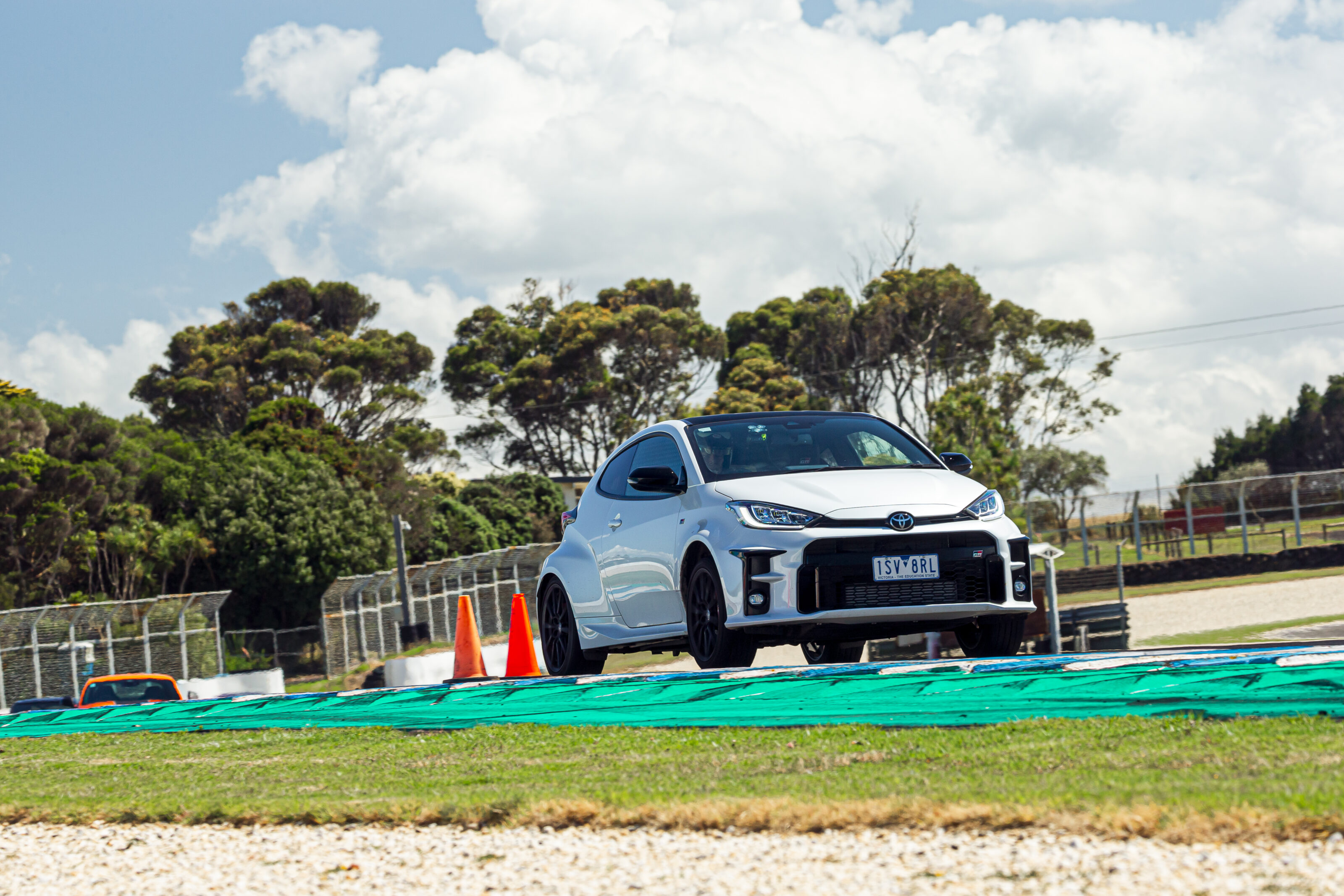
The standout stat from SCOTY testing was the jaw-dropping 4.49s 0-100km/h time of the Yaris, more than half a second quicker than we’d ever registered. Enright’s old long termer was clearly well run in. Amazingly, the BRZ’s 14.24s 0-400m time was identical to that of the facelift 3.2-litre Honda NSX that Morley tested for us back in 2002. Now that’s progress for you.
0-400m
Drivers: Andy Enright, Louis Cordony
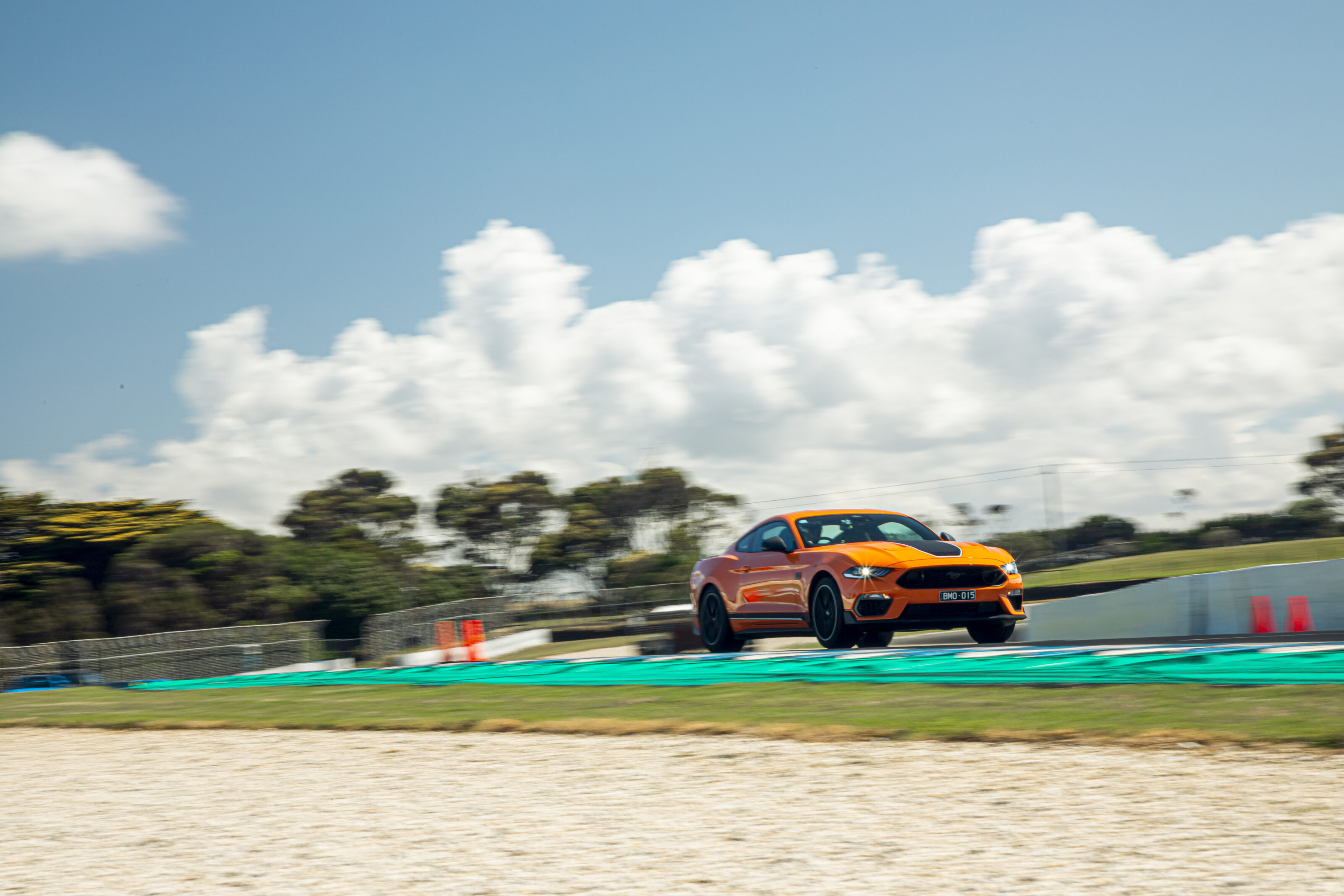
Front runners are split between the powerhouse 345kW Mach 1 Mustang and Toyota’s tiny-terror GR Yaris Rallye, with just .08-seconds between them.
https://infogram.com/1pw1p6rq6z0pp2avjkwvx7l5m3t9yjznr5r
0-400m V-Max
Drivers: Andy Enright, Louis Cordony
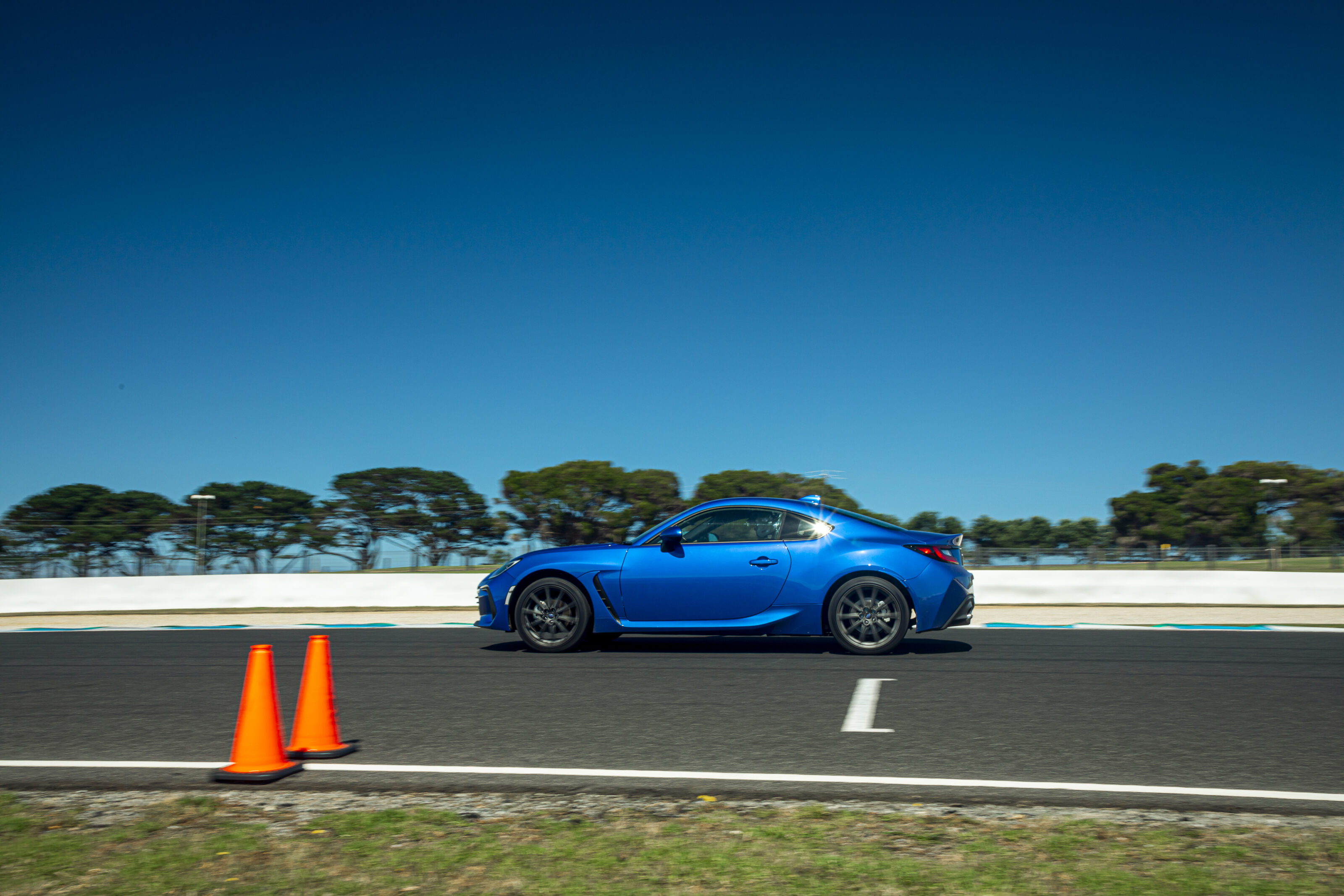
Again, the Mach 1 Mustang leads the field, able to stretch its legs further across 400m than the three-cylinder GR Yaris. In both disciplines, the BRZ impresses by out-sprinting a number of more powerful turbocharged competitors such as the Golf GTI, BMW 128ti and Skoda Octavia RS.
https://infogram.com/1p32m9k9nlp3p7b0rjm7vy3y70udn0w5e37
0-100km/h
Drivers: Andy Enright, Louis Cordony
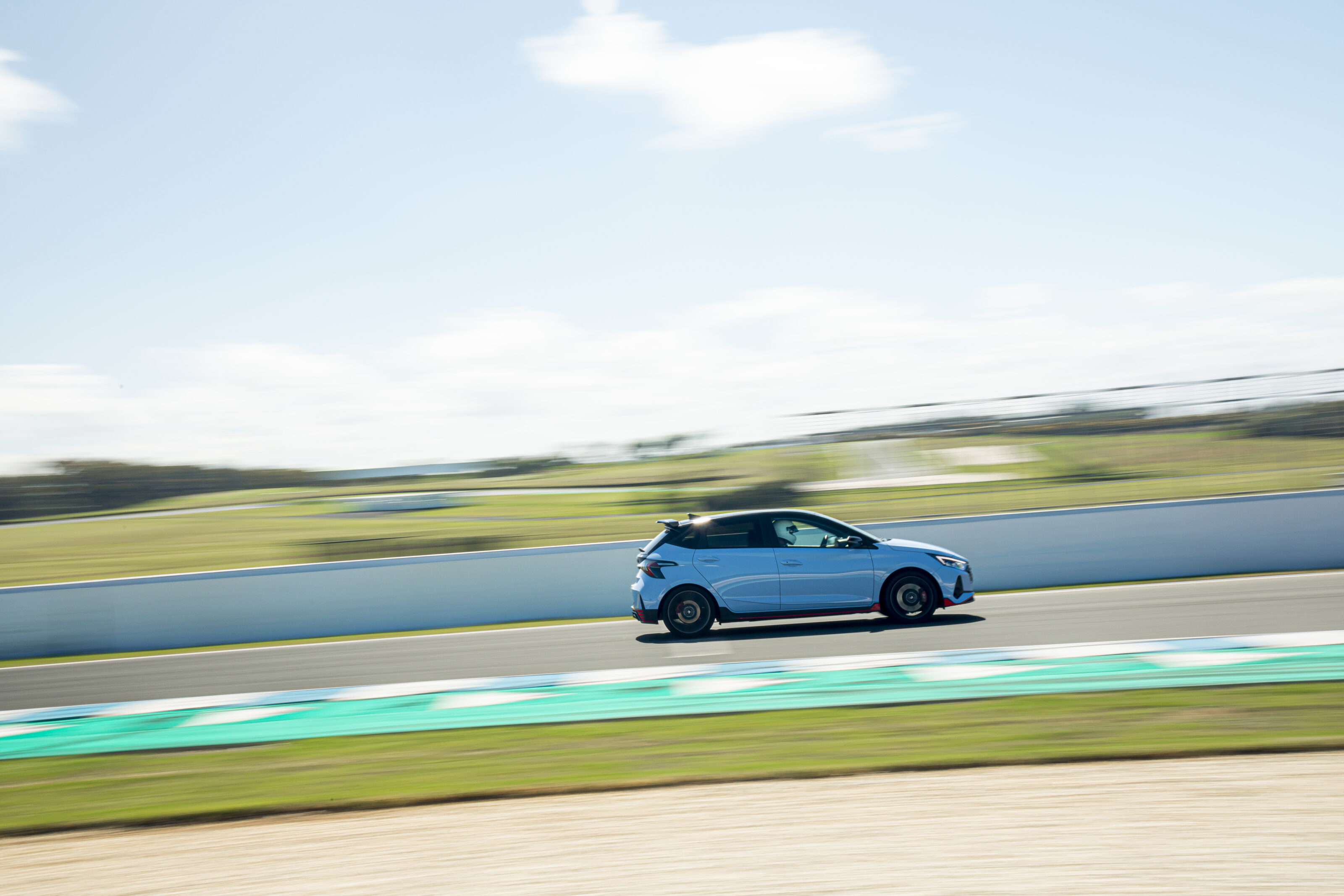
We could scarcely believe the time we extracted from the GR Yaris Rallye, significantly quicker than any of our previous testing. Again, BRZ makes an admirable effort while the i20 N proves difficult to launch.
https://infogram.com/1p30r3jl5w71yeu03gd1el7gkghd6zyke9q
Lap Time
Driver: Warren Luff
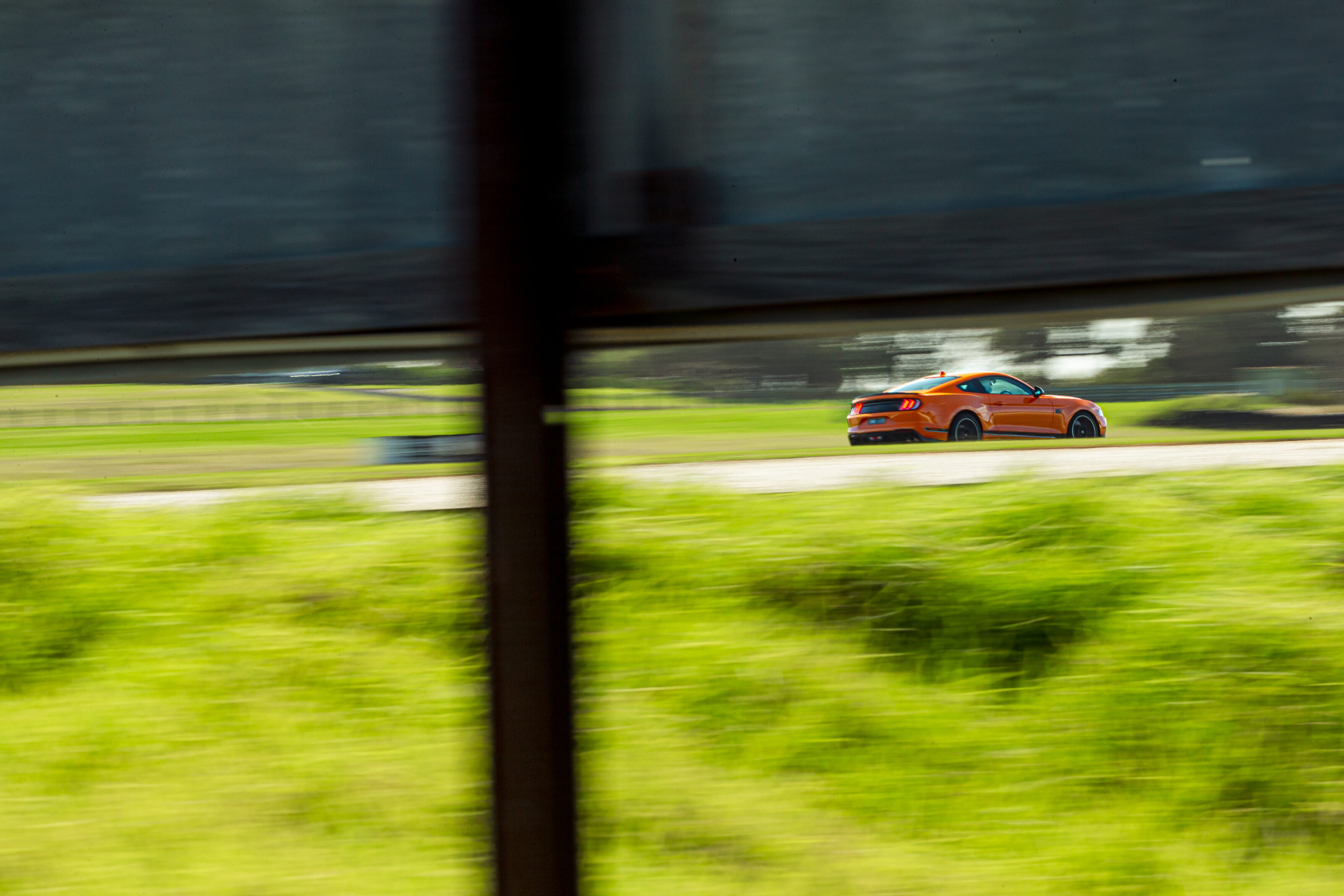
An expansive Phillip Island proves the perfect playground for the Mach 1 Mustang. More impressive than the lap time itself, is the fact that it survived two days of testing with limp mode never rearing its head once. A first in MOTOR history.
| Ford Mustang Mach 1 | 1:48.32 |
|---|---|
| Toyota GR Yaris Rallye | 1:51.20 |
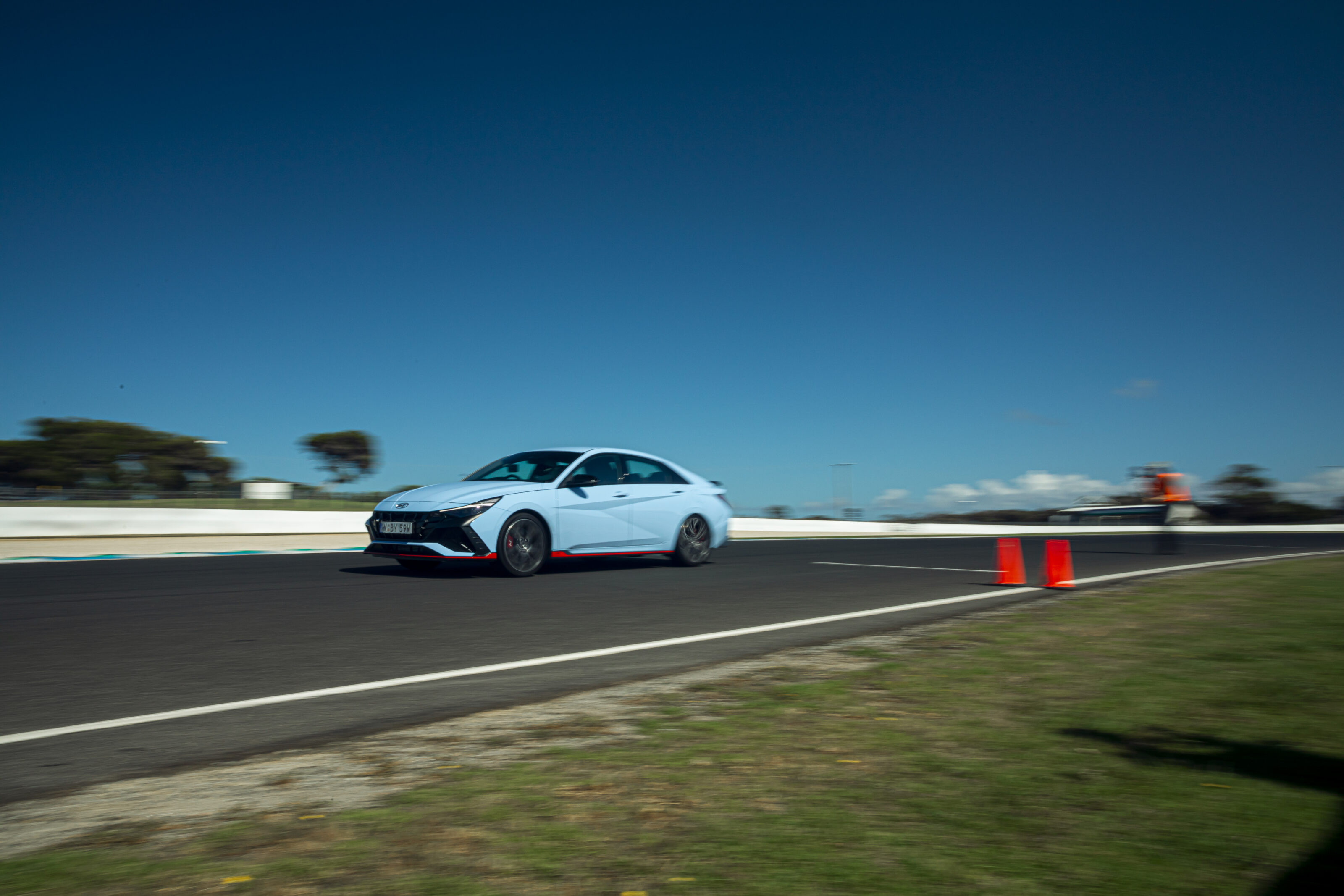
| Hyundai i30 Sedan N | 1:52.29 |
| Ford Focus ST | 1:53.42 |
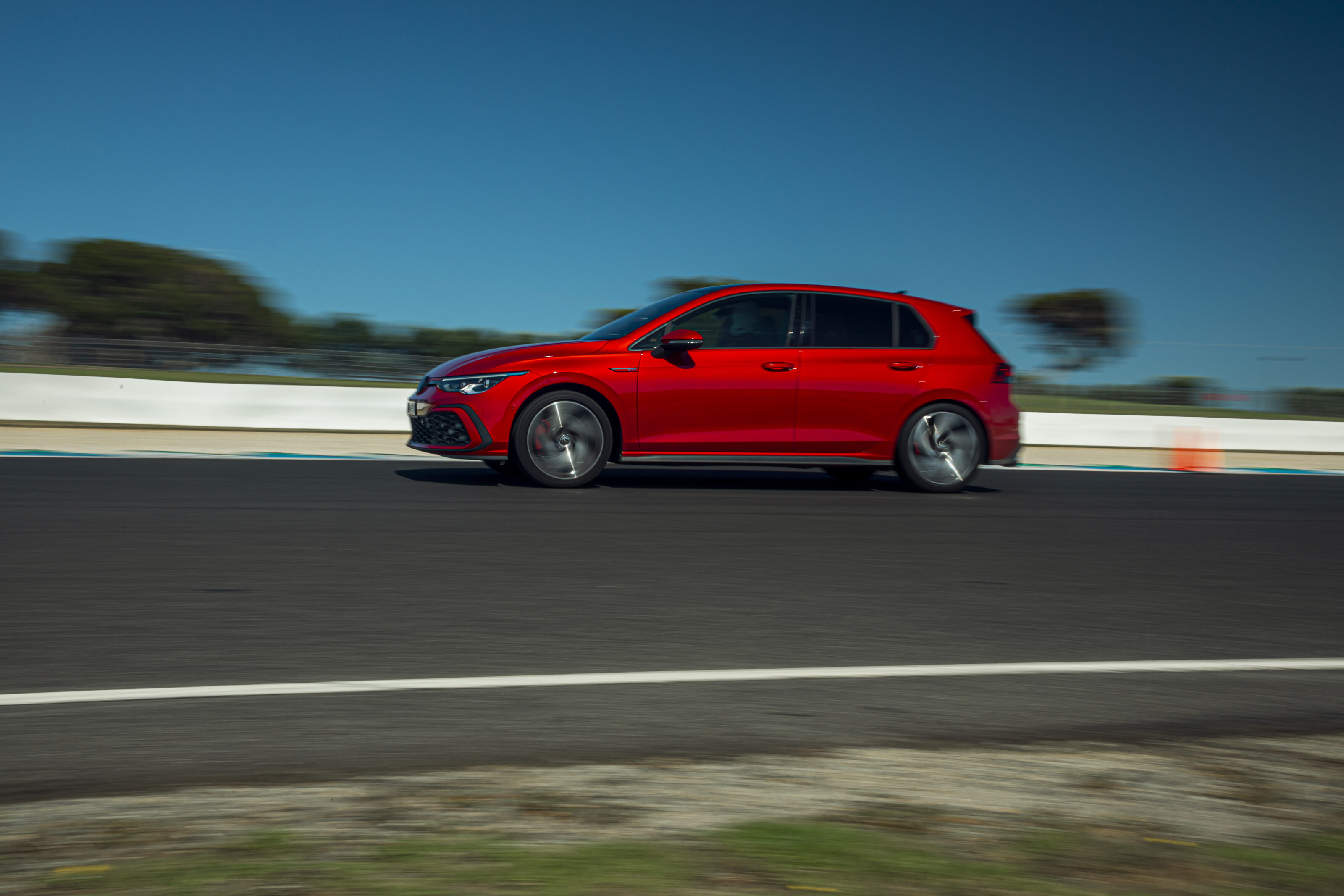
| Volkswagen Golf GTI | 1:53.76 |
| Skoda Octavia RS | 1:53.93 |
| Subaru BRZ | 1:54.41 |
| Hyundai i20 N | 1:55.79 |
| BMW 128ti | 1:56.16 |
| Mazda MX-5 GT RS | 1:58.02 |
Lap V-Max
Driver: Warren Luff
Placing third in every other discipline, except for braking, the rapid i30 Sedan N snatches the second-best overall lap V-Max at an impressive 220.8km/h. Skoda Octavia RS also defied expectation.
https://infogram.com/1p930ez01wpn3jb7535g922mzwa3k2q22e0
100-0km/h
Drivers: Andy Enright, Louis Cordony
At 1500kg, the Focus ST isn’t exactly a lightweight, and its 330mm front brakes aren’t the monster 356mm or 340mm units on the lighter GR Yaris Rallye and Golf GTI. Making its best-in-class 33.9m stopping distance all the more impressive.
https://infogram.com/1pj9g3m0zyjn7pc6g0n0kprkpjam5kqvdkj
Technical data
| 128ti | Focus ST | Mustang Mach 1 | i20 N | i30 Sedan N | MX-5 GT RS | Octavia RS | BRZ | GR Yaris Rallye | Golf GTI | |
| Body | 5-door, 5-seat hatchback | 5-door, 5-seat hatchback | 2-door, 4-seat coupe | 5-door, 5-seat hatchback | 4-door, 5-seat sedan | 2-door, 2-seat convertible | 5-door, 5-seat wagon | 2-door, 4-seat coupe | 3-door, 4-seat hatchback | 5-door, 5-seat hatchback |
| Drive | front-drive | front-drive | rear-drive | front-drive | front-drive | rear-drive | front-drive | rear-drive | all-wheel | front-drive |
| Engine | 1998cc inline-4, DOHC, 16v, turbocharger | 2261cc inline-4, DOHC, 16v, turbocharger | 5038cc V8, DOHC, 32v | 1591cc inline-4, DOHC, 16v, turbocharger | 1998cc inline-4, DOHC, 16v, turbocharger | 1998c inline-4, DOHC, 16v | 1984cc inline-4, DOHC, 16v, turbocharger | 2387cc boxer-4, DOHC, 16v | 1618cc inline-3, DOHC, 12v, turbocharger | 1984cc inline-4, DOHC, 16v, turbocharger |
| Bore/Stroke | 82.0mm x 94.6mm | 87.5mm x 94.0mm | 93.0mm x 92.7mm | 75.6mm x 89.0mm | 86.0mm x 86.0mm | 83.5mm x 91.2mm | 82.5mm x 92.8mm | 94.0mm x 86.0mm | 87.5mm x 89.7mm | 82.5mm x 92.8mm |
| Compression | 11.0:1 | 9.7:1 | 12.0:1 | 10.0:1 | 9.5:1 | 13.0:1 | 9.6:1 | 12.5:1 | 10.5:1 | 9.6:1 |
| Power | 180kW @ 6500rpm | 206kW @ 5500rpm | 345kW @ 7500rpm | 150kW @ 5500-6000rpm | 206kW @ 5500-6000rpm | 135kW @ 7000rpm | 180kW @ 5250-6500rpm | 174kW @ 7000rpm | 200kW @ 6500rpm | 180kW @ 5000-6200rpm |
| Torque | 380Nm @ 1500-4400rpm | 420Nm @ 3000rpm | 556Nm @ 4600rpm | 275Nm @ 1750-4500rpm | 392Nm @ 2100-4700rpm | 205Nm @ 4000rpm | 370Nm @ 1600-4300rpm | 250Nm @ 3700rpm | 370Nm @ 3000-4600rpm | 370Nm @ 1600-4300rpm |
| Power/Weight | 125kW/tonne | 137kW/tonne | 194kW/tonne | 126kW/tonne | 143kW/tonne | 131kW/tonne | 125kW/tonne | 135kW/tonne | 156kW/tonne | 138kW/tonne |
| Transmission | 8-speed automatic | 6-speed manual | 6-speed manual | 6-speed manual | 8-speed dual-clutch | 6-speed manual | 7-speed dual-clutch | 6-speed manual | 6-speed manual | 7-speed dual-clutch |
| Weight | 1445kg | 1500kg | 1779kg | 1190kg | 1445kg | 1033kg | 1445kg | 1286kg | 1280kg | 1409kg |
| Suspension | MacPherson strut, anti-roll bar (f); multi-link, anti-roll bar (r) | MacPherson strut, anti-roll bar (f); multi-link, anti-roll bar (r) | MacPherson strut, adaptive dampers, anti-roll bar (f); multi-link, adaptive dampers, anti-roll bar (r) | MacPherson strut, anti-roll bar (f); torsion beam, anti-roll bar (r) | MacPherson strut, adaptive dampers, anti-roll bar (f); multi-link, adaptive dampers, anti-roll bar (r) | Double-wishbones, anti-roll bar (f); multi-link, anti-roll bar (r) | MacPherson strut, adaptive dampers, anti-roll bar (f); multi-link, anti-roll bar (r) | MacPherson strut, anti-roll bar (f); double-wishbones, anti-roll bar (r) | MacPherson strut, anti-roll bar (f); double-wishbones, anti-roll bar (r) | MacPherson strut, adaptive dampers, anti-roll bar (f); multi-links, adaptive dampers, anti-roll bar (r) |
| Brakes | 360mm ventilated discs, 4-piston calipers (f); 330mm discs, 1-piston calipers (r) | 330mm ventilated discs, 4-piston calipers (f); 302mm discs, 1-piston calipers (r) | 380mm ventilated discs, 6-piston calipers (f); 330mm ventilated discs, 1-piston calipers (r) | 320mm ventilated discs, 1-piston calipers (f); 262mm discs, 1-piston calipers(r) | 360mm ventilated discs, 1-piston calipers (f); 314mm discs, 1-piston calipers(r) | 280mm ventilated discs, 4-piston calipers (f); 280mm discs, 1-piston calipers (r) | 312mm discs, 1-piston calipers (f); 272mm discs, 1-piston calipers (r) | 294mm ventilated discs, 2-piston calipers (f); 290mm discs, 1-piston calipers (r) | 356mm ventilated discs, 4-piston (f); 297mm ventilated discs, 2-piston calipers (r) | 340mm ventilated discs, 1-piston calipers (f); 310mm ventilated discs, 1-piston calipers (r) |
| Wheels | 18.0 x 8.0 (f/r) | 19.0 x 8.0-inch (f/r) | 19.0 x 9.5-inch (f); | 18.0 x 7.5-inch (f/r) | 19.0 x 8.0-inch (f/r) | 17.0 x 7.0-inch (f/r) | 19.0 x 7.5-inch (f/r) | 18.0 x 7.5-inch (f/r) | 18.0 x 8.0-inch (f/r) | 18.0 x 7.5-inch (f/r) |
| Tyres | 225/40 R18 (f/r) | 235/35 ZR19 (f/r) | 255/40 ZR19 (f); 275/40 ZR19 (r) Michelin Pilot Sport 4S | 215/40 R18 (f/r) | 245/35 ZR19 (f/r) | 205/45 R17 (f/r) | 225/40 R19 (f/r) | 215/40 R18 (f) 245/40 R18 (r) Michelin Pilot Sport 4 | 225/40 ZR18 (f/r) | 225/40 R18 (f/r) |
| Price | $56,900 | $44,890 | $83,241 | $32,490 | $49,000 | $47,020 | $48,290 | $38,990 | $54,500 | $53,300 |
