
To paraphrase ScoMo, how good is it to be an Aussie? We’re such a top bunch of inclusive champions, and jeez, don’t we love our laid-back lifestyle? Go Sharks…
This is a lame caricature of Australians, and, I’d contest, a mostly inaccurate one. Laid back? Most Aussies would agree, when really pressed on the subject, that we’re one of the most heavily regulated societies in the Western world. Want to share a glass of champagne on New Years Eve at a Sydney Harbourside vantage point? No chance, you’re in an alcohol-free zone; tip it out or be ejected. Walking your dog on a beach at dawn? Here’s a $360 fine. Your speed drifted up to 111km/h on a straight, deserted country road on a long weekend? That’s half your licence gone.
Many of us – at least those of us not named Karen – may have been born with the laid-back gene, but the officials we elect to govern us seem steadfastly determined to stamp it out.
So when car talk swings onto the subject of autonomous vehicles, it’s not only the huge technical challenges of self driving that I find fascinating, but also the regulatory framework involved. A stroll through a minefield would be simpler and potentially less fraught.
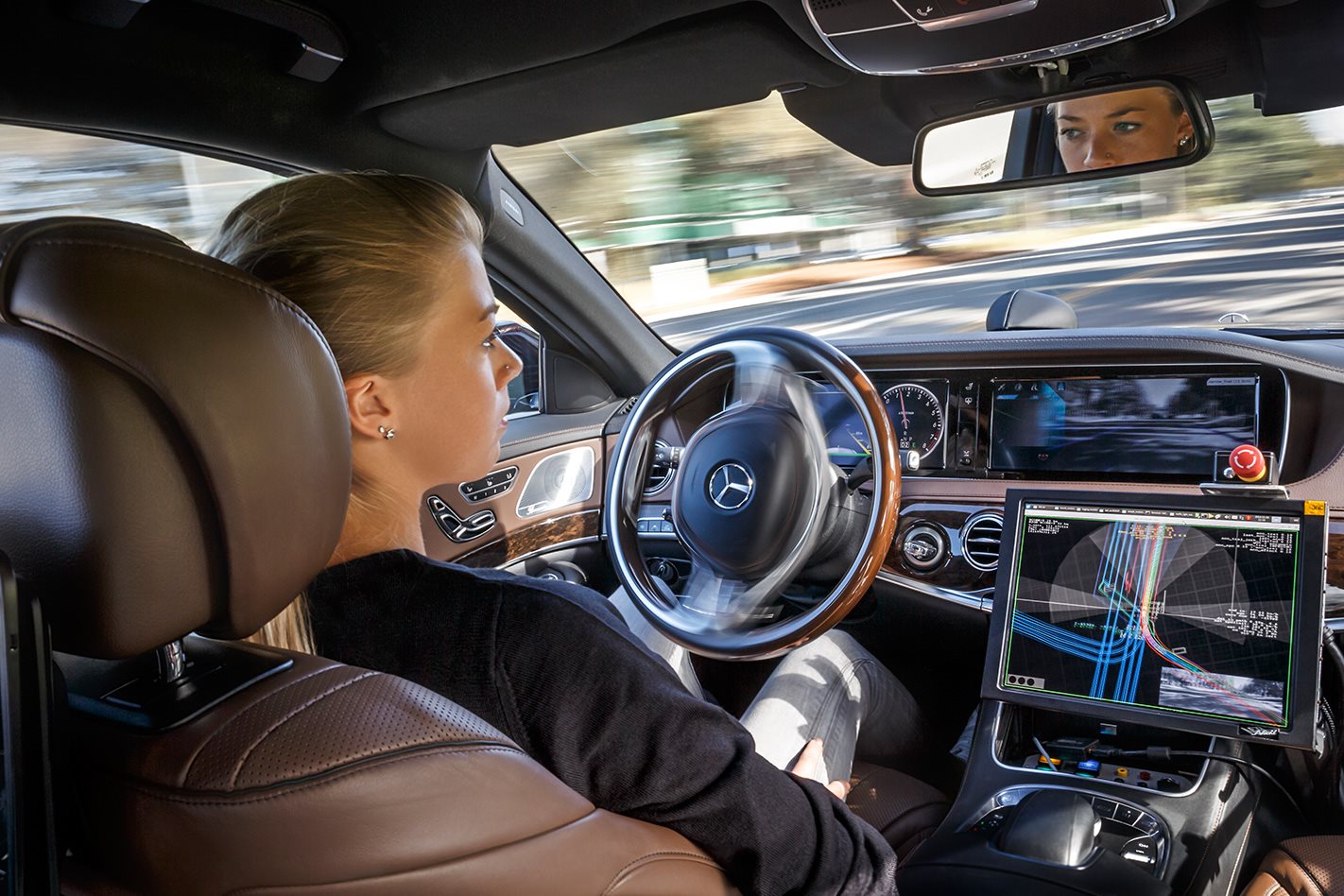
It’s safe to say having a quick snooze while your car navigates through busy Saturday-morning traffic and parks you in a multi-storey car park is not just around the corner. I’ll probably be down for the big dirt nap before it’s a reality.
As consumers, we’ve been conditioned to believe that if we see a technology in the developmental phase, we simply assume it will take roughly the gestation period of a rabbit before it makes it into mainstream production. The evening news burps up a story on a bunch of university students who’ve modified a car that can self-drive around a few witches hats in the car park, and Joe Average just shrugs, and says to his missus, “I guess our next car won’t even have a steering wheel…”
But, surprise, Joe: achieving full autonomy is proving to be way harder than even some of finest minds ever envisioned. And not just because of the technical challenges. A pesky issue called ethics is arguably an even bigger hurdle to overcome.
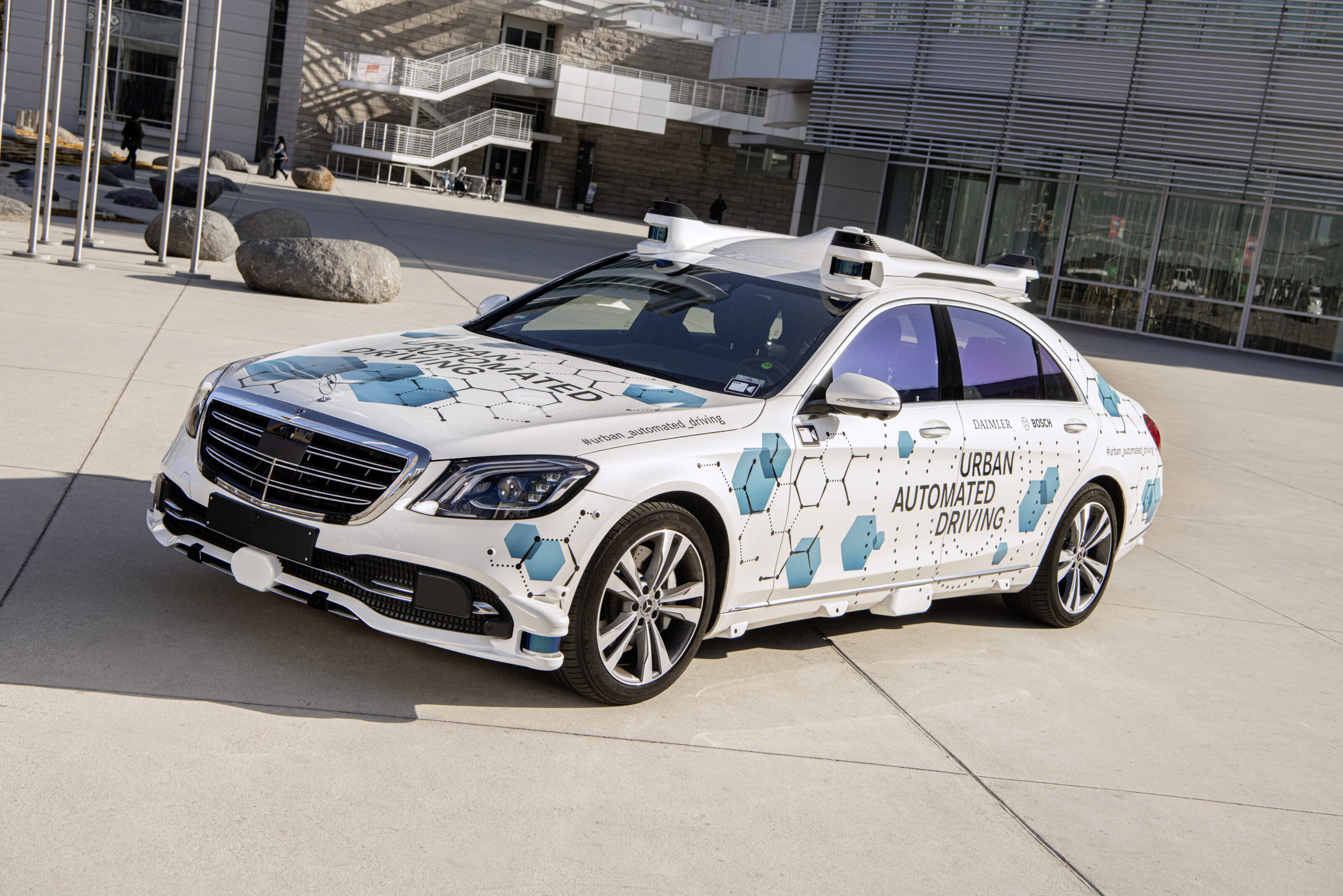
But let’s backtrack for a moment. Are self-driving cars even a good idea in the first place? Well, if you’re a tech company or a major automotive manufacturer, this is the modern-day equivalent of the space race, where the first one to properly crack it gets to sail the rivers of gold. And if you’re an octogenarian with failing eyesight who’s about to be denied renewal of their driver’s licence, it could represent life-changing mobility and independence.
But what about you or me, who consider ourselves driving enthusiasts? Personally, I reckon at least half my typical daily driving comprises a traffic-infected slog that’s about as fun as waterboarding, where I’d happily hand over the controls and do something more relaxing or productive.
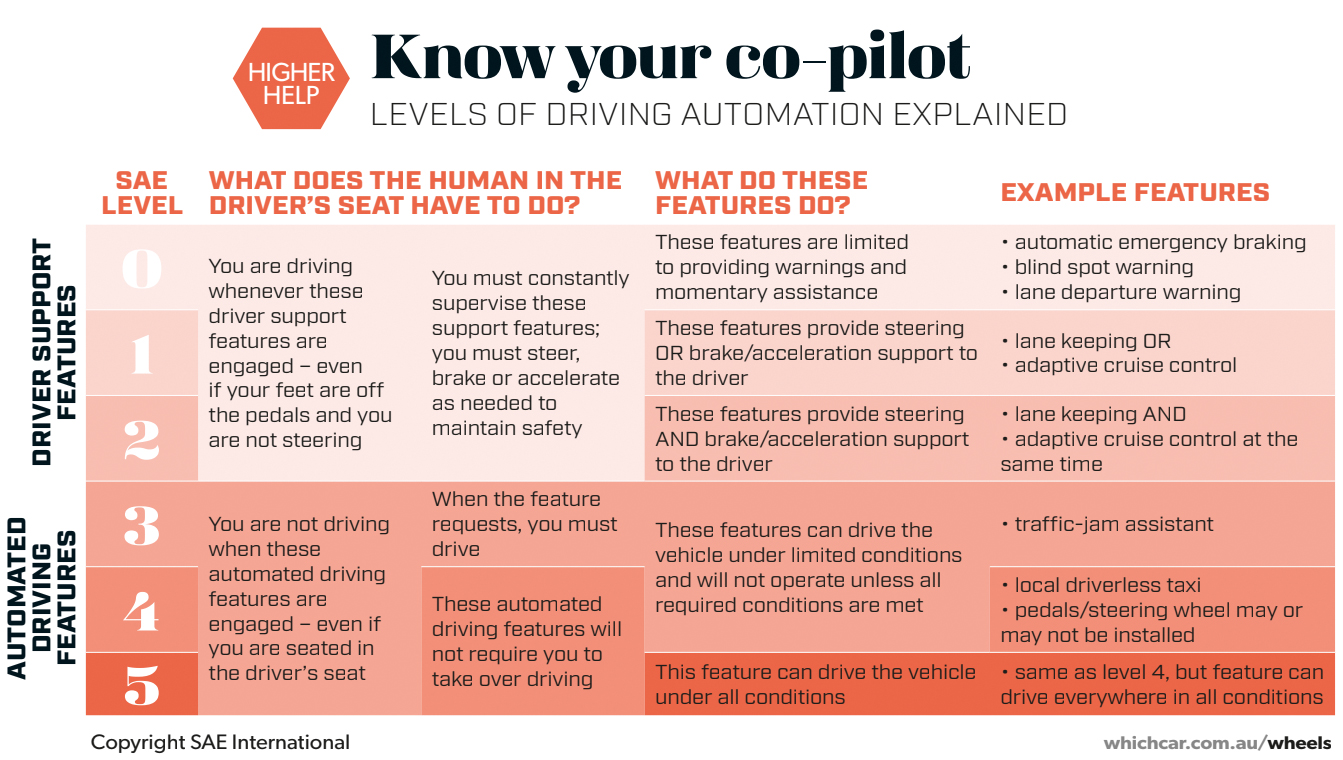
But to get back to my original point: here in over-regulated Australia, can any of us really see that becoming a reality in our lifetimes? Imagine yourself in your shiny new Level 5 autonomous vehicle, in medium-density traffic crossing Melbourne’s Westgate bridge. You’re behind the wheel, but you’re reclined way back and both hands are holding your iPad as you watch Formula One qualifying on Fox Sports.
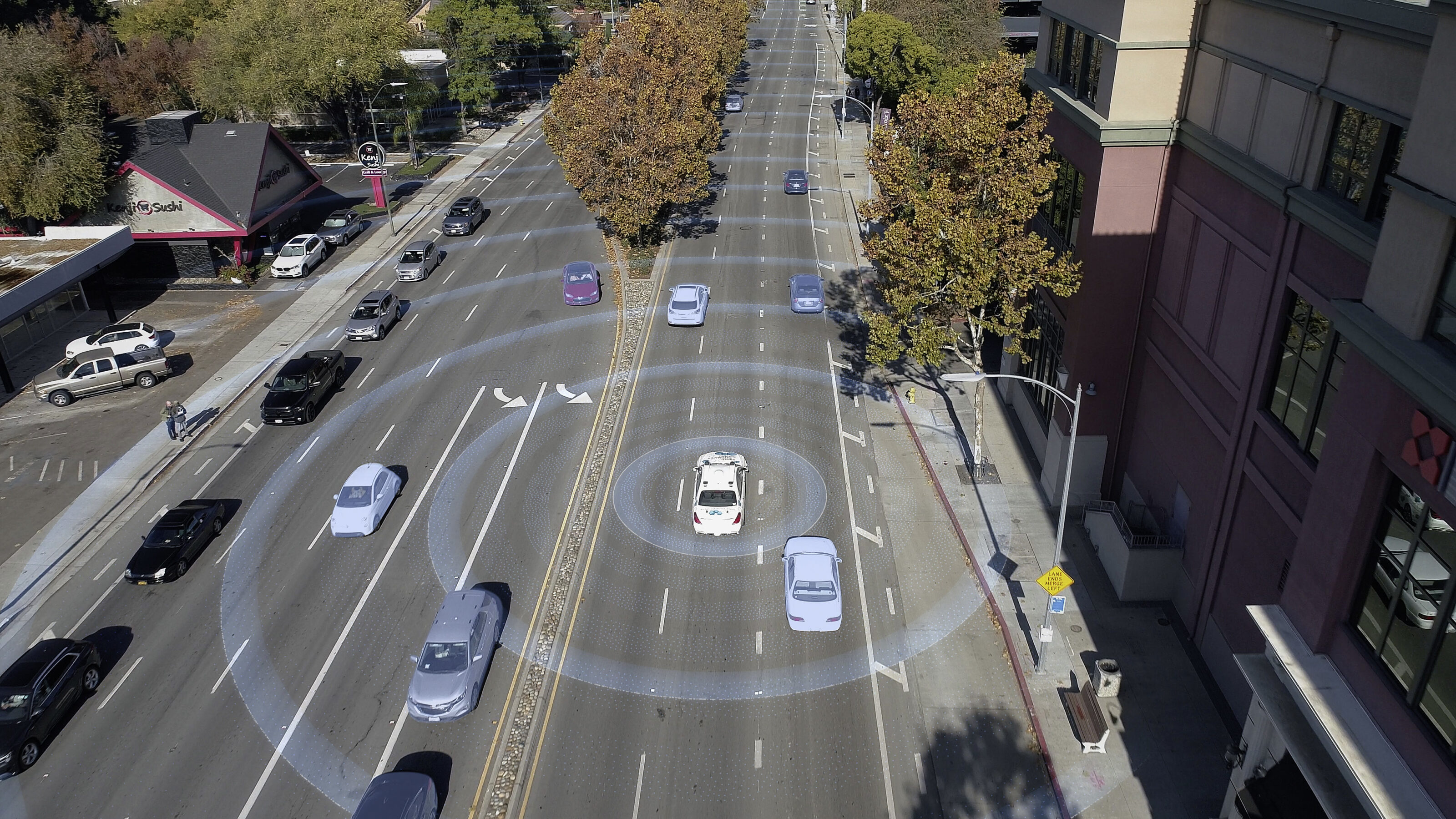
Alongside, two highway patrol officers glance over, then go straight back to talking about the old lady they booked for perished wiper blades.
Really? In rule-ridden, authoritarian Australia? I seriously doubt it. So far our regulators haven’t had to get too involved in the legalities of self-driving, but when they do, why would we expect anything other than an ultra-conservative approach that maybe, at best, limits Level 4 or 5 autonomy only to motorways, and only to a speed lower than the national limit?
Which might be a useful adjunct for some, but hardly moves the autonomy thing on significantly from where we are currently.
I can see the campaign: “Keep your hands on the wheel, Aussies. Oi Oi Oi.”
The Audi A3 has come a long way. From the small but handsome first-generation model that launched hatchbacks into premium territory in the late 1990s, the range has evolved through three generations, growing in size, performance, technology and choice with each iteration. And that trend is showing no sign of deviation with the introduction of the fourth-gen A3, which has just arrived.
As with the previous version, the 2022 model is on offer as either the Sportback five-door hatch or the four-door sedan.
Both are powered by a choice of two petrol engines; there are no diesel or significantly electrified options yet, although the entry 35 TFSI is equipped with a somewhat mild hybrid system bolted to its 1.5-litre turbo four-cylinder, while the 40 TFSI is more conventional by comparison with a 2.0-litre turbo of the same configuration and no electrical sub-system.

Another key difference includes the drivetrain, which in the case of the entry A3 is exclusively front-wheel drive, while the 40 TFSI has the company’s proprietary Quattro all-wheel drive as standard. A seven-speed dual-clutch automatic is common to both variants.
Other key range revisions include the discontinuation of the 30 TFSI and S-line pack as an option for the entry version, while it’s now applied to the 40 TFSI as standard.
This has had a marked effect on the pricing structure. With a 2022 Audi A3 starting price of $46,300 before on-road costs, the most affordable A3 Sportback is now almost $10,000 more than the previous entry version. But since the bargain basement 30 TFSI has not carried over for 2022, a better comparison would be with the previous 35 TFSI, which represents a price increase of $5600.

At $48,800, the sedan equivalent has risen by $6500 and the 40 TFSI Sportback is up $900 to $55,400, while the Sportback 40 TFSI price is unchanged at $52,900 (all before on-road costs).
With its more generous equipment list, beefier engine and Quattro traction, the 40 TFSI appears to offer the best value on paper and only slightly falls behind in the economy stakes despite lacking the 48-volt system and packing half a litre more capacity into four cylinders – 6.6L/100km vs 5.0L/100km, says Audi.
For the true hyper-miler, the more powerful 2.0-litre is not offered mild hybrid assistance and the plug-in hybrid available for Europe is not yet slated for Australian showrooms.
Zero to 100km/h takes a zippy 7.0 seconds … the 40 TFSI manages a level of performance that matches the original S3

The relatively traditional 2.0-litre unit is still efficient and versatile, though. On tap is a very eager turbo engine that delivers its full whack of 320Nm from just 1500rpm. But the gutsy torque continues all the way up to 4100rpm – just 100 revs before peak power appears and, after that, the 140kW takes over until 6000rpm.
The result is an engine that feels strong, linear and unburstable, and allows thoroughly impressive progress.
Zero to 100km/h takes a zippy 7.0 seconds and, coupled to the all-wheel-drive powertrain and slick seven-speed dual-clutch auto, the 40 TFSI manages a level of performance that matches the original S3. But the flagship-for-now variant avoids trying to be too sporty and places a safe distance between itself and the also recently arrived new S3.

In part, this comes from a chassis tune and ride quality that manages to be rewarding and fun without compromising comfort. There’s a decent amount of weight to the steering, paired nicely to the ergonomically designed steering wheel, while the body control and damping are also well matched.
But the A3 hasn’t lost sight of its reason for being. Although there’s certainly fun to be had at the wheel, the new model caters for more than just the driver.
There’s still enough room for five adults and, at the back, a surprisingly big boot. Opt for the Sportback and it’ll offer 380 litres of load space but the sedan improves on that by 40 litres and an impressive 420L. It’s also a good shape and doesn’t limit the type of luggage stowed with strange dimensions.
From the exterior styling, you would be forgiven for thinking the 2022 A3 is all-new but it’s actually an extensive revamp with the same structure and essential engineering carrying over, but there is still a lot new about it.
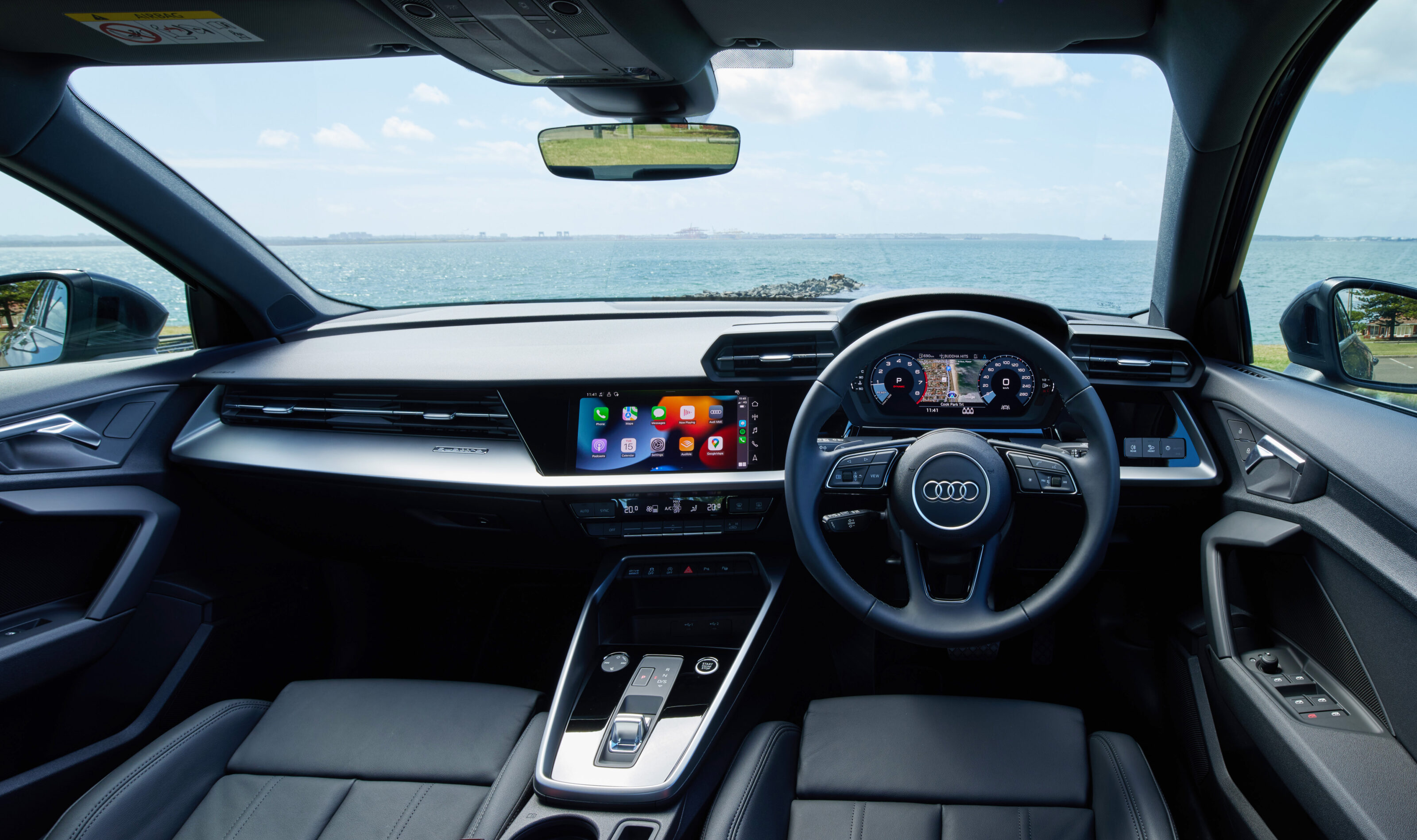
For a start, more technology and luxury has been packed in, including the grand 10.1-inch central touchscreen, another impressive digital display with the proprietary Virtual Cockpit instrument cluster, LED headlights, 18-inch alloys, keyless entry and start, part-leather upholstery, auto emergency braking (AEB) and rear-cross traffic alert, as well as and Android Auto and wireless Apple CarPlay.
You won’t a get head-up display or sunroof unless you bolt on an option pack but at least Audi has bundled a few of the more popular options for a less stingy option-adding experience. Our test car had been supplied with just one option and a $1250 metallic paint job, highlighting just how generously specced the new A3 really is in practice.
Audi’s new A3 is more accomplished, dynamically mature … think of the 2022 model as a bargain way to access some of the virtues of its A4 sibling
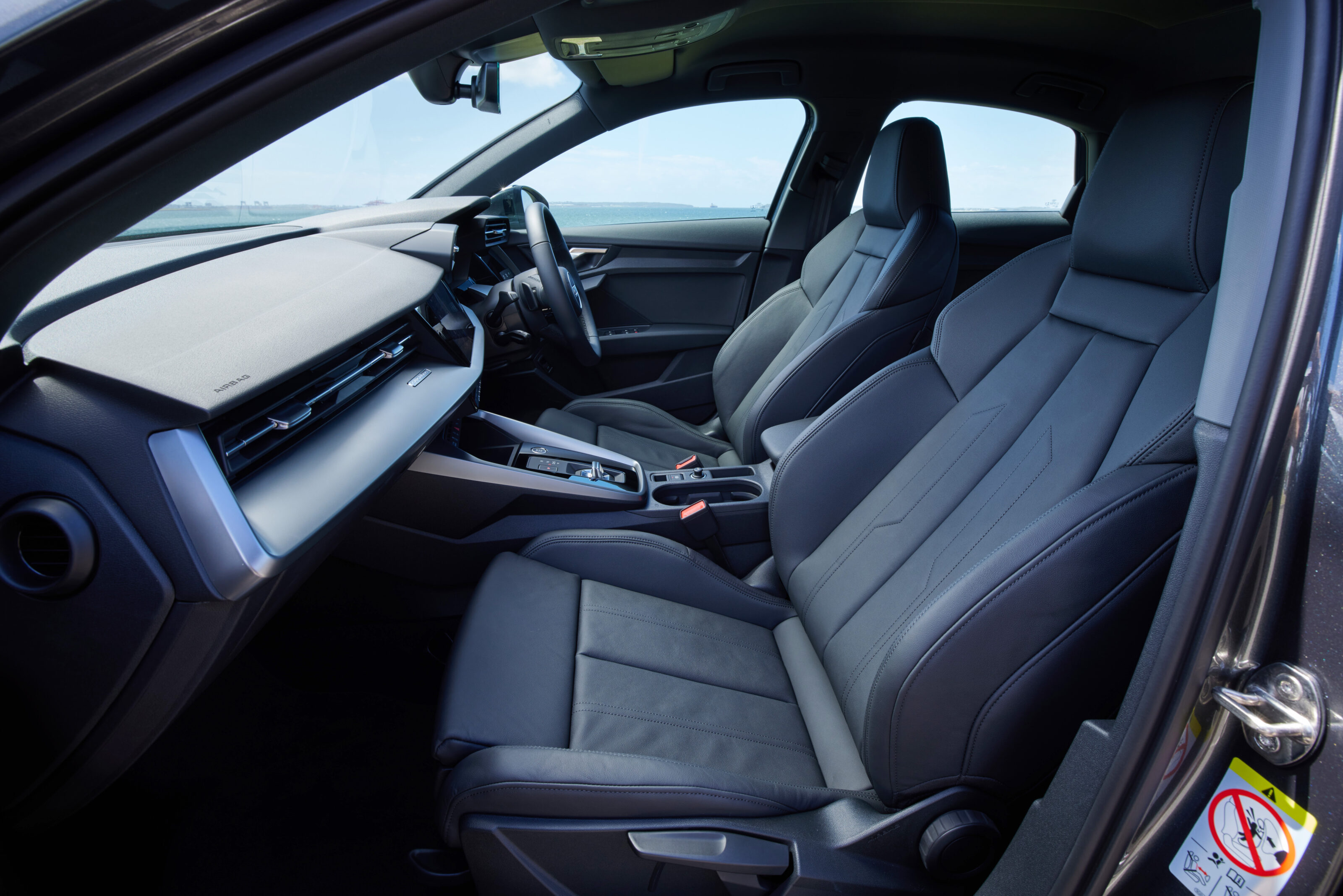
Click the above photo for more interior shots
Generally speaking, the interior is typically Audi with sharp design and good ergonomics and the cabin feels decidedly grown-up, but one or two surfaces have allowed some decidedly un-Audi scratchy plastics to sneak in.
Overall though, the quality of materials rates highly; even the standard dash insert trims finished in satin grey metallic look and feel special but also understated.
Audi’s new A3 is bigger, more accomplished, dynamically mature and more expensive to the point where its gen-one origins are fading, but think not of the 2022 model as a pricey version of an old favourite, and more as a bargain way to access some of the virtues that were previously the preserve of its bigger A4 sibling.
2022 Audi A3 sedan 40 TFSI Quattro S Line specifications
| Engine | 1984cc 4cyl, dohc, 16v, turbo |
|---|---|
| Power | 140kW @ 4200-6000rpm |
| Torque | 320Nm @ 1500-4100rpm |
| Transmission | 7-speed dual-clutch |
| 0-100km/h | 7.0sec (claimed) |
| Weight | 1460kg (unladen) |
| Fuel economy | 6.6L/100km (claimed) |
| Price | $56,000 + on-road costs |

The Skoda Kodiaq was a breakthrough model in 2017, kicking off a mini wave of SUVs that finally launched the Czech brand into the consciousness of Australian families.
The large seven-seater SUV has installed itself as the third most popular Skoda since its local arrival in 2017, sitting behind the smaller Kamiq and Karoq SUVs. Their combined sales accounted for more than 60 per cent of record sales in 2021.
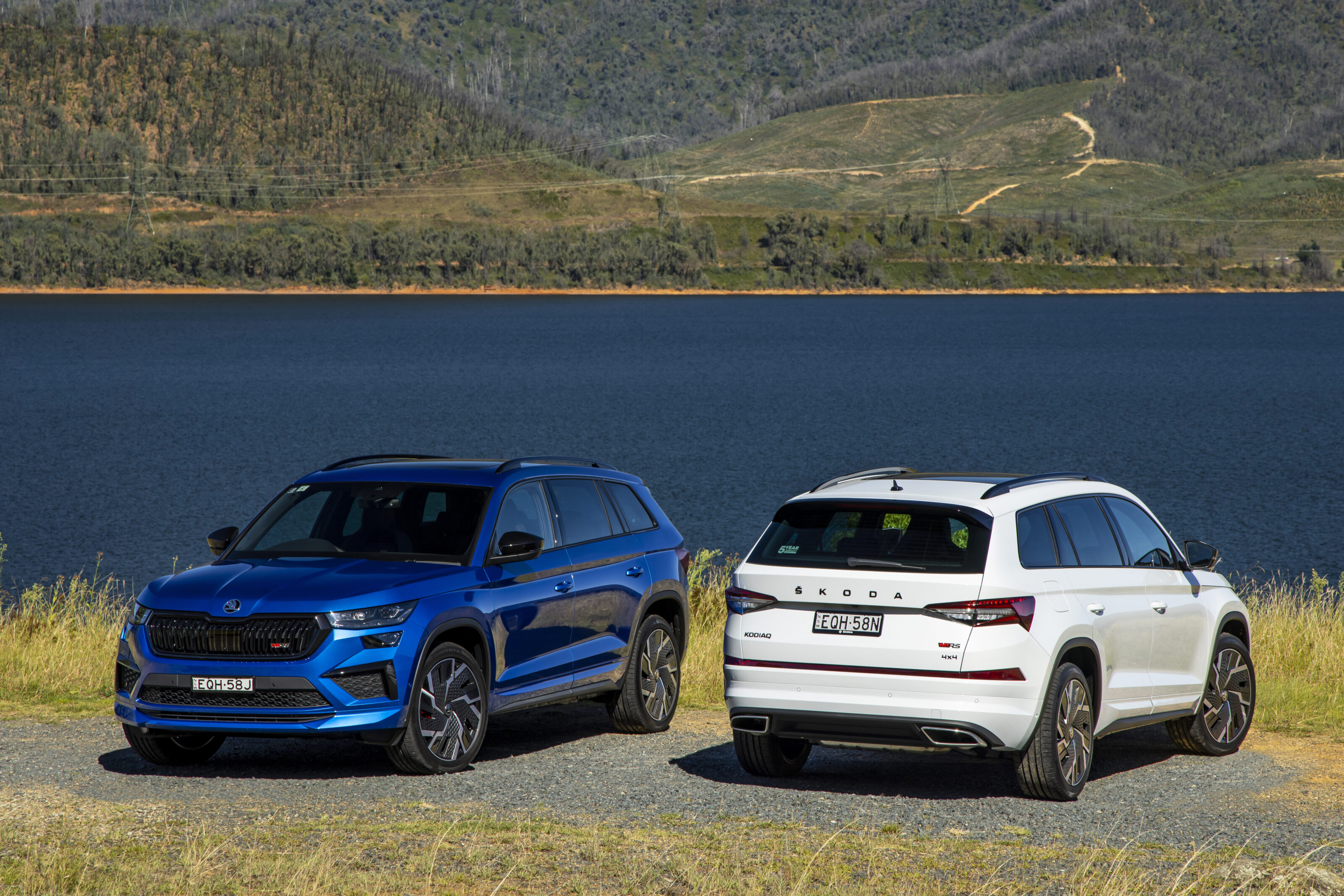
It remains well down the list in a congested Large SUV segment populated by popular models – including the Hyundai Santa Fe, Kia Sorento, Mazda CX-8, Toyota Kluger, and its Volkswagen Tiguan Allspace relative – but the 2018 Wheels Car of the Year Finalist comes back into the spotlight with a 2022 facelift.
Styling revisions are most obvious at the front. The ‘moustache’ grille adopts a hexagon shape, the headlights are narrower and incorporate new LED lamps, there’s a new bonnet, and there’s a wider central air intake for the lower bumper.
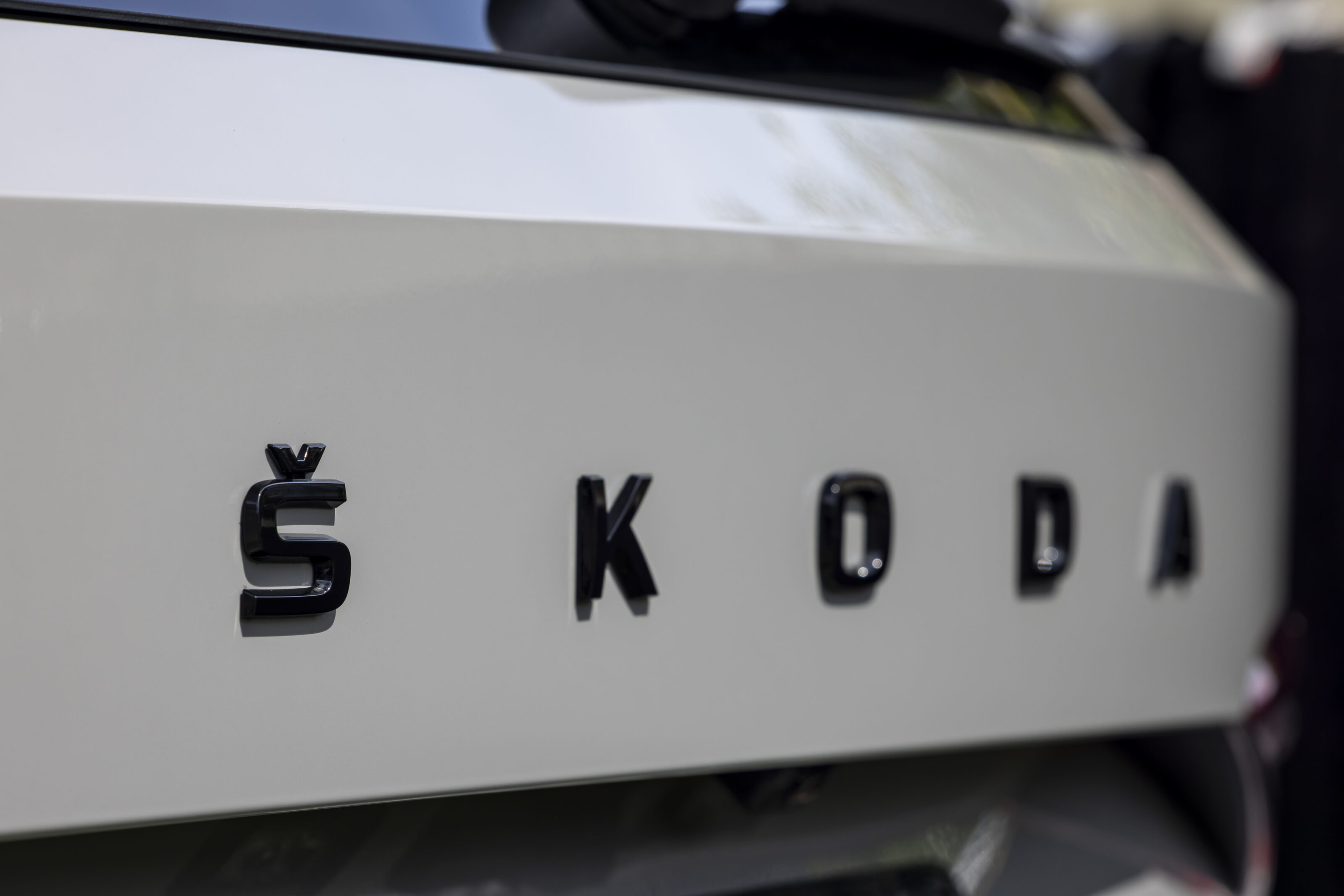
Changes at the rear include an extended roof spoiler, new LED tail-lights, and the Skoda badge is dropped to follow the trend for capital letters spaced across the tailgate (S K O D A).
Pricing and Features
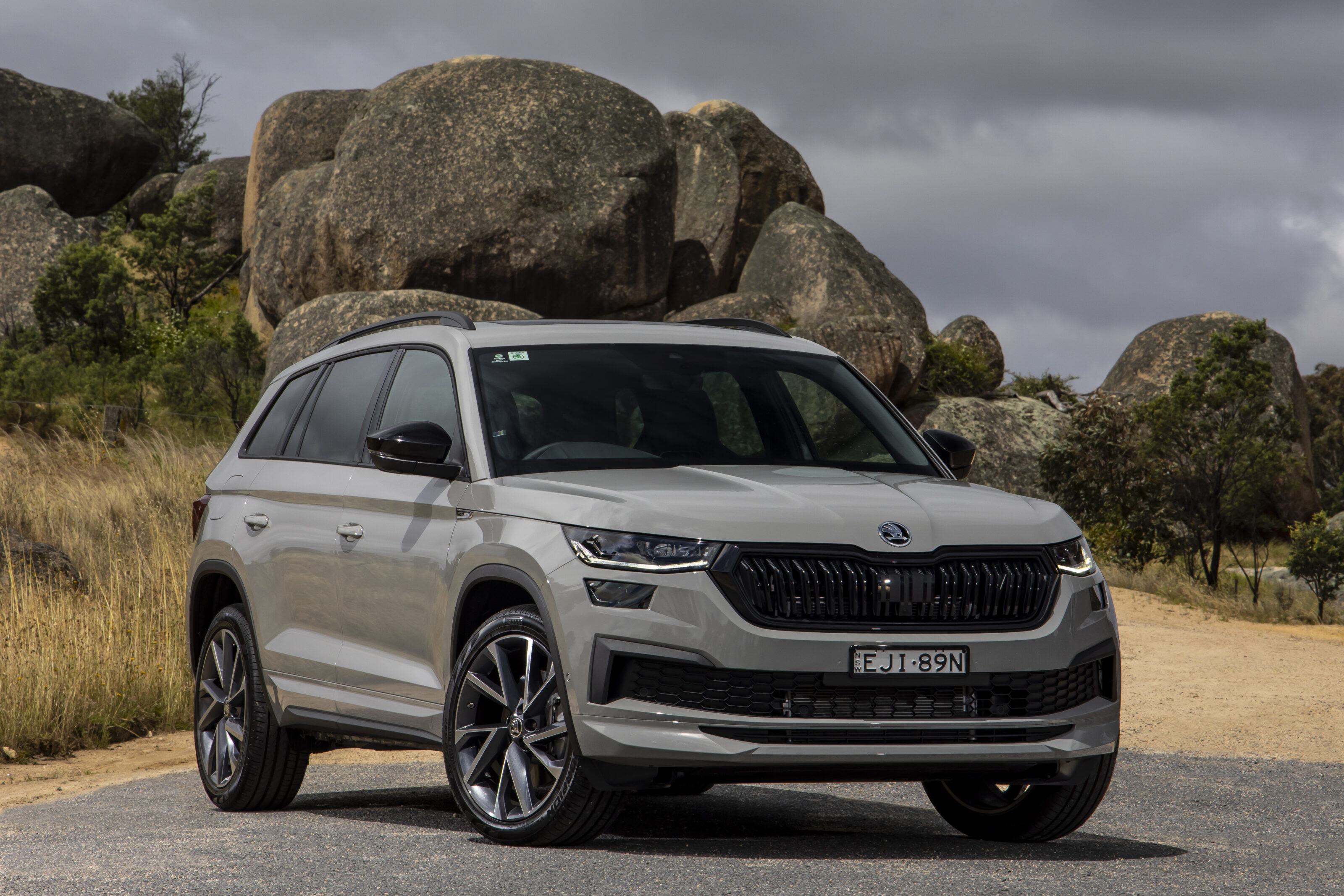
A three-tier range carries over for the Skoda Kodiaq – comprising the entry-level Style, mid-range Sportline, and range-topping RS.
Prices have crept up for the Style and Sportline, which are now $52,990 and $57,990, respectively. The RS’s driveaway price drops by a grand to $74,990.
All variants gain features in addition to the cosmetic changes. For the Sportline 4×4 this review focuses on, these include Matrix LED headlights, scrolling dynamic rear indicators, luggage nets, and Skoda logo welcome lights.
We would be tempted by the Tech Pack that bundles adaptive dampers, Canton audio system, hands-free tailgate, and off-road driving assistance
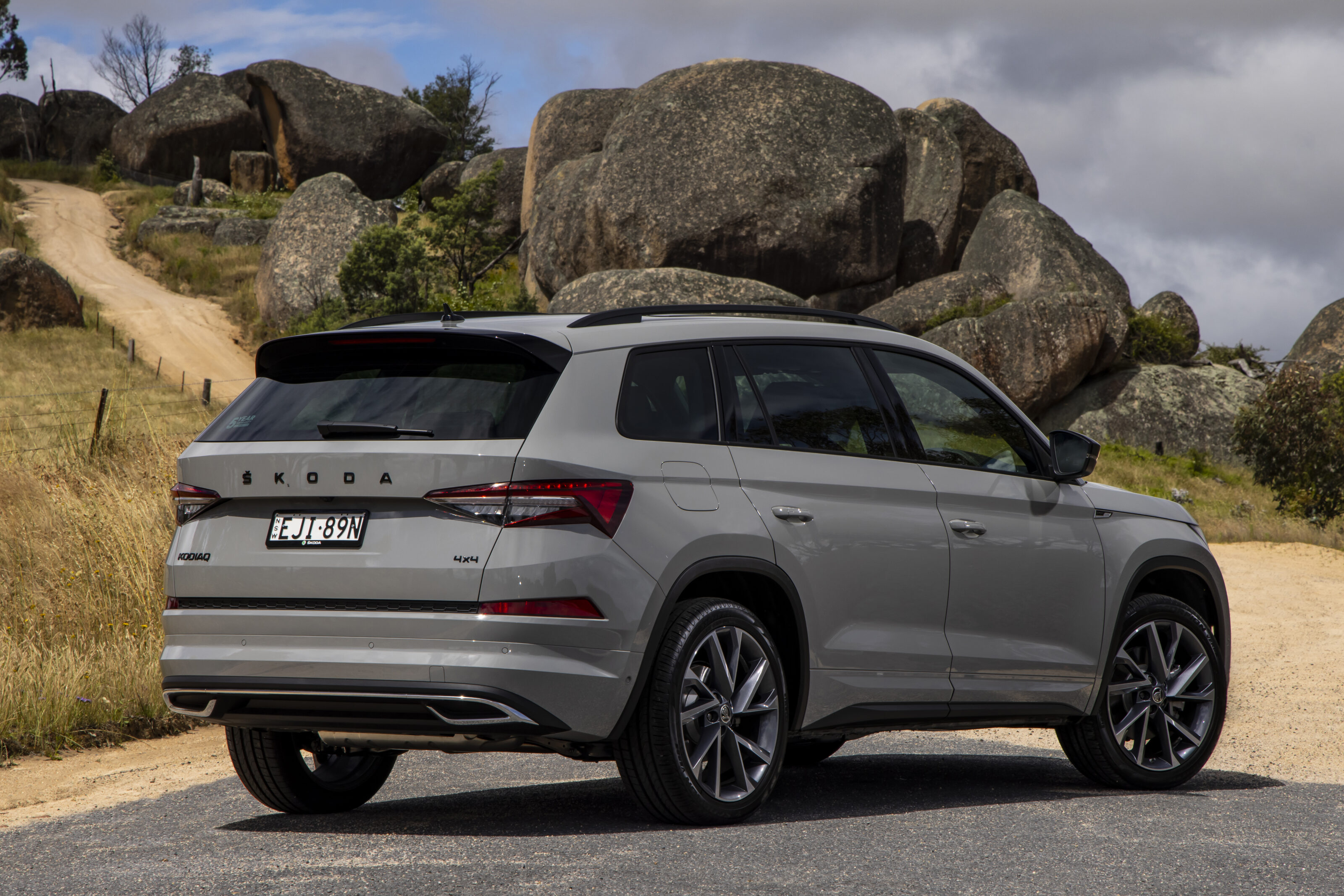
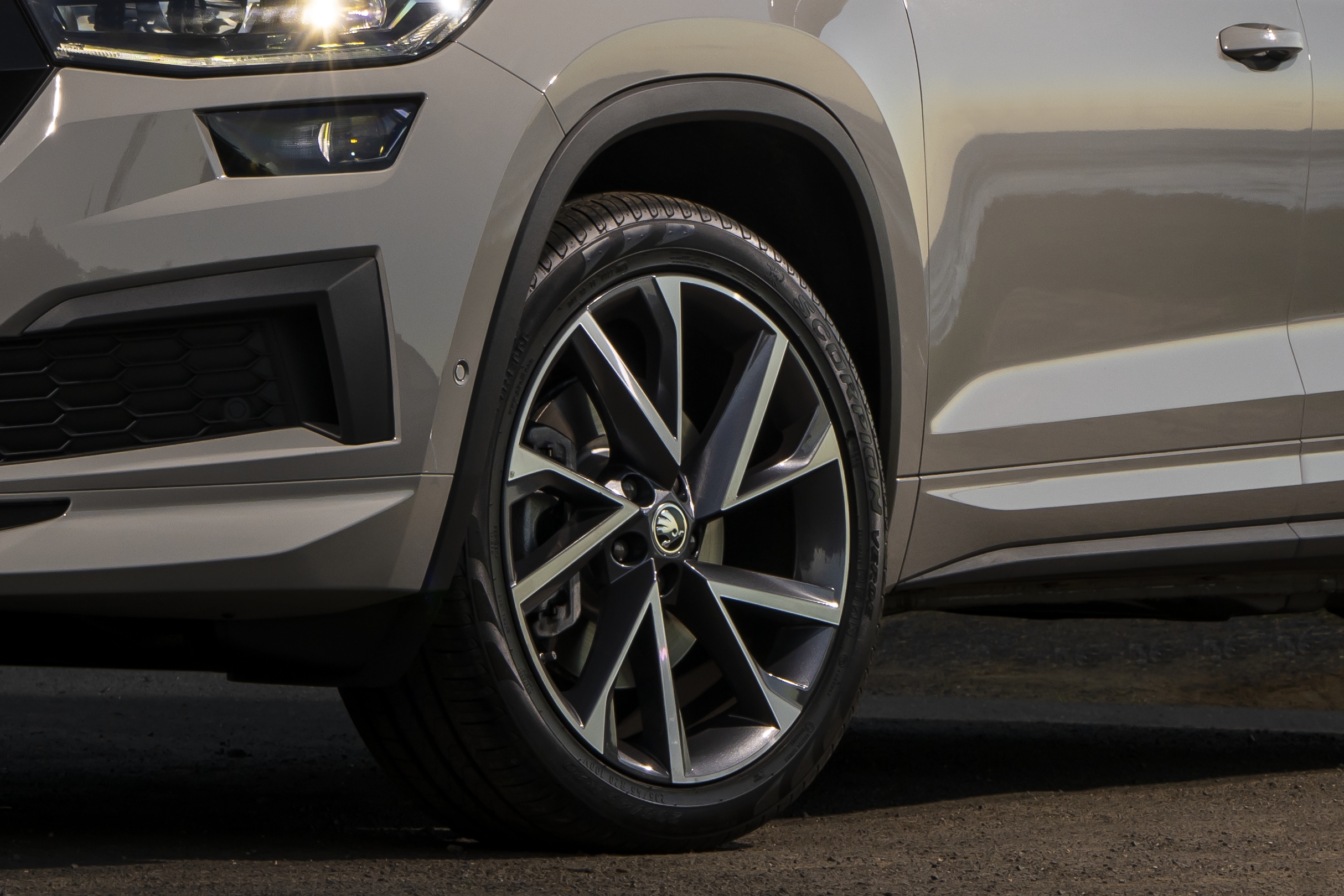
Key goodies over the base Style include the special headlights mentioned above plus an electric driver’s seat, 20-inch ‘Vega’ alloy wheels (replacing 19-inch ‘Crater’ alloys), Alcantara/leather sports seats (over ‘Suedia’ leather), sports steering wheel with paddles, driving modes, cornering foglights, and a customisable Performance Monitor.
Our test car was laden with options: panoramic sunroof and ventilated leather seats (each $1900), Tech Pack ($2900), Luxury Pack ($3700), and Graphite Grey metallic paint ($770).
Both option packs are good value, though we would be most tempted by the Tech Pack that bundles enticing features including adaptive dampers, Canton audio system, hands-free tailgate operation, and off-road driving assistance.
Front Cabin
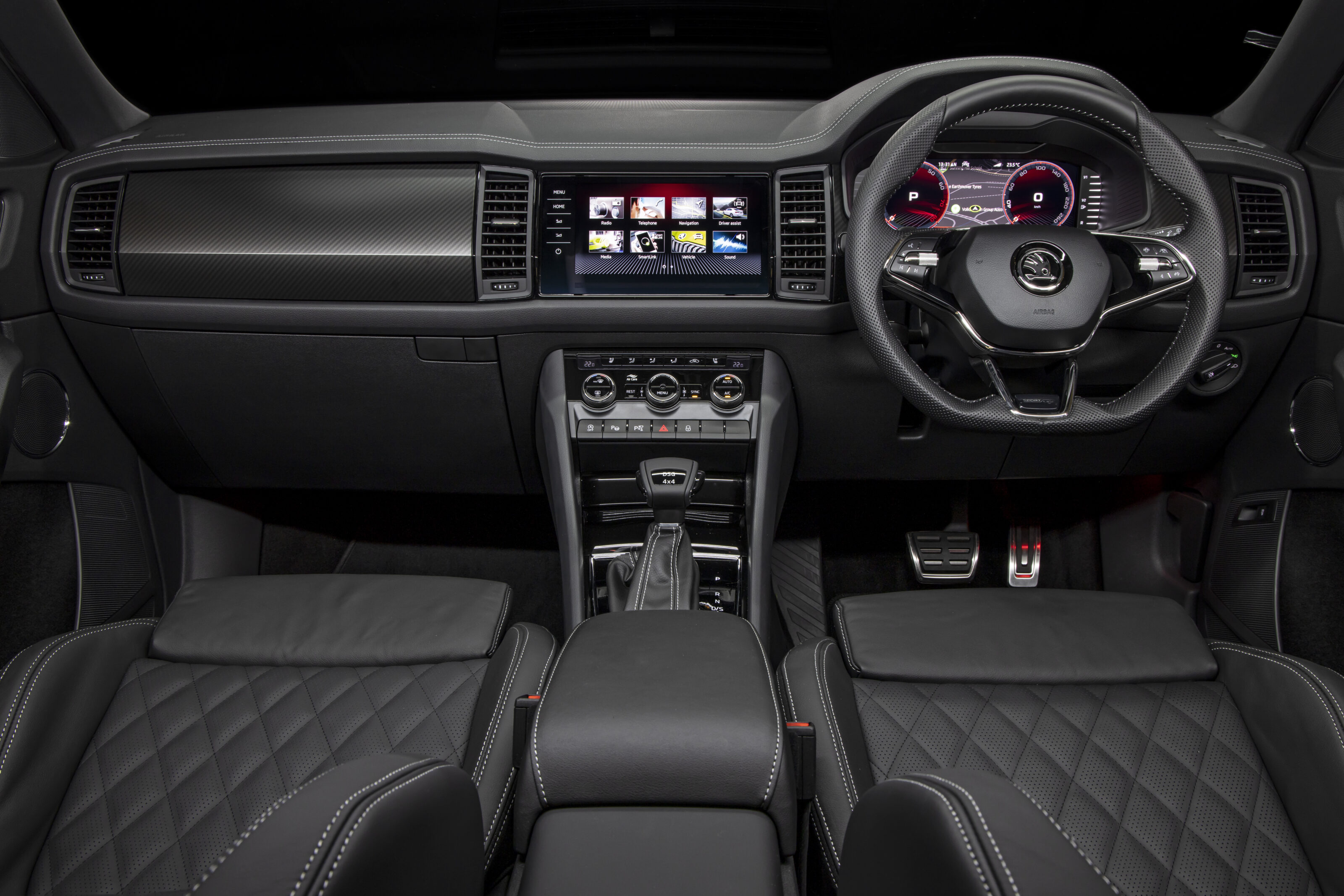
Beyond the use of black for the side mirrors, roof rails, window frames, grille and Skoda wording on the tailgate, the Sportline label lives up to its name by embellishing the Kodiaq’s cabin with sporty finishes. These include Alcantara door panel inserts and plastics that imitate carbon fibre.
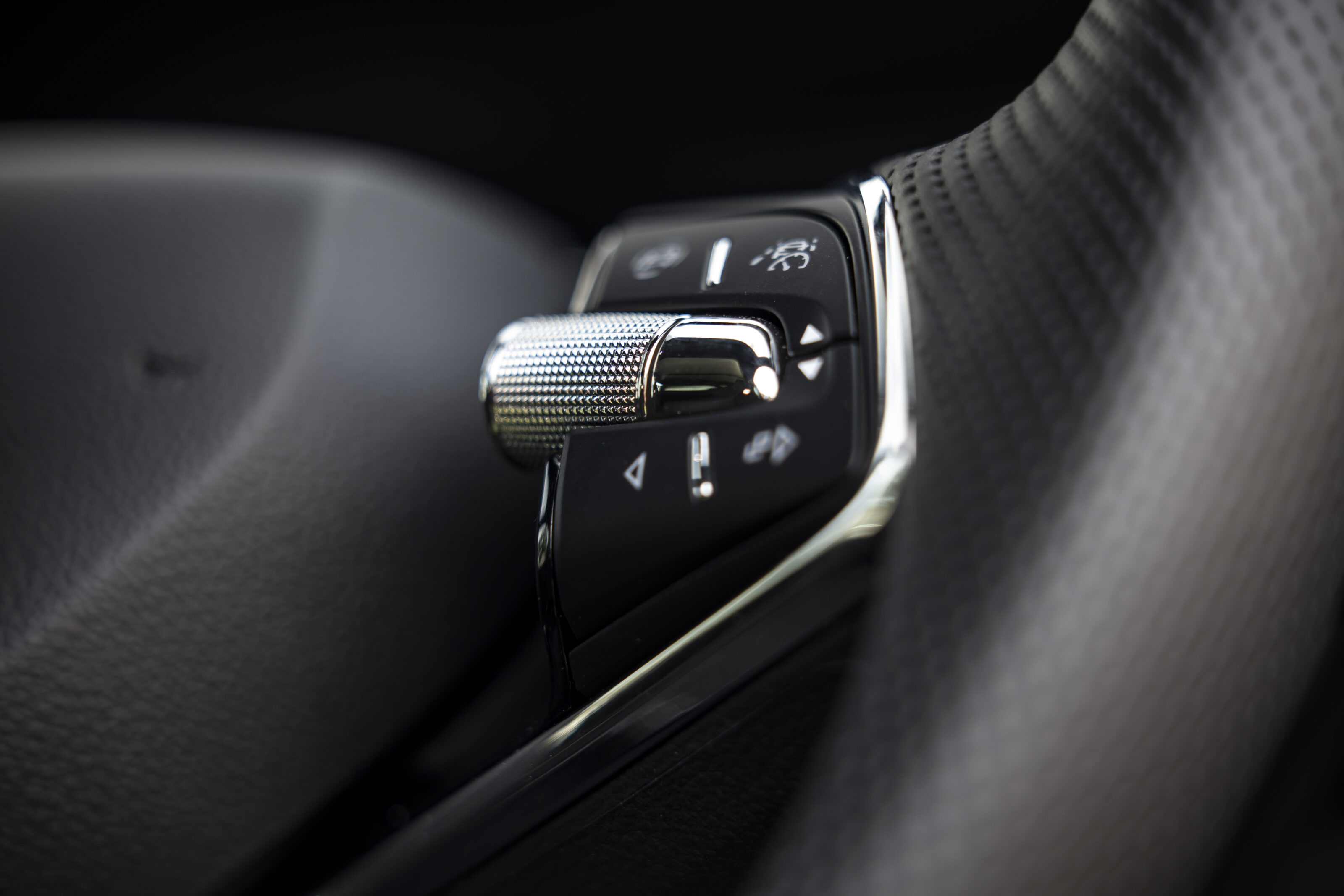
Soft plastics are applied to both mid and upper levels to further boost the perception of quality. Switchgear tactility is mixed, though: the climate control dials, for example, don’t feel particularly special; the knurled thumb scrollers on the steering wheel do.
Skoda has a deserved reputation for practical interiors and the Kodiaq remains on point with excellent all-round storage
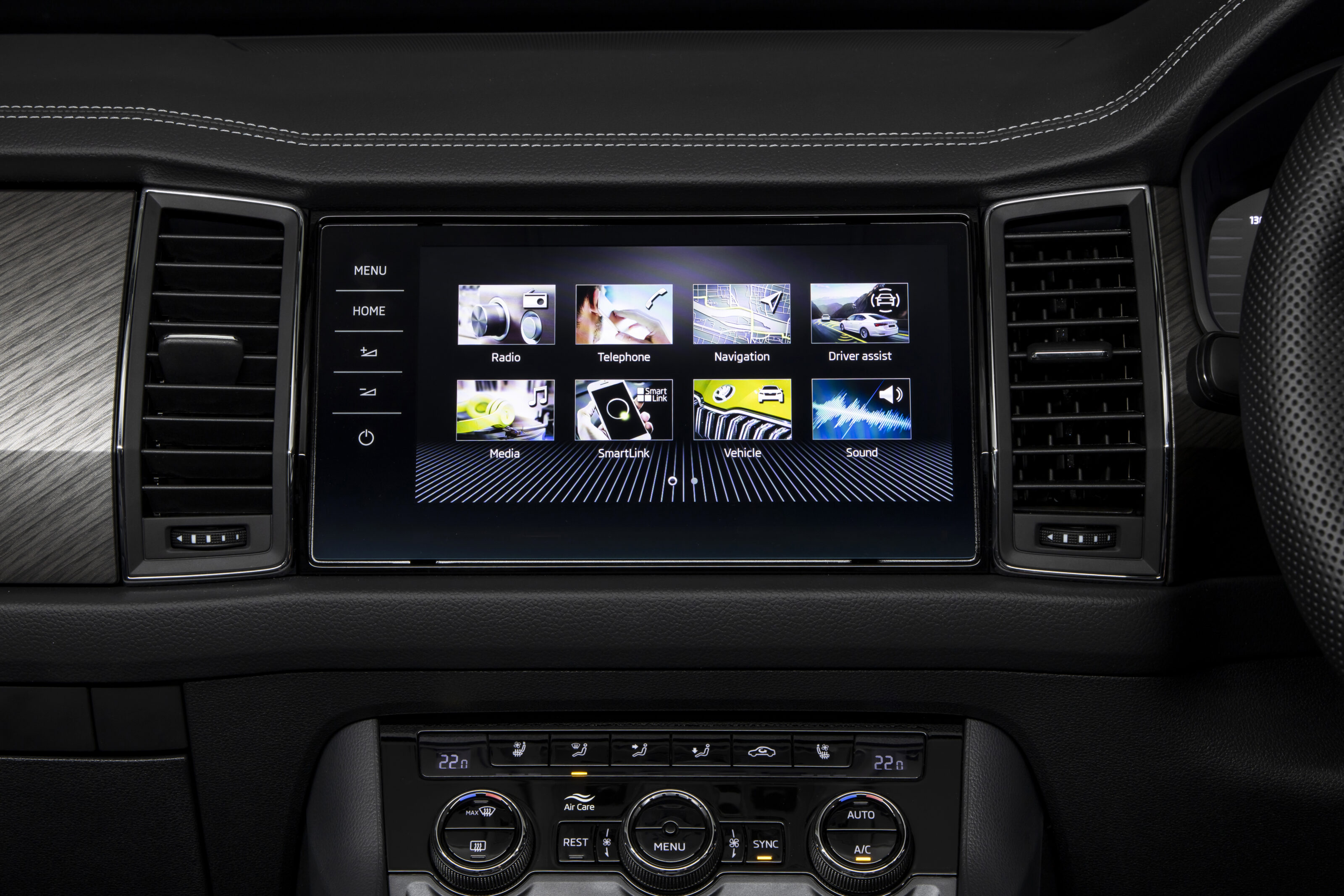
A 9.2-inch central touchscreen presents sharp graphics, fast response and an intuitive menu system. Navigation is incorporated and there’s an option to feature a map on the digital driver display. This display also offers a variety of layouts.
The 12-speaker Canton audio is superb and includes multiple sound-control options.
Wireless Apple CarPlay and Android Auto permit a cable-free cabin and there’s a phone-charging tray along with two USB-C ports and a 12V socket.
Skoda has a deserved reputation for practical interiors and the Kodiaq remains on point with excellent all-round storage.
There are twin gloveboxes, long (if not particularly wide) door pockets with enlarged sections for drinks bottles, a removable mini rubbish bin in the driver’s door pocket, and the centre console cubby features a removable organiser that includes cupholders.
And in Skoda tradition, an umbrella is secreted into the front doors.
Second Row
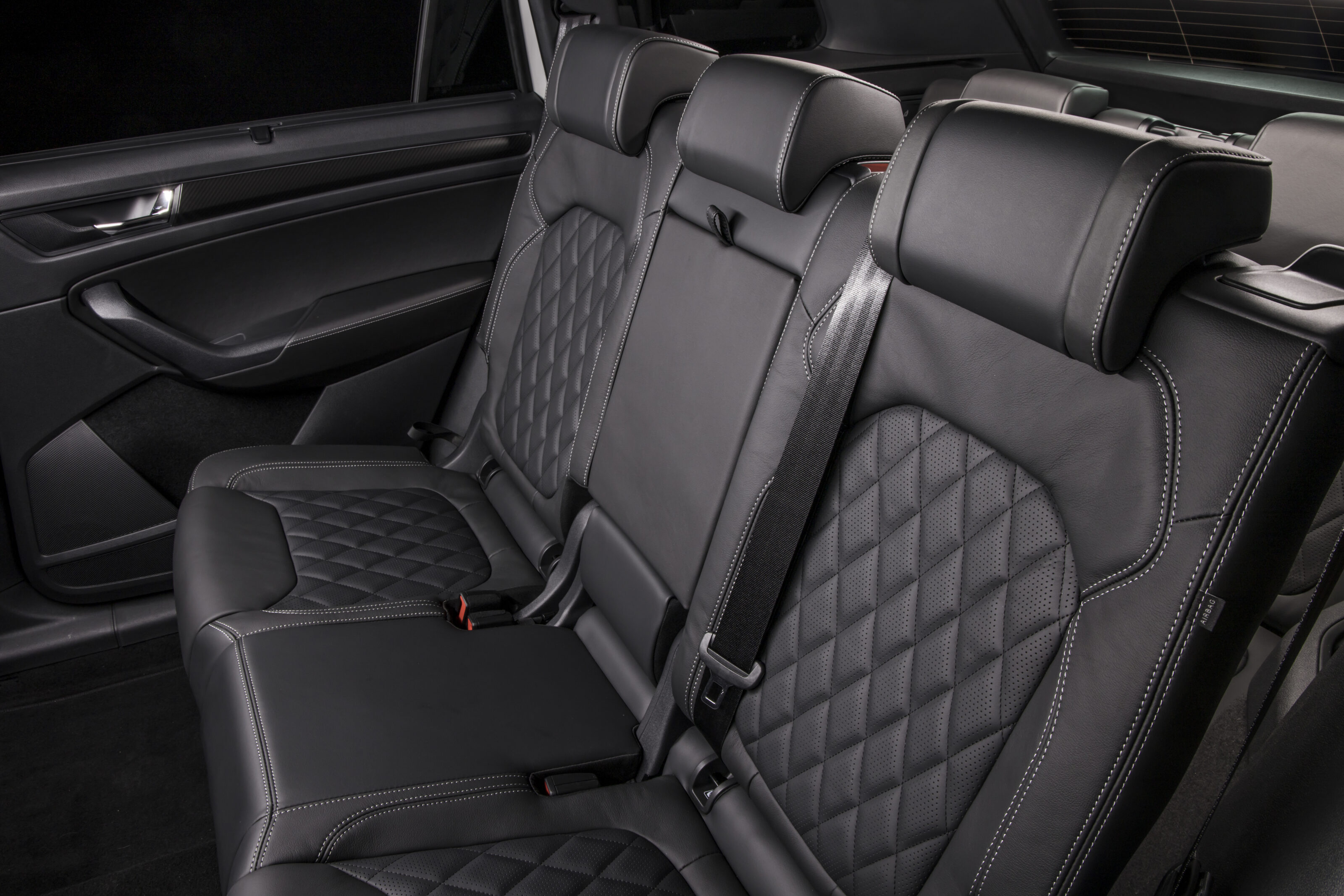
The Kodiaq’s rear doors open wide to allow easy entry. As with the front doors, they also feature clever rubber edge protector strips that help protect the paintwork of the Skoda – as well as other cars – in tight parking spaces
If the third row isn’t in use and the second-row bench is pushed all the way back, there’s ample knee space for adults. Foot space is generous regardless and there’s plenty of head clearance even with the optional panoramic sunroof fitted.
Manual window shades are included.

The bench cushion has good depth and the seatback angle can be adjusted (60-40 split).
Storage follows the trend from up front. The flocked door pockets are wider and feature an angled floor to help keep various items in place.
Both seatbacks have pouches and a centre armrest includes three cupholders (including middle piccolo holder).

As our test car included the Luxury Pack, the outboard seats came with a heating function as well as dedicated climate control for the second row.
The Sportline misses out on the tablet holder standard on the base Style.
Third Row
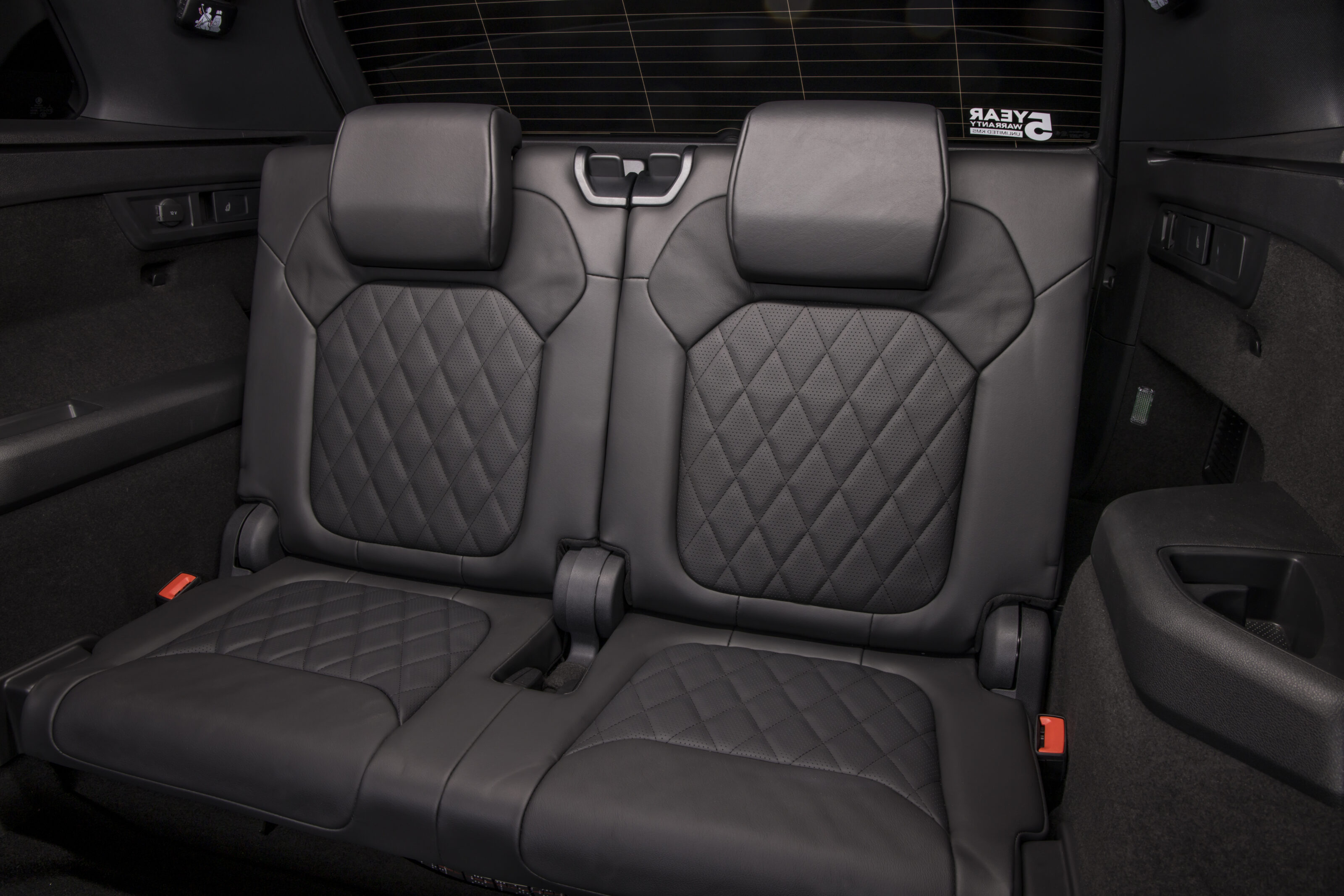
The Skoda Kodiaq is one of the smallest Large SUVs on the market. Measuring 4697mm nose to tail, it’s about the same length as a Tesla Model 3. Or less than 10cm longer than a Toyota RAV4.
As with its key competitors and unlike those models, the Kodiaq squeezes a third row of seats into its interior.
Those two rearmost seats aren’t ideal for adults, and expect a prod from a cane or a slap from a handbag if you suggest grandpa or grandma sit there. Teenagers will probably whinge, too.
It’s realistically a space for kids who are tall enough to use an adult seatbelt. If you need to fit adults regularly, best consider other options

Rivals such as Sorento and CX-8 (as well as Mazda’s other seven-seater, the CX-9) provide anchor points behind the third-row seats. In the Kia’s case, it conveniently incorporates ISOFIX points.
It’s realistically a space best for kids who are tall enough to use an adult seatbelt. If you need to fit adults in the back regularly, it’s best to consider other options – which include the Kluger, Peugeot 5008 and Santa Fe in addition to the Kia and Mazda models.
Boot Space
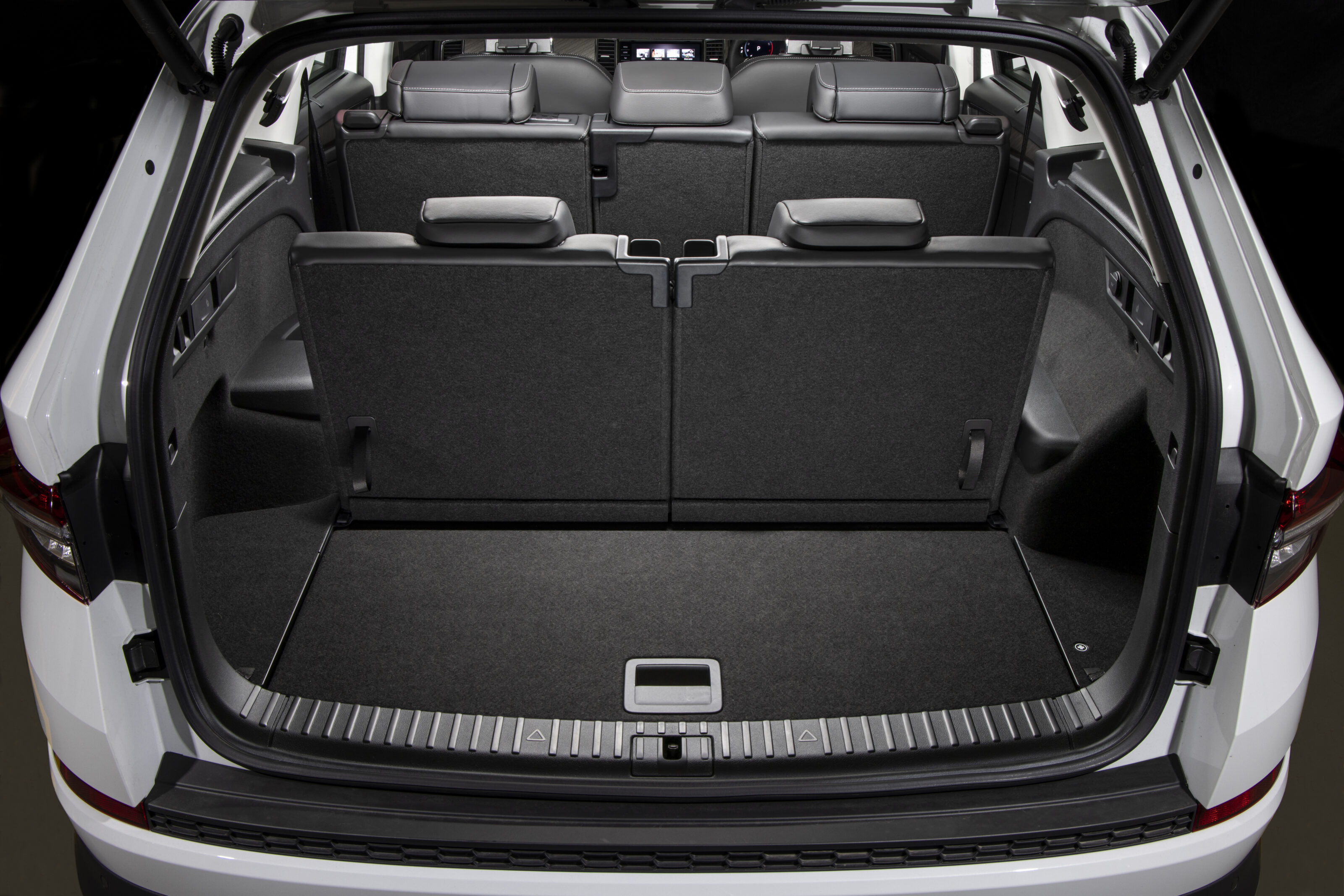
Skoda quotes 270 litres of luggage space if the third-row seats are in use, which is well above rivals including the Santa Fe (130L) and Sorento (187L), and also more than that offered by the CX-9 (230L) and Kluger (241L).
There’s also an underfloor section for storing the cargo blind (and where a spacesaver spare tyre resides).
A claimed volume of 765 litres with those rearmost seats flattened puts the Kodiaq at the pointy end for boot space in the segment

A claimed volume of 765 litres with those rearmost seats flattened (via convenient seat-top levers) also puts the Kodiaq at the pointy end for boot space in the segment.
The pull-out LED torch has disappeared sadly (as it has in other Skodas), but practical extras include flip-out hooks, integrated bag hooks, release levers for the second-row seatbacks, and a net pack comprising one horizontal and two vertical nets.
On the road
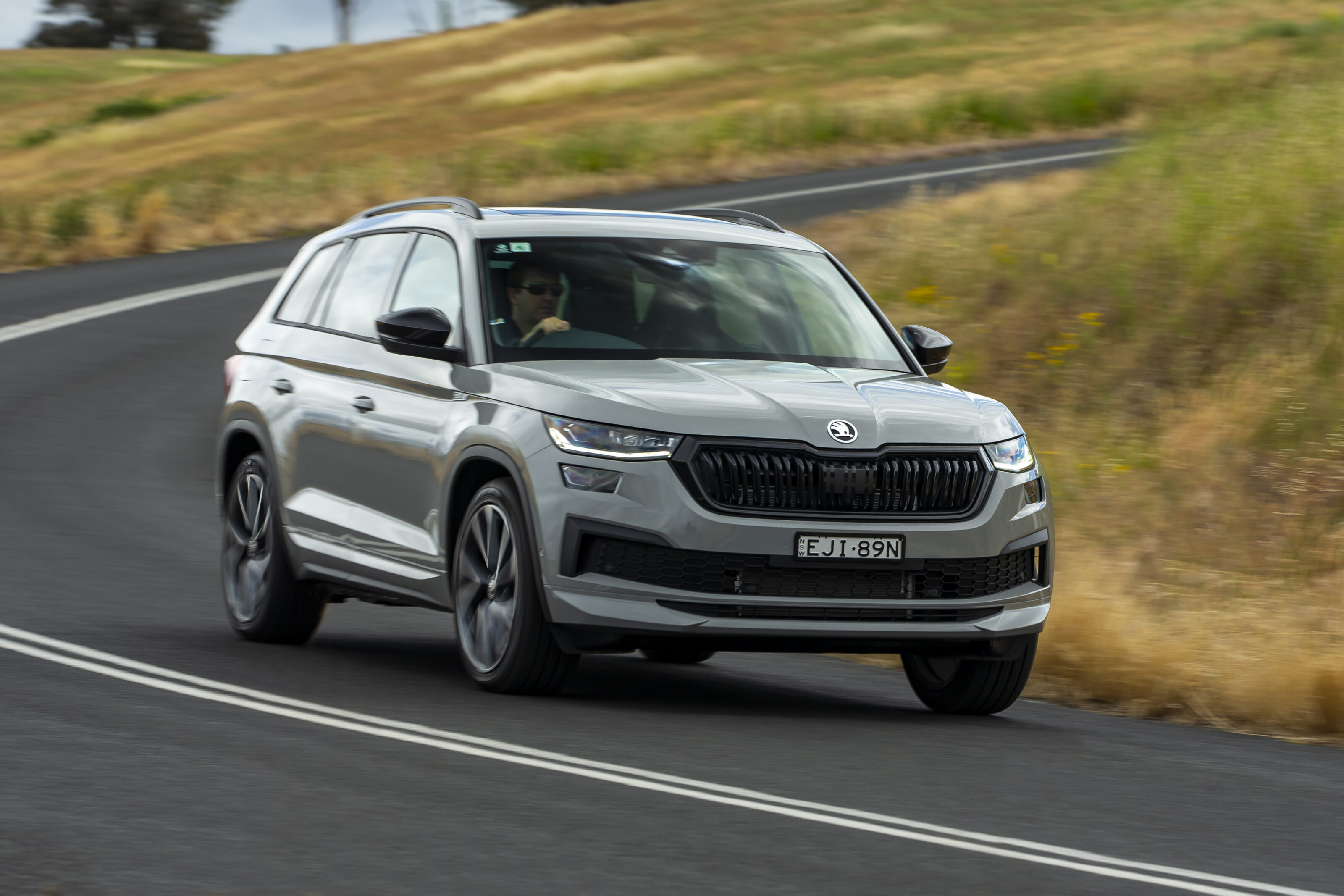
The Kodiaq’s driver seat offers plentiful electric adjustment, as does the front-passenger seat if you tick the Luxury Pack option.
A manual cushion extender is also useful as the cushion isn’t the longest.
The optional leather seats of our test car manage to look both posh and sporty.
Depending on the driver’s height, the chunky side mirror can obscure some of the view when turning right but otherwise outward vision is good.

Skoda doesn’t offer either a head-up display or speed-limit notification function; the latter can be especially useful in a country where signs can be constantly changing and inconsistent.
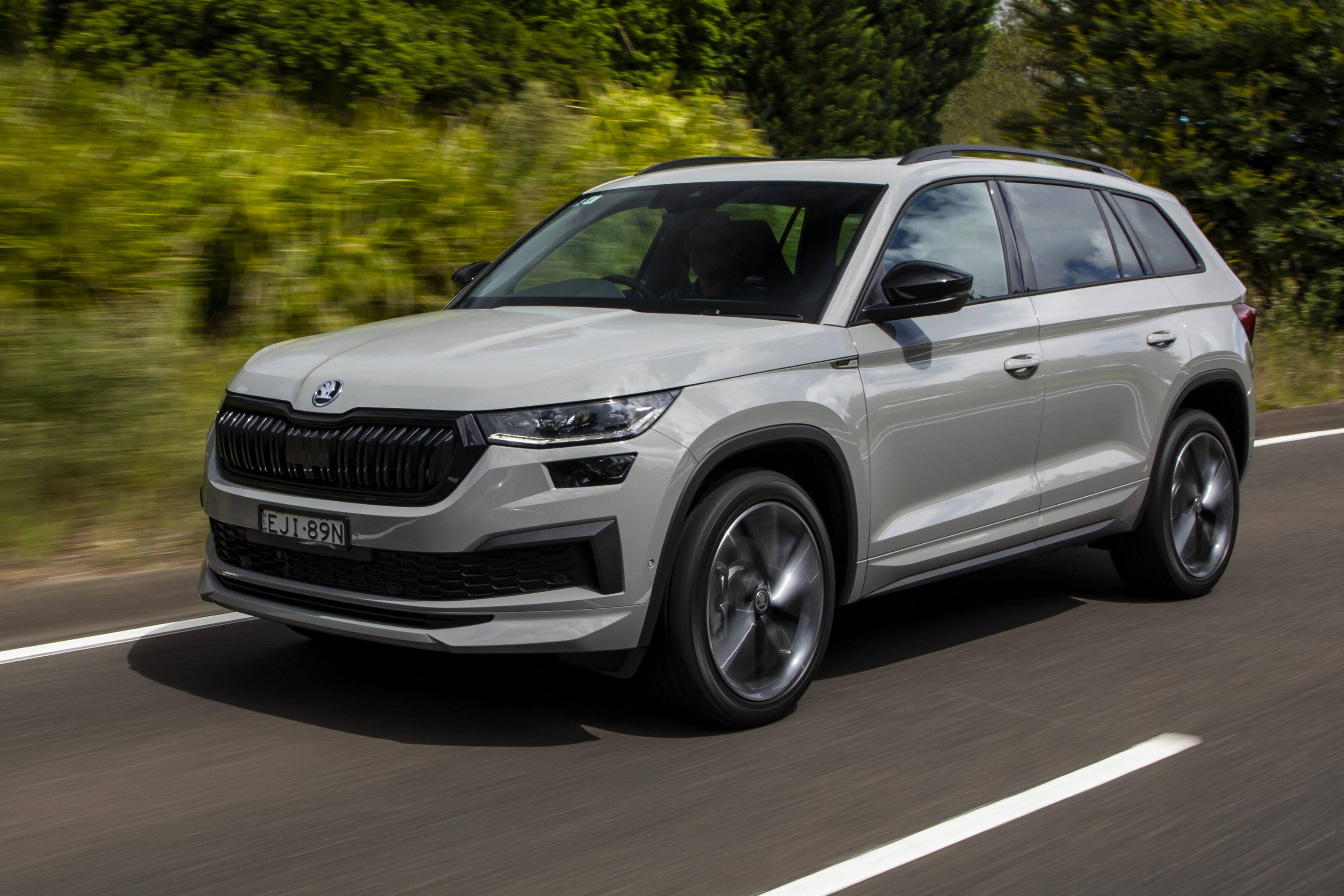
The Tech Pack’s adaptive suspension earns its keep. With damping force adjusted via the Kodiaq’s different driving modes, Comfort gives the Skoda a relaxed feel on the road – without feeling wallowy – despite the large, 20-inch wheels. Only the sharpest of bumps can intrude but it’s only ever temporary.
Sport mode is worth selecting for winding country roads, helping to tighten the Kodiaq’s body control through corners.
This also adds a bit more weight to the steering, which can be welcome at higher speeds where the lightness of the regular steering setting works best around town and on freeways.
They’re modest outputs in the context of a 1750kg SUV, but if the Kodiaq isn’t the liveliest performer at low revs it builds momentum nicely

While some wind noise is detectable on freeways, the Pirelli Scorpion tyres fitted to our Kodiaq were inconspicuous even across coarser surfaces.
The Kodiaq’s smaller-than-class-average dimensions can be an advantage when trying to find parallel parking spaces, while the Skoda also avoids feeling bulky on the road.
A 2.0-litre turbocharged four-cylinder is shared with the entry Style model, producing 132kW and 320Nm.
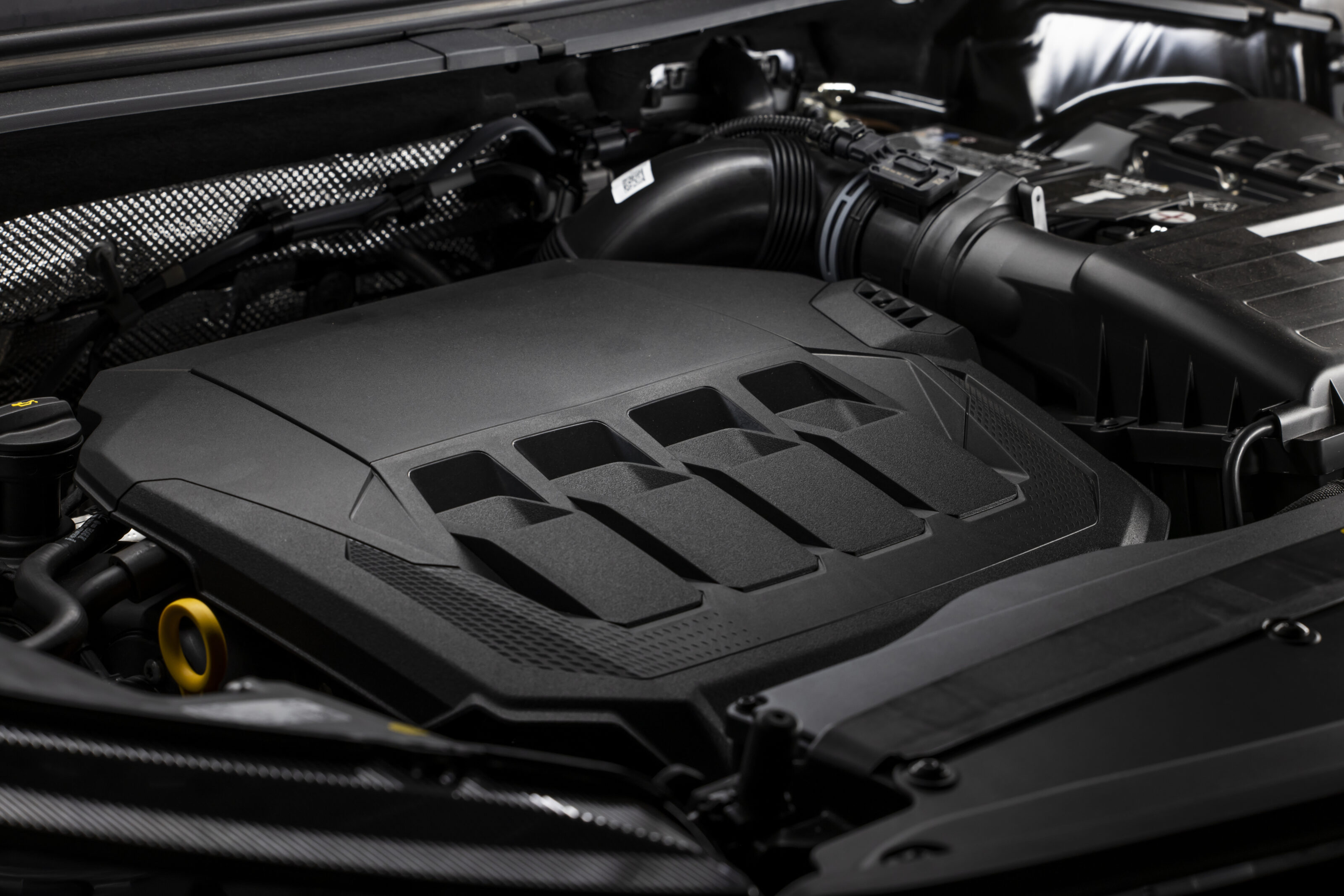
They’re modest outputs in the context of a 1750kg SUV, but if the Kodiaq isn’t the liveliest performer at low revs it builds momentum nicely. The seven-speed dual-clutch auto helps by keeping the engine in its (fairly wide) sweet-spot and getting the Skoda off the line without the delay that can be a characteristic of these transmissions.
The 2.0-litre has a pleasant sound, too.
For those seeking stronger performance, the Kodiaq RS comes with a more powerful turbo petrol engine producing 180kW and 370Nm. At 6.6 seconds for the 0-100km/h acceleration benchmark, the RS is nearly two seconds quicker than the Sportline (8.4sec).
Curiously, the RS is more economical with rated consumption of 7.5 litres per 100km compared with 8.2L/100km for the Sportline. Both engines require 95RON premium unleaded as a minimum.
Ownership
The Skoda Kodiaq comes with a five-year factory warranty.
Owners have the option of paying upfront for multi-year service packs or paying as they go with monthly payments.
A five-year pre-paid plan costs $1800; a seven-year plan costs $2700.
Monthly plans are determined by a choice of annual mileage and level of coverage. Choose the 15,000km Australian average and an Essential plan costs $44.50 per month; the Complete plan costs $59.50 but covers off tyre maintenance. There’s also a Value plan for those who simply want the most basic service.
VERDICT
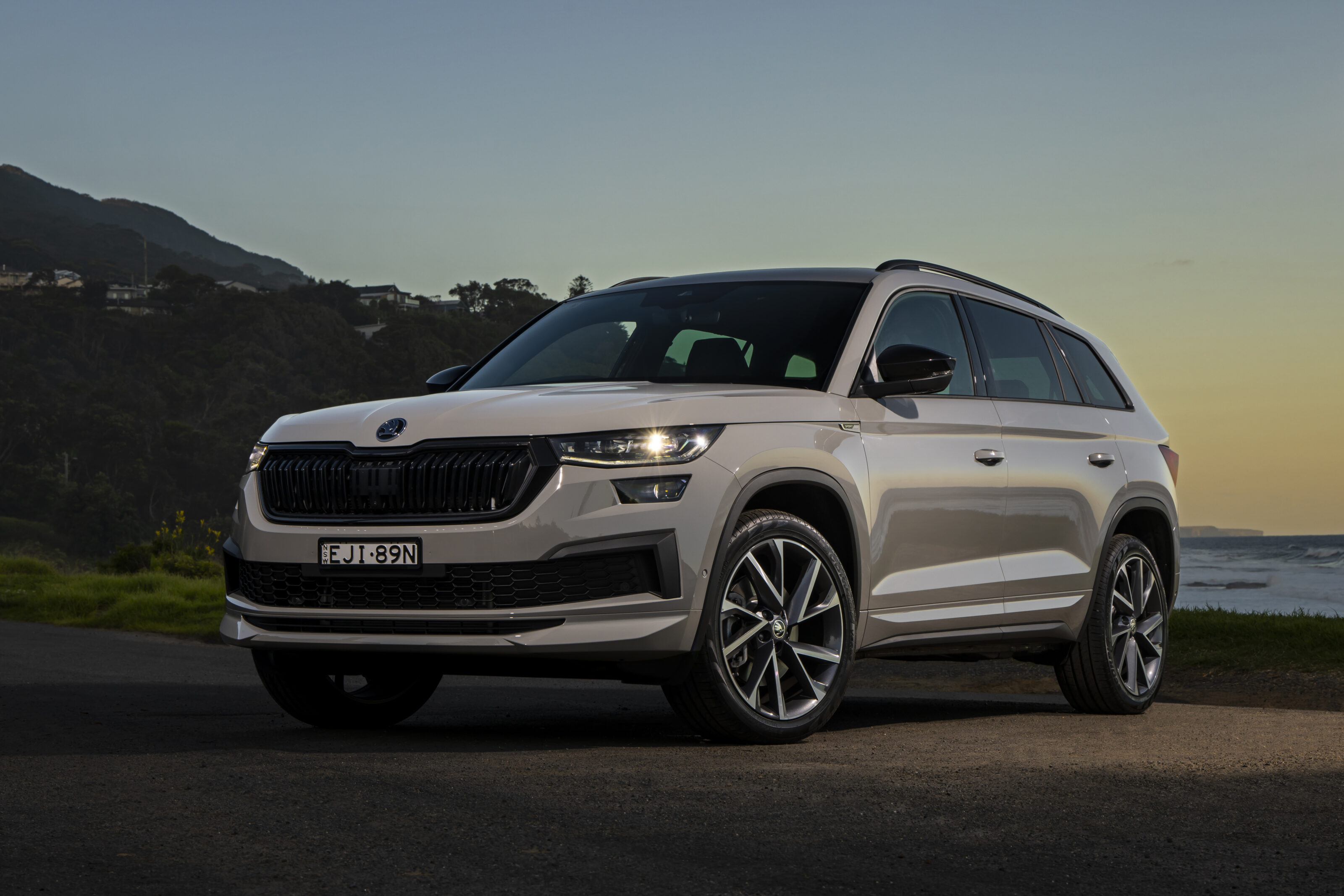
A large SUV is a natural fit for a practicality-focused brand like Skoda. A third row with child-seat attachment points and more space would boost the Kodiaq’s versatility credentials, but it still offers a lot of space in a vehicle size that some parents may find less intimidating than some rivals.
And despite a small price increase, it remains a big SUV that delivers big value.
2022 Skoda Kodiaq 132TSI Sportline specifications
| Body | 5-door 7-seater SUV |
|---|---|
| Drive | all-wheel drive |
| Engine | 2.0-litre turbocharged four-cylinder |
| Transmission | 7-speed dual-clutch auto |
| Power | 132kW @ 3900-6000rpm |
| Torque | 320Nm @ 1400-3940rpm |
| 0-100km/hu00a0 | 8.4 seconds (claimed) |
| Fuel consumption | 8.2L/100km (combined) |
| Weight | 1750kg |
| Suspension | Front struts / rear multilinks |
| L/W/H | 4699/1882/1655mm |
| Wheelbase | 2791mm |
| Brakesu00a0 | n/a |
| Tyres | Pirelli Scorpion 235/45R20 |
| Wheelsu00a0 | 20-inch alloys |
| Priceu00a0 | $53,340 RRP; $57,900 driveaway; $62,610 as-tested RRP |
With the technological advance within the automotive industry pushing forward at a rapid rate, questions are being asked about how current infrastructure can continue to support the changing needs of motorists.
In an address at the Green Building Council’s Transform 22 summit, Volkswagen Group Australia (VGA) managing director Paul Sansom outlined the constraints electric vehicle owners face, explaining how shifting the focus towards greater support for home charging will benefit more than just the automotive industry.
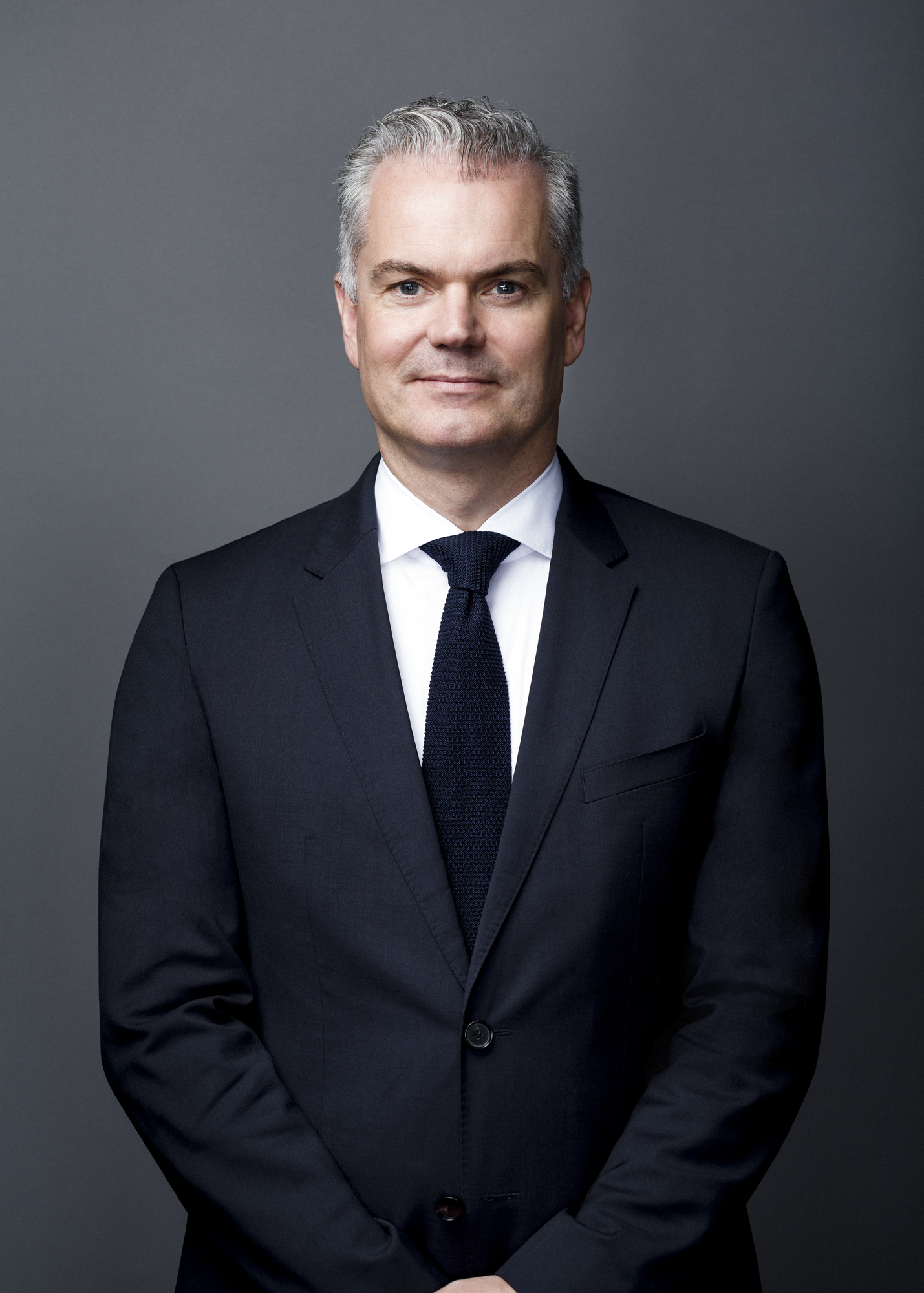
Sansom believes homes of the future set up adequately to support home charging of electric vehicles will enhance their value, in addition to being a more convenient solution for owners.
“The greatest misconception around EVs in this country remains so-called ‘range anxiety’,” said Sansom.
“The opportunity – the necessity – exists to transform this perception to a reality of convenience and enablement.
“By far the greater part of the time EVs will charge at work or home, meaning that we are for the first time being liberated from the necessity of traditional ‘filling’ stations.
“The creators of our built environment will provide accessible and efficient home charging. This will be the greatest enabler of zero emission vehicle ownership.
“Neither new houses nor new apartment buildings will be feasible without easy access to renewable EV charging; no more so than a home without internet access. There can be no doubt that the lack of such a facility will negatively affect the value of property.”
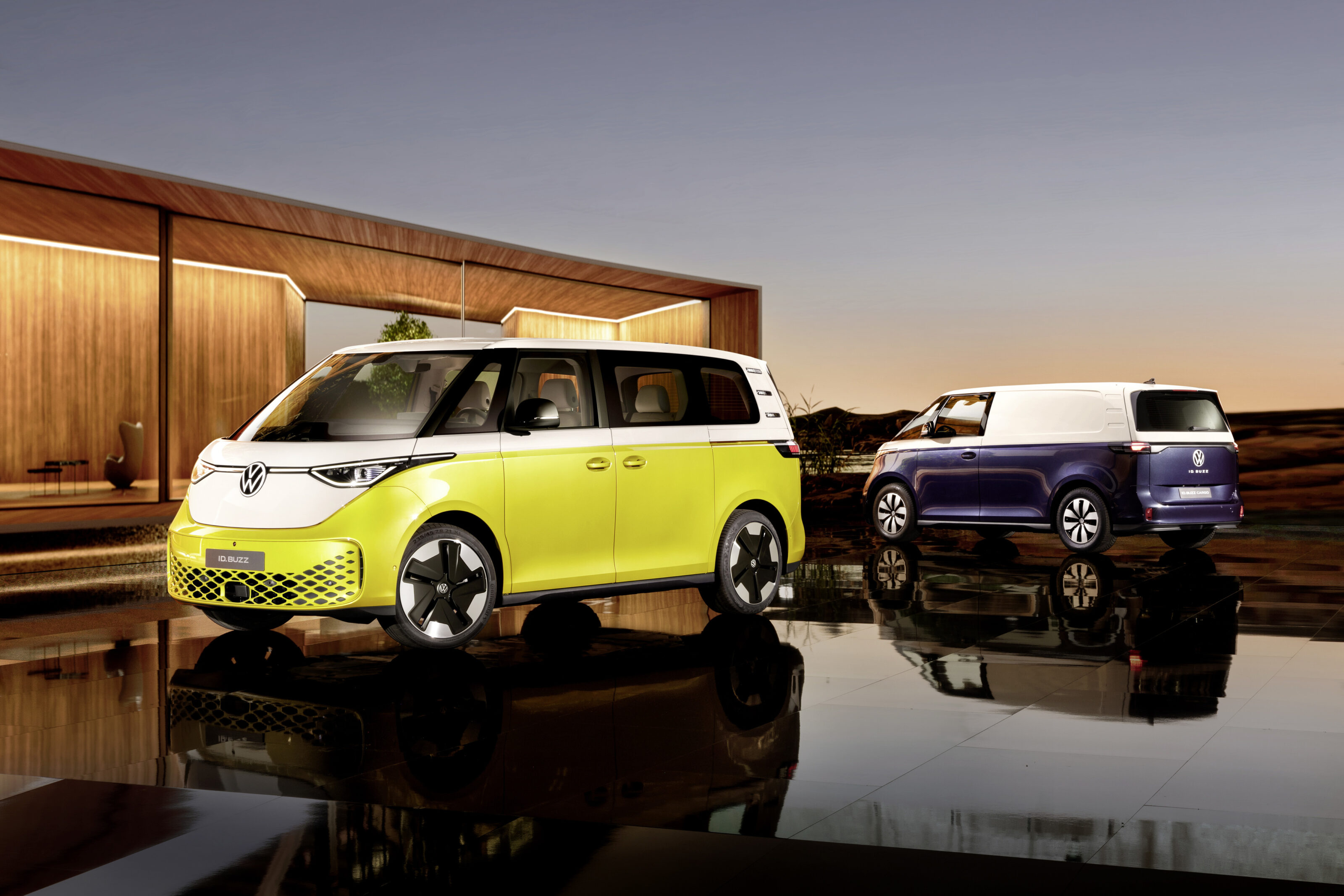
Having served as Audi Australia’s managing director for four years before moving across to VGA after the pair merged at the start of the year, Sansom knows the benefits of EVs from the premium approach of Audi to Volkswagen’s mass-market strategy.
The rapid shift towards electrifying its line-up comes as Volkswagen previously announced its intentions to end internal combustion engine development by the end of the decade, although just 25 per cent of the brand’s Australian fleet is expected to go fully-electric in the same time period.
This decision for the local market has been made in part due to the Federal Government’s lack of universal support for EVs, although Volkswagen wants to show technology such as the vehicle-to-grid system found in the brand’s MEB-platform EVs will allow the vehicles to offset emissions not only on the road but in domestic use.
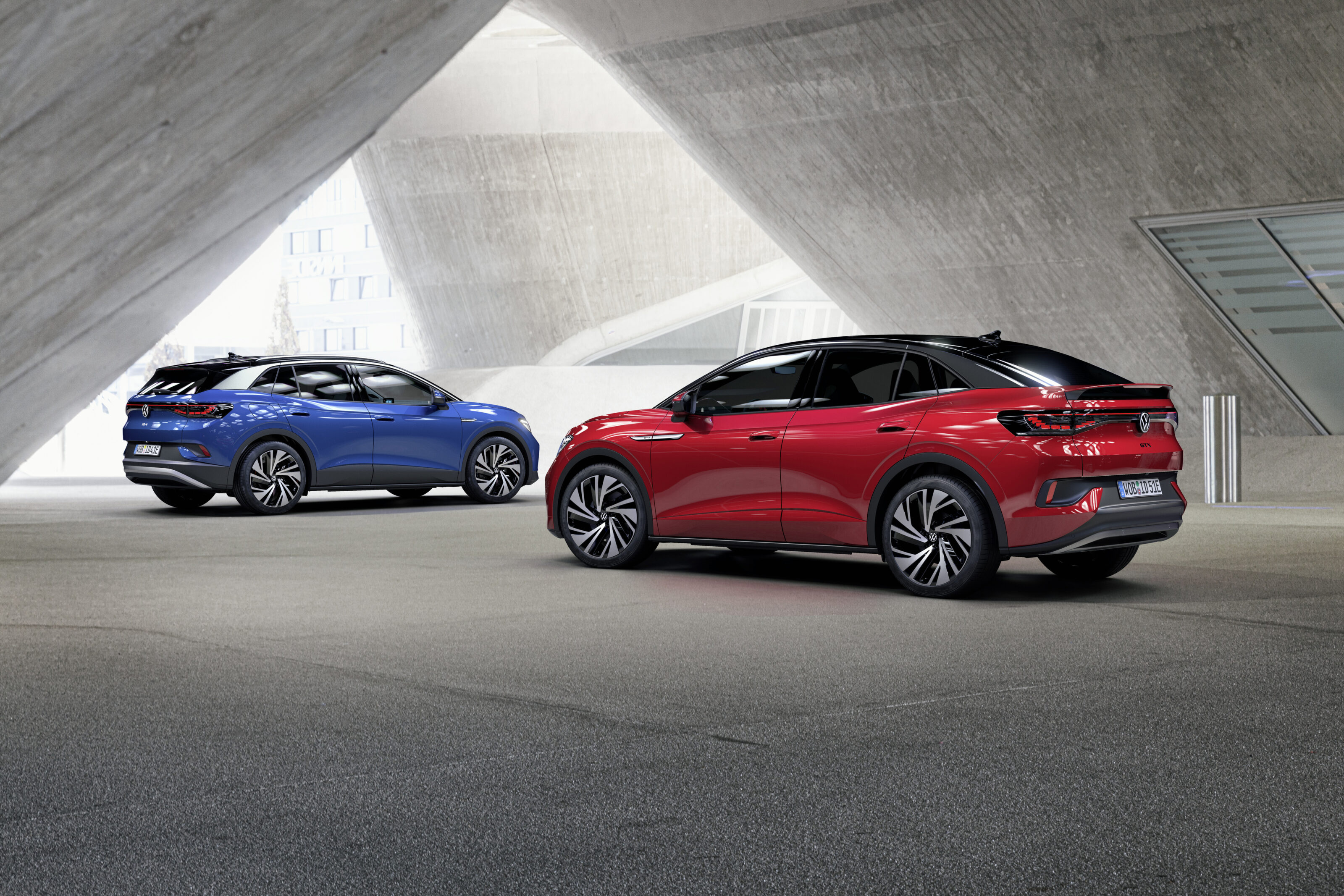
“VGA has said with reason that this otherwise enviable country of ours has lagged behind the rest of the First World in creating the conditions for zero emissions mobility,” said Sansom.
“VGA was proud to speak in support of the New South Wales Government on the introduction of its world class EV adoption strategy. In terms of the global quest for sustainability, a zero emission vehicle fleet is a non-negotiable pre-condition.
“If we talk of transformation, consider the auto industry’s journey during the past decade. Its journey from being among the worst carbon emitters to the industry that is driving carbon neutrality is the definition of transformation.
“The most exciting, even life transforming aspect for our customers, will be in the growing interdependence between the cars we sell and the environment that many of the attendees at Transform 22 will construct.
“Vehicle-to-grid technology is a game changer with respect to accelerating EV uptake in Australia and reducing the national carbon footprint.
“Soon, our cars will become your own personal renewable energy ecosystem by using the car’s battery to store solar power for domestic use in your homes.”
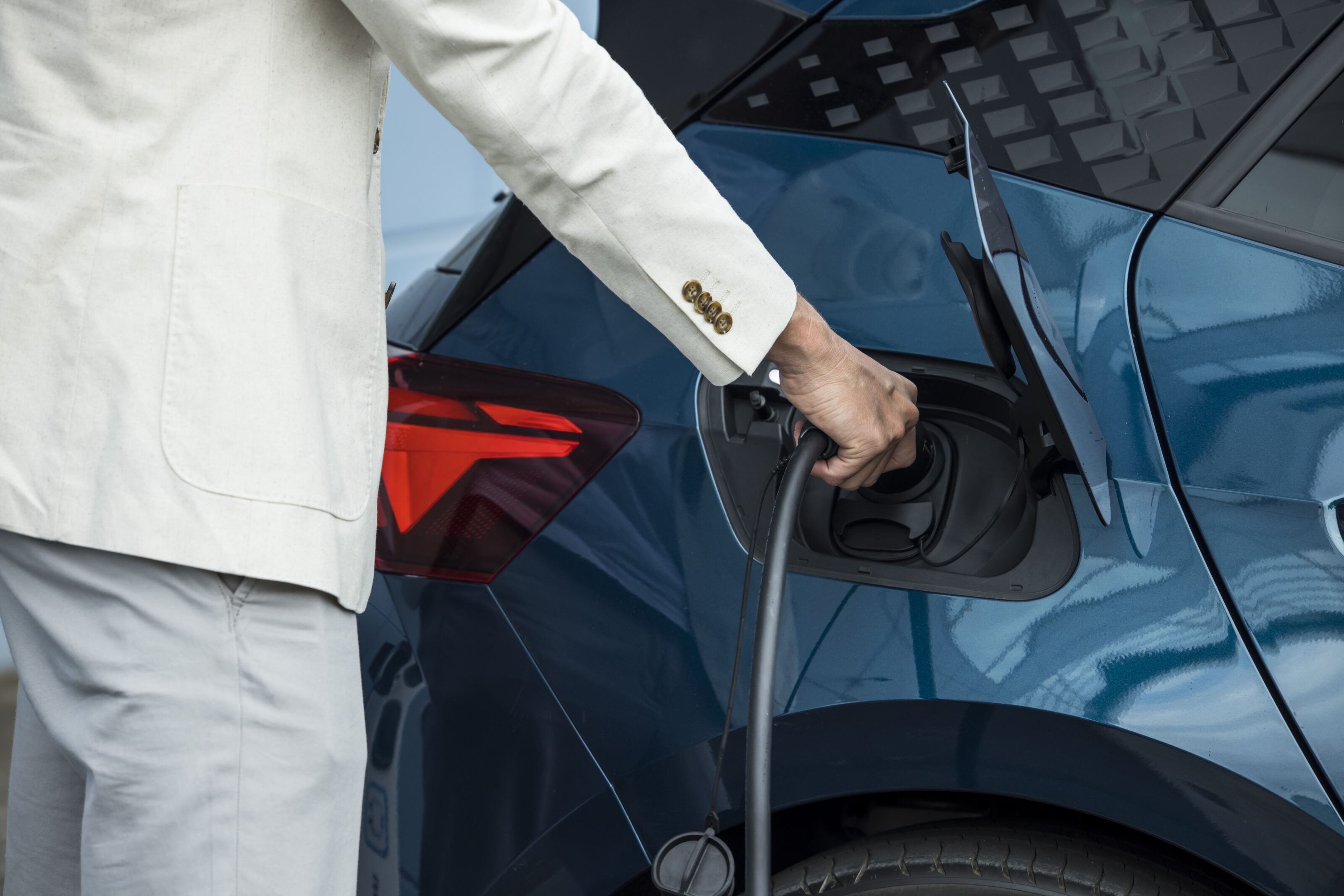
Volkswagen itself is currently yet to introduce an electric vehicle in Australia, however, Audi has launched a number of E-Tron models for the local market, including its upcoming flagship E-Tron GT, based on the same platform as the Porsche Taycan.
Sub-brand Skoda announced earlier this week it will be bringing its Enyaq iV range here in 2023, as Volkswagen’s new performance off-shoot Cupra is set to launch the Born EV later this year – both of which are underpinned by the same MEB architecture as the VW EVs.
Cupra has teased an upcoming compact SUV, promising hybrid powertrains when the new model joins its line-up in 2024.
The Spanish brand says the vehicle will be available with a range of engines, including a mild-hybrid and a plug-in hybrid (PHEV), and will measure out at 4500 millimetres long.
Given it will be built alongside the Audi Q3 – which itself is 4517mm long – the mysterious model will likely be based on the Volkswagen Group’s MQB architecture, giving us some clues as to what we can expect under the bonnet.
The Spanish performance brand has not provided any details on the engines, but we could see the new Cupra model adopt something similar to the 1.4-litre turbocharged plug-in hybrid powertrain found in the recently-released Audi Q3 45 TFSI e, which uses a 13kWh battery to power an 85kW electric motor.
While the Audi Q3 PHEV claims up to 50 kilometres of electric-only driving, it’s possible the Cupra will enjoy a larger and more advanced battery, allowing for a greater driving range.
Cupra’s announcement comes just a day after its cousin Skoda suggested it was also bringing out a small SUV, though that particular model is expected to use pure-electric power based on Volkswagen Group’s MEB platform.
With Cupra’s compact SUV set to enter production in 2024, expect to see the car’s unveiling at some point next year.
Remember Bang For Your Bucks, MOTOR’s beloved award for the best affordable driver’s car on sale? Well we’ve heard your cries and, while it’s been forced on hiatus for the past few years in the wake of the global pandemic, it’s back – but not as you know it.
When we got the green light for 2022’s running of Performance Car of the Year, we were told to make it bigger and better than ever. As a result, we jumped at the chance to dust off the BFYB formula, gave it a nut-and-bolt rebuild in the process, and incorporated it into our mammoth Performance Car of the Year testing week.
That means there are now two MOTOR awards, with the new Sports Car of the Year title aimed at accessible champions priced up to $100k, while Performance Car of the Year continues to fuel dreams with more expensive (and more powerful) showstoppers.
Keep your eyes peeled for the winners’ announcement taking place on Tuesday, March 29.
Until then, meet your competitors for the inaugural sub-$100k Sports Car of the Year competition, and leave your pre-event favourites in the comments below!
BMW 128ti
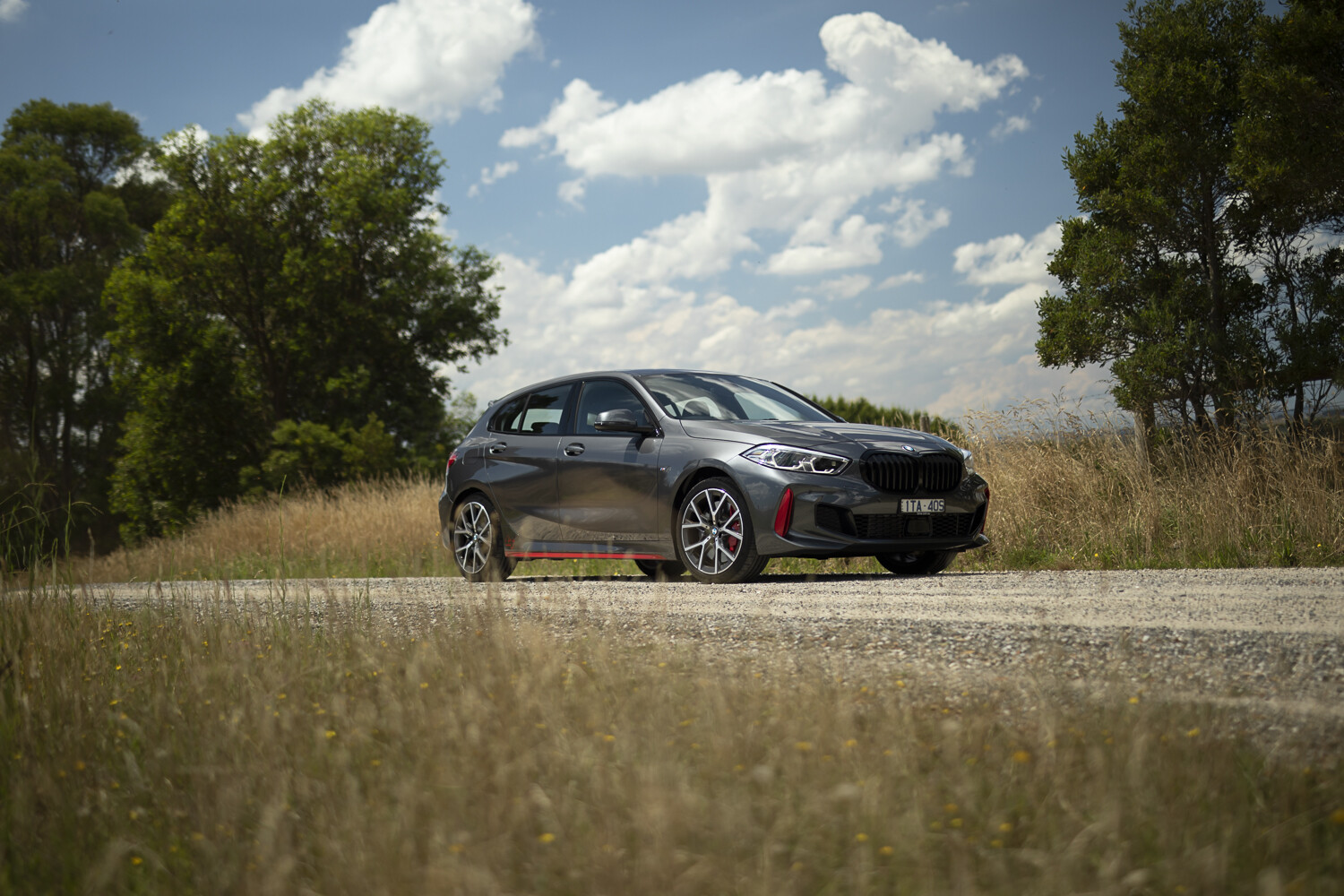
BMW takes its first swing at the front-drive performance hatch segment with its gutsy 128ti. Powered by a GTI-matching 180kW turbo-four, the premium hatch has one car in particular in its sights. There’s little precedence inside the halls of Munich, but BMW has plenty of experience in creating great sports cars. A big curiousity surrounds this little hatch, let’s see how it fares.
Specs: 1998cc inline-4; 180kW; 380Nm; 8-speed automatic; $56,900
Ford Focus ST
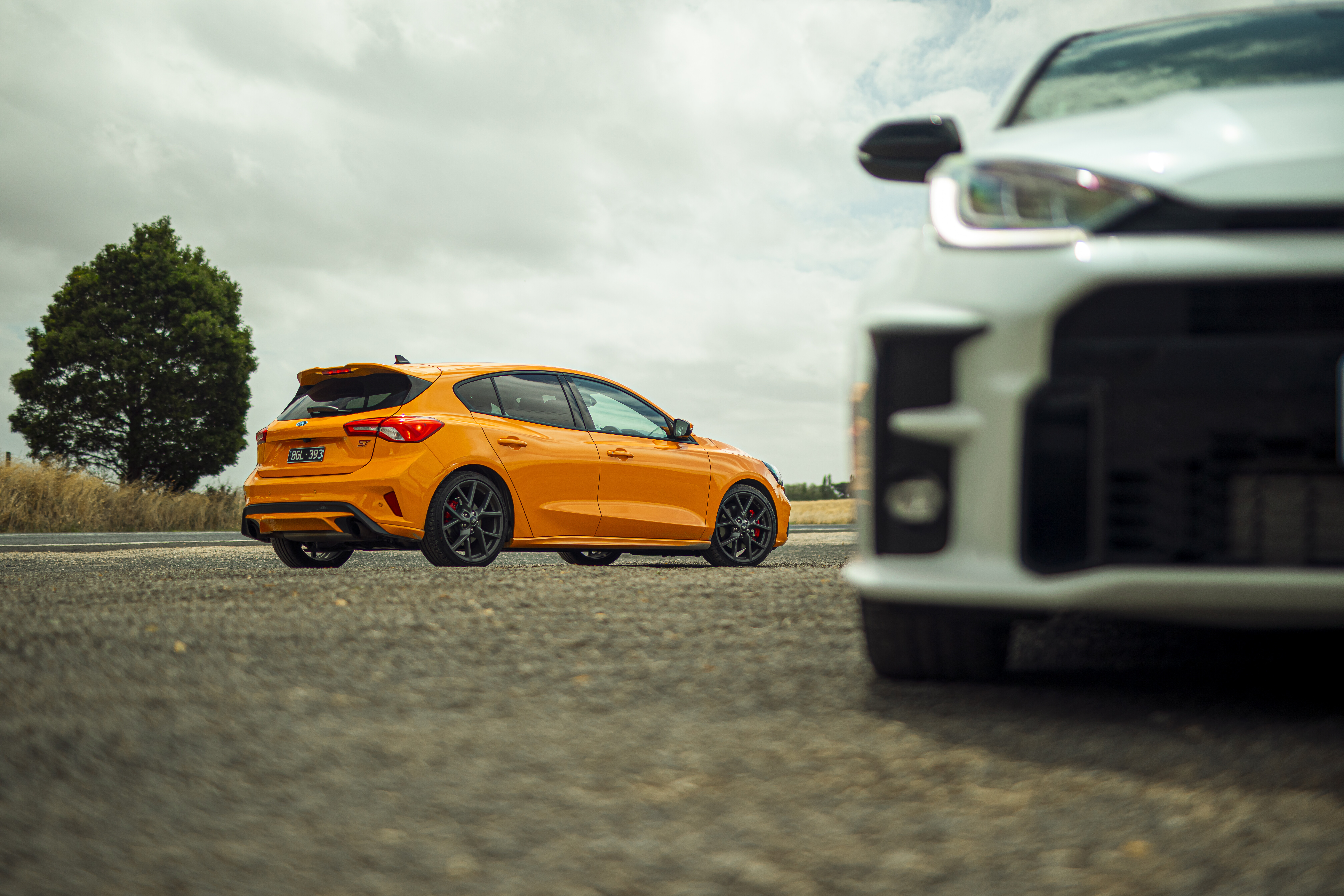
Often overshadowed by the previous-generation RS halo, the recently-updated Focus ST is a hugely underrated package. With a 2.3-litre turbocharged inline-four, lifted and de-tuned from the Mustang, the muscular hatch swings in with 206kW and 420Nm. Does it have the composure to match its playful character? It will have to in order to make a mark against such tight competition.
Specs: 2261cc inline-4; 206kW; 420Nm; 6-speed manual; $44,890
VW Golf GTI
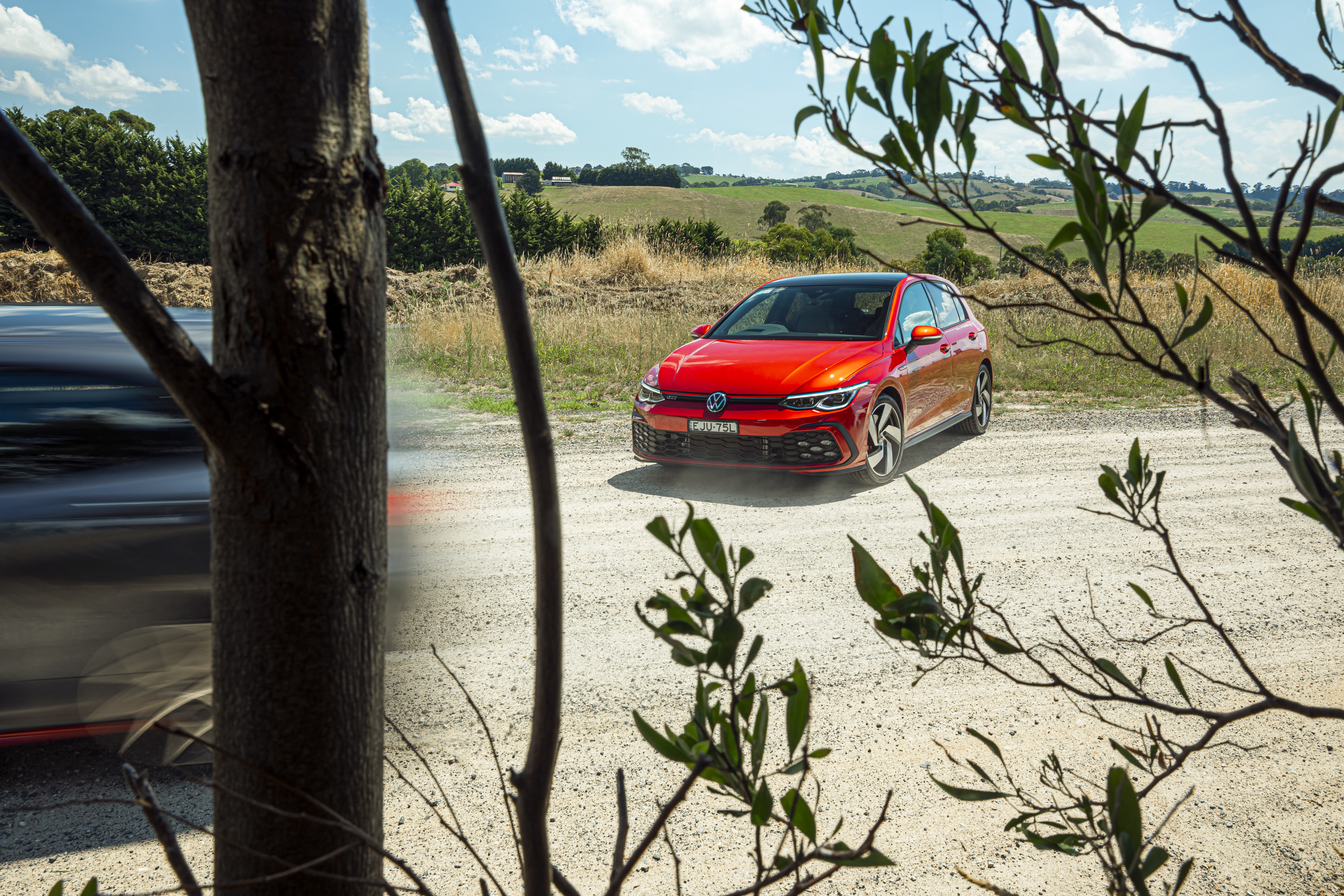
The reigning king of the hot hatch segment debuts a new generation and relies heavier on increased tech rather than increased power outputs to elevate its dynamics. Our prior first drive experience left us impressed, but can the grown-up new Golf GTI hold its own against nine worthy peers?
Specs: 1984cc inline-4; 180kW; 370Nm; 7-speed dual-clutch; $53,300
Hyundai i20 N
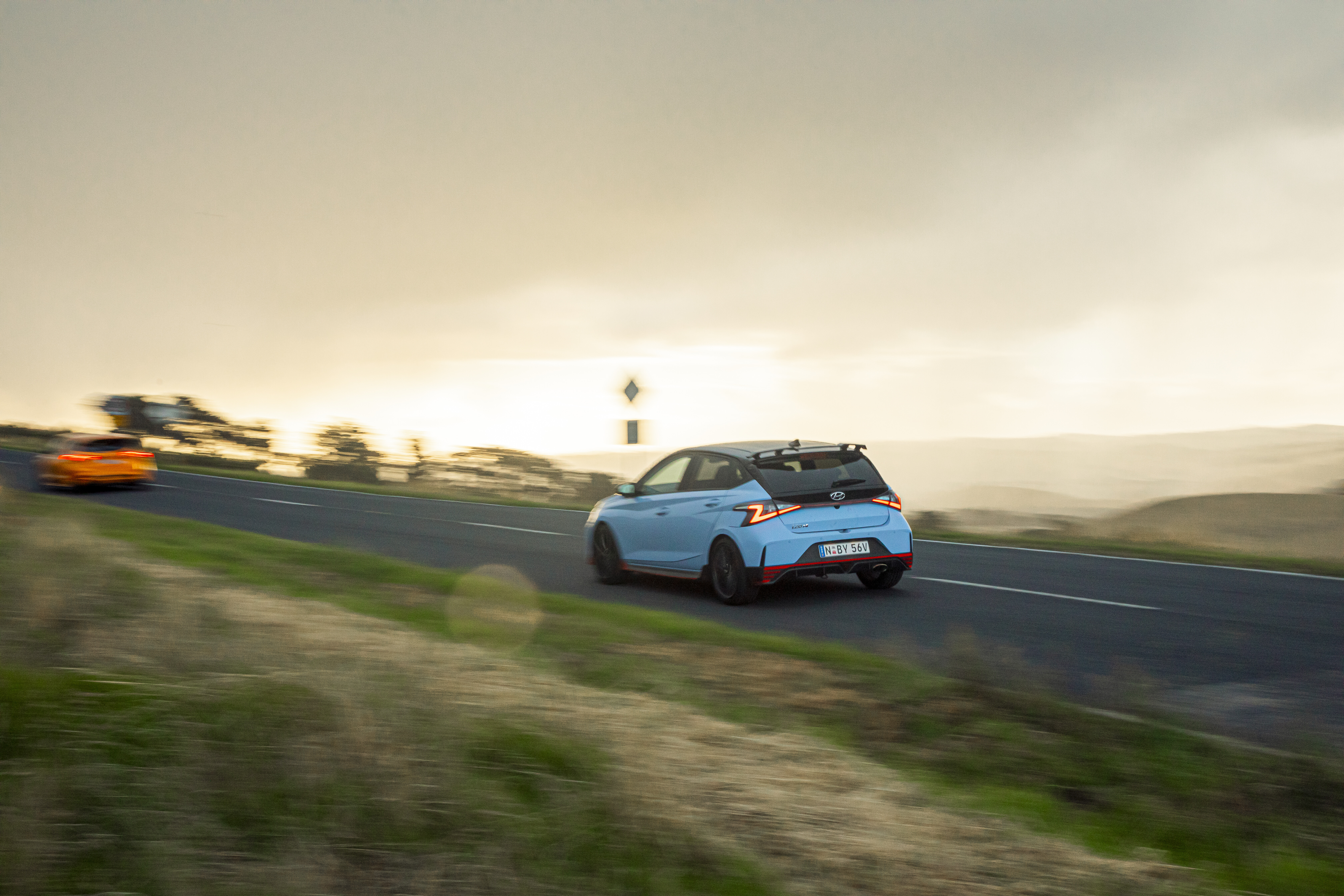
The most affordable offering in our whole competition, and the hot hatch of the moment. The i20 N instills N Division’s dynamic prowess into Hyundai’s smallest local package. With clever tech and bespoke engineering, expect the tiny-tot to punch well above its weight on the road, but will it be out-muscled on track?
Specs: 1591cc inline-4; 150kW; 275Nm; 6-speed manual; $32,490
Hyundai i30 Sedan N
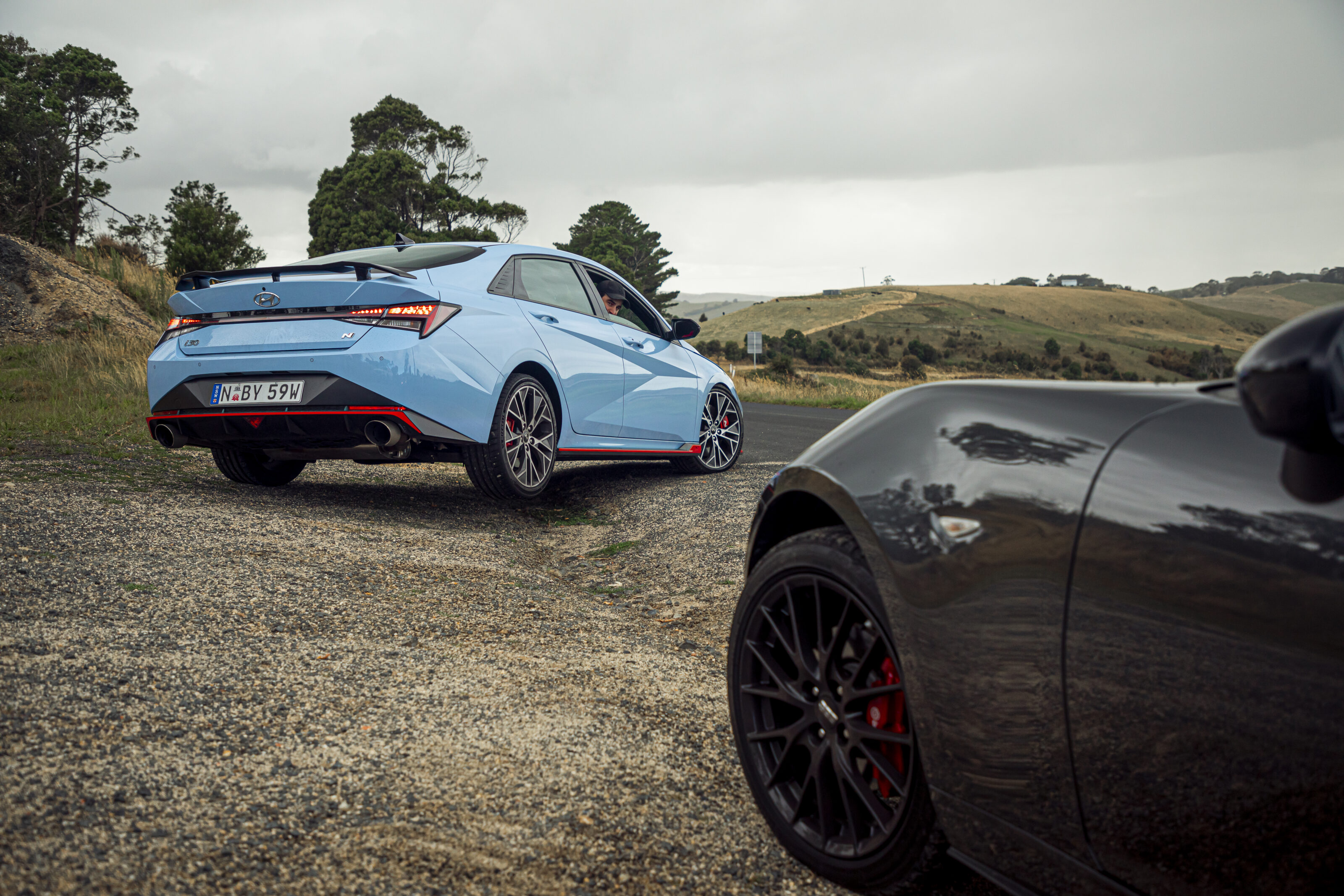
N Division’s newest offering, the i30 Sedan N, comes based atop a newer, lighter platform and makes a compelling case as a sub-$50k sports sedan by offering performance and practicality in impressive measures. The 206kW/392Nm powertrain is familiar, proven and effective, but does it retain the i30 N Hatch’s infectious personality?
Specs: 1998cc ilnine-4; 206kW; 392Nm; 8-speed dual-clutch; $49,000
Mazda MX-5 GT RS
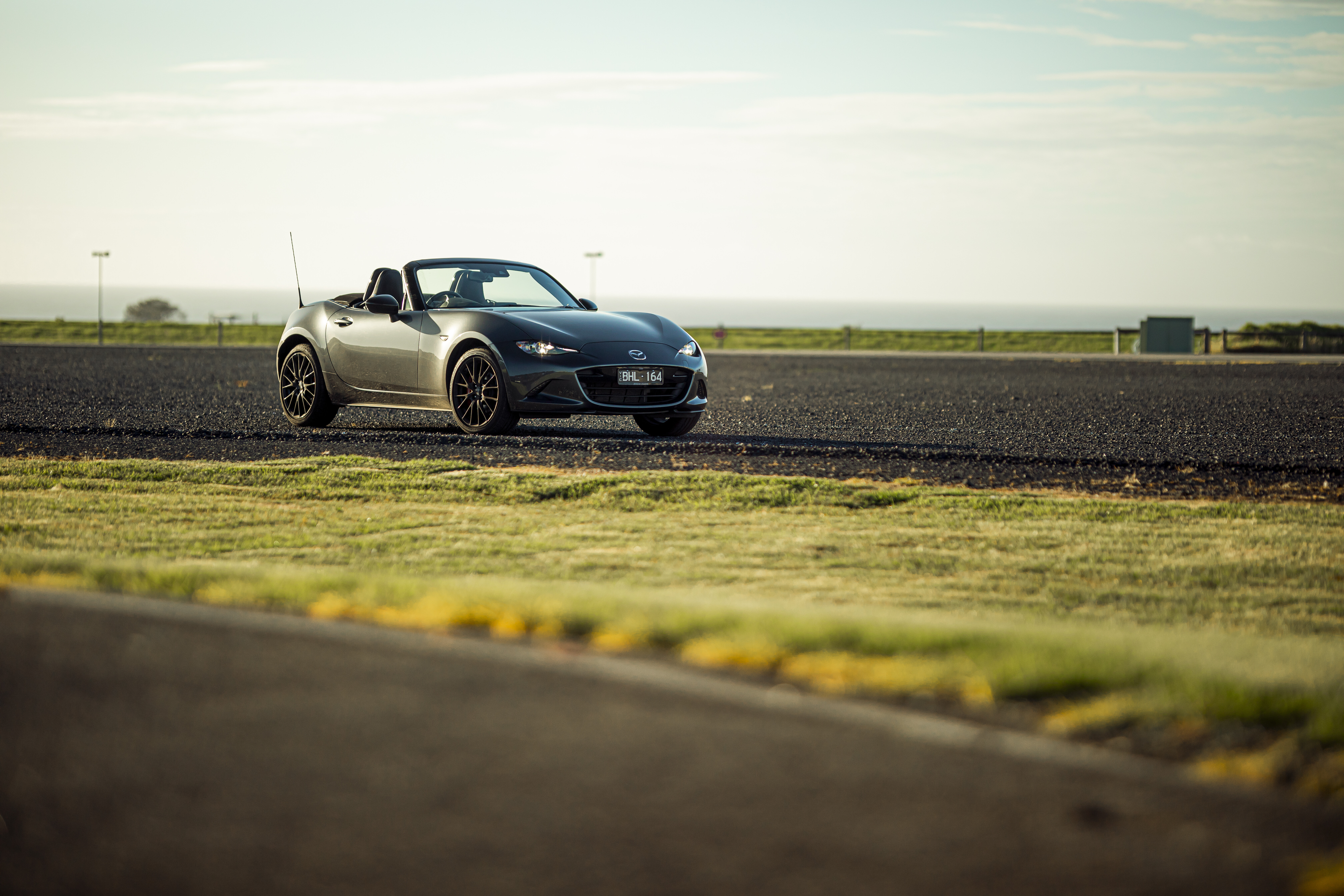
A fitter, firmer version of Mazda’s back-to-basics roadster. The MX-5 GT RS‘ modest 135kW aspirated power output may pale in comparison to younger competition, but its rear-drive, six-speed manual layout promises an evergreen driving experience. How far can its winning personality carry it in the final scoring?
Specs: 1998cc inline-4; 135kW; 205Nm; 6-speed manual; $47,020
Ford Mustang Mach 1
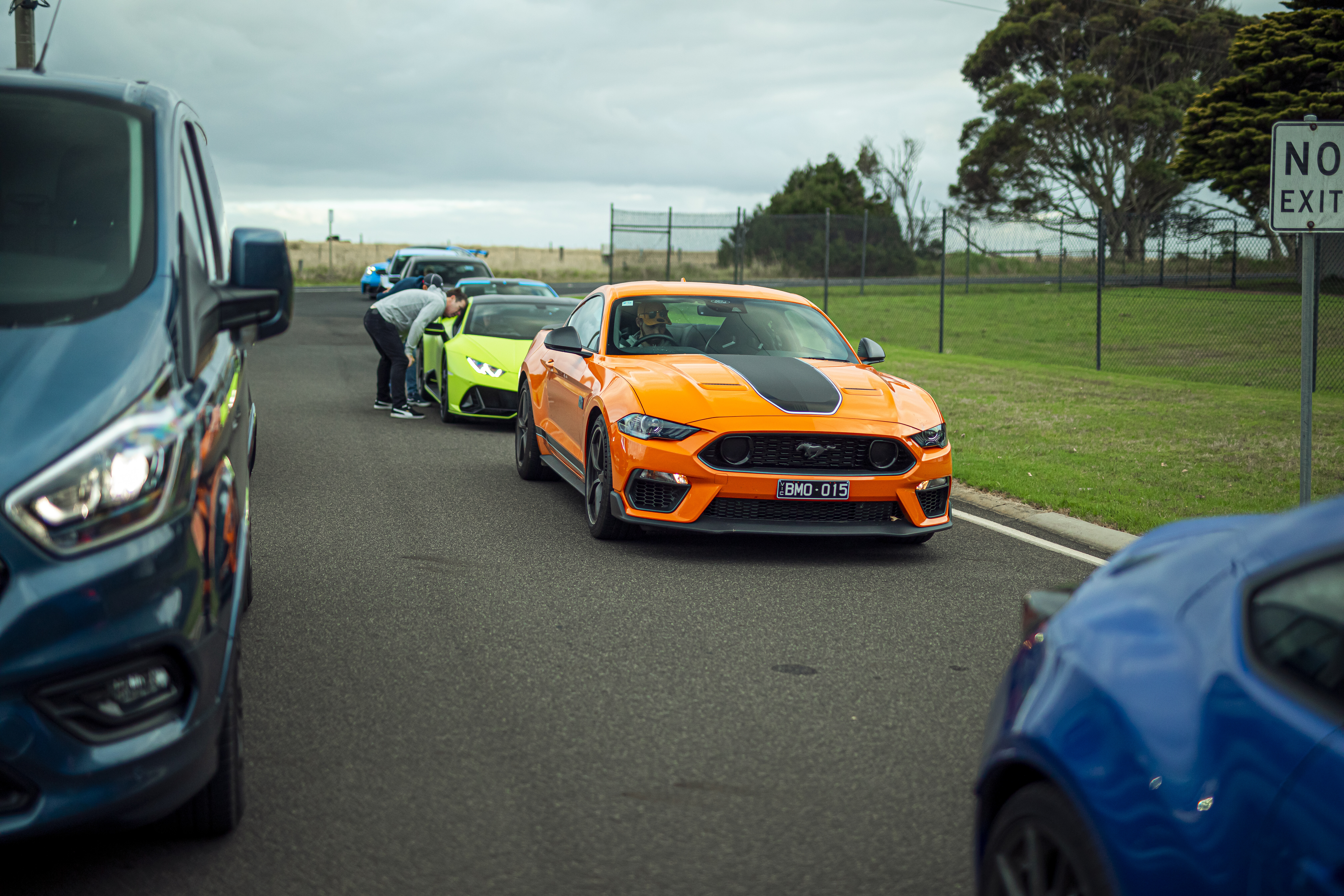
If power for pennies is the name of your game, the Mustang Mach 1 is the player to watch. It’s the only V8 in the SCOTY field and, with 345kW/556Nm at the ready, is powerful enough to rub shoulders within the premium PCOTY field, yet its price sees it competing in the junior division. Power is one thing though, can it keep its cool throughout track testing? If it can, it’ll be the first Mustang in MOTOR history to survive the grueling circuit test.
Specs: 5038cc V8; 345kW; 556Nm; six-speed manual; $83,241
Skoda Octavia RS
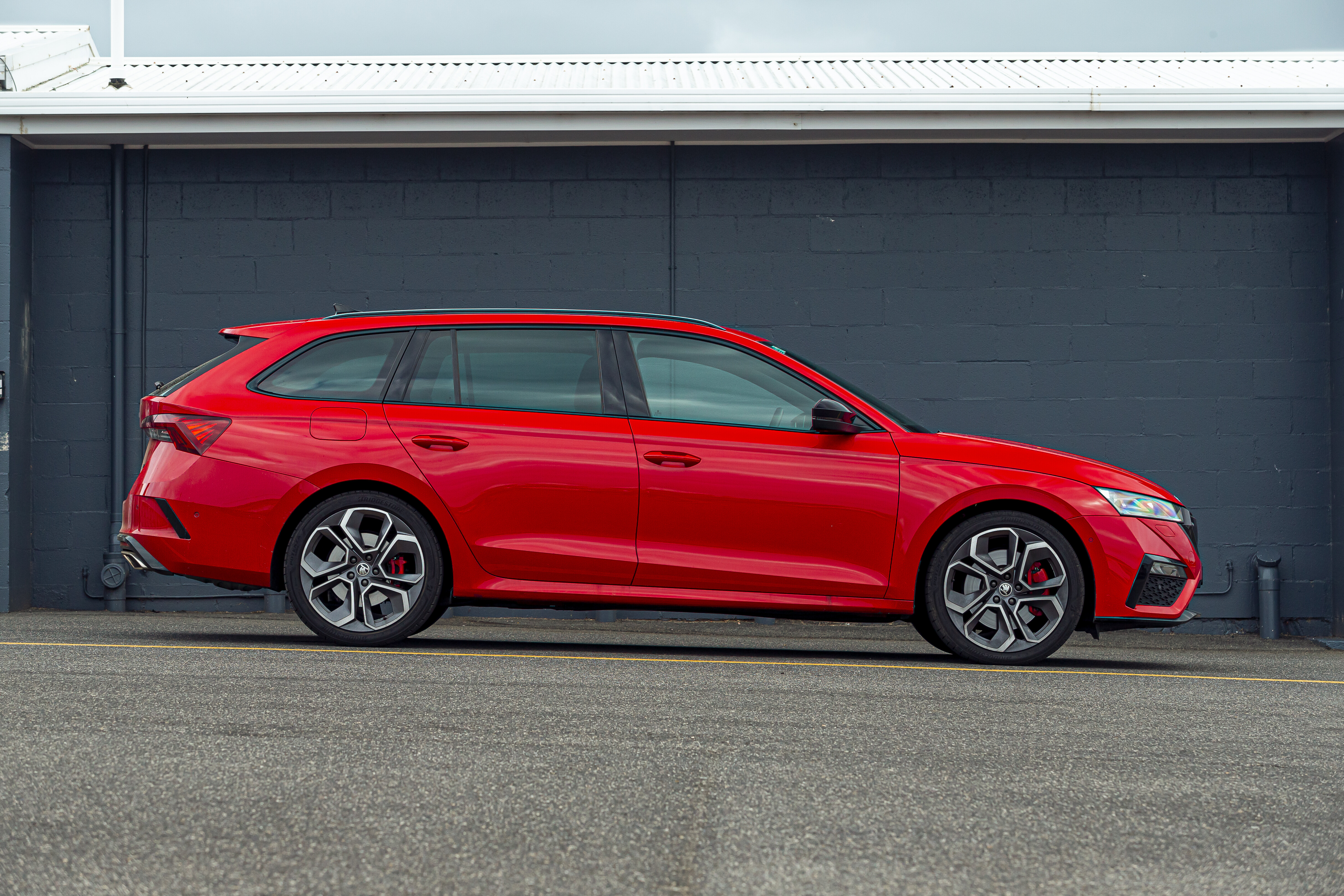
Skoda’s Octavia RS taps a tried and tested formula with many shared components with the Golf GTI, and delivers an identical output of 180kW/370Nm through its front-driven wheels. The cheeky Czech dials up the liveability factor with a practical wagon body and under-the-radar panache. Does it have the tough streak we’re looking for, though?
Specs: 1984cc inline-4: 180kW; 370Nm; 7-speed dual-clutch; $48,290
Subaru BRZ
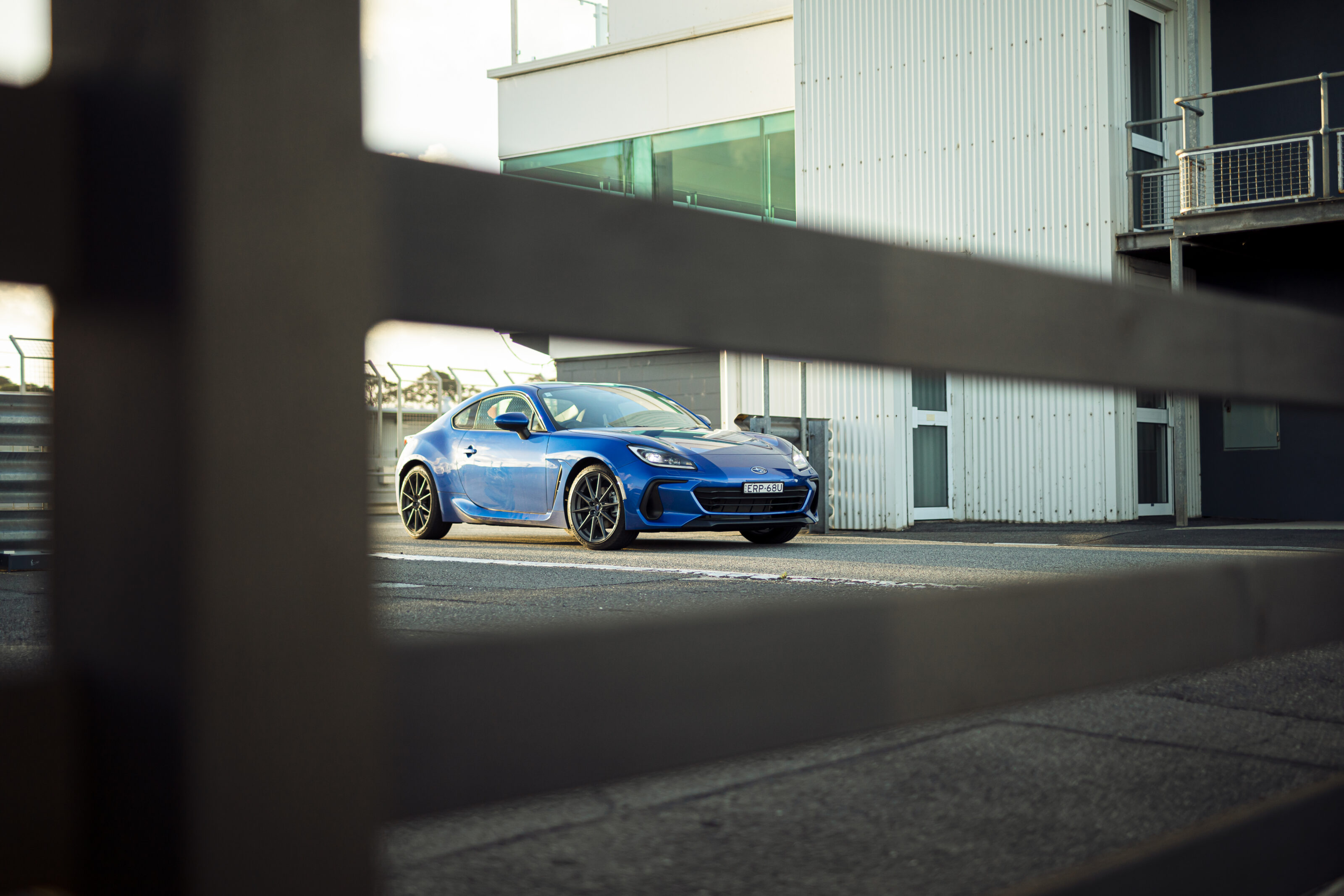
The second generation of Subaru’s BRZ sports coupe is here to answer for the shortcomings of its breakout predecessor. The attractive price remains, but has it lost its character? More importantly, does the extra 22kW and 38Nm from that new 2.4-litre engine make meaningful difference?
Specs: 2387cc; 174kW; 250Nm; 6-speed manual; $38,990
Toyota GR Yaris Rallye
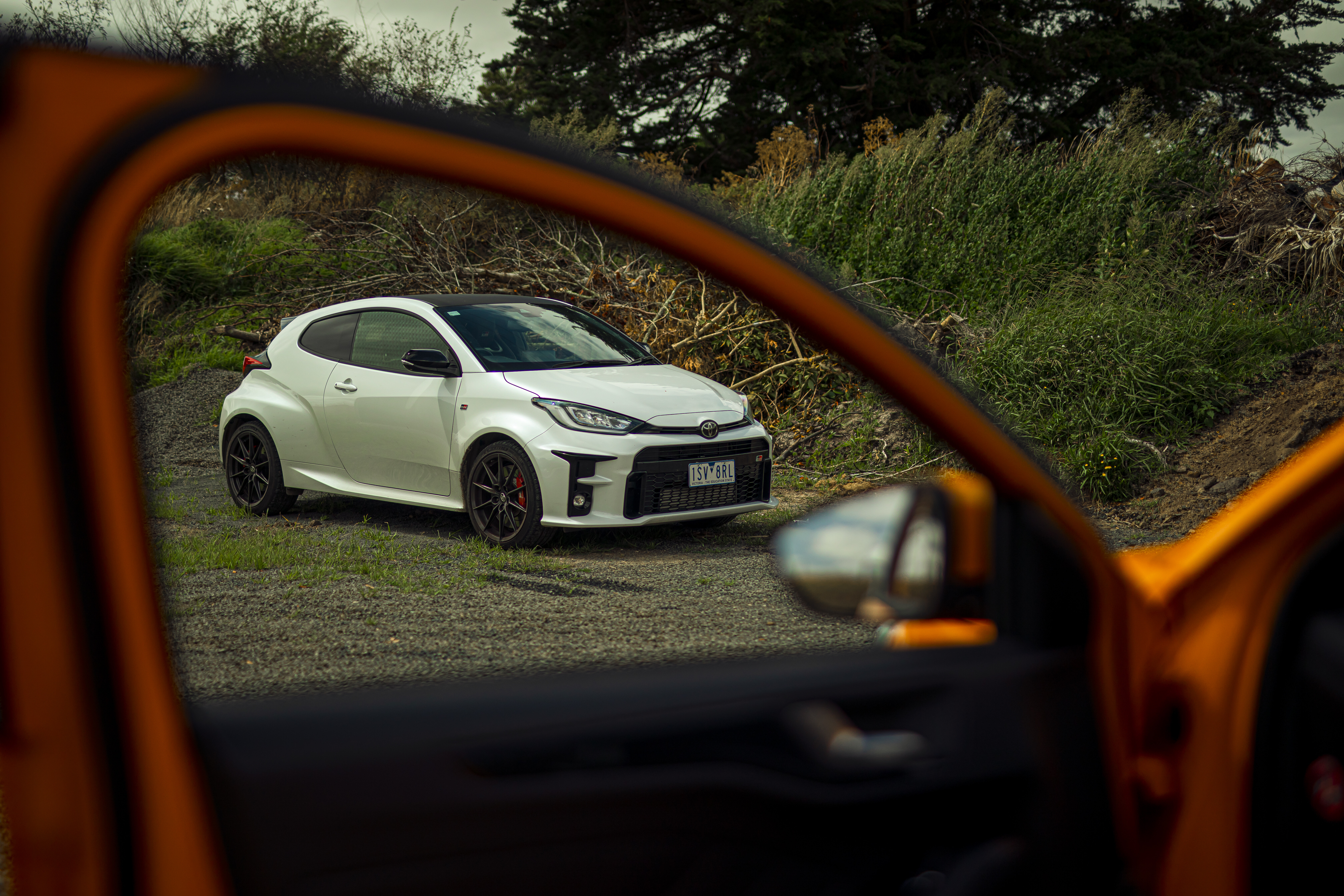
The basic GR Yaris rode a wave of hype into last year’s PCOTY proceedings, but was barrelled by crucial missing kit – namely Torsen differentials and Michelin Pilot Sport 4S tyres – and washed ashore in eighth place. The full-whack GR Yaris Rallye is here for redemption, but can the rally-honed hatch, and the sole AWD offering of the SCOTY field, improve on the result of its more affordable counterpart?
Specs: 1618cc inline-3; 200kW; 370Nm; 6-speed manual; $54,500
Who missed out?
It’s a big strong sub-$100k field but there are a few players that couldn’t make game day. BMW missed the cut with a couple of contenders. We suspect the new M240i would have done well and the M2 CS’s price would have seen it teetering on the cusp of the two categories. Audi’s new S3 also just missed out timewise, as did the Cupra Leon so look for ‘em in next year’s running.
Snapshot
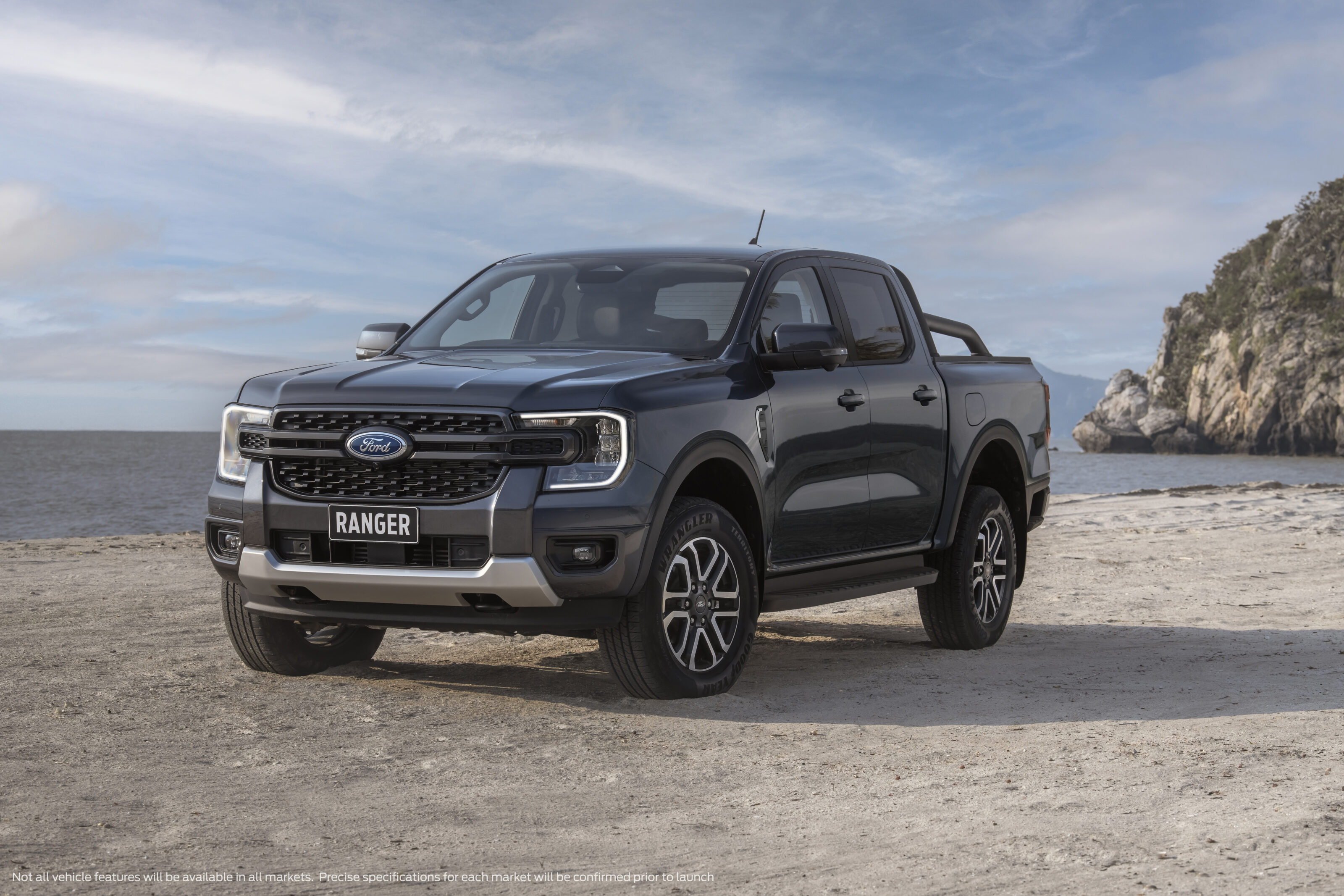
- New Ranger to launch locally with six grades
- Maximum towing capacity of 3500kg available with diesel variants
- Local launch expected in the second half of 2022
UPDATE, July 2022: New Ford Ranger review – it’s here at last
The new 2023 Ford Ranger is now on sale in Australia, and the local media launch has been run. The Wheels and 4×4 Australia teams have both driven the new Ranger, and you can find their stories at the links below.
Story continues…
UPDATE, April 7, 2022: Australian pricing for the new 2023 Ford Ranger has now been revealed. Get the full details at the link below.
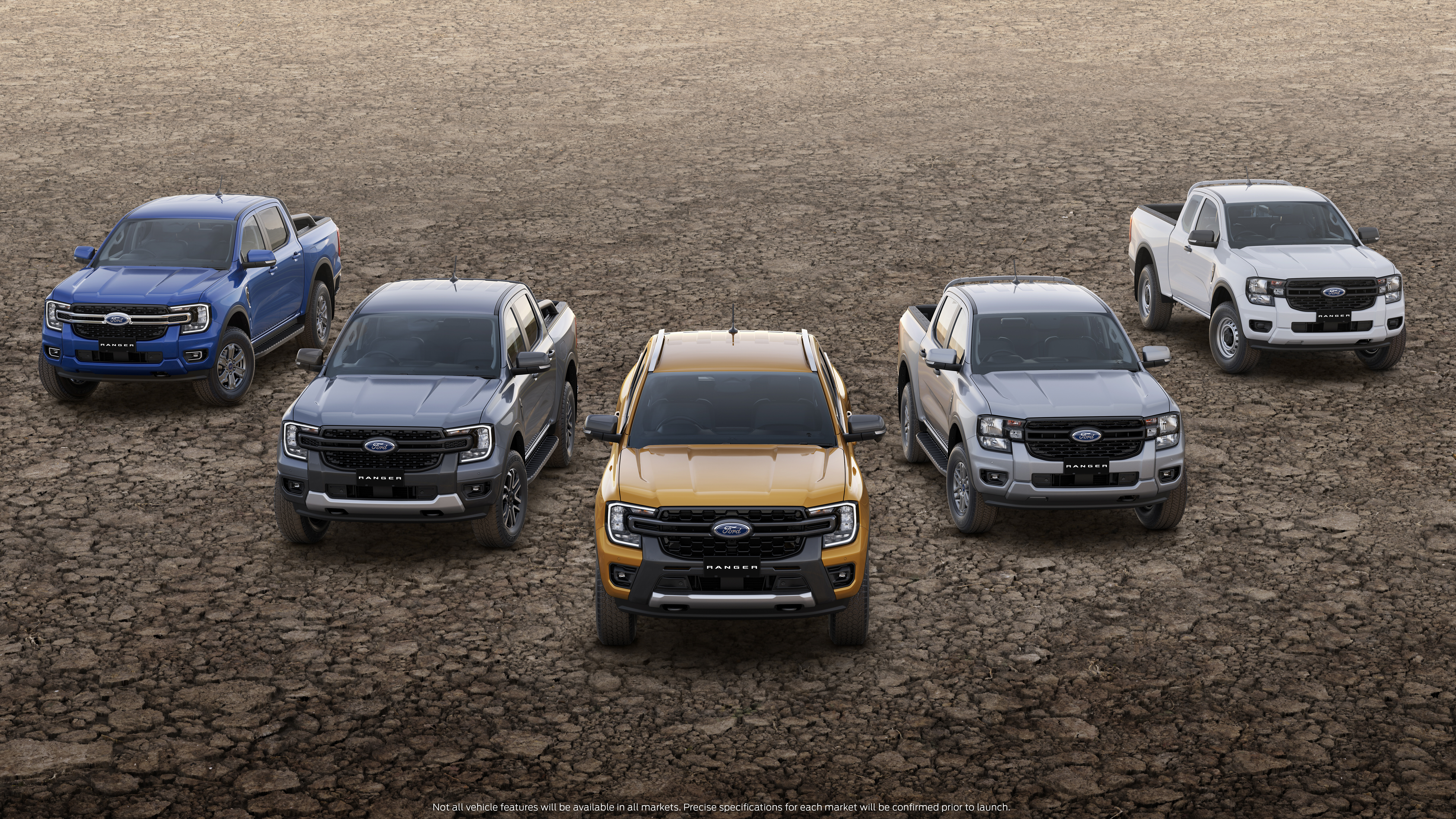
March 24: The upcoming next-generation Ford Ranger will come to Australia in six different grades, ranging from the entry-level XL to the flagship Raptor.
Launched in November last year as the replacement of the current generation Ranger, which has been in service since 2011, the newest iteration is aimed at securing Ford’s place at the top of the sales charts – not only by building on the success of the outgoing model, but beating its rivals across the board.
While pricing hasn’t yet been announced, Ford has announced detailed information for the upcoming Ranger, which is expected to launch in the second half of 2022.
Features
Starting out with the base XL variant, the Ranger is equipped with standard features such as:
XL
| 2.0-litre single-turbo diesel with six-speed auto or bi-turbo diesel with ten-speed auto |
| 4×2 or 4×4 |
| Locking rear differential (standard on 4×4, optional for 4×2) |
| Front disc, rear drum brakes |
| Five body styles u2013 single cab chassis, super cab chassis, double cab chassis, super cab pick-up, double cab pick-up |
| Trailer tow body wiring (tow bar optional) |
| Steel underbody protection including transfer case |
| 16-inch steel wheels and full-size spare |
| Halogen daytime running lights |
| LED tail lamps (pick up), halogen tail lamps (cab chassis) |
| Tailgate with lift assist (pick-up only) |
| Vinyl floor covering |
| Eight-way manual driver seat, four-way manual front passenger seat with ebony cloth seat trim |
| Power rear windows (double cab only) |
| Single zone climate control |
| 10.1-inch LCD portrait touchscreen |
| Embedded modem |
| Remote start (via FordPass App) |
| SYNC 4A infotainment system (with wireless Apple CarPlay/Android Auto) |
| Coast-to-coast instrument panel with smart storage solutions |
| Eight-inch colour digital instrument cluster |
| Tilt and telescopic steering column |
Moving up to the XLS, buyers are treated to additional equipment, including:
XLS
| 2.0-litre bi-turbo diesel with ten-speed auto |
| Four drive modes (normal, eco, slippery, tow/haul) |
| Dual-cab pick-up only |
| Black side-steps |
| Halogen front fog lamps |
| Black front grille with silver accents, halogen headlamps, daytime running lamps |
| 16-inch alloy wheels in dark sparkle silver finish |
| 16-inch steel spare |
| Power Tailgate lock |
| Carpet flooring |
| Driver floor mat |
| Six-speaker audio system |
The XLT is the next variant on the list, scoring the following on top of the XLS:
XLT
| 2.0-litre bi-turbo diesel with ten-speed auto or 3.0-litre V6 turbo diesel with 10-speed auto |
| e-Shifter (V6 only) |
| Electronic parking brake |
| Rear disc brakes |
| Three body styles u2013 double cab chassis (V6 only, super cab pick-up (bi-turbo only), double cab pick-up (also available in 4×2 bi-turbo only) |
| Body coloured mirrors and door handles |
| Tow bar |
| 4×2 locking rear axle |
| Prominent upper front grille with chrome central baru00a0 |
| LED headlamps |
| C-Clamp LED daytime running lamps |
| 17-inch alloy wheels in dark sparkle silver finishu00a0 |
| 17-inch steel spare |
| Black sports bar (pick-up only)u00a0 |
| Rear box illumination (pick-up only) |
| Bed-liner including 12-volt socket (super sab is fitted with a spray-in bed-liner including a 12-volt socket) |
| Dual zone climate control |
| Embedded satellite navigation/TMC/DAB radio |
| Embedded voice assistant |
| Leather wrapped steering wheel and gear shifter |
| Smart keyless entry with push button start |
| Electrochromatic mirror |
The Sport grade returns too as the next cab off the rank, available as a 4×4 dual-cab only with equipment above the XLT such as:
Sport
| 4×4 only |
| Six rotary select drive modes (normal, eco, slippery, tow/haul, sand, mud/ruts) |
| Double cab pick-up only |
| Dark accent grilleu00a0 |
| LED front fog lamps |
| Dark exterior accents |
| Two front-mounted tow hooks |
| Skid plate |
| 18-inch alloy wheels and spare with machined-face and asphalt black accent |
| Two front floor mats |
| Wireless charging |
| Off-road screen |
| Eight-way power driveru2019s seat, eight-way manual passenger seat with ebony leather accents, u2018SPORTu2019 embossing |

Maintaining its place as the range-topping diesel variant, the Wildtrak adds even more equipment, including:
Wildtrak
| Unique Wildtrak front grille design with tough mesh painted in signature boulder grey accent |
| Integrated trailer brake controller |
| Exterior mirror with puddle lamps and zone lighting |
| Roof rails |
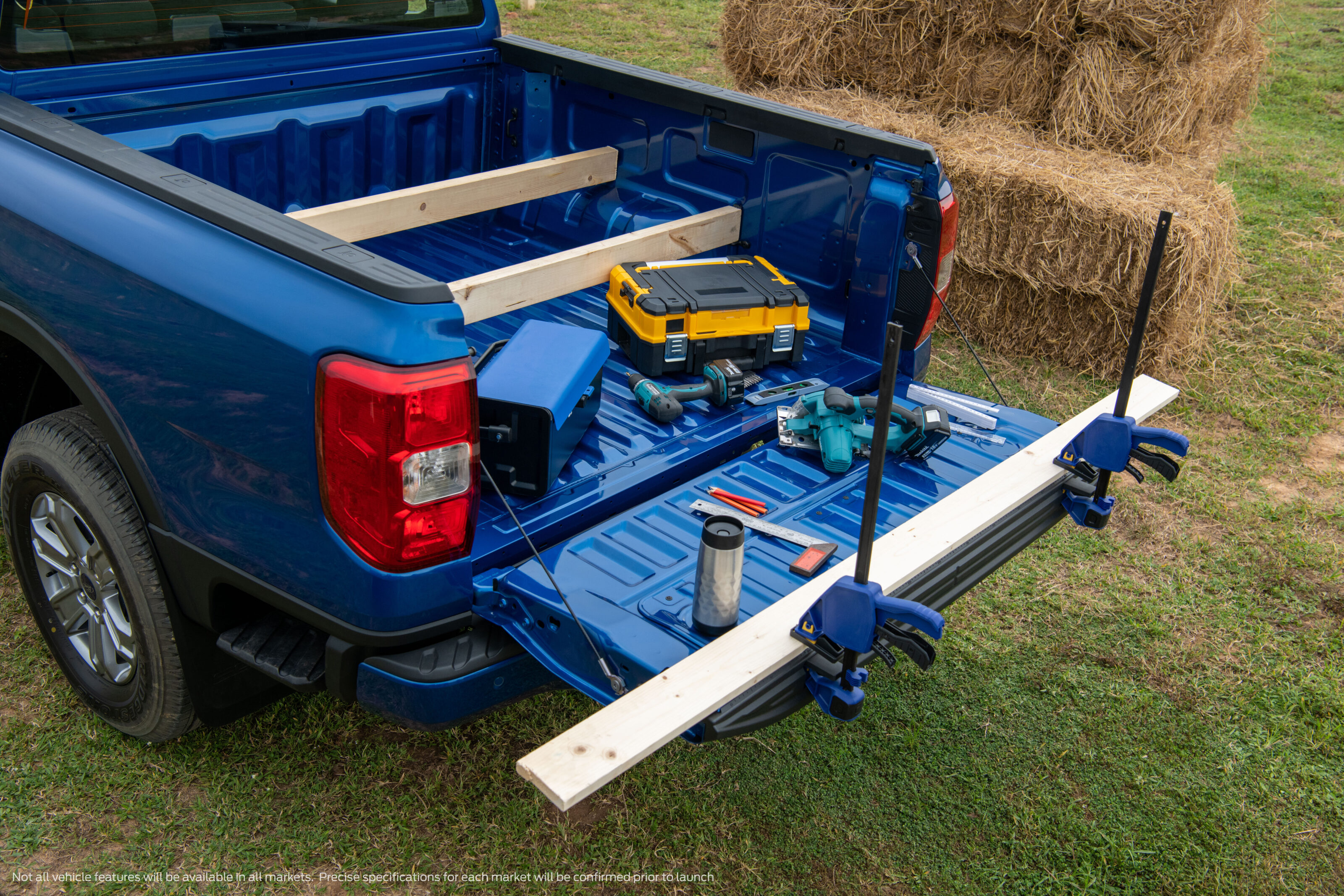
| Aluminium load box tie down rails |
| 18-inch alloy wheels painted in boulder grey, including matching spare with Goodyear Wrangler all-terrain tyres |
| Wildtrak moulded sports bar |
| Power roller shutter |
| Cargo management system |
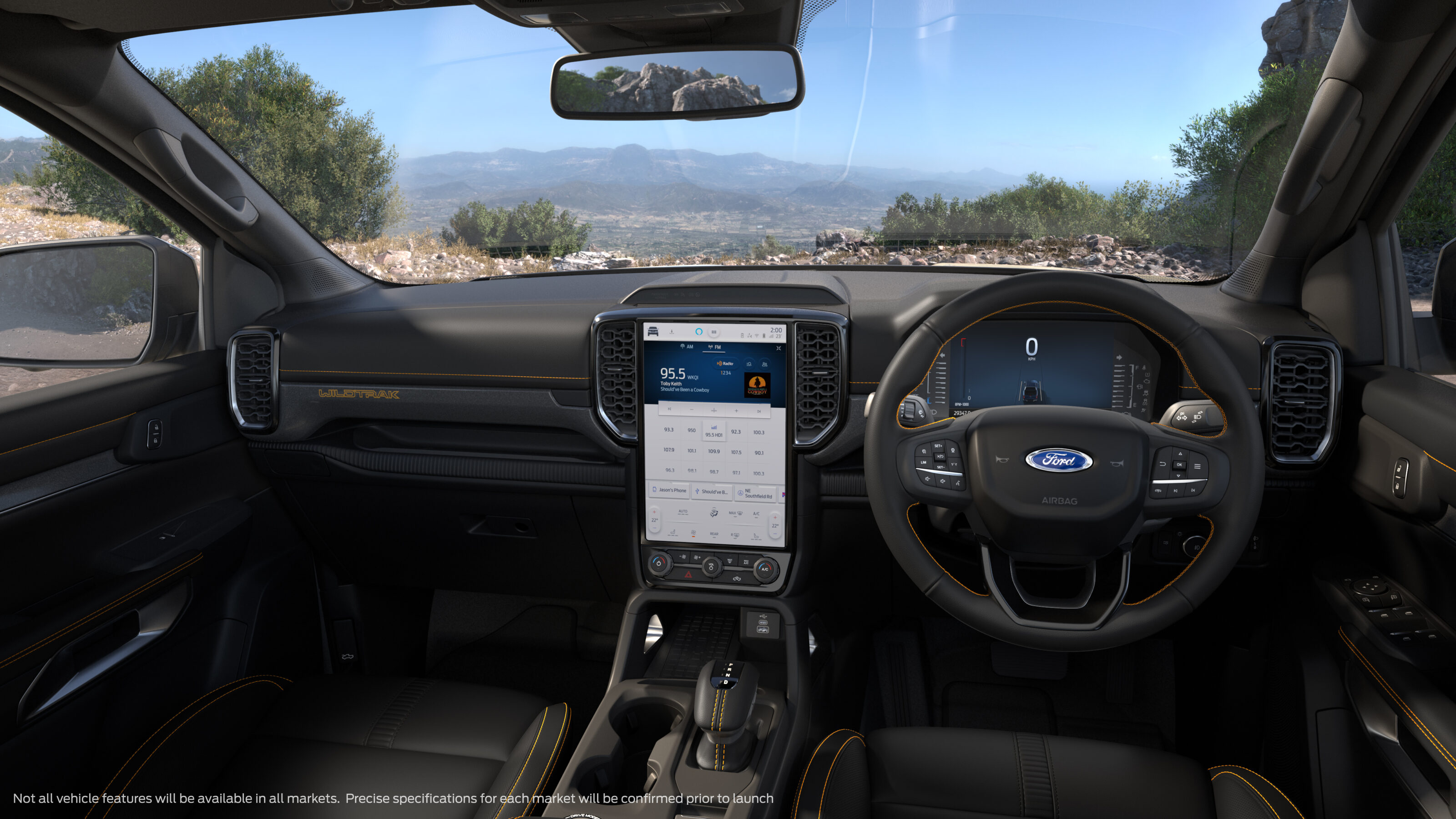
| Ambient lightingu00a0 |
| Pull-out cup holder |
| 12-inch colour touchscreen |
| Eight-way power adjustable driver and passenger front seats with heating and Wildtrak leather accents |
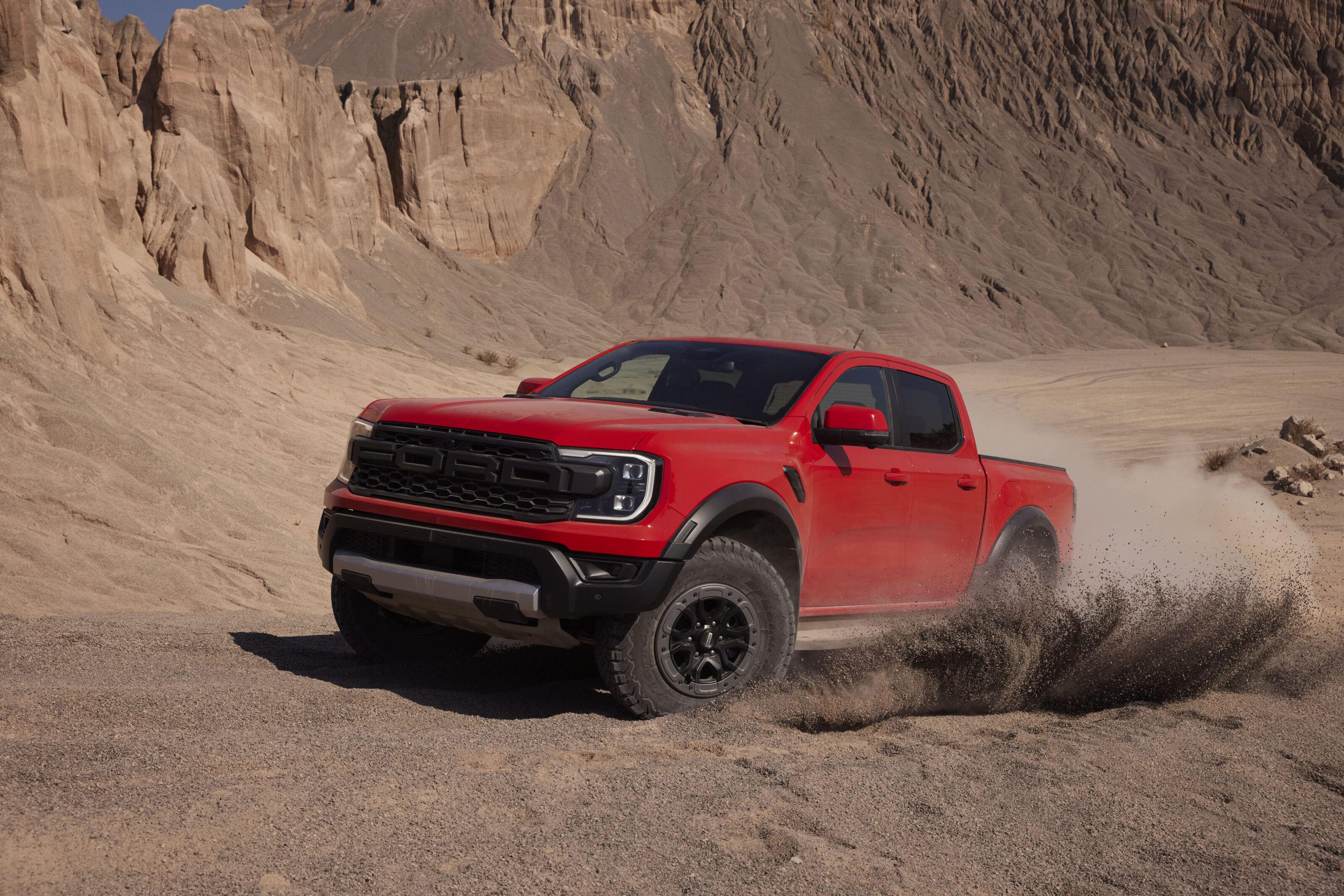
Finally the range-topping Raptor, boasting serious off-road credentials with the following features:
Raptor
| 3.0-litre V6 Twin-Turbo EcoBoost petrol engine with 10-speed automatic |
| Active exhaust |
| Fox racing 2.5-inch live valve suspension and Watts Link coil suspension |
| Electronic locking front differential |
| Full-time 4×4 |
| Unique u2018F-O-R-Du2019 block letter grille |
| Matrix LED headlamps auto dynamic levelling with LED daytime running lights |
| Full LED tail lamps |
| LED front fog lamps |
| 2.3mm-thick front bash plate |
| Raptor dual tow hooks |
| Spray-in bed-liner |
| 17-inch alloy wheels with T285/70 R17 BF Goodrich K02 High Performance All Terrain tyres (beadlock capable wheels optional) |
| 12.4-inch customisable digital instrument cluster |
| Paddle shifters |
| Seven drive modes (normal, sport, slippery, mud/ruts, sand, Baja, rock crawl) |
Options
A number of optional packs will be made available for the Ranger line-up, all the way from the XL to the Wildtrak.
Towing Pack (XL/XLS only)
| Integrated trailer brake controller |
| Tow bar |
XLS Tech Pack
| SYNC 4A infotainment system with embedded satellite navigation/TMC/DAB radio |
| Dual-zone climate control |
| Second-row air vents |
| Smart keyless entry with push button start and body-coloured door handles |
Touring Pack (XLT/SPORT 4×4 pick-up only)
| Integrated trailer brake controller |
| 360-degree camera |
| Zone lighting |
Wildtrak Premium Pack
| Six overhead auxiliary switchesu00a0 |
| Matrix LED headlights |
| Full LED tail lamps |
| Premium Bang & Olufsen ten-speaker audio systemu00a0 |
Engine and drivetrain
As previously reported by Wheels, the next-gen 2023 Ford Ranger will be powered by a range of four engines across its six grades.
The entry-level XL is the only variant available with Ford’s 2.0-litre, single-turbo four-cylinder diesel engine, mated to a six-speed automatic transmission and developing 125kW and 405Nm.
Also available in the XL and above is a bi-turbo diesel version of the 2.0-litre engine, now pushing out 154kW and 500Nm, delivering its power to either the rear or all four wheels through a 10-speed automatic transmission.
New for 2023 is the 3.0-litre V6 turbo diesel, the Ranger’s first bent-six powerplant which is only available for the XLT, Sport and Wildtrak. It boasts a healthy power and torque improvement over the 2.0-litre options with 184kW and 600Nm on tap, again mated to a 10-speed auto.
Exclusive to the flagship Raptor is Ford’s 3.0-litre, twin-turbo ‘EcoBoost’ petrol V6 engine, dropping a small amount of torque to its diesel siblings at 583Nm, but delivering a much larger kick of power with 292kW on tap.
Dimensions and payload capacity
The 2023 Ford Ranger boasts a 50 millimetre longer wheelbase and 50mm wider track than the outgoing model, allowing the 1233-litre tub to accept a Euro pallet (1200x800mm) – though tub length changes from 1544mm to 2305mm depending on whether it’s a single-cab, extra-cab, or dual-cab.
Vehicle payload starts from a maximum of 958 kilograms on the Ranger XL 4×2 dual-cab pick-up, to the XL 4×4 single cab-chassis which offers the most payload capacity of 1327kg before a tray is fitted.
Ranger Sport, Wildtrak, and Raptor variants have payload numbers just shy of a tonne, while XLS and XLT models vary from 995kg to 1151kg.
The entire Ranger line-up enjoys a maximum braked towing capacity of 3500kg – except for the range-topping Raptor, which can only tow 2500kg braked – while the Ranger Wildtrak 4×4 dual-cab pick-up offers the highest GVM number at 3350kg.
Safety
While it hasn’t yet been rated by ANCAP, the new Ranger boasts a range of safety technologies, including:
| Nine airbags including driver and passenger knee |
| Adaptive Cruise Controlu00a0 |
| Collision mitigation (autonomous emergency braking, lane keep assist, lane departure warning, road edge detection) |
| Blind spot information system with cross traffic alert (pick-up only) |
| Reverse camera (pick-up only) |
| Rear parking sensors (pick-up only) |
| Trailer coverage (when factory tow pack is fitted) |
| Anti-lock brakes |
| Electronic stability control |
| Front parking sensors (XLS and up) |
| Rain sensing wipers (XLT and up) |
| Intelligent adaptive cruise control with traffic jam assist |
| Lane centering/stop and go (XLT and up) |
Availability
Ford has said the new Ranger will land in Australia in the second half of the year, with pricing set to be announced closer to the launch date.
It’s a perennial issue when it comes to MOTOR’s Performance Car of the Year crown. Award the trophy to something relatively accessible, such as the Honda Civic Type R in 2018, and many readers can’t countenance how a Honda can beat a Porsche. Go high, as we did last year with the stunning Mercedes-AMG GT-R Pro and others will question the victor’s relevance.
The answer, it seems, was staring us in the face all the time. Seasoned MOTOR readers will remember Bang For Your Bucks with some fondness, where more affordable cars got to face off and a real world champ would emerge.
Well that formula is back, albeit tweaked and incorporated into the PCOTY framework.
The winners of both Performance Car of the Year and Sports Car of the Year 2022 will be announced on Tuesday, March 29.
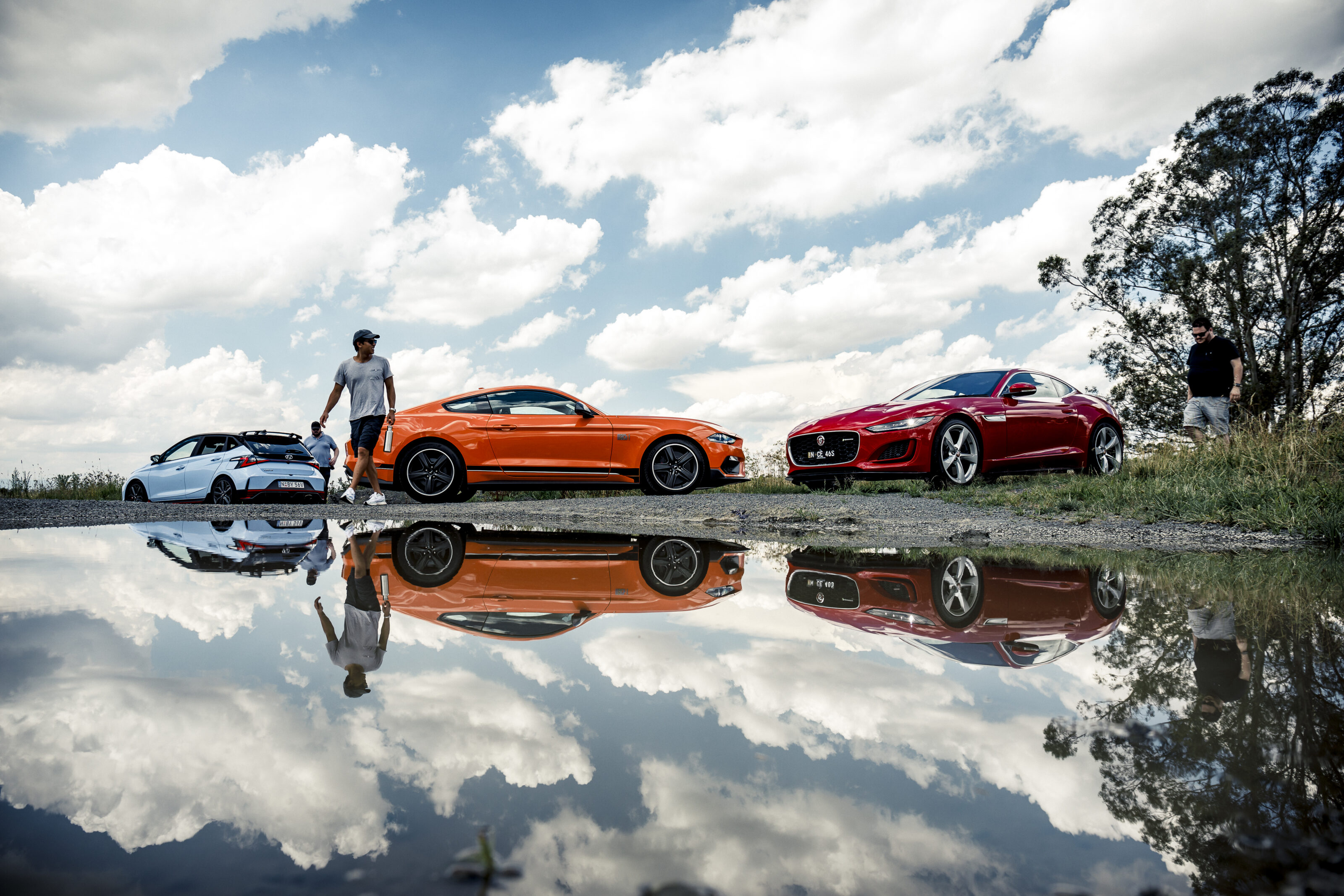
For 2022 there are two awards: a Sports Car of the Year award, in this instance for cars priced up to $100,000, and a Performance Car of the Year award for the more expensive machinery.
Both of these awards are judged not against the cars gathered, but against the time-honoured PCOTY criteria of performance, dynamics, accessibility, liveability, value and X-factor. Last year was the fastest and most powerful PCOTY field to date. We’re not about to issue too much in the way of spoilers here, but this year’s field was something really special, for both PCOTY and SCOTY.
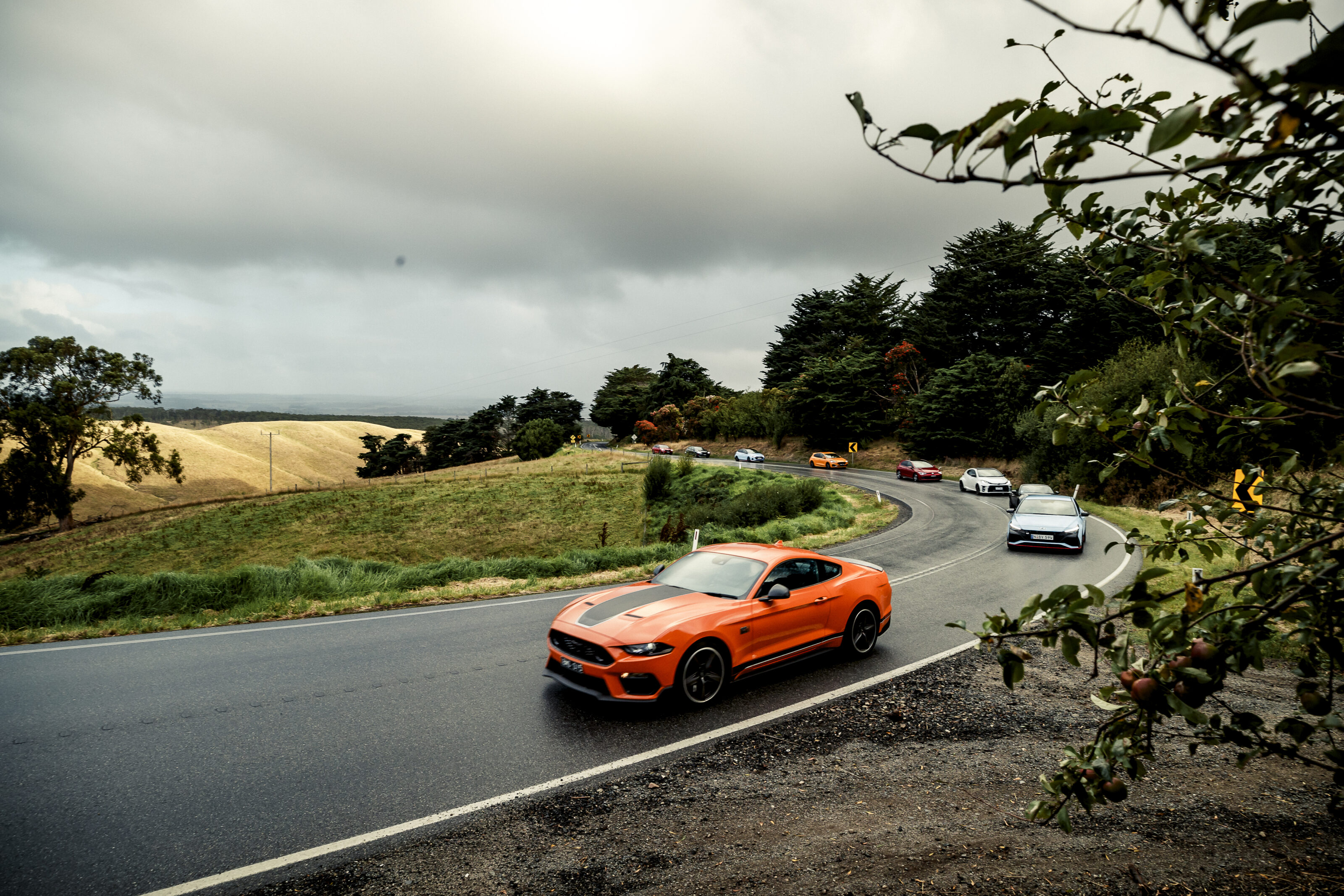
As much as we’ve loved Winton and its nearby high country roads, this year we took a break from the Benalla Motor Club and decamped south. Our home for the track element of the event was none other than Phillip Island Grand Prix Circuit, so we took a big measure of the brave pills and made sacrifices to the weather gods for benevolence.
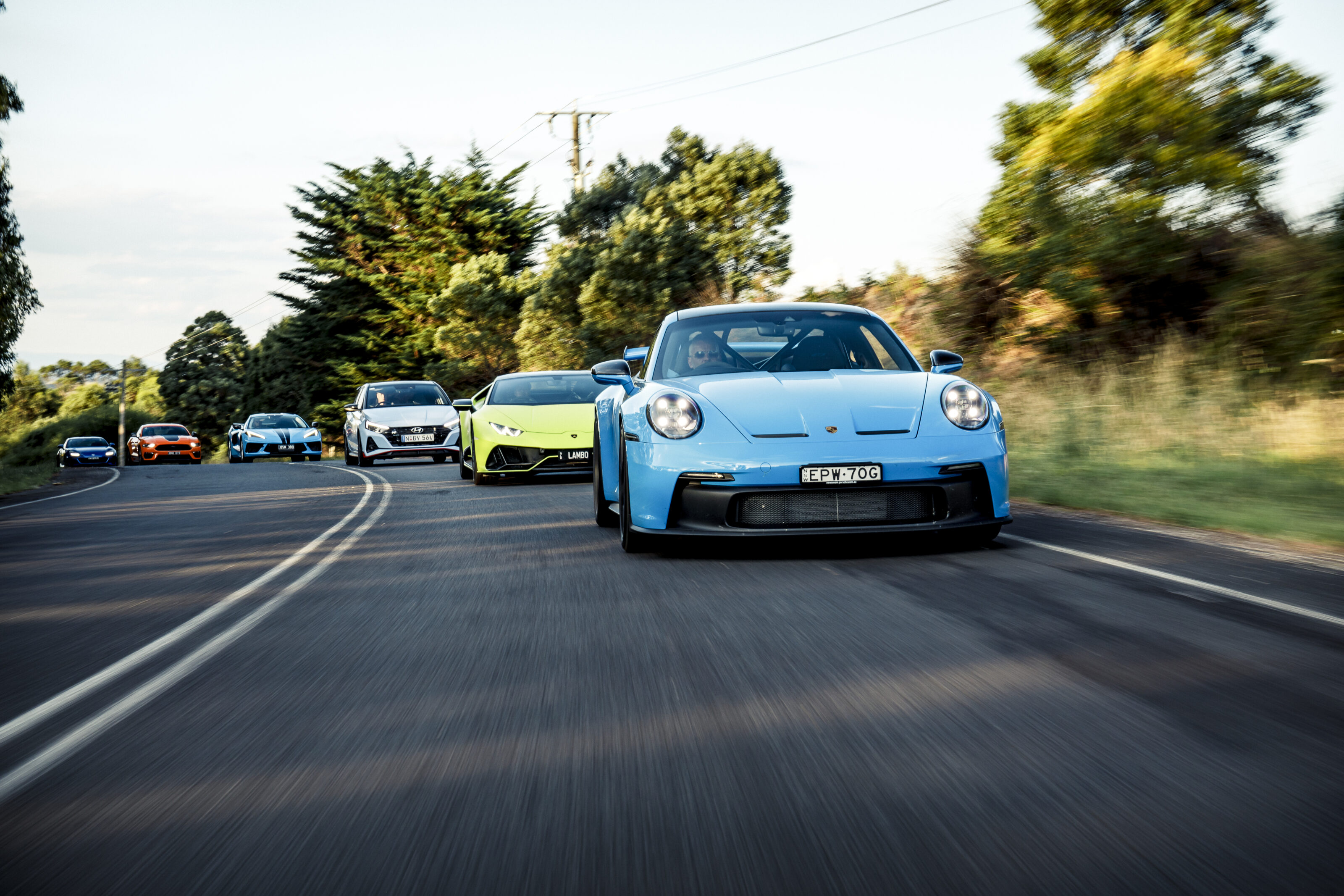
Just as important as the flat-out track action is the road section and for this we pulled a bit of a takeover on Wheels magazine’s turf. They’re normally pounding the roads around Korumburra in West Gippsland cow country but this year our colleagues across the aisle were bashing the bitumen over in the Brisbane Ranges, so we became temporary tenants of the Wheels test route.
The Sports Car of the Year event was contested between 10 contenders. The pre-event favourite was probably the Hyundai i20 N, but it faced tough competition from a sibling, the i30 Sedan N, the versatile Volkswagen Golf GTI Mk8, the revised Ford Focus ST and a couple of rear drive coupes in the shape of the new 2.4-litre Subaru BRZ and the Ford Mustang Mach 1. Throw in the Skoda Octavia RS, the BMW 128ti, the deranged Toyota GR Yaris Rallye and the lissom Mazda MX-5 GT RS and you have one heck of a field.
Star billing for PCOTY goes to Porsche’s long-awaited 992 GT3, but even that couldn’t hold a candle to the amount of attention garnered by the Corvette C8 and the Lamborghini Huracán Evo Fluo Capsule. It’s a vintage year for Porsches, with the Boxster 25 Years and the Taycan Turbo S also making the start list. BMW’s monster M3 gets to cosy up with the Alpina B3 while the beautiful and charismatic Jaguar F-Type P450 rear-wheel drive rounds out the field.
Keep your eyes peeled for the winner’s reveal, taking place on Tuesday March 29. And make sure you don’t miss next month’s bumper-sized magazine for two epic competitions, a tall stack of amazing photography from the best in the business, some beautiful writing and heaps of data. You’ll get that depth of coverage from no other Aussie outlet. Don’t miss out!
Subscribe to MOTOR Magazine here and save up to get Australia’s premier performance title delivered straight to your door!
UPDATE: Honda has priced a Hybrid variant for Australia
Honda has confirmed pricing and specification for a Hybrid Civic, dubbed the e:HEV LX.
The Civic Hybrid is priced from $55,000 driveaway in Australia and will go on sale from the first of December.
It’s a $7800 upcharge over the petrol, but it also brings leather upholstery, a bigger digital driver’s display and connected services.
The Civic Type R hot hatch has also been given an Aussie starting price, it retails at $72,600 driveaway. See the full price list below.
| 2023 Honda Civic price list (national driveaway) | |
|---|---|
| Civic VTi-LX | $47,200 |
| Honda Civic e:HEV LX | $55,000 |
| Honda Civic Type R | $72,600 |
The story to here
UPDATE March 24: Honda Civic e:HEV hybrid revealed
Snapshot
- 2022 Honda Civic e:HEV hybrid unveiled
- Pure-electric HR-V prototype shown alongside new SUV teaser
- Civic e:HEV hybrid expected in Australia in late 2022
The 2023 Honda Civic e:HEV hybrid has been unveiled overnight in Europe as one of three electrified models on the way from the Japanese carmaker.
Alongside the Civic hybrid, Honda also showed off the e:Ny1 Prototype – a fully-electric version of the forthcoming 2022 Honda HR-V – which has evolved from the e:Prototype concept shown back in April 2021.
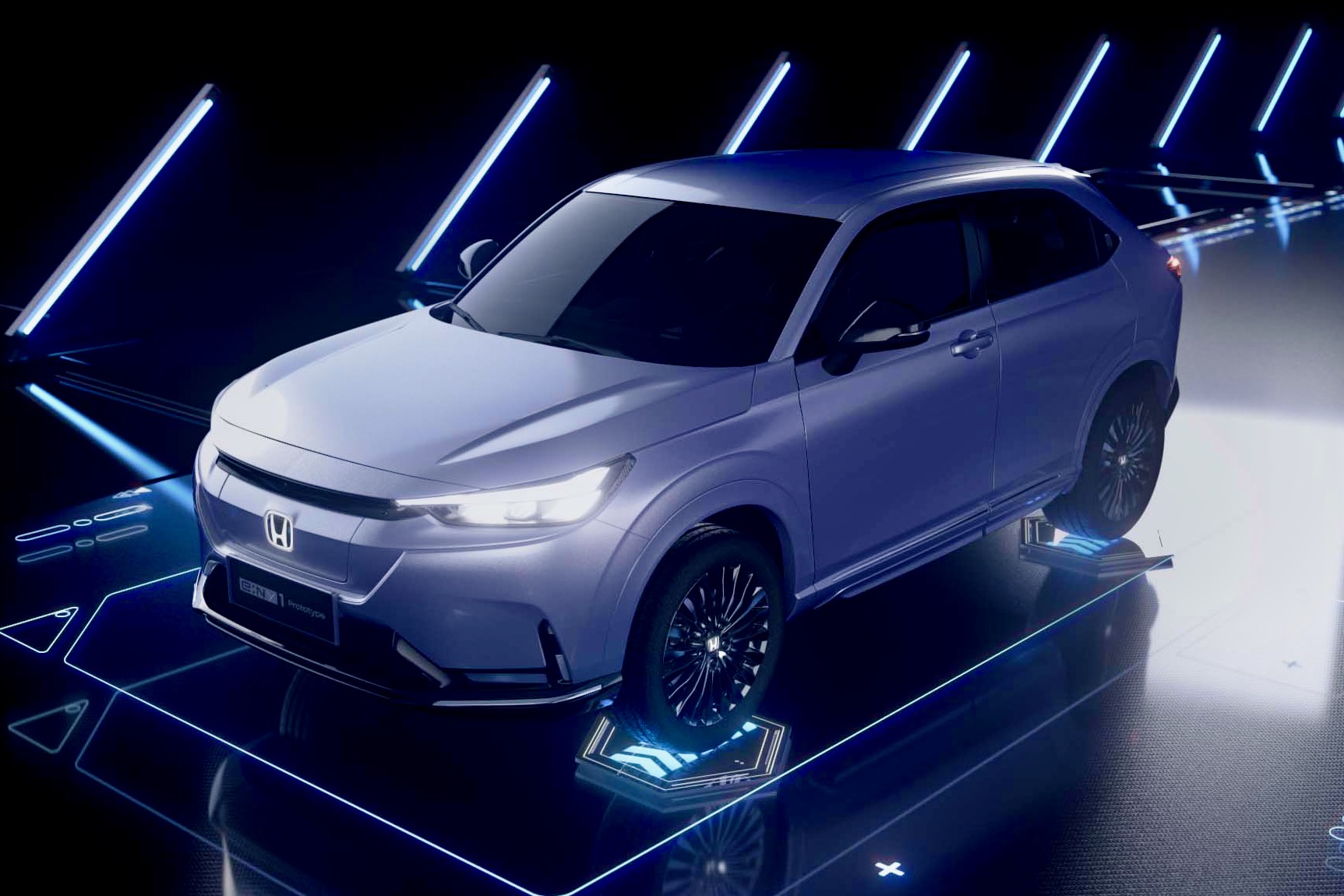
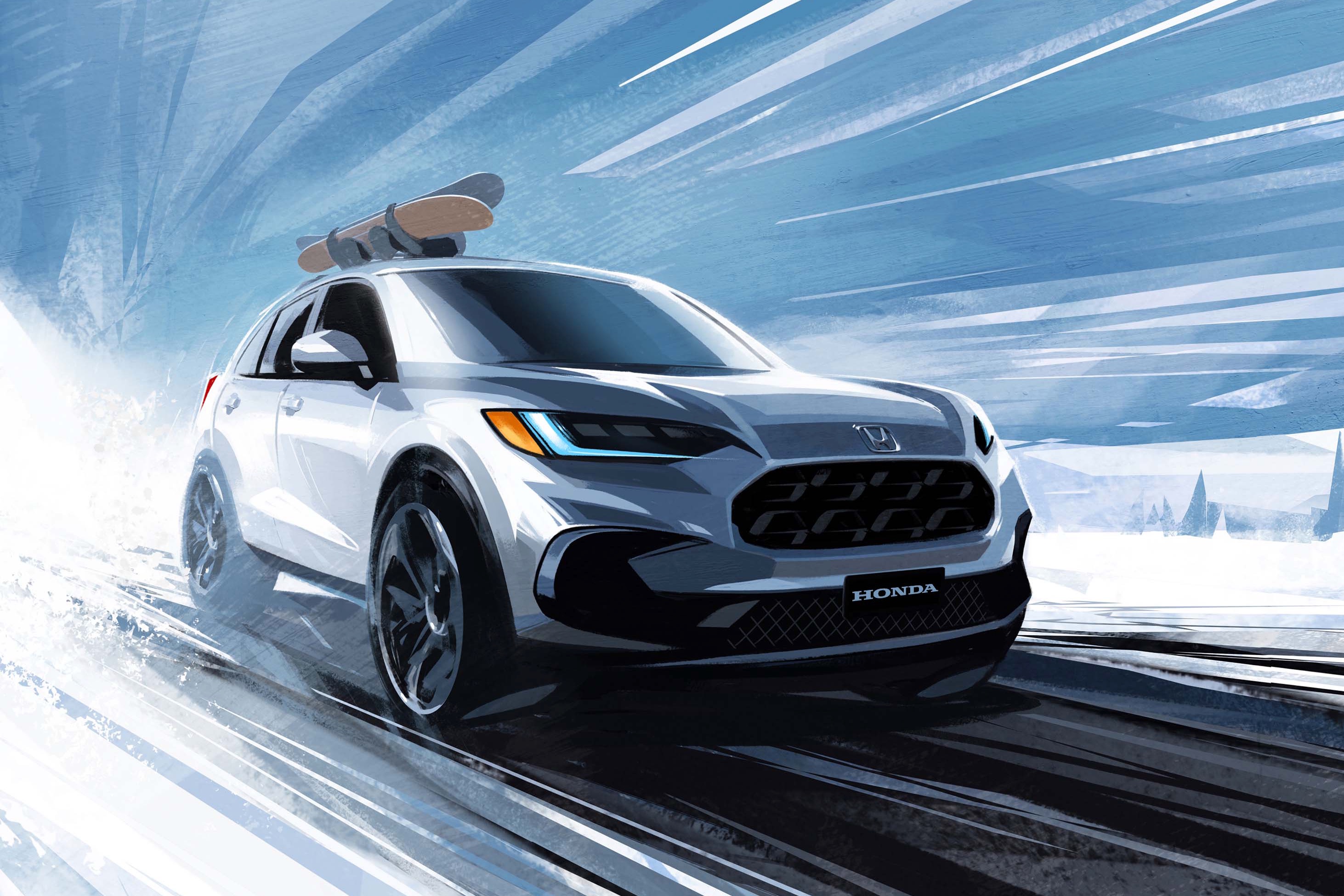
It appears as if Honda will introduce an all-new electrified SUV in Europe to sit between the HR-V and CR-V, releasing teaser images of the model. Just to confuse matters, these are the same teaser images shown by Honda USA in January, with the SUV to be badged as the HR-V in North America.
There’s no word on whether Australia is in line to get the pure-electric HR-V or Europe’s as-yet-unnamed mid-size SUV, but Honda has already confirmed to Wheels the Civic e:HEV hybrid will be offered locally.
The Civic hybrid is powered by a 2.0-litre four-cylinder, non-turbo petrol engine, mated to a self-charging hybrid-electric system producing 135kW and 315Nm – a negligible improvement over the standard Civic’s 131kW, but a healthy torque increase from the 240Nm produced by the non-hybrid’s 1.5-litre turbo engine.
Emissions for the 2.0-litre hybrid engine are listed as 110g/km, while fuel consumption is claimed at less than 5.0L/100km.
Though the car can be driven in either EV, Hybrid, or Engine modes, traditional hybrid vehicles such as the Civic e:HEV are typically only able to be driven in pure-electric mode at carpark speeds.
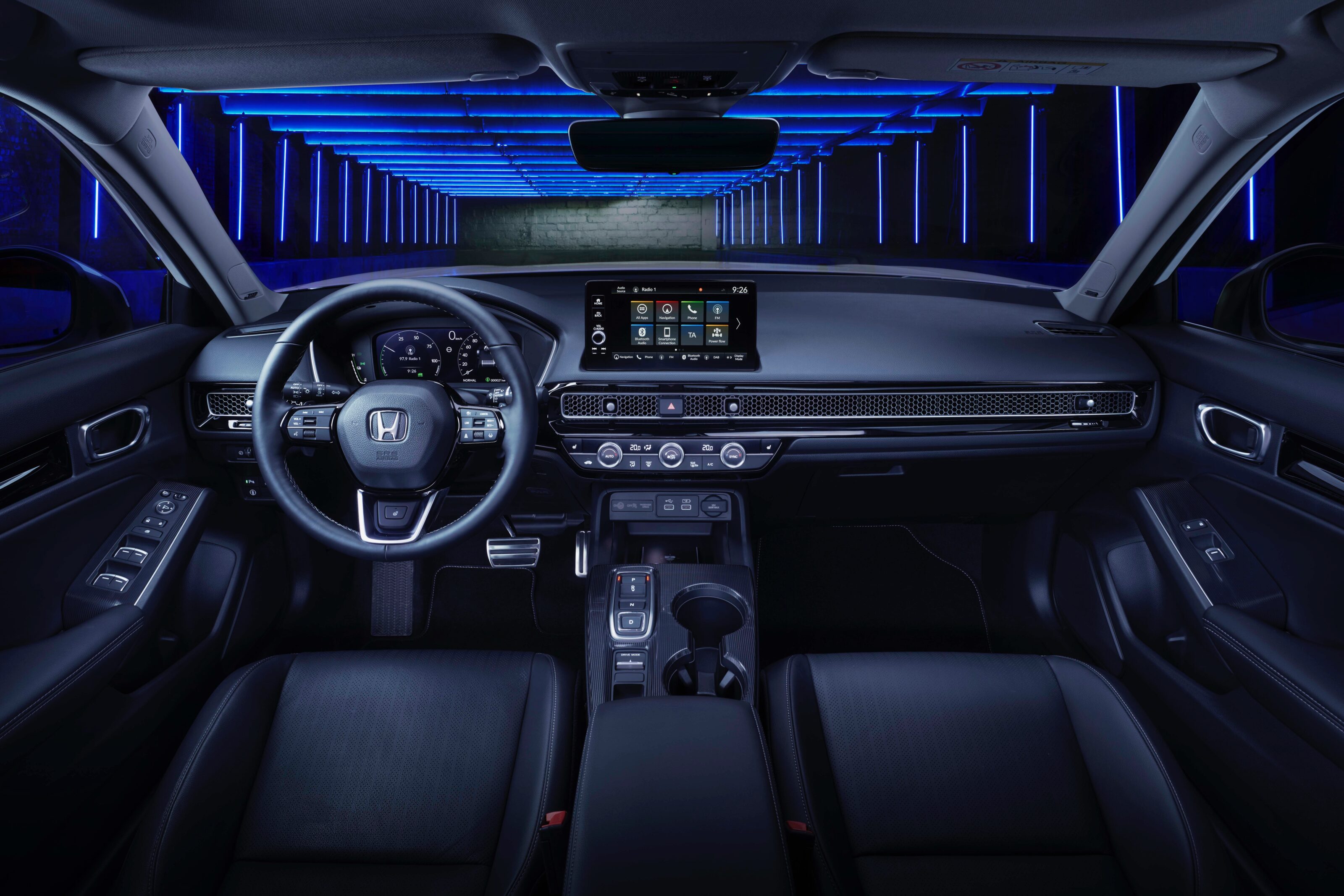
There’s little to distinguish the e:HEV from the rest of the non-hybrid Civic range, other than some badging and some minor changes to the rear bumper, but inside the model does away with a conventional shifter, replaced by ‘PRND’ selector buttons.
The 2022 Honda Civic e:HEV is expected to go on sale in Australia in the second half of 2022, with local pricing and specifications to be announced closer to its launch.
Snapshot
- New-generation Skoda Fabia Monte Carlo will come to Australia
- Sportier flagship to feature revised styling and unique badging
- Redesigned light hatch to launch in the third quarter of 2022
UPDATE, July 2022: Australian pricing announced for new Skoda Fabia
Local pricing and features for the new Skoda Fabia have now been revealed. Get all the details at the link below.
The story to here
March 24, 2022
The 2022 Skoda Fabia Monte Carlo has been confirmed for a local berth, set to land in Australian showrooms from the third quarter of the year.
Skoda will only bring the high-spec Monte Carlo Edition 150 variant to Australia initially with further grades to follow.
Powered by the 1.5-litre, turbocharged four-cylinder petrol engine rather than the 1.0-litre three-cylinder found in Europe, the Fabia will be available exclusively with a seven-speed dual-clutch automatic transmission, helping to deliver its 110kW and 250Nm to the front wheels.
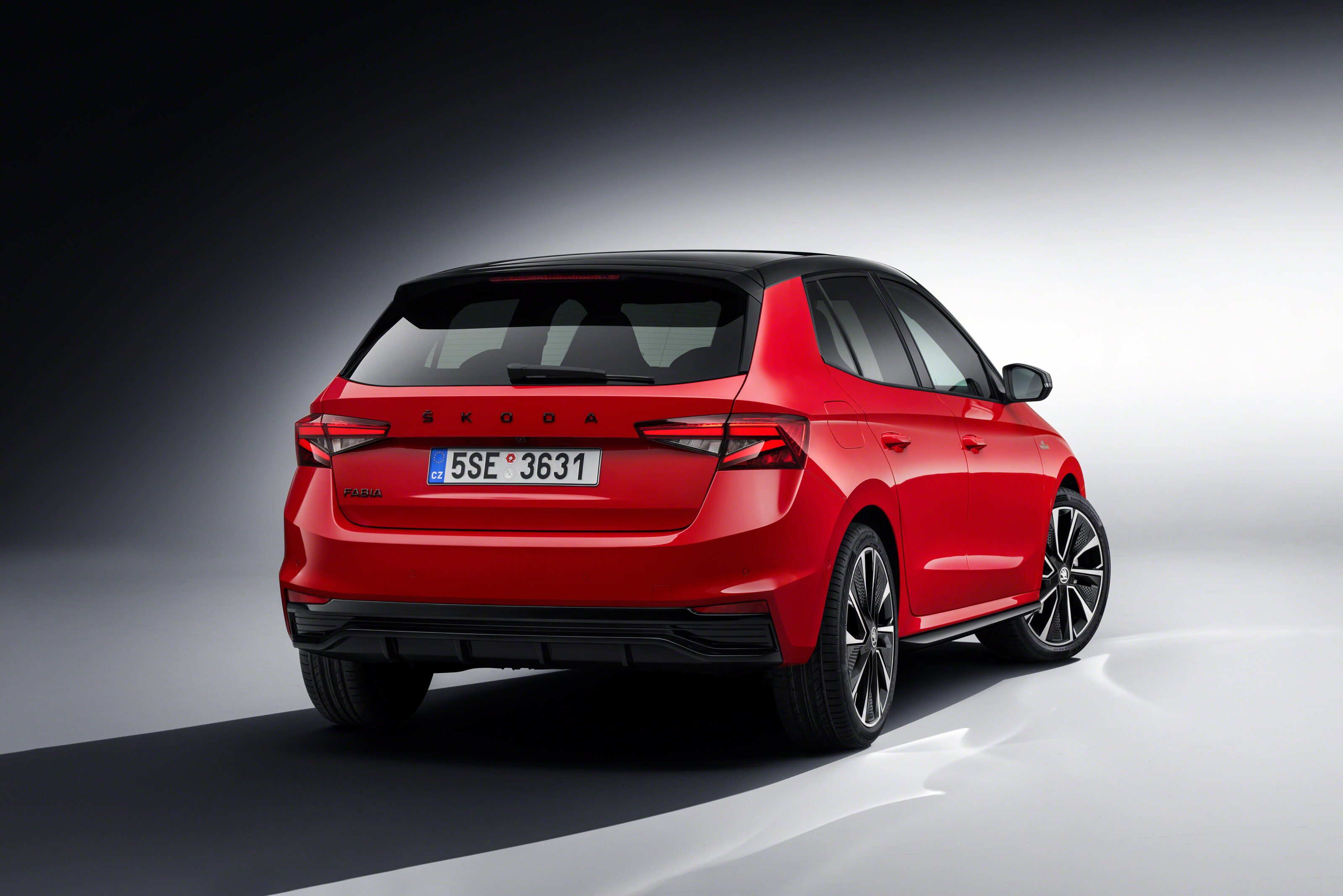
Those power and torque figures will provide a significant boost over the outgoing Fabia Monte Carlo, which could only manage 81kW and 200Nm from its turbocharged 1.0-litre three-pot engine, although it’s expected the new arrival will also come at a premium.
The previous MY21 Fabia Monte Carlo was the most expensive model in the nameplate’s Australian history, starting out at $28,490 before on-road costs, but with the upgrades across the board to the new model, it’s expected the list price could easily exceed $30,000.
Wheels will provide more Australia-specific details of the Fabia closer to the model’s local launch.
Read below for more information about the Fabia’s sole Australian variant.
February 16, 2022
Skoda has officially unveiled the 2022 Skoda Fabia Monte Carlo, the flagship variant of its Polo-sized hatchback.
As opposed to the rest of the Skoda range, where the RS badge adorns its range-topping grades, the Monte Carlo serves as the top-spec variant for the Fabia, continuing a tradition which has now lasted for three generations.
Under the bonnet is a choice of two engines – a 1.0-litre inline three-cylinder making 81kW, or a 1.5-litre four-cylinder unit which produces 110kW – with transmission options of a six-speed manual or seven-speed dual-clutch automatic for the former, while the latter is available as an auto only.
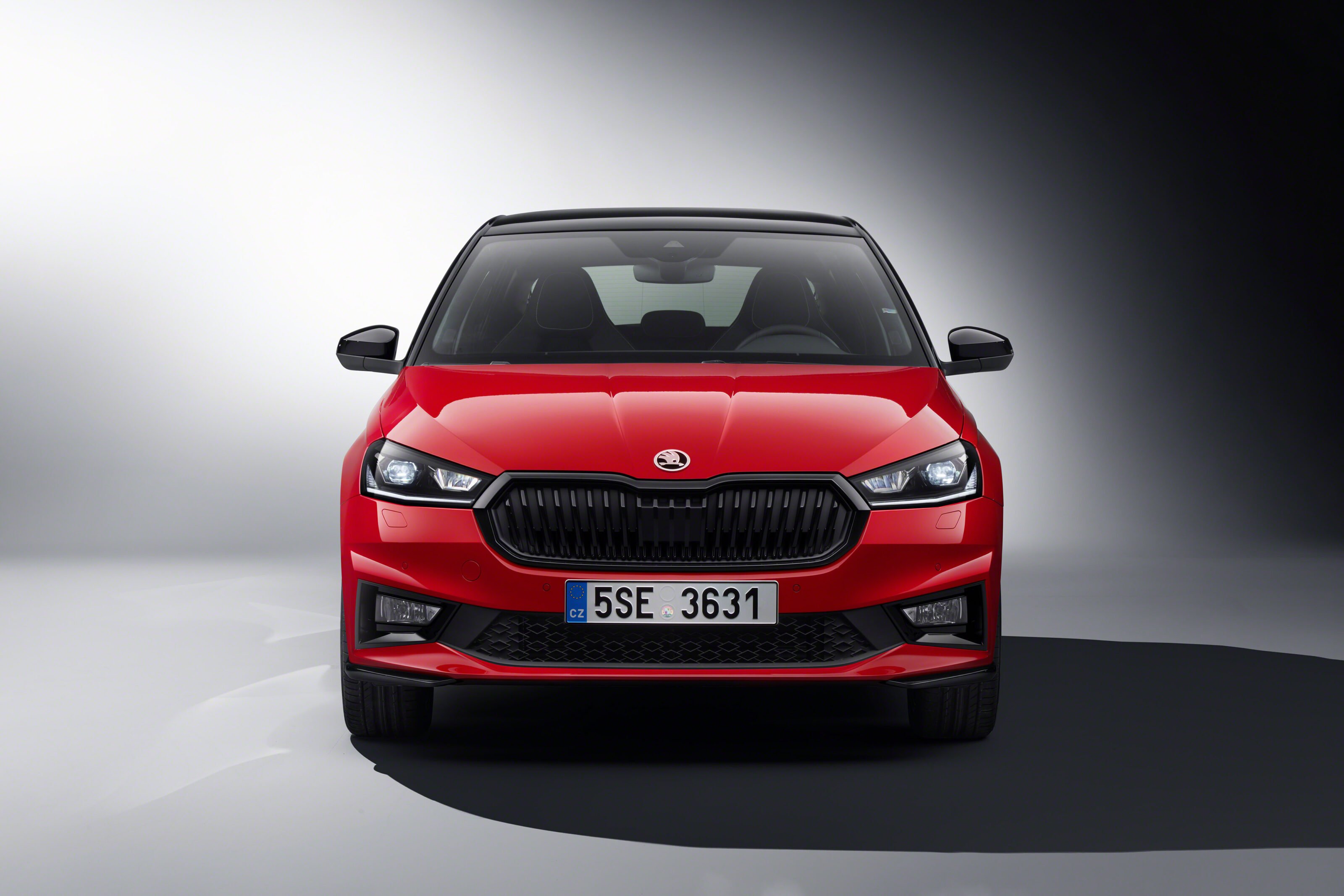
Riding on 17-inch wheels, the alloys feature Skoda’s new aero design – which aims to cut drag, working in tandem with its actively adjustable cooling shutter within the lower portion of the front bumper, bringing the Monte Carlo’s drag coefficient down to a class-leading 0.28.
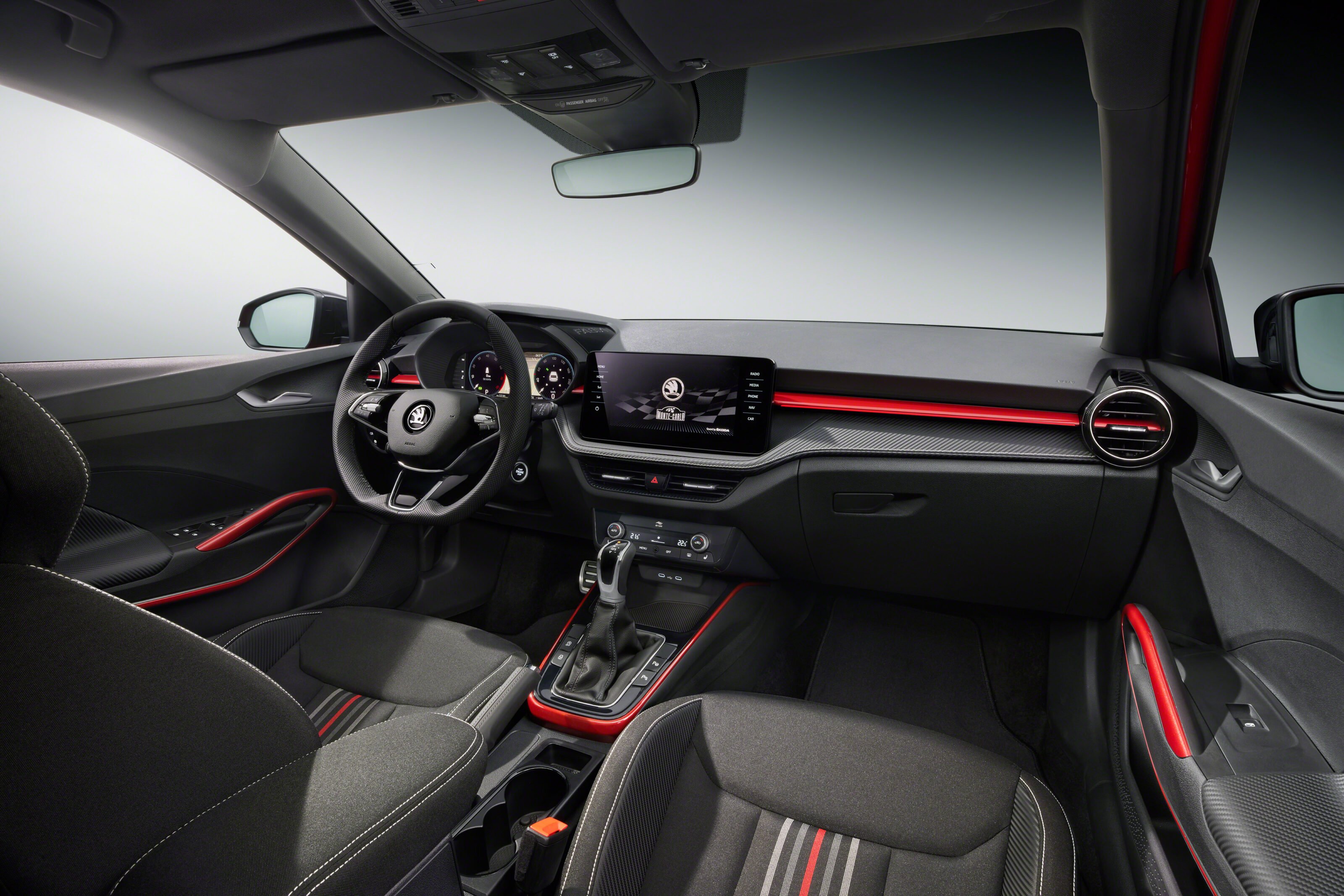
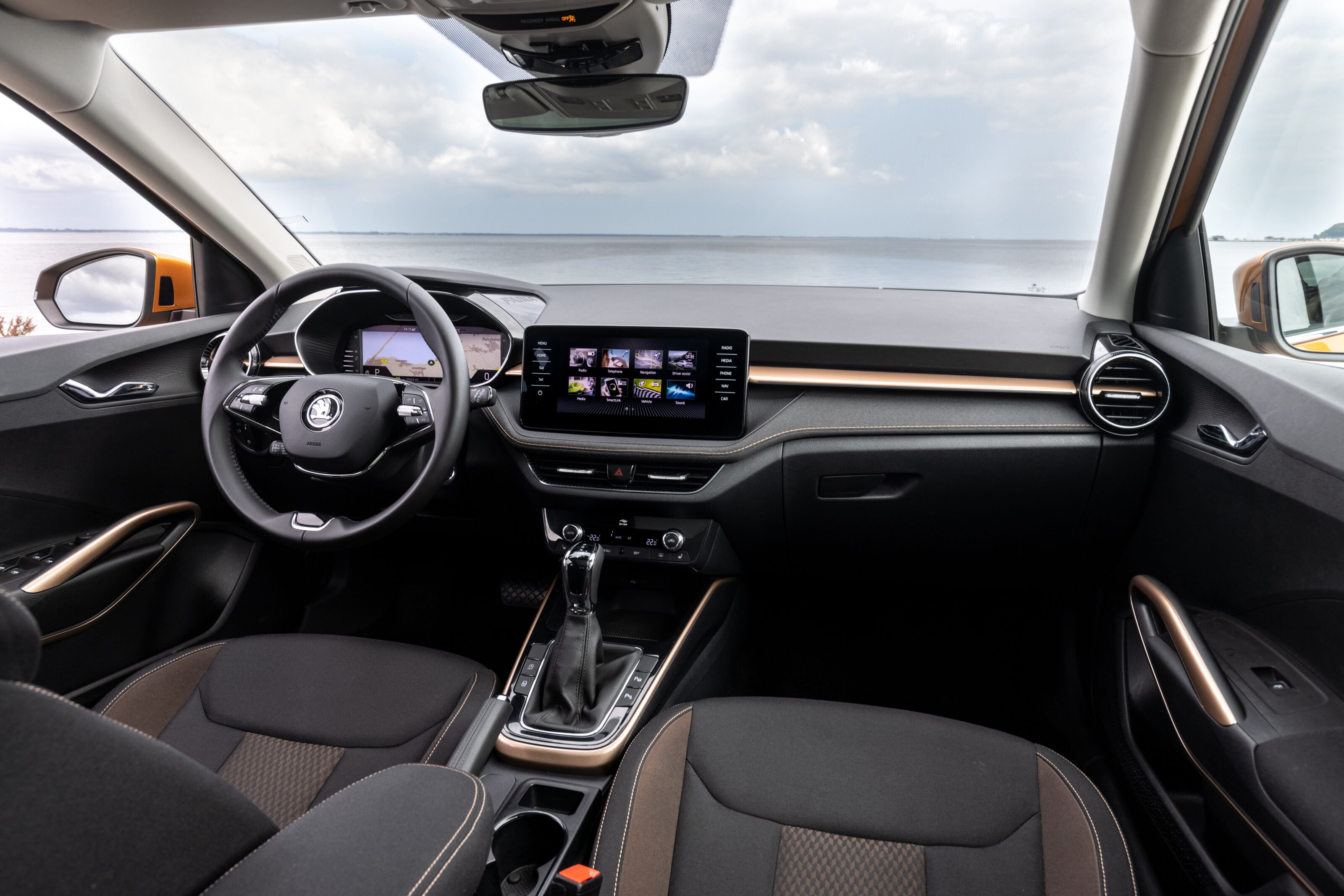
Inside the cabin, occupants are met with sports seats with integrated headrests, a three-spoke steering wheel and stainless steel pedals, giving the interior a racey feel.
Standard is a digital dashboard – the same 10.25-inch unit available in other Volkswagen Group products – while nine airbags within the cabin keep up to five occupants safe, helping the Fabia to its five-star Euro NCAP rating.
As yet unconfirmed for Australia, the Monte Carlo grade could join the incoming fourth-generation Fabia range, which is set to launch locally in the third quarter of this year.
February 9, 2022
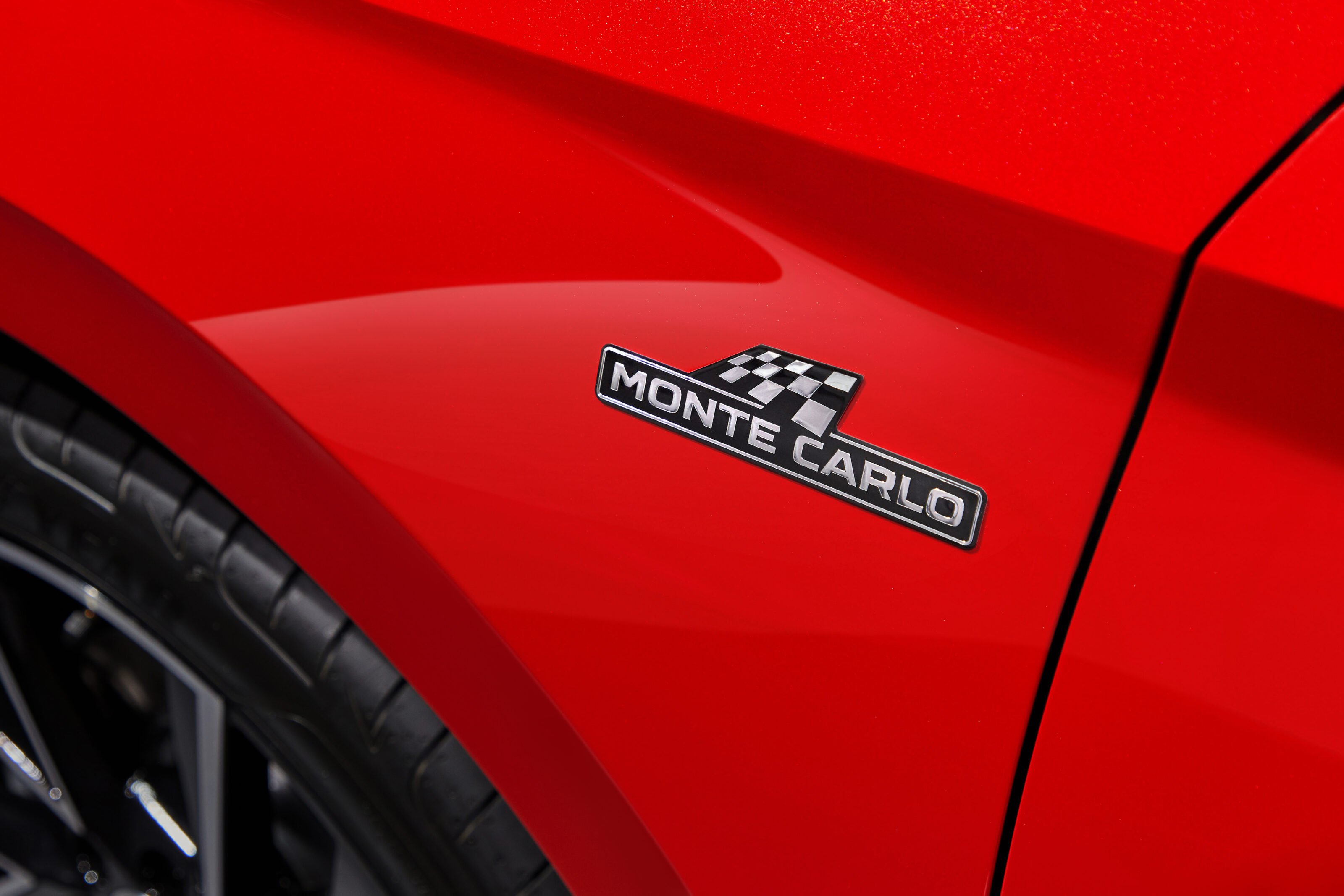
The first ‘real world’ teaser of the new 2022 Skoda Fabia Monte Carlo has been released, showing off the badge which is affixed to the hatchback’s guards.
As more information gets drip-fed ahead of its official reveal next week on February 15, the latest teaser shows off the new-generation Fabia’s angular lines and twisted wheel design, joining the design language of the hot models in Skoda’s stable.
Last week, Skoda’s Australian arm couldn’t confirm whether the Monte Carlo variant would arrive on local shores but hinted at a potential Launch Edition of the light hatchback, as its launch has potentially been pushed back from the start of May to the third quarter of 2022, owing to supply shortages.
February 3, 2022
Skoda has teased the 2022 Fabia Monte Carlo ahead of its February 15 unveiling.
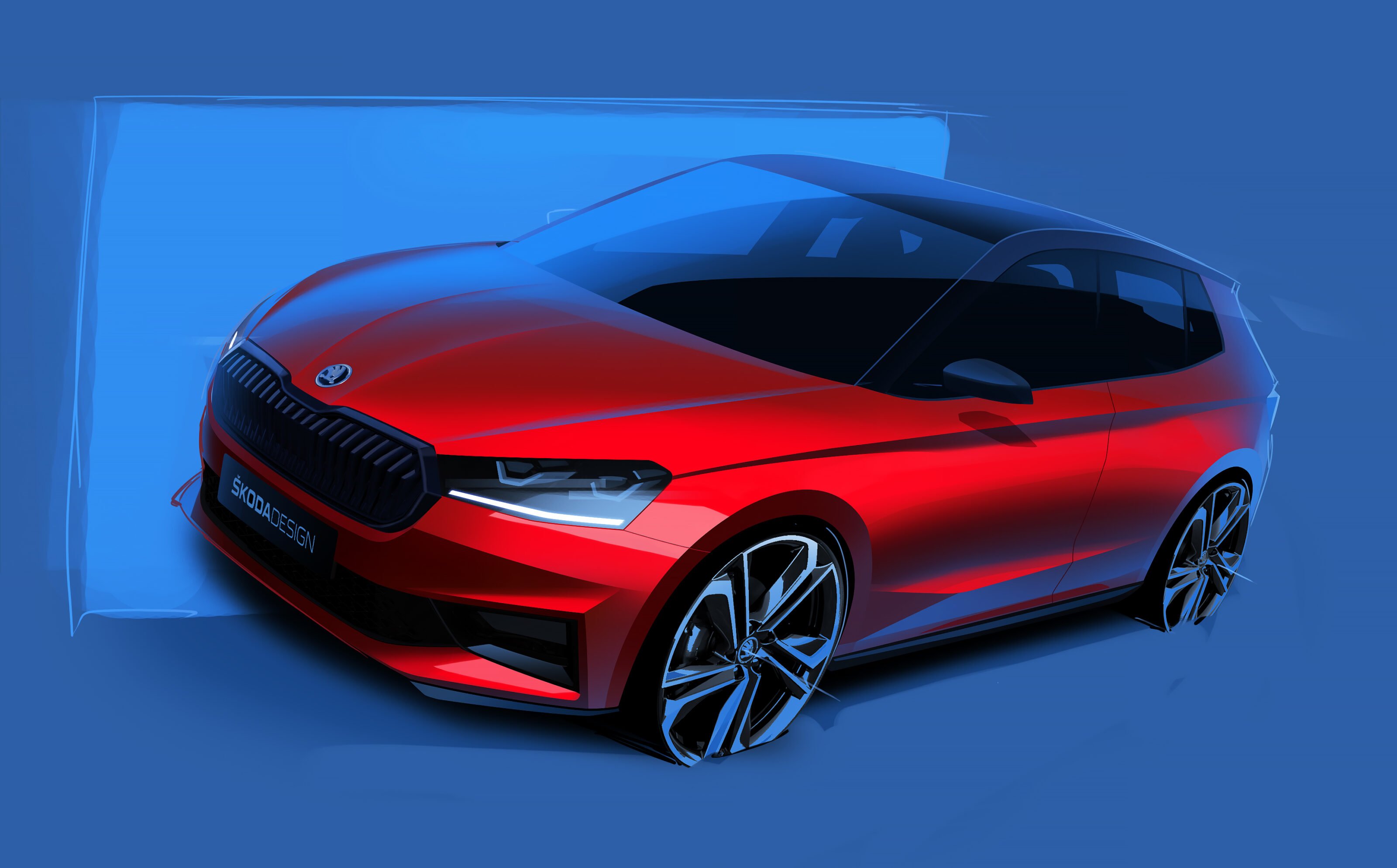
The sportiest Fabia – with an RS variant unlikely to appear – is set to return in fourth-generation guise, featuring revised styling, black accents, sports seats and Monte Carlo badging.
As seen in the teaser images, the Monte Carlo will also sport a two-tone finish – with a black roof, mirrors and rear spoiler joined by bright red paintwork.
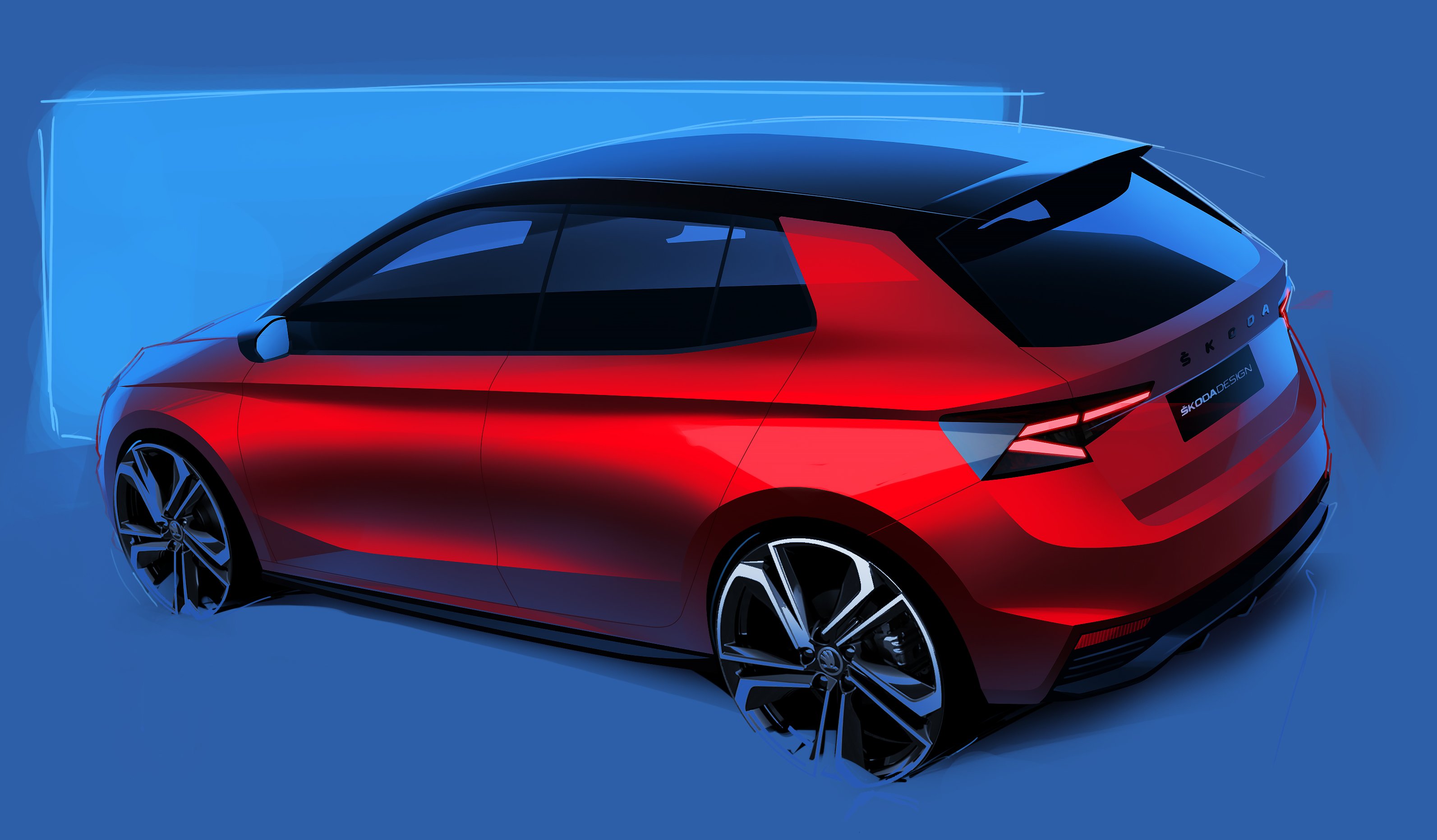
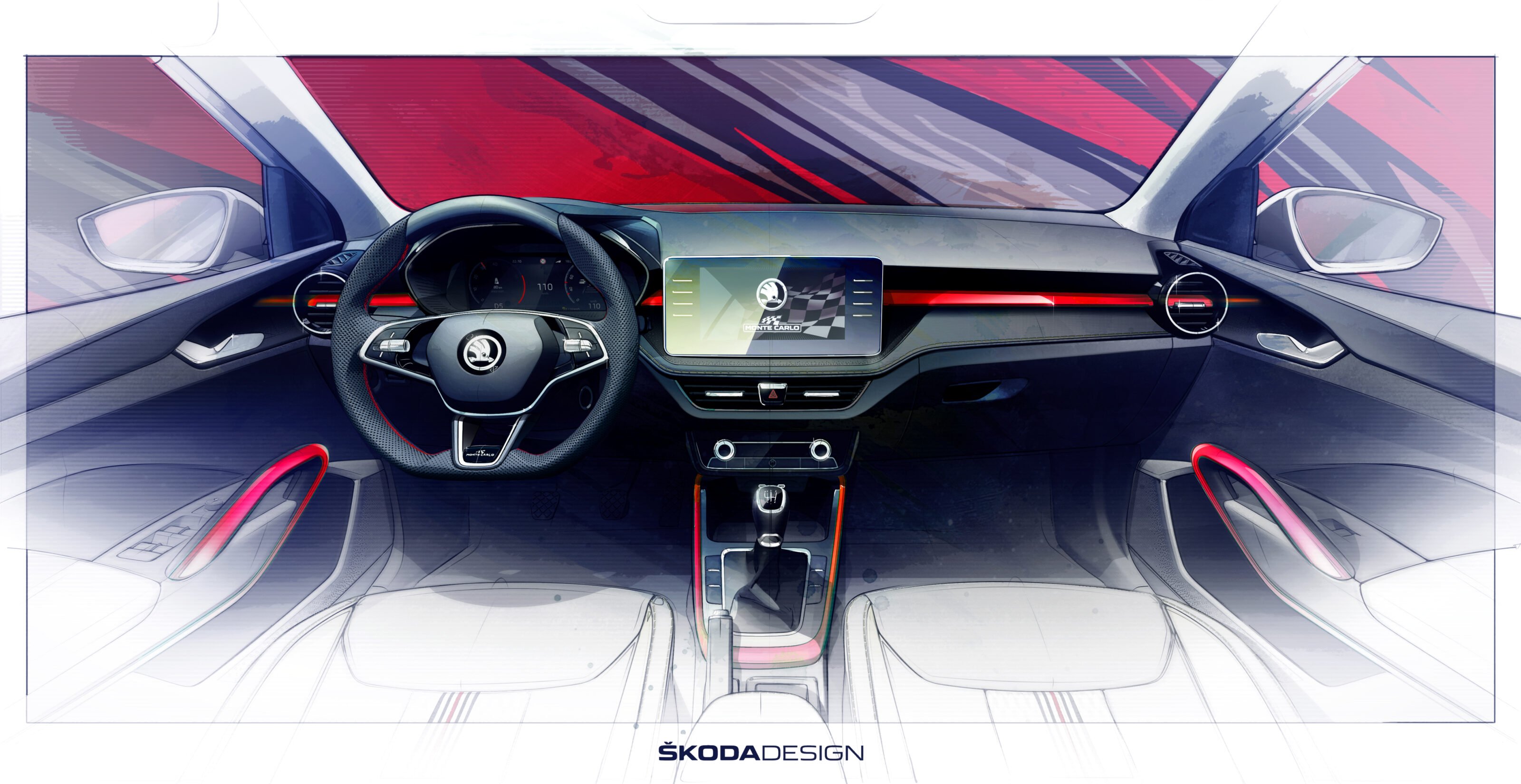
Inside, the Fabia is likely to follow the Kamiq Monte Carlo in offering cloth bucket seats with integrated headrests. Red accents are also splashed across the cabin, along with a Monte Carlo-badged leather steering wheel and carbon fibre-look trim pieces.
There is also a set of redesigned alloy wheels – likely 17-inches in diameter, as seen on existing flagship Fabia grades – and what appear to be darkened headlight and tail-light lenses.
Sports suspension is also likely, as seen on the outgoing Monte Carlo variant.
Under the bonnet, the Fabia Monte Carlo is expected to offer the choice between an 81kW/200Nm 1.0-litre turbocharged three-cylinder petrol, or a 110kW/250Nm 1.5-litre turbo four.
The three-cylinder 81TSI is available with a six-speed manual or seven-speed dual-clutch automatic in Europe, while the flagship 110TSI is an automatic-only proposition.
Skoda’s local arm is yet to officially confirm the Fabia Monte Carlo for Australia, but it is likely to top the new-generation Fabia range when it launches around April.
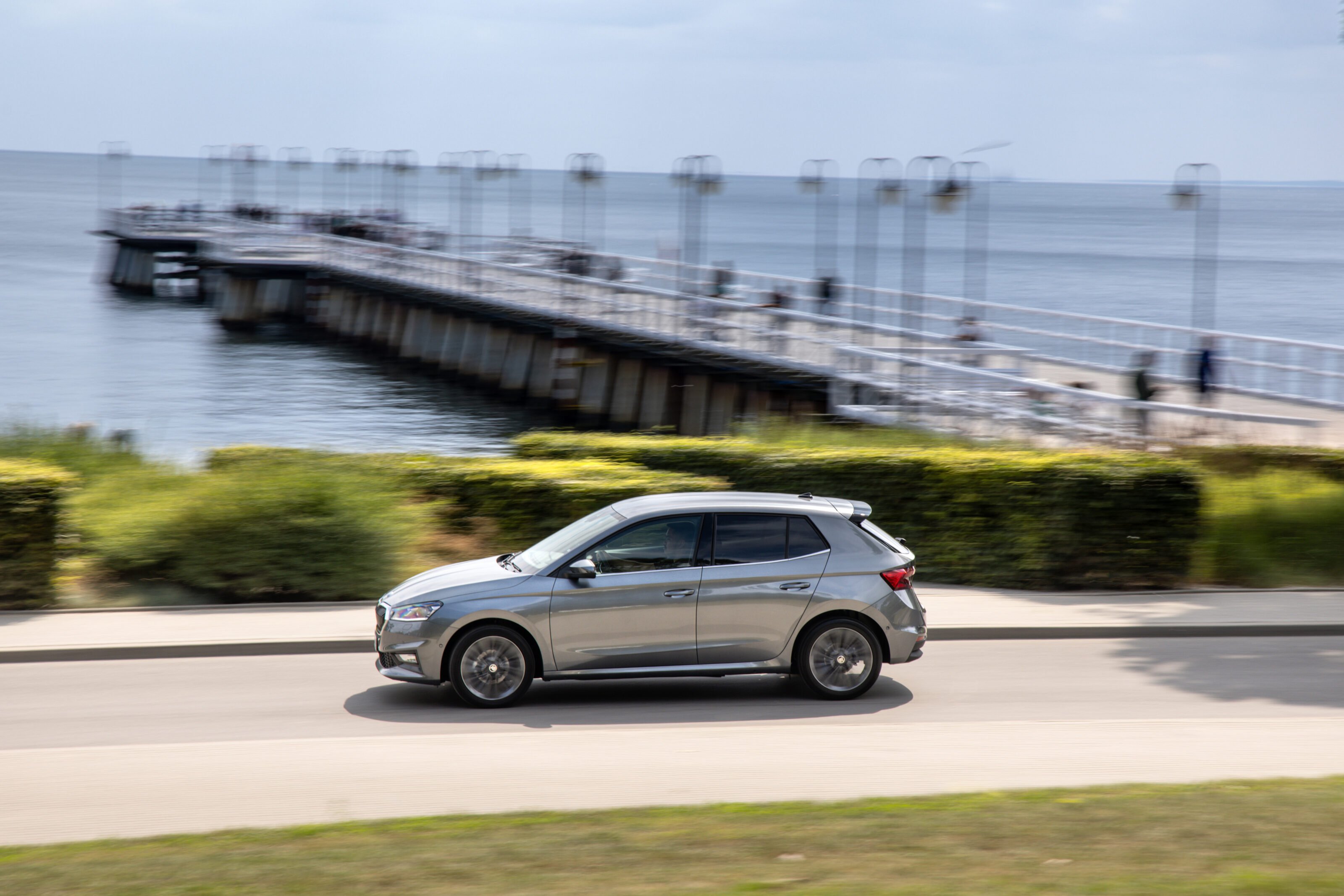
The Czech light hatch is now based on the same MQB A0 architecture as the Kamiq and Volkswagen Polo, allowing it to gain a slew of modern niceties.
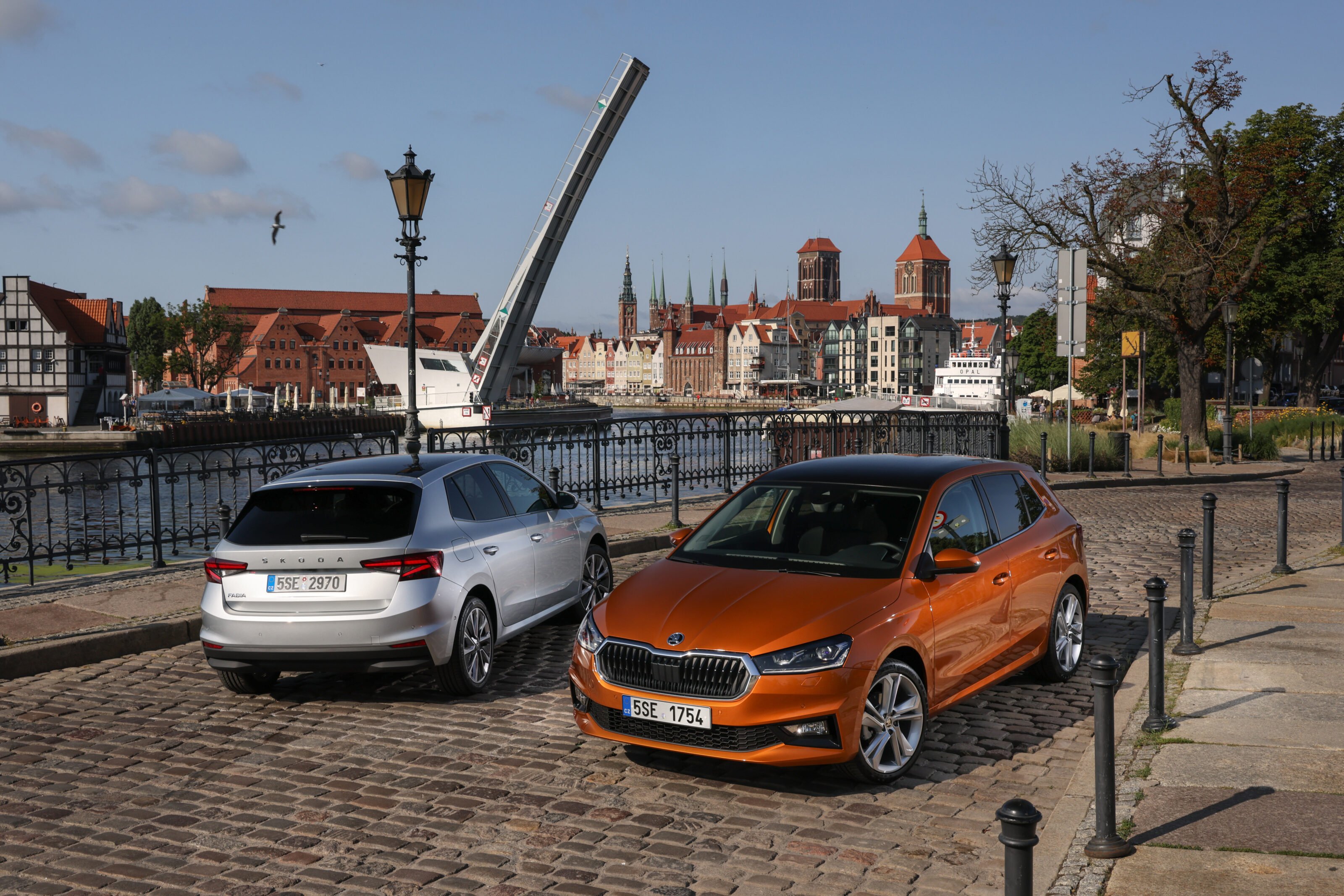
Inspired by the larger Scala and Octavia, the Fabia sports slim LED headlights, a larger front grille and thin C-shaped tail-lights.
Boasting a greater profile than its predecessor across every dimension, the Fabia has a 2564 millimetre wheelbase and measures 4107mm long, 1780mm wide and 1460mm tall – with an extra 94mm in wheelbase, 110mm in length and 48mm in width (but 7mm less in height) over the outgoing Fabia.
Up-to-date goodies such as a 10.25-inch digital instrument cluster, free-standing infotainment display measuring up to 9.2 inches and a panoramic sunroof are available.
Other Fabia-first additions include; wireless phone charging, gesture control, ambient lighting, rear-seat air conditioning vents, a heated steering wheel and full-LED lighting.
The 1.0-litre three-cylinder petrol is also available in manual-only non-turbo 48kW/59kW and turbocharged 70kW tunes in Europe.
Australian variants are poised to centre around the range-topping 110kW four-cylinder – likely with an eight-speed torque converter automatic, as seen on the Octavia and Volkswagen Golf.
The 2022 Skoda Fabia will arrive in Australia in the first half of the year – likely in April – with pricing and specification details to be announced closer to launch.
