
The Hyundai i30 Sedan lives because its maker is rightly convinced that not everybody wants an SUV, be it a Kona, Tucson or any of the five million or so alternatives. Part of Hyundai’s strategy with its sedans – i30 and Sonata – is to very deliberately stand out from the crowd, especially in N Line guise.
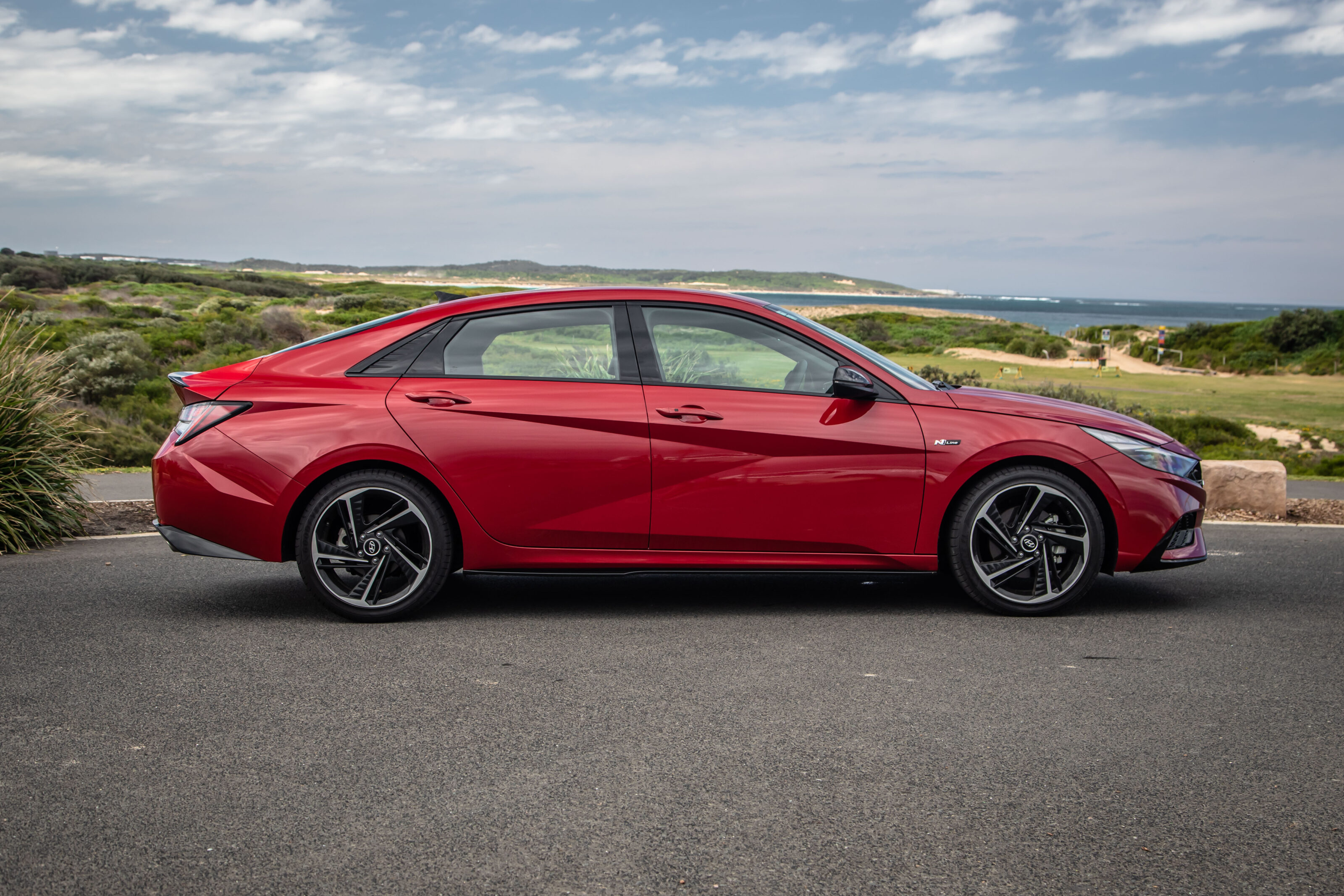
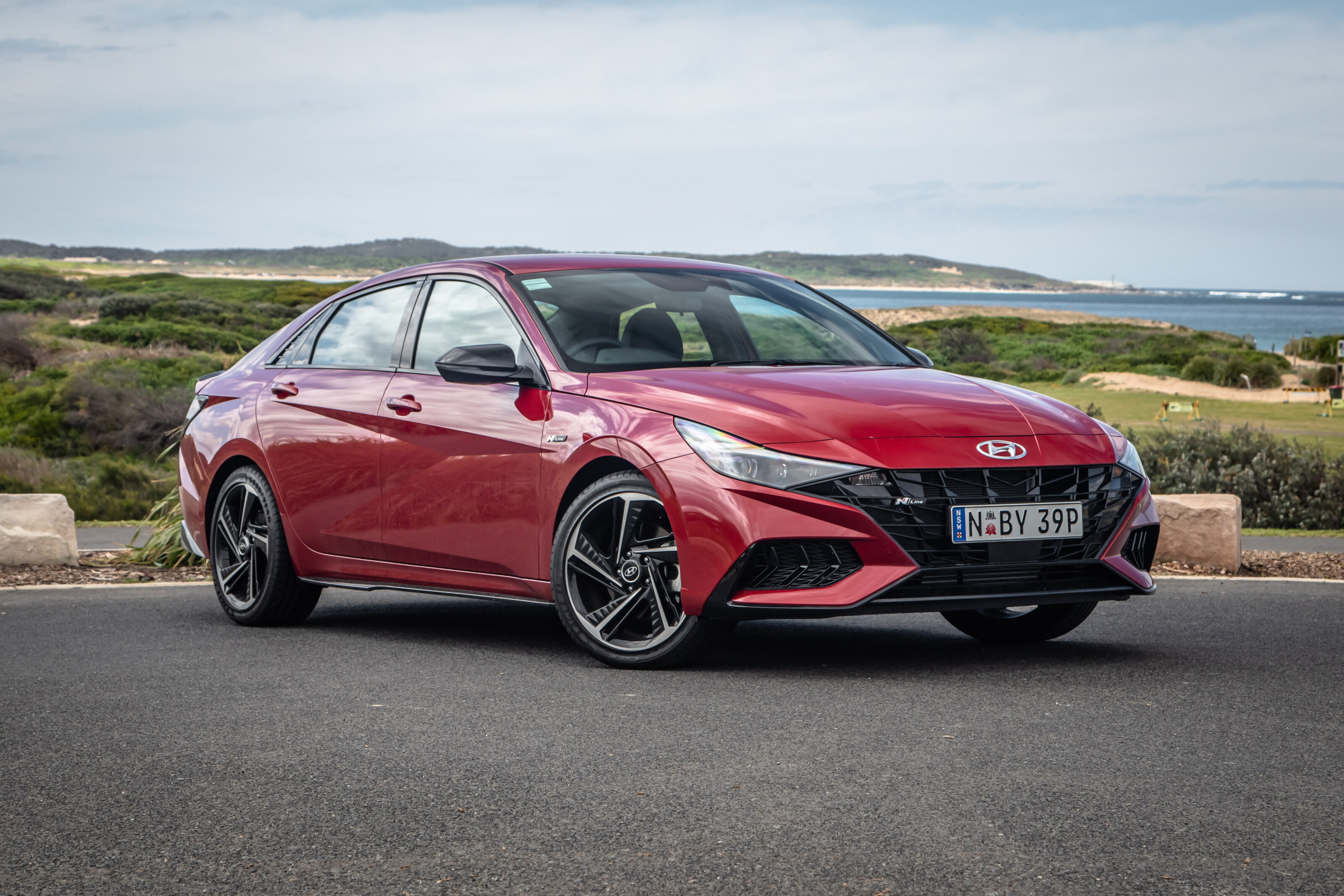
While the i30 hatchback is a bit meek, the sedan is a knockout. Long, low and looking like the clay model went fencing with Zorro, it’s a striking design that leaves little room for doubt about what you think. Hyundai has also cast its eye over the fence at Kia and noticed that the Cerato GT-Line does quite well for itself. That meant taking the halo N badge, inserting a 1.6-litre turbo and strapping in some chassis mods to create the halfway-house N Line.
Where Kia has ditched the manual, Hyundai opens its three-strong Sedan N Line with the six-speed manual, priced under $31,000 before on-road costs and with a bit more aggro than you might reasonably expect.
All i30 sedans have six airbags, ABS, stability and traction controls, forward AEB (high and low speed), with pedestrian and cyclist detection to 85km/h, lane-keep and lane following assist, blind-spot collision avoidance and reverse cross-traffic alert. The manual misses out on some bits and pieces like active cruise control and reverse AEB, but neither of those work in a manual without things going wrong. The kids get two ISOFIX and three top-tether anchors.
The i30 Sedan does not have and will likely not get an ANCAP rating but for what it’s worth, since the model’s local launch toward the end of 2020, the US IIHS crash test yielded a Top Safety Pick rating.
Not only does the N Line designation ditch the atmo 2.0-litre of the standard car, it adds yet more visual aggro to the exterior in the form of the bigger wheels, blacked-out faux diffuser, front grille and lip spoiler, more exhaust tips and black skirts running along the side of the car. Luc Donckerwolke’s creased and slashed design is pretty wild out of the box and the N Line additions help rather than hinder.
While the i30 hatchback is a bit meek, the sedan is a knockout. Long, low and looking like the clay model went fencing with Zorro.
Comfort and space

Being built on a completely different platform to the i30 hatch, the sedan has a completely different interior. The driver sits in a cockpit focussed on them, with a grab handle sweeping up out of the centre console (reminiscent, I think of, the Lexus LC500’s) and into the dash itself. It’s a bit grey in here though and you can see the joins where various trim sections meet. A bit disappointing but hardly a deal-breaker.
Under the climate controls, you’ll find a space to charge your phone, with wireless charging as well as two USB ports and one of those ugly 12V plugs. The touchscreen is surrounded by piano black plastic and butts into the dash surround. The dash itself features a large central speedo, a tacho to the left and a digital screen to the right. I’m not entirely convinced by it, but it works. The big improvement over the standard sedans is the N wheel, replacing the dorky-looking two-spoke wheels everyone is suddenly doing again.

The front seats look brilliant with their N badges embossed in the fake leather, along with red stitching and substantial side bolsters. Very sporty. And there’s a proper handbrake, too. You also get two cup holders and a console bin under the armrest, while the doors hold a bottle each.
Because the Sedan has a longer wheelbase than the hatch, there’s a lot more rear legroom for passengers. The rear bench is a bit shapeless but has sporty inserts to try and make it look shapely. There are two more cup holders in the fold-down armrest and there are even air vents in the back, although the design of the rear end of the console is oddly blobby in this very angular car. The doors will hold a bottle each, too. Headroom is surprisingly good, given the racy profile of the roof that falls towards the stubby boot deck. You could get three kids across the back without too much complaining, but short trips are advisable.
Inside the boot you can squeeze 474 litres, besting the hatch by just 80 litres. You can blame the hefty wheelarch intrusions, I guess. Fold down the 60:40 rear and you have 1350 litres of space.
On the road

It took me a while to come up with another performance sedan this size and they’re rather more expensive (and rather faster) Germans, neither of which are even really as big as the i30. The thing about small sporty sedans is that generally they’re more conservative but, as I’ve already mentioned, Hyundai knows a humdrum design isn’t going to attract young thrusters.
Similarly, Hyundai knows adding a bit of grr means it can attract even more young thrusters towards the brand. To that end, it started with the engine, ditching the dull but dependable 2.0-litre naturally aspirated unit for the slightly less dull 1.6-litre SmartStream, an update to the old Gamma. SmartStream sounds like medical equipment or what the NSW government would call a grotty stormwater drain, but whatever, it produces an impressive 150kW at 6000rpm. Slightly less impressive, but pretty good all the same is the 265Nm between 1500rpm and 4500rpm.
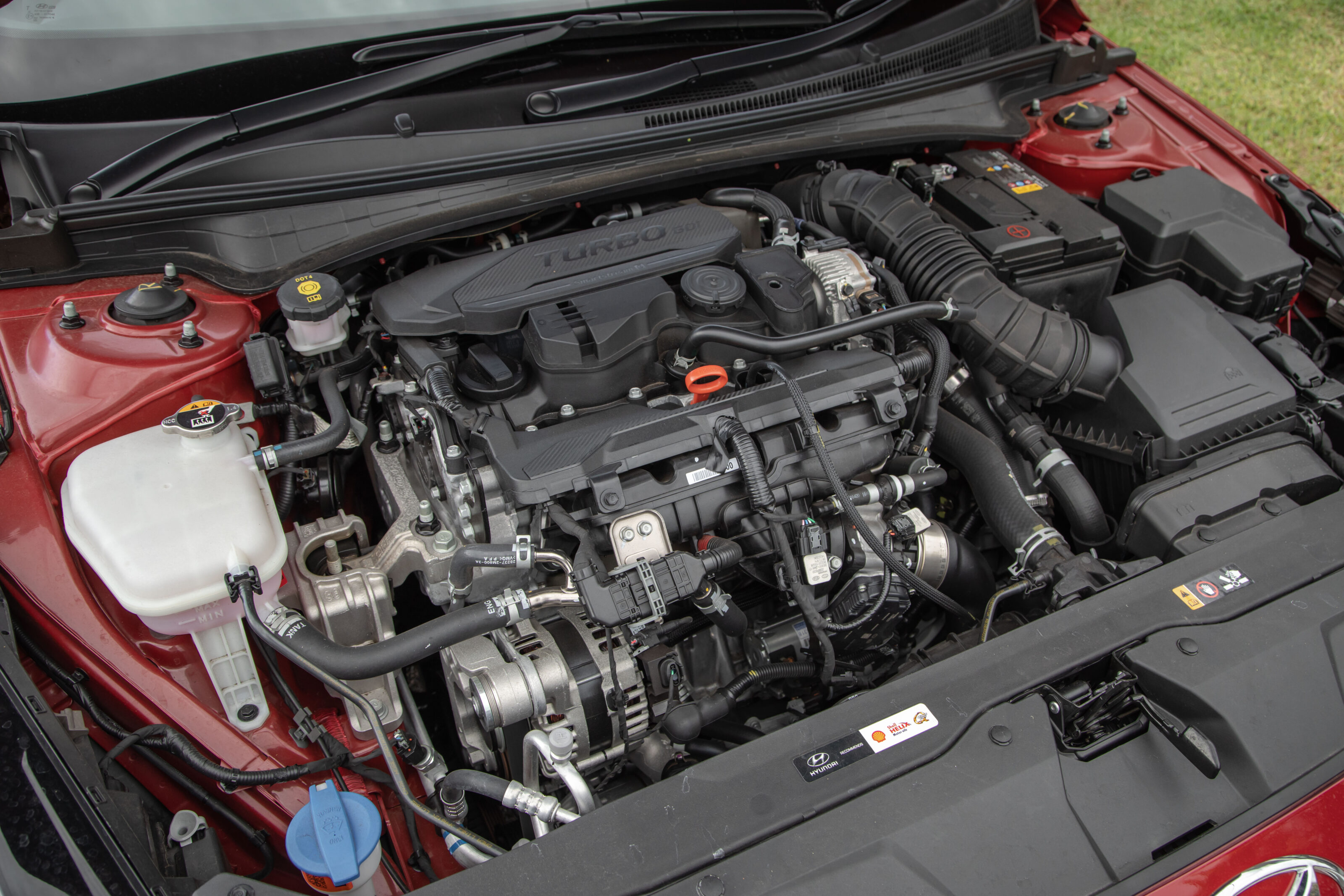
Hyundai says the manual will crack the ton in 7.9 seconds, three tenths of a second slower than the optional seven-speed dual-clutch, but it honestly feels a little quicker. The clutch is light and the i30 is easy to get off the mark in the dry and the six-speed’s shift action is better than most from Hyundai’s back catalogue. The engine is still not charismatic or characterful, but it doesn’t really have to be – the looks of this car do all the talking.
After the engine, attention was turned to the chassis. The basic car is biased towards comfort – something for everyone, remember? – so the local suspension team got to work on the springs, dampers, anti-roll bars and steering software.
The N Line, therefore, is quite a bit of fun. If you get a little ambitious with the throttle out of a corner, the tyres will chatter a bit but the nose tracks the way you send it unless you get really ambitious and then it ends in predictable understeer. The brakes are bigger, too, and are more than up to the job.

This isn’t a hot hatch chassis with a warm hatch engine, it is absolutely warm all the way through. The Goodyear Eagle F1 rubber is handy in the wet and dry, but can be a little noisy on coarse surfaces. Over bumps the front end can get a little noisy – I was initially going to say crashy, but that’s not true or fair, you just feel and hear a thump if you’re leaning on it through those surface imperfections. The long wheelbase helps soak up high-frequency stuff better than the hatch does, so it’s the pick of the i30 N Lines for ride quality, without losing too much of the fun of the lighter, shorter hatch.
What I like about this car is that it’s fun inside and out. The engine might not have the fizz and crack of the N (soon to be in sedan form) and nor is the chassis going to set the world properly alight. But it’s tidy without being boring and is comfortable for everyone every day.
This isn’t a hot hatch chassis with a warm hatch engine, it is absolutely warm all the way through.
Ownership

Hyundai offers a five year/unlimited-kilometre warranty with a year of roadside assist. Every time you service with Hyundai, you get another year of roadside.
You have to return for that service every 12 months or 10,000km owing to the turbo engine. The fixed price servicing covers the first five services and you’ll pay no more than $299 each for them.
Verdict
If you’re tossing up between N Line hatch or N Line sedan, I’d say the latter is the more rounded companion. I really do prefer the manual, too, even though it’s a touch slower. While the engine isn’t one for enthusiastic heel-and-toe action or that kind of all-too-rare nonsense, it’s definitely worth the extra involvement to pair with the chassis. I’m less enamoured with the seven-speed dual-clutch, in other words, and hope Hyundai’s excellent eight-speed replaces it soon.
The real test, of course, is against its Korean rival and relative, the Cerato GT. That’s a harder-riding machine with a similar mechanical package and similar cabin space but a slightly more conservative look, higher price and no manual option. If you’re not fussed about the extra warranty, the i30 N Line sedan is the pick.
2021 Hyundai i30 Sedan N Line specifications
The mighty new R34 GT-R M-spec hints at the future of the next GT-R
This feature was first published in the March 2002 issue of MOTOR Magazine
Any GT-R diehard knows that Nissan built the R32 Skyline GT-R back in 1989 for one reason; to win races.
And it did so, not just in Japan, but also in Australia where its all-wheel drive, twin-turbo, hi-tech wizardry blitzed the touring car championships for two straight years, in 1991 and 1992.
The man who was to become known as ‘Mr GT-R’, Kozo Watanabe, followed that racing tradition with the R33 and R34 models during the Nineties, including specially tuned V-spec variants. Then, as if to signal the radical change of direction Carlos Ghosn had chosen for Nissan, Watanabe was replaced by a new team of engineers headed by Kazutoshi Mizuno, former Nissan Le Mans chief engineer and team manager.
One of the first things Mizuno did while he and his team worked on the handling traits of the new V35 Skyline sedan, was to modify the current GT-R’s V-spec suspension setup. He felt that its harsh, highly strung road-handling characteristics were good for circuit racing but in the real world it needed more compliance.
The resulting M-spec is not just a better rounded GT-R on all road surfaces, but has repercussions for the sportscar on a wider, global scale.
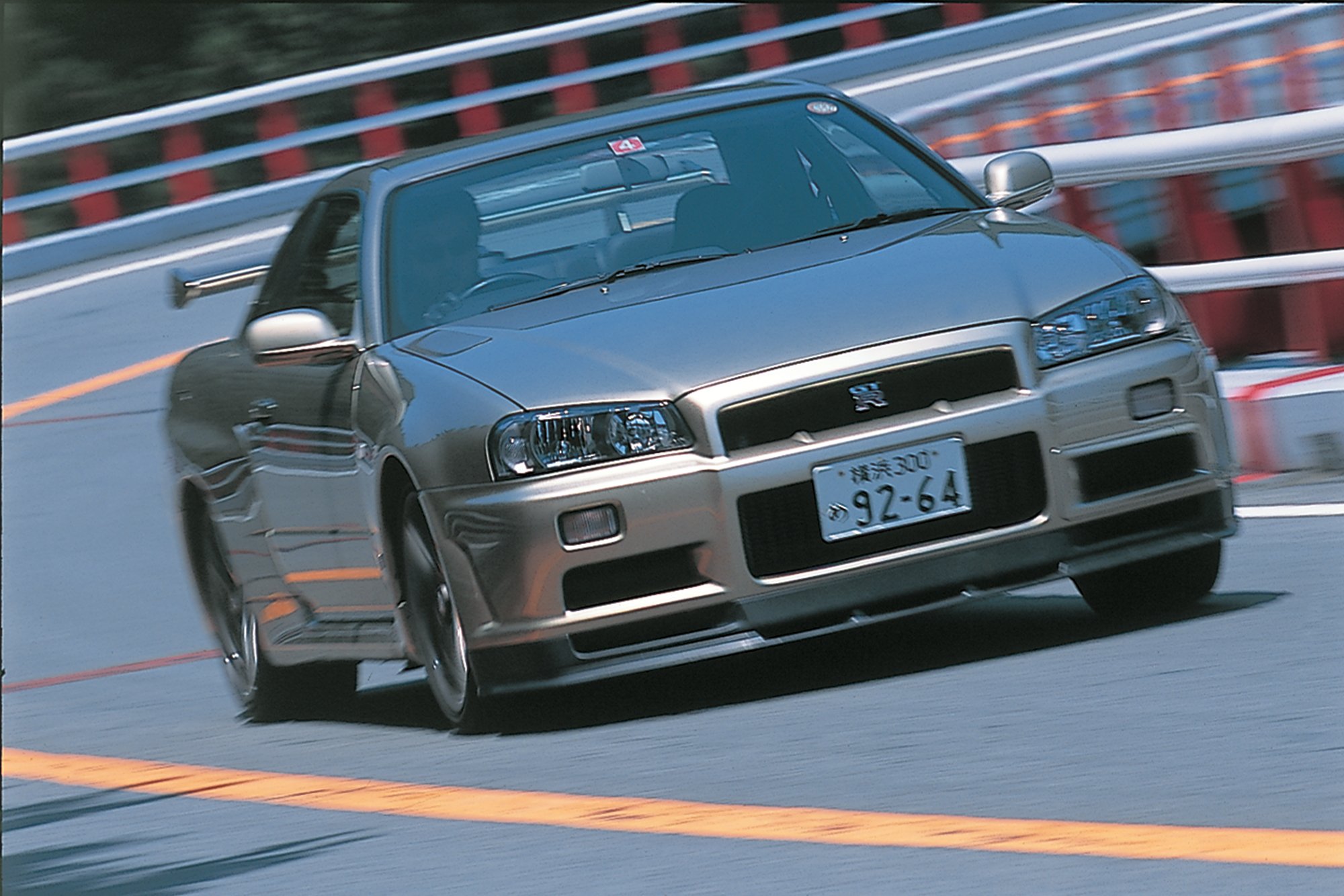
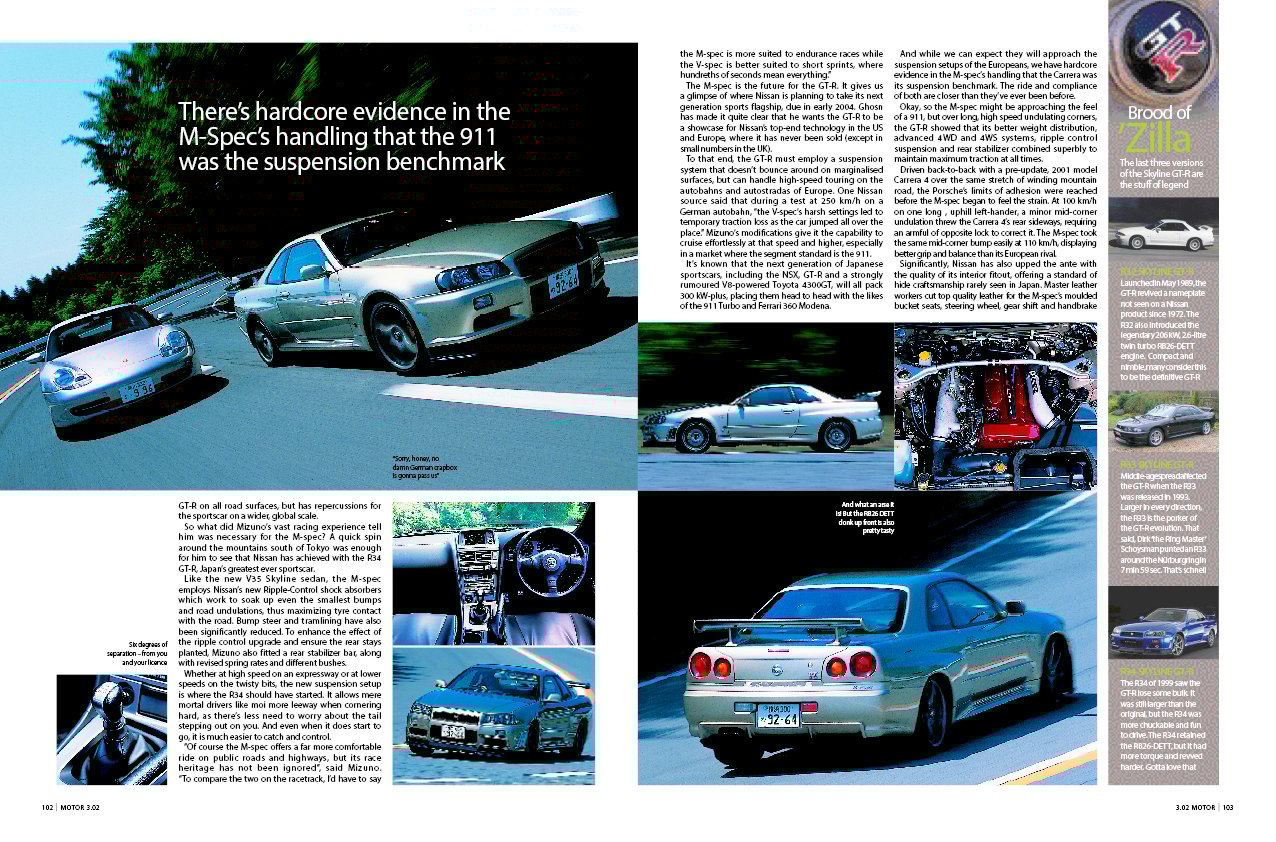
So what did Mizuno’s vast racing experience tell him was necessary for the M-spec? A quick spin around the mountains south of Tokyo was enough for him to see that Nissan has achieved with the R34 GT-R, Japan’s greatest ever sportscar.
Like the new V35 Skyline sedan, the M-spec employs Nissan’s new Ripple-Control shock absorbers which work to soak up even the smallest bumps and road undulations, thus maximizing tyre contact with the road. Bump steer and tramlining have also been significantly reduced. To enhance the effect of the ripple control upgrade and ensure the rear stays planted, Mizuno also fitted a rear stabilizer bar, along with revised spring rates and different bushes.
Whether at high speed on an expressway or at lower speeds on the twisty bits, the new suspension setup is where the R34 should have started. It allows mere mortal drivers like moi more leeway when cornering hard, as there’s less need to worry about the tail stepping out on you. And even when it does start to go, it is much easier to catch and control.
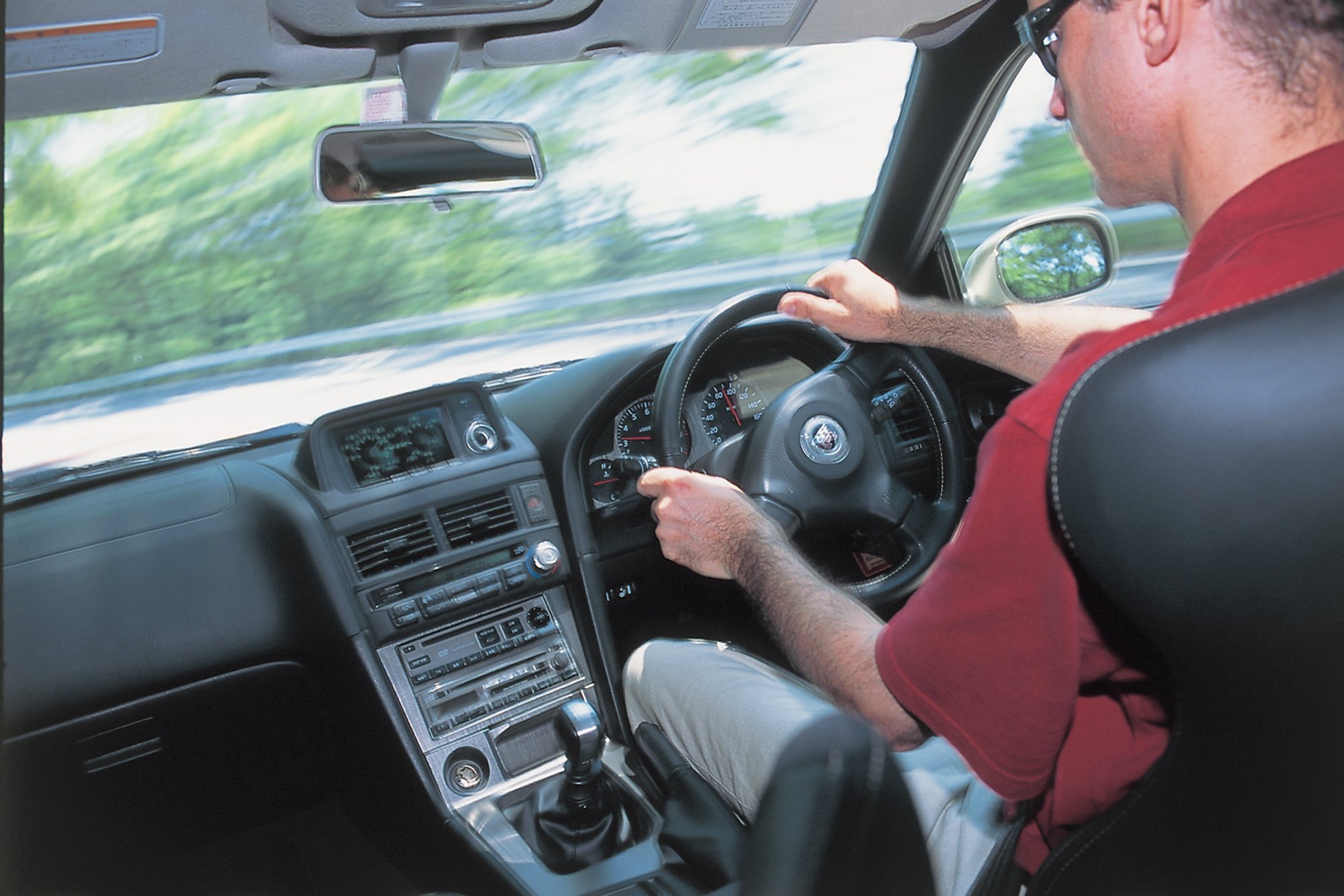
“Of course the M-spec offers a far more comfortable ride on public roads and highways, but its race heritage has not been ignored”, said Mizuno.
“To compare the two on the racetrack, I’d have to say the M-spec is more suited to endurance races while the V-spec is better suited to short sprints, where hundreths of seconds mean everything.”
The M-spec is the future for the GT-R. It gives us a glimpse of where Nissan is planning to take its next generation sports flagship, due in early 2004. Ghosn has made it quite clear that he wants the GT-R to be a showcase for Nissan’s top-end technology in the US and Europe, where it has never been sold (except in small numbers in the UK).
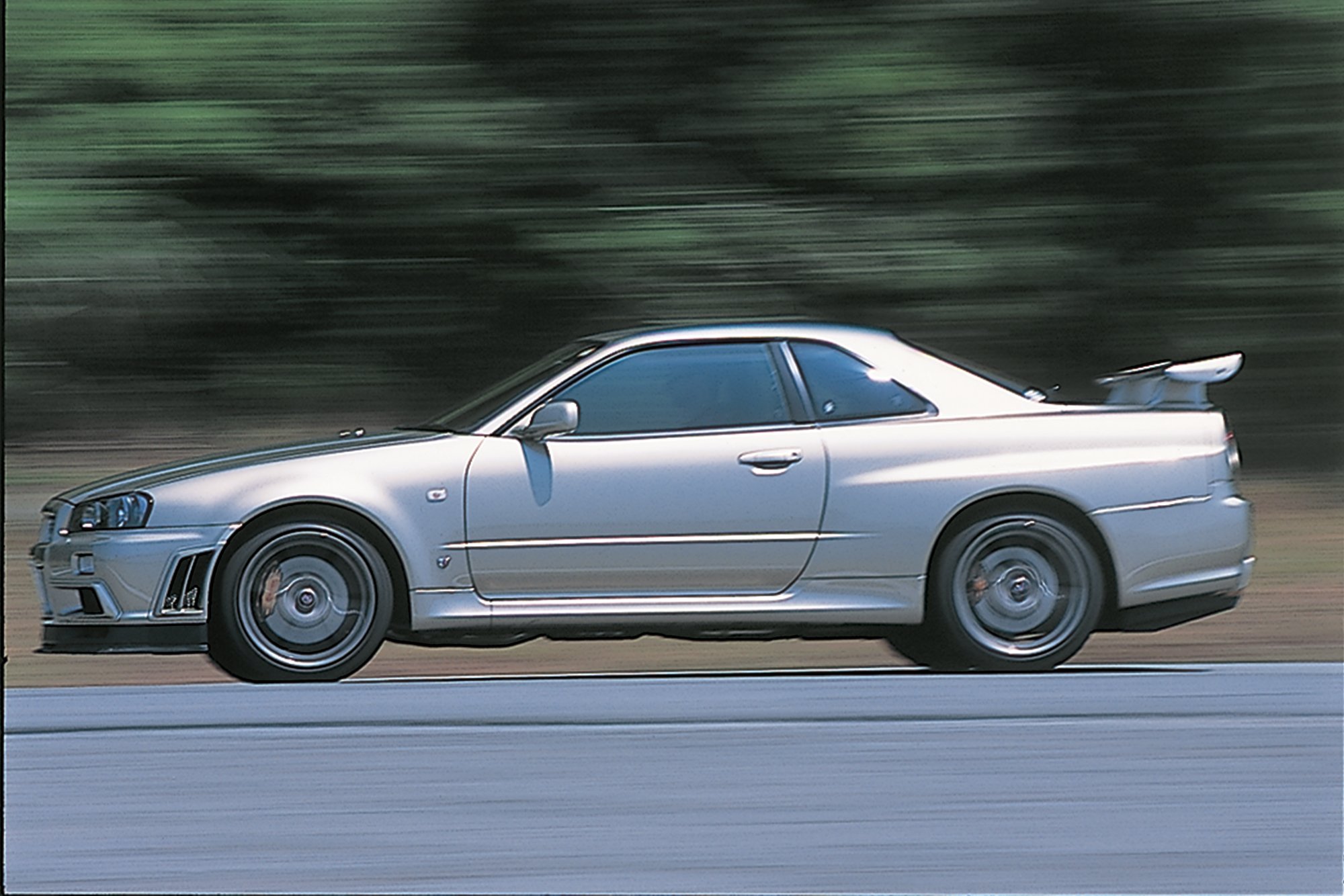
To that end, the GT-R must employ a suspension system that doesn’t bounce around on marginalised surfaces, but can handle high-speed touring on the autobahns and autostradas of Europe. One Nissan source said that during a test at 250 km/h on a German autobahn, “the V-spec’s harsh settings led to temporary traction loss as the car jumped all over the place.”
Mizuno’s modifications give it the capability to cruise effortlessly at that speed and higher, especially in a market where the segment standard is the 911.
It’s known that the next generation of Japanese sportscars, including the NSX, GT-R and a strongly rumoured V8-powered Toyota 4300GT, will all pack 300 kW-plus, placing them head to head with the likes of the 911 Turbo and Ferrari 360 Modena.
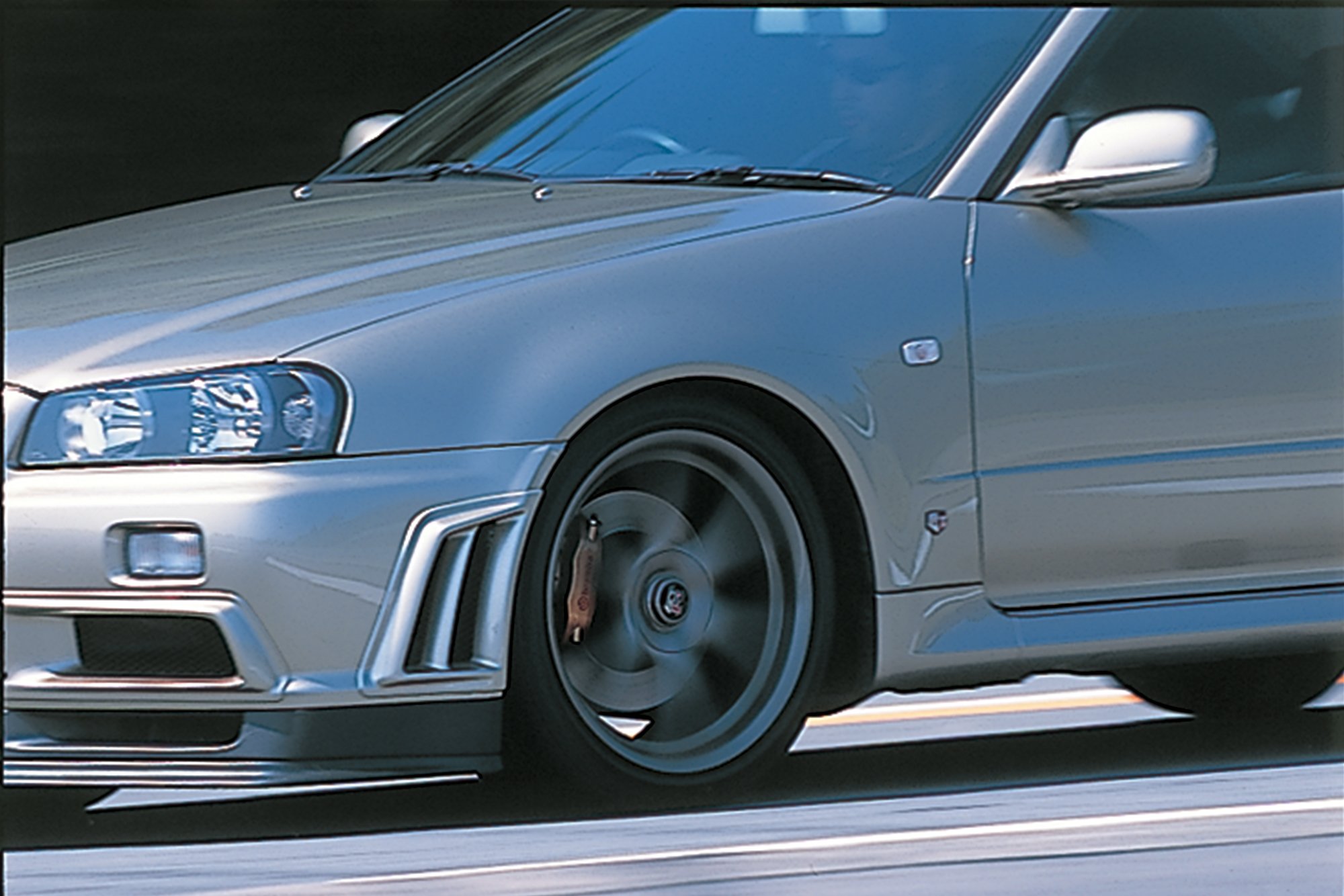
And while we can expect they will approach the suspension setups of the Europeans, we have hardcore evidence in the M-spec’s handling that the Carrera was its suspension benchmark. The ride and compliance of both are closer than they’ve ever been before.
Okay, so the M-spec might be approaching the feel of a 911, but over long, high speed undulating corners, the GT-R showed that its better weight distribution, advanced 4WD and 4WS systems, ripple control suspension and rear stabilizer combined superbly to maintain maximum traction at all times.
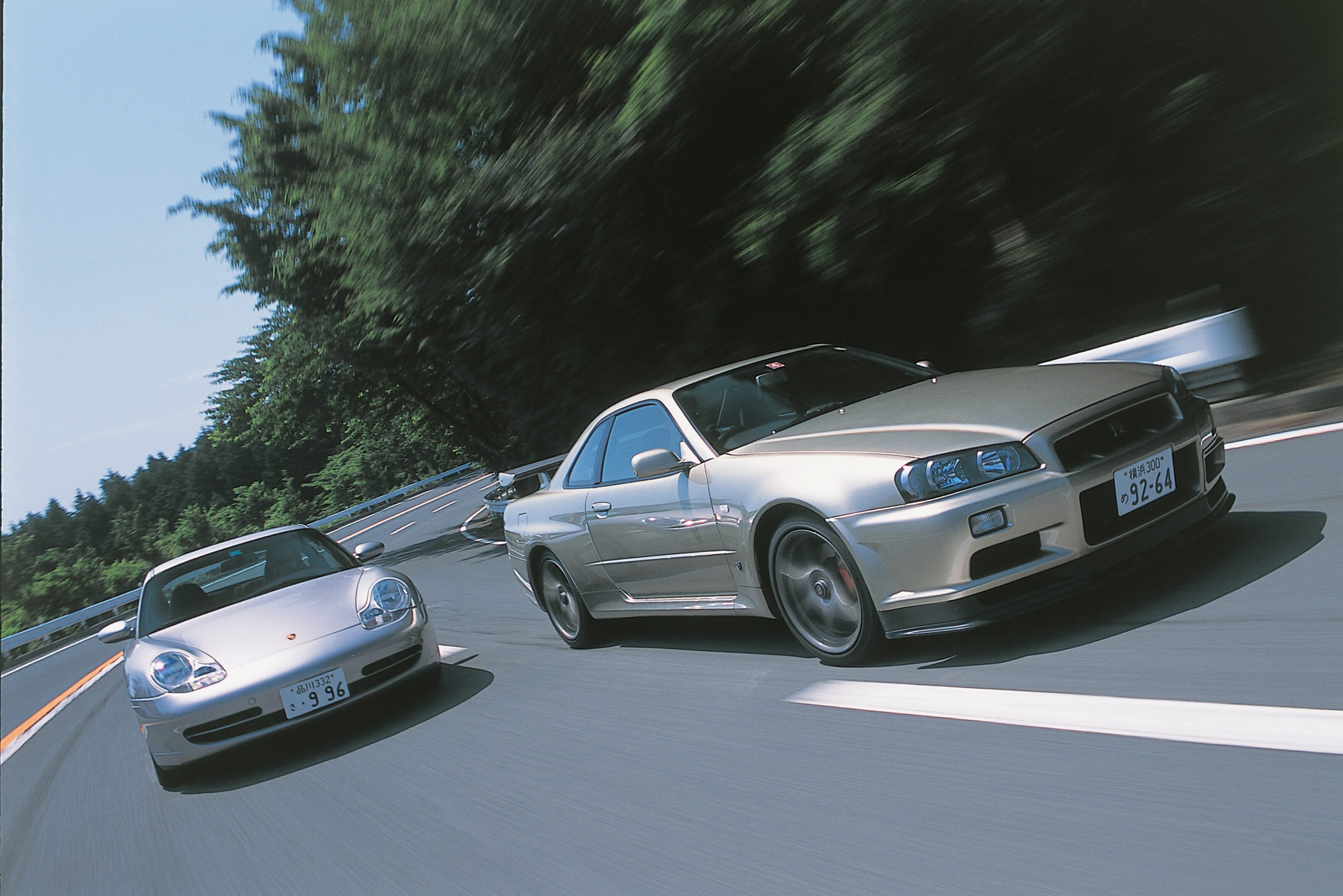
Driven back-to-back with a pre-update, 2001 model Carrera 4 over the same stretch of winding mountain road, the Porsche’s limits of adhesion were reached before the M-spec began to feel the strain. At 100 km/h on one long , uphill left-hander, a minor mid-corner undulation threw the Carrera 4’s rear sideways, requiring an armful of opposite lock to correct it. The M-spec took the same mid-corner bump easily at 110 km/h, displaying better grip and balance than its European rival.
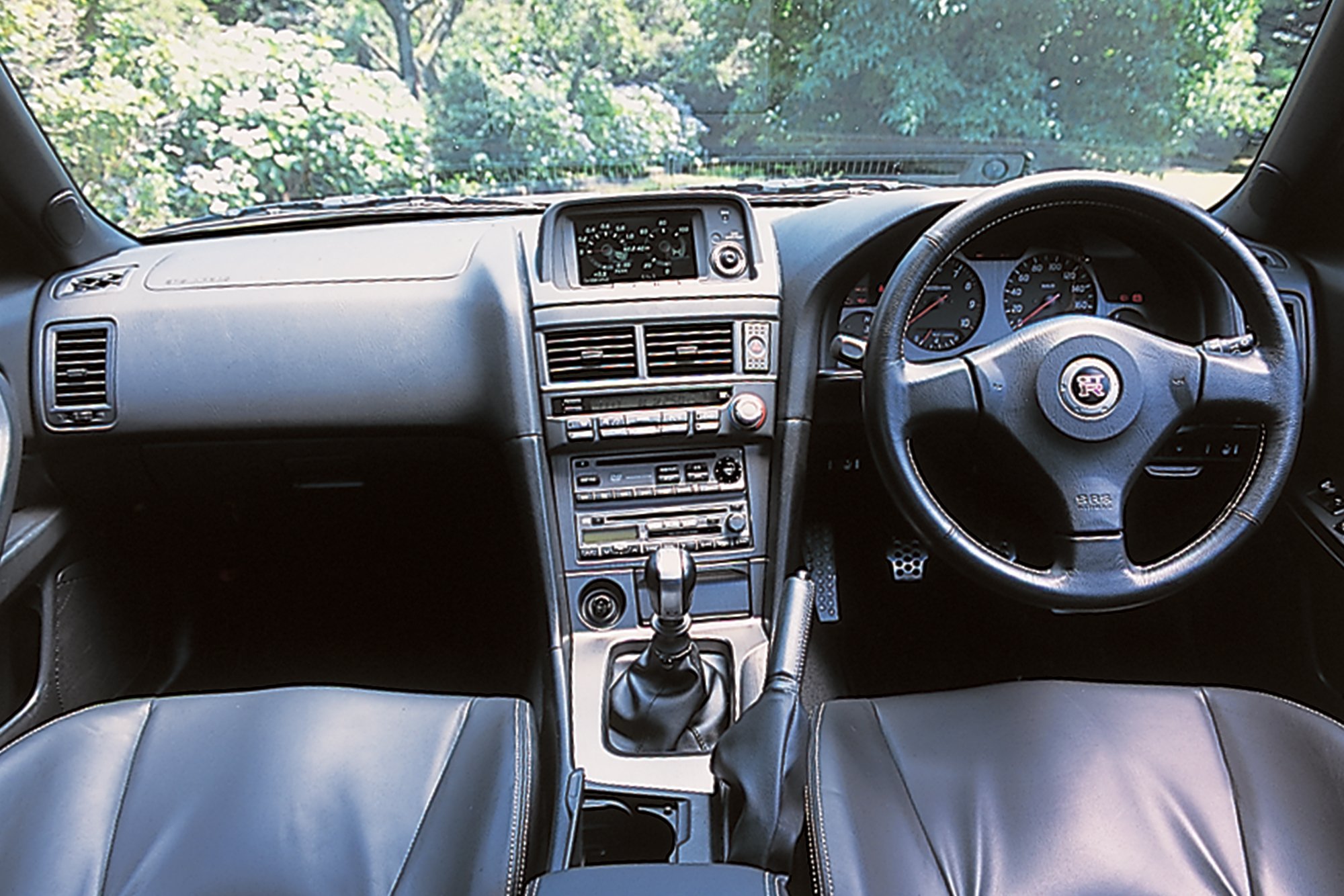
Significantly, Nissan has also upped the ante with the quality of its interior fitout, offering a standard of hide craftsmanship rarely seen in Japan. Master leather workers cut top quality leather for the M-spec’s moulded bucket seats, steering wheel, gear shift and handbrake lever. The M-spec also now gets heated front seats, a wiper de-icer, a better cold weather resistant battery, and a more powerful heater. It’s all designed to take on the Europeans at their own, luxury game.
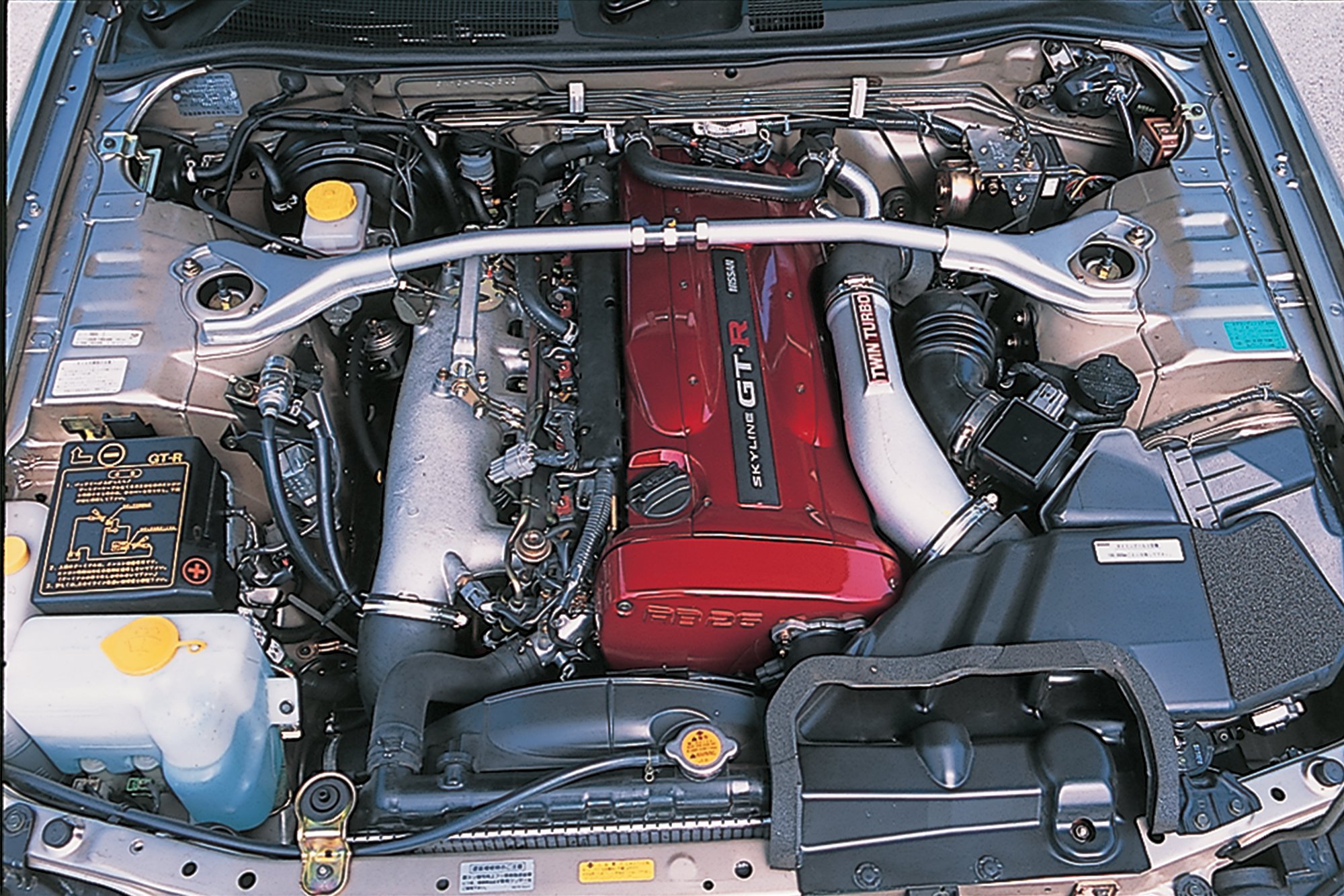
One game Porsche and other Euro makers can compete in and win, however, is the power war. The GT-R’s twin-turbo, 2.6-litre straight-six pumps out a claimed 206 kW at 6800 rpm and 392 Nm at 4400 rpm. But a Nissan insider suggests, on the quiet, that our test car pumps out in excess of 240 kW.
Still, the manufacturer-imposed agreement to limit power outputs of Japanese cars remains one of the main bones of contention for those wanting to compete with Europe’s best. Most of these car makers already have engines that, with minor tweaks, are capable of clearing the 250 kW mark. But they’ll remain nobbled until one, or all, of the car makers decide otherwise.
Nissan has launched the M-spec saying that it’s one other possible definition of a GT-R. But it is much more than that. Keeping the 2004 model GT-R’s 330 kW-plus expected power in mind, the M-spec’s more compliant suspension and Euro-friendly interior qualities provide the missing link to the next generation of Japanese supercars – cars that are destined to give Europe’s reigning heroes a real run for their money.
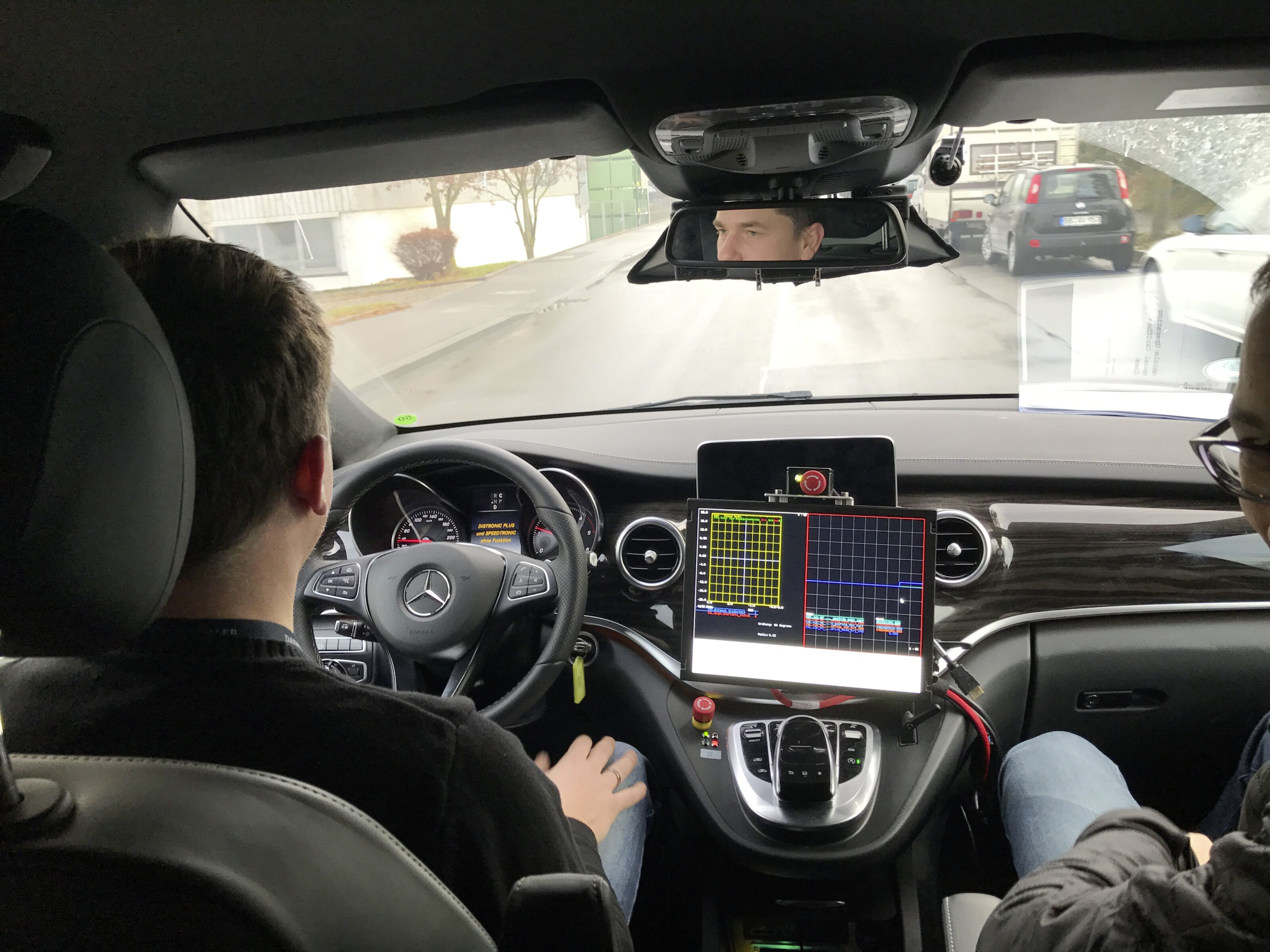
Las Vegas, January 2009: The Audi A6 Avant cruises at 70km/h through the heavy traffic heading south on Interstate 15. The Audi engineer next to me sits behind the wheel, hands on his legs and feet off the pedals. The A6 is driving itself, automatically adjusting to the ebb and flow of the traffic, changing lanes as the engineer taps the indicator stalk.
Audi calls the system Piloted Driving and says the technology will be available on a production Audi in five years’ time. Piloted Driving, says Bjorn Giesler, one of the engineers developing the system, is designed to allow drivers to let the car do the boring stuff. “Our cars will always be for people who like to drive and like performance. But driving in a traffic jam is not fun and not interesting. So, we offer the opportunity for the driver to let the car do this for them.”
New York, March 2018: Autonomous vehicle specialist Waymo, which began life as Google’s self-driving car project in 2009, announces it is buying 20,000 Jaguar I-Pace electric vehicles as part of the company’s plan to launch a fully autonomous commercial ride-hailing service – in other words, taxis without human drivers – in 2020. Waymo and Jaguar Land Rover engineers will work in tandem to build these robo-taxis to be self-driving from the start, rather than retrofitting them after they come off the assembly line.
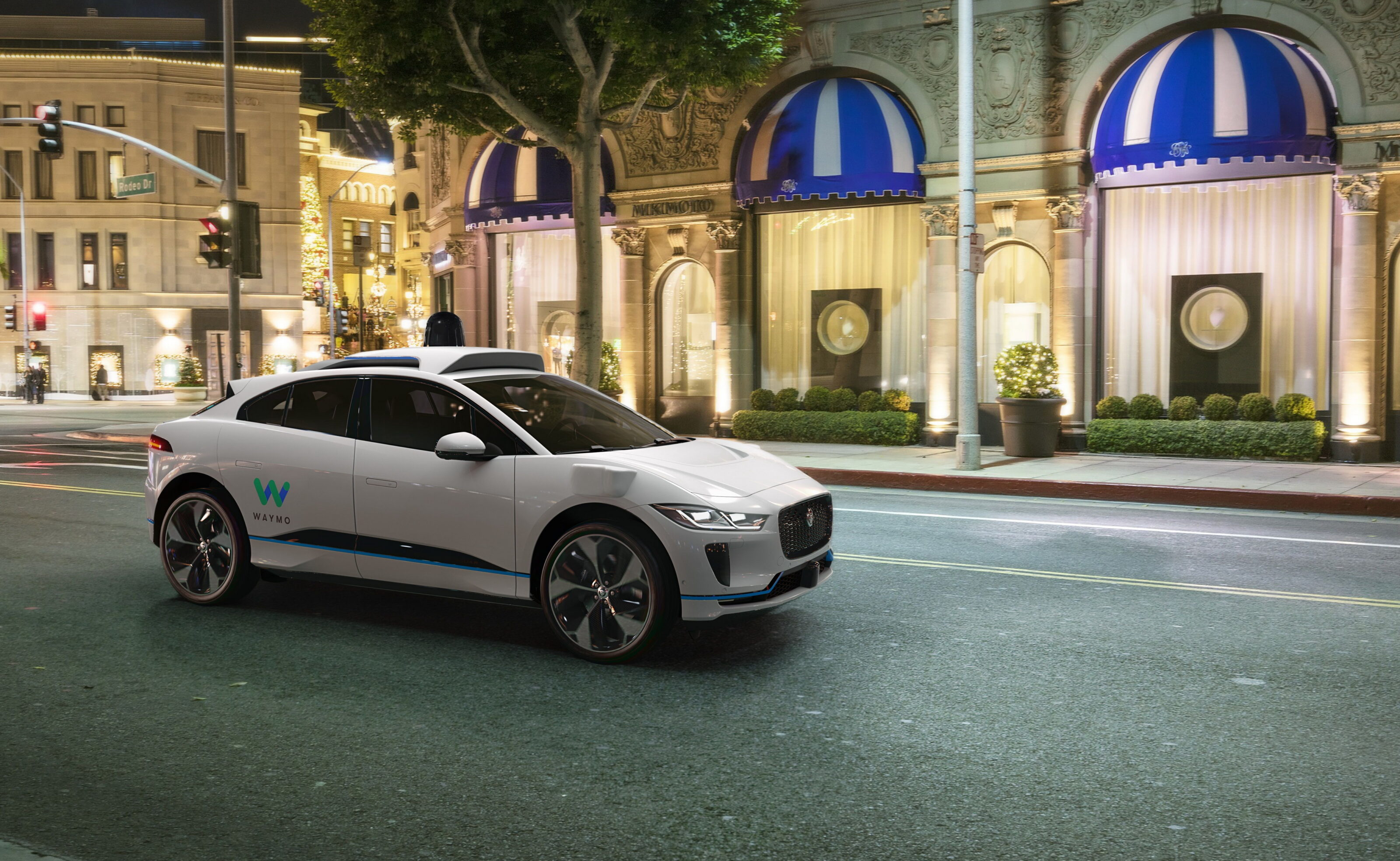
“We’re not a car company,” John Krafcik told me when he was CEO of Waymo. “We’re not making cars. We don’t have to worry about monthly sales figures, we don’t have to worry about the facilities required to tool new vehicle architectures. We’re focused on building the driver. That’s all we’re focused on. We want to build the world’s safest, most experienced driver.”
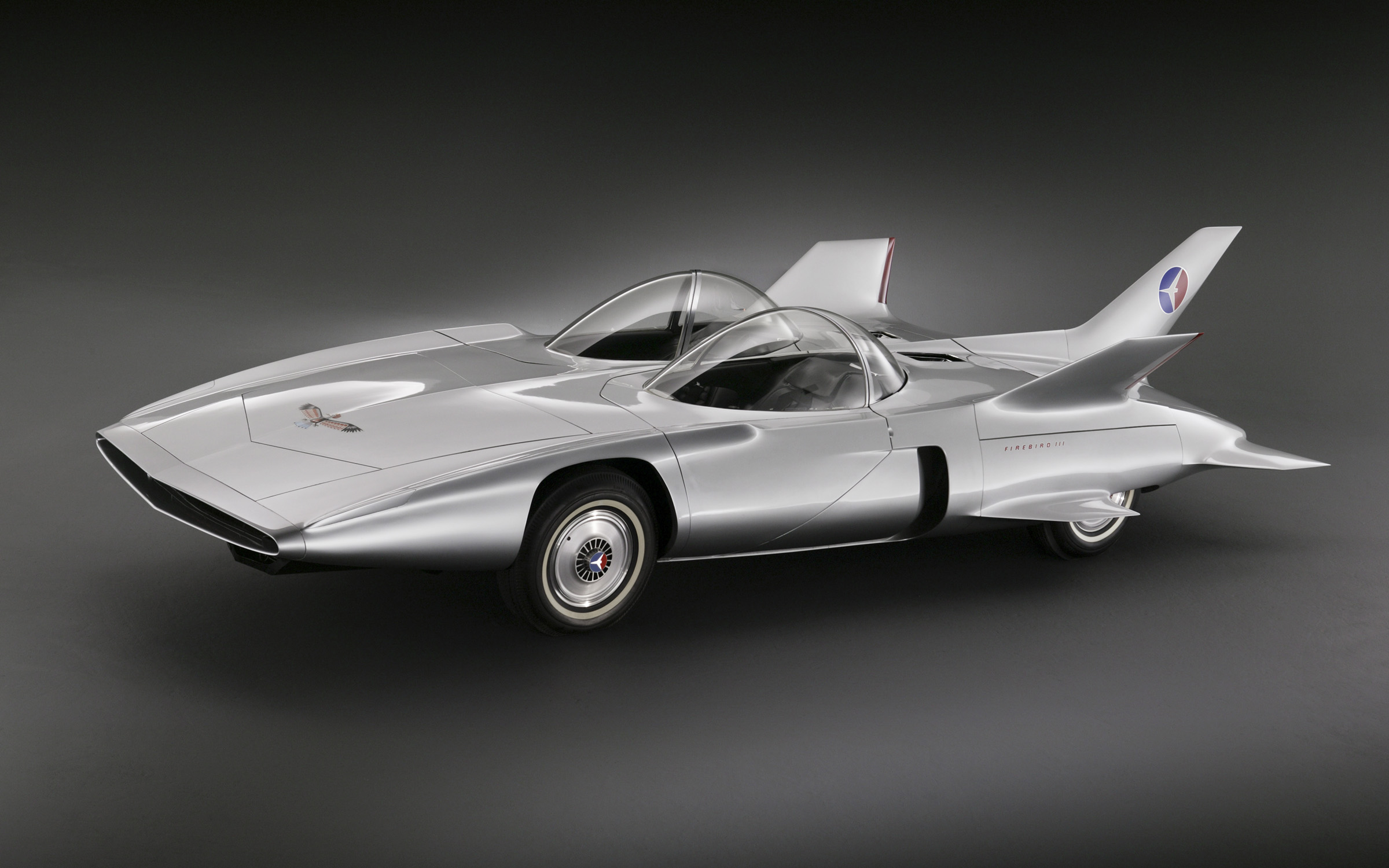
Autonomous vehicles – self-driving cars and trucks – have been the car industry’s Next Big Thing for almost 20 years now. Even longer for the industry’s real futurists: General Motors was experimenting with autonomous drive systems almost 70 years ago, building two concept cars – Firebird II in 1956 and Firebird III in 1958 – plus a number of Chevy test mules equipped with primitive sensors that would allow them to automatically follow wires buried under the surface of the road.
GM’s system relied on its autonomous cars passively interacting with smart infrastructure that was expensive to build and maintain, and as rigidly inflexible as a railway line. But with the explosive growth in computing power and speed since then, combined with a dramatic plunge in cost – the average smartphone has eight thousand times the memory and is a million times faster than the US$7million Cray X-MP supercomputer that was state of the art in the 1980s – pundits have long predicted that by the early 21st century regular cars wouldn’t need clever roads. They’d be smart enough to figure out how to drive themselves anywhere.
It hasn’t happened. Yet.
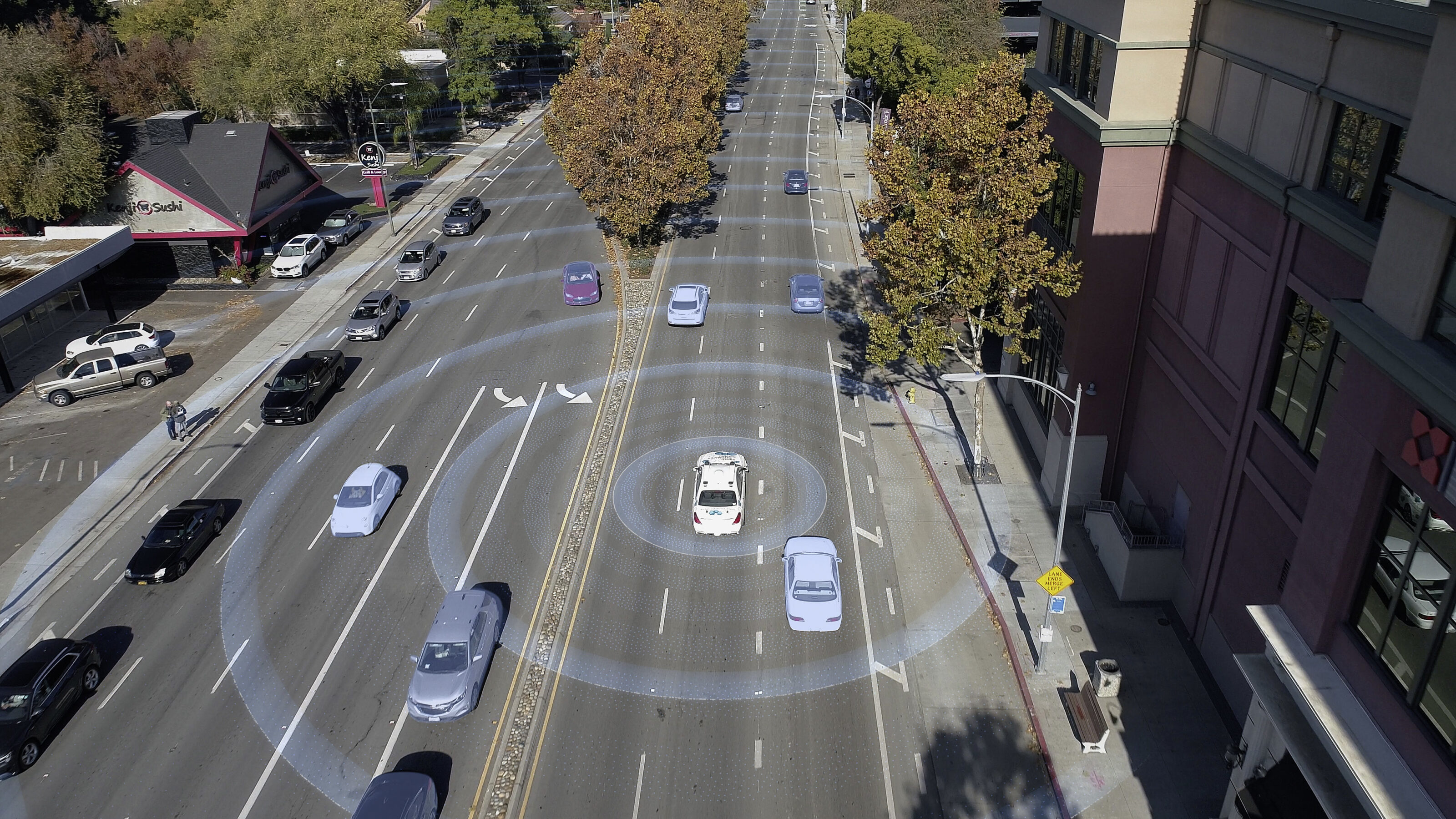
Enthusiasts may recoil, but the idea of cars that drive themselves, smart cars controlled by machine logic rather than human emotion, is a seductive one. According to Nissan researchers, 93 percent of all road crashes are the result of driver error. Autonomous vehicles would in theory eliminate those. As such, their appeal to government policymakers around the world is enormous.
A significant reduction in road crashes would ease pressure on public health systems. Police and firefighters could spend more time on solving crimes and preventing fires instead of catching speeders and cleaning up the grisly mess at crash scenes. Existing highway networks could be used more efficiently, smart cars automatically running centimetres apart, nose-to-tail in fuel-efficient ‘platoons’. Traffic congestion in cities could be better managed, with smart cars not only working together to optimise use of the road space, but also easily allowing the implementation of tolls and parking fees.
Best of all, governments wouldn’t have to spend vast sums of public money to make it happen. All they would have to do is mandate smart cars. Consumers would pay the cost of all the enabling technologies when they purchased, leased, or rented them.
What’s more, selling the idea of smart cars to that overwhelming majority of car buyers who really aren’t interested in driving wouldn’t be that hard: I can eat breakfast and do my email in clean, air-conditioned comfort with my favourite tunes banging on the sound system while I’m heading to the office? I can send the car out to pick up the kids from footy practice while I make dinner? I can summon my car to the door of the restaurant and get it to whisk me home after I’ve had a few drinks? I can stretch out and sleep while my car takes me to Melbourne? Sign me up!
In 2009 those scenarios seemed just around the corner. More than a decade later, they’re still around the corner and a long way up the road. But the problem with autonomous vehicles isn’t really one of technology. It’s one of ethics.
What if that crash fatality was the result of behaviours programmed into an autonomous vehicle?
You’re CRUISING down the middle lane of the freeway in heavy traffic, following a truck. On your right is a shiny new Volvo with a Baby on Board sticker in the window. On your left, a motorcyclist. Suddenly, a large heavy object falls off the back of the truck, right in your path. There’s no chance of stopping. What do you do? Stay in your lane and brace for the head-on hit? Swerve left and take out the motorcyclist? Or dive to the right and ram the Volvo?
You’ll simply react, stomping the brake pedal and swinging the wheel one way or the other. You’ll only think of the consequences – the dead motorcyclist or the badly injured baby – when the shock wears off and your hands stop shaking and you’re lying there in the dark wondering if you’ll ever sleep again.
But what if you did have the ability to analyse the situation in real time as it unfolded in front of you, and logically determine a course of action? What would you do? Prioritise your own safety by aiming for the motorcyclist? Minimise the danger to others at the cost of your own life by not swerving? Or take the middle ground and centrepunch the Volvo, hoping its high crash safety rating gives everyone a chance of survival?
In the crash scenario outlined above, any consequent death would be regarded as the result of an instinctual panicked move on the part of the driver, with no forethought or malice. But what if that fatality was the result of behaviours programmed into an autonomous vehicle?
“That looks more like premeditated homicide,” says Patrick Lin, director of the Ethics and Emerging Sciences Group at California Polytechnic State University, San Luis Obispo. Why? Because optimising an autonomous vehicle to ensure it minimises harm to its occupants in such a situation – something we’d all want the one we’re riding in to do – involves targeting what it should hit.

A crash is a catastrophic event, but at its core is a simple calculation: force equals mass times acceleration. Designing a vehicle that helps its occupants survive a crash is therefore fundamentally an exercise in slowing its rate of deceleration (the numerically negative form of acceleration) during the crash event, usually by engineering crumple zones around a strong central passenger cell.
Autonomous technology adds an active element to that calculus: when a collision is unavoidable, it has the potential to be able to direct the vehicle to hit the smallest and lightest of objects – the motorcycle rather than the Volvo, for example – to enhance the probability its occupants will survive. That outcome is the direct result of an algorithm, not instinct. So, who bears responsibility for the death of the motorcyclist? The programmer who wrote the algorithm? The carmaker that determined such an algorithm should be part of its autonomous vehicle’s functionality? Or the person whose journey put the motorcyclist at risk?
The roads are the easy bit. Figuring out how to navigate that sort of moral maze is why the deployment of autonomous vehicles on our roads has failed to match the rosy predictions made little more than 10 years ago.

And it’s why the development of autonomous vehicles has become a race between those – mainly existing carmakers – who see autonomous driving as the ultimate function of ever more sophisticated iterations of the advanced driver-assist systems (ADAS) they’ve already created to help humans behind the wheel, and those – mainly tech startups such as Waymo, Cruise, Zoox and Aurora – who are convinced it can only be done by creating highly skilled and omniscient digital drivers.
Back to basics: What do we mean by ‘autonomous vehicle’? The Society of Automotive Engineers (SAE) standard J3016 defines it by way of categorising the levels of driving automation, Level 0 being no automation whatsoever and Level 5 being full vehicle autonomy (see table below).
Level 2 autonomy – steering and braking and acceleration support for the driver, plus lane keeping and adaptive cruise control – is relatively common ADAS technology, even on mainstream brands. Audi’s 2017 A8 was the first production car with Level 3 capability – meaning the vehicle could completely drive itself for unlimited periods within a strict set of operating parameters – but the system, called Traffic Jam Pilot, was never activated as it was not legally able to be used on the road.

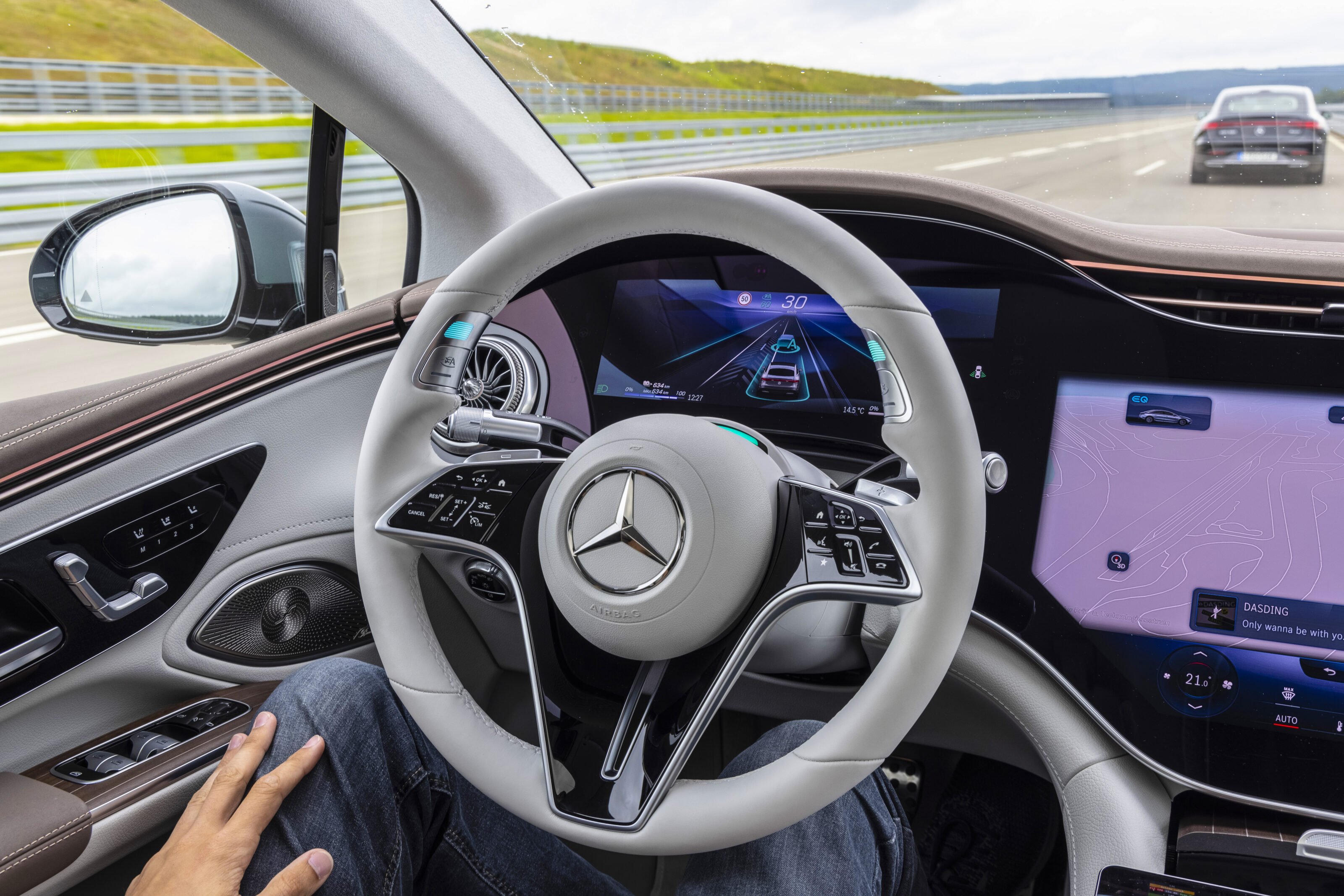
Mercedes-Benz’s timing was better. With Level 3 autonomous operation made legal in Germany from January 2021, both the new S-Class sedan and EQS electric car can operate as Level 3 autonomous vehicles using its Drive Pilot system but are only permitted to do so on motorways at speeds up to 60km/h. Honda’s Japanese-market Legend Hybrid EX fitted with the company’s Sensing Elite safety system is also Level 3 capable. It has been approved by authorities for use in Japan, but, again, only on freeways and at speeds up to 60km/h.
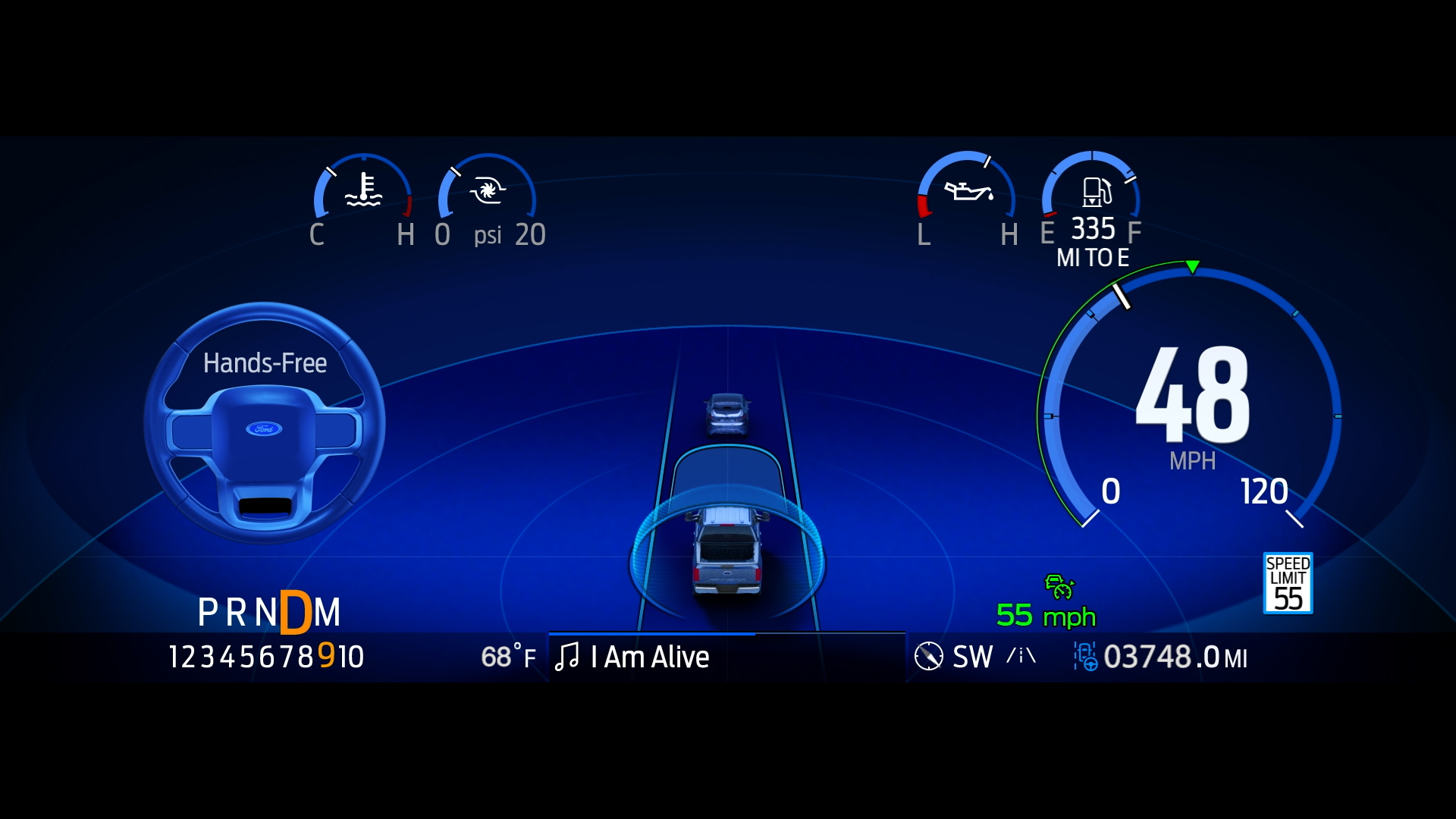
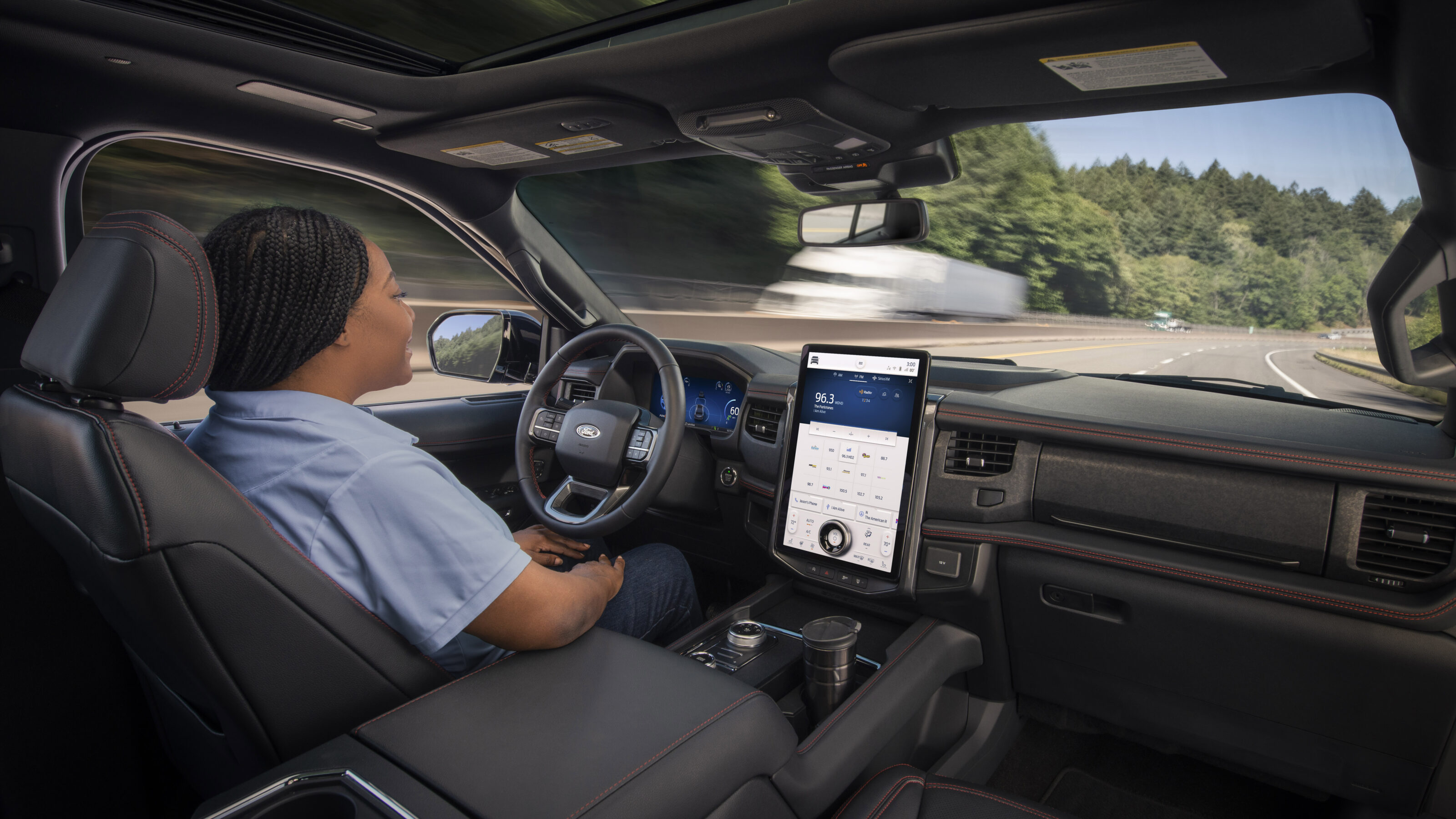
Other manufacturers have ADAS systems that are close to Level 3 capable. Ford’s BlueCruise can operate hands-free in designated ‘Blue Zones’, but Ford insists the system does not replace “the driver’s attention, judgement and need to control the vehicle”. GM has announced an enhanced version of its SuperCruise system that will include lane change on demand and the ability to tow a boat or a caravan hands-free.
“Level 3 is where it gets interesting,” said David Cooke, senior associate director of the Ohio State University Center for Automotive Research, in a recent interview with American trade publication Automotive News. “In Level 2 the human is always in charge. [In Level 3] the vehicle is in charge, until it’s not.”
And that’s a big problem. Tests have shown that, relieved of the task of mentally and physically controlling their vehicles, drivers can take up to 15 seconds to reacquaint themselves with what’s happening around them on the road. Meanwhile, Level 3 systems can switch full control back to the driver in as little as one second. That’s a recipe for disaster. And Tesla’s much-hyped Full Self-Driving (FSD) system proves the point.
FSD is a $10,000 upgrade to Tesla’s Autopilot system the company hints will ultimately deliver Level 3 or even Level 4 capability. Officially, FSD is a Level2 system, as Tesla acknowledges in the fine print on its website: “The currently enabled features require active driver supervision and do not make the vehicle autonomous.” But Tesla has configured FSD to allow it to operate much like a Level 3 system with the legislative safety guardrails removed and is allowing customers to test it in real time on real roads.
In April 2021, America’s National Highway Traffic Safety Administration (NHTSA) began examining 39 incidents involving advanced driver-assist systems since 2016 that resulted in 12 fatalities. It says 33 of those incidents involved Tesla vehicles.
NHTSA is also investigating 12 incidents in which Tesla vehicles with Autopilot activated hit stationary police and fire vehicles. Automotive News says in the aftermath of these incidents, one of which resulted in a fatality, Tesla pushed an over-the-air update for its Autopilot software, but NHTSA wants to know why the company went ahead with the update without issuing a recall.
The FSD development process reveals how Tesla is behaving like a Silicon Valley tech company rather than a traditional carmaker. It’s building the automotive equivalent of ‘minimum viable products’, using a feedback loop from consumers to continuously improve performance and functionality. The problem is, unlike updating a smartphone or an app or a game, real-world testing of autonomous driving software can – literally – be a matter of life and death.
Though much less cavalier in their approach than Tesla, traditional carmakers also believe the evolution of ADAS technologies will eventually endow their mainstream vehicles with Level 4 autonomous capability and give them the ability to build their own Level 5 autonomous vehicles if they wish, as Volkswagen hinted at with its Sedric concept. John Krafcik, now the former CEO of Waymo, disagrees: “There is really no path from Level 2 to Level 4,” he says. “There’s a huge chasm. It’s a completely different mindset.”
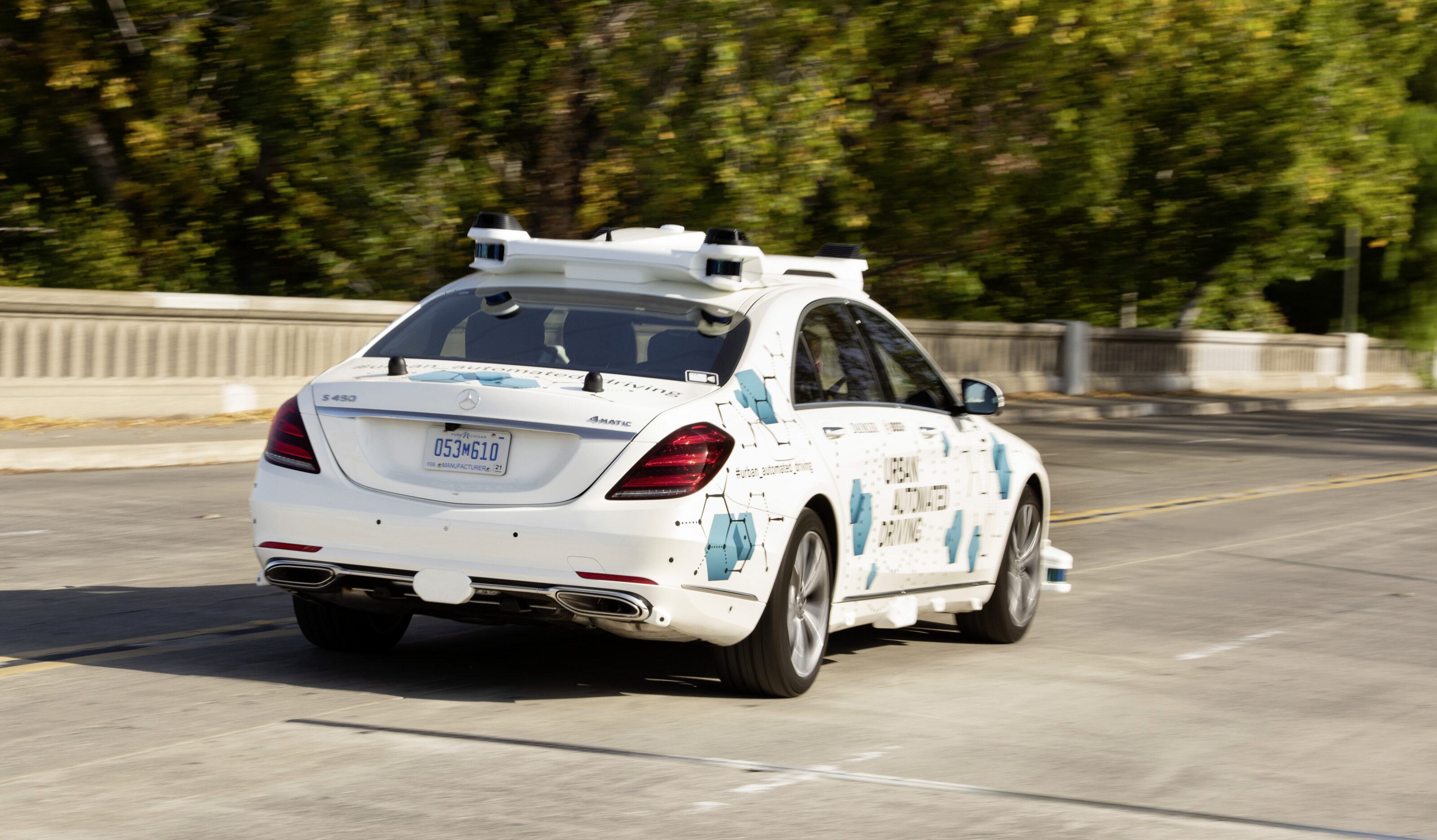
Indeed, Waymo’s fifth-generation digital driver relies on 29 cameras, four perimeter lidars and one 360-degree lidar (lidar is like radar but uses light pulses rather than radio waves) and an imaging radar system. Teslas have eight cameras, and most other ADAS-equipped cars have fewer than that. Virtually none have lidar, although Volvo has announced its next-gen XC90, due for launch within the next 12 months, will be lidar equipped.
Waymo boasts of having completed more than 30 million kilometres of self-driving testing on real roads, and more than 16 billion kilometres of testing in simulation. It’s slow and expensive work – despite being bankrolled by Google parent company Alphabet for more than a decade, Waymo has been forced to raise US$3.7 billion in additional funding in the past two years. Others working on Level 4 and Level 5 autonomous vehicles, such as ride-sharing services Uber and Lyft, have simply given up.
Despite the careful hardware engineering, despite the sophistication of their software, even the ground-up autonomous-vehicle developers – backed by the deep pockets of Alphabet, Apple, Amazon and Microsoft – are still grappling with the same fundamental problem as the lower-cost ADAS developers: What level of risk related to the use of autonomous vehicles is socially acceptable, and where does the responsibility for that risk reside?
Amnon Shashua is the chief executive of Mobileye, whose camera-and-software-based technology features in 70 percent of carmakers’ existing ADAS systems and is working on a full self-driving technology stack. He suggests that even if a Level 4 system can get to the point of crashing only once every 1.6 million kilometres – which means it’s twice as good as the average human driver – people would still be wary of using it.
“If I drive at 16km/h that means I crash once every 100,000 hours of driving,” Shashua says. “So, if I deploy 100,000 cars, I’ll have a crash every hour. From a business perspective that is very, very challenging.”
Yep. And it’s not just the potential reluctance on the part of autonomous vehicle users that’s the problem: Politicians are highly unlikely to want to be seen to be backing a new technology that is perceived to be less safe than travel by rail or commercial aircraft.
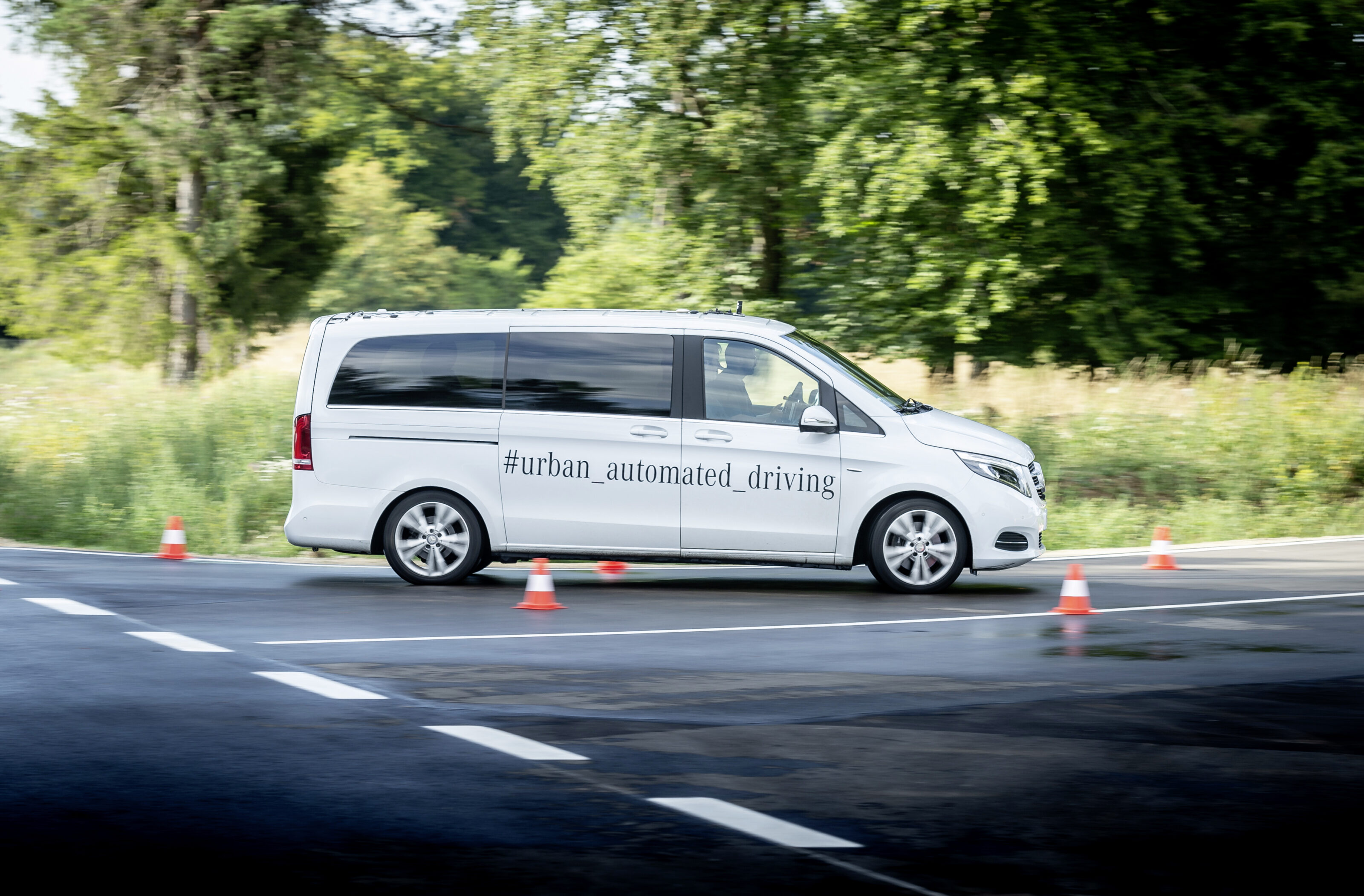
Against that background, most pundits now believe that the mass adoption of purpose-built Level 4 and Level 5 autonomous vehicles is 10 to 20 years away. In the interim, they’ll be rolled out in carefully geo-fenced locations as robo-taxis, mainly in urban areas where conventional traffic is limited or even banned.
And that gives those closely following the ADAS evolution strategy a real opportunity.
We’ve grown up with cars with steering wheels and pedals. We’re familiar with both the risks and the rewards of travelling in them. They have safety features we know and understand. Even if they can drive themselves, the format is a comfortable one, for unlike in a Level 5 autonomous vehicle, which may have nothing inside but seats and screens, we feel we can always take back control.
Indeed, Georges Massing, senior manager digital vehicle and mobility at Mercedes-Benz, says moving ahead with the development of Level 4 and Level 5 self-driving technologies for series production, building on the experience already learned with Level 2 and now Level 3 ADAS, is the next logical step for the company.
Autonomous vehicles aren’t coming. They’re here. We’re just figuring out how to use them.
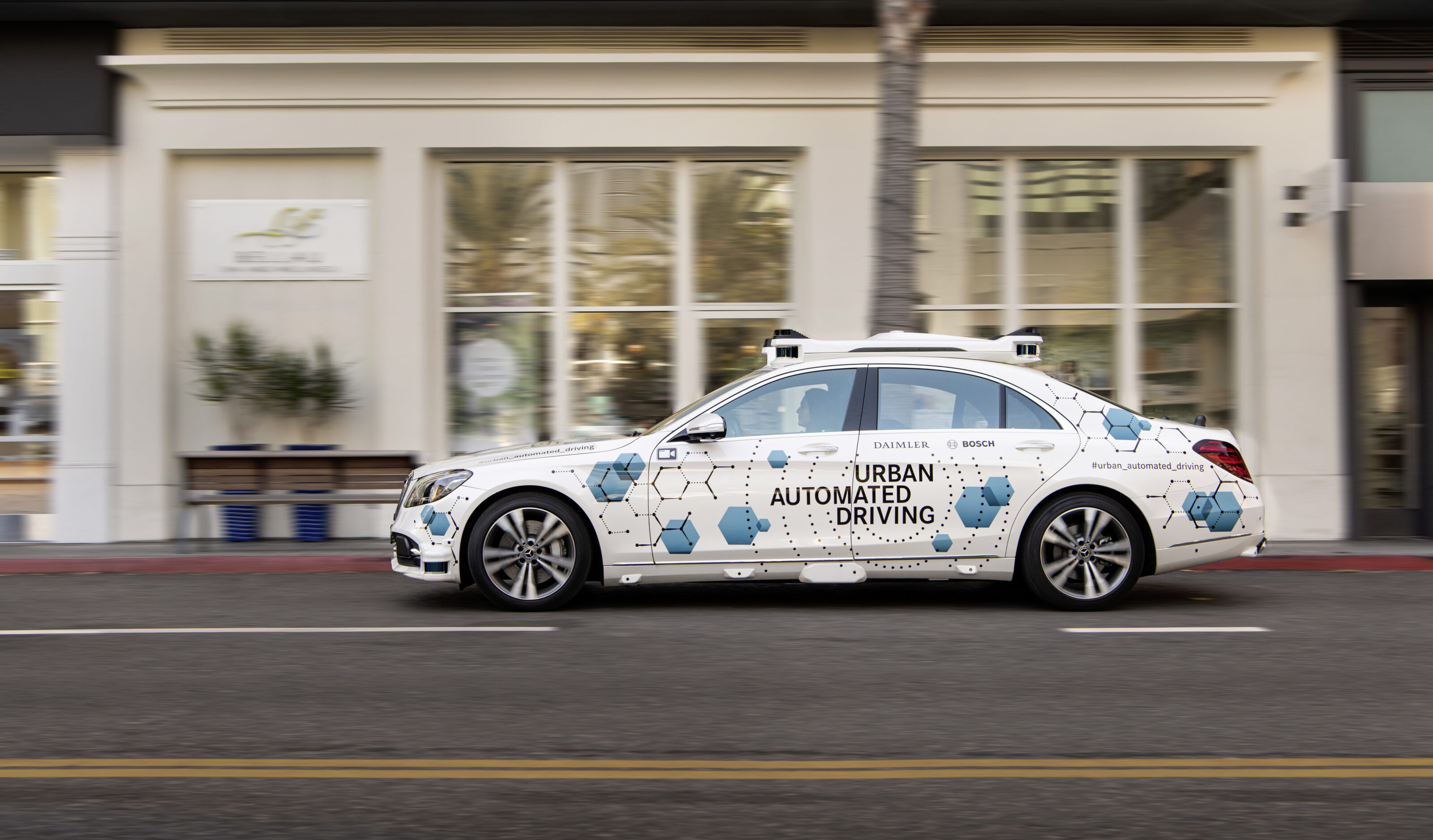
How the car will change the world (again)
Autonomous vehicles have the potential to reshape our cities – even society itself
The car is the machine that changed the world. From superhighways to supermarkets, it’s transformed our cities and our societies. Autonomous vehicles will change it again. There’s very real potential for our cities to become less congested, more liveable.
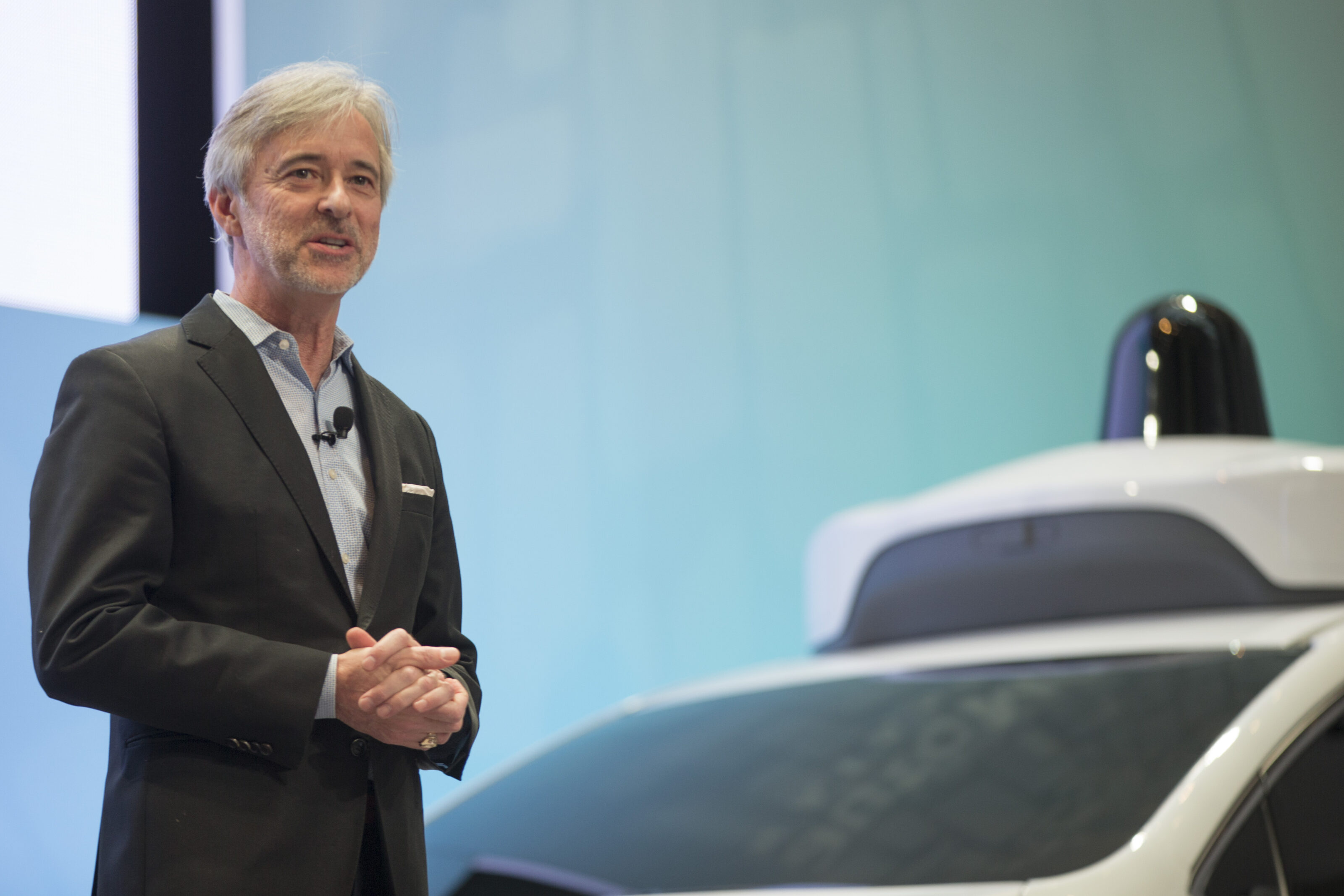
Because the vehicles we own and drive sit parked 95 percent of the time, we’ve had to make room for them, says John Krafcik, who has headed both Hyundai’s US operation and, more recently, autonomous vehicle technology specialist Waymo.
Krafcik says the US has four parking spaces for every car on its roads. “That’s about a billion parking spaces,” he says. “The amount of land in our cities dedicated to the car is significant. About 30 percent of traffic in cities like New York are cars looking for parking spaces, so if we can figure out a way of getting rid of parking spaces and excess traffic looking for parking spaces, cities can start looking very different.”
“Siri, make me a hero”
Why build a driver’s car when the car can do all the driving?
When Mercedes-Benz builds a fully self-driving vehicle, it will be the Mercedes-Benz of autonomous cars, imbued with everything the three-pointed star stands for. The idea of an autonomous Volkswagen or Toyota isn’t an intellectual stretch, either, as they are brands that have long specialised in providing automobility for the masses.
However, for carmakers like Ferrari and Porsche, Lamborghini and McLaren, autonomous cars present a fascinating existential challenge: Why build a driver’s car when the car can do all the driving?
Aston Martin boss Tobias Moers thinks autonomous driving capability can be an opportunity for a performance brand. In his previous role as head of Mercedes-AMG, Moers envisioned owners being able to switch their cars to a high-performance autonomous driving mode during track days and have a digital version of AMG brand ambassador and former F1 driver coach them in real time.
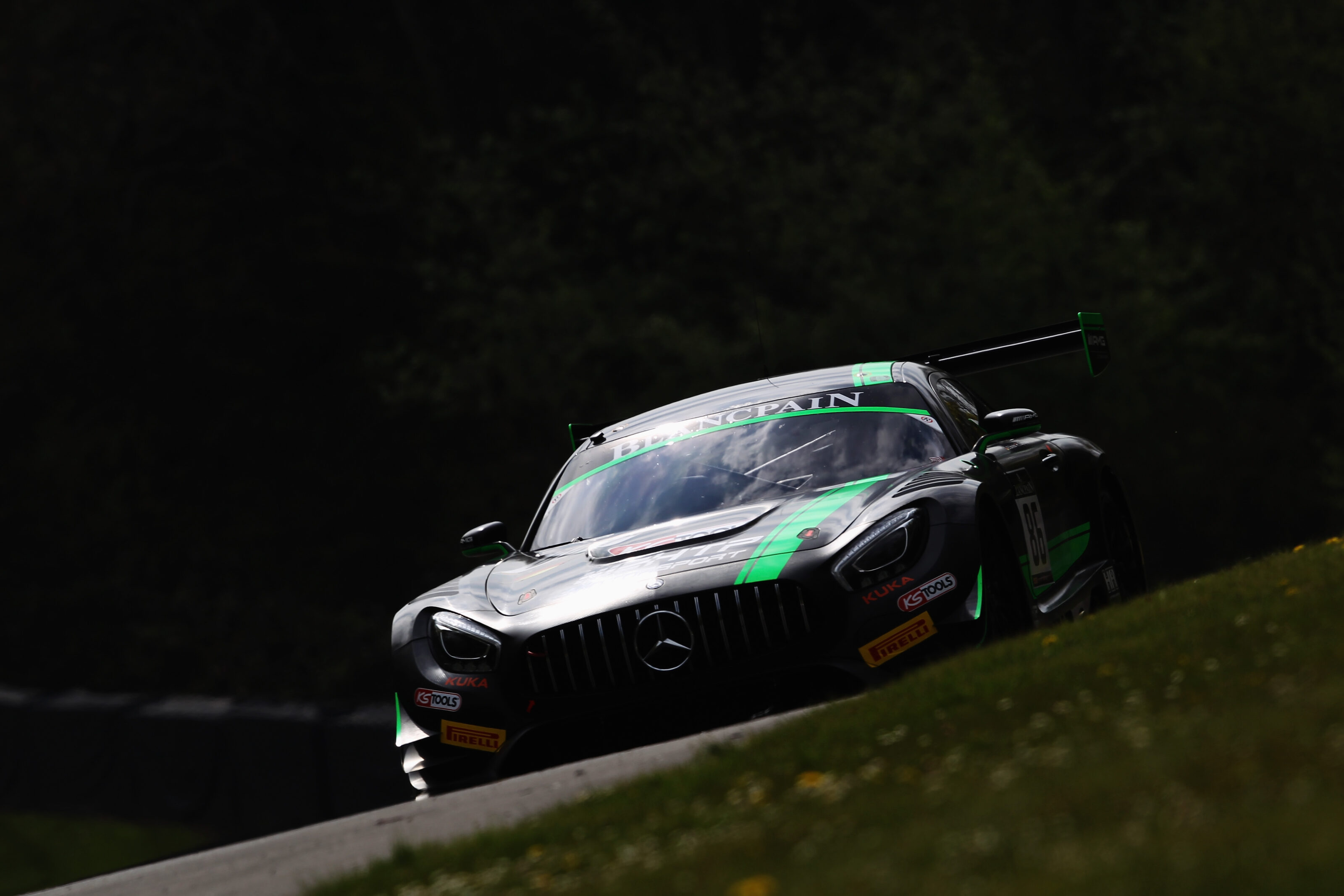
As the car drove itself around a circuit with Schneider levels of speed and precision, augmented reality technologies would show the optimal braking and acceleration points and the right lines through corners. The on-board software and drive-control systems could then be set to progressively reduce the assistance provided by the car and allow the driver to take more control as their skill and confidence improved.
“Autonomous cars will democratise motorsport,” Moers said.
If he’s right, maybe we enthusiasts can relax a little. Maybe smart cars could also teach us to be smarter, faster drivers.
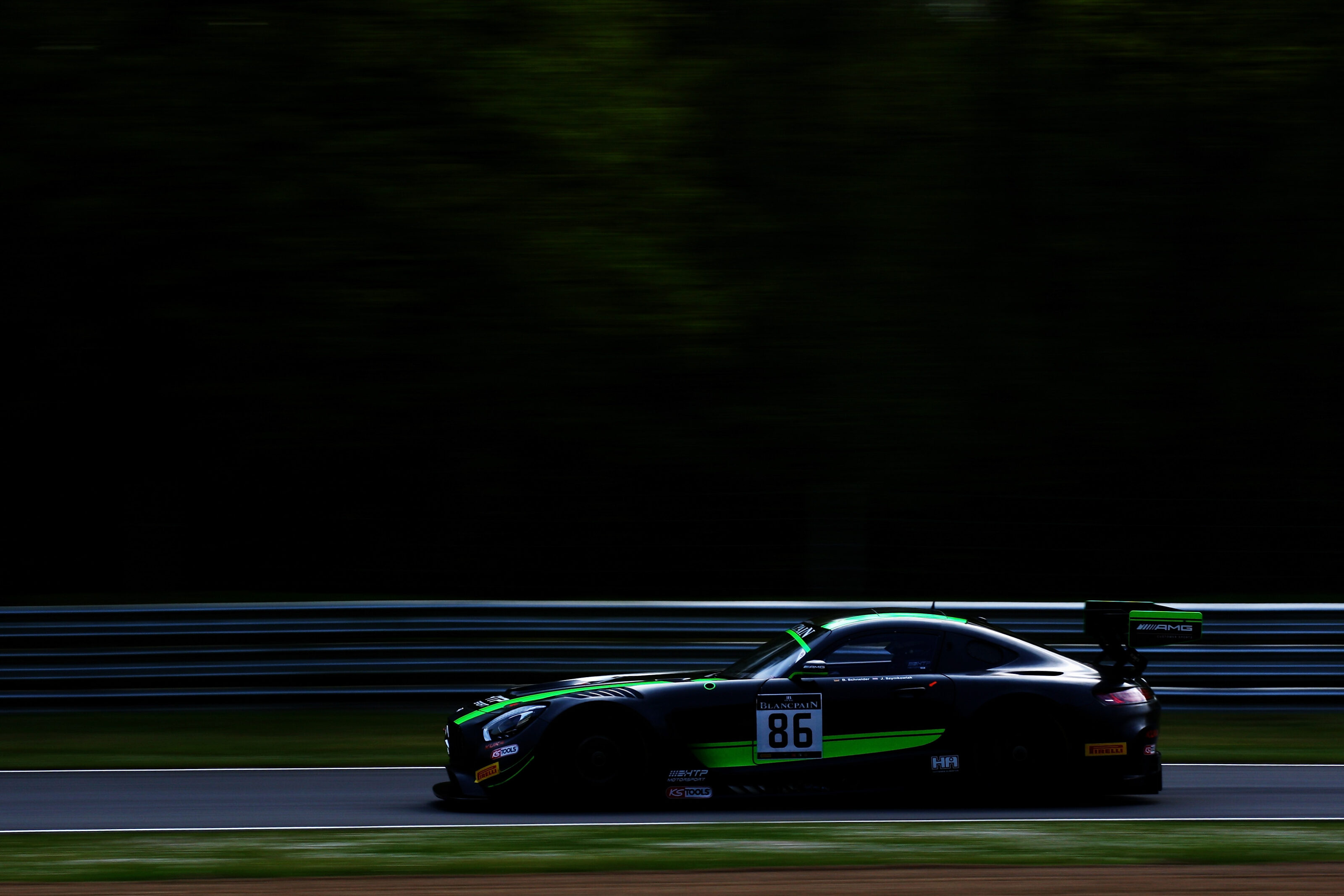
In for the long haul
Will the trucking industry be the first to go driverless?
Work on fully autonomous trucks is accelerating. In May 2021, an autonomous truck developed by California-based startup TuSimple travelled from Nogales in Arizona to Oklahoma City, a distance of about 1450km, in just 14 hours. With a human driver and legally mandated rest stops, it would normally have taken 24 hours.
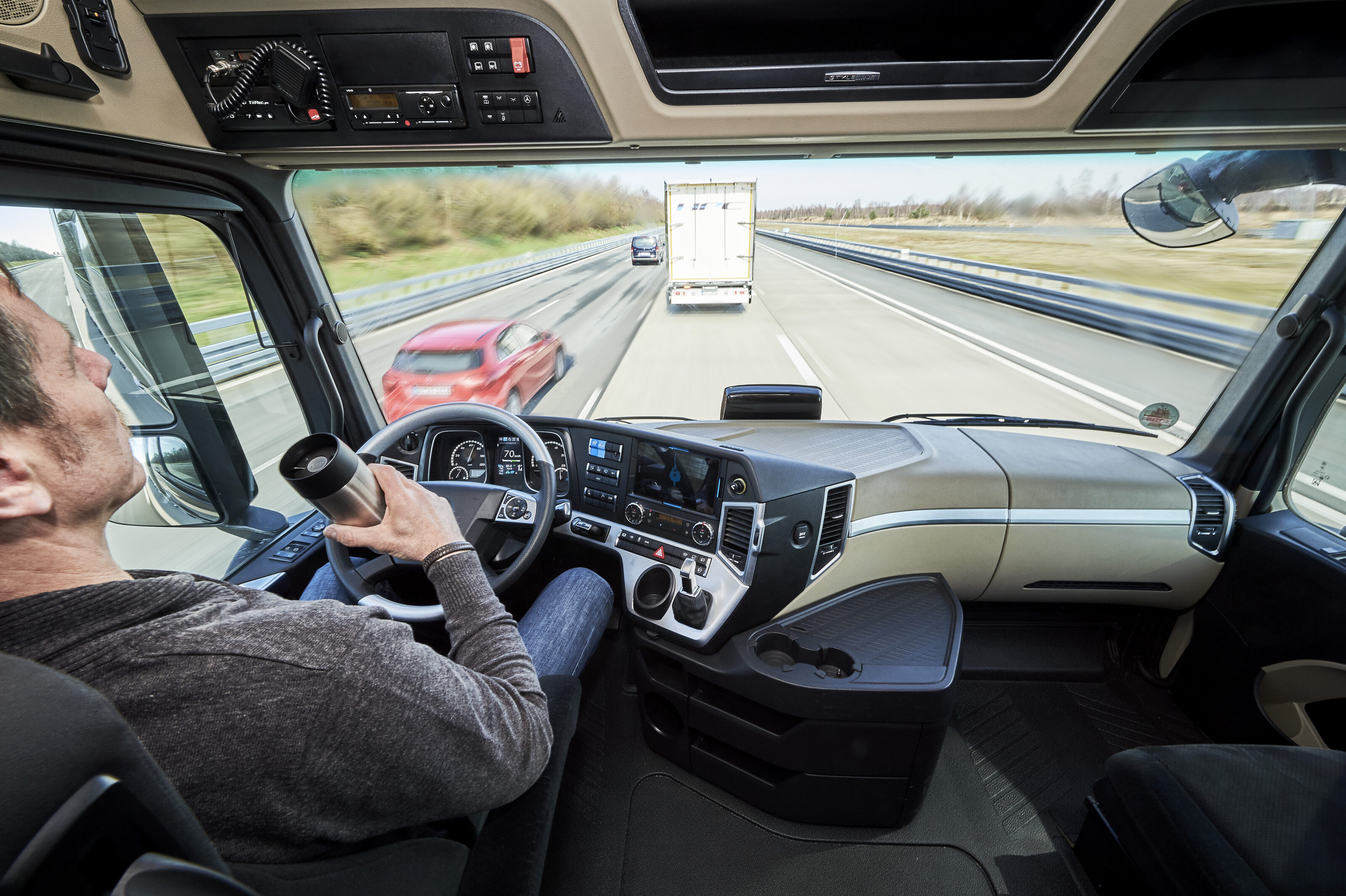
While getting a Level 5 autonomous vehicle to work in all environments is tricky, autonomous trucks are seen as being initially more viable, particularly in the US as they would travel on freeways with clearly marked lanes and relatively gentle curves and gradients.
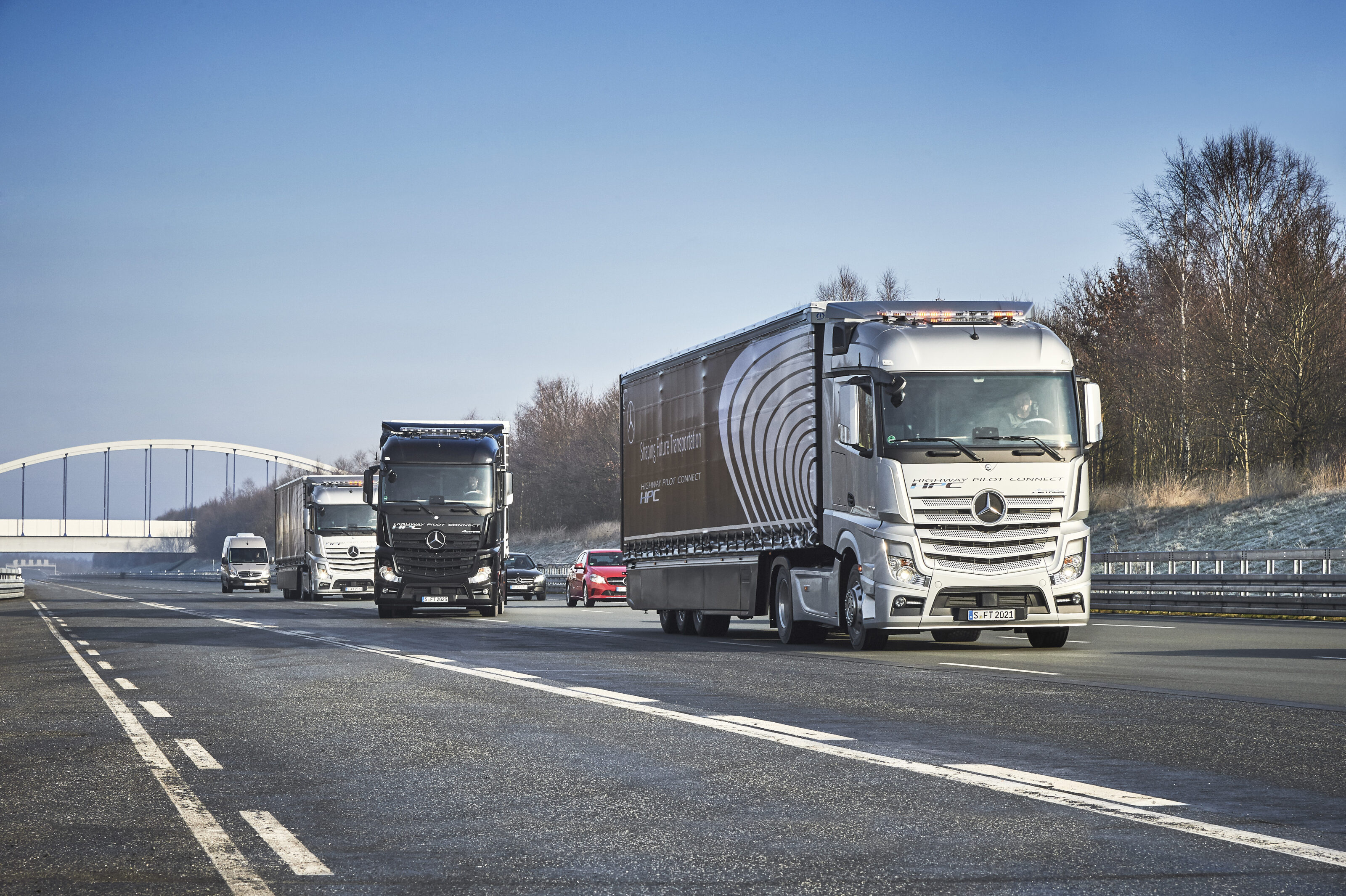
And the business case behind getting the technology to work is compelling: apart from solving the chronic driver shortage that’s now affecting most developed countries, autonomous long-haul trucks that are significantly less likely to crash and don’t need rest stops have the potential to lower per-kilometre transport costs by as much as 30 percent, says Deloitte, a consultancy firm.
Traditional truck manufacturers have done the maths: TuSimple is already working with Volkswagen’s heavy truck group, and other autonomous vehicle technology specialists are following suit: Waymo has signed a deal with Daimler, and Aurora is partnering with Volvo trucks.
A bridge too far?
The rivers of autonomy gold remain out of reach
The prospect of self-driving cars – surely the biggest automotive grift of the late 2010s – is exciting. Whether you’re personally interested in how they could help the dull parts of your motoring life isn’t really the point, I would wager; rather, the huge social impact they could have.
Our ageing population would be able to stay in their homes longer. Those without the physical ability to drive wouldn’t have to rely on a patchwork of public transport options that treat them as an afterthought. Being able to load yourself into a car that arrives on-demand or your own fully autonomous car, tailored to your needs, would change many lives for the better. For millions more drivers it would make the task of driving a thing of the past, where they could get on with whatever they want while the car takes them to where they want to go.
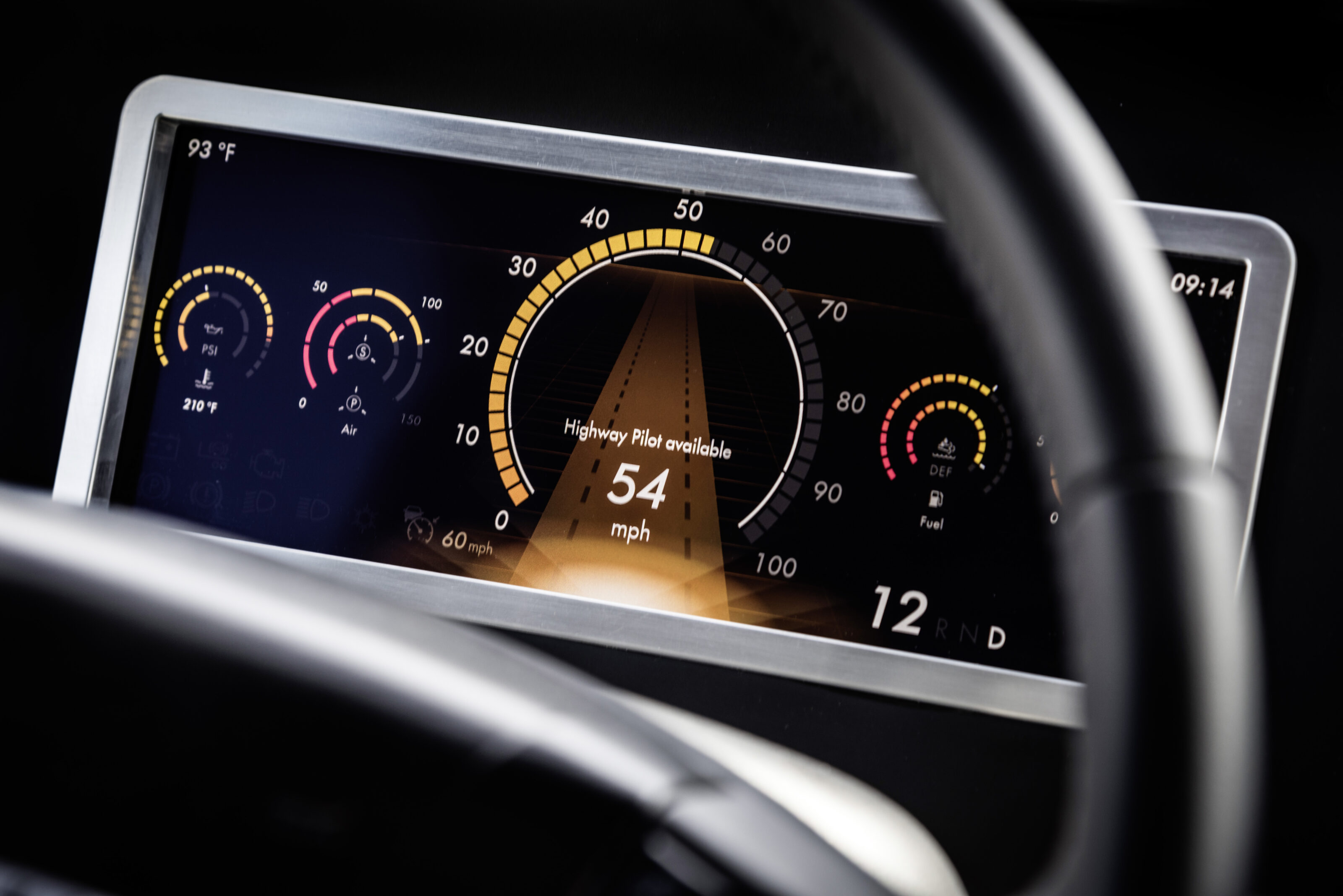
We are a long way from this dream becoming a reality. And the reason is simple – we are not at the point where the hardware and software can deal with the vast mess of information and events that is all part of driving a car without at least occasionally asking a human to step in.
The US-based Insurance Institute for Highway Safety (IIHS) carried out a study co-authored by the organisation’s vice-president, Jessica Cicchino. Cicchino said, “It’s likely that fully self-driving cars will eventually identify hazards better than people, but we found that this alone would not prevent the bulk of crashes.”
As Tesla is learning, real-world testing of autonomous driving software can – literally– be a matter of life and death
Safety is often touted as a key reason for pushing autonomous driving, but the IIHS – with a clear vested interest in eliminating, or at least reducing crashes – isn’t convinced. The people building entire companies around the technology aren’t exactly brimming with confidence either.
The CEO of artificial intelligence firm Argo AI, Bryan Salesky, wrote on his blog in 2018, “We’re still very much in the early days of making self-driving cars a reality. Those who think fully self-driving vehicles will be ubiquitous on city streets months from now or even in a few years are not well connected to the state of the art or committed to the safe deployment of the technology.” Salesky had been working on the technology for almost a decade.
Salesky’s declaration came not long after Ford invested $1 billion into Argo. Salesky, now 40, told The Merge podcast that Level 5 autonomy was unlikely in his lifetime. Ford’s money was supposed to get it the first self-driving Blue Oval car by 2022. That’s not happening.
Uber dropped its attempts to develop its self-driving systems in-house. Part of Uber’s business plan was to eliminate the most expensive – and pesky – part of its business model, the driver. Drivers expect payment, fair conditions and to be looked after, and Uber was very keen to not have to do any of these things. The company underestimated the difficulty of developing autonomous cars technology and handed it over to the recently listed Aurora, which itself is run by ex-Waymo and ex-Google autonomous vehicle pioneer Chris Urmson.
Urmson told The Atlantic in March 2018 that making a self-driving car is easy. It’s getting it to operate safely on the road that’s the problem. “You go get a couple of graduate students together, you get a car, you download ROS, and you can probably get a self-driving car driving around a parking lot within six months. The challenge, of course, is in the details. Let’s understand how to get to something that is efficient and safe to be out on the road.”
He declared during his time at Waymo that he didn’t want his son to have to get a driver’s licence. He is now teaching his son to drive.
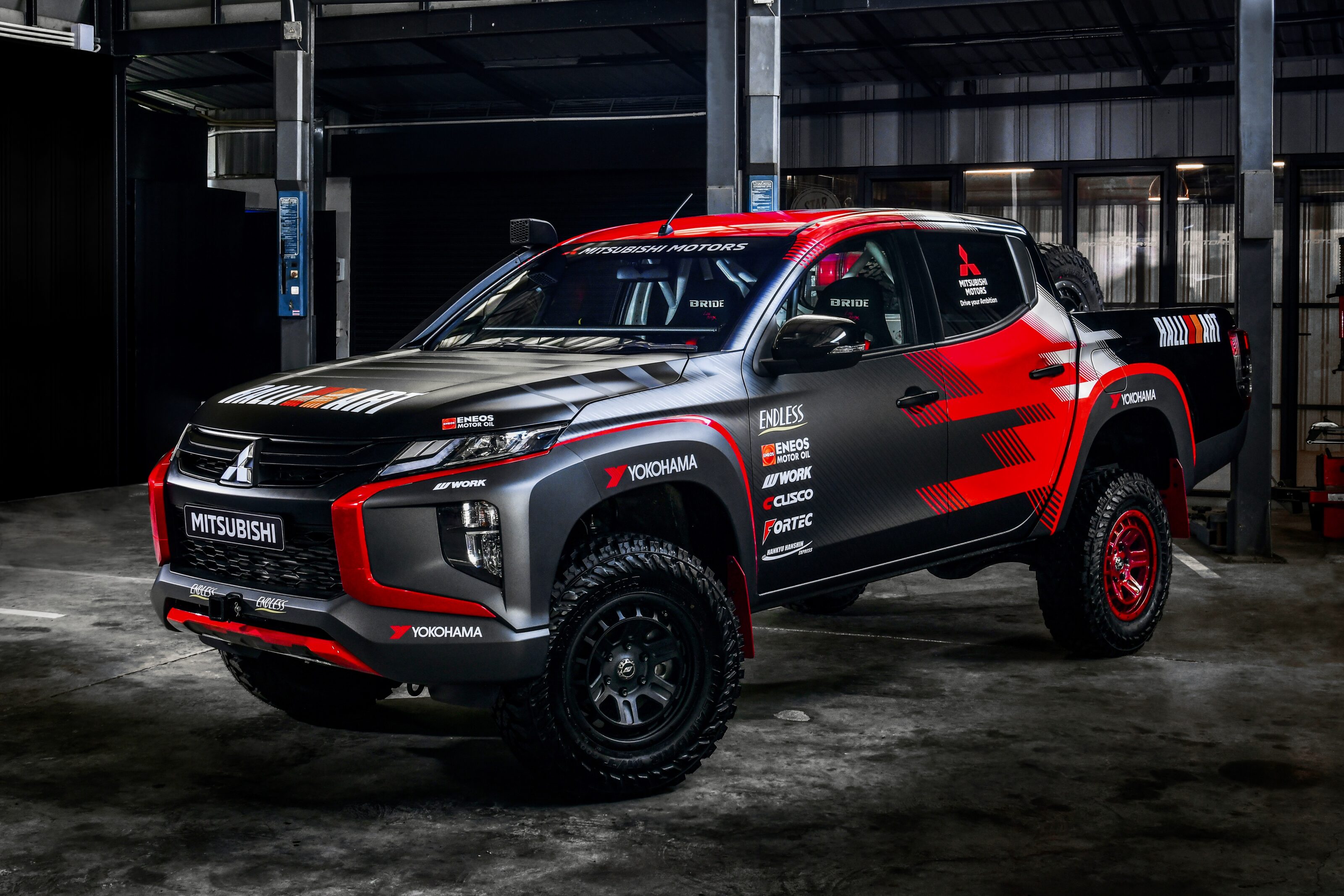
Mitsubishi has announced it will compete again in a rally event under the Ralliart name, while also revealing a swag of accessories for its current line-up.
Team Mitsubishi Ralliart will compete in the 2022 Asia Cross Country Rally (AXCR) in August with a Triton, with two-time Dakar champion Hiroshi Masuoka appointed as team director.
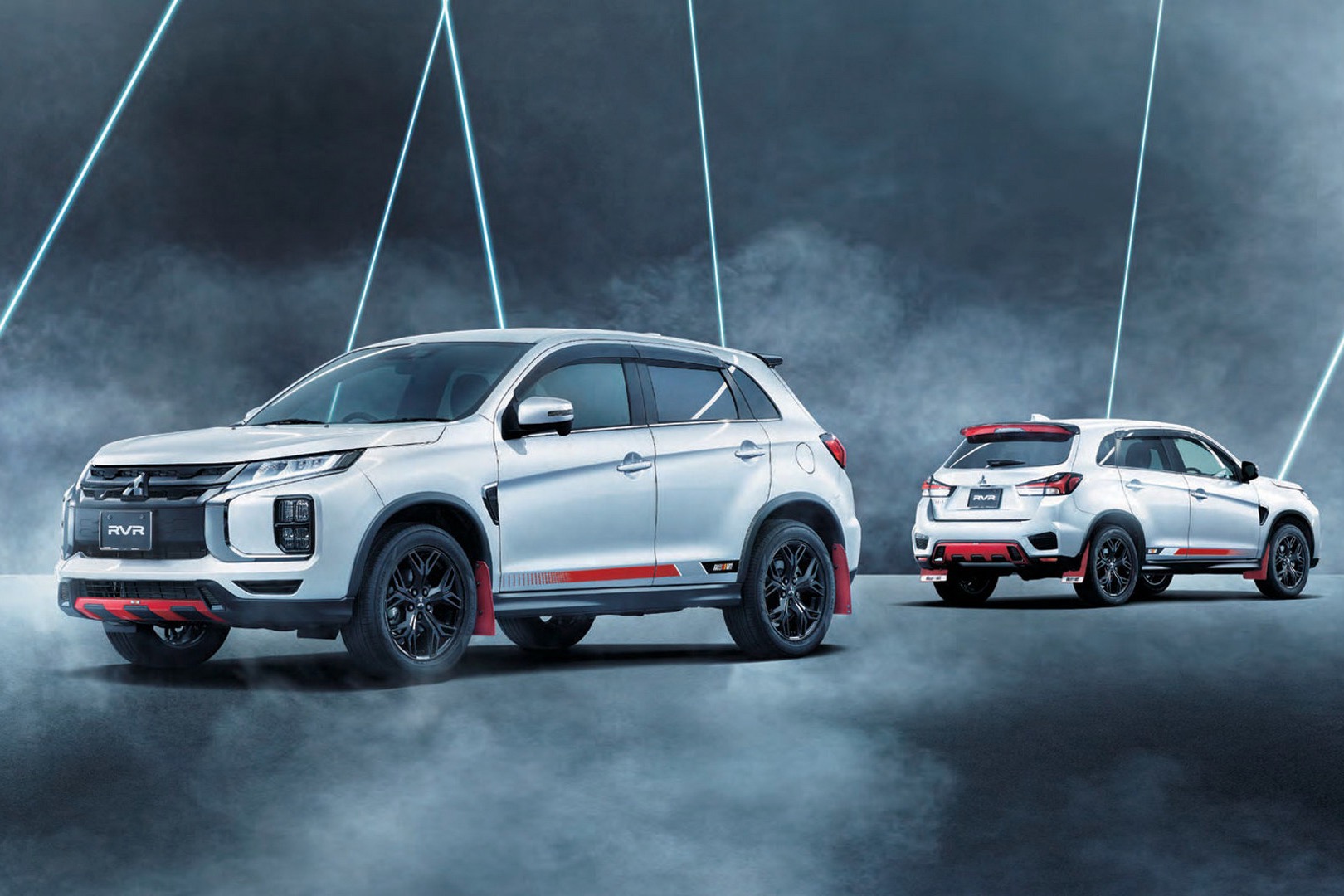
At the same time, Mitsubishi in Japan has also shown off a range of Ralliart-branded parts for the Outlander, Eclipse Cross, and ASX (badged as the RVR in Japan), as well as the Delica people-mover not currently sold here.
Much like the styling package announced in November for Triton and Pajero Sport models in Thailand, the Ralliart accessories provide a sporty cosmetic touch to the cars, with subtle bodykits, mud flaps, and decals all designed to hark back to the glory days of Mitsubishi’s dominance in the World Rally Championship under the Ralliart name.
“For many years, Mitsubishi Motors competed in the World Rally Championship and the Dakar Rally, winning championships in both of them and improving the driving performance of Mitsubishi cars that can be enjoyed with peace of mind in any weather or road conditions,” Team Director Hiroshi Masuoka said.
“Mitsubishi Motors’ participation in the AXCR in the form of technical support will strengthen our product uniqueness, especially for ASEAN strategic models including pick-up trucks and SUVs. Team Mitsubishi Ralliart will make preparations to meet the expectations of our fans, so please stay tuned.”
For those who don’t have a current-shape Mitsubishi to modify, but want to support the team, the company also offers a range of clothing and other items – including a reusable face mask for ¥1980 (AU$22.60).
The carmaker announced it would revive the Ralliart name back in May 2021, eventually unveiling the Vision Ralliart Concept in January – a performance-oriented Outlander PHEV which hints at a possible upcoming production model.
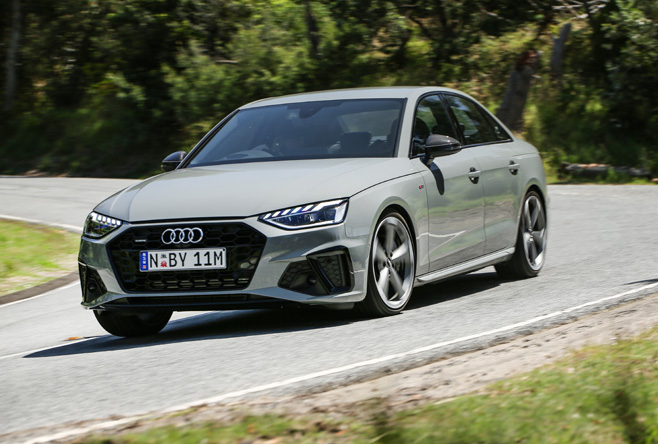
UPDATE, March 18, 2022: A second recall has been issued by Audi for its A4, A5, A6, A7, A8, Q5, Q8 and E-Tron models built between 2019 to 2021.
After the vehicles were previously recalled in September last year (more below), a follow-up recall notice was released due to the repairs potentially causing separate problems.
According to Audi, the replacement rear axle clamping nuts may have caused a misalignment in the rear assembly, leading to potentially higher tyre wear and greater risk of a flat or damaged tyre.
As before, affected owners are encouraged to contact their nearest Audi dealer to arrange an inspection.
VINs for affected vehicles can be found here.
The story to here
September 10, 2021: Audi Australia is recalling several of its models because the rear axle assembly does meet manufacturing standards.
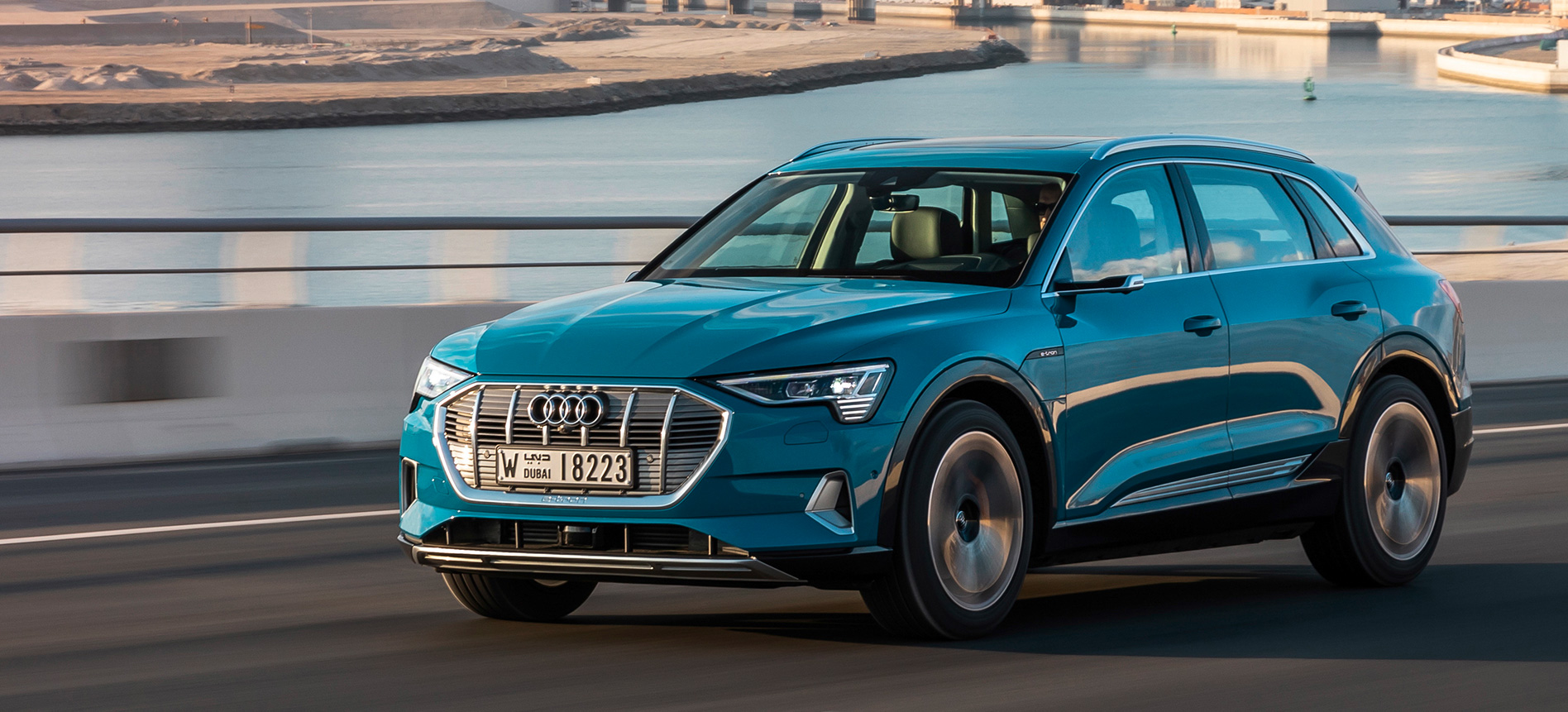
The German carmaker has issued a notice for 1623 of its A4, A5, A6, A7, A8, Q5, Q8 and E-Tron cars built between 2019 and 2021.
According to the Department of Infrastructure, some nuts fitted to the rear axle assembly did not meet manufacturing specifications and may break.
If there is a broken nut, it may lead to increased movement between the wishbone and hub carrier and a change in the wheel alignment on the rear axle.
The problem could cause a “sudden uncontrollable movement of the rear axle” – increasing the risk of injury or death to any occupants or other nearby road users in an accident.
A list of VINs for the vehicles involved is available here.
Audi is contacting owners of affected vehicles to arrange with their nearest authorised dealership to have the work carried out free of charge.
Or for further information Audi can be contacted on: 1800 502 834
Like a spontaneous holiday romance, I’ve spent the six months since I drove the new 2022 Audi S3 in the UK wondering if it really was as good as I remember. Was its turbo 2.0-litre quite as muscular as I recall, or perhaps I was just swept up in the beautiful Cotswolds scenery?
Its Quattro drivetrain, MQB Evo platform and sweet chassis seemed like a beautiful pairing but maybe my judgment was clouded by the nostalgia of a return to the UK.
And I’m pretty certain the fourth-generation S3 struck a good balance of practicality and performance, but there’s a chance I could have been too busy enjoying the road trip with a friend. But the car in question has just arrived in Australia for a reunion on home turf, and it’s time to find out if I’d had the beer goggles on – so to speak.
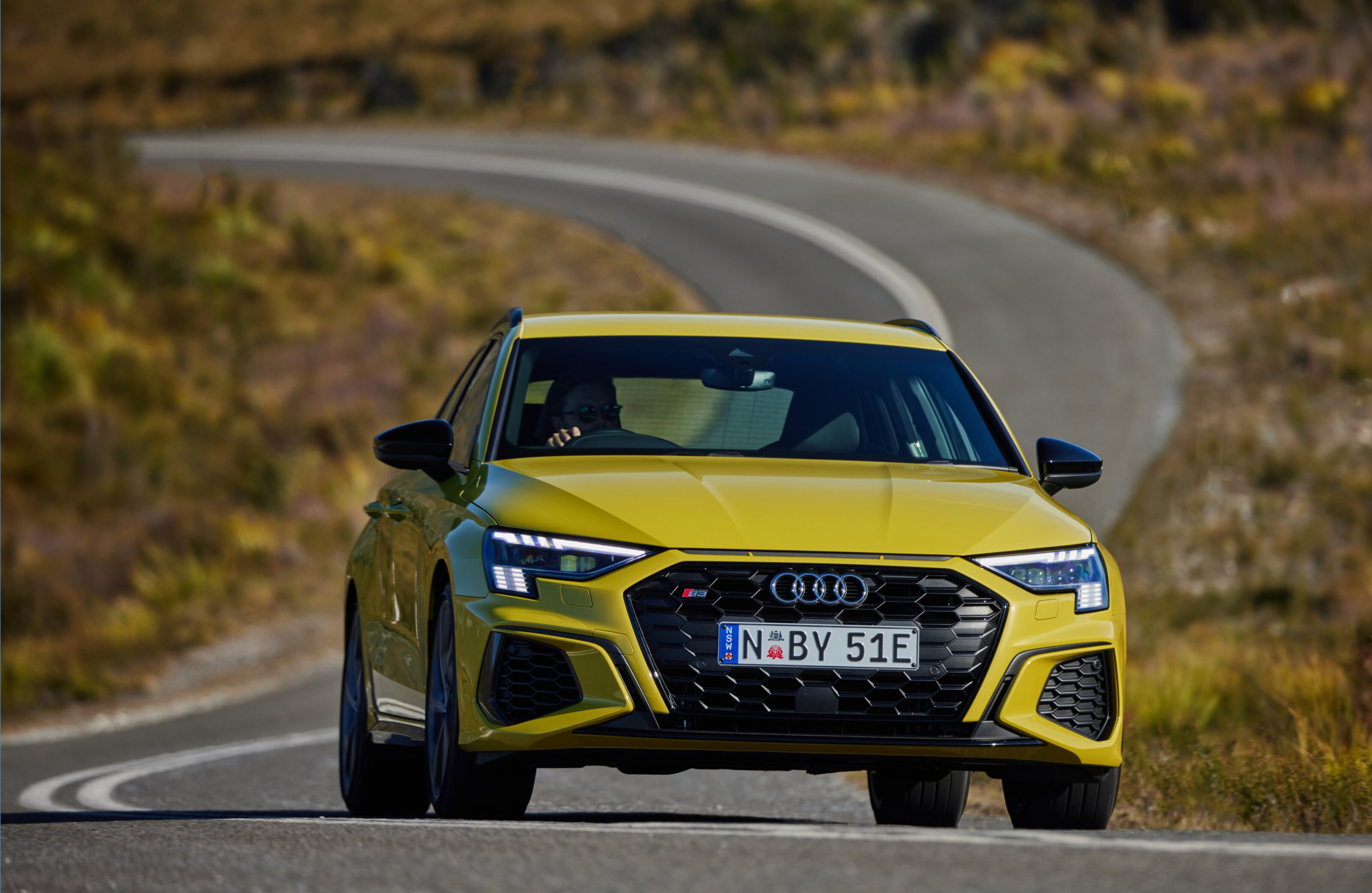
On first inspection, I still feel the styling has become a little busy compared with the restrained and understated third-gen version but It certainly looks purposeful and aggressive. Its lightly flared arches impart a pleasant stance while its massive grille looks capable of ingesting small dogs and I’m left wondering why Audi seems immune to the criticism BMW is copping for its similar grille-enlargement program. Proportionally though, the S3 looks like an S3 should; taking all the right parts of the new A3 and adding a little Audi Sport dust.
Under the bonnet, there’s another evolution of the prolific EA888 turbo four-cylinder petrol, which produces 228kW and 400Nm from 2.0 litres. Unlike the previous S3, which was de-tuned compared with the version sold in the UK and Europe, the new version has the same full-fat power output.
It’s enough to do the zero-to-100km/h dash in a claimed 4.8 seconds. But this latest iteration is so much more than brute strength and has a broad ability that’s very easy to live with
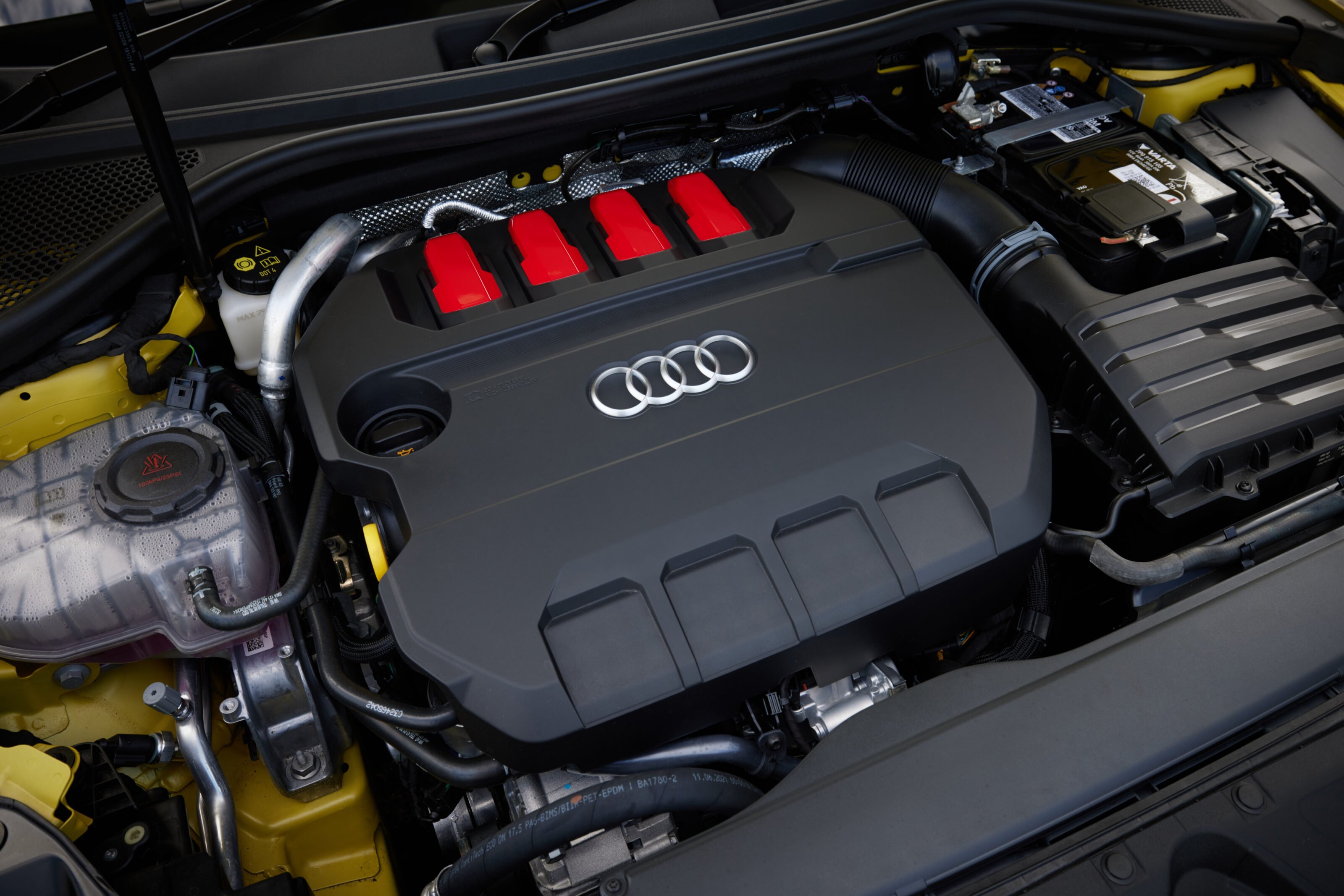
At low engine speeds and minimal throttle, the four-pot is tractable and well-mannered with good torque characteristics. Keep your toe pointed though, and there’s a satisfying linear build to the full might between 5450 and 6500rpm. In this state of tune, the EA888 has all of the advantages of turbo torque, little of the lag and the desire to rev like a natural atmo donk.
The icing on this excellent engine is a convincing augmented engine note that somehow makes it sound like it has an extra cylinder.
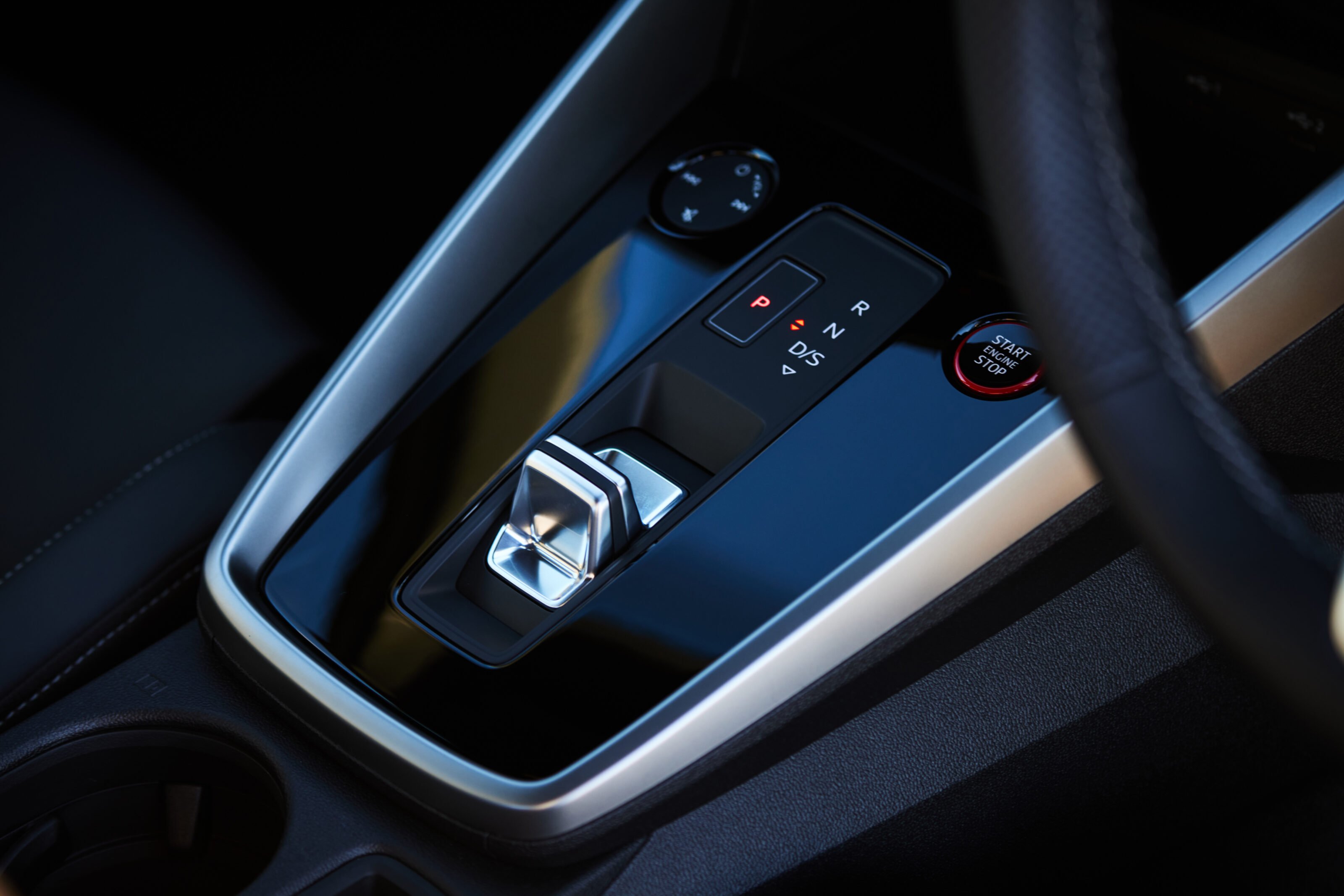
It’s bolted to Audi’s S Tronic seven-speed dual-clutch automatic, and no amount of begging will make the German car-maker swap it for a manual. Nor should you. Aside from the occasional reluctance to kick down, the revised unit is a great pairing. Taking control with the paddles, it’s impressively obliging and has the smoothness of a torque-converter with the instant shifts of a DCT.
Body control is excellent, understeer bleeds in beyond a surprising grip limit, and the fast redistribution of torque has an almost four-wheel-steer feel
As before, the versatile power and torque delivery is made easier to access thanks to the Quattro all-wheel-drive system. Apart from a complete lack of torque-steer, the abundant traction really only manifests itself when really pushing the limits with a clever distribution of power to the most deserving wheels, but the combination of power, flexible final drive and supple chassis and the S3 is incredibly confident on back roads.
Body control is excellent, understeer bleeds in beyond a surprising grip limit, and the fast redistribution of torque has an almost four-wheel-steer feel. There’s no variable steering rate but a new progressive rack ratio is perfectly engineered for twisty roads, while new dampers are adaptive. They replace the previous magnetic ride system for a broader spread of ride comfort and dynamic spectrum depending on the style of driving.
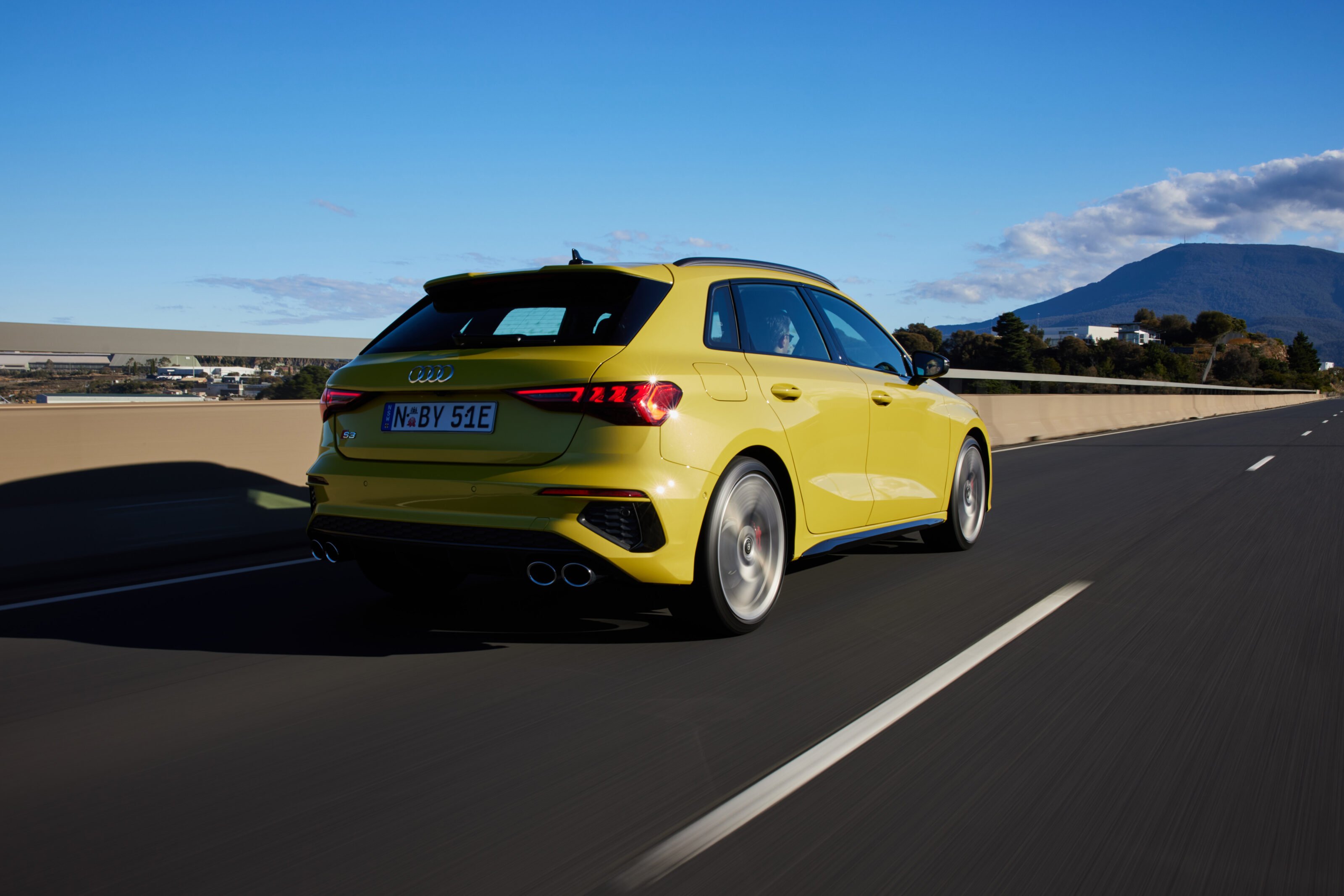
When the fun is done, the S3 returns to its likeably placid nature with a manner that belies its high-performance personality.
Unlike close rivals, the S3 doesn’t have multi-piston front brake calipers, opting instead for single-piston sliding versions but they are painted red and our blast along some of Tasmania’s finest roads didn’t once produce the dreaded fade or lengthening pedal.
As a machine for getting somewhere in a hurry, the S3 will deliver you to the chosen destination fast regardless of the way ahead and, had the typically unpredictable Tassie weather thrown some climatic challenges into the mix, I’m confident the little hatch has the performance capacity to accommodate.
Obviously, I’m deliriously excited to try the new RS3 but in all honesty, the bandwidth of the S3 would satisfy all but the most track-hungry hatch fan.
Speaking of which, the S3 is available in identical spec but with a sedan boot in place of the Sportback’s hatch. It adds $2500 to the price along with a boot that grows to an impressive 420 litres from 380L.
With more muscle than ever but the chassis to handle it, the S3 has never been more deserving of its boot badge
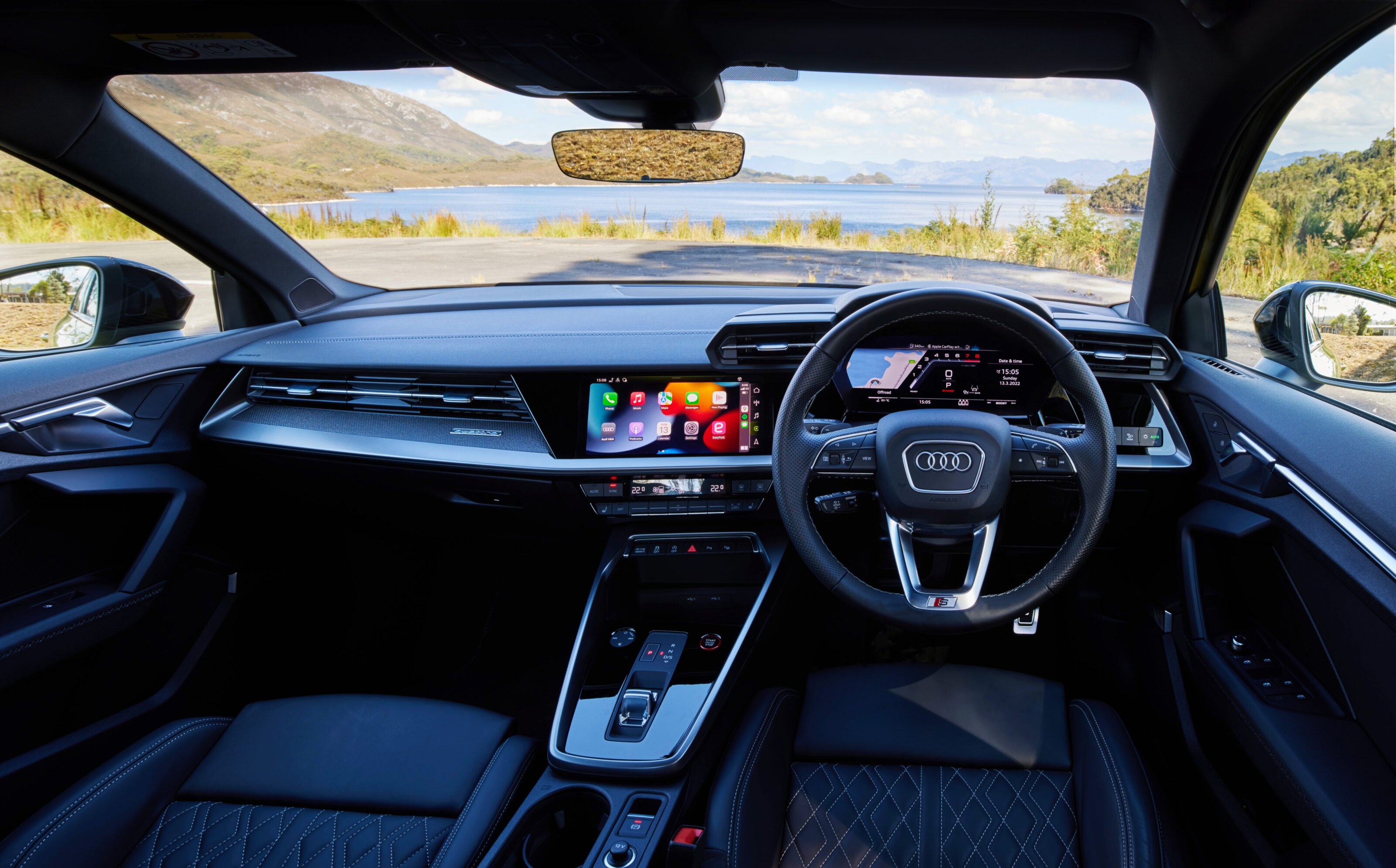
Included in the S3’s price are plenty of deal-enriching features including 19-inch alloys, LED matrix headlights and metallic paint for the exterior, while Nappa leather sports seats with electric adjustment and heaters (front), digital displays for the instrument cluster and central 10.1-inch touchscreen, and the Bang and Olufsen stereo are cabin highlights.
Generally speaking, the interior is ergonomically well-executed and spacious although a few scratchy plastics sneaking in are surprisingly un-Audi. If you’re difficult to please, Audi will take a few more dollars and add a selection of option packs necessary to provide a panoramic sunroof, head-up display or some carbon-fibre embellishments, for example.
With more muscle than ever but the chassis to handle it, the S3 has never been more deserving of its boot badge. But better than that, its equipment level and performance have been perfectly dialled to give it breathing space from the A3 range as well as RS3 halo model.
This hugely likeable fourth-gen version no longer has to exist in the shadow of the flagship version and has the credentials to stand proud.
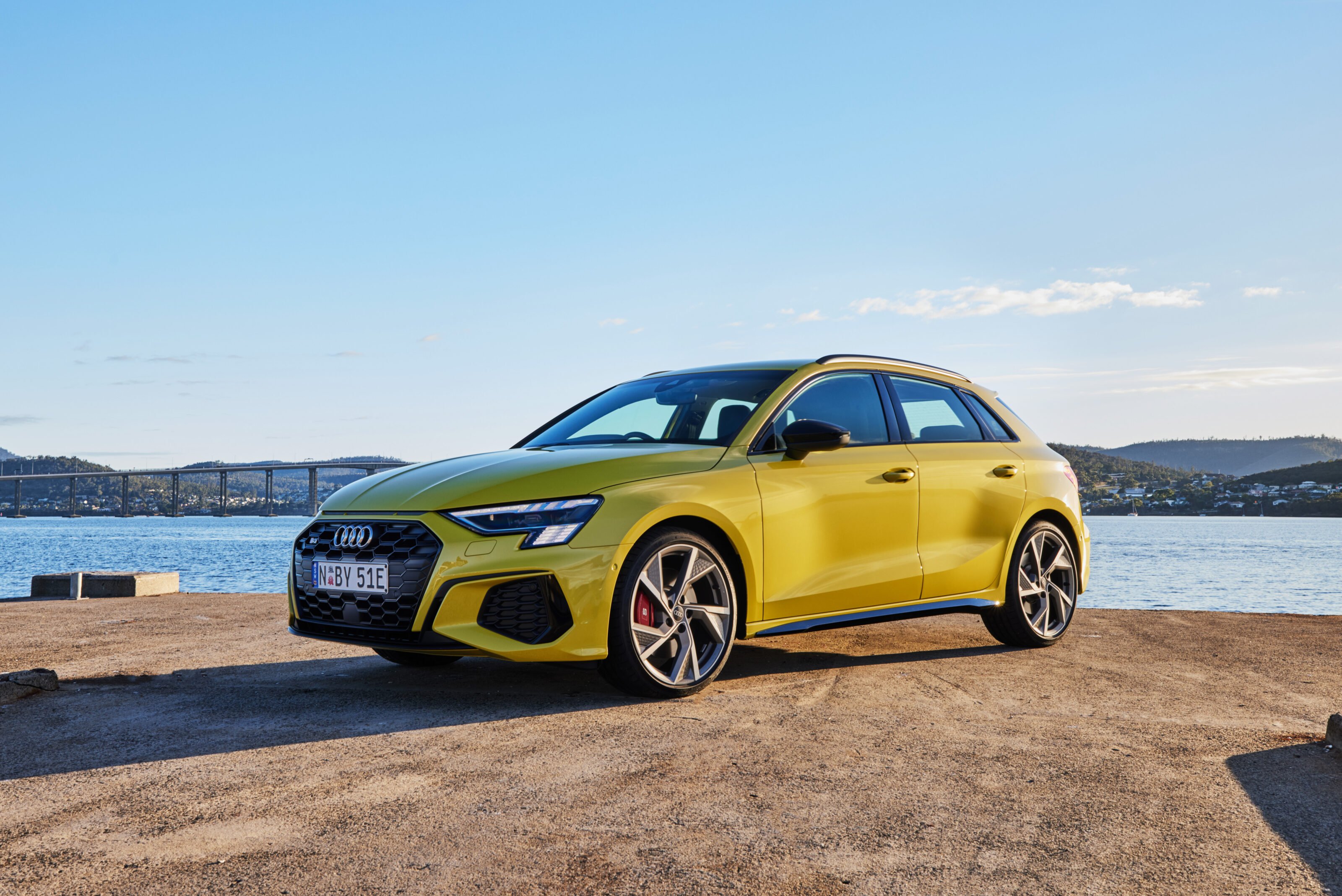
It seems my memory of this car serves me well and the 2022 S3 is as well-rounded as the model I first got my hands on half a year ago.
There is one additional compelling feature for the model you’ll find in Australian showrooms. UK customers are offered a range of S3 variants including a fairly basic entry version whereas Audi Australia has just one relatively kit-rich car.
Dressing up the most-affordable Brit-spec S3 to look like the Australian version requires the addition of the so-called Vorsprung Pack and increases the price to the equivalent of $83,500. Virtually the same spec S3 will cost Australian customers $70,700 before on-road costs.
This, says Audi, is a product of both Australia’s extremely competitive premium market, as well as local demand for generously equipped cars.
Either way, the 2022 Audi S3 is not just more grown-up and never more deserving of the coveted Audi Sport badge, but it’s also a bit of a bargain.
2022 Audi S3 Sportback specifications
| Body | 5-door, 5-seat hatch |
|---|---|
| Drive | all-wheel |
| Engine | 1984cc inline-4, DOHC, 16v turbocharged |
| Bore/stroke | 82.5mm x 92.8mm |
| Compression ratio | 9.3:1 |
| Power | 228kW @ 5450 u2013 6500 rpm |
| Torque | 400Nm @ 2000 u2013 5450 rpm |
| 0-100km/h | 4.8sec (claimed) |
| Fuel consumption | 7.4L/100km (combined/claimed) |
| Transmission | 7-speed dual-clutch |
| Weight | 1575kg (DIN) |
| Power/weight | 113kW/tonne |
| Front suspension | MacPherson struts, coil springs, anti-roll bar |
| Rear suspension | multi-links, coil springs, anti-roll bar |
| L/W/H | 4351/1816/1438mm |
| Wheelbase | 2630mm |
| Track | 1545mm (f); 1519mm (r) |
| Steering | electric assisted rack and pinion |
| Front brakes | 345mm ventilated discs, sliding calipers |
| Rear brakes | 310mm ventilated discs, sliding calipers |
| Wheels | 19in x 8.0 J (f/r) |
| Tyres | 235/35 R19 (f/r) |
| Price | $70,700 + on-road costs |
Snapshot
- Frozen Edition to be available for both X3 and X4 M40i
- Limited to 37 examples between the two models
- First arrivals expected in the second quarter of 2022
The 2022 BMW X3 and X4 will gain limited-run Frozen Edition variants, tagging on to the flagship M40i grades of each model.
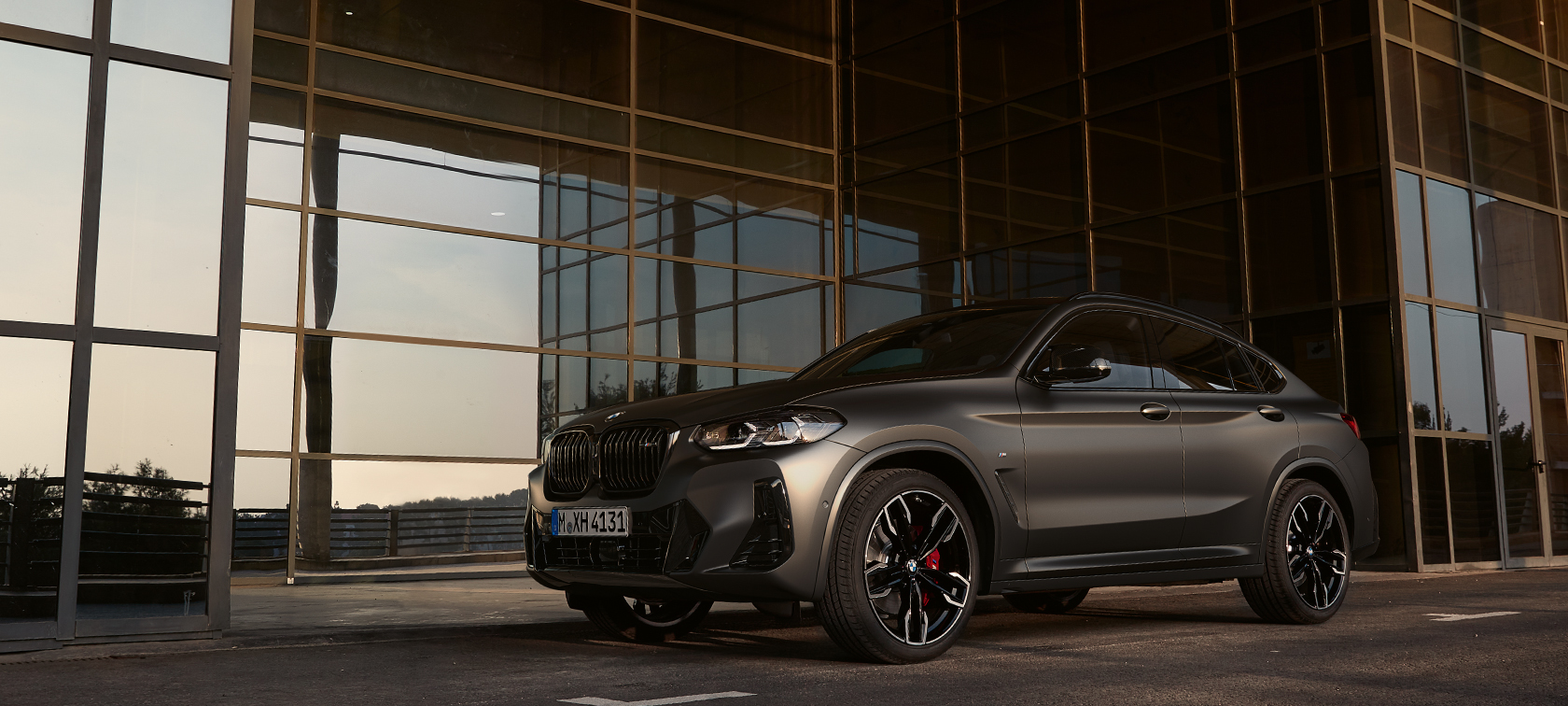
Capped at a total of 37 units between the X3 and its coupe-styled X4 sibling, the Frozen Edition is a sportier aesthetic package added to the range-topping M40i, with reservations opening earlier this morning for a fee of $2500.
Available from $142,900 (X3) and $152,900 (X4) drive-away, the addition of the Frozen Edition package adds roughly $13,600 and $15,000 to the purchase price of the standard M40i, with no extra mechanical changes across either model.
Features
As previously mentioned, the Frozen Edition is a visual package for the exterior and interior, with the extra premium coming with equipment such as:
| M shadow line kidney grille in high-gloss black |
| Mirror caps in carbon fibre |
| Rear boot lid spoiler in carbon fibre (X4 M40i Frozen Edition only) |
| M Sport brakes in high-gloss red |
| Sun protection glazing |
| Leather Vernasca upholstery in black with red stitchingu00a0 |
| Sensatec instrument panel featuring contrast stitching in red (new on X3) |
| M seat belts featuring BMW M tri-colour stitching |
| M interior trim in carbon fibre |
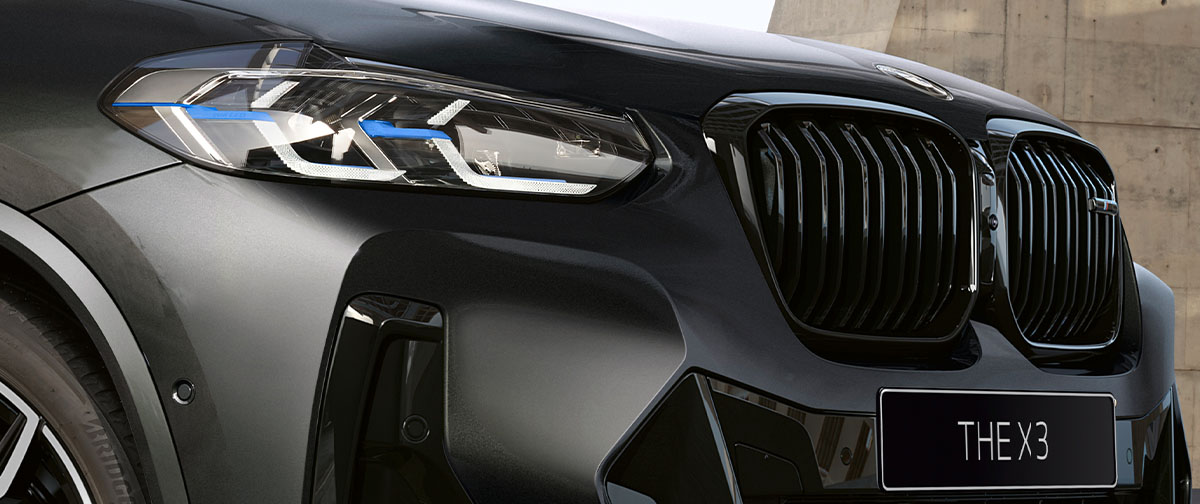
Both the X3 and X4 are otherwise unchanged, with the M40i grades still powered by BMW’s TwinPower 3.0-litre, twin-turbocharged petrol straight-six engine, developing 285kW and 500Nm.
The M40i can achieve the 0-100km/h sprint in 4.8 seconds thanks to its all-wheel drive system, returning a combined fuel economy of 8.9L/100km in regular driving conditions.
BMW says the first examples of its X3 M40i Frozen Edition will arrive from the second quarter of 2022.
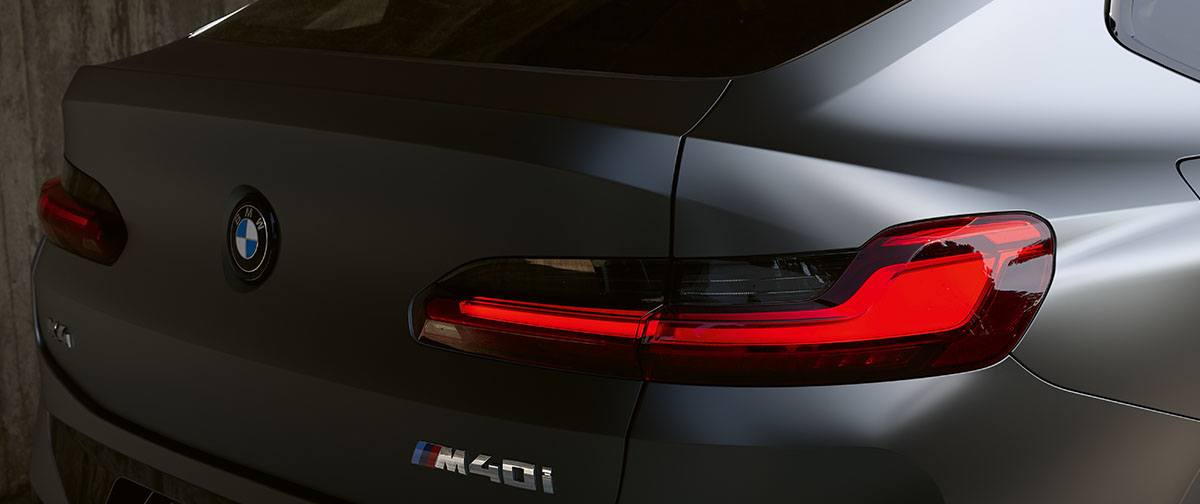
2022 BMW X3 Australian pricing
Prices exclude on-road costs unless otherwise noted.
| Model | Price |
|---|---|
| X3 sDrive20i | $73,471 |
| X3 xDrive20d | $76,570 |
| X3 xDrive30i | $82,971 |
| X3 xDrive30d | $89,971 |
| X3 xDrive30e | $101,971 |
| X3 M40i | $115,471 |
| X3 M40i Frozen Edition | $142,900 (drive-away) |
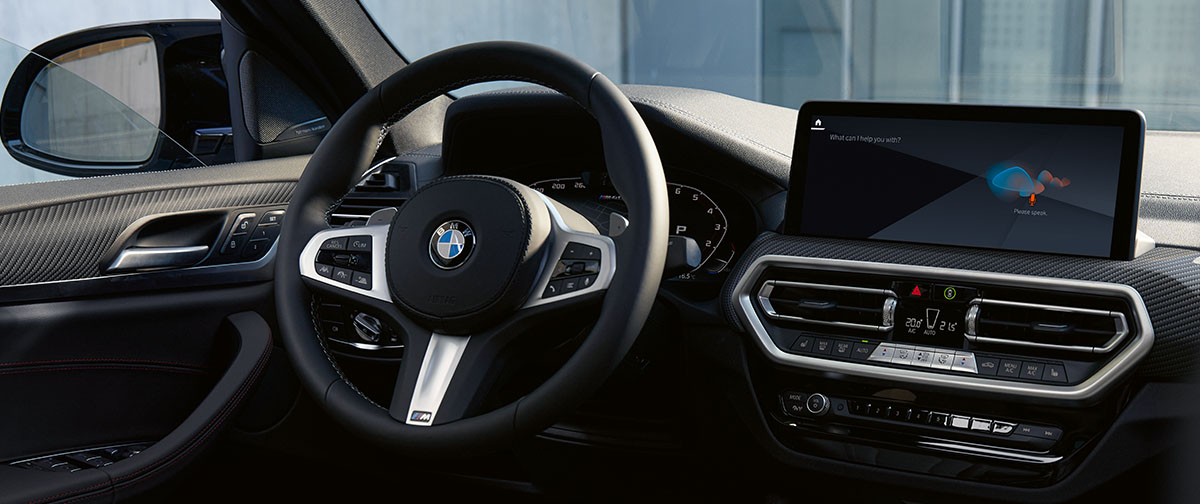
2022 BMW X4 Australian pricing
Prices exclude on-road costs unless otherwise noted.
| Model | Price |
|---|---|
| X4 sDrive20i | $83,471 |
| X4 xDrive30i | $93,471 |
| X4 M40i | $123,471 |
| X4 M40i Frozen Edition | $152,900 (drive-away) |
Italian sports car company Maserati will shift its entire model range to electric by the end of the decade, with all vehicles to have a battery-powered variant by 2025.
Maserati will begin the transition with the new-generation GranTurismo, which will launch in 2023 as the brand’s first fully-electric car – offering as much as 900kW and all-wheel drive, according to Automotive News Europe.
By 2030, the carmaker will drop internal-combustion engines (ICE) entirely, with fully-electric versions of each model to be introduced by 2025.
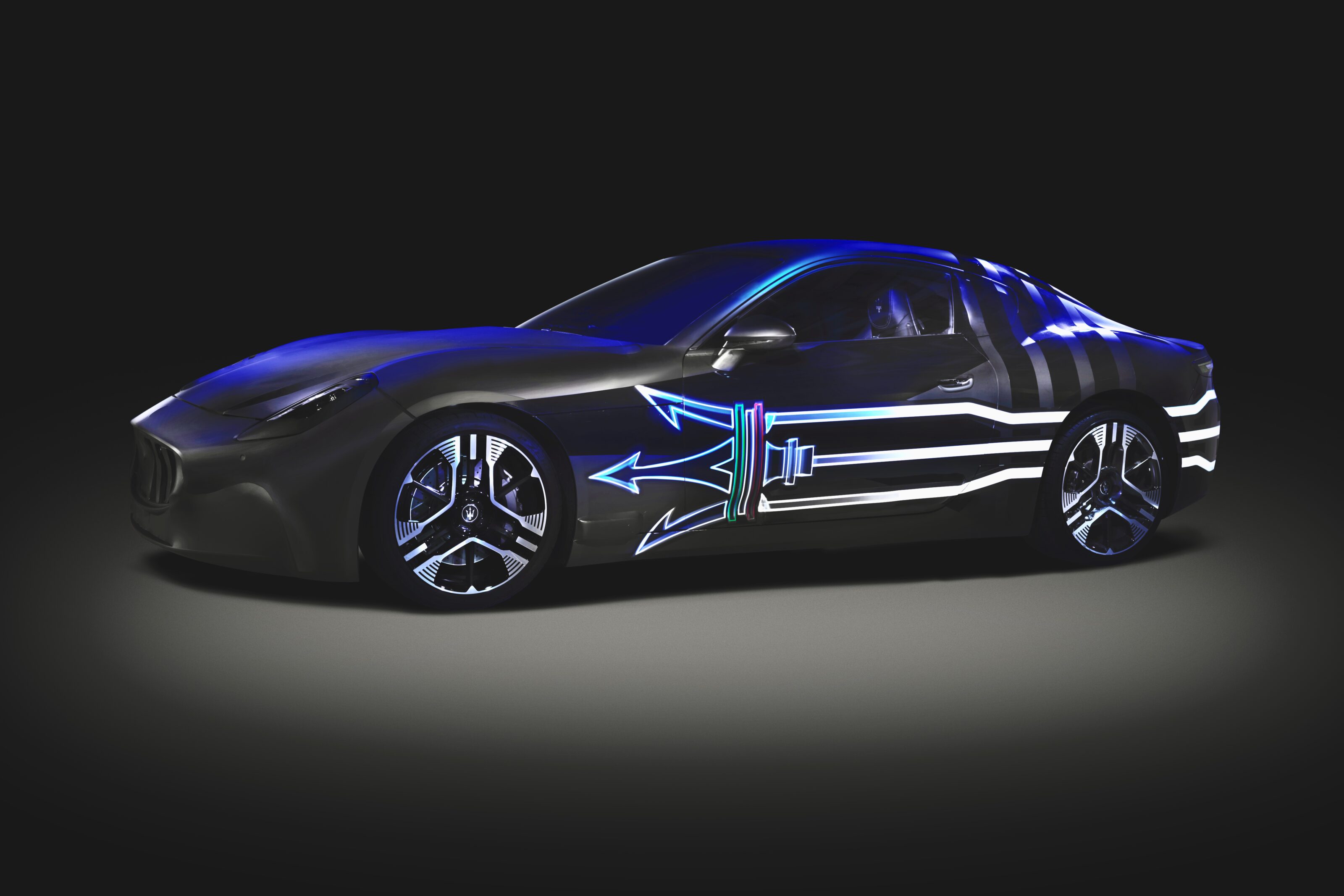
Electric variants will be distinguished by their ‘Folgore’ badge, which means ‘lightning’ in Italian.
The GranTurismo Folgore – shown here wearing light camouflage – will be joined by its soft-top sibling, the GranCabrio, and the Grecale SUV from next year.
Maserati says it will have completed its electric line-up by 2025, adding a Folgore variant of the MC20 supercar, as well as launching the next generations of the Quattroporte sedan and Levante SUV – both of which will only be available with electrified powertrains.
| Model | 2023 | 2025 | 2030 |
|---|---|---|---|
| GranTurismo | ICE & EV | ICE & EV | EV |
| GranCabrio | ICE & EV | ICE & EV | EV |
| Grecale | ICE & EV | ICE & EV | EV |
| MC20 | ICE | ICE & EV | EV |
| Quattroporte | ICE | EV | EV |
| Levante | ICE | EV | EV |
The company is promising Level 3 autonomous driving technology for the Quattroporte and Levante, meaning the vehicles will be able to perform most driving tasks with human oversight.
Maserati’s parent company Stellantis has previously said it is expecting 70 per cent of its European sales to be composed of electric vehicles by 2030 – though the number may be higher, with many of its brands promising to switch to zero-emission models in the coming years.
Maserati announced it had increased its global market share by 2.4 per cent in 2021, largely thanks to North American and Chinese markets.
The stunning looking 1M Coupe had the potential to scare the hell out of you, could fend off a well-driven Porsche Cayman, and, in an era of digitisation, put the seat-of-your-pants driving experience above all else. Which made its arrival in 2011 seem like a miracle – especially as it was never meant to exist in the first place.
“It’s not a junior M3. It possesses its own character and, in real world terms, it’s probably even faster than its more expensive sibling over many roads, save perhaps an autobahn,” we said about the 1M in our June 2011 issue. The 1M was never meant to happen, let alone be able to rap an M3’s knuckles.
BMW’s then Motorsport Director Mario Theissen described the E92 M3 as ‘the pinnacle of M’, epitomising what the M Division stood for, even more so than the M5. The M3 was king, and it didn’t need an heir.
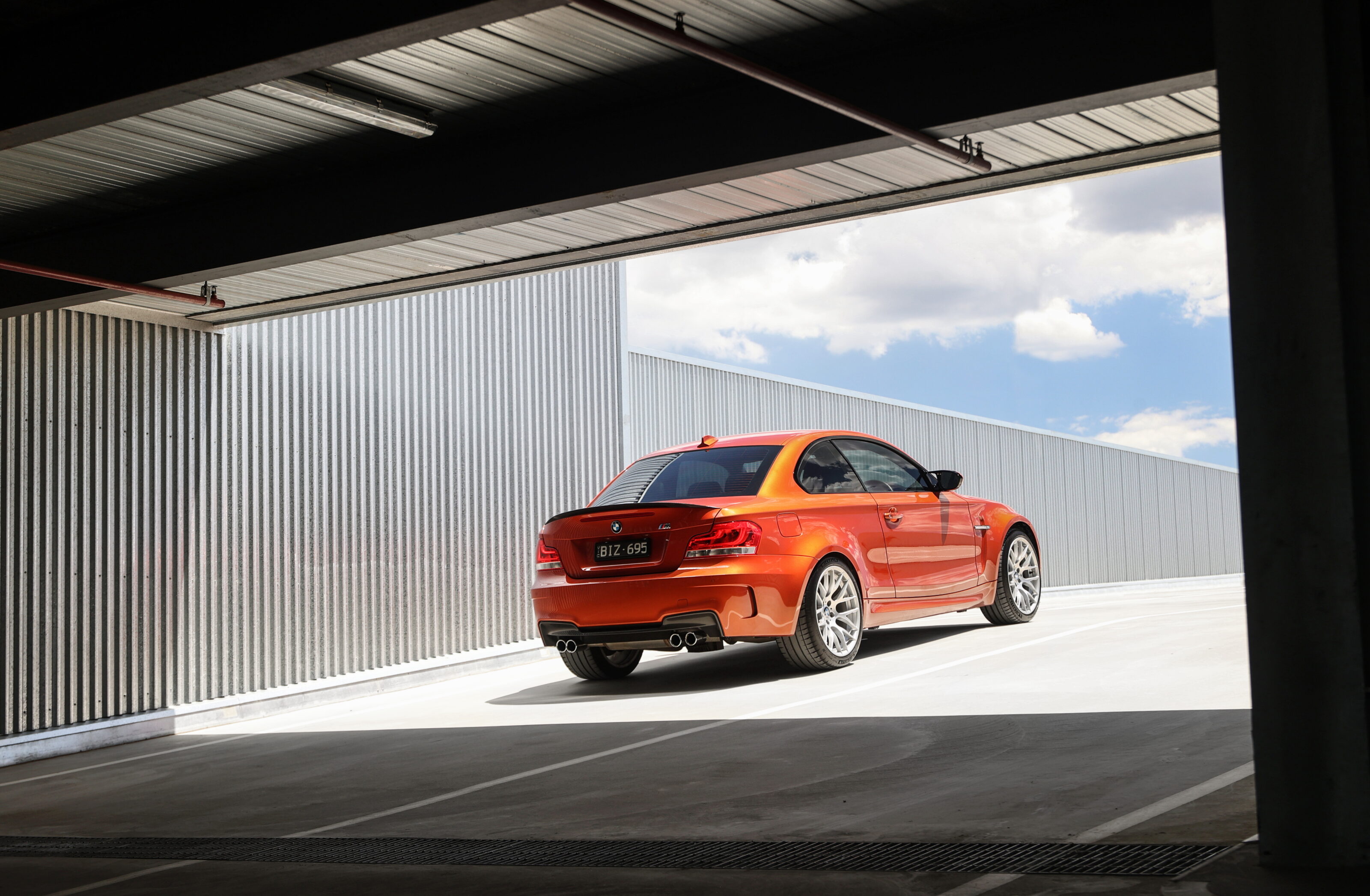
Yet this was a time of upheaval within BMW’s performance arm, with the 2008 X6M not only an SUV but also its first turbocharged model. Having weathered the Global Financial Crisis, the shackles of purist dogma were coming off; turbocharging, more SUVs and even a triple-turbo diesel would wear M badges in the coming years, with recovery and long-term survival prioritised. Passion projects weren’t high on the agenda.
It was in this climate that the 1M was proposed – and rejected – and proposed again. The 1 Series itself came as the 3 Series grew in dimensions, spec and price, presenting an opportunity for a smaller, more affordable entry-level model below.
BMW had already tapped the market with two generations of 3 Series Compact from 1993, but the first 2004 1 Series was the most resolved sub-3er BMW to date. With its own identity, it dispensed the 3 Series’ nomenclature for a full line-up of three- and five-door hatches (E81/E87), coupe (E82) and convertible (E88) rolled out by 2007.
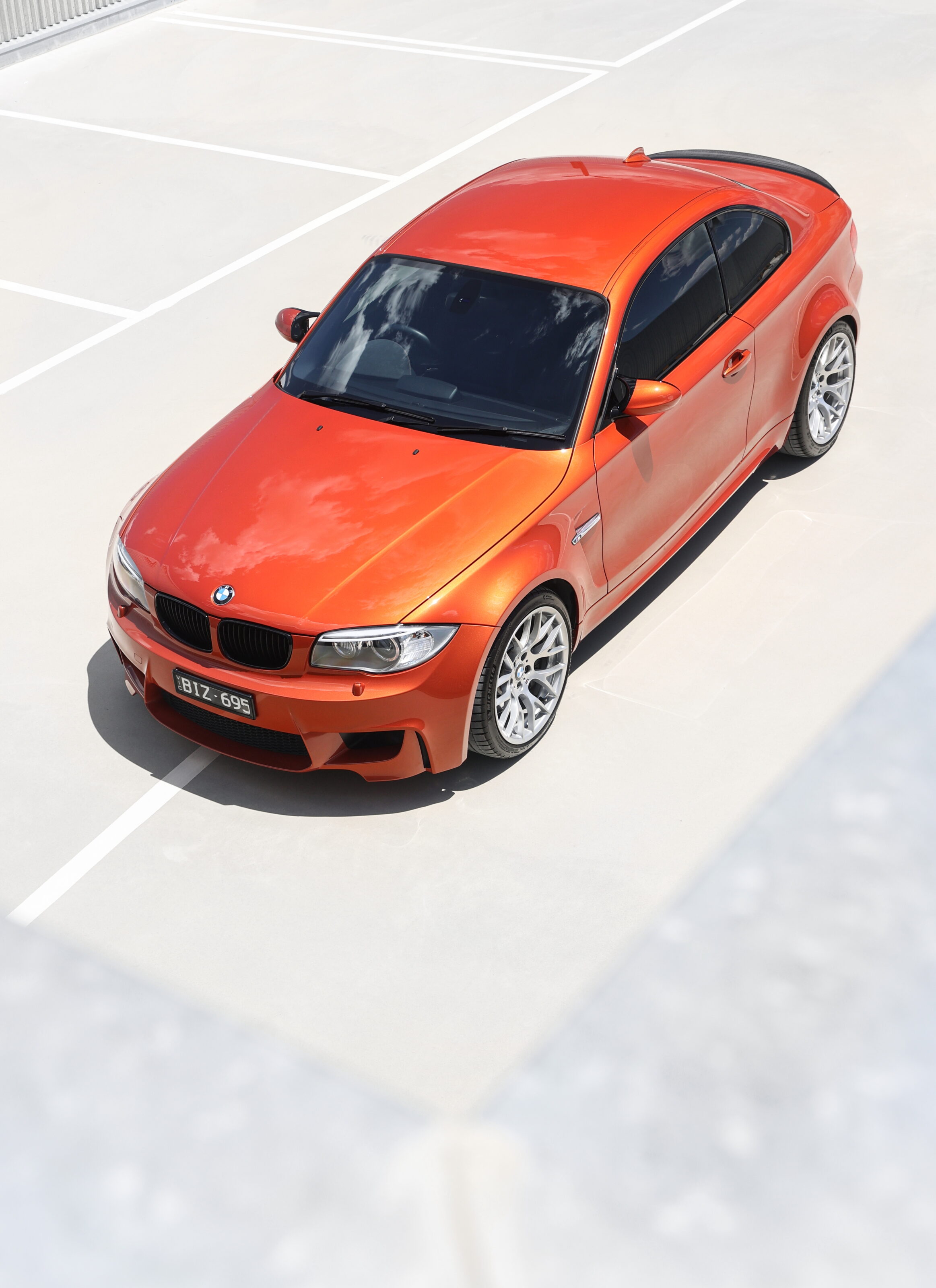
BMW hadn’t offered anything remotely close to a performance model in the 3 Series Compact days, but the 1 Series was different. In fact, arriving a year ahead of the E90/92/93 3 Series, the 1 Series shared significant components with its larger stablemate which opened up more performance possibilities.
If the 1 Series was a baby 3 Series, though, there was no interest in a baby M3 from Munich HQ. Nay-sayers could argue that younger buyers were sated by the brilliant E87 130i Sport, sold here from 2005-09; an absolute cracker with its 195kW 3.0-litre atmo six. Then the 135i Coupe/Convertible came in 2009 punching harder with the 225kW N54 single-turbo six from the 335i. For its $72K price it came with a 5.3sec 0-100km/h time, bigger brakes and specific ESC calibration. Was that enough, though?
The arrival of Dr Kay Segler as boss of M Division in 2009 made all the difference. Legend goes that the single 1M prototype was in fact worked on while he was on holiday – the already stretched M Division knew it wasn’t going to get any additional funds or time if it asked. Instead, they pulled the program together on the quiet and in their own time.
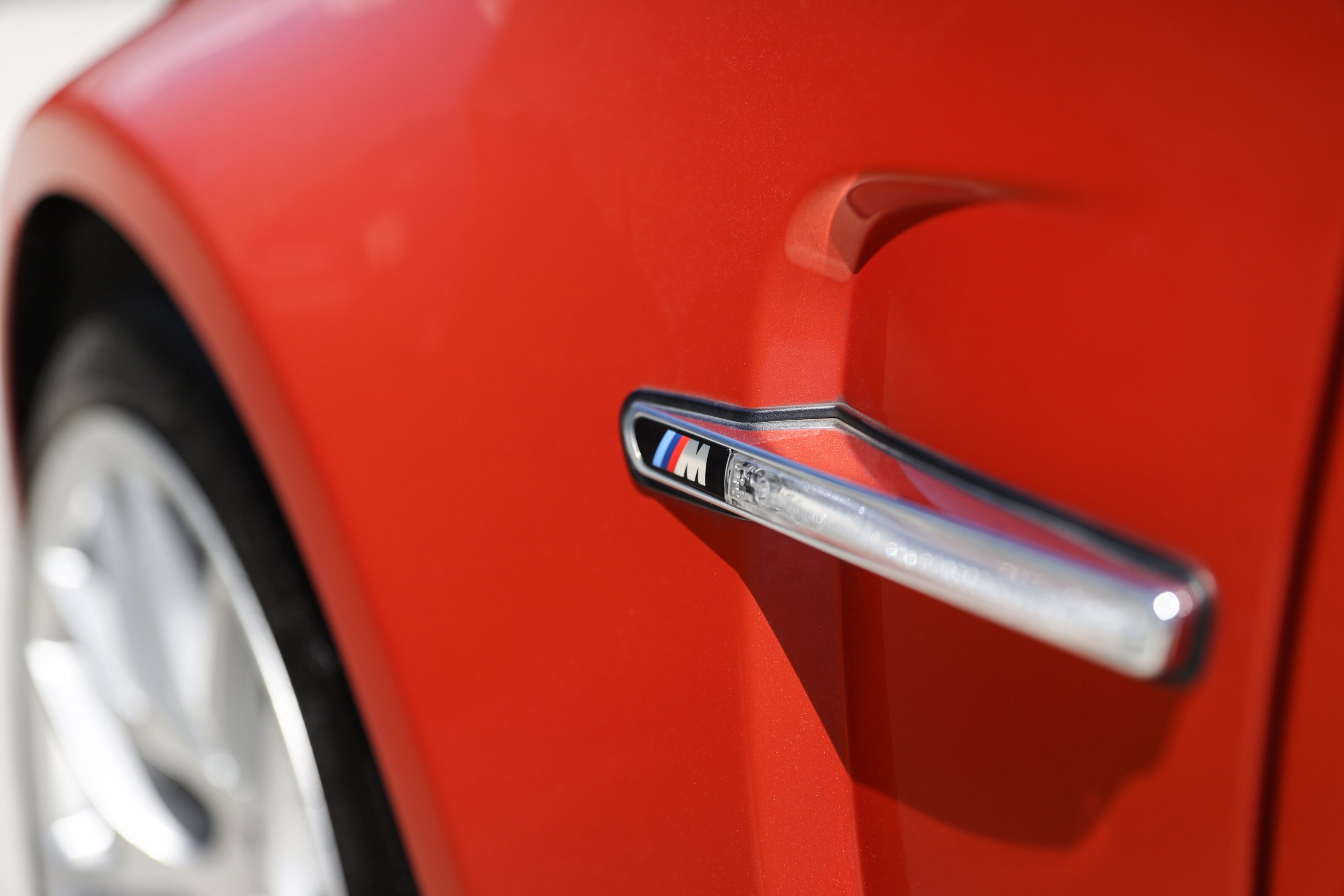
One-by-one, the team eliminated every objection it’d been given, from which production line it could be built on, to what name should be applied to its hot 1 Series. Near fully formed, all it needed was the official green light. Upon his return, the passionate Segler didn’t let his team down.
The production go-ahead was given in December 2009 with the first production 1M built in May 2011. “We had a very short development time,” said Frank Isenberg, who’d been given the role of 1M project manager. He described the car as pure ‘boy racer’.
Isenberg took advantage of the 1 Series’ compatibility with that of the 3 Series by literally taking the complete M3 aluminium five-link rear suspension, its locking limited-slip diff, cross-drilled brakes and the M3 Competition Pack’s 19-inch alloys – all proven, available parts that reduced development time and cost.
That meant that the 1M’s 1540mm tracks are within a millimetre of the M3’s, mandating its bulging guards for a steroidal body punctuated by massive air ducts and signed off with a quad-tip exhaust. Primed on its haunches, the 1M’s unmistakable look made everything else, including the 135i, appear meek.
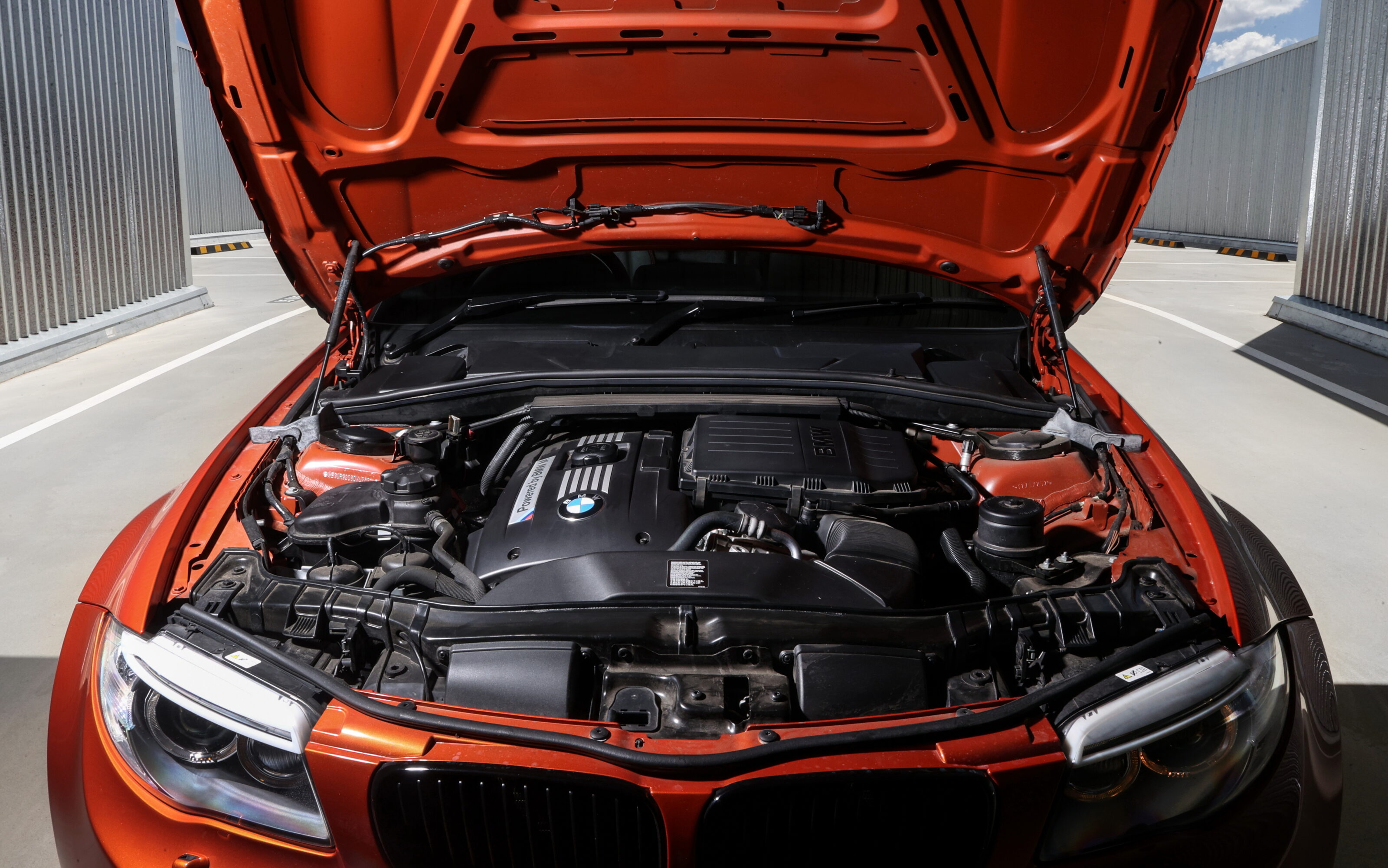
A bespoke M engine was an absolute pipe dream, so the brilliant 250kW N54 twin-turbo straight six was taken from the Z4 sDrive 35is. Despite the glorious timbre and muscular potency of the powertrain, there would be dissension in the ranks as it presented a number of firsts for an M car.
For starters, it used an engine from another model; a non-M one at that. Secondly, after a history of free-revving, naturally-aspirated engines, it was turbocharged – only the second forced-induction M car after the thunderous X6M. The N55 had also begun replacing the ageing N54 in BMW’s line-up, too, moving to a single-scroll turbo and Valvetronic variable valve timing.
But to dismiss the 1M for using forced induction is to ignore the legendary 1973 2002 Turbo. If that doesn’t count for something…
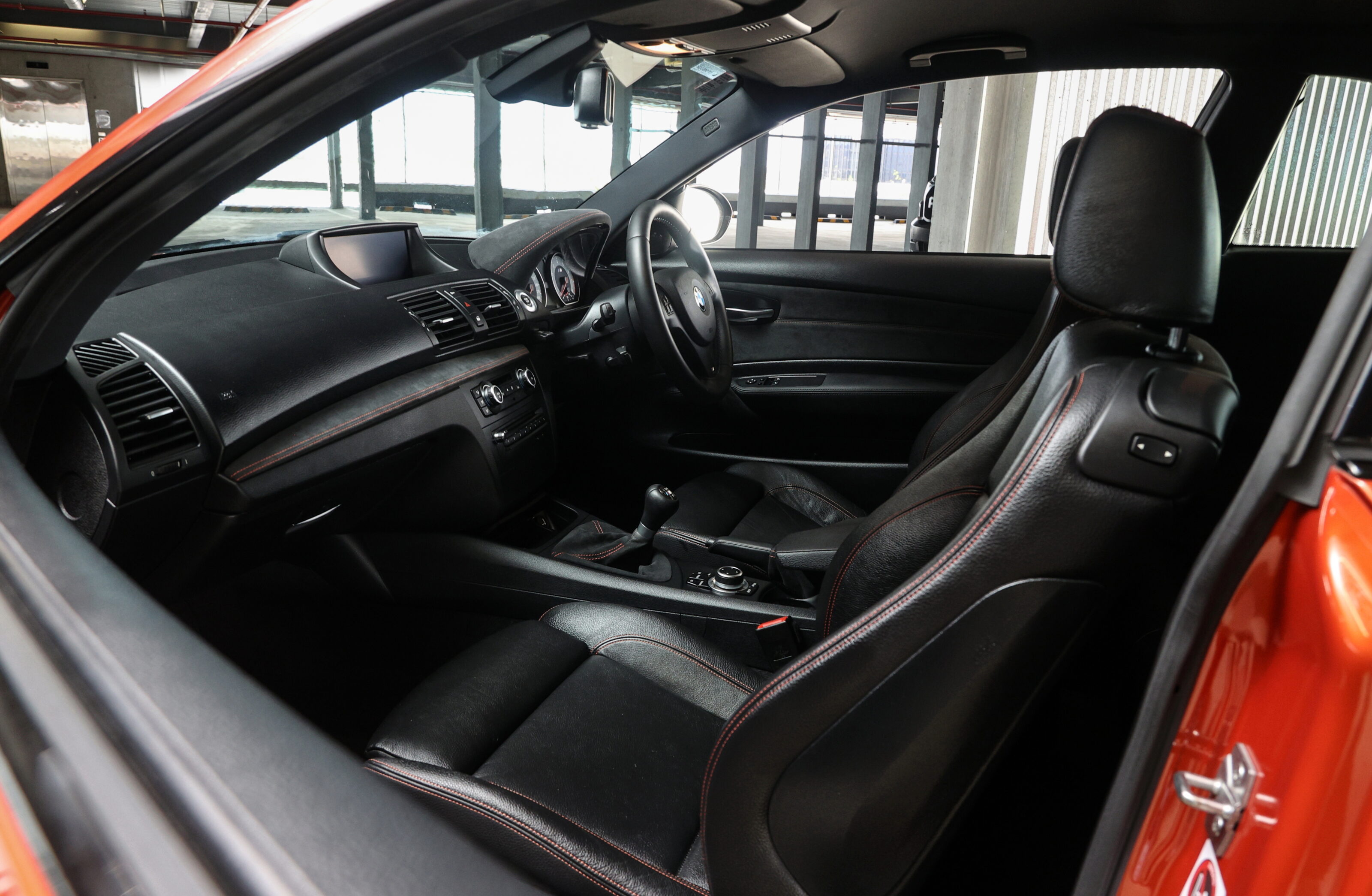
It also ignores the stunning capability the package delivered. The 1M’s 1495kg was split 51/49 front-to-rear, 85kg less than the M3, while its hydraulic steering was geared to 12.4:1 instead of the 135i’s 16.0 ratio. The chassis took full advantage of the stunning tractability from the glorious baritone twin-charged six, with 450Nm on tap from a low 1500rpm all the way to 4500, with a thunderous 500Nm on overboost.
For the 1M, M Division fitted an air-to-air intercooler and remapped the N54, adding a second M-drive map, while the Getrag six-speed manual was given closer ratios to match a shorter final drive. What’s more, turbocharging didn’t prevent the 1M free-revving all the way to 7000rpm – just like an atmo M-car – and delivering what we described in 2011 as ‘bottomless urge’.
In fact, it was the rolling acceleration that revealed just how accomplished the 1M was: 80-120km/h was despatched in 4.1sec, a handy0.6 second faster than the manual E92 M3, while its alleged 8min12sec Nurburgring lap time eclipsed the E46 M3’s by 10 seconds. Who’s the king? To prevent a mutiny, BMW gave the 1M an official 4.9sec 0-100km/h time, perhaps strategically, a mere 0.1 behind the M3…
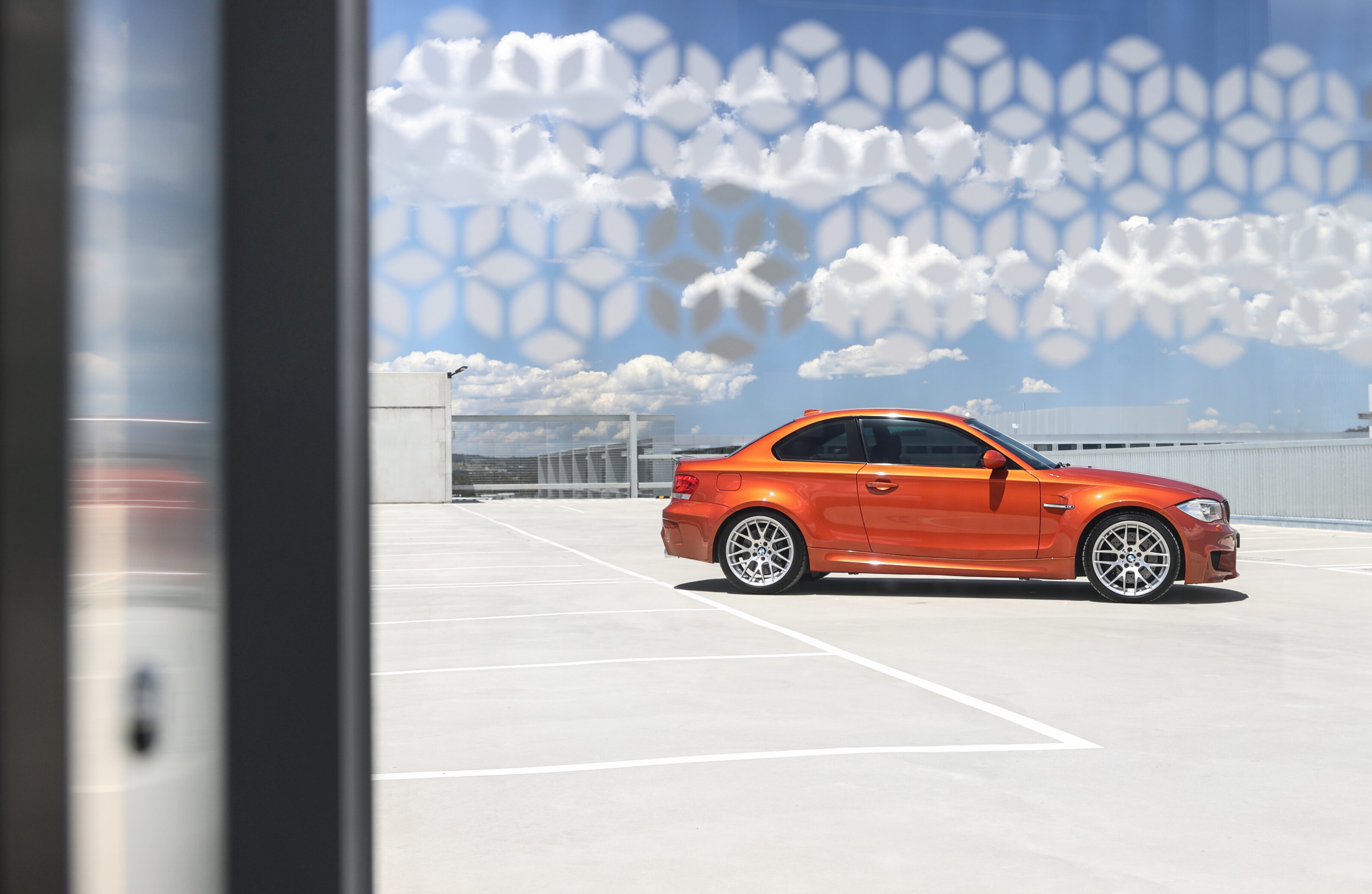
While it may’ve been line-ball on performance numbers, at $99,900 the 1M came with a $55,100 price advantage and unique character. That couldn’t be more apparent than on the twisty stuff. Where the M3 was wondrously smooth and flattered the driver, the upstart 1M was an uncouth wild child, a Charlie Sheen to the M3’s Leonardo DiCaprio.
Ash Westerman said it best for Wheels after a stint along the coarse-chip, winding Putty Road in New South Wales: “If the M3 is a precision instrument, then the 1M is a Fender bass that begs to be slapped.”
The thing is the 1M had the potential to slap you right back.
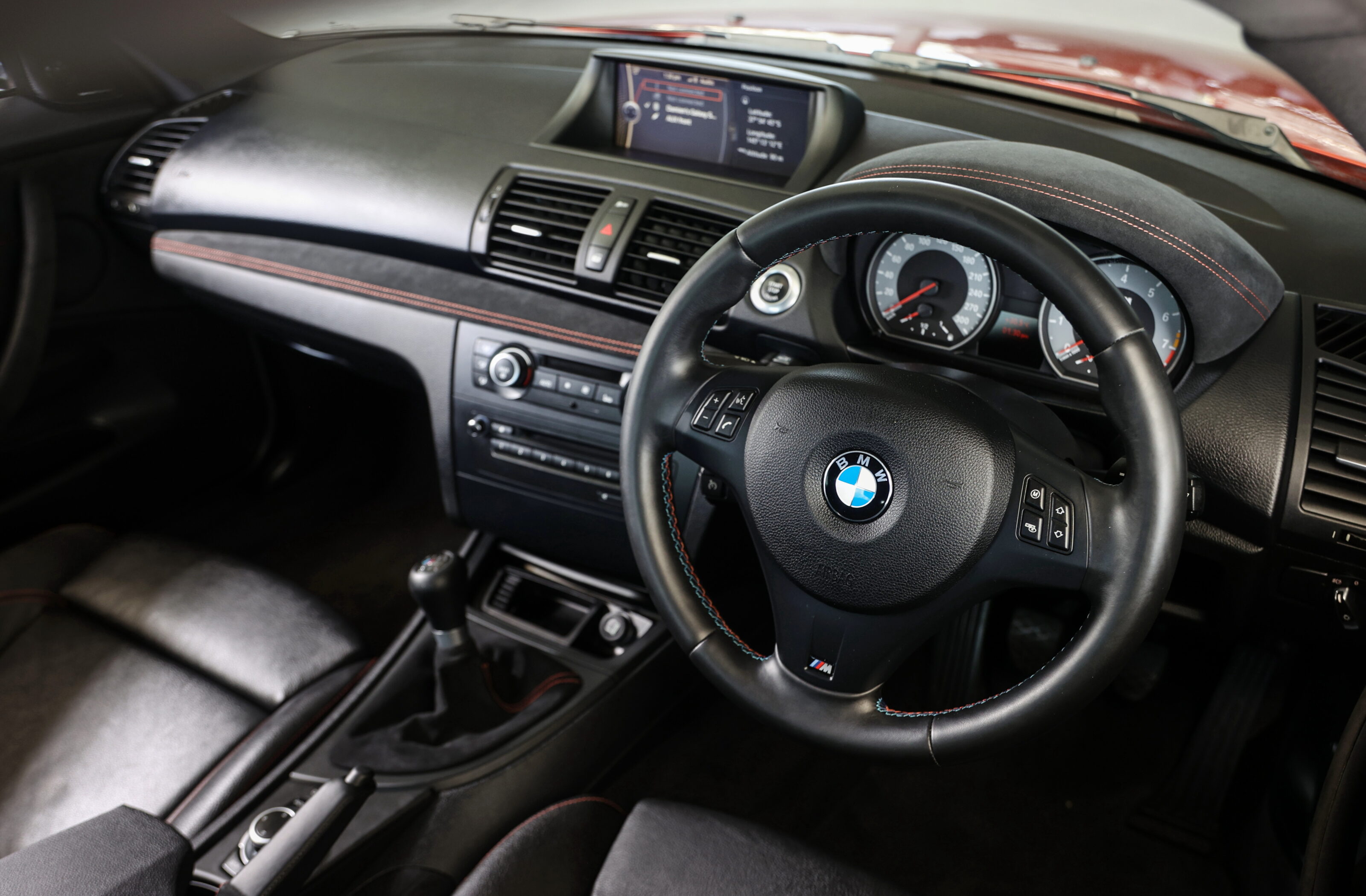
While it shared track dimensions with the M3, its wheelbase was 102mm shorter, and ultra-stiff suspension and underdeveloped ESC meant traction could be elusive. On our first drive, which was on smooth European roads, we complained that the ESC intervened too early in the 1M’s default drive mode, mandating the steering wheel-mounted M-button be pushed for less interruption, which also sharpened the throttle.
Doing this – especially once on poorly maintained Australian roads – swung the pendulum too far the other way to reveal a disobedient streak. The baby M-car was spiky on the limit, testing skill and nerve as its high driving position felt like it could instantly become an ejector as you were imminently spat off the road. Plain uncouth, the word ‘sketchy’ was uttered on many a road test once the 1M arrived Down Under.
“The 1M is an absolute triumph; a true boy racer in a single-spec, manual-only, rear-drive format”
“It was the first time that we used a turbocharged engine with a lot of torque, and with all this put together, maybe we could have used a year more development,” said Isenberg at the launch of the 1M’s successor, the 2016 M2.
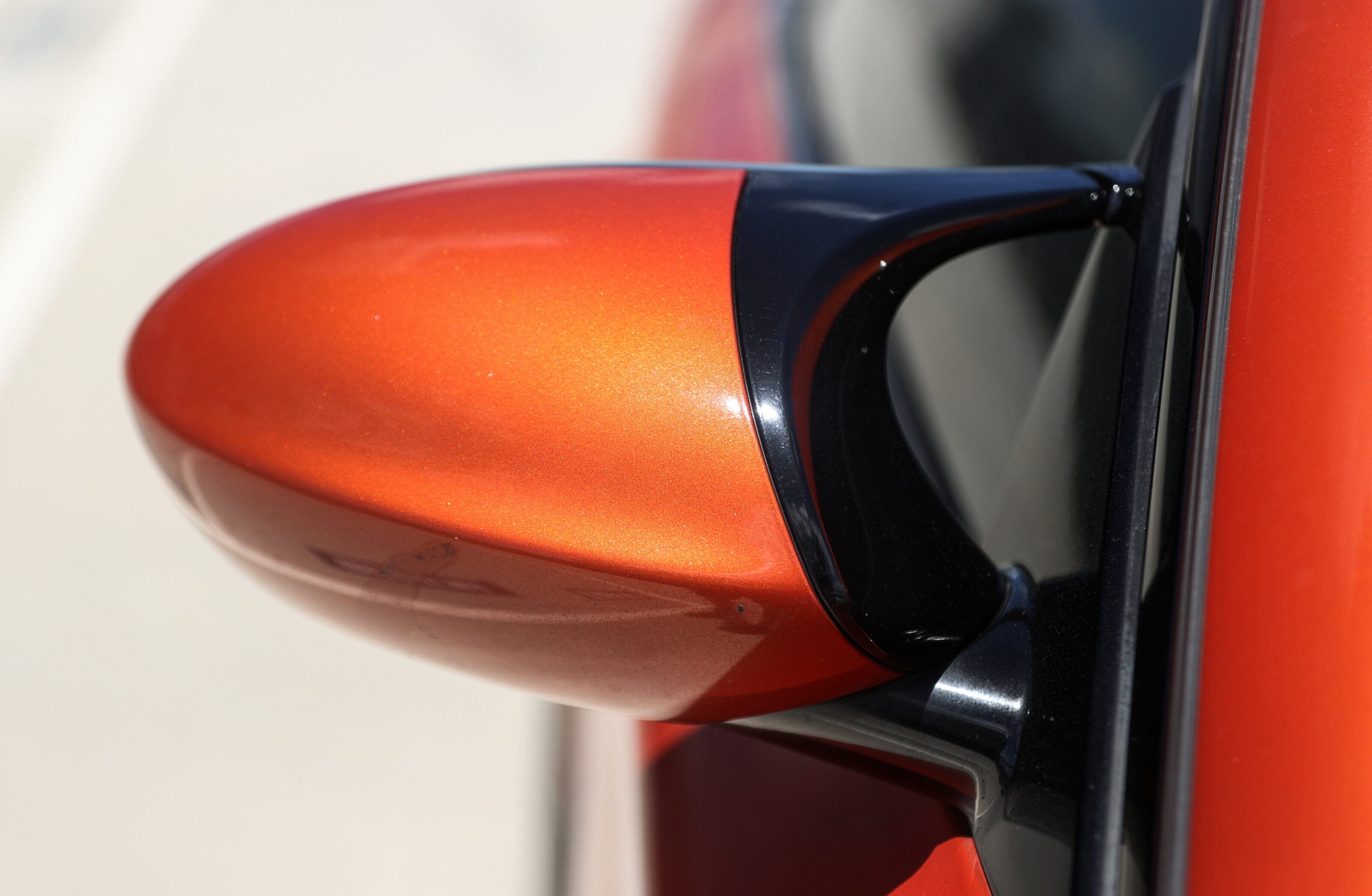
“The tricky behaviour at the limit … we were not really happy with that. But it just happened,” he admitted. “The suspension was also stiffer. I wouldn’t say it was wrong, but it wasn’t the best set-up … everyone is always saying stiffer is better, but the fact is it can be too much and you start to lose traction … we did it because we wanted the car to have a special character.”
On this measure the 1M is an absolute triumph. A true boy racer in a single-spec, manual-only, rear-drive format with blistering acceleration, even better in-gear shove and raw, unadulterated driver involvement.
The 1M’s aggressiveness walks the line of daily liveability M cars must subscribe to, but that only underlines the fact that it’s not a smaller M3: it has a verve of its own, with genuine ability and the heart and soul of the team who gambled to create it. A flawed genius equally terrifying and terrific, there’ll never be another M car like it.
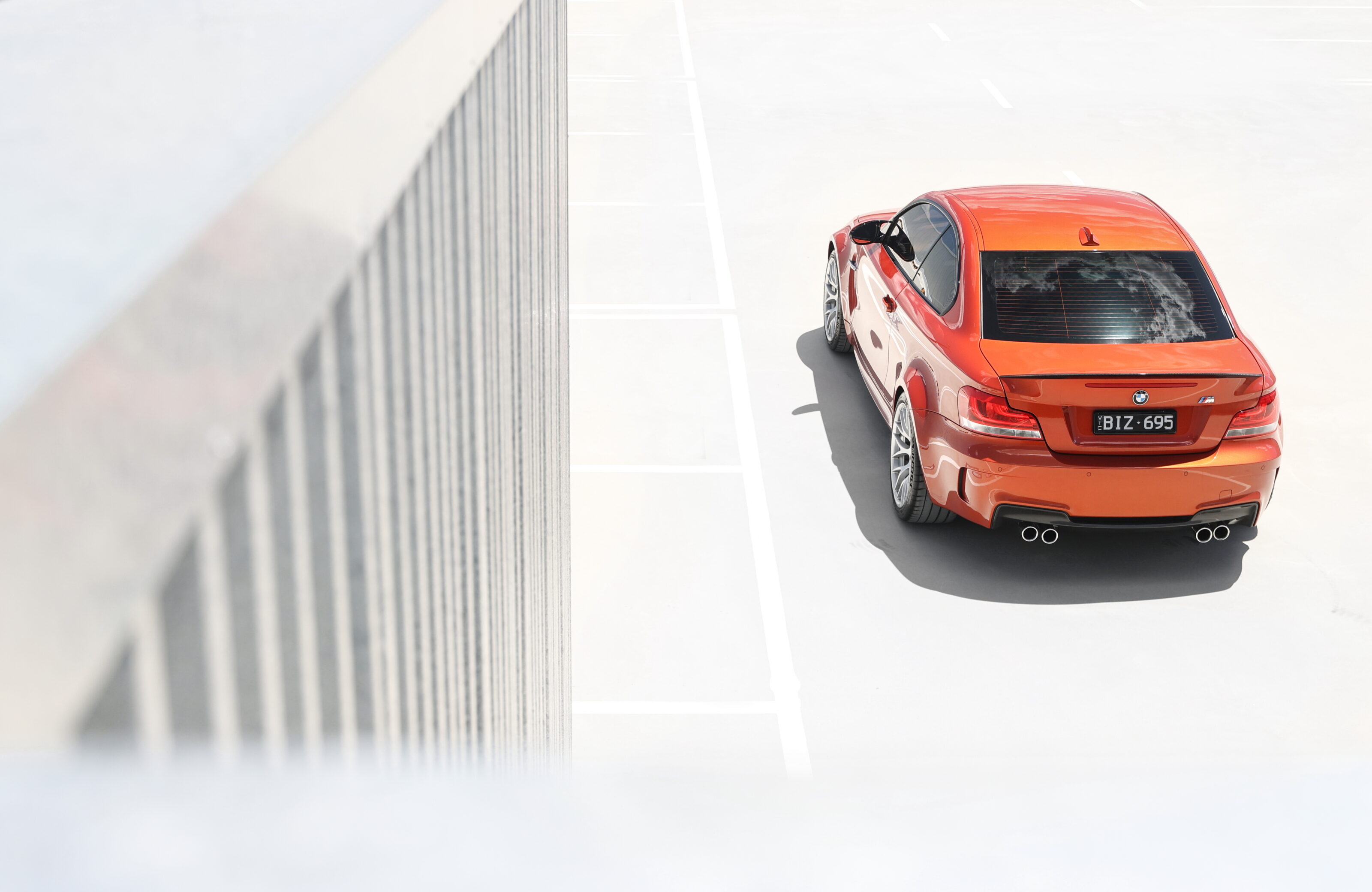
Inspiration for M3 Pure
Segler described the 1M as ‘pure M’; meanwhile, BMW Australia took that sentiment and applied it to the M3. In 2011, the E92 M3 Pure edition was launched here as a special batch of 50 cars.
Specced by BMW Oz, the Pure ditched several standard M3 features including the M-Drive adapative suspension, lopping $10K off the price while maintaining the M3’s core brilliance. That lead to the 2012 E92 Pure II before subsequent M4, M5 and M2 Pure models, all factory M-cars unique to Australia.
BMW’s unlikely electric 1 Series
The 1M came nearly four years after the E82 1 Series was introduced, but it’s not the rarest – nor the last. Only weeks after the first of 6309 production 1Ms was built in 2011, the 1 Series Active E kicked off the second phase (pun intended) of BMW’s electrification plans, the third being the 2013 i3 production EV. Around 1000 were built in total and leased as prototypes in North America, Europe and starred in BMW’s 2012 London Olympics fleet.
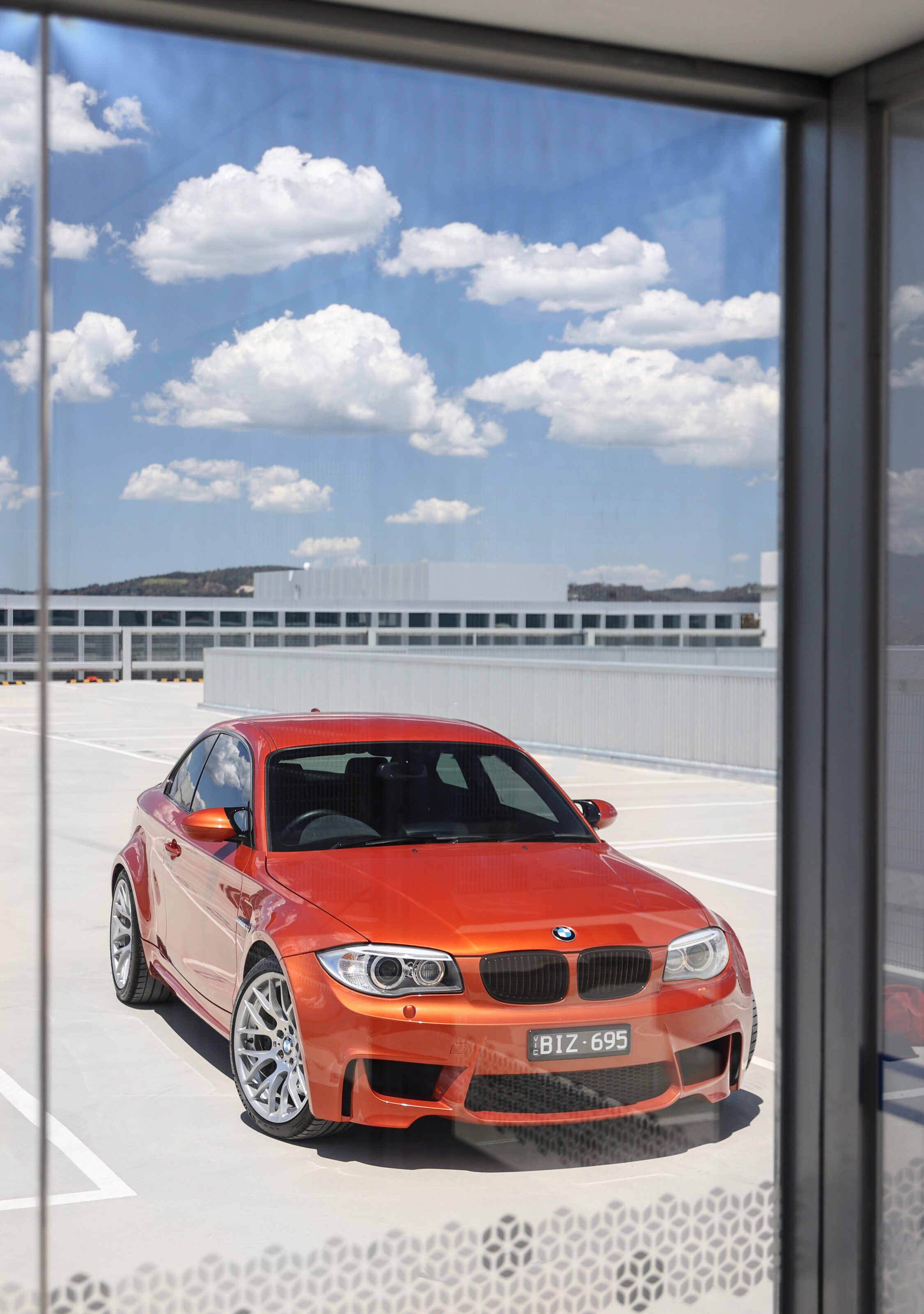
The Good
Genuinely rare and truly special; glorious six; imposing muscular looks; classic manual-only, rear-drive package with cult credibility
The Bad
Stiff suspension makes it tricky on the limit while reducing daily drivability; dull cabin; M2 more resolved and cheaper
The grass-is-greener effect, the Anna Karenina principle; all terms for the very common human phenomenon of wanting what you can’t have.
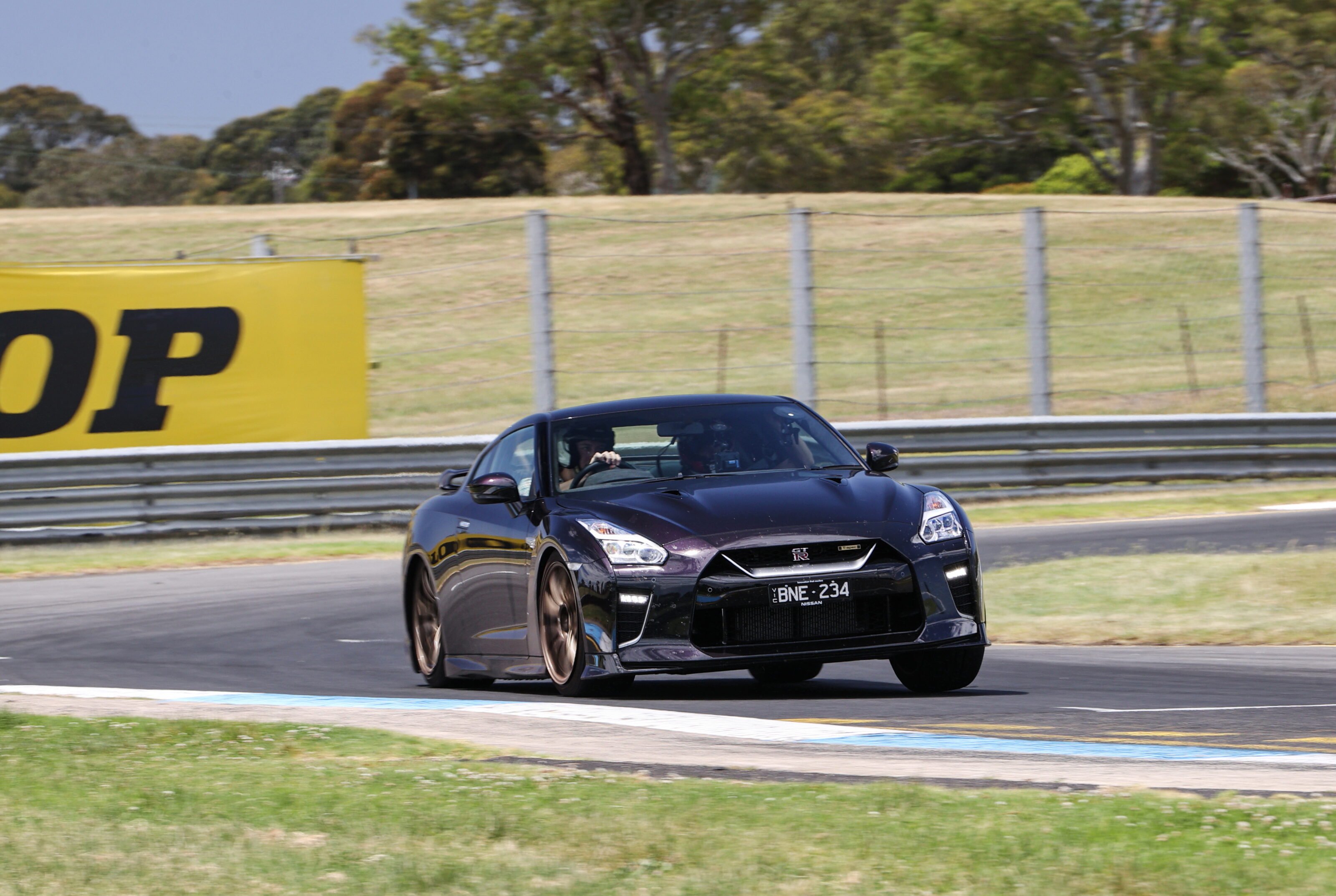
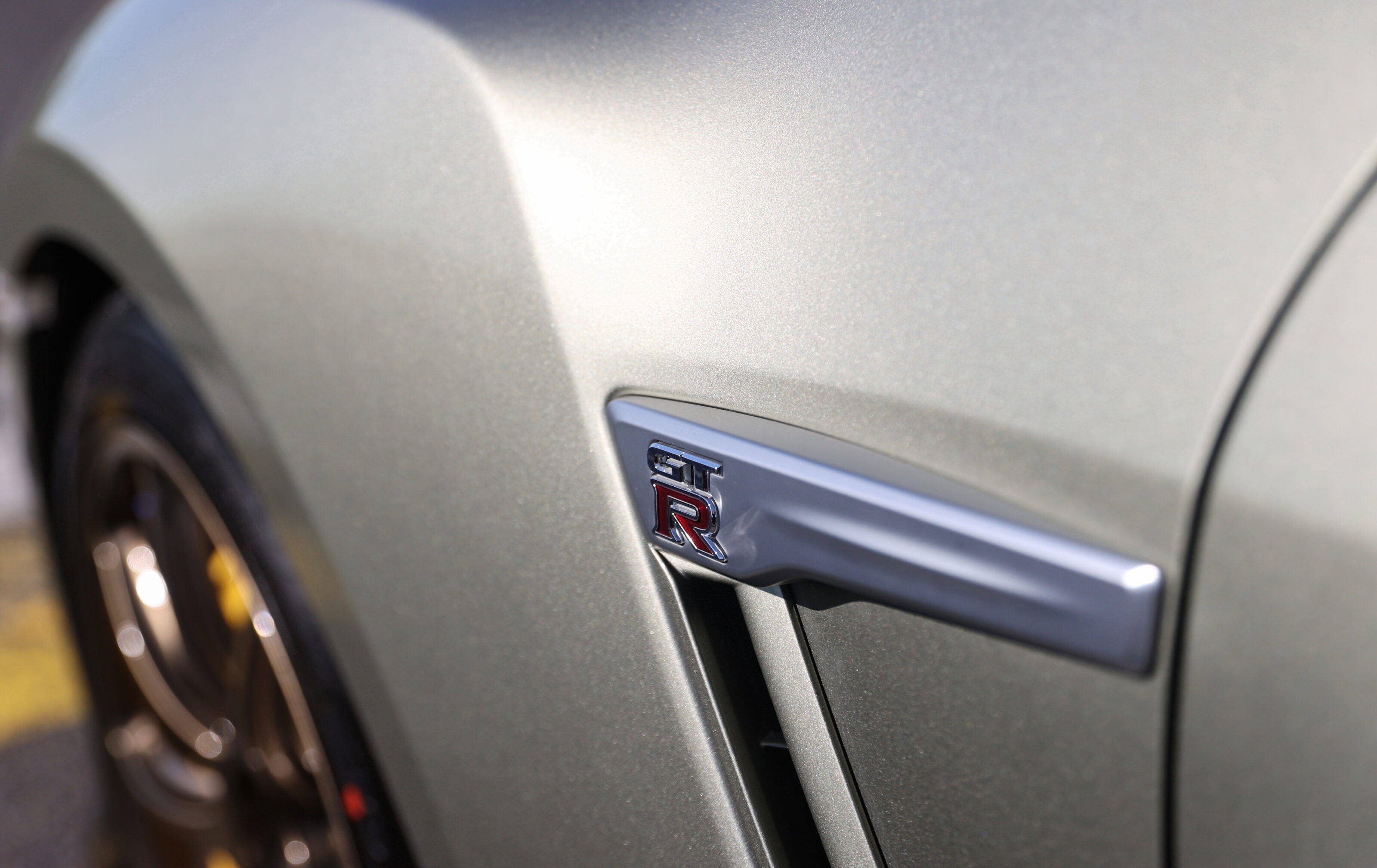
I’ve been mulling over this idea recently, having assisted Editor Enright on the farewell photoshoot for an upcoming R35 GT-R and Audi R8 V10 feature. Despite their age, both cars are very worthy and capable packages that you’d love to be able to buy. Sadly, the opportunity is passing as both are not long for the Australian market. Thus, if you can’t find runout stock, you’re only option is second hand – which raises other questions.
The laws of supply and demand are fickle at best but, when it comes to products as emotionally charged as cars, logic can often take a leave of absence.
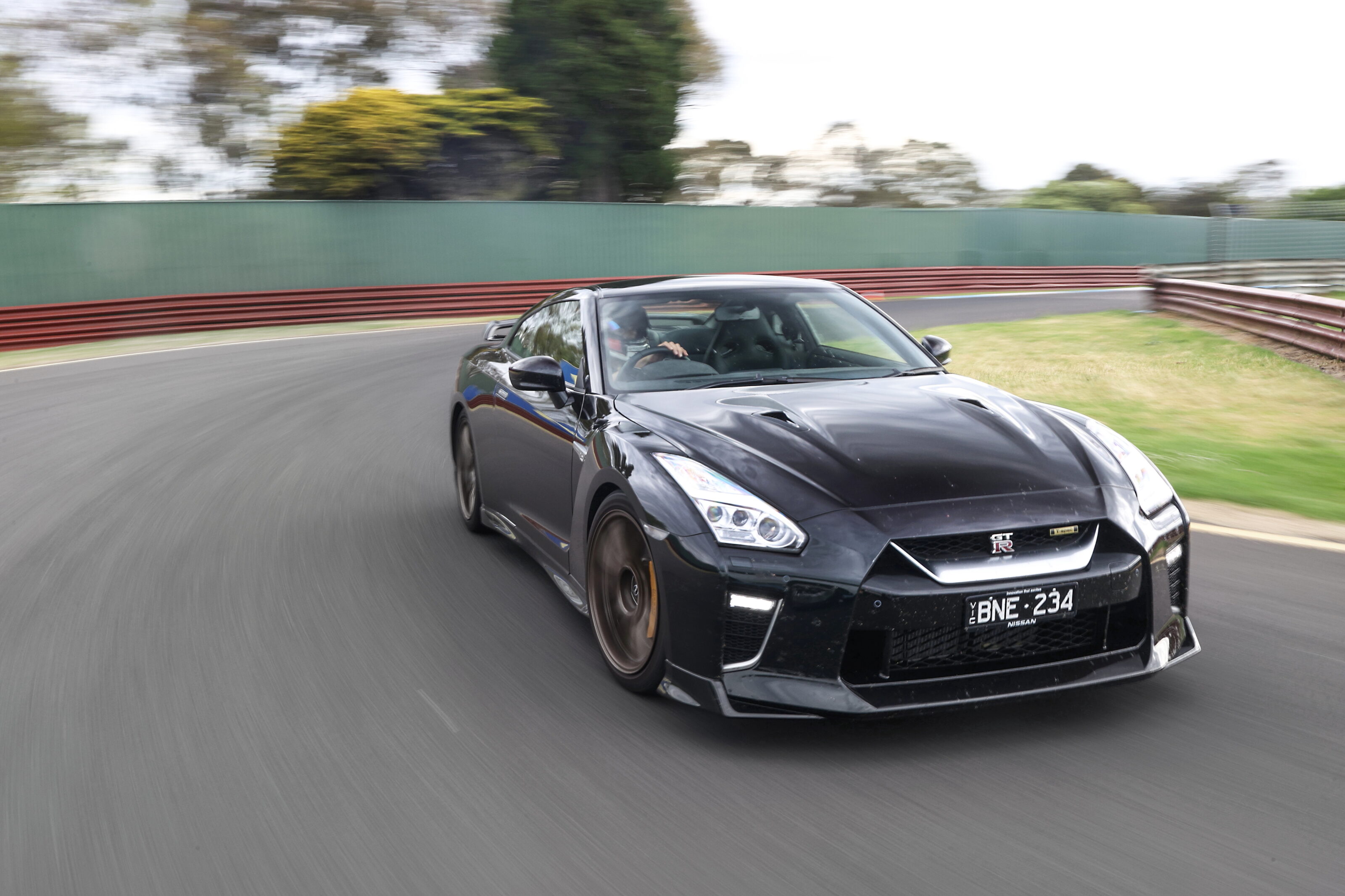
Shortly after the final Australian-bound shipment of R35 GT-Rs made landfall back in October last year, a shocking number of Millenium Jade-coloured GT-Rs have been spotted on various classifieds websites and numerous GT-R ‘buy, swap and sell’ Facebook groups. Delivery mileage and pre-delivery plastics sit proud and the asking prices, ranging from around $500k to almost $1 million, are simply gobsmacking.
This year’s GT-R is essentially last year’s GT-R with new paint. Yet asking prices often exceed a 200 per cent, or more, premium over the car’s as-new $256,700 MSRP – an ambitious flip usually reserved for the likes of GT Porsches or CS-badged BMWs.
I’m happy to see Nissan’s ageing sporting heroes enjoy such fanfare in their twilight, but the confounding matter is that people had plenty of opportunities to get one before now, as VFACTS data suggested little demand with less than a handful of cars sold per month. Of course, the GT-R nameplate is hot property right now in the midst of the recent explosion of JDM culture, but the actual catalyst for the recent supercar-shaming asking prices was simply Nissan Australia saying ‘you can’t get one anymore’. It’s often the case, however, that lacklustre sales create a second wind of scarcity-fuelled demand.
From full-size to scale, this happens a lot in cars.
When Biante Models announced pre-orders for Nick Percat’s 2017 Pride-themed VF Commodore, the response was underwhelming. As a result, the rainbow-clad Supercar has emerged as one of the rarest collectibles in recent times.
The BMW E60 M5 is an interesting case study. The North American market, one of M Division’s biggest, demanded the availability of a manual gearbox to which BMW courteously delivered. Yet, just 1296 customers (1364 globally, if you include Canada) took up BMW’s kind offer, representing just 6.6 per cent of all 20,584 vehicles made.
The manual uptake for the 2014-19 F80 generation M3 and M4 was lower still, at just 2.7 per cent – lower than the three per cent of manual uptake that led Lamborghini to axe the manual when the Gallardo ended production. Yet, for both cars, it’s the manually shifted examples that command significant premiums on the second-hand market.
Thankfully BMW is keeping the faith, for now at least, with the non-Competition M3 and M4 (and next-gen M2). We’ve spent some time with the base-spec manual M3 recently, but we’ll save vehicle impressions for later.
You’ll read more about it in next month’s Performance Car of the Year issue, but it’s a deeply intriguing car and will likely emerge as an ironed-on future classic. Why? Because, while everyone likes to say they’d buy a manual if it’s offered, the numbers show that very few people actually do. The G80 M3 could well be the last manual non-electrified M3 you’re ever able to buy and, if the previous generation’s figures are anything to go by, it’s going to be a seriously rare beast one day. In today’s spiralling market, that’s often all it takes for a model to take off well past its natural depreciation curve.
Remember it pays to break the mould sometimes, so the next time you’re optioning a new car, think twice before selecting white, silver or black. What’s cause for today’s depreciation often turns out to be the fever dream of tomorrow’s collectors.
