
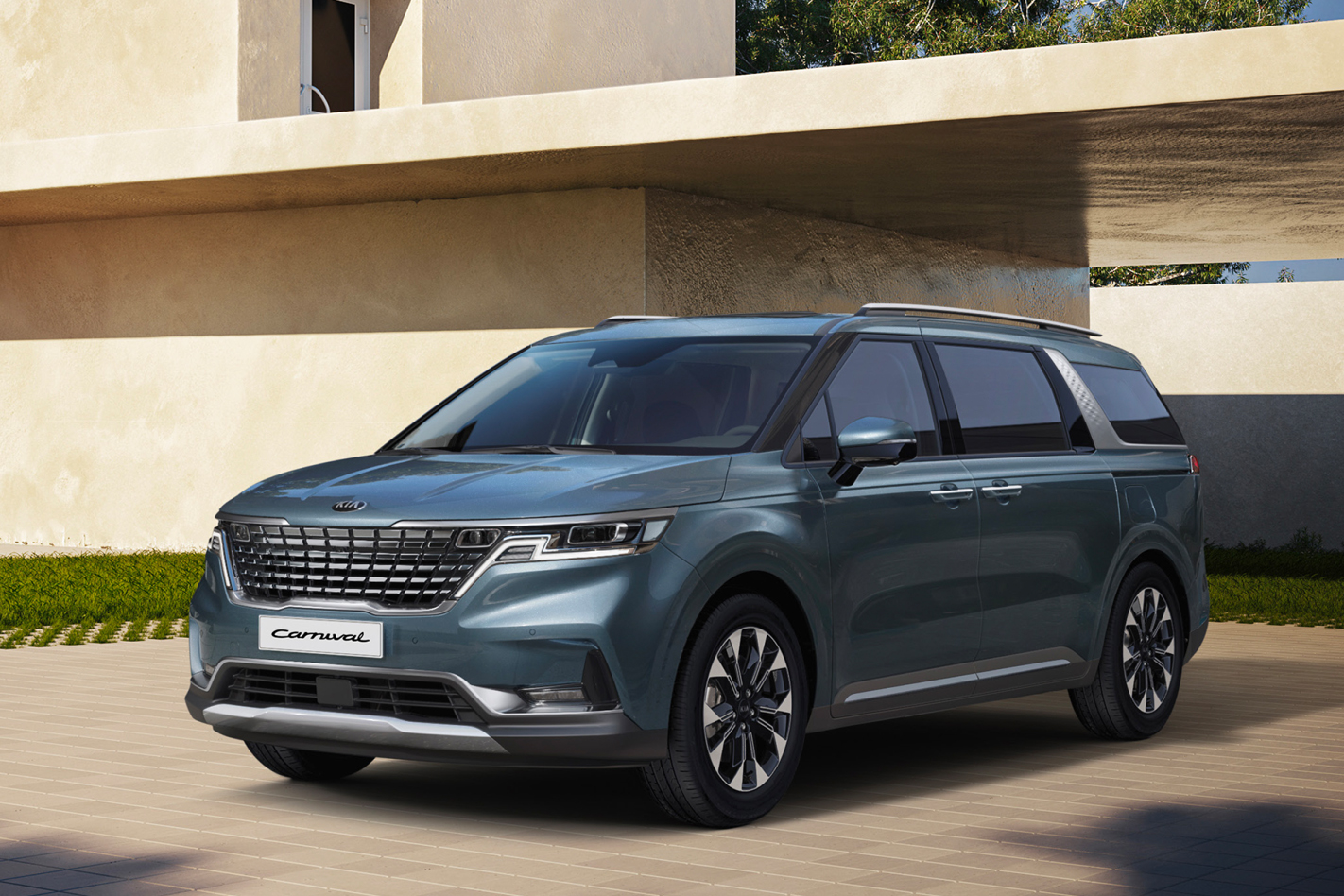
The 2024 Kia Carnival Hybrid is scheduled to enter production in October 2023, according to information shared on Korean forum Autospy.
The hybrid-electric Carnival is set to be built at Kia’s Sohari plant, which is expected to be retooled to accommodate the manufacture of hybrid and fully-electric vehicles from early next year.
Given both the Carnival and Sorento share the same platform, it’s possible the people-mover could adopt the Sorento Hybrid’s powertrain, which uses 1.6-litre turbocharged four-cylinder petrol engine in combination with a 1.5kWh battery and 40kW electric motor for a total output of 169kW.
A July 2021 report from Korean outlet DailyCar suggested Kia was also working on a fully-electric version of the Carnival, which falls in line with comments made by the brand previously.
“These new models will include a range of passenger vehicles, SUVs and MPVs across several segments, each incorporating industry-leading technology for long-range driving and high-speed charging from Hyundai Motor Group’s new (E-GMP) Electric-Global Modular Platform,” Kia said at an announcement in January 2021.
The company’s local arm will no doubt be looking at sales of both the petrol and diesel Carnival, as well as the Sorento Hybrid, before making any decision on whether the 2024 Kia Carnival Hybrid will be offered in Australia.
The guillotine has fallen on Australia’s cheapest car. For almost a decade the current generation Mitsubishi Mirage has survived tumultuous sales and a shaky segment only to be left with a target on its back thanks to a legislation change that’s landed a few cars in our Driven to Extinction series. We’ll get to that.
It wasn’t until the mid-1990s that Australians were met in showrooms by the Mirage nameplate, the fifth-generation CE replacing Mitsu’s previous-gen light hatch, the Colt. The three-door hatchback sibling to the Lancer is affectionately remembered much the same way other Mitsubishis of the era. It was hard to go wrong with a sub-$15,000, 1.5-litre four-cylinder (and often manual) hatchback, making it a tempting first car for many Australians.
A shade short of 70kW and a kerb weight rivalling that of an NA MX-5 were a decent combination, and also brought useful economy, too. While the then-dominant (and similarly priced) Ford Festiva would outsell the Mirage two- or three-to-one, perhaps perceived reliability created a reminiscent fondness for the Mirage that would come in handy later on.
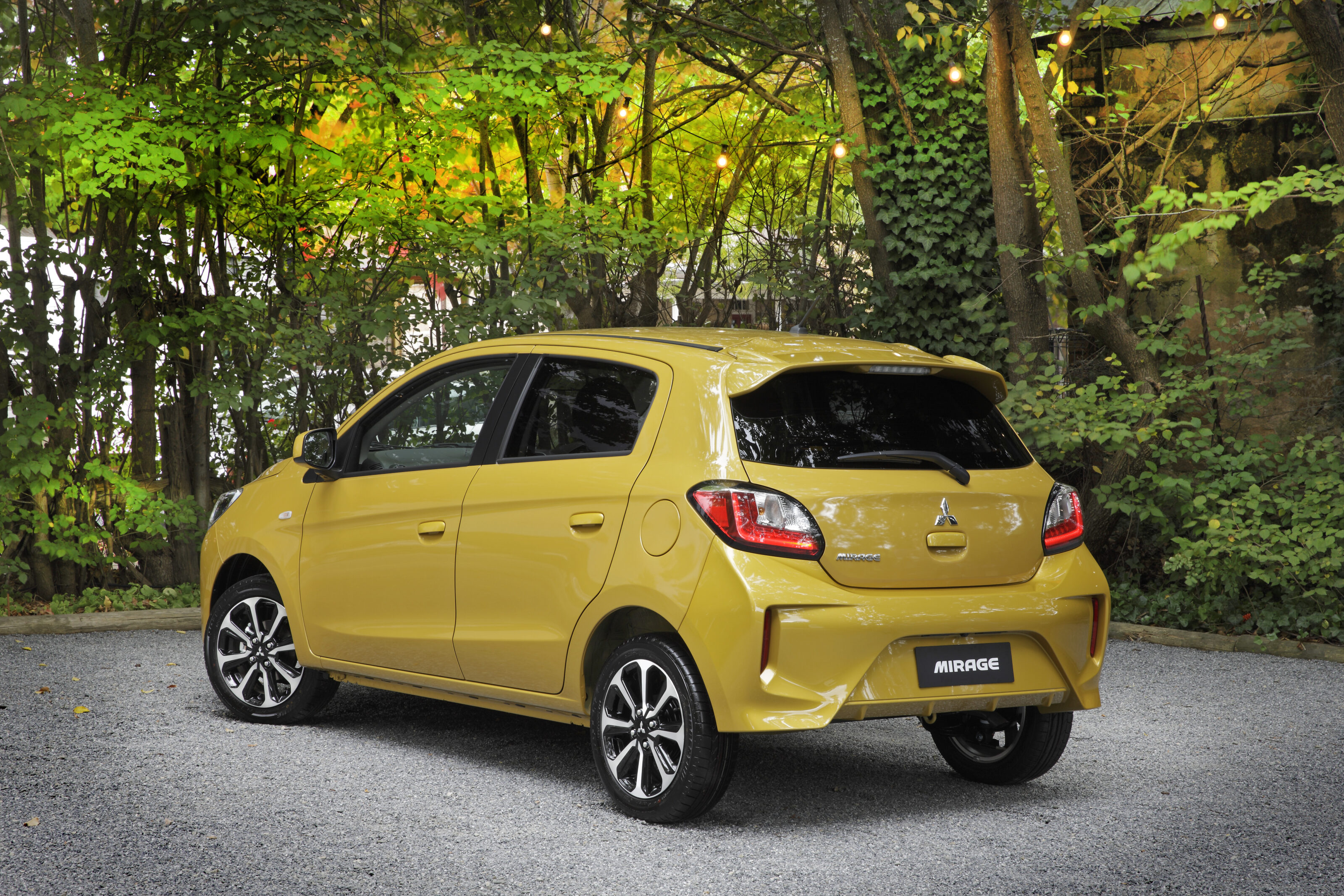
While small hatchbacks didn’t quite make up as much market share for Mitsubishi Australia back then as the likes of the mighty Magna, the Mirage did regularly (and comfortably) outsell the Triton during its first stint here. Different times.
But times did change, and when a new Lancer arrived without a corresponding Mirage hatch in 2002, Mitsubishi offered the more expensive five-door Colt from 2004. A Ralliart version came along in 2006, but by then a couple of thousand sales annually hadn’t even approached the Mirage’s prior numbers.
Fast-forward to January 2013, and the Mirage name was back. Mitsubishi’s return to focusing on the cheapest end of the market was initially met with enthusiasm; Mirage’s first couple of years on sale putting it behind only the most popular light hatches: Swift, Yaris, Mazda 2 and i20. But sales slowed, as the Mirage badge became hollow nostalgia.
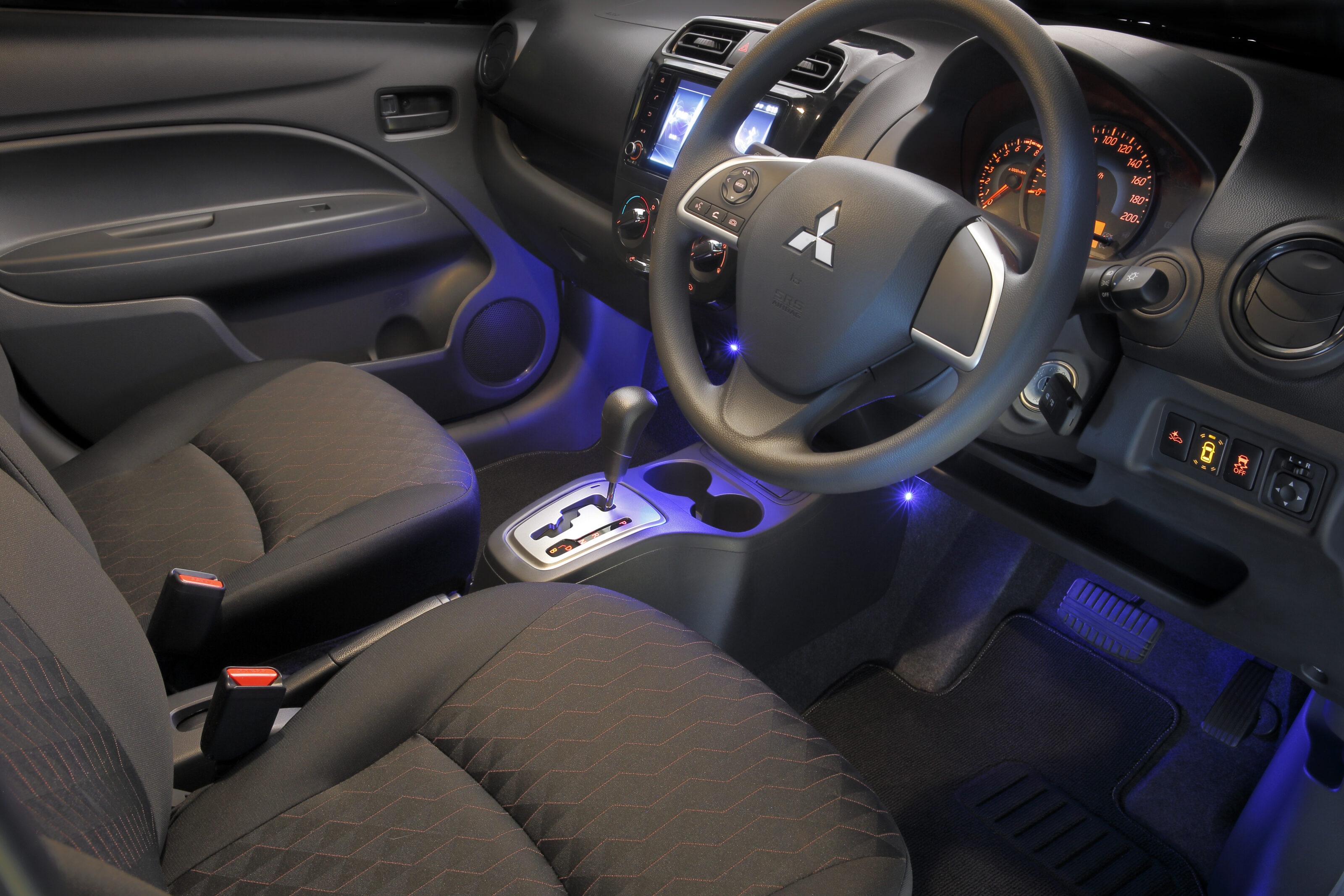
A Wheels comparo in 2014 panned the Mirage, placing it behind the Hyundai Accent, Honda City and Holden Barina, with a score of just 4/10. Slow (just 57kW and 100Nm from its 1.2-litre three-pot), noisy, cheap interior, and slim equipment were key weaknesses.
The impressive (and cheaper, for a while) Kia Picanto in 2016, and later the budget-friendly MG 3, meant even a sub-$15K price didn’t make the Mirage a compelling proposition any longer.
With Mitsubishi’s focus on SUVs and its Triton ute, you could be forgiven for thinking culling the Mirage was a deliberate decision. But no, as with several other cars we’ve covered here, ADR 85 killed the Mirage. Cars that don’t adequately protect occupants in a side-on crash with a power pole or tree get the axe. The Mirage joins the likes of the Nissan GT-R and Alpine A110 in leaving us, but is alone in being the only loss so far that will change the way P-platers shop for their first car.
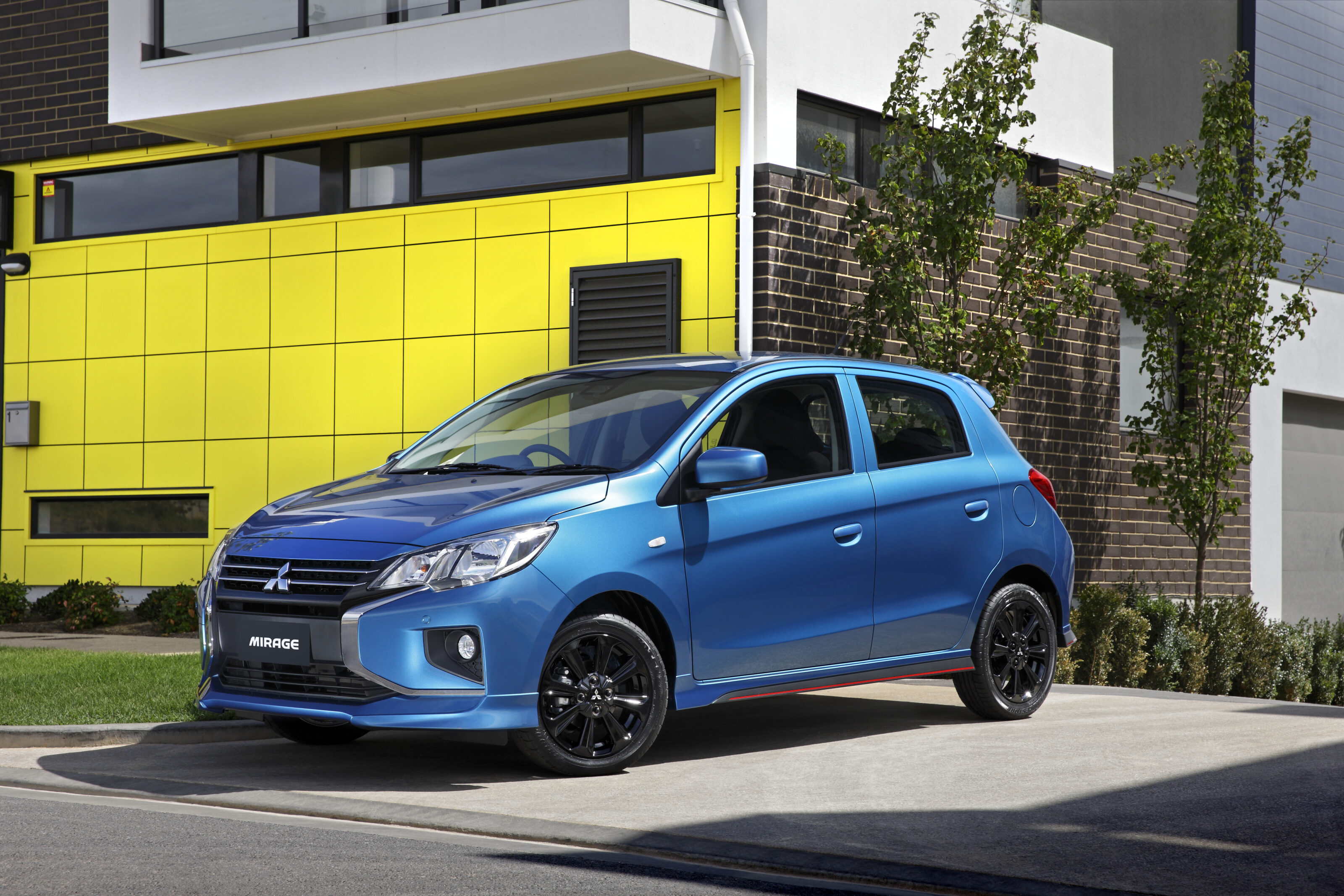
For real? or just another mirage?
Given the Renault–Nissan alliance has a new generation of Clio and now a Micra EV in development, there’s a theoretical possibility the Mirage could return as a cousin to these two.
However, the chances of it being offered in Australia would depend entirely on Mitsubishi Australia’s ability to make a business case, so a Mirage EV coming to Australia any time soon seems unlikely.
Snapshot
- Final-ever Aston Martin V12 Vantage unveiled
- 5.7-litre twin-turbo V12 produces 515kW/753Nm
- Limited to 333 units globally; order books closed
The 2022 Aston Martin V12 Vantage has roared to life as a final send-off to the nameplate, first introduced in 2009.
Marking the last time a twin-turbocharged V12 will be fitted to the Vantage, the latest model is strictly limited to 333 examples globally, as Aston Martin continues its shift towards hybrid and electric vehicles.
Order books for the V12 Vantage are closed, with all units now accounted for.
Under the bonnet, the Vantage packs the same 5.7-litre twin-turbo V12 as its larger DB11 sibling – albeit with additional power. Aston Martin claims it is the “fastest and most powerful” Vantage ever produced, with 515kW of power at 6500rpm and 753Nm of torque between 1800rpm and 6000rpm.

By comparison, the V12 fitted to the DB11 produces 447kW/700Nm in standard form, with the more-powerful DB11 AMR pushing outputs up to 470kW.
However, the final V12 Vantage produces less power than the V12 Speedster, which develops 522kW/753Nm.
Power is sent to the rear wheels through a ZF-sourced eight-speed automatic transmission, along with a mechanical limited-slip differential (LSD).
Aston Martin has developed a specialised calibration for the transmission in the V12 Vantage, with elements adapted from the V12 Speedster and Vantage F1 Edition, to deliver a greater shift experience than a dual-clutch gearbox.

The V12 Vantage can complete the 0-100km/h sprint in a claimed 3.4-seconds, on the way to a top speed of 322 km/h.
The marque has also modified the styling to accommodate its larger forced-induction 12-cylinder donk, with changes including; a new front bumper, full-width front splitter, 25 per cent larger front grille, ‘horse shoe’ bonnet engine vent, and a sculpted single-piece sill along the side profile.
A new adaptive damping suspension system – as well as updated anti-roll bars, bushes, and spring and damper assemblies – are also installed in the V12 Vantage to improve dynamics.
Body stiffness has also increased by eight per cent and lateral stiffness by 6.7 per cent, with additional front and rear sheer panels, a rear suspension tower strut brace and fuel tank bracing.

The rear cargo area has been modified to place the rear suspension strut brace on display.
Aston Martin has also modified the steering calibration for the V12 Vantage for greater feel and a sharper response, while carbon-ceramic brakes are included as standard – allowing for a 23-kilogram weight reduction when compared to steel brakes.
Weight reduction is the focus for the V12 Vantage, with Aston Martin providing buyers with the choice of two 21-inch alloy wheel designs (satin black or satin black diamond turned) or an optional 21-inch lightweight wheel to save an additional eight kilograms, available in satin black.
High-performance Michelin Pilot Sport 4S tyres are standard-fit.

Inside, the V12 Vantage is identical to existing V8 Vantage variants, featuring; an 8-inch Mercedes-sourced infotainment system, a semi-digital instrument cluster, a push-button gear selector, and quilted leather sports seats. A carbon fibre performance seat – saving 7.3kg – is included on the options list.
First introduced as a concept in 2007, the Aston Martin V12 Vantage was unveiled in production form in 2009. Production continued to 2018, when the current-generation Vantage was revealed with AMG-sourced V8 power.
The 2022 Aston Martin V12 Vantage will commence production in the next few weeks, with customer deliveries scheduled to take place from the second quarter of the year.
A good reputation is a hard-won thing. Brands of all types strive for years to build one and it can take one mistake to undo all the good work. Volvo spent half a century telling people they were the safest cars on the road and doubled down hard with sometimes deeply boring machines to prevent styling or speed from distracting you from The Mission. To be the safest car in the minds of the motoring public.
People who weren’t even born when this reputation was at its height during the 80s and 90s will sometimes screw up their faces when I tell them I’m driving a Volvo. “Really? Aren’t they a bit dull?” Well, not for the last couple of decades, no, but here we are.
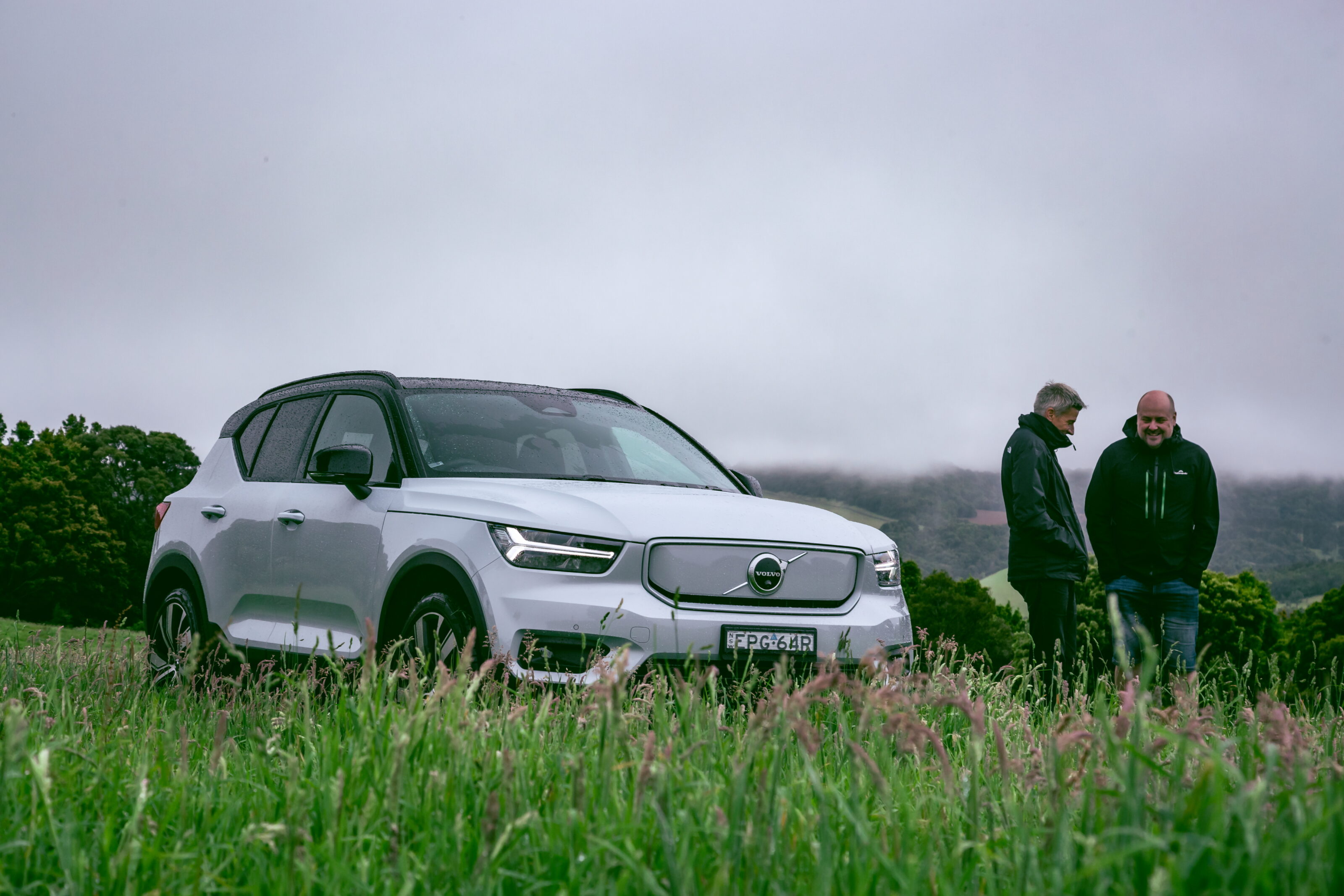
Despite being pretty much onboard with Volvo’s evolution from single-minded safety pioneer to producing style icons like the XC60 and XC90, even I was a little shocked when Gothenburg threw down the gauntlet and unveiled a fully electric XC40. With two motors, no less, and a pretty handy turn of speed to go with its funky exterior.
Pricing and Features
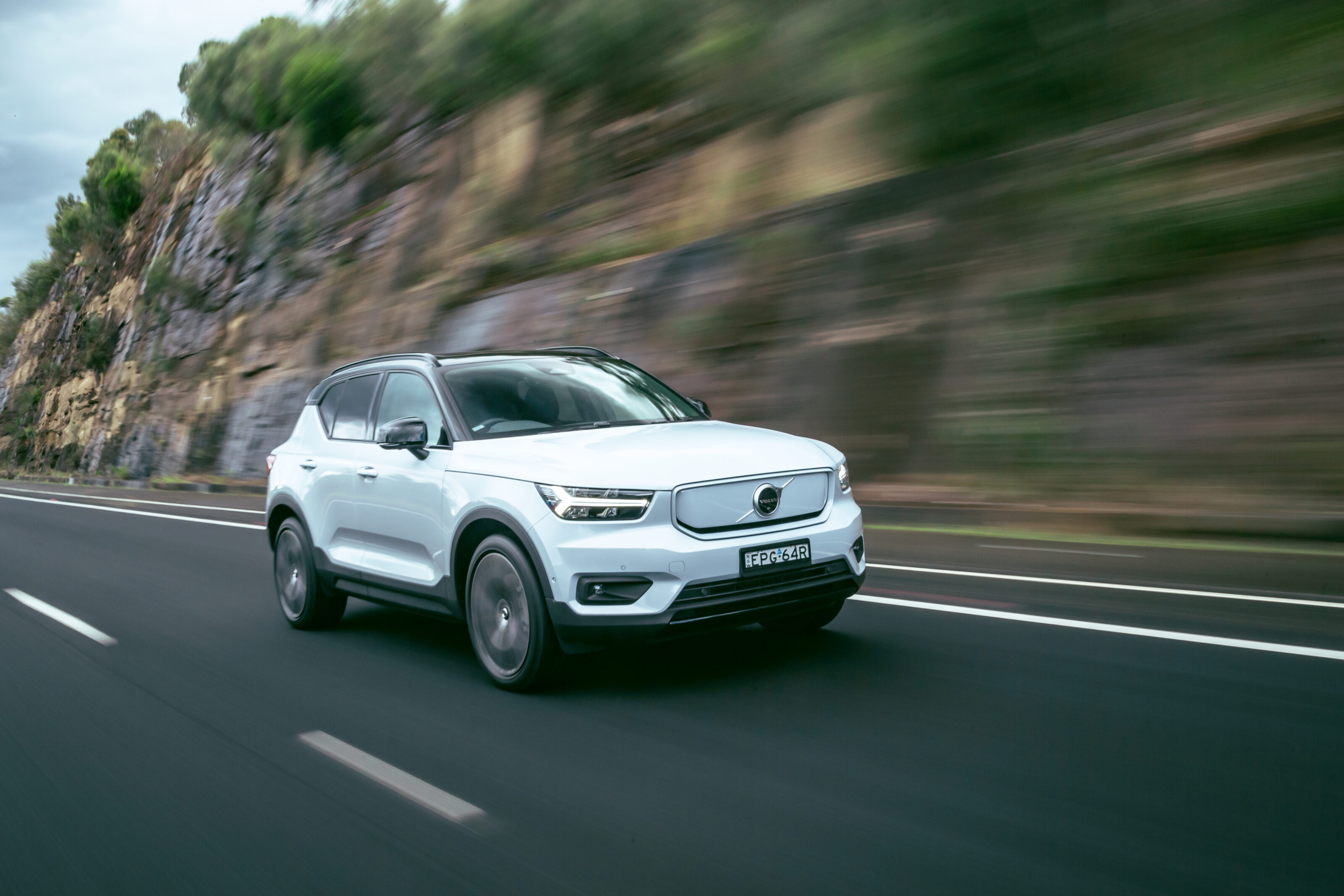
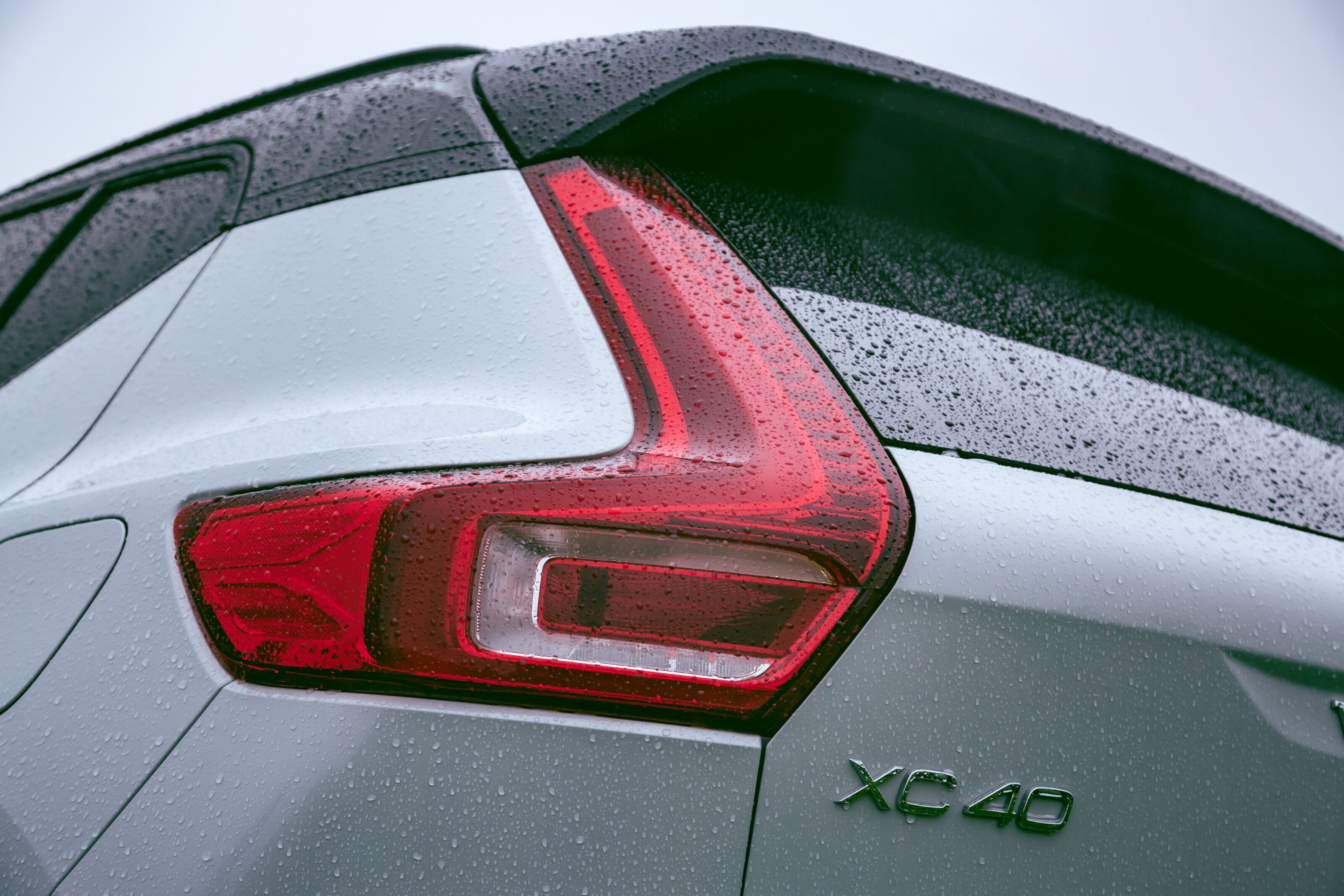
The 2021 Volvo XC40 Recharge Pure Electric is a bit of a long name. The “Pure” tells you it’s a battery EV and not a Recharge, which is a PHEV. It probably would have been quicker to call it the EXC40 but that’s a bit of a cliche, I guess. The XC40 starts at a reasonable $47,490 before on-road costs but it’s another $29,500 you’ll need to find before you can park an electric one in your driveway.
For $76,990 before on-road costs, Volvo delivers you a five-door SUV with 20-inch alloy wheels, panoramic sunroof, active LED headlights, auto wipers, keyless entry and start, powered tailgate, leather seats, dual-zone climate control, a 9.0-inch touchscreen in portrait mode, sat-nav, wireless charging, leather interior and power everything.
It’s a price that puts the kybosh on NSW, Victorian and South Australian EV incentives but you will escape stamp duty in NSW.
The portrait-oriented touchscreen features a fairly sparse version of Android Automotive that isn’t a patch on what you get from Volvo’s Polestar sister brand. It works well enough but if you’re not in the Google way of things, it’s a bit lonely. If you’re all signed up with Google, you can hook into your Google account and use voice commands (mobile coverage dependent) to do things.
It was maddeningly difficult to make the DAB+ digital radio interface was work, so I gave up after my first few tries. There is no Apple CarPlay (that’s coming, we’re told), which is a bit of an own goal given EV buyers tend to be tech-savvy folks. But there are 14 speakers to fill the cabin with sound, so once you’re hooked up with something, you’ll be happy.
The processing power behind the screen seems pretty poor, with the system often taking forever to load screens. It’s pretty underwhelming in its current state and is smacked out of the park by the Polestar 2’s screen.

True to its roots, there is a truckload of safety gear, with seven airbags, ABS, stability and traction controls, forward auto emergency braking (AEB), lane-keep assist, blind-spot monitoring, rear AEB, rear cross-traffic alert, front and rear parking sensors, forward collision warning and rear collision warning. You also get three top tether anchors and two sets of ISOFIX points for the kiddies.
ANCAP awarded the XC40 five stars in 2018, with a recent addition to the report including this electric version.
Despite being pretty much onboard with Volvo’s evolution, even I was a little shocked when Gothenburg unveiled a fully electric XC40
For the price Volvo is asking, there are a few electric cars in the mix, not least of which is a Volvo stablemate, the Polestar 2. More specifically, you’ll be able to get the dual-motor version with the Pilot Pack to match the safety package on the XC40. Mercedes will sell you an EQA, Hyundai an Ioniq 5 and you’re able to nab yourself a dual-motor Kia EV6 for a similar budget.
A Tesla Model 3 Long Range, while rather more sedan-ey is also not far off this kind of money so one imagines the Model Y will eventually arrive at a similar price. And fresh off the boat is the new Lexus UX300e. Sized at the other end of the scale for a compact SUV, it’s a couple of grand cheaper and includes a Chargefox subscription but ditches a lot of space and is only front-wheel drive.
Comfort and Space
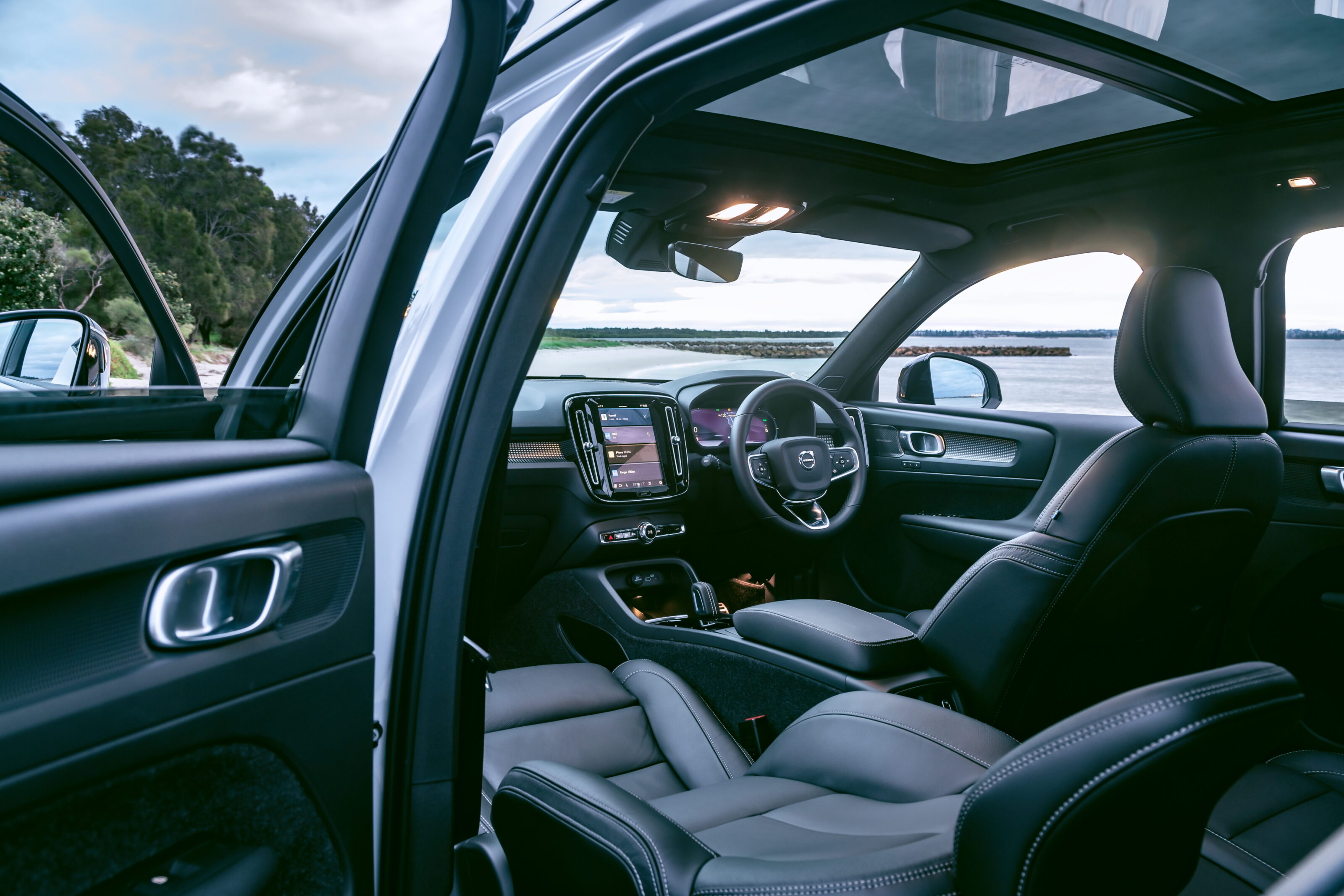
The short answer is that this is an XC40 with a smaller boot. If you’re an XC40 owner or fan, that’s probably all you need to know. If not, I have some opinions for you.
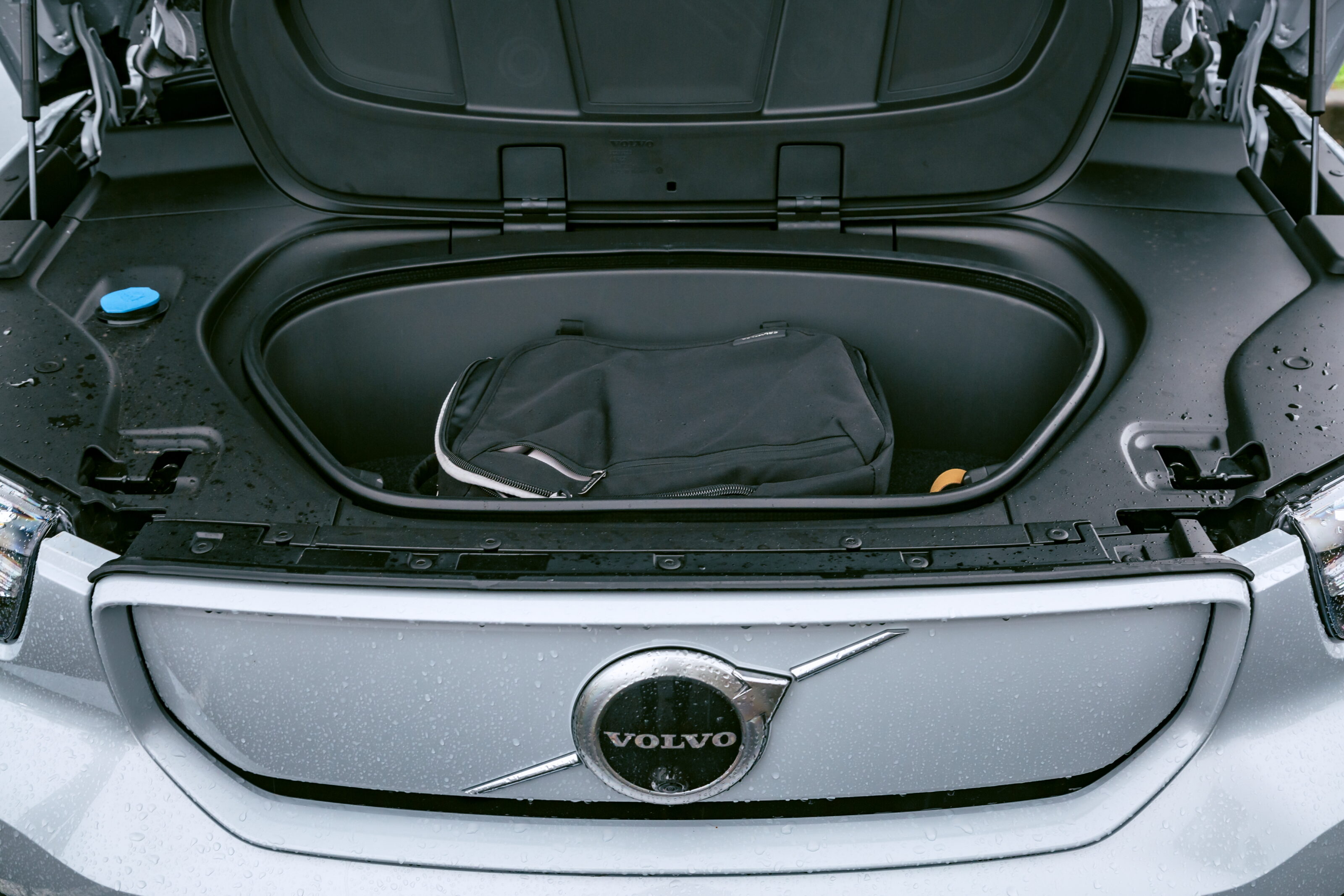
Let’s start with the smaller boot. The electric XC40 has 418 litres of space (VDA), down from 460 litres, a loss of 42 litres. That isn’t a huge amount and my famously terrible maths tells me it’s a bit less than a 10 per cent loss.
As luck would have it, there’s more storage under the bonnet, with a handy 31 litres cheerfully swallowed up by the portable charge cable if that’s where you want to keep it. The other option is under the boot floor, where it fits neatly but is tricky to get to if you’re on a road trip with a boot full of stuff.
Fold the rear seats down and the space rises to 1373 litres. You do also lose the spare tyre and you get a puncture repair kit instead.
Moving to the rear seat, it’s a great space if you’re anywhere up to 180cm tall. I had a good five to ten centimetres clear above me and that’s with the sunroof. The seat is a bit shallow under the thighs but should be comfortable for all but the longest drives. The armrest has two good-size cup holders and bottles will fit in each door. You also get rear air vents.
Volvo front seats are uncommonly comfortable. The leather feels nice and there are some nice touches like the patterned inserts and lovely metallic finishes
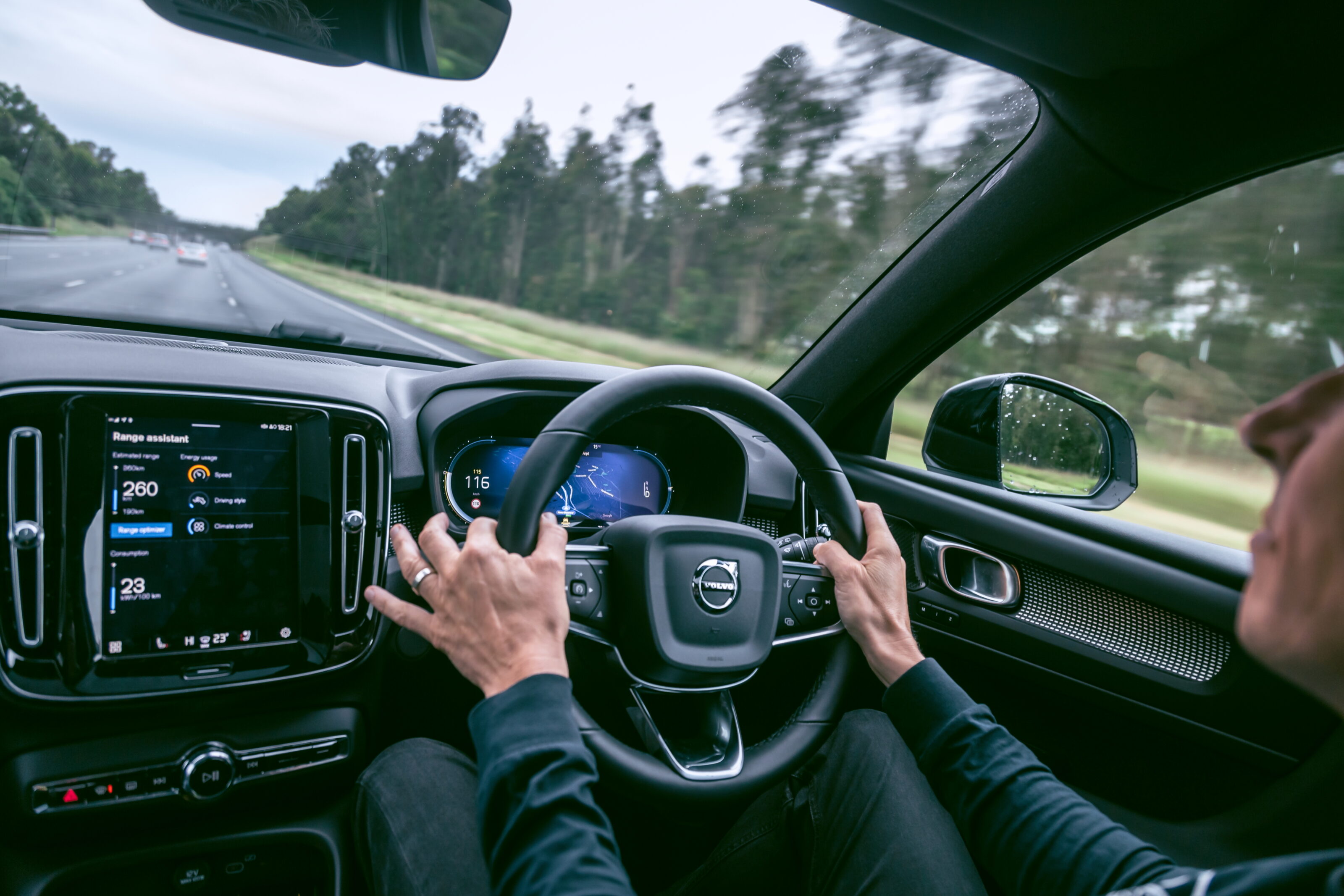
The transmission tunnel is hefty, so the middle seat is for occasional use by all but the shortest of adults.
Volvo front seats are uncommonly comfortable and the ones in this XC40 have plenty of adjustment too. The leather throughout feels nice enough and there are some nice touches like the patterned inserts across the dash, the vertically-arranged air vents and the lovely metallic finishes. The touchscreen doesn’t overpower the space either.
Battery and Charging
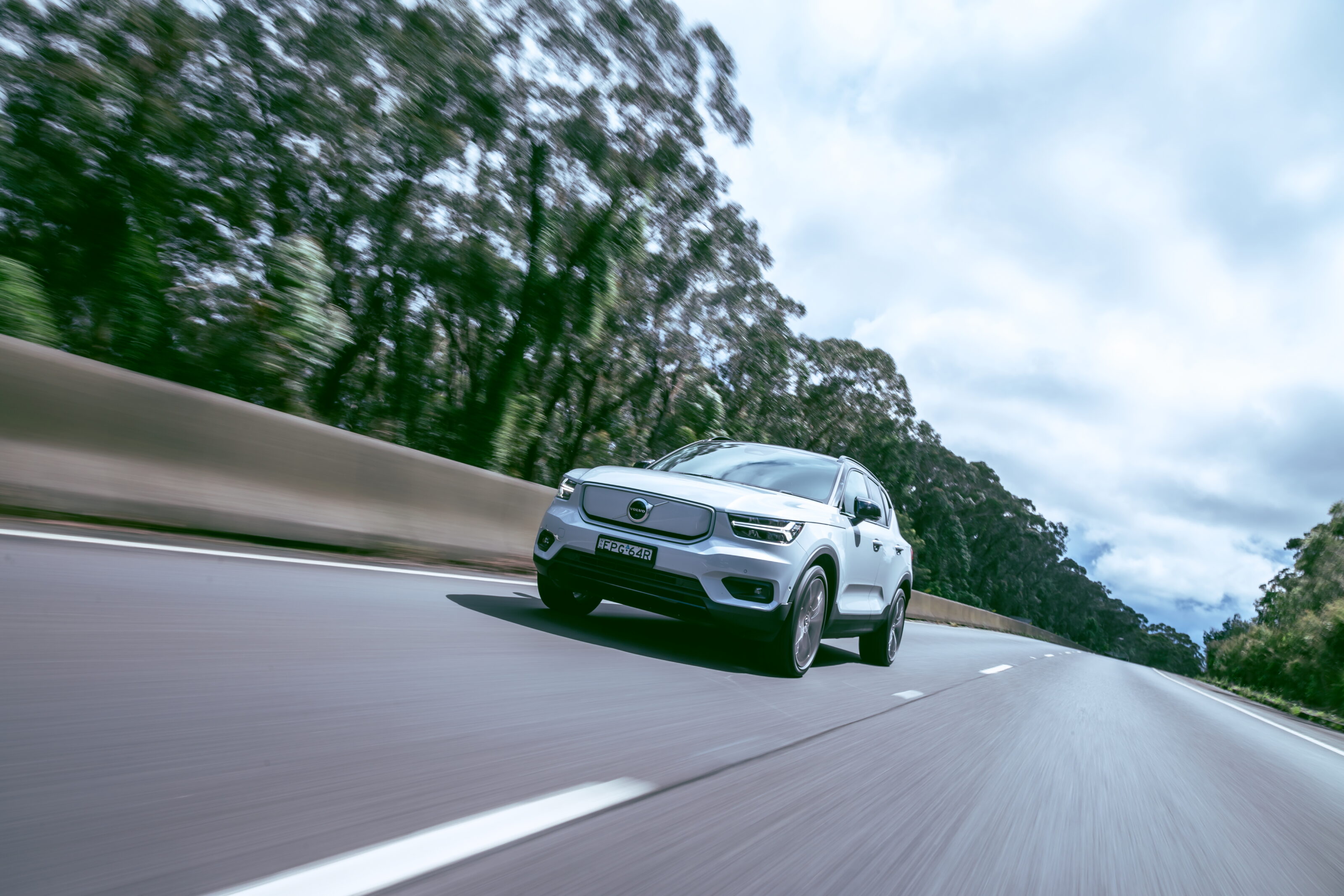
Packed in under the floor is a fairly hefty 78kWh battery pack, with 75kWh of usable capacity. A 400-volt system, it will cop 150kW charging from the right kind of charger, however the times we tried it on a 350kW charger, it didn’t want to go above 75kW, which was a little disappointing.
Charging from dead will take 22 hours on a standard wall socket and as little as 40 minutes at full tilt on a 150kW unit. The more common 50kW chargers will give you a full charge in about two hours – as with all EVs the last 20 per cent takes a lot longer.
The XC40 uses a CCS2 type charger, so when you’re checking for charging stations, make sure they have one of those rather than CHAdeMO.
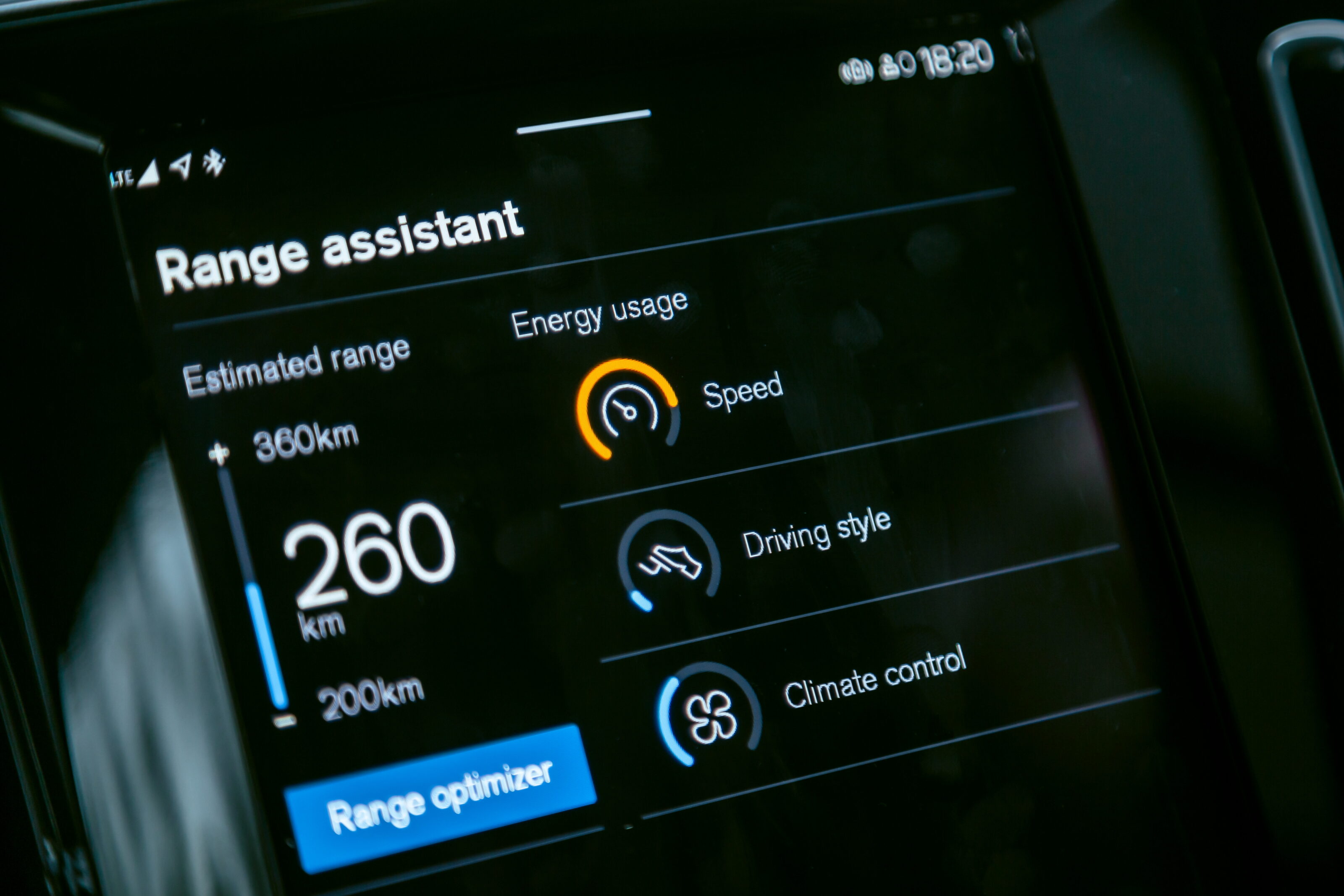
Officially, the maximum claimed ADR range is 450km while the generally more accurate WLTP range is 418km. Neither figure is bad but on the road, it’s a different story as I managed to extract around 300km per full charge.
That said, the official 25kWh/100km consumption rate on the combined cycle felt pessimistic for most of the time I drove it as I averaged around 21kWh/100km, including regular use of 80km/h roads and, er, the throttle pedal. You’ll get more range in one-pedal driving around town, less if you spend a lot of time on the freeway.
On the Road
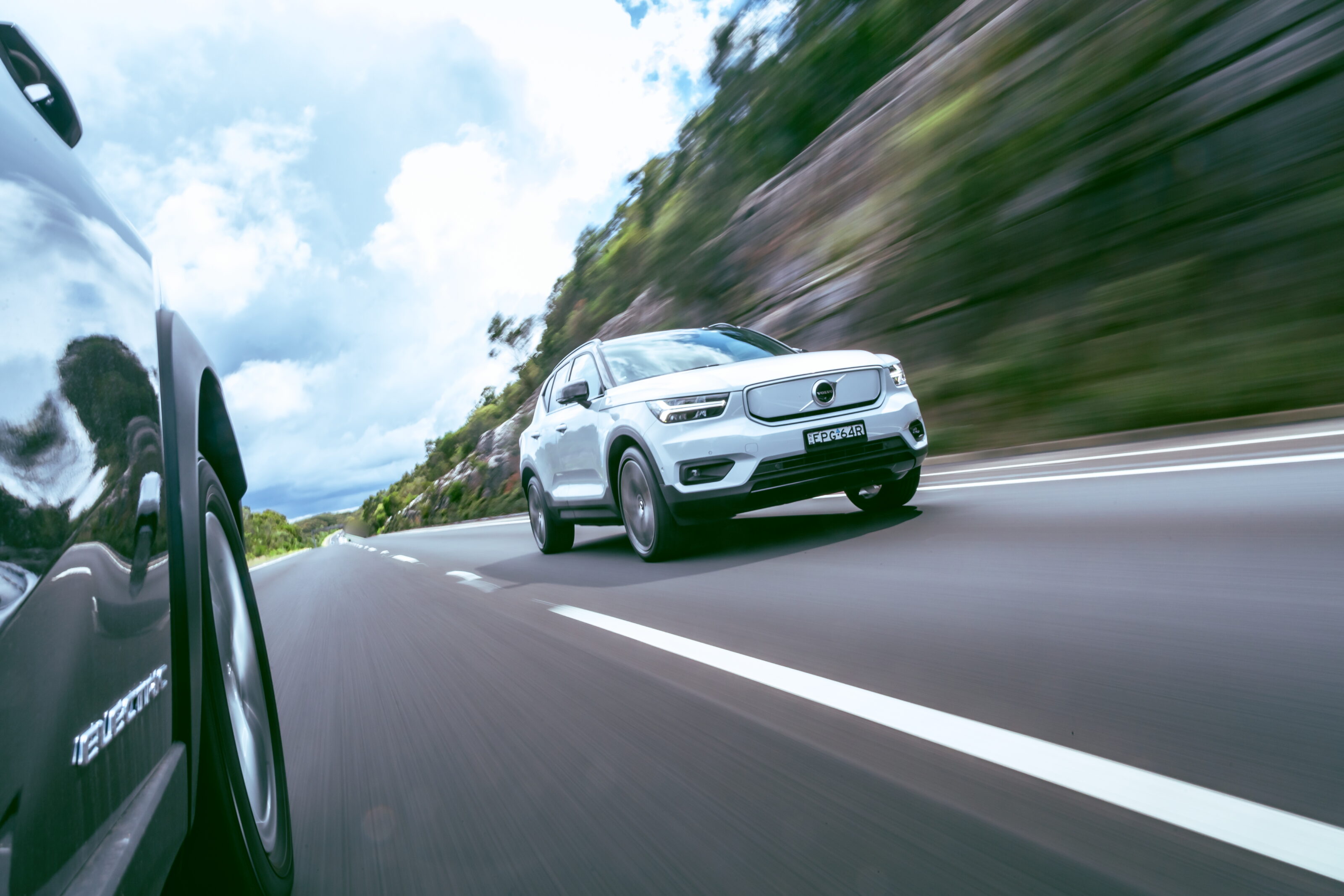
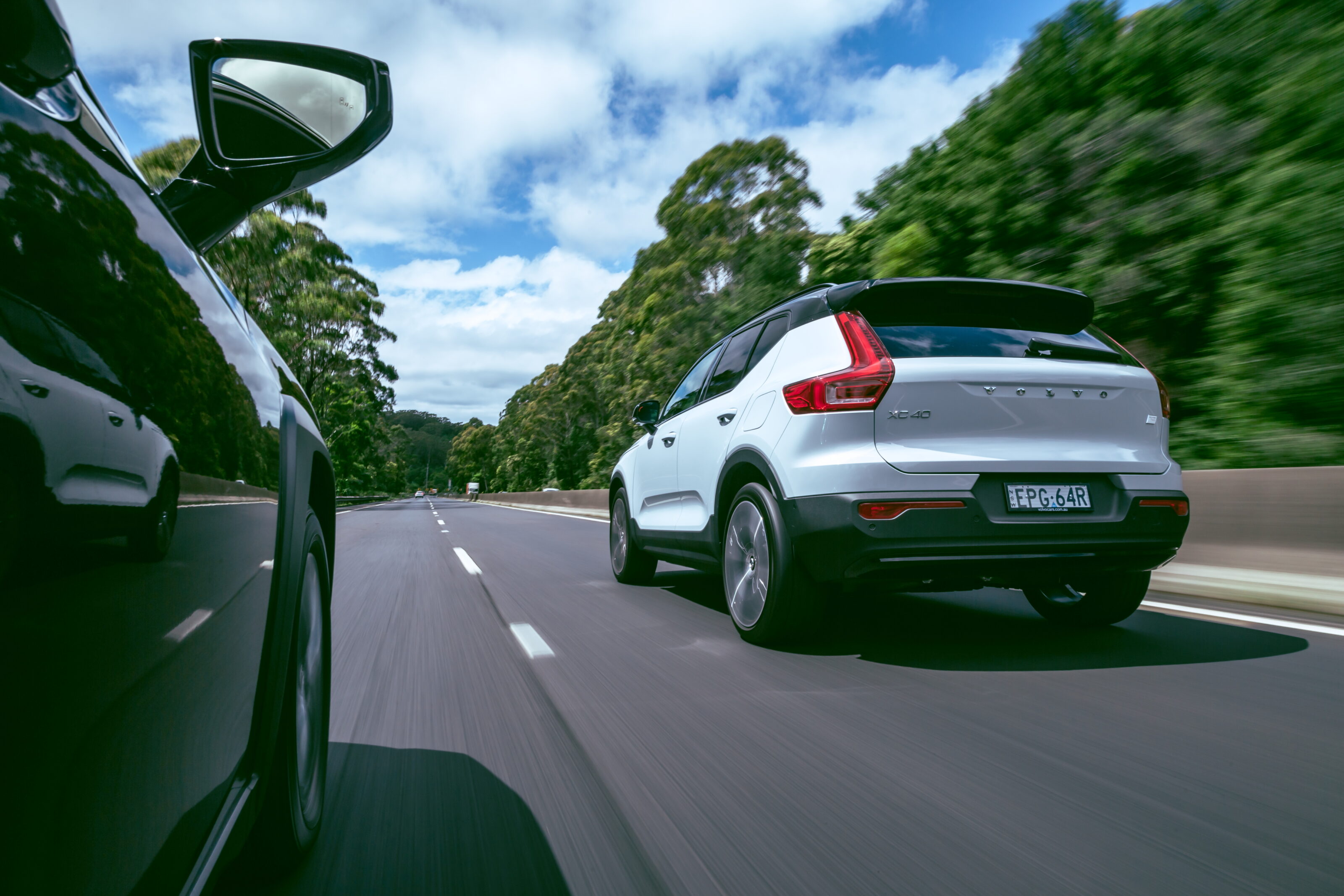
The XC40 rides on Volvo’s CMA platform, which means it’s not an EV-from-the-ground up but nor is it a let’s-ram-some-EV-tech-into-this-ICE-platform either – it was always meant to have electrification. There are still compromises, of course. The transmission tunnel is still there, but full of batteries and the boot, as we’ve seen, loses a bit of space.
It’s a hefty machine at 2158kg, but the pair of 150kW motors mounted fore and aft are perfectly capable of moving the bulk, assisted by 660Nm of torque. The 0-100km/h sprint is dispatched in 4.9 seconds, which is not messing about. Not Tesla Plaid quick, no, but you’re looking at three times the price for that kind of performance.
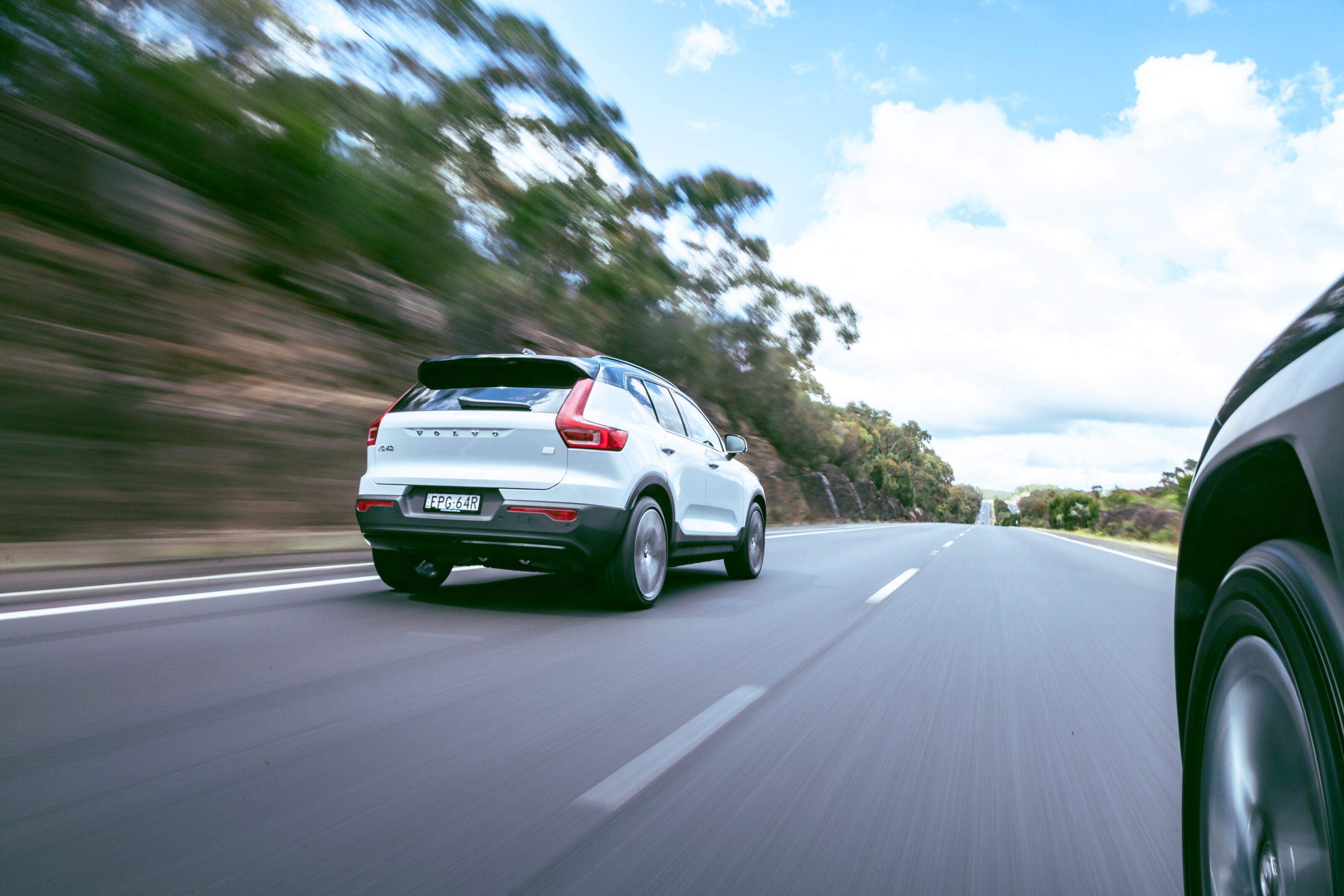
Volvo doesn’t bother with drive modes; it’s all in the throttle. My wife drove it and complained it was a bit slow but my word, it is not slow. You’ve just got to use the pedal with an assertive right foot to access some quite vivid acceleration, both off the mark and when you’re rolling. Given its higher ride height over its Polestar 2 counterpart, it initially feels a little wayward under full throttle.
But I soon discovered that’s because my brain wasn’t accurately estimating just how quickly it would go when I thumped the pedal to the floor.
The 0-100km/h sprint is dispatched in 4.9 seconds, which is not messing about. Not Tesla Plaid quick, but you’re looking at three times the price for that kind of performance
The vast majority of XC40s are city-based, so an EV version is a fairly interesting proposition. The ICE versions are notorious for a slightly brittle low-speed ride and so it is with the electric. The extra weight certainly knocks the edge off the pothole thumps and crunches but rubber speed bumps are still a bit unpleasant. The rest of the time it just feels pleasantly firm, which is likely down to the size of the wheels rather than the MacPherson strut fronts and multi-link rear end.
Higher speeds deliver a really composed ride, though, with little in the way of wind or transmission noise. It’s a good thing to travel around in and the suspension’s firmness soon feels right. It’s a shame that the tyres are a bit noisy, but there’s a reason for that, which I’ll come to shortly.
The only problem with higher speeds is the one-pedal driving mode. Set to either on or off, it’s quite arresting when you’re whistling along at 90km/h and you lift off, it’s like being behind Max Verstappen pretending to let you by cleanly. The car lurches into what feels like moderately heavy braking so it’s best to have that switched off once you get out of the city.
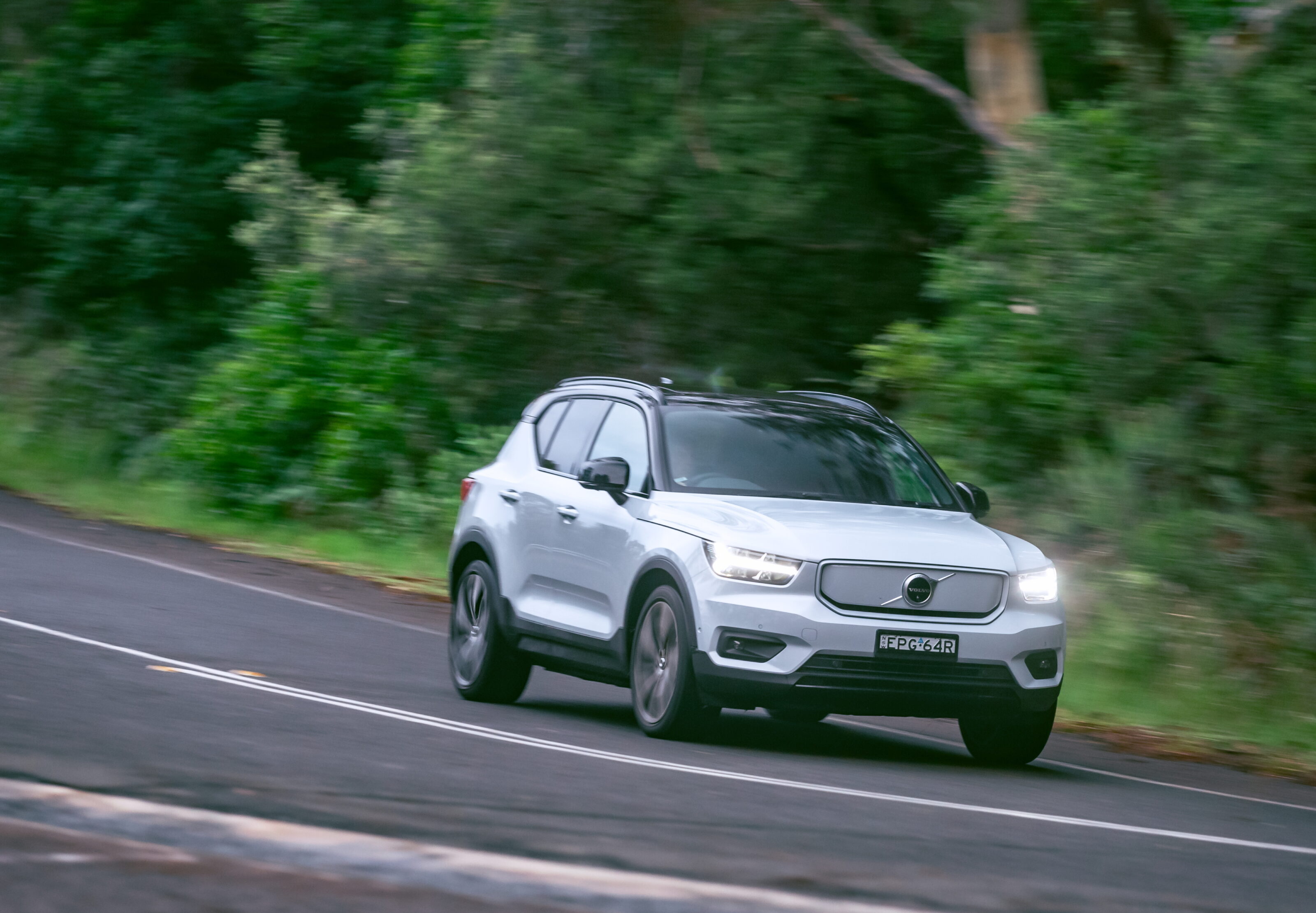
In lower-speed traffic, it works a lot better and has the added benefit of charging the battery with kinetic energy and keeping you off the artificial-feeling brake pedal. It feels artificial because it is, given the software is constantly deciding whether to simulate engine braking or use actual physical braking. The transition is quite good between them, though, and the disc brakes are big and strong.
Into corners, it’s reasonably convincing and out of them galactically quick given there is 660Nm of torque available. But you wouldn’t want to get too excited. Traction from the all-wheel-drive system is mightily impressive – couldn’t even get the tyres to scrabble in the dry from a standstill with a stomped throttle – and the Pirelli P-Zero rubber is a nice touch. They’ve even got VOL stamped on them, so the Swedes got involved to make a set just right for the XC40. I’m just pleased they’re not slippy low rolling resistance tyres. It does mean they’re noisy at speed, though
Ownership
Volvo offers its five-year/unlimited-kilometre factory warranty on the electric XC40. An eight-year warranty applies to the battery and the drive system is “sealed for life” meaning there’s not much to do at service time.
This explains why the service intervals are a very generous two years/30,000km and at this stage, servicing is free for the first three years/100,000km and covers wear and tyre like wiper blades, pads and rotors, which is pretty good going.
Unlike some other EVs, you do not get a subscription to a charging network.
Volvo has a mobile app that lets you keep an eye on how charging is going, setting up a temperature for you to step into a warm/cool car (delete where appropriate for your season or location) and no doubt more functions will creep their way in with over-the-air updates.
VERDICT
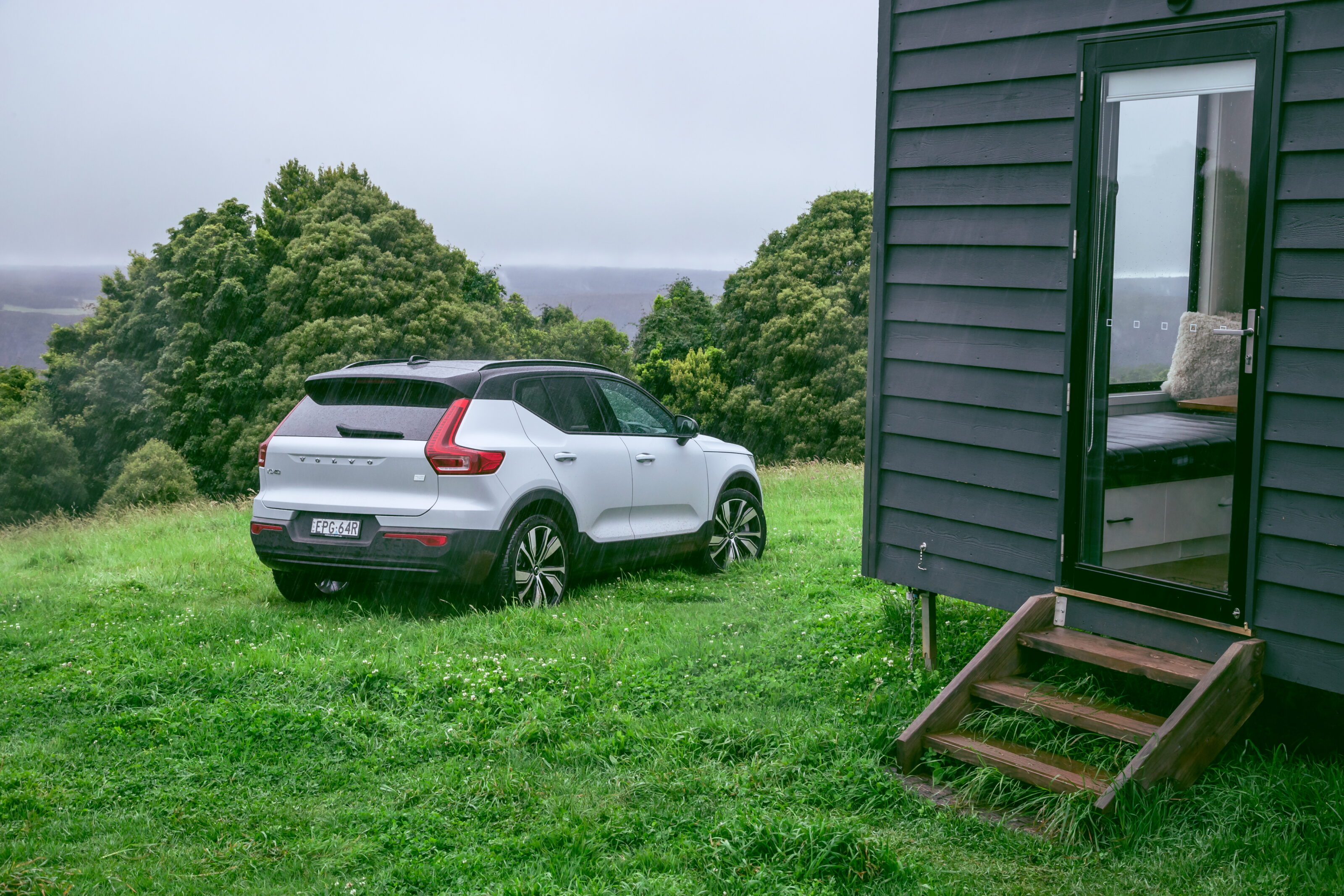
The XC40 Recharge Pure Electric is a long name for a compact SUV, but it deserves it. It’s an excellent car made even better by electrification. While its range might be limited to a comfortable real-world 300km, it more than makes up for that with terrific power, a comfortable and easy driving experience and an otherwise familiar form factor.
While the media system could be better and I’d like to see a lot more information about the state of the battery and its range, which hopefully over-the-air updates will sort out. It’s part of an increasingly competitive segment that is filling with big brands making big statements.
Volvo almost slipped into it quietly and without telling anyone, which is as cool as the car itself.
2021 Volvo XC40 Recharge Pure Electric specifications
| Body: | Five-door compact SUV |
|---|---|
| Drive: | AWD |
| Engine: | Twin motor electric |
| Transmission: | Single-speed reduction gear |
| Power: | 300kW @ 0rpm |
| Torque: | 660Nm @ 0rpm |
| Battery: | 78kWh / 75kWh usable |
| Claimed range: | 418km (WLTP), 450km (ADR) |
| 0-100km/h: | 4.9 sec (claimed) |
| Energy consumption: | 25.5kWh/100km (combined) |
| Weight: | 2158kg |
| Suspension: | MacPherson strut front/multi-link rear |
| L/W/H: | 4425mm/1910mm/1651mm |
| Wheelbase: | 2702mm |
| Brakes: | 345mm ventilated disc front / 340mm solid disc rear |
| Tyres: | 245/45 R20 Pirelli P-Zero |
| Wheels: | 20-inch alloy wheels (no spare) |
| Price: | $76,990 plus on-road costs |
Anti-competition regulators in Europe have raided a number of car companies’ premises, including Renault and Opel, it was revealed overnight.
The European Commission (EC) – the European Union’s executive branch – announced it had “conducted unannounced inspections at the premises of companies and associations active in the automotive sector” over suspected antitrust violations.
The authority is conducting the investigation alongside the UK’s Competition and Markets Authority (CMA), with “formal requests for information” also being sought from organisations in the industry.
While the details have not been disclosed, it’s understood the investigation relates to local laws which stipulate the ways in which written-off cars must be disposed of or recycled.

“The Competition and Markets Authority has reason to suspect anti-competitive behaviour has taken place involving a number of vehicle manufacturers, and some industry bodies,” a statement from the UK Government read.
“This conduct relates to arrangements for recycling old or written-off vehicles, specifically cars and vans, which are known in the industry as ‘end-of-life vehicles’ or ELVs.”
Known as the ELV Directive, the regulations are designed to “prevent and limit waste from end-of-life vehicles and their components,” and “improve the environmental performance of all economic operators involved in the life-cycle of vehicles,” according to the EC.
Mercedes-Benz told Reuters it did not expect to be fined as it had approached authorities with information as a “leniency applicant”.
Businesses involved in anti-competitive conduct may be granted immunity in exchange for reporting cartel activity and assisting the CMA with an investigation.
Both Renault and Opel confirmed to Reuters their offices had been visited by investigators, while information had been formally requested from BMW. All three brands said they were cooperating with the regulators.

“Unannounced inspections and requests for information are a preliminary investigatory step into suspected anticompetitive practices,” the EC said in a statement.
“The fact that the Commission carries out such inspections and sends out formal requests for information does not mean that the companies are guilty of anti-competitive behaviour nor does it prejudge the outcome of the investigation itself.”
Organisations involved in anti-competition activities can face fines of up to 10 per cent of their global turnover, with the European watchdog handing out around €2.2 billion (AU$3.35 billion) in penalties over the past decade.
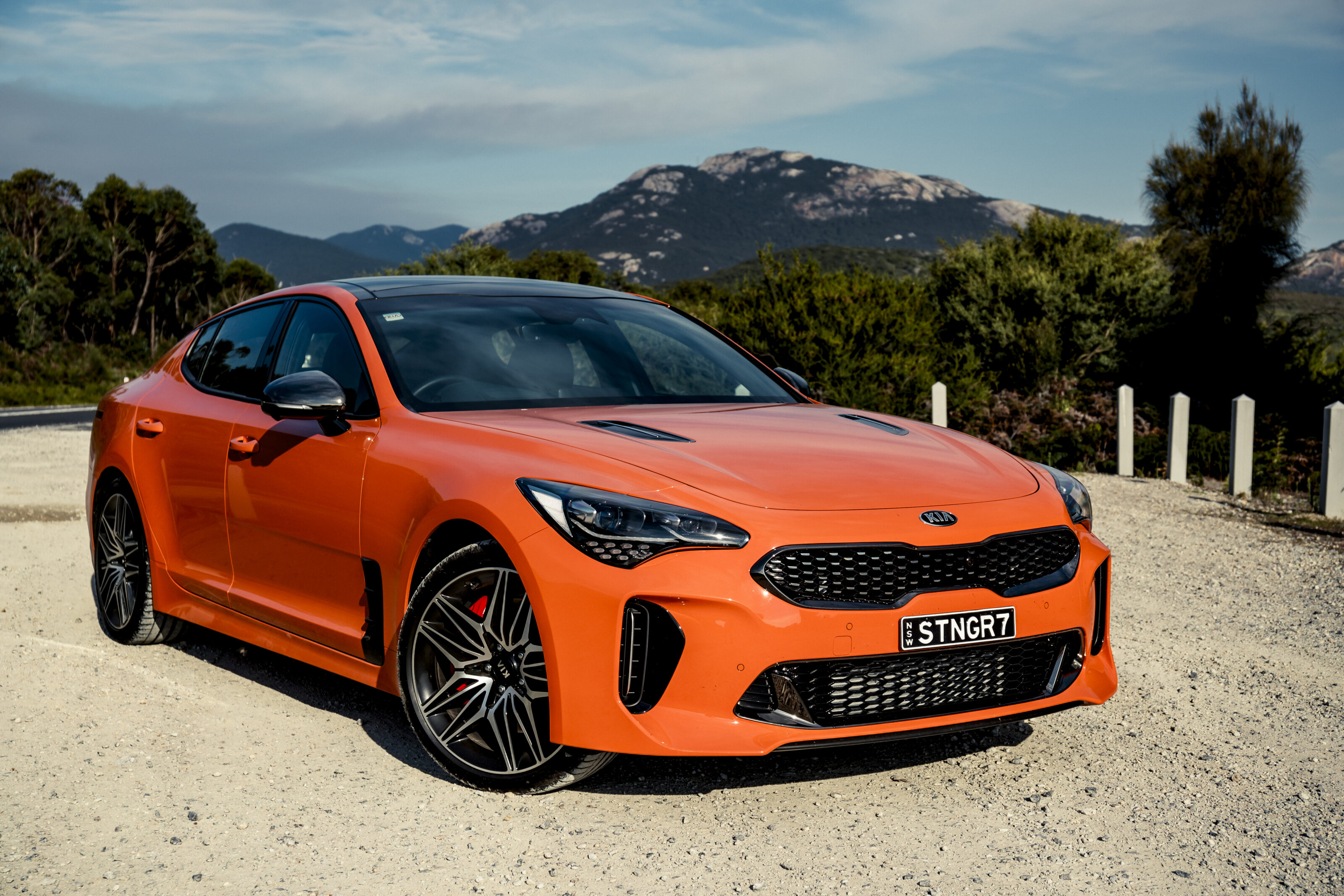
The Kia Stinger as we know it could be coming to the end of its production life, with information out of South Korea suggesting the model will be discontinued from December 2022.
According to a post on Korean forum Autospy, Kia will stop manufacturing the Stinger from December, backing up a July 2021 report from the country’s DailyCar website which gave a timeframe of the second half of this year for production to finish.
However, as reported in August, Kia’s design boss Karin Habib revealed the vehicle could live on, saying the company is “preparing a new model for the Stinger… we want the Stinger spirit to stay at the heart of hunger”.
The most obvious reincarnation will be in the form of a production version of the Hyundai Vision FK – a 500kW hydrogen-powered concept car which shares an uncanny similarity to the Stinger – given Kia is within the Hyundai Motor Group family.
Reports out of Korea state the Sohari Plant where the Stinger is made will be transformed to produce electrified vehicles from 2023, perhaps providing a hint at the car’s future.
A silhouetted image from Kia showing a future electric model with a similar outline to the Stinger has led to more rumours suggesting the rear-wheel-drive sedan will move to a battery-electric powertrain.
Snapshot
- Tesla Model 3 prices rise between $2900 and $4000
- Entry-level variant now starts at $63,900
- Wait times now blown out up to nine months
Tesla has handed down a second price increase to its popular Model 3 sedan in just a few weeks, as it also anticipates extended delivery times for customers.
After the American electric vehicle manufacturer bumped up the price of its popular base-spec Model 3 last month to $60,900 from $59,990 before on-road costs, Tesla has now raised the list price again to $63,900 – up $2910.
While the incremental changes might not sound considerable at first glance, the price change from $59,990 to $63,900 within the past month for its top-selling model represents a rise of 6.5 per cent.

Despite the Long Range and Performance variants avoiding a price hike earlier in the month, the two grades weren’t so lucky this time, being hit by $3000 and $4000 premium increases respectively to now go on sale from $76,200 (Long Range) and $88,900 (Performance) before on-road costs.
If the increased list prices weren’t enough to make buyers second-guess their decision to buy Australia’s most popular EV, the manufacturer’s Australian website has also extended wait times, claiming deliveries to customers could take between six to nine months.
This is a slight jump from delivery times reported earlier in the month where the brand said delays of five to seven months were more likely, although it was only just after the recent Russian invasion of Ukraine.

The rise earlier in the month coincided with a minor equipment update for the Model 3, gaining a revised interface for its central interior touchscreen, new apps and a blind-spot camera within the infotainment system.
Model 3 was Australia’s most popular EV last year, with Tesla selling 12,094 units of the fully-electric sedan to customers – or 10,706 deliveries more than the second-placed MG ZS EV.
Snapshot
- Price difference between standard Outlander and PHEV ranges between NZ$16,000-$18,000
- New Zealand buyers get a choice of three grades
- Australian offerings could top out at over AU$67,000 before on-road costs
The upcoming second-generation Mitsubishi Outlander PHEV (plug-in hybrid vehicle) has gone on sale in New Zealand.
While the model isn’t expected to go on sale in Australia until the second quarter of the year, prices across the ditch could act as a solid indicator of what we can expect when the SUV lands on local shores.
Having been announced in the back end of last year as the electrified variant of the fourth-gen Outlander, the Outlander PHEV is still without an official price tag for Australia.
Premiums are expected to go up over the outgoing model thanks to updated equipment such as a larger battery and more powerful motors.
UPDATE, July 2022: Outlander PHEV pricing announced
Australian pricing and details for the Outlander PHEV have now been revealed. Even better, we’ve also driven it! Get the full story at the links below.
Story continues
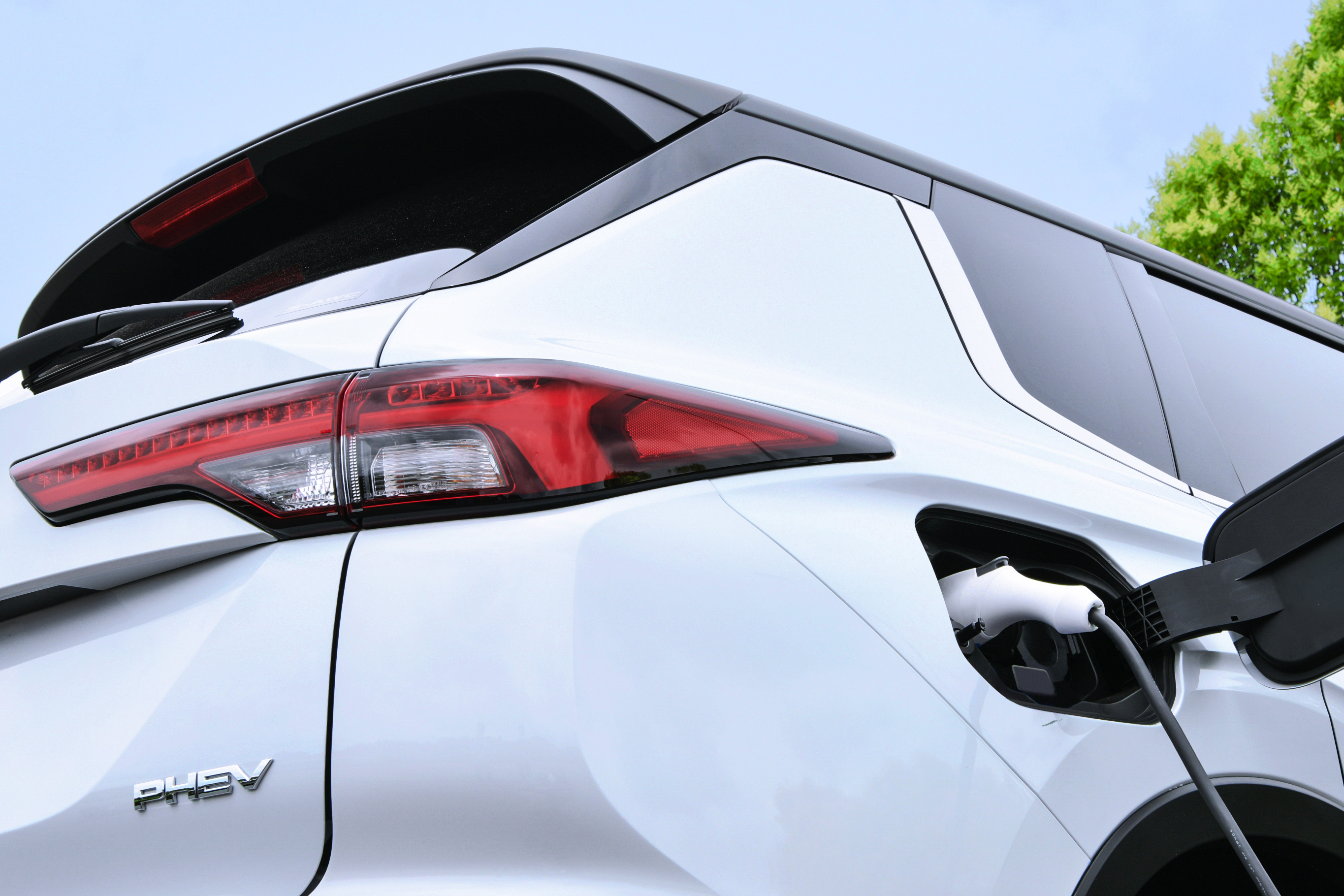
In New Zealand, the Outlander PHEV is only offered in three grades – LS, XLS and VRX – with prices starting at NZ$60,990 (AU$57,200) including on-road costs for the LS PHEV, a NZ$16,000 (AU$15,000) premium over the equivalent 2.5-litre, non-electrified variant, representing an increase of 36 per cent.
Moving up to XLS PHEV, buyers now pay NZ$18,000 (AU$17,000) more for the electrified model over the internal combustion XLS, with its price tag of NZ$67,990 (AU$63,900) reflecting the same percentage jump between ICE and PHEV of 36 per cent.
Finally the range-topping VRX also incurs a price increase from standard to PHEV of NZ$18,000 (AU$17,000), setting customers back NZ$73,990 (AU$69,600) drive-away, also delivering the lowest ICE to PHEV price percentage jump of 32 per cent.
2022 Mitsubishi Outlander New Zealand pricing (ICE and PHEV)
Prices exclude on-road costs.
| Variant | Price (NZD) |
|---|---|
| LS | $44,990u00a0 |
| LS PHEV | $60,990 (+$16,000) |
| XLS | $49,990 |
| XLS PHEV | $67,990 (+$18,000) |
| VRX | $55,990 |
| VRX PHEV | $73,990 (+$18,000) |
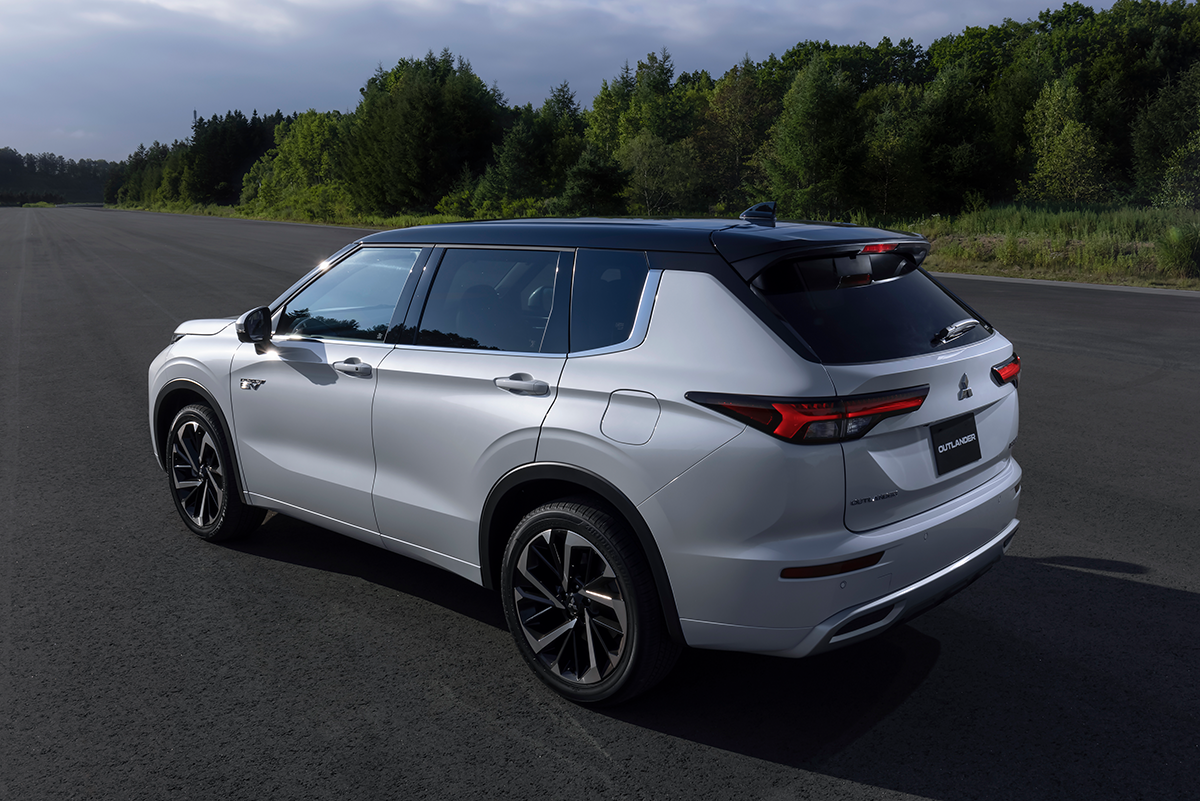
In Australia, the Outlander is currently sold in five grades – ES, LS, Aspire, Exceed and Exceed Tourer – and while it’s not yet known which variants will carry across to the PHEV, using even the lowest figure of a 32 per cent price increase would put the cost of the entry-level, five-seater Outlander PHEV ES up to roughly $48,800 before on-road costs in Australia, a jump of over $11,000.
Moving up through the grades, the LS could start around $53,500, with the Aspire bumped up to $58,000 before the range-topping Exceed Tourer hits the ceiling at $67,300 – or close to $11,000 more than the outgoing flagship Outlander PHEV Exceed.
To put it into perspective, the price difference between the previous Outlander Exceed ($43,990) and the former Outlander PHEV Exceed ($56,490) represented a 29 per cent discrepancy.
2022 Mitsubishi Outlander Australian pricing (ICE)
Prices exclude on-road costs.
| Variant | Price (AUD) |
|---|---|
| ES 2WD | $34,490 |
| ES 2WD | $35,490 |
| ES AWD | $36,990 |
| LS 2WD | $37,990 |
| LS AWD | $40,490 |
| Aspire 2WD | $41,490 |
| Aspire AWD | $43,990 |
| Exceed AWD | $48,490 |
| Exceed Tourer AWD | $50,990 |
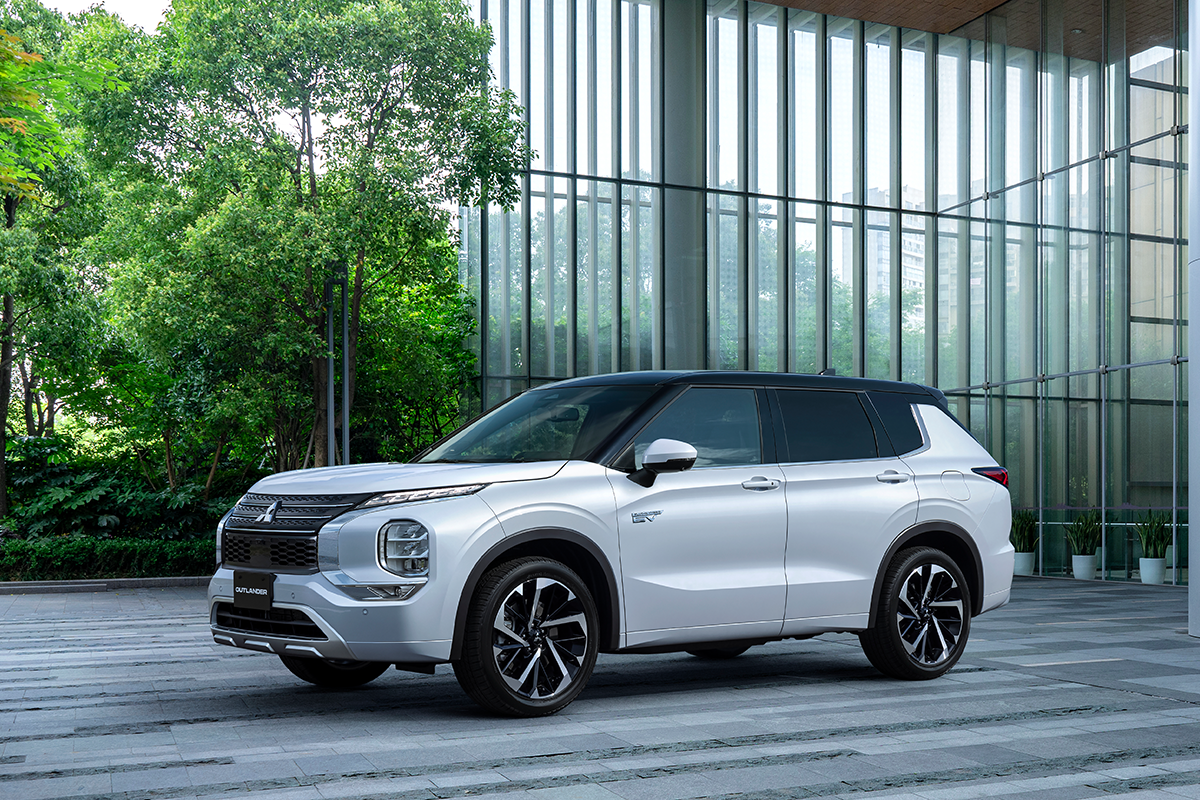
As expected, prices of the Outlander PHEV will rise across the range to become higher than its predecessor, with an increase of anywhere between $1000 to over $7000 in the case of the Exceed grade likely.
While not yet officially confirmed, the rough price guide below gives an idea of what kind of prices buyers should expect to see when the new Outlander PHEV arrives in Australia.
2021 Mitsubishi Outlander PHEV Australian pricing vs projected 2022 PHEV pricing
* Denotes unconfirmed price/variant.
| Variant | Price |
|---|---|
| 2021 Outlander PHEV ES | $47,990 |
| 2022 Outlander PHEV ES* | $48,800* |
| 2021 Outlander PHEV GSR | $52,490 |
| 2022 Outlander PHEV LS* | $53,500* |
| 2021 Outlander PHEV Exceed | $56,490 |
| 2022 Outlander PHEV Aspire* | $58,000* |
| 2022 Outlander PHEV Exceed* | $64,000* |
| 2022 Outlander PHEV Exceed Tourer* | $67,300* |
However, as previously mentioned, the incoming PHEV’s larger 20kWh battery pack (up from 13.8kWh) and more powerful front and rear electric motors (85kW/255Nm front, 100kW/195Nm rear, up from 60kW/137Nm and 70kW/195Nm) justifies the potentially increased costs, excluding the other equipment updates.
The new Outlander PHEV is expected to continue on its predecessor’s legacy, with the outgoing model boasting the title of the world’s highest-selling plug-in electric vehicle.
Snapshot
- 2022 Lexus RX 300 and RX 350 Crafted Edition announced
- Complimentary Encore Platinum for three years
- Priced from $77,075 before on-road costs
The 2022 Lexus RX range has been updated, with the reintroduction of Crafted Editions for the RX 300 and RX 350.
The new Crafted variants mean RX buyers get additional features, sportier styling cues, and a complimentary upgrade to the Lexus Encore Platinum Owner Benefits program.
Heated and ventilated front seats and driver memory seat with easy access have been added to the RX 300 Crafted Edition, while the RX 350 Crafted Edition gains a sunroof.
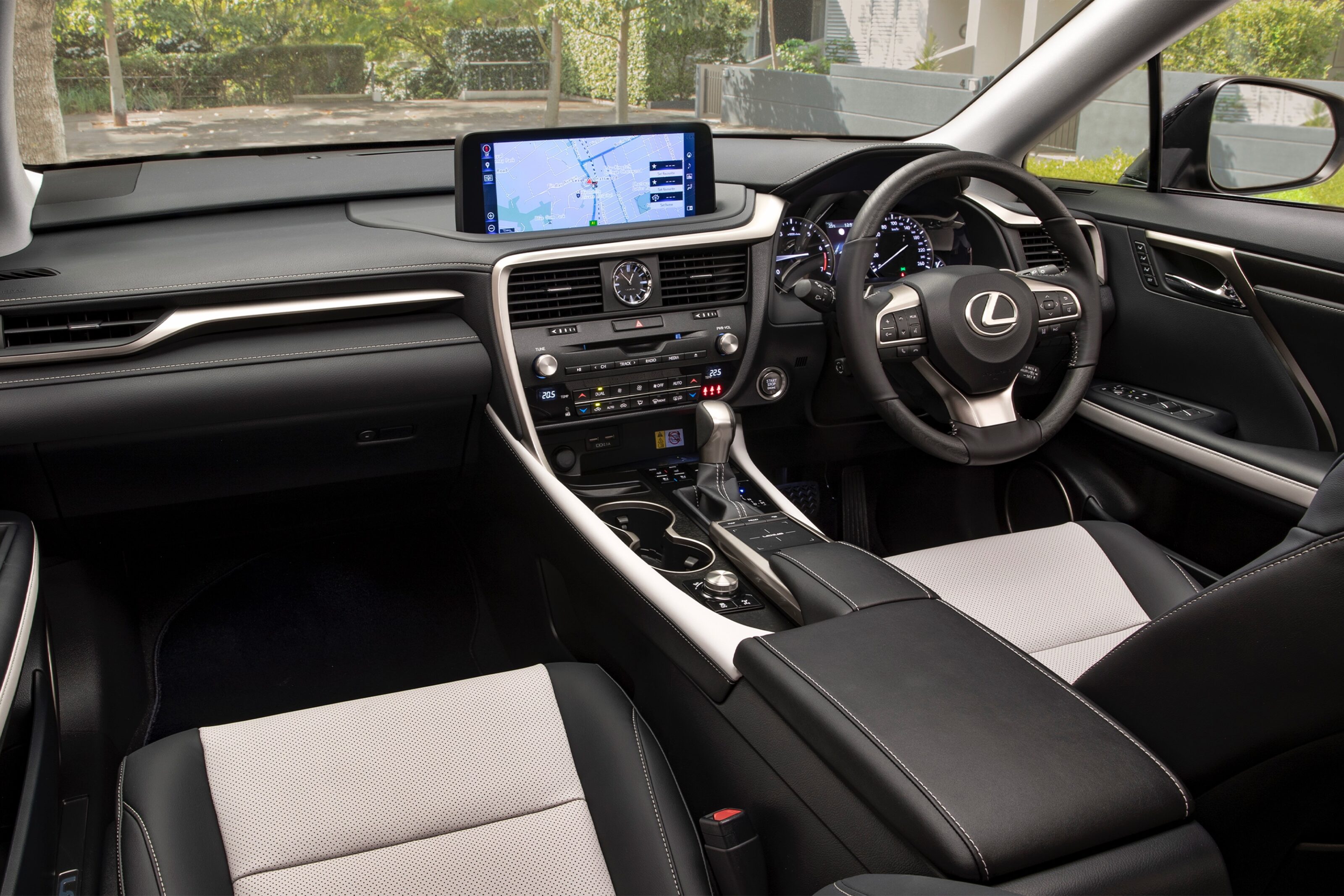
Both Crafted Edition models are finished in two-tone black with white leather upholstery and black open-pour walnut-look trim, while the driver gets a head-up display.
The variants also receive darker tones on the grille, front bumper, and mirror caps, as well as on the 20-inch alloy wheels.
Standard features also include; a 12.3-inch infotainment touchscreen, wireless smartphone charging, 10-way adjustable power front seats, LED headlights, and Safety Sense+.
There are no changes under the bonnet, with the RX 300 being powered by a 2.0-litre turbocharged four-cylinder petrol engine producing 175kW and 350Nm, driving the front wheels through a six-speed automatic transmission.
The five-seater RX 350 uses a 3.5-litre non-turbo V6 petrol engine, which sends 221kW and 370Nm to all four wheels through an eight-speed automatic.
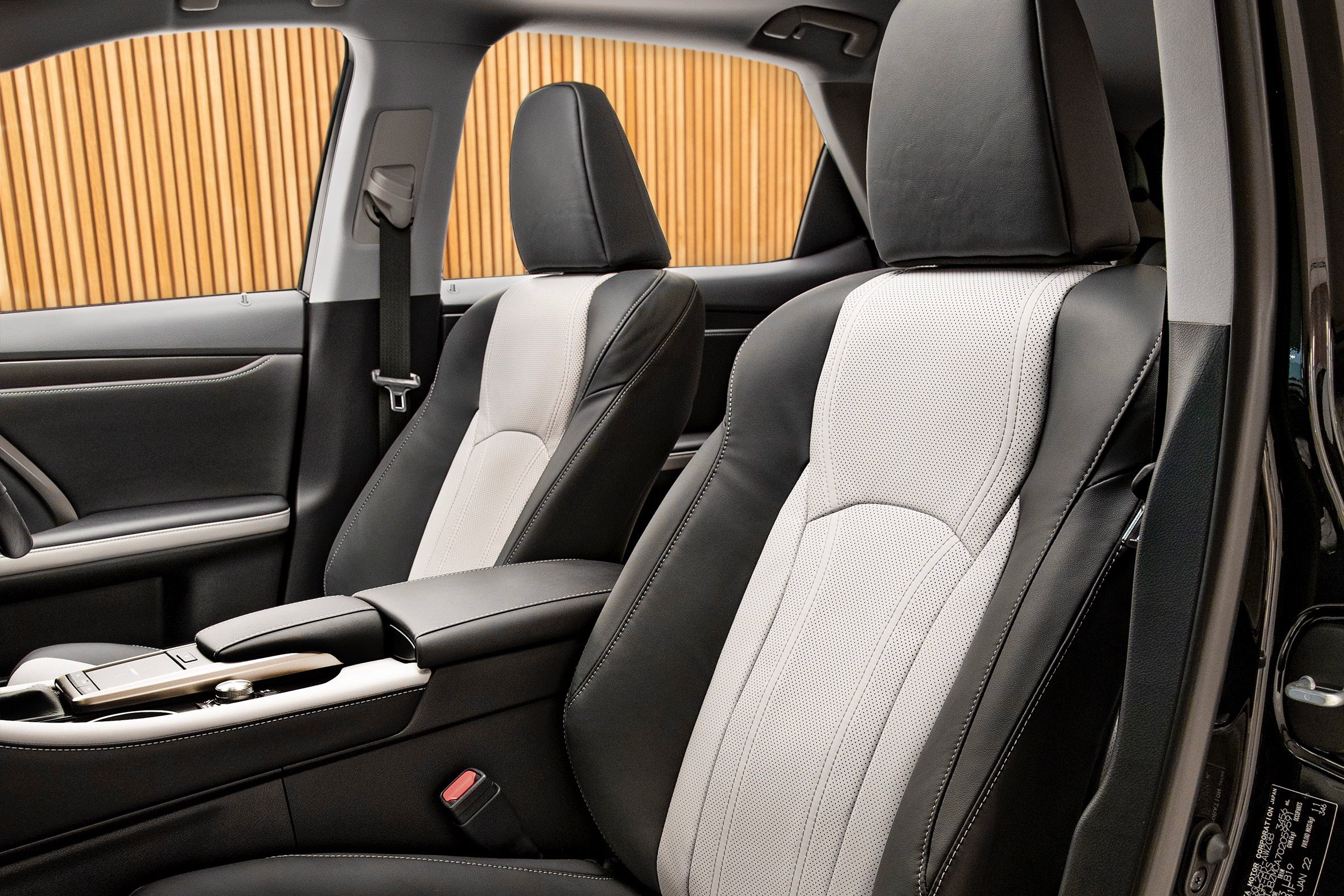
Buyers of the Crafted Editions receive three years of complimentary subscription to Lexus Encore Platinum, which allows the borrowing of a model from the Lexus stable for up to eight days, four times a year via the Lexus On Demand program, accessed via the Lexus App.
Vehicles can also be booked for collection at Qantas valet in most major cities in Australia and New Zealand, while services are also free to use at some shopping centres.
Crafted models are available in 10 paint colours: Sonic chrome, sonic iridium, glacial ecru, khaki metal, sonic quartz, titanium, onyx, graphite black, vermillion and deep blue.
The 2022 Lexus RX 300 Crafted Edition and RX 350 Crafted Edition are available to order now.
2022 Lexus RX Crafted Edition Australian pricing
Note: Prices exclude on-road costs
| Model | Price |
|---|---|
| RX 300 Crafted Edition | $77,075 |
| RX 350 Crafted Edition | $86,485 |
You’ve not stepped into a time machine, no, this is actually a new wagon. In fact, it’s a new wagon from a (relatively) new brand. But Genesis isn’t a big numbers player, and anything other than an SUV, a dual-cab, or a well-priced hatchback isn’t going to bring about a change in buyer habits.
So why does the Genesis G70 Shooting Brake exist? Wagons aren’t an ‘entry-level’ offering, there are few under $50K and effectively none under $30K. But as a fashionable statement in going against the trend, wagons have found a niche. It seems like that’s exactly what Genesis would hope for.
The G70 SB, as we’ll call it in shorthand, is a single-spec offering here in Australia. Unfortunately, it’s not with the drivetrain that gets the more petrolheaded of us excited. A $79,000 (before on-road costs) starting price puts you in the 2.0-litre turbocharged, eight-speed auto wagon, with the only main option being a no-cost Sport Line Styling package as fitted to our test car. There’s no twin-turbo V6 specification of the Shooting Brake, unlike the G70 sedan. A mechanically identical (2.0T) G70 sedan costs $67K in Sport Line, or $73K in Luxury trim (both before on-road costs).
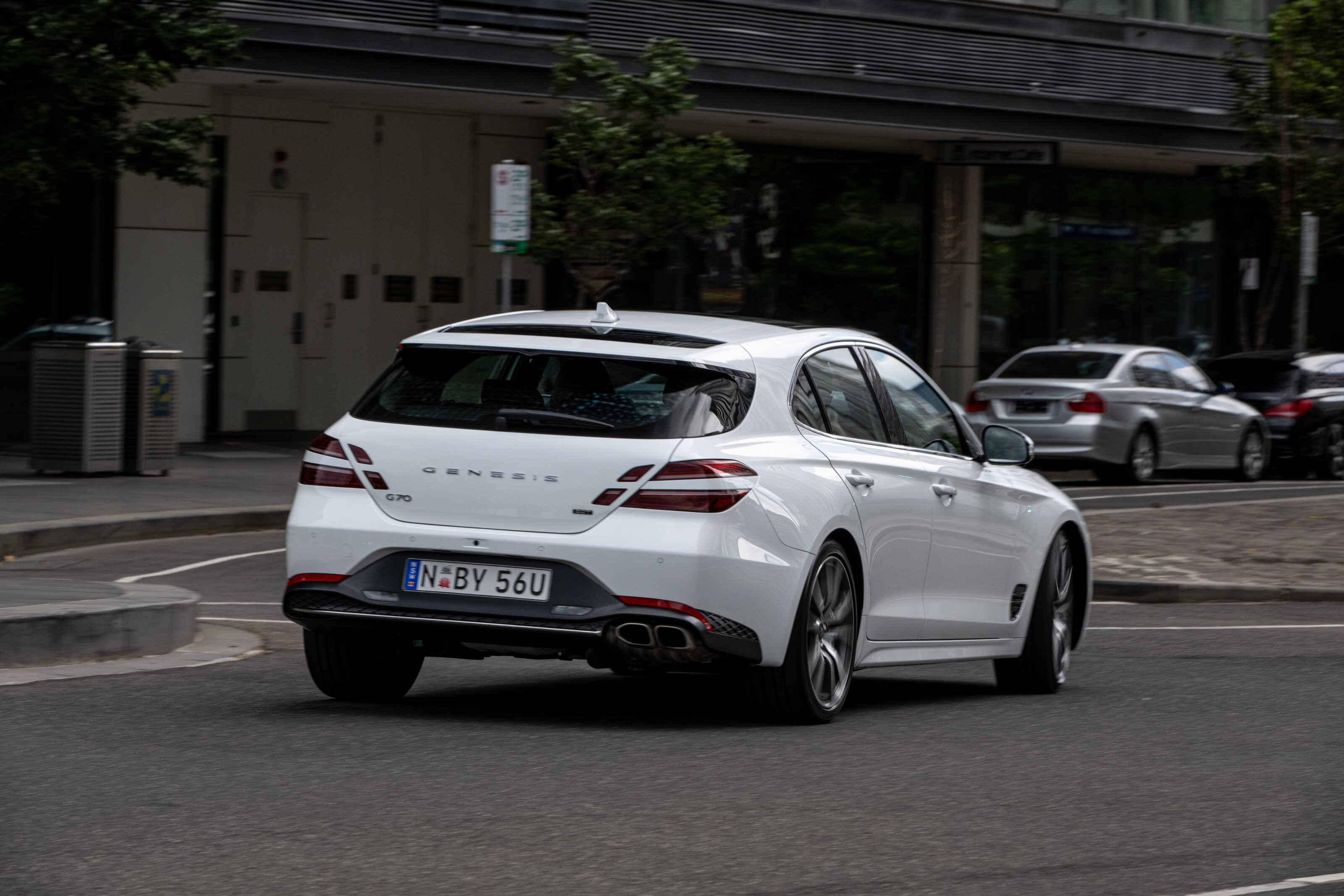
But fortunately, the G70 SB is well-equipped from the outset. It arrives shortly after the facelifted G70 sedan, so it also feels properly up to date. First, in terms of styling, the 19-inch wheels only change in design between the standard or Sport Line, not in size. The sunroof is standard, wireless phone charging, heated and cooled front seats (as well as heated rears and steering wheel) are standard, and the upholstery is all Nappa leather – standard.
In Sport Line spec, that Nappa leather is quilt-stitched on the seats, while suede lines the roof and pillars, and the exterior chrome trim is smoked. Conversely, the 19-inch alloys are lighter and sportier than the dark standard wheels.
A head-up display, 12.3-inch instrument cluster screen, and a 10.25-inch infotainment touchscreen all feature the most recent Genesis software and graphics, and of course Apple CarPlay and Android Auto are compatible. Likely just a bug in our test car, but Android Auto took some trying and trying again to finally recognise it was connected. Once it did, it wasn’t an issue again. Lastly, there’s a 15-speaker Lexicon sound system that does quite a ripper job of pumping audio into the cabin.
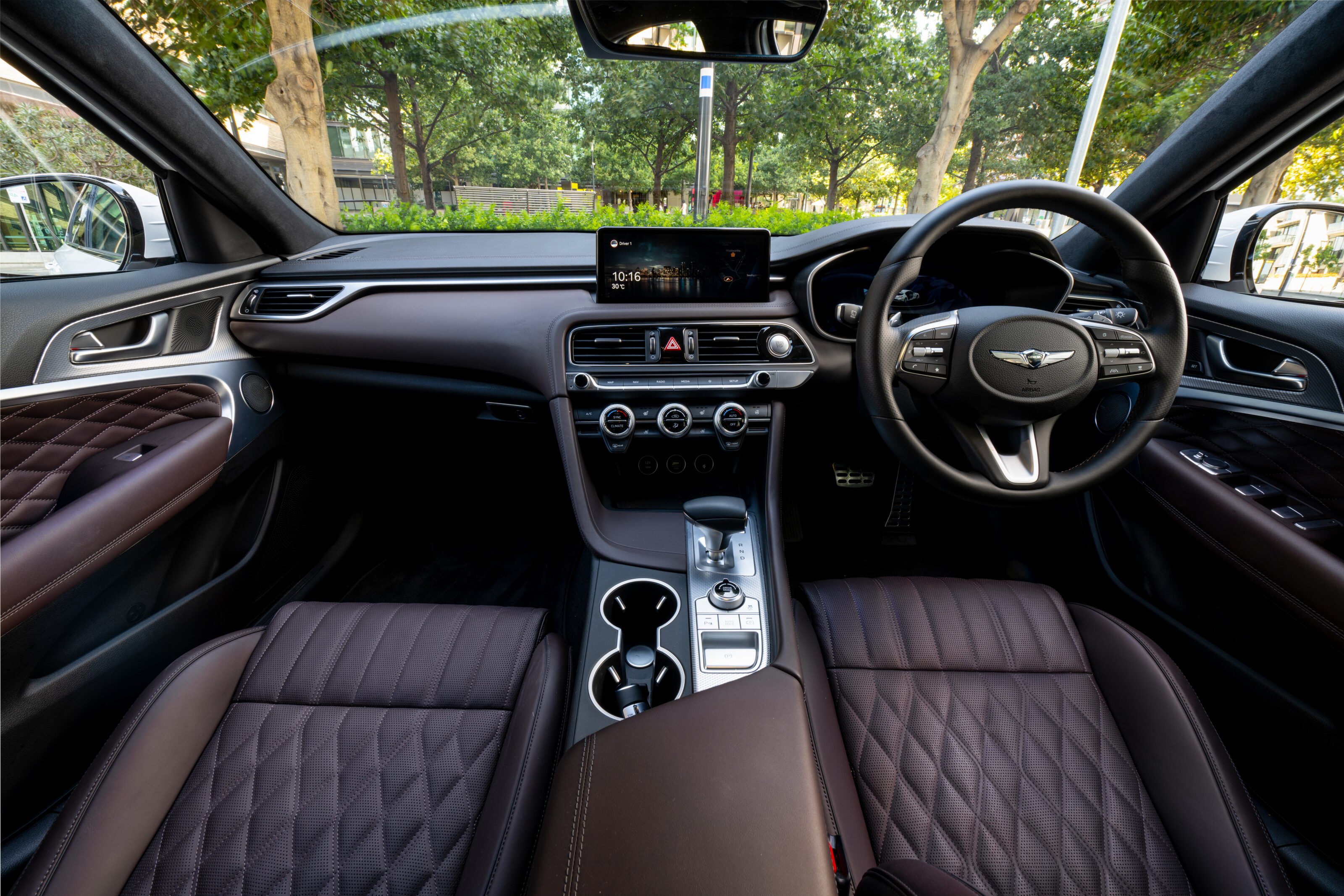
The driver’s seat itself is very comfortable, and from there everything is within easy reach, save a slight lean to the touchscreen. The way the centre console is built means that cup holders are in the right spot and there’s no water bottle in your way, plus the entire middle console has buttons, which are laid out so you can see clearly everything.
A trio of big dials for the climate control and buttons for each heating and cooling element live alongside buttons for things like radio, media, map and nav. Anything else you need to do specifically, you’ve got the screen for.
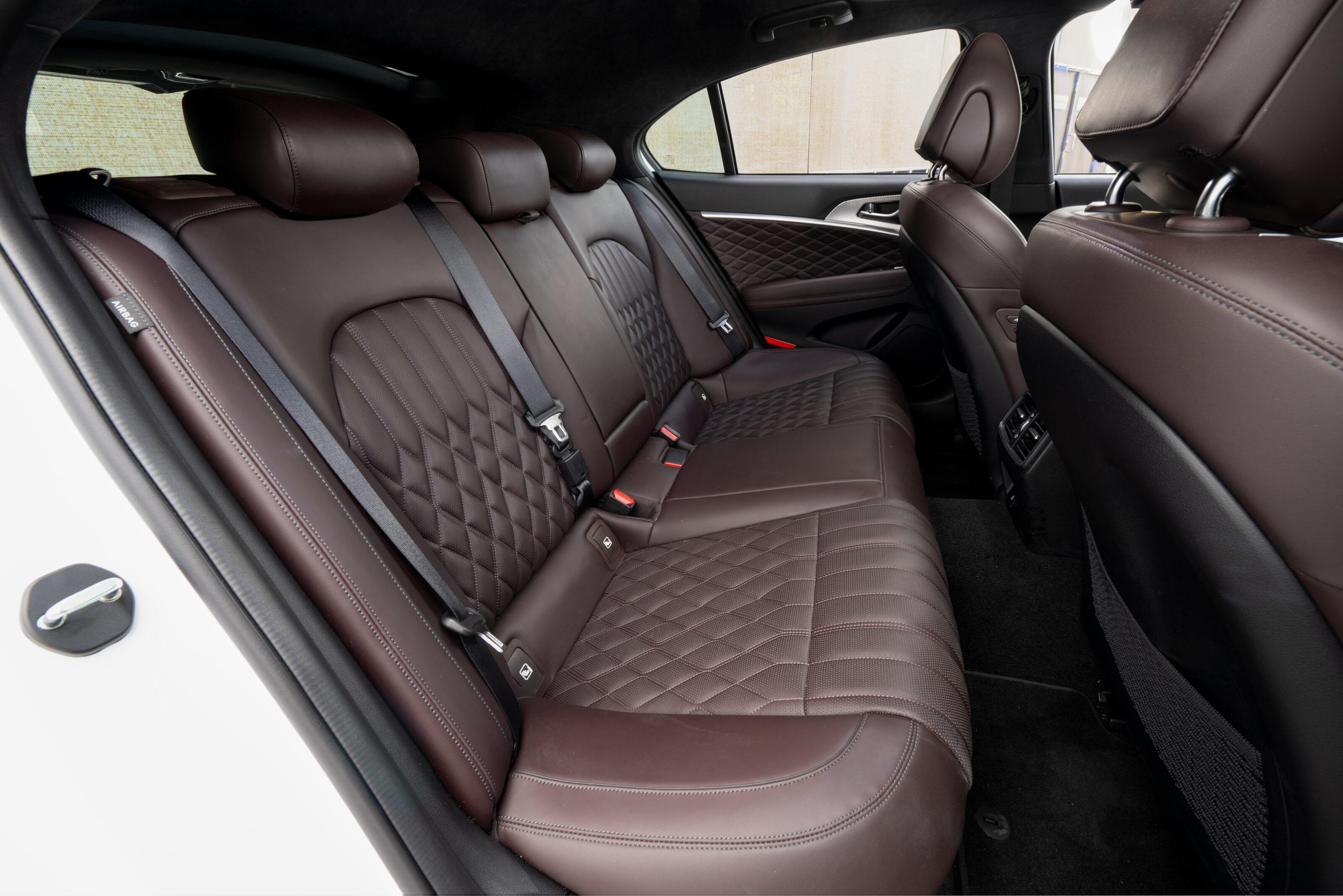
The rear seats are surprisingly spacious for a wagon with a sloped roofline, even in terms of headroom. The only surprise is that there’s not a great deal of space for feet under the rear of the front seats. There’s a USB charger and two vents for the climate control, but no ability to change the temperature. If it’s cold, the aforementioned heated seats are there, but no dice on a hot day.
Further back, there’s an automatic tailgate to access the Shooting Brake’s unique selling point – a boot with 465 litres of space. It’s 135 litres more than the sedan, and even more than a lot of small or crossover SUVs. Unfortunately, the loading area is quite rounded, so any wide cargo has to be lifted over the edges. There is, however, a space-saver spare tyre rather than a puncture repair goo can.
Finally, in terms of less obvious features, the Shooting Brake is, much like the G70 sedan, full of safety tech. While the SB hasn’t been crash-tested, the sedan copped a five-star ANCAP rating. Both have the same suite of active tech like collision warnings forward and rear, lane-keep assist, a superb 360-degree parking camera, adaptive cruise control and 10 airbags. The only trouble with the active safety was a very enthusiastic lane-keep on certain highways.
Genesis also boasts a five-year, unlimited-kilometre warranty with 50,000km of complimentary scheduled servicing and access to its valet service, which means your car is picked up and delivered back for servicing with a loan car provided to keep you mobile for the duration.

On the road
Pretty to behold, delightful to sit in, and pleasant to drive. Looks aren’t deceiving in the G70 Shooting Brake, and while there’s no V6, this wagon still has a bit to offer.
Both around town and at cruising speed on the highway, the Shooting Brake’s suspension and ride are well-tuned for a variety of surfaces, and of course, its sedan-like height means you can get your cargo home without too much body roll.
There’s flexibility in its engine, too. It won’t have you on the edge of your seat, but there’s enough in its 179kW/353Nm to get moving relatively quickly or overtake on country roads. At lower speeds it works well with the transmission, smoothly getting the job done through the gears with no complaint.
Sport mode adds a little more aggression to the drivetrain’s character, and pumps a fake engine growl into the cabin, though it kills a little bit of the agreeable nature of the G70, which is at its best providing comfortable transport.
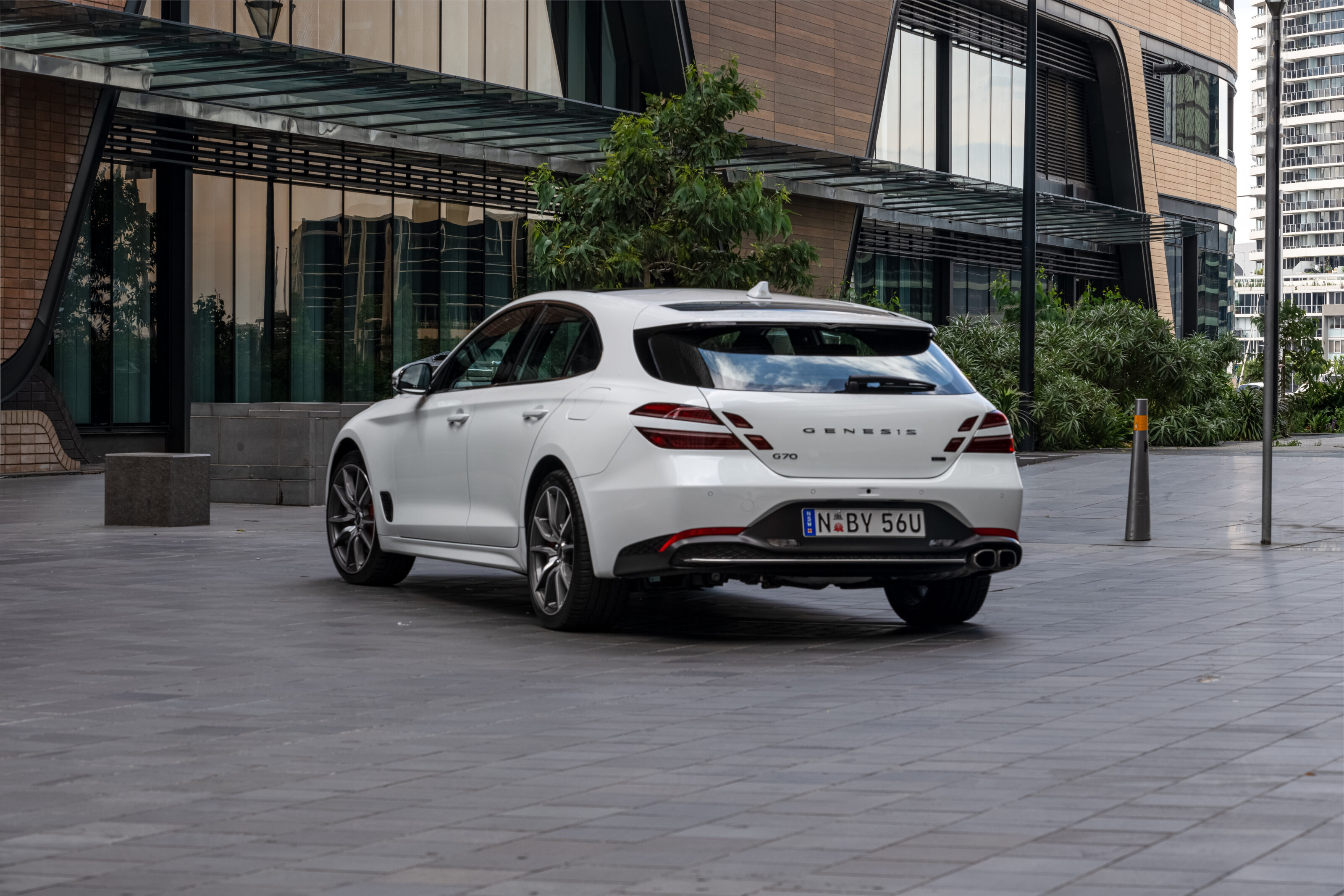
Perhaps unsurprisingly, though, it’s not the most frugal of things when hauling nearly 1700kg of Korean kerb weight. Consumption is a claimed 9.1L/100km, though on test I averaged 11.3L/100km, admittedly with a lot of short journeys and sitting for photography. I suspect a figure closer to 10L/100km is reasonable for more regular driving.
Perhaps it’s not as sharp a drive as say, a 330i Touring – its steering is, for example, not as communicative nor is there much weight behind the rack – but if that’s not the goal, the G70 does a fine job.
There are other rivals than just that obvious (and similarly priced at $81,900 plus on-road costs) BMW. On the cheaper side, if a stylish wagon is the aim and luxury appointments are lower on the priority list, then the Peugeot 508 Sportwagon is an interesting way to save almost $20,000. Similarly, the Volkswagen Arteon Shooting brake can be had for $70,740 before on-road costs but with a slightly more robust 206kW and 350Nm four-pot.
But if the goal is a dash of opulence in a stylish design aiming to stand out, the Genesis G70 Shooting Brake makes a convincing case.
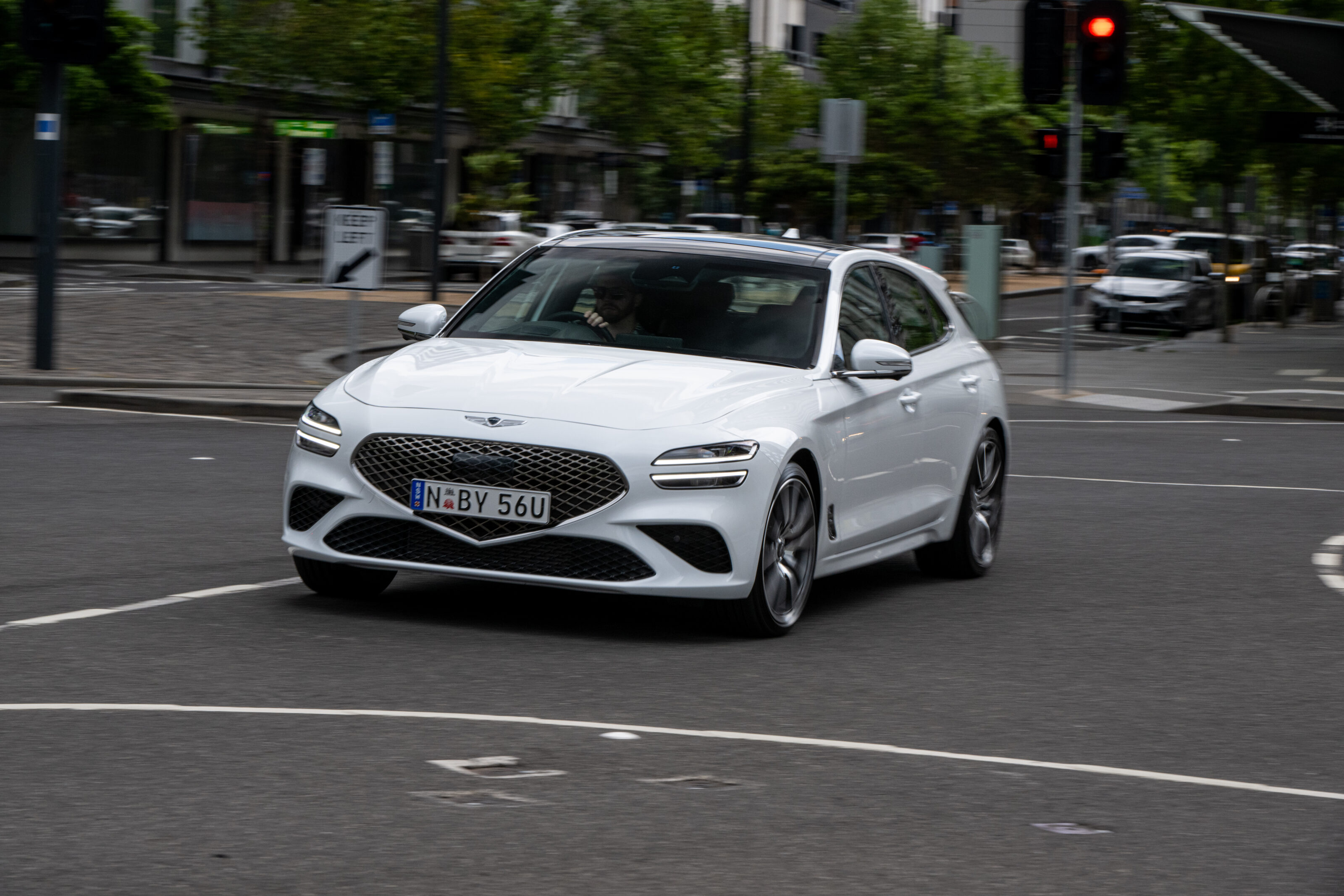
2022 Genesis G70 Shooting Brake specifications
| Body | five-door wagon |
|---|---|
| Drive | rear-wheel drive |
| Engine | 2.0-litre four-cylinder (turbocharged) |
| Bore/stroke | 86.0 x 86.0mm |
| Compression | 10.0:1 |
| Power | 179kW @ 6200rpm |
| Torque | 353Nm @ 1400rpm |
| Transmission | 8-speed automatic |
| Weight | 1699kg (kerb) |
| Fuel consumption | 9.1L/100km claimed (11.3 tested) |
| Suspension | strut (front), multi-link (rear) |
| L/W/h | 4685/1850/1400mm |
| Wheelbase | 2835mm |
| Brakes | ventilated discs (front/rear) |
| Tyres | 225/40R19 (f) + 255/35R19 (r) Michelin Pilot Sport 4 |
| Wheels | 19-inch Alloy Wheels |
| Price | $79,000 + on-road costs |
