
Snapshot
- Recall affects vehicles fitted with a radar sensor and camera
- Pre-collision system may not function properly
- Vehicles were manufactured between May 2020 and August 2021
Toyota has issued a recall for four of its smallest models on sale in Australia.
Affecting a total of 18,490 examples built between May 2020 and August 2021, the recall covers the C-HR, Yaris, Yaris Cross and GR Yaris, all of which are afflicted with the same issue.
According to the manufacturer, the vehicles affected are fitted with its Millimetre Wave Sensor radar and camera technology, an important part of the car’s pre-collision system (PCS).
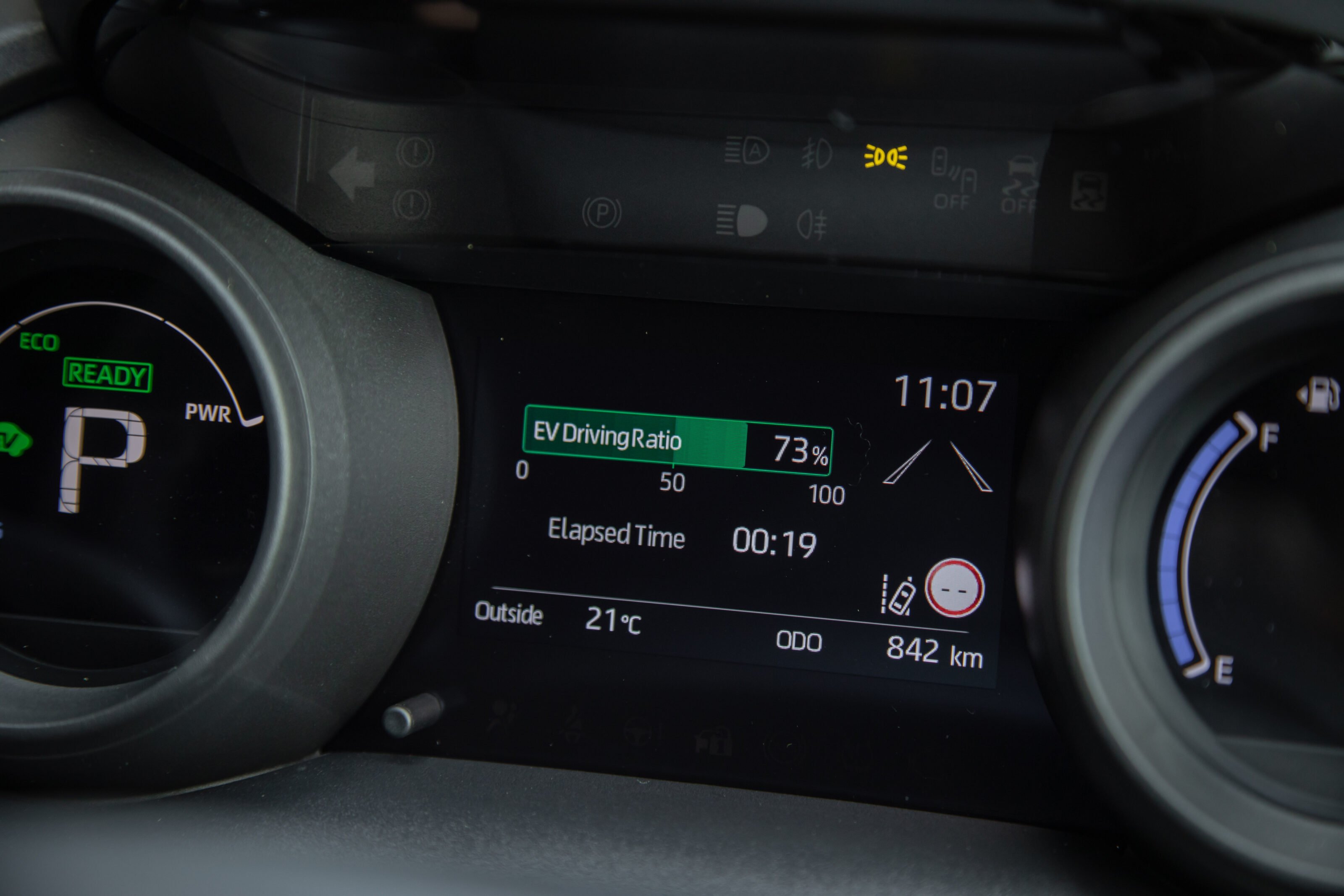
An issue with the initialisation of the PCS during production means it might not be installed correctly, leading to the system not functioning in the impending event of an accident.
This could mean the driver gets no warning before a potential impact is about to happen, reducing their chances of avoiding it.
The manufacturer believes symptoms of the fault include, but are not limited to; drivers not being able to adjust their speed when the dynamic radar cruise control (DRCC) speed is set, lane centring function of the lane tracing assist (LTA) system not holding the car in its lane and other vehicles not being detected on the multi-information display (MID) when using DRCC.
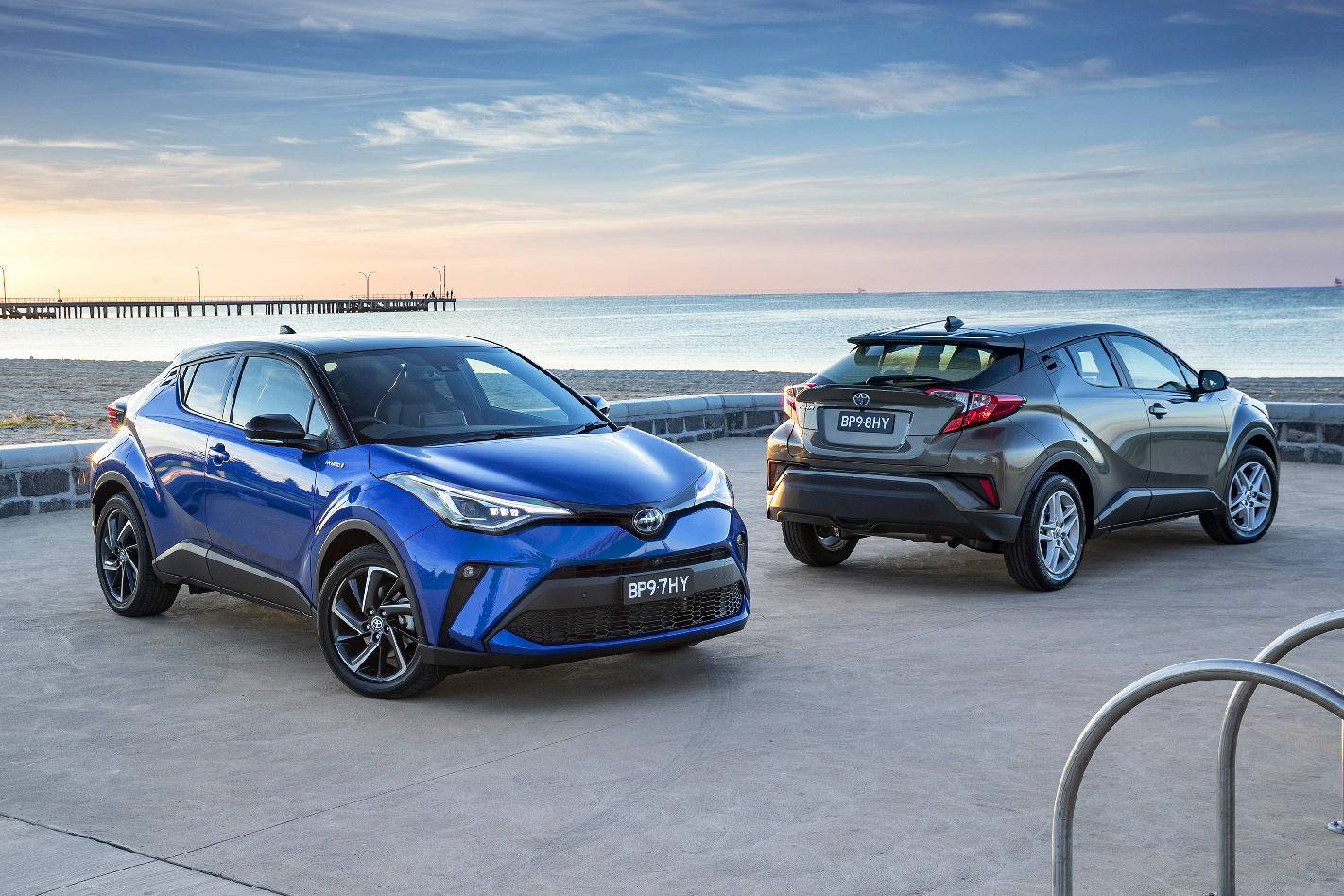
Toyota has requested owners contact the Toyota Recall Campaign Helpline on 1800 987 366 to determine whether their vehicle is affected, quoting the 17-digit Vehicle Identification Number (VIN).
Its local arm says an inspection of the vehicle will take approximately half an hour with the fix taking up as much as another extra hour.
A list of VINs of vehicles affected can be found below.
| MODEL NAME | VERSION | WMI | VDS | CD | VIN RANGE | PRODUCTION RANGE | ||
| FROM | TO | FROM | TO | |||||
| C-HR | ZYX10 | JTN | K93BX | # | 01002863 | 01006843 | July 31, 2020 | May 25, 2021 |
| NGX10 | KY3BX | 01024113 | 01027516 | August 3, 2020 | May 25, 2021 | |||
| NGX50 | LY3FX | 01008858 | 01009693 | August 3, 2020 | May 25, 2021 | |||
| YARIS | MXPA10 | JTD | KAAA3 | 01000110 | 01003262 | May 21, 2020 | May 24, 2021 | |
| MXPH10 | KBAA3 | 01000138 | 01001922 | May 21, 2020 | May 24, 2021 | |||
| YARIS CROSS | MXPB10 | KAAB3 | 0L001002 | 0L003465 | August 6, 2020 | May 26, 2021 | ||
| MXPJ10 | KBAB3 | 0L001013 | 0L004810 | August 6, 2020 | May 26, 2021 | |||
| MXPJ15 | KCAC3 | 0L001003 | 0L001861 | August 7, 2020 | May 25, 2021 | |||
| GR YARIS | GXPA16 | AF4E3 | 0A001016 | 0A014487 | August 18, 2020 | August 2, 2021 | ||
UPDATE: Polestar 6 roadster confirmed
The Polestar O2 concept will become the Polestar 6 and go into production next year – and we’ll get it in Australia. Get all the details at the links below.
Story continues: Polestar O2 revealed
Snapshot
- Settle, it’s a concept only
- But at least the Precept is due for production
- Did we mention it’s got its own drone? It’s got its own drone.
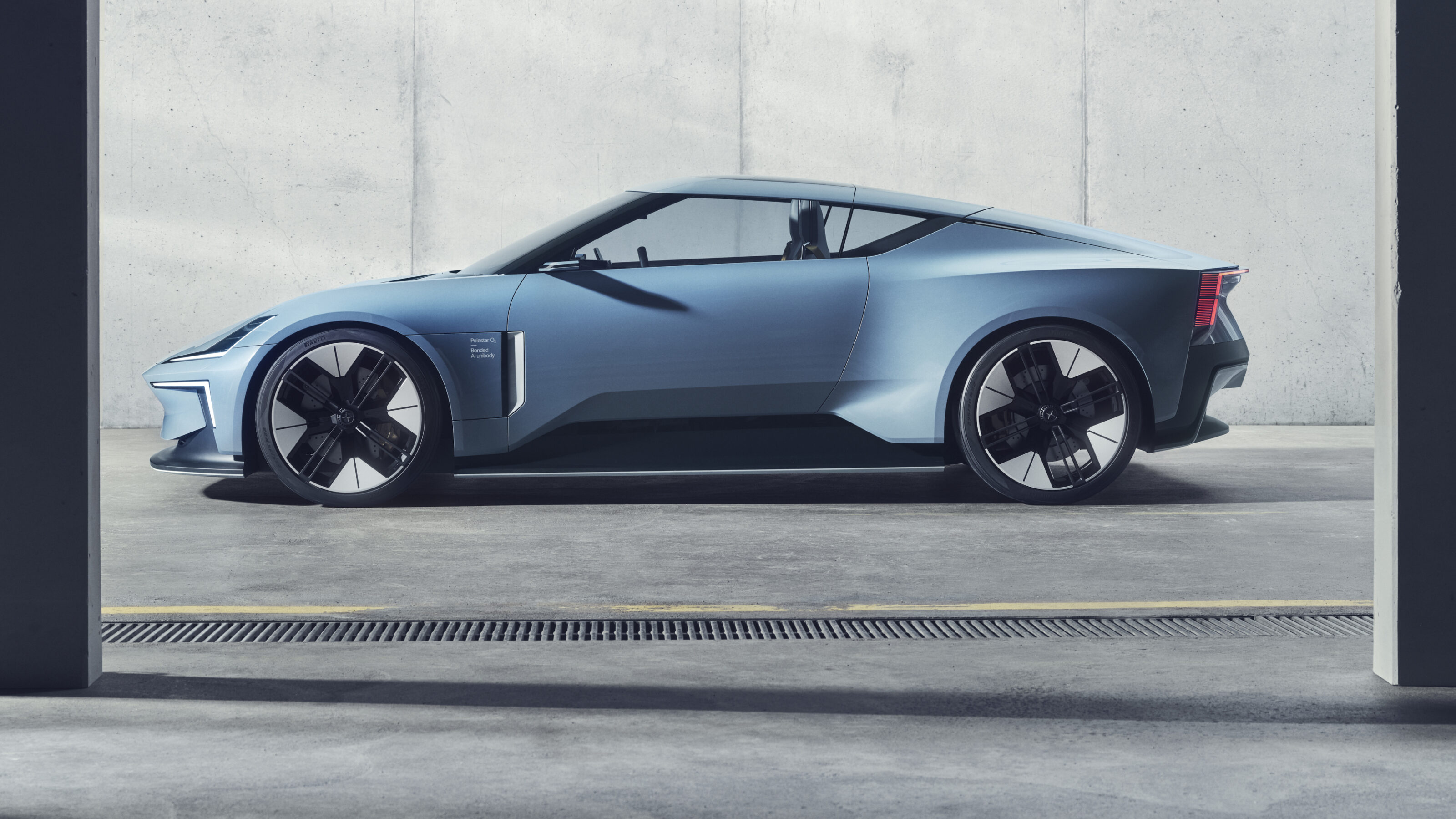
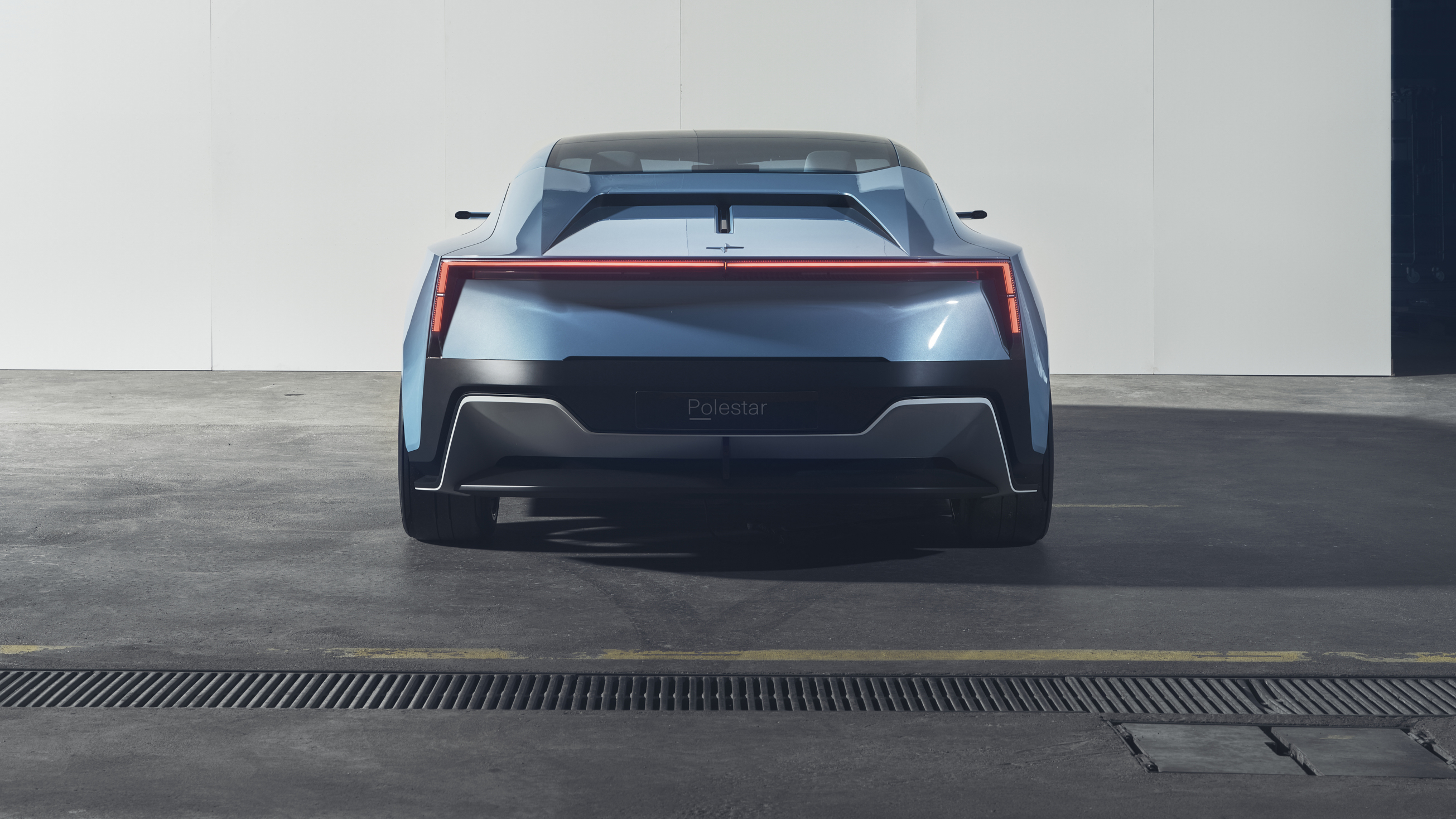
This is the Polestar O2 Roadster concept, debuting mere hours after our content management system gained the ability to present superscript and subscript text. (Please excuse the ‘shop talk’, let’s get back to the topic at hand.)
Before you get your hopes up, Polestar says the O2 will remain a concept – a showcase of style beyond the brand’s origins as a Volvo spinoff – but according to brand boss Thomas Ingenlath, we can expect future models to draw more than a little inspiration from this low-slung hero.
“Polestar O2 is the hero car for our brand,” Ingenlath says. “It opens the door to our secret chamber of future potential.”
“This is a taste of what we can design and engineer with the talent and technology we have in-house. It looks incredible, and being able to lower the roof and not hear an engine promises a superb sensation.”
That last line makes me wonder if Ingenlath has ever driven a true performance roadster with its roof down, but let’s not dwell on that.
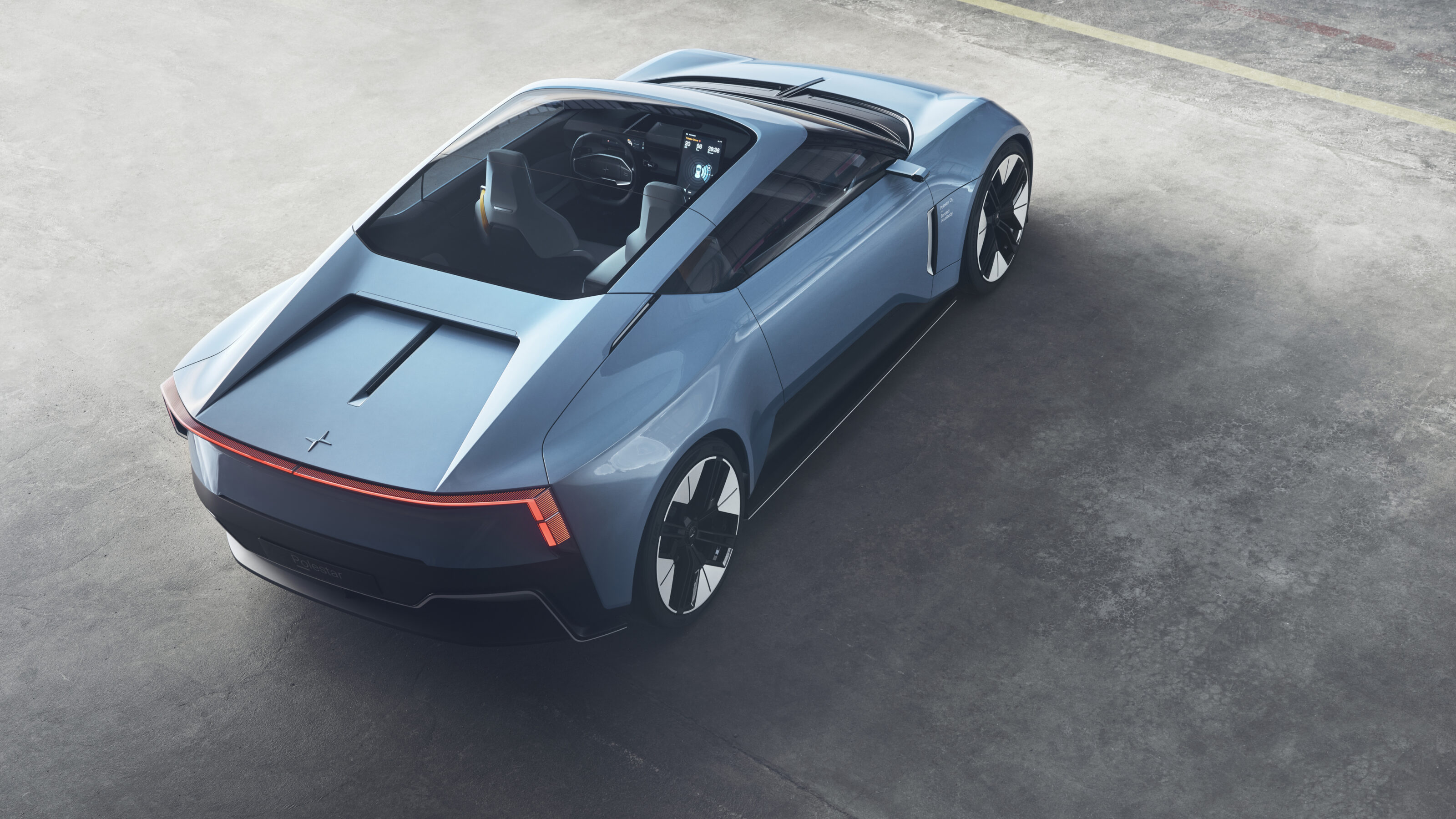
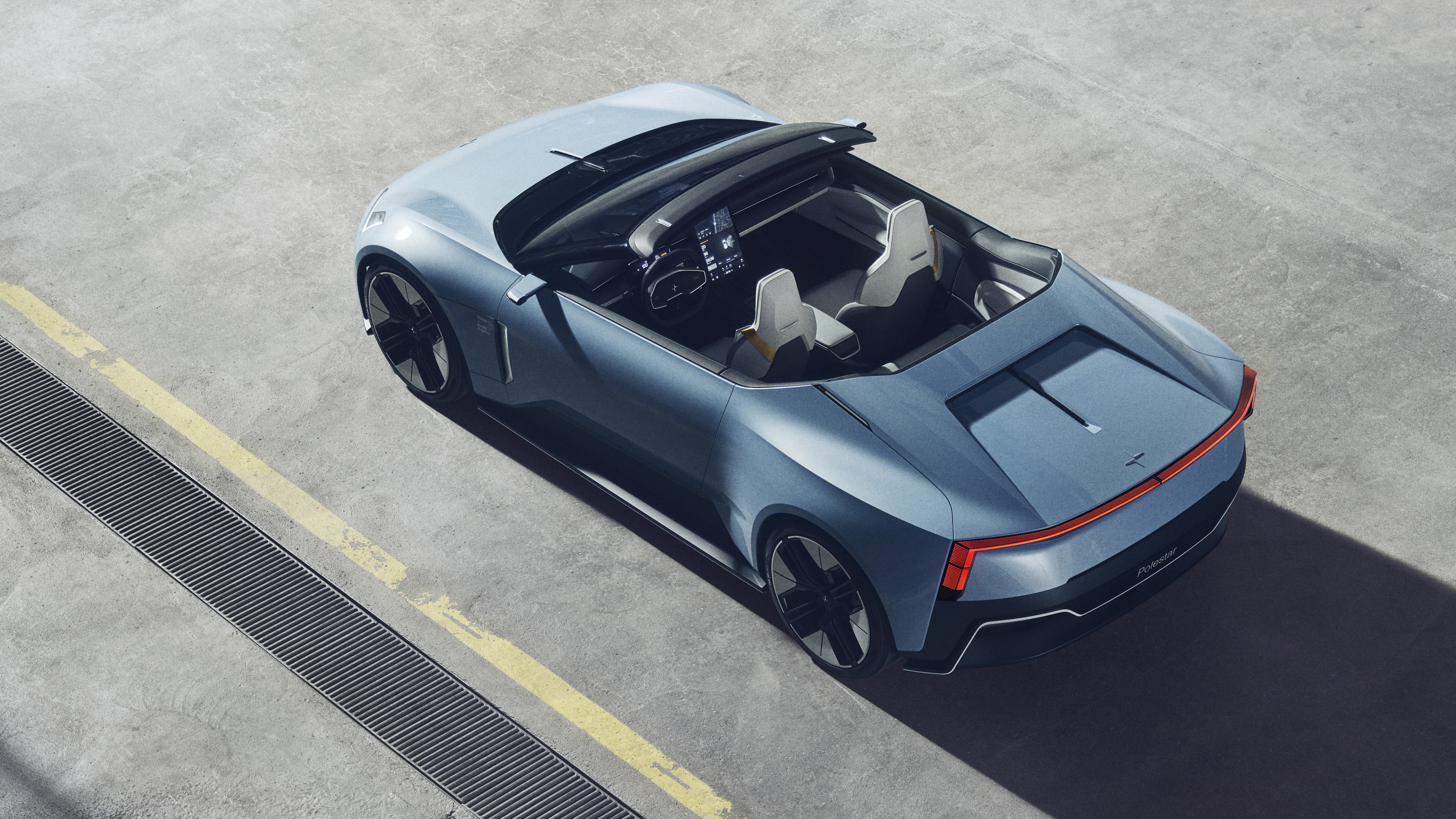
Technical details for the O2 have not been offered, and likely never will, but Polestar has previously pointed to brands like Porsche as a rival for any future sports model it might offer.
In the case of the O2, there’s more than a hint of Lamborghini, Lotus and perhaps Koenigsegg in its design, and that’s no bad thing.
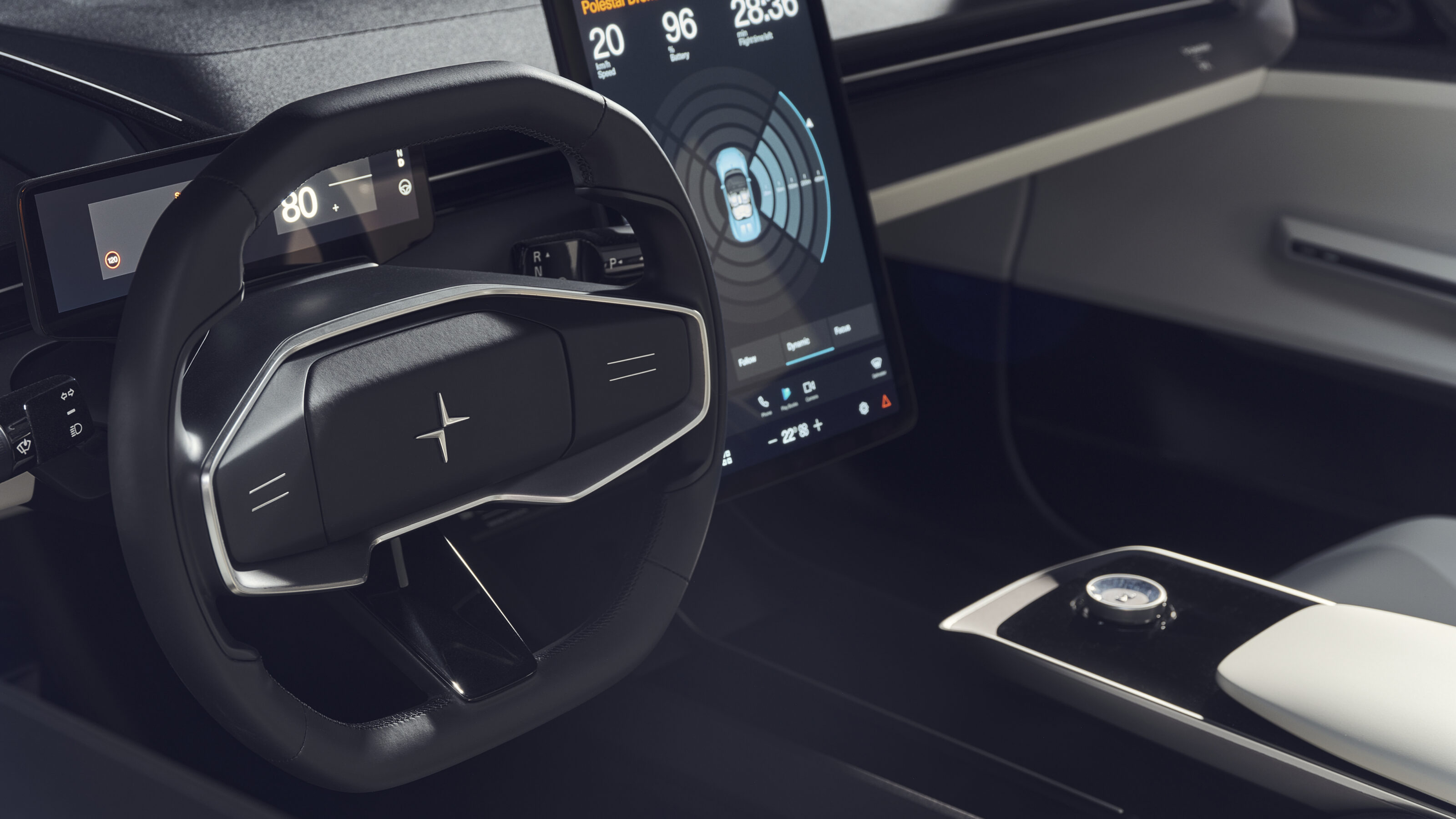
Interestingly – and remembering that this is a tech-focused concept – the O2 is equipped with a drone that launches out of the roadster’s rear deck.
Using algorithms and artificial intelligence, the drone can autonomously follow the roadster at speeds up to 90km/h – and that massive 15-inch portrait display in the dash can then be used to edit the resulting footage. Perfect for the roaming YouTuber.
The only other technical detail on offer with the O2 is that it rides on the same dedicated EV platform that will underpin the upcoming Polestar 5 – the production version of the hot Precept concept.
The next production model from Polestar will be the 3, a more conventionally-shaped SUV that has so far been shown only in teaser form, but we’ve of course had it rendered in what we reckon is probably pretty close to its final look.
Watch for more on future Polestar offerings to come in the months ahead.
Click any of the images above to see our full gallery
Gran Turismo was, for many years, the benchmark. For well over a decade I was a video game reviewer and every serious racing game had to be viewed through the Gran Turismo lens.
“Forza Motorsport? What’s that?” Someone would ask me. “It’s like Gran Turismo for the Xbox.” Immediately that person knew what it was, whether or not they were a gamer.
It was such a juggernaut that every new PlayStation console was announced with the franchise acting as a launch title. Without fail, Polyphony Digital would miss the deadline. Didn’t matter though, because if there’s one thing you can count on with this series – it’s out when it’s done.
While not all launches – particularly latter-day releases with the opportunity to drop an 80GB patch on you – have gone smoothly, they were games you could get stuck into straight away.

Then came Gran Turismo Sport
GT Sport came at the end of an extremely long wait and was the only PlayStation 4 release for the series.
Sport also signalled a shift in philosophy, moving the emphasis firmly to online racing series.
It was still quite serious, though. Sport mode included online races supported by the FIA and Lewis Hamilton cheerfully slapped his name on it, which must have annoyed Kamui Kobayashi who provided a lot of technical support for the game.

What it didn’t have was the thing that so many GT fans loved.
A good many of those fans aren’t really car enthusiasts but one of the great things about the game was that you’d fire it up on day one with 20,000 credits and buy a Honda Jazz or a Toyota Yaris and start the grind, collecting cars as you went.
It was a sore point with fandom, even though Gran Turismo Sport was a technically brilliant game with regular updates that added new tracks, cars and sometimes features.
You could still get going on a car collection but you missed out on the ridiculous joy of fitting performance parts and winding your R32 GT-R up to a kajillion horsepower then trying to drive it on road tyres without looping it out of every corner.
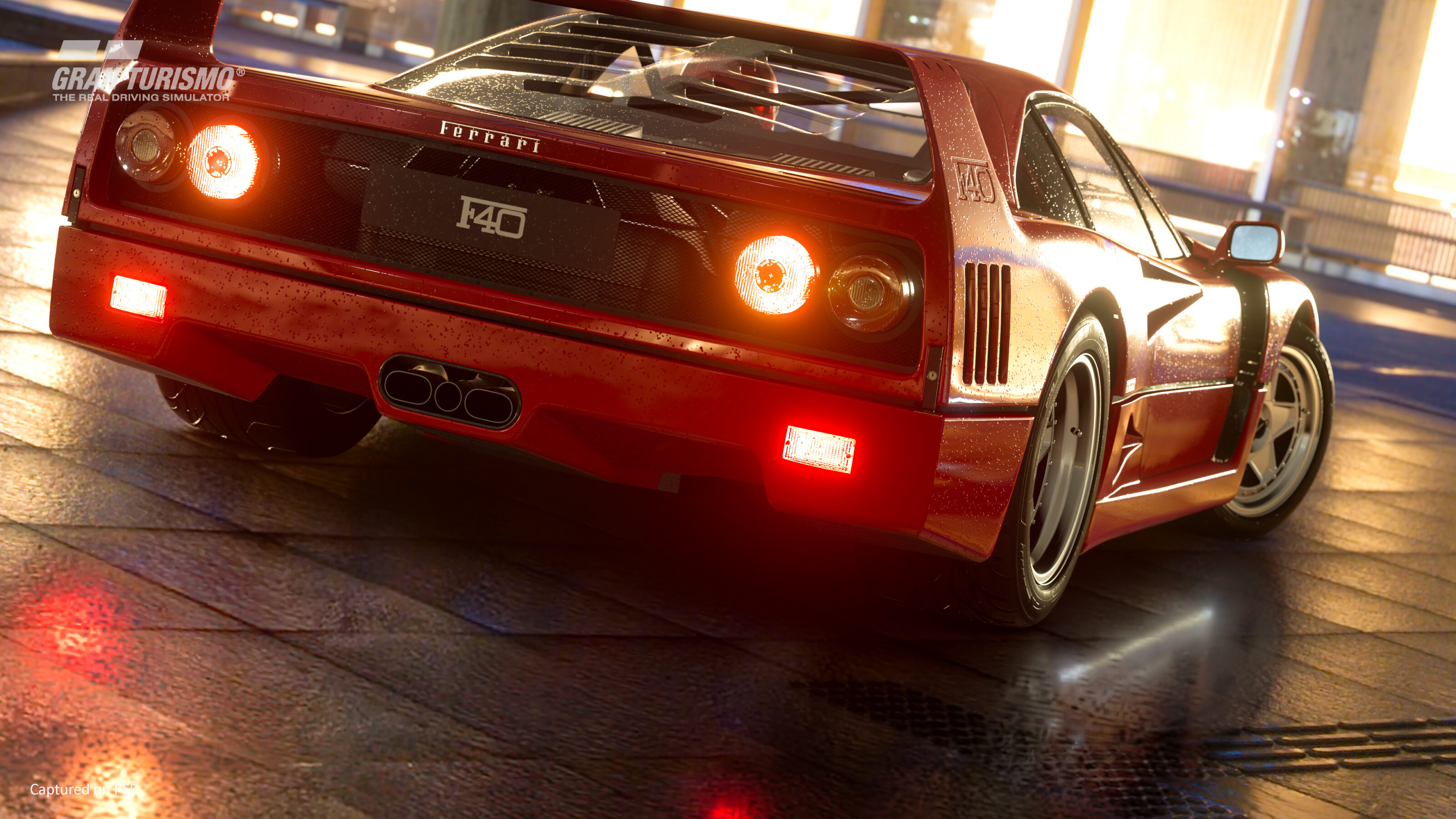
Gran Turismo 7 arrives…
…into a completely different world to Gran Turismo Sport. eSport has taken off, with Formula 1 teams fielding their own crews in Codemasters’ F1 series of online races.
Fans can’t get their hands on the PlayStation 5 for which this game was so lovingly made, despite also running on PlayStation 4. Fanatec can’t keep up with demand for its excellent wheel and pedal packages (I say Fanatec is excellent because I have a set, but there are other brands).
Sim racing rigs are now a thing that normal people consider. I’m a member of a couple of groups on Facebook full of normal people discovering that spending $13,000 on a sim racing rig a) doesn’t make them better and b) doesn’t provide them with 30 hours in a day to go racing. But they have taken off in a way they hadn’t in 2017, a pre-pandemic world when people went out to drive or walk or do other things.
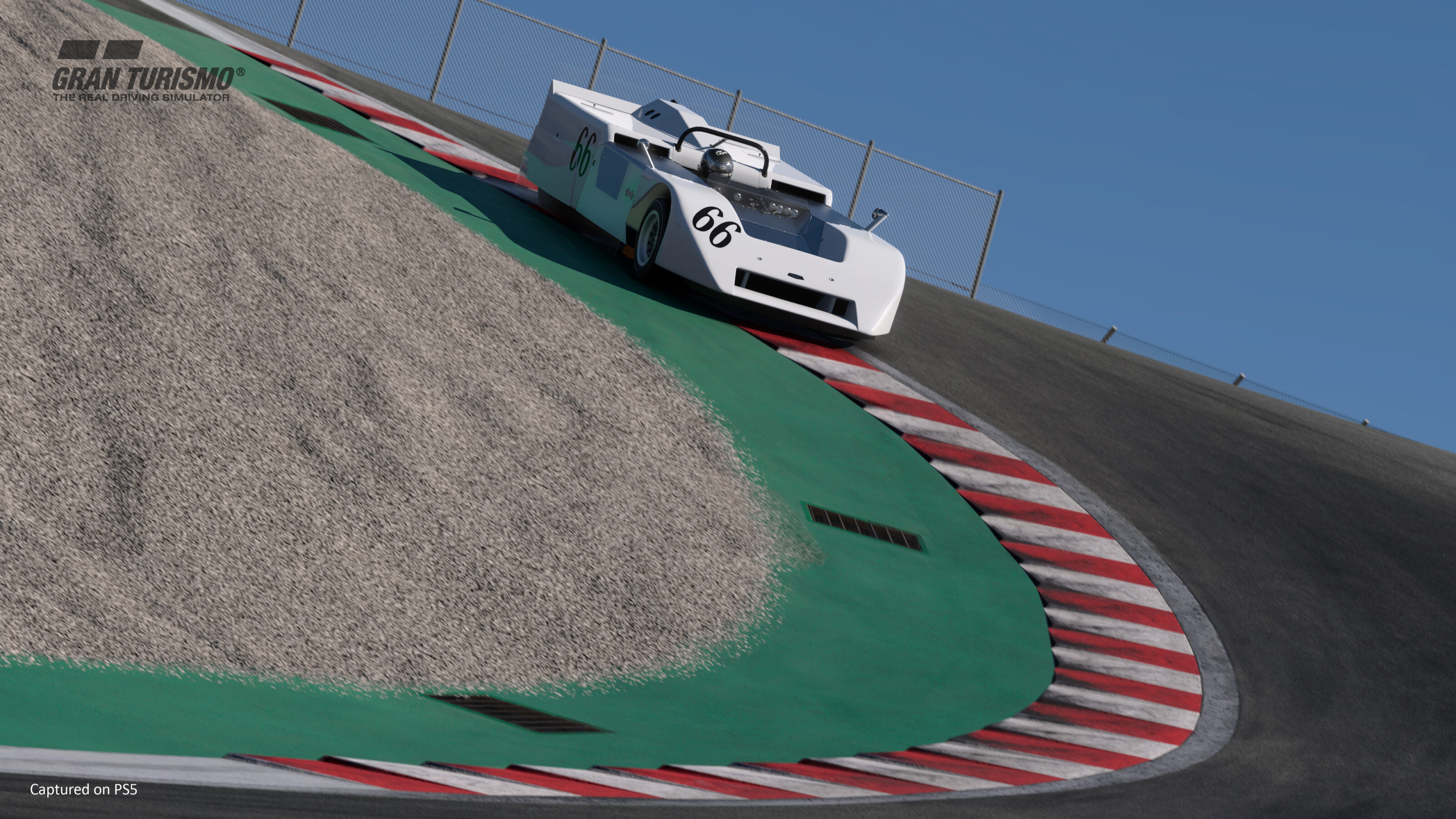
Anyway. Gran Turismo 7 is back to the glory days of the franchise. Once again you’re presented with a world to explore, a small starting budget, the GT Auto workshop and the option of a Toyota Prius as your starting car.
For single-player mode, the centrepiece of the game is the cafe. This might sound ridiculous but it’s a joy to look at every time the game cuts to it. Someone has spent an awful lot of time rendering a beautifully-lit woodland scene with a homely restaurant in the middle. It’s one of those typically Japanese ideas that sounds a bit odd on paper but works a treat in the game.
Here in the cafe, you’re presented with menu books and you’re guided through a series of races to collect cars, tracks and perform various tasks with the side benefit of taking you through the game’s various components.

These menu books also serve to introduce you to car culture and technical information about the various terms used in the game, so if you don’t know much, you can enjoy the history lessons and sometimes seriously cheesy music.
The licence system is back, too and is as difficult as ever to complete with all-gold results. Passing these licences again grants you further access within the game, this time unlocking the various levels of the upgrades regime.
This is one of the parts of the game fans so sorely missed in Gran Turismo Sport, where the upgrade process was nothing like as interesting. You couldn’t fit a supercharger to a Jazz to see what happens. You could buy tyres but you couldn’t fit carbon brakes to a Prius. Now it’s all back and it’s glorious fun fitting parts to see what happens.

I reviewed GT7 on PlayStation 5 and did a good few hours on the controller rather than jumping straight in with a wheel. PS5 controllers have a few tricks packed into them that the PS4 ones don’t, like haptic feedback in the triggers, which most of us use for accelerator and brake.
What’s really nice about the haptic feedback in the PS5 controller is you now have a bit more feel about what the tyres and brakes are doing. One of the great mysteries in most racing games is getting any feedback at all save for some tyre squeal. You have a pretty good idea what’s going on and so you can decide whether to hit the brakes – that trigger pulses if you’ve got ABS – and whether to go for more understeer or lurid oversteer.
It’s by far the best controller experience of just about any racing game on console.

If you’re interested in racing online, though, a wheel isn’t a must but it will make things far more enjoyable. You don’t have to spend the dumb money I did on a Fanatec setup but a few hundred bucks on a quality wheel and pedal set will truly lift the experience. As it will with the cavernous single-player experience.
What’s better about racing online is that you don’t have to deal with the aggressively dumb AI cars. While a note that came with the review code said that the AI will improve with a day one patch, it’s going to have to be a big improvement. The other cars seem pointlessly aggressive but they’re just dumb and seem unaware that you’re there.
Online isn’t a dead cert for better-behaved racers, but the more you race, the faster you progress to lobbies with more serious drivers. I’ve raced a reasonable amount in GT Sport and found that in the lobbies dominated by B- and A-grade drivers, it was definitely better.

I was unable to get into a GT7 multiplayer race given the lack of people with the game prior to launch, but if it’s as good as GT Sport – even with its well-documented limitations – then it should be a riot with the Daily Races making a very welcome return, as well as the more serious FIA racing.
Gran Turismo 7 also fixes one of the most irritating things of games past and delivers on the broken promise of GT Sport – faster loading times. Tracks are ready so much more quickly on PS5. So many of us play these games casually and having to wait ages for tracks to load, wasting precious time, was frustrating.
Polyphony has massively picked up the pace for PS5 players and it means you can pack in more racing for that precious half-hour you’ve snatched.

Gran Turismo 7 isn’t so much a return to form – GT Sport was pretty good as far as I was concerned – but a return to the form. It’s back to its more friendly self, a game you can pick up and play with fantastic visuals and an excellent handling/tyre model.
There are more realistic driving games but they require a lot more effort and investment of time and equipment. GT7 is fun with the controller or the tens of thousands some crazy people spend on sim racing rigs.
And that’s the Gran Turismo experience. Anyone with even a passing interest or a consuming passion for cars and/or videogames can enjoy it. You can’t ask for more than that from a game.
Click any of the images in this story to view our full gallery
With over 420 cars available at Brand Central* and the Used Car Dealership* from day one, Gran Turismo 7 recreates the look and feel of classic motors and bleeding-edge supercars alike in unparalleled detail. Each car handles differently and feels unique as you navigate over 90 track routes in dynamic weather conditions, including classic courses from GT history.
*Internet connection required to download.
Snapshot
- All Arkana variants powered by a 1.3-litre turbo engine
- Three trim variants available
- Prices start at $34,590
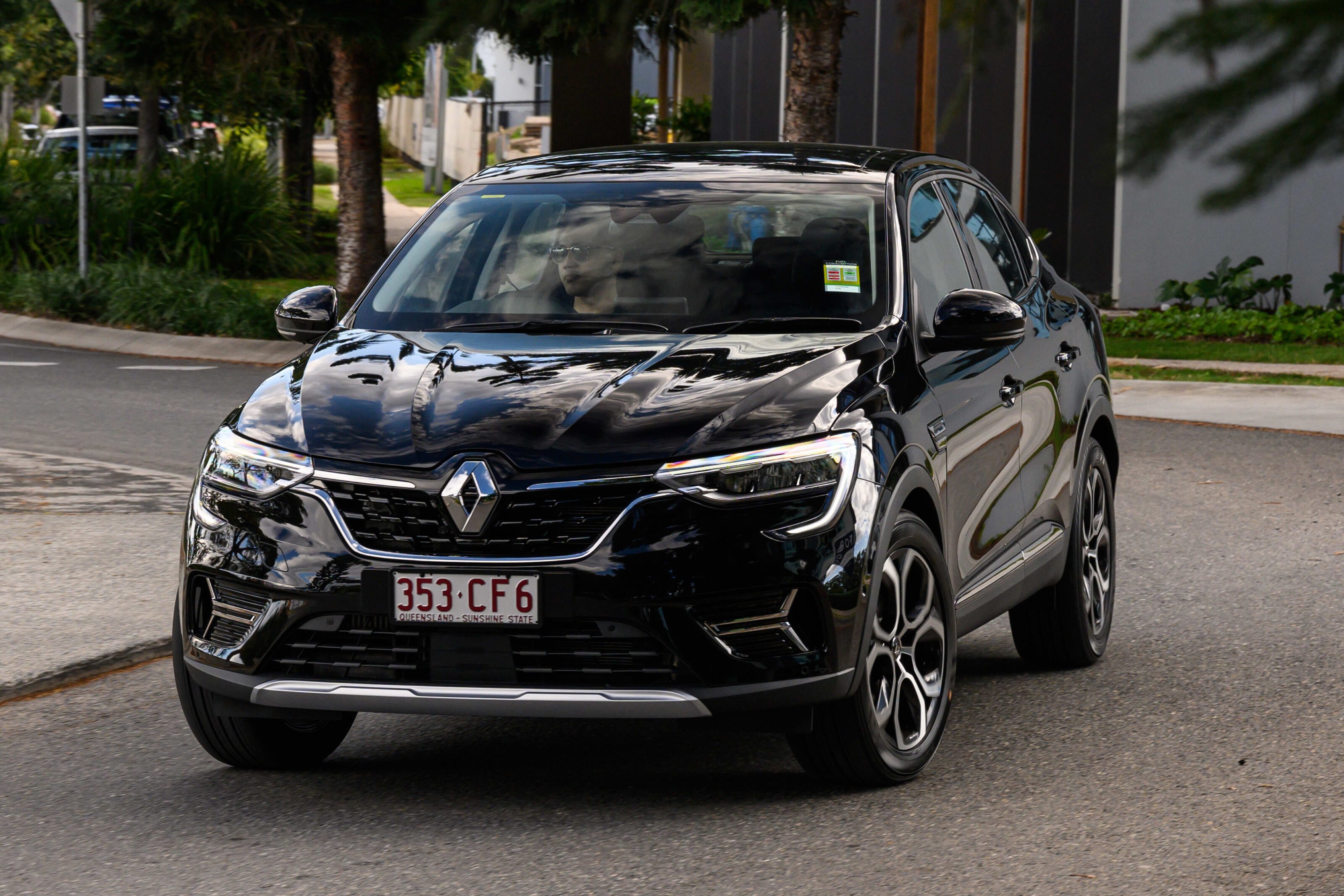
French manufacturer Renault has confirmed the range-topping R.S. Line variant for its new Arkana has arrived in Australia.
Renault launched the new model for Australia in August last year, bringing the Arkana to local showrooms for the first time since it was revealed in 2018.
The brand’s first attempt at an SUV coupé, the four-door liftback is powered by a 1.3-litre four-pot turbo engine, which is the only choice across its three variations.
Based on the same CMF-B platform as the new Renault Captur and Nissan Juke, the Arkana will land at roughly the same price as its relatives, starting out at $34,590 before on-road costs.
New information on the R.S. Line has been added to the options list in line with the variant’s local launch in March 2022.
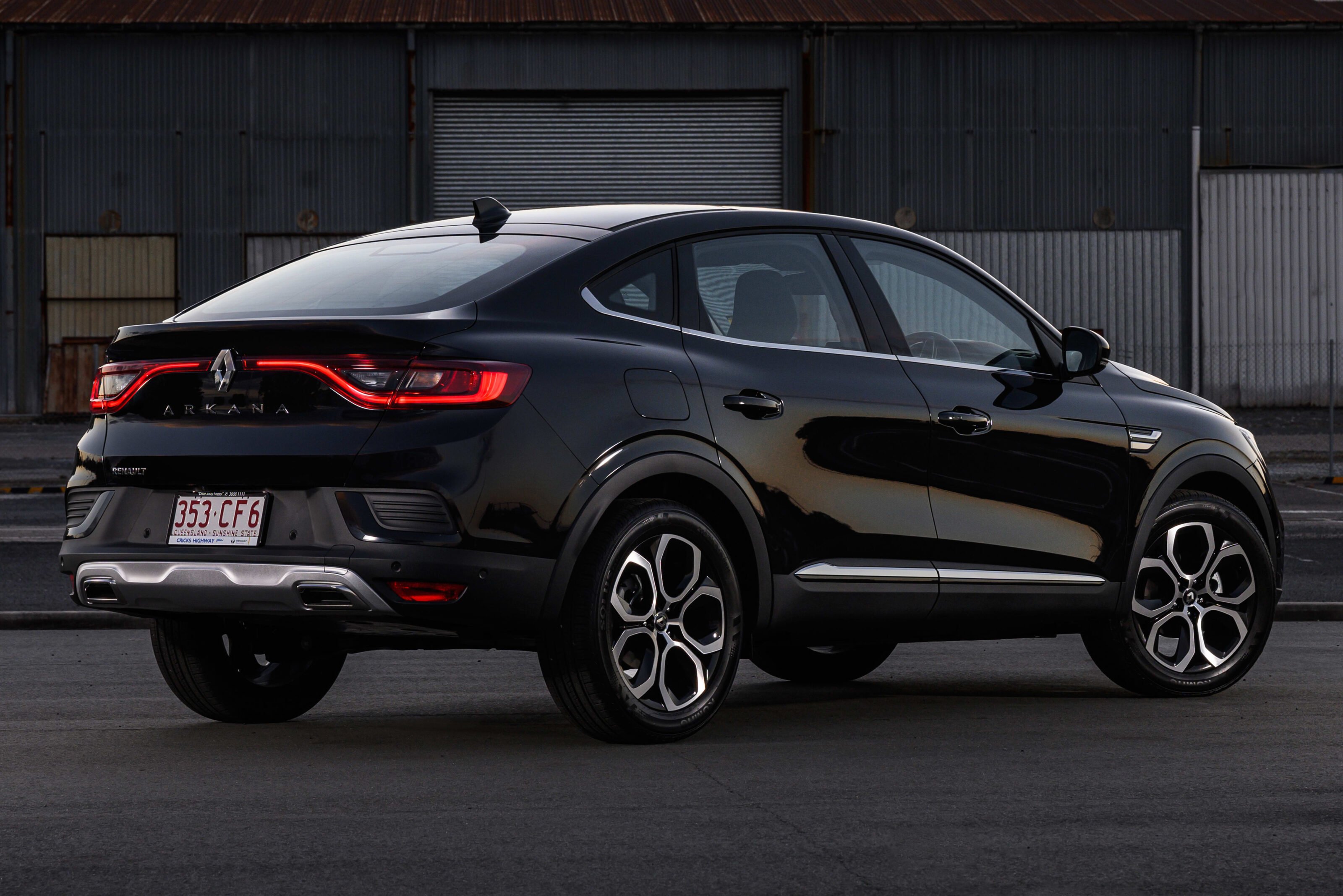
2022 Renault Arkana Australian pricing
The Arkana underwent a price rise shortly after it launched last year, as the local arm for the French manufacturer increased list prices across its model range last month.
Prices exclude on-road costs.
| Arkana Zen | $34,590 |
| Arkana Intens | $38,590 |
| Arkana R.S. Line | $42,090 |
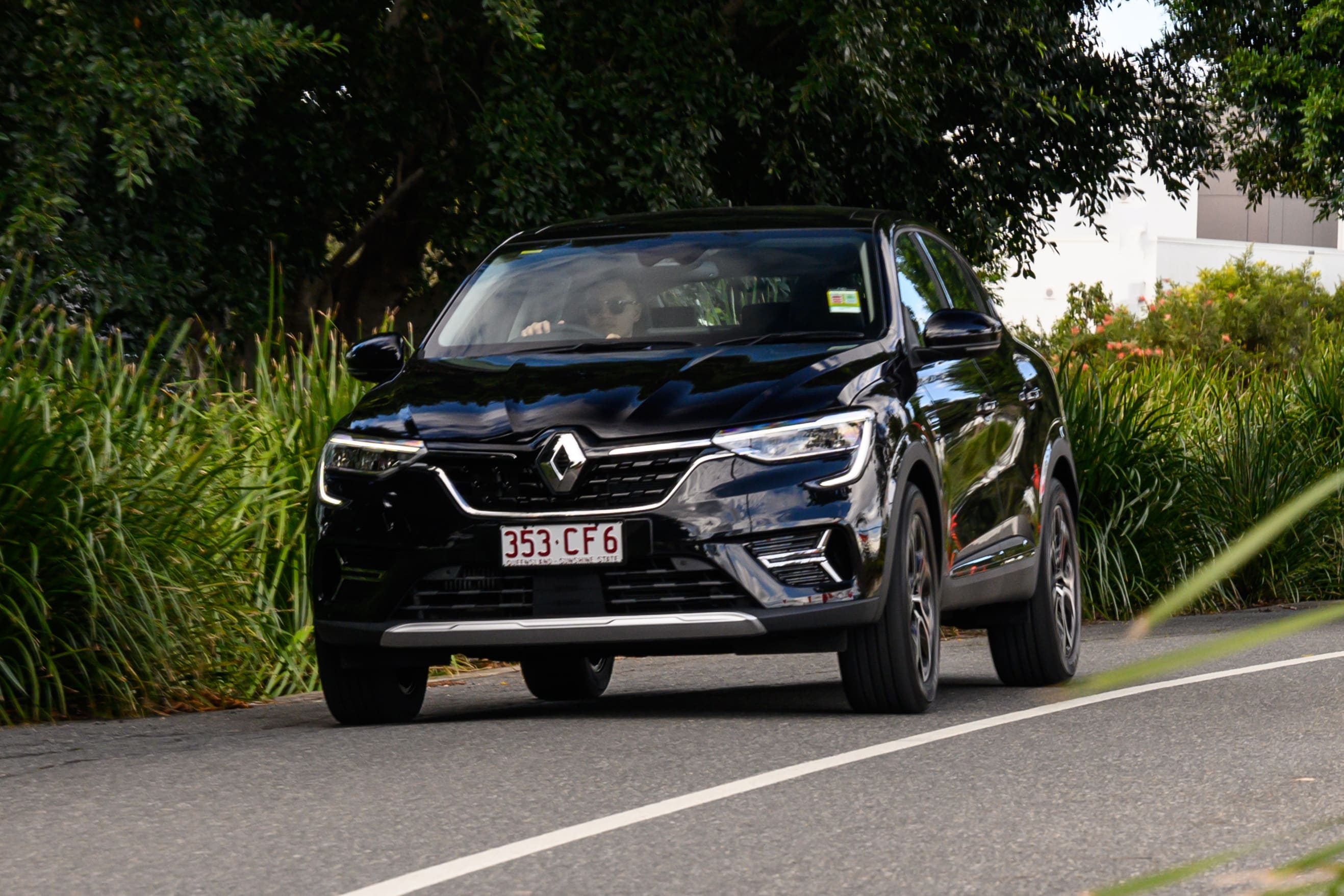
Features
Zen
Out of the three variants, the Zen is the entry-level, packing standard equipment such as:
| Adaptive cruise control with stop and go |
| Easy park assist |
| Front, rear and side parking sensors with rearview camera |
| Electric parking brake |
| LED Pure Vision headlights |
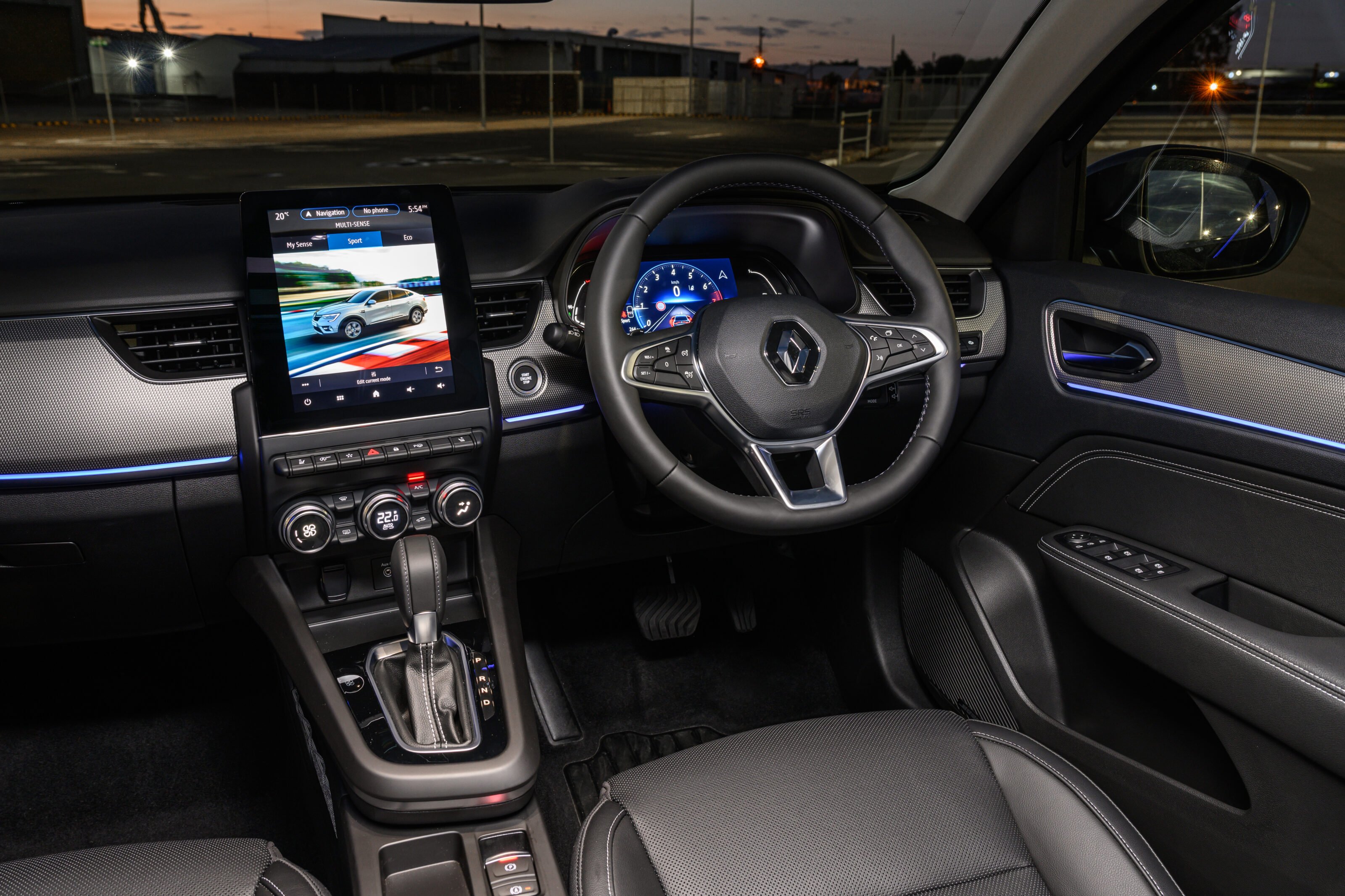
| 7-inch landscape multimedia touchscreen |
| 4.2-inch digital driver display screen |
| Heated leather steering wheel |
| Black leatherette upholstery |
| Climate control air-conditioning with air purifier |
| Arkamys Auditorium Sound System with Bluetooth phone pairing |
| Apple CarPlay/Android Auto |
| 17-inch two-tone alloy wheels. |
Intens
Stepping up from Zen, the Intens variant adds:
| 9.3-inch Easy Link touchscreen with navigation system |
| 7-inch digital driver display |
| Satellite navigation |
| Multi sense with three driving modes and eight interior lighting options |
| Leather and suede upholstery |
| Heated and ventilated, electric adjustable front seats |
| 18-inch two-tone alloy wheels. |
R.S. Line
Finally the range-topping R.S. Line completes the line-up by introducing extra equipment, including:
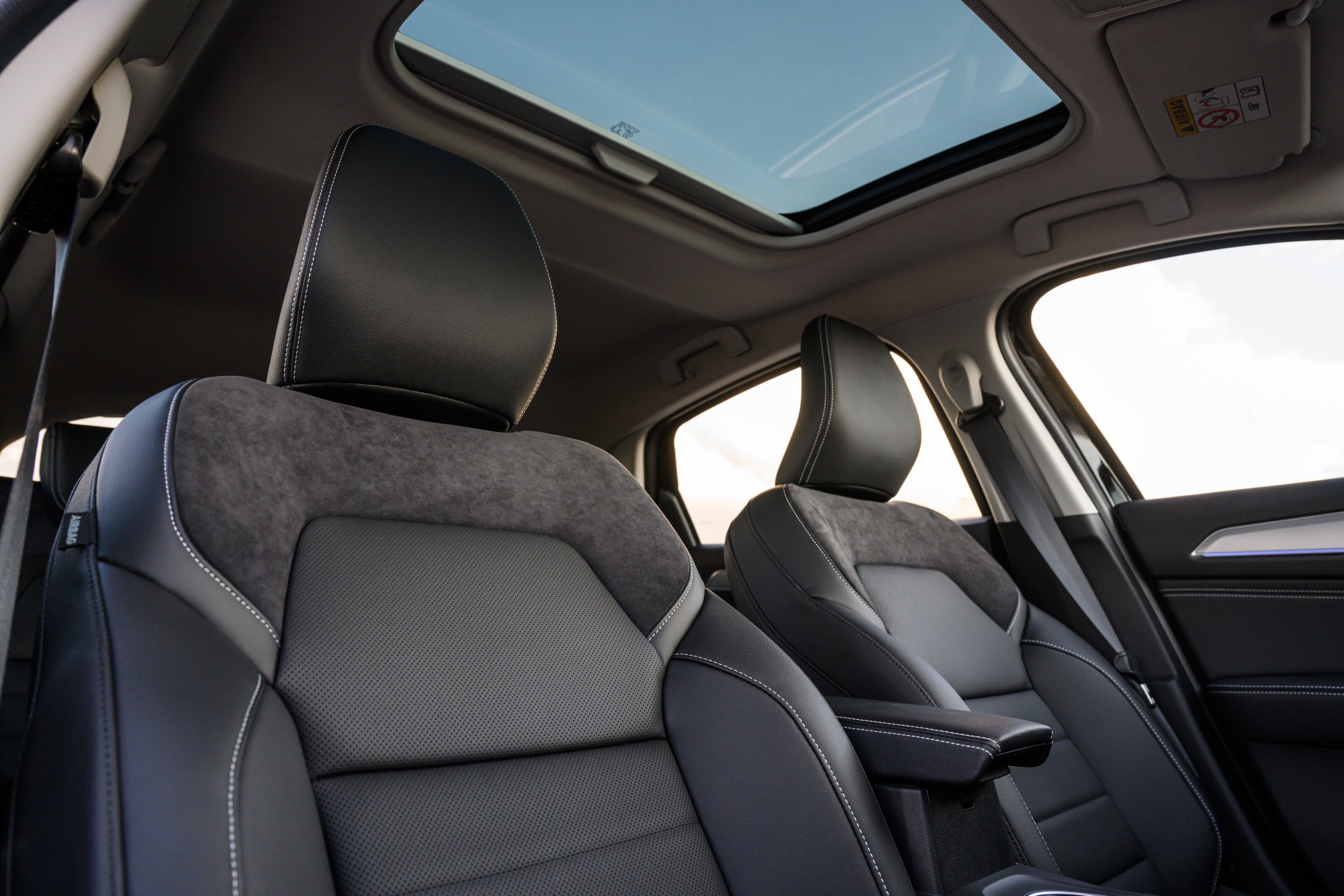
| Sunroof |
| Heated and perforated leather steering wheel |
| Frameless auto-dimming mirror |
| Wireless smartphone charger |
| Black leather and suede upholstery with red stitching |
| Gloss carbon-look interior trim |
| Rear privacy glass |
| 18-inch two-tone alloy wheels with red accent |
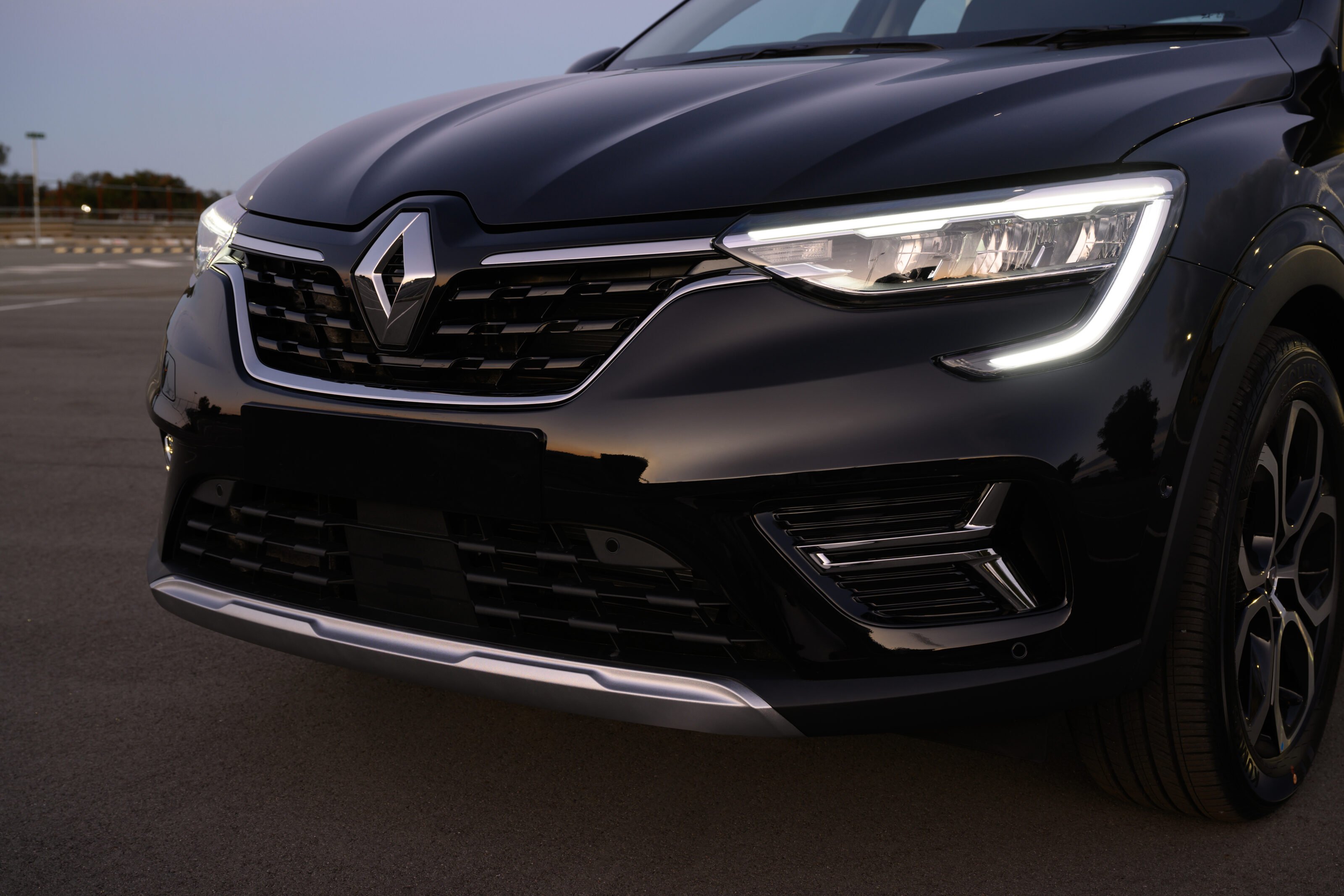
| Gloss black trim on door mirrors, air deflectors and window trim |
| Front bumper with F1-inspired design blade |
| Lower door protection, and front and rear skid plates in gun metal. |
Options
In addition to the aforementioned equipment on the R.S. Line variant, Renault offers two individual options for the range-topping grade, with a contrasting black roof setting buyers back an extra $600, while metallic paint incurs a $750 premium.
Engine, drivetrain and fuel economy
As previously mentioned, the Arkana shares a platform with the Captur, also sharing the crossover’s engine, a 1.3-litre turbocharged four-cylinder which has been remapped to produce 115kW of power and 262Nm of torque – a 2kW increase, but a 6Nm drop from the Captur.
A seven-speed, dual-clutch automatic is the only transmission available, sending power to the front wheels for the Arkana to achieve a combined fuel economy (as tested) of 6L/100km, 0.8L/100km better than the Captur.
Dimensions
The Arkana is slightly larger than the Captur and Juke, standing at 4568 millimetres in length, 1571mm tall, 2034mm wide and with a wheelbase of 2720mm.
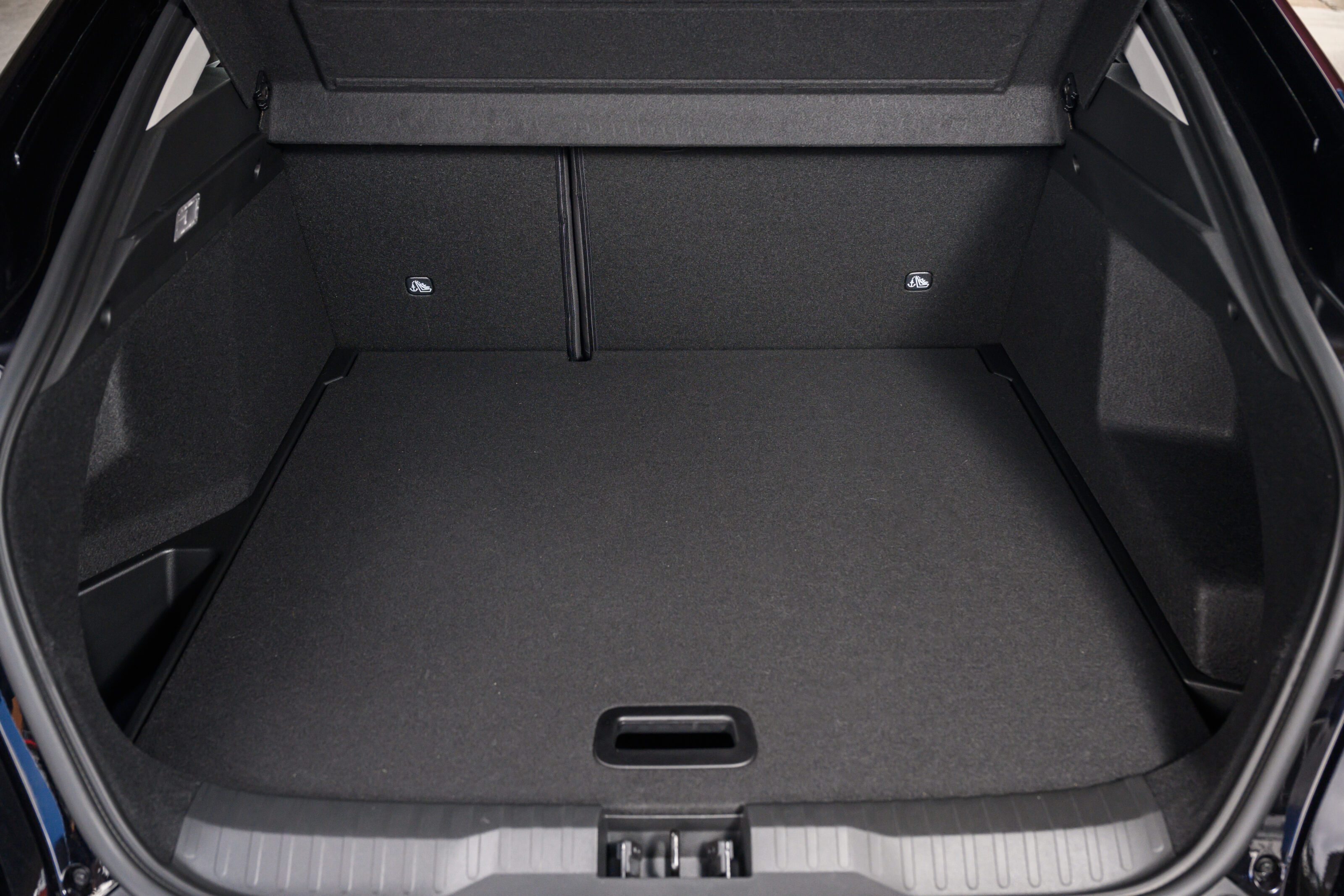
With the rear seats up, the boot can hold up to 353 litres, but this is increased to 1268 litres when the second row is folded flat. Under floor storage can boost the rear space up to 485 litres when the seats are up.
Safety
Awarded a five-star ANCAP safety rating, the standard Arkana features eight airbags and a host of safety technology, including:
| Active emergency braking with pedestrian and cyclist detection |
| Forward collision warning |
| Safe distance warning |
| Lane departure warning |
| Lane keep assist |
| Traffic sign recognition |
| Cruise control with speed limiter. |
On top of this, the Intens and R.S. Line variants gain:
| Rear cross traffic alert |
| Over-speed prevention |
| Electric parking brake with auto-hold. |
Warranty and servicing
As with the rest of Renault’s model line-up, the Arkana is covered by a five-year/unlimited-kilometre warranty and five years’ roadside assistance when serviced at a Renault dealer.
Capped-price servicing lasts for the first five workshop visits at 30,000 kilometre intervals, setting buyers back $2385 over the time period.
Availability
The 2022 Renault Arkana is currently on sale, with distributor Ateco Group reporting it now has stock of all variants.
Snapshot
- Estate of Sergio Marchionne paid u20ac26 million in 2021
- Current Stellantis CEO Carlos Tavares was paid just over u20ac19m
- Stellantis posted a net profit of u20ac13.4 billion last year
Automotive conglomerate Stellantis forked out more than €26 million in legacy payments to its former, now deceased, CEO last year.
Before Fiat Chrysler Automobiles and Groupe PSA merged at the start of last year, FCA was still finding its feet after the death of former CEO Sergio Marchionne in 2018 – the man who had spearheaded the alliance between the Italian and American marques in 2014.
However, according to financial reports from the end of Stellantis’s first full year, Marchionne’s estate is still being paid by the carmaker, with last year’s payment totalling a touch over €26 million (AU$39.8 million).

The report states the €26,080,867 paid to his estate was “pursuant to his employment agreement, including his post-mandate benefit of 5 x base compensation and including legacy Board payments owing from FCA US LLC”.
While it’s not known whether the payment is a one-off or if there are more to come over the next few years, it makes Marchionne the highest-paid person on the Stellantis books – well ahead of current CEO Carlos Tavares (€19.15m/AU$29.31m) and only just behind the company’s whole board of directors (€28.8m/AU$44.24m).
Despite this, Stellantis still managed to post a net profit of €13.4 billion (AU$20.9bn) for 2021 – nearly triple its figures from a year prior – with a net revenue of €152 billion (AU$237.9bn), up 14 per cent over 2020.
Jeep has unveiled its first pure battery-powered model overnight, announcing plans to launch the model in the first half of next year.
Codenamed 516, according to Automotive News Europe, technical details of the as-yet-unnamed Jeep have not been outlined at this stage, but it’s thought the electric SUV could be underpinned by the e-CMP platform shared with others models in the Stellantis family stable.
But while other e-CMP-based vehicles from Peugeot and Vauxhall are front-wheel drive, UK outlet AutoExpress is reporting the Jeep could gain the use of an electric motor on the rear axle, making the SUV all-wheel-drive.
However, given the SUV appears to be a city vehicle – with closely-related models also due from Alfa Romeo and Fiat – it’s likely Jeep will offer the 516 with front-wheel drive.
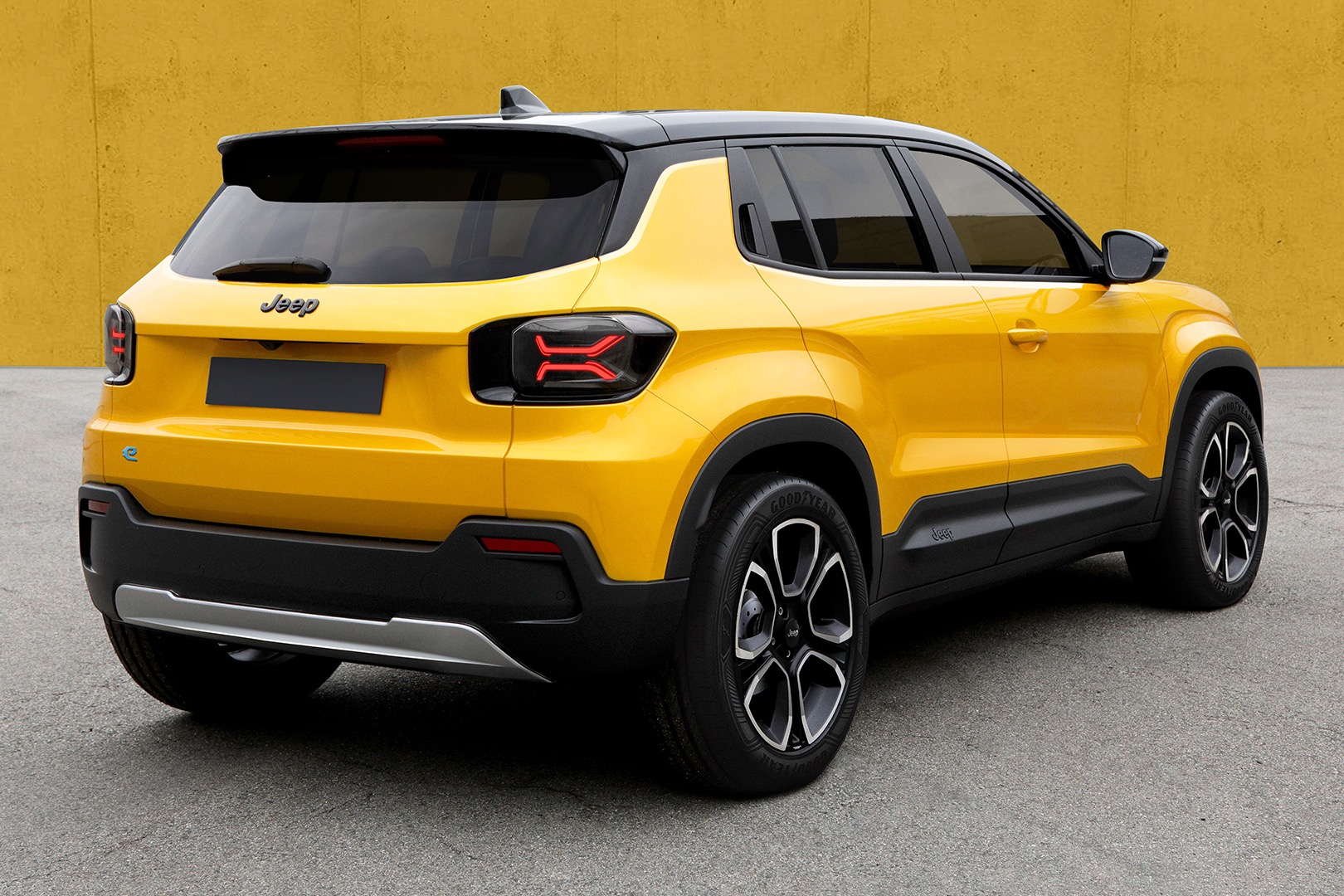
Jeep Australia has told Wheels it will be sharing its electric vehicle plans later this year, but company CEO Christian Meunier has previously indicated it could take a proactive approach to electric models, rather than waiting for governments to incentivise the transition.
“Not every new electric model will be seen in every single market or region right away, it will gradually come and how soon will depend on the local market and if governments are willing to promote electrification and greater grid development,” Meunier told a media roundtable last year.
“In Australia [enthusiasm for] electrification is happening very quickly. Of course it is far behind Europe and still a little bit behind the US, but we see the energy there,” he said.

“But basically these countries [including Australia] need to contribute to accelerating efforts towards electrification by evolving legislation and we’re now starting to see that. Instead of waiting for governments to tell us what they’re going to do and when, we like to have a practical approach and bring it [the technology] up front, we’re going to push for electrification as a leader, not a follower.”
Expect the small electric SUV to sit beneath the Jeep Renegade, with the all-new model due to arrive in US and European markets in the first half of 2023.
UPDATE, March 2: Weeks after catching fire in the Atlantic Ocean, stricken car carrier Felicity Ace has sunk.
MOL Ship Management confirmed the vessel went under around 9am local time, after taking on water and developing a severe list off the Azores.
The ship had reportedly been boarded by salvage crews in recent days, who left when weather conditions became dangerous.
The story to here
February 22: New reports have revealed that models from Lamborghini, Bentley and Audi are also onboard Felicity Ace along with the fleet of Porsches which have more than likely been destroyed by the blaze.
According to Bloomberg, an internal email in Volkswagen’s US division said there were 3,965 of their vehicles on board, consisting of all the makes mentioned above.
The revelation now brings the estimated total of vehicles destroyed to US$401 million, with the Russell Group assuming all vehicles are lost.
The fire is now believed to be burning out, with João Mendes Cabeças, captain of the nearest port in the Azorean island of Faial saying, “the fire has subsided in recent hours.”
All 22 crew were safely evacuated, with the cause of the fire still unknown.

The story to here
February 17: A car carrier laden with what are believed to be Porsches has caught fire en-route to the US, with a shipment of 911s, Taycans, and other Volkswagen AG vehicles reportedly aboard.
Associated Press reports Felicity Ace caught fire near the Azores Islands on February 16, whilst sailing from Emden, Germany, to the port of Davisville in Rhode Island.
A distress signal was sent from the 200-metre vessel after a fire broke out on a cargo deck. All 22 crew members were safely rescued, with at least 11 being picked up by the Portuguese Navy on nearby Greek tanker Resilient Warrior. The abandoned ship is now drifting eastward.

The exact number and makeup of cars aboard Felicity Ace has not not yet been confirmed, though Porsche and other Volkswagen Group vehicles are believed to make up the majority. At full capacity, the ship can carry up to 4000 cars.
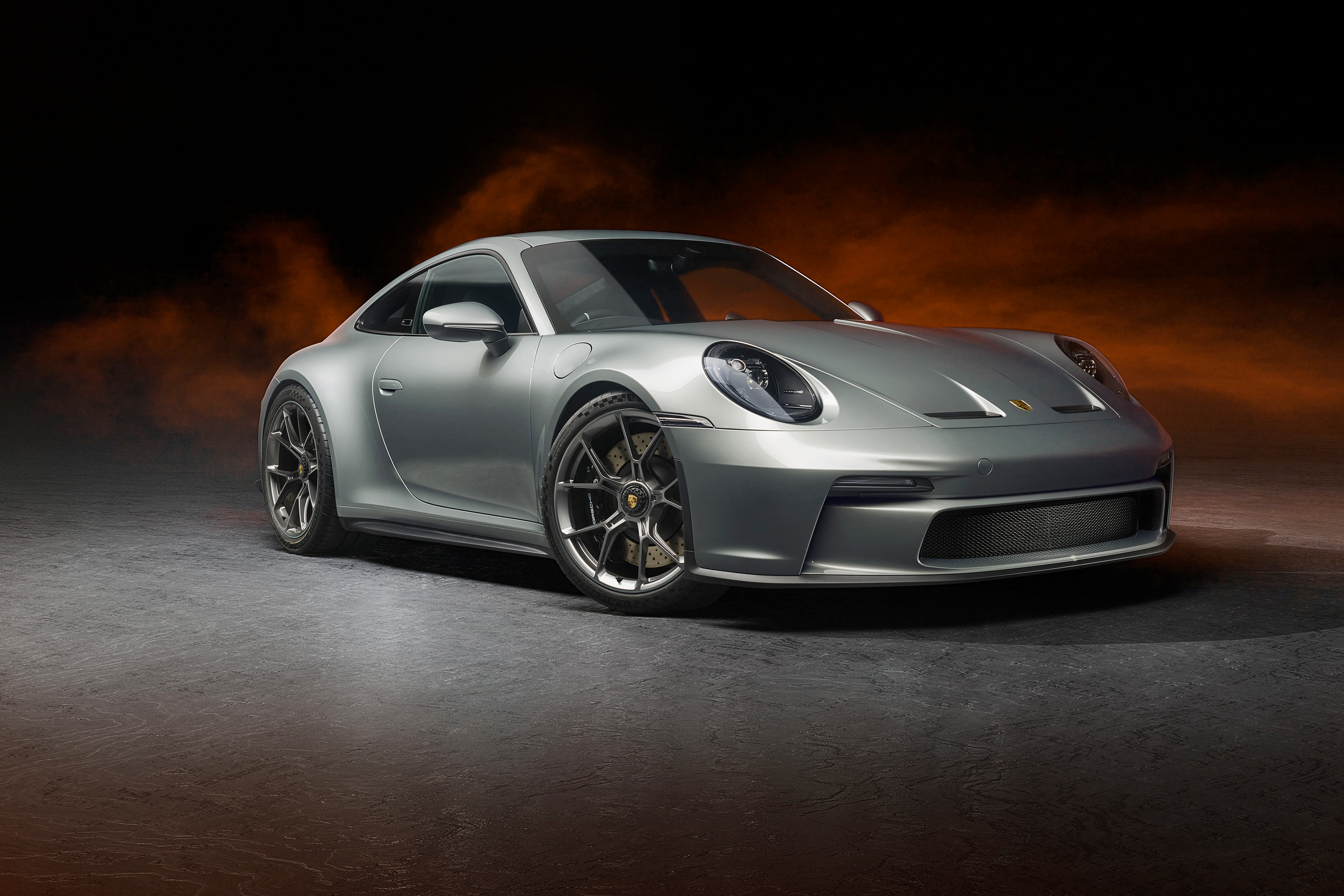
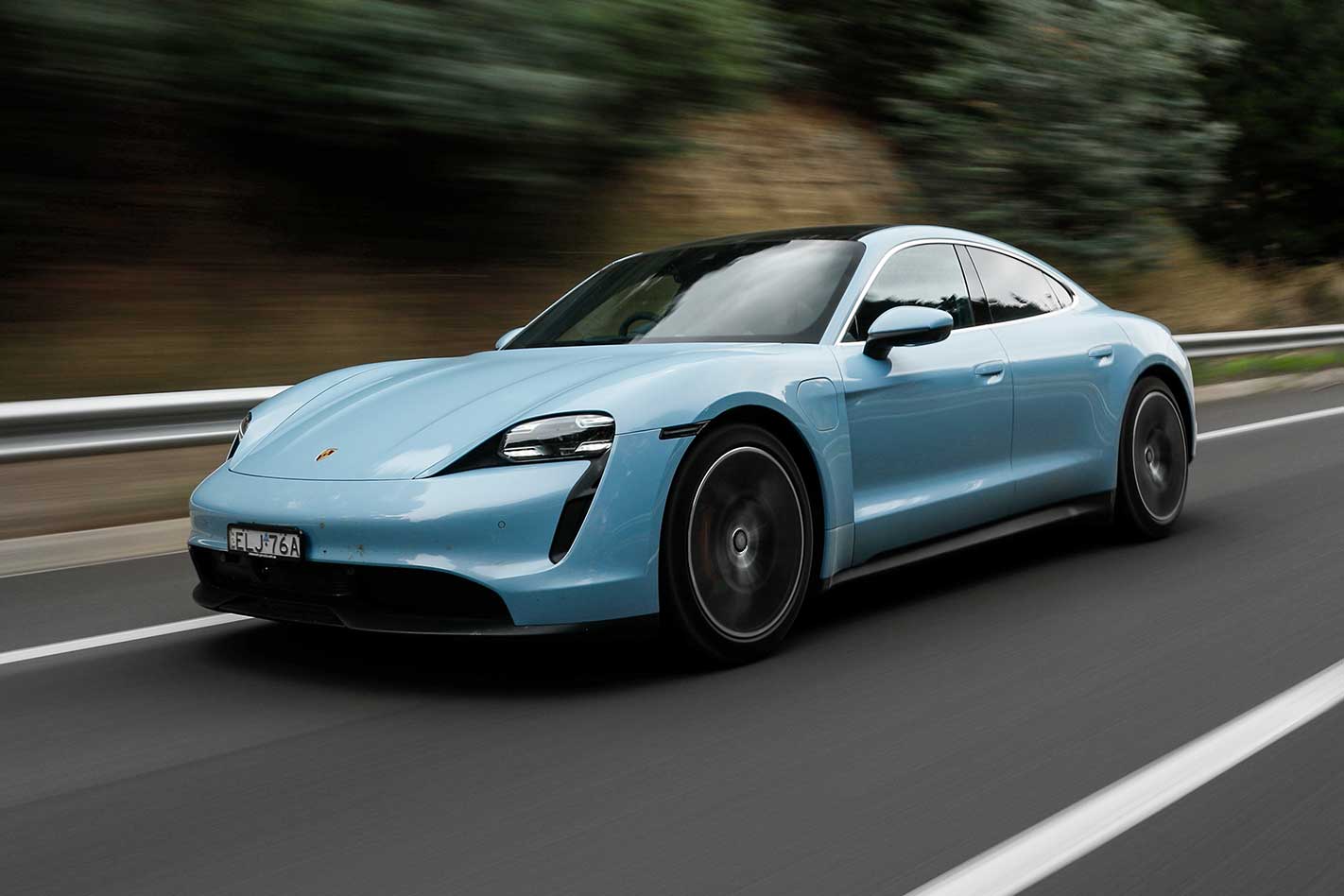
Discussion among Porsche owners on Twitter has suggested a number of 911s were onboard, potentially including the soon-to-arrive 992 GT3 Touring model. Smoking Tire’s Matt Farah confirmed his own 4.5-litre Boxster Spyder was one of those affected. Porsche forum posts indicate Taycan EVs were also being shipped on Felicity Ace.
A pop-up notification has been added to the Porsche Track Your Dream service, reading in part that “certain specific vehicle configurations are being temporarily impacted by supply chain issues.”
The statement continues by saying the marque is “aware of an incident aboard the Felicity Ace, a specialized [sic] cargo ship carrying certain Porsche vehicles.”
Porsche has also posted a public statement, which reads:
“Our immediate thoughts are with the 22 crew of the merchant ship ‘Felicity Ace’, all of whom we understand are safe and well as a result of their rescue by the Portuguese Navy following reports of a fire on board.
“We believe a number of our cars are among the cargo on board the ship. No further details of the specific cars affected are available at this time – we are in close contact with the shipping company and will share more information in due course.
“Anyone concerned by the implications of this incident on a car they’ve ordered should maintain contact with the dealer with which their order was placed. As more information becomes available, our dealers will contact every customer affected to discuss next steps.”
It is understood no cars destined for Australia were onboard.

Porsche faced a near-identical disaster in 2019, when a ship carrying four 911 GT2 RSs and 33 other Porsches caught fire and sank. In response, Porsche remanufactured the limited-edition RSs, despite production having ended.
Snapshot
- Commitment to fully-electric line-up comes under a year after 70 per cent target
- US sales aim remains more aggressive than Ford and GM
- Over 75 battery-electric vehicles will help deliver five million sales in 2030
Just under a year after it announced its first round of electric dreams, Stellantis has doubled down on its previous commitments, saying it will go fully-electric in Europe by 2030.
In July last year, the recently-formed conglomerate – born out of a merger between FCA and PSA – announced it would aim for its electric vehicles to account for 70 per cent of sales in Europe by 2030, with the United States market behind on a more conservative 40 per cent.
However, as a part of its Dare Forward 2030 strategic plan revealed last night, Stellantis will now go all-out on electric vehicles in Europe, making sure its entire line-up is fully electric by the end of the decade, as it also readjusted its US expectations, now expecting half of all sales to come from EVs by the same date.
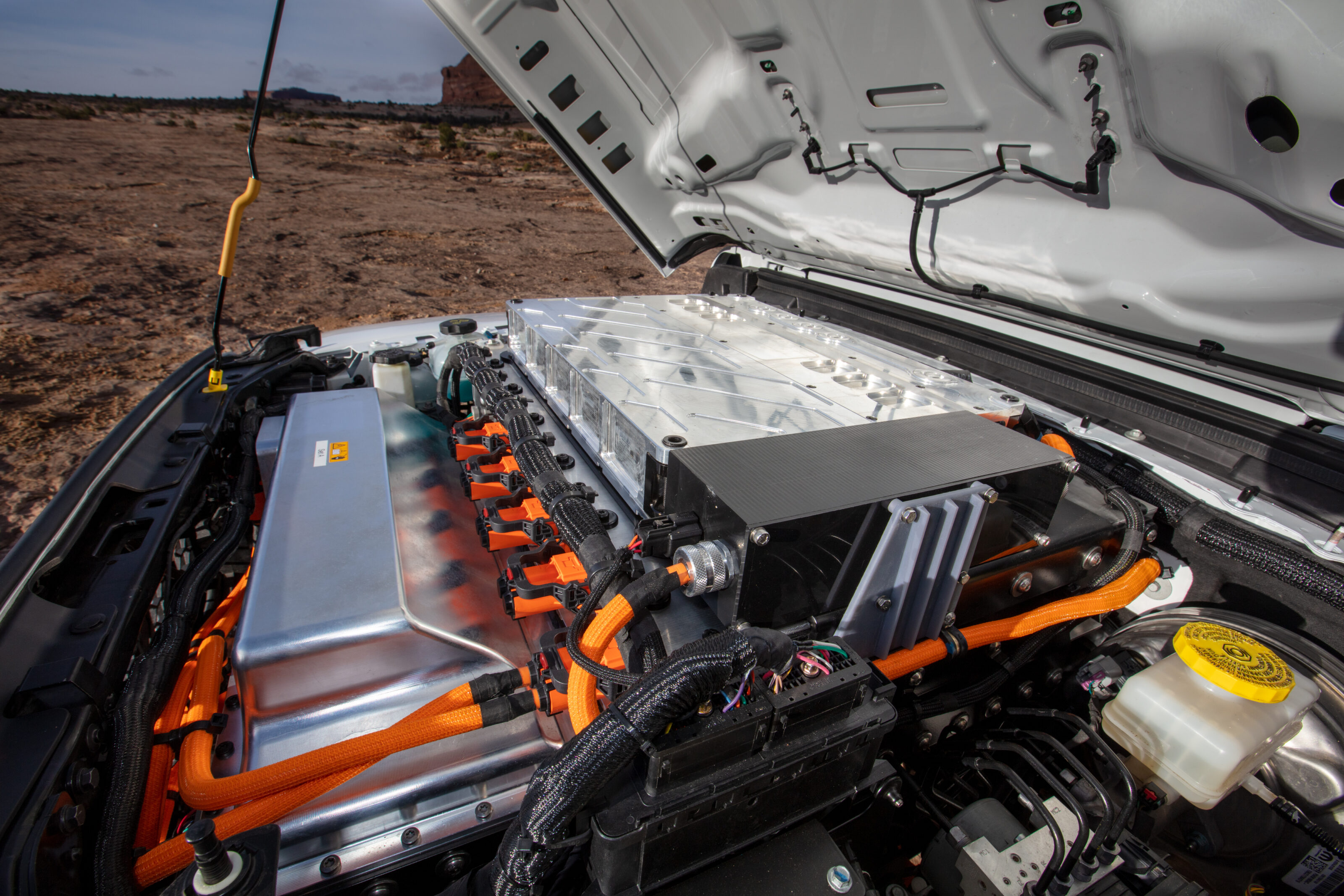
To achieve this, the multi-national conglomerate announced it will be bringing a total of 75 battery electric vehicles to the international market before the end of the decade, with the United States accounting for one-third of all the company’s BEVs.
Should everything go to plan, Stellantis anticipates its 2030 sales to reach five million units across its 14 passenger vehicle brands, something which will eventually lead to it going carbon neutral by 2038.
CEO Carlos Tavares said it was the manufacturer’s responsibility to lead the push towards electric vehicles and carbon neutrality, dictating its own path.

“Dare Forward 2030 inspires us to become so much more than we’ve ever been,” said Tavares.
“We are expanding our vision, breaking the limits and embracing a new mindset, one that seeks to transform all facets of mobility for the betterment of our families, communities and the societies in which we operate.
“Powered by our diversity, Stellantis leads the way the world moves by delivering innovative, clean, safe, and affordable mobility solutions.
“Stellantis will be the industry champion in climate change mitigation, becoming carbon net zero by 2038, with a 50 per cent reduction by 2030. Taking a leadership role in decarbonization [sic], as well as a decisive step forward in the circular economy, is our contribution to a sustainable future.”
Last week, Stellantis posted its first full-year financial report after the merger took place, with the group made up of Fiat, Jeep, Dodge, Opel, Vauxhall, Peugeot, Ram, DS, Abarth, Alfa Romeo, Chrysler, Citroën, Lancia and Maserati posting a net revenue of €152 billion (AU$237.9bn), leading to a net profit of €13.4 billion (AU$20.9bn).
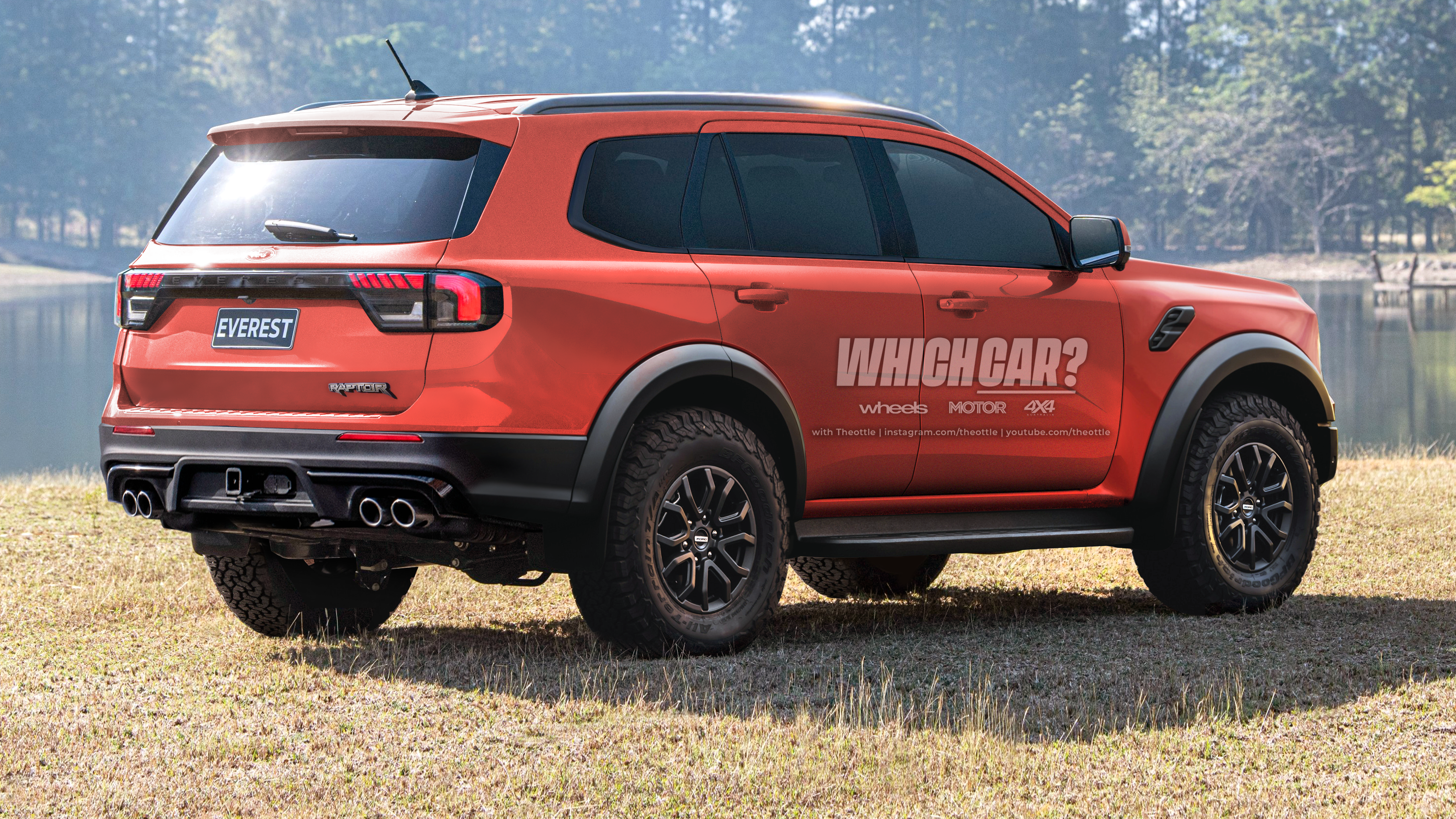
UPDATE, March 2, 2022: Now that the new 2023 Ford Everest has been unveiled (read about it here), we’ve had our mate Theo Throttle knock together a couple of Everest Raptor renderings for us.
The first is above, and the second, a shot of the rear with some quad exhaust pipes and that Raptor badge, is below.
Would you be keen on a Raptorised Everest?
The story to here
February 22, 2022: A Raptor version of the new Ford Everest has been made more likely thanks to the Ford Bronco, but it still has to make the business case.
Speaking at the reveal of the 2022 Ford Ranger Raptor, Ford Performance Program Lead Justin Capicchiano – who has worked on the previous Ranger Raptor and FG X Falcon Sprint models – made it clear that the local Ford Performance team would be enthusiastic if a business case for an extreme Everest could stack up.
“Everest is a really cool product and I think anyone would love to work on a product like that [Everest Raptor], but it’s got to make sense. It’s got to make sense for every market and every market would have to do it,” Capicchiano said.
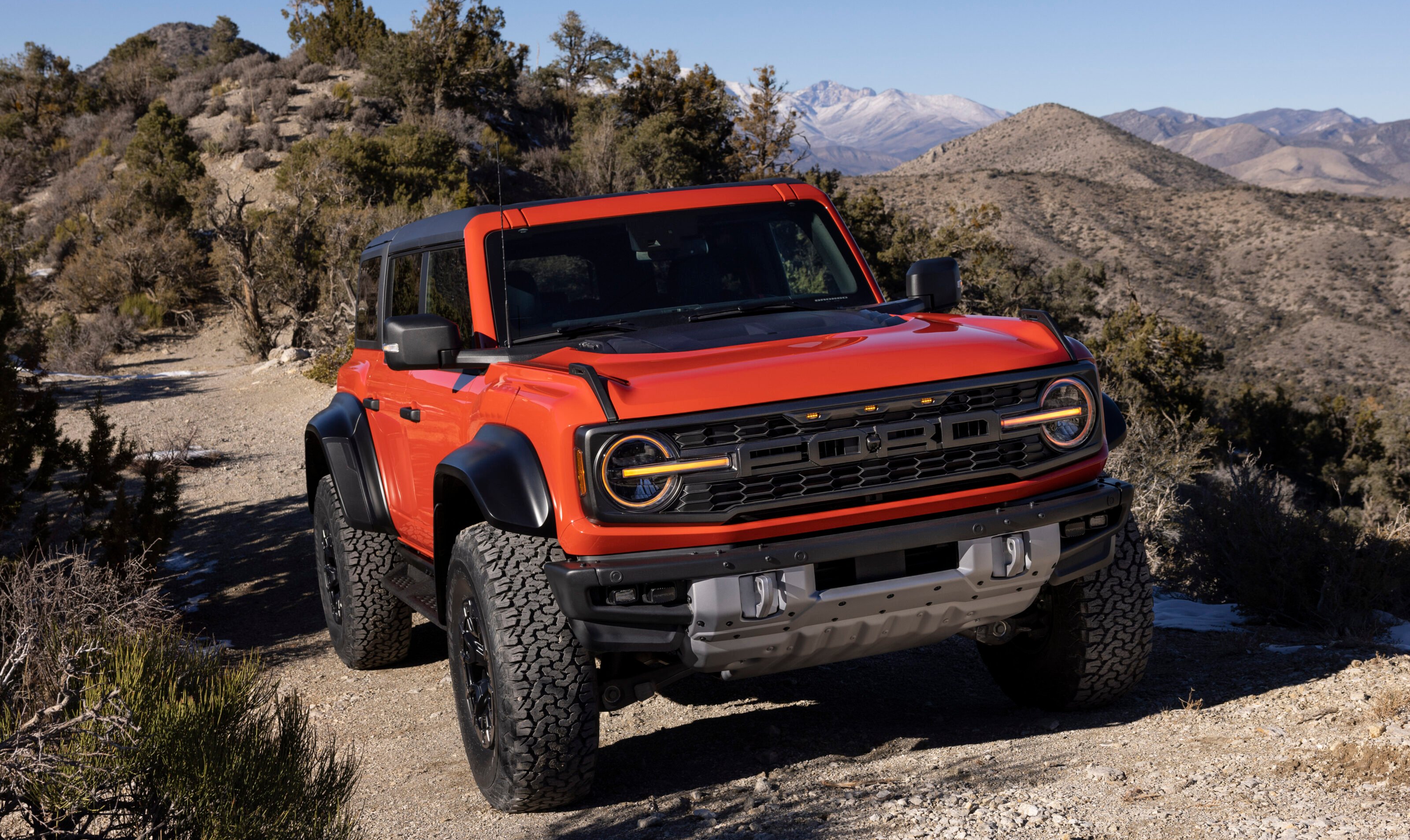
The Raptor name was first applied to the F-150 in 2008 ahead of its introduction for the 2010 model year, and when the Ranger Raptor made its global debut in 2018 the possibility of an Everest Raptor seemed unlikely given its exclusive use on pick-ups.
Yet the announcement of a Bronco Raptor in January 2022 for North America has seen the nomenclature applied to an SUV for the first time – making an Everest Raptor less of an anomaly.
It’s also no secret that the current and future Ranger, Everest and Bronco share components, from their T6 platform as well as selected engines, transmissions and electronic architecture. Although Ranger and Everest differ when it comes to four-wheel drive and suspension set-ups, an Everest Raptor would be relatively simple, in theory at least. Moreover, platform costs have been further amortised with the launch of the Ford Bronco in North America and elsewhere, to Australian fan frustration.
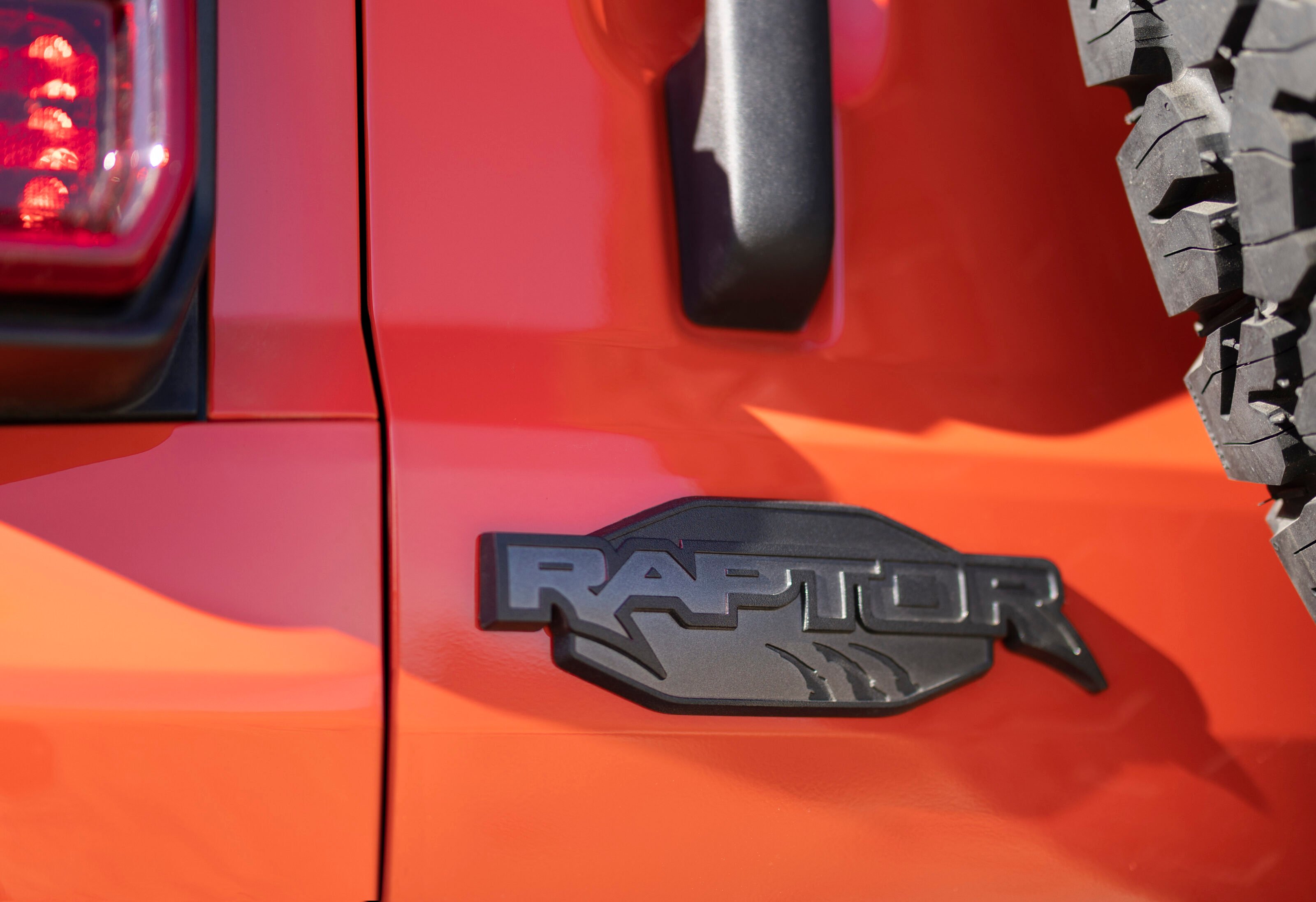
Adding to the case for the Raptor Everest is Toyota’s push on its Gazoo Racing (GR) line – which includes its LandCruiser SUV. While the tuned LandCrusier hasn’t been given the level of aggression that Ranger Raptor has, the proliferation of Gazoo Racing signals a potential fresh rivalry with Ford Performance in the off-road arena.
Still, Ford hasn’t made any commitment to grow the Raptor family.
“Right now, we don’t have any plans for it [Everest Raptor]. It’s not something that we’ve looked at specifically,” Capicchiano said. “The future’s an interesting state – we don’t tend to talk about what we do log- term, but Everest is a really cool product that we’d love to work on.”
Mazda’s ubiquitous MX-5 has been proving that there’s a demand for a small, lightweight and affordable sportscar in virtually every global market for more than 30 years.
Over four generations, the iconic model has never fallen into the technological trap of speed and potency at all costs, and it’s the pursuit of purity that has won a large loyal audience and the title of the world’s most successful two-seat convertible.
The key to this success has been incremental improvement, although a full reset for the current ‘ND’ generation in 2015 resurrected an MX-5 that was as small and light as the original.
It’s a recipe that continues to be almost unique in the modern market, but Mazda is still continually enhancing the ND with small but valuable improvements –including the latest 2022 update.

Firstly, the dwindling 1.5-litre version is gone and while the die-hards will be running around crying infamy and waving their hands in the air, it’s actually a logical move. At launch, the smaller engine offered a less powerful but more revvy and involving option over the more effortless 2.0-litre, but a mid-life update imparted that same free-revving nature to the bigger engine and essentially pinched the 1.5’s USP.
With the removal of the entry 1.5L Roadster (convertible), the MX-5 range is effectively more expensive as the most affordable 2.0-litre is priced $1600 more at $37,790 before on-road costs.
But that’s significantly less cash than the previous entry 2.0-litre, which was only available in more premium GT trim. That means the new MX-5 Roadster range-opener is more powerful and faster, but $6230 cheaper than the previous 2.0-litre.

The GT and RS are still available for MX-5 lovers with a bigger budget, as is the RF (retractable fastback) hard-top in the same entry, GT and RS variants. A new Platinum Quartz paint colour and Terracotta leather for the RF GT rounds out the more conventional range revision, but there is one more intriguing addition for all versions in 2022.
New to the model is Mazda’s Kinematic Posture Control (KPC) which is not, as the name suggests, some kind of seat massage function, but a special evolution of Mazda‘s chassis and dynamics control.
The Haunted Hills Hillclimb track’s tight twisting corners was the perfect venue to demonstrate KPC and, after a few laps, the benefit was clear

Quite simply, when the MX-5 turns into a corner at any speed, the revised stability electronics lightly apply the inside rear brake. It’s not enough to decelerate the car or noticeably alter its composure but the gentle action tightens the turn and prompts a more eager turn-in. It’s essentially the same principle as Mazda’s G Vectoring, which rolled out with the Mazda3 in 2016, but now evolved for the rear axle.
If the principle sounds familiar, you may be recalling the simple but brilliant Brake Steer system McLaren introduced with its 1997 Formula One car.
Unlike KPC, McLaren’s so-called ‘Fiddle Brake’ was manually operated by the driver using an extra brake pedal but uses exactly the same principle as Mazda’s automatic approach. In F1 it was worth half a second per lap, and in the MX-5 it means an enhancement of driving dynamics and responsiveness without having to deal with a fourth pedal.

You might argue that an enhancement this subtle might be more the effect of the power of suggestion rather than a perceptible improvement, but a direct back-to-back comparison allayed any fears that I had been plied with the Mazda Kool-Aid.
The Haunted Hills Hillclimb track’s series of tight twisting corners was the perfect venue to demonstrate KPC and after a few laps in the pre-update version followed by the 2022 model, the benefit was clear.
In some cases, hitting an apex is easier, with an apparent willingness to cut a tighter line – this effect is particularly noticeable with off-camber corners where the car has a tendency to push to the outside of the track. In other corners, the MX-5 hugged the inside kerb from entry to exit rather than finding a line that starts wide and tightens to the apex.
The little lean into corners before stabilising is still one of the MX-5’s unique and hugely likeable trademarks – and is unchanged with this update

Unlike the G Vectoring system that required almost laboratory tests to demonstrate, KPC is far more obvious and actually required a couple of laps of adjustment to find a different but faster line. Despite the reduced lap times, the system is less about speed and more about enhancing the MX-5’s friendly and involving nature, which it certainly does.
Away from the track, the revised model is still a complete joy and there are few cars that can slap an almost uncomfortably wide smile on your face when the sun is out and the way ahead is twisty. Most importantly, the new system has not flattened out the MX-5’s manners in real-world cornering.
The little lean into a corner before stabilising and executing the bend is still one of the MX-5’s unique and hugely likeable trademarks – and it is unchanged with the update.

Also unchanged is the sweet steering and slender ‘wheel, supple ride and compliant body control – even with the more track-focused RS, which carries over following its introduction last year. Its combination of Bilstein dampers and front strut brace is complemented by the new chassis program to create an MX-5 that feels more responsive and rewarding than any before it.
Most impressively though, the introduction of the new system was achieved through electronics alone, requires no additional hardware, and has added no extra kilos to the model’s bantamweight.
Mazda is a master of subtle improvement through clever engineering and the introduction of KPC is a great example of its innovation
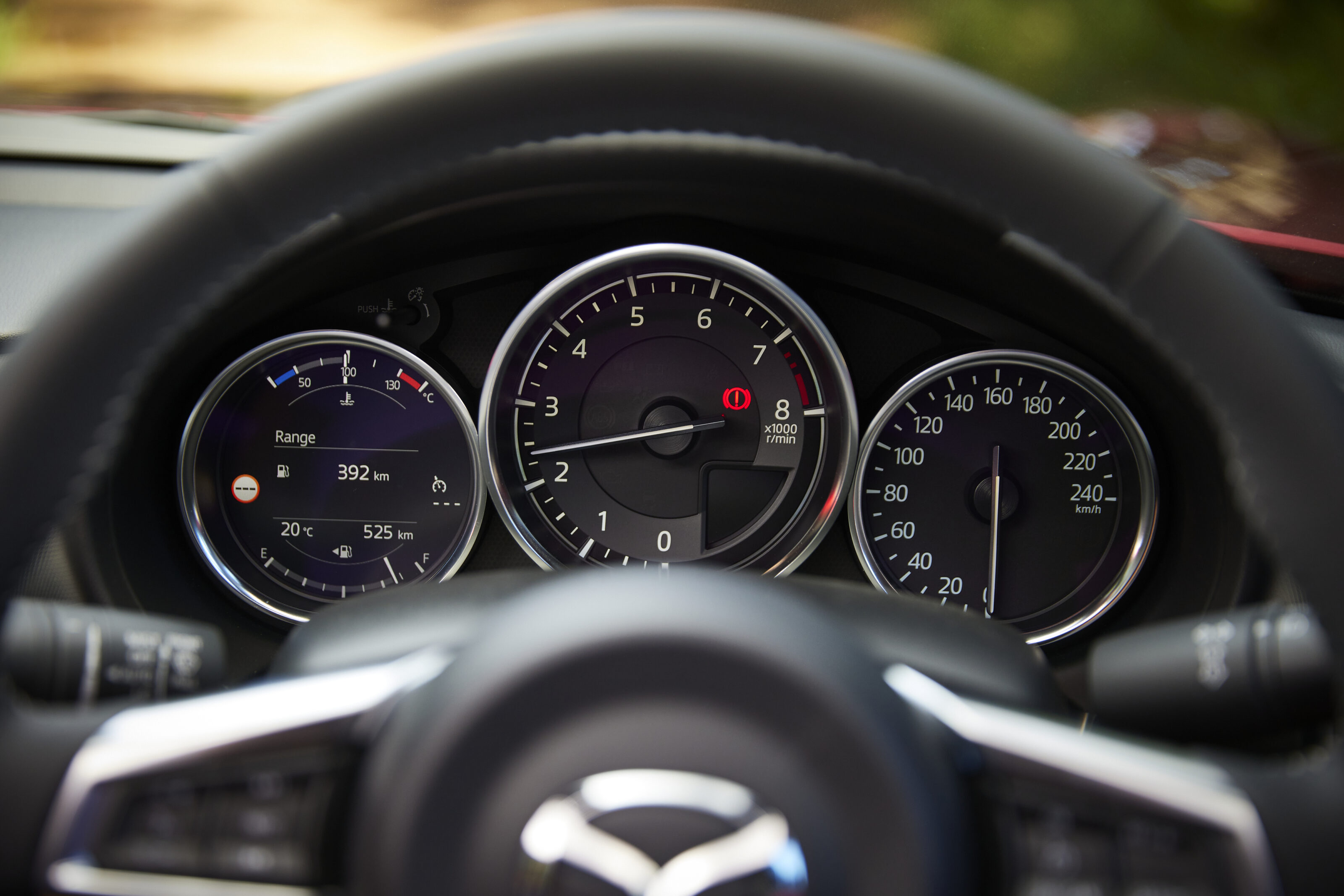
Acceleration thanks to the more advanced 2.0-litre is strong and the ridiculously light 1052kg kerb weight makes its 135kW and 205Nm seem like a lot more.
Under hard braking, the four-piston Brembo front brakes of the RS seem to reduce the mass even further still with a beautifully positive feel and minimal pedal travel.
All versions are available with a six-speed automatic transmission, which is fine, but the six-speed manual is really the only way to go with a car like this. That, and you’ll be carrying an extra bag of cement in weight while missing out on the mechanical feel of the gear shift and aggressive clutch action. Mazda’s customers appear to agree, with more than half of MX-5 sales in favour of the self-serve ‘box.

Mazda is a master of subtle improvement through clever engineering and the introduction of KPC is a great example of its innovation, working in harmony with the rules of physics rather than trying to bludgeon them into submission.
Updating and making changes to a model that is so close to the perfect purist’s driving experience is inherently risky but like the introduction of the more focused RS variant last year, Kinematic Posture Control is another welcome addition to the MX-5’s long list of attributes.
But I’m still waiting for that massage.
