
Mazda’s advance into electrified transport will continue in parallel with a multifaceted combination of increasingly efficient petrol engines, plug-in hybrids and “other applications” for its forthcoming rotary range-extended EV.
Unlike its first pure electric model – the MX-30 E35 – future Mazda EVs will roll on a dedicated Skyactiv EV ‘skateboard’ type platform, but offer the same quality, driving enjoyment and unique design of its pioneering battery car, according to Mazda Australia’s marketing director, Alastair Doak.
“The exciting thing about that car (MX-30 E35) is it shows the philosophy of what we think an EV should be,” he said speaking to Wheels at the launch of the updated MX-5 this week.
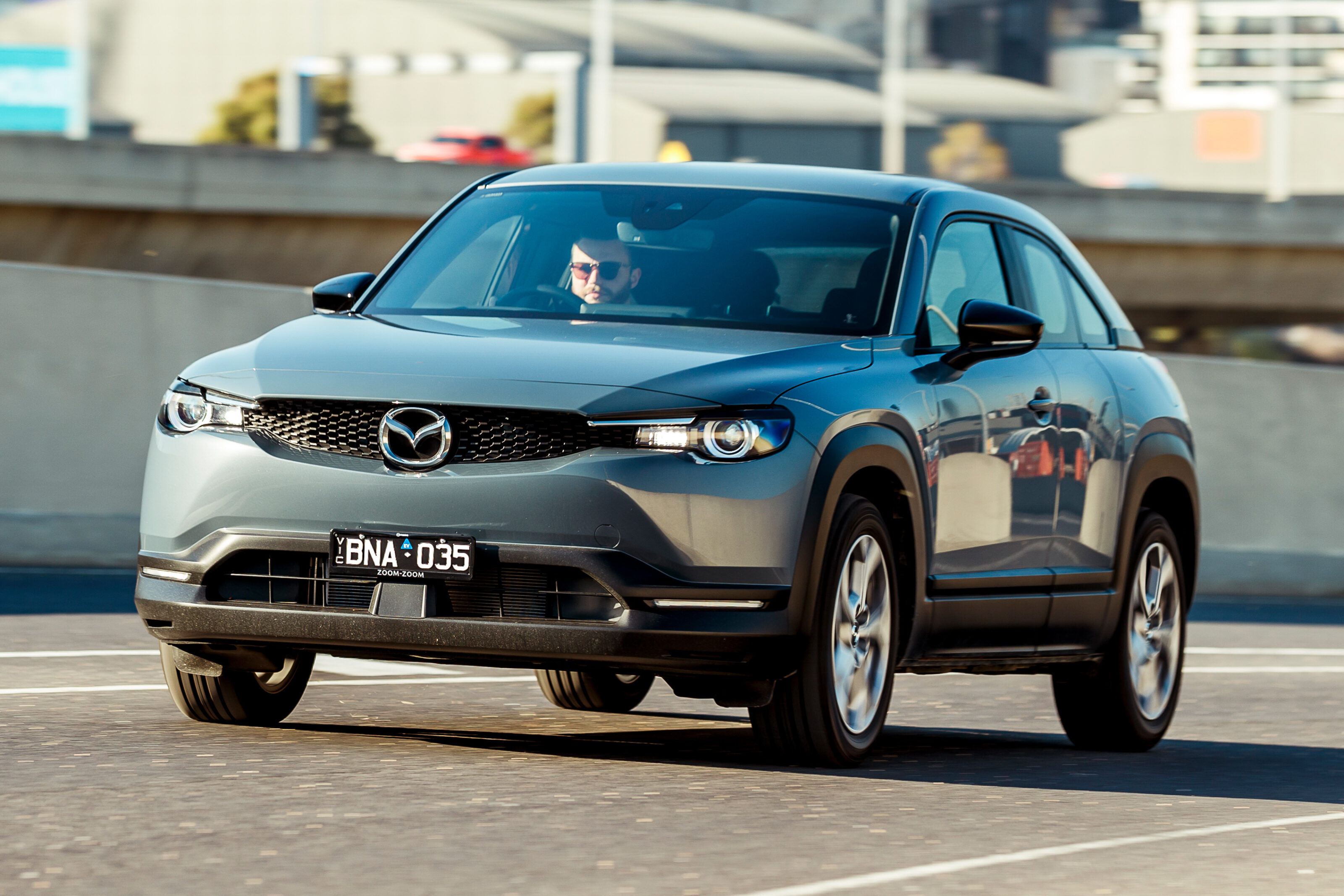
That vision, says Doak, would be of cars with longer driving range and more accessible pricing thanks to the bespoke new architecture, combined with a continuation of the dynamic refinement and appealing design.
“Forget the range and price, but the pedal input and all that stuff we spent a huge amount of time developing in that car will be replicated in other EVs as they come down the line. It really demonstrates our thinking.”
With a $65,490 asking price and relatively limited driving range, the electric version of the MX-30 has not matched the sales of its more mainstream variants since its introduction in late 2021, but Doak forecasts Mazda to meet the increasing demand for electrified cars in Australia.
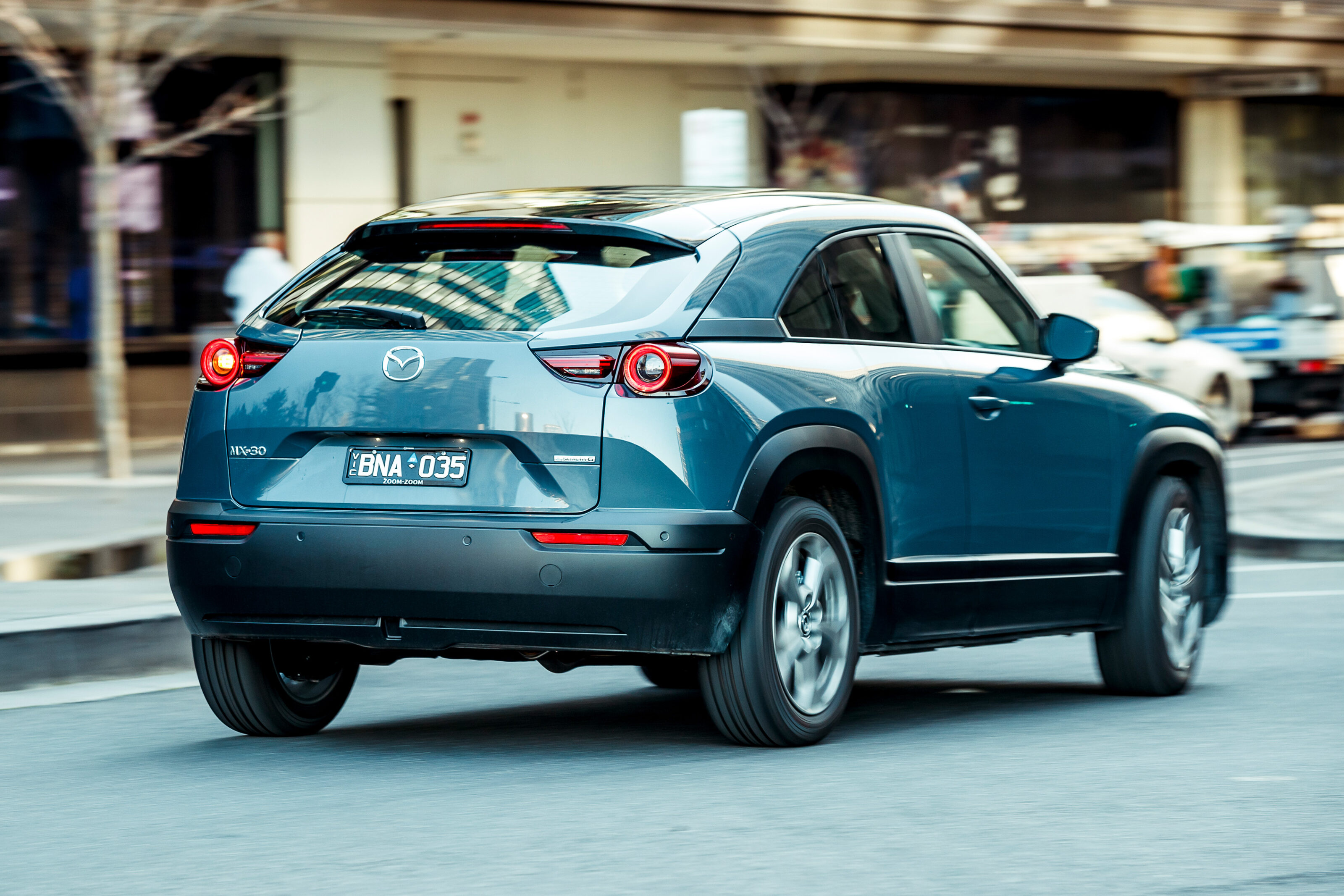
“We always said it (MX-30 E35) would be a niche player, particularly in Australia. We will do more (EVs) and, of course, you need to react – if people want [driving] range then they’ll have range.
“We’ll be able to dial those things up and down for the Australian market. We will meet the customer demand.”
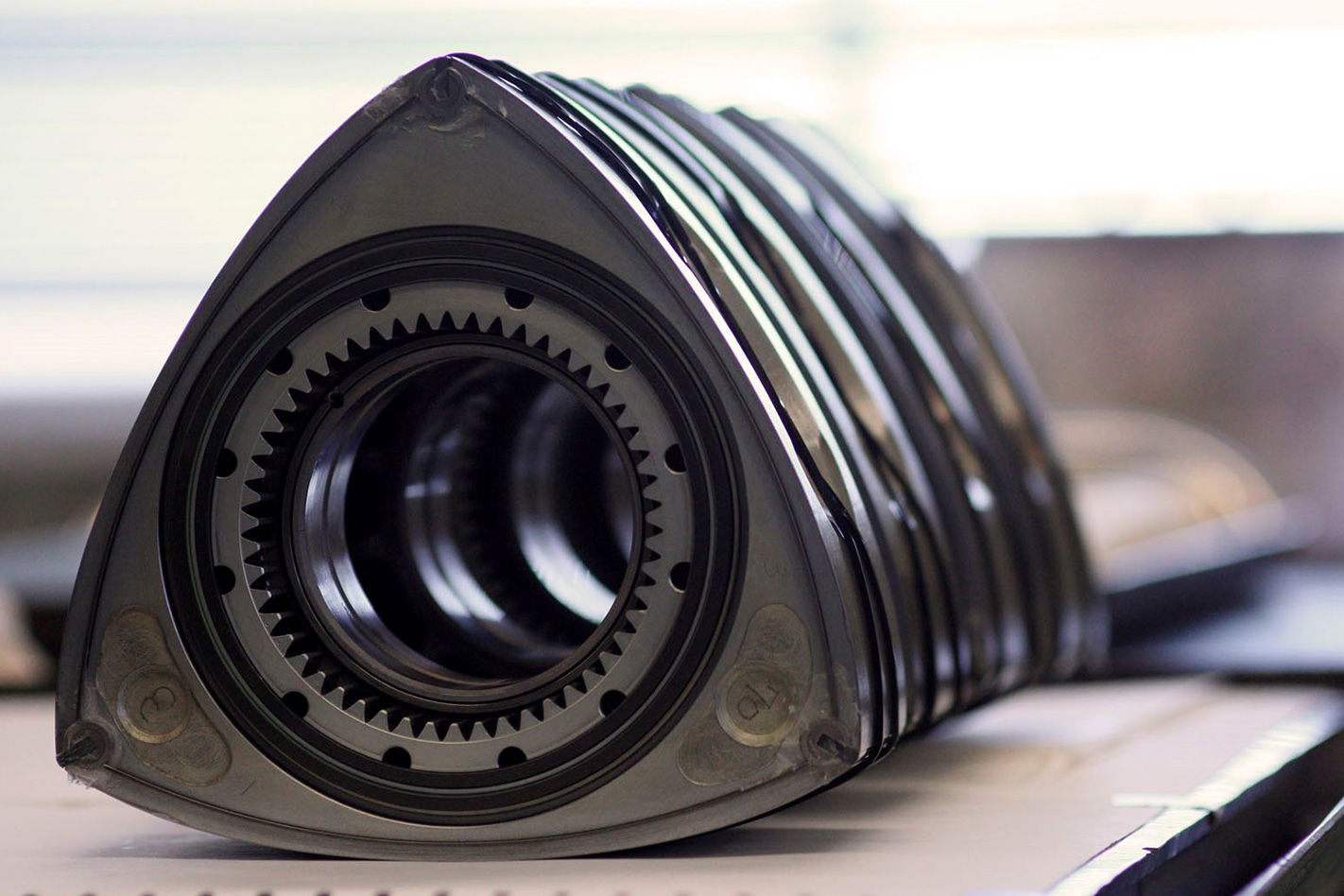
Following the battery version, a rotary engine-powered range-extender MX-30 will be coming to Australia in limited numbers, resurrecting Mazda’s trademark engine a decade after it was discontinued with the departure of the RX-8.
Intriguingly, Doak hinted at developments the rotary variant will initiate after its global launch both globally and locally.
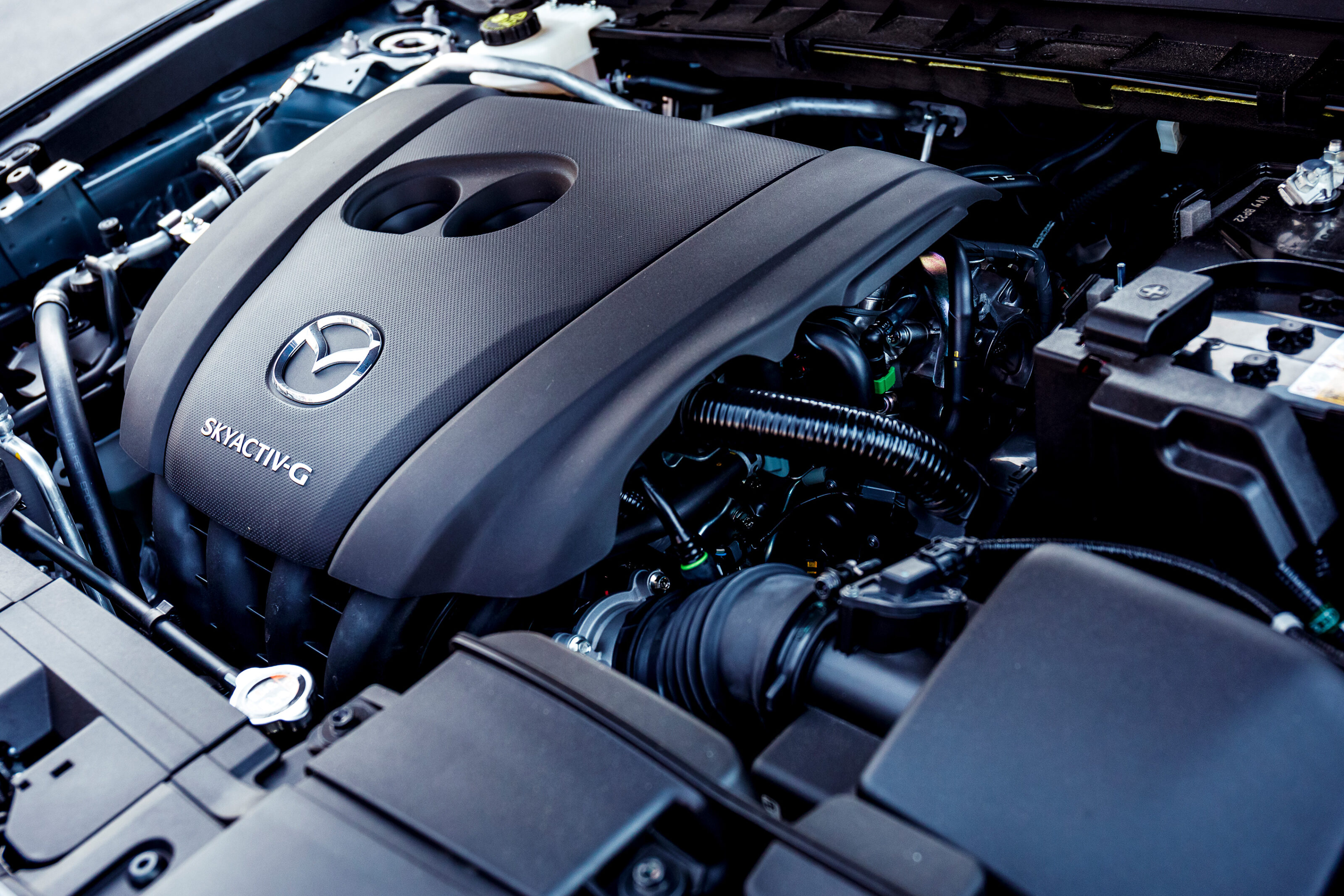
“MX-30 range extender is coming out globally this year and we’re still in line for that car,” he said. “It’s a unique proposition around the world. There’s some interesting thinking behind that car that can be used in other applications down the track.”
It follows confirmation from MX-30 program manager Tomiko Takeuchi last year that the company was looking at a diverse range of alternative applications for its revenant rotary.
“Developing EVs using the rotary engine as the power generator and also offering a plug-in electric vehicle (PEV) like the MX-30 this time, we can think of different ways of applying the rotary engine and we are going to study what we can do in the future,” she said.
Plug-in hybrids certainly will provide a stepping stone to the next pure electric Mazdas, the first of which will take the form of the all-new CX-60 due for reveal this week and arriving in Australian showrooms later in the year.
Paired with new inline six-cylinder engines and rear-drive powertrains, the mid-sized coupe SUV will represent the first PHEV for Mazda, but further plug-ins will depend on how the market reacts to its first, said Doak.
“That market and technology is emerging here. Plug-ins outsold diesel in Europe last year…that shows maybe where the train will come here. We’ve still got to do some more specific research and what that means, but it’s going to be interesting.”
Mazda is embracing the various approaches to electrification and exploring multiple options, but the development of more advanced petrol engines remains an important part of its strategy in parallel with electric drivetrain research.
According to Doak, petrol power will continue to have a place in Mazda model line-ups until the transition to renewable energy is complete and EVs offer the true zero-emissions motoring many fence-sitters are waiting for.
“Until you’re filling your EV up with renewables, there’s a very clear argument that you’re not doing anything for CO2 emissions and an efficient engine can be better,” he said. “If you fill up your Tesla with brown coal from the Latrobe Valley, you’re about 200 grams per kilometre. Fill up your Mazda 3 (with petrol) and you’re about 150g per kilometre. Which one’s better?
“That’s changing and hopefully it changes quickly. Where there are a lot of renewables we will have vehicles that are suitable, and where there aren’t we will continue to improve the internal combustion engine”.
In addition to its significant rotary engine initiatives, Mazda recently filed a patent for a new two-stroke petrol engine, continues to explore incremental efficiency advances such as its Skyactiv-X compression ignition petrol engine, and is also exploring the potential of synthetic fuels.
- Introduction: Point to prove
- Month Two: It’s Not You, It’s Me
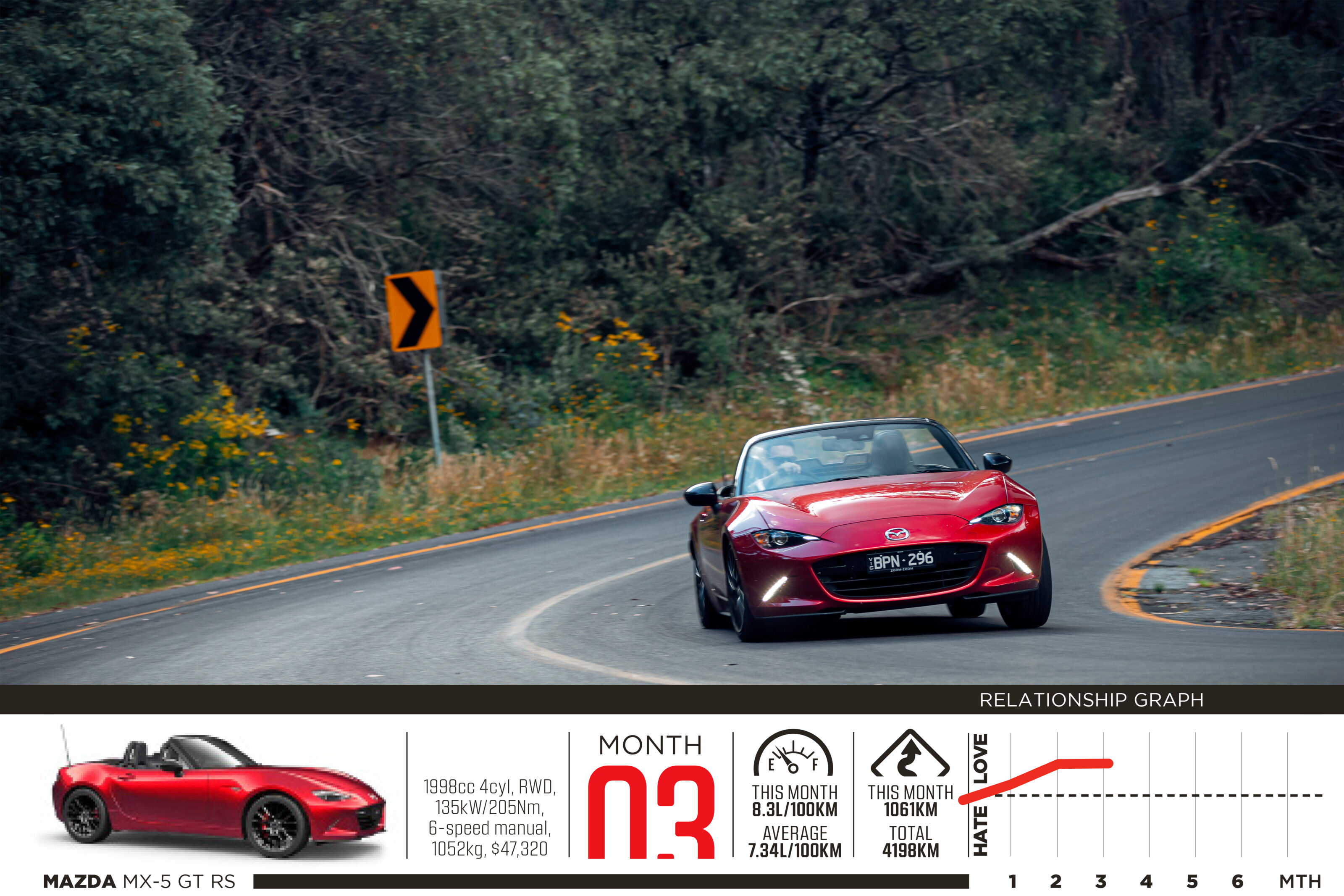
- Month Three: The Right Fit?
Introduction: Point to Prove
Plucky little MX-5 enters the MOTOR garage
It’s time to put my assertion to the test. A few years ago I declared to fellow staffers at MOTOR HQ that I’d rather live with a Mazda MX-5 every day over a Toyota 86/Subaru BRZ.
This was around the time former Editor, Dylan Campbell, was running a base-model manual 86 as a long termer. It’s a car I also enjoyed plenty of seat time in. My theory being that the 86 was more of a chore at slow speeds than the iconic Roaster.
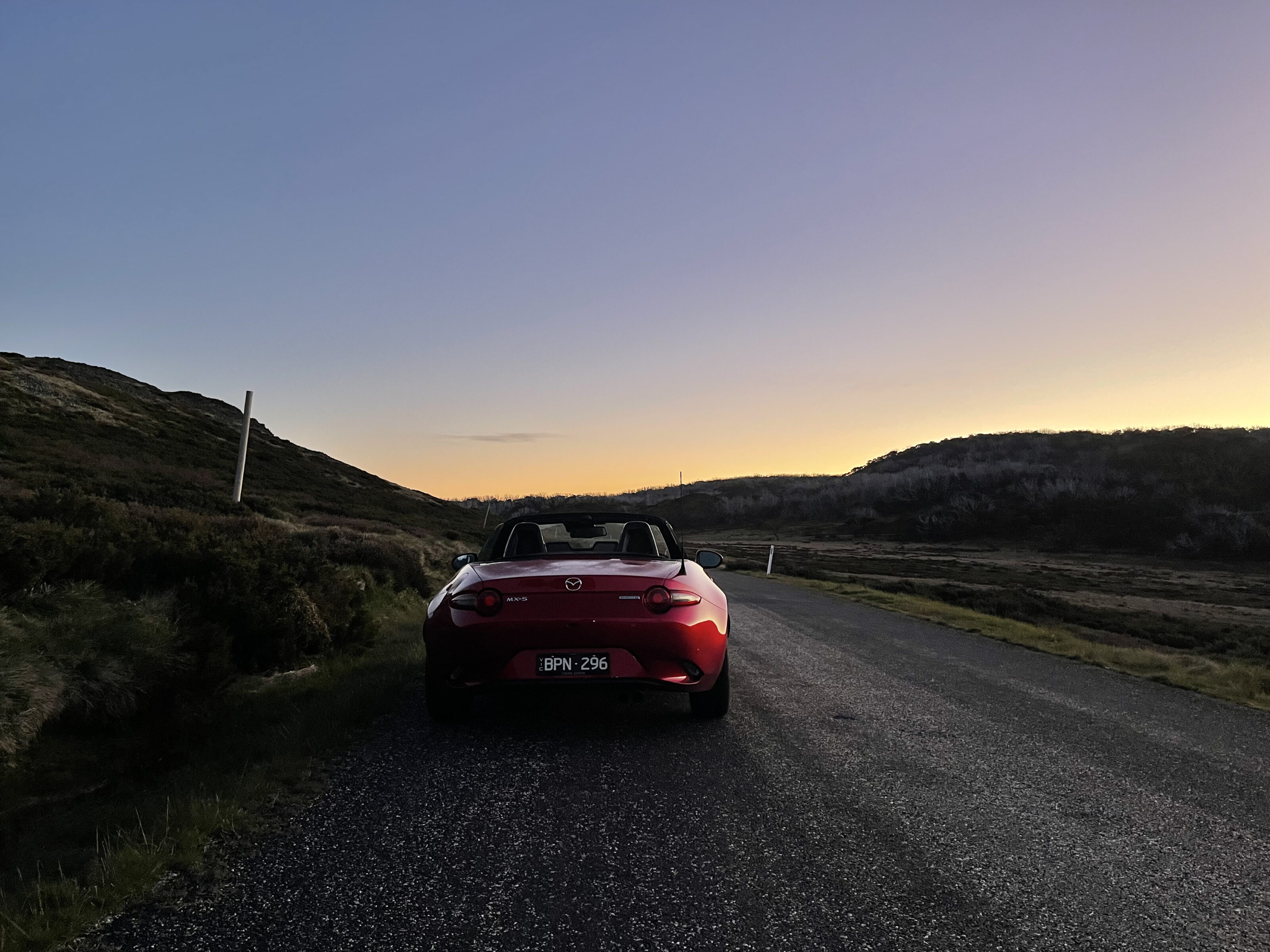
Fast forward through a pandemic to current times and I’m now the ‘owner’ of a Mazda MX-5 GT RS for the next few months. Or, in a roundabout way, it’s the pseudo ‘putting my money where my mouth is’ scenario. What you should also know is that I’m 186cm tall, or 6’1” on the old scale, and currently running a body weighed down by more than a few Covid kegs. Therefore I’m going to thoroughly test the ingress and egress of the diminutive interior.
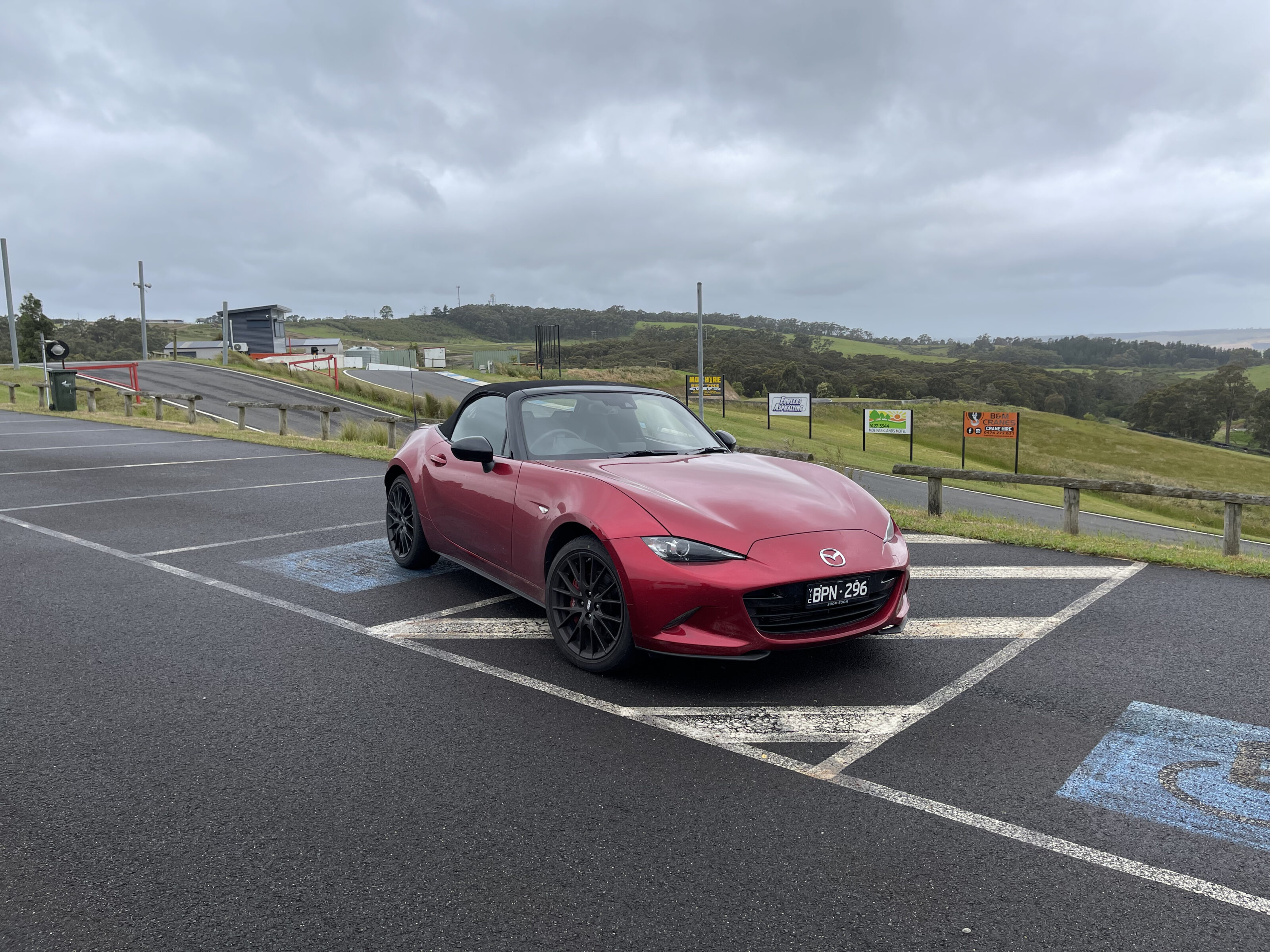
That cabin is tied to the latest tuned MX-5 variant, the $47,020 GT RS. Essentially, this is the top-tier ‘Miata’ with a manually folding fabric roof. For driving enthusiasts, it ticks a lot of boxes – front-engined, rear-wheel drive and three pedals. And, hallelujah, it’s light. We’re talking 1052kg light, which translates to a healthy 128kW/tonne given that the ‘big block’ 1998cc four-pot produces 135kW at a lofty 7000rpm. Torque isn’t in abundance at 205Nm, but again, the lithe body helps.
However, facts are facts – the GT RS is not going to blow away much in a straight line. But you’re missing the point if you think that’s its purpose.
The RS designation isn’t a mere sticker pack. Actually, there is no RS nomenclature to be seen. Those in the know will understand that the forged, cross-spoke 17-inch alloy wheels in a dark hue are the biggest giveaway. Then there are the Brembo brakes with red calipers for another subtle hint that this is a more focused MX-5.
Keener eyes will see a reduced amount of body roll due to the stiffer Bilstein dampers and strut brace. Yet, the soul of the MX-5 hasn’t been lost, because while the additions add torsional rigidity, the somewhat soft nature remains. And so does the surprisingly compliant ride quality.
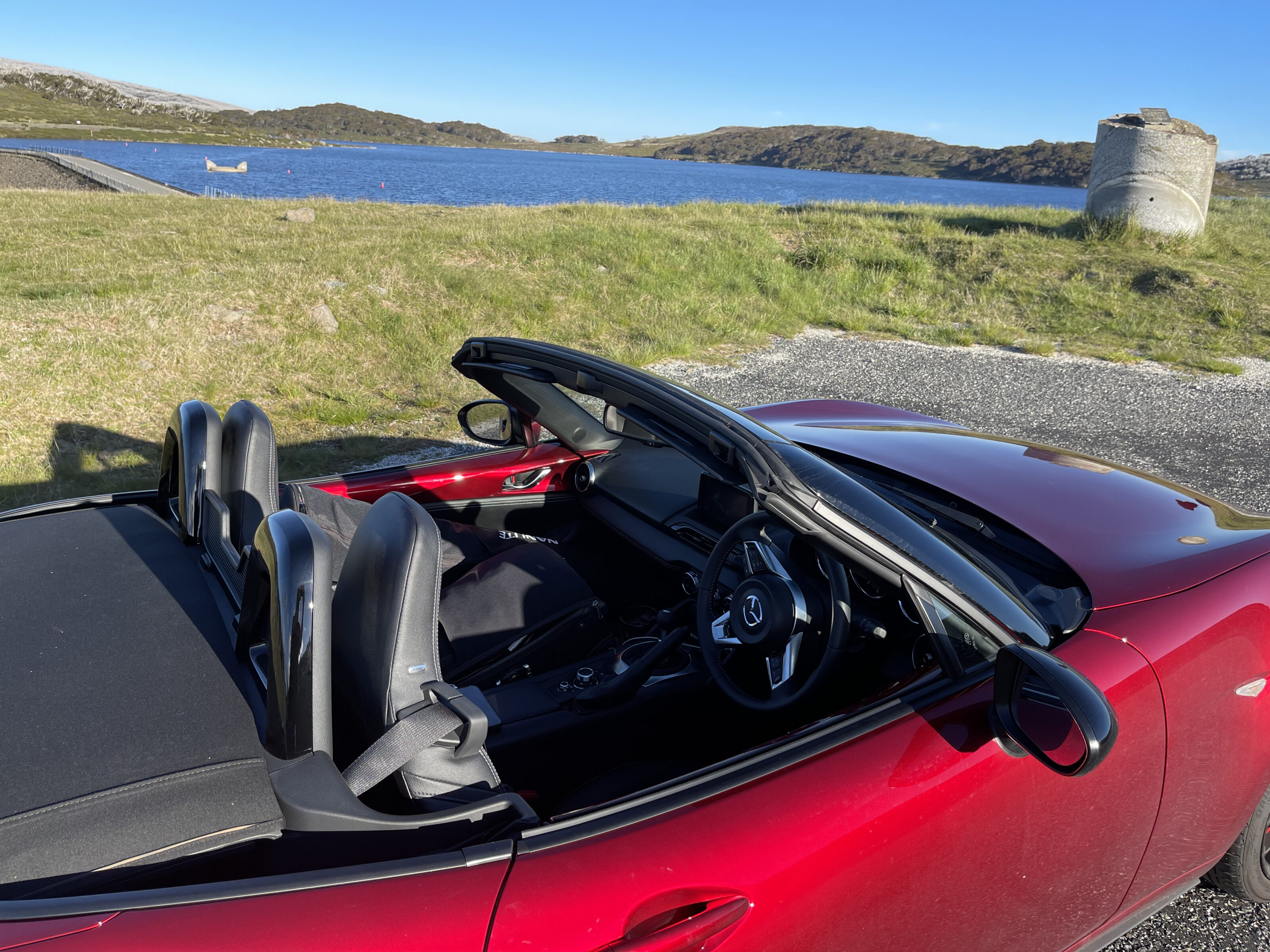
I had every intention of sidestepping the image issue, but the more I think about it, the more the ‘hairdresser’s car’ tagline bugs me. A late-night, roof-down drive with a mate brought this into stark reality when a St Kilda local decided to voice his homophobic slur. Admittedly, I could smell the alcohol on him from a few metres away. However, it’s hard to not analyse the almost stigma attached to the MX-5. What’s heartening is that ‘car people’ understand the little Mazda and quite universally heap it with the praise its due.
It’s jam-packed full of driver’s car substance. I took it along to a driving weekend with mates, all of whom are said ‘car people’, and was buoyed by the amount of interest it generated. Many threw glowing positives at the Mazda Roadster – especially after finding it hard to keep pace with the MX-5 on the relentless Eildon-Jamieson Road. If you haven’t driven it, think of it as a 47.6km stretch akin to an automotive washing machine.
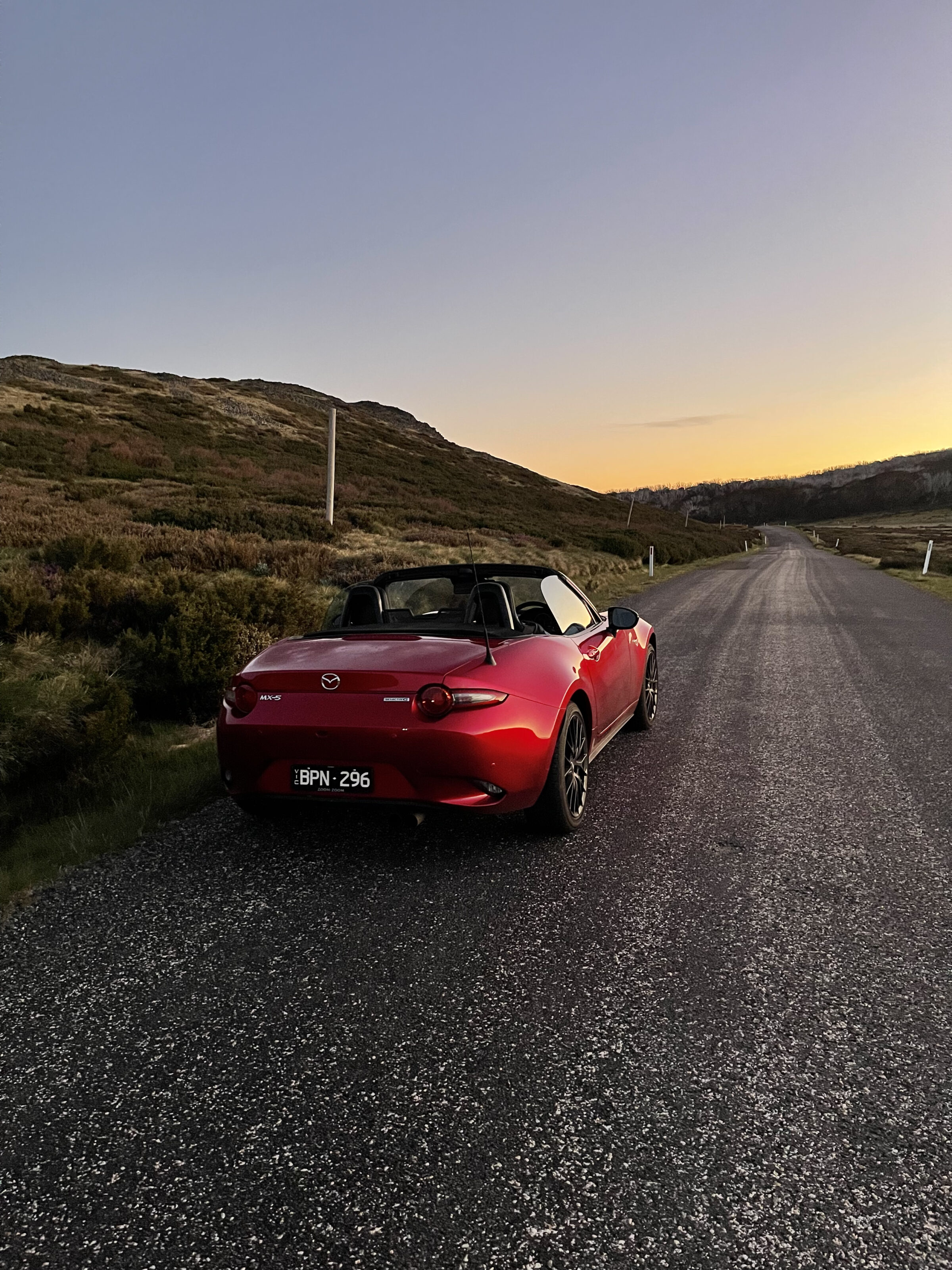
The equally endearing and engaging dynamics are already a boon, but the leather-clad seats lack side bolstering and the road noise is, quite frankly, horrendous with the roof up on the highway. Still, the MX-5 reminds me of what back-to-basics driving is all about. The six-speed manual’s slick shift action makes any mundane commute enjoyable and the drop-top’s plucky nature has me chortling when rivals with sticker prices far greater would fail to generate a slight smile.
I feel vindicated by the fact that fellow MOTOR journo, Alex Affat, agrees with me that the Mazda is the better daily at low speeds. High praise given he daily drove, and tracked, a BRZ for a few years.
So, while the relationship with BPN296 is already starting well, it’s potentially only going to get better. Next month we’re heading to the track. – TG
Things we love:
- Plucky engine
- Fun dynamics
- Feel-good factor
- Road noise
- Lack of bolstering
- Fitting in it
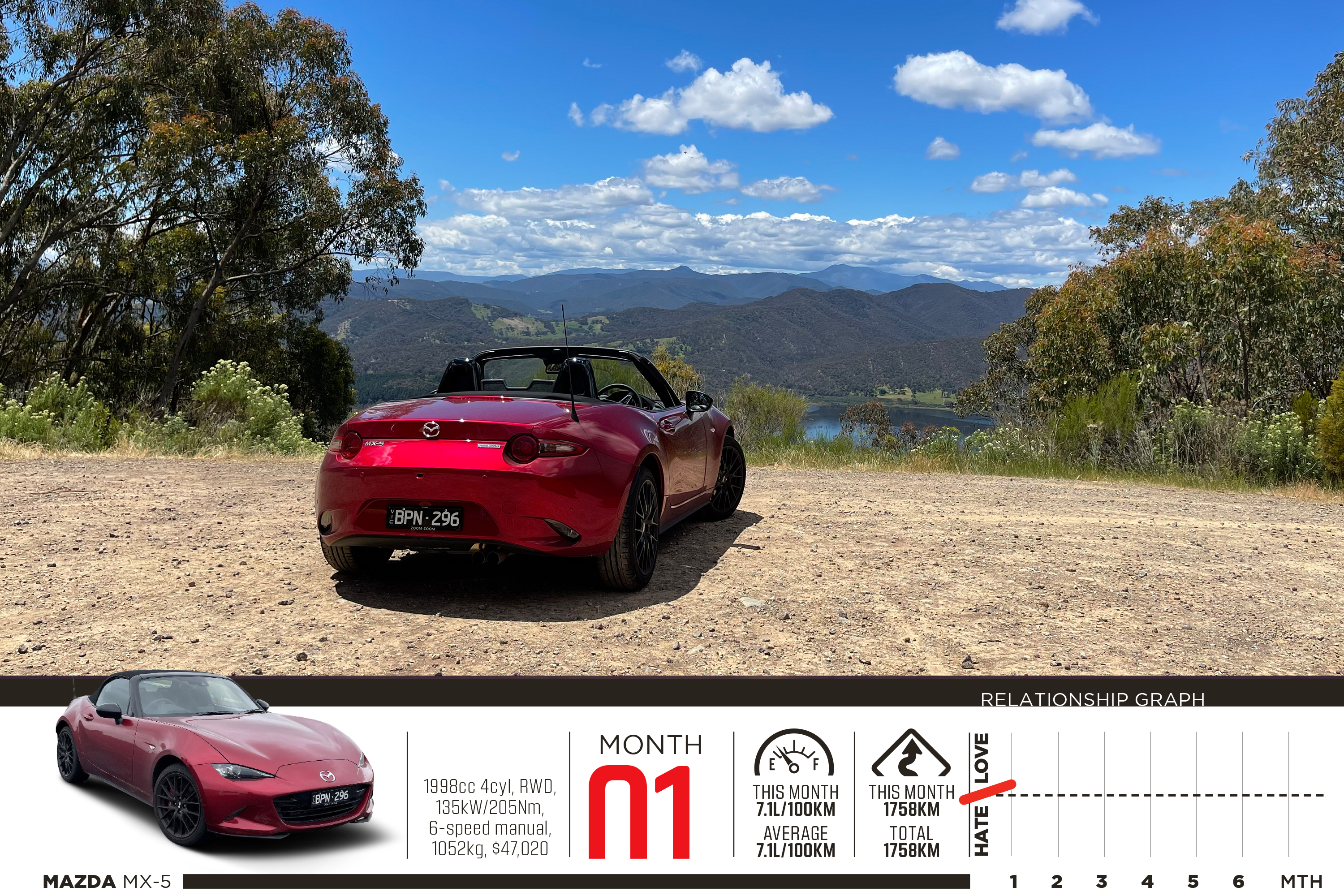
Month Two: It’s Not You, It’s Me
Cutting laps on track leads to introspection and brutal self assessment
Something’s not quite adding up. And I’m annoyed I’m missing the point. On one hand I have the knowledge that the MX-5 has been adorned with a perfect 10 in terms of a MOTOR track rating combined with my impressions from myriad Alpine kays.
On the other I’ve just got out of the mighty Miata from a session at Haunted Hills and, pause for gasps, I didn’t like it. What’s more, I have a beaming Andy Enright staring at me eagerly awaiting my impressions. Gulp.
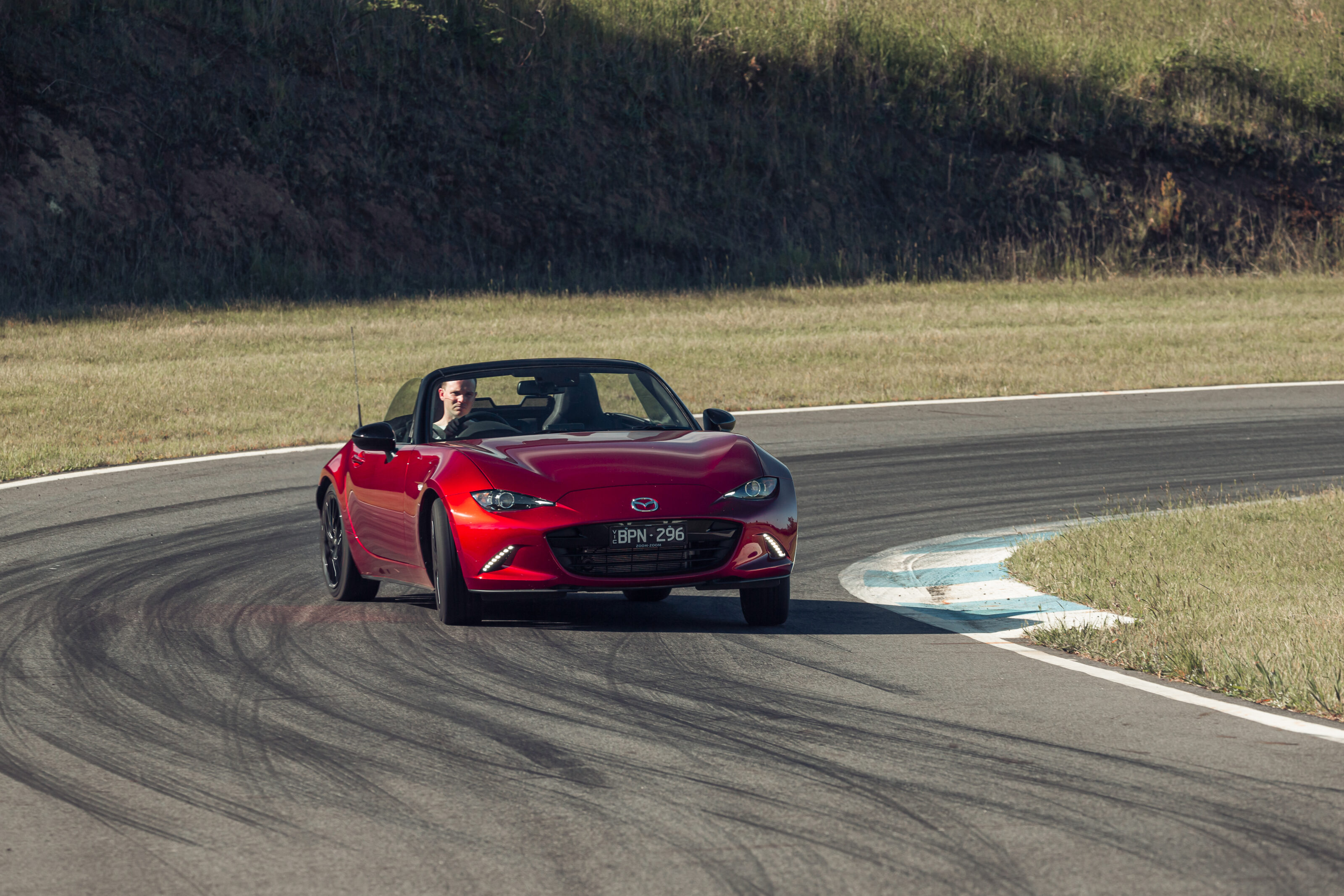
Now, let me backtrack and add some context. Bryant Park, or Haunted Hills as it’s also aptly known, isn’t an easy layout to master – actually, any of the circuit configurations for that matter. The full clockwise course we use might only be 1.4km long, but to downplay it based on length is an oversight. So is viewing the track map on a screen. The real-world geographical rise and fall means the reality is far more daunting than the virtual illustration. It’s also damp today. And cold.
Yet, faced with divulging some form of insightful assessment, I muster a simple “it’s so much fun”. Points for detail and truth telling, I think not. The problem was me, and not the car.
Not being familiar with the technical track layout meant that I was arriving too fast into tightening corners and inducing understeer. At the same time, I was also selecting the wrong gear for corners with steep inclines post-apex, meaning the 2.0-litre would get caught in the lower rev range that’s somewhat bereft of torque (there is only 205Nm to access after all). In essence, I lied about having fun. I didn’t at all.
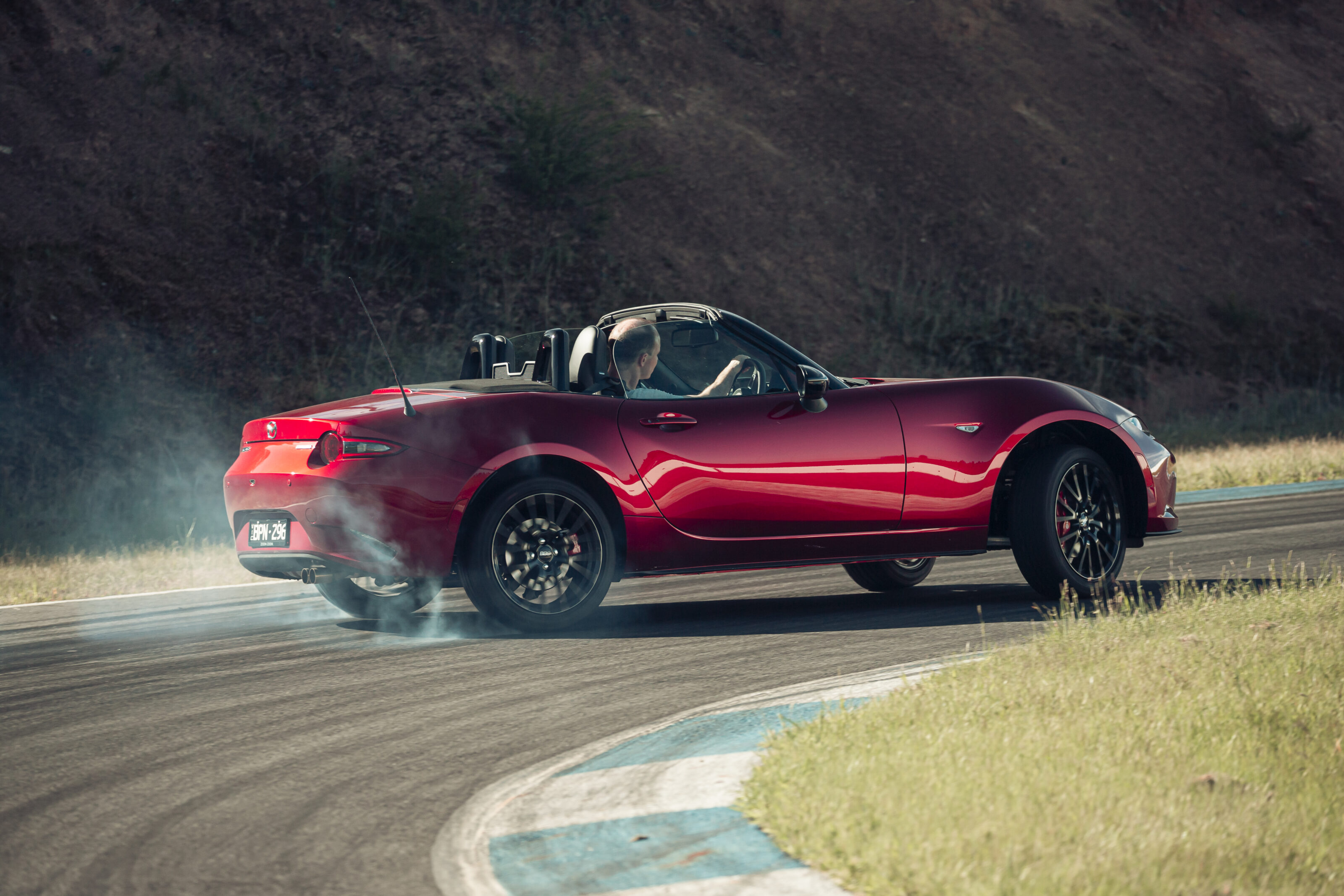
Clearly, the first session taught me what not to do. And reminded me of the fact that the driver, despite how acclaimed the steed, remains the core element to not only going fast, but also gaining enjoyment out of the experience. It’s hard to admit, but BNP296 was behaving badly because of me.
Taking time out to chat with Andy and gain valuable pointers while also conducting some self-assessment makes all the difference. Luckily the video team here to film other goodies (check out the MOTOR YouTube channel) are still setting up, so I head out for a second session.
The experience is night-and-day different. Not only has the gale-force wind mostly dried the surface, but my brain has wrapped its head around the track. Basically, I now know where it goes. I’m no longer offering up reactionary inputs. The MX-5 comes alive.
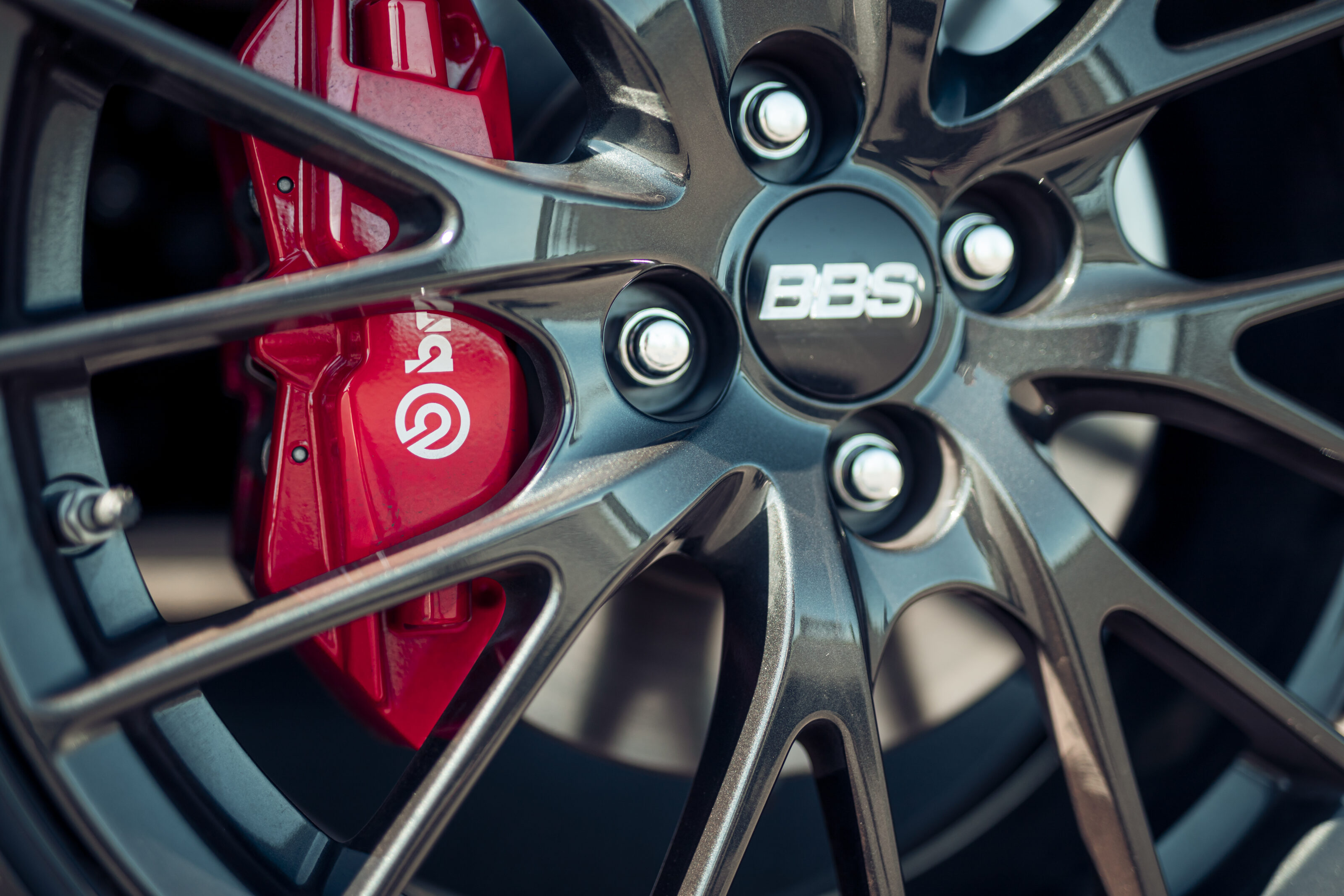
Being able to anticipate the road ahead allows me to work with the trademark body roll of the roadster. Yes, the RS gains a stiffer Bilstein suspension setup, but managing weight transfer alleviates awkward instances of pitch. Not that there is much heft to worry about with the one-tonne mass.
Instead of driving it on the nose with myriad apexes missed, engaging the rear axle livens the experience to no end. While 135kW might not seem like much, the SkyActiv unit is happy to be extended to redline and the LSD allows for on-throttle drift action.
Plus, there is a ‘rightness’ to all the controls, from the superb short-throw six-speed manual and the light, yet tactile steering. With only 1052kg to arrest, the Brembo brakes stack up well while the pedal placement allows for snappy heel-and-toe downchanges – when the driver gets it right… Even with the fabric roof down, the experience isn’t sullied.
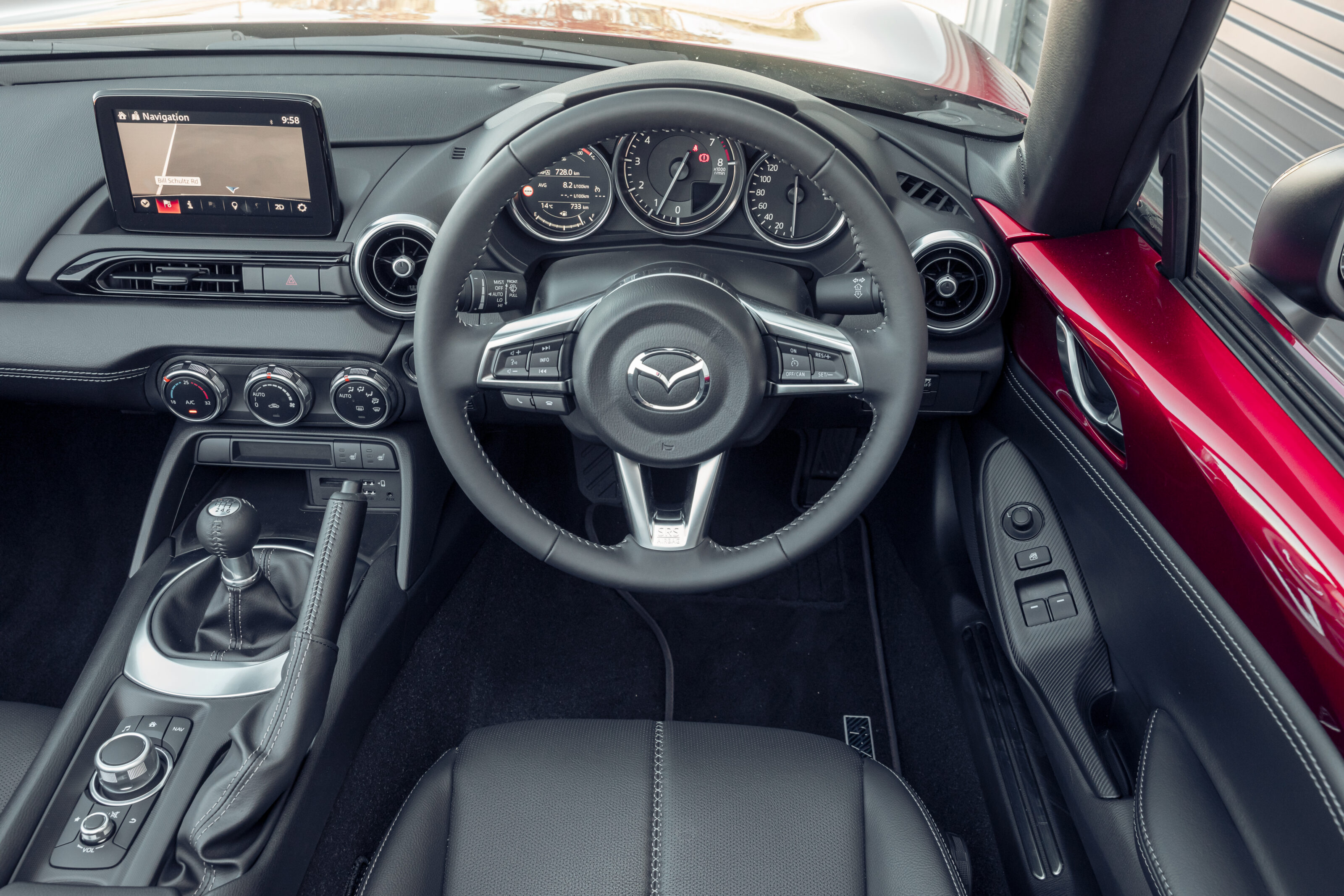
After two wildly contrasting sessions, I can see why the MX-5 elicits such high praise from those in the know and I can understand how it gained its impeccable track rating. It’s bloody brilliant.
Yet, refreshingly, you as the driver also have to rise to meet it – flattery without hard graft isn’t part of the Jinba ittai philosophy. My bruised knees, from holding myself in the poorly bolstered seats, are proof of the effort exuded. It all adds up after all. – TG
Things we love:
- Playful dynamics
- Ease of use
- Remains frugal
- Bruised knees
- Lacklustre sound
- Road noise
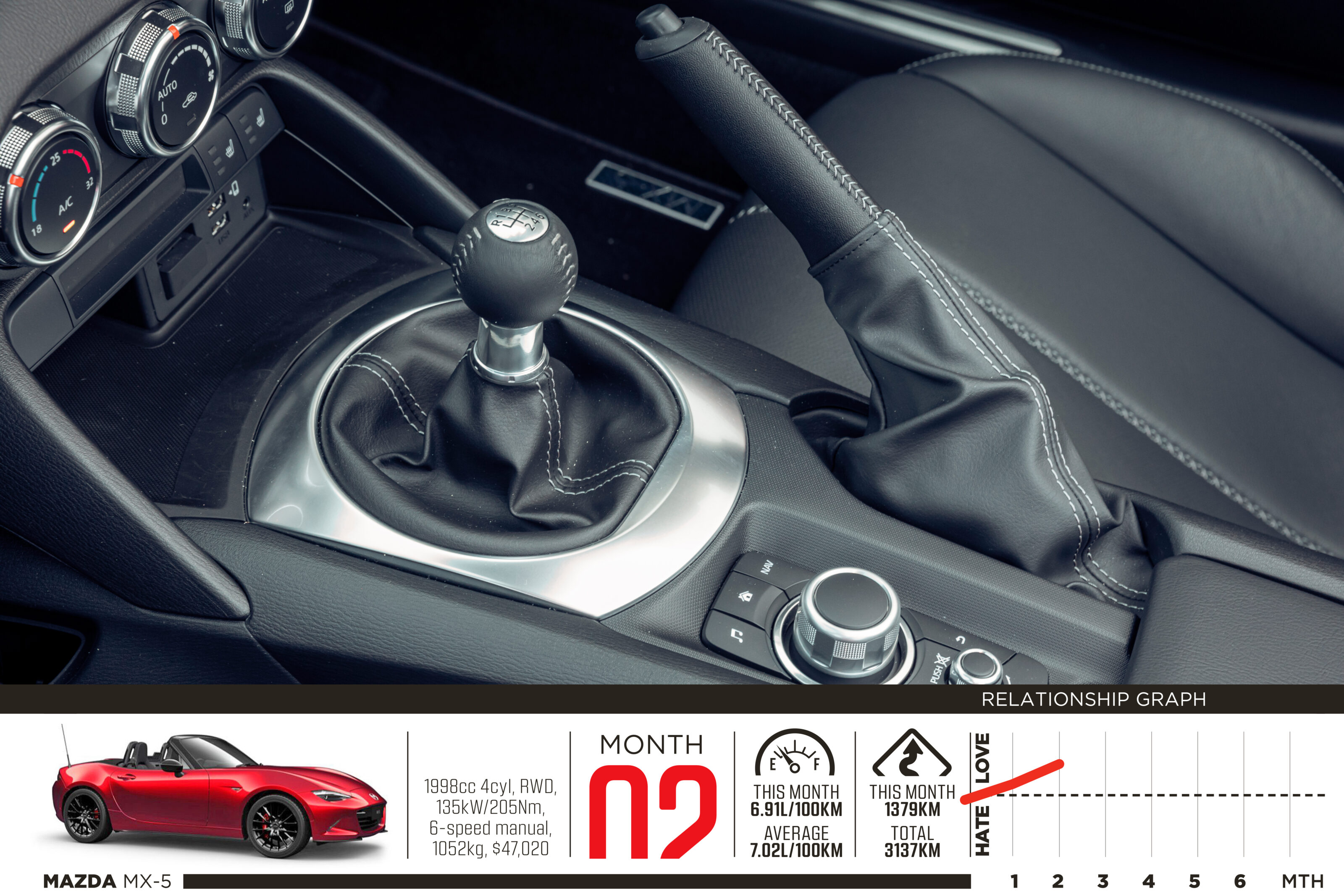
Month Three: The Right Fit?
Driver comfort doesn’t apply to all shapes and sizes
So far I’ve learnt a lot about ‘my’ MX-5 on many kilometres of twisty roads, a few race tracks and the odd highway jaunt. I’ve even learnt a lot about my own driving. However, after making some bold claims in my first update (January 2022), the shine of actually living with BPN296 has started to dull – but only in terms of ergonomics.
For those playing at home, you’d know I said in the drop-top Mazda’s opening stanza that I’d rather live with the mighty Miata than the Toyota 86/BRZ. Now, to cover my own posterior, I’d clarify that by saying I was referring to the previous-gen car, not the brand-spanker that’s just been released locally – in BRZ form, at least.
Seat time in the latest-and-greatest offering from Fuji Heavy Industries pokes holes in my argument.
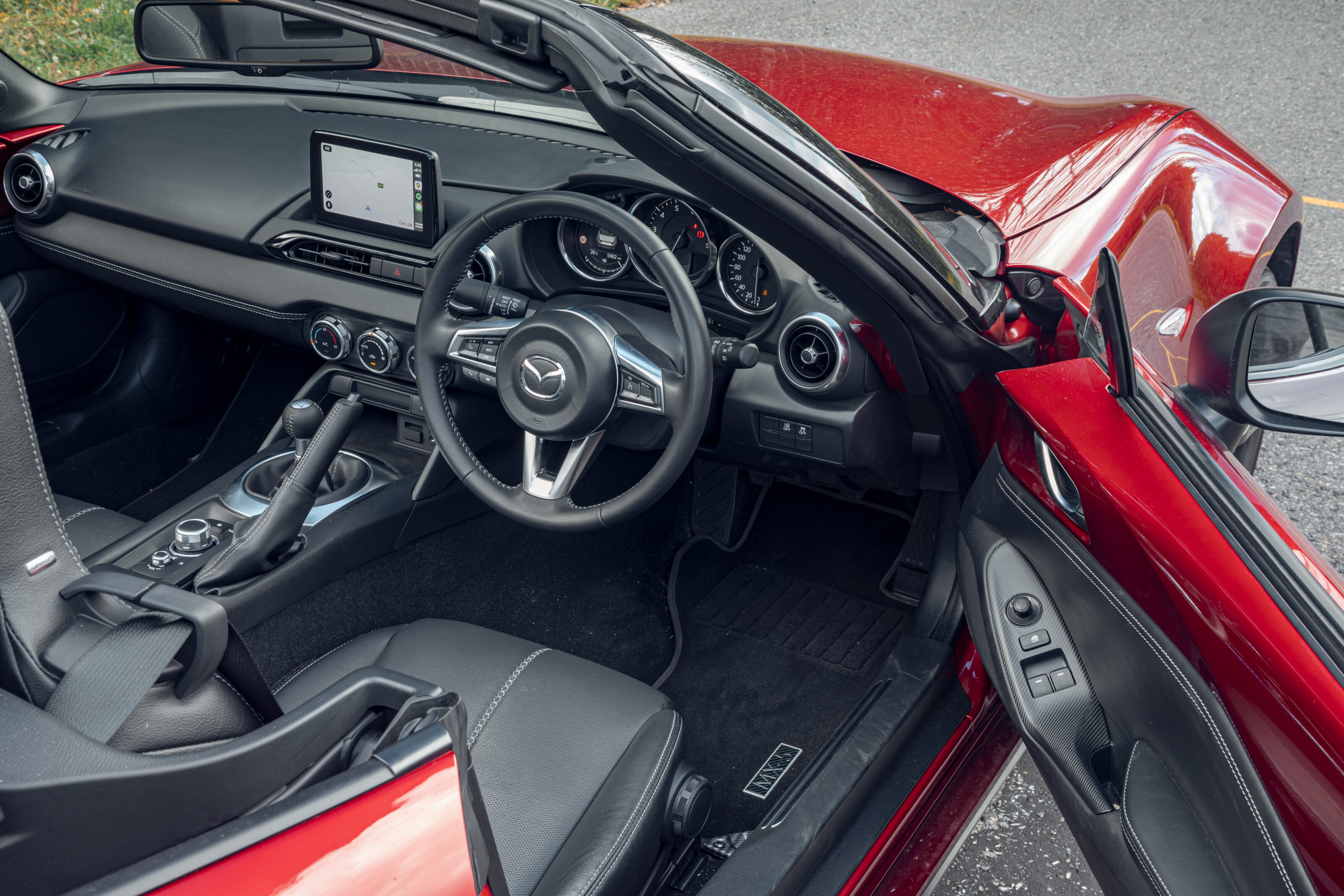
The crux of the issue is that while I’m vertically blessed, I’m also somewhat horizontally challenged (let’s blame the pandemic). It’s a perfect-storm combo for the MX-5. My knees barely clear the dash and my seating position is anything but Lazy Boy recliner. The seats are also narrow with a dearth of bolstering to keep me in place – the slick leather doesn’t help, either.
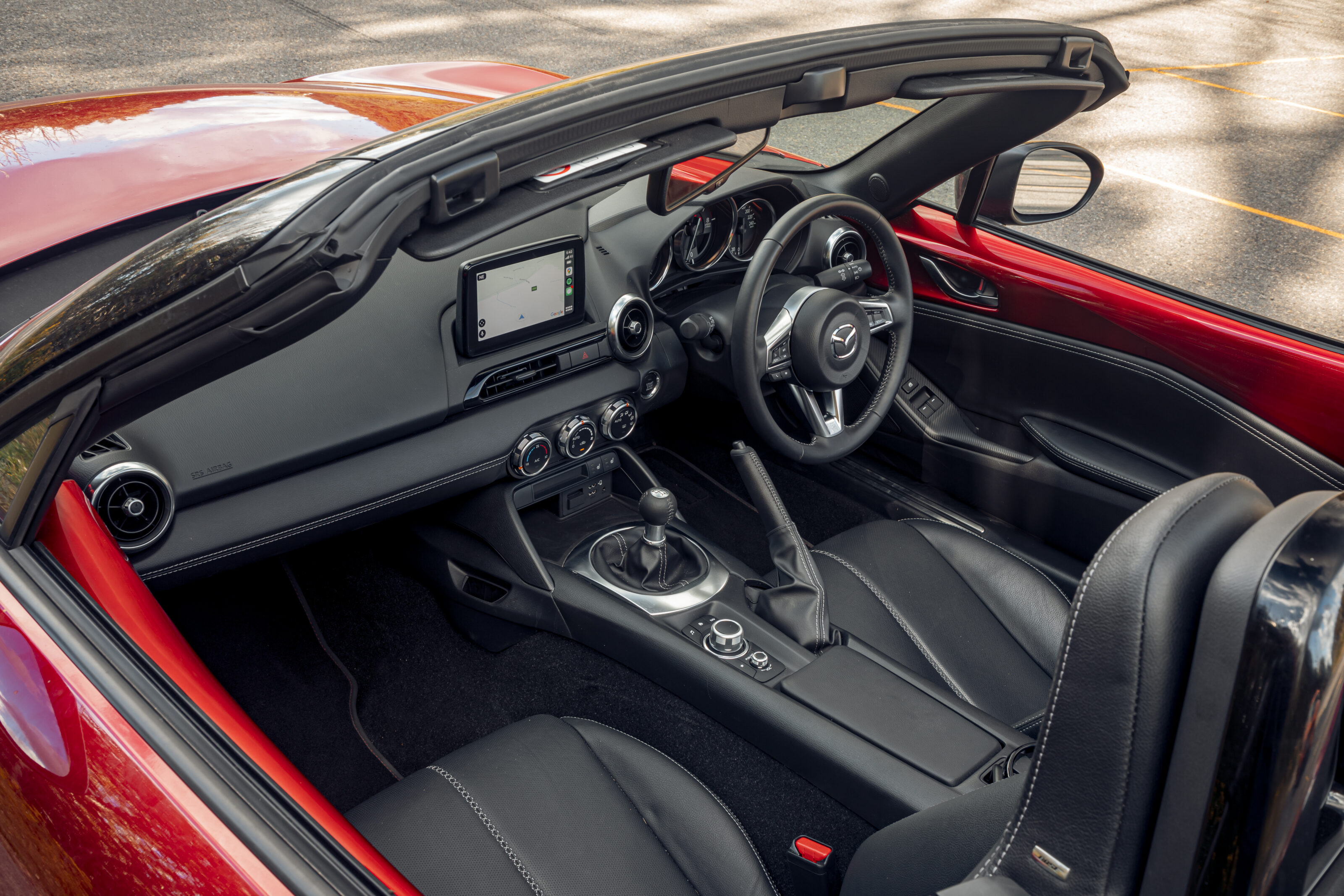
This results in bruised knees as they’re often the only parts of my body able to find purchase apart from my hands on the wheel. Points are regained via the fact the tiller feels delightful in practice with a thin rim and concise controls.
Soft top in place, entering and exiting the diminutive cabin often results in a groan or sigh until I’m appropriately settled. Headroom, of course, isn’t a concern with the manually folding roof stowed, with Mother Nature offering no such barrier to my rather large cranium. It’s also hard not to look like a giant in a Goggomobil.
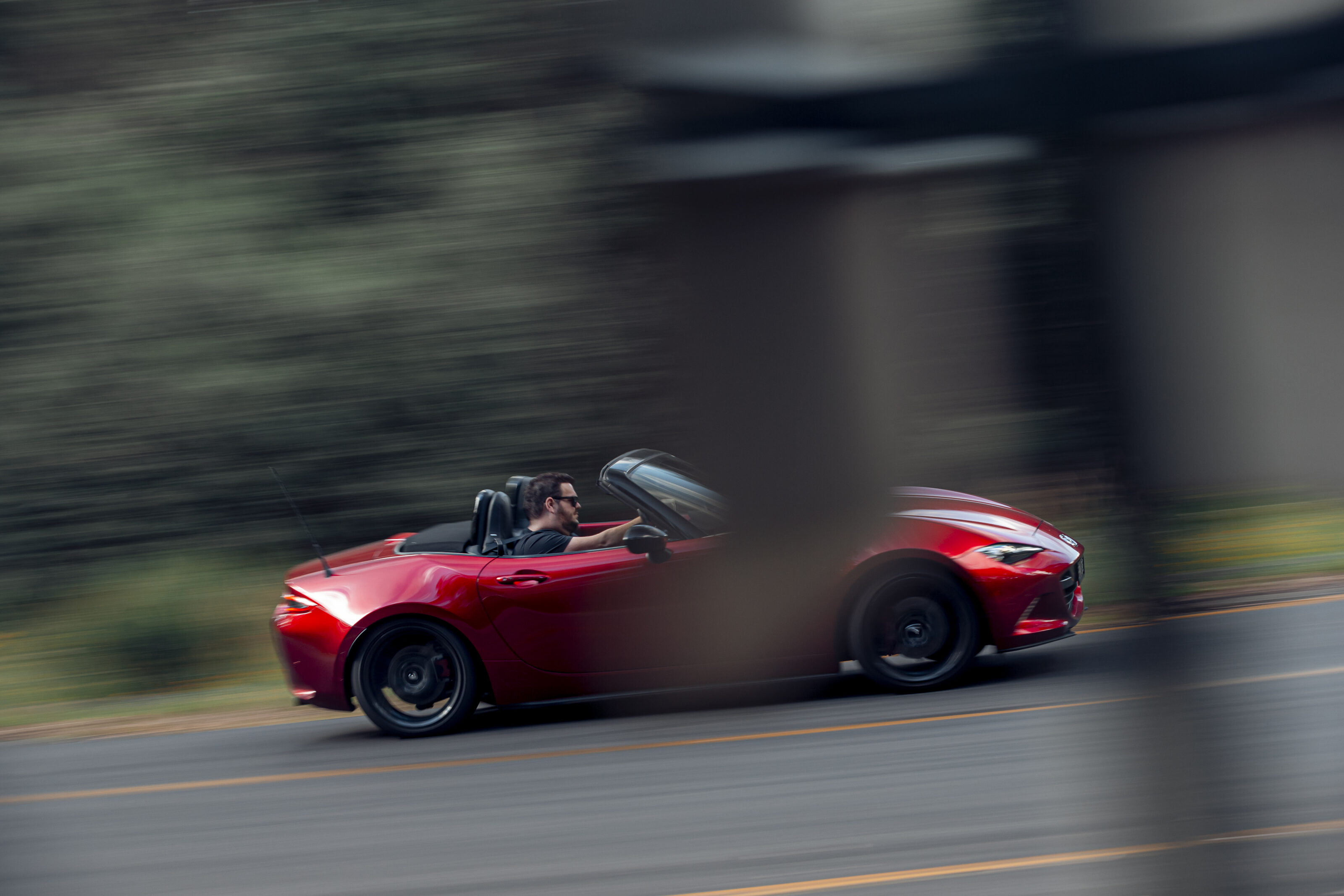
If you’re also on the tall side and intend on doing track days with a helmet, make sure it’s on a sunny day because fitting in the cabin with the roof in place isn’t a one-size-fits-all proposition. Recent PCOTY testing at Phillip Island saw my head bobble around down the main straight like one of those toy dogs you see on the dash of your auntie’s Mitsubishi Lancer.
It is worth noting that while I’m not the lone ranger dealing with these issues at MOTOR HQ, other staffers report fewer grievances – if any at all.
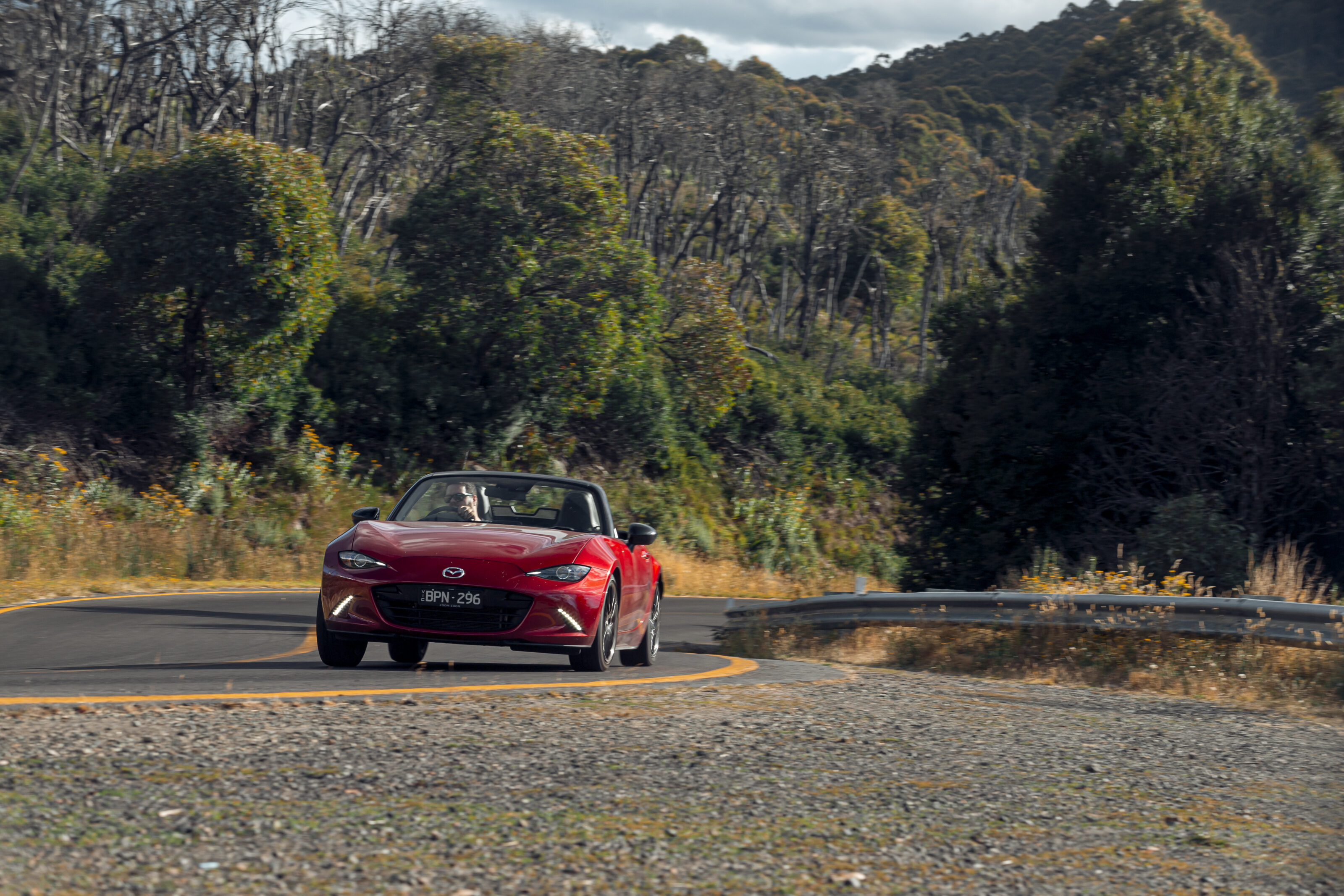
Yet, even for me, it’s hard to not be charmed the simple pleasure of how everything works. The dials for the climate controls are large, the instrument cluster is charmingly analogue, and it’s always good to see an old-school handbrake.
Free of electronics, the fabric roof drops in one fell swoop and remains resolutely uncomplicated. So is the 7.0-inch infotainment screen, although it still uses the older version of Mazda’s MZD Connect system and is only touch-enabled when stationary.
It has been updated to include Apple CarPlay and Android Auto – the former is both wired and wireless. How Mazda packages a nine-speaker Bose sound system in the MX-5 is also a minor miracle.
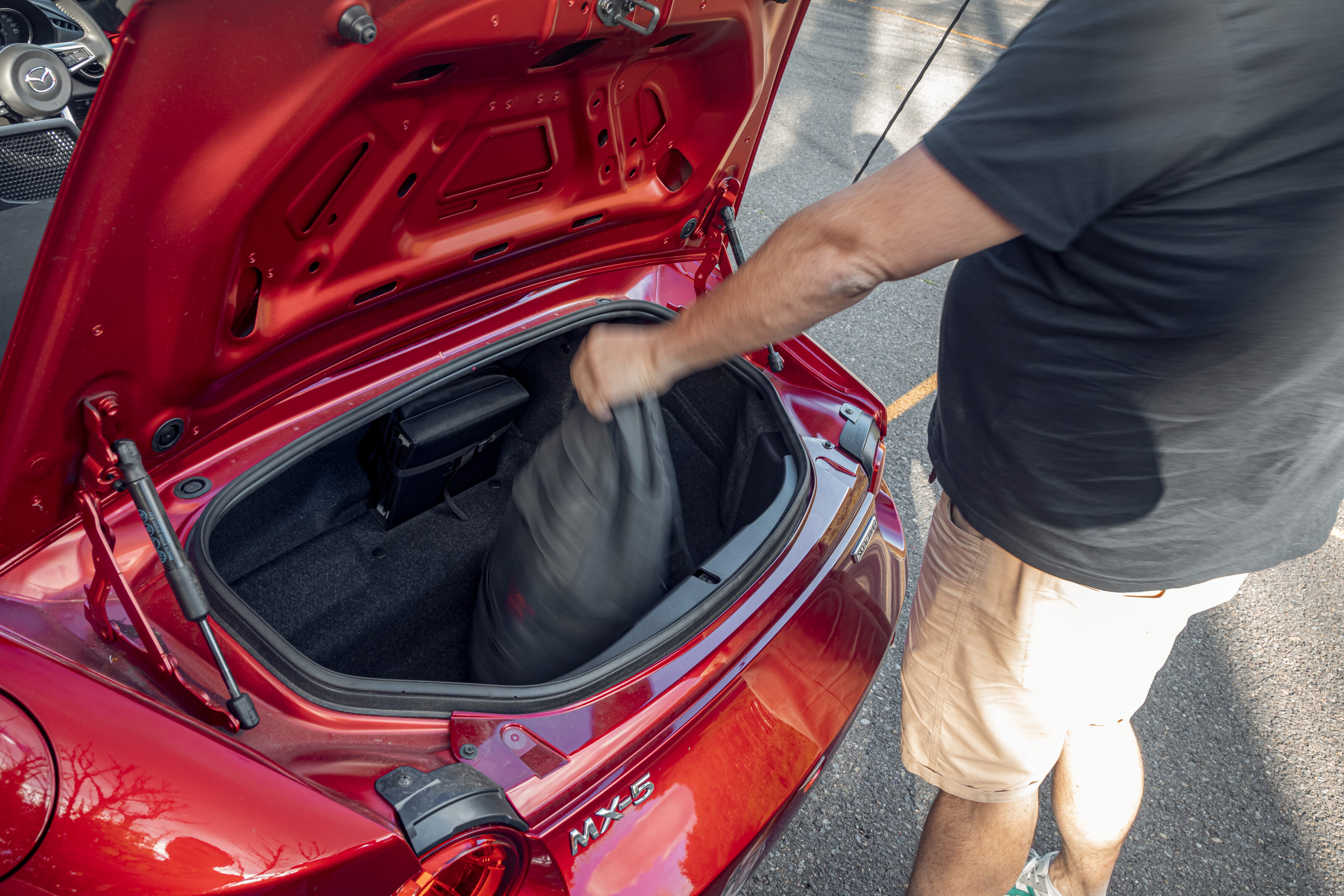
For a roadster so small, you’d expect the boot to be lacking capacity. And it is. Yet, while the claimed 130-litre stowage is tiny, you can fit a medium-sized suitcase and a backpack for weekend jaunts.
Just don’t go thinking you can store your bits and bobs in the glovebox – because there isn’t one. Admittedly, there is a lockable bin nestled between the two seats, but it isn’t the easiest to access and stores the removable cup holders.
Passengers might also find folly in the location of one of the cup holders given that when in place, it reduces already limited legroom.
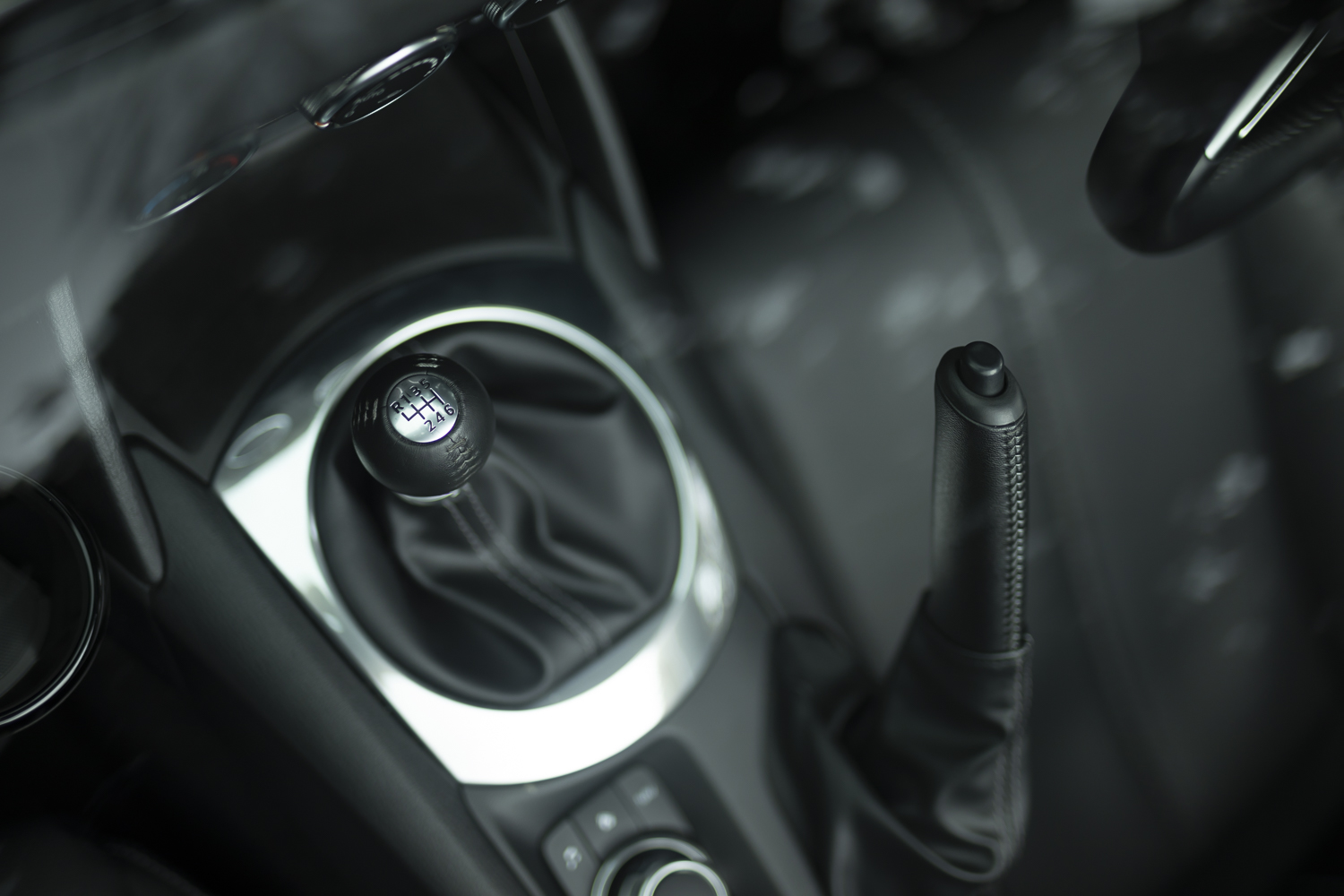
Depending on your physical dimensions, fitting in the MX-5 is a genuine consideration before purchase – especially if you intend on visiting a race track.
However, that’s not to say I don’t think the MX-5 is anything other than brilliant.
‘My’ MX-5 remains an utter joy to drive no matter what the speed because of the way it invokes you to engage and interact with its mechanical controls.
Like a Homer Simpson couch groove, I’ve found a way to make Mazda’s roadster suit me, and vice versa. It’s just taking a little time. – TG
Things we love:
- Old-school controls
- Bose sound
- High fun factor
- Getting in
- Getting out
- Lack of bolstering
“Tesla is a ‘story’ stock. It trades higher or lower based on the story that CEO Elon Musk and other Tesla enthusiasts spread about the company’s potential to completely take over the global auto, energy, technology and transportation industries in the long-term.” So said Wall Street pundit Wayne Duggan last July, when Tesla shares were trading at US$687.20.
As I write, Tesla shares are trading at more than a thousand bucks each, which means Tesla is valued at a trillion American dollars, give or take. Tesla is worth more than three times as much as Toyota, more than seven times as much as Volkswagen, and about 10 times as much as Ford.
Elon’s clearly been telling some good stories lately. Because those numbers simply don’t add up.
Tesla produced just over 936,000 vehicles last year and in 2020 reported its first ever full-year profit in 18 years of operation – US$721 million on revenues of US$31.5 billion. By contrast, those slackers at Toyota only built about 10 times as many vehicles, and in the financial year ended March 31, 2021, the company reported a profit of about US$20 billion on revenues of US$236 billion.
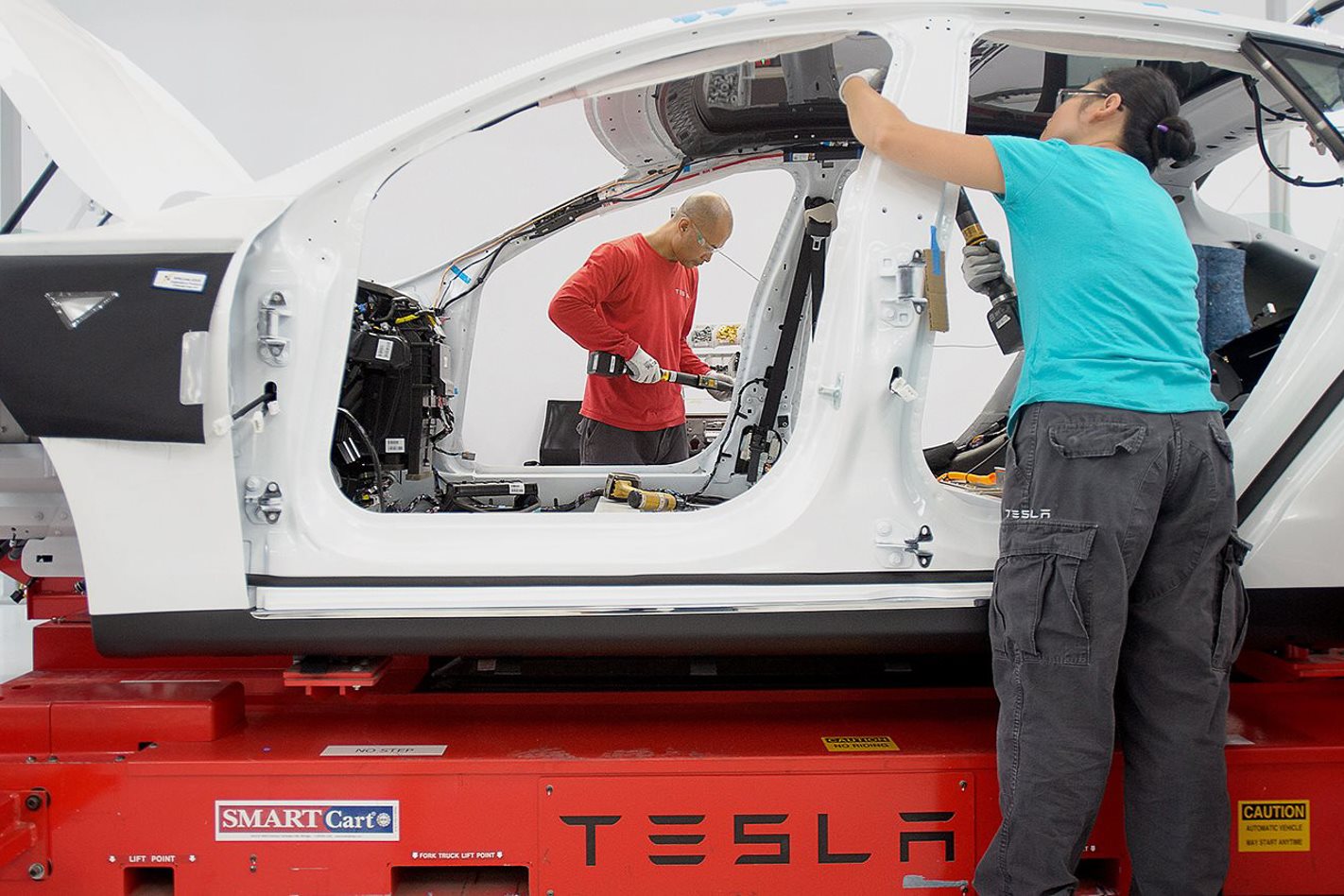
But, but… argue the fanboys, Tesla’s all about the future. Toyota, Volkswagen, Ford, and the rest of the legacy carmakers… they’re history.
Acolytes insist Tesla is the undisputed leader in EV design and technology and will increase its sales and production volumes by 50 percent a year for the foreseeable future. They believe Tesla can make big bucks from things like its power storage business and from allowing other EVs to access its Supercharger network. And then there are the huge profits to come from the robotaxi business once Tesla’s Full Self Driving technology is developed.
Only some of those things are true. And none of those things is a given.
Wall Street corporate finance expert David Trainer reckons Tesla would have to be selling almost 31 million cars a year by 2030 to justify its trillion-dollar valuation. But even if its two new factories in Texas and Berlin are fully on-stream by the end of this year, Tesla’s total production capacity will be less than one-tenth that number.
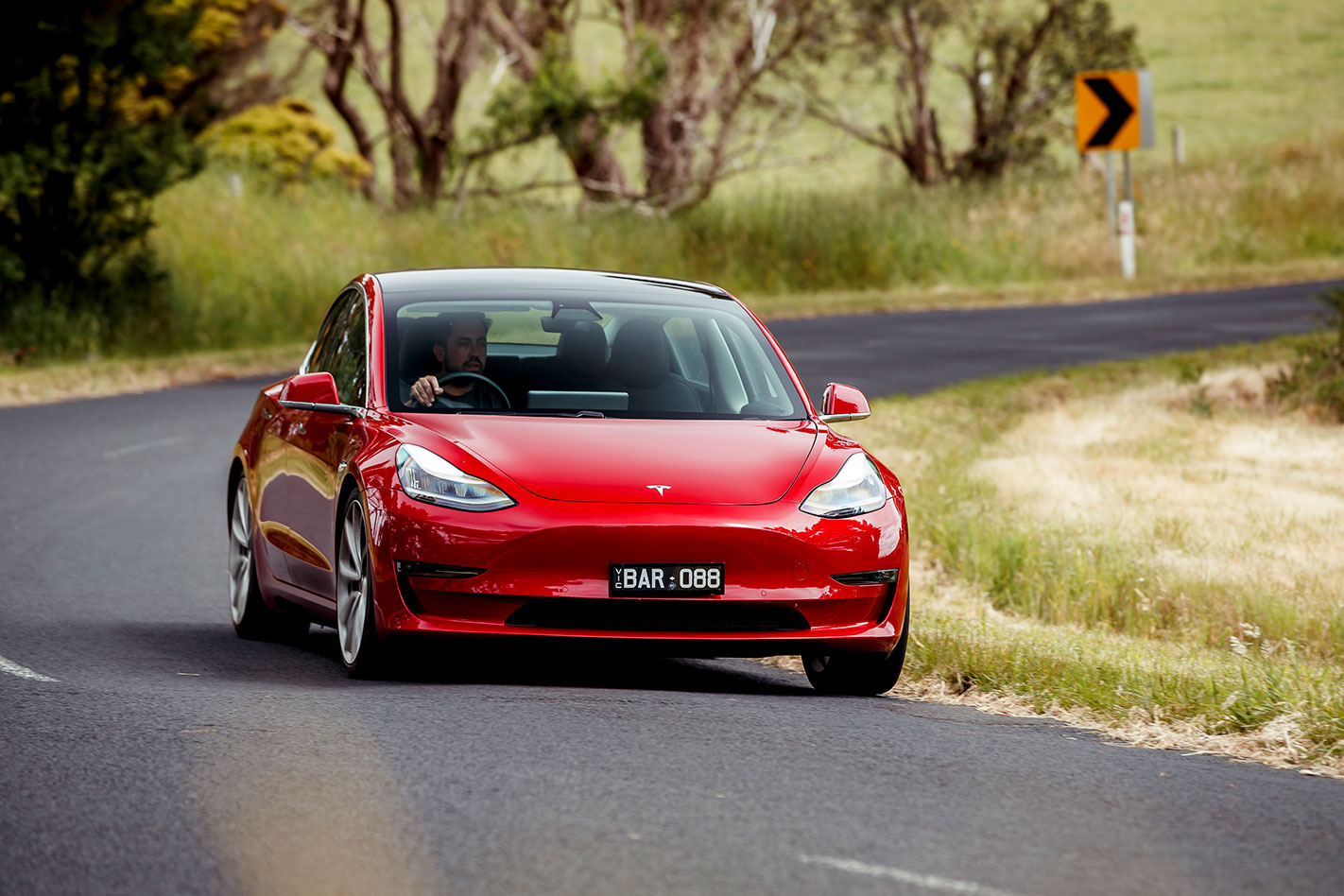
And with analysts calculating the automotive industry will splurge US$515 billion on a swarm of new EVs that will hit the market by the end of the decade, there’s also little evidence Tesla – which has spent less in total on R&D since 2008 than Volkswagen, Toyota, and Mercedes-Benz each spent in 2020 alone – can be anything more than a bit-player in a global EV market estimated to reach 47 million units a year by 2030.
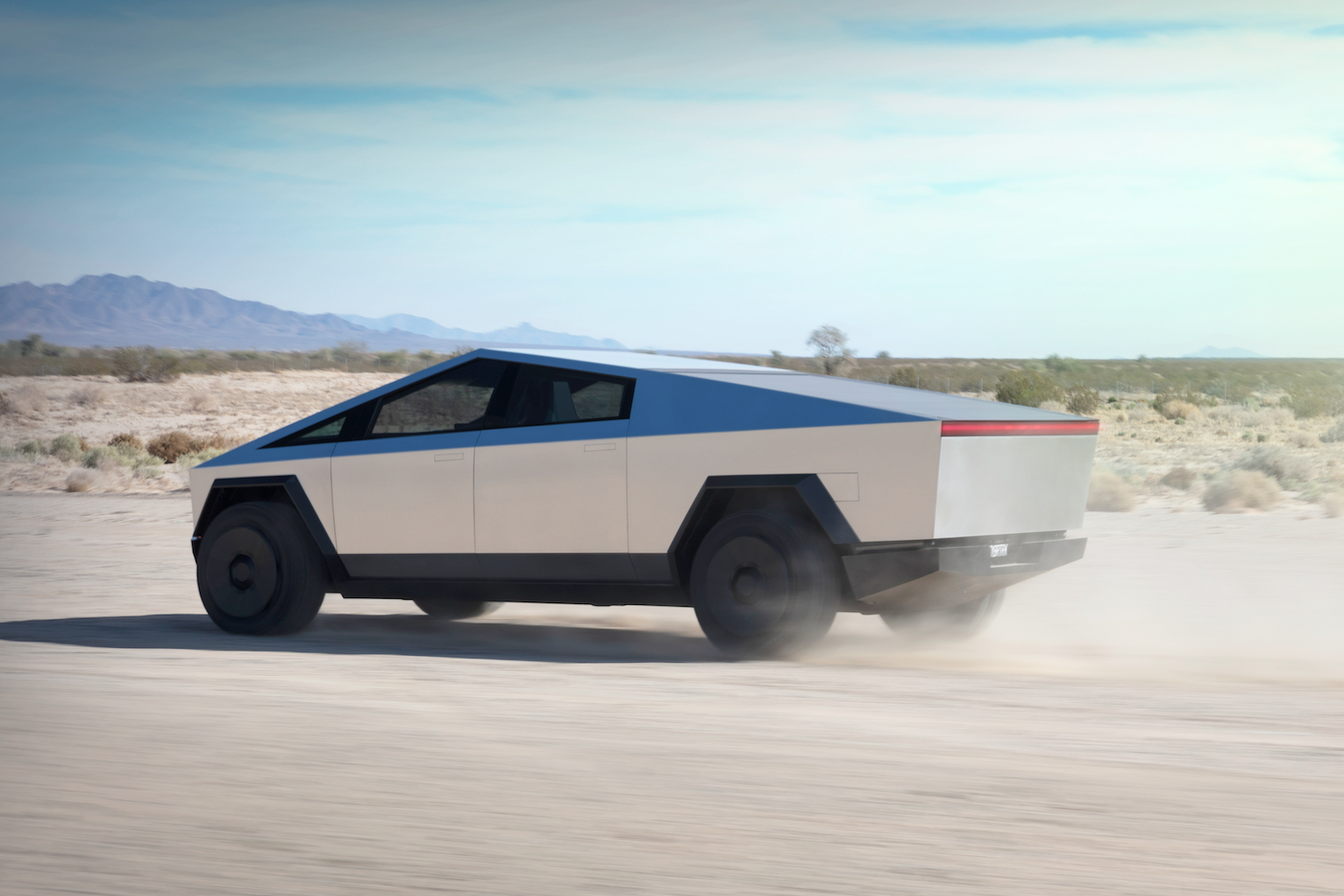
Tesla’s total share of the global EV market last year was less than 20 percent, with just two models, the Model 3 sedan and Model Y SUV, accounting for 97 percent of its sales. The much-hyped Tesla Cybertruck pick-up Elon Musk claimed would be in production in 2020 now looks to have been delayed until 2023 at the earliest. References to the Tesla Roadster, unveiled as a high-performance flagship in 2017, have quietly disappeared from the Tesla website. The car that kickstarted it all, the Tesla Model S, is now nine years old, with no replacement in sight.
By the end of 2022, Ford expects to have sold 80,000 electric-powered F-150 Lightning pick-ups and is already planning to boost production to 150,000 a year. Mercedes-Benz will have twice the number of EV models on sale as Tesla. And that’s just the tip of the iceberg: within eight years, Toyota and GM alone will between them offer consumers a choice of 60 different EVs.
Nope, trillion-dollar Tesla just doesn’t add up.
Snapshot
- 2022 Peugeot 3008 GT Sport AWD Plug-in Hybrid arrives
- PHEV powertrain offers up to 60km of electric-only driving
- Priced from $79,990 before on-road costs
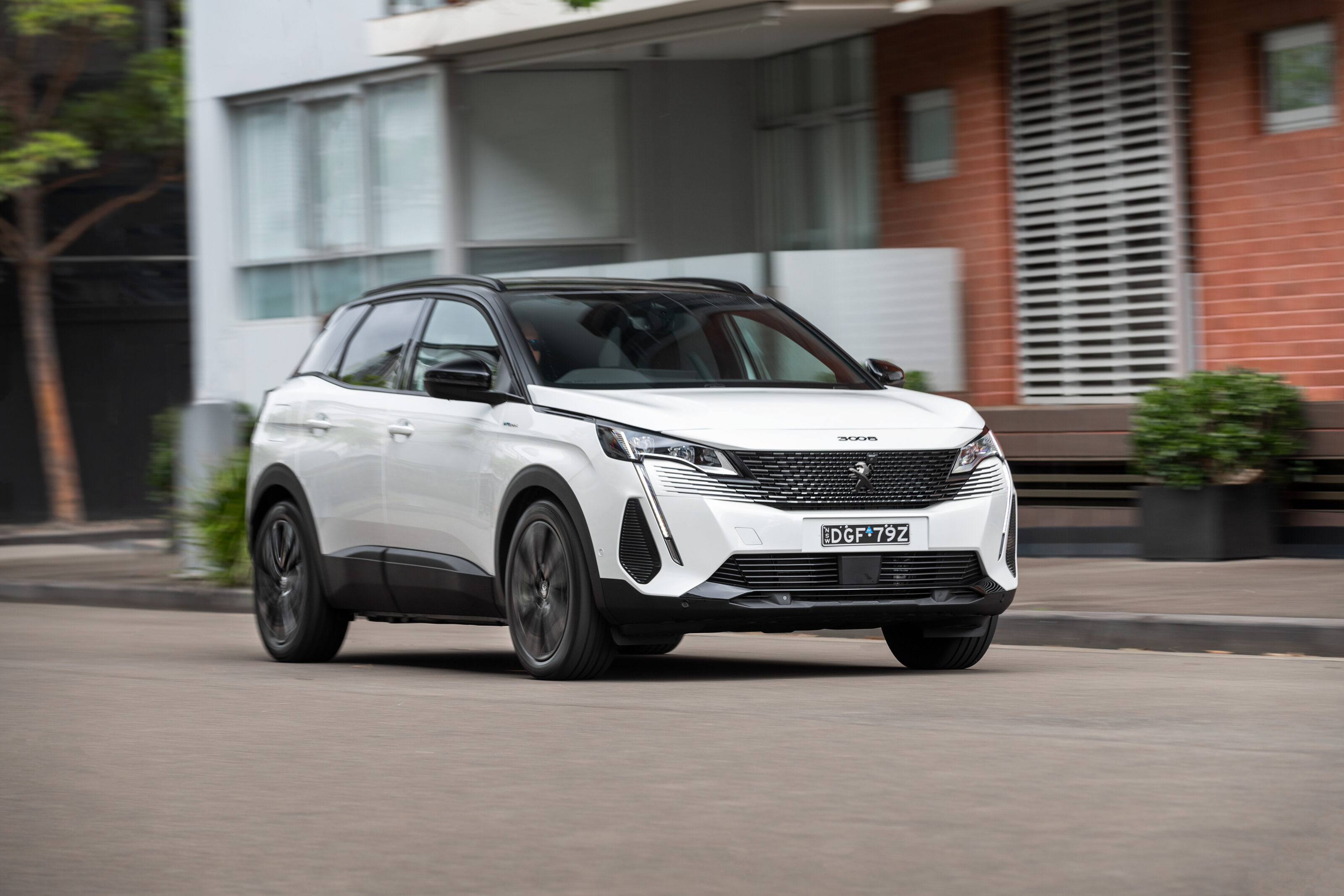
The 2022 Peugeot 3008 GT Sport AWD Plug-in Hybrid has arrived in Australia, offering local buyers another choice in the growing electrified SUV segment.
The new Peugeot joins the wider 3008 line-up as the sole hybrid model, and available only in range-topping GT Sport guise.
Costing more than $20,000 over the next highest 3008 variant, the new model includes 19-inch black alloy wheels, black exterior badges and trims, full-grain Nappa leather, heated front seats with eight-way electric adjustment and massage function for the driver, and a dual-pane electric sunroof as standard.
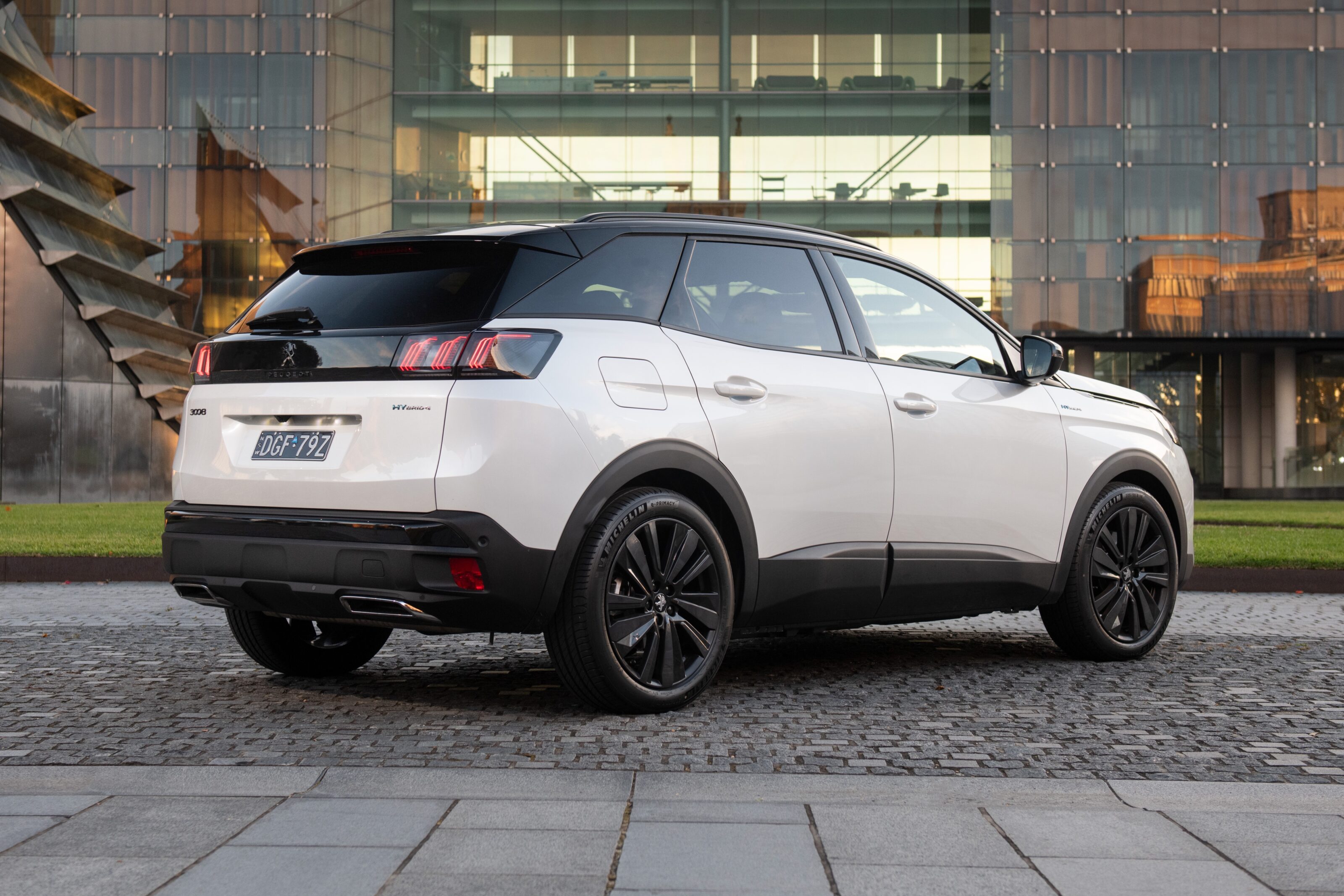
As this is the flagship 3008 variant, buyers can only option paint: metallic for an additional $690, or premium paint for $1050.
Being a plug-in hybrid (PHEV), the 3008 has an electric-only driving range of up to 60 kilometres before the 1.6-litre turbocharged four-cylinder petrol engine kicks in, working in conjunction with an eight-speed automatic transmission to send drive to the front wheels.
An electric motor powering each axle adds up to a total power output of 222kW and 520Nm – 147kW from the petrol engine and 81kW/83kW for the electric motors – delivering the Peugeot to 100km/h in a claimed 5.9 seconds.
Combined fuel economy is listed as 1.6L/100km, while emissions are 36.4g/km of CO2.
The 3008 is one of two plug-in hybrid vehicles to be introduced to Australia, alongside the 508 PHEV, front-running the French carmaker’s commitment to offer an electrified variant of each variant by 2025.
The 3008 gets the larger 13.2kWh battery, a 300-volt lithium-ion pack, while an on-board 3.7kW water-cooled charger allows the owner the top-up from a standard 240-volt domestic electricity socket.
2022 Peugeot 3008 Australian pricing
Prices exclude on-road costs.
| Model | Price |
|---|---|
| 3008 Allure | $47,240 |
| 3008 GT Petrol | $50,390 |
| 3008 GT Diesel | $53,540 |
| 3008 GT Sport | $59,840 |
| 3008 GT Sport AWD PHEV | $79,990 |
Features
| Automatic LED adaptive headlights |
| LED daytime running lights |
| LED puddle lights |
| Automatic windscreen wipers |
| Leather interior |
| Heated front seats |
| Eight-way electric adjustment and massage function for driver |
| Dual-pane electric sunroof |
| Digital instrument panel |
| 12.3-inch head-up display |
| Peugeot i-Cockpit |
| Configurable 12.3-inch head-up digital instrument panel |
| 10-inch infotainment touchscreen with satellite navigation, Bluetooth, DAB, Apple CarPlay and Android Auto |
| Adaptive Cruise Control (ACC) with stop and go |
| Two rear seat USB sockets |
| Focal 515-watt 10-speaker premium audio system |
| Automatic high beam |
| Hands-free tailgate |
| Electric park brake |
| Tyre pressure sensors |
| Black exterior badges and trims |
| 19-inch black alloy wheels |
Safety
| Automatic emergency braking (AEB) with pedestrian and cyclist detection |
| 360-degree cameras |
| Park assist |
| Lane departure warning |
| Lane positioning assist |
| Driver warning alert |
| Speed sign recognition and recommendation |
| Active blind-spot monitoring |
Warranty and servicing
The 2022 Peugeot 3008 GT Sport AWD Plug-in Hybrid is backed by a five-year/unlimited-kilometre warranty.
Peugeot offers an additional eight-year/160,000km battery warranty, along with five years of roadside assistance and a five-year Service Price Promise program.
Service intervals are listed as every 12 months or 20,000km – whichever comes first – with prices ranging from $543 to $740, for a total spend of $3108 over 60 months or 100,000km.
Availability
The 2022 Peugeot 3008 GT Sport AWD Plug-in Hybrid is available to order now.
Snapshot
- 2022 Peugeot 508 GT Fastback Plug-in Hybrid lands in Australia
- PHEV powertrain offers up to 55km of electric-only driving
- Priced from $76,990 before on-road costs
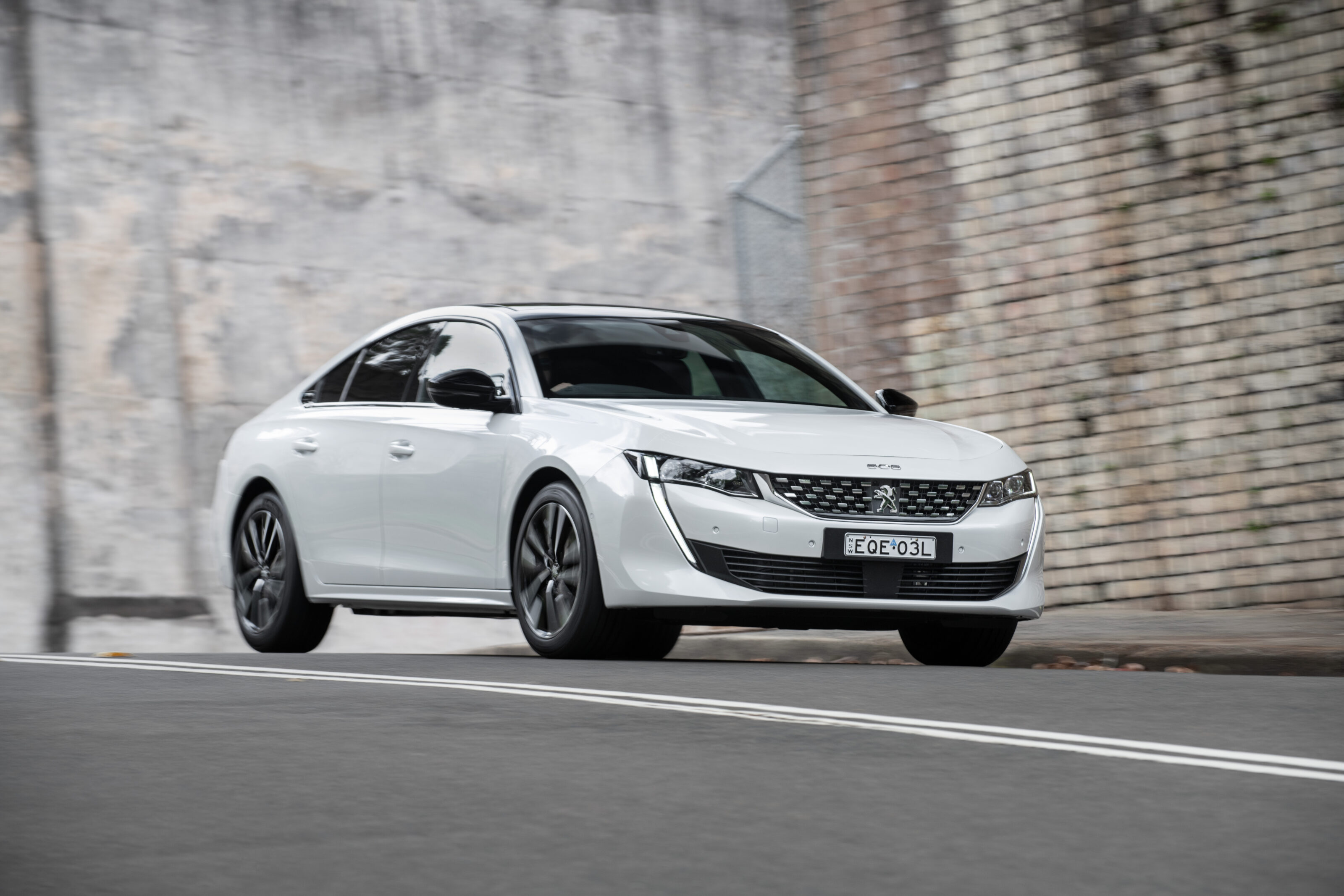
The 2022 Peugeot 508 GT Fastback Plug-in Hybrid has launched as one of the first electrified models from the French brand.
As the new range-topping 508 model, the plug-in hybrid (PHEV) offers 18-inch two-tone alloy wheels, a Nappa leather interior and electric front seats with massage function.
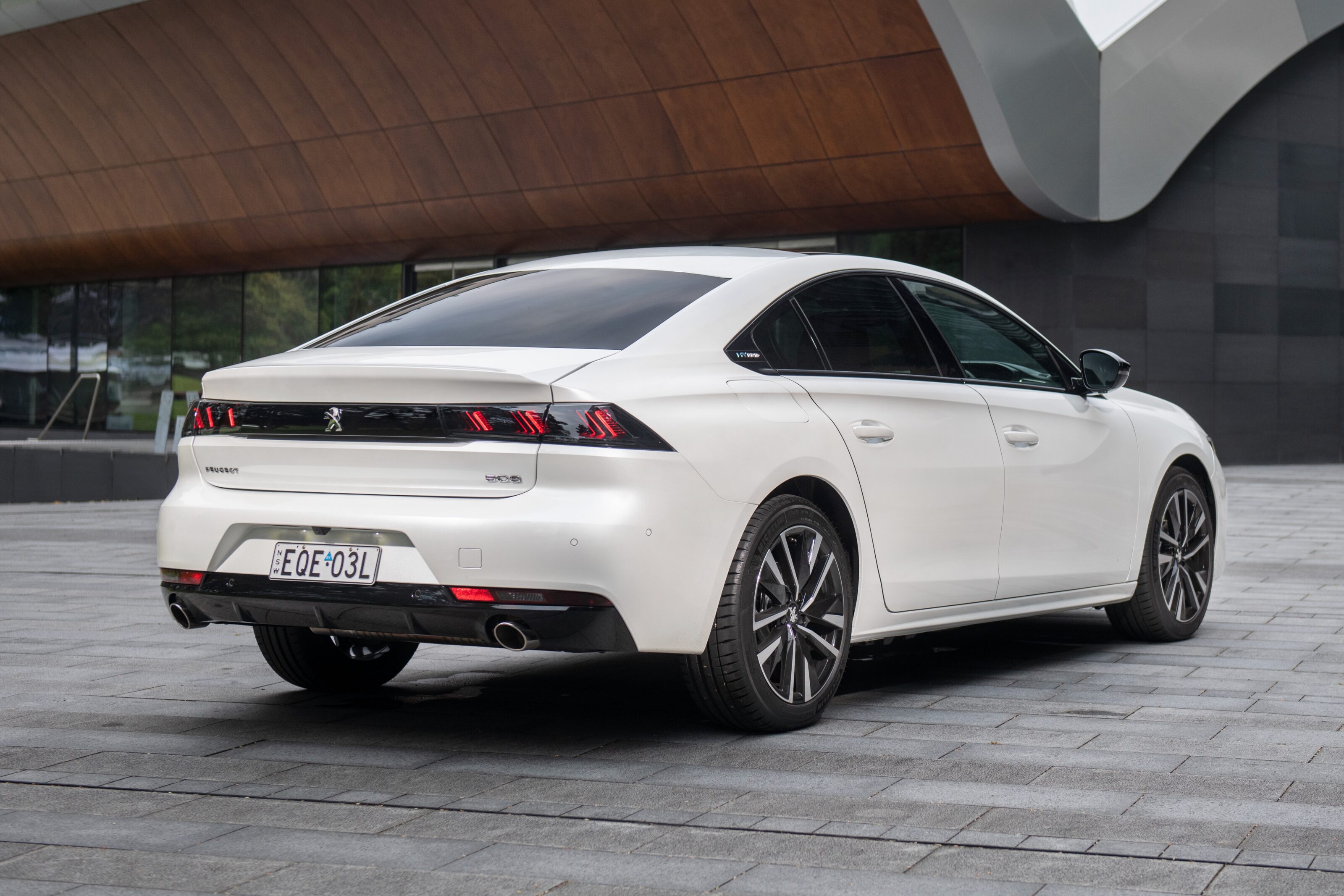
Buyers can option a sunroof from Peugeot for an additional $2500, while metallic or premium paint costs $690 and $1050 respectively.
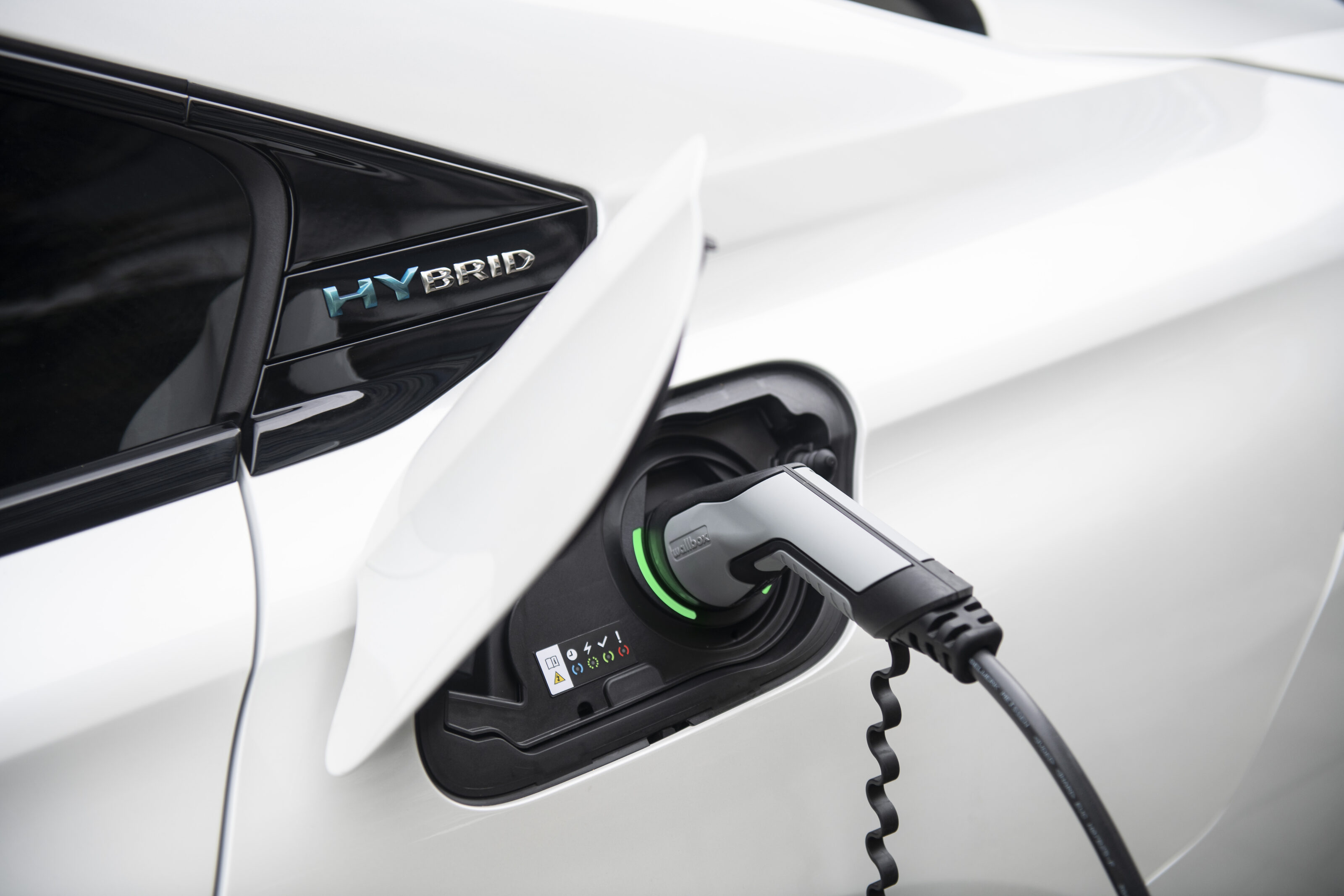
Thanks to its 11.8kWh battery, the 508 PHEV has an electric-only driving range of up to 55 kilometres available, while its 1.6-litre turbocharged four-cylinder petrol engine and eight-speed automatic transmission alleviates range anxiety.
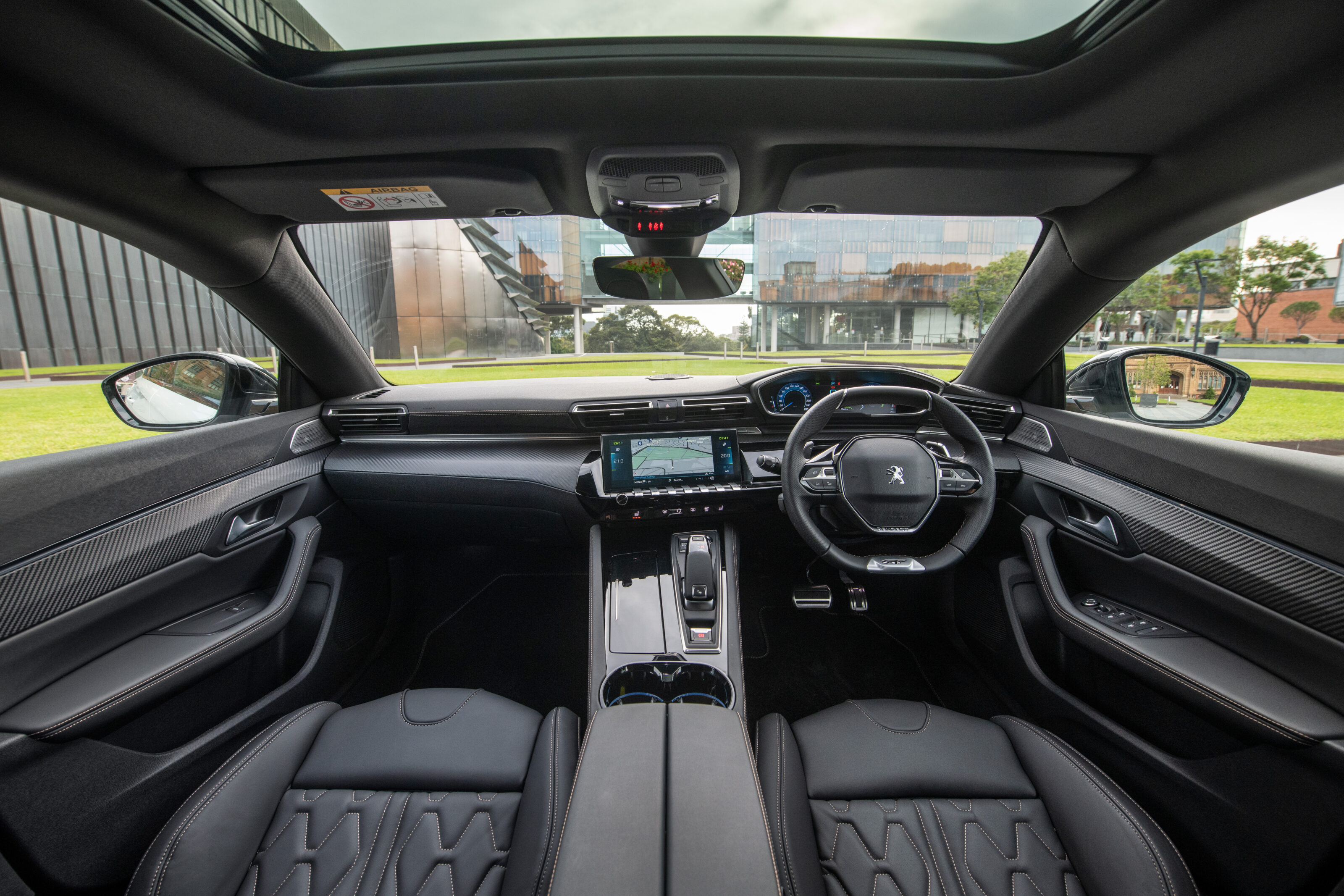
A single 81kW electric motor powers the front wheels, adding up to a total of 165kW and 360Nm when used in combination with the 133kW petrol engine.
Combined fuel economy is listed as 1.8L/100km, while emissions are 40.1g/km.
2022 Peugeot 508 Australian pricing
All prices exclude on-road costs.
| Model | Price |
|---|---|
| 508 GT Fastback | $59,840 |
| 508 GT Sportswagon | $61,940 |
| 508 GT Fastback PHEV | $76,990 |
Features
| Automatic LED adaptive headlights |
| LED daytime-running lights |
| LED indicators |
| Automatic windscreen wipers |
| Leather interior |
| Massage function for front row |
| Digital instrument panel |
| 12.3-inch head-up display |
| Peugeot i-Cockpit |
| Configurable 12.3-inch head-up digital instrument panel |
| 10.0-inch infotainment touchscreen with satellite navigation, Bluetooth, DAB, Apple CarPlay and Android Auto |
| Voice recognition |
| Adaptive Cruise Control (ACC) with stop and go |
| Two rear seat USB sockets |
| Focal 10-speaker audio system |
| Automatic high beam |
| Electric park brake |
| Black exterior trims |
| 18-inch two-tone alloy wheels |
Safety
| Automatic emergency braking (AEB) with video and radar |
| 180-degree cameras |
| Park assist |
| Lane departure warning |
| Lane-keep assist |
| Driver warning alert |
| Speed sign recognition and recommendation |
| Active blind-spot monitoring |
Warranty and servicing
The 2022 Peugeot 508 GT Fastback Plug-in Hybrid is backed by a five-year/unlimited kilometre warranty.
Peugeot offers an additional eight-year/160,000km battery warranty, along with five years of roadside assistance and a five-year Service Price Promise program.
Service intervals are listed as every 12 months or 20,000km – whichever comes first – with prices ranging from $397 to $724, for a total spend of $2638 over 60 months or 100,000km.
Availability
The 2022 Peugeot 508 GT Fastback Plug-in Hybrid is available to order now.
“Just under eighty thousand.”
It’s a statement that conjures an expletive from my passenger after telling him the ‘before on-road costs’ price of the Peugeot 3008 GT Sport Plug-in Hybrid (hereby abbreviated PHEV) we’re in.
Would someone pay that much for a mid-size Peugeot SUV? It’s a question we’re both asking ourselves in silence. And, thanks to a new hybrid system bolted into this SUV’s 308-based architecture, it’s one Australia needs to ask.
Peugeot has introduced the GT Sport PHEV to follow up a range-wide refresh of the second-generation 3008 earlier this year. The update gifted the SUV tweaked front- and rear-end styling, new cabin tech and more safety features.

Fundamentally, the PHEV symbolises the brand’s ambition to electrify its complete model line-up by 2025. It also adds $20,150 to the previous range-topping 3008 GT Sport. At first glance, it seems hybrid smarts are all the PHEV variant has to enhance the SUV that it’s based on.
From the outside, it wears the same standard-fit Black Pack as the GT Sport, fitting a stealthier, darkened look on badging, bumpers, and window surrounds. Even the contrasting Diamond Black roof also scores a panoramic glass opening, and rolling stock is based on the same 19-inch Onyx wheel design.

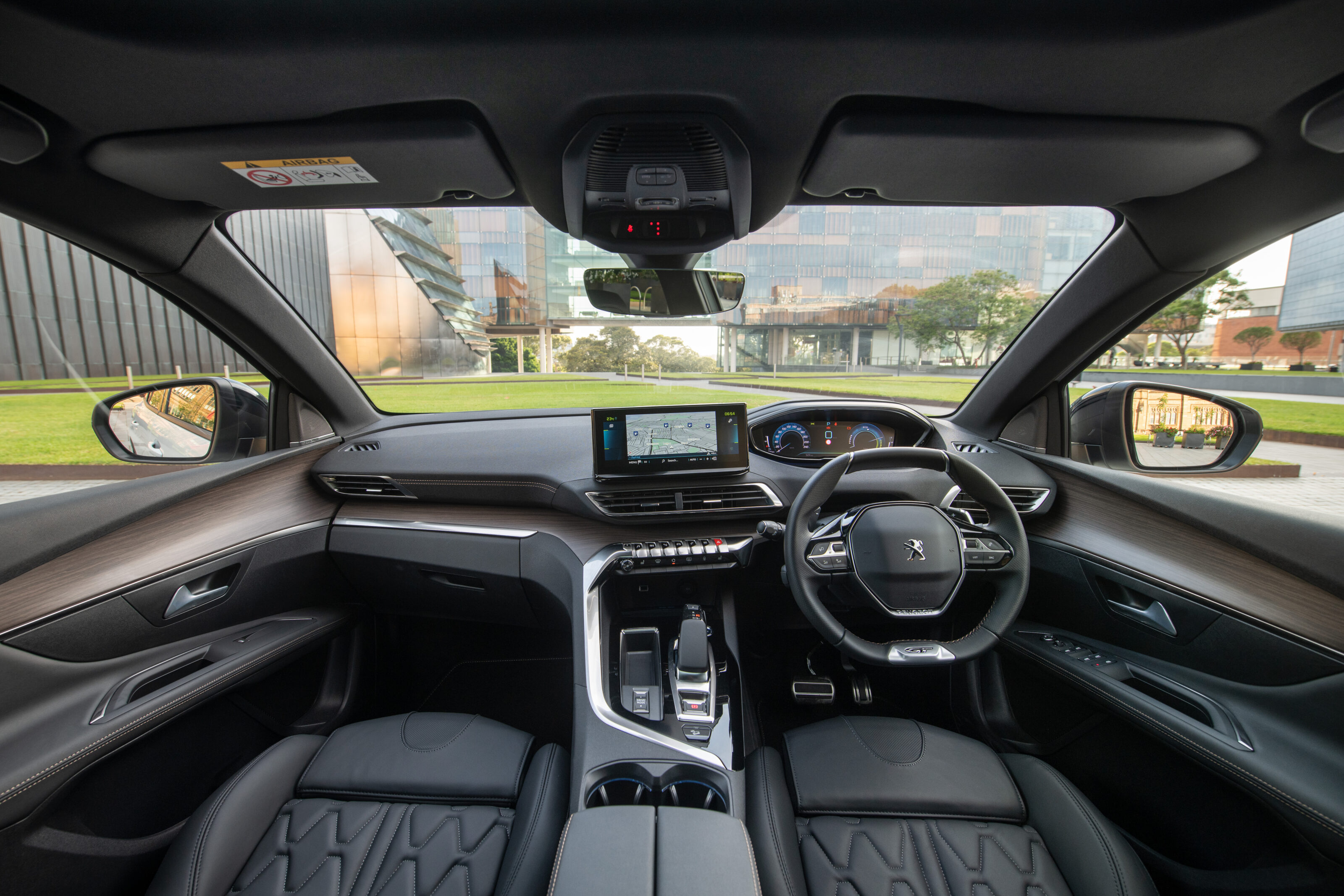
Even inside, it’s the same gorgeously designed cabin with Lime wood panel inserts and a leather-wrapped steering wheel with Aikinite stitching. Audio, too, is again 10-speaker Focal audio, linked to the central 10-inch infotainment screen. There’s also smartphone mirroring and a 12.3-inch digital driving cluster.
It’s a theme you begin to warm to, literally, given the GT Sport already has gorgeous Nappa leather cross-trimmed seats in the front and rear, with massage and memory functions on the powered driver’s seat to trump heating just for your passenger.
On a day-to-day basis, inside is a nice place to be

Safety equipment remains high. Active tech includes blind-spot warning, speed sign recognition, lane-keep assist, lane-keep warning, forward collision warning, AEB, high-beam assist, adaptive cruise control and 360-degree vision cameras that pair with parking sensors. The 3008 earned itself a five-star ANCAP rating in 2017.
The PHEV has reduced boot capacities compared to the GT Sport at 529 litres (-62L) with the rear seat up, 1608 litres (-62L) when folded. The rear pews offer a 60/40 split via ‘Magic’ pull handles and ISOFIX child anchors on the outboard positions. An obvious compromise is the usual 18-inch spare tyre can’t fit under the boot’s flat floor and is replaced with a tyre repair kit.

The biggest differences emerge on the road, though. The 3008 PHEV heralds Australia’s first taste of a battery-powered Pug. In Europe, Peugeot’s split the 3008 PHEV range with a front-wheel-drive version. Its powertrain features in the 508 GT Fastback PHEV that debuts alongside the 3008 PHEV. (See our review at the link.)
However, our 3008 GT Sport PHEV is Europe’s range-topper and welcomes an electric motor on the rear axle, enabling all-wheel drive and unlocking higher outputs. The rear motor adds 83kW/166Nm to the equation, spreading outputs over a wider rpm range than the grunty 81kW/320Nm front motor.

The 3008 PHEV also scores a bigger battery and spicier engine tune than the 508 stablemate. The 3008’s lithium-ion pack is rated at 13.2kWh, versus 11.5 for the 508 PHEV. And the 1.6-litre turbo petrol four produces 147kW instead of 133kW. Torque, however, remains set at 300Nm.
An eight-speed automatic transmission handles gear shifts, which Peugeot says also employs a wet multi-plate clutch to manage assistance from the electric motors.
Combined outputs of 222kW/520Nm are claimed to propel the hybrid 3008 to 100km/h from rest in 5.9 seconds.

That figure is impressive, given it’s in the same ballpark as something like Mercedes-AMG GLB 35 (which sprints from 0-100km/h in 5.2 seconds) and comes from an SUV more focused on elegance and economy. Nor is the figure far from the truth.
Stomp the throttle in Sport mode, and even with the battery half-charged, the 3008 PHEV launches with surprising acceleration. We hand-timed the 3008 PHEV reaching 100km/h from rest in the high 5-second range.
As for economy, Peugeot says the 3008 PHEV manages 60 kilometres of all-electric driving on a WLTP test cycle. That’s 16km more than the claimed EV range on a Volvo XC40 PHEV and bests its hybrid 508 stablemate by 5km despite the 3008 weighing 120kg more.

But, again, that range estimate is believable – at least, based on our testing. We drove the 3008 in electric mode until the battery reached half its capacity, covering 31.9km. If the remaining 50 percent charge could achieve the same distance, the 3008 would pip the WLTP test cycle by doing 62.8km in total.
We only warn that you don’t expect Tesla-thumping performance. In the cut and thrust of Melbourne’s congested Western inner suburbs, the 3008 PHEV can feel a bit sluggish underfoot in electric-only mode.
Judging by the interactive graphic on the digital dash, which displays the powertrain’s operation in real-time, the smaller 166Nm rear motor does most of the work during light acceleration and brake regeneration.
Hybrid mode offers the best balance between responsiveness and efficiency without spoiling the quiet serenity afforded by electric power

Blow past the throttle pedal’s détente, and the 3008 PHEV will switch into hybrid mode for optimal acceleration. Otherwise, the electric powertrain feels considerably slower than when the engine pitches in during Sport mode.
Hybrid mode offers the best balance between responsiveness and efficiency without spoiling the quiet serenity afforded by electric power. The powertrain also works imperceptibly, with only a muffled burble to hint at the engine’s participation.
My main gripe with the hybrid driving experience concerns the brake pedal. Not only is the travel set too long, but it lacks power. And although you can increase the hybrid’s regenerative effect on the fly by pulling down the gear lever to switch from Drive to ‘B’ mode, it’s not strong enough to either slow the car completely or meaningfully charge the battery.

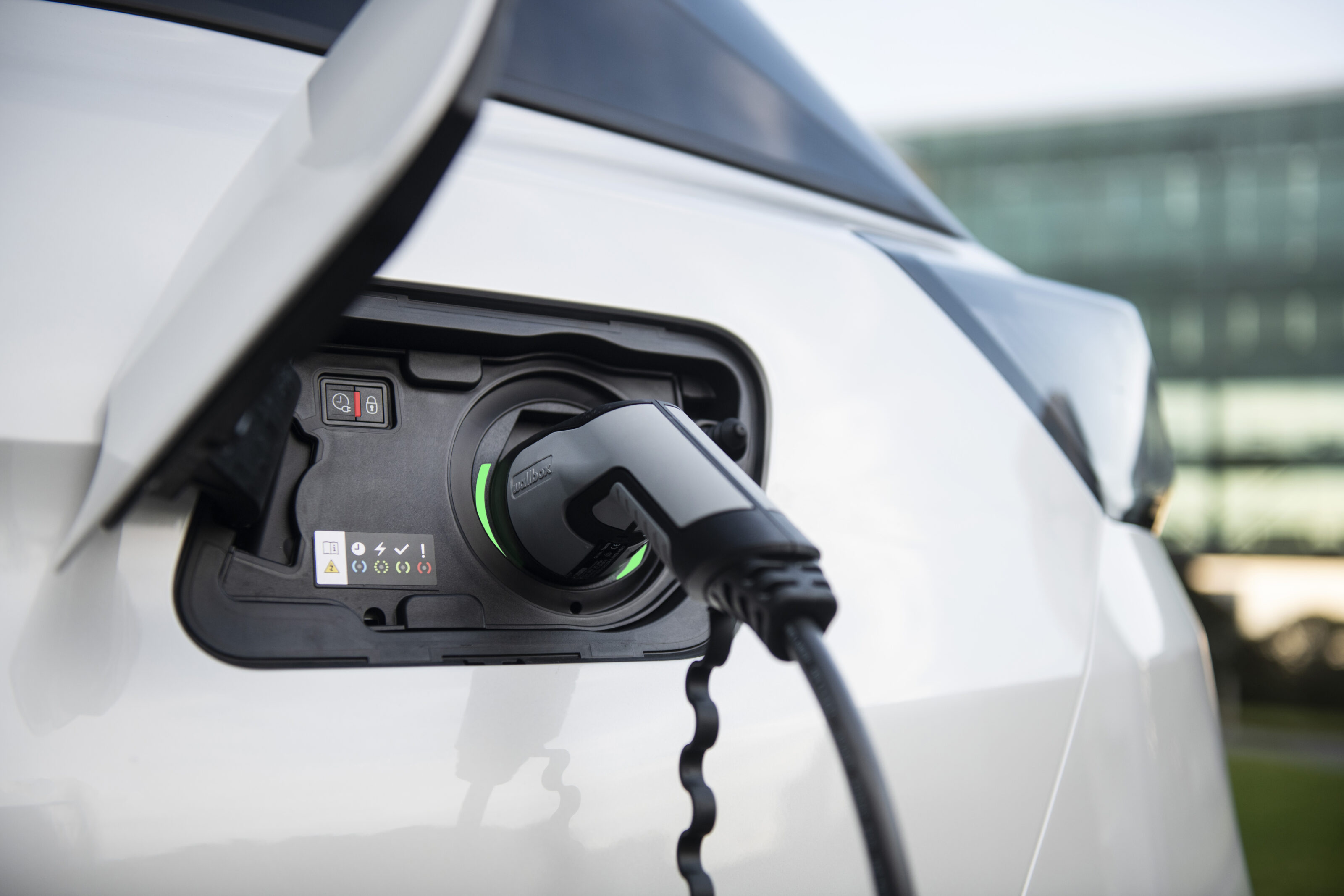
You can juice the 3008 by using the engine’s generator mode or the car’s Type 2 port located on the passenger side at the base of the C-Pillar.
Using the supplied charge cable, the battery can be completely juiced from a 240V wall socket, Peugeot says, in five and half hours.
We reduced that time to four and half hours using a public charging station’s 22kW charger. It’s just a shame European 3008s can lift the charging system’s maximum rate from 3.7kW to 7.4kW for charge-ups in under two hours – Australian versions remain limited to 3.7kW.
We also recorded fuel consumption on the 3008 PHEV to glimpse life without a readily available charge network. Starting with an empty battery, we drove 115km on Melbourne’s busy freeway system with some ventures through the city grid in Hybrid mode.
In the end, the 3008 PHEV returned 7.3L/100km – which equals about 590km petrol-only range from its 43L tank. Factor in the 31.9km loop we drove afterwards in electric mode, and the car’s final consumption figure drops to 5.7L/100km over a near 150km loop.

Restricting our petrol-powered driving to high-speed freeways could help drive that figure down, but overall it’s not bad for an 1840kg mid-sizer.
At high speeds, the 3008’s a comfortable, quiet cruiser. The strut-front suspension comes with a new rear multi-link setup instead of the GT Sport’s twist-beam axle. And while it lacks the 508 PHEV’s adaptive damping, its passive setup offers supple body control over loping undulations. It just wants for more refinement over high-frequency disturbances.
Around town, the 3008 PHEV retains a car-like handling character, with nicely weighted steering that feels direct and accurate

Around town, the 3008 PHEV retains a car-like handling character, with nicely weighted steering that feels direct and accurate. The 10.7m turning circle is carried over, too. When push comes to shove, though, the 3008 PHEV simply can’t hide its extra heft, evidenced by how aggressively it rolls onto its outside Michelin E-Primacy tyres.
On a day-to-day basis, inside is a nice place to be. The front seats remain comfortable for several hours and offer adjustable under-thigh support, while outward vision is particularly good all around, even if the high-set bonnet does obscure what’s immediately in front of you.
The centre stack’s row of fighter-jet buttons makes it tricky to find the cooling and heating menu on the infotainment screen, but along with the gear lever, they up the cabin’s sporty vibe.

Cabin ergonomics are good, with a driver-centric centre stack complementing the raised console and low-set door armrests. But the steering wheel needs to be set low to avoid obscuring the dash and the brake pedal sits way too high relative to the throttle.
Storage is pretty good, as well. The door bins swallow sports drink bottles. Meanwhile, the centre console’s deep cavern makes up for the compromised passenger glovebox.
The cruise control stalk is hidden behind the steering wheel, but the adaptive system works great. It holds your set speed relatively well and maintains distances to cars in front with smooth interventions.

Inside there’s also an abundance of power supplies, with a 12V power outlet in each row and the boot. There are also two USB-A ports in the back row to match the front centre stack’s single USB-A port. Rear passengers score ventilation, too.
Bolstering the 3008 GT Sport PHEV’s overall package is a five-year warranty that matches fixed-price servicing for the same period. The battery also benefits from cover for 8-years and 200,000km.
At $79,990, the 3008 PHEV is a significant step up from the current model range … But there’s an incredible amount of versatility on offer here

At $79,990, the 3008 PHEV is a significant step up from the current model range, making it hard to convert showroom buyers to the idea of a hybrid setup. But there’s an incredible amount of versatility on offer here.
For instance, the 3008’s AWD PHEV system delivers enough performance to make you think twice about the Mercedes-AMG GLB 35 – at least on straight-line acceleration – and costs $10K less. And the 3008 delivers on its claimed EV range that’s 25 percent higher than the (admittedly, much cheaper) Volvo XC40 Recharge’s range. I also reckon the 3008 GT Sport PHEV offers a better finished and more luxurious interior.
Peugeot’s 3008 has struggled to gain traction against mainstream rivals for sales under $60K. And even though competition thins out at $80K, the GT Sport PHEV offers a lot to justify its positioning.
*This article originally stated the 3008 GT-Sport PHEV had boot capacities of 591L with rear seats installed, or 1670L with the rear seats folded. Peugeot clarified the press materials with these figures were wrong.
2022 Peugeot 3008 GT Sport Plug-in Hybrid Specifications
UPDATE, September 13, 2022: New Ford Everest on sale, and we’ve driven it!
The new-generation 2023 Ford Everest is finally on sale in Australia, and our man Matt Raudonikis has driven it. Get the full story, and our first-drive video, at the link below.
The story to here
The 2023 Ford Everest will offer a V6 turbo-diesel for the first time in the nameplate’s history, and while Ford Australia is yet to reveal full details, here’s what we know so far.
The new 3.0-litre V6 will be available in both Ranger and Everest and is from the same ‘Lion’ family as the 2.7-litre turbo-diesel many Australians will know from the 2011-16 Ford Territory.
Developed with PSA and JLR and used in a variety of models including the F-150, in the 2023 Everest it will sit above the 2.0-litre bi-turbo ‘Panther’ as the new premium engine option.
That means that the bi-turbo will take over the role of the 3.2-litre five cylinder ‘Puma’ turbo-diesel as the standard Everest engine, the five-pot finally dropped from both Everest and Ranger with the arrival of the new models.
Low-spec Everest in overseas markets will also use a single-turbo version of the Panther 2.0-litre, which is seen here in the Ford Transit and forthcoming entry-level Ranger, and while Ford won’t confirm Australian details yet, it’s unlikely you’ll be able to buy an Everest with the single-turbo 2.0L here.
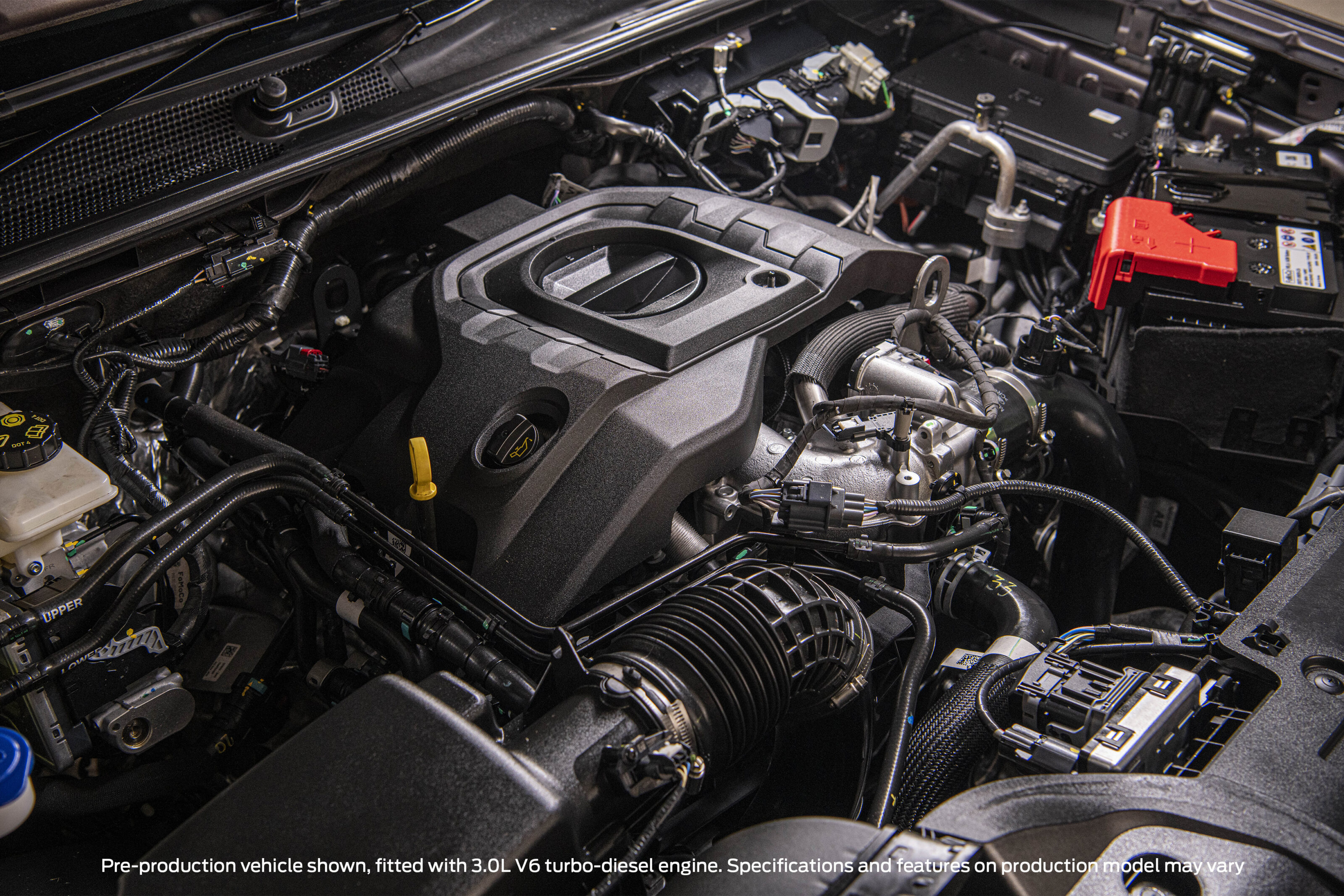
Confirmed as the flagship Everest powertrain from launch in Australia, the 2993cc V6 is an intercooled commonrail turbo-diesel with 60-degree configuration, iron-graphene block and double-overhead cams.
Likely to be sourced from Dagenham, UK, in the F-Series in the US the powerplant has previously included; variable geometry turbocharging, a two-stage oil pump and a forged crankshaft – all yet to be confirmed for the Everest, and the 2023 Ranger, which will also use it.
Power and torque are still secret, too, but in the 2018 F-Series the 3.0-litre ‘Power Stroke’ made 240hp (186kW) and 440lb-ft (597Nm) from 1750rpm. It has developed even stronger numbers in other products, but those figures easily eclipse the current Everest’s 157kW/500Nm bi-turbo and 3.2L’s 143kW/470Nm.
Following Ranger and Bronco, the V6 will use a new 10-speed automatic transmission, codenamed 10R60, in place of the current model’s 10R80, both of which were co-developed with General Motors.
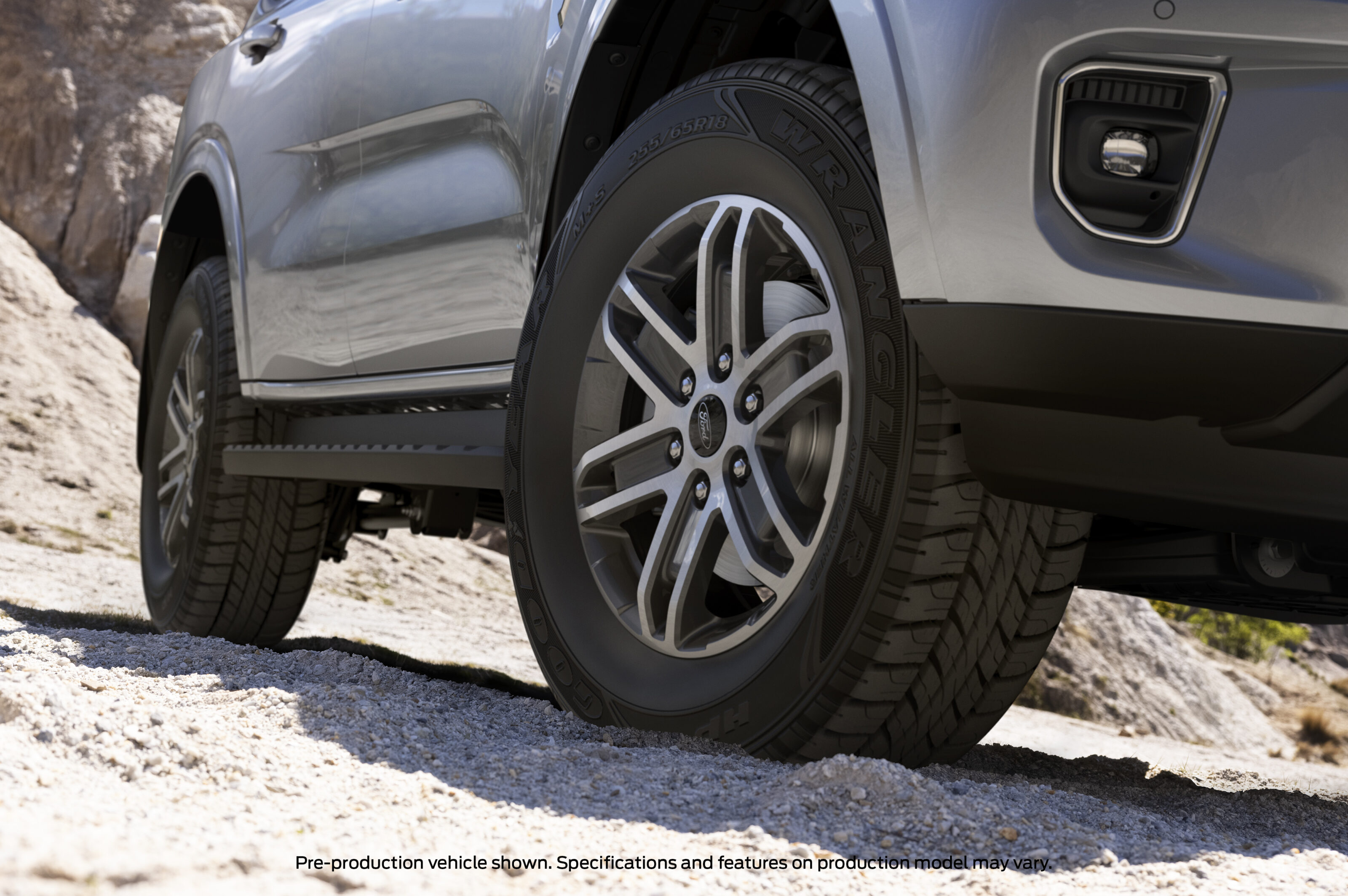
Combined with the new V6, which Ford says is a heavier engine than the bi-turbo, fuel economy may be slightly worse – as the Everest is facing a marginal weight increase over the current Everest’s 2283-2477 kilogram weight range. The new larger 21-inch wheels on the flagship Platinum, for instance, will also add mass.
“The V6 is clearly heavier, it’s a bigger engine,” said platform lead, Ian Foston. “If you look at the overall where we ended up, it’s [kerb weight] not that dissimilar to today, but there’s a lot more feature content everywhere. So the question is how do we do that without making it heavier?
“We’ve made a lot of efficiencies, the frame is significantly lighter than it was before – the hydroformed front-end structure helps as well, we’ve taken out a lot of sheet metal at the front – so what we’ve tried to do is optimise the weight as much as we can.”
The 2023 Ford Everest is scheduled to go on sale in Australia in the second half of 2022, with pricing and additional details yet to be announced.
Snapshot
- New Everest features 12-inch infotainment screen
- C-Clamp headlights and front design borrowed from new Ranger
- Exterior dimensions up in every aspect over outgoing model
The 2023 Ford Everest boasts a bold new look as Ford Australia’s designers took full advantage of the new model’s larger footprint.
The seven-seat SUV will go on sale in showrooms in the second half of 2022 with significant upgrades inside and out, as well as a new V6 engine. Its fresh design sees a 50 millimetre increase in track width both front and rear, as well as a 50mm longer wheelbase – making it 2900mm and longer than a Toyota LandCruiser 300 Series – with a near identical overall length for less overhang and a more solid look.
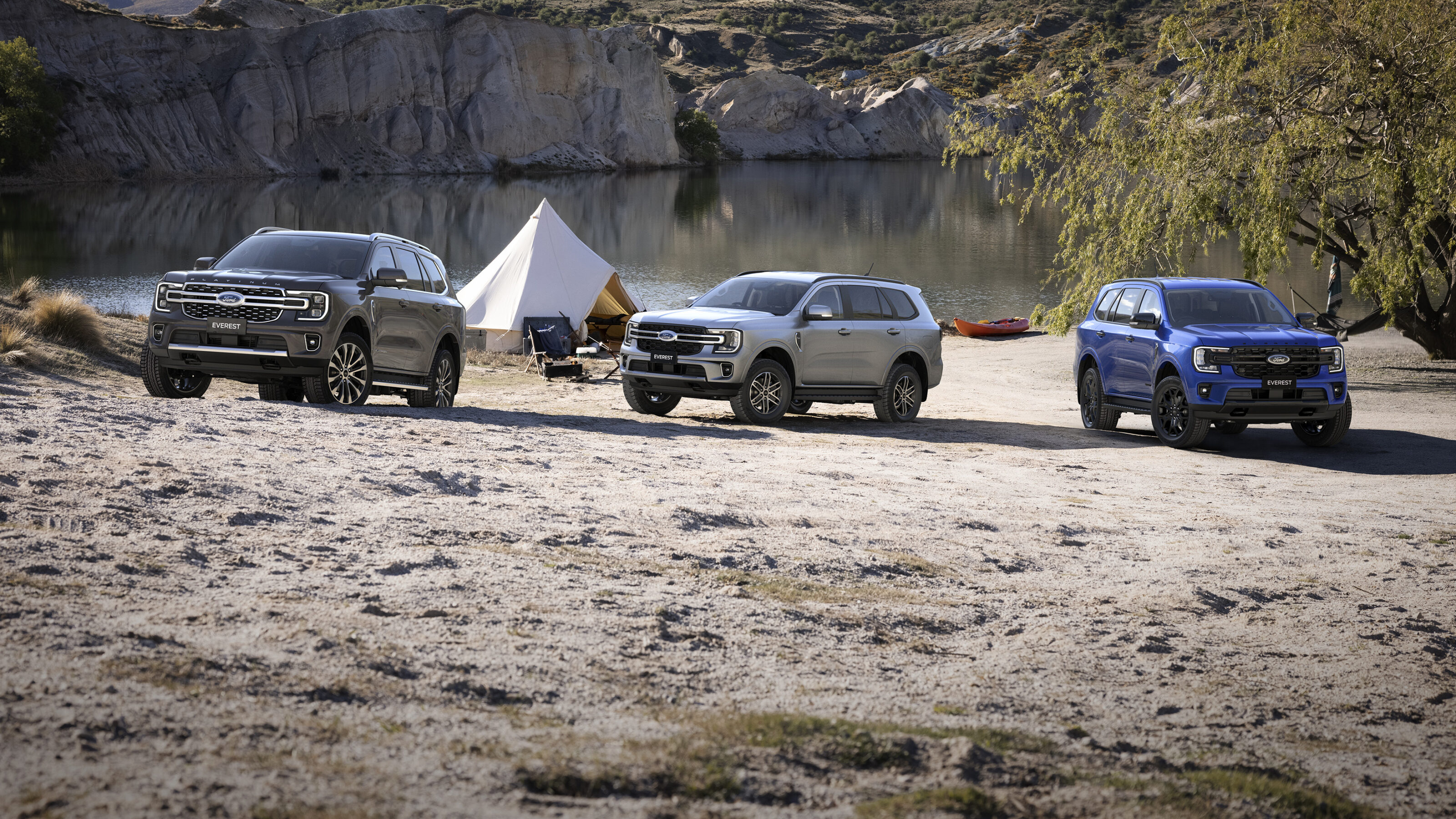
Ford Australia has confirmed the launch line-up of the 2023 Everest will consist of the entry-level Ambiente, Trend, Sport and new flagship, Platinum (nee Titanium). We’re yet to see the most popular variant in the range, the Sport, but Ford has revealed the remainder of the Everest offering.
UPDATE, September 13, 2022: New Ford Everest on sale, and we’ve driven it!
The new-generation 2023 Ford Everest is finally on sale in Australia, and our man Matt Raudonikis has driven it. Get the full story, and our first-drive video, at the link below.
The story to here
Beyond usual changes such as the new 21-inch alloys on the Platinum, baked into the Everest’s fresh design is further flexibility for differentiation between trim levels – from colour-coding, to grilles and applique outside, to colour palettes and materials inside – as well as potential future personas through the model life cycle. That front-end is also where the fuller, plumper, visuals take the confidence of that V6 power unit to tackle the awkward narrowness of the original Everest.
“One of the key tenants of the design was to make it look a lot more planted and a lot more stable,” explained head of exterior design, Lee Cosentino. “The width really helps us swell the fenders out, and that makes it feel more planted on its wheels.
“Obviously the vehicle is very capable – we know that from U375, the current Everest, and the new one is just as capable if not more. We wanted to really emphasise that through the visuals as well, that was part of that process.”
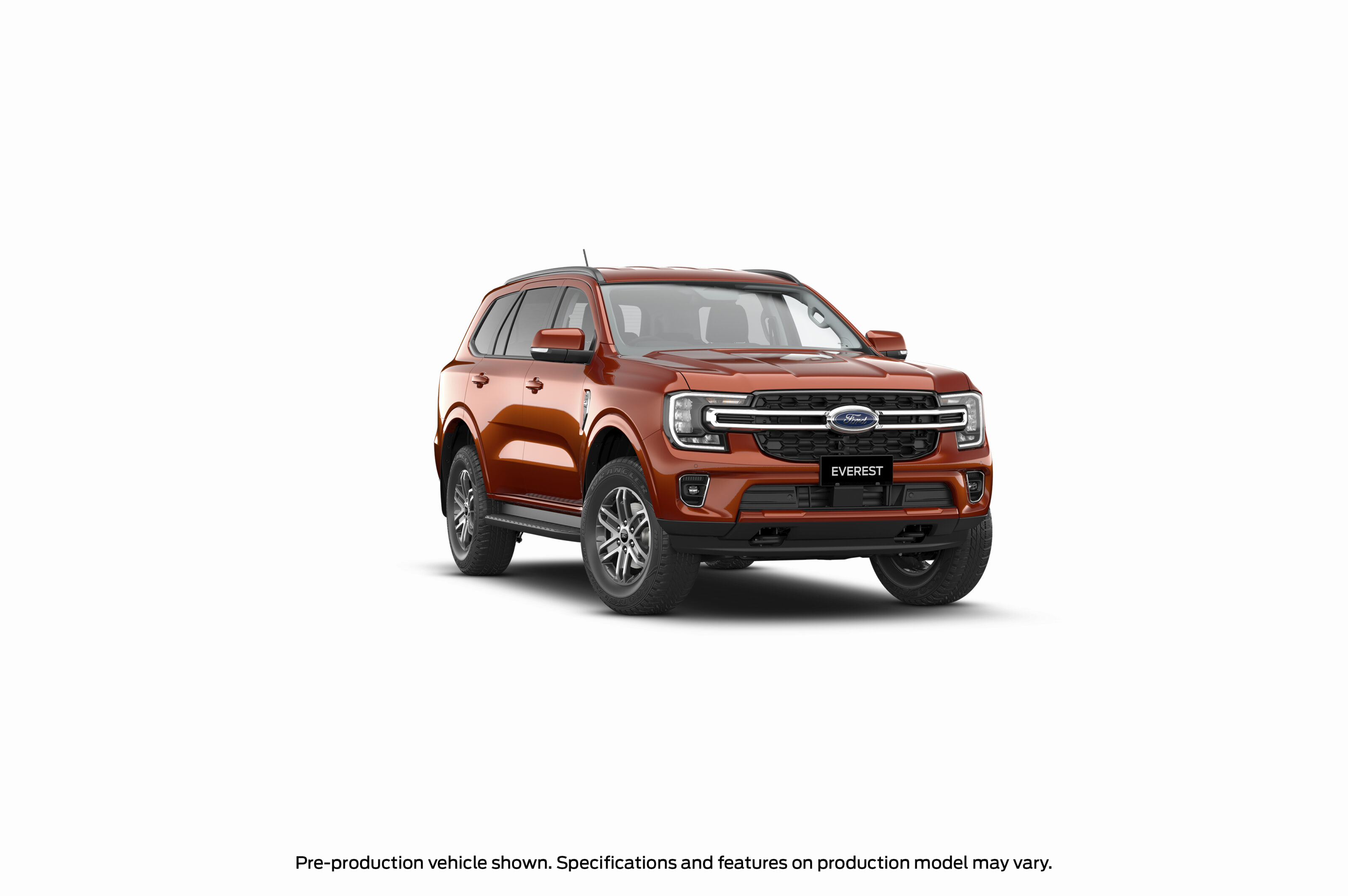
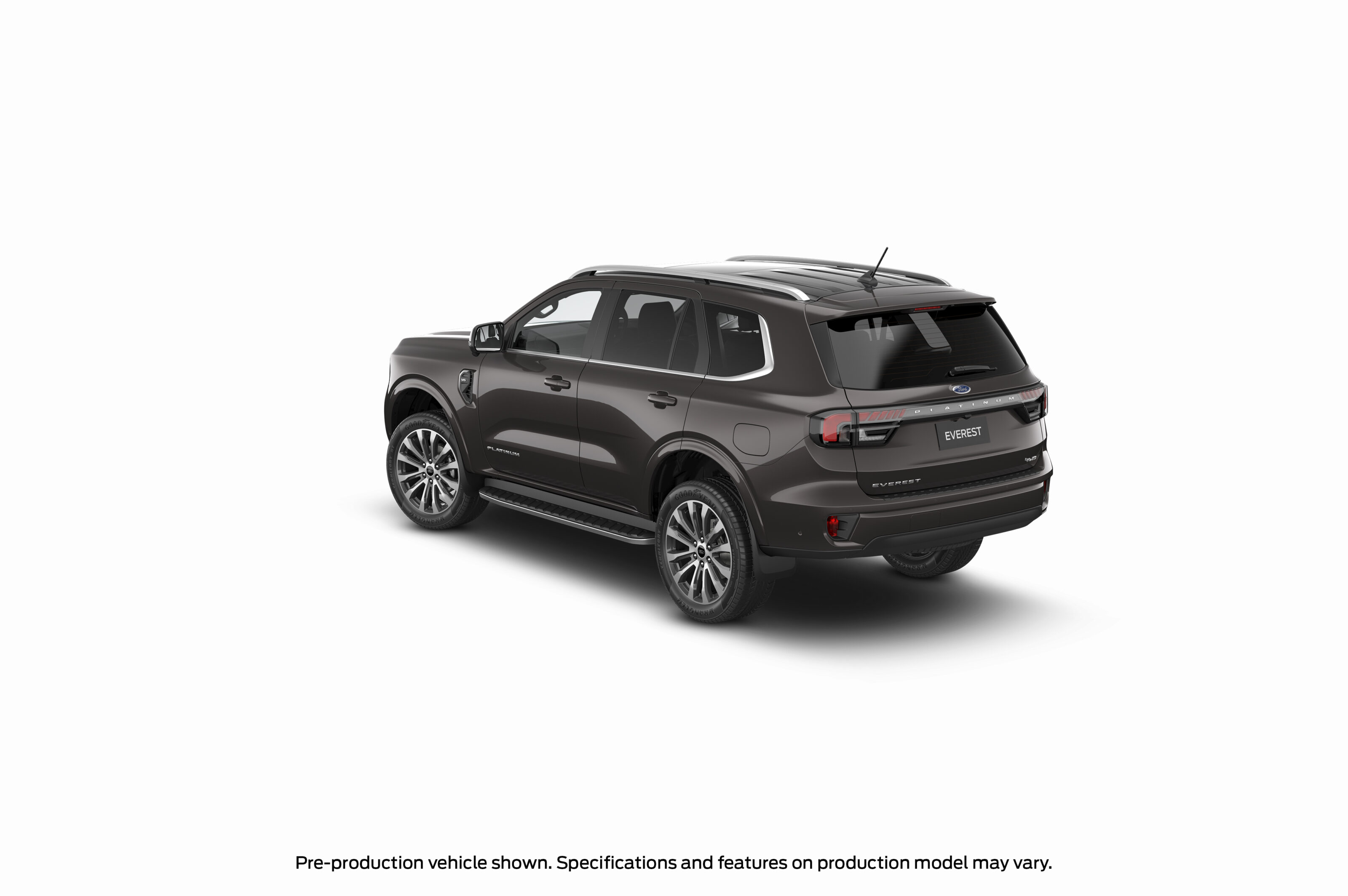
While the front-end has a Ranger look about it with the C-Clamp headlights integrated into a ‘coast-to-coast’ grille – even sharing the same front guards as the new Ranger – things get a little different as the Everest develops into an SUV with items such as the integrated roof rails and a much steeper rear windscreen.
Surprisingly, the waistline is lower than before, even if it doesn’t immediately appear so.
“The beltline, which is the chrome piece underneath the glass [on Platinum], is levelled off so it feels more horizontal, and that also adds to the stability of it instead of having a lot of wedge.”
“The biggest thing for me is actually on the rear end,” said Cosentino. “As you walk down the body side you can start to see that the line on the shoulder swells out over the arches, and you can really get this quite strong shoulder.
“The key for the rear end is getting those corners out as far as we can, not only from the bottom, but all the way up to the top. It’s a lot squarer at the rear end and really does emphasise that roominess we have within.
“The glass is unsprung [meaning it sits flush with the body and window frames], but it’s pulled out at the rear, and that helps us get the rear corner as far out as we can get it without it looking dorky and overbodied.
“The front horizontal theme is reflected on the rear, with a single piece across the width of the tailgate to emphasis the broad shoulders.
“We call it a ‘lamp-plique’ because it has lights inside the applique on the liftgate, but it really does have a black graphic that goes from coast to coast, from corner to corner – the LEDs kind of spill into the applique and give it that connection all the way across.”
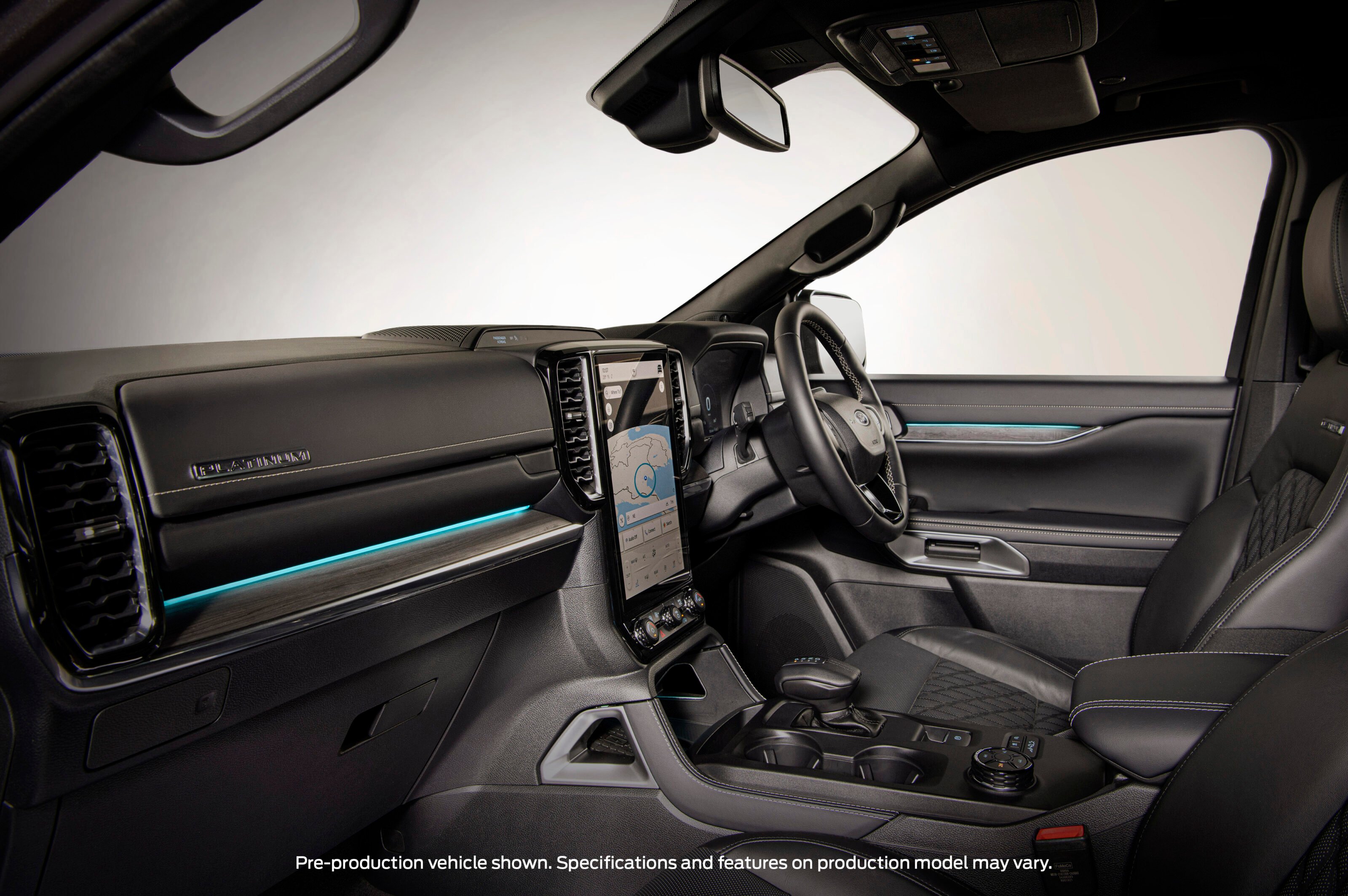
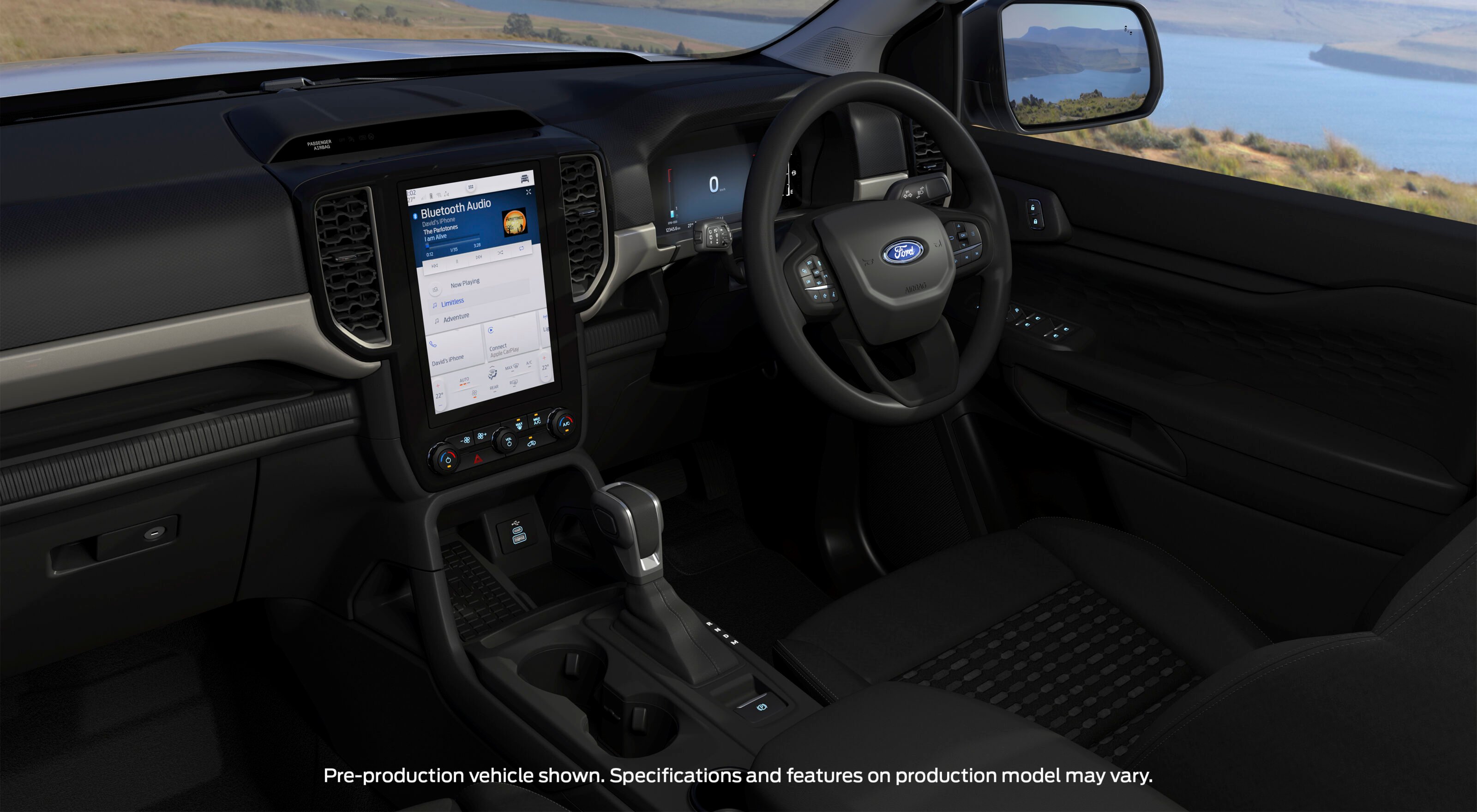
Inside the Everest is where the most convincing gain seems to have been made – a lift that will impress on test drives, at dealerships and for the life of the car. There’s a significant improvement in material finishes to match the fresh cabin design, which is much cleaner thanks to the 12.0-inch centre screen and more elegant design.
“Customers like big screens, but they don’t want them to stick out,” head of interior design Nick Etrovic said. It’s why the Everest’s centre display is fully integrated and is expected to be on whenever occupants are in the vehicle, so it won’t be an anonymous black abyss.”
The screen doesn’t quite replace all, as there’s still air-conditioning buttons and legally mandated switches – such as hazards – that have had more money and time spent on them. Combined with the smarter colour and trim choices, the perceived quality is a leap forward from the current Everest’s utilitarian feel.
“I’m proud of the fact that basically everything is new for us,” said interior design lead, Nick Eterovic. “Our starting point was an idea of flexibility,” he explained, noting that while the new 2023 Ranger line is more focused on work, the Everest’s role differs in that is more of a family and recreation vehicle – the work element could take a back seat, so to speak.
“This was an opportunity for us to change and improve the vehicle for various purposes.”
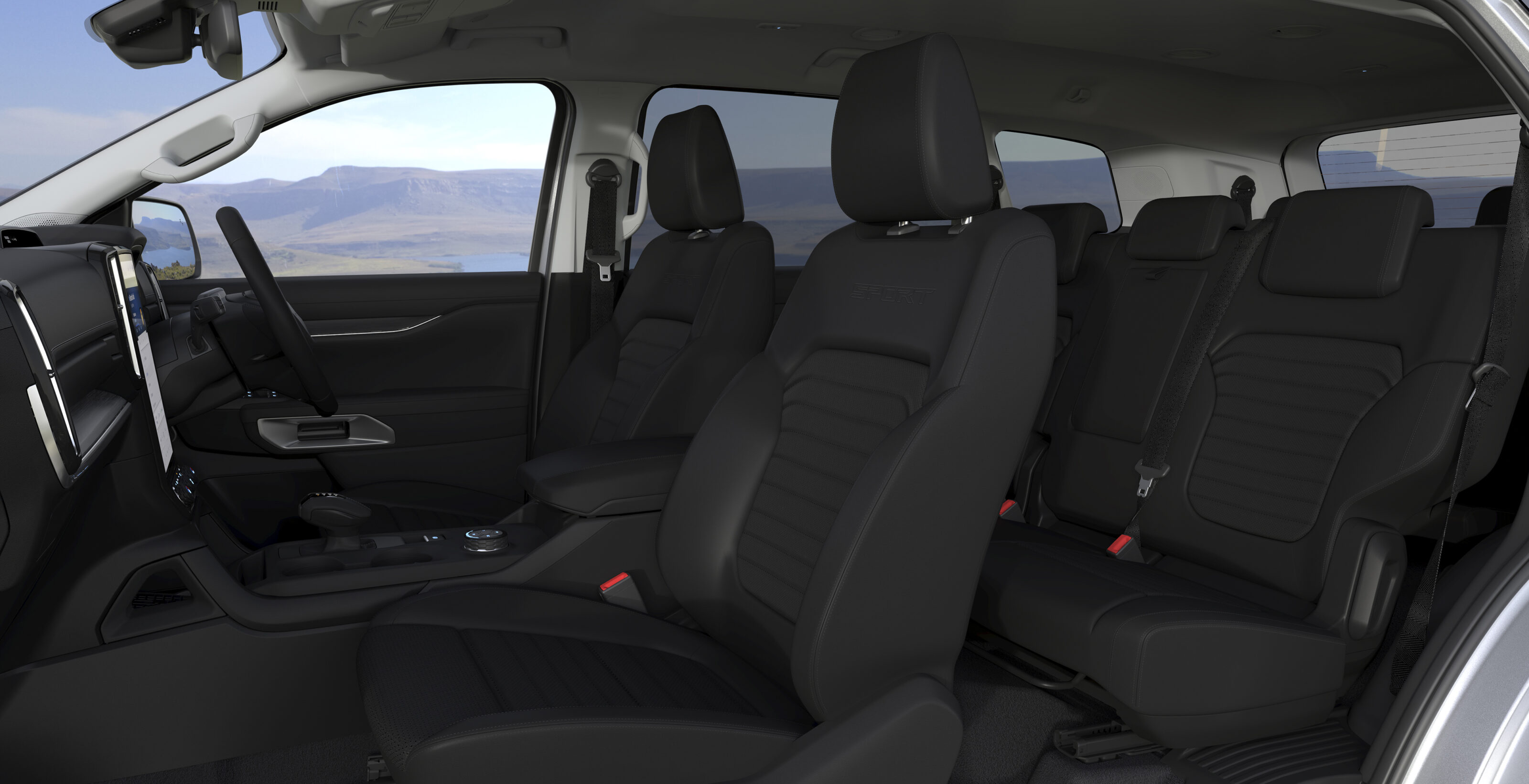
Like Ranger, the centre console features a chunky e-shifter – not the small dial e-shifters of other Ford models such as the Focus and now defunct Endura. “In this type of vehicle, when you’re doing a three-point turn, for example, you want to know what you’re doing [with the shifter],” Etrovic said. That’s why it’s a sturdier looking lever that implies ruggedness, as does the new steering wheel that houses usual audio and cruise buttons.
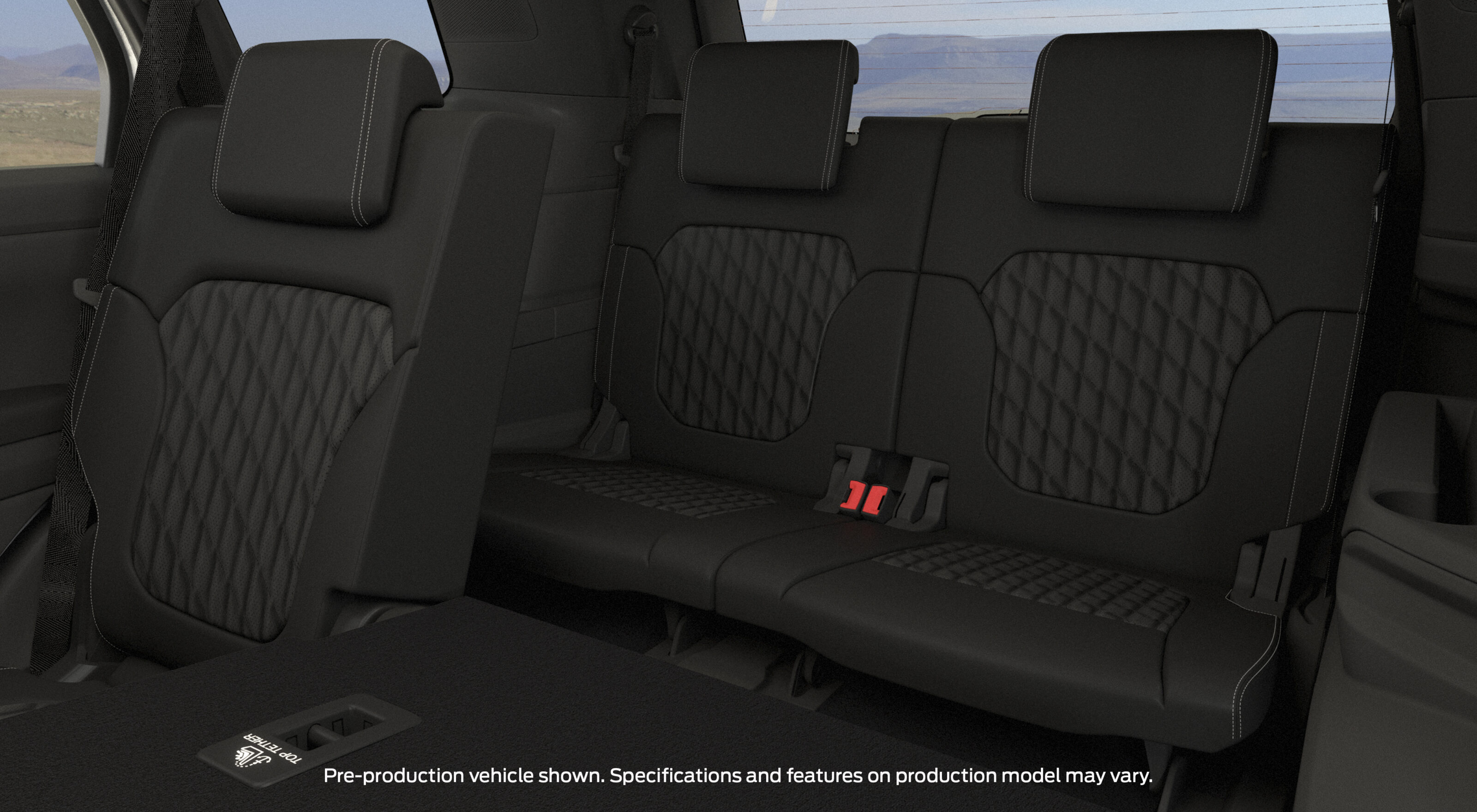
The full colour digital instrument cluster’s crispness is impressive, featuring some fantastic graphics and legibility, wreaking of effort – this is no quick digital fix. “This is one of my favourite features of the new Everest,” said Eterovic. Lower-spec models will feature 8.0-inch cluster, with 12.4-inch on high-end Everests.The front and second row seats are new, while attention was paid to the second and third row details such as foot placement, as well as making getting in and out easier. The cargo area is marginally larger, while there’s details such as third-row pockets large enough to fit tablets.
Colour is critical, too, with careful consideration applied to everything from the chunky ‘luggage handle’ interior door handles through to finer grain dash leather and darker roof linings.
The result sees darker colours on higher spec models, such as the Platinum and Sport models, while more uniform colours retaining a ruggedness and durability on entry-level Ambiente. They have to work and look good, said colour, material and finish (CMF) design manager, Suzanne Gold.
“Nothing too polarising” came from the team’s toolbox of colours and grains for the Ambiente, where kids’ footy boots, dogs and babies may travel. The mid-spec Trend adds detail stitching and quilting for a more premium feel; the Trend-based Sport more high-gloss black finishes throughout, while the flagship Platinum, said Gold, gains smoother leather and softer materials, with finer grains and additional padding for its quilted leather seats.
The design team’s work has come from intense focus on real-world customer feedback and usage of SUVs. “When we started, we immersed designers in the experiences [of owners],” Eterovic said. Analysing customer experiences gave the interior design team food for thought.
“By deep diving we exposed ourselves to the usage and formulated a plan,” Etrovic added.
The 2023 Ford Everest is scheduled to go on sale in Australia in the second half of 2022, with pricing and additional details yet to be announced.
Snapshot
- New Everest brings Ranger design cues to SUV
- Updated engine line-up includes range-topping Lion V6 turbo-diesel
- Set to go on sale in the second half of 2022
UPDATE, September 13, 2022: New Ford Everest on sale, and we’ve driven it!
The new-generation 2023 Ford Everest is finally on sale in Australia, and our man Matt Raudonikis has driven it. Get the full story, and our first-drive video, at the link below.
The story to here
The covers have been pulled off the 2022 Ford Everest ahead of its arrival in Australian showrooms in the second half of this year.
It’s the biggest change in the Ford Everest’s history, but can it make an impact in a rapidly changing market, and will it put even a dent in the Toyota Prado’s sales?
Ford’s new Everest delivers a bold new design which freshens the outside and liberates space inside – where there’s upgraded tech, significant changes to its four-wheel drive and suspension systems, as well as greater towing capability courtesy of a new V6.
This substantial engineering and design investment makes the 2022 Everest a significant reboot of Ford’s sole seven-seat SUV offering, which was introduced in 2015 as production of the locally-made Territory wound up. If you want a seven-seat Ford SUV, this is it.
This is also the Everest’s chance to capitalise on its 2023 Ford Ranger underpinnings, now amortised across greater volume, given Ranger’s global proliferation and the introduction of the Bronco in North America. That alone means this should be the best Everest to date – and from what we know so far, it’s stacking up to be exactly that.
“That’s the beauty of doing the platform development at the same time; the building blocks before when we did Ranger, and then the Everest, we added small bits on,” said T6 Chief Platform Engineer Ian Foston.
“This time, we got to do it all at the same time, which gave us that flexibility to match the variants and combinations on the same platform, so it really helped.”
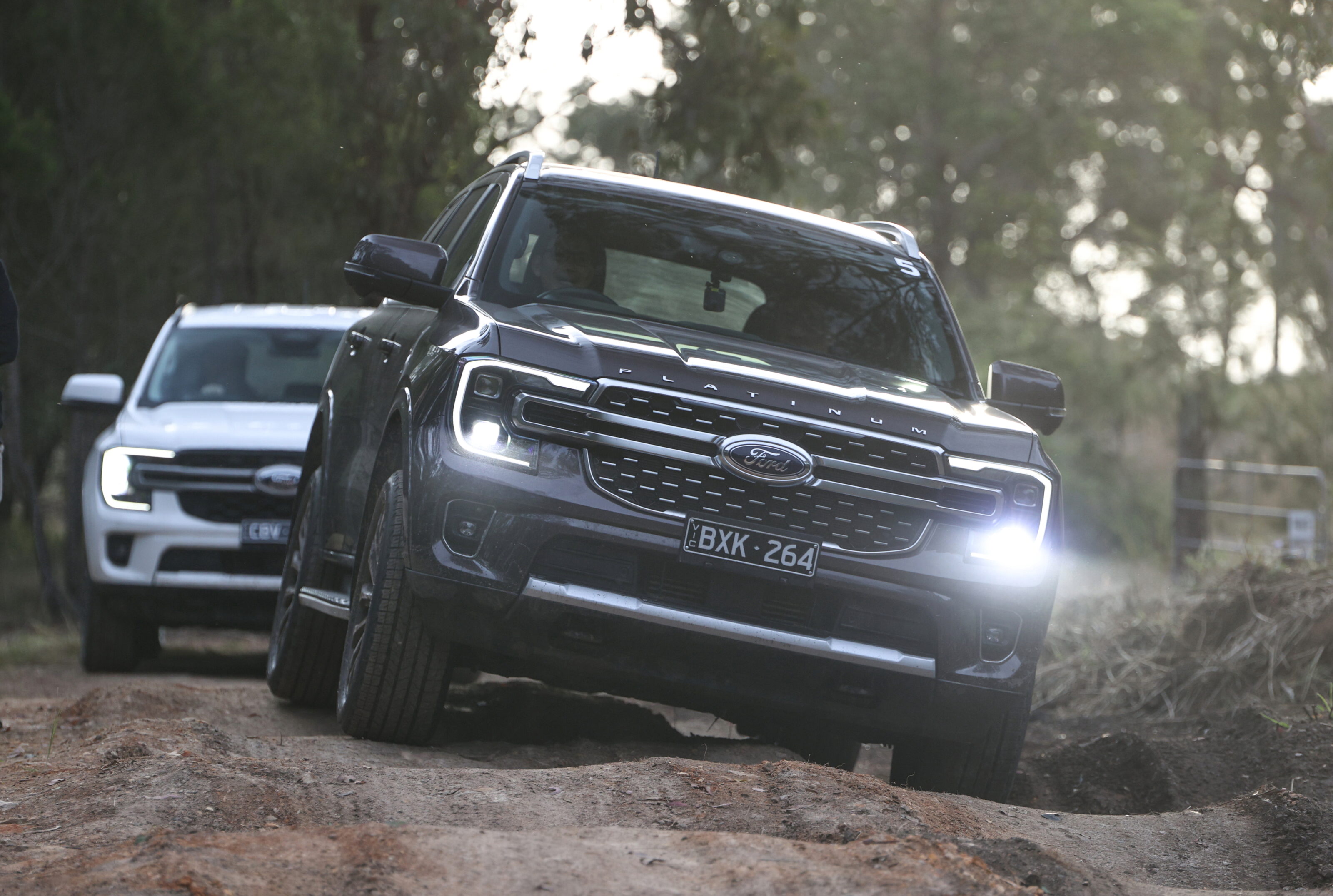
One glance at the new Everest and its Ranger resemblance is immediately obvious, its striking front-end leading to a new overall fullness. There’s a 50 millimetre increase in both front and rear tracks, the wheelbase stretched 50mm to 2900mm too – yet the overall length is near identical (Ford won’t share that number just yet).
Almost every number is up, even marginally: exterior dimensions, cabin space, towing capability, kerb weight, GVM and GCM, as well as the number of cylinders – with a V6 offered in Everest for the first time.
“One of the key tenets of the design was to make it look a lot more planted and a lot more stable,” explained head of exterior design, Lee Cosentino. Yet the clay Everest sitting in front of media at the new Everest’s reveal is evidence of the Monash Uni grad’s talent.
“The width really helps us swell the fenders out and that makes it feel more planted on its wheels,” Cosentino said. “Obviously the vehicle is very capable, so we wanted to really emphasise that through the visuals.”
While the front end has a Ranger look about it, with the C-Clamp headlights integrated into a ‘coast-to-coast’ grille – even sharing the same front guards as the new Ranger – things get a little different as the Ranger-like elements develop into Everest’s SUV body, with items such as integrated roof rails and a much steeper rear windscreen.
“The biggest thing for me is actually on the rear end,” says Cosentino. “As you walk down the body side you can start to see that the line on the shoulder swells over the arches, and you can really get this quite strong shoulder.
“The key for the rear end is getting those corners out as far as we can, not only from the bottom, but all the way up to the top. It’s a lot squarer rear end and really does emphasise that roominess that we have within.”
The 2023 Ford Everest’s got a big new V6
Drawing just as much attention as the new design is what’s under the bonnet. The new ‘Lion’ V6 – from the same engine family as the 2.7-litre turbo-diesel in the last Territory – will sit above the 2.0-litre bi-turbo as the Everest’s premium engine option, the bi-turbo taking over the role of the now defunct 3.2-litre five cylinder ‘Puma’ turbo-diesel engine as the mainstay entry-level donk in Australia.
Confirmed as the flagship Everest powertrain from launch in Australia, the 2993cc V6 is an intercooled common rail diesel with 60-degree configuration, iron-graphene block and double-overhead cams.
Ours is likely to be sourced from Dagenham, in the UK, but in North America’s F-Series, the engine has previously included variable geometry turbocharging, a two-stage oil pump and a forged crankshaft – all yet to be confirmed for the Everest, and 2023 Ford Ranger, which will also offer it.
Power and torque are still secret, too, but in the 2018 F-Series the 3.0-litre ‘Power Stroke’ made 240hp (186kW) and 440lb-ft (597Nm) from 1750rpm. It has developed even stronger numbers in other products, but those figures easily eclipse the current Everest’s 157kW/500Nm bi-turbo and 3.2L’s 143kW/470Nm.
Following Ranger and Bronco, the 10-speed will be the new 10R60 in place of the current model’s 10R80, both of which were co-developed with General Motors.
Combined with the new V6, which is heavier than the bi-turbo, according to Foston, fuel economy may be up – as the Everest is facing a marginal weight increase over the current model’s 2283-2477 kilogram weight range.
The 10R80 in current models has been recalibrated several times by Ford Australia engineers to combat low-speed lack of responsiveness – which it says combines with more clutch packs for the four-wheel drive system in the new Everest, too, for better responsiveness both on road and when off-roading.
“The new [four-wheel-drive] system’s got so many features now with the clutch controls in terms of allowing to be released and being able to do manoeuvring, the driveline not binding,” said T6 platform chief, Ian Foston.
Made up of a two-speed transfer case, it retains switchable on-the-fly mode changes, accompanied by six selectable drive modes.
“It’s Borg Warner again, it’s the same company [as before], it’s just the next generation.”

Suspension sees a Watts Link rear end as previously. There’s more articulation and travel which, with the additional modes, should also deliver greater off-road capability. This includes a greater approach angle, with Ford’s coyness on the departure angles suggesting it will be similar to the current Everest, as will water wading which remains 800 millimetres.
There’s also more underbody protection, varying from plastic and metal materials between trim levels.
Interior quality and tech
The perceived quality of the new Everest’s interior is a huge improvement not only achieved by the fresh design, but with more focus on textures and surface changes, even down to the size of the leather grains, for instance.
Trend and Sport Everest add detailed stitching and quilted leather, while the Platinum gains finer leather and additional padding for its front seats. Attention has been paid to the base-level Ambiente, too, with the hard plastics and tackiness of the current car banished for superior materials designed to be durable enough to cope with kids, muddy pets and serious off-roading.
The centre stack is dominated by the 12.0-inch full colour screen (10.1-inch on Ambiente), which has sent most of the switches and buttons in the new interior packing. There are still ADR-mandated buttons – such as the hazards – and customer feedback suggested keeping buttons for air-con, which can be operated by the touchscreen or new, more textured, physical switches.
The centre screen cleverly works together with the drive modes, driver assist technology and the digital instrument cluster.
Numerous actions can be carried out via the centre display, which includes a new ‘off-road screen’ that allows front and rear cameras to view low terrain, for example. The camera ensemble enables you to view over a crest, for instance, and better position the vehicle.
There are even on-screen driving guides – reminiscent of ‘racing line’ video game graphics – that can be used to know which way to keep the wheel straight when off-roading at wild angles.
Then there’s the practical elements: Ford’s SYNC4 brings wireless Apple CarPlay and Android Auto compatibility, wireless smartphone charging, USB-C ports and 230V chargers in the cars Wheels was shown, but it’s the clever integration of both accessories and their operation via the centre screen that’s impressive.
2023 Ford Everest safety and assist features
New available equipment includes intelligent adaptive cruise control, lane centring, and rear-cross traffic alert with auto braking (AEB in reverse). That’s in addition to BLIS (blind-spot information system) and AEB, among others.
Combined with up to nine airbags on top variants – including a centre airbag between the front passengers – Everest is expected to achieve a five-star ANCAP rating.
Additional tech includes upgraded park assist, which now operates the gear lever, brake and throttle and is designed to both parallel park and perpendicular park the Everest – it will even drive into and out of a parking spot.
Off-road, there’s also hill descent control, which functions in both directions, while the new Everest also adds a new drive mode – ‘Tow Haul’, as the American vernacular continues to be layered on, for a total of six drive modes.
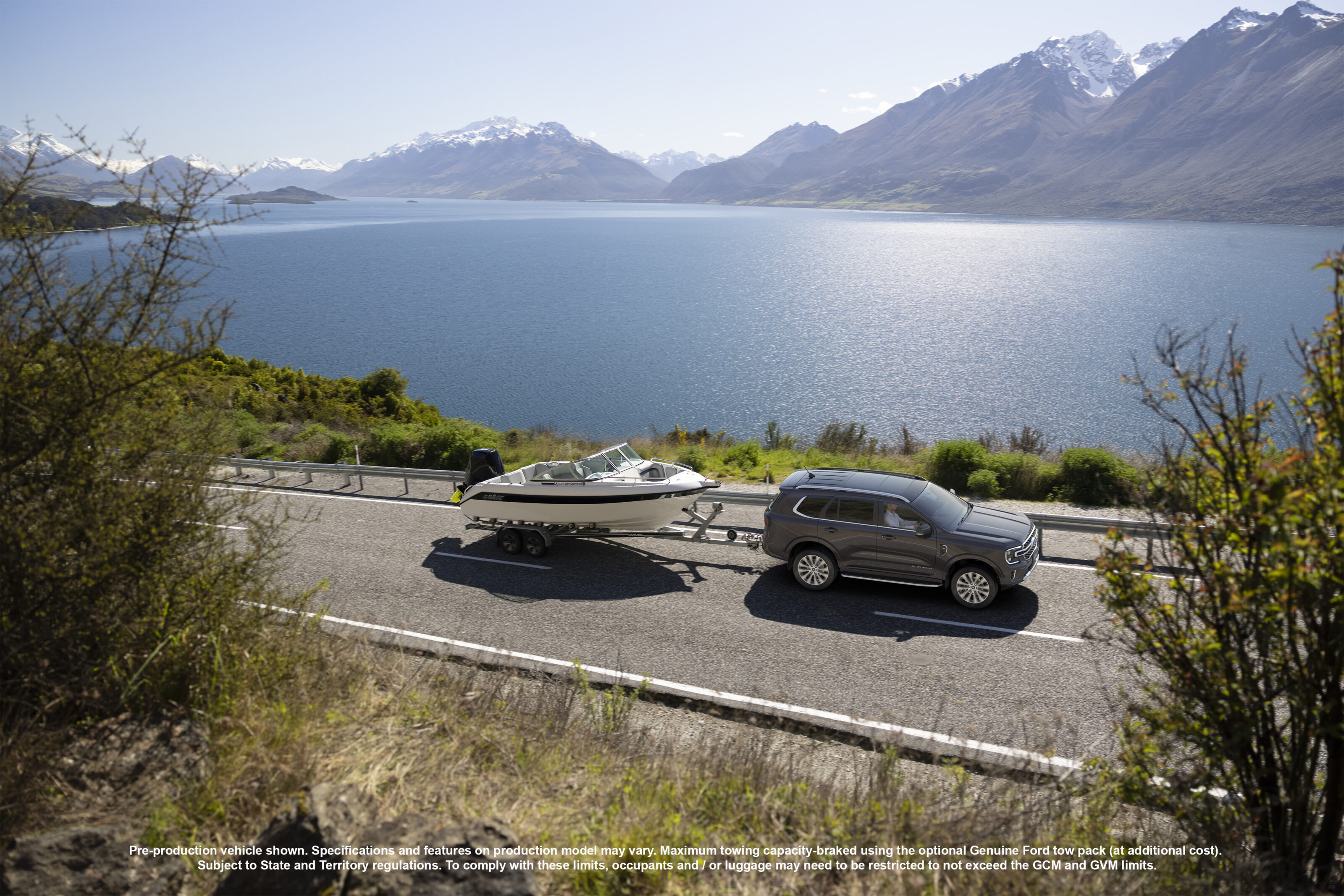
Big, big towing duty
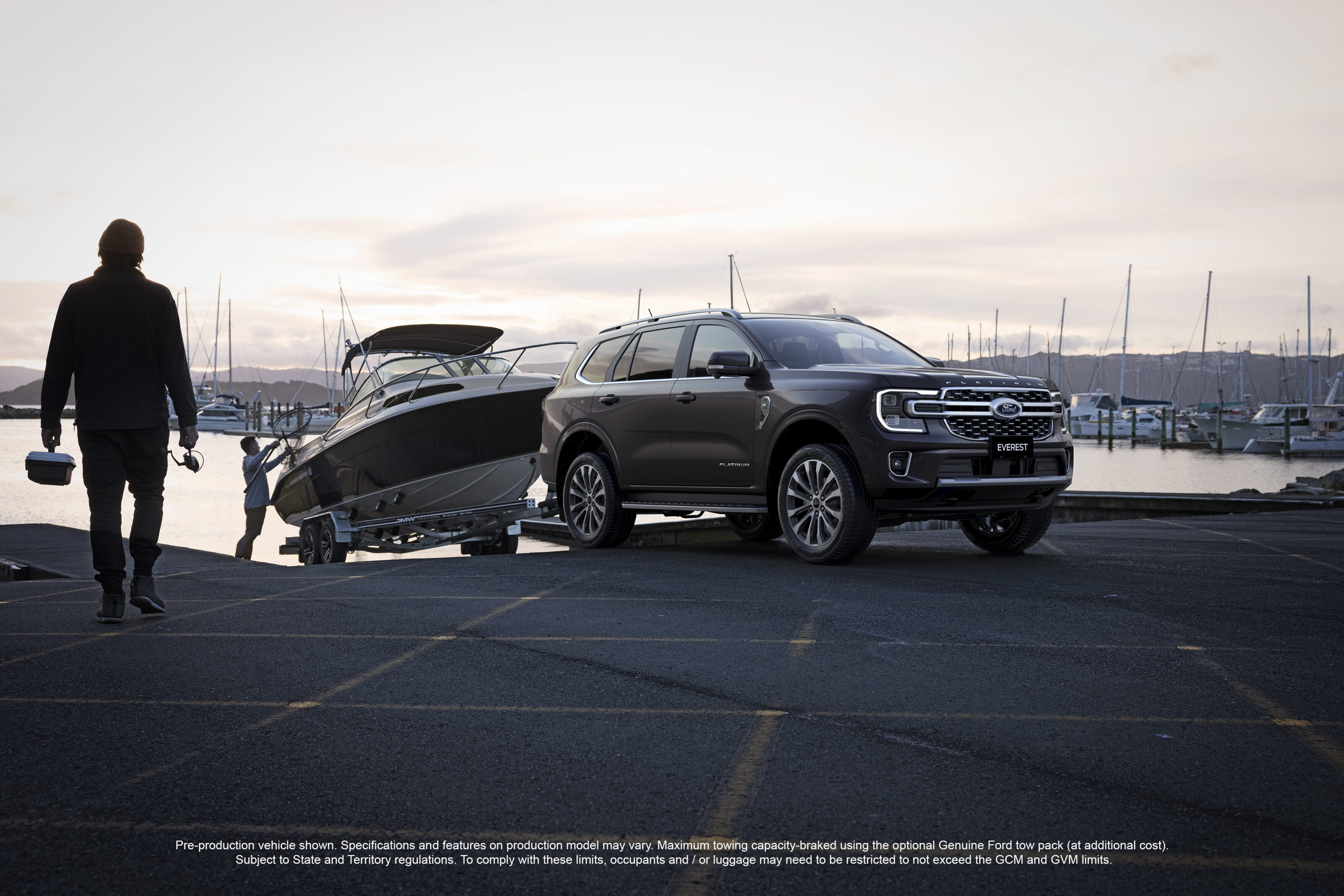
Ford says the new V6 will give the Everest a 3500 kilogram tow rating, significantly more than the current model’s 3100kg for the bi-turbo and 3000kg from the 3.2L. Great news for those looking to tow is that the Everest now comes as standard with integrated trailer-brakes, streamlining the process of tow-readiness.
Foston’s team has taken the opportunity to capitalise on the space liberated by the designers right here the Everest’s USP sits with customers: the second and third rows.
The cargo area is marginally larger in seven-seat configuration, and the interior design team, led by Nick Eterovic, has worked hard on the packaging to include larger third-row pockets to house tablets, a conscious effort on the ‘apple catcher’ on the floor to stop objects rolling around, as well as the ability to fold the seat-rows flat.
The second row too has a new seat design, and of course the front seating is new. “I was obsessed with the command driving position,” said Eterovic. That’s seen greater adjustment of the steering column – a response to direct criticism of the current model.
“We’ve also changed all of the ergonomics of the rear,” says Foston. “How the liftgate opens – we’ve given it as tight a swing as we can, we’ve also made it open quicker and given it more headroom. We’ve done loads of work on the rear to make it much more user-friendly – it’s an area that customers gave us loads of feedback on the current Everest.”
When is the 2023 Ford Everest on sale?
The 2023 Ford Everest is scheduled to go on sale in Australia in the second half of 2022, with pricing and additional details yet to be announced.
Snapshot
- Ford says capability is already there
- Models share same T6 platform
- Hybrid Bronco, also on T6, due in US in 2024
It’s only a matter of time before we see hybrid versions of Ford Australia’s most popular model, the Ranger, and its SUV stablemate, the Ford Everest.
Speaking at the 2022 Ford Everest reveal, T6 platform lead Ian Foston reaffirmed the capability is there, yet would not add confirmation to his comments.
“The platform has been engineered to enable electrification moving through this next generation product suite that we’re launching,” said Foston, who credits the ‘hydroform’ process used in packaging the new 2022 Everest’s front-end as creating better opportunities.
Significantly, it enabled smarter electrical architecture and drivetrain packaging, alongside the Everest’s new V6 and 10-speed transmission.
“It also leaves room for the electrification for the mild hybrid transmission that goes in between the bell housing and the transmission,” Foston said.
When probed more directly, the T6 lead added: “We’ve got nothing to share today.”
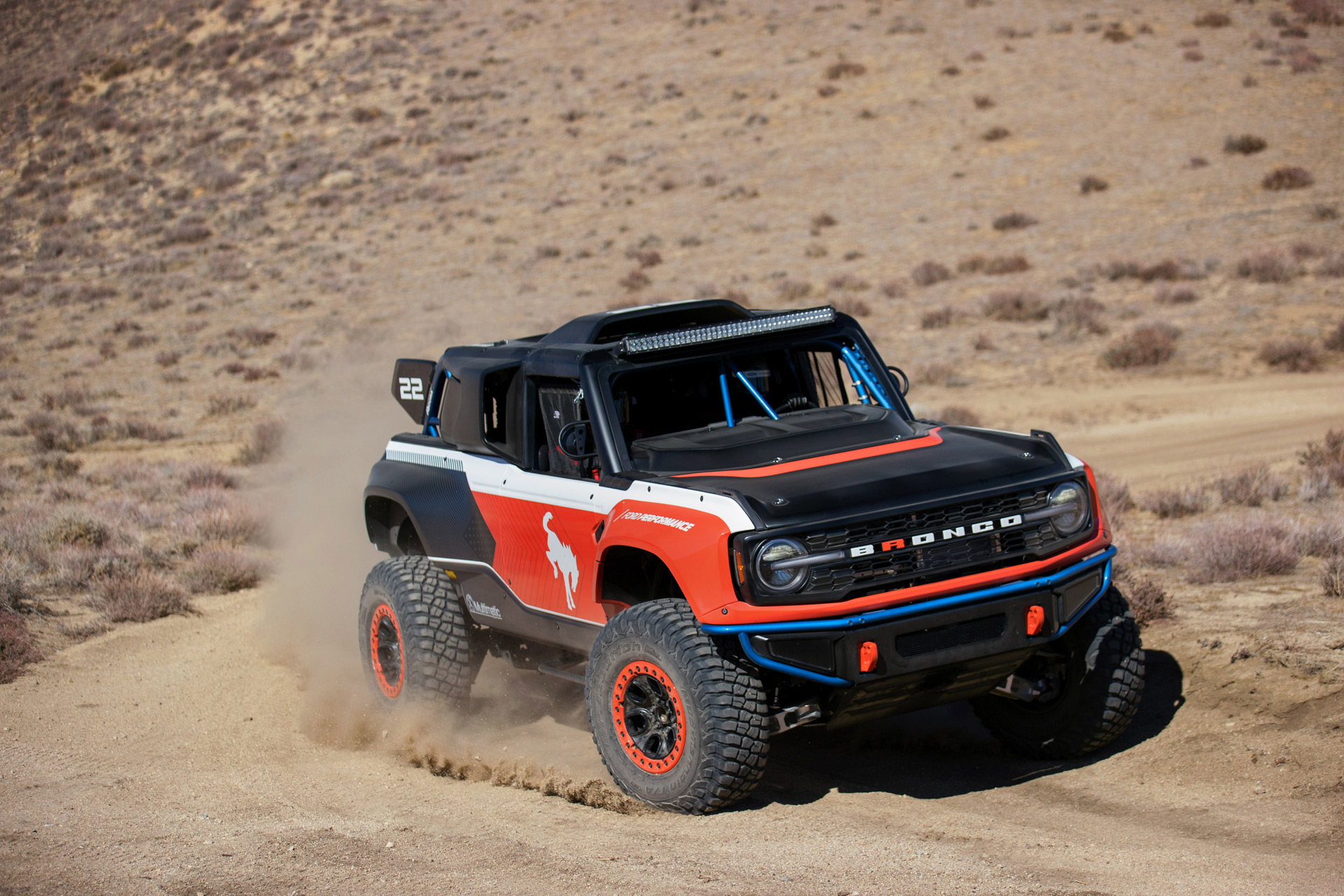
While a full battery-electric vehicle (BEV) seems less likely, a hybrid Ranger and Everest are almost ready-made given the 2019 shareholder meeting announcement of a hybrid Bronco – as well as persistent rumours and company leaks since.
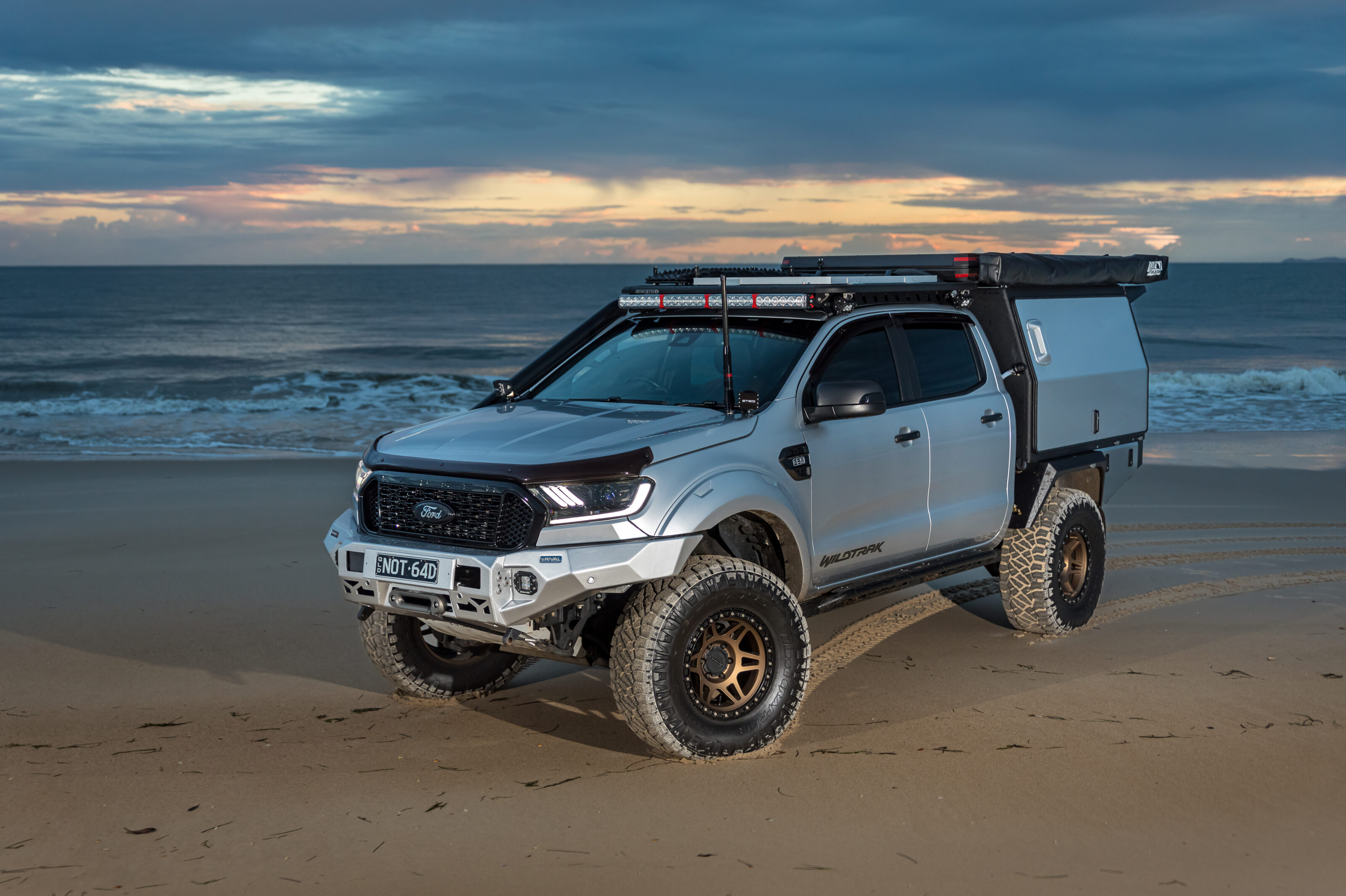
All three vehicles – Ranger, Everest and Bronco – share the same core T6 platform, with the hybrid Bronco expected to arrive for North America’s 2024 model year.
Additionally, rumours persist the Bronco will use a twin-turbo V6 petrol powertrain, which would point to the new twin-turbo 3.0-litre V6 under the bonnet of the 2022 Ford Ranger Raptor in Australia.
The current T6 platform, introduced in 2011, is expected to run through to 2028 – after which Ranger and Everest need to be part of Ford’s global commitment to become carbon neutral by 2050.
In making that pledge, Ford expected 40 per cent of its line-up would have some sort of electrification – from hybrid to BEV – by 2030.
The next Ranger, and therefore Everest, is expected to share the same platform as the F-Series, following Ford’s announcement that it will consolidate platforms globally.
That goes hand-in-hand with Foston’s intimation that existing Ford global hardware is compatible with Ranger and Everest’s T6 platform, and newly engineered components wouldn’t be required to create a hybrid Ranger or Everest.
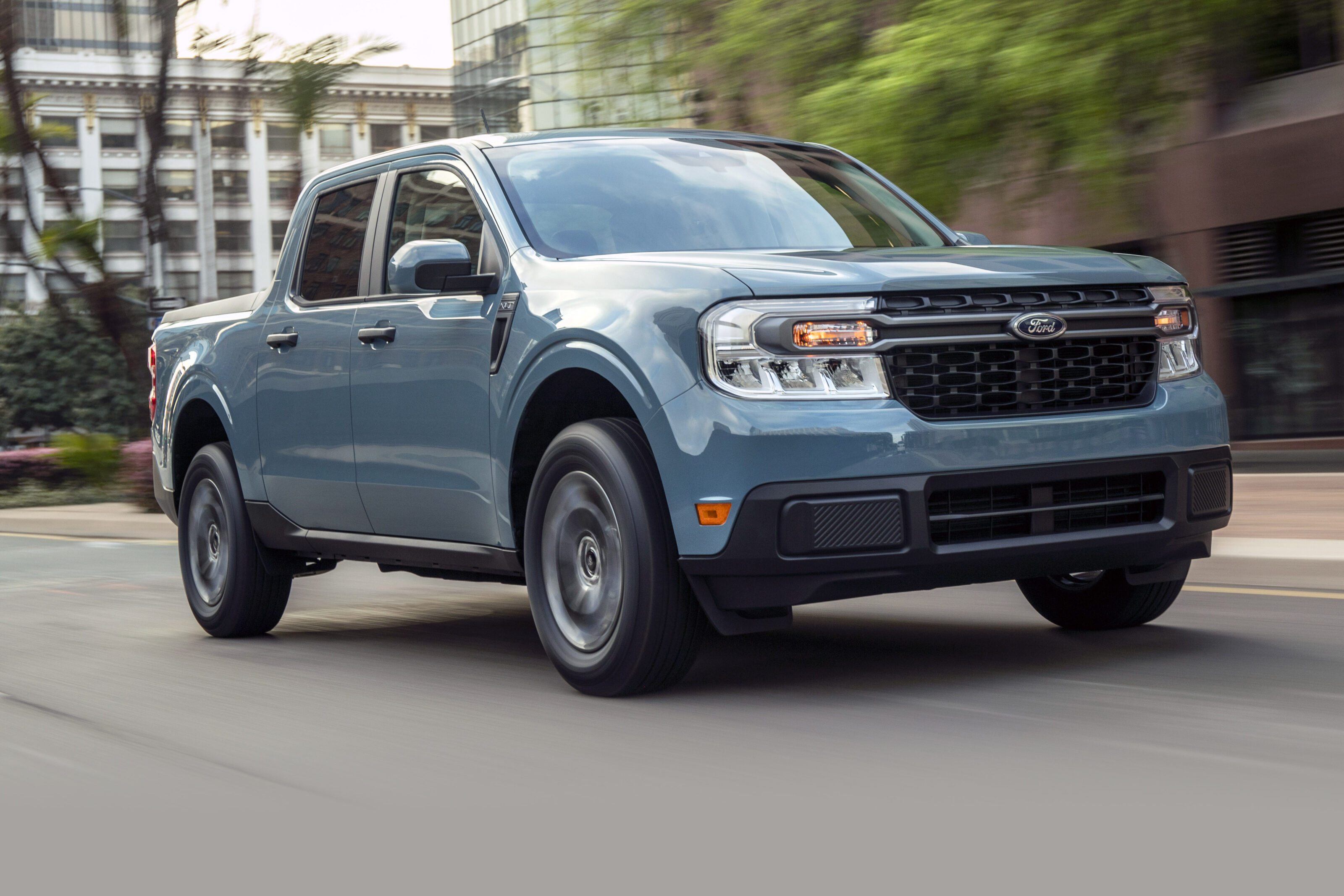
While Ford’s march to electrification in North America and Europe has been ambitious, its battery-electric Mustang Mach-E (which is offered in RHD in the UK), and F-150 Lightning have been well received.
Most recently, its smallest pick-up – the C2 platform-based Maverick – is a price leader which has a hybrid powertrain as standard, with hybrid or electric Escape, Explorer, and Transit available stateside, too.
Despite the global gains, Ford Australia doesn’t offer a single hybrid model. Its Escape PHEV model, previously due in 2020, was delayed due to battery issues and stock shortages that saw EU markets – where manufacturers’ overall emissions are critical – prioritised from its Spain factory, all while the Toyota RAV4 Hybrid temporarily became the best-selling hybrid in Australia.
