
The air is thick with promise. It’s 4.00am on what should be a beautiful summer’s day in Queensland’s south-east corner. You’ve seen the images on countless tourism ads – blue skies, white beaches, and genetically blessed models with infuriatingly upbeat demeanours beckoning you to join them. There will be none of that today. What we will be experiencing instead is a selection of the very best roads this region has to offer.
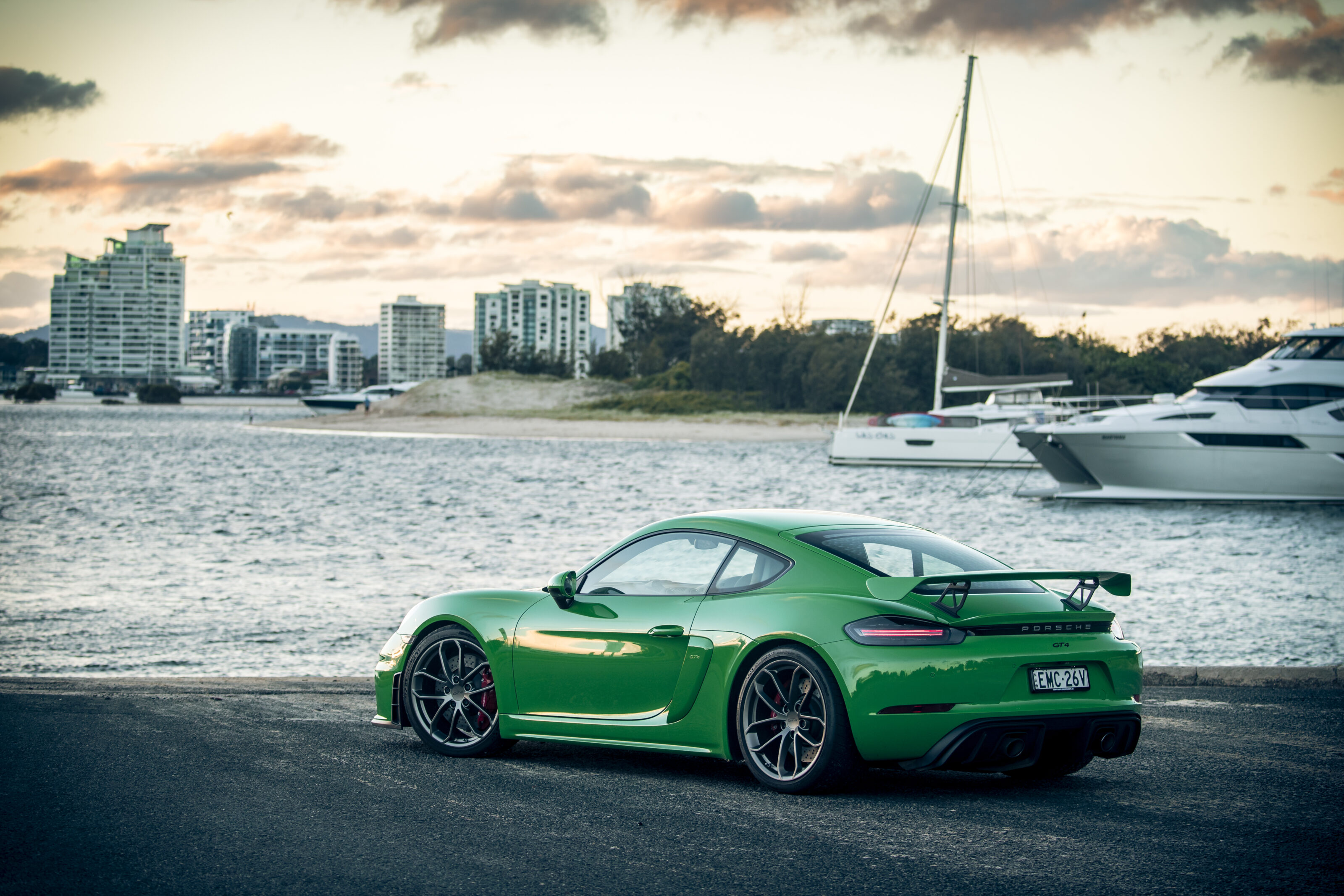
I’m standing at Narrowneck on the Gold Coast as a starting point. The name of the beach may be foreign to you, but you’ll have seen this piece of bitumen before. Each year (once in a century global pandemic notwithstanding) it is transformed into the back chicane of the Surfers Paradise street circuit. A right, left, right, left complex that Supercars drivers enter at 240km/h before launching – often literally – over the kerbs and tyre bundles. My track-ready steed for the day, the Porsche 718 Cayman GT4, won’t be performing any such heroics, even if the gutters here are still lined with tell-tale red and white kerbing.
The only onlookers at this hour are a few overly enthusiastic joggers. It’s still ‘oh god why am I awake o’clock’ on a Tuesday, and I come up stumps trying to reconcile why someone would do that to themselves. But my biggest concern is the storm front. That cursed storm front. Remember how I said this should be a beautiful summer’s day? It won’t be.
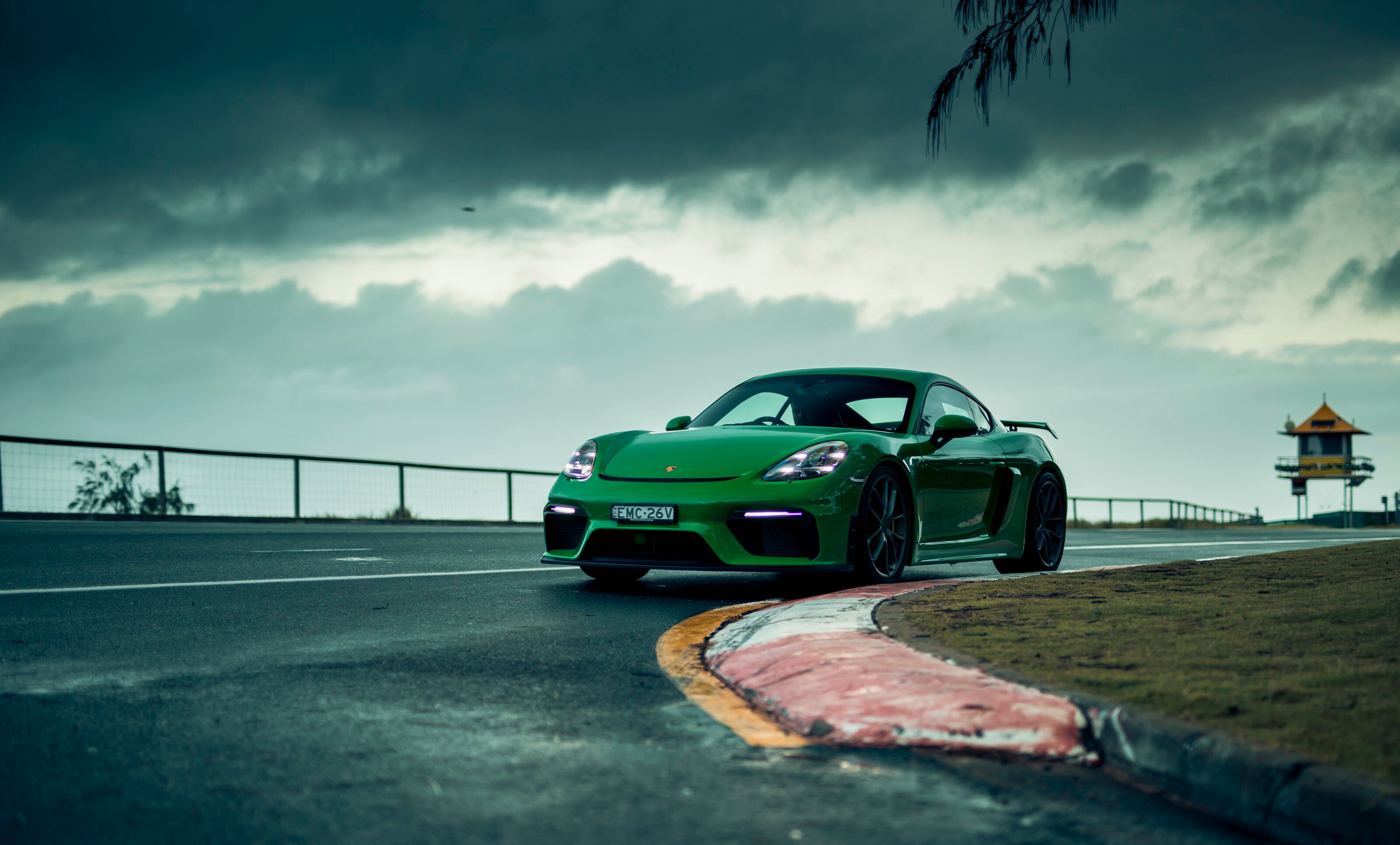
The dreadful weather that threatens us from afar is a hangover from Tropical Cyclone Seth, with the residual low-pressure system lurking off the coast. Looking east, the swirling grey that is today’s frighteningly large swell meets an imposing black at the horizon. There are people that actively chase storm fronts like Seth. Not us. We are running, and our feet won’t touch the ground all day as he nips at our heels.
There will be no epic sunrise, so it’s time to get moving. I’ve teed up nearly 400km of driving that will challenge the GT4 and I (along with photographer Dewar, who I duped into joining me on the promise of beautiful vistas and warm weather). The route snakes west from the coast, away from the tourist traps and onto the Scenic Rim before cutting north to Brisbane’s twin mountains and taking in a unique ridge ride toward our terminus on the Sunshine Coast.
A salty sea breeze flows past the LED matrix headlights of the Cayman in the dark, selling whispers of what will haunt us for the rest of the day. I turn the key in the ignition of the Cayman and the 4.0-litre naturally aspirated flat six fires to life. An actual key, in a proper ignition. It’s amazing what constitutes analogue these days.
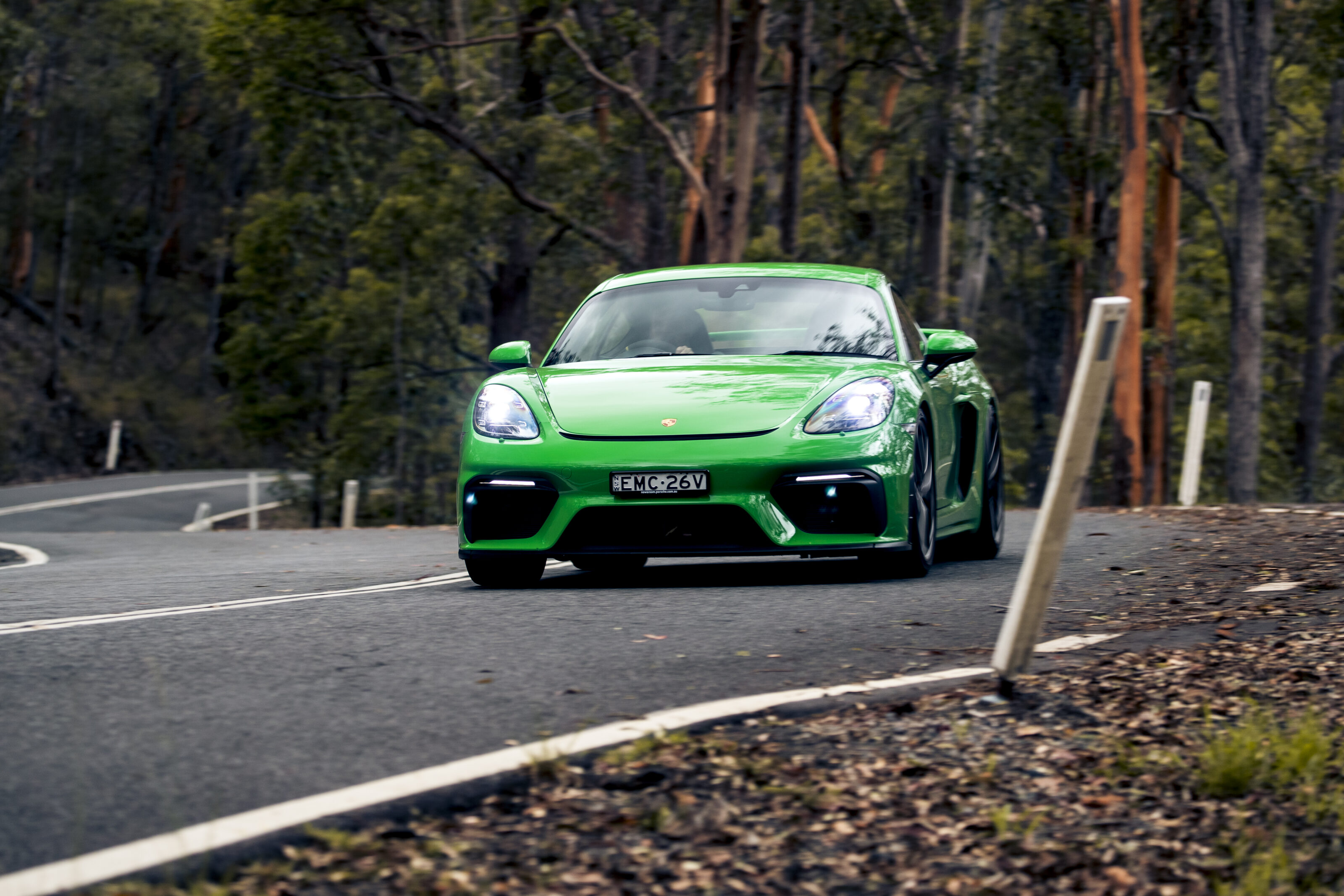
The senescent personality of the GT4 doesn’t start and end with the twist of a key. The inhalation of air into each of the combustion chambers is performed at atmospheric pressure, forced induction need not apply. And electric motors? You’ll need to wait for the next-gen Cayman if you want that. Adjustable drive modes can be found by flexing your ankle, not at the press of a button.
The GT4 doesn’t hide its nature. Even in the mundane it telegraphs intention laced with purpose. The sound of small stones picked up by the vast Michelin Pilot Sport Cup 2 tyres ping in the wheel arches, the gearbox whines along with the mechanical locking diff. Buying a Cayman GT4 and confining it to urban roads is akin to keeping a Great White in your lap pool.
For today’s journey we’ve got the PDK-equipped version of the GT4, which goes some way to ailing the manual’s long-ratio ills. The issue isn’t entirely resolved with the self-shifting seven-speed unit, but the move to two pedals allows the car to make better use of the powerband. The PDK will swiftly shift to a lower ratio before corner exit for better punch, where the driver of a manual may well hang onto the higher gear.
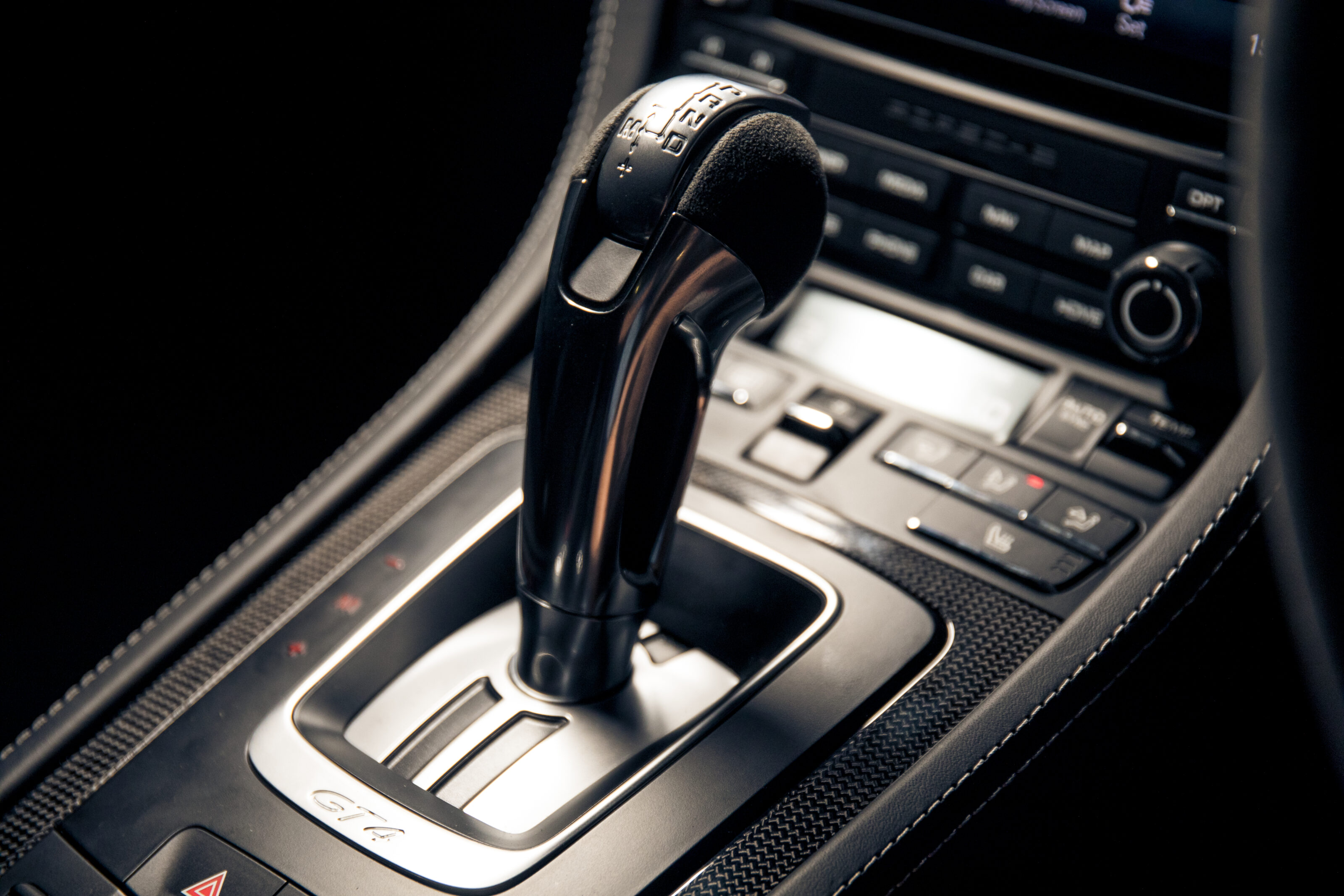
Thankfully the turn to Beechmont arrives quickly, the sun beginning to break up the cloud cover and beat down upon our back, the mercury rising further in kind. The Cayman and I seem to let out a sigh of relief in unison. Thumbing the PDK Sport button on the centre console, the car feels like it’s instinctively flexing its muscles, priming an attack. No sooner is my hand back on the suede-trimmed wheel has the dual-clutch gearbox dropped a ratio, flaring the revs.
We climb quickly after the turn, with the road flicking into aggressively cambered hairpins, flashes of blue appearing briefly through the White Beech trees that give this area its name. I foolishly mistake what is Hinze’s dam azure lake for the sky. When we reach the ridgeline Seth’s dark clouds have descended further and are a swirling maelstrom of black-and-white tendrils reaching down upon the road.
While the roads so far have been enjoyable, the real meat of the day is to be found north of here near Brisbane. It’s an unglamorous transition, with plenty of 100km/h country-road schlepping. Highway driving isn’t the GT4’s comfort zone – it knows that and so do I – so I try and bring the transit stage to an end as swiftly as possible. Seth taunts me by seemingly disappearing. Rain now you bastard, get it over with!
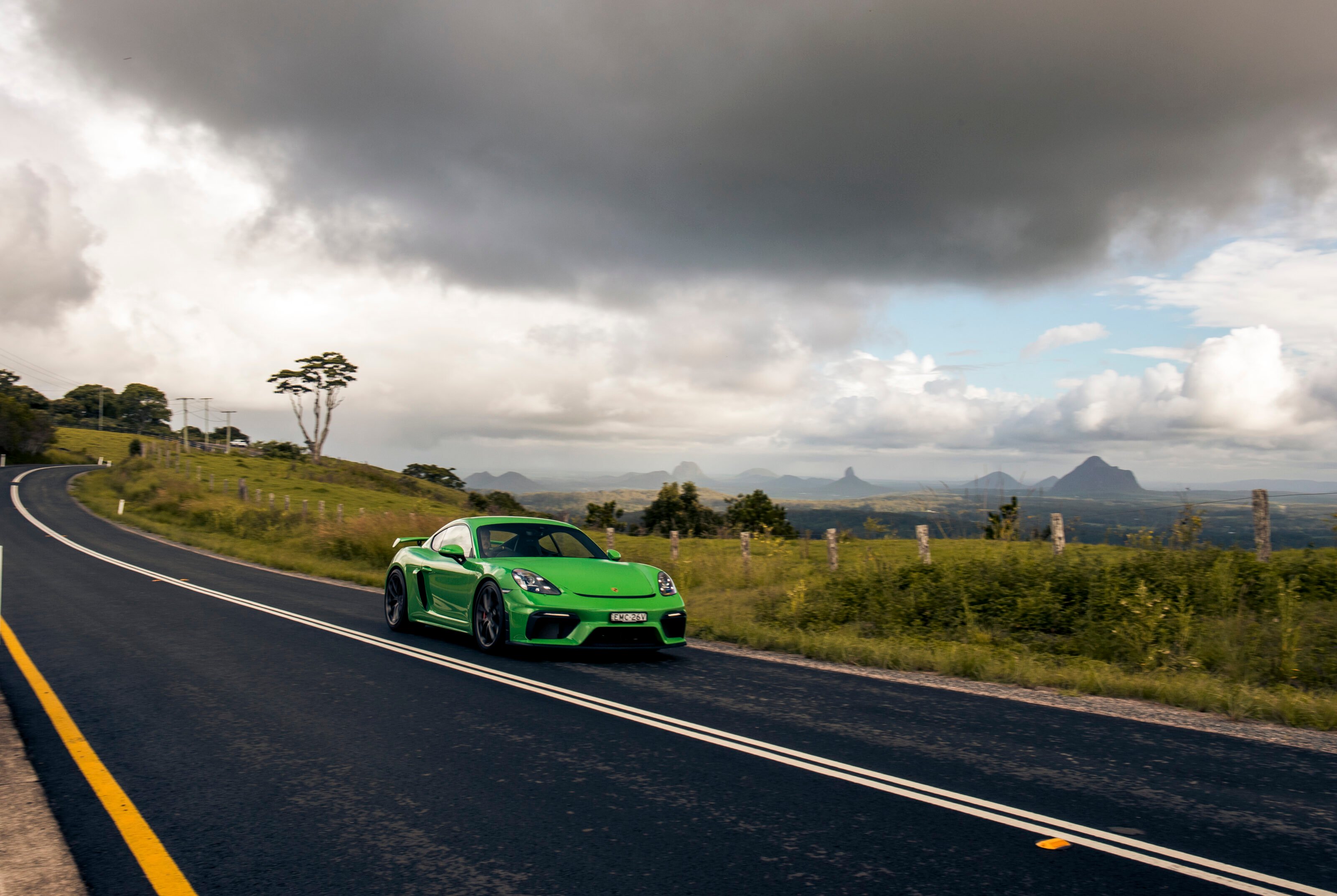
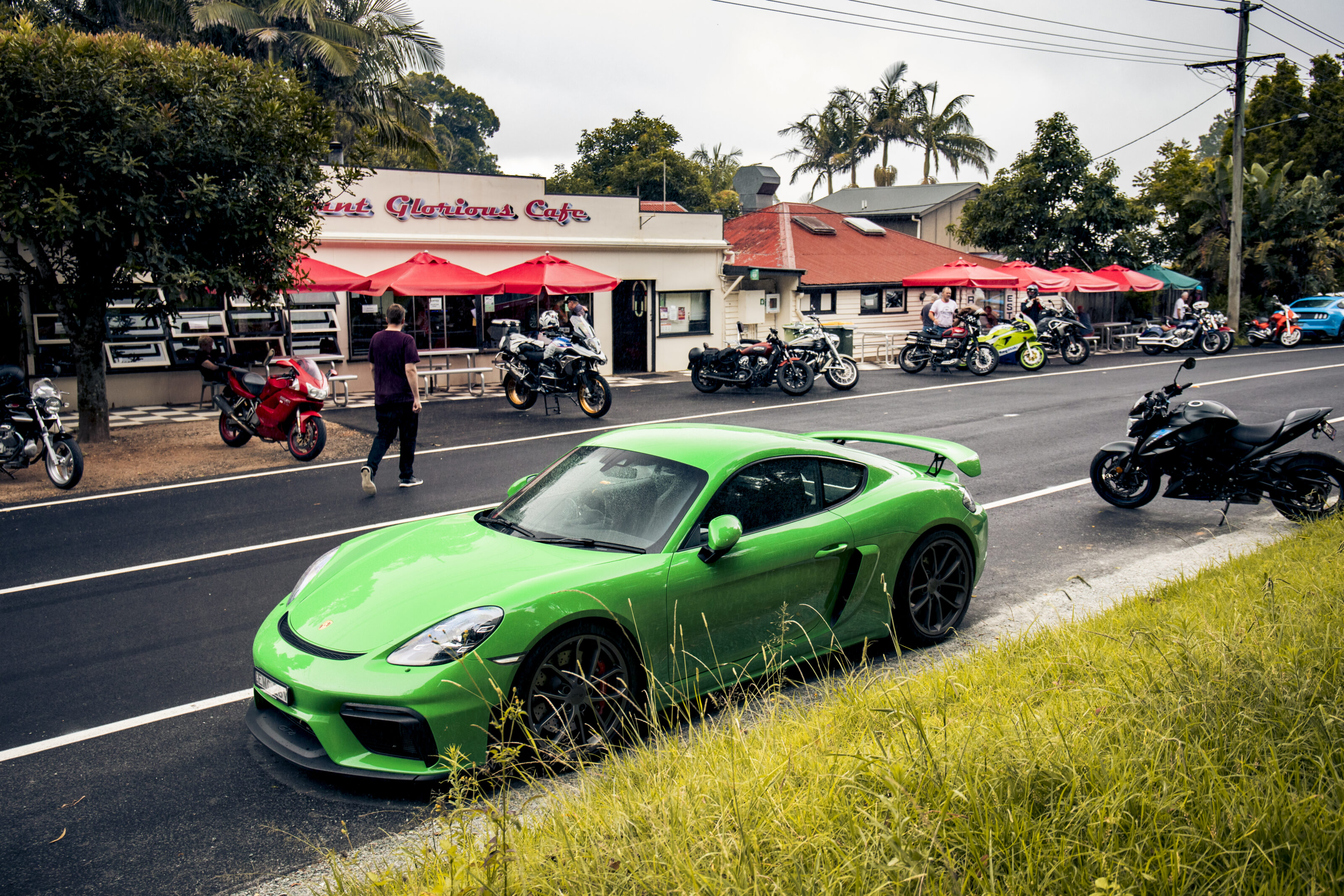
It’s still dry when we reach the bottom of Mt Nebo, one half of Brisbane’s two-mountain act. Brisbane locals will be well acquainted with the driving joys both offer, as am I having spent many late nights traversing their serpentine roads. It’s also a favourite of motorcycle riders who frequently use the Glorious Café as a meeting point midway between the two Mounts. Towering gums replace Armco at the road’s edge. Speed signs are bolted to their trunks. Not content with government warnings, locals have made their own signage, reiterating the speed limits, showcasing the battle between those who live here and those who enjoy its bitumen delights.
An abandoned fire tower sits near the top of Nebo. It isn’t visible from the road, and you’d miss where to stop unless you were told by a local. Luckily, I once was. If you ignore certain signs you can get to the top of the wooden structure where you’re greeted with a vista that stretches from Noosa to the New South Wales border on a clear day. At night you can watch the headlights of other drivers as they bob and weave up the hill and past you.
These roads are familiar to me, but the driving experience is completely foreign to those formative late nights. My 18-year-old self would find what I’m doing today completely improbable, largely due to the cost of entry. A standard Cayman GT4 with a three-pedal manual will set you back $210,100 before on-roads. The privilege of not having to shift the gears yourself will add $4580 to that alone.
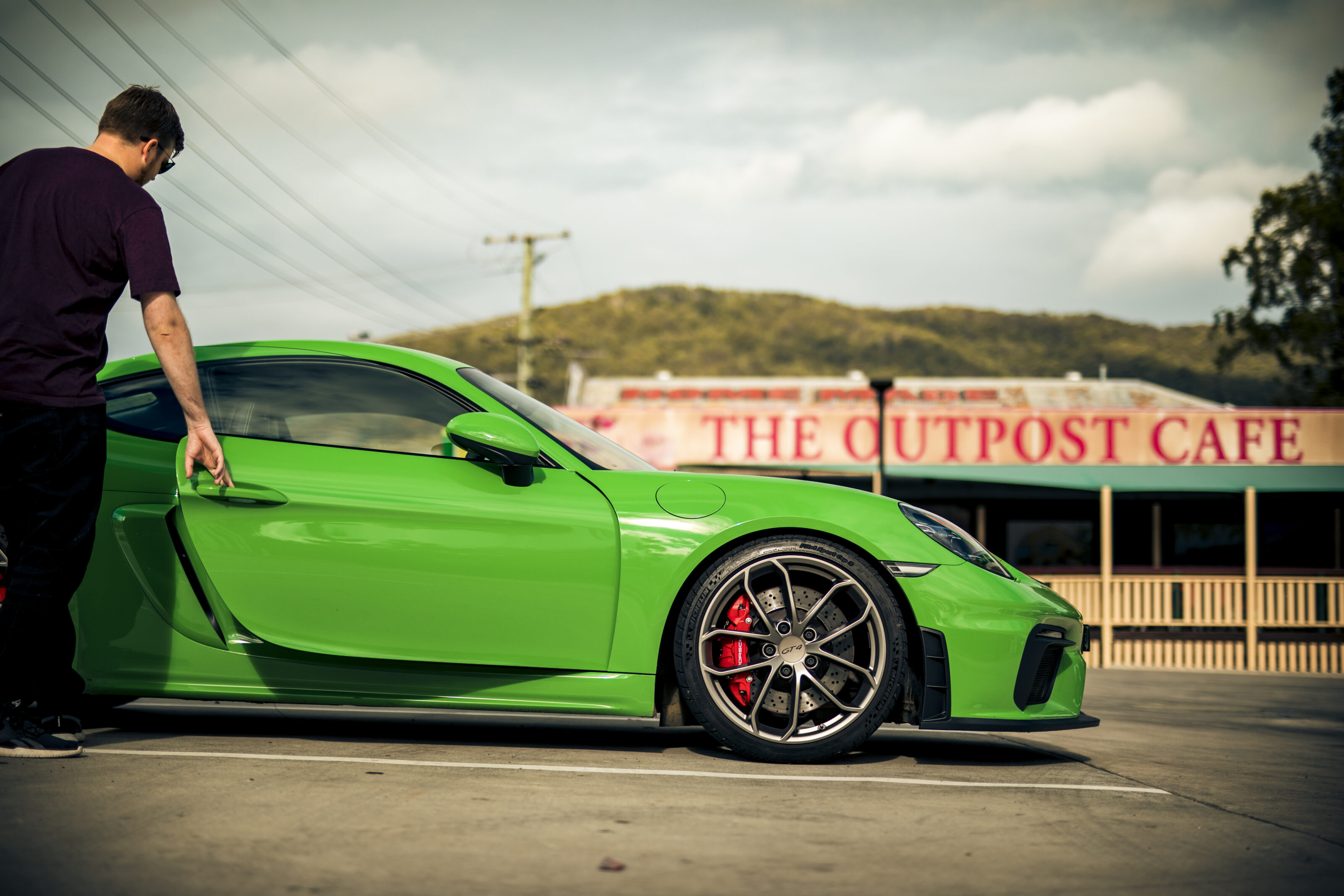
Our test car also includes choice options such as Python Green paint ($6070), 18-way electric adaptive sport seats ($4630) extensive interior trimmings in Porsche’s pseudo-suede Race-Tex material ($3320), a Bose surround sound system that can only manage a feeble fight against the GT4’s considerable road and wind noise ($2230), and more. All up, our tester asks $239,650 from a prospective owner.
Add on-roads to that and, well, the barrier of entry is elevated by cost more than the skills required to give the GT4 a proper thrap. Skilled you do need to be. Not that the fastest Cayman available (until the bonkers RS version lands) will bite the hand that steers, but its depth of talent is so deep you can become overwhelmed by it.
Seth is all-encompassing and inescapable. Just as we begin to think that we’ve escaped its rain-soaked grasp we are plunged back into the torrents once again. The road that snakes its way along the banks of Somerset Dam has seen better days. The corrugations and ripples that have been beaten into the hotmix by countless trucks and boat-hauling dual cabs has turned the surface into one that truly tests a car’s damper tuning and mid-corner compression compliance.
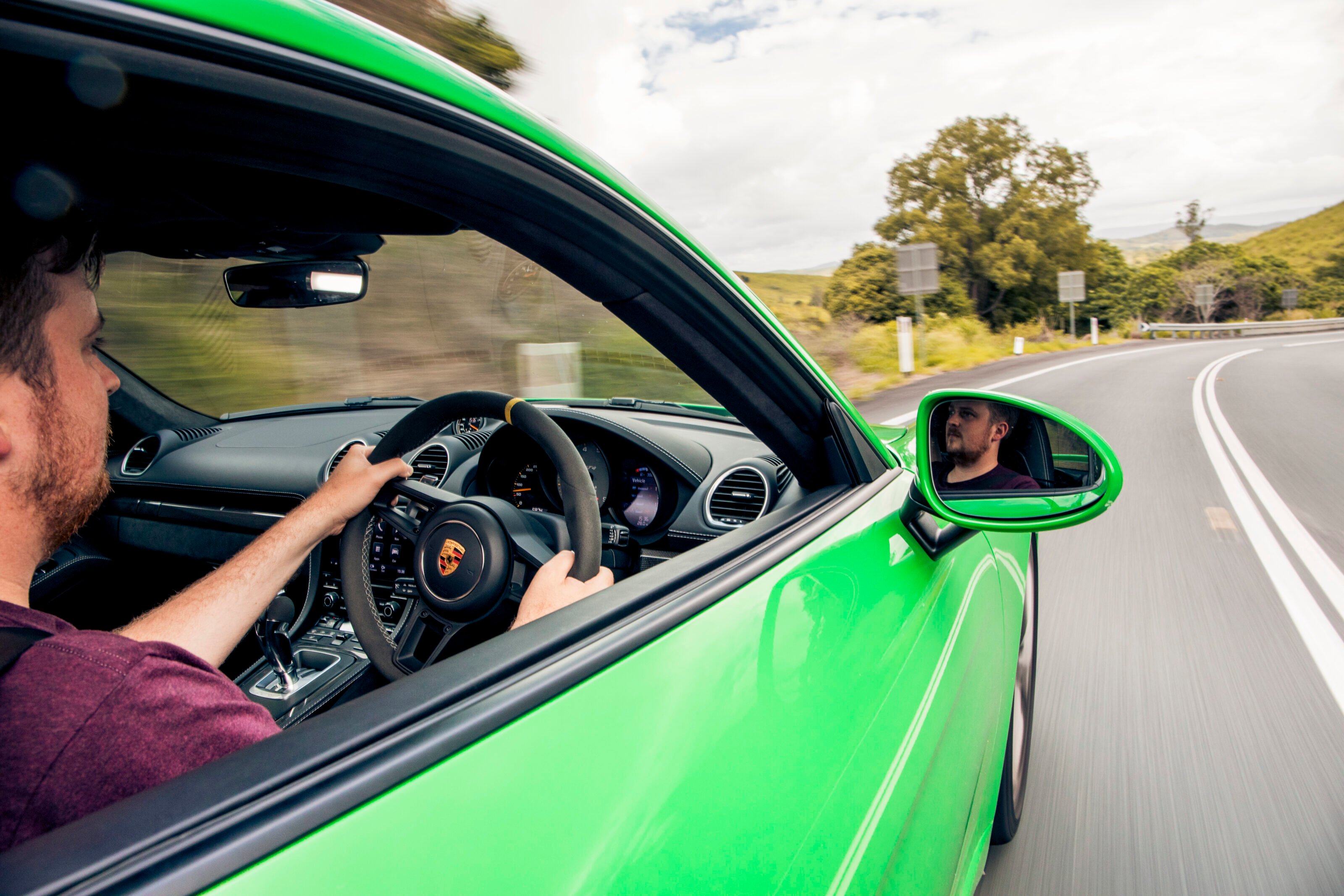
It’s here that I become thankful for the intelligence harboured at Weissach. Taut body control is paired with damping that doesn’t rattle your brains out, and can soak up the punishing bumps, instead of skipping over them and denting confidence, particularly in the mid-corner. Traditionally though those that didn’t wish to punish their suspension here could enjoy vast views of the expansive lake and the revellers that make the most of it on the water. Today Seth’s veil means we can barely register what cardinal direction the dam is in relation to the road.
The road is doing its best to retain heat – the temperature is still in the mid-to-high twenties – with steam continuing to rise off the surface. The Michelin tyres too cling to warmth admirably. This means it’s not grip limiting progress, but visibility. I wish some of the engine’s power could make the wipers work harder.
As our day ticks on (we clock 17 hours in the saddle all up), my confidence in the GT4 increases. By the time I reach the fast sweepers that form the bottom of Maleny Stanley River Road (a gem of the Sunshine Coast hinterland we’ll explore more next issue) I realise I’m pushing harder and faster than is sensible. The GT4 has the capacity for more speed should I wish to push on, but like trying to rev a modern car in neutral, there is a mental soft limiter of self-preservation that says enough is enough.
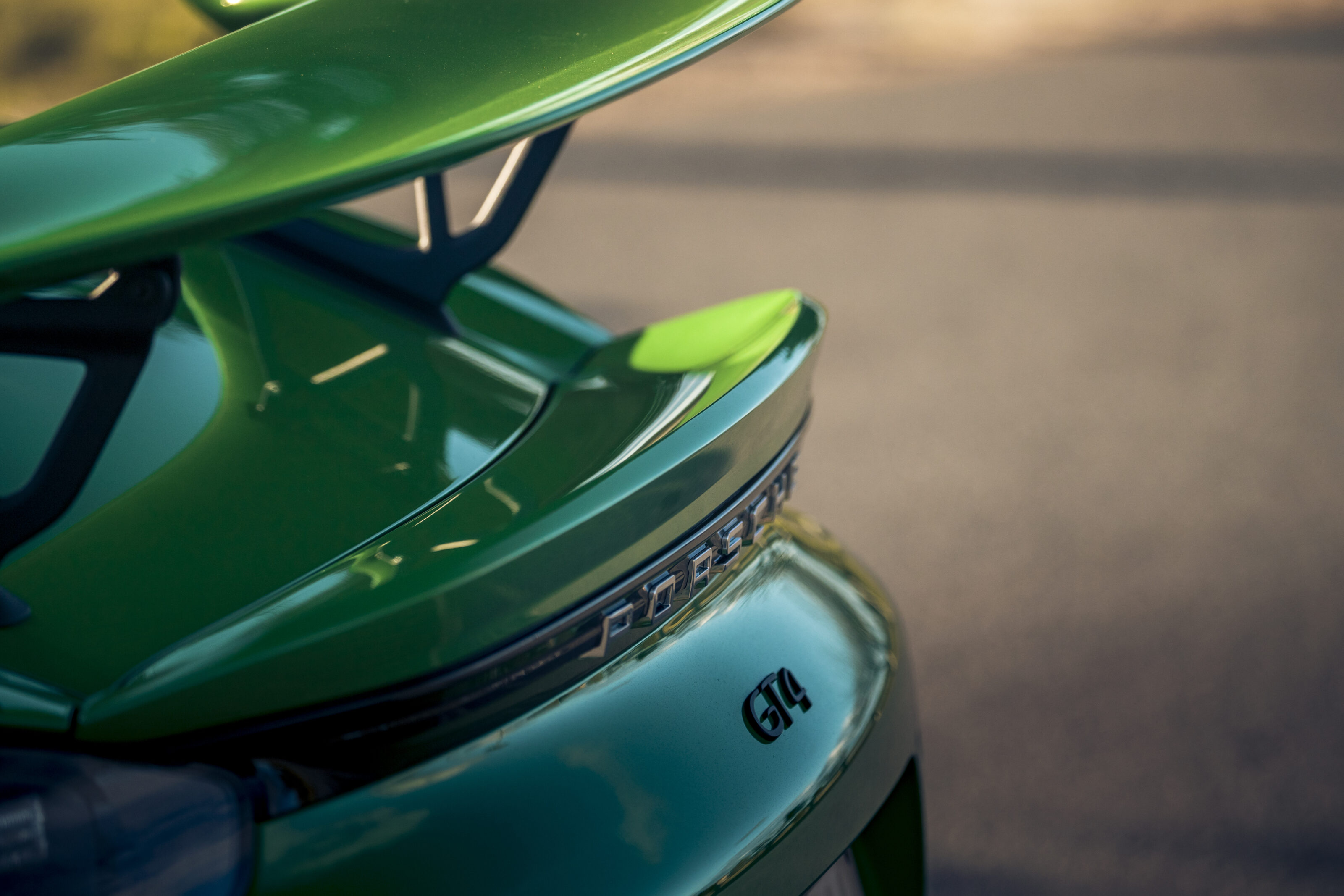
The limit is out there, but I won’t be finding it today, not without a rendezvous with a proper race track. Does that dull the appeal of the GT4 as a road car somewhat? No. Porsche has been doing this long enough that it can chew gum and walk at the same time. Needing a track to get to the cliff face of mechanical talent and building a capable road car are not mutually exclusive demands. Even without pressing the limits of its mechanical ability, the GT4 is as thrilling and engaging a chariot as you could hope.
The steering is electric in the way it feels in your hands. It’s delicate but alive with sensation. There are no dead zones, it’s progressive and responsive. Every small input is executed clinically. If hell was a Westfield car park, as long as I had a Cayman GT4 to tootle around, I’d happily enjoy the millennia of ‘torture’ I deserve for my sins. Then there are the brakes. Oh, glory be these brakes. Both in outright stopping power and pedal feel the standard steel units are exemplary.
While both the engine in the 911 GT3 and Cayman GT4 are 4.0-litre naturally aspirated flat-sixes, the unit found in Porsche’s mid-engine offering starts life as the 3.0-litre twin-turbo 9A2 Evo from 992 911 Carreras and co. Porsche’s engineers then increase the bore by 11mm, stroke by 5.1mm, delete the turbos, lift the compression to 13.0:1, redesign the crankcase, crank, pistons, conrods, cylinder heads and intake to build an almost standalone unit.
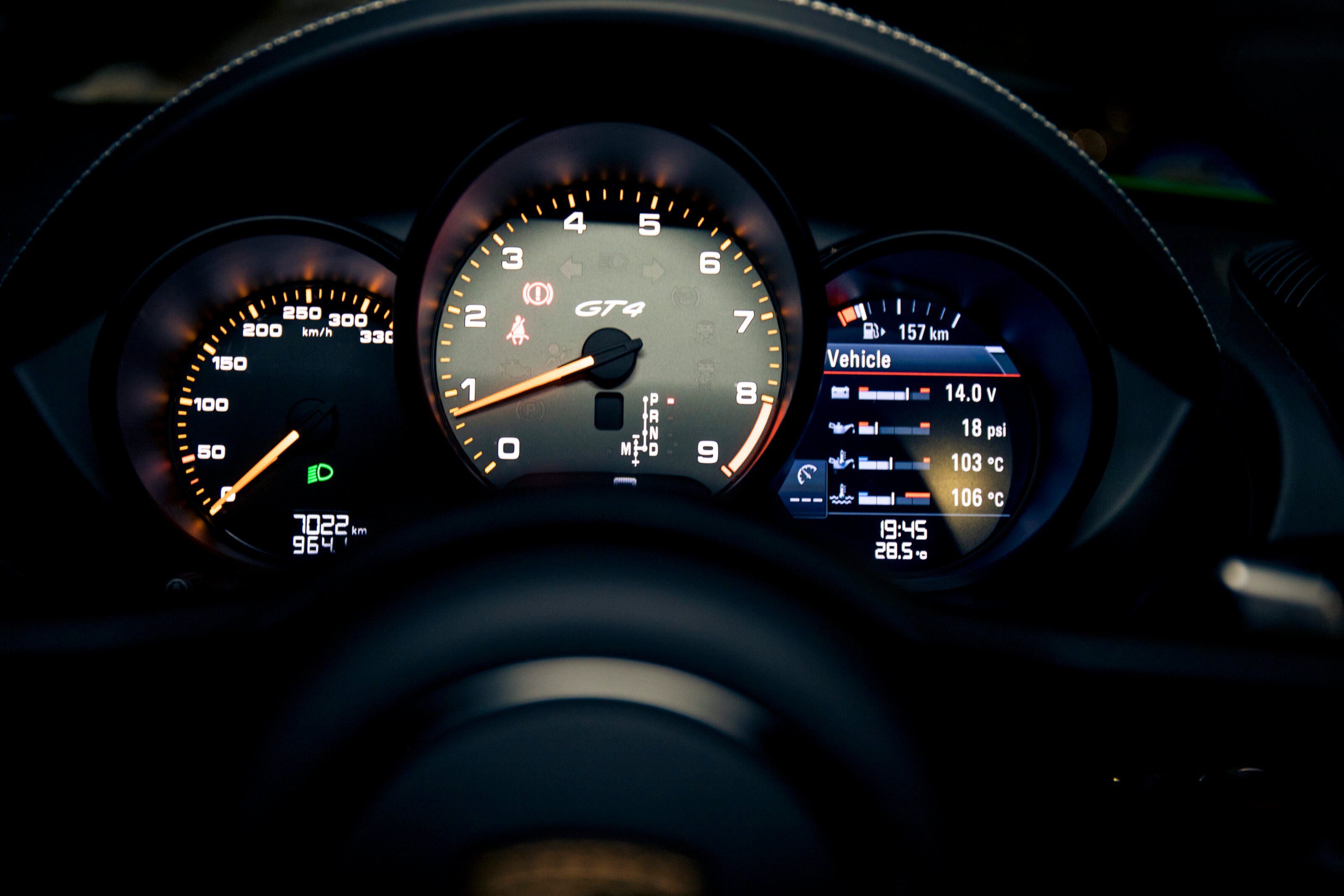
The result is impressive, but perhaps not entirely exotic in feel. Yes, it’ll rev to 8000rpm, and has all the power you need to have the traction control light come with an epilepsy warning, but it lacks character that is truly endearing. With combustion technology reaching its zenith, an old school atmo flat-six should thrill. It’s a shame this one doesn’t.
Of all our hinterland travels today, there is something that I’ve been thinking about since our departure in Narrowneck – Obi Obi Road. We hit the anticipated tarmac outside Kenilworth just as the sun sets, plunging the surrounding hills into darkness. I’m tense and excited because I know the unique feature hidden in this rural b-road. As you climb the Obi Obi, for one small and tiny stretch, the two directions of travel are split from one another and those travelling east are gifted a lane and a half of twisting bitumen, with the guarantee of no oncoming traffic.
There is no looping back down to do it again, with the return route a dirt path entirely unsuitable for the GT4. It’s a one-and-done situation. But for those 1500 metres the Cayman and I are free. Together we dive from apex to apex with impunity, knowing that we have the entire width of the road to ourselves. The Porsche’s individual parts coalescing into something greater than their sum. Harrowing swirls of rain that have chased me since dawn are left in the wayside as the delight of mechanical unity clears my mind.
From here it is just a short drive down the hill to the Sunshine Coast. Somehow the Cayman, now flecked with bugs and grime from a hard day’s work, is still managing to turn heads on the foreshore of Mooloolaba beach. While the GT3 will always reign supreme, the GT4 acts as Porsche’s prince of speed. While it may not have been enough to escape Seth’s grasp today, I don’t know many other cars that would have made the trip as enjoyably memorable. That, if nothing else, makes the Cayman GT4 performance royalty in my books.
Fully SEQ
The Route – 398km
Our start and end points are dictated by editorial photography needs and storytelling, something your personal exploration will be unshackled from. An alternative to Beechmont Road is Nerang Murwillumbah Road that rides the hillside next to Hinze Dam. Mt Tamborine is a favourite for locals, but was closed during our drive.
Entering Mt Glorious from Samford is an excellent choice, and a detour to the nearby Mt Mee and nearby Clear Mountain Road will be well worth your time – just remember to take your brave pills with breakfast. Looking for food stops? Ricks Garage oozes old school diner cool with excellent service, while sitting down at McCoy’s Café could see you served a drink by Aussie motorcycling royalty, Gary McCoy.
PORSCHE CAYMAN GT4
Things we like: Best steering in its class; more grip than god; damping
Not so much: Engine is good, not great; road noise; gears are still too long
SCORE: 4/5
2022 Porsche Cayman GT4 specifications
| BODY: | 3-door, 2-seat coupe |
|---|---|
| DRIVE: | rear-wheel |
| ENGINE: | 3995cc flat-six, DOHC, 24v |
| BORE X STROKE: | 102.0 x 81.5mm |
| COMPRESSION: | 13.0:1 |
| POWER: | 309kW @ 7600rpm |
| TORQUE: | 420Nm @ 5000-6800rpm |
| POWER/WEIGHT: | 213kW/tonne |
| TRANSMISSION: | seven-speed dual-clutch automatic |
| WEIGHT: | 1450kg |
| SUSPENSION: | struts, coil springs, adaptive dampers, anti-roll bar (f); multi-links, coil springs, adaptive dampers, anti-roll bar (r) |
| L/W/H: | 4456/1801/1269mm |
| WHEELBASE: | 2484mm |
| TRACKS: | 1538/1534mm (f/r) |
| STEERING: | electrically assisted rack-and-pinion |
| BRAKES: | 380mm ventilated discs, 6-piston calipers (f); 380mm ventilated discs, 4-piston calipers (r) |
| WHEELS: | 20.0 x 8.5-inch (f); 20.0 x 11.0-inch (r) |
| TYRES: | 245/35 ZR20 (f) ; 295/30 ZR20 (r); Michelin Pilot Sport Cup 2 |
| PRICE: | $210,100 ($239,650 as tested) |
If it wasn’t for the chip shortage and the need to divert precious semi-conductors from the Volkswagen brand to proper money-makers like Audi, Bentley and Porsche, the ID.5 would have hit the market a couple of months ago.
Instead, almost everything is tentatively on hold, even the image-building ID.Buzz won’t be delivered to customers before October. These delays do not stop VW from launching a brand-new ID.6 concept car at the Beijing Auto Show in late April.

But wait a minute – didn’t the ID.6 go on sale late last summer? That’s correct, but the roomy seven-seater is for the time being only available in China where it was recently rebadged ID.6 X (or Cross) to make numeric room for its future sister models.
First out in 2023 is the ID.6 Aero, a saloon-fastback hybrid vaguely inspired by 2018 ID.Vizzion show car. About a year and a half later, we expect an even more practical derivative, which fuses estate car and shooting brake elements, like the ID.Space Vizzion did in 2019. In a nutshell, the duo stands for Arteon and Passat variant electrified.

At the bottom end of the portfolio, VW had originally planned to replace the recently re-instituted E-Up! with a bargain basement EV, provisionally dubbed ED.1.
Derived from a discontinued first-edition MEB platform, which would have switched for packaging reasons from RWD to FWD, this model was to be offered at a price point of under €25,000 (AU$39k) before subsidies – that’s Renault Zoe and Smart EQ territory.
But the business case never took off. Development and production costs were too high, projected sales numbers and profit margins did not add up, and a cheap Volkswagen was no longer fully in line with the brand’s high-flying aspirations.
Although the project was eventually mothballed, Skoda, Seat, VW do Brasil, and the Chinese Jetta satellite may still come up with individual affordable solutions for local markets. In a recent interview, Herbert Diess stated that a battery-powered Beetle is still a possibility, but the CEO did not further elaborate. Last year, Diess had mentioned a tentative ID.3 convertible, which later also disappeared in the rhetorical cul-de-sac.
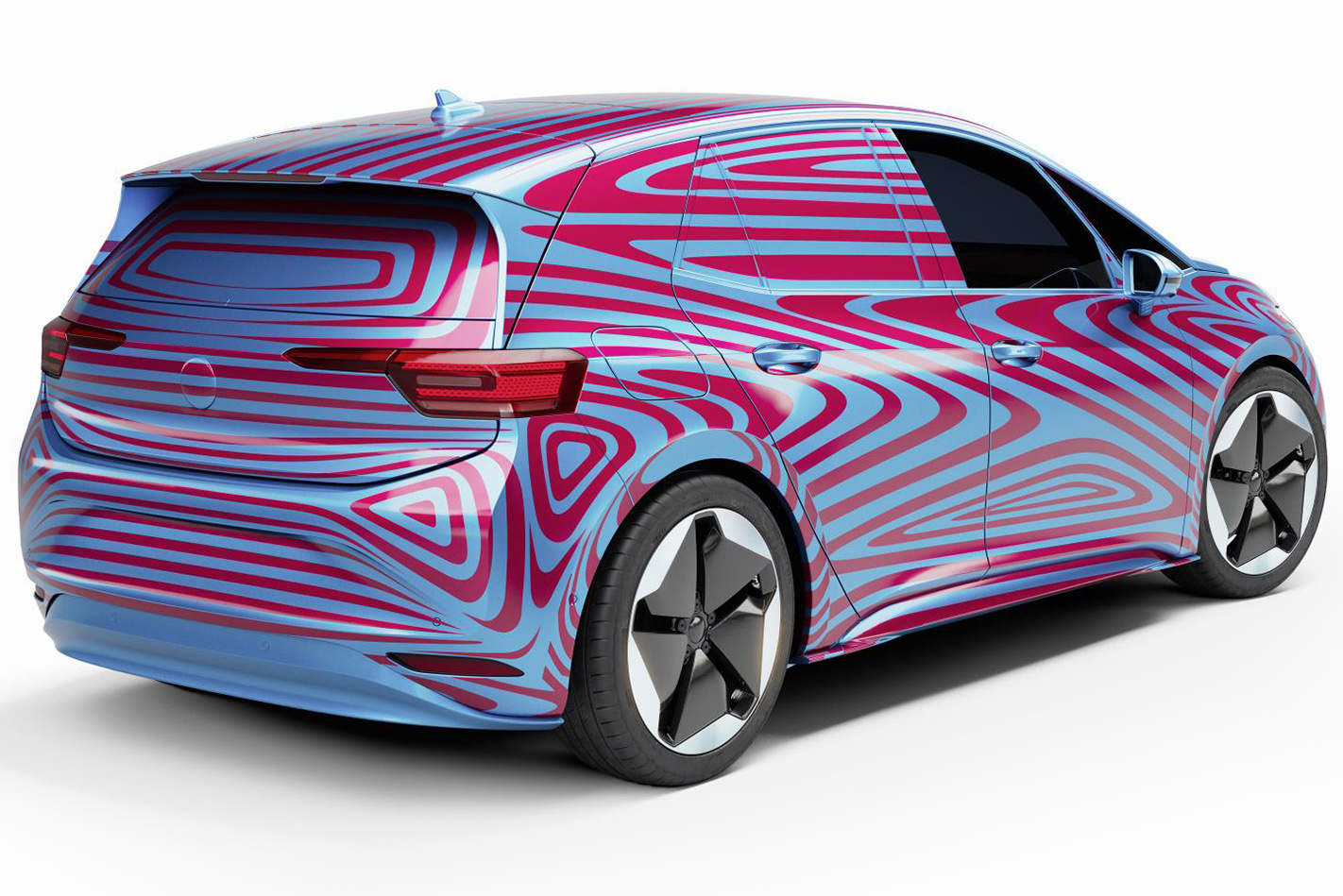
Unlike Audi, which decided to ditch the A1 and the Q2 when production of the current generation ends, VW still intends to go-ahead with a BEV positioned below ID.3.
At the IAA last year, the marque presented the ID.1 concept which kind of fit the description – at least dimensionally. But the controversial design failed to excite. The roof concept looked clumsy and was not particularly well executed, and the response of the audience was accordingly lukewarm.
Meanwhile, the new chief designer, Jozef Kaban (ex-Bugatti, Audi, Skoda, BMW, Rolls-Royce), and his team took to the drawing board again and created a bunch of more up-market proposals with a higher digital content and positively modern proportions.
During the transition from CAD sketches to clay models, the final designation changed from ID.1 to ID.2, reflecting the more grown up stance and the more generous packaging which allegedly matches the Golf on the footprint of the Polo. Internally known as ID.2 Urban, the rustic five-door hatchback due in 2025 is described as a funky, fun-to-drive and versatile metro-cruiser for younger IT-minded audiences.
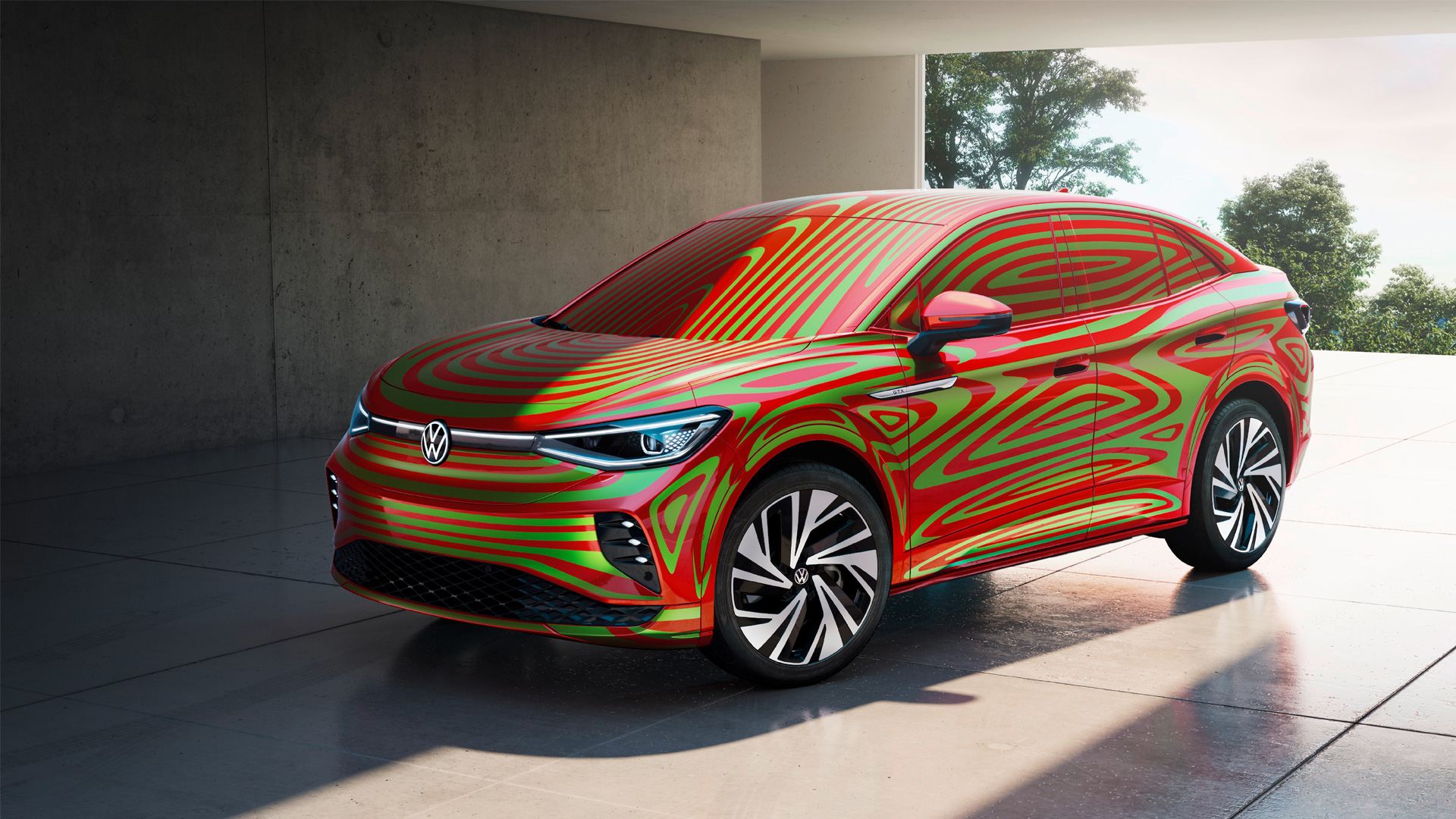
In 2026, we expect to see the ID.2 X (Cross) based on the very same FWD matrix, which will also be available to other Volkswagen brands and perhaps even to takers outside the group – like Ford.
The closest rivals are the next four-door Smart built in China and the iconic Renault 4 E-Tech, which is said to undergo a character switch from hatchback to crossover before it reappears in 2025.
According to the Wolfsburg grapevine, both ID.2 versions are to feature an evolution of the MEB architecture which will be six years old in 2025. Why is so much happening in 2025? Because that’s the likely D-date for the more stringent EU7 emission norm.
But back to the ID.2 – which is tipped to feature numerous improvements such as; more efficient batteries, faster charging cycles, advanced energy management systems and an available performance pack with on-demand power boost.
This MEB 2.0 components set will be accompanied by the more potent E3.X software, which takes the platform an important step closer to the future in the shape of the even more flexible SSP layout pioneered at VW by the Trinity halo car.
In an interim move, the ID.3 is due for its first facelift next year. We expect tweaked bumpers, a prettier bonnet, split tail-lights, a higher-quality trim and some revisions to the repeatedly criticised ergonomics.
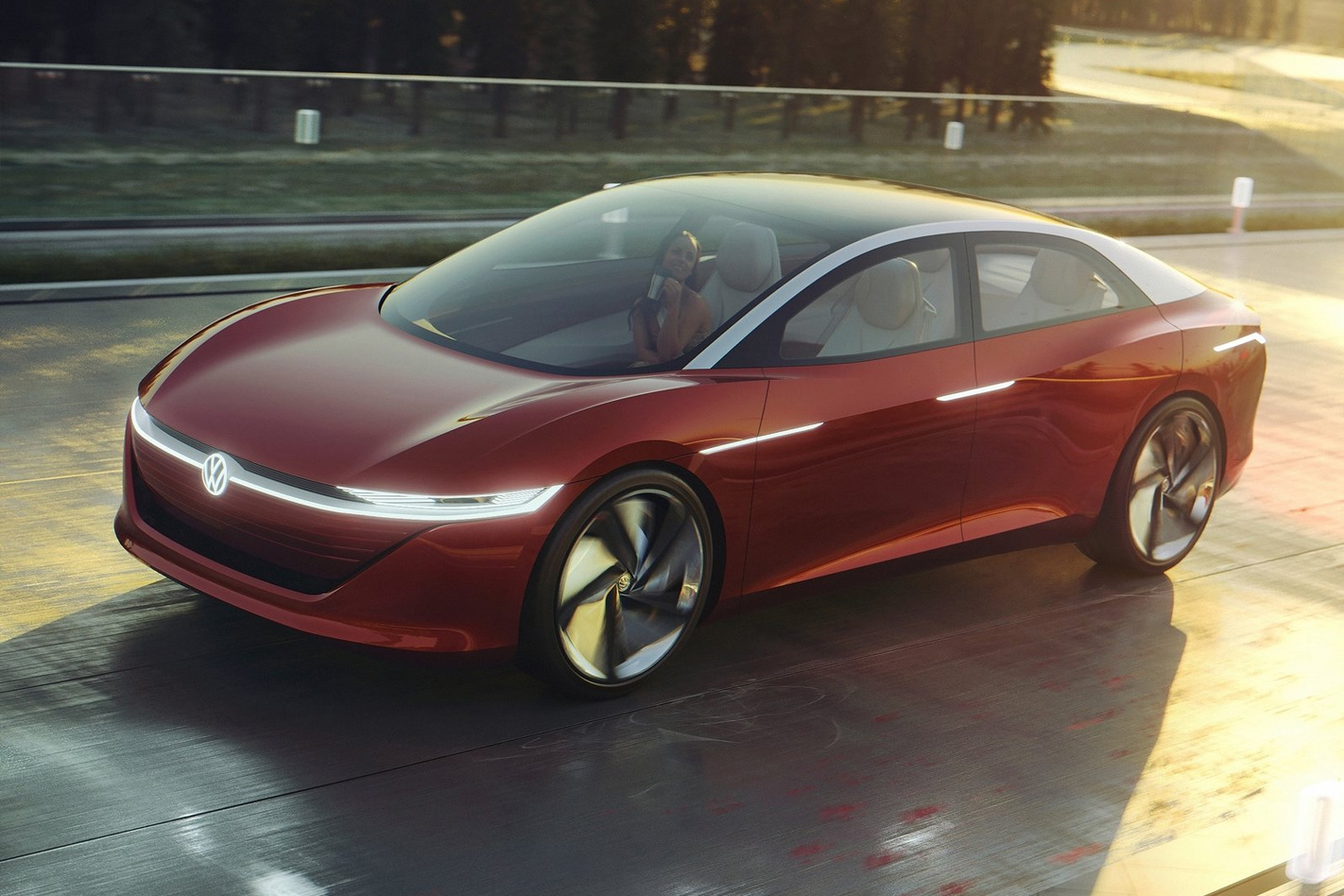
The ID.7 badge may end up on the boot-lid of the VW Trinity, which insiders describe as a downsized, less opulent Audi Grand Sphere pioneering the parent brand’s future design theme.
Alternatively, the Wolfsburg masterminds may deem this model important enough to give it a name, like ID.Buzz. If that’s the case, ID.Aero is reportedly high on the list.
The current time sheet suggests that the first ID.7, a sleek two-and-a-half box design with strong saloon overtones, will launch in 2025. One year later, we should see the ID.7 X which is marketing speak for a SUV/CUV crossover.
Also based on the SSP, which underpins all of the group’s future volume models, ID.7 introduces the more efficient 800V technology – standardised, yet scalable, batteries subdivided into five range-to-performance classes, bi-directional charging and much better e-mileage.
In terms of autonomous driving, VW (and its partners Argo and Ford) still stick to the original intro date of 2025. It is, however, not yet clear when the first mass-produced solid-state energy packs are going to arrive.
The final item on our provisional ID menu is the ID.8 nameplate dedicated to the next-generation Atlas and Touareg.
According to those in the know, the US-market only Atlas was due for renewal in 2023. The third-generation Touareg would have followed two years later. But there are now some buts and maybes attached to this increasingly iffy timing.
Since MEB and SSP will be built alongside each other for a still-to-be defined transition period, the Atlas is expected to get a minor update and soldier on for three more years. Its replacement should take a deep dive into the Chattanooga MEB parts bin.
The up-market Touareg is about to meet its destiny. Its follower could either be twinned with the next Q7 (Audi’s last new ICE-powered MLB-based model) out in 2025, or it could migrate to the advanced SSP side of the equation. Such a move would create the opportunity to reposition the model at a less aggressive, higher volume, price point – which might spell the end for the mildly successful Tiguan Allspace.
Snapshot
- The scheme offers rebates to buyers of EVs and other efficient cars
- But cars less efficient vehicles will incur a purchase fee
- Some carmakers fear scheme will force them out of NZ
New Zealand’s Land Transport (Clean Vehicles) Amendment legislation, more commonly known as the Clean Car Standard, has been given the nod from the national parliament and will come into effect from April 1.
The Standard has been designed to encourage the purchase of electric or low-CO2 emission light vehicles by reducing the cost of eligible new and used fuel-efficient ones, while imposing a fee on high-polluting vehicles.
Any passenger vehicle emitting less than 146 grams of C02 per kilometre will be eligible for a Government rebate, while those that emit 193 grams and higher are subject to a Government fee that rises with their CO2 levels. All others which fall between 146 and 192g/km are in a neutral zone and won’t attract a rebate or fee.
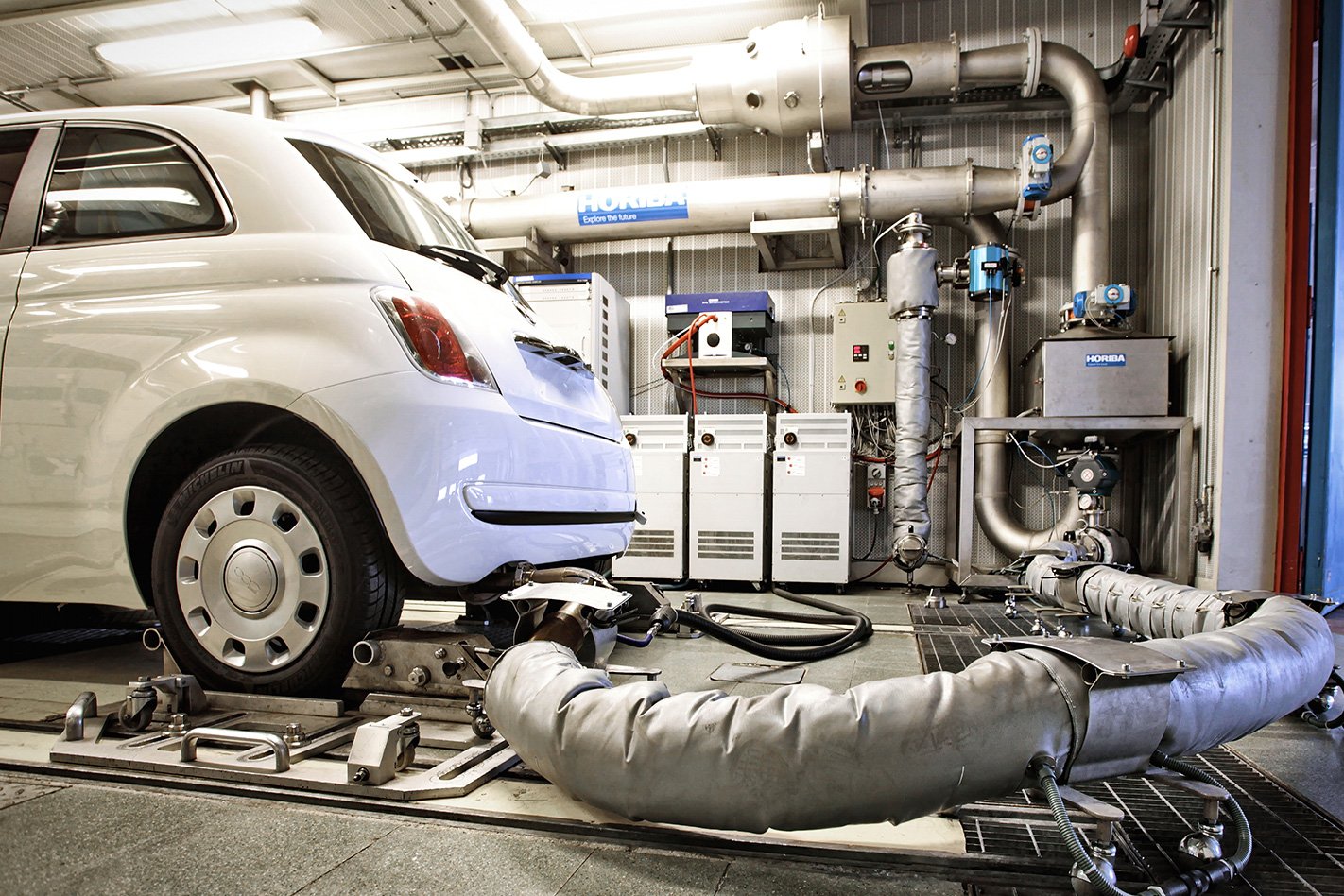
This carrot and stick approach, nicknamed the Clean Car Feebate Scheme, has predictably received a mixed reaction from the car industry. Naturally, the carrot has been well received, the stick not so much – with some brands facing price hikes across their lineups as the targets become more ambitious each year.
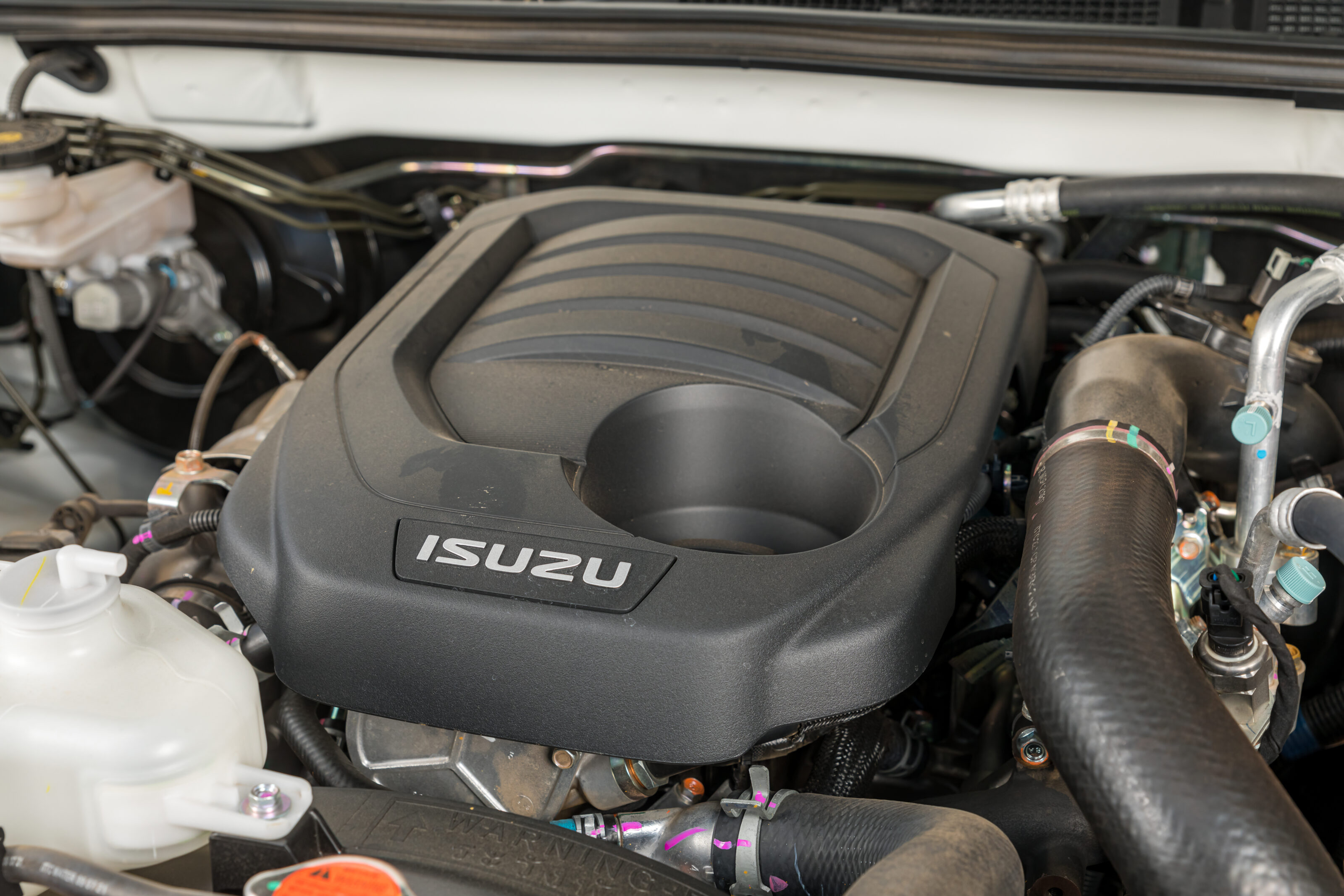
Isuzu Ute is so concerned about the impact of the scheme that it has threatened to pull out of the New Zealand market. As it stands, the 4WD D-Max and M-UX variants, which produce about 240g of C02 per kilometre, will attract a fee of around AU$2800.
This will significantly increase during the next three years, with the fee threshold gradually reducing to 155g/km for light commercial vehicles.
In its submission to the Government’s Land Transport Amendment Bill, Isuzu Ute’s New Zealand distributor said the targets were not achievable this side of 2030.
“Isuzu Ute does not have the ability to offset the higher emissions utes with lower emissions variants – they do not exist and will not for the foreseeable future. This means the Clean Car Standard will simply mean a tax on the business, which is not affordable in this competitive market.”
Transport Minister Michael Wood said New Zealand’s targets have already been met in other jurisdictions such as Japan and the EU.
However, as Isuzu’s statement pointed out, the targets “reflect little or no understanding of how different the New Zealand market is from Europe. In Europe, utes make up less than three per cent. In New Zealand, that share is currently 23-24 percent.

Suzuki is another brand that has questioned its viability in New Zealand. While most of its small cars attract a rebate, this won’t be the case as the targets begin tightening.
In its submission to the Government, Suzuki New Zealand said the proposed emission targets for 2026 and 2027 will be the most challenging in the world, and three years ahead of Europe.
“Suzuki has the lowest emissions of the top 10 brands in New Zealand and we support the introduction of an emission standard,” said Suzuki New Zealand CEO Tom Peck.
“It is important that the automotive industry strives to reduce global warming. Our concern is that any targets need to be fair and well planned to prevent any unforeseen ramifications.”
According to Suzuki, one of the country’s most affordable new cars, the Swift GL auto, would eventually incur a NZ$6000 penalty over its $23,500 retail price.
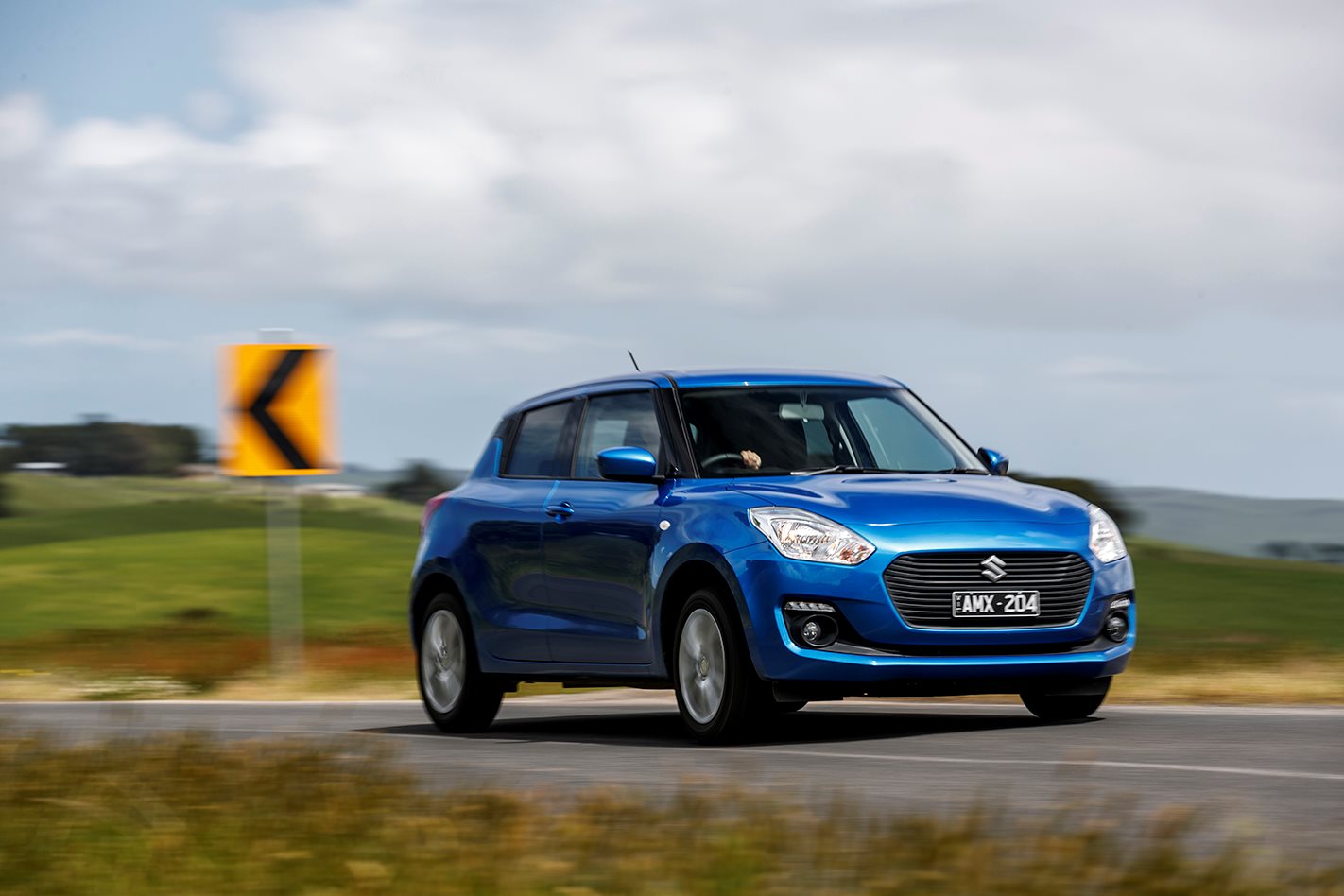
“To sell the same new Swift in 2027 under the Clean Car Standard would incur over $6000 of Government penalties,” said Peck.
“We are concerned that not all of our customers can afford EV technologies and the planned Government penalties on our current fuel-efficient vehicles may make them unaffordable.
“Many customers will simply retain their current vehicle, which will make the New Zealand fleet older. This will not assist the country to reduce emissions and it will deny customers access to the latest safety technologies of new cars.”
But it’s not all bad news.
Like Isuzu Ute, Toyota also has a bunch of utes and SUVs that will be slugged by the Feebate scheme, but unlike Isuzu, it also has hybrids eligible for rebates averaging around AU$3000.
And while the CEO of its New Zealand arm, Neeraj Lala, had expressed concern about the scheme, liking it to a defibrillator that is set too high, he recently conceded that it has delivered benefits – including the ability to convince the parent company to send more electrified models to New Zealand, ahead of Australia.
Meanwhile, Skoda New Zealand general manager Rodney Gillard has been reported as saying the scheme has led to a reduction in the waiting time for the upcoming Enyaq iV electric SUV.
This is one of the key reasons for the legislation, according to Woods.
“With the rest of the world moving to phase out petrol vehicles, we have kept our ambitious targets to stop us from becoming a dumping ground for the world’s dirtiest cars.”
What about Australia?
Australia is also in danger of being a dumping ground for less efficient cars and is well down the pecking order for the latest electrified vehicles, with manufacturers already prioritising markets with stricter emissions targets.
The country’s lack of EV incentives and reluctance to improve its lax emissions laws are well documented, but with a federal election looming –expect to see some movement with the former.
So far the Morrison Government has put its money into providing subsidies for vehicle chargers, which doesn’t do much to make EVs themselves affordable.
The Labor Opposition meanwhile has declared it would make electric cars cheaper by exempting them from the five per cent import tariff, the Luxury Car Tax (where applicable) and the 47 per cent fringe-benefits tax for work vehicles also used for private use.
So far, neither major party has declared it will produce a stick to use against less-efficient vehicles and it’s doubtful they’ll want to attract any political flack for doing so during the election campaign.
The Greens on the other hand have pledged to “legislate tough vehicle pollution standards to drive down emissions” promising more details to come closer to the election.
The party also wants to end the sale of new petrol and diesel cars from 2030 and reduce the cost of an electric vehicle.
Snapshot
- Facelifted Baleno launches for Indian market
- Current Australian-delivered models are manufactured in Suzuki’s Indian plant
- Updated model to be sold with 1.2-litre engine only, unclear if it’s coming to Australia
The 2022 Suzuki Baleno has been revealed for the Indian market, featuring a heavy facelift over the outgoing model which has been on sale since 2015.
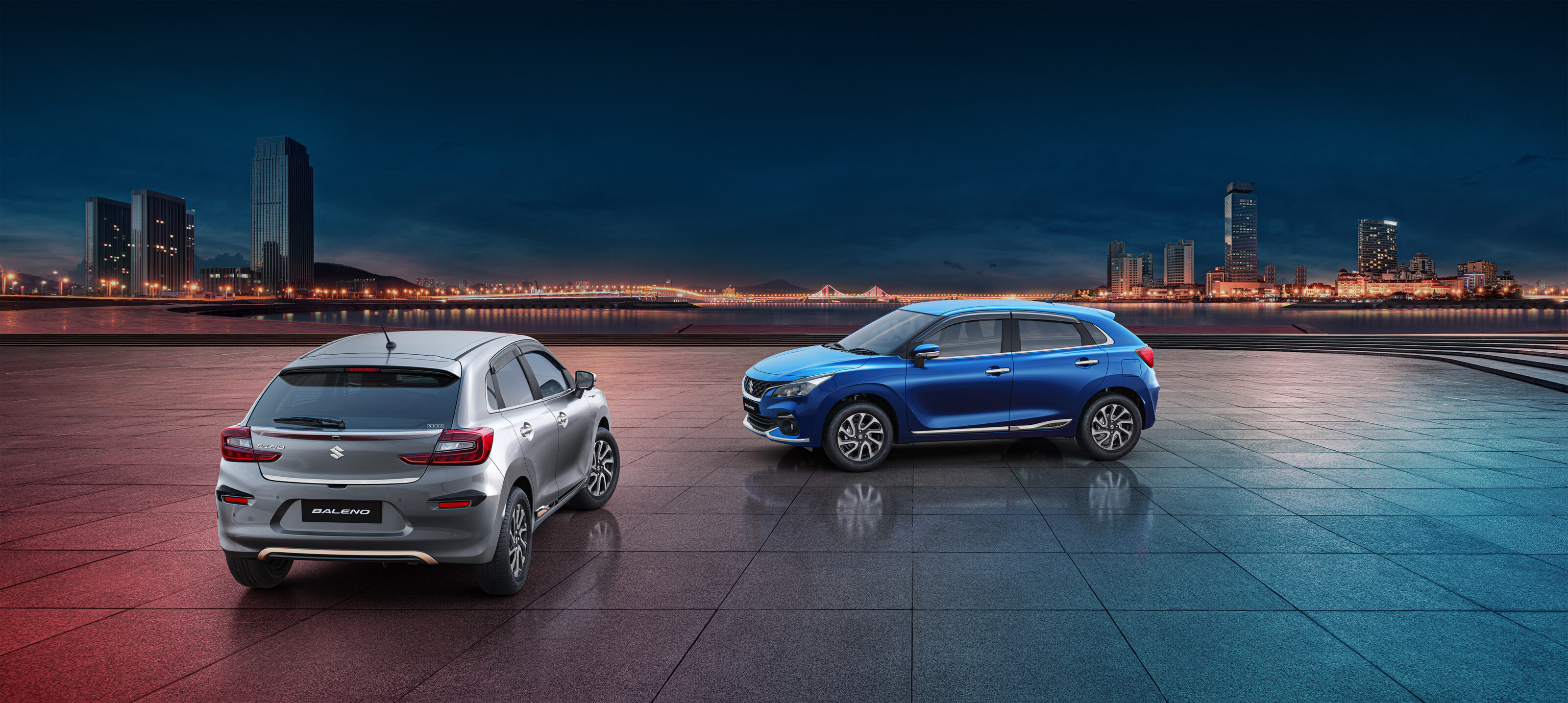
Underpinned by the same architecture as its predecessor, the updated Suzuki Baleno is characterised by a heavy facelift all round, with its new styling bringing it into the new decade.
Under the bonnet, the Indian-spec Baleno carries across its existing 1.2-litre, four-cylinder petrol engine, which continues to make 66kW and 113Nm – down from the 68kW/130Nm on tap in Australian Balenos which utilise a 1.4-litre engine.
Buyers have the choice of either a five-speed manual or five-speed automatic transmission, the latter of which incurs a 50,000 rupee (AU$925) premium.
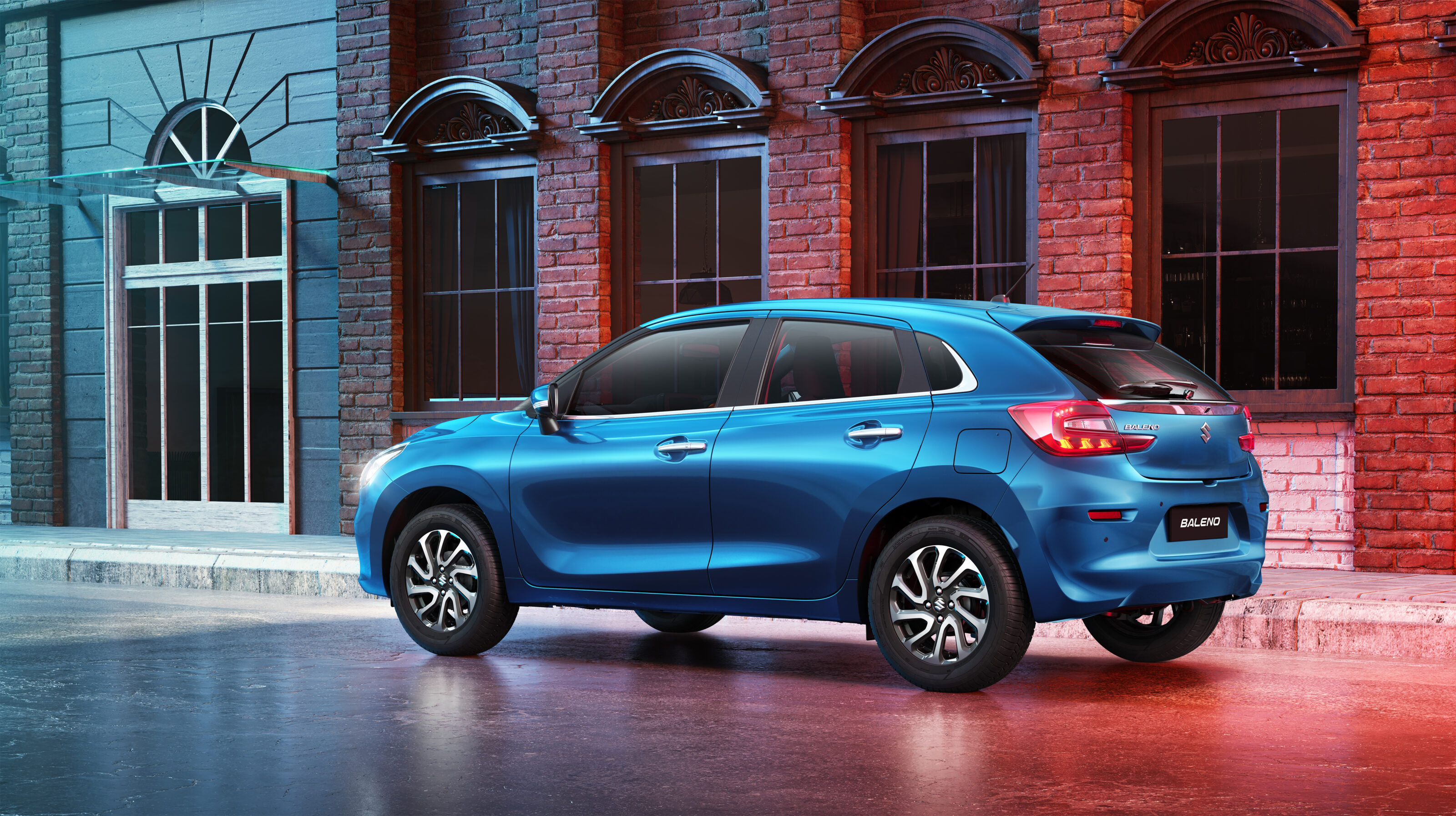
LED headlights and fog lights adorn the new front fascia, along with new design intakes, while the front grille now features a chrome surround which stretches all the way from the tips to the lights.
At the back, LED tail-lights are again redesigned compared to the outgoing model with a C-shape which carries across to the boot. A chrome trim piece is still placed just underneath the rear window, but its reflectors have now been moved up from the bottom of the bumper to the mid-point.
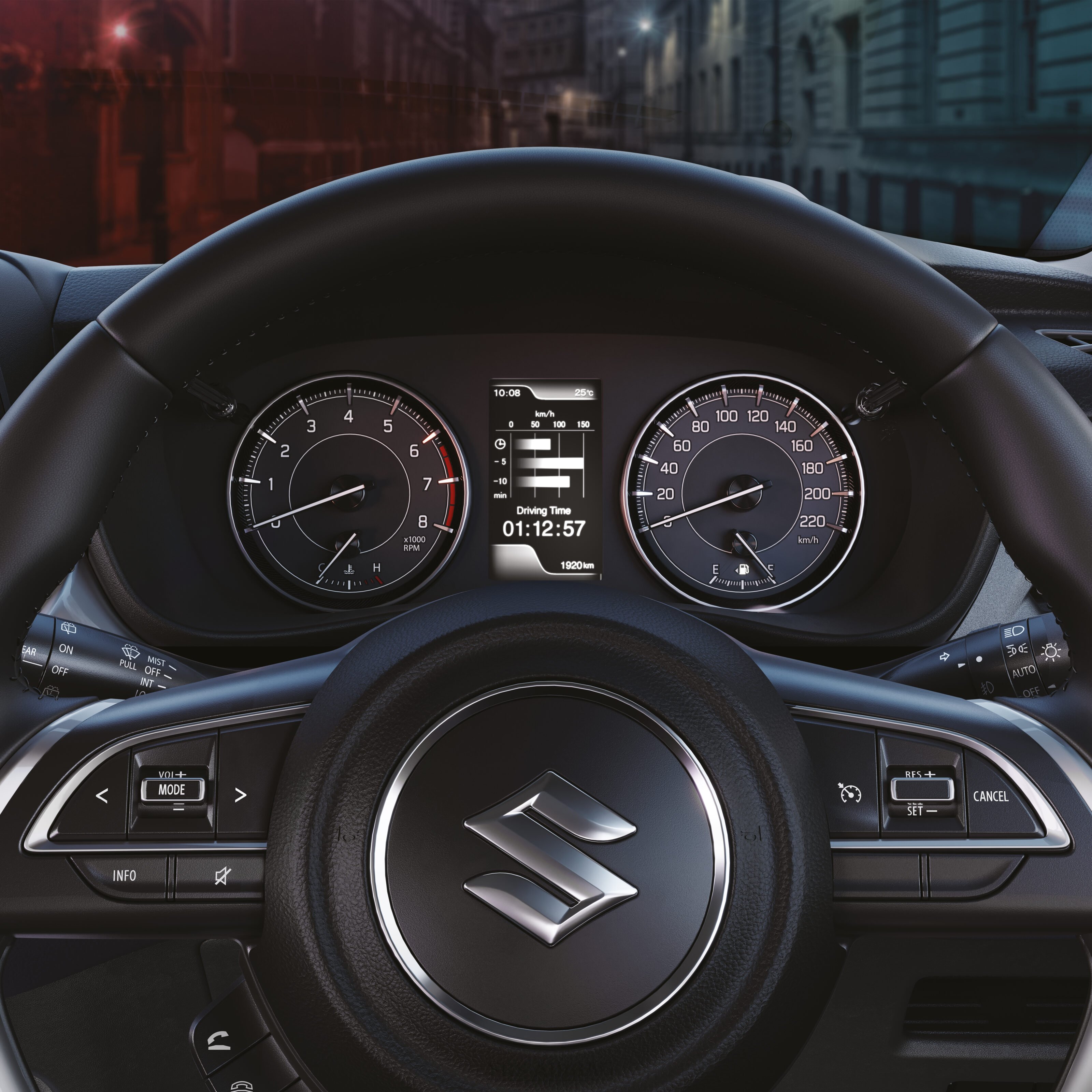
Moving into the cabin, the interior space has scored a heavy revision, with the driver now treated to a flat-bottom steering wheel and head-up display, as the tweaked dashboard incorporates silver trim and a nine-inch infotainment screen.
Extra mod cons are also included – from a 360-degree camera to an Arkamys sound system, rear USB-A/USB-C ports, rear air vents and redesigned seats.
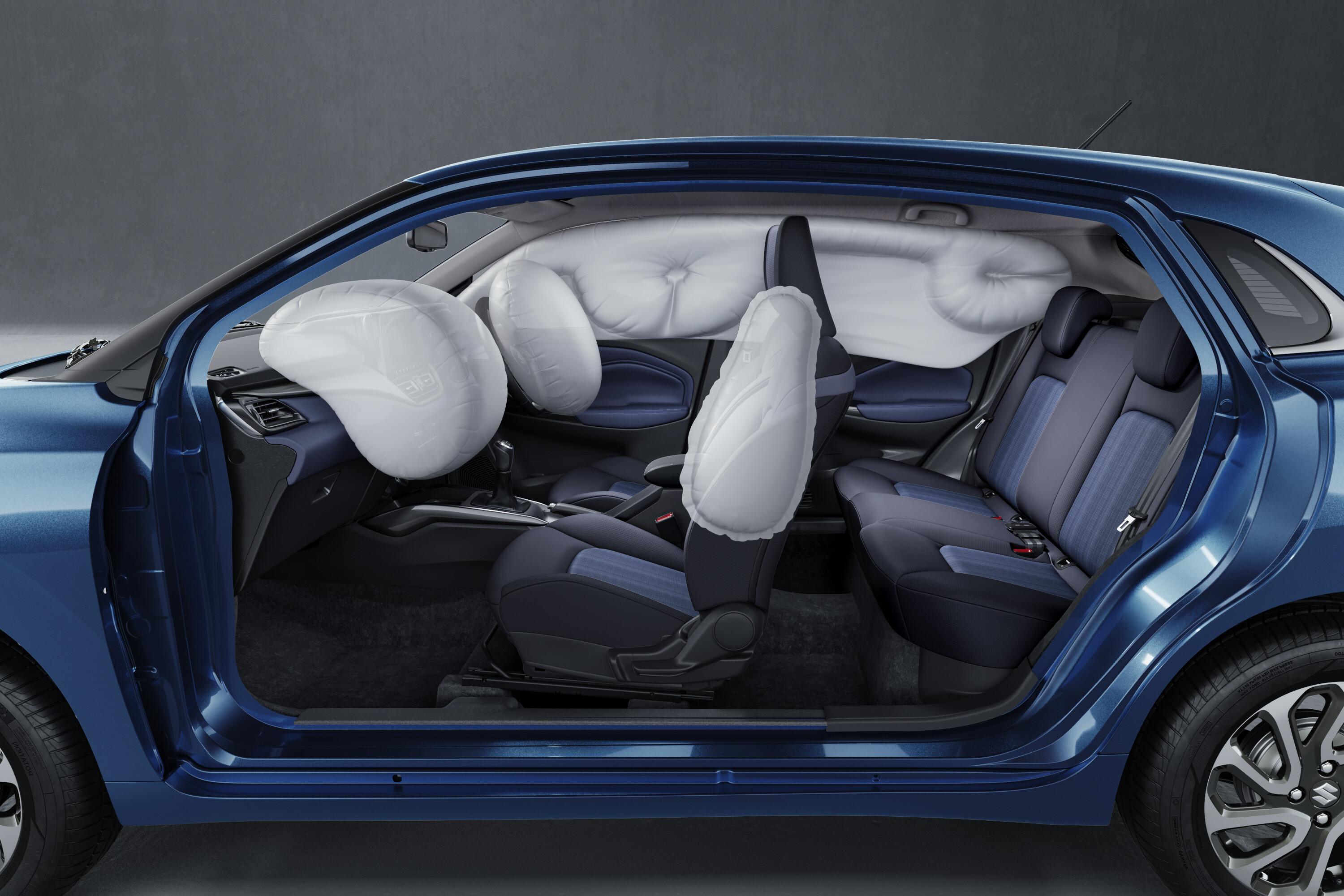
Despite the 2022 Baleno featuring a raft of new tech equipment, such as the Suzuki Connect app – allowing remote locking, light toggling and alarm functions – it is without a large number of safety features now commonplace in new vehicles.
Not included in the Baleno are; autonomous emergency braking, rear cross-traffic alert, blind-spot monitoring and lane-keep assist, all of which is available on the Swift.
Some safety equipment included ranges from; six airbags, electronic stability control, anti-lock brakes and front seat bent reminders to rear parking sensors.
Priced from 635,000 rupees (AU$11,800) to 899,000 rupees (AU$16,650) across the four trim levels, the updated Baleno is now on sale in India, although no confirmation has been given regarding an Australian berth.
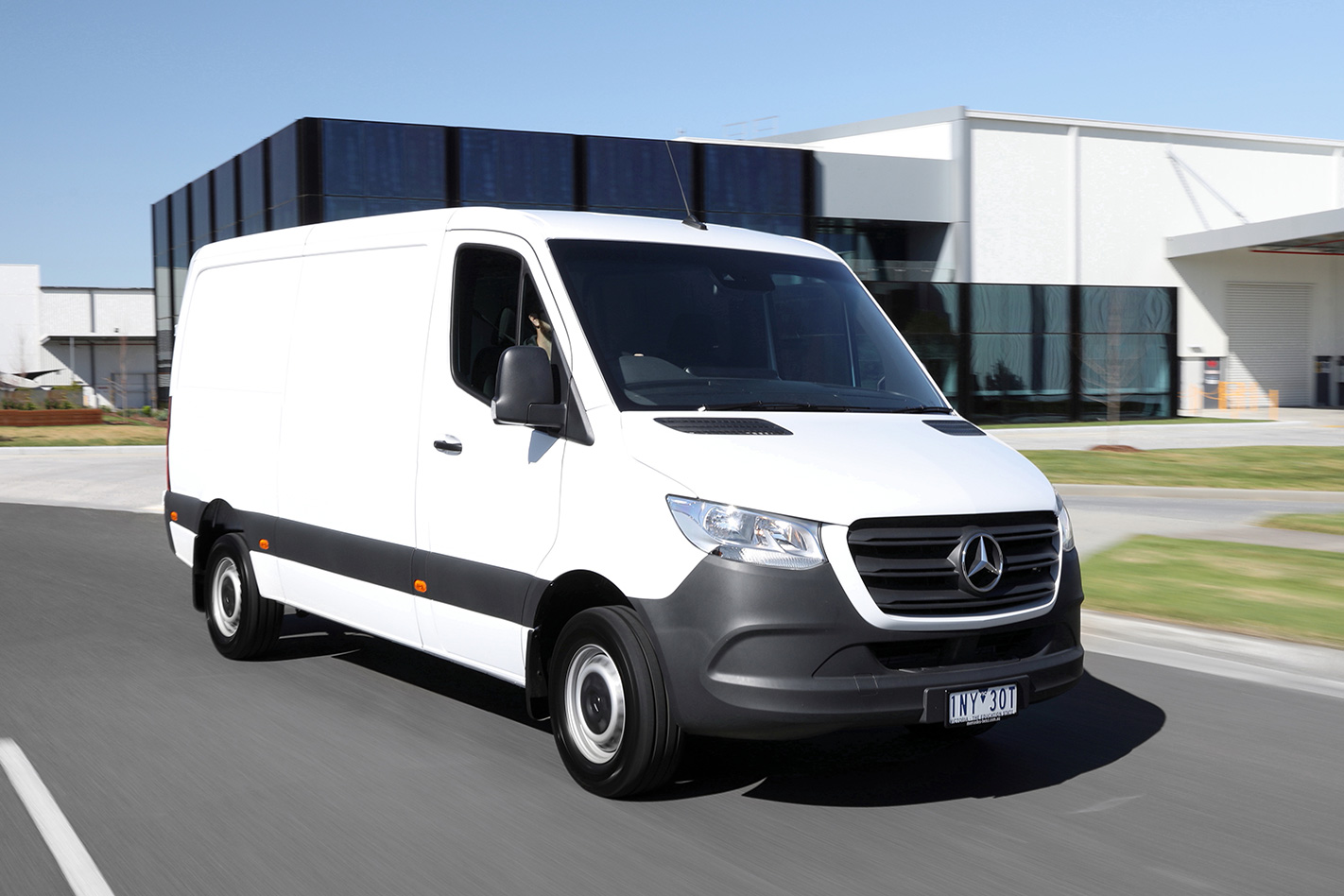
Mercedes-Benz Australia is recalling its Sprinter van because the transmission’s parking function might not be working properly.
According to the notice issued by the Department for Infrastructure, 947 examples of the van built between 2018 and 2020 are affected.
Due to a software issue, the transmission park function may not engage as intended. If this occurs it could result in unintended vehicle movements and increase the risk of injury or death in an accident. However, it should be noted that the driver can still operate the manual parking brake.
Owners of affected vehicles will be contacted by Mercedes-Benz and asked to make arrangements with their nearest authorised dealership to have the work carried out free of charge as soon as possible.
Alternatively, consumers may use the Mercedes-Benz online booking service, by visiting www.mercedes-benz.com.au/servicebooking or call 1300 300 896.
Snapshot
- Super 3 succeeds 3 Wheeler
- Now powered by a 1.5-litre three-cylinder Ford engine
- Goes on sale in the UK from u00a341,995 (AU$78,400)
Morgan’s radical three-wheeled model has been given a massive update for 2022, with the Super 3 bringing a range of firsts to the iconic British marque.
Replacing the outgoing 3 Wheeler, which made its debut in 2012 and was inspired by the original three-wheelers of the 1940s, the Super 3 is the first Morgan to feature a monocoque chassis, with the three-part aluminium construction making it considerably stronger than the existing model.
Sticking out the nose of the Super 3 is an aluminium block, which works as an engine mount, a mounting point for the LED headlights and ancillaries – as well as the chassis mount for suspension to bolt on to.
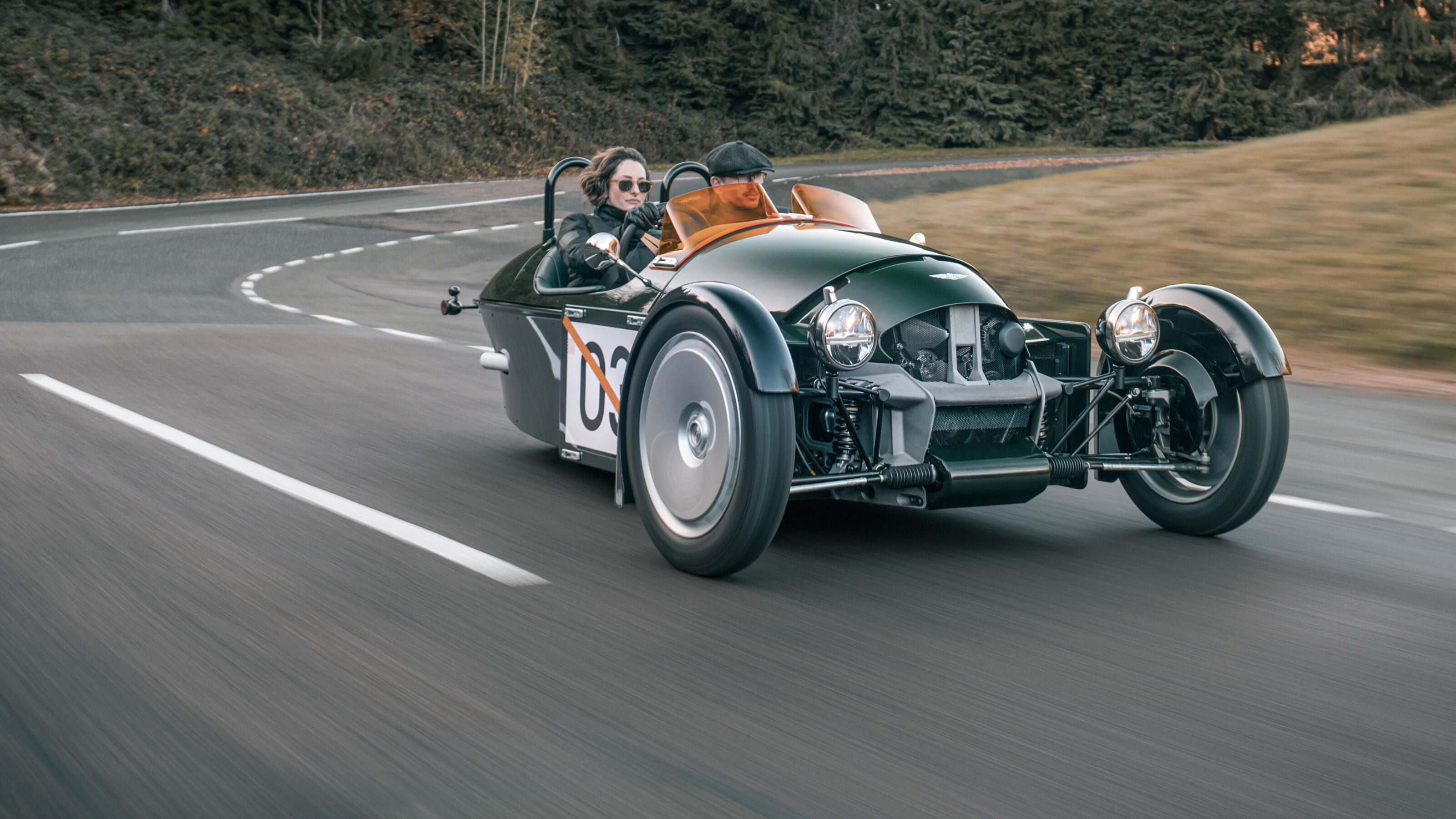
Under the bonnet is a water-cooled, 1.5-litre three-cylinder Ford engine, doing away with the S&S air-cooled V-twin which featured in the 3 Wheeler, now providing 87kW at 6500 rpm and 150Nm at 4500rpm.
Drive is set to the rear wheel through a Mazda MX-5 derived five-speed manual transmission, carried over from the previous iteration of 3 – Wheeler although the 0-100km/h sprint can now be achieved in roughly seven seconds.
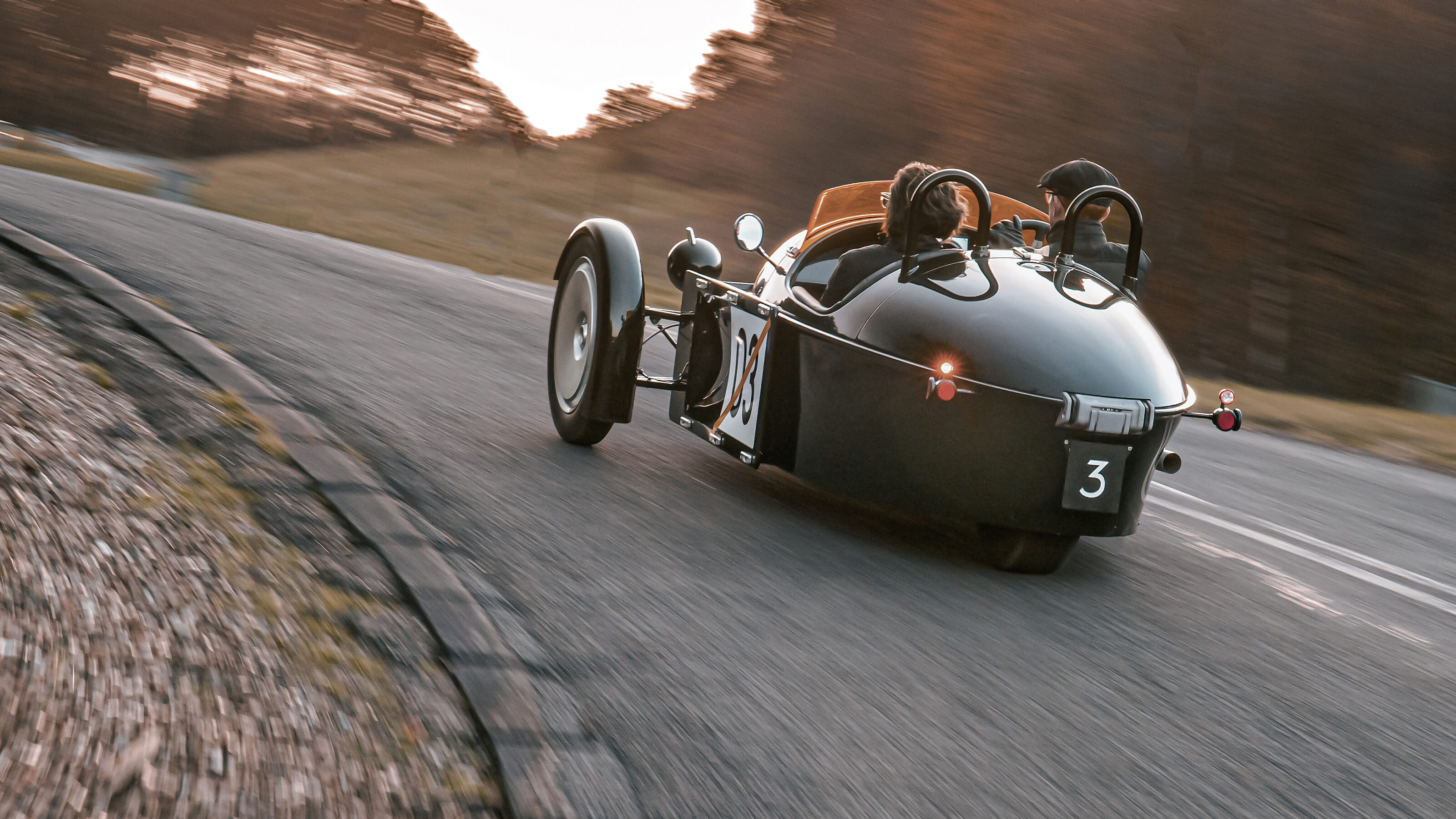
Unique to the Super 3 is a pair of 20-inch wheels at the front, with an aerodynamic, monoblock design shod in specially made Avon tyres featuring ballooned sidewalls and a cross-ply inspired tread pattern.
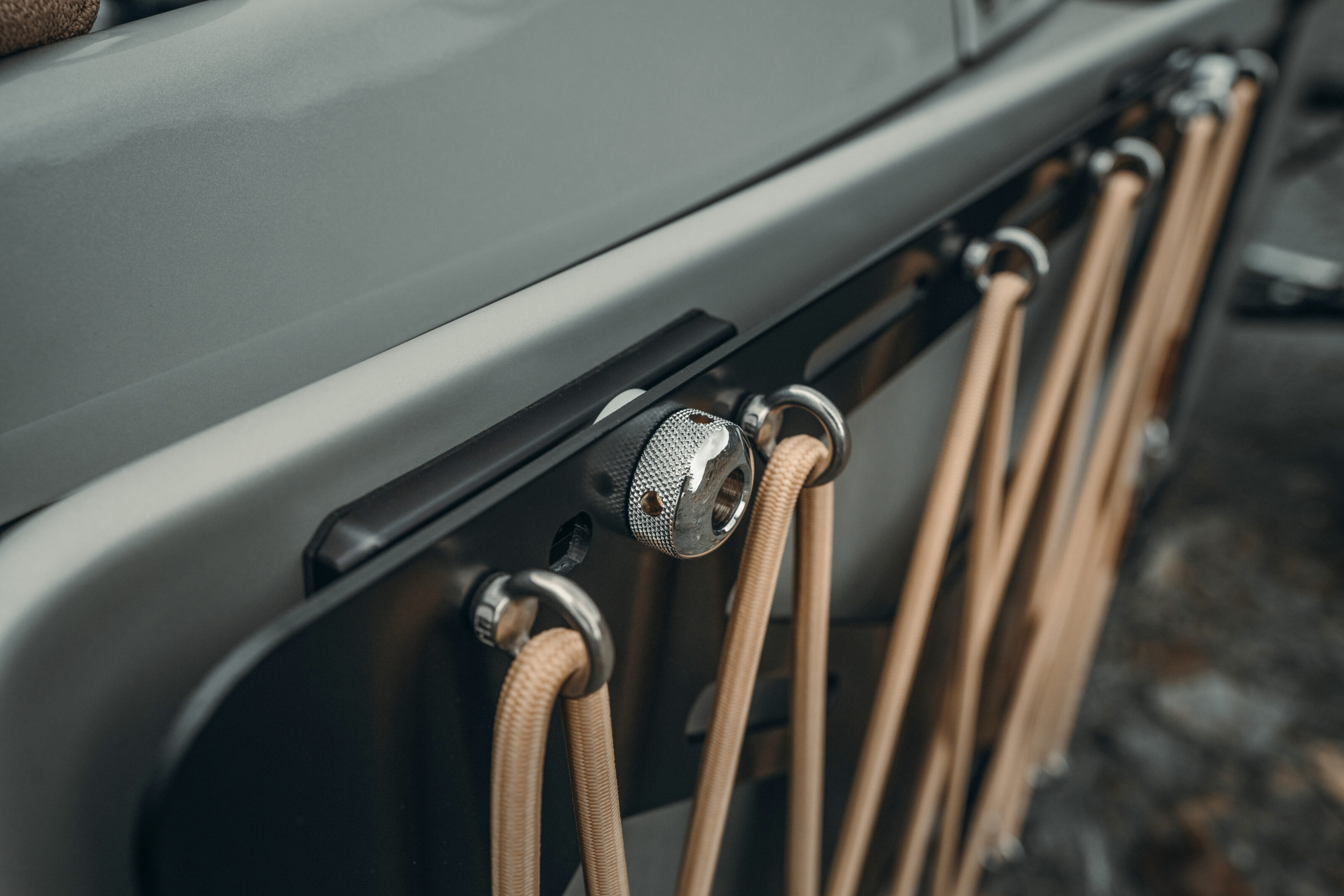
While the essence of the 3 Wheeler’s styling carries across, new to the Super 3 are a pair of bargeboards along its sides, featuring nard mounting points for a range of Morgan accessories from luggage racks to camera mounts, rated to carry up to 20 kilograms.
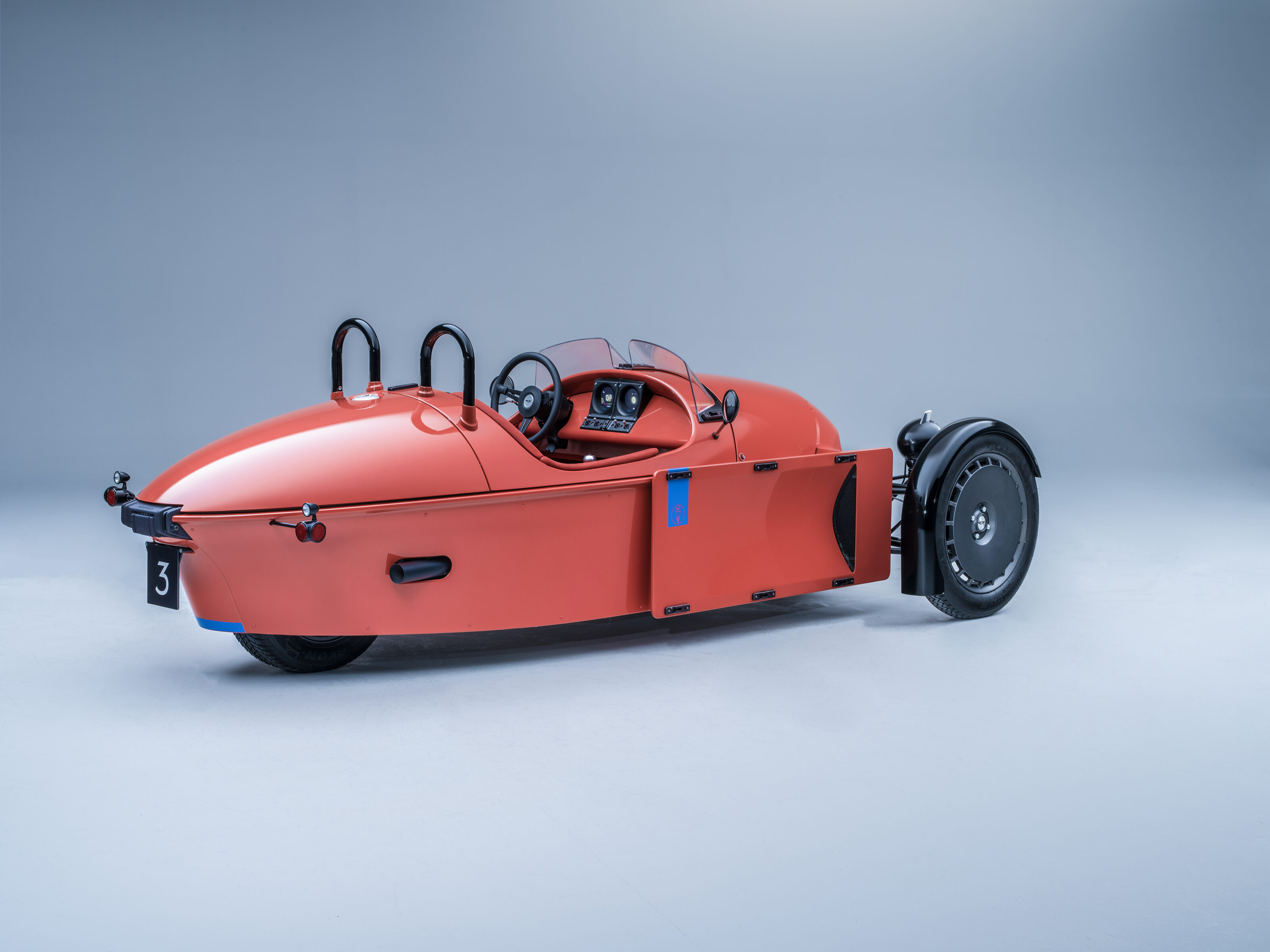
The Super 3’s exhaust is now inboard underneath the bodywork, lowering the risk of occupants or admirers getting burnt when standing too close, with its exit coming out of the lower portion of the car’s teardrop-style rear end.
Speaking of the back, a cast aluminium piece provides structural support for the chassis in addition to mounting the number plate, being the boot’s hinge, and providing a rear point for the luggage system to mount to.
On top of the boot, customers can opt to fit an exoskeleton-esque luggage mounting system, with the fuel filler flap sitting just behind the roll bars.
Inside the cabin is a slightly more modern take on a classic design – while everything has been waterproofed, a range of new tech such as GPS, heated seats and a USB outlet have been provided so creature comforts aren’t sacrificed.
Morgan offers a range of different size and shape steering wheels for the Super 3, with leather or wood trim, 14-inch or 13-inch diameter and even with a bit of dish if a buyer so desires.
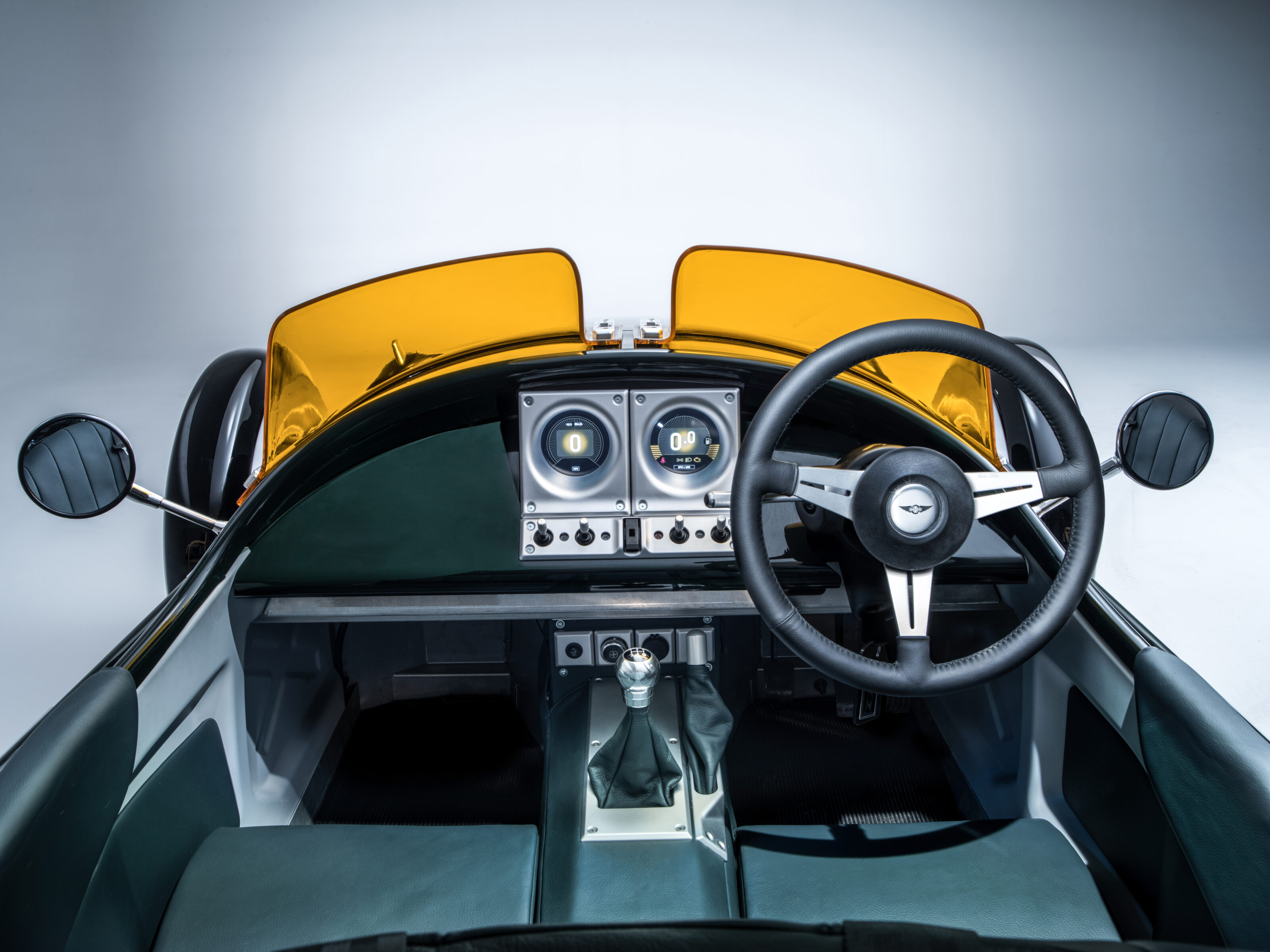
The price for all of this? In the UK, it starts at £41,995 (AU$78,400) but prices can soon escalate quickly depending on how one chooses to spec their Super 3 – available to try out on Morgan’s online configurator.
Morgan has previously confirmed the Super 3 will come to Australia but hasn’t provided a time nor a local price, as the new model is set to go on sale in the coming months back in the UK.
Kia has finally broken through what might be its final significant ‘barrier’.
No longer a slave to the dismissive, demeaning concept of ‘cheap and cheerful’, Kia has been offering segment-favourite models for sometime now – but in the EV6, it has an offering that challenges the very best the market has to offer.
Making its local sales debut this month, albeit in numbers that can only be described as frustrating (for buyers and Kia Australia alike), the EV6 follows the Niro as the brand’s second all-electric offering – when a number of better-established, better-regarded brands have yet to launch their first.
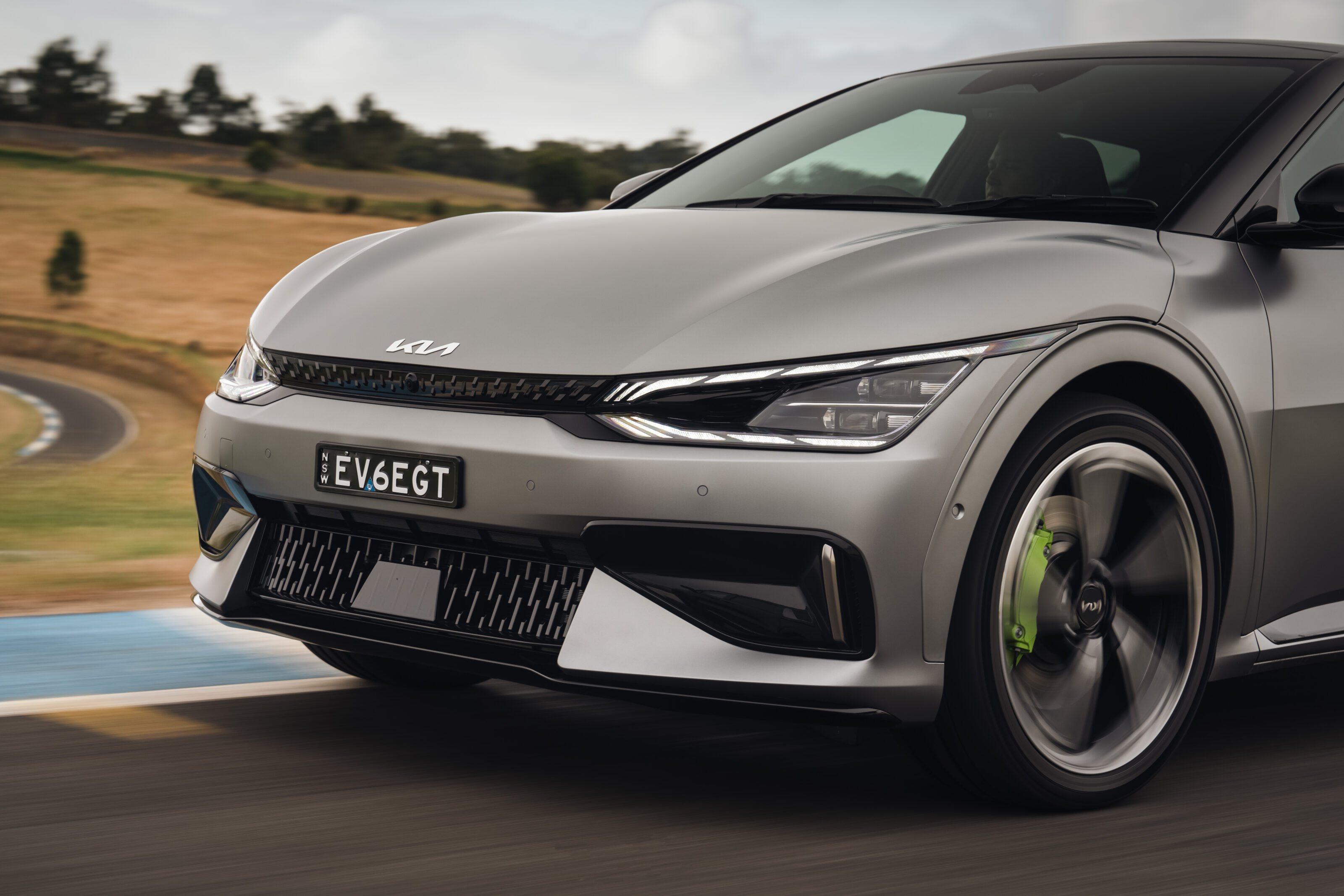
UPDATE, January 2023: Kia EV6 GT driven in Australia
“This isn’t even my final form”, chuckled the 239kW & 605Nm EV6 GT-Line last year. Now we understand… see our first drive review of the flagship EV6 GT, including a track test, at the link below.
Story continues…
The EV6 arrives in a compelling configuration, offering more range, more features, more localisation and a cheaper entry price than its platform mate, Hyundai’s fast-selling (and similarly limited) Ioniq 5 EV – although buyers drawn to retrofuturistic styling might prefer the Hyundai’s look over the go-fast looks of the Kia.
Cheaper? As Andy Enright detailed in our recent 2022 Kia EV6 Price and Features story, where Hyundai Australia went with a high-specification offering that saw pricing start from $71,900, the EV6 is available in three configurations: the $67,990 EV6 Air RWD, the $74,990 GT-Line RWD and the $82,990 GT-Line AWD.
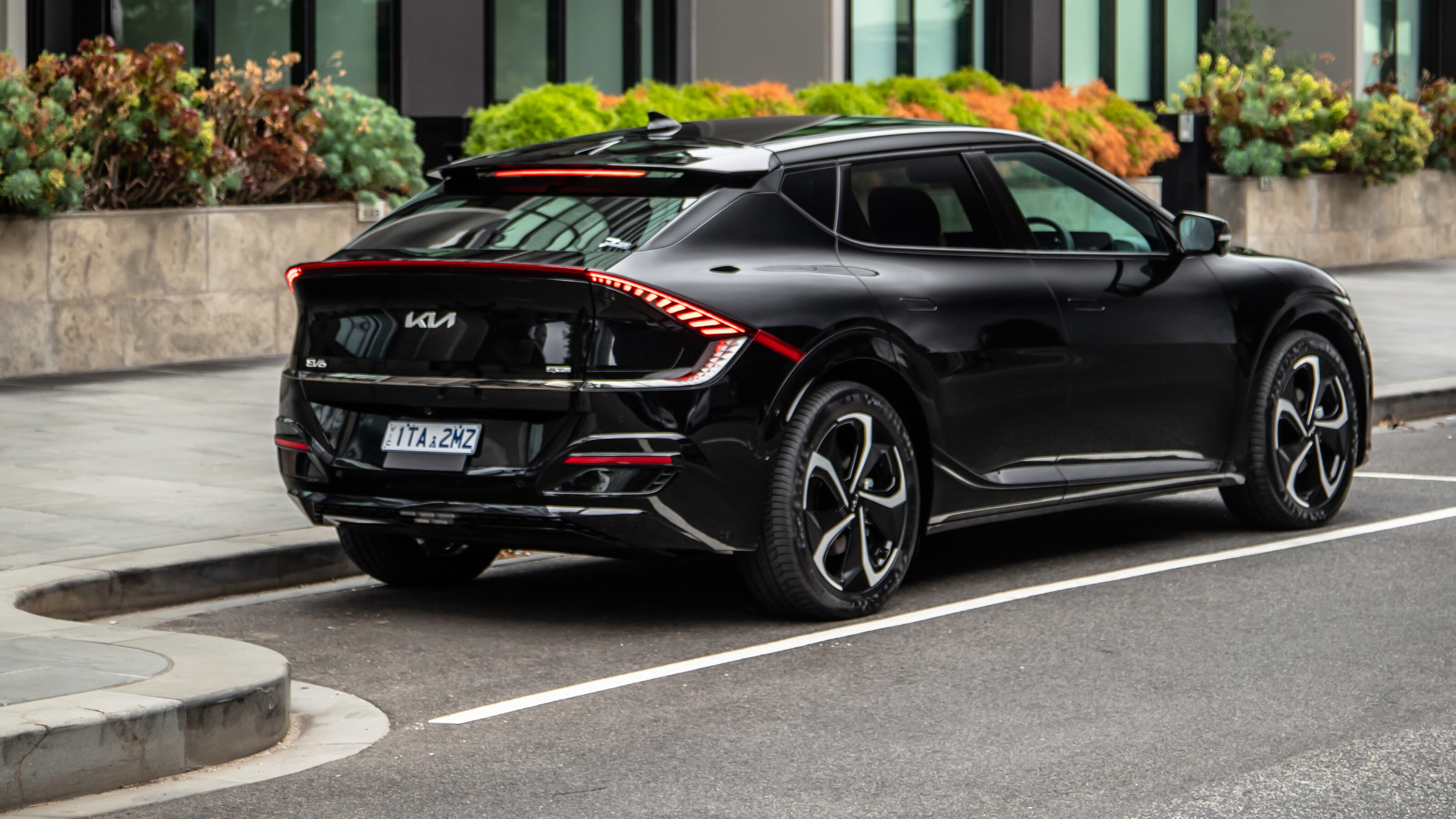
Cheap and cheerful it is not, but in its ‘Air’ form, the EV6 neatly undercuts its stablemate without skimping on the important pieces. Even at that entry level, the EV6 Air is equipped with a big 77.4kWh battery pack that promises a driving range of up to 528 kilometres, compared to the base Ioniq 5’s slightly smaller 72.6kWh pack and shorter 451km range.
Australia’s EV6 packs a couple of other tricks the Ioniq 5 doesn’t: ‘Vehicle to Load’ appliance charging in the cabin (the Hyundai does only external in its local guise and the EV6 Air misses out on external), and a ride-and-handling tune overseen by maestro Graeme Gambold. (Watch Jez Spinks’s EV6 interview with Graeme right here.)
You can look forward to a full EV6 v Ioniq 5 tech and driving comparison in the weeks ahead, but for now, Kia’s new electric SUV gets the spotlight.
Interior features, comfort and space
Tech and safety
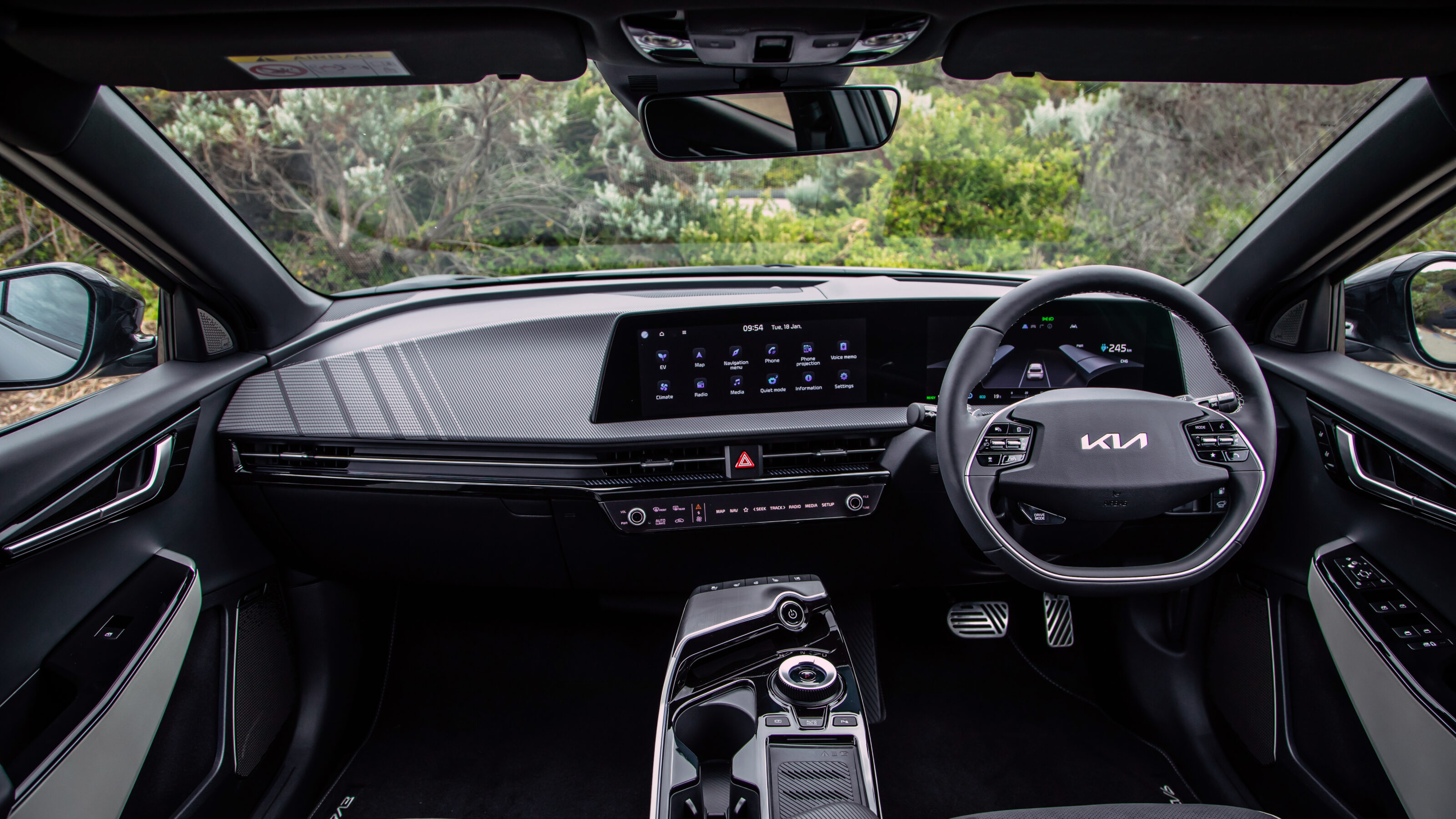
Inside, the 2022 Kia EV6 presents a feeling both familiar and a little more advanced, more futuristic than any Kia you’ve driven up to now.
If you’ve sat in the new Sorento or Sportage SUVs, the EV6’s giant dash displays won’t be new to you – although it’s the Sportage that has the most in common here, with both models running their twin 12.3-inch displays in one continuous panel from the dash centre to behind the steering wheel. Very 2018 Mercedes-Benz S-Class – it trickles down quickly, these days.
Perhaps the most welcome thing here for tech-heads is that those big displays are standard across the range; good news when you consider entry-level models often get smaller screens or fewer of them.
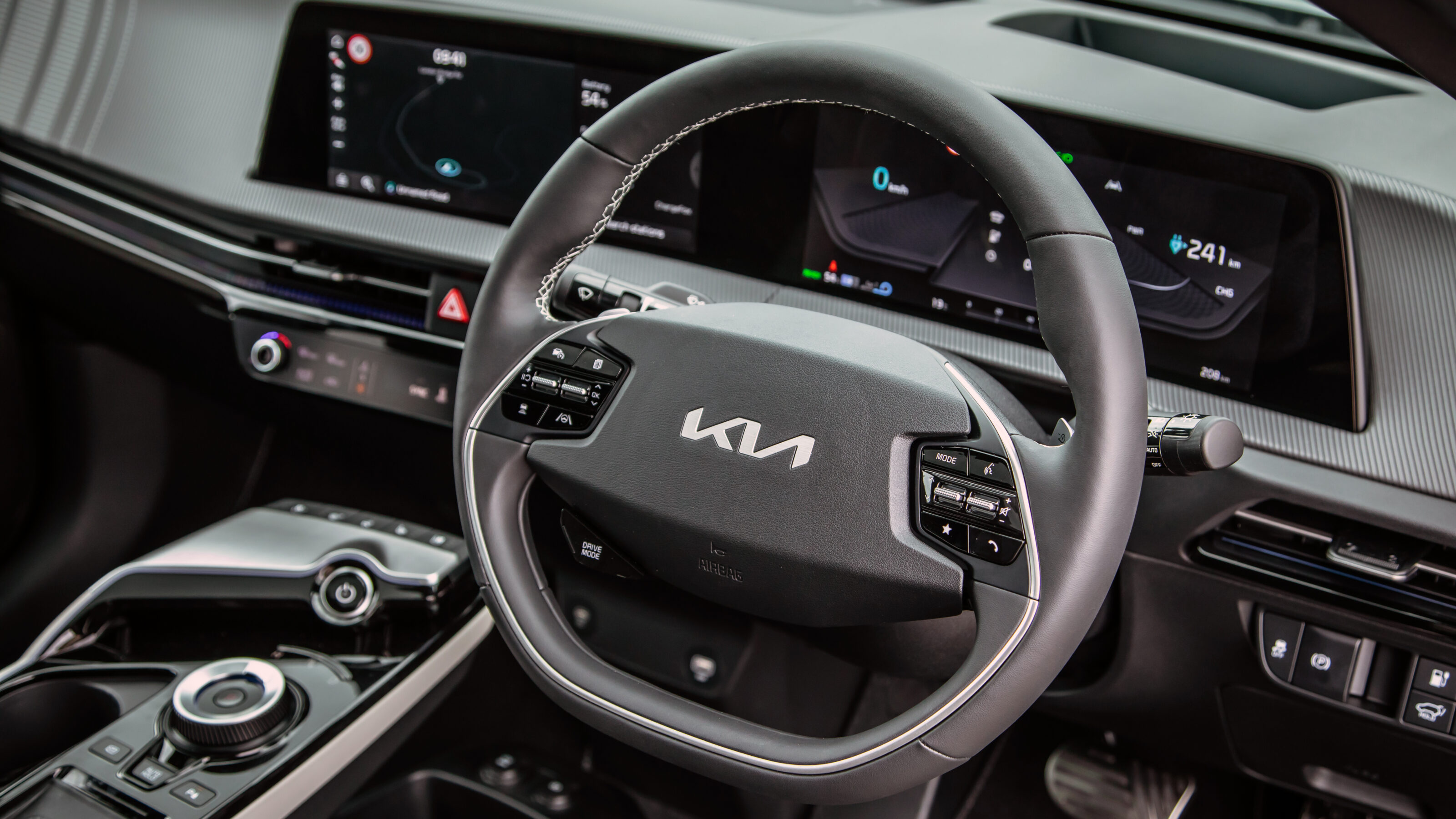
The EV6 also features the same clever dual-function control panel that flips between audio and air-conditioning buttons as needed, although it does mean you miss out on physical switches for these controls. You can, however, define one of those two control sets as the default, meaning it will switch back to that preference automatically after you’re done using the alternate set.
The Air is overall well-equipped, with the long-range battery pack, 19-inch alloy wheels, LED driving lights and tail lights, flush door handles for slippery aero, an acoustic laminated windscreen, paddle-shifted brake regeneration, V2L (vehicle-to-load power ports), wireless phone charging (albeit with only wired Apple Carplay and Android Auto in all models), and dual-zone climate control among the highlights.
Safety wants for just about nothing, with the following all standard: Automatic emergency braking (AEB) with junction turning, lane-keep assist with lane-following assist, blind-spot detection, rear cross traffic alert, centre-side airbag, multi-collision braking, intelligent speed limit assist, tyre pressure monitoring system, front and rear parking sensors, electronic parking brake, temporary tyre mobility kit and smart cruise control.
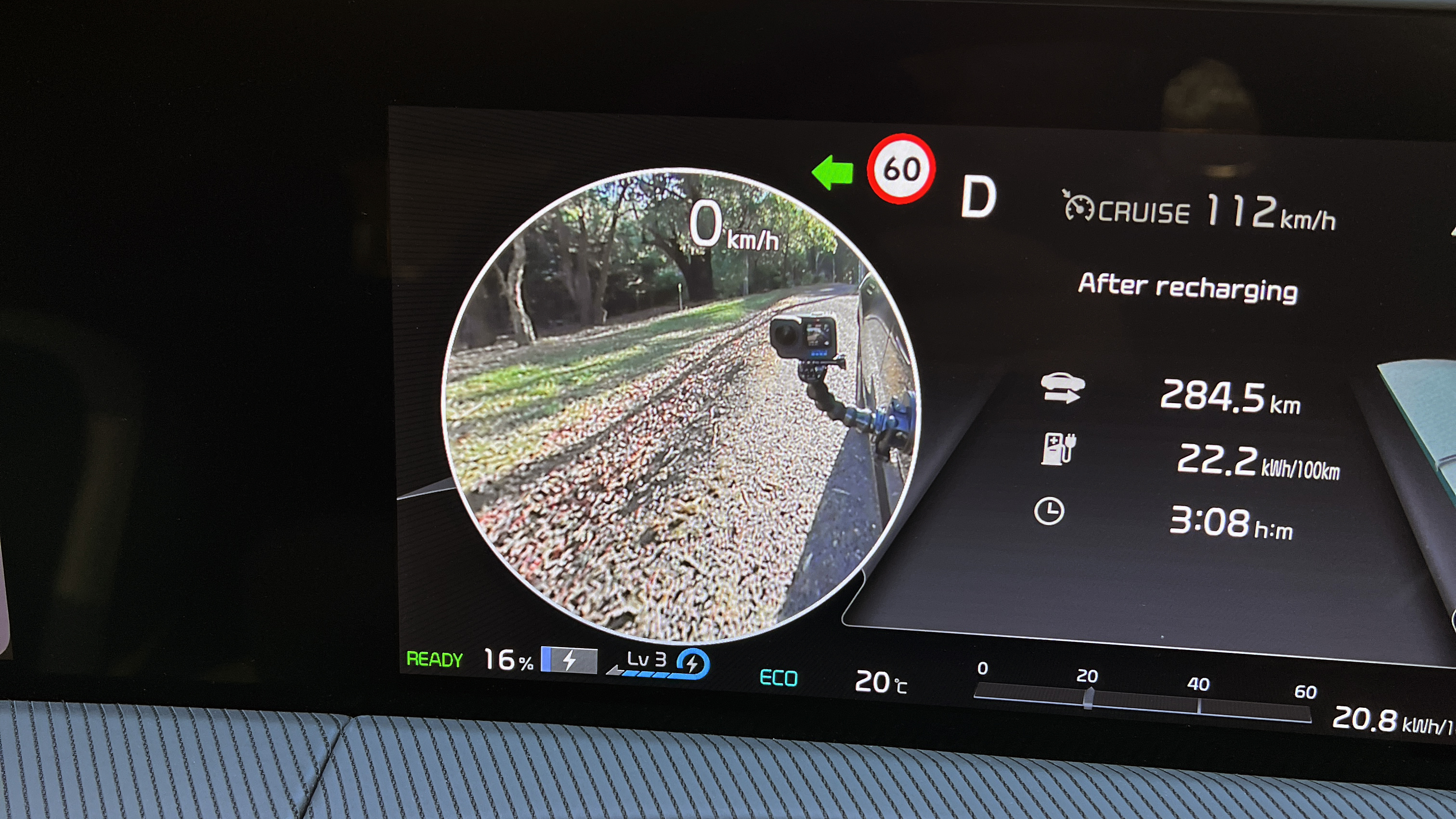
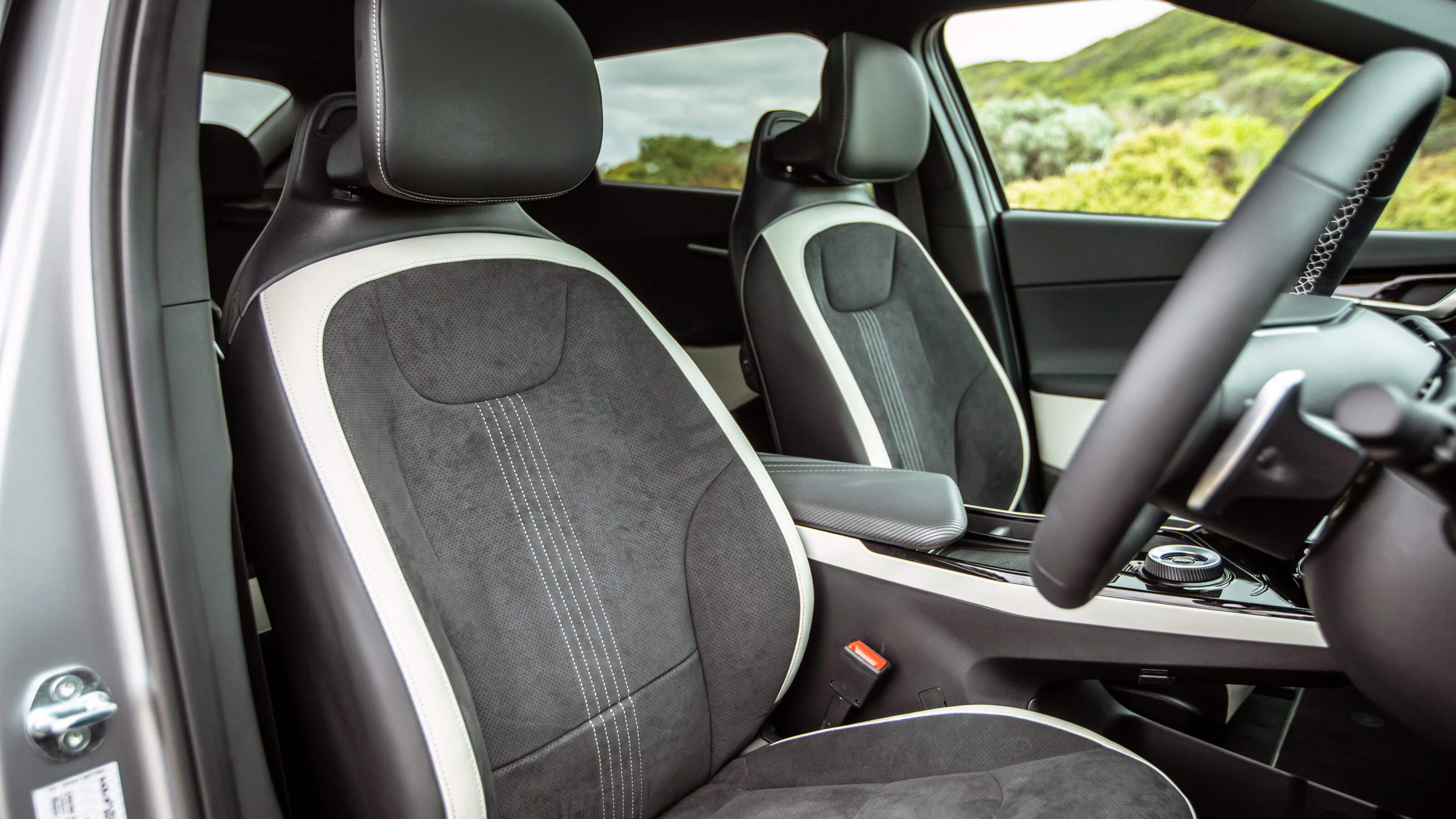
Stepping up to the GT-Line models adds a few features and materials you won’t get in the Air. Those include 20-inch alloys, acoustic laminated front door glass, auto-folding door handles, ‘active sound’ design, an augmented-reality head-up display, 14-speak sound, powered driver’s seat with memory, heated and ventilated front seats, heated steering wheel, remote smart park assist, a smart powered tailgate, and a suede treatment to the seats (all models also have artificial leather instead of genuine leather).
The GT-Line AWD also gets a big wide sunroof, and both GT-Line models upgrade their safety offering with blind-spot view monitor (rear-facing side-mounted cameras activate when indicating), a powered child lock and 3D surround-view camera.
Get the full equipment list in our pricing and features story here.
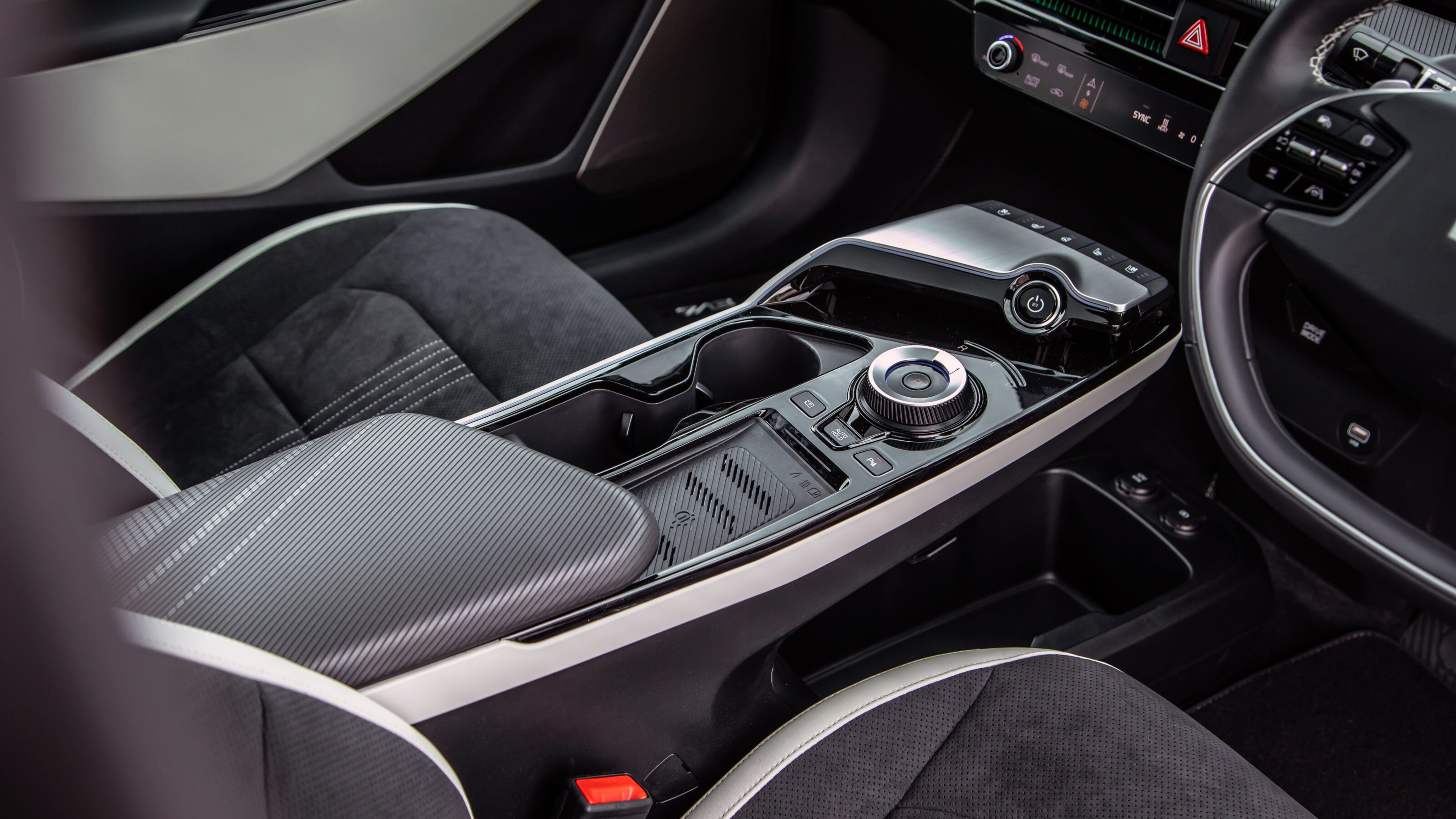
Comfort and space
Generous. Like the Ioniq 5, the EV6 looks deceptively small, until you move closer and realise it occupies a somewhat confounding space between medium and large SUV classes. Indeed, Kia is marketing it as the latter, and the numbers are there to back it up.
The EV6 rides on a huge 2900mm wheelbase and measures 4695mm long – giving it a longer footprint than the new Sorento’s 2815mm, but a shorter overall length than the Sorento’s 4810mm. It’s still longer than the Sportage, though, which measures 4660mm (and rides on a 2755mm wheelbase). The EV6’s 1550mm height and 1890mm width compares to 1695mm and 1900mm respectively in the Sorento.
Kia wants you to think of the incoming Tesla Model Y as a key rival. The American EV – which is selling in huge numbers over there – has a wheelbase shorter by 10mm, but it’s 55mm longer overall, 31mm wider and 74mm taller than the EV6.
The glass-roofed Model Y’s greater height gives it 64mm more headroom in the front even without the EV6 AWD’s glass sunroof (figures with the sunroof aren’t offered), but the EV6 wins in the rear with 29mm more space for your noggin.
The EV6 also wins on leg room and shoulder room in both rows, offering 24mm and 9mm more leg room respectively, and 30mm and 36mm more shoulder room respectively. At five-foot-nine, this writer did not struggle for space at either end or corner of the cabin.
(The EV6 can’t really compete with the Model Y on dedicated charging infrastructure or mobile app connectivity, but that’s a different story.)
Comfort in both the front and rear of the EV6 is excellent, with good bolstering and thigh support up front. Indeed, I drove the EV6 from Canberra to Melbourne at the end of the launch event, and there was no hint of aches or general discomfort the entire way.
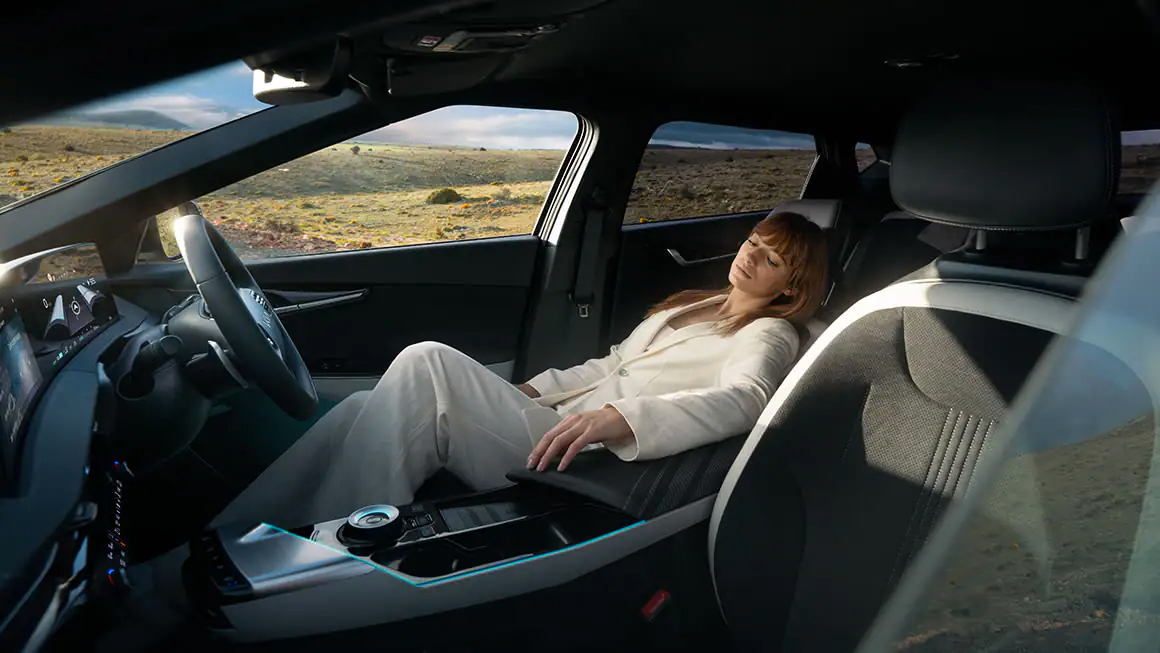
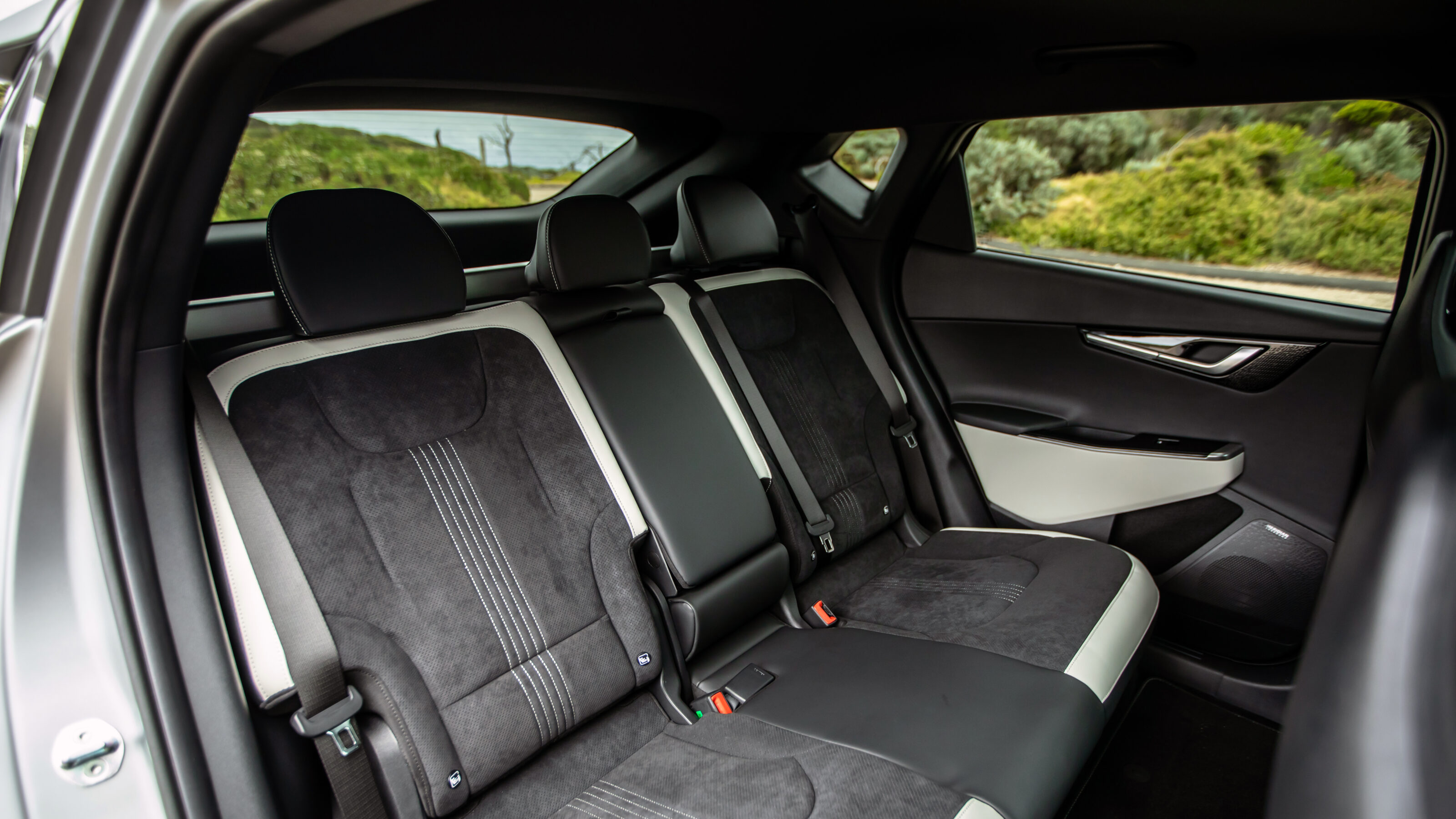
The front ‘Premium Relaxation Seats’ in GT-Line models can recline to an almost flat position for resting at charge stops, and the rear seats also recline to a more conventional angle for a decent nap as desired.
Insulation is also good inside. Between acoustic lamination to the windows and sound-absorbing trim in the body, noise on the road is kept fairly well checked. In its own testing, Kia says the EV6’s road noise was measured at 63dBA – compared to 63 for the Jaguar I-Pace and 67 for the Tesla Model 3.
Storage
Storage up front is made up of large cup holders, a generous centre armrest cubby and a neat little notch between them for keys or a tin of mints, while the ‘floating’ design to the centre console means there’s also a large tray beneath – I found this a handy way to keep my bulky camera bag close at hand. The glove box is a good size (albeit a more conventional glovebox than the Ioniq 5’s clever pull-out drawer), while the door pockets and bottle holders are adequate but still fairly narrow.
In the rear, there’s big integrated coat hangers and expanding hard-shell map pockets in the front seatbacks, along with bottle holders in the doors, and cup holders in the fold-down centre armrest.
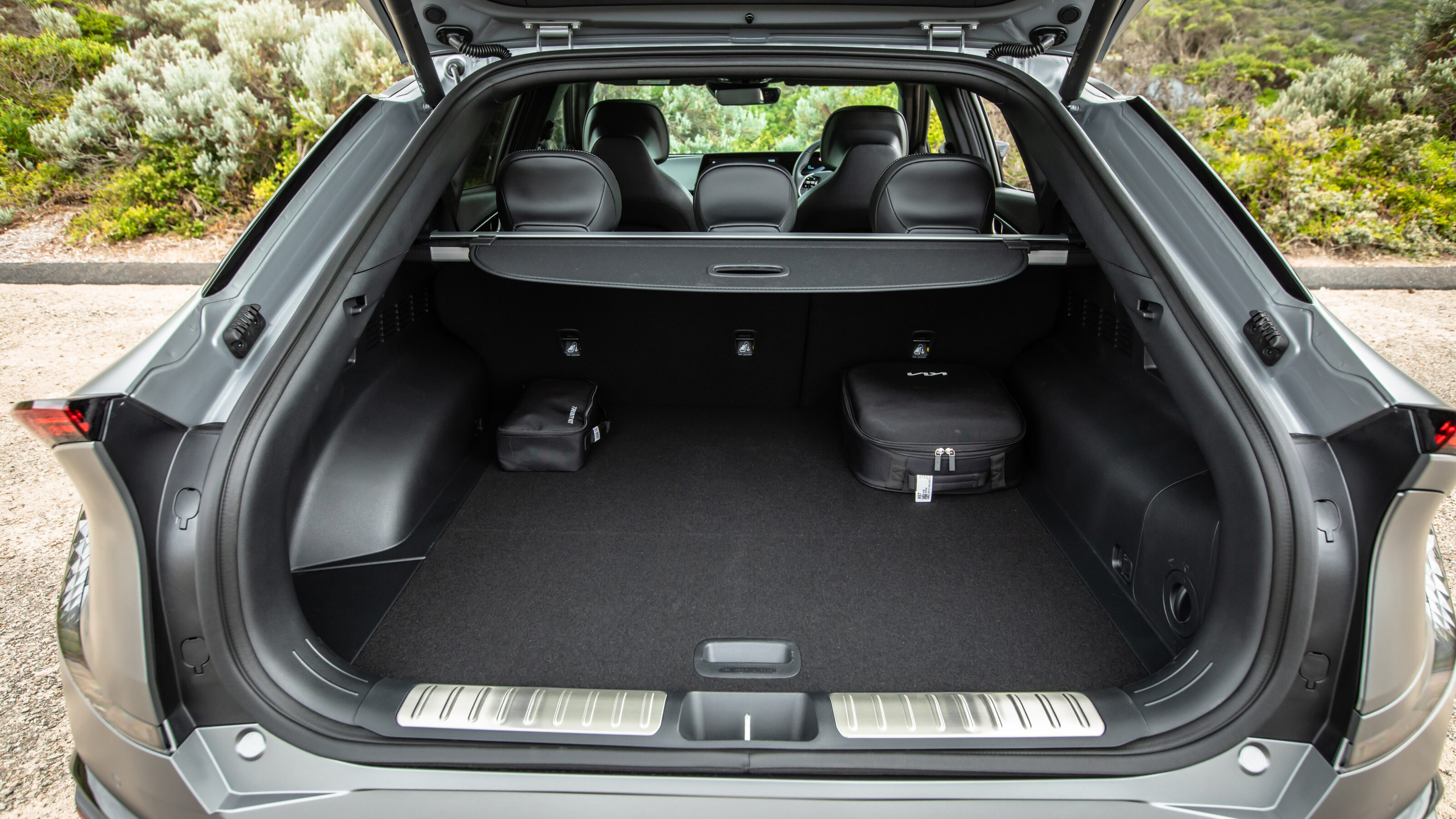
There’s a generous 520 litres of seats-up storage space in the rear (seats-down figures still to come), although it’s a shallow design overall and the tapered roofline limits the dimensions of bigger items you might like to transport – although Kia smartly notes you’ll fit three sets of golf bags, or three large luggage cases, in the rear.
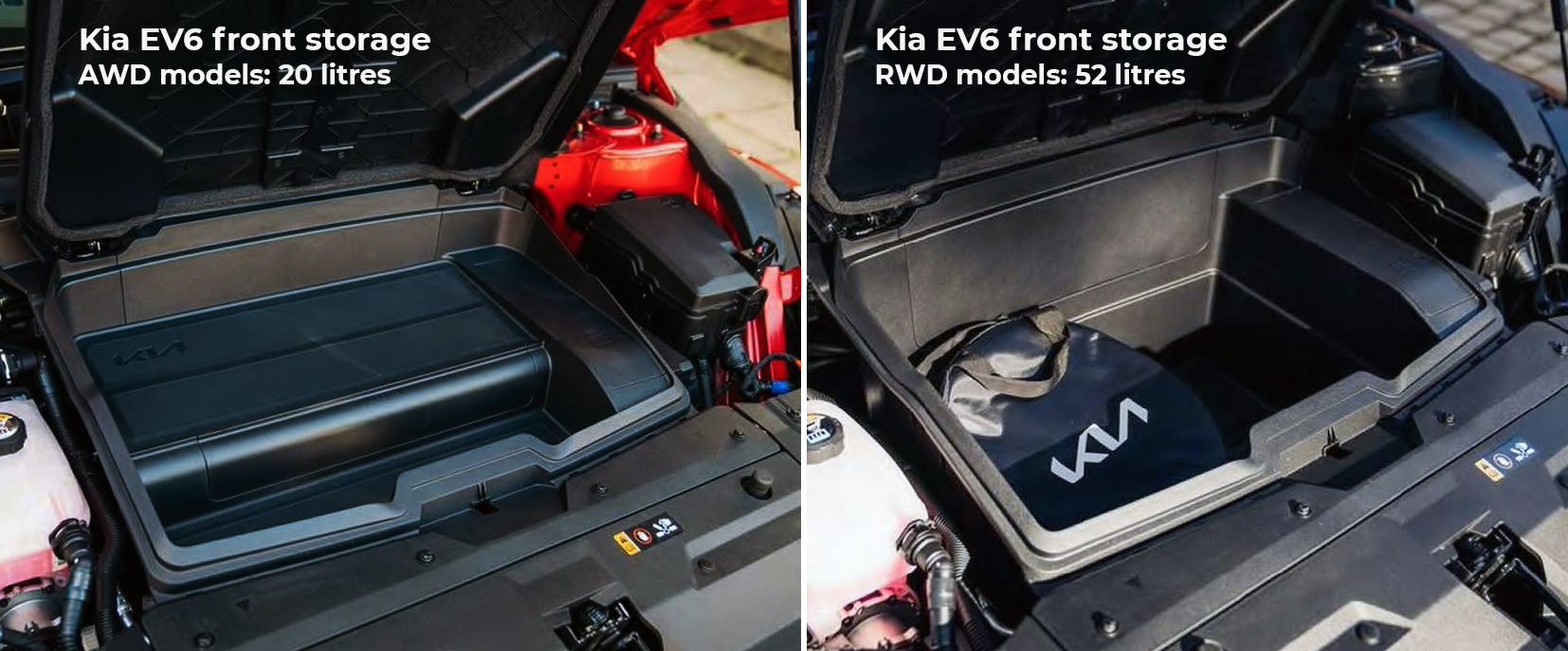
All models have a front storage space (a ‘frunk’, or locally a ‘froot’ if you prefer), with a useful 52 litres in RWD models and a barely usable 20 litres in AWD models – good for the charging cables or some soggy shoes, I suppose.
2022 Kia EV6 on the road
I’m speculating here, but if the EV6’s team were tasked with developing an electric take on the big, powerful and fast Stinger, this is a fairly convincing tribute.
Like the Stinger, with its 182kW/353Nm 2.0-litre turbo four and 274kW/510Nm 3.3-litre turbo six engines, the EV6 even comes with two sets of outputs: although it adds a second motor and all-wheel drive to get its bigger numbers, while the Stinger is exclusively RWD in Australia.
In both RWD versions of the EV6 – the Air and the entry GT-Line configuration – outputs are listed at 168kW and 350Nm. These aren’t flattering numbers for any big car, let alone a 2000kg SUV whose battery alone weighs 470kg. Still, the rapid onset of torque promised with electric motors means the EV6 RWD can still hit 100km/h in 7.3 seconds – not hot, but not exactly depressing. In the seat, it should provide a satisfying shove for most buyers.
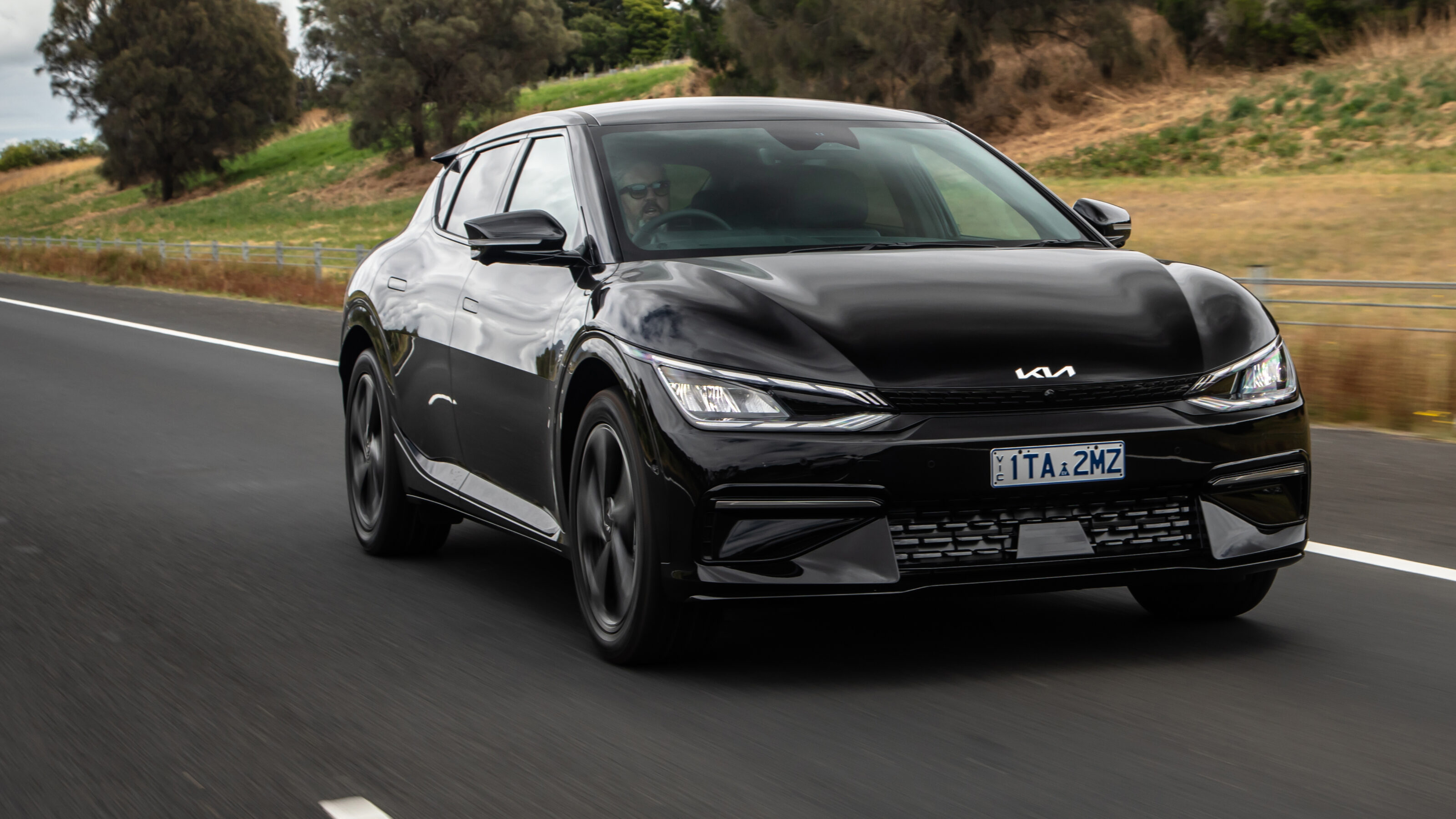
It’s in AWD form that the EV6 gets more of the ‘oof’-inspiring thrust that (expensive) EVs have become known for. With two motors at its disposal, the GT-Line AWD gets a meaner 239kW and 605Nm, promising a properly quick 5.2 seconds to 100km/h. Yes, a number of performance-oriented EVs outdo this handily, but Kia has one of those coming later this year: the 430kW, 740Nm EV6 eGT – it’ll cost closer to $100,000, but it’ll also blast you to 100km/h in a very super 3.5 seconds.
Once that thrill wears off, the EV6’s performance credentials are underscored with a very well-engineered suspension package that neatly complements the sometimes counterintuitive advantages of brake regeneration and the low centre of gravity delivered by a bloody big battery under the floor.
As with other Kia models sold here, the EV6 benefits from a local ride-and-handling program managed by Graeme Gambold and the team at Gambold Engineering Services. Gambold honed his craft through tweaking Toyotas at the Nurburgring, and he’s a talented rally driver too.
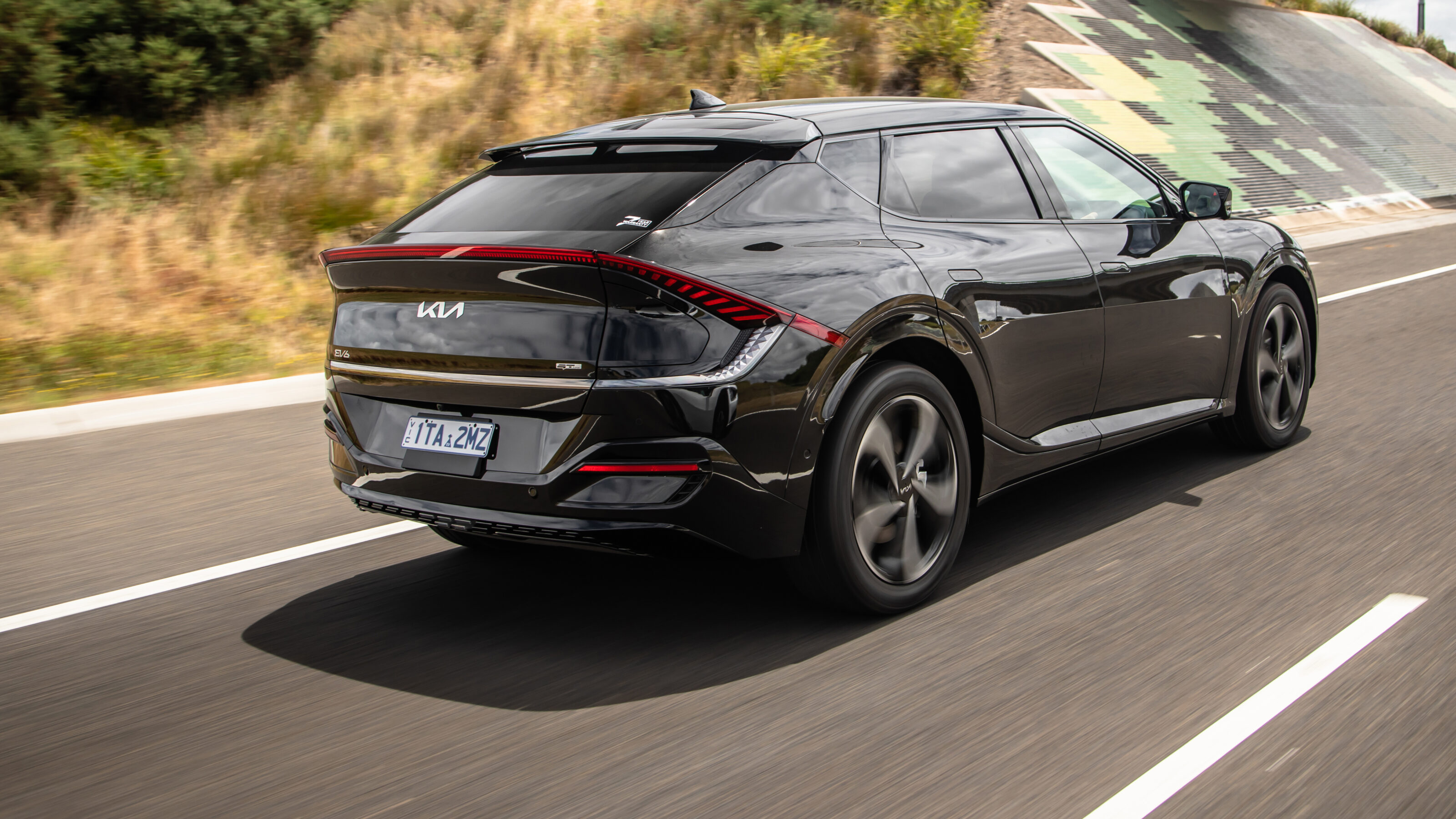
Working in collaboration with both Kia Australia and the company’s global headquarters in Korea, Gambold has specifically configured the EV6’s ZF Sachs’ frequency-sensitive Selective Damping Control technology – up to now seen in only Maserati and Mercedes-AMG models. Decent company to be in.
In its Australian form, the Sachs system is tuned to provide a balanced experience between the soft ride preferred in Korea and the much firmer ride specified for European models. It’s an arrangement suited well to the huge variety of surface types and conditions, and mixed quality, of Australian roads.
I spent most of my time at the event in GT-Line models, aided by Continental rubber and, in top-spec form, all-wheel-drive pull.
All variants of the EV6 come with a sport mode to make acceleration more rapid, and a sport brake mode too, optimising response as desired. Combined with the paddle-controlled brake regen that can trick you into feeling like you’re gearing down for the next corner, Kia’s big, heavy and fast SUV is… really quite fun.
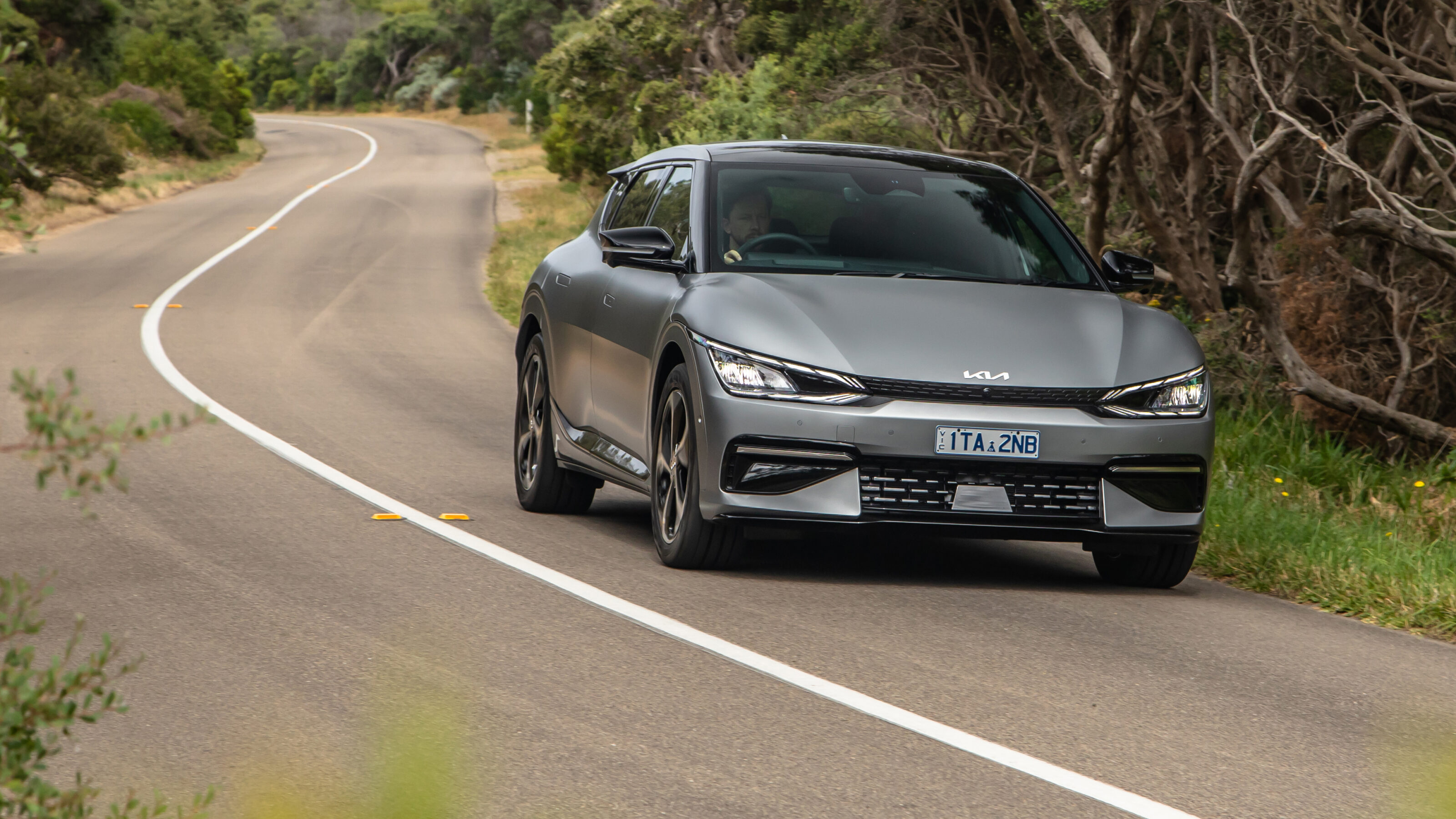
Covering around 250 kilometres of driving at the Australian media launch, taking in urban and country roads around Canberra – many of them narrow and broken yet signposted at 100km/h, like many rural Australian roads – the EV6 consistently proved itself a comfortable family offering that neatly soaks up irregularities and undulations in the road surface without throwing any rude shocks or surprises at the cabin ambience. It’s a firmer ride than in the Ioniq 5, no question, but it’s more planted and it just feels right.
Pushed harder, the EV6 shows its colours as a properly surprising impression of a sports car, tucking into corners far more effectively than seems possible. We missed out on a full local steering tune, thanks to COVID, but the response to input is clear and linear, changing direction neatly – and the instant torque is there to help transfer weight quickly.
It’s not working miracles or bending physics, but it’s clear the car’s smart systems and tuning are working together to manipulate a few different rules of motion.
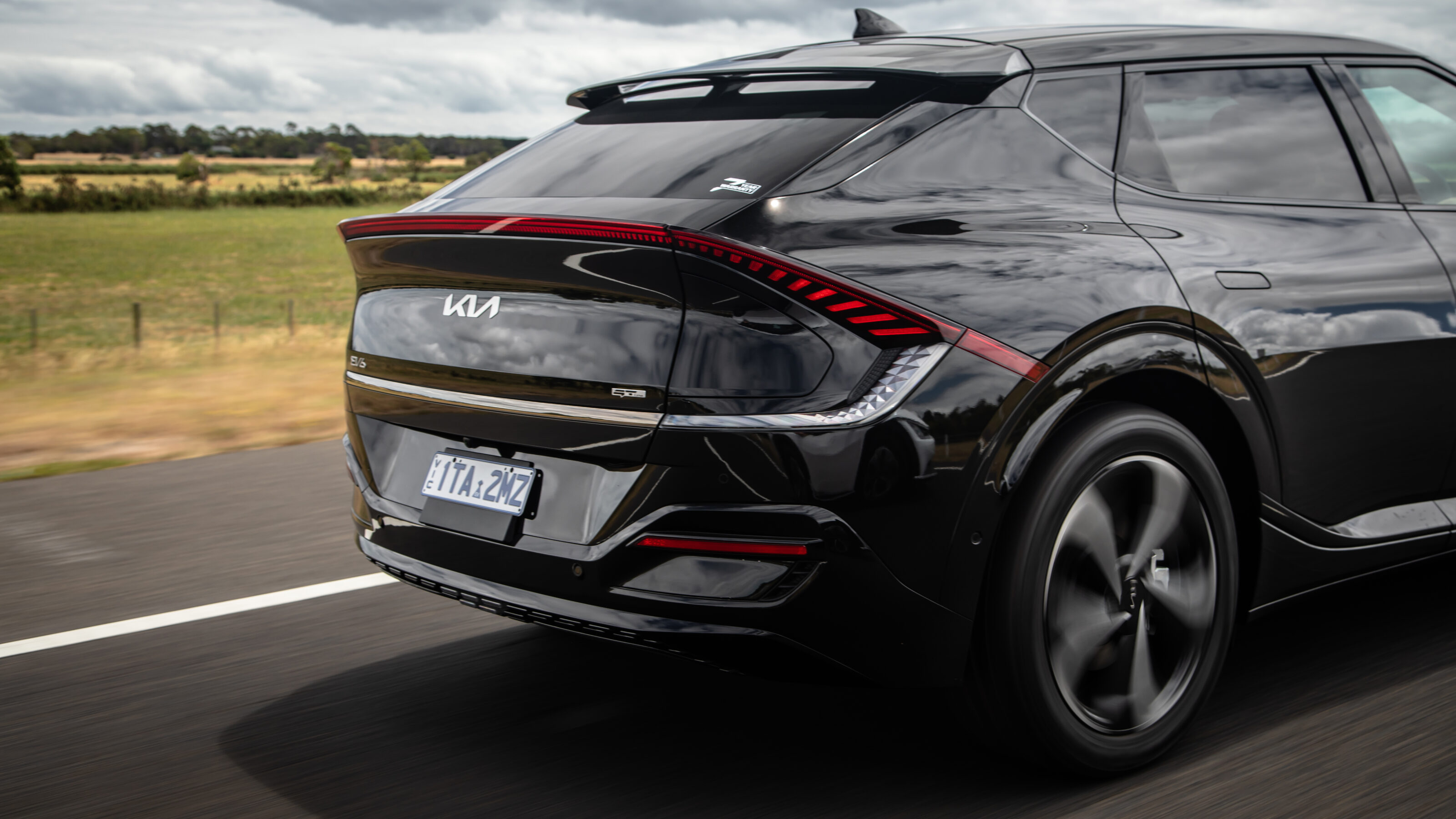
What about range and charging?
The basics: the EV6 offers up to 800V ultra-fast charging capability which, on a 350kW ultra-rapid charger, enables the battery’s charge to be boosted from 10 percent to 80 per cent in just 18 minutes. On a 50kW charger, you’ll get from 10 to 80 per cent in one hour and 13 minutes.
Buyers in Australia may still baulk at the idea of EVs, with range anxiety a tough monkey to shake – but even when you squeeze the EV6 with some spirited driving or long highway trips, where electric motors are less efficient, range claims like 528 kilometres (Air RWD), 508km (GT-Line RWD) and 484km (GT-Line AWD) are big buffers to work with, supported by a rapidly growing network of fast chargers along Australia’s most popular interstate highways – and more popping up all around.
Driving from Canberra to Melbourne, I had the option of super-fast 350kW chargers at Gundagai, Barnawartha, Euroa… all within very comfortable intervals along the way, all promising a 10-to-80% battery charge in the EV6 in just 18 minutes. Stretch your legs, hit the loo, grab a burger (I don’t even regret that Whopper), post some roadtrip snaps to Instagram and voila, you’re on your way again.
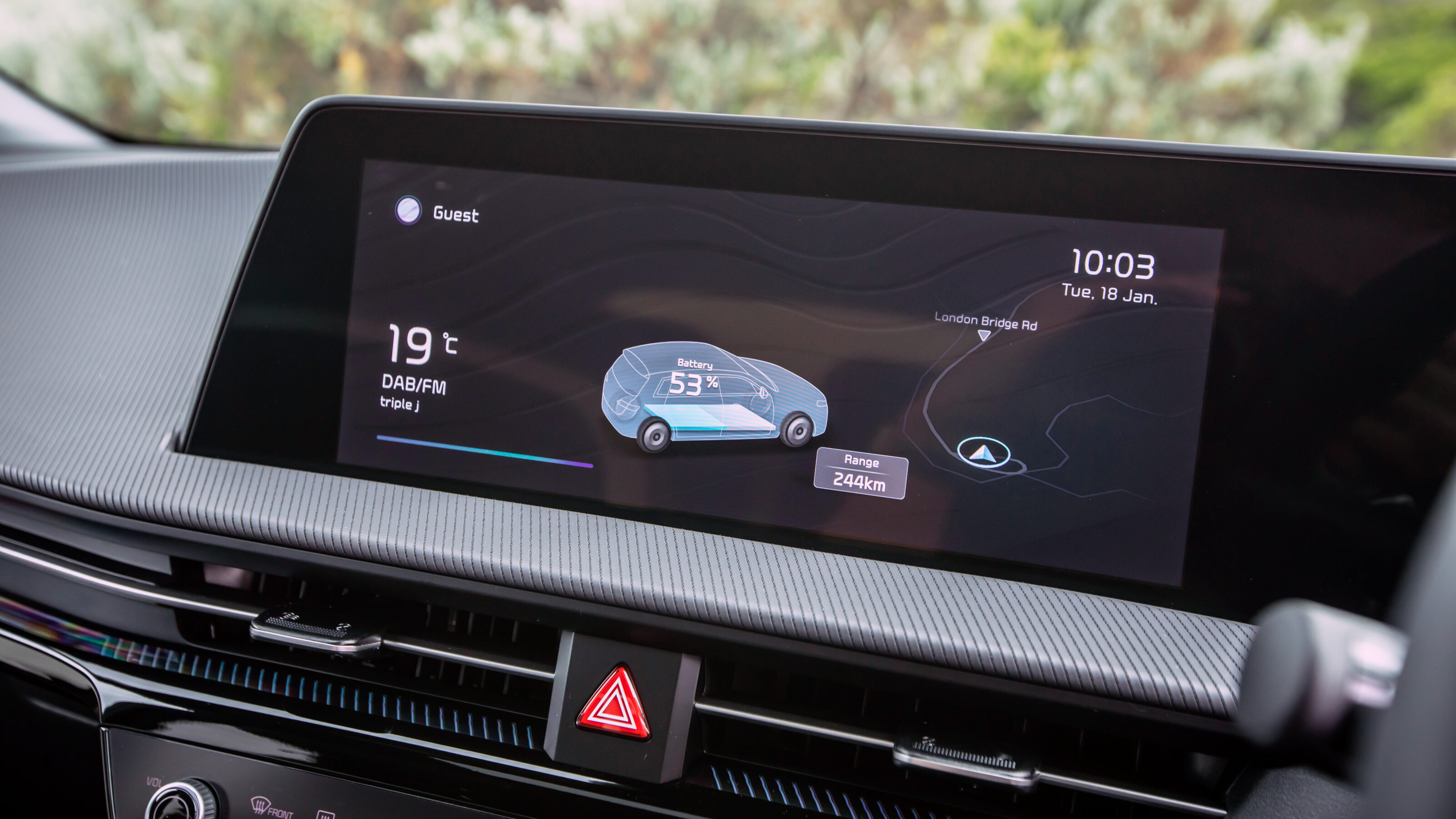
Here are the facts of my own driving in the EV6: Bound for Melbourne, I skipped Gundagai and powered on to Barnawartha at 110km/h the entire way, 350km out of Canberra.
With 508km indicated when I left Canberra, I arrived at the 368kW charger with 50km indicated – so I lost a bloody big chunk of range, thanks to a high cruising speed with no brake regeneration available, significant uphill stretches of driving, and a lot of roadside stops (I like to take a few minutes at most stops to stretch my legs, check messages, and all that). But I made it comfortably, despite fairly unfavourable circumstances.
Look. Driving EVs over long distances requires a recalibration in the minds of buyers, that’s a fact. Re-learning what to expect from range calculations, and understanding that highway driving efficiency is pretty much the opposite of what you grew up expecting from internal-combustion engines – but the infrastructure to support those drives is only growing.
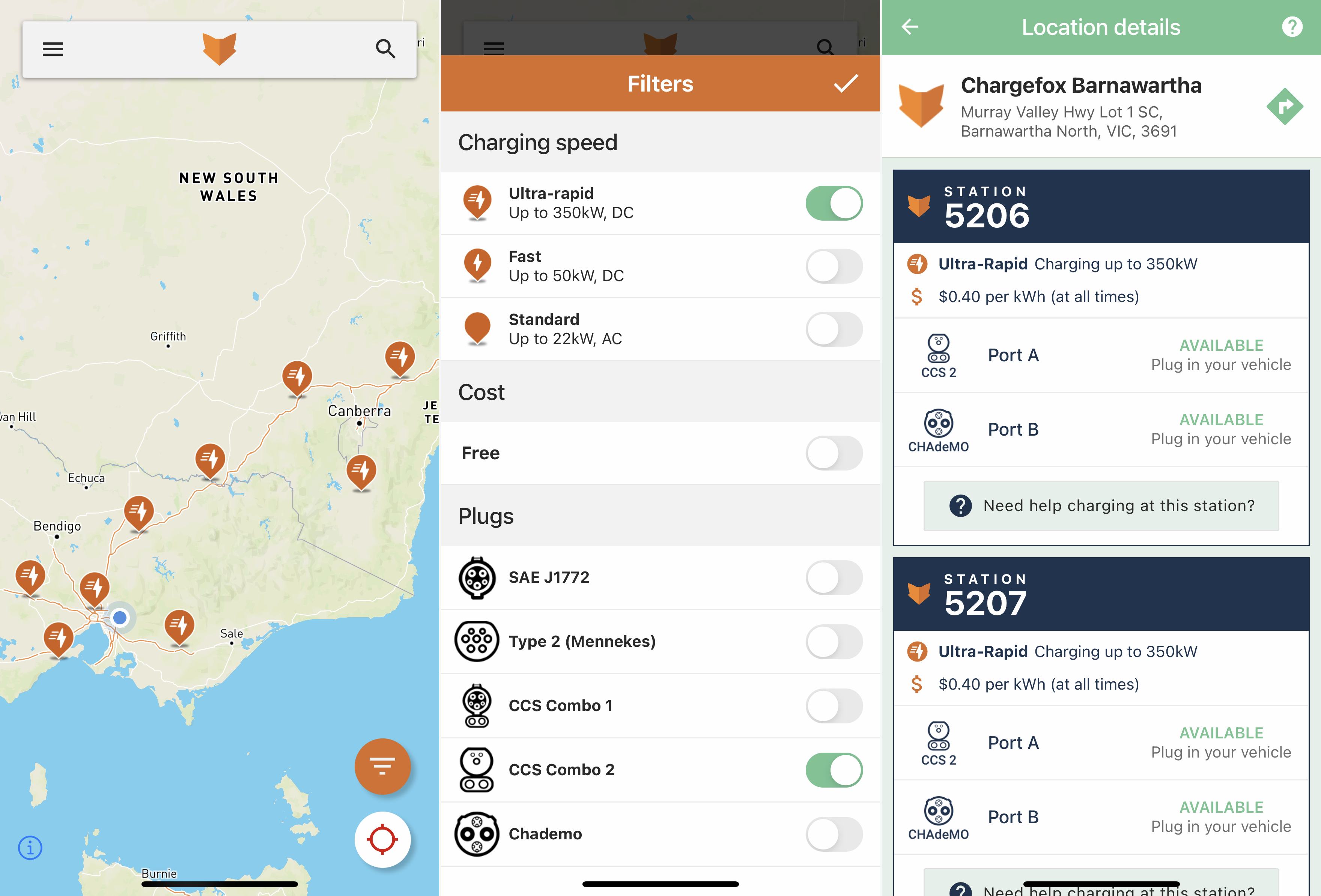
Buyers looking to do regular road trips don’t have much to fear if they’re sticking to the big roads between our cities and best-loved tourist destinations, but, hey – statistics say Australian families have ‘2.1’ cars. If you’re that worried – say you’ve got some heavy towing to do (up to 1600kg braked), or you know you’ll be taking some long drives down some less-equipped roads – it’d be fair and smart for you to take a petrol or diesel option.
For the rest of us, who spend most of the year in cities and limit our road trips to the popular destinations – and that’s most of us – the EV6 is a very, very good thing.
VERDICT
The EV6, Kia Australia’s second electric vehicle, is an exciting package. A comfortable drive – and a properly fun drive at that – with quality materials, excellent fit-and-finish inside and out, loads of tech and safety, and room for the family.
It isn’t the ‘affordable’ family car many are waiting for – the $40,000 medium or large electric SUV with 500km-plus range is still some years away – but for those with the budget and an appreciation for the potential savings, the EV6 is well worth considering.
I only wish they could get more of them, but this is really still only the early years of EVs in Australia, and there’s plenty to look forward to.
American electric vehicle start-up Rivian is facing resistance against its proposed expansion, with plans to put a plant in Georgia paused.
After its first vehicle rolled off the Normal, Illinois, production line in September last year, the company has been looking to expand, expecting a future surge in demand for its R1T electric pick-up and R1S SUV.
However, according to Automotive News, a potential plant which is slated to be constructed 45 minutes away from Atlanta, Georgia is facing a large amount of resistance from residents of nearby Rutledge.
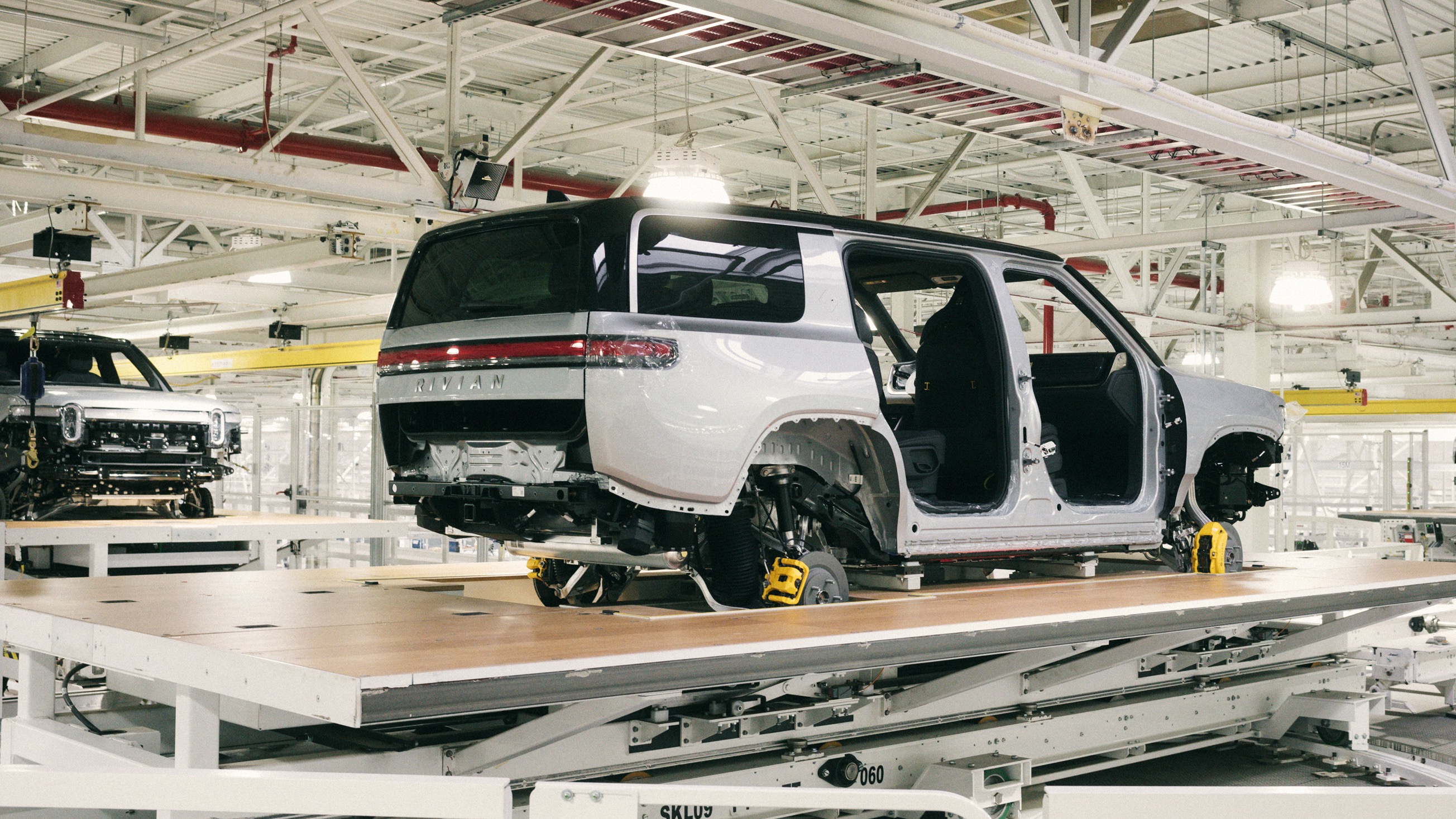
Despite the investment totalling close to US$5 billion (AU$6.94bn) and promising to bring more than 7500 jobs to the local economy, those against the facility cite traffic, environmental damage, and continued urban sprawl from Atlanta as their main reasons of concern.
Taking to social media, a Facebook page against the plant’s construction has so far reached 2800 members at the time of writing – just over one-third of the proposed jobs the factory will add to the local economy.
“For us to be successful in Georgia, it’s important that we spend time listening to local concerns, addressing them as best we can, and working hard to be the kind of neighbor [sic] the community would like to see,” said the EV manufacturer in an email to Automotive News.
It’s estimated the proposed plant could have an annual output of 400,000 vehicles, with production scheduled to start in 2024, while an on-site battery facility is also on the cards.
Rivian has previously confirmed one example of each model is currently in Australia for testing, with the manufacturer not ruling out a local launch in the coming year.
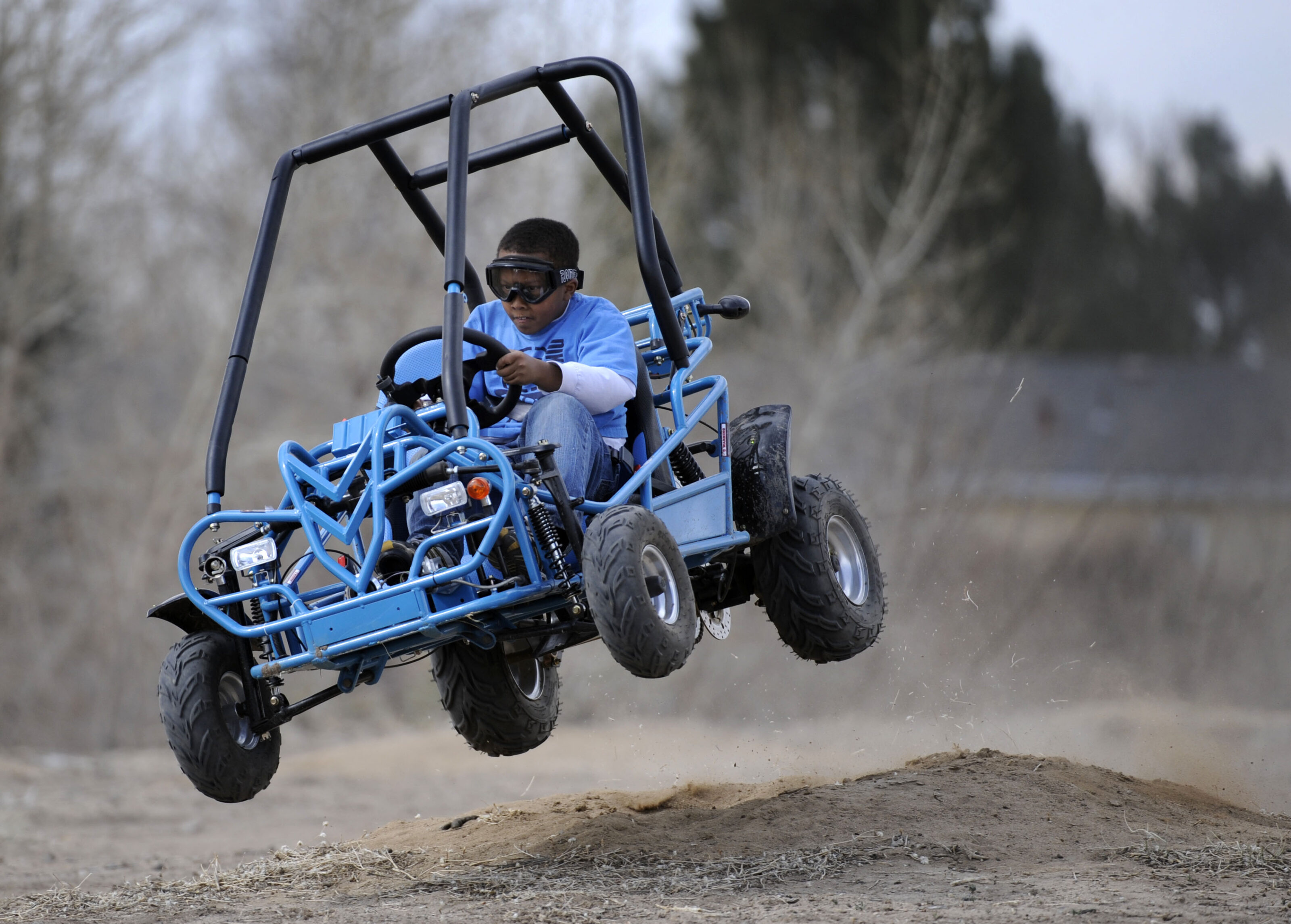
“Do you want another go of the go-kart?” At barely six years old, it’s my earliest memory. And of course, it was more of a statement from my father because he didn’t really require an answer. My response was never going to be anything other than yes. However, this time would be different. The reason for that is because my third earliest childhood memory is being raced to hospital in the back of a white MkII Ford Escort.
I’ve skipped the second flashback for a reason. It involves me, in a dirt go-kart, racing around our makeshift track and ending up under the front of a dune buggy. If this was an episode of Seconds from Disaster, the critical point is failing to notice both off-road toys set off in opposing directions on a certain collision course. In an effort to shield my head (despite wearing a helmet), I raised my right arm and broke it in four places below the elbow. I have the steel pin and gnarly scars to prove it.
Now, this might all sound like a massive negative – and dangerous. However, in an upbringing filled with motorised goodies, it was the only hiccup. Actually, I broke my other arm on the flying fox in P.E. at primary school the next year. In reality, those formative years proved invaluable for developing my skills behind the wheel and learning car control on varied surfaces.
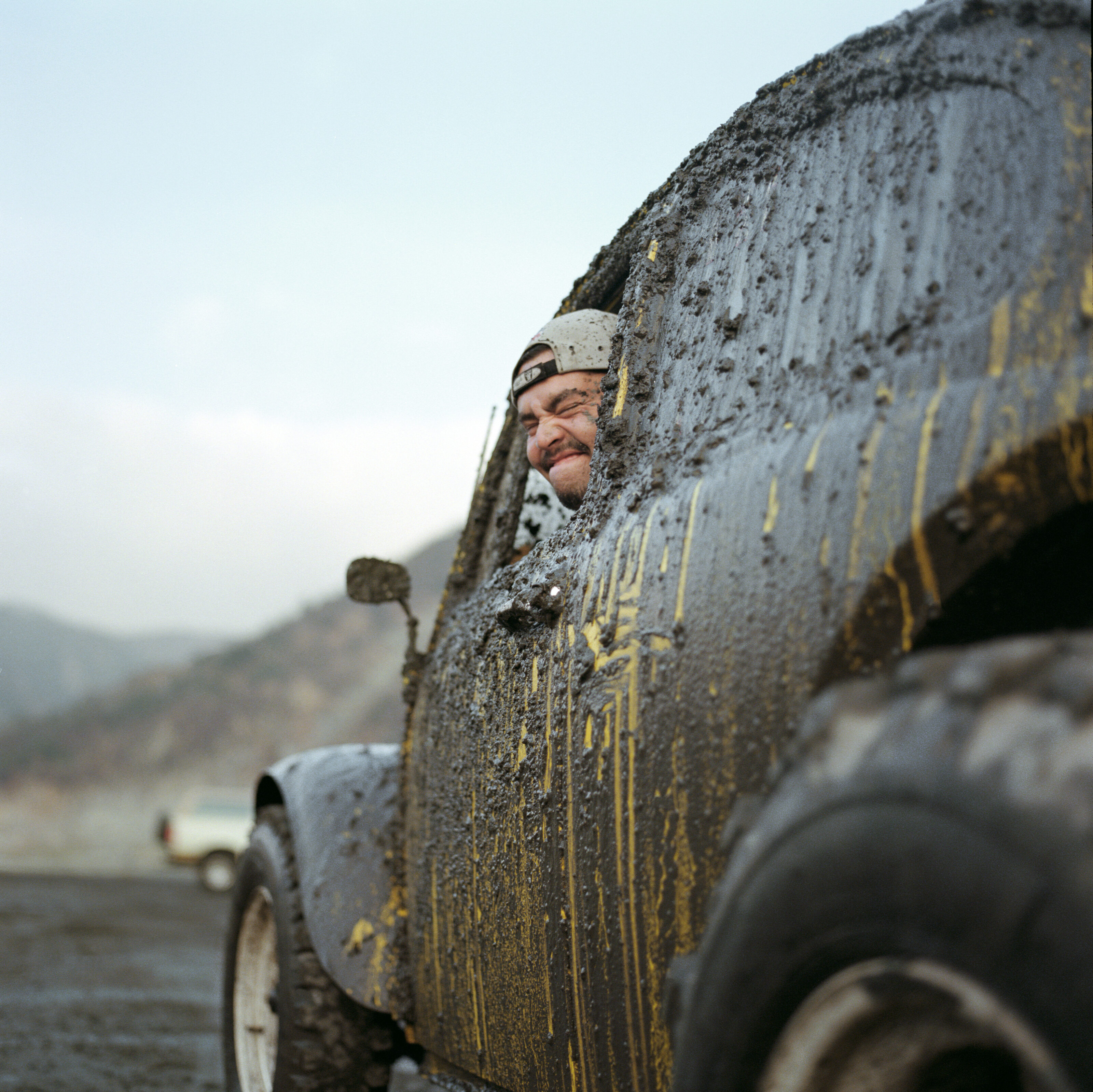
From the age of seven I started ‘proper’ go-kart racing, competing until I was 14. My brother and I were racing, so it got too expensive and time consuming for the family to continue. That was mixed in with a few paddock bashers, one being a Corolla wagon with enough fake sponsorship stickers to make any modern team jealous, before progressing to the aforementioned dune buggy. All the non-competitive antics were done on dirt and, like any loose-grip surface, provided the perfect foundation.
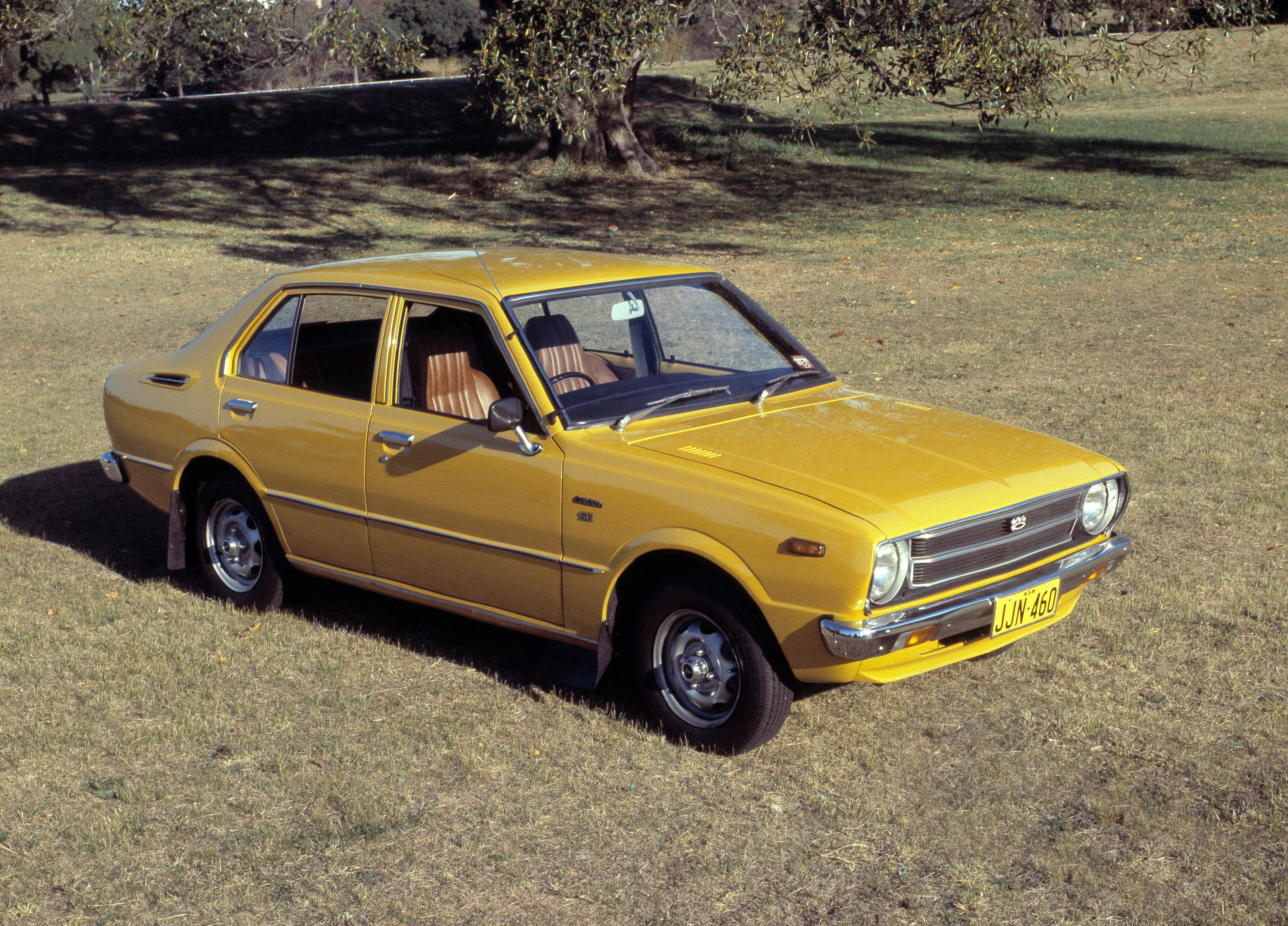
I was driving my mother’s KE30 Toyota Corolla before the age of 10 – also a benefit of being tall from a young age. Like the beloved paddock basher, the well-kept Corolla had a four-speed manual and was rear-wheel drive. So when it came time to get my licence, instead of doing the test, slapping on L-plates at the appropriate age and being green with parental tuition alone, I had the act of working a motor vehicle down pat.
Apart from finer nuances of navigating roundabouts and merging with traffic onto a highway for example, I was good to go. In fact, my very first on-road experience started with my mother saying, “off you go”. That’s it.
This couldn’t be more different to the stories of friends and colleagues who grew up in the hustle and bustle of a big city. Quite often their first experience in a car was on a busy street just outside a registry office with myriad obstacles and traffic to contend with. Or in an empty supermarket car park with stray trolleys. I was afforded the luxury of space, of empty paddocks to slide rear-wheel-drive vehicles in a measured, but carefree way.
I’m not sure I’d have enjoyed my emergence into motoring if it was an anxiety-filled city experience like my peers. My driver training was conducted with room for trial and error. Despite the early incident, the antics of my brother and I were always overseen by an elder. Ultimately, the lessons learnt racing go-karts on track and in various paddocks at home have transferred to my current state as a driving enthusiast – and all for the better.
I used to lament the fact I grew up in ‘the country’. But now, with mature eyes and a truck-load of hindsight, I wouldn’t change it for the world. Given my unquenchable thirst for driving, it couldn’t have been a better entry point to a life behind the wheel. In fact, if it hadn’t been for those trips out in the dune buggy, endless fun in paddock bashers and racing go-karts, I’m not sure I’d be here at MOTOR today.
Snapshot
- Seven sites now certified to carry out repairs
- Carbon fibre used heavily in i3 and iX
- Also found in 7 and 8 series, as well as M models
BMW Australia has launched an enhanced carbon fibre repair program for its bodyshop network, aiming to give its staff in-depth knowledge and understanding of how the material works in theory and in practice.
The bolstered program follows the introduction of BMW’s globally-certified training standard in June 2020 which helped enable its bodyshops across Australia to repair customer vehicles to “beyond OEM standards”.
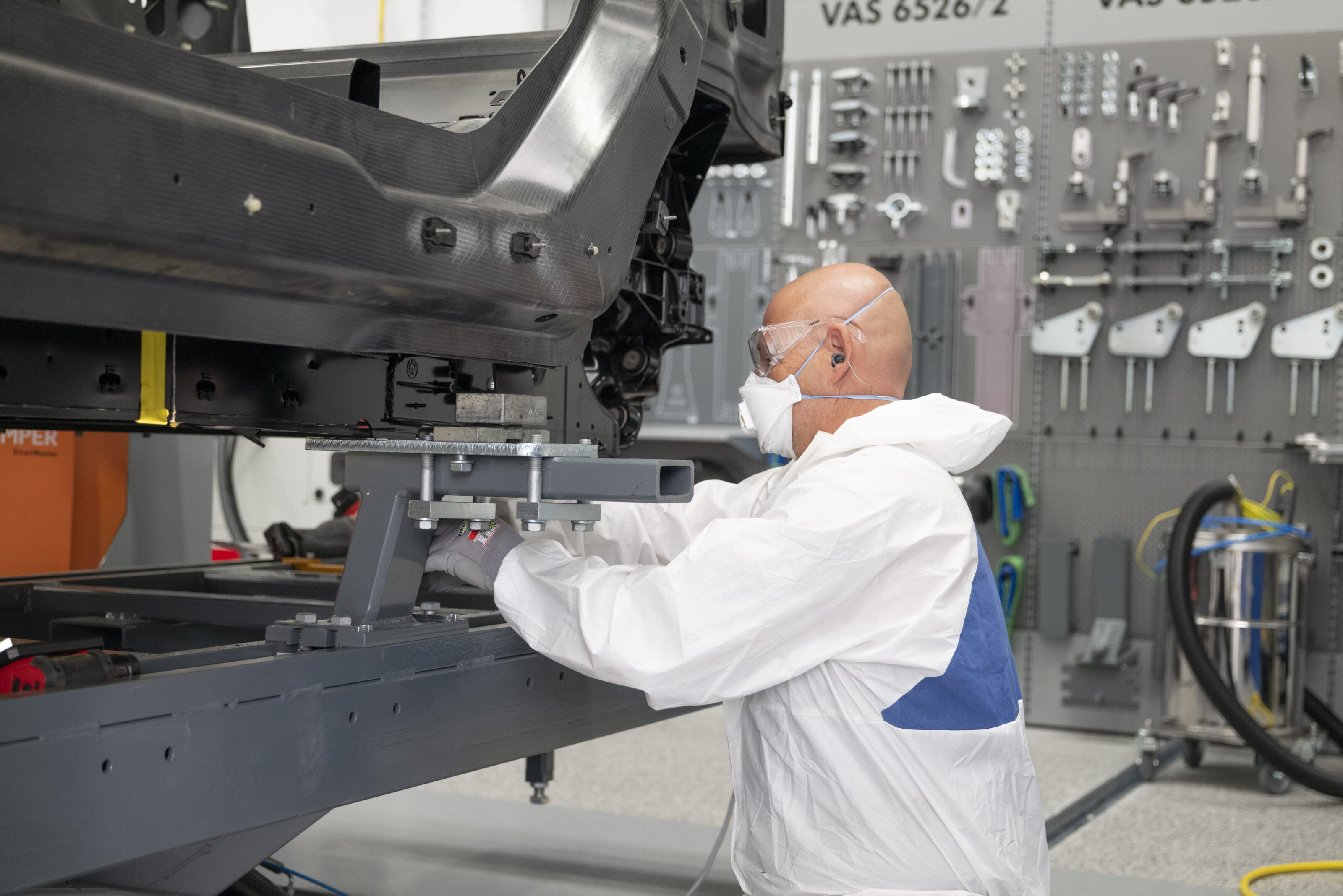
The first session, which was held at a purpose-built facility in Melbourne this month, focused on how to repair carbon fibre composites. At present, seven of BMW’s bodyshops are certified to repair carbon fibre components, with the aim of the whole network becoming trained over the coming years.
Carbon fibre, renowned for its combination of low weight, immense strength and ability to disperse energy, was used extensively in the i3 almost a decade ago and now also features in the iX – which launched in Australia late last year.
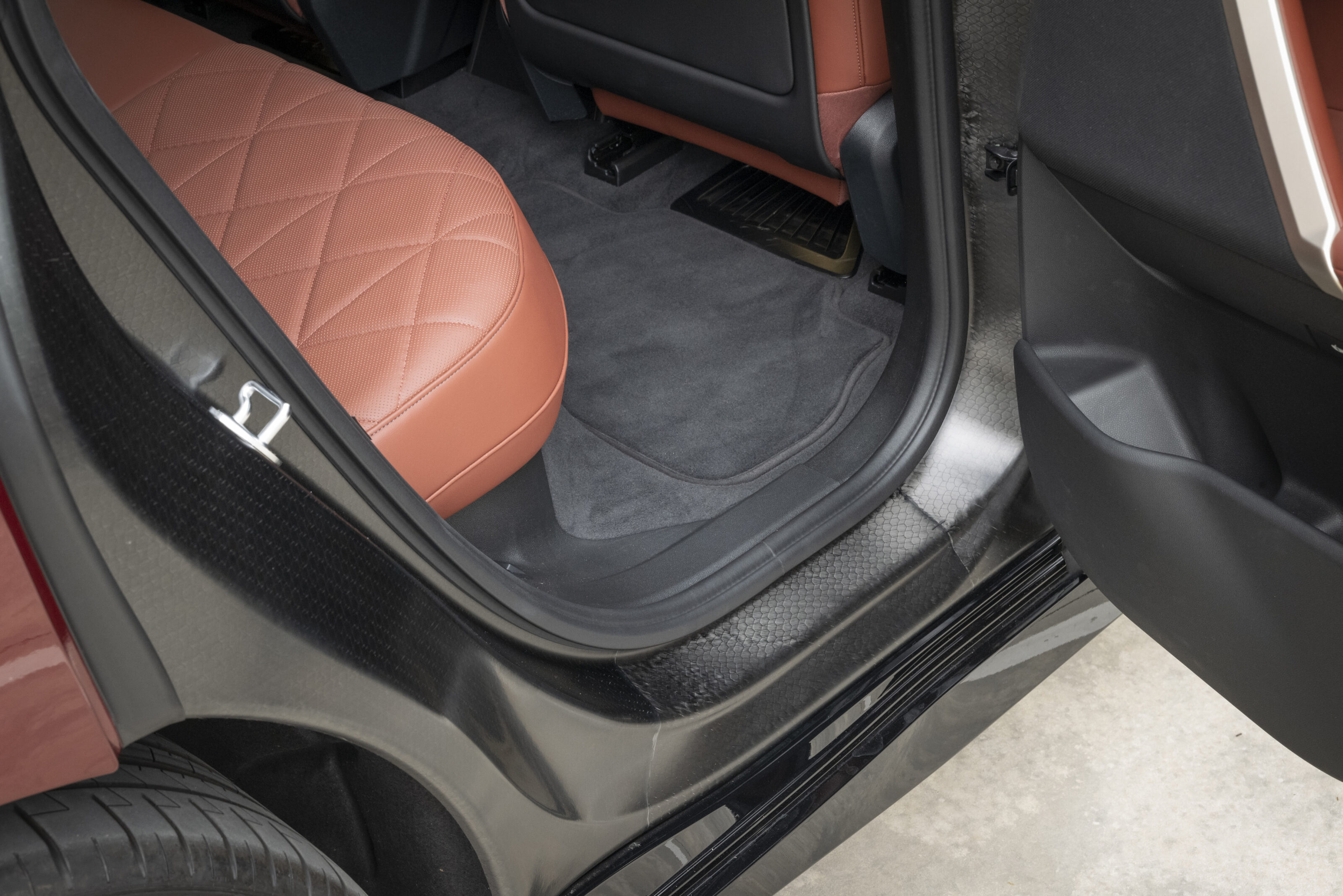
It’s also prominently used in the safety cell passenger compartment of BMW’s flagship vehicles, such as the 7 and 8 Series and its high performance M models.
Glen Keddie, Bodyshop Network development manager for BMW Group Australia, said the company’s new training program has kept BMW at the forefront of repair capability in Australia.
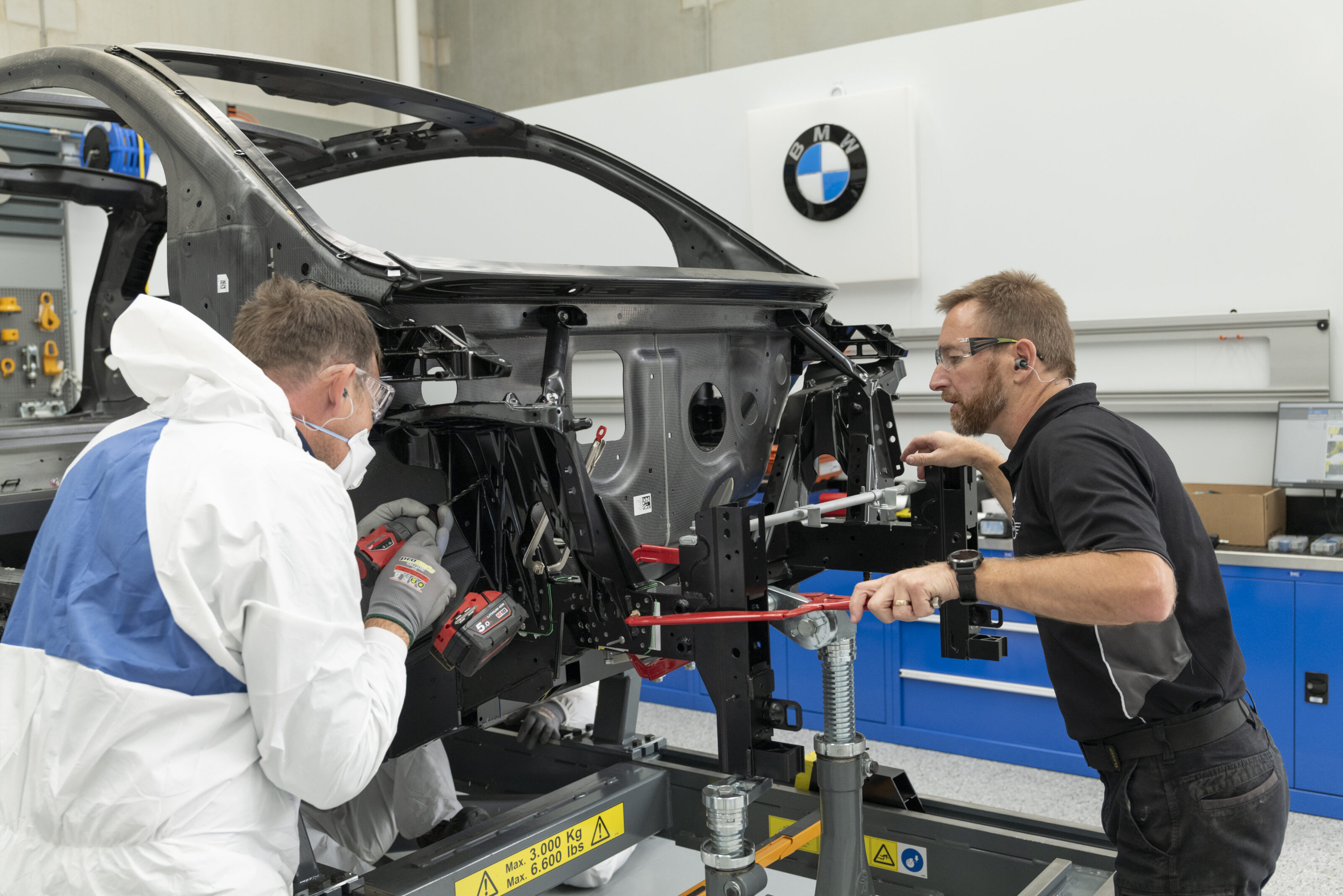
“Carbon fibre requires specialist handling and skills, both in its diagnosis and its repair, to ensure it retains the qualities for which it is recognised so it can contribute to ongoing cabin integrity and therefore safety of the vehicle for occupants,” Keddie said.
“And although our network already has a strong level of competency in this area, this training takes up it to the next level to ensure our BMW Bodyshop professionals can deliver an even higher level of repair for our customers.”
