
UPDATE: We’ve now driven the GT4 RS, read and watch our review at the link below!
The story to here
When it came time to convince Porsche executives that the company needed to put the Cayman GT4 RS into production, Andreas Preuninger used a hardcore manual test mule with the engine from the 911 GT3 RS as his sales pitch.
The very idea of building a Cayman GT4 RS has been a controversial one within the boardroom at Stuttgart, with many thinking that a hardcore track-ready mid-engined sports car would encroach on the territory of the iconic 911 GT3.
To overcome this mental hurdle, the head of Porsche’s GT Division, Preuninger, got creative.
Instead of trying con convince the boardroom with a traditional sales pitch, he and the GT division went old-school, building a 370kW skunkworks test mule.
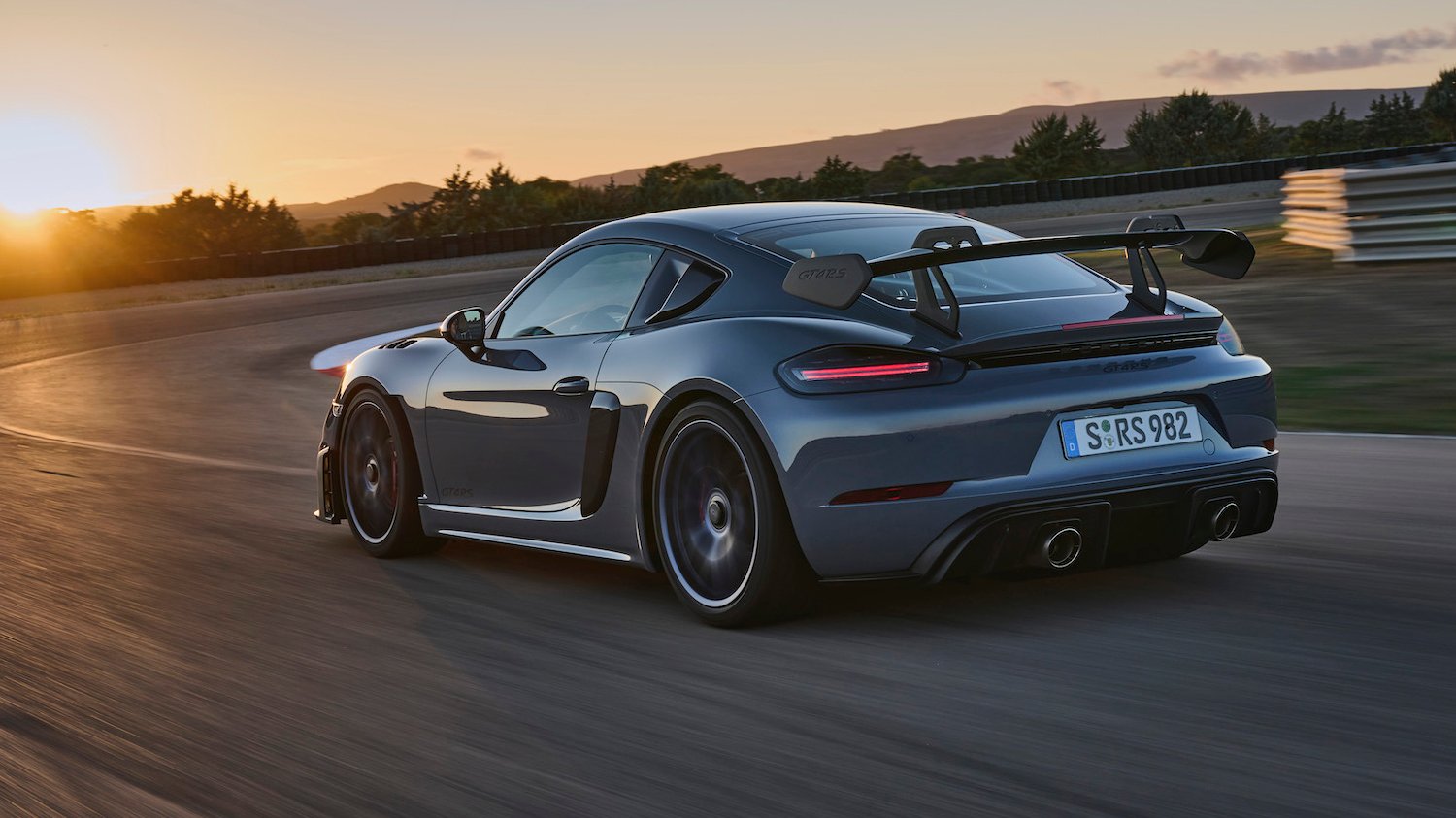
Speaking to media at the launch of the Cayman GT4 RS, Preuninger told the tale of how a 911 GT3 RS engine was placed into a 718 Cayman body.
“I mean, this was very exciting, but we made it on a low budget and hurry up basis,” he recalled to MOTOR.
“So we just took the GT3 RS engine, back then it had 500 horses [370kW] as well, so it was a 991.1 GT3 RS engine, which was sitting around, so it was available.
“And so, we took that one, and then we took a hammer and the scissors that could cut the sheet metal, and then we squeezed it in somehow.”

Getting the 4.0-litre naturally aspirated flat-six engine to fit was just the first task. Next was the issue of how to change gears.
Both the Cayman GT4 RS and 991.1 GT3 RS shifted ratios exclusively using a seven-speed dual-clutch PDK transmission. Preuninger’s test mule however was fitted with a proper manual gearbox.
“We coupled [the engine] to the manual gearbox of a GT4 without playing around with a reduction [in gear ratios] because it was just the only thing that we had,” he explained.
“It made it quite nicely with the gearbox, but it was way too long gear. I mean, this is an engine that revs even higher, and then the long gearing of the manual, but still, you could get an idea of the emotional side on the car, the intake noise, everything.”
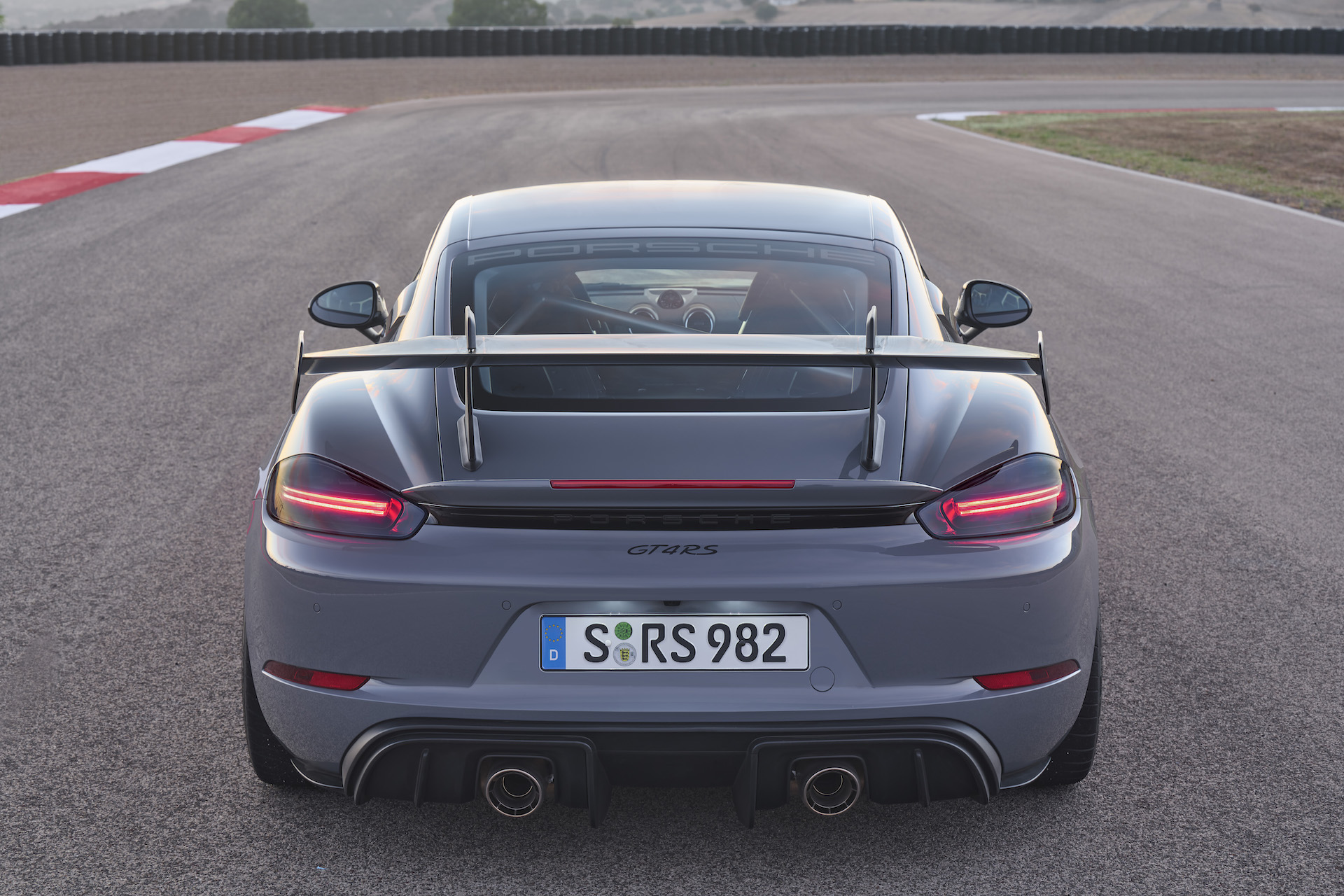
Very quickly Porsche’s engineers discovered that turning a 911 GT3 RS engine around and putting into the middle of the 718 platform wouldn’t be a simple process.
One of the more significant engineering challenges that occurred even with the test car was packaging of the air intakes.
In the final Cayman GT4 RS production car, this is solved by having air intake mounted right behind the b-pillar in place of window on both sides of the vehicle, and the top of the airbox being located within the cabin itself. A design first pioneered on the GT3 RS-powered prototype.
“We mimicked these kind of funnels that are behind the ears with tubing,” Preuninger said.
“It was done really the workshop way, but still, it showed the potential and we really were fighting for the keys.
“And every CEO of all the markets that we showed the car, that was not on the agenda, so we more or less turned up and said ‘Hey, there’s something more.’
“It was a beautiful May day and they all drive all these new cars and we brought that one along and said, ‘Okay, before we finish, each one of you have a go in that one and just tell us what you think.’
“And they all came back saying, ‘What? Are you crazy?’
“And I said, ‘Yes, it’s exactly what we need for the market.’
“They said, ‘Oh, thank you.’
“You always can convince with hardware a lot better than with presentations.”
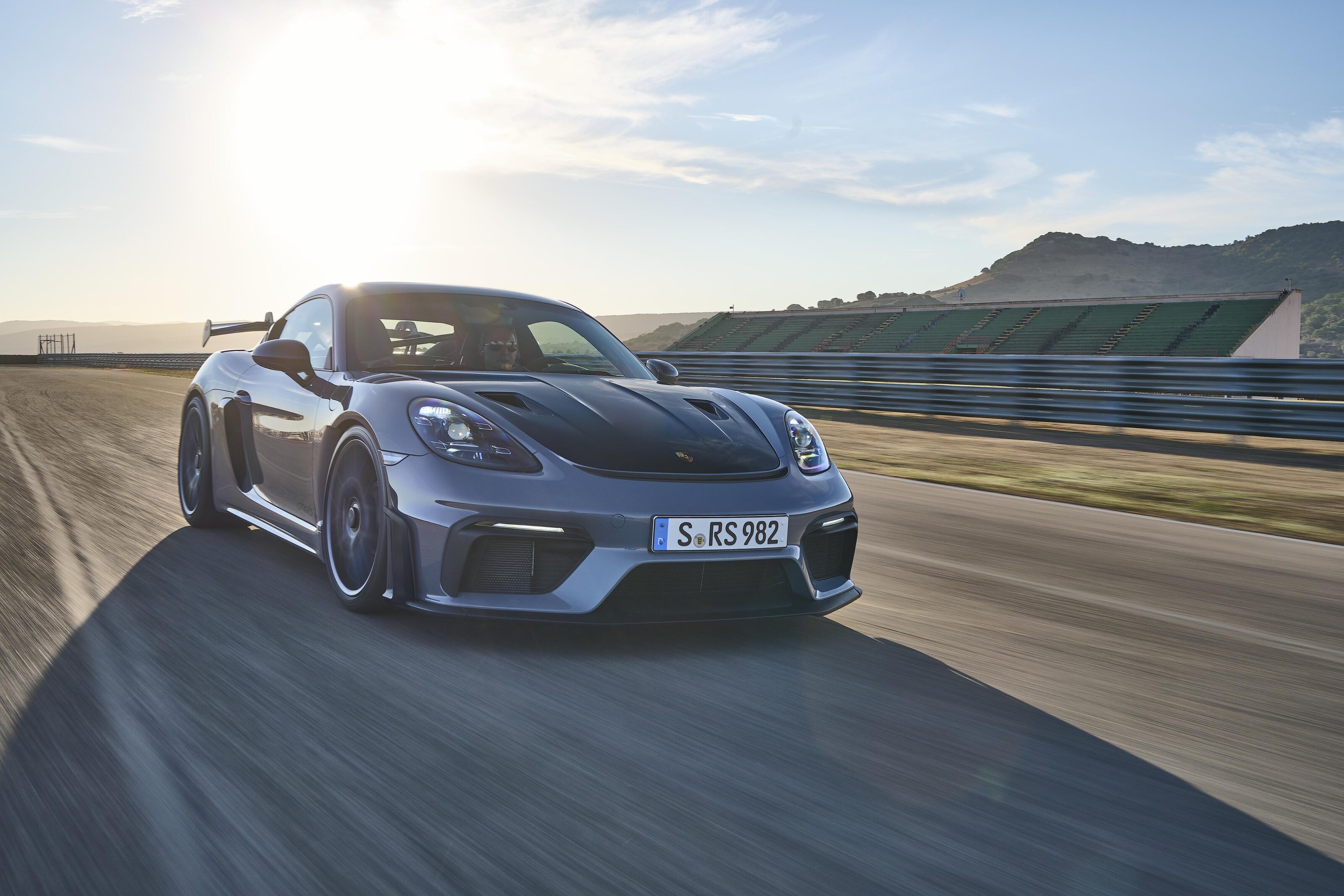
While the very first prototype GT4 RS was fitted with three-pedals, Preuninger is fan of the PDK fitted to the final production car.
“Despite having not a manual, I would prefer this car for the PDK, even though we had a manual,” he added.
Manual or auto, there’s no doubting that a screaming GT3 RS-powered test car will always be more convincing than a PowerPoint presentation, and we as performance car fans are all the better for it.
Snapshot
- Porsche’s head of GT cars wants even more models
- Motorsport technology to continue blending down to road cars
- Electrification strategy prevents a 918 successor for now
Porsche’s GT division is producing more vehicles than it ever has, but there’s still more to come from the German purveyors of motoring excellence.
Weissach’s family of models has grown by one with the recent addition of the Cayman GT4 RS, with the hardcore track variant sitting atop the 718 model line totem pole.
MOTOR has been in Portugal to drive the new Porsche Cayman flagship (our full review goes live March 23rd) and took the opportunity to grab longstanding GT division boss Andreas Preuninger for a chat.
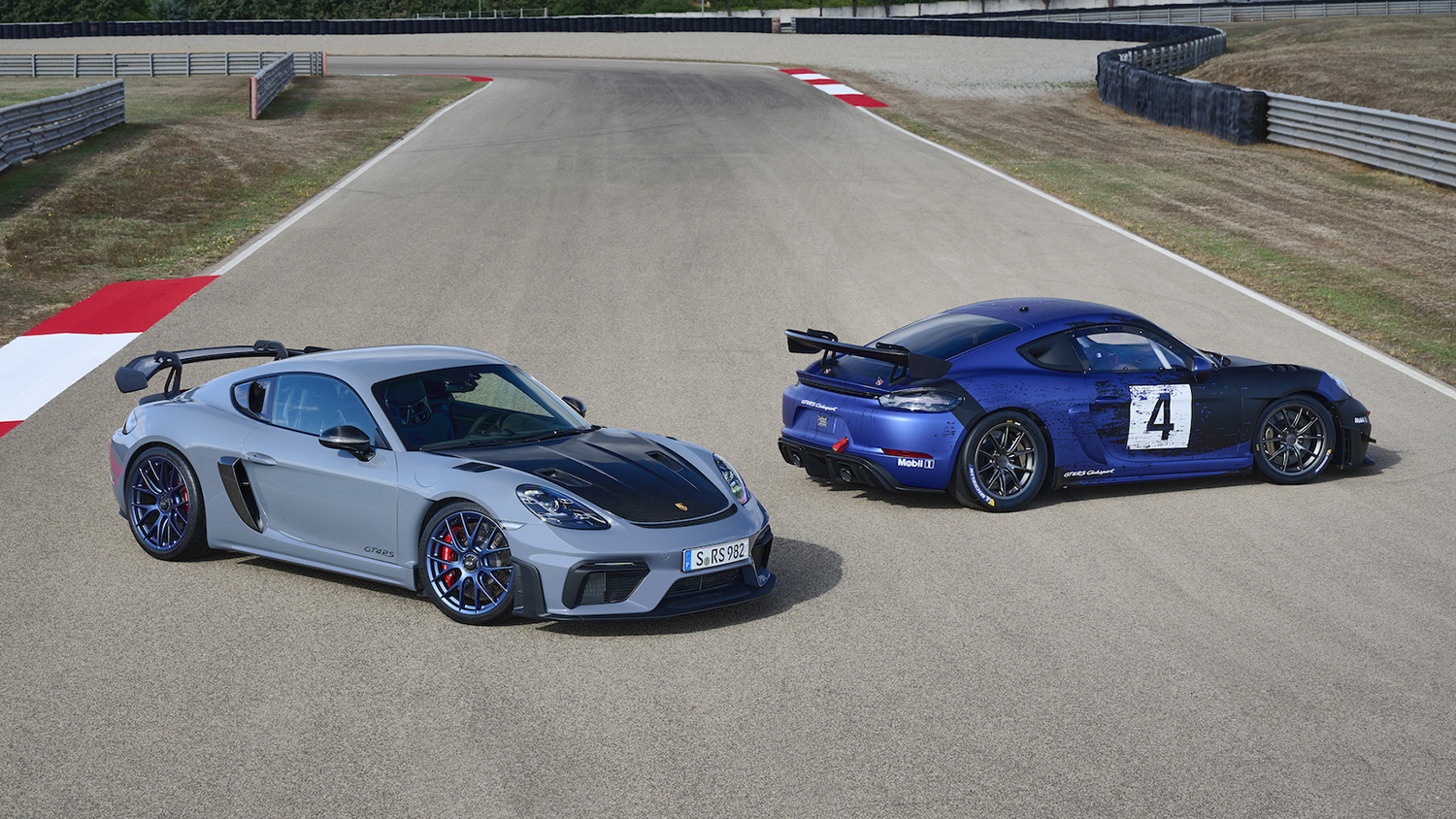
When discussing the decision to add the GT4 RS badge to the GT Division line-up, Preuninger noted his team won’t be stopping there.
“I think we pretty much spread out pretty good through the two sports car ranges [718 Cayman and Boxster, and 911) that we have with all the derivatives now opening up with the Touring as the driver’s car side, and we have some more ideas for the future to come to even expand that a little bit, but stay true to the core,” he told MOTOR.
“Make it a motorsport product with motorsport technology.
“If not for the racer, then for the absolute diehard, enthusiast, and purist lover.
“So this is what GT is about, so we don’t want to soften that up too much.”

While that leaves scope for future 911, Cayman, and Boxster variants, Preuninger was also careful to point out that the GT division will continue to work exclusively with sports car model lines.
“Never say no [to more GT models], but I think it is restricted to the sports cars, so don’t expect a Panamera GT car, because to be able to be credible, you need to sell or offer a motorsport variant. That’s my belief,” he added.
Historically the pinnacle of Porsche GT products has been the bespoke supercar and hypercar halos.
Starting with the 959 in 1986, this was followed up with the Carrera GT 17 years later, and the most recent 918 Spyder being put into production a decade after that.
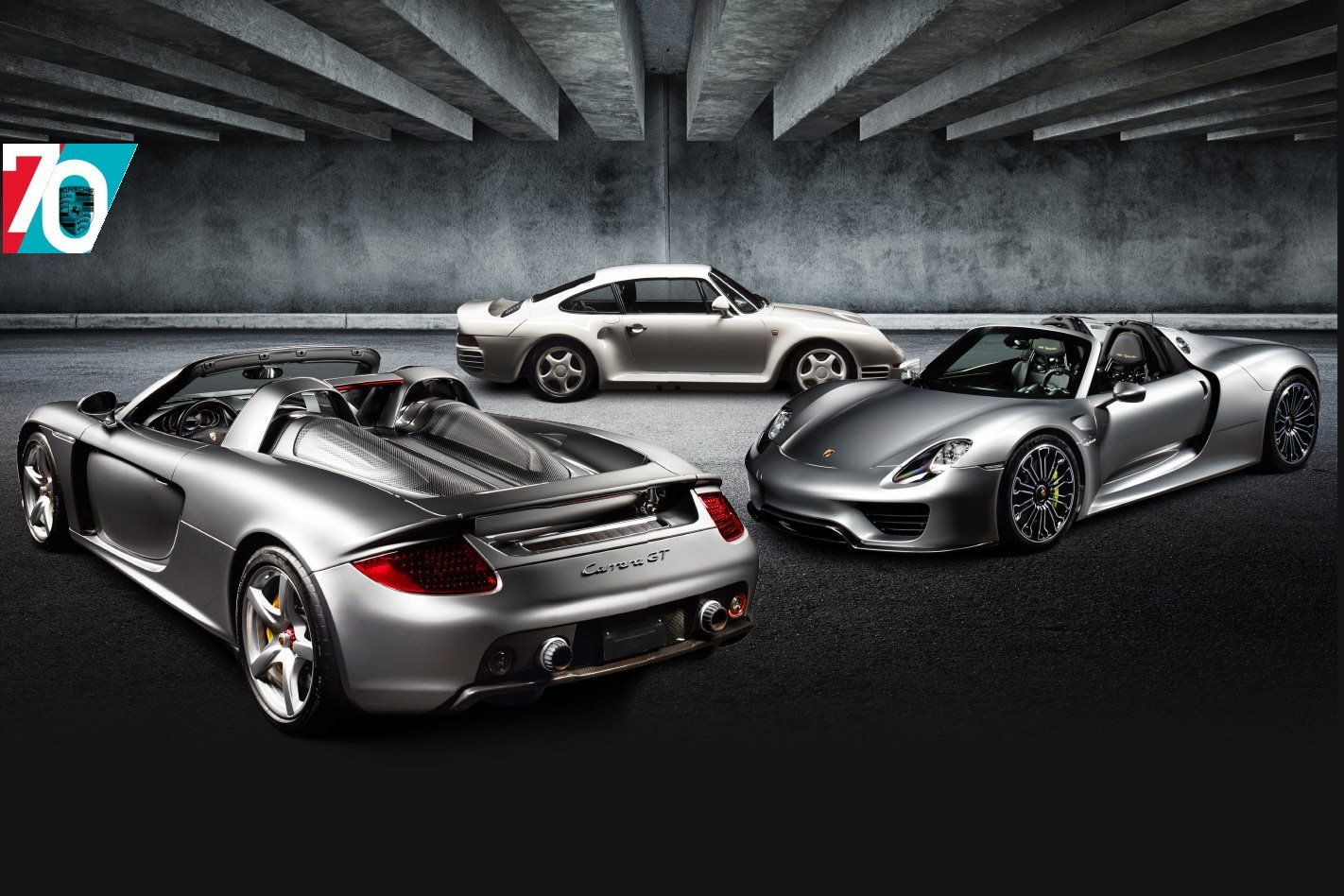
This year marks seven years since the hybrid 918 ended production, and while Preuninger believes in the value of a GT halo product, he also remains pragmatic about its real-world production prospects.
“I would like to see a Porsche helicopter, I would like to see a Porsche spaceship!” he joked.
Porsche CEO Oliver Blume has said the brand’s focus on electrification means a 918 successor is off the cards until 2025 at the earliest.
With no supercar development plans, Preuninger’s team is instead focussing on the remaining 992-generation 911 GT division products to be revealed like the GT3 RS.
“We have to concentrate on what we can do with the group of people that we have – that is not so much and not so many,” he explained.
“I think a halo car, like we did on 918 and Carrera GT, is always something at the right point in time to show off the capabilities, of engineering capabilities.
“But we are starting to bring more and more interesting technology even in other cars. Wait for the next GT3 RS.”
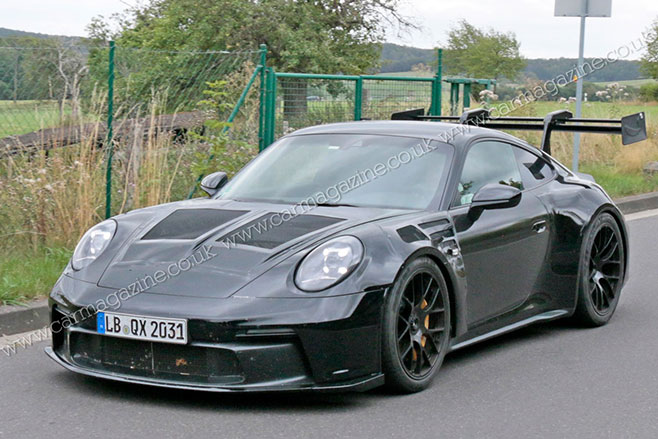
Spy photography of the next-generation GT3 RS shows the rear-engined track weapon sporting larger than ever aerodynamic devices. When probed on the limits of aerodynamics for road cars, Preuninger reassured us that the large wings and spoilers on the GT3 RS won’t purely be for show.
“There’s always limits coming from the forces involved, but you have to find a sweet spot of what is necessary, or what is usable, and what is just, let’s say, has just boasting capabilities,” he said.
“There’s a sweet spot for everything and we’re looking at stuff from both sides using our experience from the track as well. So just stay tuned.”
Preuninger himself admits the next couple years will be the last of his working life after more than two decades leading Porsche’s GT division.
The decision to add new variants to the family will shore up his legacy as the man who took Weissach to new heights.
Snapshot
- Cupra announces plans for two more electrified models by 2023
- Born EV to arrive in Australia this year
- Production version of Urban Rebel concept to go on sale in 2025
Cupra has confirmed it will launch two new models into its line-up by 2023, and both will be electrified – although it’s not known if that means fully-electric or hybrid.
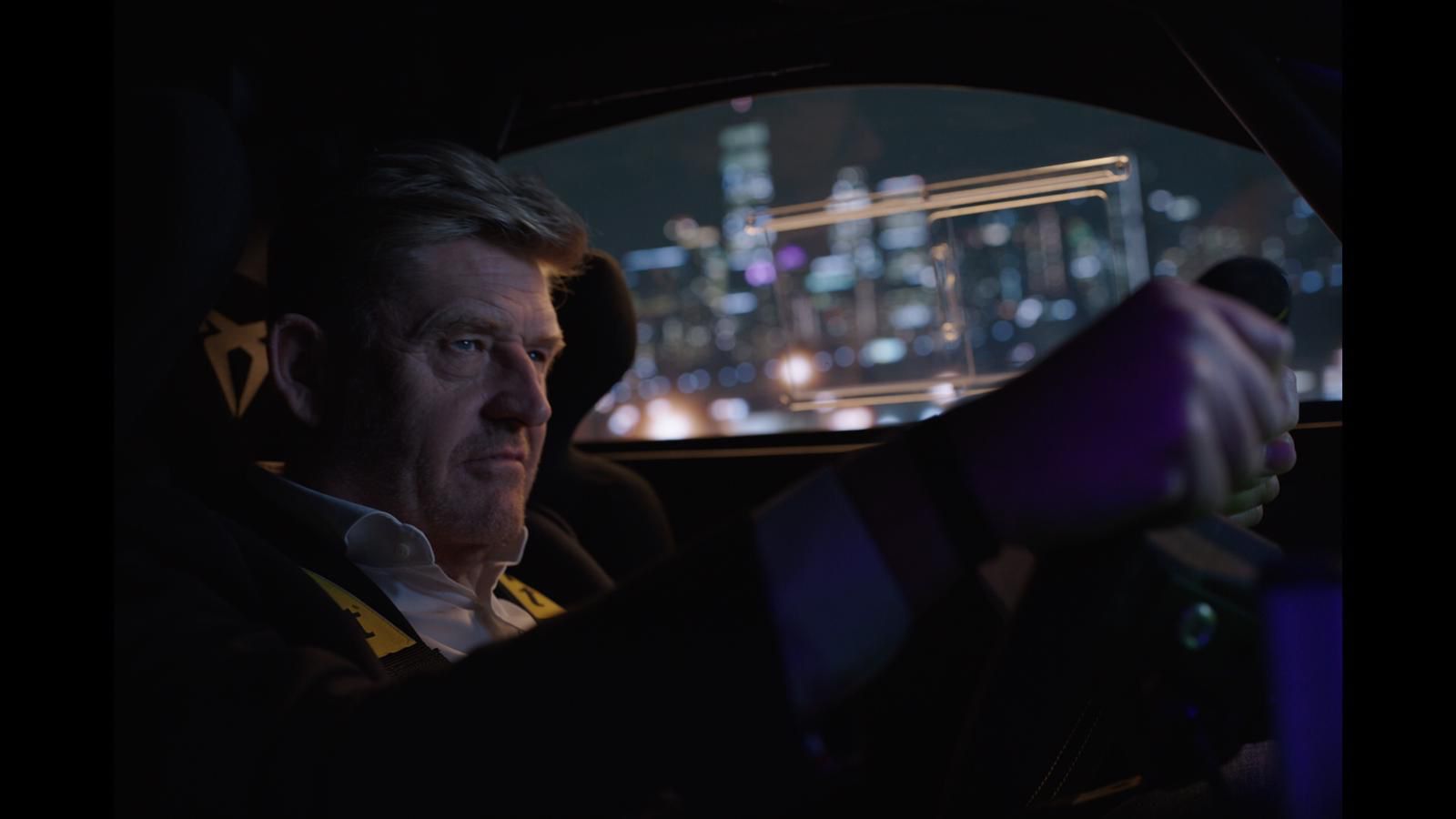
The Spanish car brand confirmed the news during its fourth-anniversary celebration, with CEO Wayne Griffiths making the statement.
“In the next two years we will announce two new models that no one has yet seen and expand our product range,” he said, as he stood on stage beside three vehicles.
Cupra is launching in Australia this year and it will be the Volkswagen Group’s first brand to locally introduce a fully-electric vehicle, the Cupra Born. However, it’s unclear what the new models will be and where they will sit in the line-up.
Comments from Griffiths allude to one being a sleek SUV-style vehicle, and the other a shooting brake wagon, possibly influenced by the current Volkswagen Arteon – but with a Cupra badge.
The coupe SUV could potentially be something similar to the Skoda Enyaq Coupe iV or Volkswagen ID if it’s fully-electric, and if Cupra is to adopt the underlying MEB architecture available in the VW Group catalogue.
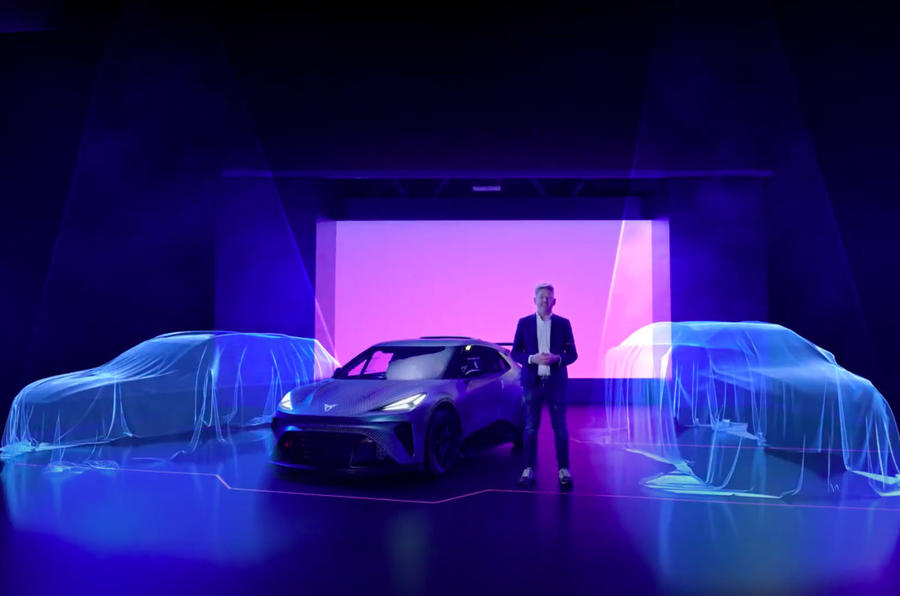
During the presentation on stage, Griffiths also unveiled ‘Cupra X 2’, which is a concept vision starting in 2023, detailing plans and strategies to double the carmaker’s retail network and subsequently double its sales and turnover (mostly in Europe, where it is already well-established).
The online stream culminated in Griffiths standing beside two cloaked cars on either side of the brand’s performance-oriented Urban Rebel concept, which will be produced in 2025.
Given the short turnaround for the two models to be with us by 2023, Cupra will continue to drop teasers and details of the two models this year.
Plans for a Cupra event are already in place for the middle of this year, and one of the models will be unveiled this year too. The other, possibly an electric car, will be shown in 2023.
Canadian automotive manufacturer Magna International is looking to produce an electric vehicle platform for Jaguar and Land Rover’s next-gen models, according to reports.
As reported by Automotive News, a job ad on LinkedIn was found to offer applicants the chance to “work closely with JLR, Jaguar and Magna” on an “outsourced engineering service relationship”, with the electric vehicle platform internally known as Panthera.
JLR already has a working relationship with Magna, as Jaguar’s sole EV offering, the I-Pace, is currently constructed by Magna Steyr in Graz, Austria, a subsidiary of the Canadian company.
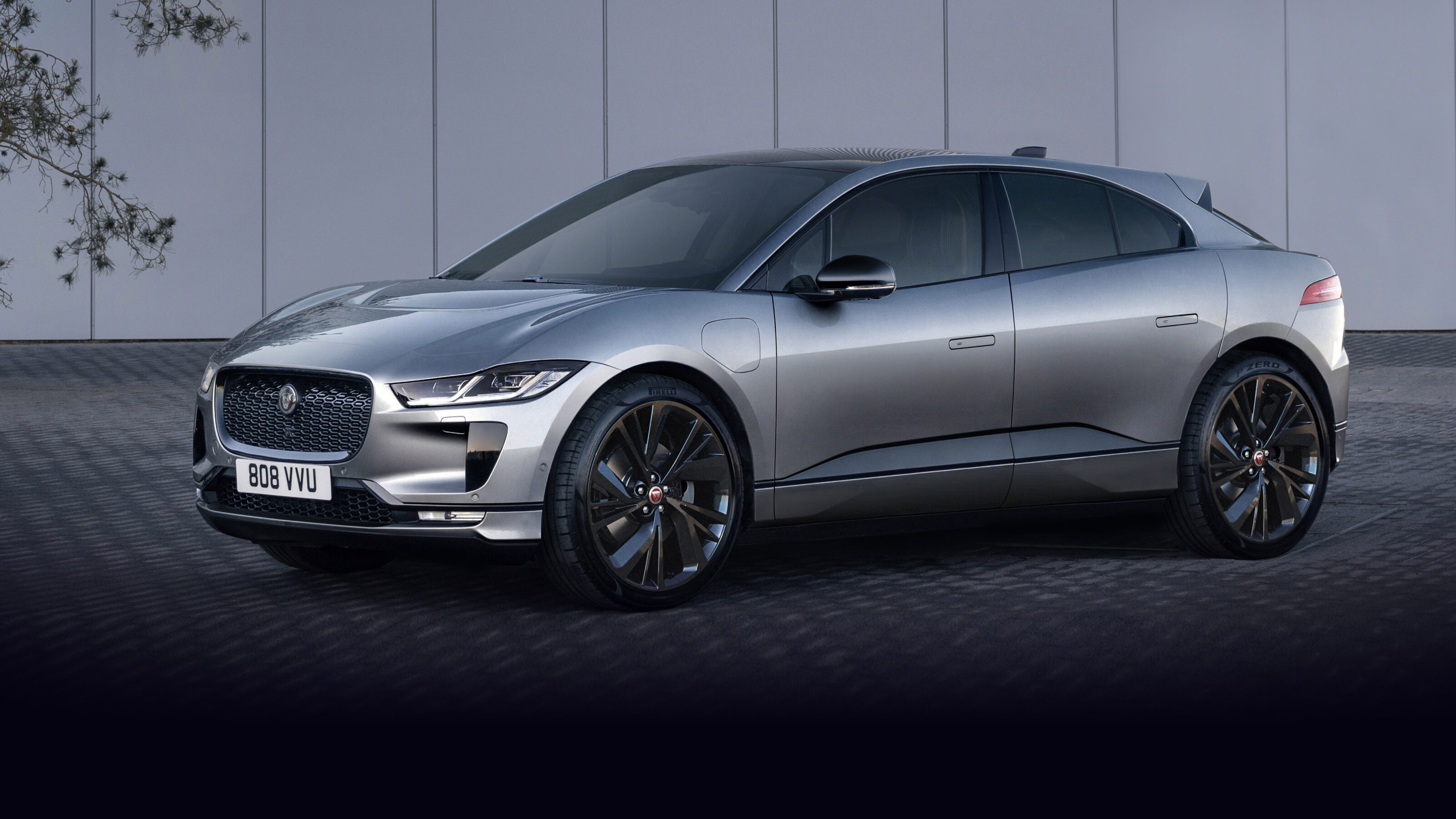
While it’s understood construction of the platform will be outsourced, its design will come from within JLR, with CEO Thierry Bolloré saying creating a bespoke platform would be crucial to the brand’s move to become fully-electric from 2025.
“Concerning a new Jaguar, we’re making unique proportion a priority. That’s the reason why at the moment we do it by ourselves,” Bolloré said at the time.
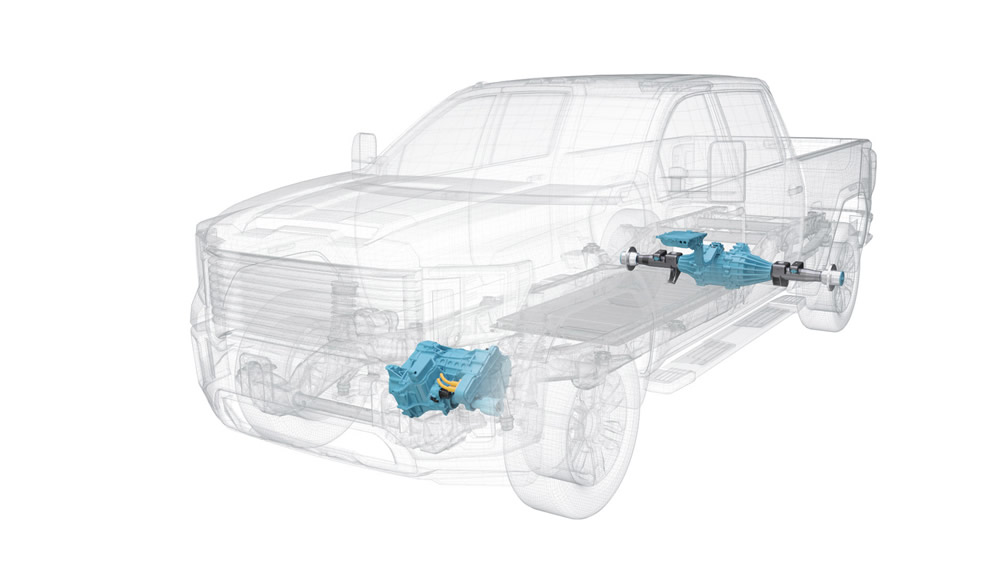
Magna isn’t just working with JLR to produce electrified vehicles, with Automotive News also reporting the manufacturer has developed electric powertrain systems for former internal combustion engine-powered pick-up trucks.
Known as EtelligentForce, the system replaces an ICE-powered vehicle’s driveline, with an electric motor on the front axle and an ‘eBeam’ electrified beam axle at the rear, complete with an electric locking differential.
The system allows some of the existing hardware components such as brakes and suspension to be retained, but without the traditional internal combustion engine, with the manufacturer claiming a number of American OEMs are interested despite Ford, Chevrolet and Ram all introducing bespoke electric pick-ups.
American electric vehicle upstart Fisker is also set to have its upcoming Ocean model manufactured by Magna Steyr.
Toyota’s LandCruiser pretty much owns the bush. It’s not that the LandCruiser – either in civilian-spec 300 guise, or one of the industrial-strength 70 variants – is necessarily a great thing to drive. But it’s become an article of faith that a LandCruiser will get you where you want to go, no matter how remote the destination, how rough the road. More importantly, it will also get you back home again.
The all-new Ineos Grenadier might look like a love letter to an old Land Rover Defender 110. But a brief off-road drive suggests the Grenadier has more than a touch of LandCruiser about it. The live-axle coil-sprung Grenadier is a confident and comfortable off-roader that feels, at first acquaintance, to be as solid and unstoppable as Toyota’s benchmark 4x4s.
You could call the Ineos Grenadier a passion project. Land Rover Defender enthusiast Jim Ratcliffe wasn’t happy when JLR finally stopped production of the classic off-roader in 2016, ending a 68-year run that had seen more than two million of them made. He’d heard the all-new Defender, then under development, would be an expensive, slickly styled, high-tech 4×4 with independent suspension. That wasn’t going to be, he thought, his sort of Defender.
UPDATE, January 2023: Grenadier pricing increases and delays explained
In a story common to all brands and buyers since COVID arrived on the stage, the Grenadier has suffered a significant price rise and production delays. Get the full story at the link below.
Story continues…
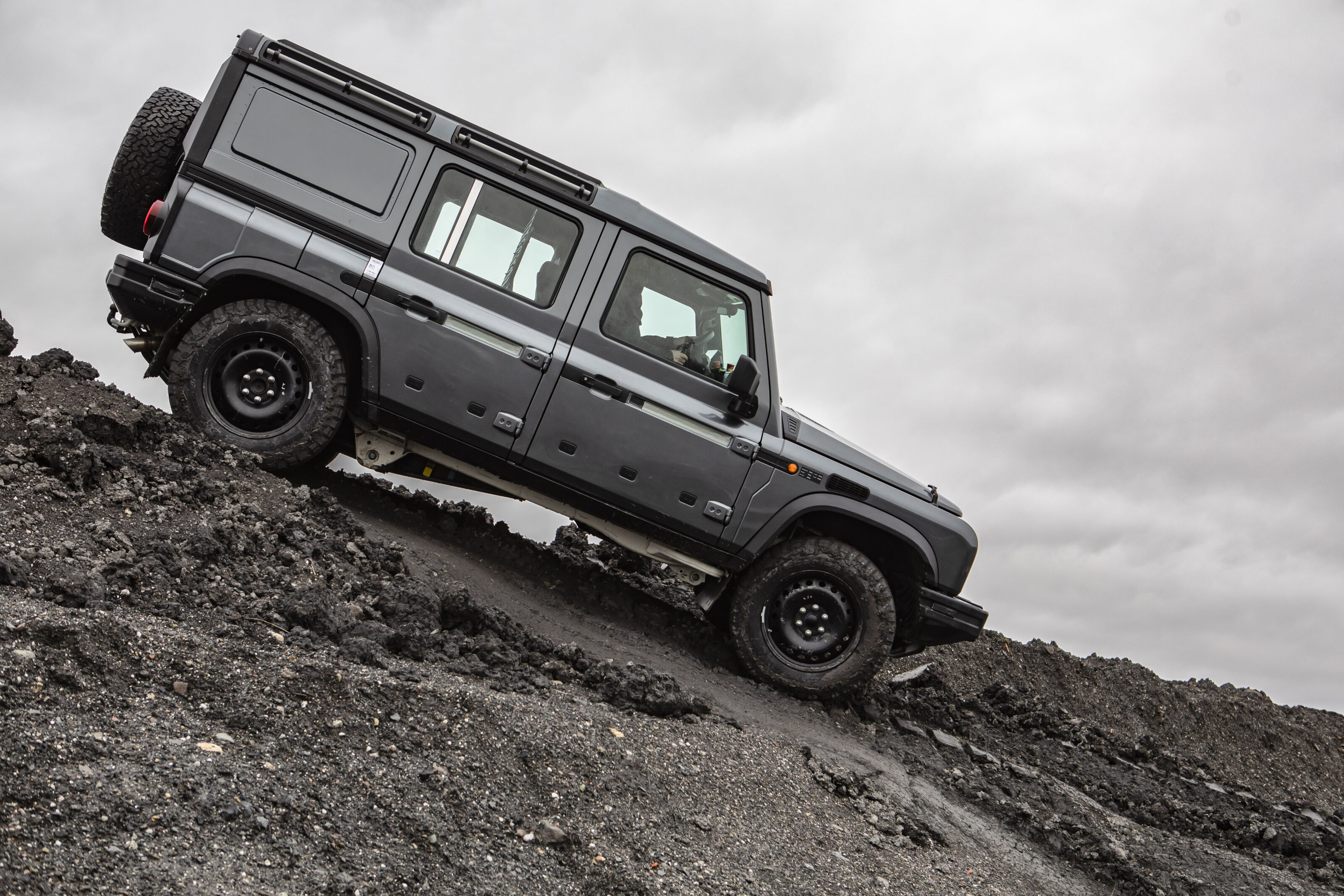
So Ratcliffe, founder and two-thirds owner of the sprawling Ineos Group of chemical companies, did what any self-respecting billionaire would do in that situation: He decided to make his own version of the Defender. Only better.
Six years later, the first pre-production Ineos Grenadiers – the name comes from the pub in London’s posh Belgravia where Ratcliffe and his mates hatched the idea over a few beers – are now rolling off the line at what was once Mercedes-Benz’s Smart car factory in Hambach, France.
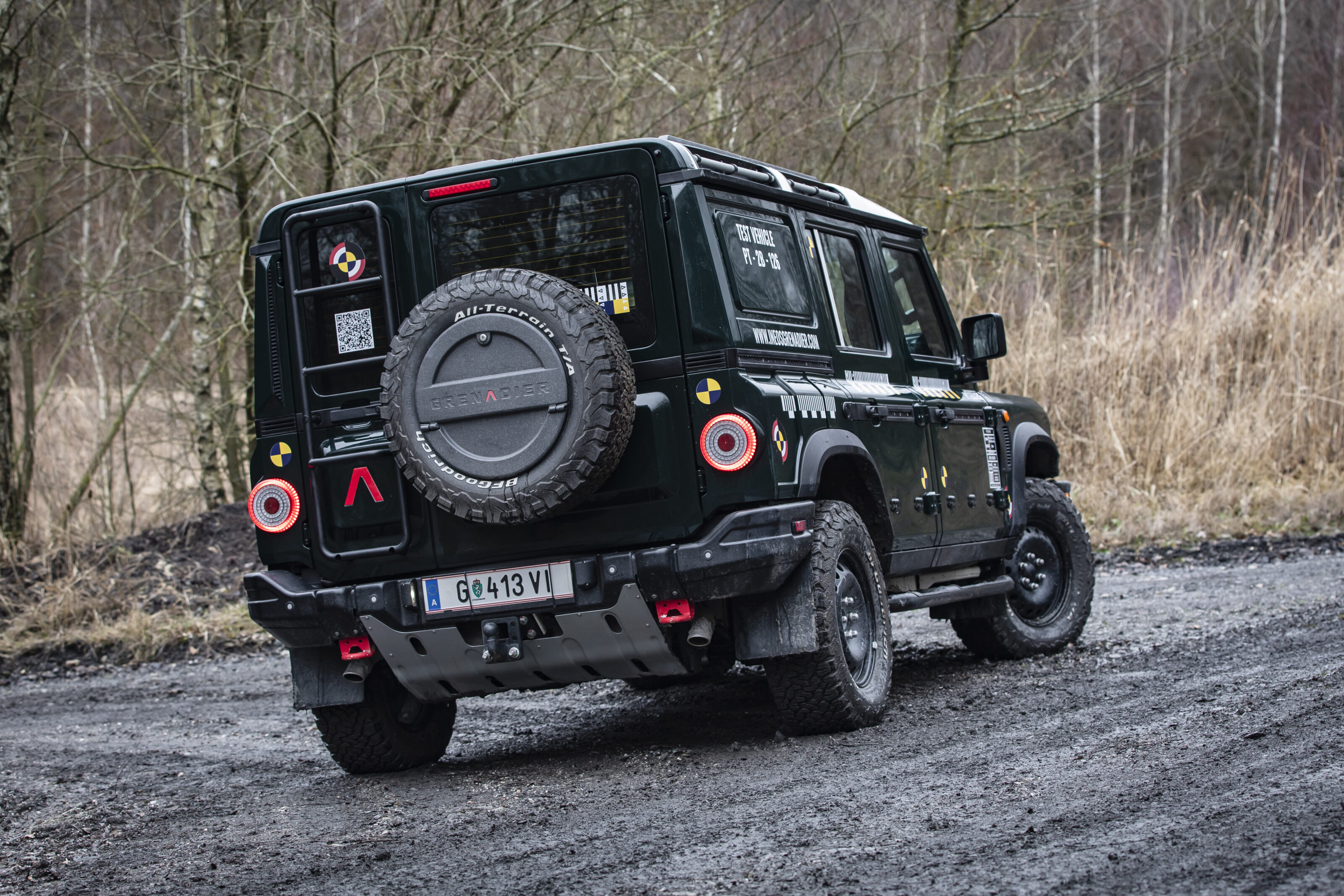
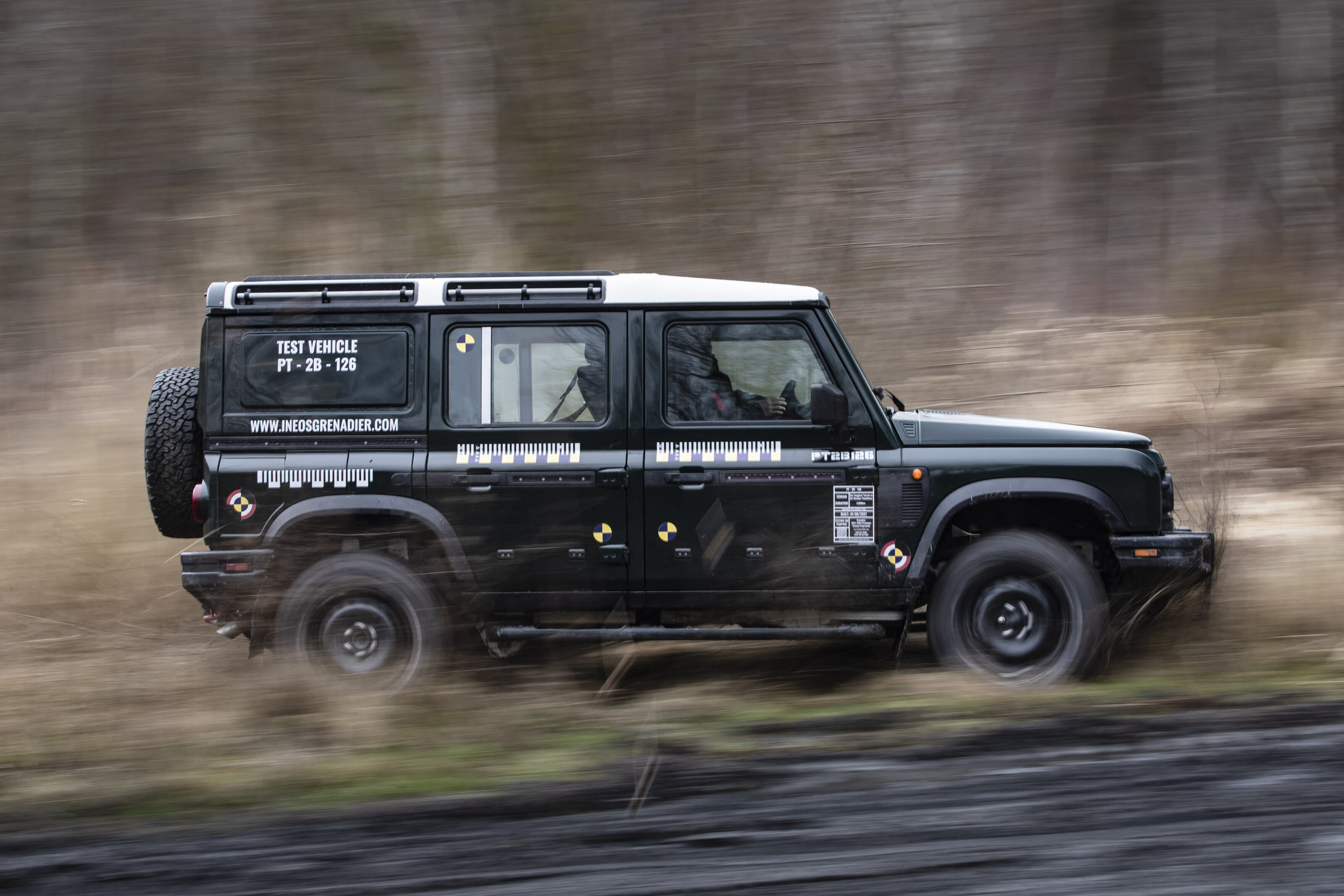
The Grenadier’s off-road credentials start from the wheels up – literally. It rolls on six-bolt, 17- or 18-inch steel or alloy wheels, each of which can be fitted with either Bridgestone Dueler A/T or BF Goodrich T/A KO2 tyres in 265/70 R17 or 255/70 R18 sizes.
While the Bridgestones were developed specifically for the Grenadier, the KO2s were chosen because of their proven reputation in the aftermarket as a high capability off-road tyre. Regardless of which combination you choose, generous sidewalls ensure off-road comfort, capability, and durability.
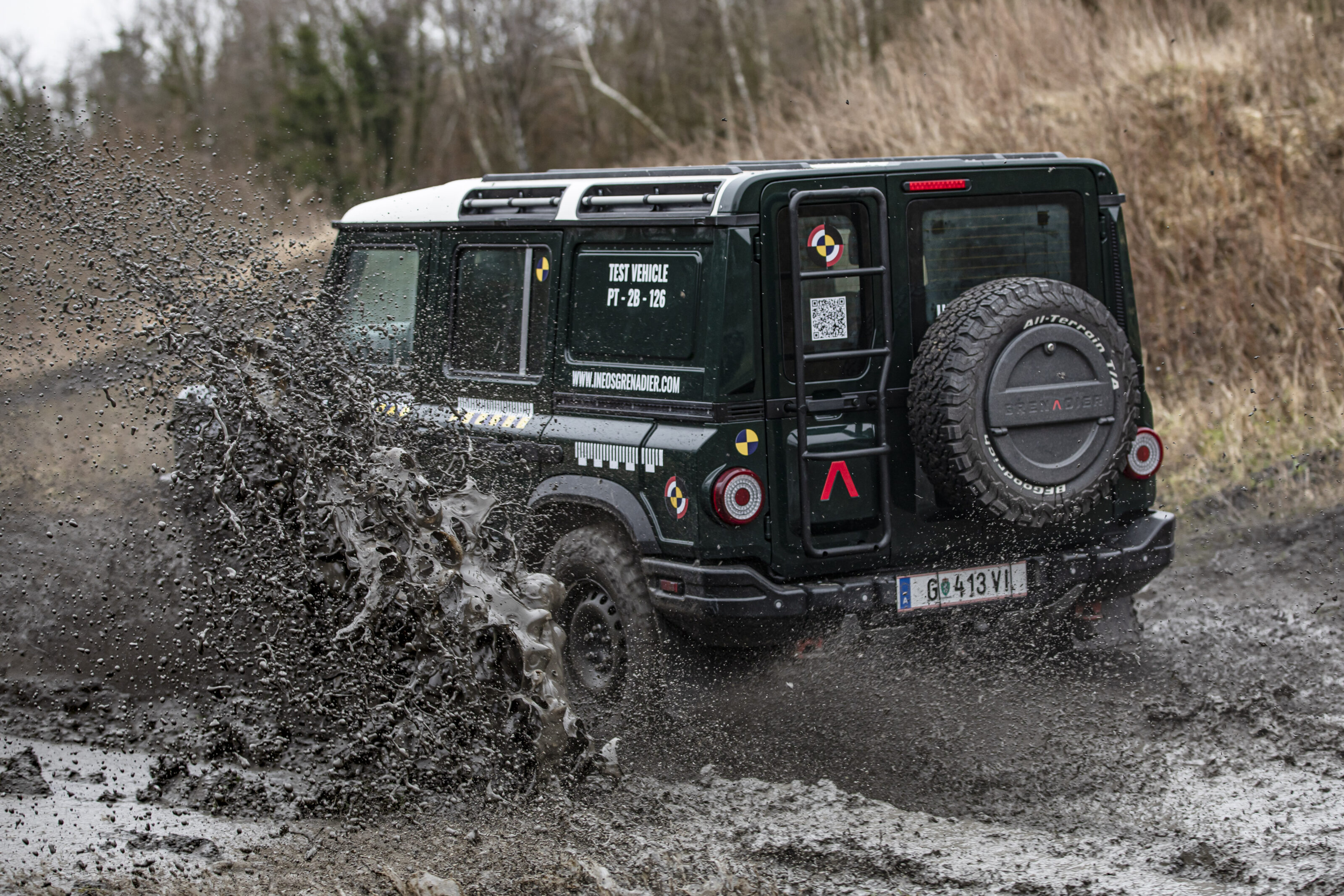
It has a separate chassis like a LandCruiser 70, but with coil-sprung live axles front and rear to ensure maximum articulation in extreme off-road conditions.
The variable-rate Eibach springs have been calibrated to deliver a comfortable ride and maximum wheel travel at slow speeds off-road but are firm enough to ensure good body control at highway speeds and are assisted by oversized shocks designed to keep the damping oil cool over long stretches of rough road.
Under the bonnet is a choice of BMW turbocharged inline six-cylinder engines – the petrol B58, which develops 210kW of power and 450Nm of torque, and the diesel B57, which makes 183kW and 550Nm.
The driveline comprises a ZF eight-speed automatic transmission with a Tremec two-ratio transfer case and permanent all-wheel drive with a lockable centre differential. Lockers for the rear and front diffs will be available as options.
Despite design cues unashamedly borrowed from the old Defender – such as the headlights in the front fenders, the rounded shoulder on the bodyside, and the cutouts in the roof that echo the famous Land Rover ‘alpine light’ windows – on closer inspection the Grenadier is quite different.
It’s much wider in the body, and with the front wheels set further back, the touchdown point of the A-pillar is closer to the front axle.
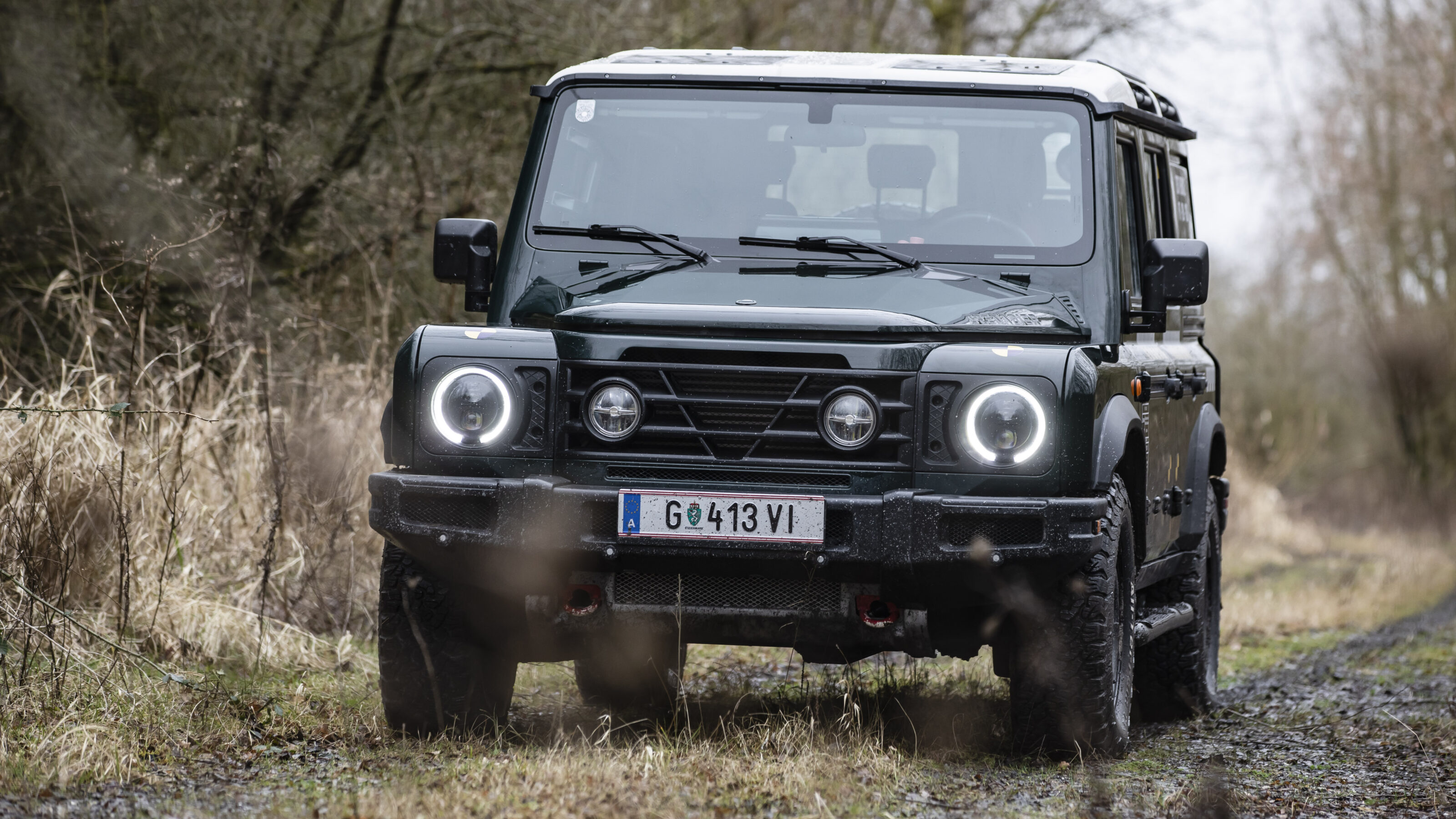
At 4927mm, including rear-mounted spare wheel, the Grenadier is 53mm shorter overall than a LandCruiser 300 and 17mm longer than a LandCruiser 76 wagon. Its 2922mm wheelbase is 72mm and 192mm longer, respectively, than that of either Toyota.
Ground clearance is 264mm, compared with 235mm for the 300 and 215mm for the 70, and it will wade through water 800mm deep without the optional snorkel fitted. The Grenadier’s 35.5-degree approach angle, 36.1-degree departure angle, and 28.2-degree ramp over angle are all better than those of the Toyotas. It’s built to go off-road.
The Grenadier’s snout protrudes between the headlights, in part a legacy of the decision to use inline six-cylinder BMW engines instead of the originally planned four-cylinder units, and in part to package the heavy-duty cooling system.
Its front bumper extends further from the bodywork than that of the old Defender to enable the car to meet modern pedestrian protection regulations.
Access to the rear load space is via a two-thirds, one-third vertically split rear door, similar to that on the LandCruiser 76 wagon. The door handles are robust push-button types similar to those used on the old Mercedes-Benz G-Wagen.
Deep swages in the doors are for rubbing strips or an optional clip system Ineos insiders call ‘The Utility Belt’. Along with clips installed under the rearmost side windows, the system enables accessories to be affixed to the side of the vehicle.
The ‘alpine lights’ in the roof are not windows, but recesses with a tube running through them that can be used to secure loads on the roof, or a canopy to the side of the car when parked.
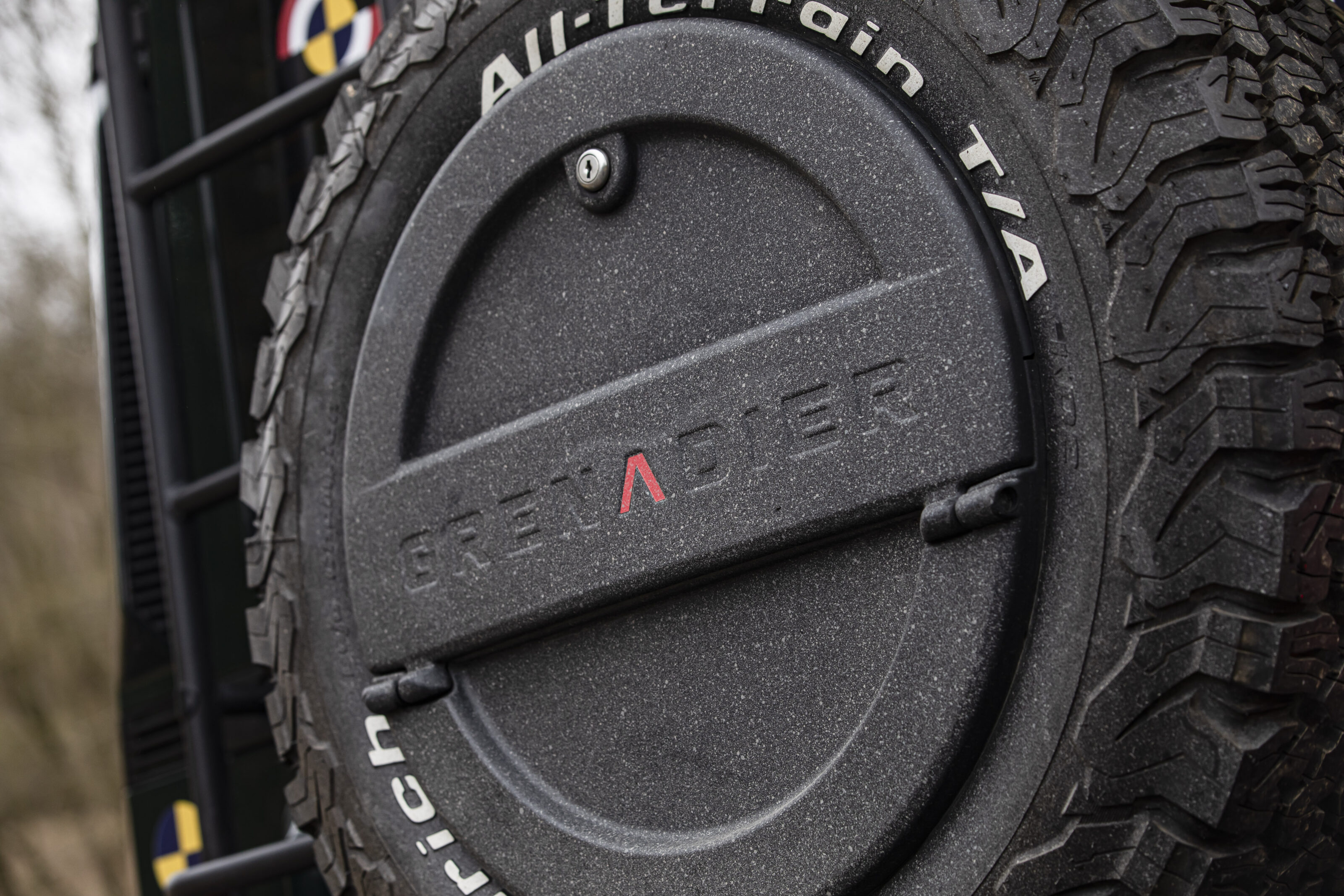
Other smart details include a lockable storage unit that fits into the spare wheel, which is mounted on the larger of the two rear doors with its outside face closest to the car. A hefty three-rung ladder, available as an option, can be fitted to the narrower of the rear doors to allow access to the roof.
Inside are Recaro seats, trimmed in hard-wearing cloth or leather. The steering wheel is a simple two-spoke item, with thumb controls for audio and cruise control on either spoke. Behind it is a small screen inset into the dash that shows all the major warning lights. The speedo, tach and other readouts are on a configurable screen in the centre of the dash. Different display configurations and functions are actuated via a rotary controller on the centre console.
The HVAC system is controlled via large buttons or rotary controls on a vertical panel under the central air vent that looks vaguely like it was styled by the guy who did those aeronautical Bell & Ross watches.
Continuing the aircraft cockpit theme is a roof panel that includes the off-road mode and diff-lock controls, as well as 10-amp switches for interior and exterior power outlets. Order the optional high-load wiring pack, and you get additional switches that handle 25-amp and 500-amp loads. Four exterior power outlets are situated in the lower forward corners of the ‘alpine light’ roof cutouts.
It didn’t take long for the Grenadier to establish its off-road credentials on our test loop through an abandoned coal mine near Créhange in France. It grunted through the deep mud, eased down steep slopes, traversed tricky inclines, and walked across deep gutters with insouciant ease.
Although the B58 BMW engine doesn’t have the same low-end torque as the diesel B57, there was no need to rush obstacles in order to maintain momentum – good axle articulation kept the wheels on the ground and the ZF eight-speed automatic always seemed to be in the right gear.
Such is the traction, and the sensitivity of the feedback through the chassis, the throttle can be used to deliver precise dollops of power and torque, precisely when needed.
The off-road ride is controlled and comfortable, with relatively little head-toss or jolting. The steering feels a little light and low geared but production cars will have a different steering tune, says chief engineer Oliver Schilpf.
We’ll wait until we drive it on the road and spend more time exploring its capabilities off the road but at first acquaintance, the Ineos Grenadier is a viable alternative to the 300 and 70 LandCruisers, particularly in terms of ride and refinement.
And unlike the computerised, click-and-point new Defender, the Grenadier feels warmly analogue rather than coolly digital in its responses.
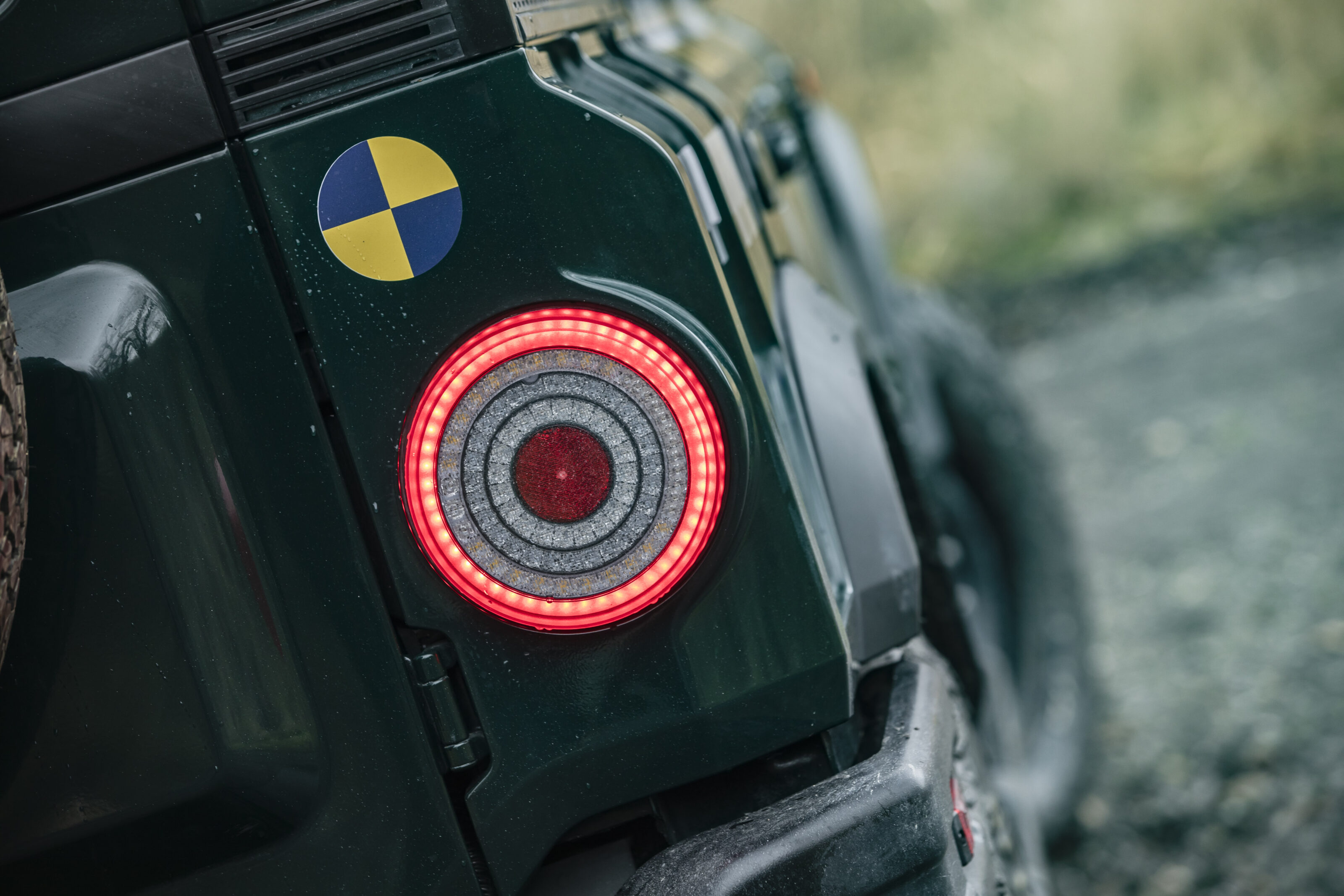
The first customer-ready Grenadiers are scheduled to roll off the line at Hambach – which has the capacity to build 32,000 a year – in July, with the first Australian-spec vehicles arriving before the end of the year.
Based on current enquiries, Ineos says Australia is on track to become the Grenadier’s fourth-largest market behind Britain, the United States and China.
Volume-seller is expected to be the five-seat Wagon, which is the main ‘civilian’ variant. Two commercial versions will be available – the five-seat Utility, which has its rear seat moved forward 700mm to increase load space, and the two-seat Utility that has no rear seating at all.
Both Utility versions can be quickly identified by the steel panels in place of the Wagon’s rearmost side windows.
A crew-cab Grenadier ute rolling on a longer 3227mm wheelbase is currently under development and will be available with either a pick-up bed or as a cab-chassis model at some point in 2023. A three-row, seven-seat version of the Wagon is also under consideration, driven by demand from potential US customers.
Final pricing has yet to be confirmed but Ineos sources suggest the entry-level two-seat Utility will start at $84,500 before on-road costs. If Australian pricing follows the rumoured UK model, that suggests the five-seat Wagon will start at less than $100,000.
Snapshot
- 2-pounder anti-tank gun was built by GMH in 1942
- Australian Government has declared it a protected object
- Many of the 10,000 items are barred from being shipped overseas
UPDATE, February 23, 2022: A Holden-built anti-tank gun has sold at auction for $45,000, with bidding jumping by nearly $20,000 over a 24-hour period.
A spokesperson from Lloyds told WhichCar the Trafalgar Holden Museum had secured the winning bid for the 1942-built World War II relic, saying it will go on display in the Gippsland facility.
The Australian Government had previously stepped in to enact the Protection of Movable Cultural Heritage Act, preventing some items from the Lloyds auction from heading overseas (more below).

The story to here
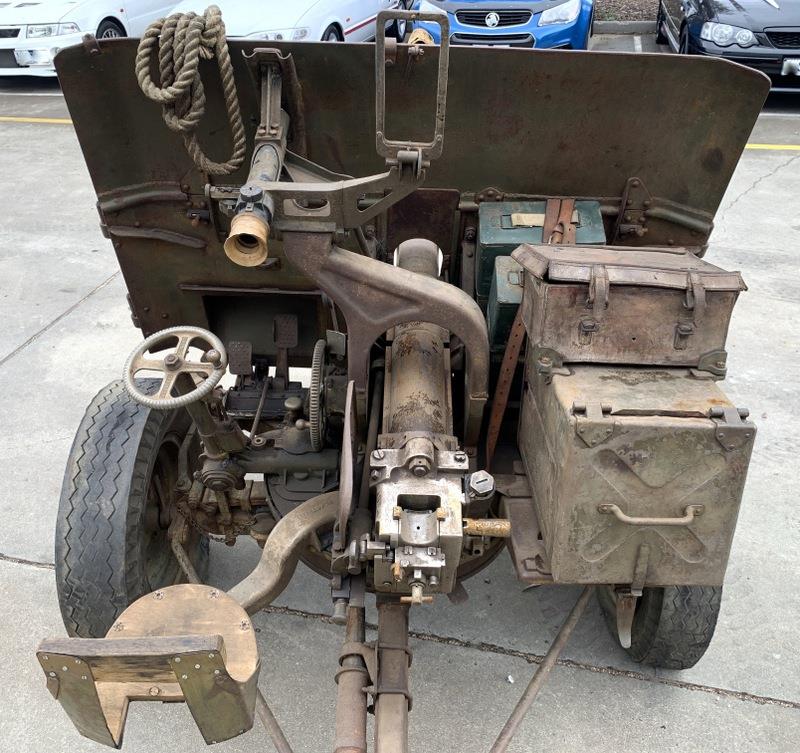
February 19, 2022: A rare and relatively unknown piece of Holden’s past manufacturing efforts has come up for sale, with an anti-tank gun made by General Motors Holden becoming one piece of many in Lloyds’ militia auction.
Manufactured by GMH at its Woodville facility in South Australia in 1942, the 2 Pounder anti-tank gun is one of 892 to be produced in Australia, with its siblings used by troops in the Middle East, Greece, Malaya and New Guinea throughout World War II.
It’s one of more than 10,000 pieces up for grabs in the auction, with the Australian Government stepping in to prevent certain items from heading overseas – declaring some as Australian Protected Objects under the Protection of Movable Cultural Heritage Act 1986.
Lloyds Auctions COO Lee Hames said they had only recently become aware of the Act, supporting the Government’s move to make sure the historical artefact stays in Australia.
“We commend the Government for preserving and keeping history within Australia. We really hope Australian museums and libraries perhaps purchase some of these items to display and preserve these significant pieces of history, and honour them with educational purposes for many years to come,” said Hames.
“Perhaps Holden might even purchase the 2 Pounder Anti-Tank Gun to preserve and put on display at its head office.”
This might be a difficult task given the manufacturer no longer exists in Australia outside of its former dealer network, as General Motors acts as an importer to its American brand, Chevrolet.
At the time of publication, bidding for the anti-tank gun is up to $26,500 with the auction ending at 8.10pm AEDT tonight (February 19).
Snapshot
- All-new X-Trail to launch before the end of 2022
- Set to be the first generational update since 2013
- Current X-Trail accounts for nearly one-third of all Nissan sales
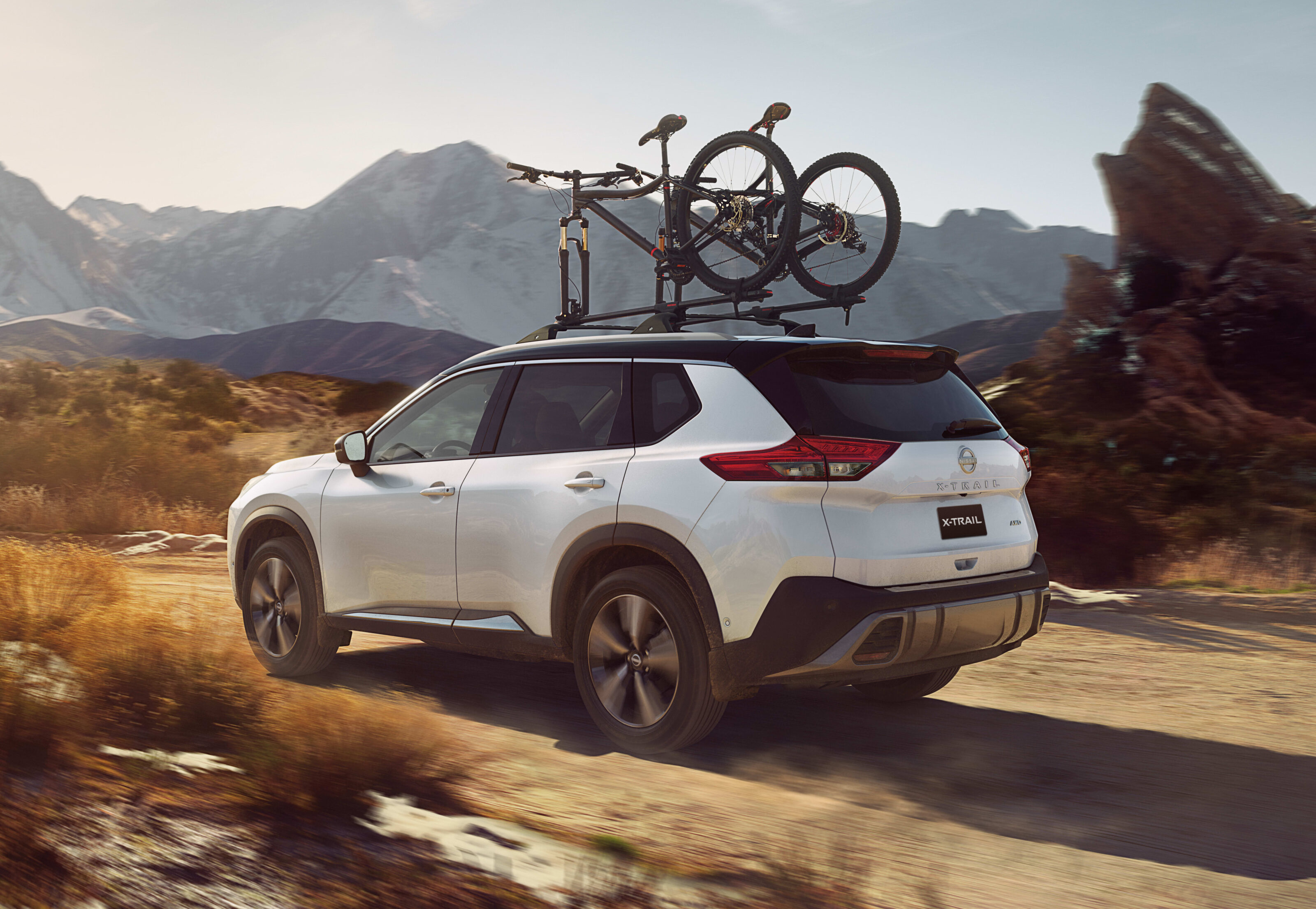
The 2023 Nissan X-Trail’s long-awaited Australian arrival has been confirmed, with the first examples due to land in showrooms before the year is out.
Having been officially revealed back in 2020 as the North American-spec Nissan Rogue – built in tandem with the X-Trail – the popular mid-size SUV is set for its first generational update since the current third-gen model was launched by Nissan in 2013.
Aside from its radically revised design language, the fourth-gen X-Trail is now riding on an updated version of the Renault-Nissan-Mitsubishi Alliance’s CMF platform – one it shares with its smaller Qashqai sibling, as well as the Mitsubishi Outlander.
While Australian specs and features haven’t been entirely confirmed, it’s highly likely the X-Trail will utilise the same engine as the North American Rogue and the local Outlander, the Alliance’s PR25DD – a 2.5-litre, naturally-aspirated four-cylinder petrol, good for 135kW and 245Nm.
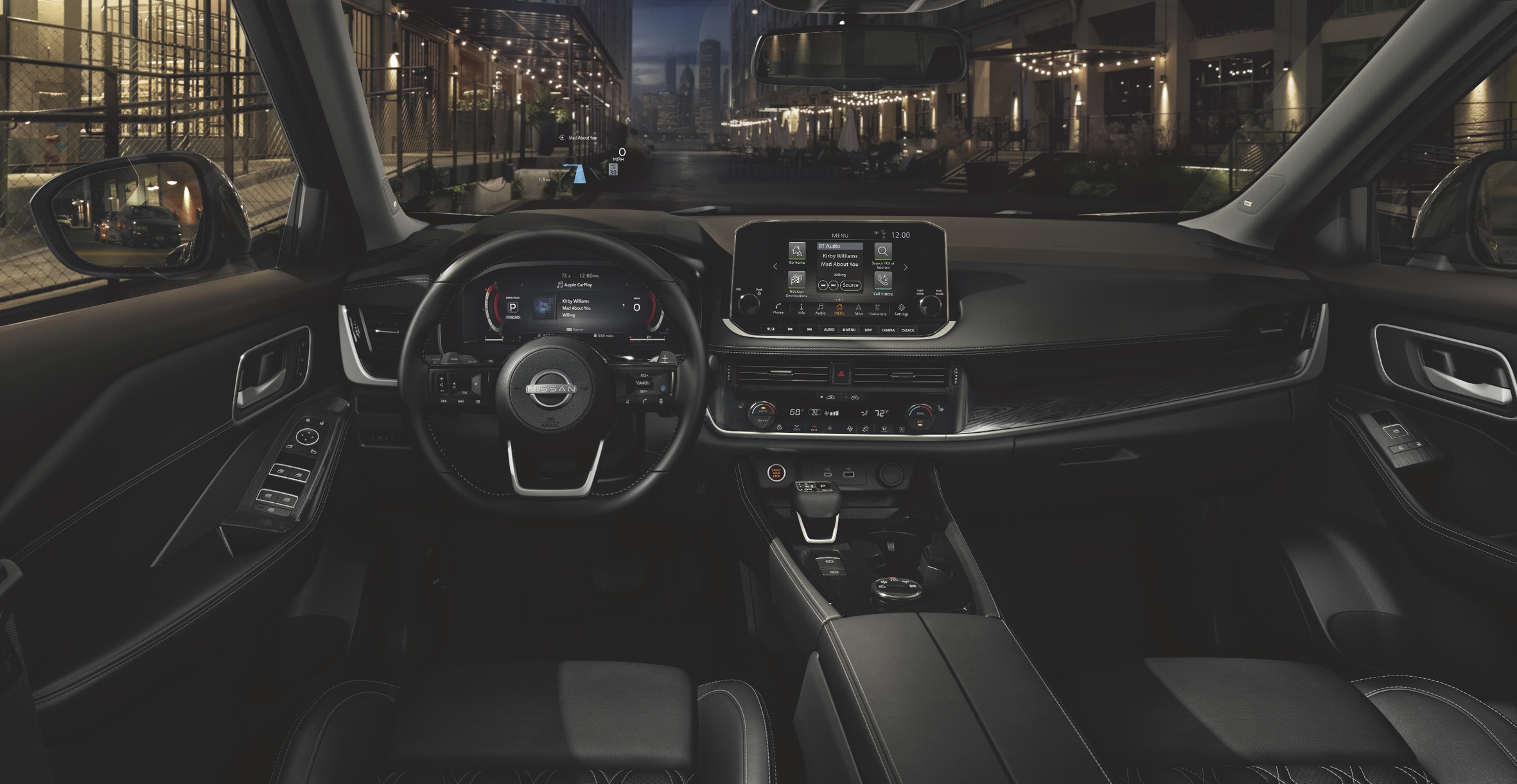
Among the handful of equipment which has been confirmed for the X-Trail is Nissan’s five-mode all-wheel drive system, the Nissan Intelligent Mobility safety tech suite and ProPilot semi-autonomous driving features, complete with head-up display.
The 2022 model will also benefit from an updated nine-inch infotainment touchscreen as well as a 12.3-inch, fully digital dash.
Nissan Australia’s Managing Director, Adam Peterson, said the fourth-generation model’s introduction was an important step for the X-Trail, with 13,860 units sold last year making the outgoing model one of the most popular in its segment.
“The Nissan X-Trail has been a family favourite in Australia for more than 20 years, with more than 270,000 vehicles sold since its launch here in 2001,” said Paterson.
“That’s an impressive legacy to protect, and it’s one we take very seriously. Which is why the all-new X-Trail introduces a bold new look, incredible technology and safety features, and even more capability – all while still sticking true to its heritage of unlocking fun and adventure for Australian families.”
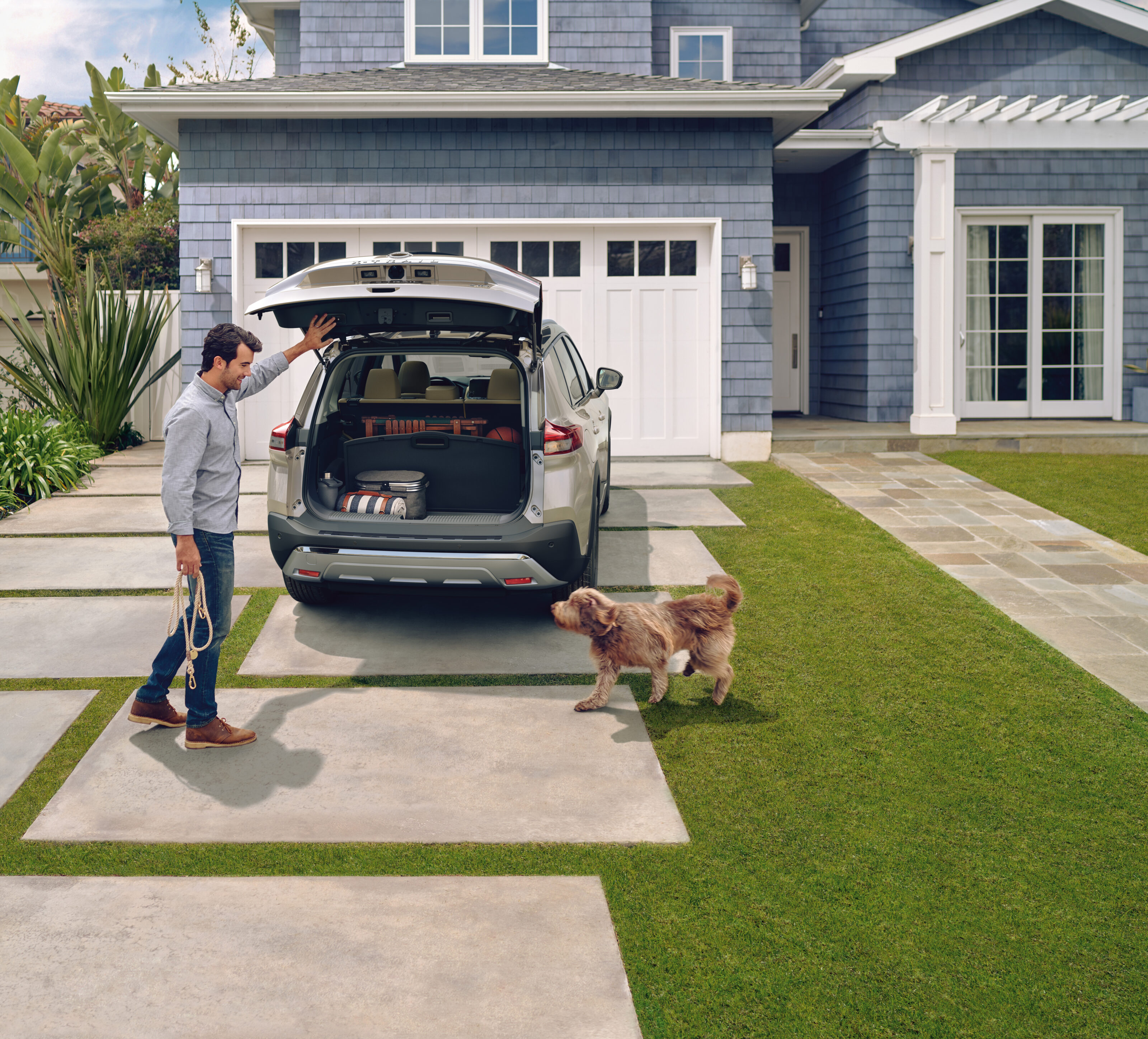
Available overseas in front- and all-wheel drive variants, it’s likely the two choices of drivetrain will carry across to the Australian market, where both the outgoing X-Trail and new Outlander can be purchased with either of the two drive types.
Wheels will provide updates when pricing and more features are confirmed for the 2022 Nissan X-Trail.
Nissan’s 2022 Australian line-up is coming together
Snapshot
- Five-star rating awarded to all variants
- Good marks across all areas of testing
- Some areas still rated adequate or poor, despite top marks
The 2022 Polestar 2 electric vehicle has been given a top safety rating by crash-test authority ANCAP, despite showing there was a high risk of injury for occupants if involved in a far side collision with another vehicle.
The independent safety body has today awarded a five-star safety rating to all three variants of the electric Polestar 2, which entered the Australian market late last year and went on sale to the general public just last week.
The Polestar 2 is the fifth battery-electric vehicle (BEV) to be tested against ANCAP’s new 2020-2022 criteria, adding to a total of 43 BEV, PHEV, hybrid and hydrogen powered vehicles rated to date, the authority also revealed.

High scores were achieved by the Polestar 2 in all crash tests, with full points awarded for adult and child occupants in the side impact category, which simulates the effects of a T-bone crash. Overall, for adult and child protection the car notched up 35.22/38 points and 43.03/49 respectively.
In the adult category some issues were raised, including protection offered for the lower-leg in the frontal offset test, rear passenger chest in the full width frontal, and driver’s chest in the oblique pole being dubbed just ‘adequate’.
The Polestar 2 also scored well in the assessment area of vulnerable road user protection, achieving an 80 per cent mark of 43.54/54 – though it was ‘adequate’ and even ‘poor’ in some areas, such as near the windscreen pillars and the base of the windscreen.
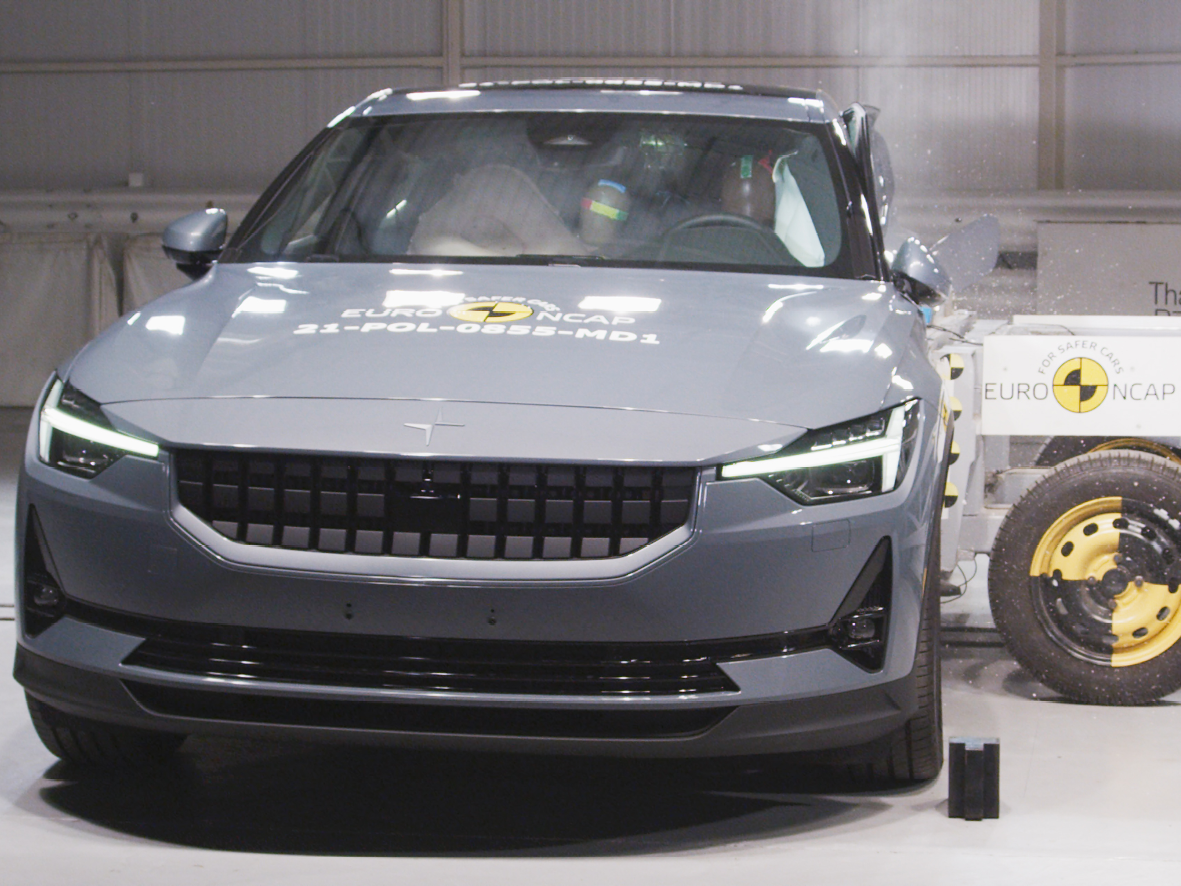
With an active bonnet, ANCAP said the Polestar 2 provides increased protection to struck pedestrians, and its autonomous emergency braking (AEB) system is also effective in reacting to pedestrians and cyclists. However, the authority added that the AEB system does not react to pedestrians in reverse, so was also considered ‘adequate’, and AEB backover tests were not carried out.
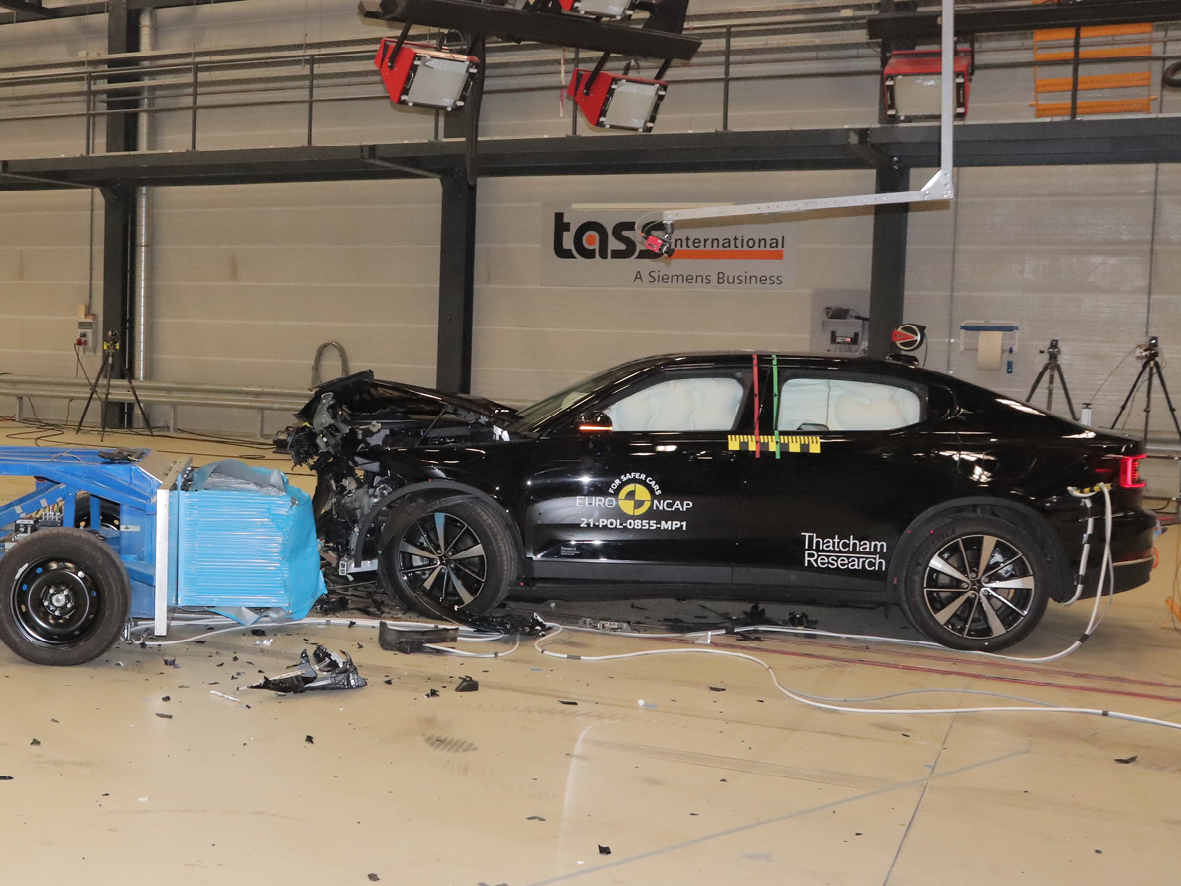
Good scores were also shown in far side impact tests. The Polestar 2 was however penalised for vehicle-to-vehicle compatibility, as it was shown to provide a “high risk of injury to occupants of a collision partner vehicle when struck”.
Kitted out with lane support systems, including emergency lane keeping and lake keep assist, the 2 chalked up good scores here too – with the safety authority explaining active lane support systems have been shown to reduce head-on and single-vehicle crashes by approximately 30 per cent.
“Today’s consumers are looking to purchase vehicles with top safety and environmental credentials. The well-rounded Polestar 2 ticks these boxes and adds to the suite of five-star rated EVs now available to Australasian consumers,” said ANCAP Chief Executive Officer, Carla Hoorweg.
“ANCAP safety ratings are designed to encourage vehicles to provide good protection to vehicle occupants and other road users, and the Polestar 2 has performed well across all areas of assessment.”
There is no denying the dynamic talents of the Honda Civic Type R. It possesses a quality of engineering that sees it hold dominion over the hot hatch class in much the same way Porsche does with sports cars.
The fly in the proverbial ointment though is the styling. It is, putting it kindly, a little outré. Looking like something that has been ripped straight from the pages of a manga might earn the Civic sweet Instagram points, but it doesn’t sit well with those wanting a brilliant driving experience without the ‘look at me’ visuals. MOTOR’s Sweet Dream product planning division has a solution – the Honda Accord Type R. A go-fast Honda for people who don’t want try-hard looks.
An Accord Type R isn’t an entirely new concept, with two generations existing previously, but the iconic sedan has changed significantly in the intervening years, predominantly in dimensions. Instead of being a mid-size fighter, the Accord is now on the larger end of the spectrum, with an overall length longer than a Skoda Superb, Volvo S60 and Volkswagen Passat (despite having a shorter wheelbase than all bar the VW).

The Civic Type R’s 2.0-litre turbocharged four-cylinder produces 228kW and 400Nm, a good starting point for the Accord, but there’s room for improvement. New engine mapping, a larger bore to increase engine capacity to 2.2-litres, and strengthened internals will see the Honda Accord Type R capable of deploying 250kW at 6000rpm, while peak torque of 450Nm will be available from 2250-4500rpm.
The four-cylinder engine’s power-aiding turbocharger will remain the same as that found on the Civic Type R, however, the addition of a water injection system allowing the boost to be wicked up in turn.
A pair of gearbox options will be made available, with a 10-speed automatic the likely popular choice, while a six-speed manual (as found in the Civic Type R) a no-cost option for true hardcore fans.

Both will be mated to an all-wheel drive system that features the Civic Type R’s limited-slip diff on the front axle, while an electronically activated mechanical LSD is fitted to the rear. The system will be able to send up to 65 per-cent of power to the rear wheels under certain conditions, while also being locked into a perfect 50:50 split in certain drive modes.
Drivers will be able to adjust and tune the Accord Type R’s personality with Normal, Sport, R, and R+ fixed drive modes, while an individual configurator will allow personal preference to dictate engine, throttle, gearbox, exhaust and adaptive damper calibration.
With its sleeper styling retained, Honda will have a sports sedan worthy of the Type R badge, one that’ll have the opposition trying to see which way it went.

How we’d build it
Step one: Water spray
Helping keep temperatures in check under the bonnet while the turbo pumps more boost into bigger capacity cylinders will be a water-injection system. This in turn allows for advanced spark timing without endangering the engine’s reliability.
Step two: Expanding the family
There is a reason most people forget about the original Honda Accord Type R – it was only ever built in extremely limited numbers. The reborn iteration will change that with no limited run production. Left-hook models will be sold under the Acura brand in North America.

Step three: Dude, where’s my wing?
A hallmark of the original Accord Type R’s styling was its rear wing. The MOTOR product planning team had a heated debate about whether the styling department needed to retain the feature for the new generation, but a desire to retain the sleeper effect won out.
Step four: Gripped up
Michelin Pilot Sport 4 S tyres will be fitted as standard on the Honda Accord Type R. PS4S rubber is incredibly capable in a multitude of weather conditions, making it well suited to the Accord Type R’s day-to-day duties.
Step five: Sprint times
It’s not the car’s sole remit, but the all-wheel drive Accord Type R will significantly slash the Civic Type R’s 0-100km/h times. Down from 5.8 seconds, the sedan will boogie to triple digits on the speedo in a claimed 5.0 seconds thanks to launch control.
I’ll never forget the day my high-school history teacher Miss Ashman turned up to a lesson with two black eyes and a nose splinted with more supports than a scaffolder’s roof rack. Turns out, this slight, quiet young lady was a karate expert and the only way her students were ever going to find out was if she sustained some kind of visible injury – a rare occurrence, it turned out. I remember being shocked to learn that a teacher could be conservative and timid during the day but a merciless and efficient fighter when school’s out.
So yes, appearances can be misleading and even when you think you know someone, they can occasionally prove you wrong and surprise you in the most delightful way.
Take the Jaguar F-Pace, for example. When it launched in 2016 it proved a large SUV could be rakishly beautiful, exclusive and agile all at the same time, while Audi’s freshly updated Q5 is the poster child for practical quality.
But both the representatives you see here hide a secret like a history graduate that can crescent kick you in the back of the head while looking you in the eye.

While the F-Pace and Q5 were introduced with a relatively conventional line of engine options, both have been recently treated to a variant that packs in a silky six-cylinder donk boosted by a turbo, an electric supercharger and a mild hybrid system – the F-Pace P400 and the SQ5 respectively.
The result is a pair of engines that manage to be rich in power and torque but ask for relatively little fuel to produce their impressive figures. In the case of the Audi, it uses a 3.0-litre V6 to produce 251kW and 700Nm with claimed economy of 7.0L/100km, while the Jaguar makes 294kW and 550Nm from the same capacity in straight-six configuration and drinks an official 8.7L/100km on the ADR combined cycle.
Those figures reveal the fundamental difference between the Brit and the German powerplant – the SQ5 runs on a diet of diesel, while the F-Pace is pure petrol. Which translates as the best strategy for powering a two-tonne sports SUV? That’s why we’re in a very damp and cold Victorian forest to find out.

Parked on the side of a winding mountain road, the pair couldn’t look more different. Presented in a sharp pearl white and rolling on optionally blacked-out 21-inch wheels, the Audi looks like the visitor in town. If it was a lone rider, it would be taking occasional glances over its shoulder, while its stance is coiled and ready to bolt with a moment’s notice.
The Jag however looks positively relaxed with a dank woodland as its backdrop. Its long bonnet, flowing lines and Eiger Grey paint ($1890) ooze an elegance the Audi can’t match but both manage to be handsome in their own right. On a shoe store rack the Jaguar would be a nubuck Chelsea boot while the Audi is a Reebok Pump.
Cylinder orientation and fuel type are not the only things setting these two premium SUVs apart, with the Jaguar measuring 65mm longer and about 100mm wider, but both weigh in a bit over the 2000kg mark.

As far as clash of the cabins goes, it’s unusual for an Audi to not comprehensively destroy its competition with typical design, style and build quality but, on this occasion, the SQ5 interior is not the clear winner.
While its cabin is the classic Audi combination of understated and sharp design, good ergonomics and top-quality materials, the Jaguar delivers a similarly strong formula. Opposing the Audi’s subtle black cabin, our F-Pace was presented in stunning Mars Red leather upholstery.
Take a seat in the front row of the sportiest Q5 and it’s another typical Audi experience with firm but ergonomically well designed and supportive accommodation. Although, finding the right driving position takes a bit of messing with the electric steering column and seat base adjustment.
Slide into the Jag’s gorgeous sea of red and you’re met with a greater sense of opulence and occasion. With its more conservative exterior colouring, spending time in the bright interior feels a bit like wearing a grey business suit with a dazzling silk liner that no one else knows is there.

The Jag’s seats are deeper and more enveloping compared with the flatter Audi sculpting but both offer good comfort and support for long cruises or livelier duties.
Hop into the back row and both cars offer a genuinely comfortable space for two-plus-one thanks to cushion design that favours the outboard occupants. Surprisingly, the Jaguar has no perceptible space advantage over the SQ5 despite its larger exterior dimensions. Passengers in the Audi’s second row will appreciate the more elevated position and better forward view, although a more upright seating position might not be as comfortable for some as the Jaguar’s more reclined angle.
Technologically speaking, the pair is on a fairly even pegging too. Both have fully digital instrument clusters, three-zone climate control, electric front seat adjustment, and huge central touchscreens, although the Audi’s graphics are more vibrant compared with the Jaguar’s much sharper but more monochrome and understated design.
It’s also worth pointing out that equipment differences extend to a head-up display provided as standard in the Audi, but you’ll have to pay for as part of the $2480 Tech pack to get the same feature in the F-Pace. And the generous panoramic roofs fitted to each car are a luxurious addition that Audi includes as standard while Jaguar asks an extra $4420.

Both cars compete on price before you tuck into the options but you’ll need to do a fair bit of that to spec the Jaguar at a similar level as the Audi. Subsequently, the as-tested price for this SQ5 is $110,210, while the F-Pace you see here costs a hefty $123,459 (see specs for option details).
But what we’re here in the Victorian high country is to discover what this pair of luxo SUVs is like when you give them some stick.
Ironically, if the effect of the electric supercharger, turbo and hybrid systems is a success, it should be imperceptible and impossible to pick the point at which a particular system is playing its part. The Jaguar’s electric supercharger gives its position away with a noticeable whistle as soon as the throttle is stabbed and a sound not unlike a charging camera flash. But it doesn’t accompany a wave of instant torque.
Instead, the effect is milder and, despite its additional hardware, the straight six still likes to be revved. There’s useful torque to be found low in the rev range but it’s far from instantaneous and the inherent characteristics of a petrol straight six remain. It’s also delightfully smooth and, once all the various systems are doing their bit, power delivery is strong and abundant.

The soundtrack is spot on with a classic in-line six bark, but there could certainly be more of it and the exhaust would benefit from a louder, more overtly sporting mode.
Audi’s interpretation of turbocharger and electric compressor-fed six-cylinder technology is quite different and provides the near-instant torque with almost electric-motor response. Of course, as a diesel it doesn’t rev like the Jag’s Ingenium unit, but the way the V6 produces power and torque makes the Audi feel quicker and easier to go fast.
It’s also delightfully smooth and doesn’t mind being wrung out to the substantially lower redline, but the massive amount of grunt produced with so little effort means the needle never really needs to be pushed close to anything red. Unfortunately, the incredibly versatile engine lets itself down when it comes to its aural character. With a turbocharger, diesel cat and particulate filter all located in the path of exhaust gasses, the SQ5 has no natural tailpipe noise.

To try and create some aural attitude, Audi installed what it describes as an ‘actuator’ in the exhaust system but the result is not great. The device is, in fact, a speaker which literally plays a synthetic engine sound according to the actual revs of the V6. Pumping noise into the cabin via the stereo speakers is not a new thing but rigging one on the outside of the car is a new level of disingenuous.
It wouldn’t be so bad if it produced a convincing sound but the noise is, at best, weird, at worst a little reminiscent of Grand Theft Auto SFX circa 2005.
Yet you can forgive the Audi for its sheer ability to get you somewhere in a hurry. Our test car was fitted with the $2990 optional Quattro Sport differential which allows the SQ5 to be pushed right up to the limits of its excellent grip levels. Wicking through damp corners sets the SQ5 up for light understeer, but if you can overcome the temptation to back off and actually apply some throttle, the front wheels will pull the nose back into line. The confidence allows the driver to lean hard on the Audi’s athleticism.

When the road dries out though, the cornering speed enabled by the Pirelli P Zeroes and the special diff sharing power at the limit enables some seriously dizzying cornering G.
So a decisive advantage over the Jag? Not necessarily.
Chuck the F-Pace at a few corners and it also has surprising tricks up its sleeve. Steering, for a start, is sublime and makes the Audi’s feel numb by comparison. And, with a rear-drive bias, the Jaguar has a more involving tendency to transfer weigh to the rear in fast corners. It too will ask for front tyre assistance when things get slippery but, while the Audi feels like it is maximizing grip at all costs, the Jaguar sacrifices a little pace in the name of greater driver involvement.

As a result I found myself jumping on the brake a lot less in the Audi, but the Jaguar is the car that makes you feel more heroic if you can muster it through the twisty stuff.
Practically speaking, the Audi is the clear choice with no space penalty despite its smaller size, its towing ability, better fuel economy and it’ll still cut a fast path over the Black Spur in virtually any weather.
However, the Jaguar plays to your emotions with its more enthusiast focus on rear-drive feel, lovely steering, and those looks are hard to resist.
But back to the oily bits under the bonnet.

The Jag straight-six is the more rewarding of the engines to rev out and is the power and noise champ, but the Audi’s V6 has the low-down torque advantage and offers the most useable and instant performance. What I’m getting at is neither of these advanced engines rewrites the internal-combustion rule book: both demonstrate typical characteristics of the fuel types. Instead they advance the cause of pistons and cylinders as a means of powering vehicles and allow petrol and diesel to feature in the Audi and Jaguar brochures for a few more years yet.
Ultimately, though, this duo of impressive engines represents the final bright embers of internal combustion, and while their clever forced induction systems fan the glow with real incandescence for now, they too will eventually die out.
Electric is the future and the infiltration has already started from within the Audi and Jaguar line-ups with the E-tron and I-Pace. But until zero-emissions drivetrains proliferate completely, mighty engines like these silken sixes are allowing petrol and diesel to be celebrated before they go out with a final mighty bang.

Interior Details
Audi SQ5
1. HIDE & STREAK
Diamond quilted leather looks sophisticated, and is enhanced by contrasting silver stitching. The effect is classy without verging on ostentatious. A little too much gloss black trim, however, is quickly marred by fingerprints.
2. DIAL STYLE
Audi’s drive mode controller needs updating. Scrolling through the various modes with a push switch is fiddly and slow; a solution similar to Ferrari’s Manettino dial would be faster and more stylish.
3. TOUCH POINT
New 10.1-inch touchscreen delivers high resolution while an ultra-fast processor ensures quick responses. It also syncs to Audi Connect, a SIM-based system that allows other devices to connect and links the car to the Cloud.

Jaguar F-Pace
1. KEY WHOLE
Both cars have keyless entry and start, naturally, but the Jag goes further with its optional Activity Key. Leave the regular key in the car and it can be locked with a waterproof silicone bracelet worn on the wrist.
2. PRETTY PINS
Common to both models are doorskins that extend all the way down to cover the sills. Hopping out of the car after a little light rallying doesn’t result in muddy trouser legs.
3. SKY’S THE LIMIT
After the sunroof ($4420) the next most pricey option on our test F-Pace is the Technology pack, which consists of a ‘Solar Attenuating Windscreen’,wireless phone charger and head-up display for $2480.

Audi TDI vs TFSI engines
The SQ5 represents the performance pinnacle of the Q5 range and its availability exclusively as a diesel for the first generation raised a few eyebrows.
Perhaps more perplexingly, Audi changed tack for the second generation, introducing only the petrol V6 turbo to Australia even though both diesel and petrol were produced.
Now it has backflipped again, reverting back to a diesel. While the petrol version channelled a little of the company’s hot hatch character, the diesel SQ5 invokes more of the bigger SQ7’s spirit.
SCORING
Audi SQ5 TDI
VERDICT: 8/10
Jaguar F-Pace P400 HSE
VERDICT: 8/10
2022 Audi SQ5 TDI and Jaguar F-Pace P400 HSE specifications
| u00a0 | Audi SQ5 TDI | Jaguar F-Pace P400 HSE |
|---|---|---|
| u00a0 | $104,210/tested: $110,210* | $110,280/tested $123,459* |
| u00a0 | Drivetrain | u00a0 |
| Engine | V6, dohc, 24v, turbo-diesel + elec SC | Inline 6cyl, dohc, 24v, turbo + elec SC |
| Layout | Front engine (north-south) AWD | Front engine (north-south) AWD |
| Capacity | 2967cc | 2995cc |
| u00a0Power | 251kW @ 3800-3950rpm | 294kW @ 5500-6500rpm |
| Torque | 700Nm @ 1750-3250rpm | 550Nm @ 2000-5000rpm |
| Gearbox | 8-speed automatic | 8-speed automatic |
| u00a0 | Chassis | u00a0 |
| Body u00a0 | steel, 5 doors, 5 seats | steel, 5 doors, 5 seats |
| L/W/H/Wu2013B | 4682/1893/1635/2824mm | 4747/2071/1664/2874mm |
| Track (F/R) | 1624/1612mm | 1640/1656mm |
| Weight | 2010kg | 2028kg |
| Fuel | diesel/70 litres | petrol/82 litres |
| Economy | 7.0L/100km (ADR combinbed) | 8.7L/100km (ADR combinbed) |
| Suspension u00a0 u00a0 u00a0 | Front: multi-links, adaptive dampers, coil springs, anti-roll bar Rear: multi-links, adaptive dampers, coil springs, anti-roll bar | Front: double A-arms, adaptive dampers, coil spring, anti-roll bar Rear: multi-links, adaptive dampers, coil spring, anti-roll bar |
| Steering u00a0 | electric rack-and-pinion | electric rack-and-pinion |
| Front brakes u00a0 | 375mm ventilated discs | 370mm ventilated discs |
| Rear brakes | 300mm ventilated discs | 325mm ventilated discs |
| Tyre size | Pirelli P Zero 255/40 R21 | Pirelli P Zero 265/40 R22 |
| u00a0 | Safety | u00a0 |
| ANCAP rating | Five stars (2017) | Five stars (2017 |
| u00a0 | Performance | u00a0 |
| u00a0 | 0-10km/h 0.33 | 0-10km/h 0.39 |
| u00a0 | 0-20km/h 0.65 | 0-20km/h 0.90 |
| u00a0 | 0-30km/h 1.03 | 0-30km/h 1.34 |
| u00a0 | 0-40km/h 1.43 | 0-40km/h 1.85 |
| u00a0 | 0-50km/h 1.92 | 0-50km/h 2.39 |
| u00a0 | 0-60km/h 2.39 | 0-60km/h 2.99 |
| u00a0 | 0-70km/h 3.07 | 0-70km/h 3.60 |
| u00a0 | 0-80km/h 4.37 | 0-80km/h 4.44 |
| u00a0 | 0-90km/h 4.37 | 0-90km/h 5.21 |
| u00a0 | 0-100km/h 5.19 | 0-100km/h 6.00 |
| u00a0 | 0-110km/hu00a0 6.07 | 0-110km/h 6.89 |
| u00a0 | 0-120km/h 7.13 | 0-120km/h 7.92 |
| u00a0 | 0-130km/h 8.30 | 0-130km/h 9.01 |
| u00a0 | 0-140km/h 9.55 | 0-140km/h 10.23 |
| u00a0 | 0-400m 13.51sec @ 164.35km/h | 0-400m 14.08sec @ 164.62km/h |
| u00a0 | 3.7sec | 80-1200km/h 3.4sec |
| u00a0 | 34.76m | 100-0km/h 36.77m |
| u00a0 | *Includes Audi Sport wheels ($500); Inlays in piano black ($520); black exterior styling package ($1300); quattro sport differential ($2990) u00a0 | *Includes Panoramic sunroof ($4420); Technology pack (solar attenuating windscreen, wireless device charging, head-up display; $2480); 22-inch wheels ($2290); privacy glass ($950); red brake calipers ($806); leisure activity key ($680); black exterior pack ($640) |
