
Snapshot
- Macan T launches as top-spec four-cylinder variant
- Prices to start from $91,500 before on-road costs
- First deliveries expected from mid-2022
Porsche has announced a new variant for its most popular model will soon be on sale, with the Macan T set to debut later this year.
Dropping into the 2022 Porsche range between the entry-level base Macan and the V6 bi-turbo Macan S, the Macan T utilises the same turbocharged four-cylinder engine as its cheaper variant – but adds a host of extra equipment and design tweaks.
Starting at $91,500 before on-road costs, the Macan T is $6700 dearer than the standard Macan, but $14,300 less expensive than the 2.9-litre, V6 bi-turbo Macan S – despite sharing a number of features with its more powerful sibling.
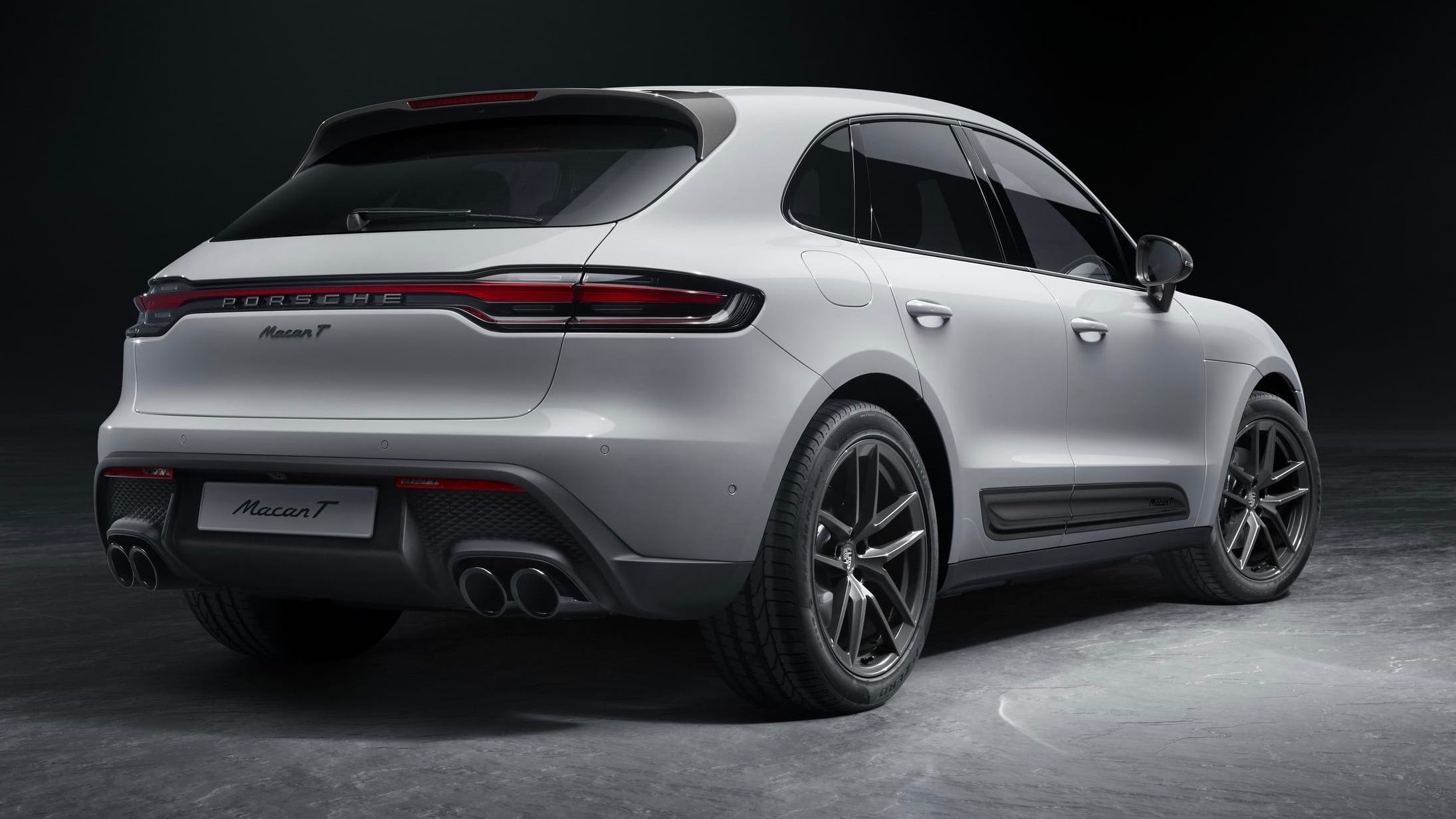
Power and torque figures from the 2.0-litre four-pot remain unchanged at 195kW and 400Nm, with power delivered to all four wheels through a seven-speed dual-clutch automatic gearbox, enabling the Macan T to achieve a 0-100km/h time of 6.2 seconds.
Compared to the standard Macan, its Porsche Active Suspension Management system and springs have been adjusted to lower its ride height by 15 millimetres, with a stiffer front anti-roll bar also helping to sharpen up its handling, while adaptive air suspension drops its height by an extra 10mm.
Riding on the 20-inch wheels from the Macan S, the Macan T’s rims get an exclusive dark titanium finish, tying in with the agate grey metallic highlights on the front facia, side mirrors, skirts, spoiler and rear logos.
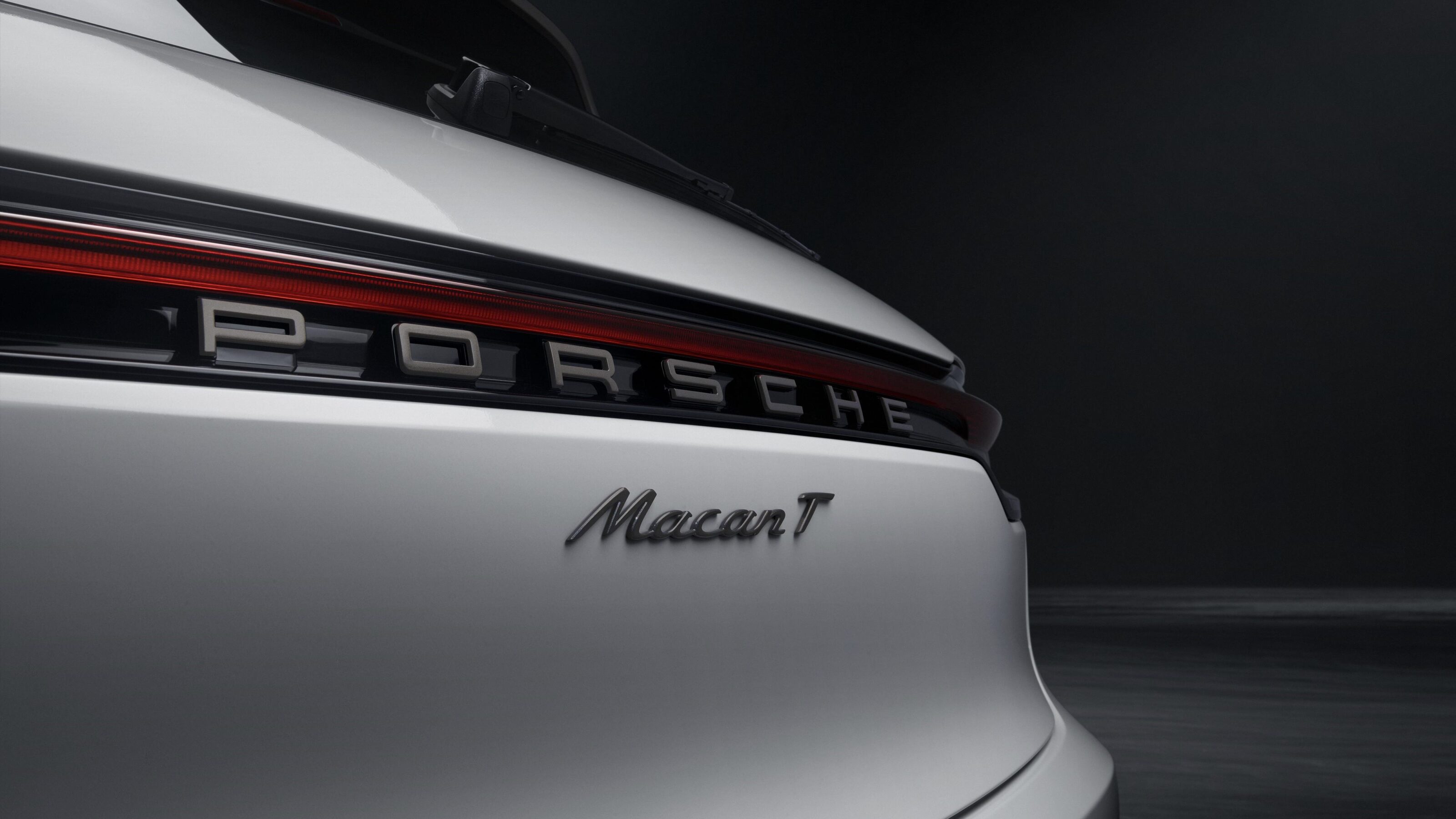
Porsche says the Macan T is available to be ordered in 13 exterior finishes, with high gloss black window trims and side logos contrasting against the car’s main colours.
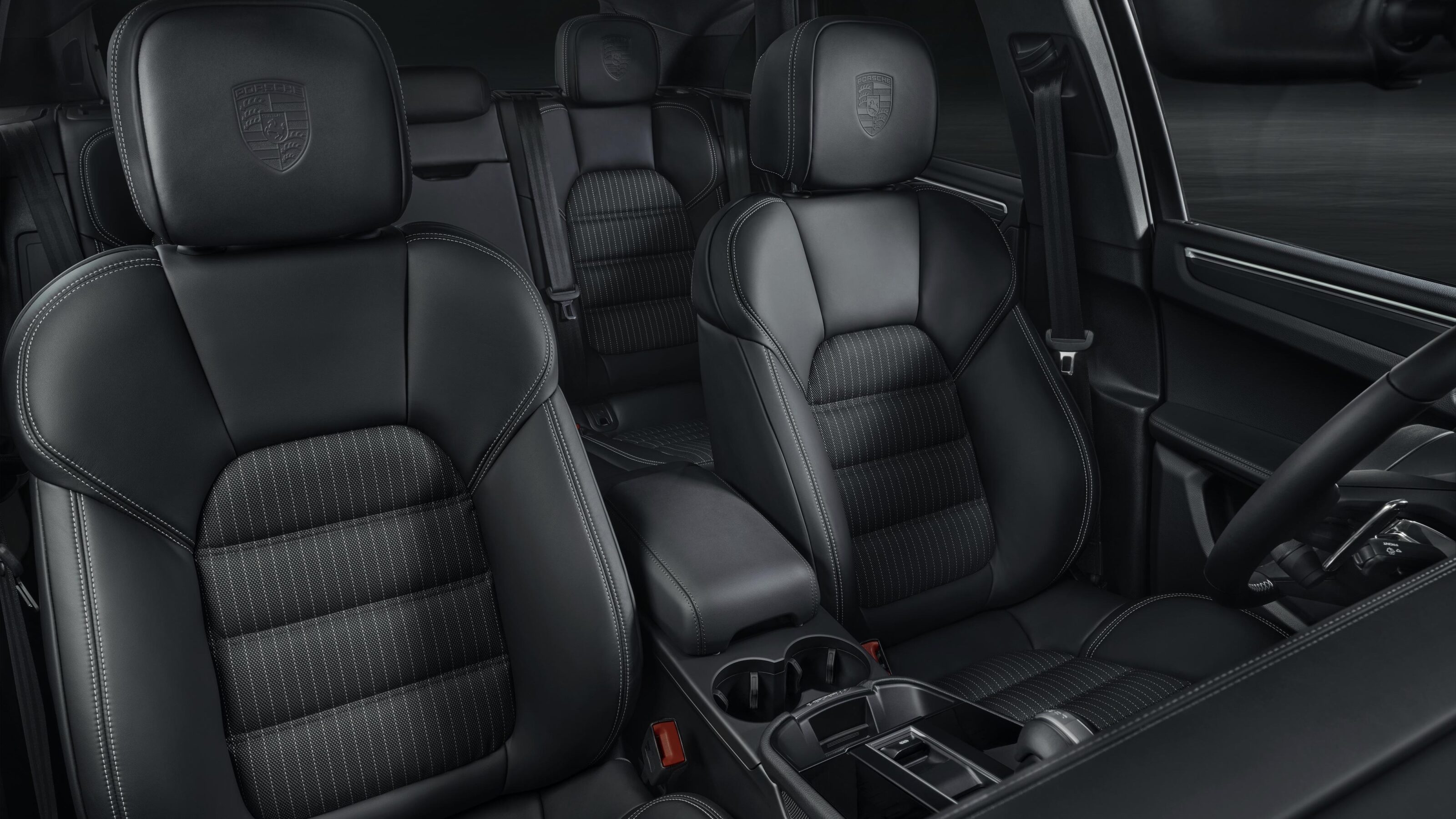
Inside the cabin, front-row occupants are treated to eight-way electrically adjustable and heated sports seats, upholstered in black leather with Porsche’s crest embossed in the headrests. Sport-Tex stripes are also available with the front seat centres and outer rear seats, contrasting against the black with the exterior paint finish.
In front of the driver is Porsche’s multifunction GT heated leather sports steering wheel – Race-Tex fabric is an optional extra – while the Sport Chrono stopwatch is also a standard feature, mounted centrally on the dashboard.
The 2022 Macan range was launched last year with an updated 10.9-inch Porsche Communication Management infotainment system featuring Apple CarPlay – although it’s understood the SUV misses out on recent updates which added Android Auto.
Porsche expects the first deliveries of the Macan T to arrive in Australia in the middle of 2022, with the new variant on sale now through its dealer network.
2022 Porsche Macan Australian pricing
Excludes on-road costs.
| Model | Price |
| Macan | $84,800 |
| Macan T | $91,500 |
| Macan S | $105,800 |
| Macan GTS | $129,800 |
Snapshot
- 7kW and 11kW units available
- On sale at 85 MG outlets
- Can be used by other car brands
MG has released a new range of electric vehicle chargers for sale, which can be used by cars from any brand – not just its own.
The MG ChargeHub range is now available at 85 of the Chinese marque’s dealerships Australia-wide in two guises – 7kW and 11kW Type 2 chargers priced at $1990 and $2090 respectively.
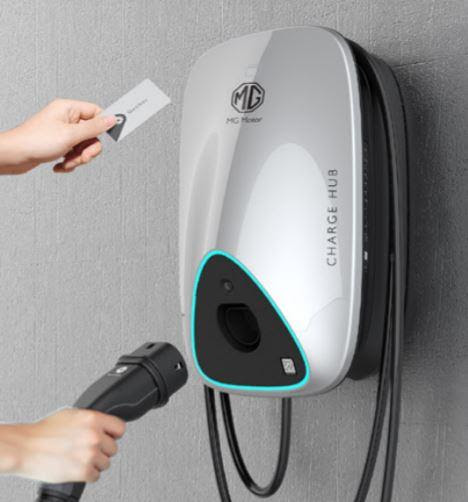
The 230V 7kW single-phase unit can recharge a typical EV battery in a quarter of the time it takes with the typical emergency cable supplied with a car, while the 400V 11kW three-phase setup is more suited to power-equipped homes and businesses.
Designed to be compact and low-impact, the chargers have an integrated five-metre-long cable and Type-2 plug for maximum charging flexibility, as well as being able to be installed inside or out.
The chargers are able to connect via 4G, Ethernet or wi-fi, while two Radio Frequency Identification cards (RFID) are also supplied for users to pay for topping up at public charge points and as a way of managing charging sessions for their vehicle.
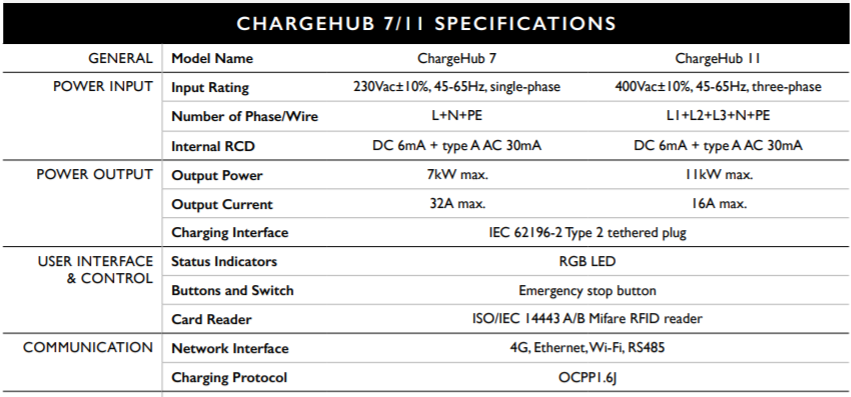
The ChargeHub is compatible with all Type-2 port-equipped EVs, including the MG HS Plus EV, which in Australia currently includes all plug-in hybrids except the Mitsubishi Outlander PHEV – though the latter can use a Type 2 with an adaptor.
The unit will also be featured at hospitality venues around Australia, as MG Motor continues to roll out MG ChargeHubs to businesses that have successfully applied to MG’s infrastructure roll-out support program.
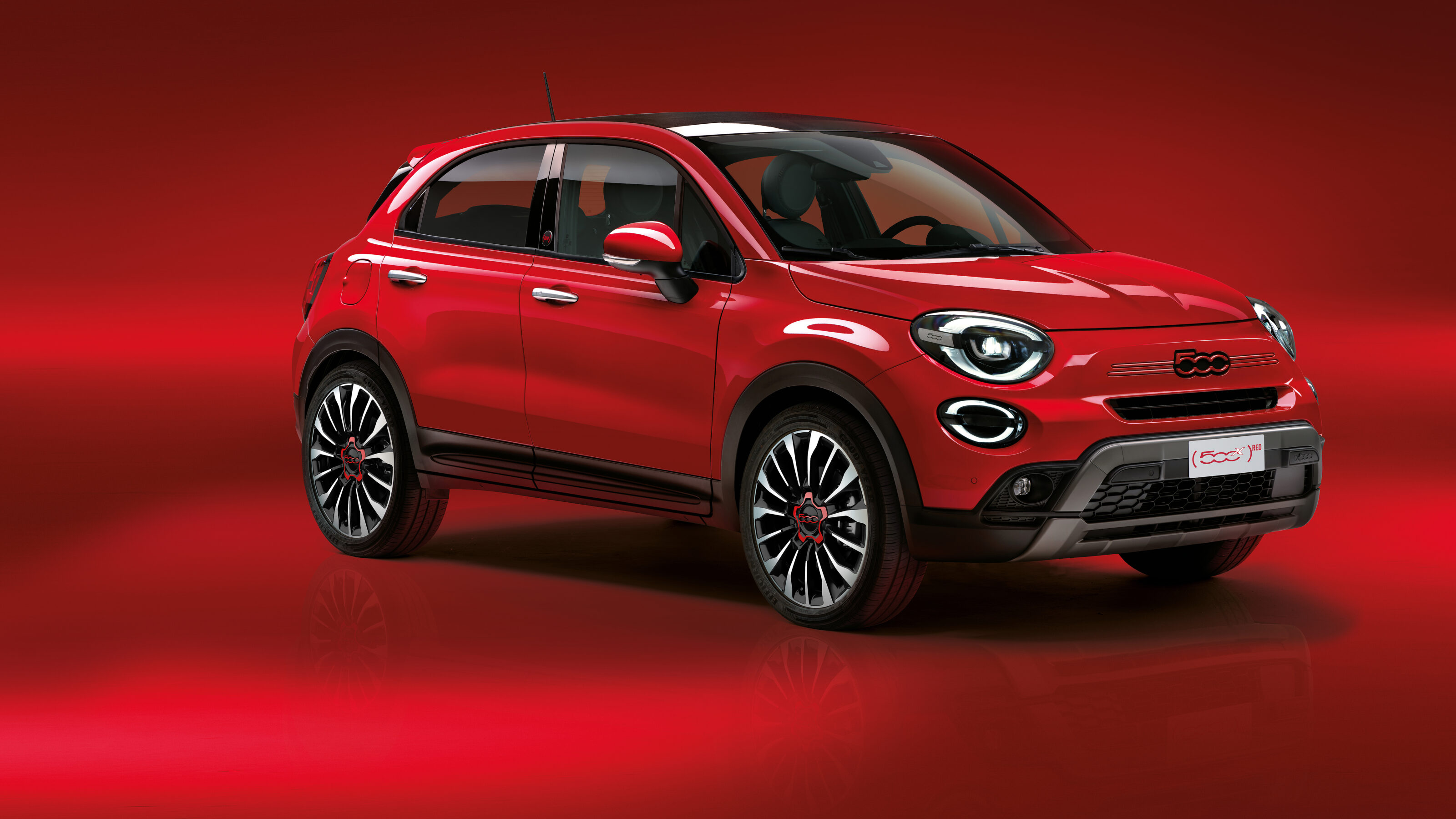
Fiat has electrified its entire model range with today’s release of the 500X and Tipo ‘Hybrid’ models in Europe – but, like the new electric 500, neither will come to Australia.
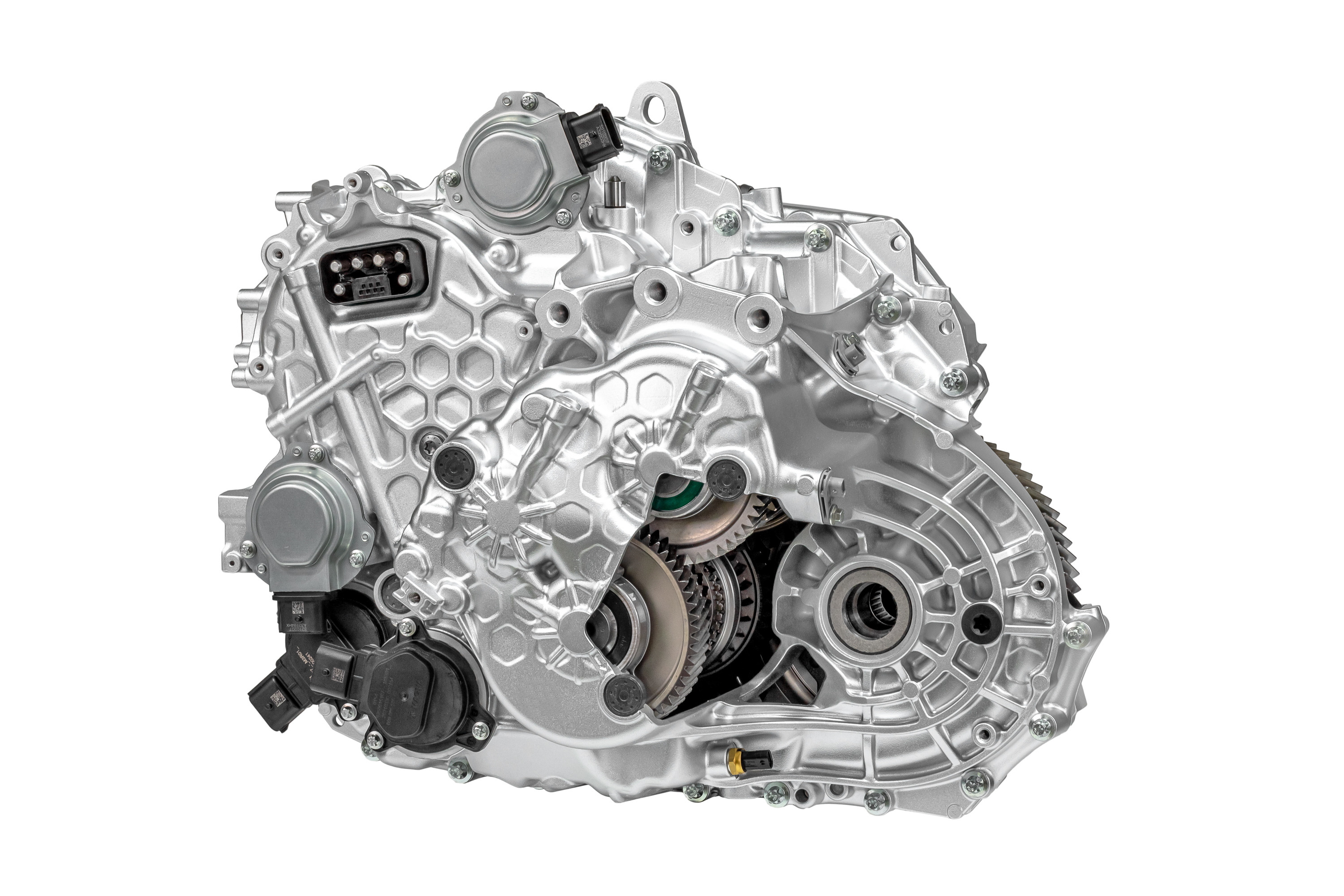
Both underpinned by Fiat’s Small Wide platform, the duo now feature 48-volt mild-hybrid assistance on their Firefly 1.5-litre four-cylinder petrol engines, producing 95kW and 240Nm which is sent to the front wheels through a seven-speed, dual-clutch gearbox.
Although these cars won’t come to Australia, where the standard 500 and Ducato are now Fiat’s only offerings, the introduction of the two hybrid models means all of the Italian manufacturer’s line-up features some form of electrification, achieving its target of doing so by the end of 2022.
Fiat CEO Olivier Francois said the manufacturer’s next goal is to have a fully-electric variant for every model, starting next year.
“The Fiat journey toward electrification continues,” said Francois.
“With the launch of the new 500X Hybrid and Tipo Hybrid, equipped with new 48-Volt Hybrid technology, the FIAT range is now fully electrified. We can now provide all our customers with a sustainable mobility solution, whatever their mobility needs, with simple technology and at an affordable cost.
“I am extremely proud of this for its consistency with our vision: ‘It’s only green when it’s green for all.’ And there’s more. Our journey toward sustainable mobility for all continues, with the aim – as I have previously announced – to launch a new vehicle every year, starting as soon as 2023. Each model will have an electric motor, to achieve a fully electric line-up from 2027.”
Fiat had previously pencilled in a five-year period between 2025 and 2030 to convert its model range to fully-electric, with the new target of 2027 gives the iconic marque just five years to make its model range all-electric.
Parent company Stellantis has previously said electric vehicles will contribute to 70 per cent of sales in Europe and 40 per cent the United States by 2030.
Snapshot
- NVIDIA to develop artificial intelligence software for JLR
- First vehicles to roll out from 2025
- In-house data to be used for vehicle simulation
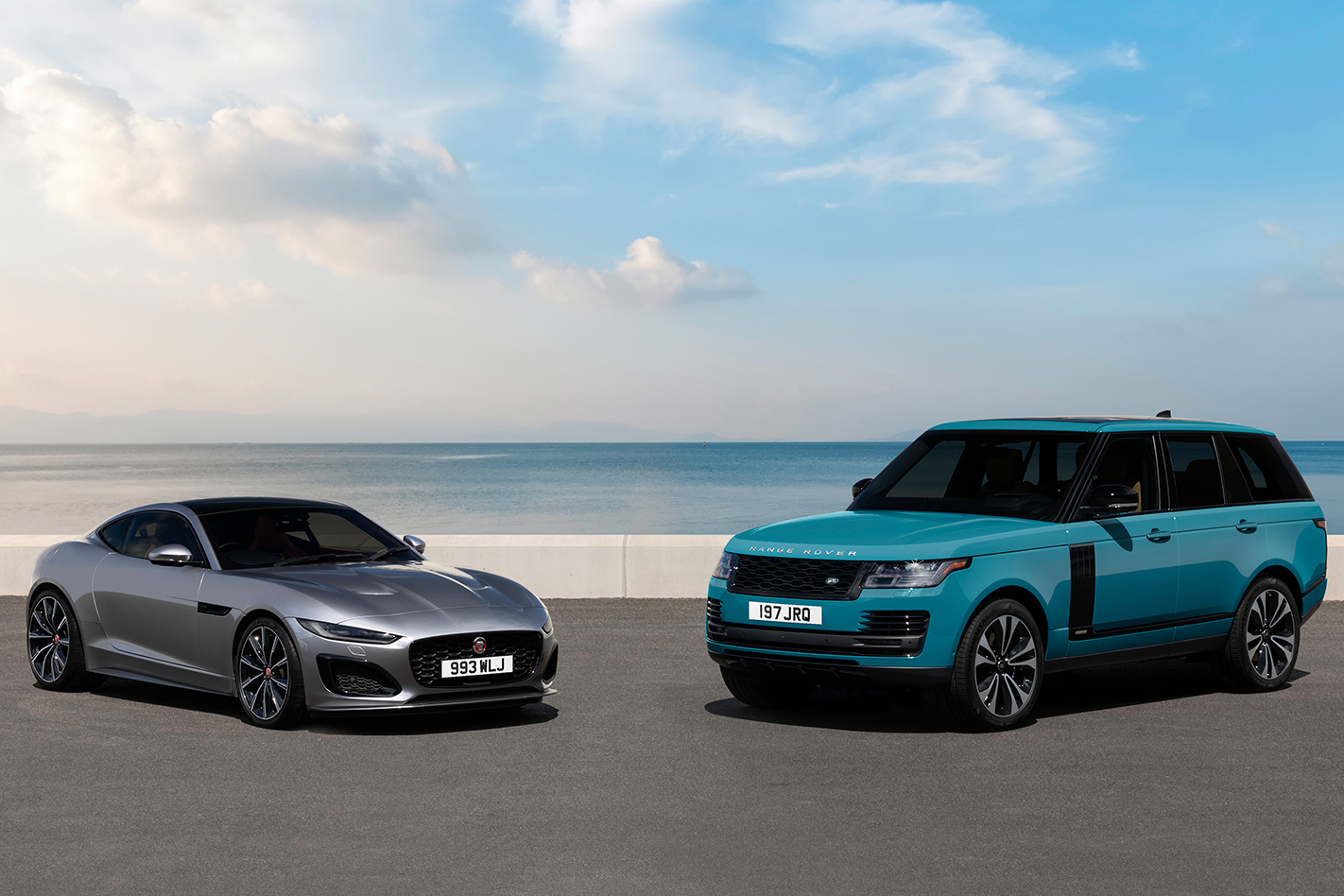
Jaguar Land Rover has turned to one of the world’s pioneering graphics processing companies to develop its next-generation autonomous driving systems.
Teaming up with NVIDIA, JLR will utilise the Silicon Valley brand’s experience in artificial intelligence to jointly develop autonomous driving systems in its vehicles, as well as a host of AI-enabled services within its models.
NVIDIA DRIVE will roll out in JLR vehicles from 2025, with the technology company saying its expertise can help to develop a wide range of safety, autonomous and parking systems, from occupant monitoring to environment visualisation.

It’s understood the main DRIVE Hyperion system will provide overarching control of the JLR operating system, with NVIDIA’s AI doing the background work to make sure everything remains under control.
Development for the systems will be done in-house, with advanced AI training models helping to continuously perfect the software, which can be rolled out to active vehicles via over-the-air updates.
“Collaboration and knowledge-sharing with industry leader NVIDIA is essential to realising our Reimagine strategy, setting new benchmarks in quality, technology and sustainability,” said JLR CEO, Thierry Bolloré.
“Jaguar Land Rover will become the creator of the world’s most desirable luxury vehicles and services for the most discerning customers. Our long-term strategic partnership with NVIDIA will unlock a world of potential for our future vehicles as the business continues its transformation into a truly global, digital powerhouse.”
“Next-generation cars will transform automotive into one of the largest and most advanced technology industries,” said NVIDIA CEO, Jensen Huang.
“Fleets of software-defined, programmable cars will offer new functionalities and services for the life of the vehicles. We are thrilled to partner with Jaguar Land Rover to reimagine the future of transportation and create the most advanced cars.”
The partnership is another step towards JLR going all-electric from 2025 and achieving net-zero carbon emissions, aiming to do so across its products and operations by 2039.
Snapshot
- Hyundai Staria Load performs well across the board
- New report follows first findings published back in 2020
- Mitsubishi Express and Renault’s Trafic and Master ‘not recommended’
Safety authority ANCAP has revealed its latest van comparison – outlining how Australia’s commercial offerings stacked up against one another.
The body has today released its second round of results evaluating the availability and performance of active safety systems across a range of goods-carrying commercial vans.
The news follows the first round published in December 2020, and includes updated assessments of the Mercedes-Benz Vito and Iveco Daily, which have both since undergone updates, and adds the LDV Deliver 9 as well as the newly-released Hyundai Staria Load to create a ranking of 16 vehicles in total.
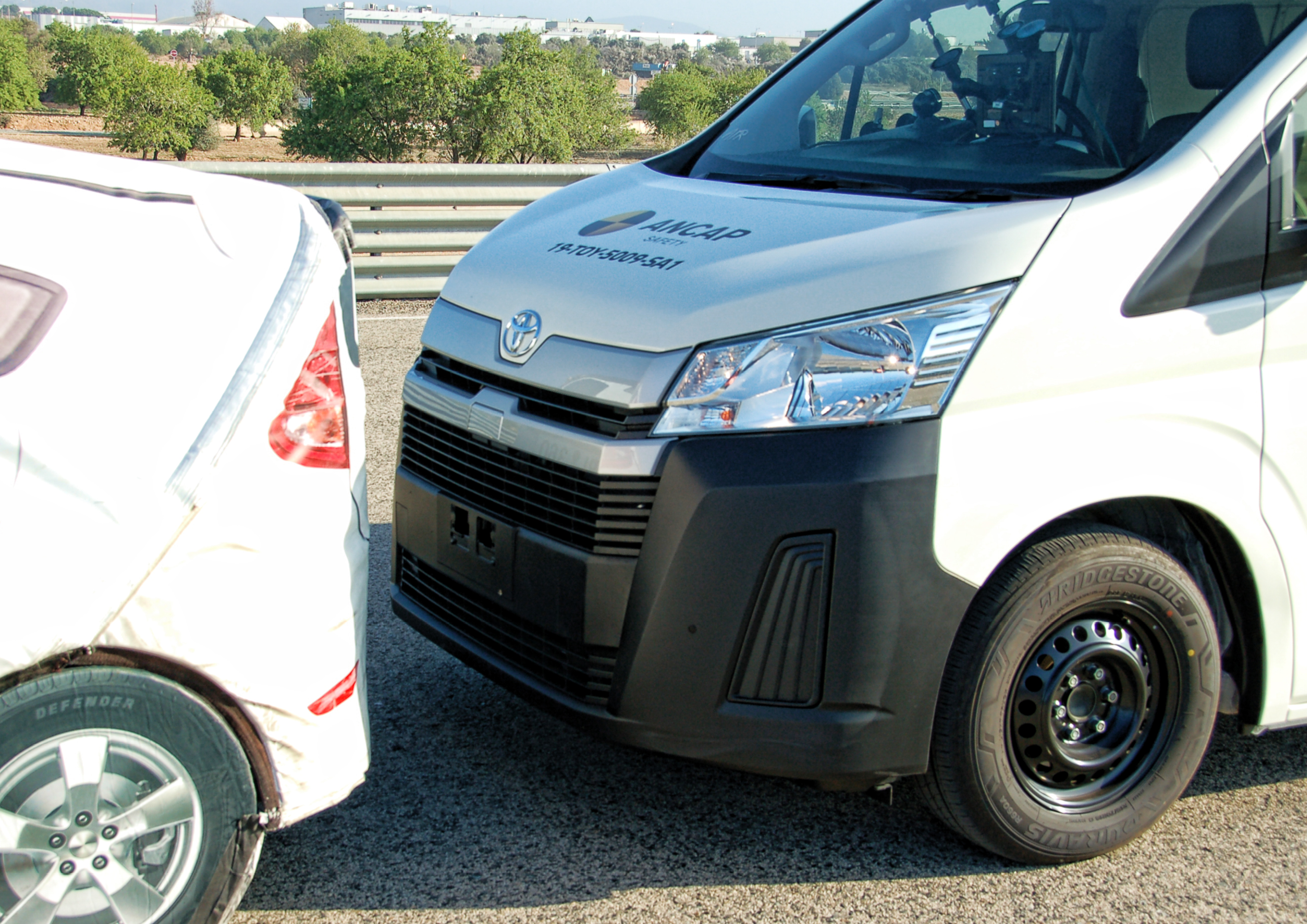
Coming out on top in the light commercial category was the Hyundai Staria-Load, with a ‘platinum’ ranking of 90 per cent, followed by the Toyota HiAce and Mercedes-Benz Vito – both deemed ‘gold’ standard with 77 and 61 per cent results respectively.
Meanwhile, at the bottom of the ladder was unsurprisingly the Mitsubishi Express van (having been awarded the first zero-star rating ever in 2021) with a ‘not recommended’ label and 11 per cent ranking, as was its alliance stablemate the Renault Trafic, due to their lack of active safety systems.
In the heavy commercial sector the Ford Transit Custom was top dog, with a ‘gold’ result and 63 per cent tally, while coming in last was the Renault Master, again ‘not recommended’ with a six per cent total.
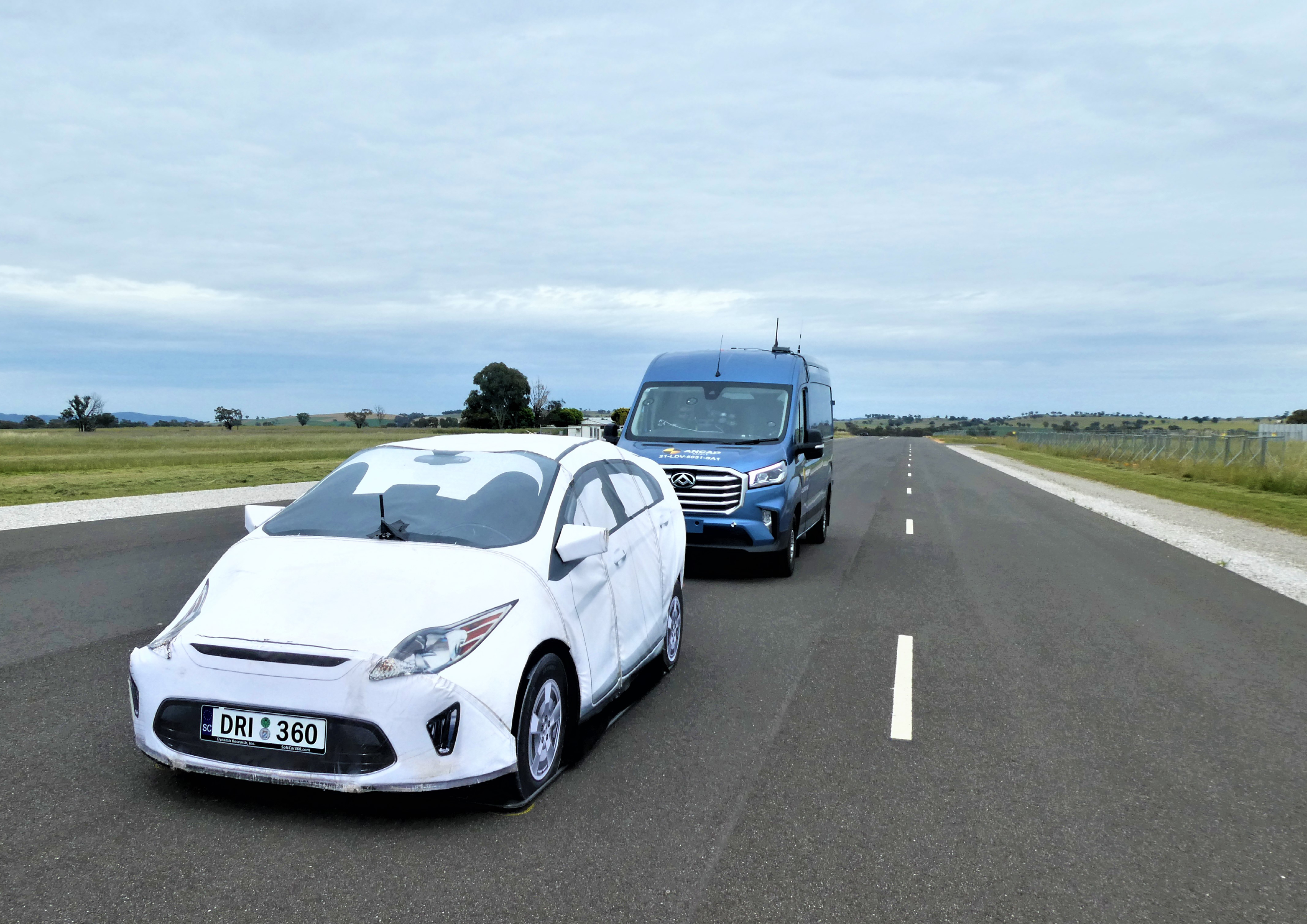
“This analysis provides added value to fleet and commercial van operators as it extends beyond ANCAP’s traditional star rating program to shine a light on the active safety performance of an important segment,” said ANCAP Chief Executive Officer, Carla Hoorweg.
“Vans are a workplace. Their increased on-road exposure and frequent use in built-up urban areas means they interact with a large number of other vehicles, pedestrians and cyclists. It is essential that fleet and van operators are aware of the crash avoidance capabilities and active safety features fitted to their vehicles.”
Building on the results of the 2020 analysis, the updated Mercedes-Benz Vito (from January 2021) joined the Toyota HiAce and Ford Transit in achieving a ‘gold’ level of crash avoidance performance.
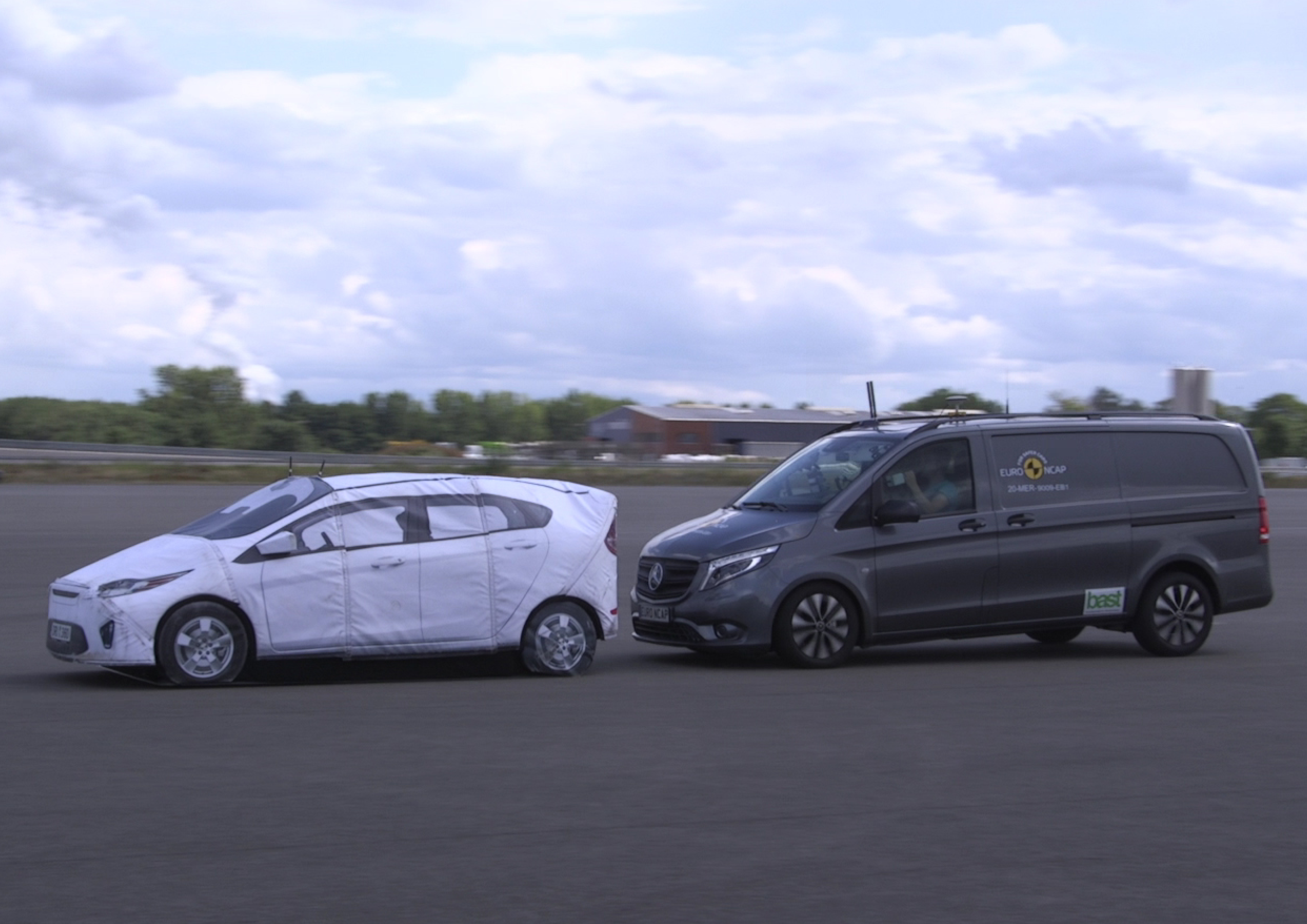
The improved specification elevated the Vito’s score from a 23 per cent ‘bronze’ score to a 61 per cent ‘gold’ through the standard inclusion of car, pedestrian and cyclist-detecting autonomous emergency braking, lane departure warning and blind spot monitoring systems.
The Iveco Daily (from February 2021) has also since gained autonomous emergency braking (car-to-car), a driver monitoring system and seat belt reminders for the driver and passenger as standard, increasing its score from six per cent and ‘not recommended’ to 24 per cent ‘bronze’.
“The information provided in this latest comparison report highlights the differences in safety specification and the varying levels of active safety performance across van models. It is encouraging to see the full suite of active safety features now standard in a number of vans and we encourage brands to continue updating the safety specification of their vans as they would with passenger vehicles,” Ms Hoorweg added.
Light Commercial Vehicle Safety Ratings
| Make/Model | Rating | Score |
|---|---|---|
| Hyundai Staria-Load | Platinum | 90% |
| Toyota HiAce | Gold | 77% |
| Mercedes-Benz Vito | Gold | 61% |
| Ford Transit Custom | Silver | 58% |
| Volkswagen Transporter | Silver | 55% |
| Peugeot Expert | Silver | 44% |
| Mitsubishi Express | Not recommended | 11% |
| Renault Trafic | Not recommended | 11% |
Heavy Commercial Vehicle Safety Ratings
| Make/Model | Rating | Score |
|---|---|---|
| Ford Transit | Gold | 63% |
| Mercedes-Benz Sprinter | Silver | 52% |
| Volkswagen Crafter | Silver | 44% |
| Peugeot Boxer | Bronze | 33% |
| Fiat Ducato | Bronze | 28% |
| LDV Deliver 9 | Bronze | 27% |
| Iveco Daily | Bronze | 24% |
| Renault Master | Not recommended | 6% |
Snapshot
- BMW customers report delays until second quarter for certain options
- Indefinite restrictions on head-up display extras
- Harmon Kardon sound system shortage also affecting Volkswagen
Potential BMW buyers are being told to wait until the second half of the year for certain accessories, with stock levels affected by the semiconductor shortage.
The ongoing chip crisis hit BMW last year when the manufacturer moved to delete certain opens from its global offerings, with equipment such as infotainment touchscreens, reversing assistance and Harman Kardon sound systems being affected the most.
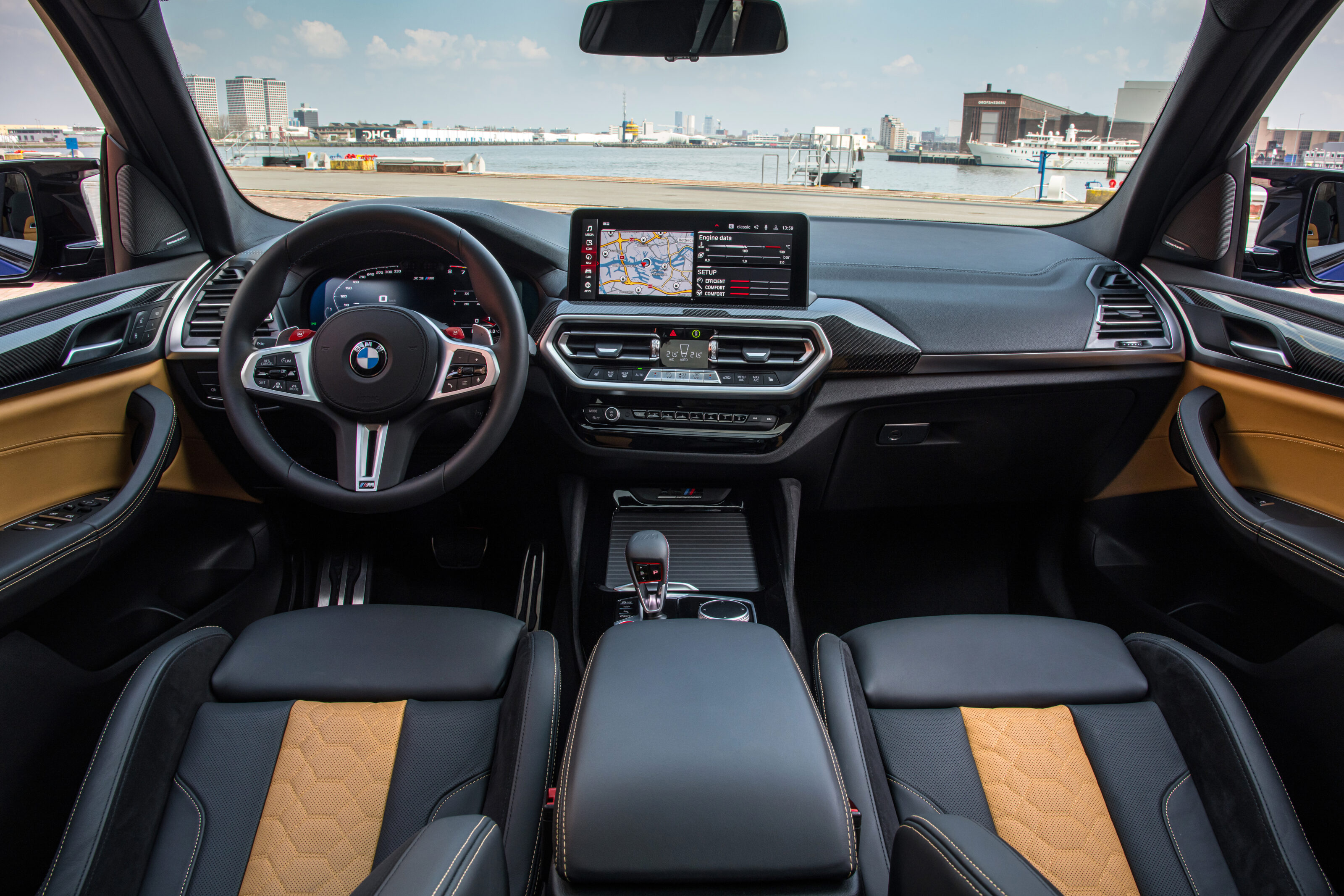
According to one BMW dealer, models such as the X3 have been hit hard – with some of its optional extras either suspended indefinitely or pushed back to beyond the end of the financial year.
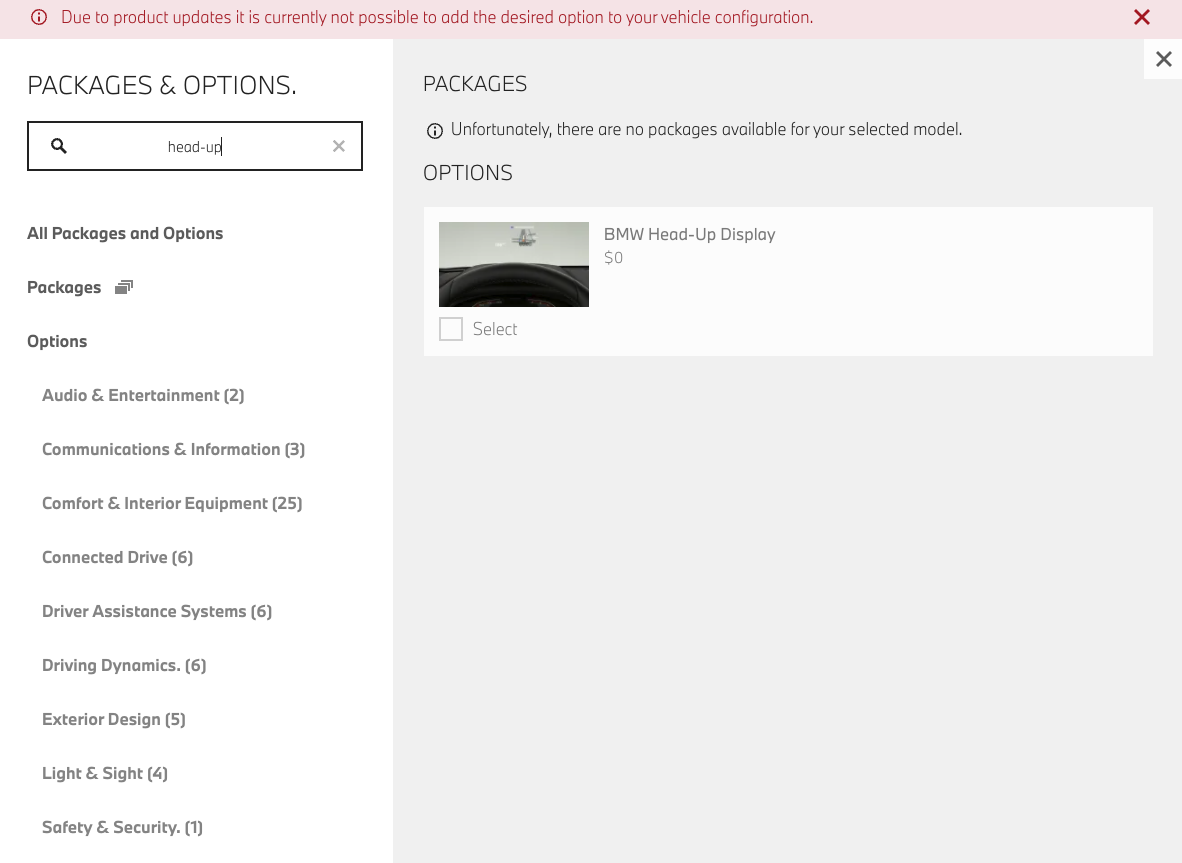
BMW’s head-up display is one of the items facing the longest delay, with the manufacturer’s website removing the ability to order the option on top of any grade of X3 or X4, while its dealers say the tech will be unavailable until further notice.
The head-up display system became a standard feature for late-2021 and 2022 models after the X3 and X4 went through a mid-life update last year, although given it doesn’t show up as series equipment on the configurator, it’s understood to have been dropped from the list of factory features.
Wireless charging is expected to rejoin the local list of options when production resumes in May, as is the optional Harman Kardon sound system (available only in the Executive Package), with Volkswagen’s product lines also affected by shortages from the American supplier, causing price reductions for some of its ‘R’ models.
BMW Australia told Wheels it is currently working with dealers to provide alternative solutions for customers who are impacted by supply constraints.
“The bottleneck in the supply of semiconductor components has impacted availability of individual vehicle equipment options for certain models,” said a BMW spokesperson.
“We are working closely with our dealer partners to provide alternative solutions for our customers to minimise waiting times. This process is supported by the high degree of customisation of our vehicles.”
Across the BMW model range, ‘M’ variants are unaffected.
Snapshot
- Maserati Grecale captured undergoing final development work
- Official reveal slated for March 22
- Set to arrive in Australia by the end of 2022
UPDATE, March 23, 2022: The 2023 Maserati Grecale has been fully revealed. You can read more about Maserati’s new mid-size SUV by clicking here.
The story to here
February 18, 2022: Maserati has confirmed its hotly anticipated Grecale SUV will be revealed to the world next month.
Following months of teasers, the brand has announced the Grecale will make its global premiere on March 22.
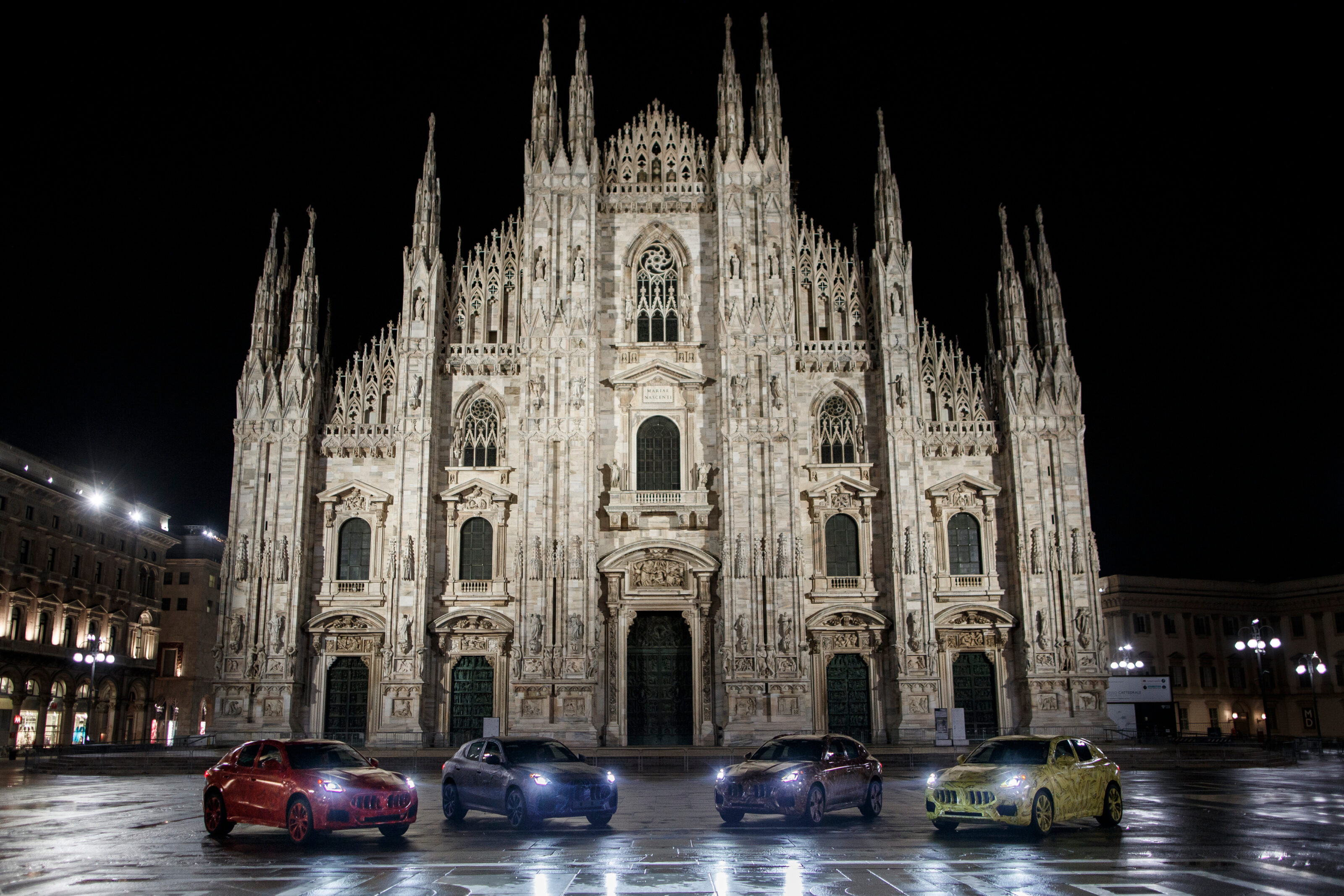
Cloaked in camouflage bearing the words: “I’m the Maserati Grecale. I can’t tell you much more”, the mid-sized luxury SUV has been teased out driving on the roads also covered with clues about its technical specification.
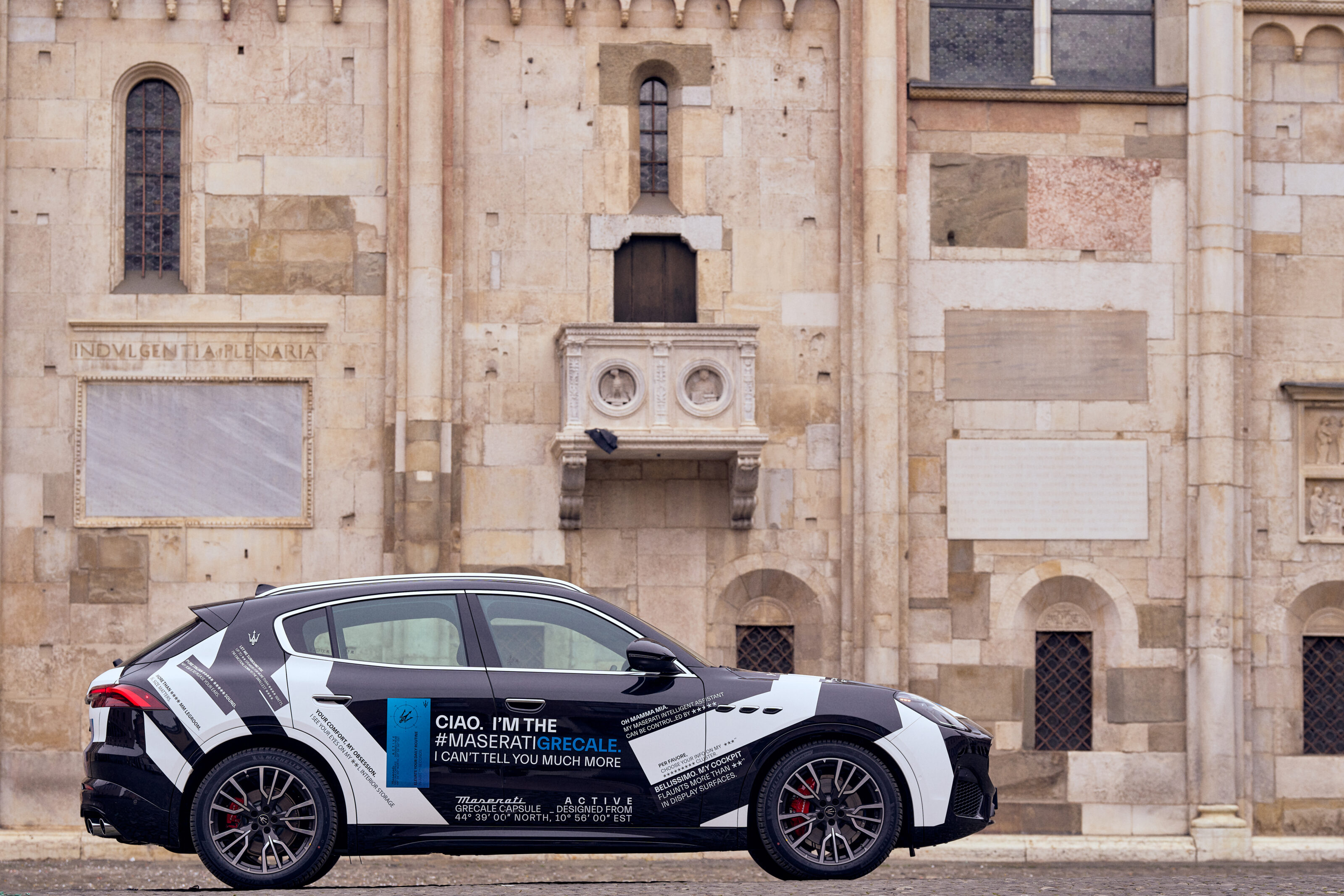
Below are a list of just some of the cryptic messages wrapped around the small SUV’s body.
“Oh mamma mia. My Maserati intelligent assistant can be controlled by *****.” (Hints at Amazon Alexa voice control capabilities.)“Maserati Active, Grecale capsule _designed from 44° 39’ 00” north, 10° 56’ 00” east.” (Co-ordinates point to Modena, northern Italy, the firm’s historic home.)
“Bellissimo, my cockpit flaunts more than **” in display surfaces.”
“Your comfort is my obsession. I see your eyes on my **L interior storage.”
“Let me surround you. Up to ** speakers for more than **** watts, I’m emotion, down to the smallest ****.” (12 speakers and 695 watts if using MC20’s sound system.)
“Pure Italian ***** ***** sound. My job is to please your ears.” (Nod to Sonus Faber sound system used in MC20.)
“More than ****mm legroom. Si, size matters.”
“I have ***** for more than just adrenaline.”
“Get a kick out of my ***L boot space.”
“Buongiorno, I dare you to try my * drive modes.”
“I’m emotion down to the smallest ****.”
“Per favore, choose your info on my ***” ********* cluster.”
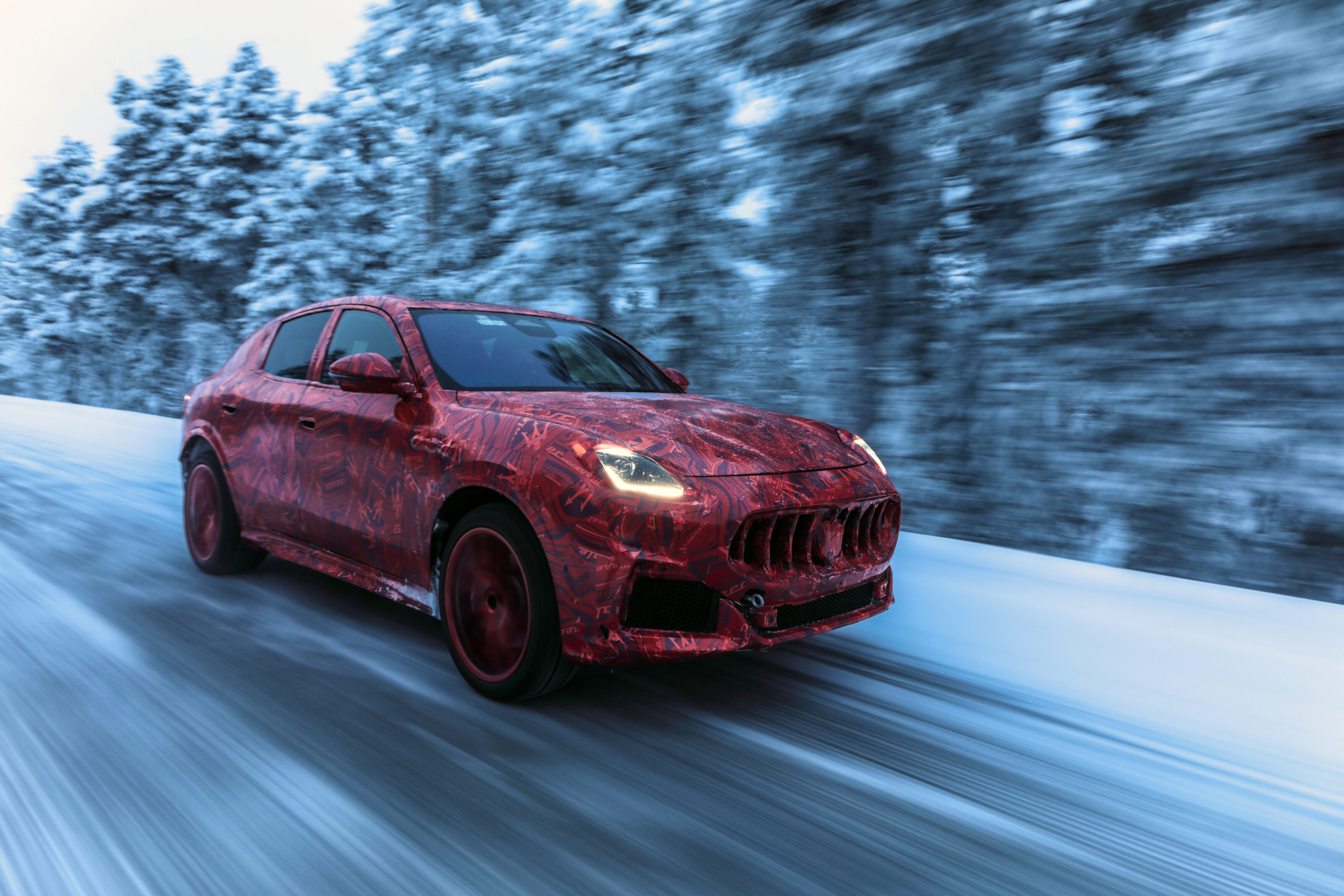
January 28, 2022: Another set of teaser images for the upcoming 2022 Maserati Grecale luxury SUV has been unleashed.
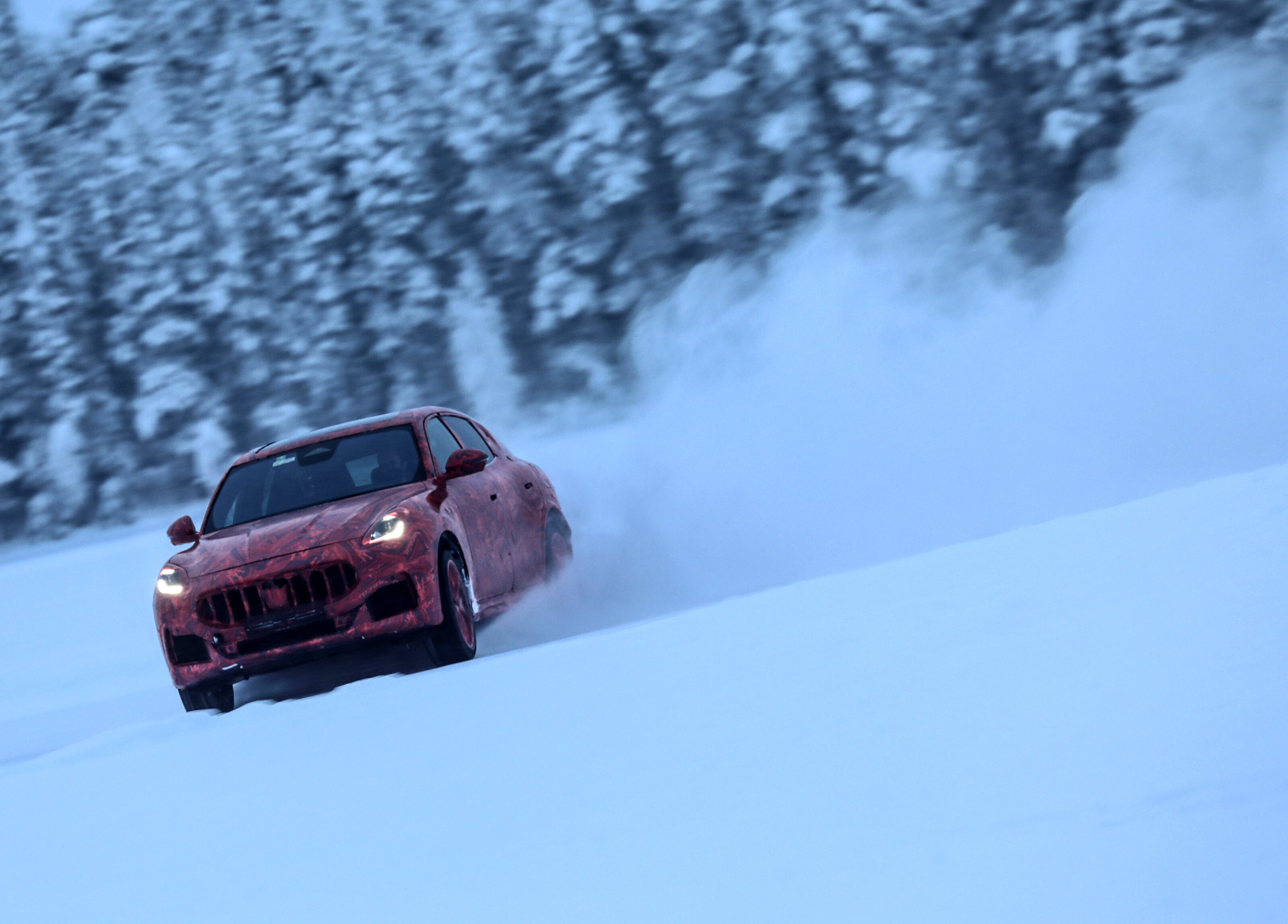
The camouflaged prototype is seen here undergoing cold-weather testing on the tarmac, snow and ice in Sweden, as the Italian marque works to fine-tune its handling on low-grip surfaces.
In addition, Maserati says it has tested the “start-up and driveability” of the Grecale at extreme temperatures to ensure in-vehicle comfort when the mercury is as low as -30°C.
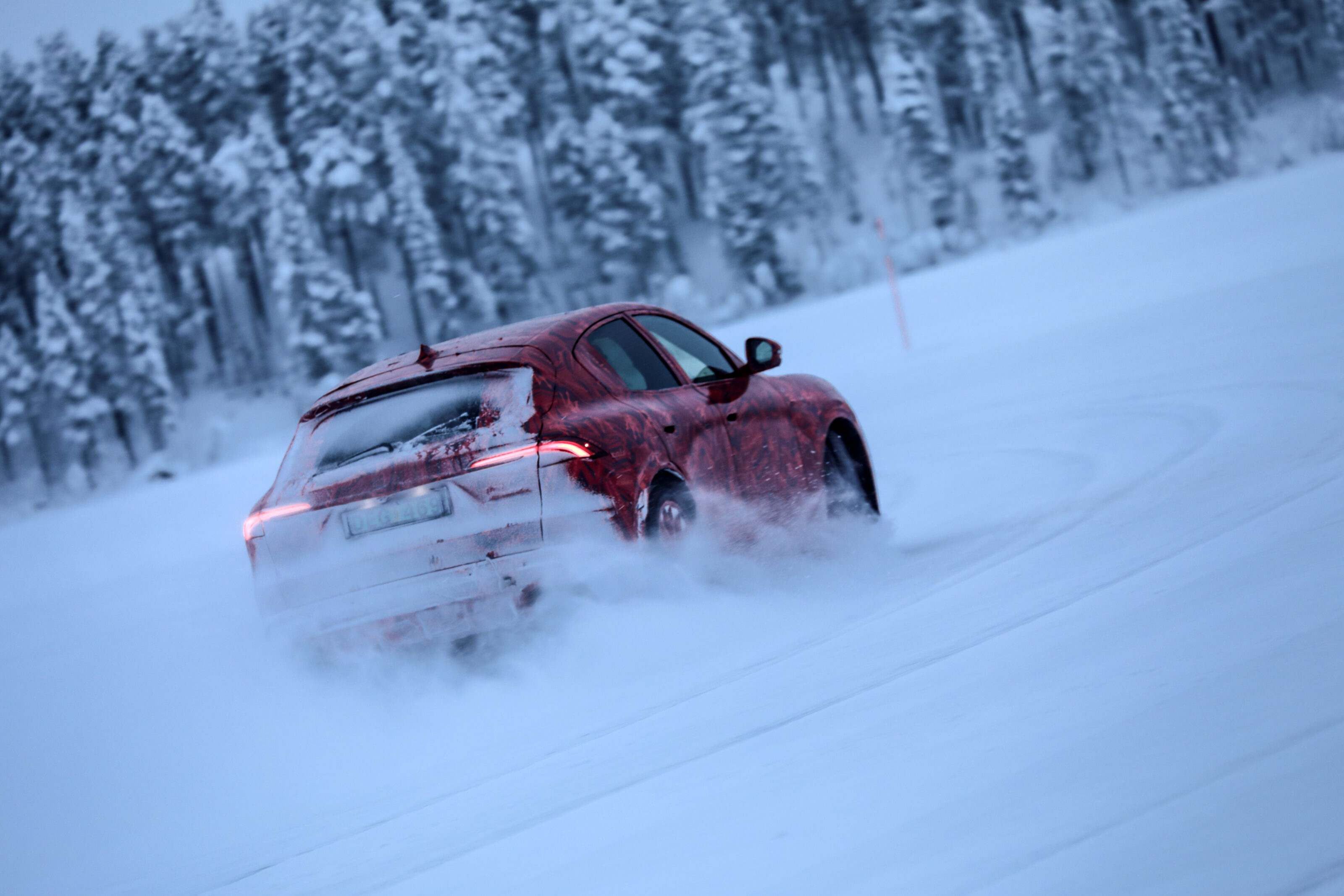
Final development work also includes improvements to “traction, understeer and oversteer in different drive modes and with varying sizes and types of wheels”.
The mid-size SUV is expected to debut in autumn 2022, after its November 2021 reveal date was postponed at the last minute, as a result of the semiconductor chip shortage.
There is a chance the crossover could be making an appearance next month, with a Maserati dealership in the United States claiming “Grecale is coming in February 2022”.
However, Maserati is yet to officially confirm this news, with parent company Stellantis unlikely to unveil two crucial new SUVs (the other being the also-delayed Alfa Romeo Tonale) within the space of weeks.
Set to compete against the Porsche Macan, BMW X3, Audi Q5 and Mercedes-Benz GLC, the Grecale will ride on the same rear-drive Giorgio platform as the Alfa Romeo Stelvio.
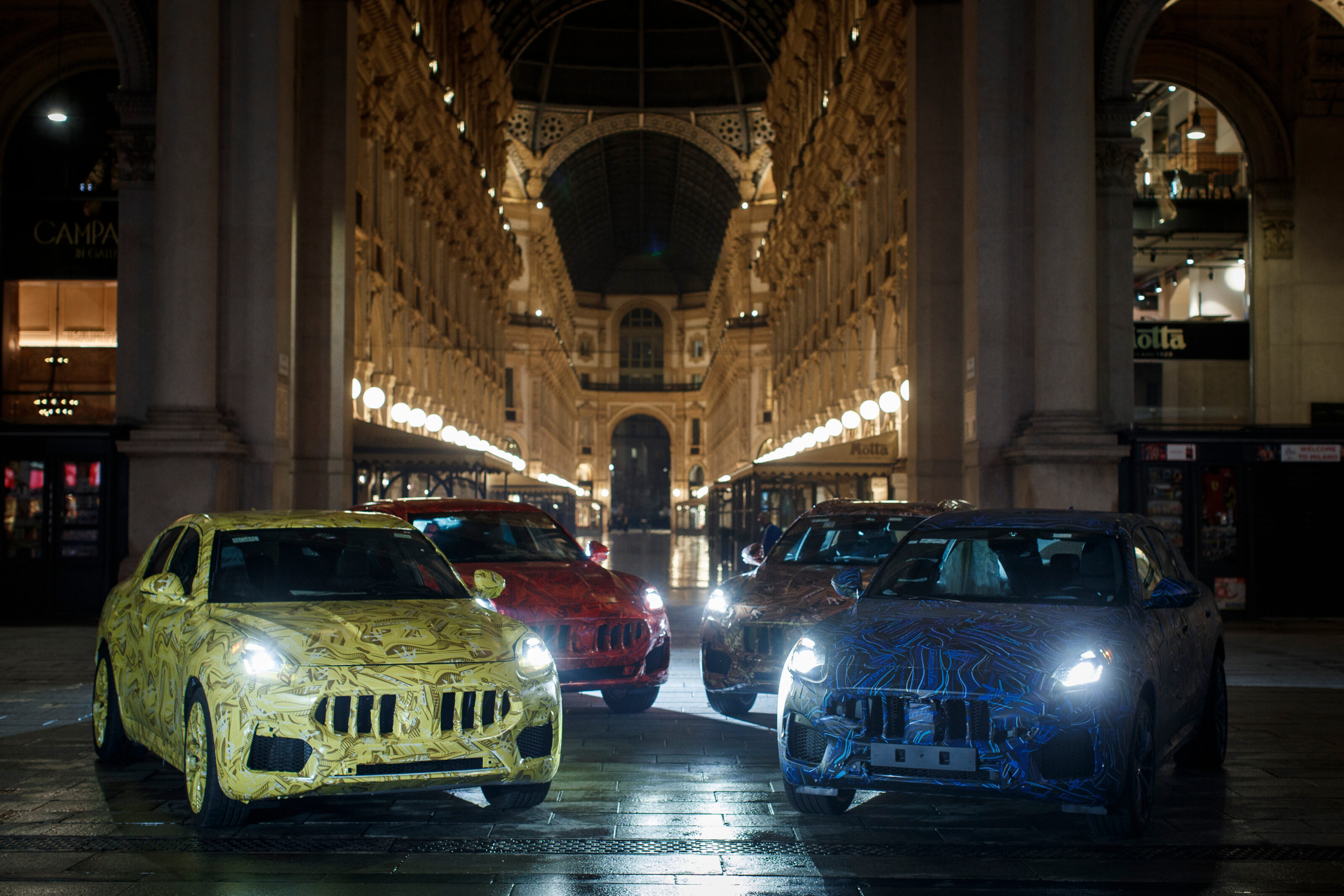
As the photos suggest, the Grecale will pick up the brand’s latest design language – which first debuted on the MC20 – along with commonality to the larger Levante.
This includes large headlights reminiscent of the two-door, as well as Levante-like slim LED tail-lights at the rear.
Under the bonnet – as confirmed by Autocar – the entry-level Grecale will feature a 2.0-litre turbocharged four matched to a 48-volt mild-hybrid system, with 220kW of power.
The flagship version, likely badged Trofeo, is rumoured to step up to the 3.0-litre twin-turbo V6 from the MC20, albeit with less power and several tweaks to accommodate for a front-engined setup, compared to the 463kW unit in the mid-engined sportscar.
An all-electric variant is expected to debut later, potentially in late 2022.
The 2022 Maserati Grecale will arrive in Australia during the second half of this year.
Snapshot
- EQE 43 and 53 set to launch as AMG variants of Merc’s EQE
- Range-topping EQE 53 produces up to 505kW/1000Nm
- Timing and pricing set to be announced closer to arrival
Mercedes-AMG has launched its latest electric vehicle – the 2022 Mercedes-AMG EQE.
Based on the Mercedes-Benz EQE revealed at last year’s Munich motor show, the crew at AMG have added its own special touch to the electric vehicle, announcing two variants at launch – the most powerful of which has been confirmed for Australia.
Set to be released in Europe in EQE 43 4MATIC and EQE 53 4MATIC+ guise, the two grades both feature dual electric motors. The ‘entry-level’ EQE 43 produces up to 350kW and 858Nm, while the EQE 53 4MATIC+ turns it up a notch – pushing out 460kW/950Nm in normal mode and topping out at 505kW/1000Nm when using its boost function with the optional AMG Dynamic Plus Package.
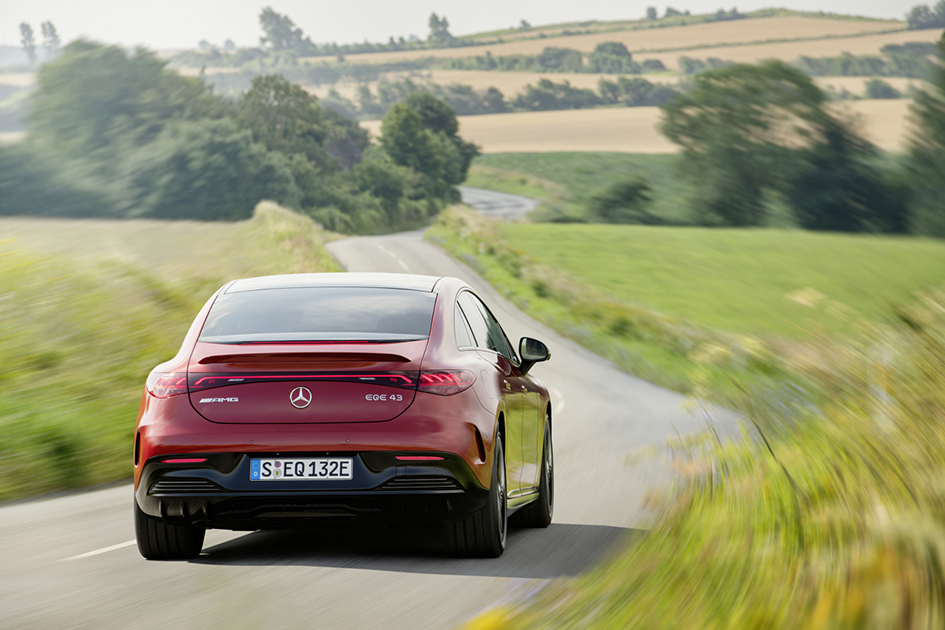
This enables the EQE 43 to complete the 0-100km/h sprint in 4.2 seconds, still far from being a slouch, but nearly a second down on the EQE 53’s time of 3.3 seconds when in its more powerful settings, pushing on to a top speed of 210km/h and 240km/h respectively.
Underpinned by a 90.6kWh lithium-ion battery pack, the EQE 43 achieves an estimated driving range of between 462-533 kilometres, while the EQE 53’s overall range is reduced ever so slightly – dropping to around 444-518 kilometres.
The EQE’s charging system remains unchanged, with an onboard charger allowing for 11kW or optional 22kW alternating current charging capacity at home, while direct current fast charging can be bumped up to 170kW, adding roughly 180km of driving range in just 15 minutes.
Helping to keep the 2525 kilogram four-door sedan under control, AMG has applied its knowledge of suspension tuning from high-performance vehicles to the EQE – fitting the EV with the Ride Control+ system, which adds adaptive dampers to the four-link front axle and the multilink rear.
With setup philosophies carried across from the AMG EQS and AMG GT Four-Door Coupé, stiffer anti-roll bars and a lower ride height are aimed at keeping the EQE planted around corners, while the rear-wheel steering of up to 3.6 degrees helps it manoeuvre at low speeds.
Riding on 20-inch wheels as standard, an optional set of 21-inch light alloy rims also allows buyers to upgrade their EQE’s brakes – going from six-piston front calipers with 415 millimetre steel rotors to 440mm ceramic rotors, with single-piston rear calipers and 378mm discs remaining across the range.
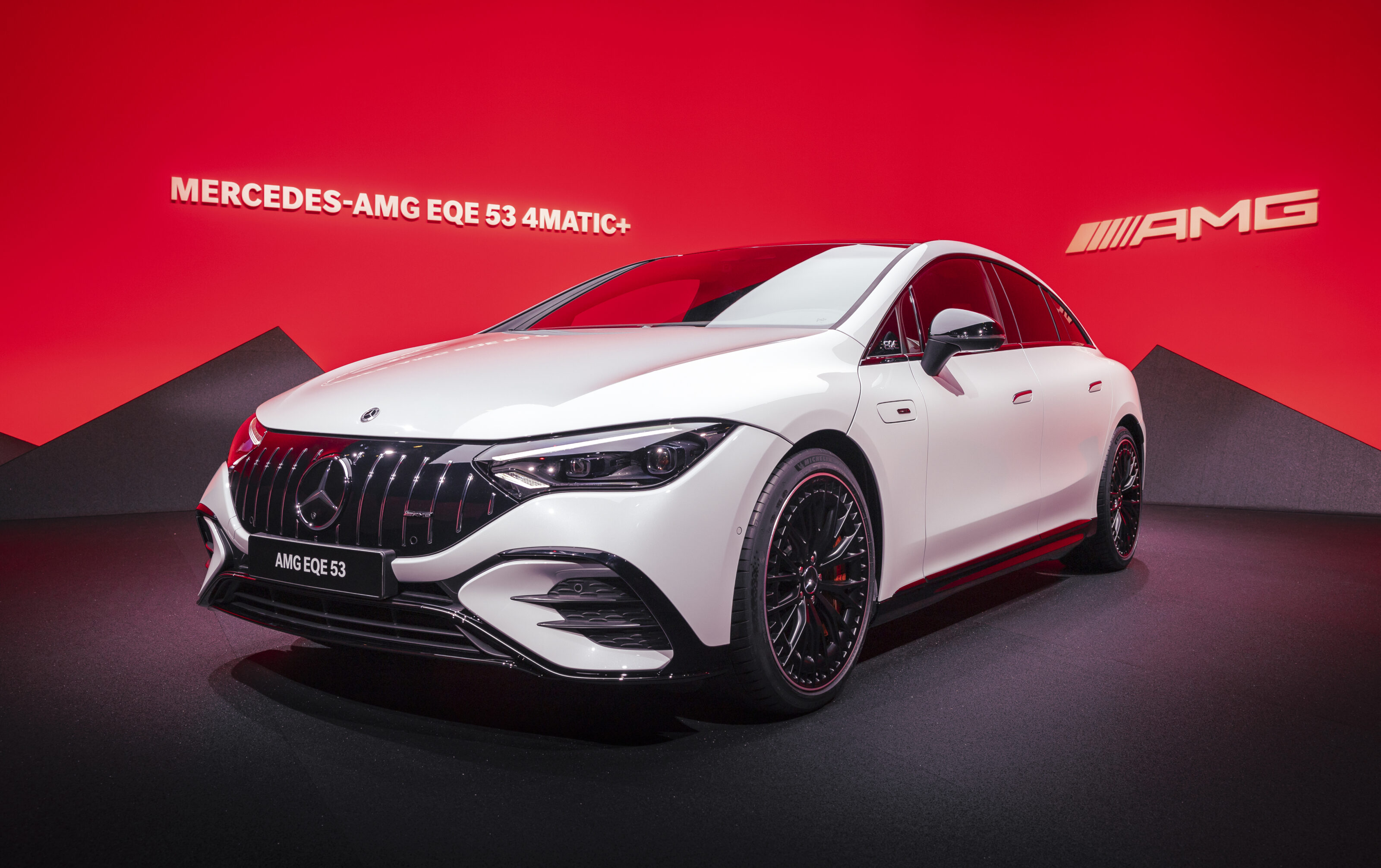
As expected with AMG’s models, the EQE has been given a mild visual makeover to differentiate it from its standard Mercedes counterpart, with a new grille, lower front bumper, rear diffuser, spoiler and sideskirts standing out as the most obvious highlights.
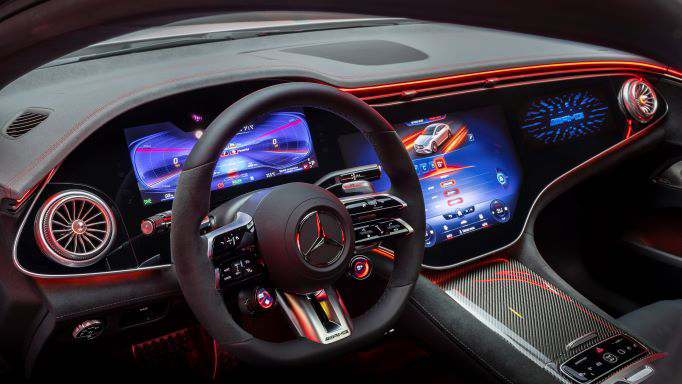
Inside the cabin, an option carried over from the Merc EQE is the ability to order the tri-screen, full-width MBUX dashboard and infotainment screen – now available with AMG Track Pace as an optional add-on, allowing drivers to record their telemetry at a race track.
For those who want electric performance, but miss the noise of a conventional internal combustion engine, all AMG EQE variants come standard with a sound generator, allowing the user to choose from one of three modes – balanced, sport and powerful.
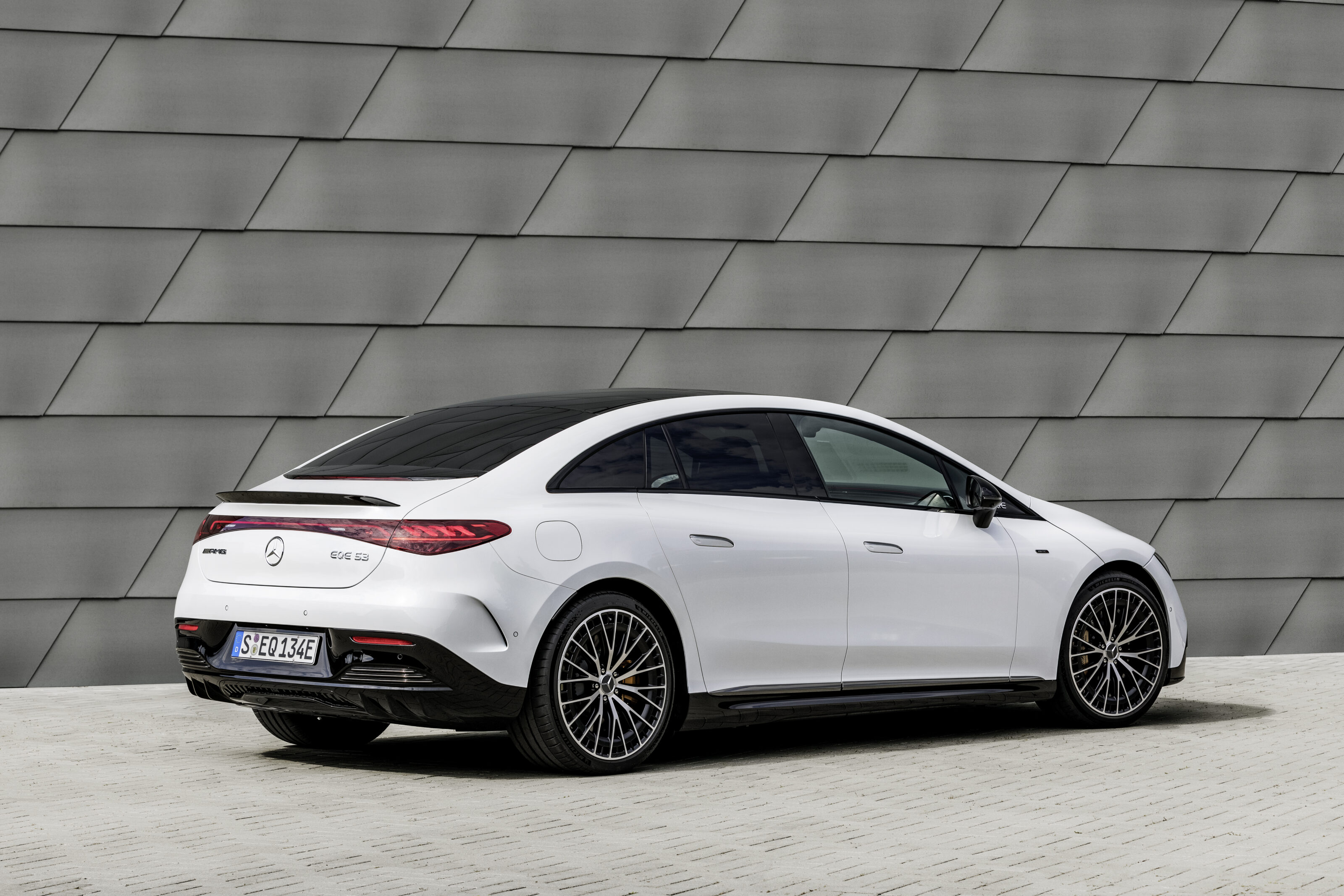
We can expect more information about Australian-spec examples of the AMG EQE closer to the car’s launch, with Mercedes-Benz Australia yet to set an official date for its arrival.
It’s expected the base EQE range is due to arrive in Australian showrooms in the second half of 2022.
Electric vehicle charging firm JET Charge has raised more than $25 million in funding to grow Australia’s developing infrastructure network.
The pot of cash comes from the company’s Series B funding round, which was led by the RACV with help from the Clean Energy Finance Corporation (CEFC) and growth investors, Claremont Capital.
It follows a further $4.5m already raised in the Series A round during 2020, which came from Greg Roebuck, non-executive Chairman at fellow EV infrastructure firm Chargefox, and climate tech investor Simon Monk.
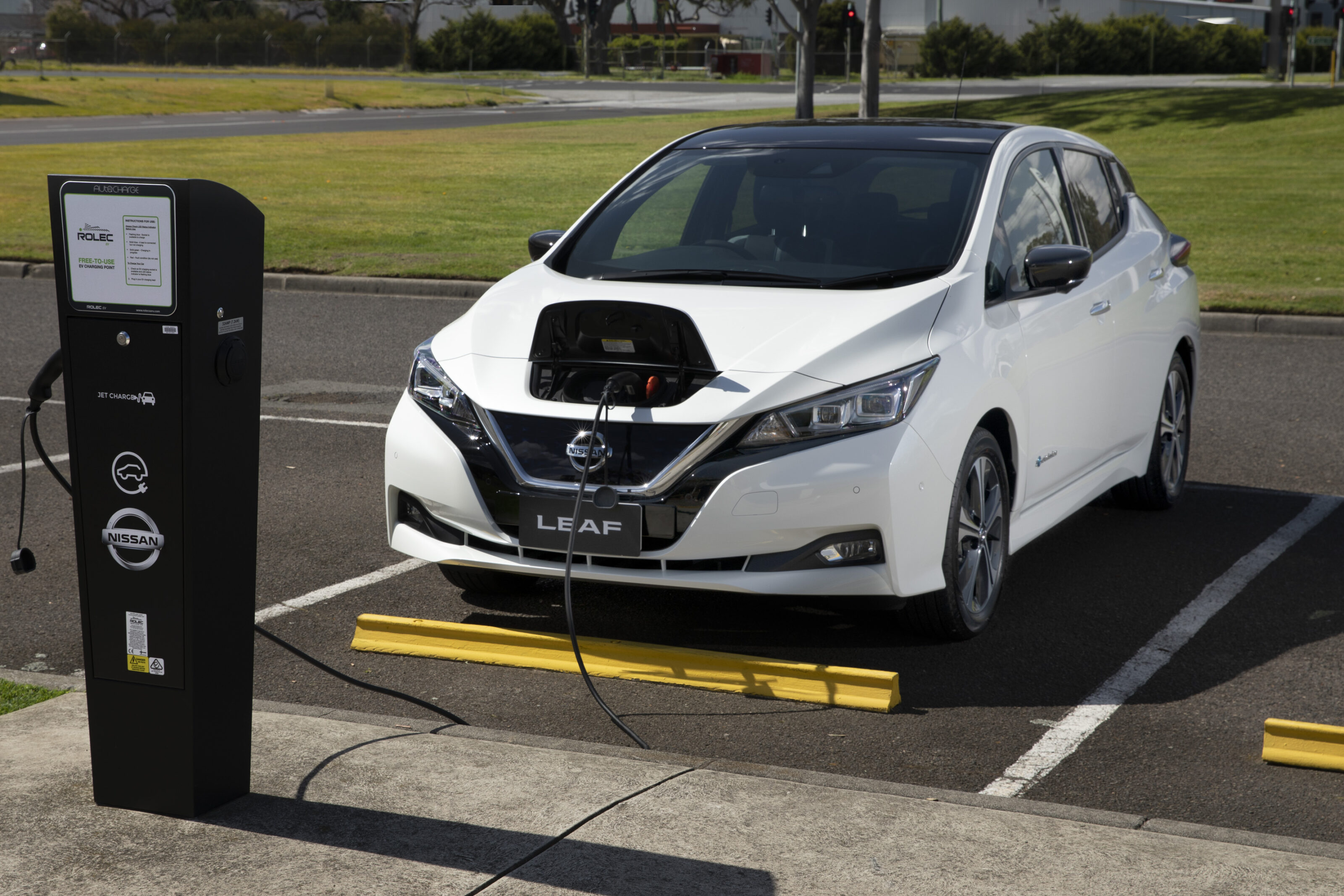
According to JET Charge, the latest funding will be used, in part, to expand the business’s workforce in Australia and New Zealand, working with its utility partners to solve grid issues, and to create and implement new technology to make EV charging easier to own and use.
JET Charge is a leader in EV charging infrastructure. The company installs EV chargers in dealerships, for public charging networks, and at home. Since 2020, JET Charge has grown from 25 to almost 100 employees, starting with sales and installation of charging stations before becoming a more diverse infrastructure and technology company.
“This funding will allow us to realise ambitious plans immediately, as well as invest in R&D to remain at the forefront of innovation in our sector. We’re just getting started,” said Tim Washington, Founder of JET Charge.
“Working with JET Charge, and our other investment businesses, will allow RACV to help homeowners and commercial businesses with comprehensive charging solutions as the transition to EVs gathers pace,” added Neil Taylor MD and CEO of RACV.
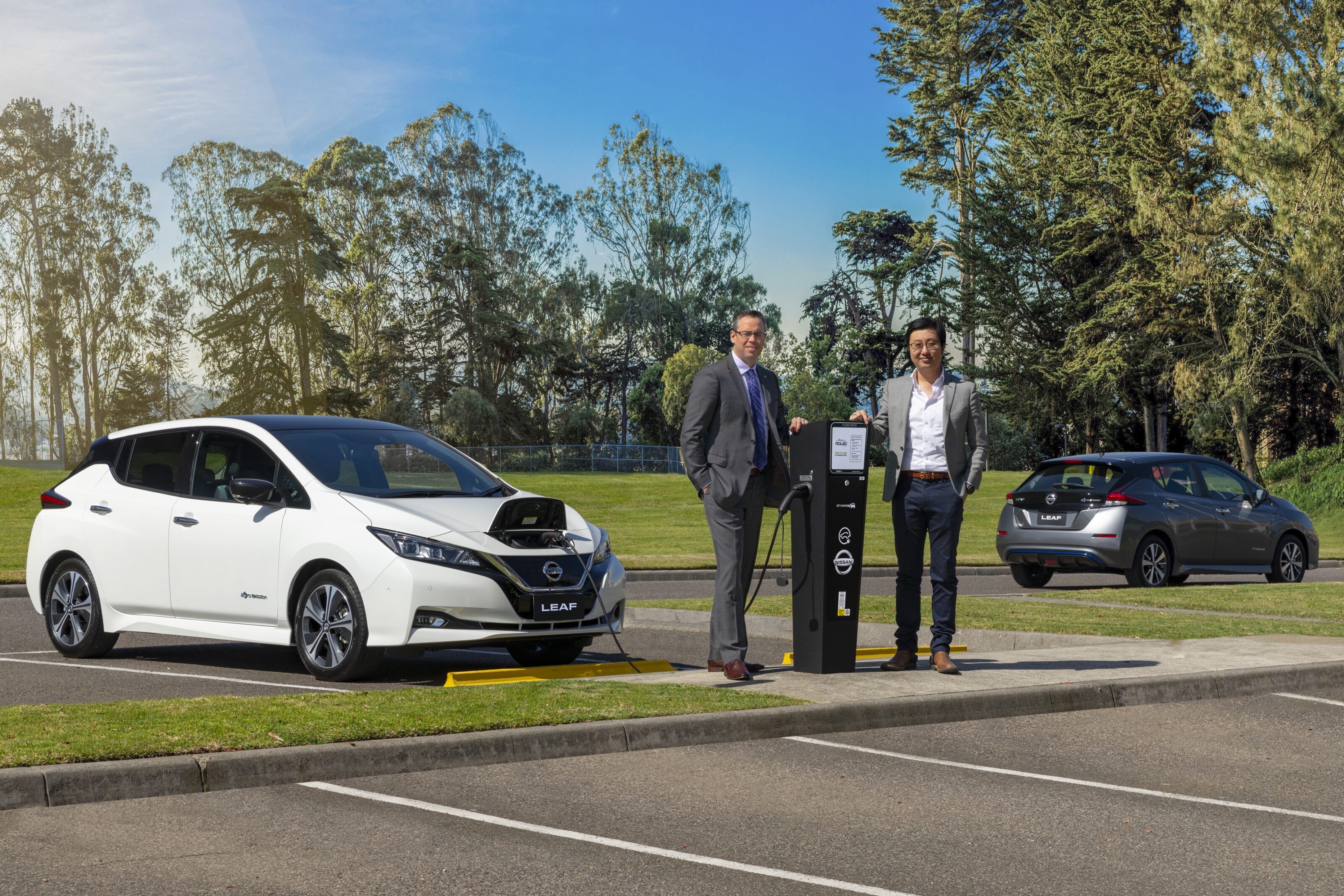
Recent data from the Electric Vehicle Council of Australia found that sales of new plug-in and hybrid electric vehicles (PHEV) tripled in the past 12 months to more than 20,000 vehicles sold in 2021.
According to JET Charge’s own predictions, sales of new EVs will increase from two per cent of new vehicles sold in Australia in 2021 to over 50 per cent by 2030.
“Building additional charging infrastructure is key to removing range anxiety and supporting consumer choice,” Minister for Industry, Energy and Emissions Reduction Angus Taylor said of the announcement.
“More and more Australians are already making this choice, with plug-in EV sales tripling last year. This investment will support this number to grow even further.
“This project expands on our $250 million Future Fuels Fund, taking the Government’s investment in low emissions vehicle technologies to over $2.1 billion.”
Everyone knows the big-ticket racetracks in Europe. The lucky among you have probably had the opportunity to drive their hallowed bitumen. But what if you are wanting euro driving thrills without the well-worn wheel tracks? Step this way.
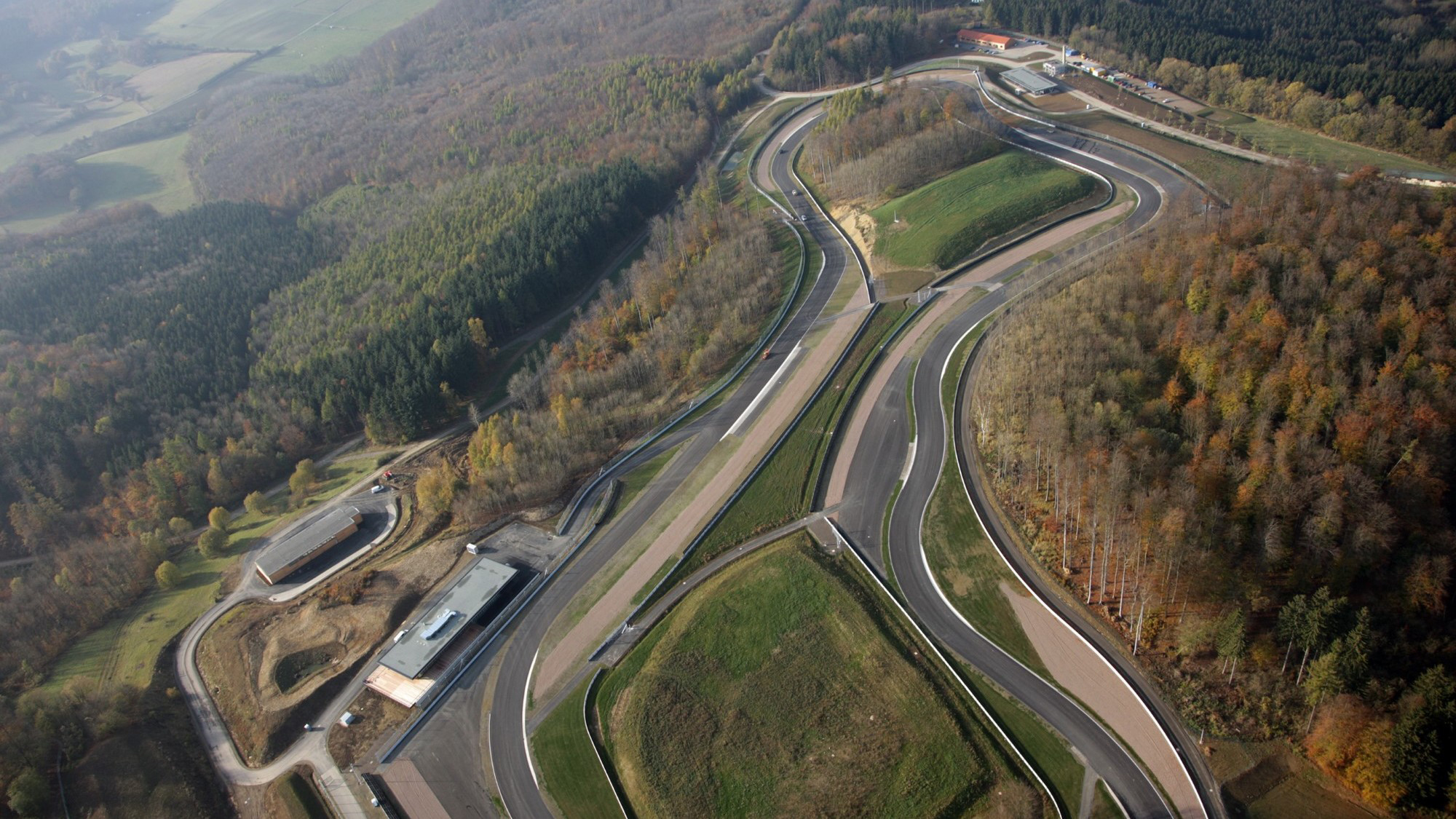
10: Bilster Berg
- Length: 4.2km
- Nearest airport: Dortmund (122km)
Still, the F1 rule book must feel like a straitjacket, so the former Cold War ammunition depot of Bilster Berg Drive Resort is what happens when Tilke bins the rules.
Secreted far from spying eye in a pine forest near Bielefeld in northern Germany, your first glimpse of the track is a wall of bitumen: the Mausefalle (Mouse Trap) which careens down into a crushing compression before leaping up into a completely blind corner just as the car unweights atop the crest.
It’s almost malicious, but turns out to be an absolute riot to drive.
This mini-Nordschleife rewards agility: try a Lotus Exige.
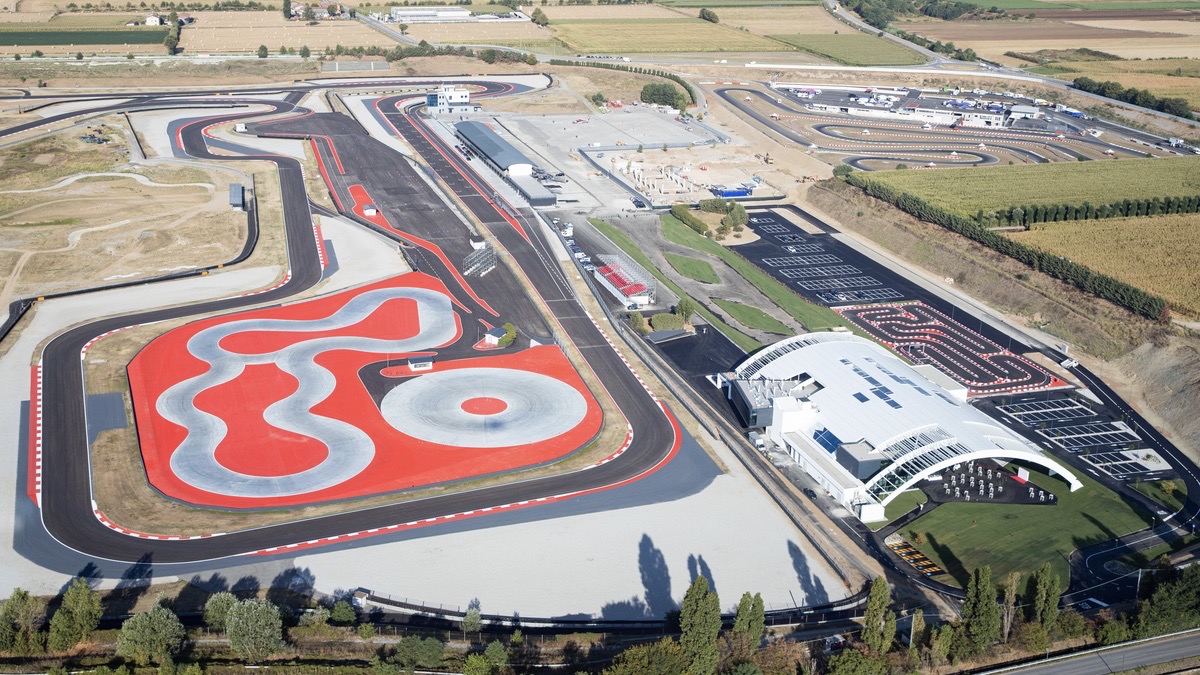
9: Franciacorta
- Length: 2.5km
- Nearest airport: Brescia (32km)
Franciacorta probably hasn’t ever come across the radar. But it should, especially if you happen to be a Porsche owner.
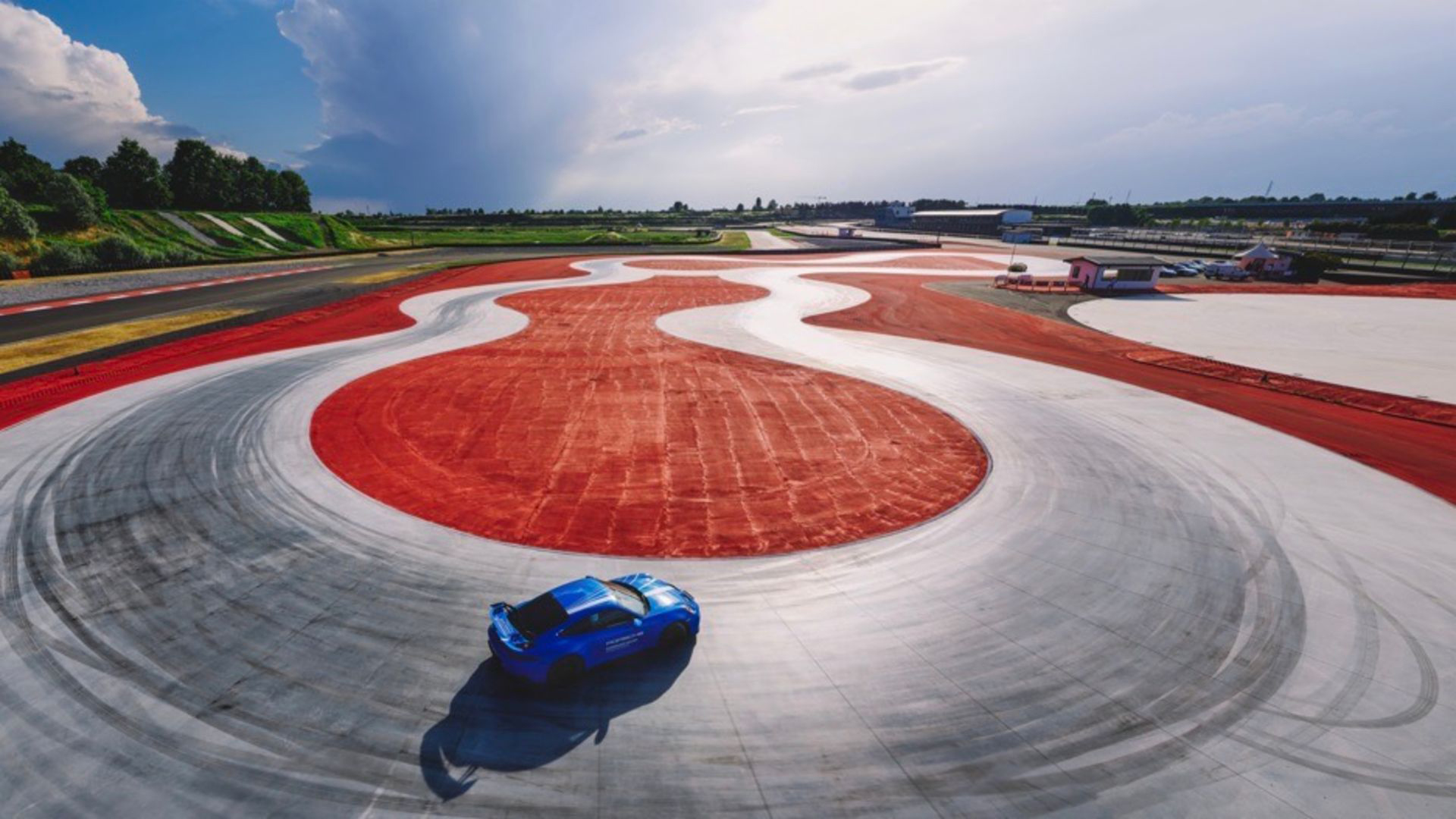
Carved into a quarry, Franciacorta opened fully in 2007, with Porsche buying the facility and opening its largest Porsche Experience Centre last September.
As well as the highly technical main circuit, there’s a separate low low-friction handling circuit made of polished concrete and an off-road facility.
A quick 30km Uber from Brescia airport will present you at Porsche’s door with an array of track-ready vehicles and packages to indulge in. Easy.
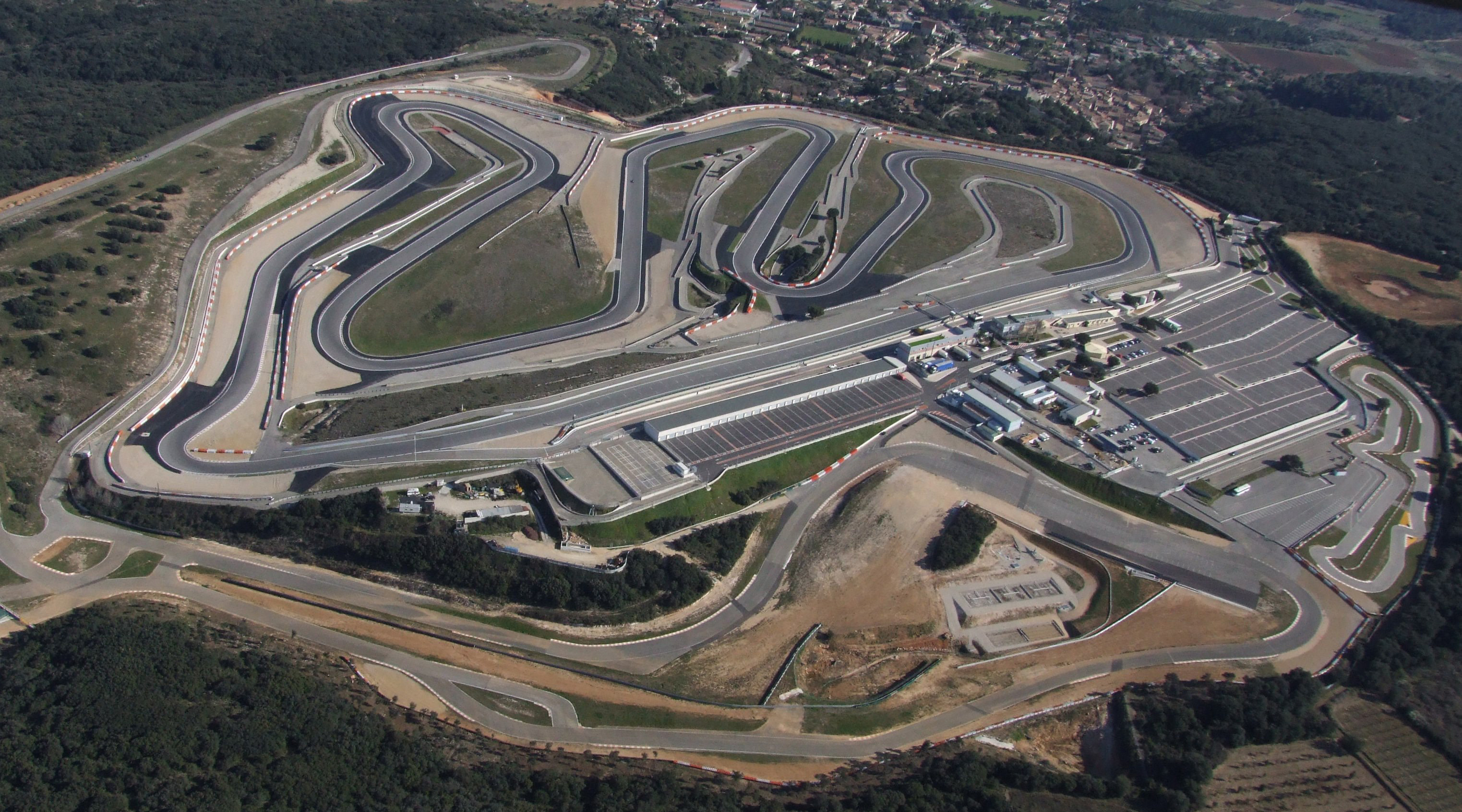
8: Circuit de Lédenon
- Length: 3.2km
- Nearest airport:Nimes (25km)
With more relief than any other French circuit and jaw-dropping views across the Camargue, Lédenon came into being when husband and wife team Jean-Claude and Sylvie Bondurand started bulldozing a circuit on their land back in 1971.
It’s remained in the family ever since. Open for business 300 days of the year, it’s unsurprising that the track is in great nick.
However, every year sees a new noise challenge from local holiday home owners, so you may need to get here before it’s too late.
Something with torque works well here. A Viper holds the lap record.
7: Contidrom
- Length: 3.8km
- Nearest airport: Hannover (35km)
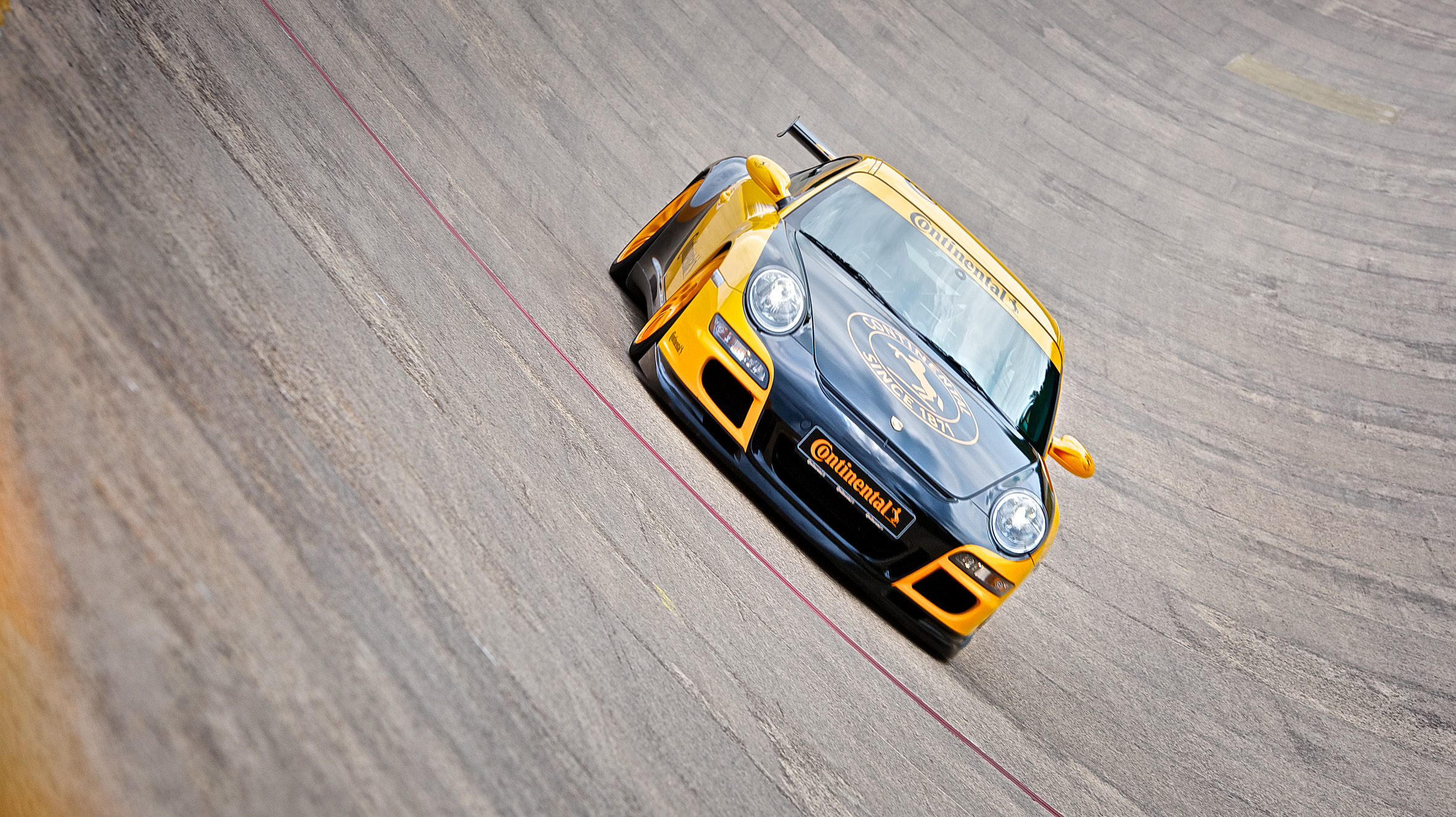
Unlike some test tracks that view the general public as a gross invasion of privacy, Contidrom periodically flings the gates open and hosts events.
The ‘main’ track is the 3.8km dry handling circuit, but the 1.8km wet course, with its permanent low-level sprinklers is more fun, especially in a well-balanced rear driver.
Opened in 1967, the Contidrom originally had two parallel straights before an ingenious engineer decided to link them with banked sections, the top of which is angled at 65 degrees. Driving this is an astonishing experience as you’re crushed into your seat.
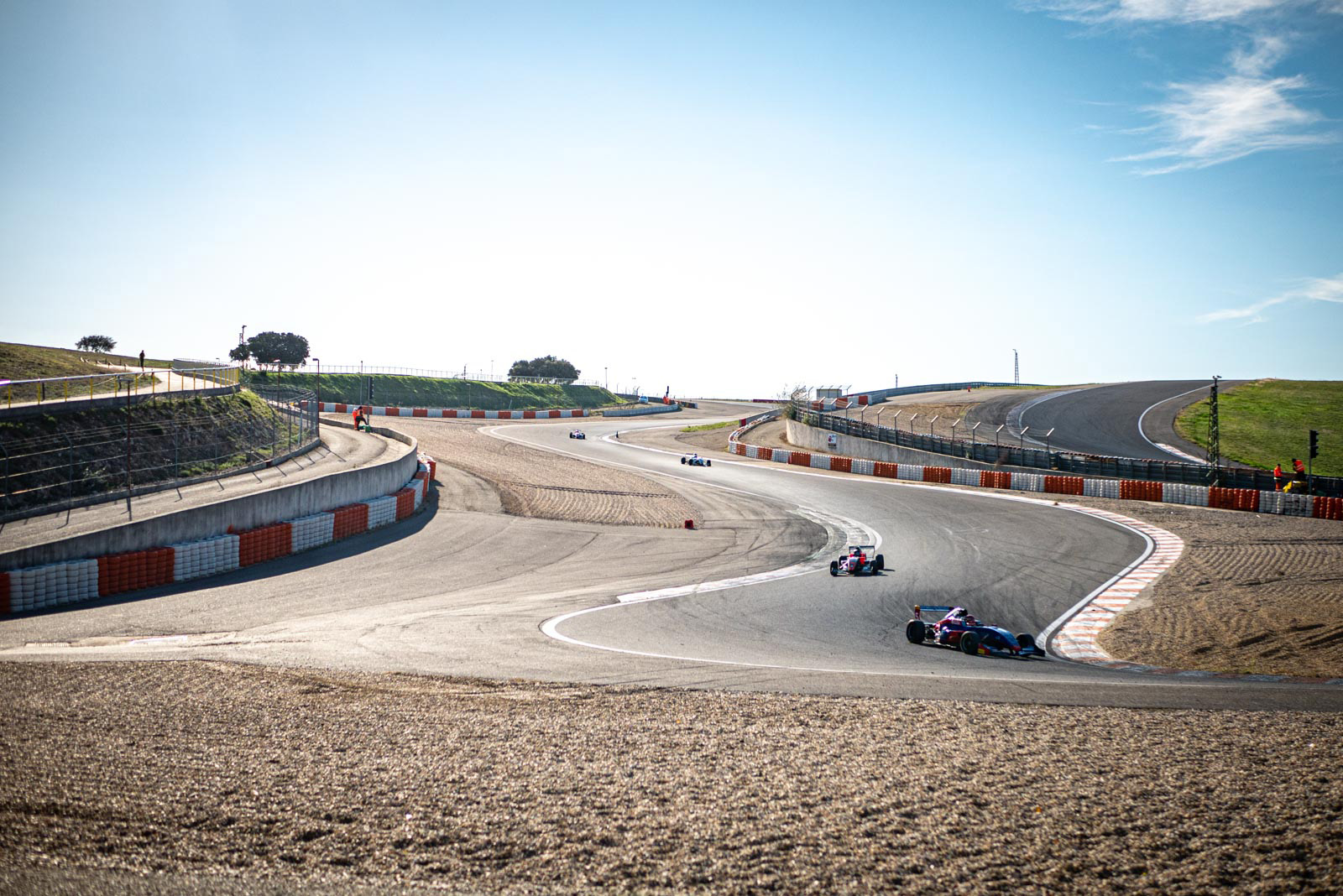
6: Circuito Guadix
- Length: 3.0km
- Nearest airport: Granada (83km)
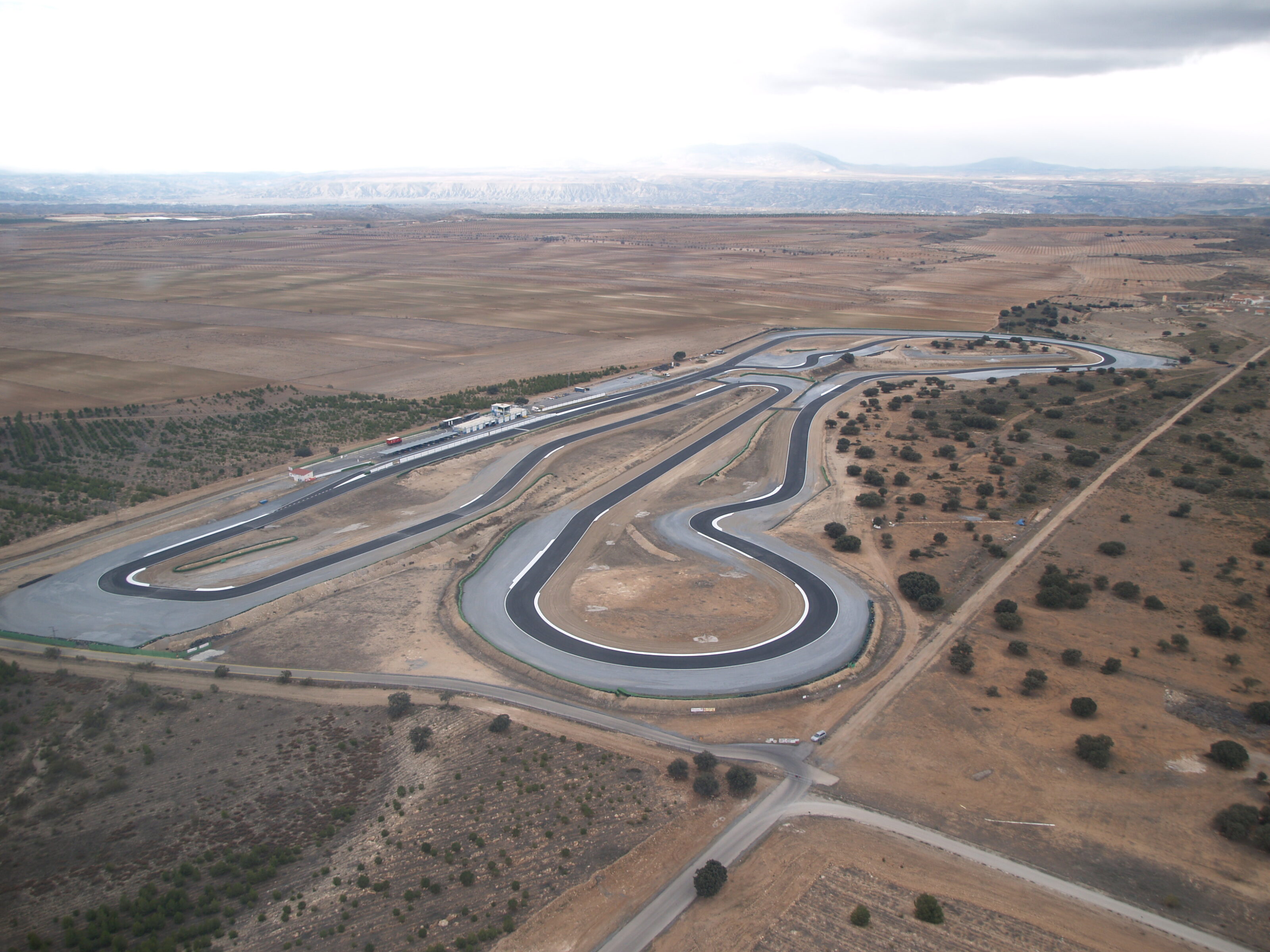
Circuito Mike G Guadix, to give it the full title, could be just the ticket. Located just west of Granada, it’s one of the few race tracks in Europe that looks onto snow-capped mountains in the depths of winter, with the Sierra Nevada draped with a blanket of snow between November and March.
Used chiefly as a test track, Guadix is so remote that it can be operated 24 hours per day even with vehicles that would snap the needles off most noise meters.
In 2008 the 19-corner track was resurfaced with a lower-deg tarmac. Guadix was also one of Michael Schumacher’s faves to ride on his Honda CBR.
If pushed to choose, we wouldn’t mind a rear-drive screamer like an E92 M3.
5: Parcmotor Castelloli
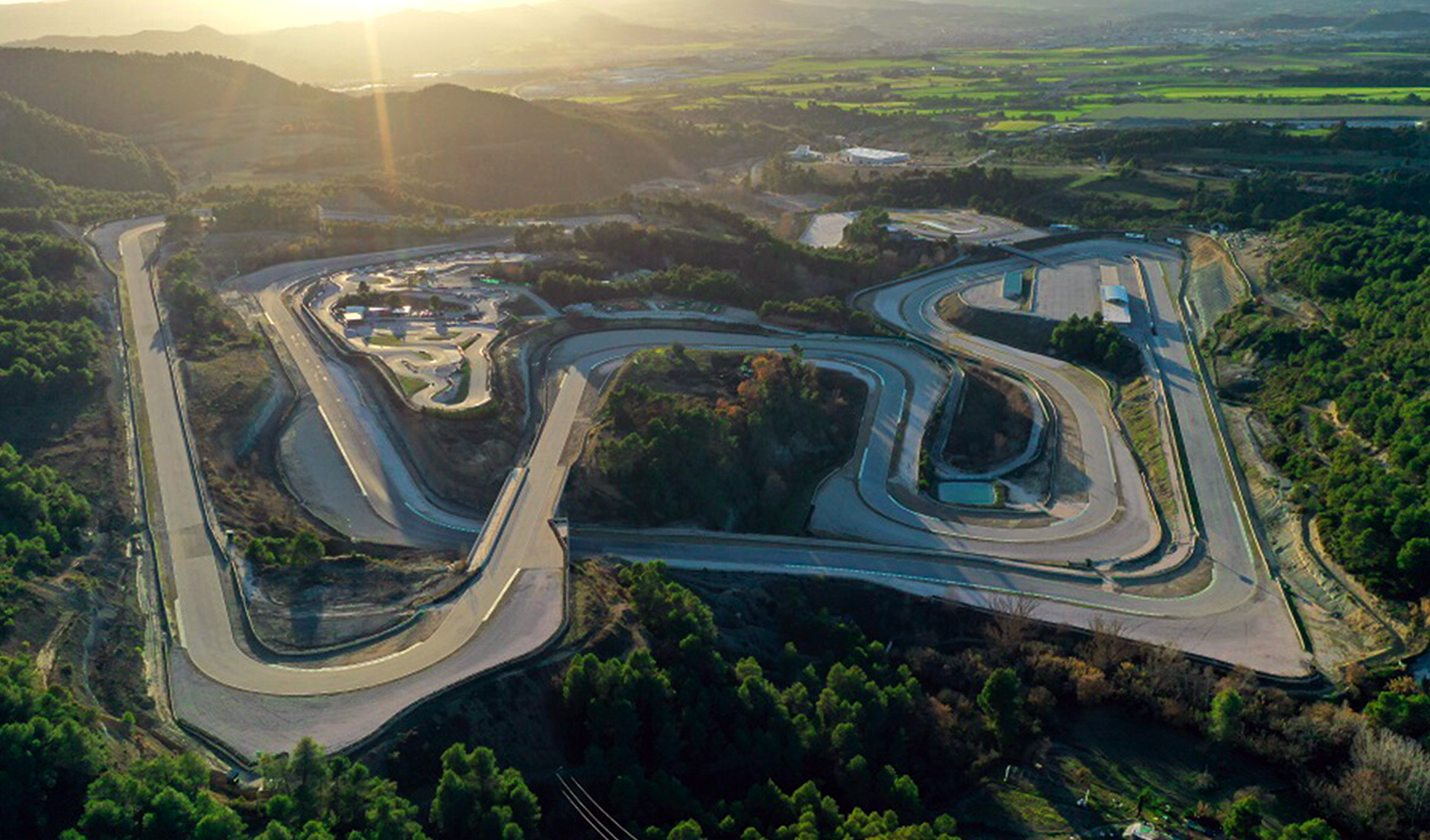
- Length: 4.14km
- Nearest airport: Barcelona El Prat (60km)
It was originally designed as a bike track, with input from the likes of Alex Criville, Carlos Checa and Toni Elias but it works equally well if you’ve got a car that’s light on its feet.
The 14-garage pit lane means it’ll never attract top-drawer race categories, but while friends and family are touring Las Ramblas down in the city, you have the opportunity to cut loose on a track with massive vertical relief and a figure-eight layout.
It’s only when you drop into a gorge and see the track teetering overhead on a giant viaduct that you realise how far you’ve plummeted.
4: Circuit de Charade
- Length: 3.98km
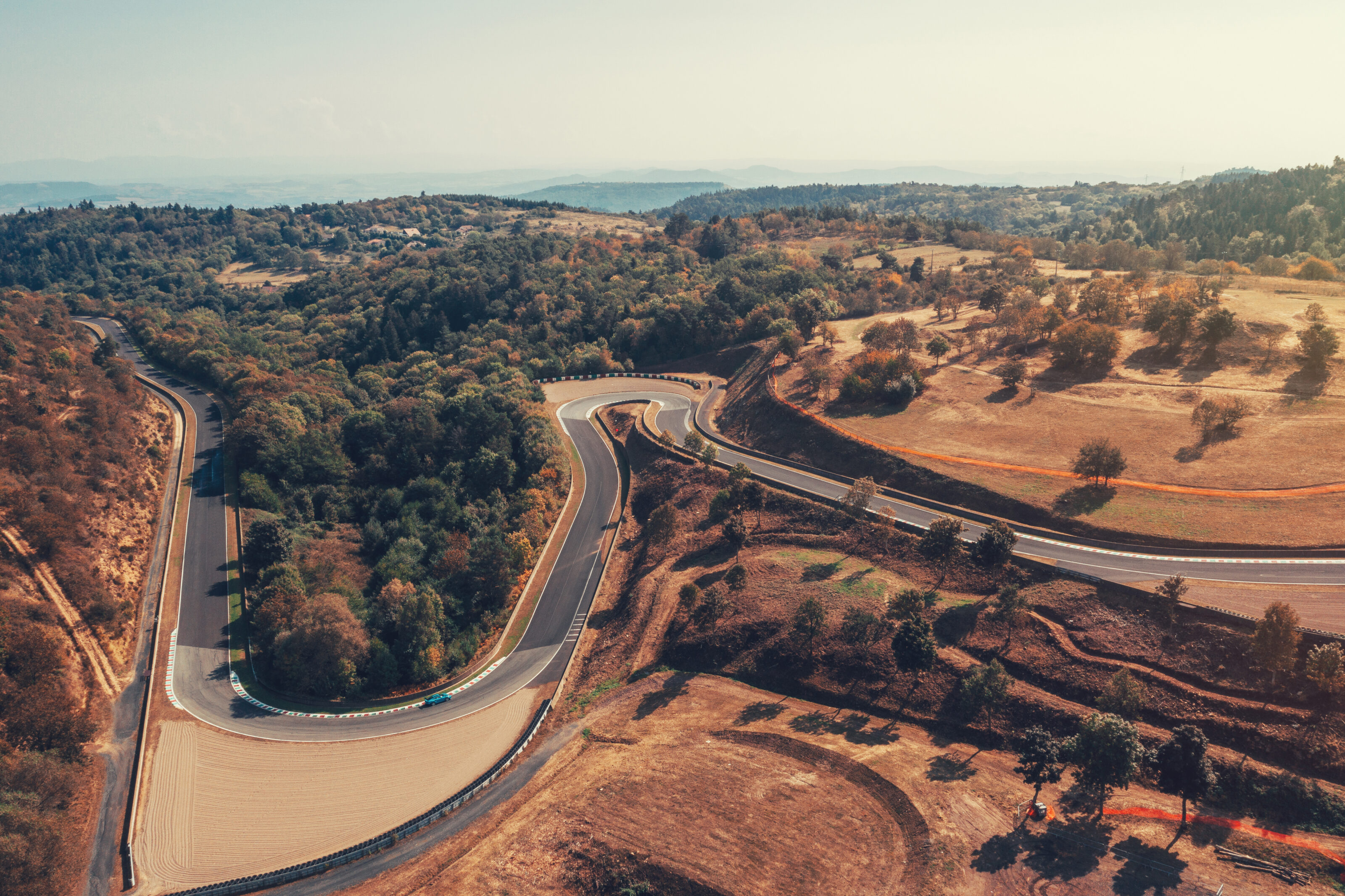
- Nearest airport: Clermont-Ferrand (16km)
Completed in 1958, Circuit de Charade was originally an 8.05km track built around the two extinct lava domes that dominated the city. In 1965, it welcomed the French Grand Prix, and hosted the race in ’69, ’70 and ’72 before the modern Paul Ricard track was awarded the rights.
Incidentally, it was at Charade in the final 1972 race that the now-head of Red Bull Racing’s driver development program, Helmut Marko lost the use of his left eye when a stone from Emerson Fittipaldi’s Lotus punctured Marko’s visor.
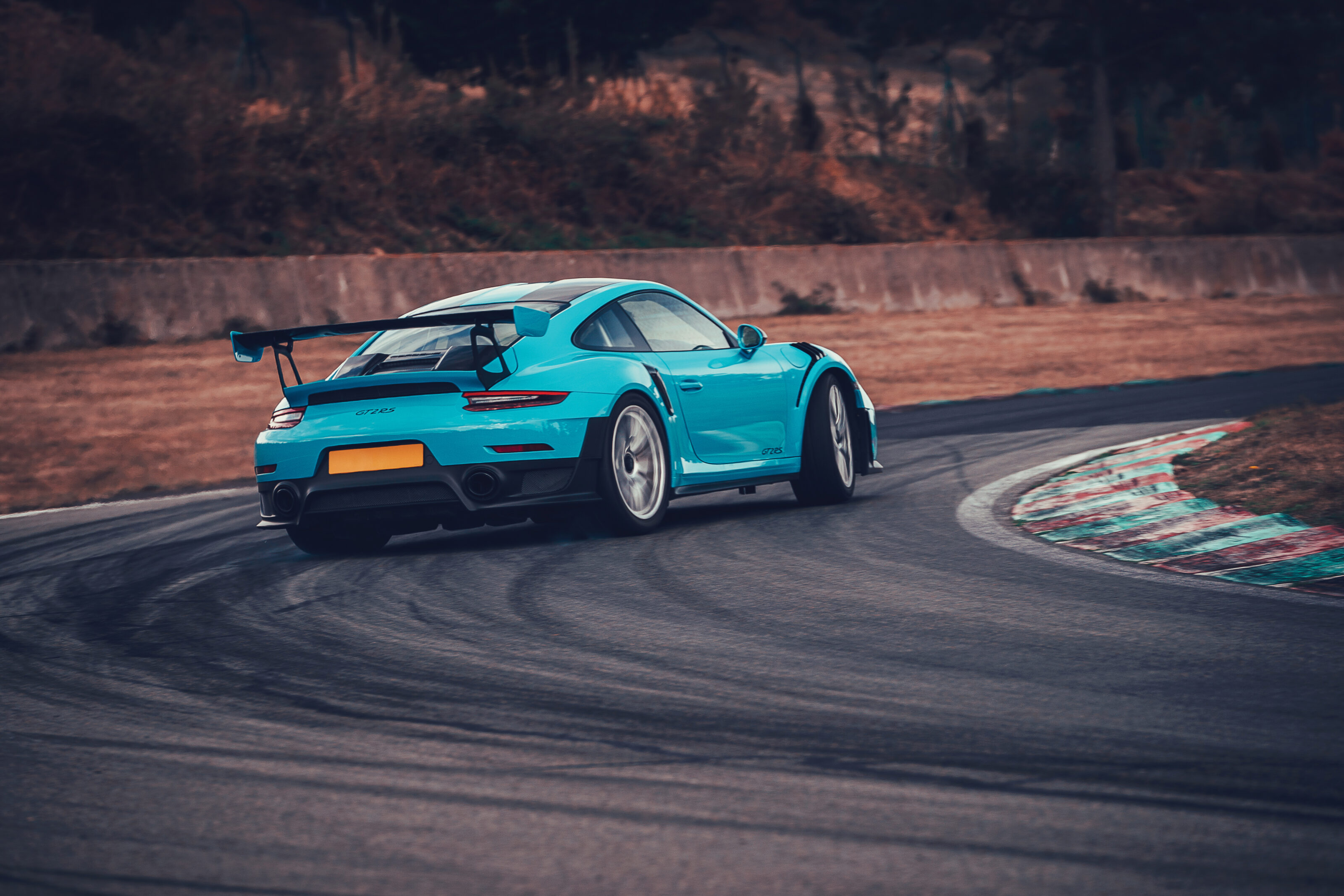
With no run-off at all on the mountain section, the track’s competitive days were numbered, and a horror smash in 1980 saw three marshals killed during a touring car race.
Events tapered down until the last local race was held in 1988. Since then, it’s been developed as a revised permanent facility using only the safer lower loop.
It remains hemmed in by concrete walls and it’s still unforgiving, but it’s scenic, charismatic and consequential. Plus, should you want to explore the original mountain sections of the circuit, they’re all still there as public roads.
3: Gotland Ring
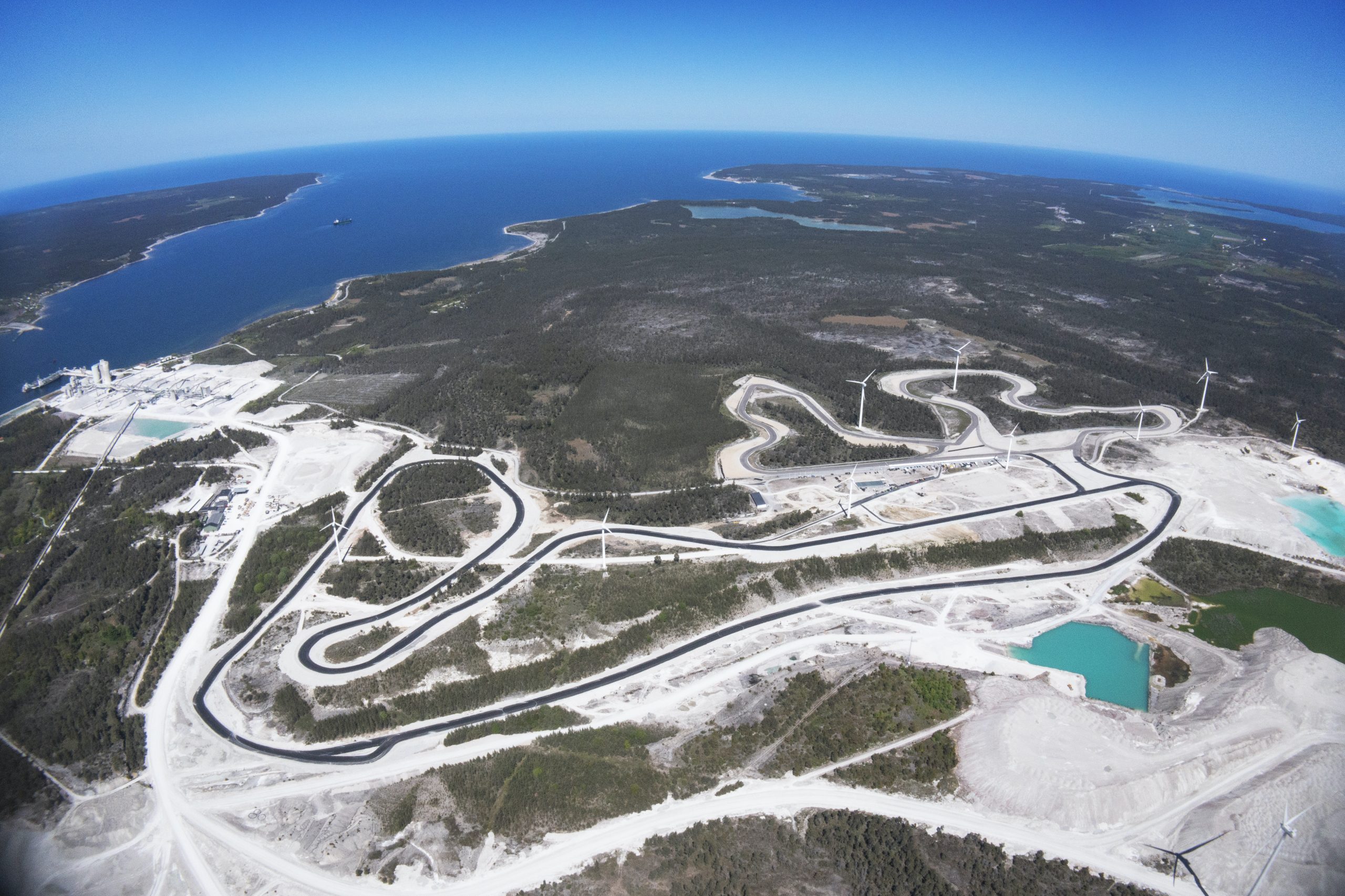
- Length: 7.3km
- Nearest airport: Visby (via Stockholm) (47km)
During its development, much was made of the Gotland Ring’s ambitions to eventually offer a 28km circuit configuration, and claim the title of world’s longest purpose-built race track.
Anyone who’s ever become a bit disoriented at the back of The Bend’s full 7.7km length will be relieved to know that the 7.3km longest configuration of Gotland is more than ample.
The track divides into a technical northern loop and a faster, free-flowing southern circuit that can be linked.
With a focus on sustainability, the Gotland Ring is highly valued by manufacturers and race teams alike as a test facility due to its privacy.
Visitors with internal combustion guilt can take a Wind-Driven Ring Taxi lap in an EV.
2: Circuito Monteblanco
- Length: 4.43km
- Nearest airport: Seville El Prat (69km)
Say hola to Circuito Monteblanco.
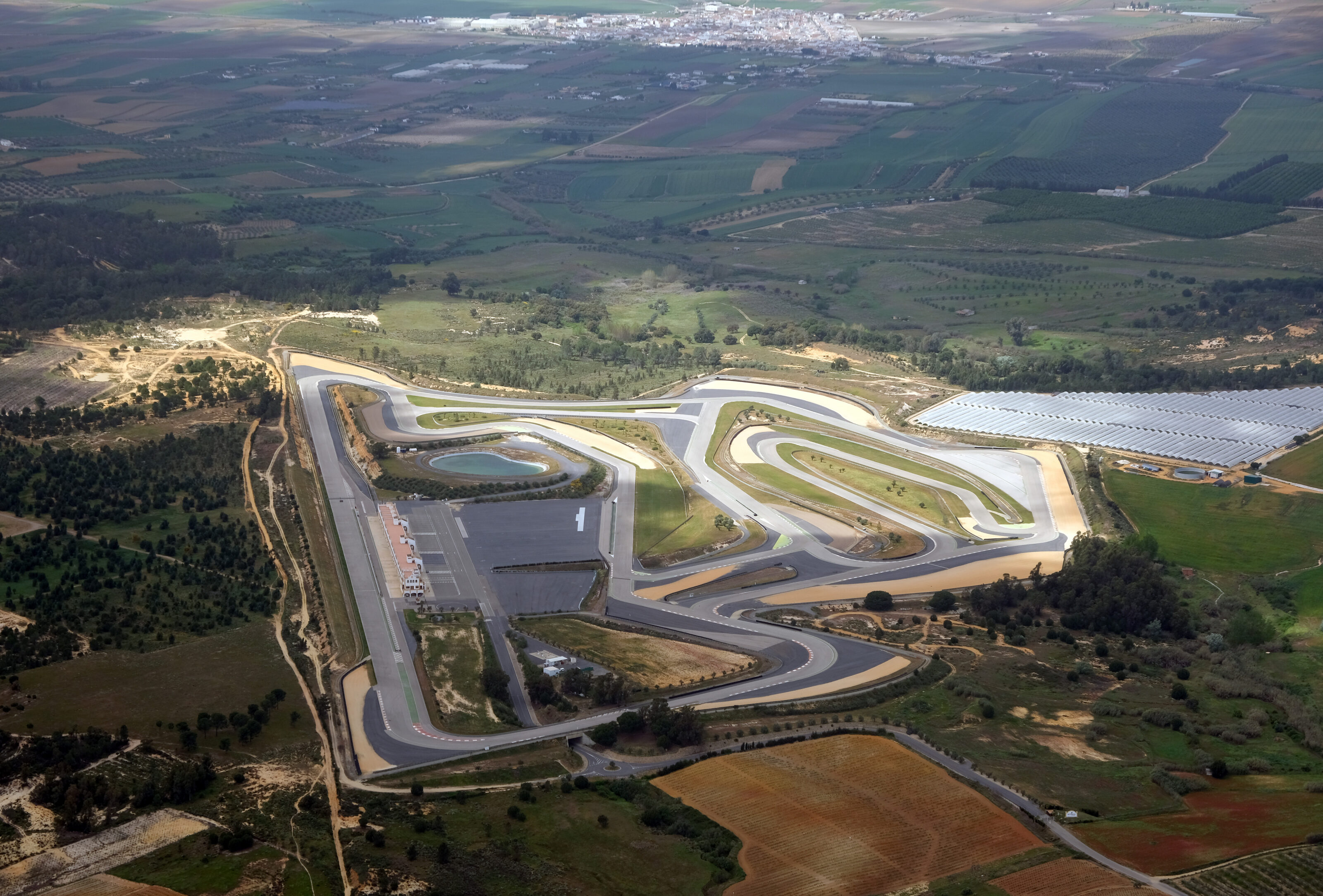
A short schlep westwards along the A49 from Seville is a circuit that has all the accreditation you could reasonably expect. It’s FIA homologated to T1 grade (F1 Testing) and FIA Grade 2 for races up to and including GP2, so you know that this is a serious facility.
The 4.43km GP length circuit features three separate pit lanes, a 960m front straight, 36,000 square metres of asphalt run-off and 50,000 square metres of gravel traps as well as sprinklers and low-mu epoxy surfaces for wet-weather testing.
With 26 different track layouts, you’ll never get bored and it only rains on 55 days per year here.
1: Oulton Park
- Length: 3.64km
- Nearest airport: Manchester (40km)
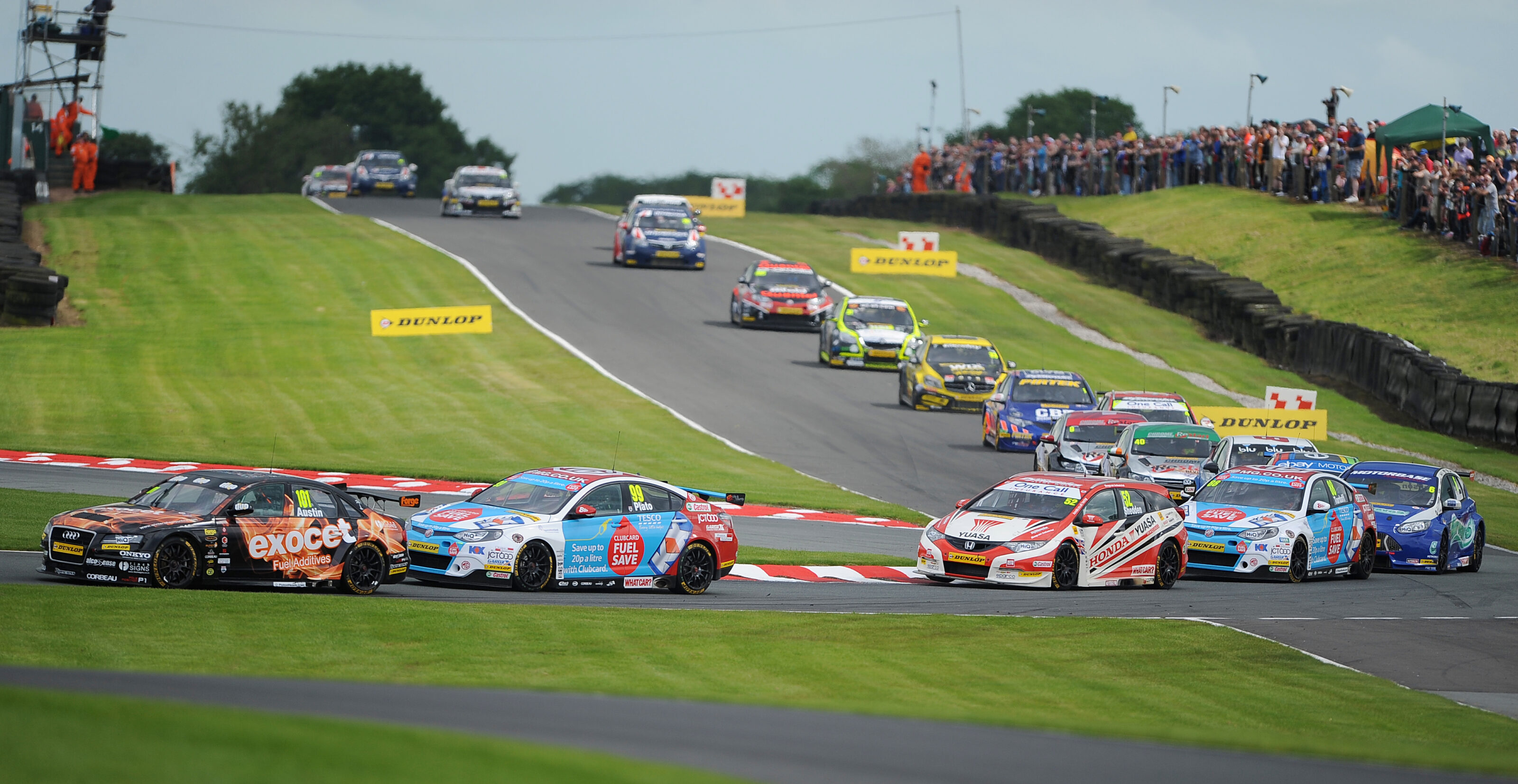
If you only have time for one British track, make it Brands Hatch. If you also want to squeeze in another, it’s worth the schlep to Cheshire for this parkland circuit that flows beautifully yet throws in enough challenge to really keep you on top of your game.
Druids is one of the great corners anywhere; an off-camber, double-right-hander at the highest point of the circuit, usually taken in fourth gear. Be brave and you’ll make up heaps of time there. Get too greedy on entry and the previous left-hand kink will position your car too far to the right and you’re toast.
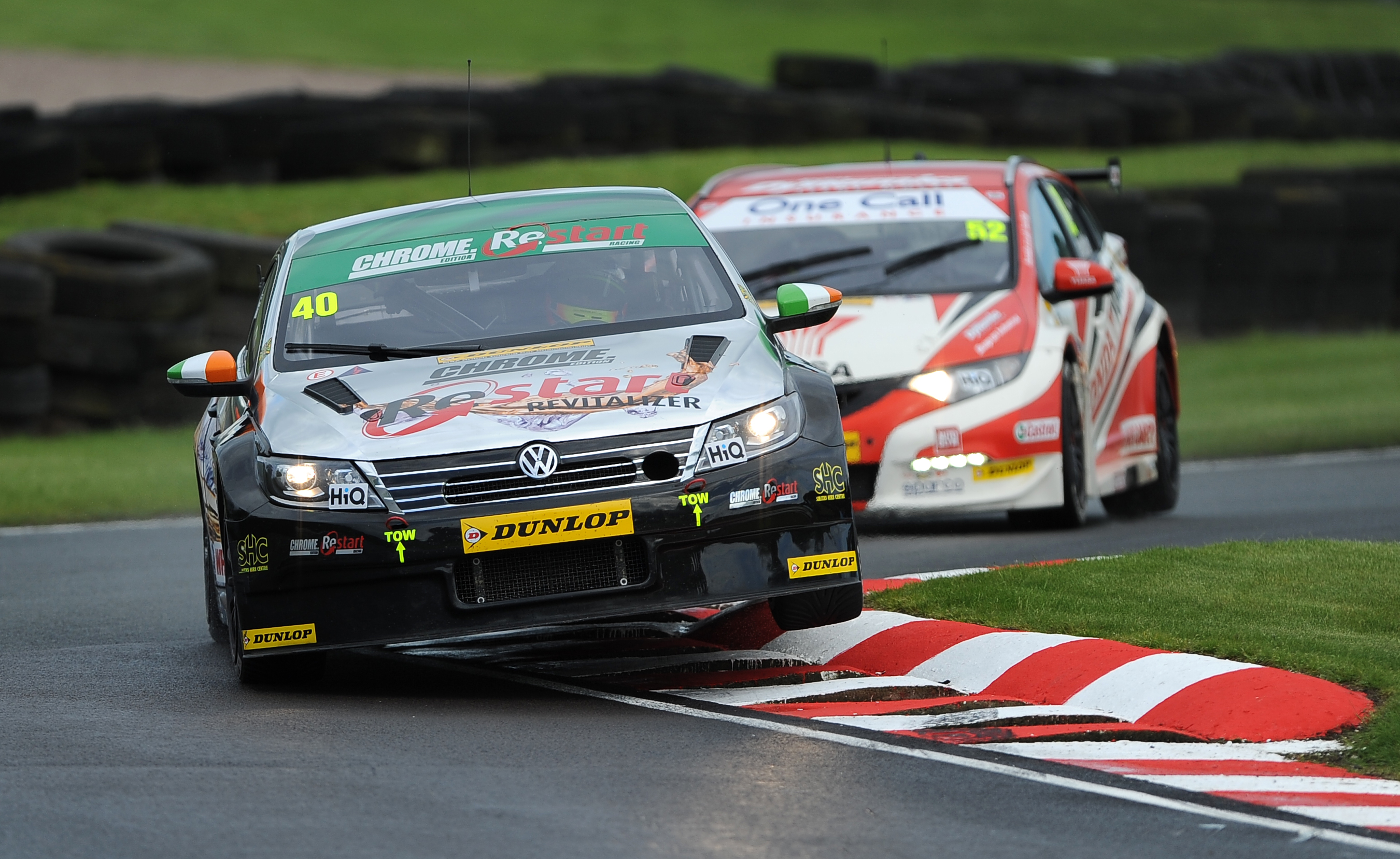
At most big FIA-rated circuits, you’re a long way from anything and there’s little impression of speed. At Oulton, the full-tilt run down to Cascades feels berserk in anything with a bit of power, while Hislop’s chicane can get pretty tasty when two cars arrive side by side.
For Oulton, you’ll want something punchy, wieldy and adjustable. You wouldn’t go far wrong with a Mercedes-AMG A45 S. Watch the weather though. The northwest of England is notoriously damp.
