
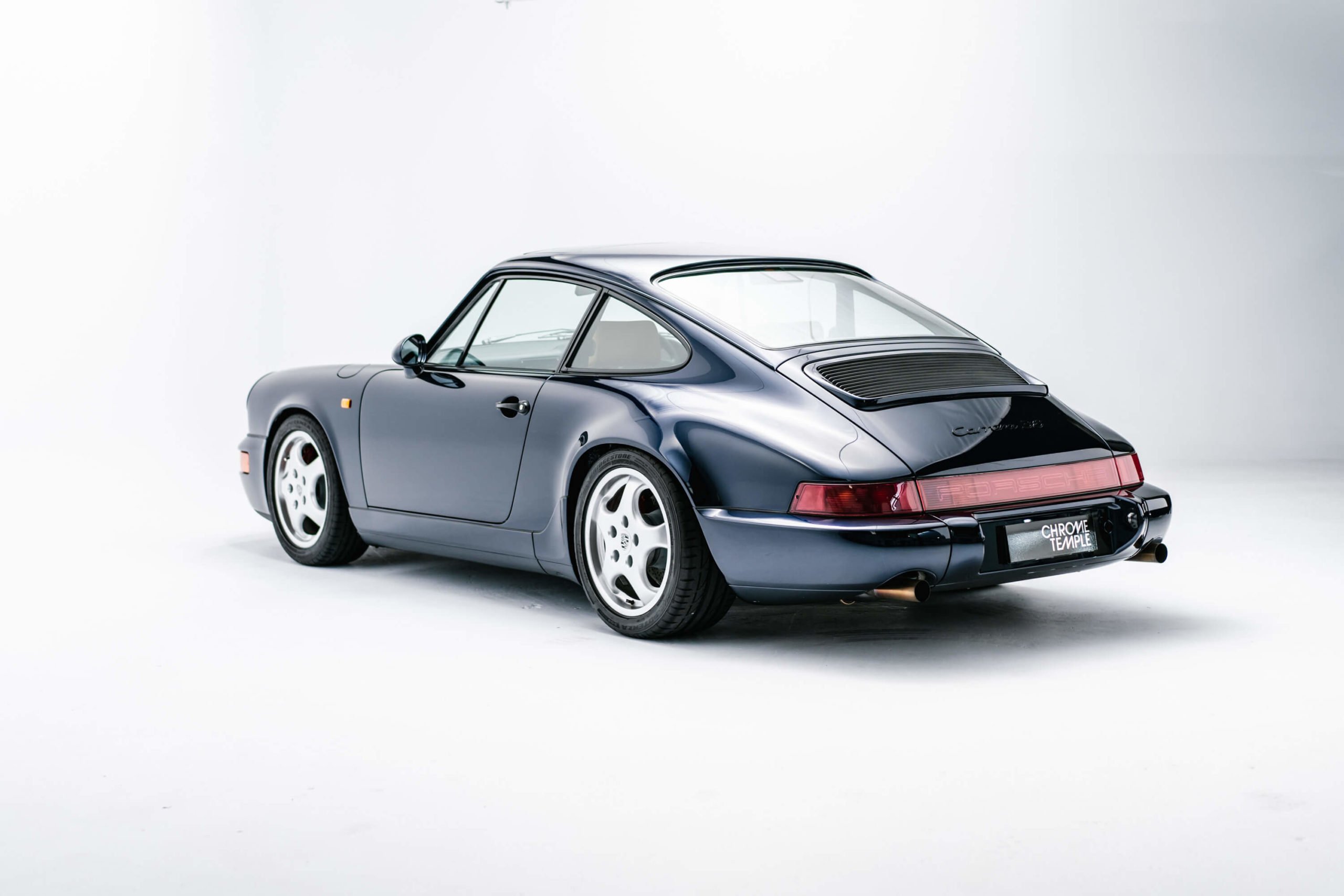
A re-engineered 1990 Porsche 911 developed in Australia has been purchased just days after going up for sale.
Drawing from the best-of-the-best of the 964-generation, this unique masterpiece likely didn’t come cheap for its lucky new owner – who purchased the car after it was listed for sale by Chrome Temple.
Re-developed by PR Technology – a specialised Porsche engineering workshop in Sydney – this 964 911 has undergone a complete revamp with inspiration from Singer Vehicle Design.
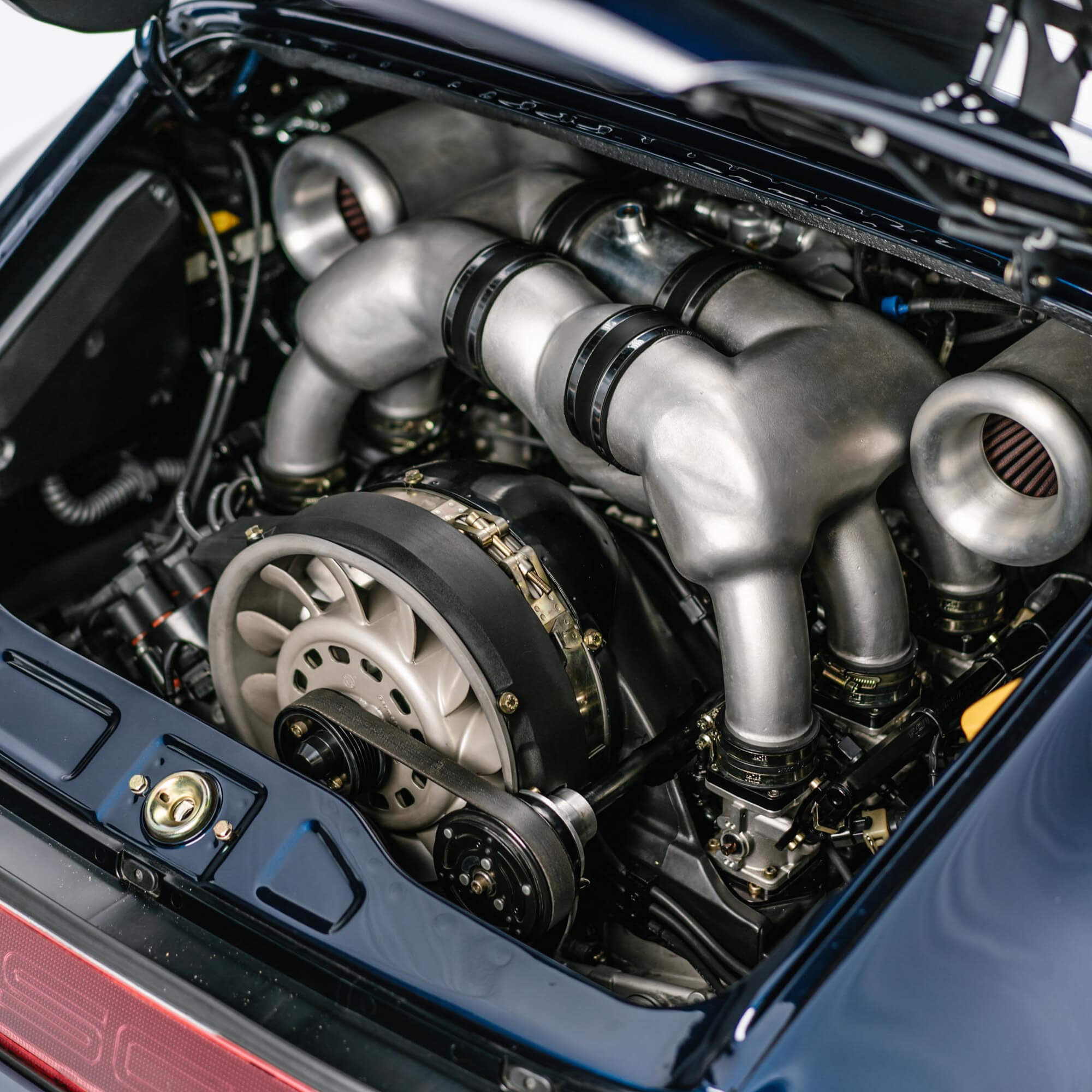
The vehicle is powered by a version of the 3.8-litre naturally-aspirated flat-six engine from later 911 models, with a custom dyno tune providing 279kW of power.
For instance, the crankshaft, inlet plenum and oil pump have been taken from the 997 GT3, while the valve springs and solid rocker arms are courtesy of the 993 RSR.
It is also finished with unique single billet cam covers and is linked to aftermarket components, such as Jenvey throttle bodies, lightweight Carrillo connecting rods and Mahle cylinder sleeves.
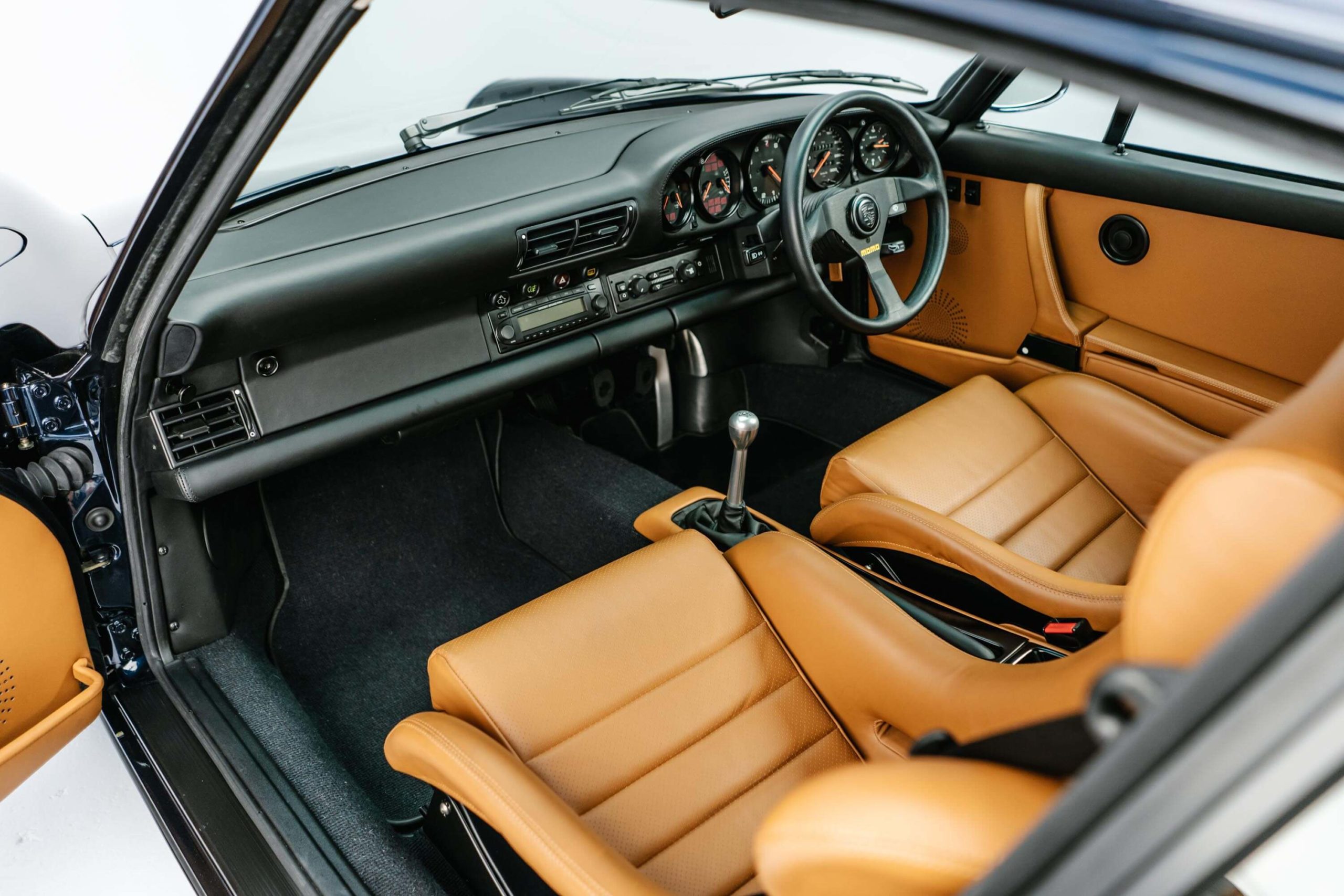
Meanwhile, the brand-new genuine six-speed manual transmission has been rebuilt with performance and durability in mind.
Following an extensive respray, the 911 has been wrapped in midnight blue metallic – with the underbody and under bonnet surfaces also receiving the same treatment.
To improve dynamics, over 60 kilograms of weight has been removed from the vehicle, along with the addition of a shock tower bracing in the rear and 964 RS-specific items, such as the rear bumper and windscreen.
Inside, the creamy-coloured leather is sourced from the same supplier as Rolls-Royce, and even the Queen’s private vehicle.
Adding to the opulence is headlining taken from a Mercedes-Benz S-Class, along with carpets from the Porsche 356 and a single-piece billet aluminium gear shifter engraved by jeweller John W. Thompson.
Volvo is furthering steps in its electrification strategy and will open a new research and development centre in Gothenburg, Sweden, next year.
The move is one of a growing trend as manufacturers realise the need for owning the complete battery construction process and includes further plans to open a gigafactory (battery factory) in Sweden later this decade.
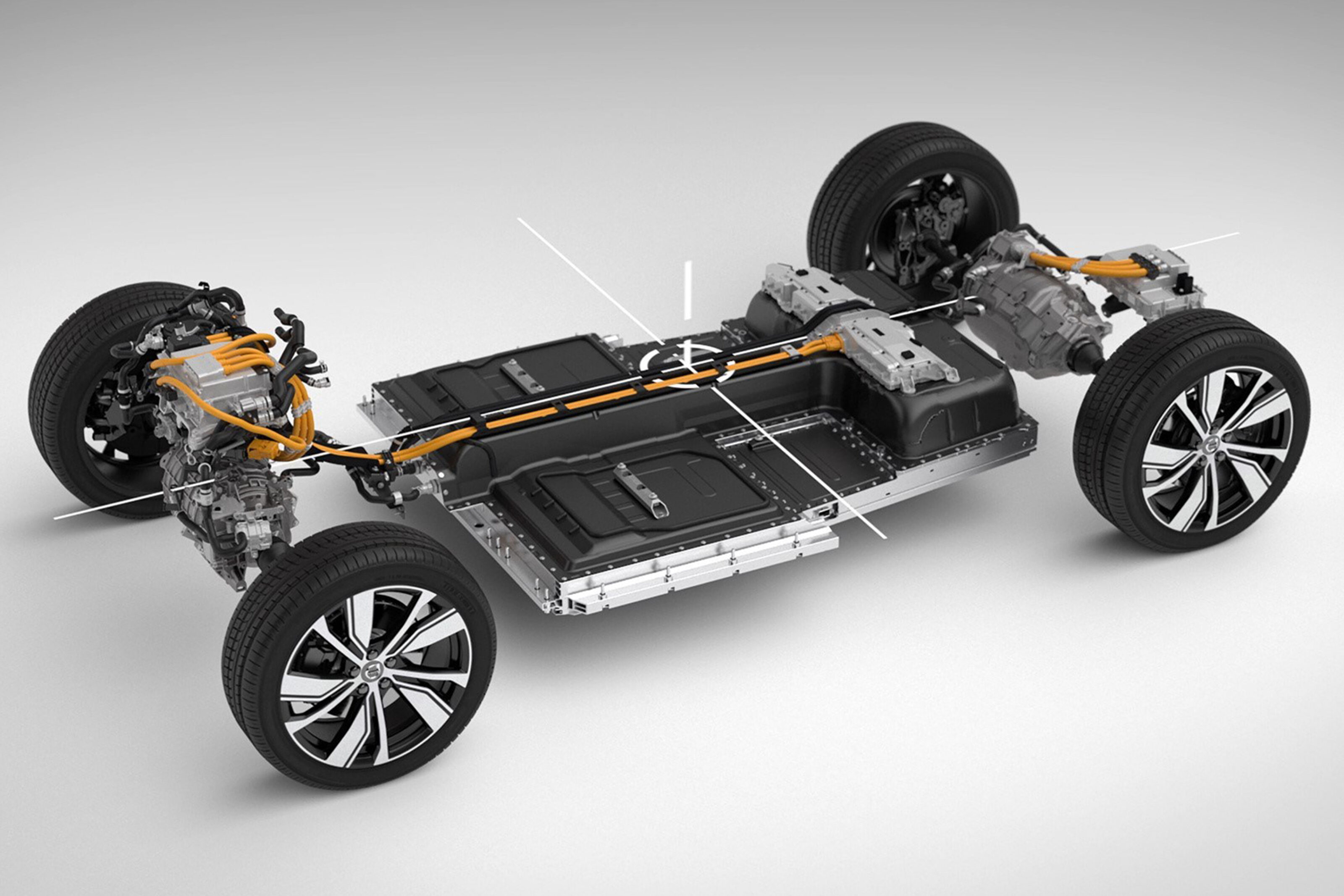
The new centre will be operated in conjunction with its partner Northvolt, and is part of Volvo’s greater $4.6 billion electrification strategy to build more EVs. Volvo’s plans are to make at least 50 per cent of its sales electric by 2025 before removing traditional combustion power from its line-up by 2030.Before then, Volvo will utilise battery production from Northvolt’s existing site in Sweden which will provide 15GWh of cells from 2024 ahead of the opening of a large gigafactory.
The partnership with Volvo will help it meet emissions targets as the maker says Northvolt’s “sustainable battery production” methods reduce the environmental impact of EV production.Like with Volkswagen’s latest new partnerships – including with an Australian company that sources ‘clean’ lithium-ion – Volvo is focusing on ramping up battery production and will build a new battery factory in 2023.
The Swedish carmaker is planning for a production capacity of 50GWh per annum in that factory alone and they will be used in the next generation of pure-electric Volvo and Polestar cars such as the next-generation XC60 and XC90, which will include fully-electric versions.It is expected that the new research and development centre in Gothenburg will create hundreds of new jobs and Volvo says it will be “one of the few automotive brands to make battery cell development and production part of its end-to-end engineering capabilities”.Other manufacturers to go into end-to-end battery solutions include Volkswagen with its gigafactory in Germany, and BMW, which also has an agreement with Northvolt.
The lengthy run of the first-generation Mitsubishi ASX could soon come to an end, with new reports suggesting an all-new model will debut in around 18 months’ time.
In an interview with Czech publication Auto.cz, the public relations manager of Mitsubishi Czechia provided our best indication yet that a second-generation version is near, saying “the absolute positive is that we already know that the new ASX will arrive in early 2023.”
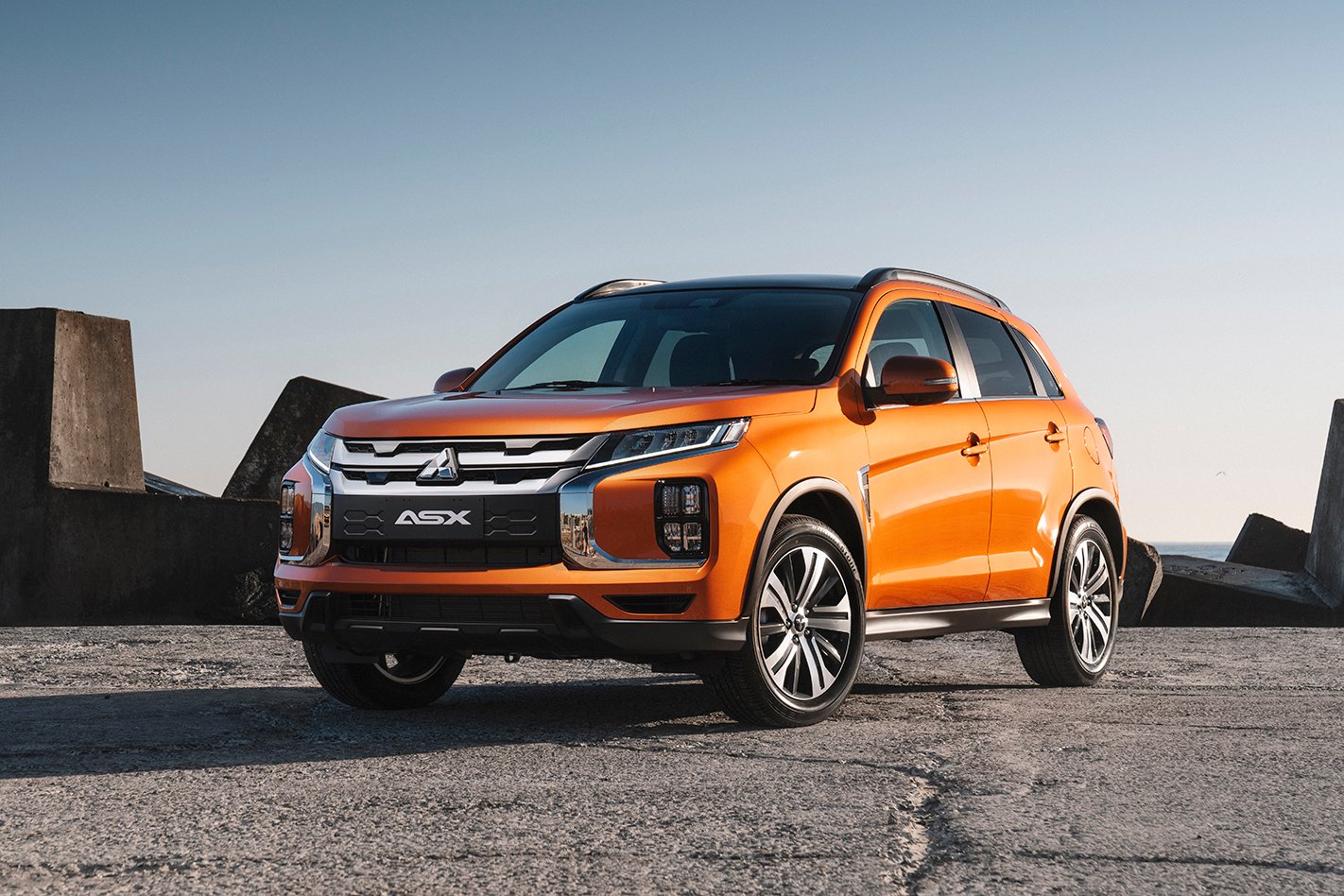
The representative also revealed production of the current model has ended for the Czech Republic, with it no longer featured on Mitsubishi’s price lists or local online configurator.
However, the ASX will remain on sale in Australia until a new-generation version touches down.
The brand recently invested in side-impact bar modifications for the hugely popular small SUV to meet strict new local crash safety regulations, which came into force on November 1, 2021.
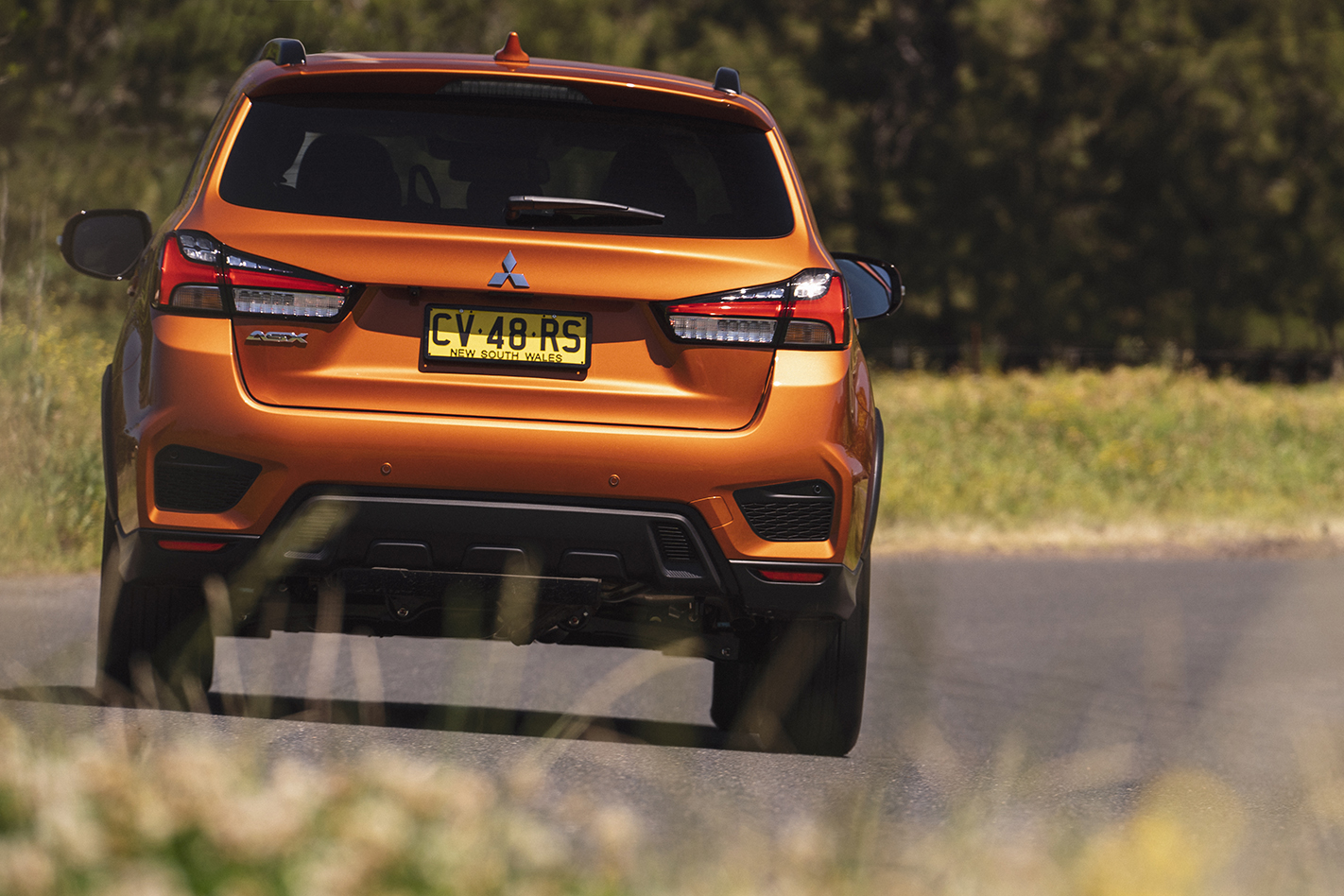
While details are largely unknown, Mitsubishi previously announced it will “procure OEM-model vehicles from Renault … which already meet regulatory requirements,” with the new ASX likely to become a rebadged Captur in Europe, based on the CMF-B architecture – potentially catering for a plug-in hybrid (PHEV) powertrain.
However, this arrangement is likely to remain exclusive to the Old Continent, where tough emissions standards have caused vehicle manufacturers to scale back product ranges and take up badge engineering (including obtaining models from rivals).
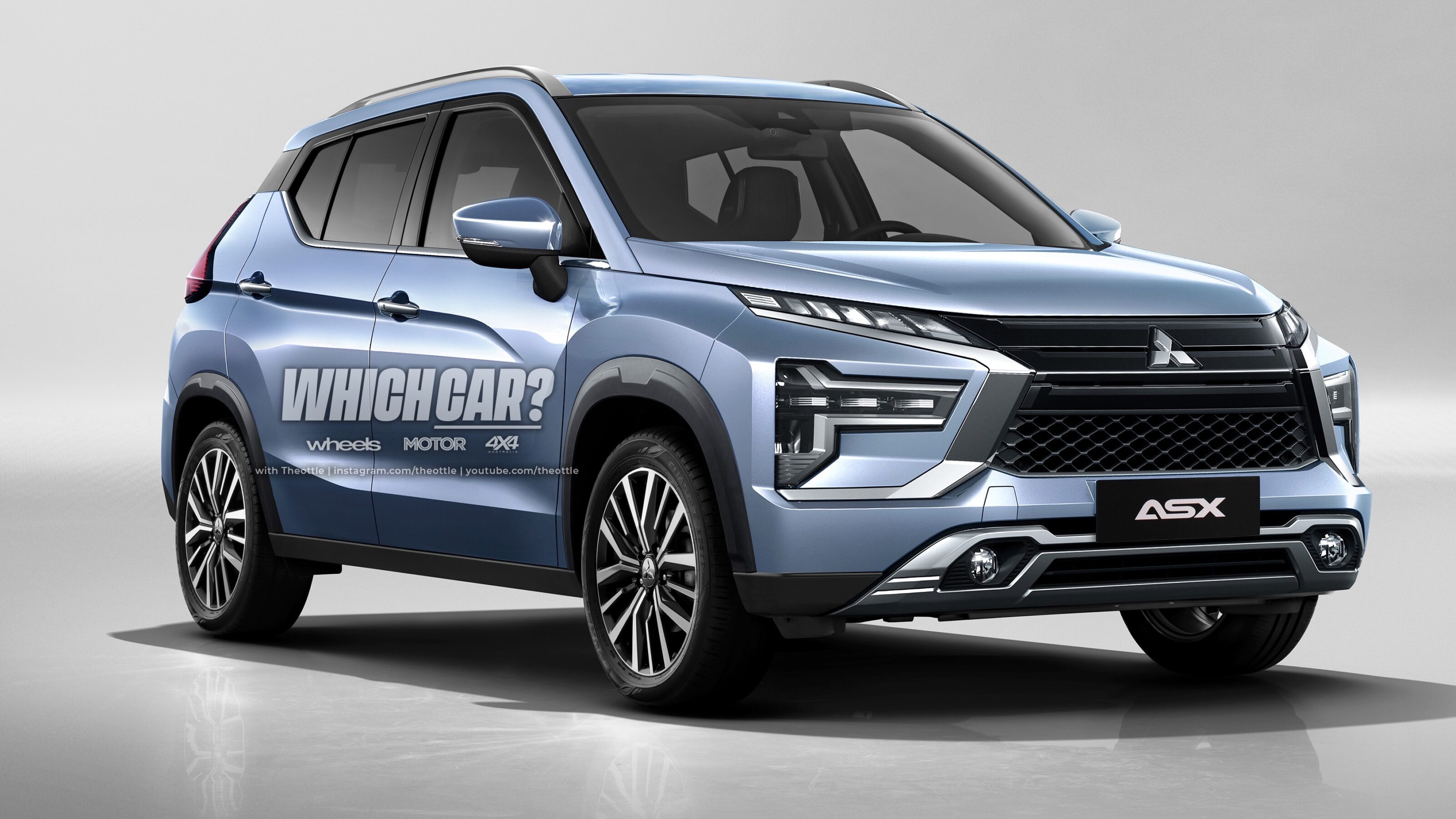
While plans for markets outside of Europe are less clear, designer Theottle has imagined the next-generation ASX with a pure design – albeit with underpinnings shared with other small SUVs in the Renault-Nissan-Mitsubishi Alliance.
Visually, the ASX is expected to follow the same path as the all-new Outlander and facelifted Eclipse Cross, which both debuted an updated iteration of the marque’s ‘Dynamic Shield’ design language.
The rendering is also reminiscent of the Indonesian-market Xpander MPV, with slimmer LED daytime running lamps and a T-shaped headlight cluster, as well as a lower skid plate with integrated fog lamps.

At the other end, the illustration depicts a boxier rear-end with tail-lights inspired by the Eclipse Cross, with the side profile also influenced by the slightly larger SUV.
If the new Outlander is a good guide, the 2023 ASX could pick up a drastically improved cabin – likely dominated by a larger 9-inch infotainment system featuring wireless smartphone mirroring, plus a 12.3-inch digital instrument cluster and quilted leather upholstery.
Stay tuned to Wheels as more information surrounding the next-generation Mitsubishi ASX comes to hand in the coming weeks and months.
The Volkswagen Arteon had a little breather after launching here a few years back. A little bit of WLTP, a little bit of plague and no doubt a healthy dose of brave pills later, Wolfburg’s Australian outpost told us in May that they’re bringing sexy back “because we can”.
It makes a good headline and seems as good a reason as any. It’s slightly puzzling, of course. SUVs rule the dealer forecourts, with just weirdos like me (and possibly you) making a beeline for the lower, sleeker design offered in a more traditional body shape.
You can also buy a Passat – for now, at least – but that’s slacks and Hush Puppies compared to the diamond-studded Nike special editions of the Arteon.
Like many manufacturers willing to keep the sedan – and wagon – alive, conservative sedans just aren’t cutting it. Get someone from Volkswagen in the right frame of mind and they’ll even tell you the Passat is in a fair bit of trouble. That’s a car that used to be massively popular.
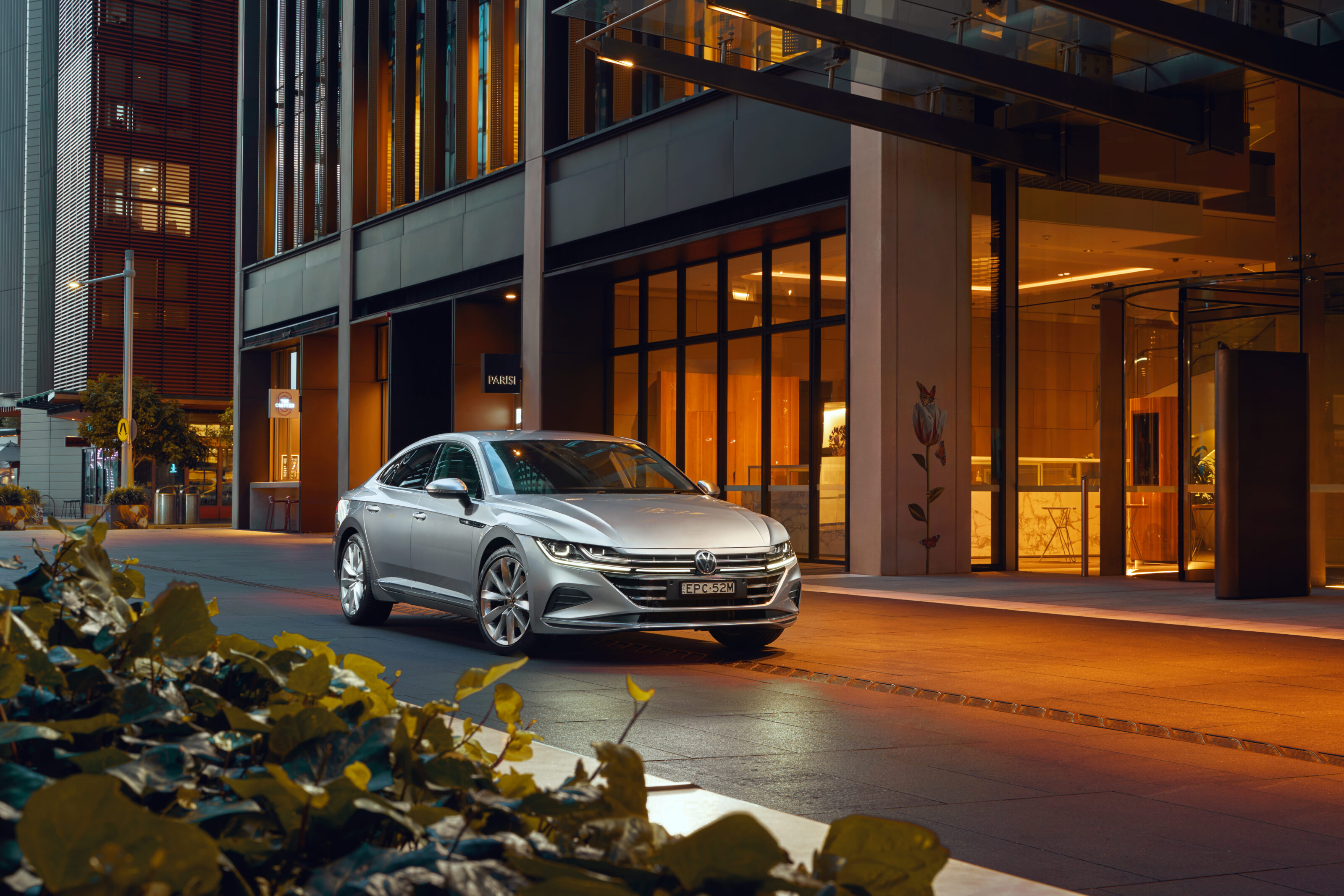
So you need to stand out, and what better way to do it than with the big-grilled, exuberant-for-a-VW presence of the Arteon.
Pricing and features
The Arteon is not only back, but you can also choose from four distinct versions across two body styles and two drivelines. The two body styles are both gorgeous, the sedan and the Shooting Brake, the latter a very lifestyle focussed wagon. The sedan is really a five-door hatchback but is styled like a booted four-door.
Specification levels are aligned to engine output, hence the offerings comprising 140 TSI Elegance and 206 TSI R-Line, both available as either a sedan or Shooting Brake (wagon).
The Elegance starts you off at $61,740 for the sedan and $63,740 for the Shooting Brake, both before on-road costs.
You get 19-inch alloy wheels, keyless entry and start, three-zone climate control, heated and ventilated front seats, heated outboard rear seats, automatic Matrix LED headlights, adaptive damping (DCC in VW-speak) interior ambient lighting, 11-speaker Harman Kardon premium audio, digital dashboard, reversing camera, front and rear parking sensors, around-view camera, power tailgate, Nappa leather interior and a full-size alloy spare.
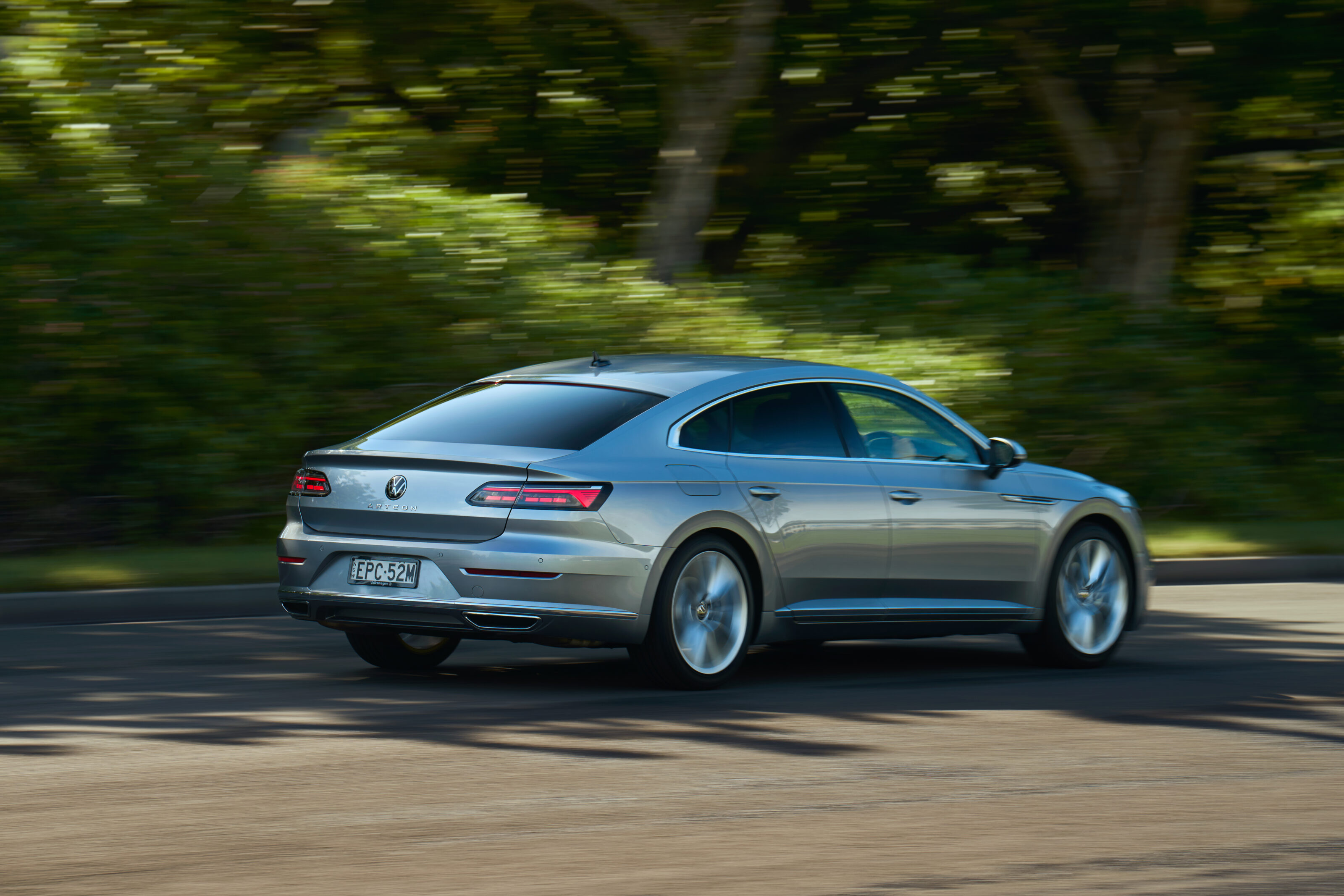
Most of the extra cash in the 206TSI R-Line goes to the driveline, with more power and all-wheel drive.
The R-Line has rather more sporty-looking seats (which lose the cooling function), lots of R-Line badging and embroidery, an upgraded deadlocking system and 20-inch wheels. The sedan relieves you of $68,740 and the Shooting Brake $70,740 (both again before on-road costs), exactly seven grand more than the 140TSI.
VW calls the Arteon’s media system Discover Pro and it comes with a 9.2-inch touchscreen featuring a clever proximity sensor that knows when your digits are near and responds accordingly. You get wireless Apple CarPlay and Android Auto plus DAB+ digital radio to keep you amused. Rather curiously, the sedan gets AM/FM reception while the Shooting Brake only scores FM, although that in itself isn’t unusual in European cars.
Definitely weird are the wipers, which don’t have an auto setting. It’s hardly the end of the world, but a bit odd in an otherwise tech-heavy car. Given how much rain fell on the Arteon while I had it, I kind of missed the auto function.
Rather pleasingly, metallic, pearl or premium metallic colours are freebies while only the $800 Oryx white pearlescent is an option. The only other available options on either body style are $2000 sunroofs. The sedan’s is a panoramic style roof while the Shooting Brake’s is a more traditional sunroof for the same price.
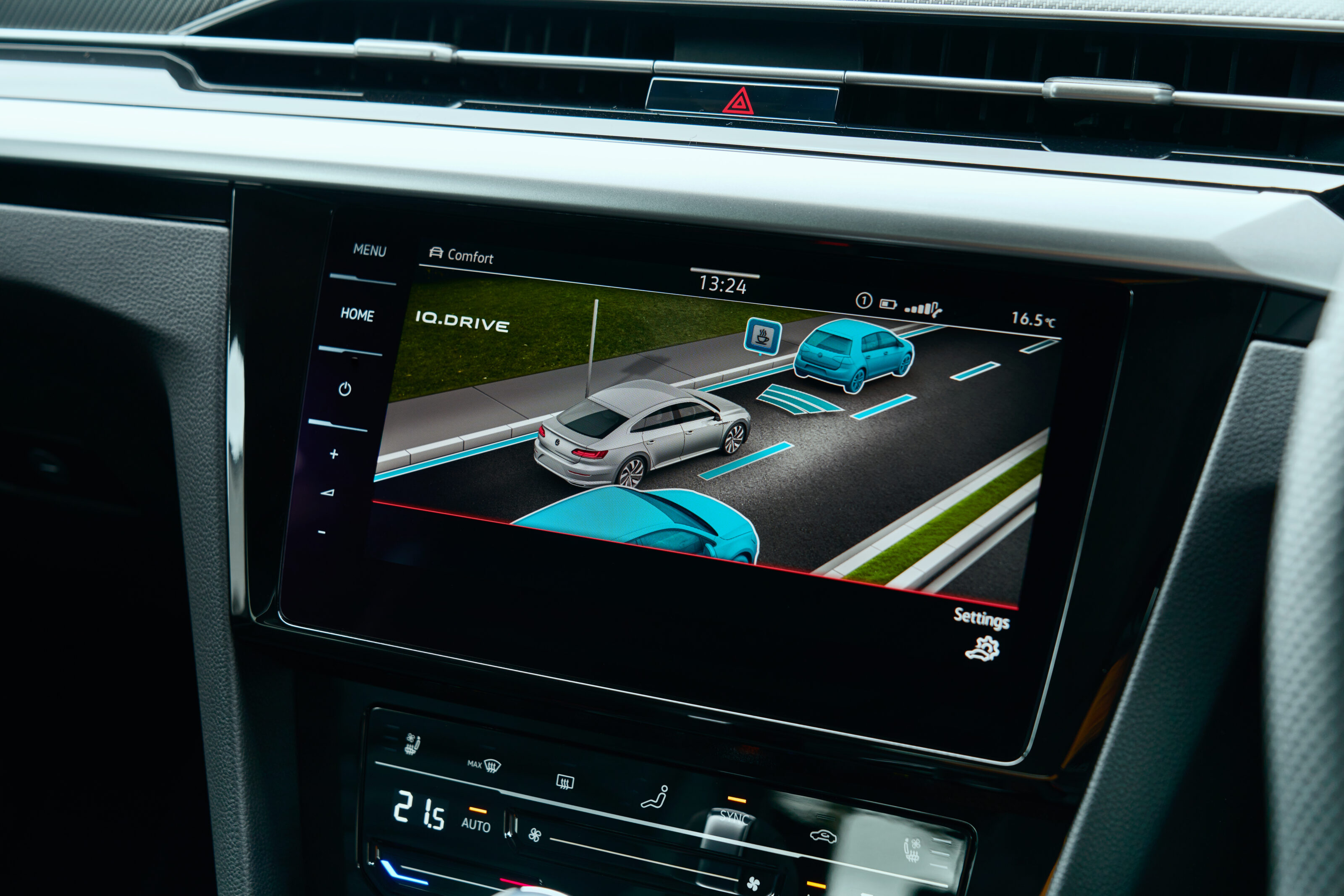
On the safety front, you’ll find nine airbags, the usual braking and stability controls, driver fatigue detection, lane-keep assist, adaptive cruise control, reverse cross-traffic alert, rear auto emergency braking, forward AEB with pedestrian detection and a reversing camera. VW also includes a feature called manoeuvre braking, which helps stop you from bumping into things at low speed in places like garages.
There’s not much happening in this space, and if it is, it’s much more expensive. You could kind of squint and suggest that the Audi A5 is in the same segment, but it’s really a size bigger, closer to the A7 which is rather more expensive. BMW’s 4 Series Gran Coupe is coming, but again, it’s more 5 Series-sized and so an 8 Series Gran Coupe is in a completely different league.
Obviously, VW still has its own Passat (for a little longer). It’s cheaper by some margin, but not nearly this pretty. A Kia Stinger, apart from its lack of Euro-ness, is probably the Arteon’s nearest rival.
Comfort and space
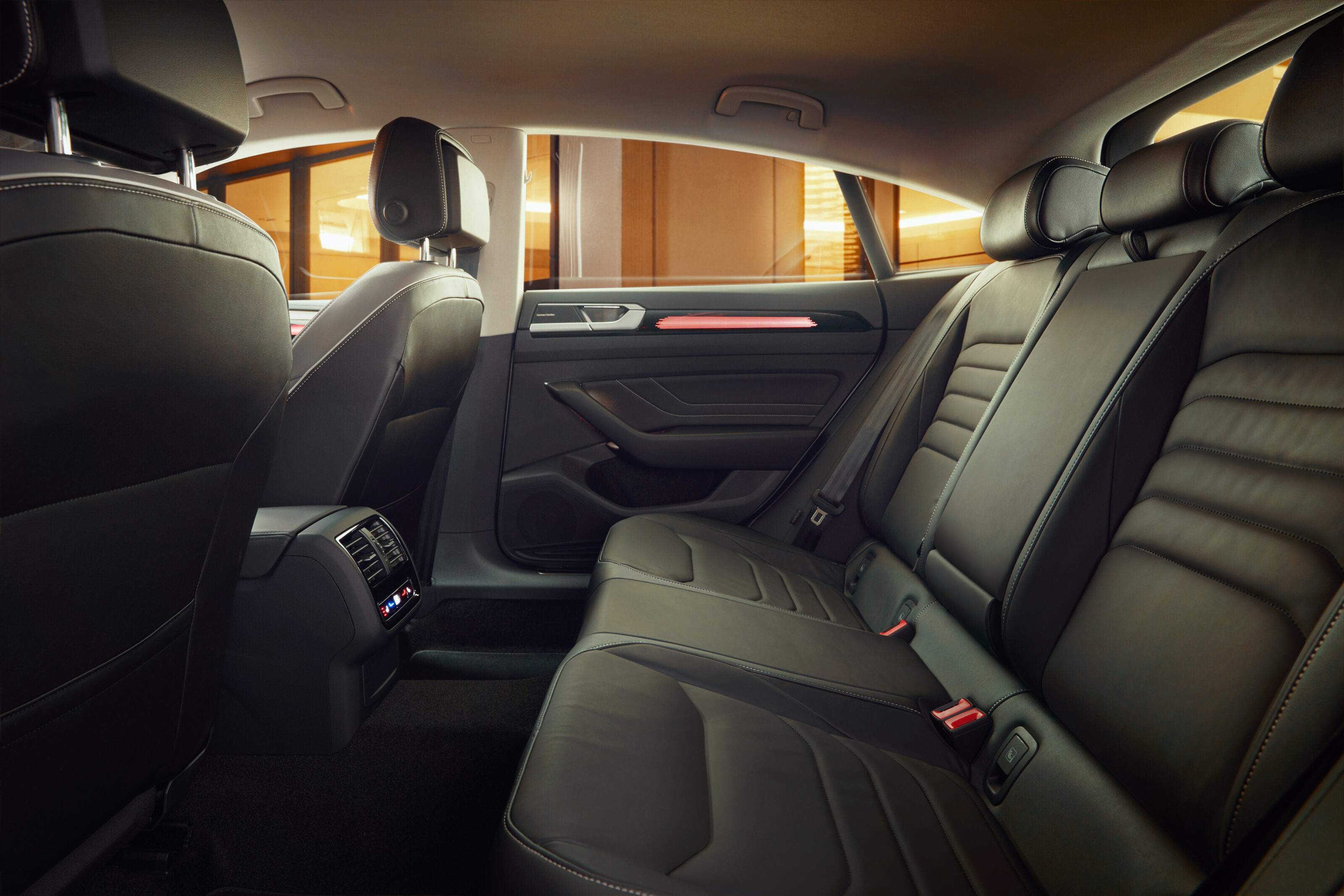
Inside the Arteon is an enormous amount of occupant space. While headroom isn’t as lofty as the Passat, it’s still pretty good as the seats are down as low as is practical.
You won’t notice any deficits in the front unless you’re spectacularly tall and my lofty son, towering over his parents at six-foot-four, lounged around in the rear seat for a 200km run up to the Hunter Valley without a moment’s complaint.
He had heaps of legroom, just enough headroom and if he wanted to stretch, could get his feet under the front seat. He also had room for three cups – well, two cups and either an espresso-sized cup or one of those narrow cans those stinky energy drinks come in – a 12-volt power supply, map pockets, USB-C ports, air vents and his own climate control setting. And big bottle holders in each door.
We had two cup holders up front, a small bin under the centre armrest, space under the climate controls for a phone (but no wireless charging, sadly), two USB-C ports (hands up who always has the wrong cable) and big door pockets with bottle holders.
The boot is deceptively big and accessible through a large liftback. Amusingly, the sedan has barely less cargo space with the rear seats in place, with 563 litres versus the Shooting Brake’s 656 litres. Drop the seats and you have 1557 in the sedan and 1632 in the wagon.
On the road
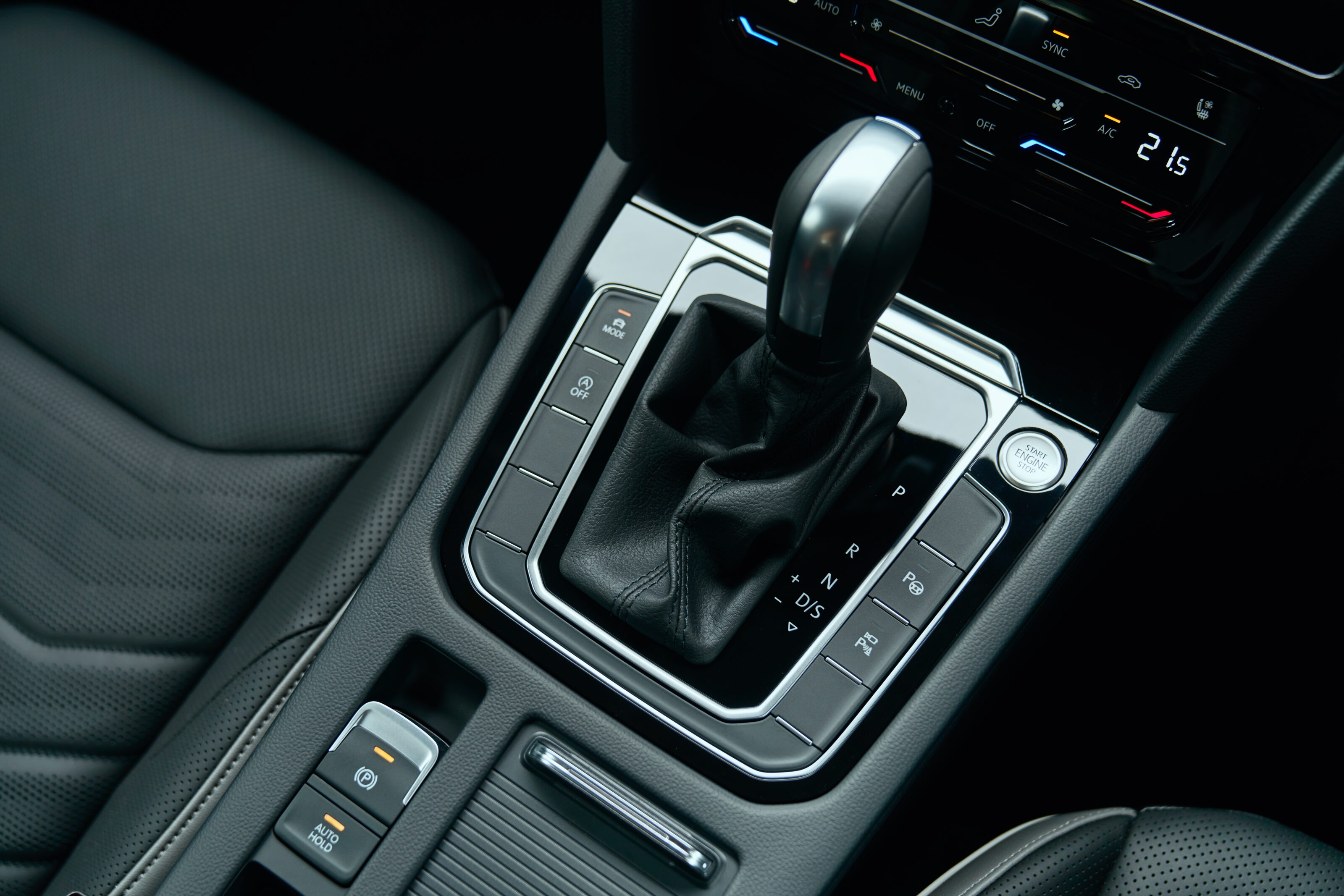
All four versions of the Arteon have a 2.0-litre turbocharged four-cylinder engine and the VW Group’s seven-speed DSG dual-clutch automatic transmission. In the 140TSI, you have 140kW between 4200rpm and 6000rpm and 320Nm between 1500rpm and 4100rpm driving the front wheels.
Moving up to the 206TSI, VW extracts 206kW between 4950 and 6600rpm and 400Nm between 2000 and 4950rpm, driving all four wheels. So it’s somewhere between the outputs of Golfs GTI and R, tasked with hauling a limo.
The 140TSI runs on 95 RON fuel while the 206 is a bit pickier and requires 98 RON unleaded. Both versions feature a petrol particulate filter, too.
The 140TSI’s claimed combined cycle figure is listed at 6.2L/100km and the 206TSI at 7.7L/100km. The 140TSI I drove spent a lot of time on the freeway and about a third of the time in the city and suburbs, returning 7.4L/100km, which is pretty reasonable.
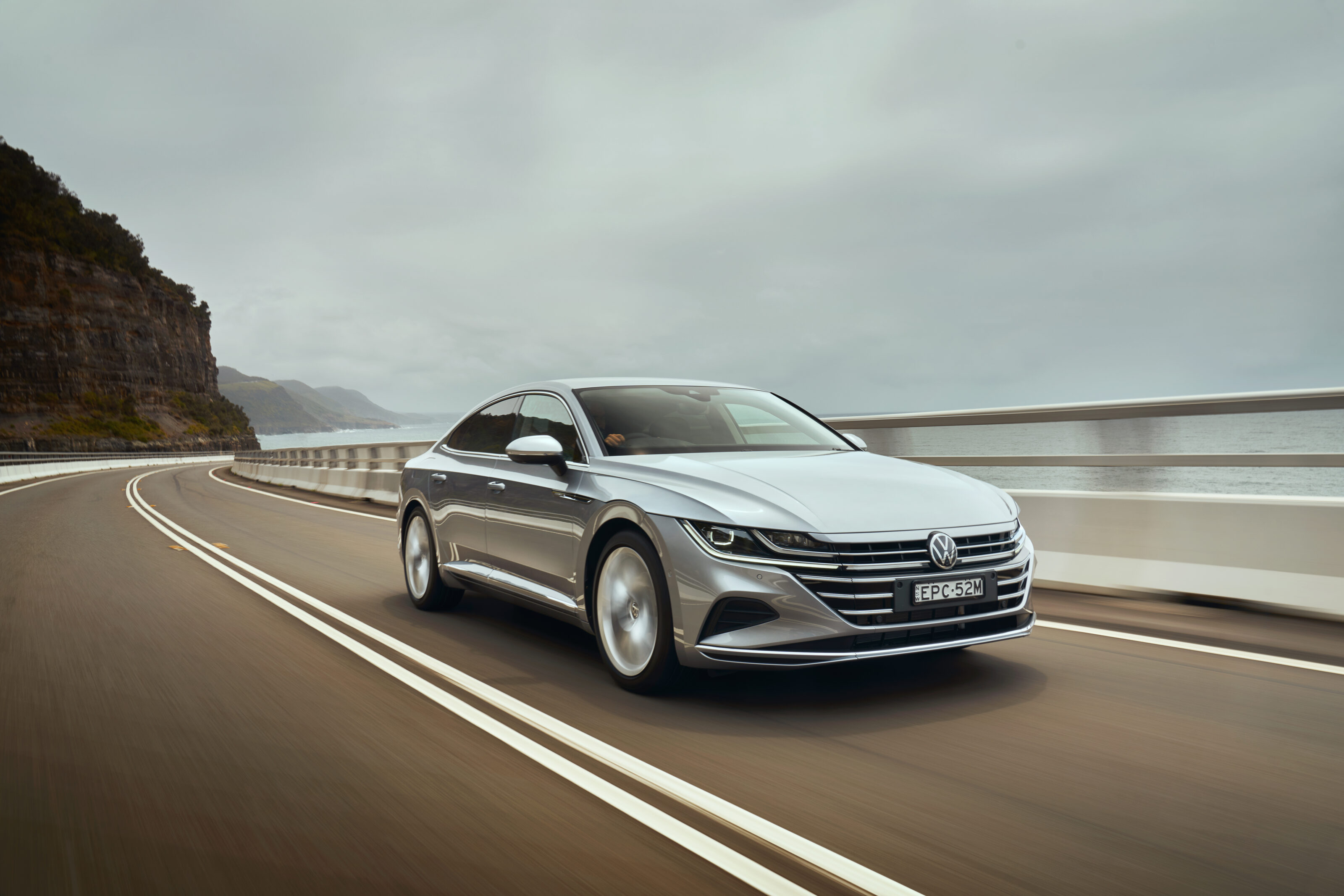
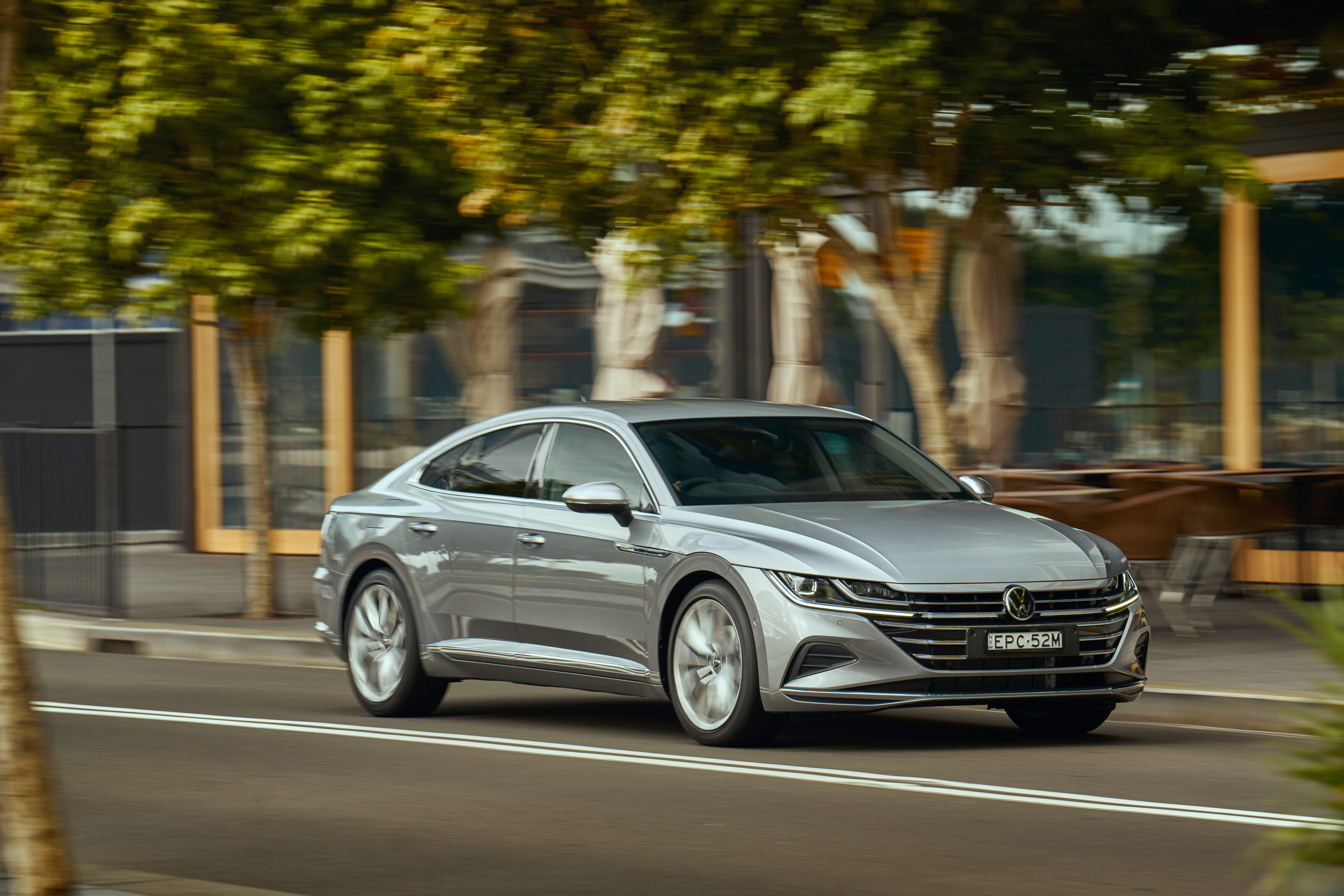
Our car for the week was a 140TSI Elegance sedan in the very attractive silver Pyrite Silver. The front seats start out pretty comfortable but after some time behind the wheel, they felt a bit firm on the lower back, so you might have to crank the rake on the seatback to get long-term comfortable.
The four driving modes available are Eco, Comfort, Normal and Sport (as well as an Individual setting for tailoring various combinations to your tastes) but as I soon discovered, leave it Normal and don’t touch it.
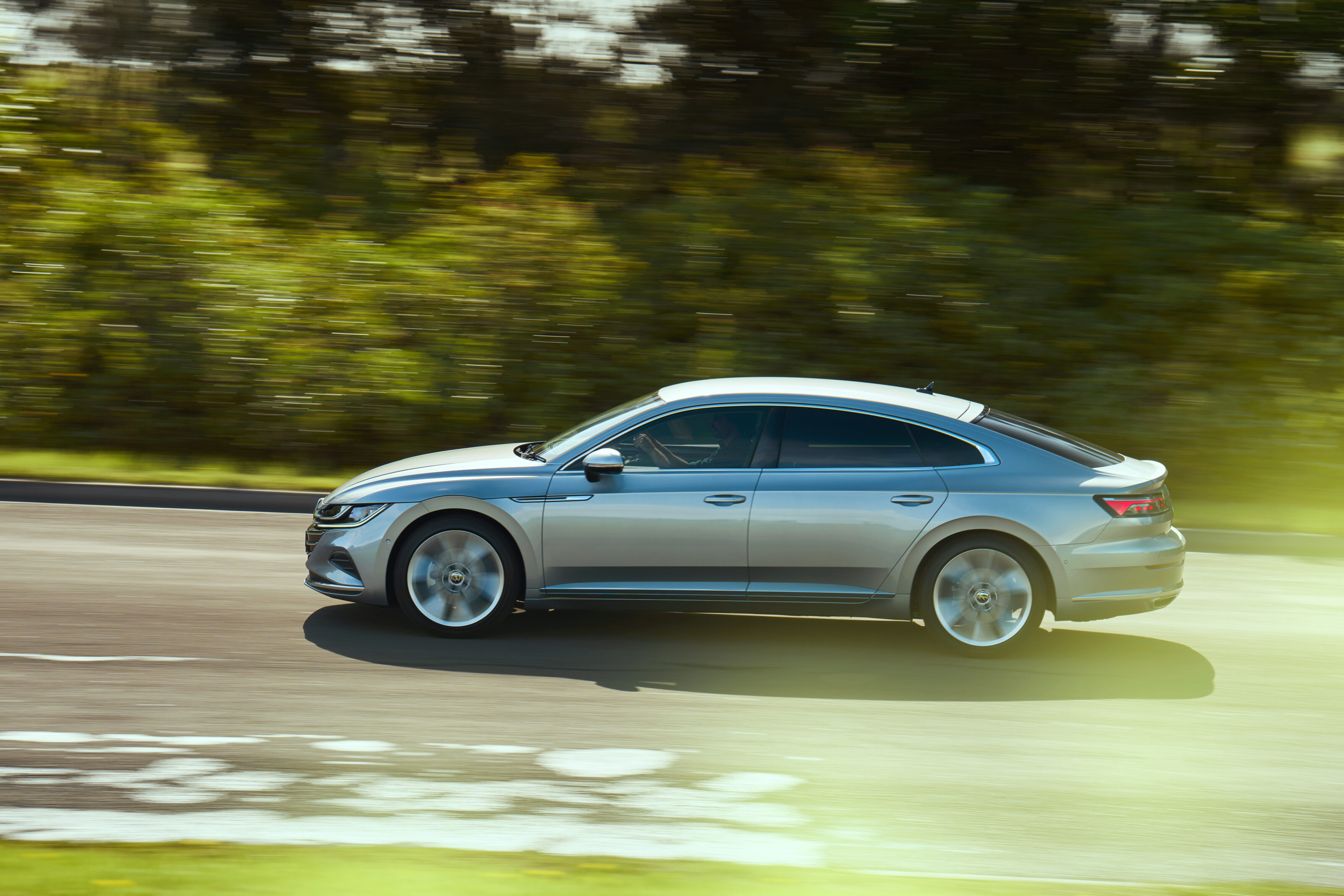
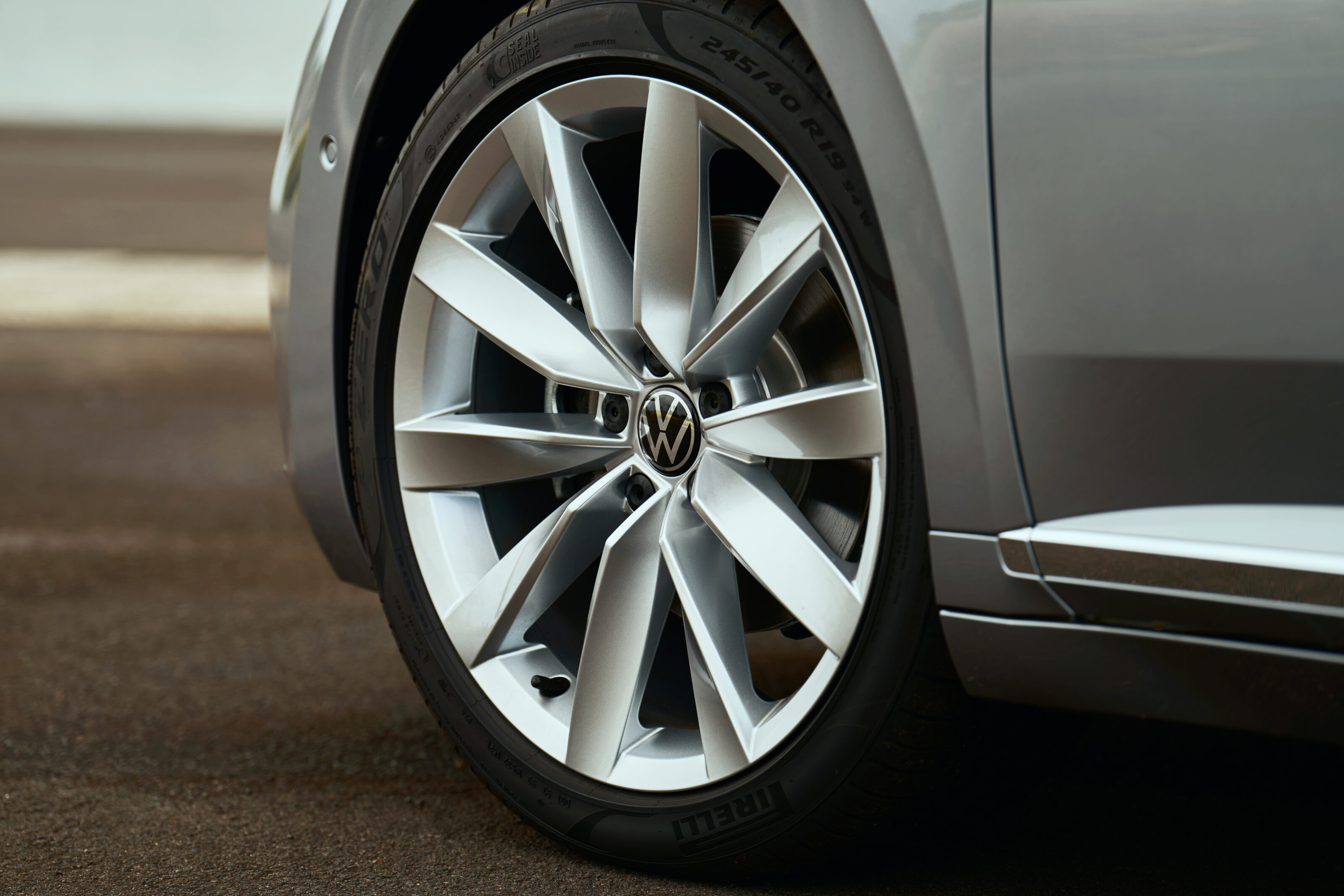
The Arteon is quite firm from the get-go. Not uncomfortable or tiresome, but reassuringly so. You just don’t need it any firmer than Normal because it’s not a car you hustle. Despite the big P-Zeros wrapping the wheels, there really isn’t any point in taking the scenic route, at least not at speed. And that’s perfectly okay because this is quite a cruiser.
I didn’t think anything of jumping in for the 400km round-trip on a sunny Friday morning. I pointed the Arteon north and once I’d got it out of Sport mode, it absolutely battered the miles into submission.
The only thing to upset the cabin’s serenity was a mix of higher speeds and some very, very noisy Pirelli rubber. I’m quick to blame the otherwise excellent Italian tyres because the electric Volvo XC40 also had them and suffered from similar noise levels.
The adaptive cruise control feature is very good; so good in fact that you sort of forget that you need to pay attention to the fact the car has gently decelerated to match the speed of the car in front. While this feature isn’t exclusive to the Arteon, the whole package of lane tracing, lane-keep assist and adaptive cruise made it extremely easy to cover distance.
Add in some filthy weather on the return trip and that extra safety net was most welcome, all the while ride dealing with the horrific surfaces of the M1 on the run to the Hunter and back. Just maybe, when the time comes, throw on a quieter set of tyres, because the Arteon’s chassis isn’t really built to need P-Zeros and a quieter set of tyres would render the car far more agreeable than it already is.
Ownership
Volkswagen offers a five-year/unlimited-kilometre warranty, which comes with a year of roadside assist to get you going. When you service with VW, you get an extension of a further 12 months’ cover.
You can pre-purchase your servicing via a care plan or go with VW’s assured price servicing regime. A five-year plan for any of the Arteons is $2500, with the three-year option going for $1600.
The first saves you $553 over the pay-as-you-go prices and includes the first service for free. The three-year plan saves you $206. It’s not startlingly cheap but nor is it wildly expensive in either case.
VERDICT
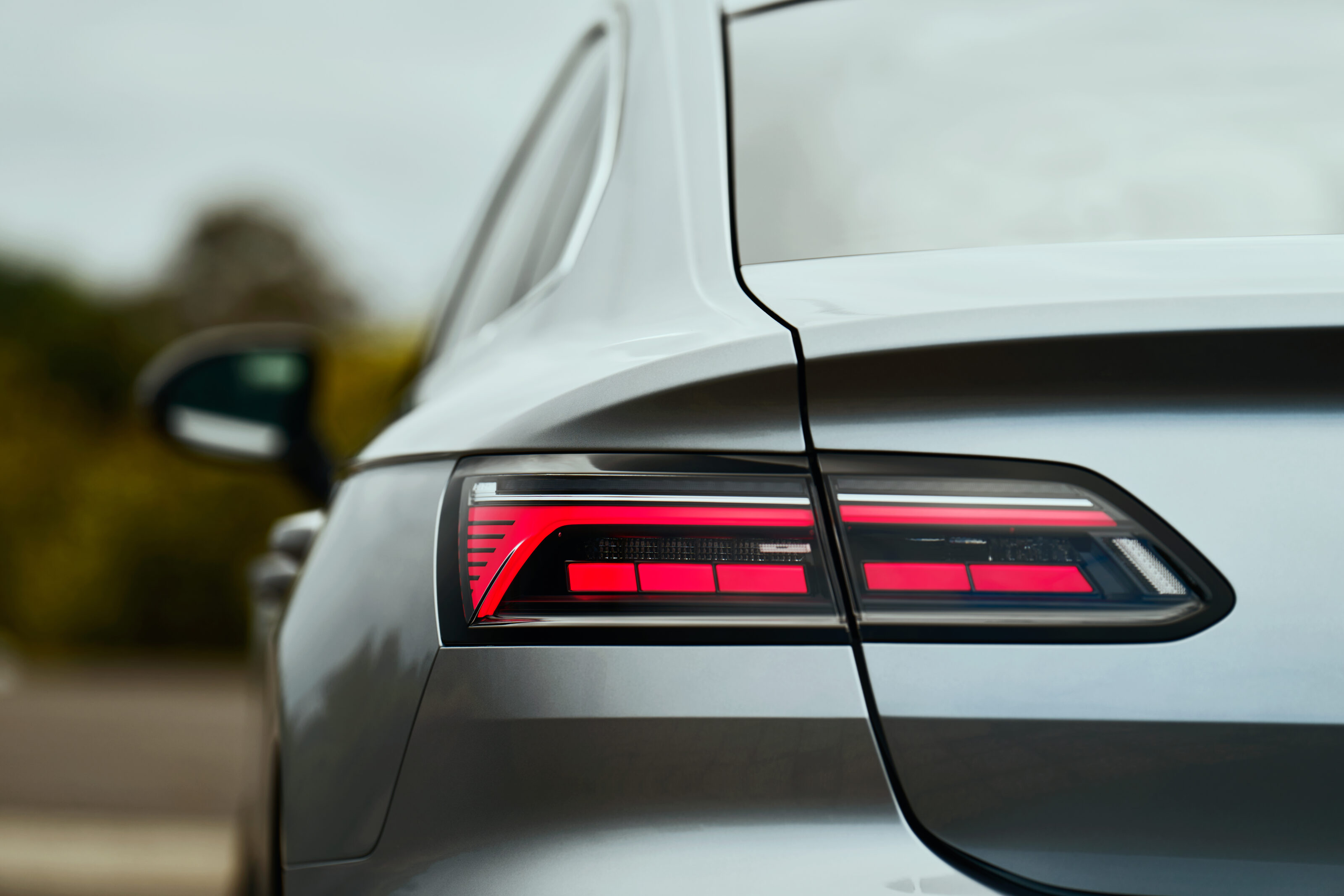
While the Arteon costs quite a bit more than the Passat, the extra dosh goes on a thing of real beauty, just like the cars I’ve already mentioned from Audi and, if you’re into it, BMW.
Stacked with tech, strong engines and some serious road presence, it nails the brief for someone looking to stand apart from the SUV crowd and the sedan crowd.
While the segment is rapidly shrinking – and that’s a sad fact – it’s fantastic that Volkswagen is still keen to send something so pretty and so cool into battle. It’s not cheap, but neither are any of its rivals. And let’s face it, you can’t beat exclusivity.
Volkswagen Arteon specifications
| 140 TSI Elegance | 140 TSI Elegance Shooting Brake | 206 TSI R-Lineu00a0 | 206TSI R-Line Shooting Brake | |
|---|---|---|---|---|
| Body:u00a0 | Five-door hatchback | Five-door wagon | Five-door hatchback | Five-door wagon |
| Drive: | FWD | FWD | AWD | AWD |
| Engine: | 2.0-litre turbocharged four-cylinder | |||
| Transmission: | Seven-speed twin-clutch automatic | |||
| Power: | 140kW @ 4200-6000rpm | 206kW @ 4950-6600rpm | ||
| Torque:u00a0 | 320Nm @ 1500-4100rpm | 400Nm @ 2000-4950rpm | ||
| Bore stroke (mm): | 82.5 x 92.8 | |||
| Compression ratio:u00a0 | ||||
| 0-100km/h:u00a0 | 7.9 sec (claimed) | 5.5 sec (claimed) | ||
| Fuel consumption:u00a0 | 6.2L/100km (combined) | 7.7L/100km | ||
| Weight: | 1580kg | 1592kg | 1692kg | 1717kg |
| Suspension: | MacPherson struts front/multi-link rear | |||
| L/W/H:u00a0 | 4866mm/1871mm/11442mm | 4866mm/1871mm/1442mm | 4866mm/1871mm/11442mm | 4866mm/1871mm/1442mm |
| Wheelbase: | 2841mm | 2840mm | 2841mm | 2840mm |
| Brakes:u00a0 | 340mm ventilated disc front / 310mm solid disc rear | 340mm ventilated disc front / 310mm solid disc rear | 340mm ventilated disc front / 310mm solid disc rear | 340mm ventilated disc front / 310mm solid disc rear |
| Tyres:u00a0 | 245/40R19 Pirelli P-Zero | 245/35 R20 Pirelli P-Zero | 245/40R19 Pirelli P-Zero | 245/35 R20 Pirelli P-Zero |
| Wheels:u00a0 | 19-inch alloy wheels (full-size alloy spare) | 20-inch alloy wheels (full-size alloy spare) | 19-inch alloy wheels (full-size alloy spare) | 20-inch alloy wheels (full-size alloy spare) |
| Price:u00a0 | $61,740 + ORC | $63,740 + ORC | $64,740 + ORC | $70,740 + ORC |
Trying to parse exactly how much happens in a century is a difficult task. We can all objectively picture the timeline. 100 years. 1200 months. 5214 and a bit weeks. 36,500 days. 876,000 hours. But it’s what happens during those unstoppable 52,560,000 minutes that we struggle to comprehend.
Interspersed between the individual moments of our collective memory the relentless nature of progress has changed the world in to a state almost unrecognisable if we put the here and now beside 1921.
A hundred years ago Australian automotive and racing history was made with the original 1921 Australian Alpine Rally. It is our country’s oldest continuously running motorsport event, beating the Australian Grand Prix by seven years.
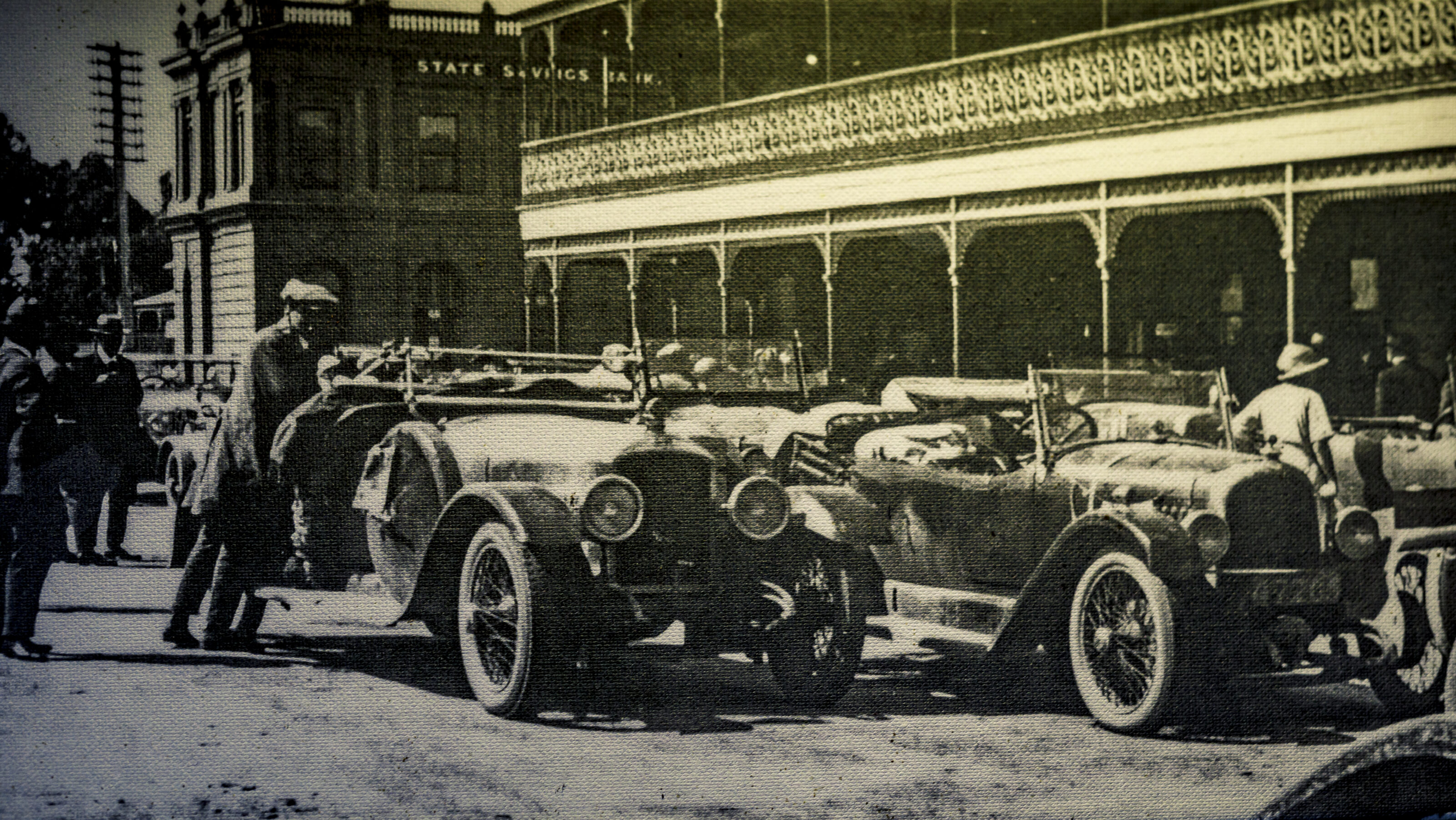
The original event wasn’t a rally in the sense we know it, instead being a 1000 mile reliability trial with a complex points system that criss-crossed large parts of Victoria. Since 1921, the Alpine Rally has morphed and changed into a bi-annual historic gravel stage rally.
COVID-19, like so many things, nuked official plans for centenary celebrations from orbit. MOTOR wasn’t going to allow this anniversary to pass in such a meek fashion. So, to honour those intrepid competitors that took part in the original Alpine Rally, we decided to follow the same route that they did in 1921.
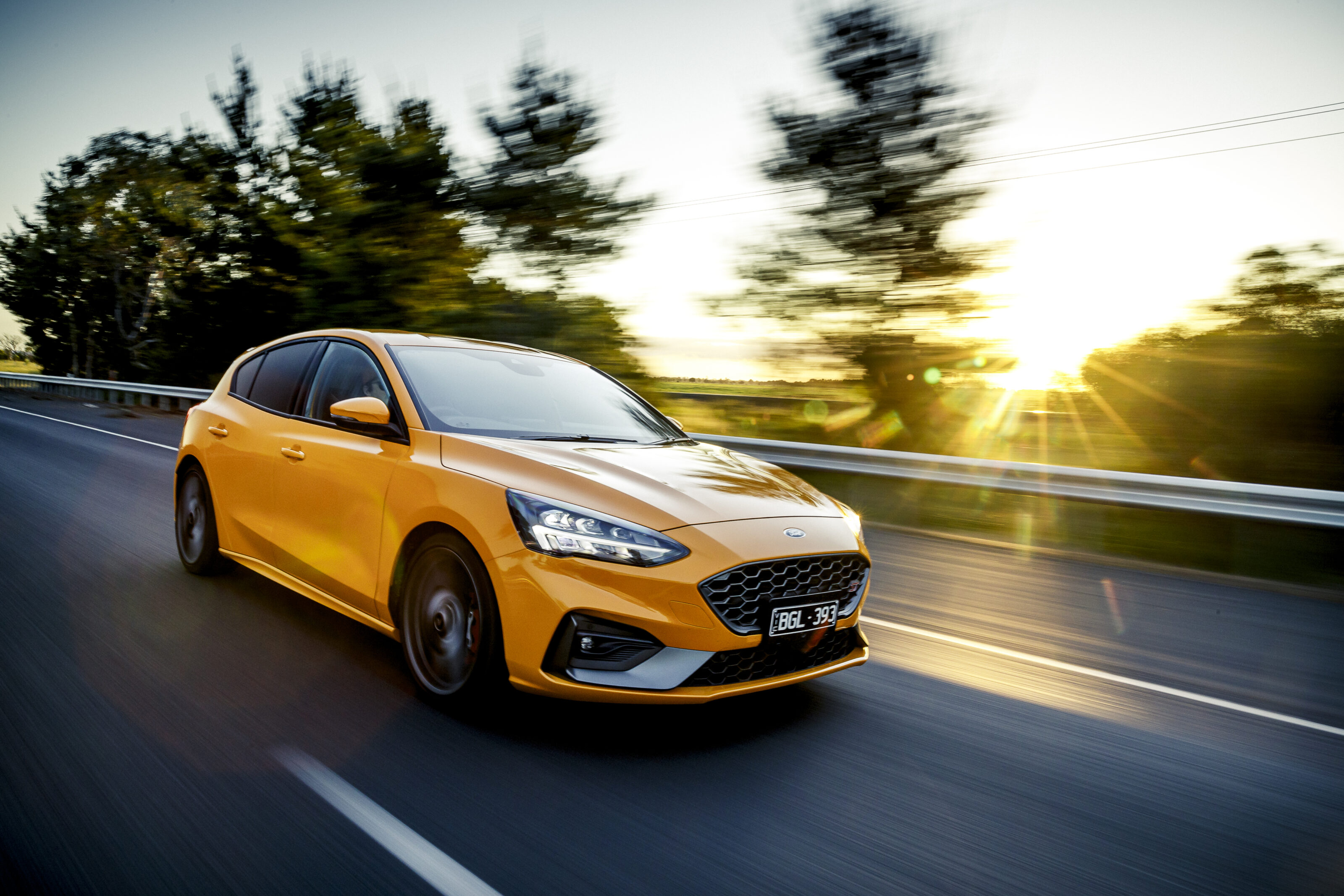
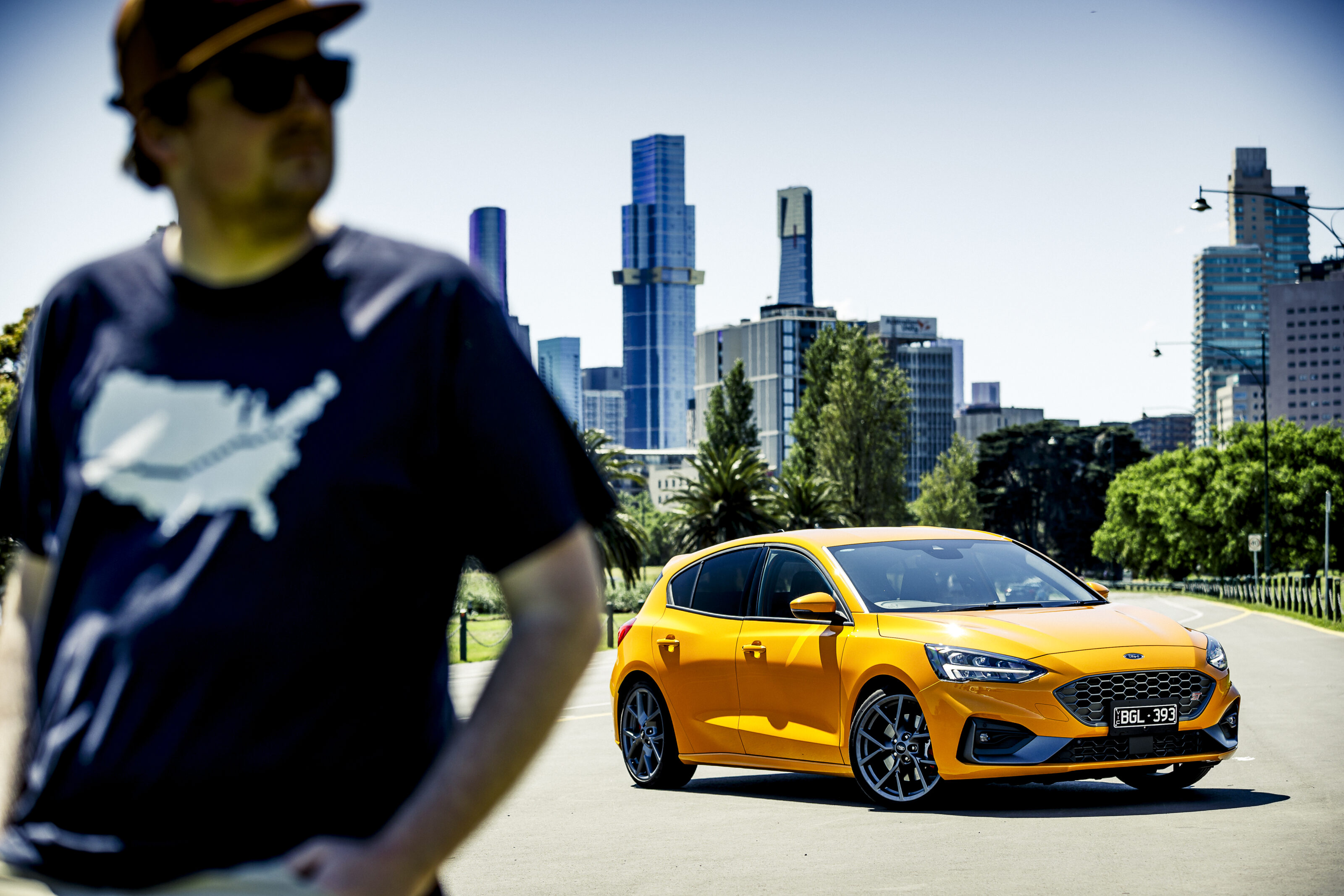
Instead of taking eight days, we planned to complete the 1600km largely highway-less journey in half the time. The ‘we’ being yours truly, pint-sized photographer Ellen Dewar, Trent Giunco, and MOTOR’s long term Focus ST.
Starting festivities for 1921 took place at The Haymarket building which has since been demolished, so we move our start line to Albert Park. We leave Melbourne early Sunday afternoon. I’m lulled into a false sense of belief that this won’t be that hard a challenge. I’ve driven similar distances in a single day, how hard can it be to do it across four?
We make good time early on, escaping the urban sprawl quickly and charging toward our first stop of the journey at the Criterion Hotel in Sale. This is the same venue that the original competitors stopped at for lunch. Inside, the walls are adorned with photos from the era. I’d happily spend the entire afternoon basking in the afternoon spring sunshine, enjoying the Criterion’s fine food and drink, but the road beckons us to continue.
We slip into Lakes Entrance at night. The town is sleepy with a few passing cars the only sound disturbing the creaking of fishing boats. A minute shy of six and a half hours behind the wheel, travelling 371km. I stare at the ceiling of the motel room doing the mental maths on what that means for the rest of the journey. This is going to be harder than expected.
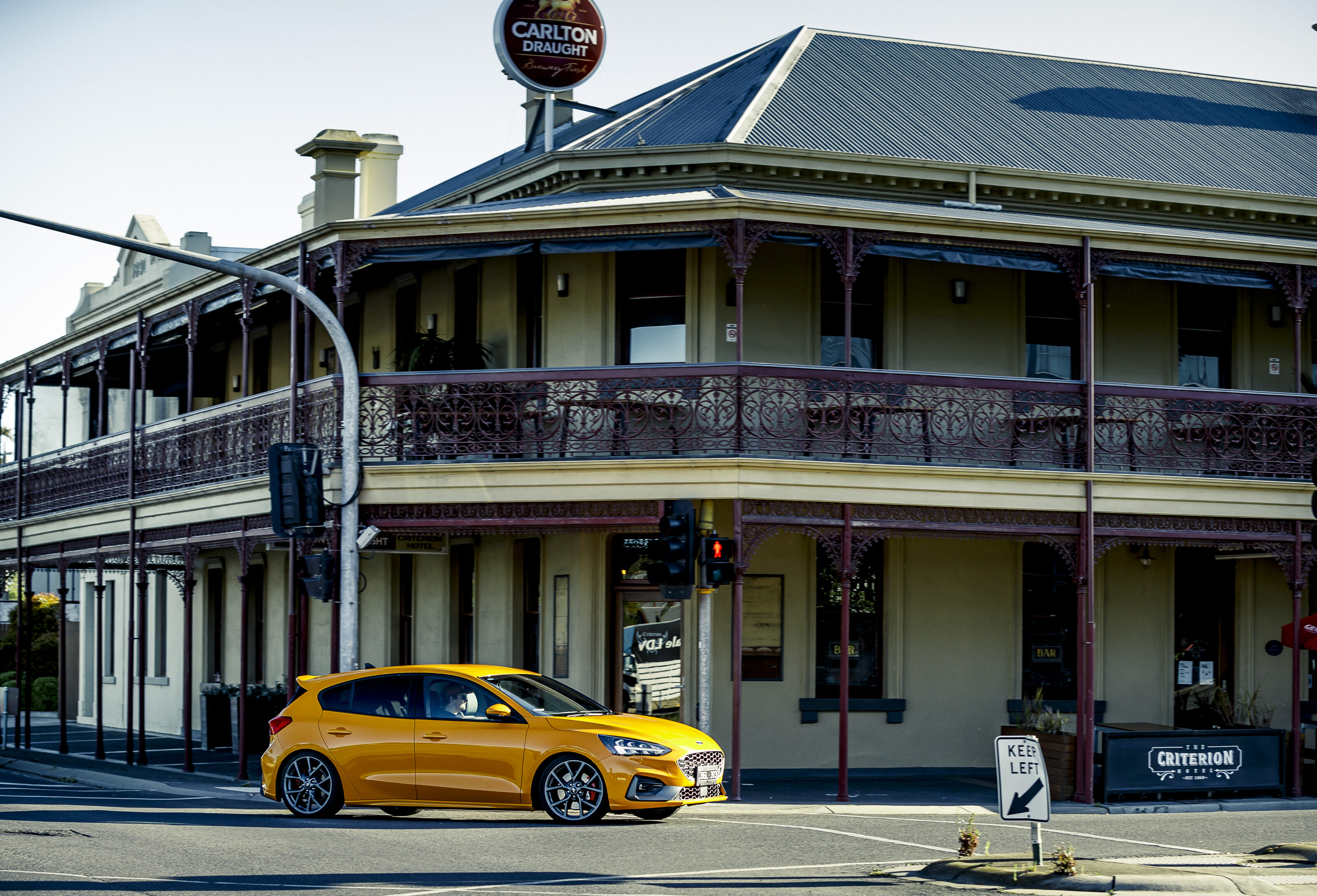
Melbourne to Lakes Entrance – 322KM
Our first day is the one that most closely resembles the original itinerary. With dual carriageways almost the entire distance it was only photography and sustenance requirements that slowed us down. If you find yourself near Sale, The Criterion is a must-visit. Get the parma, trust us. The view from the road that winds down into Lakes Entrance is spectacular, particularly at sunrise.
Day two: Part one
I’m back in the hot seat for the early morning stint, slinking back out of Lakes Entrance and charging onward north. The sun is beautiful and golden by time we pass through the Tambo Valley, which spreads rolling and vast like an emerald ocean to the east. The monotony of highway driving is banished, with our new guide the Great Alpine Road revealing its delights almost instantly.
The sweeping, cambered bends draw my eyes from the green pastures to key into the ST. In the grand scheme of the route, the section from Lakes Entrance to Omeo is relatively tame, but it’s enough to satiate, with the ST proving to be an inspired choice.
When we stop in Omeo I immediately head toward the local information centre. I’m in search of a paper map of the region, hoping it will help me capture some of the old school magic that the original competitors enjoyed navigating these roads 100 years ago.
Inside I find an incredibly helpful lady. But as I inform her of our journey her eyes glaze over. She knows of the current Alpine rally, but the 1921 event is news to her. Making matters worse there are no maps, and my phone reception has disappeared entirely. Drats. The path from here is a problem for Trent now. – CK
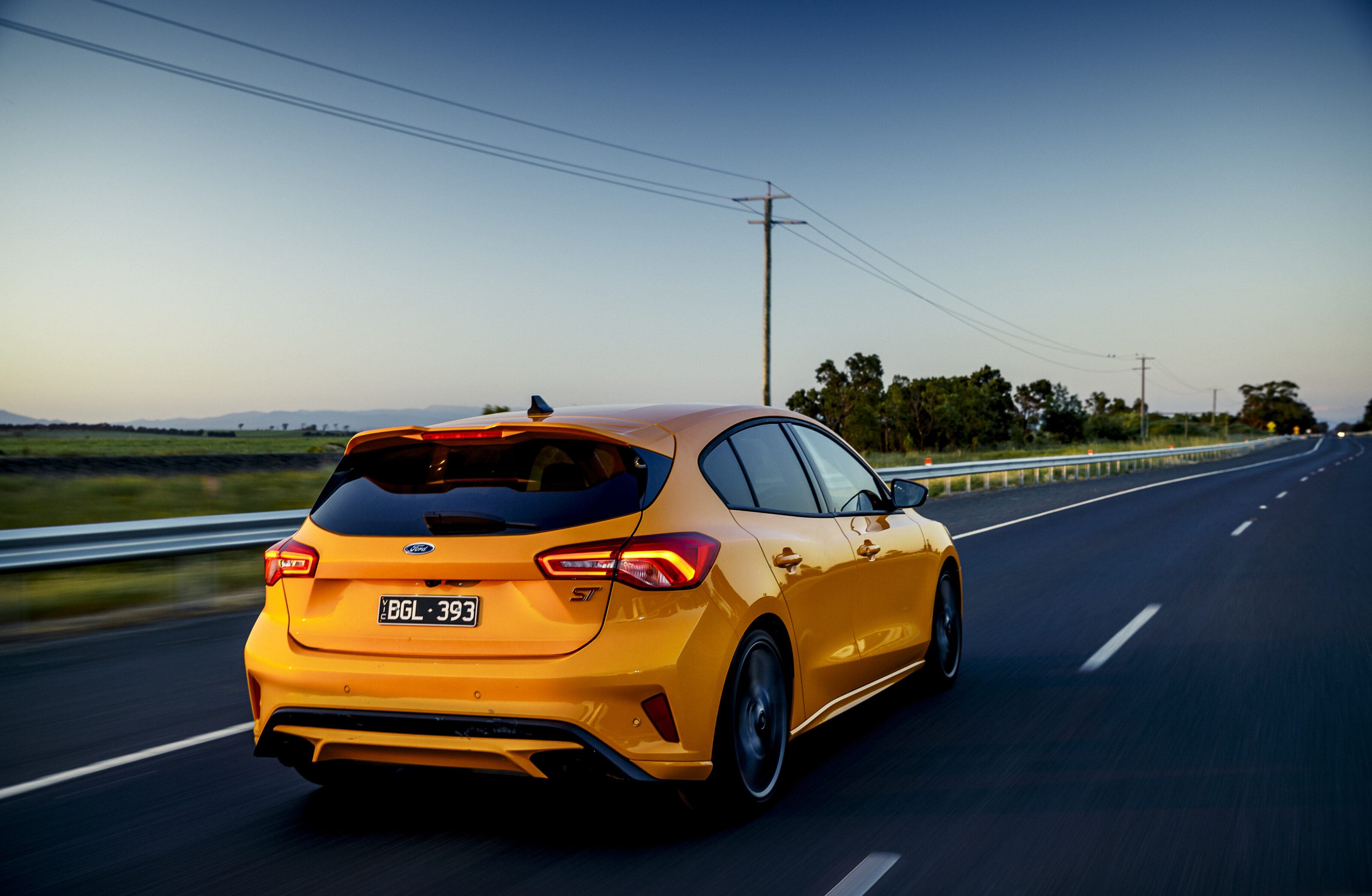
Day two: Part two
As I slide behind the thick-rimmed Focus ST steering wheel and into the heavily bolstered Recaro driver’s seat, it’s 9.07am, nine degrees Celsius and our trip timer has clicked over the nine-hour marker. I depress the clutch and push the start button. It’s a thoughtless process that seems all too easy and nothing like that of 100 years ago where three minutes were set aside for engine cranking.
Leaving Omeo the sun is shining and the countryside is a lustrous shade of green. It’s as though everything has grown while the city slickers have been locked out of the regions and Mother Nature is showing off. So too is the Omeo Highway, which in its entirety is a 163km stretch of tarmac that connects north-east Victoria to Gippsland and the Victorian Alps. If you haven’t driven this road, you must. No questions asked.
For me it’s a rude initiation having zero previous exposure to the now halo Focus. Yet, this isn’t about speed. The press bumf for the original 1000-mile rally states: “The club particularly desires to impress on the general public that the event is in no way a race, but a Reliability and Efficiency Contest at ordinary touring speeds”. In fact, penalties were issued for arriving too early at the finish line for a particular section. However, with a 206kW/420Nm hot hatch at my disposal, it’d be remiss of me not to stretch its legs.
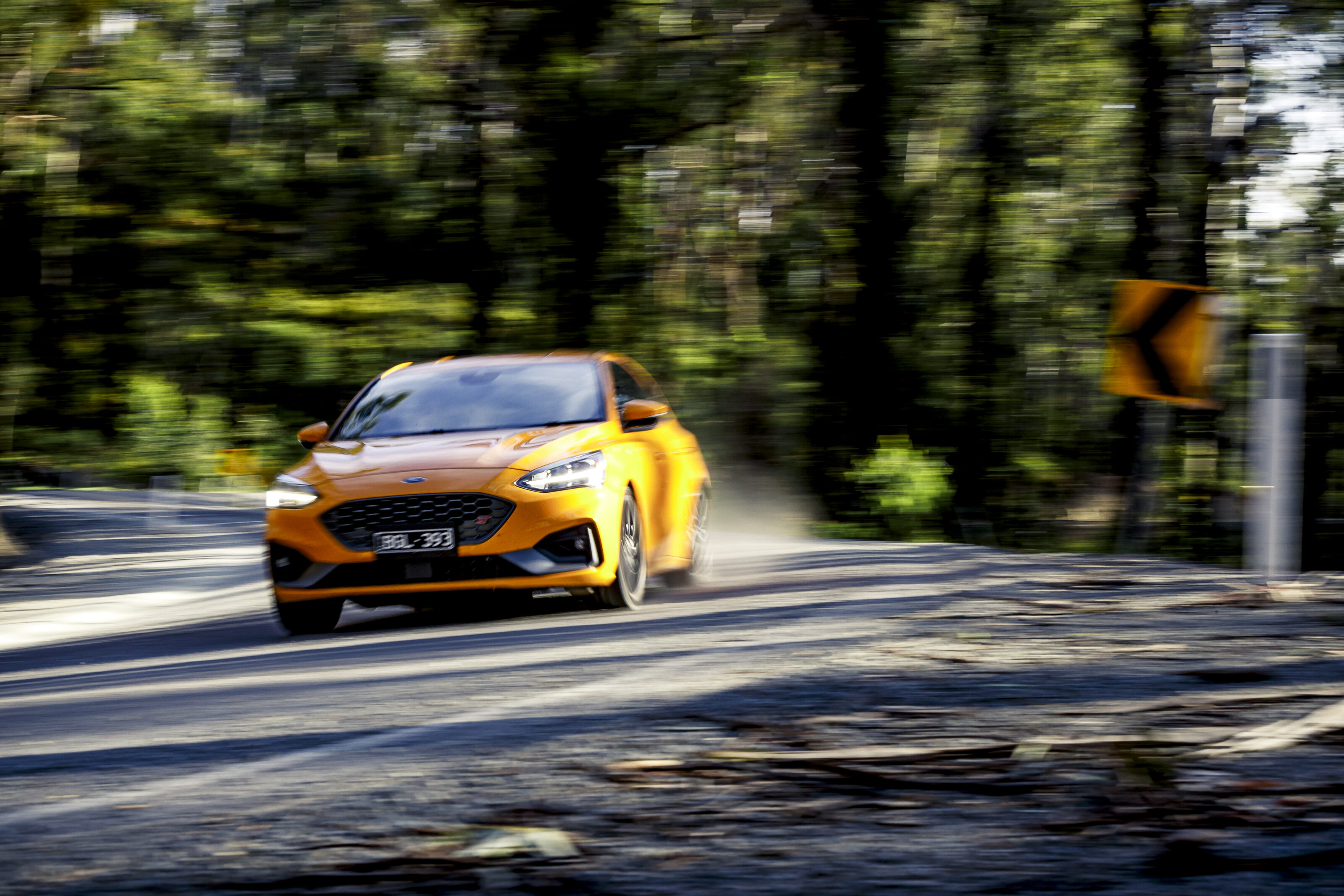
Right-hand hairpins have wonderful vision and build confidence. As do the dynamics of the Focus, which have matured from the snap-oversteer-happy previous-gen. Now, with a bit of a work from the communicative steering, you can engage the rear axle with corner-entry yaw that transitions progressively into traction as the electronically controlled, Borg Warner mechanical LSD bites into the bitumen. With a positive shift from the six-speed manual and an intuitive rev-match system, the Focus covers ground at an alarming, grin-inducing rate.
I pull over at the Blue Duck Inn at Anglers Rest and realise the brakes need cooling; remaining stationary will turn them into molten lava. Unlike the cars of yesteryear, I fatigue long before the ST does despite the temperature being generated. I cool off by drinking from the Mitta Mitta River, the water fresh and chilled as it flows from the melting snow-capped Alps like a natural refrigerator.
While we try to stick to the original route as much as possible, the expansion of Lake Hume in the ’50s and the resulting 8km shift of Tallangatta renders this impossible in 2021. Google Earth bares all, with the old town layout visible, but to our eyes it’s just an expansive body of water. And with recent heavy rain, it’s currently bursting its banks.
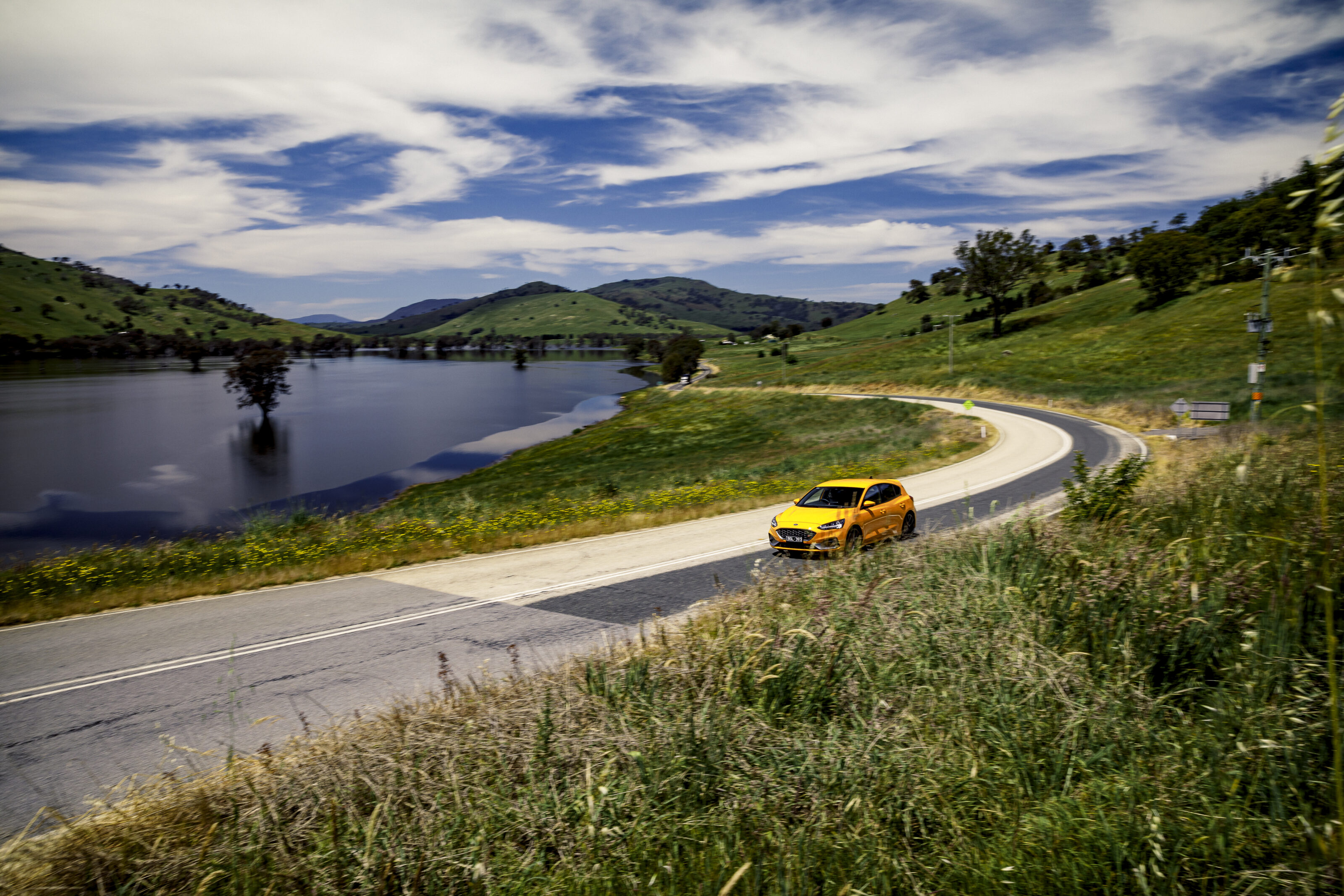
Hightailing it to Bright via Yackandandah (where Kirby finally gets the map he’s been searching for) becomes the top priority. We jag a park and eat pizza at the Bright Brewery, the leftovers of which will be needed later for sustenance.
Traversing the top of Mount Hotham is no longer the nerve-wracking experience it used to be. The sheer drops remain, but advancements in road safety mean that barriers now remove most of the danger. While we don’t see a large sign with a skull and cross bones with the word ‘REFLECT’ brandished across it, something entrants in the original rally had to digest along with the enormity of the terrain, signs warning us of steep declines are omnipresent.
The run up to the Mount St. Bernard Hospice formed one of the timed hill climb sections, and it’s easy to see why. That marker is around 5000 feet (1524m) above sea level, however, we push on to Danny’s Lookout, which is 1705m above sea level. Although, the road surface isn’t as billiard-table smooth as you’d expect on the top of Mt Hotham, the Ford’s adjustable dampers do just enough to save the ride quality. In yesteryear, on the unsealed route, it would have been a different story.
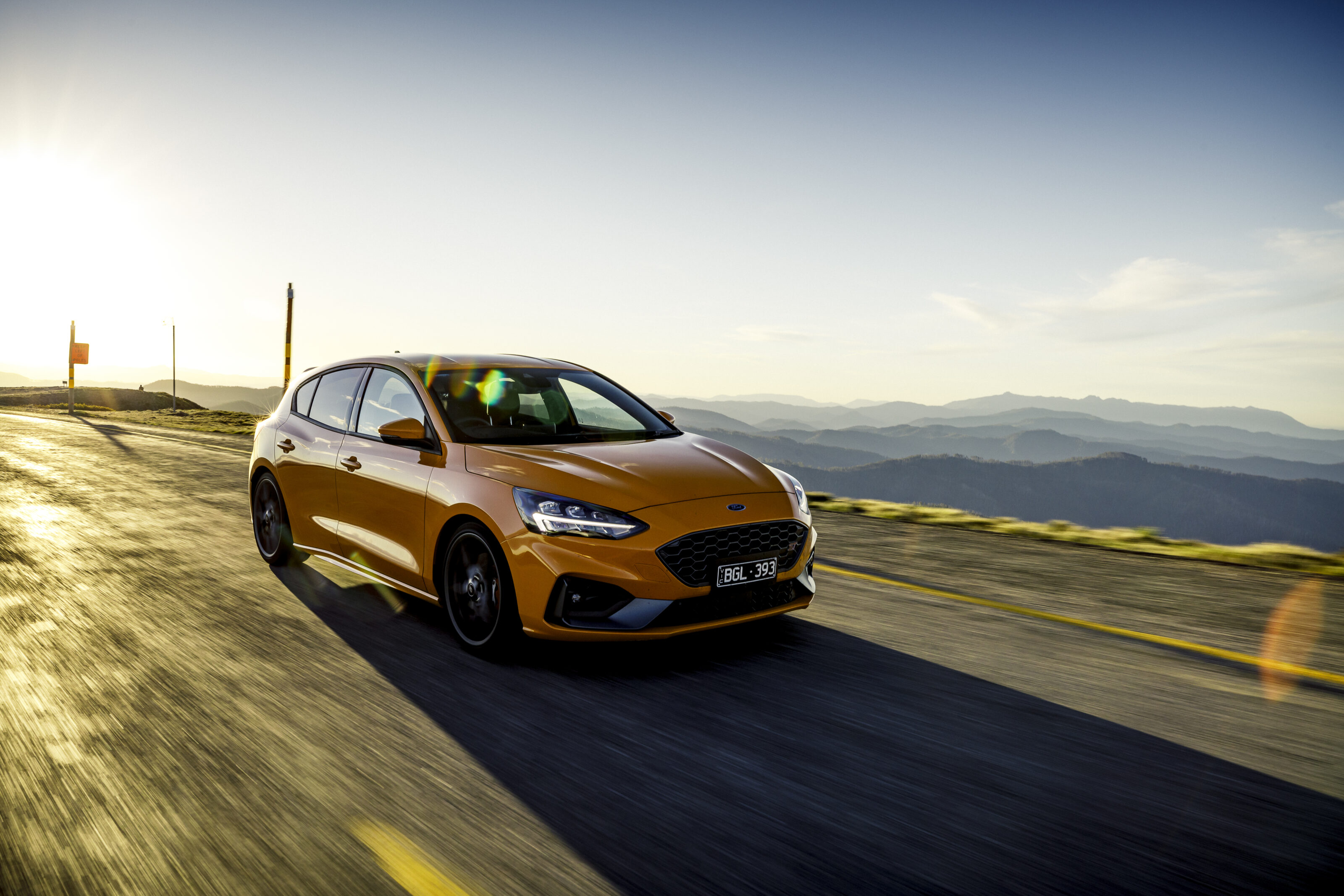
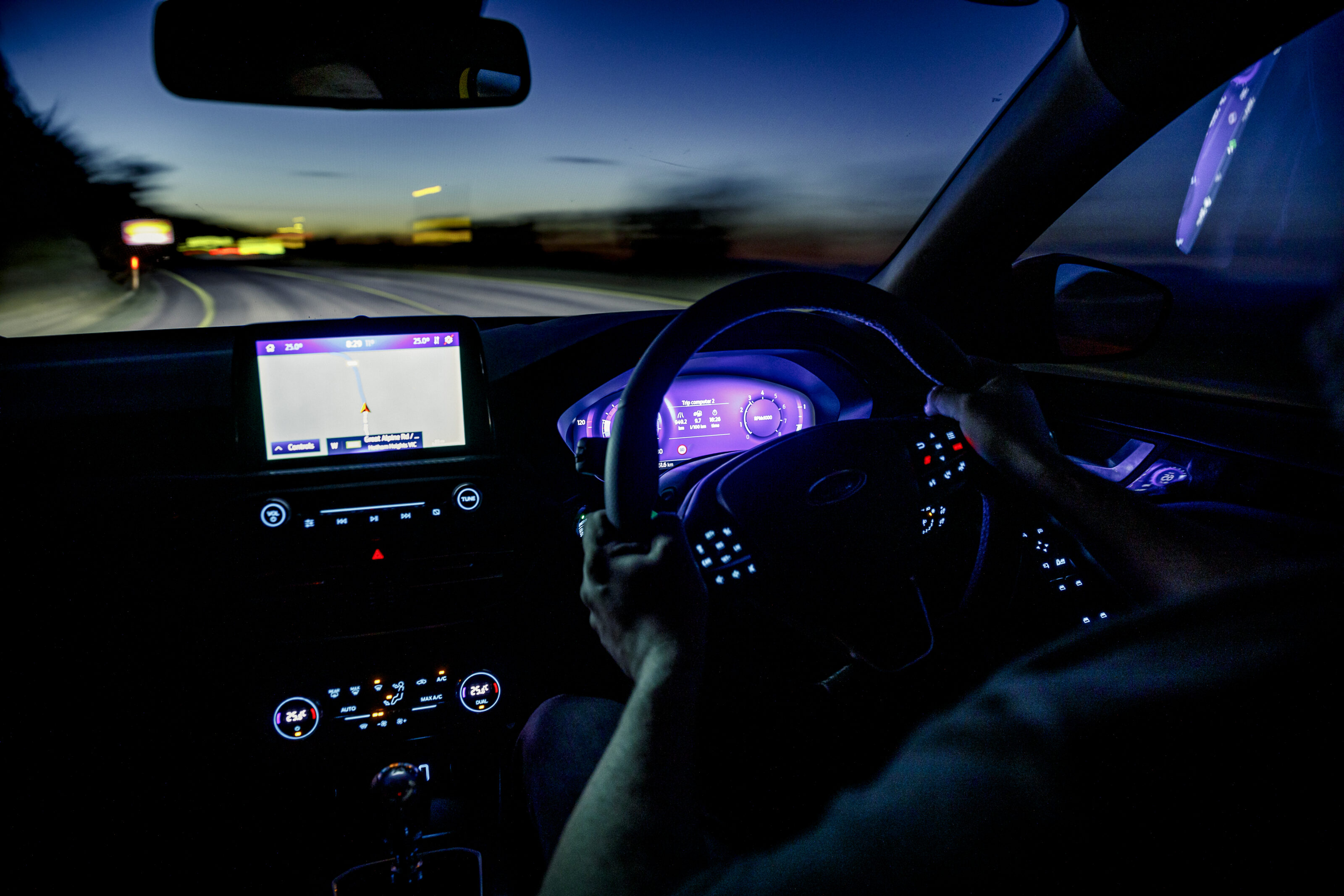
As written in Bob Watson’s book, The Great Alpine Contest, one of the competitors “lost control of himself completely” summiting Mt. Hotham and that he had to be restrained. Out of the three of us, after more than 14 hours on the tools and on the road today alone, it is snapper Ellen whose patience frays the most. After all, she is the one braving the elements. Night descends and all our brains are fried. Tempers can easily fray. But our camaraderie is bolstered by the unity of the shared common goal. We’re warriors of the night.
Turn by turn, we slink down the mountain to our overnight stop in Harrietville with headlights ablaze, highlighting our path for weary eyes. In these dormant hours of darkness, traffic is non-existent. And yet, we find ourselves parked at a roadworks red light. After what feels like an age, the crimson glow is yet to flick to the anticipated shade of green.
“F**k this” I hear from the passenger’s seat. And with that, in a moment of exasperated irony, we get the go-ahead. If this is how broken we feel in a modern car, the reality of 1921 is even harder to fathom. At 9.20pm, the 2.3-litre turbo four-pot finally falls dormant. – TG
Lakes Entrance to Harrietville – 481km
Put this into your Google Maps and save it for a weekend adventure. There is no need to fly all the way to Europe for motoring nirvana when this is in our own backyard. Hell, you could even break it into several days there is so much to take in. This is where our recreation makes the most time on the 1921 rally.
Down on power, and dealing with little more than a horse track, the original competitors were forced to make frequent stops. By time 1922 rolled around, the Alpine Rally cut west from Omeo, climbing directly over Dinner Plain to Mount Hotham. A disappointing change in our opinion.
Day three
My alarm pierces through the silence like gunfire after surrender. It’s just before 5:00am and, blurry-eyed, I have to position myself in the shower so as to not fall down the well that is its drain. Character, it seems, is offered for free in a cheap motel. Yet, the brief respite before the day ahead has me thinking of how much we take modern motoring, and reliability, for granted.
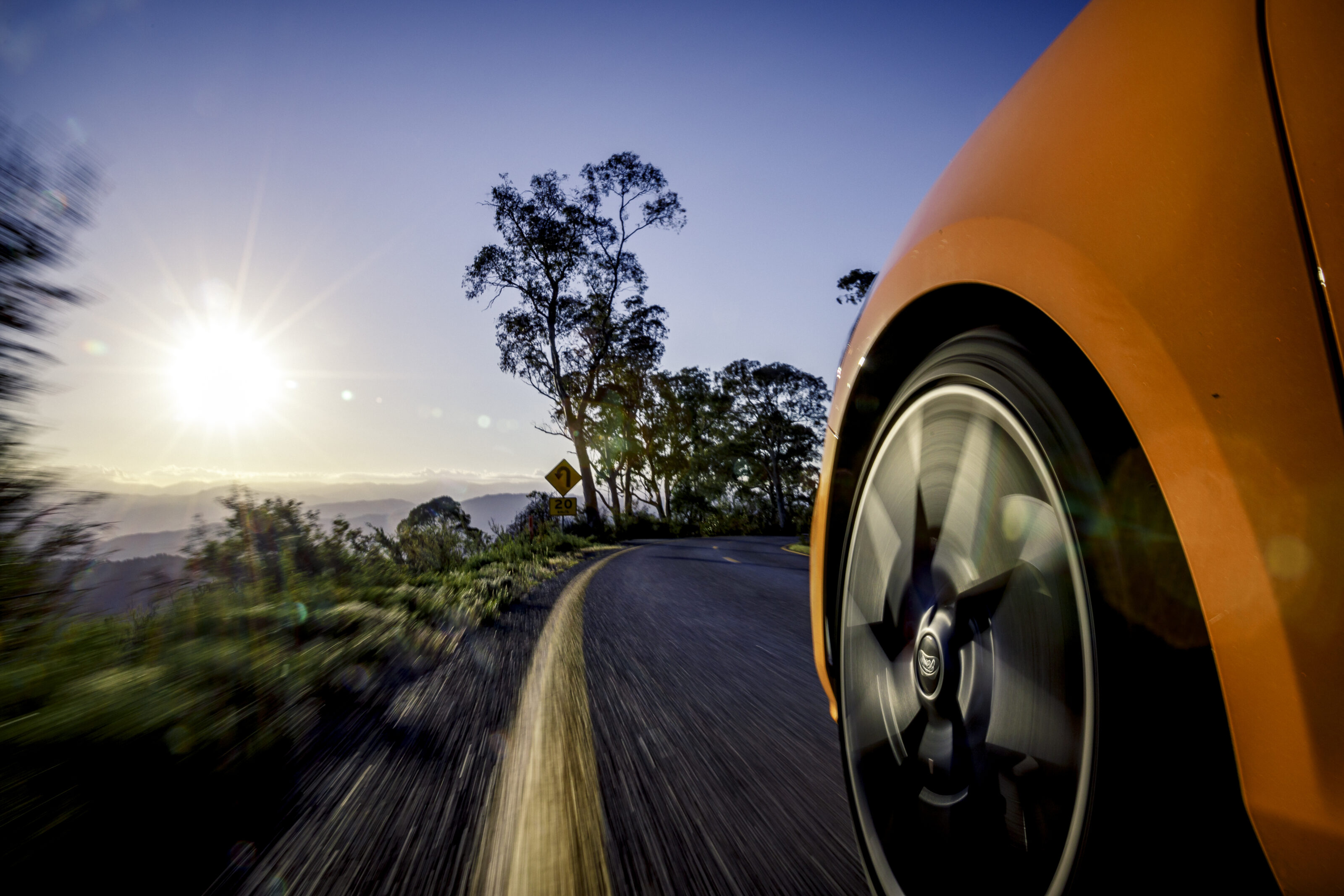
We don’t check under the bonnet before taking off – doing so 100 years ago would see us penalised, apart from a supervised flooding of the carburettor once every morning. And despite Kirby’s delight and fixation on the paper map he’s purchased, the reality is Apple CarPlay (or Android Auto) infinitely outsmarts his analogue ambition. I plug in Mount Buffalo and pull out of the driveway with the twin exhausts emitting plenty of cold-start steam.
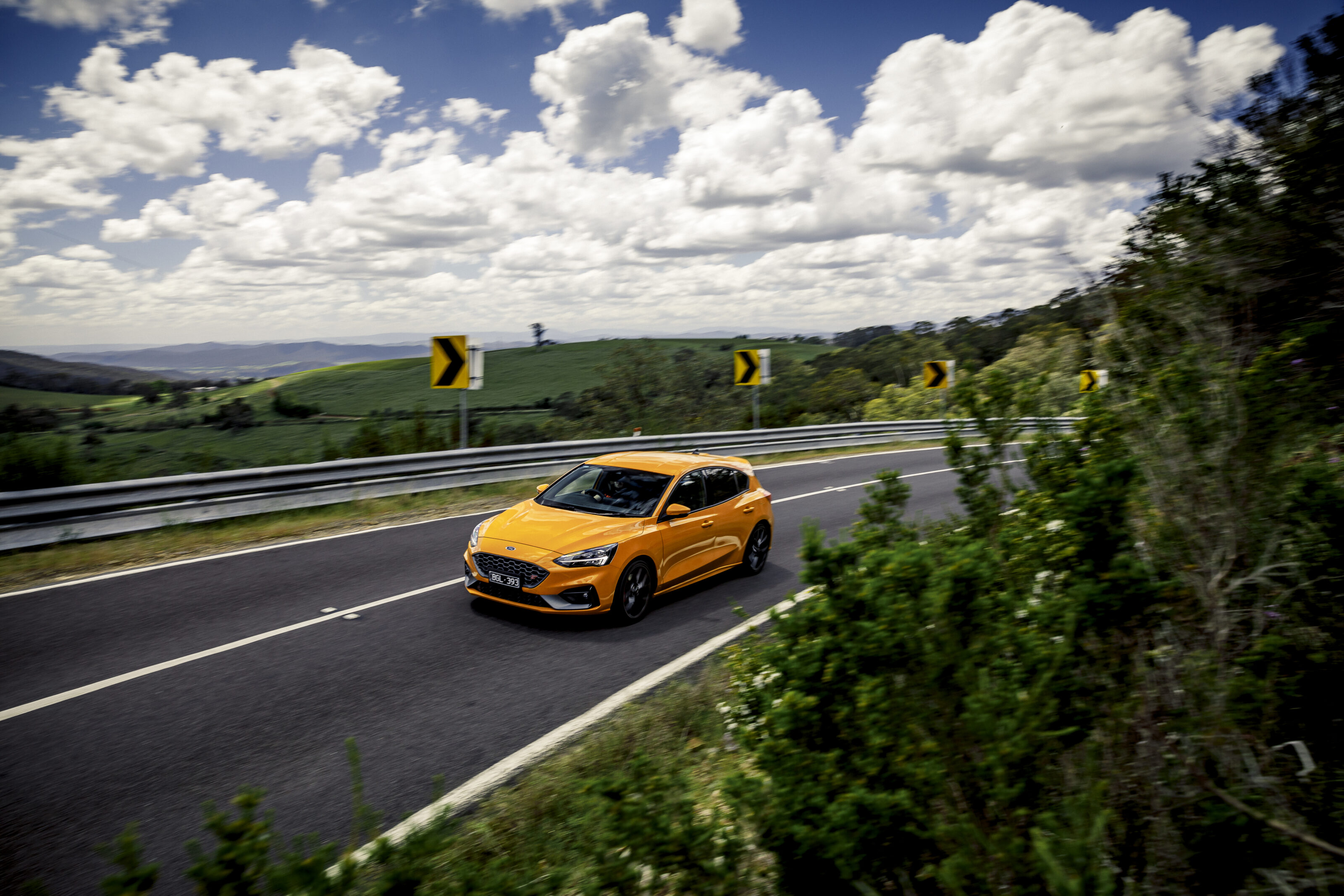
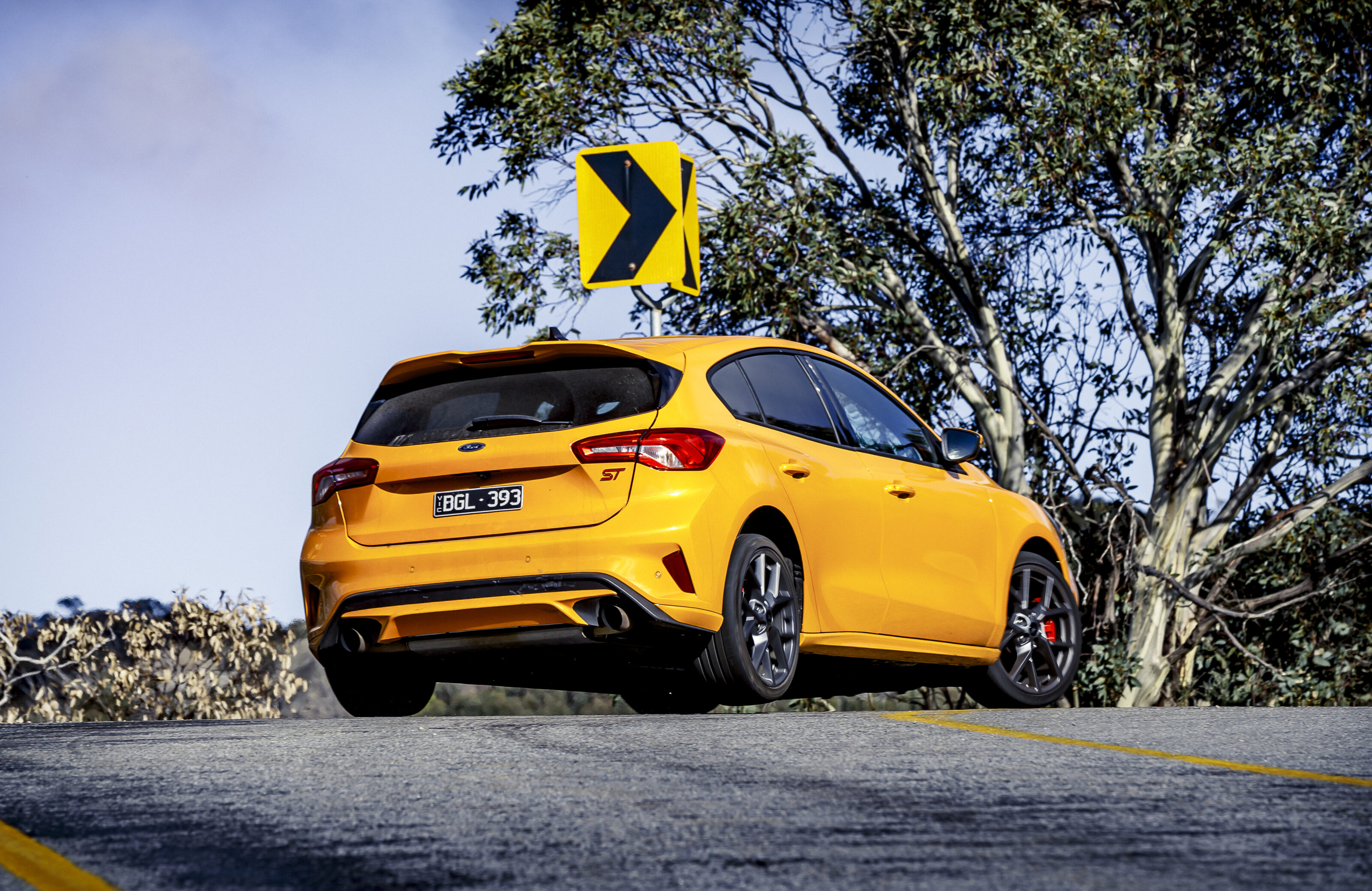
While in 1921 entrants enjoyed an evening celebration at the Mt Buffalo plateau (“Garden of the gods”), we’re instead greeted by a peloton of Lycra-clad fitspo specialists at sparrow’s fart. It’s hard to imagine tackling this route a century ago, but right here, right now, the Focus is a bloody riot. The chassis is taut, meaning even with the multi-link rear axle, the ST can’t help but cock a trailing inside leg when hunting an apex. What’s more, the crack of the exhaust on downshifts is intoxicating.
My enjoyment is curtailed somewhat by sudden fixation on the distance-to-empty readout. We departed before the opening hours of the local servos, which only fuels my range anxiety. Economy tests were a part of the deal 100 years ago, but I wasn’t expecting to hyper-mile it to Wangaratta (via Myrtleford). We make it at a canter. And yet, drama ensues with the EFTPOS system crashing at the service station. Kirby is tasked with paying.
Returning to the car, he tells us that a rather flustered young attendant had misheard a customer, leading to her projecting “if anyone leaves, we’re calling the cops”. Everyone pays. However, it’s an insight into how our lives are now so dependent on technology that if it begins to falter, slight cracks appear in the social code.
The trip in and out of Wang’ is also the only time we see the mighty Hume Highway, although we merely traverse it twice and never actually drive on it. Recreational stops were a part of the original route, so we head to Eildon via Mansfield and Alexandra to the local grocery story and load up on chips and beverages. The Goulbourn River and Lake Eildon are a hive of activity, and we set up stumps in the shade to watch myriad boats and jet skis on the water.
COVID-induced lockdowns have ravaged the tourism industry and it’s heartening to see smiling faces and hear laughter far from the CBD. Fun and whimsy has returned to the country, along with a much-needed monetary injection.
There is an insatiable vibrancy flowing through the camp sites and surrounding towns around the body of water. It’s fitting given that one of the by-products of the original rally was to show off the regions to the masses for a hoped tourism injection.
It’s the end of Day Three and the gravity of what we’re achieving is really hitting home. The thought of returning to the ‘big smoke’ is almost daunting. From above, Melbourne’s road networks convey a sea of abandoned spider webs; serenity makes way for chaos. That’s ahead of us tomorrow.
For now, as the odo nears 1500km and I hand the ST’s key fob back to Kirby, it’s time for a steak, a drink and some kip in Marysville. Clocking off 12 hours after the day started feels like an early mark. – TG
Harrietville to Marysville – 428km
Where Hotham and Falls Creek get most of the Alpine love, Mount Buffalo is also a fantastic experience. A favourite of local cyclists, the tight switchback hairpins only just take top billing over the truly fantastic views. Whitfield-Mansfield Road is the dark horse of the entire rally, but equally worth being graced by you and your metal steed. Recently lowered speed limits are disappointing, but much of the road’s character and challenge remains.
Day four
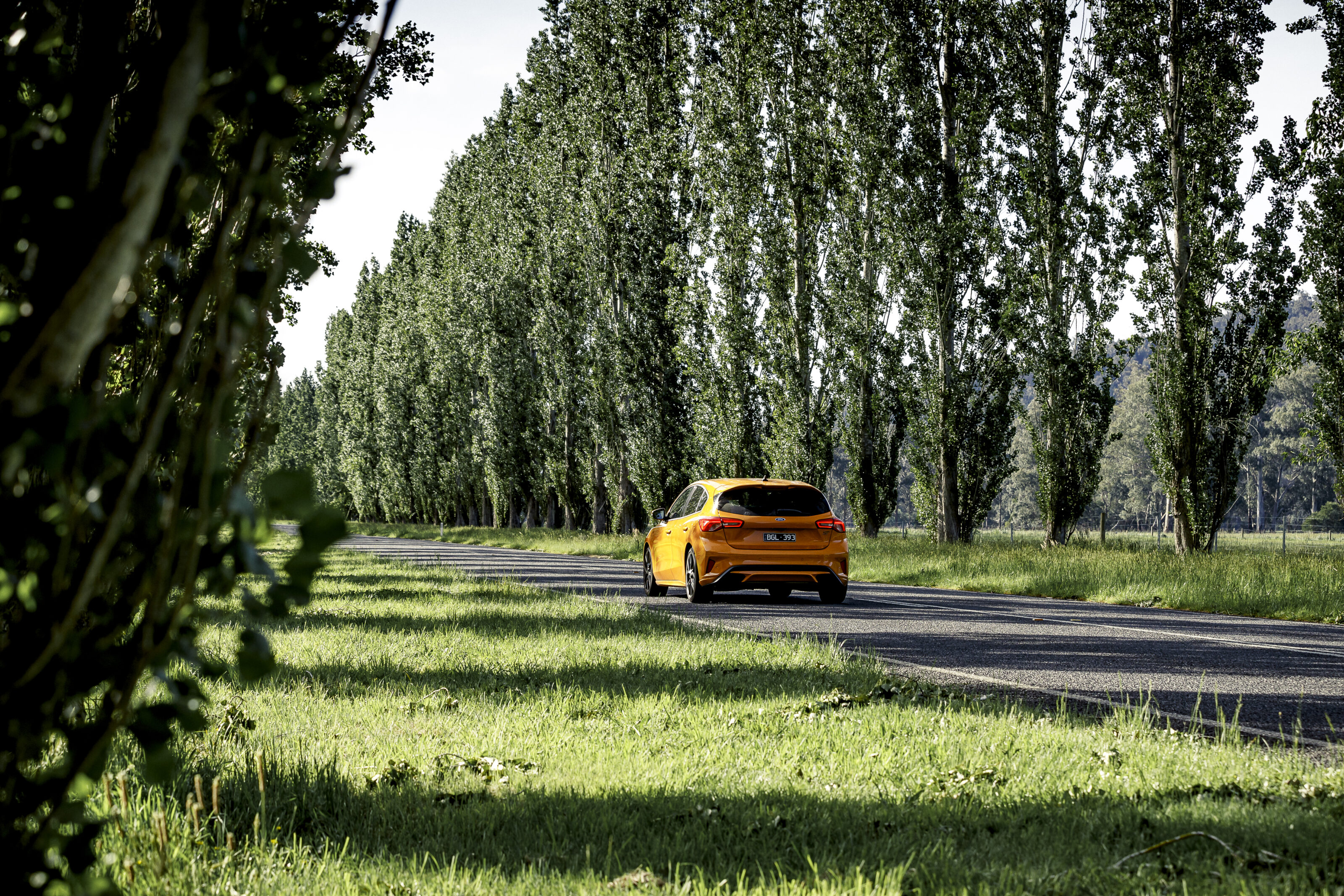
We are on the road before the sun’s rays breach the darkness once again for the final day of the journey. In the gloom I mistake the outline of a wallaby that lies dead as a pothole that I can simply pass over without worry.
Its not until I am upon the stricken macropod that I realise it has swelled up to a point that if I continued on my current trajectory, I’d simultaneously obliterate the Focus’ front bumper, and perform Victoria’s most gruesome vehicular drop kick. Thankfully the ST responds with composure as I wrench the wheel aggressively to and fro. If Ellen wasn’t awake before, she is now.
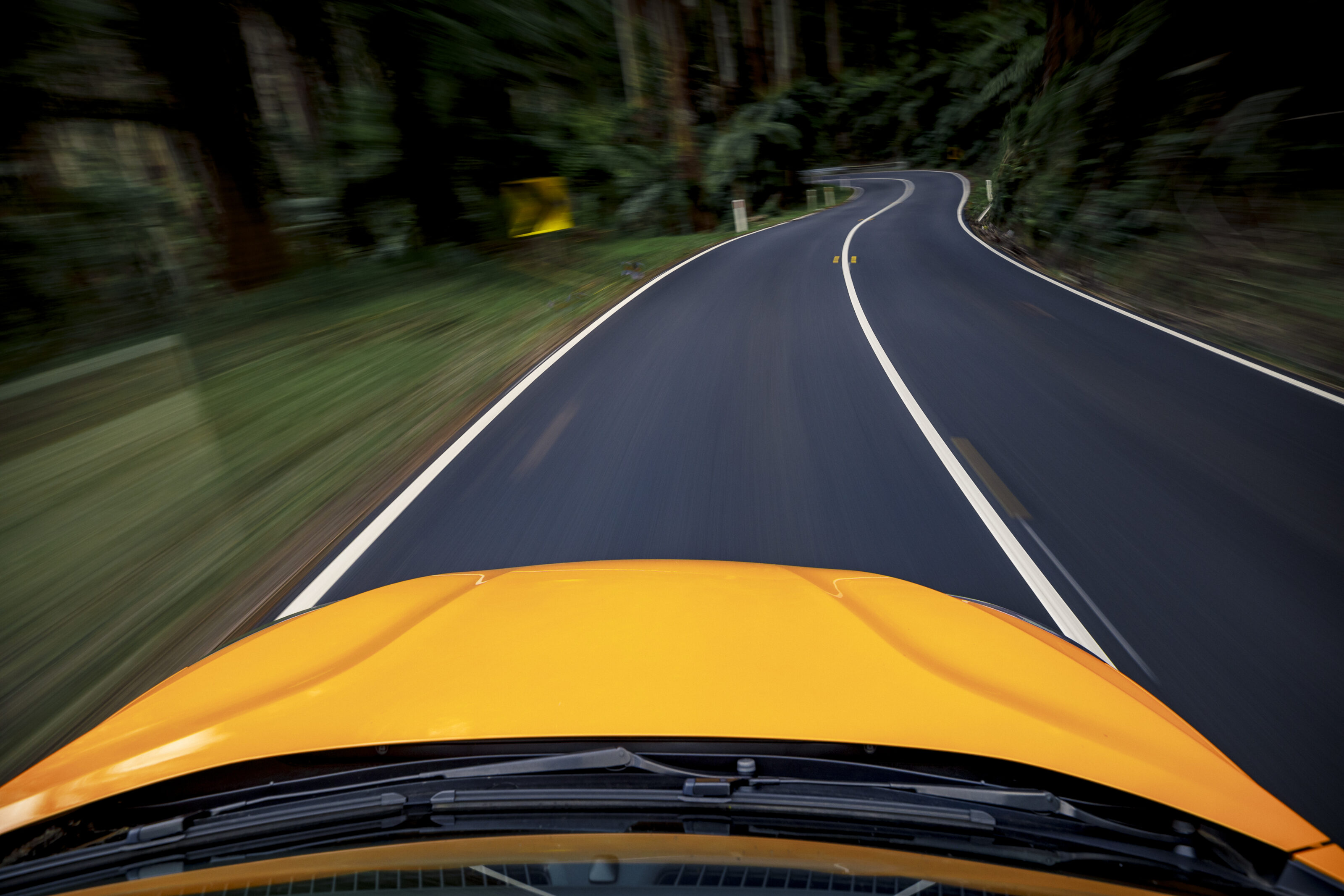
Our destination is the Black Spur. In 1921 competitors also faced the now iconic road in the dark, with one team rolling into a ditch and breaking an axle. A rescue team was mustered from Healesville to right the vehicle, allowing it to continue and complete the rally. Stretching for 30km, in isolation the Black Spur and its buttery smooth hot mix is one of the finest pieces of tarmac in the state.
However, a consistent police presence, and heavy traffic, has choked its personality. We make our way through towering gulleys of mountain ash as the sun rises and there is already a steady stream of vehicles doing the same – mostly dual-cab utes. The canopy disperses as we head toward Healesville and the inky sky that encased us is now bright and clear. There are no signs of the heavy downpours that would hound us later in the day.
The CBD is eerily quiet, another side effect of COVID, but it allows us to capture some photos of the Focus in front of the Herald Sun building. Crowds gathered here to applaud the competitors as they passed through a century ago. One of the loudest cheers was reserved for an all-female squad. No one pays us any mind.
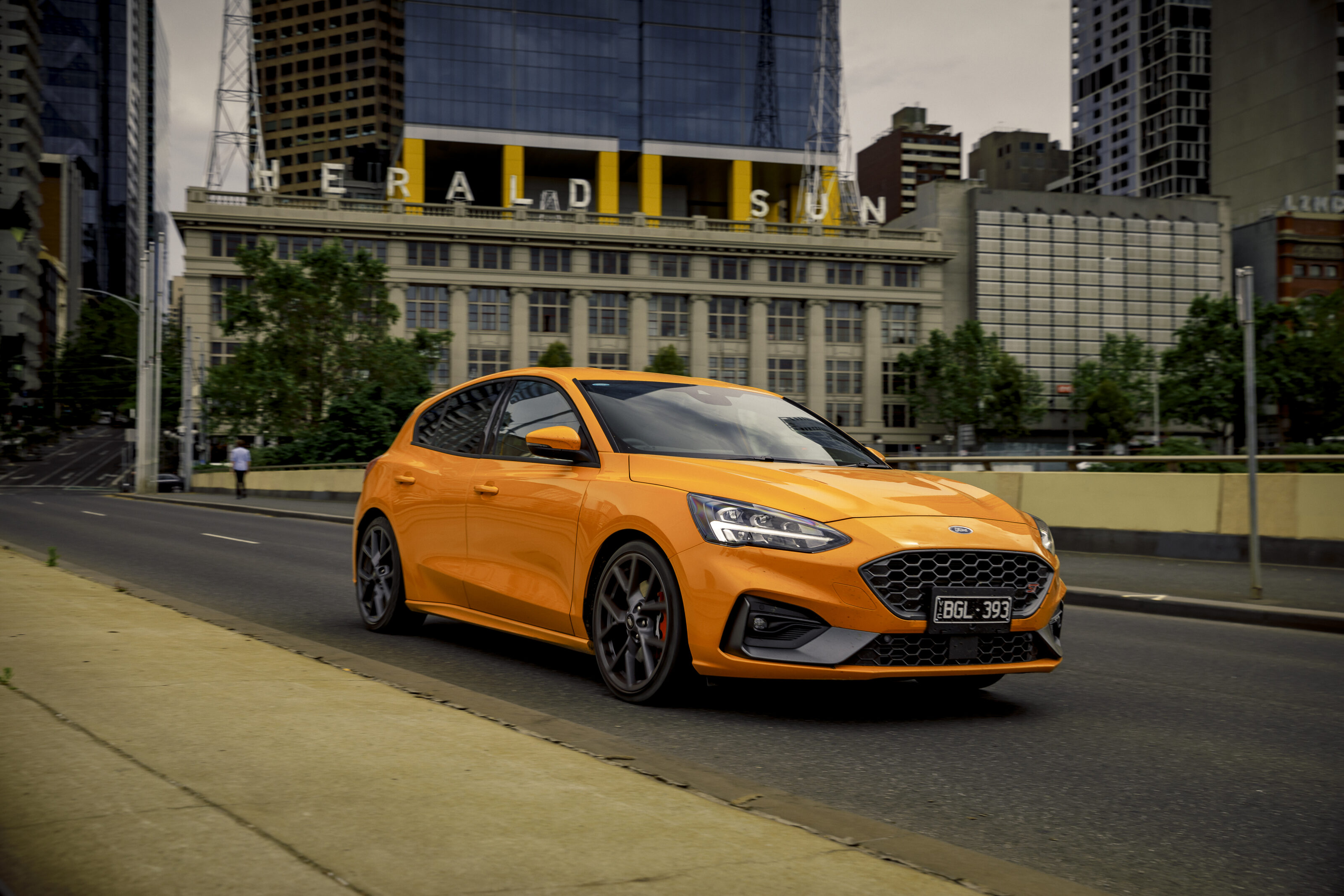
It’s not until we ascend the Westgate Bridge that the first fat droplets of rain begin to fall. It only gets heavier throughout the day, turning what should be the easiest part of the trip into one of the most challenging. Between Melbourne, Bacchus Marsh, Ballarat, and Geelong is where we are tested the hardest. As we charge head-first into the rain storm on the final stretch toward Geelong, a slew of wind turbines emerge from the fog like towering alien constructions. I chuckle quietly imagining the difficulty a 1921 native would have comprehending this visual.
Our penultimate stop is outside the old Ford plants in Northern Geelong. Four years after the rally swept its way through G-Town Ford Motor Company began assembling Model Ts using complete knock-down kits from Canada. Before a century could pass, the entire local industry has become extinct.
Due to the widespread adoption and construction of a little known design called the “bridge”, we have avoided having to get the Focus’ sills wet in water crossings. The 1921 competitors were forced through numerous challenging river crossings, and I’d gloated internally during the preceding three days that we remained free of such indignation.
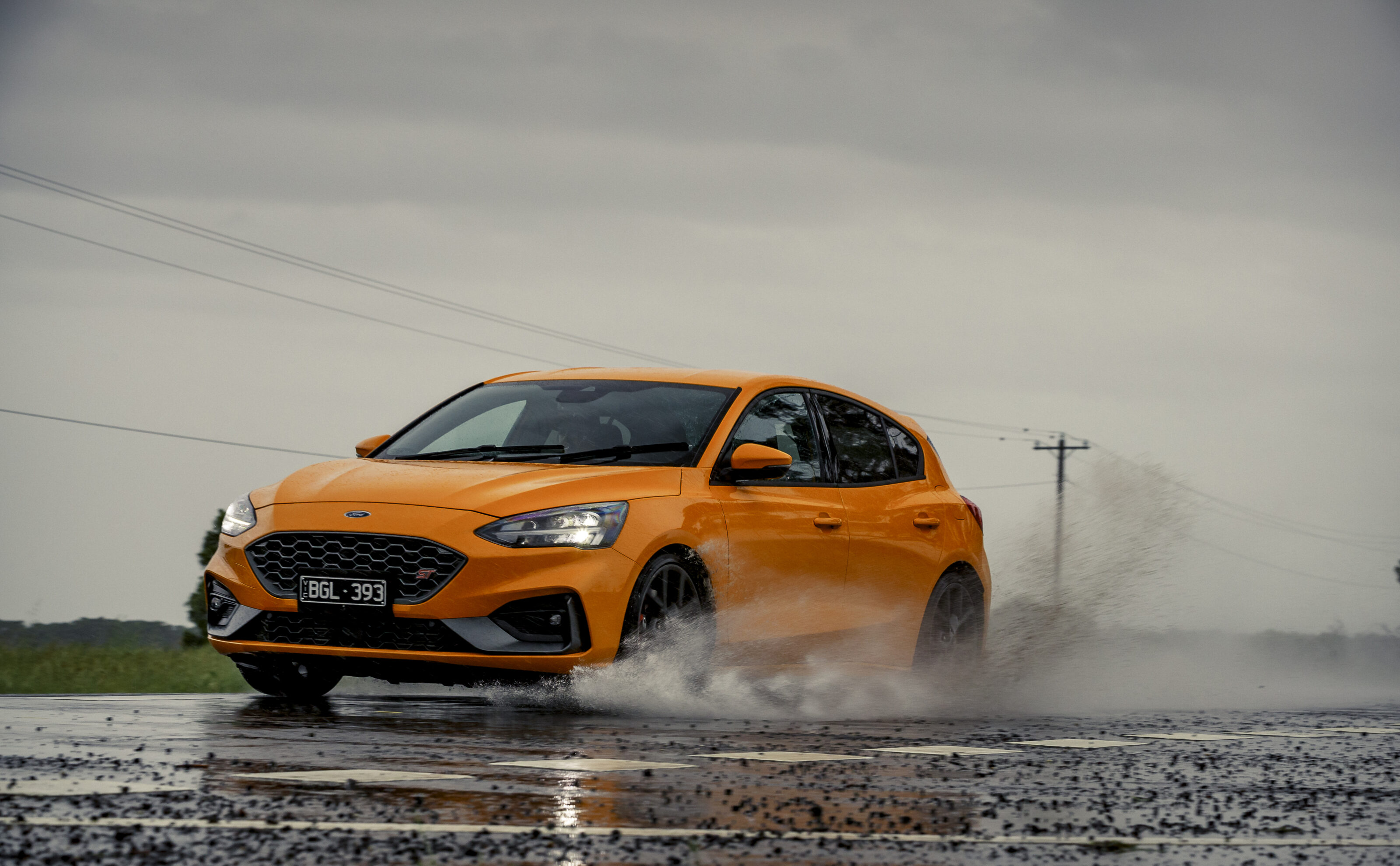
That is, until the final handful of kilometres of inner-city driving, when continuous heavy rain prompted parts of the road network to flood. Despite this final challenge we are able to wade safely back to Albert Park where our journey started what seems like an age ago. These have been the longest four days of my life.
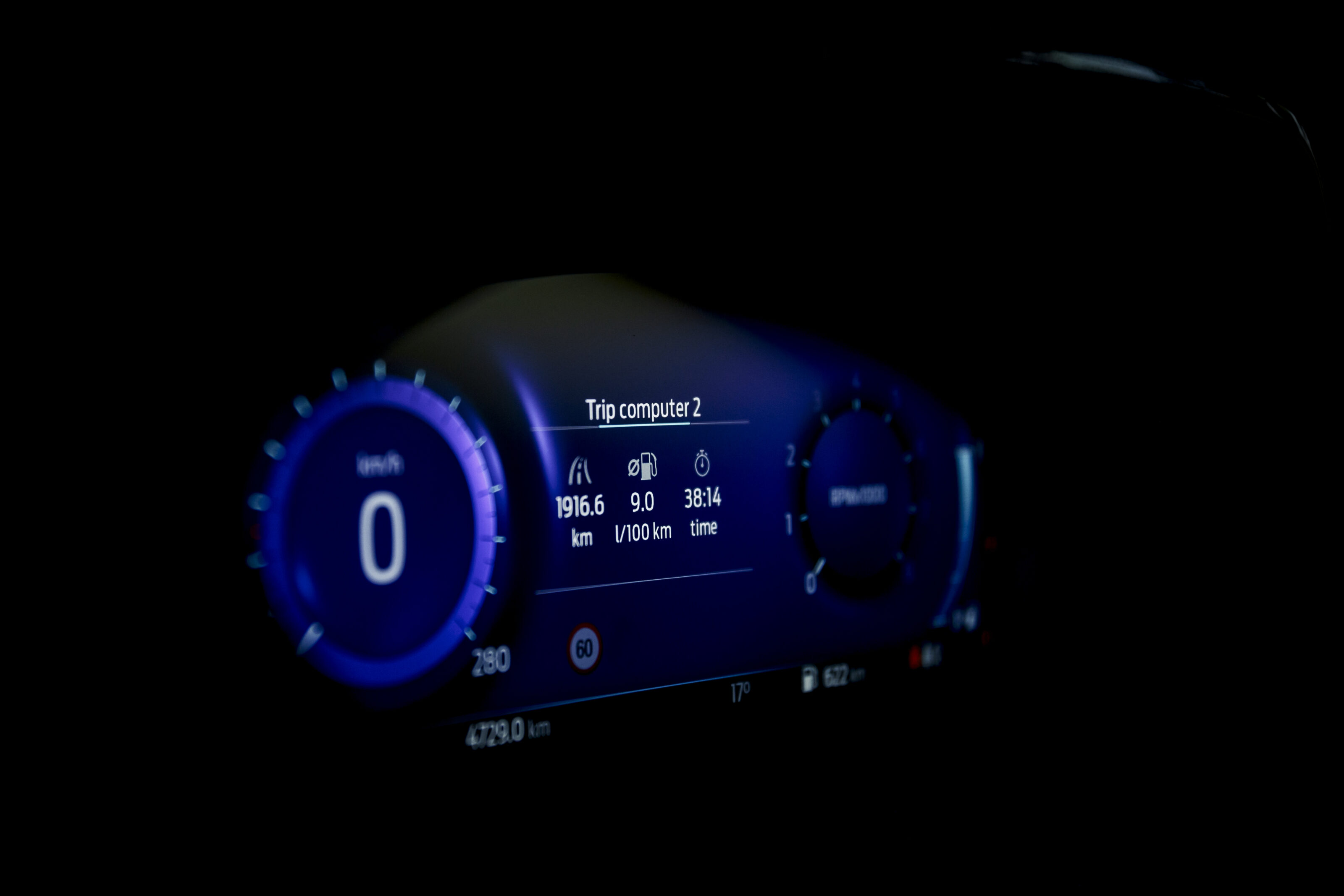
The final stats are as such. Odometer: 1916.6km (the extra distance is down to photography requirements). Ignition time: 38 hours, 15 minutes. Average speed: 50km/h.
Three Buicks were entered in the 1921 event, finishing the petrol contest in first, second and fourth. The most efficient of the trio achieved 24.24 miles per gallon, equivalent to 9.7L/100km. ‘Our’ Focus, still reeking of garlic from the cold pizza eaten atop Mount Hotham, with 100 years of technological advancement under its bonnet records a total average fuel consumption of just 9.1L/100km for the trip. Progress, eh?
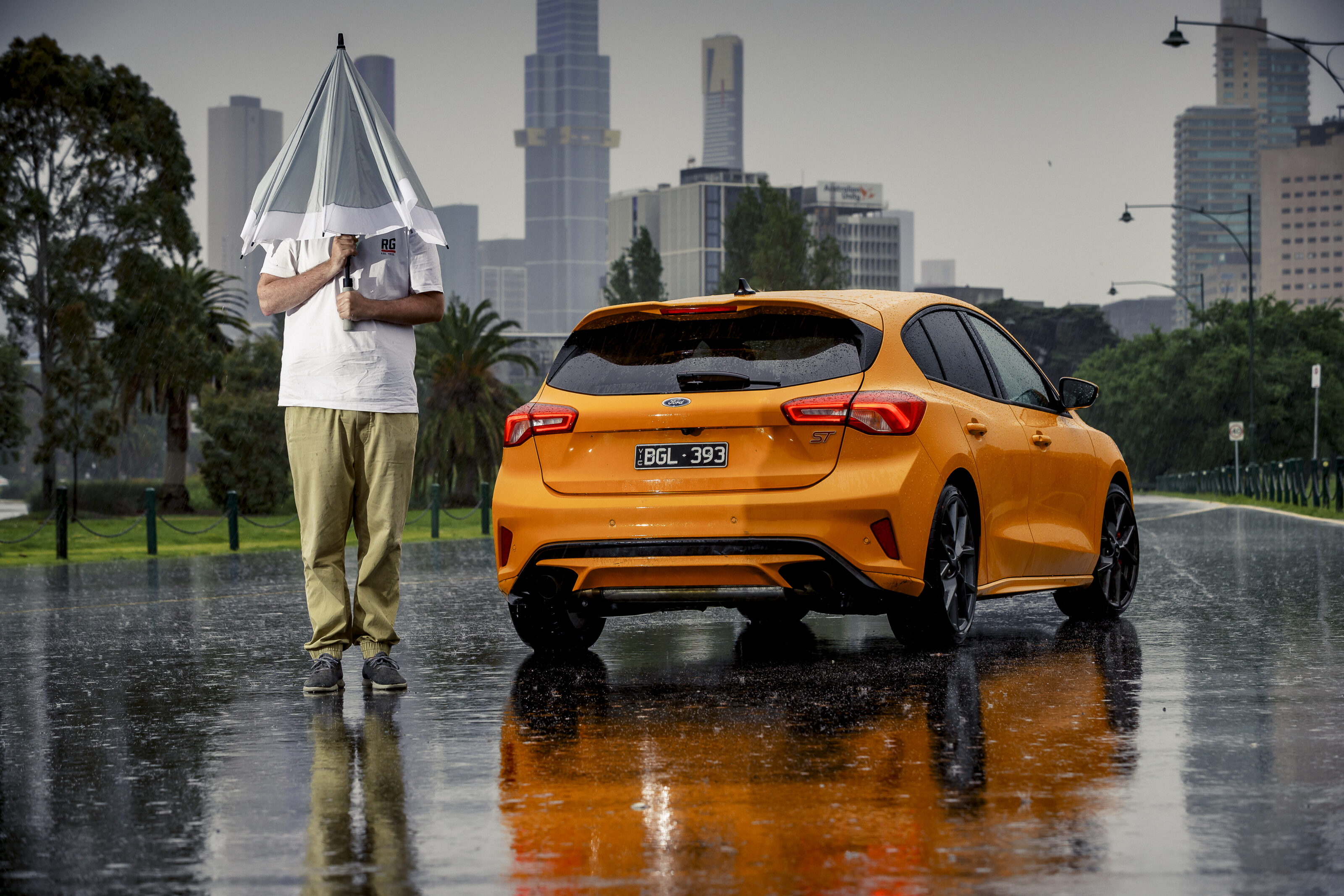
Archie Turner was the victor of the Alpine Rally in 1921. A century later there is no spraying of champagne. We aren’t greeted by a throng of enthusiastic onlookers. Instead, I stand in the rain as Trent hides in the car as Ellen takes one last photograph. We disperse without fanfare. As I head to the much-needed comfort of home I reflect on a century of motoring evolution.
Throughout our entire journey, even when we ate at the same places and gazed upon the same vistas, the experience of those 31 competitors in 1921 seems alien. What they achieved, and the motoring spring that flowed forth as a result, has had an indelible impact that is felt today.
I don’t have enough of an ego to entertain our journey achieving a minutia of the same influence, but I can’t help but ponder what the reaction to this four-day trip will be in the year 2121.
What would a kid born in the year 2093 think as they flick through a copy of MOTOR that their great-grandparent stored dutifully in the attic (thanks for that, dear reader). Are they similarly befuddled as I am now?
Wondering how we completed such a journey in the manner we did – changing gears ourselves, toiling at a wheel incapable of controlling the car unsupervised for nearly 40 hours, propelled by combustion chambers. They may see that journey as punishing. I won’t claim it wasn’t, but be rest assured it was also liberating. Long may the driver’s spirit reign. – CK
Marysville to Melbourne – 374km
We regret to inform you that unless you are seriously dedicated to recreating historic rallies like us, there isn’t much in the way of traditional driving fun to be found in this part of the route. The Black Spur is little more than a tourist drive, and the road quality west of Melbourne leaves plenty to be desired.
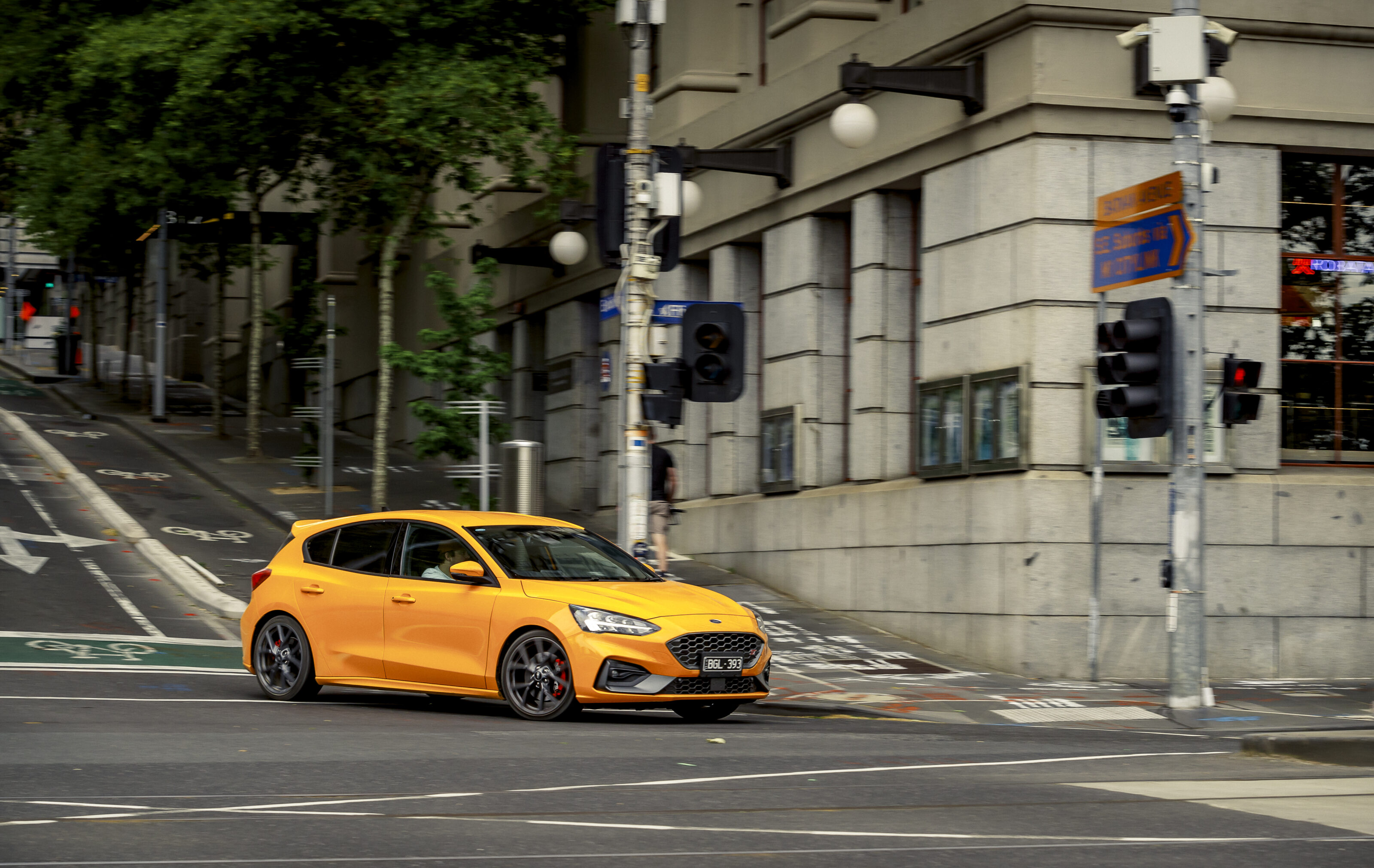
The 2022 Volkswagen Arteon is set to replace the Passat sedan as the German brand’s mid-sized four-door offering in Australia.
Volkswagen’s local arm told Wheels it was planning to remove the Passat sedan from its showrooms temporarily and the move is expected to become permanent. The nameplate will continue with the wagon versions, including the Passat Alltrack.
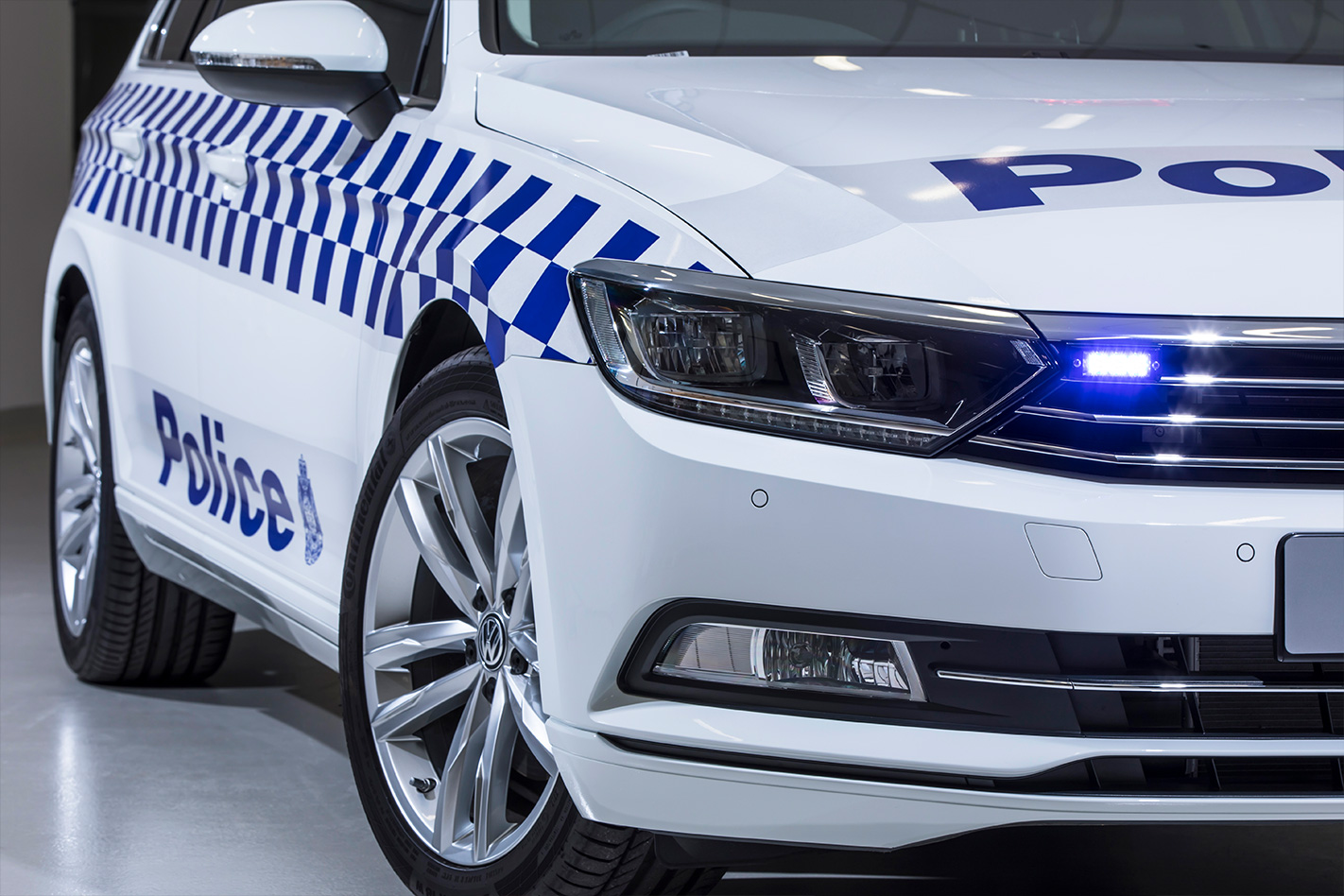
Passat sedans, along with wagons, will also continue to be provided to NSW and Victoria police forces and other emergency services.
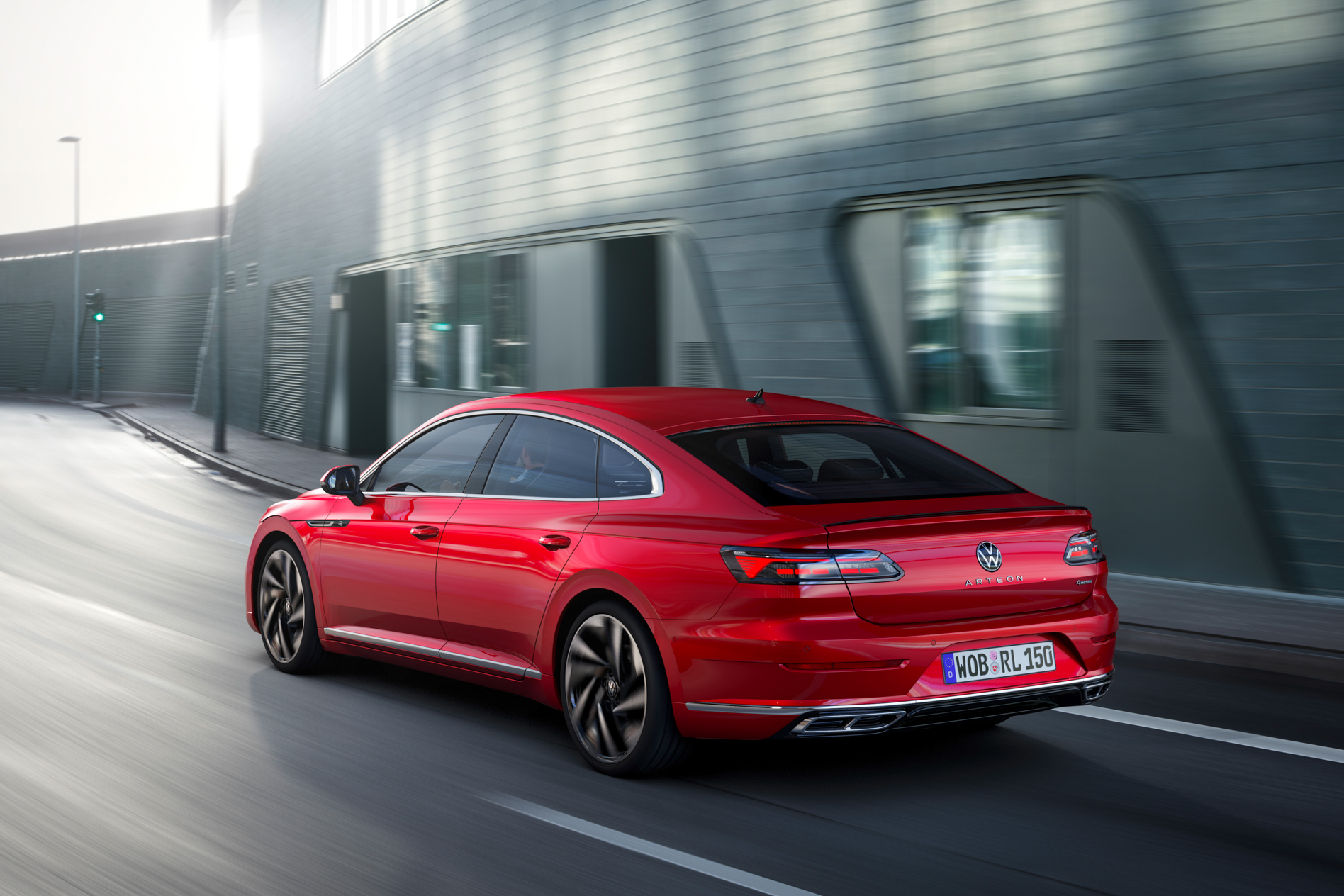
The decision to discontinue private sales of the Passat sedan coincides with the pricing announcement for the updated Arteon range, which has launched this week after a lengthy, WLTP-related, absence for the nameplate.
The Arteon range, which includes a 140TSI variant and Shooting Brake wagon for the first time, is slightly more expensive than initially quoted by Volkswagen in mid-2021.
An entry-level Arteon 140TSI Elegance now costs from $61,740 rather than $59,990, and the sportier 206TSI R-Line is priced from $68,740 instead of $66,990.
There’s a $2000 premium for the Arteon Shooting Brake, a sloping-roofed wagon that offers only a small increase in luggage capacity over the coupe-style sedan.
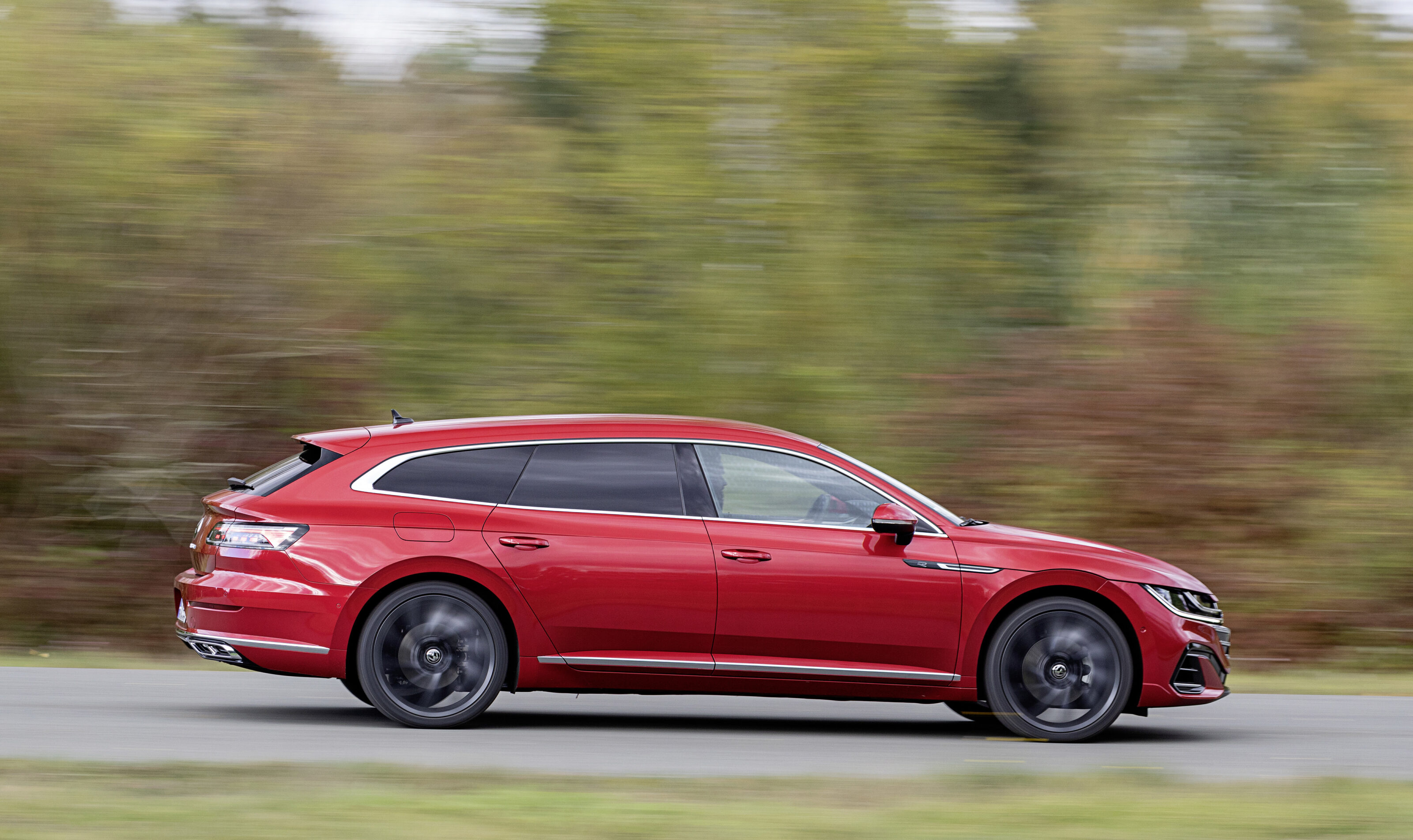
The Shooting Brake’s 565-litre boot provides only three extra litres of volume. The capacity gap is larger when comparing load bays with rear seats folded: 1632 versus 1557 litres.
The Passat wagon’s 650-litre boot, which expands to 1780 litres, gives it a key practicality advantage that helps its case in the line-up.
VW Australia’s product manager for passenger vehicles admitted market trends had forced it to rationalise its offerings in the segment.
“Sedan sales have gone down in the entire industry,” said Glenn Reid. “But we have had a successful relationship with the police, and that in effect has been keeping the [Passat] sedan alive for us.
“The [Passat] wagon body style is a lot more popular [with private buyers]. There’s still room for the Passat wagon. It’s a different customer, in the sense that it’s a more practical vehicle. And it has a bigger boot capacity than the Arteon Shooting Brake.
“We haven’t made a firm decision on the [long-term future of the] Passat sedan, but we are going to stop sales for a while to help fulfil police requirements. It is under threat [going forward].”
If the Passat sedan exits the market permanently, entry to a four-door Volkswagen will jump from $47,690 to $61,740.
Volkswagen Australia said there was effectively no entry-level Arteon as it had given the most affordable version a high specification, though the 140TSI features a less powerful engine than the 162TSI Passat Elegance sedan.

Standard features for the Arteon 140TSI Elegance include; 19-inch alloy wheels, front/rear parking sensors, adaptive dampers, matrix LED headlights, surround view, blind-spot and rear cross traffic monitoring, and travel assist partial-autonomous driving mode.
The 140TSI is a front-wheel-drive model powered by a 140kW/320Nm 2.0-litre turbo-petrol.
A $7000 premium for the 206TSI R-Line brings; 20-inch alloy wheels, R-Line body kit, all-wheel drive and a more powerful four-cylinder engine with 206kW and 350Nm.
Options for both grades are limited to a $2000 sunroof and an $800 three-coat oryx white paint.
The Arteon was first released in 2017 as a successor to the Passat CC.
2022 Volkswagen Arteon and Passat Australian pricing
| VW Arteon 140TSI Elegance | $61,740 |
| VW Arteon 140TSI Elegance Shooting Brake | $63,740 |
| VW Arteon 206TSI R-Line | $68,740 |
| VW Arteon 206TSI R-Line Shooting Brake | $70,740 |
| VW Passat 140TSI Business* | $47,690 |
| VW Passat 162TSI Elegance* | $52,890 |
| VW Passat 162TSI Elegance wagon | $54,890 |
| VW Passat 206TSI R-Line wagon | $64,890 |
*While stocks last.
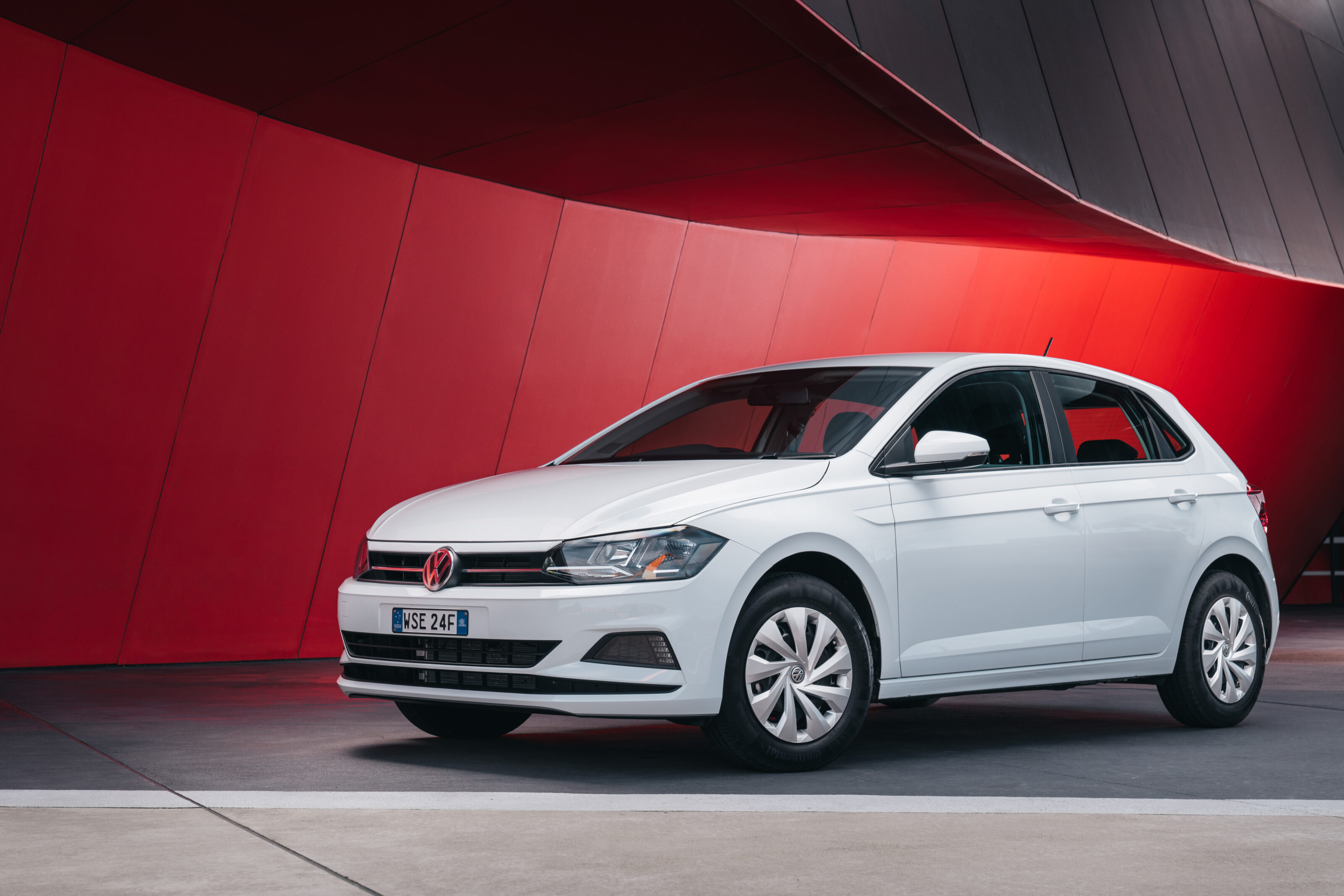
Australians will no longer be able to buy a Volkswagen for less than $20,000 in 2022, after the German brand announced it will increase pricing and specification for its updated Polo range.
The Polo city car range will continue to start with a 70TSI manual model when it arrives in April 2022, but it will cost more than its current $19,290 RRP.
Volkswagen Australia says more detail will be provided for the facelifted Polo range nearer its launch. Wheels believes additional extra standard features will include VW’s iQ Drive driver-aid suite found on other VWs – such as the Golf and Passat.
iQ Drive includes the partial autonomous-drive travel assist, which can control steering as well as braking and acceleration when requested by the driver. The system ties in with adaptive cruise control that is currently part of an option pack for the Polo.
A camera-based speed-limit sign reading system and lane assist also form part of the iQ Drive system that is an option on the updated Polo already released in Europe.
The Polo range will continue to comprise 70TSI, 85TSI and GTI trim grades, and maintain the availability of a six-speed manual gearbox for the 70TSI and 85TSI variants.
VW Australia says that while the Polo remains an important model as an entry to the brand, it is simply responding to buyer trends and market forces such as the semiconductor shortage.
“We’re responding to what we’ve always seen from our customers,” said VW Australia’s product manager for passenger vehicles, Todd Ford. “And traditionally more so than competitors, we’ve had that rich [sales] mix of Life, Comfortline and Highline [higher trim grades], even putting aside performance models.

“So, we’re fully embracing [these higher grades]. We did have a Trendline or entry model and look to achieve a particular price point under an older philosophy, I guess to attract more customers.
“But our customers want more than a Trendline [base specification], even though they were rated highly by the media.”
The $29,550 base Golf manual is also disappearing for MY22 production as VW Australia focuses on the much more popular variants of its famous hatchback.

“Customers are talking with what they buy, and Life and R-Line [grades] are proving extremely popular in the core range,” said Ford. “In the face of semiconductor and other production shortages, we’ve taken the move to temporarily remove the least popular model rather than de-content the car.
“So, we have taken the decision to do without the base Golf manual for model-year ’22 production, but at this stage the plan is to bring it back for MY23 production.”
VW Australia said the average transaction price of a Golf has long been north of $30,000.
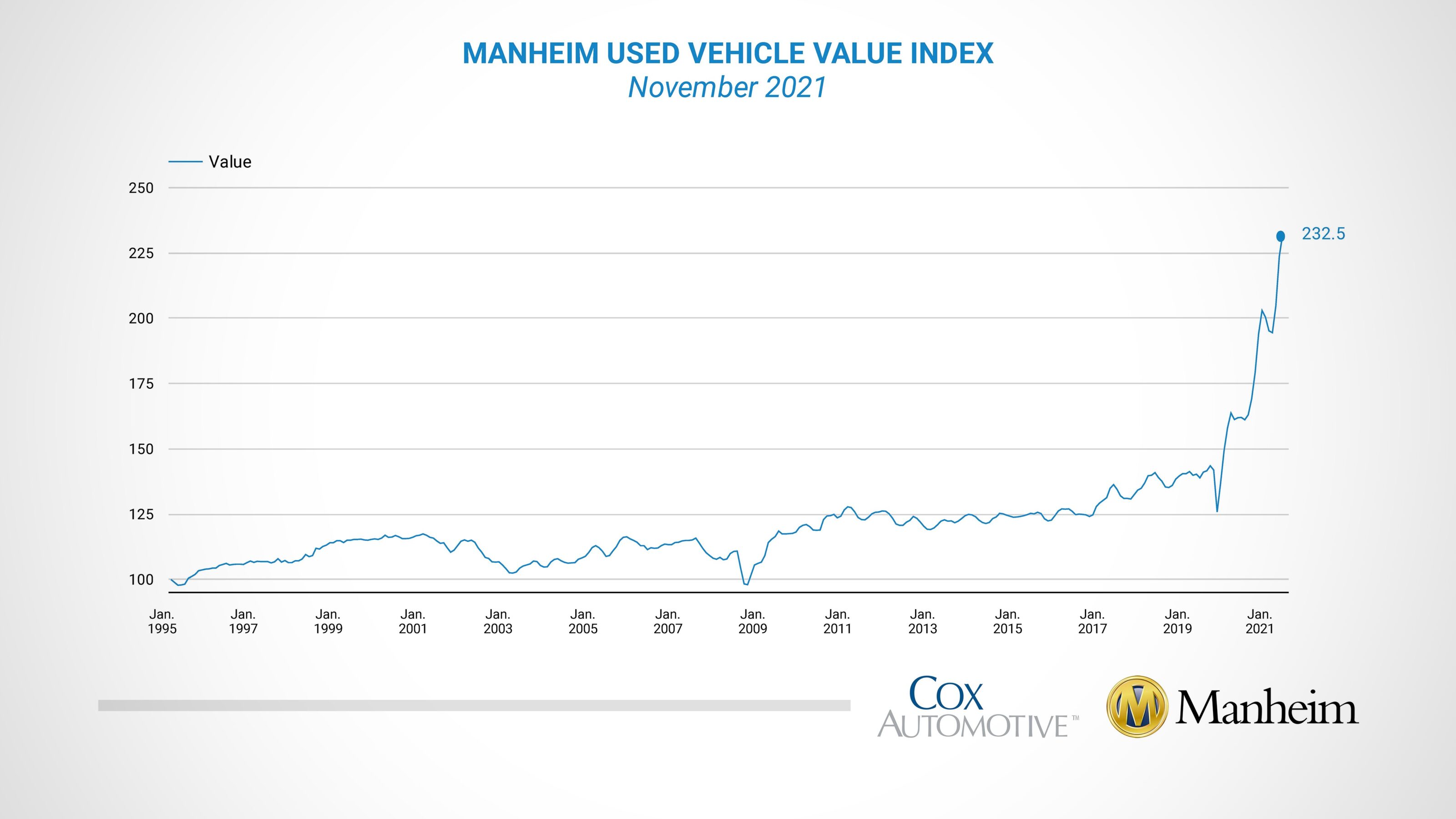
The US wholesale used-car market in November increased by 3.9 per cent compared with the previous month, far outpacing the country’s consumer price index which rose 0.8 per cent to a four-decade high.
The Manheim Used Vehicle Value Index surged to 232.5 points this month – a 43.5 per cent increase year-on-year – despite the total number of used-car sales reducing by an estimated two per cent over the past 12 months.
At the current rolling average, the 2021 US used-car market is already more than 30 per cent higher than 2020, with one month left to go.
Only the top-end of town has weathered the inflation storm surge. Major market indices show collectable cars have remained flat or declined in recent years.
The ‘affordable classics’ segment is the exception, which has continued to push higher over the same period, according to the K500 and Hagerty.
With many expecting reserve banks to hike interest rates in the coming months to rein-in inflation numbers, the result could help to push used-car prices lower, while making auto loans more expensive to pay off for consumers.
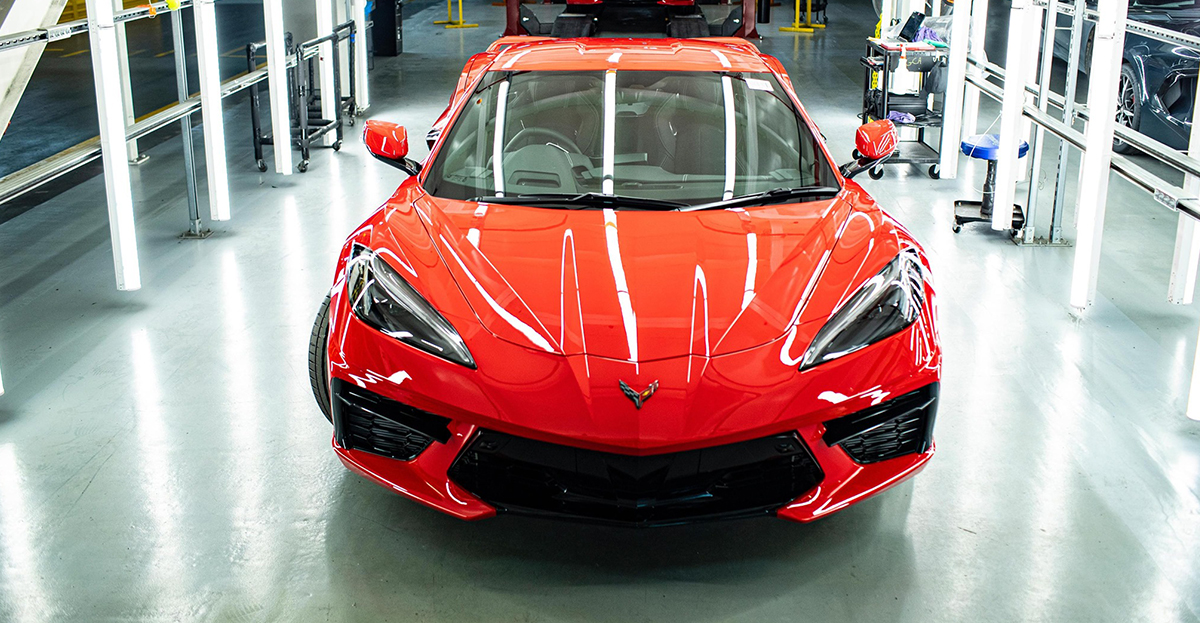
General Motors Specialty Vehicles (GMSV) has confirmed the Chevrolet C8 Corvette Stingray will hit Australian dealerships from mid-January, with the allocation of variants locked in and already spoken for.
Speaking to WhichCar at a brand event in Melbourne, GMSV director Joanne Stogiannis said production right-hand drive C8 Corvettes are en-route from Chevrolet’s Bowling Green factory in Kentucky.
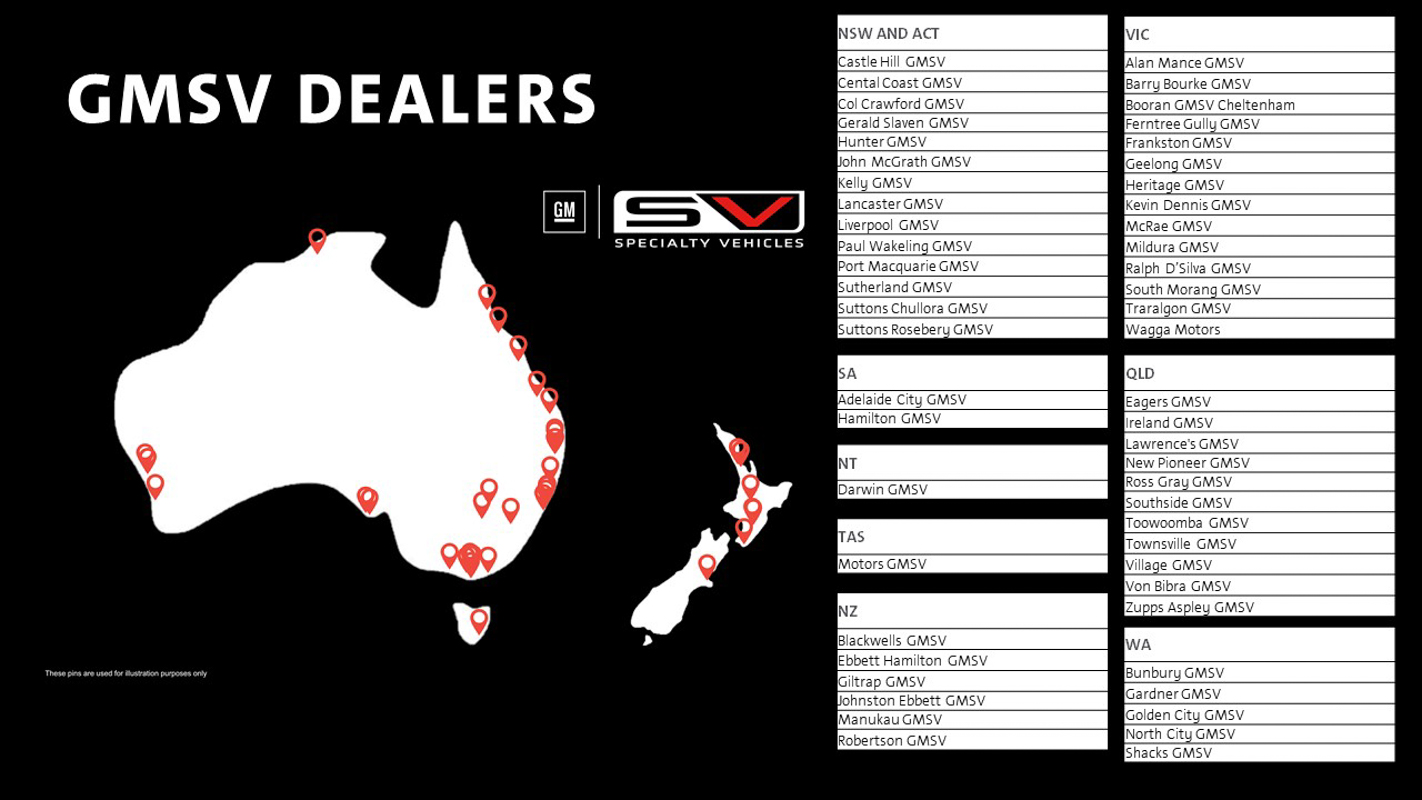
Stogiannis says allocation will be shared as equal and fair as possible across Australia and New Zealand, with each GMSV dealer within a 64-strong network receiving three coupes and one convertible.
GMSV has even prescribed the variant mix for dealerships, with each set of three coupes to have one variant in 2LT trim, another in 3LT and a range-topping Carbon Edition version – which is a one-time limited special.
After this, GMSV implies there won’t be any shortage of demand, with relinquished orders quickly replaced by other customers on waiting lists.
The news bolsters anticipation for the eagerly awaited super sportscar, which heralds many firsts in Australia. It’ll be the first new vehicle to be introduced under the new GM subsidiary brand, the first Corvette ever sold here and the first mid-engine generation of the model.
Prices kick off at $144,900 RRP for the Stingray 2LT Coupe, rising to $160,500 for the 3LT and then $189,990 for the Carbon Edition. Convertibles (of the former two trims levels) cost another $15,000. However, as we’ve previously reported, buyers might pay much more in total once drive-away costs are factored in.
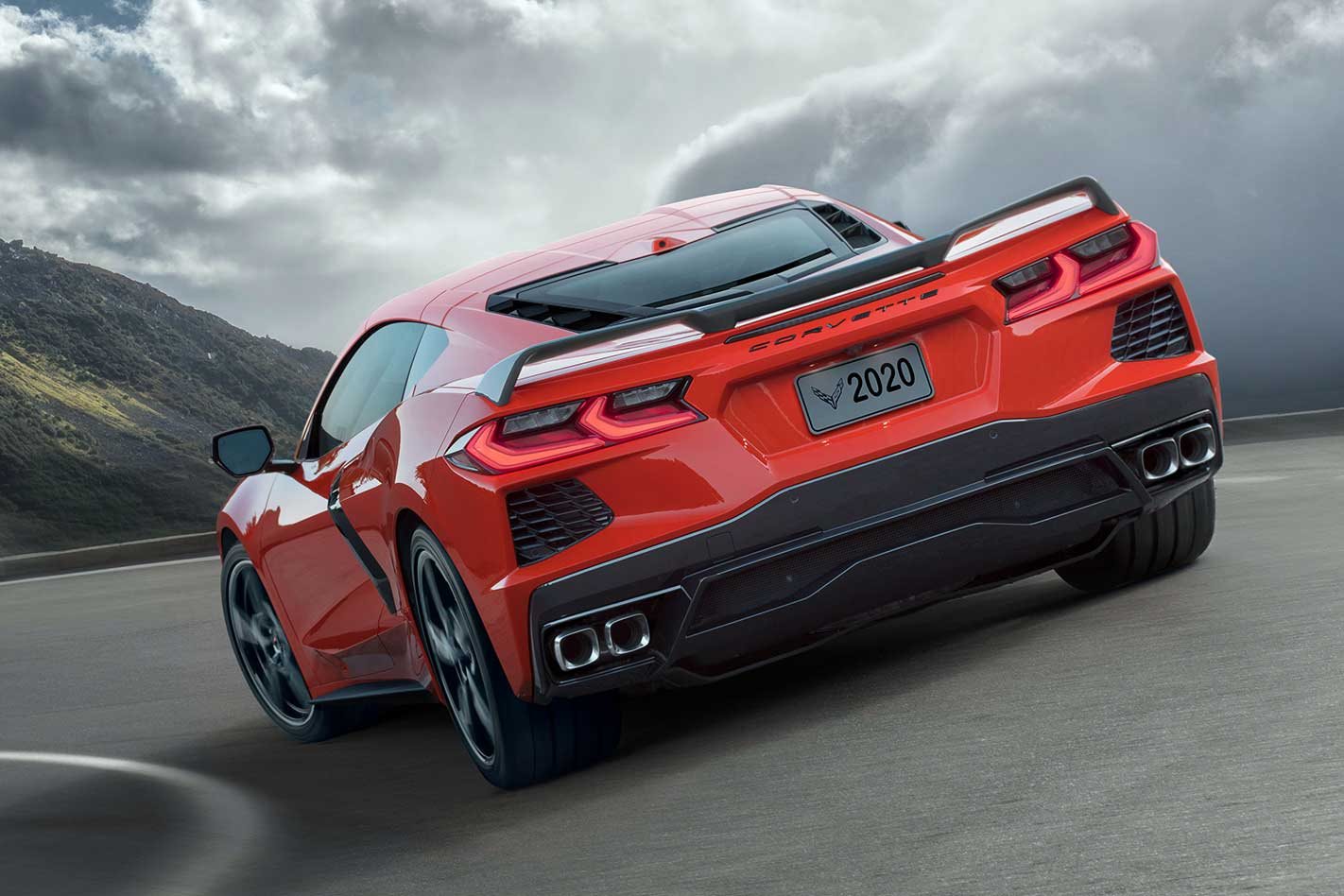
All Corvettes will have a Z51 performance package, Magneride dampers and a front-lift system fitted as standard. Although active radar safety systems such as AEB and adaptive cruise are questionably absent from international spec lists, and we expect the same will be replicated here.
Finally, GMSV has also re-confirmed a right-hand drive Z06 version of the C8 will be coming to Australia, with more details to be announced mid-way through 2022.
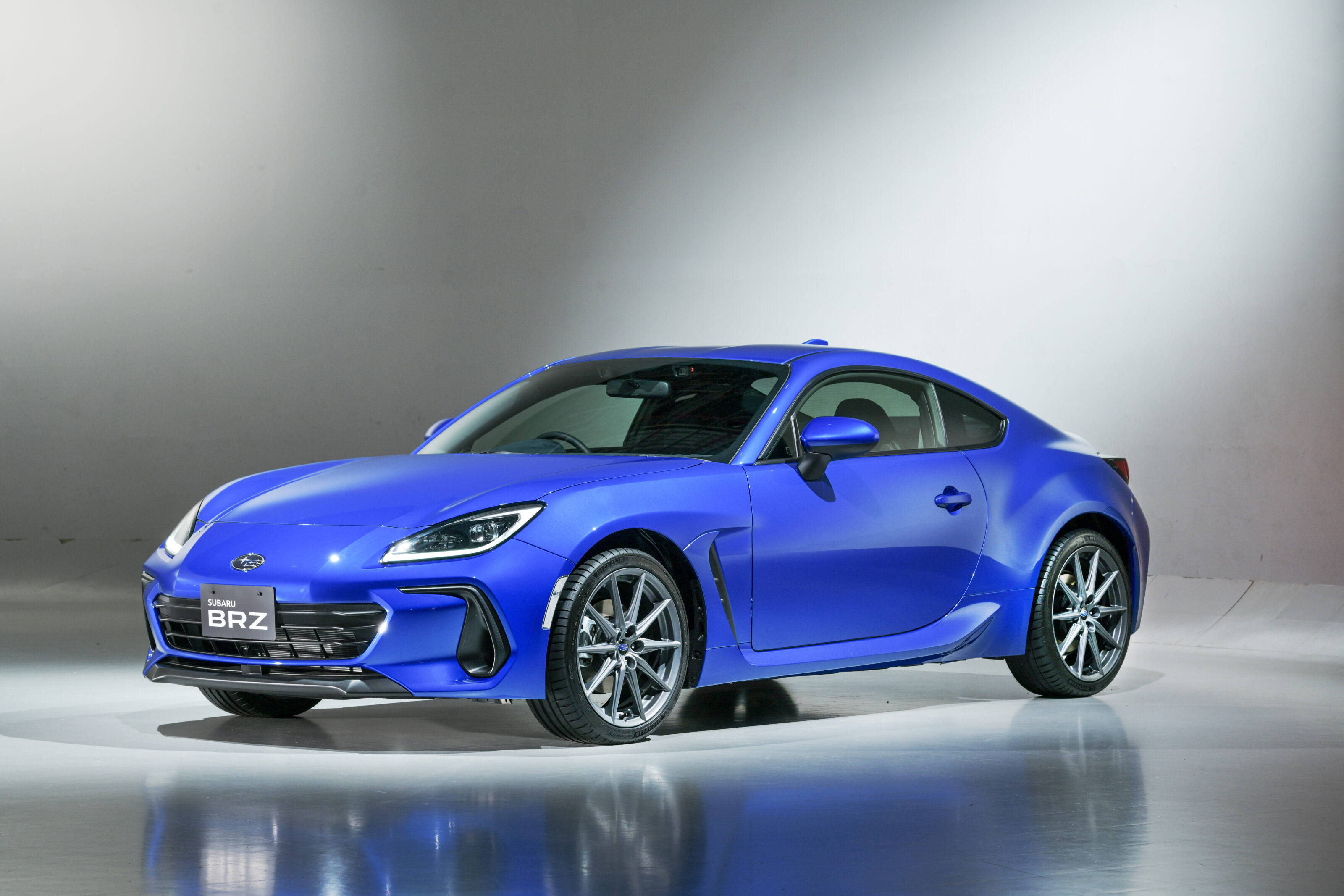
UPDATE, December 13: Those wanting a 2022 Subaru BRZ will have to wait, with the company today announcing its initial allocation has sold out.
Around 500 examples of the BRZ have been sold by Subaru since the model went on pre-sale in September, with the first batch of vehicles expecting to arrive in a matter of weeks.
With an average price of just over $40,000 before on-road costs, the BRZ orders equate to more than $20 million in sales for the company.
The next allocation of Subaru BRZ models for Australia aren’t due until late 2022.
The story to here
November 26: The first allocation of the 2022 Subaru BRZ is nearly sold out, with Subaru Australia confirming less than 90 examples remain unallocated.
Around 410 of the 500 vehicles on offer have already been pre-ordered by Australian consumers on a first-come, first-served basis.
The next-generation BRZ is set to arrive in Australia from mid-December, with customer deliveries expected to commence from the first-quarter of 2022.
Subaru Australia has confirmed further examples beyond the initial 500 are not expected to arrive until later in 2022.
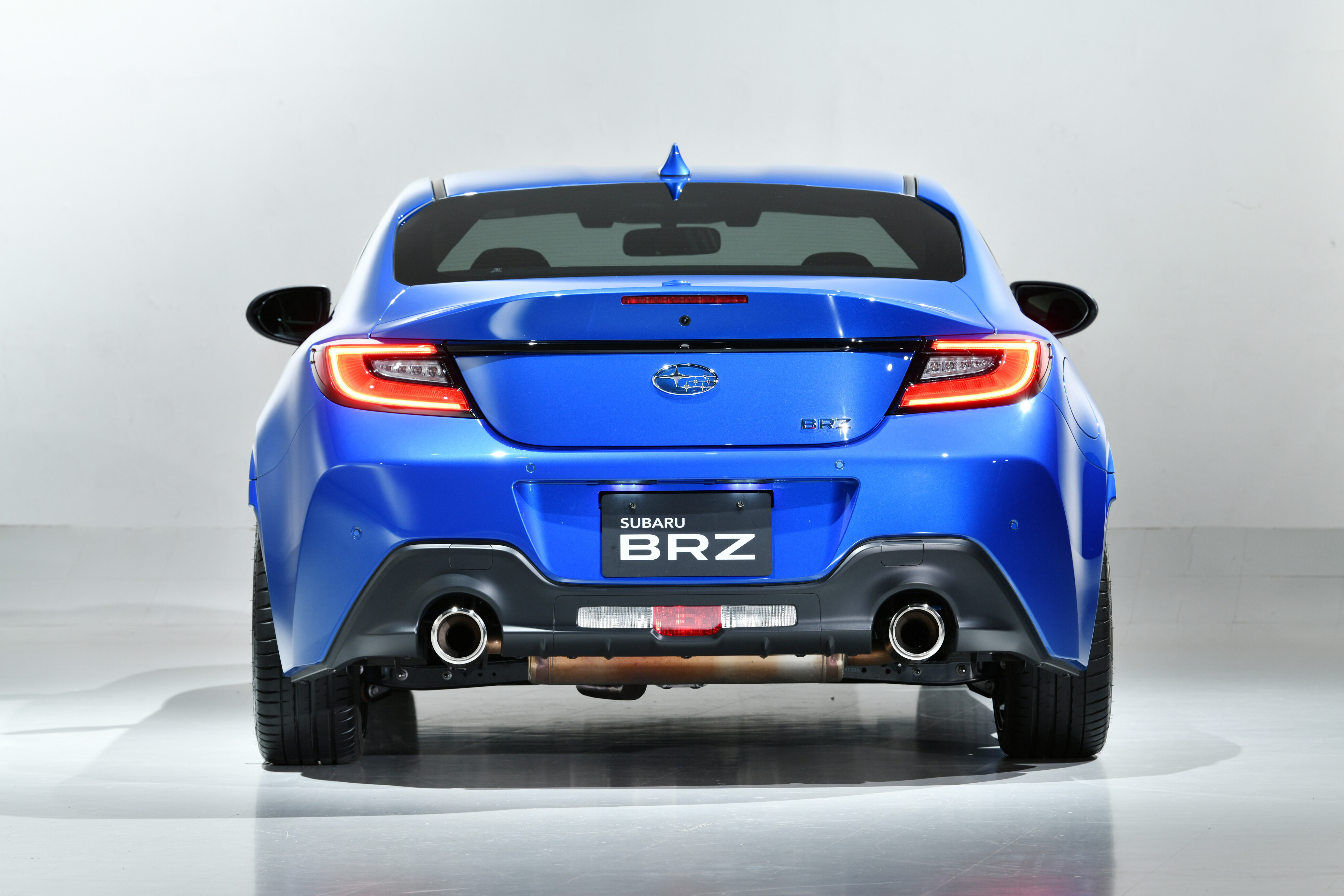
Meanwhile, the identical 2022 Toyota GR86 is not anticipated to arrive in Australia until some time in the second half of next year – 15 months after the Toyota first debuted – marketed as a model-year 2023 vehicle.
“We are delighted by the reception for the all-new Subaru BRZ. The number of Australian customers already eagerly awaiting delivery to their driveway is testament to the great package the Subaru engineers have delivered with the next generation BRZ,” said Blair Read, general manager of Subaru Australia.
Pre-orders for the Subaru BRZ have been open both online and in dealerships – available through a fully-refundable $1000 deposit – since early-September, when pricing and initial specification details were announced for the Australian market.
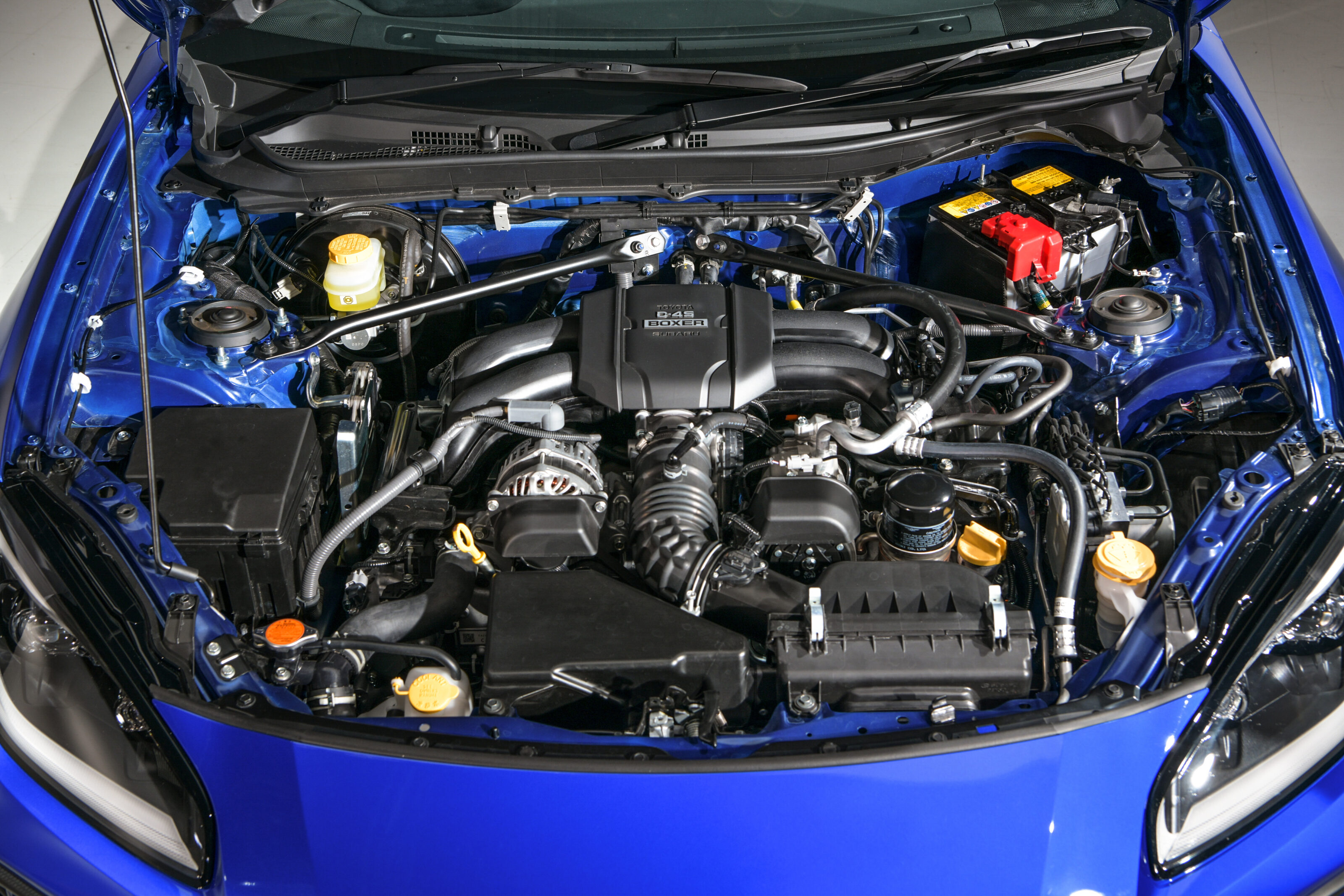
The new BRZ is headlined by the addition of an uprated 2.4-litre direct- and port-injection naturally-aspirated four-cylinder boxer engine, developing around 173kW of power and 250Nm of torque – a bump of 18kW and 32Nm over the outgoing 2.0-litre model.
Pricing starts from $38,990 before on-road costs for the six-speed manual BRZ Coupe, with a six-speed automatic transmission available at $42,790 – a $3800 difference over the manual.
Standard equipment includes; 18-inch alloy wheels with Michelin Pilot Sport 4 tyres, an 8-inch infotainment system with Apple CarPlay, Android Auto and satellite navigation, cloth seats, leather steering wheel and gear shift surround, keyless entry, LED headlights, LED daytime running lights, blind-spot monitoring, and rear-cross traffic alert.
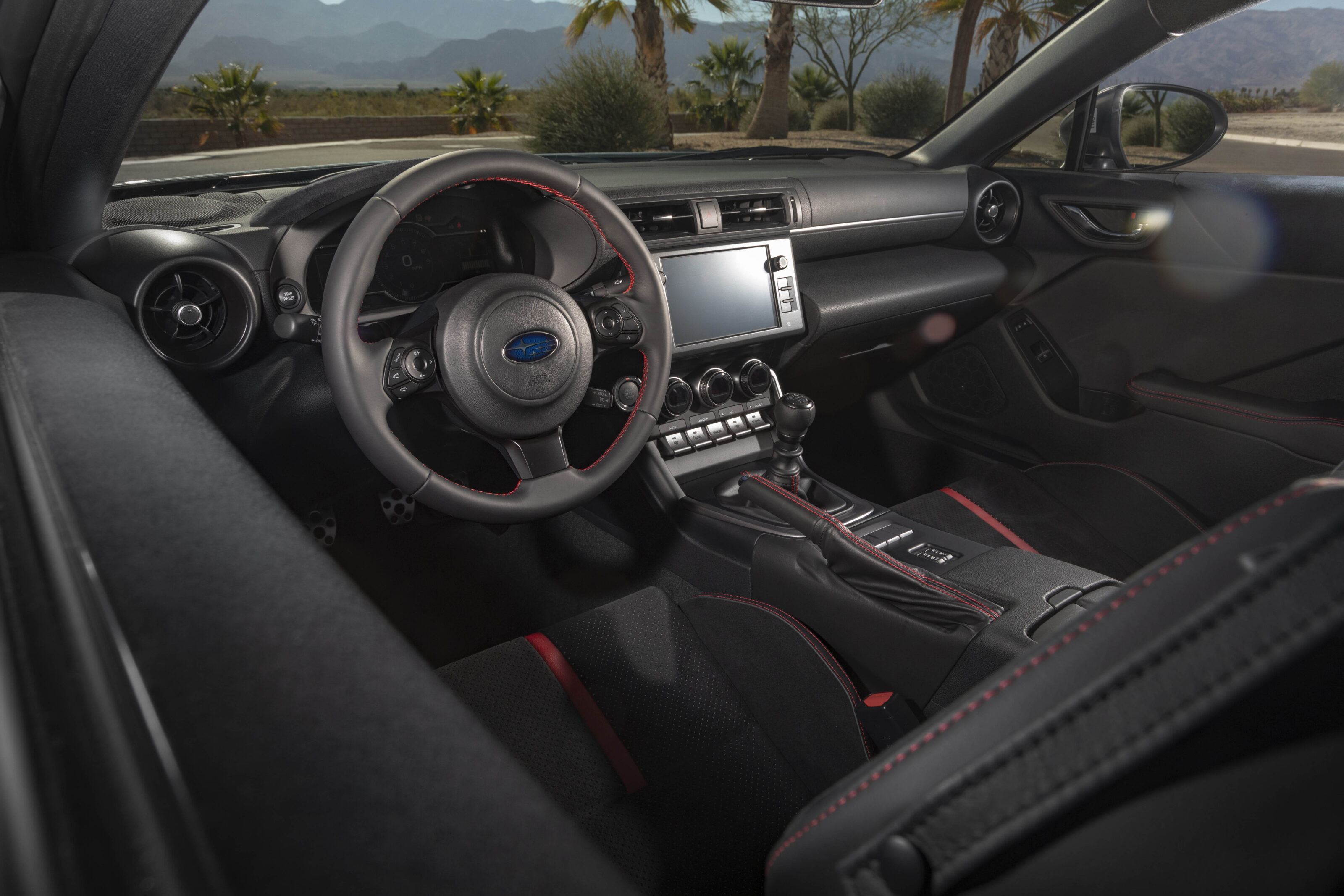
Automatic variants also exclusively pick up Subaru’s EyeSight suite of active safety equipment, consisting of forward and reverse autonomous emergency braking, adaptive cruise control, and high-beam assist. Paddle shifters are also available for the automatic transmission.
Stepping up to the flagship BRZ Coupe S – an additional $1200 over the base Coupe – adds heated ultra-suede seats with leather accents.
2022 Subaru BRZ Australian pricing
Pricing excludes on-road costs.
| Subaru BRZ Coupe Manual | $38,990 |
| Subaru BRZ Coupe Auto | $42,790 |
| Subaru BRZ Coupe S Manual | $40,190 |
| Subaru BRZ Coupe S Auto | $43,990 |
