
Key Points
- Facelifted 2023 Ford Escape imagined in renderings
- Spy photos show redesigned front-end and mildly-refreshed rear
- Expected locally late 2022 or early-2023
The oft-forgotten Ford Escape medium SUV is set to go under the knife for 2023, picking up a new look and extra technology.
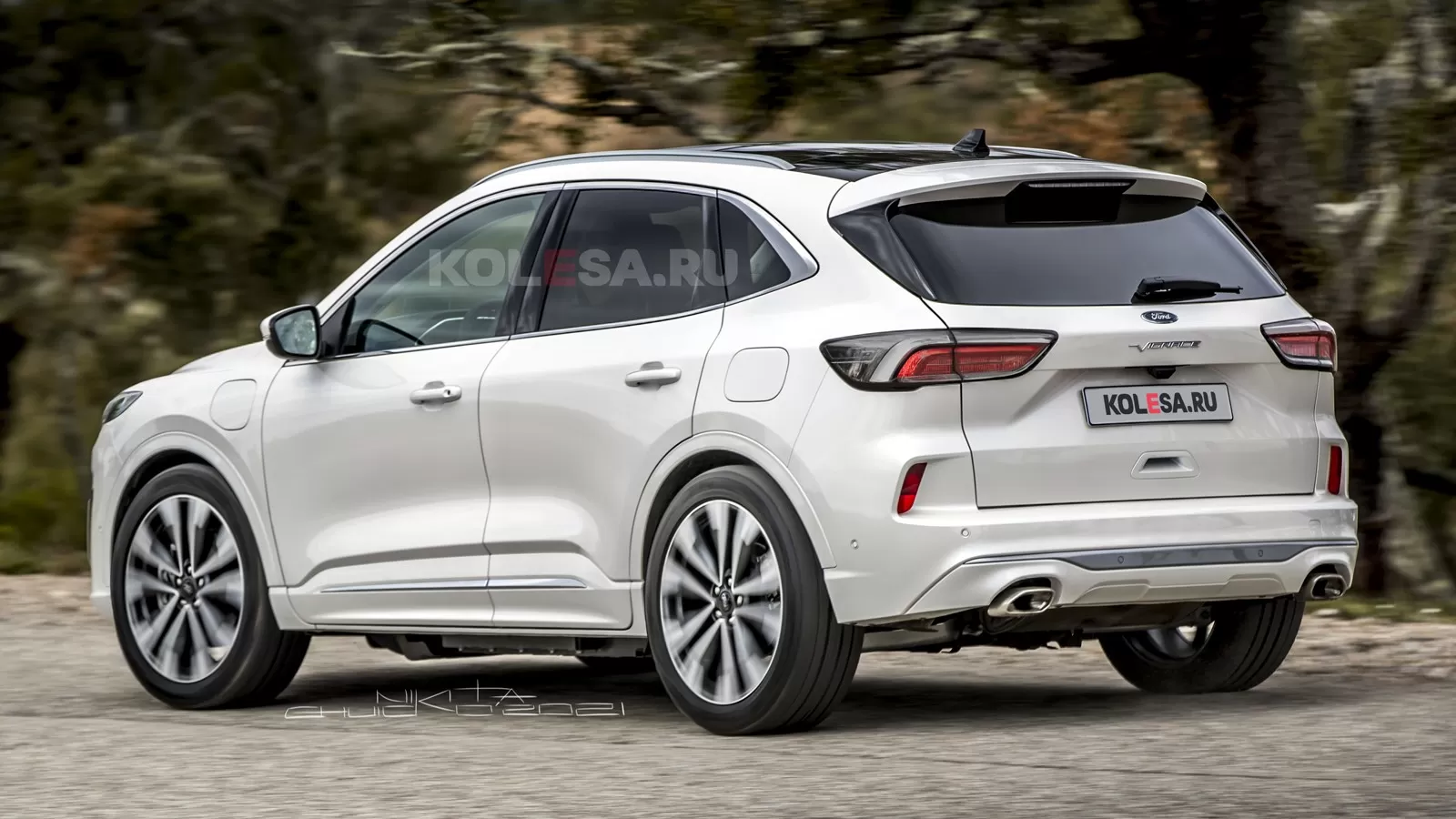
A new pair of unofficial renderings have imagined what the facelifted crossover will look like.
These illustrations are courtesy of Russian website Kolesa.ru, and are inspired by a fleet of camouflaged 2023 Escape prototypes spotted around the United States over the past month by Carscoops.
A modest facelift is expected to help keep the Escape fresh amongst its rivals in the evolving medium SUV segment – a necessary move in order to maintain sales.
The current-generation Escape/Kuga (the latter badge its previous name in Australia and ongoing insignia in Europe) was unveiled globally in April 2019, before it went on sale locally around 18 months later.
These renderings showcase a reshaped Mustang Mach-E-inspired front fascia, with a larger and wider front grille and slimmer matrix-LED headlights. A new trapezoidal-shaped lower bumper is also joined by a redesigned set of air intakes with rectangular fog lights.
Minor changes to the rear-end of the Escape are expected, with the rendering showing a pair of clear tail-light lenses featuring a revised internal LED signature.
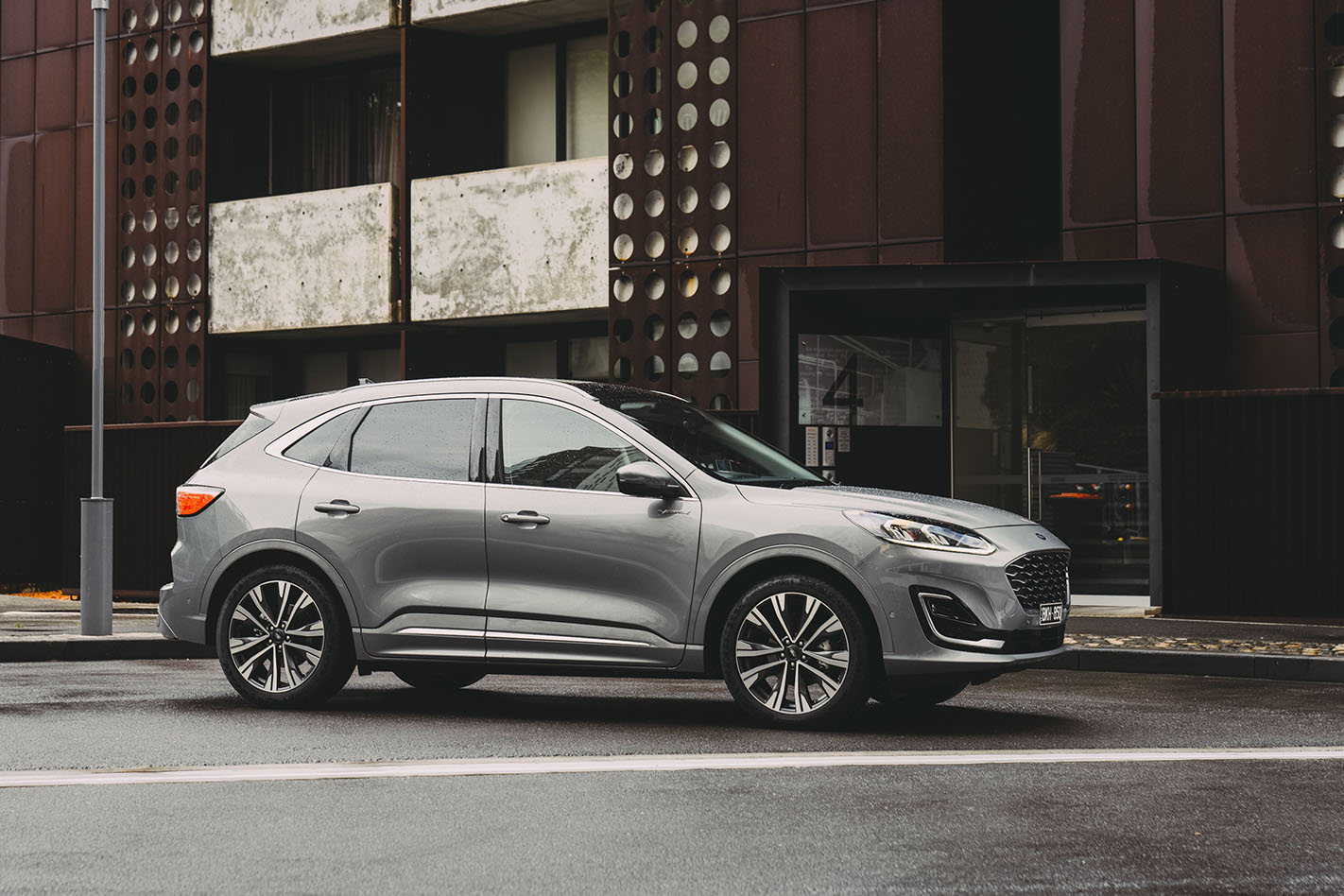
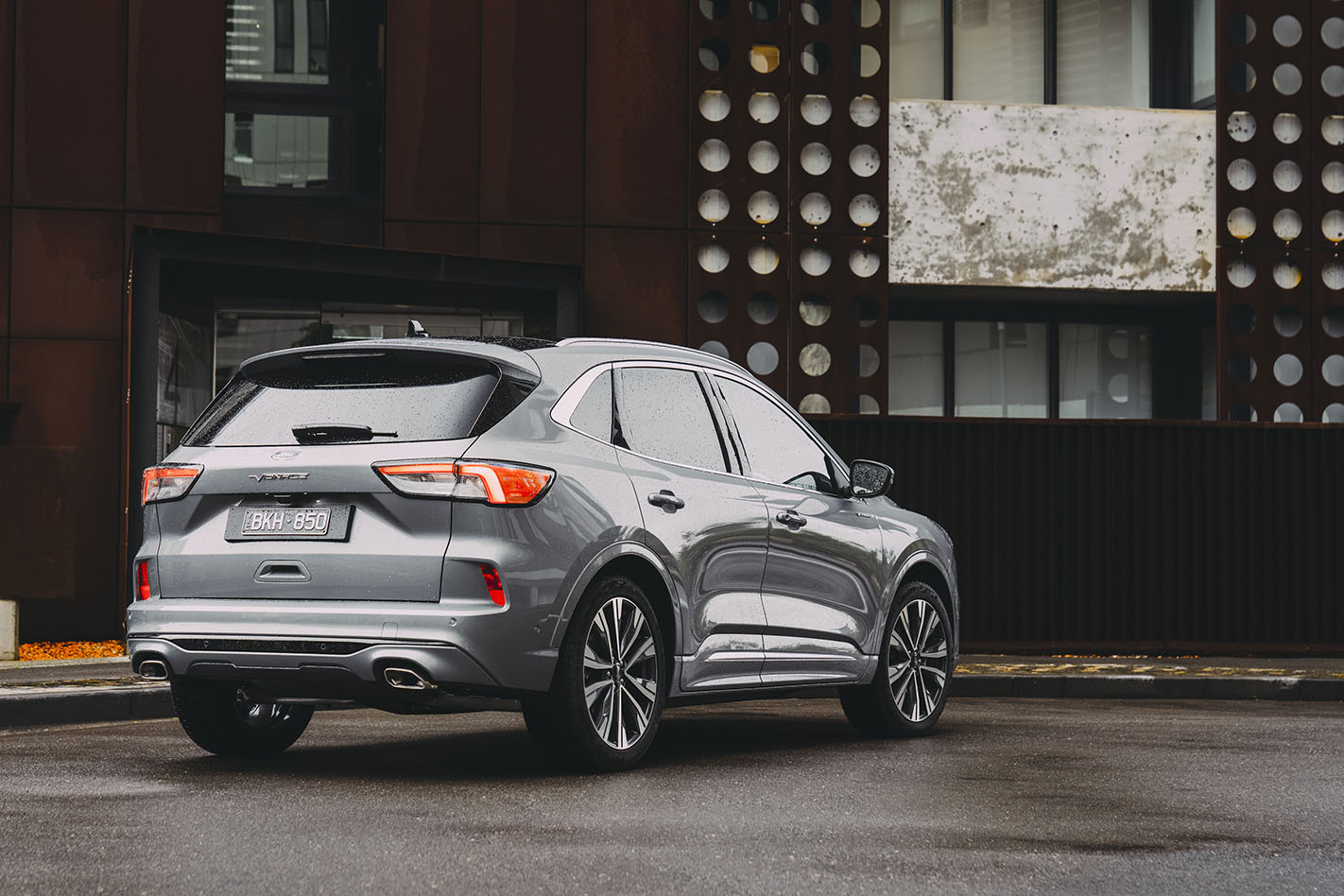
Although not shown, a redesigned lower rear bumper and new alloy wheel designs will likely finalise exterior changes to the new-look medium SUV.
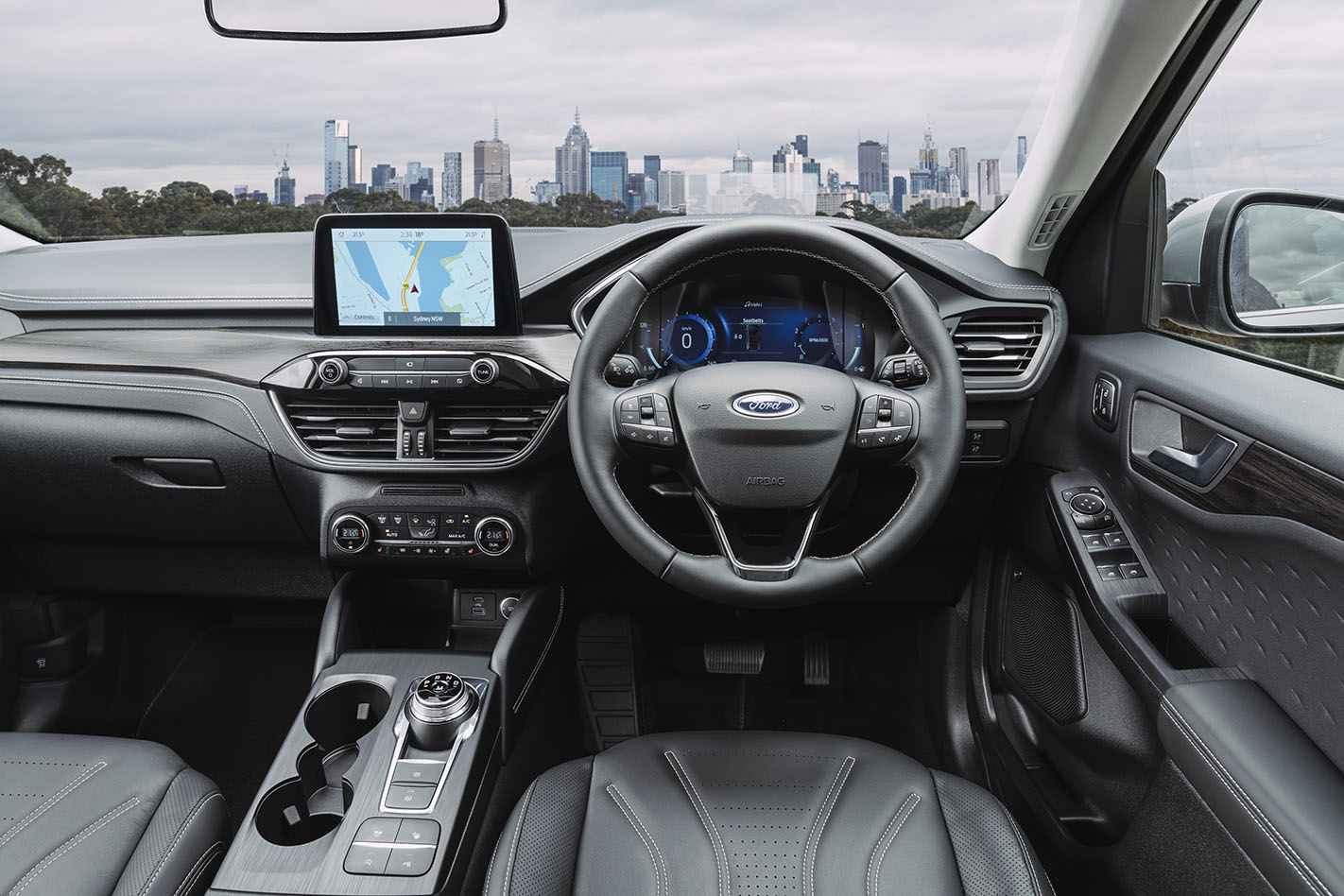
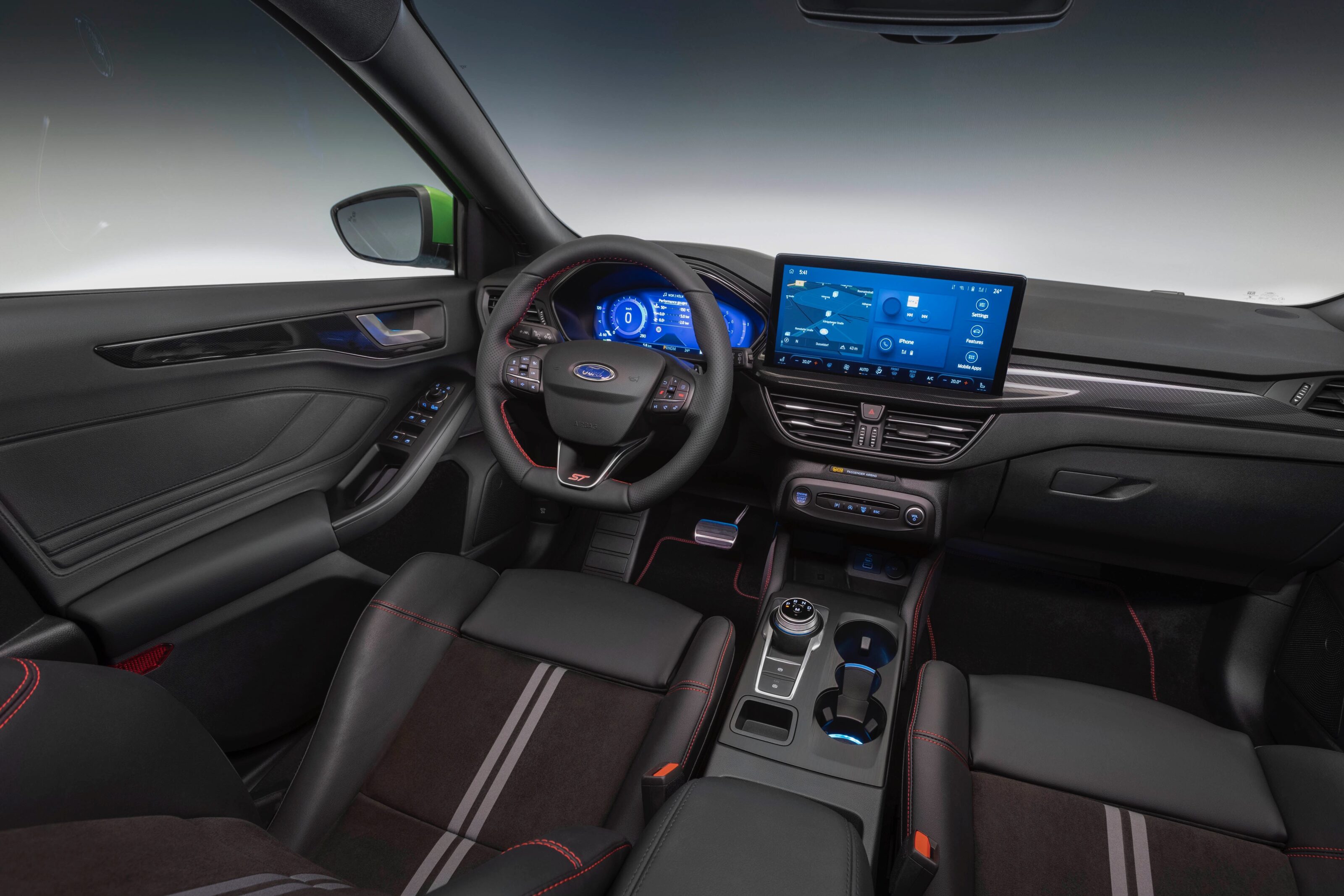
Meanwhile, the interior of the Escape is anticipated to be upgraded with new technology derived from the facelifted Focus hatch unveiled in October, including; enhanced active safety equipment, a larger 13.2-inch touchscreen with Ford’s latest Sync 4 infotainment system in place of the current 8-inch Sync 3 unit, and rear occupant alert.
These enhanced safety features include an upgraded blind-spot monitoring system which can steer away from a collision at speeds of up to 200km/h, as well as intersection autonomous emergency braking (AEB) to avoid a crash if the vehicle steers into the path of an oncoming car.
North American models could also pick up Ford’s BlueCruise highway driving assistance system, which combines adaptive cruise control with lane-keep assist to provide Level 2 autonomous capability.
The engine range of the updated Escape is tipped to remain familiar in Australia, with the medium SUV currently propelled by the choice of a 2.0-litre turbocharged four, producing 183kW of power and 387Nm of torque, or a delayed 167kW Atkinson Cycle 2.5-litre plug-in hybrid (PHEV) powertrain expected to join the local range in the second quarter of 2022.
The Spanish-built Escape has struggled to gain momentum in Australia since the launch of the current-generation model in October/November 2020, with local deliveries of the crossover largely affected by the global semiconductor chip shortage over the course of the past year.
VFACTS data shows 1244 units of the Escape have been sold in Australia from January 1, 2021 to October 31, 2021, in comparison to 30,933 Toyota RAV4s and 22,030 Mazda CX-5s registered over the same period.
A local launch in late-2022 or early-2023 is expected, with the refreshed Escape likely to be unveiled overseas in the coming months – potentially during the 2022 North American International Auto Show in June.
Key Points
- UK car production decreased by 41.4 per cent in October
- Just under 65,000 cars rolled off British production lines throughout the month
- It’s expected under one million vehicles will be produced for the year
The ongoing semiconductor shortage continues to impact the global automotive industry, with the UK bearing the latest brunt of it.
According to vehicle production data from the Society of Motor Manufacturers and Traders (SMMT), this October was the lowest for car output since 1956 in Britain, owing to the supply shortage.
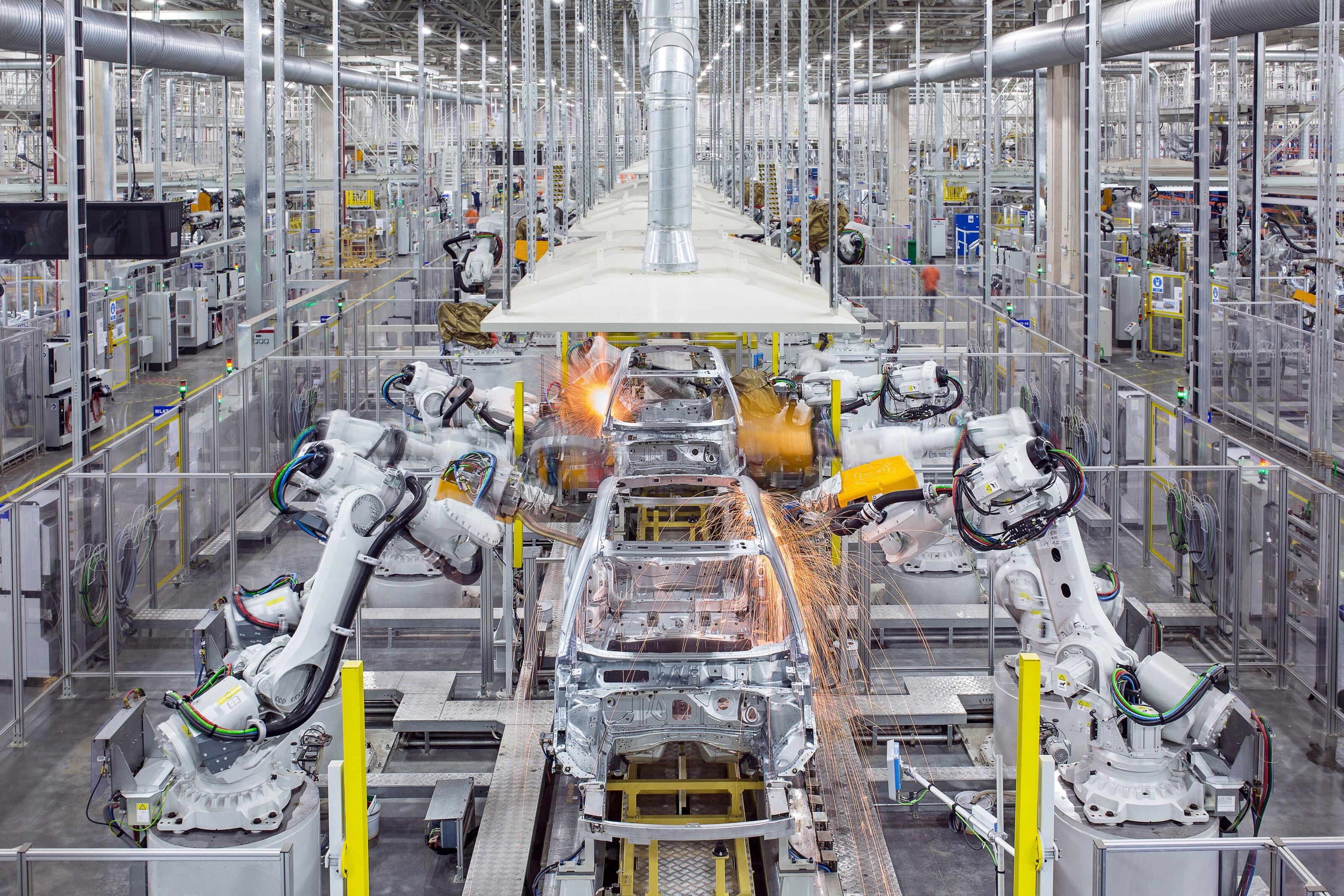
Compared to the same month last year, output dropped by 41.4 per cent, with 64,729 passenger vehicles manufactured throughout October 2021 – roughly 10,000 less than the number sold in Australia over the same period.
It’s been a tale of two years for the broader automotive industry, with COVID-induced shutdowns affecting production last year, while the delayed effect of the chip shortage has been hitting in 2021.
This is reflected in overall year-on-year production to the end of the 10th month, as the 721,505 vehicles manufactured in the UK so far this year equates to a drop of 2.9 per cent – mainly thanks to the tough October.
However, some aspects of the industry have grown, as the SMMT reports battery electric (BEV), plug-in hybrid (PHEV) and hybrid (HEV) vehicles accounted for 30.9 per cent of all cars produced in October.
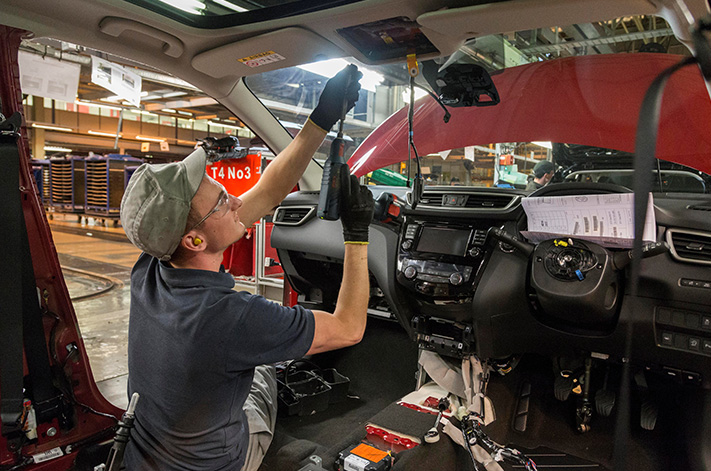
According to its data, fully-electric vehicle production alone increased by 17.5 per cent to 8454 units, bumping the annual number up to 50,000 – which is more than the whole 12 months of 2019.
For the second year in a row, the industry is unlikely to crack one million vehicles produced, although modelling suggests it could bounce back to 1.2 million cars per year by 2024 if the semiconductor shortage subsides.
When we first pitched up at Tailem Bend back in 2018, then-editor Dylan Campbell stated that Australia’s newest purpose-built race track was akin to stepping off a plane in Bahrain. However, he wasn’t. DC was an hour outside of Adelaide.
About three years and a few heavy downpours later, the grass has grown at The Bend – and so has its reputation as one of Australia’s best motorsport facilities.
That fact is hard to argue with when you arrive to a four-level, 308-metre pit building with 34 garages and a 100-room Rydges Hotel. Each of the rooms enjoys a world-class race track for balcony views and most of the 7.77km layout can be viewed from the fourth floor. Oh, and then there is the foyer-turned-car museum that contains some of the country’s coolest metal.

It’s easy to see how the dream of brothers Sam, Yasser and Charlie Shahin came in at a rumoured $110m, most of which is privately funded apart from $18m in state and federal government money.
About 85 metres of elevation change has been built into the old Mitsubishi Australia proving ground and the shorter track has been built to FIA Grade 2 requirements, meaning everything short of F1 can race at the venue.
And who better to guide us through a lap than Warren Luff. After all, Luffy strapped in to a Porsche 911 GT2 RS for us to bank the then-production car lap record of the full GT layout in 2018, and he’s completed countless laps of the track for Porsche’s driver training course. Welcome to the MOTOR track guide to The Bend’s International Circuit.
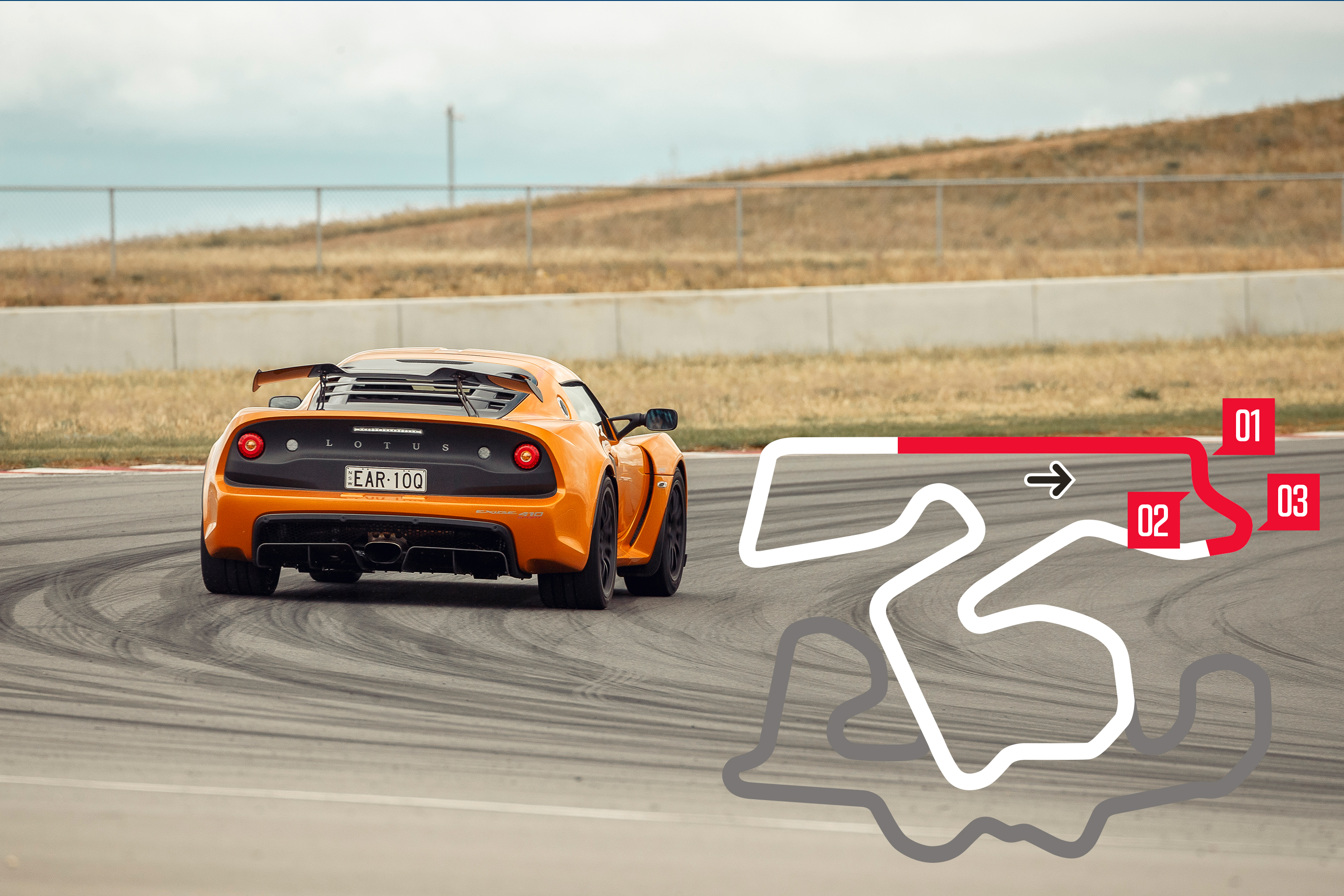
Section one: Fast approach
Turn One
Picking your brake point into Turn One is a little difficult with the track still being so new with no physical landmarks or surface changes, so the brake marker boards are your best bet. This is important as you’re arriving at the highest speed of the lap. The corner itself is an easy 90 degree right, but the key to being quick is to turn in early and use the flat concrete behind the kerb. The kerb should be under the car, you are aiming for the grass with the right side.

Turn Two
Heading into Turn Two it’s a natural flow and progression from Turn One and you can also use the flat concrete behind the kerb here, too. Turn Two is all about trying to straighten the run between Turn One and Three to set your approach up for Turn Three and the subsequent run off it.
Arriving at Turn Three there’s more road on the exit than you initially think. It’s an early turn-in before chasing the car wide on exit. Again, it’s all about carrying corner speed and being smooth getting back on the throttle. As you’re picking up the throttle the car is still carrying a lot of lateral load so be careful on the initial crack and ramp up to 50 per cent.

MOTOR tip
Despite kilowatts largely being king here, some of the tighter sections like Turns One to Three are really fun in a little front-wheel drive hot hatch. You can really manoeuvre and slide the car around. It’s the same into some of the hairpins where you can trail brake and move the rear axle around to get the car steering.
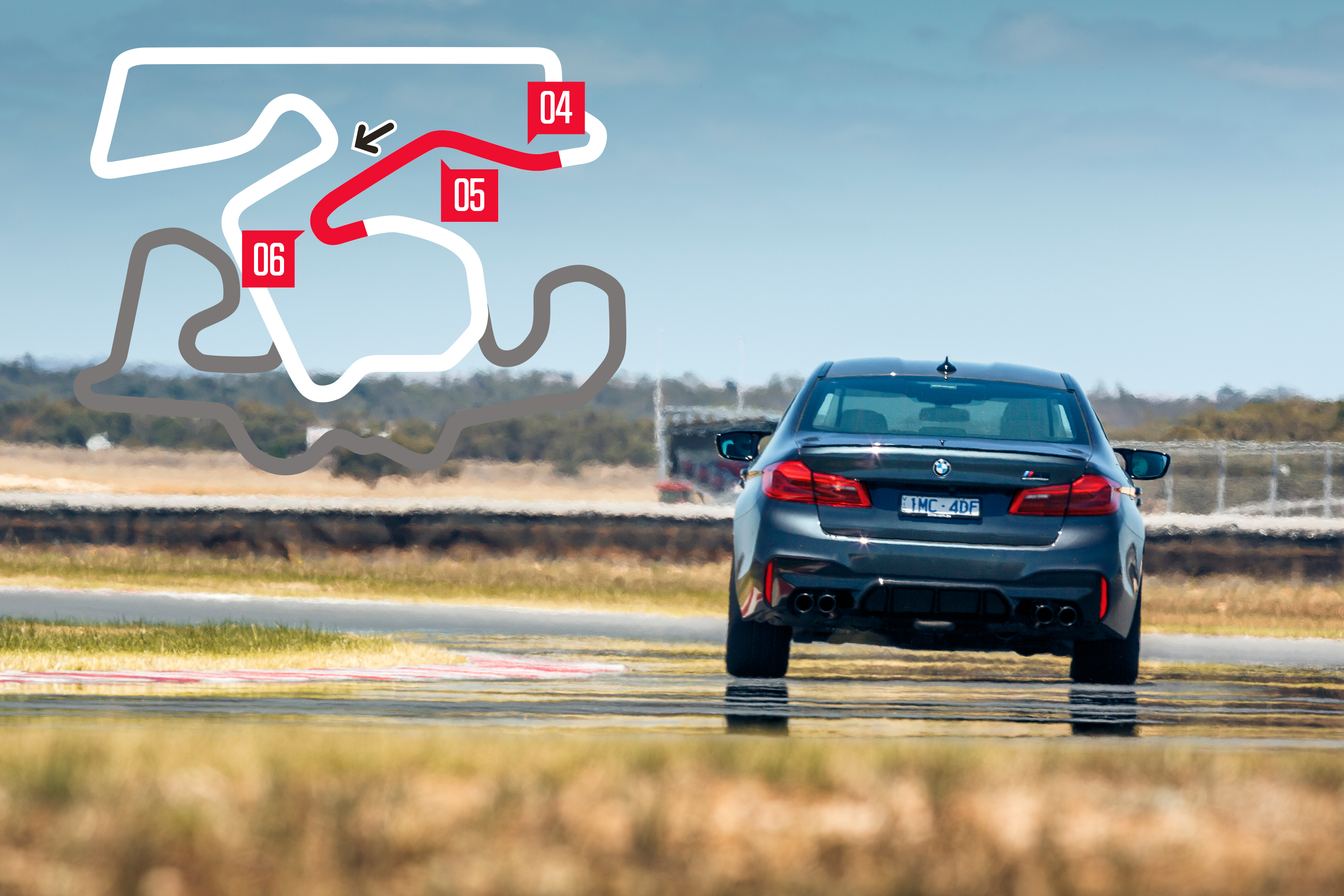
Section Two: Keeping the flow
Turns Four and Five
Turn Four is an easily flat and more about getting the car positioned for the approach to Turn Five. Be careful in left-hand-drive cars to not drop the right-hand wheels off the track on the approach to Five. Turn Five is a corner that tyre quality/compound dictates how much speed you can carry.
In a powerful car, any lift needs to be done before you turn in so you can get back to the throttle and settle the rear of the car. Keep working on minimising the lift and accelerator applications to get back to full throttle sooner. Keep your eyes looking forward and have smooth hands.

Turn Six
The downhill braking into Turn Six makes it a bit more difficult and caution needs to be taken – even with ABS. It’s a corner where there’s more road on the exit than you initially realise, so focus on rotating the car early and as quick as you can. Then use the throttle to run the car wide, with the uphill exit providing good drive.

MOTOR tip
It’s a fast and flowing track where horsepower is important. Different cars are obviously going to have their strengths and weaknesses, but if you’ve got something with a bit more power (or can upgrade) it’ll all come together that little bit easier.
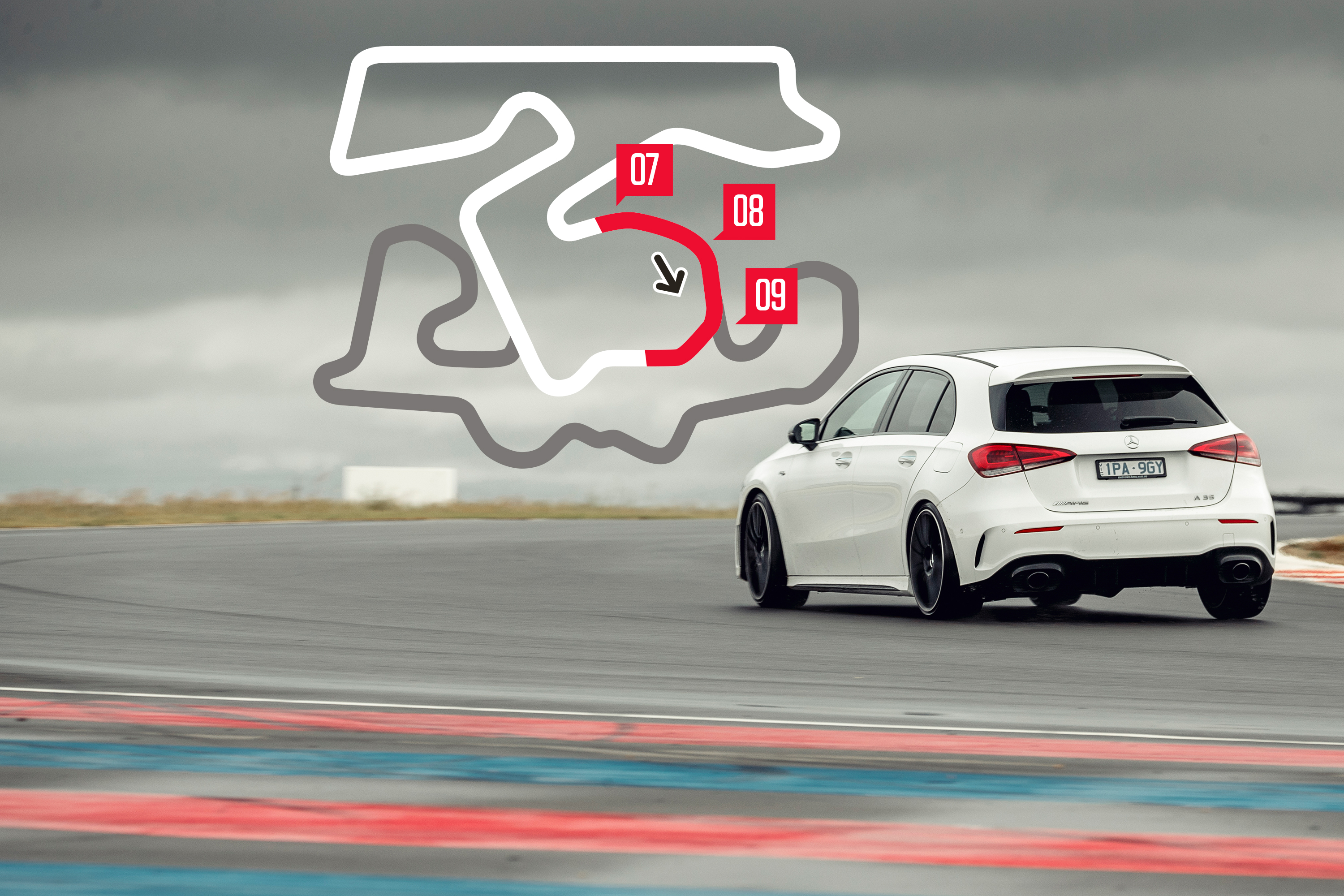
Section Three: The long right
Turns Seven and Eight
Turns Seven and Eight are more one big corner than two separate ones. The exit of Turn Eight is what sets up the approach for Turn Nine, so the driving line through here is all about being positioned right for this. Sweep up high coming through Turn Seven and have a small lift before it starts heading downhill into Eight to keep the rear stable.
Turns Nine and 10
It’s easy to over commit and go too deep into Nine. If you do this, then 10 won’t happen. Lift off early for Nine and float the car through the corner, get out wide for the approach to 10. Its only once you turn in for 10 that you then start to pick up the throttle, so you are coasting for a long time.

It’s very easy to run wide on the exit of 10, one of the few corners here where the track tightens on exit. This is probably the hardest part of the track to get right. It’s a commitment corner because you turn in a little bit blind. There’s a huge amount of time to be gained or lost here and it’s the biggest trap for inexperienced track-day drivers.
MOTOR tip
This section is all about confidence and being able to maintain momentum over the top of the hill. If you lift too early coming over the top of the hill you can’t catch that speed back up as you go down to the triple right hander. So, it’s all about commitment at the top of the hill to carry the speed all the way down.
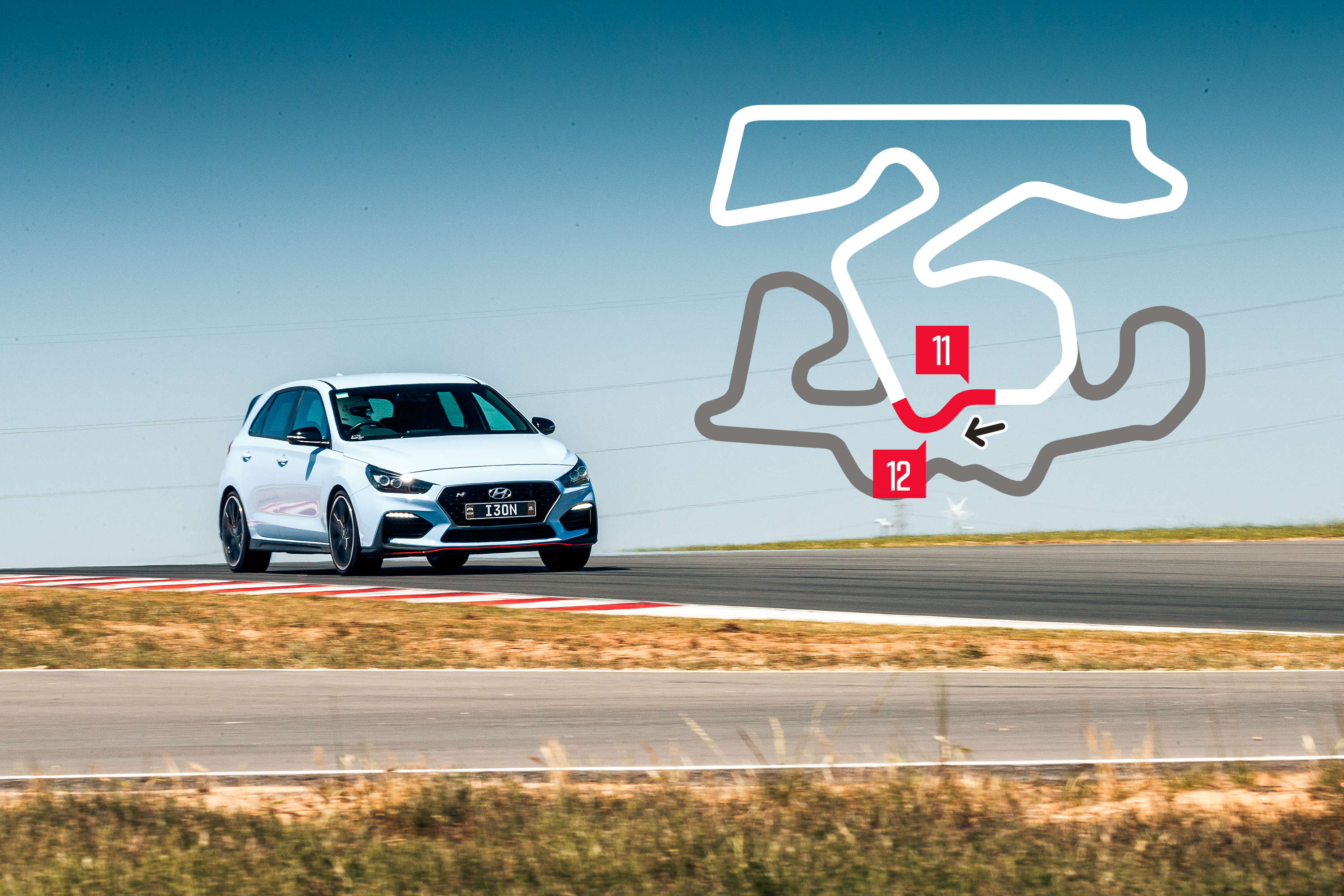
Section Four: The back section
Turn 11
Use every bit of kerb you can to improve your approach angle for turn 12 – you will end up with your right-hand wheels nearly on the white line. Because you use so much kerb you can carry more speed than what you first imagine. It’s really easy to over slow the car and lose valuable time.
Turn 12
Provided you get Turn 11 right to open this corner up, Turn 12 is pretty easy. Again, the track opens on exit because there is the extended part of the track with it joining here on exit. So, don’t get too greedy or you can easily drop a wheel off. This corner is all about the rotation and getting back to the throttle nice and early.

MOTOR tip
It’s not about trying to put together a complete lap in the beginning. Piece the sectors together first and then once you start getting confident in those then you can start to put the overall lap together. People always try to do too much too soon [if they aren’t familiar with the layout] when they arrive at The Bend.
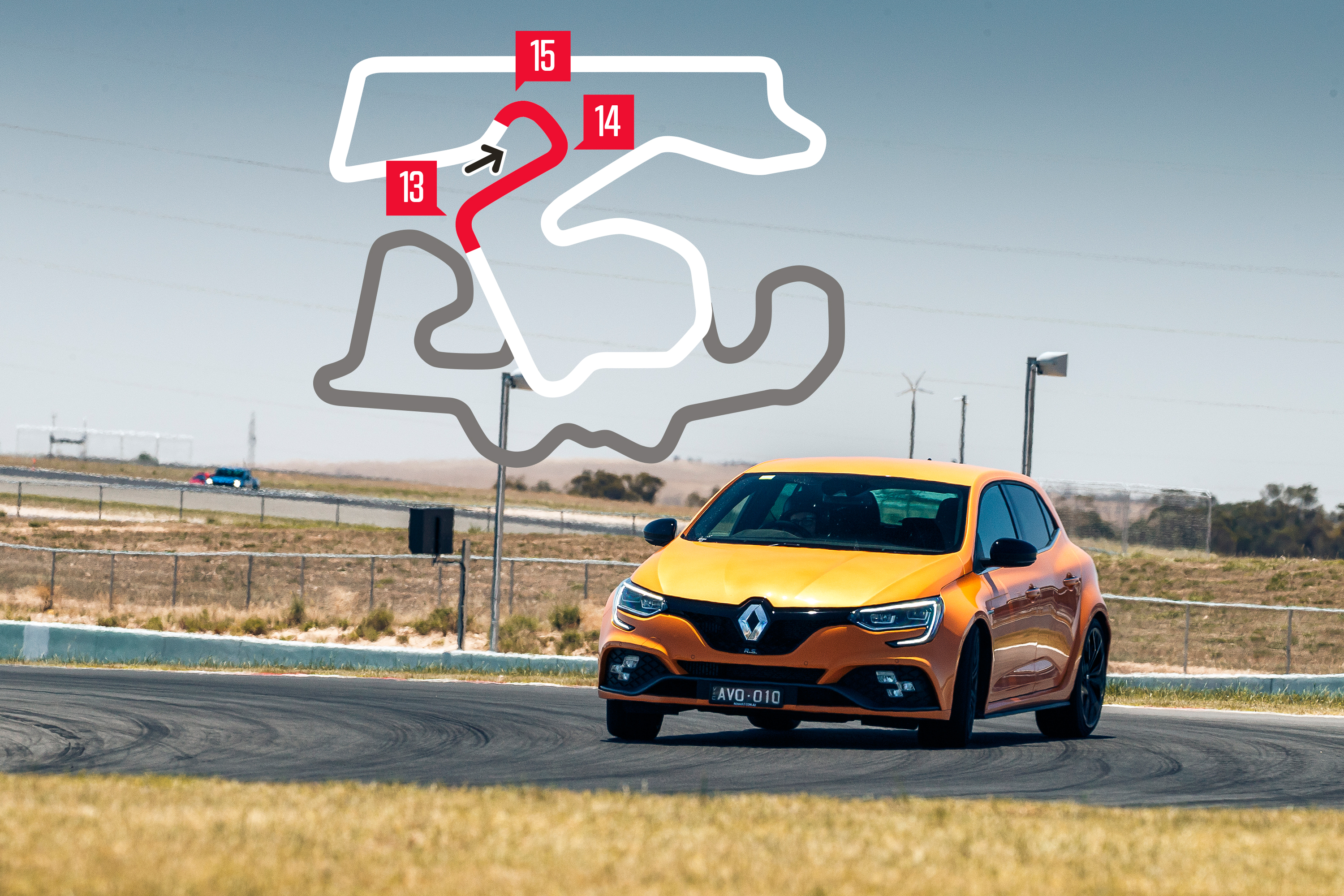
Section Five: The hook
Turn 13
The entry to Turn 13 is a steep incline so the car has more front-end grip than you realise. Clear the brake and turn-in early. There’s room on exit, but it’s hard to pick where the outside of the track is going to be at the apex because of the gradient. If you have space on the exit to the track edge you’re either turning in too late, or not carrying enough speed. Or a bit of both.
Turn 14 and 15
Turn 14 is a pretty simple corner that’s also an uphill braking area with lots of grip. The important thing to remember on exit here and approaching Turn 15 is that they are two corners, not one big corner. It’s easy to come off 14 and turn too early for 15.

Turn 15 is not so much a hard corner to get right, more an easy corner to get wrong. Because it tightens up on exit and goes straight in to Turn 16 it’s important to get the turn-in right, and then keep hustling the nose through. If you open the steering too early you will end up wide and make 16 more of a corner than it needs to be. It’s all about managing the understeer.
MOTOR tip
It’s a track that rewards bravery and it’s very technical. So you’ve also got to be pin-point accurate and be able to transfer the mid-corner speed into exit speed and carry it all the way down the next straight. It can be very daunting at first, but just focus on the bits and pieces you need to be fast in the crucial areas.
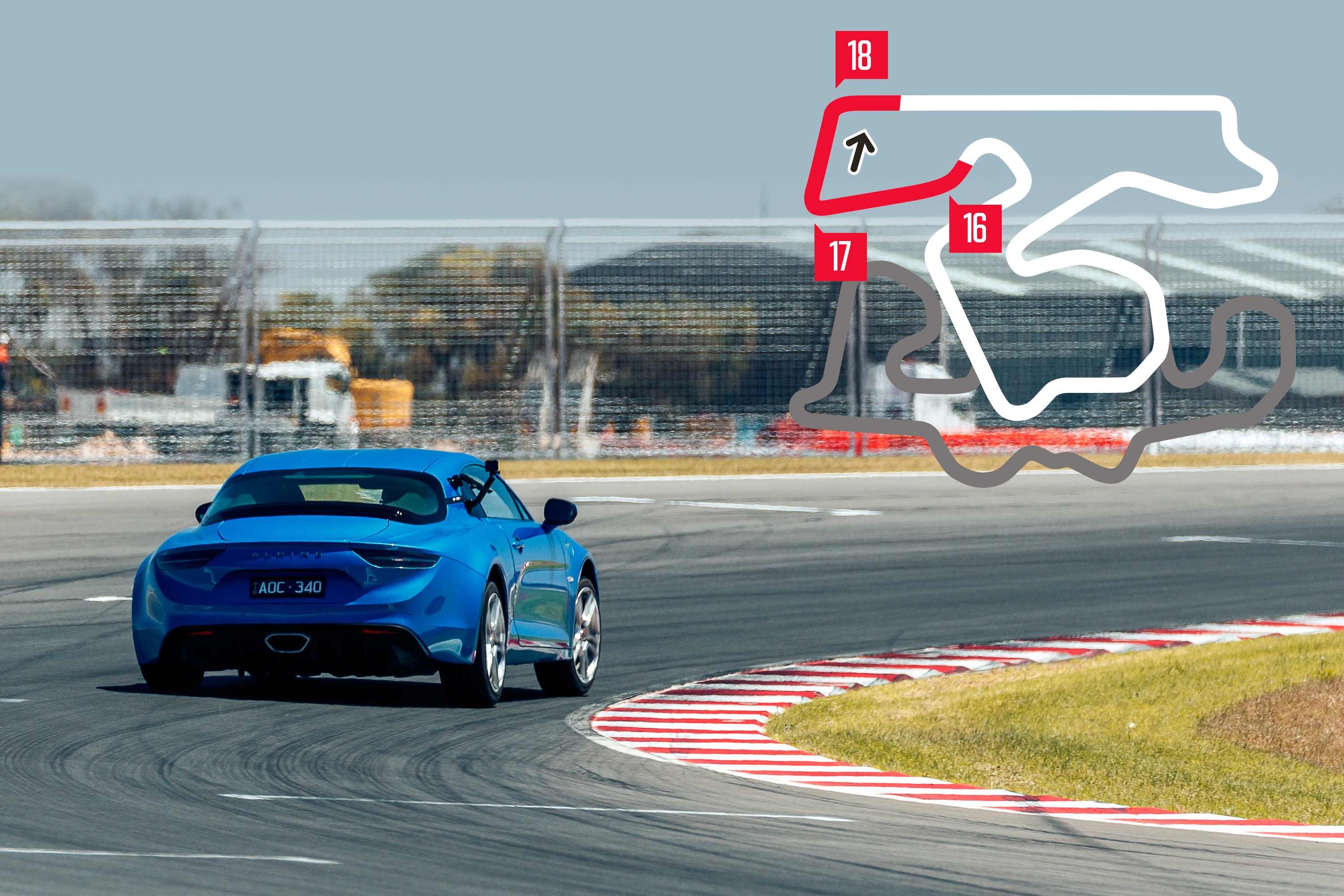
Section Six: The run home
Turn 16
If you get Turn 15 right, Turn 16 becomes less of a corner, depending on power-down, consider a short shift rather than a full lift off. It’s easy to give away a lot of time through here.
Turn 17
Turn 17 is another one of the few corners that tightens on the exit. Like Turn One, try turning early and use the flat concrete behind the kerb, aiming for the grass with your right wheels. Make sure when you do get to the concrete that you keep turning and coaxing the nose so you don’t run wide on the exit.

Turn 18
As for Turn 18, it leads onto the long, long front straight, so this clearly makes it an important corner. It’s another uphill corner so there’s more purchase than first thought and plenty of road on the exit. It’s very easy to turn too late here. Don’t over-slow the car, clear the brakes early, turn early and get back to the throttle early and flow the car wide on exit. Make sure to watch out for cars slowing on exit that are trying to enter the pit lane.
MOTOR tip
It’s easy to overcommit to 17 and underdo 18, imagining them to be a pair of 90-degree turns. They’re not and it doesn’t matter what you do on the rest of the lap, if you mess up coming onto the front straight out of Turn 18, not only are you going to lose time on that lap but the next one, too.

Motoring nirvana, thy name is The Bend
Everyone needs to make the trip to South Australia at least once
If you aren’t taking to the track yourself, The Bend hosts everything from tractor pulling, to Supercars and the Asian Le Mans Series (borders permitting).
The best vantage point for watching racing is on the pit straight, but with more infrastructure being built, outside the turn one, two, three complex is a good place to witness overtakes and tangles. Due to The Bend’s rural location you’ll need to drive there for events, and we’d suggest having a tow back-up plan for track days.
If you’ve got the dosh staying at the Rydges Pit Lane Hotel is a fantastic experience for motoring fans, though the Big4 Holiday Park offers a more budget friendly alternative. The towns of Tailem Bend and Murray Bridge offer accommodation away from the track.
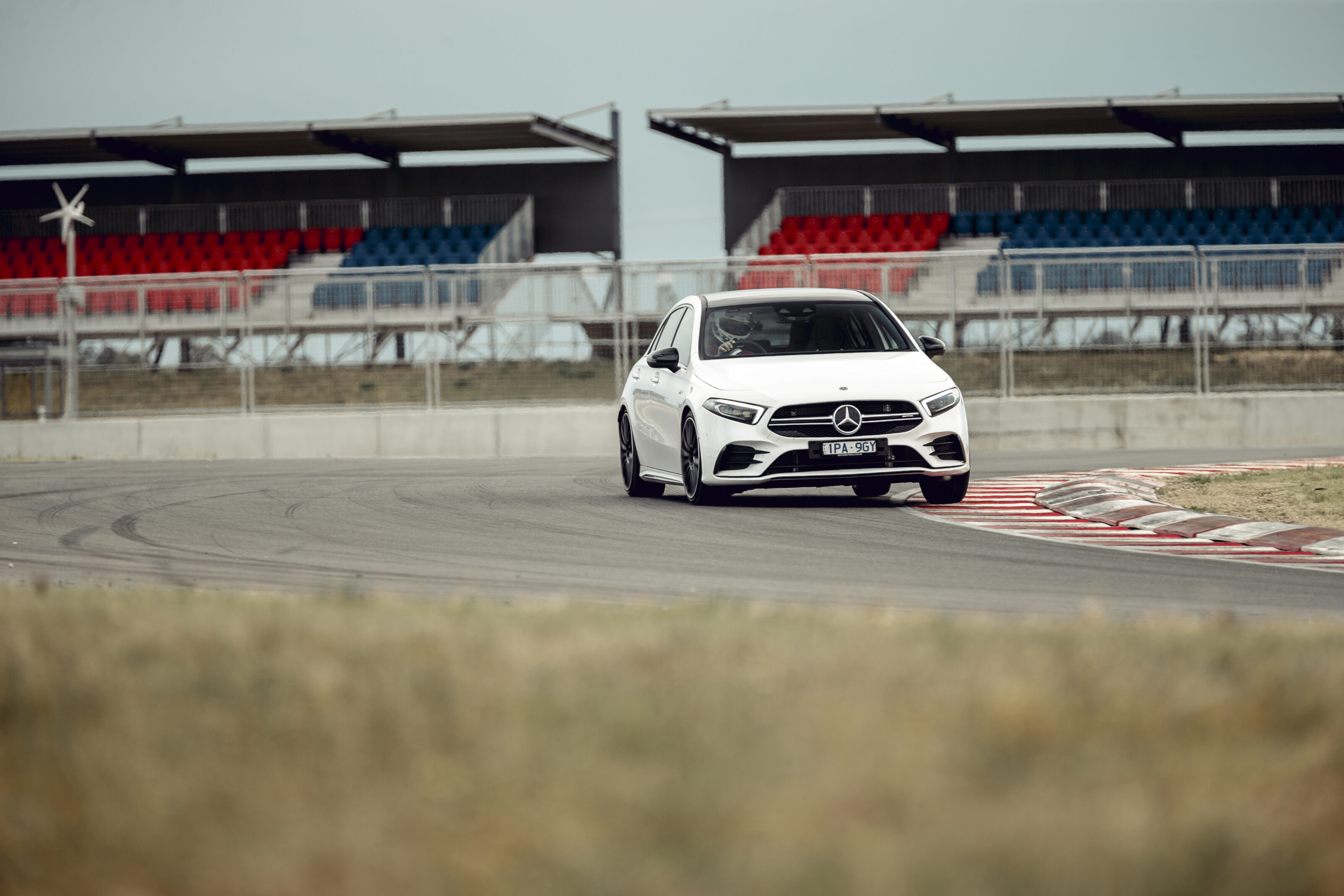
For your sideways needs, there are regular events and driver training on the skid pan, while serious drifters can book time on the proper circuit throughout the year.
A number of track days use the West Circuit, a 3.41km course with 12 turns that uses much of the International layout. Where the International Circuit rakes left at turn six, the West Circuit hooks right, reconnecting at what would be turn 14 – cutting out the entire back section.
For a smaller scale driving experience, the international-grade 1.1km kart track has some of the fastest hire-karts in the country. A ten minute session will set you back $30.
If you want to have a crack at The Bend from the comfort of your house, it is available as an additional mod for Assetto Corsa and rFactor 2 on PC.
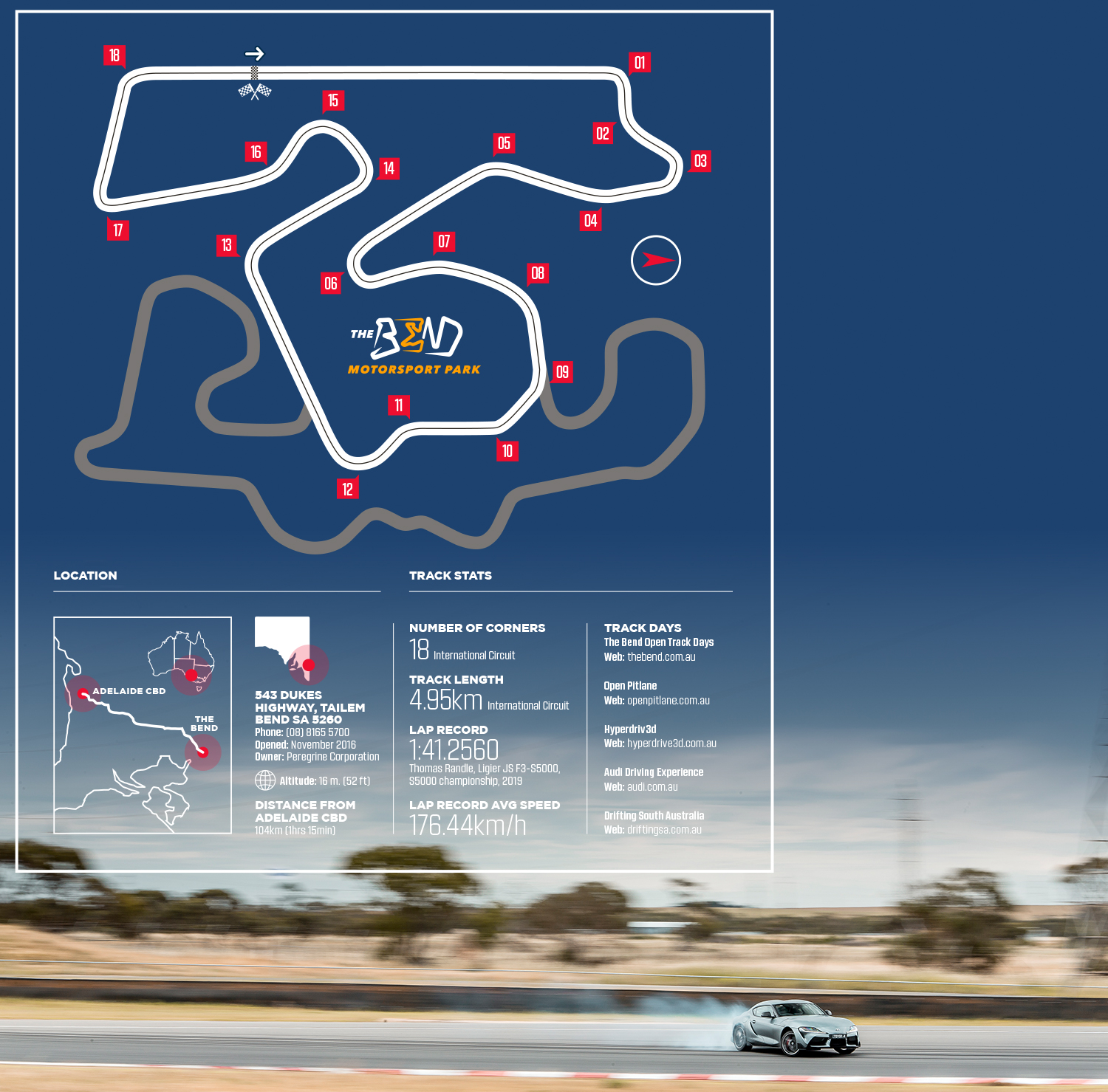
Who runs track days at The Bend?
| The Bend (thebend.com.au) |
| Open Pitlane (openpitlane.com.au) |
| Hyperdrive3d (hyperdrive3d.com.au) |
| Audi Driving Experience (audi.com.au) |
| Drifting South Australia (driftingsa.com.au) |
The Bend International Circuit key info
With international travel restricted, the growing trend has been to holiday at home – as is evident from a surge in off-road vehicle and caravan sales over the past 12 months.
But what about those who want to go off-road with a touch of sophistication? We’re endlessly being asked by Porsche owners: “When will I be able to go camping with a Taycan?” It seems a popular market (not really).
Thankfully, outdoor fashion label Db has provided a solution to the problem, releasing the Discoverberry Bundle which includes a Taycan Cross Turismo, a rooftop tent, sleeping bag, backpack and camping kit.
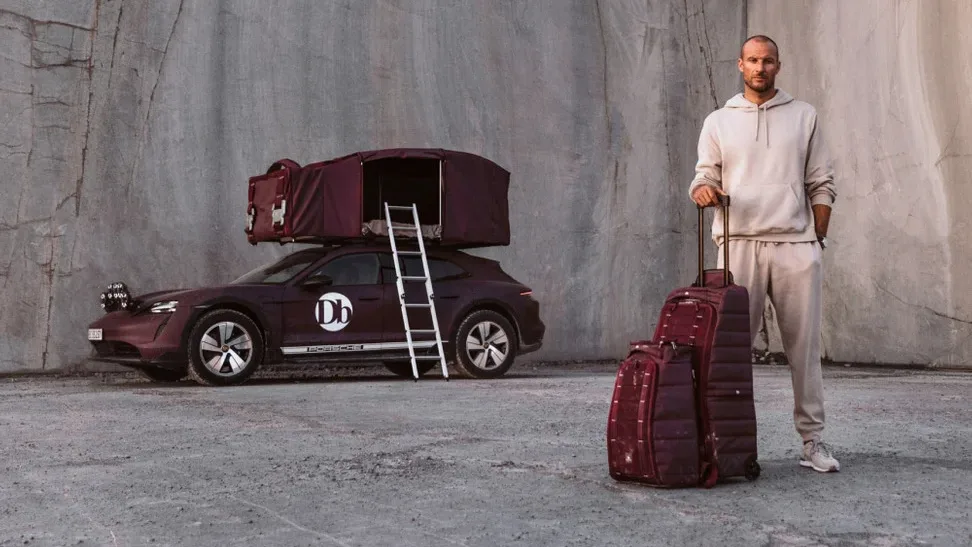
With a price tag of AU$395,000, it’s hard to tell what the reason is for such a markup, as the Taycan 4 Cross Turismo retails for $176,600 while the high-riding wagon’s range-topping Turbo variant is still only $279,000 before on-road costs.
Given the Strøm and sleeping bag are easily under $1000, we’re looking at either a very expensive camper or wrap job costing more than most new cars on the market.
Db says the Taycan bundle is the “perfect companion for off-grid life”, provided of course the destination is within reach on a charge – otherwise a small array of solar panels will be needed to keep things rolling.
While the camper top is a spacious 2385-litres, its shape greatly reduces the aesthetic appeal of the Taycan, as well as its driving range – some would argue almost as much as towing around a camper trailer.
Hyundai is getting very serious about its performance cars. The i30 N hatch has been around for a couple of years and it’s a formidable thing, but when they enlist former BMW M head Albert Biermann to massage and tweak ordinary Hyundais, the result is extraordinary.
The company’s approach with these pure N cars always involves comprehensive engineering and the cars that lucky buyers take home are nothing less than proper factory specials that can’t be duplicated – no matter how much time and money an aftermarket tuner is given.
The Hyundai i30 Sedan N is the company’s first high-performance sedan and builds upon everything the N team has learned from their previous work, so any improvements are made in the noble pursuit of going quicker.
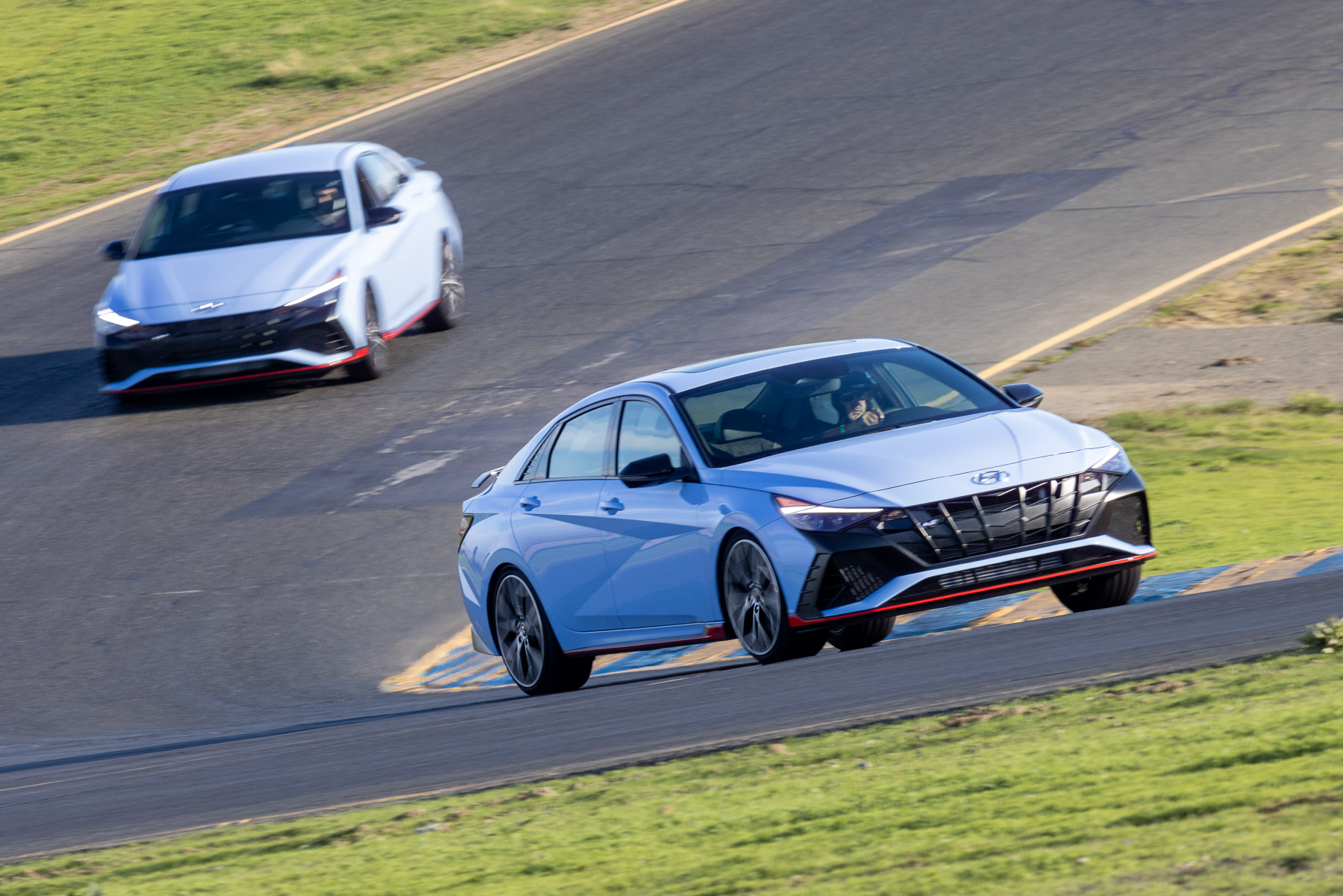
The single turbo, 2.0-litre GDI engine makes 206kW from 5500 to 6000rpm and 392Nm from 2100 to 4700rpm, the same outputs as the updated i30 N hatch. The exhaust is tuned to give this N a rowdy attitude and is driver-selectable.
If you’ve selected the eight-speed wet dual-clutch gearbox, you get an extra 7kW in a permissible overboost mode that Hyundai likes to call N Grin Shift. The additional power is sustained for a maximum of 20 seconds and the engine requires a 40-second recovery before allowing NGS again.
A dual-clutch car also benefits from tuning that maintains torque output during upshifts, as well as launch control that drops 0-100km/h acceleration to a remarkable 5.3 seconds.
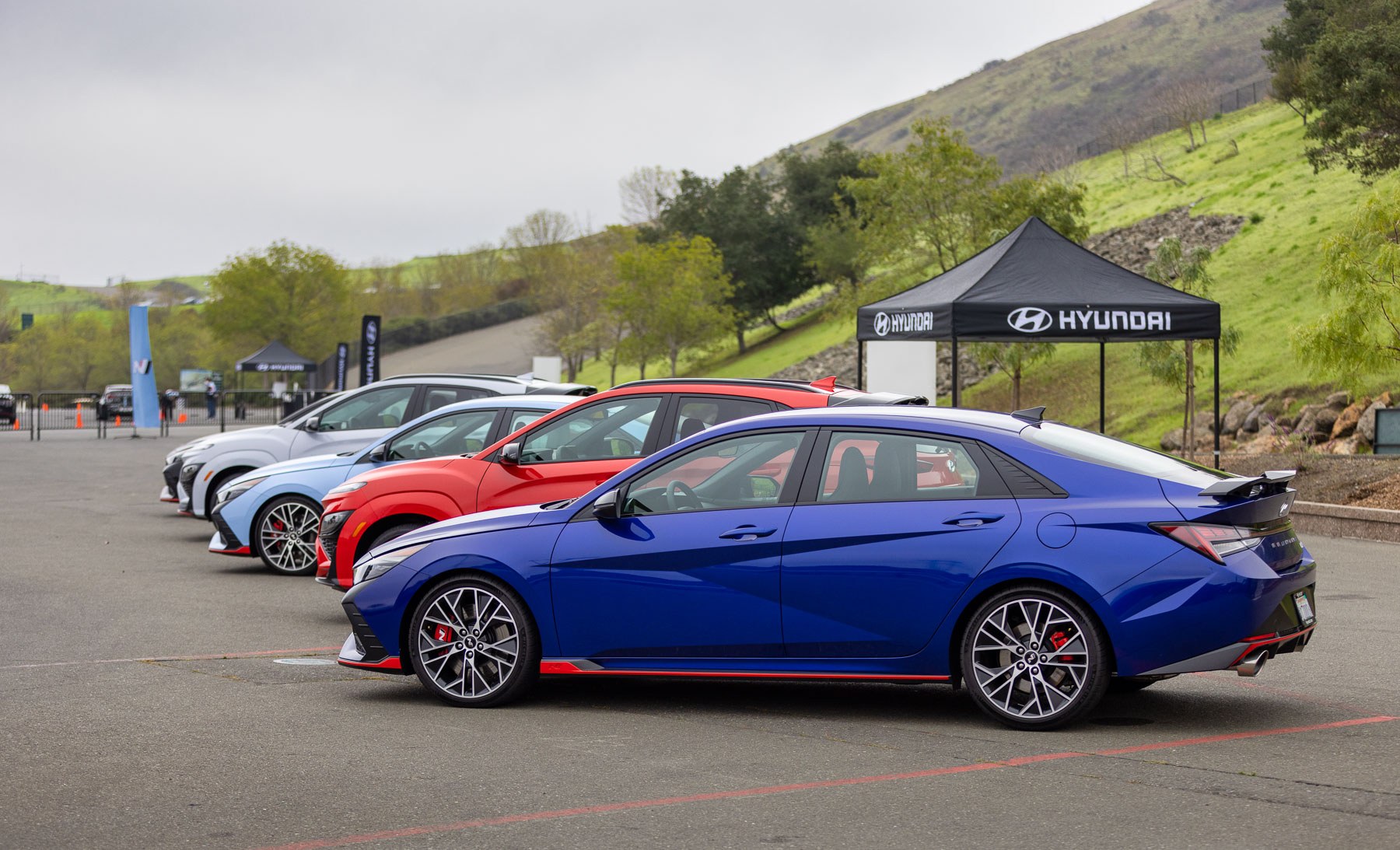
The bespoke, close-ratio, six-speed manual gearbox may be the enthusiast’s choice and while it doesn’t have the overboost function, it does have rev-matching for seamless downshifts, thankfully switchable for those drivers who prefer to execute satisfying heel-and-toe gearchanges.
Perhaps the biggest secret to the i30 Sedan N’s dynamic performance is the electronically controlled limited-slip differential. Instead of relying on traditional remedies like unequal-length half shafts or fancy suspension geometry, N engineers have pursued e-diffs as a cure for that inevitable, naughty front-drive behaviour.
Indeed, these things are capable of varying the amount of torque distributed to one axle or the other, mitigating some understeer as well as opening up under braking for unmatched stability.
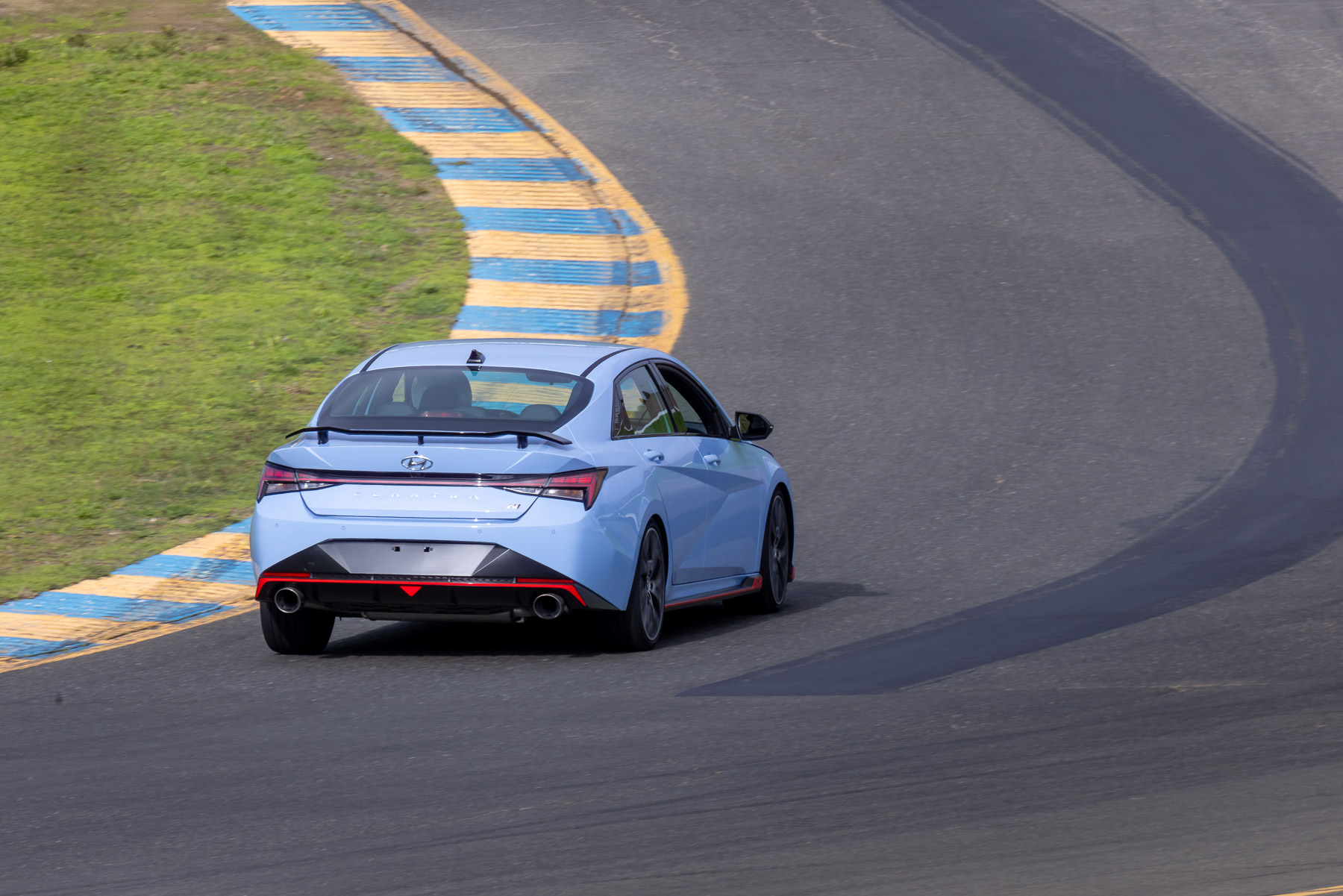
The N’s suspension design starts with the i30 Sedan’s basics, but with performance-minded tweaks. It’s a MacPherson strut design at the front and a multi-link set-up at the rear, with stiffer springs, anti-roll bars, and bushings.
Electronically controlled dampers provide Comfort, Normal, and Sport modes that are suited to the firmer settings. Ride height is surprisingly unchanged from the standard i30 Sedan.
Hyundai has taken lessons learned from its World Rally Championship cars and applied them to this Sedan N. They call it an Integrated Drive Axle and what they’ve done is completely redesigned the way the driveshafts mate to their respective hubs. And that delivers a number of benefits.
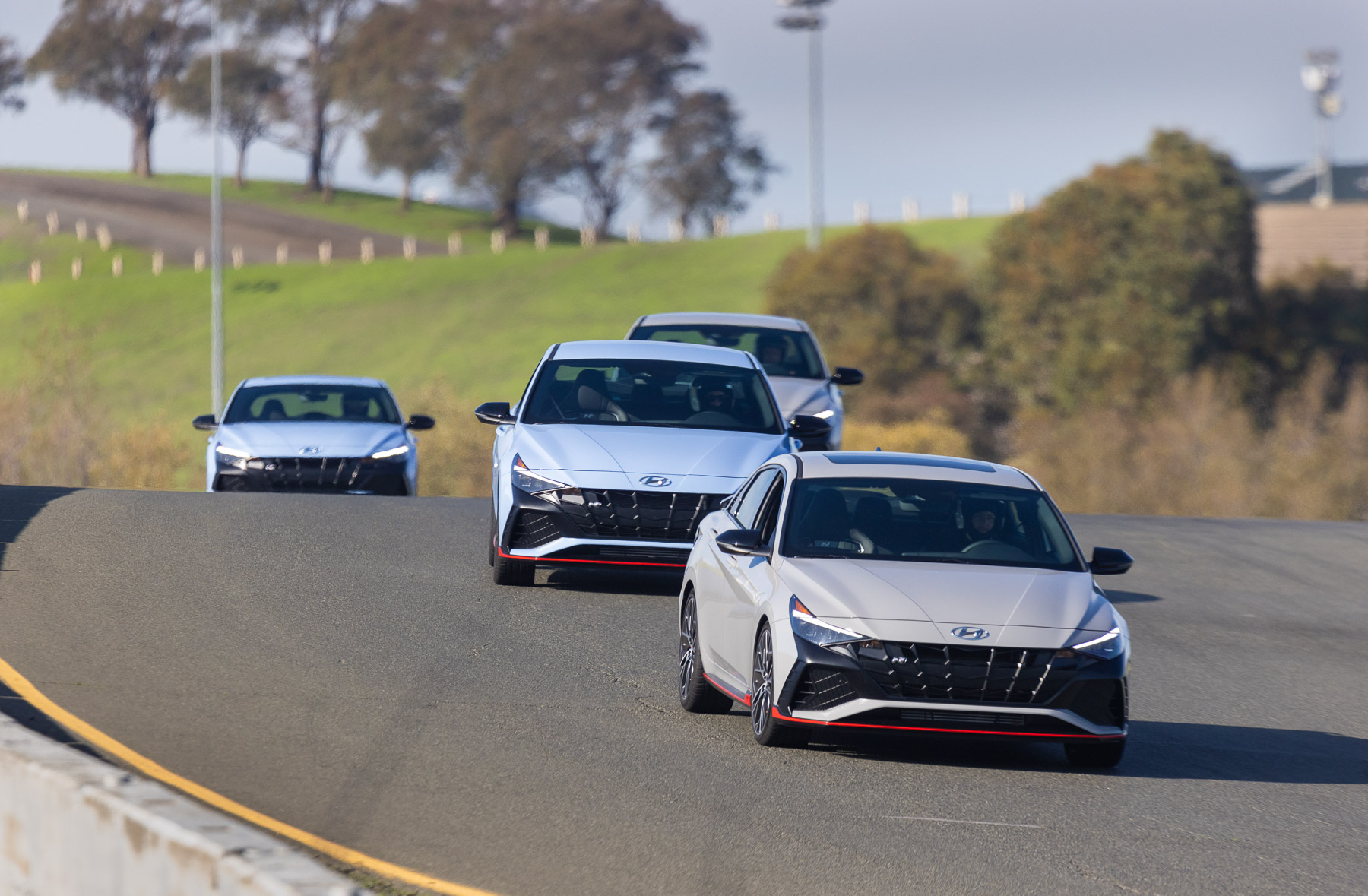
Among them are a more robust assembly of the hub and wheel bearing that can better withstand the greater loads placed upon them by this performance-oriented Sedan N, as well as reducing weight by 1.7kg per side.
Steering is electrically assisted, but in N spec it’s got a quicker ratio and an assist unit that is mounted to the rack for better response. Different levels of assist are selectable by the driver.
Brakes are similar to the i30 N hatch, with 360mm front and 314mm rear rotors clamped by red-painted, single-piston calipers all around. The system pre-fills brake fluid when the driver releases the throttle pedal, minimising response time and maximising pedal pressure, which allows for shorter stopping distances in emergencies, as well as more confidence for track day drivers. As with all N vehicles, this four-door uses a performance-oriented brake pad compound.
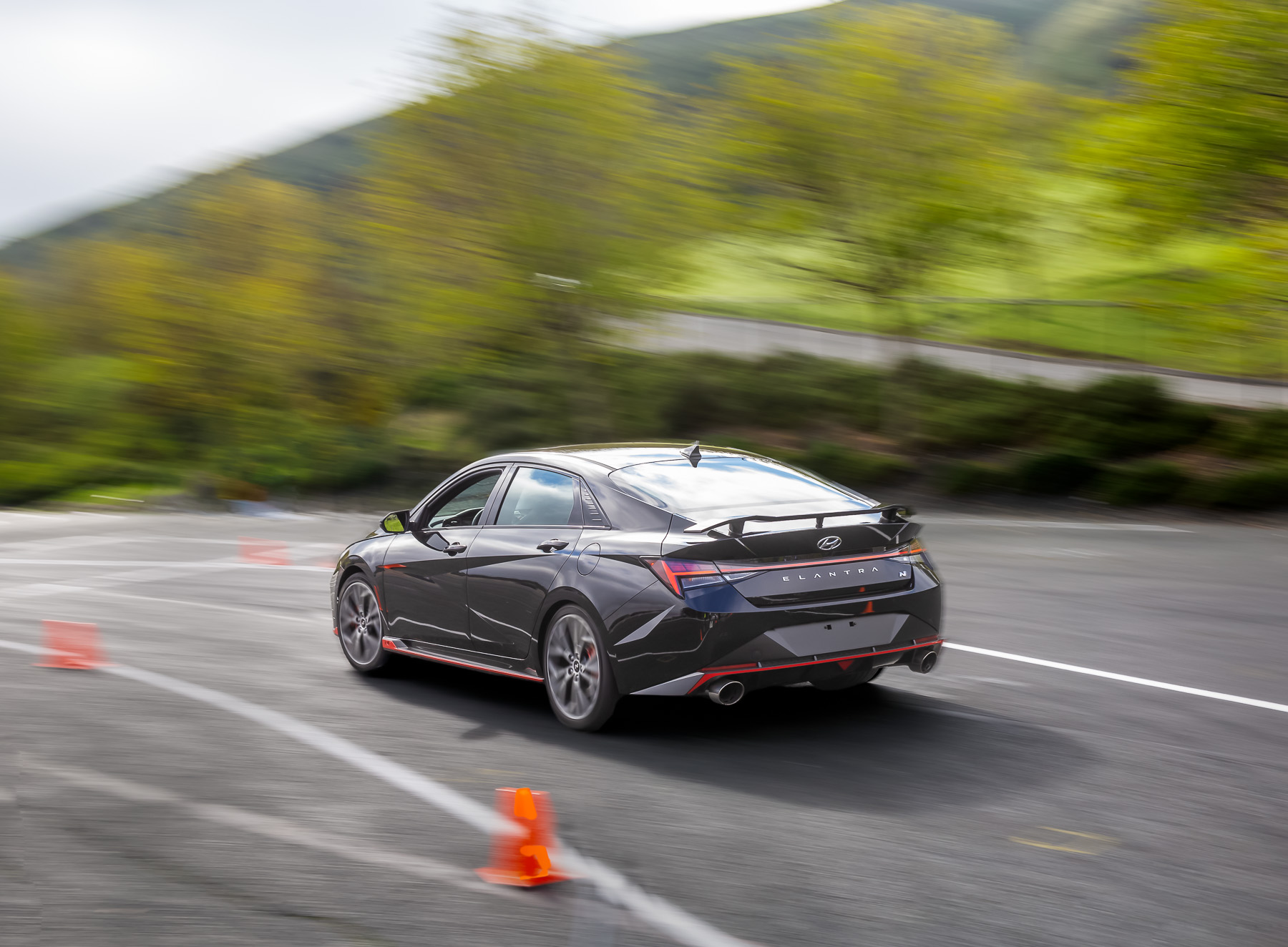
Exterior changes make the N version of the i30 Sedan visually distinctive, particularly the red trim that traces a line around the lower fascia, side sills, and lower rear bumper. There’s a boot-mounted rear wing, modest in comparison to that of the Civic Type R, and eight-inch-wide 19-inch wheels that are unique to the N and wrapped in 245/35 R19 Michelin Pilot Sport 4 S rubber.
Under the skin is N’s program of chassis stiffening that includes several strengthening points in the front end around the subframe, along with a pair of tunnel braces and reinforcements surrounding the upper strut mounts. Peering through the boot, you’ll spot the bright red rear strut tower brace that runs from the struts to the floor and is bisected by a horizontal bar.
As functional as it is, the brace limits the useability of the folding rear seat and makes passing through large objects from the boot difficult to impossible. In short, you’ll want to carry your bicycle on the roof. Kerb weight is within just a few kilos of the i30 N hatch.
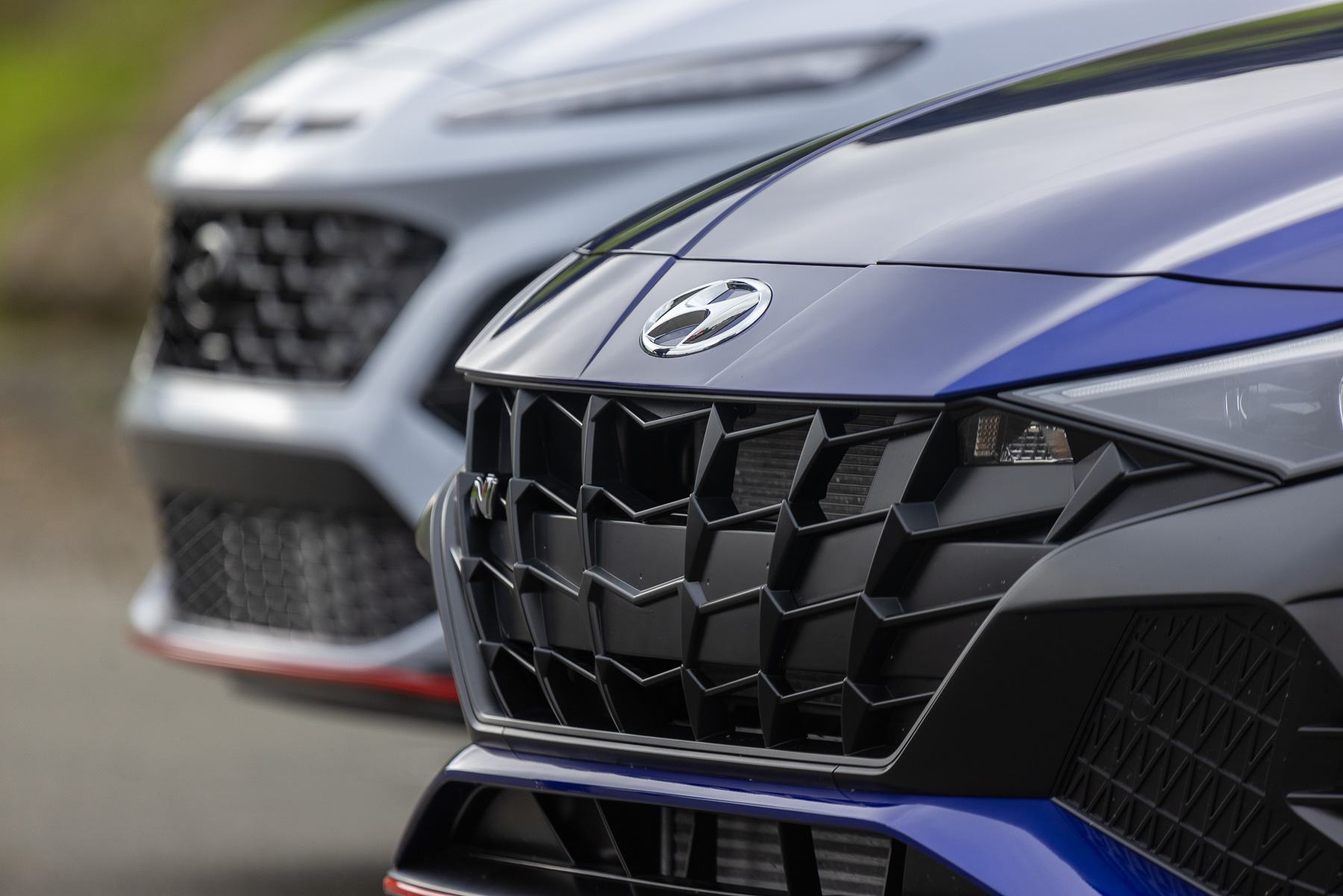
Changes to the interior are effective and subtle, but the biggest improvement is the addition of the N-spec, lightweight, two-piece bucket seats. They sit 10mm lower than those of the non-N i30 Sedan, are deeply bolstered and, for a premium touch, the N logo in the upper seatback is illuminated.
The steering wheel uses a standard Hyundai layout but with the addition of the two N buttons for quick selection of drive modes and a prominent red button that’s used for either the overboost function on dual-clutch cars or the rev-matching feature on six-speed manuals. Pedals are appropriately sporting, with a shiny alloy finish covered by rubber nubs for traction.
A fully digital instrument cluster has three themes – a simple aesthetic for Normal and Eco drive modes, a red-dominated Sport mode and a bespoke N mode that prioritises simple gear selection and speed displays under a prominent tachometer.
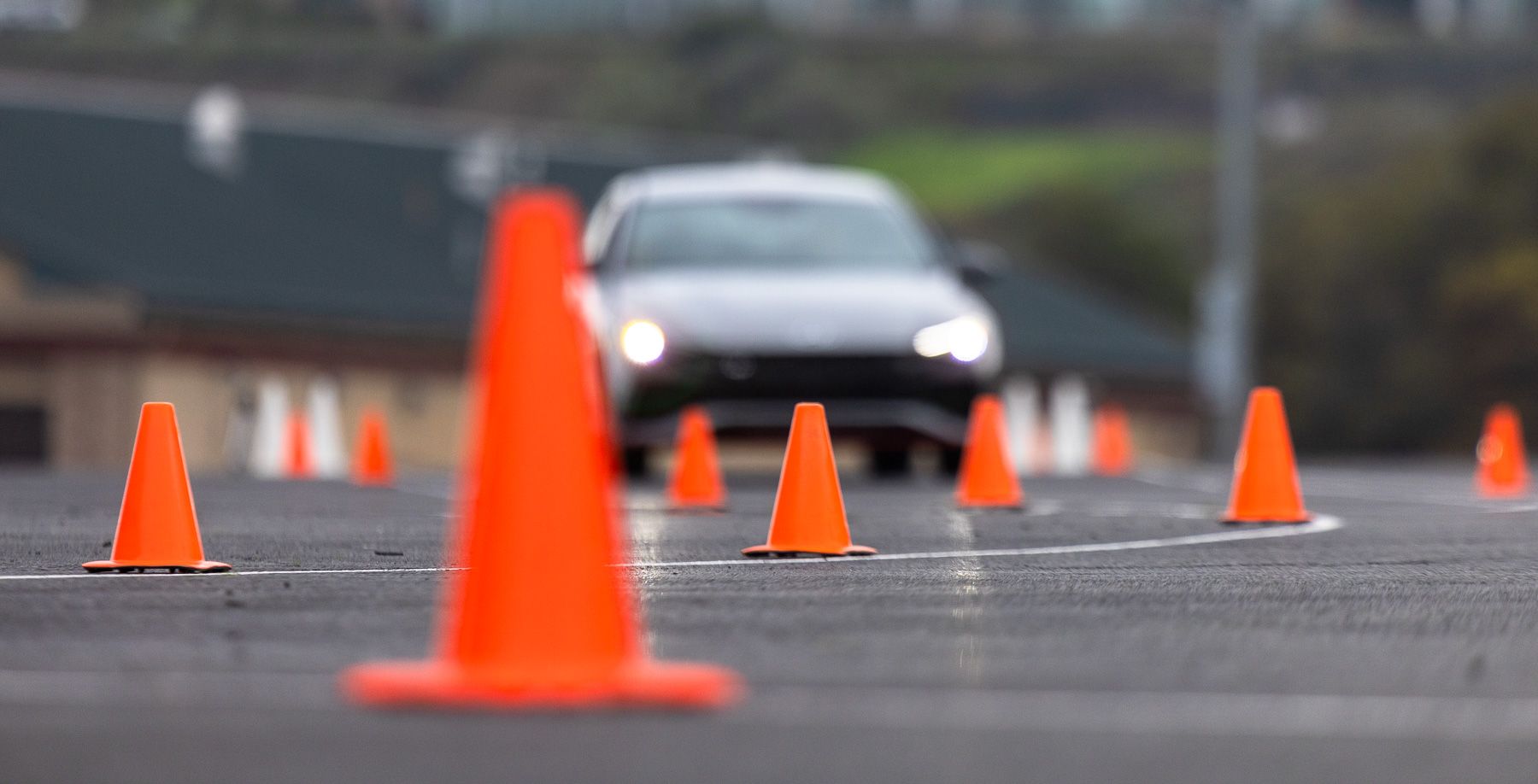
The N uses a tweaked version of the standard i30 Sedan’s infotainment system. As with all Hyundais, the interface is approachable with easily discernible menus but adds unique functions for the N.
In addition to configuring the car’s custom drive mode, the system has a performance display for throttle opening, brake pedal pressure, and oil and water temperatures, plus an integrated lap timer for track day demons. Unlike higher-end systems, this one doesn’t capture a range of data points for post-session analysis.
Like most Hyundais, the i30 Sedan N includes a range of driver-assist features like the all-important forward collision avoidance assist, blind-spot monitoring and assist, and rear cross-traffic alert. A Bose sound system and wireless phone charging are standard equipment.
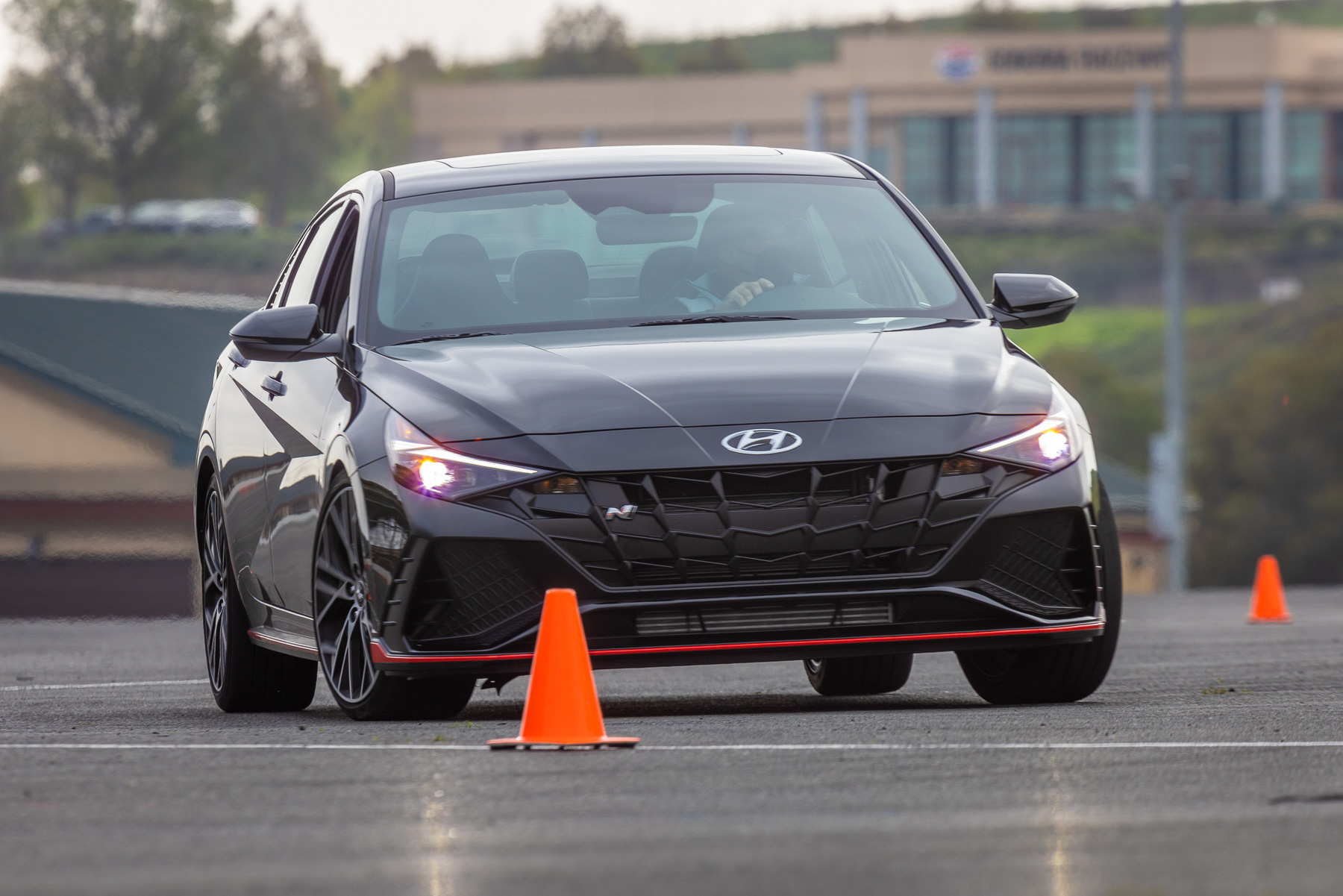
The 10mm lower seating position of the new front seats isn’t apparent but the new seats are perfectly supportive, particularly for the demands of track work. On the road, they’re snug and comfortable over long distances, and the heated function is a welcome bonus for drivers in colder climates. Rear seat room is generous for the segment.
Thankfully, Hyundai’s standard practice of including an adjustable steering column with heaps of reach is carried over to the Sedan N, so finding an effective seating position is second nature. Pedals are an easy reach for the driver but the brake and throttle pedals are spaced further apart than they should be for effective heel-and-toe downshifts.
That leaves the manual driver to choose between finding a wide driving shoe or using the slick rev-matching function that, admittedly, may be more effective and precise than doing it manually.
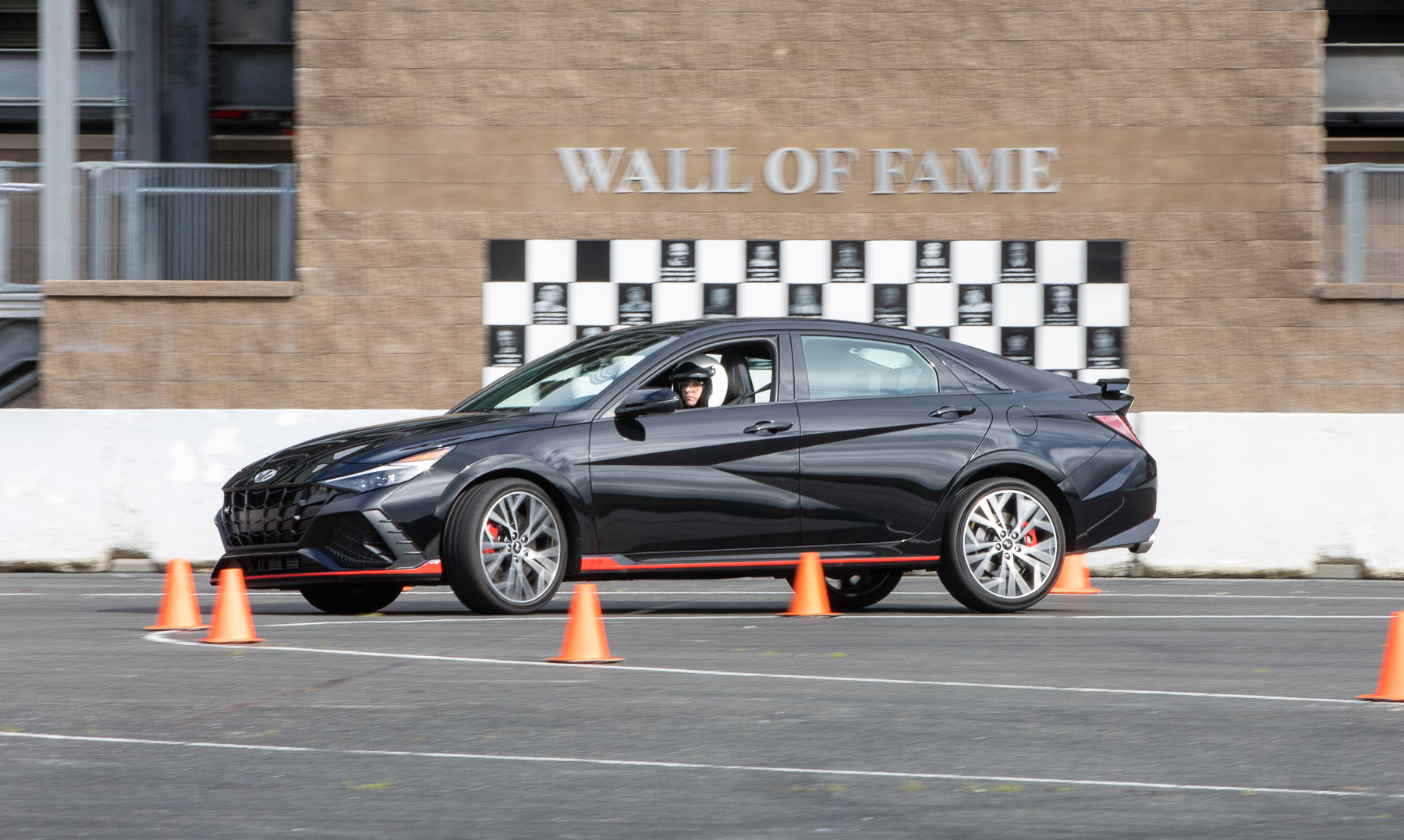
The large N drive mode buttons on the steering wheel make going from relaxed cruising to corner-carving a snap and while the instrument cluster in N mode is effective for going quickly, the infotainment system’s N performance display is a novelty.
Consider that if you’re going quickly, whether it’s on some canyon roads or a racing circuit, you don’t have time to look over at a central screen displaying small numbers. If you’re doing track work, consider pointing a camera at the display to capture your data because the system doesn’t log anything to memory for later review.
Among front-drive performance cars, this drivetrain is a jewel. The engine’s got that flat horsepower peak from 5500-6000rpm and the torque curve is more of a plateau, with maximum torque available in the meaty part of the rev range, from 2100-4700rpm. At low revs, you’re never wanting for torque. Plus, closer to redline, you’ve got massive power for maximum acceleration.
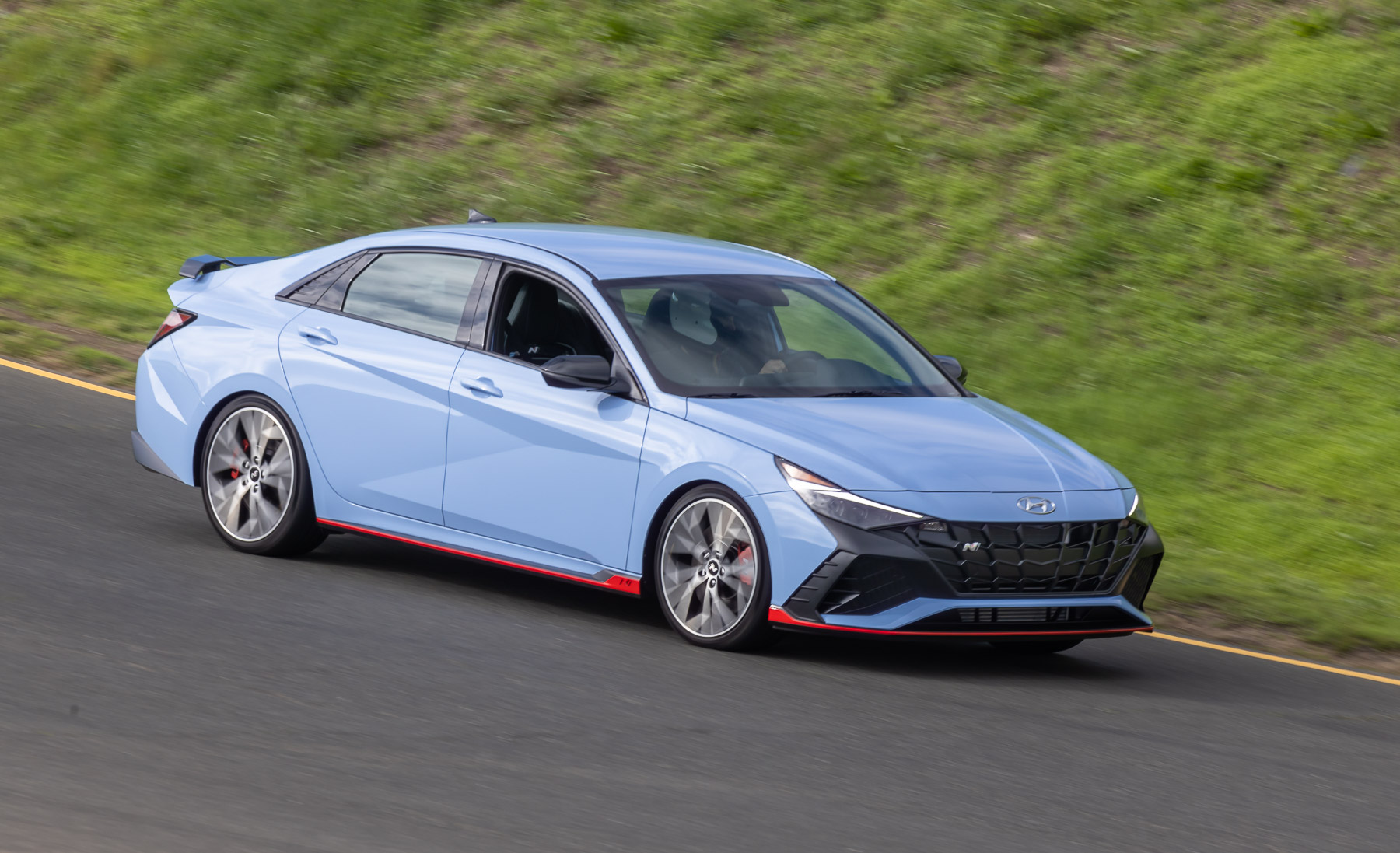
Regardless of transmission choice, the Sedan N scrambles to put down power from a stop, although the dual-clutch can always throw down its launch control party trick. Without it, the driver is rewarded with a prudent foot off the line.
Once on the move, the e-diff works its magic and around the fast and demanding Sonoma Raceway in northern California, the sedan simply never put a foot wrong. Understeer is kept to a minimum, as is torque steer.
The dual-clutch operates smoothly, both on and off track, cracking through quick upshifts and rev-matched downshifts, which can be requested from either the shifter’s manual mode or paddleshifters on the wheel.
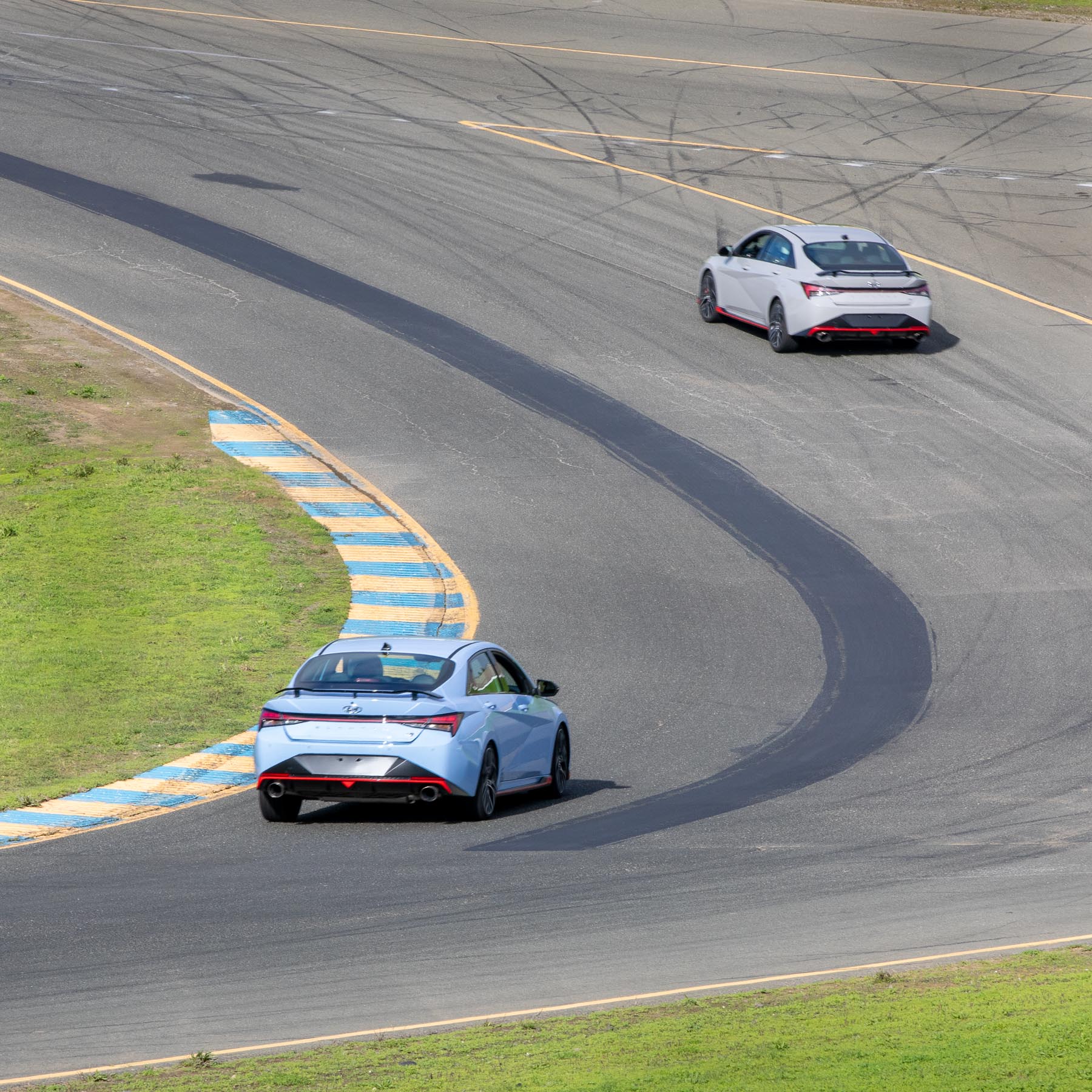
With eight cogs and the flexible turbo four, the N is always ready and eager to accelerate. In contrast to its impeccable all-around performance, the signature Hyundai dual-clutch half-heartbeat delay when shifting into reverse is still here.
Shift action of the six-speed manual leaves something to be desired. With a light clutch feel, longer throws than expected and little effort required to change gears, this feeling is more economy car than factory special. On the other hand, the shifter’s gates are well defined and the six ratios are a perfect match for the engine.
Several drizzly on-track sessions at Sonoma Raceway revealed the delightful balance of the N’s chassis tuning. This is one of the few front-drivers that’s thrilling to drive simply because it can be pointed on the throttle near its limits.
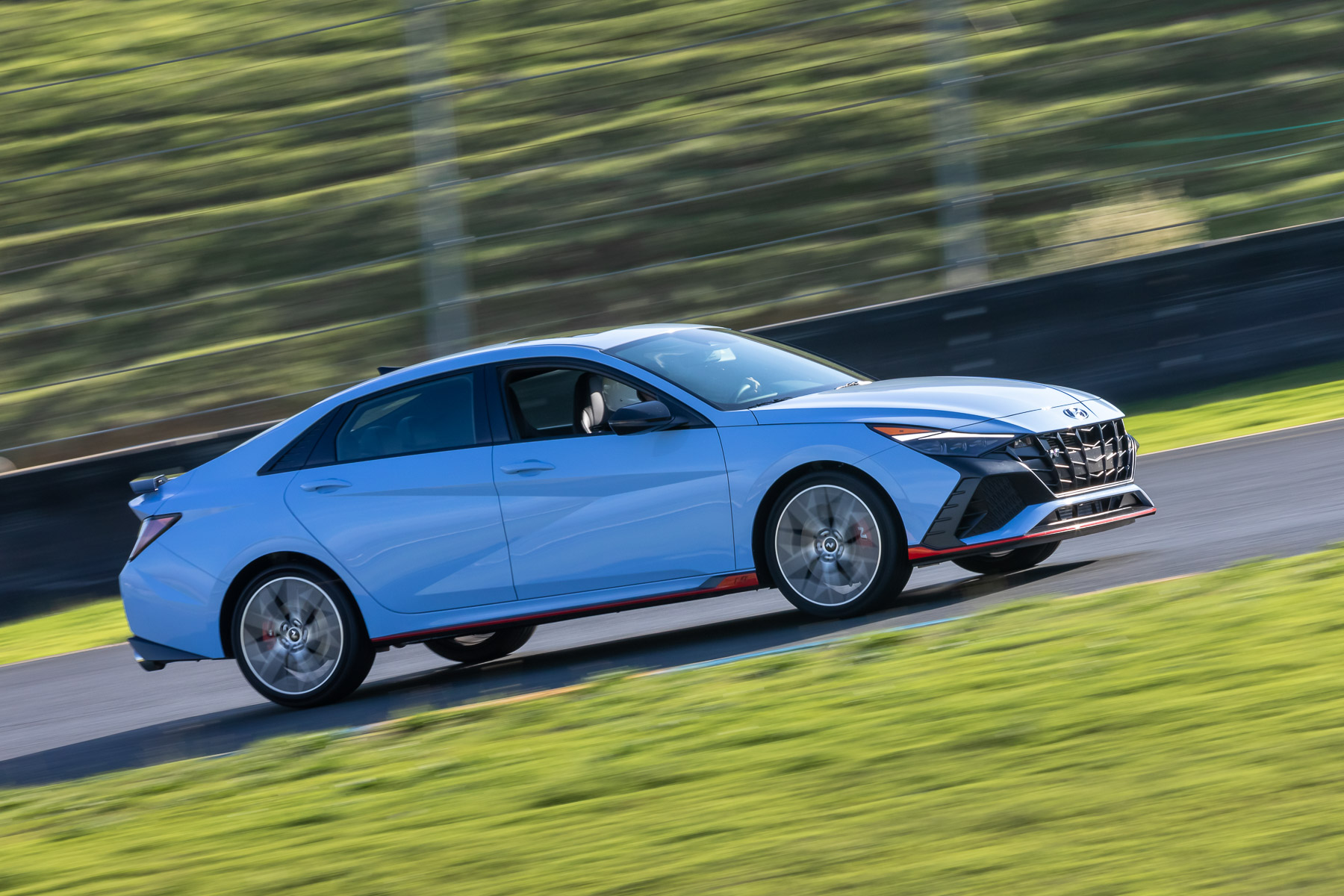
Care to tighten a line? Breathe off the throttle a little and the nose tucks in. Need the rear to rotate to set you up for the perfect exit? Give the throttle a deliberate lift, let the rear rotate around, and feed in some throttle to settle the chassis, and rocket out of the corner.
With low grip conditions around the circuit, the N could be thrown around with abandon, leaving the highly tuned stability system to pick up the pieces of sloppy driving and terrible lines. Even with the stability system switch on, it gives the driver some latitude to slide the N through corners and only intervenes before things go badly.
The quicker steering rack of the N is at home on the track and inputs translate immediately into directional changes. It’s even quick enough to catch the occasional dab of inadvertent oppo. As with most electric systems, the steering offers limited feel through the wheel, but it’s not like the N doesn’t speak to the driver. The chassis and brake pedal both offer quality feedback.
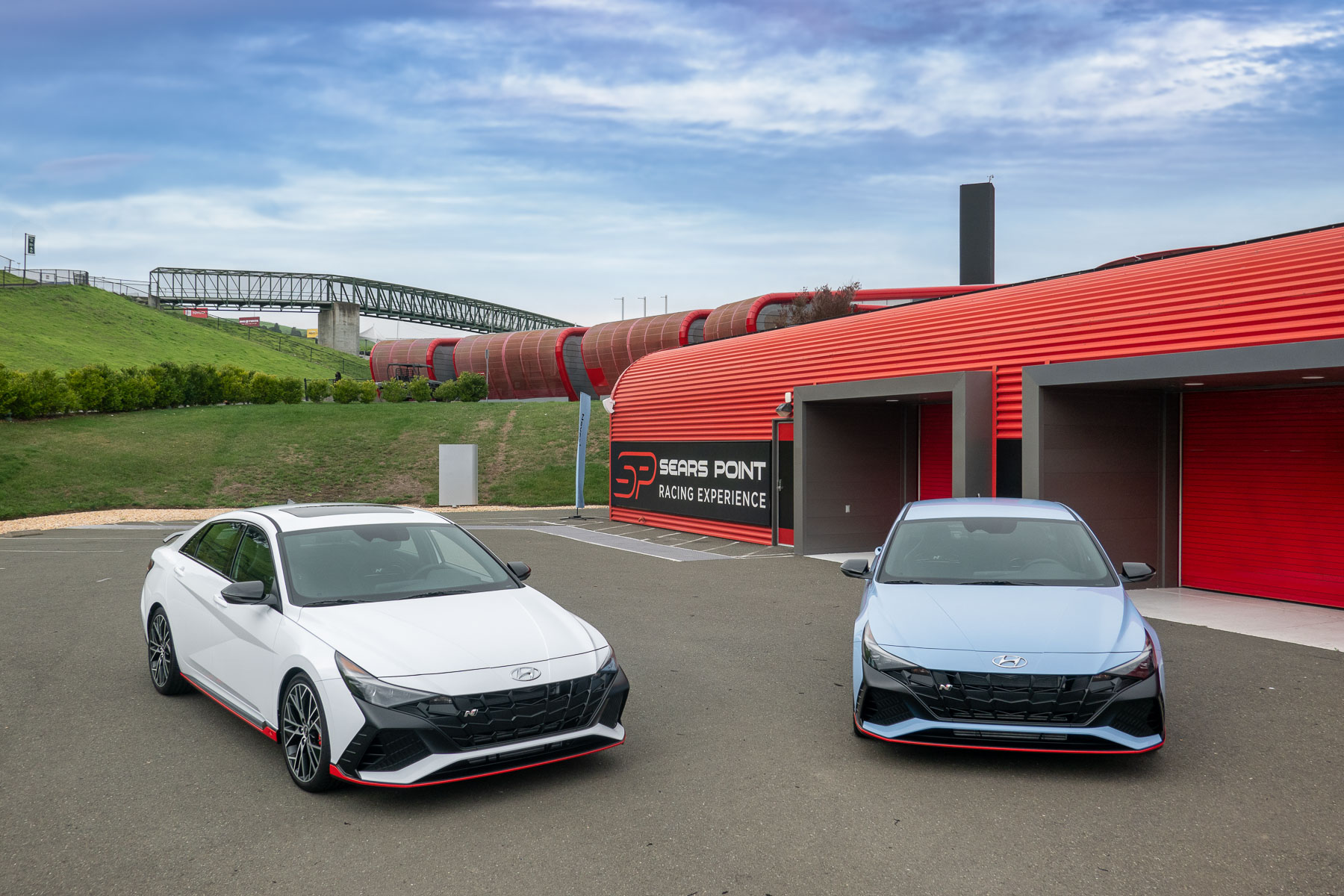
Brakes have excellent bite and the Sonoma circuit is a proper test of any performance car, with high-speed sections leading into hairpins twice per lap. The Hyundai’s brakes were never overwhelmed and offered excellent feel that made on-limit trail braking into corners easy.
Save for the steering, the N gives the driver high-quality feedback that rewards the experienced hand and gives the novice the confidence to push harder.
Relative to the i30 N hatch, the sedan’s wheelbase is 70mm longer, which is not insignificant. Where the sedan loses some of its inherent agility in slower corners, it gains stability in medium- and high-speed bends, lending more confidence to the driver.
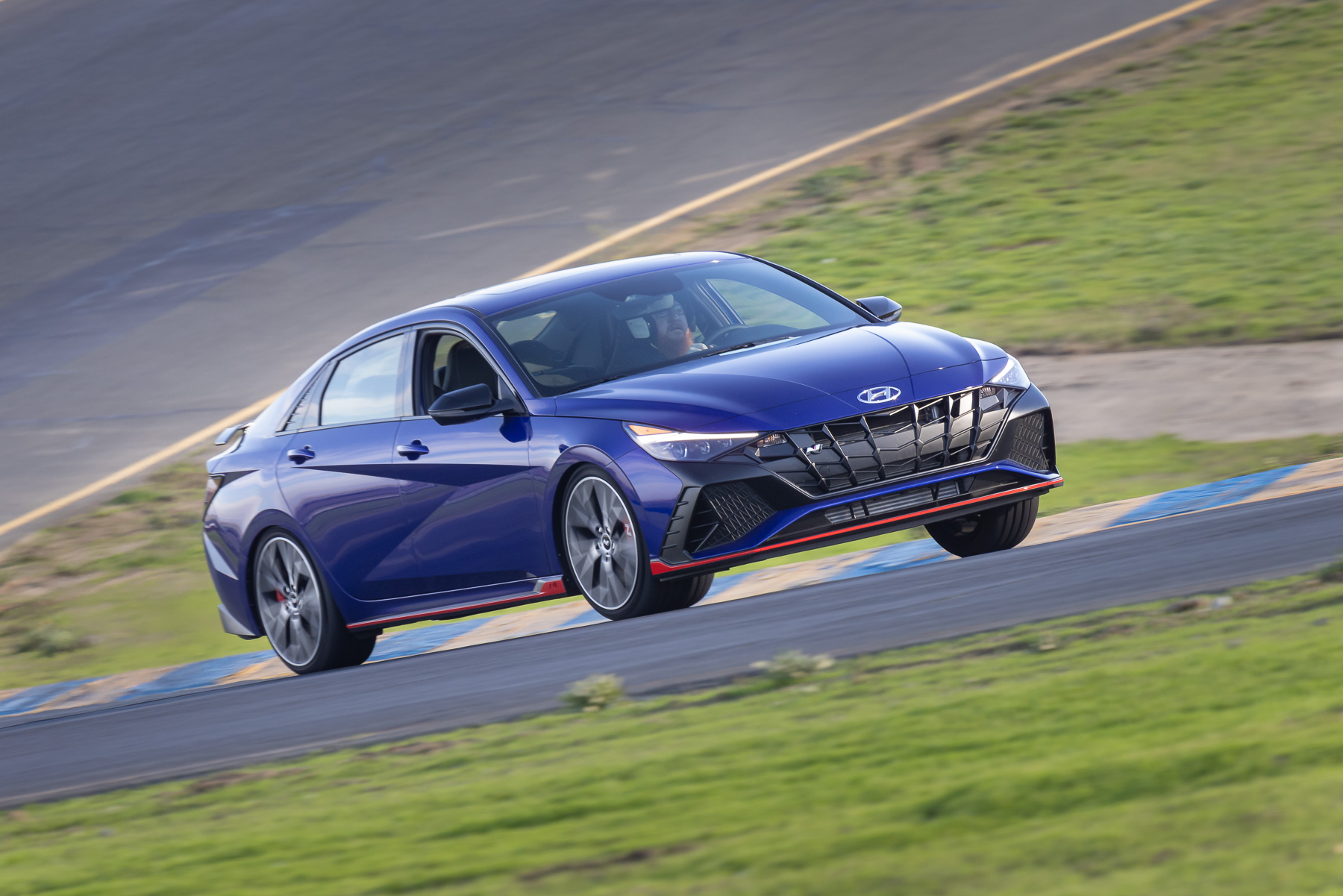
The N’s obvious competition is the Honda Civic Type R, but that is fundamentally a different argument, not necessarily an apples-to-apples comparison.
They’re both compact front-drivers, aggressively styled, powered by two-litre turbo fours, but they differ in two elemental ways. The N is the scrappy four-door newcomer, while the Civic qualifies as a hot hatch and is adorned with that legendary Type R badging. However, the e-diff of the N is an effective, new-school solution, while the Honda uses a proven mechanical limited-slip differential.
Hyundai’s N brand is relatively new and fittingly, the Sedan hasn’t been constrained by old-school thinking in terms of its engineering and packaging. Plus, with every new N vehicle, Hyundai is pushing past its own limits, carefully improving these cars to be better than before.
The i30 Sedan N brings together all of that engineering prowess with an exciting new alternative to performance front-drivers.
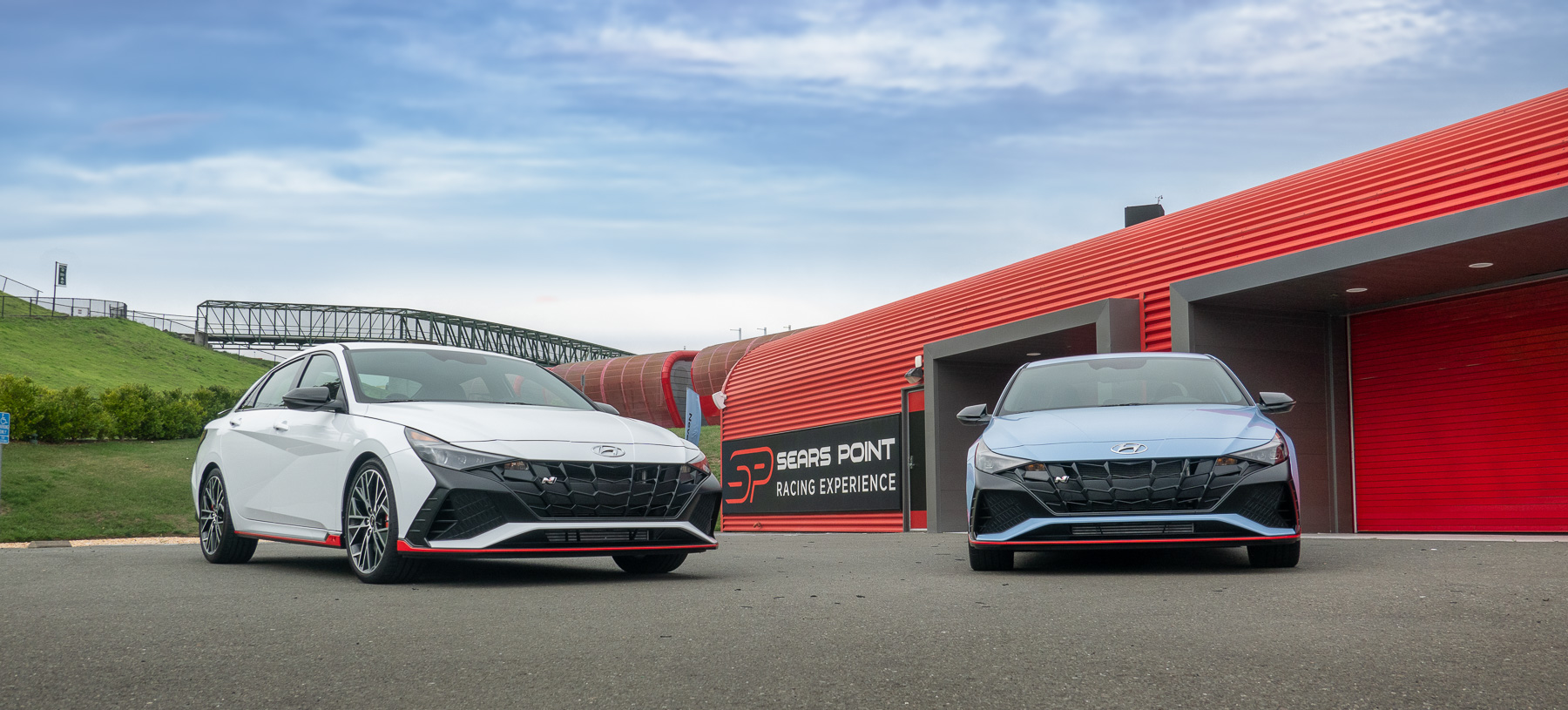
2022 Hyundai i30 Sedan N specifications
| Specification | Value |
|---|---|
| Body | 4-door, 5-seat sedan |
| Drive | front-wheel |
| Engine | 1998cc I4, DOHC, 16v, turbocharged |
| Bore/stroke | 86 x 86mm |
| Compression | 9.5:1 |
| Power | 206kW @ 5500 – 6000rpm (213kW with overboost) |
| Torque | 392Nm @ 2100 – 4700rpm |
| 0-100km/h | 5.3sec (estimated) |
| Fuel consumption | 10.2L/100km (combined/claimed) |
| Weight | 1445kg (manual) / 1495kg (DCT) |
| Power/weight | 145kW/tonne |
| Transmission | six-speed manual or eight-speed wet dual clutch |
| Suspension | MacPherson struts, anti-roll bar (f); Multi-link, anti-roll bar (r) |
| L/W/H | 4676/1826/1415mm |
| Wheelbase | 2720mm |
| Tracks | 1585mm (f); 1580mm (r) |
| Steering | Electrically assisted rack-and-pinion, variable assist |
| Brakes | 360mm ventilated discs, single-piston calipers (f); 314mm solid discs, single-piston calipers (r) |
| Wheels | 19 x 8-inch (f/r) |
| Tyres | 235/40R18 (f/r) Michelin Pilot Sport 4 S |
| Price | TBD |
A new curry dish in Japan is hoping to showcase the differences between the Toyota GR86 and Subaru BRZ twins.
Sold at the Crane Garden restaurant situated within Japan’s famed Fuji Speedway for a limited time, the dish is served on a red and blue tray designed to depict each car – with the meal on offer during the ‘Fuji 86 Style with BRZ’ meeting at the racetrack earlier this month.
Although each curry is said to feature the same base, the red GR86 side is claimed to be sharper and spicier than the sweeter and richer blue BRZ side.
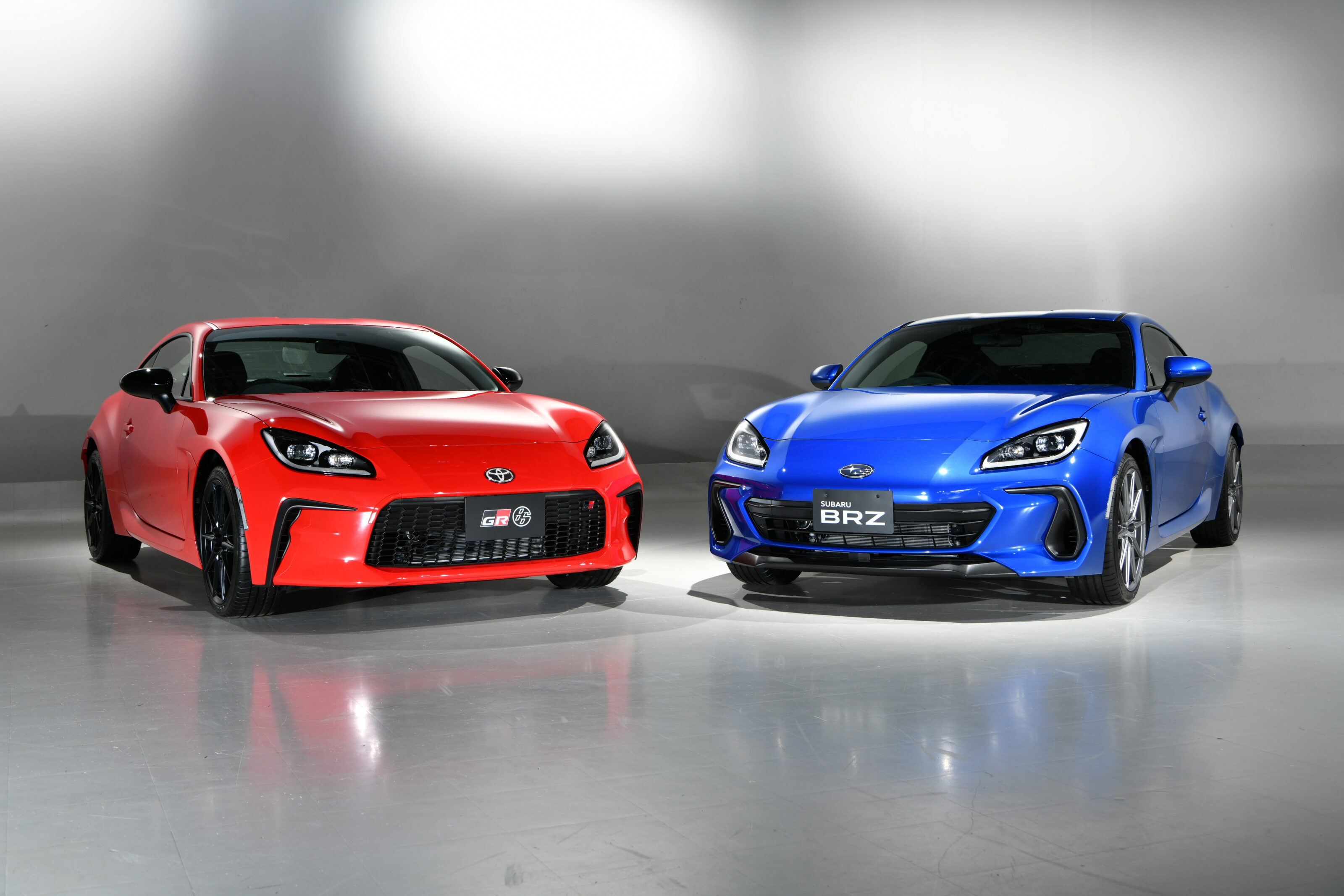
Speaking with Japanese publication Spyder7, GR86 development driver Masahiro Sasaki said the red-plated curry is “a little spicy, or it’s seasoned with spices, and the spiciness is a little stronger. It feels like a car,” while Subaru racer Takuto Iguchi stated he is “not good at being too spicy. So I like the sweet and rich taste [of the] BRZ”.
The idea for the unique separate curry dish was inspired by a meal available in the cafeteria at the Ohta, Gunma, factory which produces the GR86 and BRZ twins, according to marketing representatives from Toyota and Subaru.
As for the cars, there are small differences between the identical GR86 and BRZ – just like the curry dishes.
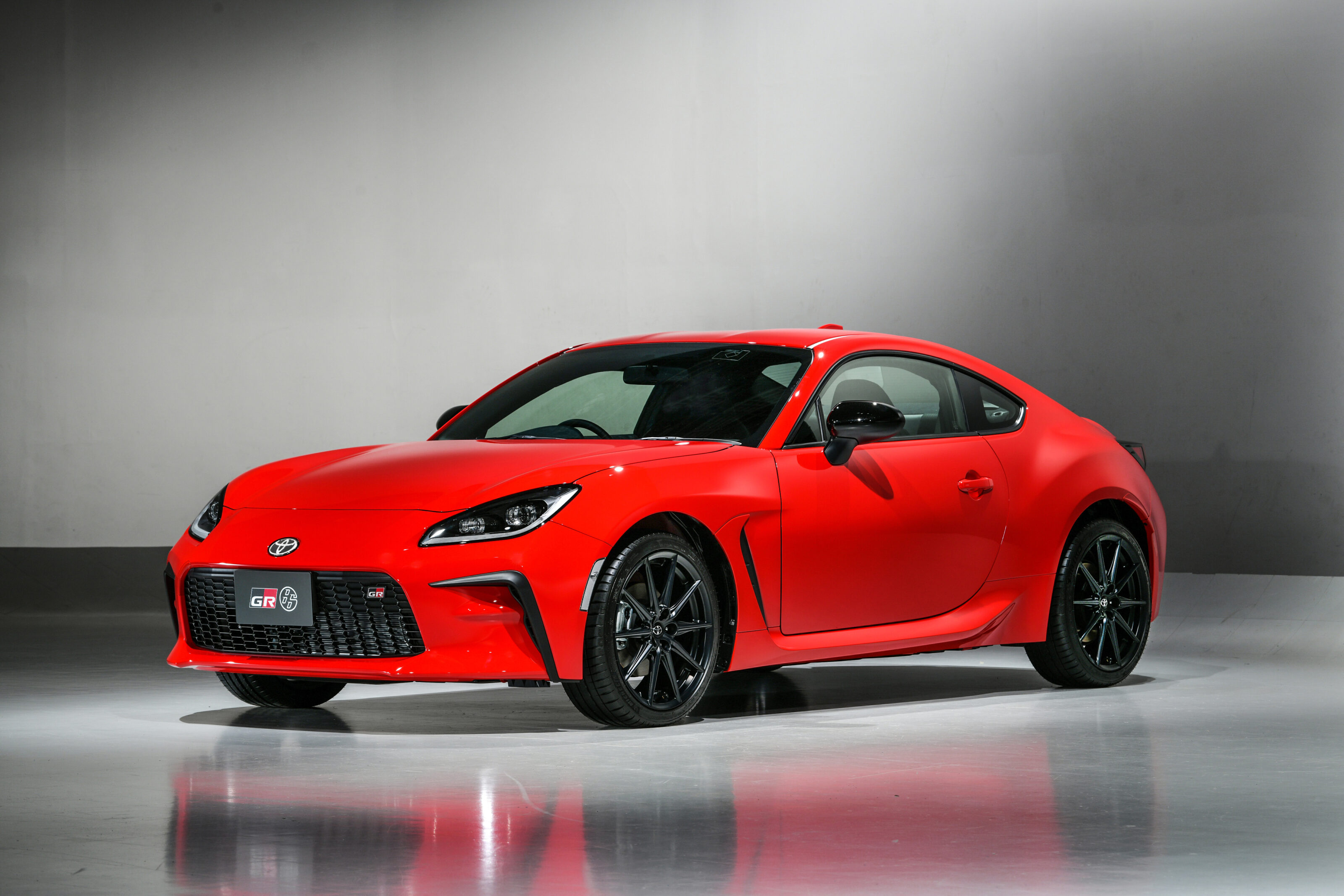
Mostly located in the suspension, these alterations include cast iron knuckles to connect the struts to the front wheel hubs and carryover rear trailing link bushings in the GR86, rather than the aluminium knuckles and stiffer bushings found in the BRZ.
In addition, the Toyota is said to sport a seven per cent lower front spring rate and 11 per cent higher rear spring rate, with separate damping tunes to assist with the mechanical changes.
The GR86 also utilises a solid 18mm front sway bar, with the BRZ instead featuring a hollow 18.3mm part.
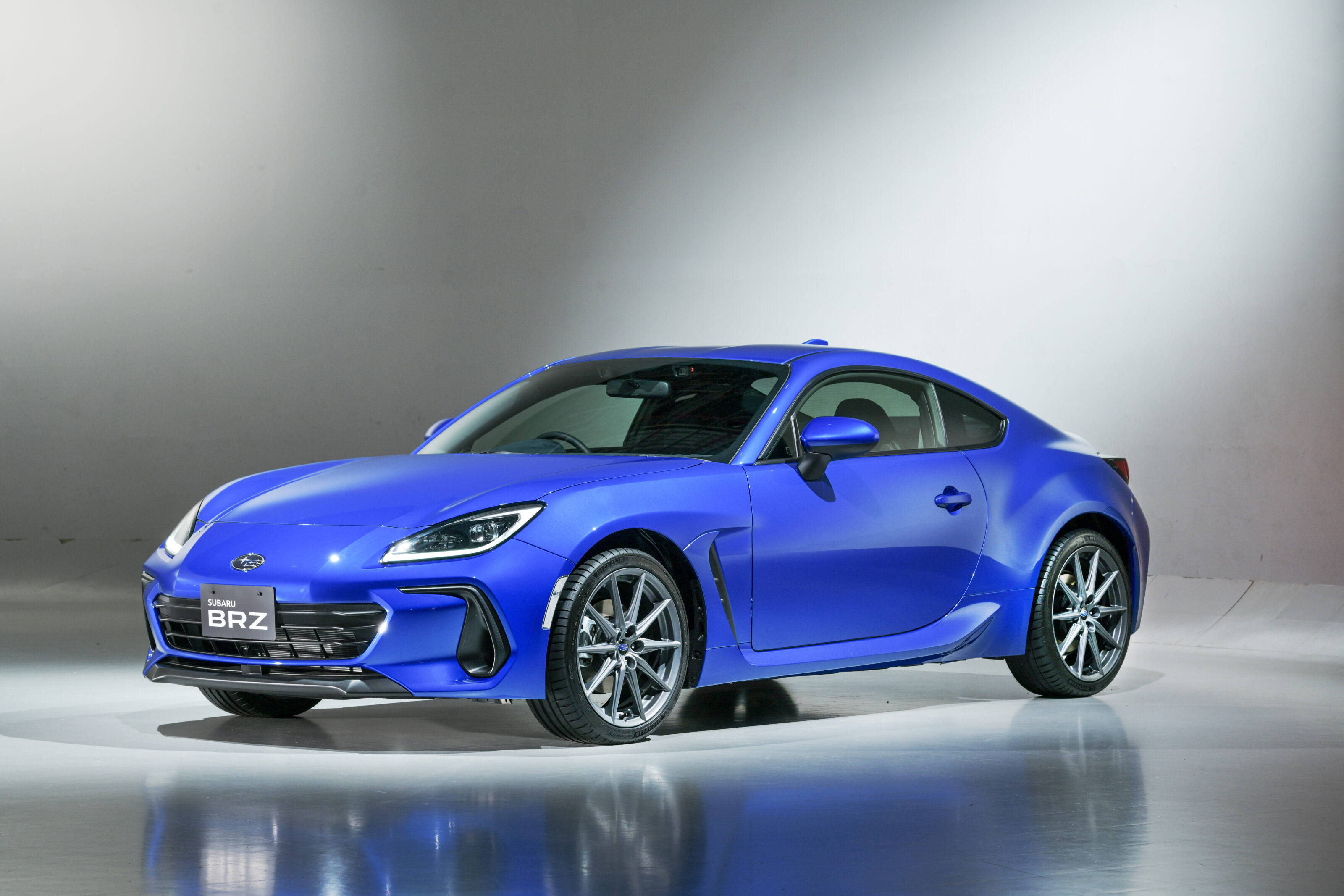
Other differences – such as a thicker rear sway bar mounted to the subframe in the Toyota and a smaller bar mounted directly to the unibody in the Subaru – all combine to ensure the GR86 is ever so slightly more focused on responsive steering, and the BRZ on stability and precision.
Segment creep. It’s that curious car industry phenomenon that sees every new model grow a bit bigger than the one it replaces.
It’s innocent enough – hey, who wouldn’t want a slightly roomier next-gen model? – yet over generations amounts to an insidious shuffle of models into entirely new segments.
Giving some thought to segment creep is key to getting your head around BMW’s G22 4 Series. Well, it was for me, anyway.

You see, if you still view BMW’s E46 3 Series coupe as the stuff of legend, or even have a soft spot for the old E92, you might figure that a new 4 Series is the machine for you. After all, it’s a continuation of the same line, with the 4 Series amounting to a renaming of the two-door 3 Series in 2013.
But a helluva lot’s changed even since then…
So while the well-received first-generation 4 Series was devised as its own spin-off line, but could easily have worn a 3 Series badge, that’s far less true of the second gen.

Styled, engineered and equipped to thrust the 4 Series upmarket – and towards new customers – now the nameplate really is its own thing.
With a roofline 57mm lower than 3 Series – which brings a useful 21mm lowering of the centre of gravity – and a rear track width increased by 23mm, the G22 4 Series distances itself from its mechanically similar sibling.
It’s also way longer than the previous 4 Series coupe, stretched by 128mm, though the wheelbase only grows by 41mm, so much of the extra length is in the overhangs. And it’s 27mm wider.

Then there’s xDrive all-wheel drive in a model that was once a paragon of rear-drive purity, with its sledgehammer-packing 285kW and 500Nm of a mild hybrid-assisted turbocharged in-line six, where a sweet atmo six used to do the job nicely in a non-M 3 Series coupe.
Yep, the M440i’s ‘boulevard meets bruiser’ personality makes today’s ‘compact executive’ BMW coupe a very different beast.
The bottom line is the M440i is a grand touring-slash-sports coupe not far off 6 or 8 Series proportions – the wheelbase is 33mm longer than the original 8 Series, for example.

So to measure the G22 BMW M440i’s xDrive’s greatness – or otherwise – it has to be held up to GT benchmarks, rather than considered as a descendant of the 2002ti.
Now, the 4 Series’ controversial snout has stolen headlines and copped an, erm … grilling from the YouTube personalities, so let’s leave that alone.
Beauty may be in the eye of the beholder, but when the M440i is parked side by side with the Audi S5, it’s the latter that’s the better looker if you ask me (if you ask anyone?).
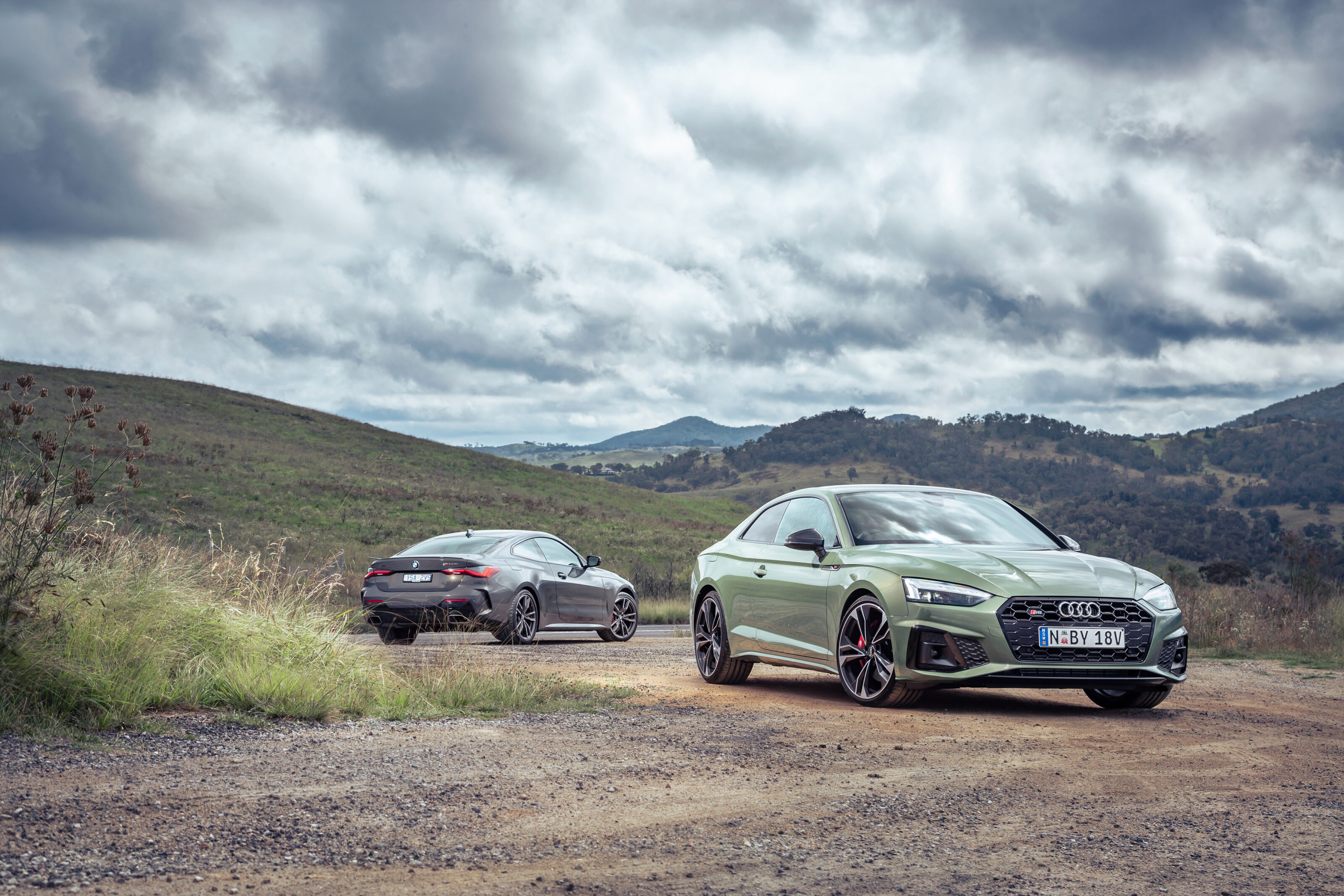
Ingolstadt got the A5 and S5’s basic coupe proportions right from the start and the conservative second-gen redesign, itself nearly five years old, brings an appealingly subtle channelling of Camaro. The Audi’s clamshell bonnet brings cool-factor, the Coke bottle hips impart classic muscle, and the optional carbon and black pack’s boot-lip spoiler is a neat touch.
My road-testing wingman tended to agree, proclaiming that the M440i looks best from the driver’s seat. A touch harsh perhaps, but either way, that seems like a good place to start.
Crack open the M440i’s long door and the puddle light projects a mysterious pattern at your feet – art deco wings? A stylised M logo? Settle into the well-bolstered, Tacora Red vernasca leather-trimmed seat and the aroma is unmistakably BMW, with no notes of real estate agent (yet). The big coupe powers the seatbelt to your hand; the engorged weisswurst wheel lives on, providing another nod to the coupe’s origins.

A prod of the centre console start button sees the twin-scroll turbo B58 six burble into a bassy tickover. That’s the current J29 Supra engine to fans of Japanese tin, as seen in a variety of Munich’s machines. In urban confines the 2998cc in-line mill satisfies with a marque-signature crisp, low howl.
The electric-motor assist, which comes as part of the G20 3 Series-shared CLAR platform’s 48v architecture, fleshes out that zone below 1900rpm where the donk is yet to rustle up the full 500Nm, making the M440i effortless everywhere.
Flat-out, in sport mode, it’s a jet, with a full-blooded snarl, and feels more than capable of the 4.5sec 0-100km/h claim. That instant twist teams with a rear-biased xDrive all-wheel drive to deliver the rear-drive feel the BMW Roundel primes you to crave, and continues to favour the rear wheels up to a high threshold, only offering torque to the front treads when it senses slip.

The big coupe’s off-power balance noses into subtle understeery territory, which can then be coaxed to pivot through an accelerator-assisted neutral mid-corner attitude to feel poised and ultra-rapid at exit.
That push on entry may be the work of a 54/46 front-to-rear distribution of the G22’s substantial 1815kg, which could be those eff-off big grilles.
The M440i’s thick steering wheel rim implies chunkiness, yet the electrically assisted rack and pinion system, while quick, comes up short on clarity. A keener snout and a more intimate front end would be transformative and sure they might feature for M4, but I can see no good reason they’re not part of the package here, too.
If it’s a deliberate positioning move, it seems a pretty odd one, given there are a multitude of ways to spend a lot than $116,900 and have both these qualities.

Taking a step back, the acres of sheetmetal between the top of the 4 Series’ rear arches and the rear side windows make the good-looking M light double-spoke alloys look smaller than they are. They’re 19s, wrapped in adhesive 225/40 and 255/35 Michelin Pilot Sport 4S to endow the BMW with huge grip and presumably an equally large tyre replacement bill. (At least they’re not 265/30R20s, as worn by the S5 all-round!)
There’s a lot to like about the M440i’s grand touring capability. There are electronically controlled dampers, of course, and the admirable ride in urban conditions becomes even more cosseting and impressive beyond the subdivisions.
Even rear occupants get a decent deal. There’s good leg room and okay headroom, as well as HVAC outlets and temperature adjustment, a fold-down centre arm rest and handy storage pockets.

At 440L the boot is down 40L on 3 Series and 25L on its rival, but it’s still generous enough, with the flexibility of 40/20/40 split-folding seatbacks just as in the Audi.
As a low-fi guy who’d find all I need in an E30 M3 – non-airbag wheel, clutch pedal and gear stick – I’m slightly ashamed to admit that even the semi-autonomous tech is good. Here, the BMW’s systems are a bit more switched on than the S5’s.
But making the most of it comes down to your approach. Get it wrong and, just like treating a dual-clutch auto like it’s a slusher and expecting smooth progress, you’ll be disappointed.
Speaking of intuitive autos, that’s what this pair has, in the form of the polished ZF 8HP eight-speed.

Anyway, I engage the BMW’s semi-autonomous mode as though it’s normal cruise, but it’s comforting knowing there’s the benefit of a safety net in the event my lane-keeping gets a bit sloppy or someone carves me up, and it does a terrific job.
I’m less convinced by the M440i’s lane-keeping behaviour outside of semi-autonomous driving. In these conditions it’s rarely a help and instead feels like the tramlining of every car I’ve ever owned, with negative camber dialled up to the max ’cos it looks cool.
The M440i’s Selective beam Laserlight headlights are a class act too; quick and precise, to seamlessly provide maximum illumination without dazzling other drivers (see details below).

As for the Audi, a visually mild 2020 facelift keeps the S5 competitive. On the all-important infotainment front there’s a new 10.1-inch dash-top display with mirroring for both kinds of phones and because it’s a touchscreen the console buttons are gone, freeing some oddment storage space.
Audi’s Virtual Cockpit cluster is standard, as are B&O audio, beautiful Fine Nappa leather, 20-inch alloys and Matrix LED headlights. And the safety suite is expanded with lane change assist, rear cross-traffic alert, adaptive cruise, a 360-degree camera, parking sensors and an exit warning.
Out tester’s quilted Nappa in black with ‘rock grey’ stitching, Alcantara door trim inserts and swathes of carbon across the dashboard and centre console see the S5 take an each way bet on sports and luxury, to good effect.

A cocktail of leather, carpet and I don’t know what else makes the cabin scent unmistakably Audi, which I prefer to BMW, for what it’s worth. Which probably isn’t much, given my own car smells like the old Converses I wear while mowing the lawn.
Creating class and a high-quality feeling in a cabin is not easy, I think, judging by the number of cheap interiors around, but Audi has known how to do it for more than a decade.
Rear occupants experience the typical limitation of a coupe roofline but few other compromises. There are air vents, third-zone temperature controls, cup holders, a fold-down centre armrest and side storage compartments.
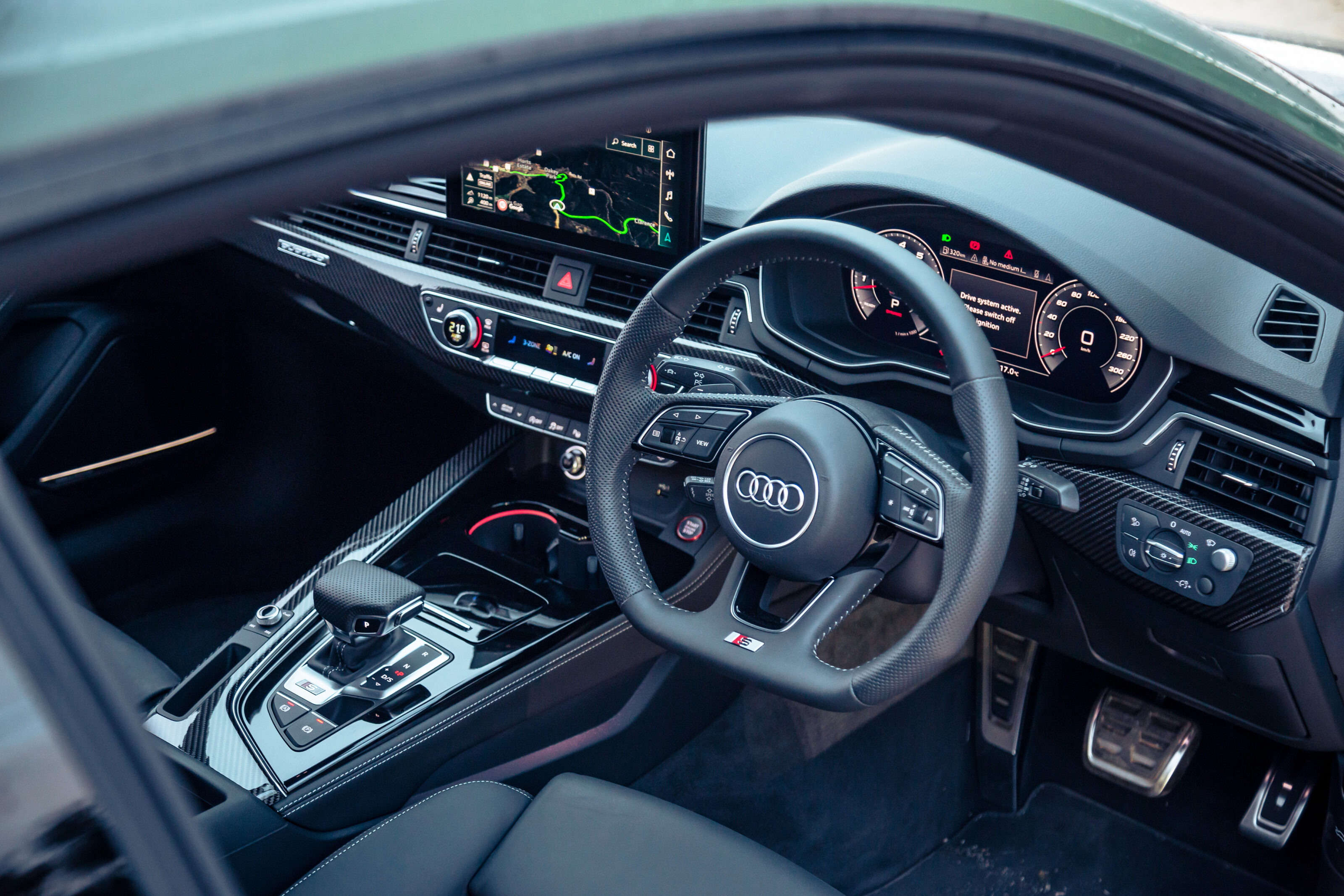
A press of the S5’s console start button is greeted by a brief guttural growl before the V6 eases into a smooth and refined low idle. An almost instant 500Nm – the peak arrives at 1370rpm – and transmission smarts make for a sensation of riding a seamless wave of shove, up to the 260kW, 6400rpm crest.
There’s no mild-hybrid assistance here but the EA839 donk’s reverse flow design sees gases exit the 2995cc unit in the vee, with each of the turbo’s two scrolls fed via an ultra-short path by a trio of cylinders and a dozen exhaust ports.
The note is distinctly V6; not especially charismatic – or quite as generous with the decibels as the BMW – though a phlegm-clearing overrun and mild tailpipe crackle add interest.

The S5’s sculpted, ovoid-section wheel feels right and is attached to an electrically assisted steering that is light, yet conveys a hunger for turns, but little actual feel. The S5 complements corner entry enthusiasm with an all-wheel-drive system that can deliver up to 85 percent of torque to the rear, and the press car’s $2990 optional quattro sport differential, which can deliver all those Newton metres to a rear wheel.
The result is an already fairly neutral-feeling chassis that, perhaps unintuitively, rewards accelerator inputs early in a corner with a satisfyingly rear-driven feel to the way it fires onto the next straight bit.
The S5 glides over coarse and lumpy surfaces with the benefit of adaptive suspension – and the hindrance of wide, shallow-sidewalled 20-inch tyres – to deliver ride comfort that completes an appealingly consistent package. Further, it’s perfectly capable left in comfort during more enthusiastic moments, where it impresses with unflustered backroad pace.

Ingolstadt’s Impala never feels terrifically involving, but nor does it ever come across as the tiniest bit compromised. Instead, it’s classy, smooth, refined, absorbent and easy. It’s also moderately engaging, decently balanced, and effortlessly rapid. Often, all at the same time.
And it has visual pull, like a sophisticated modern muscle car, for the buyer who demands something more polished and premium than an actual Camaro or Mustang.
These coupes are nearly as easy to drive around town as a Mazda 3, but they make you feel more special, if you’re into that sort of thing.

And the back seats are actually plenty useable – good legroom; reasonable headroom – which should not be any surprise given their sizeable wheelbases.
The M440i’s adoption of rear-biased AWD brings unflappability and hard-launching pace, and leaves alternatives up, down and across the range should rear-drive be a must.
If it’s not, the S5’s all-four flavour might be for you too, just make sure the optional quattro sport diff is part of the deal; it makes a big difference.

They could both do with a bit more edge in their steering feel and chassis poise. Yes, I know there are the M4 and RS5. But GT qualities and perfectly polished dynamics are not mutually exclusive, so let’s have a bit more of the latter.
The M440i feels noticeably quicker than the S5, but they’re both so rapid that, in the engine compartment at least, they make you question if you really need an M4 or RS5. Yet, the BMW M440i and Audi S5 don’t undermine the hero versions, despite potentially being easier to live with while damn near as capable, because there are always buyers for whom knowing they’ve parked the ultimate version in their garage is non-negotiable.
I know this is a coupe comparo, but if it was between the equivalent wagons, I probably would opt for an M340i xDrive Touring over an S4 Avant quattro.

It’s more difficult to choose here.
Personally, I’d want the M440i’s driver-assist tech, grunt and acoustic edge. But I’d want them in the S5.
The Audi’s classic, muscular proportions appeal, while I find the BMW sheetmetal … well, not to my taste. And style is a massive factor in this kind of car, though also one that’s highly subjective.
But it really comes down to the S5’s more inviting cabin and its beautifully judged balance of comfort with dynamics, which is precisely what’s called for in this segment.

Frickin’ Lasers! BMW’s Selective Beam Laserlight explained
The M440i’s striking kidney grilles, which reprise a design applied to BMW’s 1936 328 sports car and late-’60s E9 coupe (pictured), are not its most interesting frontal element. At either side are BMW Selective Beam Laserlight headlights that, as well as increasing high beam range to more than half a kay, and taking GPS inputs to follow the curves of the road, are truly remarkable in their workings.
The units, first seen in the hybrid i8 supercar, fire lasers via a series of mirrors that reflect and focus the beam into a lens filled with yellow phosphorus. This substance creates a bright, intense white light, which in turn is diffused and reflected onto the road. The benefits are light 10 times brighter than an LED headlight, super energy efficiency, and compactness. Fancy-pants tech that’d be right at home in the outback.

2021 BMW M440i vs Audi S5 specifications
Legendary Aussie motoring journalist Paul Cockburn passed away this week. As tribute, we present his rollicking Wheels yarn from March 1991 about the time he entered his beloved E-Type Jag in the Street Machine Summernats…
First published in the March 1991 issue of Wheels.
Bateman: (verb) to inspire mischief in others. Example: “That Hitler chap could bateman a crowd really nicely.” The warning signs were there when the plot was hatched at the Wheels Christmas party, but like a fool, I ignored them. Firstly, wine had passed my lips and, secondly, the originator of the notion was Photographer Bateman. How many more portents should I have needed?
Your Bateman, as mentioned in previous dispatches, is not one for the still-life snaps and has an extraordinary talent for persuading others to place themselves in a variety of perils so that he might photograph the result. This one was a cracker. Working on my diminished faculties, he somehow made the idea of entering my six-cylinder (and very Pom) E-Type Jaguar in the Street Machine Summernats seem like fun. Then sold the idea to a delighted management.
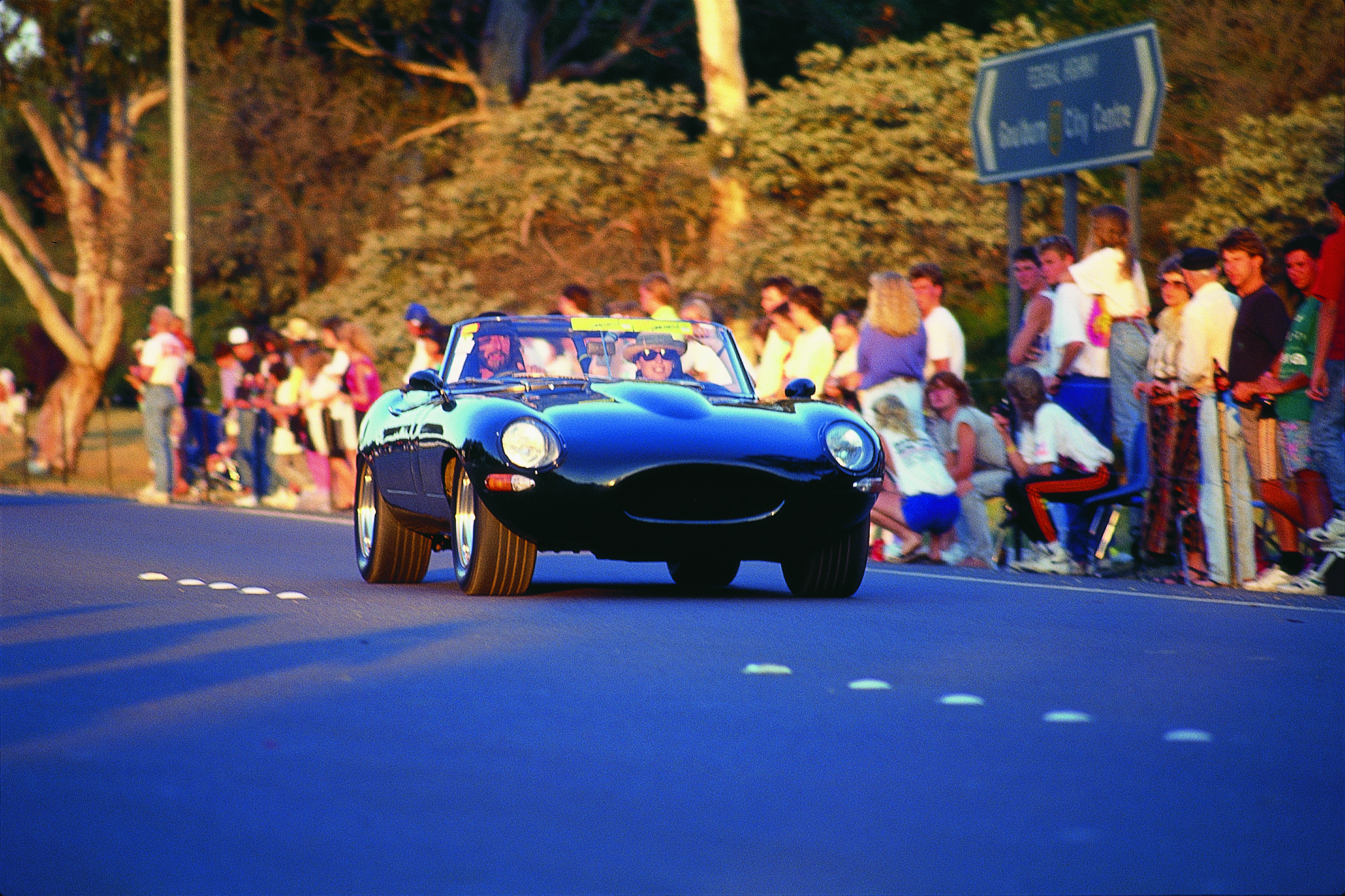
Common sense dawns in the clear light of the next day and I put a call through to the top tent. This no longer strikes me as such a good idea. They disagree and say I seemed happy about it last night. I say I was drunk last night. They say go to the fridge right now and call them back in an hour. By such tactics I am therefore persuaded that mankind in general and the fortunes of Casa Enthusiasm in particular will be well served by me being a) away and b) endangered. Thusly I motor to Canberra, expecting to find some folks from the hill-tribes cavorting in a minor chaos of horsepower. This is not what I find.
What I find is a whole lot of folks who’ve damn near built their own city for the duration. Sprawled across the completely occupied acres of the National Exhibition Centre (Natex) is an entirely well organised community complete with their own housing, security/police force, shops, performance areas, grandstands, seminars and even an FM radio station.
What else I find is that said security force is comprised of very large lads whose major task seems to be keeping you out of where the fun is. Until they spot the black bangle of journalism, that is, which we of the fifth estate have affixed to our wrists. This seems to calm the big fellas down quite nicely, and I make a note to try an experiment to see how far the luck can be pushed with two black bangles:
“Hello, I’m very media and would like you to balance this target on your nose while I…” No, I’d find the colour-blind one and regret it for the rest of my life. One nanosecond. Best to just muse on the idea.
Why they have very large security here quickly becomes obvious. They have very large patrons who display a certain familiarity with the tin and who, left to their own devices, might respond alarmingly if one of their number said, “Listen, why don’t we flip this town upside down and plant oats on its bottom?” Nonetheless, on the day of my arrival, the beerhunters seem friendly enough and tolerant of my chosen weapon, which fits in like Jeeves at a barbie and is every bit as ideologically suspect.
Having promised management I would enter everything, we begin with the judging for great beauty, only to be doomed from the off when the judge asks if the undercarriage of my car is chromed or gloss-painted. It turns out that mud-plated is a bad start. Compared with the incredible standards of preparation shown by the cars here, the E-Type, which I had previously thought well-maintained, is obviously an embarrassment to itself and all present.
I apologise for the lack of attention to the diff’s finish and skulk away. Mind you, it does pass scrutineering as being fit for the driving events, so maybe we can do something there. I’ve entered them all, but have no idea as to what they might entail.
For this I need a guide, and seek out Bigfoot, an erstwhile fellow designer who, when forced to choose ’twixt going where the horsepower might lead or being a normal human being, made the right choice and now roams the land wrangling mad cars for Max-type films and strangling eucalypts to keep his hands fit.
He is a frightening sight, resembling an upright acre on which Ashley & Martin grow experimental hair crops, but is wonderfully tame and proves a godsend as far as local knowledge is concerned.
“Foot, these driving events – is there any way I can do them and still have a car left to get home?”
“Sure. Easy.”
“Thank God for that. How?”
“Use someone else’s car.”
The four events are Spear-a-Spud, Motorkhana, Go-to-Whoa and Burnout. It is practice for this latter that I attend first, expecting it to be a contest of flamboyant acceleration. It’s not. Cars with rear brakes disabled, fronts locked on and rear wheels spinning wildly have three minutes to cover a course of 100 metres, during which it is desired that they a) fill all the world with smoke b) blow their engines apart or c) explode their tyres.
The berries get revved right out of the engines and each participant promptly disappears into his own cloud of smoke from which, after minutes of excruciating noise and stench, will come a Whoomp as either one or other of the above-mentioned expendables expires. Or man and beast get overly ambitious/lost/confused/tired or gassed, and whack the fence. All are results equally pleasing to the crowd and, I’m told, sure to gain points.
But quite how it’s judged is beyond me, because the competitors are lost to view most of the time. A highlight is the sight of one car emerging at the end of its performance completely smoke-filled, the driver invisible. He stops and gets out. Smoke floods from the open door. He lifts his visor. Smoke floods from the open helmet.
The performance will involve hundreds of cars during six hours in the Sunday finals, but I will not be among them. Okay Mr Ed, I know what I promised, but as my lady so elegantly says when the proposal is dodgy: “No way; that’s what you’ve got animals for.” I’ll run the other three.
I’m selected for Eyeball Judging, in which (in one of the many paradoxes of the event) immaculately cleaned cars are to be run endlessly around a dirt track while being eyeballed for overall appeal. I am advised that a partner with great tits adds to the points in this one, but am interrupted in my search for same by a stout, young, wonderfully drunk man who assures me he knows the trick.
Given that he makes the offer from the passenger seat, I see little point in debate. We therefore perform, in convoy with the other competitors, a dignified lap or two until he releases the tip: “Next time you go past the grandstand, give it a big boot. The crowd will love it and you’ll get the judges’ attention,” he confides. “But we’ve been told not to do that,” I reply. “That’s why no one else will think of it. Trust me.”
Bowing to his greater knowledge of these things, I slow as we pass before the crowds, then give the thing a big boot. The car flicks sideways in the dirt, bellows like a mad thing, rockets forward … and is promptly stopped and disqualified from the event. I watch amazed as the Judas Chinaman accepts the crowd’s approval.
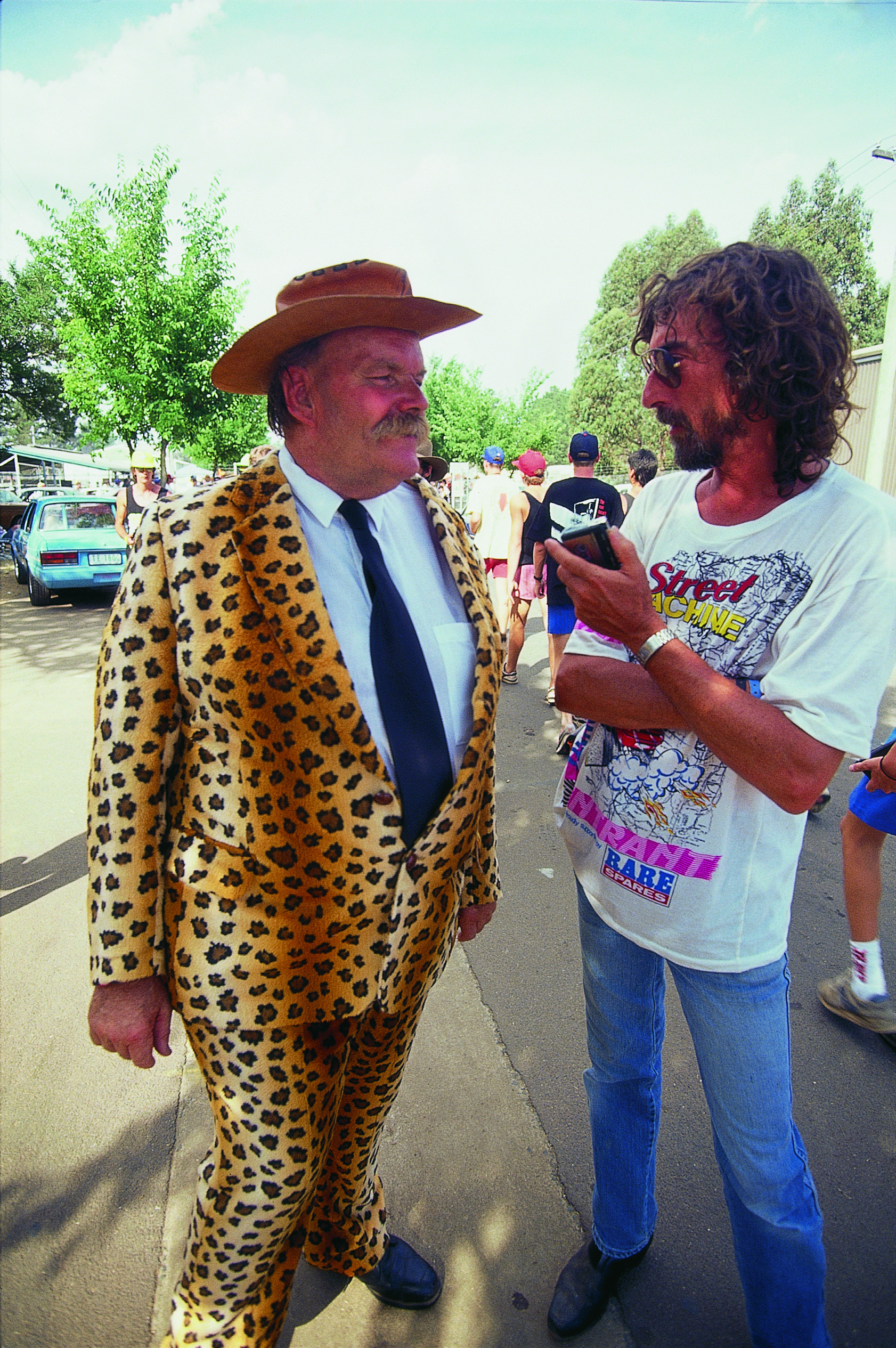
Come nightfall, Bigfoot suggests a cruise as essential to the learning curve, and we set off on another paradox: Cars built to go like hell being subjected to endless 10km/h cruises. Nonetheless, it provides time to examine aspects of protocol, beginning with my observation of the crowd’s partiality for breasts. I spot a splendidly large and hairy man with a fine plastic pair tied on. Lesser beings wear them on their heads.
But most of all, it’s held best that the womenfolk have real ones on their front-parts and display them at call. I enquire as to the etiquette involved, fearing that, “Good afternoon, I’m from Wheels magazine – my card – and I was wondering if I might inspect your breasts … my father was a doctor,” might tax the attention span available. Bigfoot assures me that “Show us ya tits!” is widely accepted.
Introductions are unnecessary, as is dialogue. “That one there on the right is a beauty. You must be proud,” isn’t going to do much for anyone’s spiritual growth. Look, grunt, move on seems the policy.
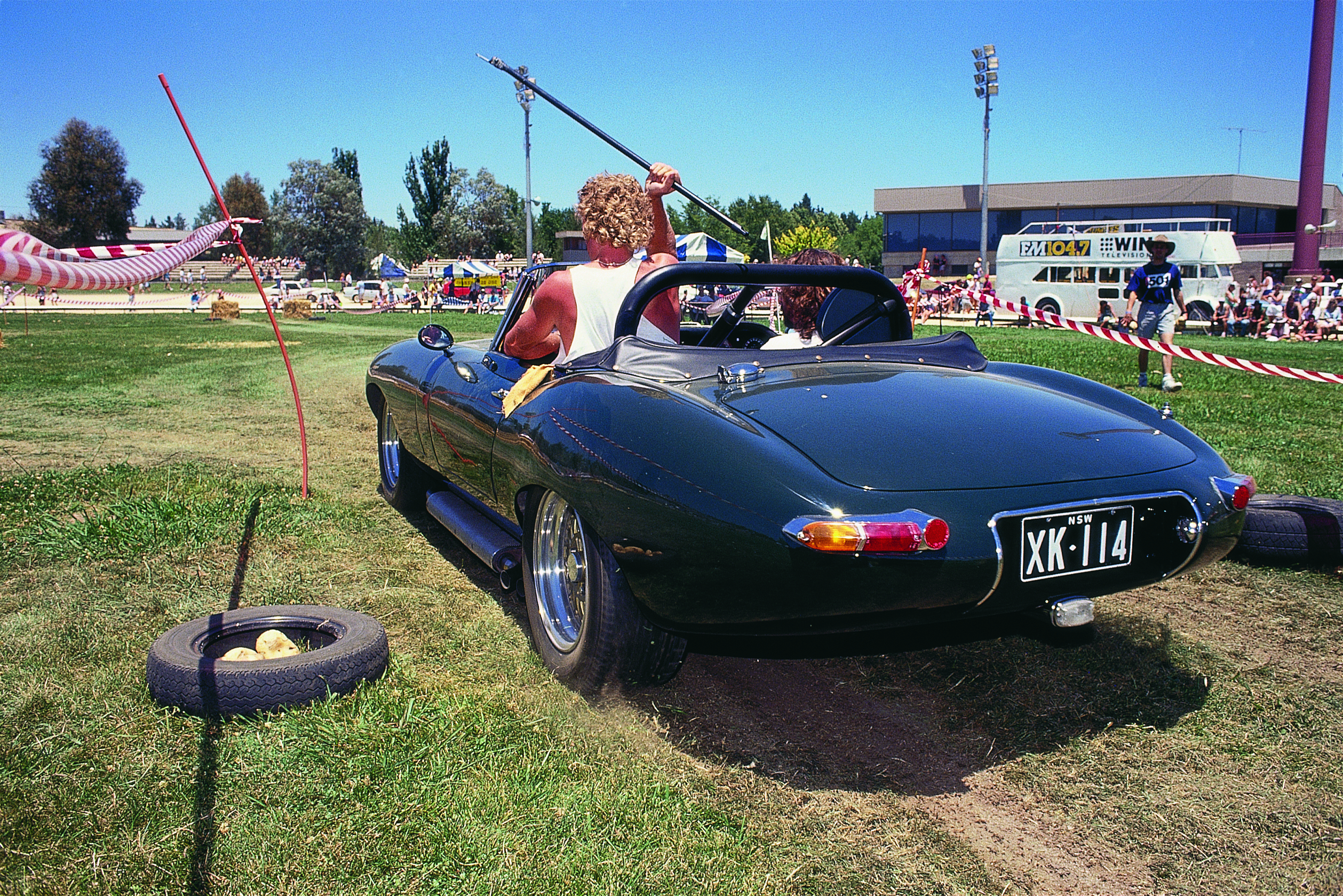
Next morning Bateman batemans his own baby brother into the passenger seat as I prepare to enter the Spear-A-Spud event. This I observe to be a mad sprint in and around obstacles, pausing so that the passenger can spear a potato and hopefully (crowdwise) fall out. I comment to Bateman that the contestants seem to be a wee bit throttly and that my intention is to be quick, smooth and accurate.
He looks at me sadly. “That oughta keep ’em in their seats.” He tells me that to get the crowd cheering I need to spin off, to get them on their feet I need to spin then roll over, and to really get them jumping and whooping and throwing the women into the air I’ve got to spin, roll and have the car come down on top of me. He then takes position behind a sturdy fence. Bateman Jr shares my innocence of this sport, but is quite happy to support the speed-rather-than-spectacle approach and we whip around as best we might. To our enormous surprise, we take third place out of the 750 entrants.
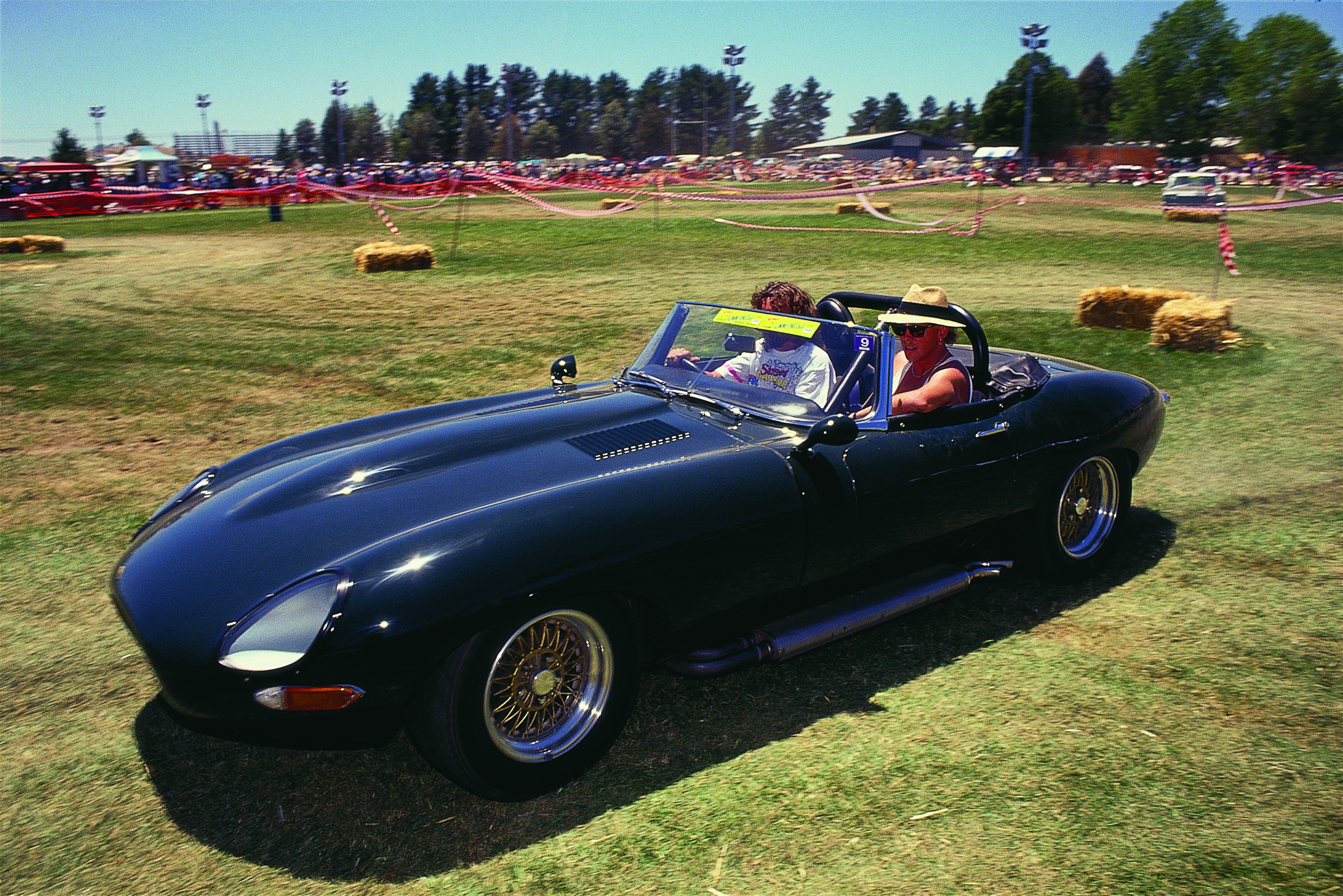
Next up is the Motorkhana, which is run across a longer and faster course and which sees many of the competitors losing the plot and either spinning or spearing off into the posts. Given that these are metal, there’s minor panel damage aplenty, and once again I decide to keep it quick but clean. As in the other events I will contest, there is no practice and only one run per contestant. It’s learn as we go.
The car gets its power down beautifully and handles the course in a series of easily controlled slides, but I suspect I might have been too conservative. Turns out not. When all the runs are finished, the E-Type is outright winner by more than two seconds. This turn-up seems to give the machine some street cred and, despite Bateman’s attempts to organise a photogenic riot/lynching (“Youse gonna let a poofter car win ya prizes?”), the Jaguar is universally accepted into the fraternity.
It makes friends with the like of Michael of Marque Detailing, who determines I am entirely too witless to keep a car properly clean and commands that I give the thing to him regularly throughout the weekend to maintain. Bless him. Hell, this is fun being an honorary street machiner. I buy a dickhead hat and a pair of breasts. In the heat of celebration, I tie the latter to the portrait of the Queen in the organiser’s office and later forget to retrieve them. She is, however, still smiling when I see them last.
Come sunset, I join the assembly for the Supercruise and get an entirely convincing display of the power and size of this thing. The main street of Canberra, the nation’s capital, is closed down for miles and a whole army of police closes off every intersection to other traffic. We own the road, for God’s sake, and thousands of people watch and cheer us as we cruise through (to our own radio station), displaying scant regard to proper dress.
The crowd, in some places dozens deep, spills onto the road and the whole thing feels like the Mille Miglia in slow motion, only noisier. Bigfoot makes the point that, without law to compel it, you wouldn’t get this many people out to vote in Canberra. I get the feeling that anyone connected with any aspect of automotive matters, from manufacture to legislature, ignores the messages here at their peril.
Eventually the streets are returned to their customary usage and we all retire to Natex to feast on the giant unidentifiable carcasses (road-kills?) spinning on roasting spits, before taking in the evening’s cultural event, the wet T-shirt competition. This happy prospect sustains the thousands who fill the arena, all roaring for tits. Mercifully, not for mine. It’s 10 minutes before the scheduled start but, then again, the program has been entered in a competition for fiction, so God knows.
Personally, I don’t hold out much hope for the grandstand which, under the pounding of a lust-crazed patronage, looks like it might soon be torn asunder just for laughs. Just when the bellow starts sounding truly dangerous, our hostess mounts the stage and the roar goes up tenfold. Invited in many tongues (some unfamiliar and, I suspect, local) to start the topside inspection, she declines.
Her speech begins and ends with the extraordinary question: “Hi, guys! How are you?” As if some poor sod three rows from the back might yell back, “Quite well, thank you, but still with a slight head cold.” Aspirants are brought on stage to display their suitability for motherhood and are judged swiftly and with great candour. It may be that honesty is virtuous but I suspect that several once-proud maidens will require trauma counselling as a result.
The contestants are narrowed down by vox populi, but it appears extra information is required. I don’t believe the cry “We want Bush” is a political statement. Bateman, needless to say, has secured a vantage point that nicely confirms his booking in hell. The winner gets $800, or $400 each, which Bateman says is fair if you think about it. I prefer not to.
The event is brutal, primal and terrifyingly powerful, but fails to make much sense to me. As do other things like: “Where do all these people and their cars go for the rest of the year?” There is only one cure for things making no sense, and after a sip or three of Riesling under the clear bright stars, a shocking concept vividly emerges.
Imagine a giant underground road network where the horsepower monsters roam, emerging once a year from a secret tunnel in Natex. They rise to seek brides, breed, breathe fresh air and dump their fumes. They rise to feast on those carcasses. They are the Morlocks and we are the Eloi bred for their consumption! That’s what’s on the spit! That sign over there… The Great Australian Roast…
I rush to Bateman with the vision and he offers no alternative, adding only that he believes there to be another exit near Blacktown, in Sydney’s west. I thank God for my honorary Morlock status and retire to a deep and troubled sleep.
On the final morning, I join the queue for the Go-to-Whoa, which seems to be about as brutal a thing as you’d want to do to any good car. It involves a full-bore, dump-the-clutch departure and all the acceleration you can muster for 100 metres. Then you get to do a sudden-cow-surprise stop exactly on the line. This should confuse the car totally and deliver a short-wheelbase version, even if you hadn’t ordered it. Never having done this exercise before, I am affeared of making a complete fool of myself against the 5-6-7-and-more hundred horsepower competition.
I decide to go for broke and dump the clutch with about 4500rpm showing. The E-Type spins its wheels briefly then, showing why it would never work worth a damn in a burnout, hooks up and goes like a shell up the strip. Apparently it is one of the quickest launches of the day and the crowd noisily reconfirms our acceptability. I end up in the Top 10 run-off.
Bateman suggests a little discretion at this time, pointing out that scoring another trophy might be an offence to mine hosts. Far better, he counsels, to do a mega-rev smoke at the start, which will have the added benefit of being photogenic. The man never quits. I ignore the advice, launch even harder than before, whack up the strip well sideways and rev it well over the limit to avoid a gear change, which is when blubber noises come from the engine. Cuss, cuss. I slam on the brakes but miss the mark by an inch. Over and out.
The engine sounds horrible and I feel much the same. After all this abuse, after all these miles together, have I finally broken it? Bigfoot introduces me to his friend Barry, with the assurance that he can fix a space station using only a block of ice and a ballpein hammer. Can he save us now? Is Pavarotti the big one?
The quick and correct diagnosis is that the big rev has simply collapsed one of the air cleaners, and rectification takes but minutes. Hours, however, are spent with him checking, tuning, fettling and generally fussing over the old dear until it runs as sweetly as a brand new one. And for this he will accept no reward other than the odd test drive to ensure the correctness of his labours. Not only am I honoured by his care but also privileged to overhear some workshop gems…
“How’s Greg these days?”
“You know his car fell on him?”
“Jeez, no… how is he?”
“I think it did him some good.”
Leaving Barry to his labours, I venture to the burnout finals and witness, for as long as I can stand it, the destruction of all the rubber reserves in the land. A solid early claimant for glory is the four-rear-wheel drive Holden One Tonner. It manages to explode all four driven wheels in sequence, to the delight of the thousands settled in to spend six hours in the blinding, shadeless heat.
Despite the essential crudity and wilful profligacy of the exercise, it must be admitted that some of the contestants show extraordinary levels of skill in initiating and controlling wild and lurid spins while consistently remaining mere poofteenths from the fence. Nonetheless, for me tyre smoke is a bit like botty burps. Your own are okay, but anyone else’s…
Finally, it comes toward an end. Four days of massive punishment to man, machine and Mother Nature culminate in the Award Ceremony and hoedown of Sunday night. Someone has obviously dawn raided Copperart to produce a mound of trophies. Mine come with all manner of gifts and treasures – and enough cash to again well and truly fill the fridge as a safeguard against sanity.
In truth, the whole episode makes no sense at all. Then again, try explaining Wimbledon to a horse and it’s all no different. I can only say now what I said then as the cornucopia flowed: “I came to write about a small bunch of loonies having a fallabout. I found a very large bunch of loonies having a fallabout … and I ended up, very happily, being one of the loonies having a fallabout. Thank you.”
After a decade’s worth of getting acquainted with the Toyota 86, the Aichi, Japan automaker has officially debuted its ground-up replacement: the 2022 GR86. Well actually, it’s not really a ground-up replacement, but rather a pretty substantial checklist.
The previous ZN6/ZC6 generation had some rough edges, and wasn’t the quickest thing on the road, but all things considered it was a fun, engaging, and inexpensive little sports car that was tailor-engineered for anyone who wanted to have any amount of fun behind the wheel. Nobody ever loved that FA20 engine though.
This brand new 2022 model takes the old 86’s basic formula and rounds off these edges. Toyota (and its platform-sharing pal Subaru) have taken criticisms from both journalists and enthusiasts into consideration, and have visited up on the 86 some substantial updates. There’s more power, more overall refinement, some increased dimensions, and the styling and design has been refreshed to keep it relevant for years to come. But is this enough?
UPDATE, September 23, 2022: New GR86 on sale in Oz, and DRIVEN!
The new 2023 Toyota GR86 has finally launched in Australia, and we’ve now driven the version buyers will get. See our full review at the link below.
Story continues
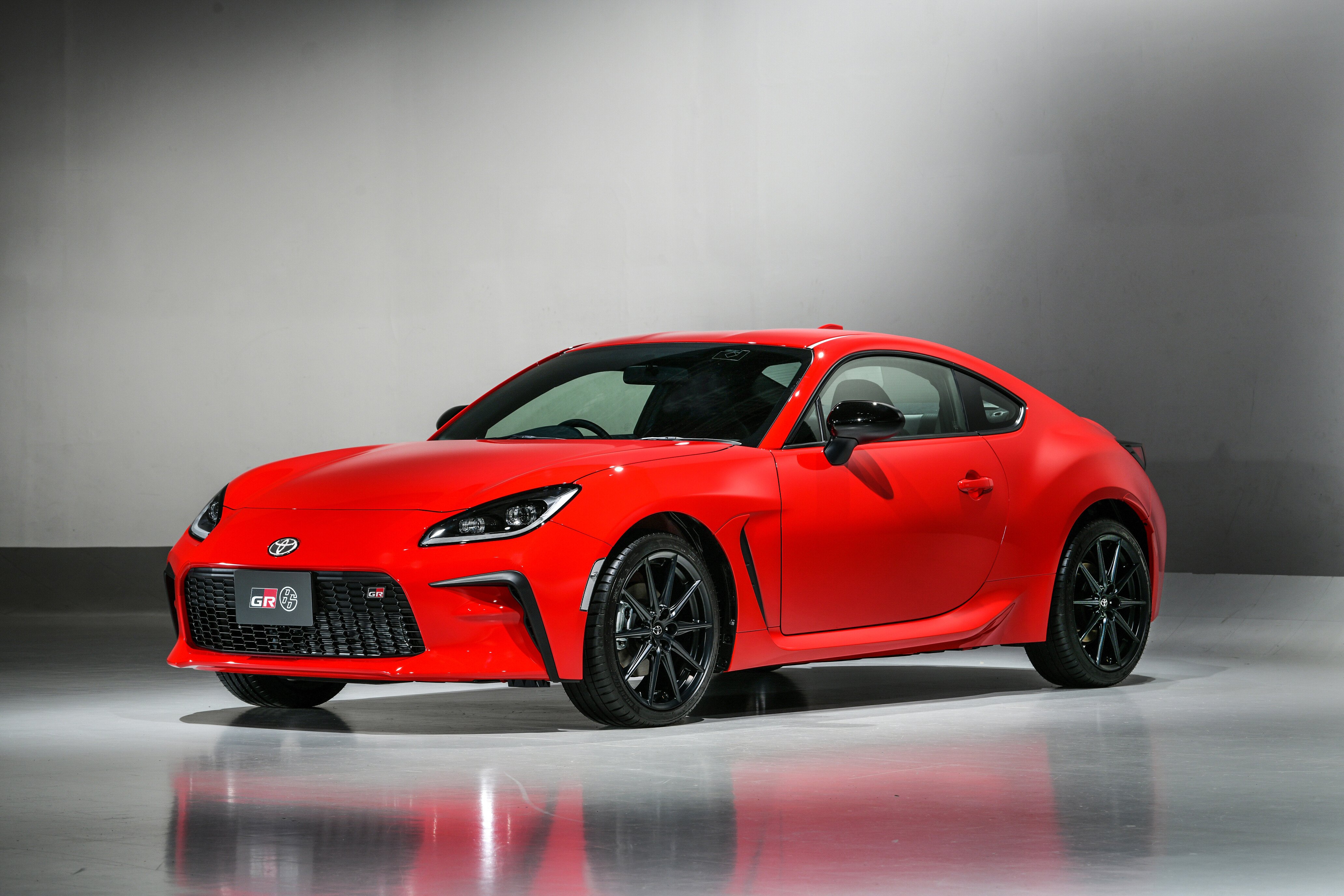
Australian deliveries for the car aren’t due until late next year (while its Subaru BRZ sibling is due to be launched locally imminently), but we attended the 2022 Toyota GR86’s official North American Launch at Monticello Motor Club, a wonderful track complex that’s just a hop and a skip outside of New York City, to give it a thorough going over. Well played on Toyota’s part, they had a few old 86 models on hand to help underscore the improvements.
Toyota’s checklist of re-styling, re-engineering and refinement of the 86 begins on the outside with some pretty welcome changes. Dimensionally, the GR’s wheelbase has increased by 5mm, its rear track width has expanded by 10mm, and there’s a tiny bit more real estate underneath in the form of 5mm more ground clearance, though its height decreases by 10mm.
The net effect is that it looks more taut and compact than the old model. Supporting this further, its exclusively LED lighting package aids its design’s overall sharpness.
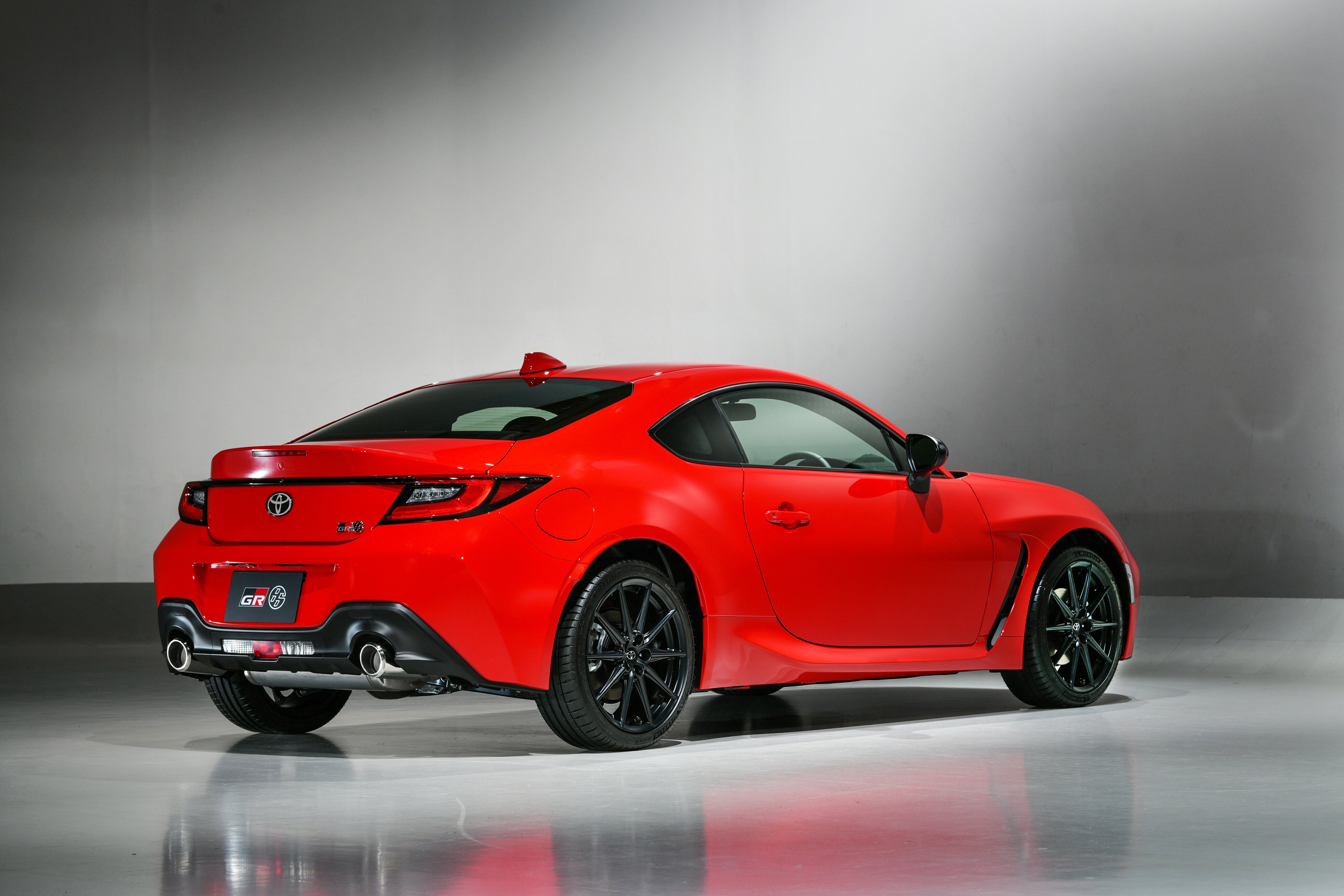
Although the GR86 now looks smaller, there’s no real compromise in liveability.
There are some clever new aerodynamics going on in three key spots, which double as elegant styling touches. Both the Base and Premium trim’s share sporty front bumper feature channels that direct air around the front wheels to improve stability at speed, as do small fins mounted on the rear wheel arches. Finally, the Premium trim has a substantial duckbill spoiler, which not only looks great, but increases downforce as well.
Although the GR86 now looks smaller, there’s no real compromise in liveability. Its larger doors and slightly larger dimensions over the old model give it an airy interior that’s roomier, and easier to live with day in and day out.
Shoulder room has increased in the new model as well, and there’s even less of a blindspot over the left shoulder. On the other hand, rear seat room is still comically small. Like the old model, dropping the bench for expanded cargo room makes up for this.
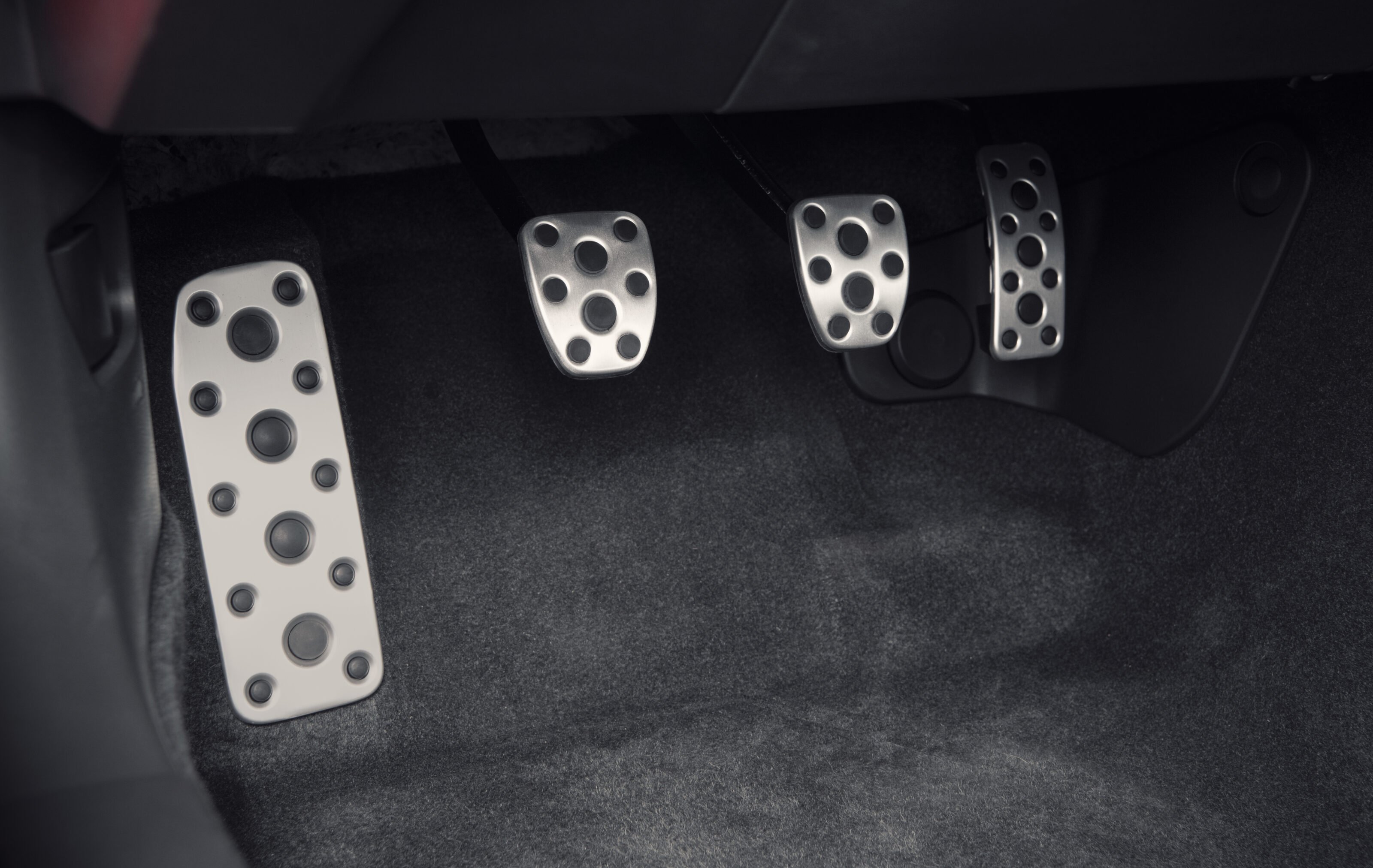
The GR’s interior feels workmanlike and inherently right, with a good, low-slung driving position, big frontal view, supportive seats and excellent pedal placement. Like the old 86, it’s very driver-focused. You don’t feel like you’re reclined back over the rear wheels, either. It’s easy to get a feel for where the front bumper begins and dual, chrome exhaust tips end. Plus, tall folks rejoice: our 190cm-tall tester affirms that there’s plenty of headroom.
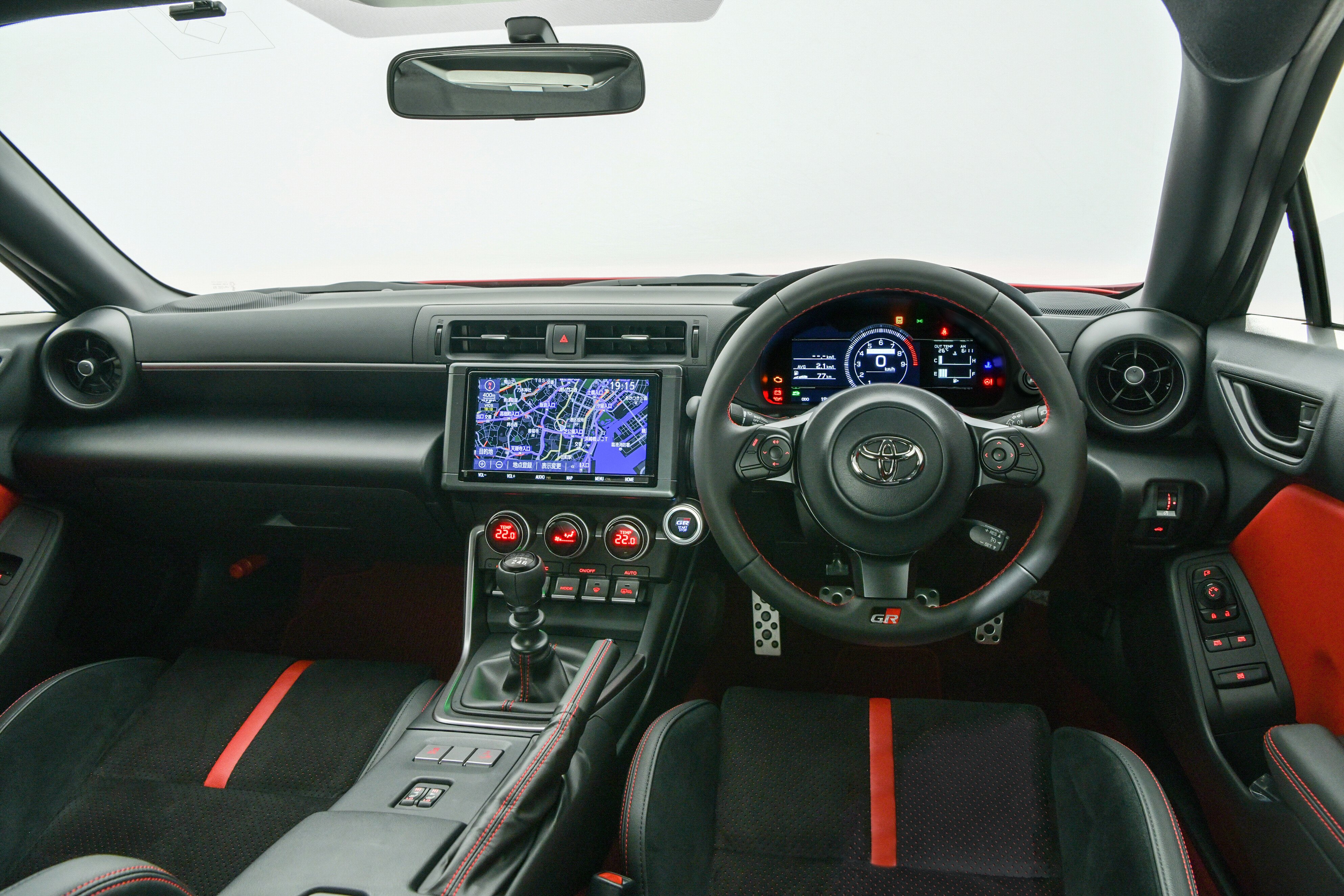
Toyota has integrated some clever bits to the latest car’s cabin in order to keep it relevant and fresh. Switchgear and other various controls’ layout is similar to the old 86, but materials quality has certainly taken an uptick. Its fully digital dash and centre infotainment screen are generously sized and offer great clarity.
As one would hope for a sports car in the 2022 model year, Bluetooth, Apple CarPlay, and Android Auto are all standard. In fact, the Premium only trumps the Base trim by offering two more speakers in its sound system, plus some minor bits of advanced driver assistance tech: six-speed manual models get blind-spot monitoring and rear cross-traffic alert. When specified with the six-speed automatic however, pre-collision braking, adaptive cruise control, lane-departure warning, sway warning, lead vehicle start alert, and high-beam assist are thrown in as well.
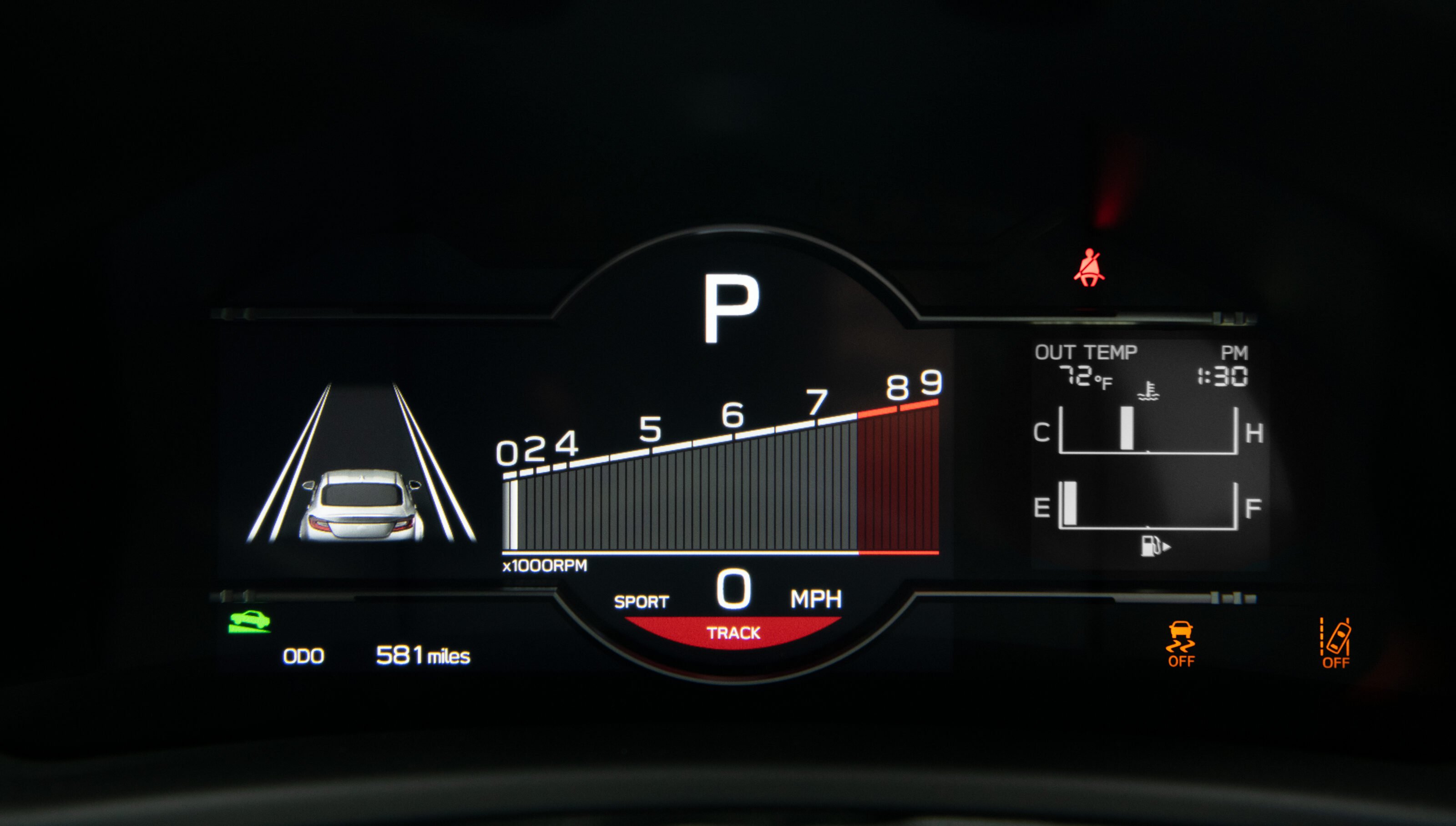
Thankfully, a focus on track work is still very much a high priority for the Aichi brand. Traction control is easily defeatable, just like the old model. There are now three drive modes that not only make some minor ECU changes, but also bring up different screens on its digital dash: Normal, Sport, and Track.
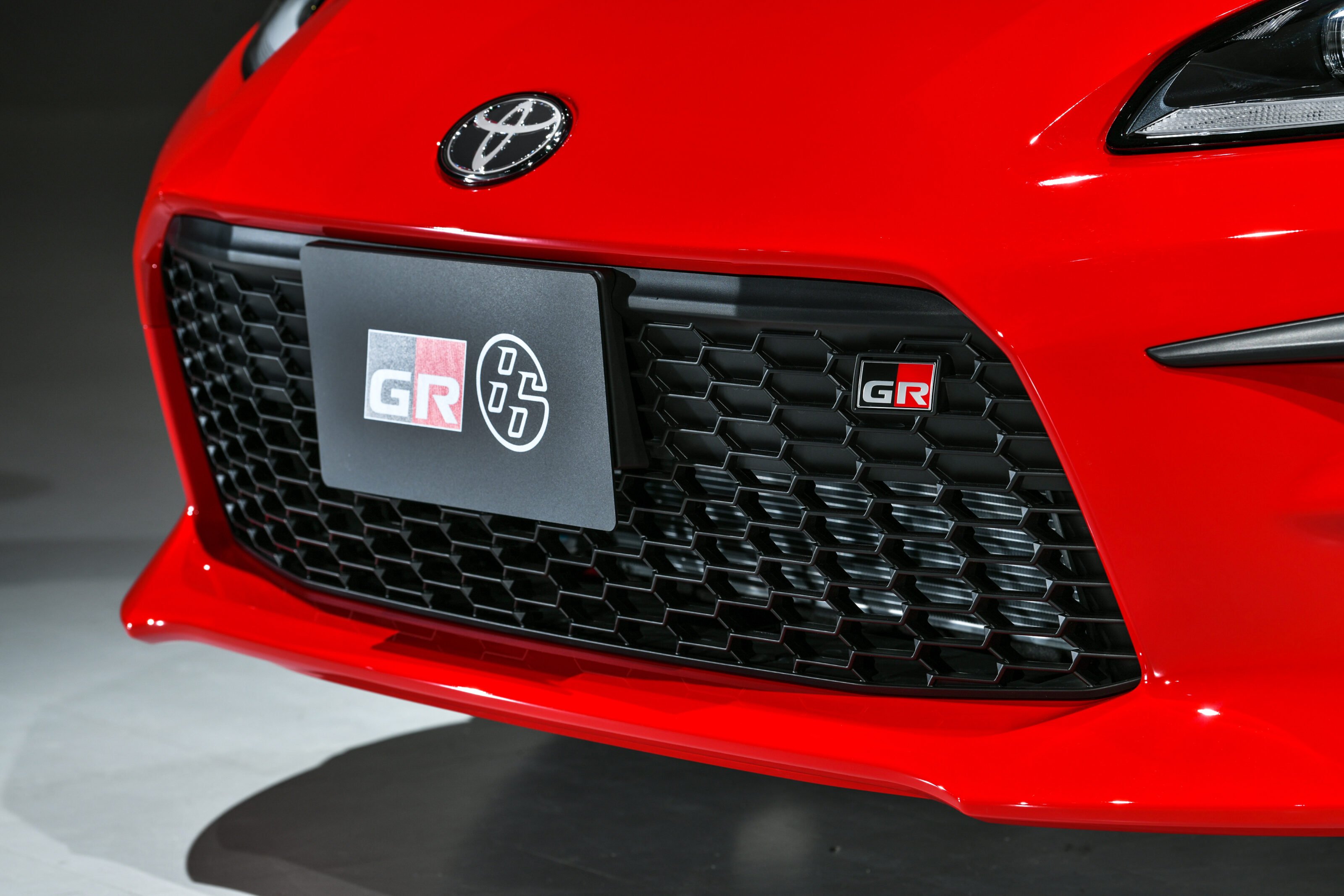
Normal features plain ol’ daily-driver-pertinent info, whereas Sport prominently features a G meter, while Track displays a lap timer, water temperature gauge and oil temperature gauge. All of them indicate speed, rpm, fuel level and water temperature. Track mode has a much larger and dynamic-looking tachometer, too, and it also plays with traction and stability control to let you have a bit more fun, but not too much fun.
All of this comes in handy for what the GR86 was truly, thoroughly refined for: giggle-inducing, lateral-and-longitudinal-G-filled joy.
Let’s all have a collective sigh of relief, especially those among us who’ve expressed the most contempt on social media over the previous 86’s lacklustre amount of power. Toyota’s cured this with a nice bump done the naturally aspirated way. There is no turbo to be seen.
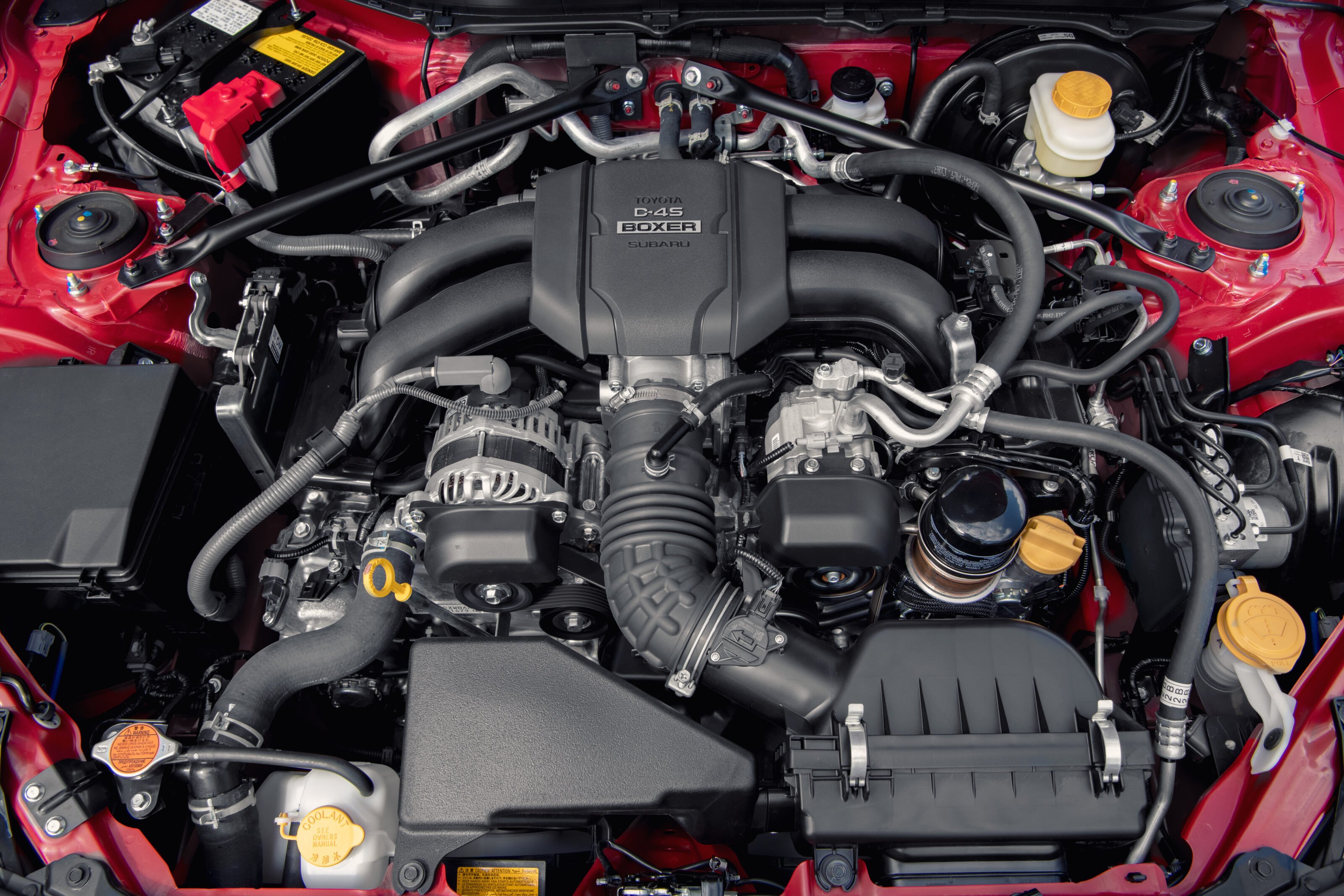
The new GR86’s flat-four engine has increased in size to 2.4-litres, 0.4 more than the previous generation’s. With the help of some revised engine tuning, more flow on both the intake and exhaust side, as well as 8mm more cylinder bore, power is now rated at 173kW with a torque figure of 250Nm to boot, a hearty 21kW and 38Nm bump respectively. We’re glad they went the non-forced induction route, too; less heat, less complexity, it keeps costs down, and so on.
With just 1285kg (Premium, manual) to push forward, which is a gain in the area of 16kg over the old 86, the GR will leap to 100km in around 6.3 seconds. That’s more than a second faster than the old model, and it’s also a generally much more enjoyable experience. Torque peaks at just 3700rpm, a whole 2700rpm sooner than last year’s model, and you certainly feel it. The mid-range is encouragingly hearty, and it smoothly revs to 7000rpm before it taps out at the limiter.
The old 86’s lump felt coarse, and sounded like a well-used industrial-grade coffee grinder as it climbed revs. The new 2.4 feels buttery smooth all the way to redline, and produces a nice baritone growl along the way. That classic, slightly off-tempo boxer warble is pretty much gone, too, thanks in part to Toyota piping in some fake sound via a small speaker in the dash. Remarkably, it’s one of the more pleasant fake engine notes we’ve experienced in recent years.
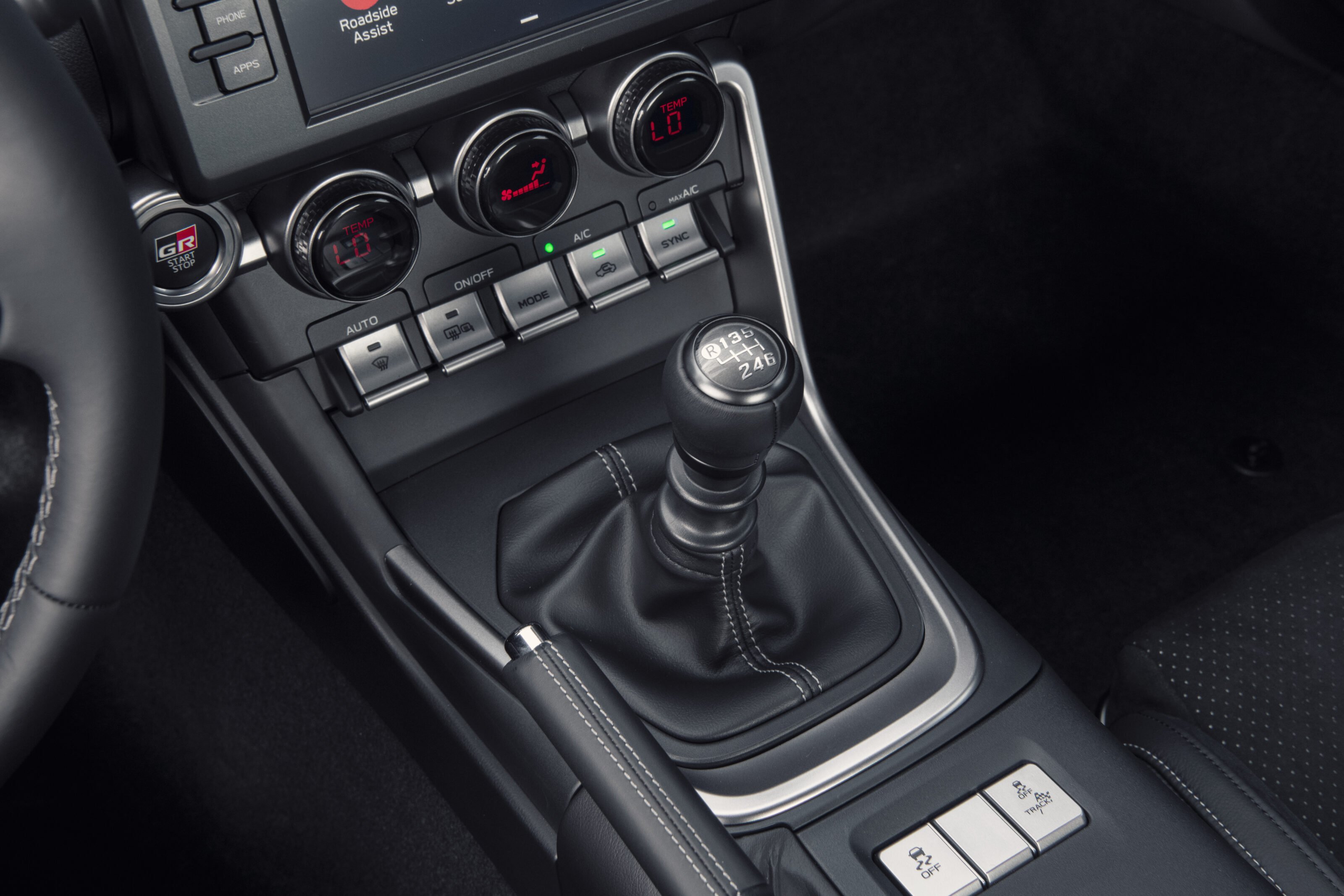
Transmitting power to the Torsen limited-slip differential out back is still a six-speed manual (a six-speed auto is optional, pricing hasn’t yet been announced).
The manual ’box is largely a carryover unit with a few tweaks, but it shifts much more smoothly, feels more solid, and has a shorter throw. The old gearbox by comparison felt very agricultural.
In addition to its slick gearbox and generous bump in power, the GR86’s fun factor is further proven by some substantial upgrades and revisions to the scaffolding beneath its wheel arches, and clever increases in rigidity throughout its chassis.
The front suspension is a MacPherson strut-type design like the old model, except now with more rebound added to its front dampers to maintain a better contact patch, which bodes well for typical Aussie B-roads. Additionally, Toyota added aluminium engine mounts and a wholly re-tuned spring and damper combo at all four corners. In the rear, it’s still a fully independent multi-link design, though now features a more rigid subframe and lower damper connecting points.
Going one further, the GR86’s entire body has been stiffened, not that the old 86 was lacking in this department. Through the use of some clever bracing, additional reinforcement, and use of high-strength steel in key areas, chassis rigidity has been greatly increased.
Finally, Toyota states that the new GR86 has a centre of gravity that’s 1.6mm lower than the previous 86. This might sound like an insignificant figure, but for a car that’s already renowned for its very low centre of gravity, we’re impressed. This figure was achieved by manufacturing the roof, front guards, and hood out of aluminium, and shaving weight out of the seats, silencer and driveshaft.
Monticello Motor Club, with its rollercoaster-like flow, elevation changes and tight transitions, was the perfect venue to focus on all of the new 86’s engine, transmission, chassis and suspension improvements.
Body roll through this downright-fun track was minimal, which is rather surprising considering it’s equipped with mere conventional, passive dampers; no trick adaptive kit here.
The substantial improvements to overall rigidity shone through as well, ensuring that it’s clear exactly which tiny segment of the tyre’s contact patch that weight was shifting towards under cornering, acceleration and braking. Then, powering out of corner-exit and onto the next turn was a far more enjoyable experience than in the old 86 thanks to that welcome power hike. Weaving through all forms of tight right- and left-handers, late apexes, flowing sweepers, crests, and liberally gobbling up kerbs, was nothing short of riotous.
Efficient throttle and brake balance is a breeze behind the wheel of the GR86. Thanks to 295mm discs up front and 290mm rotors in the rear, plus a more aggressive pad compound, brake fade isn’t ever a concern in Monticello’s hard braking zones. You’re spurred on to dive deeper into corners thanks to a very uniform and confident brake pedal, which also makes for easy trail braking for lap after lap of precision, apex-hitting joy.
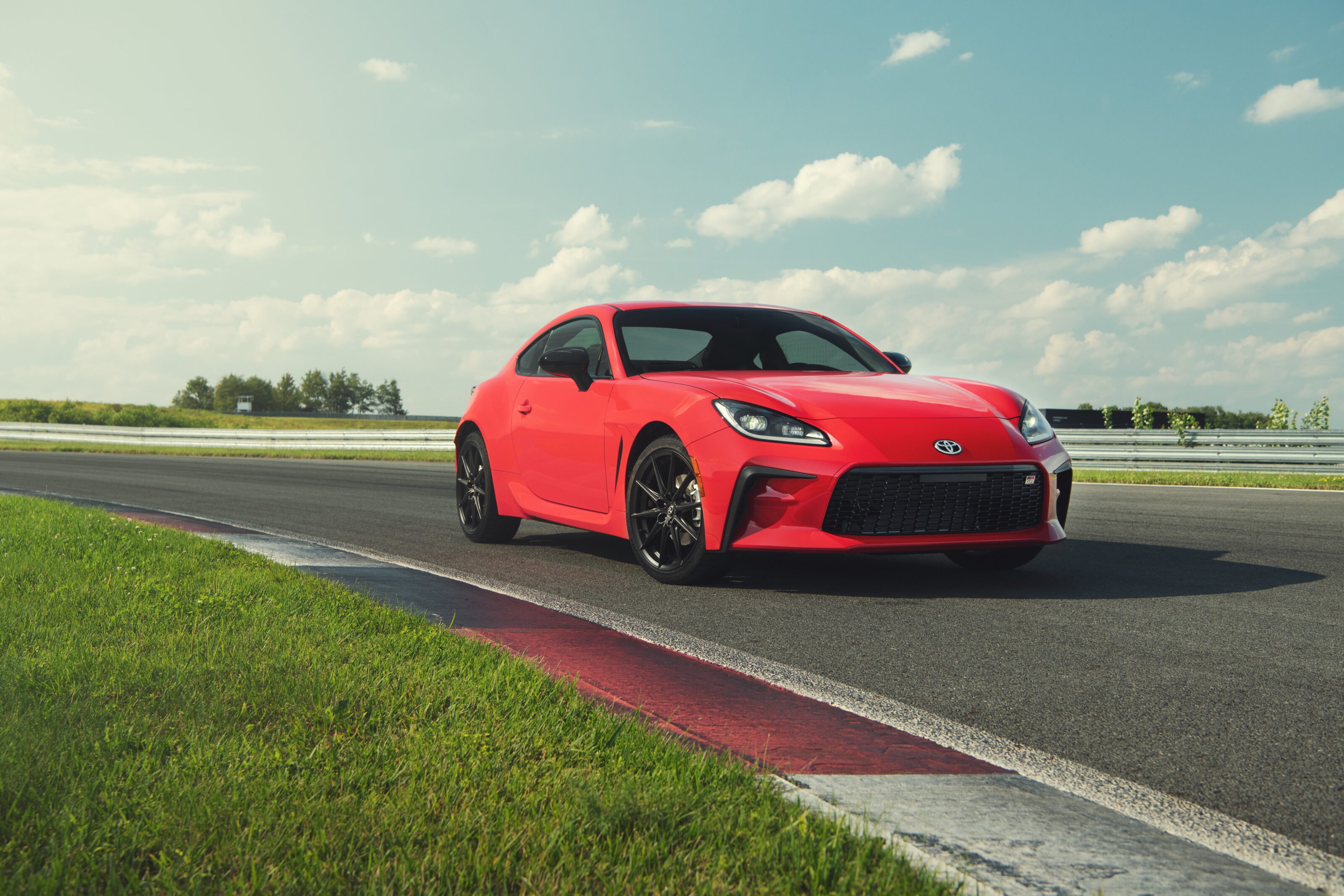
The GR86’s steering weight and feel is excellent, and has one of the best ratios we’ve tested in a long time. Toyota claims they’ve improved this over the previous generation by increasing the steering gear box mount’s rigidity, and making the overall system smaller, lighter and more responsive.
We never had any major qualms with the old 86 on track, but indeed the new model’s chassis feels tighter, its handling is sharper, and its steering, brake, throttle, and clutch inputs just feel far better. Toyota/Subaru probably could have gotten away with fewer revisions, we commend them for going this far down the checklist.
We also preferred how the Premium trim felt through Monticello with its stickier 215/40/18 Michelin Pilot Sport 4 tyres (which are mounted up to satin black GR Yaris wheels, by the way). Yes, we’re aware that it seems like most motoring journalists are over the moon regarding both the old- and new base-level 86 sporting easy-to-drift Michelin Primacy HPs. But those tyres are garbage.
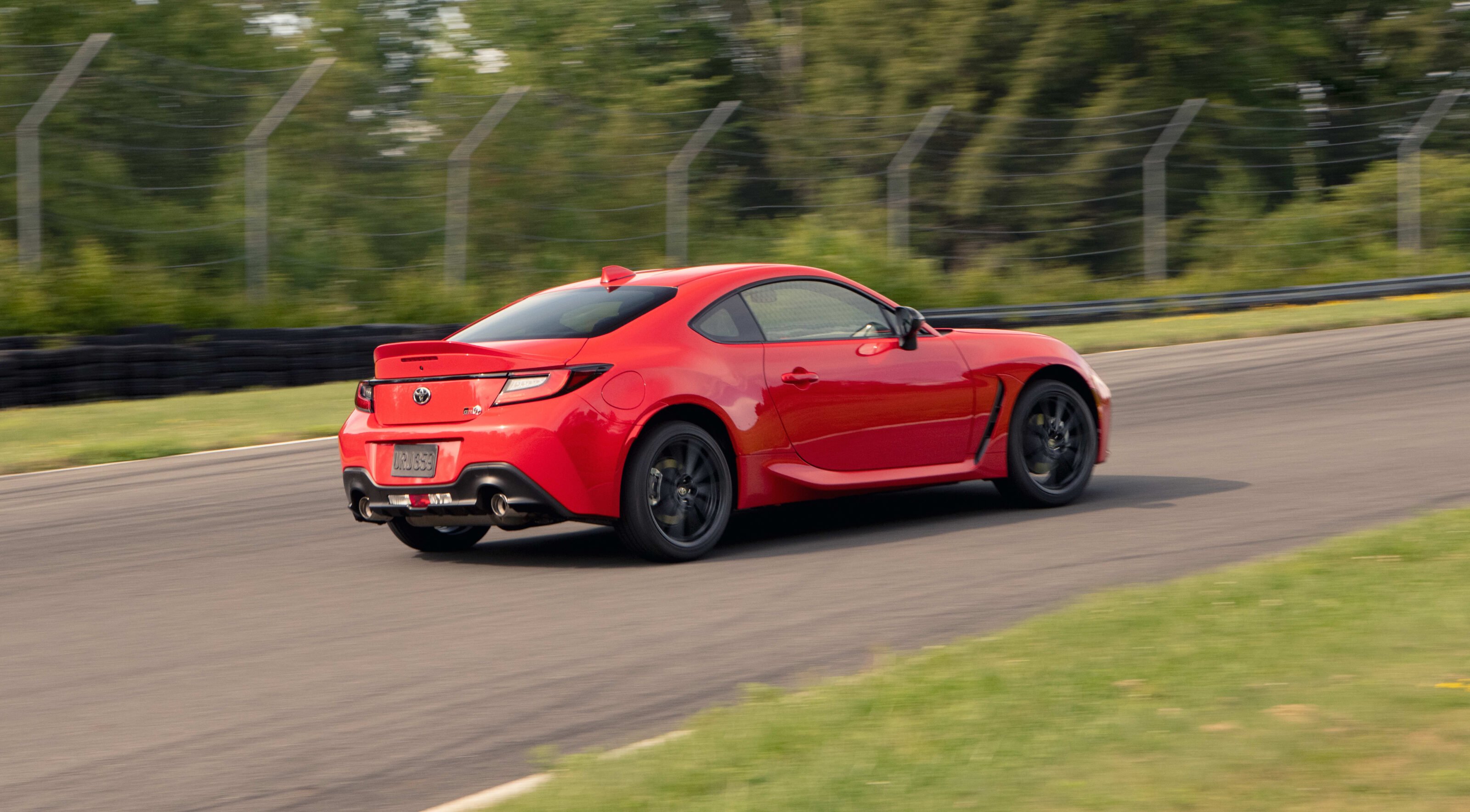
They lack feel, are devoid of confidence through high-speed sections, and feel way too squidgy under braking and low-speed cornering. Sure, all of this could be solved with a more assertive right foot and equal parts opposite lock, but for anyone looking for precision and better lap times, the Pilot Sport 4s are definitely the ticket. Plus, they’re only slightly harder to will towards some hilarious, tail-out rascality.
On the road, Toyota’s chassis and handling revisions prove that you can have your cake and eat it, too. Where the old 86 feels crashy over sharp bumps and wallowy over undulations, the new GR86 feels solid and well-damped. We were shocked at how well it rode, which is proof that a well-engineered chassis and suspension setup can really shine on purpose-built track tarmac, as well as over coarse, day-to-day, A-to-B fare.
In fact, in addition to having a bit more power, a bit more room, and being a bit easier for ingress and egress, the new GR86 is definitely more daily-able than the old model.
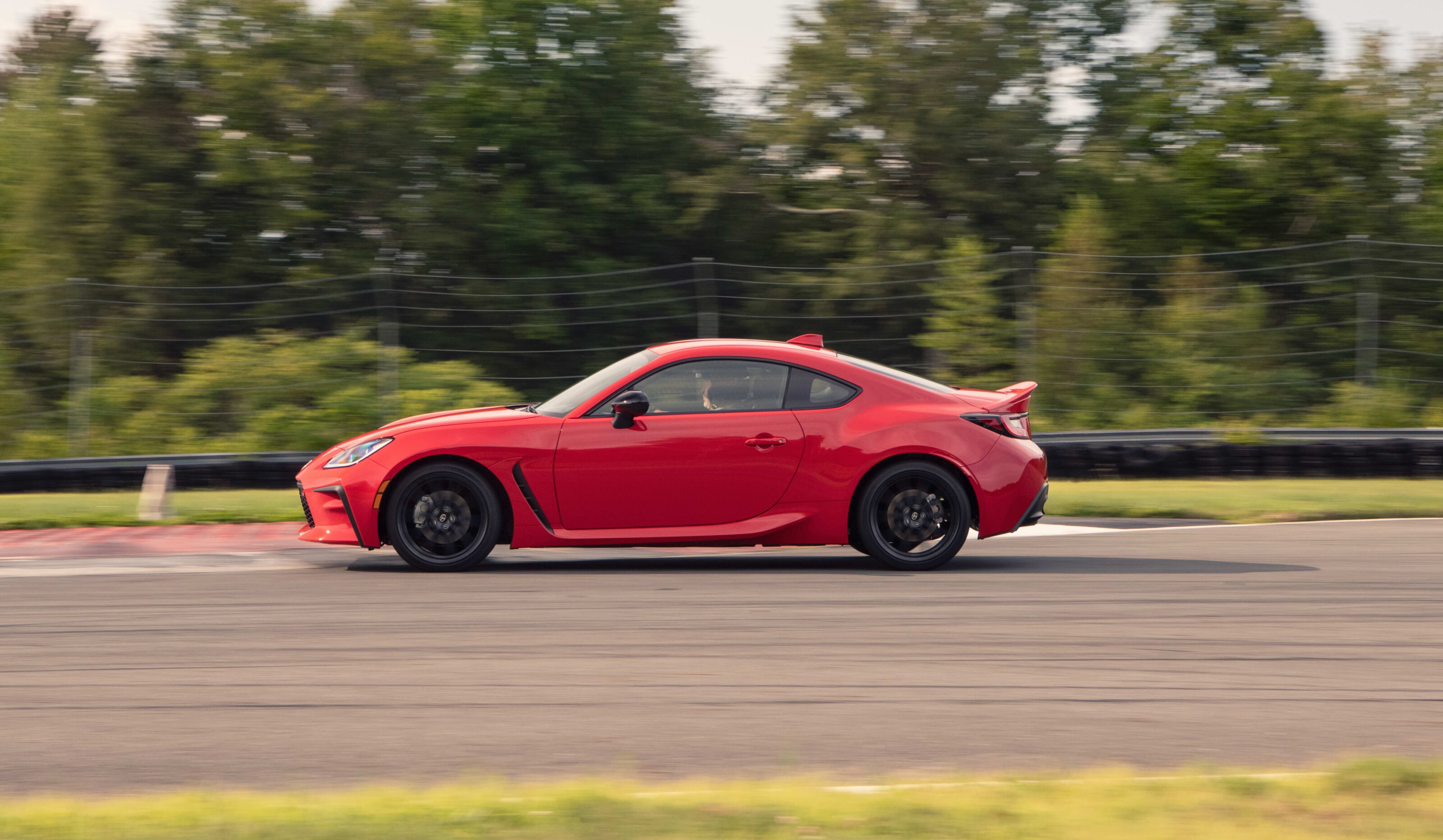
Which really does Toyota’s checklist of upgrades and updates justice. Green checkmarks abound: it managed to make a faster and more competent, yet easier-to-live-with and more comfortable, affordable sports car.
The 86 nameplate is still a platform that’s geared towards those in search of practical, honest, rear-wheel drive fun, which is quite refreshing in our era of small crossovers being all the rage, tightening emission restrictions, and internal combustion soon to be found in the pages of history books.
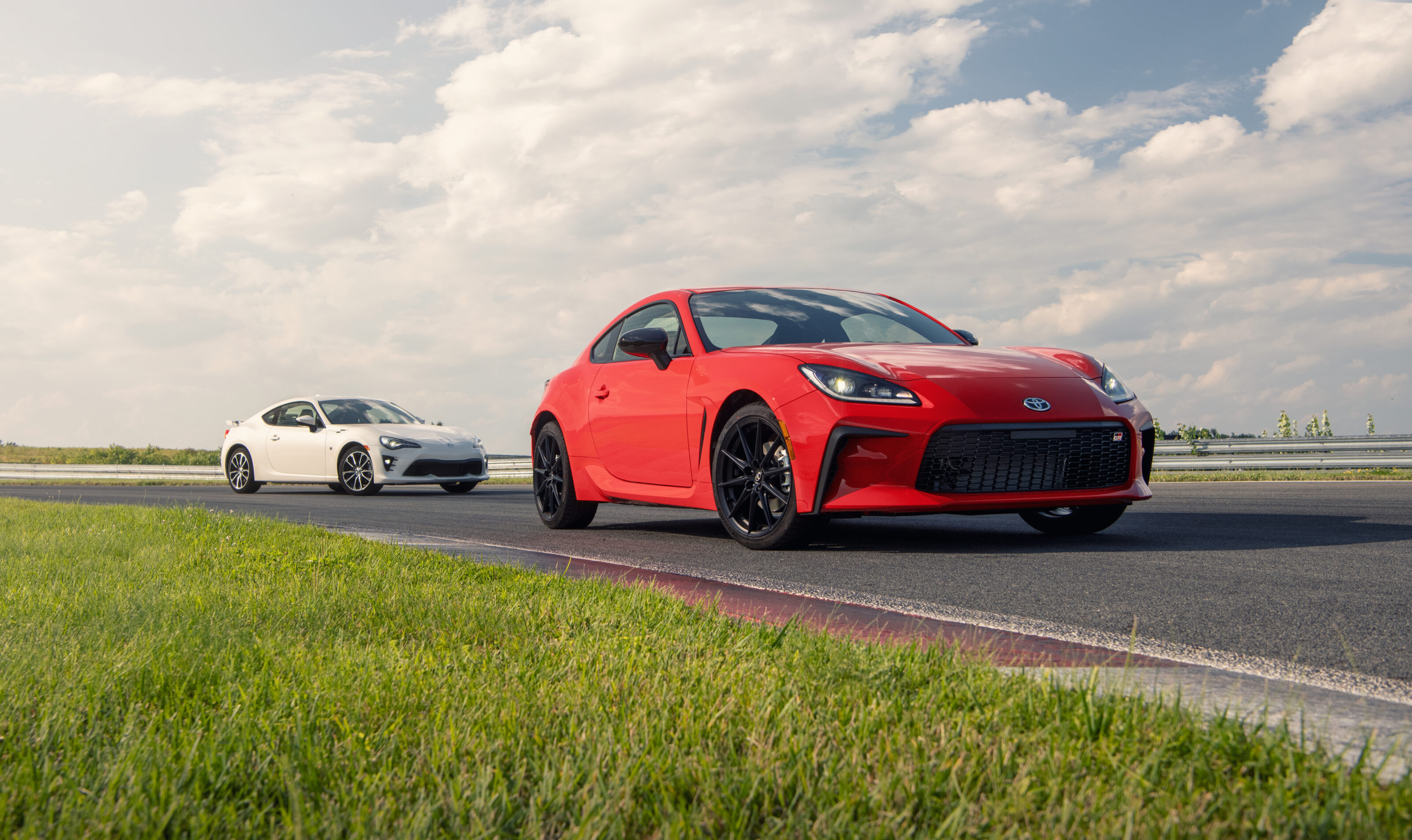
Four ways the driveline has improved
- No hidden dips
- Weight for it
- Go manual
- Final drive
Toyota GR86 Premium manual specs
Volvo’s recent investment in a startup called Spectralics has signalled the potential future introduction of a windscreen-wide head-up display for its cars.
Volvo’s venture capital arm, Volvo Cars Tech Fund, invested US$2 million (AU$2.79m) in Spectralics. It says the investment will fund and prioritise access to its optical film tech known as “multi-layered thin combiner” that can be overlaid or integrated within windscreens.
This holds potential to revolutionise driver interfaces, as the film can overlay a windscreen with images, which Volvo says could then “instil a sense of distance as virtual objects are superimposed onto the real-world environment for a safe and immersive experience”.
Think of a screen-wide head-up display with augmented reality features, thanks to tech that can potentially eliminate projection systems that are bulky to package and limit field of view.
Augmented reality has been fast developing in existing road cars, both on and off head-up displays. Mercedes-Benz cars can already overlay real-time images on its centre screen with navigation directions.
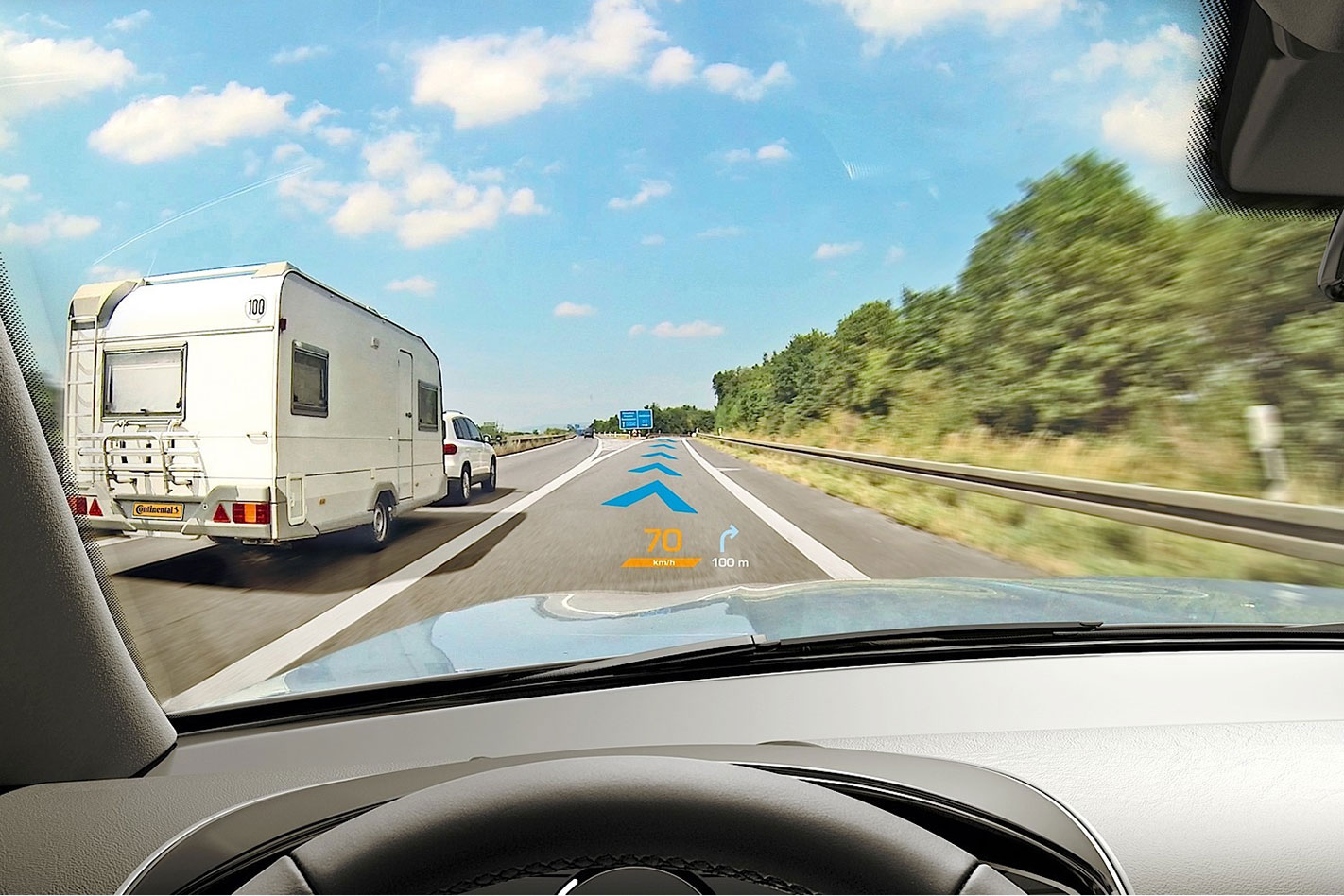
If it all sounds a bit Minority Report, then you’re getting the right idea, as other uses for Spectralics technology include “in-cabin sensing”, blind-proof front-looking camera images, and holographic projects.
Spectralics was born from Sweden’s MobilityXLab programme that hosts a convention for start-ups in the mobility industry and which Volvo has been a leading partner for since 2017. The startup is based in Tel-Aviv, Israel.
According to its LinkedIn page, it describes itself as an “industrial deep-tech company” that also develops advanced materials. It also has experience in the aerospace industry.
Volvo Cars Tech Fund launched in 2018 to help Volvo locate and invest in future-facing technologies that it believes will transform the auto industry – including artificial intelligence, electrification and autonomous driving.
