
Brian Makse, on the ground in Los Angeles
After much too long of a wait, car shows are back – and this year’s Los Angeles Auto Show is a fitting restart for the show circuit. If any place around the world is defined by car culture, it’s LA.
Southern California is host to several design studios and specialists like Singer Vehicle Design and Guntherwerks, which are successful due to the depth and breadth of automotive talent in the region.
No matter your interest, every corner of car culture is represented here and it’s the only place in the world with weekly Cars & Coffees pulling several blue chip cars from local collections. As the song says, nobody walks in LA and if you love driving, SoCal has it all – coastal routes along the Pacific and legendary canyon roads.
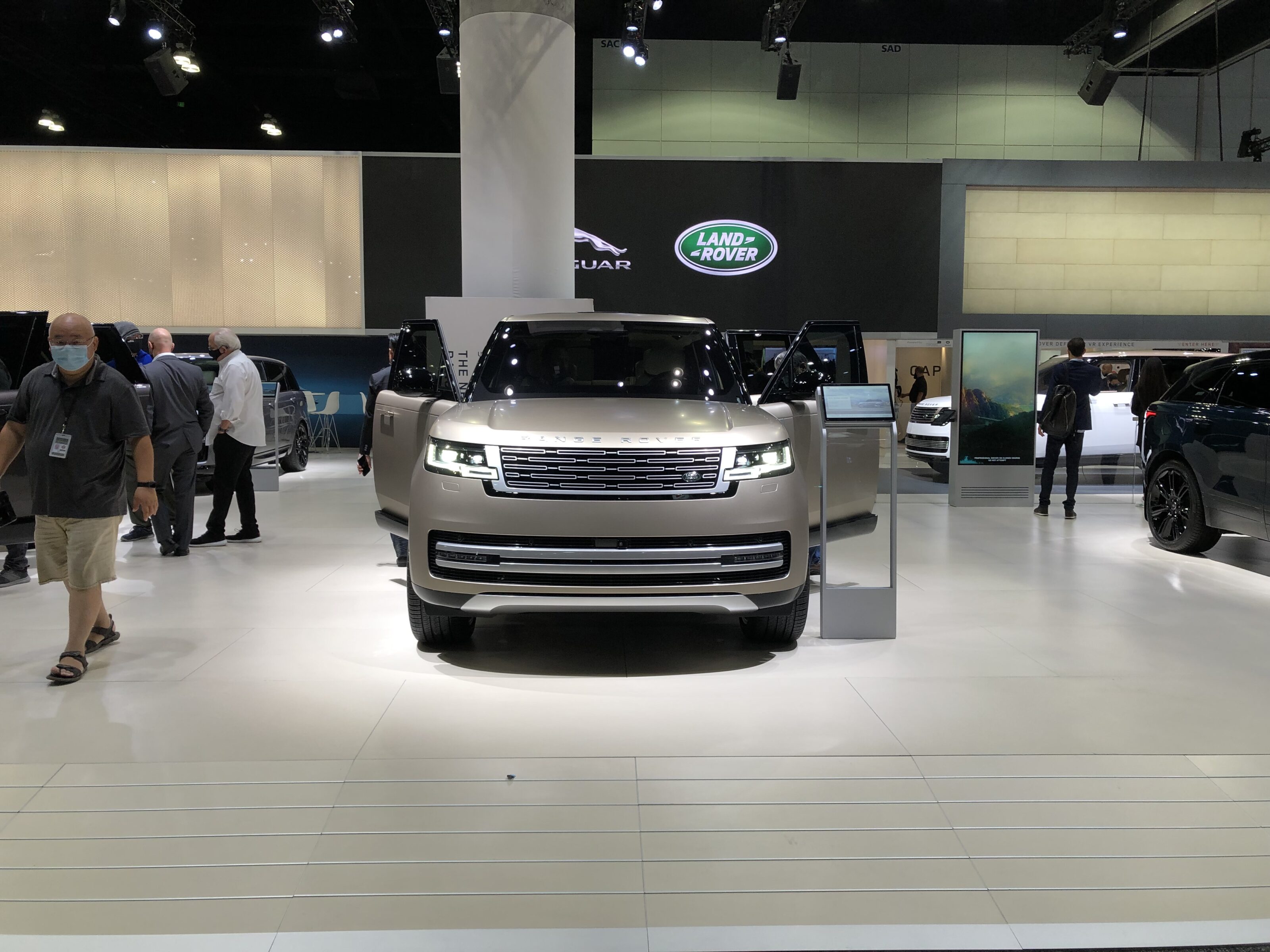
In the last decade, the popularity of the LA show has ebbed and flowed with the whims of the greater automotive industry, but it’s now in a decided valley through no fault of its own. The pandemic has had a disastrous affect on the industry, encouraging some automakers to act cautiously when marketing their vehicles.
Some manufacturers are notably absent – Audi, BMW, Honda, and Mazda, for example – but those in attendance have fully embraced the event, and are demonstrably excited to reveal what they’ve been working on these last two years.
The 2021 Los Angeles Auto Show may very well be the proverbial canary in the coalmine for auto shows. It not only marks a turning point for events like this, but the automotive industry in general. Although there is no shortage of new and interesting petrol-powered vehicles being launched, the tone of this LA show is decidedly electric.
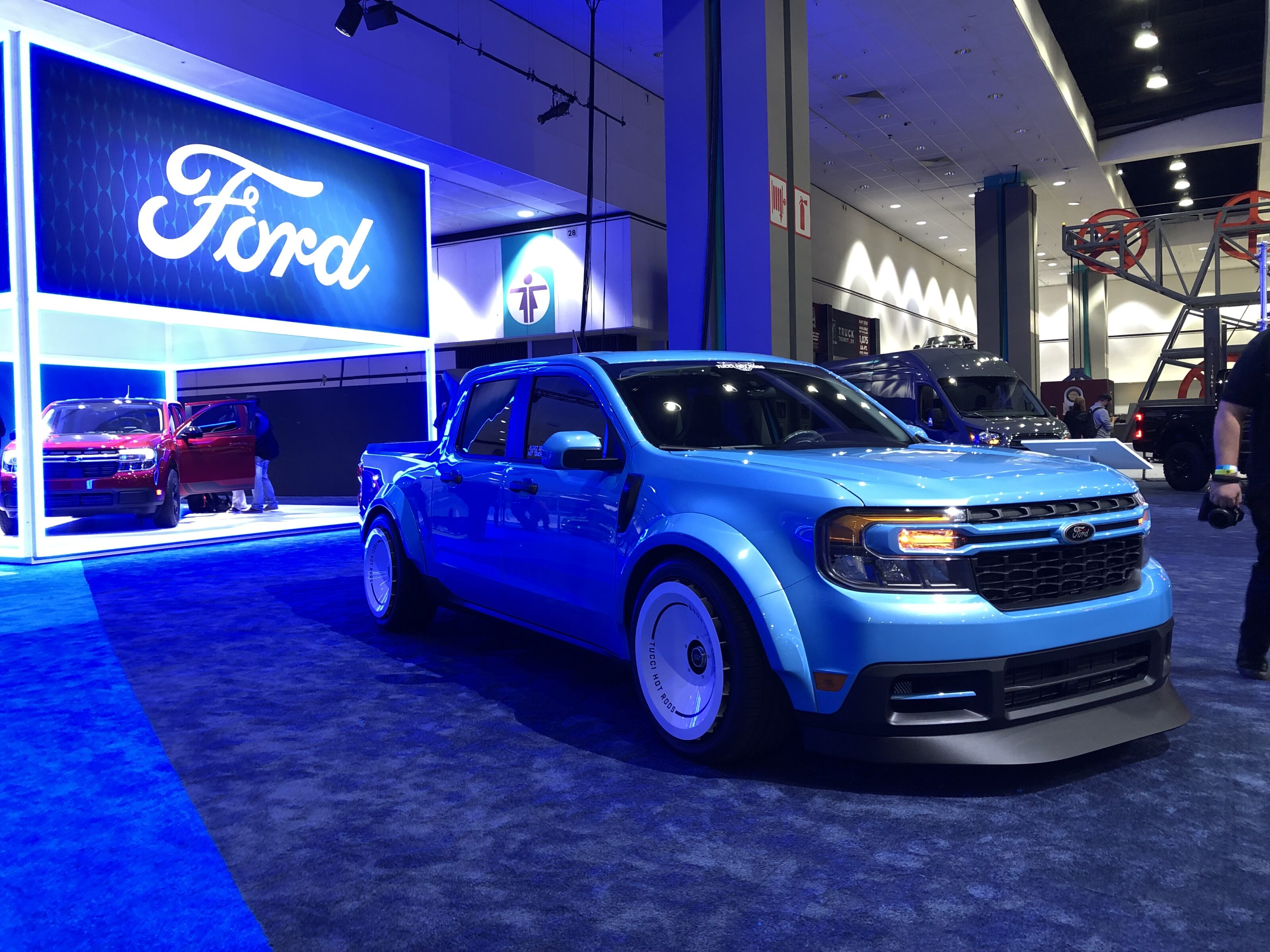
With a handful of manufacturers choosing to reveal new vehicle and concepts, all of them were EVs. Hyundai made a splash with its SEVEN concept, a futuristic perspective on the kind of sport utility electric it envisions. The bold concept is a glimpse into what Hyundai thinks motoring will look like fifteen years down the road.
The SEVEN’s distinctive SUV-like shape is clear, however, Hyundai’s designed a car for Level 4 Autonomy, the sort of vehicle that can be driven – as well as drive you – without any human intervention. Instead of a wheel and pedals that disappear when not in use, the SEVEN is meant to be driven with a joystick.
Yes, a joystick, but Hyundai’s not kidding around. It is actively investigating a joystick-based driving interface for its future vehicles.
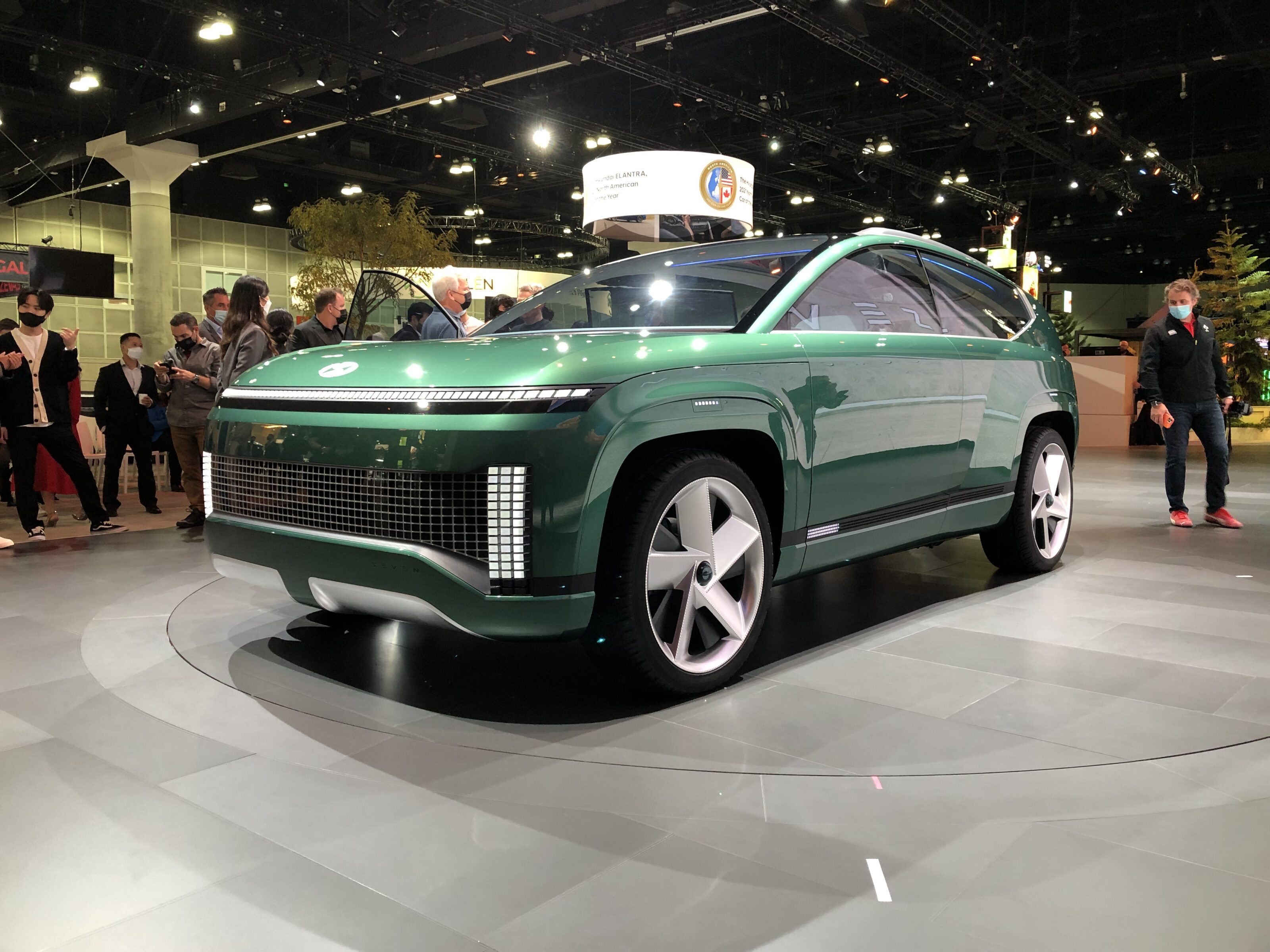
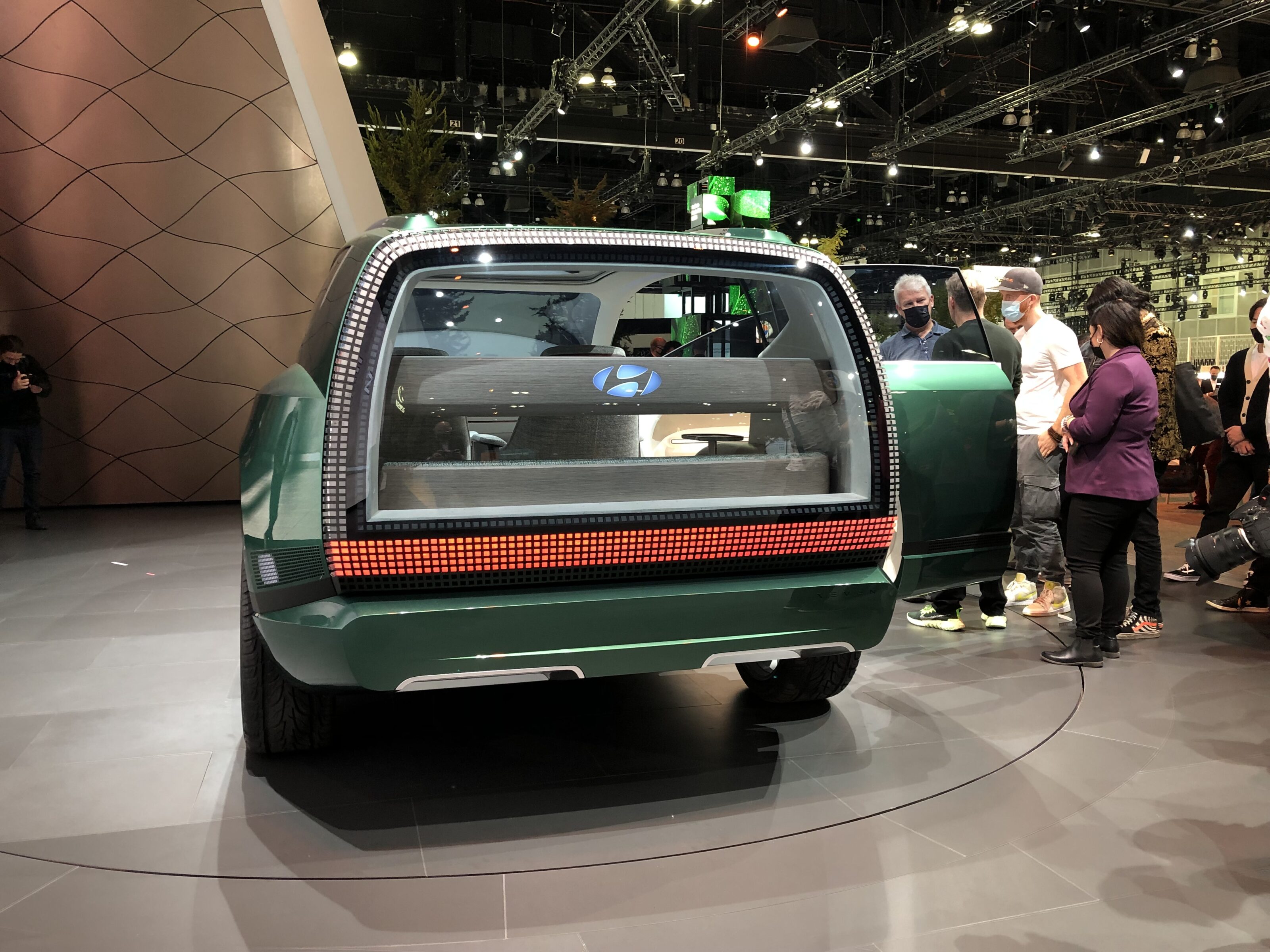
The vehicle’s interior ticks many of today’s buzzwords like sustainable and hygienic, but the design is inspired by a home environment rather than that of a car.
The concept’s cabin is meant to invite people to hang out even when it’s not being used as transportation. Lounge seating, multiple screens, and plenty of touches of home – the SEVEN may, or may not, be the future of the automobile.
Simon Loasby, the SEVEN’s lead designer, made it clear that this sport utility concept won’t make production as presented, but its overall design certainly will.
Loasby said just like the Ioniq Design 45 Concept was a faithful indicator of the Ioniq 5 production EV, this one is also a hint at the future of a Hyundai vehicle. In other words, expect a three row, battery-electric, sport utility that looks broadly like this SEVEN – likely before 2024.
Hyundai’s most exciting new products which made their public debut in Los Angeles were of the internal combustion engine kind – the go-fast Elantra (i30 Sedan) N and Kona N – and were relegated to a quiet corner outside the main salon. As exciting as these new Ns are, they are using the wrong kind of propulsion to be featured front and centre at a car show in 2021.
Other debuts included Kia’s Concept EV9, a more conventional BEV crossover with a steering wheel and pedals, along with Subaru’s production-ready Solterra – which is a badge-engineered version of the Toyota bZ4X electric.
New EV players like Fisker and Vinfast were complemented by a host of obscure e-bikes and trucklets, but more interesting were some tidy and impressive electric Porsche 356 restomods.
Porsche split the difference between old and new school debuts with the launch of what is perhaps its most extreme internal combustion-engined sportscar, along with another variant of the Taycan line. The hotly anticipated Cayman GT4 RS – with its four-litre flat-six, endless aero trickery, and gazillion-dollar magnesium wheels – was the highlight of the booth.
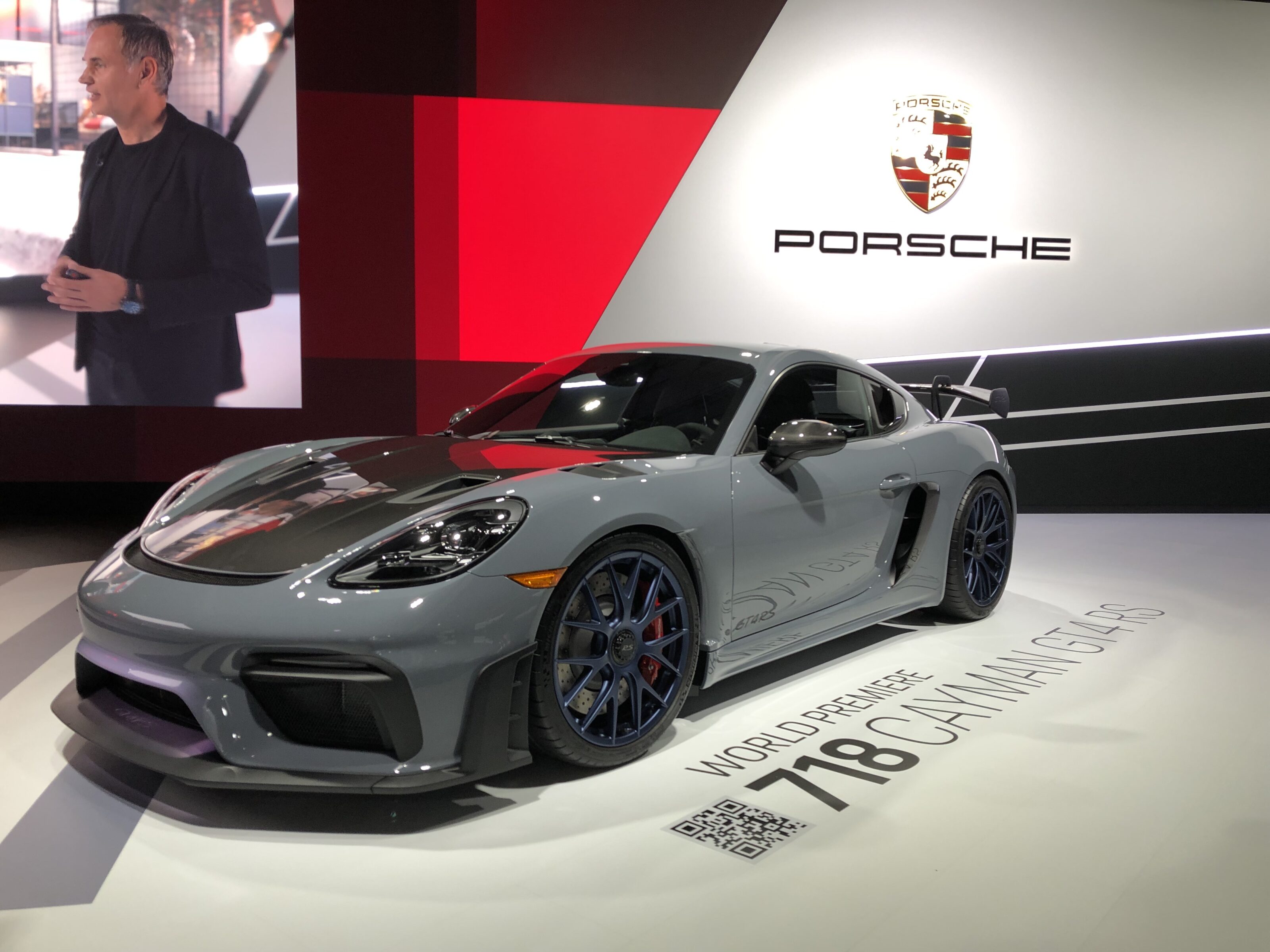
Following Porsche’s product planning pattern, it’s time for a GTS-trim Taycan because it’s now a couple of years into production, so it’s naturally finished in signature Carmine red with black accents. Porsche has simply taken product lessons from its traditional vehicle lines and applied it to EVs.
Still, petrol propulsion isn’t going away any time soon. Chevy prominently displayed two new Corvette Z06s – one basic coupe and one track-spec, Z07-optioned convertible. Land Rover had several next-generation Range Rovers in its booth, primed and ready for their first public auto show debut.
Although it’s headed in the direction of EVs, Nissan had two new Zs on the floor for enthusiasts to enjoy.
Perhaps not a poignant reminder of shows gone by, but this year’s Los Angeles Auto Show was an interesting peek into the industry’s collective crystal ball. While it might not be perfectly lucid, the future unequivocally favours electrics, petrol is here to stay. At least for a little while.
Key Points
- The Kia EV6 was plugged in for seven hours less than previous Tesla Model S record holder
- Kia claims the average charging stop lasted around 20 minutes
- Set to arrive in Australia during the first half of 2022
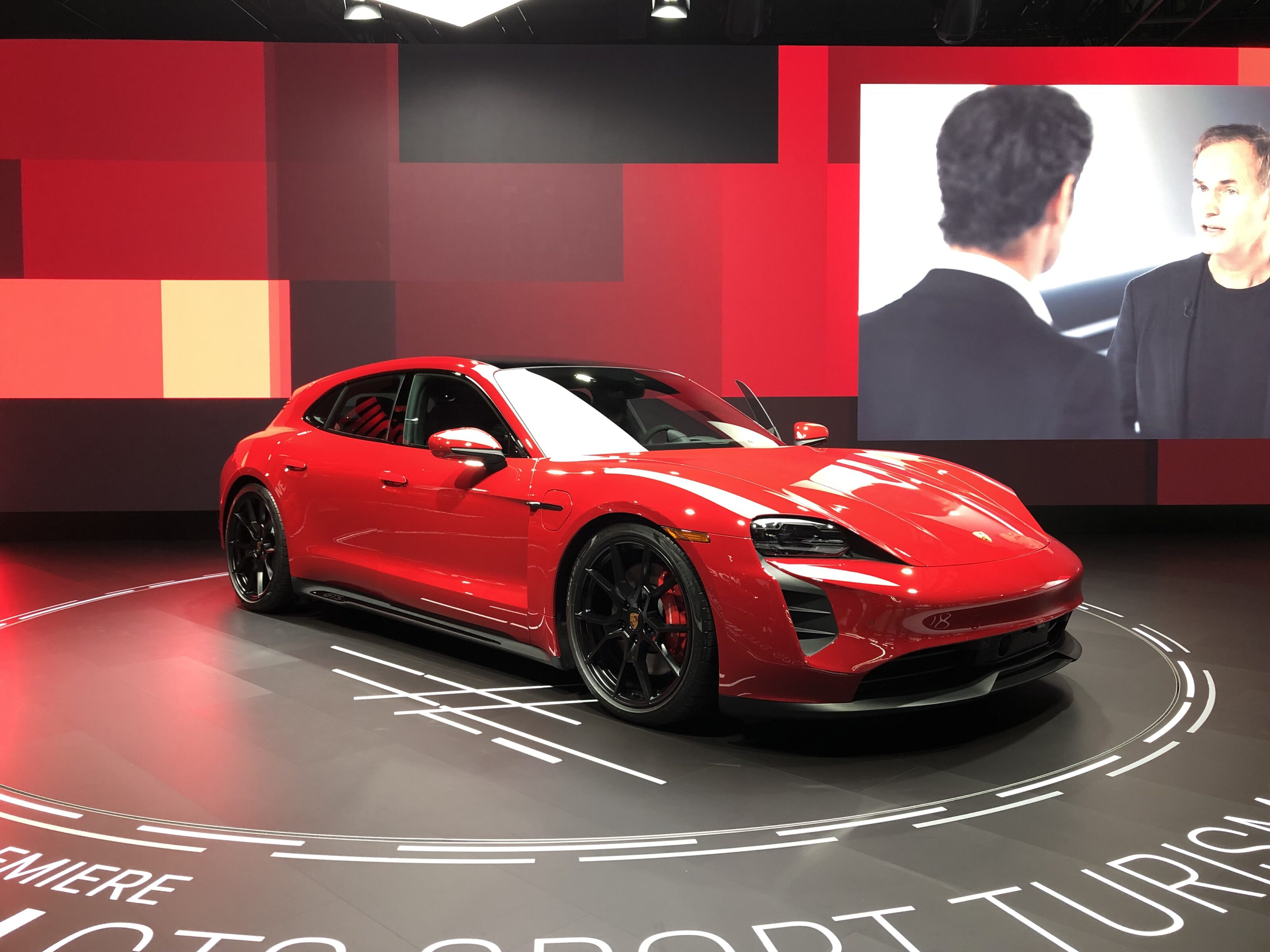
The 2022 Kia EV6 has made it into the Guinness World Records after travelling across the United States mainland with the shortest required charging time.
Announced during the brand’s 2021 LA Auto Show press conference, the EV6 needed seven hours, 10 minutes and one second of charging to complete the 4635 kilometre trek from New York City to Los Angeles – beating the previous record holder, the 2015 Tesla Model S P85D, by more than five-and-a-half hours (12 hours, 48 minutes and 19 seconds).
During the seven-day trip, Kia claims the EV6 was plugged into a fast charger for an average of around 20 minutes per stop – presumably using the Electrify America network, in addition to other public services.
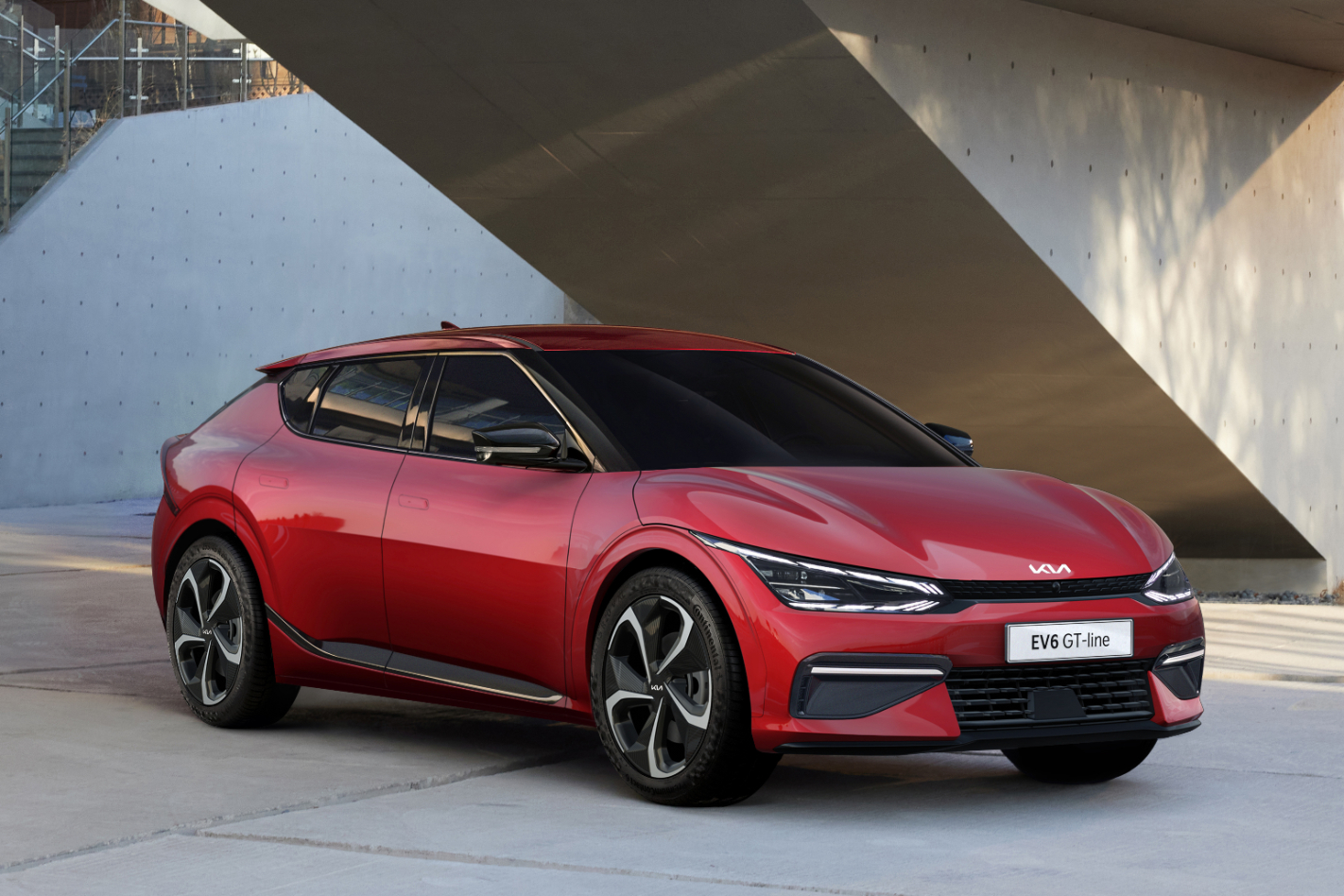
Our quick calculations show the EV6 required approximately 21 recharges during its journey across the United States, with each stop needed around every 220km – likely with some battery juice remaining to ensure a favourable charging time.
“The EV6’s record-setting run is the latest signal that Kia will be a leader in the popularization [sic] of electric vehicles,” said Russell Wager, vice president of marketing at Kia America.
However, while the Kia EV6 may now officially take the number one spot in Guinness World Record’s history, other electric vehicles have achieved a similar feat when travelling across the United States mainland.
In October 2021, a rented Tesla Model S Long Range broke the famous coast-to-coast Cannonball Run record – from Long Island, New York to Emeryville, California – for an electric vehicle.
During its journey, the Model S spent seven hours and 12 minutes charging, completing the race in 42 hours and 17 minutes. This new record beats the previous Cannonball milestone set by the Porsche Taycan, which crossed the US in 44 hours and 26 minutes – two hours longer than the Model S.
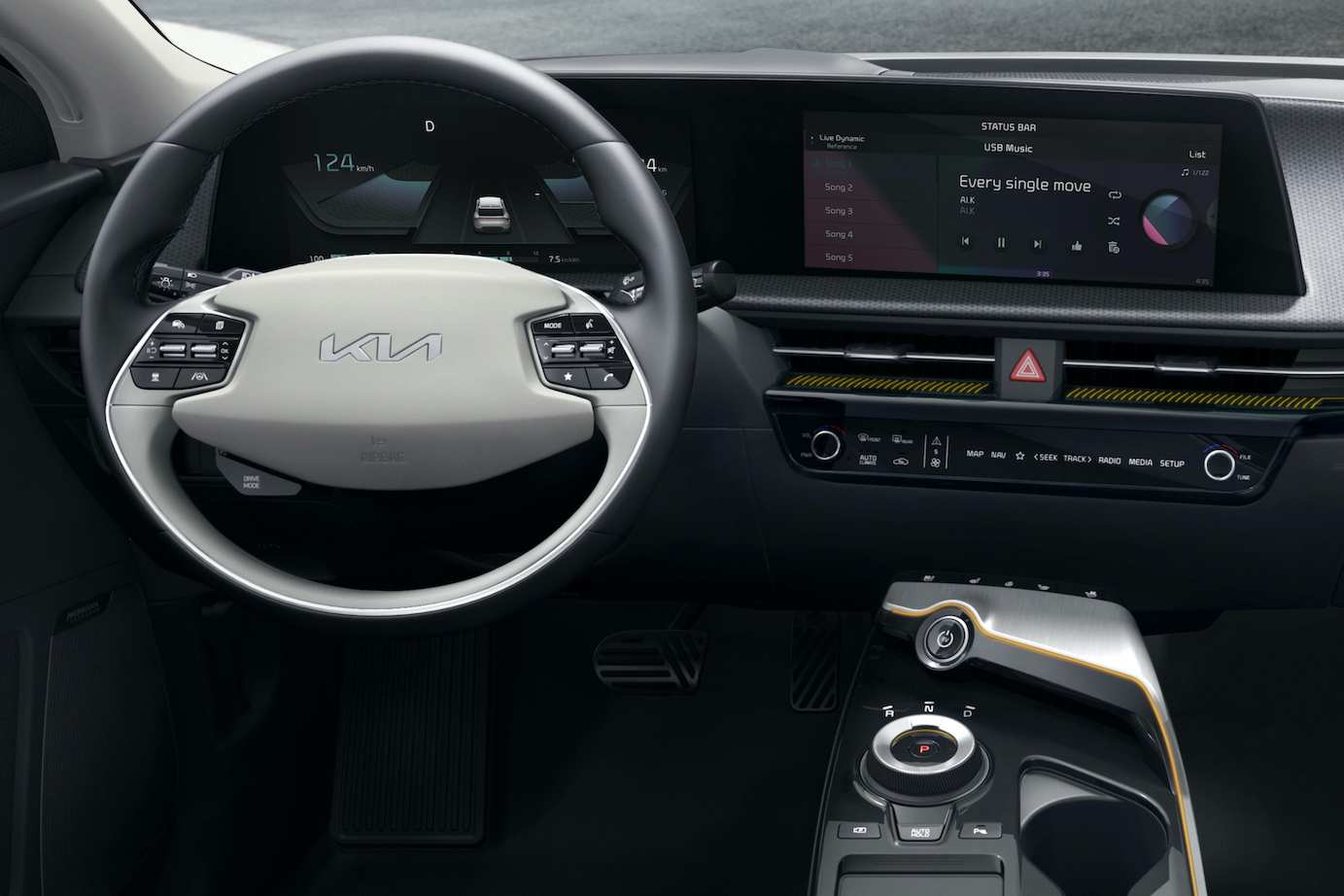
Closer to home, the Kia EV6 is set to launch in Australia during the first half of 2022 – with stock initially limited to 500 examples.
Local pricing and specification details have yet to be announced, however, it’s believed the line-up will consist of ‘base’ and GT-Line variants, available with a 58kWh battery or 77.4kWh battery, in either rear- or all-wheel drive.
Snapshot
- Concept Recharge outlines key ideas for next Volvo EVs
- Volvo developing its own operating system to be used from 2022
- Real-time data collection from autonomous driving to be used
UPDATE, November 19: Volvo has revealed the interior of its Concept Recharge, almost half a year after the vehicle made its debut.
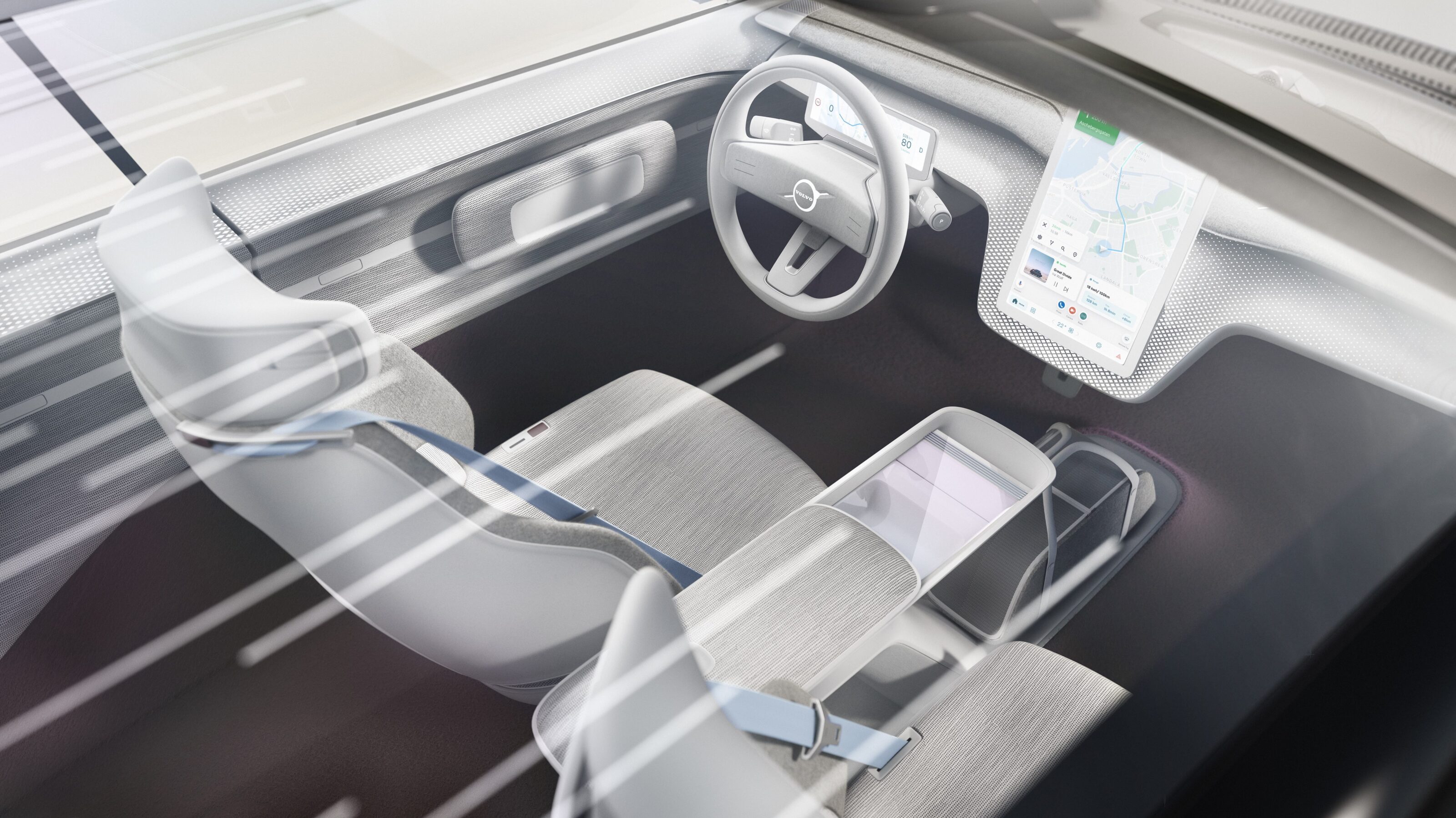
The concept car’s interior showcases Volvo’s quest to reduce its carbon footprint at every opportunity, with sustainably-sourced materials utilised throughout.
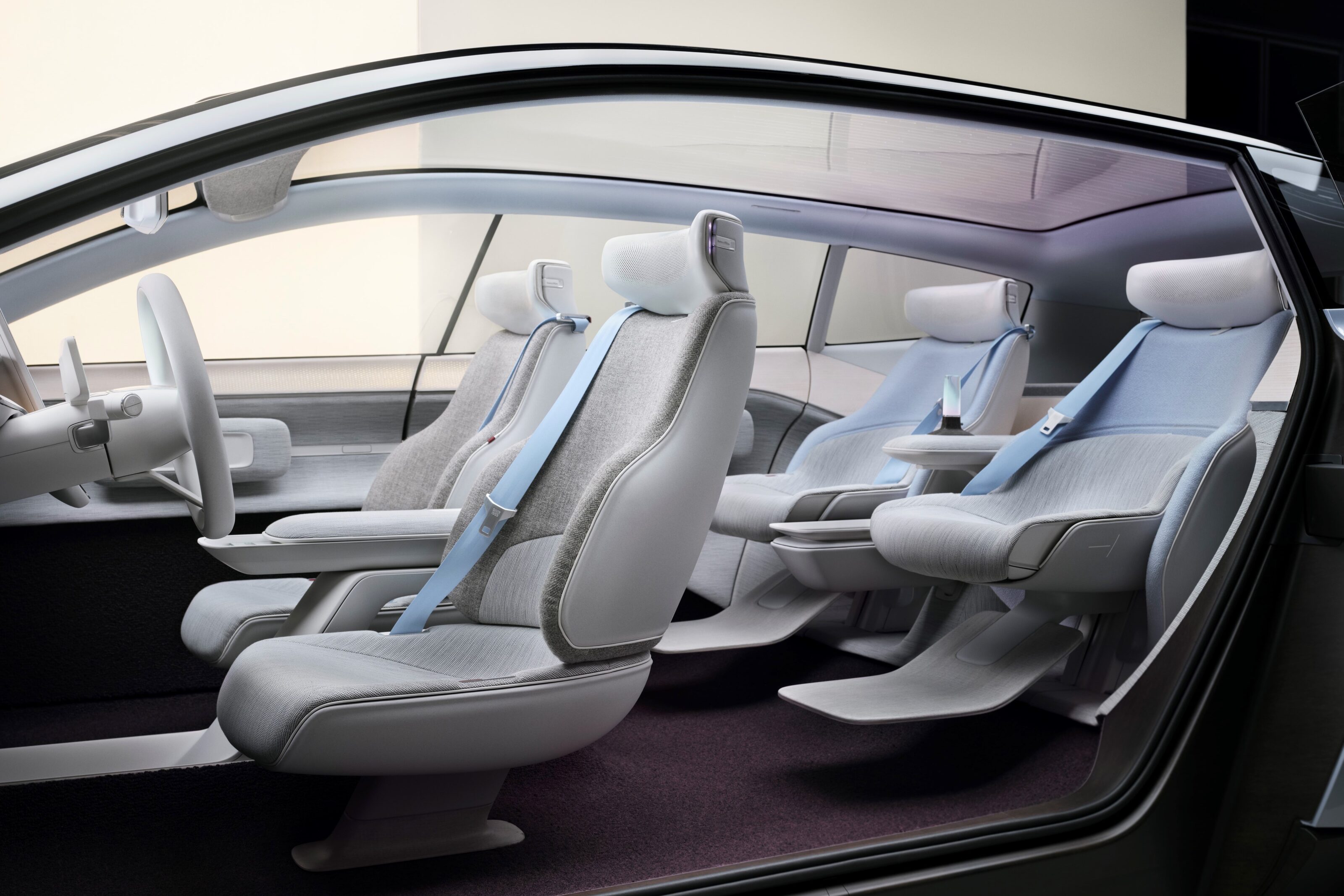
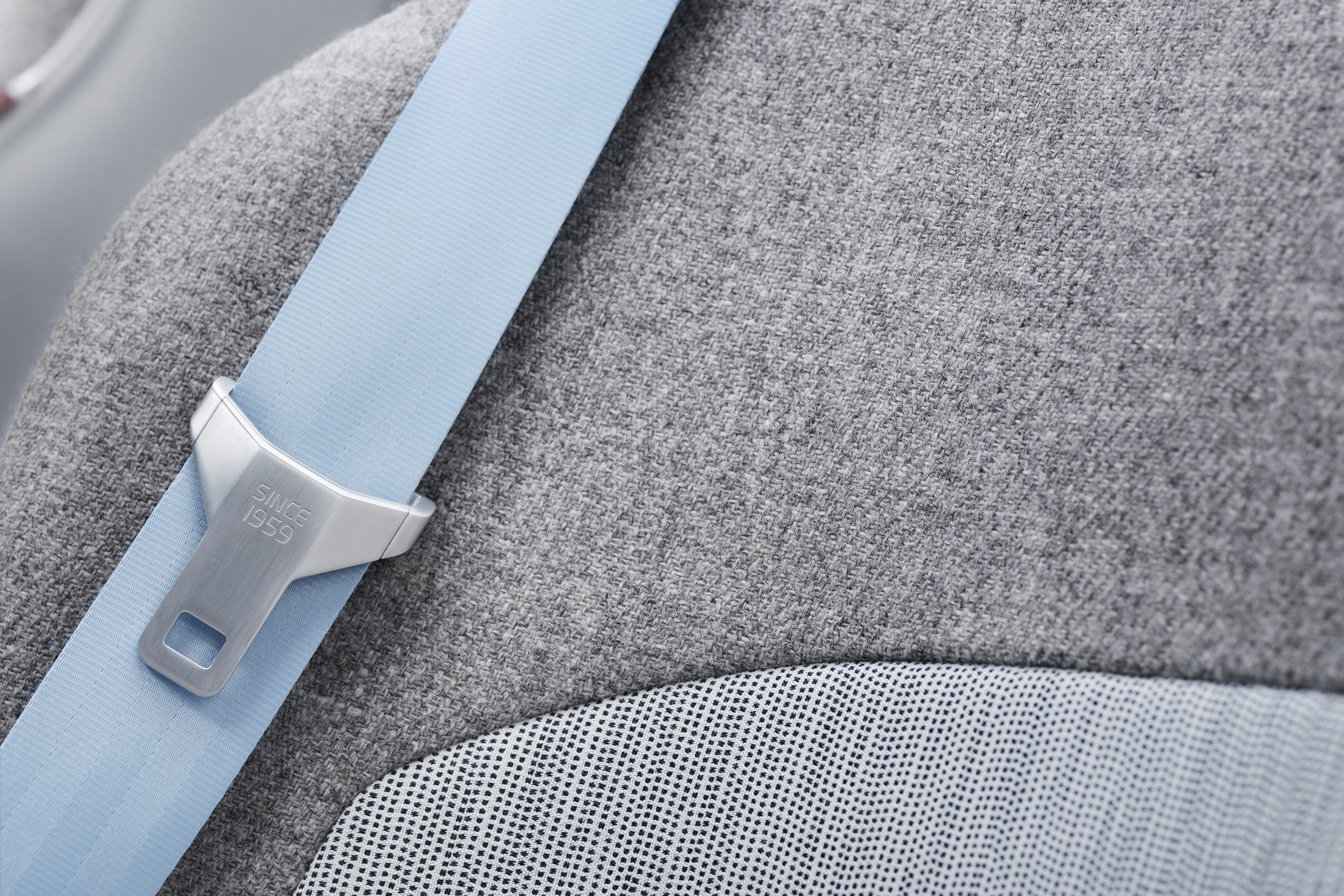
The floor and lower doors are covered in a carpet made from 100 per cent wool, with lightweight composites made from linseed replacing much of the interior plastics.
A new material called Nordico has been created by Volvo, which it describes as a “soft material made from bio-based and recycled ingredients that come from sustainable forests in Sweden and Finland, providing a CO2 footprint that is 74 per cent lower than leather”.
By using these products, when combined with the use of clean energy, Volvo says it can reduce a car’s overall CO2 impact by as much as 80 per cent when compared to a 2018 Volvo XC60.
The story to here
July 2: Volvo has outlined its manifesto for the next generation of electric vehicles coming off its production lines, showing off the Concept Recharge EV.
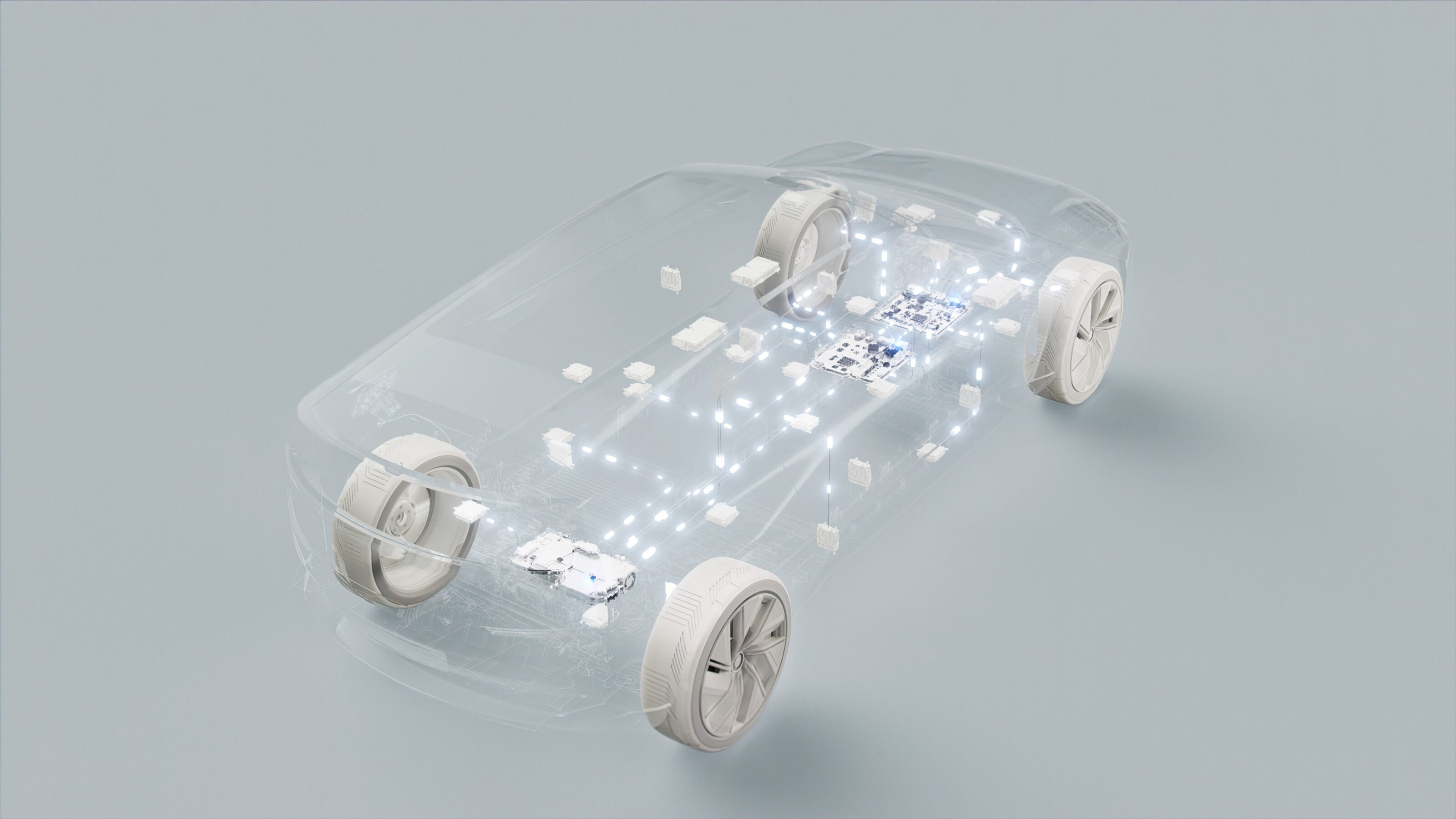
A look at Volvo’s dedicated EV platform, Concept Recharge features a totally flat floor, differing from the Swedish company’s current line-up of fully-electric vehicles which have to share the same architecture as its range of internal combustion engine powered cars.
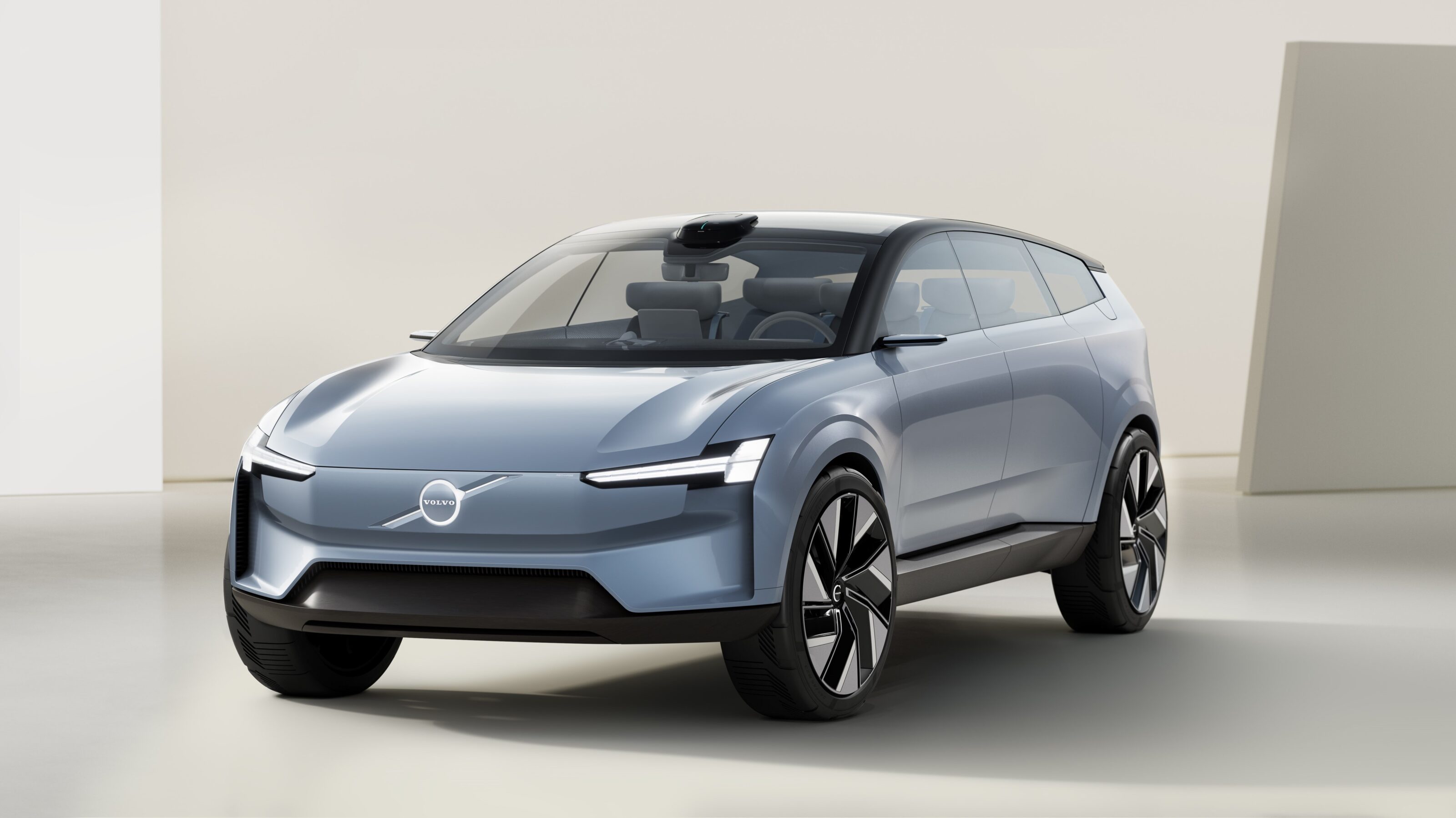
By implementing a flat floor and locating the battery pack underneath it, as well as not having an engine up front to worry about, Volvo has decreased overhangs at the front and rear, increasing interior space for all occupants.
Featuring the new Volvo design language which includes the ‘Thor’s Hammer’ style headlights, Concept Recharge borrows elements from the existing XC40, XC60 and XC90 range, such as the vertical rear lights.
As with the current Volvo range, the concept features a vertical infotainment screen rather than the horizontal units found in other cars, this one measuring at 15 inches and standing out against a relatively minimalist dash design.
The Concept Recharge announcement is a part of a wider push from Volvo in its transition to EVs, having recently entered into joint partnerships to develop batteries and fossil-free steel.
It is also committed to bringing more aspects of vehicle development in-house, creating its own VolvoCars.OS operating system which will be used for the infotainment system, general computing, vision processing and artificial intelligence, underpinning Volvo’s vehicles starting with a new model to be introduced in 2022.
The 2022 target is consistent in a lot of Volvo’s goals, saying last month its next generation of EVs would utilise LiDAR technology for its autonomous driving systems from next year, opting for the laser-based system over the radars used by rival companies such as Tesla.
While testing will be undertaken by Volvo before it rolls the technology out on the road, it is aiming to gain a majority of its data from real-world scenarios, allowing it to validate a large batch of information much faster than it would otherwise be able to on a test track in limited settings.
Key Points
- New GTS variant added to Taycan line-up
- Maximum output of 440kW available on overboost
- Prices to start from $237,000 before on-road costs
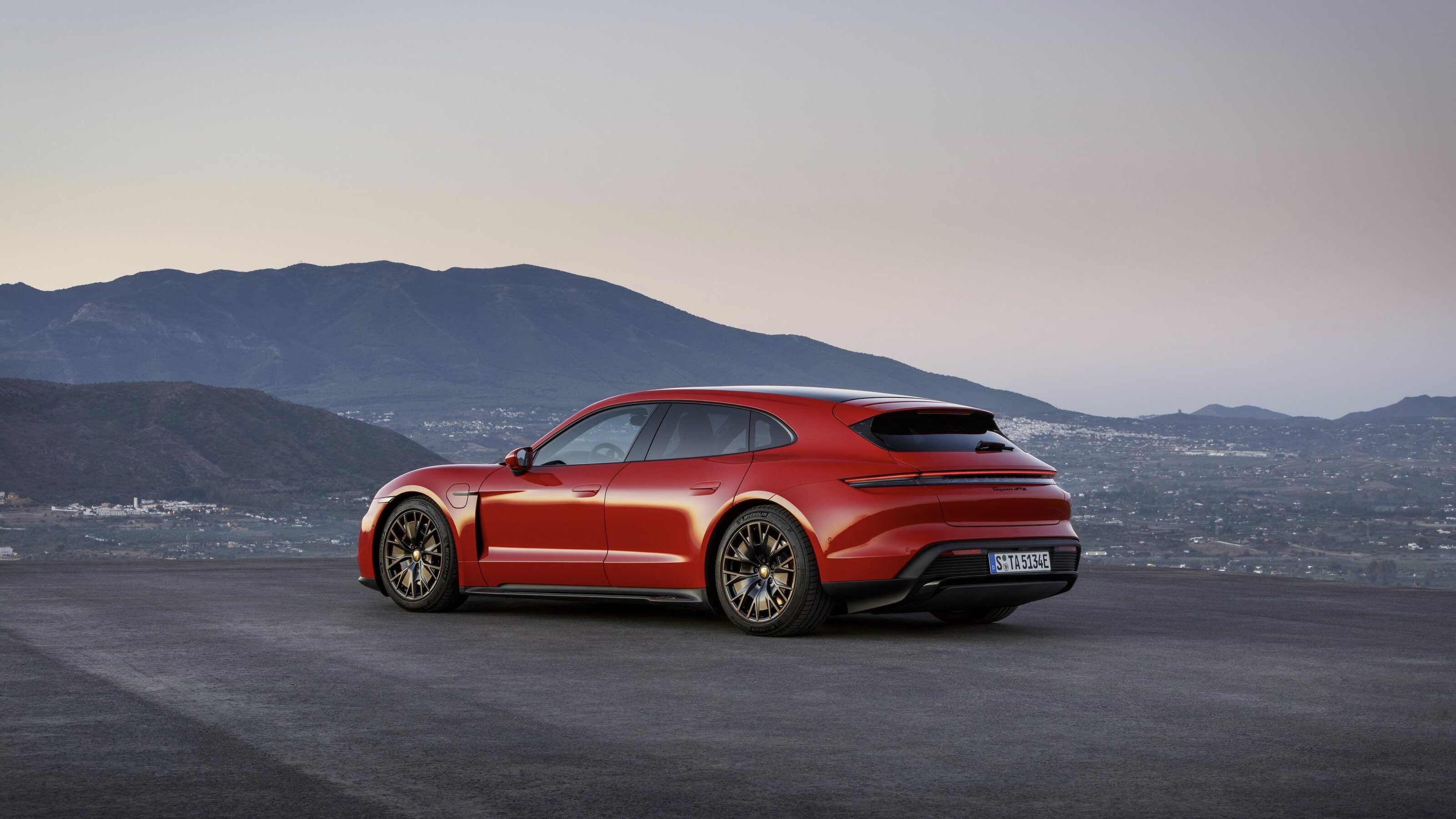
UPDATE, November 19: Porsche Australia has confirmed the Taycan Sport Turismo will not be sold locally, with the lowered long-roof body only set to be available in Europe and the United States.
A spokesperson for Porsche told MOTOR its current Taycan sedan and wagon variants were performing strongly, giving it no reason to add the GTS Sport Turismo (full name Gran Turismo Sport Sport Turismo ?).
“In terms of wagon configuration, the higher ground clearance and off-road capabilities of the Cross Turismo are ideally suited for the active lifestyle of many Australian Porsche owners, and since deliveries commenced in September 2021 it is already proving popular,” said the spokesperson.
“We do not have plans to introduce the Taycan Sport Turismo at this time.”
Read below to find out the details of the sedan GTS and click through the gallery below to see the Sport Turismo we’ll miss out on.
The story to here
November 17: The Porsche Taycan has received a new variant, with the Gran Turismo Sport nameplate joining the electric vehicle’s line-up.
Revealed by Porsche ahead of the 2022 LA Auto Show, the latest addition to the Taycan family will sport GTS badges and drop between the existing 4S and Turbo, both in performance and price.
Retailing for $237,000 before-on road costs, the GTS commands a $42,300 premium over the cost of the 4S, but drops $39,300 from the Turbo’s list price – although it will only be available in sedan guise rather than as a Cross Turismo.
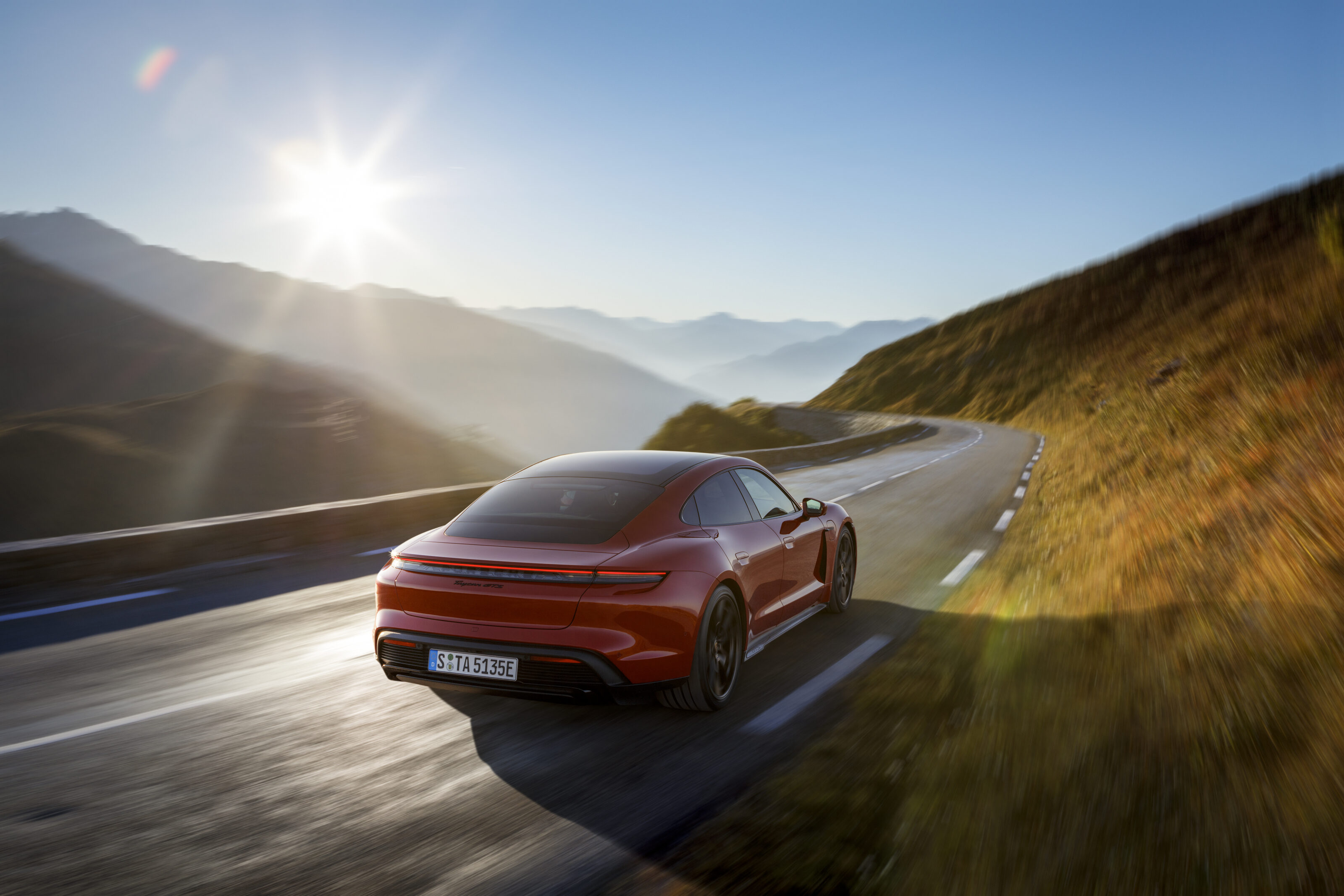
Packing a 440kW punch on overboost from its dual electric motors, the GTS gives away a 20kW deficit to the Turbo but provides a 80kW gain over the 4S, launching it from 0-100km/h in 3.7 seconds and on to a top speed of 250km/h.
Porsche has recalibrated the Taycan’s adaptive air suspension system and Porsche Active Suspension Management to provide a sharper driving experience, something which extends to the GTS’s optional rear-wheel steering.
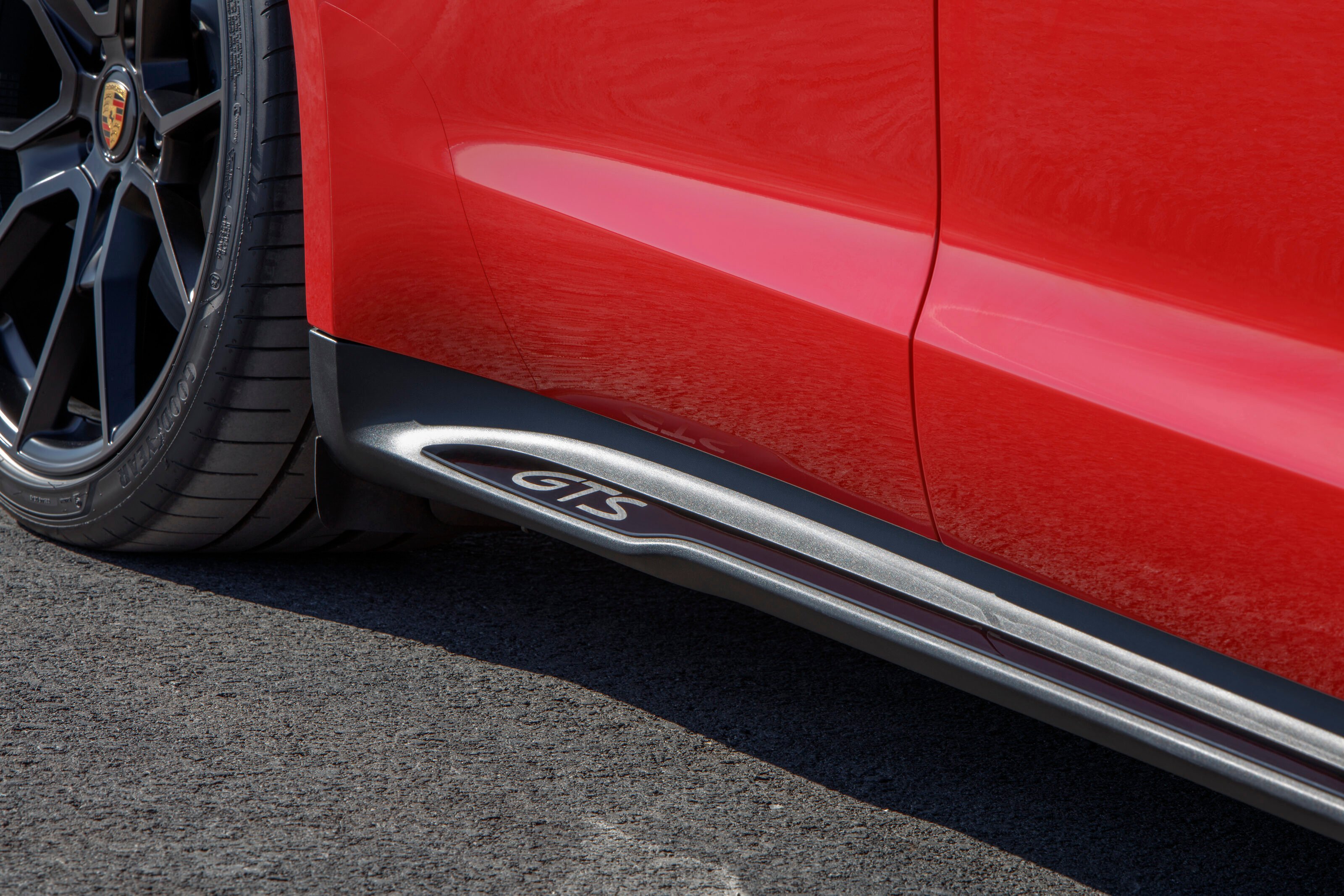
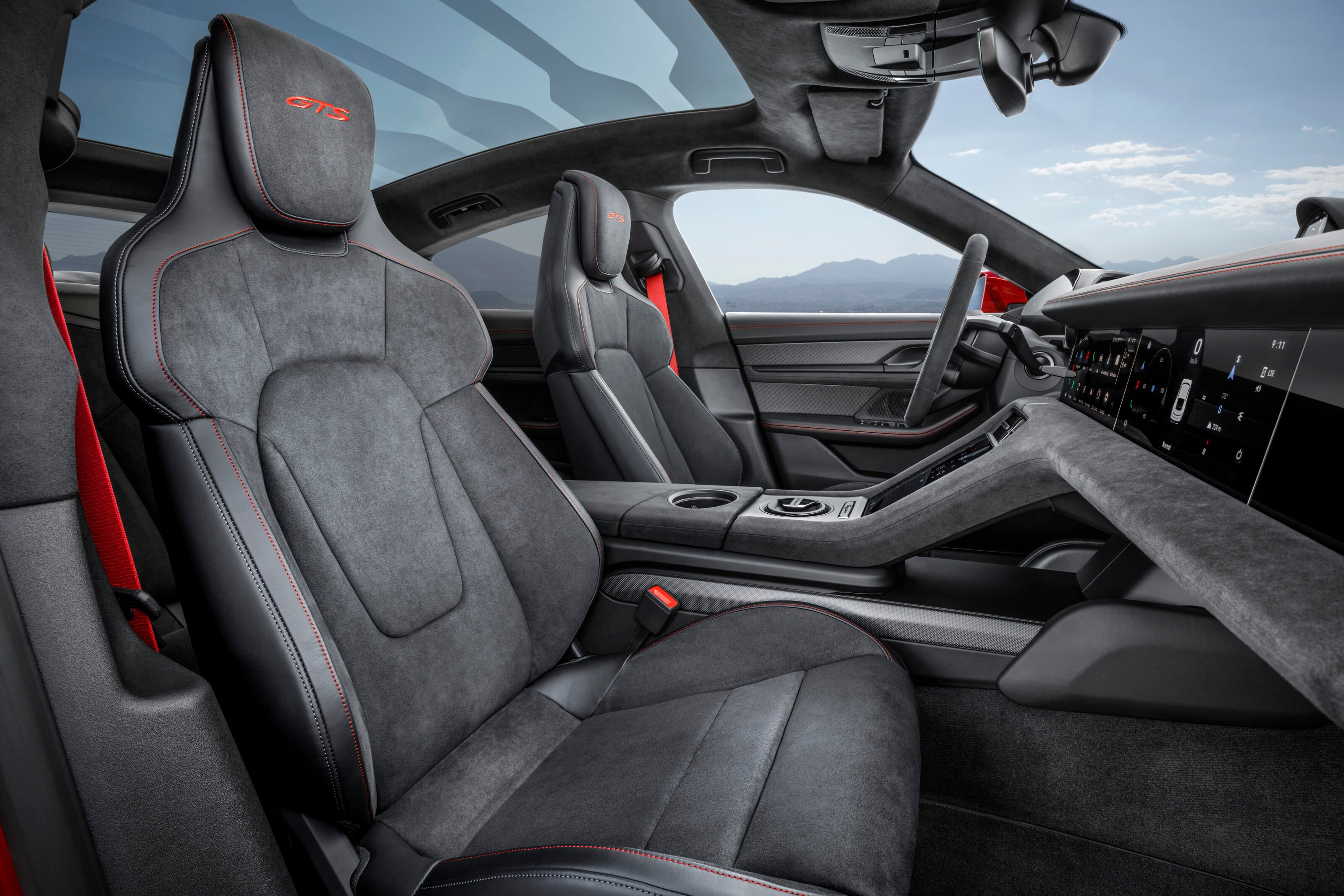
Setting the GTS apart from its Taycan siblings are a range of highlights bearing its name on the exterior and interior, such as; the front apron, the bases of the exterior mirrors and the side window trims.
Black Race-Tex interior trim adorns the cabin, while the standard brushed aluminium interior package with black anodised finish provides a contrast between the light and dark surfaces.
Australian deliveries are expected to arrive in the second quarter of 2022.
2022 Porsche Taycan Australian pricing
Prices exclude on-road costs.
| Taycan | $156,300 |
| Taycan 4 Cross Turismo | $176,600 |
| Taycan 4S | $194,700 |
| Taycan 4S Cross Turismo | $205,300 |
| Taycan GTS | $237,000 |
| Taycan Turbo | $276,300 |
| Taycan Turbo Cross Turismo | $279,000 |
| Taycan Turbo S | $345,800 |
Snapshot
- Petrol and diesel models on offer, but goodbye V8!
- Lighter body with better weight distribution
- Four-seat limo version coming to Australia
UPDATE, November 19: Lexus has confirmed its four-seat flagship version of the new LX will come to Australia in 2022 – the first time this specification has been offered globally.
Our original story below has been updated to contain all the details now known.
The story to here
October 14: The new-generation 2022 Lexus LX has been given a virtual unveiling today, ahead of an Australian launch set to occur sometime in 2022.
Revealed in LX 600 and LX 500d form, the big luxury barge introduces new twin-turbo petrol and diesel engines to replace the 270kW/530Nm 5.7-litre petrol V8 and 200kW/650Nm 4.5-litre diesel V8 that drove its predecessors, the LX 570 and LX 450d.
The V35A-FTS twin-turbo six, which debuted in the LS 500 limousine with 310kW/600Nm on offer – but also 290kW and 649Nm in the new Tundra pickup – turns its outputs up to 305kW and 650Nm in LX form.
Opting for the LX 500d – using the F33A-FTV diesel offered with the new LandCruiser 300 Series – will give buyers a little less power to play with, at 227kW, while dialling that all-important torque number up to 700Nm.

There’s presently no word of any hybrid offering, and with a diesel in the line-up – satisfying buyers looking for a towing hero – a hybrid variant would seem unlikely for our market.
If such a model is introduced, however – and reports online have suggested it might – buyers could perhaps look forward to the same twin-turbo V6 and electric motor combination offered with the LS500h.
The petrol and diesel powertrains are both matched to a new 10-speed automatic transmission, again mirroring the closely related LandCruiser 300.
Power is sent to all four corners through Toyota’s AWD Integrated Management system, linking the steering assist, brake and throttle control, transmission and drive torque distribution to optimise power delivery and overall handling.
Fuel consumption for the LX models is yet to be confirmed, but the diesel-powered LandCruiser 300 claims combined figure of 8.9L/100km.

Both the LX and its LC300 stablemate are built on Toyota’s GA-F platform, built to the same 2850mm wheelbase as before while saving around 200kg in weight – thanks to the use of aluminium for its bonnet, roof, doors and tailgate panels.
The new LX’s frame is claimed to be 20 per cent more rigid than its predecessor, with more spot welds and high-tensile steel helping there – along with the use of structural adhesives to the door openings and floor.
Assisting weight distribution and lowering its centre of gravity, the LX has also had its powertrain position shifted 70mm rearwards and 28mm further down.

Suspension is by a high-mounted double-wishbone design at the front. Coil springs are set for comfort, with 15mm more rebound to keep feathers unruffled on rough roads.
At the rear, the trailing-link rigid axle sees suspension arms and shocks tuned for comfort, with the latter designed on a more vertical setting for improved damping while offering a 20mm increase in rebound stroke.
This is all assisted by Adaptive Variable Suspension, with dynamically adjustable damping available for comfort and handling where the drive modes demand it.
Active Height Control is featured, automatically optimising ride height with Normal, Hi1 and Hi2 settings while on the move, and a Low position when parked. A spring-rate switching system also reduces the time to adjust the vehicle’s height.

For off-roading, the LX claims a maximum stable inclination angle of 44 degrees, climbing ability of 45 degrees and a maximum wading depth of 700mm.
Toyota’s Multi-Terrain Select is featured, operating now in both high and low range to optimise braking, driving force and suspension with six modes – Auto (for the first time), Dirt, Sand, Mud, Deep Snow, and Rock.
Crawl Control and Downhill Assist Control are also on board, leaving the driver to focus on steering across uneven surfaces.
Electronic differential locks are featured at both the front and rear wheels, and a new electric power steering system replaces the conventional hydraulic design.
Off-road driving is assisted further by a Multi-Terrain Monitor, with four cameras – front, rear and under the exterior mirrors – providing a view of the space around the vehicle on the big 12.3-inch main display.

A full Australian equipment list is still to be revealed, but today’s global press release shows the new LX can be had with 10-speaker Lexus Premium Sound or a whopping great 25-speaker Mark Levinson Premium Surround Sound (“the highest number ever in a Lexus”).
New rear entertainment is also available with a touch display, to be controlled either from the front row for parents or directly in the rear as needed.
Apple Carplay and Android Auto are both offered, although, at the time of publishing, it’s unclear if this is in a wired or wireless form. (Brands will usually make a point of wireless connectivity if it exists.)

Safety kit includes Lexus Safety System+, a pre-collision technology that can detect cyclists in daylight and pedestrians “in low-light conditions”.
Oncoming vehicles can be detected before right turns, along with pedestrians crossing the street when turning right or left.
Emergency steering assist is featured, along with new AI-assisted lane-tracing assist, promising “smoother and less disruptive” steering assistance.
Road-sign assist uses a camera to capture major road signs and displays them on the vehicle’s multi-information display, while a BladeScan adaptive high-beam system broadens the range of illumination, enabling the driver to recognise pedestrians and road signs without impeding the visibility of other road users.
Australia will also receive the flagship four-seat Ultra variant featuring dual captain’s chairs, according to Lexus Australia Chief Executive Scott Thompson.


Shared with the Lexus LS luxury sedan, the reclining second-row seats feature massage functions and will sit on either side of a centre console with a touchscreen from which to control the seats and entertainment displays.
When will the 2022 Lexus LX come to Australia?
Specific launch timing for the new LX 600 and LX 500d models is still to be confirmed – likely driven in part by the ongoing global COVID situation and related shortages in semi-conductors – but a 2022 debut is expected.
Watch for more on the new LX to come in the weeks and months ahead.
Some phone calls are better than others. “Scotty, would you like to test drive a Ford Mustang that’s purpose-built to go sideways?” Yes, yes I would.
Vaughn Gittin Jr isn’t a household name in Australia but he’s a big deal in the world of modifying Fords in the United States. He is also one of the world’s leading exponents of sideways driving, being a two-time Formula Drift champion and three-time World Drift Series champion.
His brand, RTR Vehicles, offers a range of products for the Mustang, F-150 and Ranger, while also having a major role in projects like Ken Block’s Hoonicorn Mustang and the Ford Mustang Mach-E 1400 concept. This RTR gear is now available in Australia courtesy of Mustang Motorsport and it threw us the keys to its Spec 3 example for a taste.
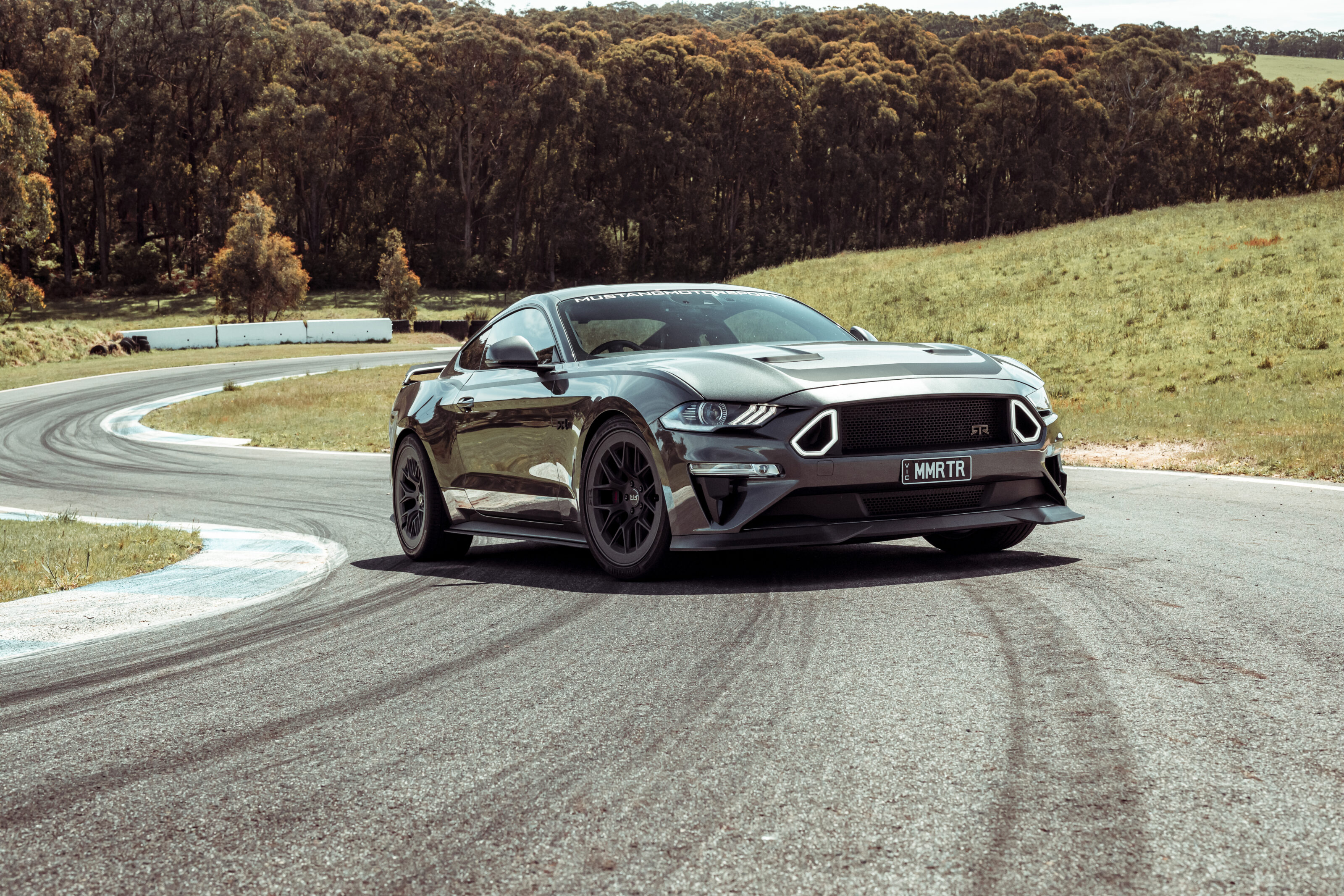
The RTR offering starts at Spec 1, which includes a full bodykit (upper and lower grille with LED lights, chin spoiler, side skirts, rear spoiler), lowered springs, a choice of 19-inch wheel designs and a bunch of tidbits like badging, a signed dash plaque and shift knob (manual only). This pack starts at $13,000 fitted.
Spec 2 is an extra $6500 and includes all the aforementioned plus staggered 20-inch rims wearing 275/35 rubber up front and 305/30 at the rear, adjustable anti-roll bars and adjustable dampers for non-MagneRide cars.
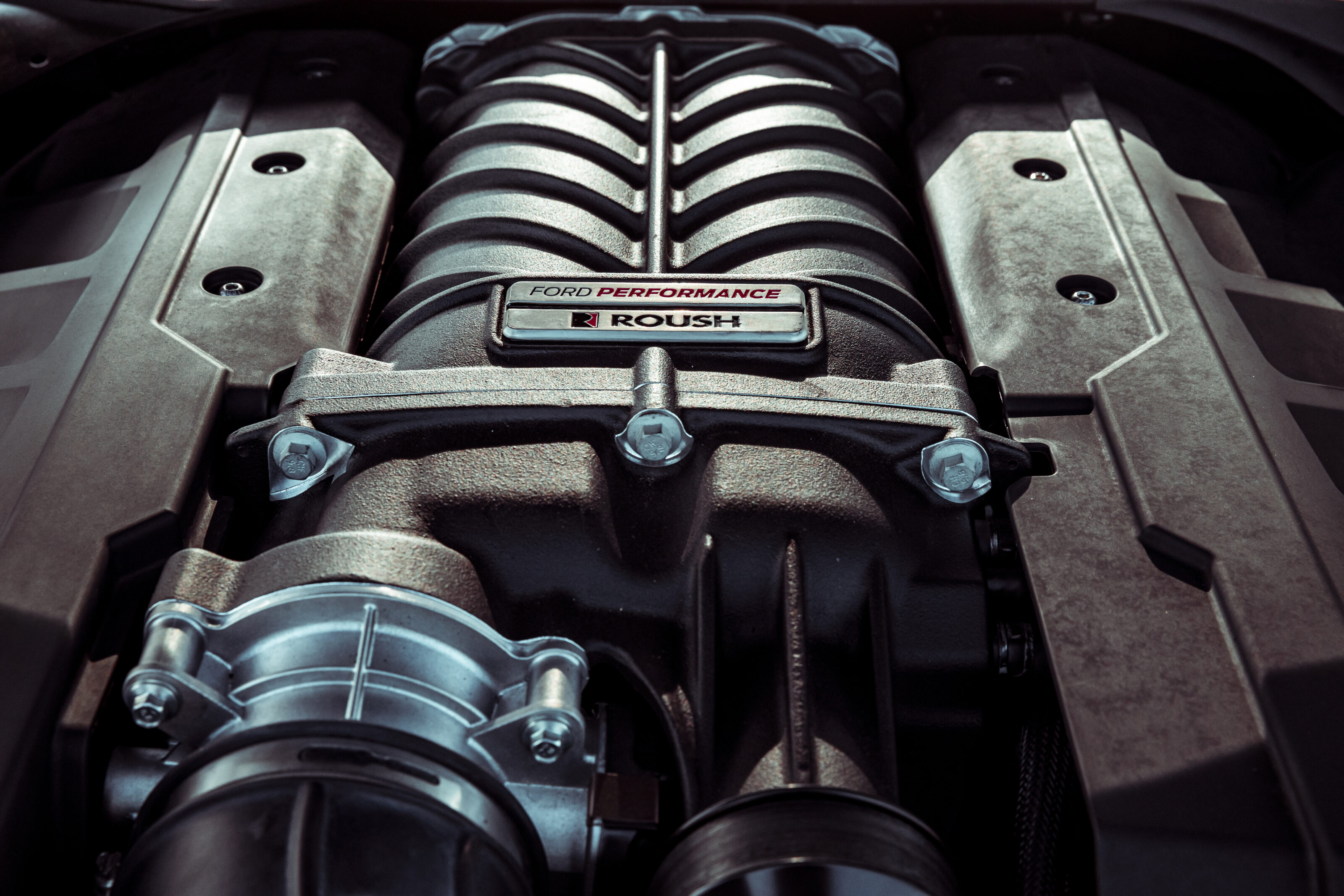
Last but certainly not least, the Spec 3 cherry on top is the addition of a Ford Performance supercharger that lifts outputs from the standard 339kW/556Nm to 559kW/908Nm, though it’ll decrease your bank account by a further $21,500. The supercharger comes with a five-year/100,000km warranty and the package is seven-state ADR compliant.
All up, including the donor car, you’re looking at around $110,000 – a lotta money for a Mustang, but cheap for a 559kW two-door coupe and it does look the part. RTR’s signature Aero wheels split opinion, but a set of more conventional 14-spoke ‘Tech’ alloys are available.
The signature LED grille lights are a cool touch, but it’s the other end of the car that garners the most attention. This thing is LOUD. James from Mustang Motorsport tells me when returning the car that the exhaust’s Quiet mode is still available, knowledge that my neighbours would have appreciated during some early morning starts.
All up, you’re looking at around $110,000 – a lotta money for a Mustang, but cheap for a 559kW coupe and it does look the part.

While the RTR’s chassis upgrades are actually the main event here, let’s start with the monster under the bonnet. Ever since the 2018 upgrade, the Mustang GT’s 5.0-litre V8 has been somewhat fickle when it comes to being supercharged. Early examples, even of this official Ford-backed Roush kit, left a bit to be desired in terms of response and driveability, but happily in its latest evolution all the bugs have been ironed out.
It obviously goes like the clappers, with a furious appetite for revs, especially with the closely-stacked ratios of our test car’s 10-speed automatic. With this amount of grunt, having so many gears can be more of a curse than a blessing but on the flip side you can just leave it in third or fourth (or fifth, really) and use the engine’s powerband.
Of more importance than the outright power and torque – of which there is more than ample – is its delivery, but throttle response is clean and you can accurately measure out how much power you want, though to be honest it really just measures out how quickly the rear wheels spin.

As mentioned, the Spec 2 package comes with staggered rubber (275mm front; 305mm rear) but our test car wears 275s at both ends as the rears were likely to be a bit sad after a day at the track. Consequently, customer cars are likely to have a little more traction but then traction isn’t really the point of the RTR Mustang.
RTR has its own hashtag, #funhaver, wisely stating that in this day and age any mega-horsepower muscle car is likely to be hosed in a straight line by an A45 AMG or RS3 under anything but perfect circumstances. Instead it leans into the smiles per hour mantra, which is perhaps unsurprising given its founder’s motorsport of choice.
The suspension changes undoubtedly work; this is one of the easiest and most transparent cars I’ve driven. It undoubtedly requires respect with the supercharger kit, as it will quite easily spin the tyres in fourth gear on a dry, smooth race track, but at least it telegraphs its intentions while doing so.

It improves on the standard Mustang in a number of areas. Number one is steering; the slight slack around the straight-ahead is eliminated and there’s genuine feedback about when the front tyres start to slip across the road. The weighting is well-judged, too, not too heavy, not too light.
Overall balance is also improved, the RTR responding accurately to your inputs. Carry too much speed into a corner and it’ll understeer; trail the brakes into a corner and the back will unstick; on corner exit, the amount of throttle essentially corresponds to the angle of the rear end. When it does slide, though, it does so in a slow-motion, in an almost languid manner. It would be interesting to drive a non-supercharged Spec 2 RTR as it could be a very enjoyable, exploitable weekender.
This behaviour increases confidence and while lap times aren’t the focus for RTR, this Spec 3 Mustang circuits the tricky Bryant Park hillclimb track in 1min6sec, almost a second quicker than an Audi RS5 and Lexus RC F Track Edition. This was despite the rear wheels travelling probably double the distance of the fronts as it slithered its way around, but in most circumstances you feel confident to drive right through it like Cole Trickle.

Its biggest shortcoming in a performance sense is the fact that engine temperatures spike quickly, triggering the ECU’s protective measures and limiting power. And by quickly I mean within one lap. The issue is easily fixed by adding extra coolers, like those found on the Roush RS3 we tested, but decreasing temperatures will increase the purchase price. Oh, and the LSD struggles to contain all the power on track; if you were attending regularly a Torsen upgrade wouldn’t go astray.
However, RTR’s modifications don’t compromise the Mustang’s on-road capability. Far from being a tied-down track car, the dampers, which are actually the standard units re-valved and with adjustability added, still offer plenty of compliance. Lowered ride height aside, it’s really no more taxing than a standard car, though enjoy the performance and you’ll be visiting the petrol bowser a little more frequently.
The suspension changes work; this is one of the most transparent cars I’ve driven. It undoubtedly requires respect … but at least it telegraphs its intentions.

To be honest, while most will concentrate on the engine’s huge power figures, to do so is missing the point of the RTR slightly. The engine package is familiar – it underpins most modified Mustangs, whether it be the Roush, RTR or even official R-Spec – but it’s the way the chassis modifications make the Mustang more playful, communicative and predictable that’s really the highlight. It certainly lives up to RTR’s hashtag.
2021 RTR Ford Mustang specifications
UPDATE, May 27 2022: Genesis Electrified GV70 driven
The new all-electric version of the Genesis GV70 is now in Australia, and we’ve driven it. Catch our review at the link below, and watch our video too!
The story to here: Genesis Electrified GV70 revealed
Key Points
- Electrified GV70 becomes third Genesis EV
- 360kW of power available from dual electric motors
- Australian deliveries to begin in the first half of 2022
Korean luxury manufacturer Genesis has pulled the covers off its latest electric vehicle, the third all-electric model in its line-up.
Based on the GV70 SUV, the Electrified GV70 retains its internal combustion engine-powered sibling’s styling and portions – but with a pair of electric motors placed on each axle, providing up to 360kW of power in ‘boost mode’.
Each motor develops 160kW and 350Nm when in its normal driving mode, with the combined 700Nm of torque and 360kW propelling the SUV from 0 to 100kmh in 4.5 seconds in its most powerful guise.
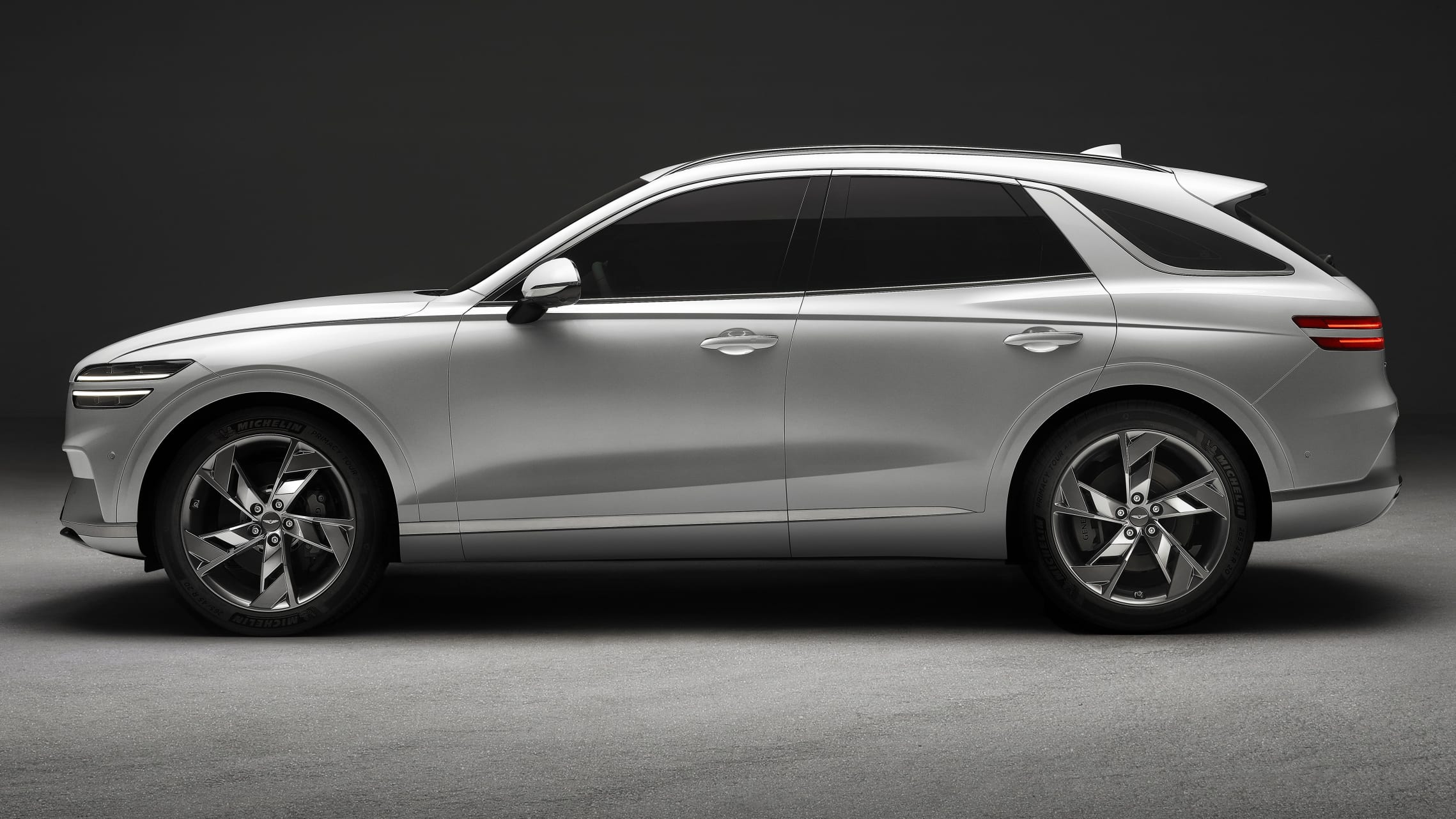
While Genesis hasn’t provided clarification on the size of the Electrified GV70’s battery pack, it claims a maximum driving range of over 500 kilometres is possible on the China Light-Duty Vehicle Test Cycle, with an estimated 400km on the Korean system.
Its 350kW rapid charging ability allows the battery to be charged from 10 to 80 per cent in 18 minutes, with the 400V/800V multi-rapid charging system from other Genesis electric models adopted for its new EV.
As with the new GV60, the Electrified GV70 also features V2L (Vehicle to Load) capabilities, allowing it to power appliances with a combined draw of up to 3.6kW.
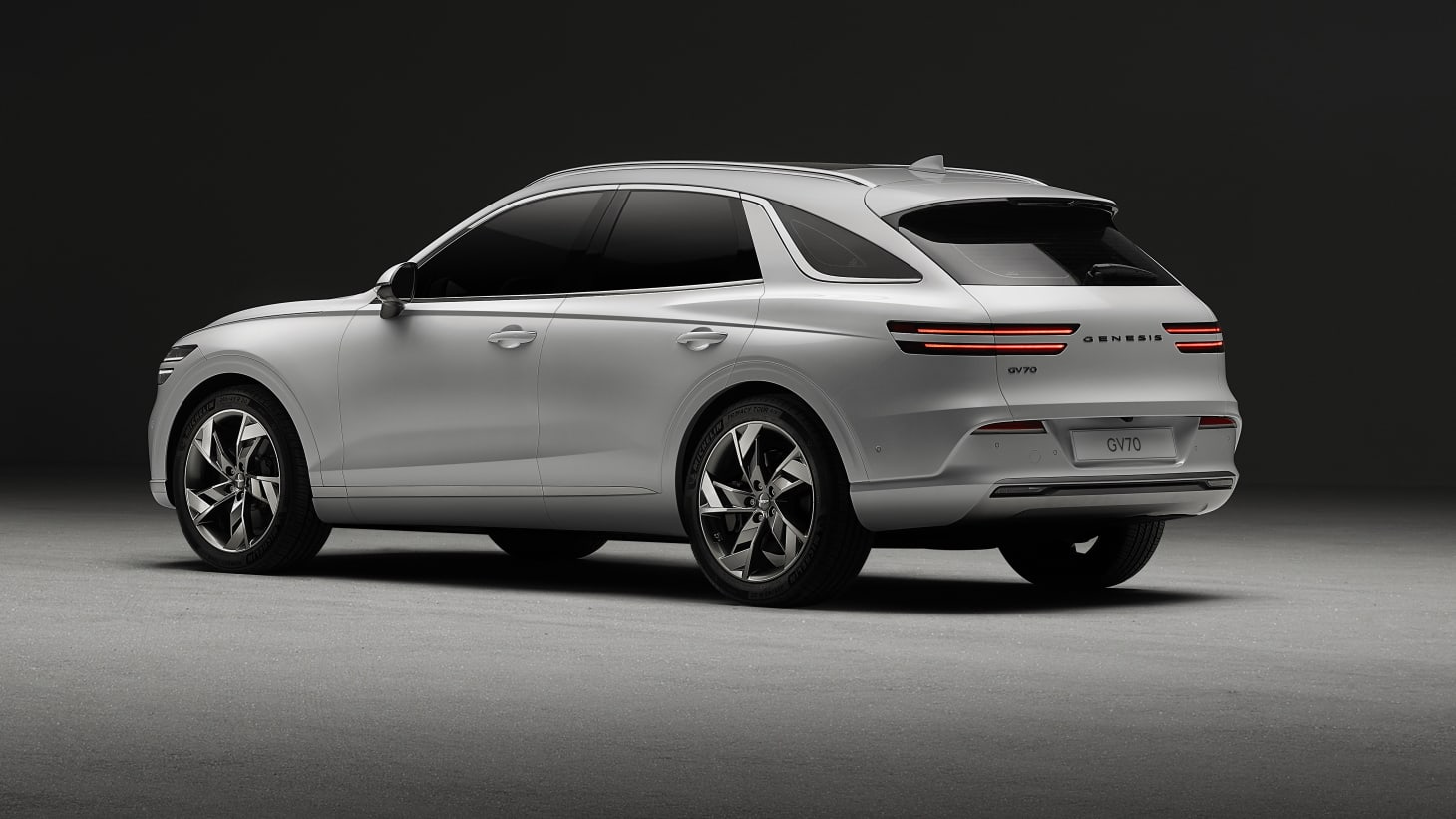
Lessons learnt from other electric models within the Hyundai automotive family means the GV70 now also benefits from the second iteration of the manufacturer’s smart regenerative braking system, which studies the driver’s habits as well as the driving environment to deliver the best driving range to suit.
Efficiency is also increased through the Disconnector Actuator System (DAS), a device which allows the front or rear motors to couple and uncouple to minimise power loss from the battery pack.
The focus from Genesis isn’t just on extracting every inch out of its driving range, as the Electrified GV70 becomes its first model to be equipped with an SUV-specific ‘e-Terrain mode’ – perfect for those wet mornings driving to the football fields.
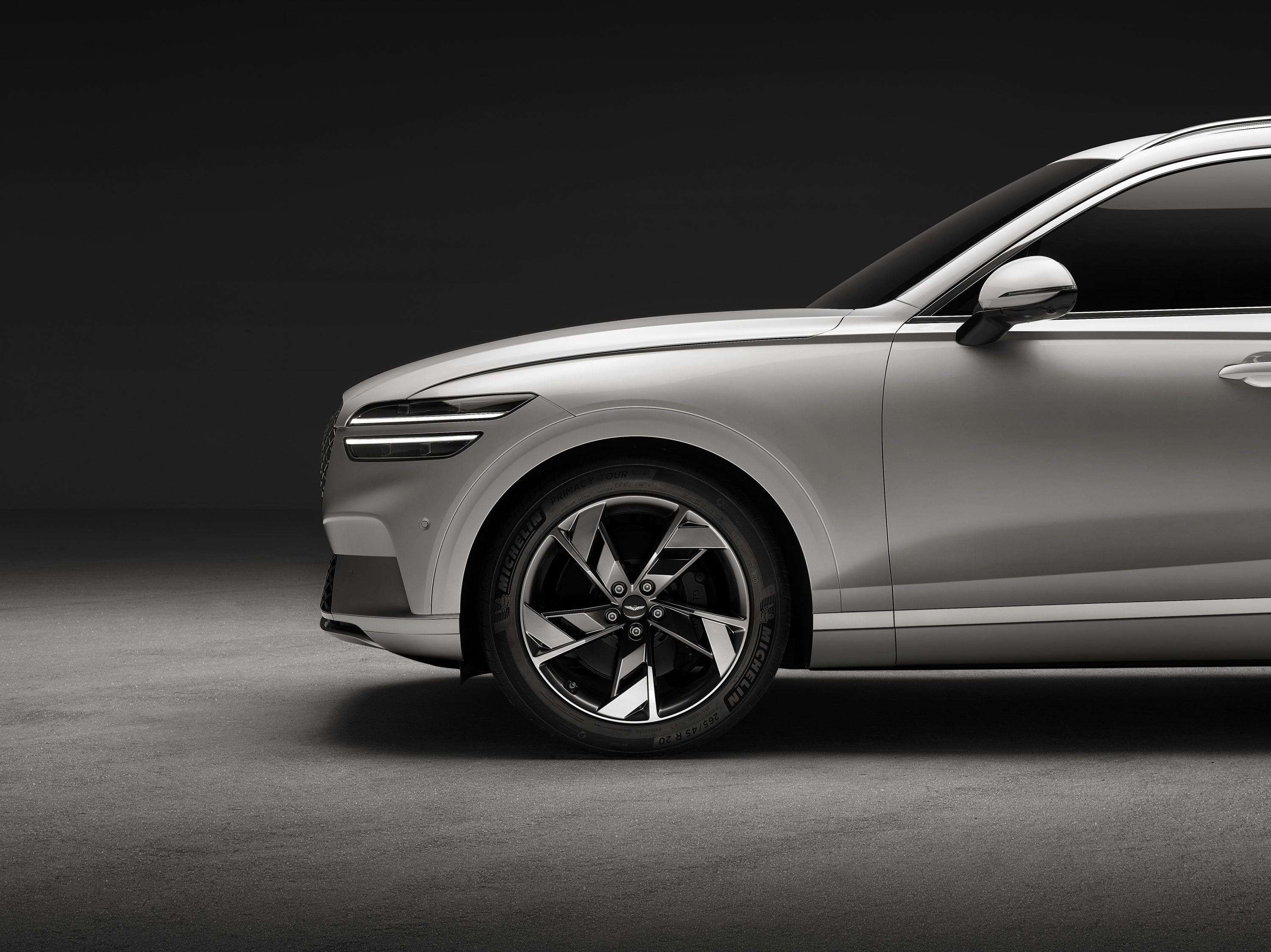
Visual changes to the EV GV70 include a revised, more aerodynamic, front fascia – which includes a charging port behind the blanked-off grille. Meanwhile, the brand’s iconic two-line quad lamps still feature on either side of the bumper.
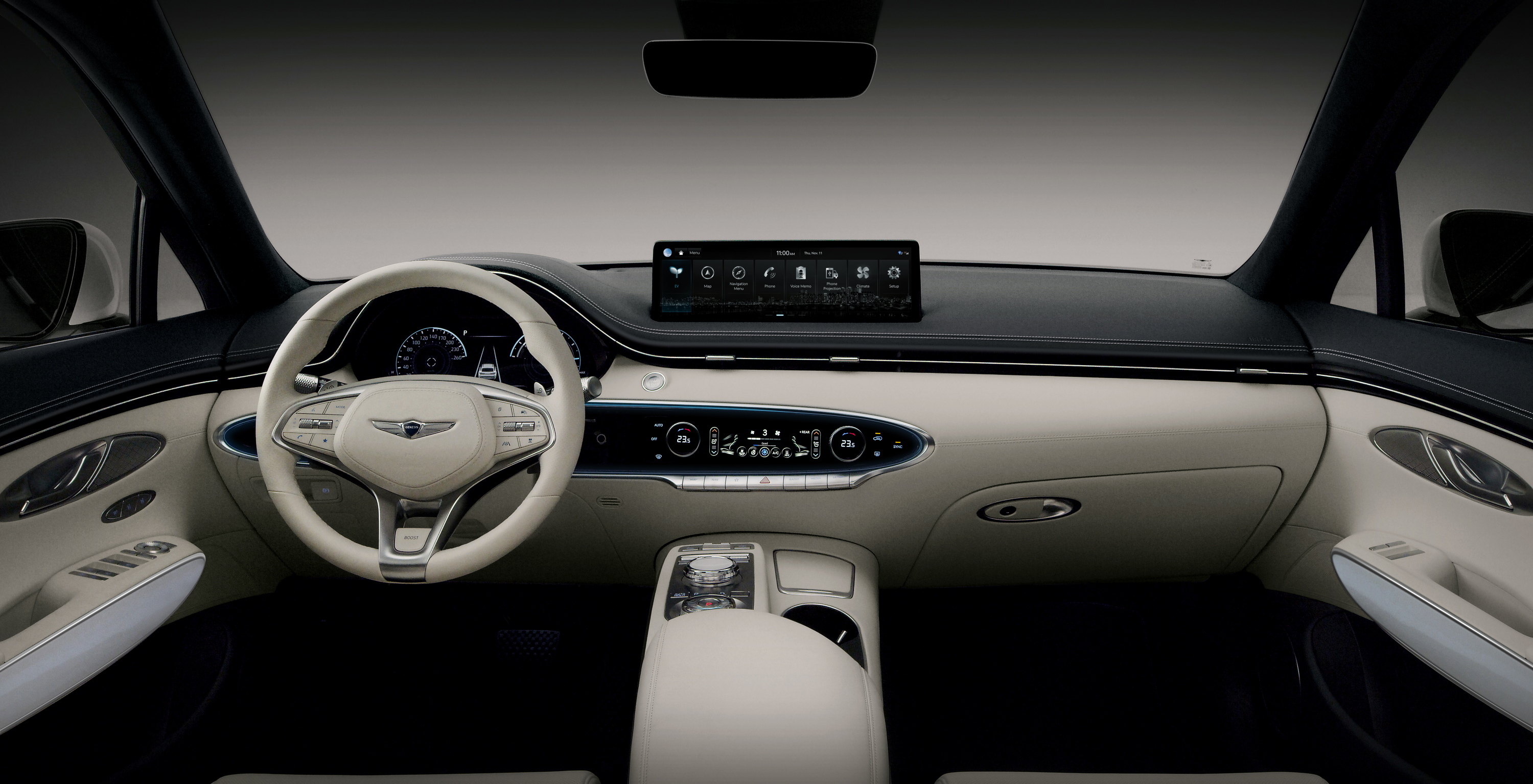
Interior changes are few, although Genesis claims the materials used are more eco-friendly than its existing GV70 variants and rear leg room has been increased, thanks to the lower transmission tunnel due to the lack of a driveshaft.
Road noise has been reduced thanks to the adoption of the Active Noise Control-Road (ANC-R) system, as ride comfort also benefits from the implementation of Preview Electronic Control Suspension (Pre-view ECS), with the GV70’s front camera and navigation system scanning the road ahead and adjusting its setup to best suit the conditions.
The Electrified GV70 will launch in Australia during the first half of 2022, coming to the local market alongside other electric Genesis offerings such as the aforementioned GV60 and Electrified G80.
Wheels will provide updates on local pricing and features when it becomes available.
Snapshot
- 2022 Volkswagen Caddy underpinned by MQB platform
- Available as a van or five/seven seat people-mover
- Choice of petrol or diesel engines
UPDATE, November 19: Volkswagen introduced a new petrol variant to the range following the Caddy’s initial launch in Australia, which you can read about by clicking here. The story has been updated below.
The story to here
August 19: The 2022 Volkswagen Caddy range has been revealed, as the light commercial vehicle and people-mover adopts a new platform for the first time since 2003.
Underpinned by Volkswagen’s MQB platform, which features across the Golf, Audi A3 and Skoda Octavia, the new Caddy is available as either a trade-focused vehicle or a people-mover, depending on specification.
One of the few brand models to be unaffected by the global semiconductor shortage, Volkswagen is hoping the new Caddy can continue the success of its predecessors, having accounted for more than 70 per cent of all new light commercial vehicle sales in 2020.
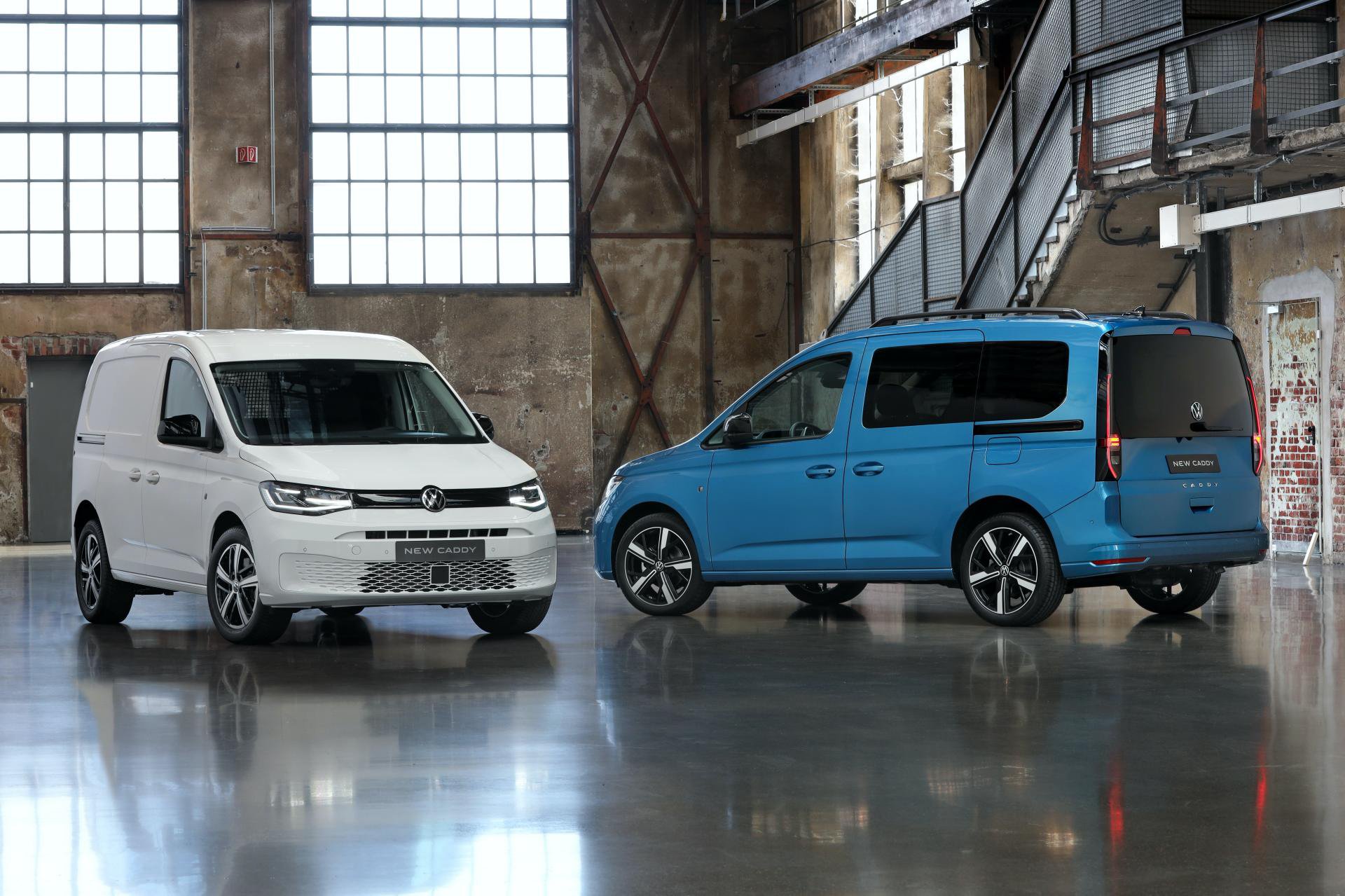
2022 Volkswagen Caddy Australian pricing
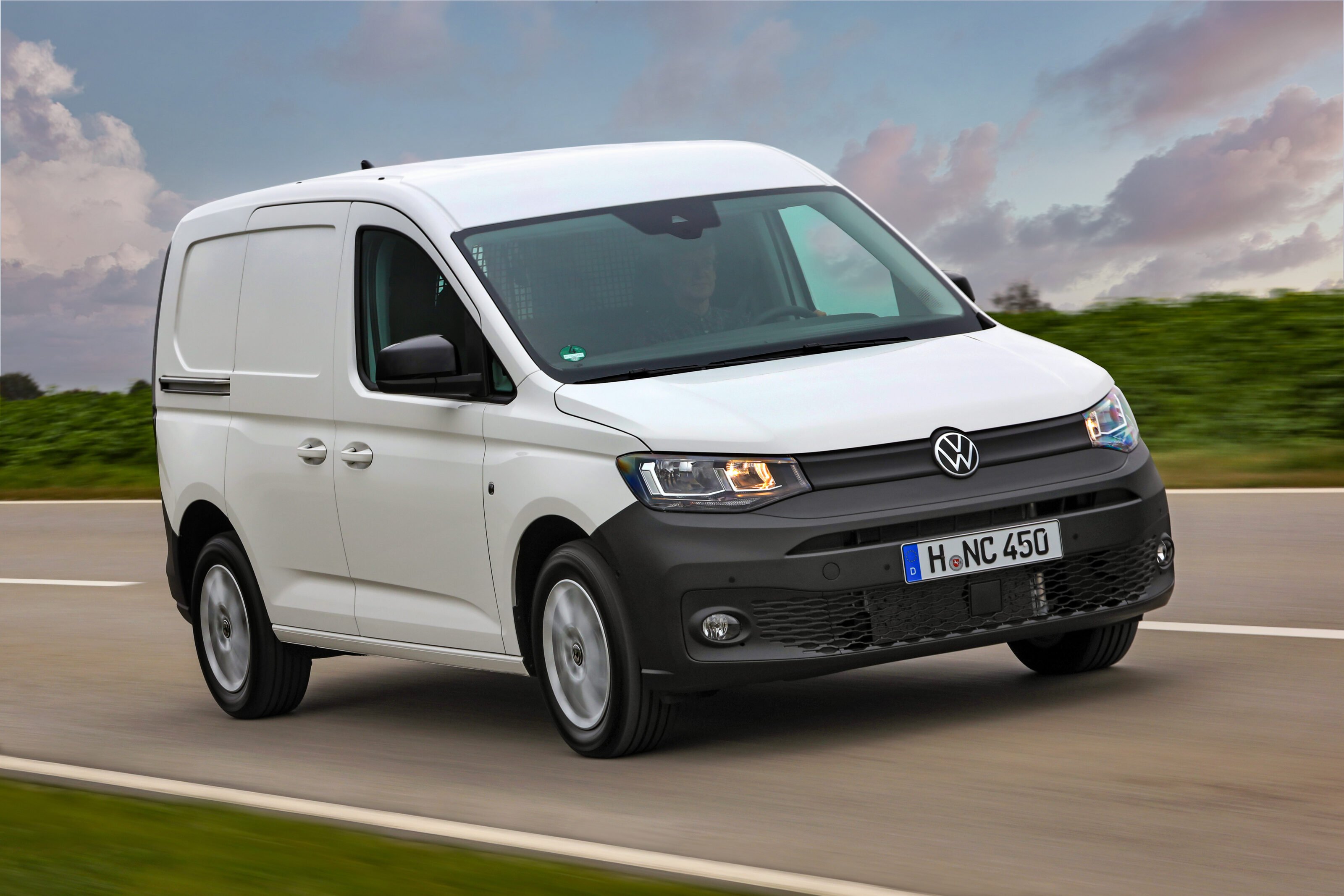
First up, the commercial variants, which will be used in daily work life, are available in one of two wheelbases – with two engine choices.
| Model | Price |
|---|---|
| Caddy Cargo TSI220 manual | $34,990 |
| Caddy Cargo TDI280 manual | $36,990 |
| Caddy Cargo Maxi TSI220 manual | $36,990 |
| Caddy Cargo TSI220 auto | $37,990 |
| Caddy Cargo Maxi TDI280 manual | $38,990 |
| Caddy Cargo TDI320 auto | $39,990 |
| Caddy Cargo Maxi TSI220 auto | $39,990 |
| Caddy Cargo Maxi TDI320 auto | $41,990 |
| Caddy Crewvan TSI220 auto | $43,990 |
| Caddy Crewvan TDI320 auto | $45,990 |
Volkswagen also offers a dual-use Caddy Crewvan, based on the commercial variants but with five seats rather than two.
Three people-mover trims are also offered, providing a touch of extra luxury and seven seats for a higher cost.
| Model | Price |
|---|---|
| Caddy Maxi TSI220 auto | $46,140 |
| Caddy Maxi TDI320 auto | $48,140 |
| Caddy Life Maxi TSI220 auto | $50,640 |
| Caddy Life Maxi TDI320 auto | $52,640 |
| Caddy California TSI220 auto | $55,690 |
| Caddy California TDI320 auto | $57,690 |
Note: All prices exclude on-road costs.
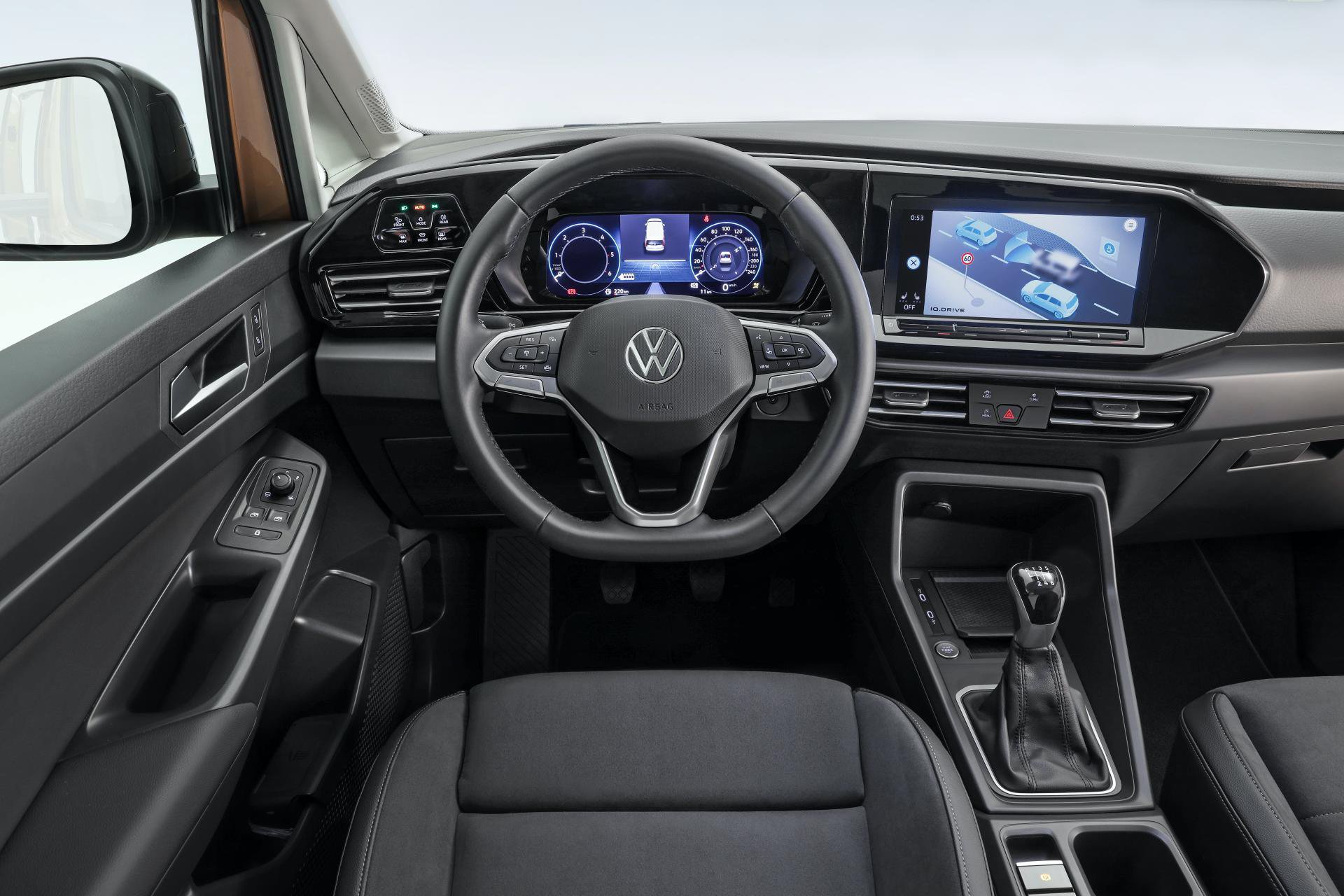
Features
The four Cargo variants each include the same level of standard equipment such as:
- Shift-by-wire technology
- Rear view camera system with park distance control in rear
- H7 headlamps with headlight range control, automatic control and daytime running lights
- Rear combination lamps
- Autonomous emergency braking front assist
- Cruise control system including speed limiter
- Electric parking brake with auto hold function
- Driver fatigue alert system
- Single passenger side cargo cabin sliding door (dual-sliding doors standard on Maxi)
- Rear wing doors with window apertures asymmetric split
- Central locking system allowing separate cabin and cargo locking
- 8.25-inch ‘Composition’ radio with colour touchscreen and app connect
- Leather wrapped multifunction steering wheel
- LED interior lights in cabin and rear cab
- 12V sockets in driver and rear cabin
- Multi-function display plus
- Two USB-C ports.
- Three removable seats in the second row (2+1)
- Curtain airbags for outer seats in second row
- Child seat anchors (except centre seat) and top tether on all seats in passenger cabin
- Lane assist
- Oncoming vehicle braking when turning
- Power-adjustable and heated mirrors
- Height adjustable driver’s and passenger seat with four-way power-adjustable lumbar support.
- Two removable third-row seats
- Auto emergency braking front assist with pedestrian and cyclist monitoring
- Lane change system side assist including blind-spot monitor and rear traffic alert
- LED reading light in passenger compartment
- LED tailgate surround lighting
- Luggage compartment cover, folding and removable
- Door trim panel in plastic with armrest in fabric
- Black painted exterior mirror housings, body-coloured door handles and silver sliding door rail
- Tailgate with window aperture.
On top of the Maxi, the Life scores:
- ‘Trialog’ premium seat trim
- Multi-colour digital cockpit
- Air care ‘Climatronic’ with dual-zone automatic climate control with allergen filter
- Central locking system with keyless start
- Auto dimming breakaway interior rearview mirror
- Windshield wiper intermittent control with light and rain sensor
- Two 12-volt outlets, one in the load compartment and one in the dashboard
- Tailgate with window aperture and with power latching
- 17-inch ‘Barahona’ alloys, brilliant silver
- Black roof rails
- Automatic headlight control with separate daytime running lights and entry and exit lighting
- Comfort drive travel assist, lane keeping system lane assist and emergency assist
- Park assist and park distance control in front and rear
- Adaptive cruise control (with follow to stop for automatic transmission) incl. speed limiter.
- 17-inch ‘Colombo’ alloys in gloss black
- Heat-insulating front side windows, 74 per cent light-absorbing glass in rear side windows and rear window
- Foldable bed
- Storage bags for the rear side windows
- Darkening covers
- Dimmable LED lights
- LED lights in tailgate
- Two ventilation grids with integrated fly screens
- Foldable table and two chairs.

Engine and drivetrain
Opening the Caddy range is the TSI220, which features a 1.5-litre turbocharged petrol four-cylinder engine with 84kW and 220Nm, available with either a six-speed manual or seven-speed dual-clutch ‘DSG’ automatic transmission powering the front wheels.
A choice of two 2.0-litre four-cylinder turbocharged diesel engines are offered across the Caddy range, although the lower-spec TDI280 only features in the Cargo variants, making 75kW of power and 280Nm of torque with power being sent to the front wheels through a six-speed manual gearbox.
Also available in Cargo guise but standard across the passenger variants of the Caddy, the TDI320 engine puts out an improved 90kW and 320Nm, mated exclusively to a seven-speed dual-clutch automatic transmission.
Dimensions
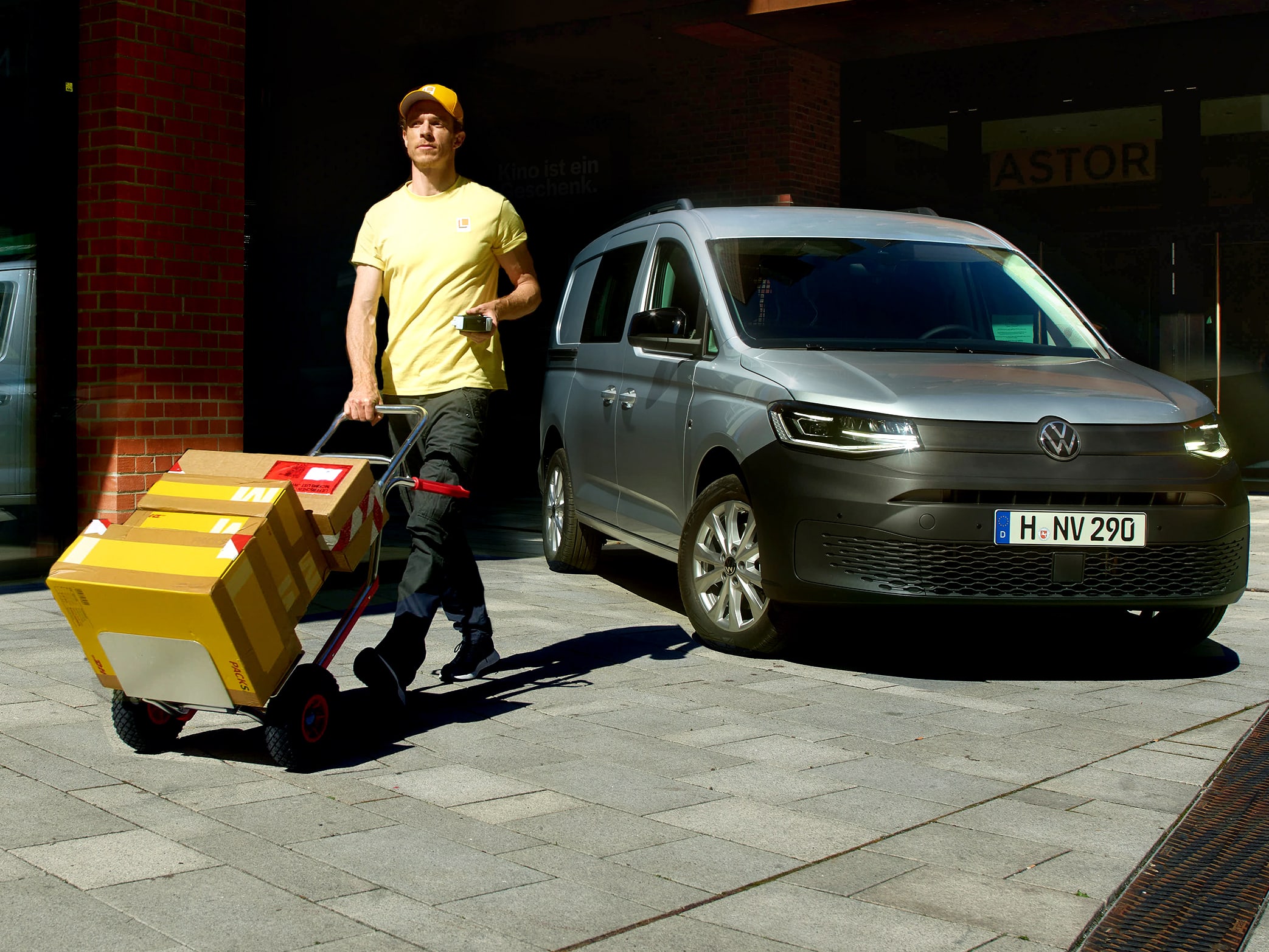
Available as either the standard short wheelbase or the Maxi long-wheelbase, exterior and interior dimensions vary between the two bodies.
| u00a0 | Length (mm)u00a0 | Width (mm) | Height (mm) | Wheelbase (mm) | Payload (kg) | Boot space (L) |
|---|---|---|---|---|---|---|
| SWB | 4500 | 1855 | 1856 | 2755 | 724 | 3100 |
| LWB | 4853 | 1855 | 1860 | 2970 | 754 | 3700 |
Warranty and servicing
The Caddy is covered by Volkswagen’s five-year/unlimited-kilometre warranty which includes a 12 month membership to Volkswagen Roadside Assist.
A choice of three and five-year service packs are also available, with the three-year/45,000km pack setting buyers back $1300 – saving around $246-$265 – while the five-year/75,000km pack costs $2100, including the first service free, costing between $631-$669 less than if it’s not optioned.
Availability
The 2022 Volkswagen Caddy is currently on sale and available at dealerships across Australia.
The 2022 Volkswagen Caddy TSI220 has joined both the commercial van and people-mover line-ups in Australia.
Volkswagen quietly introduced the petrol option following the model’s local launch in August, with the TSI220 opening the Caddy range from $34,990 before on-road costs – taking the place of the TDI280, which has increased by $2000 to $36,990 before on-road costs.
Buyers now have the option of a 1.5-litre turbo-petrol four-cylinder engine producing 84kW and 220Nm, available with either a six-speed manual gearbox or a seven-speed dual-clutch DSG automatic transmission driving the front wheels.
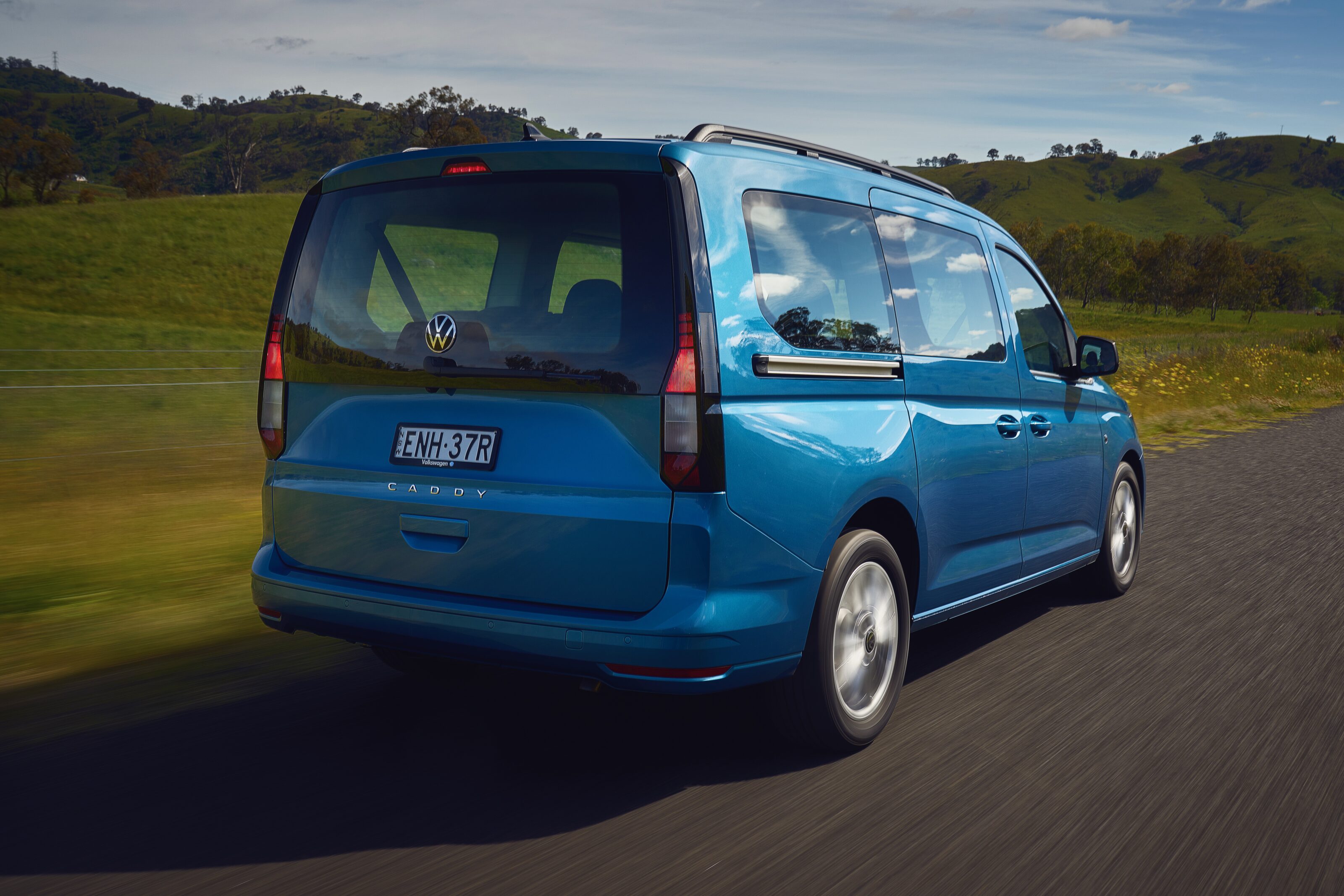
Fuel economy is claimed as 6.4L/100km for the manual, or 6.2L/100km for the auto, but requires 95RON premium unleaded petrol.
Payload and towing capacities vary slightly in some petrol variants when compared to their diesel counterparts, while gross vehicle mass (GVM) ratings are down by as much as 100kg.
You can read the full 2022 Volkswagen Caddy pricing and features story by clicking here.
New South Wales Highway Patrol is going to be a bit down today.
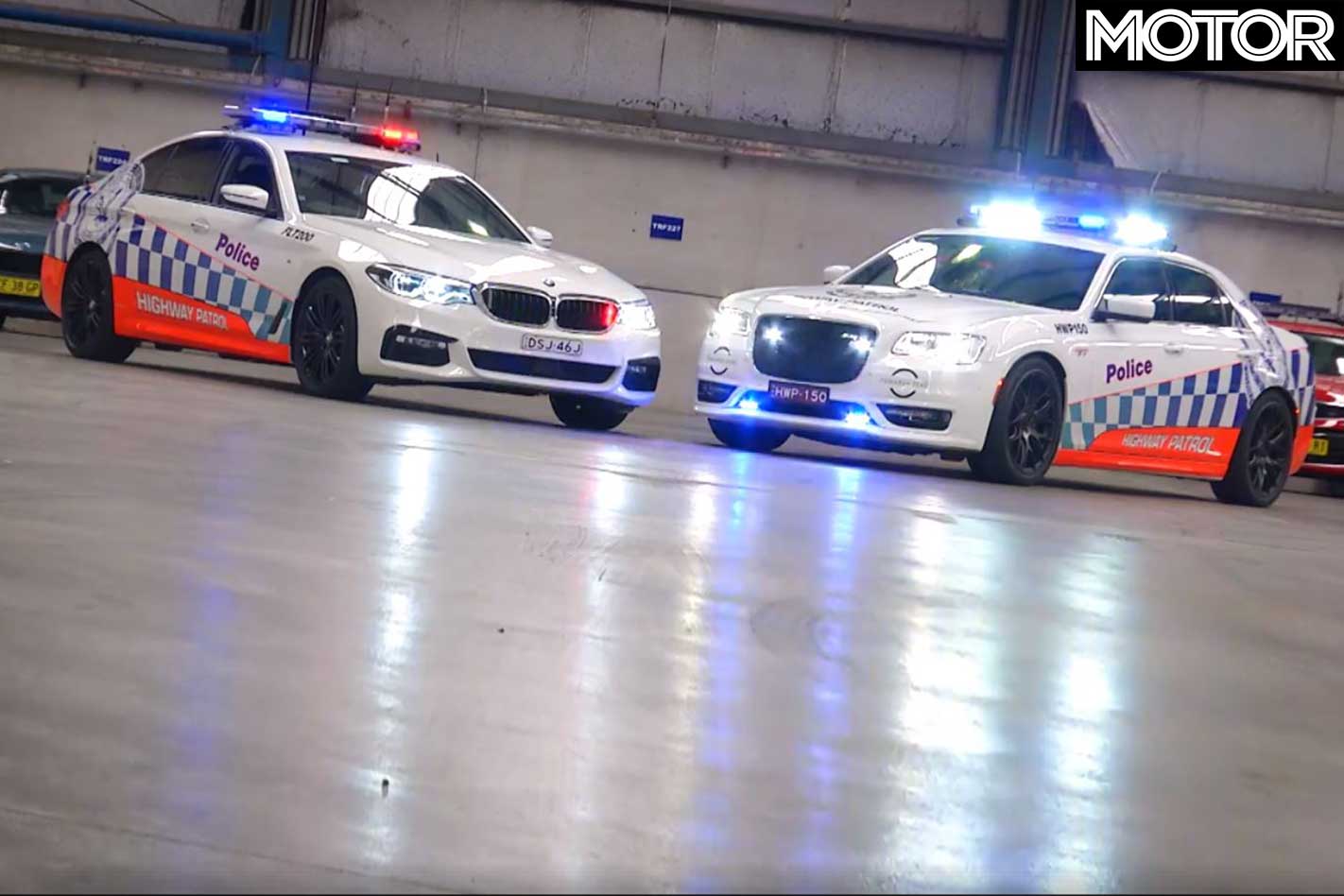
With Chrysler’s exit from the Australian market, they’ll be quietly retiring their 300 SRTs and instead having to increasingly look to diesel BMW 5s instead. For the rest of us? Well, that’s a bit more of a mixed picture.
Unlike General Motors and Ford, Chrysler wasn’t a company that could be relied upon to serve Aussie performance-car buyers a relatively consistent buffet of the good stuff.
Its most lasting legacy was the Valiant, the third wheel to the Holden Kingswood and Ford Falcon, with full local manufacturing operating out of South Australia’s Tonsley Park assembly plant and Lonsdale engine foundry.
The VE won Wheels magazine’s Car of the Year in 1967, but it was the 1971 Valiant Charger that really caught the imagination, at one point comprising 80 per cent of all Valiant production.
Even today, the 225kW developed by the Charger R/T E49 betters the 210kW generated by a contemporary Chrysler 300 V6. It took Porsche leaning on forced induction with its 911 Turbo in 1975 for any six-pot to better this power output.
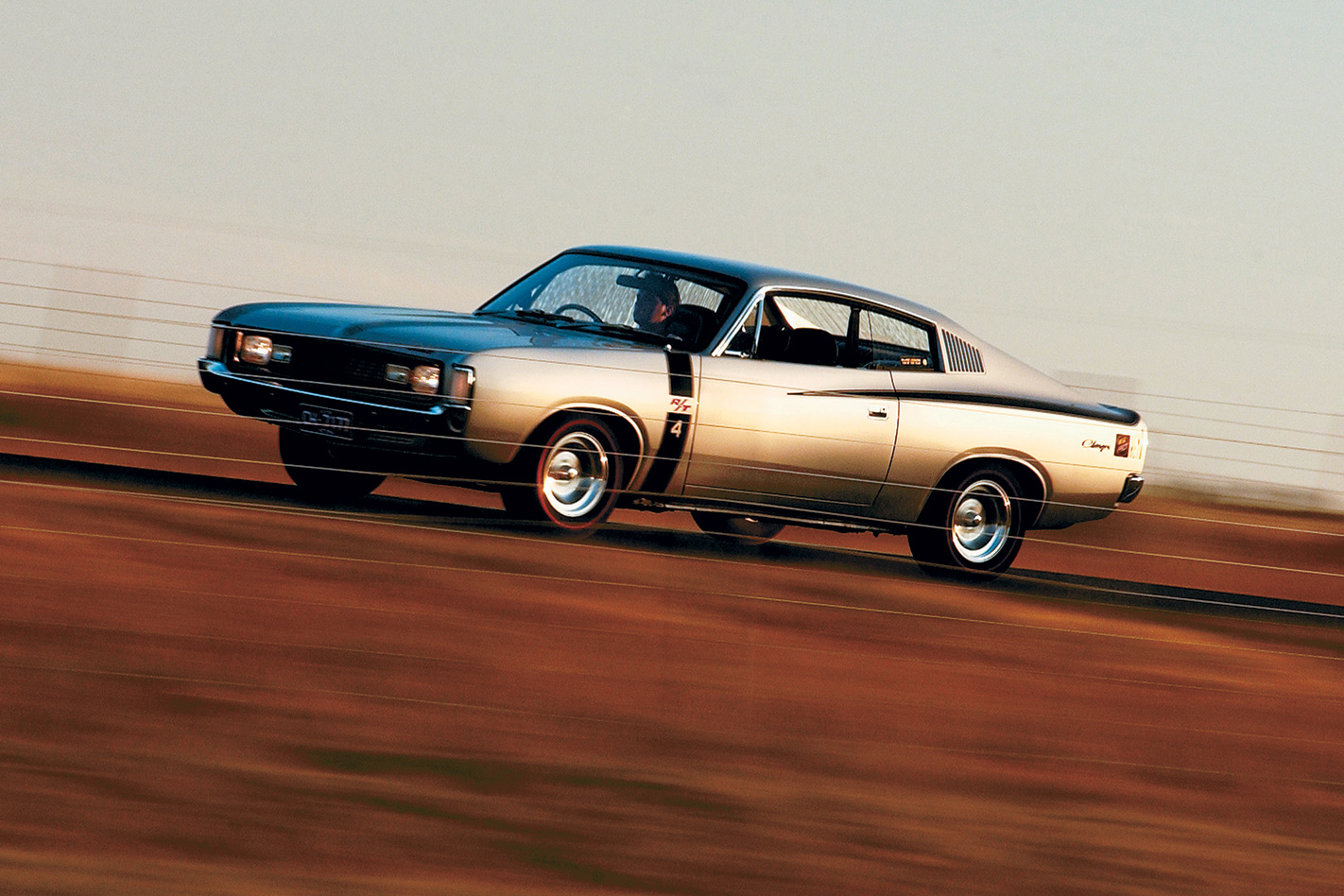
The Valiant was an icon, initially regarded as that little bit more premium than its direct Ford and Holden rivals and a good deal more progressive in its look and feel. Visions of a prototype E49 at the Weber factory in Italy only burnished its mystique.
Sadly, Chrysler never claimed the top spot at the Bathurst 1000, the company’s insistence that it would only rely on locally assembled engines meant that its 4.3-litre sixes were always up against it versus 5.75-litre Ford V8-powered rivals. Nevertheless, a podium in 1972 was a creditable outcome.
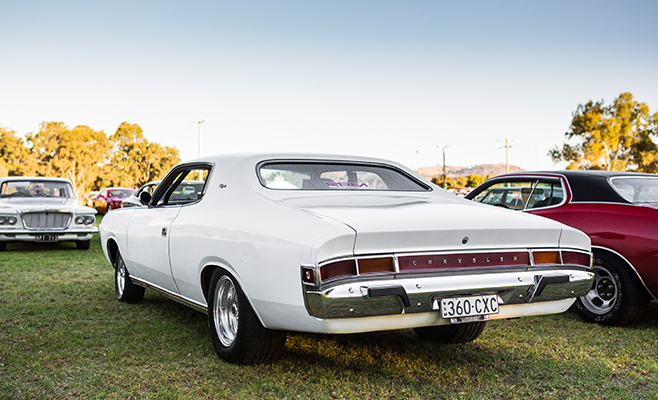
Mitsubishi took over Chrysler in 1980, acquiring a 99 per cent stake. When Valiant production ceased in August 1981, Chrysler-Mitsubishi focused attention on the Magna instead, upsizing a Japanese car rather than attempting to manage the dimensions of American market cars for Australian tastes.
The badge took some time to return, reintroducing the Dodge brand, and then acquired first by Daimler in 1998 – in the disastrous so-called ‘merger of equals’ – and then by Fiat in 2008.
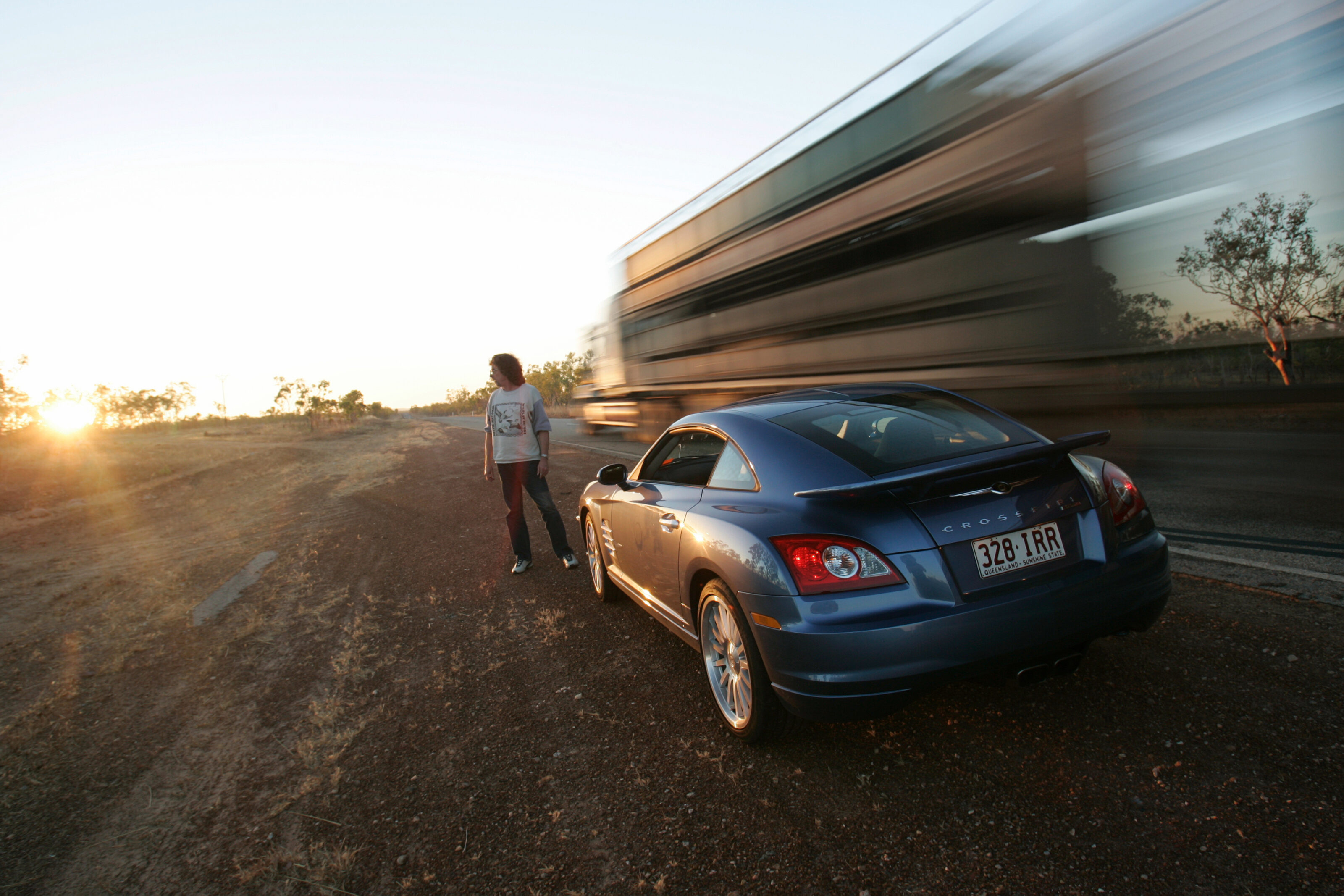
Here in Australia the pickings were slim. We got the Crossfire SRT-6, which was never a great car, but one that is often unfairly maligned. Based on a Mercedes-Benz SLK 32 AMG, it had plenty of power, but the styling polarised and the Merc-sourced cabin plastics were painted silver, delivering pure LAX-hire car chintz in the process.
It was the V8-engined versions of the 300C/300 that did most of the heavy lifting for Aussie performance-car fans. A big-hearted, loveable barge with an engine that was overflowing with character, it remained one of the few atmo V8 rivals to the all-conquering Mustang and despite its dynamic flaws, it was a perennial MOTOR favourite.
Perhaps things could have been different for Chrysler if we got a consistent right-hand drive supply of the good stuff: the Vipers, the Chargers, the Challengers and so on.
Had the SRT division, founded in 1989, really been let off the leash, then perhaps Plymouth Prowlers and Dodge Vipers would have proven a hit with Aussie buyers.
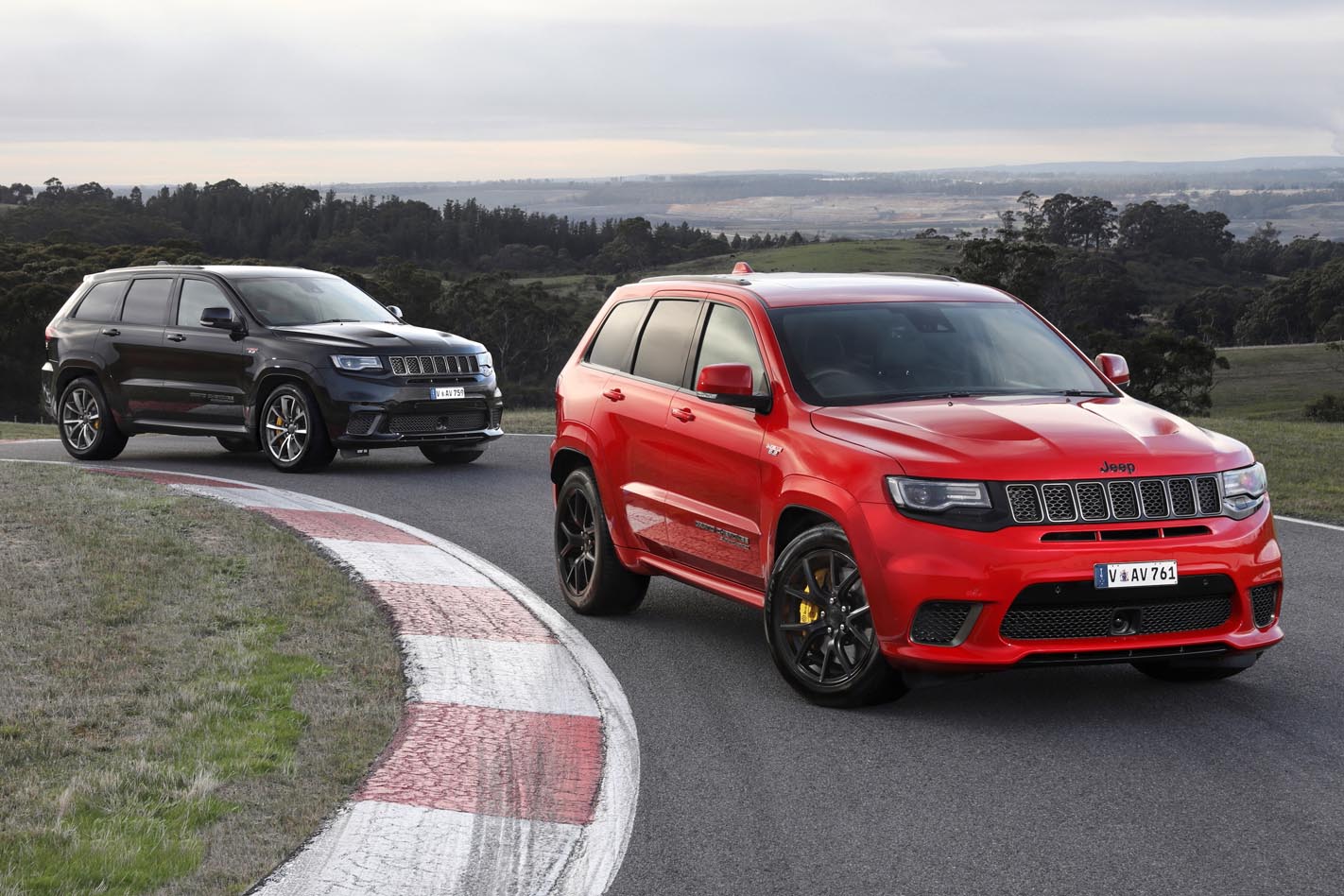
After all, it was clear from the take up of Grand Cherokee Trackhawk that too much power just isn’t an issue for Aussie revheads.
Back in February, new owner Stellantis put out a statement that we should have realised was the beginning of the end for performance Chrysler products in Australia.
“All of the core elements of the SRT performance engineering team have been integrated into our company’s global engineering organization [sic],” the statement said.
“This action will have the two-way benefit of ensuring that our brands’ SRT and performance-focused product offerings continue to meet the highest quality standards and expectations, while delivering key learnings from motorsports and other high-performance-technology applications across a wider mix of our company’s product lines.”
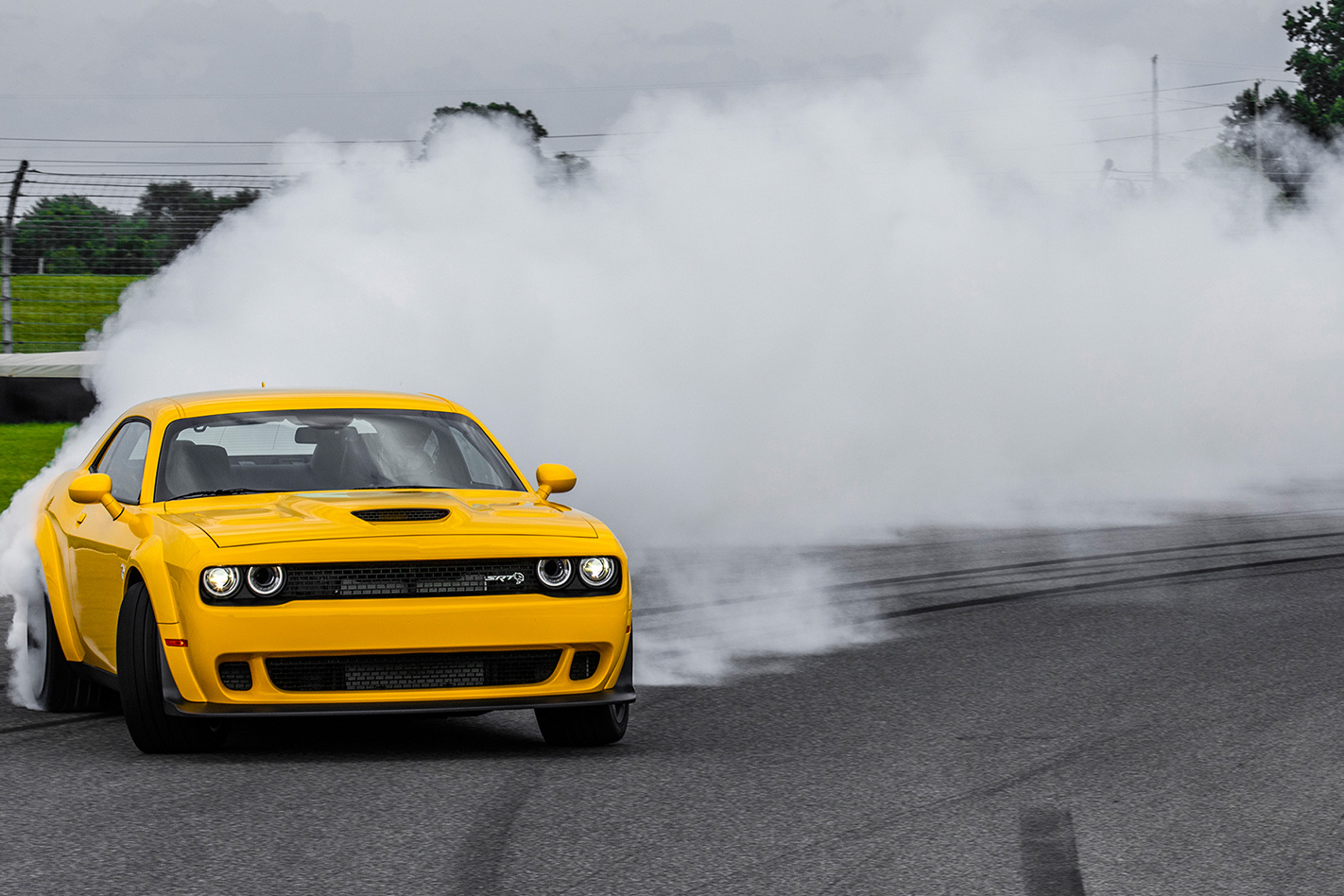
That came on the back of a statement in July 2020 from Tim Kuniskis, Chrysler’s brand chief executive officer and the man who helped bring us the 527kW supercharged Hemi-powered Hellcat Challenger and Charger in 2015, who went on record to say future performance cars from Mopar will have some form of electric assistance.
So, as Chrysler shutters its operation in Australia, selling just a trickle of 300 models, it may well be a case of farewell rather than goodbye. The company has been here before and come back.
While the performance car market is changing at a dizzying pace, this country remains a fertile market for honest-to-goodness horsepower in any form. Building the product may not be too difficult. What will be a bigger challenge would be re-establishing Chrysler as a brand that holds any equity or means something to a new generation of performance-car fans.
For the time being, one of the stars in Stellantis’s galaxy of brands just blinked out, in these southern skies at least.
