
Lang Lang is for sale again, following the release of an information memorandum by a commercial real estate group on behalf of VinFast.
Less than 12 months after VinFast purchased the former Holden proving ground, the Vietnamese car company has abandoned plans to develop its cars in Australia – walking away from the multi-million dollar property in Melbourne’s south east.
Agent Coldwell Banker Richard Ellis (CBRE) says it is accepting expressions of interest for the 877-hectare site for three weeks, unless sold prior.
VinFast purchased the facility for $36.3 million in late 2020 after setting up a technical centre in Port Melbourne, comprising many former Holden engineers. But the company shut down the engineering hub in May this year, with up to 90 employees offered the choice of a redundancy or a job at VinFast headquarters in Vietnam.
“The Lang Lang proving ground is one of the most-advanced facilities of its type in the world, with an expansive road network and improvements including a dedicated emissions-testing facility,” CBRE’s Stephen Adgemis said.
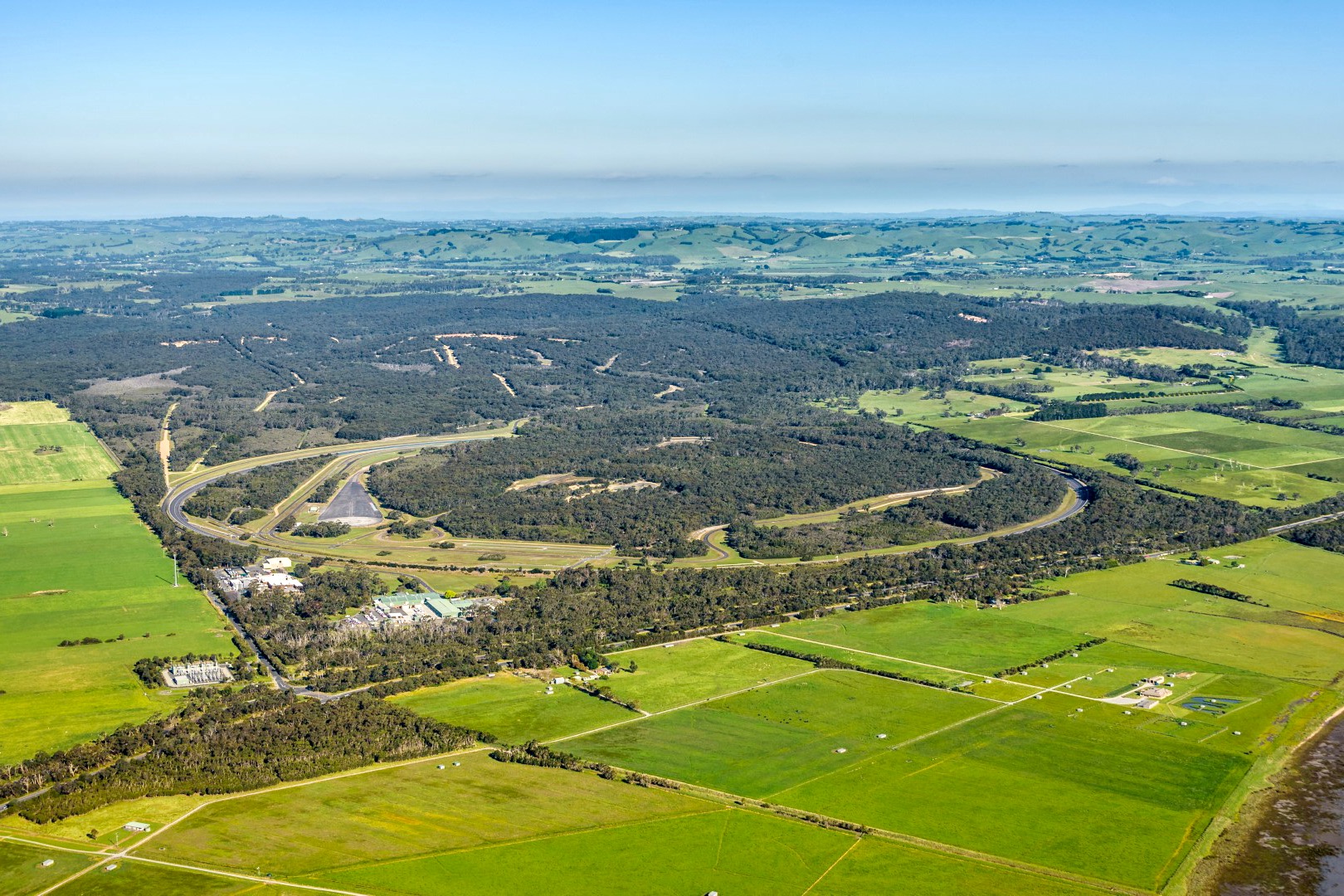
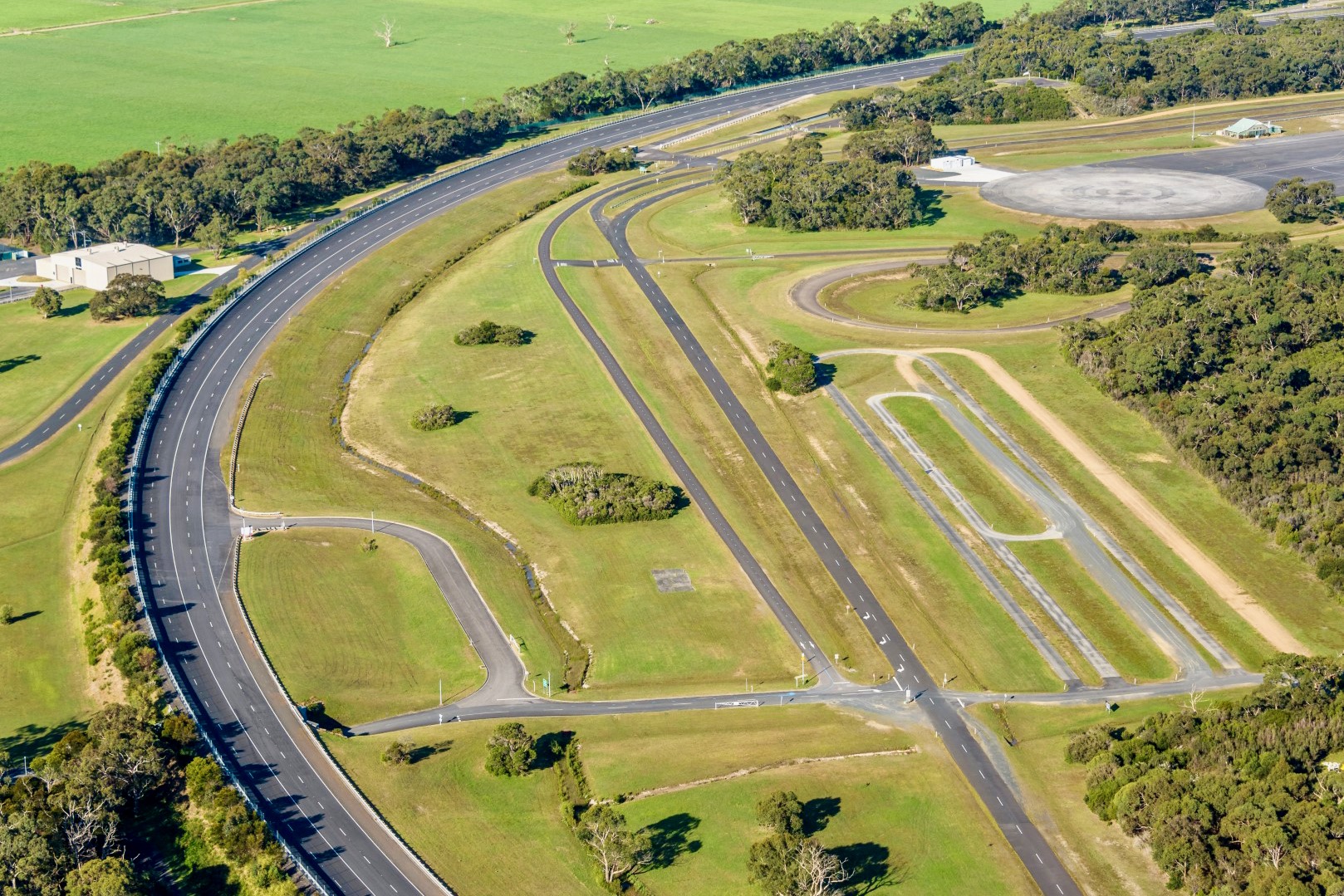
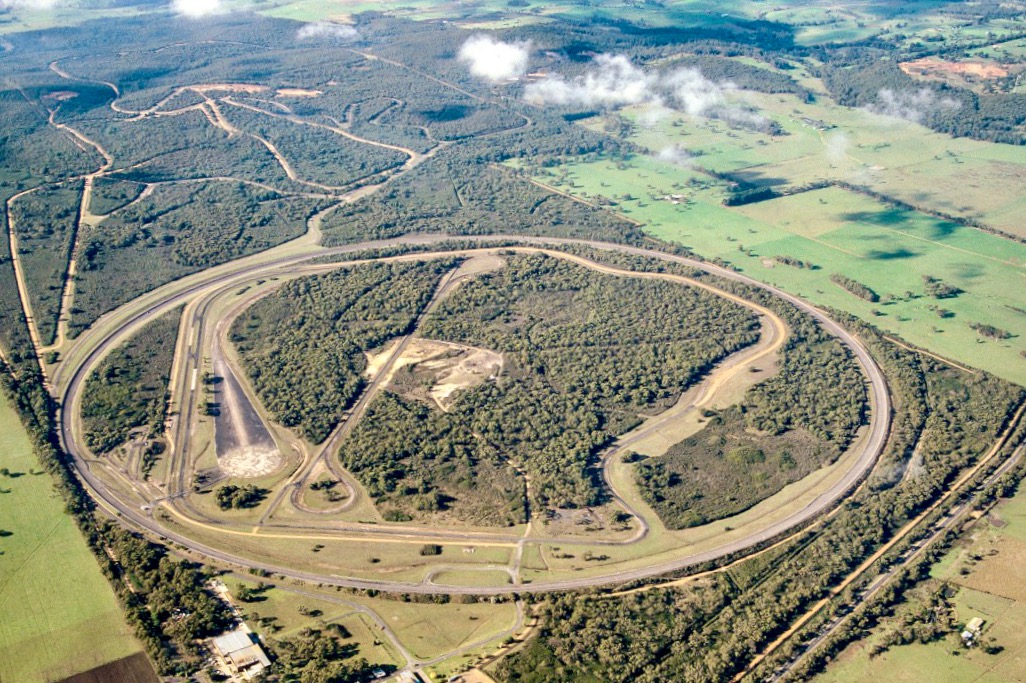
The site features 44 kilometres of test tracks, including; sealed and unsealed roads, an off-road course, and a banked, high-speed oval – with Holden spending $15.9 million on upgrading the facility in 2018, following an $8.7 million investment by General Motors two years earlier.
“It holds a unique place in Australian motoring history, and the fundamentals that made it so successful for General Motors and Holden, and attracted VinFast to the property, still ring true,” Adgemis added.
It’s understood there are 58 staff members at the Lang Lang proving ground, with the local council saying it is working with the Federal Government to provide support for the employees.
“The loss of another operator at the facility will have significant impacts on the local economy with the current operation contributing approximately $30 million in economic output each year,” the Bass Coast Council wrote on its website.
“There is extensive native vegetation and Council is aware of the community interest to protect the environmental significance of the site.”
In mid 2020, Bass Coast councillors unanimously supported a motion asking the Victorian Government to purchase the site due to its “environmental, cultural and coastal habitat values,” the Bass Coast Post wrote at the time.
The 18km of perimeter fencing around the secret testing facility – established by Holden in 1958 – helped to preserve coastal forest, which is home to several rare and endangered native species, including the Powerful Owl, Southern Toadlet, White-footed Dunnart, Swift Parrot, and both the Long-Nosed and Southern Brown Bandicoots.
“The property has been fenced off for over 60 years in order to keep Holden’s practices private and keep out journalists,” a report from the Victorian National Parks Association (VNPA) wrote in August.
“However, the fence has also provided protection from introduced predator species such as foxes and cats, allowing the native species present within the grounds to thrive.”
VNPA Nature Campaigner Jordan Crook says poor planning could lead to the extinction of the iconic species: “In one of the most cleared regions in the most cleared state in Australia, the Western Port Woodlands corridor is an oasis of bushland. This makes it vital to a diverse range of native plants and animals that call the area home.”
One of the key recommendations in the report is that the State Government should “investigate future purchase of all or parts of the site to protect high conservation values and wildlife corridors”.
CBRE is conducting an Expressions of Interest campaign, closing on November 18, 2021. Interested parties can contact Dean Hunt or Stephen Adgemis at CBRE for more information.
Wheels has contacted the Victorian Government for comment.
Snapshot
- Mach-E now produced in Chongqing
- Online-only sales model adopted
- Mustang EV is outselling ICE variants in the United States
Ford’s first Chinese-made Mustang Mach-E has rolled off the production line in Chongqing, signalling the first appearance of the nameplate in the country.
Built in a joint venture with Chinese manufacturer Changan, Ford will avoid any local tariffs on foreign-made vehicles thanks to the partnership, allowing it to capitalise on a market which is booming with electric vehicles.
Set to be sold directly to customers through an online store, the Blue Oval’s first passenger electric vehicle is available in four variants for the Chinese market – Mustang Mach-E GT First Edition, GT rear-drive and rear-drive luxury versions (both long range) and Yueshi rear-drive version (standard range).
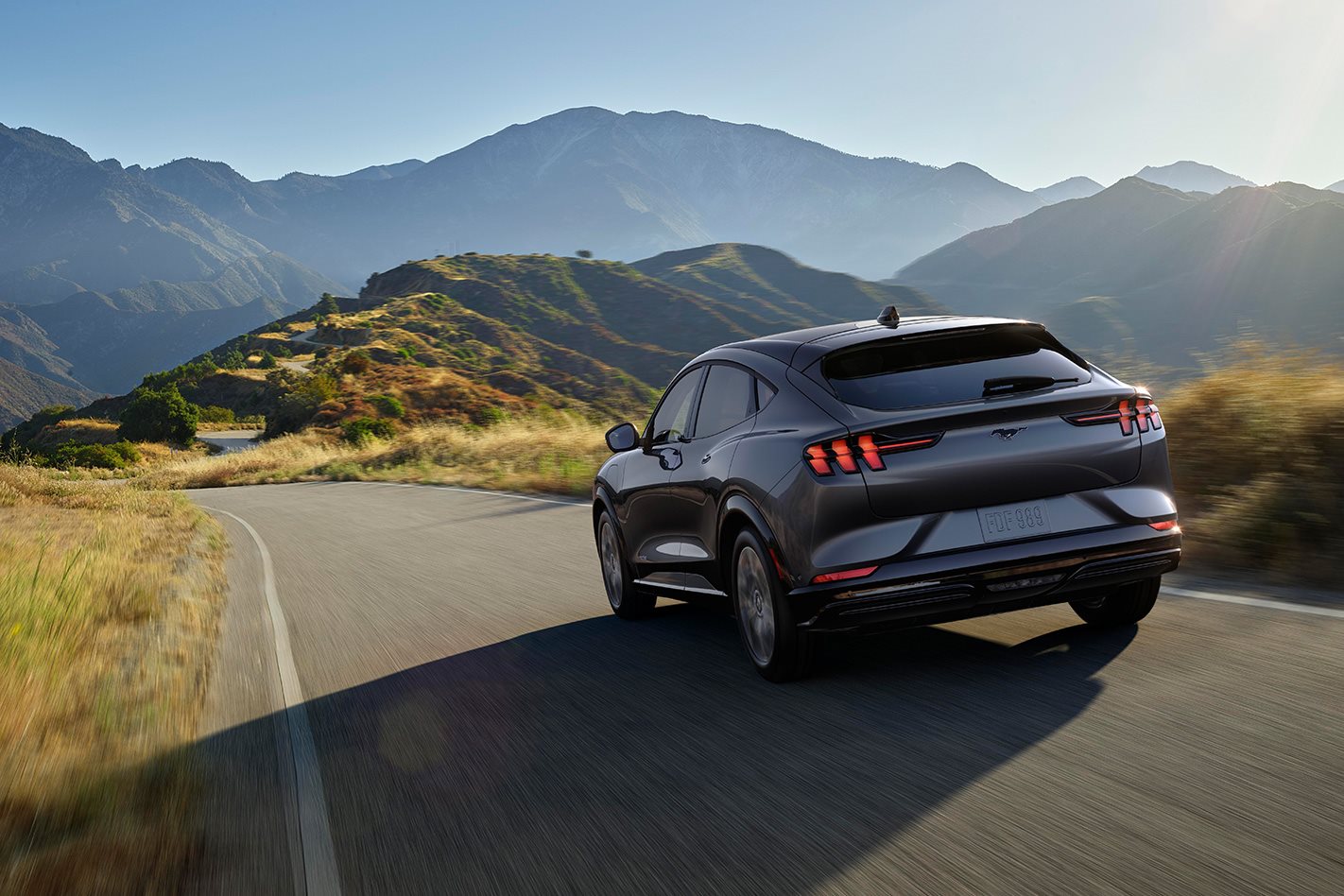
Mustang Mach-E prices in China range between 265,000 Chinese Yuan (AU$55,350) for the entry-level variant, up to 379,900 Yuan (AU$79,350) in range-topping guise – both around the same cost as an Australian delivered Tesla Model 3, which is also produced in China.
The Mustang Mach-E’s popularity has seen it rack up 18,855 sales in the United States to the end of September 2021, under half the 41,035 units shifted of the internal combustion powered Mustang – but ahead of some individual variants.
Despite its popularity, Ford Australia has previously said it will not be bringing the EV to the local market, instead focusing on the E-Transit and electrified versions of existing models.
Electric cars can be cheaper to run than their petrol- and diesel-powered counterparts, but only if you’re in a country with friendly policies.
While one study found Australians could be waiting up to 16 years to reap any cost benefit from driving an electric vehicle (EV), a similar study out of Germany found many battery-powered cars are cheaper per kilometre driven than models fitted with combustion engines.
In a comparison of costs and emissions over an 18-year period, research conducted by Compare the Market showed a Hyundai Kona is cheaper to run with a petrol engine than it is with an electric powertrain.
The Kona is one of the few cars available to be purchased as either a fully-electric or petrol-only model in Australia – while in other markets, the Hyundai can be optioned with either a petrol-electric hybrid engine, or a mild-hybrid diesel engine.
Europe’s largest motoring association, the General German Automobile Club (ADAC), compared all variants of the Kona, and found the pure-electric model was cheaper to run than all other powertrain options over 10,000, 15,000, 20,000, and 30,000 kilometres.
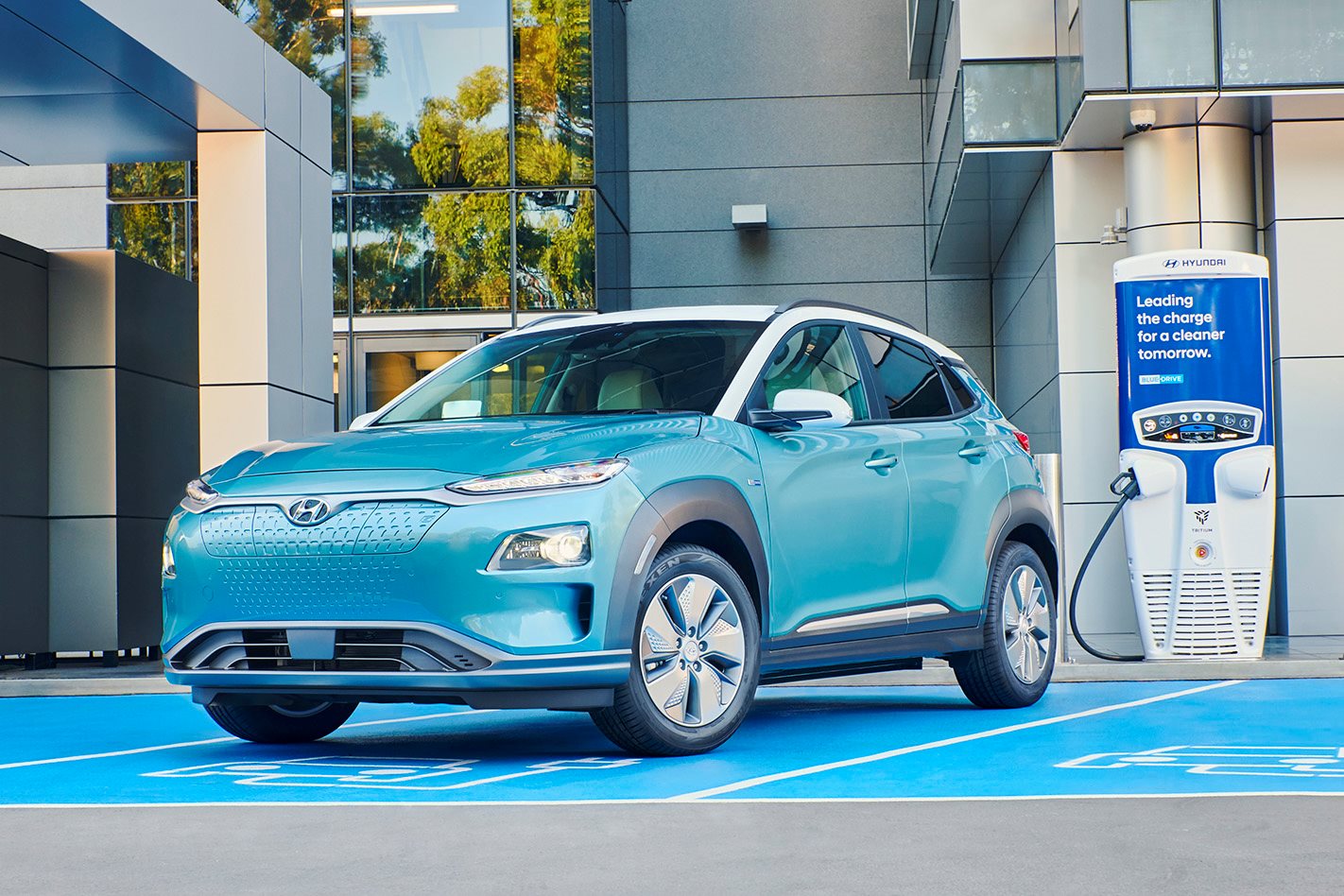
However, ADAC found that if a discount of 15 per cent was applied to the cost of the petrol-powered Kona, it would be overall cheaper to run per kilometre than its battery-powered version.
The discrepancies appear to mainly lie at the feet of government policy. In Germany, new-car buyers enjoy a €9000 (AU$14,000) rebate when purchasing an EV, as well as other tax and registration incentives.
By comparison, Australian EV buyers can pay as many as four taxes before the vehicle has left the dealership – and that’s not even taking into account registration fees and state-based road-user charges.
Brand-new cars are hit with a federal tariff when they land in Australia – excluding those from countries we share a free-trade agreement with, such as Japan and South Korea – before GST and stamp duty are applied.
For fuel-efficient vehicles above $79,659, buyers also pay a 33 per cent Luxury Car Tax for every dollar above the threshold. That figure drops to $69,152 for cars with fuel consumption ratings above 7L/100km.
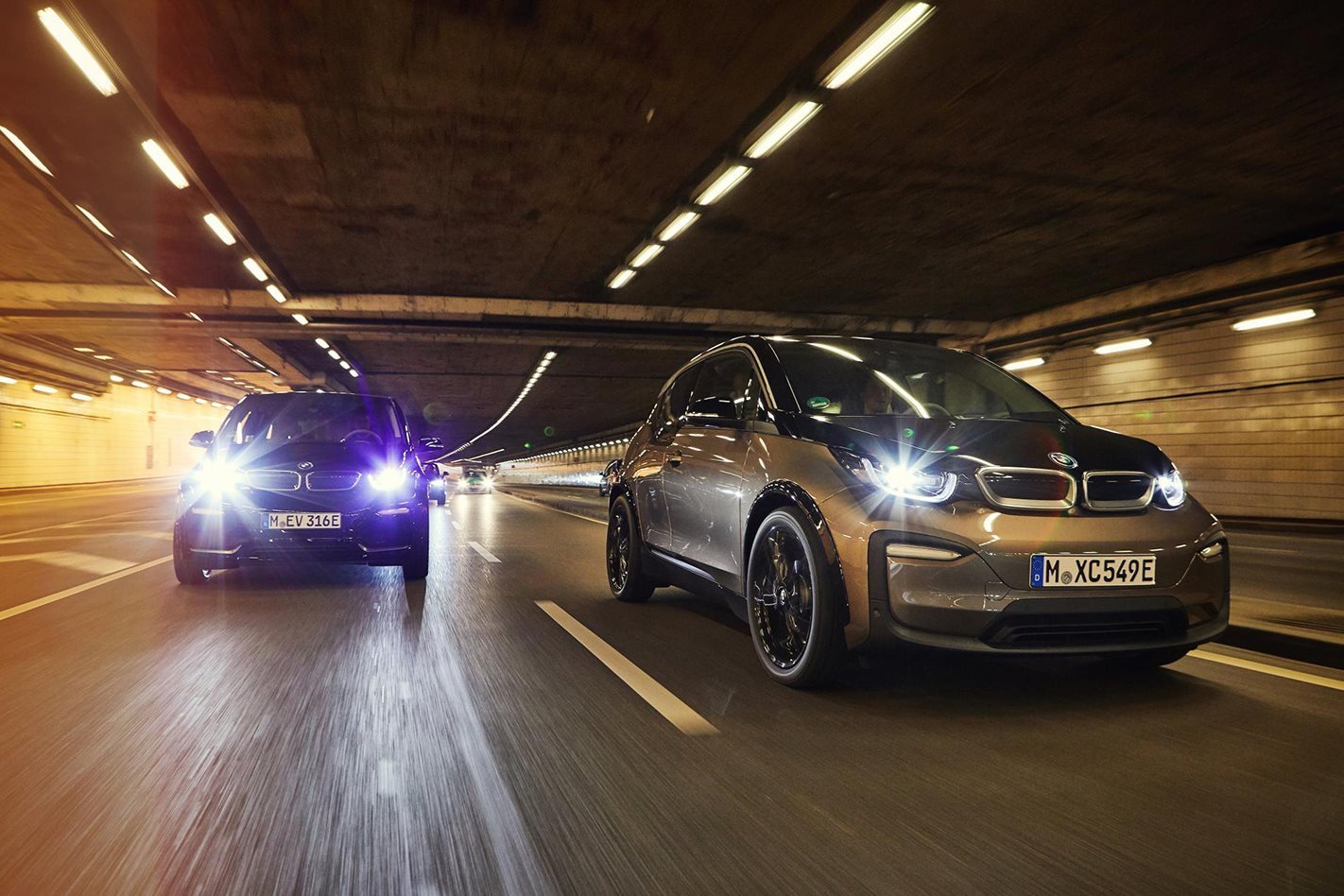
In July, the Victorian Government also introduced the ZLEV (zero- and low-emission vehicle) road-user charge, requiring owners of electric and plug-in hybrid cars to report their odometer readings, who are then charged at 2.5c and 2c per kilometre respectively.
At the time, the road-user charge was justified as a way to recoup lost revenue from the federal fuel excise – though Victorian plug-in hybrid owners now pay both taxes.
A group of 25 businesses and environmental organisations, including Hyundai, Volkswagen, and Uber, labelled the move the “worst electric vehicle policy in the world”.
As part of a $100 million package to help encourage the take up of zero-emission vehicles, the Victorian Government has provided a $3000 subsidy for EVs costing up to $68,740, limited to 20,000 purchases made before June 30, 2024.
“The incentives package for electric vehicles is consistent with actions being taken by governments across the world. However, it does bring into question the decision of the Victorian Government to also introduce legislation that targets a road-user charge on electric and plug in hybrid vehicles,” Tony Weber, Chief Executive of the Federal Chamber of Automotive Industries, said at the time.
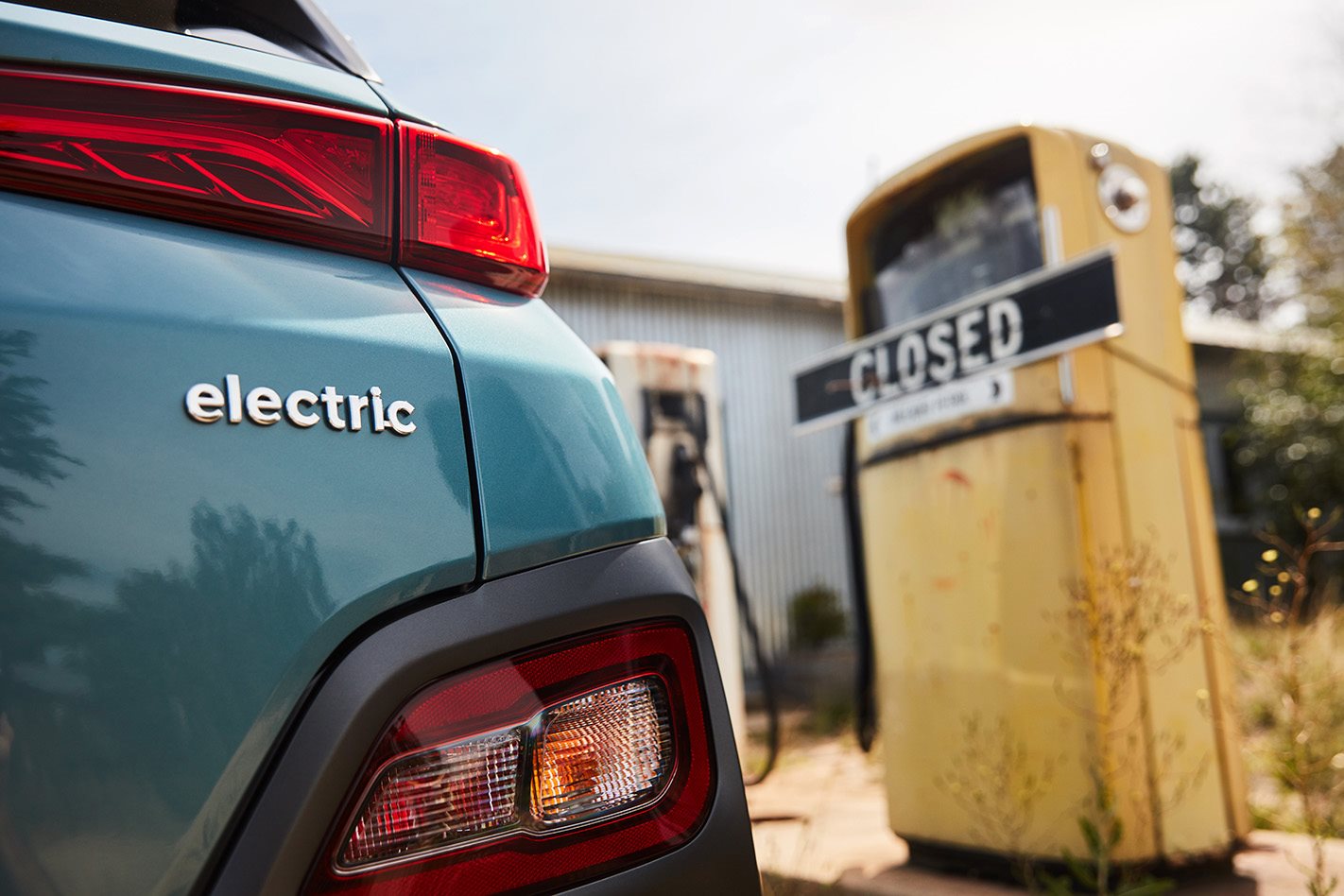
“Road user charging decisions should not be based around specific technologies and particularly those that are in their relative infancy in the Australian market.”
Meanwhile, nearly 80 per cent of all cars sold in Norway during September were fully-electric, according to Reuters, with the achievement credited to the country’s policy of exempting EVs from taxes. It’s expected the country will achieve 100 per cent EV sales in early 2022.
But while the cost benefits of electric vehicles continue to be debated, the Australian study found EVs beat combustion vehicles for overall emissions output within two years, despite higher emissions being produced in the manufacture of EVs.
Touring car racing is currently in a precarious position. There has always been a chorus of annoyed punters who bemoan the lack of connection between their road cars and the ones racing on track. As a result, the cries at the loss of the adage ‘win on Sunday, sell on Monday’ is bandied around quicker than a hot chip to an unsuspecting mouth. Whether that view is right or wrong, if viewers aren’t engaging with modern racing, then the sport has a problem.
The flip side of the argument is that we do have production-car based classes that fans have been baying for in the comments section, but they go largely unwatched compared to the fully fledged alternative. The MRF Tyres Australian Production Car Series even has a halo event in the Bathurst 6 Hour that, despite being fully televised and with big-name drivers taking part, garners a fraction of the attention of the other races at The Mountain.
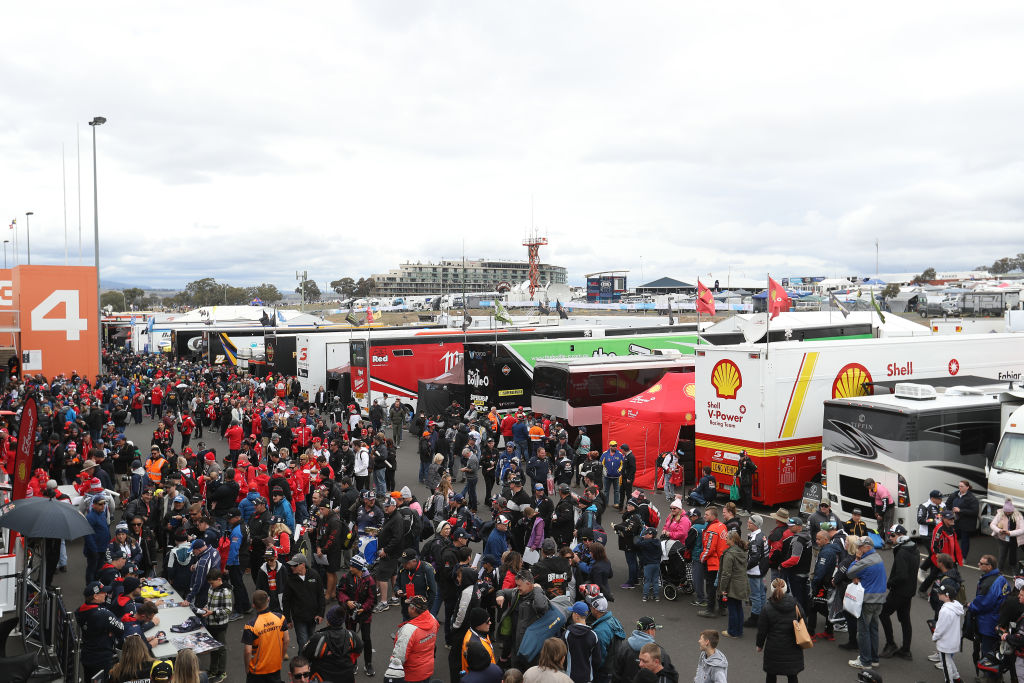
The field sees anything from HSVs to BMW M products, WRX STIs, Mitsubishi Evos and even Mercedes-AMG A45s tackle tracks around our country. It serves up diverse racing between road-based products – exactly what fans demand. As does the Australian Saloon Cars series, where six-cylinder powered EA and AU Falcons take on VN and VT Commodores. The cars are a little older, but it’s a different take on Blue versus Red, just with a lot less grunt.
Now, not to take anything away from these great categories as they add diversity to the Aussie touring car landscape. However, I’m a self-confessed touring car nut. Yet even I struggle to get excited about this type of racing and would only ever find myself watching the Production Car Series if attending the Shannons Nationals in person. The problem I now have is that I’m starting to feel the same way about the ‘real deal’. That being Supercars. Australia’s premier motorsport.
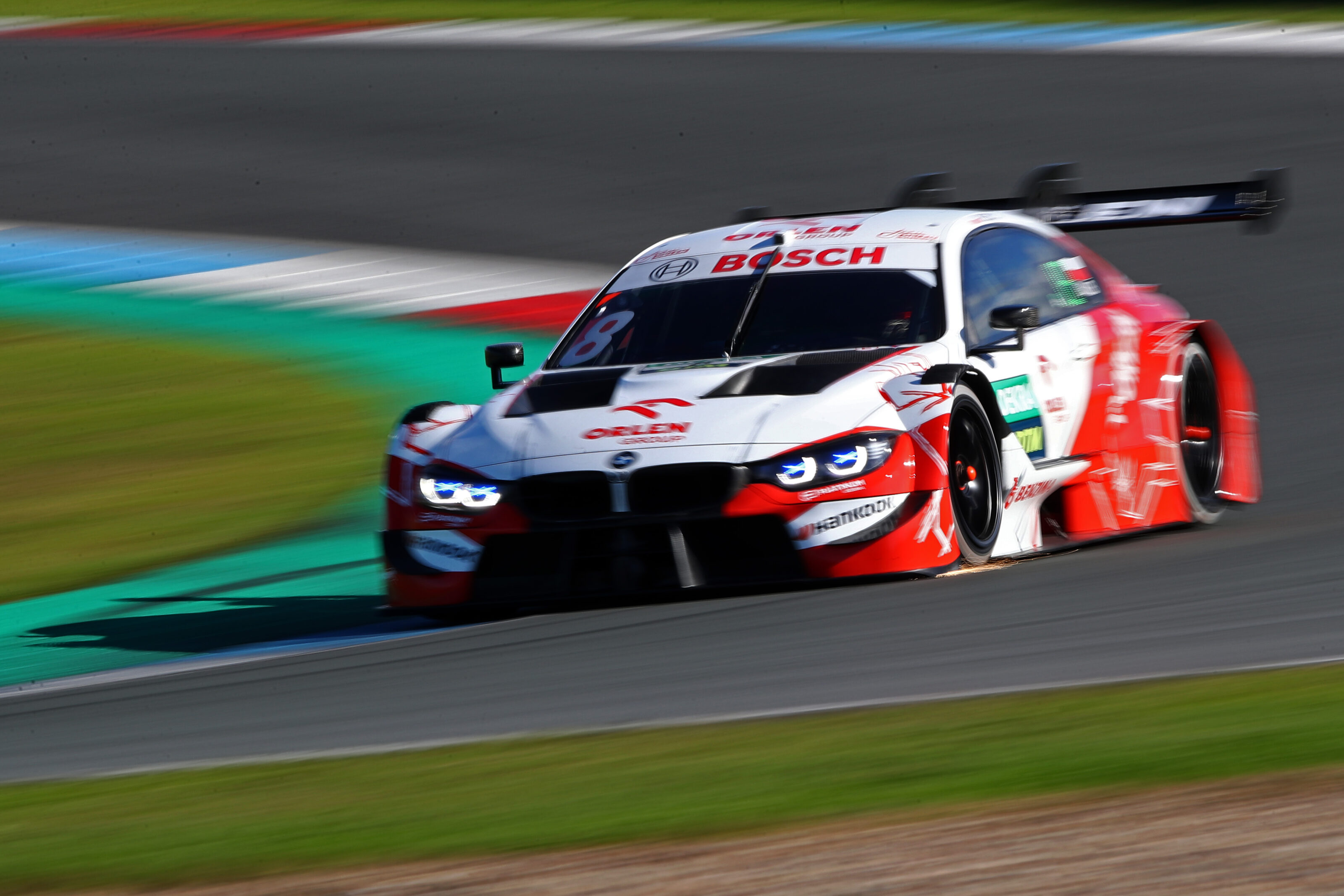
The issue is that modern tin-top categories like Supercars, and even Germany’s DTM, have been departing further from their respective road-car base. The search for ultimate on-track performance has led to technically advanced touring cars that while impressive, are so dependent on (and sensitive to) aerodynamics that overtaking has become an increased challenge.
Both categories are trying to fight this battle. Our home-grown series is in the process of transitioning to Gen3 rules (which will now debut in 2023) where the Ford Mustang and Chevrolet Camaro will more closely align with their showroom bases – both visually, and in terms of engine technology. There is also set to be a massive reduction in aerodynamic performance. Hallelujah!
DTM has already made the move from highly tuned four-cylinder turbo racers with F1-style DRS to the globally accepted GT3 formula, one that incorporates Balance of Performance (BoP) regulations. Such were the costs associated with the silhouette-style ‘Class One’ ruleset that DTM was forced to ditch its touring car roots and is now a totally GT-based formula. Well, at least the racers share a chassis and engines with road cars, and the aero isn’t so significant as to hamper close racing like before.
So, if highly evolved specialist touring cars and the juxtaposing production cars aren’t the right way forward, then what’s the solution? It’s clear that the former is resonating less with punters, yet ‘dumbing down’ touring cars to glorified production cars with roll cages and a few brake upgrades won’t cut it with hardcore fans, either. The answer comes by looking to history. Or, in my case, YouTube.
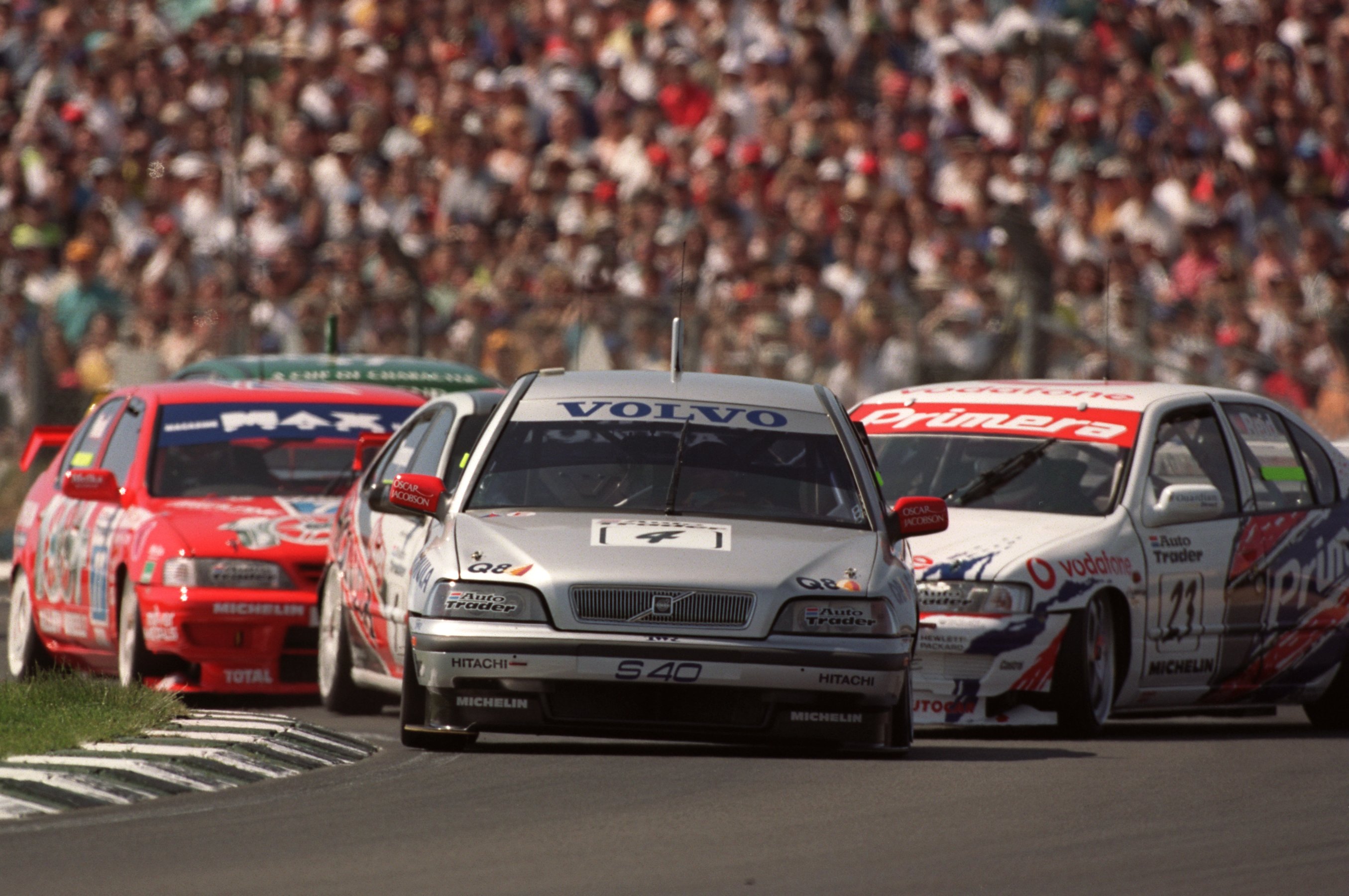
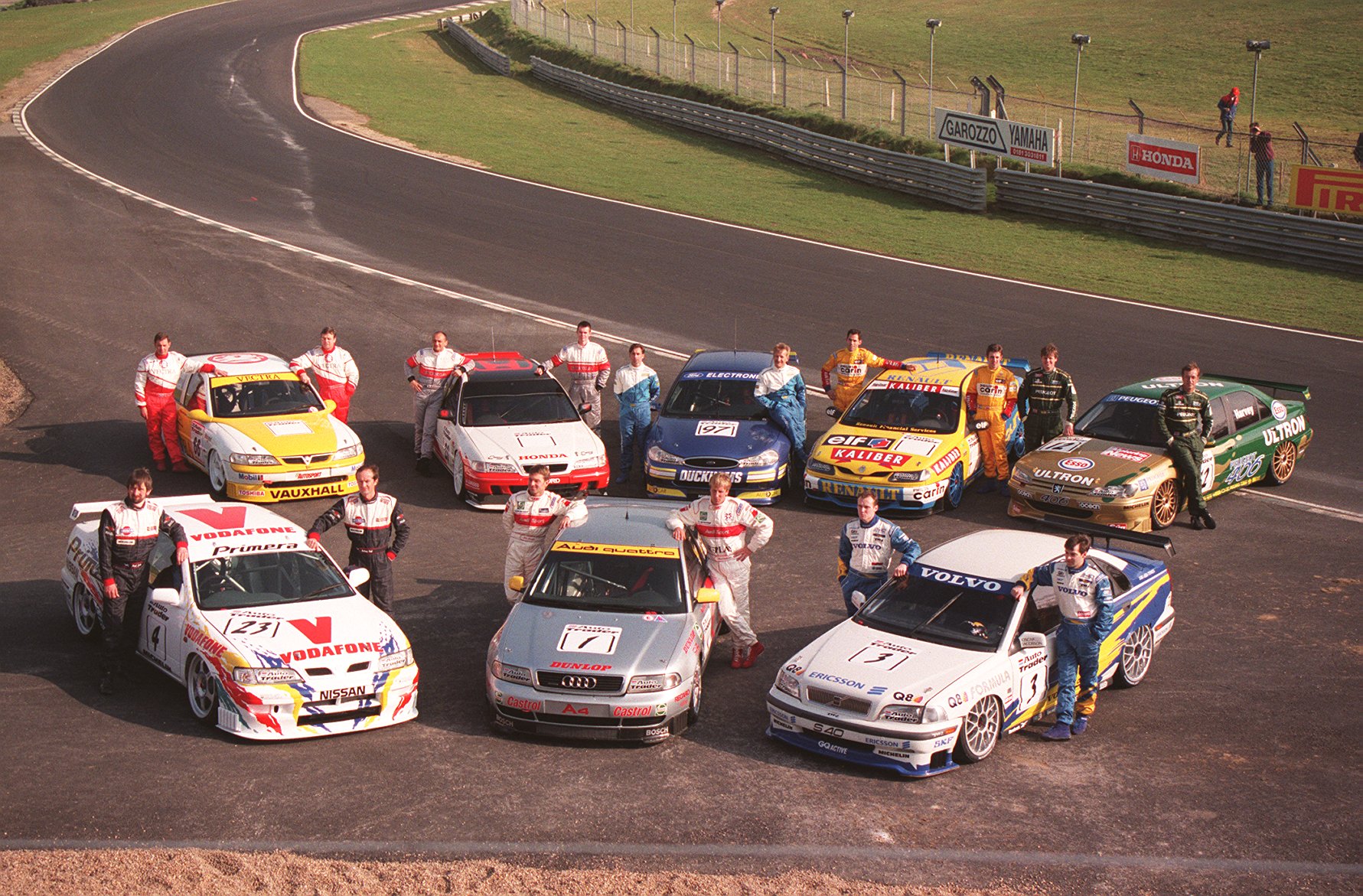
For me, touring car racing was at its peak in the ’80s and ’90s where the relative simplicity and diversity of the fields made for better racing. Differing powertrains, with four-, six- and eight-cylinder engines (even rotary) in either boosted or atmo forms sending grunt to a variety of driveline configurations. The way in which each car made speed throughout a lap or a race generated myriad approaches in how to finish first. How they used their tyres became a factor with varying levels of kerb weight, while the fans were afforded an orchestra of sounds from the different engines.
Crucially, though, the common theme when watching endless hours of videos is the lack of aero – the drivers were largely released from the shackles of turbulent air. With the touring cars of yesteryear being more heavily based on road-going equivalents with a dearth of aerodynamic addenda, they move around more. You could actually see the drivers having to fight their cars – with the true masters of car control displaying impressive talent.
Just watch any Bathurst 1000 Top 10 shootout laps from that era, a BTCC racer barrelling through the old Dingle Dell at Brands Hatch, or a Mercedes-Benz 190E fly on the Nordschleife and you’ll see what I mean. In fact, anything from ’80s and ’90s ATCC, BTCC, DTM, ETC and WTCC is usually great viewing.
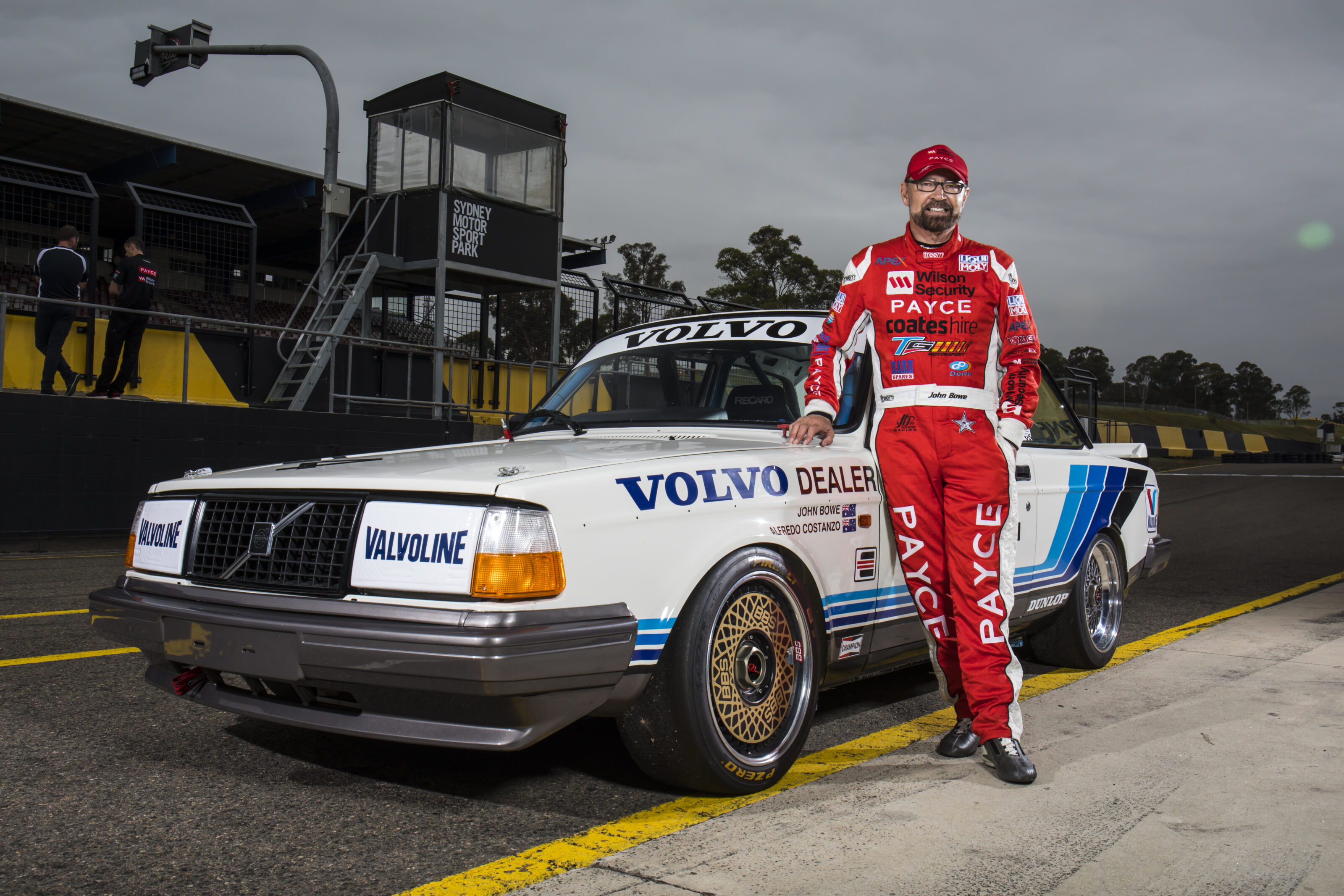
Then there is the variety of cars. In Australia we had a Volvo 240T winning the ATCC and an E30 BMW M3 taking it up to V8 Commodores and winning. Fans even supported a four-pot turbo Ford (piloted by Dick Johnson and John Bowe) so heavily at Bathurst that they booed the competition on the podium. This assortment of riches is what we hoped Car of the Future/Next Gen Supercars would provide. But the aero kept being piled on and the planned changeup in powertrains never happened. Remember the plan for Holden to run a turbo V6, anyone?
It’s sad that I must look to the past, where homologation-specials ruled, to watch great door-banging touring car racing. One of Dick Johnson’s famous quotes is, “the only thing you get from looking backwards is a sore neck”. Maybe it’s time to crack open the Deep Heat.
What does it mean to be an individual? Apologies if that sounds like the opening line to a fragrance commercial, but it’s a question worth pondering. Cars, like clothes, are often an extension of our own personalities, so what kind of whip does one buy if they prefer to stray outside the norm?
Maybe it’d be helpful if we define what “normal” is, perhaps. These days, it’s either something with a tall ride height and all-wheel drive; or a small hatchback. The odds are also pretty high that it comes from Japan, South Korea or Thailand.
But that’s just from spreadsheet analysis of sales data. While it’d be an easy thing to say “Asian SUVs are all the same”, that would be a gross generalisation, and a fairly inaccurate one too. Ever seen a Nissan Juke?
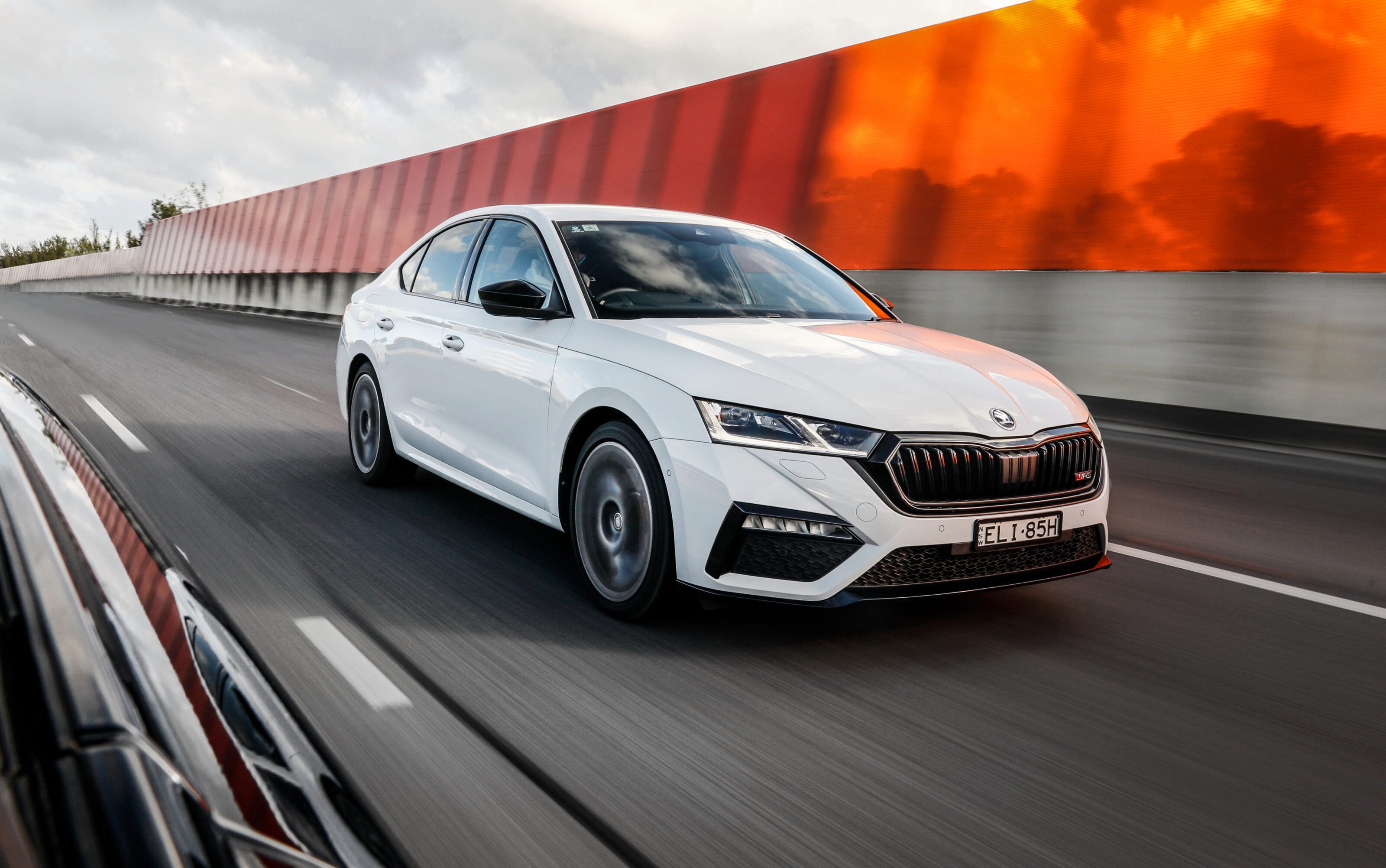
It’s subjective, but for me, the cars that I’d define as ‘unique’ are the ones that put character and emotion first, regardless of bodystyle. The best ones are those that don’t ignore every other criteria either; those things like driveability, comfort, performance and usability – the kinds of things that make you actually want to own a car, rather than simply admire it.
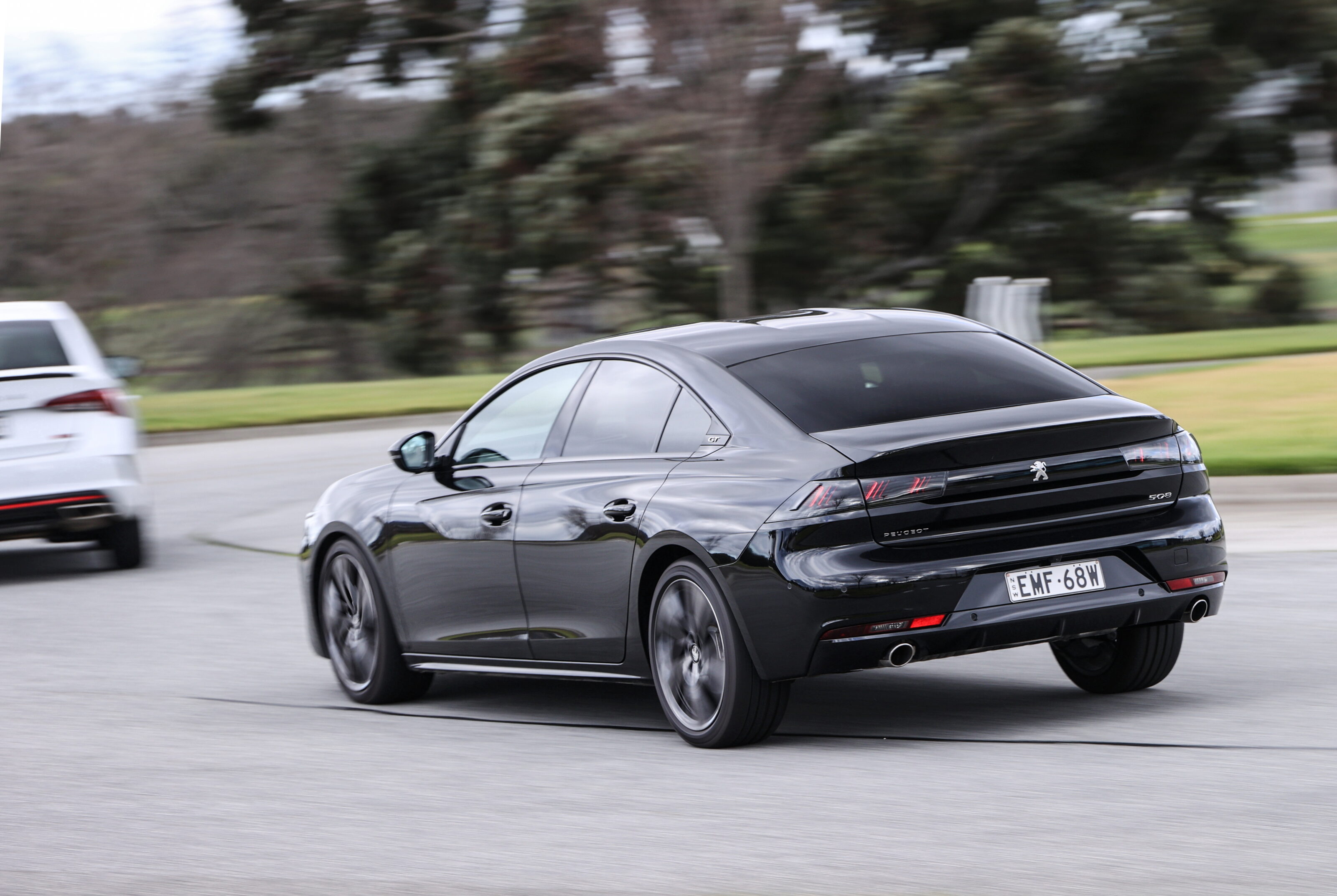
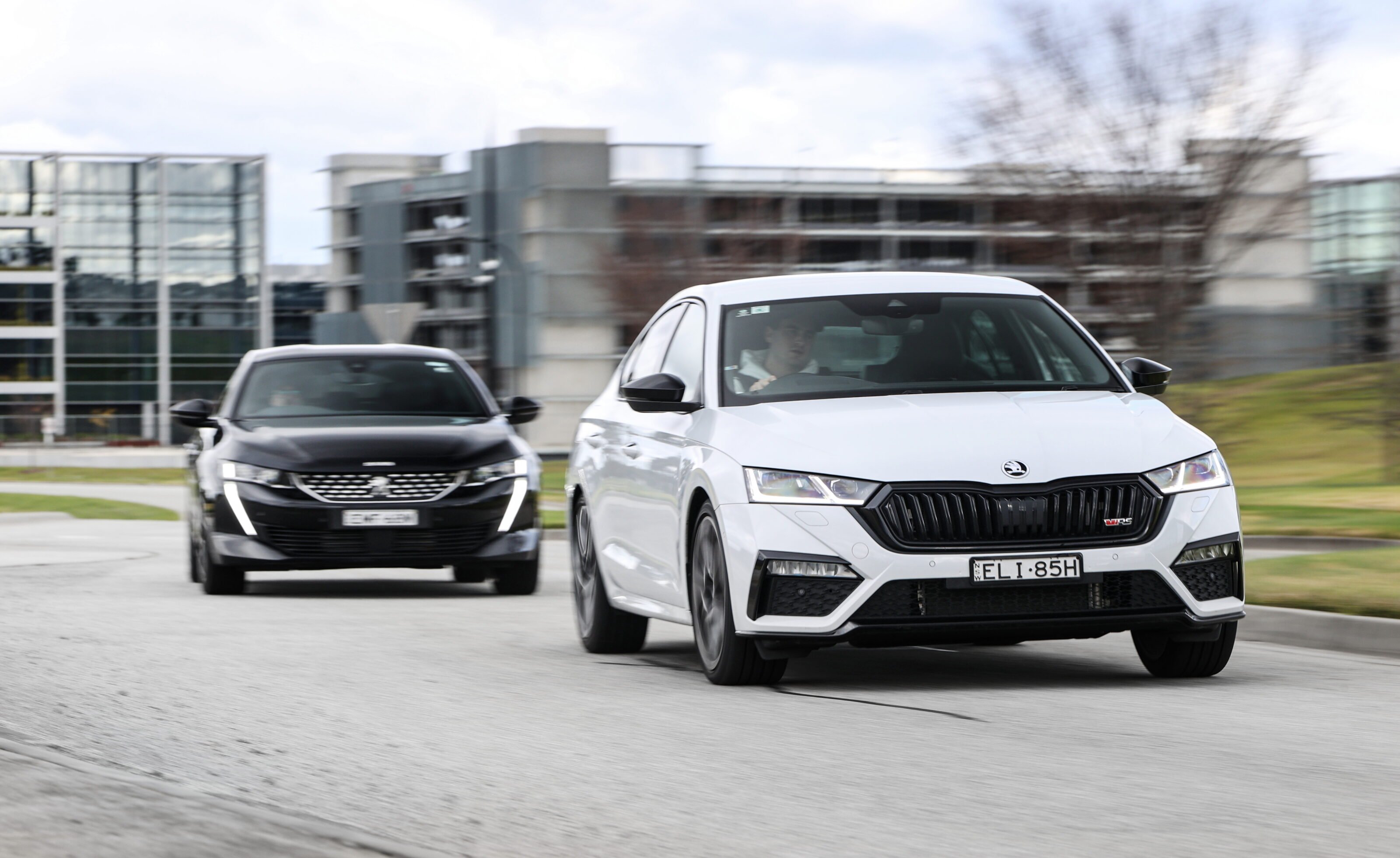
Two cars that should sit in the middle of that particular Venn diagram are the ones you see here: Peugeot’s 508 GT, and Skoda’s Octavia RS. Both are European, both are attractive mid-sizers with appealing design, both cost between $55,000-60,000, and both look like something a successful architect would drive.
And when it comes to standing out from the crowd, appearances definitely matter.
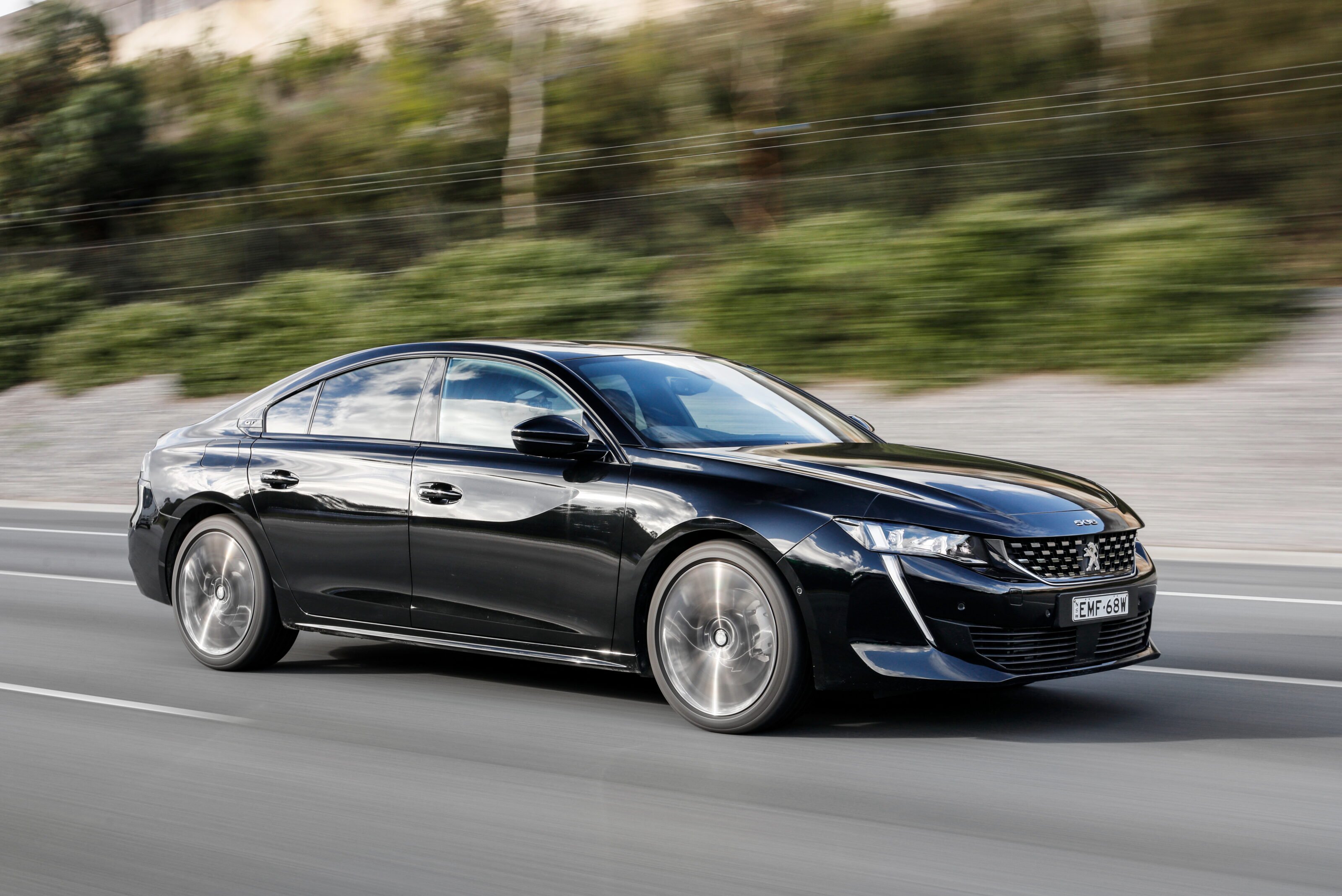
Lingering stares from other drivers is just part of the 508 experience, and I have to admit that it cuts a suave figure when that black paint is gleaming.
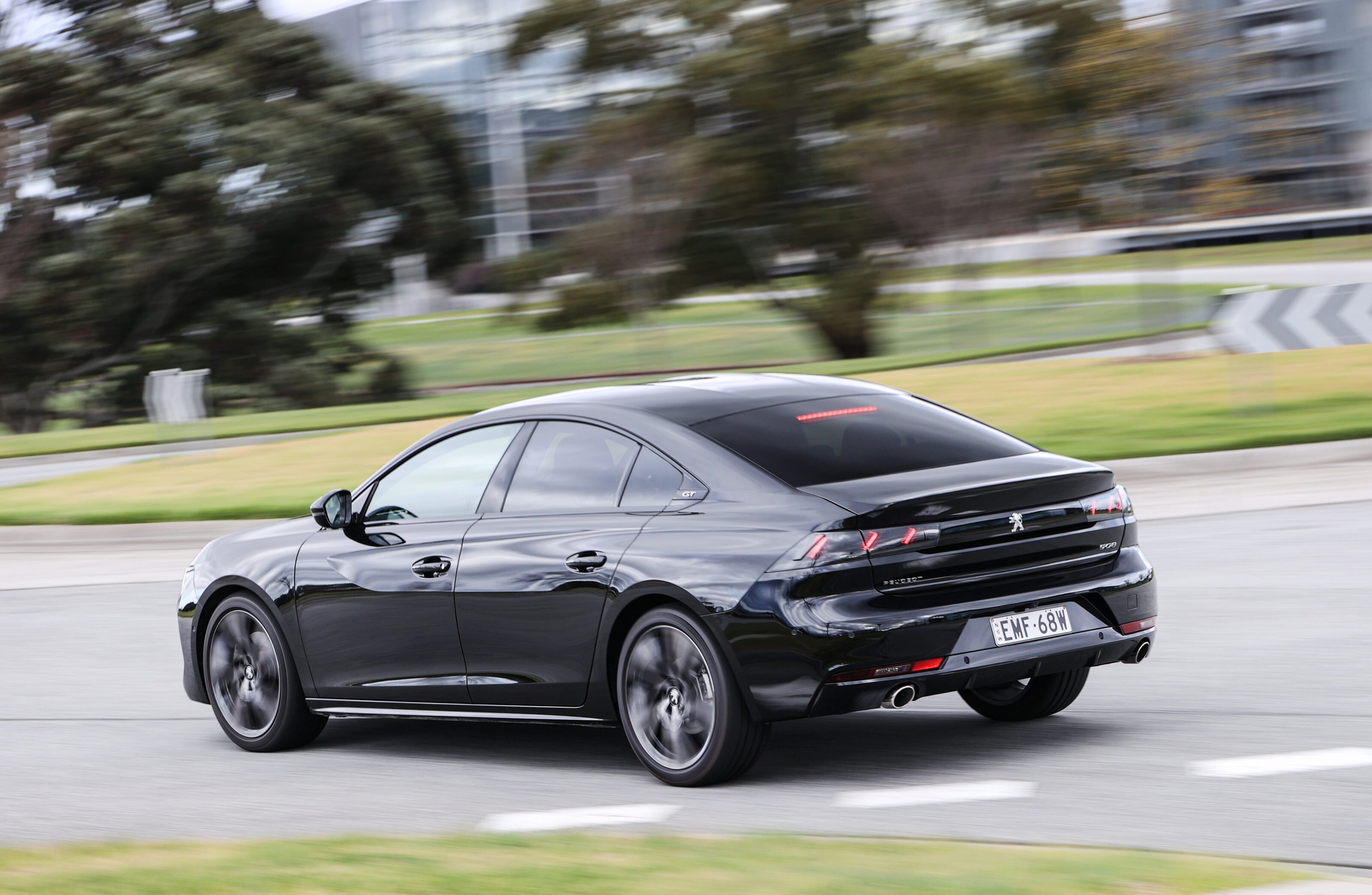
The 508’s design is quite an about-face from the previous generation. While its immediate predecessor suffered from anonymous styling and a weirdly flat bum that made a Camry look exotic, the current-generation 508 is genuinely beautiful. I don’t normally use the B-word lightly, but I don’t think I’m overreaching here either.
After all, almost every day I drove the Pug someone would either stop me and ask what it was, or simply pull alongside and give an appreciative nod. Lingering stares from other drivers is just part of the 508 experience, and I have to admit that it cuts a suave figure when that black paint is gleaming.
Me? I think I’d prefer any colour but black – it mutes that distinctive tail-light blackout, and dark tones are a pain to keep clean anyhow. I’m not sold on the fang-like DRL graphic either – it seems unnecessary given how much attention the rest of the body gets – but it doesn’t ruin it either. The 508 is properly worthy of the B-word.
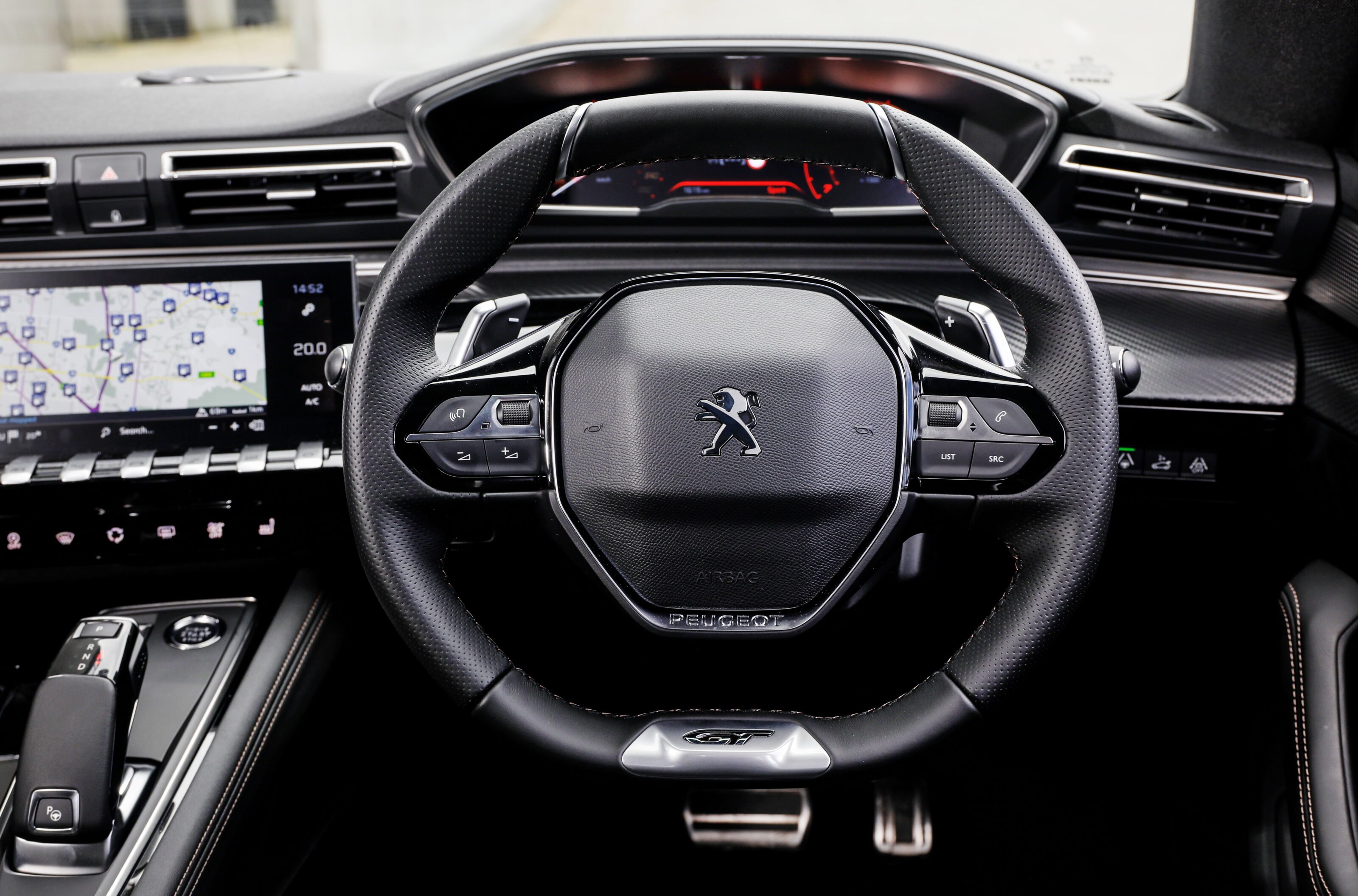
Frameless doors are the portals to the cabin, and on the inside, it’s positively sculptural. That’s honestly the best word for it and, just like the B-word, the S-word is not one that I tend to overuse.
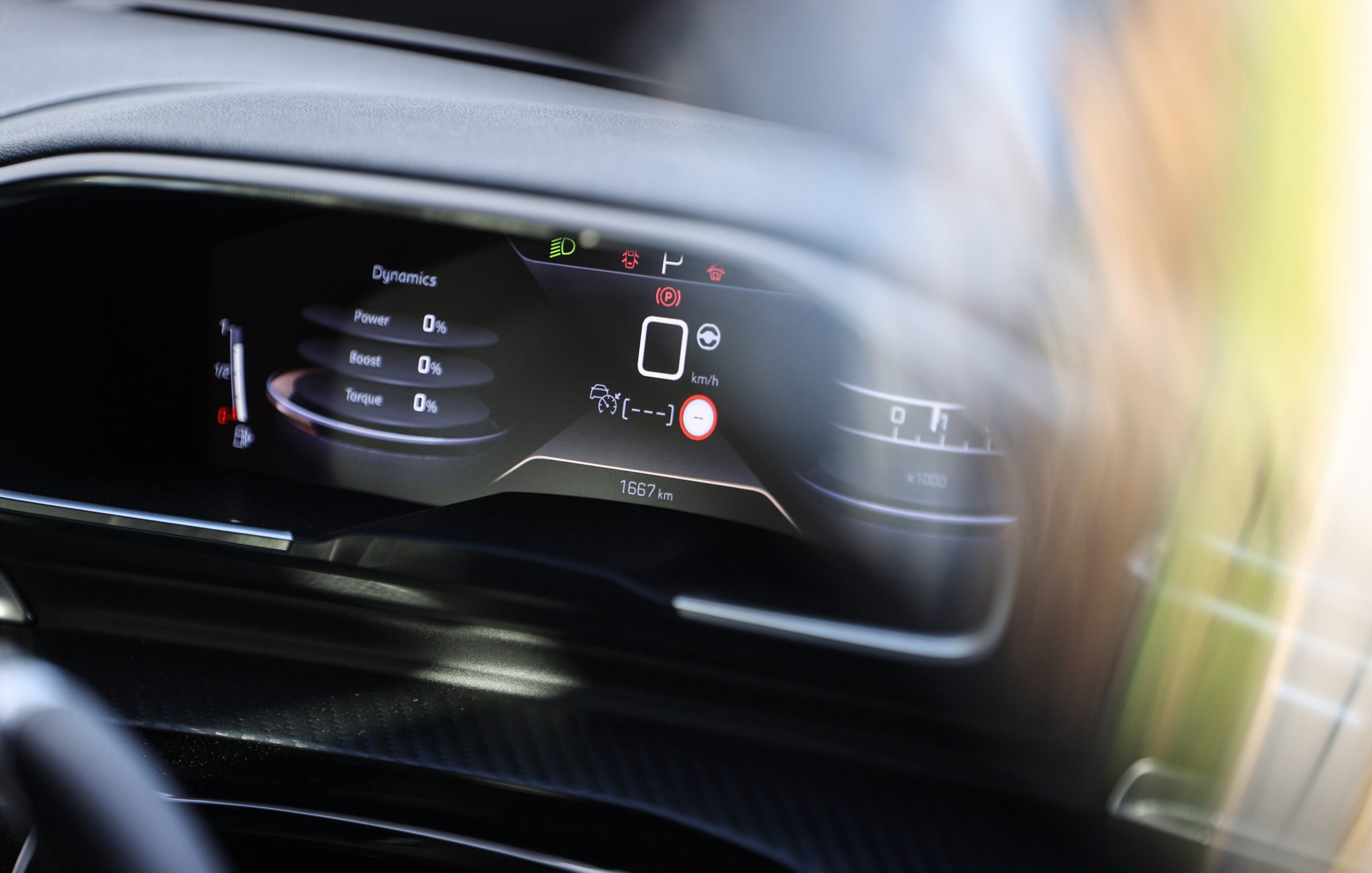
Peugeot’s so-called i-Cockpit layout puts a compact steering wheel in front of the driver and locates the instrument panel right below the windscreen, and it continues to be an acquired taste. For my modest proportions it’s more than palatable, however I can certainly see how taller and girthier folk would struggle to adjust to the steering column’s lower-than-average positioning.
Meanwhile, the low-slung seat, elevated centre console, high window line and the way the dashboard angles toward the driver give the 508’s driving position a sportscar feel that certainly meshes nicely with the sleek exterior, though I’m resolutely not a fan of the faux carbonfibre trim that stretches across the mid-dash. Besides looking out of place in a dignified sedan, since when was carbon trim supposed to be soft-touch?
For the Skoda, the mere presence of the winged arrow badge on its snout will be enough to mark you as someone with a disdain for the mainstream. The average Joe doesn’t seem to know what a Skoda is, let alone know that they hail from the Czech Republic, but happily most seem to be complimentary of the way the Octavia RS looks.
Like the Peugeot, it’s easy on the eyes… but in a different way. With a new-generation model landing earlier this year, the Octavia lost the ungainly quad-element headlamps of the previous generation and gained crisply-creased sheetmetal that made it look very much like the Audi A4 feeder model that it is.
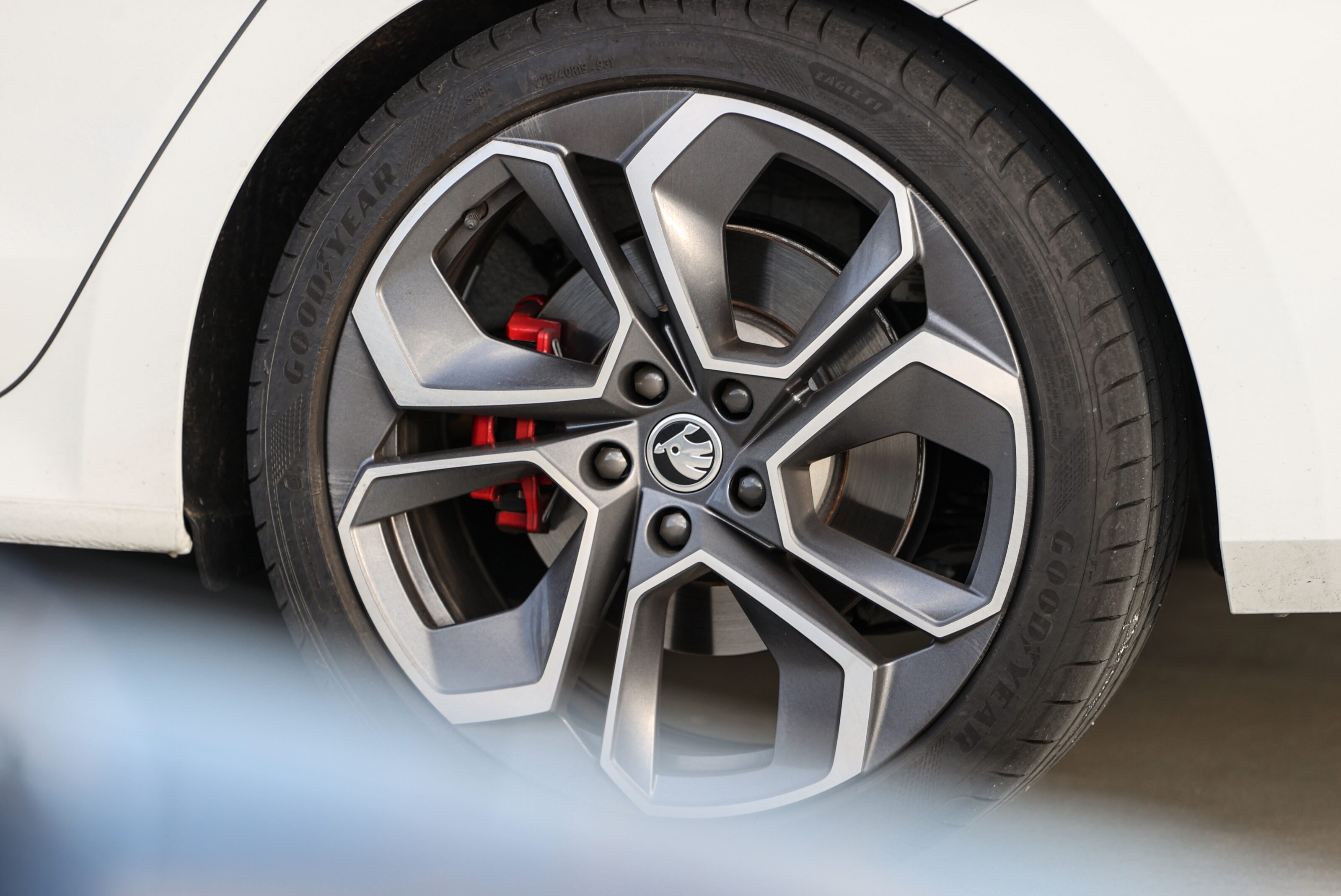
With the bodykit, wheels, and blacked-out grille of the RS, its sporting pretensions are obvious, and it’s here where the two cars begin to differ. The Peugeot is as elegant as a sharp tux; the Octavia RS is rather akin to yoga pants and a singlet.
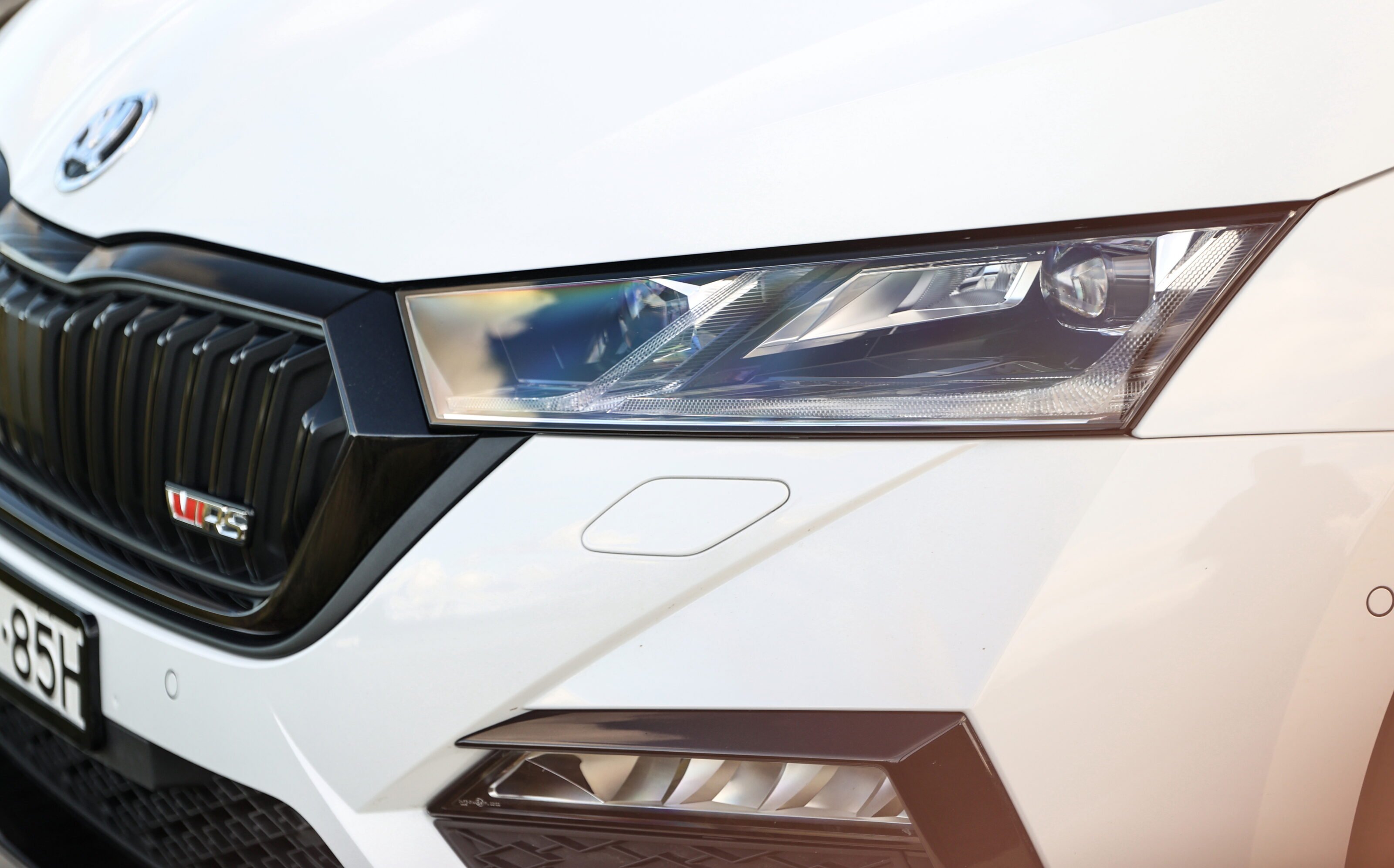
The Octavia is more conventionally proportioned too, with a roofline that’s almost 50mm taller than its French rival and an overall length that’s shorter by a similar amount. No frameless door glass, either, but step inside and the cabin design is cleaner, edgier and more straightforward.
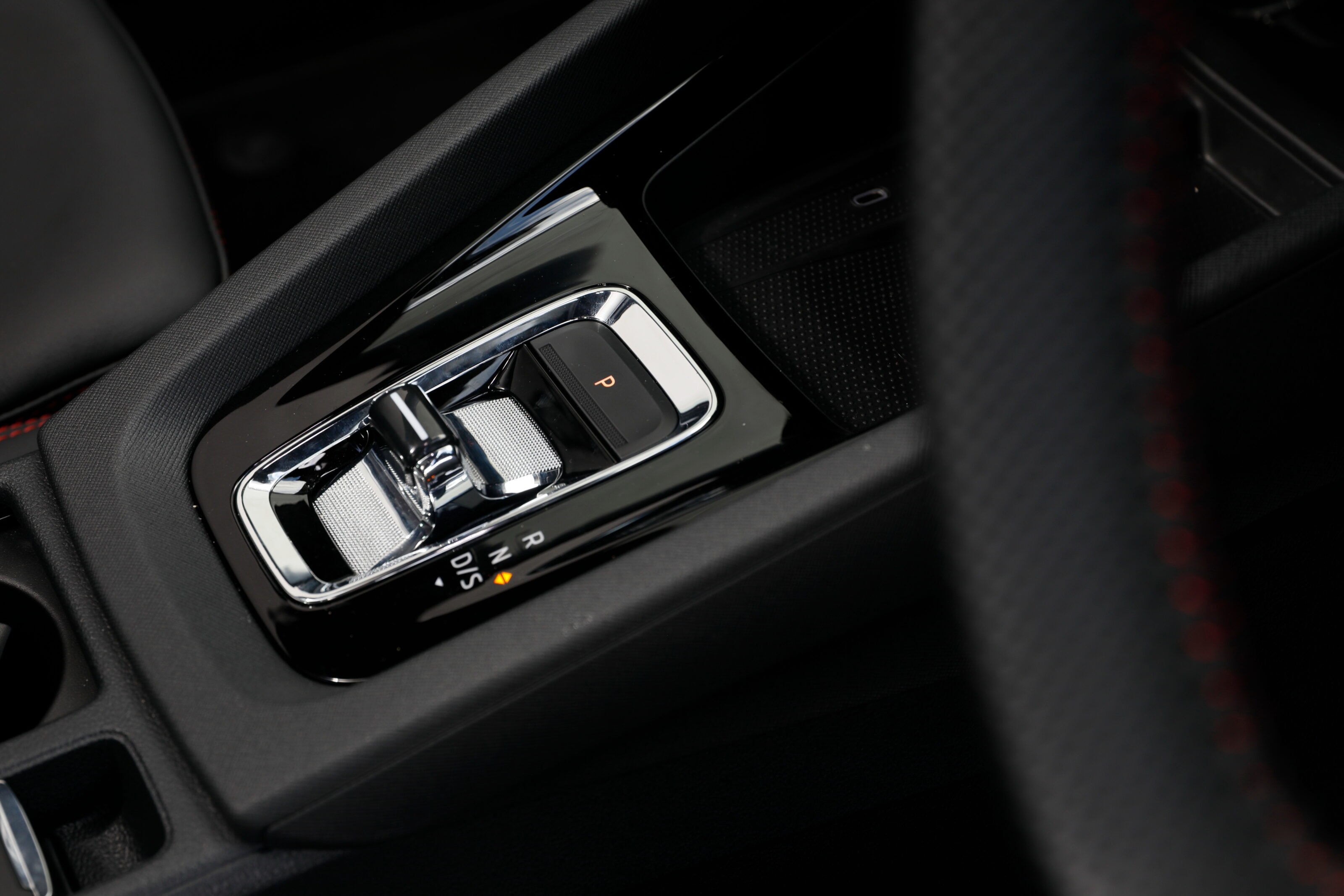
Even the transmission selector has been cut down to a tiny stub, such is the minimalistic approach of Skoda’s designers. Its spec sheet is anything but sparse though, especially with our tester coming fully loaded with the equipment-rich RS Premium Pack (see previous page).
Ergonomically, the Octavia makes more sense than the 508. A taller cabin confers better packaging, with headroom and legroom being abundant in both front and rear – especially the latter.
While rear seat legroom is roughly comparable between the two, the Peugeot’s roofline requires backseaters to stoop to enter, while our 6’2” colleague couldn’t sit straight without scraping the headlining. From a passenger’s point of view, the Octavia easily wins this match.
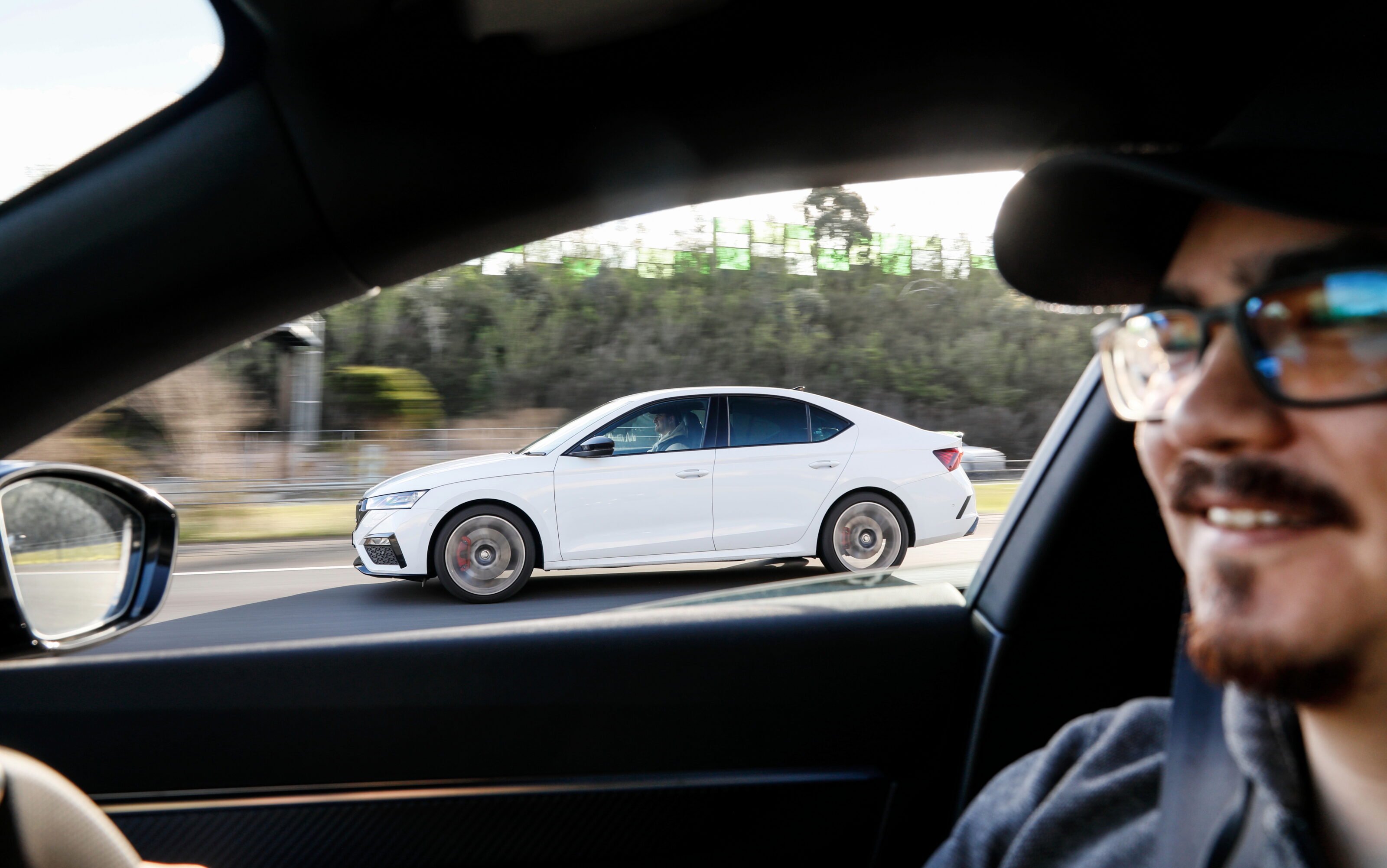
But what about the driver? The Octavia RS openly brags about its sporting verve, while we’ve raved about the 508’s aptitude for corner-carving many times now. Which of these two has the most to offer the person behind the wheel?
With a 180kW 2.0-litre turbo under its bonnet that’s pinched from the Golf GTI, the Octavia easily out-muscles the Peugeot’s 165kW 1.6-litre. The 508’s lightweight EMP2 underpinnings do confer a weight advantage, with the Frenchman tipping the scales at 1430kg versus the Czech’s 1475kg, but a 45kg weight differential isn’t enough to allow the 508 to keep up – especially given it’s also 50Nm down on the Skoda.
It’s a shame Peugeot didn’t slot its own GTI-spec mill into the 508 – the dearly departed 308 GTi’s 200kW 1.6L would have worked wonders in its bigger sibbling. Alas, that engine is no longer with us.
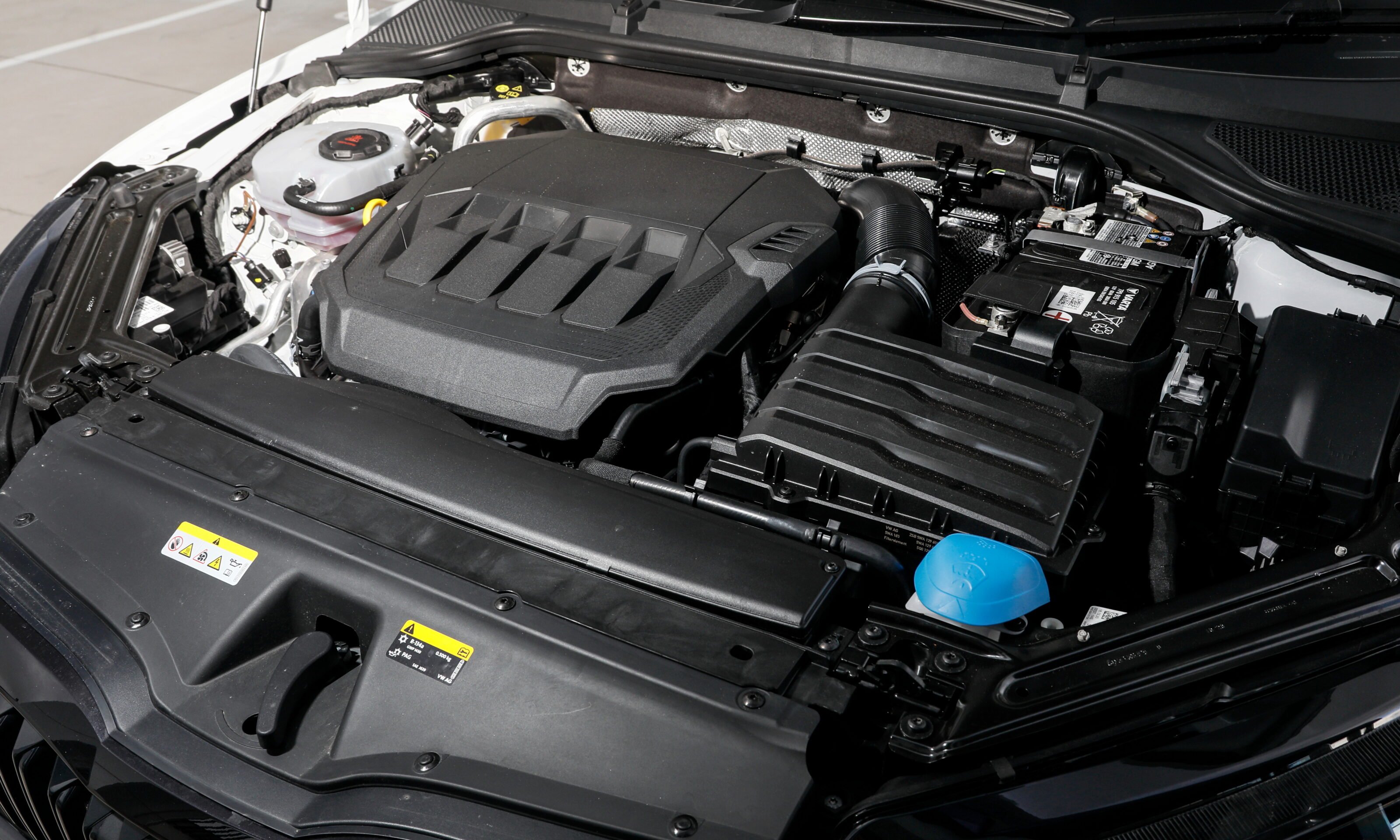
A difference in drivetrain philosophy also sets them apart, the Octavia using a fast-shifting seven-speed dual clutch auto capable of rapid-fire gearswaps, and the 508 GT using a conventional hydraulic eight-speed automatic that prefers less frenetic transitions between ratios.
Put the 508’s transmission into Sport mode and it behaves perfectly on a twisting road, holding gears between corners, downshifting when required and rarely giving you reason to reach for a shift paddle. Which is good, because those paddles are too small to easily locate when you’re trying to have a fun steer and are frequently overruled by the 508’s brain anyway, even when the drive mode is set to ‘Manual’.
But that’s no big deal, because the 508 GT’s chassis dispatches curvy roads with such a serene fluidity that trying to wring every rev out of the 1.6L doesn’t just seem untoward, but unnecessary. This is a momentum car, it flows from bend to bend with a level of grip and accuracy that’s hard to find in the mid-size segment, yet combines those traits with exceptional ride comfort on the open road.
And that front end truly is magnificent.
The 508’s cornering character is profoundly different to the Octavia’s. Not only does the small-diameter steering wheel provide a far more direct interface with the front wheels, but the grip available up front is seemingly limitless. Turn the wheel until your kidneys are mushed into the seat bolsters, then turn it some more. Keep turning even harder, but the 508 seemingly doesn’t want to give up. It’s not a trick you can repeat in the Skoda.
‘Understeer’ appears to not be part of the French vocabulary. The real genius of the 508 isn’t its glamorous styling, but the fact it’s a 4.7m-long front-drive sedan that steers like a hot hatch. The Octavia’s steering is more inert by comparison, not giving up as much info about what’s happening with the front tyres – or as much grip.
Mind you, the front-wheel-drive Octavia RS is still a blast on the right kind of road – but for different reasons. Power delivery is instead its stronger suit, and it’s not so much the corners that are the most enjoyable, but rather the straights between them.
Its Goodyears hang on reasonably well when asked to turn, but they can’t grip as tenaciously as the 508’s Michelins and the front end breaks away into understeer on corners that simply didn’t bother the Peugeot. At least the onset of understeer is gradual enough to be easily managed.
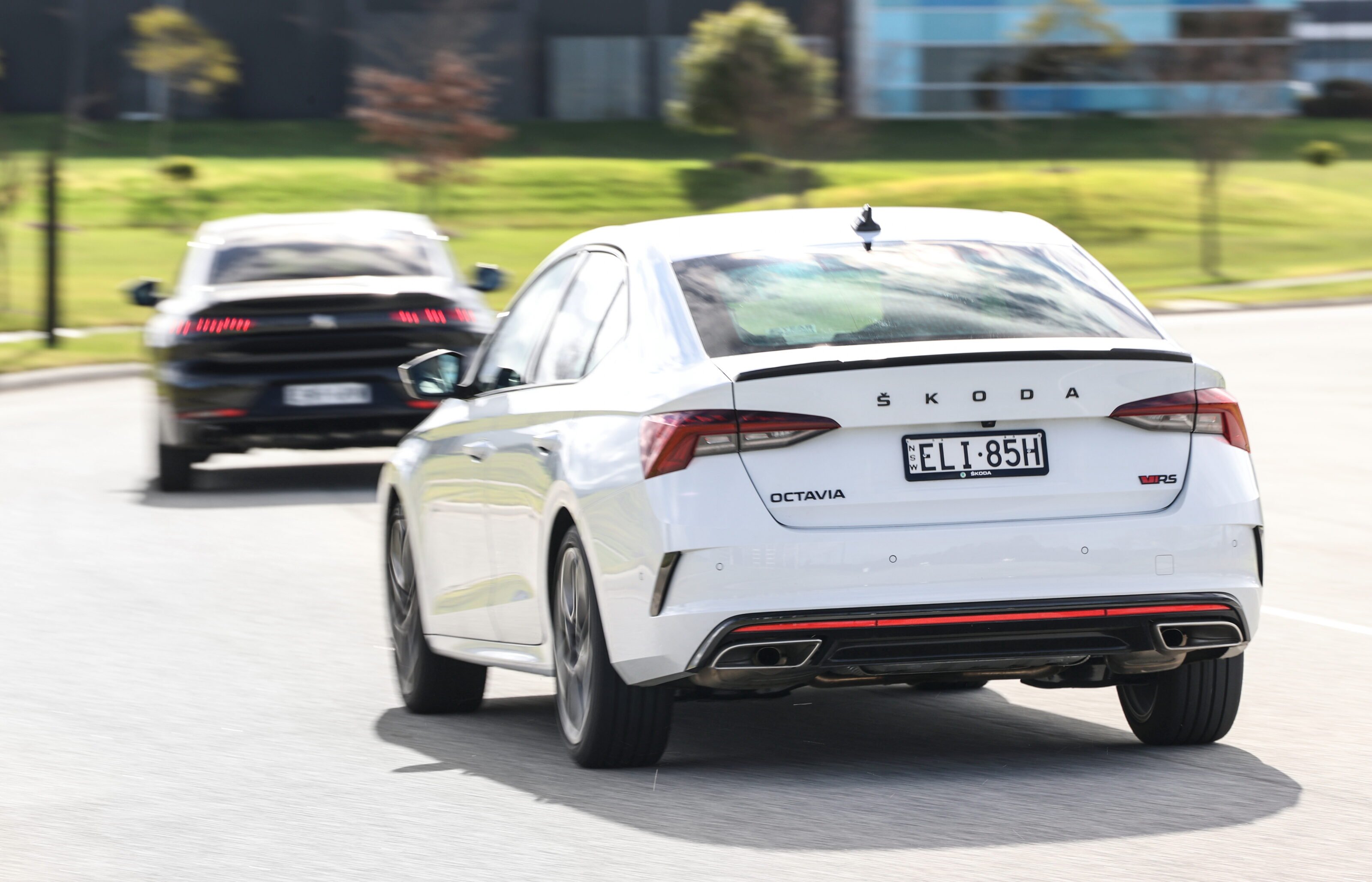
But never mind. Lean on the accelerator and enjoy that torquey engine and its strong midrange thrust, as well as the whip-quick gearchanges of its dual-clutch. In ‘S’ automatic mode that transmission preferences lower gears and even performs neatly rev-matched downshifts if you rapidly brake for a corner, keeping the engine within that torque-rich 1600-4300rpm window for the inevitable re-application of throttle. It’s clever, unobtrusive and very, very user friendly.
The only blot on the Octavia’s backroad experience is the WRX impersonation its artificial sound enhancement does in Sport and Normal mode: after a few hours on the road that electronic exhaust rumble had definitely overstayed its welcome. Mercifully, you can switch it off in the Individual drive mode, while still retaining all of the other sport settings for engine, gearbox and chassis.
The Octavia doesn’t have a singular focus on performance, though. Dial its drive mode selector to Comfort and it becomes quite amenable over average suburban roads, with a nicely settled posture at highway speed once the adaptive dampers are slackened off.
The depth of customisation is also more impressive than the Pug – rather than binary ‘Firm/Soft’ options for the suspension, the Individual mode gives you a slider that allows more graduated adjustment of the damping. Note, however, that those adjustable dampers only come with the optional RS Premium Pack – along with a bunch of other tasty tech that justifies the considerable expense of that option.
There’s a fair bit of tyre noise on coarsely surfaced highways, which is a problem it also shares with the Peugeot, but overall the Octavia doesn’t quite match the Peugeot’s plushness when the dampers are set to ‘comfort’.
There’s still a sensitivity to small bumps that wouldn’t faze the 508, though bigger lumps and undulations in the road surface are handled well by the Skoda’s suspension. Even Sport mode is reasonably civilised, and while the steering weight is artificially boosted in Sport mode, it’s not obnoxiously heavy.
So, which car wins? If the goal was to find a car from outside the mainstream, then they both fit that bill. If you just want exclusivity, then get the 508: at time of writing, just 56 had been sold this year. Skoda sells almost double as many Octavias per month.
But objectively speaking, the Octavia RS wins.
The Skoda will be more things to more people. It’s not just about the fact it’s got a power and torque advantage over the Pug, but it feels every bit the feature-rich range-topper that it is. Couple that with a spacious and well-built interior, a more sophisticated infotainment suite, exceptionally versatile packaging, and a driving experience that can be tailored to your individual taste, and the Octavia RS becomes a Swiss Army knife.
The 508 GT, meanwhile, manages to stop just short of true greatness. Cabin materials aren’t as appealing as what’s found in the Octavia, its rear-seat packaging compromises its utility, and a few more kilowatts and Newtons would surely help better justify its $57K retail sticker.
Yet, it’s a beautiful thing to look at and has stage presence that can’t be equalled by the Octavia, plus it’s an absolute joy to drive. The 508 GT is a wonderful car and I adore it, but on balance I must concede that the Octavia is the more sensible choice.
Then again, when has defying the norm been a sensible choice?
Options ticked
At $47,790, the Octavia RS is almost a cool $10K cheaper than the 508 GT. However, the Skoda in standrd trim is far from a spec-for-spec rival to the Pug.
To get the Czech to the same level, option boxes must be ticked – specifically, the box for the $6500 RS Premium Package. Do so and the Octavia RS gains powered front seats (with a massage function for the driver,) heated front and rear seats, three-zone climate control, a 12-speaker Canton sound system, parking assist, heated exterior mirrors, a head-up display and – most importantly – adaptive dampers.
Most of those features are standard on the 508 GT, with the exception of a HUD, retractable rear sunblinds and third climate control zone. With the adaptive dampers being so central to the Octavia’s flexibility, make sure you opt for them.
Skoda Octavia RS and Peugeot 508 GT specifications
| u00a0 | Skoda Octavia RS | Peugeot 508 Gt Sedan |
|---|---|---|
| u00a0 | $47,790/tested: $55,060* | $57,490/tested $58,180* |
| u00a0 | Drivetrain | u00a0 |
| Engine | 4cyl, dohc, 16v, turbo | 4cyl, dohc, 16v, turbo |
| Layout | front engine (east-west) FWD | front engine (east-west) FWD |
| Capacity | 1984cc | 1598cc |
| u00a0Power | 180kW @ 6500rpm | 165kW @ 5500rpm |
| Torque | 370Nm @ 1600-4300rpm | 300Nm @ 2750rpm |
| Gearbox | 7-speed dual-clutch | 8-speed automatic |
| u00a0 | Chassis | u00a0 |
| Body | steel, 5 doors, 5 seats | steel, 5 doors, 5 seats |
| L/W/H/Wu2013B | 4702/1829/1457/2681mm | 4750/1860/1410/2800mm |
| Track (F/R) | 1541/1550mm | 1582/1582mm |
| Weight | 1475kg | 1430kg |
| Boot | 600L | 487L |
| Fuel | petrol/50 litres | petrol/62 litres |
| Economy | 6.8L/100km (ADR combined cycle) | 6.3L/100km (ADR combined cycle), 7.8L/100km (as tested) |
| u00a0 | 6.7L/100km (as tested) | u00a0 |
| Suspension | Front: struts, A-arms, coil springs, | Front: struts, A-arms, coil springs, |
| u00a0 | anti-roll bar. Rear: multi-links, dampers, coil springs, anti-roll bar | anti-roll bar. Rear: multi-links, dampers, coil springs, anti-roll bar |
| Steering | electric rack-and-pinion | electric rack-and-pinion |
| Front brakes | 340mm ventilated discs | 330mm ventilated discs |
| Rear brakes | 320mm ventilated discs | 320mm ventilated discs |
| Tyreu00a0 | Goodyear Eagle F1 Supersportu00a0 | Michelin Pilot Sport 4 |
| Tyre size | 225/40 R19 | 225/40 R19 |
| u00a0 | Safety | u00a0 |
| ANCAP rating | Five Stars | Five Stars |
| Verdict | 8.5/10 | 8.0/10 |
| Warranty | 5ys/unlimited km | 5ys/unlimited km |
| u00a0 | Service interval: 12 months/10,000km | Service interval: 12 months/20,000km |
| u00a0 | Glassu2019s 3-year resale: NA | Glassu2019s 3-year resale: NA |
| u00a0 | AAMI insurance: $1187.82 | AAMI insurance: $1333.82 |
| u00a0 | * RS Premium Pack ($6500); premium paint ($770) | *Premium paint ($690) |
The notorious Spa-Francorchamps Circuit in Belgium has claimed another victim after a Porsche 962C crashed into a tyre barrier along the start-finish straight.
While the car’s driver was cleared and fortunately walked away unharmed from the accident, the impact tore off the nose of the 1980s Group C prototype, scattering parts across the track and triggered what can only be imagined as a hefty repair bill – with the car’s estimated value sitting around $1.61 million.
However, although crashes at private track days aren’t an uncommon occurrence, this case has been made slightly different as the videographer who captured the incident and uploaded it to YouTube claims the car’s owner has threatened to sue him if the video isn’t removed.

Auto Addiction is a channel which has over 482,000 subscribers and films motorsport events across Europe, with the person behind the camera in the right place at the right time to capture this smash.
With over 315,000 views on the video, one of the top comments come from those who posted it, explaining the threat they had been sent by the owner.
“The owner of the Porsche is threatening with legal action against us if we don’t take the video offline,” the comment said.
“What do you think, should the video remain online? As far as we believe, with all the censoring in the video and the fact it’s filmed from a public area, it’s 100 per cent legal and does not need any permission from the owner of the car.”

According to Steimann Motorsport Service, this particular chassis doesn’t have any period racing pedigree, having been built from a new American-built base with parts from various other 962Cs.
An evolution of the Porsche 956, the 962C was a Group C prototype which raced in sportscar championships around the world from 1984 to 1996, winning the 24 Hours of Le Mans and Daytona three times each, as well as three IMSA and two World Endurance/Sports Prototype titles.
At peak power, the 3.0-litre, twin-turbo flat-six engine made around 574kW – although by the sounds of the throttle application before this one hit the wall, much less power was being delivered to the 17x15J rear wheels.
Snapshot
- R52 Pathfinder recalled
- Hybrid system programming could lead to stalling
- 937 units affected
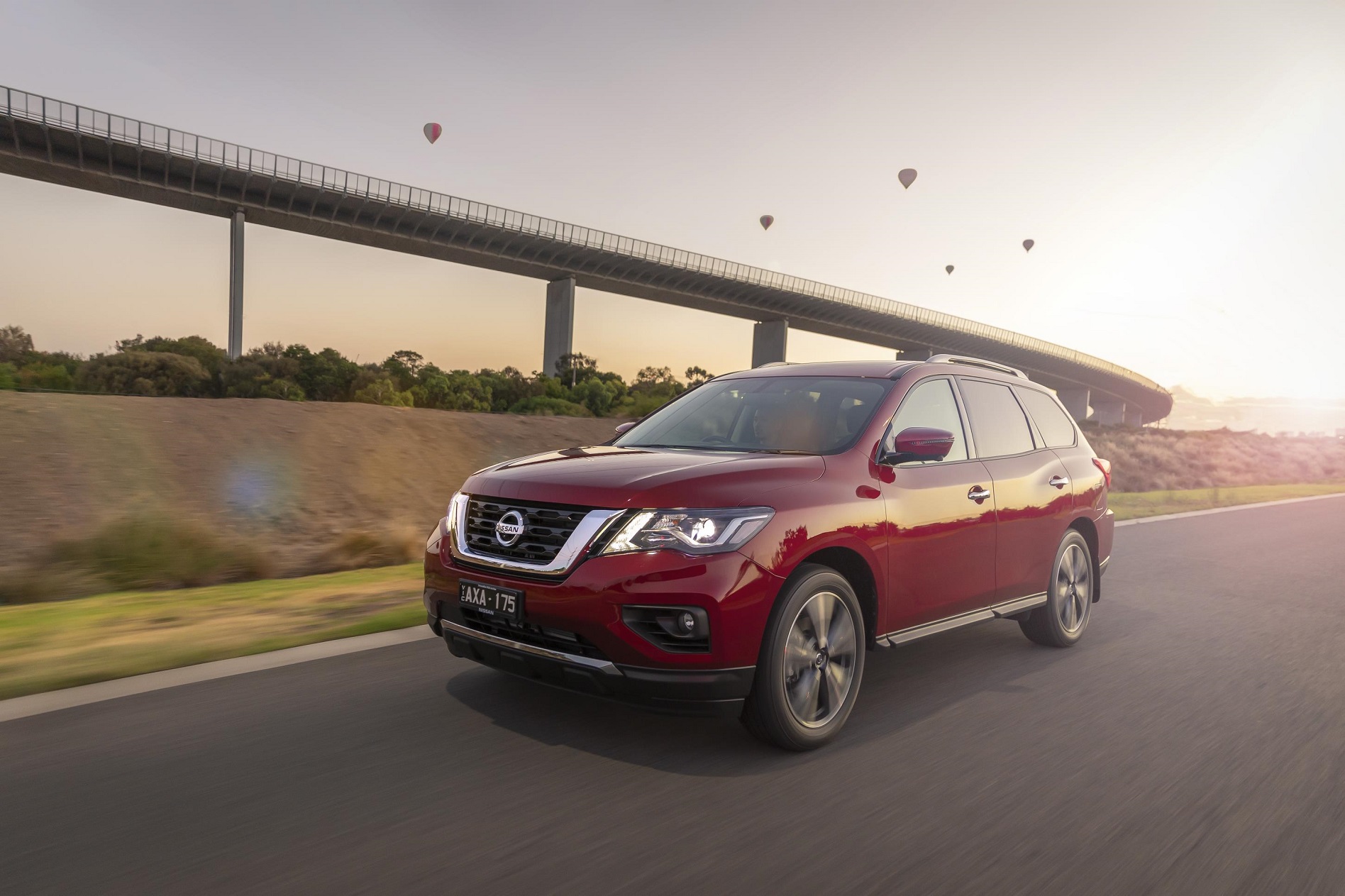
Nissan has recalled all R52 Pathfinder hybrids manufactured between 2014 and 2020, owing to a risk of the vehicle stalling.
Affecting 937 vehicles sold over the six-year time period, an issue has been found with the programming of its hybrid powertrain control module (HPCM), resulting in the engine potentially stalling.
Accompanied by a warning light on the dash, the loss of power could leave owners in dangerous situations, becoming a hazard to themselves and other road users.
Nissan is currently waiting to receive a software update, saying it will contact owners when it becomes available to resolve the problem free of charge.
A list of VINs for affected vehicles can be found here.
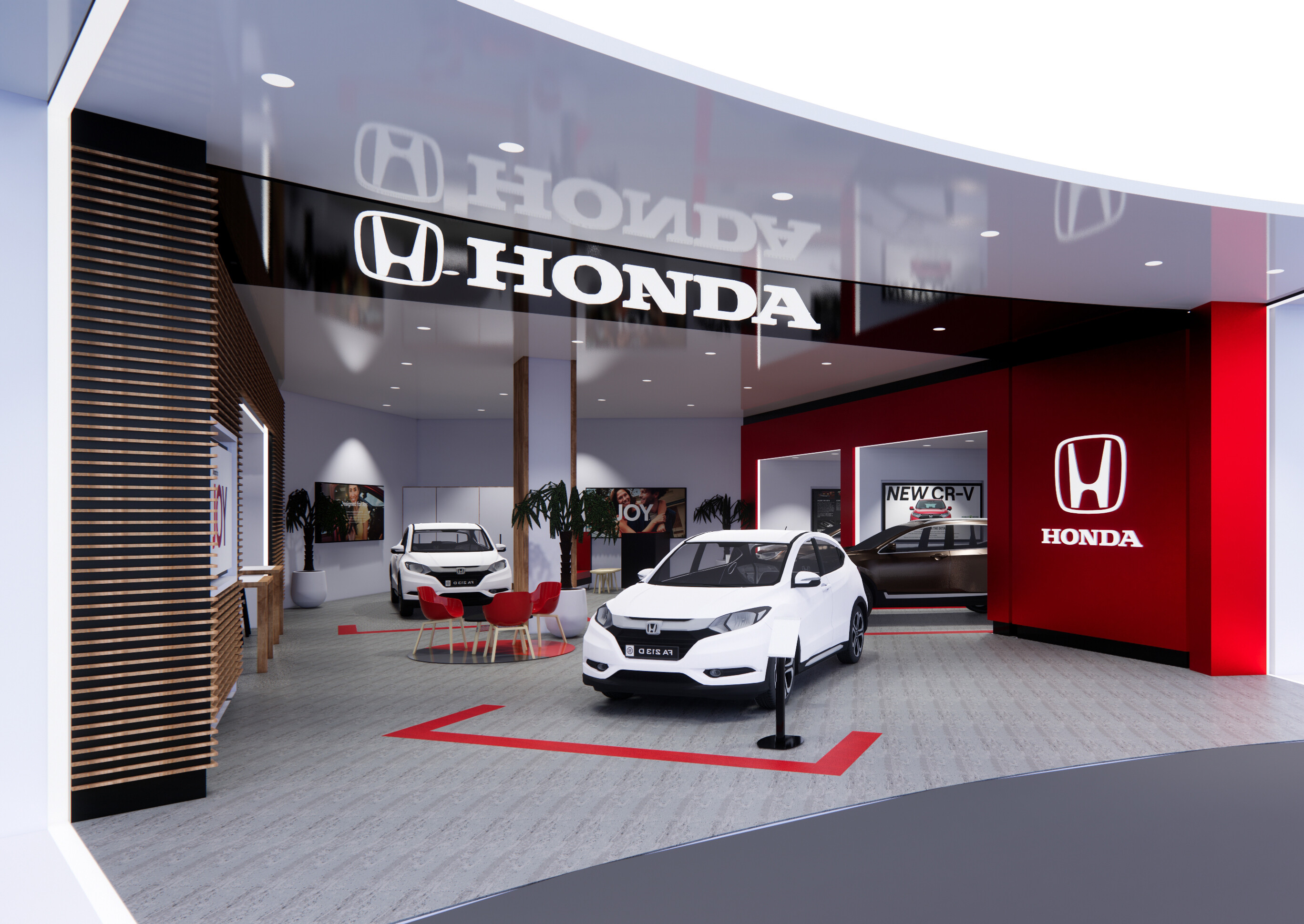
Big players such as Jeep and Honda are “going upmarket” – and while many will still argue there are enough affordable new cars for lower-end buyers, the under $30,000 wedge is starting to look a little thinner.
Last year around 187,000 vehicles under the $30K threshold were sold Down Under – roughly 20 percent of total new-car sales.
Fast forward to 2021 and market research carried out by Wheels shows there are 33 models available to buy in Australia right now priced below that bracket. Of these, many are only the entry-level variant, with prices for higher spec models rising well beyond.
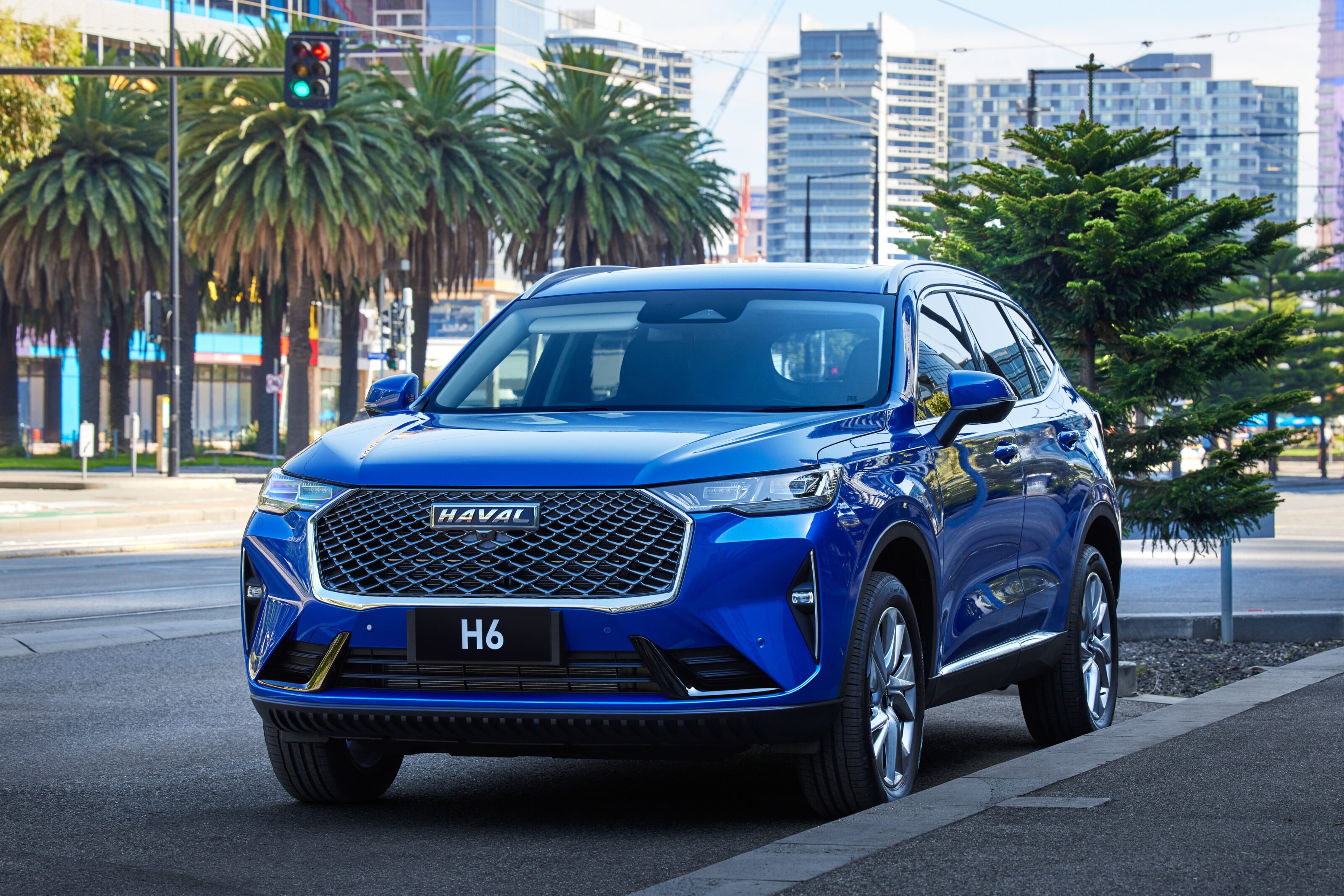
Only three featured in the top 10 most popular in recent months: the Hyundai i30, Toyota Corolla and MG ZS. Of course, this comes as no surprise. Aussies’ infatuation with SUVs and dual-cab utes is well known, however there are just three medium-sized SUVs on sale within a $30K budget: the Haval H6, Ssangyong Korando and MG HS.
“It used to be that everyone would set their cheapest cars at $19,990 or under to get all the buyers who only had/wanted to spend $20K,” says Mark Telfer, director of finance and operations at Inside Edge Novated Leasing in Melbourne.
“Now that has changed; the deal breaker was Mazda with the 3, then because the most popular car in the segment sat above $20K it dragged everyone else up too. But the Mazda 3 wasn’t just about bringing more equipment, it was a styling thing which showed the market you didn’t need a low price point to be the most popular car.”
More manufacturers are now importing their mid-range or highest-spec cars, which feature a greater level of creature comforts such as Apple CarPlay/Android Auto and, crucially, improved safety equipment, leaving fewer options for stripped back variants in the market.
“Buyers can see the value of going for the extra spec – being price driven isn’t the only component anymore. It is one thing, but it’s just one of many components. People’s requirements for tech and safety override their desire to be a tight arse,” Telfer adds.
Honda is one of those now focusing on higher-spec cars, with some previous base models gone as the brand looks to push further upmarket. The marque switched to the agency model from July 1 this year, and though its sales have been initially slow to bounce back, the company contends that it is not chasing numbers.
The Federal Chamber of Automotive Industries (FCAI) doesn’t believe there is a problem with the variety of models available in Australia, however it does acknowledge there are factors driving up prices and the impact it has on consumers.
“The increasing amount of tech required to get a five-star safety rating is an issue,” says Chief Executive Tony Weber.
“The idea that they put so much equipment into a car now that some people can’t afford to buy it and therefore opt for second-hand is a problem, because it ages the national fleet. It is putting a price on safety.”
When costs are driven higher than the means of buyers, it prices many out of buying new – as evidenced by the now booming second-hand market, which has become even more popular due to COVID-19 supply disruption.
“The way to provide [new] vehicles at the price point consumers want is to eliminate barriers on cars coming here. If there is a market, and it is possible to supply in a competitive environment, then the brands will fill that gap if it is feasible from a financial perspective,” adds Weber.
“The increasing amount of tech required to get a five-star safety rating is an issue”
Peter Khoury from the National Roads and Motorists’ Association agrees.
“The choice is still in the hands of buyers, although of course the global impact of COVID-19 plays a part,” he says.
“Manufacturers can’t afford to price themselves out. That said, Australians love a bargain and also love holding onto their cars – which means our fleet is the second oldest in the Organisation for Economic Co-operation and Development (OECD). We do pay more for our cars here than overseas, and having extra regulation such as the Luxury Car Tax (LCT) doesn’t help.”
According to the Australian Bureau of Statistics (ABS), as of May this year, the average Aussie earns $1737 a week before tax.
While the more affluent among us will be unfazed by increases in pricing, there will also be a section of our society who are more sensitive to the bottom line.
“There are now checks in place to stop buyers taking out a lease and going beyond their means. We regularly see people who are thinking they want to go upmarket, but are held back by the lenders because they don’t have the capacity to pay,” says Telfer.
“As a result, those who can’t afford a new or used car that’s say, two or three years’ old, hang on to what they have for longer – until they are let down and repair is not an option.”
Top 10 cheapest cars in Australia*
| u00a0 | Price | Models |
|---|---|---|
| 10thu00a0 | $23,490 | Mazda 2/Kia Stonic |
| 9th | $22,490 | Skoda Fabia/VW Polo/Suzuki Swift |
| 8th | $21,990 | MG ZS Excite |
| 7th | $21,383 | Fiat 500/C |
| 6th | $20,990 | Suzuki Ignis |
| 5th | $20,490 | Kia Rio |
| 4th | $19,490 | Suzuki Baleno |
| 3rd | $17,990 | MG 3 |
| 2nd | $17,990 | Kia Picanto |
| 1st | $17,490 | Mitsubishi Mirage |
There’s more to the Mercedes-AMG GLE 63 S Coupe than meets the eye. The brand knows the GLE Coupe’s power to earn it new customers so, to please them, it’s deleted six centimetres from the wagon donor’s wheelbase, promising the Coupe’s distinct look to come with a matching change in character.
And that’s important when you’re spending as little as $171,800 before on-road costs, by the way, for the six-cylinder mild-hybrid AMG GLE 53 Coupe. Or even as much as $235,500 + ORC when you can’t resist the chest-beating 63 S variant that tops the GLE range.

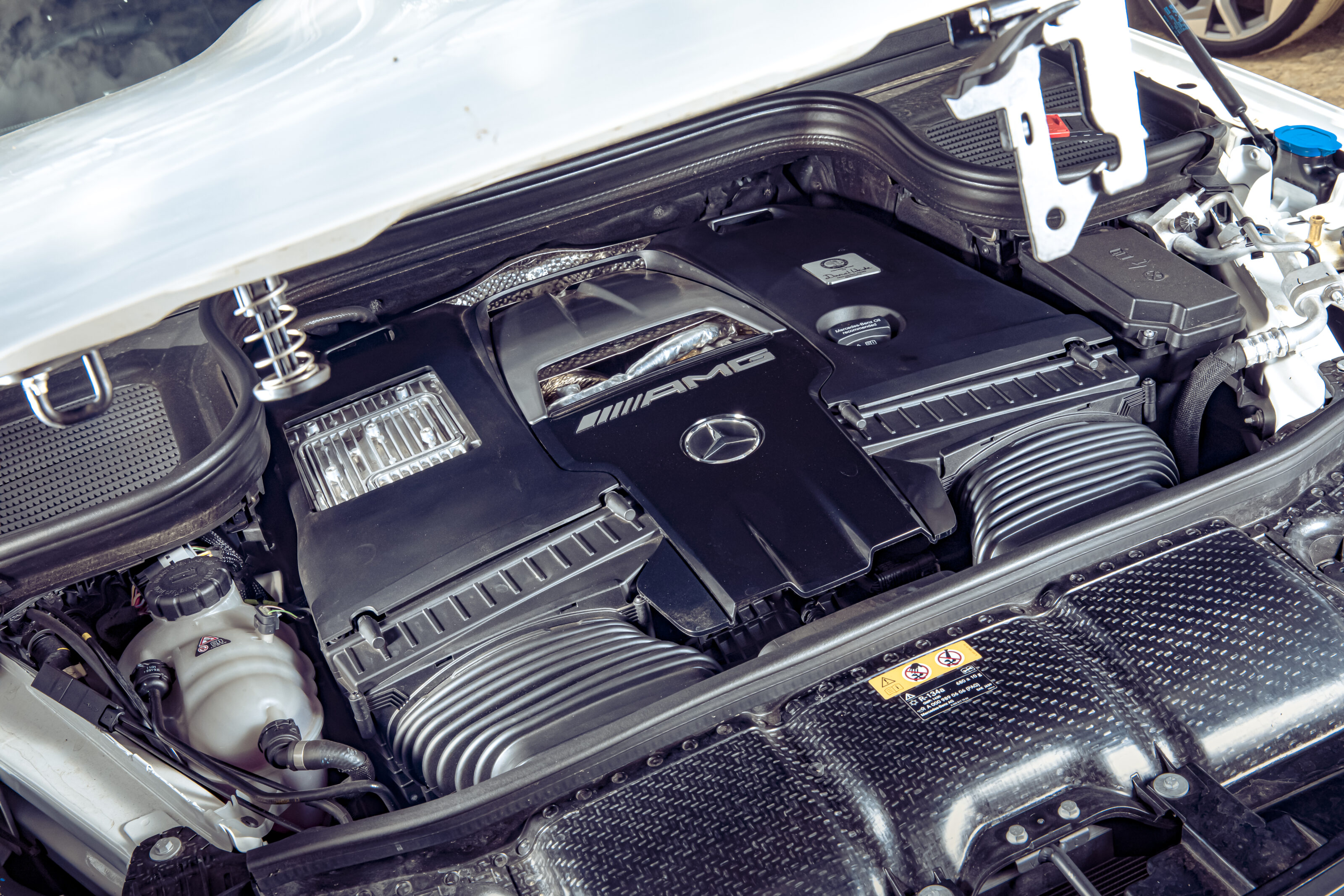
In its fourth generation, the ultimate AMG GLE scores the firm’s ubiquitous twin-turbo 4.0-litre V8, replacing the old 5.5-litre while gaining mild-hybrid tech to broaden its performance and economy.
On paper, the GLE 63 S Coupe‘s outputs are rated at 450kW and 850Nm, with the electric motor left to apply 16kW and 250Nm only when specific mapping and energy stores allow, excluding them from overall outputs.
Mercedes-AMG claims the GLE 63 S Coupe propels itself to 100km/h from rest in 3.8sec, which is identical to the wagon variant despite the Coupe weighing 25kg less.
That weight advantage doesn’t mean the Coupe is necessarily smaller, though. Yes, it’s lower because of its unique roofline, but it’s virtually the same width and spans 15mm longer, despite a shorter wheelbase.
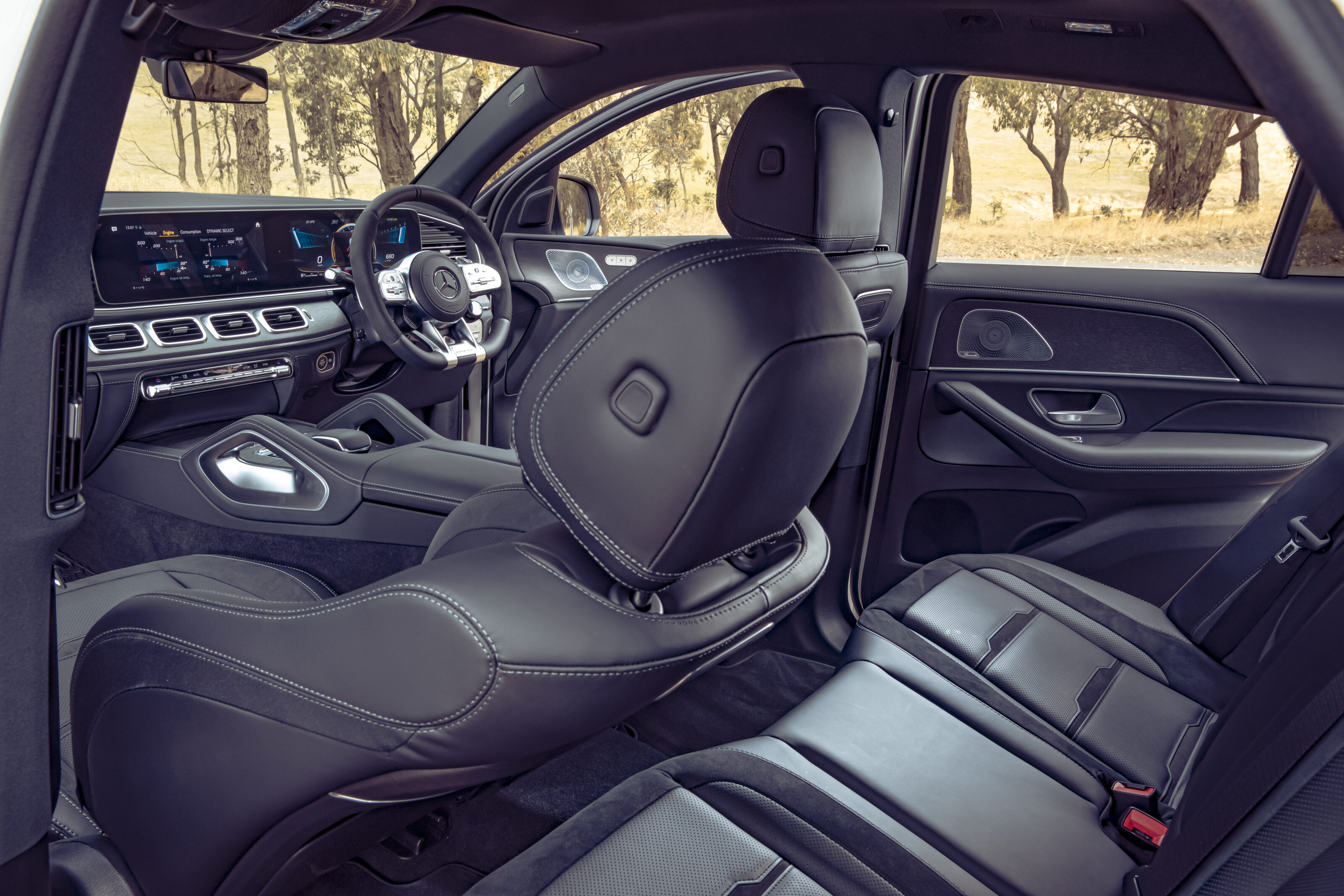
Packaging-wise, the rear outboard seats lose 60mm of knee room and headroom. While oddly, at the same time, this creates more boot space when the rear seats are up. So, its practicality hinges on your needs: rear-seat room or boot space for four passengers.
Really, however, the GLE 63 S Coupe is more focused on who is in the front row. There, it’s easier to appreciate why it costs $33,300 more than the last-generation car.
Multi-contour front seats finished in Exclusive Nappa leather are heated and ventilated as part of the standard Exclusive Package and even the seatbacks are wrapped with leather. You also get temperature-controlled cup holders, four-zone climate control and a power-closing rear hatch – none of which you’ll find in a GLE 53.
Nappa leather features on the old-generation AMG Performance steering wheel. Still, the cabin is packed with a glut of technology, including MBUX infotainment software and a trackpad for the dominating dual widescreens set in the workstation.

Overall, the cabin is now more elegant and resolved, grouping its elements more logically. Between the leather and metal touch surfaces, there’s also a pervasive sense of luxury. And although central grab handles hark to the original Porsche Cayenne, they suit the model’s off-road pretensions.
But even with this newfound design clarity inside, the AMG GLE Coupe overwhelms you with points of access to technology. The row of switches on the centre stack, for instance, make it hard to discern an air-conditioning control quickly.
Overall, the cabin is more elegant and resolved, grouping its elements more logically. Between the leather and metal touch surfaces, there’s also a pervasive sense of luxury.
Meanwhile, you can select a drive mode through three different points. One is with dials under the steering wheel spokes, through the centre screen or dedicated buttons on the console. But maybe this can be pragmatic when you have seven modes (Comfort, Sport, Sport+, Race, Trail, Sand and Individual) to choose from.
Flicking into Trail and Sand mode lifts the suspension 55mm, and we’d like to think also primes hardware like the all-wheel-drive system with a locking rear diff for tackling rocky or squashy terrain. But let’s keep this review to sealed roads.

Keeping that in mind, it pays to know the nine-speed automatic is fitted with a torque converter instead of the wet-clutch MCT gearbox found in other non-hybrid 4.0-litre V8 AMGs. This is because the MCT isn’t compatible with the electric motor.
So, even though the GLE 63 S packs a Race Mode, it doesn’t come with Race Start launch control to perfectly synchronise grip, grunt and RPMs off the line should you want to try and emulate AMG’s 3.8sec claim for the 0-100km/h sprint. The best we could reap was 4.2sec.
That time is no faster than the old 5.5-litre GLE 63 S. But the new car cycles through an extra gear on its way to 100km/h while carrying more weight compared to the previous version’s seven-speed automatic.

Again, on a roll, the GLE 63 S fails to break new ground. But it’s still bloody quick. The sprint from 80km/h to 120km/h takes 2.4sec, with the 4.0-litre V8 showing a ferocious appetite for revs as it spins to a 7000rpm redline.
It would always be hard for this new V8 to match the old 5.5-litre eight for soul. The exhaust note loses a fullness of sound, and despite the colossal torque capability of the whole system, it lacks its predecessor’s low-down tractability.
In isolation, though, the 4.0-litre V8 powertrain still has the swagger of a top-shelf AMG product. It barks with a gruffness that’ll raise the hairs on your neck and the top-end rush is exhilarating. While we miss the crisp feedback of an MCT transmission, the torque converter nine-speed automatic is smooth and robust.

In corners, grip is phenomenal too, with staggered Yokohama Advan Sport V107s grounding the GLE 63 S’s torque through 285mm-wide front tyres and 325mm-wide rears.
Mid-corner, a shorter wheelbase helps the Coupe chassis rotate compared to its wagon counterpart, but heavy steering hints at how much grip the chassis needs to overcome.
Wrapping those tyres around standard 22-inch wheels suits the car’s dominating presence, but not without penalty. Even air-suspension and active anti-roll bars can’t stop the huge wheels from slapping over road joints and hard edges.
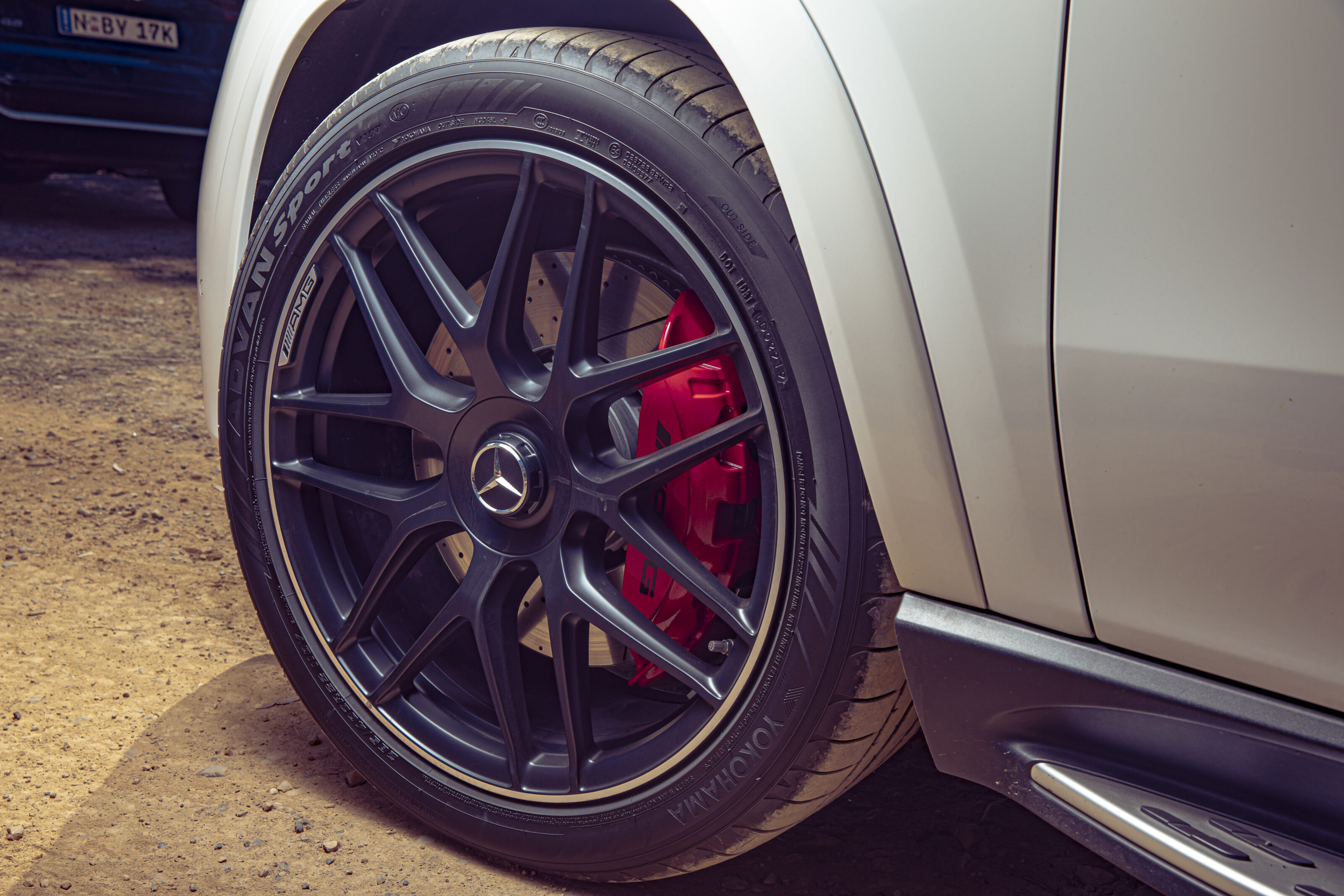
Comfort mode at least softens the damping nicely, along with components like active engine mounts, but the shorter wheelbase robs the GLE 63 S of the wagon’s extra composure on highways – where the front tyres can tramline or follow a strong self-centring effect.
A slow ratio steering rack makes carving through traffic difficult in urban environments, while thick body pillars and a high seating position obscure your immediate surroundings. Brake feel also sacrifices some bite to the mild-hybrid’s regenerative effect.
Mid-corner, a shorter wheelbase helps the Coupe chassis rotate compared to its wagon counterpart, but heavy steering hints at how much grip the chassis needs to overcome.

Credit where it’s due, though. That perturbed brake feel is the only clue the GLE 63 S is (mild) hybridised, such is the seamlessness of the electric motor’s assistance. If only it could help reduce the GLE 63 S’s incredible thirst.
On a 168km combined-road drive loop within Melbourne, the GLE 63 S Coupe chugged down 17.75L of 98RON (although it’s 95RON capable) per 100km. At least that’s just above its 17.4L/100km claimed urban cycle consumption figure.
While we’re discussing sensible stuff, the Mercedes-AMG GLE 63 S Coupe comes with a five-year warranty on unlimited kilometres, as well as capped-priced servicing for the first three years.
It’s good to know, as well, that the GLE 63 S scores lane-keep assist, lane departure assist, active cruise control, AEB, active blind-spot assist, an exit warning function and active Stop and Go assist. ANCAP has rated it five stars. It also features an inflatable space-saver spare tyre.
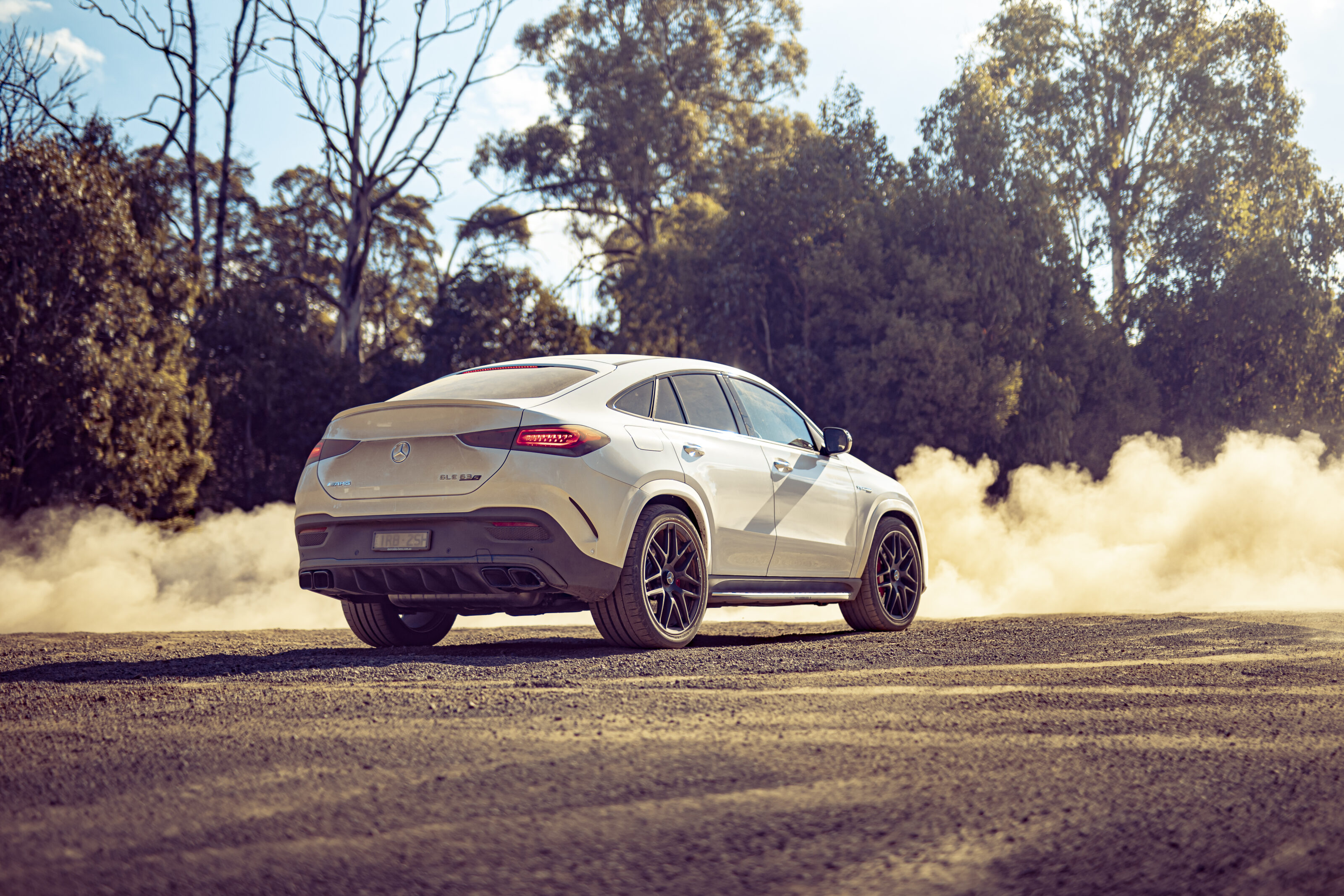
As for us? Overall, we rate the GLE 63 S middle of the road among a healthy list of rivals. You’ll need to spend another $130K to exceed the GLE’s presence with a Lamborghini Urus, but a Porsche Cayenne Coupe Turbo ($262K) and BMW X6 M ($218K) are more resolved options.
Given most GLE 63 S Coupe buyers would arrive at their purchase without considering anything else, they’ll at least appreciate a thoroughly updated model with a good chunk of the original’s character.
Yes, the exterior styling is divisive and far from cohesive. But its look-at-me swagger draws you to its heady mix of grip, grunt and growl. And that will be enough for most of its clientele, who won’t care whether there’s more than meets the eye or not.
2021 Mercedes AMG GLE 63 S Coupe specifications
| Body | 4-door, 5-seat coupe SUV |
|---|---|
| Drive | all-wheel |
| Engine | 3982cc V8, DOHC, 32v, twin-turbo (with e-motor) |
| Bore/stroke | 83.0 x 92.0mm |
| Compression | 8.6:1 |
| Power | 450kW @ 5750-6500rpm |
| Torque | 850Nm @ 2500-4500rpm |
| E-motor | 16kW/250Nm |
| Fuel consumption | 11.5L/100km (combined/claimed) |
| Weight | 2420kg |
| Power/weight | 207kW/tonne |
| Transmission | Nine-speed automatic |
| Front suspension | A-arms, air dampers, active anti-roll bar |
| Rear suspension | Multi-links, air dampers, active anti-roll bar |
| L/W/h | 4969/2018/1782mm |
| Wheelbase | 2935mm |
| Tracks (f/r) | 1683/1716mm |
| Steering | electrically assisted rack-and-pinion |
| Front brakes | 400mm ventilated drilled discs, six-piston calipers |
| Rear brakes | 360mm drilled ventilated discs, single-piston calipers |
| Wheels | 22 x 10.0-inch (f); 22 x 11.0-inch (r) |
| Tyres | 285/40 ZR22 (f); 325/35 R22 (r) Yokohama Advan Sport V107 |
| Price | $235,500 + ORC |
Snapshot
- Production for Project One hypercar delayed until at least 2022
- Longer wait due to issues making F1 power unit work on the road
- All 275 cars already sold
Production for Mercedes-Benz’s highly anticipated Project One hypercar has reportedly been pushed back until 2022, despite all 275 examples already being pre-sold.
According to Autocar UK, the delay isn’t due to semiconductor and parts shortages hitting the rest of the industry, but rather development issues with the Formula 1-derived power unit.
The Project One hypercar was first announced as a concept in 2017, and is reported to be using a 745kW version of the hybrid 1.6-litre power unit used in the championship-winning Mercedes Formula 1 car that same year.
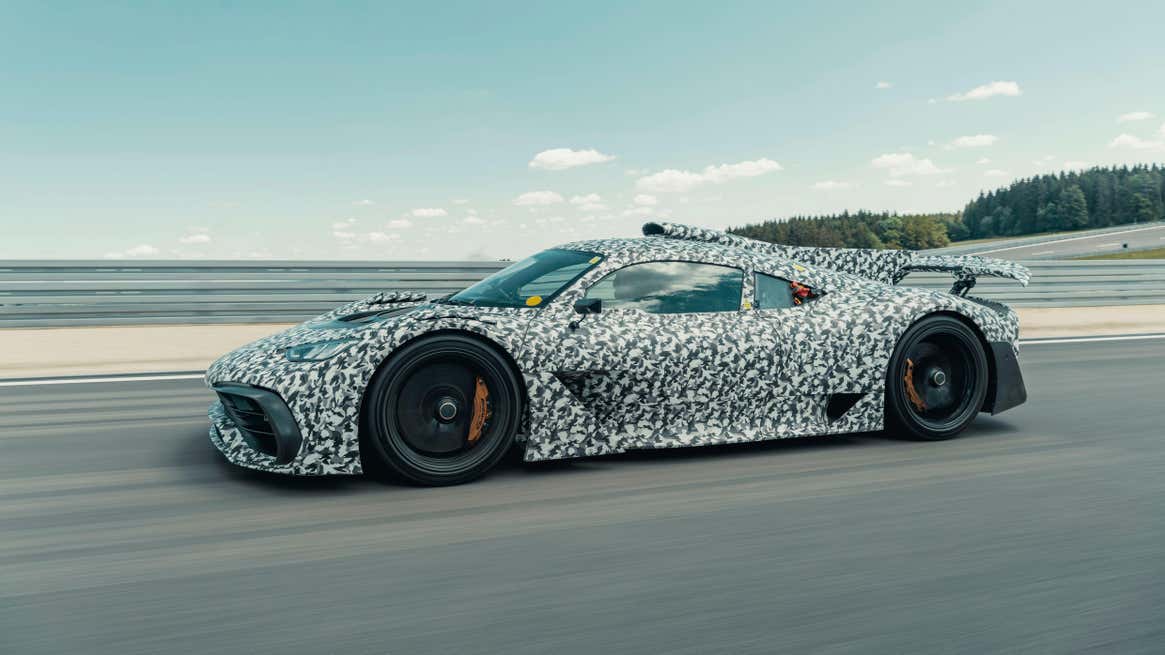
According to the report, Mercedes engineers have struggled to get the power unit to comply with numerous WLTP emissions standards without losing performance, and are also struggling to make it idle in the manner needed for a road car.
It’s said that in the F1 version the power unit idle speed is around 5000rpm, and the target idle speed of 1200rpm the engineers have set for the Project One road car has been extremely difficult to achieve.
As a result, Mercedes has yet to say if the new hypercar will deliver on its original performance targets of 0-200km/h in six seconds and a top speed of 350km/h.
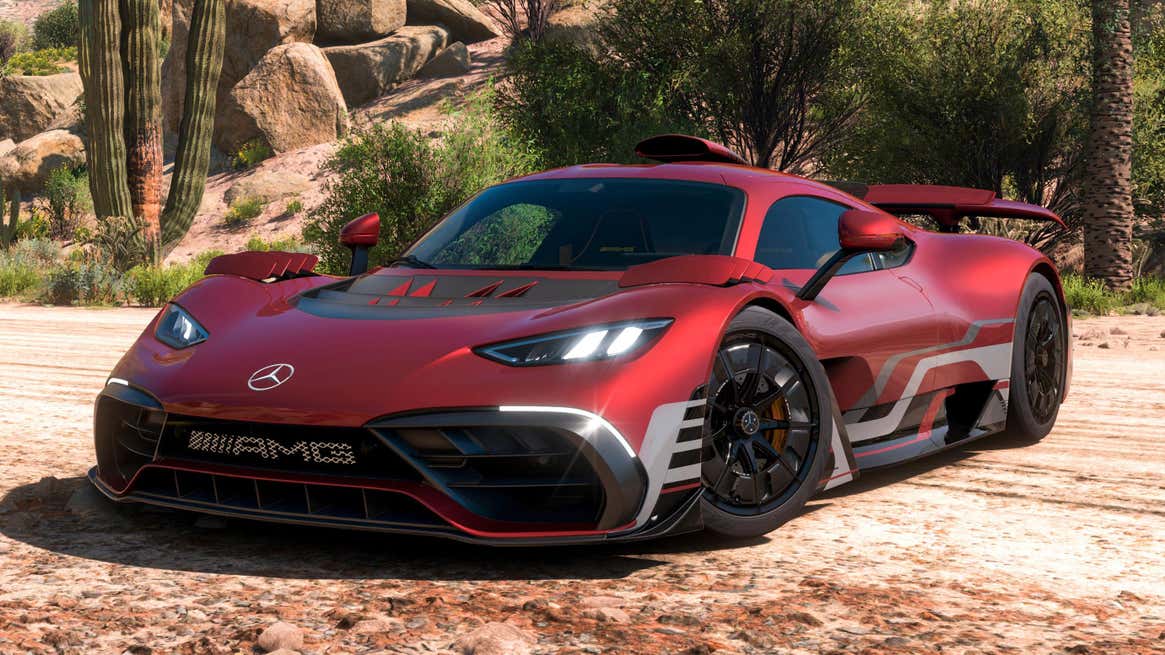
The all-wheel drive hypercar is also reported to be capable of a 25 kilometre driving range using the hybrid battery.
The owners of the exclusive 275 models have already shelled out AU$4.1million for their example, but with production delayed until at least 2022 the closest they’ll get to driving a Project One will be in Forza Horizon 5, which will be available from November 5.
