
March 2024: Updated 2025 IONIQ 5 revealed
Hyundai’s big IONIQ 5 electric SUV will welcome a sports-styled N Line grade this year, arriving in Australia from around the middle of 2024.
REVIEW: 2022 Hyundai IONIQ 5
It’s frenetic times in the Hyundai Motor Group’s product planning department.
A fast-expanding range of performance cars is finally following the critically acclaimed i30 N hot hatch, while a raft of higher-brow models has been drafted in to bolster the germinal Genesis luxury brand.
Now it’s the turn of EVs. Put aside the electric Kona and non-numerical electric IONIQ models of recent years, however, and ignore Hyundai’s dabbles with hydrogen fuel cells; the IONIQ 5 is where the company is getting properly serious about electrification.
The 5 is the first of a new IONIQ sub-brand range that must give Hyundai a solid footing in a market now making its inevitable transition away from petroleum.
There’s a new dedicated modular battery electric vehicle platform underneath, which will be shared with numerous future models including the Kia EV6 and Genesis GV60.
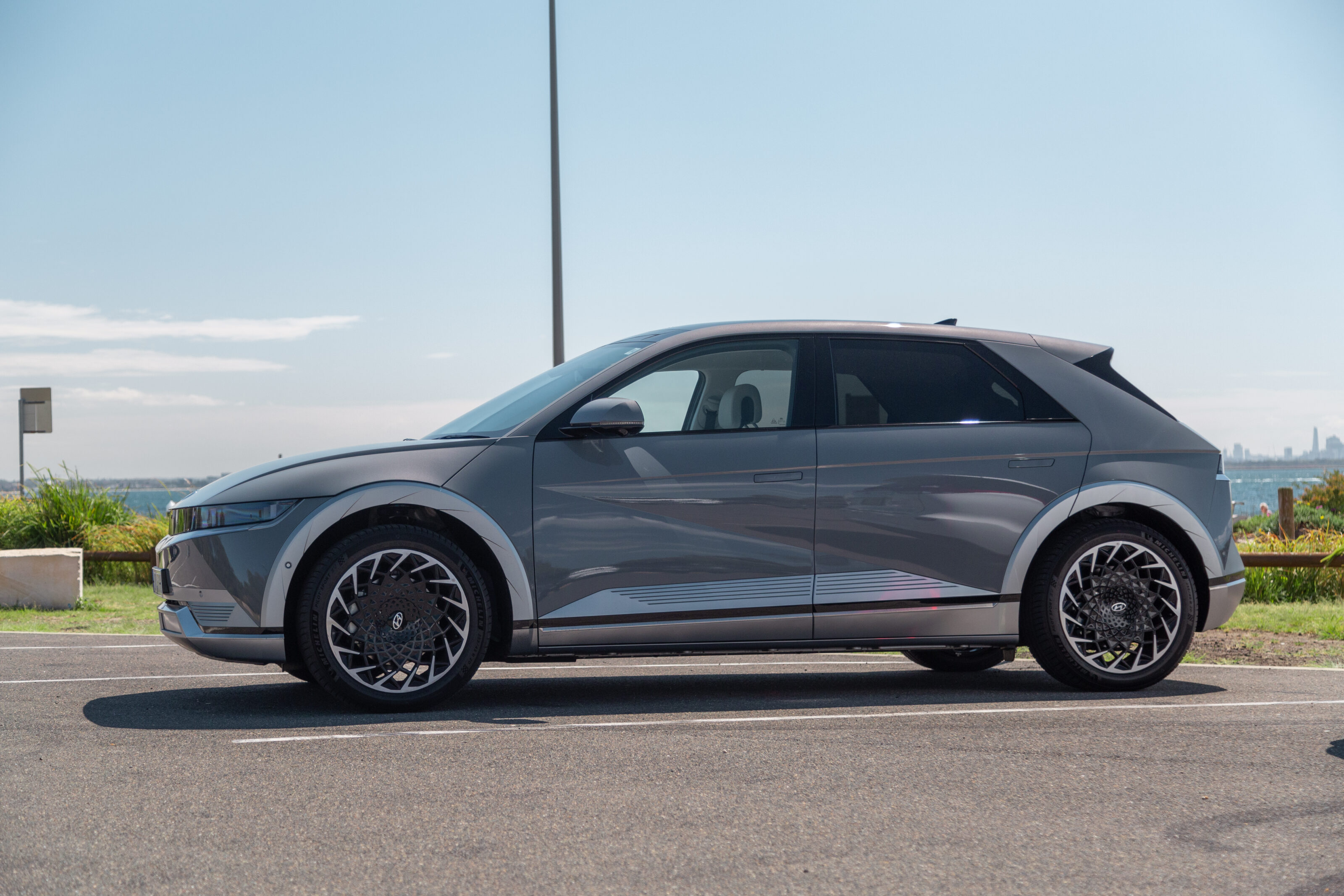
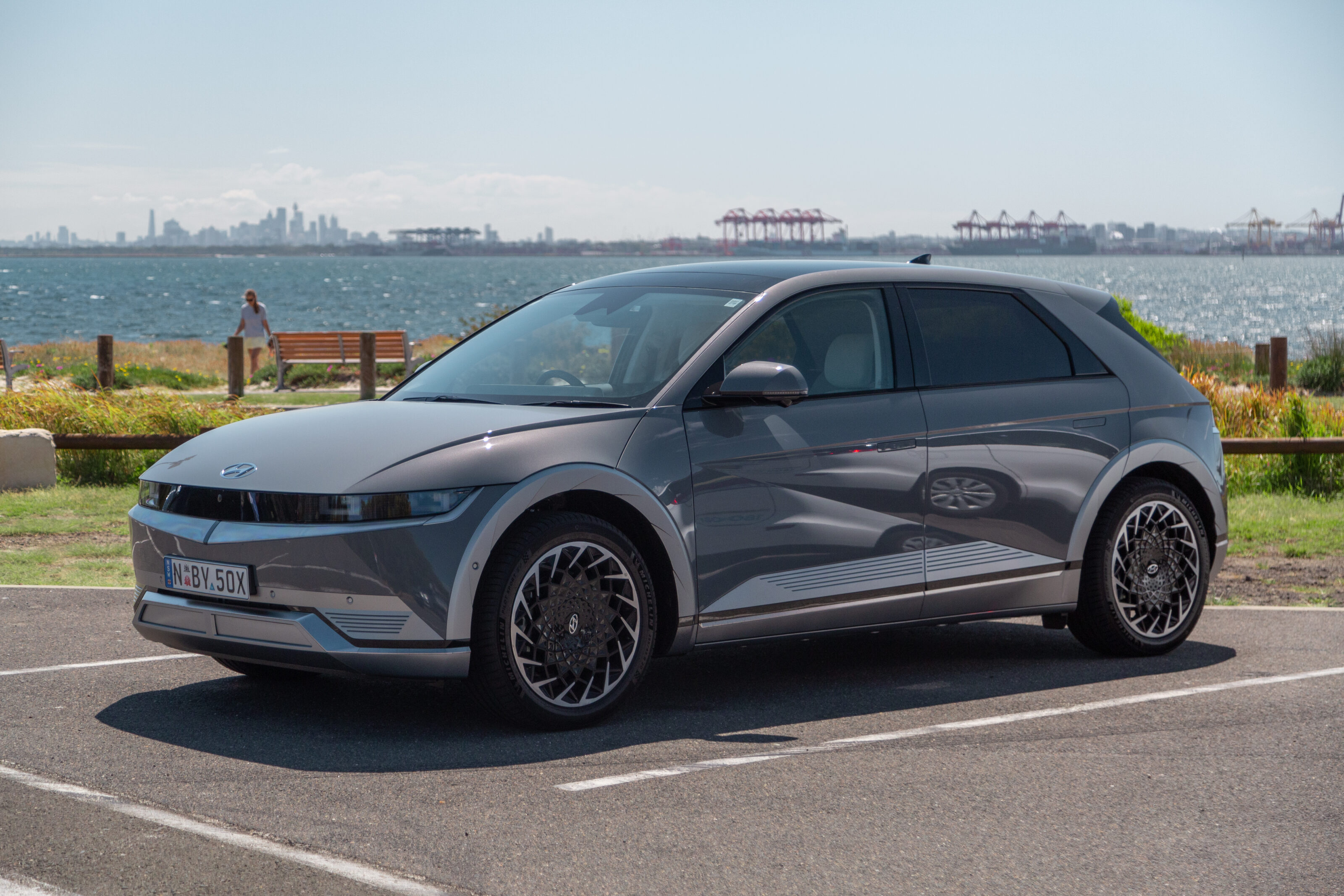
Naturally, however, it’s the IONIQ 5’s tautly chiselled, retro-futuristic overlay – with more than a hint of Lancia Delta Integrale about its shape – that has captured widespread attention.
The shrink-wrap bodywork and short overhangs disguise the real-world size of a five-door crossover body style that is much larger than pictures suggest.
Measuring 4635mm long, the IONIQ 5 is fractionally longer than the Tucson mid-size SUV. The three-metre wheelbase is longer than that of Hyundai’s largest SUV, the Palisade.
This lends perspective to pricing that makes the IONIQ 5 – in $75,900 AWD form, at least – the most expensive model currently in Hyundai showrooms. (Although don’t go to a Hyundai dealership to buy it yet, because the initial 400 units are being sold exclusively online.)
There’s a slightly more affordable, $71,900 RWD version available now with less performance but stacked with a big pile of standard features just like the dual-motor model.
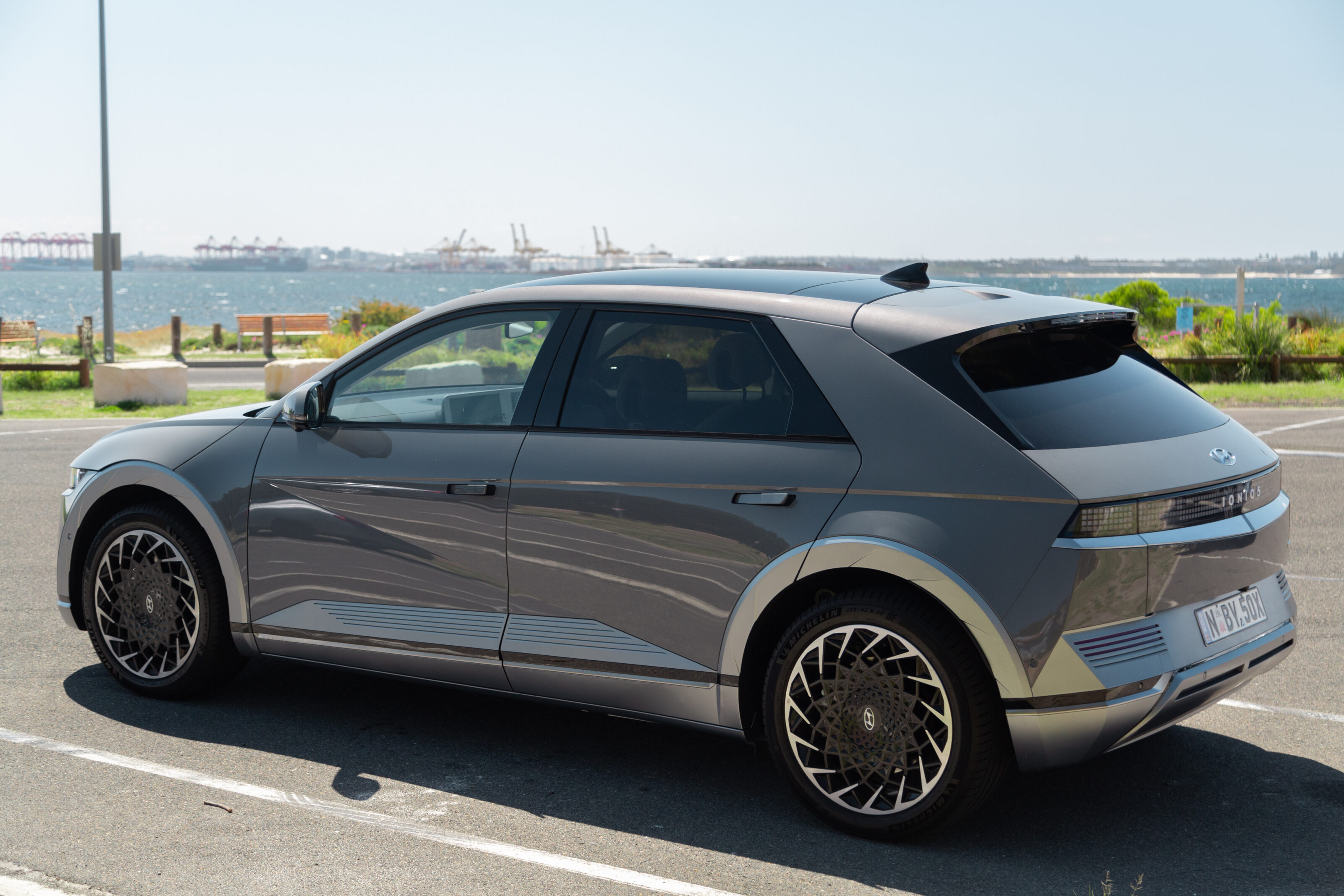
Equipment highlights include 20-inch alloy wheels, LED lamps front and rear, fixed glass sunroof, smart tailgate, electrically adjustable front seats with heating/ventilation, heated and electrically adjustable rear seats, heated steering wheel, dual 12.3-inch dash displays, surround-view cameras, and a Bose audio system.
Given it’s currently priced beyond access to the best EV subsidies currently available in Australia – in NSW and Victoria – you’ll need to wait until 2022 for an entry-level IONIQ 5. This version will feature a smaller battery but is expected to be priced closer to the cheapest Tesla Model 3, which starts from just over $60,000.
At the other end of the budget spectrum, spy shots tell us an IONIQ 5 N will eventually top the range.
It’s the IONIQ 5’s tautly chiselled, retro-futuristic overlay – with a hint of Lancia Delta Integrale about its shape – that has captured widespread attention.
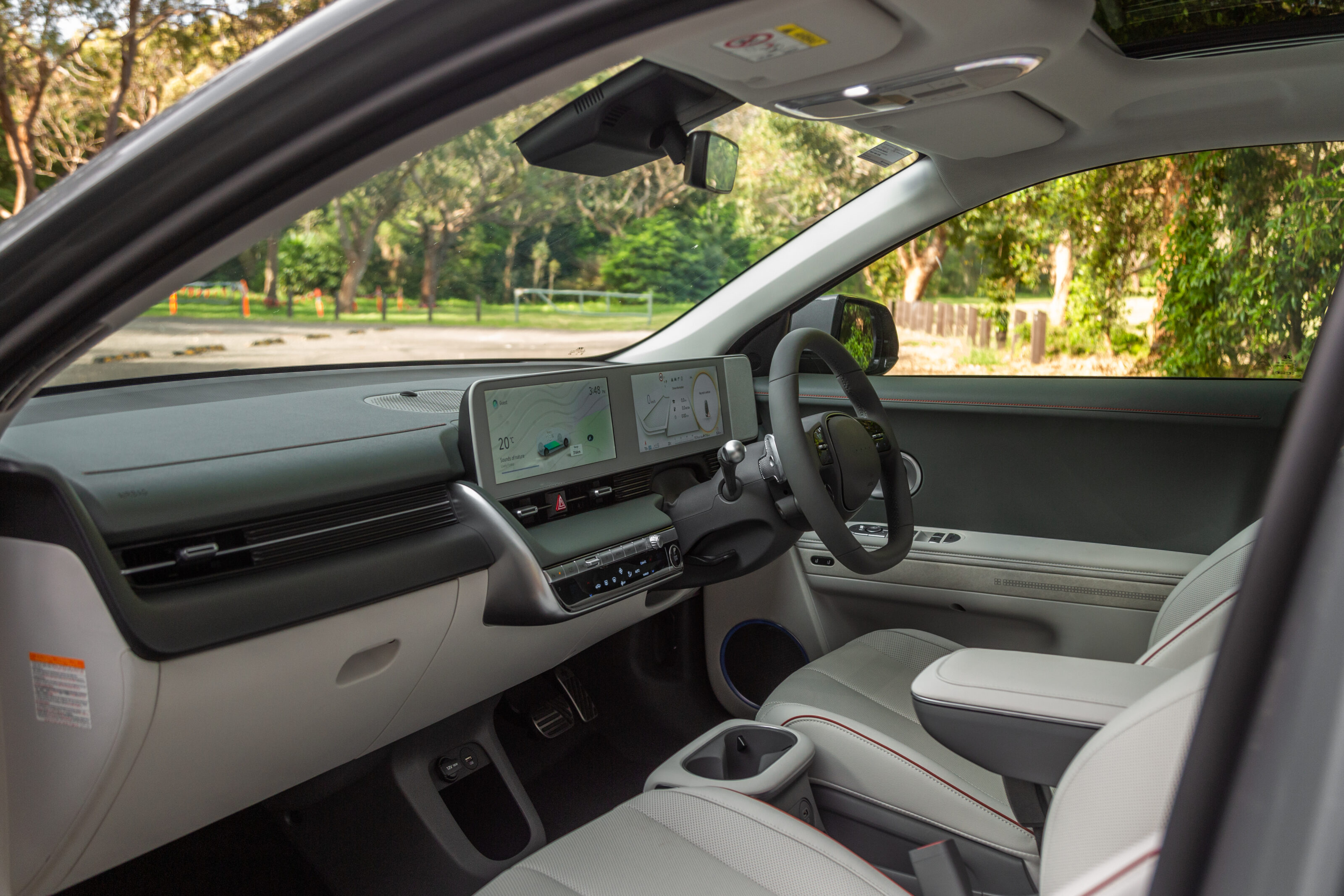
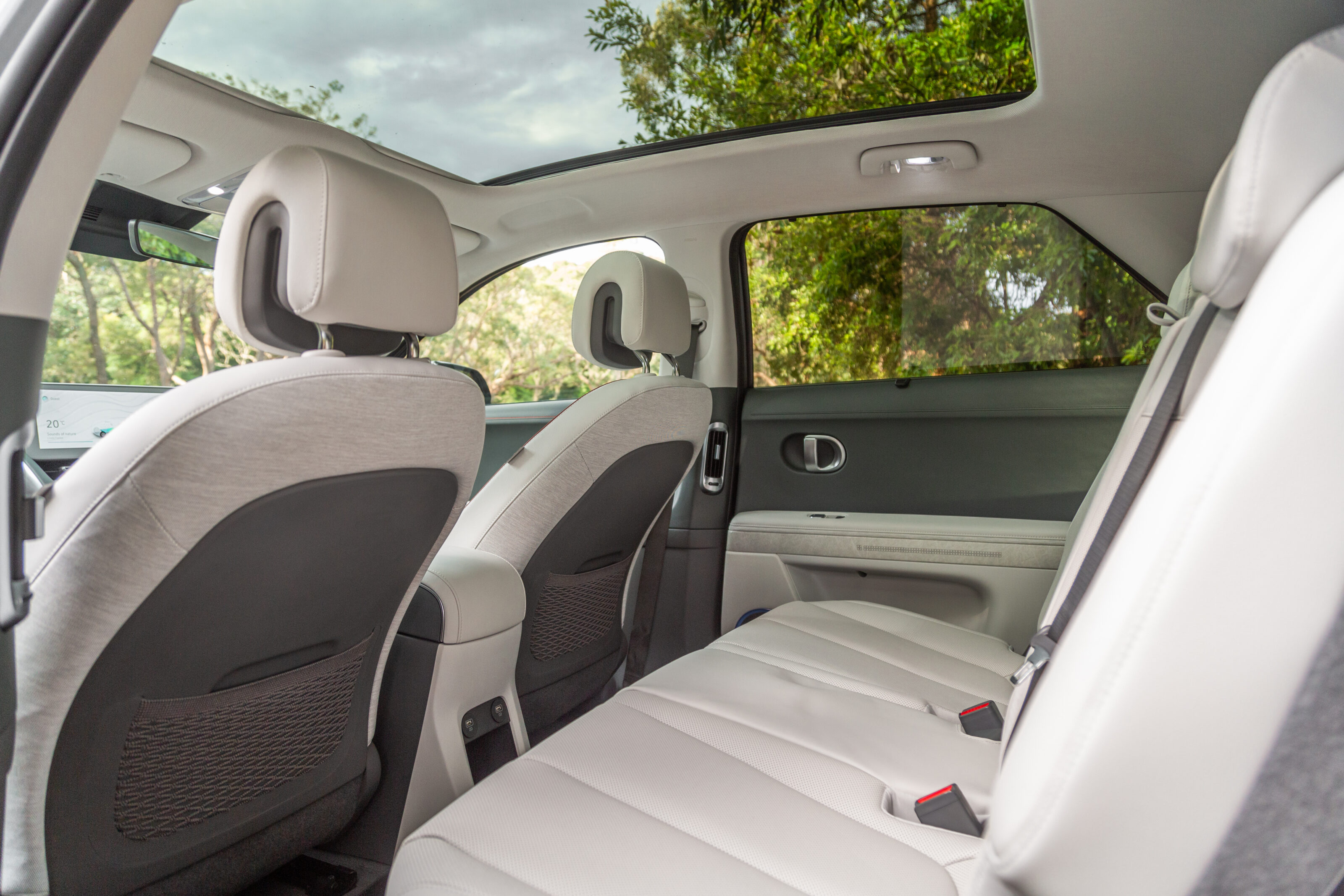
That limo-like wheelbase promises big interior space, and the IONIQ 5 doesn’t disappoint.
The front cabin is given an extra sense of roominess with the completely flat floor and a centre console that can be slid backwards to create a virtual walkthrough between the front seats.
It’s bright, too, at least with our test car’s light, dual-tone trim. Especially if the sunroof blind is opened to reveal the wonderfully expansive glass ceiling.
The impression of quality isn’t quite on the same level of poshness as, say, the similarly priced Genesis GV70 SUV, but it’s comfortably above the Hyundai norm.
There’s some extra emphasis on eco materials, including a recyclable paperette door trim, bio-painted interior surfaces, and veggie-oil-treated leather upholstery.
Also lending the IONIQ 5 a distinctive in-house look is the dash design, including some Mercedes-aping features such as the conjoined 12.0-inch digital displays and transmission wand (the chunkiest of a trio of chubby stalks).
Something next to the driver display you don’t get in a Benz, though – a magnetic pin-up board that I initially mistook for an extra speaker. Apparently, it’s so owners can attach a photo of their partners or family.

Unhampered by a traditional central tunnel, the large ‘Universal Island’ centre console has an open area large enough for a small bag or pair of shoes. The upper lidded box doubles as an armrest that can be lifted out of the way, and the lower tray area includes inductive smartphone charging.
Where are the USB-C ports, though? USB-As are old-tech these days. Over-the-air updates are limited to the navigation system, too, where Teslas have wider potential to be improved by rolling software upgrades.
And no one-touch rear windows is a minor thing that seems like a major omission in an electric car.
The glovebox is ingenious – a pull-out drawer that’s big enough to hold a 13-inch laptop.
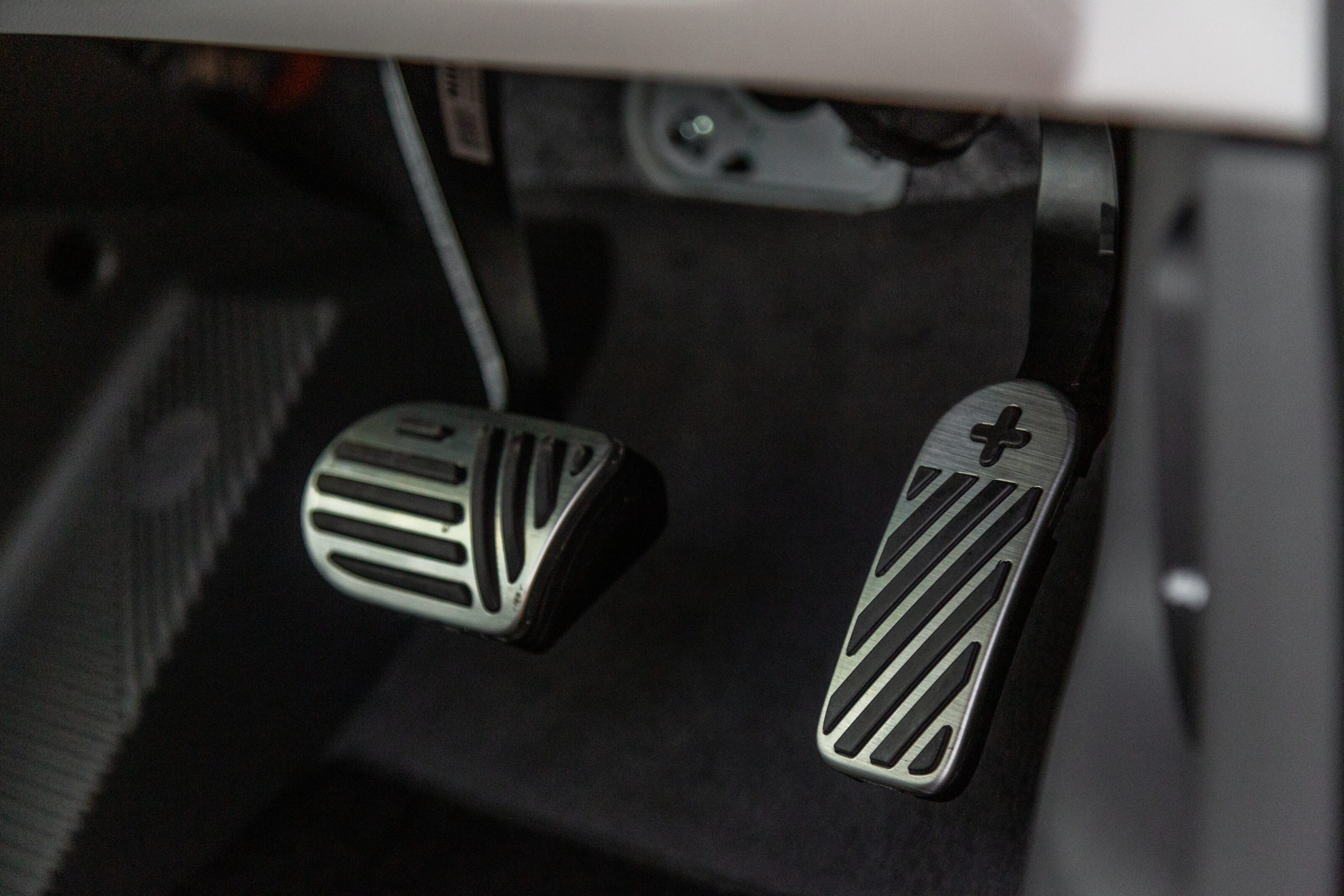
Another nice interior detail; the accelerator and brake pedals respectively feature Plus and Minus symbols.
A big rear door provides wide ingress/egress to a VIP-like rear seat with considerable knee space – more than a metre – and plenty of electric adjustment.
Unfortunately, Australian IONIQ 5s miss out on a power socket beneath the rear seats that can turn the car into a rolling power bank.
This Vehicle to Load (V2L) power source technology is available when stationary, however. An adaptor stored under the boot floor plugs into the vehicle’s exterior recharging port, allowing various electrical appliances to be plugged into a 250V/15A socket on the other end.
Aside from the likes of laptops and camping gear such as air pumps, the V2L connector allows the IONIQ 5 to give another EV a quick battery boost. The Hyundai cuts off the V2L when the car’s battery gets down to 44 per cent.

Two different sets of recharging plugs were provided under the boot floor of our test car, each representing an extreme of possible topping-up speeds – from glacial to rapid.
One connects the IONIQ 5 to a conventional power socket but would take more than a day, according to the onboard computer, to add about 33 per cent charge.
The other takes advantage of the 5’s 800V charging capability that’s double the industry standard for EVs and currently shared only with the Porsche Taycan and upcoming Audi E-Tron GT.
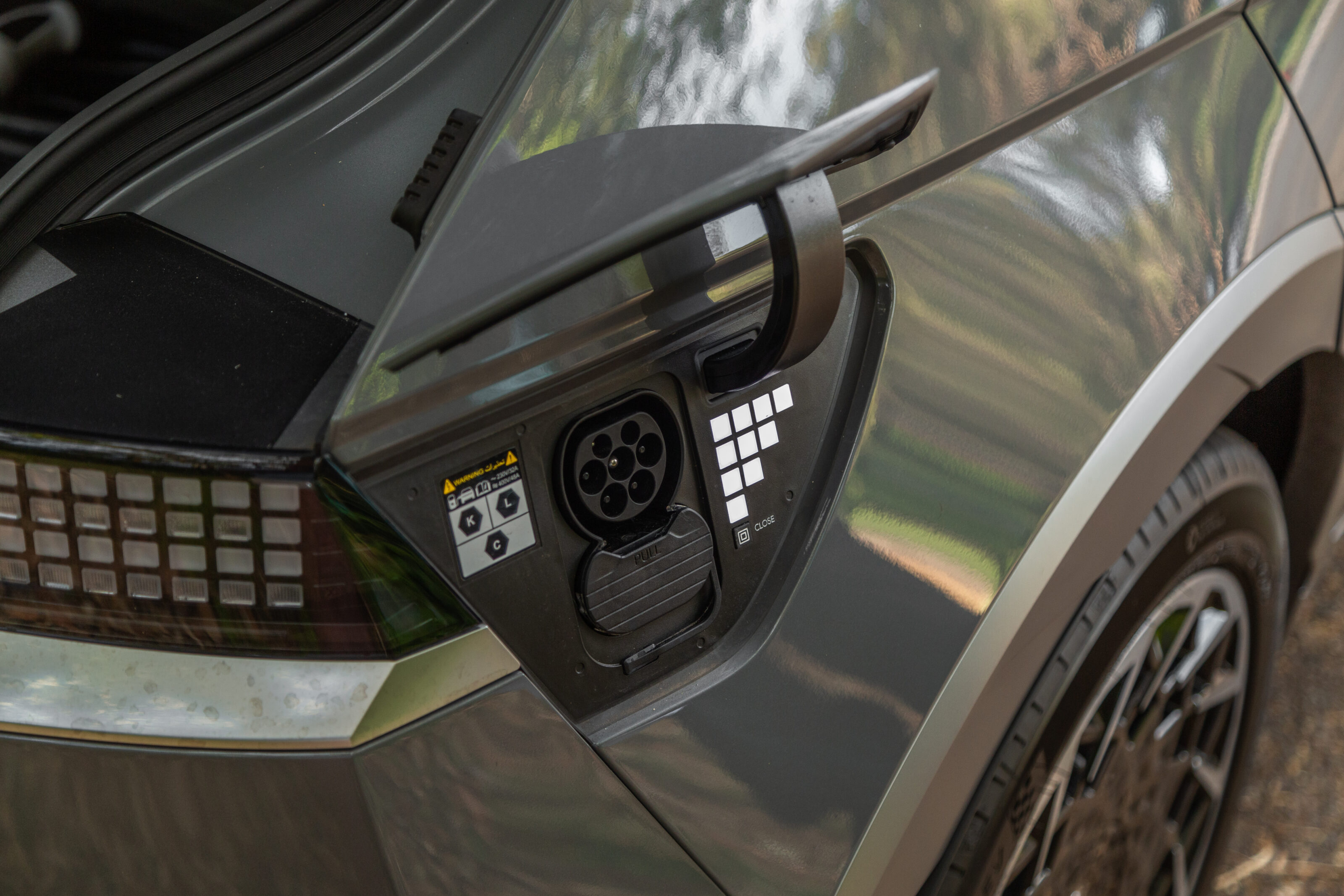
This makes the IONIQ 5 one of the fastest-replenishing EVs around when hooked up to a 350kW DC ultra-fast charger, with a 10-80 per cent charging time of just over 17 minutes. In range terms, 100km can be added in just five minutes.
The big caveat is that, in Australia, these super-rapid charging points are extremely thin on the ground.
Using the vehicle’s 10.5kW AC onboard charger with a wall box type home charging point takes just over six hours.
This makes the IONIQ 5 one of the fastest-replenishing EVs around when hooked up to a 350kW DC ultra-fast charger. In range terms, 100km can be added in just five minutes.

Hyundai quotes 527 litres of luggage capacity beneath the steeply raked tailgate – a figure that puts the IONIQ 5 in the mix with mid-sized SUVs. That’s just 12 litres shy of the company’s own Tucson, for example.
The boot is relatively shallow, though, and the (removable) cargo blind is positioned lower than the top of the seatbacks. Those seatbacks fold down flat if more space is required and not all rear seats are in use.
As with many EVs, there’s a bonus ‘frunk’ space under the bonnet where a bulky internal combustion engine would usually reside. It’s most useful in the RWD version where there’s 57 litres; the AWD’s front electric motor reduces it to a measly 24 litres.

Both the RWD and AWD IONIQs feature a 73kWh lithium-ion battery pack beneath the floorpan, with the single-motor model producing 160kW and 350Nm and the dual-motor dishing out 225kW and 605Nm.
Hyundai quotes 5.2 seconds for the AWD IONIQ’s 0-100km/h performance.
While the fastest IONIQ 5 is half a second slower than the forthcoming Polestar 2 Dual-Motor and nearly two seconds behind the rather absurd 3.3 seconds of the Tesla Model 3 Performance, few will ever consider the Hyundai slow – especially when Sport mode is selected to make the front motor a constant rather than part-time contributor.
Thus engaged, the AWD IONIQ pins occupants into their seats under full throttle – a sensation not replicated in the RWD version.
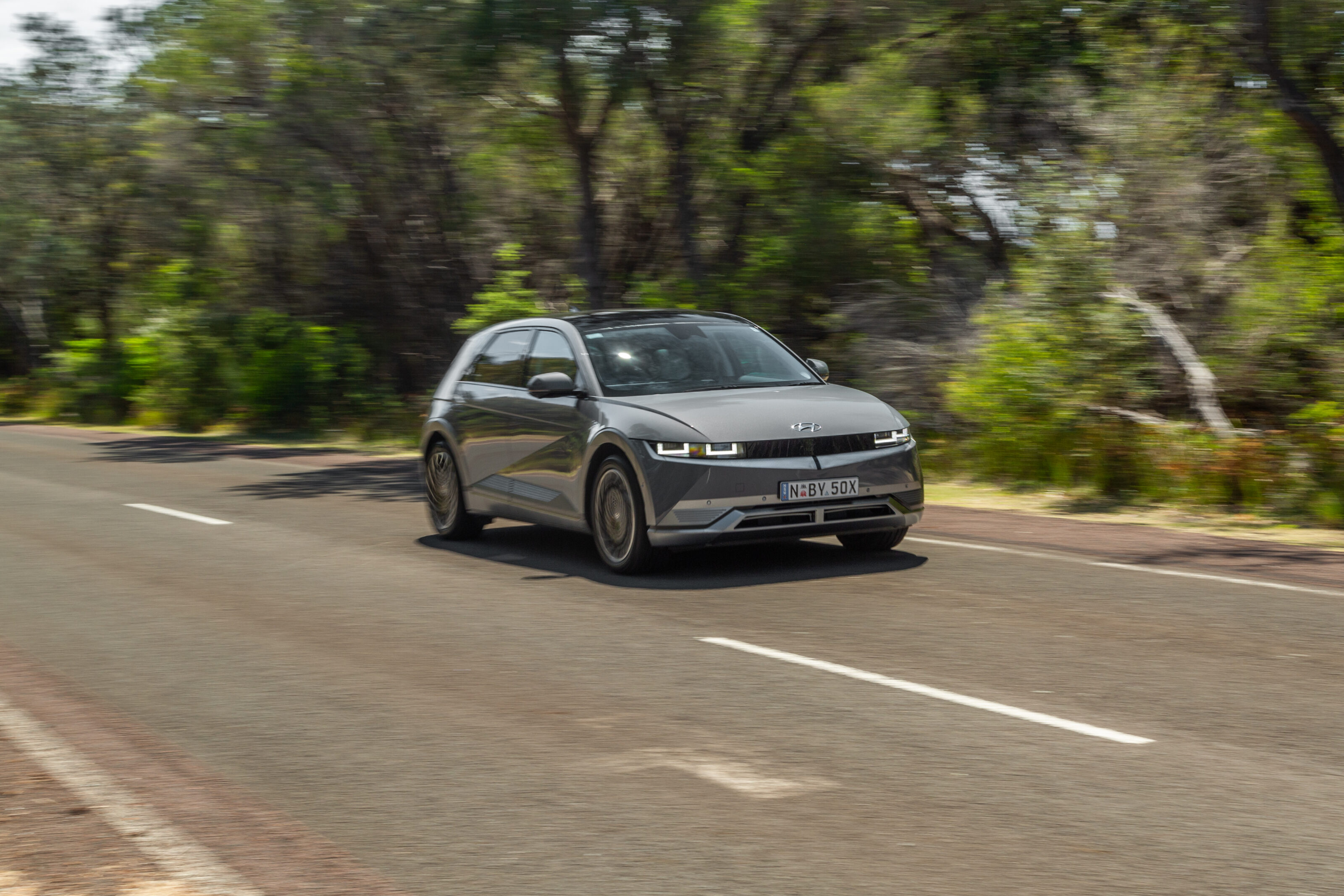
However, Normal mode – which decouples the front electric motor to save energy when not required – is more than satisfactory for general driving, with all the instantaneously smooth acceleration that is the hallmark of EV drivetrains.
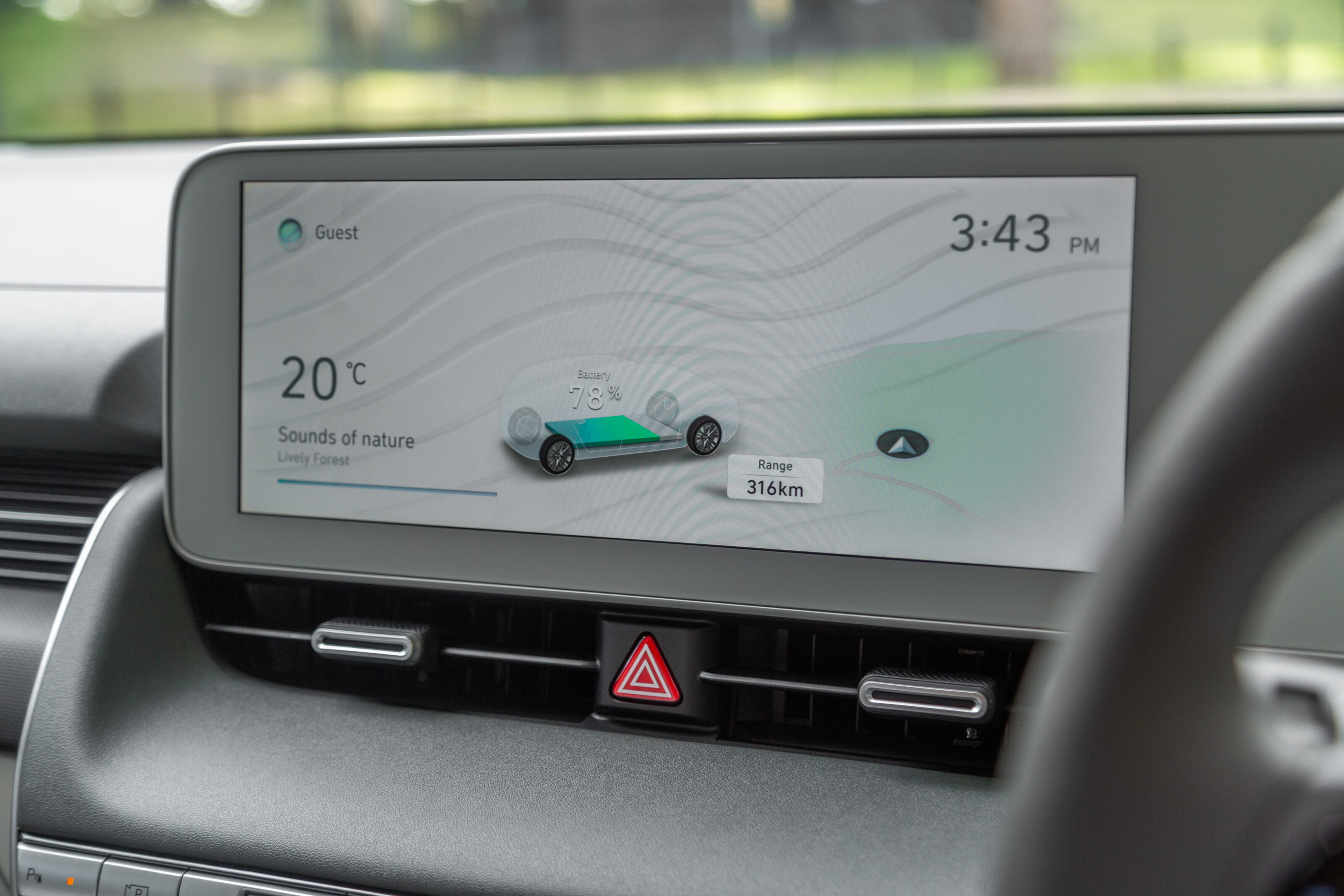
Eco mode dulls throttle response and helps maximise range – a figure that is provided permanently in the driver display along with battery percentage.
Reassuringly, the range estimations proved sufficiently accurate during testing. Over a 145km drive with a mix of roads, the IONIQ 5 AWD used up 150km. Battery life takes a bigger hit on longer freeway stints. A separate drive in the RWD version – involving mostly freeway (and a cooler day) – used 339km of range for a 229km trip.
While the fastest IONIQ 5 is nearly two seconds behind the Model 3 Performance, few will ever consider the Hyundai slow.
The infotainment menu includes an EV page providing additional information, including distance to the nearest charging station (which seemed less accurate at times) as well as the number of extra kilometres possible by switching off the climate control.
While the RWD version will travel an extra 21km based on Europe’s WLTP test cycle, its 451km range still falls well short of the ballpark-priced ‘Long Range’ Model 3 and Polestar 2 – 580km and 540km, respectively.
A 481km-range variant using smaller 19-inch wheels is also expected, though even the AWD’s 430km will be more than sufficient for most owners, especially those with a second (non-EV) vehicle.
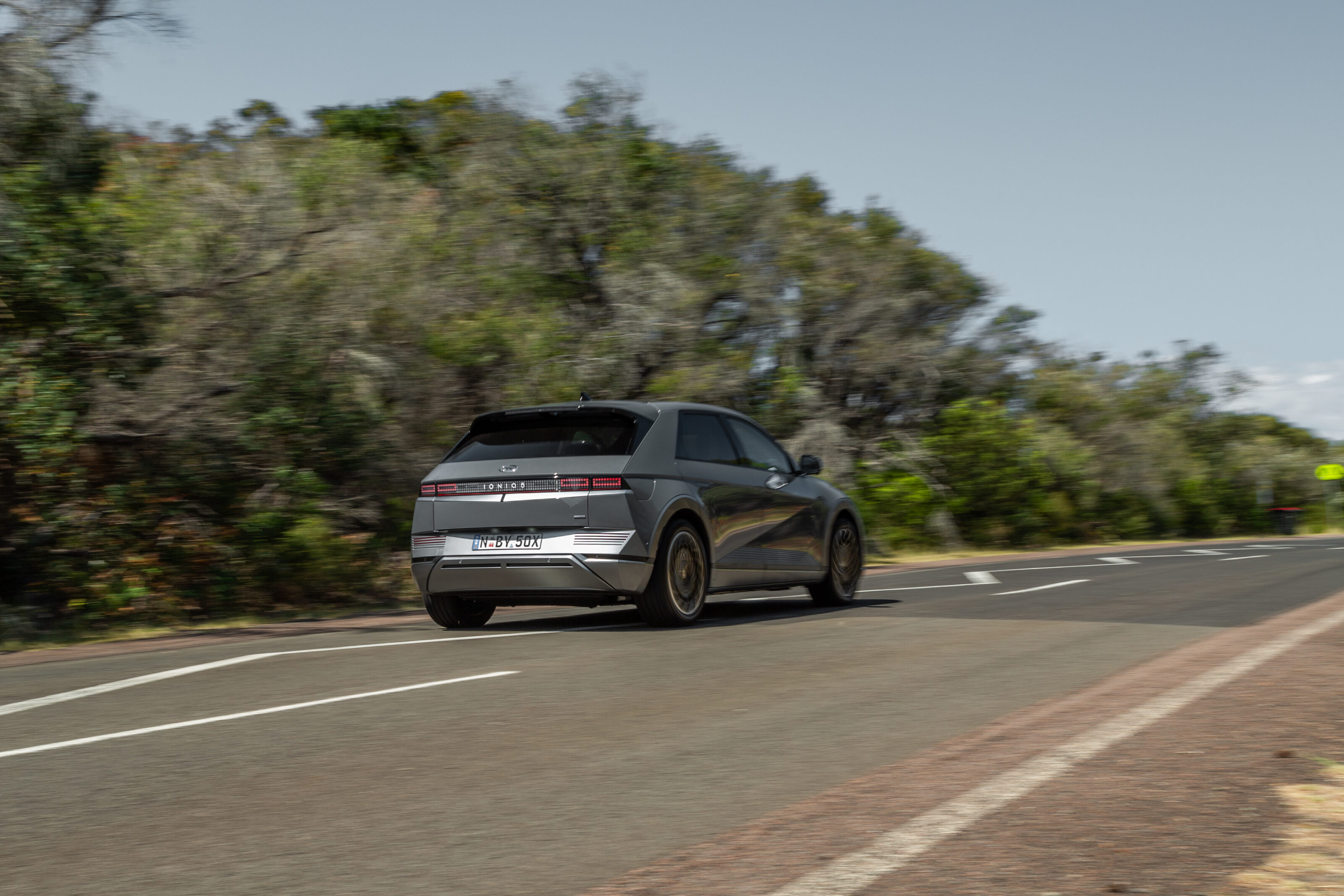
The battery platform helps create a low centre of gravity, so the IONIQ 5 is quite adept at directional changes despite its 2100kg kerb weight.
There’s not too much body roll and there’s enjoyment to be had in using the accelerator pedal only even on country roads – rolling off it for a trail-braking effect via the regen braking, then rolling back onto it with firm pressure to savour the AWD’s slingshot bursts out of corners.
Steering is also at its best with more lock wound on. Otherwise, there’s some unnatural resistance off the straight-ahead position that slightly spoils the rack’s fluidity.
A much bigger blemish is the intrusive Lane Keep Assist system that, above 60km/h, is determined to interfere unnecessarily with the steering. While it can be switched off via a steering wheel button, it’s reactivated every time the car is restarted.
The 20-inch wheels look great but can thud into potholes and bring some firmness to the low-speed ride. But the suspension otherwise deliver a pleasant suppleness, with the IONIQ 5 just getting fidgety on particularly uneven roads.
Servicing costs are $220 every year or 15,000km, with the exception of the 48-month/60,000km visit that asks a steeper $804. The car is covered by a five-year warranty; the battery is covered for eight years or 160,000km.
It will be interesting to see how the IONIQ 5 range develops in 2022 with cheaper variants or different trim grades.
The introduction of missing-for-now tech, including the Bluelink smartphone app, would certainly help Hyundai get closer to Tesla’s cleverly convenient EV ownership experience.
Right now, though, the IONIQ 5 is already a highly enticing EV.
2021 Hyundai IONIQ 5 specifications
| Body | 5-door hatch |
|---|---|
| Electric motors | Single rear (RWD) / Dual (AWD) |
| Battery | 72.6kWh lithium-ion polymer |
| Transmission | Single-speed reduction gear |
| Power | 160kW (RWD) / 225kW (AWD) |
| Torque | 350Nm (RWD) / 605Nm (AWD) |
| 0-100km/h (claimed) | 7.4 seconds (RWD) / 5.2 seconds (AWD) |
| Consumption (rated) | 17.9kWh/100km (RWD) / 19.0kWh/100km (AWD) |
| Weight | 2020kg (RWD) / 2100kg (AWD) |
| Suspension | Front struts; rear multilink |
| L/W/h | 4635/1890/1605mm |
| Wheelbase | 3000mm |
| Boot space | 527L |
| Frunk space | 57L (RWD) / 24L (AWD) |
| Brakes | 345mm ventilated (front and rear) |
| Tyres | 255/45R20; Michelin Pilot Sport EV |
| Price | $71,900rrp (RWD) / $75,900rrp (AWD) |
Snapshot
- Total of 1372 cars affected
- Only the F16 generation has been recalled
- Nissan is offering to undertake repairs free of charge
The F16-generation Nissan Juke has been placed under recall, with 2019-2020 model years involved.
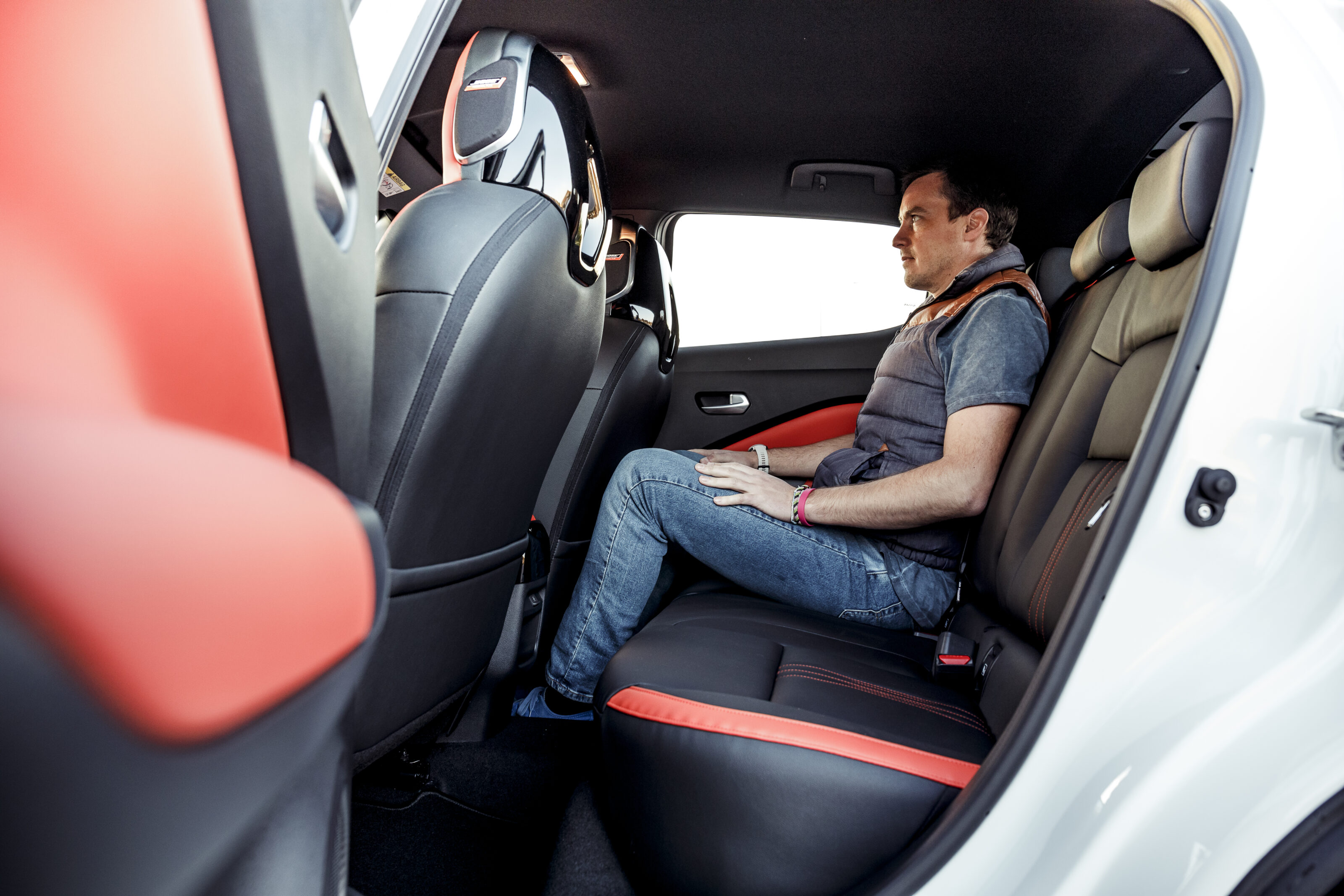
A total of 1372 units are affected by a potential manufacturing issue, which Nissan believes may cause the rear seat to not lock into place correctly when in its upright position.
If the rear seat isn’t correctly locked in to place, its occupants may not be seated properly and items in the boot could potentially make their way through to the cabin, increasing the risk of injury.
Between 2019 and 2020, Nissan sold 1557 Jukes, with the recall covering almost 90 per cent of all units shifted.
Nissan has said it will contact known owners when parts become available, offering to arrange repairs at the nearest dealer free of charge.
If you’re unsure about whether your car is affected, Nissan’s customer service centre can be contacted on 1800 035 035 or [email protected].
A list of VINs for affected vehicles can be found here.
Ford Australia is recalling more than 1000 examples of its EcoSport over a fire risk.
The issue affects 1029 vehicles made between 2013 and 2017.
According to the Department for Infrastructure, the hood insulator may become damaged and come in contact with hot engine components resulting in a fire – creating a risk of injury or death to vehicle occupants and others.
A list of VINs is available here.
Ford will contact affected owners in writing asking them to make an appointment at their preferred Ford dealer for inspection and repair, free of charge.
For further information, contact any authorised Ford dealer or the carmaker’s Customer Relationship Centre on 1800 503 672.
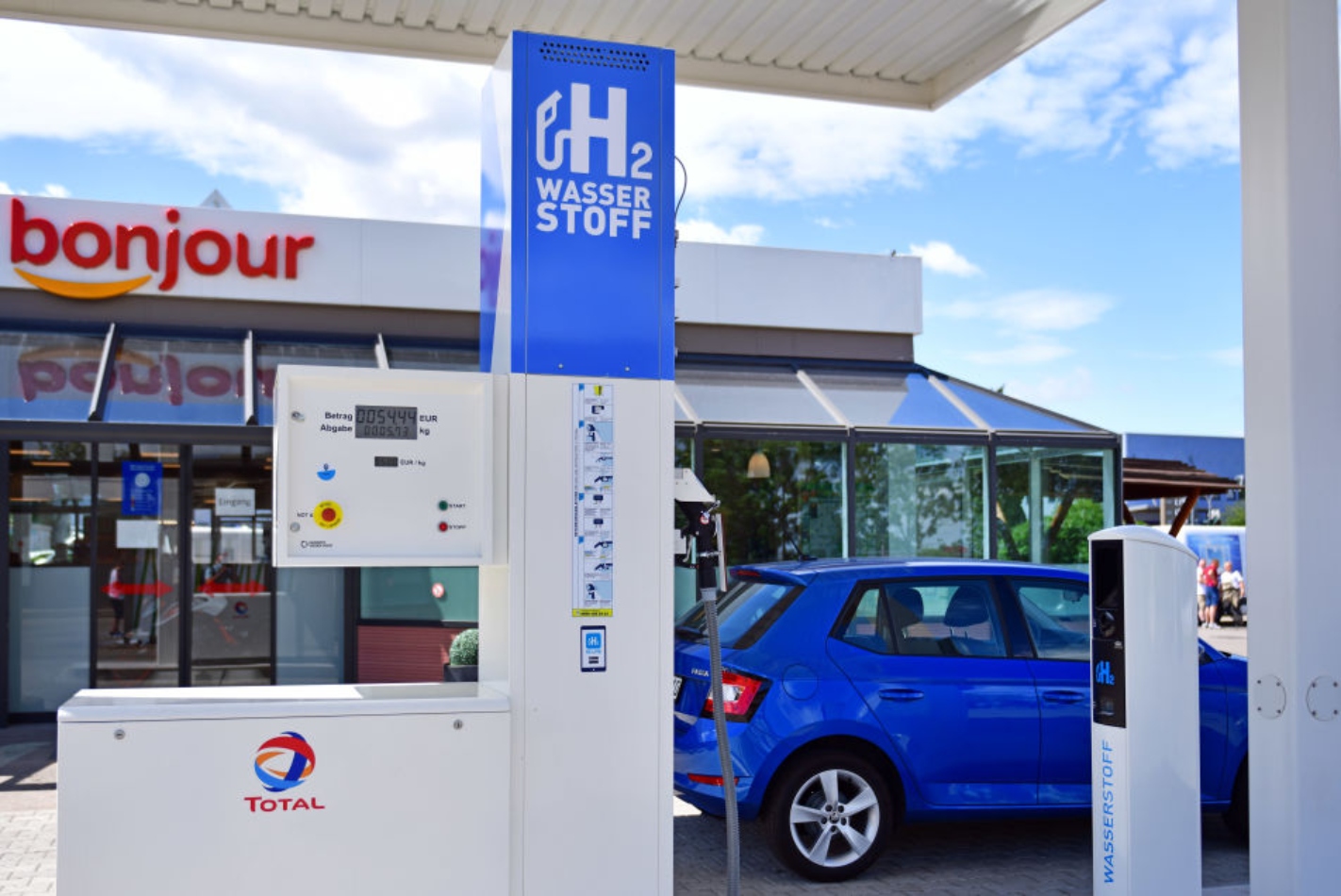
South Australia could become one of the country’s leading states for hydrogen adoption as its vehicle fleet looks towards achieving zero emissions.
In the lead up to the state’s election next March, advocacy group Business SA has released a roadmap for its post-COVID economic strategy, with hydrogen set to be one of the centrepieces.
As first reported by Cosmos Magazine, the Business SA Pre-Election Charter22 report outlines the ways which hydrogen can be utilised to reduce emissions across the State Government’s fleet of vehicles, starting out with its current diesel buses.
Business SA CEO Martin Haese said utilising hydrogen in public transport would be beneficial to the domestic economy as well as the local environment.
“The State Government can provide public sector leadership through having a 100 per cent hydrogen-powered bus fleet for a city which already leads the world in renewable energy uptake,” said Haese.
“It would be a little bit of an anomaly if we were running a diesel bus fleet for much longer. Hydrogen is a good example of building a domestic industry through domestic consumption.
“If the public transport fleet has to run on hydrogen, it’s quieter and cleaner. But it’s also a great way to seed a domestic industry that can expand to provide clean, cost-effective energy to local businesses.”
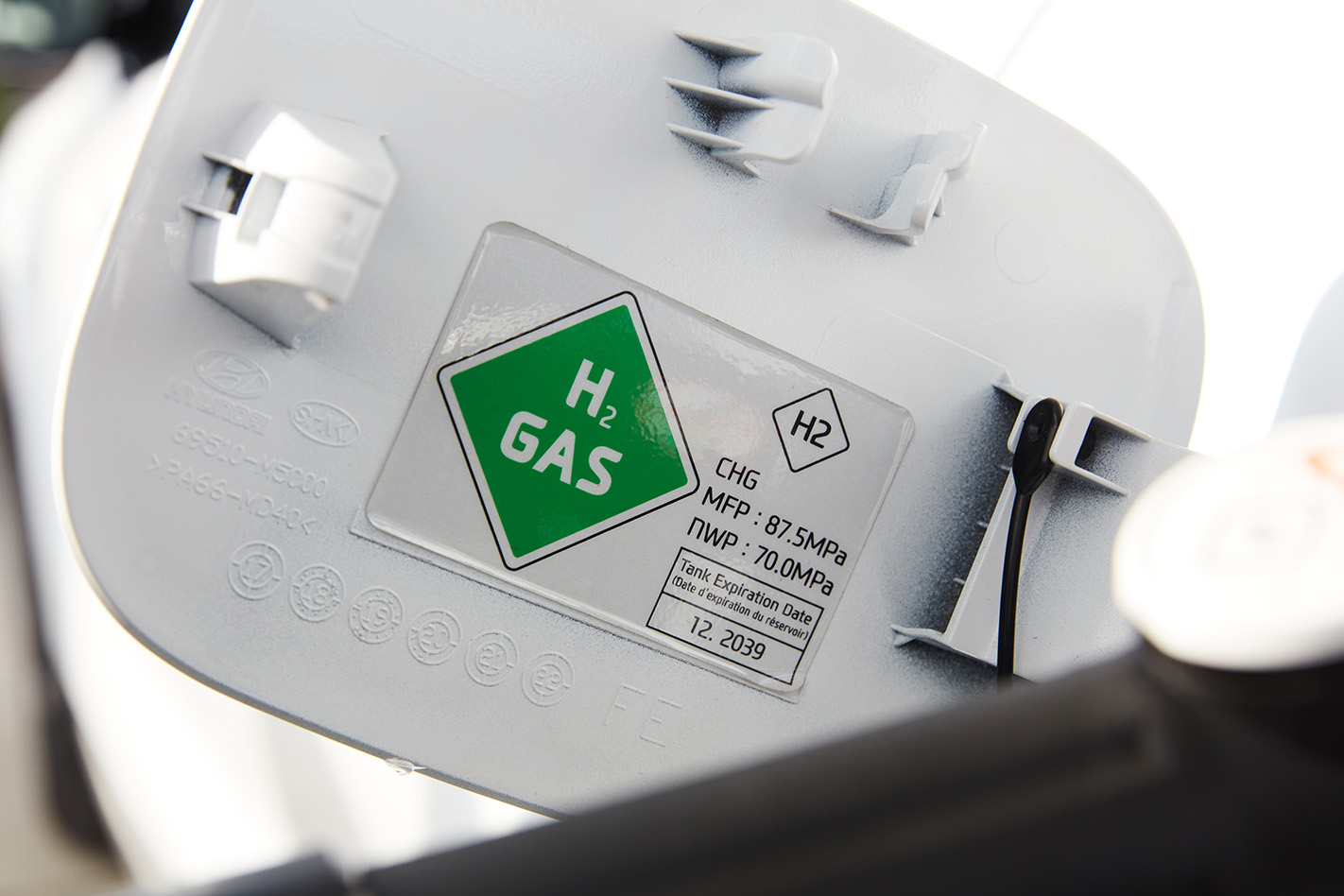
However, Macquarie University energy economics lecturer Dr Lurion De Mello disagrees, saying the high amount of hydrogen supply isn’t yet being met by demand.
“I think there are too many countries trying to produce hydrogen at the moment, and there are not enough countries who are planning to utilise it,” said Dr De Mello.
“There are so many technical problems with hydrogen – how you transport it, how you store it, how you supply it.
“Zero emissions from vehicle exhausts give hydrogen a clean and green image in the eyes of shareholders. But making green hydrogen and distributing it is so problematic and expensive that it’s probably better to just turn all the renewable energy involved into electricity.
“We should be using H2 for things that cannot be electrified, and not for transportation.”
Australia currently has two hydrogen fuel-cell vehicles on sale, the Toyota Mirai and Hyundai Nexo, both of which have been trading records for the longest driving range on a single tank – with the title currently held by Toyota at 1360 kilometres.
Transport NSW announced today it will soon be rolling out electric buses as part of its Sydney fleet, with the 40 vehicles becoming the first zero-emission transporters of their kind to be used in Australia.
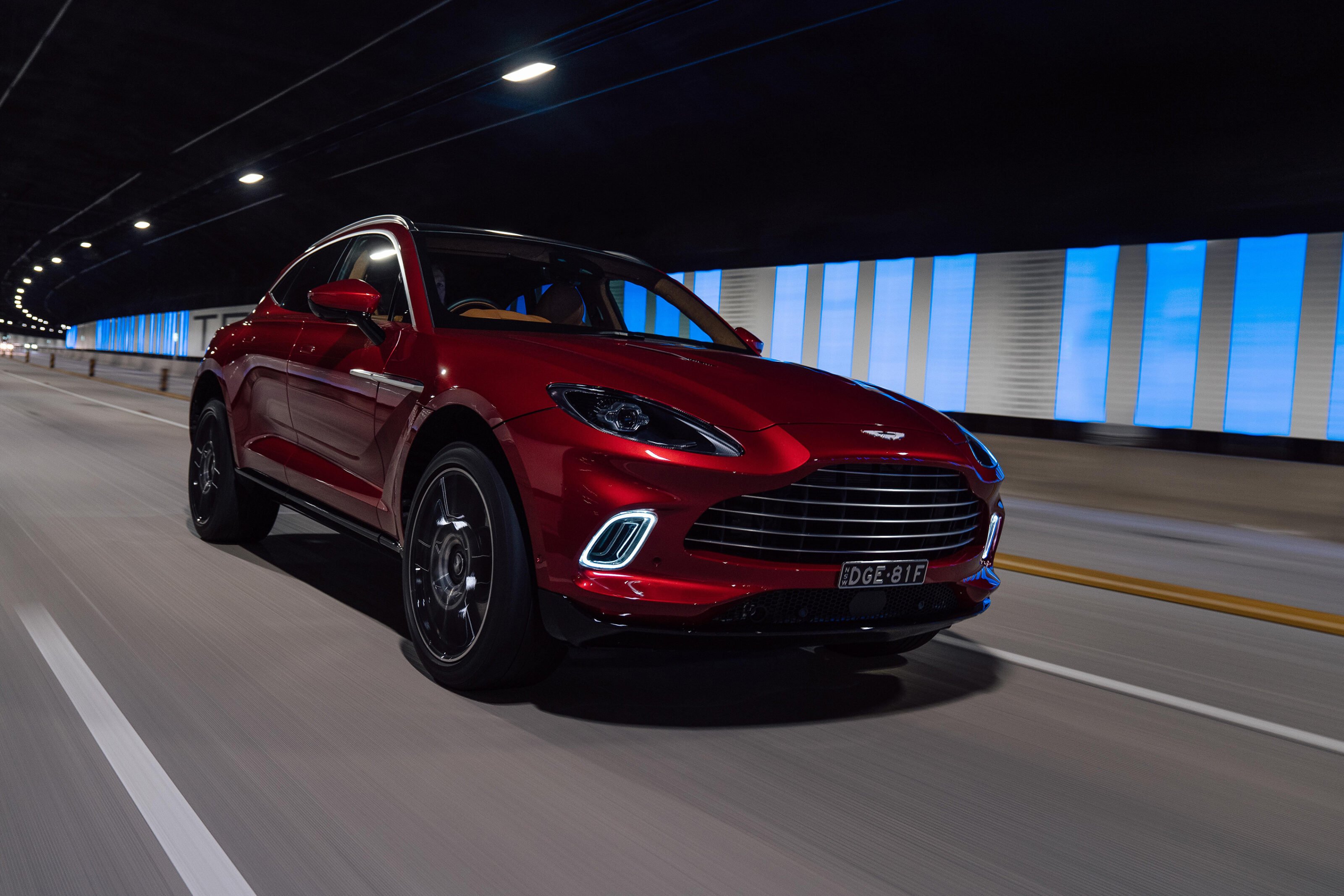
UPDATE, October 21: Half of Aston Martin’s sales should be of electrified models by 2030, the British firm’s top boss has said.Chief Executive Tobias Moers told Reuters at an automotive event held by the agency this week that “a minimum of 50 per cent of [the brand’s] sales will be electric, possibly more” by the end of this decade.Previously the luxury carmaker had only committed to transitioning to electric power from 2025 when it starts to build EVs in the United Kingdom – kicking things off with a plug-in hybrid version of the DBX SUV.Existing production lines at Aston’s St Athan (Wales) factory, which handles production of the DBX, will be equipped to build electric variants, while the British marque’s original Gaydon (England) facility will produce its first – as-yet-unnamed – fully-electric sports car.Aston Martin is also tipped to bring electric power to the DB11 and Vantage, both currently featuring twin-turbo V8 and V12 engines, after CEO Tobias Moers said its “traditional sports segment has to be full electric“.
The story to here
March 11: Aston Martin will begin building electric cars in the United Kingdom from 2025, starting with a battery electric version of the DBX SUV and an as-yet-unnamed new electric sports car.
Existing production lines at Aston’s St Athan (Wales) factory, which handles production of the DBX, will be equipped to build electric variants, while the British marque’s original Gaydon (England) facility will produce its first fully-electric sports car, according to Financial Times.
It was also confirmed that Aston Martin will offer a plug-in hybrid variant of the DBX between now and when the full-EV DBX arrives in 2025. It is expected for 2023.
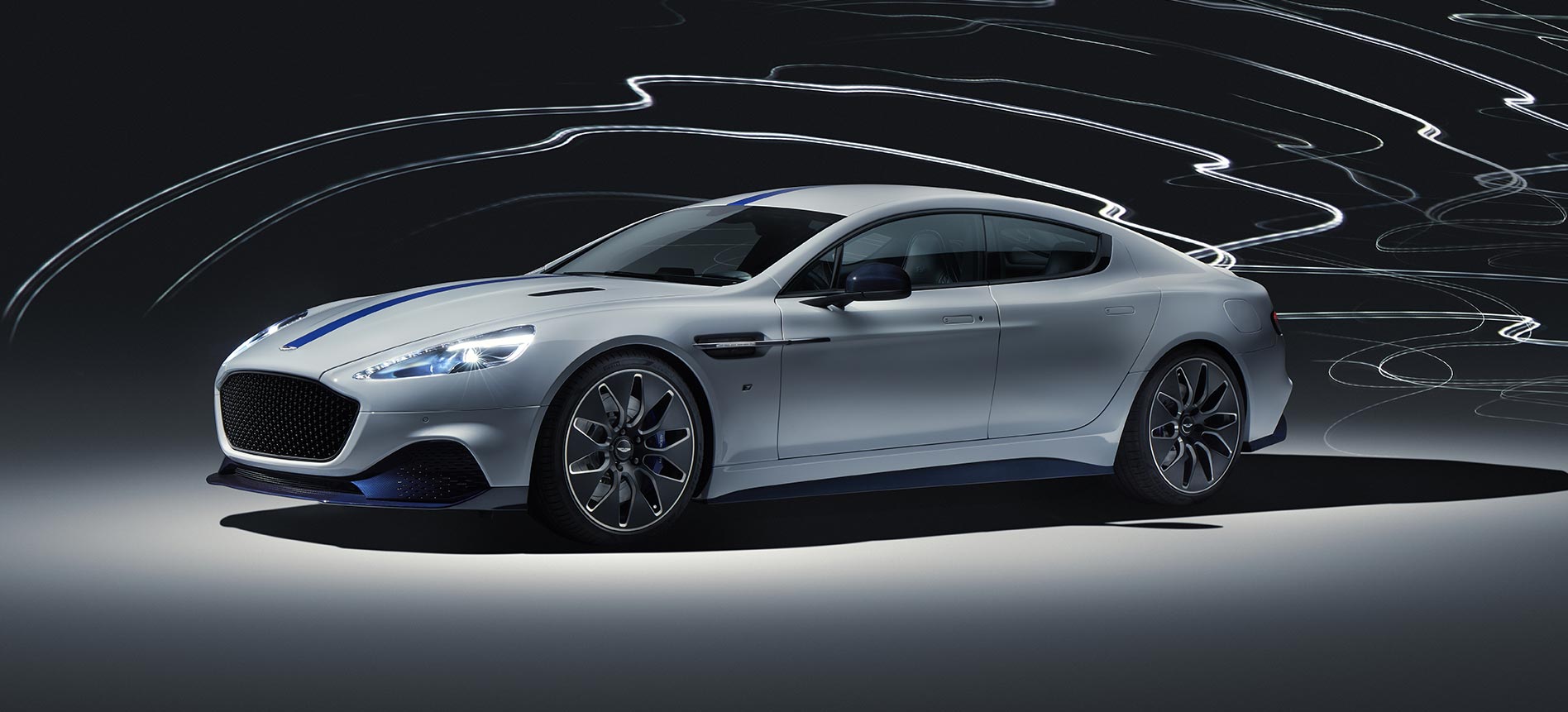
Aston Martin previously planned to launch the Rapide E as the brand’s first electric vehicle – and revive the Lagonda sub-brand to sell them – until those plans were shelved after Lawrence Stroll’s arrival.
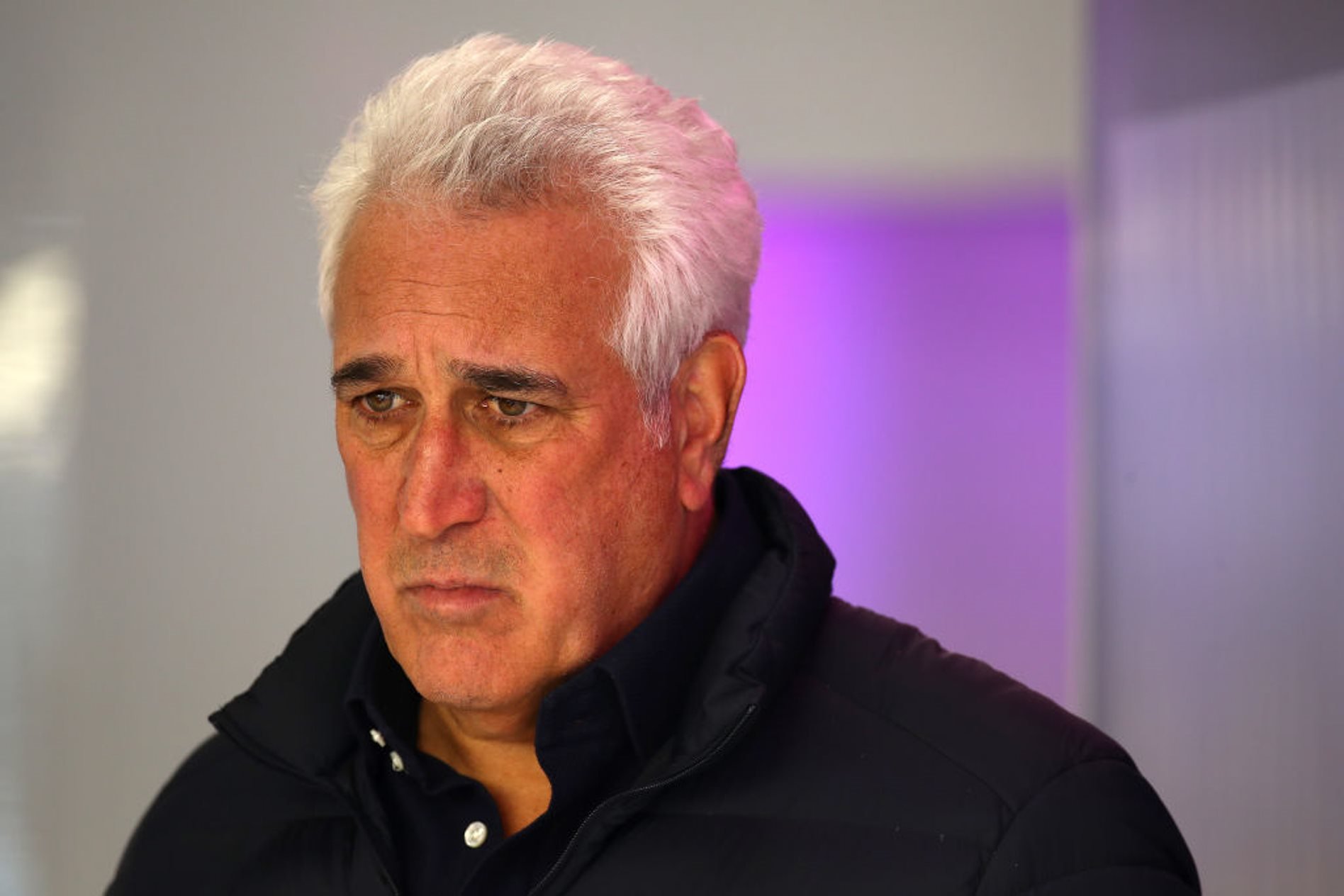
Canadian billionaire Lawrence Stroll bailed Aston Martin out of financial woes in 2020 by leading a billion-dollar rescue. Aston’s Rapide E and Lagonda plans were deemed too expensive to continue.
It is looking to the future with these latest announcements, but Stroll, who now acts as the company’s chairman and is its largest shareholder, told the Financial Times Aston Martin will continue making combustion engines into the next decade.
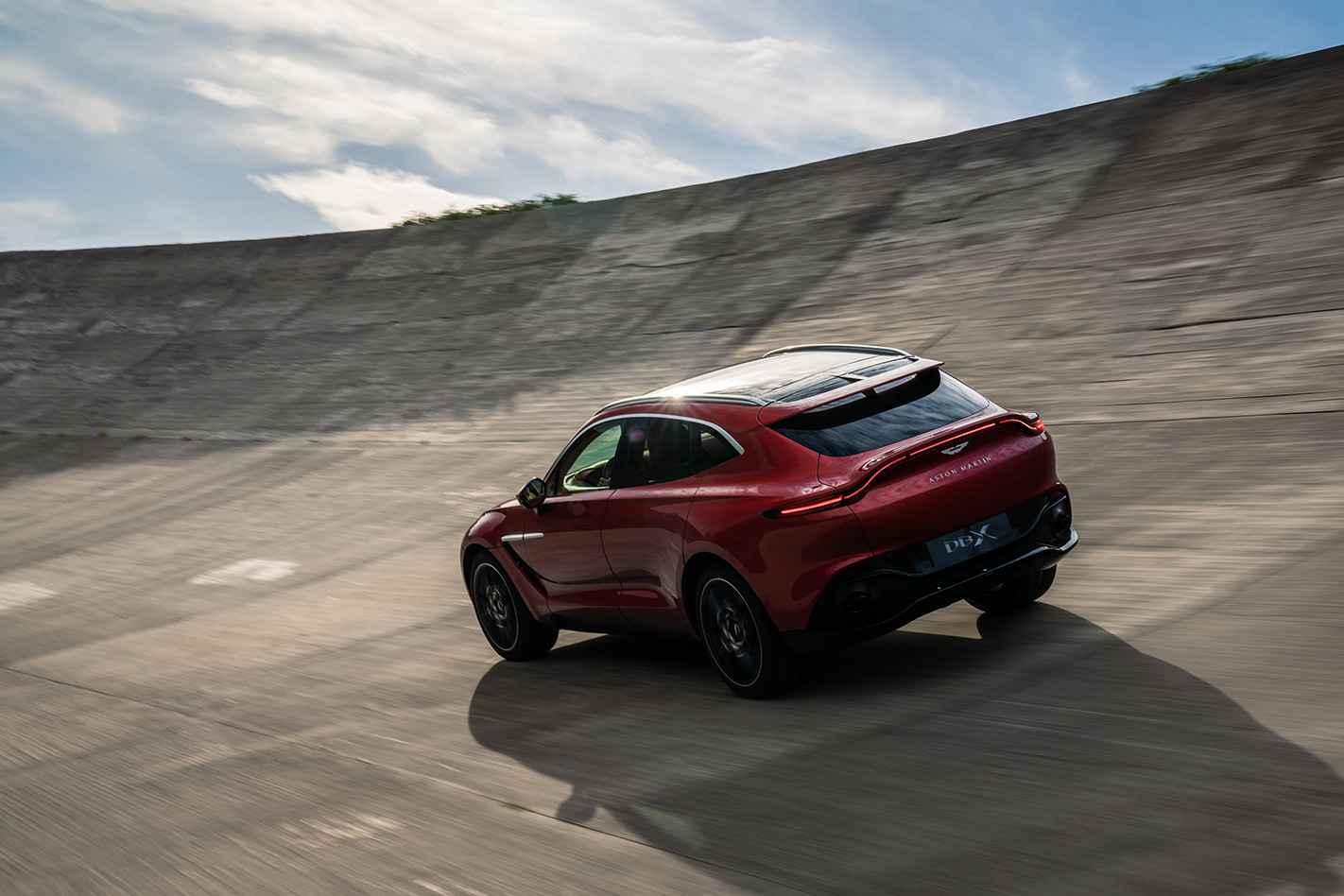
Aston Martin has held a hard line against looming combustion engine (ICE) car bans, such as the one affecting its home country in England.
Stroll stated last year that he “never sees [ICE production] going down to zero.”
While the details are thin, Aston Martin will continue to produce petrol-powered cars beyond 2030. It will either sell combustion-engined cars as track-only specials, or will offer them to countries that haven’t yet introduced similar bans.
Ex-Aston CEO Andy Palmer has also taken issue with the UK’s plan to ban combustion engine cars from 2030.
Images of Land Rover’s fifth-generation Range Rover have leaked online ahead of its official unveiling.
Set to be launched on October 26, the 2022 Range Rover was teased by Jaguar Land Rover overnight, but was leaked over the internet shortly after – with in-the-metal photos backing up the expected, rendered design.
The renders were sourced from French publication 4×4 Magazine, showing off the Range Rover’s revised front and rear ends, as well as its tweaked side profile – although its general shape remains close to the current, fourth-generation model.
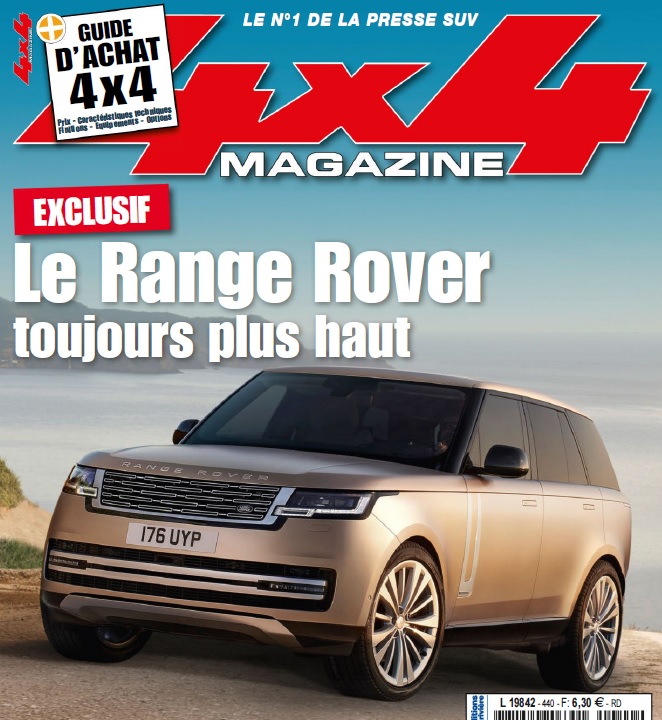
The biggest change to the exterior is the inclusion of slimmer and taller tail-lights, now confined to the edges of the boot and rear three-quarter panel, rather than the L405’s units which wrap slightly around the side.
Its interior has also undergone a redesign, now featuring a two-spoke steering wheel, a Pivi Pro infotainment system, digital dash plus and what looks to be a third row of seating – hinting at this being the Sport variant as it’s the only Range Rover model which currently accommodates seven seats.
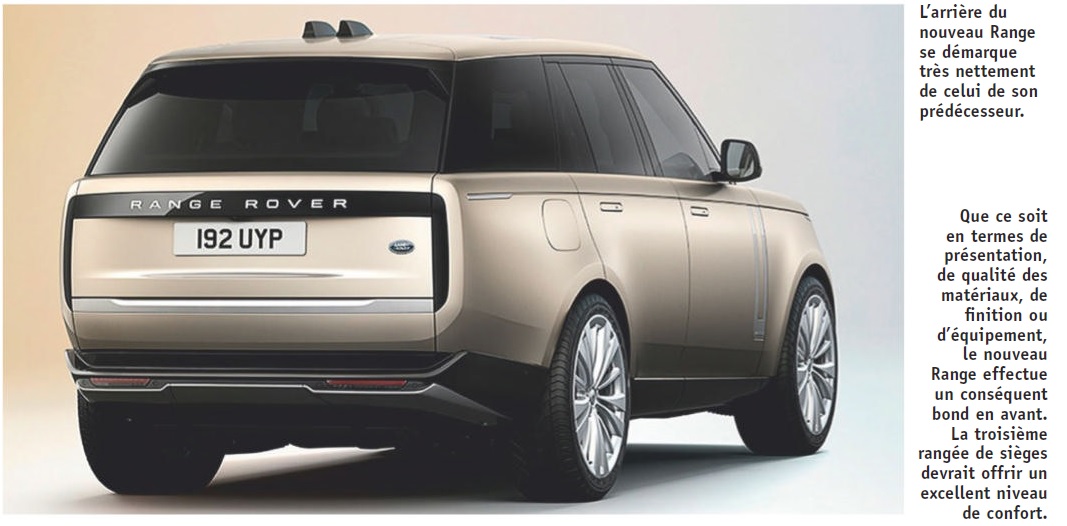
Underpinning the Range Rover will be JLR’s MLA Flex platform, primed to include mild-hybrid, plug-in hybrid and fully-electric powertrains – although it’s expected the vehicle will launch with the standard range of Ingenium petrol and diesel six-cylinder engines.
With its official reveal set to take place next week, the next-generation Range Rover is expected to launch globally next year, with Australian deliveries likely to start in the second half of 2022 – pending any further semiconductor delays.
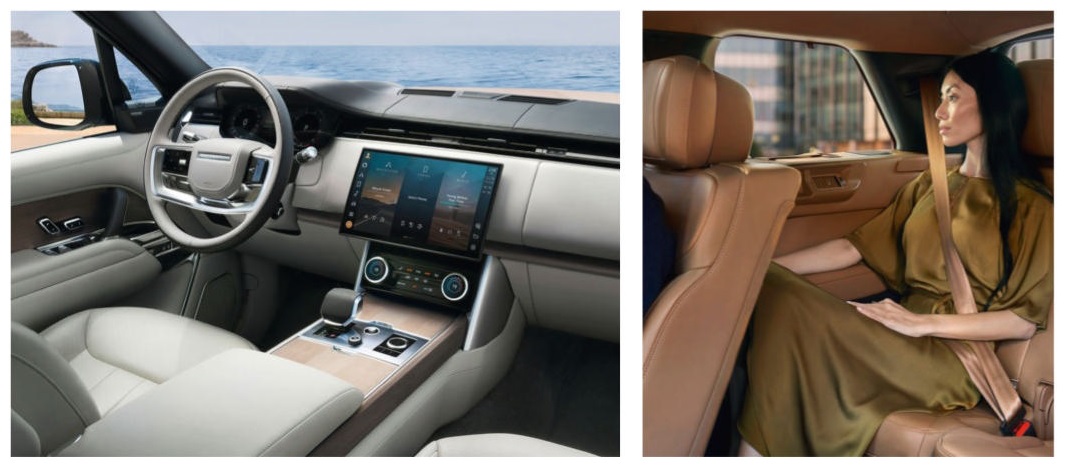
https://www.instagram.com/p/CVQfAfwpuSh/
https://www.instagram.com/p/CVQjMIUojls/
The 2022 Porsche 718 Cayman GT4 RS has shown off its abilities at the Nürburgring ahead of its proper reveal next month.
Porsche has released video and images of the 718 Cayman GT4 RS completing a lap of the famous German circuit in 7:04.511 – exactly 23.6 seconds quicker than the 718 Cayman GT4.
While details have yet to be confirmed by Porsche, MOTOR understands the GT4 RS will be fully unveiled in November, with a local launch set to occur in the second quarter of 2022 (April to June inclusive).
An unnamed source has told MOTOR up to 50 of the track-oriented Cayman GT4 RS models have been allocated to Australia.
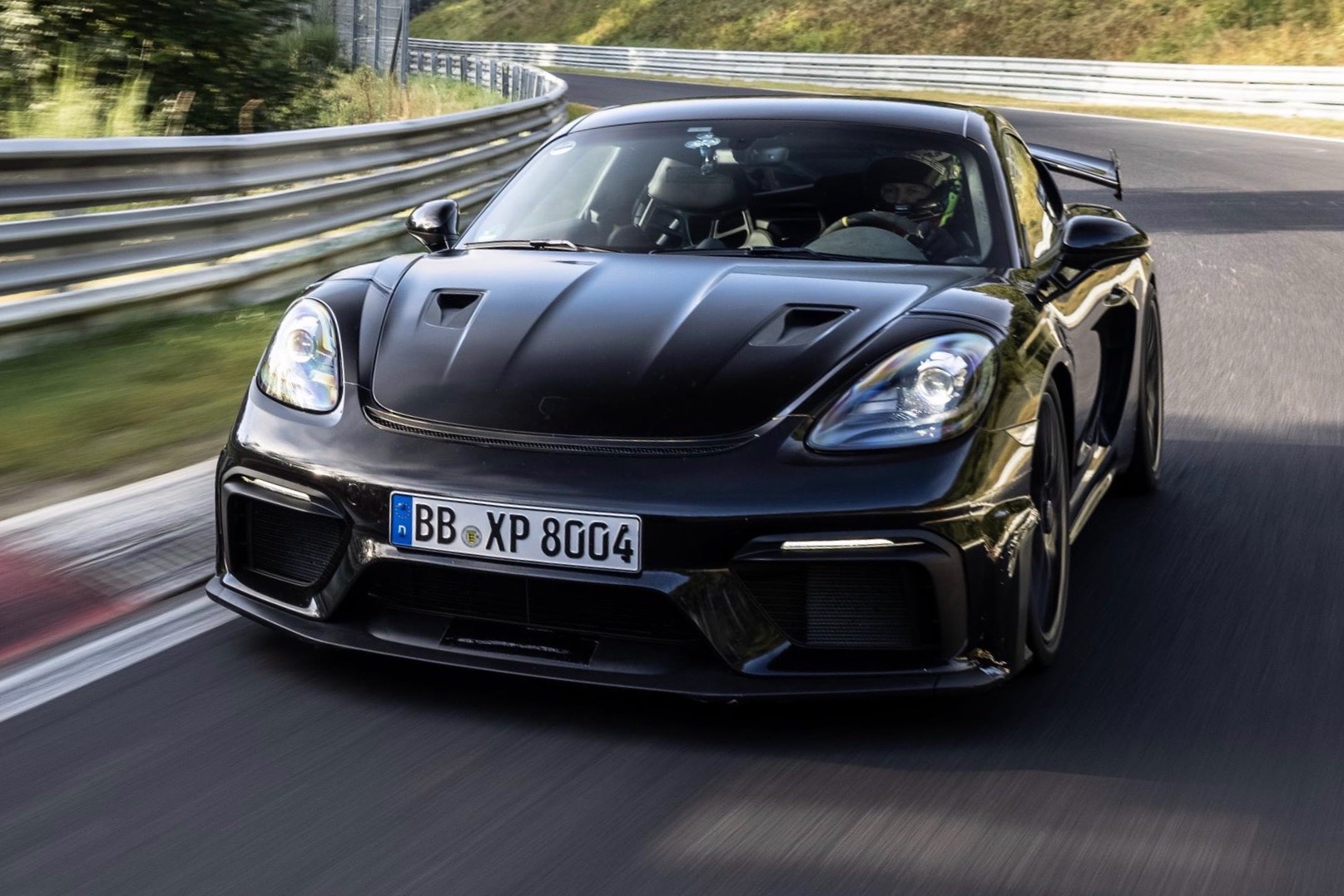
“During development, we gave the 718 Cayman GT4 RS everything that characterises a genuine RS: lightweight construction, more downforce, more power and, of course, an even higher level of responsiveness and feedback to driver inputs,” said Porsche GT boss Andreas Preuninger.
“Our customers can look forward to a pure driver’s car that makes a thrilling driving experience an absolute priority.”
To achieve the seven-minute lap time – piloted by development driver Jörg Bergmeister – Porsche fitted the vehicle with a racing seat and Michelin Pilot Sport Cup 2 R tyres. Buyers will be able to option the road-legal track tyres when ordering their GT4 RS.
Exactly what’s powering the mid-engined sports car hasn’t been announced, but it’s widely speculated a 4.0-litre naturally-aspirated flat-six will be fitted, pushing around 375kW – a healthy increase over the standard GT4’s 309kW – and suggesting the GT4 RS may borrow its powertrain from the 911 GT3.
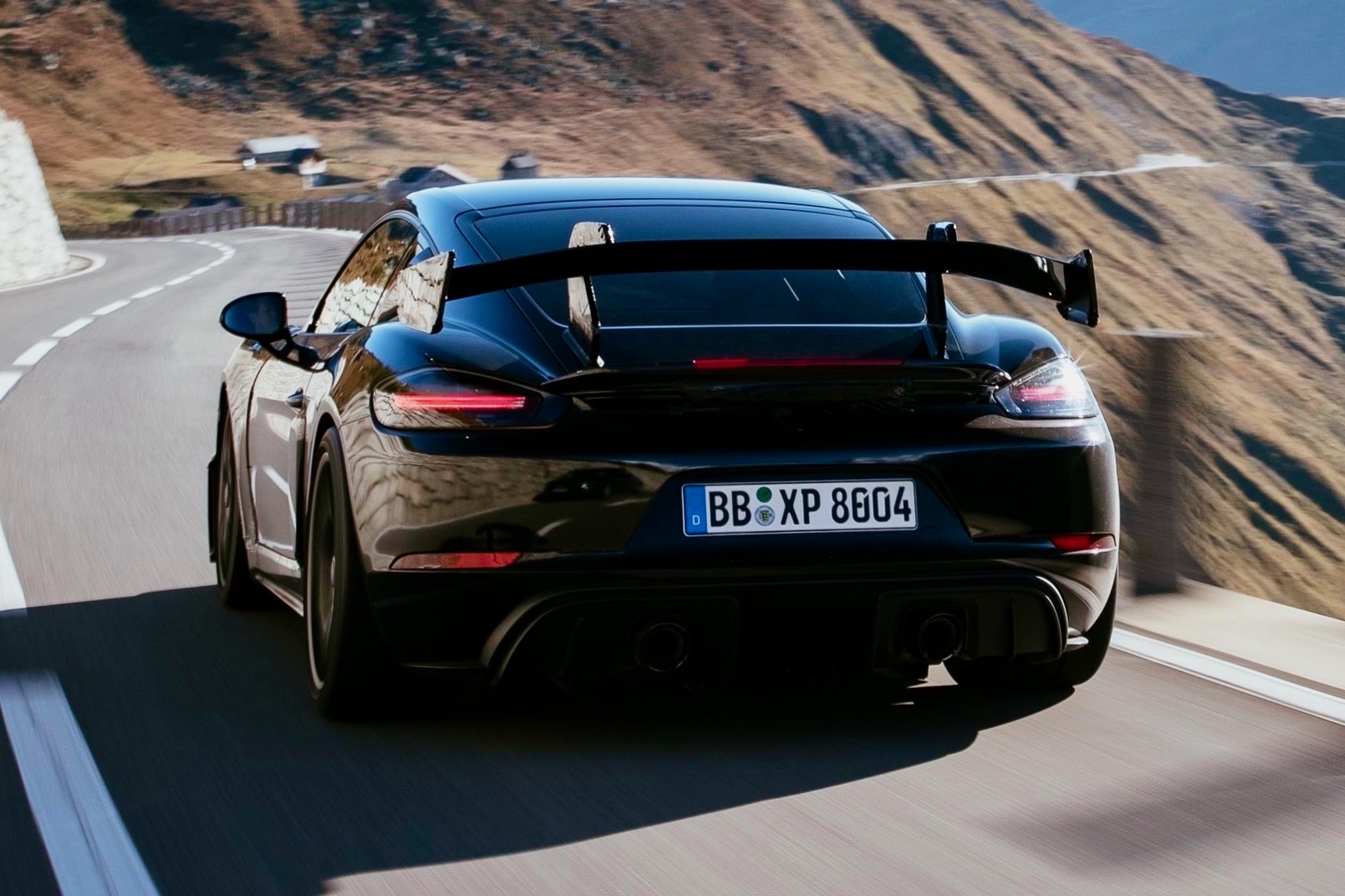
The video shows the RS with paddle shifters, confirming Porsche’s PDK dual-clutch transmission will feature – expected to be the only gearbox available.
The vehicle is also shown with large yellow brake callipers, indicating Porsche’s PCCB carbon-ceramic brakes have been fitted, and will likely be available as optional equipment for those who plan to do heavy track work.
Interestingly, while this is the first Cayman RS, it’s not the first 718 with an RS badge. The very first car to be given the honour was the 1957 Porsche 718 RSK Mittellenker – a development of the 550A, modified with a single, centrally-mounted seat for racing. The 718 RSK was released into the world six years before the Porsche 911 made its debut.
The 2022 Porsche 718 Cayman GT4 RS is expected to be unveiled in November, with the first vehicles set to arrive in Australia in Q2 2022. Pricing and specifications are expected to be announced closer to launch.
Neighbouring lap times
| 6:38.835 | Porsche 911 GT2 RS (991.2) | Lars Kern | 14 June 2021 | Official Nu00fcrburgring record attempt by Porsche. Timing and vehicle condition verified by a notary. Michelin Pilot Sport Cup 2 R tyres, OEM Manthey Performance Kit. 6:43.300 on the 20,832 m lap. |
|---|---|---|---|---|
| 6:43.616 | Mercedes-AMG GT Black Series | Maro Engel | 4 November 2020 | Official Nu00fcrburgring record attempt by Mercedes. Timing and vehicle condition verified by a notary. OEM Michelin Pilot Sport Cup 2 R MO tyres. 6:48.047 on the 20,832 m lap. |
| 6:44.97 | Lamborghini Aventador SVJ LP770-4 (2018) | Marco Mapelli | 26 July 2018 | Lamborghini conducted test, full roll cage, Pirelli P Zero Trofeo R. |
| 6:47.25 | Porsche 911 GT2 RS (991.2) | Lars Kern | 20 September 2017 | Porsche conducted test. OEM Michelin Pilot Sport Cup 2 ‘N2’, OEM “Weissach Package”, OEM deletion of audio and communication system, Porsche Motorsport bucket seat and harness on driver’s side. |
| 6:48.28 | Radical SR8 LM | Michael Vergers | 19 August 2009 | Dunlop Direzza DZ03 tyres. Production car status disputed, road legal version is available with British Single Vehicle Approval. Timing overseen by Evo magazine who consider it to be a road legal production car, timed by Sport Auto, who do not consider it to be a road legal production car lap. |
| 6:52.01 | Lamborghini Huracu00e1n Performante LP640-4 (2017) | Marco Mapelli | 5 October 2016 | Lamborghini conducted test, full roll cage, Pirelli Trofeo R. |
| 6:55 | Radical SR8 | Michael Vergers | 28 September 2005 | Dunlop Direzza DZ03 tyres. Track car, road legal version is available with British Single Vehicle Approval.Timed by Sport Auto, who do not consider it to be a road legal production car lap, but considered a road legal production car by Pistonheads. |
| 6:55.34 | Porsche 911 GT3 (992, 2022) | Lars Kern | 15 Sept 2020 | Porsche conducted test. Michelin Pilot Sport Cup 2 R. 6:59.927 on the 20.832 km (12.944 mi) configuration. |
| 6:56.4 | Porsche 911 GT3 RS (991.2) | Ku00e9vin Estre | 16 April 2018 | Porsche conducted test. OEM Michelin Pilot Sport Cup 2 R ‘N0’, OEM “Weissach Package”, OEM deletion of audio and communication system, Porsche Motorsport bucket seat and harness on driver’s side. |
| 6:57 | Porsche 918 Spyder | Marc Lieb | 4 September 2013 | Porsche conducted test, observed by Sport Auto. “Weissach Package”, Michelin Pilot Sport Cup 2 ‘N0’. |
| 6:58.28 | Porsche 911 GT2 RS (991.2) | Christian Gebhardt | 17 April 2018 | Sport Auto (7/2018), Michelin Pilot Sport Cup 2 R |
| 6:59.73 | Lamborghini Aventador SuperVeloce LP750-4 (2015) | Marco Mapelli | 18 May 2015 | Lamborghini conducted test, full roll cage, Pirelli P Zero Corsa. |
| 7:00.03 | Ferrari 488 Pista | Christian Gebhardt | 16 May 2019 | Sport Auto (11/2019), Michelin Pilot Sport Cup 2 R K1 |
| 7:01.3 | Dodge Viper ACR (2017) | Lance David Arnold | 1 September 2017 | OEM “GTS-R Commemorative Edition”, “Extreme Aero Package”, Kumho Ecsta V720 ACR. Privately funded and observed by Road & Track. Third attempt, testing ended by tyre failure resulting in crash. |
| 7:04.511 | Porsche Cayman GT4 RS (982) | Ju00f6rg Bergmeister | u00a0 | Porsche conducted test. OEM Michelin Pilot Sport Cup 2 R, OEM deletion of audio and communication system, bucket seat and harness on driver’s side. 7:09.300 on the 20.832 km (12.944 mi) configuration. |
| 7:04.632 | Mercedes-AMG GT R Pro | Maro Engel | November 2018 | Mercedes-Benz conducted test (11/2018). Michelin Pilot Sport Cup 2 ZP. Ambient temperature of 12 u00b0C (54 u00b0F). Vehicle in accordance with regulations. Timed by wige SOLUTIONS. |
| 7:05.41 | Porsche 911 GT3 RS (991.2) | Christian Gebhardt | 18 April 2018 | Sport Auto (09/2018), OEM deletion of audio and communication system, Porsche Motorsport bucket seat and harness on driver’s side. |
| 7:06.60 | Mercedes-AMG GT R Pro | Christian Gebhardt | 22 May 2019 | Sport Auto (8/2019), Michelin Pilot Sport Cup 2 ZP. |
Snapshot
- 2022 Alpina B7 based on BMW 750i xDrive
- 447kW/800Nm 4.4-litre twin-turbo V8
- Australian launch expected in the coming months
The 2022 Alpina B7 will soon be reintroduced in Australia, giving buyers a sportier alternative to the BMW 7 Series upon which it’s based.
Documents published by the Department of Infrastructure show Alpina intends to bring the B7 back, rejoining the brand’s line-up following its departure in 2018.
Using the 750i as a base, the B7 is powered by a 4.4-litre twin-turbo V8 producing 447kW and 800Nm – an increase of 56kW and 50Nm over the BMW version – propelling the limousine to 100km/h from a standstill in a claimed 3.6 seconds on the way to a top speed of 330km/h.
This is thanks to all-wheel drive, with power being sent through an eight-speed automatic transmission.
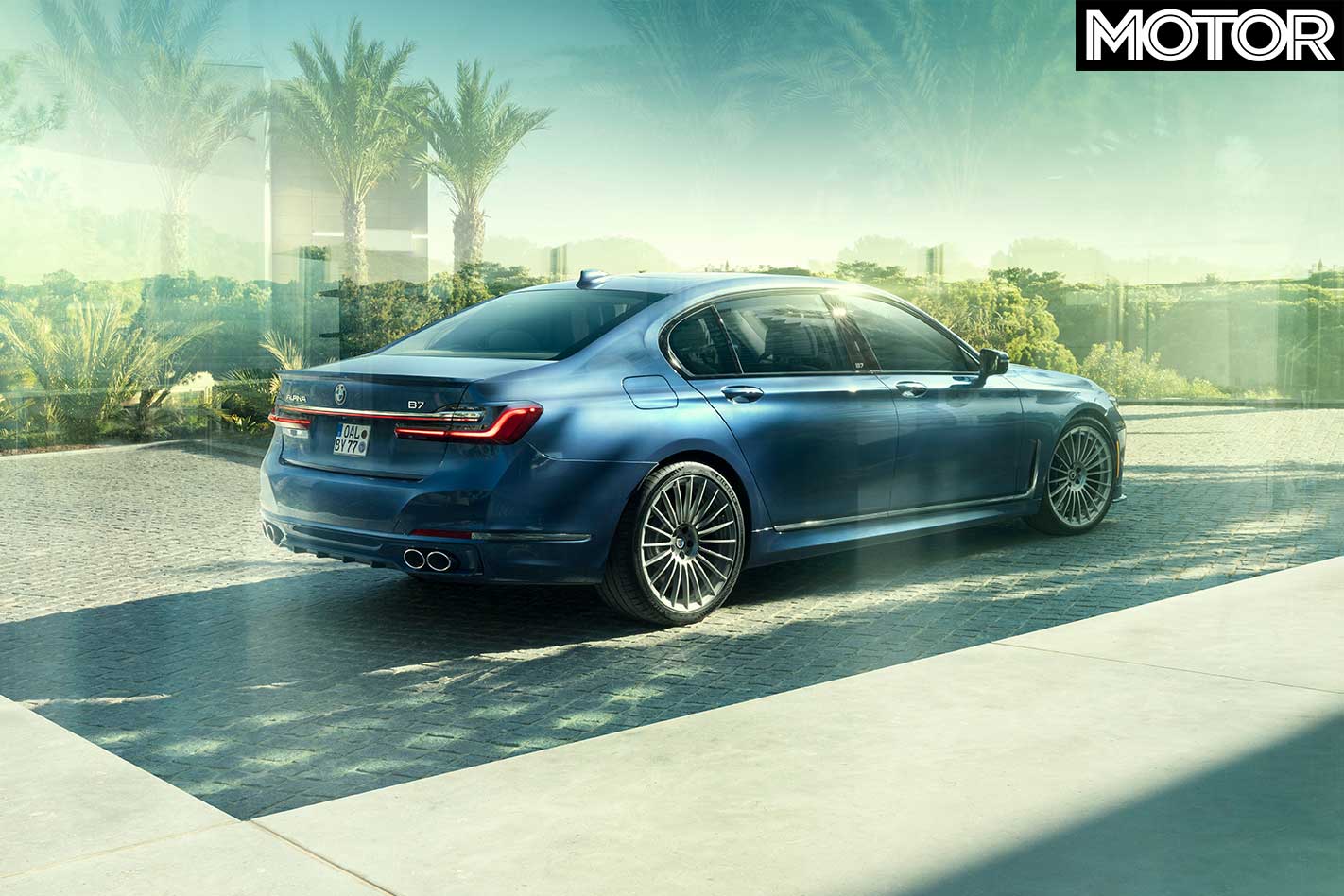
While the Alpina B7 is designed to be a luxury driver’s car – with the brand traditionally regarded for its Bi-Turbo engines and ride/handling set-ups – buyers can opt for the usual five-seater layout, or a more luxurious four-seater option with power-adjustable heated and ventilated rear seats for those who like to be driven.
As with the rest of the Alpina range, there’s a long list of ways to customise the car, with colours and materials able to be chosen from the BMW, BMW Individual, or Alpina catalogues – with additional personalisation available.
The 2022 Alpina B7 has yet to be officially confirmed for the Australian market, but expect an increase over the 2018 price tag of $369,720 before on-road costs when the luxury sports saloon is eventually announced.
Snapshot
- First 12 of 40 buses to be rolled out this month
- Federal Government support comes from $29.5 million investment
- Leichhardt depot to be retrofitted with batteries and charging stations
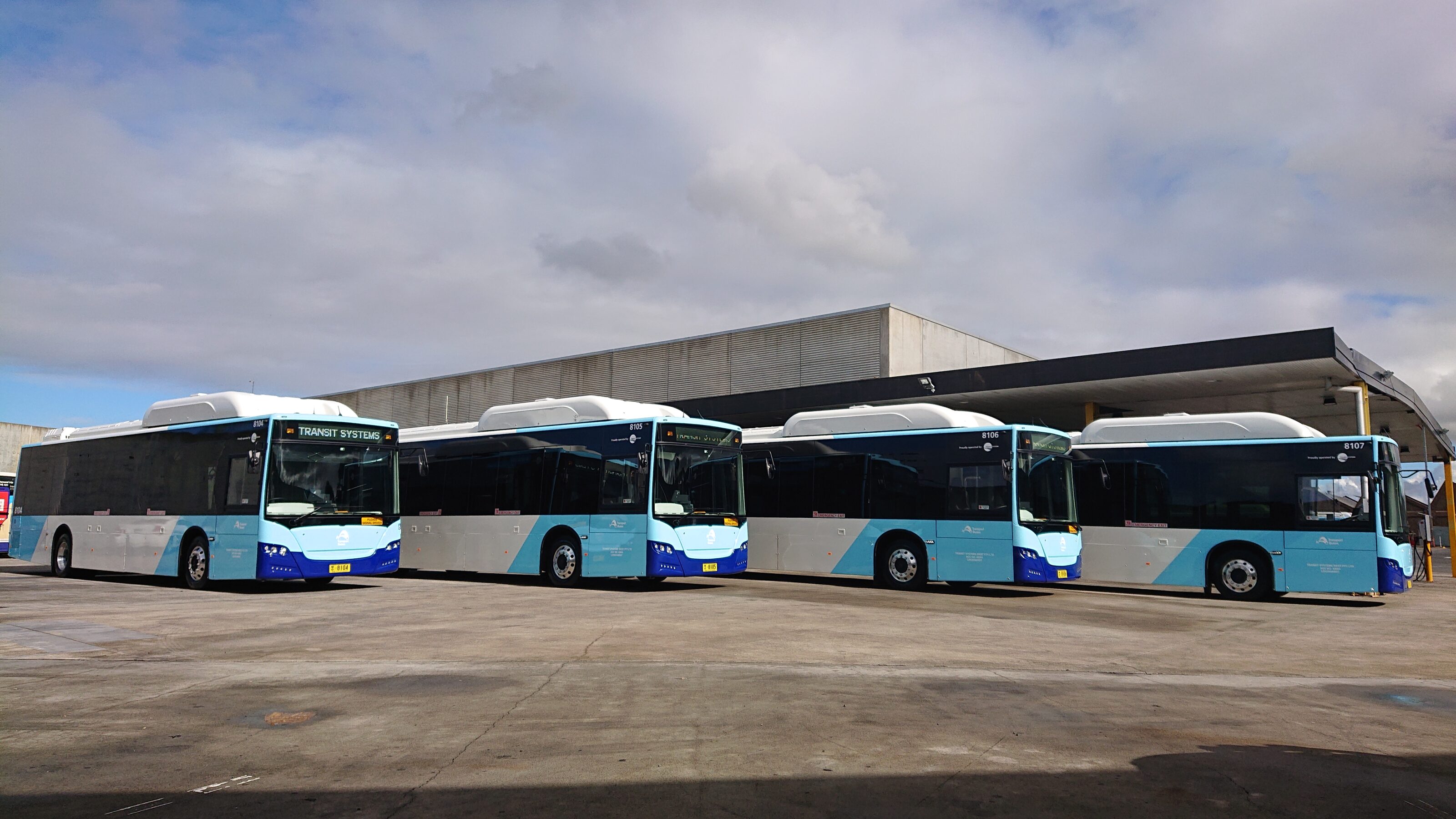
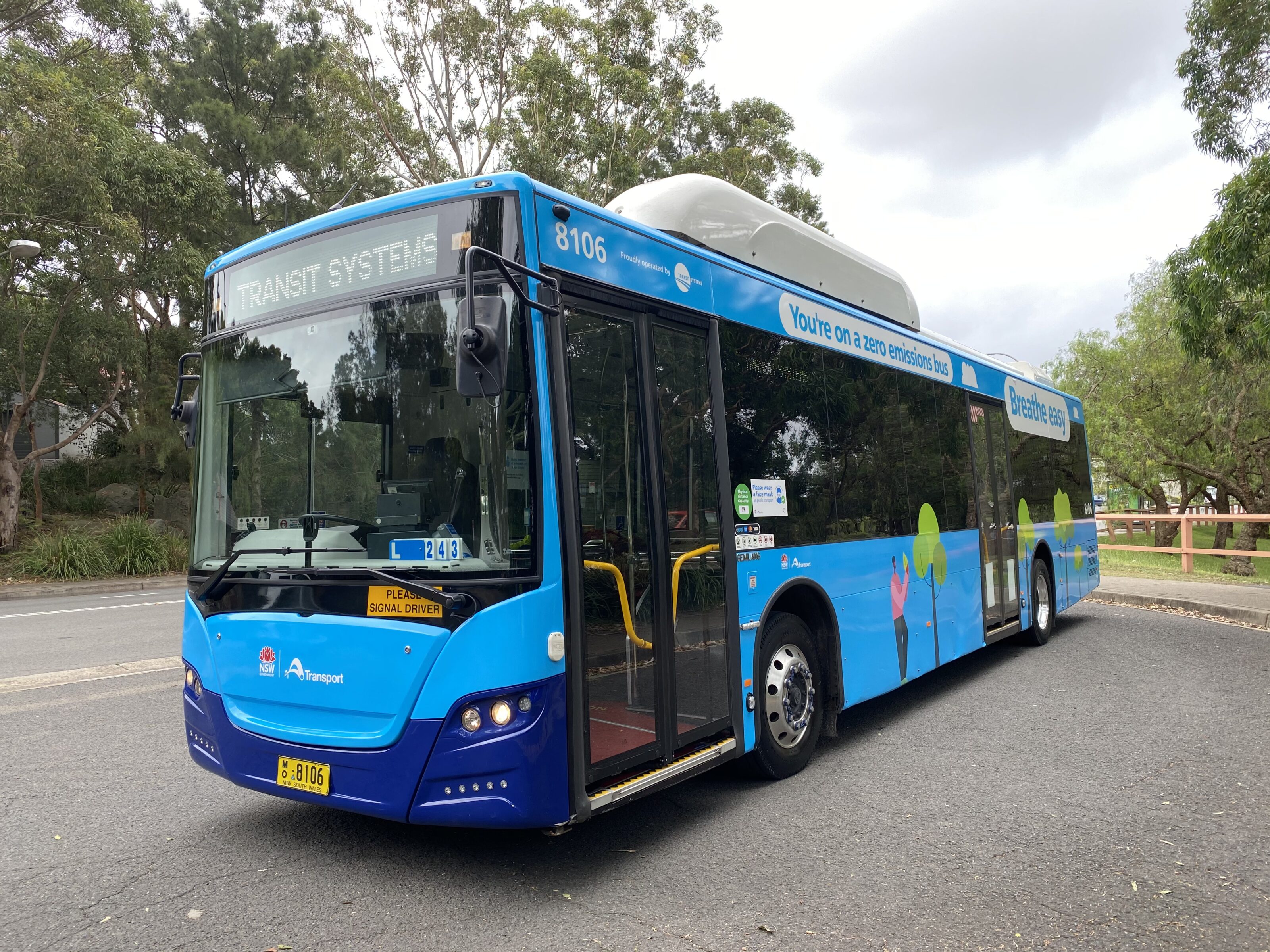
Transport New South Wales will become home to Australia’s first electric buses, with 40 vehicles slated to hit the Sydney streets over the next six months.
Backed by the Federal Government, the project will see 12 zero-emission buses enter service this month and a further 28 to follow over the next six, all of which are set to be based out of the Leichhardt depot in inner Sydney.
The pilot project has been made possible thanks to a $29.5 million investment, with $24.5m coming from the Clean Energy Finance Corporation (CEFC) and $5m from the Australian Renewable Energy Agency (ARENA).
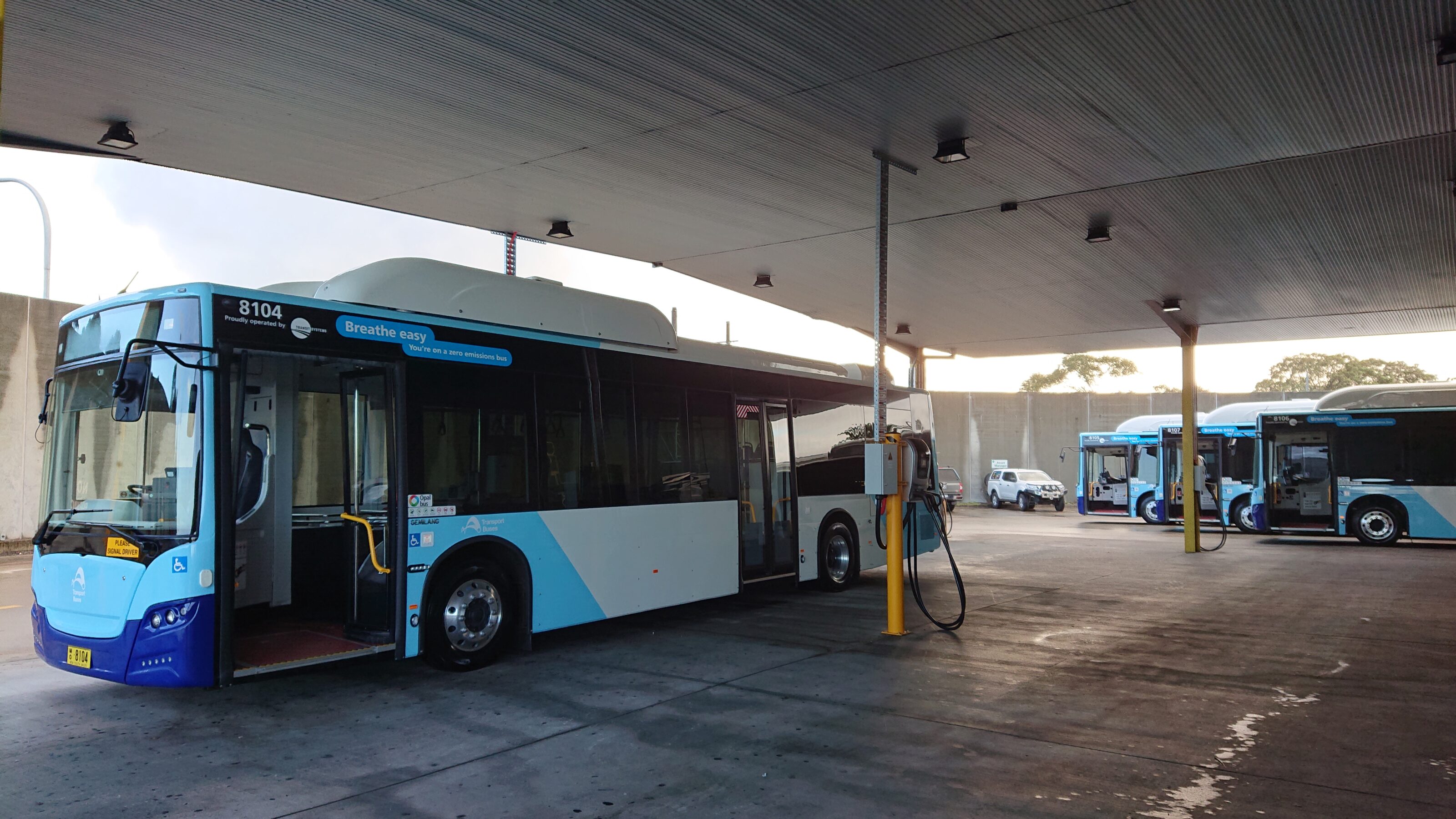
Supported by Transport for NSW and Transit Systems, the roll-out will be delivered by Transgrid and Zenobe – with the ultimate intention of Sydney’s bus fleet becoming the first to go all-electric by 2030.
NSW Minister for Transport, Rob Stokes, said the Government is on track to meet its goal with the first steps being put into motion.
“We’ve set an ambitious target to transition our fleet of 8000 buses to zero-emission technology by 2030 and this project is a huge step in that direction,” said Stokes.
“The innovative financing model adopted means we’re able to deliver 40 new electric buses for the inner west quickly, at no extra cost to the NSW taxpayer.
“We will also upgrade the infrastructure at the Leichhardt depot, shifting from diesel pumps to smart charging stations, solar panels and large scale energy storage.”
Minister for Industry, Energy and Emissions Reductions, Angus Taylor, said the program had the backing of the Federal Government and would serve the local community well.
“This project demonstrates the importance of governments and industry working together to reduce emissions in hard to abate sectors like road and transport,” said Taylor.
“The aim of the pilot is to show the technical and commercial viability of using electric buses travelling a full route without the need to stop to recharge along the way.
“This significant investment will establish the nation’s first fully-integrated electric bus depot, allowing other fleet operators to better understand commercial implications and make informed choices about new technologies.”
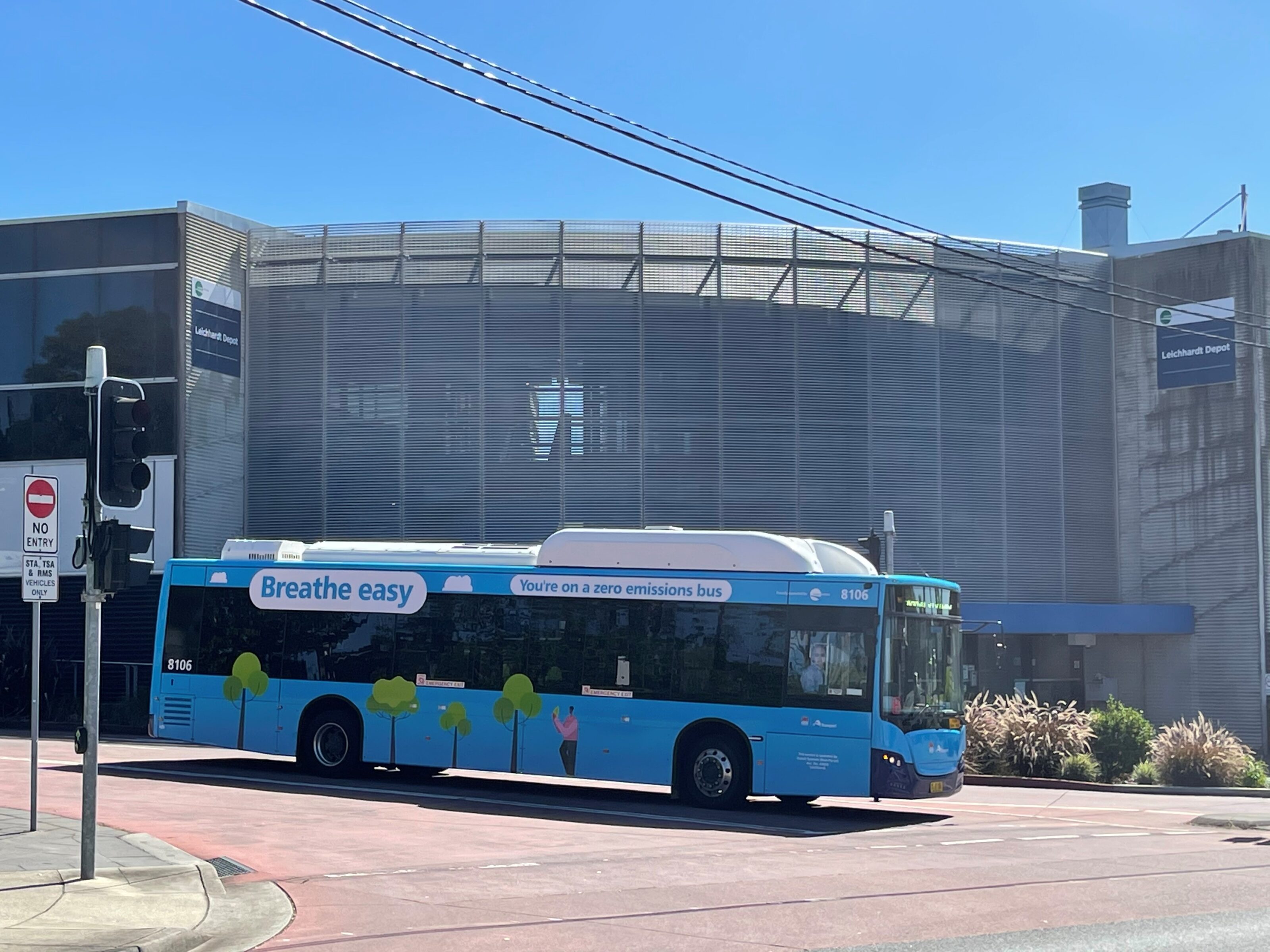
The Leichhardt depot will be retrofitted to house 324kWh and 422kWh batteries, as well as five 120kW chargers and 31 80kW chargers for the 40-strong fleet of buses.
With 2.5mW/4.9MWh of stationary battery storage and 388kW of rooftop solar PV, the station will be one of the most advanced in Australia, leading the way towards electric public transport adoption.
The announcement comes less than a day after the NSW Parliament passed its Electric Vehicles Bill, which included incentives for people in the state to purchase a new EV as part of a $600m investment.
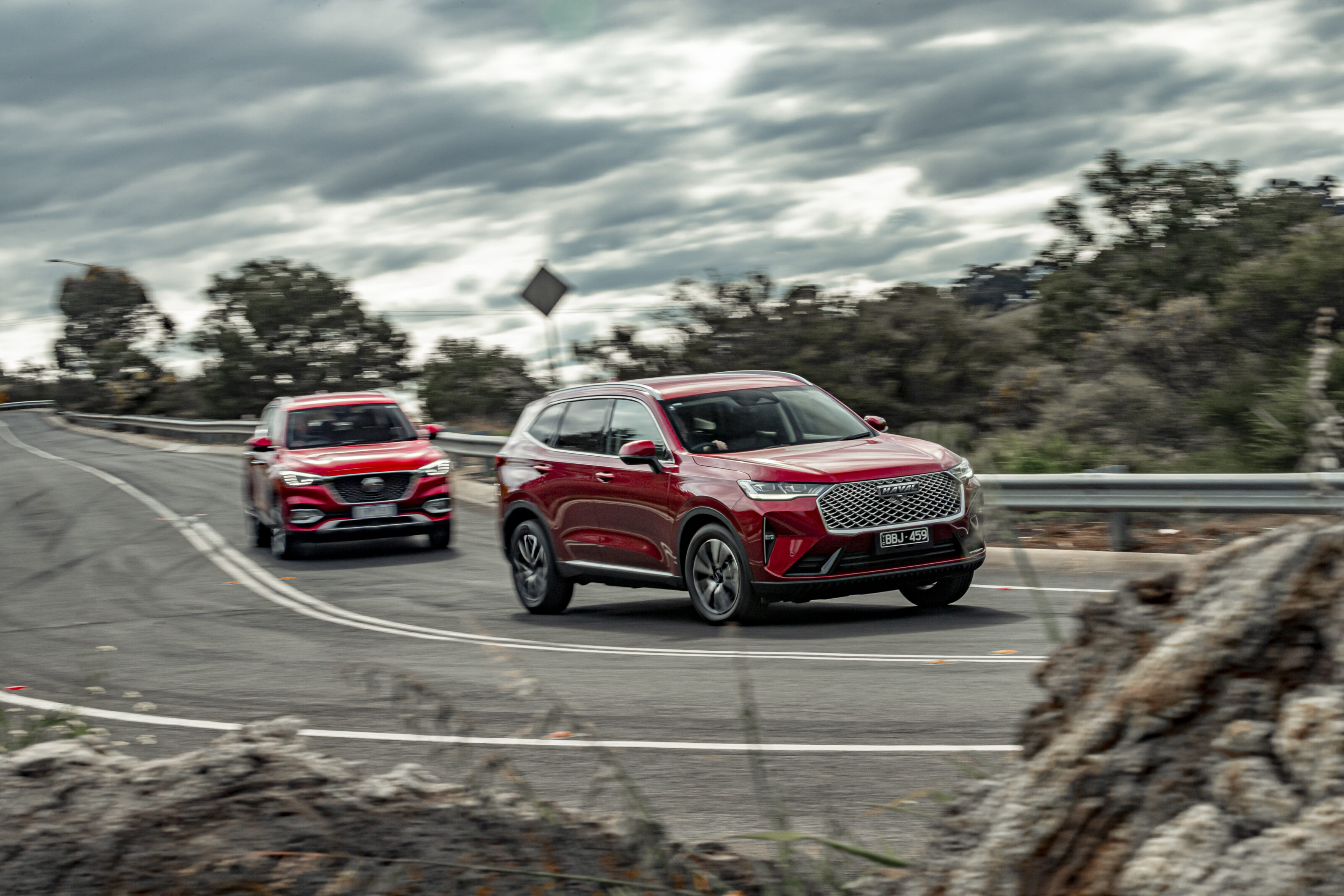
Rocketing skyward is the theme of 2021. Beardy Branson and Baldy Bezos took their billionaire backsides to the brink of outer space, whereas back on terra firma the popularity of the two cars you see before you, the MG HS and Haval H6, is growing exponentially with Australian buyers.
As of August 2021, sales of the MG are up 162 per cent year-on-year, whereas the Haval has found 280 per cent more buyers compared to this time in 2020. Neither is anywhere close to troubling the category favourites, the Mazda CX-5 and Toyota RAV4, but the MG is now snapping at the heels of the Honda CR-V and Kia Sportage while the Haval has passed the Ford Escape and Skoda Karoq on the sales charts and has its eyes on the Volkswagen Tiguan.
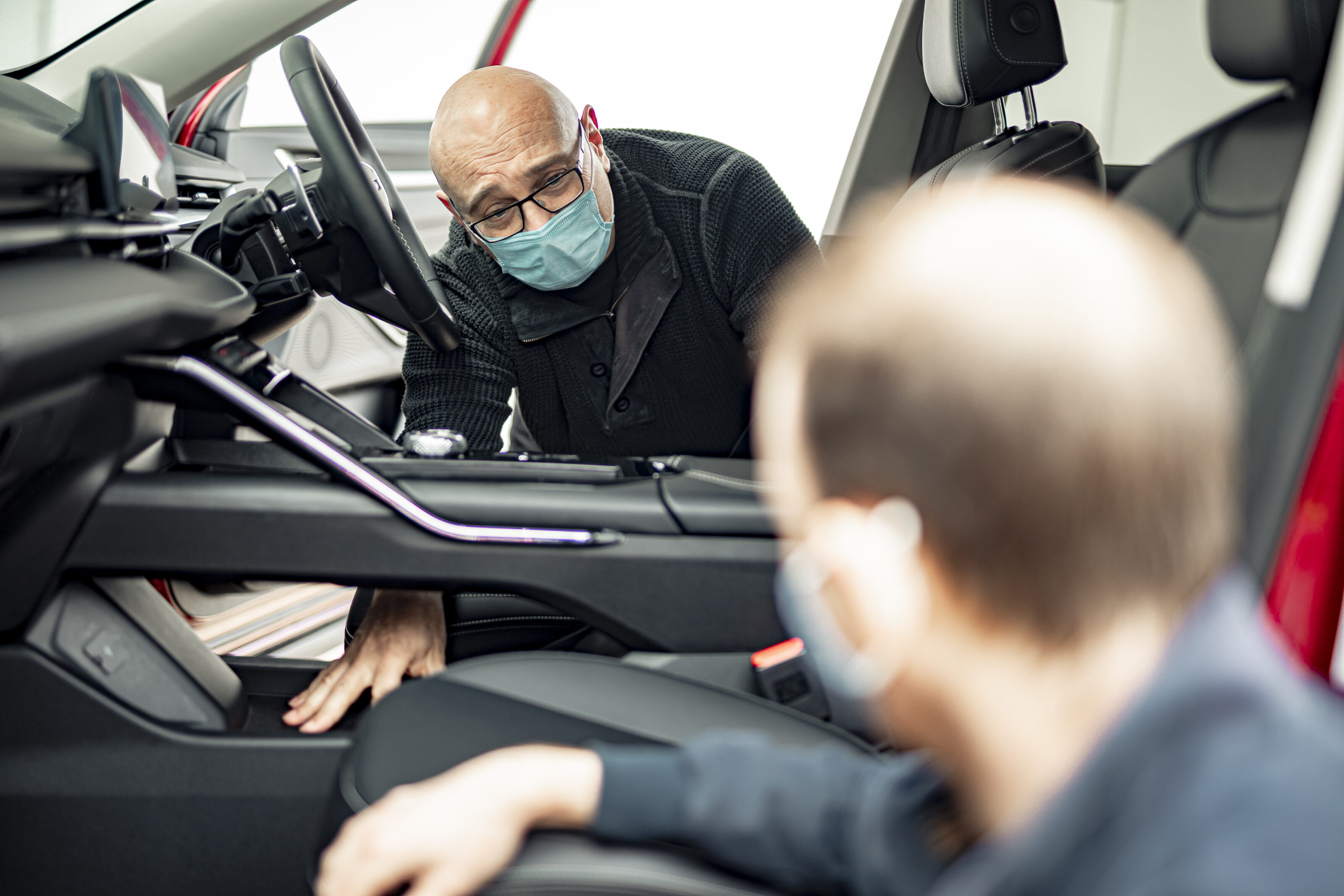
It’s clear plenty of punters are cross-shopping these two mid-size SUVs so it seemed only logical to put them head-to-head and see what’s what. Helping us in this assessment is design guru Richard Ferlazzo, formerly of the GM parish, who has happily agreed to offer his extensive experience and an OEM perspective to these vehicles. Of particular interest given the two cars’ attractive price tags is whether Richard can help identify whether corners have been cut in their build, presentation or development.
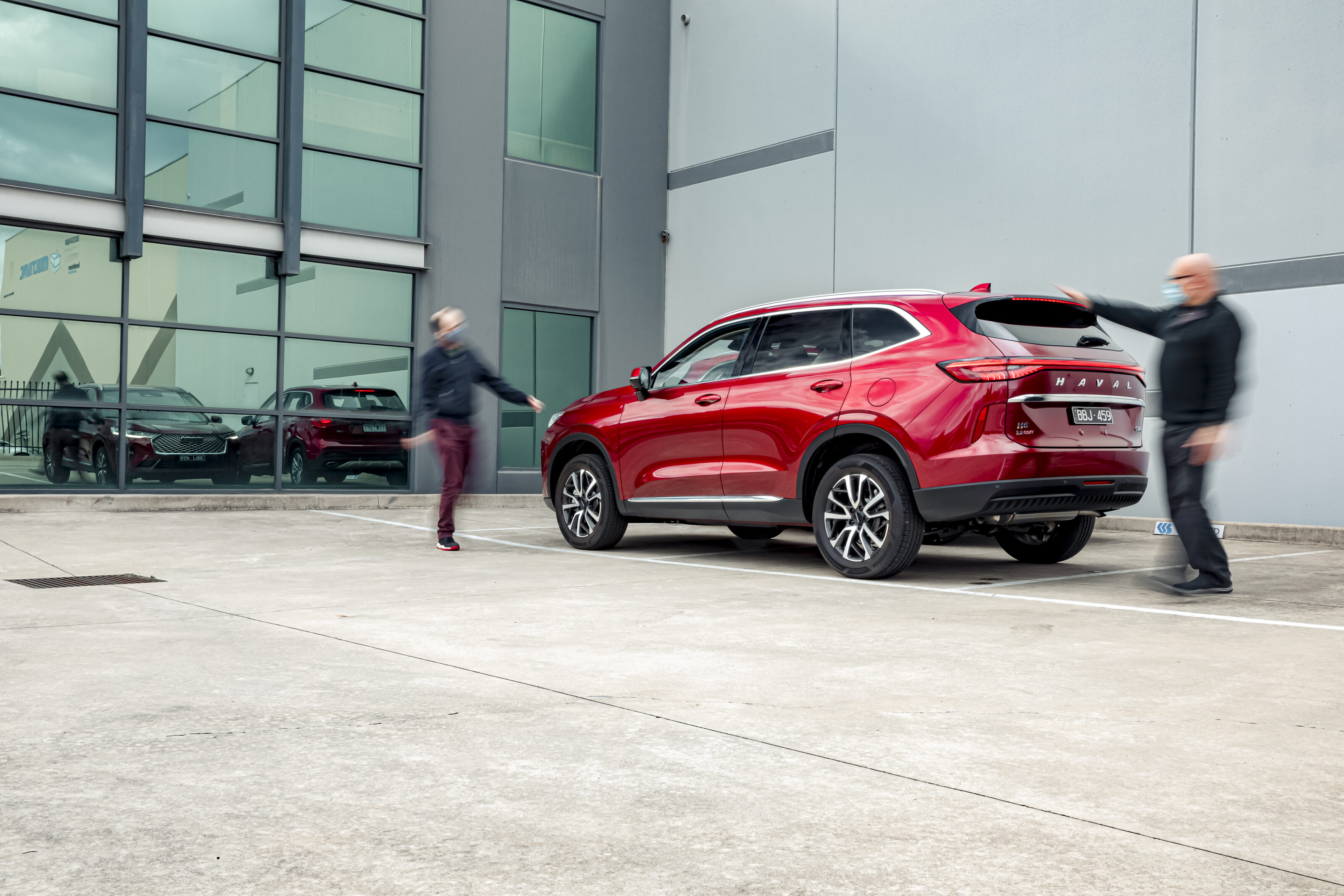
The Haval is the fresher of the two, the new-generation H6 having landed locally earlier in 2021 and, as our first drive has already confirmed, it’s a massive step forward over its underwhelming predecessor that finished a distant last in Wheels’ 2018 mega test. Our test car is the mid-spec 2WD Lux that costs $33,990 drive-away, nestled between the $30,990DA Premium and $36,990DA Ultra, the latter also available with all-wheel drive for an extra $2000.
The Lux is still well equipped, with 18-inch alloys, leather seats – the fronts heated and the driver’s eight-way electrically adjustable – a leather steering wheel with paddleshifters, keyless entry and start, a pair of 10.25-inch digital displays for the infotainment and instruments, a pair of USB ports front and rear, dual-zone climate control, six-speaker stereo, Apple CarPlay (though not Android Auto), rear privacy glass, LED lighting all ’round, front and rear parking sensors and a 360-degree camera.
In addition, there’s a comprehensive suite of active safety equipment, including AEB with pedestrian, cyclist and crossroad detection, forward and rear collision warning, lane departure warning and assist, exit warning, adaptive cruise control with traffic jam assist, blind-spot monitoring and traffic sign recognition, though rear cross-traffic alert and auto parking are limited to the top-spec Ultra.
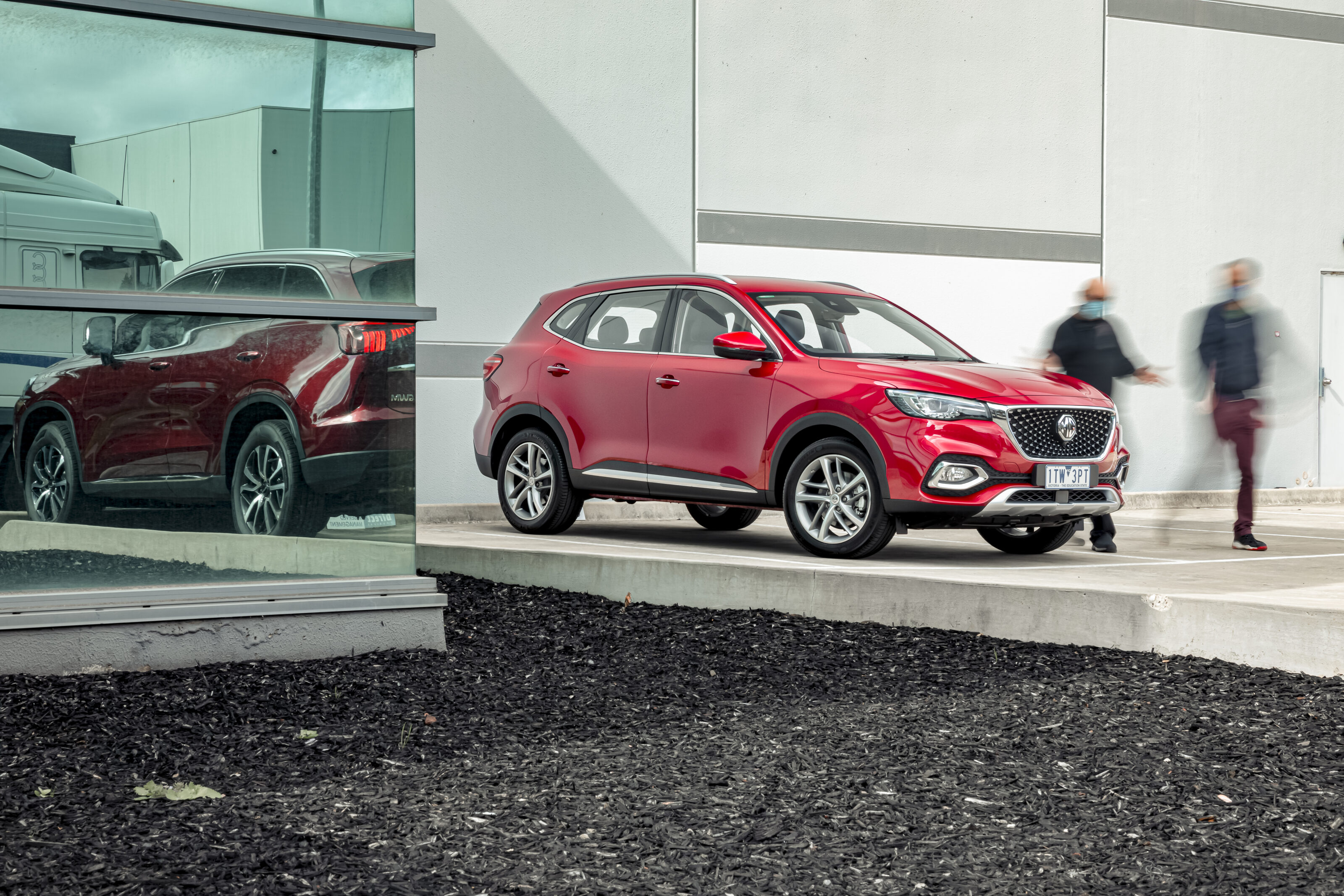
Our MG HS is the $34,990DA HS Excite, which is again essentially the mid-spec variant, sitting between the $30,990DA Vibe and $38,990DA Essence. Unlike the Haval, all-wheel drive, as well as a more powerful 2.0-litre engine, is available on both the Excite and the top-spec Essence for $3000 and $4000 more respectively.
The MG is similarly stuffed to the gills, with 18s, a six-speaker stereo, 10.1-inch infotainment screen with smartphone mirroring (Apple and Android), dual-zone climate, leather seats, keyless entry and go, pair of USB ports front and rear, leather seats, leather steering wheel with paddleshifters, LED lights at both ends and all the same active safety kit as the Haval, though this time with rear cross-traffic alert as standard. It’s tit for tat in terms of spec levels, the MG lacking the Haval’s heated electric driver’s seat adjustment and 360-degree camera but countering with a powered tailgate and cooled centre console storage.
It’s clear plenty of punters are cross-shopping these two mid-size SUVs so it seemed only logical to put them head-to-head and see what’s what.
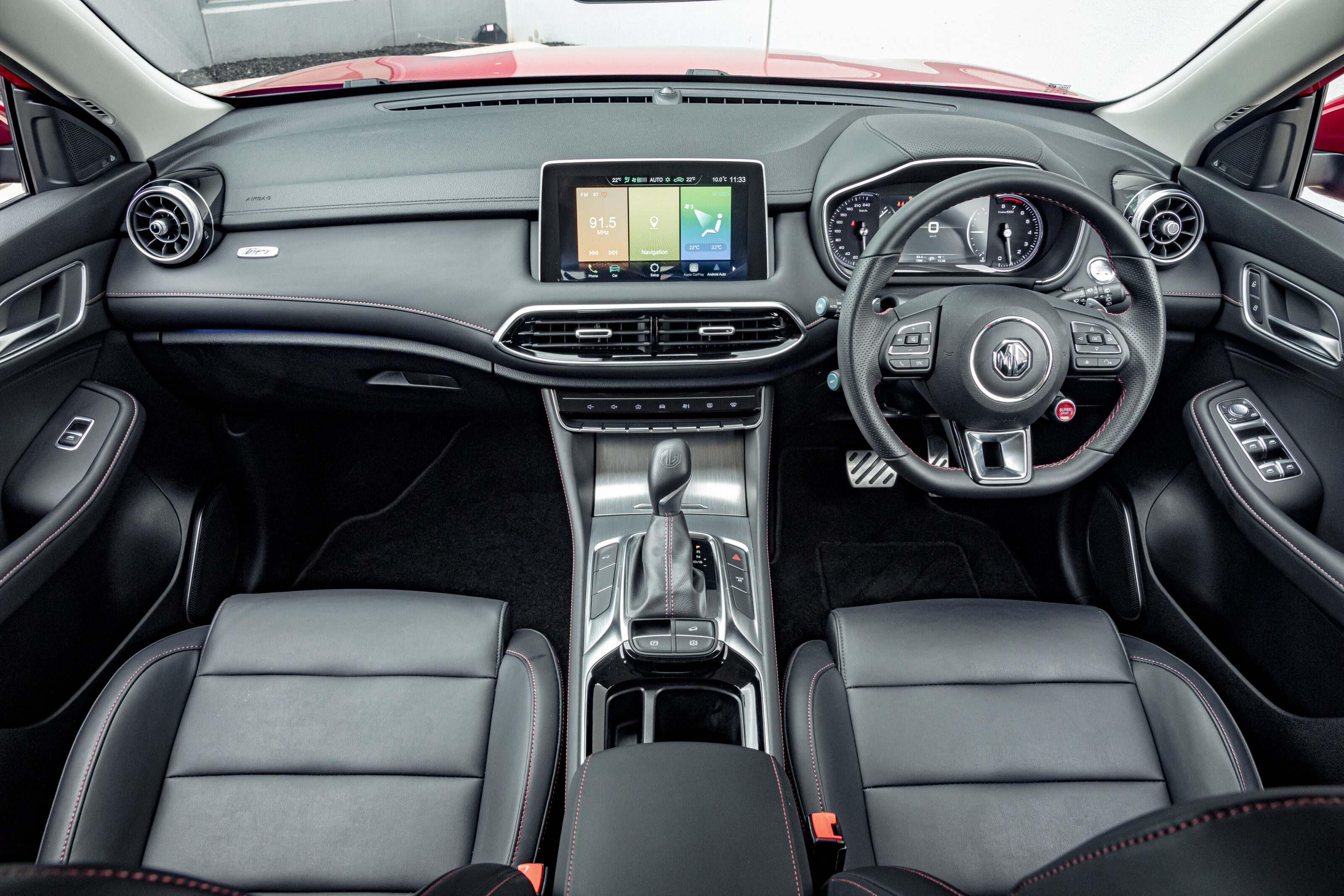
Where the two begin to diverge is inside. Richard offers his initial thoughts on the MG’s interior: “First impressions are it feels like it’s punching above its weight for opulence at this price. There’s a lot of real stitching, big Mercedes-style circular vents, nice steering wheel, soft on the console side to prevent banging your knee. Soft eject doors, brushed aluminium finish, electric park brake. I think the interior presents well, the screen’s nice and big, it’s certainly up level finishes.”
No arguments here. With its abundant leather surfaces, soft-touch plastics and contrasting red stitching, the MG could carry a much higher price tag, while the steering wheel could be a straight lift from the Mk VI Golf GTI, which is a compliment rather than a criticism really.
Richard feels the combination of analogue dials with the central digital screen isn’t quite as contemporary as the Haval’s widescreen offering but they are easy to read and the way the digital gauges complete the analogue circles is a neat touch. The centre screen is large and intuitive but its response to inputs is quite slow, which is frustrating, especially when adjusting the HVAC.
There’s ample space in the rear with a three-stage reclinable backrest and it’s well equipped with a pair of USB ports and air-con vents. There are large bottle holders in the doors and a leather-stitched fold-down centre armrest with a storage space for phones and a pair of fold-out cup holders. Further rearward, the electric tailgate opens to reveal a fully lined 463L boot, which increases to 1287L with the 60:40 rear seats folded down and includes a handy wet storage area beneath the floor along with a space-saver spare. Oddly, neither car has tie-down points in the boot.
Nevertheless, where the MG is spacious the Haval is cavernous. It looks a half-size bigger than the MG, closer to large than medium, and the dimensions bear this out with the H6 being 79mm longer, 10mm narrower and 39mm taller than the HS. This translates into a monstrous 600L boot, which expands to 1485L with the rear seats folded. There is no underfloor storage but the floor does have two heights to accommodate taller items and greater width above the wheelarches. Those arches are covered in hard plastic rather than soft felt like in the MG, though, and to get a power tailgate you need to stretch to the range-topping Ultra.
This abundant space carries over to the back seat, which is almost big enough to host stadium rock concerts. It should be able to accommodate three smaller humans across the back with relative ease, especially as the centre pew isn’t raised like in many rivals, making it much more useable. The backrest doesn’t recline like the MG, but the rear bench is soft and very comfortable, though Richard wished the contouring on the backrest continued on to the cushion for a little more visual flair. It matches the MG with a pair of vents and USB ports, but the door bins will only accommodate smaller drink bottles.
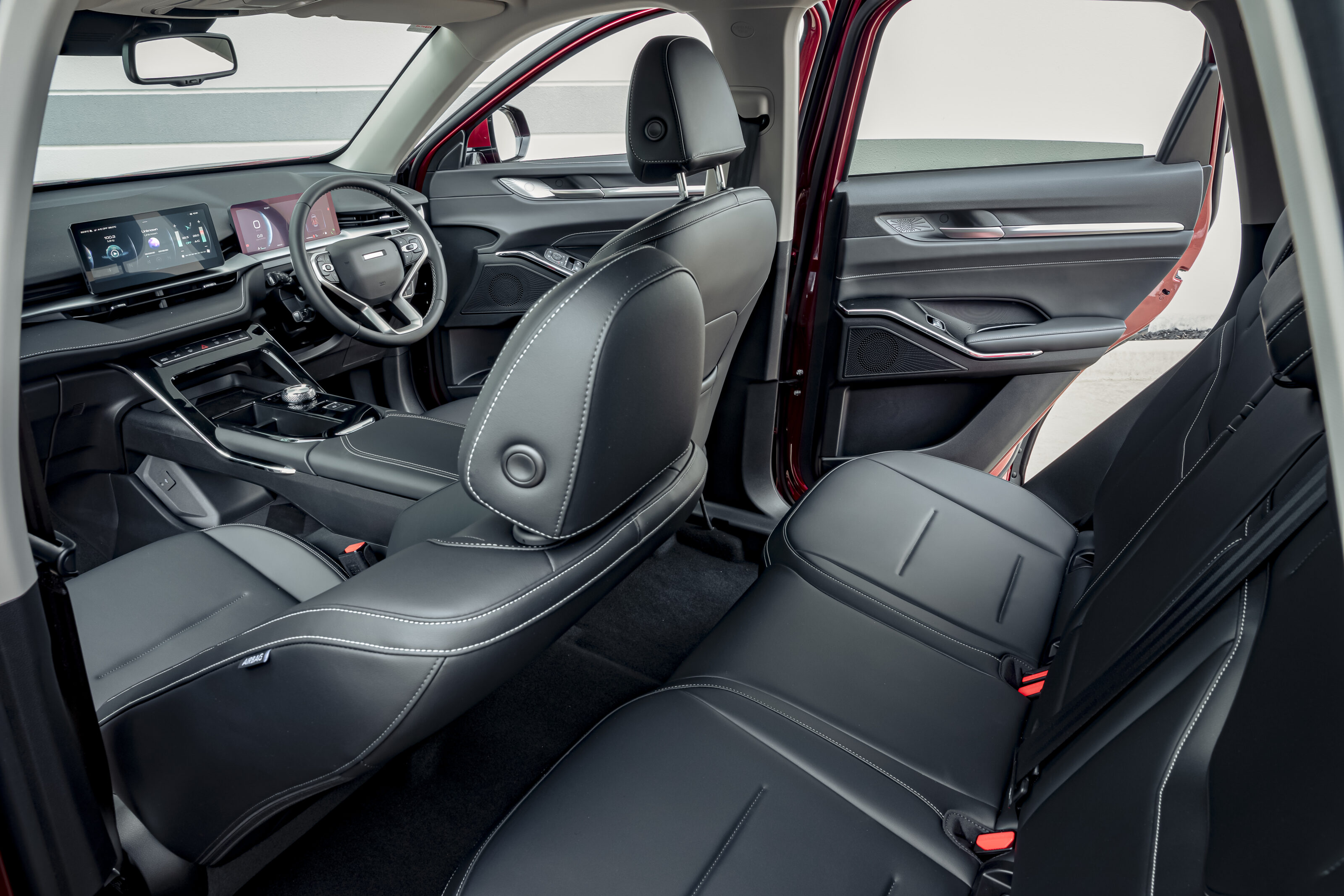
Switch to the front and you’ll find Haval has subscribed to a minimalist design ethos, eliminating virtually all buttons in favour of those two large screens. Over to Richard: “The Haval’s interior is bang on trend with two large colour display screens, a rotary gear selector and floating console with storage shelf. It’s minimalist but I rather like it. The floating centre console is lightweight visually with additional storage underneath. I’m not the biggest fan of rotary dials but I understand why they do it. There used to be a time when more buttons was better, but now everything is menu-driven it’s the size of the screen. Screens are now financially advantageous, too. There’s so little tooling involved, it’s easily updated and software can be flashed right up until the last minute.”
The centre infotainment screen can struggle to recognise inputs, often requiring a few taps, but if they are recognised they’re responded to in a more timely fashion than in the MG. More physical shortcut buttons would be handy in quickly accessing frequently used functions. The option of traditional dials on the digital instrument cluster would also be appreciated, but perhaps they are hidden in an undiscovered sub-menu. Both Richard – and Dan on his initial first drive – found the H6’s front seats flat and unsupportive but personally, they hold me better than the MG’s, which are nicely bolstered but quite wide, suggesting it may depend on body type.
Where the MG is spacious the Haval is cavernous. This abundant space carries over to the back seat, which is almost big enough to host stadium rock concerts.
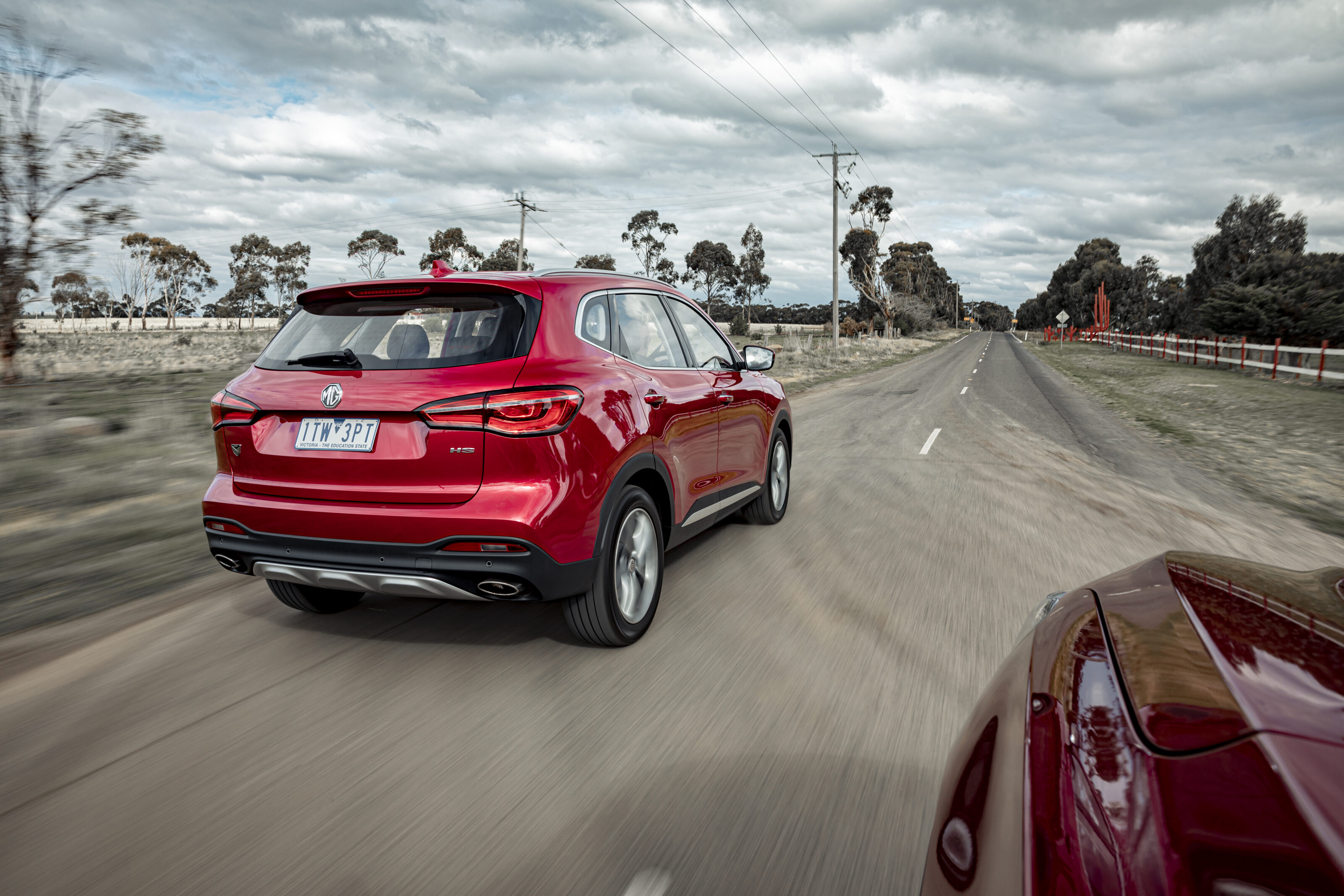
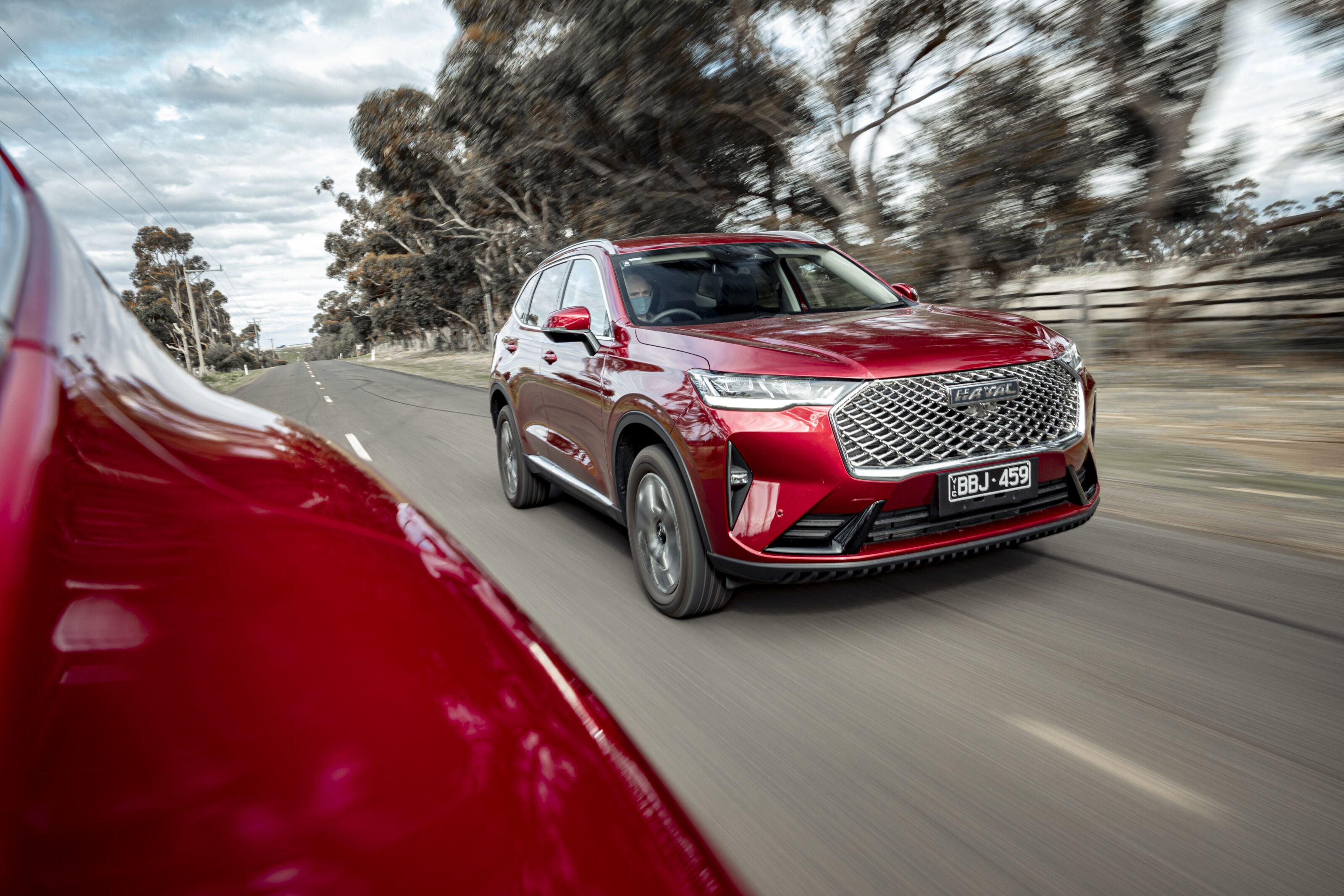
Beauty is in the eye of the beholder, but it’s been Richard’s job for more than 30 years to ensnare that beholder, so what does he think of these two SUV upstarts?
“The exterior styling of both cars may not be trendsetting but they are certainly contemporary and well-executed. They also project very different personas. The H6 is crisp and chiselled with a solid proportion, albeit a bit rigid around the grille, and it could benefit from a more stylish badge. Generous chrome and hi-tech lamps give it an upmarket feel. The front doesn’t do it for me; there’s nothing wrong with square and angular but it’s just a little lumpy in places and a bit too glitzy around the grille. Again, nothing wrong with the pattern itself but chroming the whole grille is a little too chintzy.
“The MG looks and feels like a smaller and sportier vehicle. The exterior surface treatment is more curvaceous with a pronounced hip over the rear wheel. Like the H6, plentiful chrome and interesting lamp detailing add to the appeal. The HS is a little bit heavy over the front wheel; both cars have the black lower side strip as because SUVs are taller, there’s too much body mass so it’s a visual trick that makes it look more athletic and robust. The hard part is the proportions of an SUV really dictate its profile. To be different you need a different proportion and that usually comes with compromise – maybe less boot volume or rear headroom – otherwise everyone would be doing it.”
The divergent personalities are equally evident in the driving experiences. As its size and styling suggest, the MG is the sportier of the two. The ride is a little ‘springy’, the car falling into bumps then bouncing out of them, but is comfortable enough on most road surfaces. Well-weighted steering controls an obedient front end with the 235/50 Michelin Primacy tyres providing reasonable grip, though drive the HS in a fashion that any owner is unlikely to mirror and you’ll find mid-corner steering kickback over bumps, a soft brake pedal and eventual understeer, but even then a lift of the throttle will tuck the nose slightly.
Where the MG struggles is in the under-bonnet department. The little 1.5-litre turbocharged four-cylinder is no powerhouse with 119kW and 250Nm, but it’s the calibration that’s the real issue. That maximum torque is actually ample for decent progress but it’s delivered in odd lumps, the engine is noisy at high rpm and the seven-speed dual-clutch gearbox can struggle with decisiveness. Ticking the AWD box also adds a powerful 168kW/320Nm 2.0-litre turbo engine, though the six-speed dual-clutch it’s attached to is no smoother in operation.
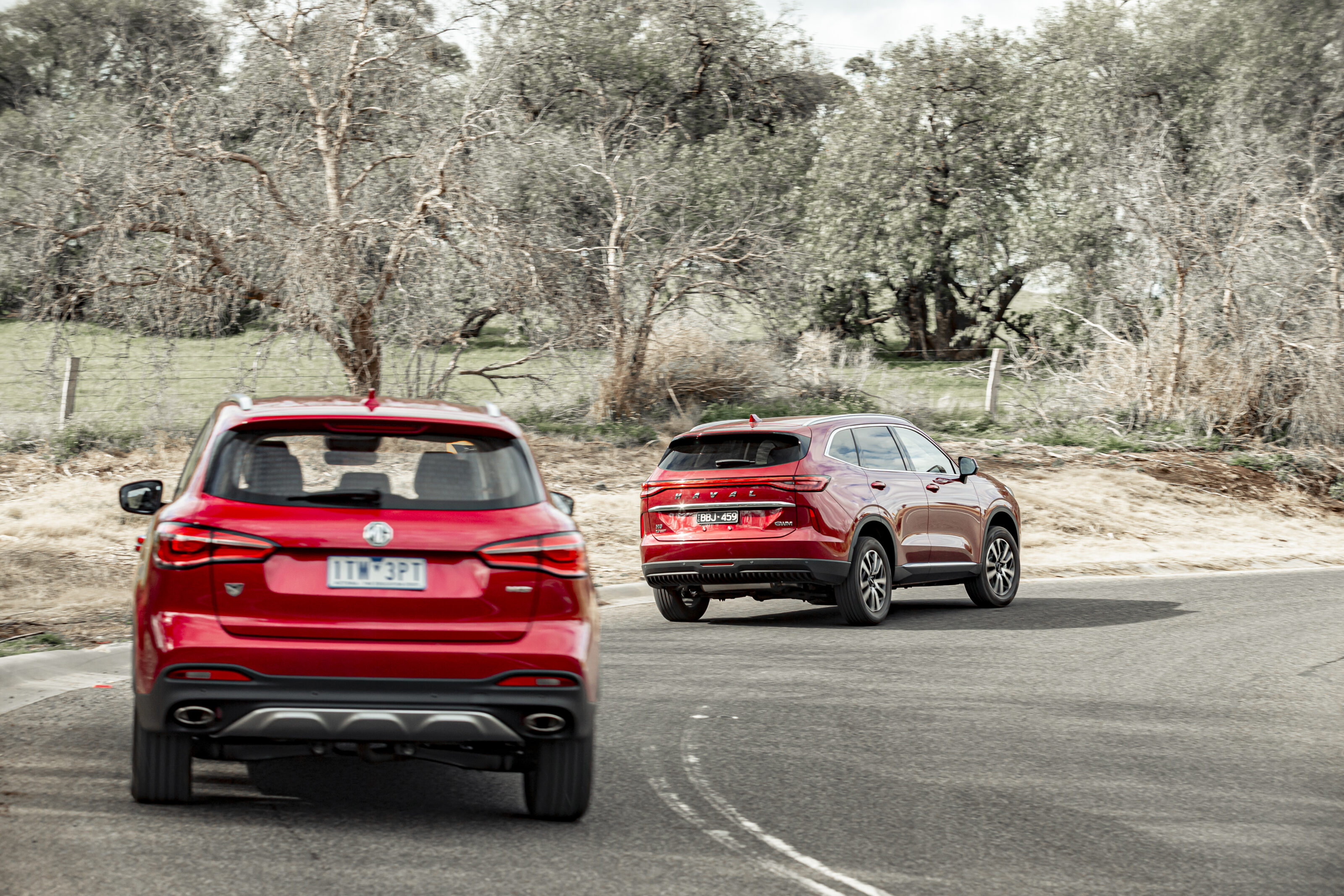
The Haval has similar calibration issues in terms of smoothly delivering its power but the fact it has so much more of it, its 2.0-litre turbo four-cylinder producing 150kW and 320Nm, means you don’t have to extend it as frequently. This grunt does bring its own challenges, though, the H6 regularly wheel-spinning and torque-steering out of junctions if you’re slightly enthusiastic with the throttle, but the extra power is useful when it comes to overtaking (or, potentially, fully loaded for a driving holiday).
It’s not as dynamic as the MG – no great drama in this segment – but its softer suspension provides a more comfortable ride, albeit with some jitteriness on poor surfaces. There’s also more body movement than the MG but it actually has slightly better mid-corner balance, no steering kickback and an impressively subtle ESP calibration that gently adjusts the car’s attitude as necessary without aggressively cutting power or grabbing brakes. One negative is that the small back window severely limits rearward vision, particularly in the rear three-quarter.
The divergent personalities are equally evident in the driving experiences. As its size and styling suggest, the MG is the sportier of the two.
It’s easy to see why both these SUVs are flying up the sales charts. Both have enticing price tags, loaded equipment lists and lengthy seven-year warranties. More than that, though, both major on showroom appeal; on first acquaintance, whether that be stationary or on a short drive, it’s not immediately immediate why these vehicles cost less – like-for-like – than their immediate competitors.
Longer exposure reveals shortcomings in software response, powertrain calibration and dynamic polish, but the margins between these and the best are nothing like as big as they were only a generation ago.
Both MG and Haval have rightly prioritised space, safety, equipment and ownership peace of mind in the mid-size SUV segment and are being rewarded accordingly, but both would benefit from a local engineering effort in the manner of former challenger brands Kia and Hyundai.
But which is best? To a degree, the verdict is dependant on your buying priorities and taste, the Haval offering greater room and comfort along with a minimalist, almost austere, interior aesthetic. But our nod goes to the MG by a tiny margin for its cabin design flair and the fact its size and setup make it more agile when going slow and more fun when going fast.
SCORING
MG HS – 7/10
Haval H6 – 7/10
Specifications
| u00a0 | MG HS Excite | Haval H6 2WD Lux |
|---|---|---|
| Body | 5-door, 5-seat SUV | |
| Drive | front-wheel | |
| Engine | 1490cc inline-4cyl, DOHC16v, turbo | 1988cc inline-4cyl, DOHC16v, turbo |
| Power | 119kW @ 5600rpm | 150kW @ 6000-6300rpm |
| Torque | 250Nm @ 4400rpm | 320Nm @ 1500-4000rpm |
| Fuel consumption | 7.3L/100km (combined/claimed) | 7.4L/100km (combined/claimed) |
| Weight | 1550kg | N/A (brand could not provide) |
| Power/weight | 77kW/tonne | N/A (brand could not provide) |
| Transmission | 7-speed dual-clutch | |
| Front suspension | struts, coil springs, anti-roll bar | |
| Rear suspension | multi-links, coil springs, anti-roll bar | |
| L/W/h | 4574/1876/1685mm | 4653/1886/1724mm |
| Wheelbase | 2720mm | 2738mm |
| Boot space | 463/1287L (rear seats up/down) | 600/1485L(rear seats up/down) |
| Steering | Electrically assisted rack-and-pinion | |
| Front brakes | 312mm ventilated discssingle-piston calipers | N/A (brand could not provide) |
| Rear brakes | 302mm solid discs | N/A (brand could not provide) |
| Wheels | 18 x 7.5-inch (f/r) | N/A (brand could not provide) |
| Tyres | 235/50 R18 (f/r) | 225/60 R18 (f/r) Hankook Ventus S1 Evo SUV |
| Price | $34,990DA | $33,990DA |
| Pros | Interior design and qualityEquipment levelsValue | Massive spaceEngine powerWarranty |
| Cons | Lacklustre powertrainSlow infotainment | Traction issuesFeels a bit cumbersome |
