
You enter the pub, sit down at the table and grab a menu, making a show of perusing the available options. It’s all a charade; you know exactly what you’re going to order, you’ve known for hours. You’re going to choose the chicken parmigiana – chances are everyone is.
The reason the chicken parmi (or parma) is the default pub choice is the same reason the Volkswagen Golf GTI is the default hot hatch choice – you know what you’re going to get. In both cases the recipe hasn’t changed much in decades and nor has it had to because if it ain’t broke, don’t fix it.
This only makes it all the more remarkable that for the eighth generation of its iconic fast five-door Volkswagen is fiddling with the recipe, if only slightly. If we return to the chicken parmigiana metaphor, the VW has stuffed a few spicy jalapeños between the ham and the cheese.
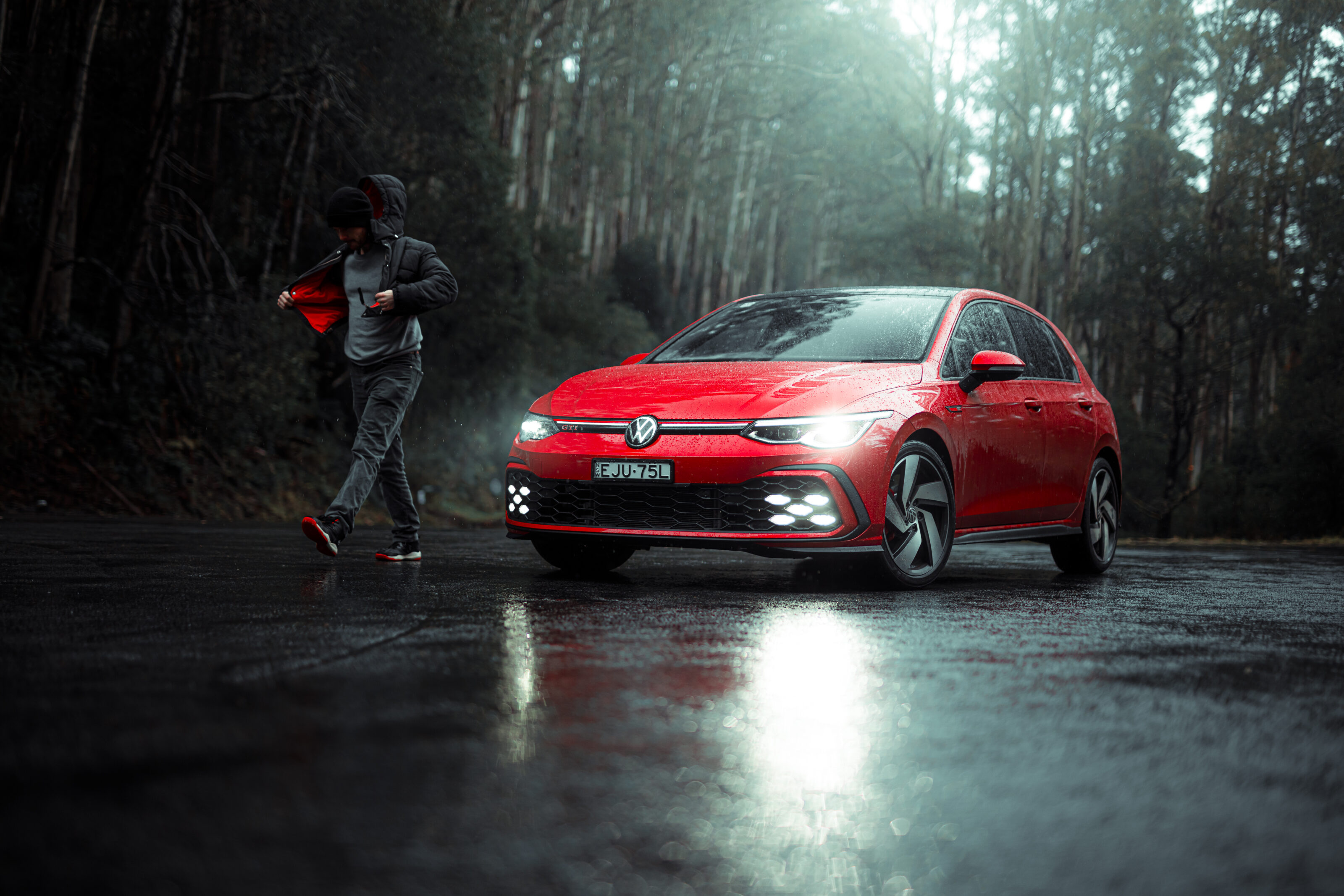
No standard Golf GTI has ever been this, well, serious. Its mechanical specification effectively mirrors that of the previous generation Golf GTI Performance, including the fourth evolution of the long-serving EA888 engine, which produces 180kW from 5000-6200rpm and 370Nm from 1600-4300rpm.
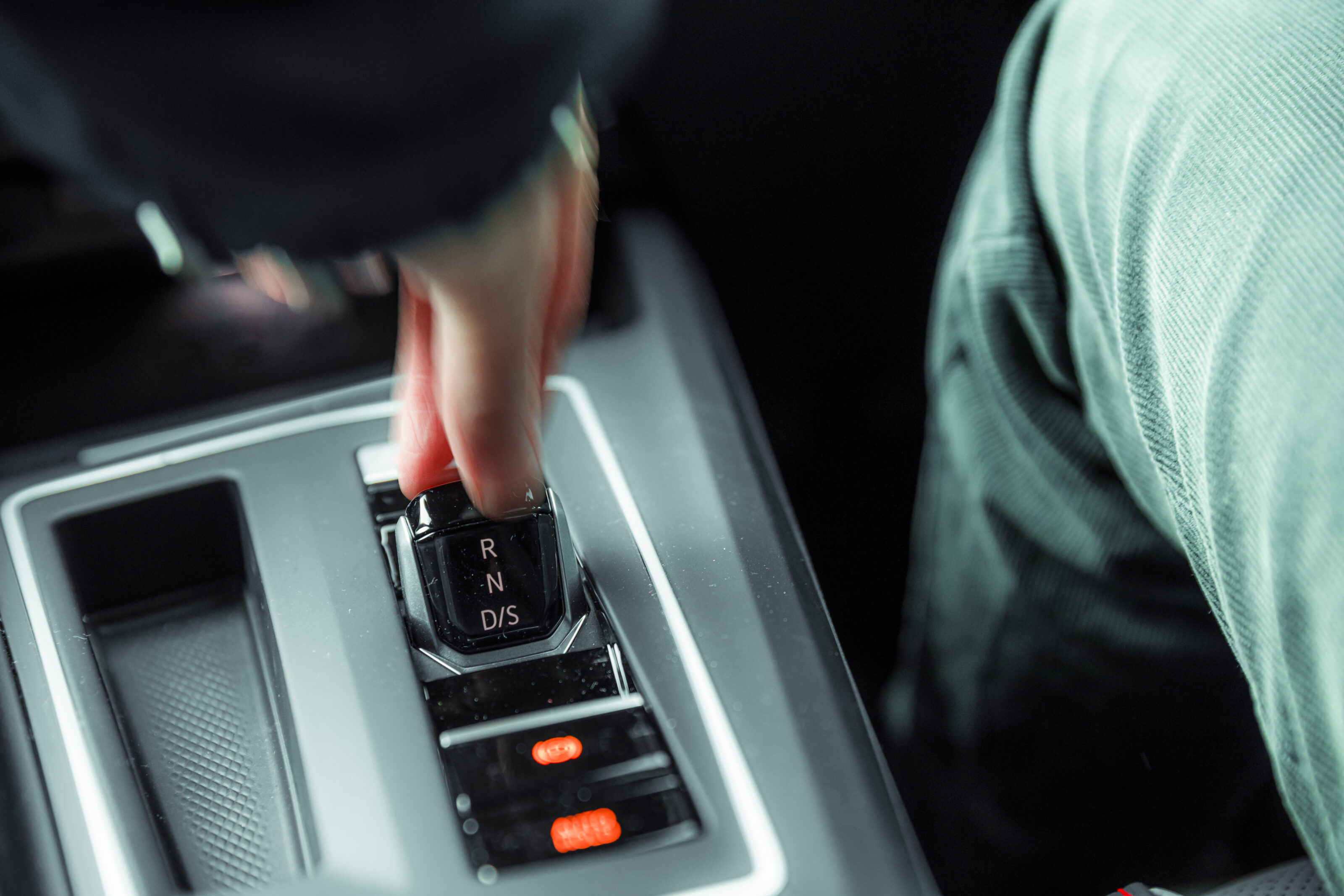
For the first time a proper limited-slip front differential is standard on a ‘normal’ GTI, the multi-plate unit is electronically rather than mechanically controlled in order to minimise steering corruption. A six-speed manual is available overseas, but locally only the new seven-speed ‘shift by wire’ dual-clutch gearbox will be offered, meaning there’s no longer any physical connection between the gear lever and the ’box itself.
Under the skin it seems as before, with a strut/A-arm front end and multi-link rear controlling 18.0 x 7.5-inch wheels wrapped in 225/40 tyres – in this case, Goodyears. However, the devil is in the detail. Spring rates have increased 5 per cent front and 15 per cent rear, bushings and bearings have gone under the microscope, adaptive dampers are standard and an aluminium subframe stiffens the front end and sheds three kilograms.
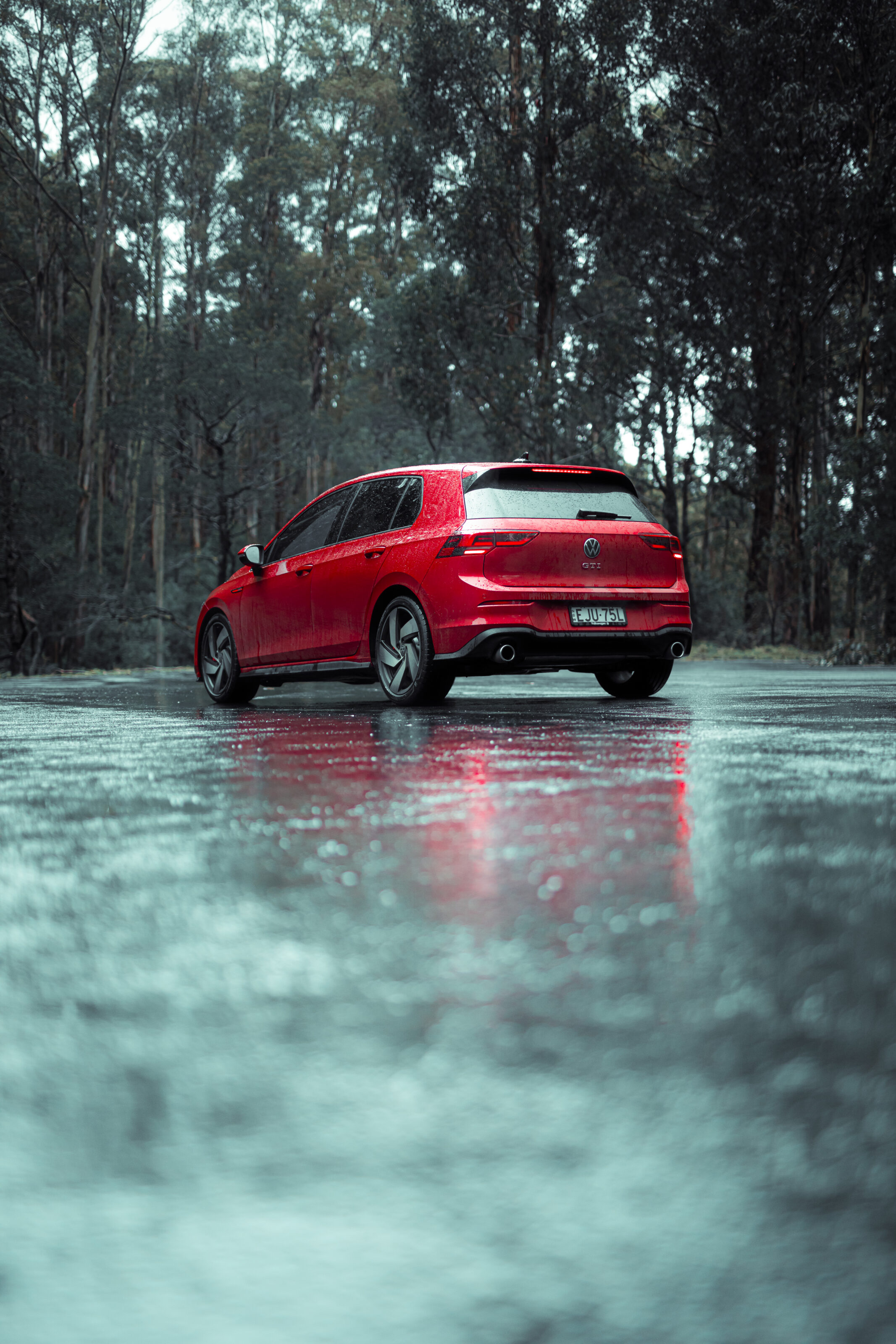
“This is the most cohesive Golf GTI yet”
What’s more, the suspension and differential are both under the command of the new Vehicle Dynamics Manager, a “higher level control system [that] centrally coordinates all electro-mechanical running gear functions,” according to Karsten Schebsdat, VW’s head of drive dynamics, steering and control systems.
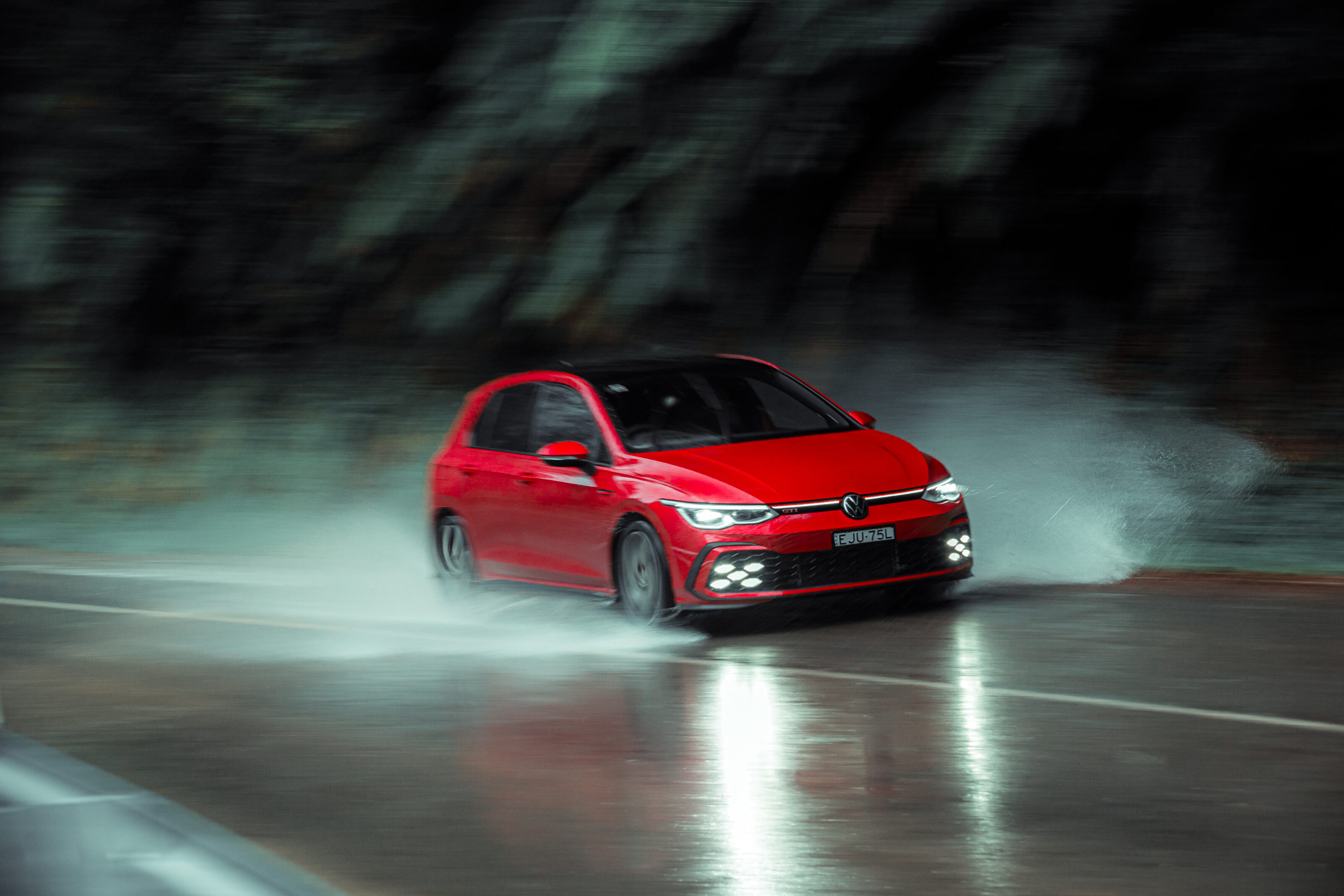
Let’s not leave you hanging any longer – it works. This is easily the sharpest, most capable and cohesive Golf GTI yet. As you can see from the imagery, the conditions weren’t exactly conducive to performance driving, yet the Mk8 was rarely flustered, extracting remarkable levels of lateral grip from the sodden surface.
The steering is worthy of note. It remains a variable-rate rack that allows a degree of high-speed sneeze factor yet quickens as lock is applied with a maximum of 2.1 turns, but whereas these systems can sometimes feel unnatural in their progression when responding to large inputs, the latest GTI has somehow made the variable feel linear. It does feel as though the wheel has increased in diameter, however.
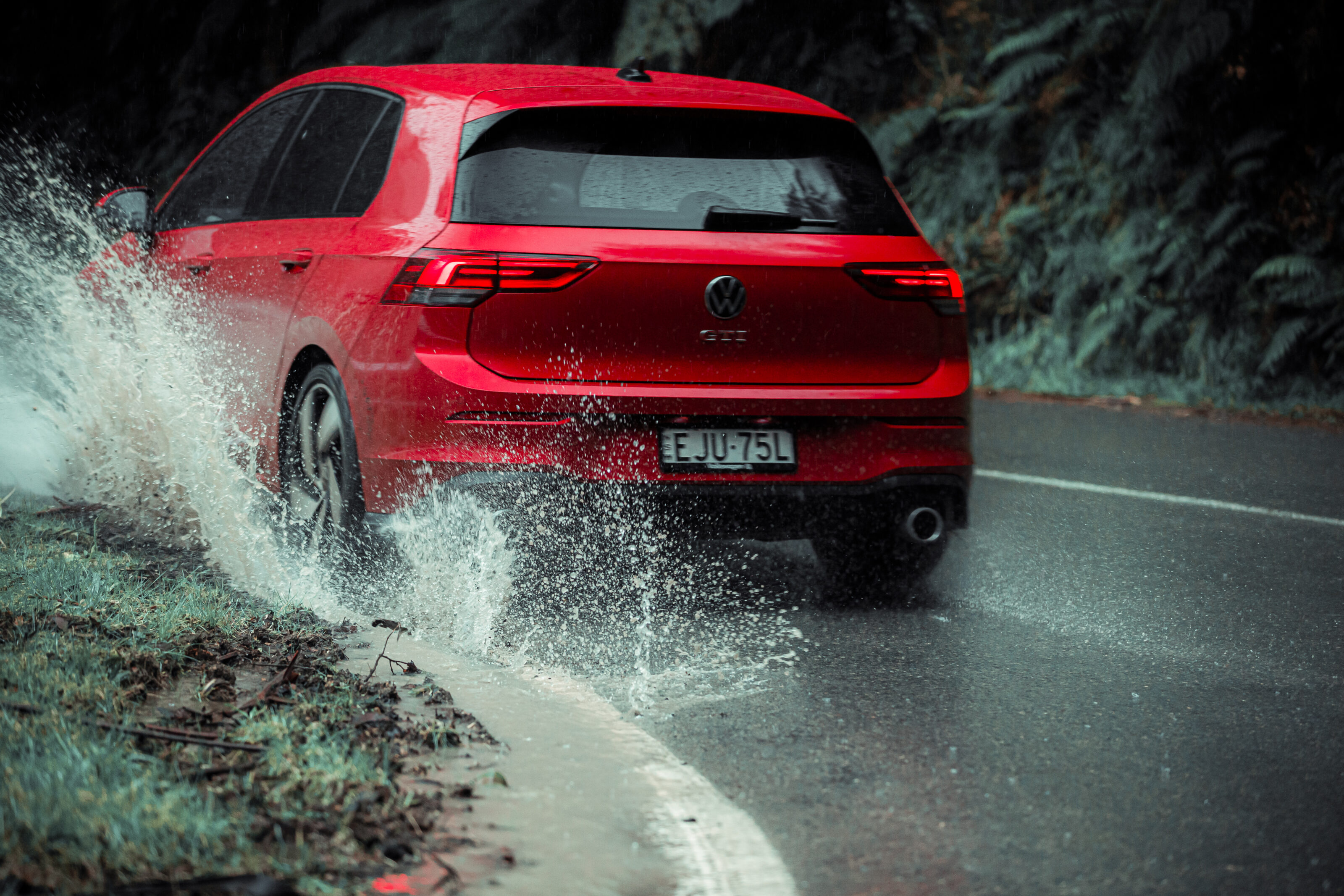
Volkswagen claims its “running gear engineers have in effect entirely eliminated understeer,” a bold statement but one that appears to be accurate, on-road at least. The front end refuses to relinquish its purchase even as cornering speeds edge up to twice that written on the yellow warning sign – in the wet don’t forget – and the rear is equally unflustered, though can be convinced to shuffle slightly on a trailed brake.
Traction has traditionally been a GTI bugbear but while it still leans on the electronics heavily in these conditions, once third gear has been clicked more often that not the light ceases to flash. The one disadvantage of a front limited-slip diff is that once traction is lost both wheels slide across the road, but it’s an easy issue to drive around with a little throttle control.
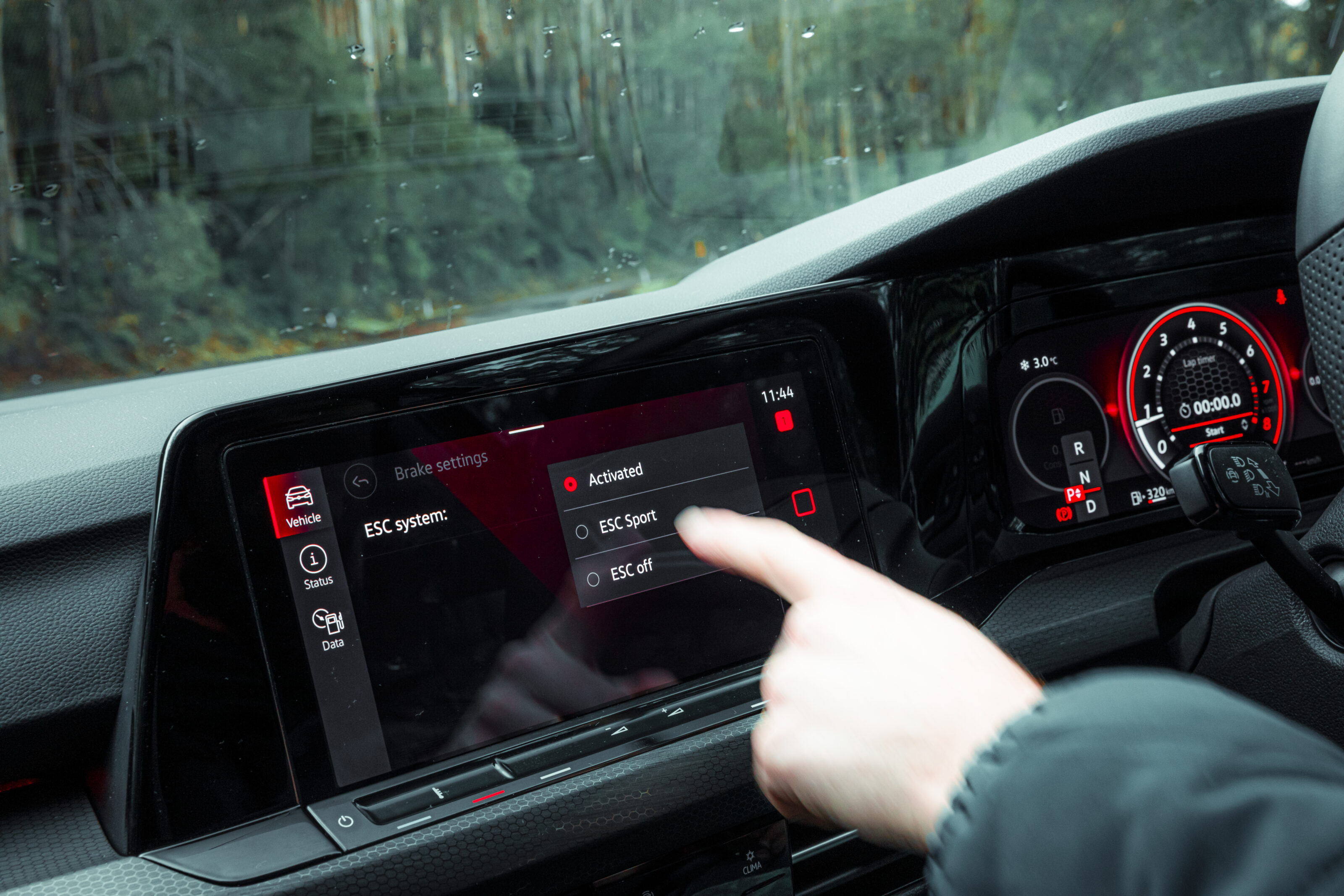
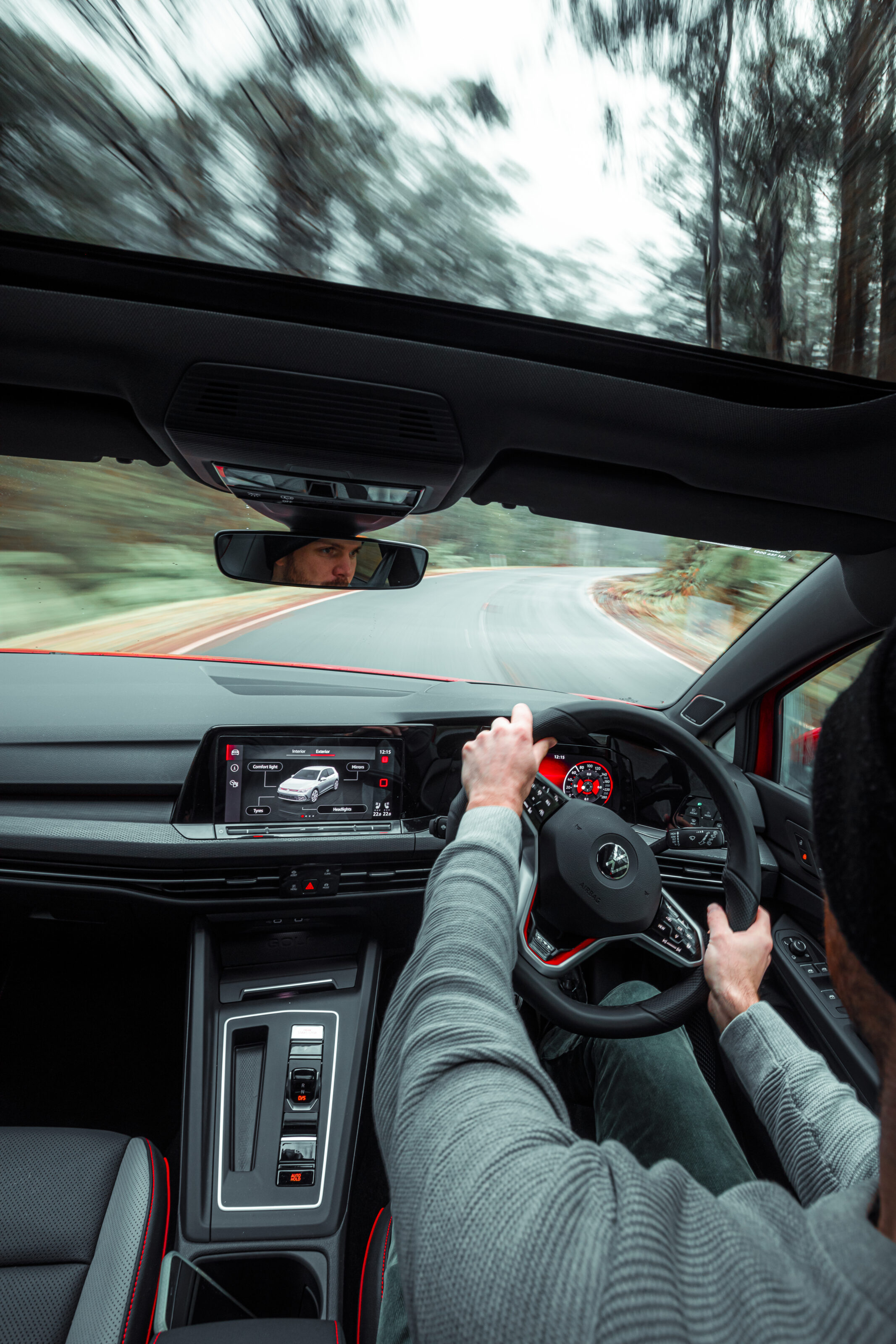
ESP Sport is deftly tuned and unintrusive. The stability control can also be deactivated completely for the first time in a base GTI, but we’ll leave that until we get on track. An Individual mode is still offered in order to mix and match drivetrain, steering and suspension settings – the latter now adjustable through 15 different damper rates – but to be honest Sport is beautifully judged for fast driving. The steering adds a little extra resistance and the suspension retains its compliance but with fantastic body control.
The engine is familiar but has now also been developed and refined to an incredibly high standard. It pulls from virtually no rpm – thank peak torque from 1600rpm for that – and remains perched on this power plateau for the next 4500rpm, at which point the next gear will be selected whether you like it or not. Happily, the new gearbox is more obedient in the other direction, firing in downshifts that whip the digital tachometer around to north of 6000rpm.
It even makes a good noise; a little muted, but less obviously synthesised than the same engine in the Skoda Octavia RS. It’s quick, too. The standard launch control system provokes time-sapping wheelspin, but with a bit of patience off the line the front tyres hook up and rocket it to 100km/h in just 6.2sec – besting the official claim by 0.2sec – and on to a 14.3sec quarter mile at 163.7km/h.
Crucially, this added dynamic ability hasn’t come at the expense of the GTI’s everyday useability. There is now a slight edge to the ride, however, the increase in firmness compared to its predecessor is probably roughly equal to the increase in front spring rate – about five per cent. For the expansion of its dynamic prowess to come with so little compromise feels like a masterstroke.
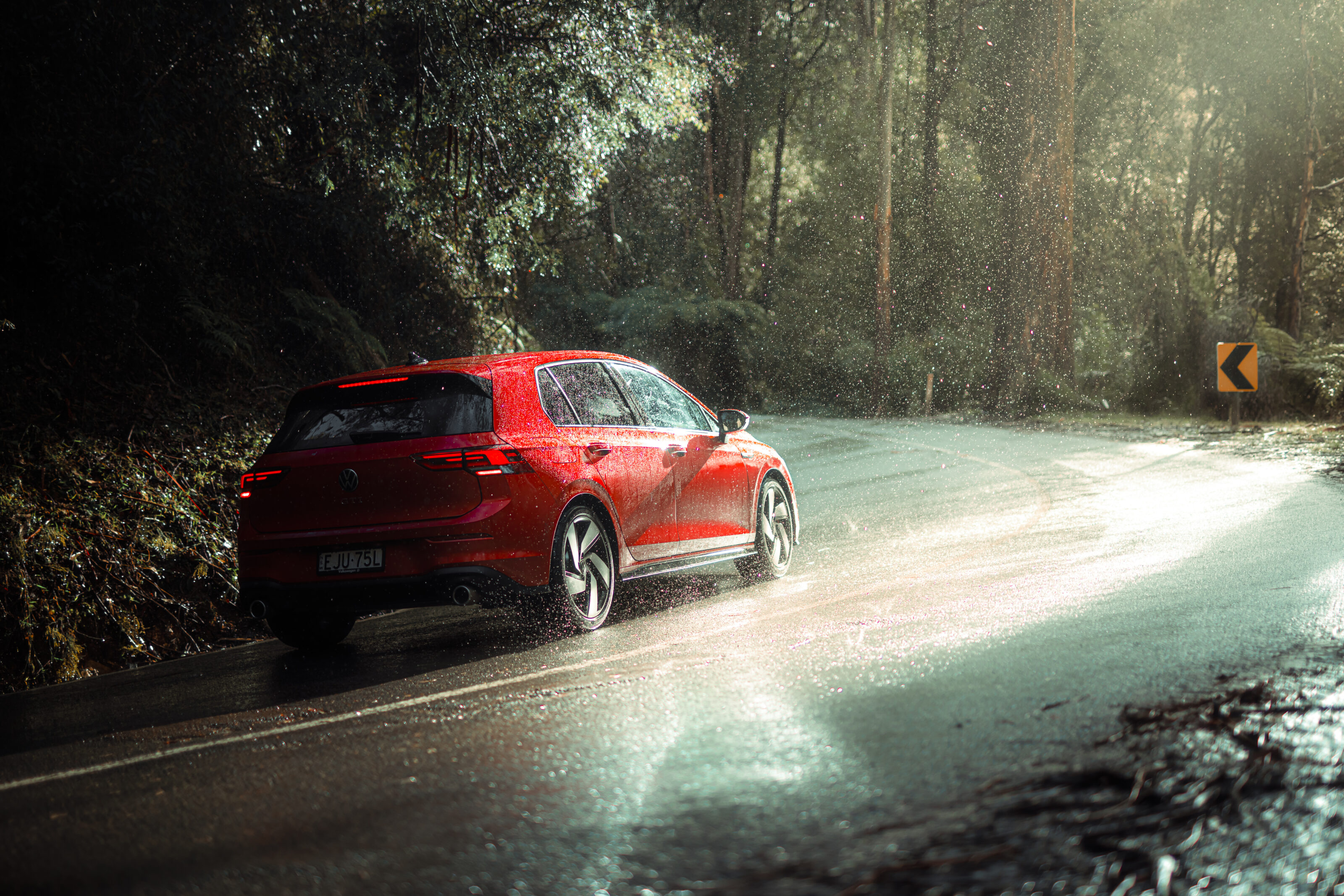
A couple of colleagues discovered an unpleasant exhaust resonance at certain speeds and throttle openings, but by and large the Mk8 GTI pulls off the same trick as its seven predecessors, as there is virtually no environment in which it doesn’t excel.
One ace it does have up its sleeve over previous GTIs is the ability to virtually drive itself. As part of its IQ Drive suite of active safety systems, the Golf’s adaptive cruise with stop & go functions takes care of the throttle and brake and the lane keep deals with the steering, allowing large distances to be covered with minimal driver input. It’s both clever and impressive, though certainly not foolproof, and I suspect most people reading this are happy to provide those inputs themselves.
Regardless, it’s another string to the GTI’s bow, albeit one that comes at a cost. When the Mk7 GTI launched it began at $41,490 for the manual and $43,990 for the DSG, which means the MK8’s $53,100RRP requires a second take. And then a third.
VW would rightly point to the car’s incredibly high specification, with Performance Pack mechanicals, adaptive dampers, all the active safety kit and its increased technology as justification, but the fact remains that a mere three years ago you could get yourself behind the wheel of a fast Golf for $37,490 – albeit for the back-to-basics, three-door GTI Original – while even the limited-edition, bells-and-whistles GTI 40 Years was $48,990.
There are only three options and our test car has the works: the $1500 Sound and Vision Package, which includes a head-up display and eight-speaker, 480W Harman Kardon stereo; the $3800 Luxury Package, with leather upholstery, heated and ventilated front seats, electrically operated driver’s seat, heated steering wheel and sunroof and $300 for the ‘Kings Red’ paint. White, two greys, blue and black are also available for no cost.
Add it all up and you’re looking at what feels like an eye-watering $58,700 before on-road costs, but it’s in step with the competition. A Megane RS Trophy DCT is $56,990, a top-spec WRX STI $59,440 and the new i30 N Premium $52,000, though it does make the Focus ST-3 look a bit of a bargain at $47,990. VW now offers a five-year warranty and a pair of servicing packages, $1450 for three years or $2300 for five.
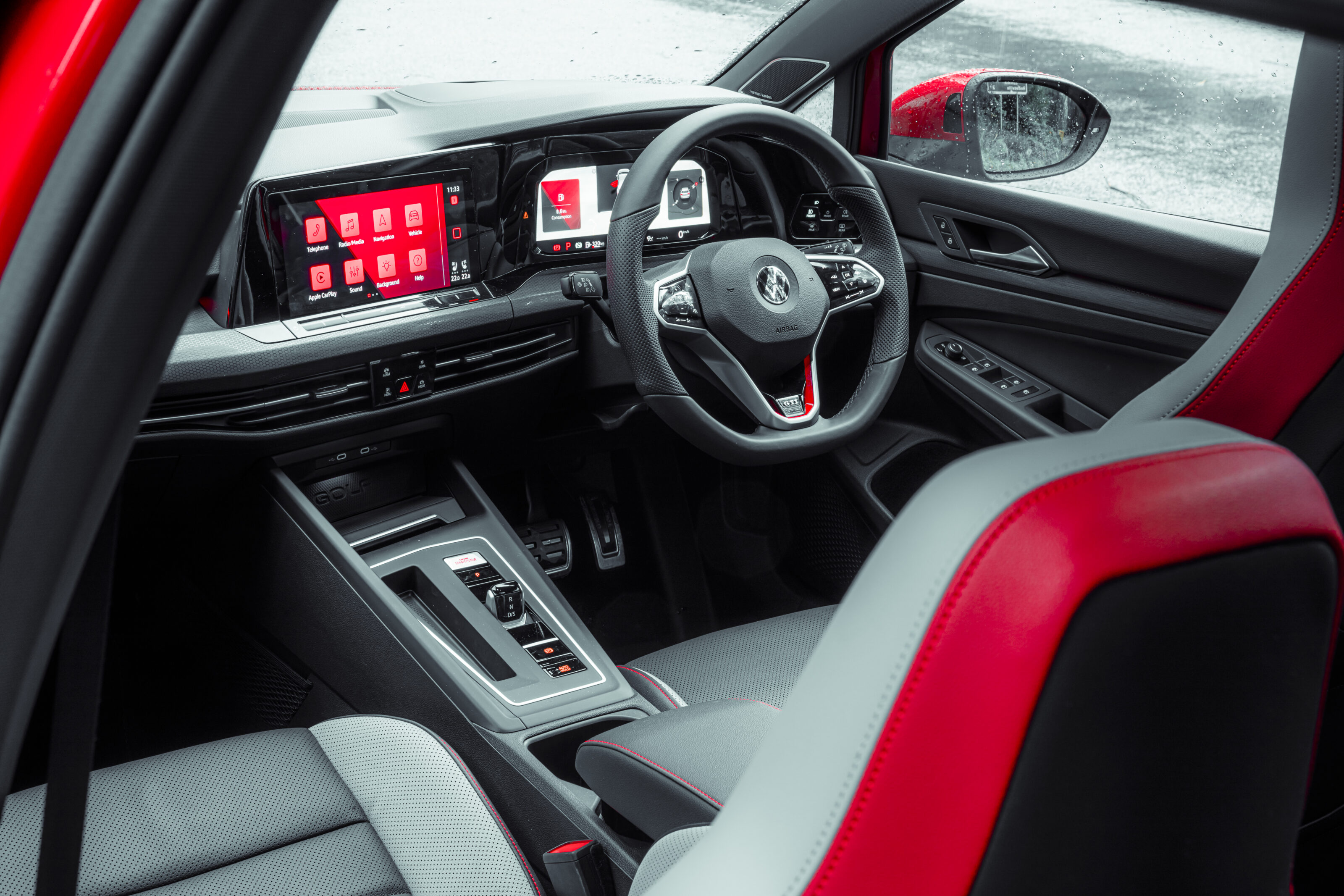
Nevertheless, the higher price raises expectations. The interior has plenty of gear, including triple-zone climate control, a pair of USB-C inputs front and rear, wireless charging and smartphone mirroring, voice control, digital instrument display and 10.0-inch infotainment touchscreen, but it’s also quite a sparse environment.
Volkswagen has intentionally gone for a minimalist aesthetic and there will be those to whom that appeals to. However, personally it feels like function has taken too much of a precedence over form. Our test car’s interior was an unrelenting sea of grey, enlivened only by some red piping and a start-stop button that flashes red like a heartbeat.
The standard tartan seats would help matters, I suspect, but in removing all the switchgear the interior is now largely featureless. The gear lever has been replaced by an apologetic stub (looks rather like one found in the 992 911) and there’s plenty of hard plastic in evidence.
As mentioned earlier, the steering wheel feels a little large and also a little chunky, while the number of controls on the spokes is initially daunting. In practice it’s actually very intuitive, allowing easy navigation of the widely customisable digital instrument display, that has a number of different themes and can display basically any information you’d want to know.
The centre infotainment screen has come in for some criticism. However, after slight initial frustration – consulting the handbook revealed the nondescript square was the ‘home’ button, obvious to all but me it seems, which solved all manner of problems – it proved to be reasonably slick.
Shortcut keys on the dash and sliders for the commonly used volume and temperature controls allow most functions to be easily accessed, especially with an owner’s familiarity. The exception is various vehicle functions such as stop-start or ESP Sport; what used to be a simple button tap is now a process requiring various taps and swipes, the latter often being unresponsive – it feels a step too far.
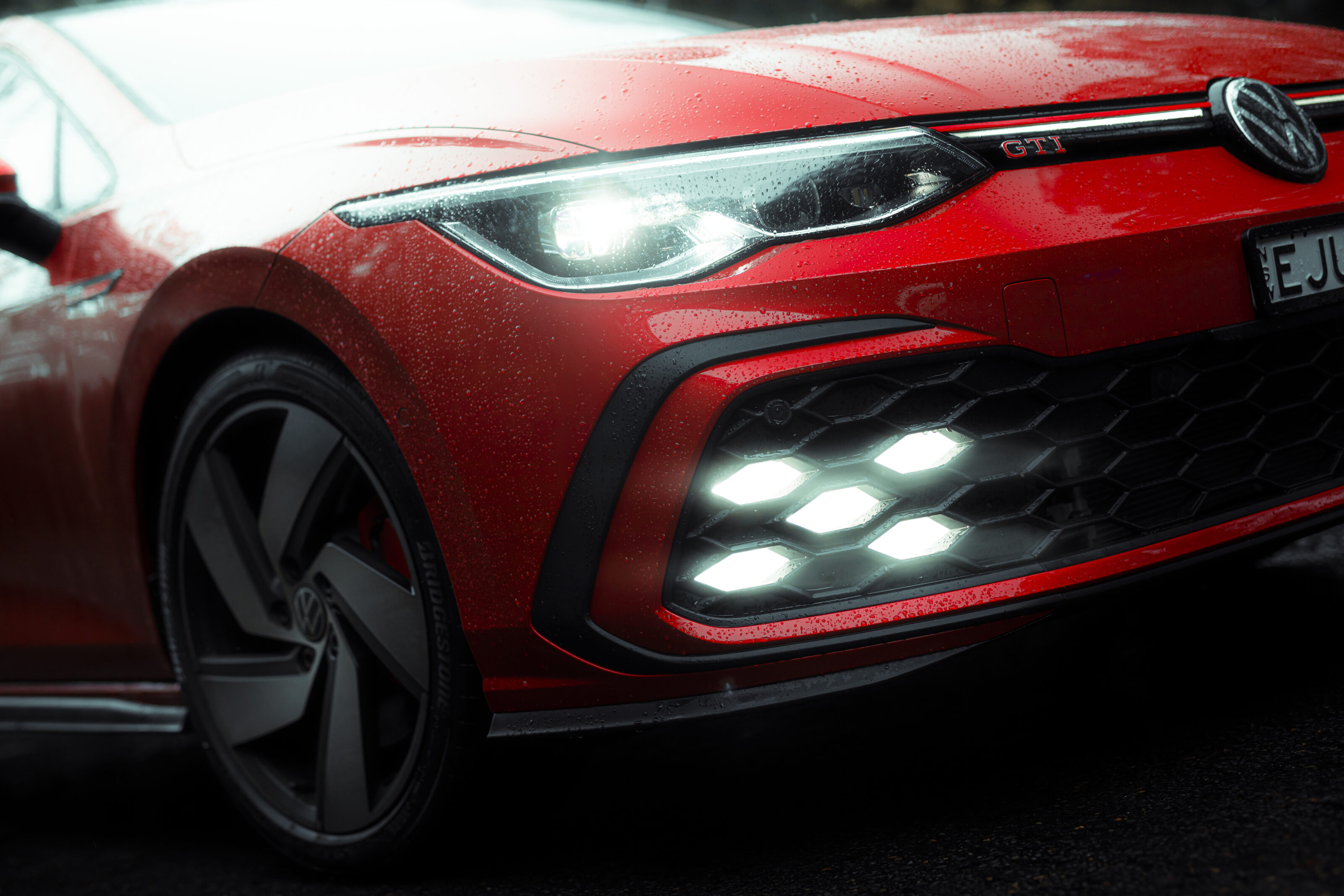
The eighth-generation Golf GTI is a very impressive machine. In many ways it’s the quintessential GTI; a better performance car than ever before yet with the latest semi-autonomous systems that allow it to shoulder the burden of the daily grind if you’re not in the mood. Volkswagen is confident buyers won’t be deterred by the new car’s tech-heavy focus, austere interior and higher price tag. Only time will tell if this spicier parmigiana remains the pub favourite.
The Strip
2021 Volkswagen Golf GTI
Heathcote Park Raceway. Driver -Alex Inwood Official timing by Vbox Australia
| 0-10km/h | 0.6 |
|---|---|
| 0-20km/h | 1.1 |
| 0-30km/h | 1.7 |
| 0-40km/h | 2.3 |
| 0-50km/h | 2.8 |
| 0-60km/h | 3.4 |
| 0-70km/h | 4.0 |
| 0-80km/h | 4.6 |
| 0-90km/h | 5.4 |
| 0-100km/h | 6.2 |
| 0-110km/h | 7.1 |
| 0-120km/h | 8.1 |
| 0-130km/h | 9.3 |
| 0-140km/h | 10.7 |
| 0-150km/h | 12.1 |
| 0-160km/h | 13.7 |
| 0-170km/h | 15.6 |
| 0-180km/h | 17.9 |
| 0-190km/h | 20.8 |
| 0-400m 14.3sec@ 163.7km/h | |
2021 Volkswagen GTI specs
Figures of Eight
| Body | 5-door, 5-seat hatchback |
|---|---|
| Drive | front-wheel |
| Engine | 1984cc inline-4cyl, DOHC, 16v, turbo |
| Bore x Stroke | 82.5 x 92.8mm |
| Compression | 9.6:1 |
| Power | 180kW @ 5000-6200rpm |
| Torque | 370Nm @ 1600-4300rpm |
| Power/Weight | 128kW/tonne |
| Transmission | 7-speed dual-clutch |
| Weight | 1409kg |
| u00a0Suspension | struts, A-arms, adaptive dampers, coil springs, anti-roll bar (f); multi-links, adaptive dampers, coil springs, anti-roll bar (r) |
| L/W/H | 4287/1789/1463mm |
| Wheelbase | 2631mm |
| Tracks | 1535/1513mm (f/r) |
| Steering | electrically assisted rack-and-pinion |
| Brakes | 340mm ventilated discs, single-piston calipers (f); 310mm ventilated discs, single-piston calipers (r) |
| Wheels | 18.0 x 7.5-inch (f/r) |
| Tyres | 225/40 R18 (f/r) Goodyear Eagle F1 |
| Price | $53,100 ($58,700 as tested) |
Snapshot
- 50 per cent less emissions targeted by 2030
- Expected to attract $37billion investment in private sector
- Goal increased from 35 per cent
The New South Wales Government has announced today it plans to slash the state’s emissions in half by 2030.
Premier Gladys Berejiklian said NSW will cut emissions by 50 per cent below 2005 levels over the next nine years – increasing from its previous goal of 35 per cent – showing the state is serious about setting itself up for the future, while helping the world decarbonise.
“Our Net Zero Plan is expected to attract more than $37 billion in private sector investment into NSW, support more than 9000 jobs, save households about $130 on their electricity bills and help NSW become Australia’s first trillion-dollar state by 2030,” Ms Berejiklian said.
“This is about putting the policies in place to give industry and investors certainty, not only to protect our planet but to future-proof our prosperity and way of life.”
Chief Executive of the Electric Vehicle Council of Australia Behyad Jafari said he believes NSW is setting an example for the nation.
“New South Wales became home to the best electric vehicle policy in Australia this year, which is helping companies bring more affordable and exciting vehicles to the state, construct more charging stations, and support manufacturing jobs by building vehicles like buses locally,” Mr Jafari said.
“Today’s new commitment demonstrates the EV policy sits within a broader vision and that will only amplify the benefits.
“New South Wales has set a great example for the federal government to follow. We need this kind of ambition across Australia, but it’s a great thing that New South Wales isn’t waiting.”
Today’s update to NSW’s Net Zero Plan: Stage 1 Implementation sets out the State Government’s approach to climate change – including its EV strategy, electricity infrastructure roadmap, the $750 million Net Zero Industry and Innovation Program and the NSW Waste and Sustainable Materials Strategy.
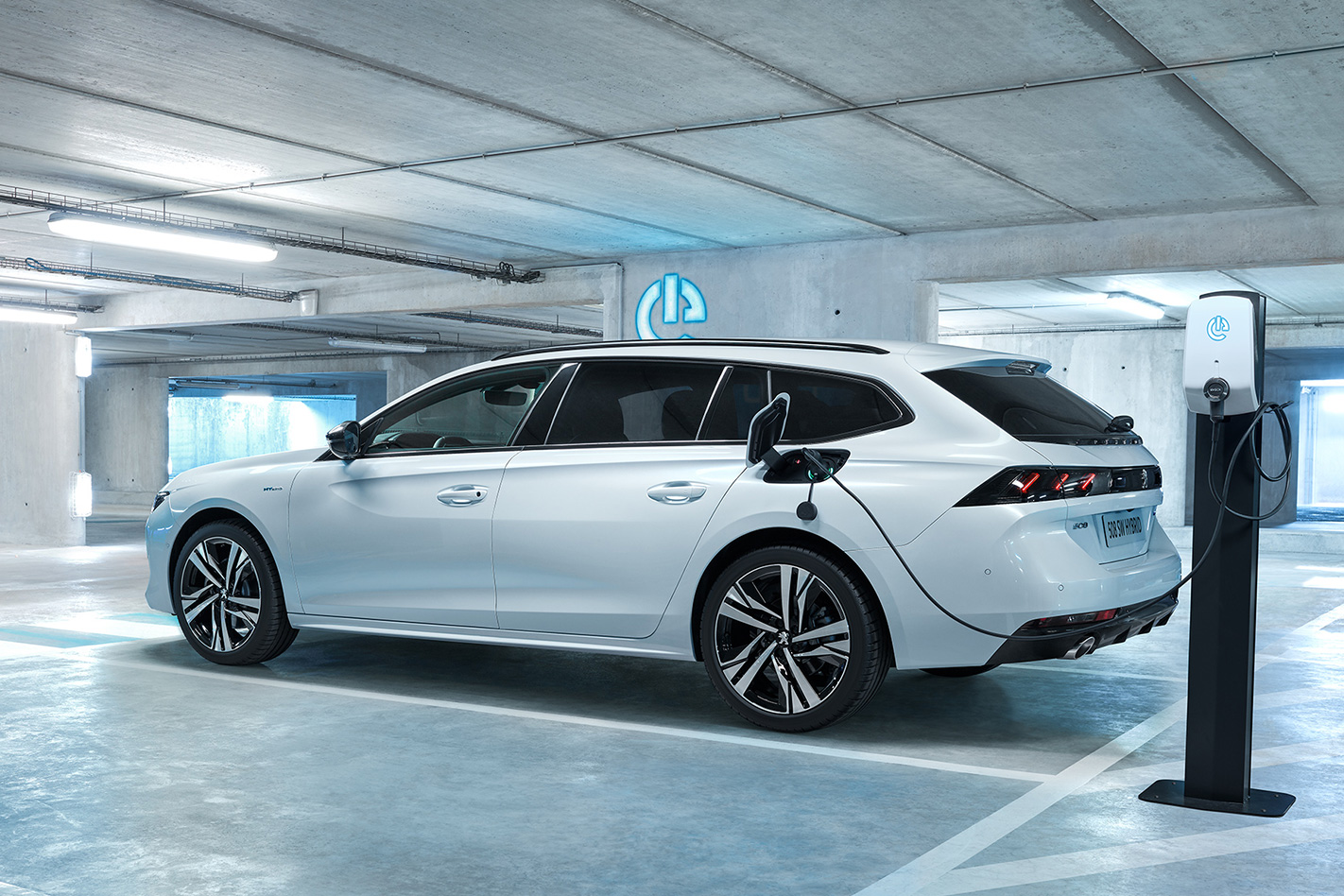
In June the NSW Government introduced Australia’s most ambitious electric vehicle plan, announcing it will waive stamp duty on many EVs, offer a $3000 rebate on some, and deliver $171 million in charging infrastructure across the state.
Announced as part of the next NSW state budget, the plan amounts to a $490 million investment – nearly five times the size of that revealed by Victoria’s Andrews Government in May.
However the State’s policy also includes applying a road-user charge to owners of full-electric and plug-in hybrid electric vehicle vehicles, which will come into effect in 2027 or when uptake reaches 30 per cent – whichever comes first.
Snapshot
- Cupra Born is the company’s first EV
- Based on the VW Group MEB platform
- Aim of 20 per cent of sales to come from Born
Performance brand Cupra has started production of its Born hatchback, the marque’s first electric vehicle.
Built in Zwickau, Germany, under the same roof as other Volkswagen Group products such as the VW ID.3, ID.4 and Audi’s Q4 E-Tron, the Born will be based on the MEB electric platform – but will be tuned more towards driver engagement, with the company’s performance roots hoping to shine through its model range.
While Cupra is relatively new as a standalone brand, the Born will be at the genesis of its electric strategy – as the manufacturer aims to go all-electric by 2030 and shift over half a million cars per year.
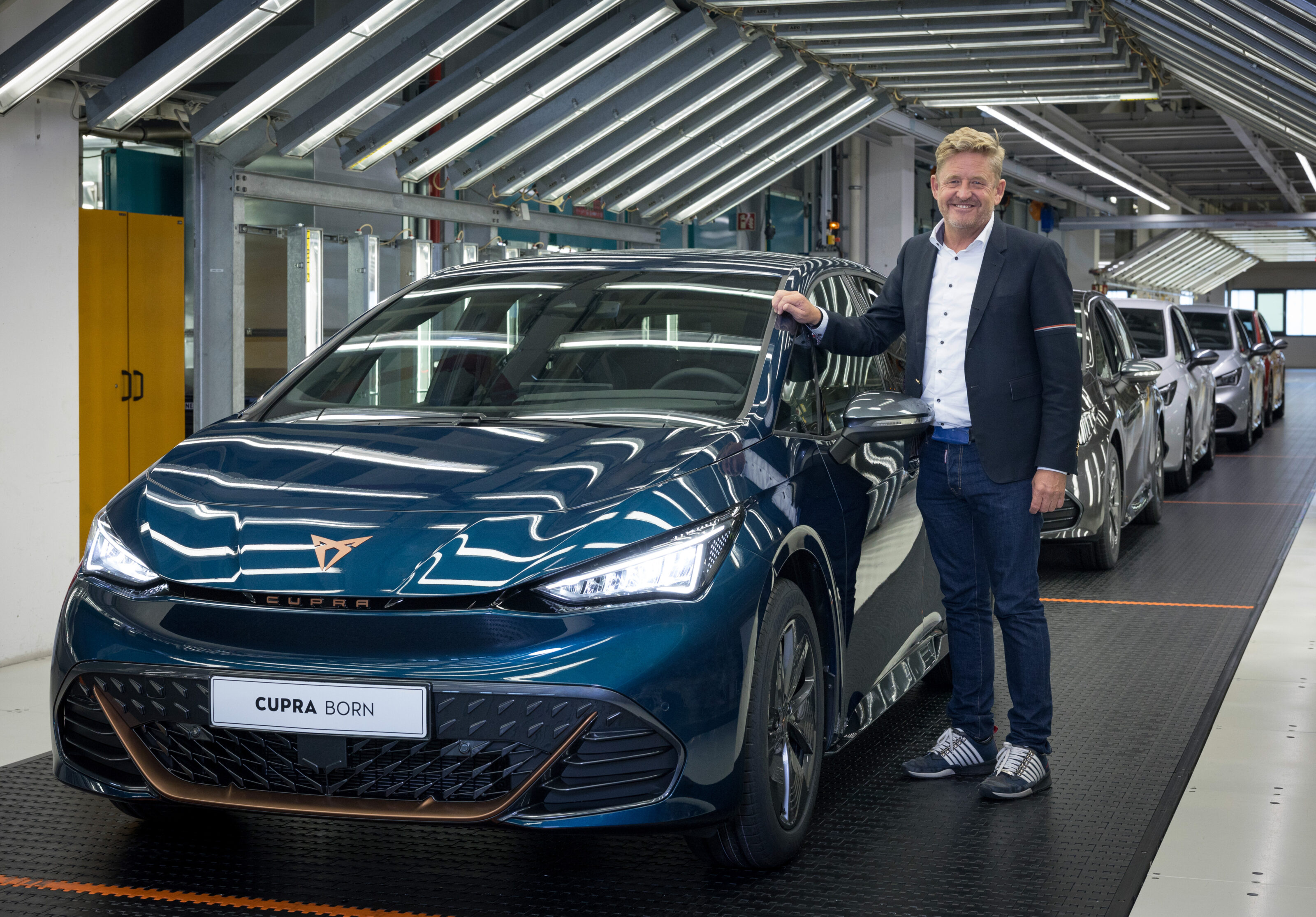
Cupra’s CEO Wayne Griffiths said the Born is set to ignite a new direction for the company as it invests in its EV future, as well as the combustion-powered present.
“With its emotional design and electric sportiness, the Cupra Born is the impulse of the company’s transformation and the start of Cupra’s electric offensive,” said Griffiths.
“Producing our first 100 per cent electric model in Europe’s largest electric vehicle factory will provide valuable learnings as we look to build EVs in Martorell (Barcelona) from 2025 onwards.
“Our ambition is to produce more than 500,000 urban electric vehicles per year in Spain for different Group brands.”

Cupra Australia Director Ben Wilks reiterated the importance of bringing Born to the local market, providing Australian consumers with a true performance EV.
“Cupra is doing all that’s possible to ensure the Born is the first EV of its sort in the Australian market,” said Wilks.
“By that we mean the first full battery car from the broader Group, but also the first electric sports car at an approachable price point, just as Cupra will also bring the first affordable European plug-in hybrid electric vehicles when it launches in Australia next year. These too are designed to be drivers’ cars.

“We see Born as our halo car, one that embodies Cupra’s progressive technology, design and sheer attitude.”
Launching in Australia next year, the Cupra line-up will consist of three models, two of which will feature plug-in hybrid technology, with Wilks hoping to introduce the Born to local dealers as soon as 2023.
An online petition calling for financial relief from car registration costs in Victoria has recorded more than 65,000 signatures.
With the majority of Victorian residents living in lockdown conditions for more than 240 days this year – and their vehicles sitting mostly unused – many are demanding a reprieve from registration fees which can cost as much as $845.90 annually for passenger vehicles.
“We are simply asking VicRoads and the State Government of Victoria to give Victorians a Fair Go, by providing some sort of just and equitable financial relief or assistance when it comes to their mandatory Registration Renewal(s),” the petition states.
Those in metropolitan Melbourne have been restricted to moving within a five kilometre radius of their residence during the most recent lockdown.
In April 2020, Victoria’s Game Management Authority extended game licences by 12 months “in recognition of the unprecedented impact the Chief Health Officer’s ‘Stay at Home’ Directions are having on game hunting,” a statement from the government authority read at the time.
One month later, the state government announced it would freeze car registration fees for 12 months – putting a temporary stop on an annual price increase.
In August, independent state government advisory body Infrastructure Victoria presented the Victorian Parliament with a report which recommended scrapping the current car registration system and replacing it with a pay-as-you-go system.
In the report, Infrastructure Victoria said current car registration costs “do not reflect the relative costs of providing road infrastructure, the costs of congestion, air and noise pollution, carbon emissions, and road trauma”.
I don’t think I can quite remember as successful a launch as Hyundai’s N brand. It was hardly an overnight success, though. Hyundai had dabbled in the WRC once or twice and made precisely nothing of it, which must have been a bit of a drag.
After a few goes and after finally gaining some traction with the SR Veloster and i30, it was the business plan that brought in BMW M’s Albert Biermann to spearhead the next letter in the alphabet and produce the critical and sales success that is the i30 N. Everyone knew what N was pretty quickly, it was plastered all over the side of the moderately successful WRC team’s cars and all was well in the Hyundai world.
Renault and Peugeot and any number of European manufacturers had hit on this clever idea a few years earlier and made plenty of cash turning out warmed-up machines to bask in the halo of the top-spec cars that might be out of reach (or impractical) for some buyers.
All it had to do now was annoy i30 SR owners and change that badge to N-Line.
Pricing and Features
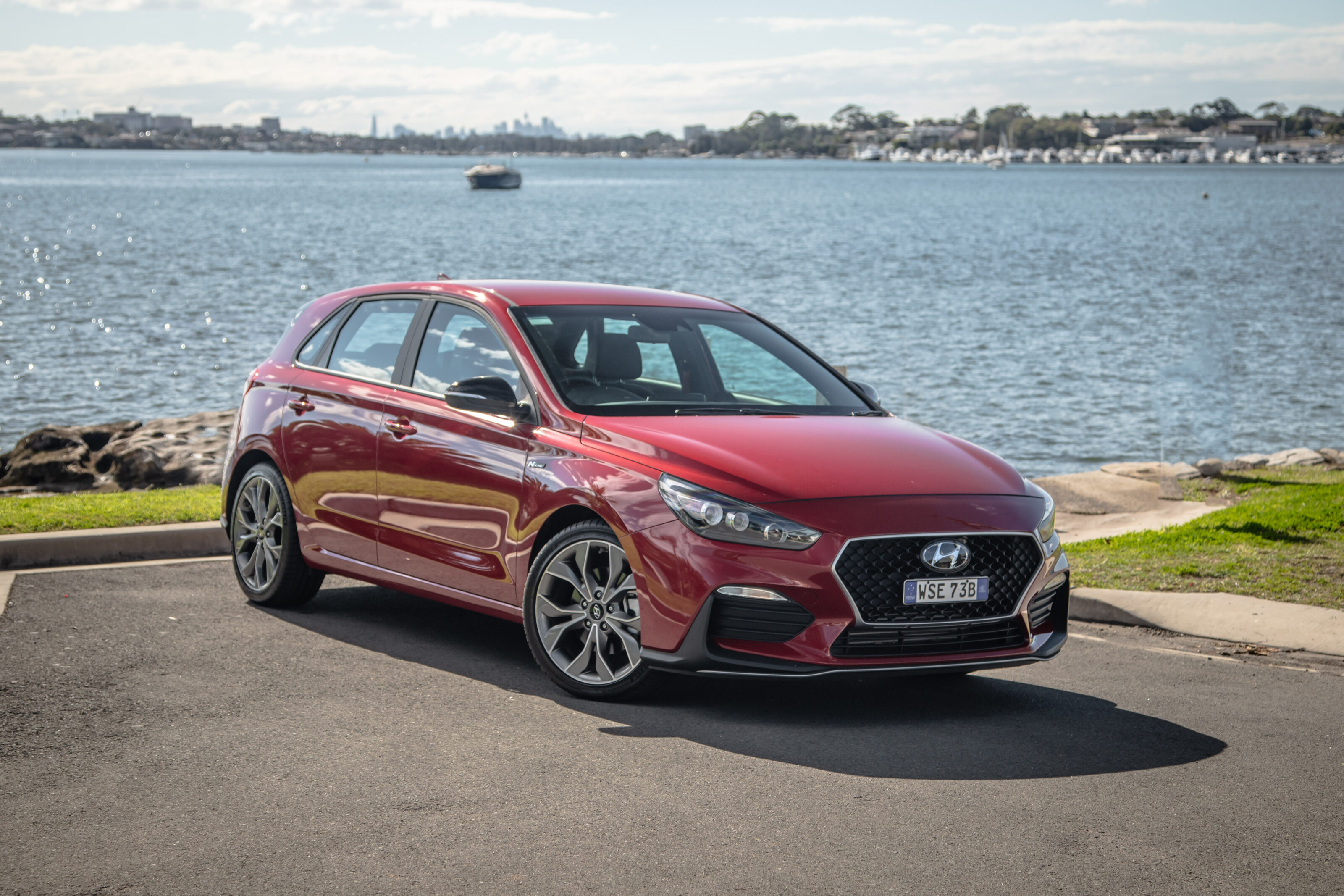
The N-Line is the top of the tree for the “standard” i30 range and you have a choice of four distinct variants. The N-Line comes with either a six-speed manual or seven-speed dual-clutch transmission, with another pair of N-Line Premiums above those.
The car I had for the week was the start of the N-Line range, the six-speed manual. Sort of based on the Active spec, it comes in at $29,420 before on-roads, $800 under the i30 Elite and $2500 more than the 2.0-litre naturally-aspirated Active automatic.
If you want a DCT N-Line, you’ll pay a further $2000 and then the N-Line Premium (based on the Elite spec) comes in at $34,220 (manual) and $36,220 (DCT). Clear? Good.
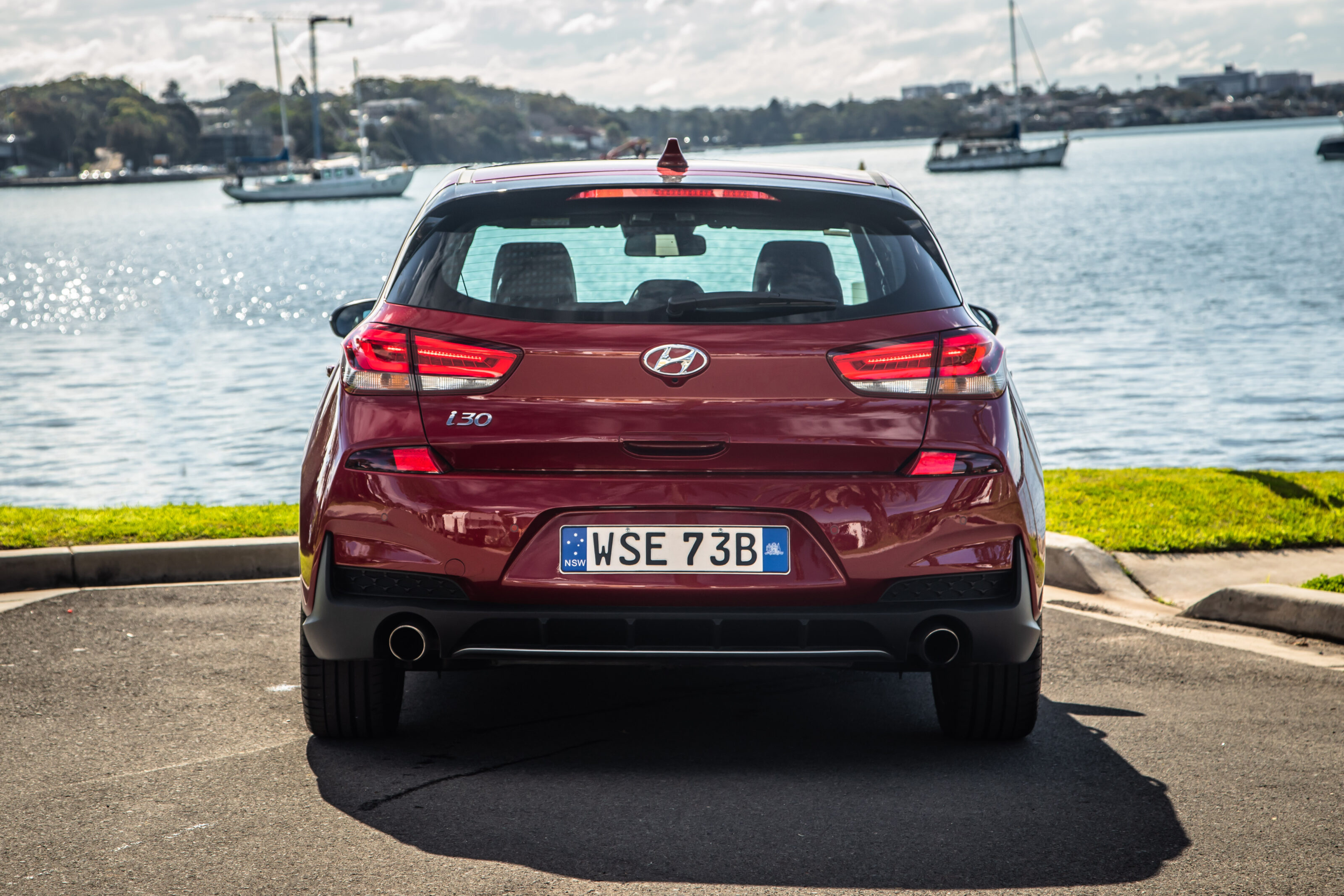
The N-Line manual is pretty well-equipped, sitting on 18-inch alloys shod with Michelin Pilot Sport 4 tyres (worth the price of admission alone, I reckon), a six-speaker stereo, dual-zone climate control, reversing camera, keyless entry and start, rear parking sensors, auto LED headlights (yes!), fake leather interior, wireless charging, power windows and mirrors, auto wipers, requisite external body kit and interior N branding, and a space-saver spare.
Hyundai’s smaller multimedia unit is included, with the 8.0-inch touchscreen, and comes with wireless Apple CarPlay and Android Auto to complement the wireless charging pad. It’s an older system so doesn’t have sat-nav but I reckon it’s better than giving up wireless phone integration and the screen is plenty big enough, so don’t sweat missing out on the larger screen.

The solid safety spec only misses out on rear AEB, coming at you with seven airbags (including a knee bag), the usual traction and stability controls, driver attention monitoring, forward collision warning, forward AEB, lane following and lane-keep assist, reversing camera and rear parking sensors.
It’s kind of annoying that the N-Line’s safety tech package is the same whether you go Premium or not and misses out on the reverse cross-traffic alert, blind-spot monitoring and safe exit warning that the Elite has.
There are three top-tether anchors and two ISOFIX points for the child and baby seats.
The i30 scored its five-star ANCAP rating in 2017.
The N-Line is the top of the tree for the “standard” i30 range and you have a choice of four distinct variants.
Comfort and Space
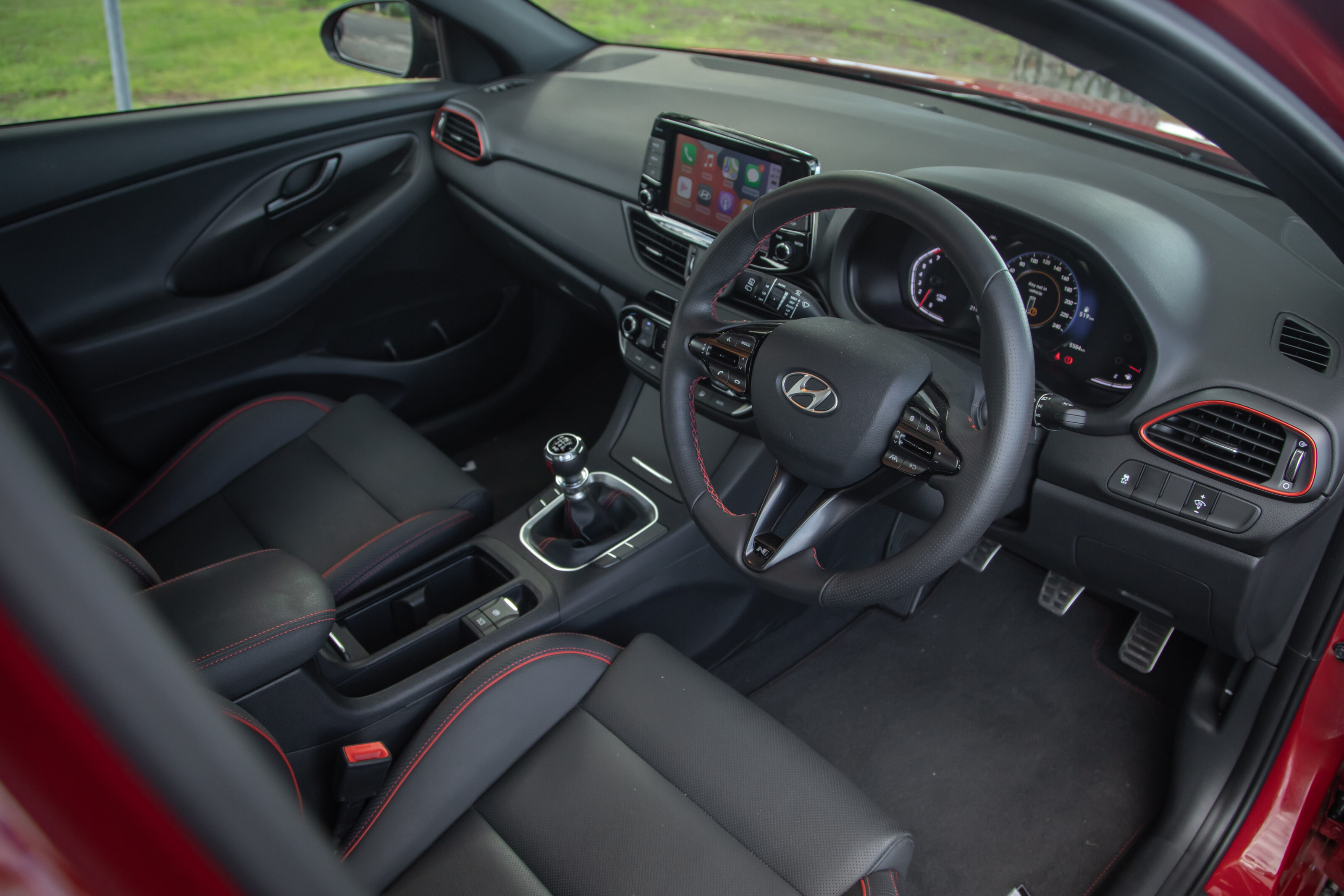
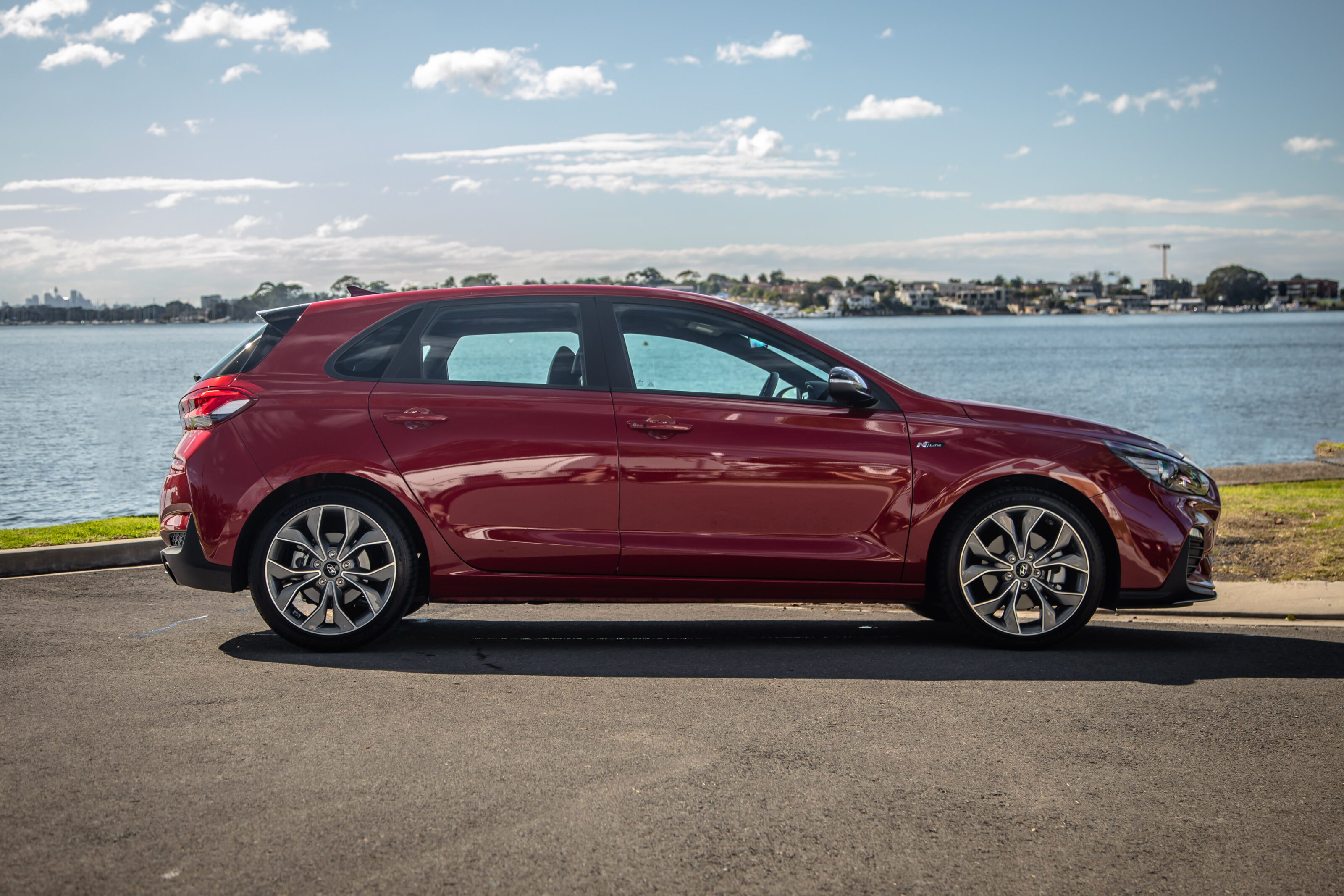
Another of the N-Line’s useful upgrades over the standard car is the front seats. Upholstered in quite nice fake leather, they’re a bit more grabby than the standard seats and look better too. Throw in a set of lurid coloured seatbelts and you get that N flavour without the higher price.
Sadly there isn’t a conventional handbrake (if you have to ask you probably don’t need or want to know) but the upside is an uncluttered console, with two cupholders and the wireless charger as well as a handy couple of USB ports and a 12V outlet. The front doors have slim bottle holders.
The rear seat of the Hyundai i30 isn’t huge, more suited to shorter trips if there’s an adult squeezed in. I can get in behind my driving position, but my knees touch the seatback, which has a plastic shield. You do get air vents in the back, which is nice, and the armrest has two cupholders. The doors have slim pockets with a bottle holder but they’re for smaller bottles only.
The boot is a handy 395 litres with the seats in place and if you fold the rear seats it rises to an impressive 1301 litres. If you want more space again, the grand-or-so more expensive i30 Sedan N-Line (still known as Elantra overseas) has a huge boot, more legroom and a very different interior.
On the Road
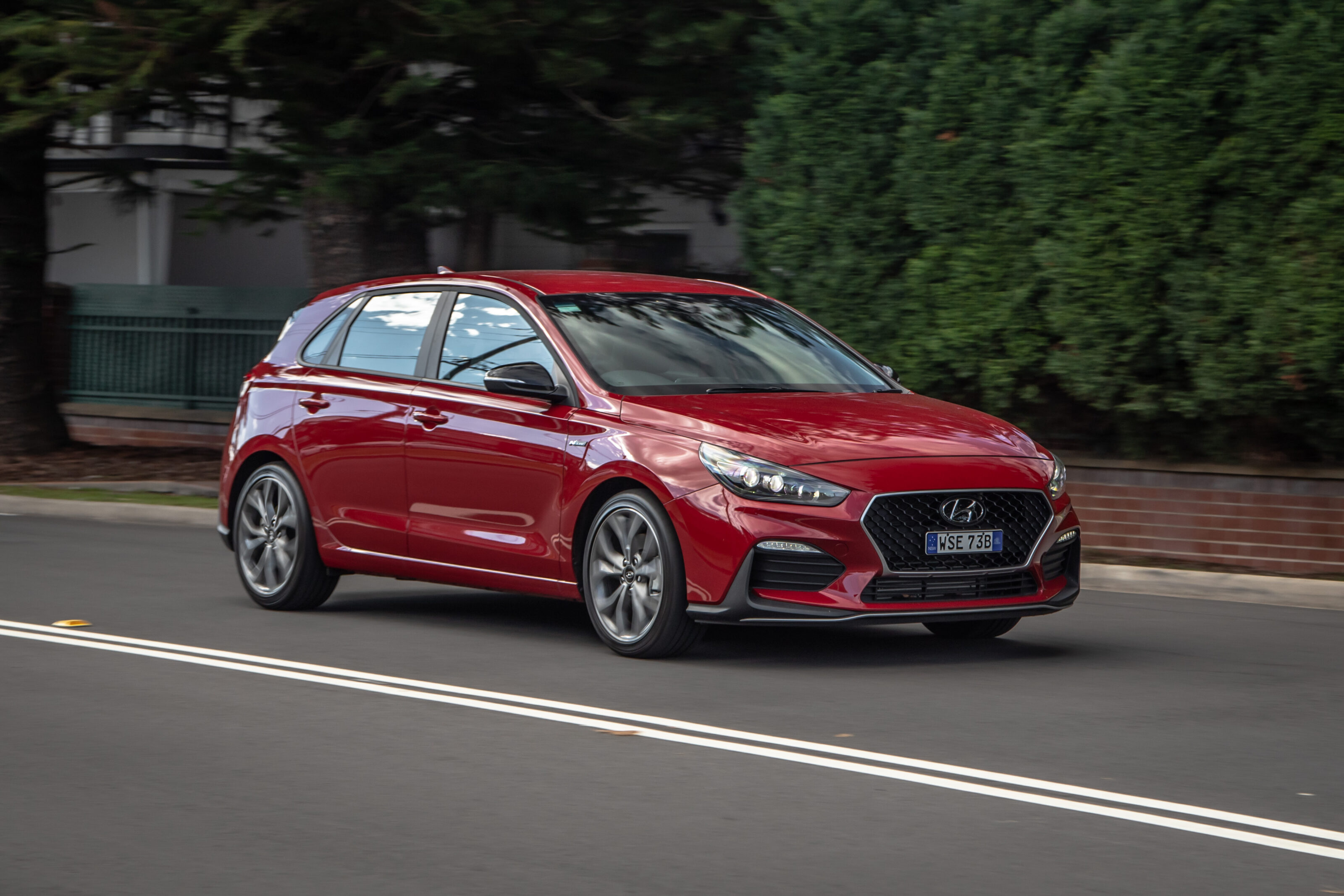
There aren’t many small hatchbacks left that will offer you the option of a manual transmission and for this small mercy I thank Hyundai. I’ve only ever driven SR and N-Line hatches in DCT and, as many of us here at Wheels have said, it’s not the most convincing twin-clutch transmissions when you’re just going about your daily business.
But the six-speed manual is pretty slick, possibly a lesson learnt from the near-universal praise of the i30 N’s carbon-ringed wonder. So that’s a good start – it’s not a ‘that’ll do’ cheapie. The clutch is pretty light, though, which is a bit of a shame but is easy to use and not as obstructive as past clutches in Hyundais (I’m looking at you, old Veloster Turbo).
So that’s a pretty good start. As ever, there’s a Hyundai Australia suspension tune underneath you, which pairs very nicely with the already-mentioned Michelin Pilot Sport 4s. These are a great choice of tyre and as we recently reported, they’re going to be on the i30 Sedan N. They’re also the replacement tyre of choice for N aficionados who don’t like the axle tramp of the P-Zero HNs.
The N-Lines ride 5mm lower on stiffer springs and dampers and I’m willing to bet that the electric steering is a completely different calibration to the standard car and feels better than the last SR I drove. That tune felt a bit numb under power and I felt I wasn’t always across what might be happening as I was powering out of a corner.
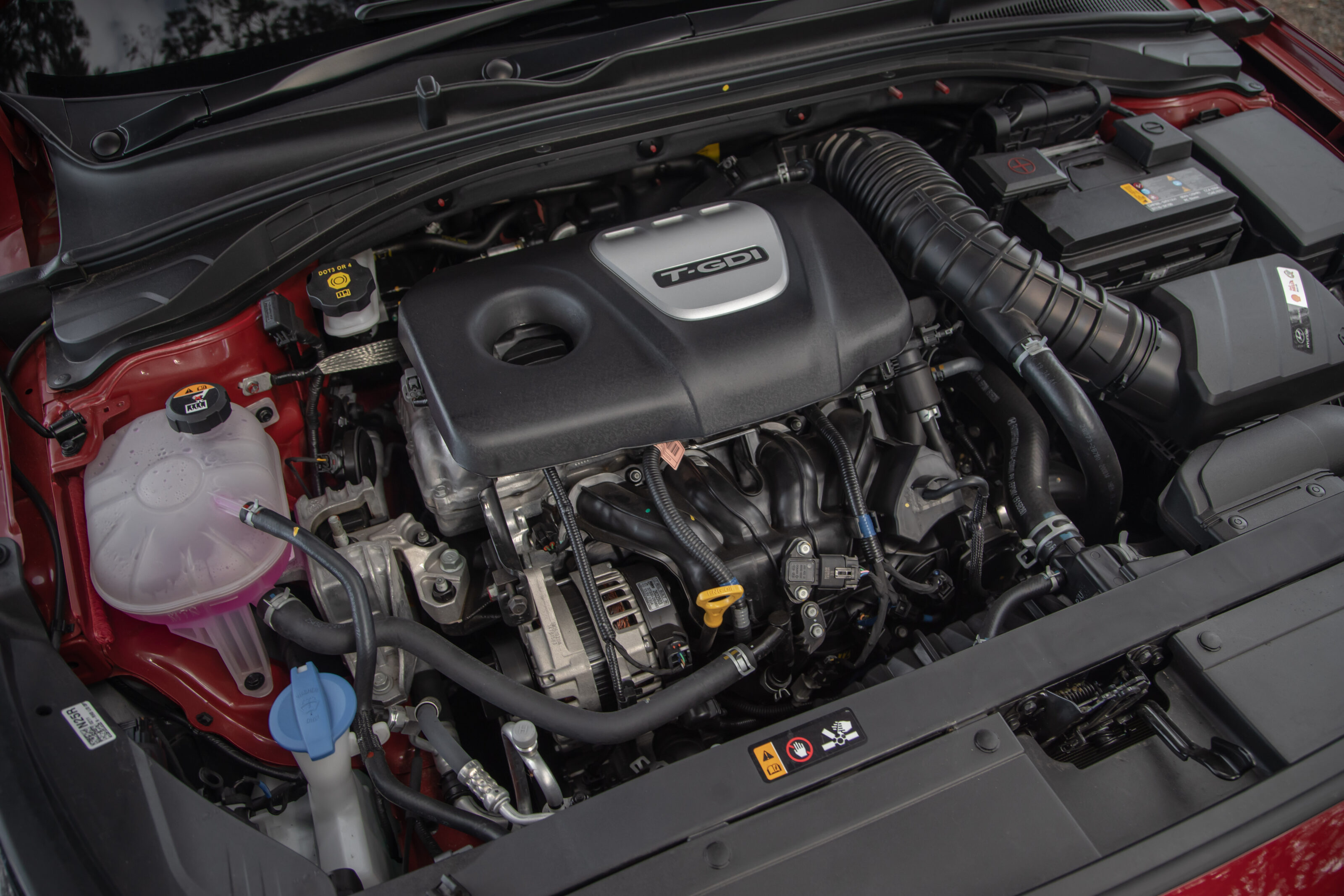
The engine is the mildly updated 1.6-litre direct-injected turbo. It has never been a particularly charismatic engine and there’s no change in that respect. It does deliver a healthy 150kW at 6000rpm and even healthier 265Nm across a wide band, stretching generously from 1500-4500rpm, so there’s plenty of opportunities for shenanigans.
Now, one of the things I really like about the i30 is the driving position. Most Hyundais have it absolutely nailed, the relationship between hips, arms, feet, pedals, it’s just about perfect. You don’t sit too high like you do in most smaller performance hatches and the view out is really good.
Slot it into first, not many revs and you’re away. It’s such an easy car to putter about it in, as long as you don’t forget, like I did once, that it’s a manual and you get an amusing stick-shaker style anti-stall effect giving you a chance to save yourself from embarrassment.
The suspension seems to have had the hard edges knocked out of it, too, with a more compliant compression effect, at least as far as I can remember. That further strengthens its position on the list of “cars my wife reckons she could own” which is a very, very short list. It’s still firm, but I found it less resentable than the SR and made me appreciate the fact that this car is a lot of fun.
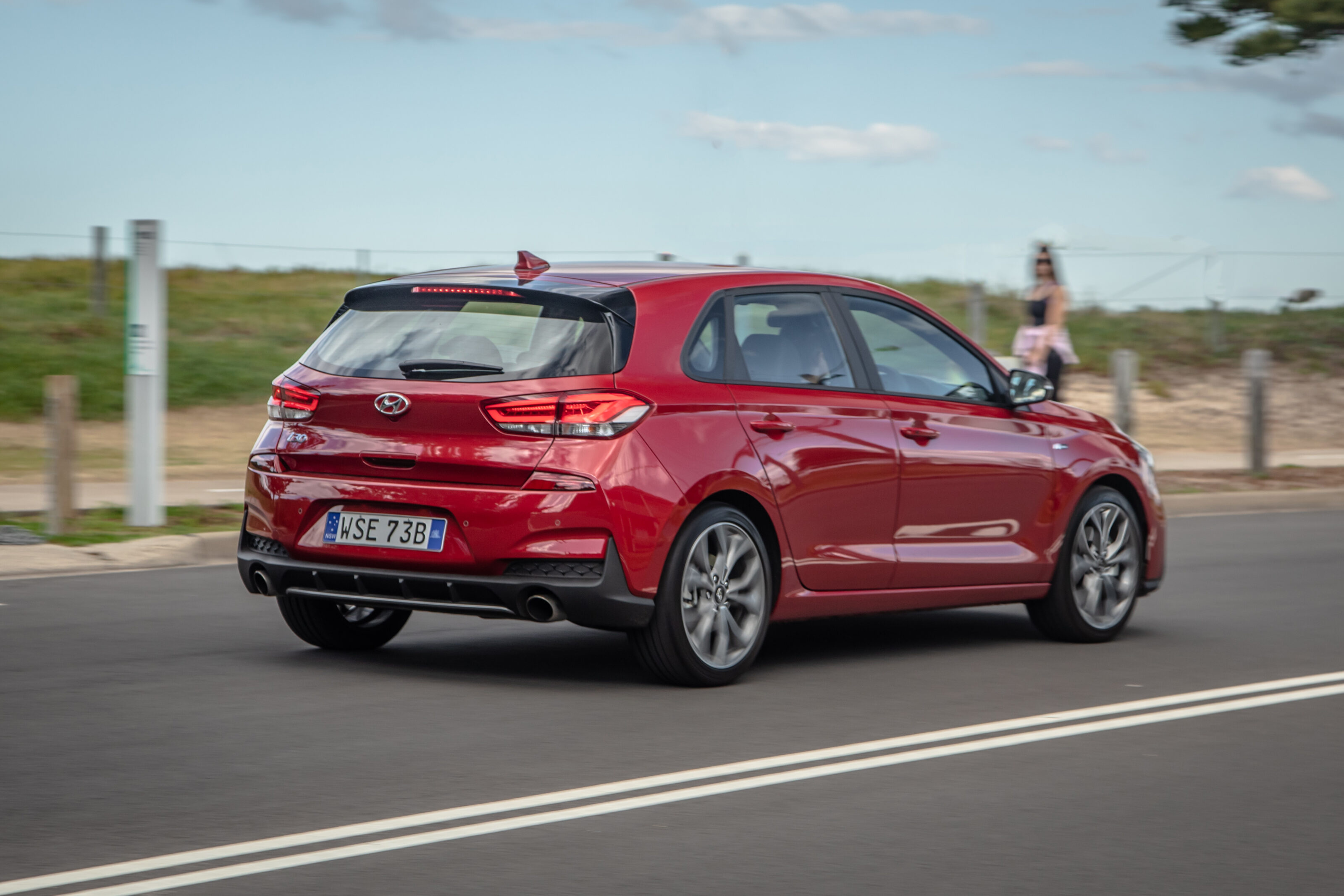
It’s more analogue than the N, without any rev-matching or tricky N modes. It’s warm but hardly gutless and pulls really nicely out of corner exits. I really like the way it builds speed, you can balance the throttle against third gear in the fast stuff and bigger front brakes (305mm vs 280mm) over the standard car are a useful step up. The front end is resistant to understeer and, honestly, it’s hard not to have fun in it.
As far as nailing the brief goes, the N-Line is right there and it’s much cheaper than a Cerato GT, especially when you take into account much lower chiropractor or dentist bills.
The turbo is happy on 91 RON with an official combined cycle figure of 7.5L/100km and a real-world figure of 8.4L/100km, achieved in mostly short suburban trips (lockdown affected) and some long, flowing stuff I got away with before lockdown bit. It’s rare to get so close to an official figure, but Hyundai seems to be the least optimistic with its combined cycle figures.
It’s more analogue than the N, without any rev-matching or tricky N modes.
Ownership
Hyundai’s five-year/unlimited-kilometre warranty applies, along with an initial 12 months of roadside assist that extends by a year every time you service at a dealership. One of the downsides of the turbo engine is its shorter-spaced service intervals, every 12 months or 10,000km.
Hyundai offers lifetime fixed-price servicing on all its cars and you can also pre-pay your maintenance for three years ($897), four ($1196) or five ($1495).
The price of individual services is reasonable but if you go over the 10,000km per year average, your yearly spend is going to be higher than the 2.0-litre i30. But you’d be having less fun in that car.
VERDICT
The manual transmission made this a hard car to give back. One of the things I really like about these warm model lines is that nearly all of them (C-HR GR excepted) are worthy of the badges they wear.
The N-Line badge still has a way to go as the N brand ramps up, but I think this is probably the pick of the i30 range if you enjoy driving.
Its good stack of gear, sub-$30K start price and a satisfying manual gearbox – something increasingly hard to find – makes it a bit mystifying to me that this isn’t more of a cult car with younger keen drivers who are being terrorised by insurance companies.
2021 Hyundai i30 N-Line hatch specifications
| Body: | five-door hatchback |
|---|---|
| Drive: | FWD |
| Engine: | 1.6-litre turbo four-cylinder |
| Transmission: | six-speed manual |
| Power: | 150kW @ 6000rpm |
| Torque: | 265Nm @ 1500-4500rpm |
| Bore stroke (mm): | 77.0 x 85.44 |
| Compression ratio: | 9.5 : 1.0 |
| 0-100km/h: | 7.9 sec (estimate) |
| Fuel consumption: | 7.5L/100km (combined) |
| Weight: | 1315kg |
| Suspension: | MacPherson struts (front); multi-link (rear) |
| L/W/H: | 4345/1795/1453mm |
| Wheelbase: | 2650mm |
| Brakes: | 305mm ventilated disc (front); 284mm solid disc (rear) |
| Tyres: | 225/40 R18 Michelin Pilot Sport 4 |
| Wheels: | 18-inch alloy wheels (space-saver spare) |
| Price: | $29,420 + ORC |
Snapshot
- Blue Oval City will be a huge manufacturing facility for electric F-Truck
- BlueOvalSK Battery Park will supply batteries from two factories
- Largest ever single investment in manufacturing by any US carmaker
Ford has announced it will build a new ‘mega campus’ for the production of electric vehicles, along with twin battery manufacturing plants.
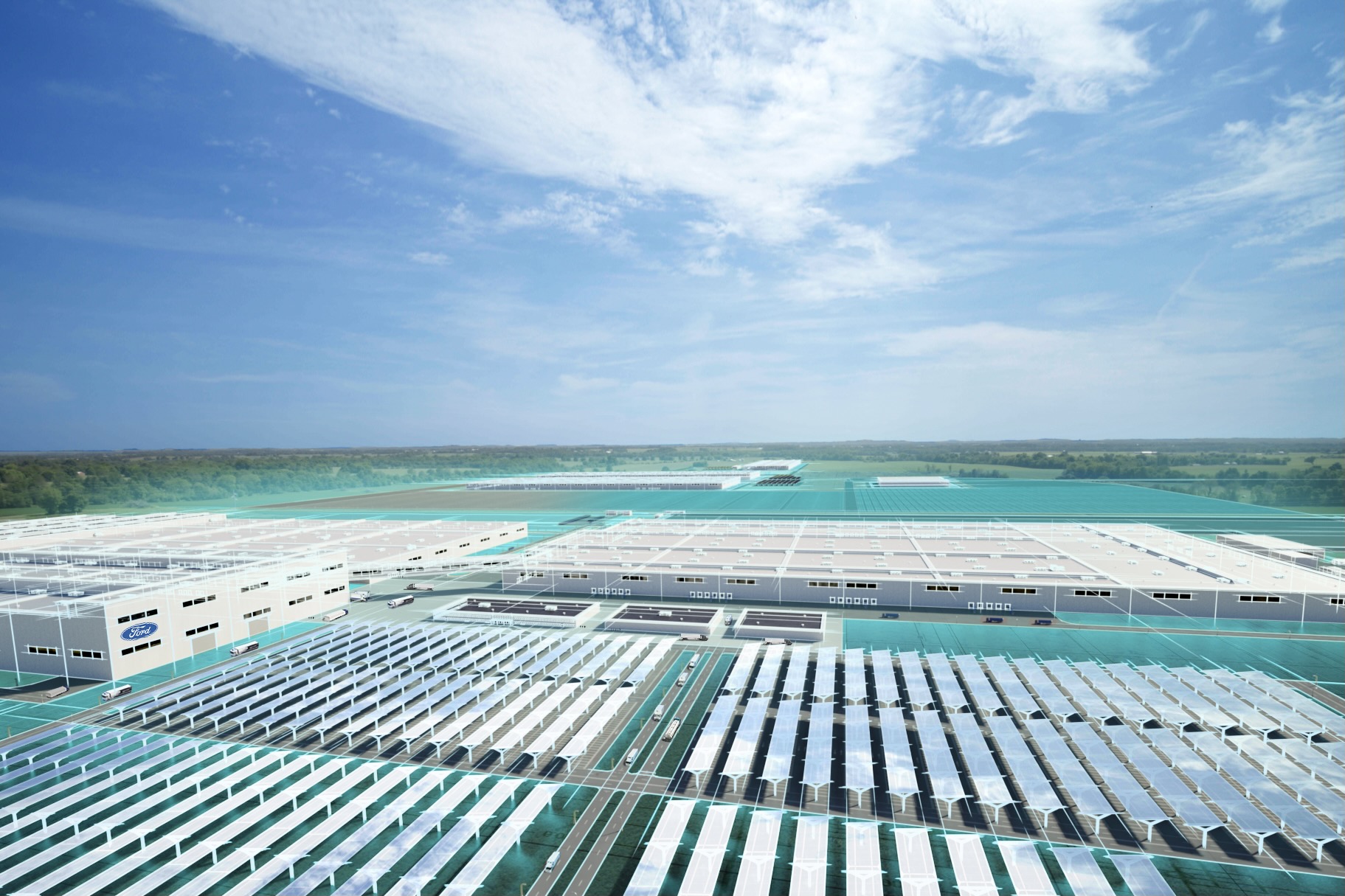
The new Blue Oval City, as it will be called, is to be constructed across a 15 square kilometre area in the US state of Tennessee, and will produce the next generation of electric pick-ups, as well as advanced batteries for Ford and Lincoln models.
In neighbouring Kentucky, the BlueOvalSK Battery Park will be created in partnership with SK Innovation, with the two factories to supply Ford with batteries as it transitions to an electric vehicle line-up.
All told, Ford and SK Innovation are expecting to invest US$11.4 billion (AU$15.7B) in the new facilities, creating an estimated 11,000 new jobs.
“This is our moment – our biggest investment ever – to help build a better future for America,” said Ford CEO Jim Farley.
“We are moving now to deliver breakthrough electric vehicles for the many rather than the few. It’s about creating good jobs that support American families, an ultra-efficient, carbon-neutral manufacturing system, and a growing business that delivers value for communities, dealers and shareholders.”
Ford says the twin battery plants will open in 2025, the same year construction will begin on Blue Oval City.
Snapshot
- Just one variant will be available
- Power to come from a 1.2-litre petrol engine
- Pricing will be revealed closer to launch
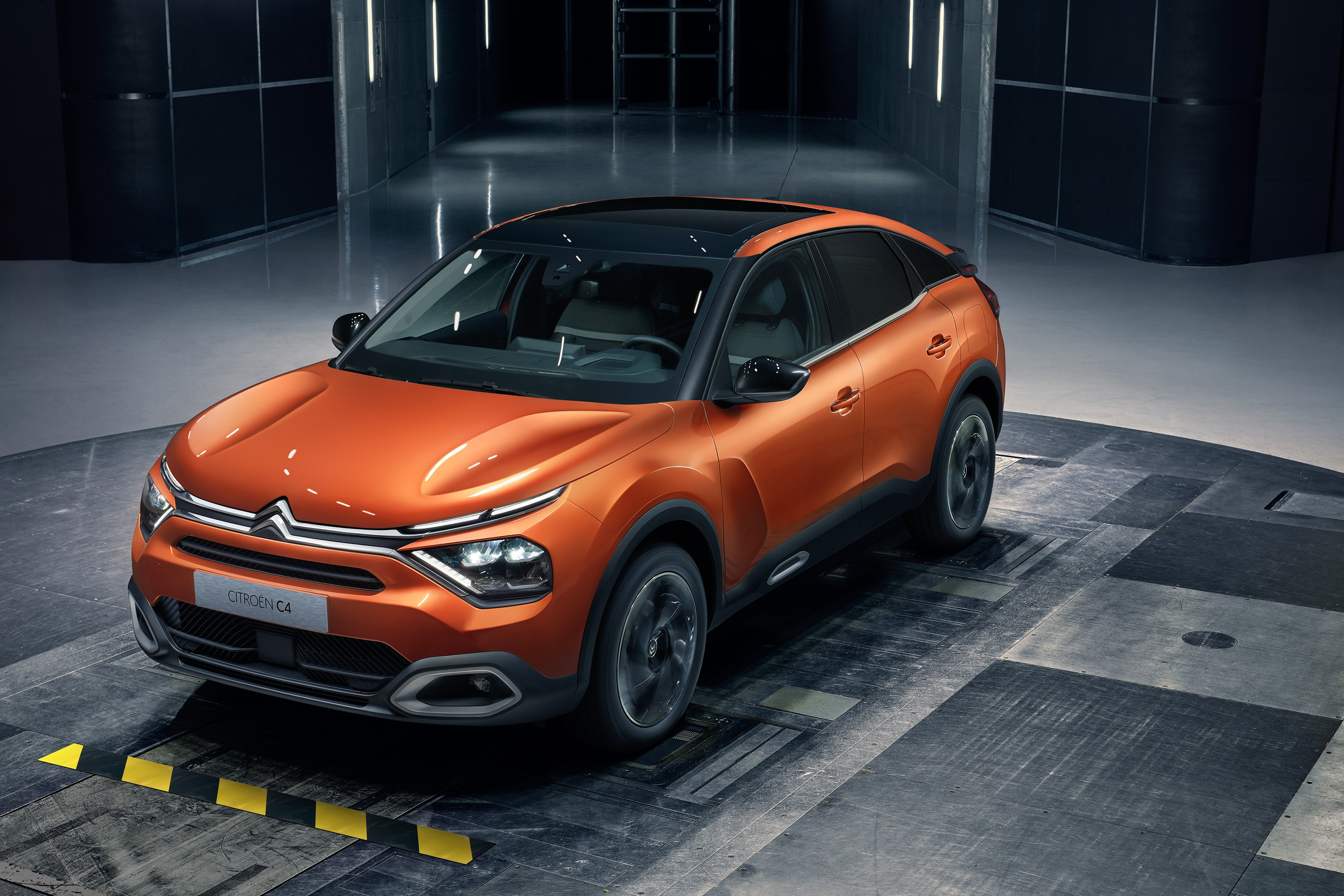
The 2022 Citroen C4 will be arriving locally in mid-November, with the Australian arm of the French manufacturer confirming just one variant of the fourth-generation crossover will be offered.
Despite government documents initially showing two trim levels of the C4 being homologated for Australia, Citroen has stuck with just the one range-topping variant for the local market, powered by a 1.2-litre turbocharged three-cylinder engine producing 114kW and 240Nm.
Power will be delivered to the front wheels through an eight-speed torque-converter automatic transmission, helping to deliver a WLTP tested fuel consumption rating of 6.0L/100km.
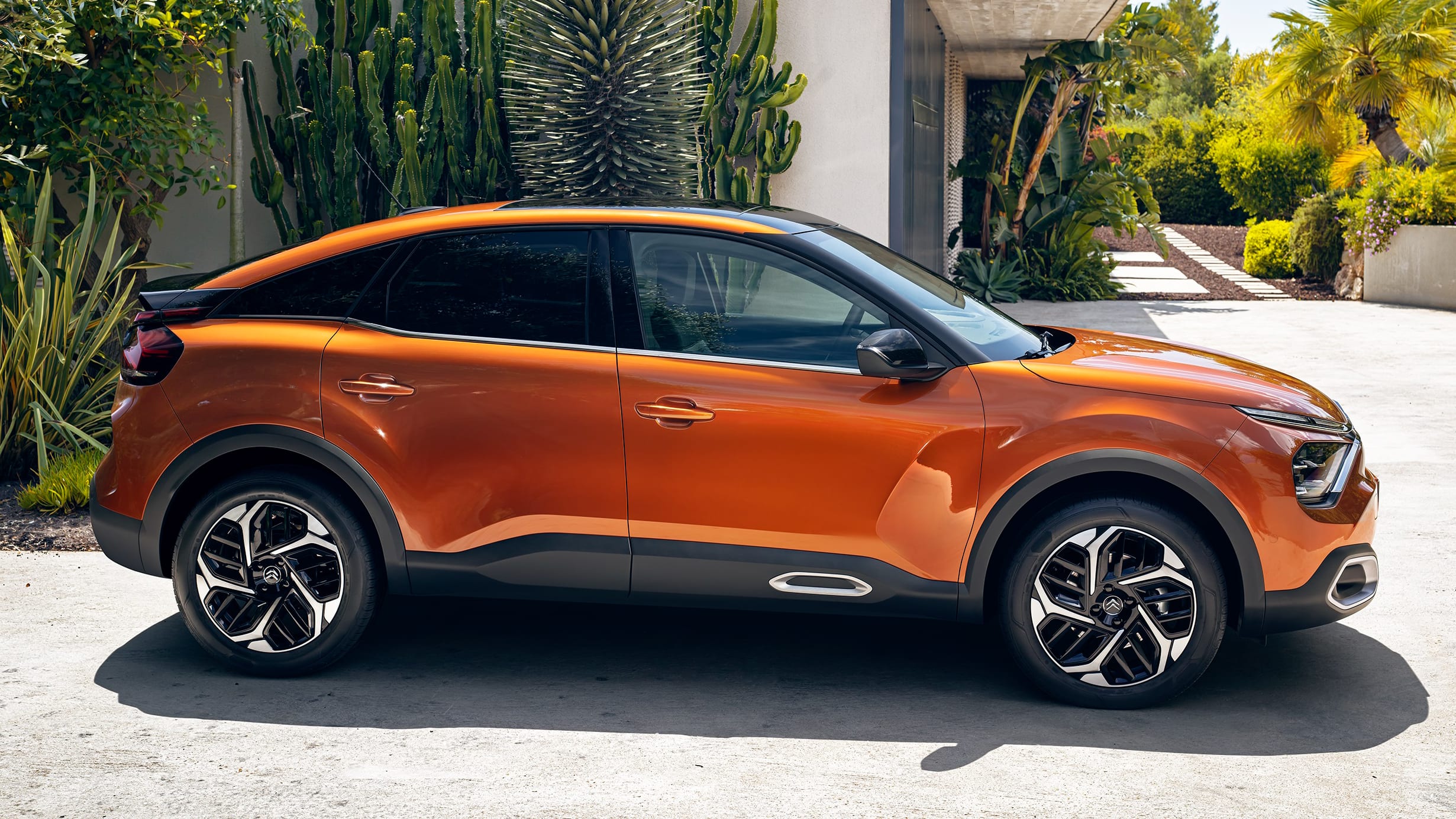
Carrying across from European models will be features such as dual-zone climate control, a head-up display, 10-inch infotainment screen with Apple CarPlay/Android Auto, wireless phone charging and a digital instrument cluster, as well as the possibility of a heated steering wheel and front seats.
Citroen has confirmed a host of safety equipment will also feature in the C4 in addition to its seven airbags, including autonomous emergency braking, blind spot monitoring, active lane departure warning, adaptive cruise control with stop and go, driver attention alert, proximity keyless entry with push button start, colour heads-up display, reversing camera with top rear vision and 360-degree vision.
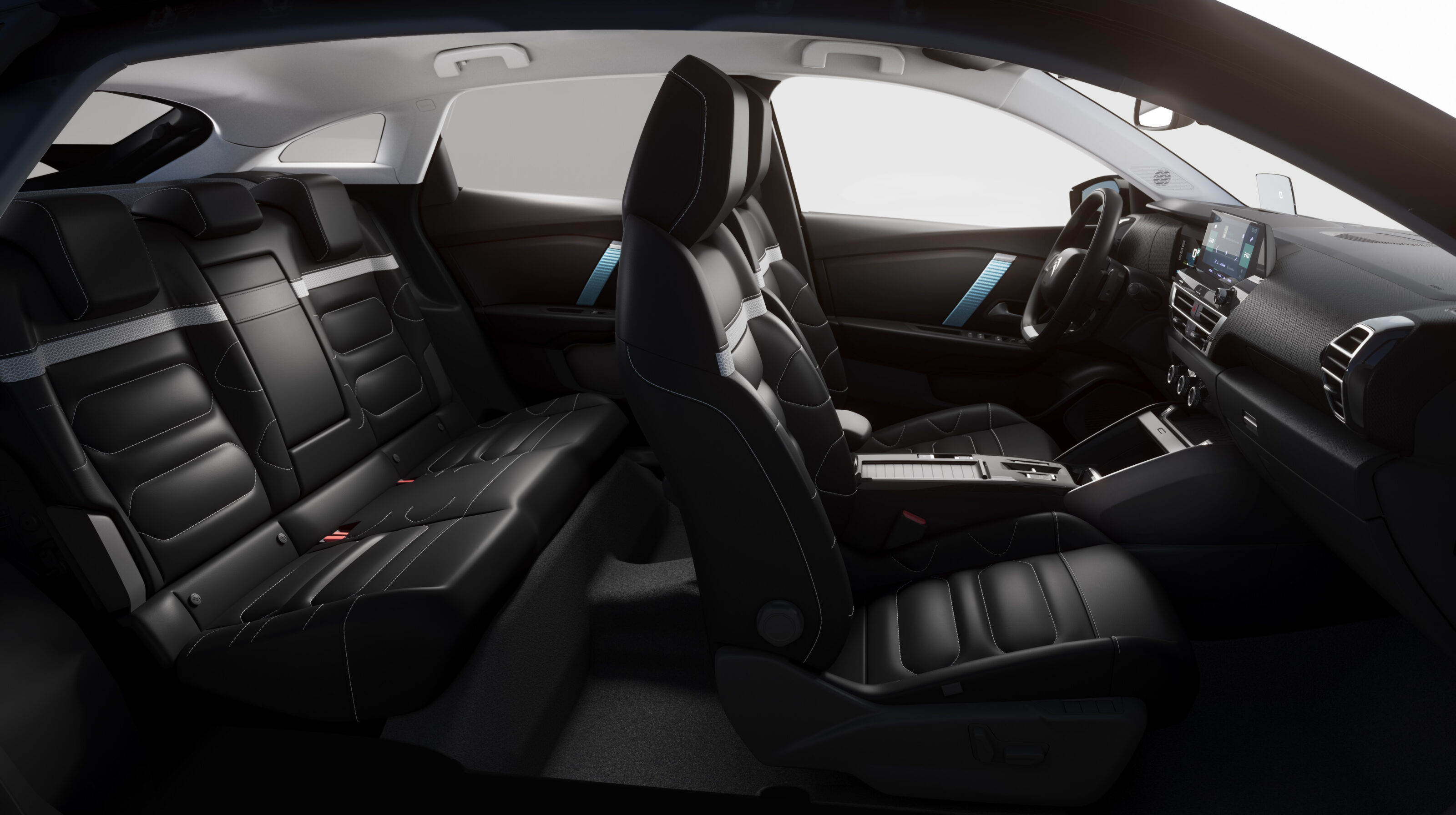
In addition to the aforementioned tech features, Citroen says the C4’s suspension will feature Progressive Hydraulic Cushions, something it believes will provide “supreme comfort and a ‘magic carpet ride’ effect while still retaining a dynamic feeling.
While prices are yet to be confirmed, expect it to land around the same price as its Peugeot 2008 GT Sport cousin, currently available for $43,990 before on-road costs.
Snapshot
- ES 250 joins existing line-up with direct-injection engine
- ES 300 now has larger range of options
- Range starts from $61,620 plus on-road costs
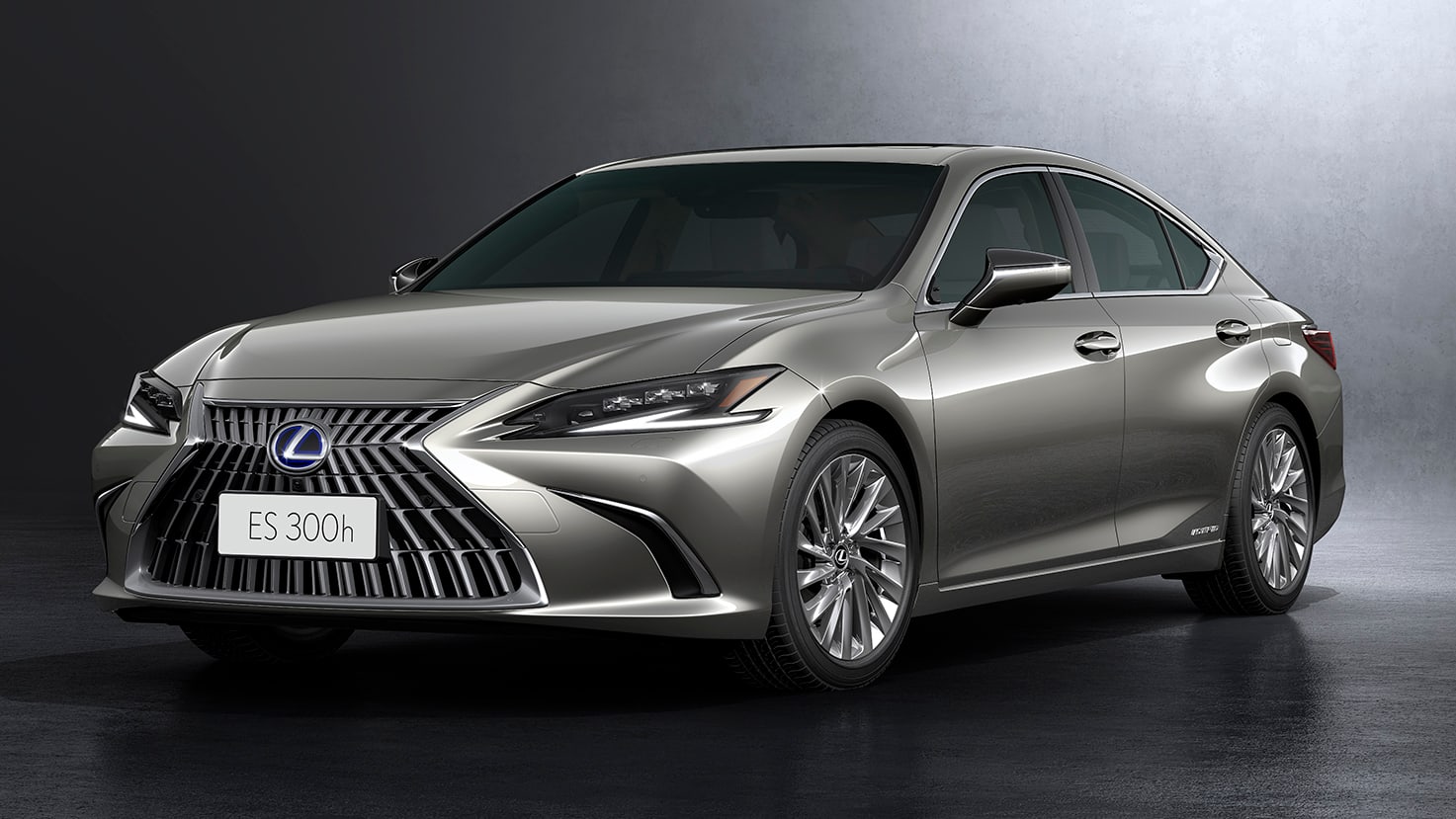
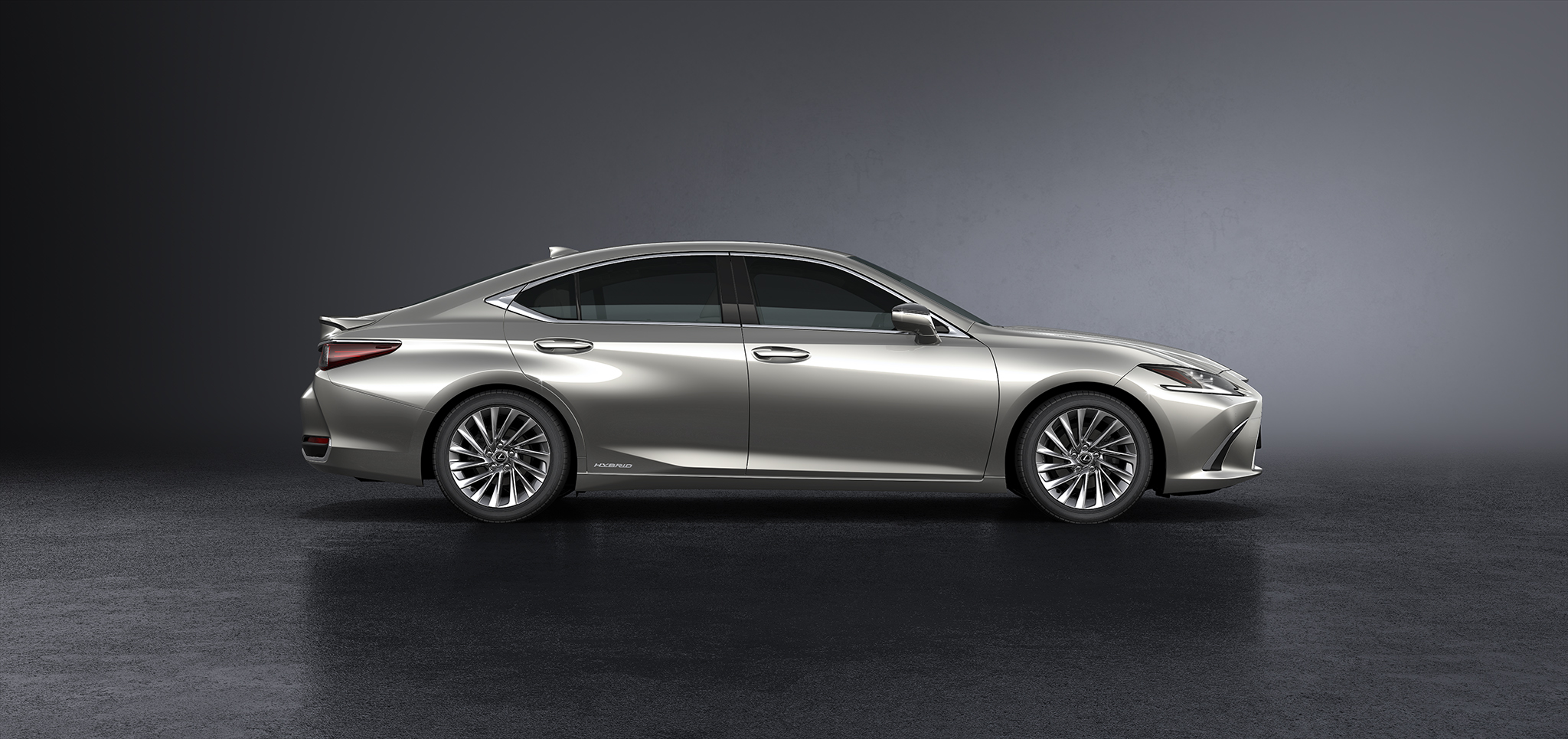
The 2022 Lexus ES range has undergone an update with a new direct-injection 2.5-litre engine joining the line-up, adding to the existing hybrid powertrain.
Dubbed ES 250, the new variant delivers less power and torque along with higher fuel consumption than its 300h hybrid sibling, but will arrive in showrooms at a more attractive price when the 2022 model becomes available on September 29.
Despite production delays for the Japanese marque and its parent company Toyota, the new ES range is currently on sale in Australia, arriving just before the start of the fourth quarter (October to December inclusive).
2022 Lexus ES Australian pricing
The ES range has expanded for the 2022 model year, with a slight increase in prices coming for those which already existed within the ES variant line-up.
Prices exclude on-road costs.
| ES 250 Luxury | $ 61,620 | |
| ES 250 Luxury with Enhancement Pack | $ 63,120 | |
| ES 300h Luxury | $ 63,550 | up $1025 |
| ES 300h Luxury with Enhancement Pack | $ 71,810 | |
| ES 250 F Sport | $ 70,860 | |
| ES 300h F Sport | $ 72,930 | up $1430 |
| ES 300h F Sport with Enhancement Pack | $ 76,530 | |
| ES 300h Sports Luxury | $ 78,180 | up $1180 |
Features
ES 250 Luxury
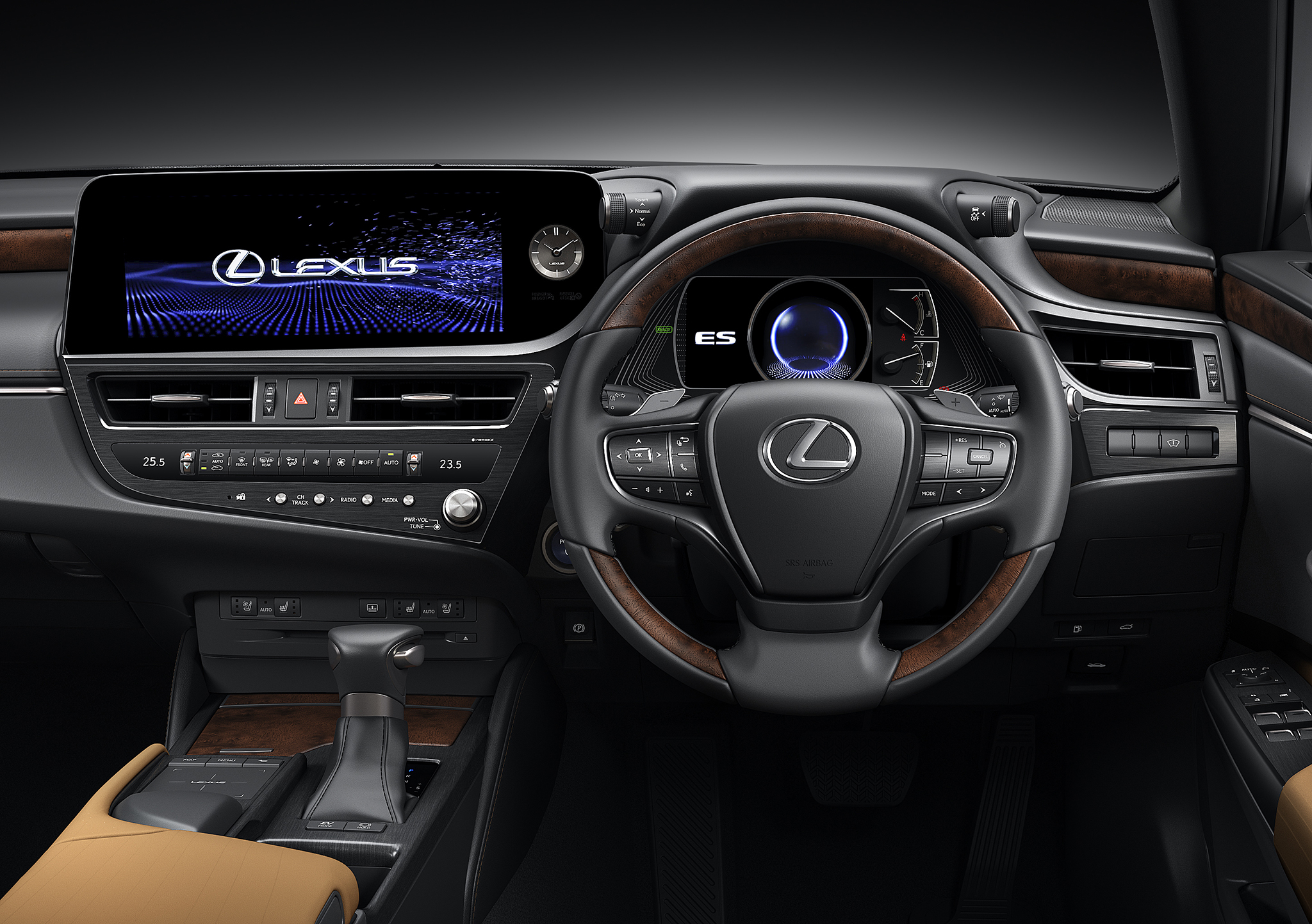
As the new entry-level variant to the range, the ES 250 Luxury features a base range of equipment including:
| Drive mode select u2013 Eco, Normal, Sport |
| Active cornering assist |
| 17-inch alloy wheels |
| LED low-beam headlights with automatic high beam |
| LED daytime running lights |
| Keyless smart entry with an ultrasonic break-in alarm |
| Tilt and slide moonroof |
| LED rear tail-lamps |
| Choice of hazel or black interior trim |
| 3D film ornamentation |
| 12.3-inch multimedia touch-display |
| Reversing camera with rear guide assist (RGA) |
| Apple CarPlay and Android Auto |
| 10 speaker audio |
| DAB+ Digital Radio USB & AUX Input |
| Satellite navigation system |
| Dual zone climate control air conditioning with Nanoe X |
| Lexus Climate concierge |
| 10-way power adjustable front seats |
| Heated front seats |
| Self-dimming interior mirror |
ES 250 Luxury with Enhancement Pack
On top of the standard ES 250 Luxury, the Enhancement Pack adds:
| Wireless smartphone charger |
| Head-up display |
| Smart key card |
| Privacy rear-side and rear glass |
| Type-C USB chargers |
| Rear spoiler |
| Power adjustable steering column with easy access functionality |
| Active noise control |
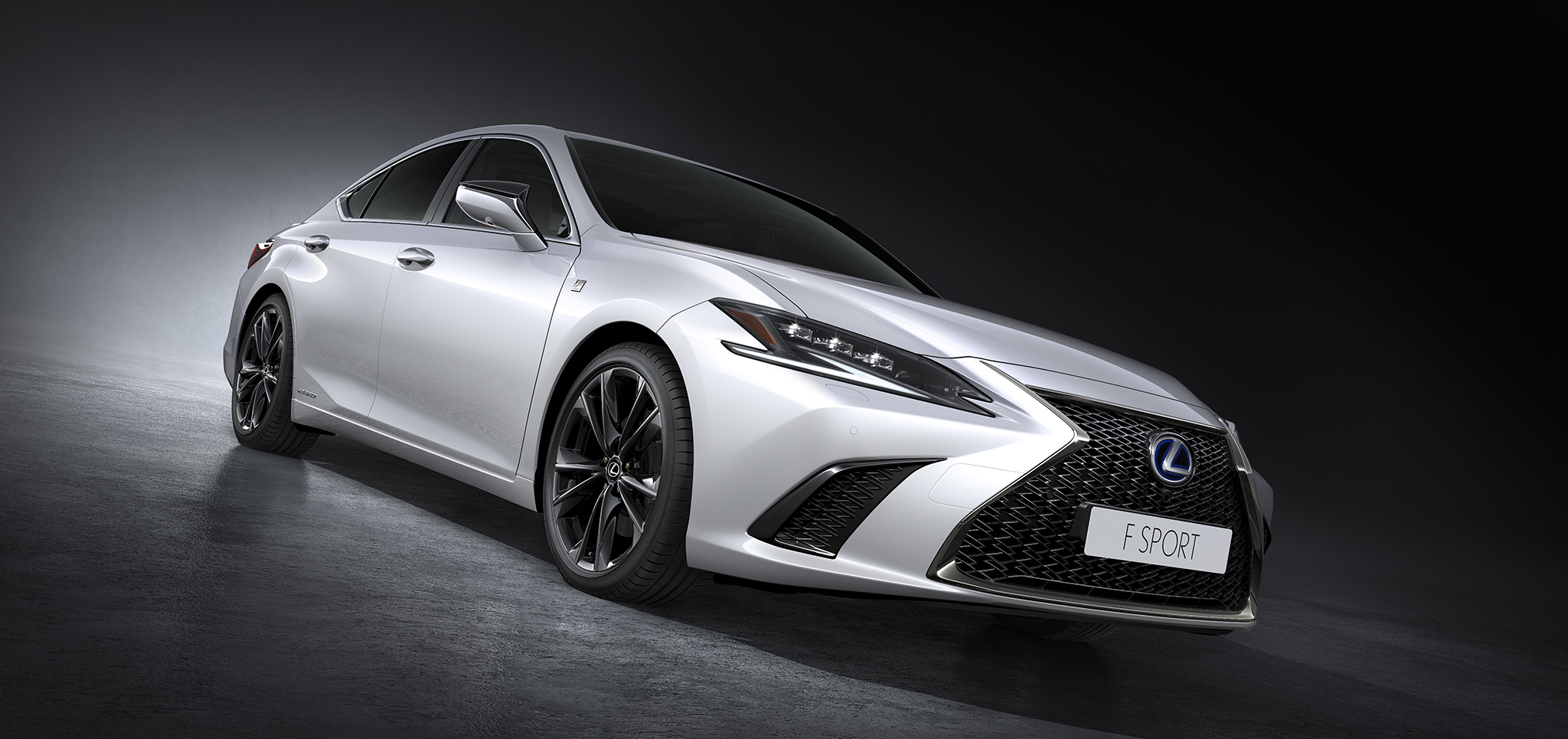
ES 250 F Sport
The F Sport package is the highest spec for the ES 250, adding the following equipment onto the Enhancement Pack:
| F Sport suspension |
| LED headlamps with BladeScan adaptive high-beam system |
| 19-inch F Sport alloy wheels |
| F Sport performance dampers |
| F Sport grille and rear spoiler |
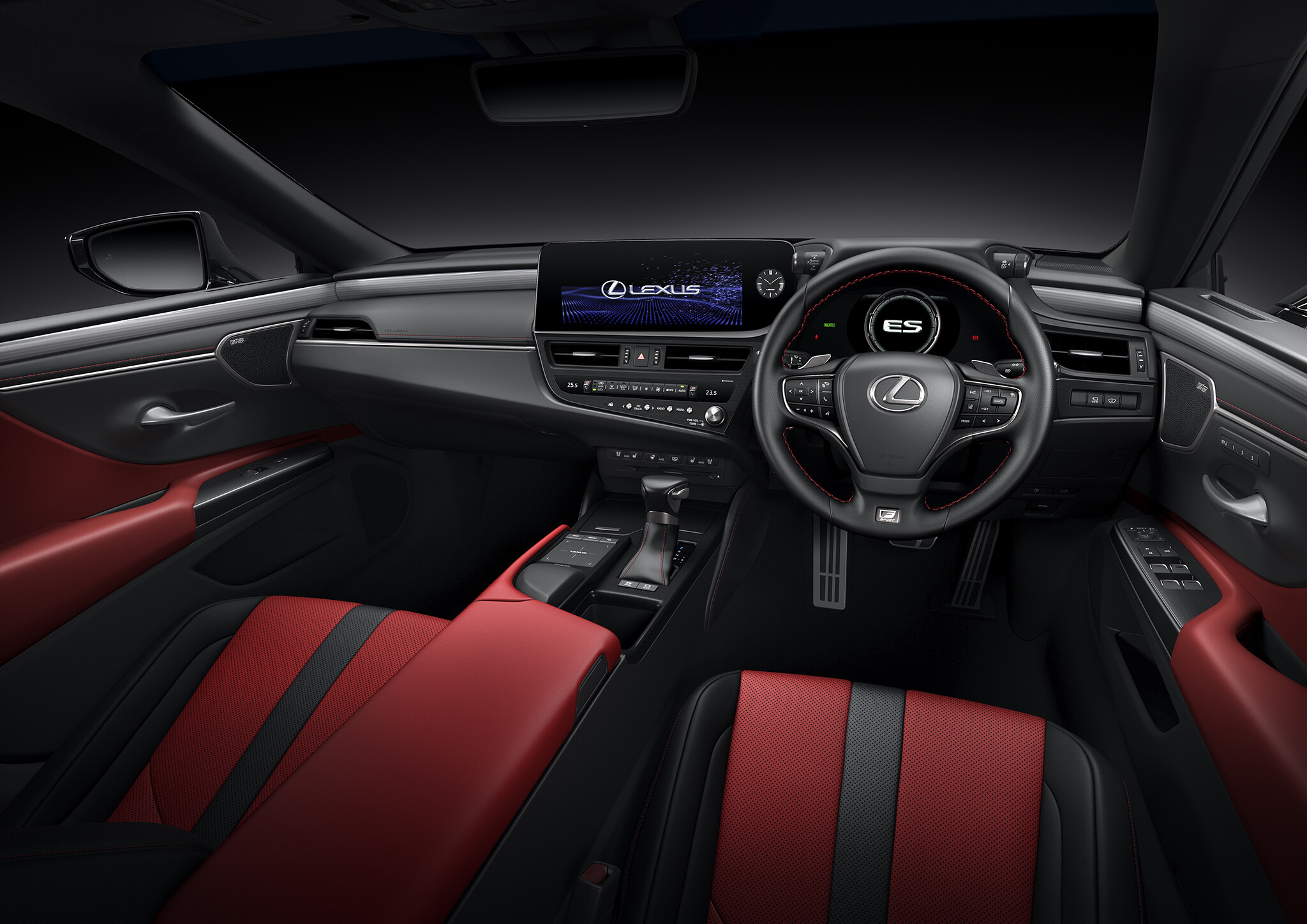
| F Sport seats in F Sport white, F Sport black or Flare Red |
| Power back door with kick sensor |
| Power sunshade on rear window |
| Hadori aluminium ornamentation |
| 8.0-inch driver display |
| Panoramic View monitor |
| Ventilated front seats |
| 12-way power adjustable driver’s seat with memory |
| Panoramic view monitor |
ES 300h Luxury
The ES 300h is the base trim in the hybrid variant’s range and features the same base equipment as the ES 250 Luxury, although its hybrid powertrain does add an EV-only mode which is unavailable in the 250
| Drive mode select u2013 Eco, Normal, Sport |
| Active cornering assist |
| 17-inch alloy wheels |
| LED low-beam headlights with automatic high beam |
| LED daytime running lights |
| Keyless smart entry with an ultrasonic break-in alarm |
| Tilt and slide moonroof |
| LED rear tail-lamps |
| Choice of hazel or black interior trim |
| 3D film ornamentation |
| 12.3-inch multimedia touch-display |
| Reversing camera with rear guide assist (RGA) |
| Apple CarPlay and Android Auto |
| 10 speaker audio |
| DAB+ Digital Radio USB & AUX Input |
| Satellite navigation system |
| Dual zone climate control air conditioning with Nanoe X |
| Lexus Climate concierge |
| 10-way power adjustable front seats |
| Heated front seats |
| Self-dimming interior mirror |
| EV mode |
ES 300h Luxury with Enhancement Pack
Stepping up to the Enhancement Pack, ES buyers score extra features such as:
| Choice of Hazel, Mauve, Black or Rich Cream interior trim |
| Choice of Sumi black walnut or brown walnut ornamentation |
| Power Back Door with kick sensor |
| 18-inch alloy wheels |
| Ventilated front seats |
| 12-way power adjustable driver’s seat with memory |
| Panoramic view monitor |
| Sunshade on rear window (power) and rear door (manual) |
ES 300h F Sport
Building on the Enhancement pack, the F Sport trim in 300h guise adds features including:
| F Sport suspension |
| LED headlamps with BladeScan adaptive high-beam system |
| 19-inch F Sport alloy wheels |
| F Sport performance dampers |
| F Sport grille and rear spoiler |
| F Sport seats in F Sport white, F Sport black or Flare Red |
| Power back door with kick sensor |
| Power sunshade on rear window |
| Hadori aluminium ornamentation |
| 8.0-inch driver display |
| Panoramic View monitor |
| Ventilated front seats |
| 12-way power adjustable driver’s seat with memory |
| Panoramic view monitor |
| F Sport adaptive variable suspension |
| Drive mode select u2013 Eco, Normal, Sport S, Sport S+ and Custom |
ES 300h F Sport with Enhancement Package
The F Sport Enhancement Package builds on the F Sport with the following equipment:
| Heated steering wheel |
| Mark Levinson 17 speaker audio including subwoofer and amplifier |
ES 300h Sports Luxury
Finally, the range-topping 300h Sports Luxury, adding on top of the Enhancement Pack:
| Heated steering wheel |
| Mark Levinson 17 speaker audio including subwoofer and amplifier |
| Tri-zone climate control air conditioning with humidity sensor |
| Power adjustable reclining/heated outer rear seats |
| Rear Armrest with air conditioning, audio, rear heater, rear reclining and sunshade controls |

Engine, drivetrain and fuel economy
The ES 250 adds a new engine to the ES range, a naturally-aspirated 2.5-litre four-cylinder petrol unit with direct injection, making 152kW and 243Nm, with power being sent to the front wheels through an eight-speed automatic gearbox.
The powertrain of the 300h remain unchanged, retaining its 131kW/221Nm 2.5-litre petrol engine and 88kW/202Nm electric motor, combining for a maximum power output of 160kW delivered to the front wheels through a CVT automatic.
As expected, the more conventional ES 250 is thirstier, with a tested combined consumption figure of 6.6L/100km – almost two litres more than the 300h which achieves 4.8L/100km.
Safety
Retaining the five-star safety rating from the existing ES, the updated variants add a number of safety features to provide better occupant protection:
| Intersection Assist with Turning Assist (new) |
| Emergency Steering Assist (new) |
| Lexus Connected Services (new) |
| Radar active cruise control with road sign assist |
| Pre-collision safety system with pedestrian detection |
| Blind spot monitor with rear cross traffic alert and brake |
| Parking support with brake including intelligent clearance sonar |
| Lane tracing assist |
| Tyre pressure warning system |
| 10 SRS airbags |
| Alarm system with intrusion sensor |
Availability
The updated 2022 Lexus ES range is now on sale in Australia.
It’s an often-overlooked fact of the performance car arms race that outright power isn’t really what makes an engine special.
Sure, making 700kW with internal combustion alone is impressive but, to really be something people adore, there needs to be an extra something – a sound to stir the soul.
Despite what the comment section will have you believe, there are still some great sounding engines that you can buy in Australia.
While yes, a decent chunk comes from the top end of town, we’ve included a few examples that prove you don’t always need mega bucks to get a great sounding engine in your garage.
So, in no particular order, we present the best sounding engines you can buy today in Australia.

Toyota 2UR-GSE
- Engine capacity: 4696cc
- Induction: naturally aspirated
- Cylinders: 8
- Power: 351kW
- Torque: 540Nm
- Found in: Lexus RC F, Lexus LC 500
The entire team at MOTOR are enamoured with the charismatic 5.0-litre V8 fitted to the Lexus LC and RC F coupes.
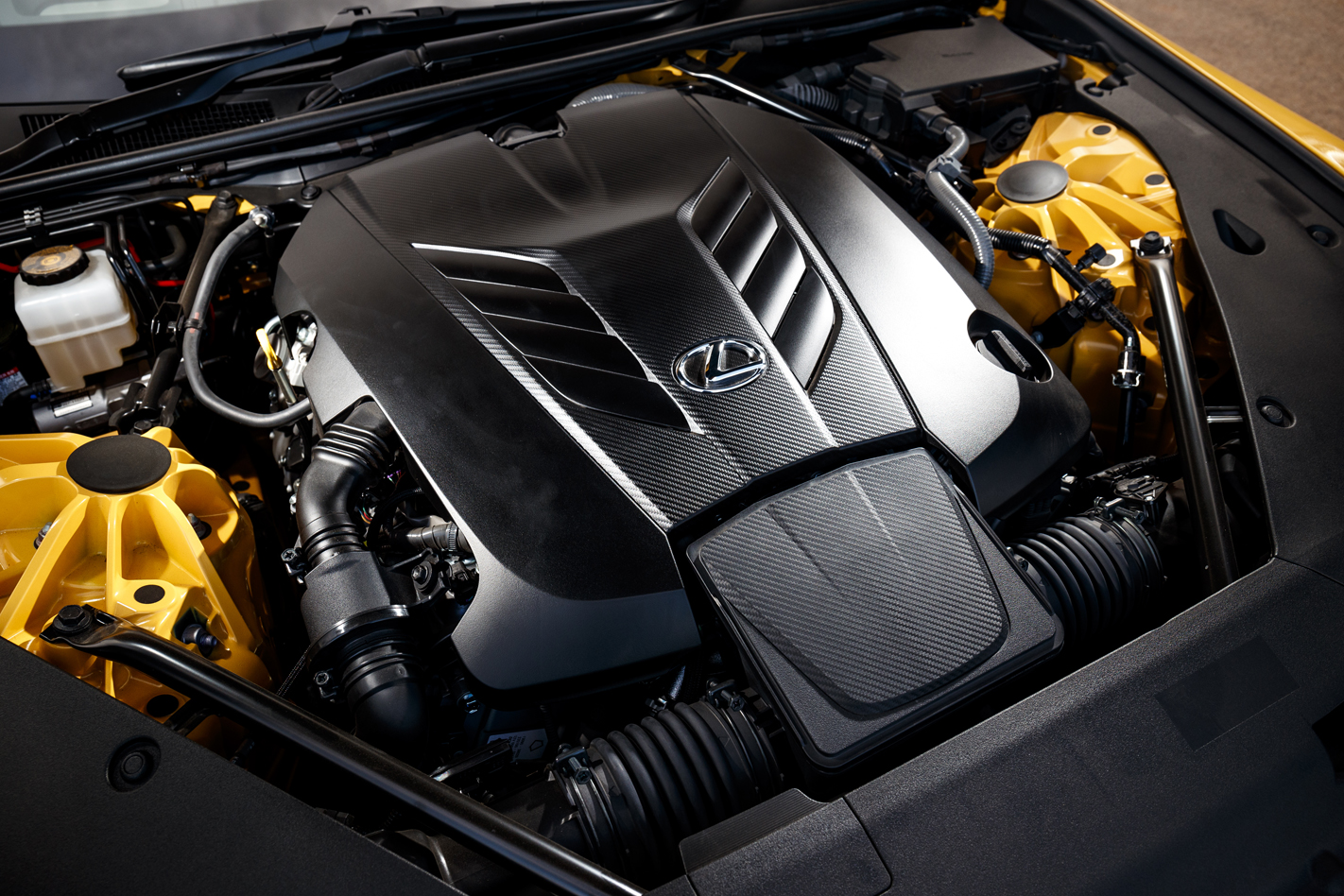
Free breathing bent-eight engines are few and far between nowadays, so it’s a treat for the ears every time we are exposed to the Japanese unit.
The 2UR-GSE engine has been around for some time, first debuting in the Lexus IS-F in 2007, but it is in the current LC 500 that it reaches its zenith, with a chassis to compliment the engine’s talents.
A 2UR-GSE on song is the sound that manufacturers of naturally aspirated V8s should strive to achieve.
Ferrari F140 GA
- Engine capacity: 6496cc
- Induction: naturally aspirated
- Cylinders: 12
- Power: 588kW
- Torque: 718Nm
- Found in: Ferrari 812 Superfast, Ferrari 812 GTS
The F140 engine family that features in the nose of the Ferrari 812 Superfast and GTS has been around since the early 21st century, but that doesn’t dampen its impact every time we hear it.
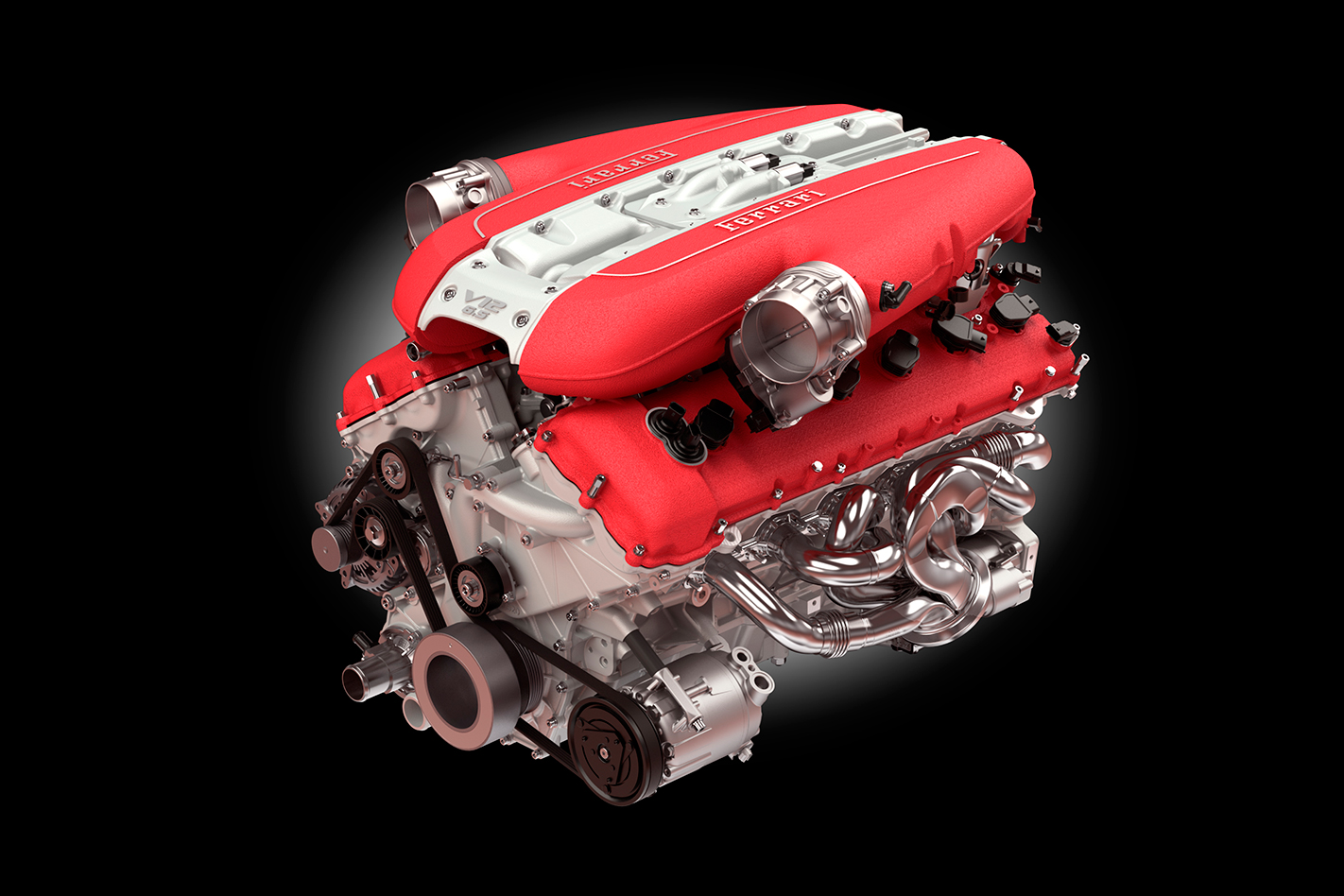
Despite being the most powerful engine on this list, there is still more headroom left in the twelve-cylinder unit. Not yet available in Australia, the Ferrari 812 Competizione will be fitted with a 610kW/692Nm version of the F140. It may well be the last time we see a free-breathing V12 fitted to a Ferrari without the aid of turbocharging or electrification.
But even without all that grunt, the F140 GA is a hall of famer when it comes to the sound emitted from its exhaust. It’s the kind of scream that summons ghosts of F1 past, and is sure to send shivers down your spine.
Toyota 2GR-FE
- Engine capacity: 3456
- Induction: supercharged
- Cylinders: 6
- Power: 257-321kW
- Torque: 400-441Nm
- Found in: Lotus Exige, Lotus Evora, Lotus Emira
It is beyond that threshold that the supercharged 3.5-litre V6 that sits in the engine bay of Lotus’ sports cars is at its best, emitting the kind of sound that feels like it should be illegal.
And yet, it isn’t. It’s entirely addictive as well, encouraging you to always live in the upper echelons of the rev range.
Frankly, it’s incredible that what is essentially a Toyota Camry engine can sound this extreme with some small tweaks. Don’t underestimate the 2GR-FE.
While the Exige and Evora have reached the end of their lives, the 2GR-FE will live on in the interim with the Emira.
Volkswagen Group 5.2 V10 40v FSI
- Engine capacity: 5204cc
- Induction: naturally aspirated
- Cylinders: 10
- Power: 397-470kW
- Torque: 540-600Nm
- Found in: Lamborghini Huracan, Audi R8 V10
It’s also almost entirely extinct.
Thankfully though, Volkswagen Group has built one of, if not the, best V10 engines ever put into production. And you can buy it today.

Shared between the Lamborghini Huracan and Audi R8 supercars, the Volkswagen Group’s 5.2-litre V10 is excellent.
Well suited to both the Italian and German executions, it sounds brilliant all the way through the rev range, harking back to the extreme V10 engines that once dominated Formula 1.
Enjoy it while you still can.
Volkswagen Group EA855 evo
- Engine capacity: 2480cc
- Induction: turbocharged
- Cylinders: 5
- Power: 294
- Torque: 480
- Found in: Audi TT RS, Audi RS3, Audi RS Q3
At the height of the WRC’s Group B era, those camping out in the Finnish woods would be able to pick the Audi from the rest of the field thanks to its distinct engine note.
Thankfully, Aussie motoring enthusiasts are able to recreate a small slice of that iconic noise with the EA855 evo engine.
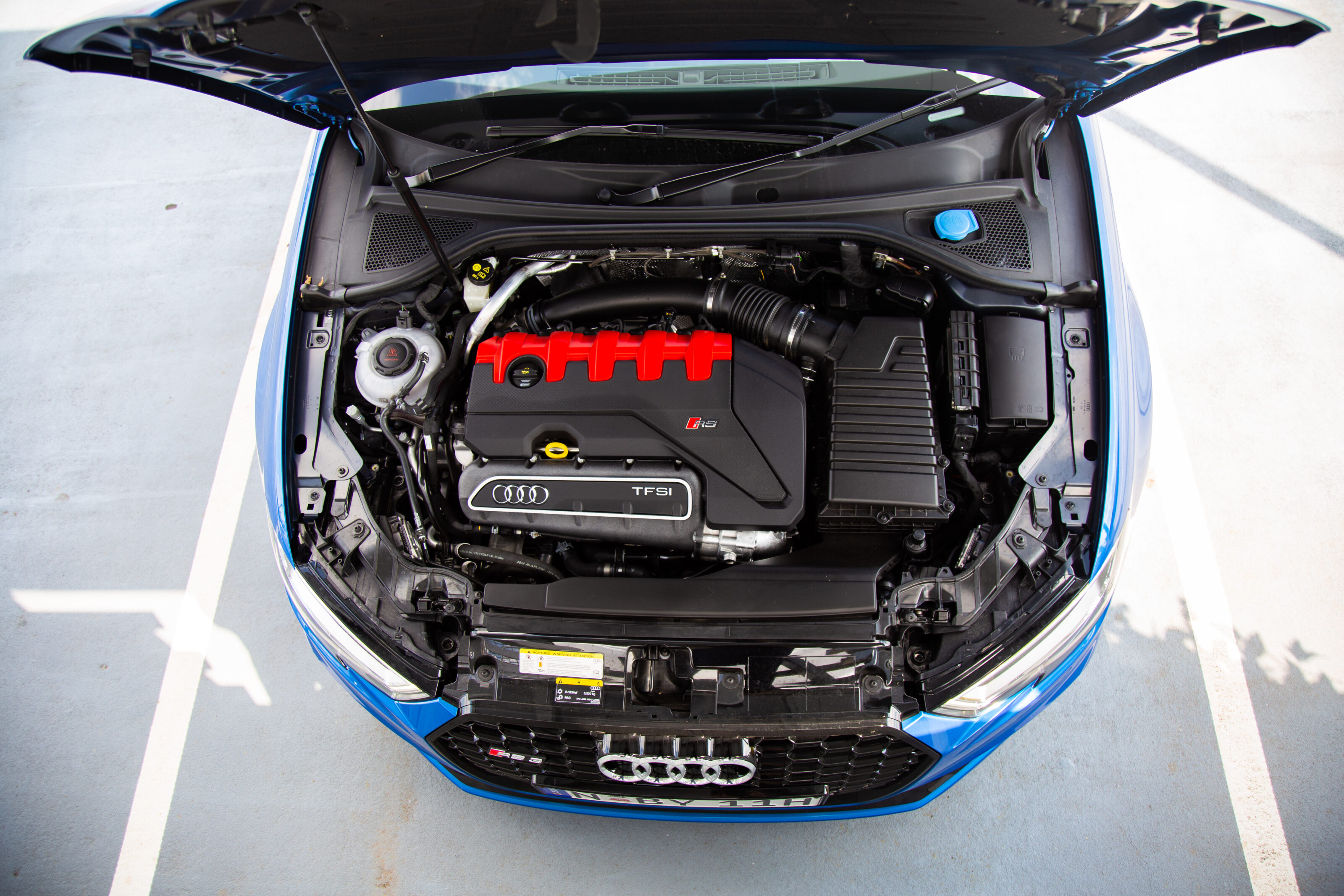
The 2.5-litre turbocharged five-cylinder is fitted to just three models in Audi’s range, and while petrol particulate filters have dampened the acoustics slightly, the sound it emits is too charismatic to ignore.
The five-cylinder rumble is unique, and we are transported back to those rally cars of old every time we hear it.
There is something a little bit special when that distinct engine note is paired with the spattering of gravel being displaced by spinning tyres.
Jaguar AJ-V8 Gen III
- Engine capacity: 5000cc
- Induction: Supercharged
- Cylinders: 8
- Power: 386-423kW
- Torque: 625-700Nm
- Found in: Jaguar F-Type R, Jaguar F-Pace SVR, Range Rover Sport SVR
The sound it emits is loud, brash, and thrilling. Despite the huge supercharger that sits atop its cylinder banks, the industrial roar from the AJ-V8 is such that induction whine is a merely an afterthought.
Set to its most aggressive settings, the 5.0-litre supercharged V8 is one of the most anti-social engines currently on sale, but we can’t help but love it.
A special mention needs to be given to the AJ126 supercharged V6, which uses the same engine block as the V8, but with the rearmost cylinders blanked and the bore reduced. It too is an acoustic delight that will have you winding down your windows every time you head into a tunnel.
Porsche MA1.76/MDG.G
- Engine capacity: 3996
- Induction: naturally aspirated
- Cylinders: 6
- Power: 375kW
- Torque: 470Nm
- Found in: Porsche 911 GT3
You can reach 9000rpm in a single road car in Australia, the Porsche 911 GT3, and it’s there, right at the very top of the rev range, that your ears will be closest to hearing literal angel song.
At full noise, the 4.0-litre naturally aspirated flat-six finds a way to burrow into your skull and rattle the contents.
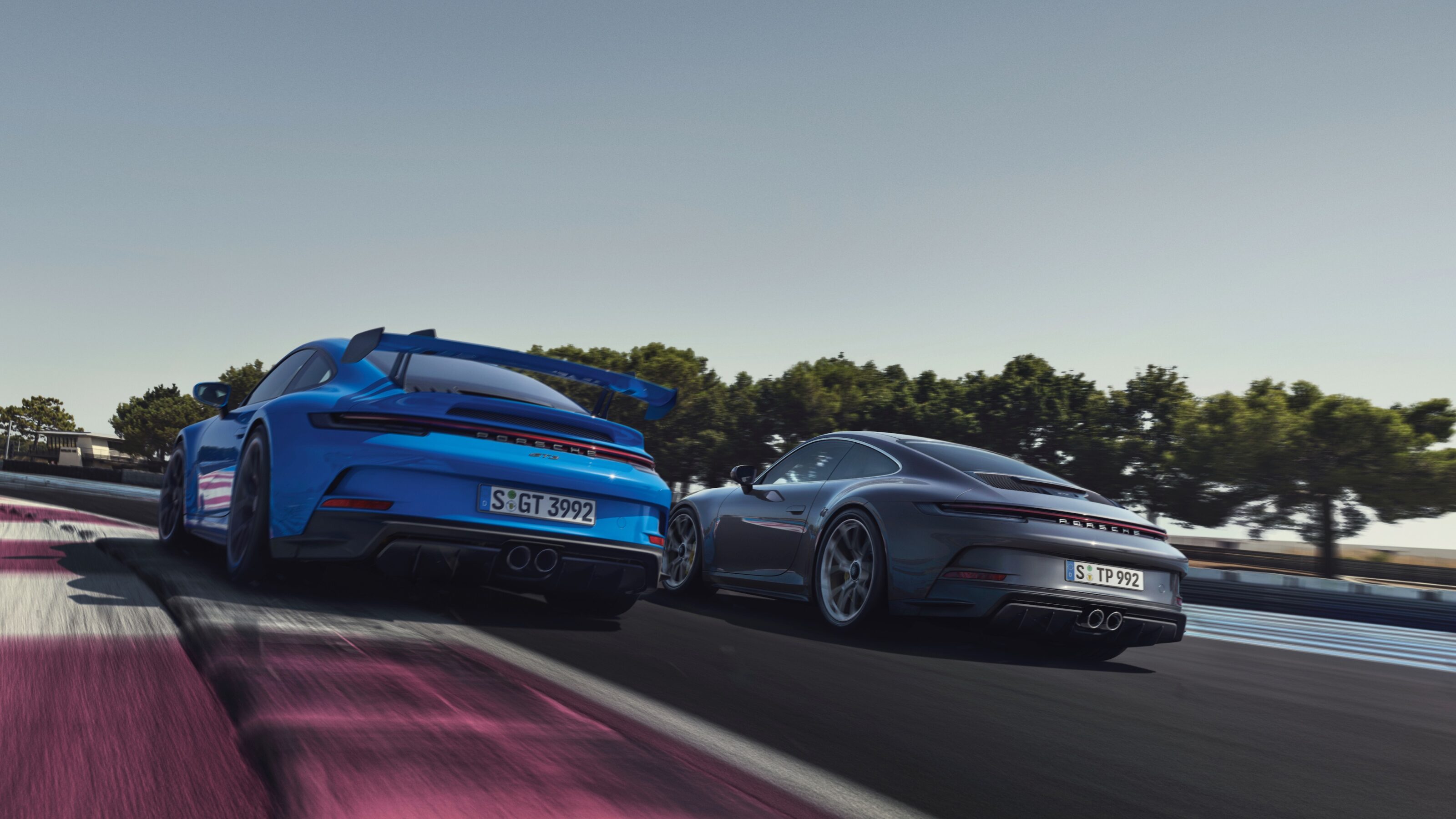
Part race car engine, part banshee, the MA1.76/MDG.G was always guaranteed a place on this list, having first appeared with the 991.2 generation 911.
An evolution of the engine used in the 991.2 GT3 and GT3 RS will appear on Australian roads shortly, placed behind the rear axle of the 992 GT3.
When things are this good, there is no need to mess with the formula.
Mercedes-AMG M177/178
- Engine capacity: 3982cc
- Induction: twin-turbocharged
- Cylinders: 8
- Power: 340-478kW
- Torque: 600-800Nm
- Found in: Mercedes-AMG C63, Mercedes-AMG E63, Mercedes-AMG GT, Mercedes-AMG GT 63 4-Door, Mercedes-AMG GLC 63, Mercedes-AMG GLE 63, Mercedes-AMG GLS 63, Mercedes-AMG G63, Aston Martin DB11 V8, Aston Martin DB11 Volante, Aston Martin Vantage, Aston Martin DBX
There was plenty of consternation when AMG announced its 6.2-litre atmo V8 would be replaced by something with forced induction, but the engineers at Affalterbach were never to be doubted.
The smaller engine has a liquid burble to its note, retaining all of the character of its predecessor, and more.
A flat-plane crank version of the engine is currently arriving on Australian shores in the form of the Mercedes-AMG GT Black Series.
Hyundai 2.0 Theta II T-GDi
- Engine capacity: 1998
- Induction: turbocharged
- Cylinders: 4
- Power: 206kW
- Torque: 392Nm
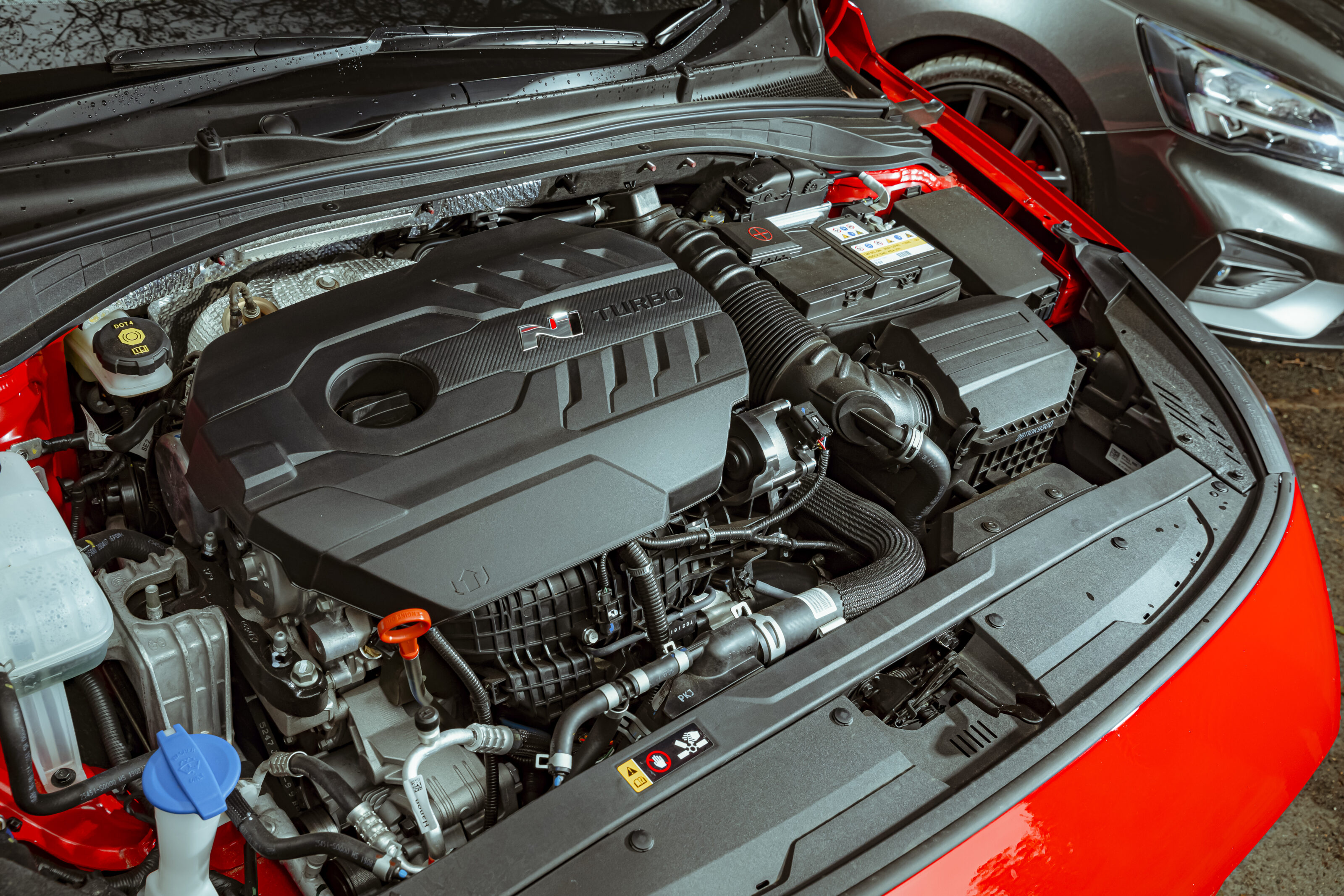
- Found in: Hyundai i30 N
We should be specific here. While there are a handful of SUVs that use the same engine within the Hyundai and Kia family, that is a lower compression version to that used by the high-performance N models.
What the 2.0-litre unit lacks for outright grunt, it more than makes up for with acoustic antics.
The sound produced by the i30 N as a result puts it at the top of the musical class for hot hatches. Upshifts, downshifts, on throttle, off throttle – it doesn’t matter, the Korean pocket rocket sounds fantastic for all of them.
In concrete carparks the overrun is accentuated even further, to the point that anyone nearby would be forgiven for thinking a gunfight had broken out.
Hyundai’s four-pot encourages you to release your inner teenage hooligan, and for that it earns a spot on this list convincingly.
The i30 N will soon be joined by the Kona N, which will utilise the same powertrain. Four-cylinder fans, rejoice!
Ferrari F136 Y V8
- Engine capacity: 4691cc
- Induction: naturally aspirated
- Cylinders: 8
- Power: 338kW
- Torque: 520Nm
- Found in: Maserati GranTurismo, Maserati GranCabrio
However, while the team at Maranello have replaced the free-breathing V8 with the twin-turbo F154, a 4.7-litre version of F136 is used to this day by sister company Maserati.
When utilised by Ferrari, the F136 V8 uses a flat-plane crank, while the Maserati version is fitted with a more traditional cross-plane design.
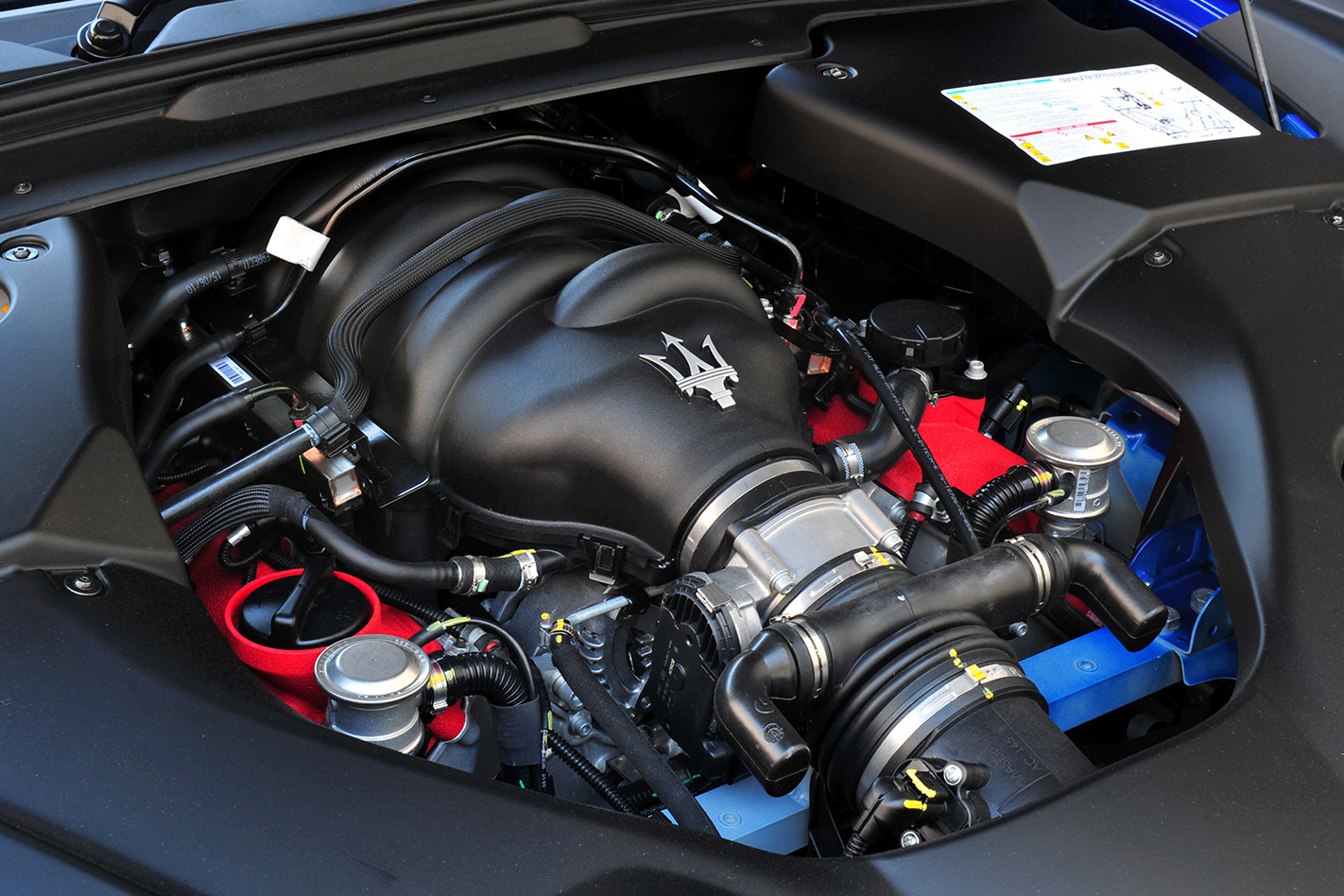
That change doesn’t prevent the Maserati from emitting a rich and colourful sound from its exhaust.
The sound is everything you wish for from an Italian V8. There’s cracks and burbles on overrun that feel natural instead of contrived, and the engine sounds operatic in its delivery under load.
The number of models available with the F136 continues to dwindle, with only the Maserati GranTurismo and GranCabrio available to Australian customers.
There may be more refined driving experiences on offer, but few of the Maserati’s rivals can match this pair for sound!
Snapshot
- Total of 95 vehicles recalled
- Brake failure may occur over time
- Volkswagen is asking owners to contact local dealers
A recall notice has been issued for the 2021 Volkswagen Passat after a potential problem with its braking system was discovered.
Covering just 95 units sold so far this year, a threaded nut which connects the brake servo and pedal may not meet manufacturing standards – potentially leading the two parts separating.
If this failure occurs it could result in a loss of braking power, creating a higher risk of an incident.
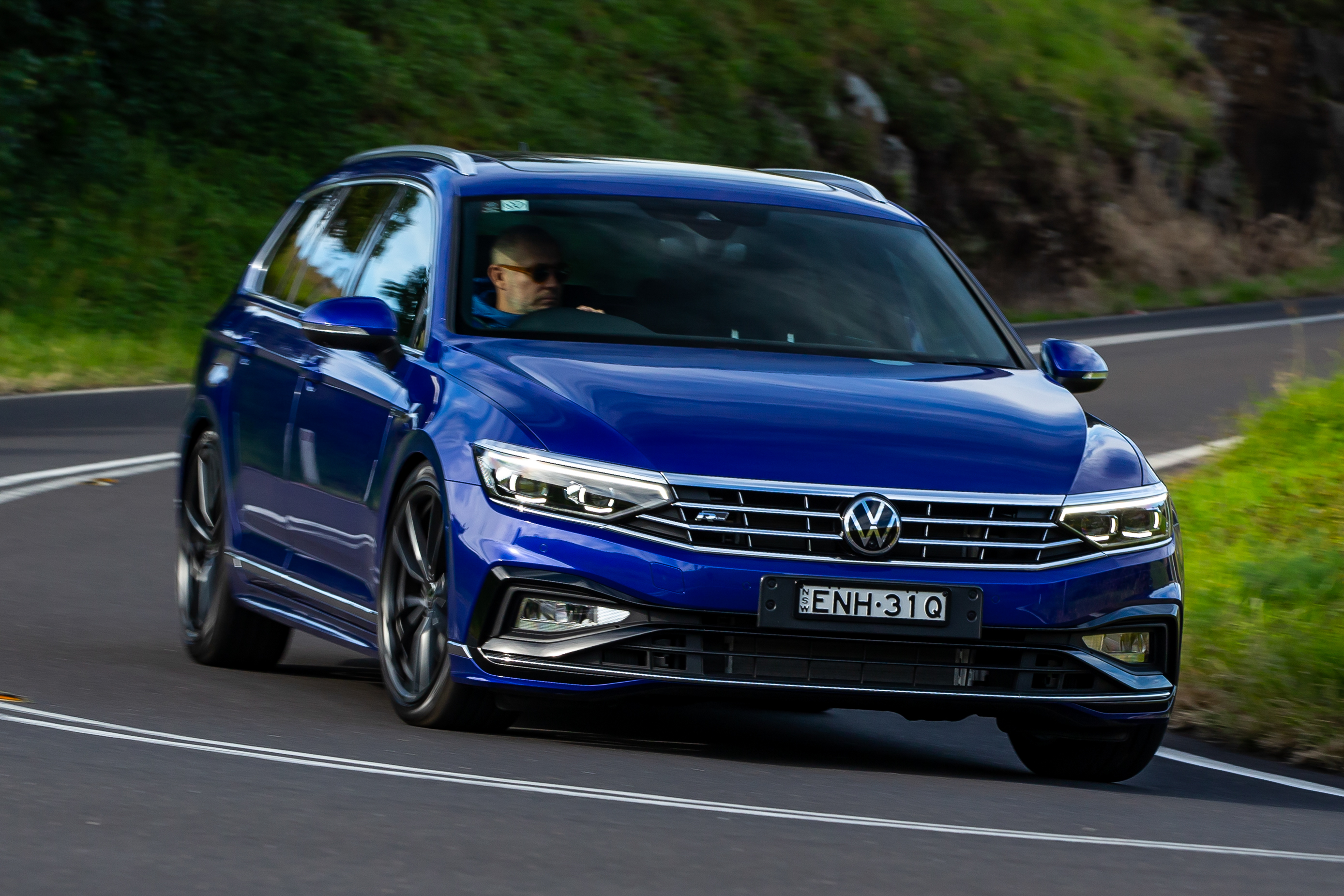
Owners of 2021 model year Passats are encouraged to contact their nearest Volkswagen dealer or its recall department on 1800 504 076/[email protected]
To the end of August 2021, a total of 512 Passats have been sold, with the recall covering just under 20 per cent of all vehicles purchased this year.
A list of VINs for affected vehicles can be found here.
