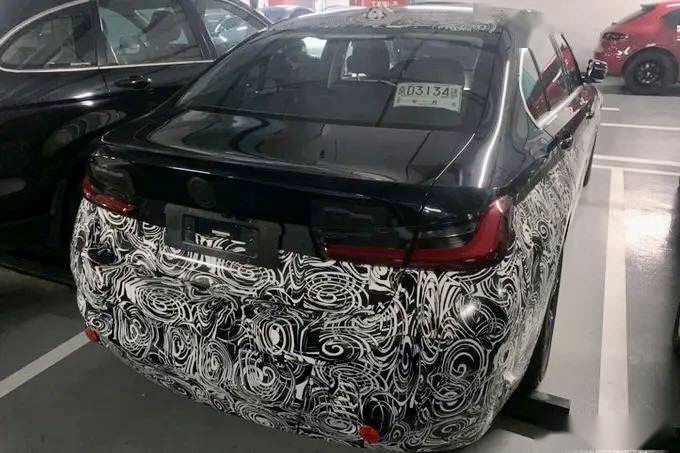
The 2022 BMW i3 has been caught by an amateur photographer in China.
Images have been posted to website Sohu showing the first fully-electric 3 Series, with the new BMW expected to slot in below the i4 – but believed to instead share a similar powertrain to the iX3 SUV.
Rumours suggest the new model will offer an entry-level variant initially – possibly called the i3 eDrive30 – with a single electric motor sending 210kW and 400Nm to the rear wheels. Expect a 0-100km/h sprint time under seven seconds.
Unlike the iX3’s 80kWh battery capacity, it’s more likely the i3 shares the larger 84kWh battery pack with its i4 sibling, meaning the sedan should easily reach 600km of driving range on a single charge – which is the maximum range the German manufacturer currently aims for in its electric vehicles.
Despite the first-generation i3 being its own stand-alone hatchback model, it’s believed BMW has decided to proceed with using the i3 name, providing continuity across its current range in which ‘i’ denotes the fully-electric version. The original i3 ended production in July, freeing up space within the BMW stable for the new i3.
There’s no word yet as to whether a second variant of the all-electric 3 Series will follow – either matching the i4 eDrive40 as a mid-range model, or in the form of a performance flagship following the same recipe as the i4 M50.
With the 2021 BMW 330e plug-in hybrid (top) priced from $83,971 before on-road costs, and the 2022 BMW i4 eDrive40 costing $99,900 plus on-roads, expect the 2022 BMW i3 eDrive30 to start at a touch over $90,000 when it eventually comes to Australia.
A version of the Volkswagen Beetle Gr.3 race car from the 2017 video game Gran Turismo Sport has become a reality.
German tuning firms JP Performance and Prior Design began working on the vehicle during 2020, developing a bodykit mimicking the vehicle from the racing simulator series.
This process has led to the first vehicle recently rolling off the workshop floor, with JP Performance taking to YouTube (speaking in German) to demonstrate the process behind the conversion.
There will be a limited run of 53 units for the Gr.3 replica, while the creators of the bodykit claim both Volkswagen and Polyphony Digital – the creators of Gran Turismo Sport – approved the conversion kit.
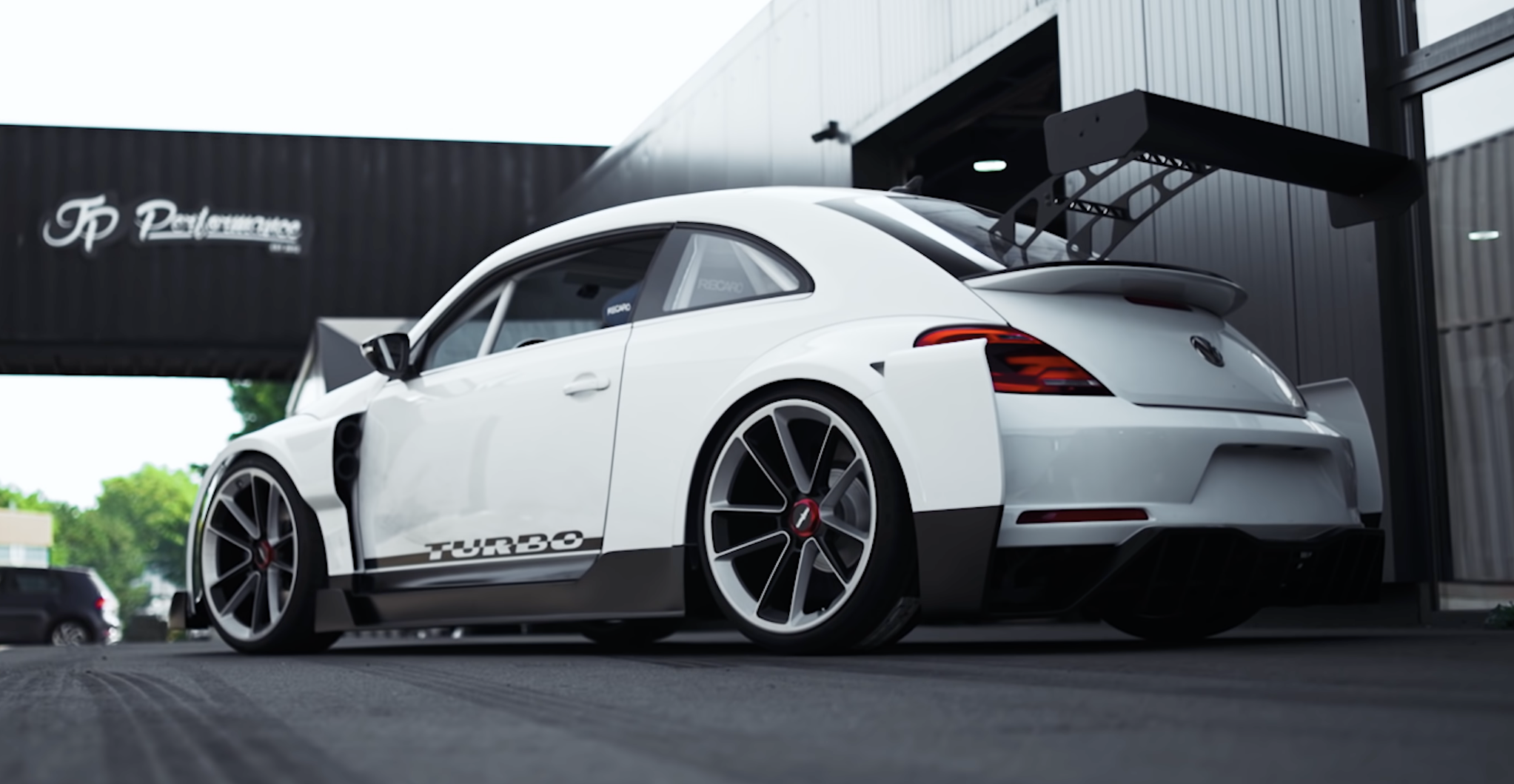
The new design is headlined by bulky fender extensions with aerodynamic flaps and dual exhaust pipes, which exit from the front of the Beetle – all providing a look similar to race cars competing in Germany’s DTM grand touring series.
A unique front bumper brings yellow LED driving lights, a wider lower intake and a large splitter, while an eye-catching side skirt is combined with a set of bulky five-spoke alloy wheels sitting on low-profile tyres.
At the rear, the Beetle Gr.3 replica features a large rear spoiler mounted on the rear window – in addition to a prominent diffuser placed over the standard-fit rear bumper.
While the differences might seem visual, JP Performance has also swapped the Beetle’s stock four-cylinder engine for the turbocharged 2.5-litre five-cylinder taken from the Audi range.
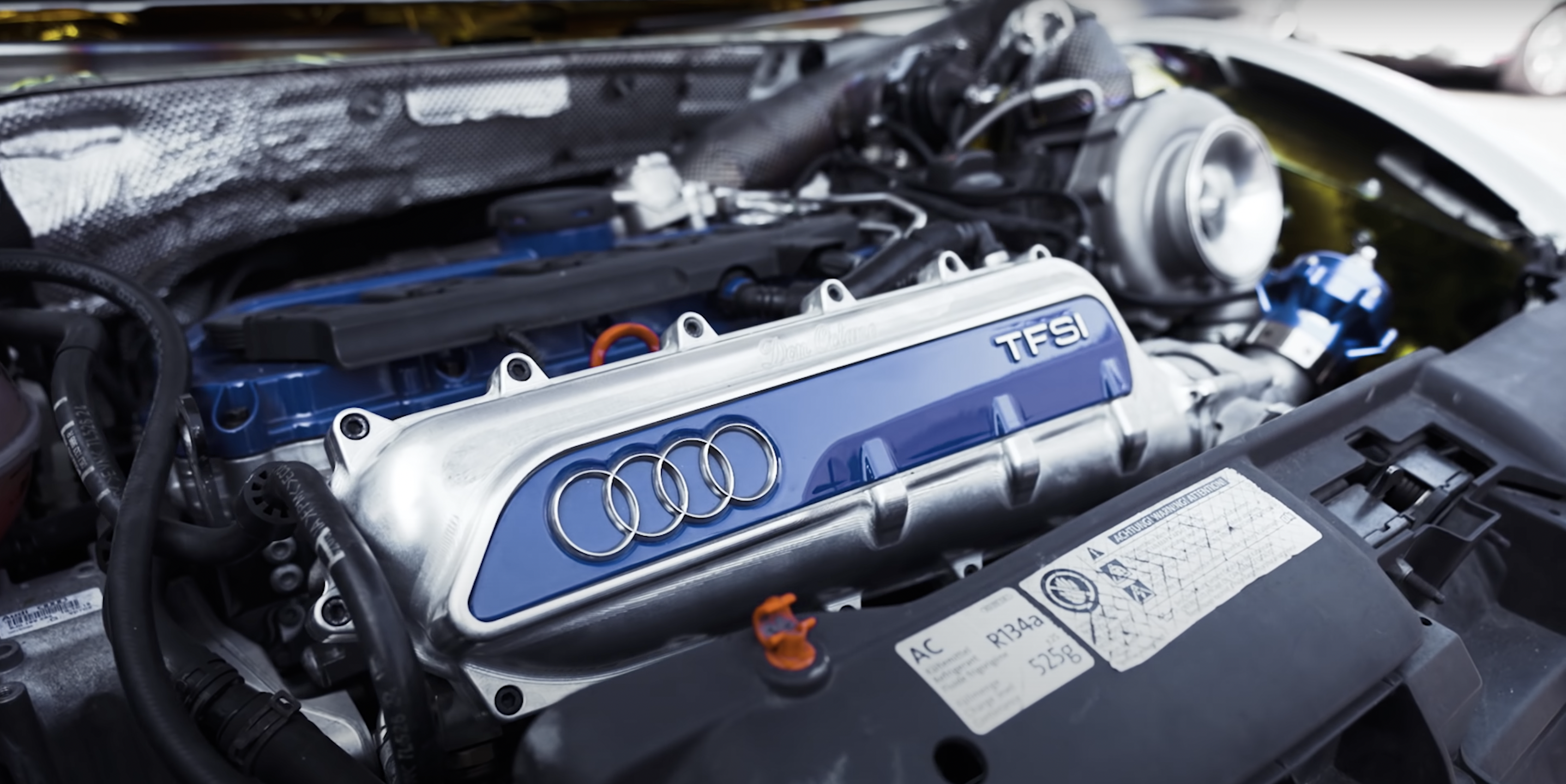
Figures for the tuned version of the engine fitted to this vehicle have not been announced, however, in standard form, the engine produced 294kW/500Nm in the outgoing Audi RS3.
Based on the now-discontinued Beetle, the kit is compatible with all models produced between 2011 and 2019. The bodykit without any mechanical changes will set owners back €5,990 (AU$9,665), with no price confirmed for any of the mechanical upgrades – such as those fitted to the first converted Beetle demonstrated here.
Jaguar Land Rover has been busy improving its Land Rover Discovery Sport range with a series of recent updates – and for the 2021 model year, it culled variants and introduced new engines.
But here’s the thing – there’s already an MY22 update on the way, so what do you do? We’ve jumped into an MY21 Disco Sport to see if it’s worth considering, or whether you should wait for the newer model due to land on our shores any day now.
The 2021 Disco Sport is all about being more eco-friendly, with old diesel donks dropped in favour of new, more fuel-efficient options on offer – while also being comfy enough to keep the family happy on long journeys.
JLR has dropped the range of variants down from 10 to just five – dramatically reducing the number of diesels from six to two, both 48V mild hybrids. The Disco still sits on the same platform it moved to in 2020, which also underpins the Evoque.
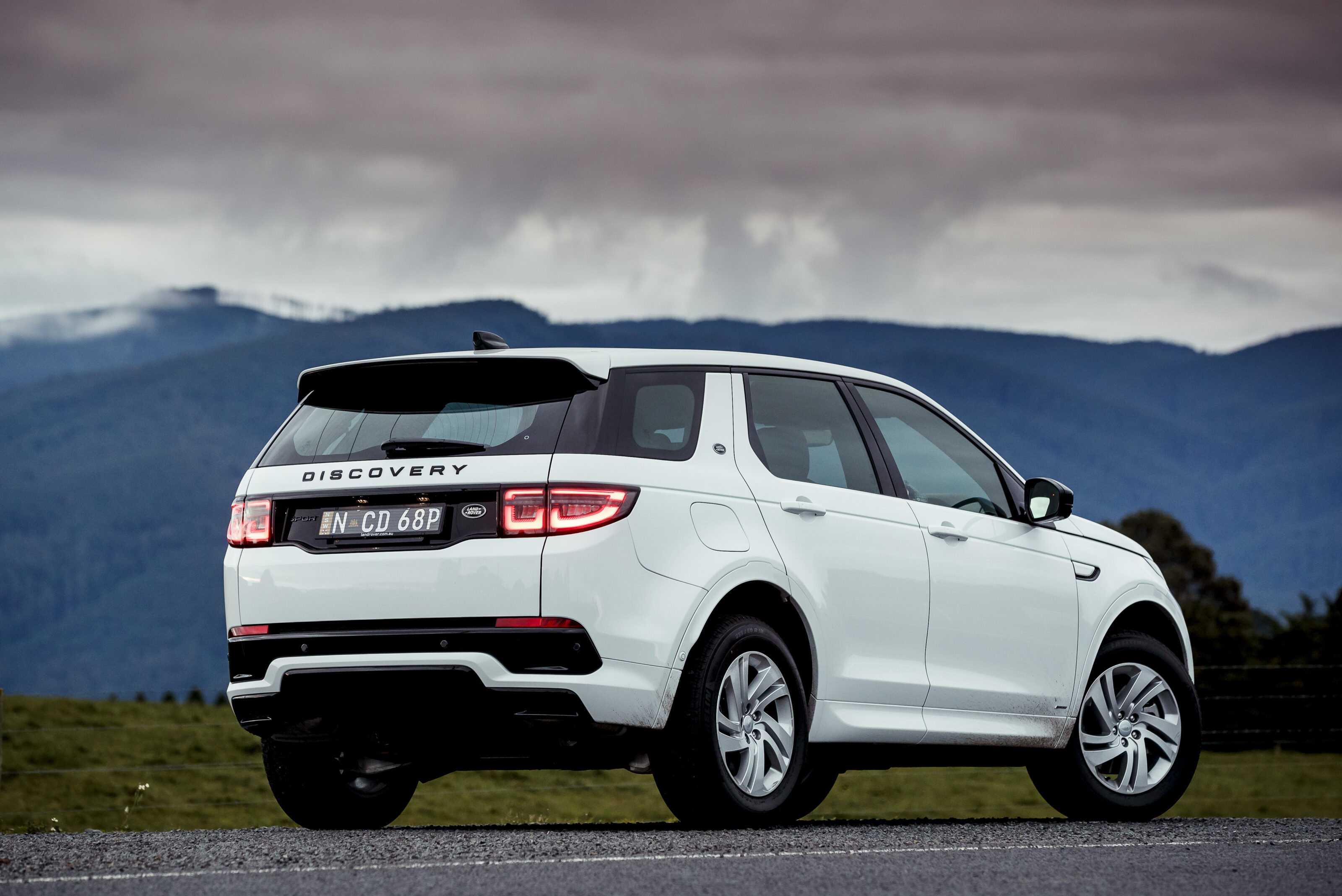
As a quick recap, the model was last overhauled with a mid-life update in 2019 for the MY20, taking influence from its Discovery sibling and Range Rover cousin.
On the face of it, the MY21 is an update and there’s not a whole lot that’s new compared to the 2020 model.
All the exterior gets is new LED headlights front and rear, as well as redesigned bumpers introduced with the previous version, but it’s inside where the differences are truly felt.
All variants, including the entry-level R-Dynamic S P200 variant in Fuji white we’re testing here, now benefit from a new, reasonably responsive, Pivi and Pivi Pro 10-inch infotainment system designed to be more intuitive for users – as well as Spotify integration (with data included) and over-the-air updates all as standard.
But it’s the 3D surround camera and cabin air filtration system we’re really impressed by. Both features offer the huge benefit of peace of mind for families.
Pricing

The Land Rover Discovery Sport range starts at $65,700 for the entry-level S P200 before on-road costs – which is the petrol model we’re reviewing here – though with the options mentioned it comes in at $68,070 MSRP.
The lowest-spec S D165 diesel is only a touch more expensive at $68,000 MSRP, the mid-spec SE P250 and SE D200 cost $74,076 and $75,610 respectively, while the range-topping HSE P250 sets buyers back $78,432. All five variants can now be found in R-Dynamic guise.
All variants benefit from a new Pivi and Pivi Pro 10-inch infotainment system designed to be more intuitive for users – as well as Spotify integration and over-the-air updates as standard.
Features
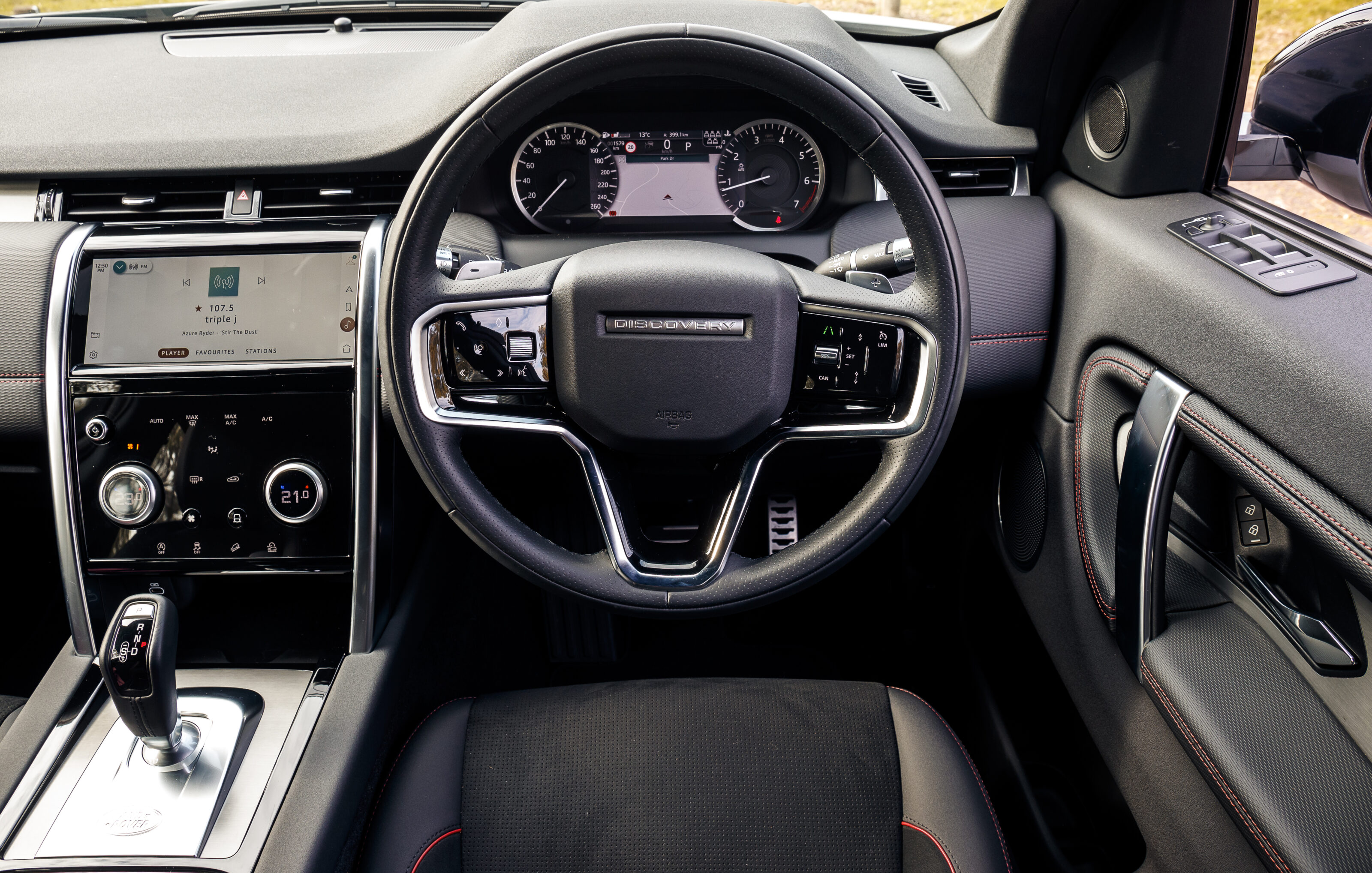
In the cabin, the materials, including door-cards, dash and Light Oyster padded headlining, look and feel immensely premium. The Ebony Luxtec and Suedecloth seats are soft and comfortable – even outclassing more expensive rivals in our opinion.
The twin-trimmed, part-perforated leather steering wheel is classy and has a pleasingly thin rim, while the Mars Red stitching across the dashboard and seats is a simple and tasteful injection of colour.
On the subject of doors, they are incredibly heavy. Although you could say it suggests good build quality, in practice they can be hard to keep open – which can make getting children in and out of the back seats slightly tricky. How many parents have struggled to get their little one out of a car seat while having a car door falling against their back? We’d hazard a guess at too many.
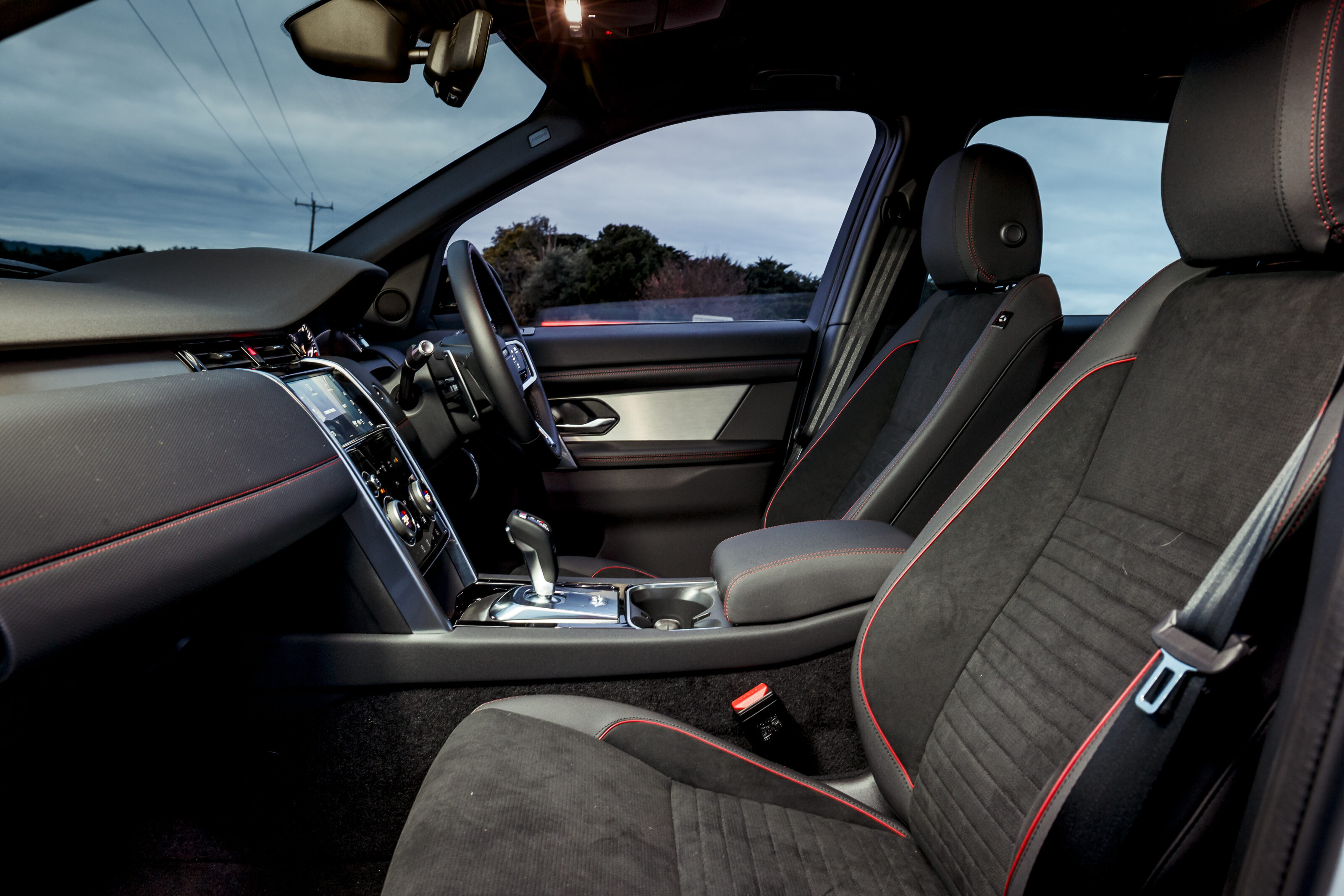
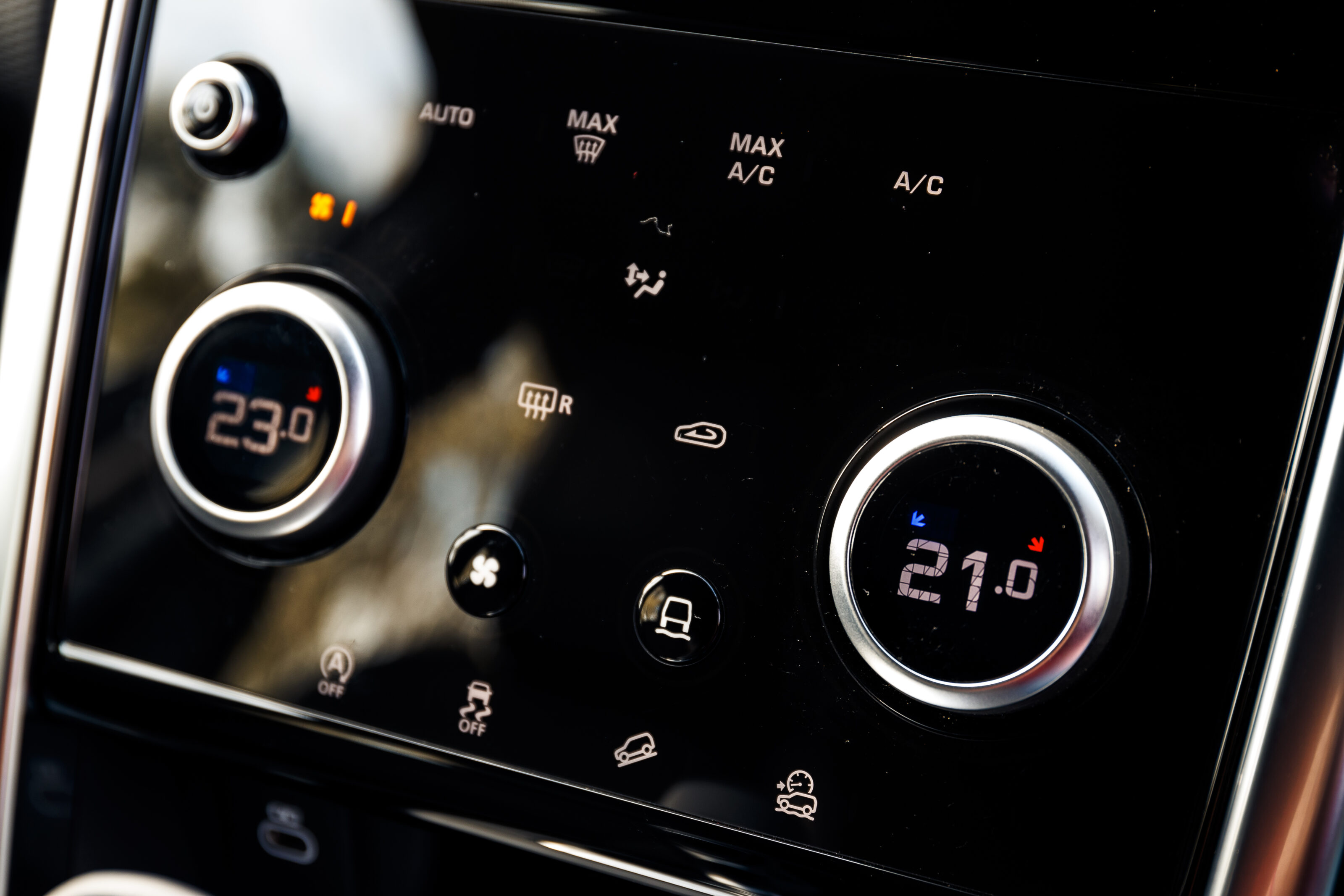
The steering wheel controls are easy to use once you’ve figured out what they actually do – since, in an effort to make them look cleaner, JLR has omitted any clues as to their functionality – as is the elegant and simple centre console. This features just two large rotary knobs for adjusting the climate and driving modes while on the go, alongside a select few other touch-sensitive buttons.
Most of the cabin is designed intuitively, including the armrest which is set at a good height and can be manually altered to find that sweet spot for your elbow.
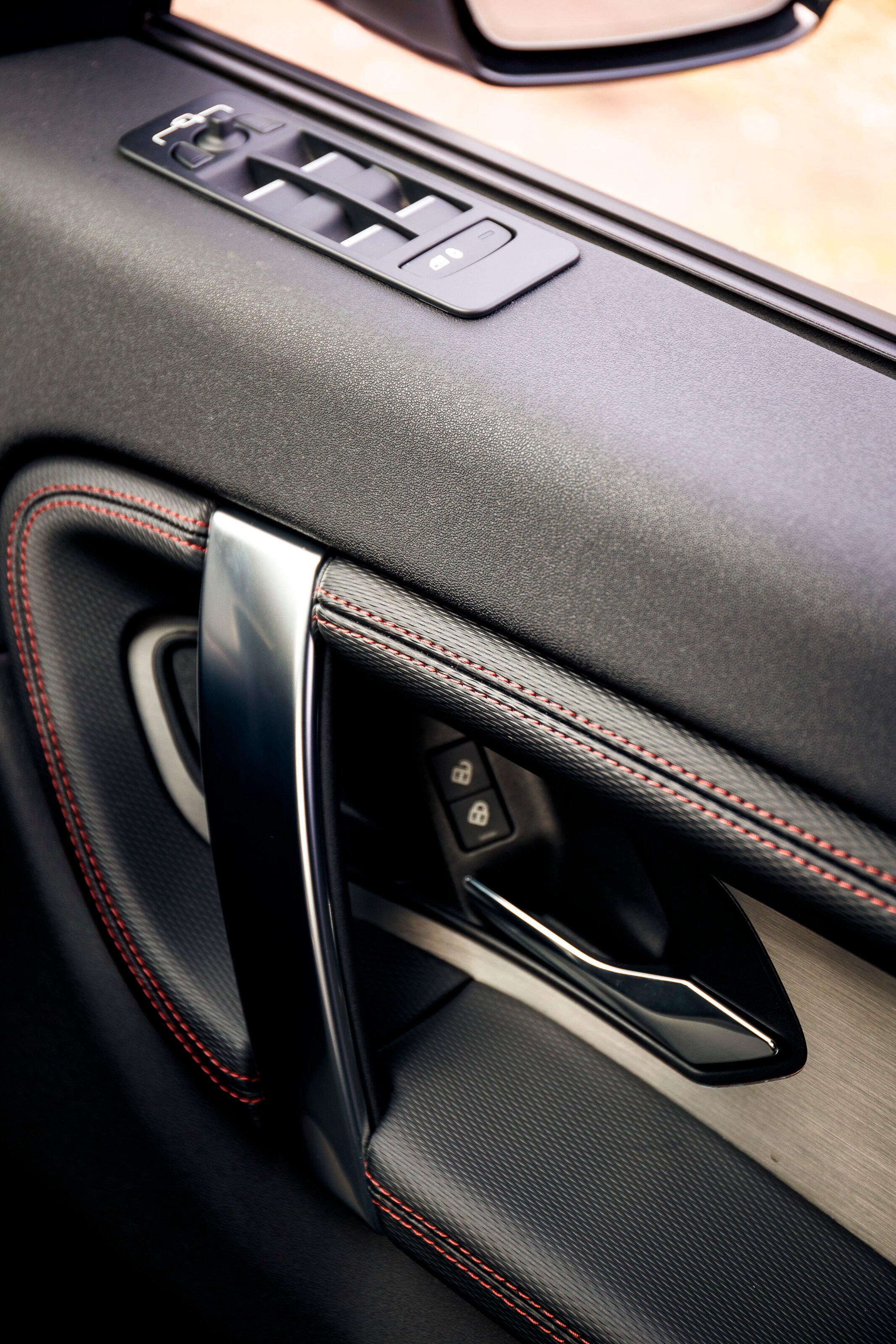
But the window controls sit on top of the door card right next to the windows themselves, which feels odd – you have to stretch and it diverts your attention away rather than letting your fingers find the buttons easily while you focus on the road. Interestingly, on JLR’s more upmarket F-Pace, the controls are back down in the traditional position. Go figure.
Other handy features include a powered tailgate, again useful for dropping kids off at childcare or school with a million and one things in your hands (most often including them when they refuse to walk by themselves).
One nice-to-have inclusion which isn’t standard on this model is privacy glass to keep the winter or summer sun out of little people’s eyes. Although this is often a costed option on most cars, there’s something to be said for expecting a little more from a premium offering.
While you might accept paying extra for it on a volume-selling mid-sized SUV, we feel for almost three times the price you could get a little more bang for your buck. Same goes for heated seats – as a minimum on the Disco Sport these will cost $810 more.

Speaking of extras, and there are a lot, this particular base-level example has some options fitted to bump the user experience up a notch. A wireless charging pad will set you back $150, although we’d probably not bother until wireless Apple CarPlay/Android Auto comes into the mix – what’s the point of wireless charging if you have to plug your phone in to use its functions anyway?
However, it does have the ability for two phones to connect via Bluetooth at once, as well as a mix of USB and USB-C ports across all rows as standard.
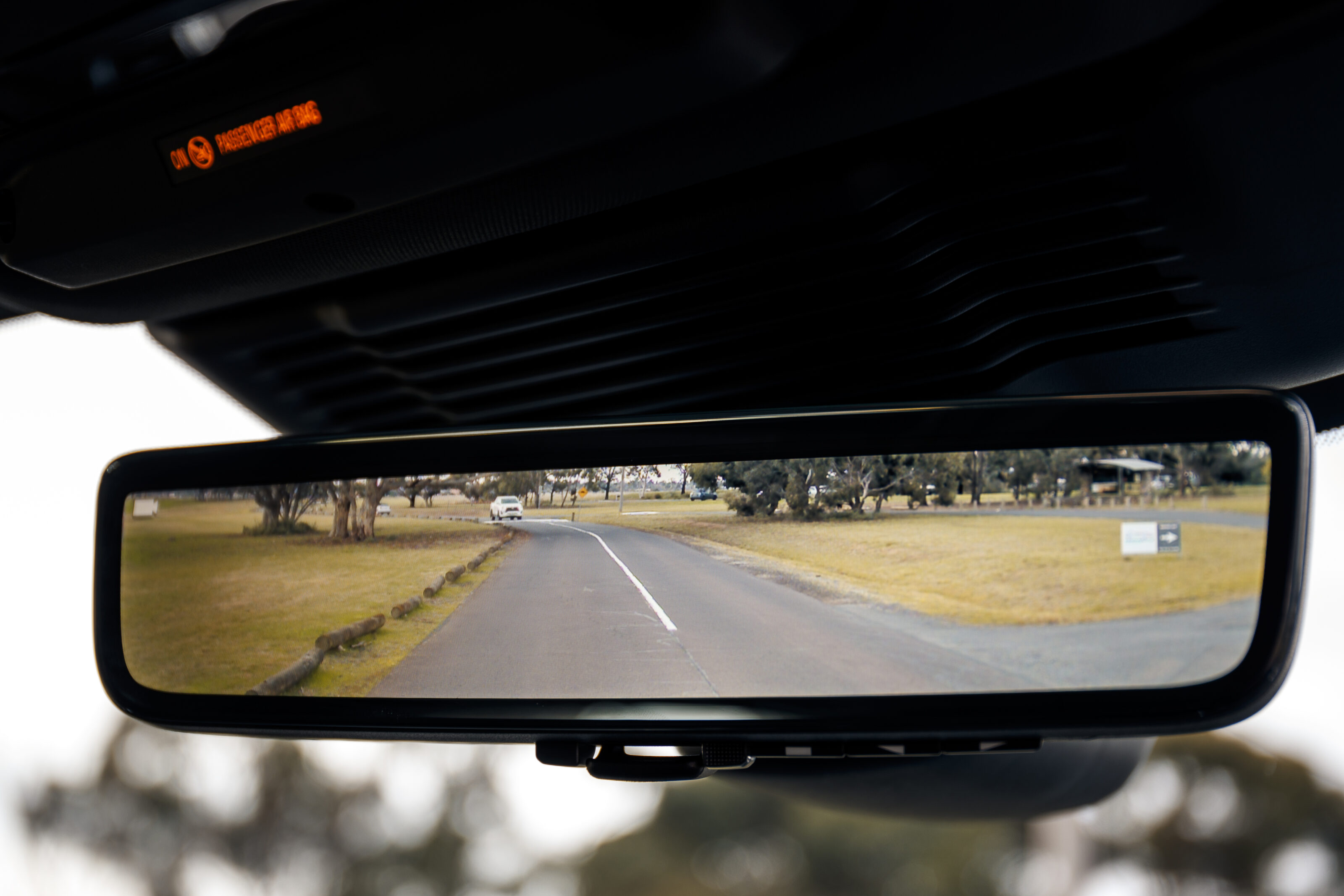
The clever Clearsight rearview mirror is a worthy add-on if you’re consistently carrying tall people in the back or want to ferry around lots of luggage. It costs $980 and uses a wide-angle camera on the roof to project a crisp image onto the mirror of what’s behind the vehicle when it would otherwise be obscured.
Our test car also had premium mats for $460 – although we couldn’t quite figure out what exactly made them so ‘premium’ as they didn’t look any different to ordinary floor mats. Many families would probably opt for rubber inserts if they have young children, not fancy but very practical.
Now for the good stuff. We were mildly obsessed with the optional cabin air filtration system (+$780). It automatically gets rid of fine particulate matter, allergens, pollen (useful for hay fever sufferers) and even bad smells. The central touchscreen displays air quality readings inside and out, while a meter rates it from ‘good’ to ‘hazardous’.
It was fascinating to see how staggeringly different the air quality was in metropolitan Melbourne compared to regional Victoria, and again how it changed in the presence of someone having a bonfire locally. Be warned, though, it can have you reaching for the ‘purify’ button as much as you would the volume dial as you try to chase down the cleanest air possible.
One nice-to-have inclusion which isn’t standard on this model is privacy glass. Although this is often a costed option on most cars, there’s something to be said for expecting a little more from a premium offering.
A real highlight is the 3D surround camera, plus its new rear traffic and rear collision monitors. While cheaper SUVs have reversing cameras of varying qualities, the 3D experience here is just next level.
You can choose which corner of the car you want to check the blind spots on and swipe the touchscreen in any direction to give a full bird’s-eye view of its surroundings.
This is great news when it comes to common danger zones where being even more aware of where small children might be wandering is no bad thing. Using it in the kindy car park and outside a local school, it more than proved its worth.
Equally, having a 360 view brings added reassurance you’re not scuffing those 18-inch, five-split-spoke alloys. Although you’d be fairly hard pushed to do so as they’re wrapped in chunky 235/60 Michelin Latitude tyres.
We’ve got to slam the brakes on you here, though, for some bad news – the MY22 does not come with the 3D surround camera as standard. It is a $500 option on the P200, or more for higher-spec variants. Worth the $500 we’d say, but disappointing that it has been relegated to the options list for the latest model.
Comfort and space
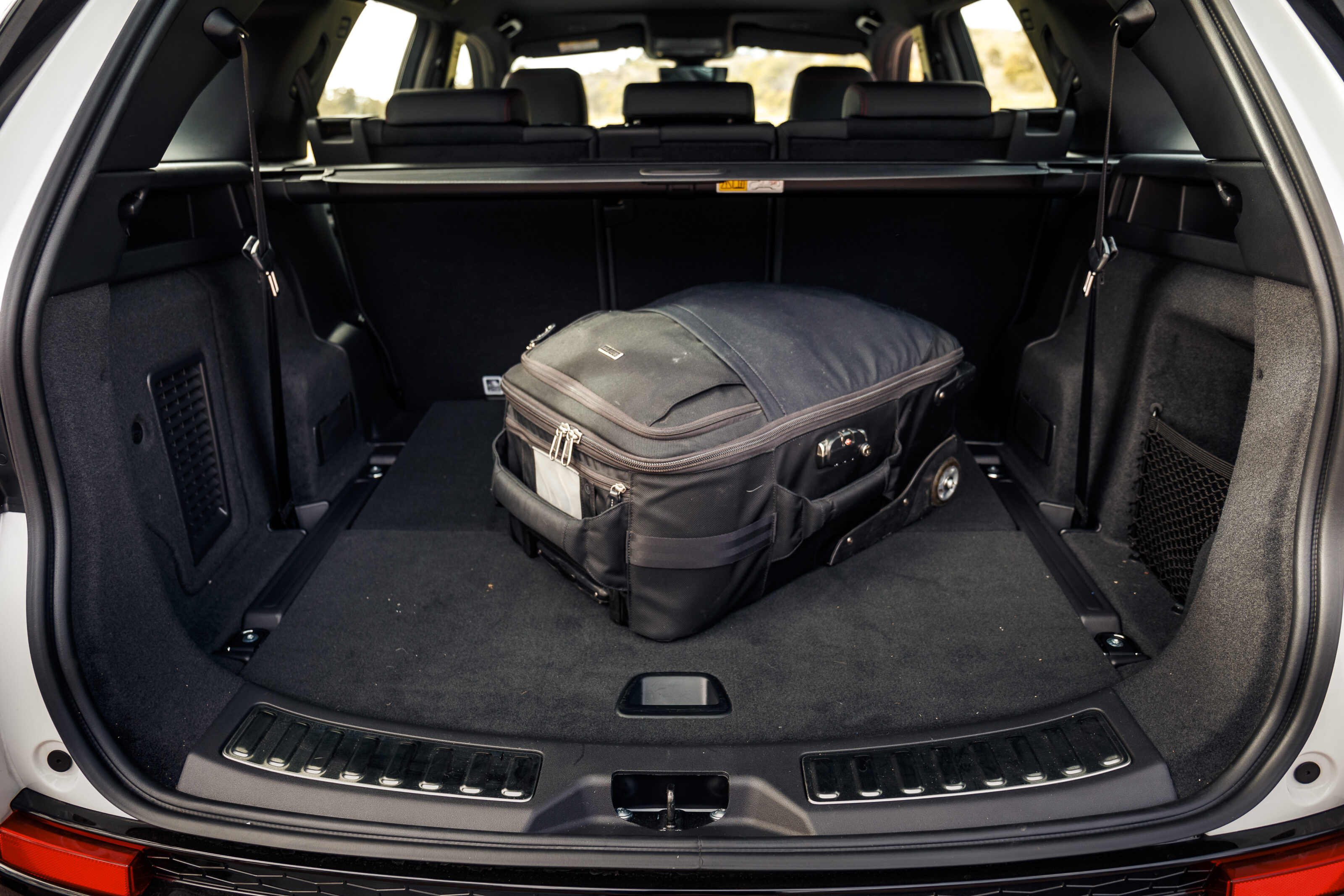
Topping off our favourite features of this car has to be the boot space. A 5+2 premium compact SUV, it has 157L with all seven seats up, increasing to 1036L with the third row down which is ample boot space (and enough to change a toddler comfortably as it has no lip). Capacity increases to a massive 1651L with all but the front row folded flat.
The driver and front passenger seats are electrically adjustable, while the second row can also be moved manually and even recline, which makes hanging out in the back that bit more comfortable and enjoyable.
There are no cupholders or USB ports as standard, but the rear occupants do benefit from their own two-zone climate control vents and a centre armrest if there’s no one in the middle seat.
The third row, however – introduced as standard in 2020 – is a nice-to-have for when you’re on designated-driver duties carting your mates home from a night out, or ferrying your kids’ friends around, but they wouldn’t want to be spending any extended amount of time back there.
It’s not suitable for young children as there’s no ISOFIX or top-tether points for car seats, while a lack of legroom and general feeling of claustrophobia would probably make young ones over the age of 10 want to swap seats pretty sharpish.
On the upside, the side windows between the C and D pillar are quite large and do let in plenty of light.
Topping off our favourite features of this car has to be the boot space. As a 5+2 premium compact SUV, it has 157L with all seven seats up, increasing to 1036L with the third row down.
On the road
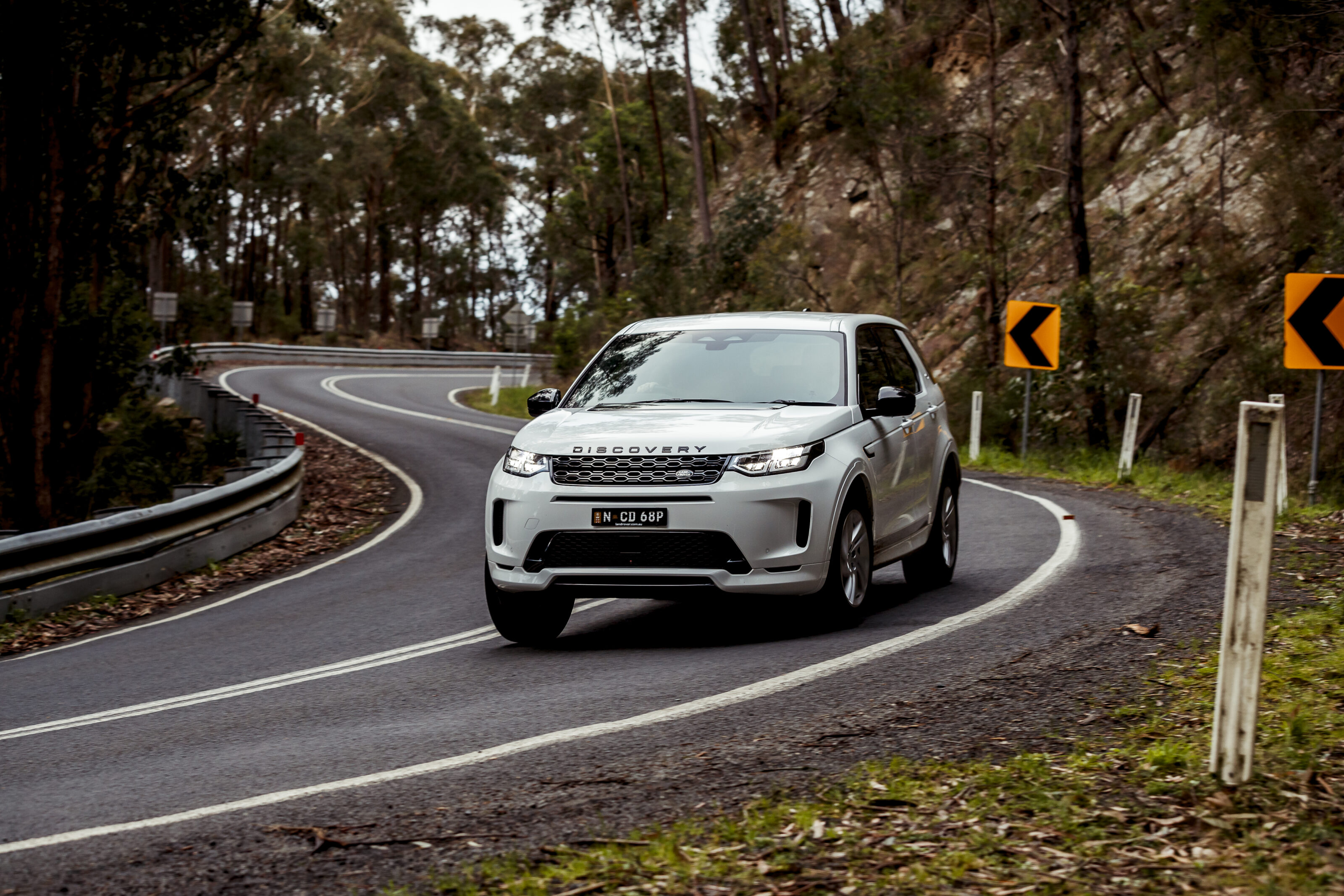
This 2021 Land Rover Discovery Sport R-Dynamic S P200 features a 2.0-litre Ingenium four-cylinder turbo-petrol engine mated to a nine-speed auto transmission sending 147kW/320Nm to all four wheels.
As outlined, though, there are diesels in the line-up, both 2.0-litre TD4s, offering either 120kW/380Nm for the S D165 or 150kW/430Nm for the SE D200. The mid-range petrol SE P250 and range-topping HSE P250 both churn out 183kW/365Nm.
Driving around town, the P200 is smooth, comfortable and very quiet. The ride can be a little bumpy on particularly bad roads, but for the most part it’s well-composed, especially given the car is on coil springs and lacks adaptive dampers. Engine noise is very well suppressed too.
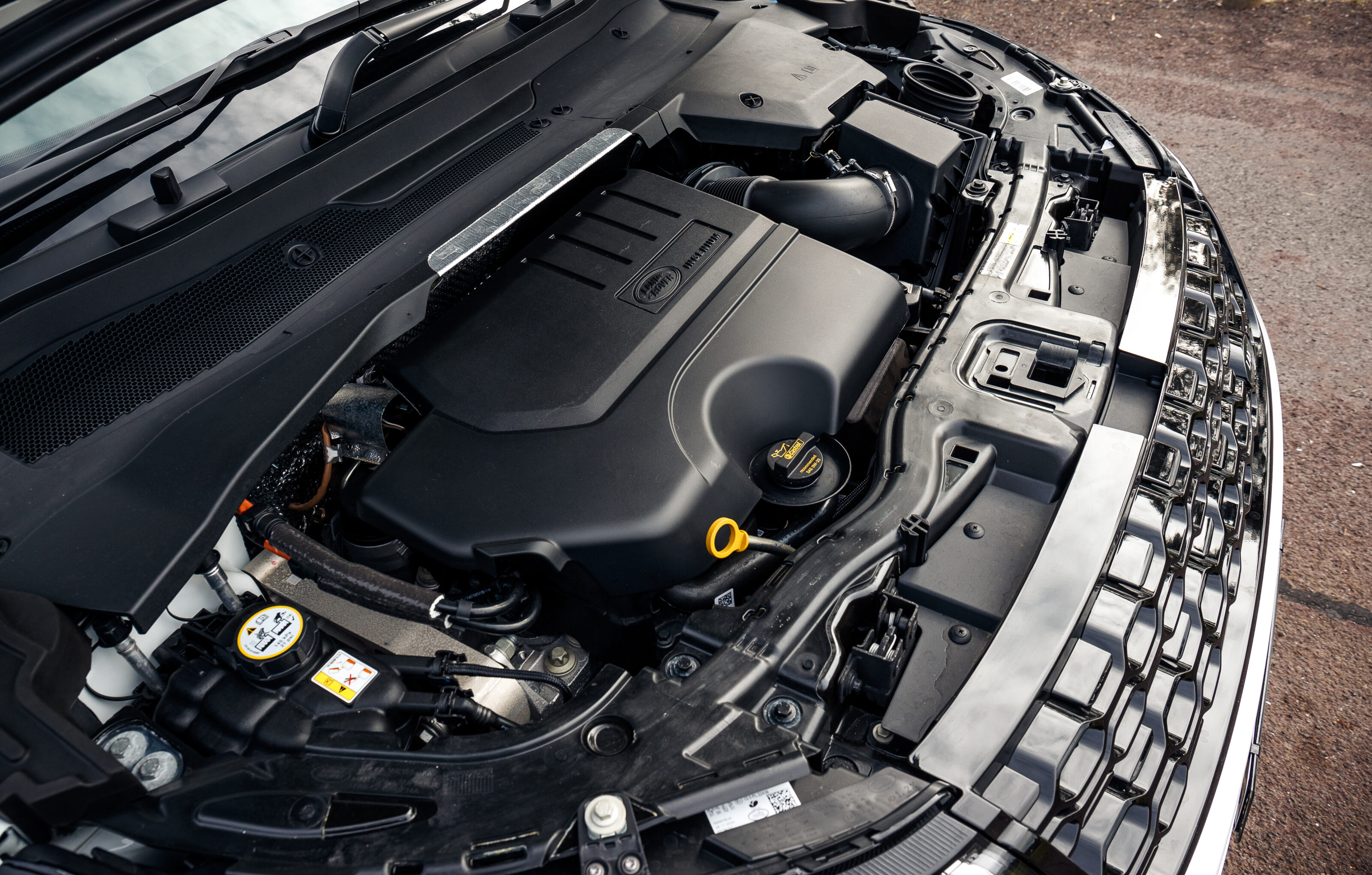
While its low-end response is healthy, rolling acceleration isn’t quite as strong as it could be, which could be an issue in certain situations such as a freeway overtake. Consider one of the higher-spec engines offering stronger performance if this is a requirement.
The Disco Sport particularly feels the strain when in Eco mode, which can be lethargic when you put your foot down. I found it’s best to stay in the Auto drive mode.
Body control is good through the corners, and the steering is fluid and nicely weighted, although it’s let down by a slight dead spot just off-centre. The brakes are also strong and responsive with a nice pedal feel.
Meanwhile, the shifter is a little slow to respond when parking/reversing off a driveway/executing a three-point turn – requiring far too deliberate an effort. Despite this, it’s a pretty smooth cruiser and the metal paddle-shifters are a classy touch if you ever get bored of letting the car do all the work.
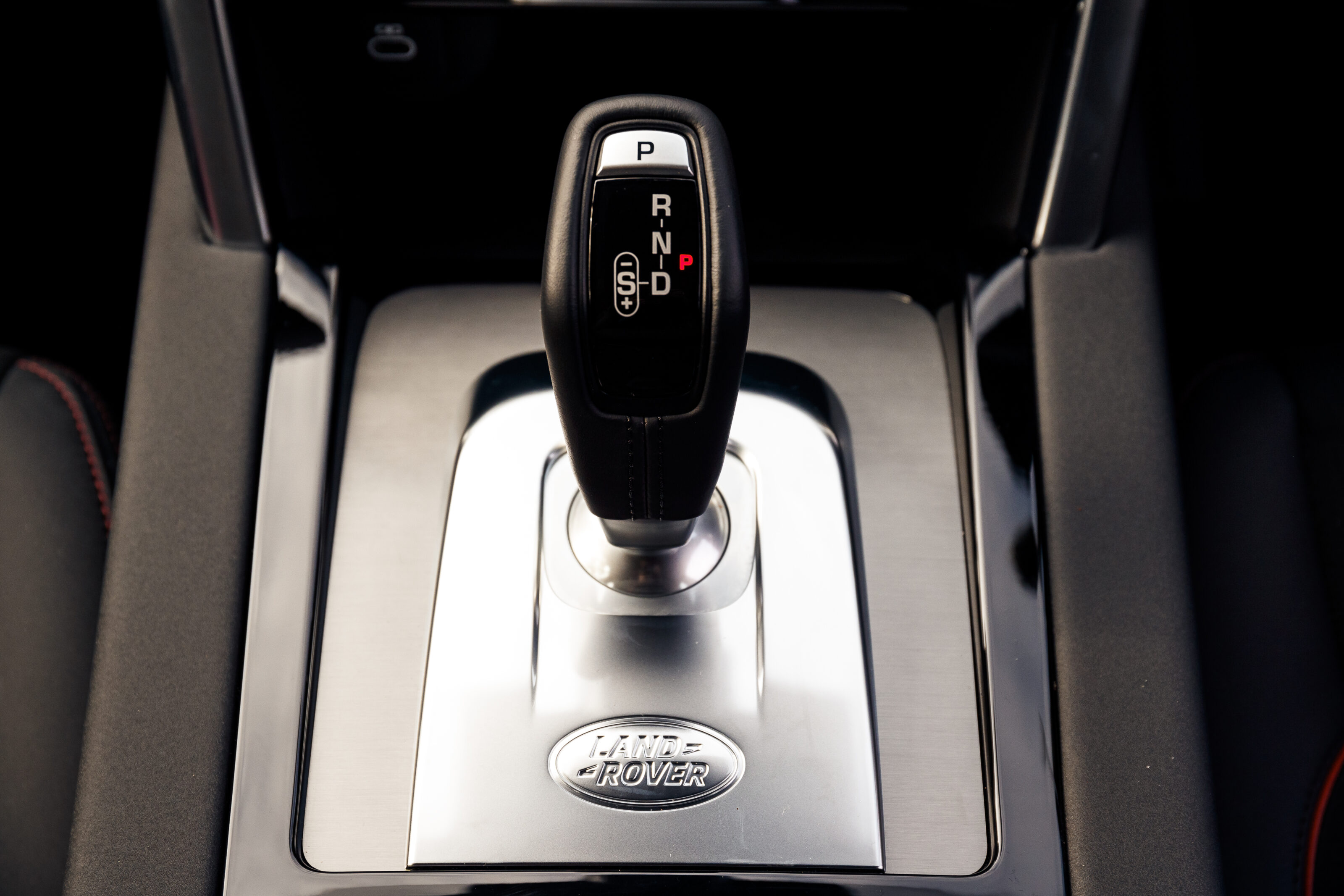
Off-road the Disco Sport is much more capable than you might imagine for a luxury SUV, thanks, in large part, to its ClearSight Ground View function introduced in 2019. This incredibly clever camera tech stitches together images below the bonnet for enhanced visibility.
A raft of dedicated driving modes can also be toggled via the rotary knob on the centre stack in addition to the go-to auto setting. In fact, just about any terrain has its own setting, as you can choose between rock crawl, grass, gravel and snow, mud and ruts and even a sand mode.
The Disco Sport wasn’t with us long enough to give a proper idea of its fuel consumption. But with a lot of mixed driving – freeway, town and twisty roads in the hills – we found the average we managed was 10.8L/100km. However this could probably be bettered in eco mode to bring it closer to its official rating of 8.1L/100km.
Off-road the Disco Sport is much more capable than you might imagine for a luxury SUV, thanks, in large part, to its ClearSight Ground View feature.
Safety
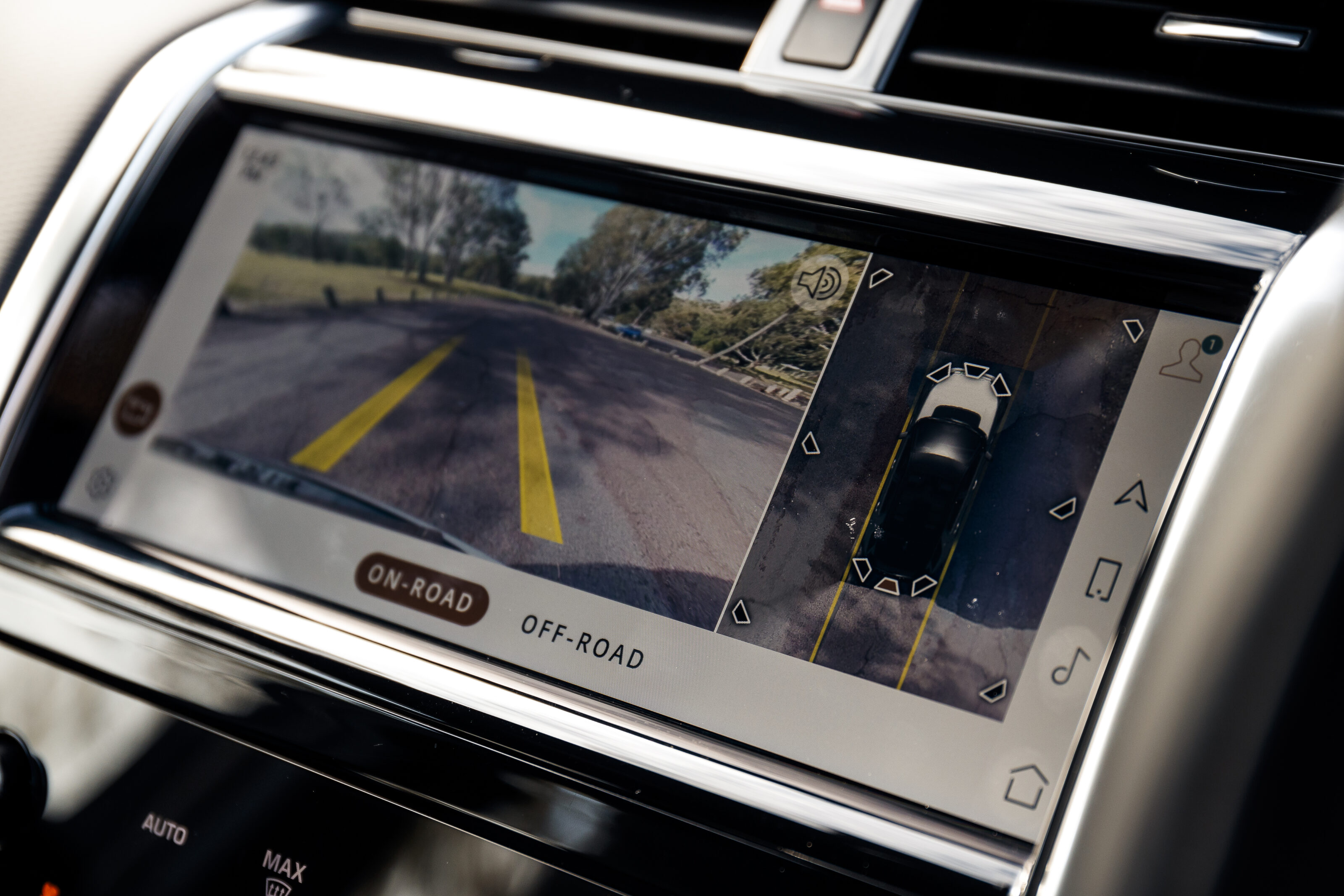
As standard, the MY21 Land Rover Discovery Sport gets a raft of new advanced driver assistance features, including automatic braking and rear traffic monitoring.
There’s also clear exit monitoring on the rear doors, blind-spot assist, adaptive cruise control, lane-keep assist, rear collision monitoring, traffic sign recognition with adaptive speed limiter and wade sensing, as well as driver condition monitoring.
Ownership
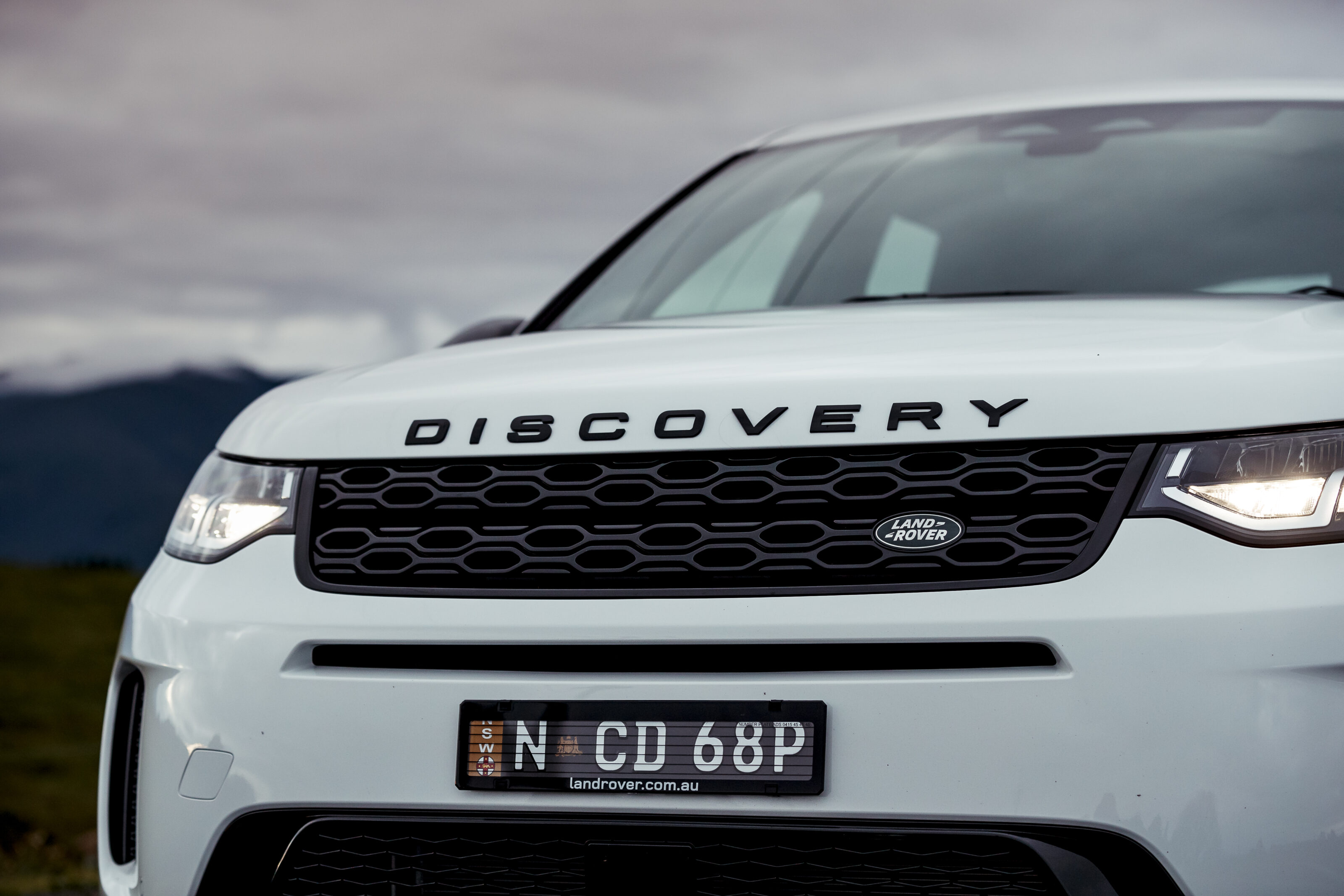
Like all Jaguar Land Rover products since April this year, the Discovery Sport comes with a five-year/unlimited-kilometre warranty, which includes paint protection on the same terms, while bodywork corrosion is covered for six years.
To its credit, JLR is only the second premium brand to join the wider market in offering five years of coverage, with Mercedes-Benz taking the leap in 2020. Lexus already offered four years, but BMW and Audi appear content (and claim their customers are as well) with three-year terms.
VERDICT
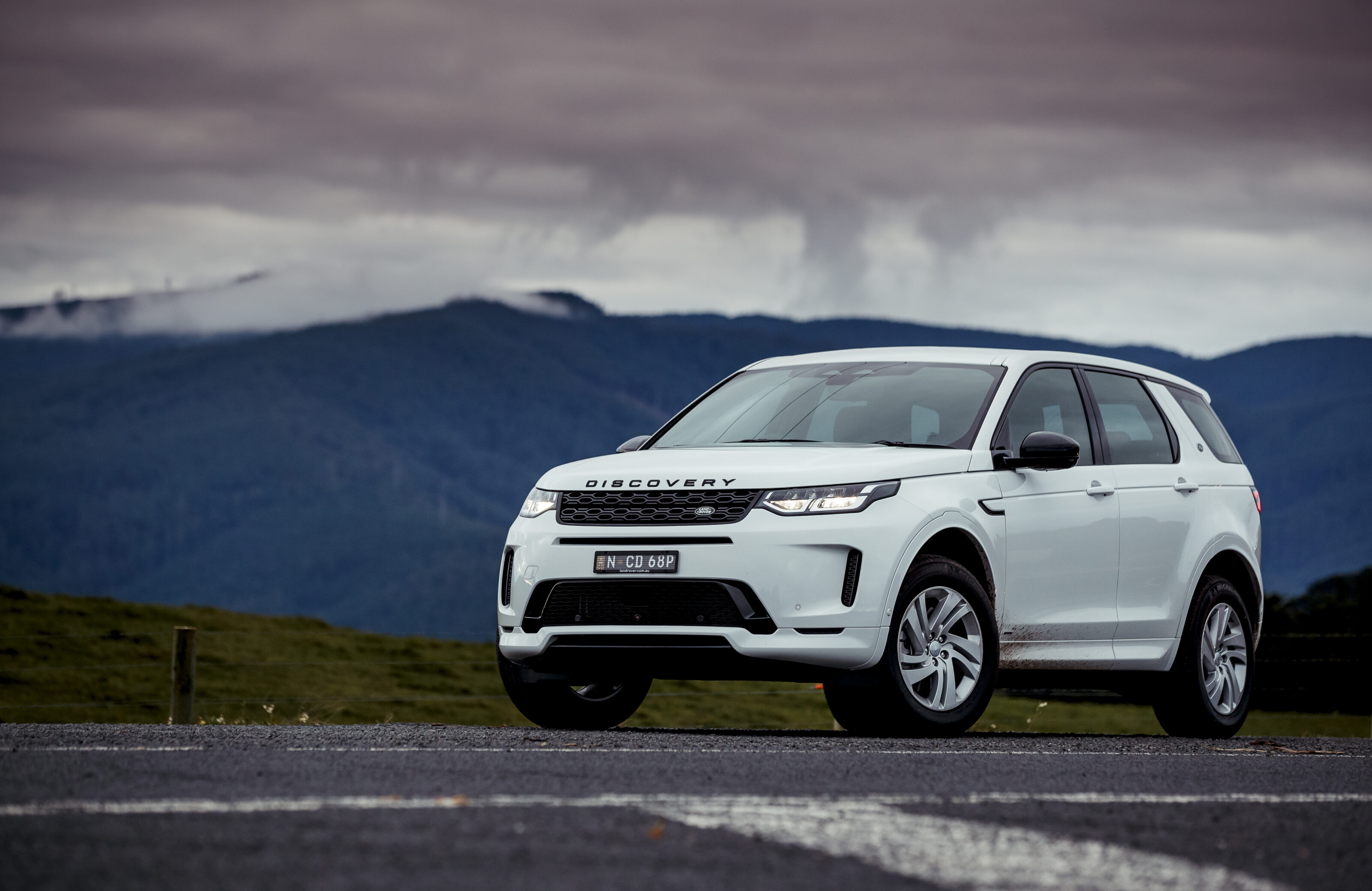
The Disco Sport is undoubtedly a great family car, and in P200 guise with a few options such as the Clearsight rearview mirror and cabin air filtration system, it represents good value.
If you want or need more power and torque, the mid-range petrol SE P250 and range-topping HSE P250 both turn out 183kW/365Nm, or if fuel economy is the more important factor, the S D165 and SE D200 both offer 5.7/100km.
The P200 we’ve tested is up $5200 on the MY20 model, but is $1110 cheaper than the incoming MY22.
Compared to its closest rivals, the Disco Sport is good value in its segment, especially given the extra two seats available – a USP among its rivals.

Compared to its closest rivals, the BMW X3 that retails at $84,828 before on-roads, and the Audi Q5 which costs $77,000, and not to forget its Range Rover Evoque cousin coming it in $74,907, the Disco Sport is good value in its segment, especially given the extra two seats available – a unique selling point among its rivals.
Other rivals you could consider, which are more affordable, are the VW Tiguan Allspace and Skoda Kodiaq that cost between $40K and $50K before on-roads and options. The Mercedes-Benz GLB 200 is also worth mentioning here as it starts from around $60K before ORC.
Overall, we’d pick to stay with the MY21 update over the new MY22. While it’s nice to have the very latest offering, the 2021 model is cheaper than its successor and a lot of standard features, including the 3D surround camera, have disappointingly been relegated to the options list for the new car. Your money will go further with the MY21, and for us, that’s what counts.
2021 Land Rover Discovery Sport R-Dynamic S P200 specifications
| Body | Five-door 5+2 medium SUV |
|---|---|
| Drive | Front-wheel drive |
| Engine | 2.0-litre Ingenium four-cylinder turbo-petrol |
| Transmission | Nine-speed automatic |
| Power | 147kW |
| Torque | 320Nm |
| Bore/Stroke | N/A |
| Compression ratio | N/A |
| 0-100km/h | 9.2 sec |
| Fuel consumption | 8.1L/100km |
| Weight | 1979kg |
| Suspension | Coil suspension |
| L/W/h | 4597/1904/1725mm |
| Wheelbase | 2741mm |
| Brakes | 349mm (front); 325mm (rear) |
| Tyres | 235/60 Michelin Latitude tyres |
| Wheels | 18-inch five-split-spoke alloys |
| Price | $65,700 + ORC |
Snapshot
- A total of 10,063 vehicles affected
- Potential of alternator failure could immobilise the car
- Mercedes-Benz is currently contacting known owners
All Mercedes-Benz C200s sold between 2014 and 2015 have been placed under recall in Australia, the widest for the model so far.
Affecting a total of 10,063 units, Mercedes-Benz has issued the recall due to a potential for alternator failure under certain conditions, possibly leading to a fire in the car’s engine bay.
Not only can this drain the vehicle’s battery, but it can also cause further damage within the engine bay, with the ability to spread to the rest of the car – which would put occupants at risk.
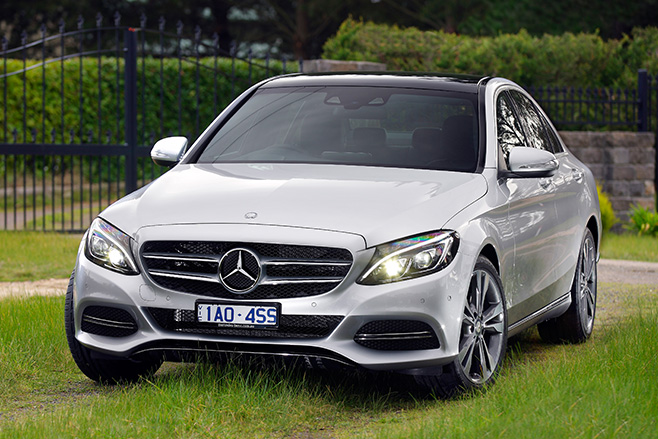
Mercedes-Benz is currently in the process of contacting known owners to notify them of the issue, offering to carry out the necessary work free of charge.
Owners who are unsure about whether their car is affected can contact an authorised Mercedes-Benz dealership or book a service online.
Over the two-year period under recall, a total of 15,218 Mercedes-Benz C-Class models were sold – with the recall affecting just under two-thirds of the wider model.
A list of VINs for affected vehicles can be found here.
If you want to get noticed on the streets of Munich during IAA week, a lurid Lamborghini or box-fresh Bentley just doesn’t cut it. With so many new machines being uncovered at various sites around the Bavarian capital as part of the international motor show this year, the normal exclusivity of cars is somewhat diluted and for just a few days in September, the locals are a little harder to please.But there is still one way to pique the interest of car enthusiasts, as I found out with a heavily disguised model that’ll likely grace Australian showrooms before 2024.
In a basement car park two stories beneath the bustling streets of Munich, a new Skoda was waiting. But this enigmatic new model was not presented in an expected shiny hero colour, rather the sort of wrap journalists are not ordinarily invited to look at – let alone jump in and drive.
In automotive terms, this is the equivalent of handing a knife and fork to a fox and ushering it into the chicken coop. And yet here I was at the wheel of the as-yet-unseen Skoda Enyaq Coupe iV cruising Munich with nothing more than a photographer to chaperone me.

Actually, this particular car had only a few secrets to hide and the new Coupe version of Skoda’s first pure electric vehicle is mechanically identical to the crossover version that is already selling throughout Europe like hot pretzels.
Four versions are available, starting with the Enyaq 50 and a choice of 60, 70 and 80 versions denoting the rough kWh capacity of their lithium-ion batteries.
The Coupe version that a significant number of pedestrians were stopping and staring at is the 80 (actually 82kWh), which produces 150kW and 310Nm and is good for more than 500km of range and a jog to 100km/h in 8.7 seconds.
I can understand their curiosity. If studied closely, the ‘camo’ wrap breaks up the Enyaq’s lines with a jumble of the letters SKODA but beyond the telltale wheel design, the car is genuinely enigmatic and impossible to identify.
The Coupe is the 80 (actually 82kWh), which produces 150kW and 310Nm and is good for more than 500km of range and a jog to 100km/h in 8.7 seconds.

Not so on the inside, however, where the clean and minimalist cabin is pure Skoda with a selection of contemporary but tasteful materials including a convincing carbonfibre-look dash trim and a pleasant blend of synthetic leather and fine fabric for the upholstery.
Ergonomically, the Enyaq’s cabin is deceptively roomy with a huge standard panoramic glass roof and excellent use of space as has become a calling card of the Czech brand. The driving position is comfortably reclined while allowing a good view of the surroundings – and a constant flow of intrigued onlookers.
A few passersby asked “what is it?” but I’m not even sure if I was allowed to tell them nor did I feel happy admitting there’s an imposter at the wheel.
If I had gone all motor-mouth I would have told them that, from the B-pillar back, the Enyaq Coupe is completely redesigned along with the front and rear bumpers, but you’ll have to wait until as late as December to see the full effect officially revealed.

When public though, the more elegant profile will not just introduce a stylish variant of the EV-only model but a version that compromises little. Compared with the more orthodox Enyaq, the coupe boot shrinks by 15 litres to 570L but the shape was rigorously developed using Audi’s wind tunnel to reduce drag.
Consequently, the coupe’s drag coefficient falls from the 0.25Cd of the crossover version to 0.24Cd and could even measure 0.23Cd for the final WLTP production version.
The result is a silky driving experience at speed with eerily low wind and tyre noise a constant reminder that this Skoda will go further on a single charge, while its vast 13.0-inch central screen displays, among other useful information, the position of abundant public charge points should you need to top up. It contrasts the tiny 5.3-inch driver display which feels tiny by comparison.
Even without the attention-seeking disguise, Skoda’s EV offering feels different in all the right ways without feeling gratuitously so while conventional in others.
With a generous second row of seating and large boot, you certainly get a lot more for your cash compared with other similarly priced EVs such as the Mini Cooper SE, while the Skoda marque arguably inspires a little more confidence than challenger brands such as Tesla and its Model 3 that kicks off from about $65,000.

The Enyaq’s instant torque is perfect for negotiating the busy city traffic, while its legs are surprisingly long when the narrow streets widen into busy freeways.
Its stubby gear selector can be flicked from D to B mode on the fly for single-pedal driving but the regenerative effect could be a little more aggressive.
The ride is firm, its reassuringly solid feel matches with the smooth, direct steering and a low centre of gravity for unexpected agility.
Perhaps it shouldn’t be so unexpected though, because the Enyaq shares a majority of mechanicals with some family stablemates courtesy of its MEB platform that underpins the Volkswagen ID.4 and Audi Q4 e-tron – two models that have received wide acclaim.
While the ride is firm, its reassuringly solid feel matches with the smooth, direct steering and a low centre of gravity for unexpected agility.

Most encouragingly, it’s looking likely the Enyaq range will come in Australia. Skoda Australia’s official line was previously that it had no plans to offer the Enyaq here, but the brand now says it’s confident timing will be announced in 2022.
Ask the same question of Skoda E-mobility and Enyaq iV spokesperson Stepan Rehak, and he’ll pick up the phone then after a few lines of Czech comes the response “Working on it”.
What’s more, with the Enyaq retailing in the UK for the equivalent of about $9400 cheaper than the equivalent VW and Audi’s version expected to carry a decidedly premium price, the Skoda is shaping up to be the most affordable family EV in the VW Group fold.
2022 Skoda Enyaq Coupe iV specifications
| Motor | Single front motor/Twin motor AWD |
|---|---|
| Battery | Up to 82kWh |
| Max Power | 150kW |
| Max Torque | 310Nm |
| Weight | 2042kg (Enyaq 80 crossover) |
| 0-100km/h | 8.2sec |
| Economy | |
| Price | $60,000 estimated |
I want a performance car as an investment. My money’s doing nothing in the bank so I figure why not play the market? My logic is that Italian V12 exotics will always come good in the longer term, so if you had $250k to spend, would you choose a 2012 Ferrari FF or a 2004 Lamborghini Murcielago? – Alan K
Proceed with caution, Alan. I’m sure that the previous keepers of both the Ferrari and Lamborghini may have been working on exactly that logic. It all depends how long you’re prepared to wait.
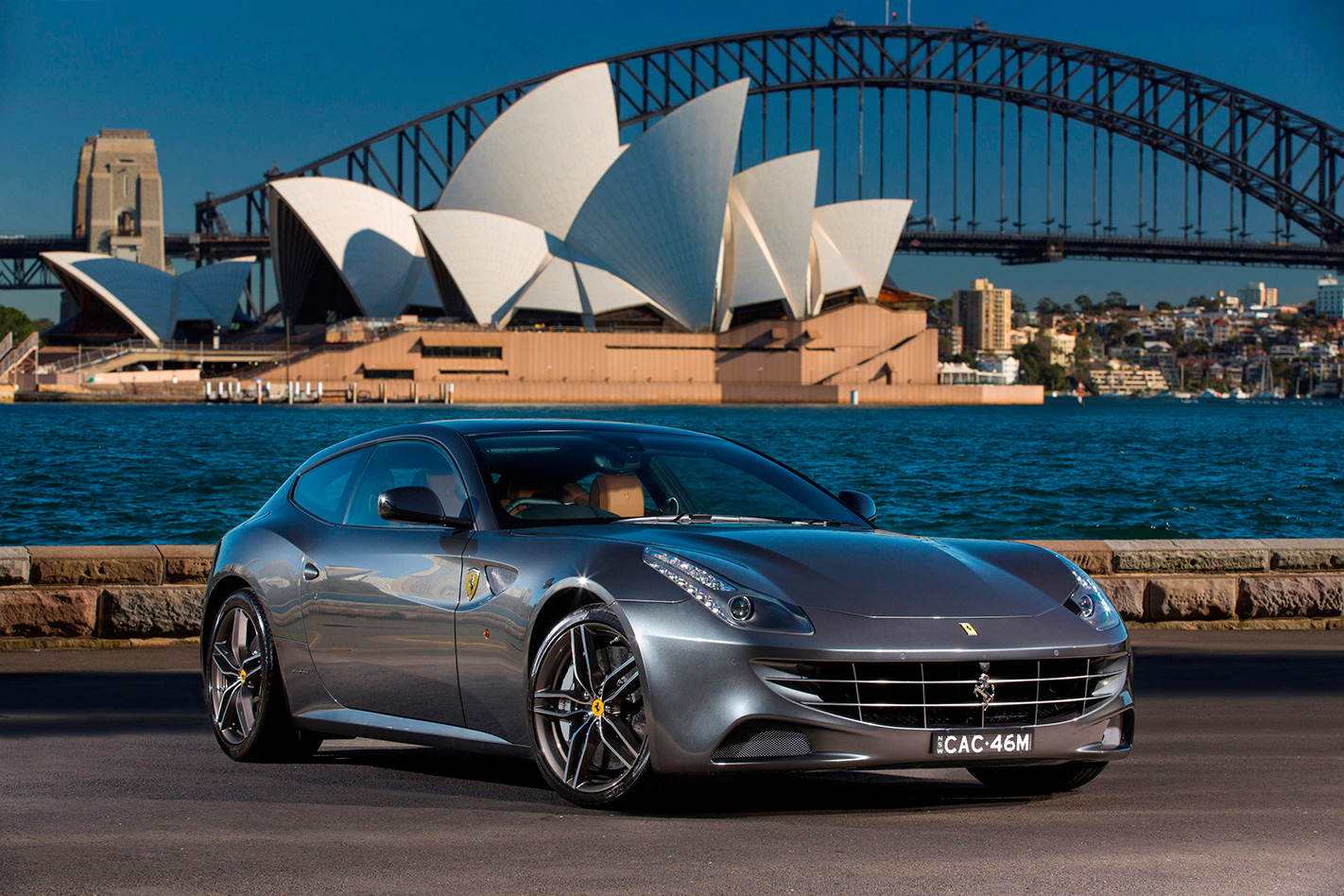
Judged purely in terms of investment potential, I’d probably lean towards the Murcielago over the FF. It’s an easier thing to comprehend, whereas the FF reminds me of the 2+2 365 GTC/4, a great and misunderstood car whose values spent a few years in the doldrums before finally ramping up.
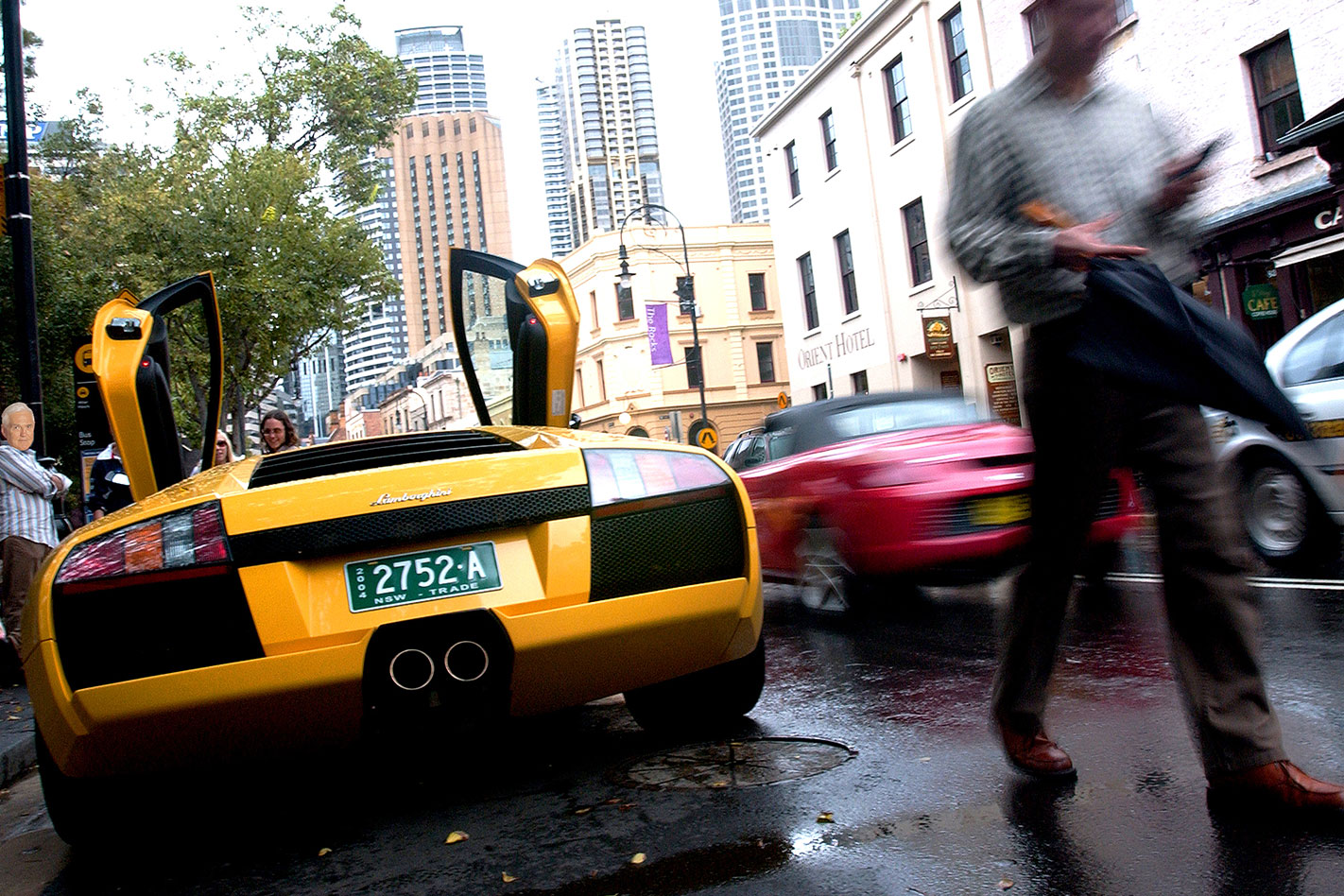
But where only 505 GTC/4s were ever built, Ferrari built more than four times the number of FFs, and many consider its successor, the GTC4Lusso, to be a continuation rather than a replacement. Meanwhile, some 4099 Murcielagos exited the plant at Sant’Agata.
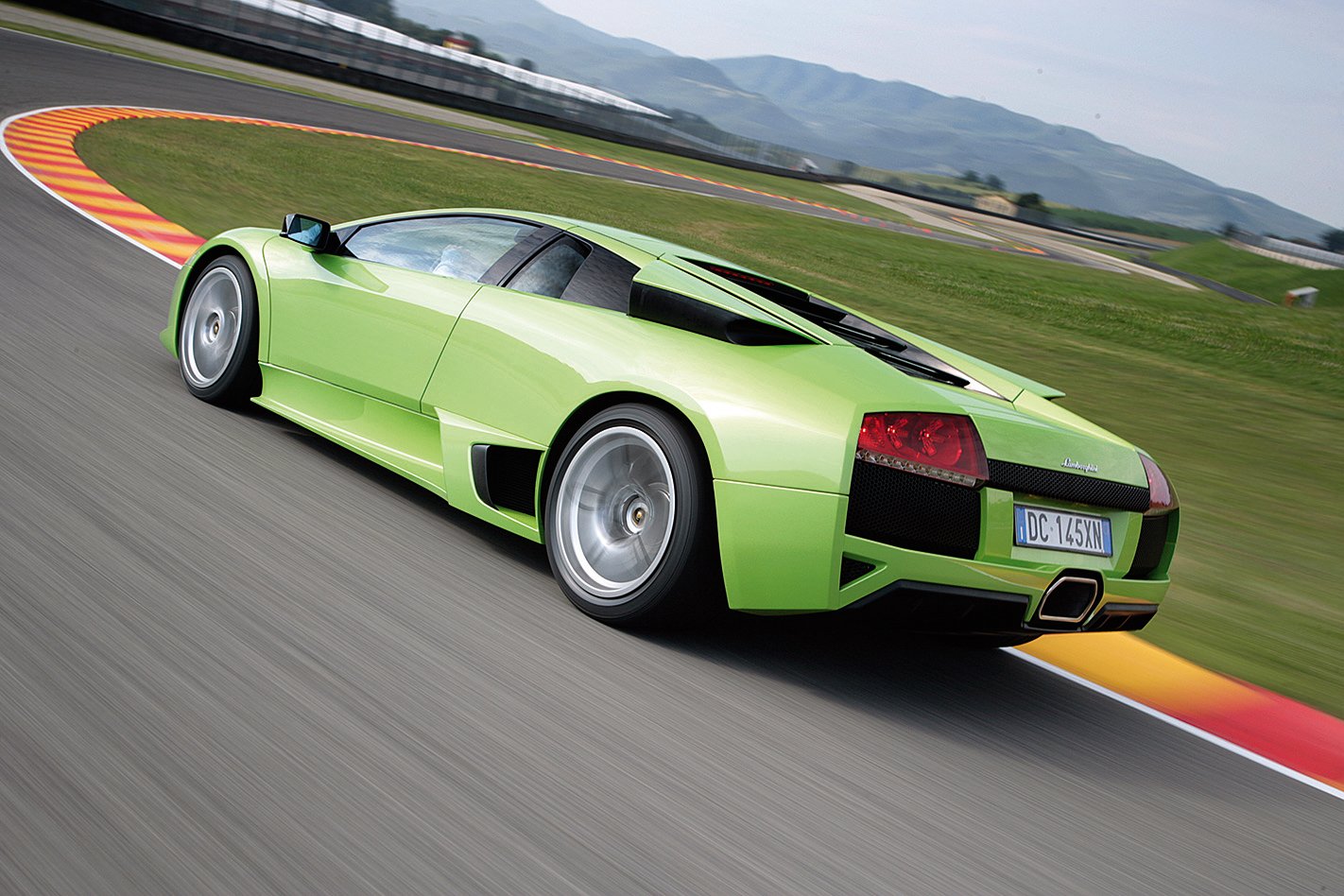
Aside from specials like the SV and 40th Anniversary version, the LP640 is worth saving for, and given that the Murci was the last of the manual Lambo V12s, we’d be tempted to spend a little more and source a car with three pedals. – AE
| u00a0 | Ferrari FF | Lamborghini Murcielago |
|---|---|---|
| Engine | 6262cc V12, DOHC, 48v | 6192cc V12, DOHC, 48v |
| u00a0Power | 485kW @ 8000rpm | 427kW @ 7500rpm |
| Torque | 683Nm @ 6000rpm | 650Nm @ 5400rpm |
| u00a0Weight | 1880kg | 1841kg |
| 0-100km/h | 3.5sec | 3.9sec |
| Price | c.$250k (2012 example) | c. $250k (2004 example) |
Snapshot
- Just 27 units have been recalled
- Possible automatic transmission fluid leak could cause wider issues
- Notice affects just over one per cent of all MY2021 Jimnys
Suzuki Australia and Suzuki Auto Co have placed 27 units of the 2021 Jimny under recall, covering just over one per cent of all Jimnys sold this year.
According to the notice, a fault with the vehicle’s oil seal on automatic transmission models could lead to a potential fluid leak, causing damage to the gearbox’s internals – as well as a loss of drive.
With Suzuki Australia operating nationwide, the manufacturer says customers can contact their nearest dealer to arrange an inspection or to check if their car is involved, as 21 vehicles are affected outside Queensland.
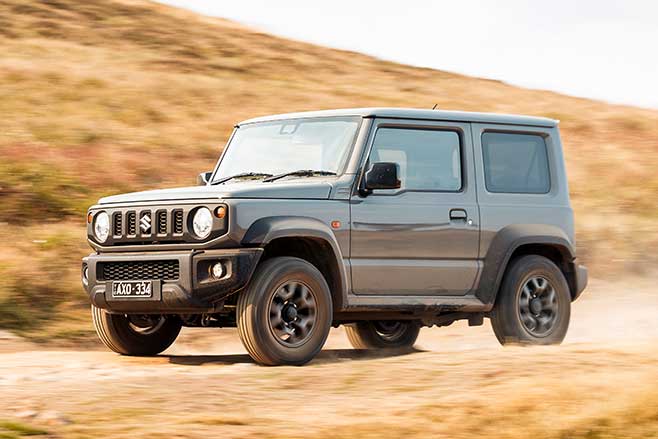
Queensland operations are handled by Suzuki Auto Co, with only six Sunshine State vehicles under recall, the company will be contacting customers who it believes are affected, also offering for owners to contact their dealer.
To the end of August, a total of 2136 Jimnys have been sold throughout Australia, meaning the issue affects just over one in every 100 cars purchased.
A list of VINs for affected vehicles in Queensland is available via this link, while owners elsewhere in Australia can check here.
Snapshot
- McLaren F1 car raced in 2002-2003 up for auction
- Car was also used by David Coulthard to win 2003 Australian Grand Prix
- Sold in 2002 spec with West livery and Raikkonen’s name
Want to try your hand at following in the footsteps of one of motorsports most iconic characters, and owning one of Kimi Raikkonen’s screaming Formula 1 cars?
Well now you have your chance, with his 2002 McLaren MP4/17 racer set to go under the hammer at RM Sotheby’s St.Moritz auction in Switzerland on September 17.
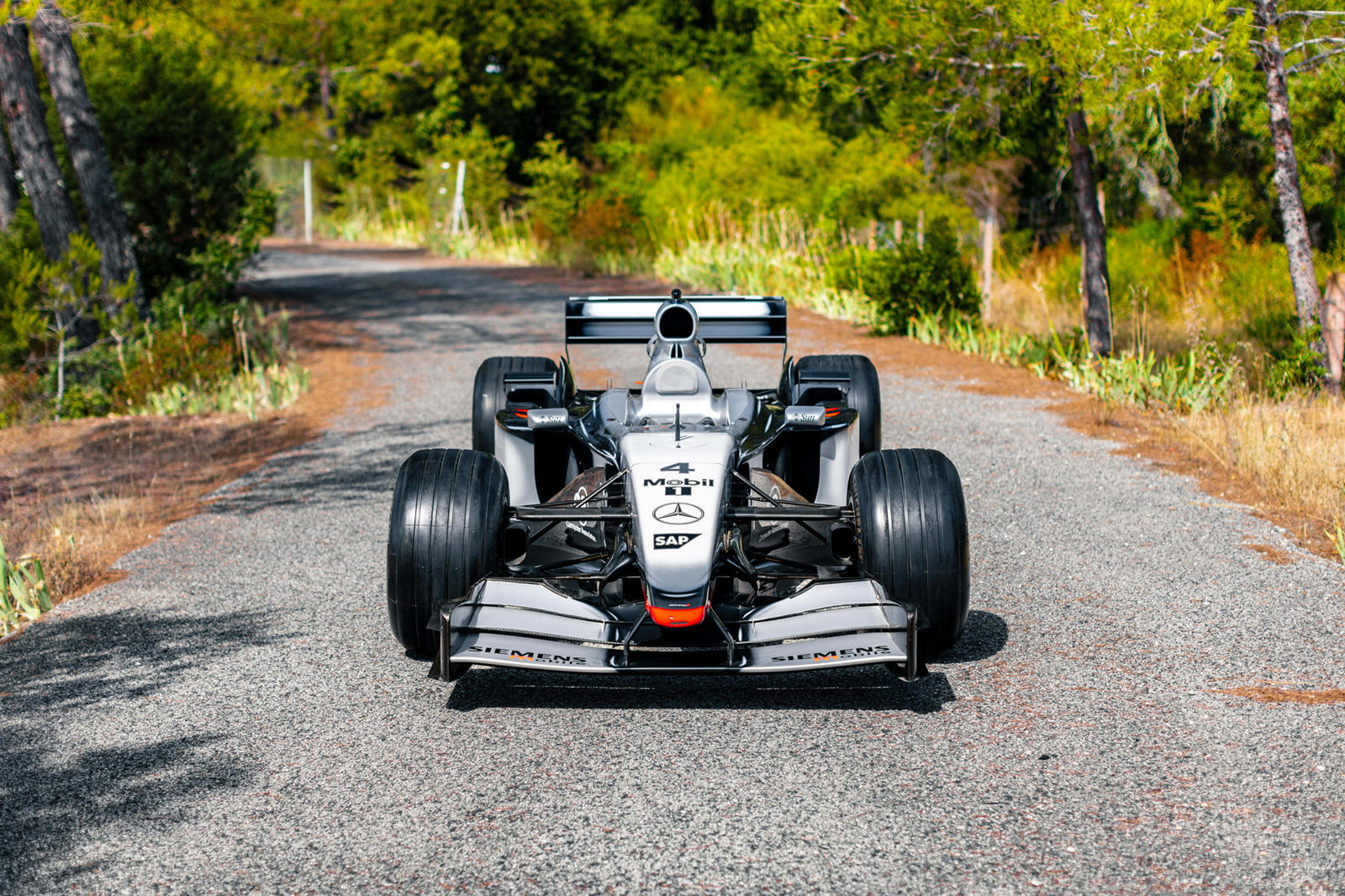
The car is McLaren chassis number A-06, using a Mercedes 3.0-litre FO110M V10 engine – which allegedly screamed its way to a stratospheric 18,500rpm and fed 630kW to the rear wheels using McLaren’s seven-speed sequential gearbox.
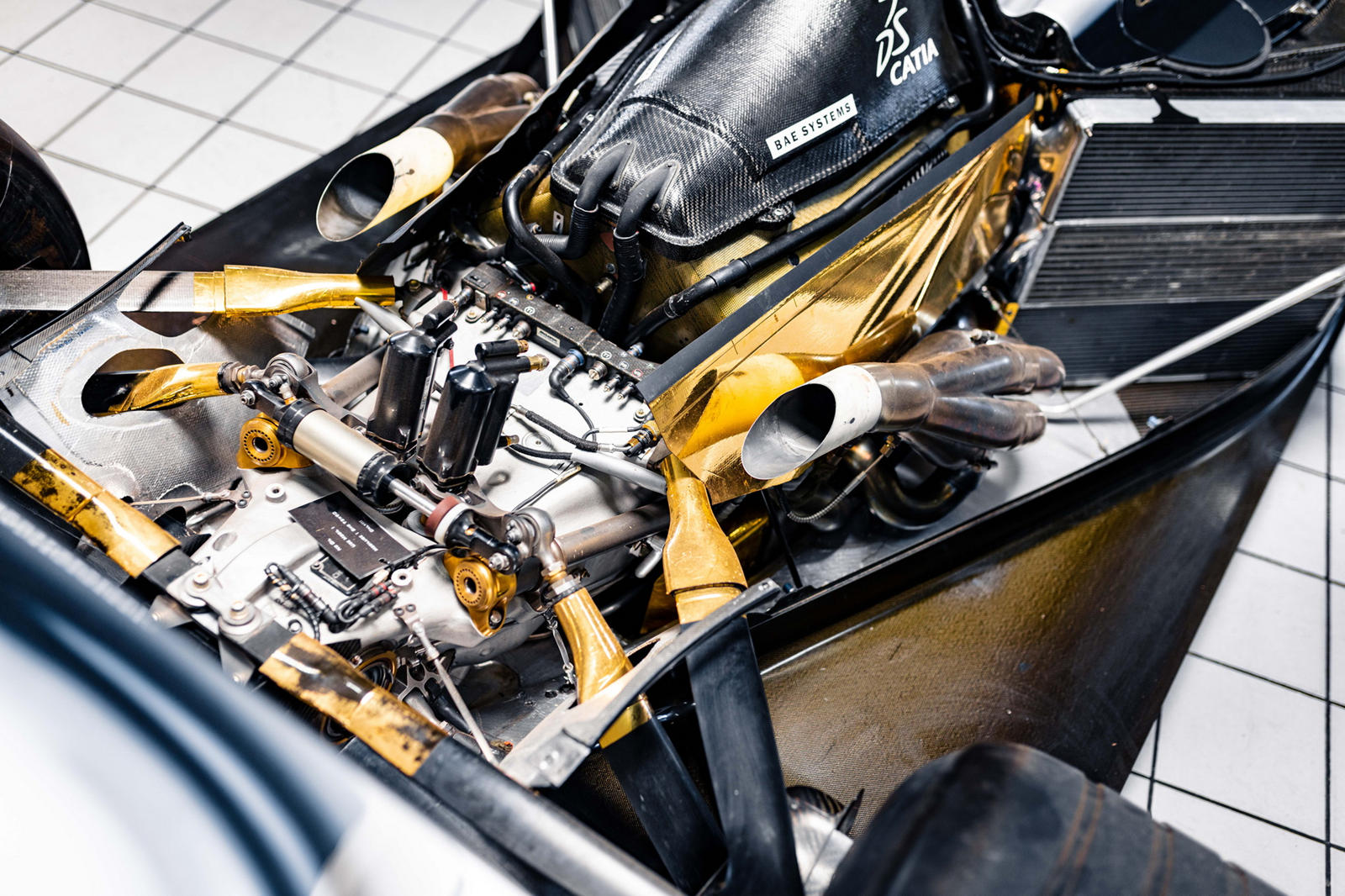
The car was designed my McLaren titans Adrian Newey, Mike Coughlan, Neil Oatley and Peter Prodromou, and was campaigned by both Kimi Raikkonen and David Coulthard from 2002 to 2003. The chassis made its debut at the European Grand Prix in 2002 at the Nürburgring in the hands of Raikkonen, and went on to compete in a total of 12 races across those two years.
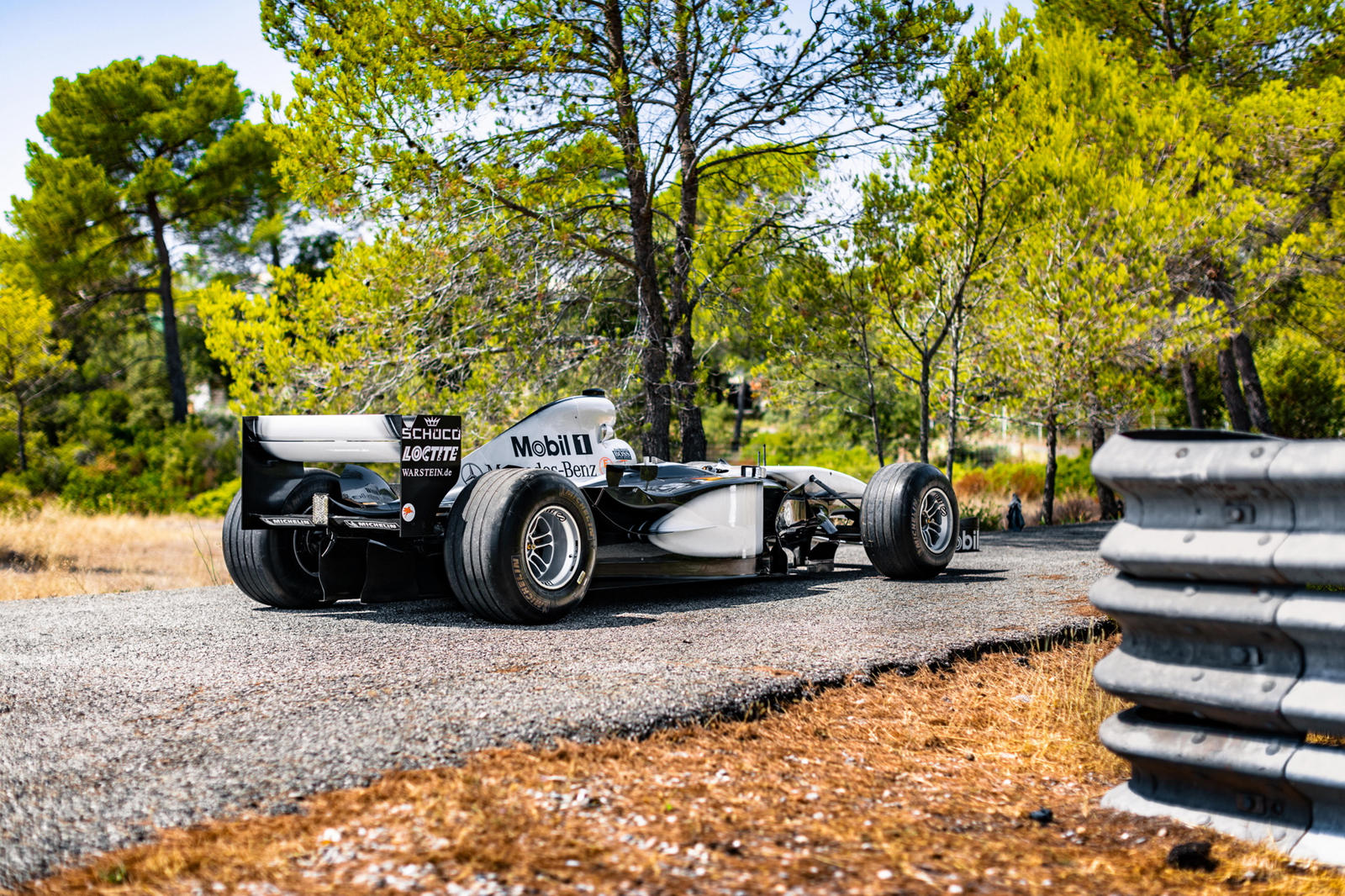
Because this was car on track right in the middle of Michael Schumacher’s peak dominance with Ferrari – during which he won five straight drivers championships – the McLaren doesn’t have any world titles to its name, but it did score a race win at the 2003 Australian Grand Prix with David Coulthard at the helm. The car also achieved several podiums, including two second placed finishes in 2003 at both the San Marino Grand Prix and Japanese Grand Prix with Kimi Raikkonen.
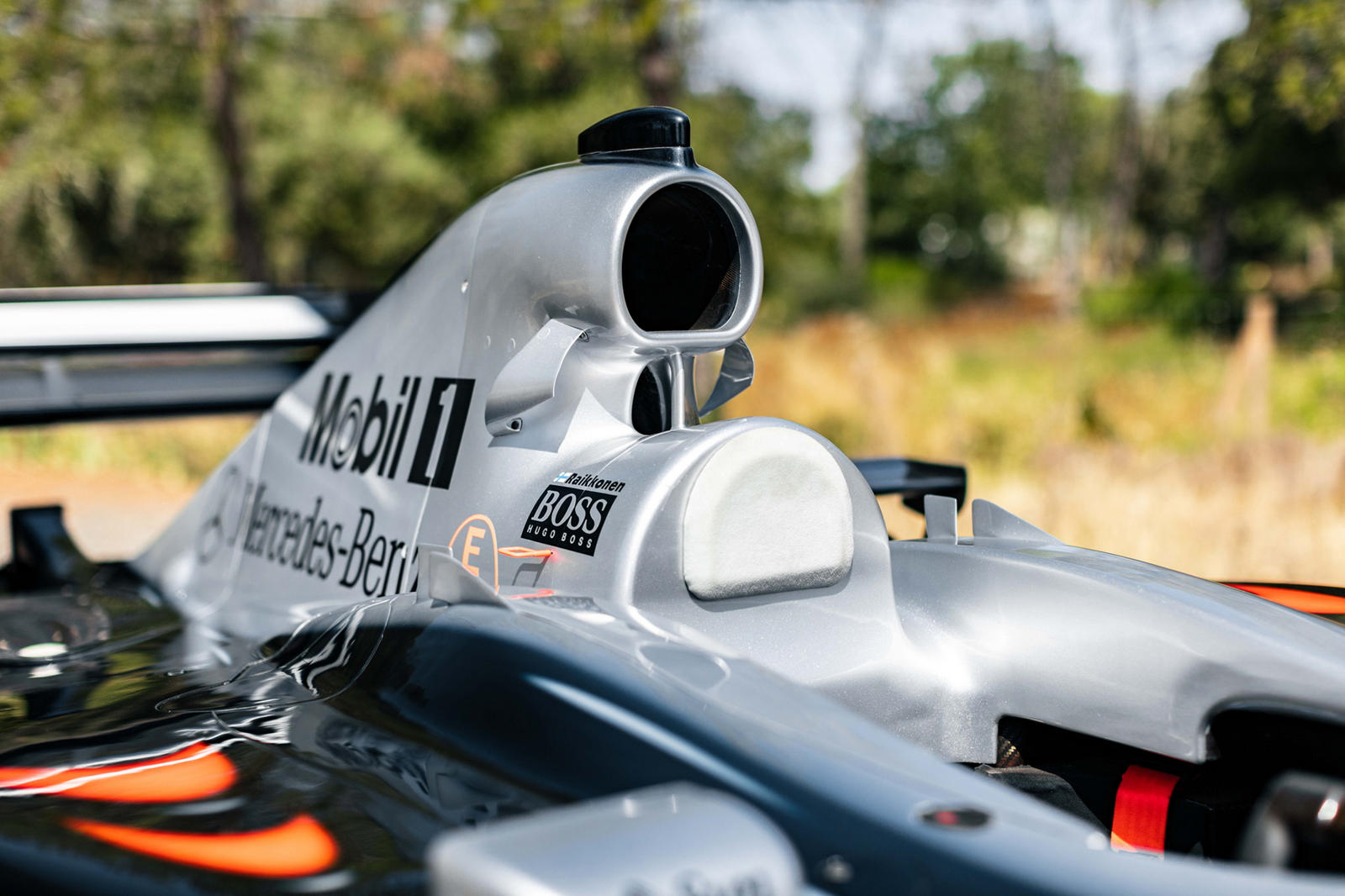
The car will be sold in its 2002 MP4-17A specification, wearing its West livery (minus the West cigarettes logo) and Raikkonen’s name. It’s expected to sell for between AU$2,962,564 and AU$3,703,205 when it goes under the hammer.
Given the Finnish racer recently announced his retirement at the end of the 2021 Formula 1 season, and that bona fide McLaren F1 racers don’t come up for sale very often, the figure doesn’t seem too far fetched.
You can view the auction listing here.
The prevailing view that the majority of the world’s new-car fleet will be battery-powered may be correct in terms of the near future, but the development of hydrogen technology is ramping up. Car makers are putting greater investment and resources into hydrogen, which is growing alongside the massive efforts that are turning focus from the combustion engine to lithium-ion batteries.
In Australia, the most obvious players in the hydrogen space are Toyota and Hyundai, which also happen to be market pioneers in hybrid technology and electrification. Rather than it being a case of ‘hedging bets’ to see which technology emerges the dominant form of vehicle power source, experts say it isn’t a battle – it’s a partnership much like that of petrol and diesel.
“It shouldn’t be seen as either hydrogen fuel cells or EVs; we should be looking for a complementary deployment of those technologies into the future,” says Professor John Andrews, a renewable-energy hydrogen specialist at RMIT.
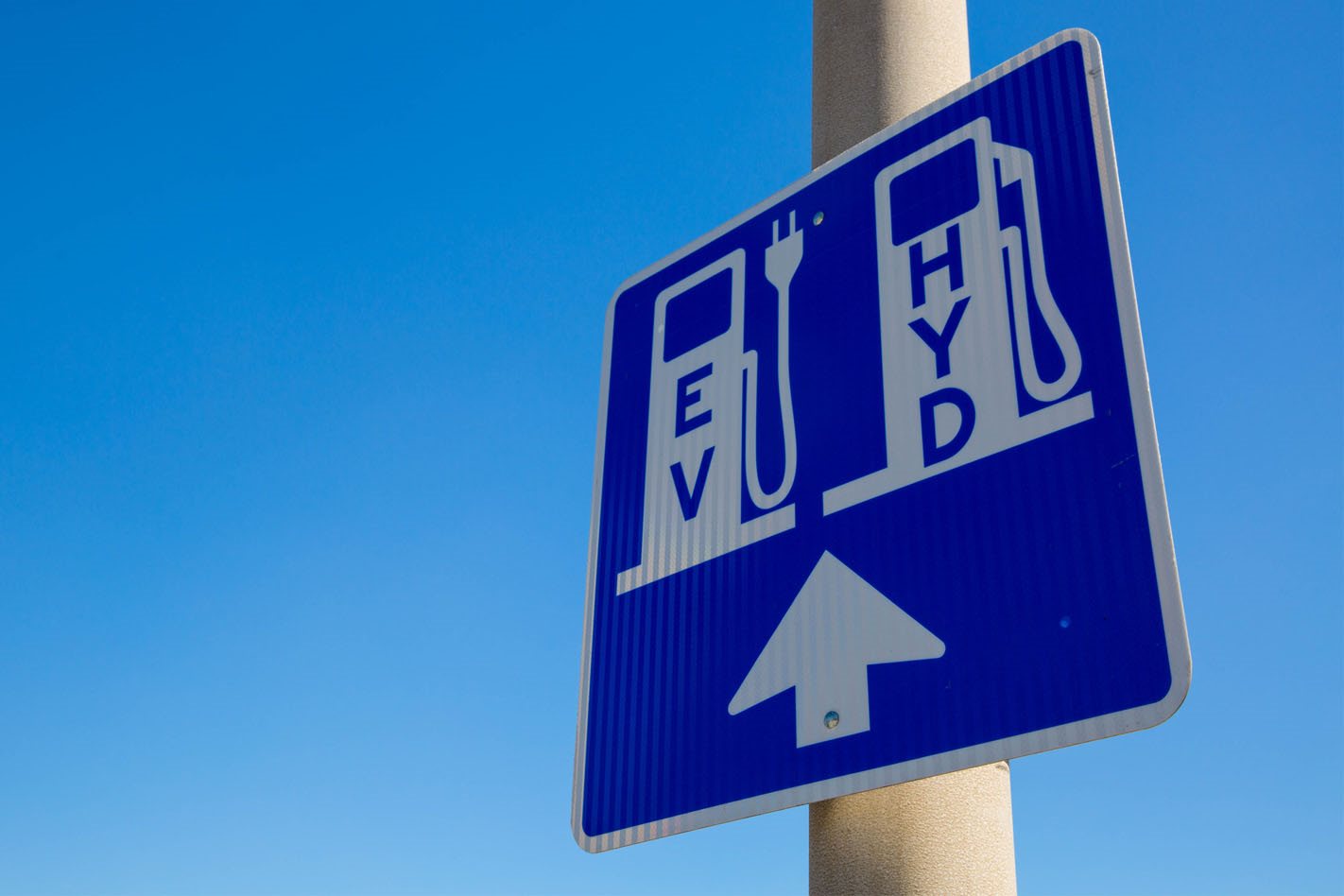
An energy sustainability researcher for more than 40 years, Professor Andrews has focused on hydrogen since the early 2000s. He says hydrogen has primarily been held back due to it being more difficult to initially implement than battery tech, but has the potential to outperform batteries in numerous applications.
“The advantages of FCEVs are the short refuelling time and the maximum trip you can do on a single fill, where EVs are struggling to do that or are too heavy when trying to compete on distance. For shorter trips, where there’s an ability to recharge more frequently, battery electric vehicles are highly suitable.
“If we could steer towards the market having that choice, that would be the optimal situation.”
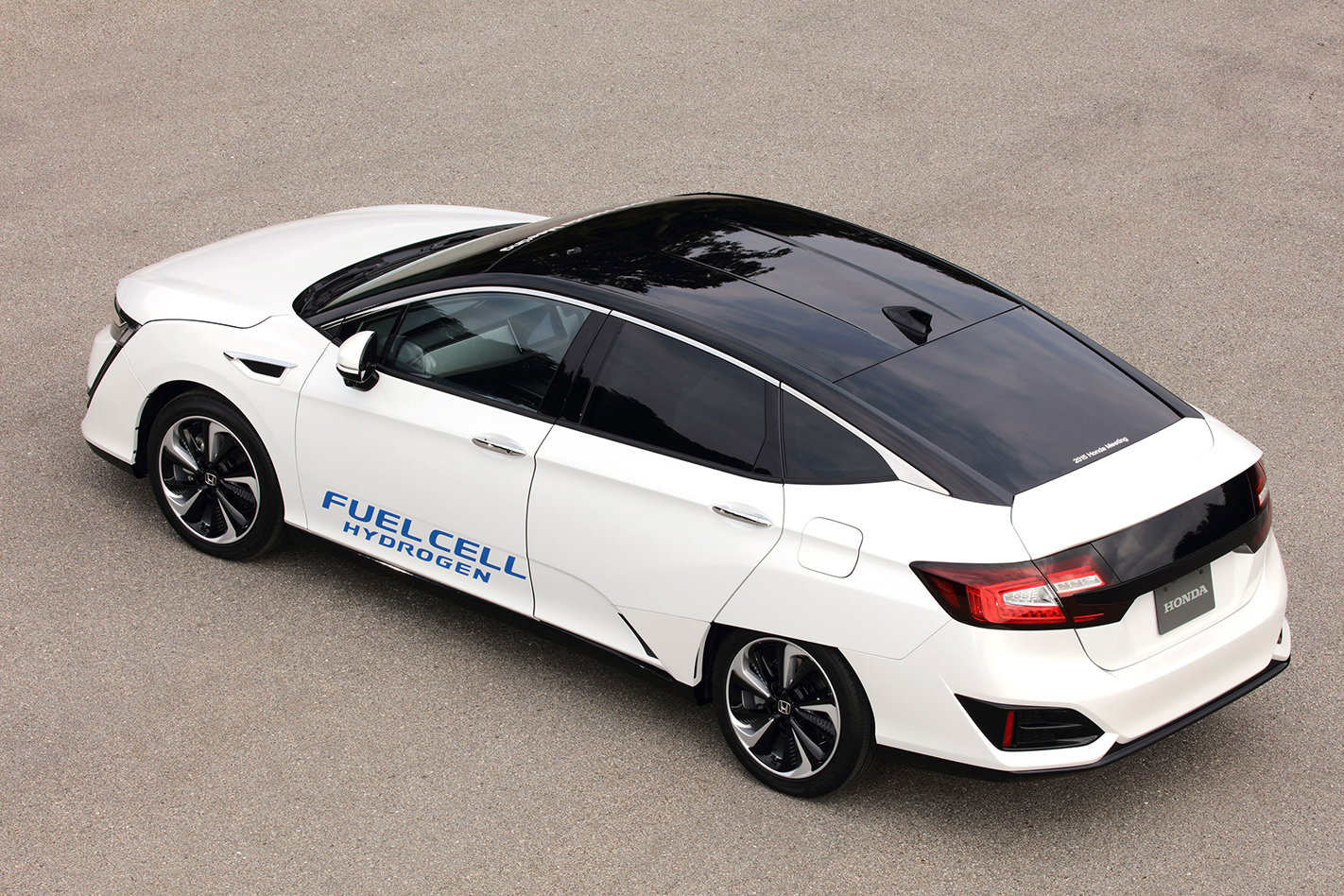
While hydrogen has seemingly met dead-ends in urban passenger cars like the recently nixed Honda Clarity, the industry is shifting its investment into more commercial applications.
Toyota’s $7.4 million Hydrogen Centre in Melbourne’s west is intended to ‘demonstrate hydrogen as a viable fuel source for transport and as an energy storage medium’, with the Australian Renewable Energy Agency (ARENA) having contributed $3.1 million of the funds.
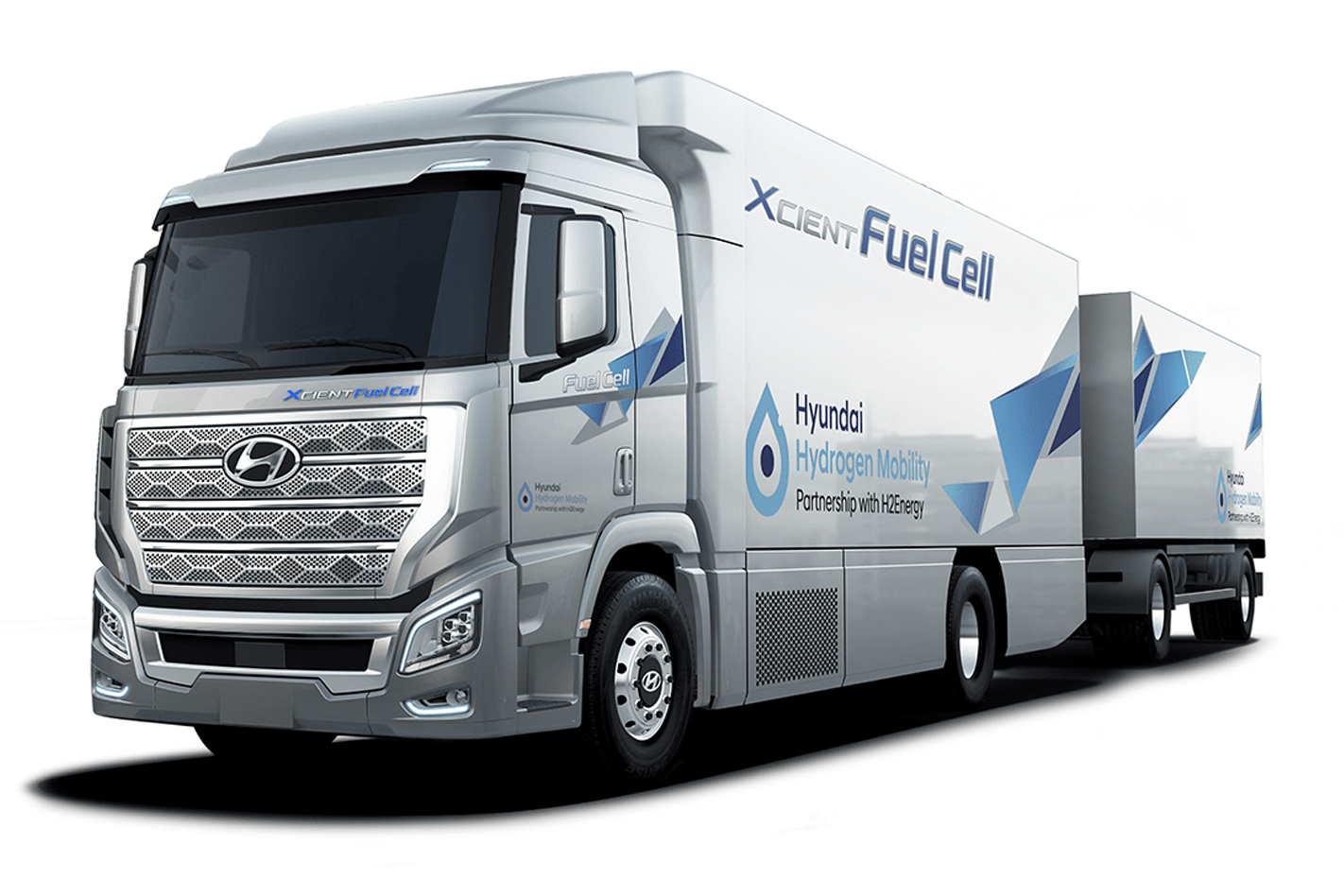
As for Hyundai, its Nexo SUV is only here as an ACT and QLD government fleet vehicle; the company has been expanding its FCEV testing and research to focus on commercial vehicles. Its Xcient is the world’s first mass-produced heavy-duty fuel-cell truck, with a fleet of 46 trucks in Switzerland collectively exceeding 1 million kilometres of driving in only 11 months between 2020 and 2021.
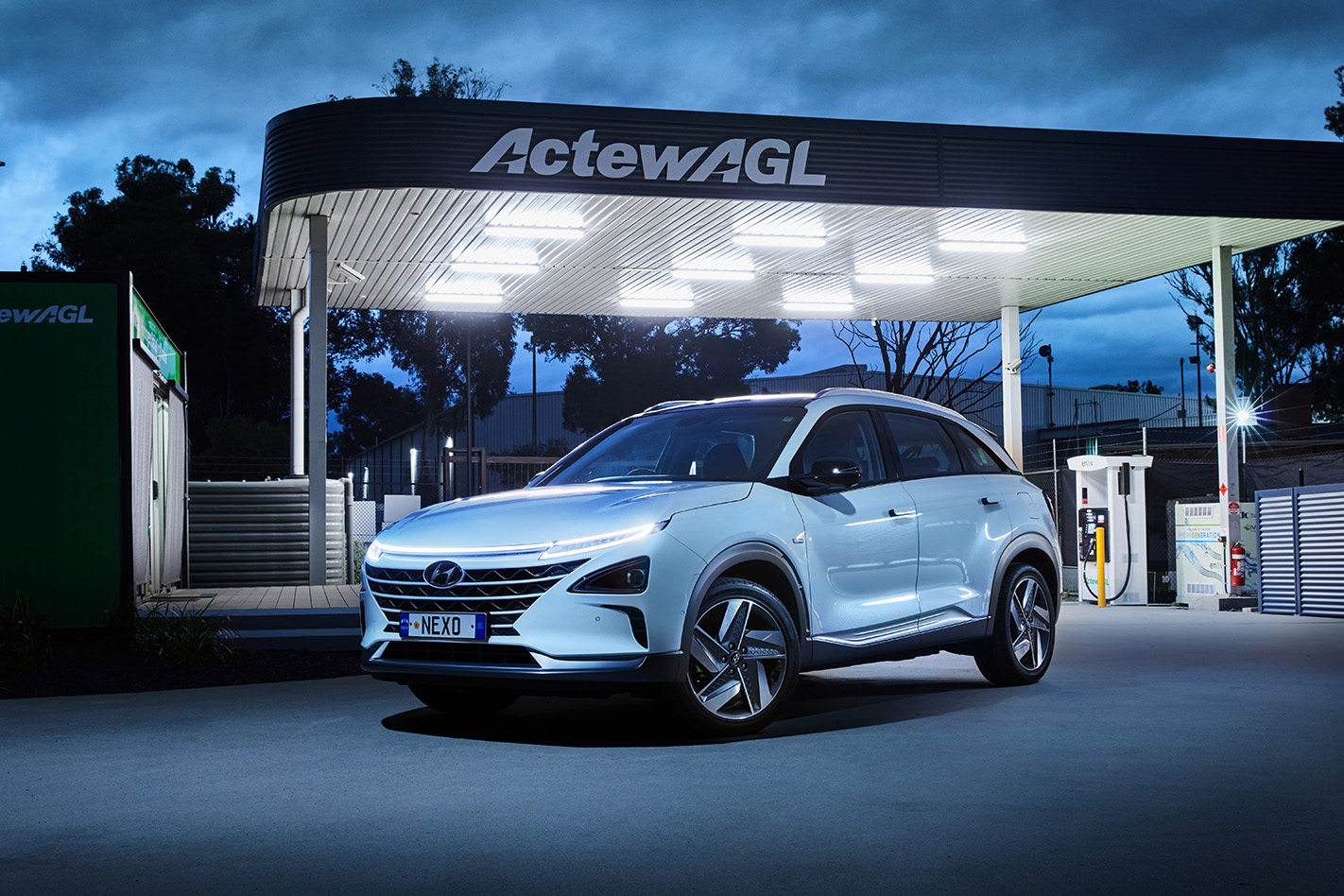
While hydrogen has seemingly met dead-ends in urban passenger cars, the industry is shifting its investment into more commercial applications.
Hyundai Australia PR manager Bill Thomas says a similar local trial would be welcome, but the infrastructure needs to exist. He says in Australia, a partnership with a hydrogen-producing energy company (in Switzerland it was H2 Energy) to lease and run the trucks could be the starting point.
Ampol and the CSIRO have created a hydrogen start-up called Endua, with $5 million in initial funding, but its initial focus will be on energy storage.
However Hyundai New Zealand is beginning a trial this year with at least five Xcient trucks to “ensure that multiple major New Zealand truck fleets become directly familiar with FCEV trucks.”
In a similar shift from passenger vehicles to commercial use, Mercedes-Benz ended its hydrogen-powered Mercedes-Benz GLC F-Cell project in 2020 in favour of investing in its Daimler Mercedes-Benz GenH2 Truck, which began testing in May 2021. Locally, the brand is in a similar position to Hyundai, where a local trial would be welcome if the conditions were met in terms of infrastructure and investment.
Mercedes has also taken a $105 million equity stake in Swedish start-up H2 Green Steel, which uses hydrogen to manufacture steel rather than a traditional blast furnace. It’s applications such as this, Professor Andrews says, which will show the diversity in hydrogen’s ability and are most likely to lead to more investment and trust in the development of an infrastructure network. He suggests long-haul trucking or even shipping is a perfect start, as pre-determined routes mean fewer refuelling stations are needed for a trial of FCEV trucks or long-distance drives in Australia.
The CSIRO’s National Hydrogen Roadmap shows a commercially viable hydrogen industry “comprising both domestic and export value chains is achievable by 2030,” which will play a role in both transport fuels and grid energy storage. As the production and availability of hydrogen ramps up, FCEVs will increasingly play a complementary, not competitive, role with BEVs.
Where’s the hydrogen?
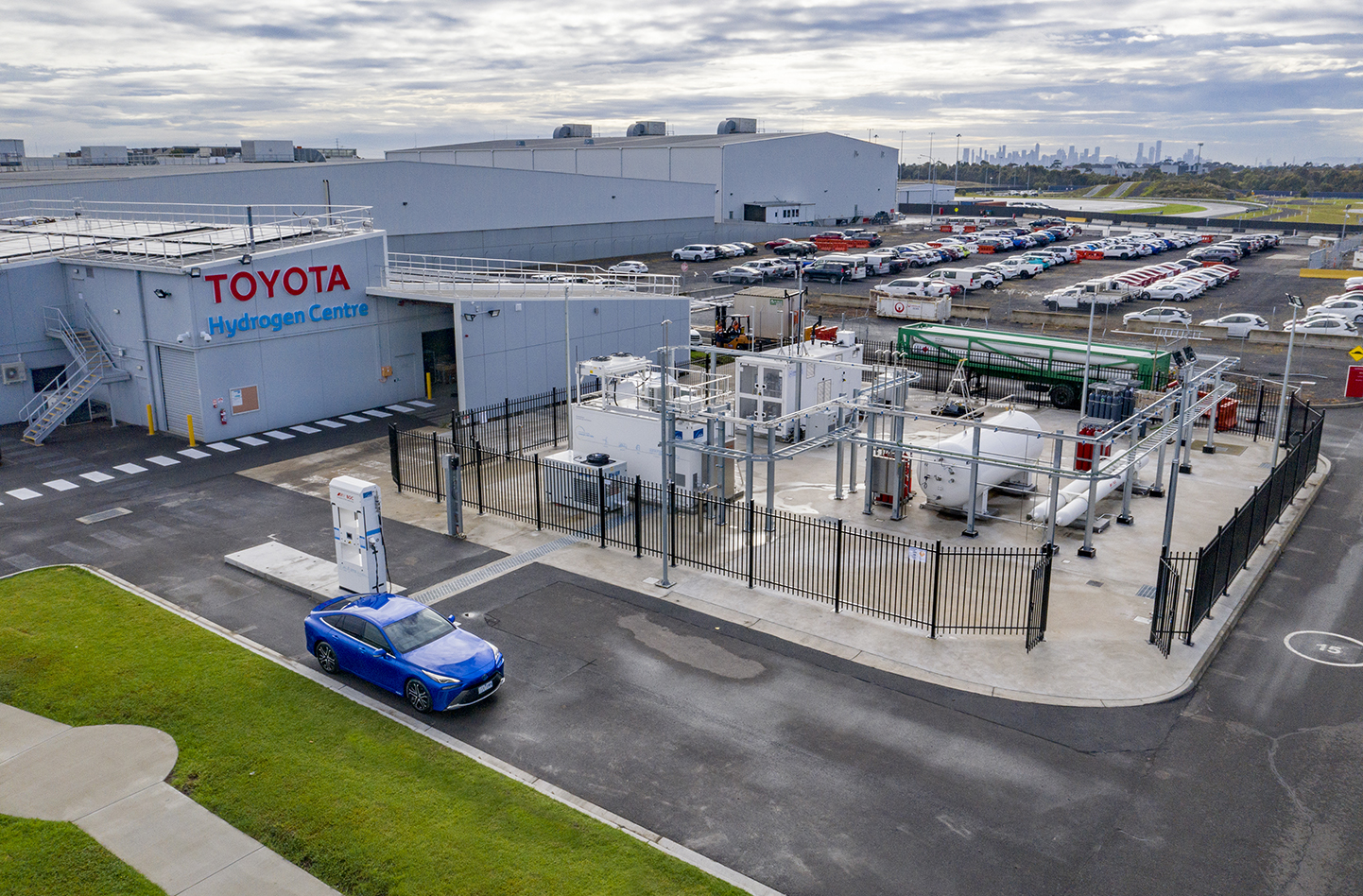
The Toyota Hydrogen Centre in Altona, on the site of its former manufacturing plant, is probably the most publicised production and refuelling station in Australia. However, Hyundai has two.
One is a station in Canberra, accessible to those using the ACT government’s fleet of Nexos, and the other is a private station in Sydney at Hyundai HQ. Brisbane will be the site of a third, run by BOC and able to supply the Queensland government’s five Nexos.
The Victorian government has announced a $9 million Warrnambool hydrogen production plant with Deakin University, and Hydrogen Fuels Australia will also build a production and refuelling facility in Melbourne, near Toyota’s Altona base.
How does it happen?
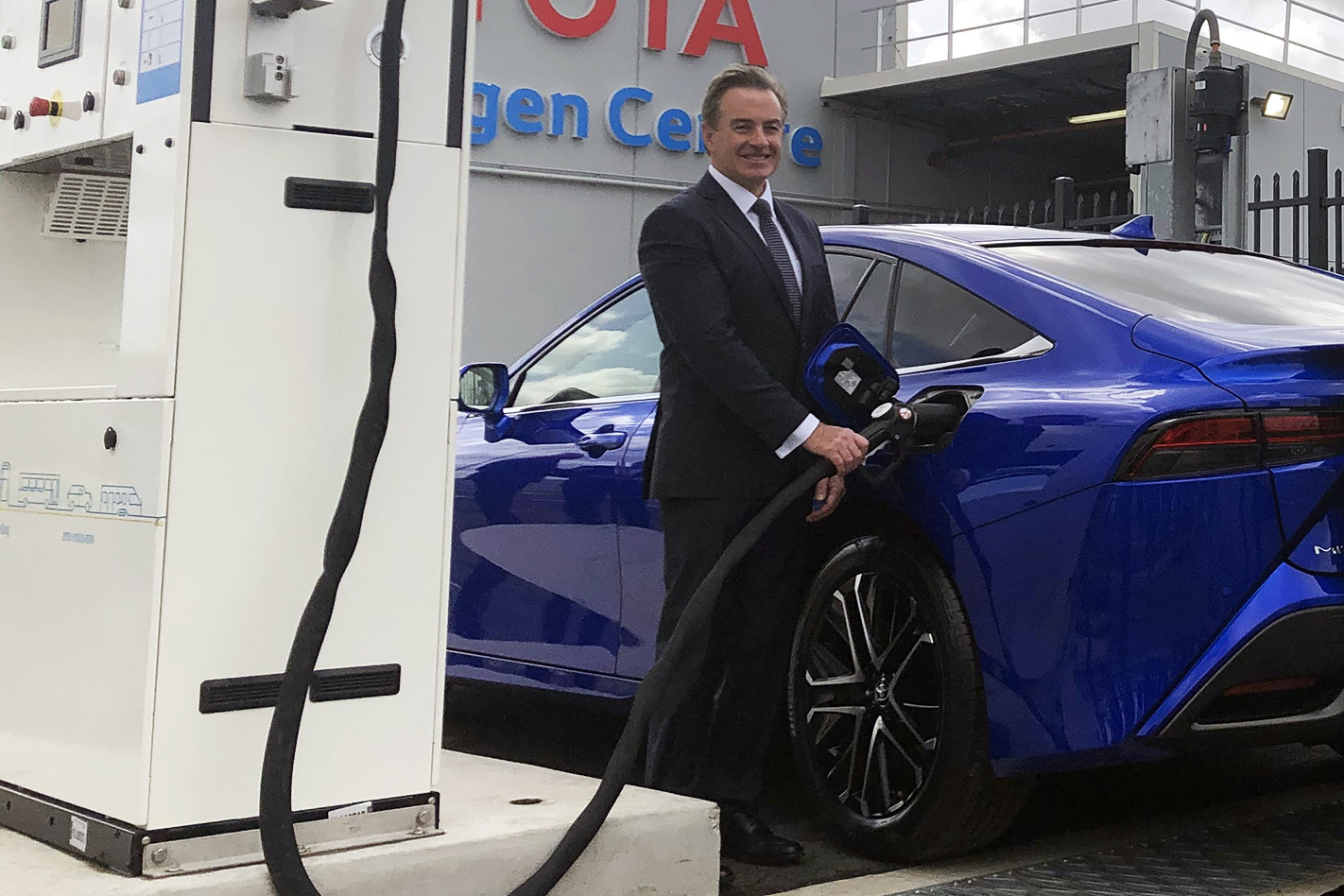
The most abundant element in the universe isn’t so much ‘made’ as it is separated from substances like gas or water. In the case of gas, usually methane, hydrogen is extracted using high temperatures and steam, though this results in the non-hydrogen molecules (carbon from the methane, oxygen from the water) becoming carbon monoxide.
The cleaner – but often more expensive – method of producing hydrogen is through water electrolysis, which uses electricity to separate hydrogen from the oxygen in water, releasing only oxygen from the process once the hydrogen has been stored.
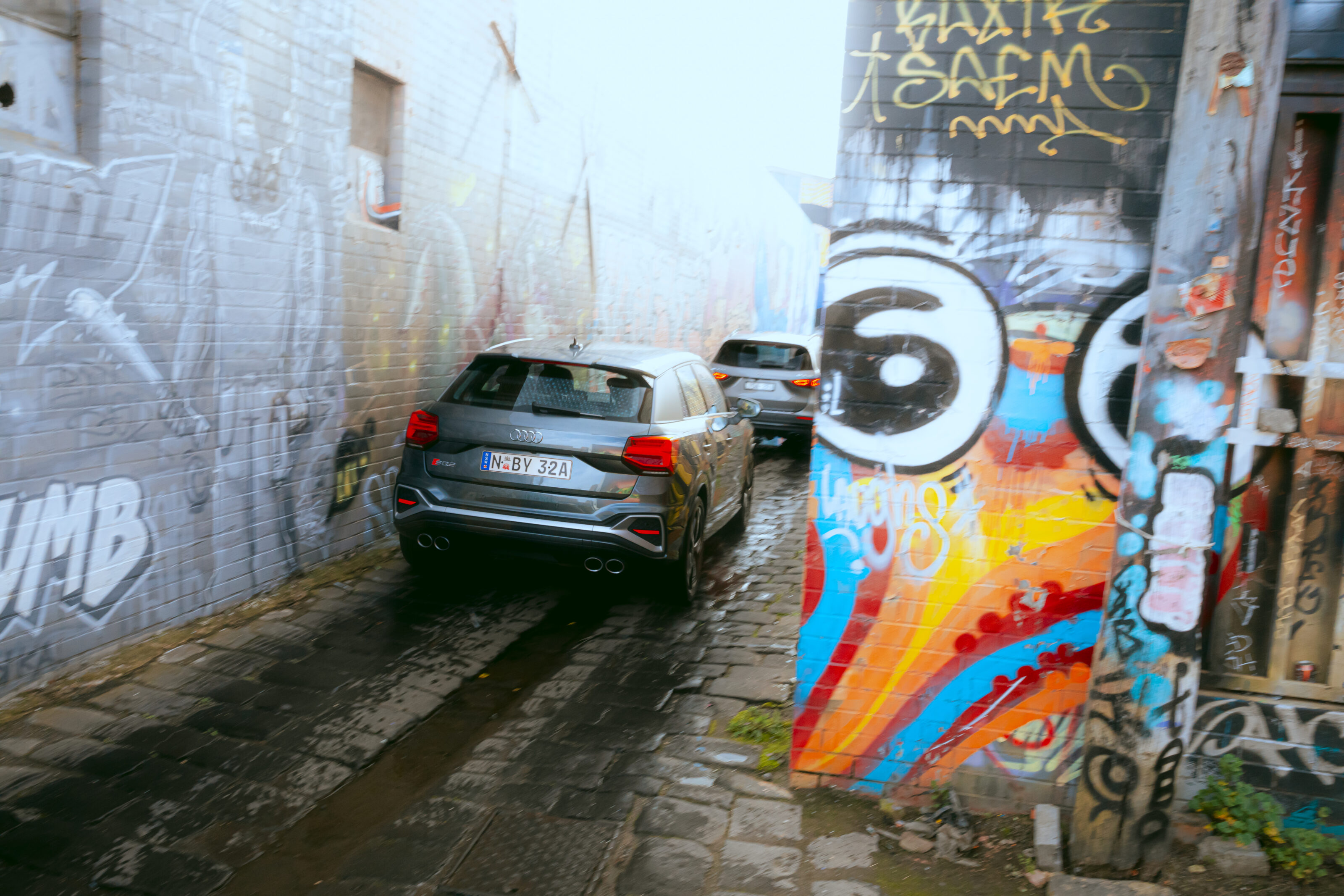
Look closely. These grey hunks of wrought German metal are more than you think. See those four exhaust pipes on that Audi Q2? Only S models get that. And what about those brake calipers behind the wheel spokes of that Mercedes-Benz GLA 35? Yep, the letters spell out A-M-G. The devil is in the details.
While we’ve been drunk on headlines about hot hatches with Nürburgring lap records and drift modes spawning an SUV-inspired version, luxury brands have been quietly working on crossovers with a little less mongrel than the RS or 45-badged flag bearers.
Mercedes-AMG arrived late to this party. Not the crossover thing, it has been building an A-Class on stilts in the form of the GLA since 2013. We’re talking about that 35 badge and its performance package.

Historically the good men and women at Affalterbach have upgraded Mercedes-Benzes only to the highest level, taking them to the edge of what their engines and frames were capable.
More recently, it has dialled things back on cars with 35 badges, aiming to strike a balance between civility and driver focus. For the GLA, this means a helping of extra horsepower, considered handling upgrades and subtle design tweaks all-round.
To do this, most of the GLA 35’s performance bits are pinched from the A35 hatch. It has an uprated 2.0-litre turbo four-cylinder and Haldex-type all-wheel-drive system, extra bracing underneath, special steering/suspension links and adaptive suspension.

A new eight-speed dual-clutch automatic transmission that replaces the seven-speed unit is the only significant mechanical change to its hatchback sibling.
Otherwise, on the outside, AMG styles the GLA for stealth. This begins with a fancy vertical-slat grille, larger 19-inch wheels and a rear bumper with dual exhaust exits. We’ll get to the interior later.
When it comes to understated performance, however, Audi has been mastering the practice for years. And now that its Q2 has comfortably reached middle-age, it’s ready for the S-badged makeover.

The SQ2 follows a tried-and-true formula, with the Volkswagen Group’s venerated 2.0-litre EA888 turbo four-banger in its nose with hot hatch rivalling punch. Downstream, a seven-speed dual-clutch automatic transmission handles gear shifts, while a Haldex-based all-wheel-drive system merits the quattro badge.
The SQ2 misses out on adaptive dampers, instead opting for fixed-rate S suspension to complement its wider tyres and variable-rate steering. And while these parts are the same vital organs found in an S3, the Q2’s compressed MQB platform means they are packaged in a smaller, higher-riding frame.
This should count for more at the drag strip because while the Audi makes do with fewer kilowatts, using 221kW/400Nm and slightly narrower footprint against the GLA’s 225kW/400Nm, it is the lighter pick.

Setting up each car for a sprint is equally as easy. To activate launch control in the Audi, set the drive mode to Dynamic and the ESC and transmission to Sport. The GLA, meanwhile, only requires changing the drive mode and ESC, not the transmission.
As we unleash our contenders off the line in wet-but-drying conditions, their ESC systems struggle to reconcile micro doses of wheel spin. While this means neither reveal their true performance on the first run, the Audi is already beginning to realise an advantage. It launches more effortlessly, turning its mid-range into proper forward momentum, while the GLA needs more revs to hit the same sort of stride.
For the second run, ESC is switched off with the hope each car’s traction control just lets all-wheel drive sort things out. And we’re proved right. The GLA reaches 100km/h from rest in 5.15sec, much quicker than before and just sneaking below AMG’s claimed time of 5.20sec.

The Audi’s stability software is more relaxed about wheelspin when launching from a dig. The upside of this is the Audi can launch on a lower grip surface to avoid bogging, so it bolts from the line, hitting 100km/h from rest in 4.79sec and beating its factory claimed time of 4.9sec by a full tenth.
This early lead seals the 400m race in the Audi’s favour, as it crosses the finish line after 13.10sec at 167.12km/h, comfortably in the lead ahead of the GLA, which arrives in 13.47sec at 166.41km/h.
That gap over the finish line suggests there is a dramatic difference in straight-line performance between the two but the small discrepancy in terminal speed hints at how evenly matched they are when you remove a standing launch from the equation.

Given their power-to-weight ratios are almost lineball, it’s the GLA’s quicker shifting dual-clutch transmission, stacked with more ratios, that accelerates the 35 more convincingly throughout the entire speed range of a rolling drag race. The GLA only loses out from 80-120km/h because the upshift to third happens at 107km/h, instead of 130km/h in the Audi.
But the GLA 35 cannot hide from its weight when it’s hard on the brakes, even if it’s fitted with more impressive hardware than the SQ2. Its four-piston fixed front calipers and wide Continental SportContact 6 rubber just have more physics to deal with.
The Audi, meanwhile, has single-piston sliding calipers all around. Its Bridgestone Turanza T005 rubber is also less focused, so it’s surprising to see it stop from 100km/h in a shorter distance than the GLA, taking 36.68m versus 38.94m. That’s 2.26m shorter.

However, as we’ll see, the Audi’s brakes begin to suffer when you swap straight roads for twisty ones. We leave the drag strip behind and head for a mountain pass, with corners that make up in commitment what they lack in sheer quantity.
Smoke. That’s what we get when pulling up after a couple runs in the SQ2. The Audi only uses brake torque vectoring to help traction on corner exit – and clearly, the brakes are struggling with the responsibility of providing both grip and retardation.
Ultimately, this is a symptom of the harder 235mm Bridgestone tyre and slower all-wheel-drive reaction times. Despite the front brakes dragging in corners to move power to the loaded wheel as you power out, the nose pushes wide, with the outside front tyre failing to ground torque to the contact patch which then needs to be sent to the rear.

Meanwhile, the GLA accelerates much cleaner off the corner, using grippier 245mm tyres and a quicker-thinking all-wheel-drive system to keep wheelspin in check. And while you’re inevitably on the picks sooner in the GLA because of its heftier weight, there’s no sign of fade or billowing smoke.
Clear differences in handling also emerge at corner entry. With the GLA, the front-end responds to steering inputs incisively. Even when the adaptive dampers are at their stiffest, the GLA needs time to control its body mass, thanks to a higher centre of gravity.
Contrastingly, you can bully the Audi with an assertiveness that comes from its superior body control. The flipside of its fixed-rate suspension placing more grip on the rear axle is you need to work harder on the steering, brake or off-throttle transition to get the Audi rotating for a bit of fun.

Slackening off the steering weight in the Audi helps with tipping the front-end in, but it also makes it harder to judge where the steering is in the range of its variable ratios. So, really, the Audi offers grip and stability at the cost of precision.
Acceleration-wise, the GLA’s engine packs quite a sting. And despite AMG fitting the M260-spec four-cylinder with tricks like short-path water-to-air intercooling, it delivers outputs late in the revs, generating peak torque at 3000-4000rpm and hitting peak power at 5800rpm.
Meanwhile, the Audi’s EA888 spreads its grunt over a broader area. A variable profile exhaust cam helps it achieve peak thrust sooner, between 2000-5200rpm. Power is also spread across 5300-6500rpm.

As a result, the GLA gobbles up gears as it charges through a short and concentrated power band, upshifting well before its 6500rpm redline to avoid clipping a soft limiter. The Audi prefers to stay in gear, pulling hard from down low and spinning freely to its 6750rpm redline. Hence both have differing characters.
However, that buttery smooth nature of the Audi does not equal X-factor. And the GLA is more theatrical. Its transmission reacts a fraction quicker with a crisper shift, while the engine note, which can sound a bit artificial, is rorty and envelops you more convincingly.
The Audi is far from boring, though, and its subdued engine noise plays into its cloak-and-dagger personality. Disregard it at your own peril. But a sprinkling of aggression in Dynamic mode on upshifts or full-throttle intake noise would liven up things.

And as for the drive home? The GLA makes a strong case as a grand tourer. Comfort mode relaxes damper stiffness, and on a relatively long 2729mm wheelbase, the car breathes easier over undulating Aussie roads.
Meanwhile, we appreciate the Audi is more confidence-inspiring because of its firm suspension, but the constant flow of information from the chassis can prove taxing. You almost bounce in the seat as it rebounds over bumps, making two-hour drives feel twice as long.
The Audi’s saving grace on long drives are excellent sports seats stitched with Nappa leather. Larger seat pads equal more comfort, and the seating position sinks much lower into the chassis than the GLA’s raised items – so there’s more headroom. It’s also easier to see out of its cabin, thanks to slimmer front A-pillars.

Standard Bang and Olufsen speakers in the Audi also go a long way to making up for an interior design that is obviously based on the previous A3’s, but it’s in danger of looking stale, even with fancy new red and illuminated decorative inlays. The 705-watt system kicks with powerful bass, strong midrange and offers fine tuning of individual characteristics like the subwoofer and surround sound.
But while the main infotainment screen is controlled entirely through a central rotary dial, which seems dated in an age of touchscreens, it’s a decent way to navigate menus on the move with your eyes on the road.
Meanwhile, the GLA’s sound system lacks the same depth of sound, but the dual-pane infotainment is currently the last word on resolution, and the software responds fast with haptic feedback through the central touchpad. There’s just an overload of ways to complete one thing. For example, you can access drive mode preferences through the centre screen, steering wheel dials or console buttons.

Ultimately, the Mercedes-AMG GLA 35 offers more seating space, a bigger boot, higher-end cabin technologies, quicker all-wheel drive reactions and more grand touring appeal, but you’ll pay for the privilege. Thanks to a driving assistance and vision package ($1990 and $1190), optional metallic paint ($1490) and 20-inchers ($790), it comes in at $89,036 as-tested RRP.
That’s almost $23K more expensive than our SQ2, which costs $65,970 before on-roads with only a Titanium Grey C-pillar blade ($1200) and 19-inchers ($370) adding to the price. And it’s that gap, no doubt exaggerated by the federal Luxury Car Tax threshold, which tips the balance in the Audi SQ2’s favour. It trails the GLA in size and luxury appeal, but it’s healthily equipped, convincingly quicker, and a genuine bargain. It’s well worth a closer look.

Audi SQ2 specs
| Body: | Five-seat, five-door SUV |
|---|---|
| Drive: | all-wheel |
| Engine: | 1984cc inline four-cylinder, 16v, turbo |
| Bore x Stroke: | 82.5mm x 92.8mm |
| Compression: | 9.3:1 |
| Power: | 221kW @ 5300-6500rpm |
| Torque: | 400Nm @ 2000-5200rpm |
| Power/Weight: | 144kW/tonne |
| Transmission: | seven-speed dual-clutch transmission |
| Weight: | 1535kg |
| Suspension: | struts, dampers, coil springs, roll bars (f); trailing arms, anti-roll bar, dampers, coil springs (r) |
| L/W/H: | 4216mm/1802mm/1524mm |
| Wheelbase: | 2594mm |
| Tracks: | 1547mm/1551mm |
| Steering: | electrically assisted rack and pinion |
| Brakes: | 340mm ventilated discs, single-piston sliding calipers (f); 310mm ventilated discs, single-piston sliding calipers (r) |
| Wheels: | 19.0 x 8.0-inch (f/r) |
| Tyres: | 235/40 R19 96Y (f/r); Bridgestone Turanza T005 |
| Price: | $64,400 ($65,970 as tested) |
| Pros: | Punchy powertrain; planted handling; strong price |
| Cons: | Firm ride; dated interior |
| Star rating: | 4.0/5 |

Mercedes-AMG GLA 35 specs
| Body: | Five-seat, five-door SUV |
|---|---|
| Drive: | all-wheel |
| Engine: | 1991cc inline four-cylinder, 16v, turbo |
| Bore x Stroke: | 83mm x 92mm |
| Compression: | 10.0:1 |
| Power: | 225kW @ 5800rpm |
| Torque: | 400Nm @ 3000-4000rpm |
| Power/Weight: | 140kW/tonne |
| Transmission: | eight-speed automatic transmission |
| Weight: | 1605kg |
| Suspension: | struts, adaptive dampers, coil springs, anti-roll bars (f); multi-links, anti-roll bars, adaptive dampers, coil springs (r) |
| L/W/H: | 4436mm/1834mm/1581mm |
| Wheelbase: | 2729mm |
| Tracks: | 1612mm/1591mm |
| Steering: | electrically assisted rack-and-pinion |
| Brakes: | 350mm ventilated discs, four-piston calipers (f); 330mm ventilated discs, single-piston sliding calipers (r) |
| Wheels: | 20.0 x 8.5-inch (f/r) |
| Tyres: | 255/40 R20 XL (f/r); Continental SportContact 6 |
| Price: | $83,576 ($89,036 as tested) |
| Pros: | Grippy drivetrain; sharp steering; high-end cabin tech |
| Cons: | Expensive; body roll |
| Star rating: | 3.5/5 |

Performance testing
| AudiSQ2 | Mercedes-AMG GLA 35 | ||
|---|---|---|---|
| 0-10km/h | 0.36 | 0-10km/h | 0.32 |
| 0-20km/h | 0.67 | 0-20km/h | 0.7 |
| 0-30km/h | 0.97 | 0-30km/h | 1.1 |
| 0-40km/h | 1.37 | 0-40km/h | 1.54 |
| 0-50km/h | 1.84 | 0-50km/h | 2.02 |
| 0-60km/h | 2.23 | 0-60km/h | 2.5 |
| 0-70km/h | 2.76 | 0-70km/h | 3.06 |
| 0-80km/h | 3.37 | 0-80km/h | 3.72 |
| 0-90km/h | 4.02 | 0-90km/h | 4.41 |
| 0-100km/h | 4.79 | 0-100km/h | 5.15 |
| 0-110km/h | 5.62 | 0-110km/h | 6.09 |
| 0-120km/h | 6.53 | 0-120km/h | 7.12 |
| 0-130km/h | 7.52 | 0-130km/h | 8.16 |
| 0-140km/h | 8.74 | 0-140km/h | 9.32 |
| 0-150km/h | 10.02 | 0-150km/h | 10.67 |
| 0-160km/h | 11.48 | 0-160km/h | 12.34 |
| 0-400m | 13.10sec @ 167.12km/h | 0-400m | 13.47sec @166.41km/h |
| 80-120km/h | 3.07sec | 80-120km/h | 3.30sec |
| 100-0km/h | 36.68m | 100-0km/h | 38.94m |
| Speed in gears | Speed in gears | ||
| 1st | 52km/h @ 6750rpm | 1st | 49km/h @ 6500rpm |
| 2nd | 85km/h @ 6750rpm | 2nd | 70km/h @ 6500rpm |
| 3rd | 132km/h @ 6750rpm | 3rd | 107km/h @ 6500rpm |
| 4th | 192km/h @ 6750rpm | 4th | 152km/h @ 6500rpm |
| 5th | 250km/h @ 6700rpm | 5th | 209km/h @ 6500rpm* |
| 6th | 250km/h @ 5475rpm* | 6th | 250km/h @ 6075rpm* |
| 7th | 250km/h @ 4605rpm* | 7th | 250km/h @ 4750rpm* |
| N/A | u00a0 | 8th | 250km/h @ 3410rpm* |