
Snapshot
- Facelift to be the final update for current generation
- Redesign brings it closer in line with new CX-30 and 3
- 2.5-litre engine reportedly dropped from the range
UPDATE, September 11: The updated 2022 Mazda CX-5 has been teased for the first time by the brand’s US division, just days after leaked images of the vehicle surfaced online.
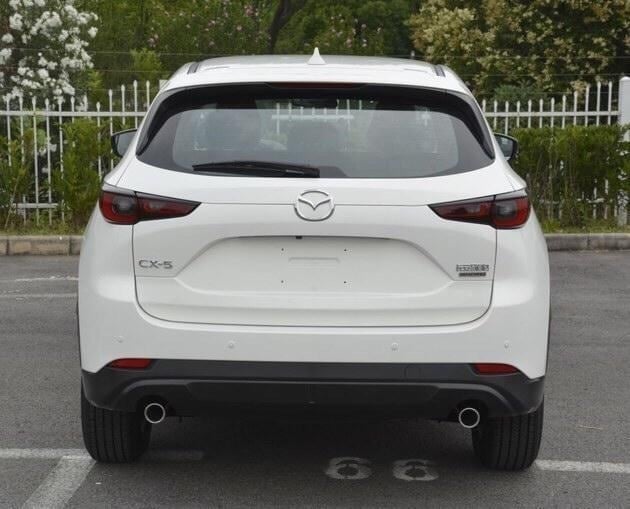
Posted on social media (see below), the image focuses on the rear-end of the facelifted crossover, showing reworked tail-lamps and an updated rear bumper.
Compared to the leaked Chinese-market version spotted this week, the United States 2.5-litre turbo model in the teaser image is likely to indicate changes bound for Australia, with a body-coloured lower bumper and larger exhaust tips shared with the recently-updated CX-9 added for the new model year.
The refreshed 2022 Mazda CX-5 is likely to debut in the United States in coming weeks, ahead of an expected Australian launch in early 2022. The original story continues below.
https://www.instagram.com/p/CTqAx7sslpu/
THE STORY TO HERE
September 9: The facelifted 2022 Mazda CX-5 has leaked online, in the lead up to an expected unveiling later this year.
The leaked information – courtesy of the Chinese Government’s Ministry of Industry and Information database – adds to recent rumours surrounding the launch of the updated medium SUV.
It is expected to be introduced in December 2021 with orders for the current model winding down at the end of August for the Japanese domestic market.
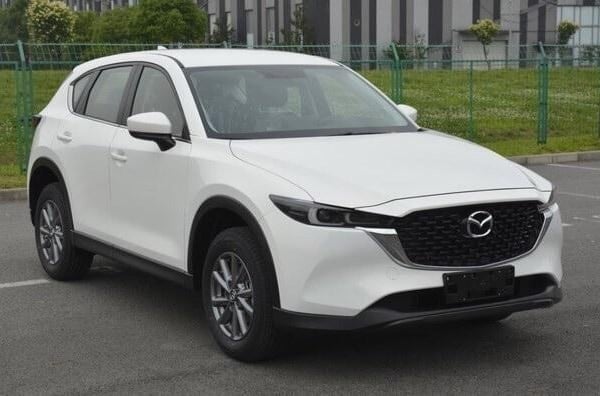
Published by Korean website Autospy, the images reveal a revised exterior design featuring redesigned headlight internals and reshaped tail-lights, as well as a larger front grille.
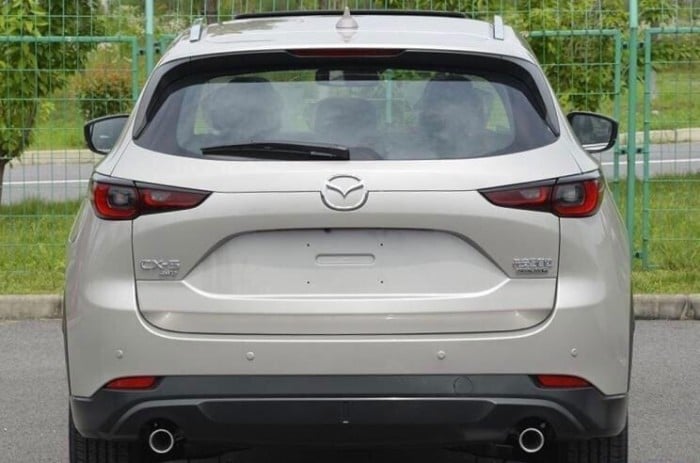
In addition, the front bumper sports a more-conservative design in line with the newer 3 and CX-30 twins, with the LED fog lights found on the current CX-5 omitted from the facelifted version. Meanwhile the rear bumper has also been simplified with updated reflector strips.
A set of redesigned 17-inch and 19-inch alloy wheels round out the exterior design changes.
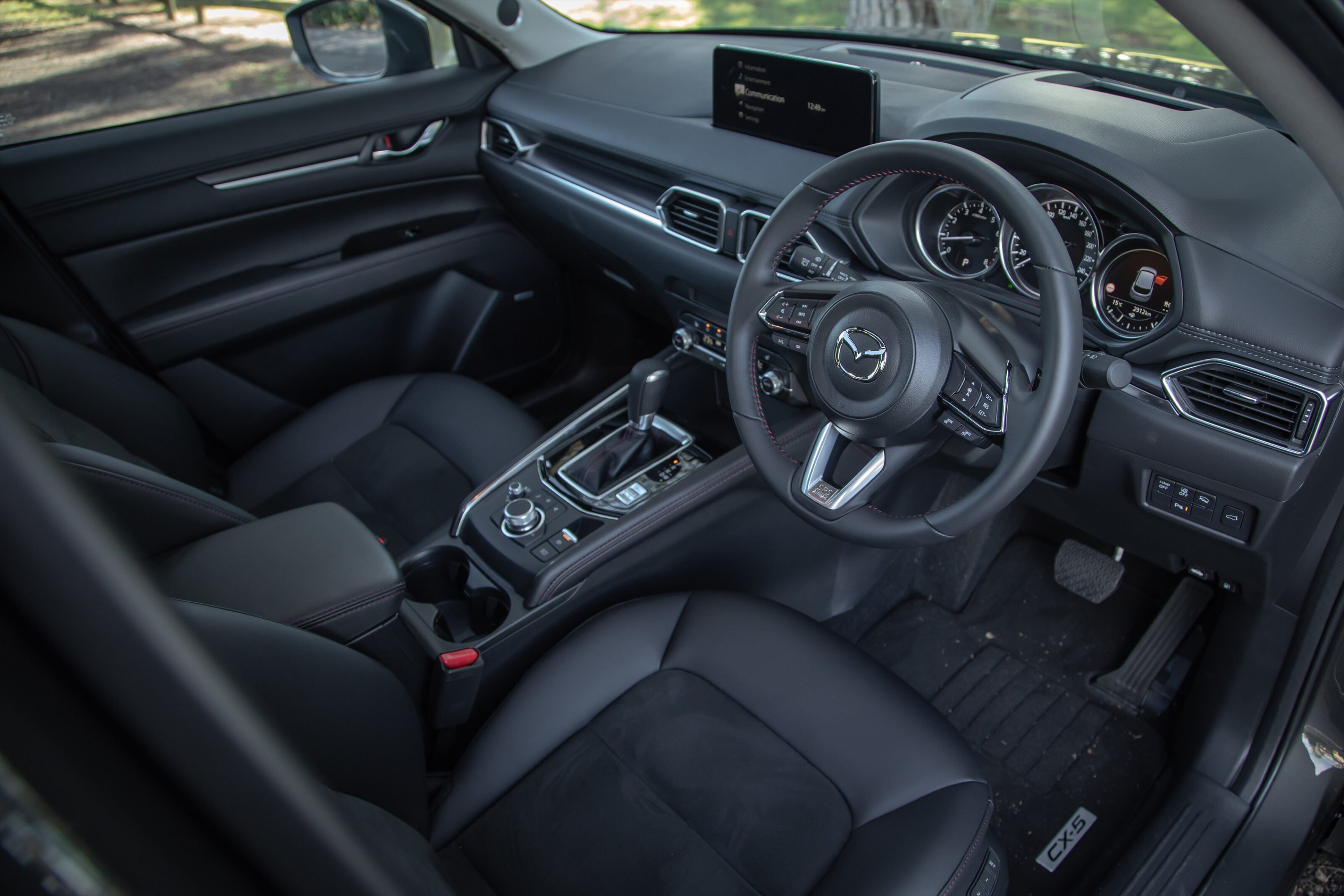
With no photos of the interior, it is not currently known if the design is set for change, though a larger 10.25-inch screen running Mazda’s latest infotainment system was added to select CX-5 grades earlier this year. A recent report by the same Japanese blog stipulates Mazda will refine the shape of the front seating for greater comfort.
According to this report, Mazda will offer the updated CX-5 in an off-road focused appearance package in Japan with all-season tyres, as well as a sportier design with a darkened grille – likely serving as a successor to the Black Tone Edition, known in Australia as the GT SP.
Two new paint colours, platinum quartz – seen here on the vehicle featuring larger wheels – and zircon sand metallic will also be added to the range.
The adaptive LED lighting system – currently available on the flagship Akera grade locally – will shift from 12 to 20 light pieces for greater distribution at night. Meanwhile the incandescent front and rear indicator lamps found on the current model are also expected to shift to LED lighting – with a front light strip and a ‘pulsating’ rear globe designed to mimic halogen bulbs, as seen on the MX-30 small SUV.
There will also be revisions to the suspension damping, Creative Trend reporting the turbocharged 2.5-litre engine option will be dropped from the Japanese range. The naturally-aspirated 2.0-litre engine will also pick up the option for all-wheel drive.
Cruising and traffic support, a system seen in the 3 and CX-30 designed to control steering and acceleration/braking in traffic-jams, is also rumoured to be added for the new model-year.
Recent history will show the updated Mazda CX-5 will go on sale in Australia in early 2022, following a late 2021 launch in Japan, though it is not known whether all the changes will make the local trip.
The CX-5 is expected to be sold alongside the all-new rear/all-wheel drive CX-50 – set to be unveiled at some stage in 2022, much like the CX-3 and CX-30.
The global car industry is facing a production crisis due to the shortage of semi-conductor chips, which are needed in just about every electronic device on the planet.
It’s wreaking havoc on vehicle supply chains, leading to instances like the thousands of new Ford F-Series pick-ups parked in limbo at Kentucky Speedway, almost complete but missing crucial electronic components.
So how did we get here?
New cars can require thousands of these chips, but when COVID-19 outbreaks shut down automotive factories in 2020, carmakers cancelled semi-conductor chip orders expecting not to need them.
The tech industry, fuelled by a shift towards home life, absorbed that chip supply. Lockdowns ended, and the demand for cars skyrocketed – but there were far too few chips to meet it.
Globally up to mid-2021, the car industry has suffered to the tune of more than €90 billion (AU$141bn) according to research firm AlixPartners.
In Australia, the local industry is feeling the effects of overseas delays, and waiting times for some vehicles have ballooned to many months as demand for new cars has increased in the wake of global lockdowns lifting.
Wheels understands the situation to be more severe than many insiders will admit. Behind the scenes, industry experts say companies are battening down the hatches for a lag in vehicle deliveries well into 2022, anticipating the effects will likely be felt even through 2023.
Nissan, for example, recently reported a record annual loss of more than 150 billion yen, or almost AU$1.8bn, due to the pandemic and chip shortage. The company had to suspend production at three plants in Mexico, and many other brands have responded in a similar way – including recently formed group Stellantis.
For weeks, Ford was estimated to be operating at 50 per cent capacity globally. Its European plants have been producing vehicles such as the Transit, Fiesta and Puma at far reduced rates.
But locally, companies are maintaining their brands are able to handle what might come, telling Wheels this is a challenge – not a disaster. While Australia’s geographical isolation means accessing products from overseas can take more time, brands here are used to planning ahead.
Toyota Australia’s sales VP Sean Hanley announced the brand is less affected by the shortage than others, however a spokesperson told Wheels: “Demand for new vehicles, globally and in Australia, is recovering much faster than anticipated just a few months ago. Although our plants are increasing capacity, we are anticipating that wait times for high-demand models will be longer than usual in the coming months.”
While it might sound like ‘PR talk’, it aligns with a point made by Harvard professor Willy Shih, who is an expert on semi-conductors and supply chains, during an interview with The Verge’s Decoder podcast.
He says car companies are now looking to be more closely interlinked with the firms which manufacture semi-conductors and microelectronics.
“From what has historically been a very transactional and punitive relationship with suppliers [has changed] to a strategic and a partnership relationship with suppliers,” Shih said.
“Toyota has always had that approach, and they have fared much better in the pandemic.”
But the global supply of semi-conductor chips is incredibly difficult to increase quickly, with electronics companies like Japan’s Hitachi only just now being able to commence upgrading its capacity to manufacture chips in the US – a task it estimates won’t be complete until August 2022.
The US will also see the Government pour US$50 billion (AU$67.8bn) into “restoring American leadership in semi-conductor manufacturing” – though this funding rollout won’t be complete until 2026. In Asia and Europe, similar endeavours are being made to improve availability.
Shih, in the same interview, said he thinks the problem will persist in some capacity for a long time to come.
“It’s not going to be like the tape breaks at the finish line, and there’s a clear ending to this thing. Rather, it’s going to be that some sectors are going to get better sooner than others.
“When are we going to stop talking about it because the problem is not as severe? I think it’s going to be the middle of next year.”
For now, some premium car manufacturers have even removed the availability for optional top-tier comfort and advanced safety tech due to the shortage.
The problem isn’t going away, and it seems set to get worse before it gets better. Earlier this year, the same firm that calculated the €90bn figure (impact suffered by the car industry) estimated 2021’s global vehicle output would be down by about 2.2 million. That estimation has since been revised to closer to four million.
What are semi-conductors?
A set of electronic circuits built on a wafer of the semi-conductor material silicon. Chips or integrated circuits (ICs) can range from a simple circuit to a micro-computer.
They allow the design of circuits many, many times smaller, more powerful and less costly than if they were built from individual electronic components, and make all the complex and powerful electronic systems in today’s cars possible.
UPDATE, August 24, 2022: Toyota Tundra confirmed for Australia
In huge news for local fans of heavy haulers, the Toyota Tundra is confirmed for an Australian launch, thanks to a conversion program announced by Toyota and partner Walkinshaw. Get all the details at the link below.
The story to here
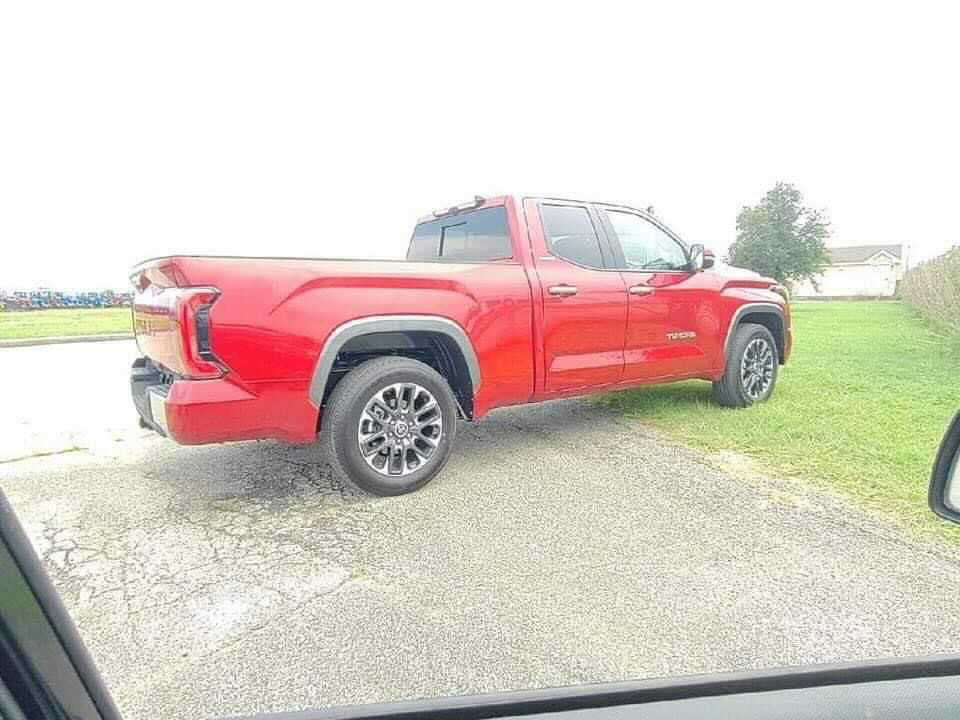
Ahead of the new 2022 Toyota Tundra TRD Pro’s reveal, one American publication has posted images of the regular truck in both crew and dual cab guise.
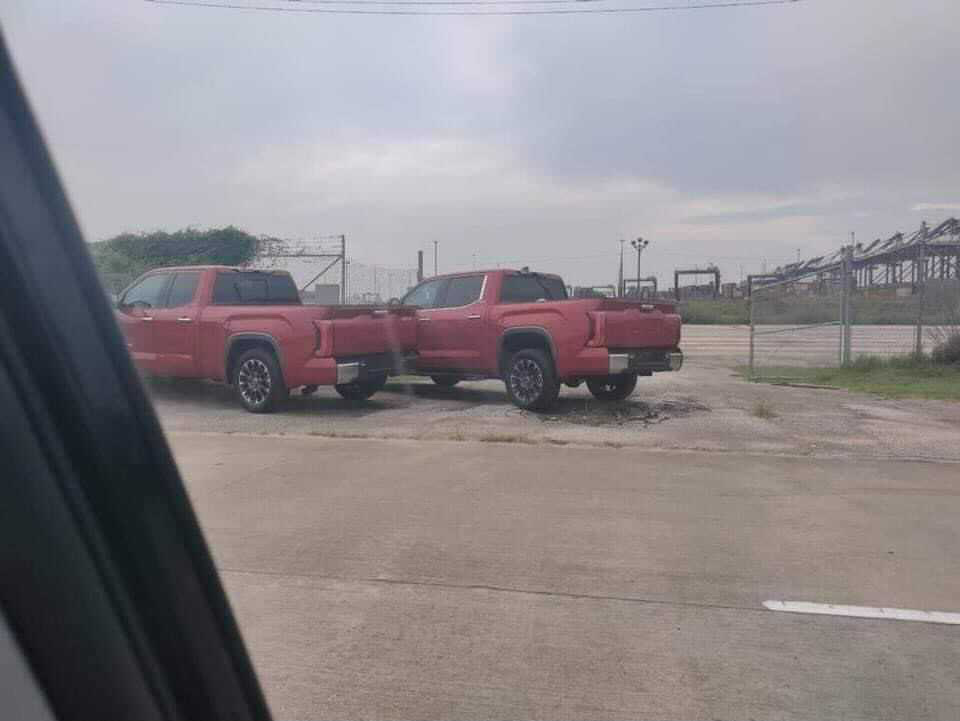
Submitted by an anonymous reader of Pickup Truck Talk, two red Tundras were spotted in the wild with no camouflage and without all the trick bits of the TRD Pro – the range-topping variant of the yet-to-be-officially-revealed truck.
Featuring the same style of wide grille as the TRD Pro and the new LandCruiser 300 Series, the base Tundra doesn’t look as imposing as its off-road focused sibling, missing out on the top-of-the-range truck’s suspension and bodywork tweaks.
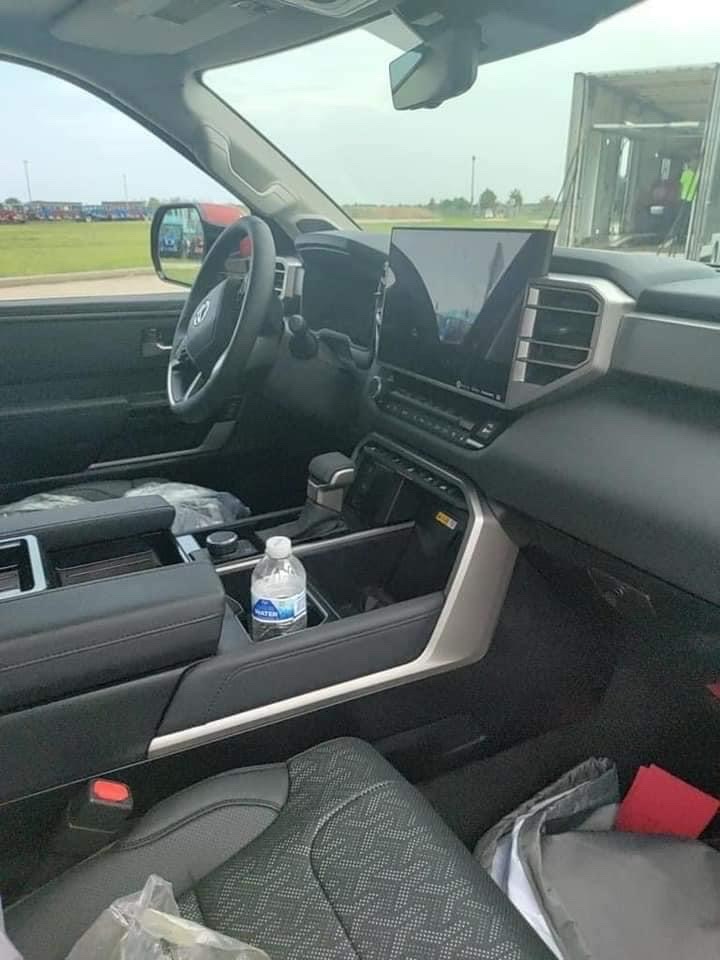
The toned-down theme continues in the cabin, as the standard seats appear to be patterned cloth with leather bolsters – nothing particularly special nor horrible either.
Perhaps the biggest improvement from the out-going Tundra is the new infotainment screen, stepping up from the existing 7-inch display to a 12.3-inch screen – which can now rival the offerings from Ford and Chevrolet, a previous letdown for the current model.
It’s hard to work out what may be under the bonnet, but some variation of the LC300’s 3.3-litre, twin-turbo V6 diesel unit isn’t out of the question, producing 227kW of power and 700Nm of torque.
Toyota Australia has previously mentioned it is interested in the Tundra, but hasn’t made any formal commitments to bringing the pick-up truck to local dealers – instead aiming its resources at the best-selling HiLux and new LC300.
Deliveries of the LC300 have recently been pushed back by the ongoing semi-conductor shortage worldwide, with Toyota announcing last month it would be pausing production at up to 17 plants in Japan alone throughout September.
Snapshot
- First hydrogen Toyota to be available in Australia
- Strong scores across adult and child occupant protection
- Loses marks due to no central airbag between front occupants
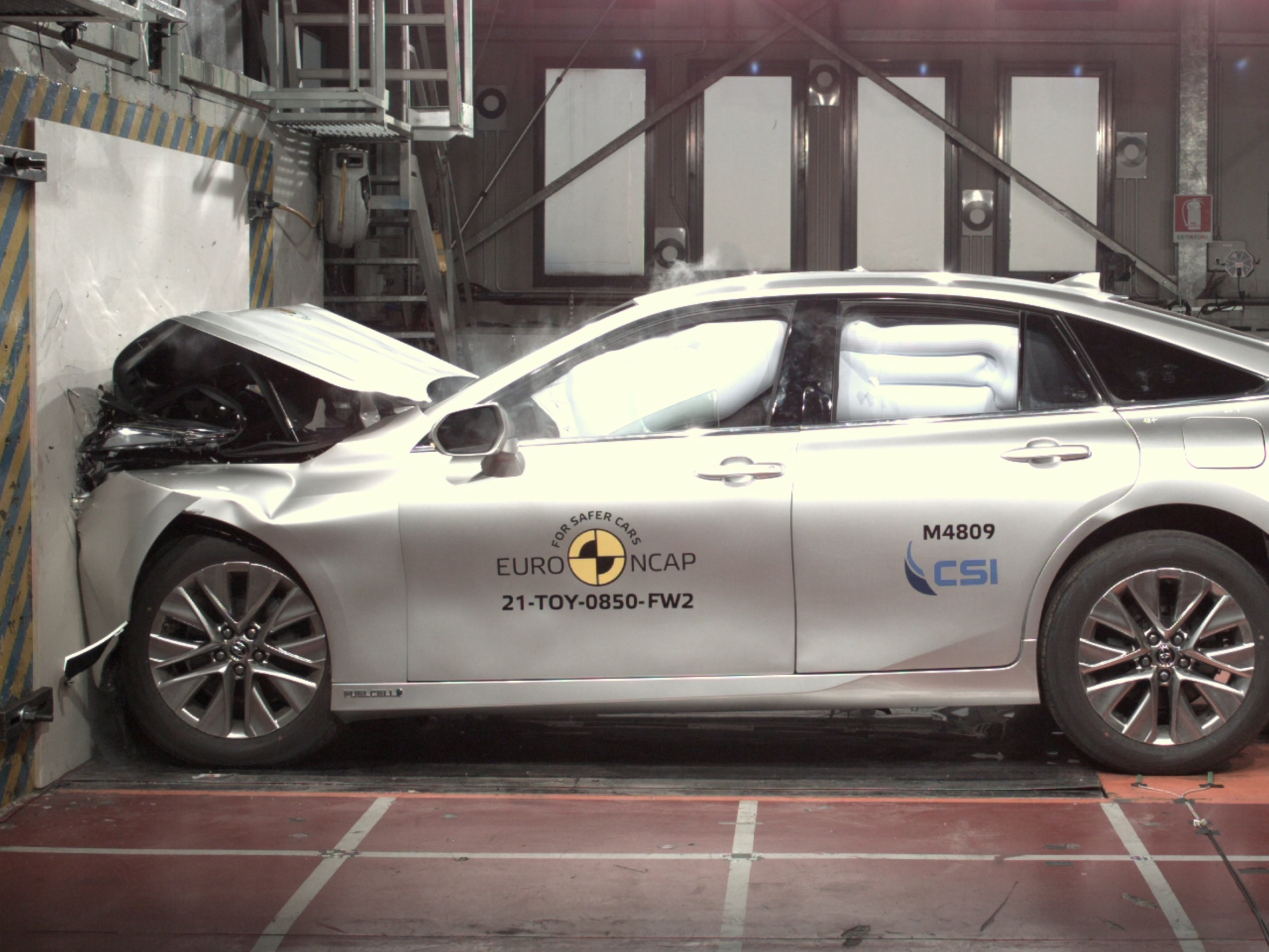
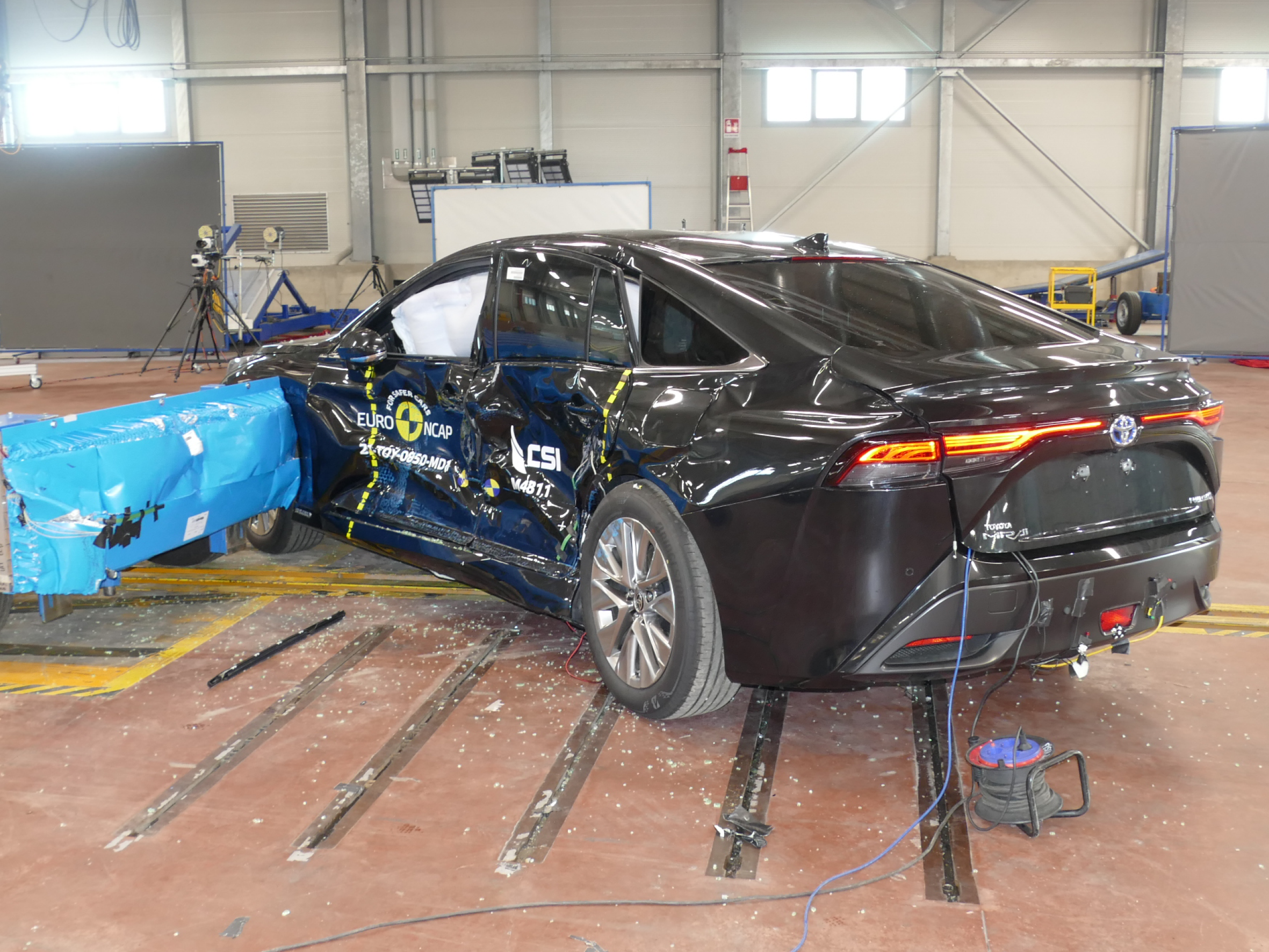
The 2021 Toyota Mirai has been given ANCAP’s tick of approval, scoring the maximum five stars from the independent vehicle safety authority.
Toyota’s hydrogen-powered Mirai performed highly across the four major categories, and enjoyed the second-best result ever for pedestrian road safety thanks to its active bonnet protection system.
ANCAP pointed out the Mirai’s hydrogen fuel-cell and electric drive “had no effect on the Mirai’s inherent safety,” with extra attention paid to the vehicle during and after the simulated crash tests.
Toyota says the Mirai’s hydrogen tanks are made from high quality laminated carbon-fibre reinforced plastic, ensuring strength – but keeping them lightweight.
Fitted with Toyota Safety Sense as standard, the vehicle gets; autonomous emergency braking with pedestrian and daytime cyclist detection, radar cruise control, lane-keep assist, semi-autonomous emergency steering, blind-spot monitoring, rear cross-traffic alert, and speed-sign recognition.
“The safety specification of vehicles entering the market today has clearly evolved to take into account not only the physical protection offered by a vehicle if it crashes, but also the ability to actively avoid a crash or serious outcome for those outside the vehicle,” ANCAP CEO Carla Hoorweg said.
“The results achieved by the Toyota Mirai are to be commended – showing safety and environmental benefits can, and should, go hand-in-hand.”
The model is one of only a handful to receive ANCAP’s five-star rating, despite not having a centre airbag located between the two front-seat occupants.
While only 20 Mirai sedans were brought to Australia by Toyota when the model landed on our shores in February this year, the result bodes well for the next-generation Lexus GS – rumours out of Japan suggesting the luxury model will be based on the Mirai.
Unlike most new cars on sale today, the Mirai wasn’t available to buy at a car dealership. Toyota Australia invited interested parties to fill out an application form, with the company then selecting customers based on a number of criteria – including their proximity to the refuelling station at Toyota’s former manufacturing site in Melbourne’s west.
However, Mirai customers are only able to lease the vehicle from Toyota for a duration of 36 months or 60,000km, for $1750 per month including refuelling – equating to $63,000 over the duration of the lease.
It’s believed the Mirai may have helped contribute to the postcode of Derrimut and Altona North coming in as Australia’s third-highest concentration of zero-emissions vehicles – with both suburbs being close to Toyota hydrogen facility in Altona North.
Data from the Australian Bureau of Statistics, compiled recently by the Institute for Sensible Transport, showed 102 vehicles registered in the postcode.
Snapshot
- New Outback excels with safety assist tech
- Child and adult occupant scores stand out against competitiors
- Overall score the highest yet under new testing regime
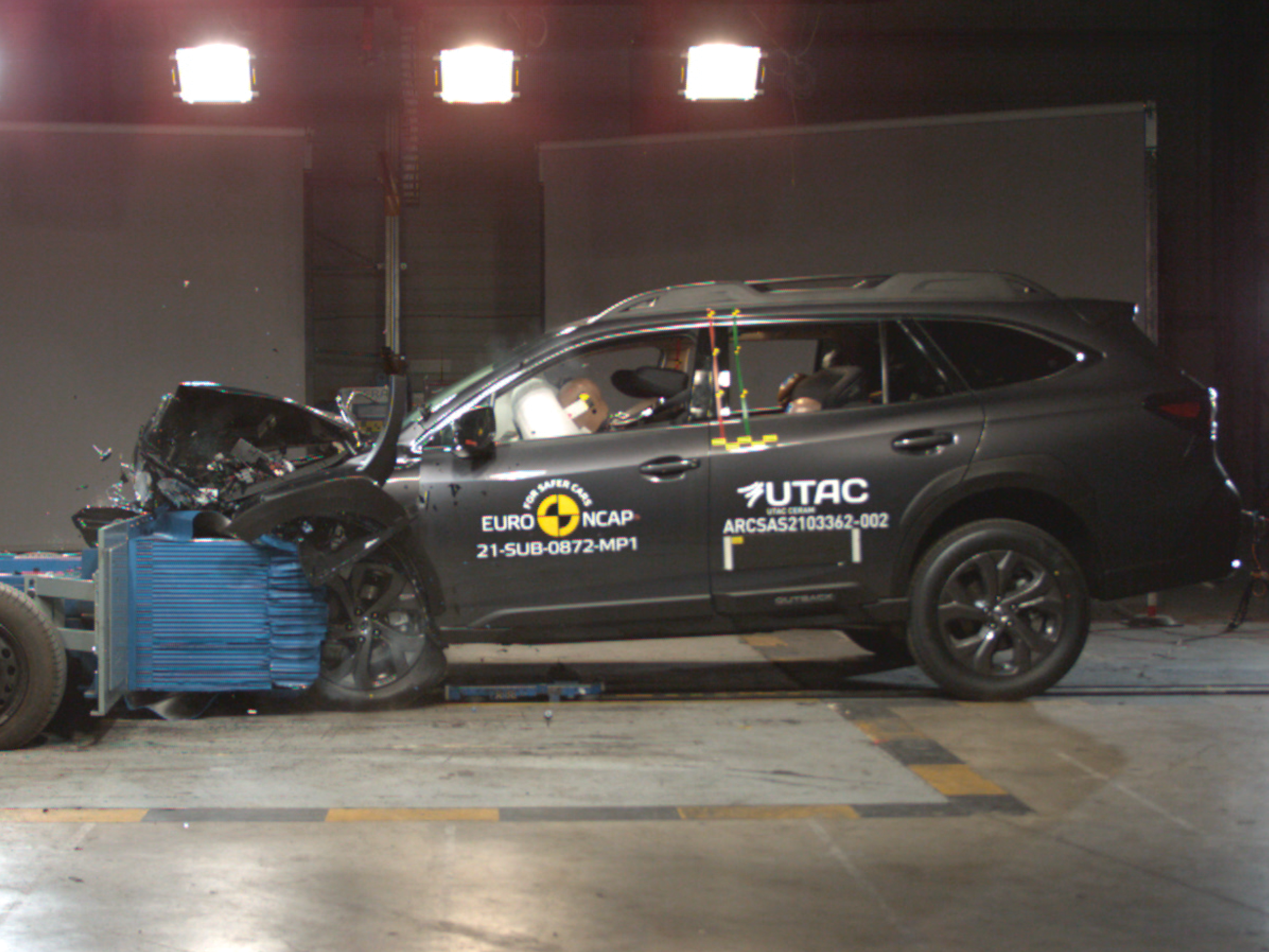
The 2021 Subaru Outback has passed the ANCAP safety test with flying colours, being allocated the full five-star safety rating.
Released earlier this year, the sixth-generation off-roading wagon carries on from the history of its predecessors by achieving a five-star rating, with the independent vehicle safety authority praising its host of tech systems in particular.
Out of a possible 16 points, Subaru’s EyeSight system scored 15.40 points for its collision prevention capabilities – only just missing out on a 100 per cent rating due to its speed assistance systems (2.65/3) and car-to-car autonomous emergency braking (3.75/4).
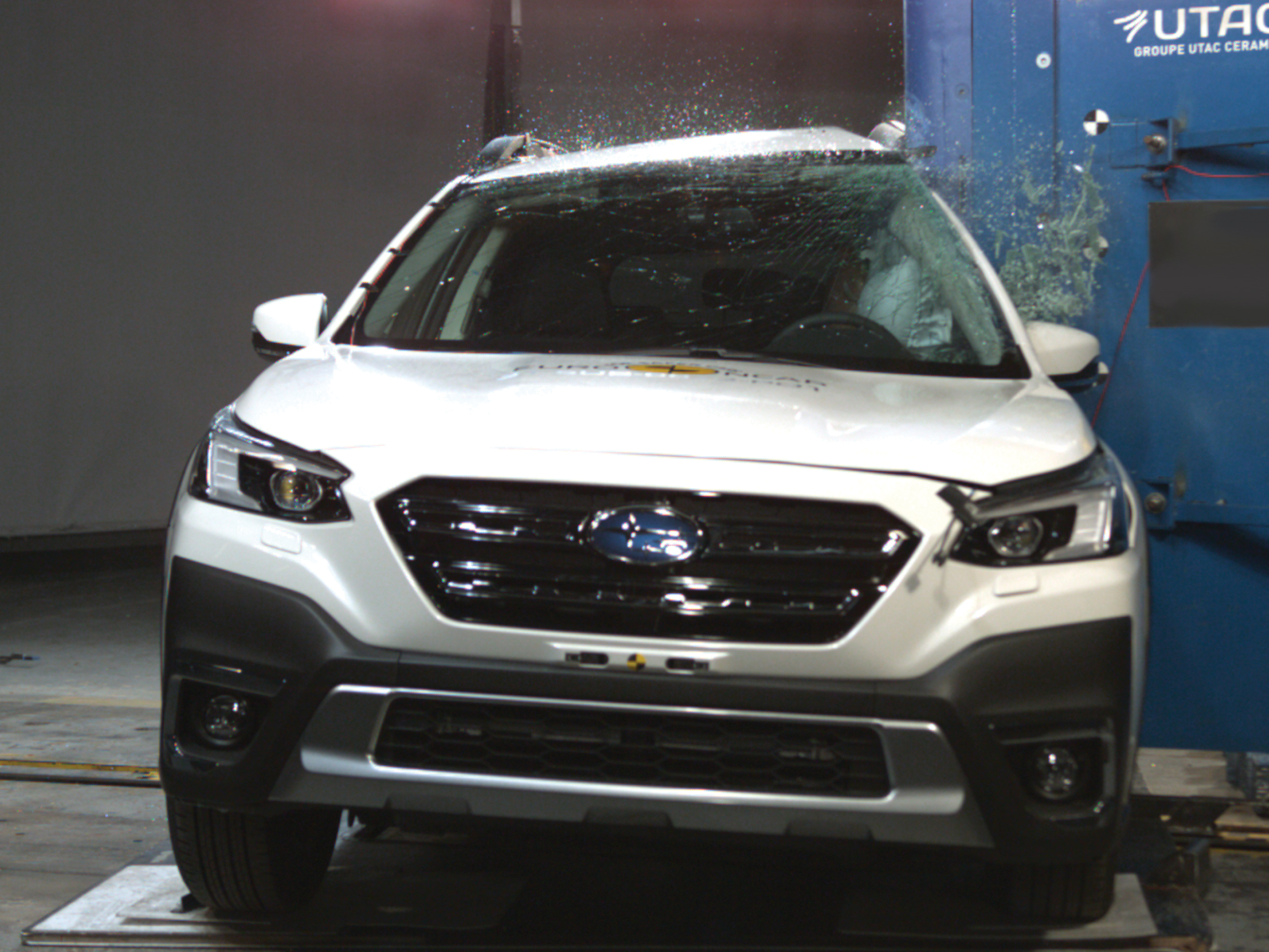
Although it just falls short of full marks, its 96 per cent rating for its safety assistance systems remains higher than any other vehicle in the class by seven per cent – while also scoring 91 per cent for child occupant protection, 88 per cent for adults and 84 per cent in the vulnerable road user category.
According to ANCAP CEO Carla Hoorweg, these results are the best yet under the authority’s testing regime.
“The Subaru Outback has comprehensively impressed, achieving the highest scores we’ve seen so far when testing to our current protocols,” said Hoorweg.
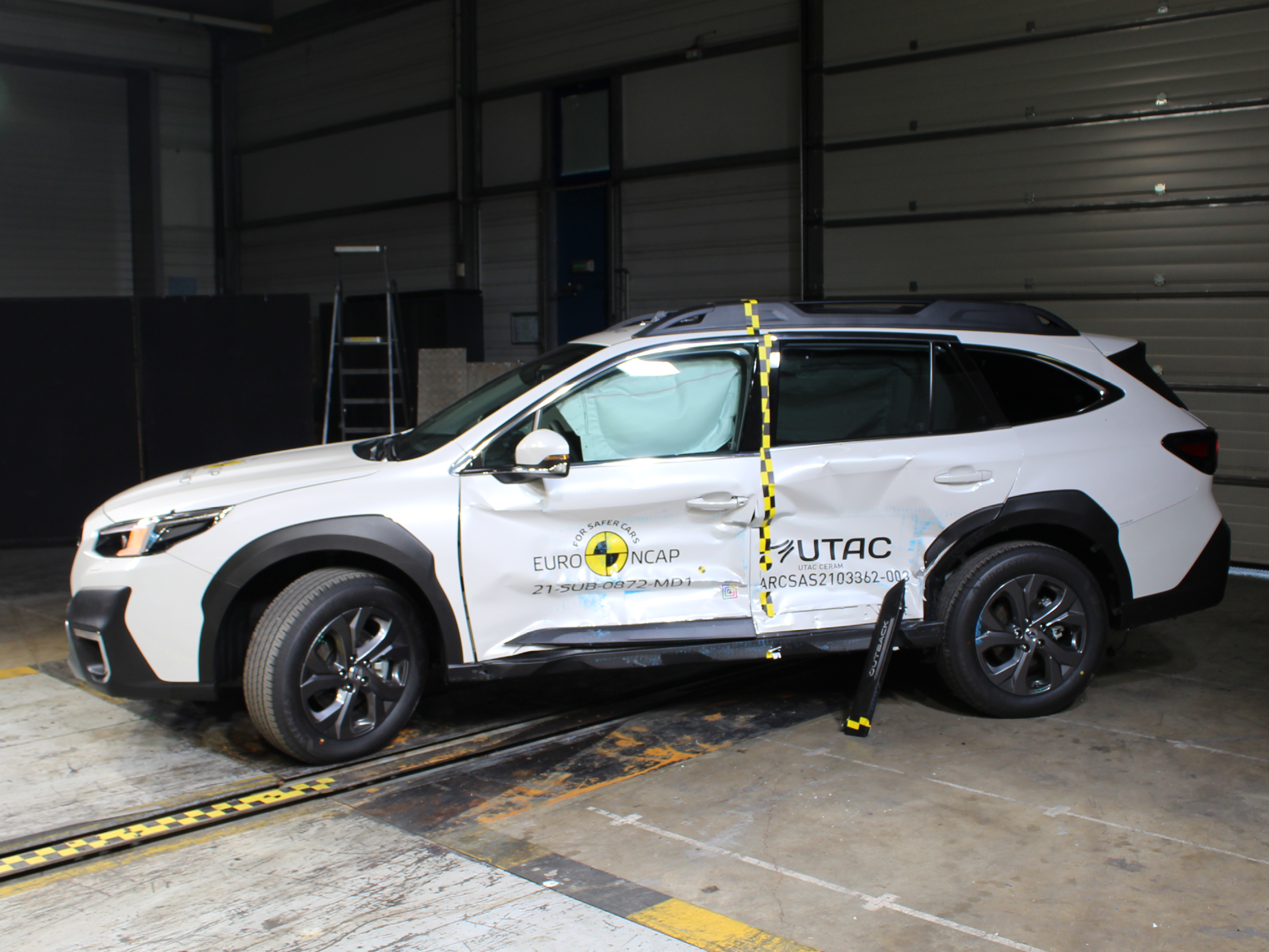
ANCAP also noted the Outback’s driver monitoring system is an encouraging standard feature, which keeps a close watch on the driver’s state of alertness through eye movement and steering inputs to determine whether they are paying attention behind the wheel.
Perhaps the biggest blemish on the Outback’s record is its AEB systems for pedestrians behind the vehicle – either stationary or walking – with the system not activating in either scenario, leading to a poor rating.
Since going on sale in January this year, Subaru has sold 6097 units of the 2021 Outback with a 7.8 per cent market share, third in the class of large SUVs behind the Toyota LandCruiser Prado and Isuzu MU-X – both of which scored five-star ratings when last tested in 2013.
Snapshot
- Renault confirms 2024 production run for all-electric 5
- Alpine has previously announced a performance variant
- New 5 to be built in the same factory as the original car
The electrification of Renault’s range will see the classic Renault 5 reinvented as an EV, with the manufacturer confirming plans to begin production in 2024.
As its platform is designed to take a single 100kW motor, the R5 will be front-wheel drive and can achieve a WLTP tested driving range of up to 400km, further than any of Renault’s current EV offerings.
Renault has previously said its new CMF-BEV architecture which underpins the R5 will be at least 33 per cent cheaper to produce than the existing Zoe, a significant saving as it looks to have a 65 per cent electrified range by 2025.
Lowering production costs could result in cheaper retail prices, with the 33 per cent manufacturing expense reduction potentially equating to a sub-$35,000 retail price when compared to the $51,990 Zoe.
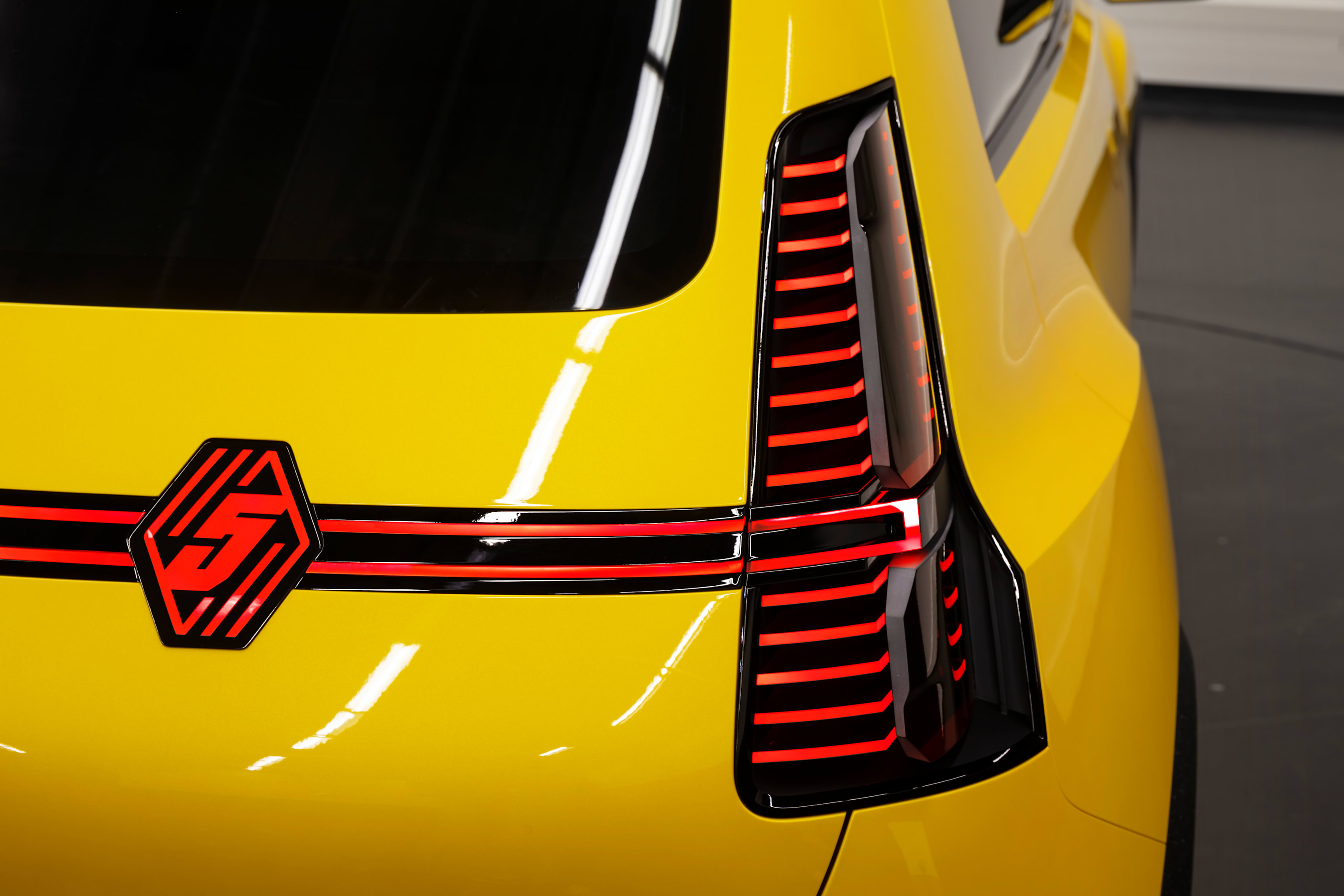
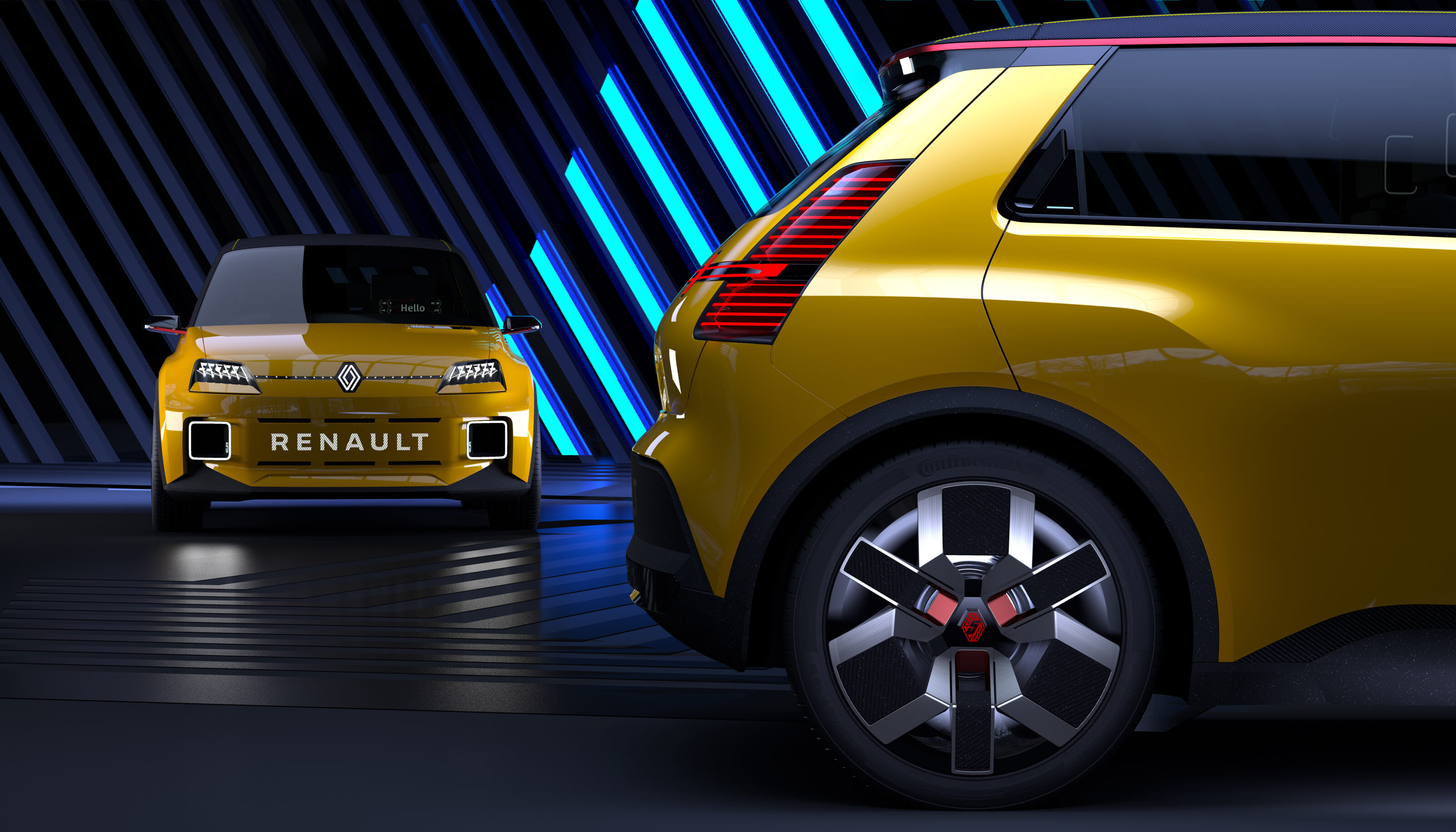
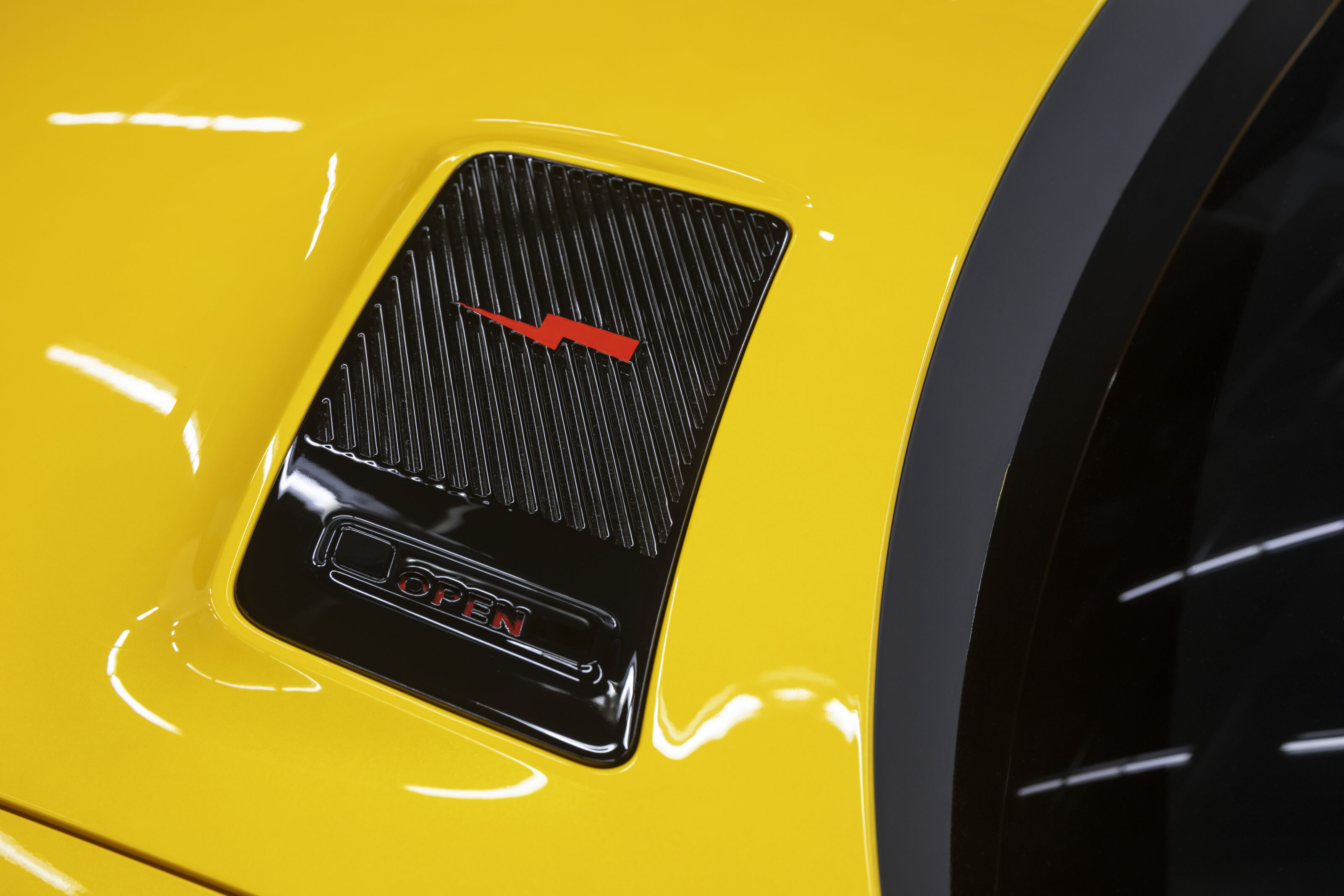
Strong design cues link the new R5 to its predecessor, from the classic Renault diamond logo to a classic ‘80s font on the rear badge, while its fake bonnet intake now hides a charging hatch – allowing the original design to incorporate modern technology.
Although Renault’s performance brand Alpine has merely teased the outline shape of its R5 concept, rumours suggest the hot hatch could adopt a higher output version of the 140kW motor in the Megane E-Tech, as well as a number of aggressive bodywork changes.
Featuring as a part of the French marque’s display at this year’s IAA Mobility Show in Munich, the R5 Prototype was on display alongside its classic counterparts, as well as the new Megane E-Tech EV – Renault’s first dedicated electric car upon its new CMF-EV platform.
While it’s quite fun to say ‘Volkswagen Golf Wagon’ out loud quite quickly, the car itself doesn’t quite scream ‘fun’ at first glance. Sleek, or stylish perhaps, come to mind first.
The eighth generation of VW’s ‘iconic’ car looks to be a crisp evolution of the excellent Mk7.5, and in many ways it is. But Volkswagen has done a lot to keep this generation atop the bar in its class.

Here, in Golf Life Wagon guise, we enter the middle of the range at $36,250 before on-roads. The base Golf Wagon is $2700 cheaper but misses out on some goodies you’ll probably want. For the hatch, a more expensive R-Line exists with more goodies, but it’s not available as a wagon.
For your hard-earned, the Life includes a 10-inch touchscreen (VW calls it Innovison) instead of the smaller 8.2-inch unit in the base. It also adds wireless charging plus wireless Android Auto and Apple CarPlay, as well as keyless entry and start, and a larger digital dash display at 10.25 inches.
There are also some non-techy touches, 18-inch wheels over the 16s the base wears, microfleece ‘Comfort’ seats and ambient lighting that comes in the $2000 Comfort & Style package available for the Life.

Overall, the interior takes a more minimal approach to design, mostly doing away with buttons and relegating many of the car’s functions to screen controls.
Climate, for example, is controlled entirely through the touchscreen. It’s not the ideal way to change fan speed and airflow mode (temps have touch buttons under the screen), but the trade-off is that VW has included a clever ‘Smart Climate’ screen that has more simple commands like ‘warm my feet’ or ‘defog the windscreen’.
The screen itself is neatly designed and its menus aren’t difficult to navigate but it can very occasionally lag slightly. This, however, isn’t as bad as the infrequent audio cutouts that occur with wireless Android Auto and sporadic dropouts with Apple CarPlay. This isn’t a problem unique to Volkswagen but can be frustrating nonetheless. Thankfully, wired smartphone mirroring (via the USB-C ports) is seamless.

Buttons do, however, still adorn the steering wheel. Higher-grade Golfs like the hatch’s R-Line or GTI get touch controls on the wheel but buttons remain the nicest ergonomically in my opinion – and those on a VW wheel are well laid out and easy to feel for without looking.
The small shifter instead of a full-sized lever is fine, if a little harder to swing your hand down and grab quickly, but does at least follow the proper ‘RND’ pattern with a separate park button.
The interior takes a minimal approach to design, doing away with buttons and relegating many functions to screen controls.

In terms of other general ergonomics, storage isn’t abundant but it’s clever in places. The central bin can only hold four narrow cans (think energy drink or canned coffee), but the cup holders are small arms that come out at the press of a button to create an otherwise more flexible storage place.
Also welcome is the digital dash display, which is reminiscent of cars from sister brand Audi in its operation and layout. The ability to bring navigation up directly in front of the driver as a map display, or set a custom layout that provides the most important info to you, is a big plus. The 10.25-inch screen isn’t available on the base Golf Wagon and is so constantly useful you’d miss it if you knew.
A $1500 Sound & Vision pack for the Golf Life also adds a head-up display and a 480-watt Harman Kardon audio system. On that note, the upper volume limit in the Golf seemed a little low in our test car.

Behind the front row, rear passengers are treated to similar seat trim as the front, with the backrests only feeling very slightly too upright to properly nestle back into. Legroom in the wagon is fine, however, and the backs of the front seats are cloth rather than plastic, with document and phone pockets on the backs. There are also vent and temperature controls, plus reading lights on the ceiling.
Further back is where the real advantage of the wagon comes in; a cavernous 611 litres of storage space (above a space-saver spare tyre too) that can become 1642 litres with the second row folded down.
The auto pairs nicely with a 1.4-litre turbo engine, hauling this wagon around without complaints, nor trying to become the star of the show.

However, the wagon doesn’t come with the one base model feature that might sway some buyers – a manual gearbox. Both wagon variants (fun fact: the Wagon is confusingly named ‘Variant’ in Europe) come with an eight-speed automatic transmission, replacing the 7-speed DSG dual-clutch that could at times be a little hesitant and jolty at take-off.
The ease of the auto pairs nicely with a 1.4-litre turbo-petrol engine that’s unassuming but accommodating, going about the task of hauling this wagon around without complaints, nor trying to become the star of the show.
Not being able to hear any harshness of the engine working away is coupled with the relatively effective insulation from tyre roar and wind noise, except for on the harshest of surfaces, where the suspension gets a chance to shine.

Even rough roads don’t make the Golf feel too harsh-riding, with the 17-inch wheels and well-judged suspension cushioning passengers from bumpy surfaces. Multi-link rear suspension does well to keep the back of the wagon tied down, also proving useful when cornering.
For twisty roads, the Golf is controlled and comfortable, with well-weighted steering and brake pedal feel that allows accurate judgement of how much foot pressure is needed.
More advanced engines are available… overseas. VW says Australia’s fuel quality isn’t good enough to consider bringing particulate filter-equipped cars.

The Golf 8 also has a five-star ANCAP rating, scoring high for occupant protection (both adult and child), with driver and front passenger airbags front and side, plus front and rear curtain airbags, and outer rear-seat passenger side airbags.
Long drives won’t result in too many stops at the petrol station either, with VW claiming 5.9L/100km fuel consumption. More advanced engines are available in the Golf 8… overseas. Unfortunately, VW says Australia’s fuel quality isn’t good enough for it to consider bringing particulate filter-equipped cars to our shores just yet.

Back to our shores, and the Golf Wagon gets the same five-year unlimited-kilometre warranty that all Volkswagens get here, though servicing is on the pricier side for each of its 12 month/15,000km intervals. From around $400, the price climbs north of $800 for the fourth (60,000km) service.
Volkswagen does offer a cheaper way to do this though, a $2100 five-year ‘Care Plan’ (or $1200 for three years) caps costs at those figures and includes extra roadside assist cover after servicing takes place, just in case.

Rivals? You can’t stray too far from the Golf if something of its size in a wagon format is what you’re looking for. The closest alternative is the Skoda Octavia Wagon, available in ‘base’ Ambition trim for $37,990 drive-away or the step-up ‘Style’ trim for $40,490 drive-away.
The Mazda 6 Wagon can be positively plush but requires a climb further up the price ladder while also still running some older equipment, such as its infotainment unit.
It seems obvious, but the reason the Golf is such a standard is that it maintains the quality to keep it above the bar in the key areas and doesn’t fall down with any of the vital points.
This is as true of the wagon as it is the hatch – just that the wagon has even fewer rivals.
2021 Volkswagen Golf Wagon Life specifications
| Body: | Five-door wagon |
|---|---|
| Drive: | FWD |
| Engine: | 1.4-litre I4, turbocharged |
| Transmission: | 8-speed automatic |
| Power: | 110kW @ 5000rpm |
| Torque: | 250Nm @ 1500-4000rpm |
| 0-100km/h: | 8.8sec (claimed) |
| Fuel consumption: | 5.9L/100km (combined) |
| Weight: | 1371kg (tare) |
| Suspension: | MacPherson struts front/multi-link rear |
| L/W/H: | 4633mm/1789mm/1455mm |
| Wheelbase: | 2686mm |
| Brakes: | Ventilated discs (f)/ Solid discs (r) |
| Tyres: | 255/45 R17 |
| Wheels: | 17-inch alloy wheels (space-saver spare) |
| Price: | $36,250 + ORC |
The CEOs of Mercedes-Benz, BMW, and Volkswagen are warning the global semi-conductor chip shortage is likely to last until at least 2023.
“Several chip suppliers have been referring to structural problems with demand,” Mercedes-Benz CEO Ola Kallenius told media at the 2021 Munich motor show, Automotive News reports.
“This could influence 2022 and [the situation] may be more relaxed in 2023.”
The comments were echoed by BMW’s CEO Oliver Zipse, who said the supply of semi-conductors could last for another year.
“I expect the general tightness of the supply chains will continue in the next six to 12 months,” he said – but added the long-term outlook was positive for the industry.
Volkswagen boss Herbert Diess wasn’t as optimistic, foreshadowing demand for the components will only grow as cars – as well as more common consumer products – increase their dependence on electronics.
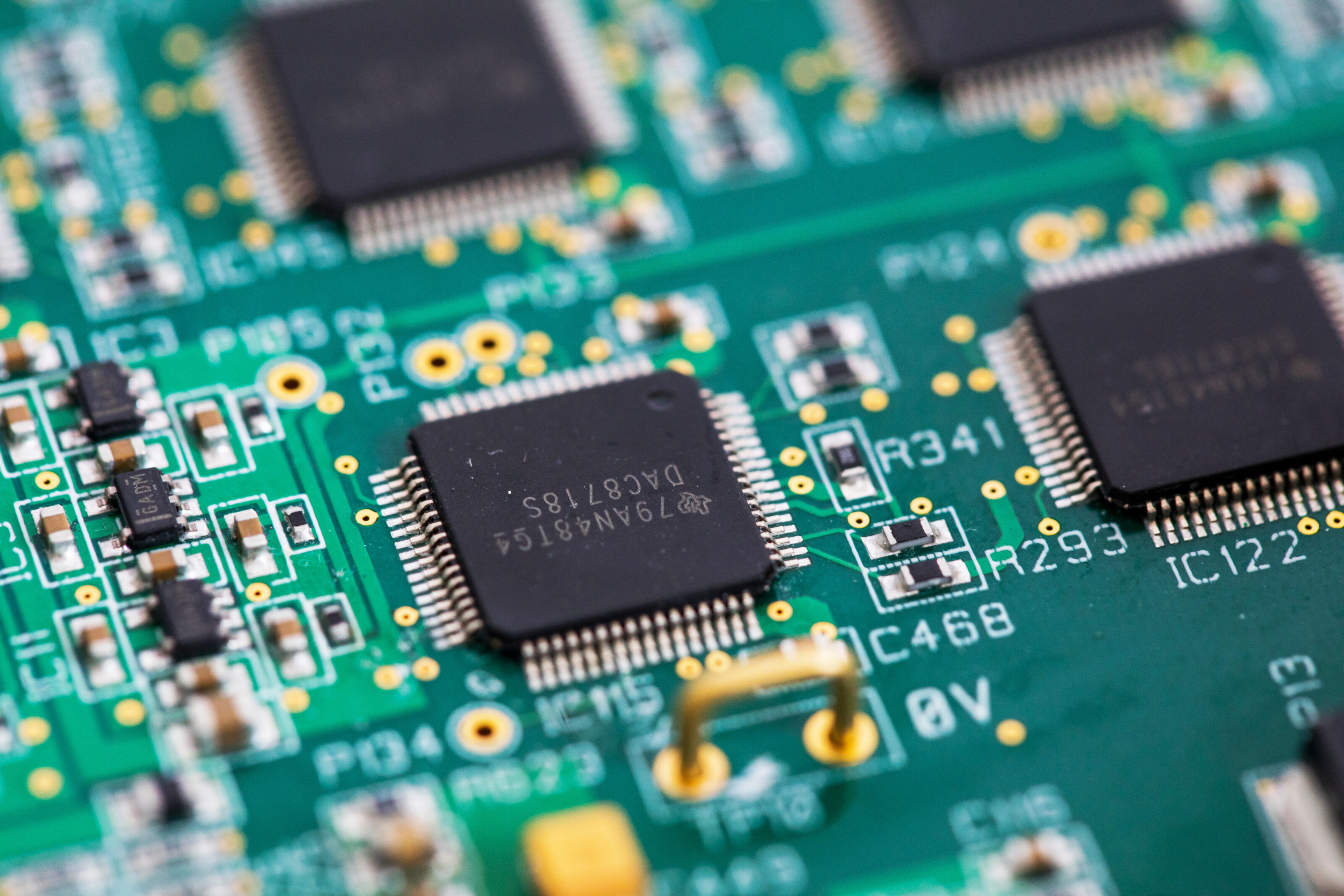
Most major car manufacturers have been forced to temporarily halt production across the world, as supply of the critical computer parts continues to cause headaches across the industry.
Last week Toyota announced its current production difficulties would impact deliveries of the Toyota LandCruiser 300 Series, with some Japanese media reporting an expected delay of up to 12 months.
Meanwhile, tech company Intel has announced it will spend €80 billion (AU$128 billion) over the next decade to build a number of semi-conductor factories in Europe – including a dedicated automotive production facility located in Ireland, according to Reuters.
Though the pandemic was the original cause of the current crisis, a recent report by Forbes suggested tech giants such as Apple were prepared to outbid other companies from the automotive sector.
But while the bottleneck could last into 2023, car company bosses are advising the current situation is expected to begin easing by the end of 2021.
Snapshot
- Hyundai believes its SUV-based Staria will bring buyers back to people-movers
- Predecessor iMax accounted for just under 10 per cent of people-mover sales
- Best-selling Kia Carnival in the sights of its Korean cousin
UPDATE, September 17: The 2022 Hyundai Staria is now on sale in Australia, and we’ve driven it. Find our reviews here.
The Hyundai Staria will have one clear objective for its lifecycle in Australia – take sales away from SUVs and get buyers back into people-movers.
The Korean marque has a significant challenge ahead given the sub-$70,000 large SUV segment accounted for 91,243 sales last year, while the sub-$60,000 people-mover market managed just 6772 units.
Targeting the SUV market is one factor behind Hyundai not offering its 2.2-litre diesel as a front-wheel drive model in Australia, instead mating it to an all-wheel drive layout as standard to provide a tangible crossover with similarly priced SUVs – although it should be noted the cheaper 3.5-litre petrol variant is only available in front-wheel drive.
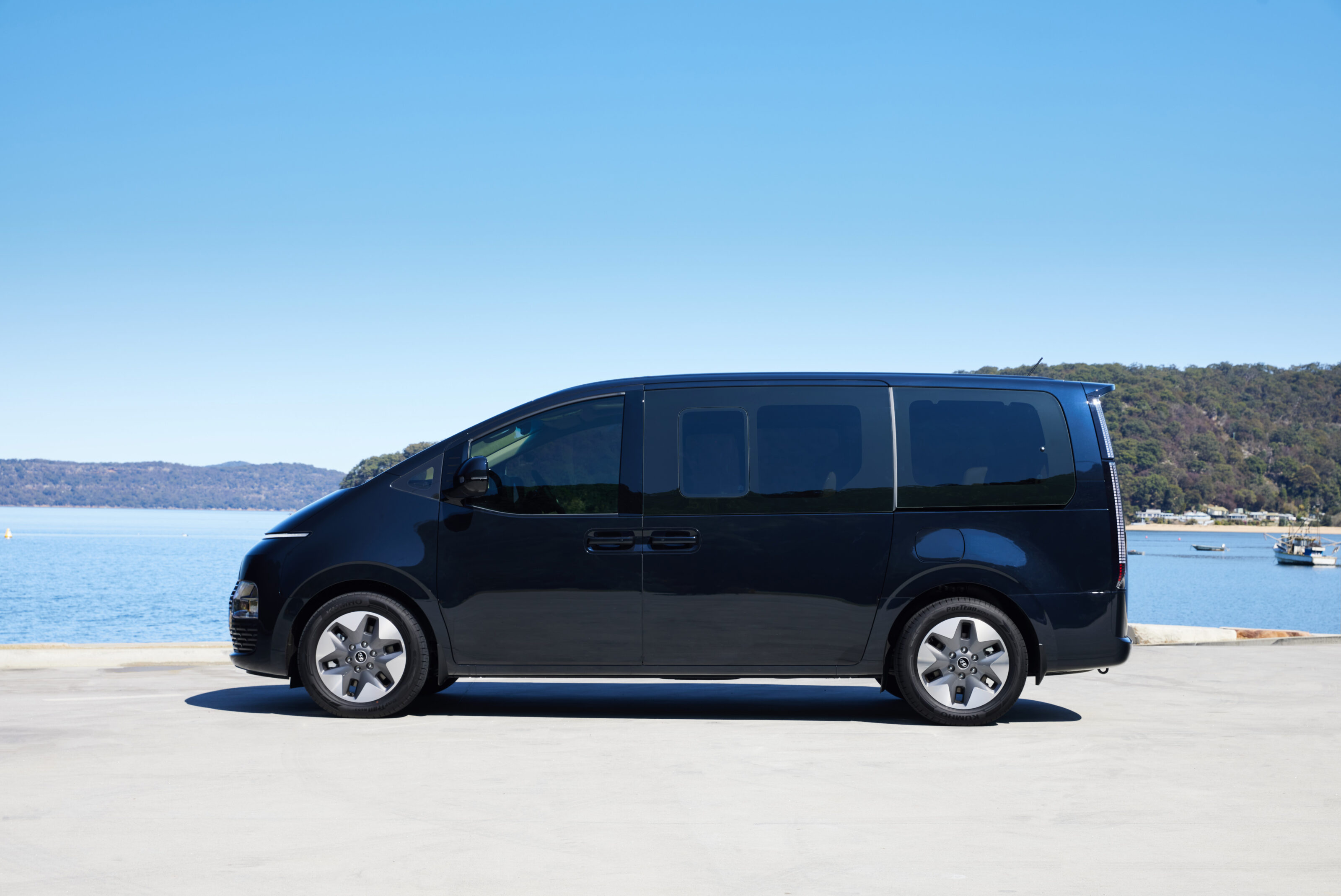
The carmaker expects a relatively even split between its three Staria variants, with the base vehicle expected to take 40 per cent of sales, while the Elite and Highlander grades will account for around 30 per cent each.
Similarly, the choice of engines for customers will be close to half-half with roughly 45 per cent expected to buy the cheaper FWD petrol, while 55 per cent will fork out the extra $3000 for the AWD diesel.
Hyundai Australia is also confident its latest offering can not only surpass the market share of the retired van-turned-people-mover iMax – which accounted for 9.4 per cent of sub-$60,000 people-mover sales last year – but it believes the Staria can also challenge the segment leading Kia Carnival.
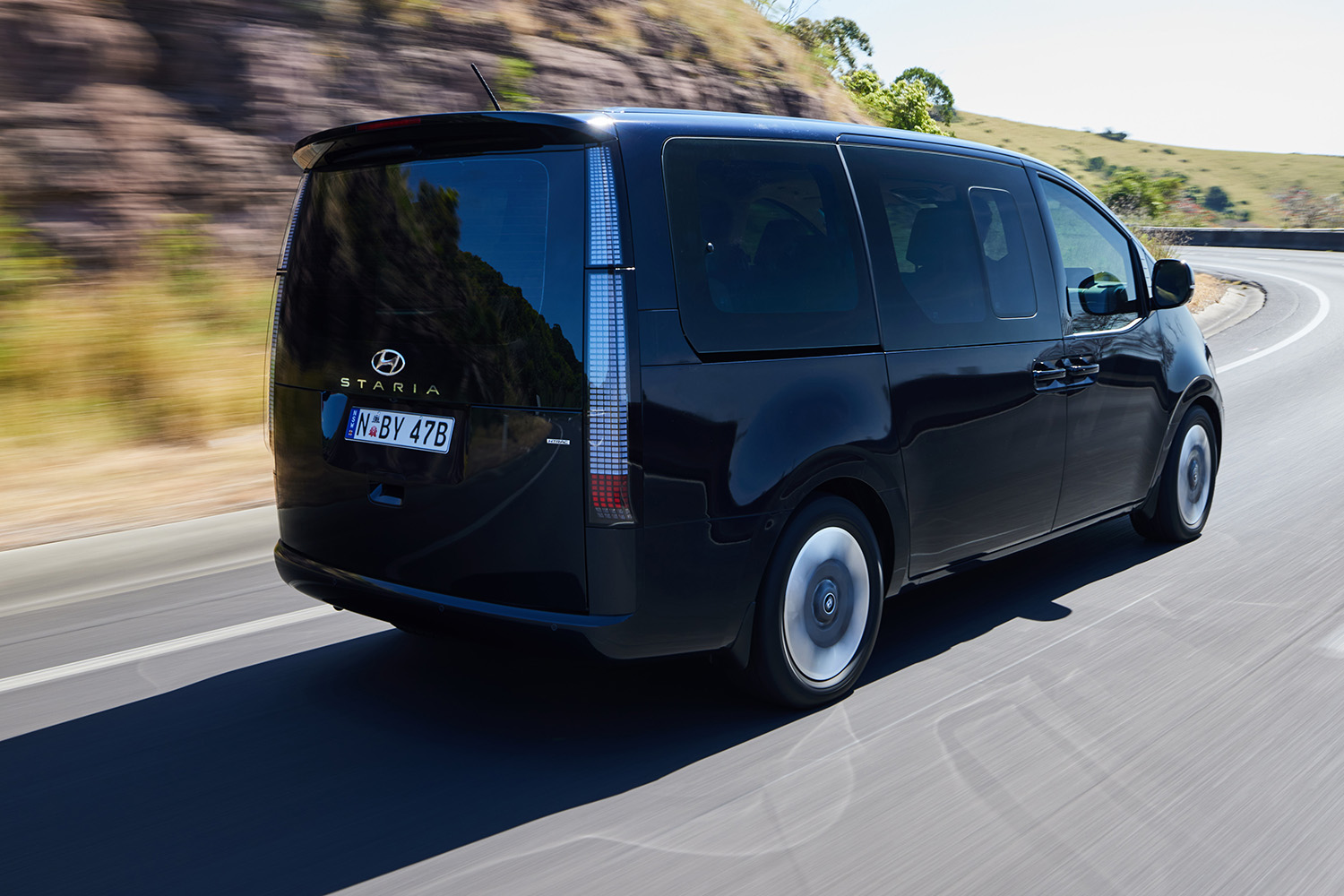
This might be a tall order for two reasons – the Carnival currently holds a 59.7 per cent market share for 2021 so far, and 56.9 per cent in August alone – retaining its place as the top dog.
And secondly, the Carnival also shares the same N3 platform as the Staria, meaning the Hyundai-made vehicle has to offer a clear point of difference to take sales away from its cousin – and indeed the Sorento, Tucson, Sonata and Sportage, which are also underpinned by the N3 platform and provide a more car-like driving experience.
Despite only being on sale for a month, industry data shows 101 Starias were registered in August, accounting for 14.6 per cent of all people-mover registrations in Australia last month – pushing it to second on the list ahead of the LDV G10 Wagon, Volkswagen Multivan and Honda Odyssey.
The coming weeks will see Hyundai officially launch the Staria Load as the replacement to the iLoad, giving commercial buyers a chance to buy into its new van range.
The all-new 2022 Hyundai Staria is available in showrooms now, for more pricing and features information click here.
The brand new Hyundai Staria will launch in Australia with a full host of features, with the Korean manufacturer’s local arm confirming the global chip shortage won’t impact equipment.
A replacement to the ageing iMax – introduced locally in 2007 – the Staria will launch this month with an impressive range of equipment as standard, despite the global semi-conductor shortage causing production issues across the automotive industry.
While Hyundai had said it wasn’t affected by the shortage in March this year, it had to abort the launch of its i30 Sedan N Line Limited Edition in June due to a lack of chips, choosing to prioritise its existing models instead.
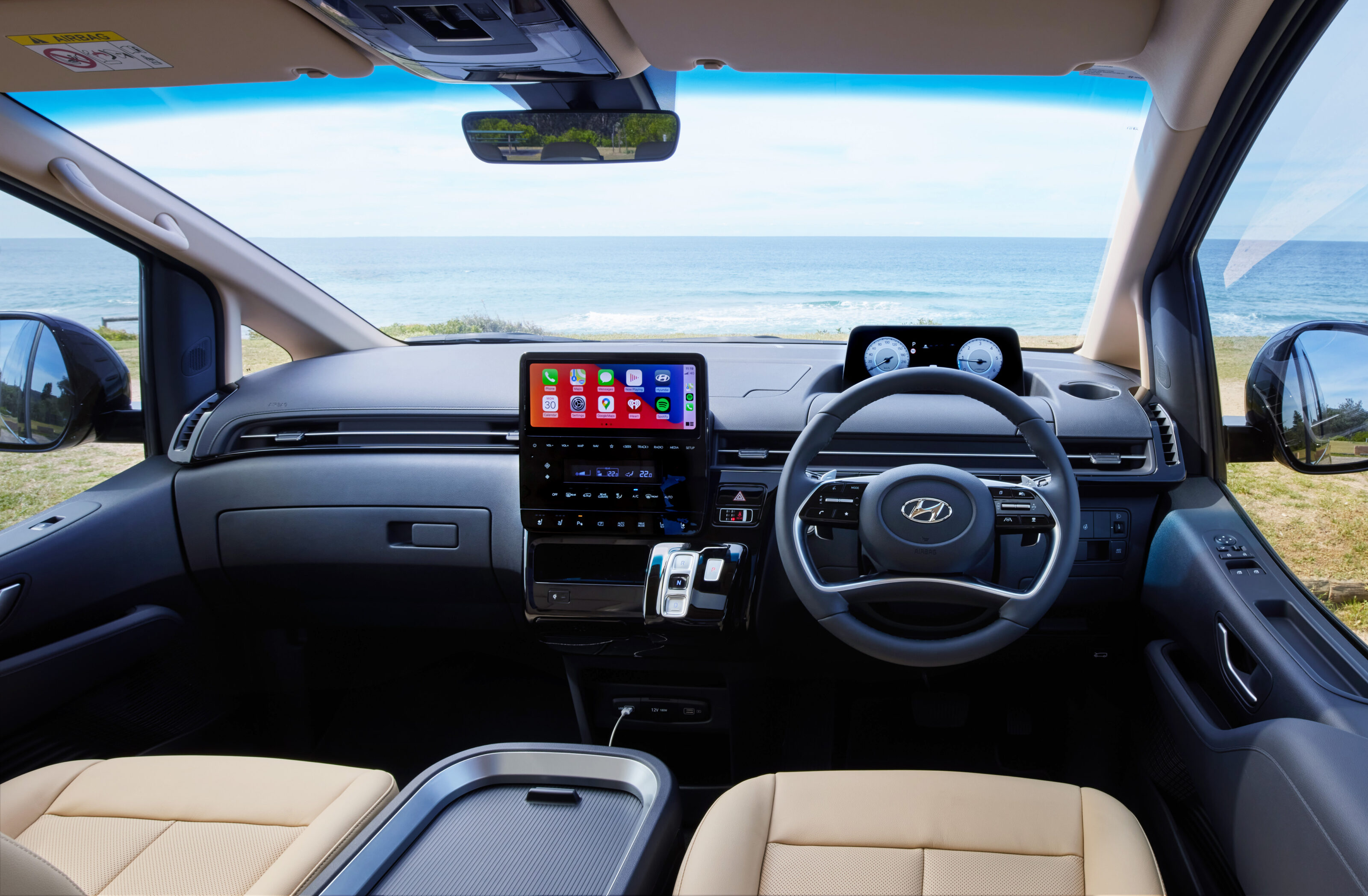
From launch, the base Staria and higher variants will be available with the full range of equipment listed, as Hyundai confirmed none of the features will be dropped or restricted due to the unavailability of chips – which has seen a variety of manufacturers reduce the specs of vehicles to keep up with demand.
Even if there was a shortage impacting the infotainment system, for example, the Staria offers two different units across its three variants – potentially allowing buyers to go up or down in spec if it was a dealbreaker.
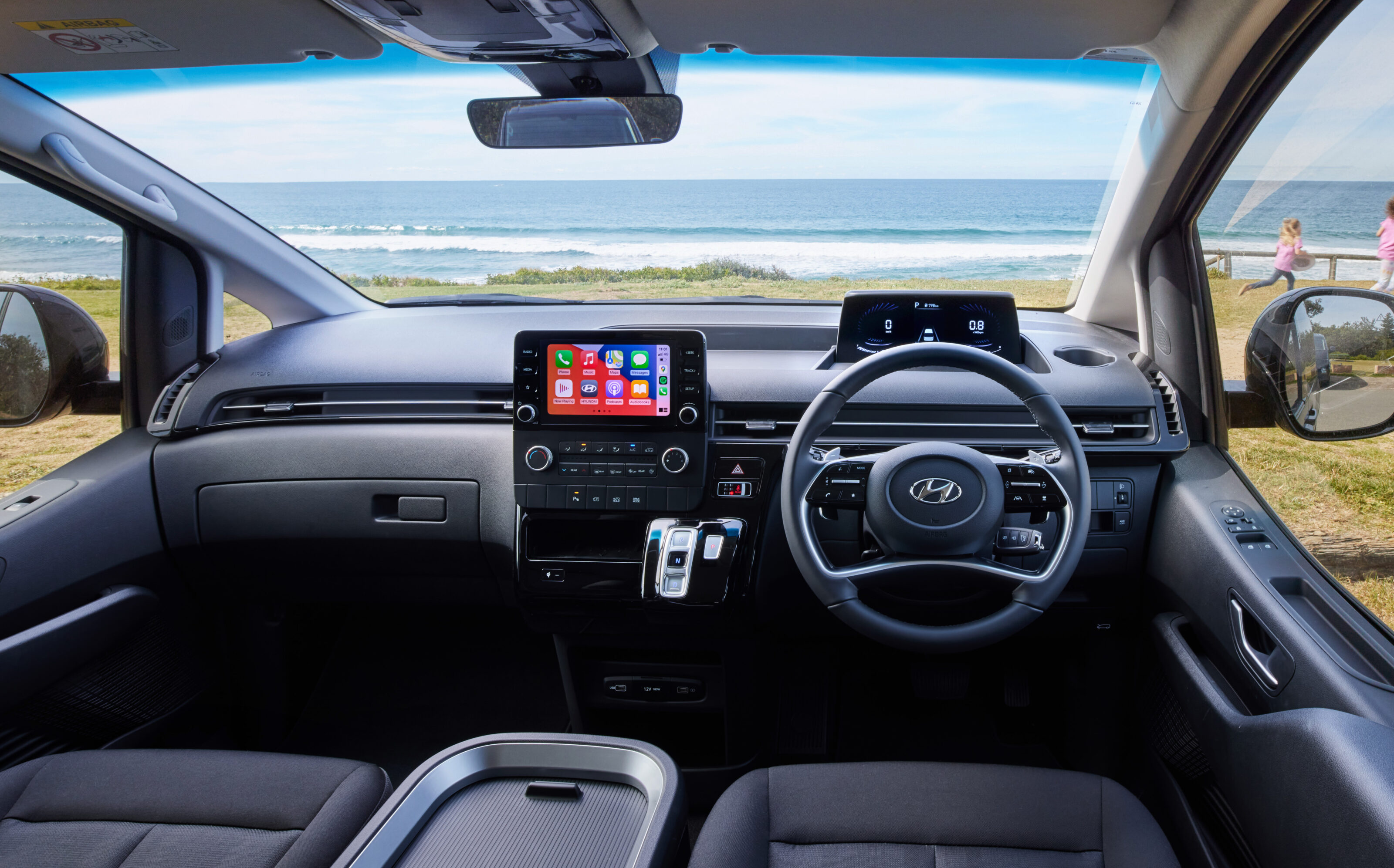
Hyundai also refused to rule out any possibility of a hydrogen fuel-cell or hybrid Staria in the future – both of which would move the model in line with the brand’s desire to go fully-electric by 2030 and reduce its fleet emissions through electrified internal combustion engine vehicles.
As opposed to with other markets globally, the Staria will only be available as an eight-seater, forgoing the nine and 11-seat options found overseas due to Australian Design Rules.
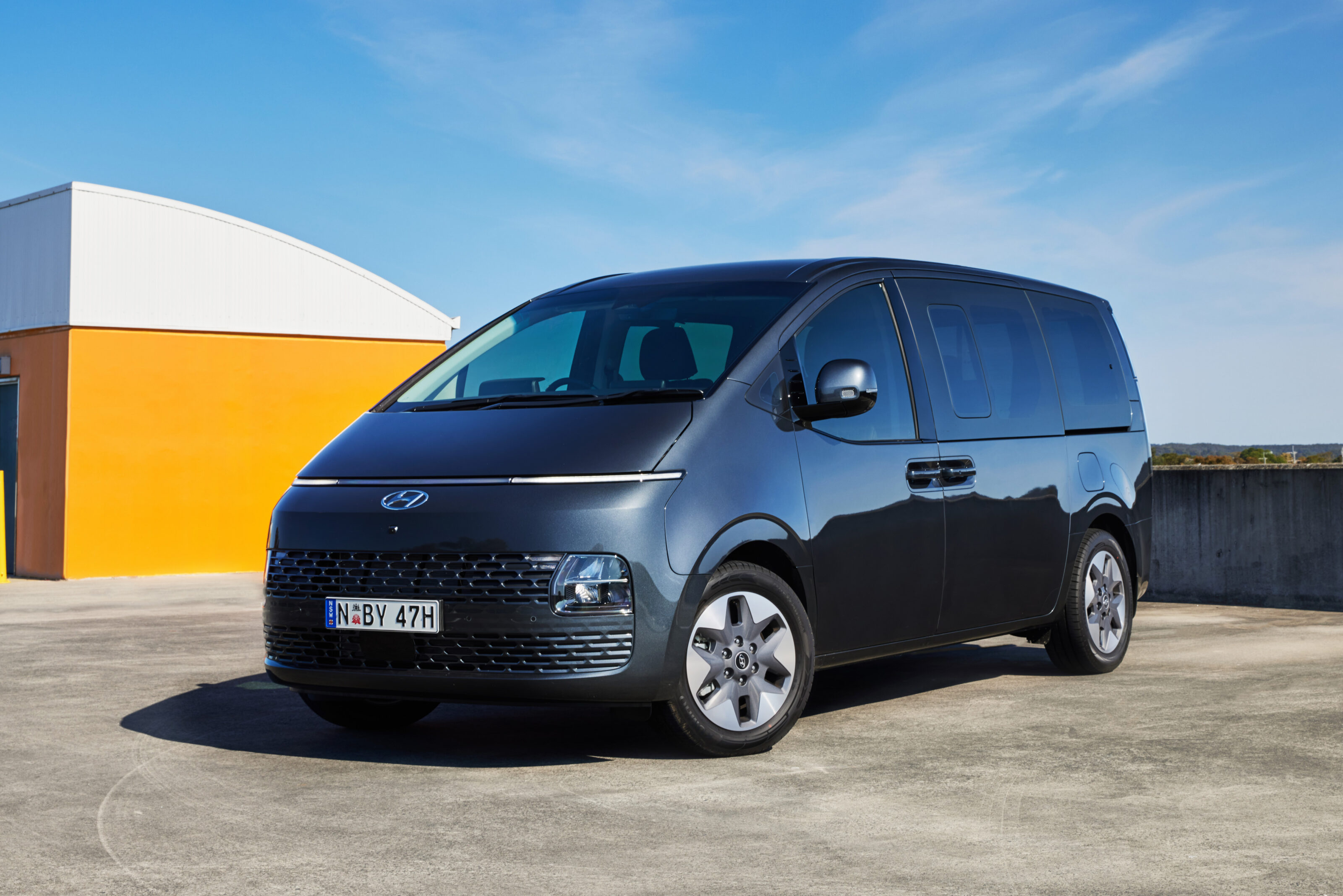
2022 Hyundai Staria pricing (excludes on-road costs)
- Staria 3.5 MPi FWD – $48,500
- Staria 2.2 CRDi AWD – $51,500
- Staria Elite 3.5 MPi FWD – $56,500
- Staria Elite 2.2 CRDi AWD – $59,500
- Staria Highlander 3.5 MPi FWD – $63,500
- Staria Highlander 2.2 CRDi AWD – $66,500.
