
Snapshot
- G87 M2 rumoured to have 365kW
- Power derived from BMW M’s S58 turbo straight-six
- Production to begin in December 2022
The 2023 BMW M2 may still be more than a year away from an official unveiling, but rumours about the upcoming entry-level M Car have been flying lately.
According to BMW Blog, there are now whispers the next-generation G87 M2 could be released with as much as 365kW.
If true, that’s a huge jump in performance compared to its predecessor, the F87 M2, which was released back in 2016 with its N55 twin-scroll turbo 3.0-litre straight-six producing just 272kW.
Rumours also suggest the M2 could be powered by Munich’s prodigious S58 3.0-litre turbocharged six-cylinder engine straight out of the gate, rather than the base M2 being powered first by the more commonplace B58 turbo-six.
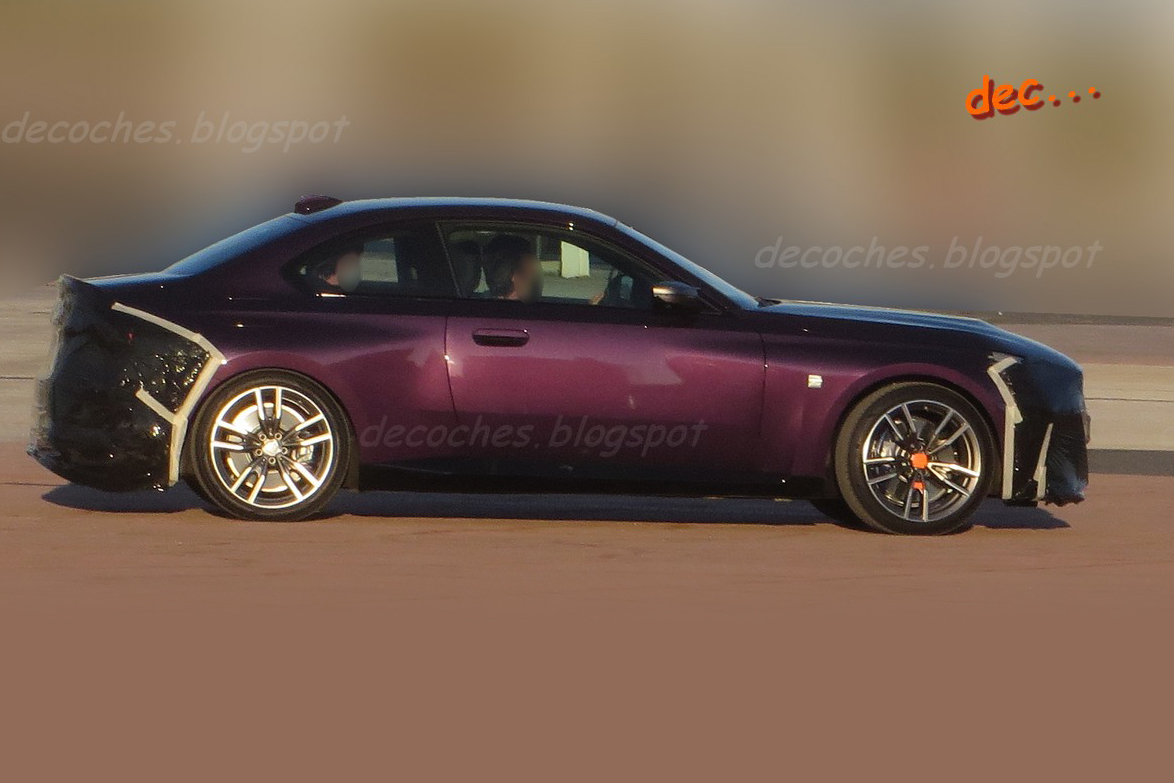
This move would prove to be quite a shake-up for the moniker. It could mean a ‘regular’ version of the G87 M2 is offered with a detuned engine and a six-speed manual transmission, and launched simultaneously with a Competition variant with more power and an automatic gearbox.
We’ve already seen this product strategy with BMW’s latest M Cars, the G80-series M3 and M4, which are offered in both standard and Competition guise.
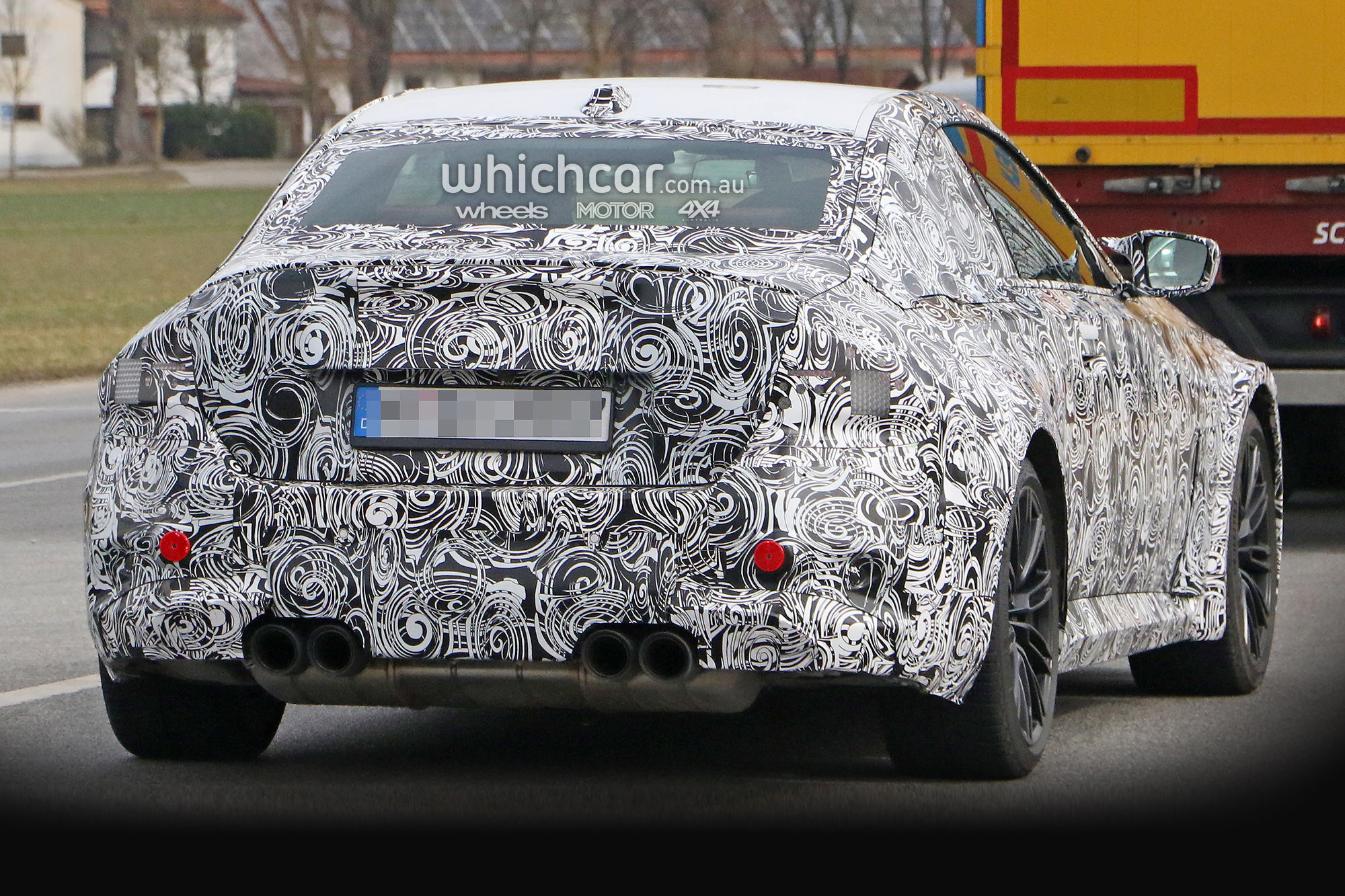
If this speculation wasn’t surprising enough, another rumour suggests the next M2, in an effort to keep weight down, will be offered with rear-wheel drive only and not use BMW’s xDrive all-wheel drive system.
This would be an unexpected move from the Munich outfit, especially considering the less powerful, upcoming 2022 M240i can be had with xDrive.
However, given the M2 is increasingly becoming BMW M’s true bastion for driving enthusiasts, ditching the driven front wheels would make sense.
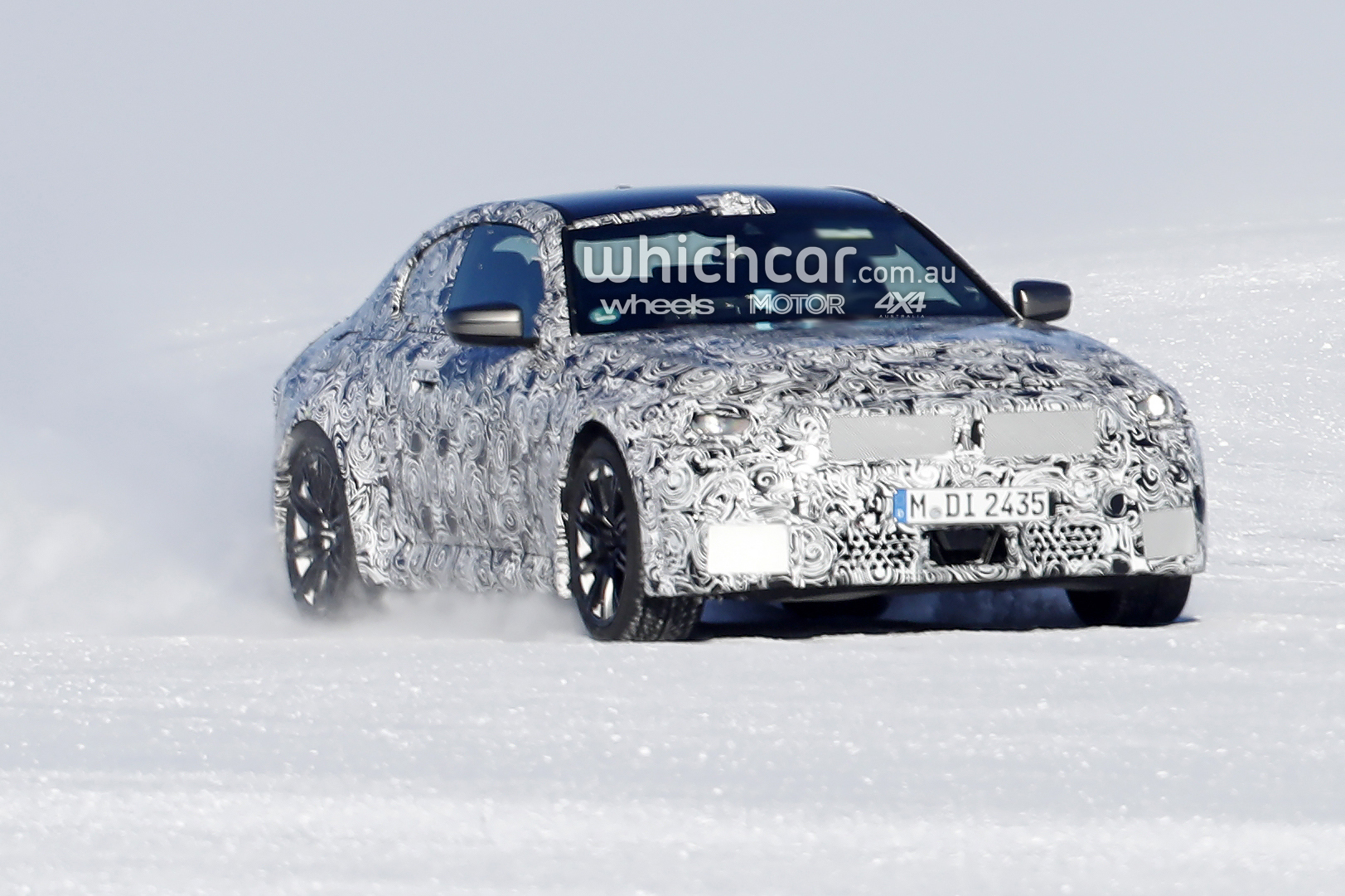
For buyers who have lamented the lack of paint options available on the current-gen F87 M2, BMW Blog also suggested the next generation sportscar could be had with BMW’s Individual paint program, which would be exciting to see.
It’s thought the G87 M2 will enter production in December of 2022, with manufacturing taking place at BMW’s Leipzig plant and potentially even at the carmaker’s new Planta San Luis Potosí facility in Mexico.
Production is said to run through to 2029, which is in keeping with the current M2 lifecycle.
But, the next M2 will only be sold in certain markets by the end of the decade, as emissions laws in some countries will surely prohibit the sale of the petrol-burning performance car.
Snapshot
- Franchising reforms have been designed to benefit dealers
- Car dealers now in a better position to protect investment if manufacturers disappear
- Reforms come in the wake of 2020 Holden departure
New reforms to the Australian Franchising Code of Conduct have put car dealers in a stronger position to protect their businesses, according to the Australian Automotive Dealer Association.
The revised regulations will take effect from July 1, 2021 and are aimed at protecting dealers with their investments if a manufacturer decides to leave the local market, such as in the case of Holden’s departure from Australia.
AADA CEO, James Voortman, said the reforms to the FCC will be positive for dealers in the future who have to face uncertainty when manufacturers leave Australia.
“These reforms are all about fairness and Australian dealers will now be in a better position when a car manufacturer leaves the country, reduces its network or changes its business model,” said Mr Voortman.
“We also look forward to working with the Government on the upcoming consultations on dispute resolution and the merits of a separate automotive code,” he said.
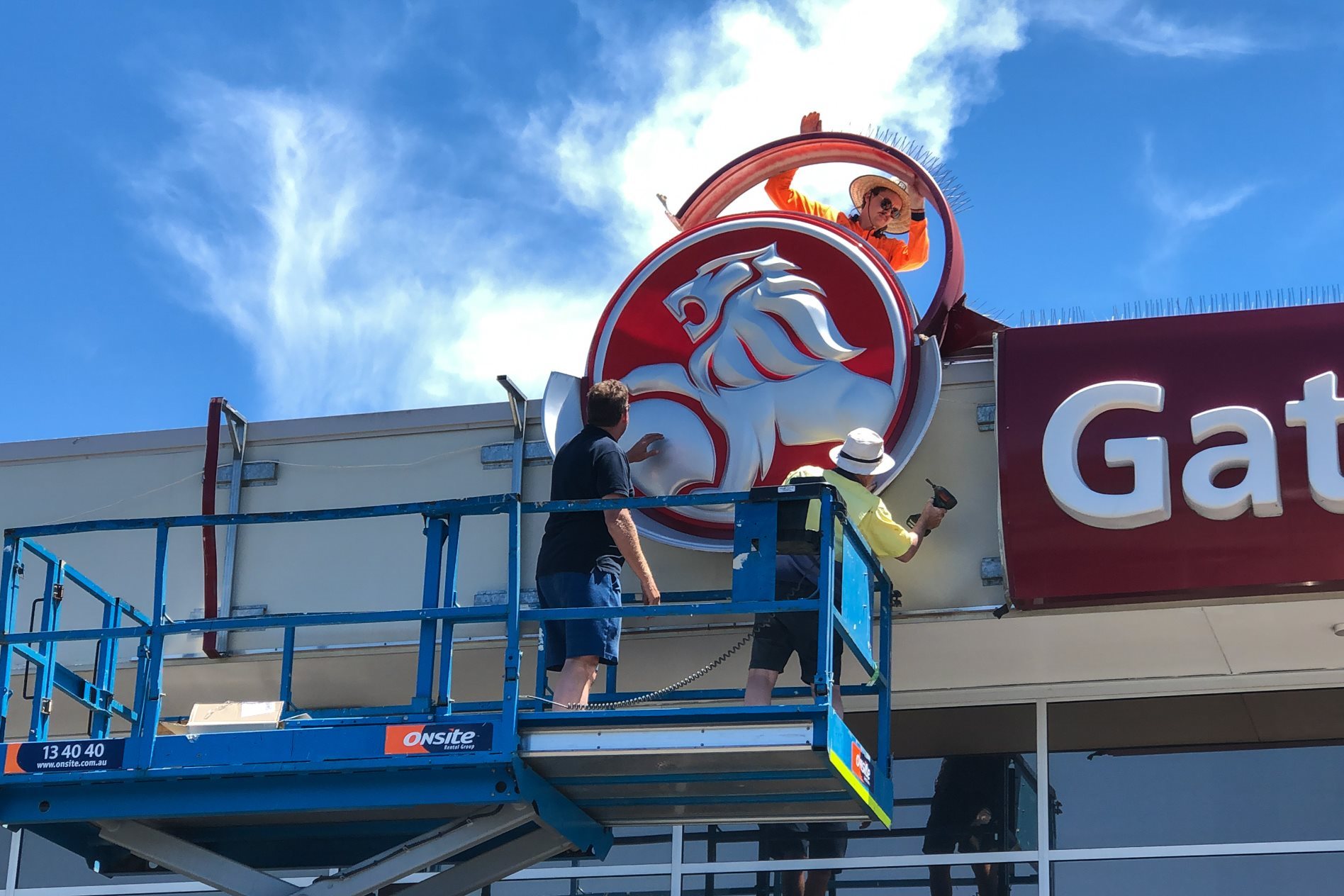
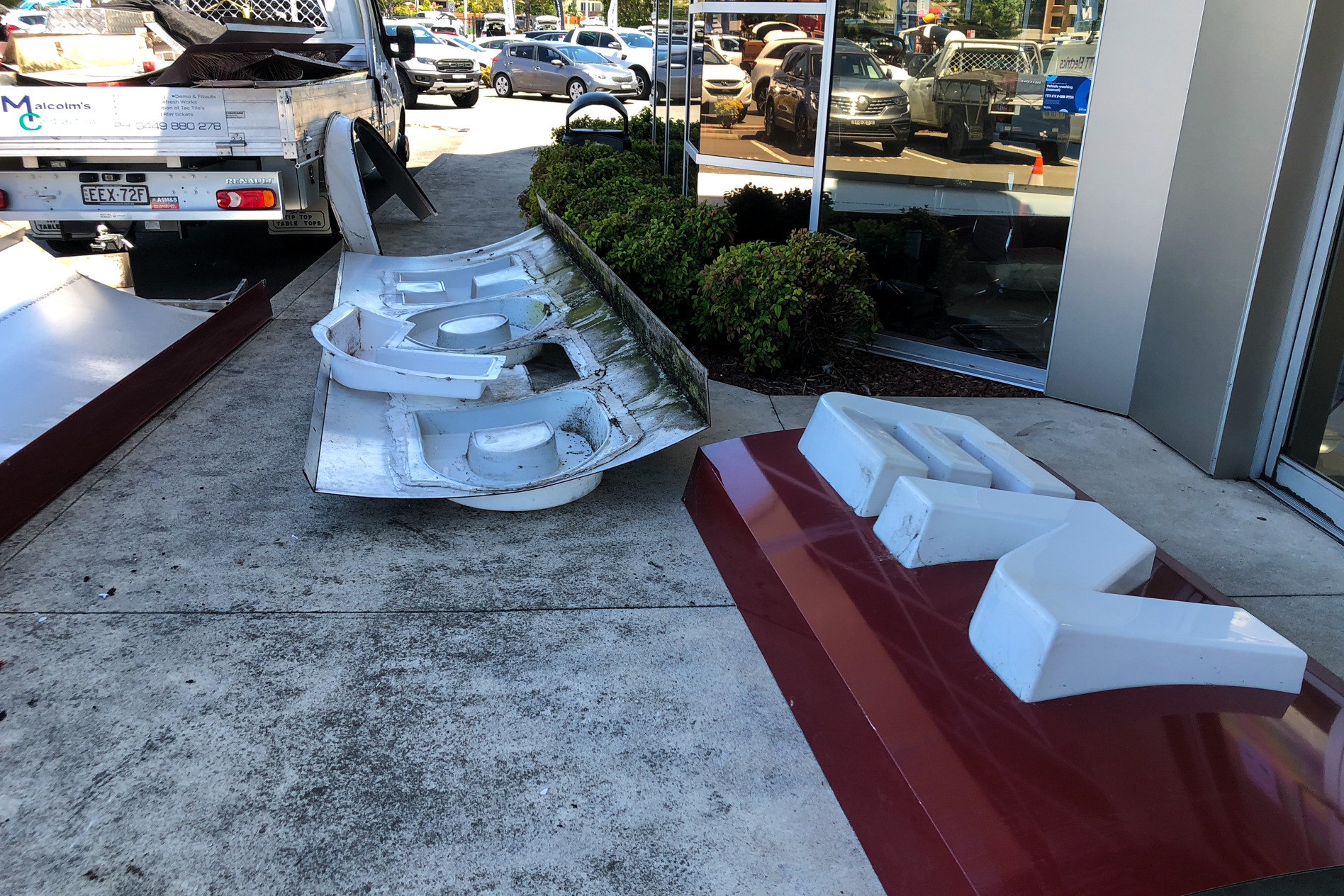
Reforms to the current regulations were first floated when General Motors pulled Holden from the Australian market in February 2020, leaving dealers with next to no support.
Though an offer to over 184 Holden dealers of $1500-per-car was accepted by 120 franchises, the Australian Holden Dealer Council and AADA believed it was inadequate compensation to those who had been loyal to the iconic brand.
“These changes come after a difficult 18 months for Australian dealers which saw Detroit-based General Motors terminate every Holden Dealer without adequate compensation.
“It is clear that other manufacturers are considering making changes to dealer networks which is why these reforms are so important. These changes will bring a degree of balance to the relationships between new car dealers and the manufacturers to which they are franchised.
“The reforms are sensible and fair and will bring all manufacturers up to the standard already being employed by ethically-minded car brands operating in Australia. Dealers in regional towns and cities all across the country will be welcoming these reforms.
“Automotive dealerships are important local businesses which employ Australians, invest in Australia and pay their taxes in Australia. Dealers look forward to healthy commercial relationships with their manufacturers, so we can continue to bring many benefits to Australian consumers and communities.”
Snapshot
- Semi-conductor shortages pauses production in three Nissan plants
- Stellantis factory to halt work for three days
- Australian models unaffected
A global shortage of semi-conductors is quickly becoming the most immediate threat to the automotive industry, forcing Nissan to press pause on its manufacturing efforts in Mexico.
According to Carscoops, the Japanese brand will halt production in three of its Mexican plants throughout June, owing to a shortage of the part which is used in a vehicle’s Engine Control Unit (ECU).

Two of the manufacturing facilities in Aguascalientes will temporarily stop production at Plant 1 for seven days while Plant 2 on the same site will only pause for one day of the month.
The third Nissan plant to come to a halt will be its CIVAC facility in the state of Morelos, also closing for seven days.
In all cases it has not been specified as to which days of the month this will be.
A spokeswoman for Nissan Australia told WhichCar local models will not be affected by stoppage in Mexico as Australian delivered cars come from Japan, Thailand and other regions in North America.
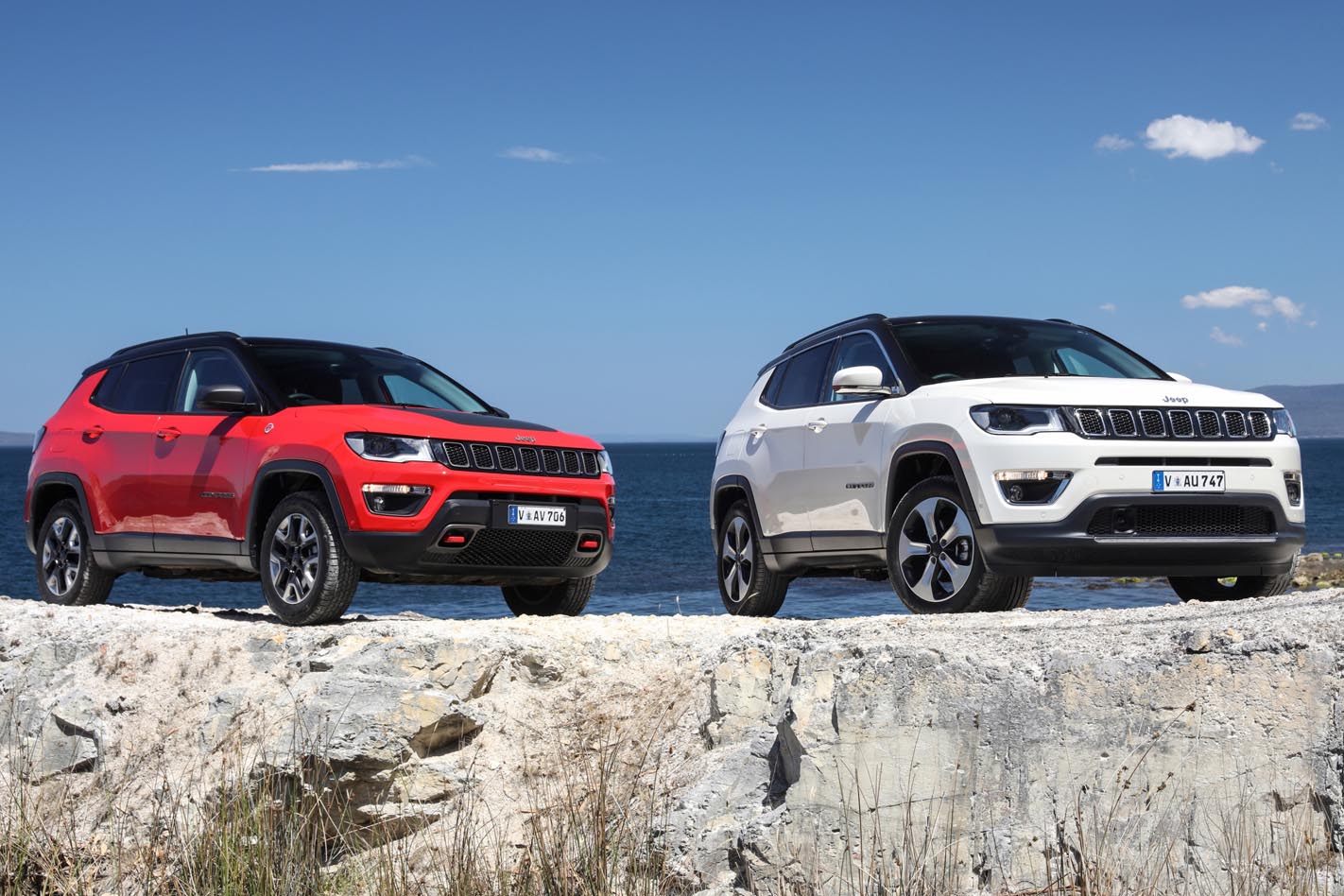
Stellantis is also facing the prospect of suspending production in its Toluca plant for seven days thanks to the semi-conductor shortage, affecting the Dodge Journey, Fiat Freemont and Jeep Compass.
This too is unlikely to affect the Australian delivered Jeep Compass as the models which arrive locally are manufactured in the Indian city of Pune, the only plant for the right-hand-drive version of the model.
Whichcar has contacted Stellantis for comment.
Snapshot
- Minor price reductions across the range
- Options list modified
- On sale now, deliveries expected in the coming months
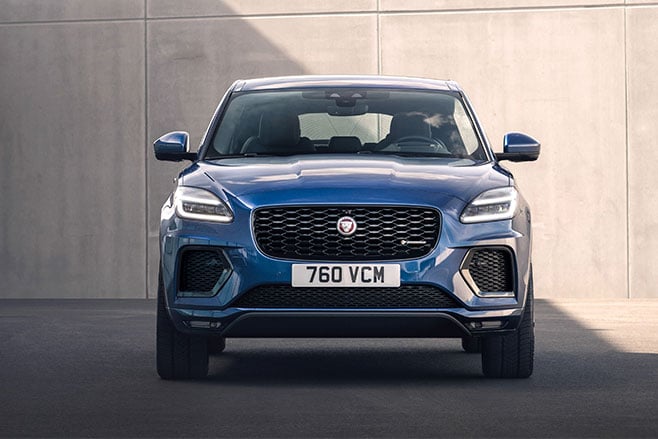
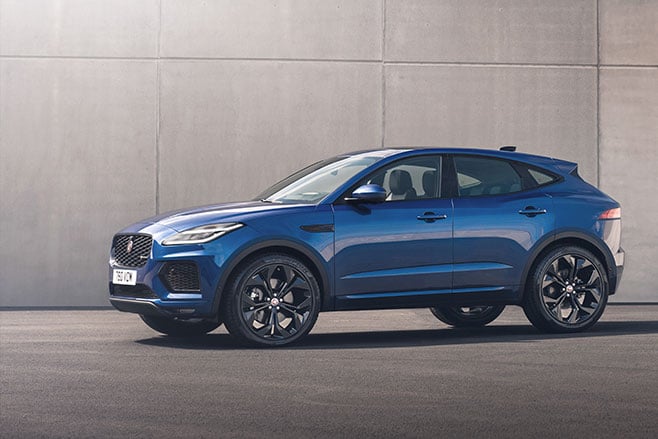
The 2022 Jaguar E-Pace has received its model year update, with the medium-sized SUV witnessing a minor drop in prices across the range.
As part of the new model roll-out, E-Pace variants have had new standard features added such as; Configurable Dynamics for the R-Dynamic S and R-Dynamic SE, and a black contrasting roof for the 300 Sport.
However, there have been some standard items removed such as; front fog lamps and illuminated metal treadplates with brand-name script from all but the 300 Sport (now an optional extra) and 3D Surround Camera across the range (now also optional).
Jaguar has also removed several items from the E-Pace’s options list, such as Park Assist, silver roof-rails and all-season tyres.
Model range and prices
The 2022 Jaguar E-Pace will be available in four different guises – R-Dynamic S, R-Dynamic SE, R-Dynamic HSE, and 300 Sport.
Prices have gone down slightly across all variants due to the removal of certain previously standard features (prices exclude on-road costs):
| Jaguar E-Pace P250 R-Dynamic S | $65,900 | |
| Jaguar E-Pace P250 R-Dynamic SE | $69,100 | down $235 |
| Jaguar E-Pace P250 R-Dynamic HSE | $73,400 | down $500 |
| Jaguar E-Pace 300 Sport | $81,900 | down $300 |
Engines, transmission and fuel economy
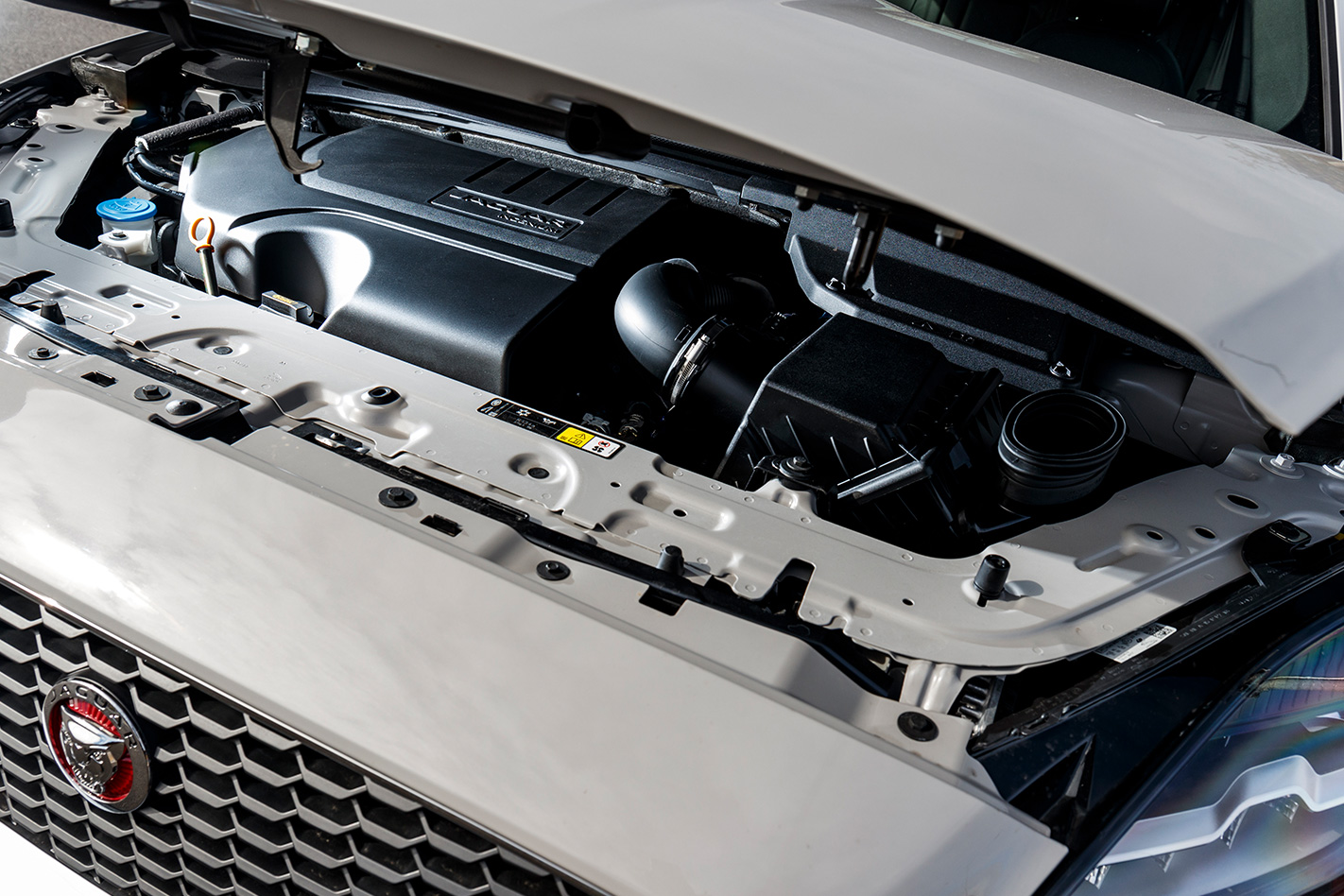
All variants of the Jaguar E-Pace are powered by Jaguar Land Rover’s AJ200 Ingenium turbocharged 2.0-litre four-cylinder petrol engine.
Power is rated from 183kW and 365Nm to 221kW and 400Nm, depending on the variant, with the range-topping 300 Sport capable of accelerating from 0-100km/h in a claimed 6.9 seconds.
All E-Paces are fitted with a nine-speed automatic transmission and send power to all four wheels.
On the ADR combined cycle, fuel economy is rated at between 7.7-8.1L/100km when run on 95 RON, and all variants feature a 67-litre petrol tank.
Features
The entry-level E-Pace P250 R-Dynamic S comes well equipped with standard features, including:
| 11.4-inch touchscreen infotainment system with Apple CarPlay and Android Auto |
| DAB digital radio |
| Dual-zone climate control |
| Leather-wrapped steering wheel |
| Leather upholstery |
| LED headlights |
| Keyless entry and go |
| Front and rear parking sensors |
| Rain-sensing wipers |
| Powered tailgate |
| Brushed metal pedals |
| Heated and powered folding mirrors |
| Metal sill plates |
| Configurable Dynamics |
| Six-speaker sound system |
| 12-way power front seats with driveru2019s memory |
| 18-inch alloy wheels |
The E-Pace P250 R-Dynamic SE builds on these standard items, adding:
| Automatic high-beam |
| Central TFT display |
| 11-speaker Meridian Sound System |
| LED headlights |
| Digital driveru2019s dash |
| Heated and powered folding mirrors with memory |
| 12-way power front seats with memory |
| 19-inch alloy wheels |
The E-Pace P250 R-Dynamic HSE additionally benefits from:
| 16-way powered front seats with memory |
| 20-inch alloy wheels |
And the range-topping 300 Sport offers as extra:
| Black exterior pack |
| Black contrasting roof |
| Different driving modes |
| Adaptive damping |
| Head-up display |
| Driveru2019s seat memory function |

Safety
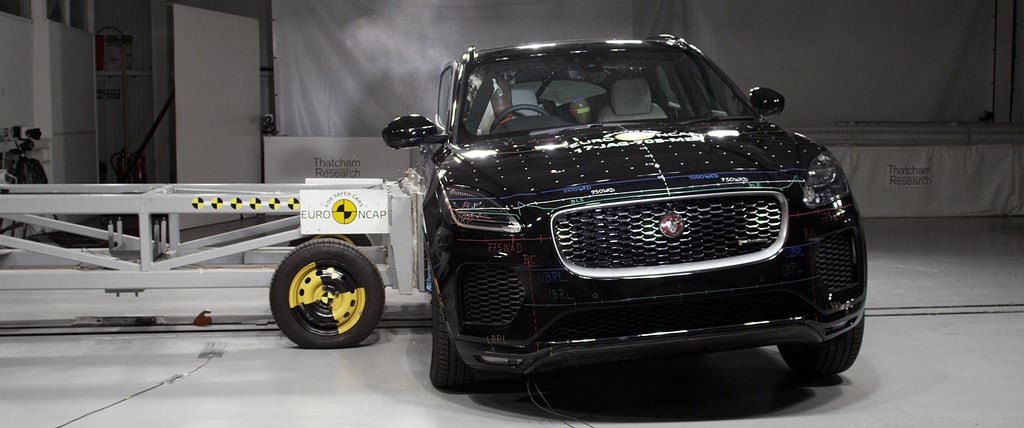
When it was tested in March of 2018, the Jaguar E-Pace received a five-star ANCAP safety rating, including an adult occupancy protection rating of 86 per cent.
As standard, the E-Pace comes equipped with a raft of safety features that include:
| Autonomous emergency braking with pedestrian detection |
| Brake assist |
| Blind-spot monitoring |
| Driver attention detection |
| Front, side, curtain, and bonnet airbags |
| Lane-keep assist |
| Rear cross-traffic alert |
| Speed limiter |
| Traffic sign recognition |
Dimensions and kerb weight
All Jaguar E-Pace model variants are 4395mm long, 1984mm wide, 1648mm tall, and have a wheelbase that measures 2681mm. Kerb weights vary from 1790 to 1885 kilograms.
Warranty and servicing
Like all Jaguar products in Australia, the Jaguar E-Pace range comes with a five-year/unlimited-kilometre warranty.
Servicing plans for a five-year/100,000km period can also be purchased.
Availability
The 2022 Jaguar E-Pace is on sale now, with deliveries expected in the coming months.
Snapshot
- Three trim levels headline the Mk4 Octavia range
- Pricing starts at $30,390 for sedan, $31,690 for wagon
- Range-topping RS gets $5000 discount over new Golf GTI
UPDATE, June 1: Skoda has announced a new Limited Edition variant which will sit between the Ambition and RS in the Octavia line-up, set to land in Australia between July and September 2021.
Dubbed the 140TSI, it will have a 140kW/320Nm engine which utilises the same seven-speed dual-clutch gearbox as the RS, a 40kW/50Nm drop from the RS’s figures but a 30kW/70Nm increase over the 110TSI models.
Fuel economy is expected to split the two existing engines in the low-6L/100km range while equipment is taken from a mix of the other trim levels, featuring:
- Matrix LED headlights
- Leather upholstery
- Power-adjustable front seats with heating, ventilation, massaging, memory and adjustable cushions
- Power-adjustable driver lumbar
- Rear seat heating
- Electrically-adjustable, heated and folding side mirrors with auto-dimming and memory, auto-dimming rear-view mirror
- DAB+ digital radio
- 12-speaker Canton sound system
- Five USB-C ports
- Tri-zone climate control
- Head-up display
- Rear-side airbags
- Blind-spot monitoring
- Rear cross-traffic alert
- Lane-keep, lane-following and traffic-jam assist
- Passenger protect assist and emergency assist
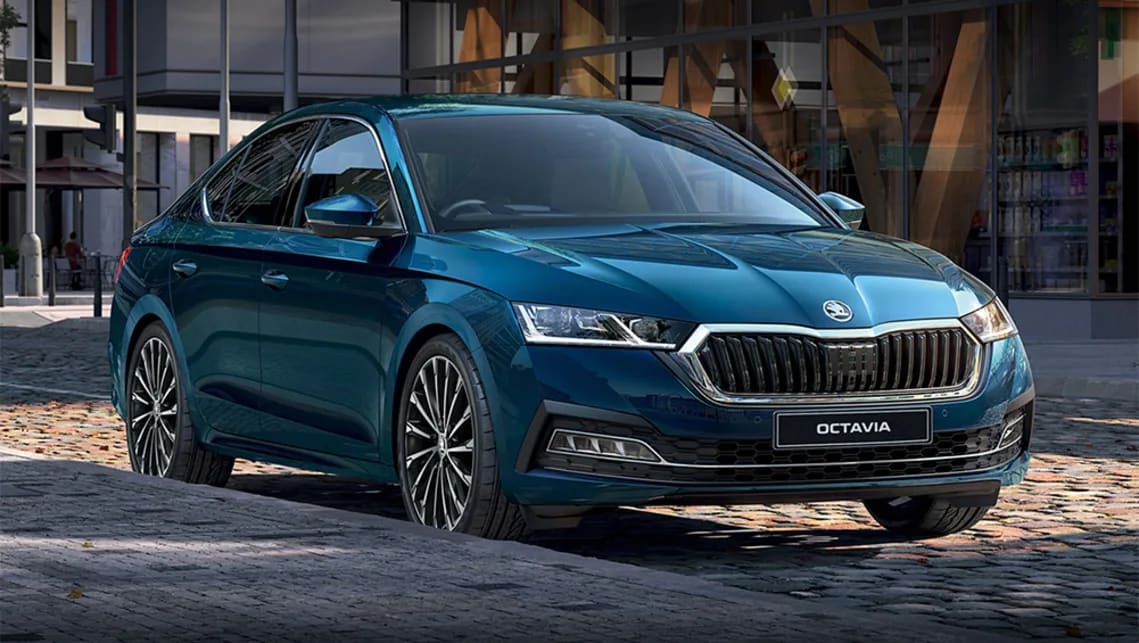
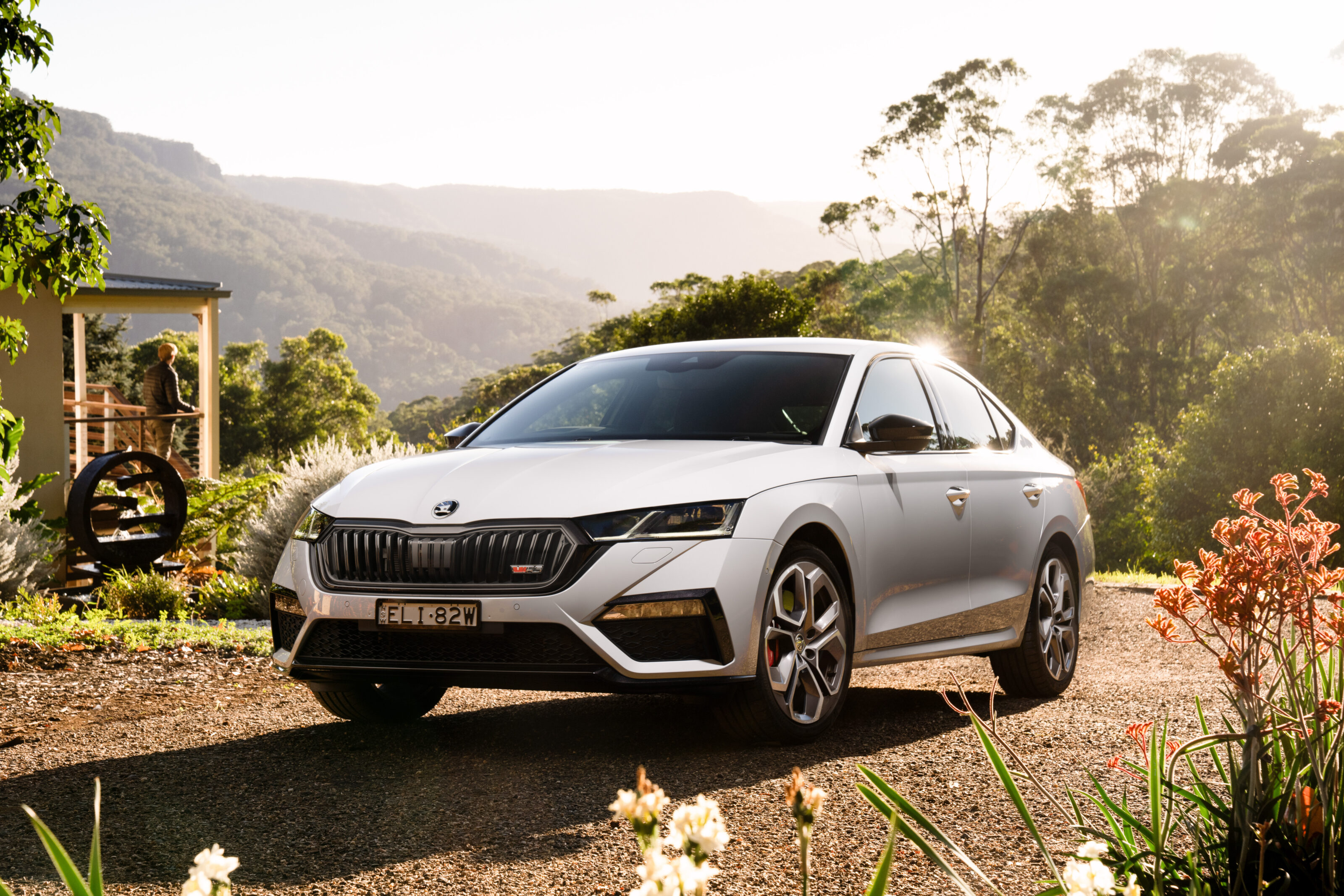
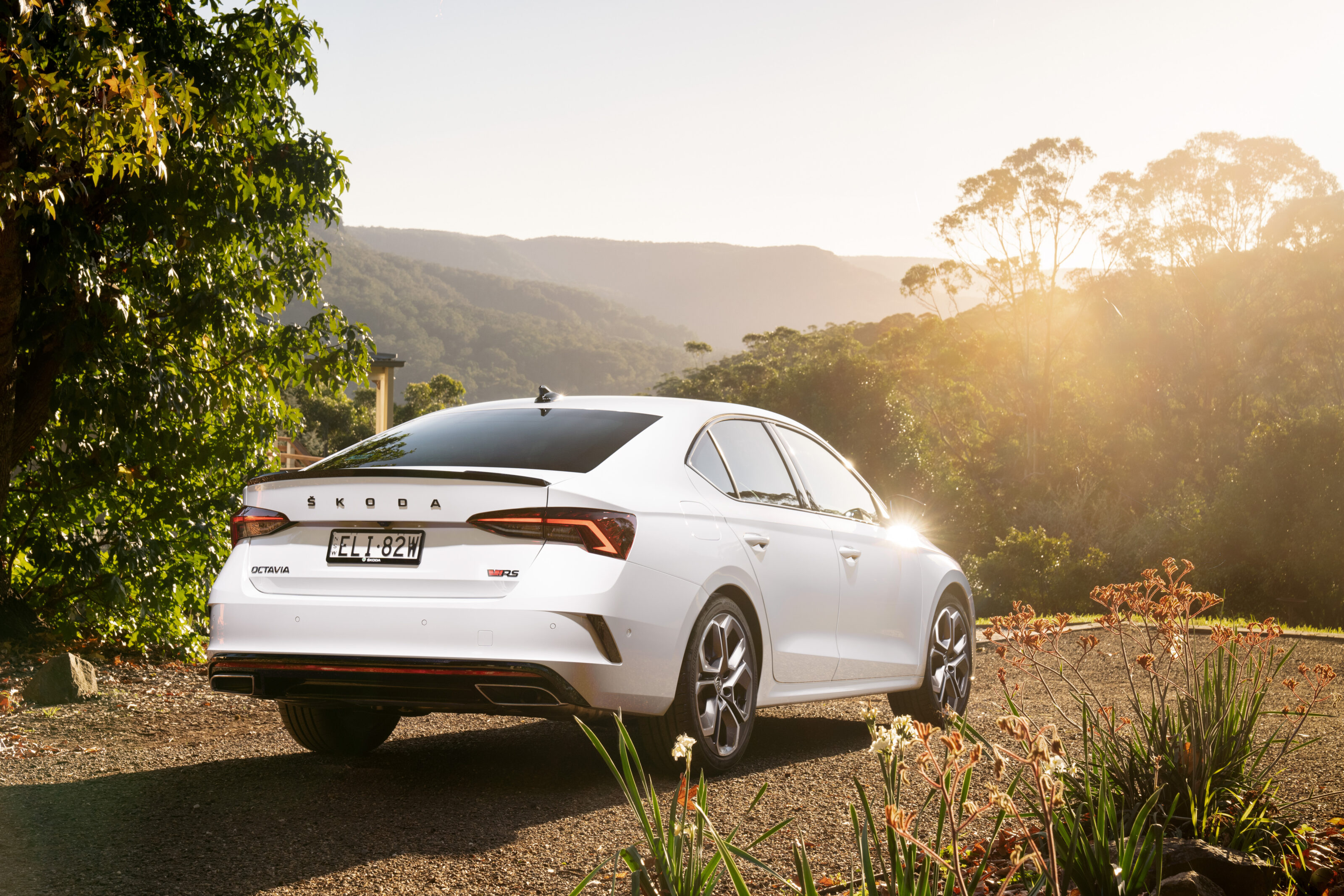
The new Skoda Octavia has undergone a massive redesign in line with Volkswagen’s new Mk8 Golf, with the Czech-built car now entering its fourth generation.
Underpinned by the Volkswagen Auto Group MQB chassis, the new Octavia gets a wealth of upgraded gear throughout the range and at a serious discount over its Golf cousin.
We last saw a major overhaul to the Octavia in 2014 when it moved to the MQB chassis, getting a facelift in mid-2015 with the MY15.5 range onwards scoring newer features than its predecessor.
The Octavia range consists of six different variants with two engines featured across two body styles, available from $32,990 and up to $52,990 before options.
Model range and pricing
There are six variants of the Octavia range, available as either a five-door sedan or wagon (all prices are drive-away):
- Octavia 110TSI Ambition (sedan) – $32,990
- Octavia 110TSI Ambition (wagon) – $34,490
- Octavia 110TSI Style (sedan) – $36,990
- Octavia 110TSI Style (wagon) – $38,490
- Octavia RS (sedan) – $51,490
- Octavia RS (wagon) – $52,990
- Tech Pack (Style only) – $3200
- Luxury Pack (Style only) – $5800
- Tech and Luxury Pack (Style only) – $7800
- Premium Pack (RS only) – $6500
- Panoramic sunroof (wagon only) – $6500
- Towbar – $2000
- Metallic paint – $770
- Premium paint – $1100
Features
With the Ambition gets as standard:
- 18 inch silver ‘Perseus’ alloys
- Full LED headlights
- Rear LED taillights with animated indicators
- Sports spoiler (Wagon)
- Virtual Cockpit
- 10-inch ‘Bolero’ infotainment touch screen
- Two type-C USBs
- Wireless Apple CarPlay and Android Auto
- Bluetooth phone connectivity
- Eight speakers
- Electrically opening and closing tailgate
- Umbrella in driver’s door
- Luggage compartment floor cover
- Foldable luggage hooks
- Two tablet holders
- Rain sensing wipers
- Adaptive cruise Control
- Front assist with warning and braking reaction to vehicles, pedestrians and cyclists
- Eight airbags (including front seats centre)
- Electronic brake pressure distribution
- Anti-slip regulation
- Electronic differential lock
- Rear parking sensors.
- 18-inch anthracite Perseus alloys
- Electrically adjusted, folding and heated wing mirrors
- Full matrix LED headlights and side light
- 10-inch ‘Columbus’ infotainment with navigation
- Keyless locking and keyless GO
- Alarm
- Park assist
- Front fog lights with cornering function.
- 19-inch Altair brushed Anthracite alloys
- RS leather and fabric upholstery
- RS Sports seats
- Black door mirrors, window frames, B-pillars, grille, roof rails (wagon)
- Sport chassis (15mm lower)
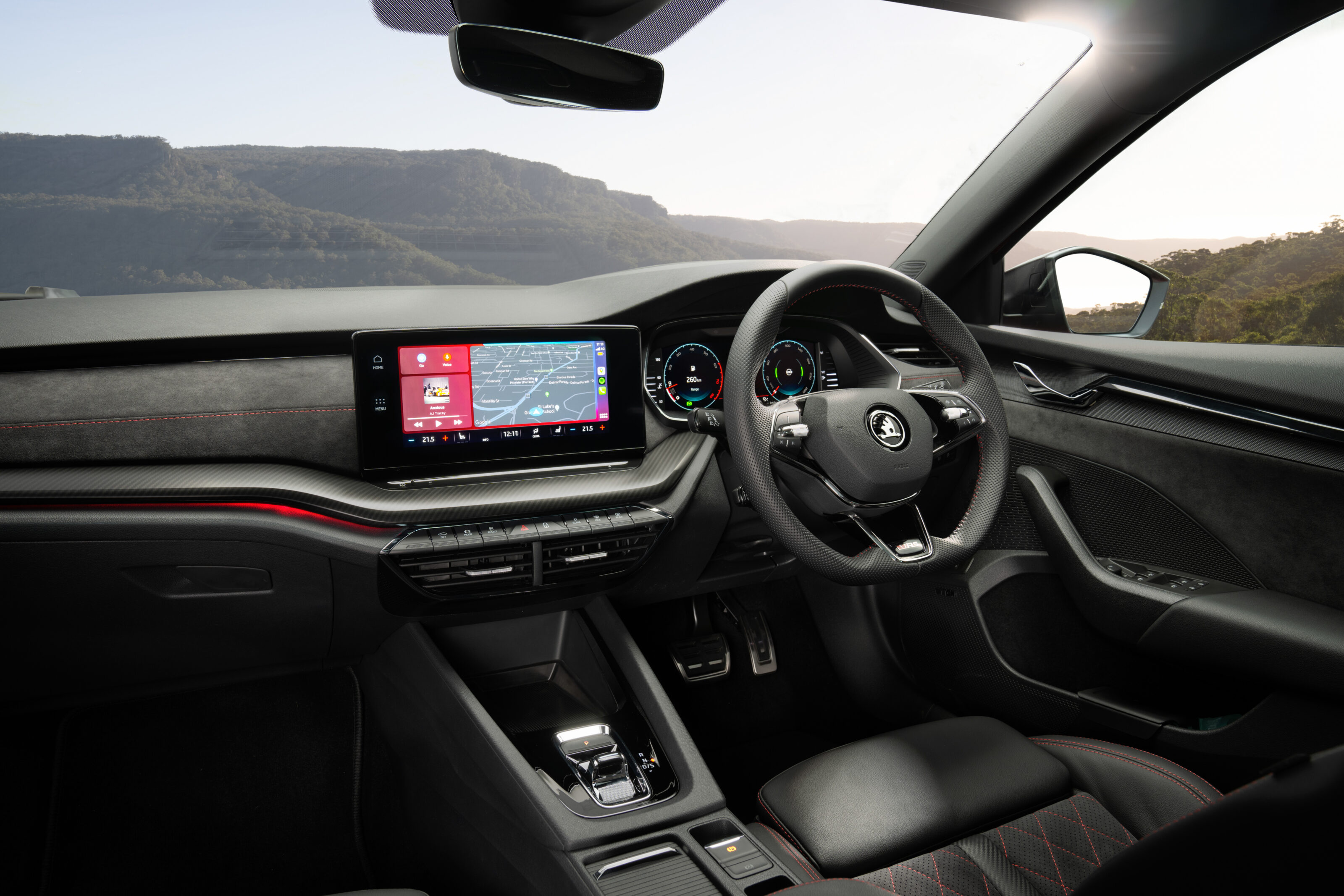
- Carbon dash décor
- Alcantara door panels
- Virtual Cockpit with RS logo and animation, plus sport display layout with flat tachometer
- Five type-C USBs
- Digital radio
- Front and rear parking sensors
- Progressive steering
- Auto hold assist
- 10 airbags
- Passenger protect assist
- Emergency assist
- Side assist/lane change assists
- VAQ differential lock
Tech Pack
- Adaptive chassis control
- Head-up display
- Premium Canton sound system (12 speakers)
- Digital radio reception
- Three-zone climate control
- Leather upholstery
- Electrically-adjustable driver and passenger seat with memory function
- Side assist, blind spot detection
- Adaptive lane guidance
- Heated front and rear seats
- Traffic jam assist
- Emergency assist
- Rear traffic alert
- Three-zone climate control with control panel in rear
- Five USB-C (2 x front, 2 x rear, 1 x rear-view mirror)
- Mechanical sunblinds for rear windows (standard on wagon)
- Electrically adjustable, heated and foldable door mirrors with memory and auto dimming (driver) function.
The Premium Pack for the RS adds another $6500 onto the base price and is the only set of extra options available for the performance-focused variant:
- Adaptive chassis control
- Electrically-adjustable driver and passenger seat with memory function
- Head-up display
- Virtual pedal
- Premium Canton sound system (12 speakers)
- Heated front and rear seats
- Park assist
- Massage function for driver’s seat
- Driver cushion depth adjustment
- Drive mode selection
- Three-zone climate control with front and rear controls
- Mechanical sunblinds for rear windows (standard on wagon)
- Electrically adjustable, heated and folding door mirrors with memory and auto dimming.
Engines, transmission and fuel economy
Two engines are available in the Octavia line-up, either the turbocharged 1.4-litre four-cylinder petrol which is found in the Ambition and Style, or the 2.0-litre four-cylinder petrol which powers the RS.
The 1.4-litre engine is given the 110TSI name as it develops 110kW of power and 250Nm of torque, delivered to the front wheels through an eight-speed torque converter automatic gearbox with fuel economy rated at 5.7L/100km for the sedan, increased to 5.9L/100km in the wagon.
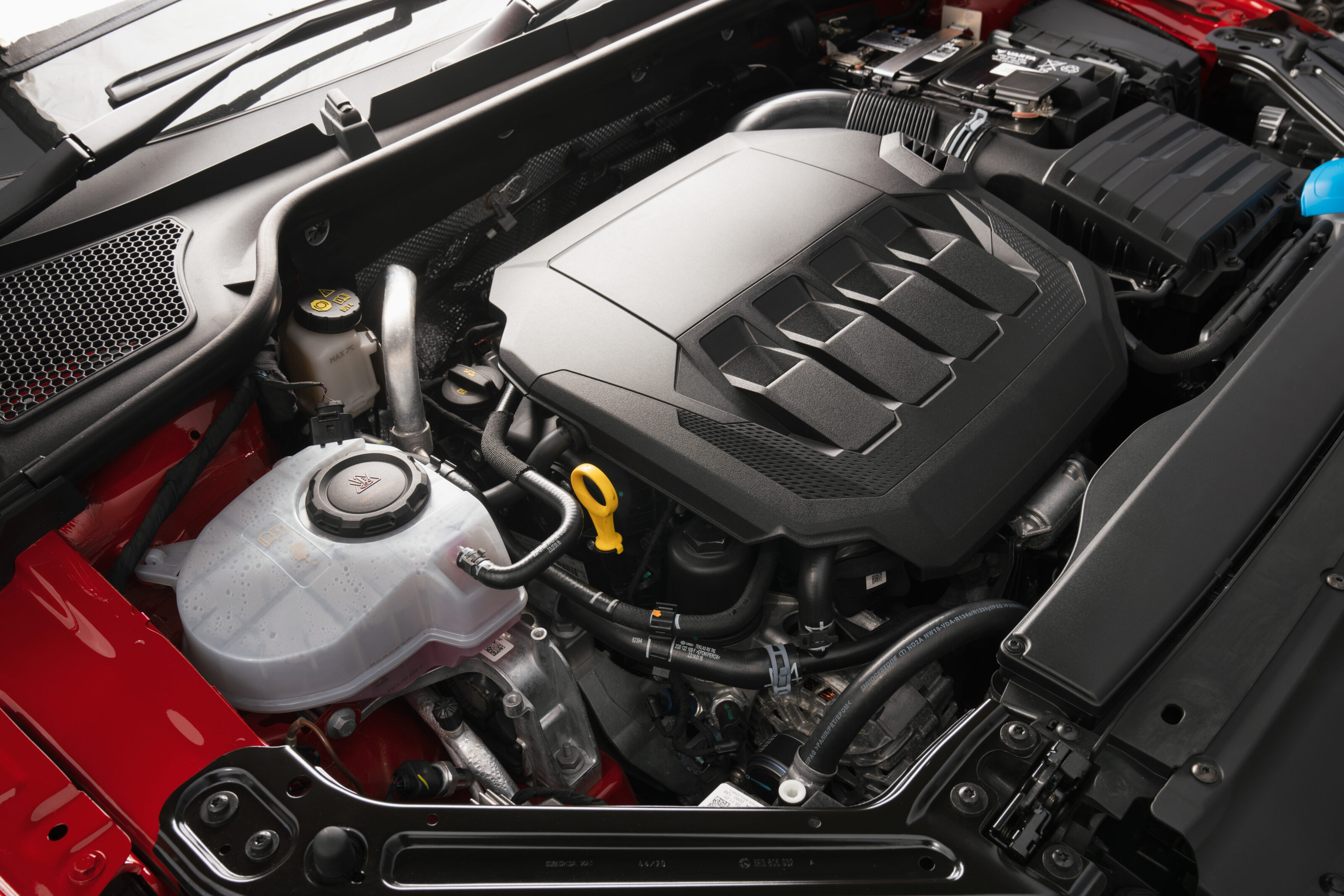
RS fans will recognise the 2.0-litre engine powering the RS as the Gen 3 EA888, the powerplant which has been shared between the Golf GTI and Octavia RS since 2013, finding its roots back to the mid 2000’s in the Mk5 GTI.
Power and torque remains the same from the previous generation of Octavia RS, sitting at 180kW and 370Nm which is delivered through a seven-speed dual-clutch transmission to the front wheels, resulting in a claimed fuel consumption of 6.8L/100km, up 0.3L/100km from the RS245.
Dimensions
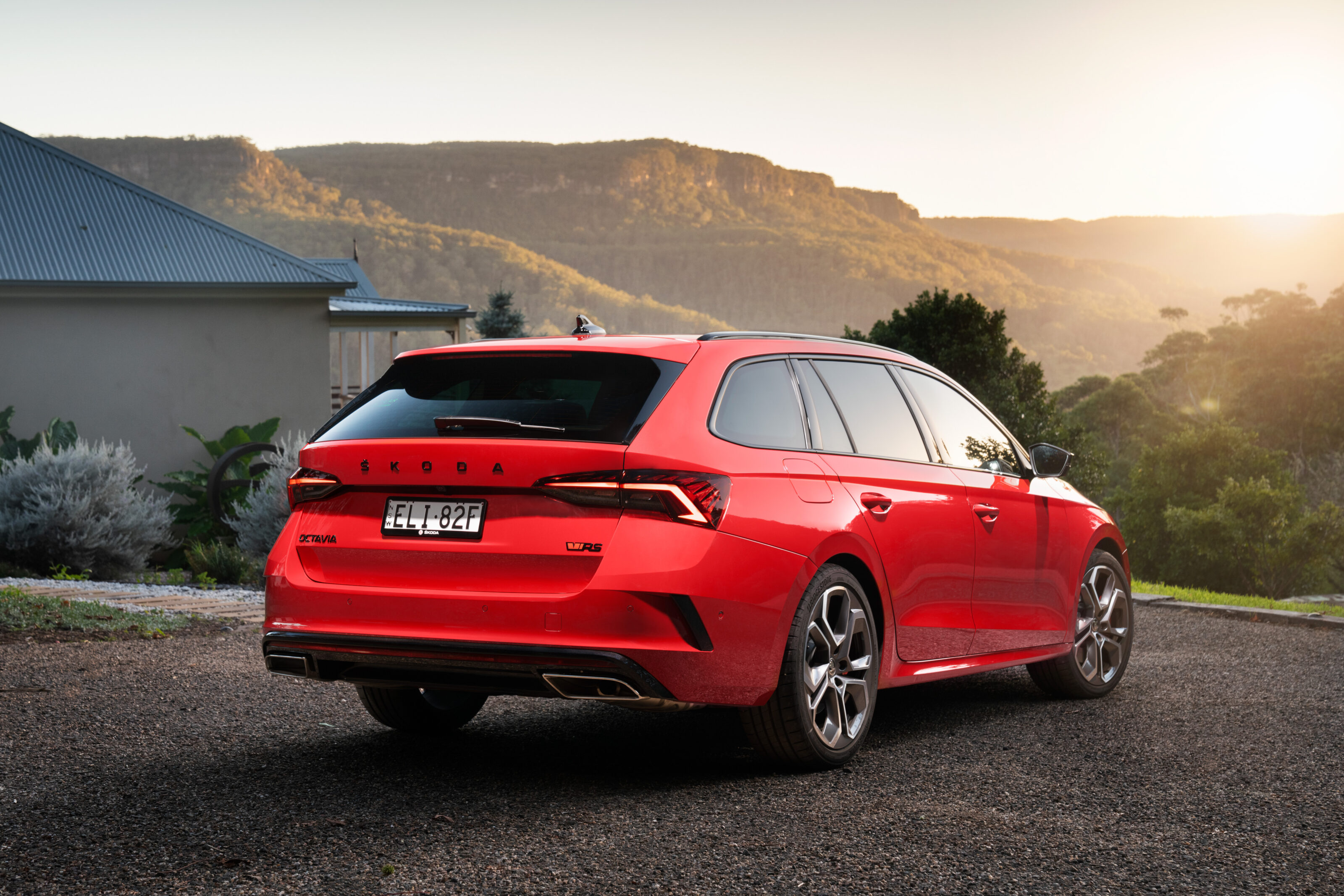
Exterior dimensions are identical across the trim levels but differ from sedan to wagon – the liftback standing at 4702mm long, 1829mm wide, 1457mm high with a wheelbase of 2681 while the wagon is 13mm shorter in length, 13mm taller and has a longer wheelbase by 5mm.
The Octavia range has long been regarded as one of the most spacious in its class for boot capacity and the new model is no different, boot space with the seats up going from 568L to 600L for the sedan and from 588L to 640L in wagon form.
Only when the seats are folded down is there a reduction in size to the model it replaces, as the sedan’s capacity drops by 3L to 1555L and the wagon loses 18L of space, down to 1700L – though in either instance, this is unlikely to be noticed.

Safety
The new Octavia scored five stars in ANCAP safety testing across all variants, its 92 per cent score in adult occupant protection rating as its best feature, with the only chinks in its armour being a lack of junction assist and autonomous emergency braking functions, as well as relatively poor results for the speed assistance system.
A child occupant protection rating of 87 per cent was helped by strong results in front and side impacts, as well as the child restraint installation points, with the Octavia just being let down from a better overall score by the on-board child protection features.
Warranty and servicing
As with the rest of Skoda’s range, the Octavia is covered by a five-year/unlimited kilometre warranty and service packs can be bought either when the vehicle is first purchased or further down the track, including roadside assistance and map updates.
The service packs cover servicing at 15,000km intervals, either for three years/45,000km for $800 or five years/75,000km for $1400. Those with the dual-clutch transmission will want to buy the second pack as DSG services are undertaken at 60,000km and can easily cost up to $1000.
Snapshot
- Fault identified with high-pressure fuel pump for the direct injection system
- Potential for vehicle to leak fuel
- Toyota will repair problem free of charge
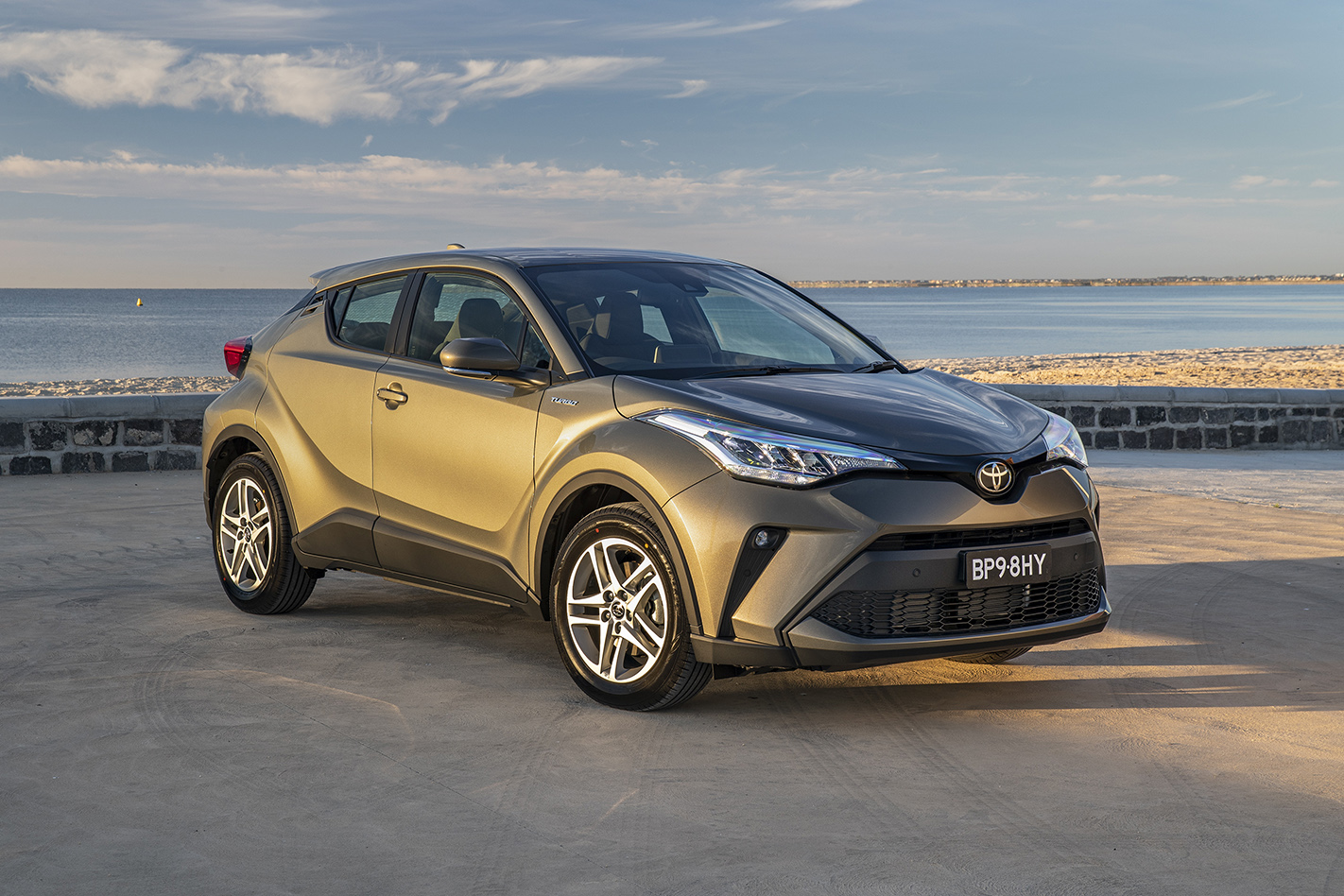
Toyota has issued a recall notice for 7600 examples of its C-HR compact SUV after a problem was identified with the vehicles’ fuel pump.
Specifically, NGX10 versions with a VIN between 01020275 and 01027158, and NGX50s with a VIN ranging between 01007756 and 01009603 are under recall.
According to the Japanese automaker, affected C-HR models built between October 2020 and April 2021 are equipped with a faulty high-pressure fuel pump for the direct injection system.
Over time, this could lead to a risk of fuel leakage, which could result in owners being stranded or losing power while driving.
Unfortunately, this isn’t the first time in recent memory Toyota has recalled its vehicles over faulty fuel pumps.
In late December 2020, the Aichi firm had to recall more than 74,000 of its popular models with a similar issue.
Toyota is asking affected owners to contact their preferred dealer, who will inspect the fuel pump and, if necessary, replace it with an improved one free of charge.
This is said to take approximately two hours. However, Toyota also said this is based on the dealer’s work schedule. It may be necessary for the owner to make the vehicle available for a longer period of time.
Anyone with further enquiries about the recall can contact the Toyota Recall Campaign Helpline on 1800 987 366.
Snapshot
- Quarter three local unveiling expected
- Based on Hyundai-Kia’s N platform architecture
- Will make the switch from rear-wheel drive to front-wheel drive
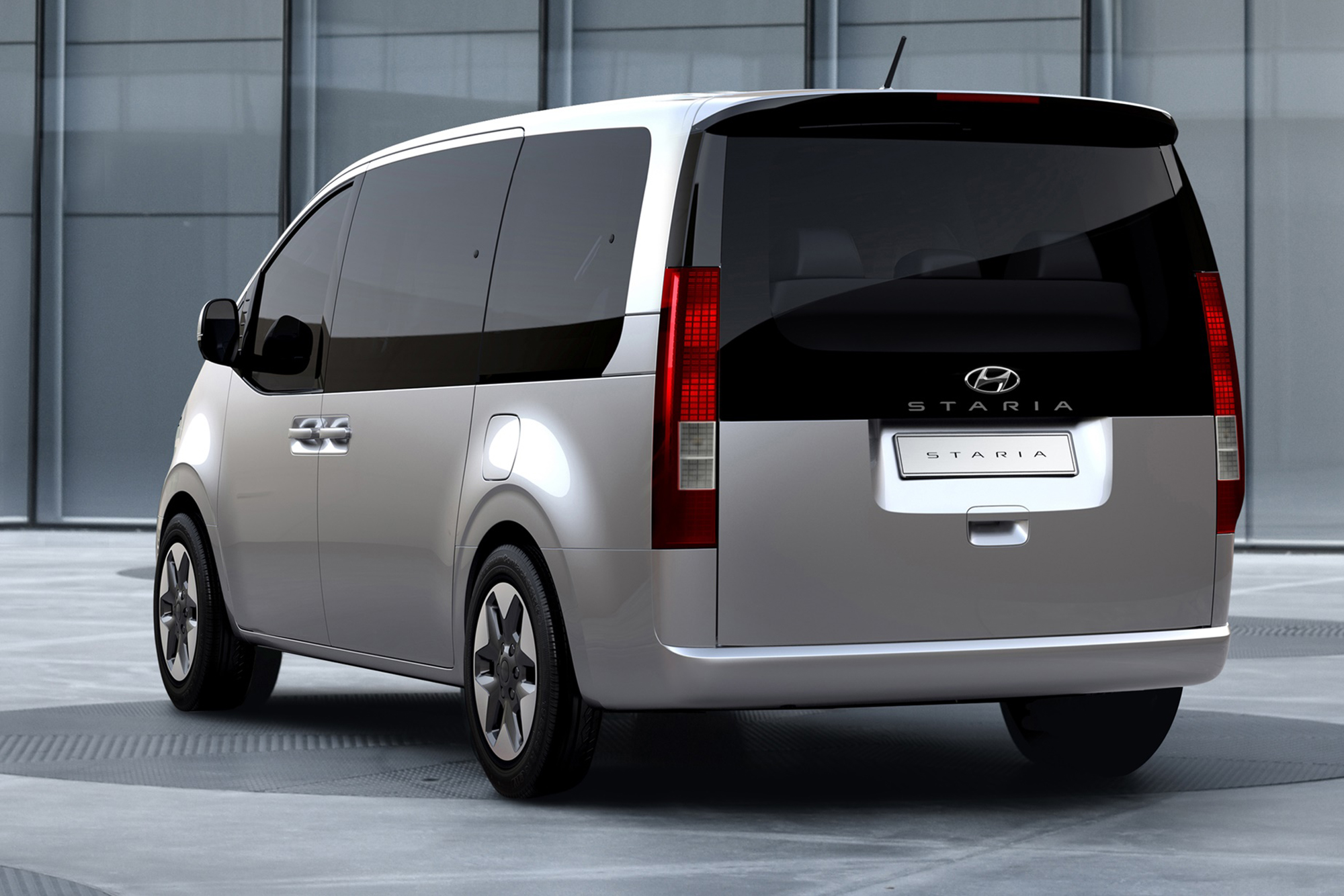
The hotly anticipated 2022 Hyundai Staria people mover is set to be joined by a light commercial van sibling called the Staria-Load.
The name of the new Toyota HiAce competitor was recently registered with the Federal Government’s Road Vehicle Certification System.
Replacing the out-going iLoad, which has been in production for no less than 14 years, the upcoming LCV is expected to land Down Under in the third quarter of 2021, shortly after the Staria people mover, which will also be debuted locally in quarter three.
Both will be based on the Korean auto giant’s Hyundai-Kia N platform architecture, which was first introduced in 2019 and serves as the basis for other Hyundai and Kia products such as the Sonata, Santa Fe, Sorento, and Carnival.
Power will be derived from Hyundai’s R II 2.2-litre four-cylinder turbo-diesel engine, which produces 130kW and 431Nm.
Due to its N platform underpinnings, and unlike the current iLoad, the Staria’s diesel donk will send power to the front wheels rather than the rear.
The change from RWD to FWD should also free up more of the Load’s cargo capacity, which is reported to be no less than 5000 litres.
Like its predecessor, owners will be able to choose from either a manual or automatic transmission. However, while the three-pedal option retains the same amount of gears (six), the auto gearbox will be an eight-speed job.
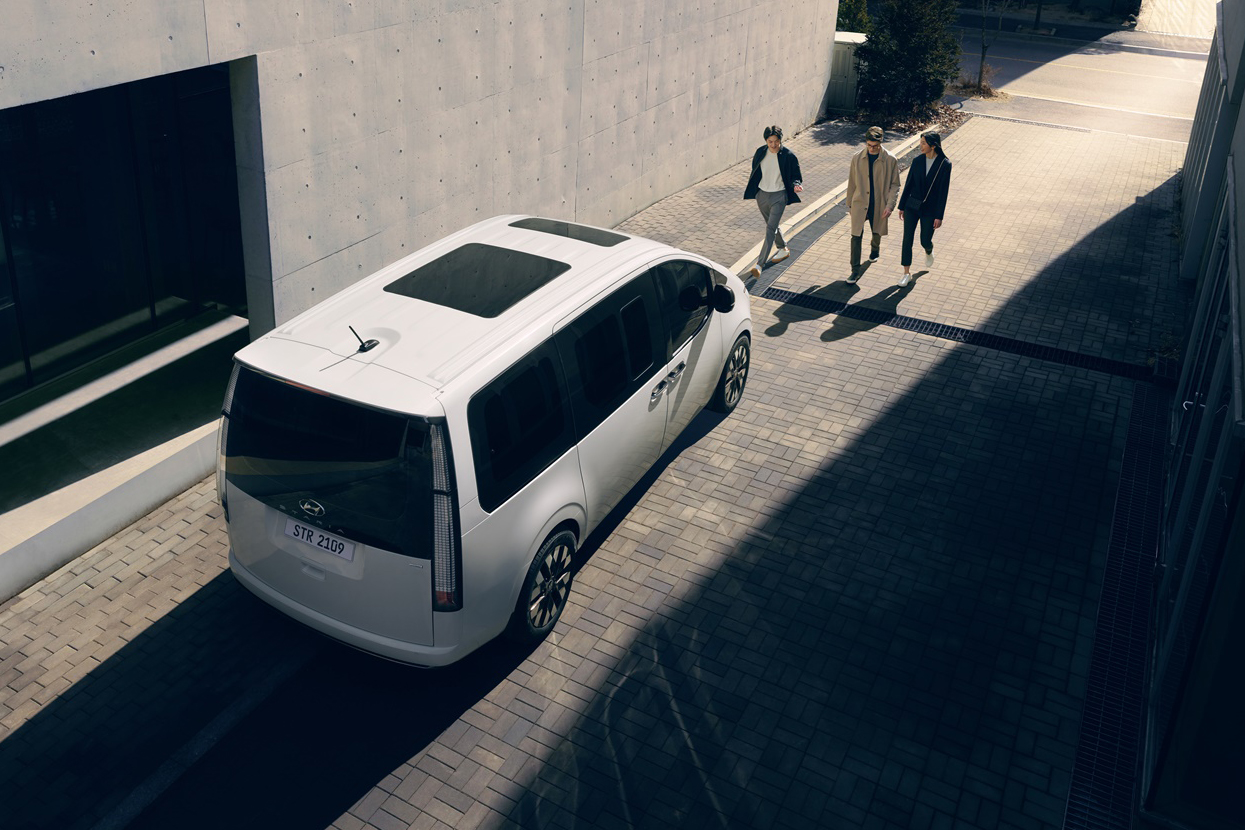
The new Load bests its ancestor in size by some margin, measuring 5253mm long, 1997mm wide, 2000mm tall, and with a wheelbase measuring 3273mm.
Towing capacity will be rated at 2500 kilograms, and although the work van’s kerb weight isn’t yet known, it will most likely tip the scales at a similar weight to its predecessors 2134 kilograms.
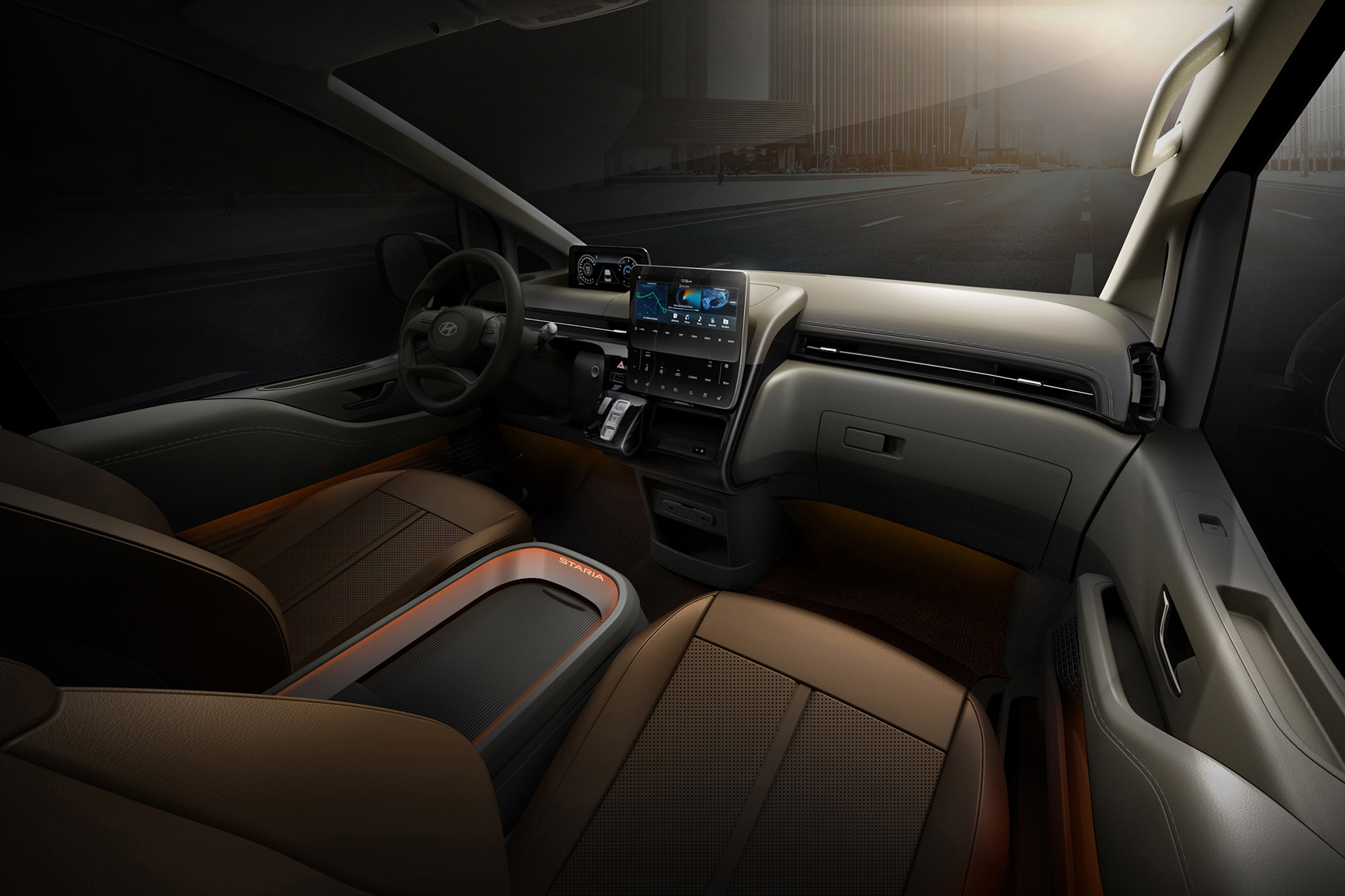
Inside, the Load will most likely score the same 10.25-inch digital dash and 12.3-inch centrally mounted touchscreen infotainment display as the Staria people mover. Other features will include smartphone mirroring, push-button gear selector, and haptic touch interfaces.
A suite of safety features such as autonomous emergency braking, lane-keep assist, blind-spot monitoring, reversing camera, and front and side airbags are also expected to feature on the new LCV.
Local pricing and features will be unveiled closer to the 2022 Hyundai Staria Load’s quarter three release.
Snapshot
- DBX could be joined by other Aston Martin SUV models
- American and Chinese markets having major influence over model range
- Lagonda brand comeback put on hold to focus on SUV segment
Aston Martin is planning more SUVs beyond the new DBX, though a return for the company’s upmarket Lagonda brand is on hold.
The British sports car maker, which during its history has filed for bankruptcy seven times and passed through the hands of multiple owners, is currently striving to return to profitability.
The DBX, which is priced from $357,000 in Australia, became Aston’s first ever SUV in 2020. It sits on a bespoke, bonded-aluminium platform rather than sharing architecture with any of the company’s sports cars or borrowing from technical partner Mercedes-Benz.
Aston says the DBX’s devoted platform allowed its designers and engineers the freedom to create an SUV it believes is less compromised than rival models. The company also acknowledges, however, that it needs to create more models using that platform.
“We can no longer create an orphan platform in this world,” said Aston Martin’s chief creative officer, Marek Reichman. “It is arguably our most advanced platform because it is our latest – excluding the hypercars [Valkyrie and Valhalla], if you like – and of course we have plans on how we would monetise that platform and it can spread an array of products into the future.
“Although it is our biggest [sales] volume platform, it still has to be derivatised to make more from that investment.
“It is fair to assume the world is changing, the perception of the customer is changing, and the market is changing, so whether derivations of that platform are larger [SUV] or lower [GT cars], we’ll look at what’s needed in the marketplace.
“I’m not going to tell you what they are, but if you look at the two biggest markets – China and the US, followed by Europe – you can probably figure it out.”
The US is the world’s biggest market for SUVs, with sports utility vehicles accounting for about half the market in 2020. China is closing in on a similar percentage, while SUVs account for about a third of new-car sales in Europe.
The demand for premium cars in China also continues to grow, though Aston’s ambition to revive Lagonda as a higher-end, off-shoot luxury brand has faltered since an SUV-style Lagonda concept was shown at the 2009 Geneva motor show.
There was a Lagonda Taraf limo produced in the middle of the last decade for a handful of markets, though 2022 production plans for the Lagonda All-Terrain SUV concept unveiled two years ago have been put on ice, if not potentially aborted.
Reichman admits the company is still mulling over its plans for Lagonda, a brand that is older than Aston Martin itself.
“We’ve always got [Lagonda] in our portfolio. We can always internalise about what that [brand] might have to be, what it might be, what it would be,” he said. “There is a core focus on the Aston Martin brand at the moment. Aston is established but we have to tell the world more about our product, more about how brilliant the DBX is.
“That’s part of reason why we’ve fought to get the DBX and Vantage onto the F1 circuit as the doctor’s [medical car] and safety car, respectively.
“What do we do with the other brand in our portfolio, Lagonda…we are thinking more and more about it, but the core focus right now is how do we strengthen what Aston Martin is.”
Reichman said there are plenty of opportunities to bring greater customisation to the interior of the Aston Martin DBX, including input from its in-house, James Bond-inspired Q division which specialises in personalisation.
“My department is working almost weekly on something completely unique which someone wants on the DBX.
“I’m surprised the DBX customer would be…not off the peg, but less inclined to want a unique interior material, want a unique finish somewhere. But actually, customers are asking for more…upspeccing.
“There’s a lot of opportunity [with Q division]. We’re working on some very special things to come in the future.”
The DBX range will also expand with new variants, including a more powerful V8 and electrified models. The company has previously stated 90 per cent of the Aston range will be electrified by 2030.
The DBX launched with the same AMG 4.0-litre petrol V8 also found in the company’s Vantage and DB11 sports cars and formed part of the initial, 2013 tie-up between Aston and Mercedes-Benz.
In 2020, Canadian billionaire Lawrence Stroll took a majority shareholding in Aston. He placed Andy Palmer as CEO with former AMG boss Tobias Moers last year, and brokered a fresh arrangement which saw Mercedes take an increased stake of 20 per cent in return for greater access to the German carmaker’s drivetrains, including its electric car technology.
Aston admits the outputs of the DBX’s current V8 is limited by the nine-speed auto and a more powerful version can be expected down the track. There are reports the model would be badged DBX S.
A mild-hybrid DBX is expected to be released before the end of 2021, heavily rumoured to be borrowing the petrol-electric drivetrain from the AMG E53, while a plug-in, rechargeable hybrid DBX is also set for 2023.
Aston Martin has also confirmed it will build its first all-electric models – a sports car and an SUV – from 2025. It’s unknown at this point whether the SUV will be the anticipated all-electric DBX.
Deliveries of the Formula 1-inspired Valkyrie hypercar will begin in the second half of 2021. The vehicle is powered by an 865kW/900Nm V12 hybrid drivetrain is priced from about $4 million.
The mid-engined, two-seater Valhalla hybrid sports car is set to go into production in 2023.
David Brown was building tractors before he helped turn Aston Martin into one of the world’s most famous sports car manufacturers, and in a full (crop) circle moment we find ourselves in a field with the British brand’s latest model.
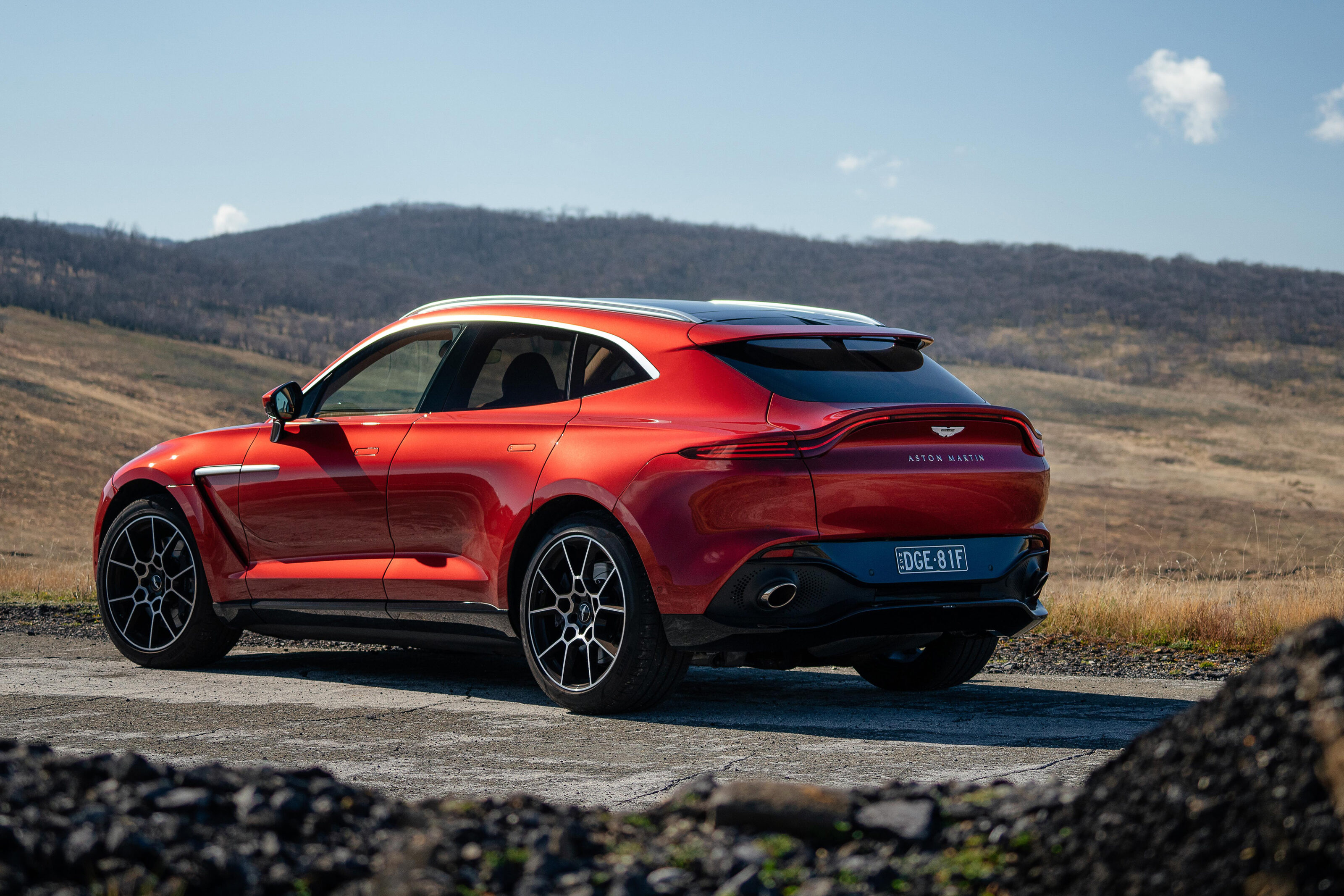
Carrying the late English industrialist’s initials just like Aston’s most famous GT cars, the 2021 Aston Martin DBX ploughs a completely new product path as the company’s first ever SUV.
For a company still striving for profitability, it’s as pivotal to Aston’s future as the 2002 Cayenne was to Porsche’s. And perhaps just as controversial, even two decades on.
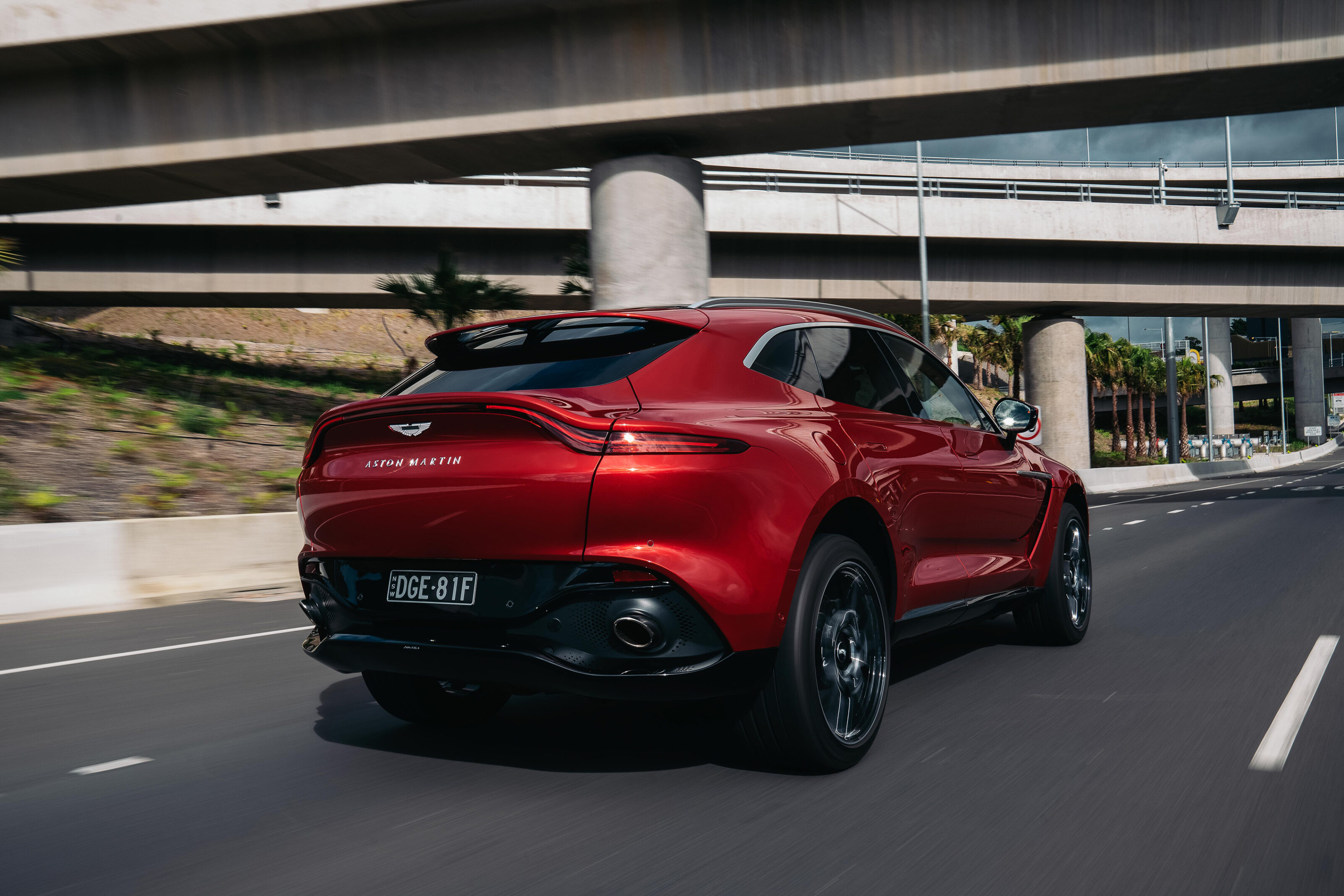
Surprisingly handsome styling won’t harm the appeal of DBX that is priced from $357,000 to sit in the vicinity of rivals such as the Bentley Bentayga V8 ($364,800), Lamborghini Urus ($392,000) and Maserati Levante Trofeo ($336,990).
Aston’s design team deserves credit for the way it has converted the company’s styling language into a sports utility vehicle shape for the first time. (The visually awkward, first-generation Cayenne, for example, looked like a 911 that had suffered an allergic reaction.)
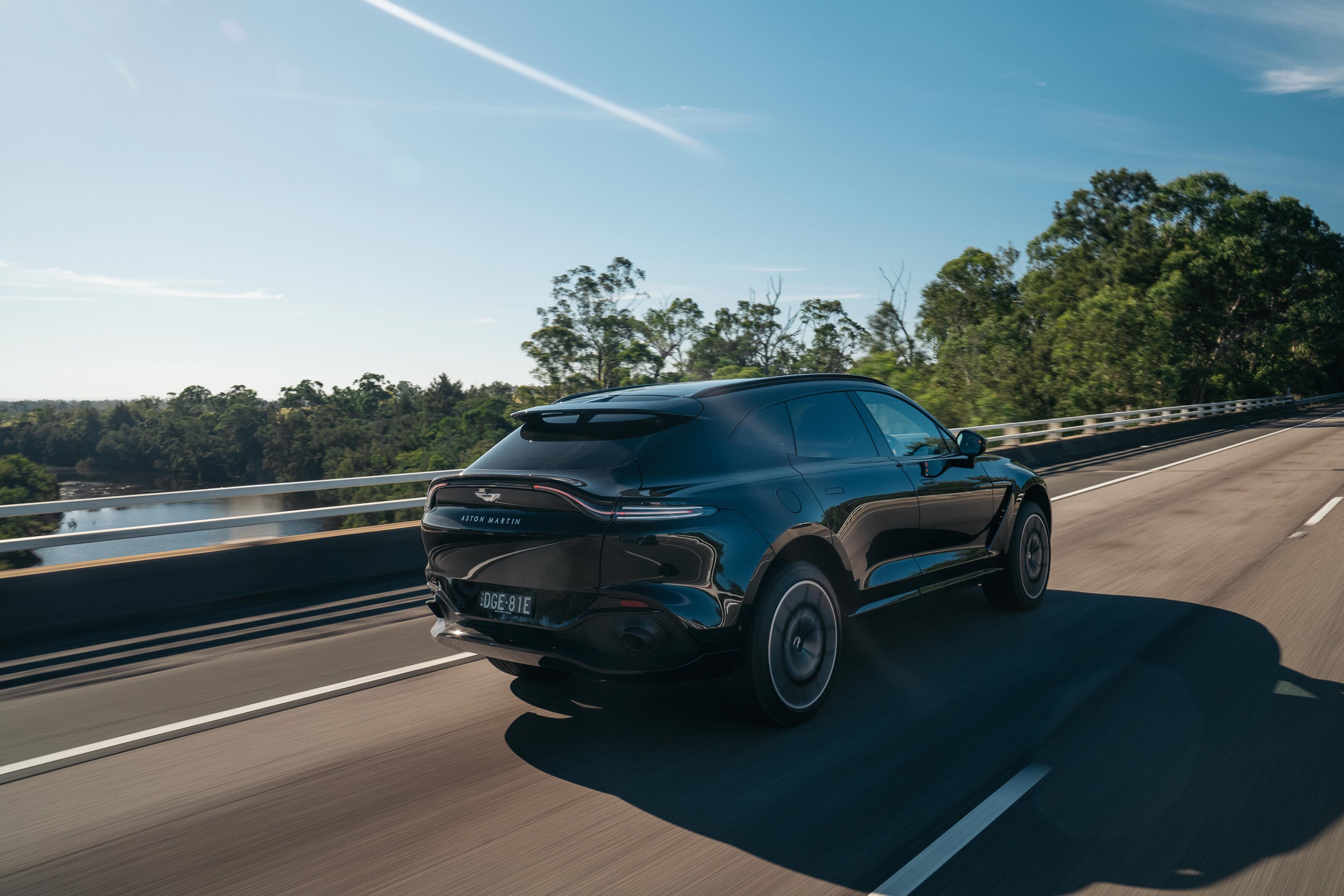
From side on, the DBX looks fast even when stationary – courtesy of a sweptback, sloping-roof shape and relatively short overhangs that disguise the longest wheelbase in the class.
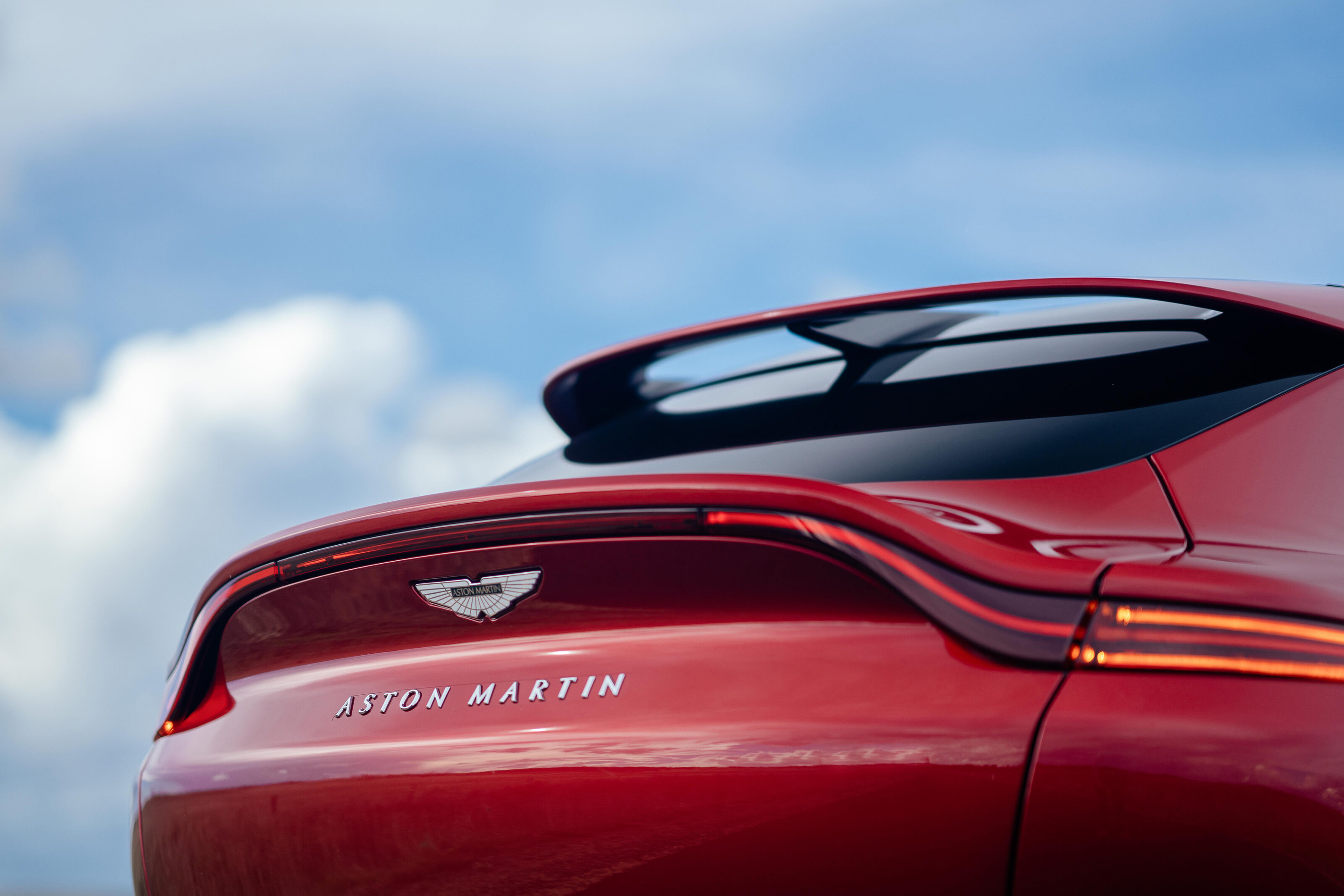
A prominent ducktail – an obvious cue from the Vantage along with stepped rear lighting – forms part of the DBX’s integrated aero treatment that also includes a rear diffuser complete with carbon fibre vanes.
This, however, is an Aston that’s more about versatility than velocity. The company follows other upmarket brands in spruiking the off-road ability of its luxury SUV.
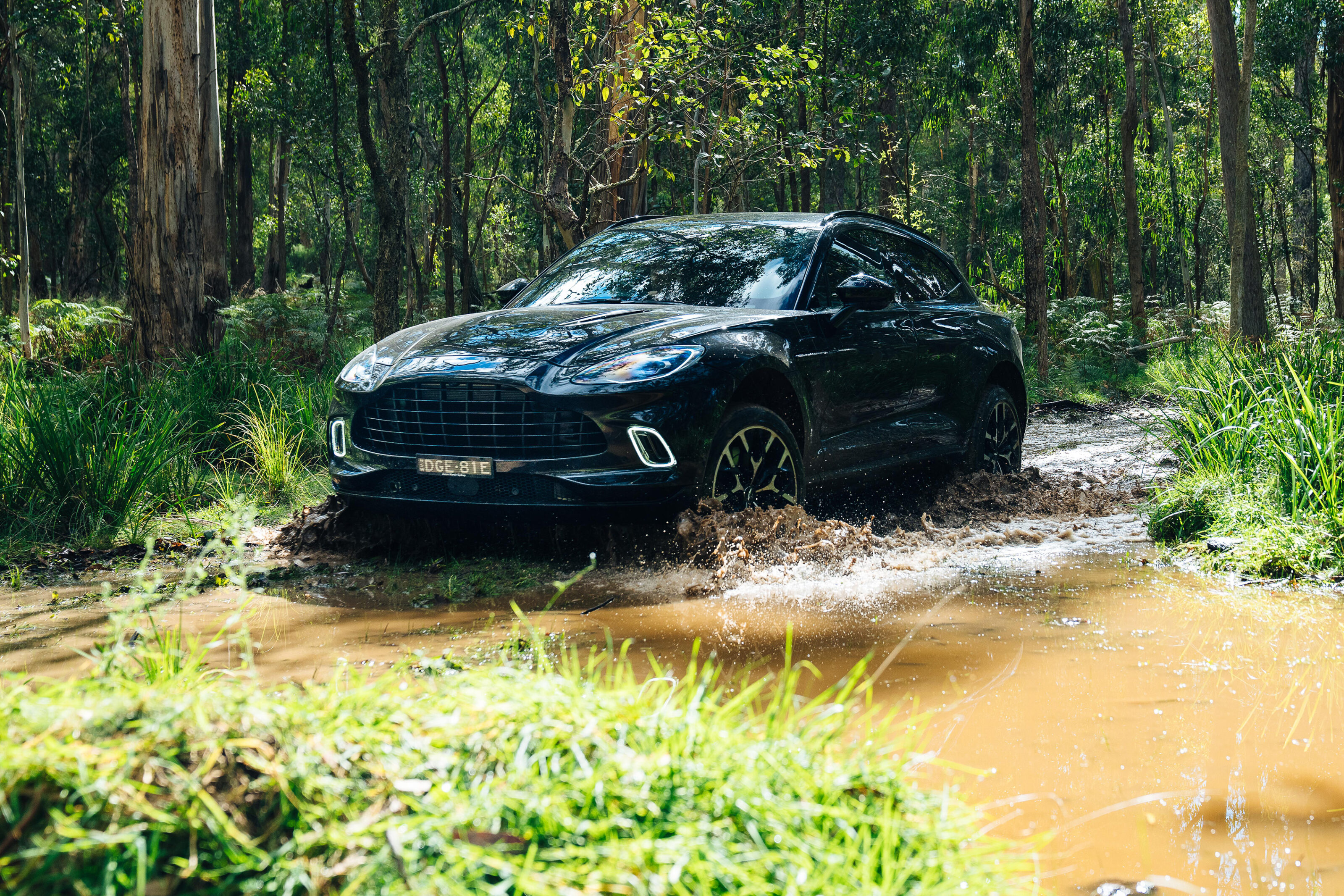
With the local PR team kindly (or perhaps bravely) opening the gates to some muddy fields, the DBX proves to be another posh SUV that’s capable of tackling some softer, variable terrain even if few owners would dare be so adventurous.
Although a planned hill-descent control test was cancelled after the lead vehicle – a dual-cab ute – struggled after a downpour made matters slightly treacherous, the DBX coped well with some boggy conditions. This included some deepish mud ruts where some seesawing of the wheel and judicious throttle use were both helpful for ensuring progress.
Our DBX was also wearing its standard Pirelli P Zero road tyres, not the alternative all-season rubber also available.
Aston’s SUV is helped by adjustable air suspension, with a Terrain mode lifting the DBX by 20mm and Terrain Plus increasing ground clearance by 45mm. This also adjusts the vehicle’s chassis electronics to suit lower-speed driving, including increased engine braking.
The all-wheel-drive system, featuring an electronically controlled centre diff, provides a greater balance of torque between the axles – up to 47 per cent front, 53 per cent rear.
A secondary rear diff shuffles torque between the rear wheels to further assist traction… or help push the DBX faster around corners on the road, where most owners will appreciate the diff’s effect.
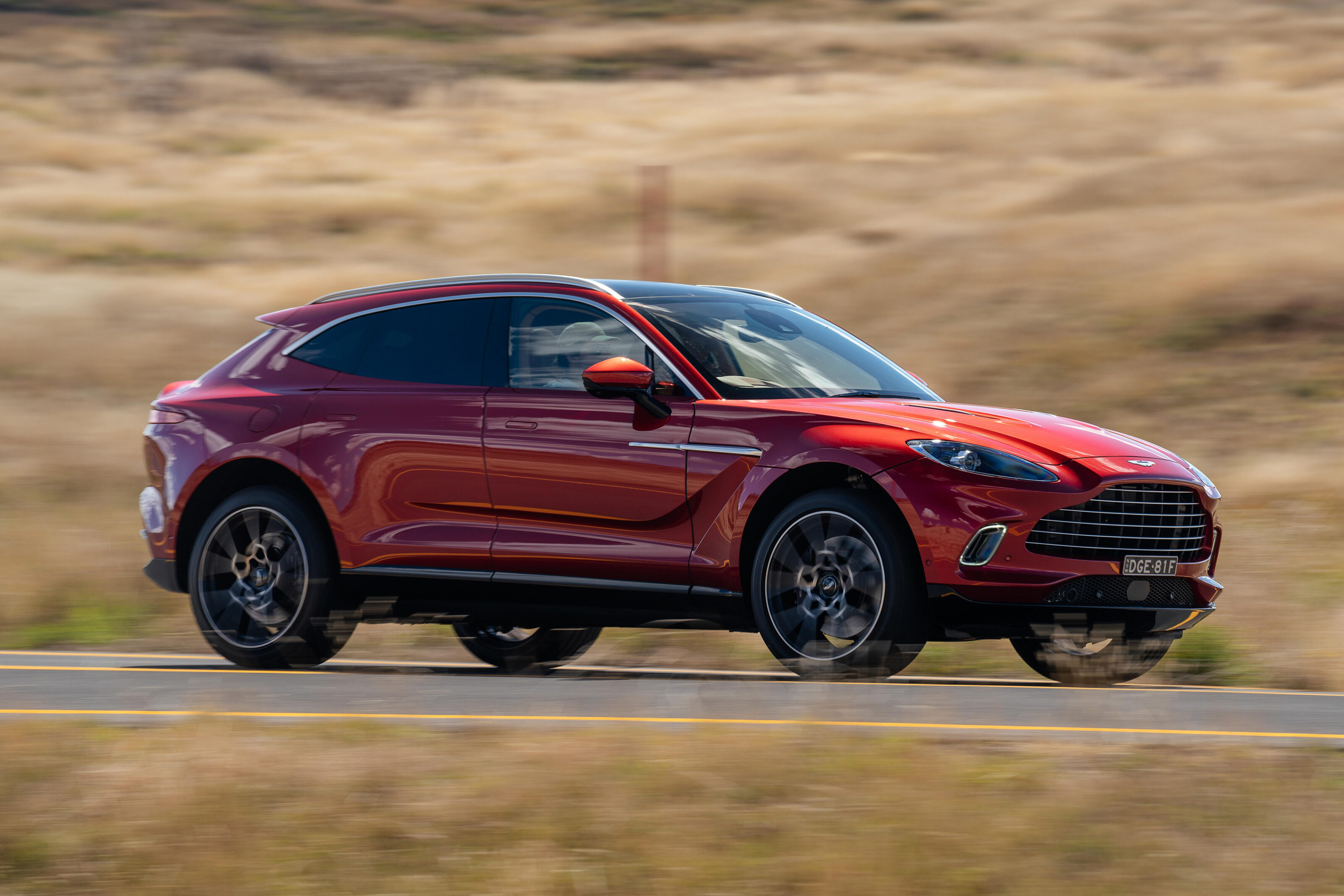
While there are the usual SUV caveats of the driver being more distanced from the road and having a greater need to manage mass compared with the company’s GTs, the DBX in no way shames the brand’s heritage. It could even leave some rivals red-faced through a series of bends.
With its stiff bonded-aluminium construction, sophisticated aluminium suspension with air springs and adaptive dampers, plus a 48-volt electrical system controlling active anti-roll bars, the DBX feels lighter on its feet than a 2245kg kerb weight would suggest.
The electronic anti-roll system is particularly impressive, allowing the DBX to carry plentiful speed through tight corners with less body roll than we’ve experienced in some sports cars.
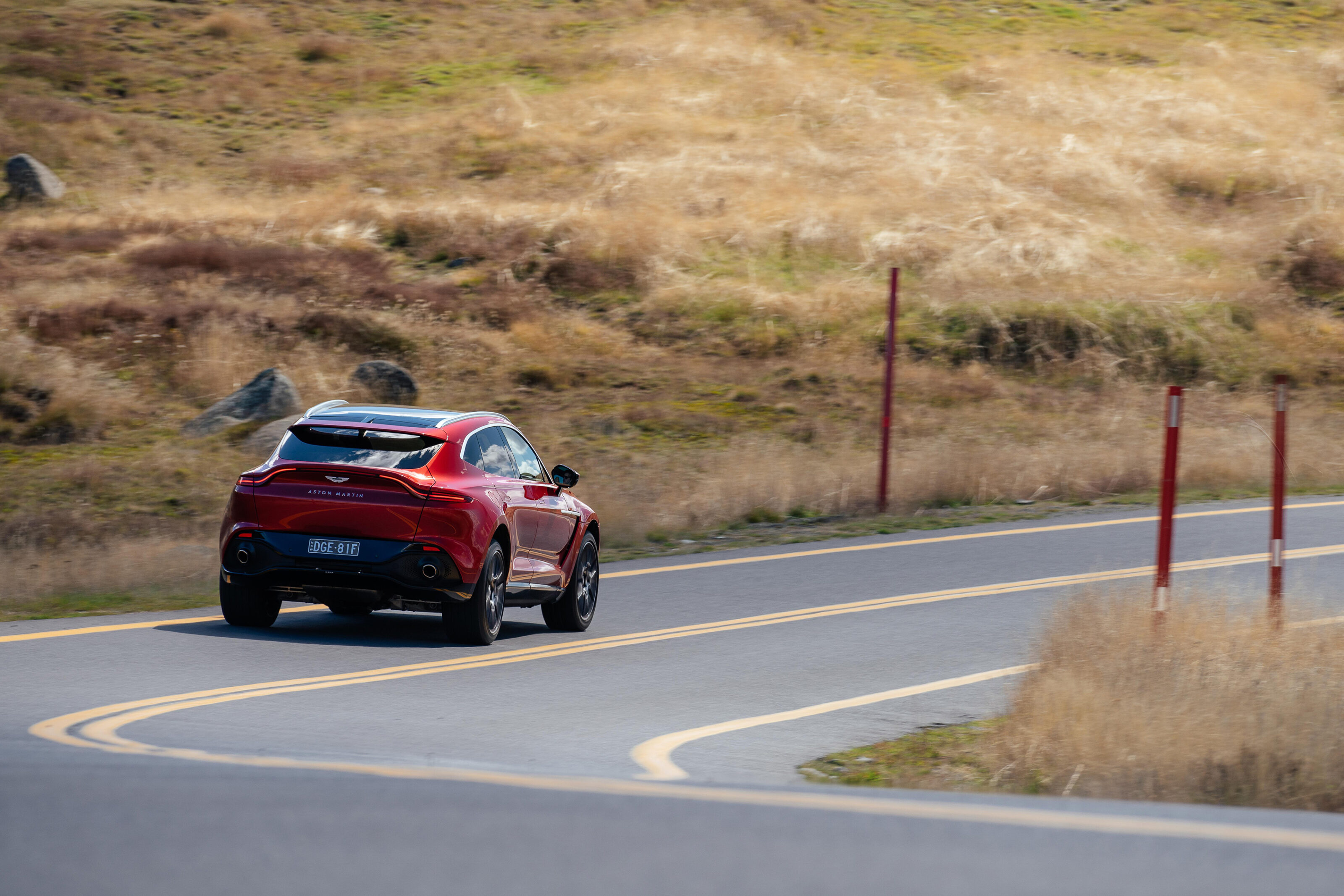
With the twistiest roads of our drive also dampened by rain, we kept to Sport that improves engine response, lowers the ride height, and – unlike the even lower and more aggressive Sport Plus setting – retains some ESC assistance that is welcome in an all-wheel-drive SUV that is clearly rear-biased in its sportiest settings.
With the tailor-made 22-inch Pirelli P Zero tyres providing encouraging adhesion through both their grip and generous contact patches (285mm front, 325mm rear), plus strong and progressive braking performance, Aston’s SUV can keep a rear-driven Vantage honest – at least in wet conditions.
The DBX looks fast even when stationary – courtesy of a sweptback, sloping roofed shape and relatively short overhangs
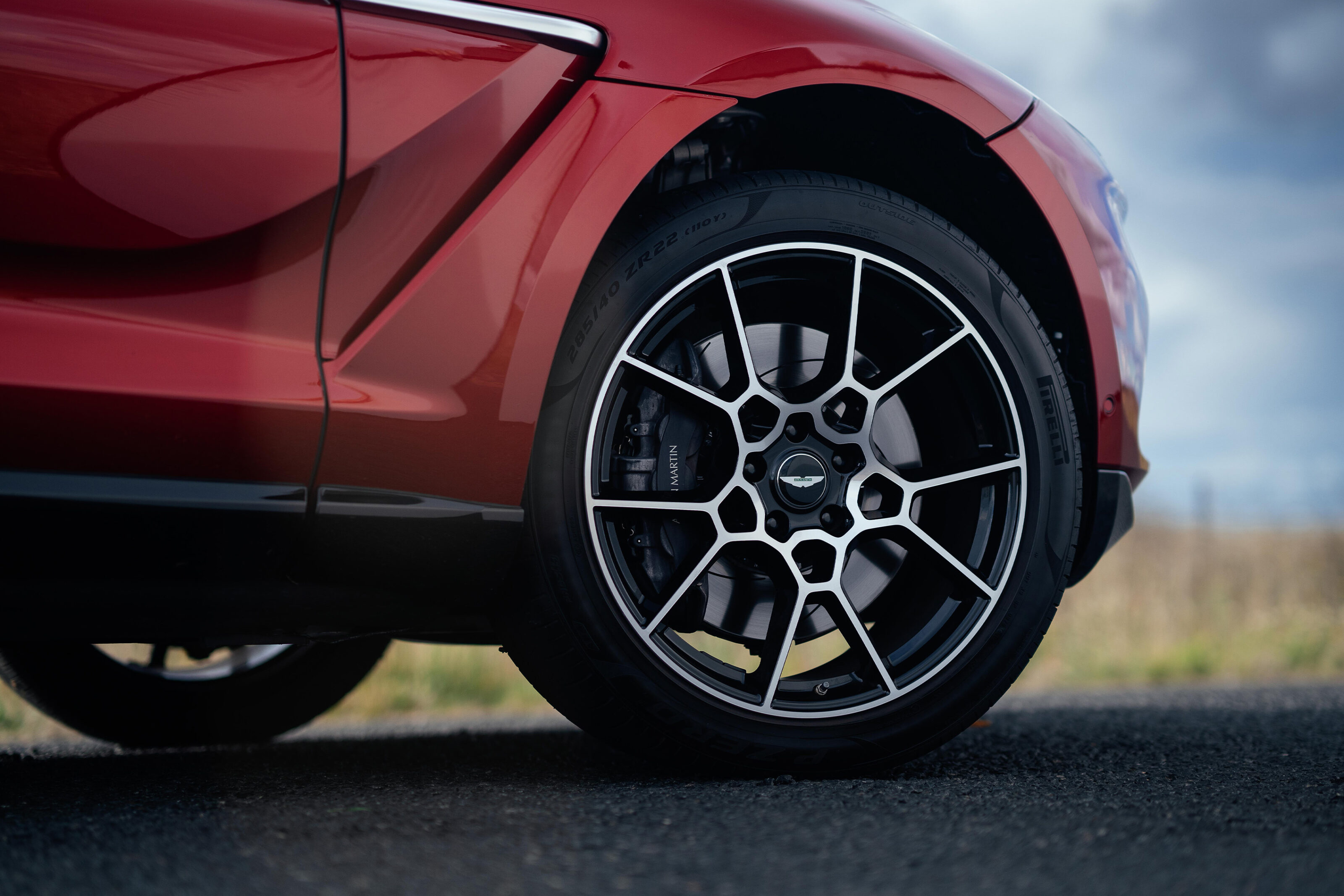
On bumpier roads at speed, we just found it best to select Individual so the dampers could be in their more supple GT mode while everything else remained in Sport. The DBX is otherwise a touch reactive.
The DBX is thoroughly relaxing on freeways, too, though our brief urban experience suggested luxury SUV buyers seeking a super-plush ride should look elsewhere.
The AMG V8 emits a muted note in GT mode, but pick Sport or Sport Plus and flaps open in the exhaust system to give the DBX an enjoyable throaty, if somewhat monotonous, sound.
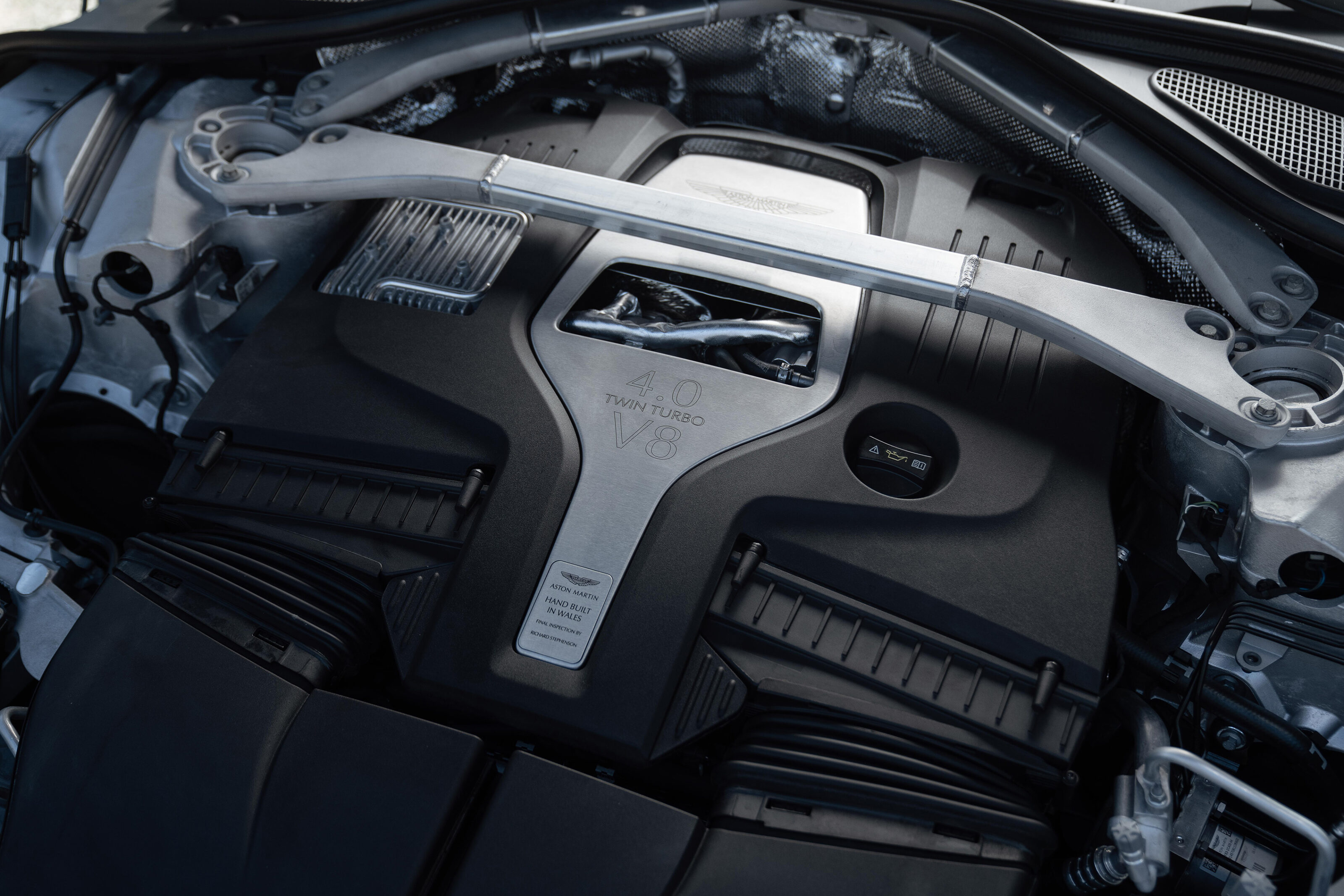
While the DBX provides entertaining speed, it’s not blisteringly quick. The DBX’s 4.5 seconds for the 0-100km/h sprint matches a Bentayga V8 petrol but most rivals offer quicker, sub-four-seconds acceleration. They include the Urus (3.6sec), Levante Trofeo (3.9sec), Porsche Cayenne Turbo Coupe (3.9sec) and the Audi RSQ3 (3.8sec) that looks a particular bargain at just under $210,000.
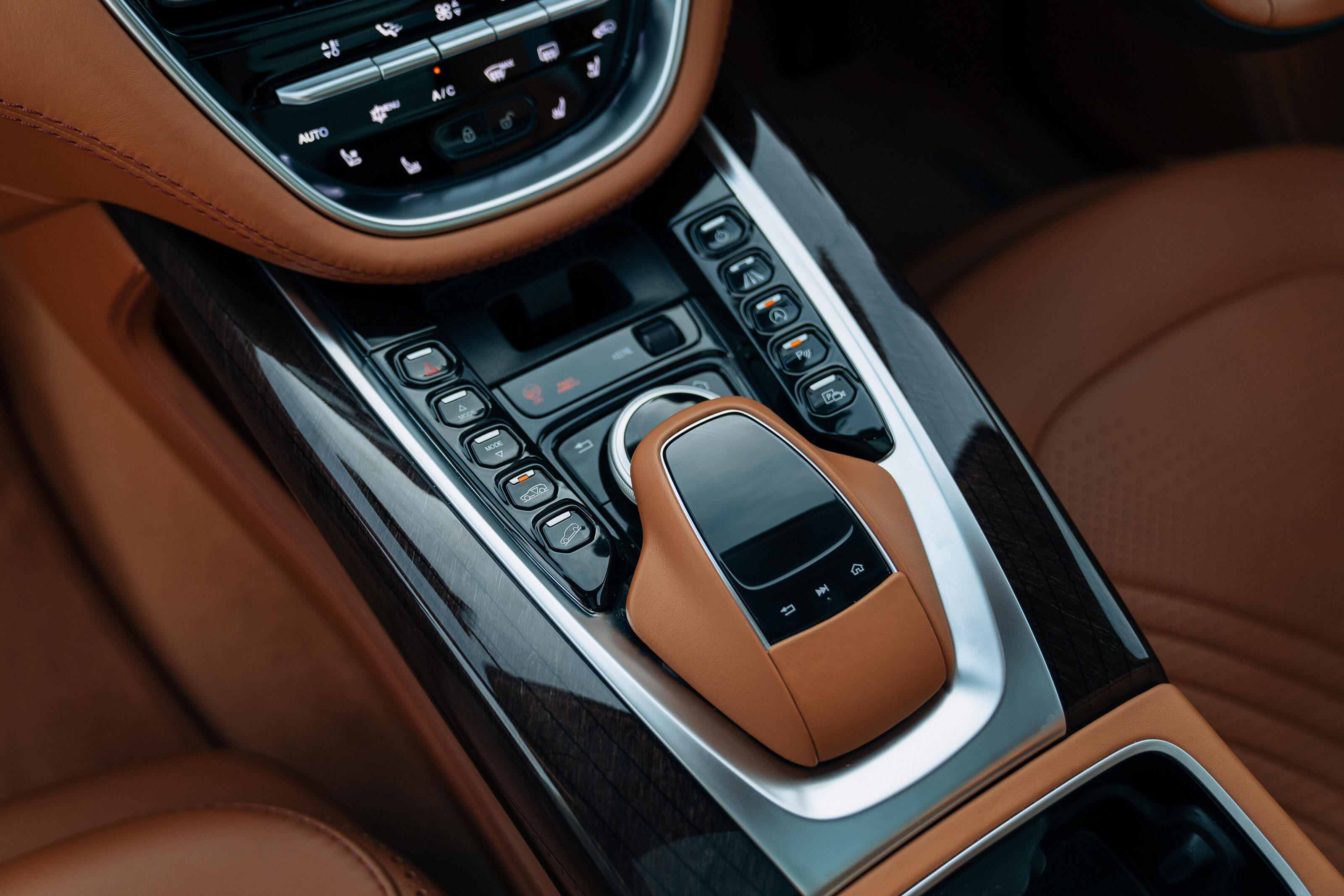
Shifts from the nine-speed auto aren’t necessarily the quickest you’ll find in the segment, either, but the DBX’s metallic shifters are not only perfectly shaped and positioned but thoroughly tactile.
There’s plenty to admire about materials used elsewhere in the cabin.
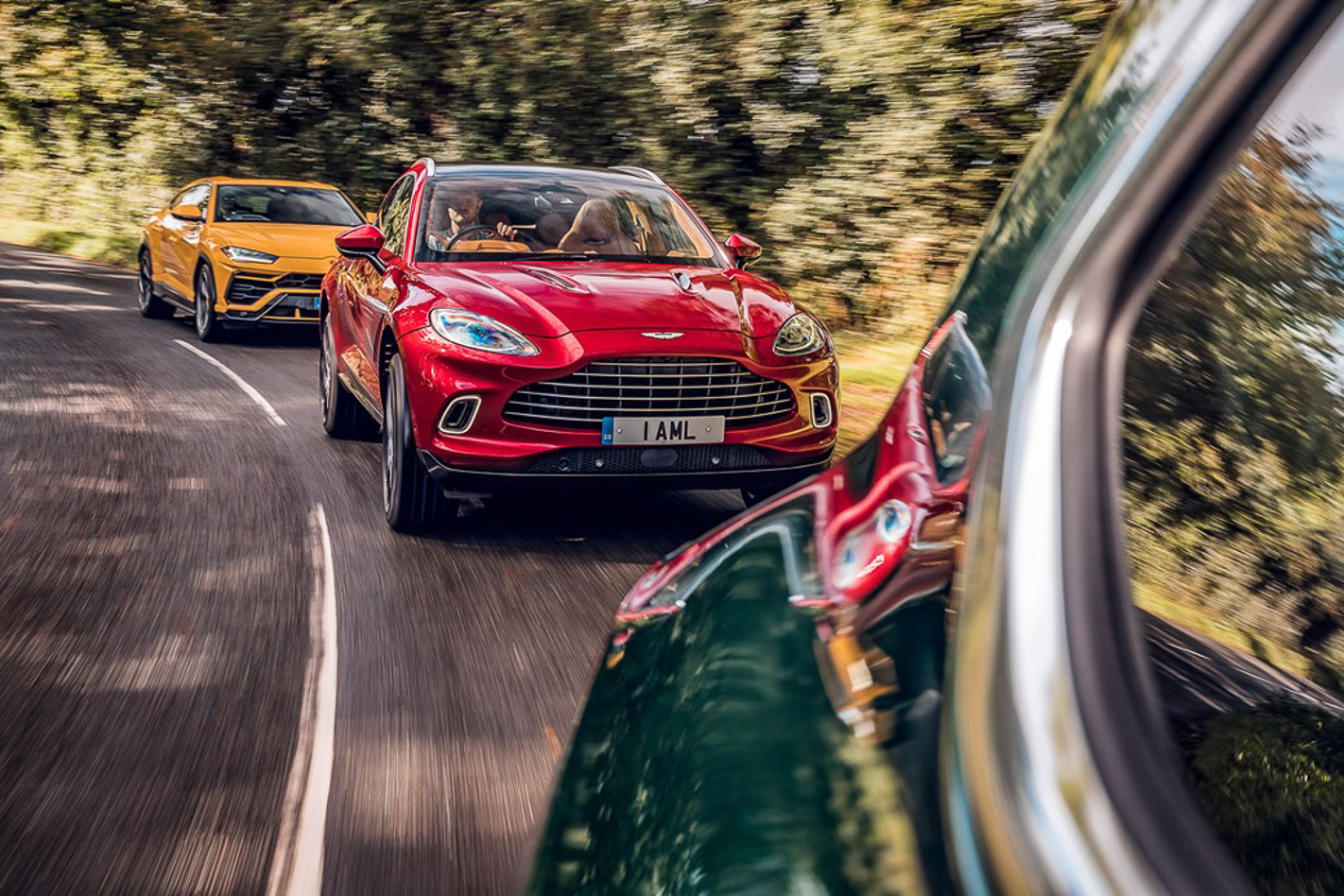
Aston’s SUV can keep a rear-driven Vantage honest – at least in wet conditions.
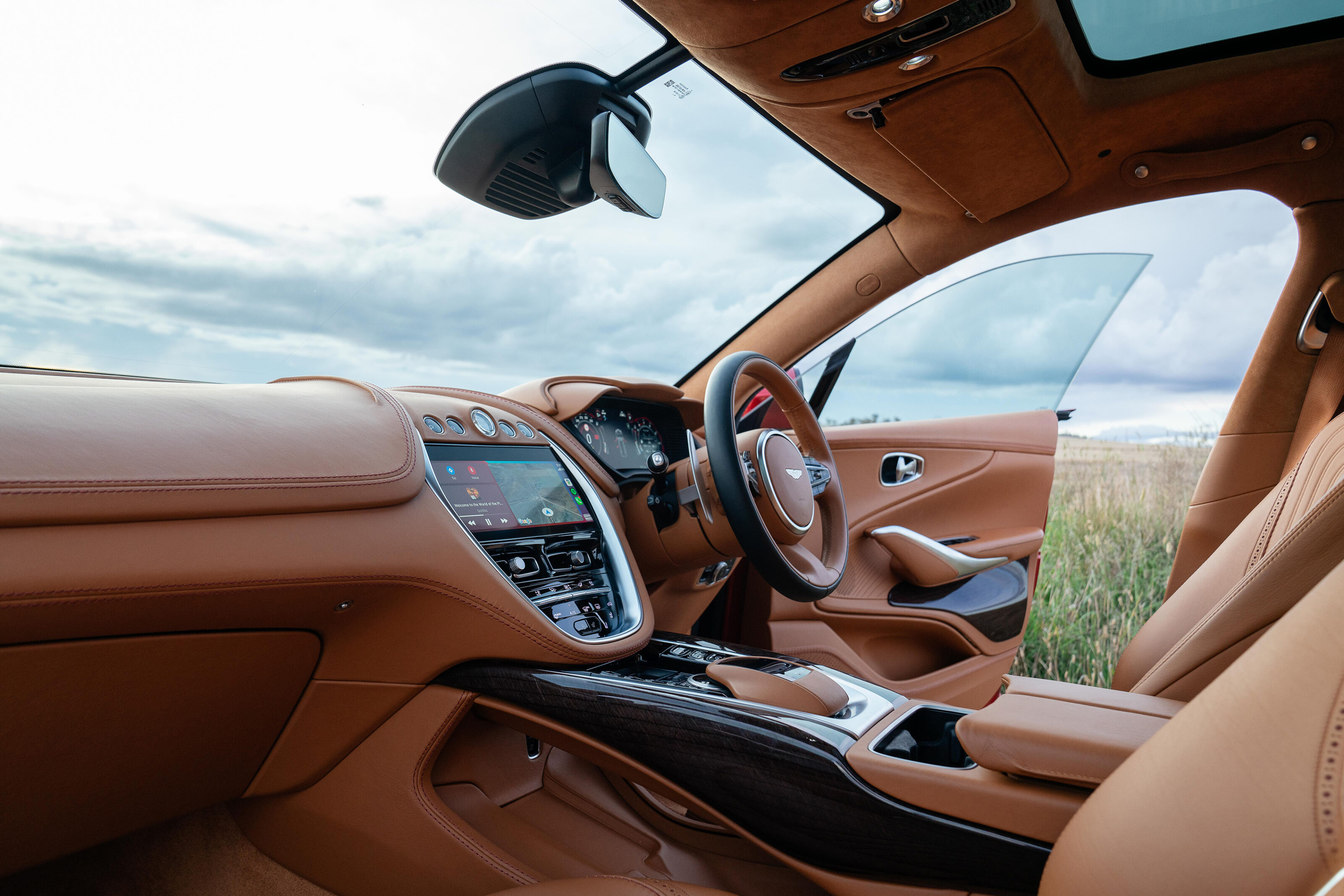
Brogue-style patterning is distinctive among all the hand-stitched craftsmanship, the sumptuous leather upholstery comes from renowned Scottish tannery Bridge of Weir, and there’s real glass used for the transmission buttons plus genuine carbon fibre sections.
The cabin looks best in all-black in our view, though already seems dated in some respects – notably the infotainment system that has Aston-specific graphics but based around an old Mercedes non-touchscreen interface (including the console controller).
The centre console is also a touch busy with all its buttons, and the need to cycle through the drive modes with up/down buttons isn’t ideal when driving. It’s easy to select the wrong setting or even put your finger on a different button completely.
Unlike the Rapide sold during the last decade, this is a four-door Aston that rear passengers will appreciate. There’s plentiful legroom and headroom for six-foot adults in the back seat of the DBX, and the outboard positions are especially comfortable (and include ISOFIX anchor points).
A total of four vents helps keep them cool or toasty, and storage options are in healthy supply.
A 632-litre boot that includes up to another 62 litres under the floor offers more luggage capacity than some rivals, too.
Yet while the DBX delivers on its promise of greater versatility than your average Aston, it’s also commendable that it hasn’t compromised on the brand’s core sporty values.
Snapshot
- 188 units of the FWD hot hatch sold by the end of April
- Currently outselling Civic Type R and Megane RS
- Sales creeping up to rivals Focus ST and i30 N
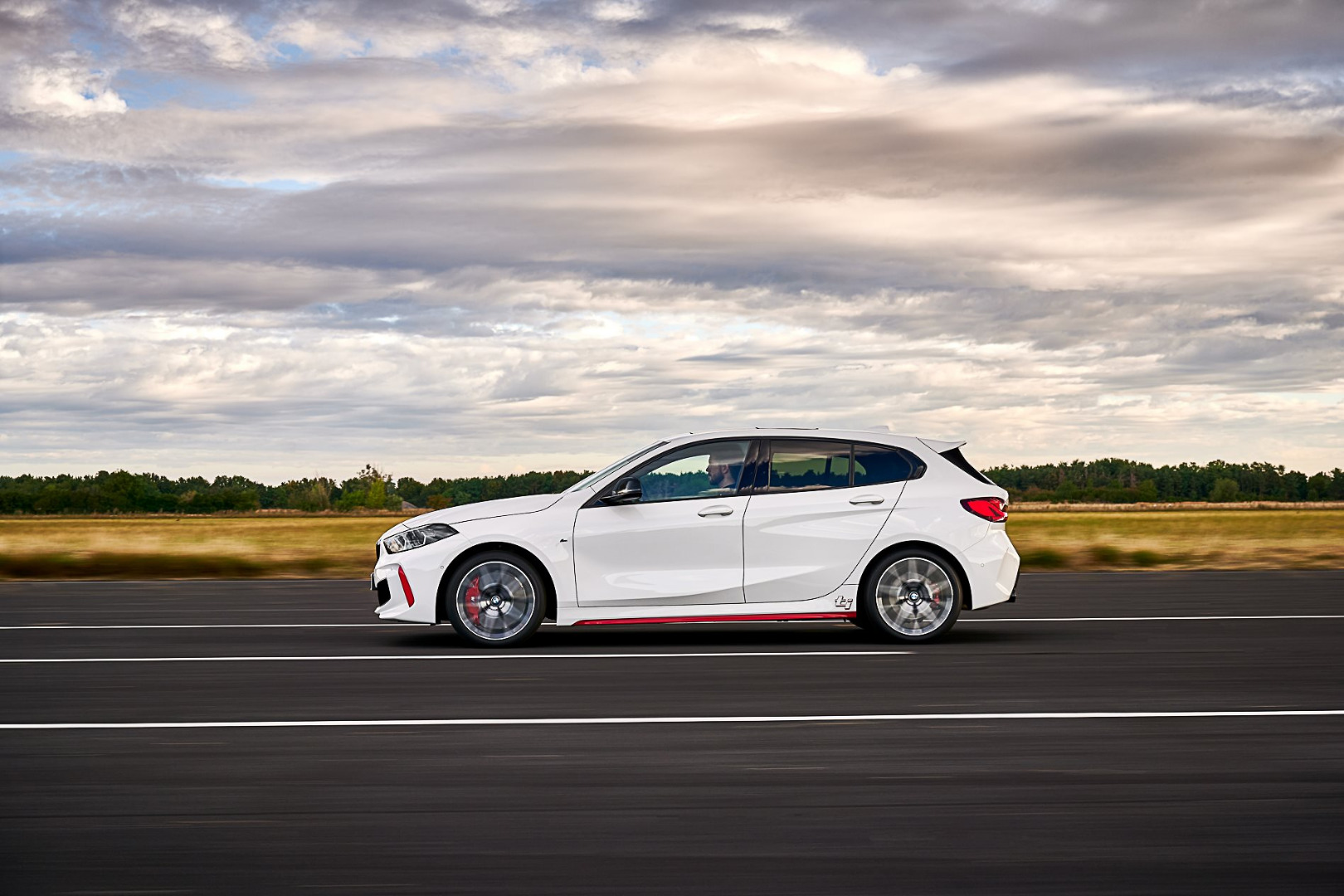
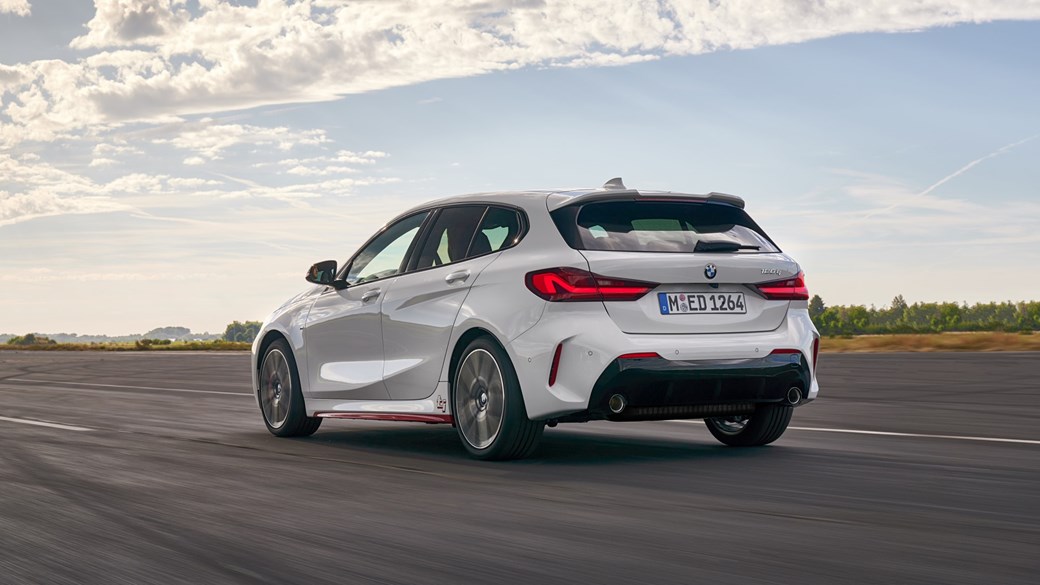
The BMW 128ti, the German brand’s first ever front-wheel-drive performance hatchback, has made a promising start to its attempt to take on the Golf GTI segment.
BMW’s new, mid-range variant accounts for one in five 1 Series sales so far locally in 2021 – outselling rivals such as the Honda Civic Type R and Renault Megane RS despite its status as the market’s most expensive front-drive hot-hatch.
With 188 128ti models sold to the end of April, the $56,900 BMW is also understood to be tracking closely to sales of both the Hyundai i30 N and Ford Focus ST performance hatches priced from below $45,000.
“We were excited about the 128ti as soon as it was announced, and we’re delighted it has resonated so strongly with our customers since local introduction earlier this year,” said a BMW Australia spokesperson.
“It’s conceptually an ideal hot-hatch for the performance-loving Australian market.”
The 128ti revives the Turismo Internazionale badging first used in a sporting context in the 1960s, though later applied to stubbier, hatchback versions of the 3 Series in the 1990s and 2000s.
For now, it is still outsold by the range-dominant 118i which starts from $47,900, as well as the range-topping M135i xDrive, which is priced from $65,900 and features all-wheel drive and a 225kW 2.0-litre turbo petrol engine.
The BMW 128ti also employs a 2.0-litre turbo petrol, but it instead puts 180kW and 380Nm to the front wheels – also via an eight-speed auto.
This matches it almost perfectly to its primary market target, the eighth-generation Volkswagen Golf GTI launching in June. The GTI produces 180kW and 370Nm from its 2.0-litre turbo petrol engine and the models share a quoted 0-100km acceleration time of 6.3 seconds.
Initial local demand for the BMW 128ti, which includes M Sport suspension, M Sport brakes, Michelin Pilot Sport 4 tyres and a Torsen limited-slip front differential among its sporty features, means it hasn’t yet been available for media test drives.
