
There are certain expectations that come with a particular car’s badge. Here at MOTOR, we assess every car on its merits, but there’s no escaping the fact that certain names evoke a specific reaction. A Porsche is going to be sporty, a Mustang will have more muscle than a juiced bodybuilder, and an S-Class will be at the pinnacle of technological advancement. For Bentley and its SUV offering, the Bentayga, the weight of expectation is heavy.
With more than a century’s worth of experience building some of the finest luxury and grand touring machines, the team at Crewe are renowned for their fine eye.
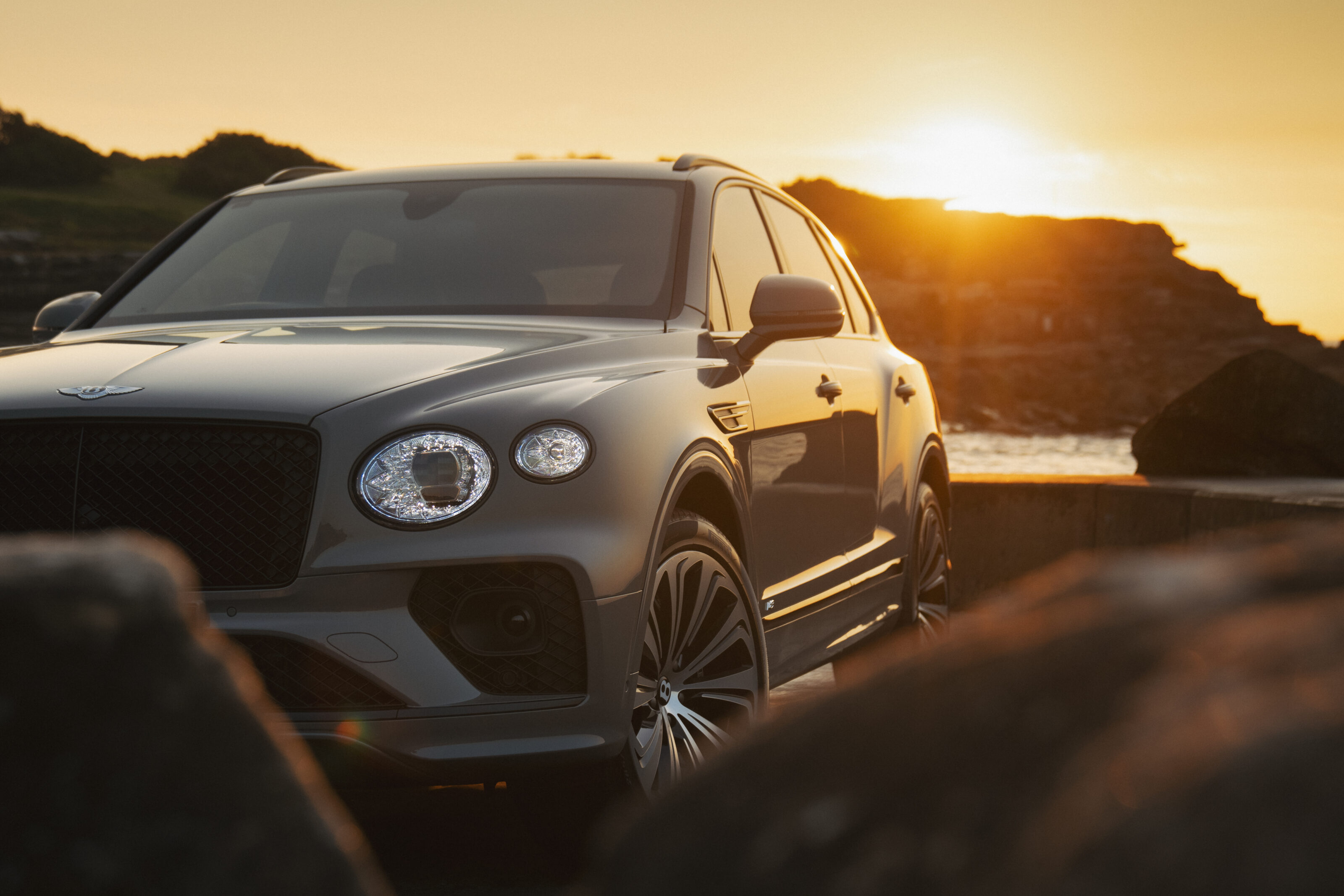
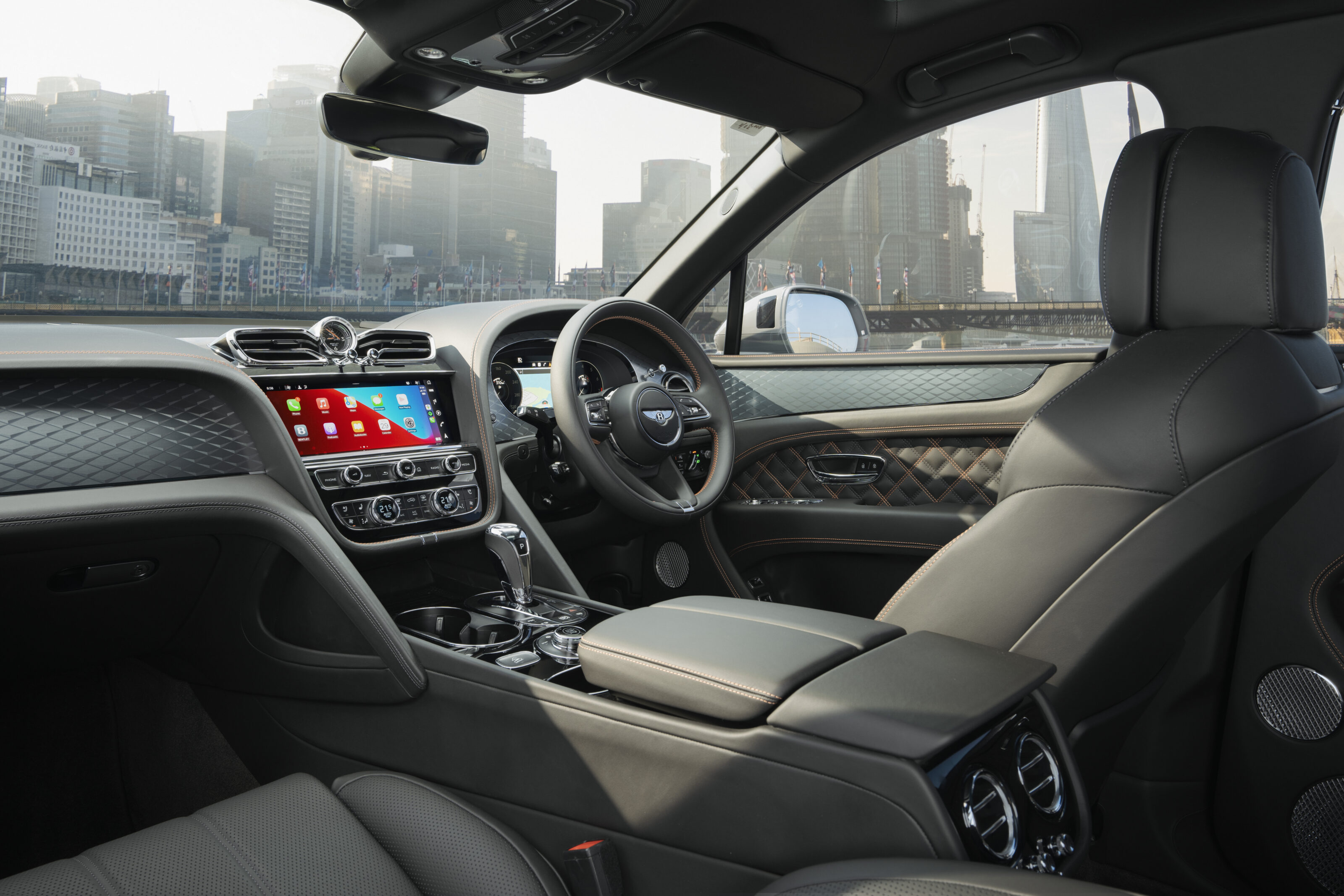
The Bentayga starts at $364,800 in Australia (before any on-road taxes or options are fitted), and customers adding the SUV to their fleet come from a tax bracket that appreciates refined taste. As a result, the list of standard-fit equipment is long and generous. Yes, you can still opt for some ridiculously priced options, but the core fit is appropriate for the price point. So is the quality of material and interior finishing.
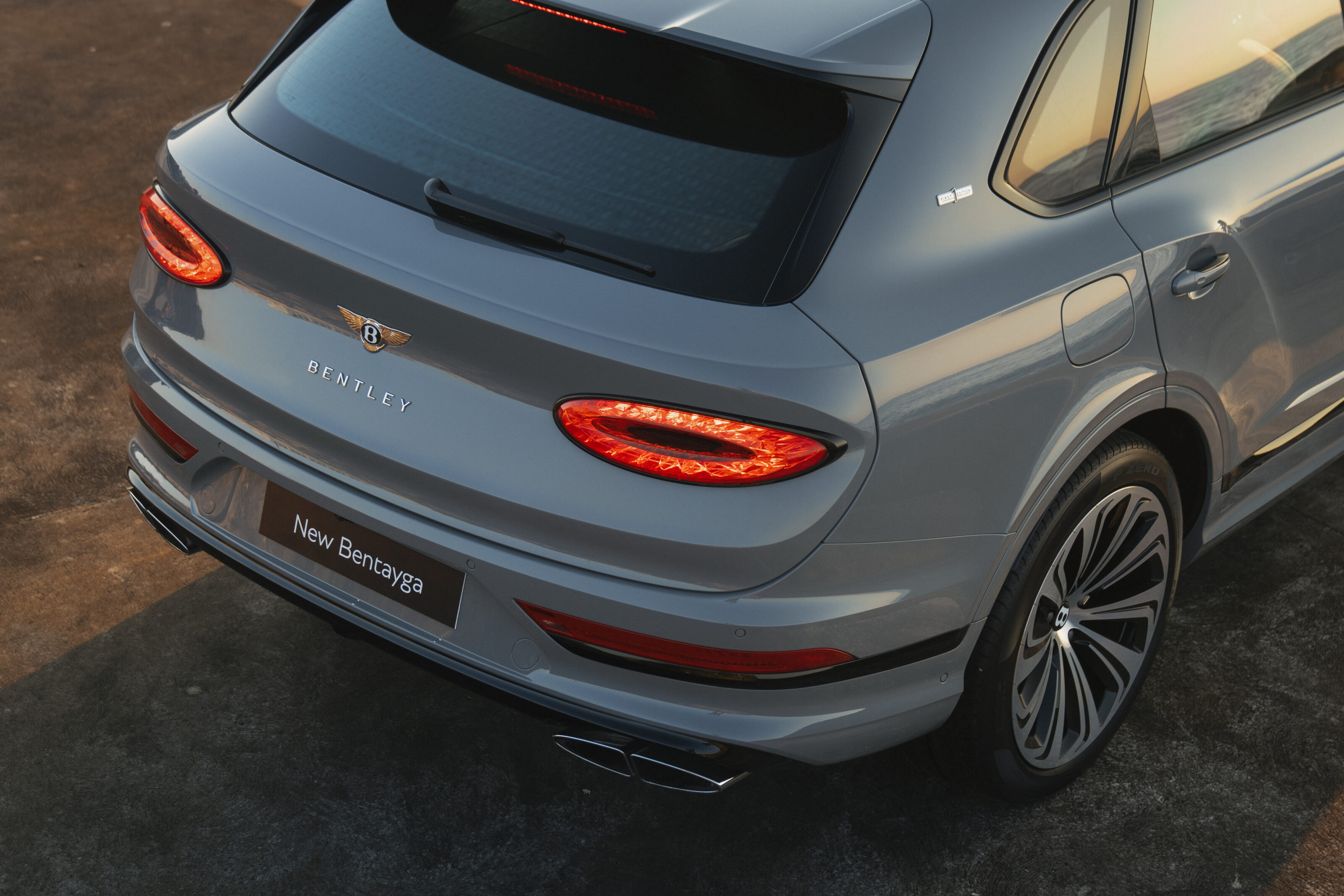
There are hints at the Wolfsburg origins in the architecture and tech, but the fit and finish is unmistakably Bentley. New for 2021 are refined styling tweaks which help gently disguise the fact that the Bentayga has been on sale since 2016. Five years is a relatively long time in a market that is obsessed with one-upmanship, but it’s going to be hard to dim the shine of the Bentayga’s new diamond-effect head and tail lights.
“There’s no rushed dropping of ratios or dramatic flaring of revs – just an unflustered moving of tectonic plates”
Bentley is proud of the fact that its SUV is capable of wearing many hats. They proclaim it has the performance of a supercar, while maintaining the luxurious standards of the brand’s flagship limos, with proper off-road chops thrown into the mix. This concoction of characters places the Bentayga in a challenging box from which to emerge. Thankfully, it has the right tools for the job.
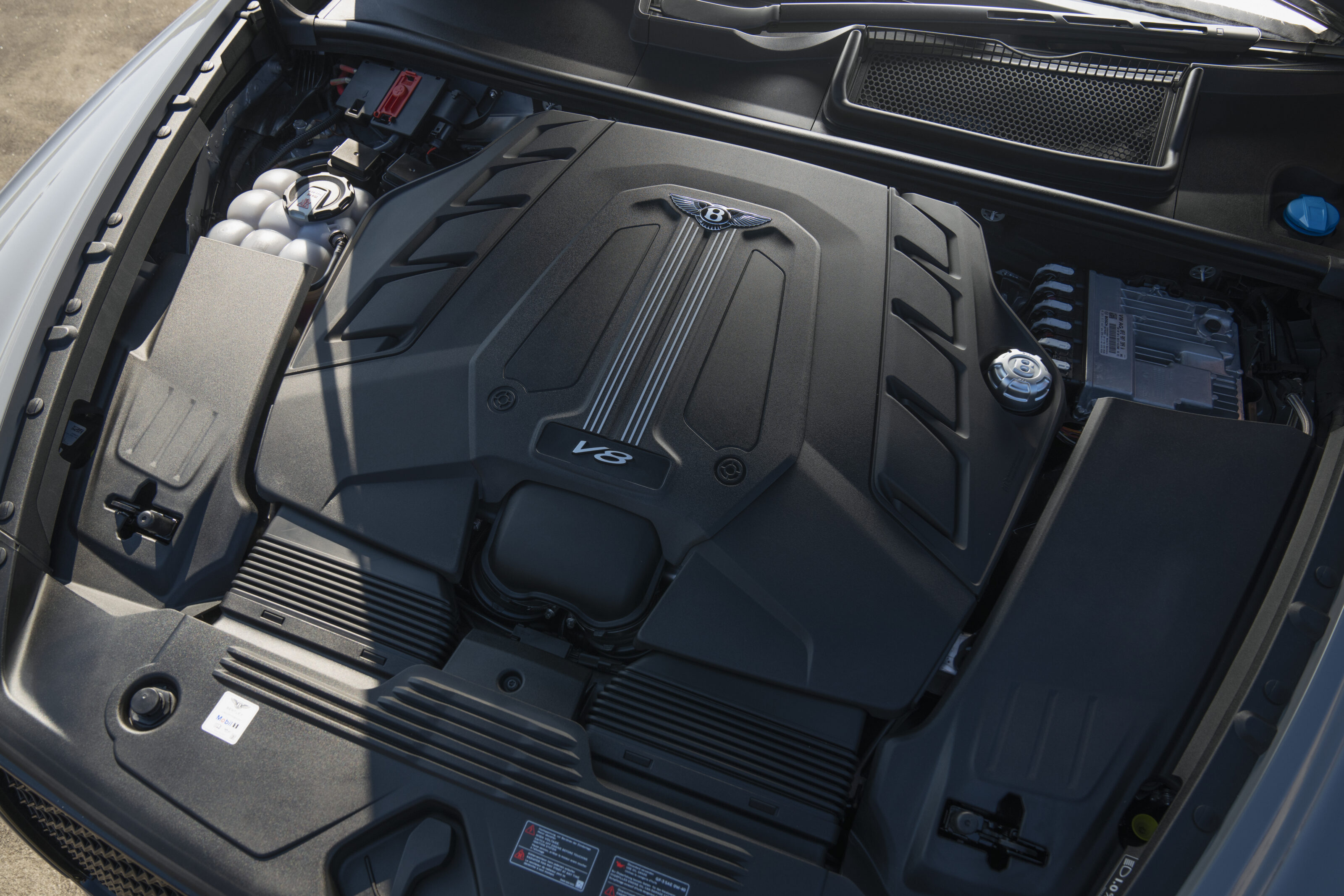
The 4.0-litre V8 under the bonnet is mated to an eight-speed automatic gearbox. The duo deliver 404kW/770Nm to a permanent all-wheel drive system with a Torsen centre and electronic rear differential. With these ingredients combined, the powertrain is buttery smooth. The V8 burbles along like an engine double its size when cruising.
Jab it in the kidneys with a forceful application of throttle, and it remains composed, using the significant torque (its peak is spread over better than 2500rpm of the rev range) to pull the horizon closer. There’s no rushed dropping of ratios or dramatic flaring of revs – just an unflustered moving of tectonic plates. In even its sportiest of settings, the Bentayga’s transmission shifts between gears almost imperceptibly, swapping ratios more slickly than the dual-clutch in a Continental GT.
The test route for our drive was a pock-marked, warped, and deteriorating piece of back-road bitumen. Challenging, yes, but something you’d expect a Bentayga to chew up and spit out. There’s a taut readiness to the ride that, on poor surfaces, manifests as a firm edge that may surprise some who mistakenly perceive Bentley as a maker of syrupy limos.
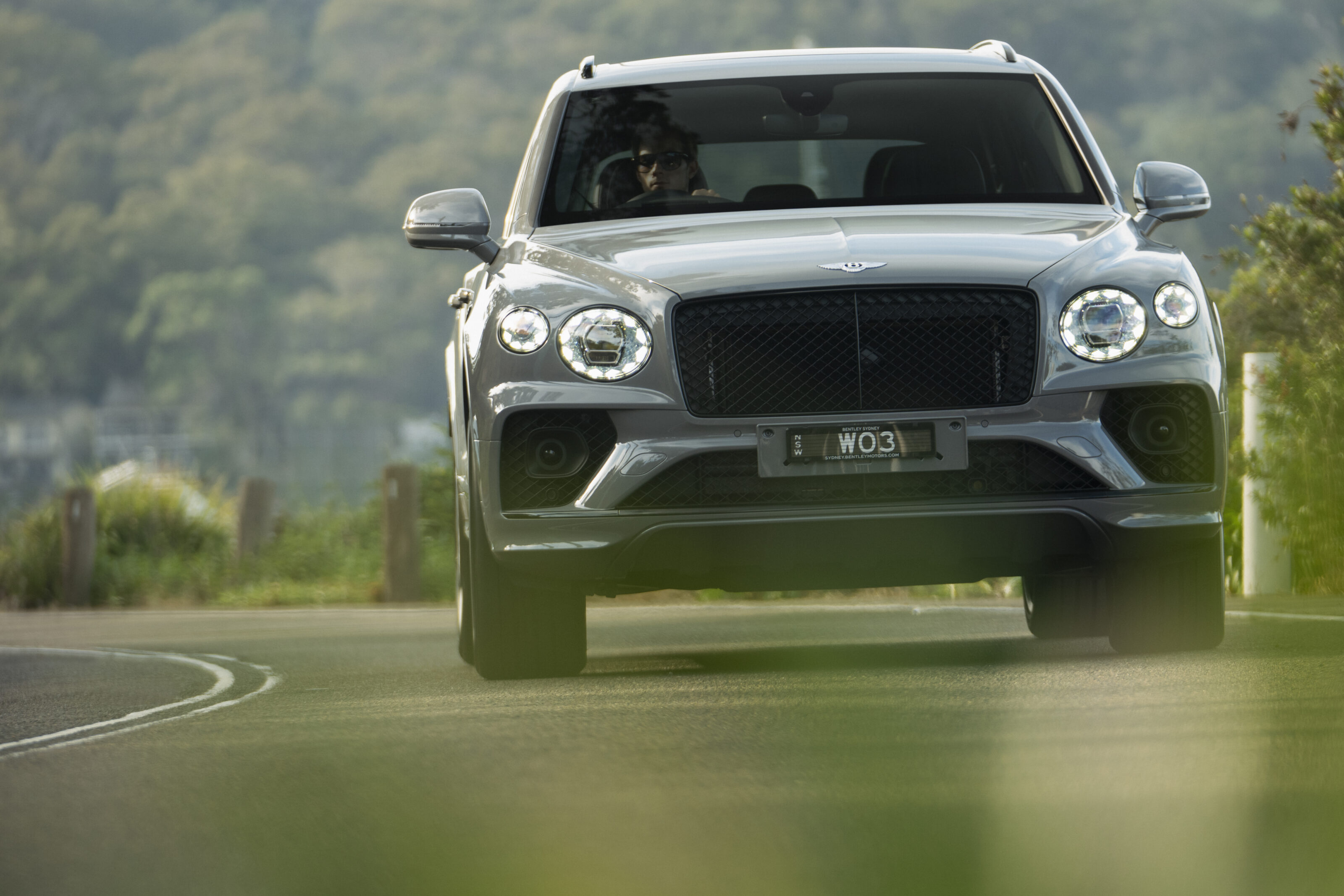
Turn the Bentayga into a set of bends and you are reminded of exactly why the waft is absent. Far from being the wallowing two-tonne-plus handful you’d expect, the Bentayga is impressively capable in dynamic situations. While not as athletic as Volkswagen Group siblings like the Lamborghini Urus, Audi RS Q8 and Porsche Cayenne Turbo, it doesn’t shy away from a challenging road.
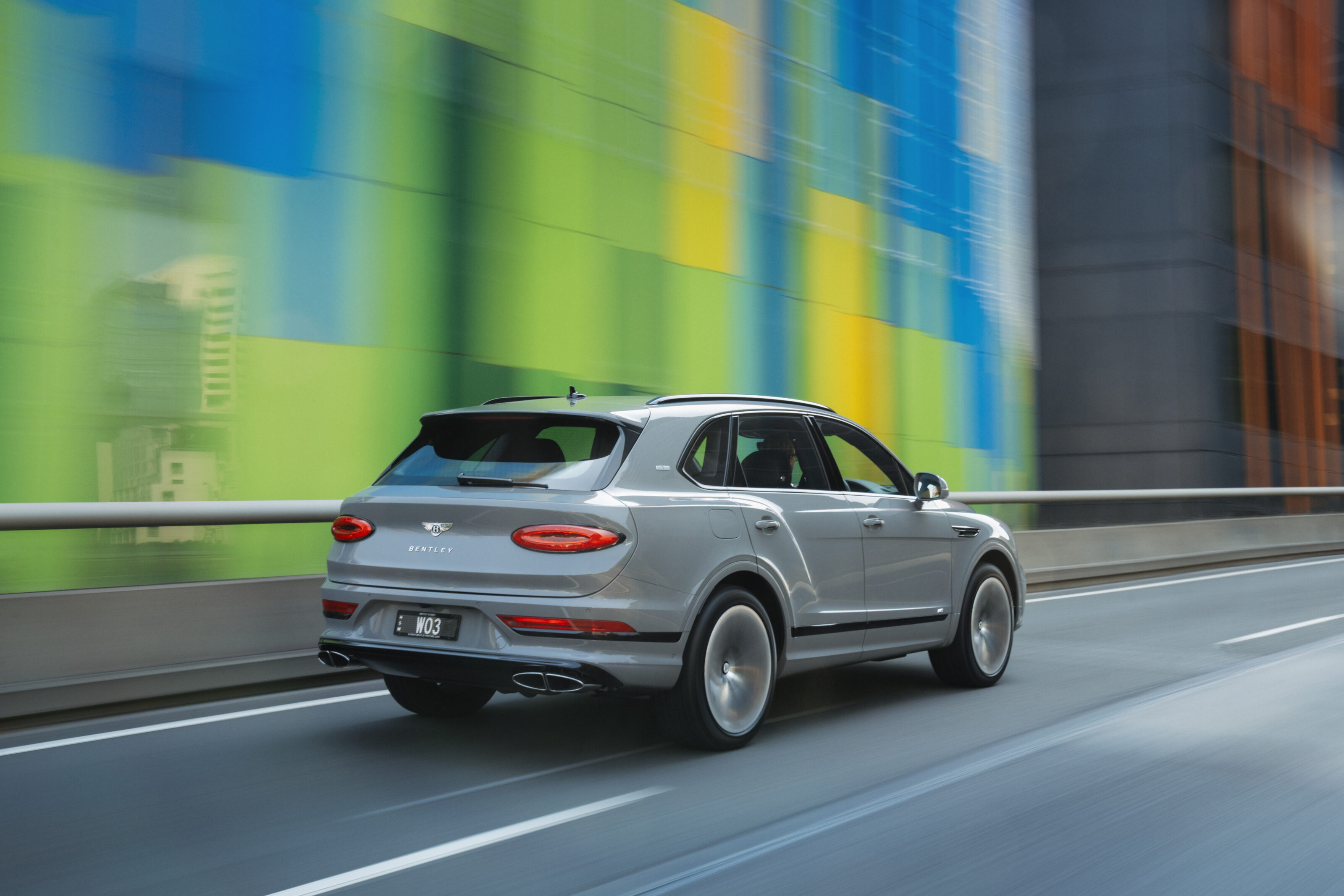
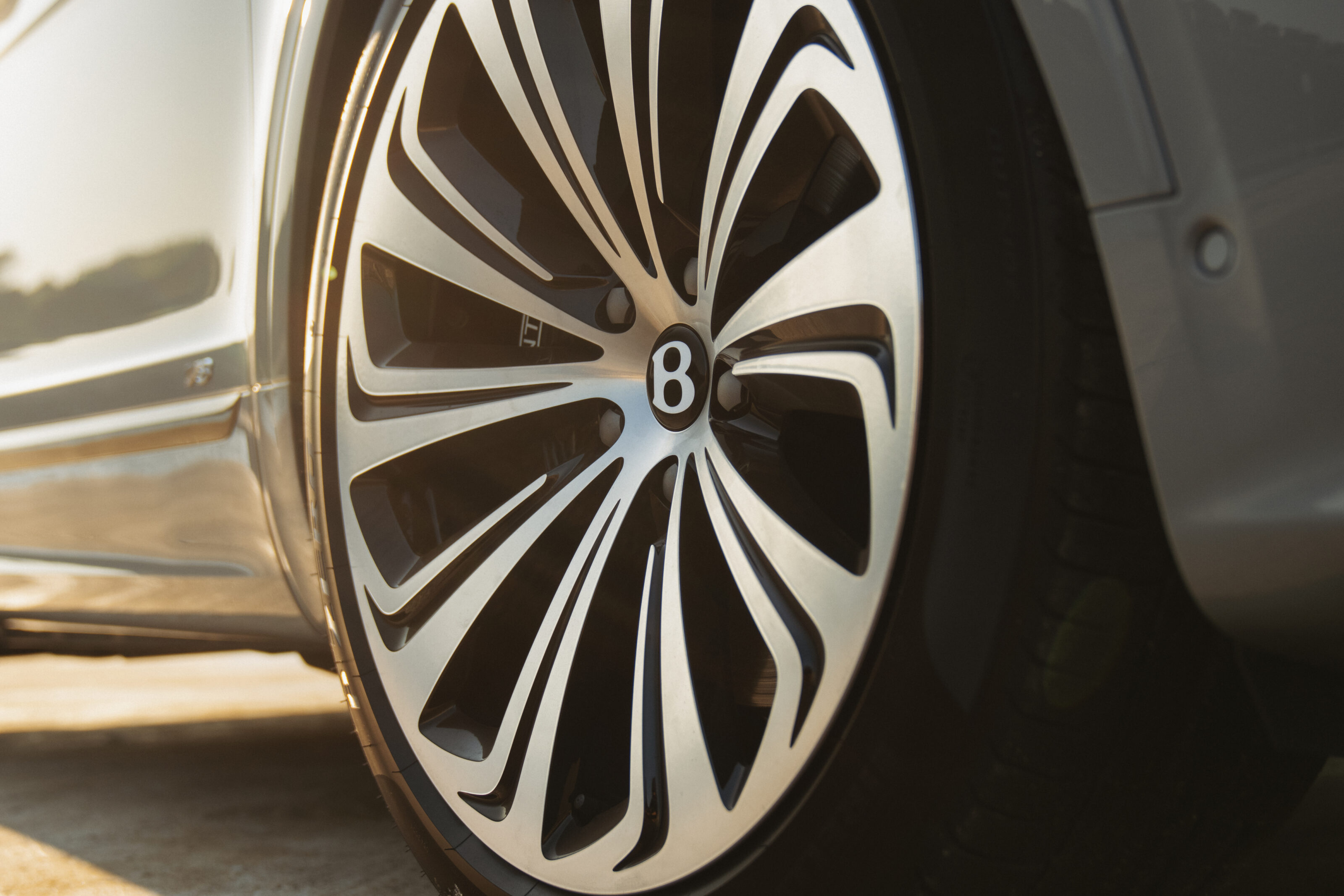
The Bentley does have more pronounced body roll when upping the ante but this actually improves subjective involvement. That roll and pitch reassures through corners, signalling the limits unambiguously. Allow it to compress and settle into a corner, and you can then ply the throttle, allowing the torque to pull you toward exit, the 285/35 ZR22 Pirelli P Zero rubber rarely troubling the traction control.
While the Bentayga only has three natural rivals (the Lamborghini Urus, Aston Martin DBX, and Rolls-Royce Cullinan), they each focus on a subtly different customer demand.
This mid-life facelift has done well to keep the big Bentley wagon looking fresh as it faces down newer competition, but it pays to remember that despite the SUV body, the Bentayga bones are that of authentic, traditional Bentley – a raffish gentleman’s express. Looking for something respectively more remote or reinvigorating? Other options are available.
Snapshot
- Warming was responsible for the design of the third-gen Mini Hatch
- Worked in various roles at BMW from 2005 – 2016
- Returns to the BMW group after a brief stint at Borgward
Rolls-Royce has appointed former Mini design chief Anders Warming as its new Director of Design.
Warming, 48, will join Rolls-Royce from Warming Design, the company he founded in 2019, when he starts in the role on July 1.
He makes a return to the BMW family after starting his career with the Bavarian marque in 1996 at its Designworks studio in California, following the conclusion of his studies at the nearby Art Center College of Design in Pasadena.
Warming’s experience includes almost 20 years in senior positions in the BMW Group, including Head of Design at Mini and Exterior Chief Designer at BMW.
Warming is best known within the industry for his work while at Mini from 2011, heading up the design of the third-generation Mini Hatch and the second-generation Clubman/Countryman.
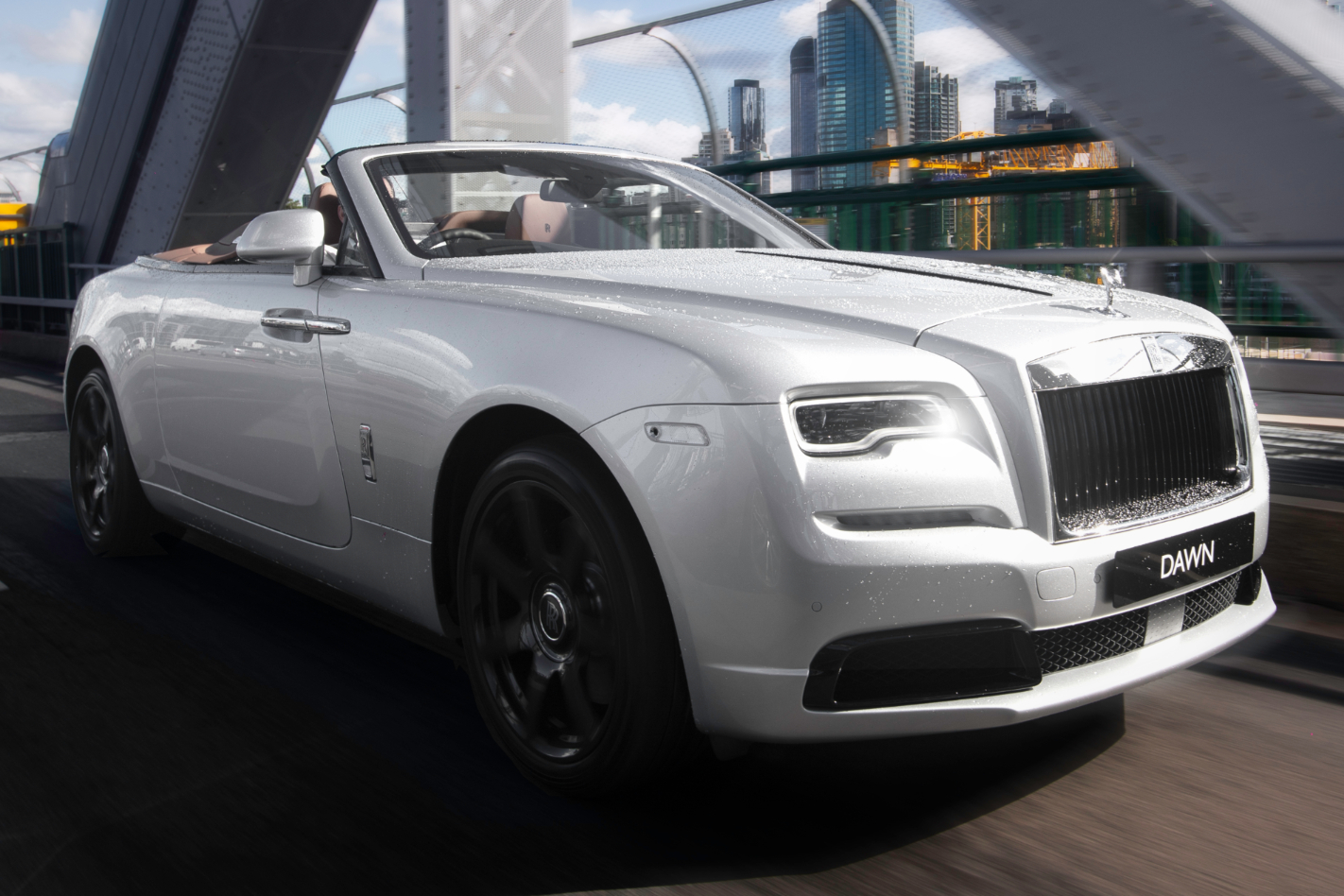
With Warming stepping into the role, Rolls-Royce has finally found a chief designer to fill the hole Jozef Kaban left when he departed after just six months in the job to instead take up a role at Volkswagen.
Warming’s appointment to the role of design chief means Rolls-Royce now has direction with its design language due to the role being empty since Kaban’s departure in October 2019.
Speaking about the appointment, Torsten Müller-Ötvös, Chief Executive Officer at Rolls-Royce, said: “As our Director of Design, he will have a key role in defining our future aesthetic direction and realising our clients’ dreams and aspirations.
“Anders joins us as we move forward to full electrification of our brand, which will shape Rolls-Royce for decades to come. He will face the challenge of upholding the fundamental design principles of Sir Henry Royce himself, which have guided us for over 100 years.”
“It is a tremendous privilege and a humbling experience to be asked to take up this role. I am personally thrilled to be joining Rolls-Royce and am fully committed to the challenges presented by this great and historic brand as it moves into the future,” Warming himself added.
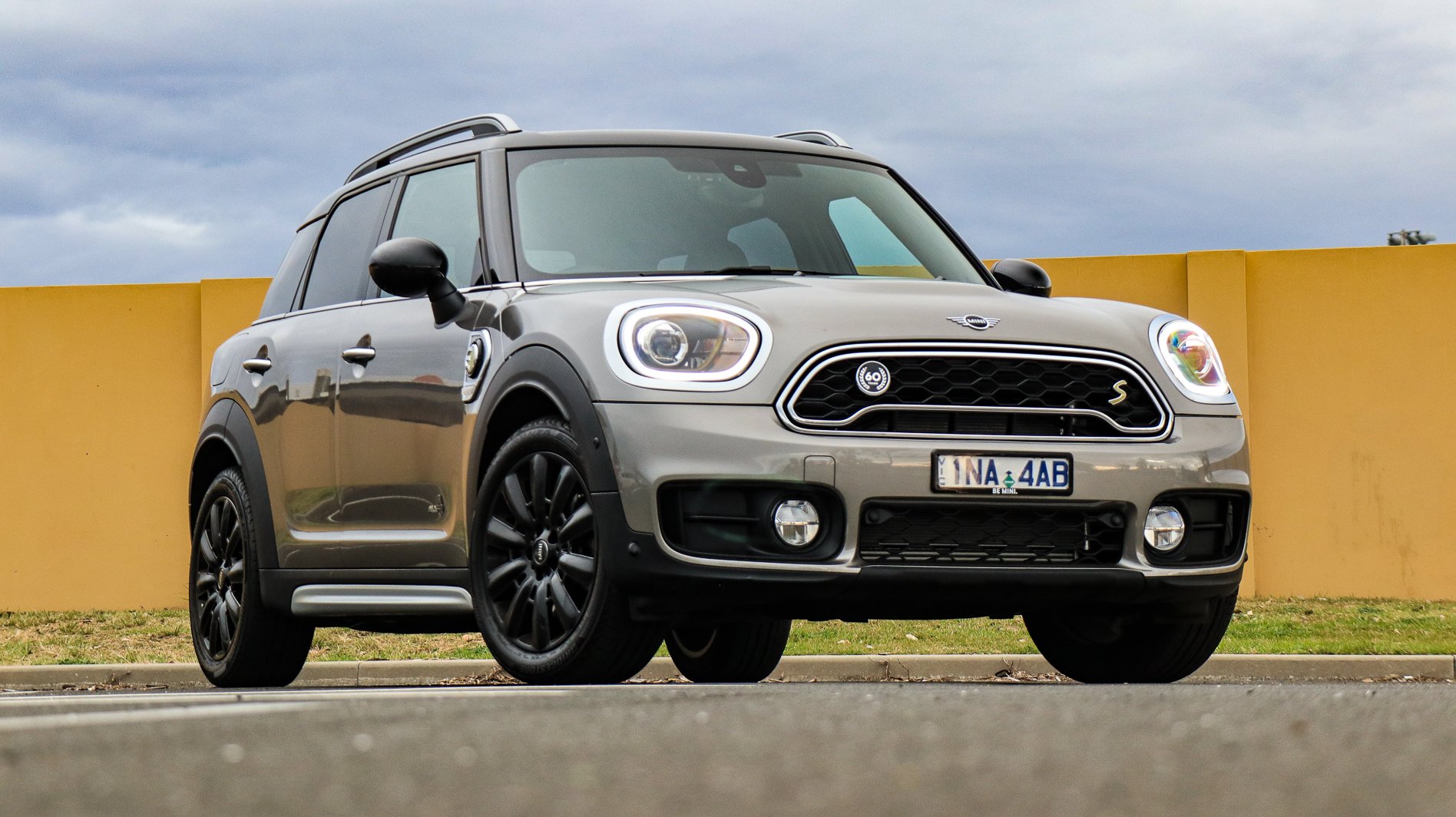
During his previous time at BMW, Warming designed the first-gen BMW Z4 and was a part of the team overseeing models like the X1, X3, X5, 1 Series, 5 Series and 6 Series from 2009 until 2013.
Warming can also be attributed to the design of a few notable concept cars, such as the BMW Gina and Vision Efficient Dynamics as well as Mini’s Vision Next Concept and the Rocketman.
His brief tenure at Borgward saw the Isabella Concept released in 2017, though the car has never made it into production.
Snapshot
- S 580 L 4MATIC will cost $329,900 (plus on-road costs), range-topping Maybach S 680 4MATIC retails for $565,800 (plus on-road costs)
- Customer orders beginning in quarter three of 2021
- Deliveries and local launch expected for the fourth quarter of 2021
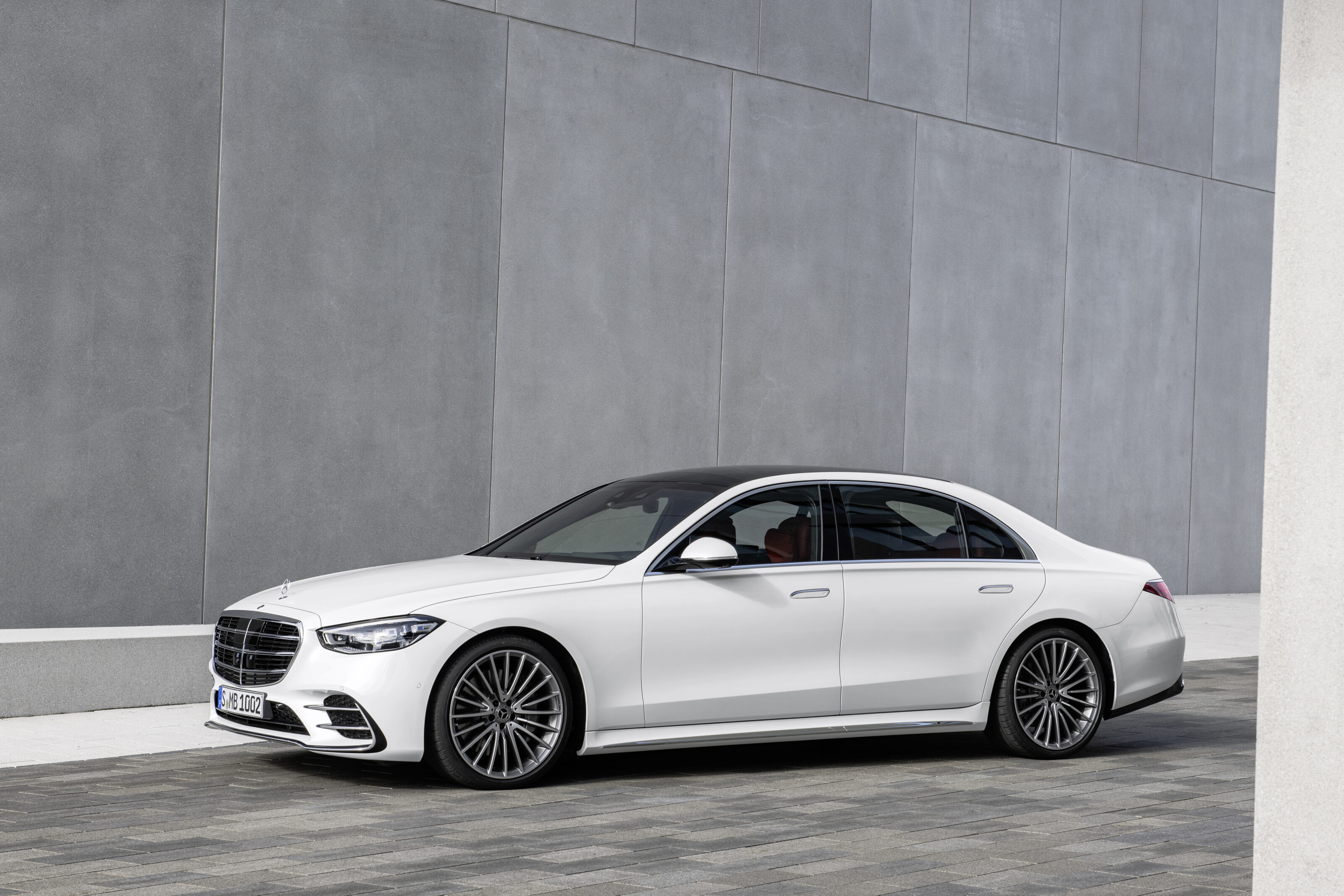
The 2021 Mercedes-Benz S 580 L 4MATIC and Mercedes-Maybach S 680 4MATIC will go on sale in Australia later this year costing $329,900 and $565,800 respectively plus on-road costs.
The new V8-powered S 580 L 4MATIC will represent the top-shelf variant of the standard S-Class range, sitting above the S 450 and S 450 L, which are already on sale, while the S 680 will sit as a standalone model for the carmaker’s opulent Mercedes-Maybach sub-brand.
Drivetrains
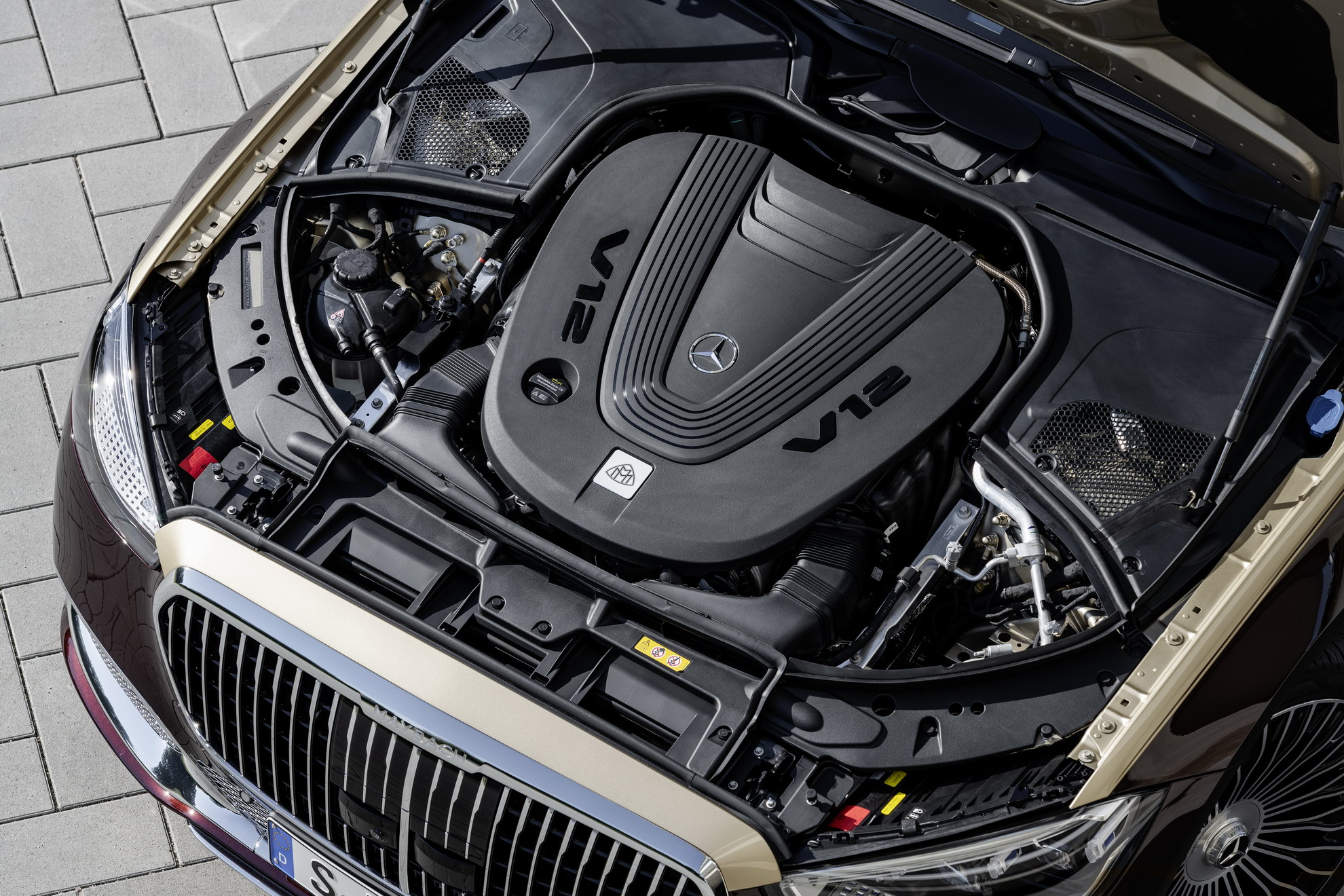
Powering the S 580 L will be Mercedes’s prodigious M 176 bi-turbo 4.0-litre V8 engine, which produces 370kW and 700Nm.
The S 580 L will also utilise the German automaker’s EQ Boost 48-volt onboard electric mild-hybrid system, which adds 15kW and 200Nm of extra shove for short intervals.
The S 680’s motor adds four more cylinders and an extra 2.0-litres of displacement compared to the S 580 L, utilising Merc’s emphatic M 279 bi-turbo 6.0-litre V12, which pumps out 463kW and a whopping 900Nm.
However, the S 680 does without the clever EQ Boost technology, as Merc has never fitted one of its V12s with a mild-hybrid system.
Drive for both models will be sent to all four wheels through Mercedes’s clever 4MATIC drive system and 9G-TRONIC nine-speed automatic transmission.
Dimensions
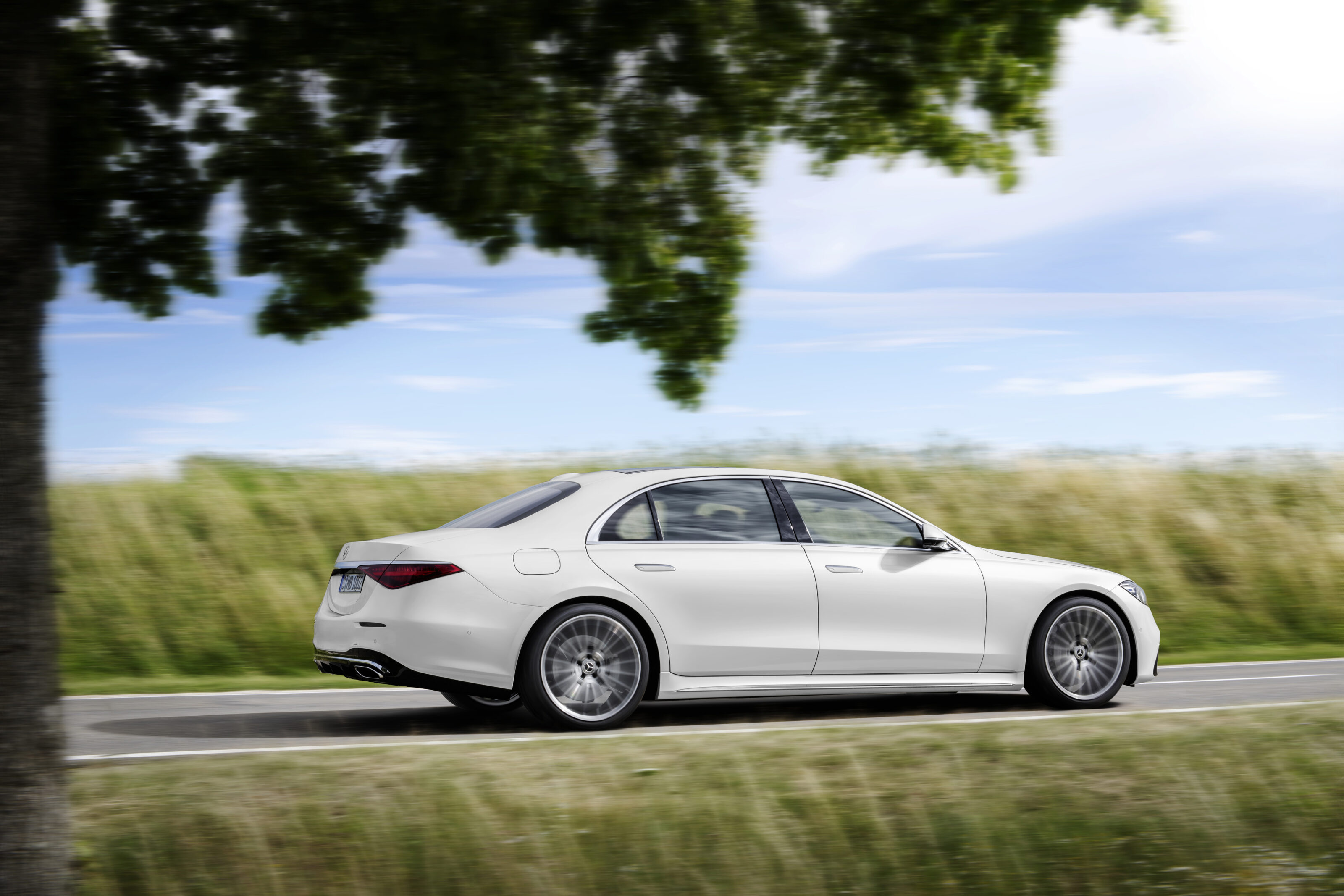
Based on the Stuttgart firm’s modular MRA platform, the 580 L’s wheelbase will be 110mm longer than the standard S-Class, measuring 3216 mm.
The S 680 is longer still. Its wheelbase measures 3396mm, gaining an additional 180mm of length compared to the long-wheelbase (LWB) S-Class.
Suspension
Thanks to the S 580 L’s 48V mild hybrid system, the limousine can be had with two suspension options.
As standard, it will ride on Mercedes’s plush Airmatic adaptive suspension. However, buyers can also opt for E-Active Body Control, a fully active suspension system which employs five multi-core processors, 20-plus sensors and a stereo camera to adapt to driving conditions and surfaces on the fly.
The trick suspension’s control unit can assess any driving situation 1000 times per second, which should equate to a unrivalled ride and driving experience.
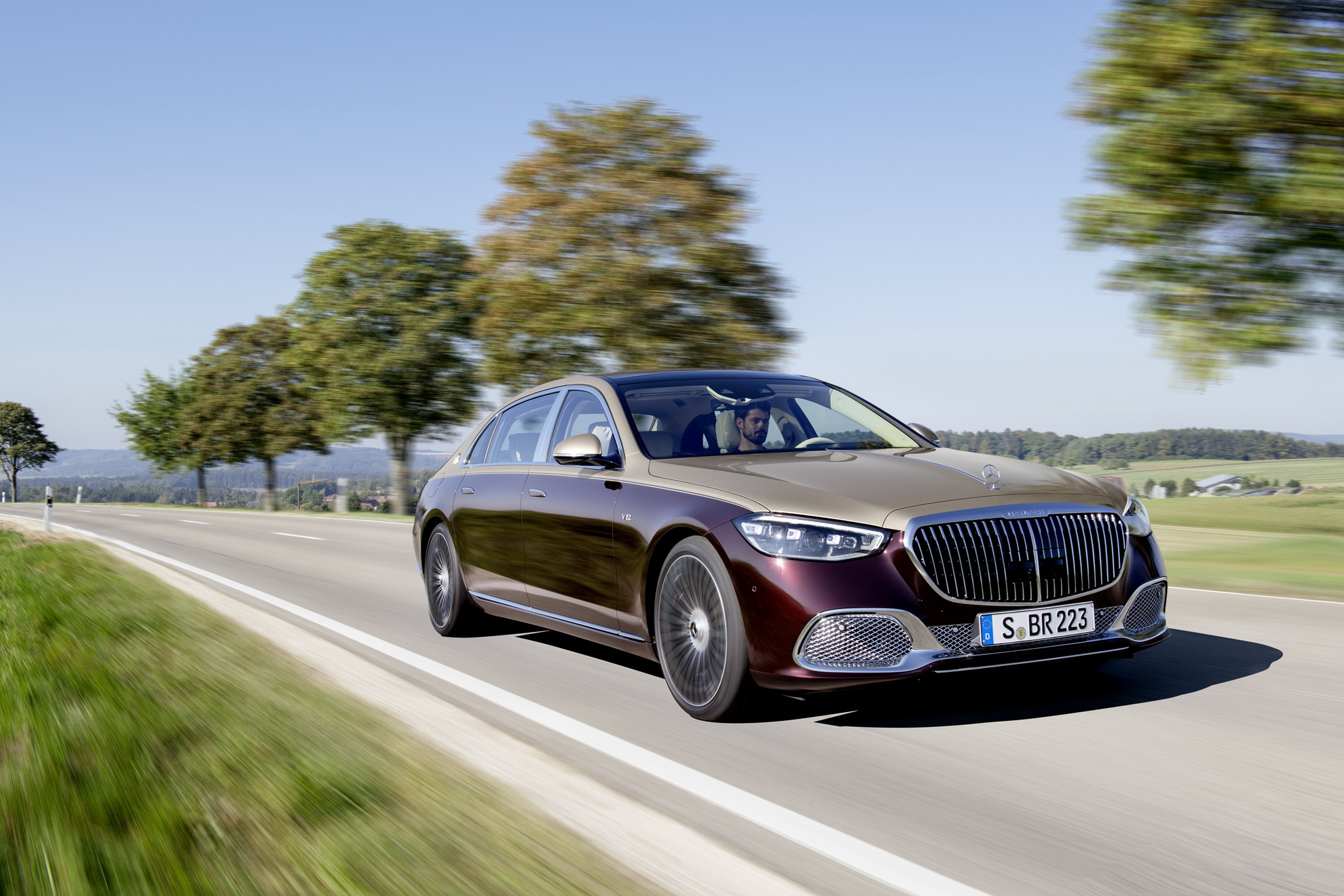
As the S 680 forgoes EQ Boost, its only ride option is Airmatic adaptive suspension. However, the air-suspension set-up receives its own unique tune exclusively for the Maybach range.
The impressive rear-wheel steering (RWS) system offering up to 10-degrees of articulation is an optional extra for the S 580L. The S 680, on the other hand, gets RWS as standard.
Buyers getting the clever piece of engineering on their S-Class/Maybach will want to go for the 20-inch wheels though, as optioning the 21-inch wheels limits the rear-steer to just 4.5-degrees.
Interior
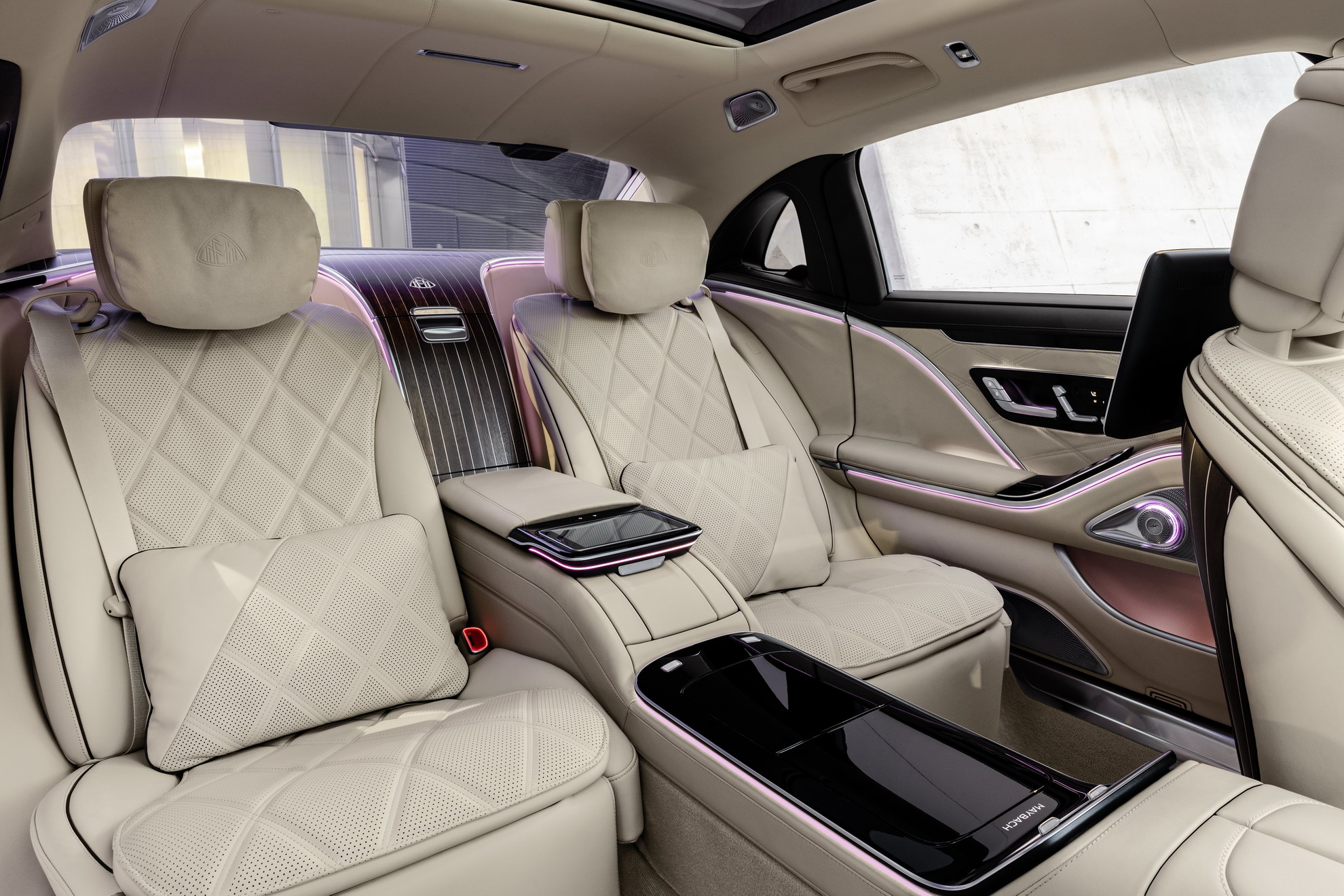
Inside, both vehicles are, as you would expect, opulent.
The S 580 L scores a host of features such as Merc’s latest generation MBUX infotainment software, a 12.8-inch centre OLED touch-screen display with fingerprint scanner, 3D driver’s display, power-assisted closing doors, wireless phone integration and charging, sliding panoramic sunroof, a 15 speaker, 710 watt Burmester 3D sound system, MBUX interior assistant, ambient lighting, dual-zone climate control, electronically adjustable heated and cooled front seats, and a Nappa leather interior.
The S 680 ramps up the levels of luxury even further, offering “first-class” comfort for occupants both in the front and rear seats.
Those sitting in the front seats can enjoy heated and cooled seats, heated armrests and centre console, and for the driver, a heated multifunction steering wheel finished in polished woodgrain and Nappa leather.
The 12.8-inch centre OLED touch-screen display also features a digital TV tuner and DAB+ digital radio as standard.
Those sitting in the back of the elongated limousine can enjoy reclining heated and cooled massaging seats, MBUX interior rear assistant, high-pile floor mats and Exclusive Nappa leather finished in ‘designo’ style throughout the cabin.
Rear seat occupants also score, for the first time, a new seatbelt feeder typically found in coupés and convertibles, which further helps to reduce the effort required to buckle up.
And, for audiophiles, the S 680 comes as standard with a premium Burmester 4D surround-sound hi-fi system, which features a whopping 31 speakers and an output of 1750 watts, including a subwoofer and eight bass shakers (exciters) in the seats.
Mercedes claims the Burmester 4D system, which can also be optioned on the S 580 L, is so good occupants can “feel the music”.
Availability
A representative from the German marque’s local arm has told WhichCar that the Mercedes-Benz S 580 L 4MATIC and Mercedes-Maybach S 680 4MATIC will be available to order from local dealers in the third quarter of 2021, with deliveries expected to begin soon after in quarter four.
Snapshot
- No more orders being taken for most popular Prius nameplate
- Only 272 units sold in 2020
- Prius range reduced to one
The Toyota Prius model range has been reduced to one as Toyota Australia announced today it would be ditching the model’s wagon variant.
After the Prius C disappeared from the range last year, the V is following suit from August 31 this year after manufacturing wrapped up in March.
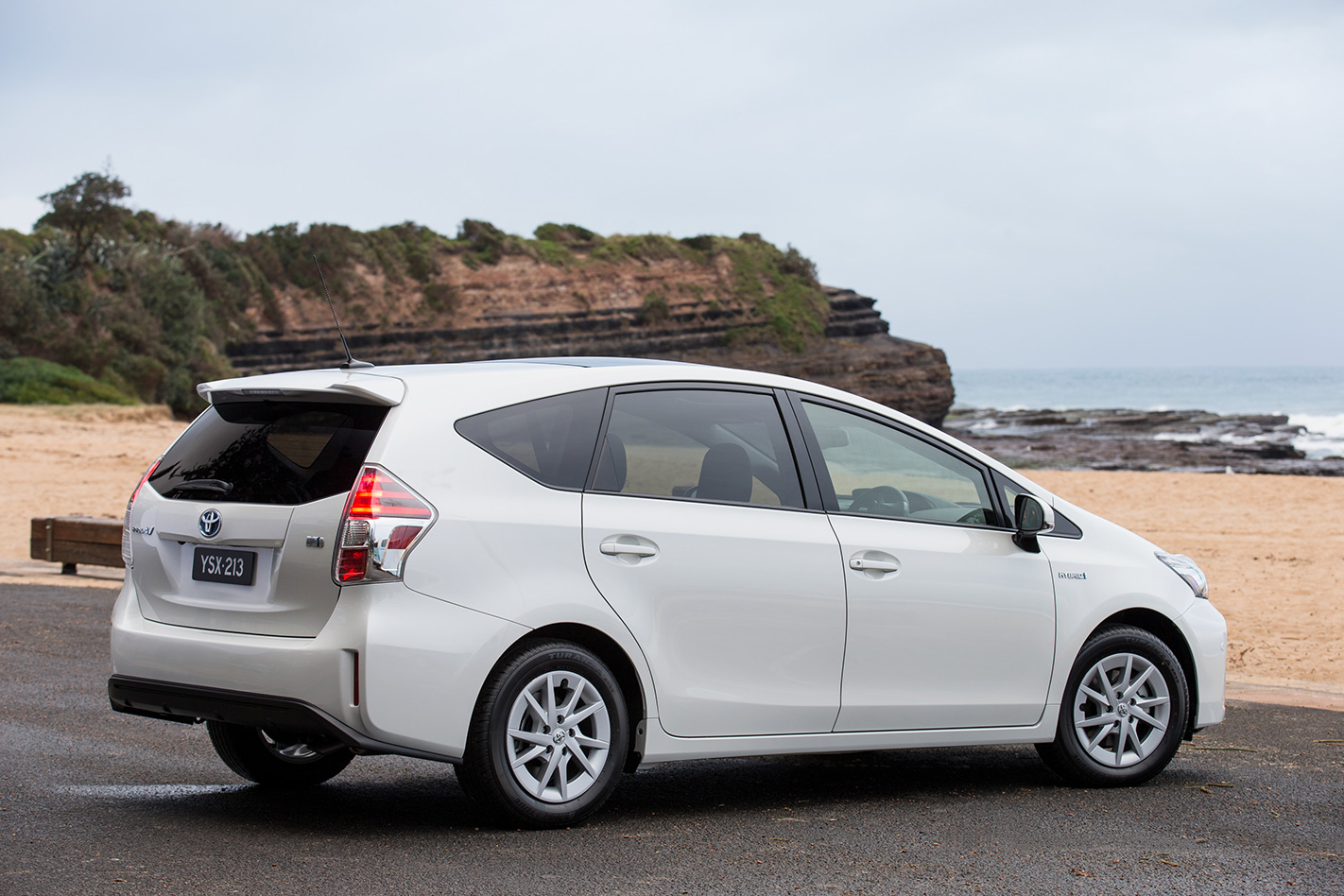
“Toyota Australia will discontinue selling the Prius V in Australia from 31 August 2021,” a spokesman from Toyota Australia said.
“This decision was made as a result of a small and declining customer demand for vehicles in the small wagon segment.
“Orders are no longer being taken for the Prius V in Australia, with remaining stock to be supplied to fill existing customer orders until August 31.”
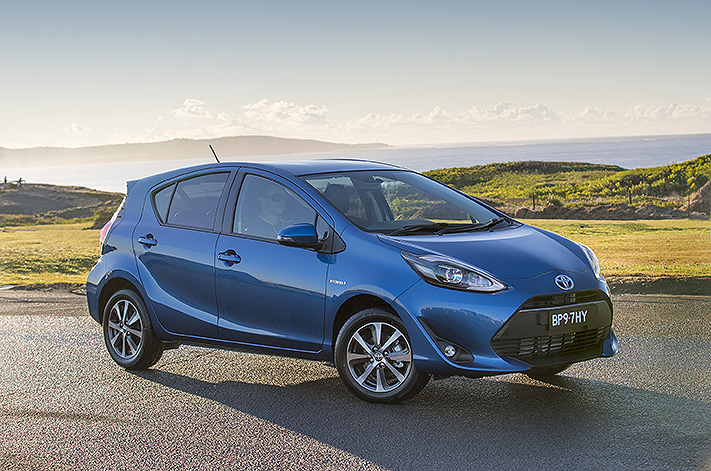
In 2020, Toyota sold 272 Prius Vs in Australia, accounting for more than half of all 450 Prius sales – with the C variant adding 83 to the tally in its final year.
Although the baseline Prius variant only sold 95 units in 2020 and 18 in this year to date, the Toyota New Global Architecture which underpins the model gives Toyota hope for a boost in sales this year.
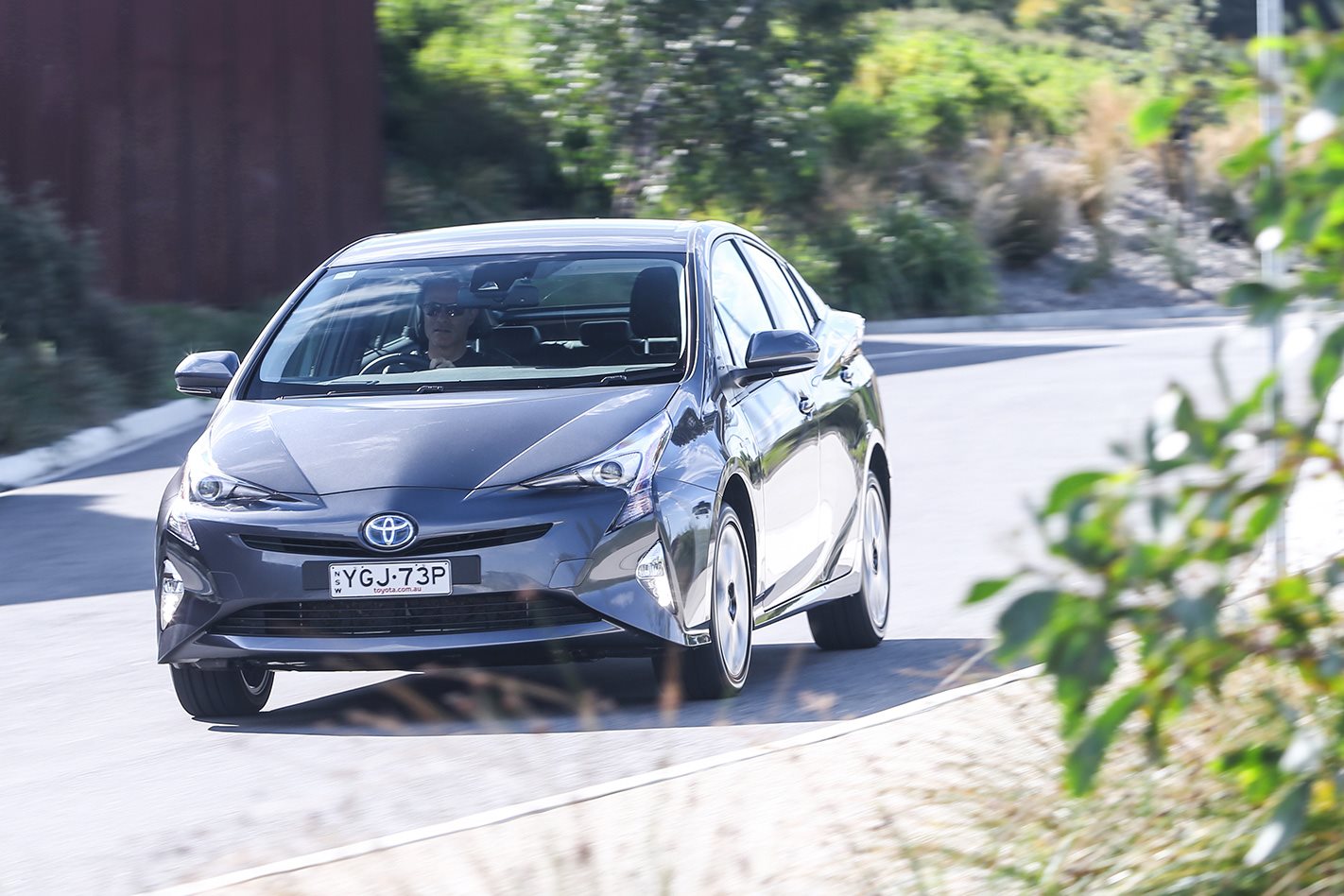
“Toyota remains committed to maintaining the Prius nameplate in Australia, with the Prius hatch continuing as part of our popular hybrid range,” Toyota added.
Prius V sales peaked in 2014 when 943 units were sold but the numbers have declined year-on-year despite remaining higher than the other Prius variants.
Snapshot
- 0-100km/h in five seconds, top speed of 165km/h
- 450 kilometre driving range
- Production begins in 2022
Lebanese firm Electra EV has unveiled its inaugural automotive offering, a two-door fully electric coupe donned the Rise.
It’s the first car Lebanon’s ever produced, and it looks quite strange, like something out of a comic book.
While its looks may be cartoonish, however, its claimed performance figures are anything but.
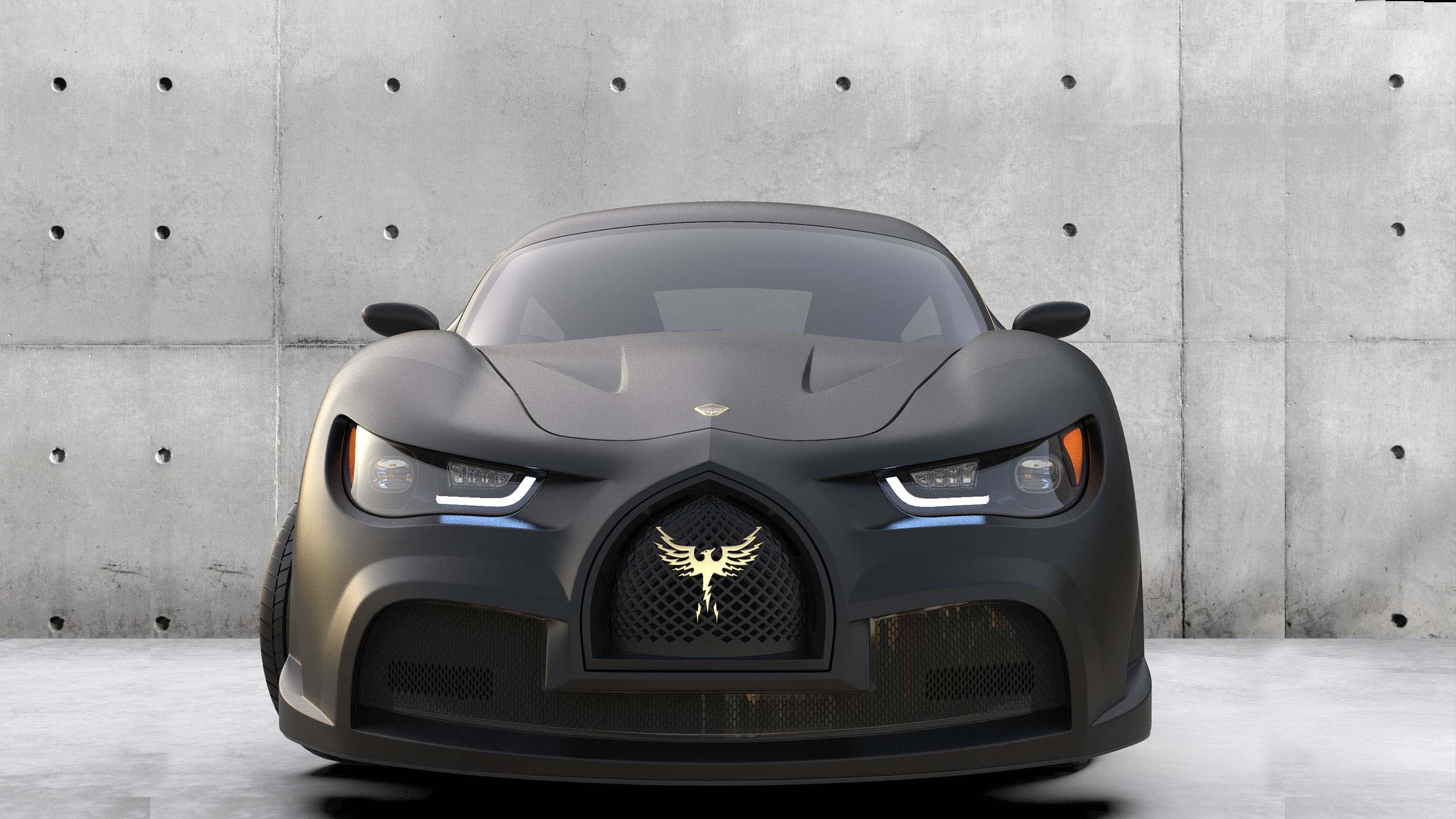
The manufacturer says that its bulbous EV coupe can hit 0-100km/h in five seconds, and its total kerb weight is just 1110kg.
Other claimed stats include a top speed of 165km/h and an effective driving range of no less than 450 kilometres.
Powering the Rise is a 50kWh lithium-ion battery pack and a 119kW electric motor, which sends its drive exclusively to the rear wheels.
The outlandish body panels are crafted from lightweight fibreglass and bolted to a lightweight aluminium chassis.
Other features include regenerative braking and intricate-looking 18-inch lightweight forged aluminium wheels wrapped in staggered performance tyres measuring 235/45 R18 up front and 255/40 R18 at the rear.
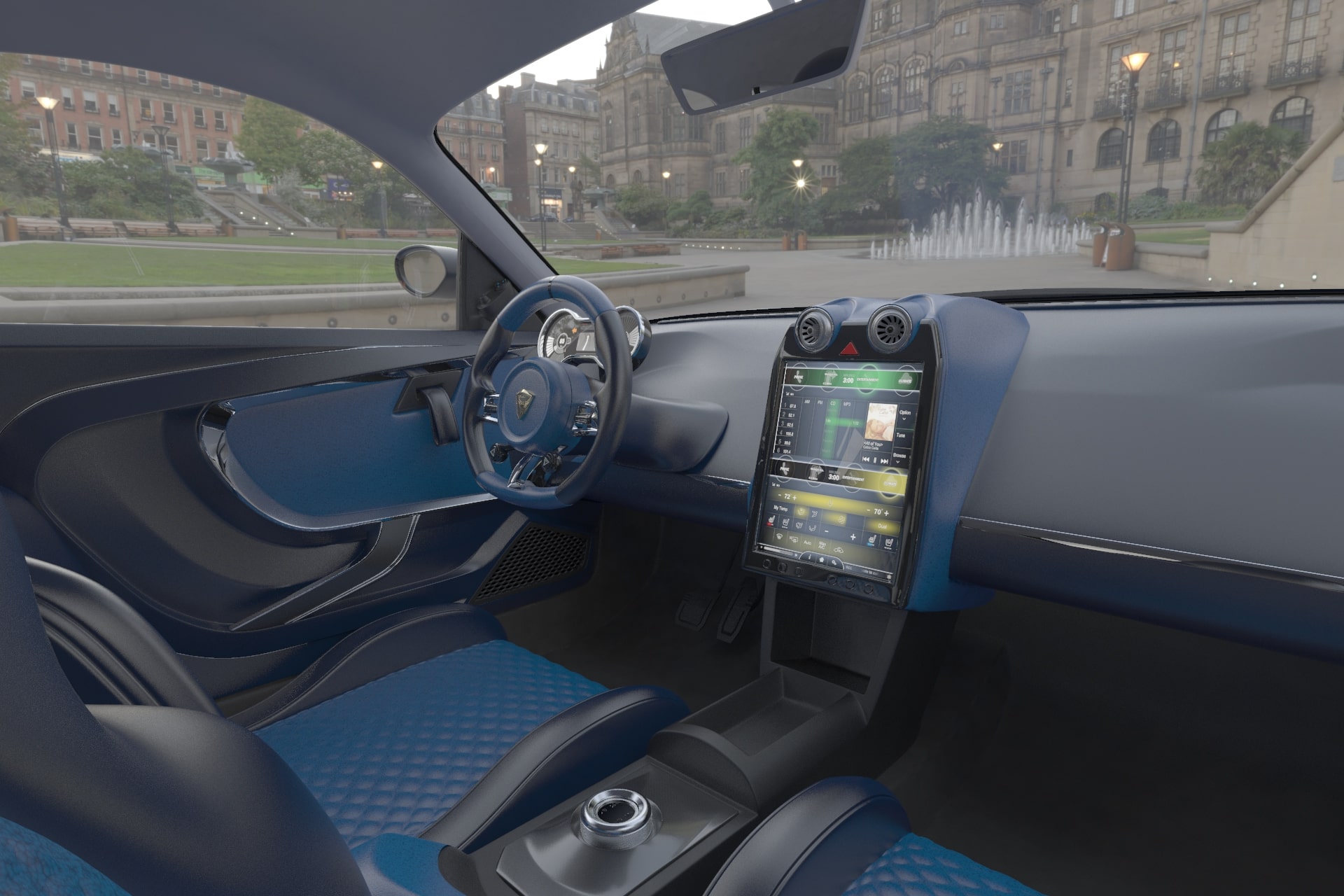
Renderings of the Rise’s interior show off a paired back, contemporary theme with a large, centrally mounted 15.9-inch touch screen infotainment display dominating most of the cabin.
A flat-bottomed sports steering wheel with what appears to be indicator buttons mounted low on either side of the horn/airbag can also be seen, as can a retro-inspired dual display digital dash.
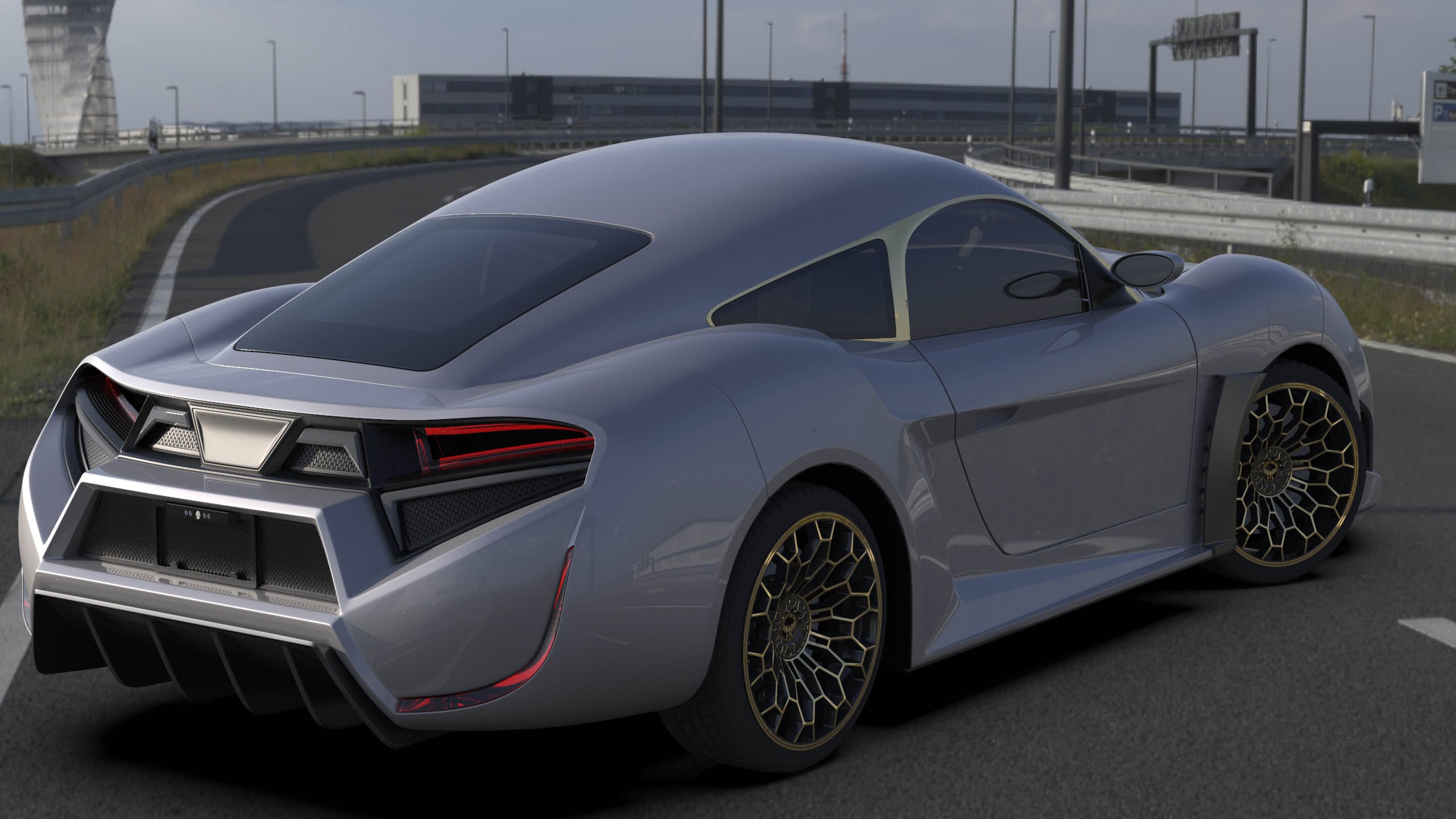
The Electra EV rise will set Lebanese buyers back around the equivalent of AU$40,000, with deliveries expected to begin as early as 2022.
Although only in its infancy, Electra EV and its founder, Lebanese-born Jihad Mohammad, have big plans for the four-year old company.
The automaker is hoping to manufacture around 10,000 vehicles in 2022, and also wants to install around 100 charging stations across Lebanon, which seems ambitious.
Got a tip-off for a story? Get in touch: [email protected]
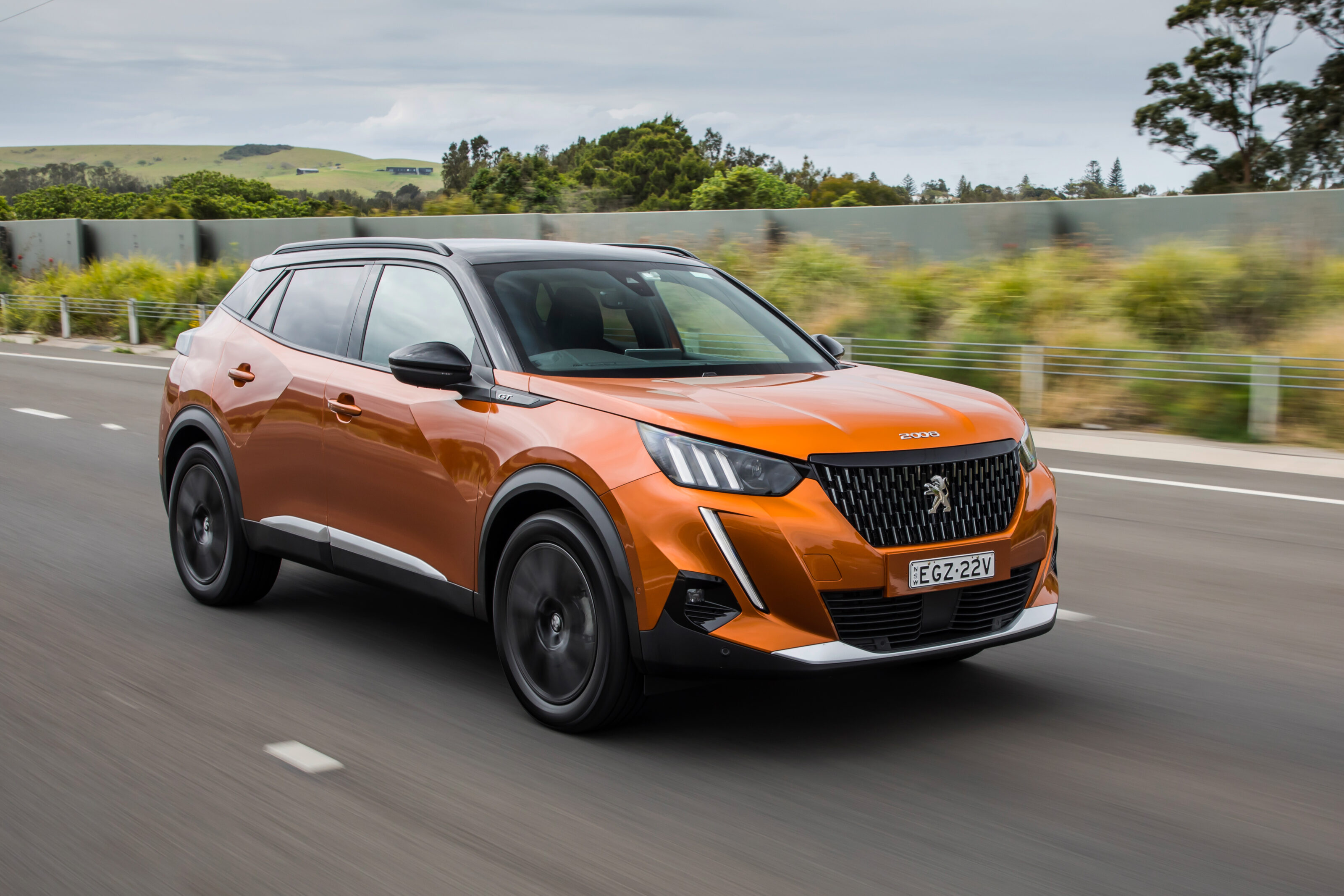
This is the second-generation Peugeot 2008 crossover that, like its predecessor, brings some French flair to the sub-compact crossover segment – but with considerably more panache this time around.
It’s available in two spec levels in Australia; the Allure, which retails for $34,990 before on-roads and this GT Sport priced at $43,990 – our test car came with an optional panoramic sunroof ($1990) and Onyx Black metallic paint, taking the retail price to $46,670, or around $51,500 driveway in Melbourne according to Peugeot’s online configurator.
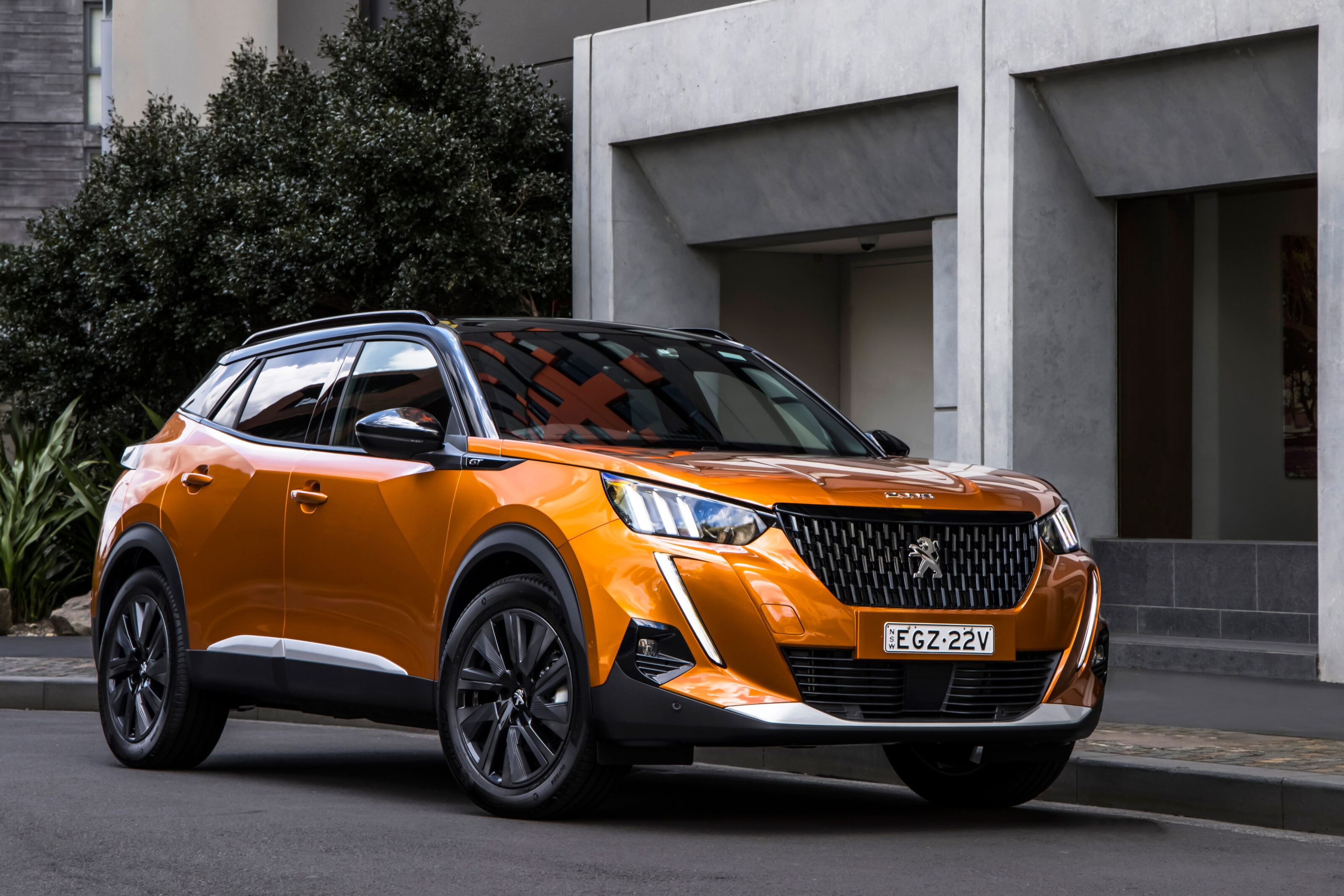
Both are powered by a 1.2-litre three-cylinder ‘Puretech’ turbocharged petrol engine driving the front wheels, with the Allure dishing out 96kW and 230Nm through a six-speed automatic gearbox, and the GT Sport upping performance to 114kW/240Nm with an eight-speed automatic.
Despite its compact looks, the 2008 is classed as a small SUV (rather than light), which puts the GT Sport in direct competition with other top-spec turbocharged crossovers such as the Kia Seltos GT-Line, Hyundai Kona N-Line Premium, Mazda CX-30 G25 Astina and Volkswagen T-Roc 140TSI Sport that all have low-$40K price tags.
It’s a great looking car that’s generally good fun to drive but as we’ll see below there are a few foibles that at best will take some getting used to.
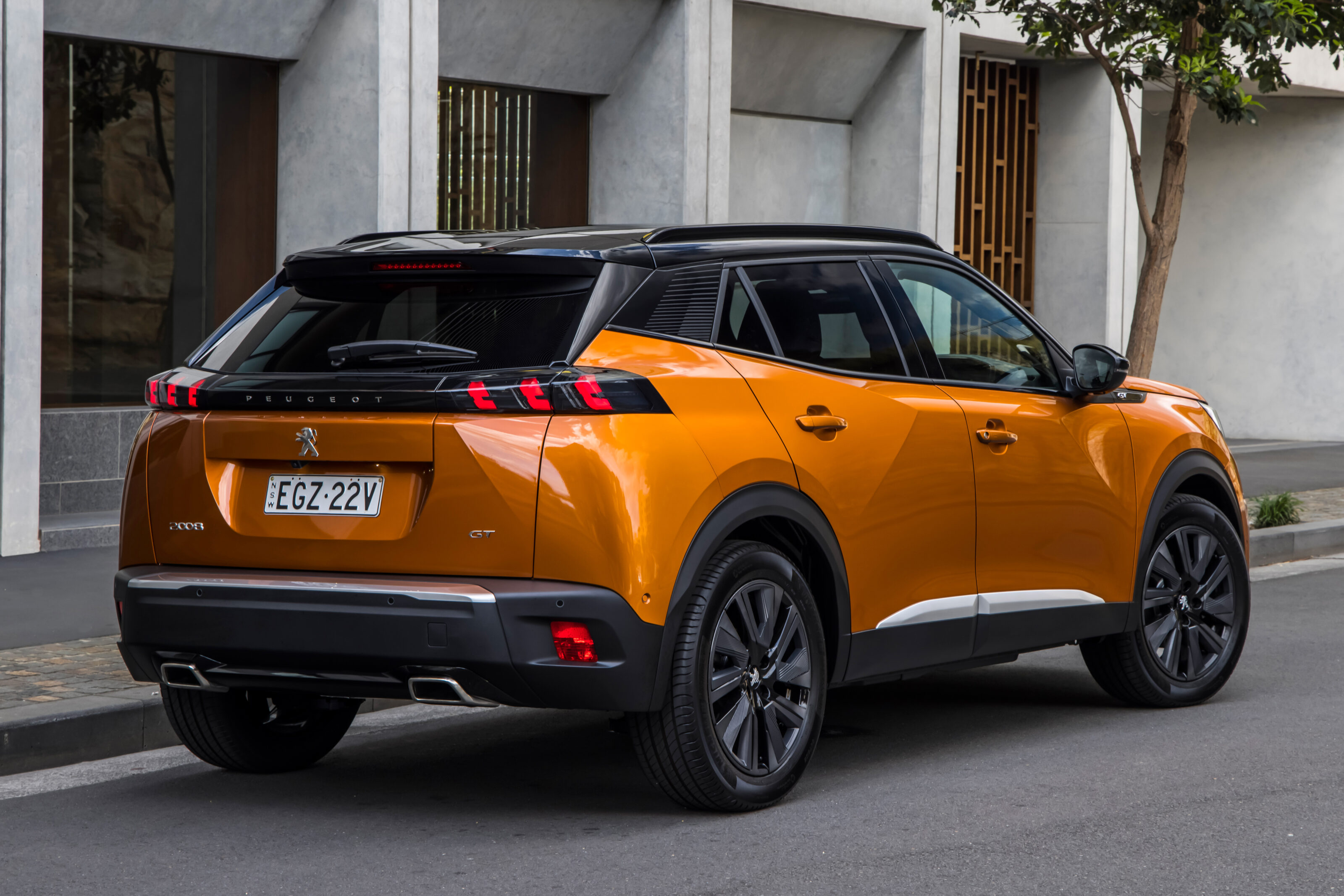
“The Peugeot 2008 looks great and stands out from the rapidly building crossover crowd.”
What is the Peugeot 2008 GT Sport like to live with?
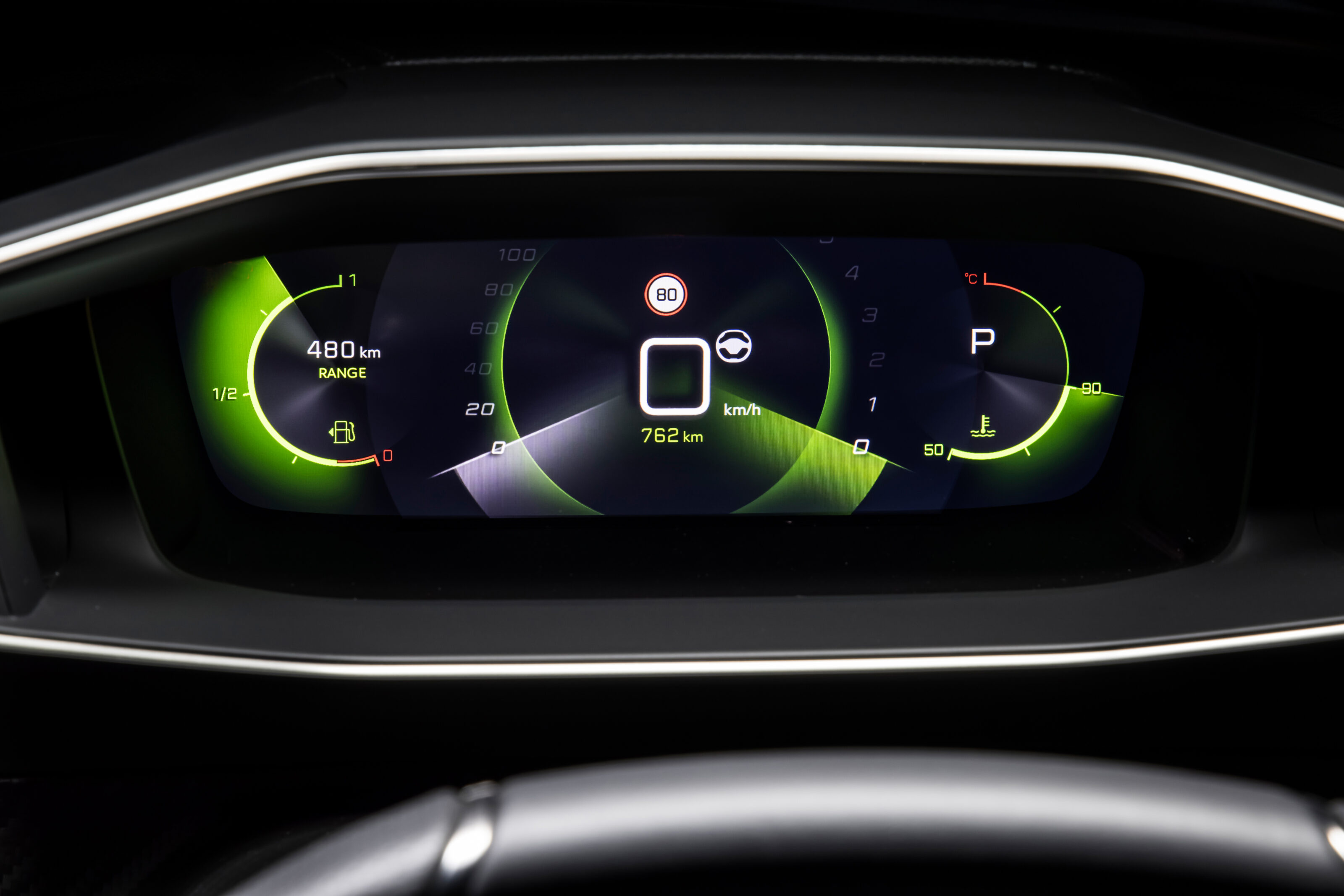
Each Peugeot 2008 variant comes standard with Peugeot’s nifty 3D i-Cockpit that uses a clear LCD screen to project figures forward hologram-like in front of the main display.
As well as looking pretty cool, it displays six different configurable functions close to the driver’s eye-line to help keep your eyes on the road.
Stand-out features exclusive to the GT Sport include:
- A 10-inch infotainment screen – compared to the Allure’s 7.0-inch screen – both variants have digital radio and Apple CarPlay/Android Auto
- Satellite navigation
- LED ‘3-Claw design’ headlights
- Fang-shaped LED daytime running lights
- Auto high-beam headlights
- Proximity keyless entry
- Wireless phone charging
- Quilted Nappa leather seats
- Heated front seats
- Driver’s seat massage
- Eight-colour ambient lighting
- 18-inch Onyx Black alloy wheels
- Black Diamond roof
- Autonomous emergency braking with low light function
- Adaptive cruise control with stop-and-go capability
- Blind-spot monitoring
- Lane-keeping assist
- Semi-automatic parking assistance
- Front and rear parking sensors.
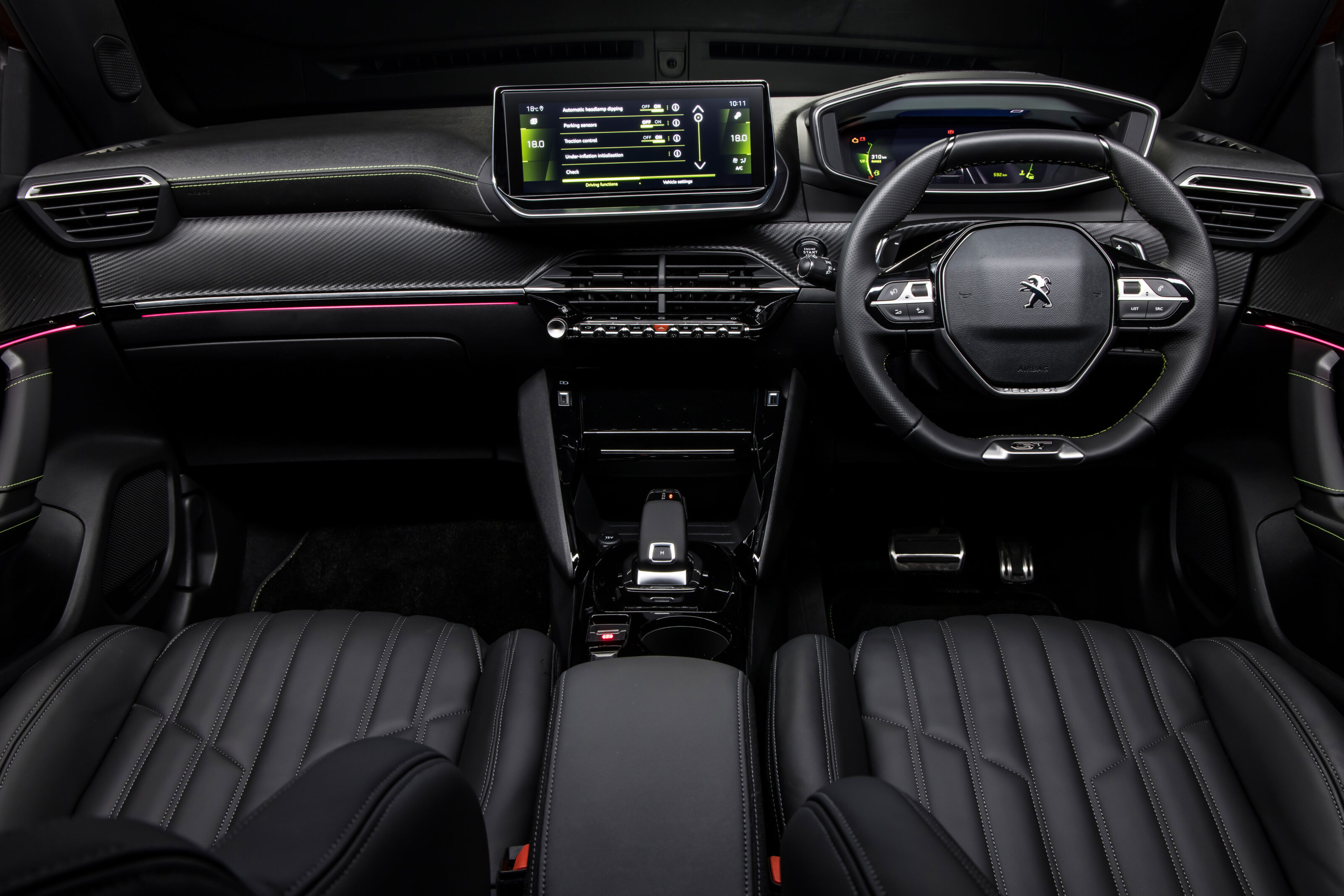
The quilted leather seats are comfortable and have good side bolstering, but after a long drive, I was wishing they had a lumbar adjustment.
The centre console is nicely laid out and features a deceptively voluminous storage bin that burrows under the cup holders and a large enclosed space to place mobile devices complete with a wireless charging pad.
It’s clutter-free too, thanks to the electronic parking brake and the slick joystick-like gear selector.
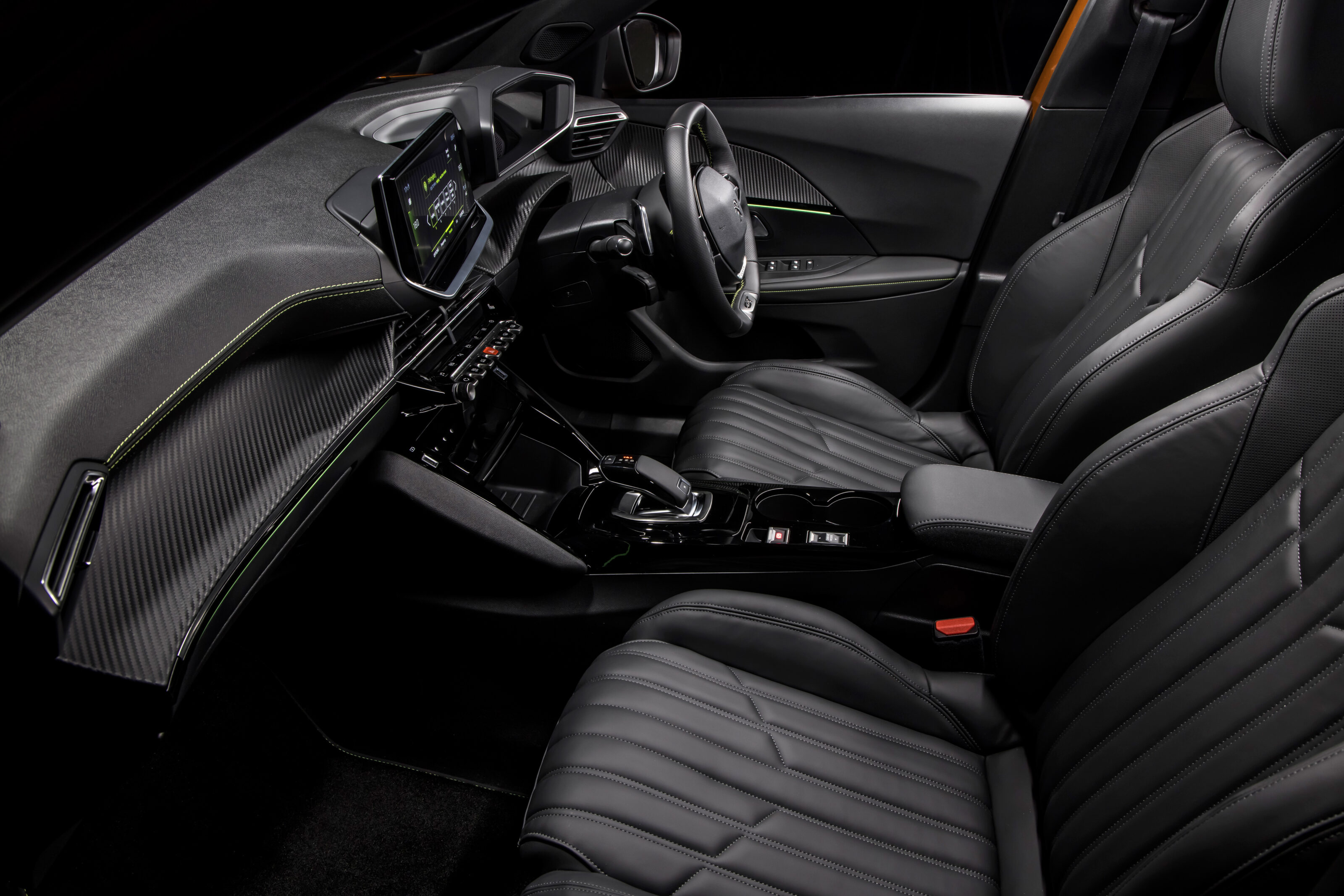
Most of the centre console surface is glossy piano black, which looks good but you’d want to leave a microfibre cloth in the glovebox as it really does show up dust.
The rest of the surfaces look and feel good and, apart from the lower front door cards, everything is soft to touch. The GT Sport has a black headliner but there are enough bright points around the cockpit and attractive green stitching along the dashboard fascia, steering wheel and door armrests, to provide visual interest.
The Peugeot 2008 has a 2605mm wheelbase, which is 5mm bigger than the Kona’s and 25mm smaller than the relatively spacious Kia Seltos. Like the Kona, the Pug’s rear legroom is a little tight and the back of the front seat is made from hard plastic (as are the rear-door cards) that can further hinder comfort for gangly passengers.
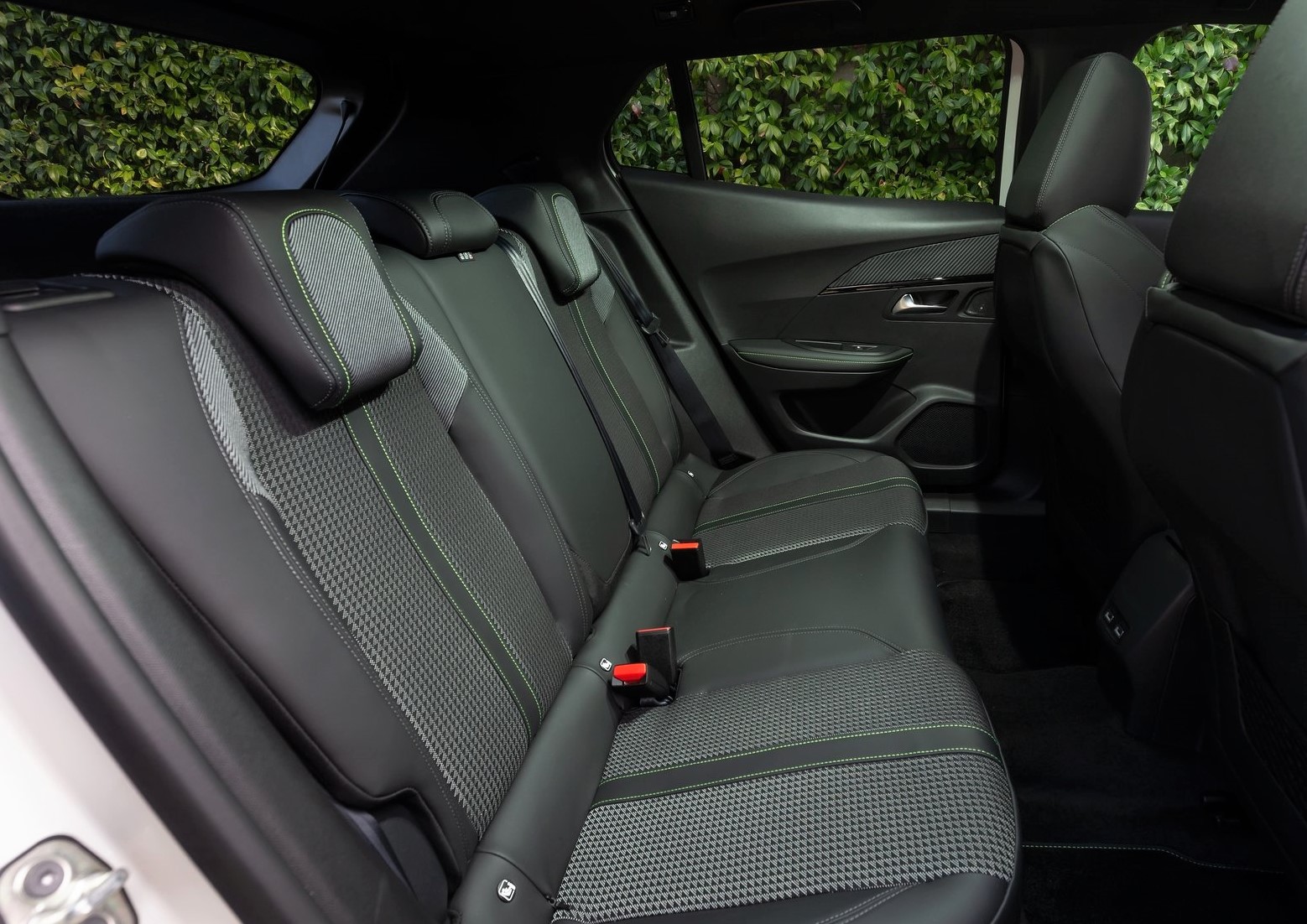
The optional panoramic sunroof makes headroom a little tight too.
The narrow cushion doesn’t offer much by way of under-thigh support but the backrests are pretty comfortable and the seats are raised to provide good front and side vision. As with many small SUVs, you’ll be able to fit two adults comfortably or three children, who are catered to storage wise with small door bins and map pockets behind the front seats. There are also two USB sockets, which are great for preventing arguments on long trips.
The rear bench splits 60:40 to open up to the above-average-sized 434-litre boot space that can be expanded to 545 litres thanks to the adjustable floor, which can also be used to hide things. Folding the rear seats allows you to carry up to 1467 litres of stuff.
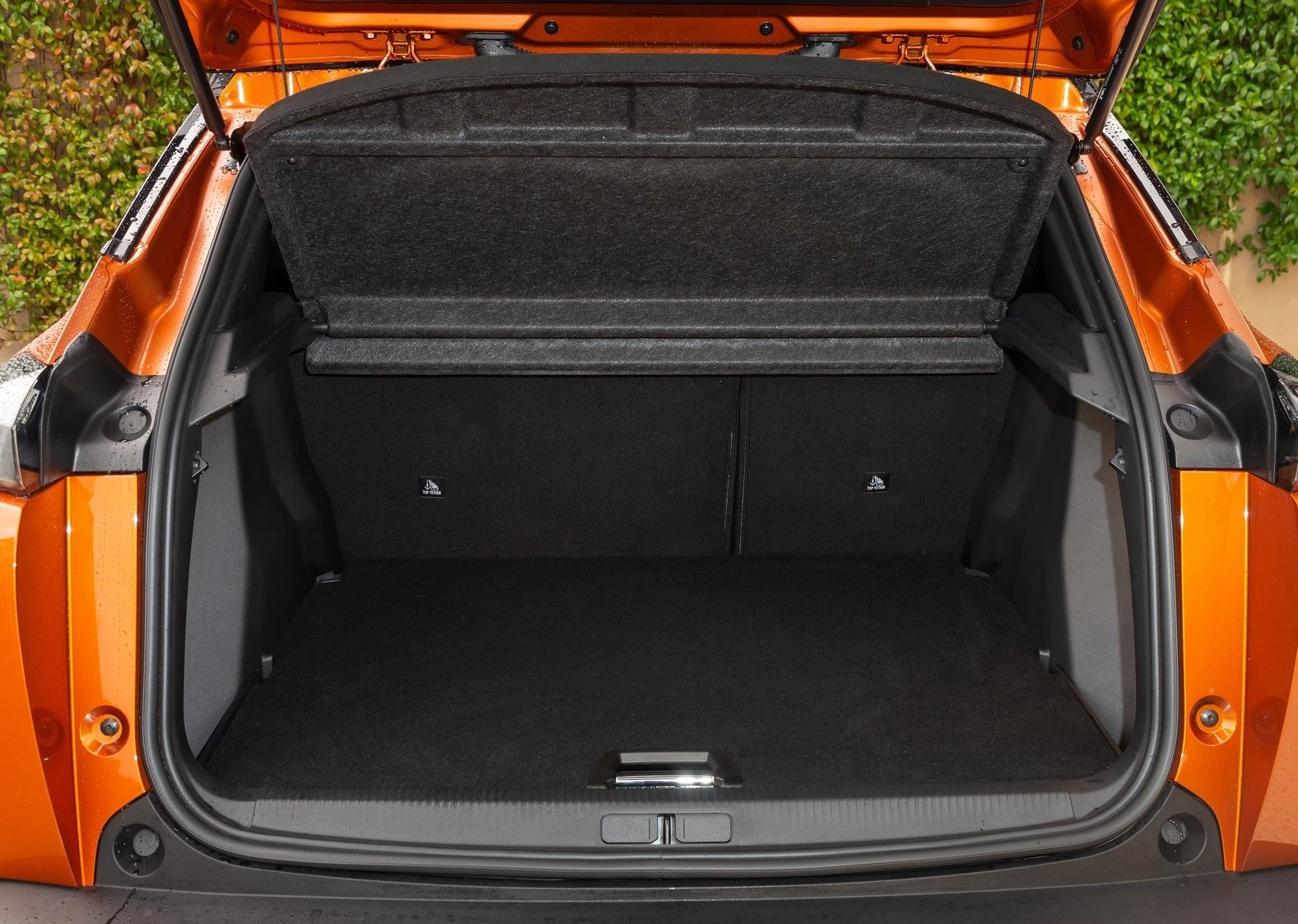
I took the 2008 for a long weekend away and we managed to fit quite a bit in, including a large suitcase, carry-on suitcase, car fridge and a couple of green shopping bags containing supplies.
While it’s one of the pricier models in the lower-priced small SUV segment, the Peugeot 2008 GT Sport is a relatively affordable vehicle to run as the 1.2-litre turbo’s official combined fuel consumption comes in at 6.1L/100km.
Servicing is required every 15,000km or 12 months, whichever comes first, and Peugeot offers fixed-priced servicing with the first five years costing $426, $581, $426, $594 and $439 respectively.
The Peugeot 2008 is covered by a five-year/unlimited-kilometre warranty, with complimentary roadside assist included for the duration.
What is the Peugeot 2008 GT Sport like to drive?
The GT Sport’s punchy 1.2-litre three-cylinder turbocharged engine develops 114kW and 240Nm.
As well as being more powerful than many of its three-pot crossover rivals it comes with an eight-speed torque converter automatic instead of the now-common dual-clutch auto, meaning you don’t get that lag at lower speeds. The shifts are smooth and it rarely has trouble finding the right gear.
Paddle shifters allow for some manual input, though you’d want to remember you’re in manual mode as unlike many other vehicles this won’t step in to shift up if you suddenly forget you’ve chosen to do it yourself.
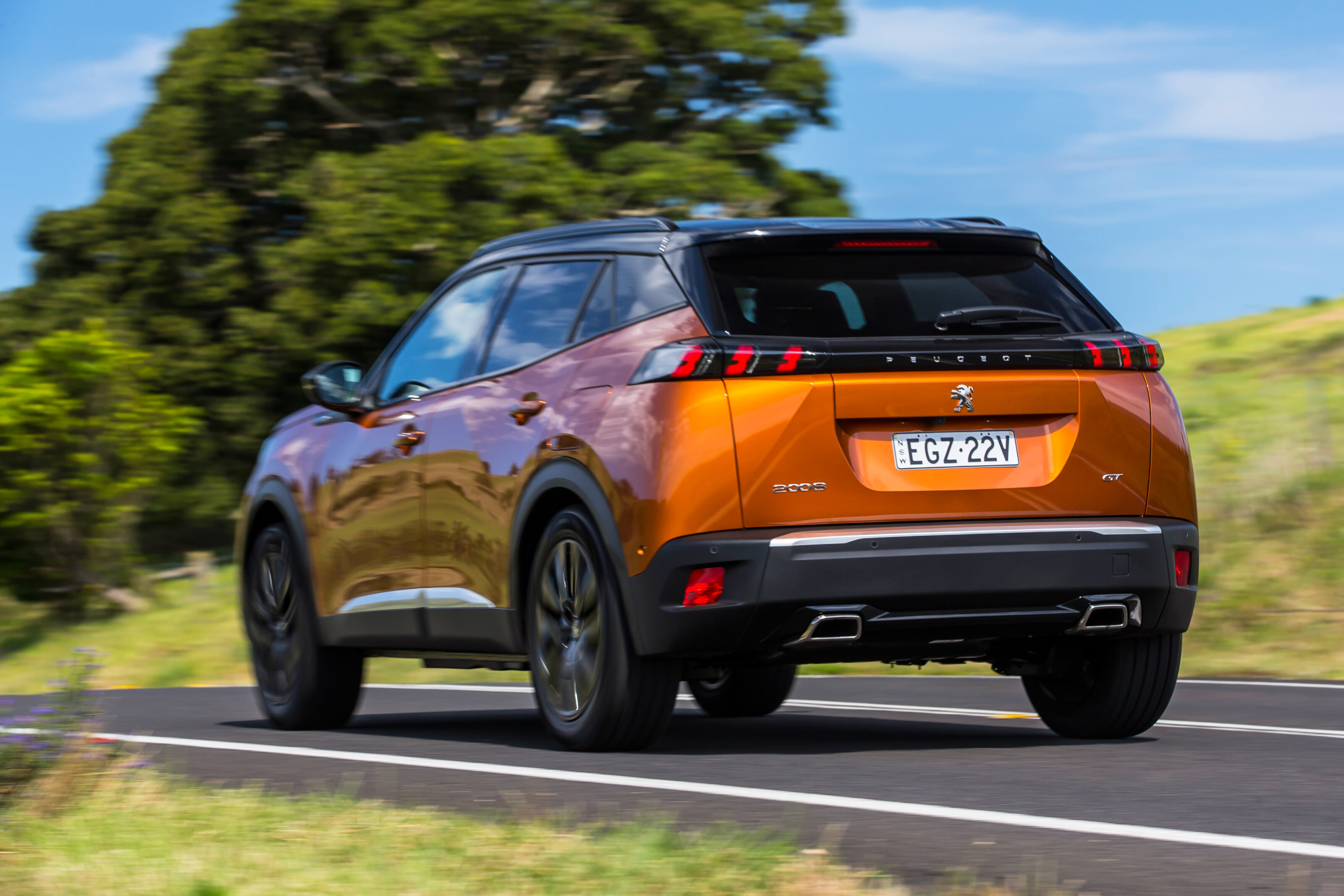
On the plus side, the taut springs and thin rubber bring tight handling that makes this feel more like a warm hatchback than a crossover.
The steering feels light but direct and the small, low-mounted tiller allows you to turn sharply without your arms getting all crossed up, which is handy when exploiting its tight 10.4-metre turning circle.
This makes for nimble handling around town but when negotiating winding roads, I often felt like I wasn’t pointing the front wheels far enough into the bend. As a result, I’d overcompensate at first and then grip hard on the steering wheel thinking it was necessary to hold the line.
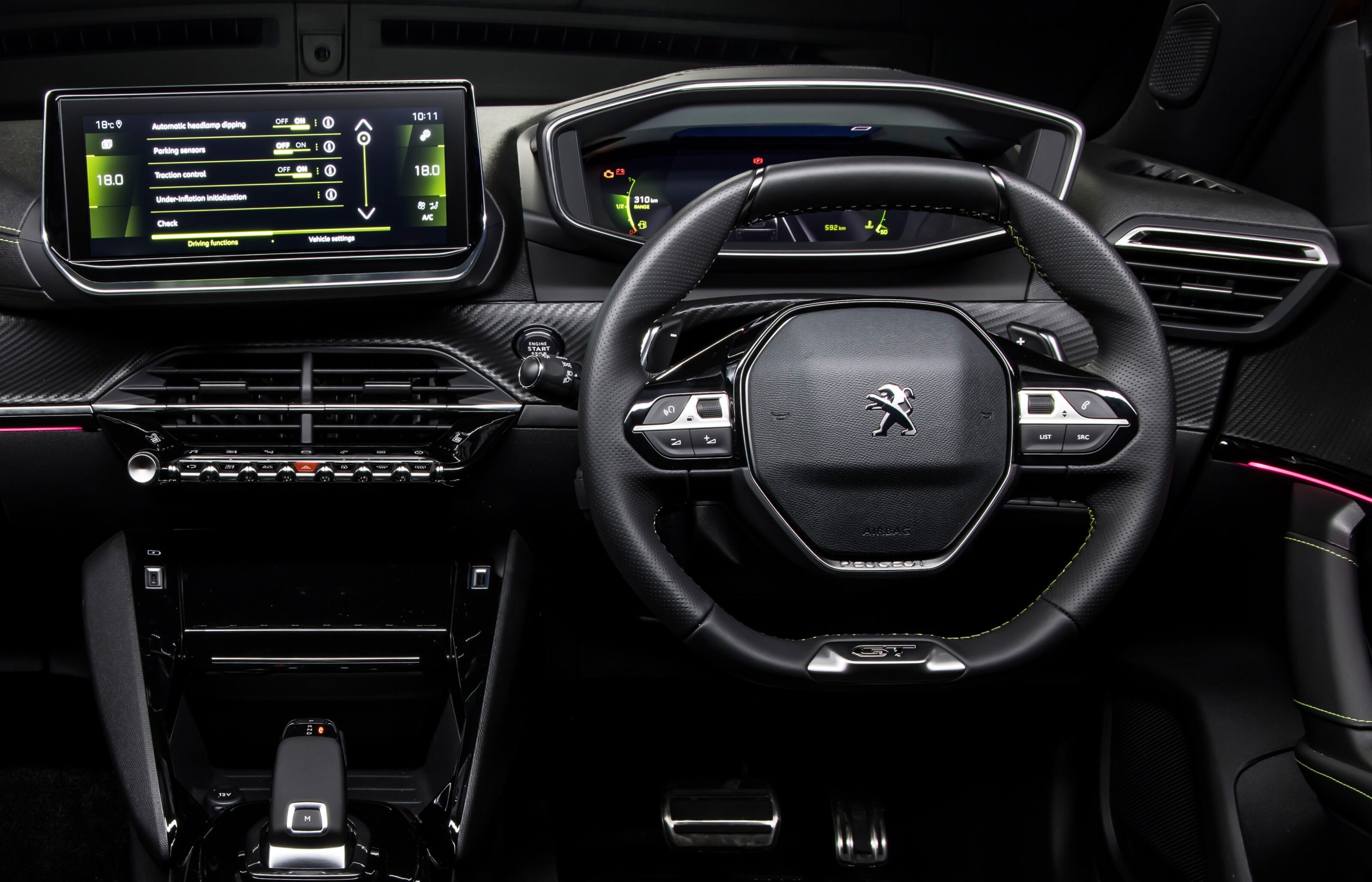
I slowly adapted to the set-up but not before feeling a little RSI in my wrists due to my arms not being in their usual driving position.
The low steering wheel also obscures some functions such as the lane-keeping assist and driver’s seat-heater buttons, which are difficult to operate by feel alone.
Despite all that, I still reckon it looks kinda cool.
What is the Peugeot 2008 GT Sport like for safety?
The 2008 GT Sport’s builds on the entry-level Allure’s relatively basic list of advanced driver assistance features that includes lane positioning assist, speed sign recognition, front and rear parking sensors, cruise control with speed sign adaptation and driver attention alert.
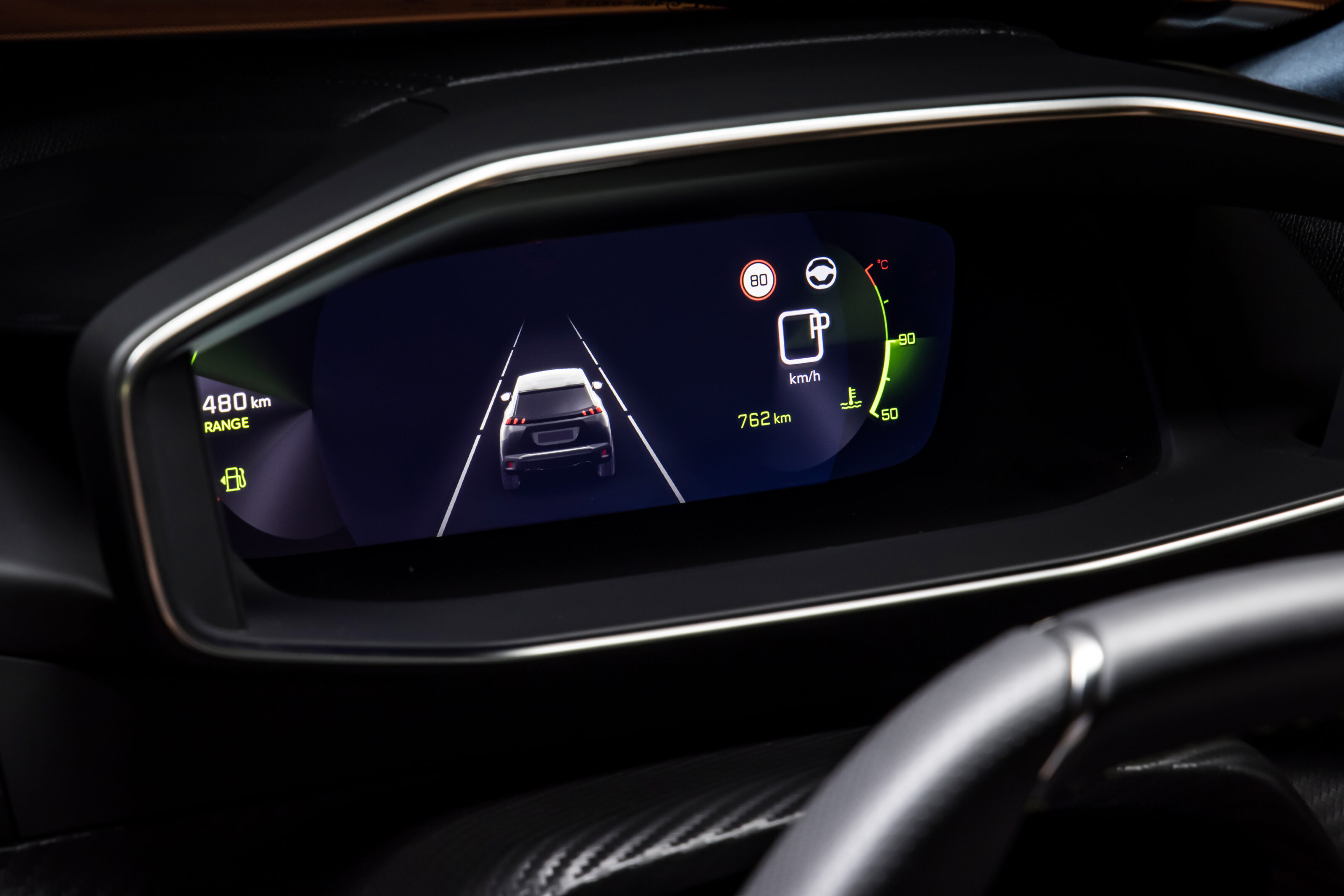
It has a more advanced autonomous emergency braking system that can detect pedestrians and cyclists at night, blind-spot monitoring, lane-keeping assist, adaptive cruise control with stop-and-go capability and auto high-beam.
It also has semi-autonomous parking, which was rather confusing and not worth the effort for such a small car.
The Peugeot 2008 has six airbags: driver and front passenger front and side, and curtains. Other passive safety features include tyre pressure sensors, ISOFIX child seat fittings for the outboard rear seats and seatbelt alerts.
The verdict
The Peugeot 2008 looks great and stands out from the rapidly building crossover crowd.
The GT Sport offers enough extras and sharper dynamics to justify the $9000 price hike over the Allure, though at $46,790 it lacks some kit found top-spec small SUVs priced closer to $40k such as rear-cross traffic alert and AEB that helps prevent collisions at junctions.
Still, it’s a relatively affordable way to afford an attractive, fun-driving European crossover with premium trappings, though I can’t help thinking how the – admittedly smaller – Ford Puma ST-Line V light hatch offers all that with more than $10,000 in change.

Peugeot 2008 GT Sport specifications
- Body: 5-door, 5-seat SUV
- Drive: FWD
- Engine: 1200cc 3-cyl, 12v turbo-petrol
- Transmission: 8-speed auto
- Power: 114kW @ 5500rpm
- Torque: 240Nm @ 1750rpm
- 0-100km/h: 8.7sec (claimed)
- Fuel consumption: 6.1L/100km (combined)
- Weight: 1287kg
- Suspension: Independent front / torsion beam rear
- L/W/H: 4300/1770/1550mm
- Wheelbase: 2605mm
- Tracks: 1550mm/1550mm
- Brakes: Front and rear ventilated discs
- Tyres: 215/55 R18 Michelin Primacy 3
- Wheels: Alloy 18×7.0
- Price: $46,670
Snapshot
- 2,882 VS30 Sprinters affected
- Brake fluid leak could lead to air entering the braking system
- Vehicles made from August 8, 2018 to December 22, 2020 need to be checked
Mercedes-Benz Australia has issued a recall for its Sprinter VS30 van after an issue was detected with the electric parking brake.
According to the German brand, brake fluid could leak from the rear caliper over time, allowing air into the braking system which could lead to increased rear brake pedal travel and reduced braking performance, making the risk of an accident resulting in injury or death to vehicle occupants more likely.
In total 2,882 units are affected, with a software update being made available at Mercedes-Benz dealers for the vehicles.
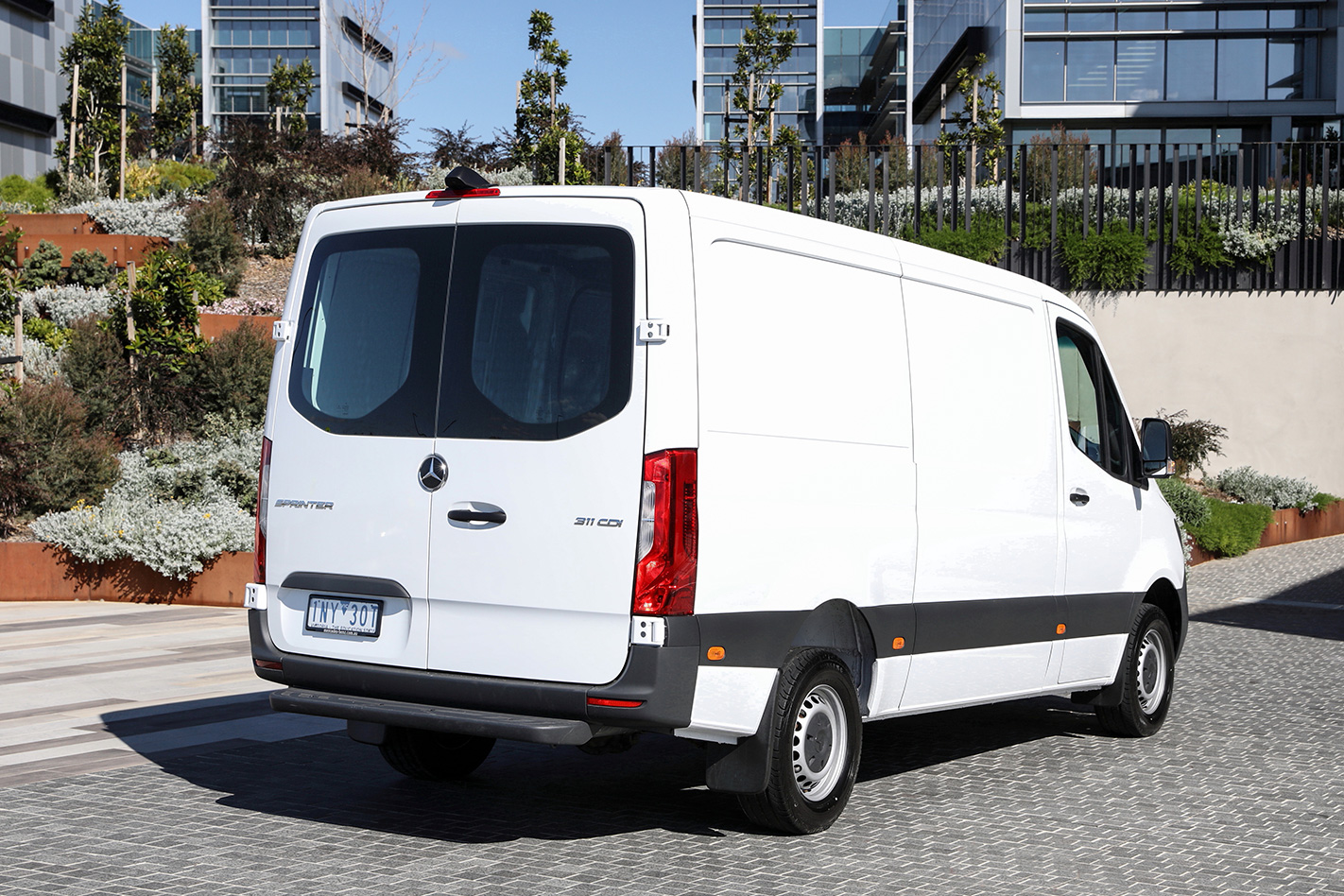
Owners of 2018-21 Sprinters manufactured between August 8, 2018 until December 22, 2020, are being told to make contact with their local Mercedes-Benz dealer to rectify the issue.
A list of the VINs affected is available here.
Budding electric vehicle owners in the Australian Capital Territory (ACT) will be able to get two years of free registration from today as part of a government incentive scheme.
The State Government announced on Monday new or used zero emissions vehicles purchased in the ACT from today until June 30, 2024 can take advantage of two years of free registration as part of a move to encourage greater take-up of EVs.
To be eligible for the freebie, the sale must be finalised, or vehicle acquired, on or after May 24, 2021 and before June 30, 2024. This also applies to cars gifted or transferred between these dates.
At present, the discount only applies to passenger and goods carrying vehicles under 4.5 tonnes with an electric motor powered by electricity or a hydrogen fuel cell.
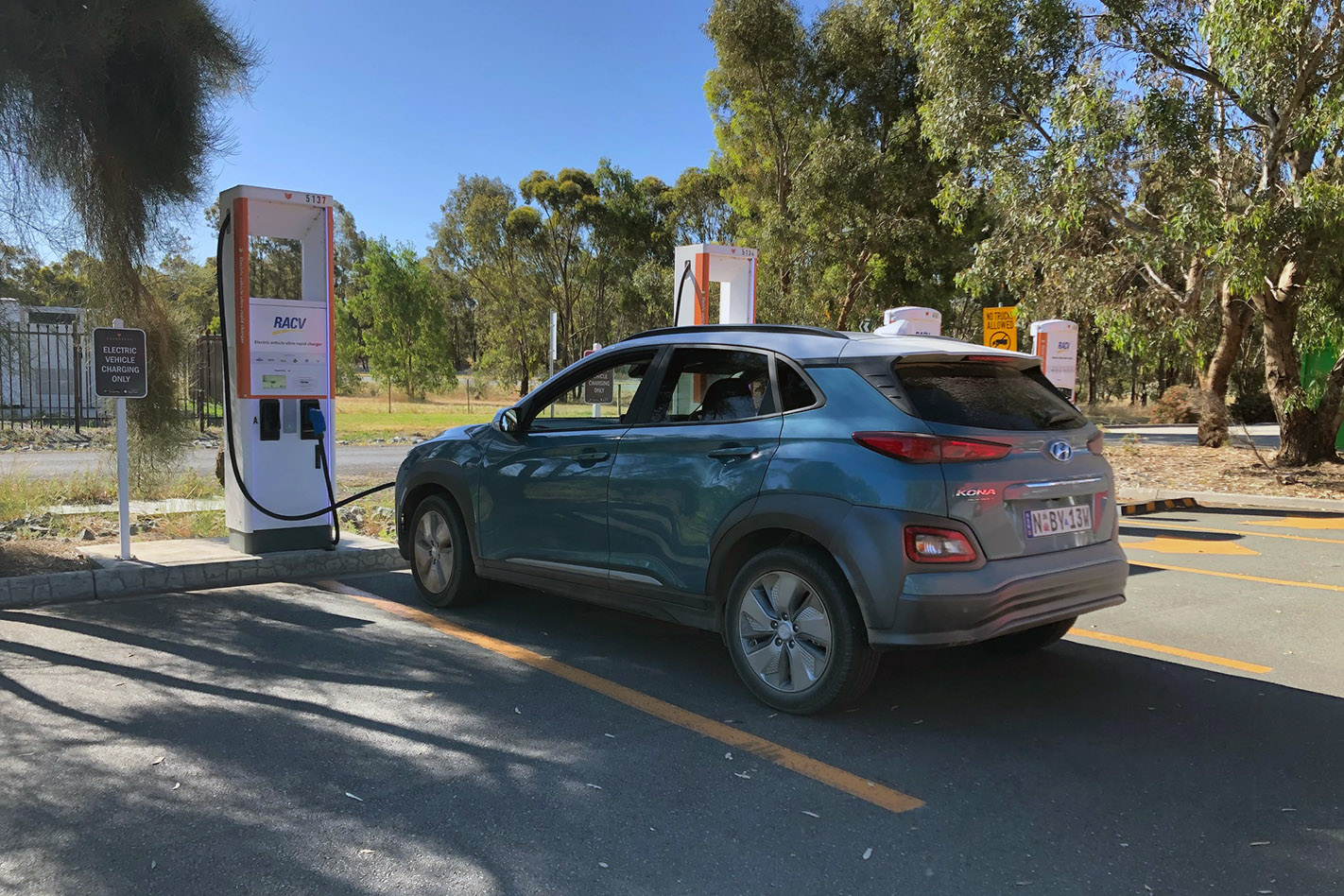
They can also have been converted from a different power source or imported second-hand into Australia.
Before you get any ideas of re-registering your EV in the ACT from elsewhere in the country – you should know only those who hold an ACT licence can take advantage of the incentive. What’s more, the vehicle can’t have been registered in your name before and must be garaged at an ACT address – it applies to businesses too.
Unfortunately, Electric heavy vehicles such as trucks, or motorcycles aren’t covered.
The discount will be handled through dealerships for eligible new cars, while private sales for used vehicles will need to complete the normal registration process by visiting an Access Canberra Service Centre or calling 13 22 81.
New zero emissions vehicles purchased for the first time may also be eligible for a full stamp duty exemption. Visit the calculating stamp duty under the Vehicle Emission Reduction Scheme page to find out more.
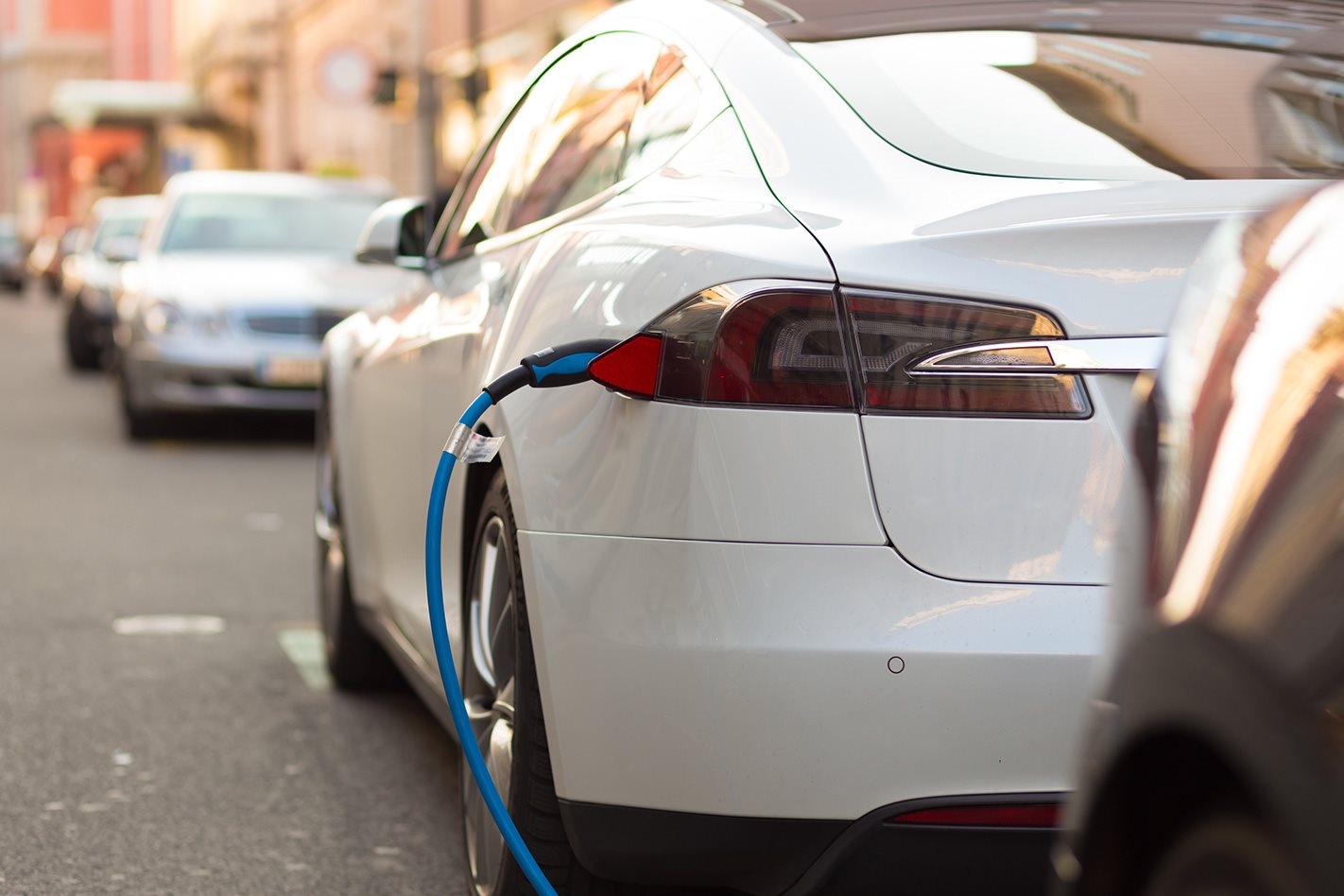
Making the announcement today, Chief Minister and Minister for Climate Action Andrew Barr said the ACT is targeting net zero emissions by 2045.
“Transport emissions now account for around 60 per cent of the ACT’s greenhouse gas emissions, and of these emissions an estimated 70 per cent are from private vehicles,” he said.
“Reducing the number of high-emitting vehicles on our roads is significant to achieving our targets along with encouraging active travel and public transport use.
“Reducing transport emissions in the ACT is an essential step to achieving a sustainable, resilient future for our Territory and to reach our goal of net zero emissions by 2045.”
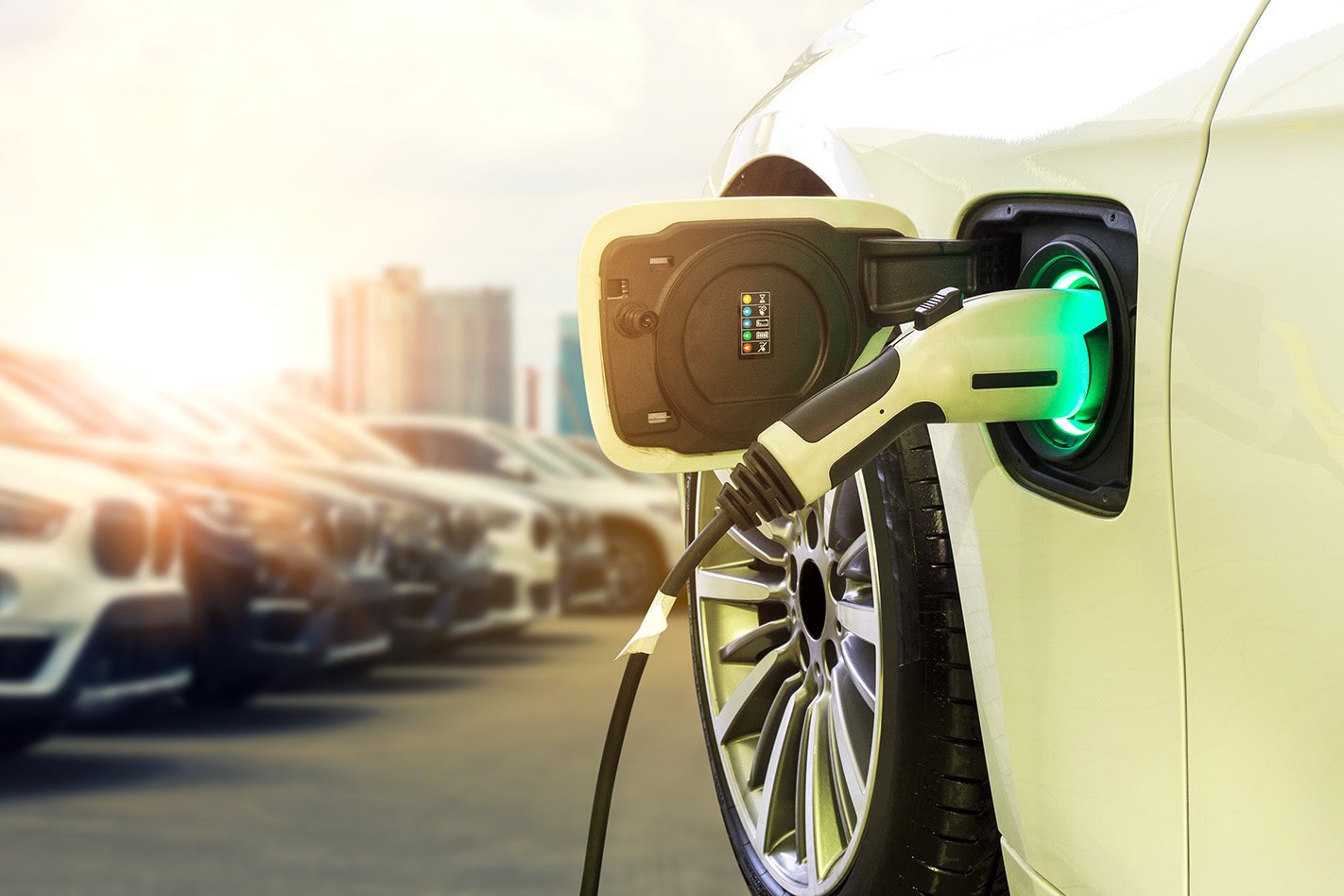
While EVs purchased in the state before today aren’t part of the deal, owners are able to apply for an on-going 20 per cent reduction in their rego fees.
The ACT is the latest state to offer an incentive on buying an EV, after Victoria announced earlier this month it was offering 20,000 subsidies worth $3000 each over the next three years to dramatically increase the state’s uptake of EVs to 50 per cent of all vehicles by 2030.
As of May 2, 2021, the first 4000 subsidies were made available on electric and hydrogen cars – and yes, only battery- and hydrogen-fuelled electric cars, no plug-in hybrids or motorbikes – up to the value of $68,740 before on-road costs.
The Victorian Government has previously come under fire however, for trying to push through a 2.5c/km distance-based charge on EVs as well as a 2c/km charge for plug-in hybrids. The move has been widely criticised and even dubbed “the worst electric vehicle policy in the world” by industry figures and environmental groups”.
South Australia has adopted a similar policy.
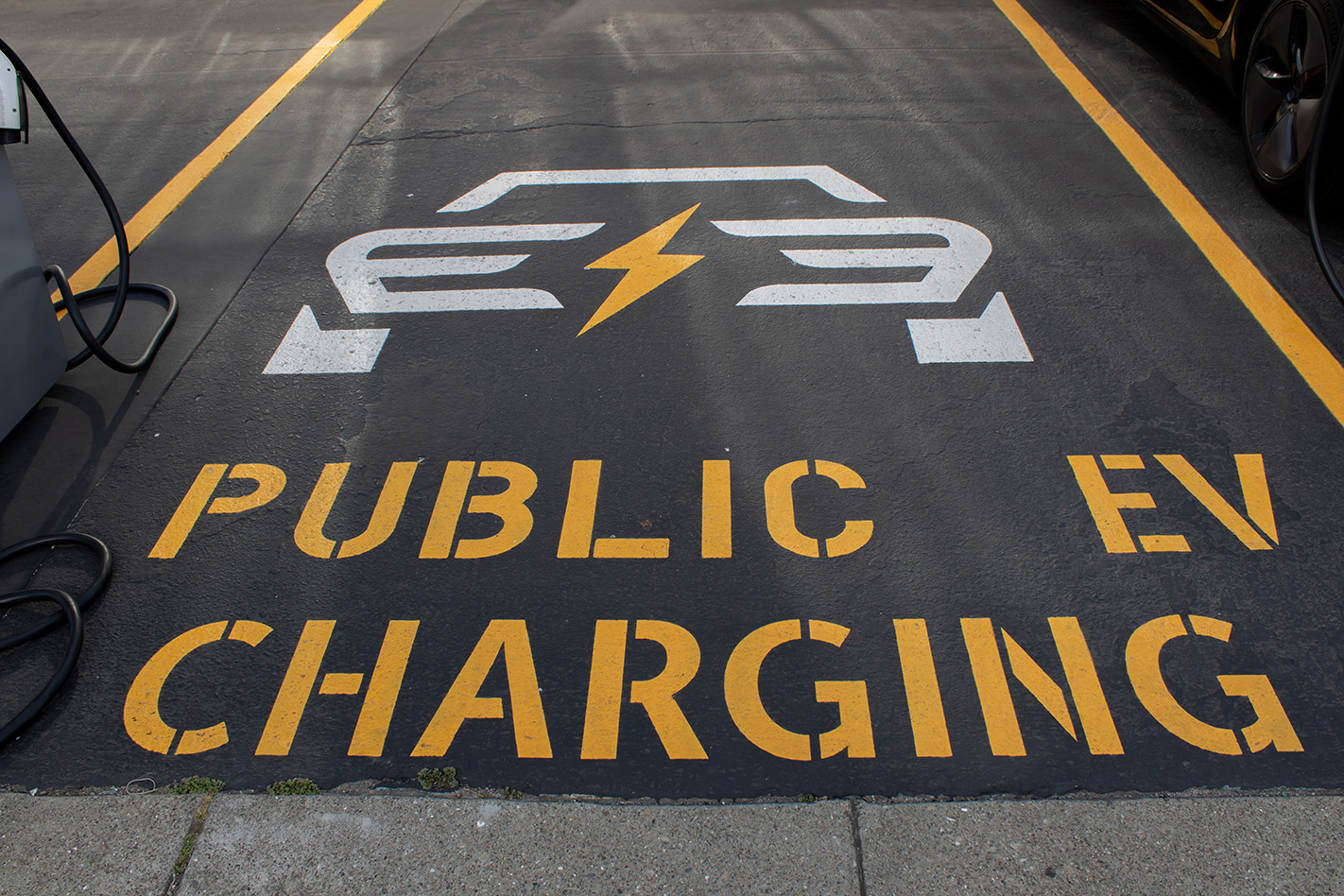
Meanwhile in NSW, ministers are at odds with each other over the best way forward for the state. In recent weeks, Planning Minister Rob Stokes has come out as saying Sydney should be rapidly reducing the number of cars on its roads rather than arguing about how they’re powered, while Transport Minister Andrew Constance said the State Government should not introduce a special EV levy until electric vehicles make up 40 to 50 per cent of the car market.
Taking a different tack to his colleague, NSW Treasurer Dominic Perrottet, said earlier this month that no new charges will be levied on EV owners until the market has had a chance to “mature”.
Snapshot
- Prices start from $51,690 (plus on-road costs)
- R-Spec no longer available
- FordPassConnect now comes as standard across the range
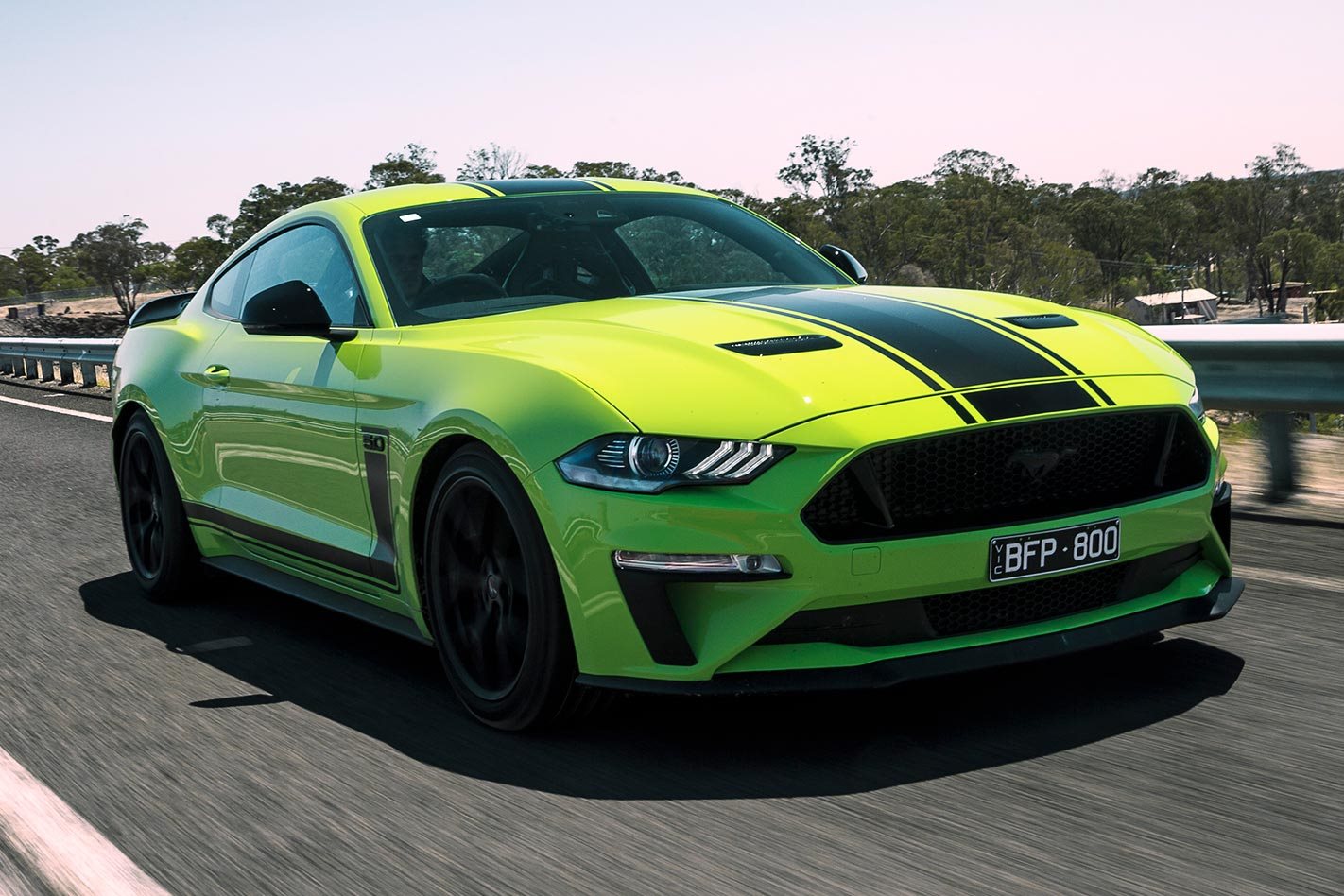
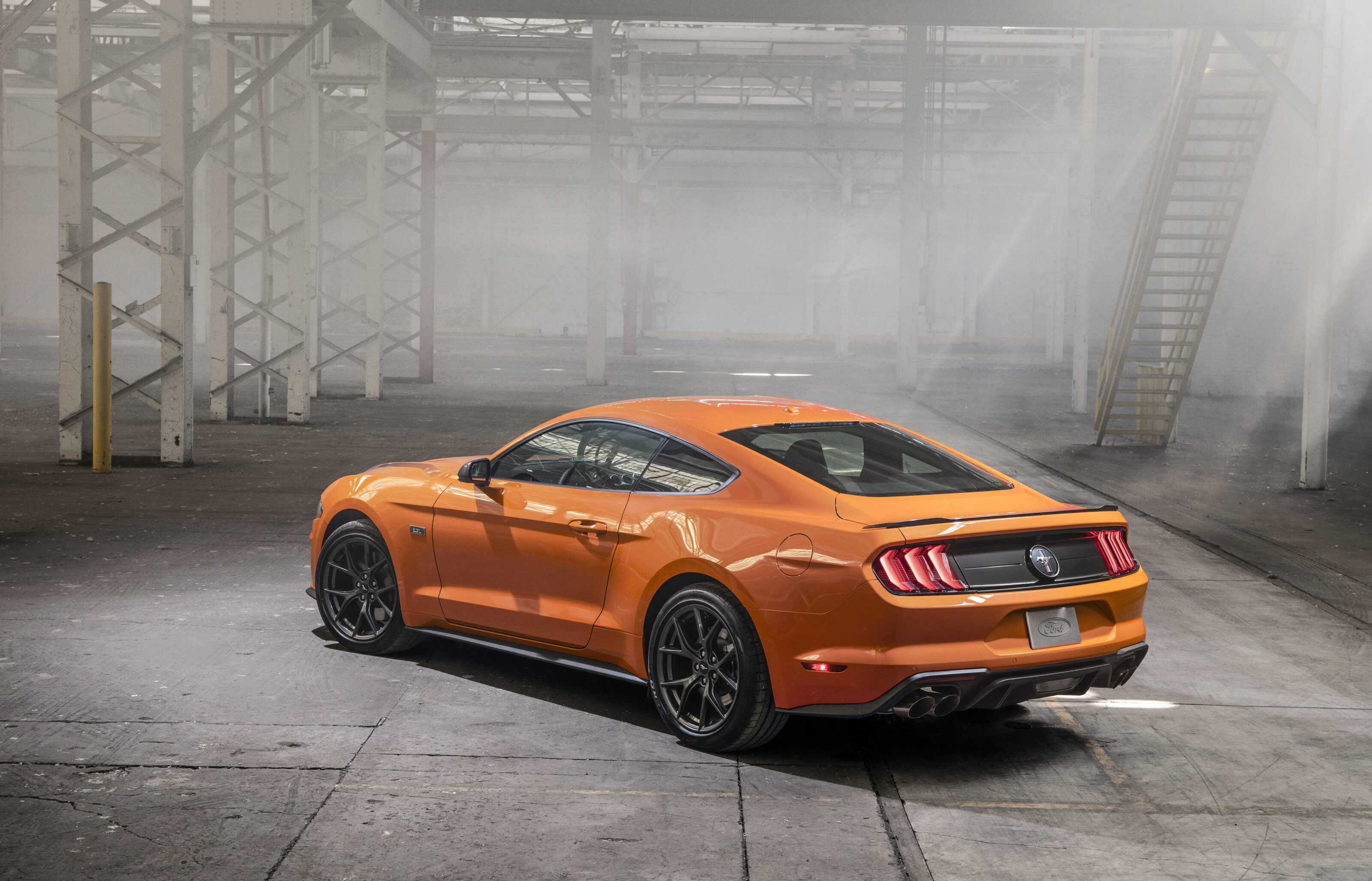
The 2021 Ford Mustang has received its model year update, with the big changes being the addition of FordPassConnect, a $200 price increase, and a shake-up at the pointy end of the range.
With just 500 being produced with the help of performance tuning house Herrod, almost all have been sold. Only a handful are remaining across the Blue Oval’s dealer network, according to a representative from Ford Australia.
The limited-edition R-Spec will no longer serve as the top-shelf variant of the two-door coupe.
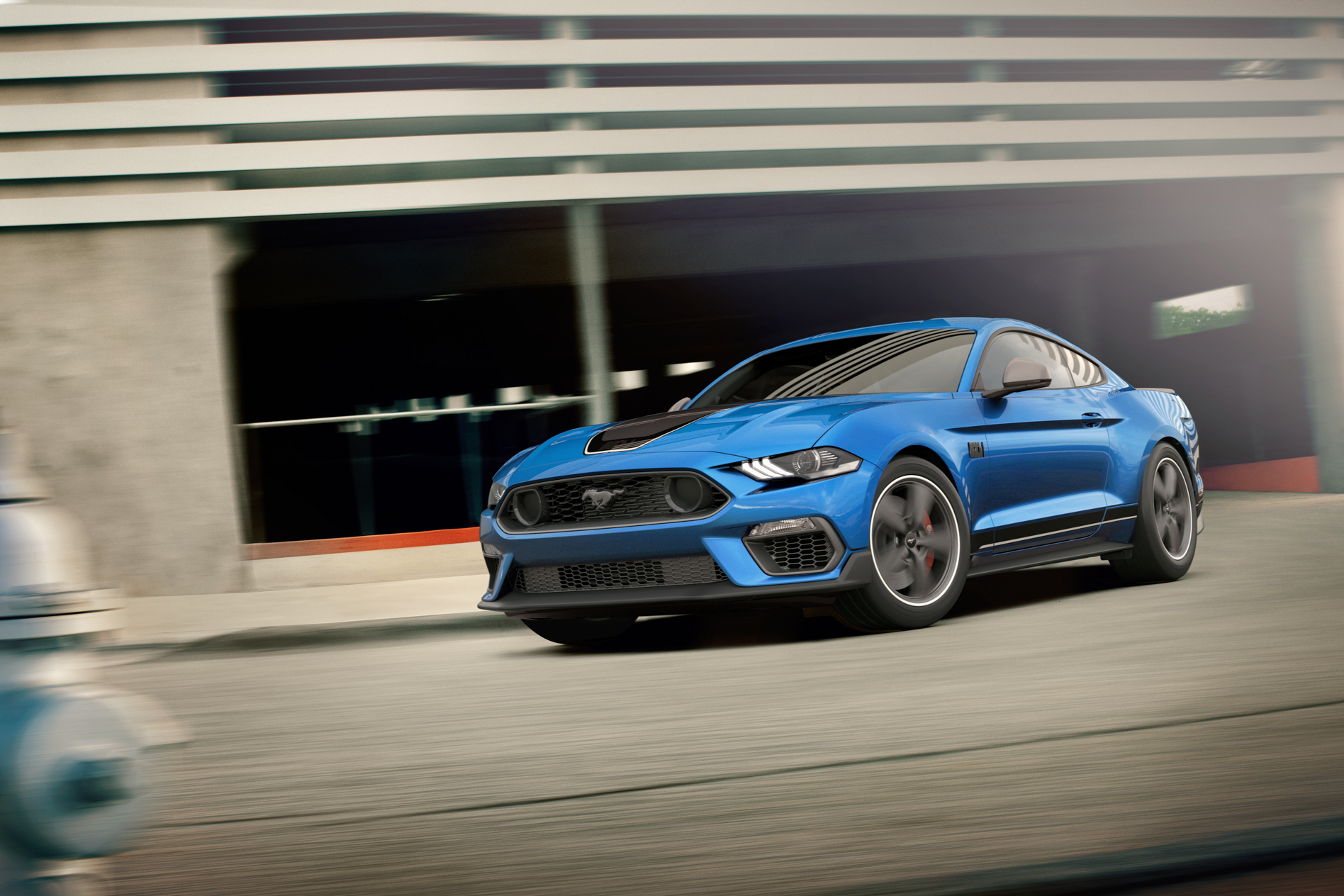
Taking the R-Spec’s place will be the eagerly anticipated Mach 1, which hasn’t had the easiest start in life Down Under, considering Ford accidentally advertised the superlative ‘Stang as having features it didn’t have.
Despite the lack of a Torsen rear limited-slip differential, adaptive cruise control, or rear parking sensors though, the new Mach 1 does offer some attractive enhancements such as MagneRide dampers, GT350 intake and engine cooler, revised steering, and a new sports exhaust.
With the addition of FordPassConnect, owners will be able to remotely start their Mustang, lock and unlock it, and locate it directly from their phone.
Arriving in Australia back in 2015, the first iteration of the moniker homologated for right-hand drive remains Australia’s favourite sports car.
Pricing
For 2021, the Ford Mustang is available in three different variants – the High Performance, the GT, and the Mach 1.
All prices below exclude on-road costs.
- 2021 Ford Mustang High Performance manual fastback – $51,690 (up $200)
- 2021 Ford Mustang High Performance auto fastback – $54,690 (up $200)
- 2021 Ford Mustang High Performance auto convertible – $60,990 (up $200)
- 2021 Ford Mustang GT manual fastback – $64,390 (up $200)
- 2021 Ford Mustang GT auto fastback – $67,390 (up $200)
- 2021 Ford Mustang GT auto convertible – $75,225 (up $200)
- 2021 Ford Mustang Mach 1 manual fastback – $83,365
- 2021 Ford Mustang Mach 1 auto fastback – $83,365
Features
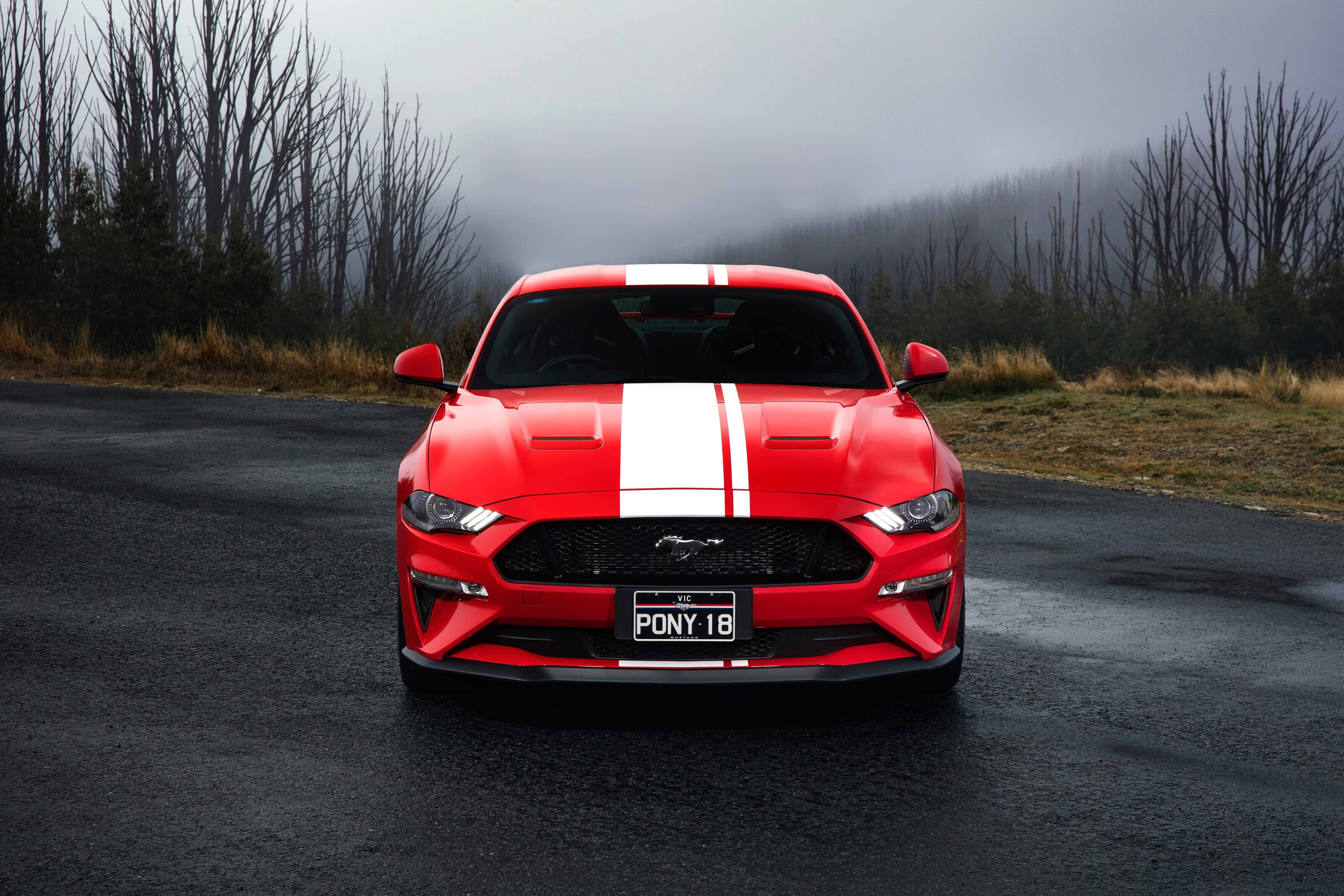
The 2021 Ford Mustang High Performance and GT come with several exterior and interior features such as:
- 19-inch alloy wheels
- Active exhaust
- LED headlights, taillights and fog lights
- 8.0-inch touchscreen infotainment display
- Apple CarPlay and Android Auto
- Satellite navigation
- B&O Play 12-speaker premium hi-fi
- Automatic headlights
- Rain-sensing wipers
- Ambient lighting
- 12.0-inch digital dash
- Leather interior
- Leather-wrapped steering wheel and shifter
- Powered, heated, and cooled front seats
- Keyless entry and go
- Dual-zone climate control
- Five selectable driving modes (Normal, Sport+, Track, Drag Strip, and Snow/Wet)
Engine, transmission and fuel economy
Australian delivered 2021 Mustangs will utilise the same two engines available since the sixth-generation sportscar landed in Australia back in 2015.
The first is the EcoBoost turbocharged 2.3-litre four-cylinder petrol engine, which produces 236kW and 448Nm.
When run on 95 RON, the turbo four-pot returns an ADR combined-cycle fuel economy rating of 8.8-9.6L/100km.
The second engine is Ford’s prolific naturally aspirated 5.0-litre Coyote V8, which produces 339kW and 556Nm in standard GT guise, and 345kW and 556Nm when powering the new Mach 1.
The bent-eight petrol engine is understandably thirstier than its four-cylinder counterpart, with an ADR combined-cycle fuel economy rating of between 12.4-13.9L/100km, when run on 95 RON.
All Mustang variants are rear-wheel drive, and all can be had with either a six-speed manual or 10-speed automatic transmission.
However, the manual Mach 1 utilises a Tremec-sourced transmission rather than the standard Getrag MT82 six-speed found in the rest of the range.
Safety
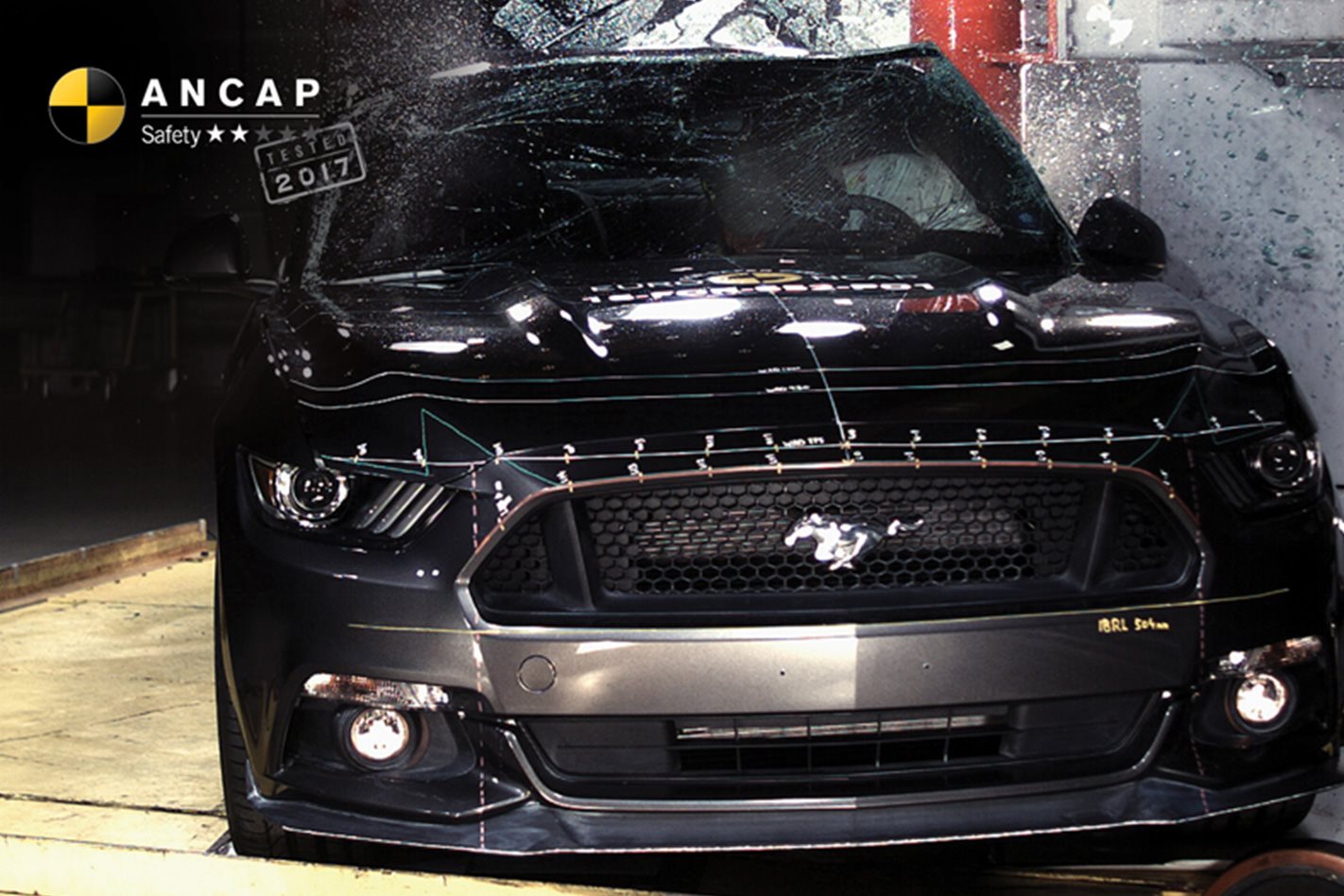
Famously, the sixth-generation Mustang did not perform well when it was assessed by ANCAP back in 2017, scoring a middling three-star safety rating and a particularly low 32 per cent for child occupant protection.
As standard, the 2021 Mustang range comes with the following safety features:
- Eight airbags
- Adaptive cruise control (excluding Mach 1)
- Autonomous emergency braking with pre-collision assist and pedestrian detection
- Lane keep assist and departure warning
- Auto high beam
- Parking sensors
- Reverse camera
- Tyre-pressure monitoring
- ISOFIX
Dimensions and kerbweight
The 2021 Ford Mustang High Performance and GT are 4789mm long, 1916mm wide, 1387mm tall, and have a wheelbase measuring 2720mm. Kerbweight is rated between 1705kg and 1840kg, depending on the model.
The Mach 1 is virtually identical to its less hardcore siblings, however, it is five millimetres lower, sitting at 1382mm tall.
Warranty and servicing
As is the case with all new Ford passenger products, the 2021 Mustang comes with a five year/unlimited-kilometre warranty.
Ford offers a four year/60,000 kilometre capped price servicing program, with service intervals happening every 12 months/15,000 kilometres.
Availability
The 2021 Mustang range is available now across Ford’s national dealer network.
Snapshot
- 683 vehicles affected
- Wiring fault may cause short circuit, fire
- Toyota will fix the fault free of charge
Toyota Australia has issued a recall for 683 examples of its top-shelf 2020 HiLux Rogue dual-cab ute.
According to the Japanese manufacturer, a fault has been identified with the cargo roller cover’s wiring, which may be routed incorrectly.
This could cause chafing against the battery clamp post, and if the power wire insulation is damaged, it could lead to a short circuit.
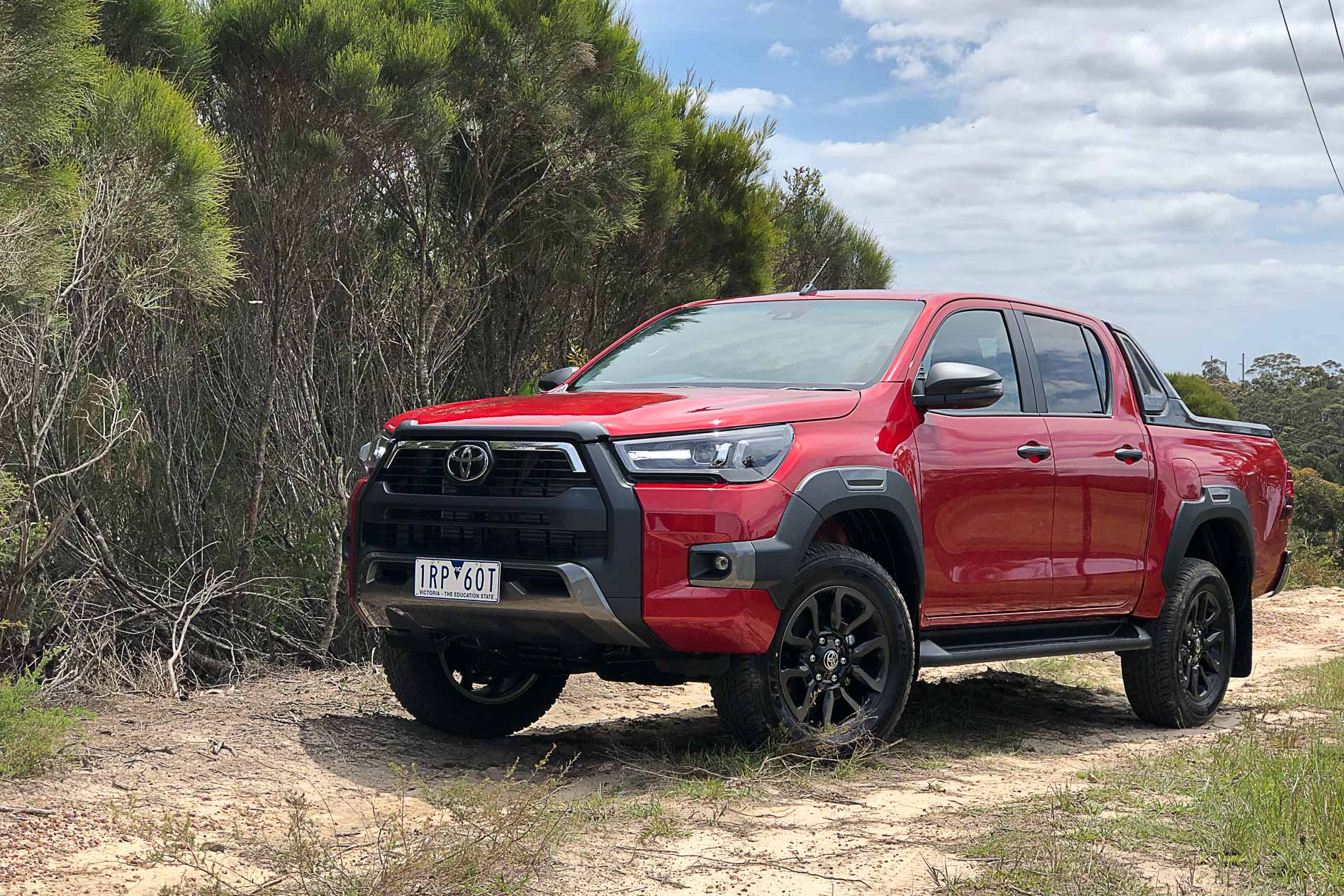
Toyota says there’s an increased risk of a fire breaking out if a short circuit does occur.
The automaker will be contacting affected owners via letter, email, or SMS and asking them to make an appointment with their preferred local Toyota dealership, where the problem will be fixed free of charge.
Toyota has also compiled a list of all the affected vehicles’ VIN numbers, which can be viewed here.
