
Gee whiz dual-cab utes are a bit expensive these days, aren’t they? But they don’t have to be. While there’s no doubt we’d all love to have $70,000 or more to splash on a jacked-up trayback, those who have a more limited budget need no longer miss out thanks to these two, the GWM Ute Cannon-L and Ssangyong Musso XLV Ultimate.
You can drive away in either of these babies for around $40K including on-roads. The GWM, which stands for Great Wall Motors in case you were curious, costs $37,990 drive-away for the mid-spec Cannon-L variant we have here, while the Ssangyong, even in long-wheelbase XLV guise, lists at $41,790 driveaway, which currently includes three years of free servicing.
Don’t think these bargain basement prices mean you miss out on kit, though. Both are fully loaded, the Musso Ultimate offering powered, heated and ventilated front seats, HID headlights, a 360-degree camera, smartphone mirroring, front and rear park assist, autonomous emergency braking, lane departure warning, blind spot detection, lane change assist and rear cross-traffic alert.
Judges and writing team: Scott Newman, Byron Mathioudakis, Louis Cordony, Evan Spence, Tom Fraser
Photography: Ellen Dewar, Alastair Brook, Cristian Brunelli
Catch the full series here
- Premium utes: Ranger vs D-Max vs Triton vs Navara vs HiLux
- Budget utes: GWM Ute Cannon-L vs Ssangyong Musso XLV Ultimate
- Hero utes: HiLux Rugged X vs Ranger Raptor vs Gladiator Rubicon vs BT-50 Thunder
- Off-roading: Ranger vs D-Max vs Triton vs Navara vs HiLux vs Musso vs Ute Cannon-L vs Ranger Raptor vs Gladiator Rubicon
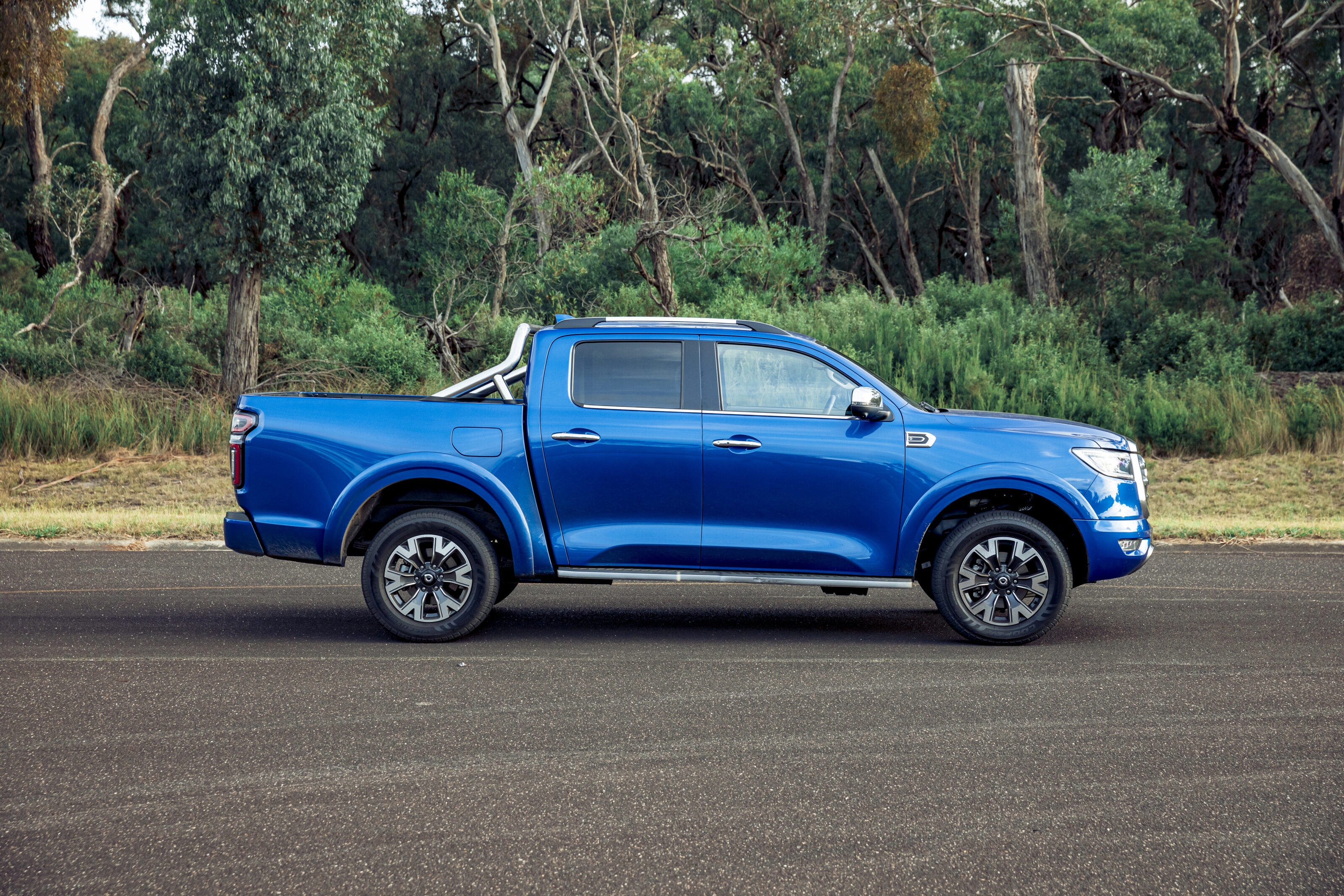
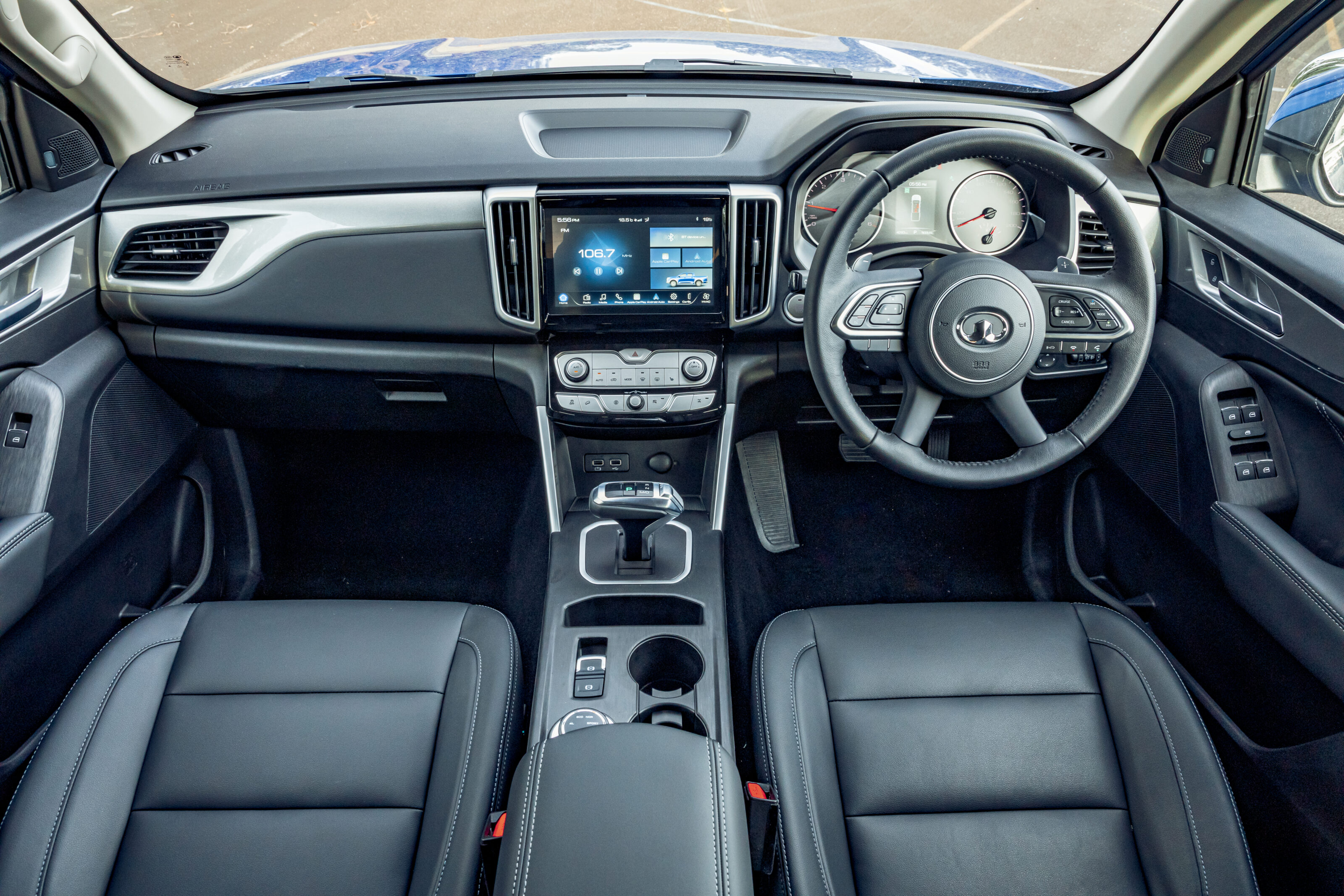
The GWM Ute – the naming meeting must’ve been a short one – packs even more in, including active cruise control, climate control and a 220-volt power outlet, though it lacks the Musso’s ventilated seats and a reach-adjustable steering wheel is weirdly limited to the top spec Cannon-X. Its cabin presents well, with a range of leather surfaces and metal-look inserts, while the seats are comfortable with plenty of bolstering.
The lack of steering wheel reach adjustment is an ergonomic demerit, as is the T-bar transmission selector that can make locating the right gear confusing, while the dead pedal sits unusually close and the wide centre console eats into legroom.
Visibility is hampered by thick A-pillars and the rear sports bar but the rear seat is relatively comfortable with good under-thigh support.
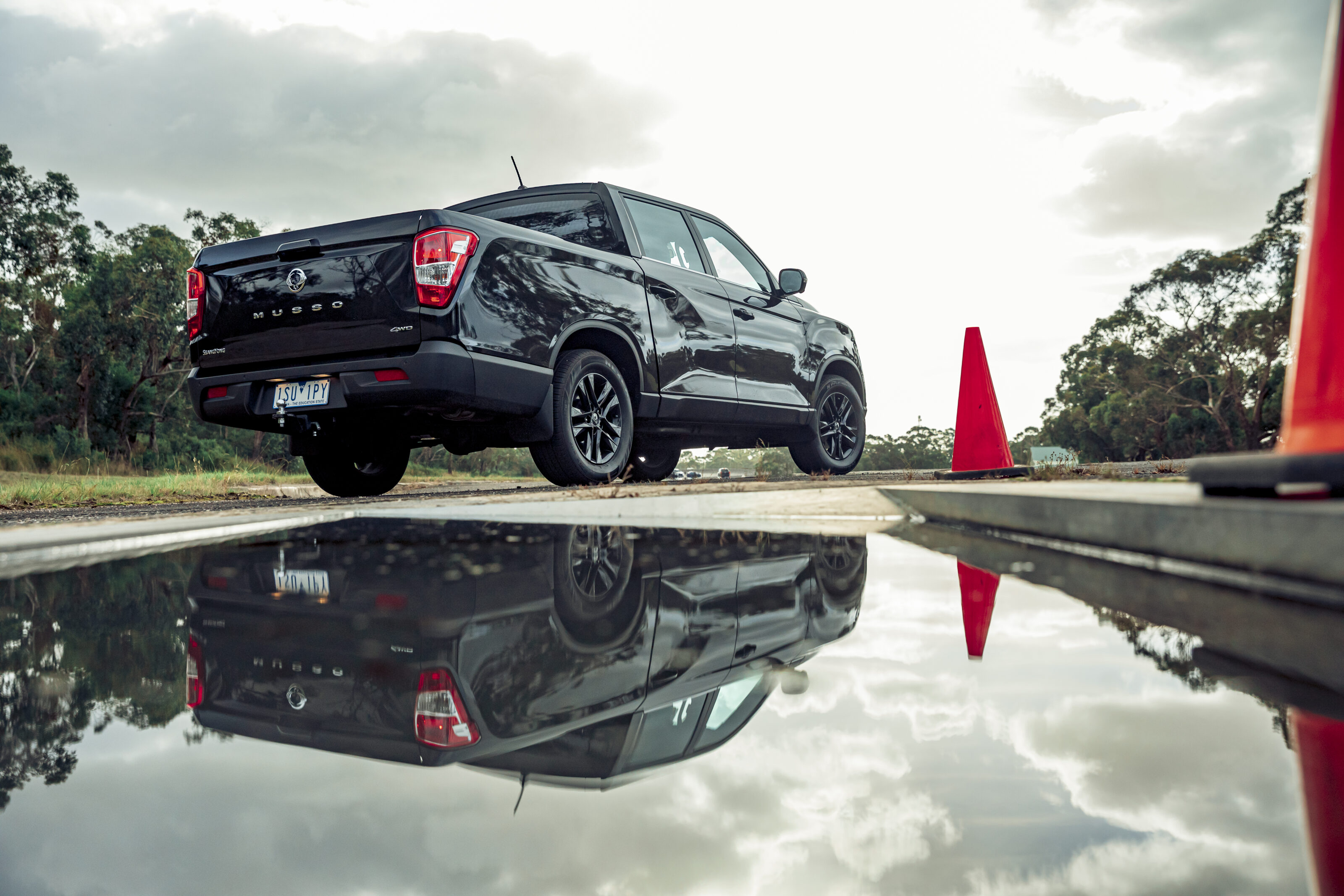
Swap into the Musso and it’s a similar story, though the fact the centre rear seat uses only a lap belt is unacceptable in a modern vehicle. Forward visibility is improved by the separation between the A-pillars and mirrors but the hard plastics littered throughout the cabin make the Ssangyong feel a generation old.
There’s no native sat-nav or digital radio but it’s pretty easy to switch to smartphone mirroring and the Bluetooth connects quickly. The GWM’s infotainment takes a while to launch after jumping into the car and its switchgear feels cheap to the touch, though that’s not unexpected for the price! What’s slightly disconcerting is that some messages are still displayed in Chinese and others are misspelled, such as the system “Scaning…” for a device.
Both vehicles offer a seven-year/unlimited-kilometre warranty and the Ssangyong’s even covers commercial usage for the duration, which is impressive confidence in the product. GWM offers a five-year/100,000km roadside assistance program, available 24/7 nationwide, though Ssangyong bests that with a seven-year deal. It also has an advantage with its capped-price servicing program, which equates to $375 every 12 months/15,000km, whereas GWM has yet to establish such a program and servicing is required every 12 months/10,000km.
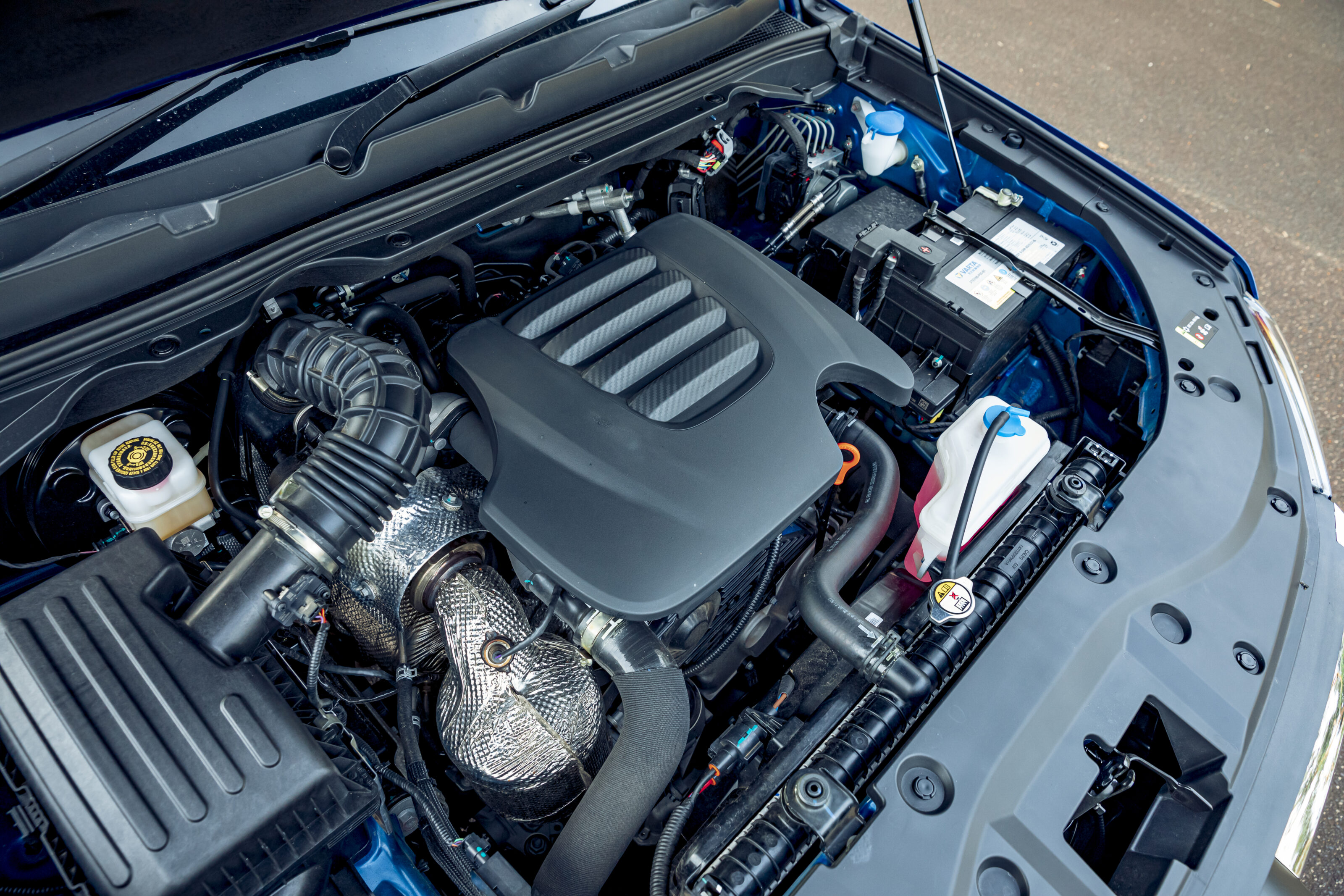
On the move, the GWM Ute feels like a big vehicle propelled by a small motor, which is exactly what it is. The 2.0-litre four-cylinder turbodiesel produces just 120kW and 400Nm, which isn’t much to motivate 2100kg of dual-cab. The smooth-shifting eight-speed auto makes the most of the available grunt but our recorded figures of 0-100km/h in 11.38sec and 60-100km/h in 6.7sec are adequate at best.
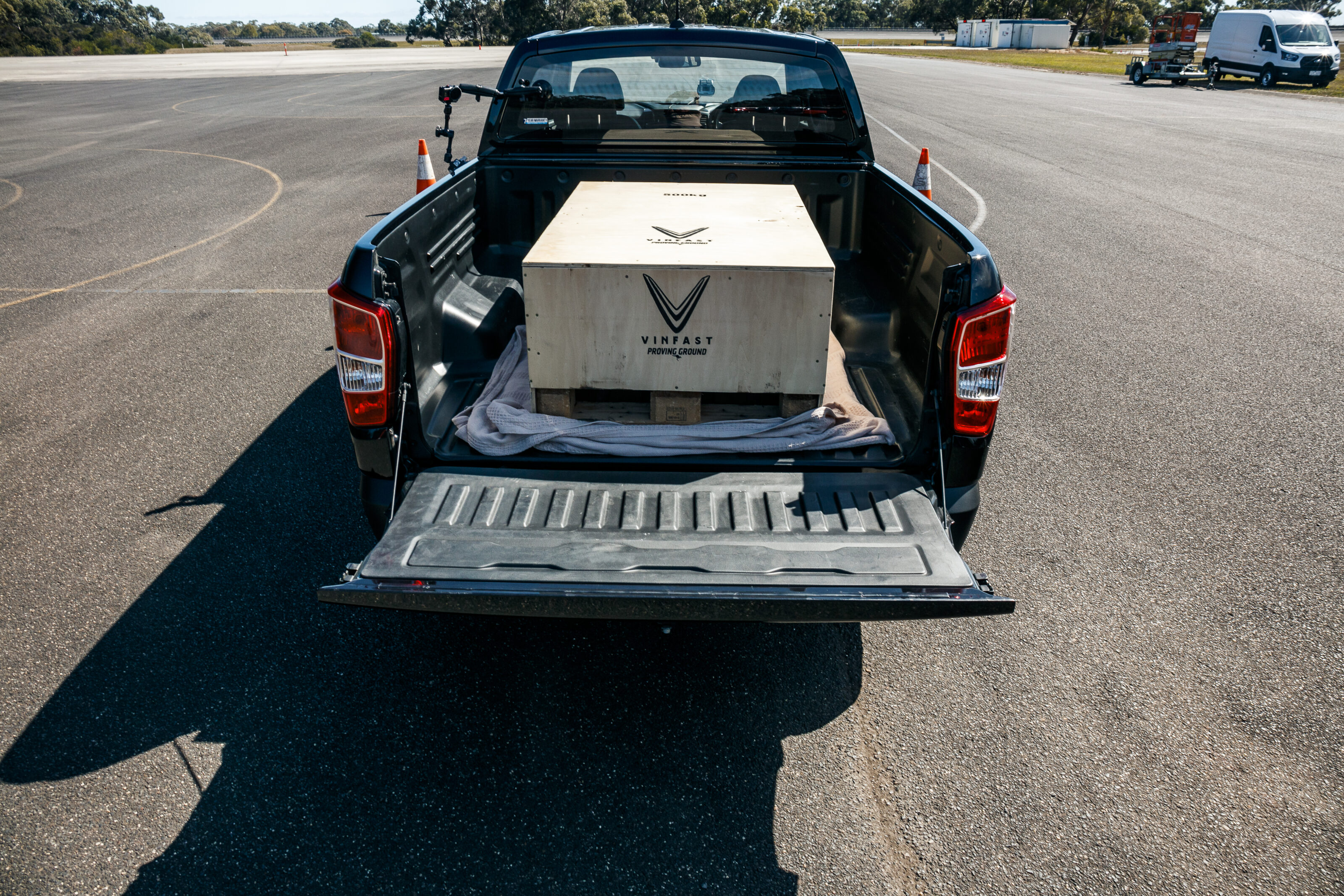
Adding a load doesn’t help matters, the Ute taking 4.5sec to accelerate from 20-60km/h with a 500kg pallet on board and the automatic’s shift mapping means it rarely holds the right gear on the move. On the plus side, the payload is a commendable 1005kg and the spraylined tub is a good size, while the tailgate has soft-open gas struts and a handy step ladder that folds out to assist access.
Both vehicles offer a seven-year/unlimited-kilometre warranty and the Ssangyong’s even covers commercial usage for the duration, which is impressive confidence in the product.
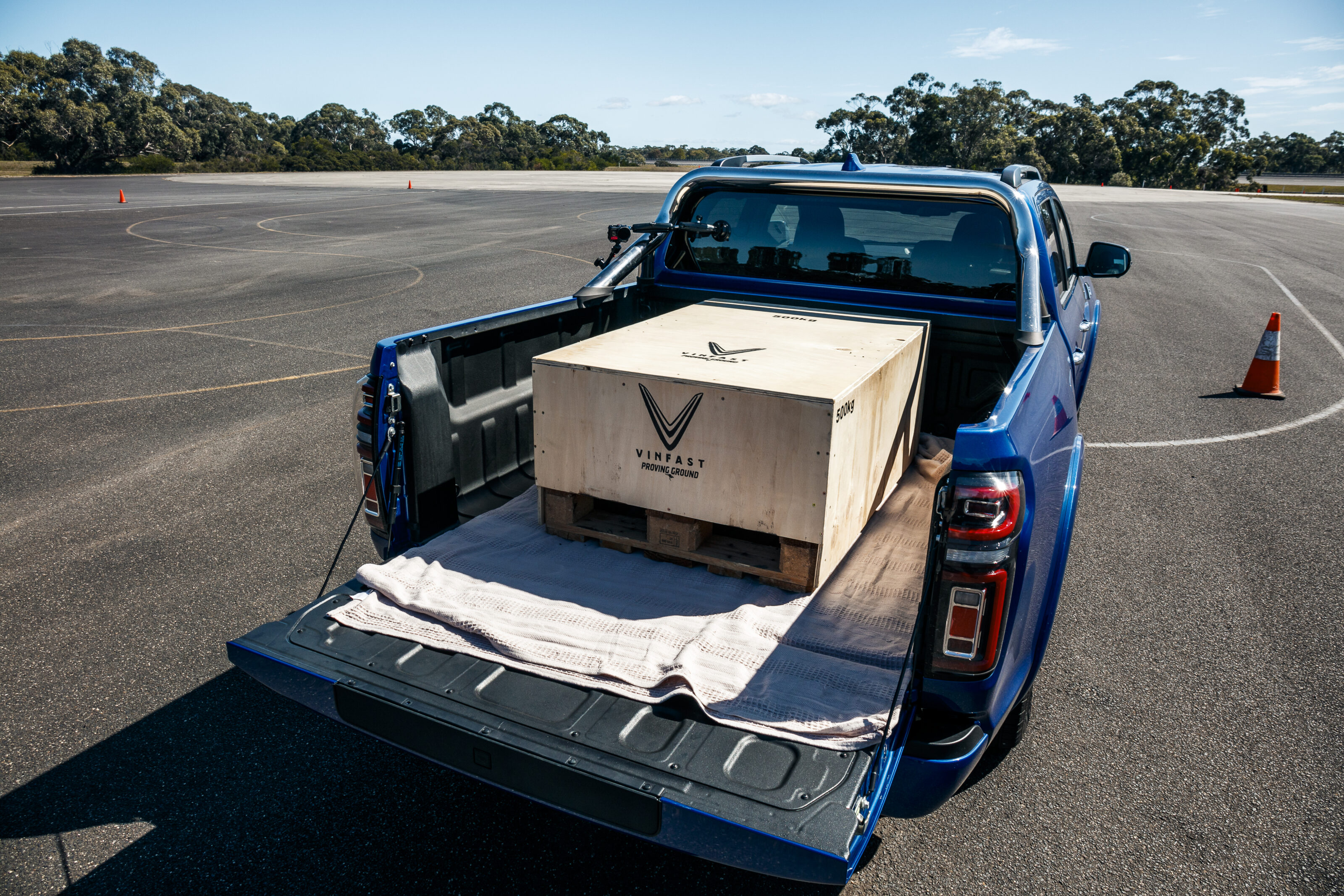
If it’s size you want, the Musso is the ute for you, the XLV variant adding a whopping 310mm to the tub’s length compared to standard variants. However, while it’s large, the payload is rated at just 880kg and that’s a deceptive figure in itself as the 2170kg Musso’s 2980kg Gross Vehicle Mass offers just 810kg to be shared between passengers, towball download and cargo.
Laden acceleration is better than the GWM at 4.2sec from 20-60km/h thanks to the Musso’s extra grunt, its 2.2-litre four-cylinder turbodiesel producing 133kW and 420Nm. This doesn’t translate to unladen acceleration, the Ssangyong taking a leisurely 11.46sec to hit 100km/h and an identical 6.7sec from 60-100km/h.
The Cannon-L’s straight-line advantage is down to the more closely-stacked ratios of its eight-speed automatic, as the Musso’s engine feels stronger with a wider spread of available grunt.
Its braking is a sub-standard 41.51m in the dry (anything over 40m isn’t ideal, even for a dual-cab) and 56.78m in the wet, though it’s better than the GWM’s, which is an alarming 43.37m in the dry and 58.65m in the wet.
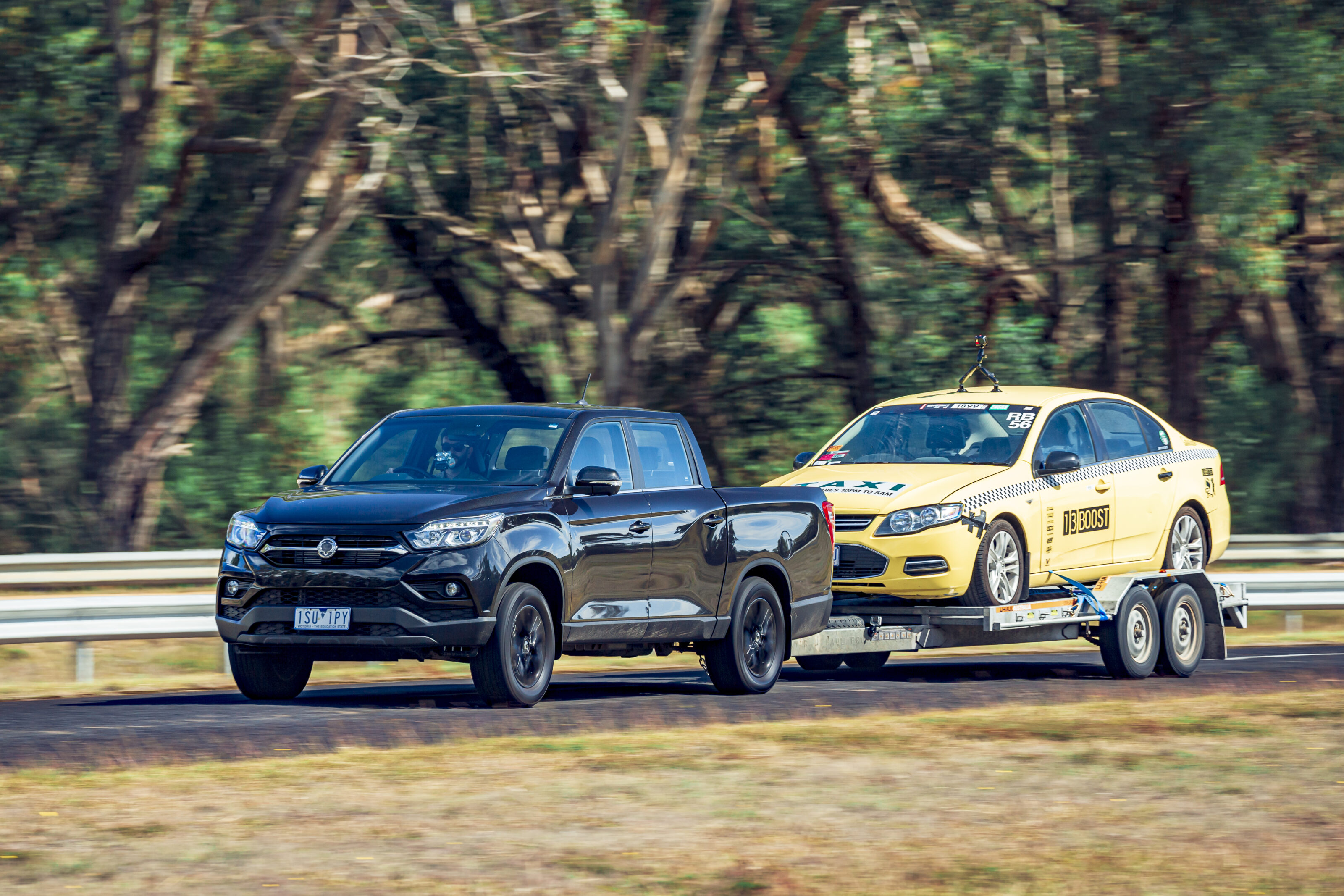
We did intend to tow test these two, but the GWM arrived without a tow bar so it was a short-lived idea. Nevertheless, with Street Machine’s Turbo Taxi hooked up the Musso wasn’t particularly happy, its vocal engine struggling with the weight and accompanied by doughy brakes and soft suspension. The biggest issue, however, was a general lack of rigidity; on rougher roads the Musso’s body jiggles substantially like it’s trying to separate from the chassis and adding weight to the back doesn’t improve matters.
Unladen the Musso feels a little better, but only up to a certain (relatively low) point. Unexpectedly sharp steering conveys a sense of sportiness and the powertrain feels sprightly enough once on the move but there’s precious little communication through the steering wheel and the soft suspension leads to excessive body roll and generally skittish, nervous handling.
It’s superior to the GWM, though. There has to be a price to pay for the Ute’s cage-rattingly low price and it’s found in the driving experience. For starters, why is it so sluggish? On the road, the engine feels lazy and off-the-pace, with tardy acceleration and laggy throttle response.
The steering is light and responsive until a quick change of direction is required, at which point the power assistance fails to keep up and the wheel feels like it’s stuck in concrete. On rougher roads there is excessive and quease-inducing body shake as well as plenty of wind and tyre roar.
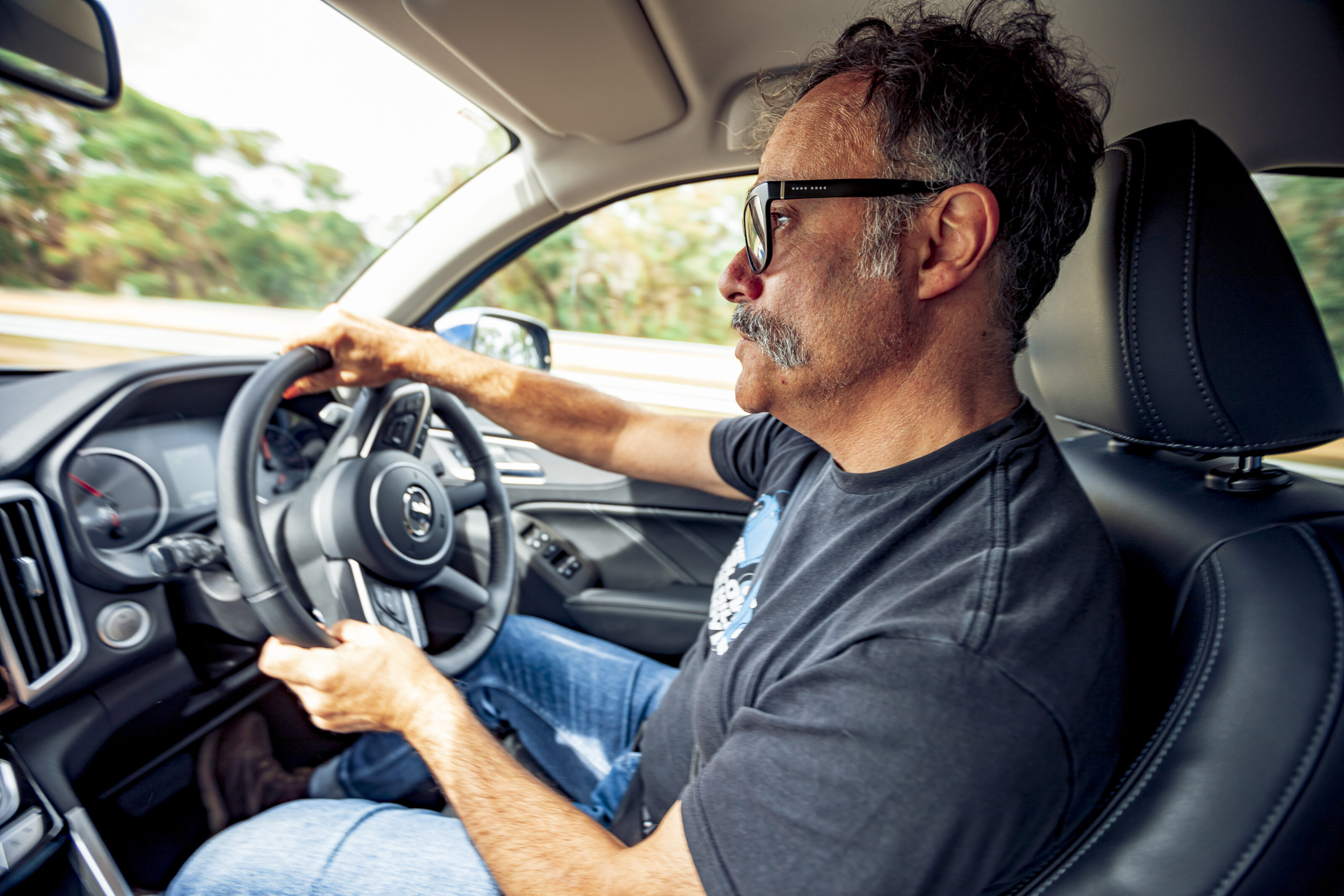
Its fortunes don’t improve off-road, either. The over-complicated gear lever was a particular annoyance in the rough stuff where quick shifts from drive to reverse and back are required. There are positives: the traction control system is reasonable and hill descent control worked well, especially in conjunction with the rear locking diff, but constant clunks and bangs from the rear end in tight cornering are a cause for concern.
Nevertheless, it acquits itself better than the Ssangyong, which struggles off-road primarily due to a lack of ground clearance. It bottoms out constantly, the automatic rear diff lock isn’t as practical as a manually selectable one, low-range gearing isn’t ideal and throttle response isn’t particularly smooth, either.
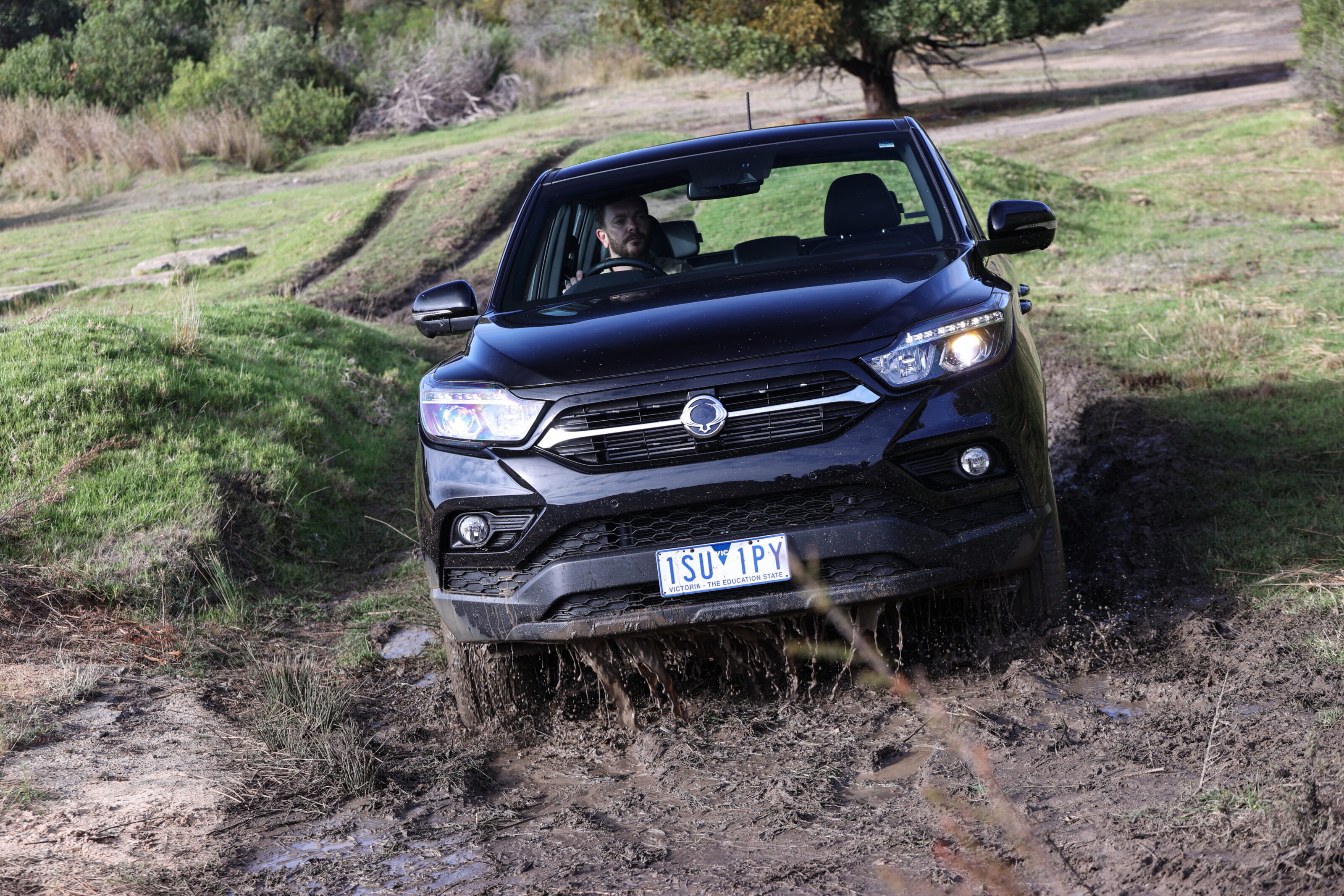
Let’s be clear that the GWM Ute is a massive, massive step forward from Great Wall’s previous offerings and is now on the cusp of competitiveness. It has plenty of showroom appeal thanks to modern exterior and interior styling, plenty of features and a strong warranty. However, from behind the wheel, the compromises inherent in the GWM’s eye-popping price quickly become clear; in terms of ride, refinement, performance and dynamics it still lags well behind even a base Triton that isn’t a million miles away in terms of price.
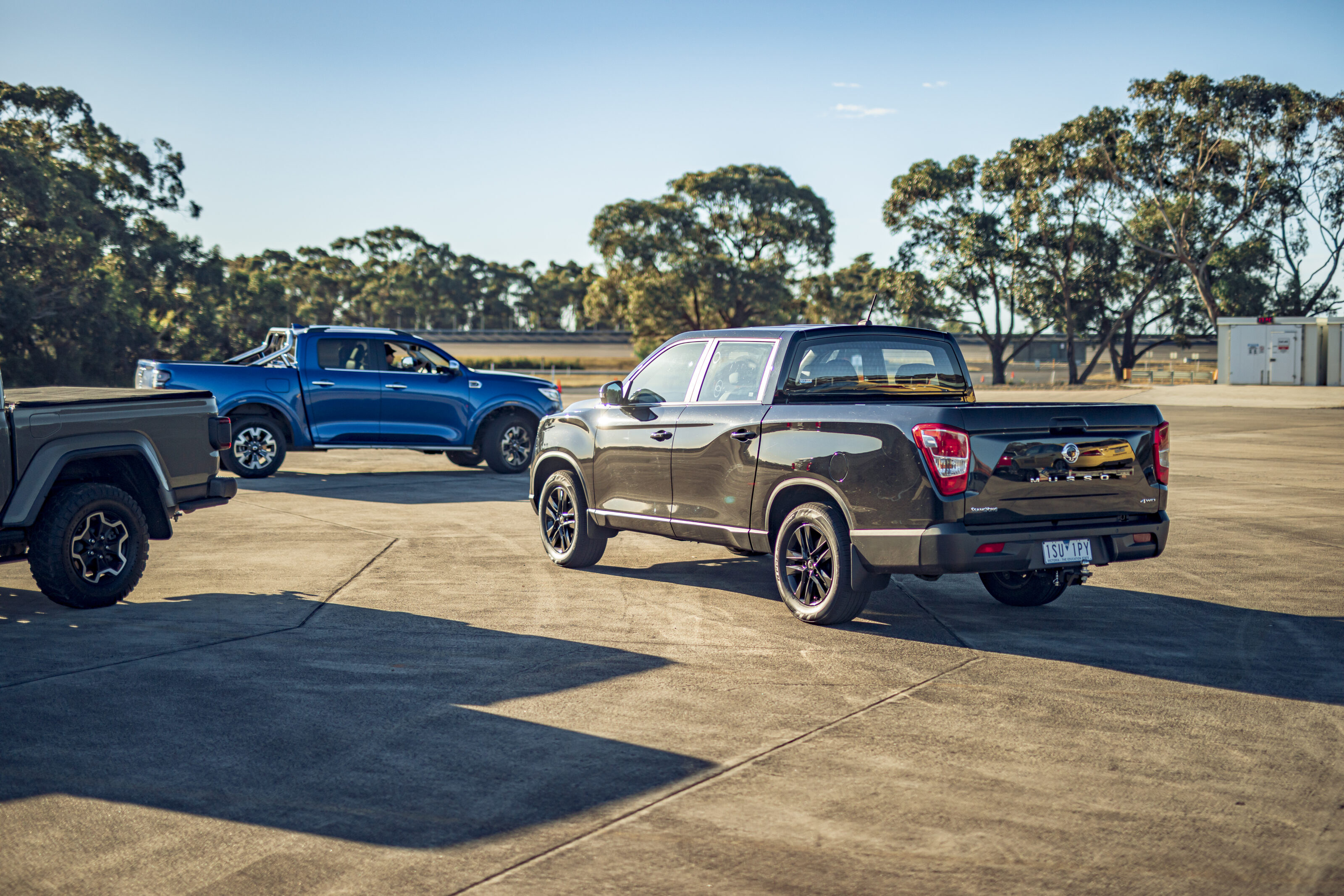
The Ssangyong performs better, on-road at least. If you need to carry big people or big stuff then the XLV offers heaps of metal for the money, but the standard-wheelbase Musso is perhaps a better bet for most, its lighter weight improving performance, ride and handling.
In reality, these two don’t compete with the established players in the new market but instead with second-hand examples. For example, $35,000 gets you a six- or seven-year-old Hilux or Ranger with almost 200,000km on the clock and while, to be honest, those vehicles are probably still objectively superior, there’s a lot to be said for a brand new car with up-to-date safety and technology as well as a seven-year warranty. If that describes your buying situation, grab the Ssangyong.
Verdict
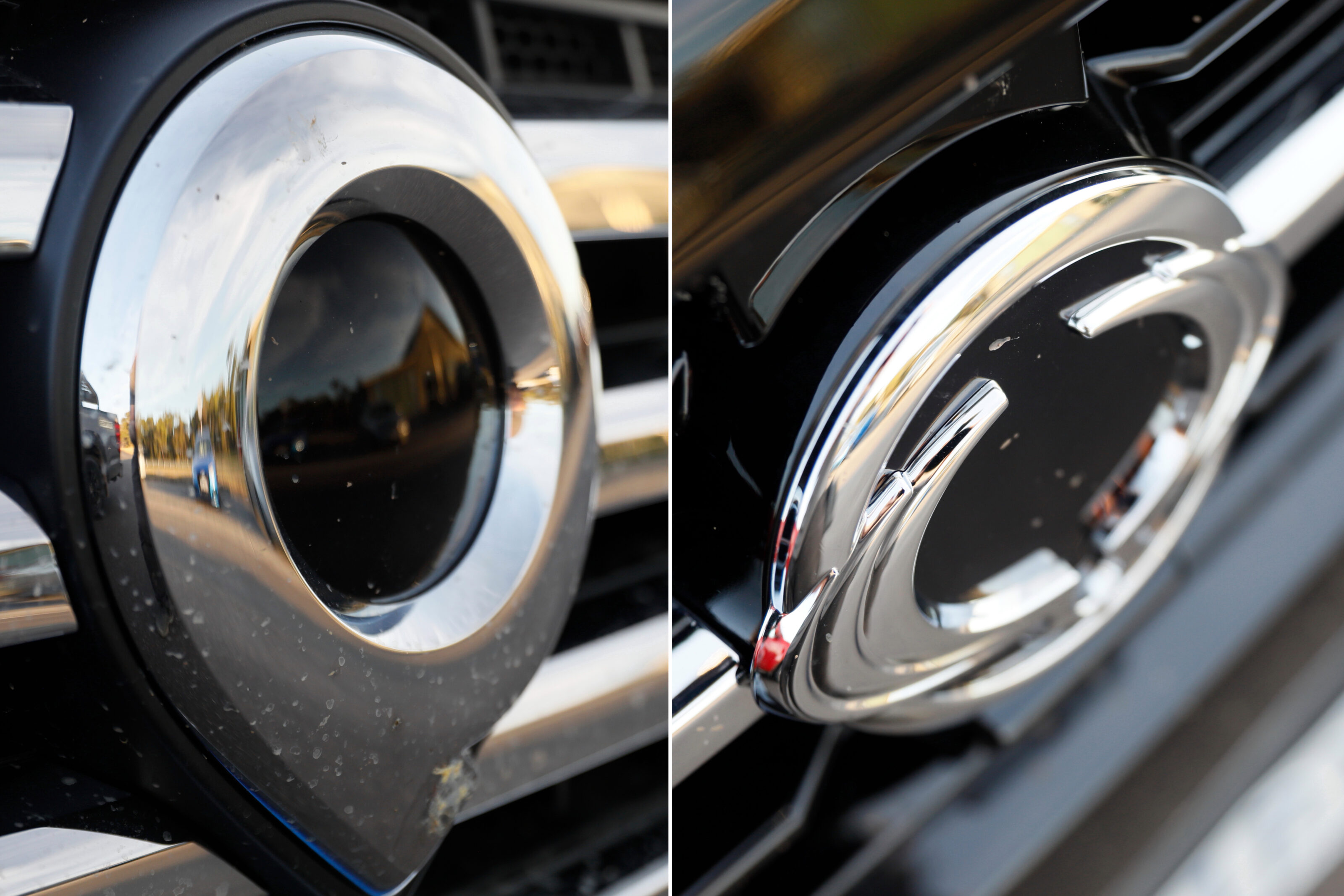
Ssangyong Musso Ultimate XLV – 1st
Likes: Heaps of space; solid if unspectacular performance; strong equipment list Dislikes: Body rigidity; small payload; struggles off-road
Score: 6/10
GWM Ute Cannon-L – 2nd
Likes: Clever dual-cab touches; looks good inside and out; value Dislikes: Underwhelming powertrain, dynamics and ride; lacks interior polish
Score: 5.5/10
SCORE BREAKDOWN
Specifications
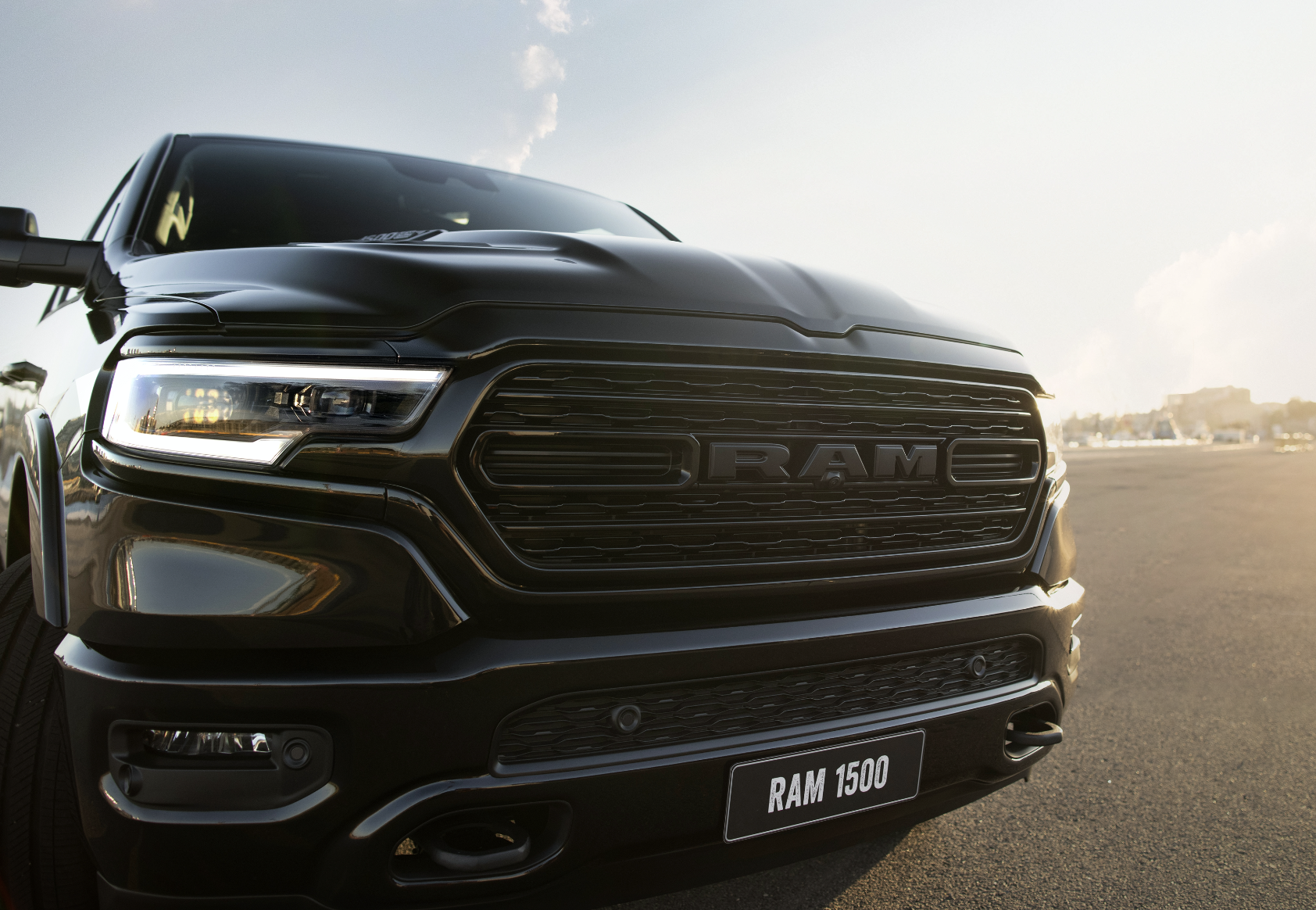
The 2021 RAM 1500 pick-up truck has been officially launched Down Under, with prices starting from $114,950 plus on-road costs.
Snapshot
- Five model variants to choose from
- All powered by a naturally aspirated 5.7-litre petrol V8
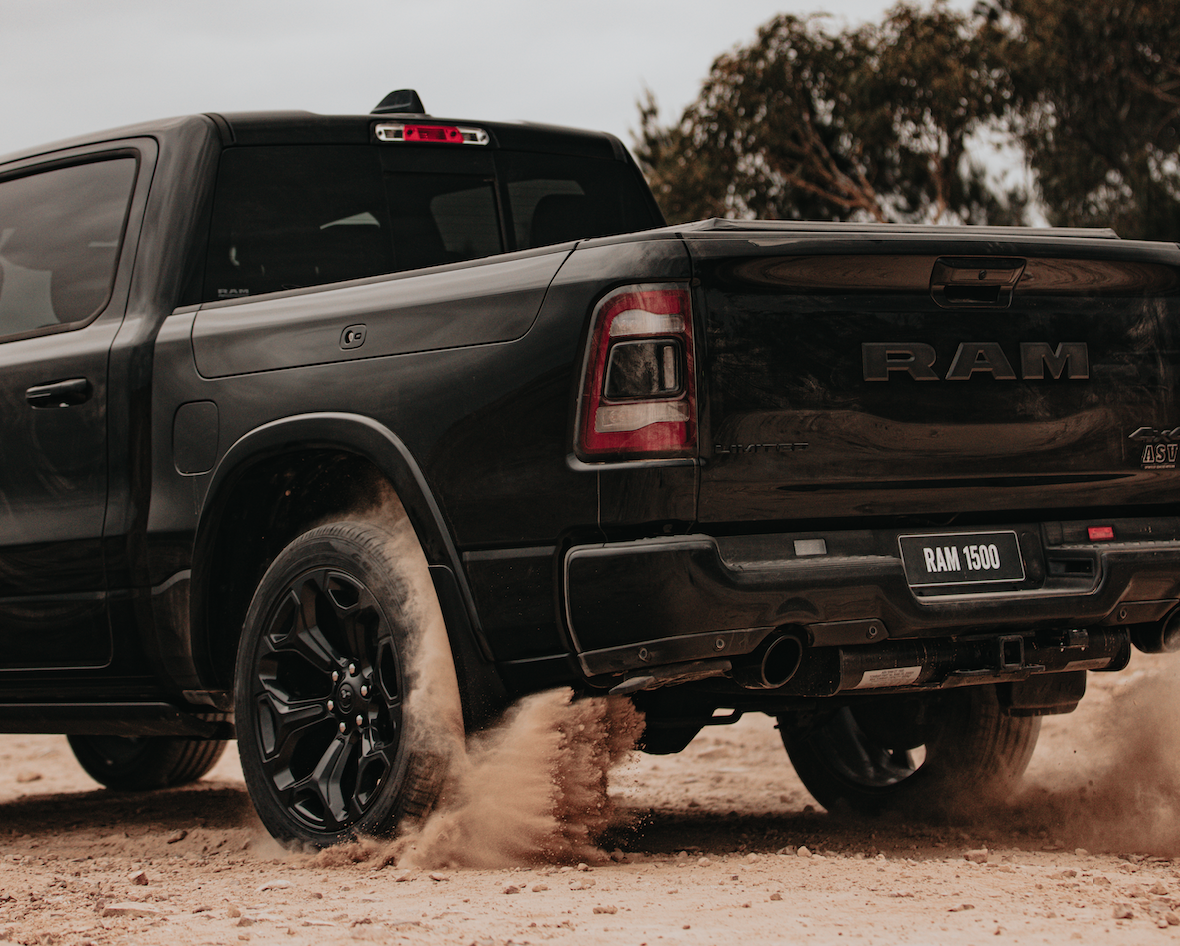
Converted from left-hand drive to right-hand drive in Melbourne, these new fifth-generation 1500 trucks have also been extensively tested for Australian conditions, and will sit alongside the existing fourth-generation 1500 model range, which is still on sale.
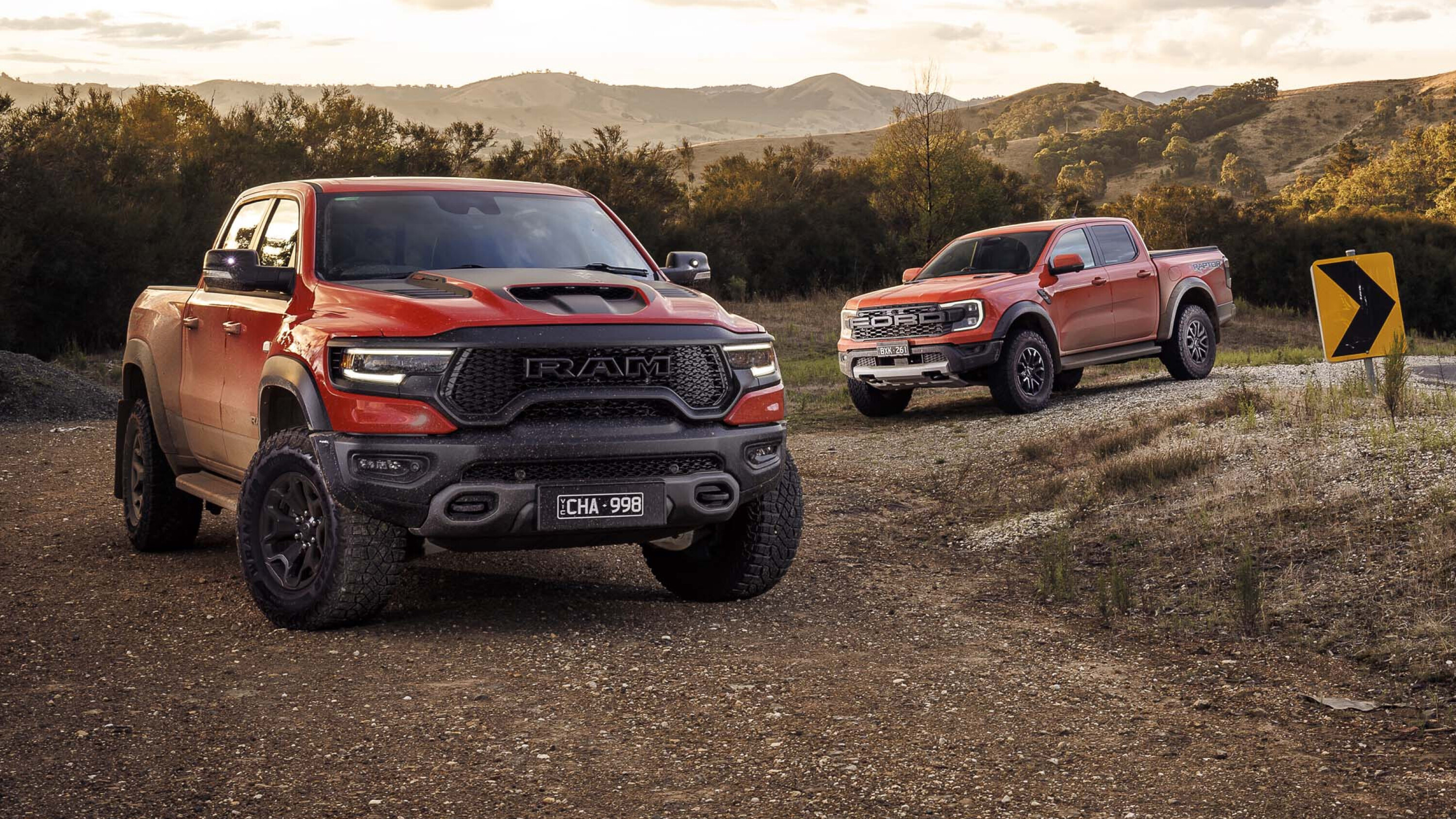
UPDATE, May 2023: Ram 1500 TRX v Ranger Raptor
?♂️ Australia’s most outrageous utes face off in a rock-spraying, fuel gargling celebration of excess. Strap in, it’s about to get noisy!
STORY CONTINUES: New Ram 1500 launches in Australia
“We’re delighted to officially welcome the next generation 1500,” Jeff Barber, RAM Trucks Australian national manager, said.
“The all-new 1500 DT marks the culmination of a detailed planning, development, remanufacturing and testing programme with our local and global partners, including Fiat Chrysler Automobiles (US).”
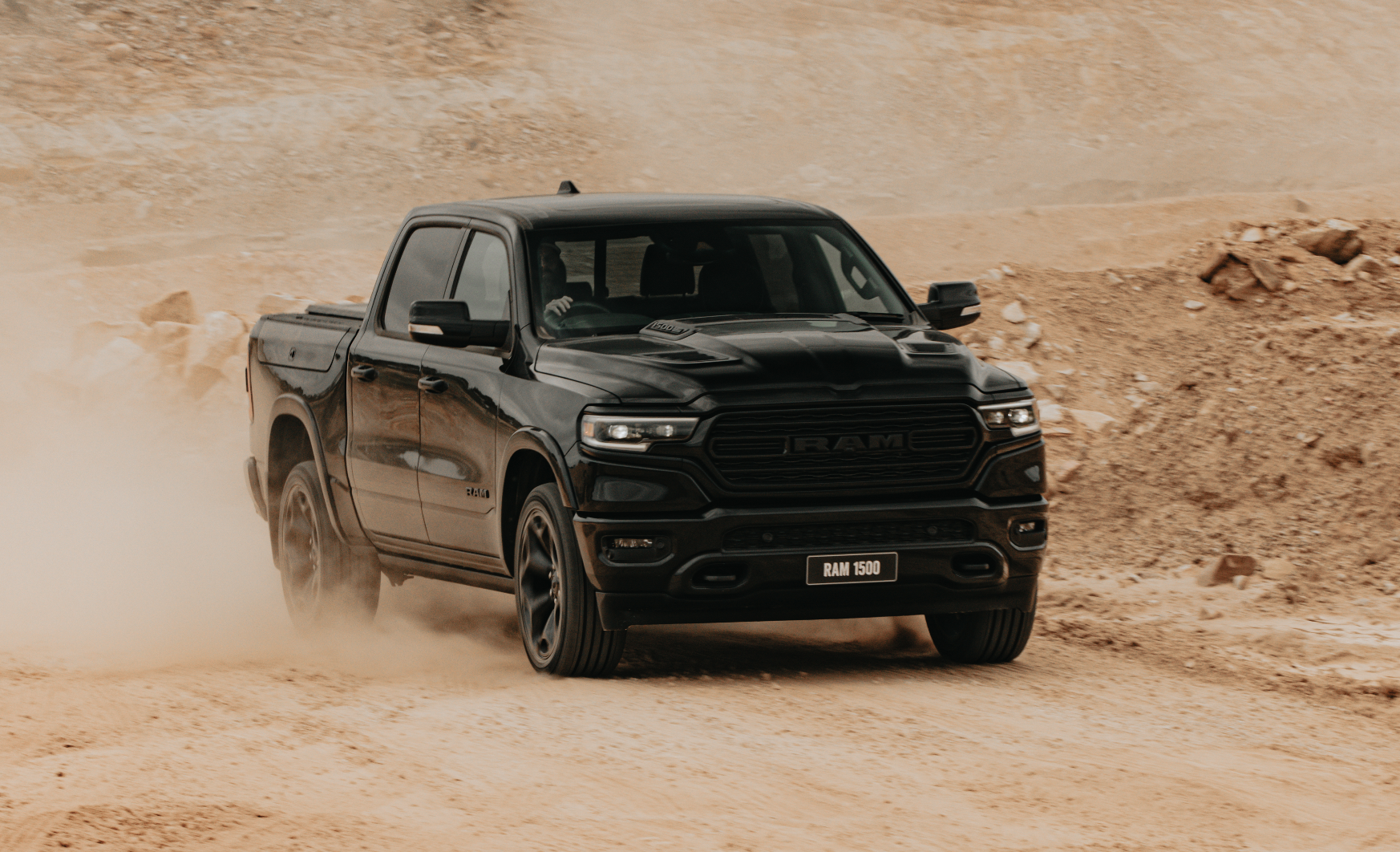
Model range and prices
The RAM 1500 pick-up is now available in five different guises (all prices before on-road costs):
- 1500 Express Quad Cab – $79,950 (four-generation)
- 1500 Express Crew Cab – $89,950 (four-generation)
- 1500 Express Crew Cab RamBox – $94,450 (four-generation)
- 1500 Warlock Crew Cab RamBox – $108,950 (four-generation)
- 1500 Laramie Crew Cab – $114,950 (fifth-generation)
- 1500 Laramie Crew Cab RamBox – $119,900 (fifth-generation)
- 1500 Laramie Crew Cab RamBox Launch Edition – $139,950 (fifth-generation)
- 1500 Limited Crew Cab RamBox – $139,950 (fifth-generation)
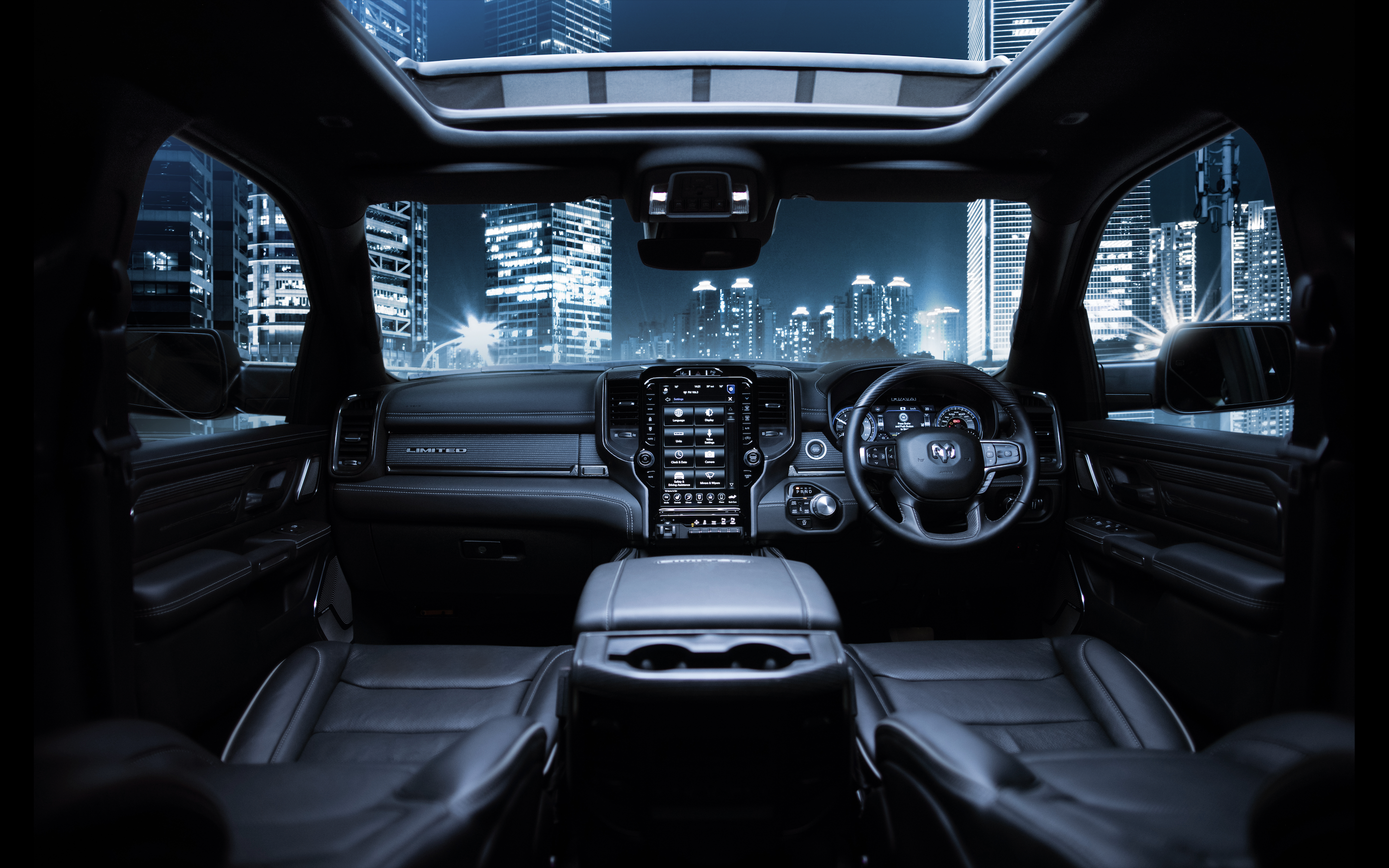
Features and specs
Depending on the model variant, standard features can differ greatly.
The entry-level 1500 Express Quad Cab gets as standard:
- A 3.5-inch dash
- Five-inch Uconnect infotainment touch screen display
- Two USB ports
- Six-speaker sound system
- Bluetooth
- Manually adjustable cloth seats
- Manual climate control
- Keyless entry
- A 7-inch digital dash
- 8.4-inch Uconnect infotainment touch screen display
- Apple Carplay and Android Auto
- Navigation
- Automatic dual-zone climate control
- Four USB Type-C ports
- Five USB ports
- Wireless charging
- Sliding floor console
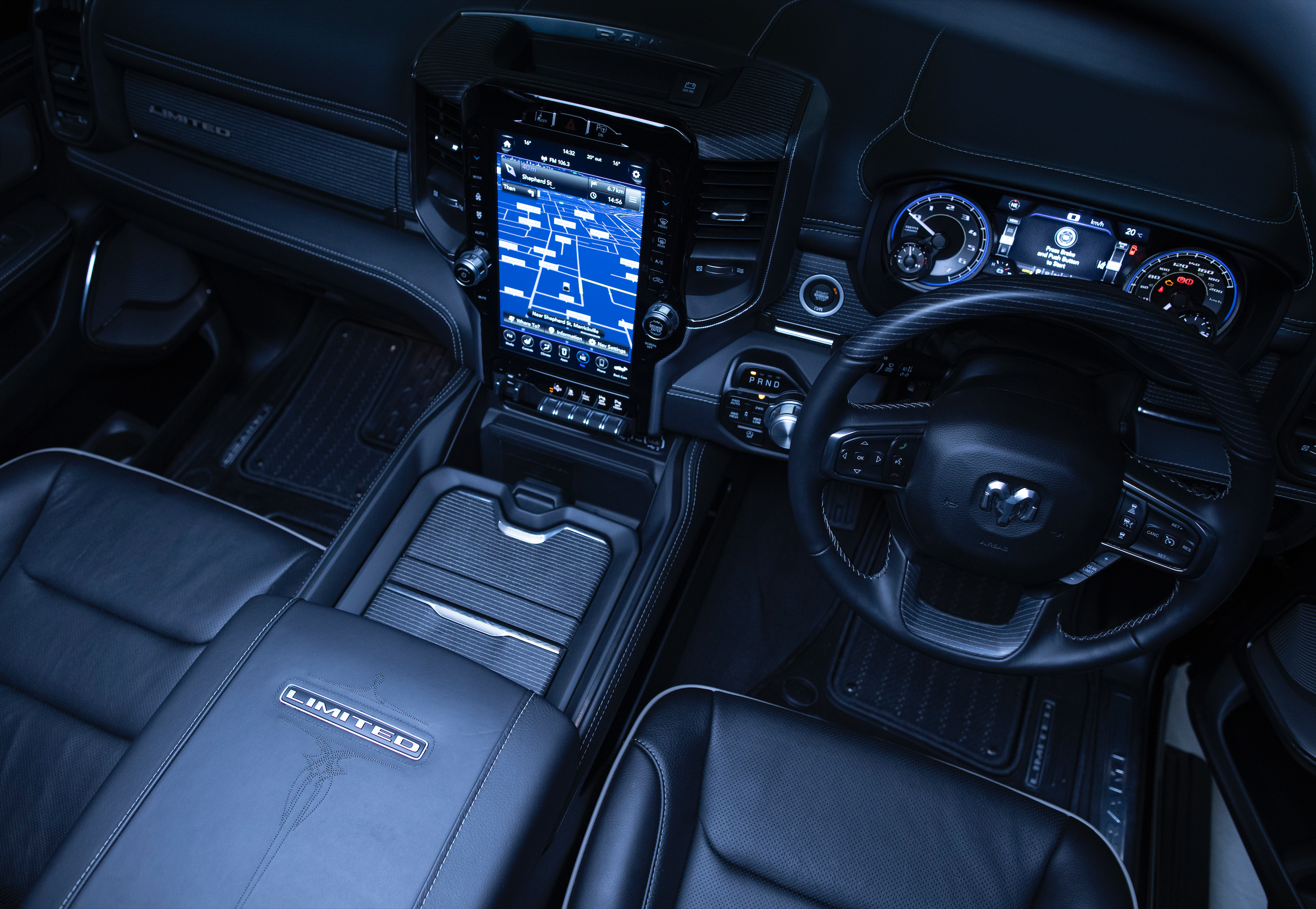
- 12-inch Uconnect infotainment touch screen display
- 19-speaker Harmon and Kardon stereo
- Partial leather interior
- Powered and heated front seats (also ventilated for 1500 Limited)
- Keyless entry and go
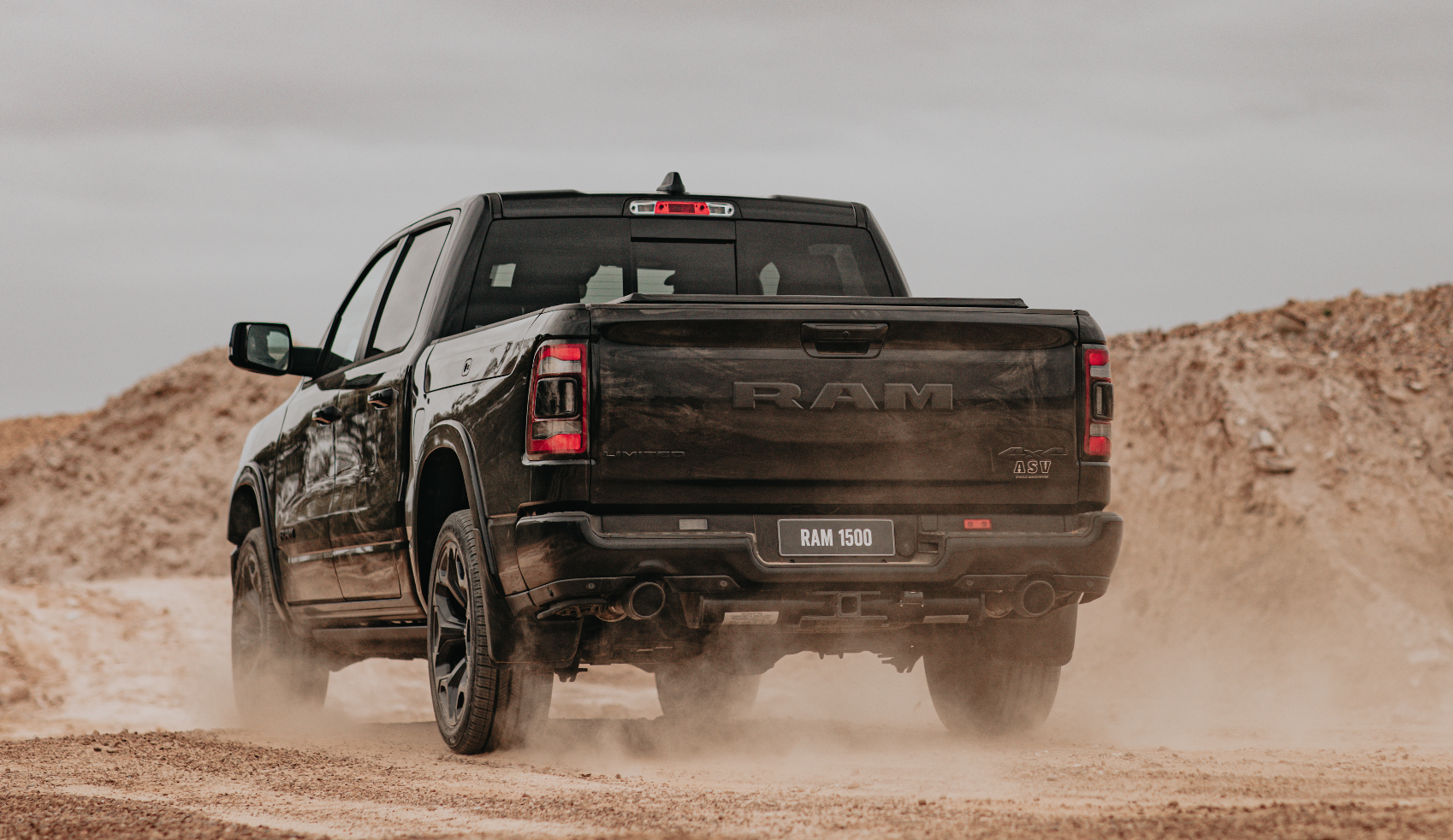
Powertrain and economy
All of the new RAM 1500 pick-ups feature the same naturally aspirated 5.7-litre HEMI V8 petrol engine.
The bent-eight motor produces 291kW and 556Nm, and also features cylinder deactivation to improve efficiency.
The range-topping 1500 DT Laramie variants are further bolstered by a 48V mild-hybrid system, which gives the pick-up added efficiency features like a start/stop function, short-term torque fill, and brake energy regeneration.
On the ADR combined-cycle, all variants return a fuel economy rating of 12.2L/100km.
Drive is sent to all four wheels through Chrysler’s 8-Speed Torqueflite automatic transmission, with the 1500 Express Quad Cab, 1500 Express Crew Cab, and 1500 Warlock II Crew Cab featuring 2WD high and 4WD high/low capability. Meanwhile the 1500 Laramie Crew Cab and 1500 Limited Crew Cab have 2WD high, 4WD auto, and 4WD high/low.
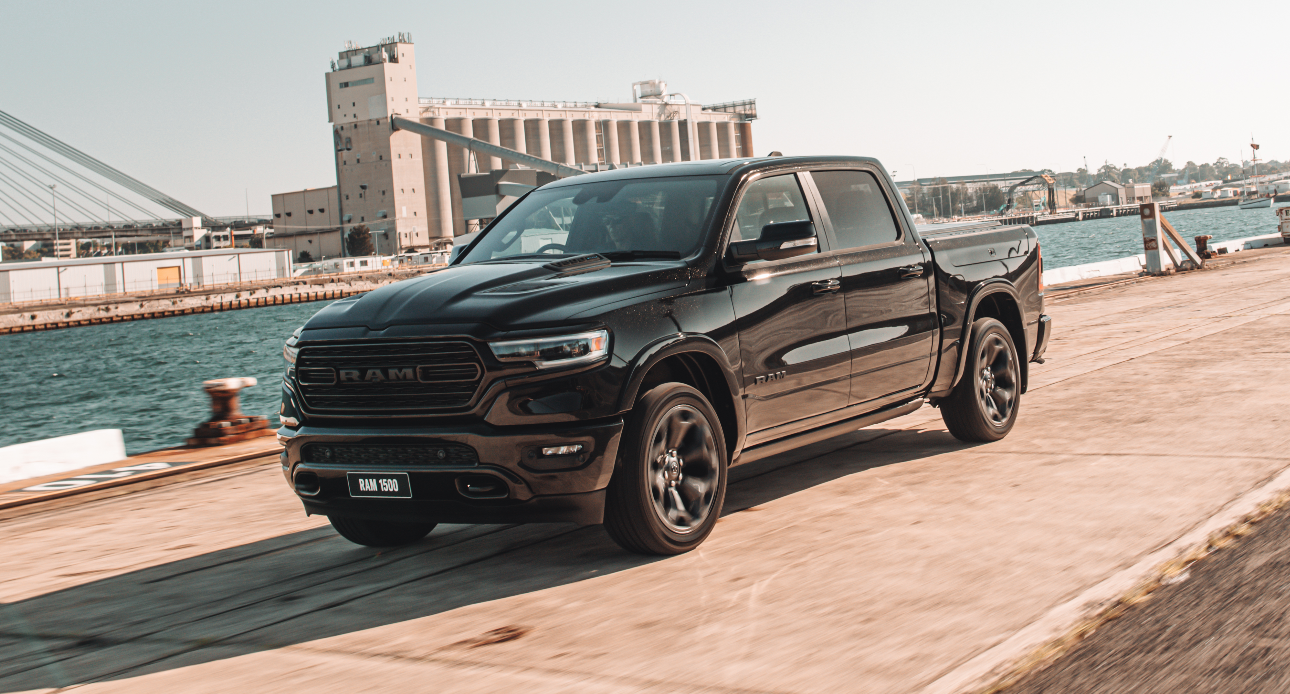
Dimensions and kerb weight
All trucks in the RAM 1500 range differ in size and weight, but only marginally.
The 1500 Express Quad Cab is 5833mm long, 2465mm wide, 1924mm tall, has a wheelbase measuring 3569mm, and weighs 2605 kilograms.
The 1500 Express Crew Cab is 5833mm long, 2465mm wide, 1917mm tall, has a wheelbase measuring 3569mm, and weighs 2620 kilograms.
The 1500 Warlock Crew Cab is 5850mm long, 2465mm wide, 1950mm tall, has a wheelbase measuring 3569mm, and weighs 2630 kilograms.
The 1500 Laramie Crew Cab is 5916mm long, 2474mm wide, 1971mm tall, has a wheelbase measuring 3672mm, and weighs 2617 kilograms (2671kg with Rambox).
The 1500 Limited Crew Cab is 5916mm long, 2474mm wide, 1972mm tall, has a wheelbase measuring 3672mm, and weighs 2749 kilograms.
Safety
The RAM 1500 is yet to be tested by ANCAP for an Australiasian safety rating.
However, the pick-up did receive a 2021 ‘Top Safety Pick’ from America’s Insurance Institute for Highway Safety (IIHS).
As for standard safety equipment, all variants benefit from stability control, ABS, traction control, electronic brakeforce distribution (EBD), trailer sway control, hill start assist, and a collapsible steering column, rear parking sensors, and a reversing camera.
Both the Laramie Crew Cab, when optioned with the aforementioned Driver Assistance Level 2 Package, and the Limited Crew Cab also get; front parking sensors, 360-degrees camera, blind-spot monitoring with rear cross-path and trailer detection, lane departure warning, pedestrian detection, forward collision warning, adaptive cruise control, and rain-sensing wipers.
Warranty and servicing
All RAM 1500s come with a three year/100,000 km warranty and three year/100,000km of Roadside Assist.
Service intervals are once every 12 months/12,000km. But RAM Australia doesn’t currently offer a servicing or capped-price servicing plan.
Availability
WhichCar has confirmed with RAM Australia that the 1500 range is on sale now across the country, with local deliveries already taking place.
We know what you’re thinking: “that C63 is going to spank the Lexus…”.
We know because we thought it too.
Indeed, on paper, this matchup looked set to be a blowout.
The Mercedes-AMG C63 S’ 375kW/700Nm massively outguns the Lexus RC F’s 351kW/530Nm outputs, but typical Melbourne cold and wet conditions at Heathcote mean anything can happen.
The C63 S, a car that’s hard enough to launch in the best conditions, also comes to the party fitted with hardcore circuit-oriented Michelin Pilot Super Sport tyres. The Lexus RC F, conversely, comes fitted with more road-focused Michelin Pilot Sport 4S tyres that should allow significantly more grip off the line in these averse conditions.
A full bore track mode race sees the C63 bog down as Andy struggles to manage the severely traction-limited German coupe. The Lexus, on the other hand, chirps away without fuss for a holeshot victory start.
A comfort mode street start didn’t improve the Mercedes-AMG’s tyre disadvantage, but it was soon clawing its way back once the back feet found their footing. The C63 S couldn’t quite reel in Dan’s RC F within the 400m drag race, crossing the line barely a car-length behind.
In the end, the powerful German couldn’t overcome its own might, finishing the day with a best 0-100km/h time of 5.7 seconds, compared to the Lexus’ best of 5.2 seconds.
There was little time split in the overall quarter-mile results, with the Lexus besting a 13.4 second pass, while the AMG managed 13.6 seconds. The results may well have been different if we ran the race a little longer; as the C63 S was gaining hard by the end of the sprint, clocking 189.7km/h at the trap, compared to the Lexus’ 177km/h.
It’s true what they say: power is nothing without control.
See the full video above, and subscribe to the MOTOR Youtube for more drag battles, comparisons and reviews!
Snapshot
- Available to order now
- Priced from $38,490
- Zero-star ANCAP safety rating
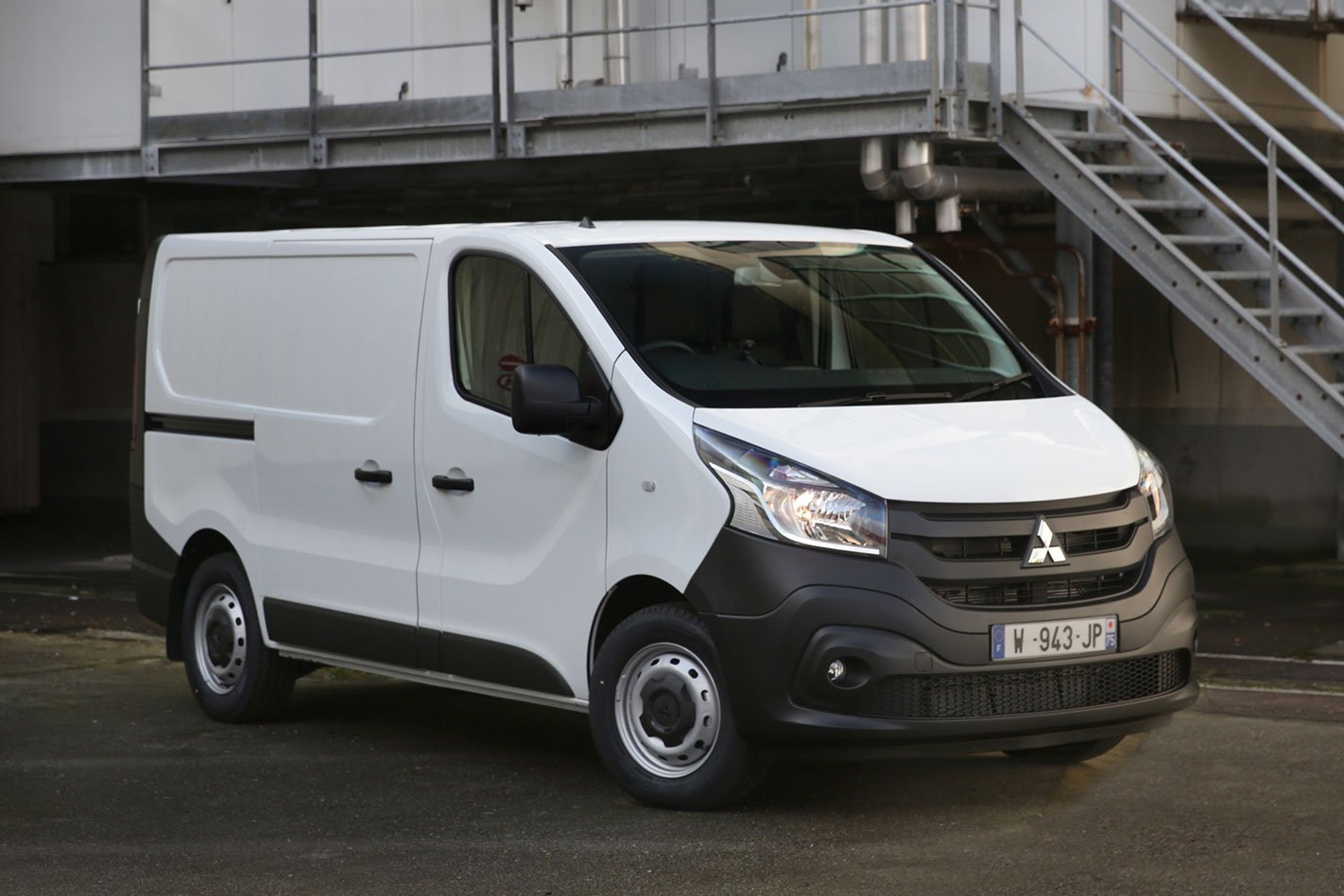
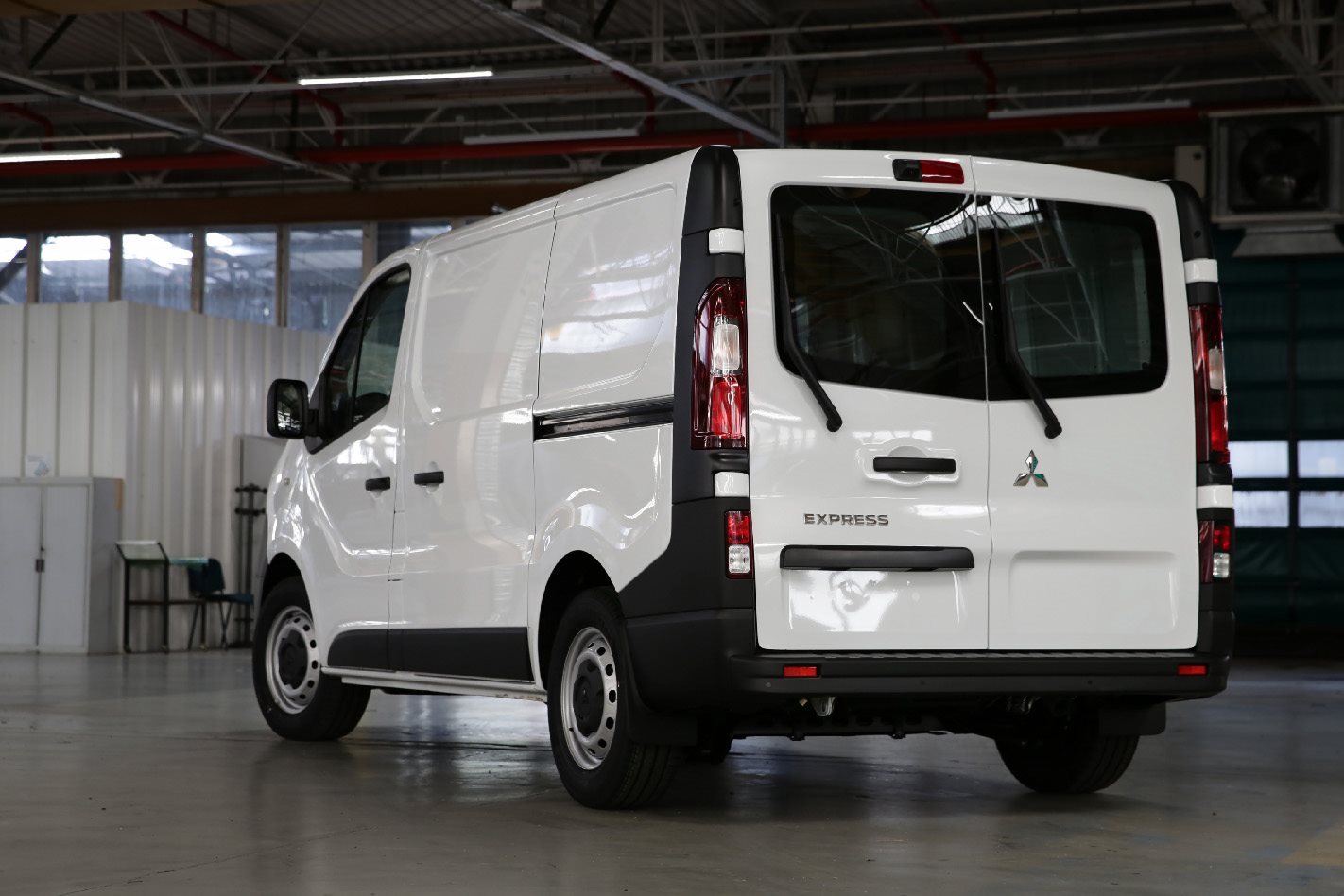
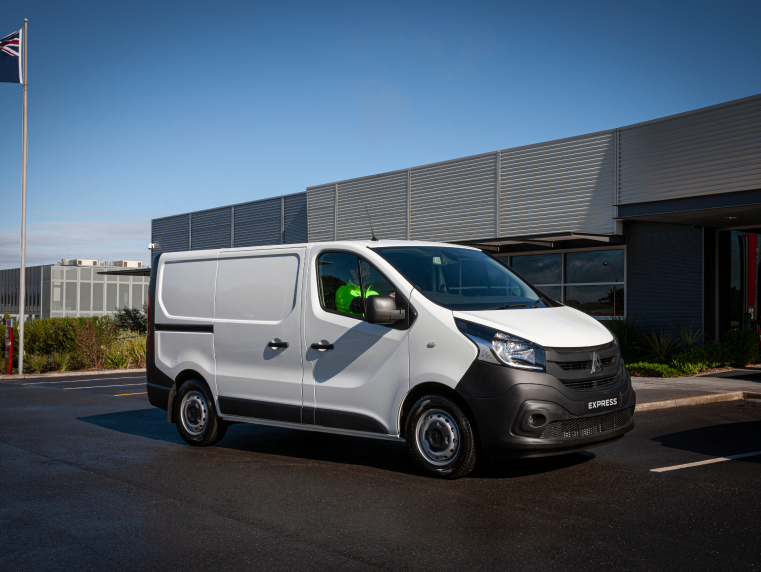
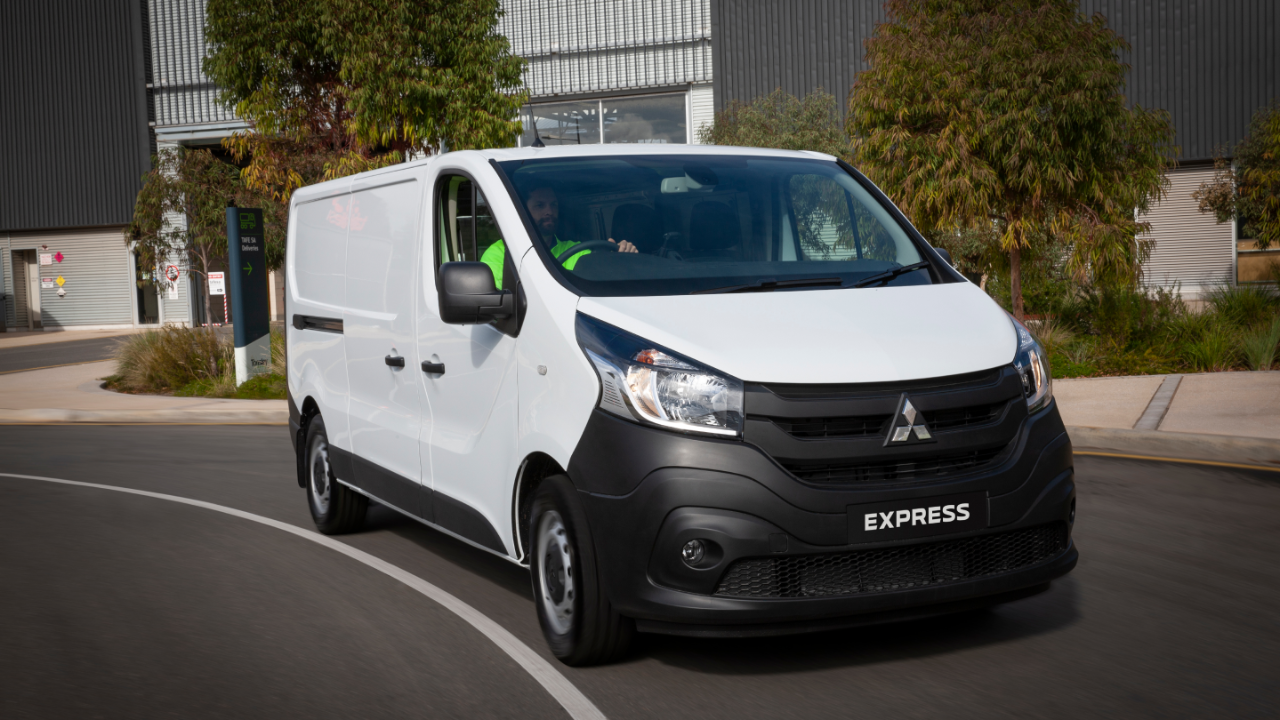
The 2022 Mitsubishi Express has received some new features and an increased sticker price for two variants as part of its model year update.
First released in Australia in March 2020, the Express is based on Renault’s third-generation Trafic – which has been in production since 2014.
The Franco-Japanese light commercial vehicle has been mostly well-received since its initial release last year, though this most recent update aims to remedy a few areas where the Express was lacking.
Engines and economy
The Mitsubishi Express range still comes with the choice of two engine and gearbox combinations.
The first is a twin-turbocharged 1.6-litre four-cylinder diesel motor, which is mated to a six-speed manual transmission.
Power is rated at 103kW and 340Nm, and on the ADR combined-cycle, the manual-equipped Express returns an average fuel economy rating of 6.2L/100km.
The second powertrain is a 2.0-litre four-cylinder turbo-diesel engine combined with an automatic six-speed dual-clutch transmission (DCT).
The larger capacity four-pot produces 125kW and 380Nm, but for the added power and weight gain of the bigger motor and auto box, economy is hampered slightly, with the auto Express achieving an ADR combined-cycle rating of 7.2L/100km.
Both the short wheelbase (SWB) and long wheelbase (LWB) variants come equipped with an 80-litre fuel tank, and power is exclusively to the van’s front wheels.
Model range and pricing
The Express can be had in six different variants (all prices are before on-road costs):
- Express 1.6 GLX SWB 6SP – $38,490
- Express 2.0 GLX SWB DCT – $43,490.00 (up $1000)
- Express 1.6 GLX LWB 6SP – $40,490
- Express 2.0 GLX LWB DCT – $45,490.00 (up $1000)
- Express 2.0 GLX+ LWB DCT (Tailgate) – $45,990.00
- Express 2.0 GLX+ LWB DCT – $45,990.00
Features
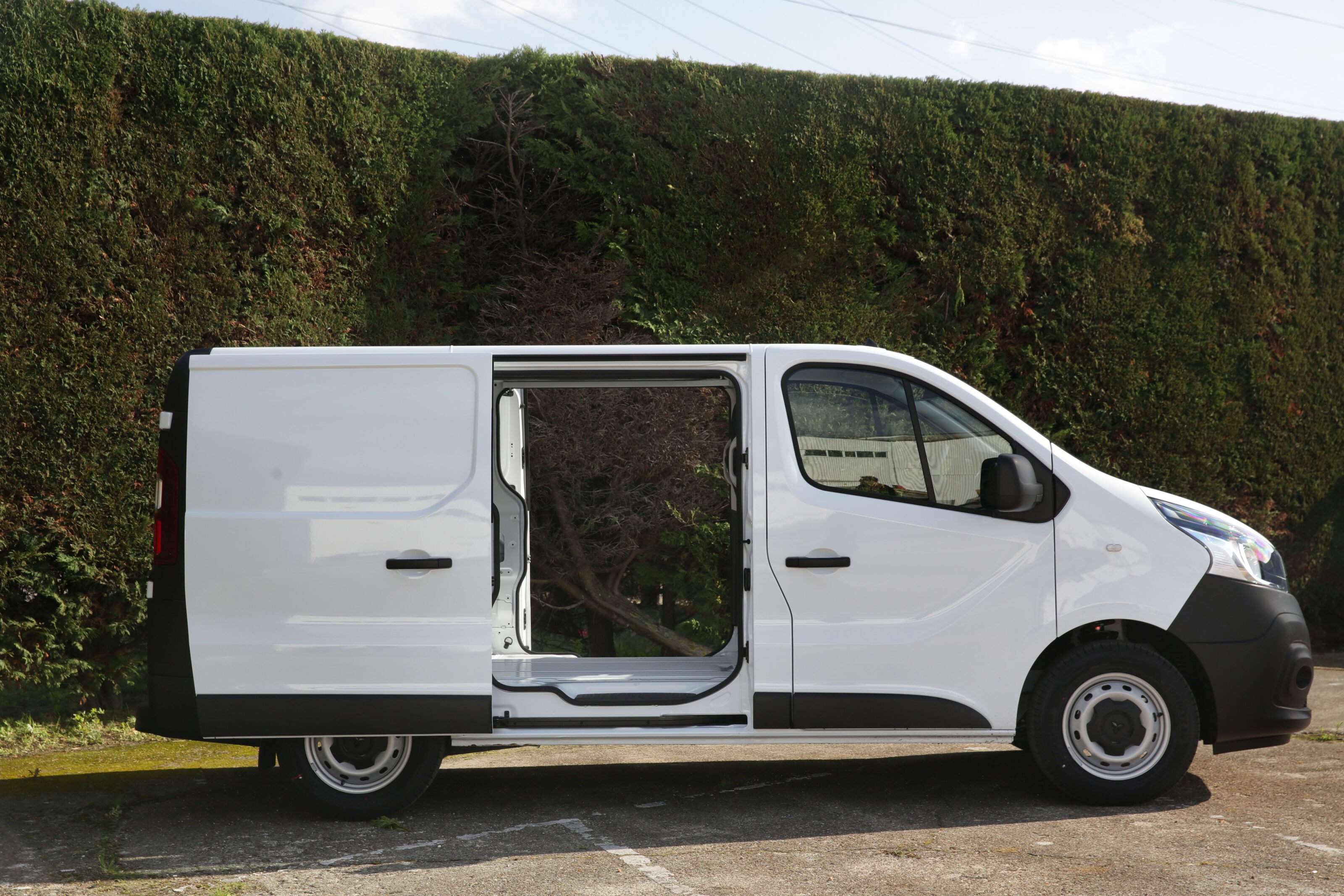
The 2022 Express has been fitted with new standard features that include:
- 7.0-inch multi-media display with satellite navigation
- Apple Car Play and Android Auto
- Reversing camera
- Rear parking sensor display
- Fold-down centre seat back (includes laptop storage, clipboard mount/storage and additional cup holder)
- Under-seat storage for passenger bench seat
- Full-length cargo bulkhead with window and trap door
- Interior trim panel on rear lower three quarter sidewall
- No-cost lift-up tailgate option
Dimensions
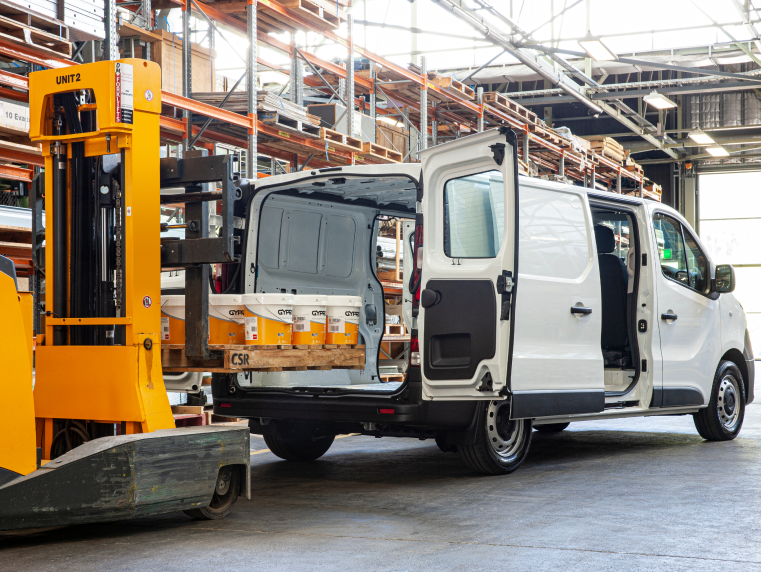
The Mitsubishi Express SWB is 4999mm long, 1956mm wide, 1971mm tall, and has a wheelbase measuring 3098mm.
The Mitsubishi Express LWB is 5399mm long, 1956mm wide, 1971mm tall, and has a wheelbase measuring 3498mm.
Safety
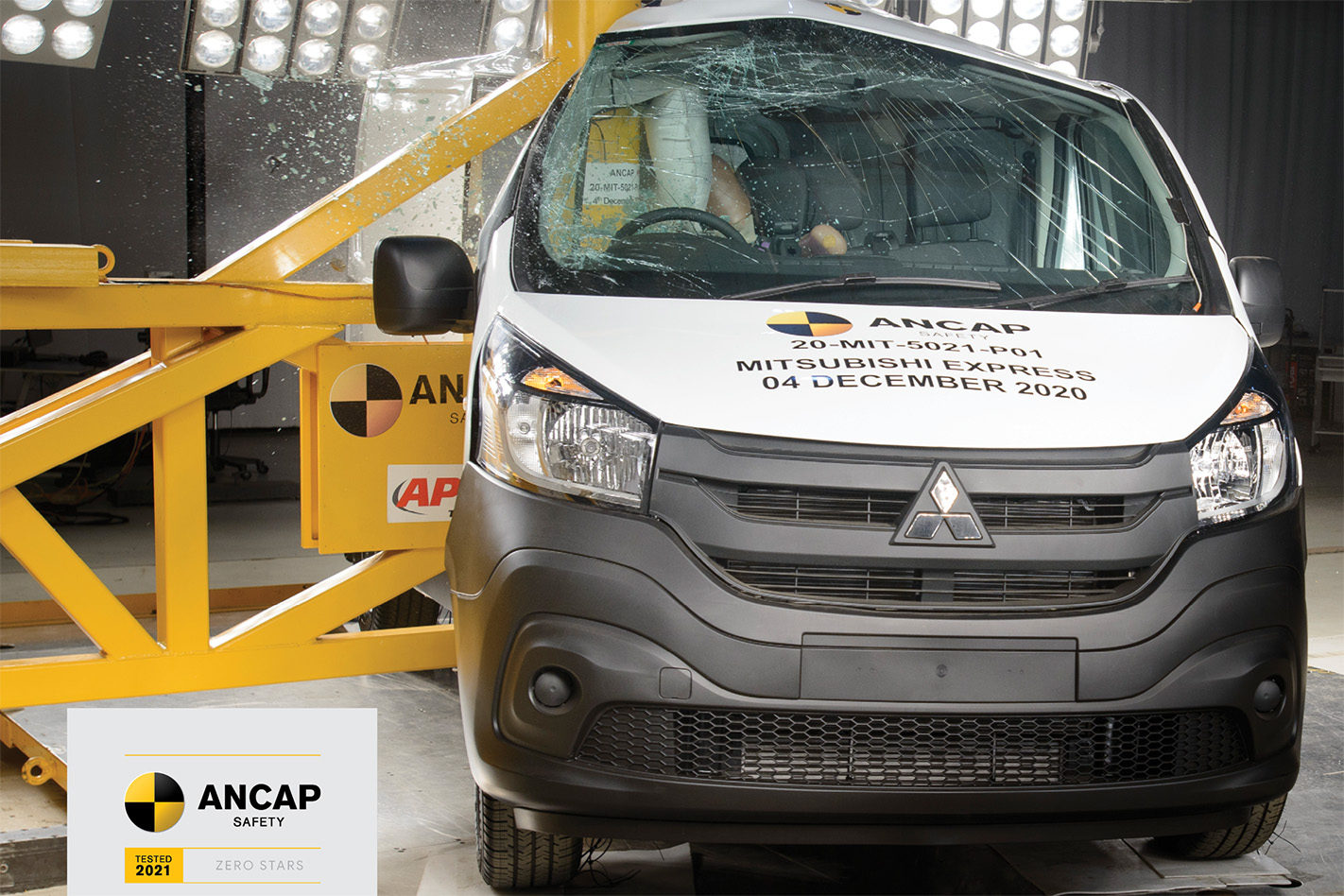
Perhaps the biggest let down of the Mitsubishi Express range is that it holds the rather unfortunate title of being the first car in history to receive a zero-star ANCAP safety rating.
This is mostly down to the Express not having advanced safety features such as autonomous emergency braking and lane-keep assist.
However, ANCAP also stated it was “below par” in other areas, receiving an adult protection rating of just 55 per cent and a rather dismal 40 per cent rating for other road users like cyclists and pedestrians.
Warranty and servicing
Like all of Mitsubishi’s line-up, the Express comes with a 10 year/200,000 km new car warranty, as long as the vehicle is serviced through the authorised Mitsubishi Motors Dealer Network.
A 10 year, annual capped price, servicing plan can also be purchased.
Availability
WhichCar has confirmed with Mitsubishi Australia that the 2022 Mitsubishi Express range is not yet in showrooms, but is available to order now.
IT IS commonly held that Melburnians will turn up to the opening of an envelope. Well, I’m here to tell you that the adage is holding true in these post-lockdown times, at least in the automotive community. Every show or race event I’ve attended since restrictions lifted has been oversubscribed.
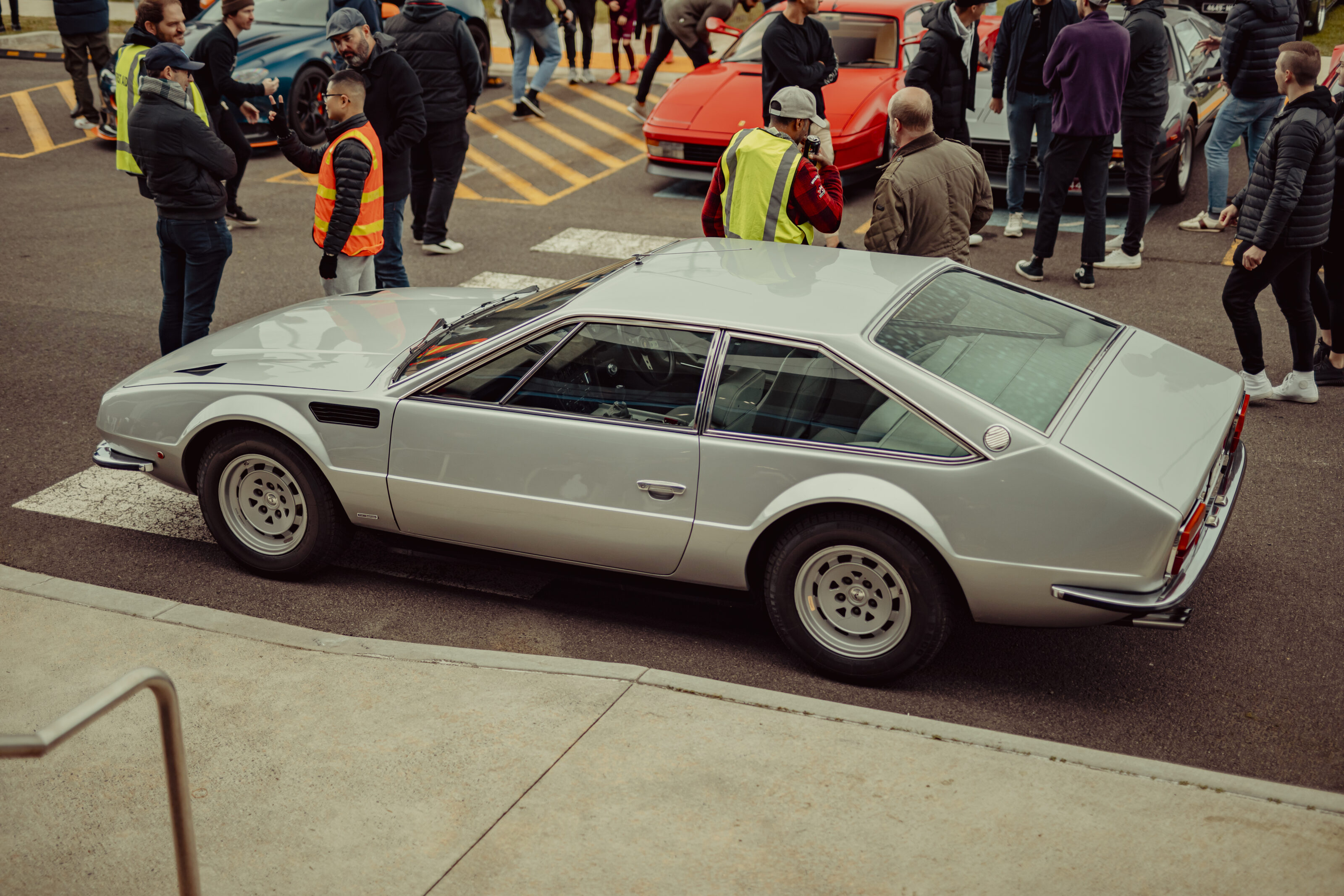
And so it was yesterday, at the sixth edition of the Highball Motor Club’s Cars & Coffee, held at Bosch headquarters in Clayton. Kicking off at 8am, the event was a four-hour, full-body immersion in the past 70 years or so of motoring history.
A stroll through Highball Cars & Coffee is like being run through an automotive version of the Infinite Improbability Drive dreamed up by Douglas Adams for The Hitchhiker’s Guide to the Galaxy. That is to say, the probability of encountering a type of car you’ve never seen before is very high.
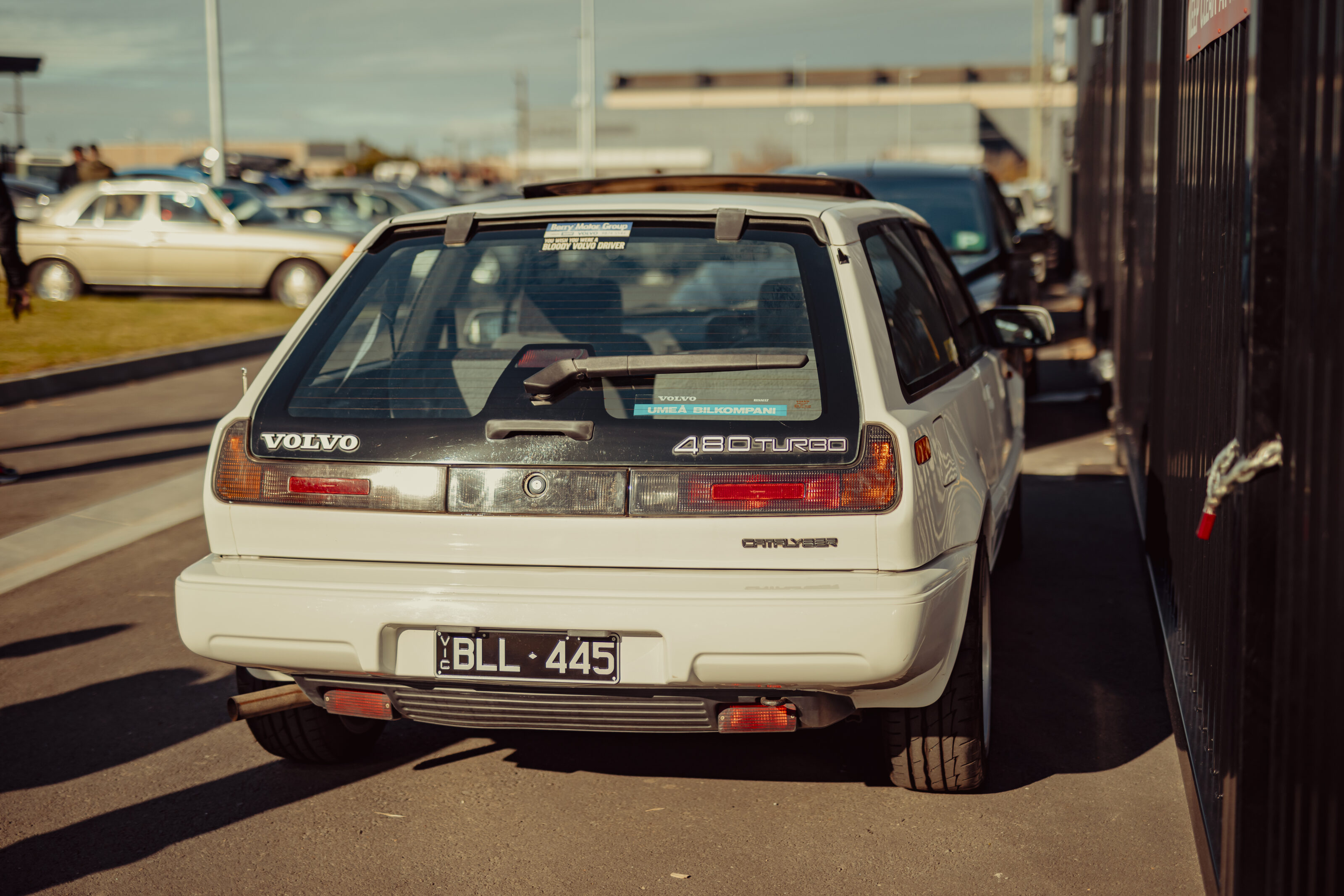
Take, for example, this Volvo 480 Turbo. Never sold new in Australia, I had never twigged to the car’s existence, let alone see one in the flesh.
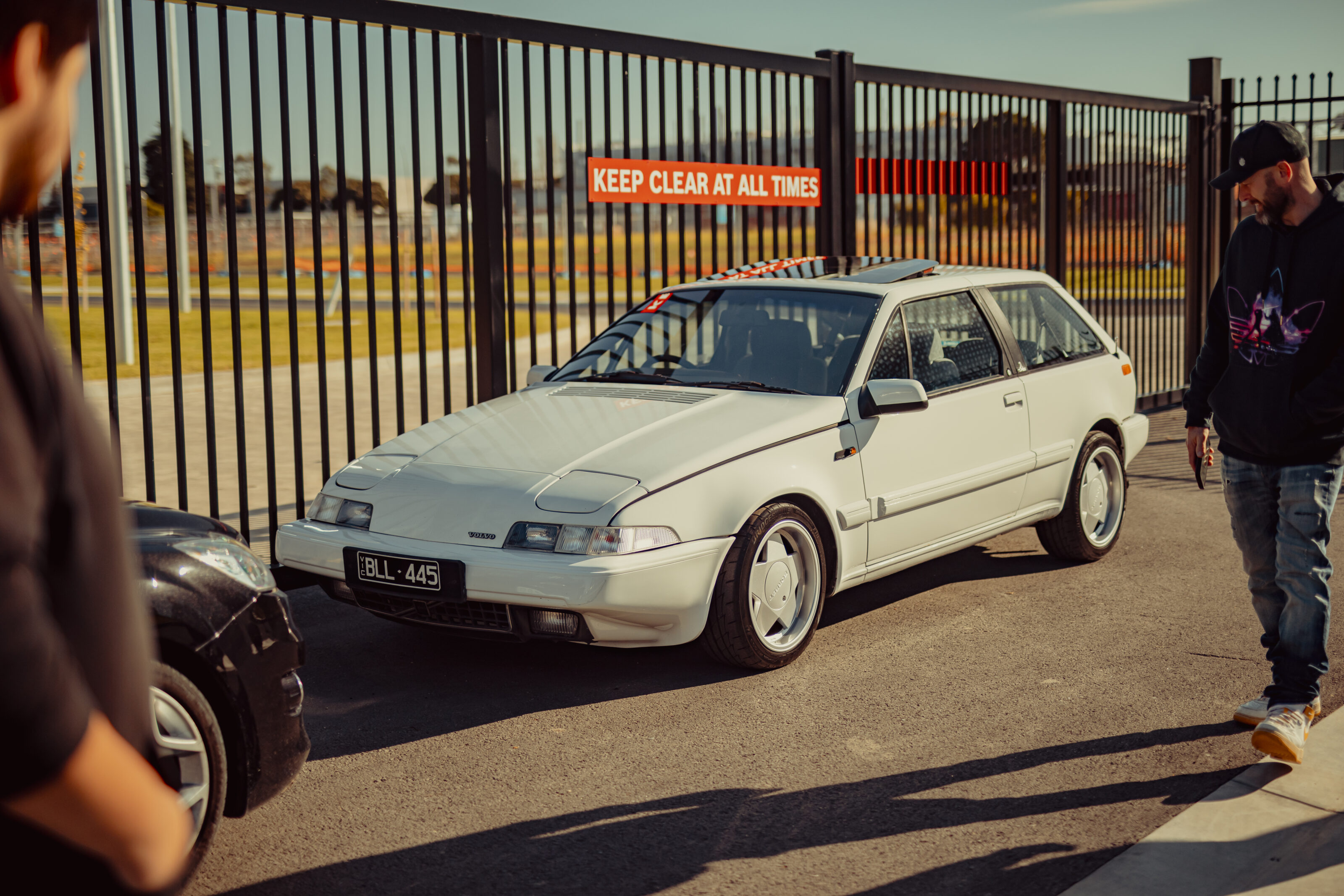
The first-ever front-wheel-drive Volvo, it was powered by a Renault-sourced four-pot and featured Lotus-tuned suspension. The 480 was one of Volvo’s regular, unsuccessful attempts to change its dowdy image.
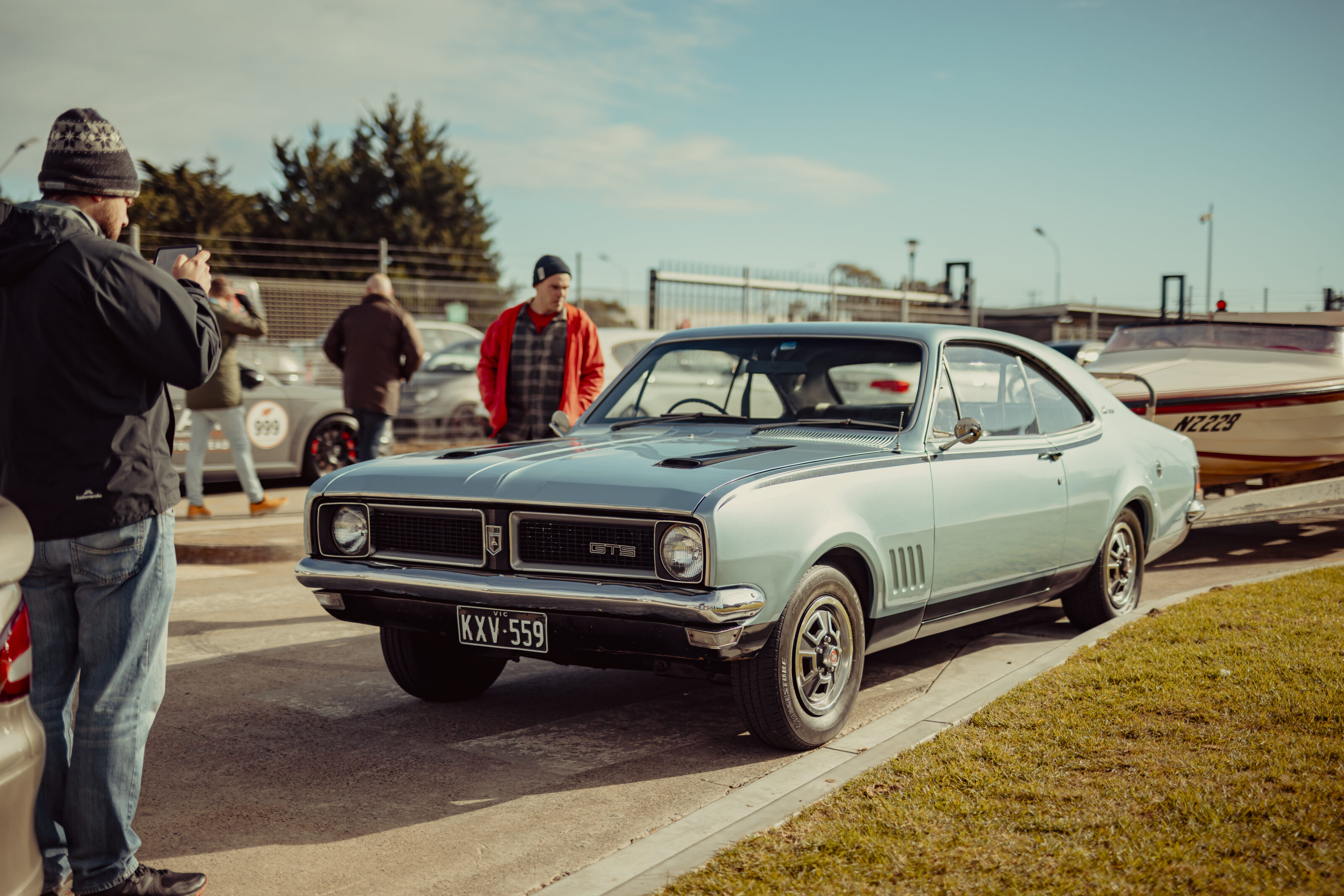
On the other hand, HG Holden GTS Monaros can be viewed at just about any street machine-type show. But towing a period-correct vintage speedboat? Not so much.
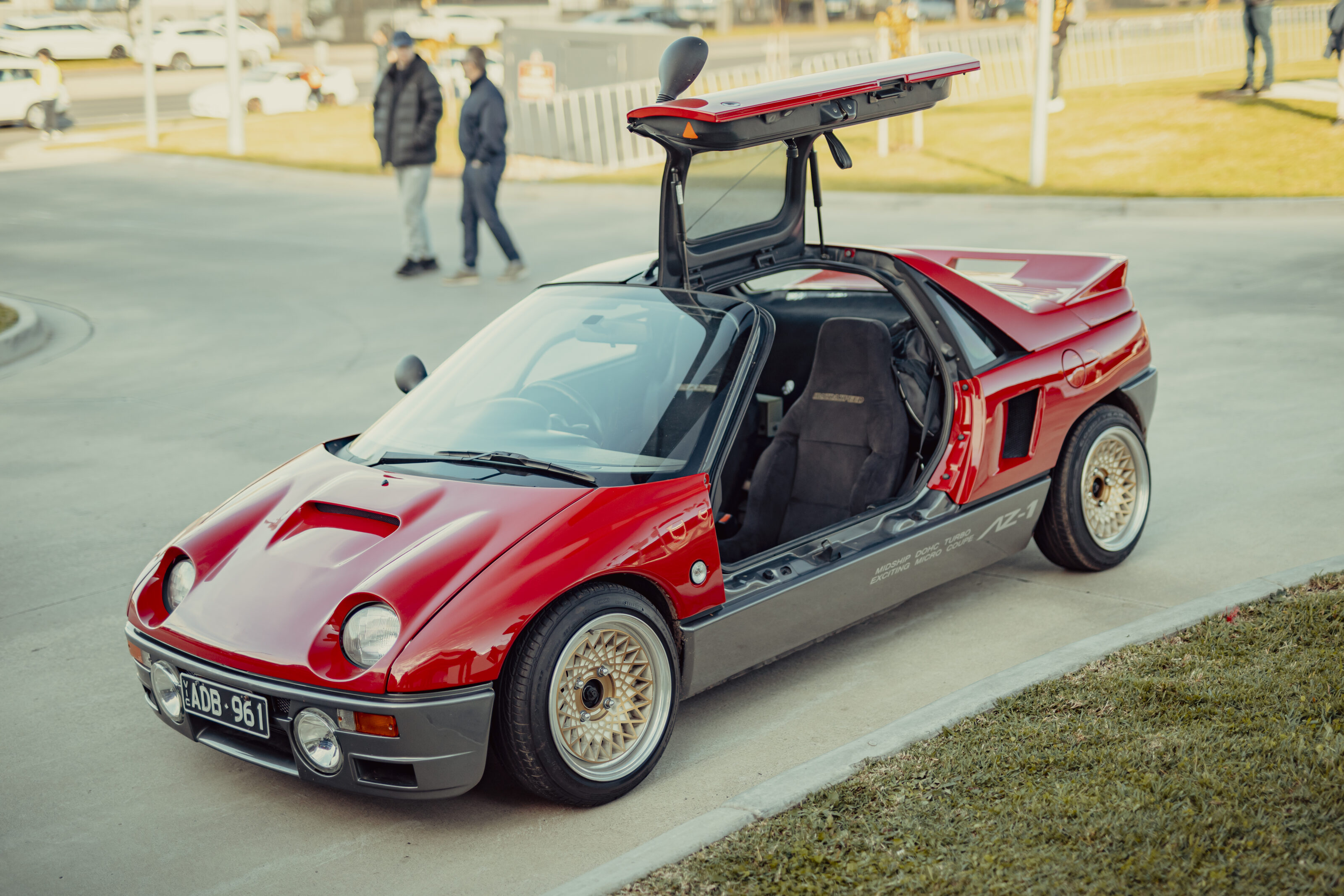
Okay, if you live in Melbourne, you are actually quite likely to see this Autozam AZ-1 out and about at various shows. However, the 657cc, mid-engined, gullwing-door Kei car is one of a tiny handful on the road Down Under, making every sighting of its irresistible cuteness a blessing.
The other side to the Highball event’s improbability is the juxtapositions you’ll be confronted with. Where else can you see a Lamborghini Aventador parked with a VL Commodore on one side and a hotted-up Mazda RX-3 on the other? It’s a beautiful thing, and totally in keeping with the Highball Car Club’s philosophy.
To quote their website: “The HMC prides itself in being vehicle agnostic, with two of the key prerequisites for membership being a love of the automotive and a very, very down-to-earth attitude. All members are equals regardless of whether their car costs $5000 or $500,000.”
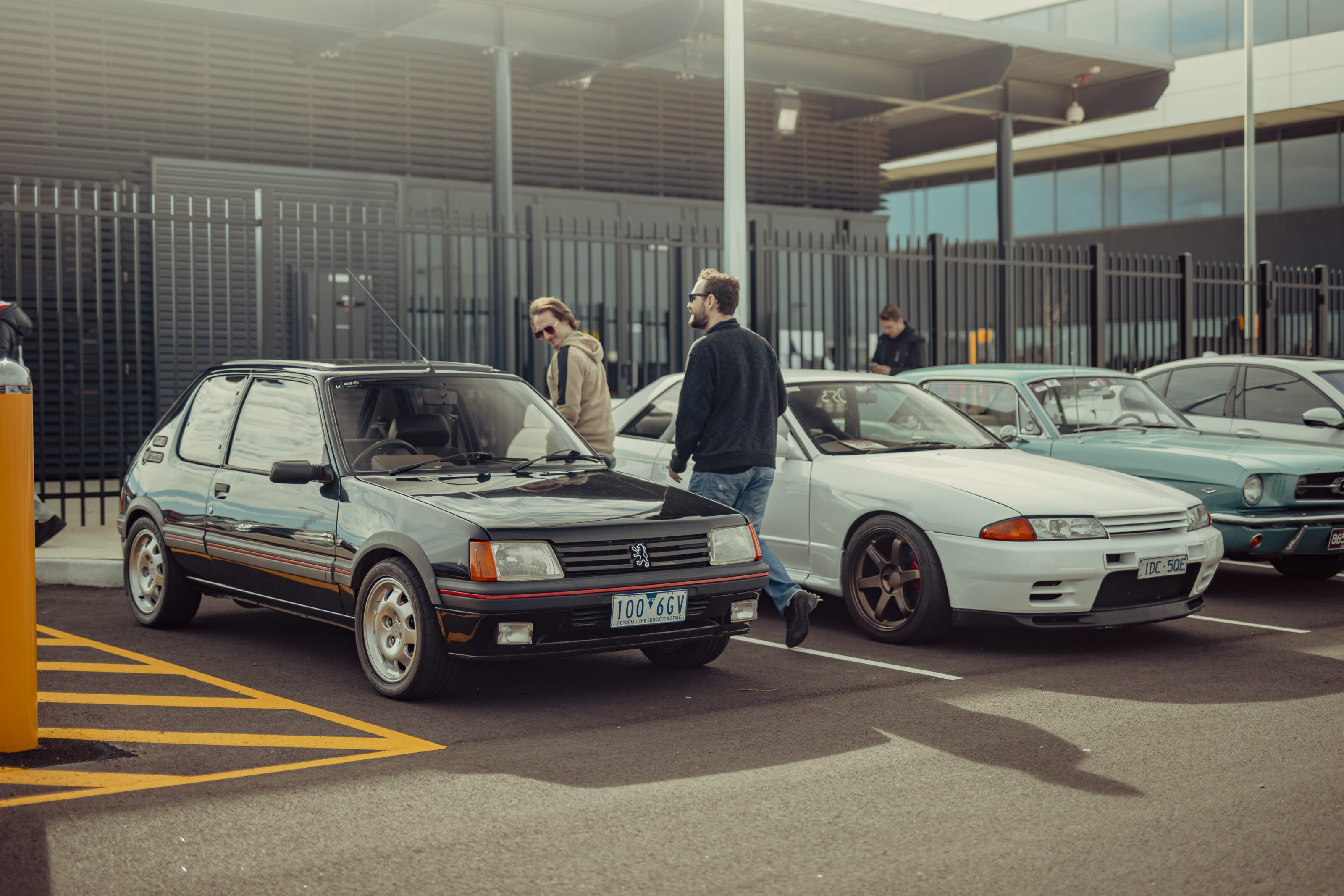
Entry to these shows is free! The HMC crew rattle the tin for donations to their charity partner, Goldie’s Angels, while the Bosch folks donate a portion of the funds raised through coffee and T-shirt sales as well. Sound like a good time? Keep an eye on the club’s Facebook page for the details on upcoming events.
Snapshot
- Three models from launch u2013u00a0GX-R, GR-S, and ZX
- Two powertrain options u2013u00a0a 3.3-litre turbo diesel V6 or a twin-turbocharged 3.5-litre V6 petrol engine
- Local deliveries not expected until end of 2021 at earliest
The 2021 Toyota LandCruiser 300 Series could be just weeks away from being officially unveiled, according to a series of leaked internal documents from Toyota South Africa.
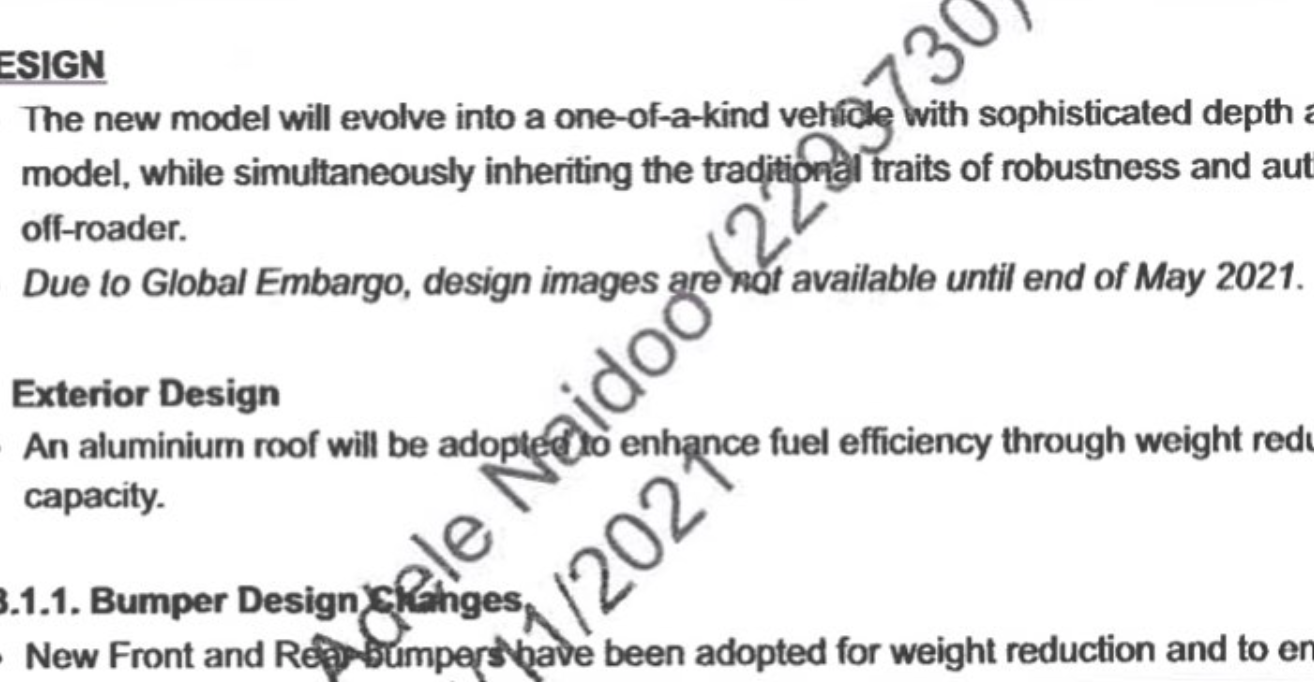
Posted on Instagram, one of the confidential documents read: “Due to Global Embargo, design images are not available until the end of May 2021.”
The leaked internal papers also gave us more information about the lengths Toyota has gone to ensure its next-gen LandCruiser is more efficient, stating an aluminium roof has been employed in the SUV’s construction to reduce weight and improve fuel economy.
It isn’t just the roof that’s received the lightweight treatment either, with the paper saying newly designed front and rear bumpers have been utilised to drop the kilos as well.
It’s also been revealed, for the South African market at least, the 300 Series will be available in three different variants – GX-R, GR-S, and ZX.
The GX-R is expected to serve as the entry-level model for the new LandCruiser range and will only be available with a diesel powertrain.
The GR-S is thought to be an off-road-tuned variant from Toyota’s in-house performance arm, Gazoo Racing, and will be available with either a petrol or diesel engine.
Sitting at the top of the range is the ZX, which will likely be badged as a Sahara when it reaches Aussie shores.
Like the GR-S, the ZX will come equipped with either a petrol or diesel-powered motor, and it’s believed all variants, regardless of engine, will send power through a 10-speed automatic transmission.
As for the engines themselves, nothing is concrete, but it’s believed buyers will have the choice of a 3.3-litre turbo diesel V6 producing 228kW and 690Nm, or a twin-turbocharged 3.5-litre V6 petrol engine with 310kW and 590Nm.
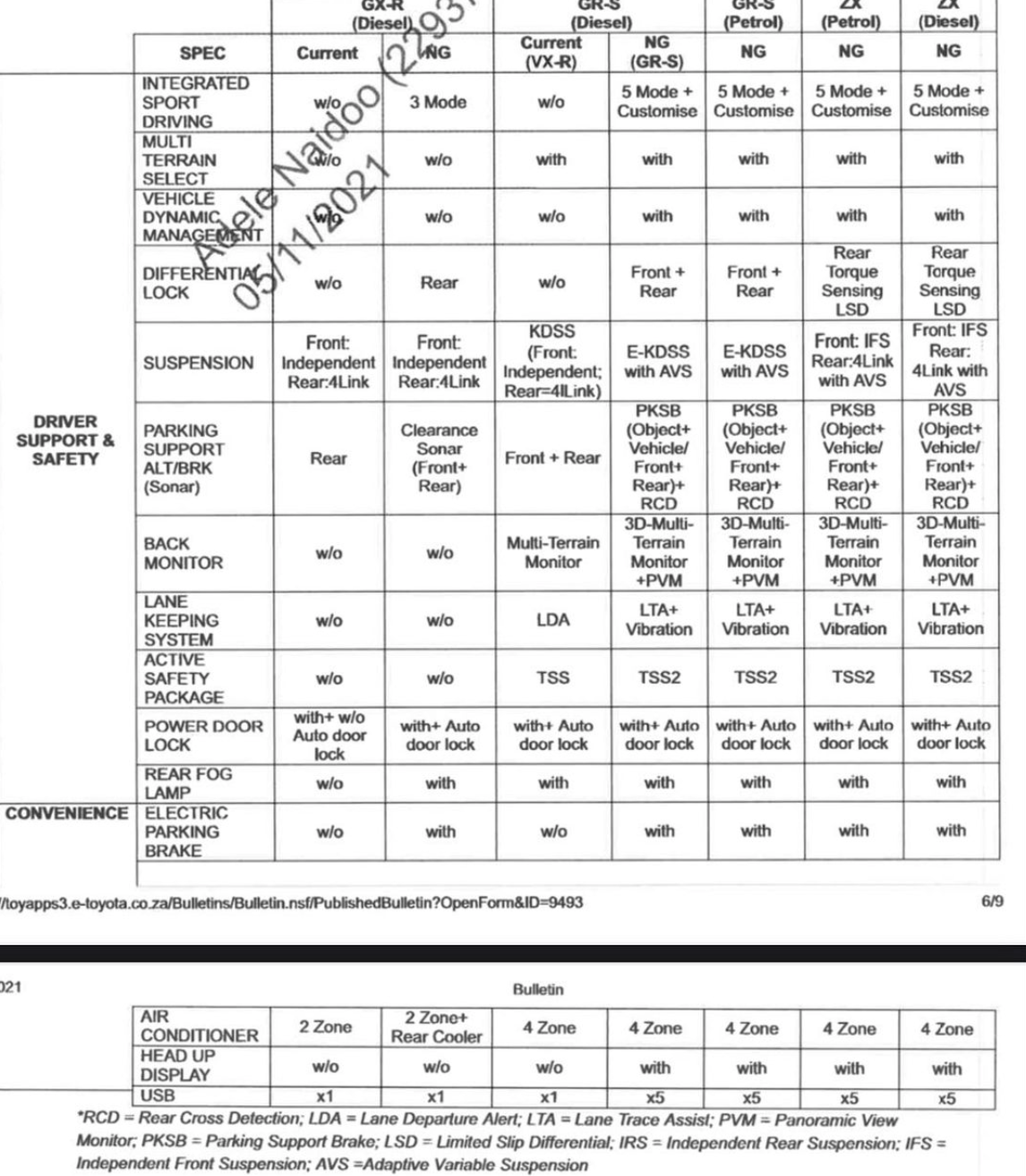
The leaked documents also outline the different suspension which will be used for the new 300 Series range.
Both the GX-R and the ZX will utilise an independent front and four-link rear suspension set-up.
The ZX will also receive the Japanese marque’s complex Adaptive Variable Suspension (AVS), which electronically adjusts the SUV’s dampers to suit terrain conditions.
In addition to independent front and four-link rear suspension, the Gazoo Racing-tuned GR-S will score a tougher off-road set-up which also employs the next-generation of Toyota’s Kinetic Dynamic Suspension System (KDSS).
Called EKDSS for the 300 Series, it’s thought this new version of KDSS will ditch hydraulic assistance in favour of electricity to adjust the car’s front and rear anti-roll bars.
The GX-R will get a locking rear differential, while the GR-S will have locking diffs over the front and rear axles, and the ZX will be fitted with a rear-mounted, torque-sensing limited-slip diff.
Just three selectable driving modes will be possible in the base GX-R, while the GR-S and ZX will benefit from five adjustable driving modes as well as a personal customisation option and multi-terrain select.
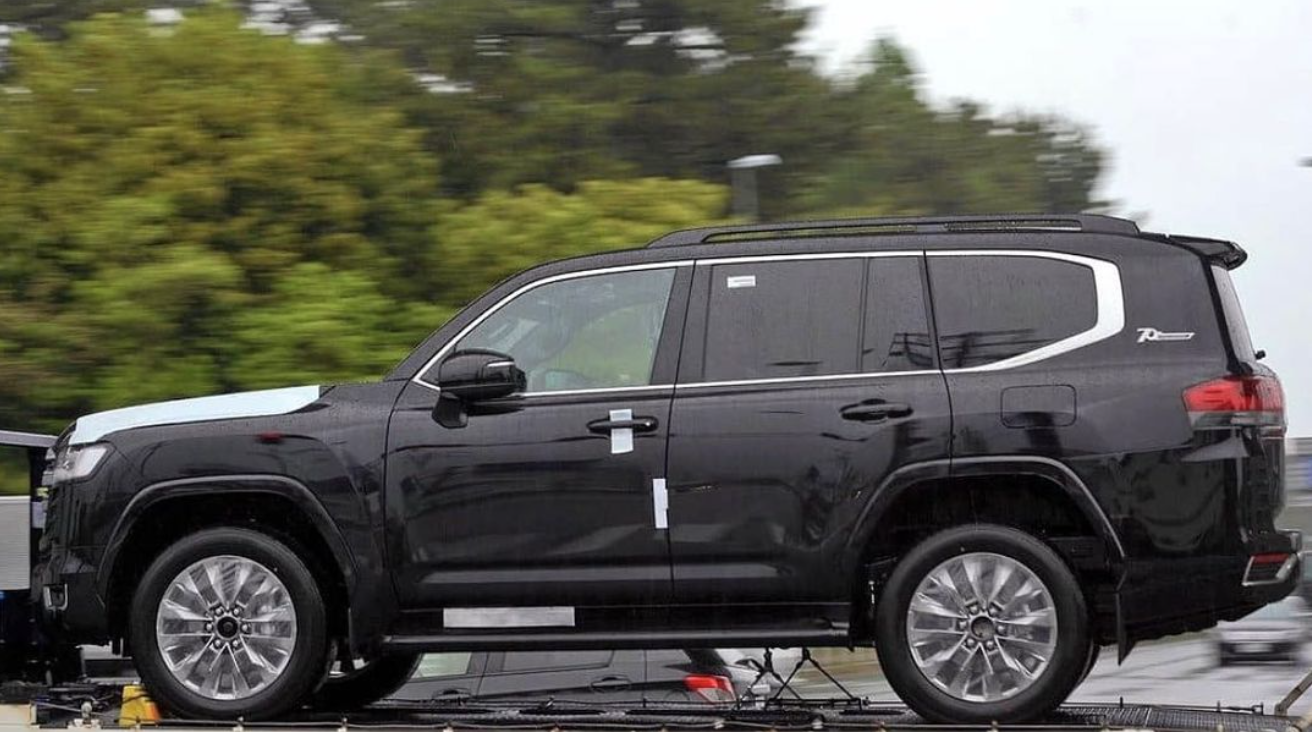
Details about the new SUV’s appearance were also revealed, with the ZX sitting on bespoke 20-inch wheels, silver metal-plated side mirror caps, illuminated side steps, and a chrome and silver metal grille.
The sportier GR-S will sit on smaller, 18-inch off-road wheels and will feature blacked-out accents such as the mirror caps and door handles, as well as a bespoke GR grille and GR side steps.
Inside, both the ZX and the GR-S will come with a ‘3D-Multi-Terrain Monitor’ system which includes a 360-degrees parking camera, four-zone climate control, five USB ports, and a head-up display.
The middle and top-shelf LandCruisers will also be fitted with a suite of the Aichi firm’s latest safety features such as Toyota Safety Sense 2.0 (TSS 2.0) and lane tracing assist (LTA).
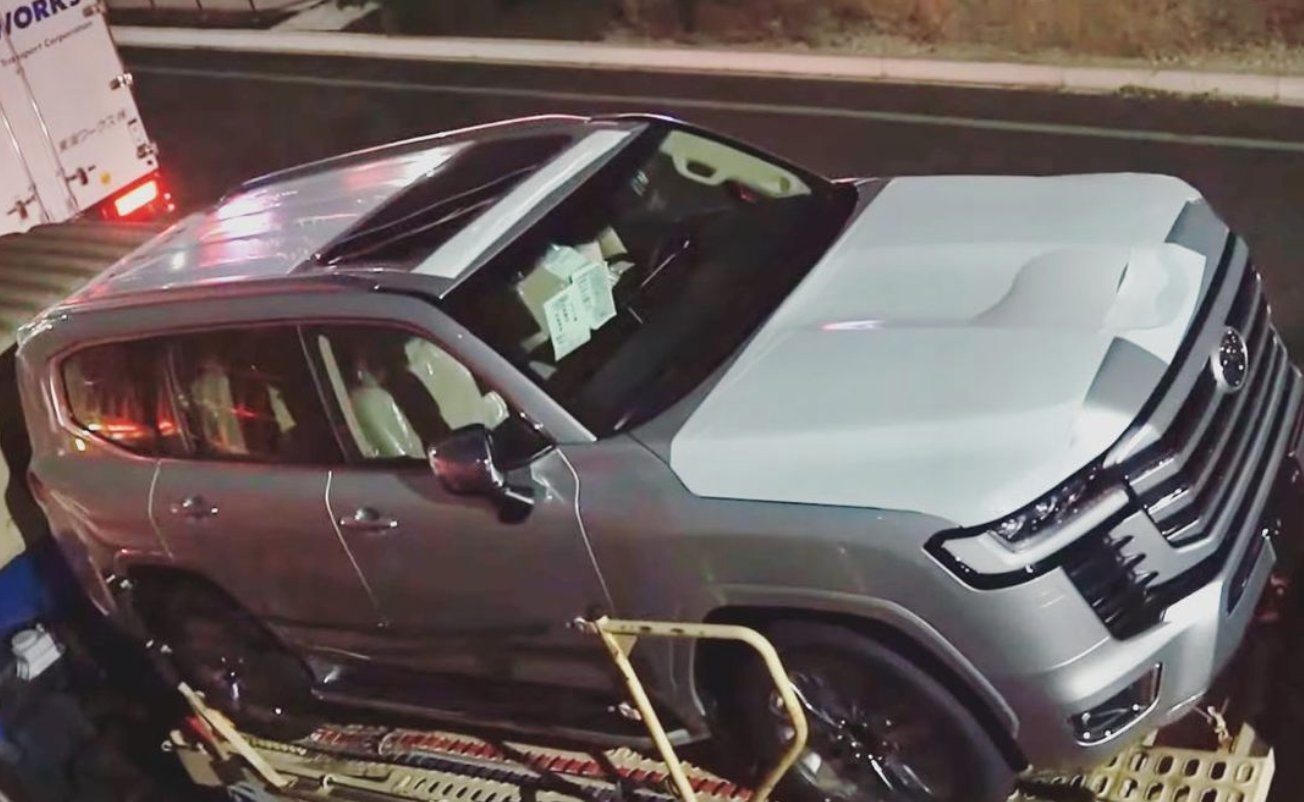
While the reveal of the 2021 Toyota LandCruiser 300 Series would appear to be imminent, there’s still a lot of information to be confirmed, such as local pricing, features, and model range.
It’s understood Aussie buyers may not be able to get their hands on the new SUV until the end of 2021 or even early 2022.
WhichCar has contacted Toyota Australia for comment.
Snapshot
- ES 250 ditches hybrid assistance and scores eight-speed auto
- New Lexus ES due to arrive in Australia in August
- Prices and specifications still to be confirmed
The 2021 Lexus ES 250 has been announced as the latest local offering in the Japanese automaker’s popular ES four-door sedan range.
The seventh-generation ES, which received a significant refresh just last month, has previously only been available in Australia in 300h guise, utilising a hybrid-electric drivetrain combining a naturally aspirated 2.5-litre four-cylinder petrol engine with an electric motor and CVT transmission.
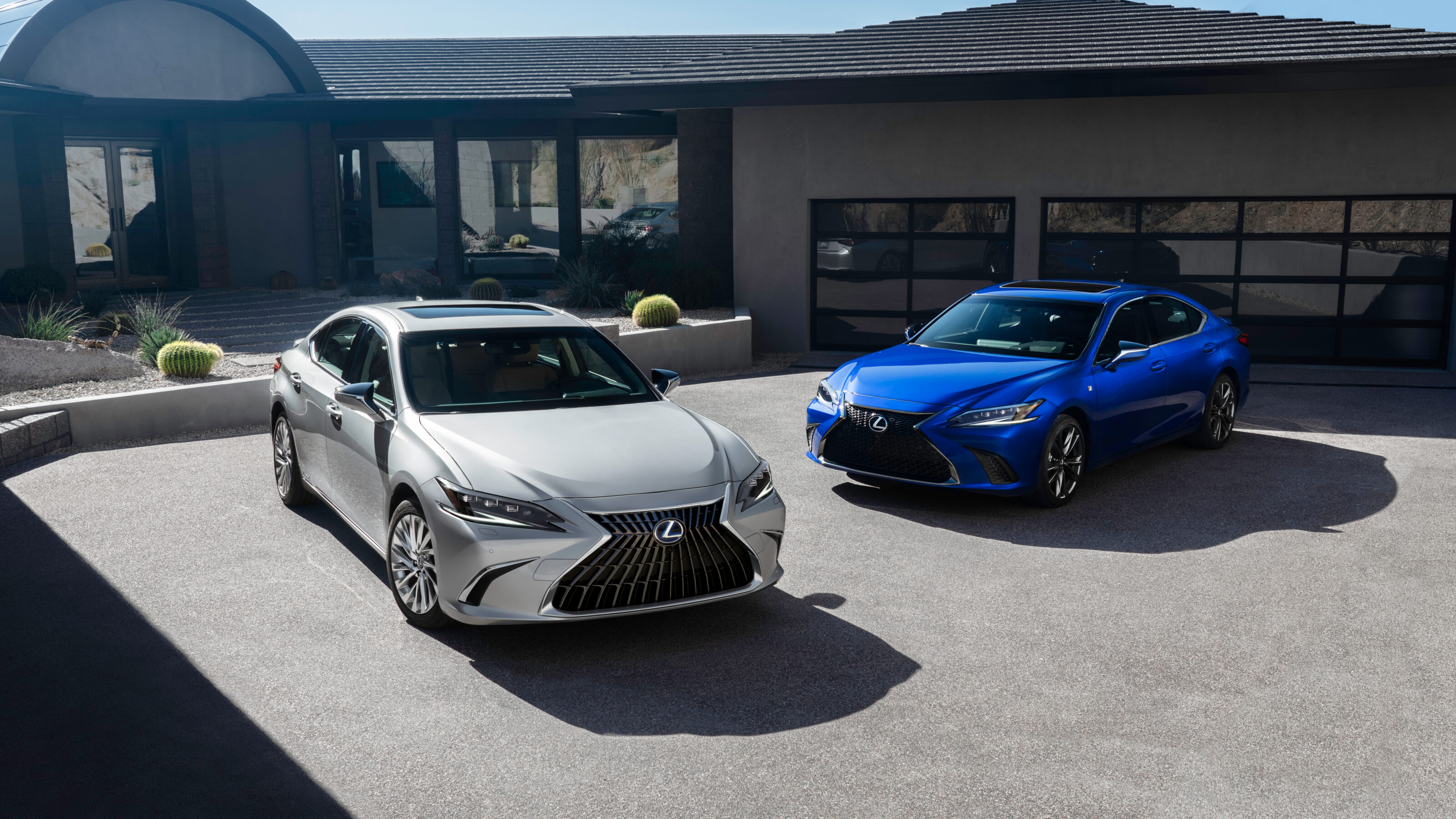
The new ES 250 will be powered by a similar variant of the N/A 2.5-litre four-pot, but will do away with the hybrid assistance and also score an eight-speed torque converter automatic transmission instead of the CVT.
Power is rated at 152kW and 243Nm, and Lexus claims the eight-speed box will have both shorter first gear and taller final gear ratios, which is said to improve acceleration off the line and bolster refinement at higher speeds.
Ditching the hybrid assistance also means the ES 250 will tip the scales at 60 kilograms lighter than its hybridised sibling, and although official figures are yet to be revealed, this could mean the 250’s kerb weight will duck under the 1700kg mark.
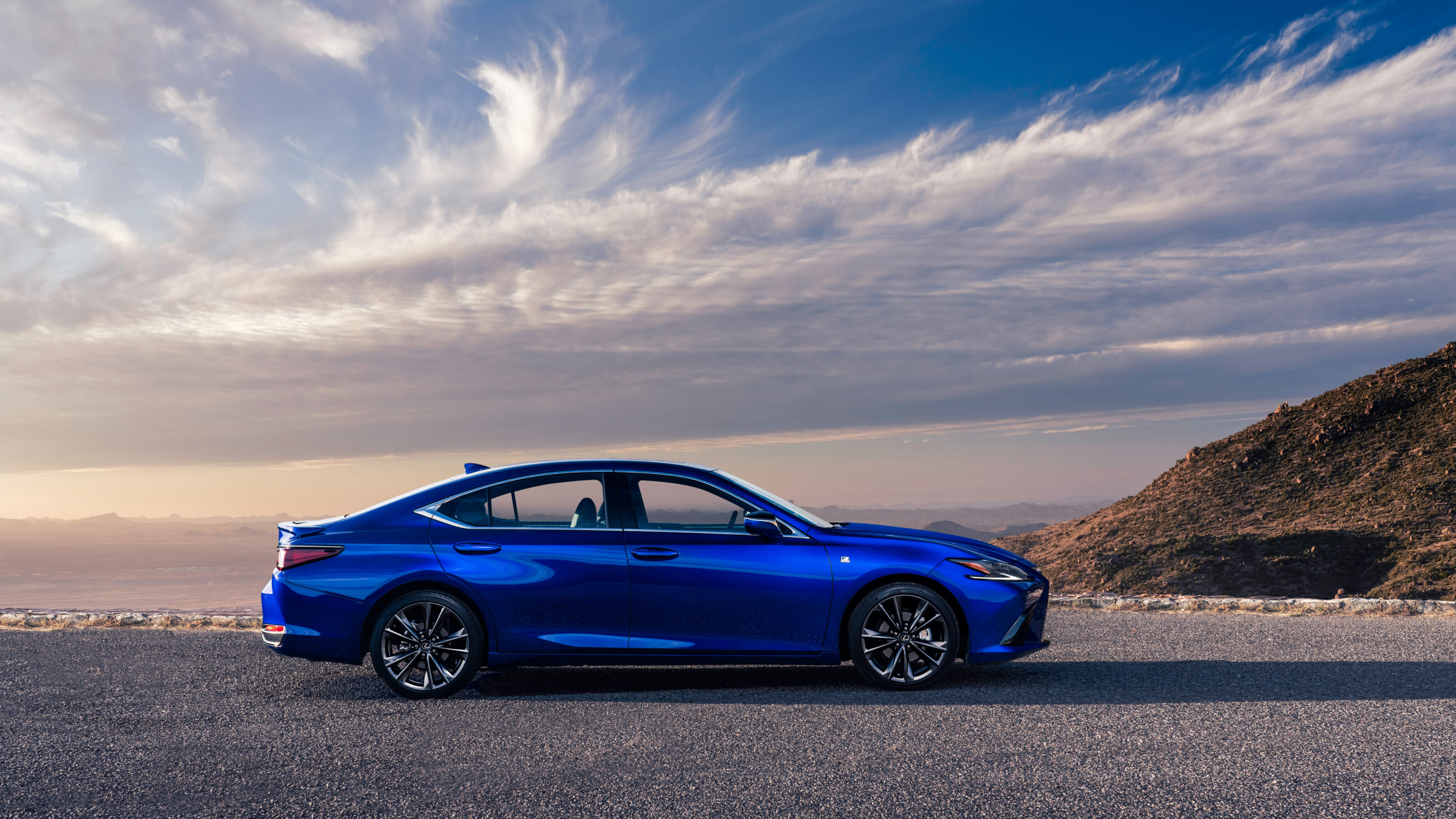
The 250 will come in two different iterations – Luxury and F Sport. Both variants will also be available with an Enhancement Pack.
The entry-level sedan will also come equipped with the same raft of new features first debuted last month when the updated model was unveiled.
This includes Lexus Connected Services, Lexus Safety System+, and BladeScan adaptive high-beam assist for the F Sport and Sports Luxury variants.
Local pricing and specifications have yet to be unveiled for the updated Lexus ES range, with a spokesperson from the Japanese automaker’s Aussie arm telling WhichCar details will be confirmed closer to the sedan’s local launch in August 2021.
Snapshot
- Updated looks include redesigned front and rear bumper
- New wheels for both X3 and iX3 also leaked
- Updated models could launch in Australia before the end of 2021
Images of BMW’s updated 2022 X3 mid-size SUV and its all-electric sibling, the iX3, have been accidentally leaked just weeks before the expected official unveiling.
The inadvertent spill came from the Chinese Government’s Ministry of Industry and Information Technology – with the images published on the department’s own website.
They’ve subsequently been deleted, but not before the photos, appearing to show both the X3 and iX3 sporting mild exterior styling tweaks, were shared on a number of other sites.
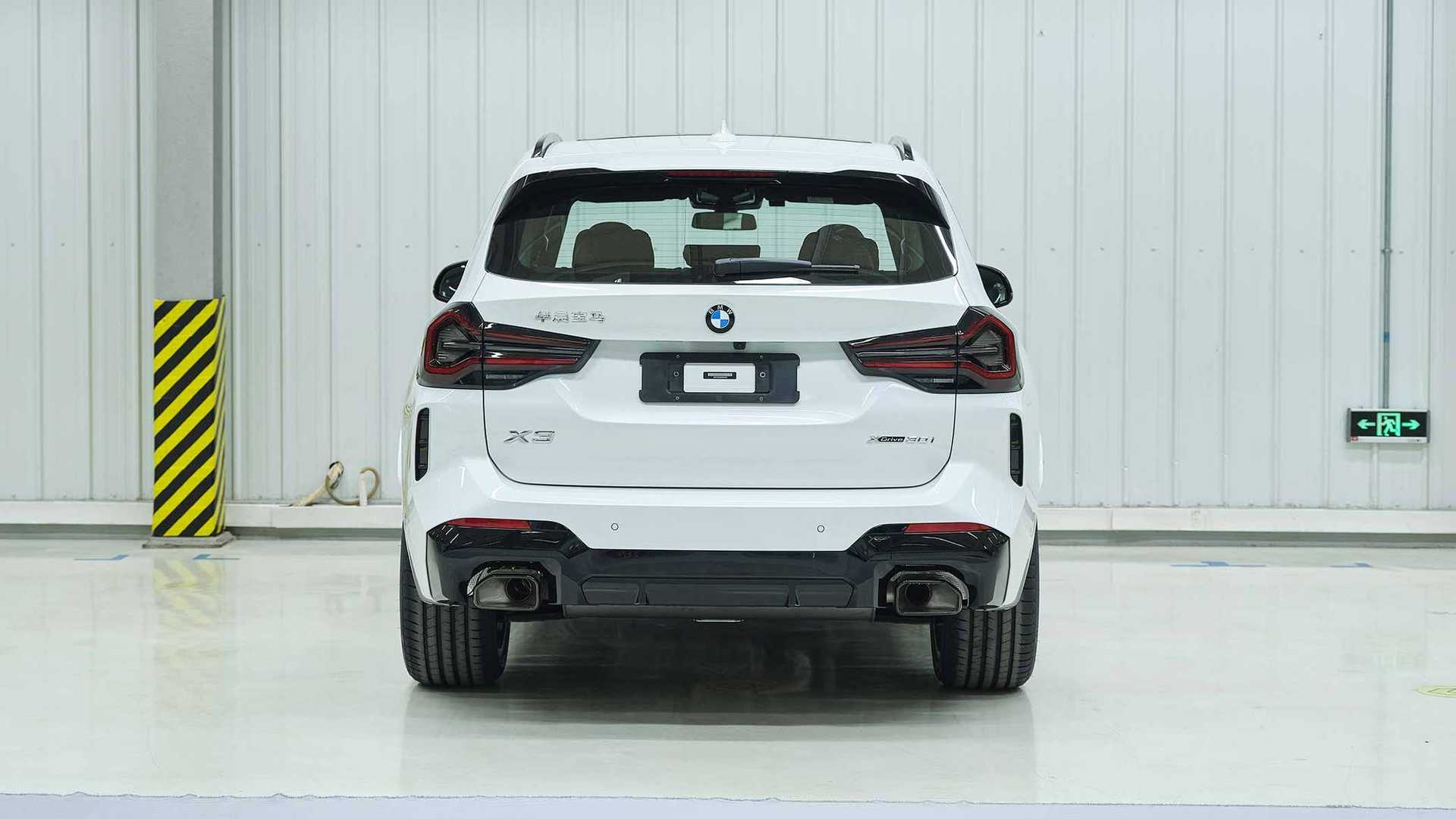
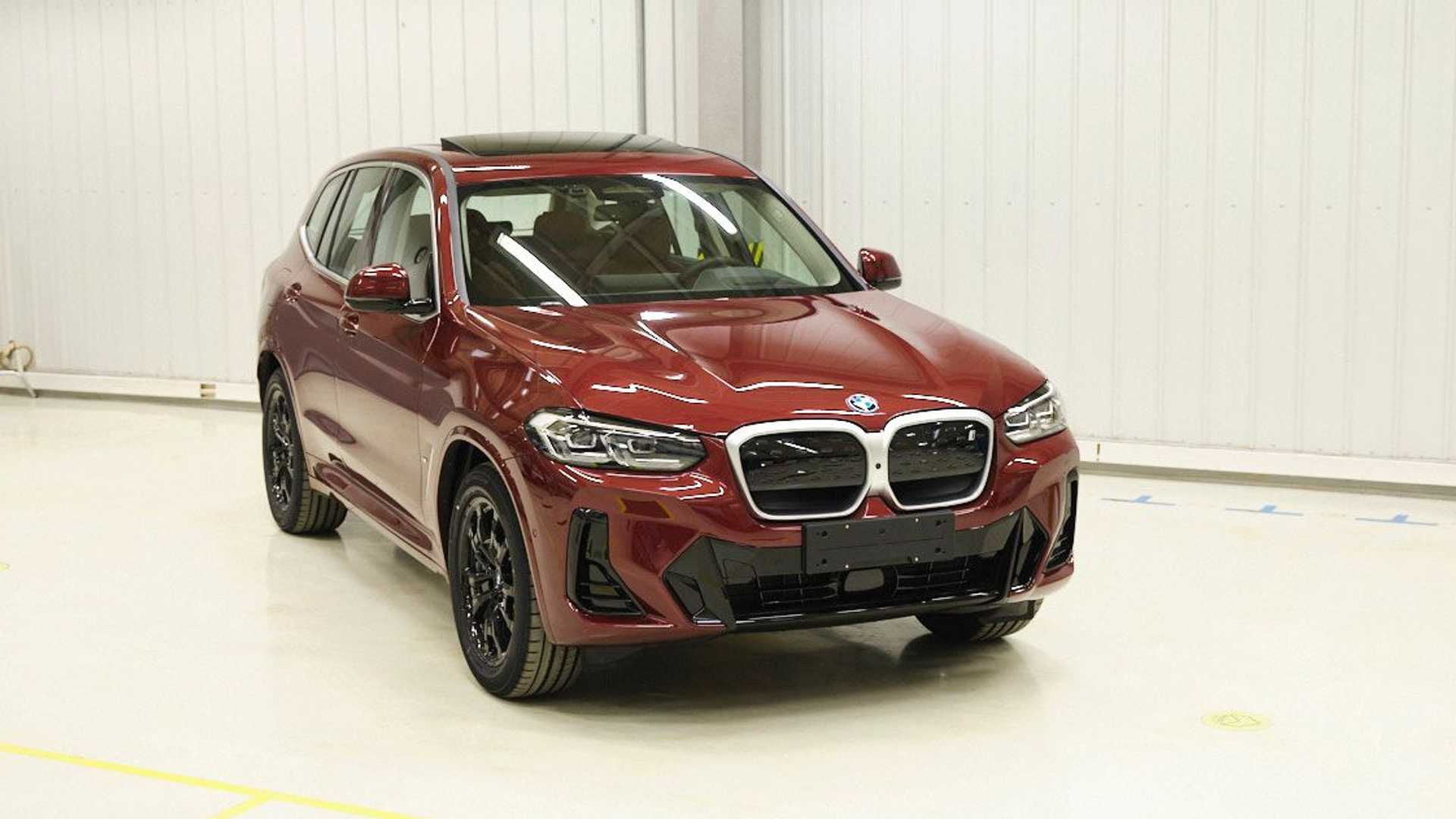
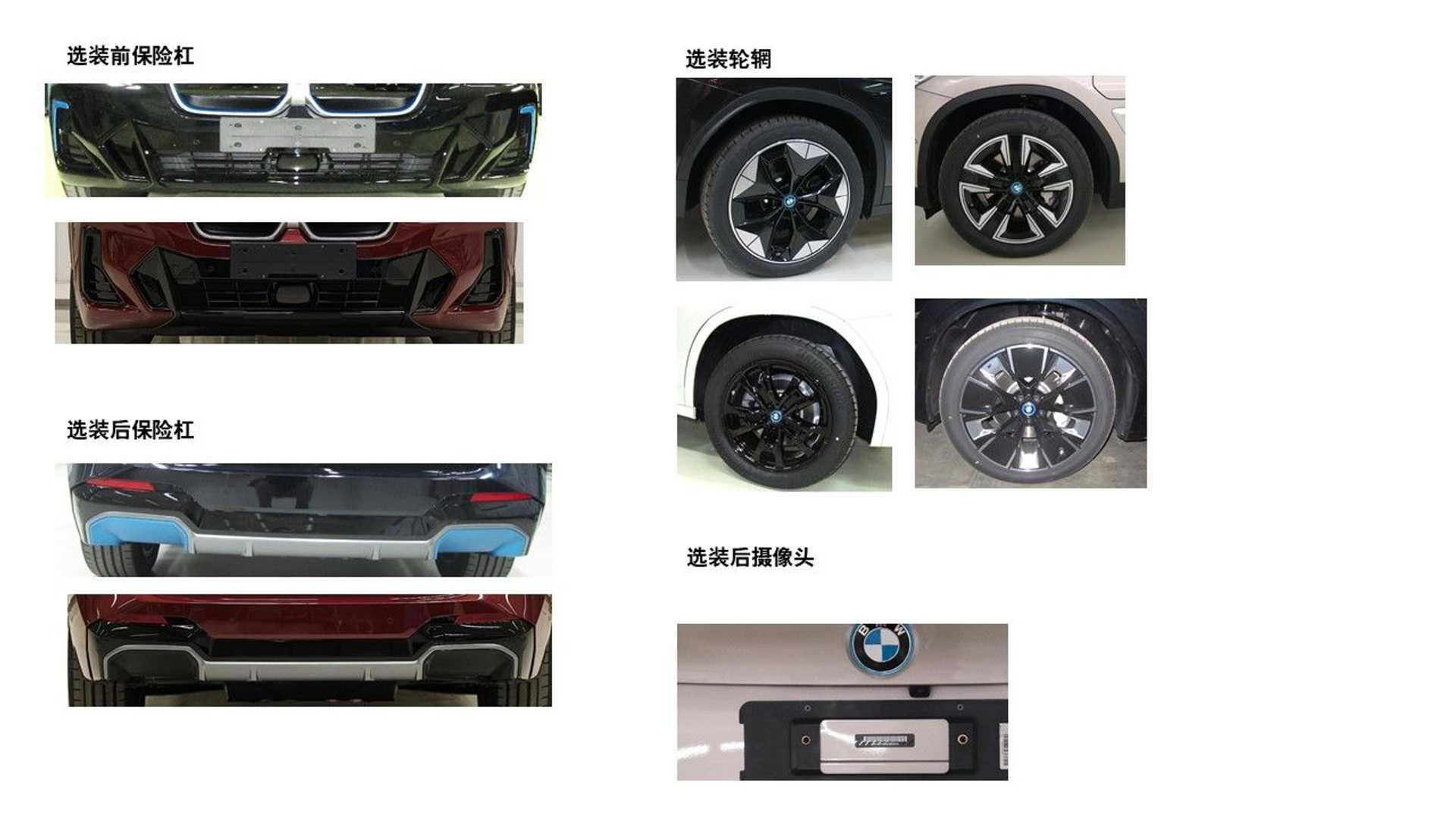
Notably, the lower part of the front bumper has been completely redesigned, now sporting a more angular look. The new rear bumper and integrated aesthetic diffuser also feature sharper lines and red reflectors.
The headlights and taillights have been redesigned as well, and now show off a similarly sharp appearance. The headlights will be available with two different looks – clear or dark tinted.
The iconic kidney grille has been fettled yet again, with both the petrol and electric variants of the SUV scoring a bespoke look.
Images of the white petrol-powered X3 show a blacked-out grille design complemented by matching darkened headlights and side air ducts, while the maroon iX3 gets a completely blanked-off, gloss black portion of the grille sitting flush against a matt silver border.
Both the X3 and iX3 appear to be getting several new wheel options too, with images showing some designs will feature an aero-focus we can only assume will be fitted especially to the electric iX3.
There were no photos of the updated interior for either SUV, but it’s rumoured the two could be fitted with BMW’s new iDrive 8 infotainment system.
If true, both SUVs could be fitted with a massive 14.9-inch, centrally mounted touchscreen display, as well as a 12.3-inch digital dash.
Under the bonnet, it’s speculated the refreshed X3 will also benefit from new hybrid powertrains, but details are unknown at this stage.
It’s also not yet known when the 2022 BMW X3 or iX3 will land Down Under. While there’s no official word from BMW, a local launch before the end of 2021 is expected.
If mimicry is the greatest form of flattery then Elon Musk will adore the 2021 Haval H6. The Chinese-made mid-sized SUV is not a high-performance, long-range EV, nor is it the product of a daring tech startup. But it doesn’t take many minutes aboard the new H6 to realise its maker took a long, hard look at the technological approach of Tesla when benchmarking its new model.
Launched as a more premium line in the Great Wall family, Haval quickly rose to dominance selling more than 800,000 cars in its native market during 2017. Perhaps unsurprisingly, as a relatively unknown marque, the brand wasn’t such a hit in Australia when the company expanded into the local market in 2015.
But value and price are strong lures for Aussie buyers and the cheap Chinese challengers including MG, Great Wall (GWM) and Haval are starting to gain traction and draw attention. You too may have had your interest piqued by one of the emerging brands that appear to offer an unrivaled amount kit for the cash.
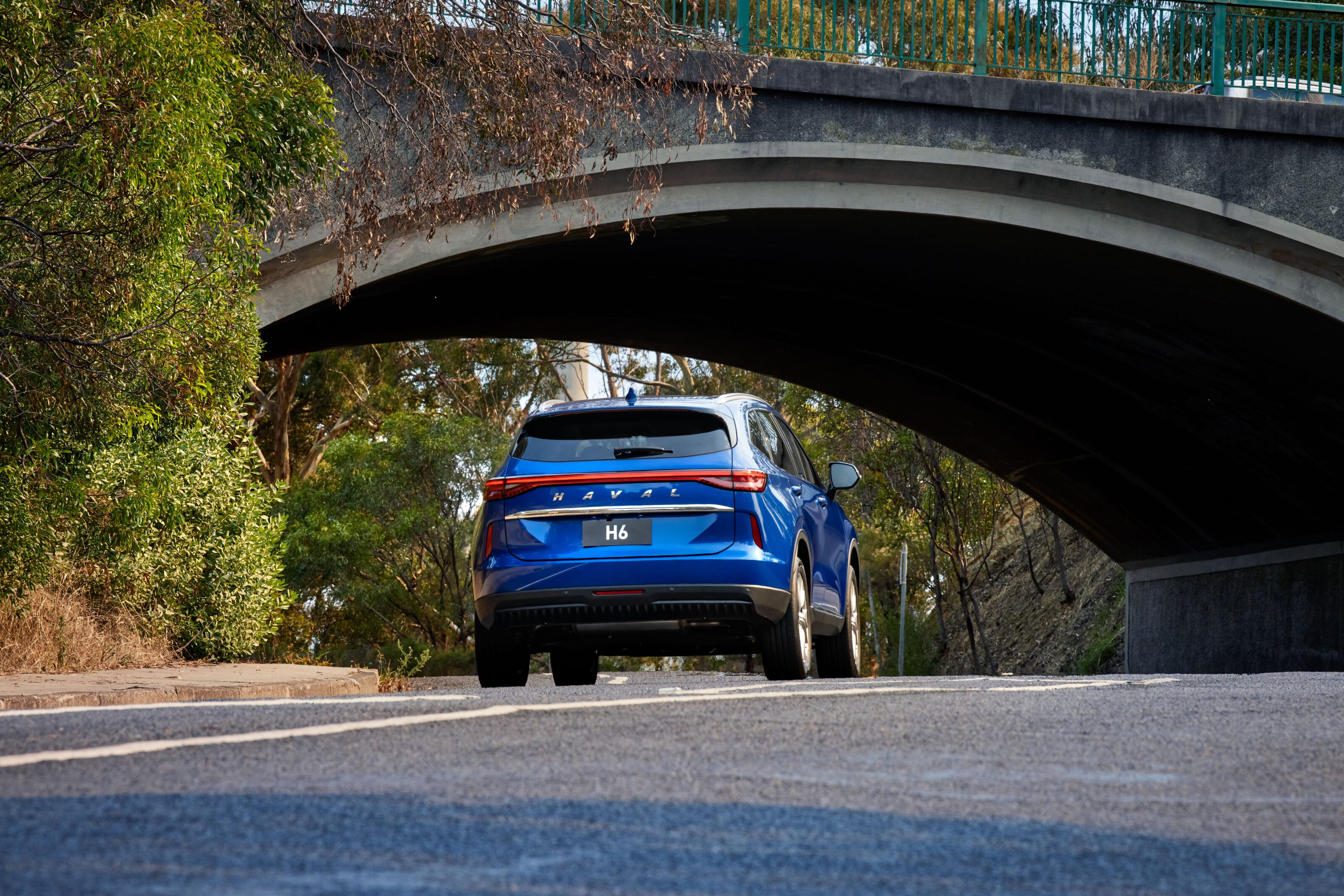
In the sometimes treacherous used-car market, it pays to remember the old adage that if something appears to be too good to be true then it most likely is, but does the same rule of thumb necessarily translate to the world of new car retail?
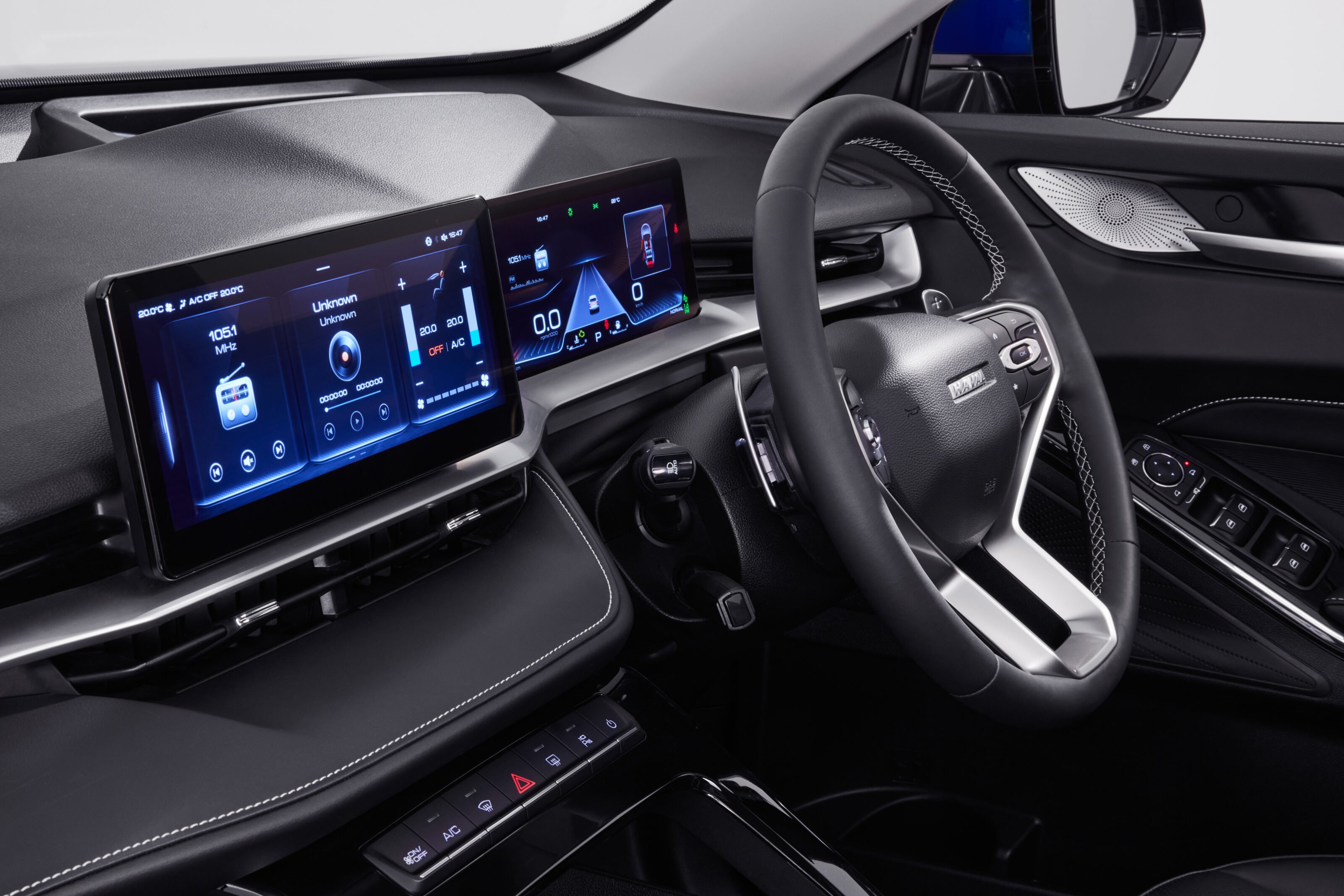
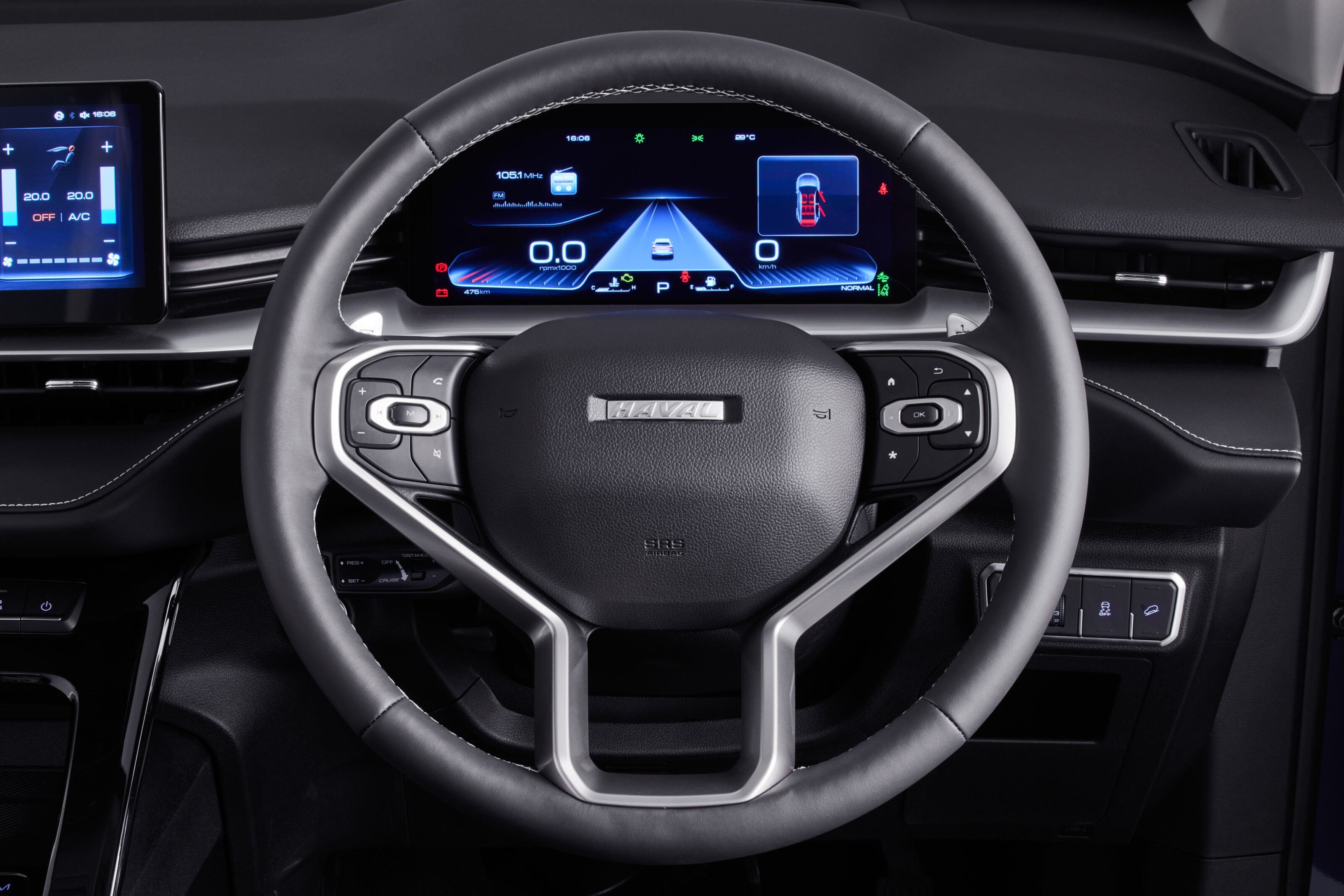
That question neatly takes us back to the 2021 Haval H6. Step inside its spacious cabin, slide over the generous, leather-look seats and hit the keyless start button and you’re met with a sea of high-resolution displays. The central 10.3-inch screen is sharp with attractive graphics and offers access to an impressive array of technology and applications. The second 10.3-inch screen forms the driver’s instrument cluster and features a digital speedo, tachometer and even a real-time vehicle/lane position feature that’s very similar to Tesla’s innovation.
The result is an incredibly clean and tidy interior and, with just seven switches on the entire centre portion of the dashboard, the Tesla similarities continue. Actually, one or two functions – such as seat heaters – are buried a little too deeply in digital menus and we’d prefer just a handful more buttons even if it did partly spoil the spartan layout. As our test car was the mid-range Lux H6 variant, in addition to heated seats we were treated to electric seat adjustment for the driver, a leather steering wheel, keyless entry, metallic paint, 18-inch alloy wheels, and Apple CarPlay.
Value and price are strong lures for Aussie buyers and the cheap Chinese challengers including MG, Great Wall (GWM) and Haval are starting to gain traction and draw attention
And that’s all before you get to the impressive and extensive safety and driver assistance suite. All H6s get autonomous emergency braking with pedestrian and cyclist detection, lane-keep assist, blind-spot and driver fatigue monitoring, speed sign recognition, a reversing camera and rear parking radar.
As this is the mid-spec Lux, the list goes on with a full 360-degree camera system and adaptive cruise control with traffic-jam assistance. Impressed? Wait until we get to the price.
To get behind the wheel of a mid-range Hyundai Tucson or Mazda CX-5 you would need to outlay about $40,000 to $45,000 before on-road costs, and there are plenty of other similarly priced options in the mid-sized market you could use as an example.
The H6, though? It kicks off from an almost suspicious $30,990 driveaway while the Lux is just $33,990 driveway (the range-topping H6 Ultra starts at $36,990 driveaway for the front-drive version and is $38,990 driveaway with all-wheel-drive).
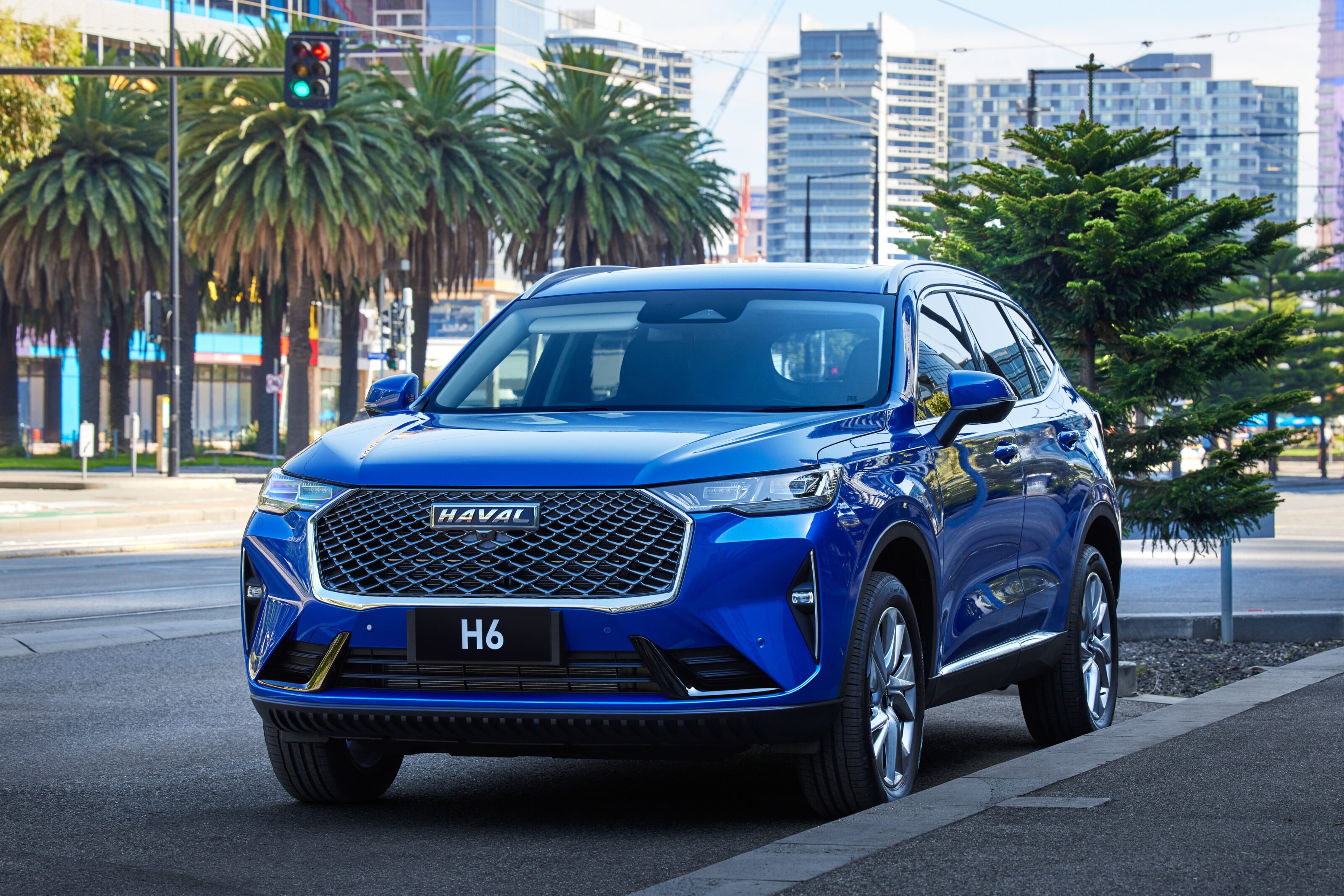
But anyway, you can find out all of the above for yourself by picking up a brochure or browsing Haval’s website. What none of it will tell you, however, is how it all translates into practice. And that’s where the value equation doesn’t stack up quite as it first appears on paper.
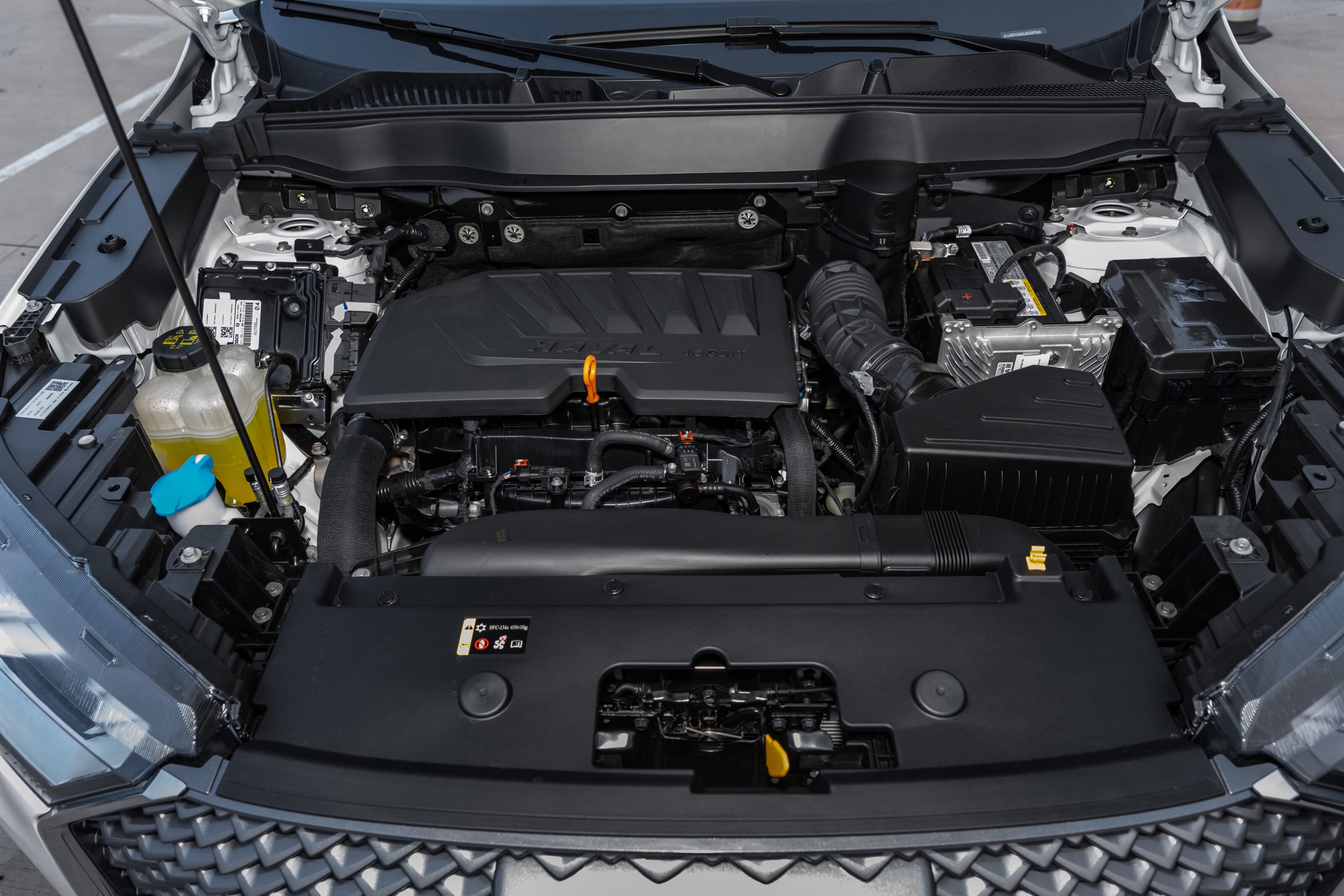
Under the bonnet of the H6 is a turbocharged 2.0-litre petrol four-cylinder that pumps out 150kW and 350Nm – another feature that’s rare in this price bracket – and it’s bolted to a seven-speed dual-clutch automatic transmission.
For such a reasonably priced machine, Haval’s in-house-developed engine is surprisingly refined and lends a decent dose of performance to the H6. Off the mark acceleration is strong and it’ll rev happily to the redline. That said, torque production and prevalence is the turbo donk’s more useful attribute.
Its DCT pairing is a pretty respectable match, with the typical urgency and fast cog-swaps associated with this type of gearbox. Unlike others, the Haval version doesn’t overthink its transmission program, dispatching regular driving duties without issue.
Unfortunately the same cannot be said for the traction control map, which allows too much wheel slip under harder acceleration before reneging on its decision and abruptly shutting down the boilers. The effect is most off-putting in corners and exacerbated by camber and wet weather when the whole system renders smooth driving difficult.
Tyre choice is not to blame, with good lateral grip provided by the Hankook Ventus S1 Evo rubber wrapping the 18-inch alloys.
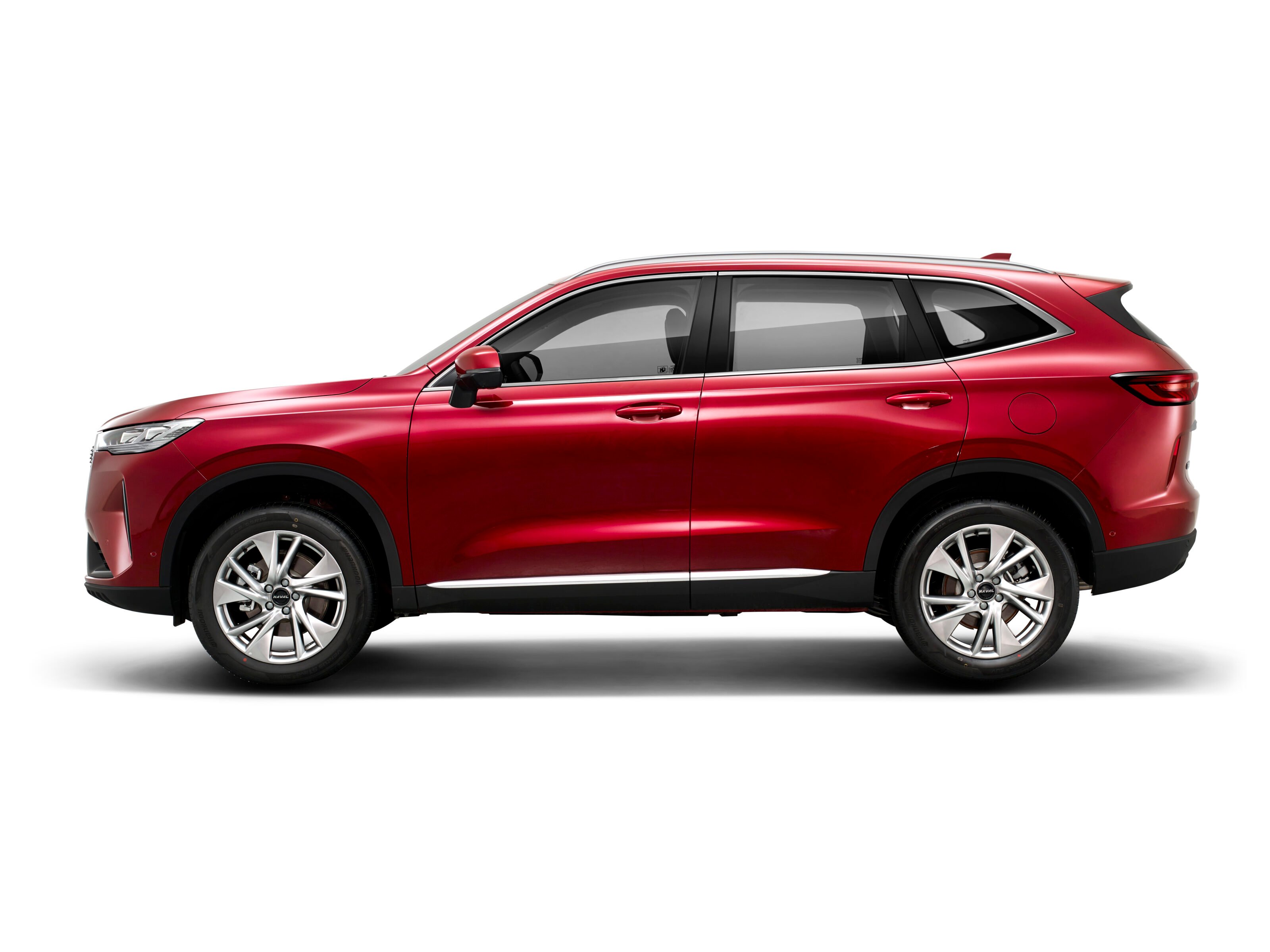
The effect would most likely be eliminated by the range-topping Ultra 4WD that uses a BorgWarner Haldex-type all-wheel-drive system. But the Lux and Premium versions are limited to front-drive only. Bizarrely, all versions including the two-wheel-drive H6 have a hill descent control feature that perhaps invites an overly optimistic belief in its all-terrain ability, but we would like to be proved wrong on that. I’d even put my hand up for the test.
Underpinning the 2021 H6 is Haval’s new global platform, which has stripped weight compared with the previous model as well as increasing stiffness and crash safety. The changes definitely translate to a more lively nature when the H6 is piloted in a more enthusiastic manner.
The steering is direct with a sharp turn-in but has a weird false feeling and, while the body control is generally composed for normal driving, the H6 rolls onto its shoulder with little provocation and highlights a lack of anti-roll stiffness.
For more sedate driving, the H6 does better. Over well-maintained roads with just a few big dips and bumps, primary ride and comfort levels are good, the cabin is well-insulated for sound and the lane-keeping technology is, once again, very reminiscent of Tesla’s with the system willing to take control of steering duties for a surprising range of roads and driving types.
There are a number of unfortunate elements that detract from the initial positive first impressions cast by the interior. Firstly is the aroma. It’s hard to imagine another car that has a more acrid and noticeable new-car smell – a scent that many enjoy as part of the new car shopping experience. In the Haval, though, it’s overwhelming to the point we opened the windows perhaps more often than normal.
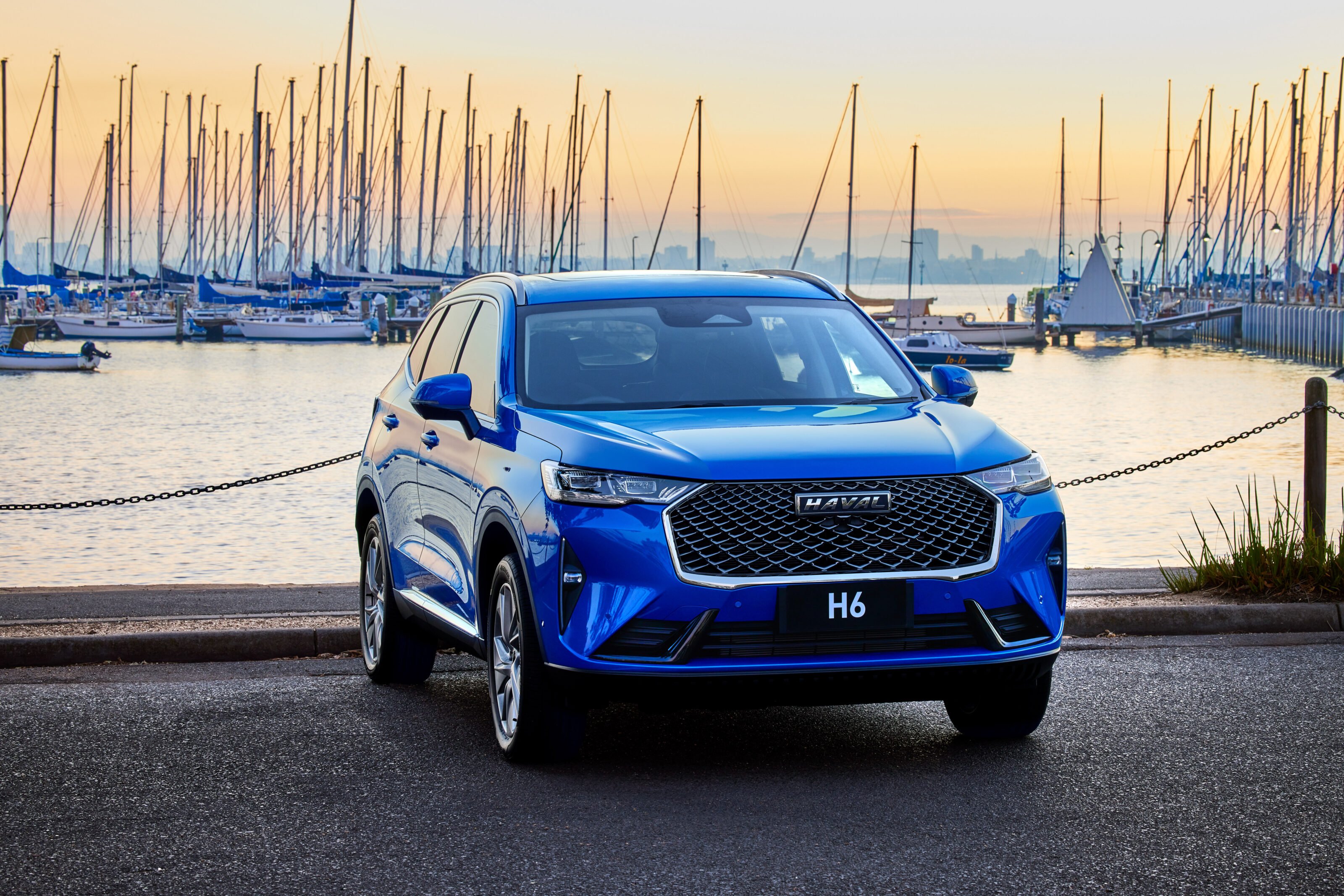
And while the front seats appear plush and supportive, a lack of tilt adjustment and ergonomic refinement allowed the odd cramp and ache to creep in, even during relatively brief trips. Road surfaces with lots of small imperfections also seem to get the suspension – and therefore occupants – a bit agitated.
That aside, the H6’s cabin is a pleasant and practical place to spend some time. Space in the second row is huge for a mid-sized SUV and straddles the line into the large segment. It might not have seven seats, but the Haval feels like it could compete for volume with the Hyundai Santa Fe that technically fights in the large SUV realm.
At the tail end, the H6 offers a big 600-litre boot that can expand to 1485L with the rear seats folded away. No full-size spare is offered, with a slender space-saver hidden under the adjustable boot floor.
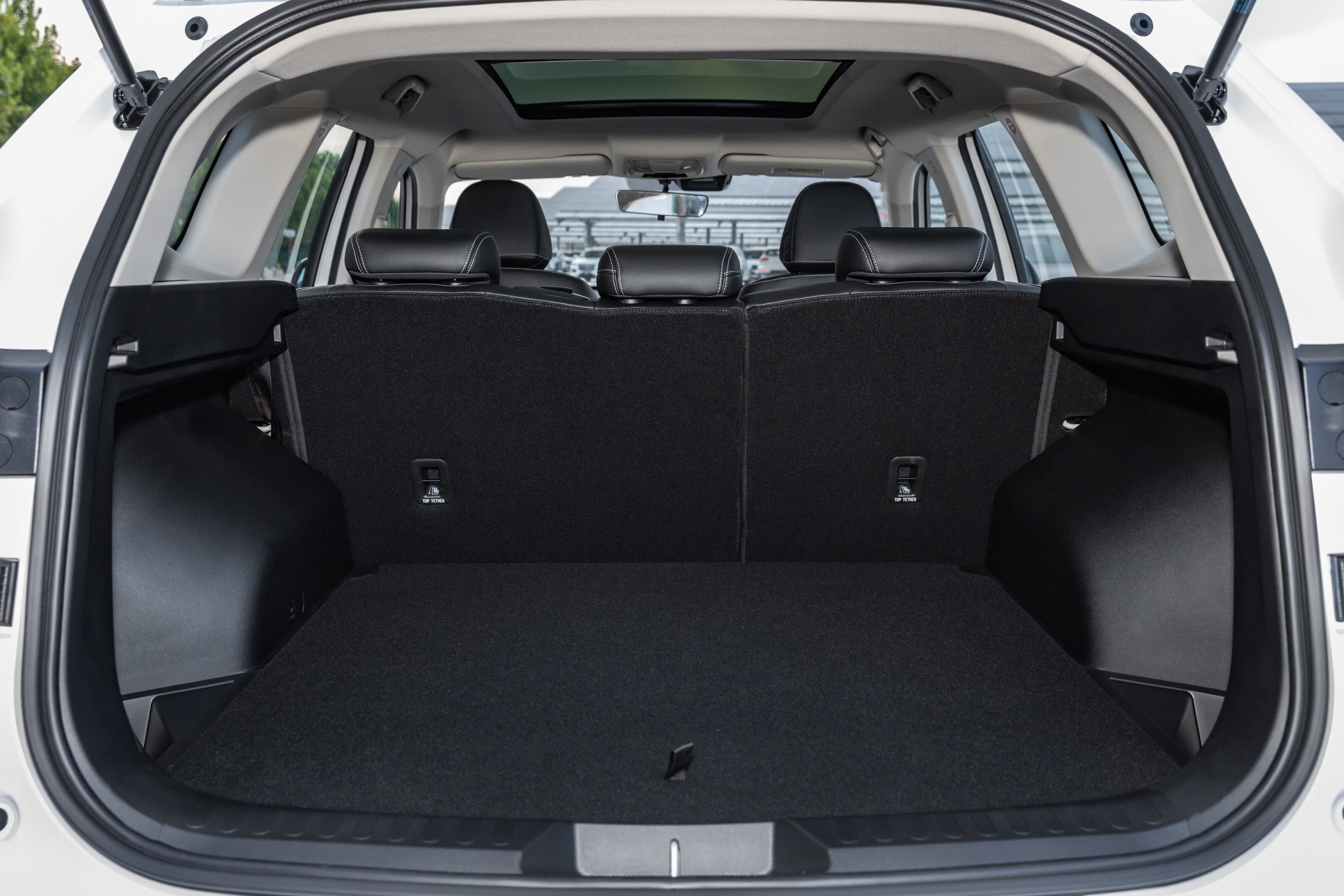
But for all the H6’s inclusions and generous standard equipment, a few notable omissions are worth considering. Apple CarPlay is the only smartphone mirroring supported, with Android phones left out in the cold and there’s no native navigation, requiring owners to use their iPhone navigation application if they want to know where they are going. Samsung fans, therefore, are more likely to get lost.
Generally speaking though, the Haval is tech-heavy and discovering the various unique approaches to electronic systems is a delight. Notification sounds are polite and unobtrusive, including the grandfather clock indicator report and the interaction with touchscreens and menus is intuitive and well thought out.
Haval has clearly invested a serious amount of development into the technology offered in the new H6, with systematic ergonomics that are easier to compare with smartphone and tablet consumer electronics than something that finds its roots in the automotive realm. A lot like Tesla, you might say.
The company will even throw in a Kia-matching seven-year warranty as an extra statement of intent. Add to that an equipment and technology value proposition that’s impossible to ignore or deny, and as an exercise in box-ticking and bang-for-buck, the H6 is hard to beat.
But it simply can’t compete as strongly when it comes to dynamics and a more traditional appraisal. Against vehicles that are chassis-tuned for local roads and conditions, brands that have a proven track record on local dirt and local presences that reach back decades, Haval has a huge challenge on its hands.
That’s not to say the H6 isn’t worth a look because it certainly is – especially if you’re looking for your budget to go further – but, just as it’s important to look beyond a badge, make sure you also delve deeper than the brochure.
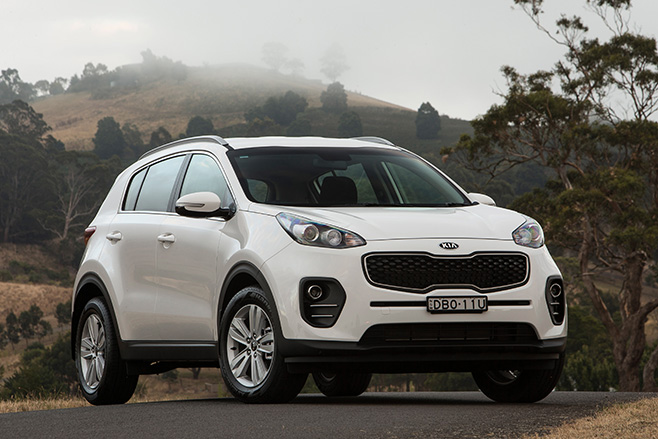
Kia Australia is recalling almost 60,000 examples of both its QL Sportage and CK Stinger models over a problem with the Hydraulic Electronic Control Unit being at risk of catching fire.
The issue affects 56,203 QL Sportage models built between 2016 and 2021, and 1,648 CK Stingers manufactured between 2017 and 2019. In total the recall applies to 57,851 vehicles.
The fault involves the The Hydraulic Electronic Control Unit (HECU) which is responsible for the Anti-lock Braking System, Electronic Stability Control System and Traction Control System.
According to safety experts, the problem is, in the affected vehicles the HECU can remain live even when the vehicle is switched off. If moisture enters the HECU, the electrical unit could short circuit and catch fire even when the vehicle is switched off and parked.
Kia told WhichCar that no vehicles have caught fire in Australia, but could not confirm if the fault had caused any incidents overseas.
Kia Australia is contacting all known owners of affected vehicles by direct mail and asking them to contact their local Kia dealer to arrange for an inspection and repair. The repair takes 20 minutes and is free of charge.
A dealer can be located at: https://www.kia.com/au/shopping-tools/find-a-dealer.html
According to Kia the replacement part has started to be dispensed through its dealer network already and there will be no delay in fixing owners’ vehicles by waiting for parts.
Until the fault has been repaired, Kia urges owners not to park their car near any flammable structures or in an enclosed area, such as a garage but has confirmed vehicles are still safe to drive.
Speaking to WhichCar, Chief Operating Officer for Kia Motors Australia, Damien Meredith, said: “This is the same issue Hyundai had with its Tucson. It’s the same part. We notified Product Safety Australia [of Kia’s recall] three weeks ago and it just announced it to the public recently due to its own checks-and-balances. That’s just how long the process takes. We informed Product Safety Australia as soon as our head office let us know.
“I think the consumer understands recalls are an ongoing thing in the industry. I don’t think it has an effect if you’re upfront and honest. We have seen no correlation between recalls and a fall in sales.”
A list of VINs for affected vehicles is available here.
For further information, owners can contact Kia Motors Australia on 13 15 42.
Got a tip-off for a story? Get in touch: [email protected]
