
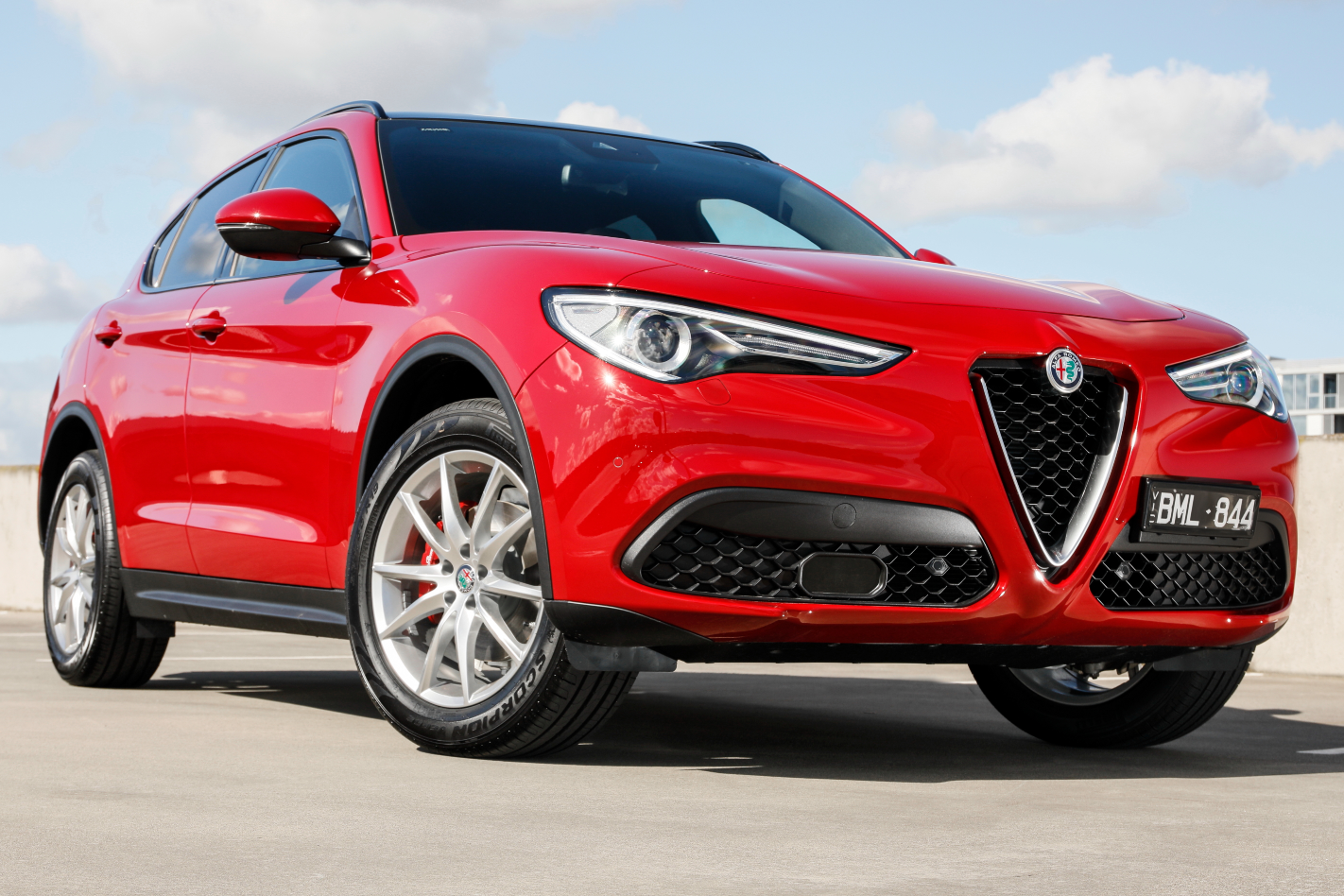
The 2021 Alfa Romeo Stelvio Sport has officially landed in Australia, arriving as the first model in a refreshed Stelvio lineup that will bring more safety and an improved set of infotainment features.
The new Sport will now act as the entry-level model for Alfa’s attractive SUV, with prices starting from $69,450.
Launch timing and prices for the wider range, which will include Veloce and Quadrifoglio models, is still to be confirmed.
Power in the Sport is derived from the same TBI-M T4 turbocharged 2.0-litre four-cylinder petrol engine we’ve seen in other modern Alfa Romeo models, producing 147kW and 330Nm.
Drive is sent to Alfa’s Q4 all-wheel drive system through a ZF eight-speed torque-converter automatic transmission, and the punchy power output combined with AWD traction translates to a brisk 0-100km/h time of 7.2 seconds.
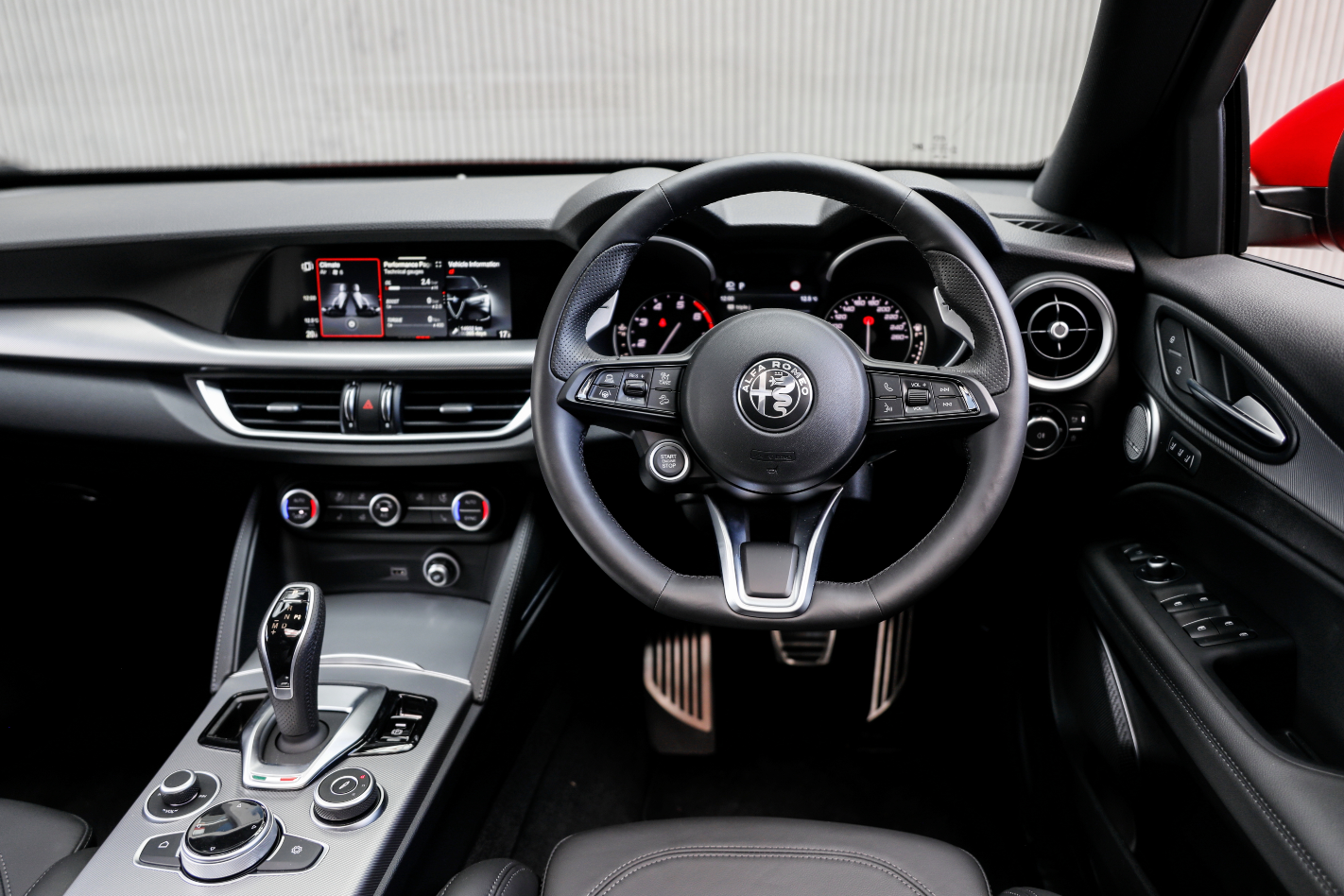
Inside, the Italian automaker has upped the interior quality with a refreshed cabin and a new, larger 8.8-inch touchscreen display.
Other improvements to the cabin include a redesigned and leather-wrapped centre console, wireless charging, heated leather sports seats, heated leather sports steering wheel, aluminium dash inserts and aluminium pedals.
Subtle equipment and accent tweaks have also been made to the SUV’s exterior, with 19-inch alloy wheels, red brake calipers, gloss black window trim, and side and rear privacy glass.
The new Stelvio Sport is kitted out with even more safety features as standard too, with lane-keep assist, driver-attention alert, active cruise control, infrared-reflective windscreen, active blind spot assist, traffic-sign recognition and auto high beam all equipped on the SUV.
With the aforementioned RRP of $69,450, the new 2021 Alfa Romeo Stelvio Sport debuts with a $3550 premium over the entry-level model it replaces – previously known simply as Stelvio.
Watch for more on the wider 2021 Stelvio SUV range to be revealed in the near future.
MORE: Stelvio stories MORE: All Alfa Romeo stories
A pair of shadowy teaser images for a new Mitsubishi Airtrek model have been released this week, hinting at a return to the all-electric space the brand once pioneered.
The Japanese brand took on the world with its i-MiEV models in 2009, debuting as the world’s first mass-produced electric car – although other brands had played in the space earlier with low-volume offerings.
But, in the years since, Mitsubishi has focused its electrification efforts more on petrol-electric plug-in hybrids, in the form of the Outlander PHEV.
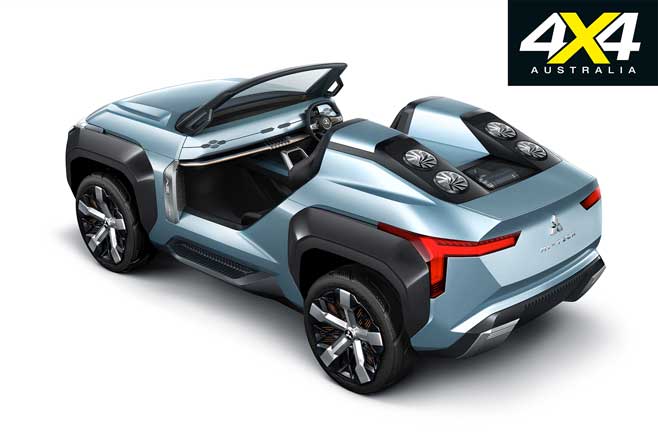
In 2019, Mitsubishi revealed the Mi-Tech (above), a beach-buggy-looking concept showcasing the brand’s boxy new design language and a powertrain that combined a gas-turbine engine/generator with a pair of electric motors – a unique take on the plug-in hybrid idea.
The Airtrek name is not new, either, having been worn by the first-generation Outlander in its home market before the more familiar global badge was adopted in Japan.
It appears clear from this week’s new teaser images that the Mi-Tech will inform the Airtrek’s styling, but Mitsubishi has confirmed we can expect a conventional pure-electric drivetrain.
Another thing we can expect, the brand has confirmed, is a sales program exclusive to the Chinese market.
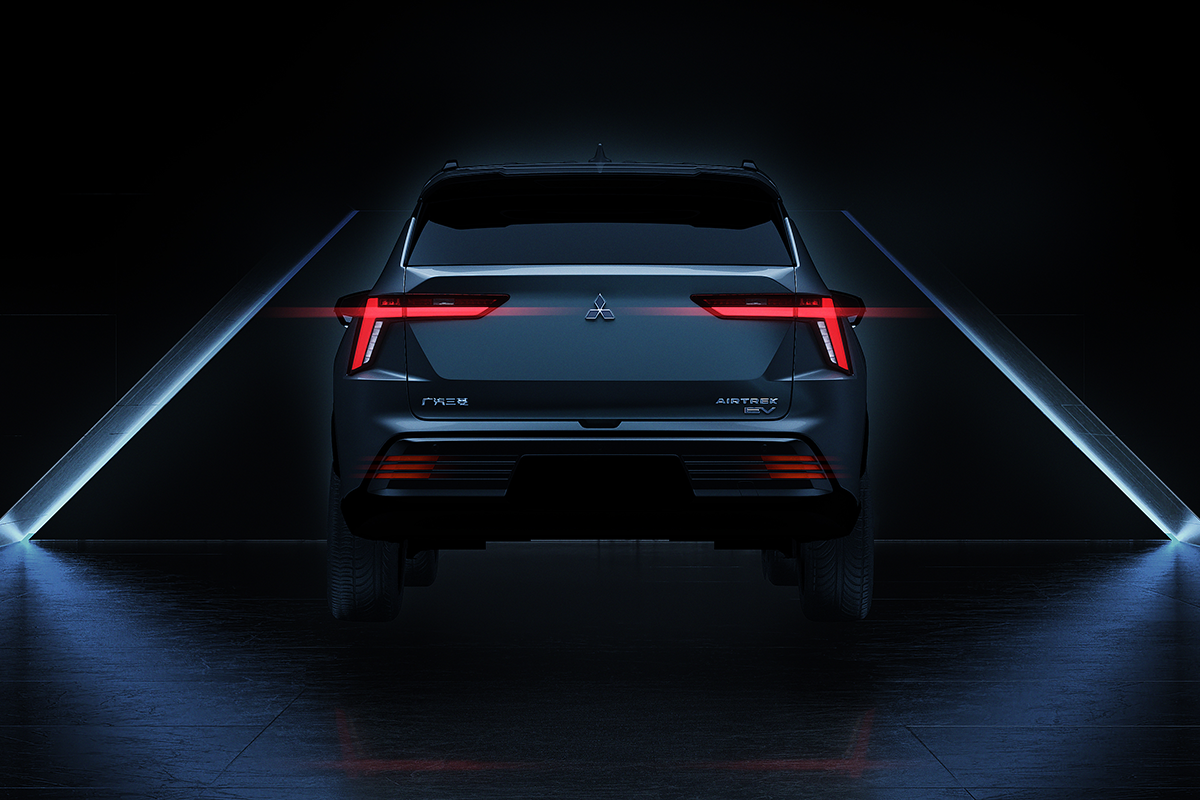
“Designed exclusively for the Chinese market, the all-new Airtrek will be launched by the end of this year as the fourth model of Mitsubishi Motors’ lineup in China. With the addition of this electric vehicle, we aim to contribute to creating a sustainable mobility society,” the company said in a statement.
Outside of China, Mitsubishi is expected to continue prioritising PHEV models over pure-electric vehicles, although the latter is confirmed to represent part of the brand’s future plans – most likely in the form of a Nissan Ariya-based SUV.
Don’t be surprised, either, if the new Airtrek is a hint at what we can expect from the next-generation ASX small SUV‘s design.
MORE: Mitsubishi Mi-Tech concept revealed MORE: Mitsubishi news and reviews
The 2021 Ferrari 812 Superfast ‘special series’ has been officially unveiled, boasting more power and the highest revving engine ever fitted to a road-going Prancing Horse.
The performance figures for this car are borderline intoxicating, with the same F140 naturally aspirated V12 found in the regular 812 Superfast now producing 612kW at an absurd 9500rpm.
To achieve these bonkers stats, Ferrari has worked considerably on the 12-cylinder engine, using ‘state-of-the-art materials’ in its construction, while also developing a new valve timing mechanism and a completely bespoke exhaust system.
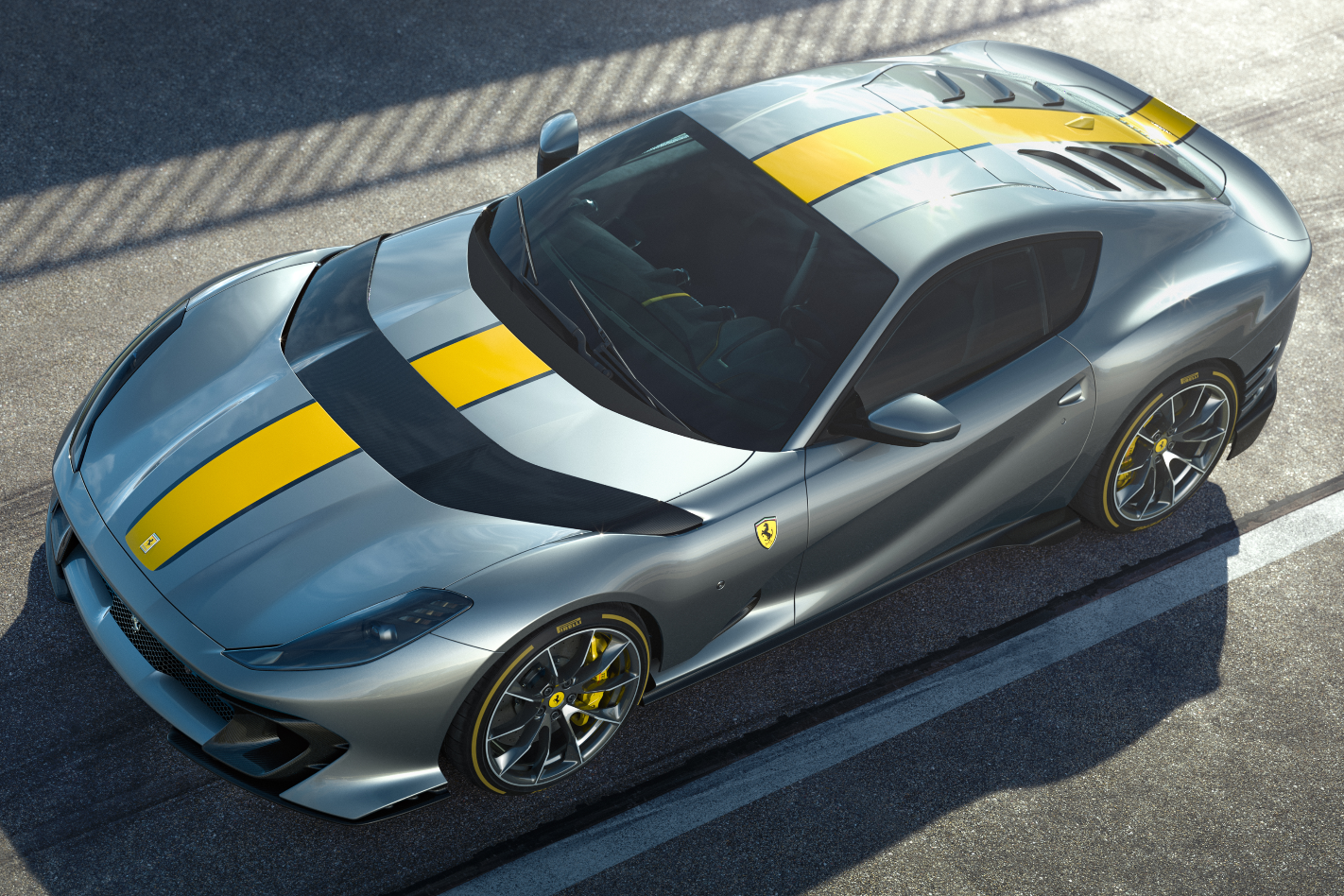
The Maranello outfit is yet to confirm if the F140 V12 will retain its 6.5-litres of displacement, but regardless, this engine is sure to go down in history as one of the last great N/A internal combustion engines.
It’s not just the fabled motor that’s been worked on, however – both the vehicles chassis dynamics and aero styling have been completely revised as well.
Ferrari’s Side Slip Control vehicle dynamics system returns in 7.0-guise, and the automaker says its even fitted independent steering at all four wheels, which should make the chassis feel more agile and dynamic.
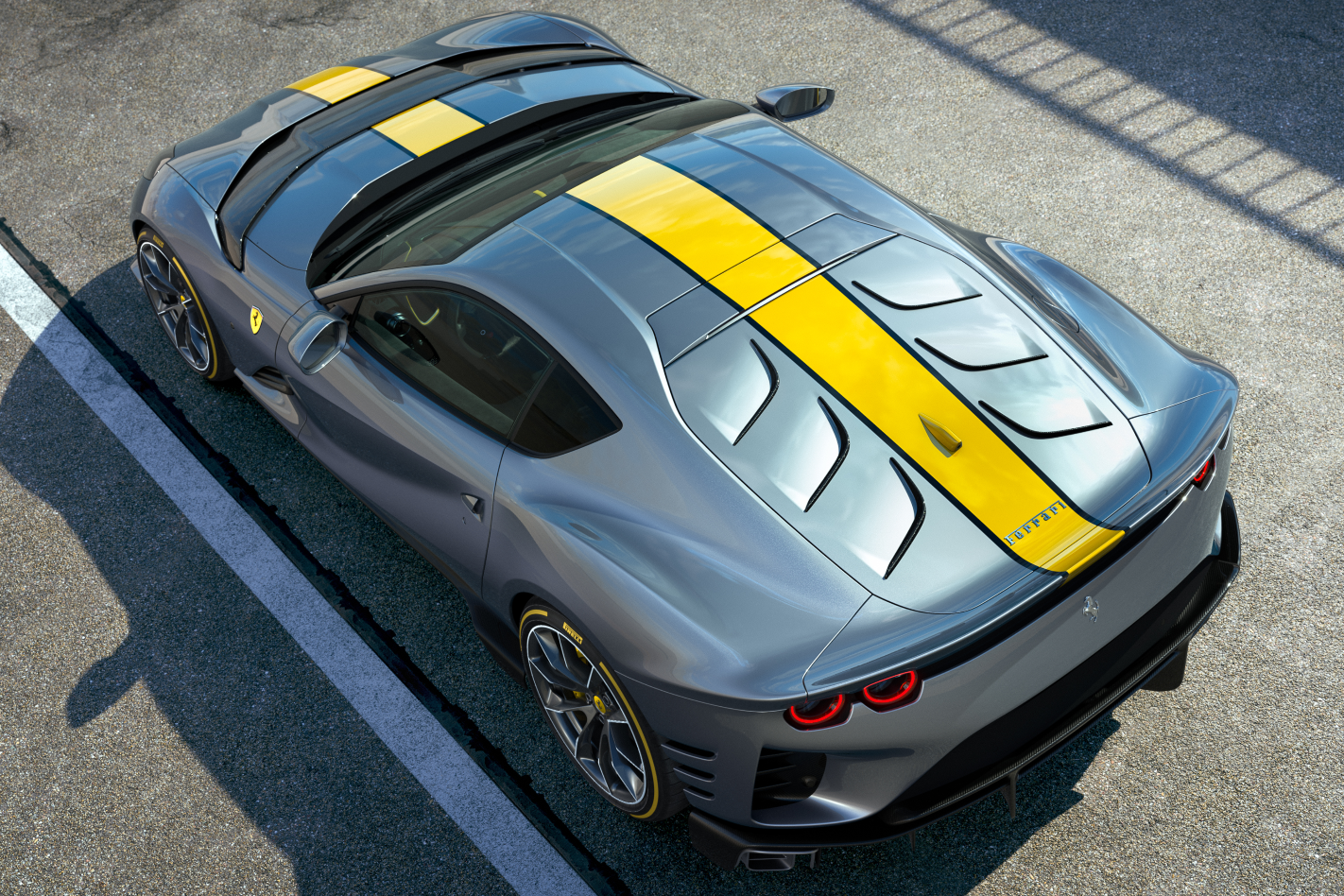
Just one look at the new special series is enough to tell you the Italian automaker has spent a lot of time developing it in a wind tunnel, with almost every exterior panel tweaked or completely changed in the pursuit of better aerodynamics.
New front air intakes, a huger rear diffuser, and the striking patented rear screen with vortex generators, are just a few of the changes to mention.
And Ferrari insists that, although the new car looks undeniably amazing, every single aesthetic change has been in the pursuit of better performance.
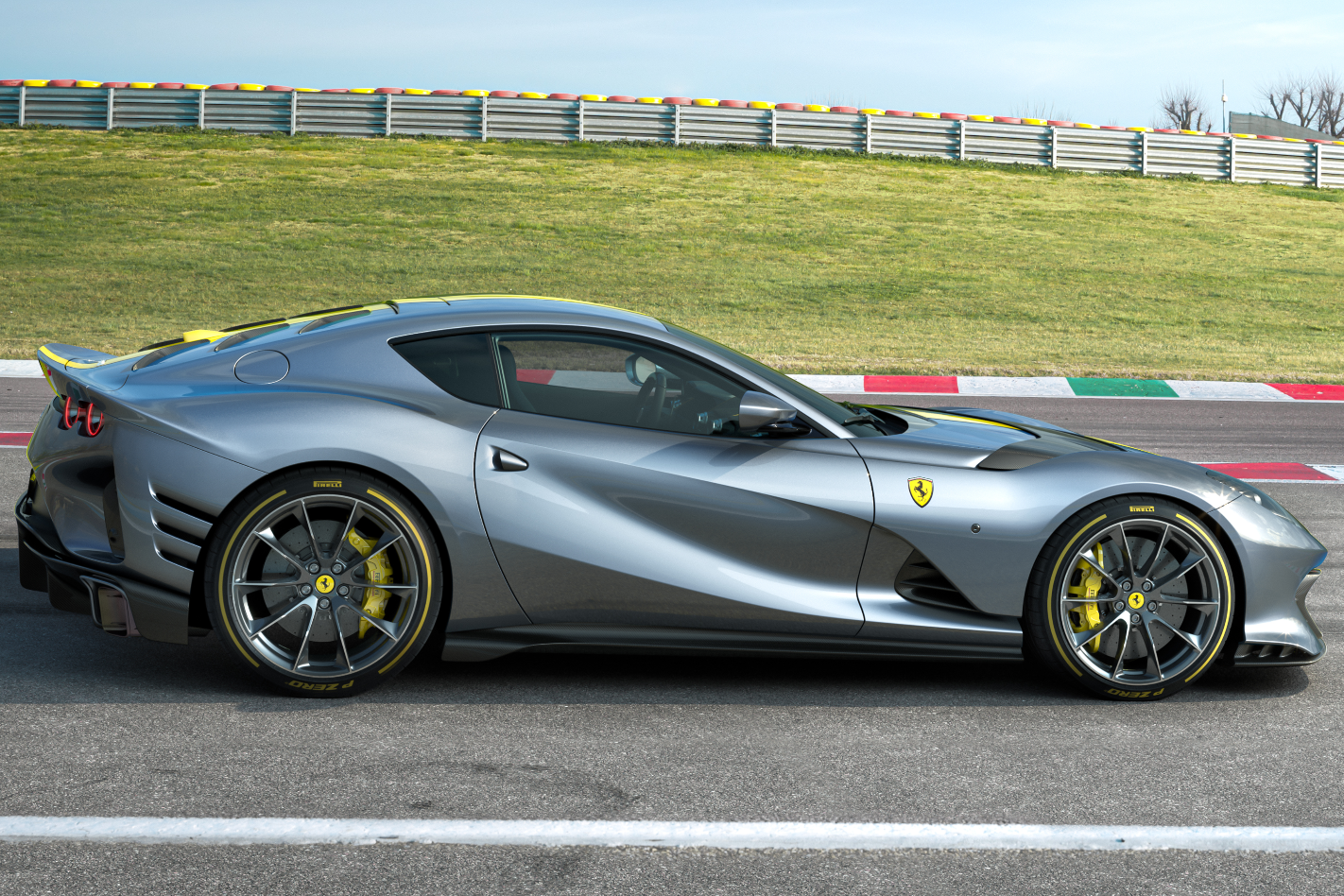
Most of the new body panels are also made of carbon fibre, as is a portion of the interior, and although no weight figures have been quoted, this new car looks to be a fair bit lighter than the 1630 kilogram kerb weight of the regular 812 Superfast.
Inside the cabin, Ferrari has reworked the interior for an even more focused and sporty look, with new lightweight door panels being introduced as well as the H-gate gear selector we’ve already seen on the entry-level Roma coupe.
Pricing and availability? Well, Ferrari says it’s only going to make the 812 Superfast special series for “Ferrari’s most passionate collectors and connoisseurs”, which means that unless you’ve already got a stable full of Maranello’s thoroughbreds, you’re not going to be able to buy one.
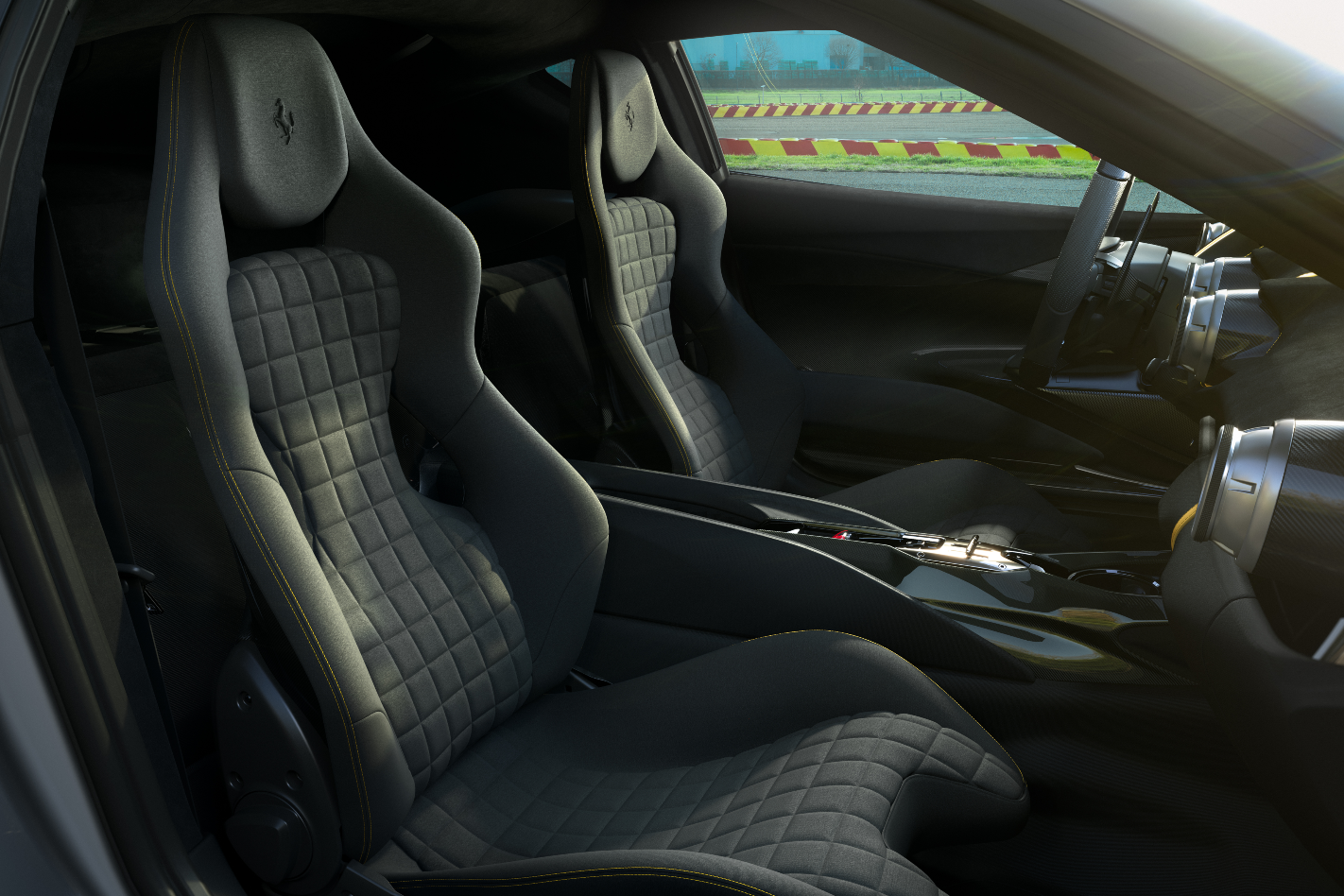
Most likely, Ferrari will keep production numbers limited to three figures (if not less), although that’s still to be confirmed, as is the price, which we hazard a guess will be nudging $1 million.
The 2021 Ferrari 812 Superfast ‘special series’ will make its global debut on Wednesday, May 5. Be sure to stay tuned to WhichCar as we bring you all the latest updates.
MORE: 812 Superfast stories MORE: All Ferrari stories
Great Wall Motors (GWM) has unveiled a trio of off-roaders at this week’s Shanghai Auto Show.
The two pick-up trucks and one SUV look to have, stylistically at least, borrowed heavily from established American and German automobiles in the off-roading segment.
All three vehicles from the Chinese automaker also come bearing names that are equally, if not more brash than their looks.
The first is the 2021 GWM X Cannon, a large-sized pick-up truck with quite possibly the biggest grille of any car on the planet.
UPDATE, January 27, 2023: Tank 300 Hybrid driven in Australia
The GWM Tank 300 Hybrid is now in Australia, and we’ve driven it. Get John Law’s first-drive take on the new Wrangler rival at the link below.
December 2022: GWM Tank 300 now on sale in Australia!
The new GWM Tank 300 Hybrid is now on sale in Australia, with a starting price of $55,990. It’s not cheap, but you get a lot of kit. Hit the link below for details.
Story continues…
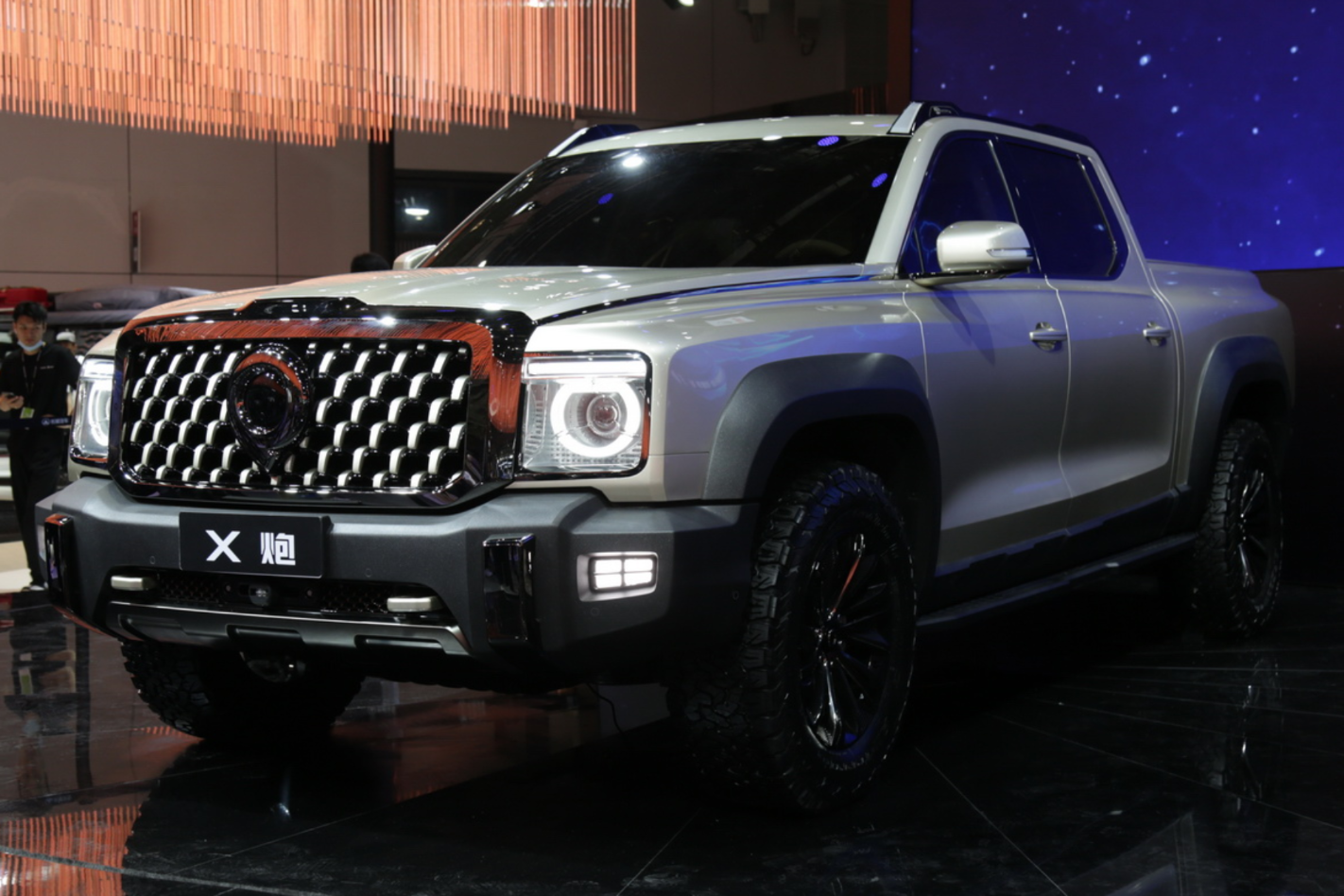
The X Cannon looks to be gunning for other full-size pick-ups in the genre of Chevrolet’s Silverado and Dodge’s RAM 1500.
Powering the X Cannon is a turbocharged 3.0-litre V6 petrol engine that’s good for 260kW and 500Nm.
Drive will be sent to all four wheels via a nine-speed wet-clutch automatic transmission which also features a 4H off-road mode.
Next up is the 2021 GWM Baja Snake, a Ford Ranger Raptor-looking, mid-size pick-up with a complex front grille, massive knobbly off-road Toyo tyres, and decent ground clearance.
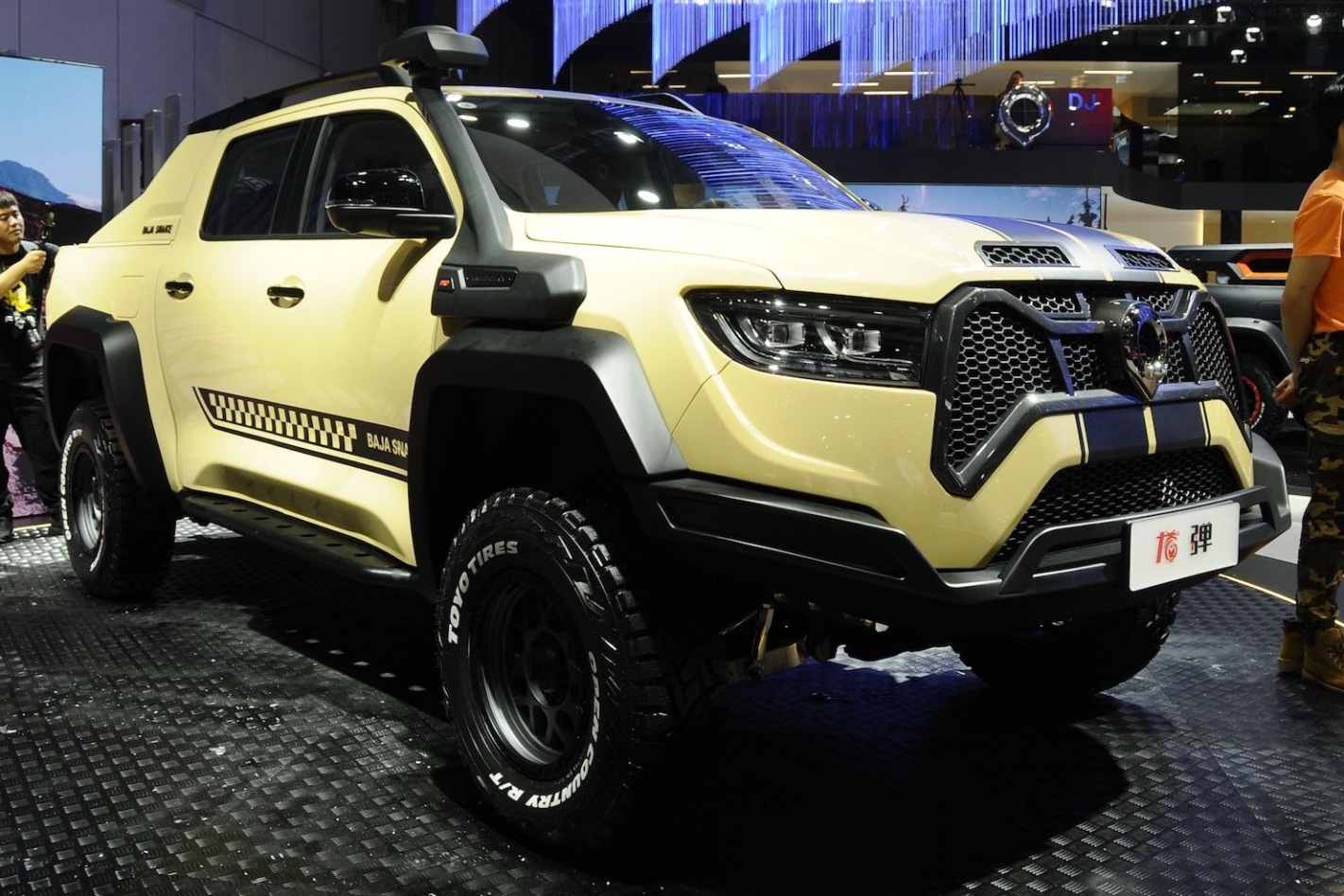
GWM went to fabled American tuning house Shelby to help it design the punchiest version of its regular Cannon pick-up, and the result is an interesting East meets West creation.
Shelby has thrown a bunch of extra height at the Baja Snake, lifting the car by 51mm, and fitting a set of Fox Racing dampers for good measure.
Lastly, the 2021 GWM Wey Tank 300 Cybertank blends Jeep’s Wrangler and Mercedes-Benz’s G-Wagen into one unfortunate pastiche.
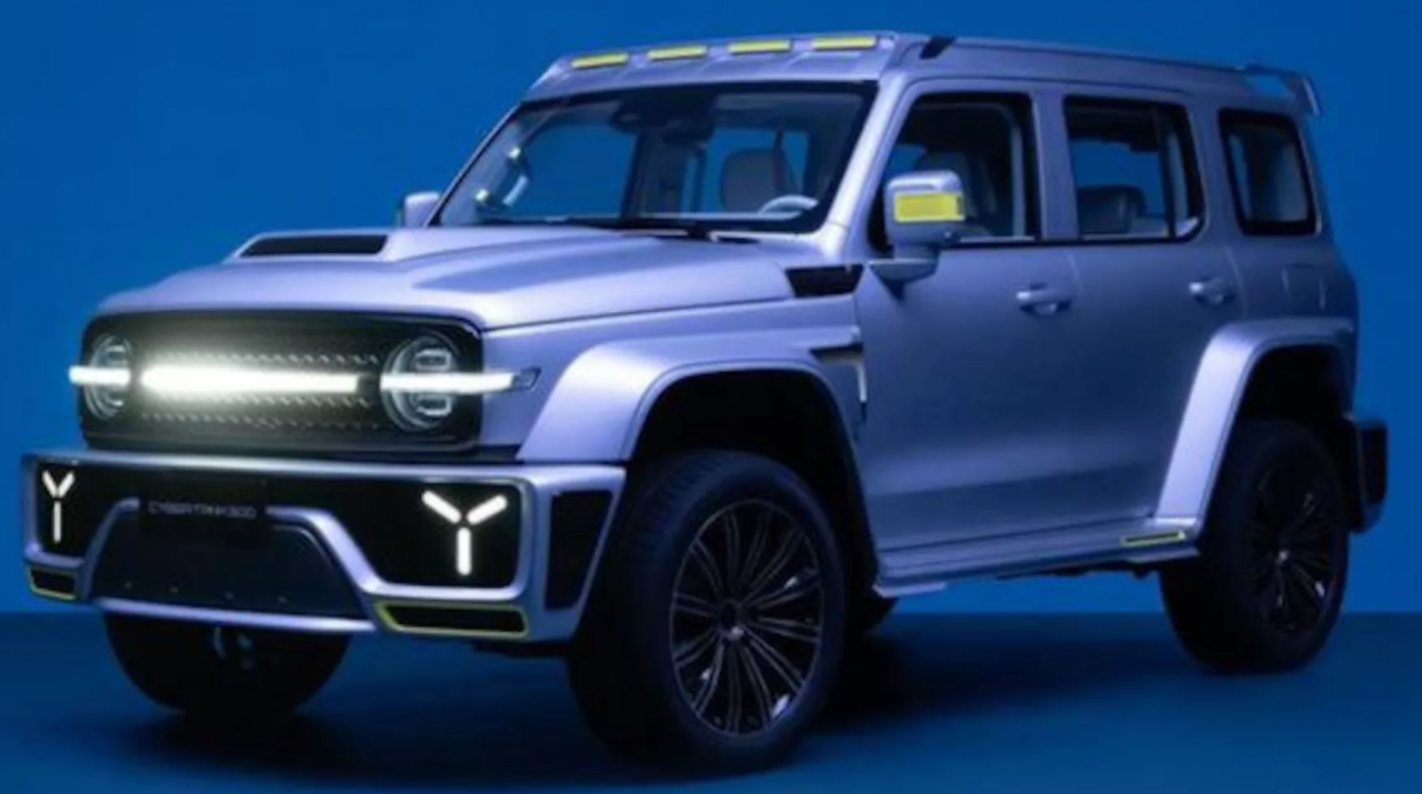
Even the interior of the Cybertank is, at best, a flattering attempt at imitating Mercedes’s interior, which features the same dual-screen infotainment design and turbine-style air vents.
Great Wall is apparently looking at bringing the Wey Tank 300 to Australia, with some speculating the derivative SUV could be on Aussie shores in the next 12 months, but there are no plans for the X Cannon or Baja Snake to arrive Down Under.
MORE: Great Wall stories
BYD has revealed a revolutionary new electric hatchback with a 1000 kilometre range and sub 3.0-second acceleration that will be sold in Australia.
Revealed at the 2021 Shanghai Motor Show, the BYD EA1 hatchback rides on the brand’s new e-Platform 3.0 and receives power from the new 800-volt “Blade” battery claimed to be capable of receiving 150km worth of charge every five minutes.
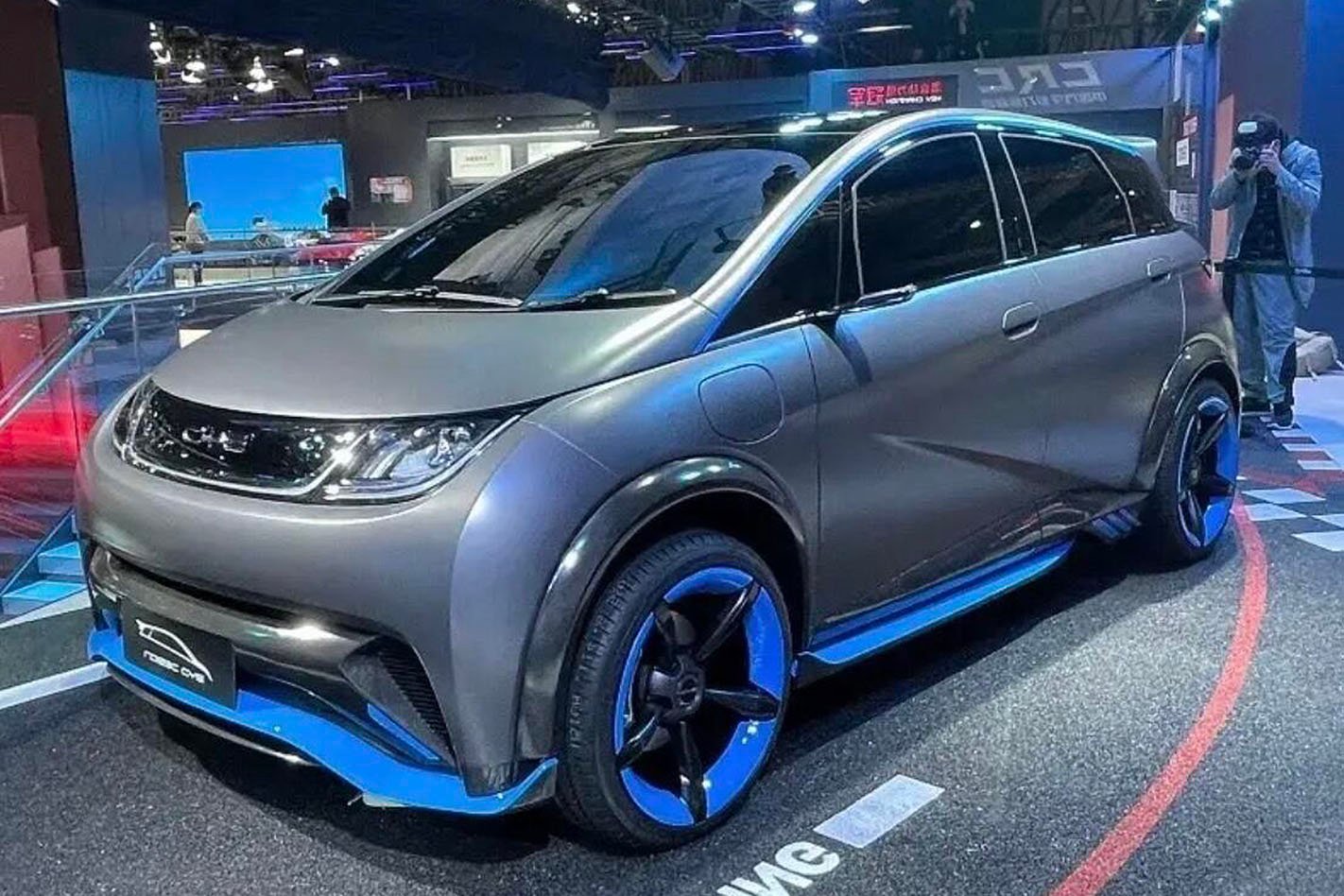
Battery capacity is yet to be revealed, but according to the Chinese carmaker, it will provide enough power to catapult the unassuming little hatchback from 0 to 100km/h in under 3.0 seconds.
The battery cells are directly integrated into the vehicle’s structure which frees up space and provides more structural rigidity, as well as safety, in the event of an accident.
From the few pictures we’ve seen it appears there will be a standard and hot-hatch version, though it’s unclear if each variant will be capable of the same performance.
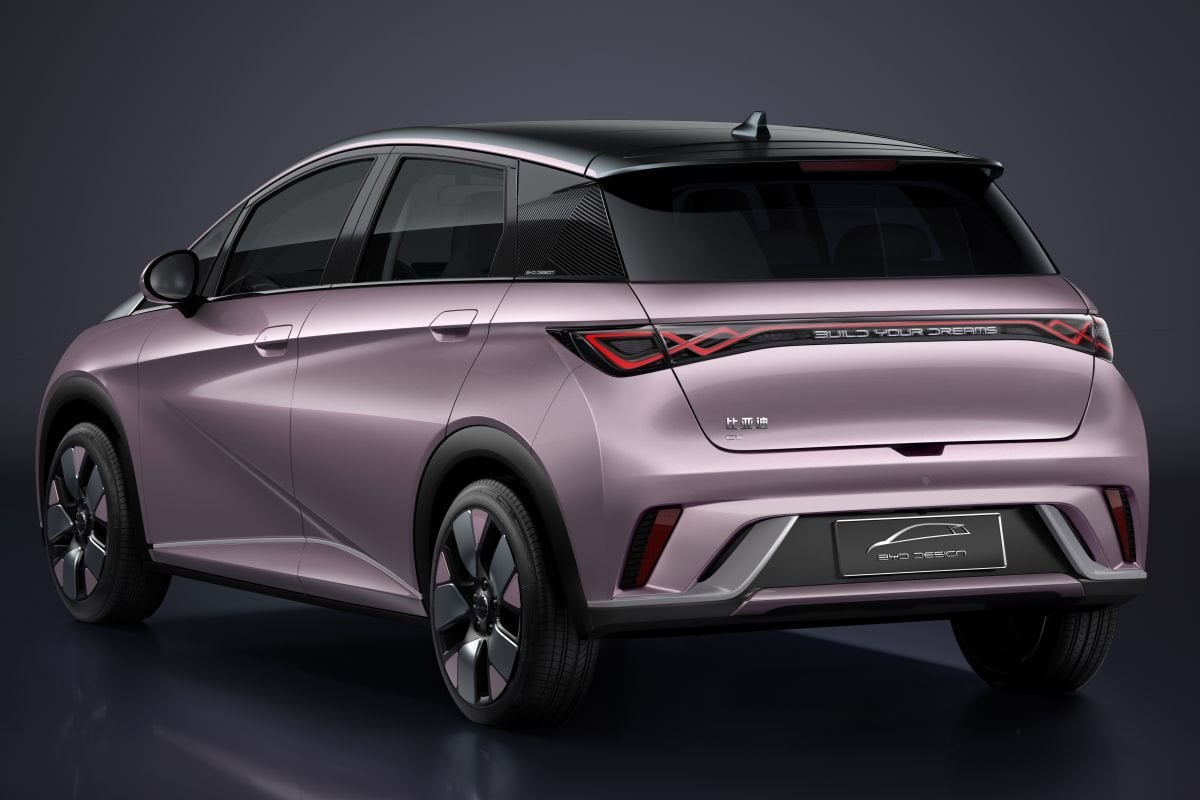
BYD’s Australia’s distributor, Nexport, has confirmed the EA1 will be coming to Australia, but was unable to reveal further information due to an embargo, so it’s unclear if this will be the hatch that’s rumoured to arrive in Australia this winter with a sub-$35,000 price tag or if that will be the BYD E2 which was first introduced in 2019.
Nexport is expected to start selling BYD models here during the next 12 months, including the Tesla Model 3-rivalling Han sedan, the Tang electric SUV, a plug-in hybrid crossover called Song, and the BYD Qin small sedan.
As well as importing cars, Nexport aims to assemble BYD buses and cars on a $700 million 51-hectare site in Moss Vale, NSW.
MORE TO COME
The 2022 Aston Martin Valhalla will no longer be powered by the in-house hybrid 3.0-litre turbo V6 the Gaydon firm has been working on since 2019.
According to Autocar, the British automaker’s newest two-seater hypercar is now expected to be powered by a Mercedes-Benz-derived AMG power plant.
This may sound fanciful to some, but when you consider that Daimler now holds a 20 per cent stake in Aston Martin, and the fabled marque is headed up by former Mercedes-AMG boss Tobias Moers, the notion isn’t so absurd.
Indeed, Aston already uses AMG’s V8 engines in the Vantage and DB11 V8, and Mercedes-Benz’s electrical architecture is also present in modern Aston Martin models.
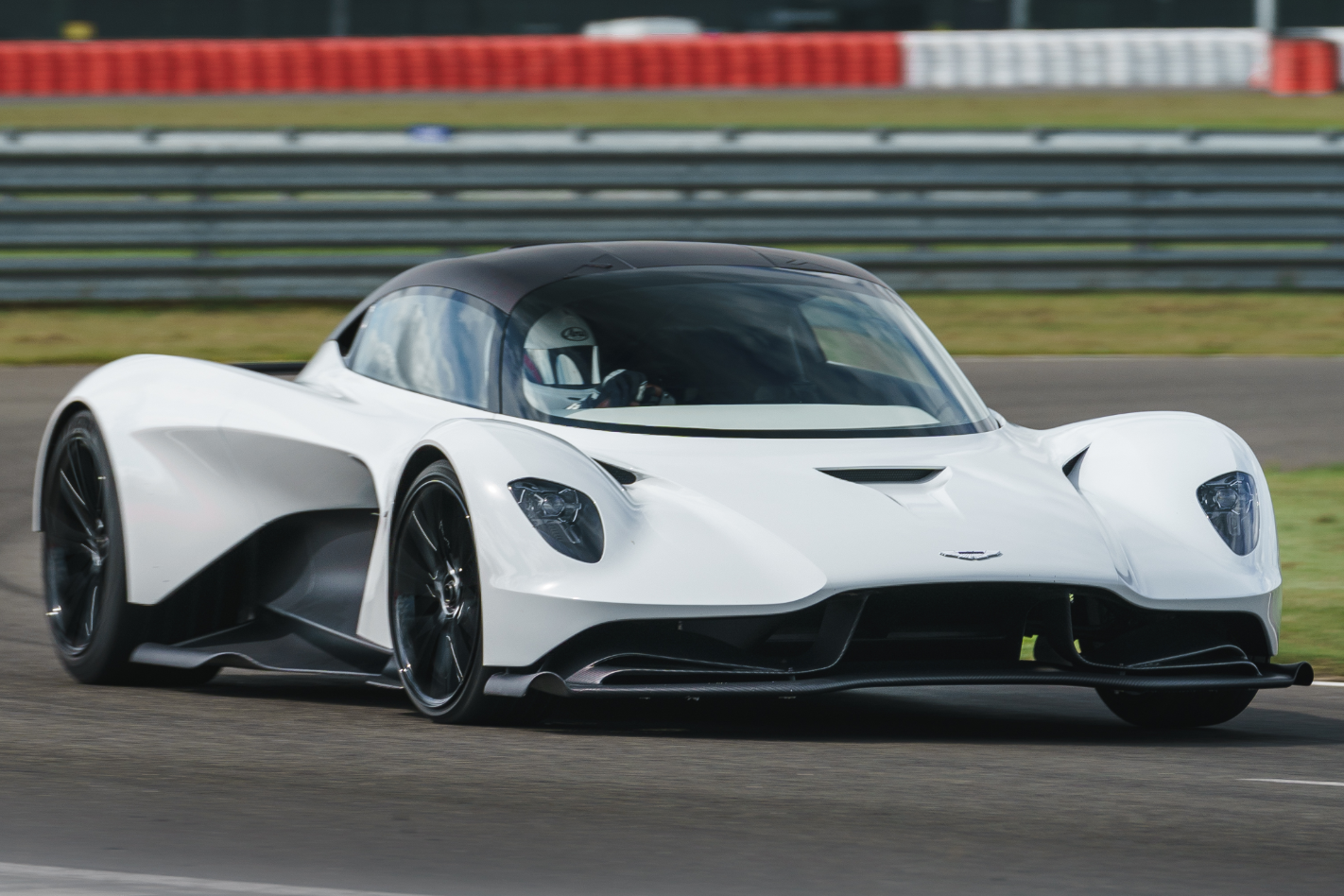
Which Affalterbach powertrain will be slotted into the hypercar – co-developed with F1 tech legend Adrian Newey – is still a point for speculation. However, Autocar has guessed the most likely candidate is AMG’s new hybridised 4.0-litre twin-turbocharged V8 petrol engine.
The thunderous bent-eight unit is set to be unveiled in the new Mercedes-AMG GT73e 4Matic+ EQ Power+ 4-Door Coupé.
Power is rumoured to be a whopping 750kW, bringing the Valhalla into line with other performance juggernauts like Ferrari’s SF90 Stradale and outgunning hypercars like Lamborghini’s V12-hybrid Sian.
This is the best-case scenario though, as it’s not yet known whether Aston Martin will be able to slot AMG’s 150kW electric motor into the Valhalla’s diminutive carbon fibre monocoque body.
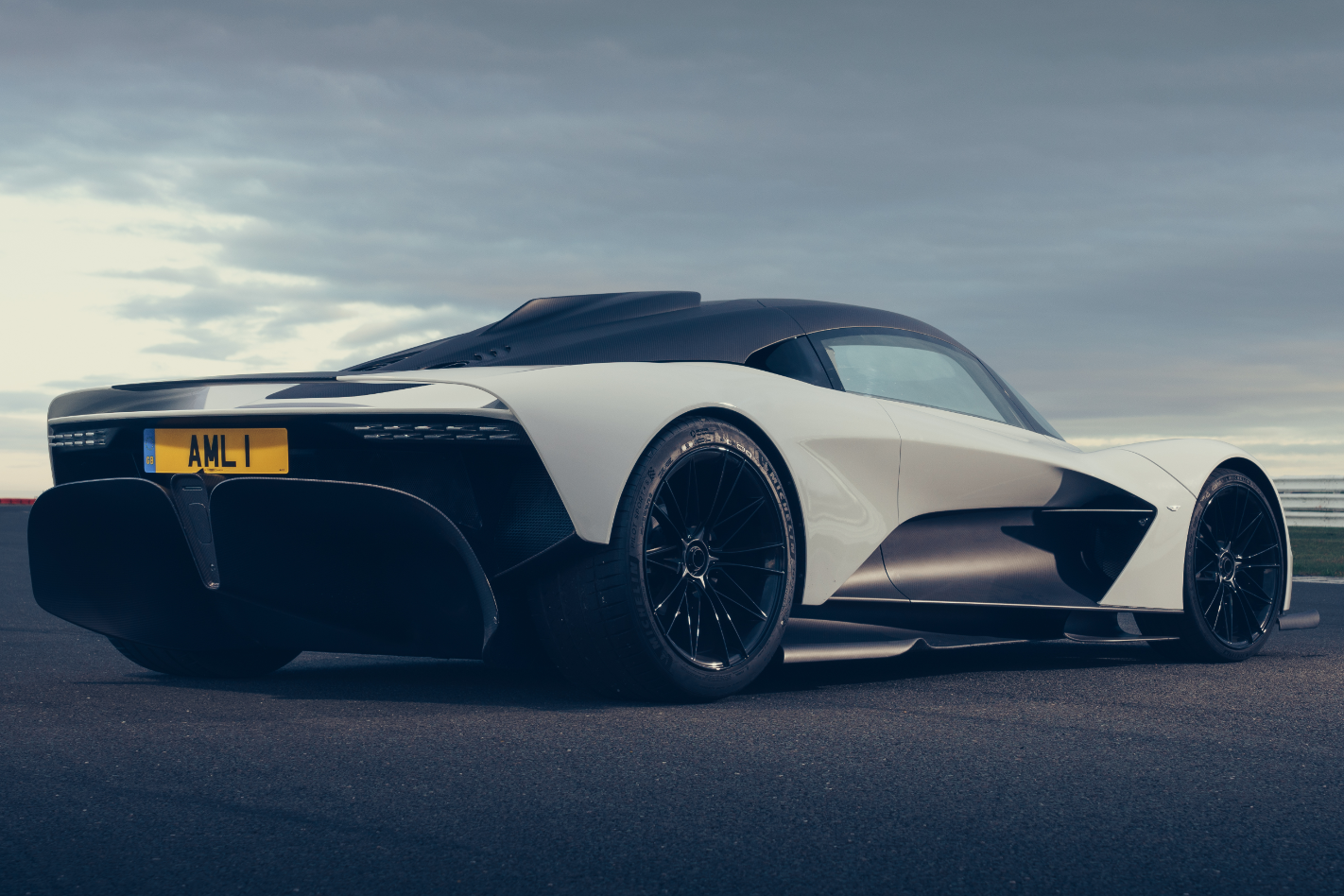
It’s also not known how long we’ll have to wait before we get a definitive answer from Aston Martin about what AMG drivetrain will be nestled behind the Valhalla’s two seats, but a rumoured update is expected sometime later this year.
Regardless of whether or not we do receive an update though, it’s going to be a while before anyone sees the two-door hypercar out in the wild, as it won’t enter production until 2023.
MORE: All Aston Martin stories
The track is mine for the afternoon and the Porsche 992 GT3 is here. It’s not Bilster Berg in Germany, where the international launch event is being held, because Covid, but instead it’s Bedford Autodrome, UK.
There’s no Andreas Preuninger or Frank Walliser to download after driving here, either, but having spent time in the prototype last year between lockdowns with Preuninger, I’ve already had the lowdown from the GT boss.
The car, a RHD PDK example, arrived a couple of days ago, the track was hastily booked and I got the call to come and drive it. There was only ever going to be one answer to that request, but empty track or not, I climb into the wonderful embrace of the optional carbon fibre full bucket seats, start the engine and point the GT3’s snout towards the exit and head out on the road.
For every mile that a GT3 will do charging around a circuit, they’ll do many multiples on the road. I know it’ll be fast and capable around Bedford’s wide, fast circuit – the ludicrous sub seven-minute lap time it’s achieved around the Nurburgring underlines that – but discovering just how fast and capable it is can wait. For a bit, at least.
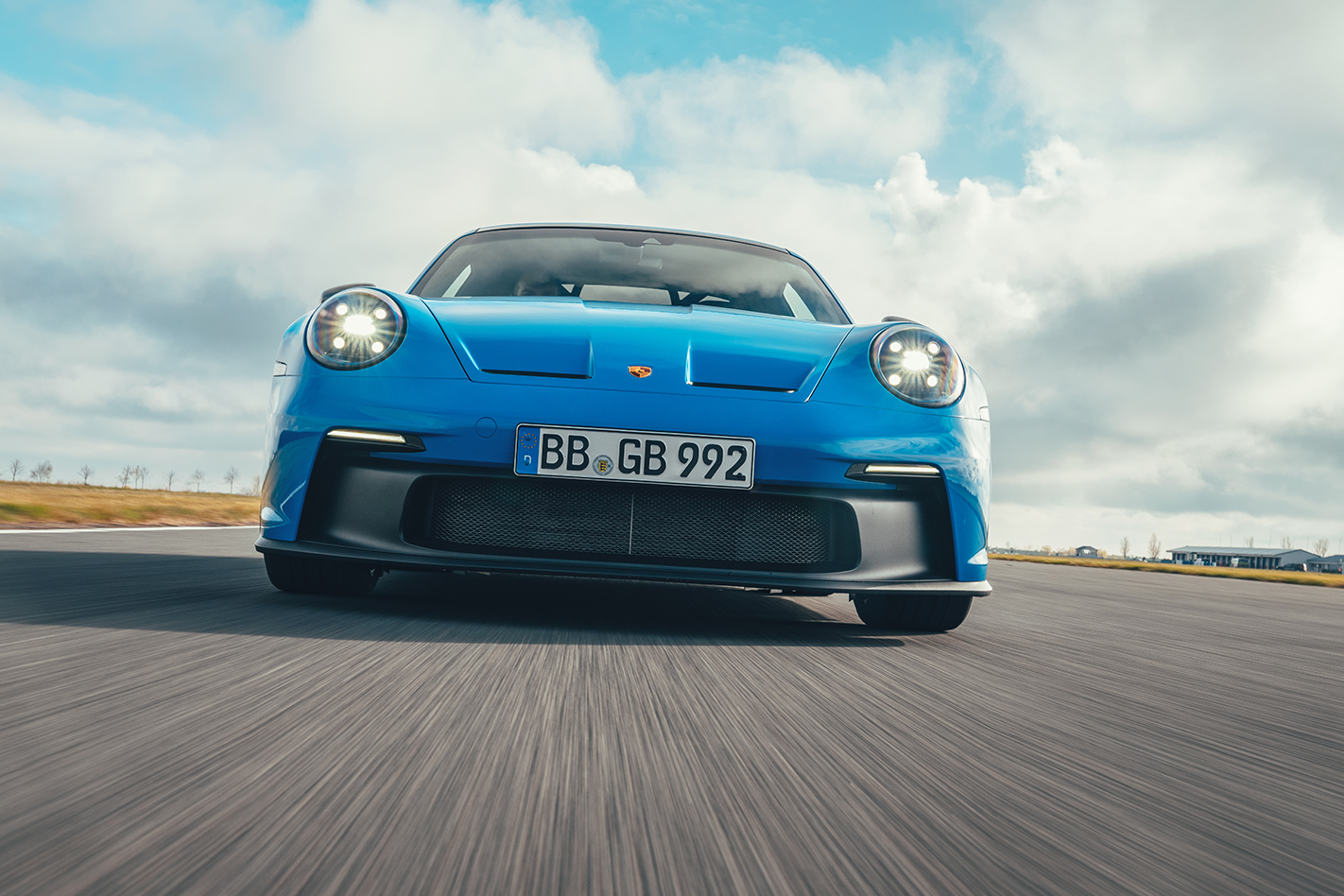
It’s on the road that the GT3 needs to work, because no matter how singular the GT3 is in its intent, it’s no use to anyone if it rides like a sack of spanners between track days. Expectations are high, as that previous prototype passenger ride on German country roads did suggest it’ll ride well enough, but that’s German tarmac, which is curiously smooth, in contrast to what passes for roads in the UK and Australia.
The tarmac here is ravaged by rain, frost, and occasionally, heat. Pounded by heavy goods vehicles, dug up almost daily by utility firms and having as little money spent on it as possible, the patchwork of lumpen, crumbling and meandering asphalt is as testing and nightmarish to a car’s chassis as is possible.
The GT3’s 315/30 ZR21 rear and 255/35 ZR20 front Michelins, both tyres sections being 10mm wider, might be epic around a track, but they’ve got their work cut out here.
As has the suspension the wheels and tyres hang from, the GT3’s all new front axle the single biggest change over its predecessor – and the standard Carreras and Turbos – ditching the MacPherson strut arrangement in favour of a double wishbone set-up that’s lifted almost directly from Porsche’s Cup race cars.
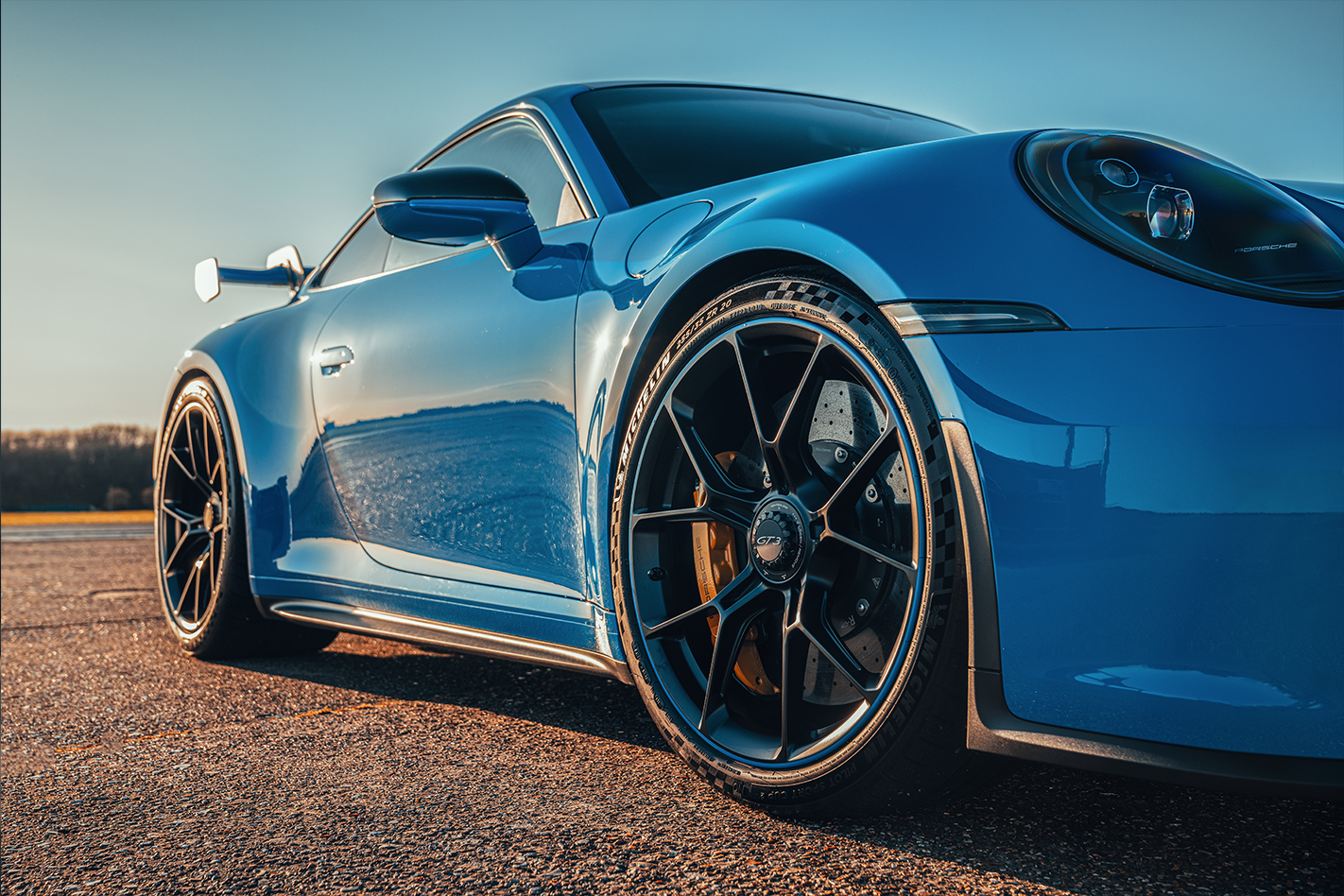
Preuninger discussed at great length the complexities of doing so during our prototype ride, not least implementing such a wholescale change into the production line process, but the benefits were deemed advantageous enough to warrant the effort.
Specifically in relation to steering precision. It’s not that you’d get out of the previous GT3 or its RS relation and bemoan sloppy responses at the front axle, but those German engineers are anything if not detail driven and they spotted the potential for improvement.
The wishbones are forged aluminium and ‘incredibly expensive’ admits Preuninger, and, in keeping with the GT boss’s dislike of any rubber in the suspension, 100 per cent rose-jointed – as are all the links at the rear. There are integrated helper springs, and the overall spring rates have more than doubled, while improved camber stability as well as less body movement in relation to roll and pitch is a result of those wishbones.
Obviously, there’s adjustment possible across the suspension’s entire spectrum, should you have a preference for how your GT3 is set up, as well as PASM (Porsche Active Suspension Management) with Sport or Track settings, selectable inside, via either the central touchscreen, or the configurable mode switch on the steering wheel.
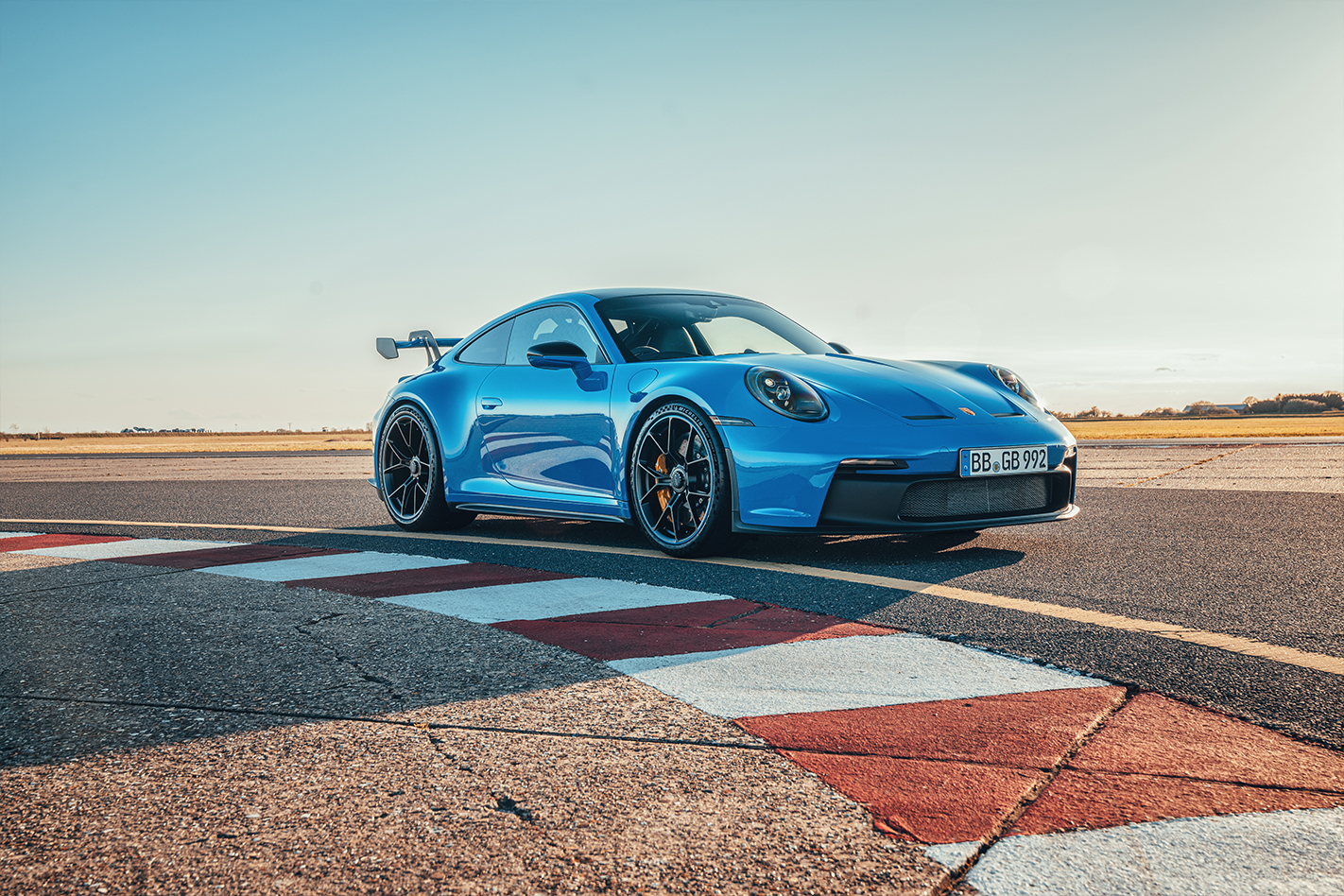
Overall, the chassis sits some 20mm lower than that of a standard Carrera and damper response time is also significantly improved, to less than 10 milliseconds. The rear suspension is, broadly, identical to that of its 991.2 predecessor, it being a multi-link system with rear-wheel steering, with it calibrated to work with the extensive revisions to the front axle.
The standard brakes are 408mm in diameter at the front (380mm rear), the same diameter as those on the 911 Turbo, yet they’re 17 per cent lighter thanks to being narrower.
Pitted rather than through-drilled for strength, they’re internally ventilated, but the car we’re driving is fitted with optional PCCB (Porsche Ceramic Composite Brakes), which sees the front brake diameter up front grow to 410mm, and at the rear to 390mm, grabbed by six-piston monobloc fixed front, and four-piston callipers at the rear. The PCCB drops the unsprung and rotating mass by 50 per cent in comparison to a same-size cast iron disc, to the benefit of the ride.
With the previous 991.2 GT3 RS Porsche’s chassis engineers managed to retain incredible control and feel, allied to a ride that remained supple and uncompromised, and that same magic is at work here in the 992 GT3. It’s obviously taut, but the anticipated concessions to comfort when traversing the UK’s awful tarmac never materialise.

Yes, you feel the surfaces, the many ripples and undulations, but they manifest as information opposed to disruption, the steering wheel not following or being guided, the GT3’s trajectory picked by you rather than dictated by what’s rolling under its tyres.
That’s remarkable, allowing the GT3 to carry its speed easily, yet ballistic speed is just not necessary for engagement, with the GT3’s abundant feel translating to a drive that’s enjoyable even at road legal speeds. That’s most obvious in the bends, where the GT3’s steering is light and utterly predictable, that new suspension being transformative to the initial turn in, with the nose keener and more precise, holding its line with greater authority than any 911 before it, yet not so distinct from its gene pool to deny it its familial roots.
That’s a neat trick, the GT3 retaining its 911 essence, despite a front axle that’s more resolute, the engine’s rear positioning still a defining character in its make up, and appeal.
What an engine, too, the GT department’s engineering stubbornness to bow to the legislators’ demands to pass any number of sound, emissions and consumption regulations seeing all others, including Porsche itself with the turbocharged Carrera line-up, resort to smaller capacity, turbocharged or hybrid-assisted engines.
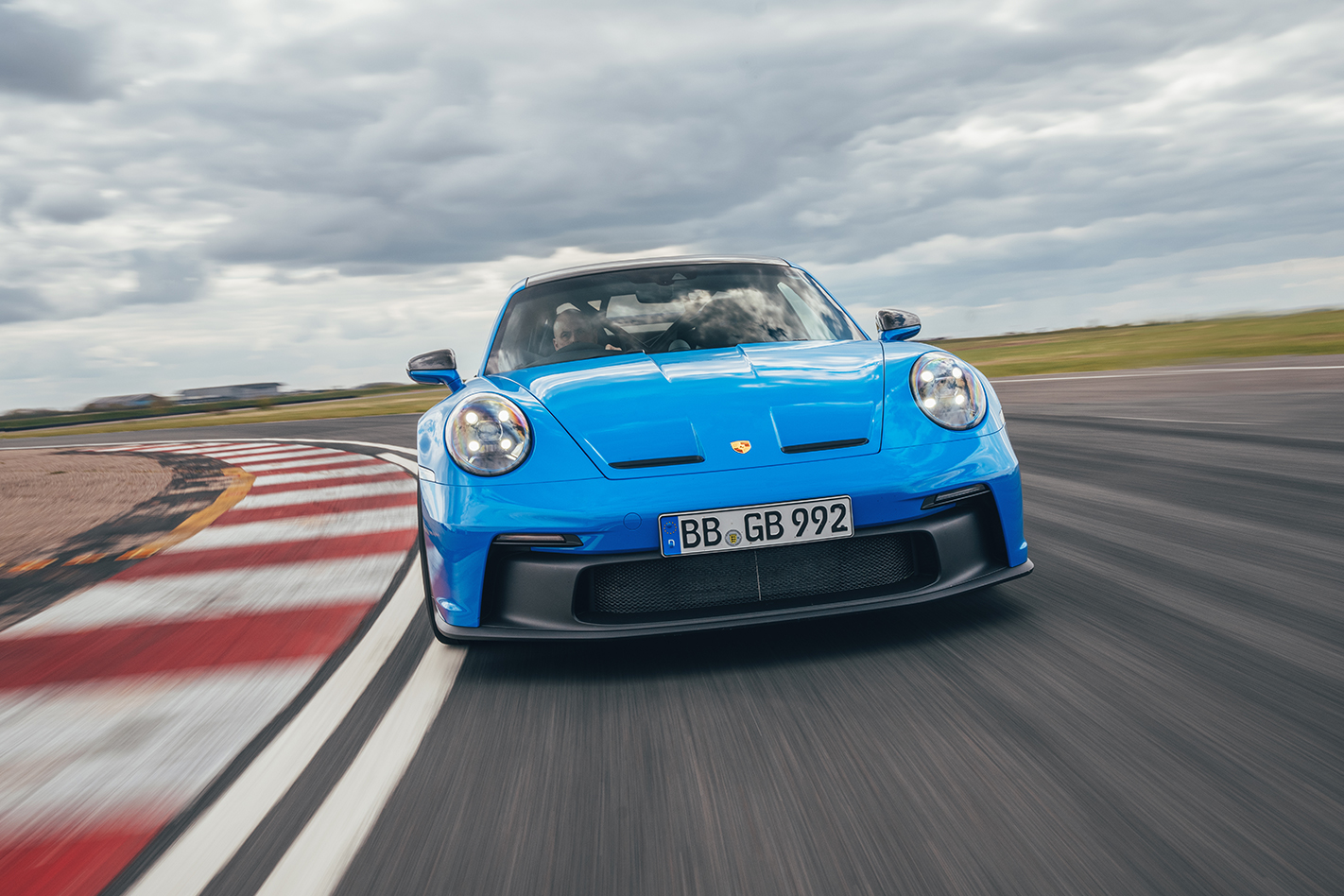
No, this 4.0-litre, naturally aspirated, 9000rpm redlined screamer’s a two-fingered salute to the bureaucratic killjoys that are strangling internal combustion engines as we charge towards the electrified era of transportation. It’s familiar, here, having been used in largely the same specification in the 991.2 Speedster, with the biggest revisions centred on the exhaust, the gasoline particulate filters to allow it to pass future regulations, but it’s putting out the same 375kW at 8400rpm and 470Nm at 6100rpm. It sounds incredible, too.
For an engine that’s so effervescent at high revs it’s hugely tractable and useable at low revs, the GT3 is fast even when you’re short shifting. Wring it out, here with the seven-speed PDK, and it’ll reach 100km/h in 3.4 seconds and 318km/h flat out, the six-speed manual is slower on the pointless benchmark sprint by 0.5 seconds, yet scaping a slight advantage in relation to top speed.
That manual is lighter, too, by a not insignificant 17kg, so if you’re after the lightest possible GT3, then manual it should be. Weight’s always a consideration with the GT3, and despite being a significantly bigger car, the GT department’s obsessive mass management allows the 992 GT3 to weigh in at 1418kg in manual form, and 1435kg as a PDK.
It’s the usual diet of lightweight carbon fibre where possible – here including the bonnet – less sound deadening, thinner glass, aluminium suspension components, no rear seats and lighter front seats. The masochists can no longer spec their GT3 sans air con and audio, because Preuninger admits allowing the one or two customers the opportunity to do so caused more headaches during development and homologation than it was worth.
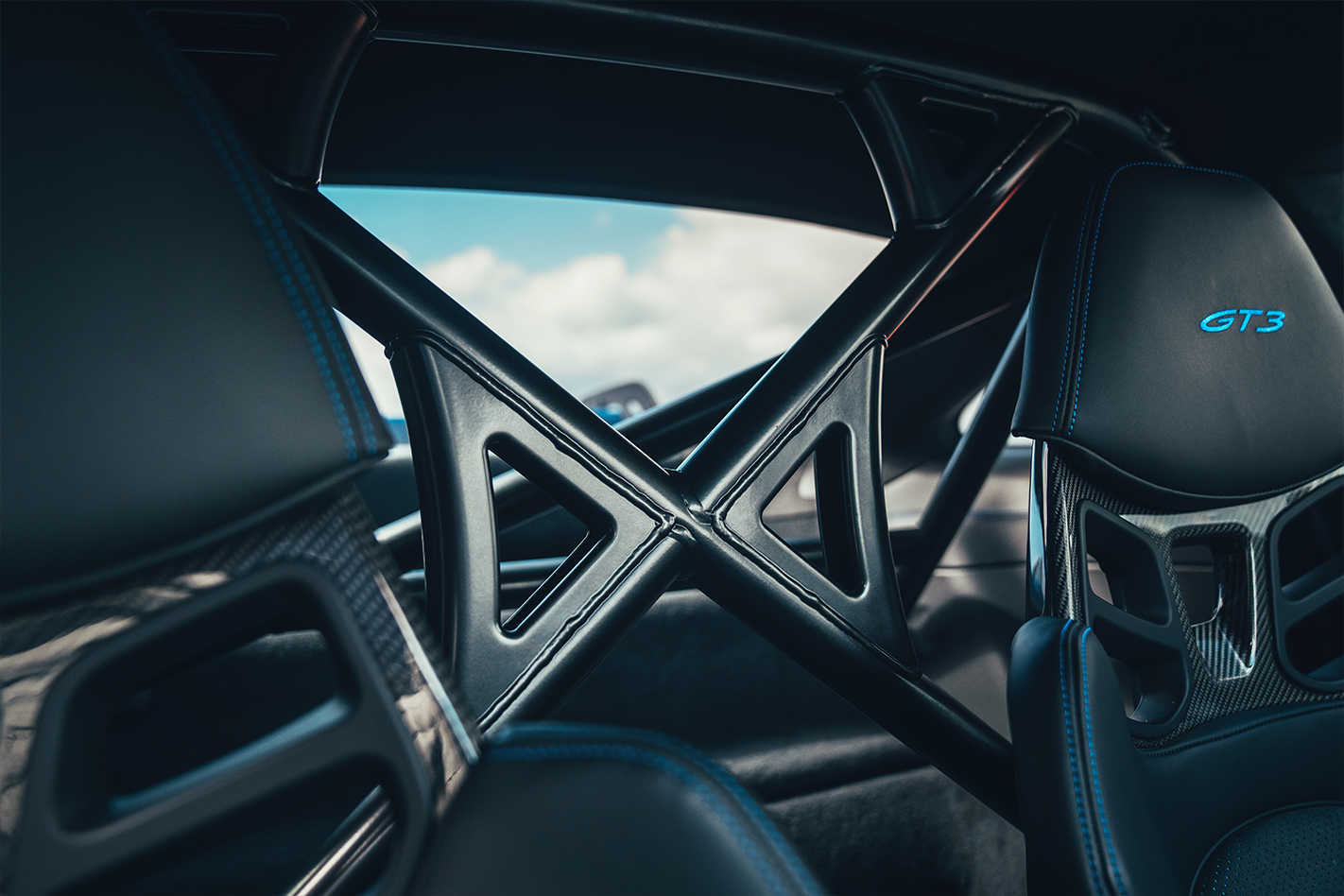
That track is calling, even if the GT3’s proved a hugely compelling and capable car on the road, there’s so much more to explore. There’s something intrinsically correct about seeing a GT3 in a pitlane. Everything starts to make more sense, the wing, swan necked here, the front splitter, the riot of intakes, vents and other aero addenda allowing this GT3 to push itself into the ground with 50 per cent more downforce than its predecessor, yet do so without creating more drag.
The interior, save the cage in the rear, doesn’t feel race-car austere, indeed, it’s familiar, comfortable even, with the instruments and specification seeing a few GT3-specific functionality gains, the most obvious being the PDK selector being a proper stick with a knob on the top, as opposed to the Carrera (and Turbo’s) almost apologetic selector.
That’s a direct result of Preuninger’s preference for shifting the PDK manually with the stick, rather than the paddles.
The multi-point harnesses that come in a box with the Clubsport specification aren’t fitted here, so it’s a regular inertia reel across that optional carbon full bucket seat that’ll be holding me in.
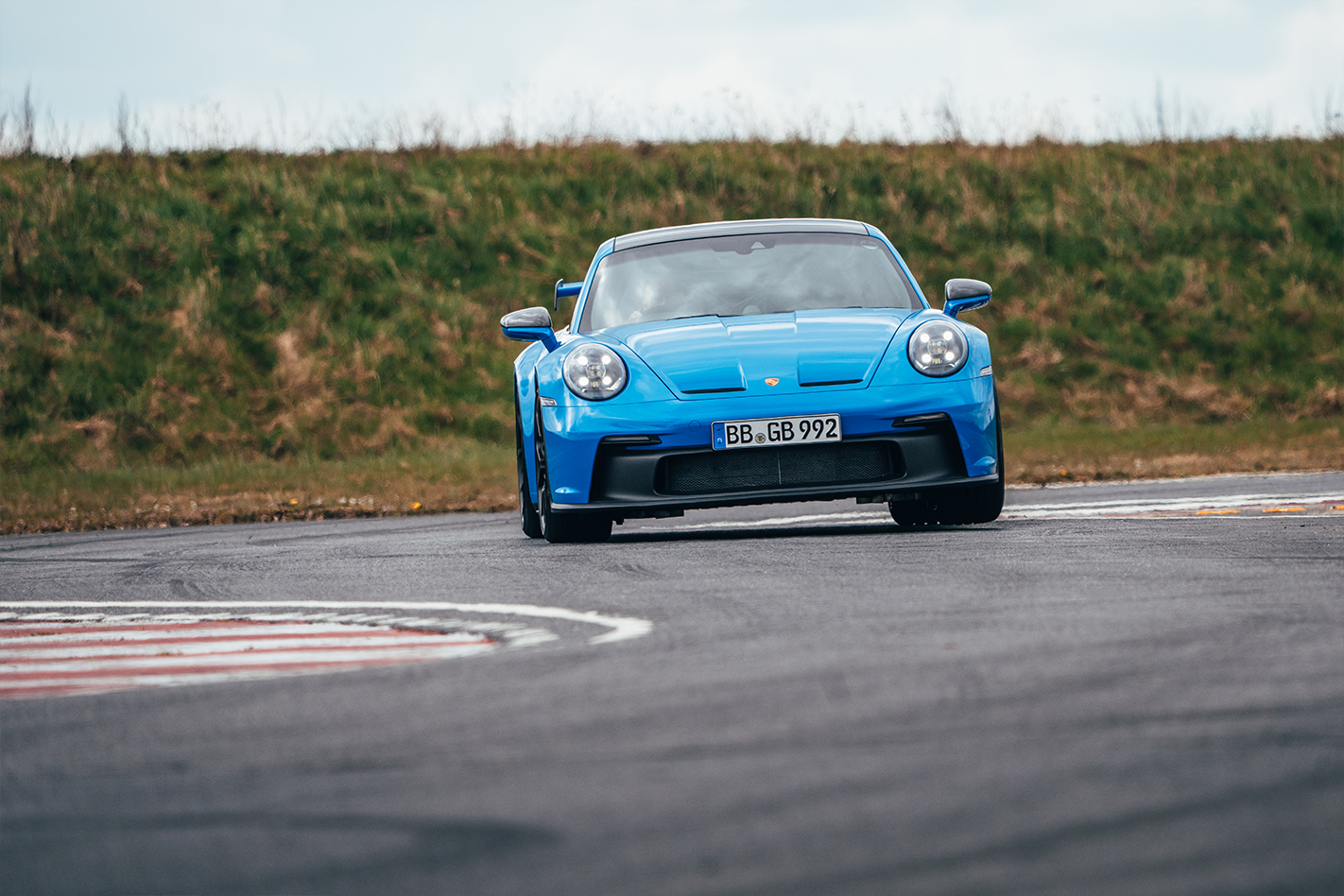
A couple of sighting laps at sensible speeds might usually be prudent, but, conveniently, having lapped around here only a week earlier in something else, the temptation to take it easy evaporates by the time I’m into the third corner.
In short, it’s incredible, but then that’s true of its predecessor. What’s demonstrably different is that front axle, and how transformative to the whole car it is.
It was notable on the road, but here, at far greater velocities, with the aerodynamics starting to contribute and on tarmac that’s smooth and expansive, the GT3 is so faithful to your inputs it’s like it’s directly connected to your synapses. There’s no infinitesimal pause between your input at the steering wheel and the front moving, that immediacy being the GT3’s most obvious, and biggest gain.
With the initial focus on the GT3’s front end it’s easy to ignore what’s happening at the rear, that as much a reflection of how efficiently it’s all working in unison, translating ever higher forces with impunity. The traction it’s got is staggering, allowing mind-bending, face altering G loads in cornering.
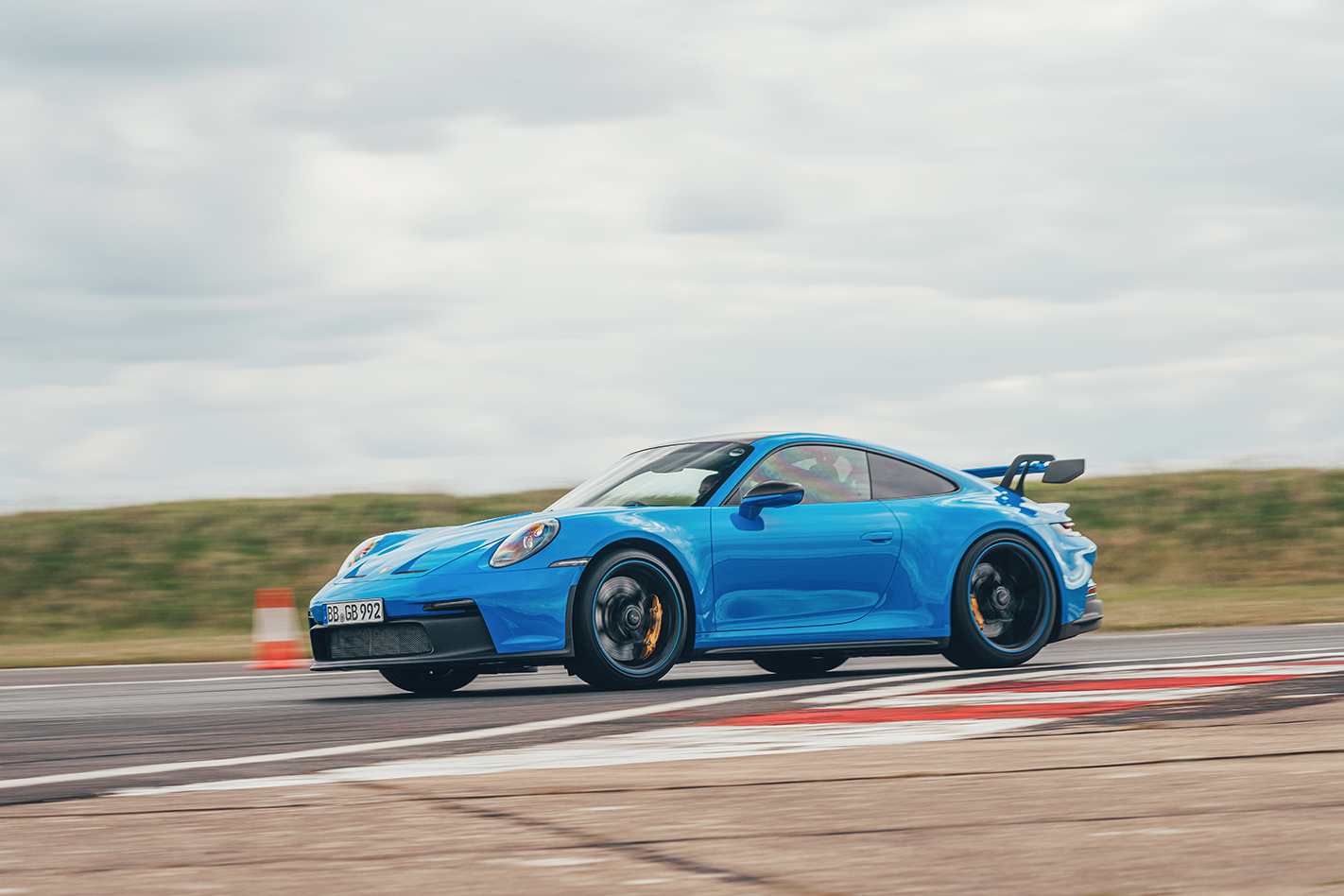
The combination of both allows ever faster cornering speed, the GT3’s ability to translate what you want it to do being so unwavering it’s difficult to comprehend that it’s running on road tyres rather than race-spec slicks.
The forces it generates are phenomenal, the speeds huge, yet doing so feels so natural, dare I say it, easy, that you find yourself eking out ever more speed on the entry, through and out the exit of a bend. The body control is sensational, there’s virtually no pitch or roll. It’s flat, yet it’ll ride up over a rippled concrete kerb on apex or on exit without it being thrown around, the suspension’s ability to manage the forces acting on it being genuinely mesmerising.
The drive modes are set to Track, both the chassis and powertrain, the PDK shifting as quickly as you can pull at the paddles the whole package feeling better and better however much more you ask from it. The PCCB brakes can be absolutely stamped on, repeatedly, to the point where you initially find you’re braking far too early, having to go deeper before committing to the brake pedal on the next lap.
There’s an incredible efficiency to how it works, it flatters, it’s biddable and responsive, yet, for all the huge speed it can generate, it’s never frightening or unpredictable. If that sounds like it might be clinical, a bit detached or aloof, it just isn’t, it’s the perfect tool around a circuit, that allows you to use it entirely how you want it to.
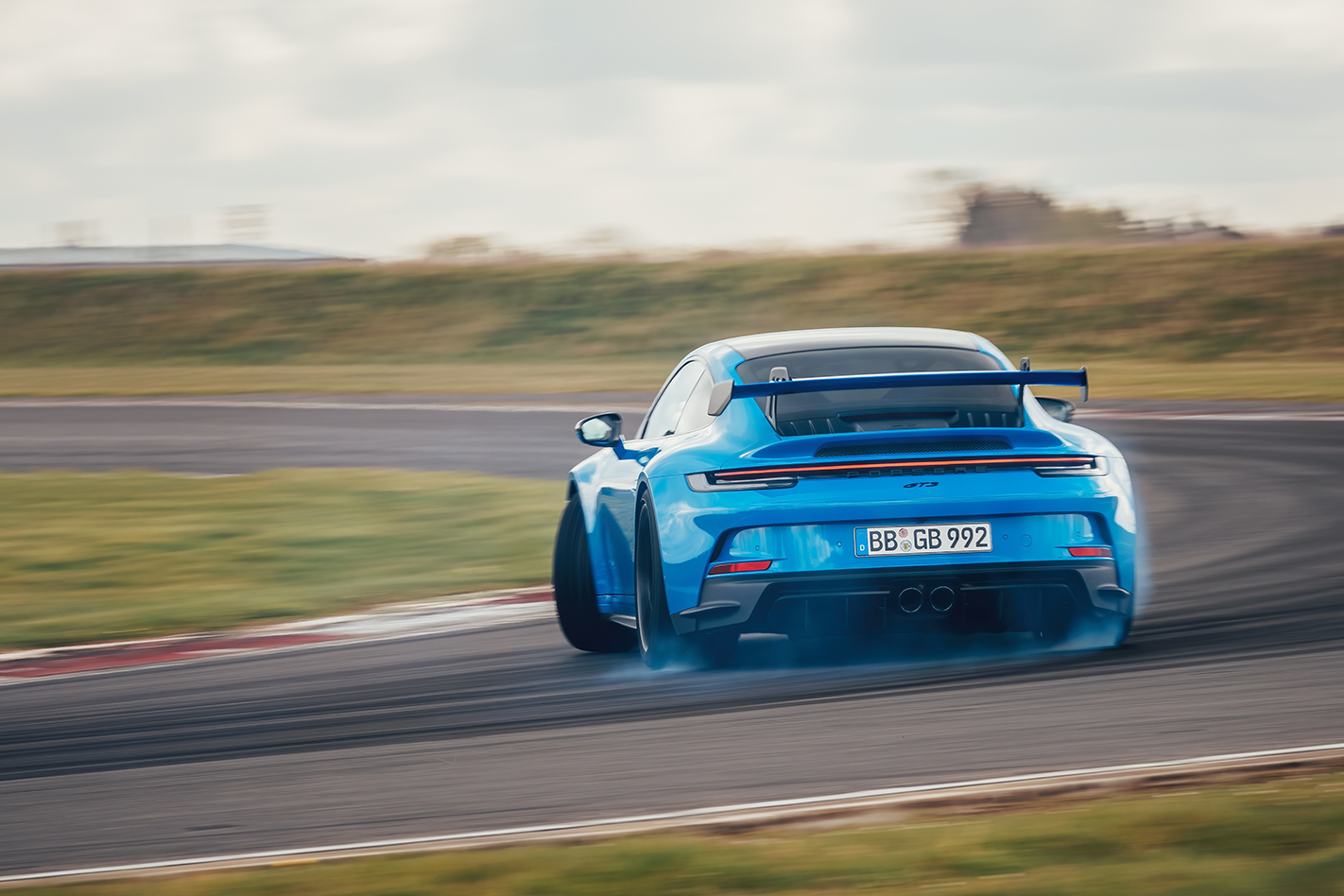
It’ll move around under you when its lofty limits are breached, but it communicates exactly what’s going on, and such is the quickness of its response to your inputs, it’s easily corrected, exploited and enjoyed. Switching the traction and ESP systems off to really delve into that only reveals even more playfulness should you want to send off a set of tyres with a smoky end.
That the focus has almost entirely been on the chassis is demonstrative. Preuninger admits that with the engine they’re pretty much at the limit of what they can do with it, hence no power increase over the Porsche Speedster.
The gains the GT3 makes are down to the platform the engine has to work with, the chassis’s greater ability, the improved aerodynamics, the maintenance of kerb weight that’s seen no real gain despite a size differential.
To ignore the engine does it a huge disservice, though, because it’s great, it is linear in its delivery, its enormous appetite for revs hugely addictive, the sound that accompanies it being music to any enthusiast’s ears.
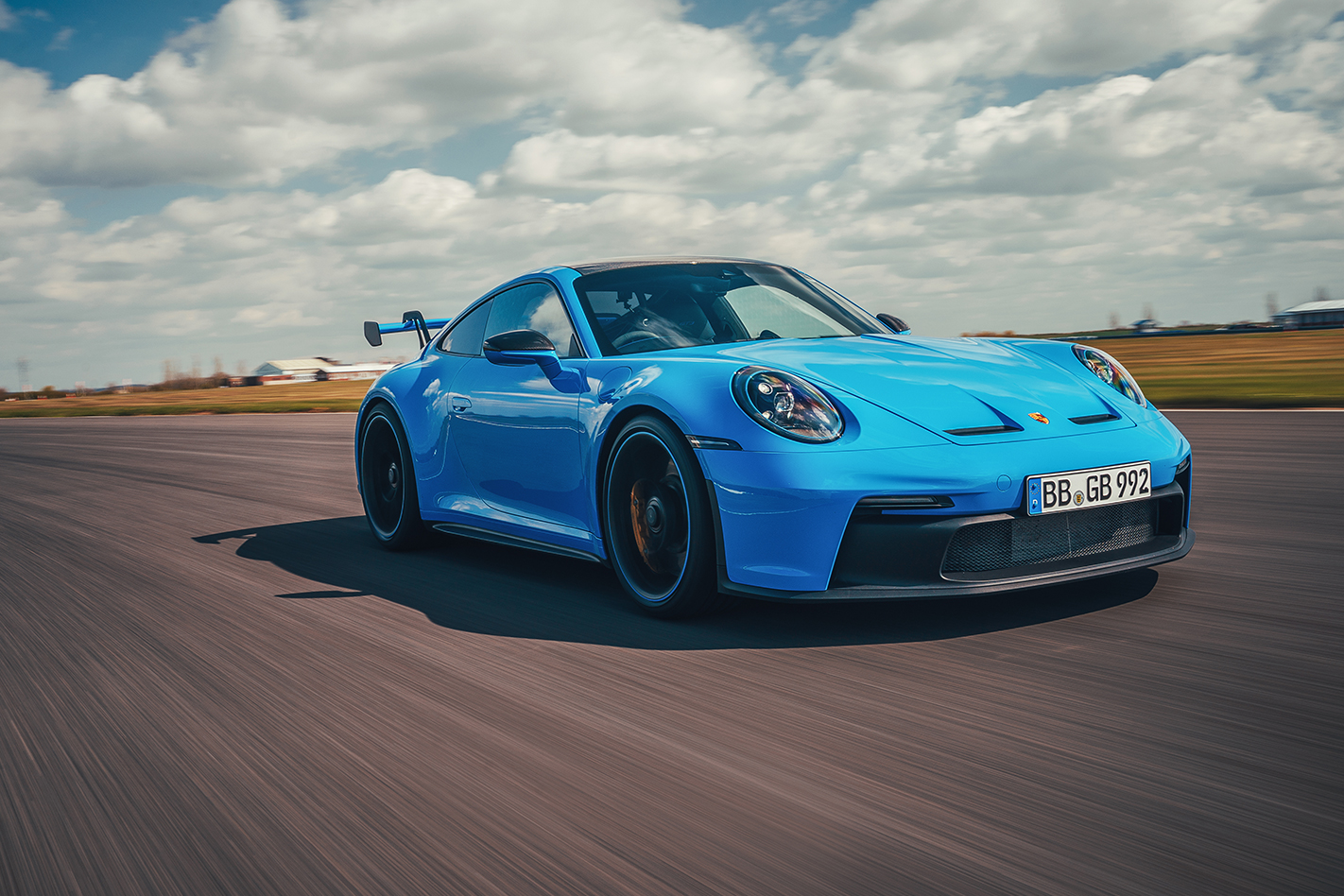
There’s a racer’s edge to its note, especially as it reaches for its redline, the almost Italianate sounds that defined the Speedster’s exhaust, replaced here with a more Germanic tone, that’s more in keeping with the 911, it sounding so intense and delivering such pace at 6000rpm you find yourself shifting up before you need to, it needing a mental readjustment to remember that you’ve still got a third of the engine’s range to go.
Lap after lap it gets faster, braking later, carrying more speed, seeing the shift lights flicker as it reaches its redline more frequently, the GT3 just pounding out lap after lap without feeling like it’s over working its brakes, or tyres, the weak link here being the driver.
That it’s built feels like a celebration, and it should be celebrated, because it also feels like an end-of-days kind of car, the peak, internal combustion’s last stand.
Until, that is, the RS comes sometime in the next 12 months or so and blows us away all over again.
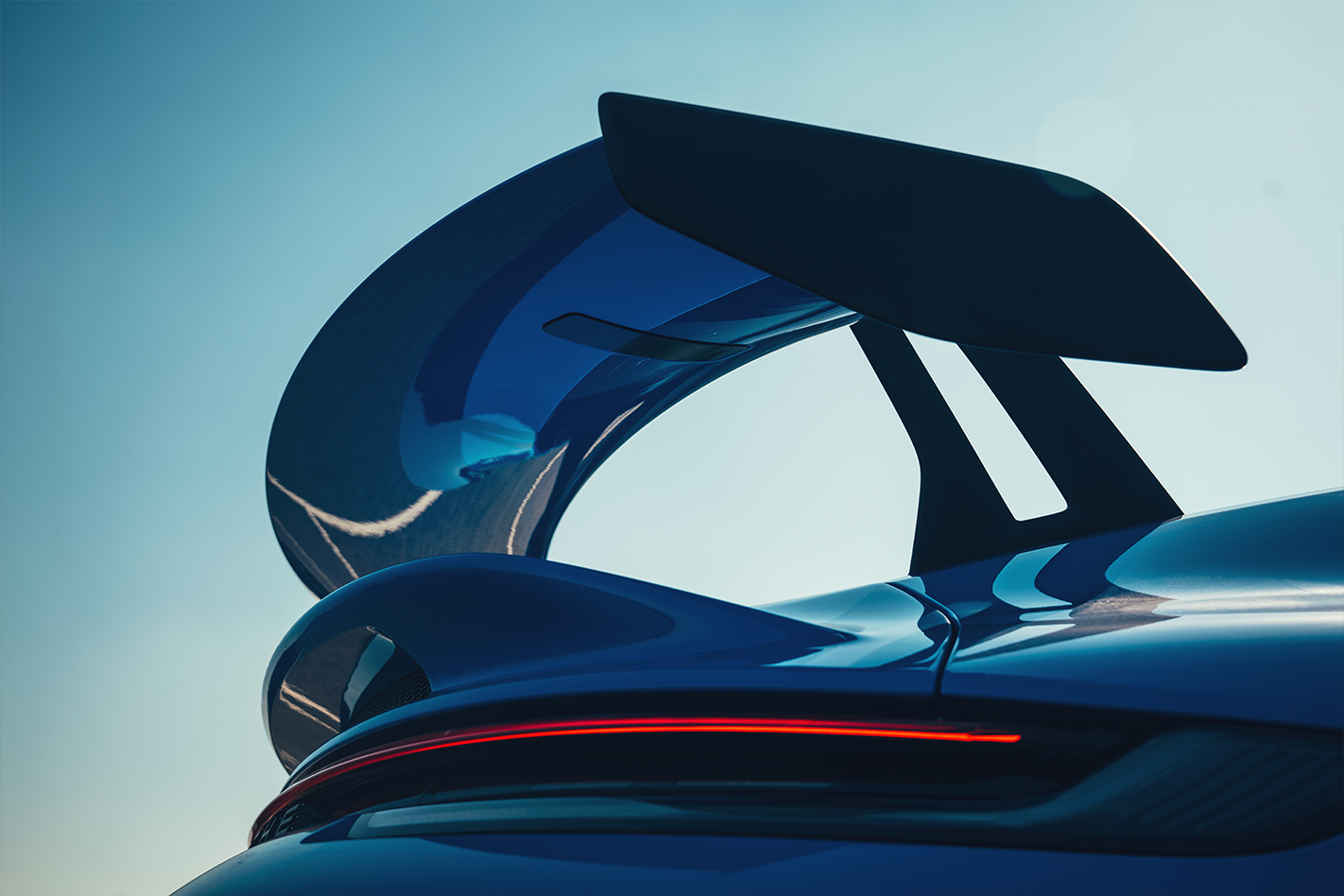
Porsche 911 992 GT3 specs
Engine: 3996cc flat-6cyl, DOHC, 24v Power: 375kW @ 8400rpm Torque: 470Nm @ 6100rpm 0-100km/h: 3.4sec (PDK) Weight: 1435kg (PDK) Price: $369,700
Like: Stronger front end; rev-hungry engine; near-perfect handling; quality of the engineering Dislike: Options pricing; try getting hold of one
Rating: 5/5
The 2021 Maserati Ghibli Hybrid has arrived in Australia just one day after the Italian automaker unveiled its first petrol-electric SUV, the Levante Hybrid.
Representing the Modena brand’s first-ever hybrid sedan, the new Ghibli’s powertrain is said to weigh 80 kilograms less than its V6 diesel counterpart.
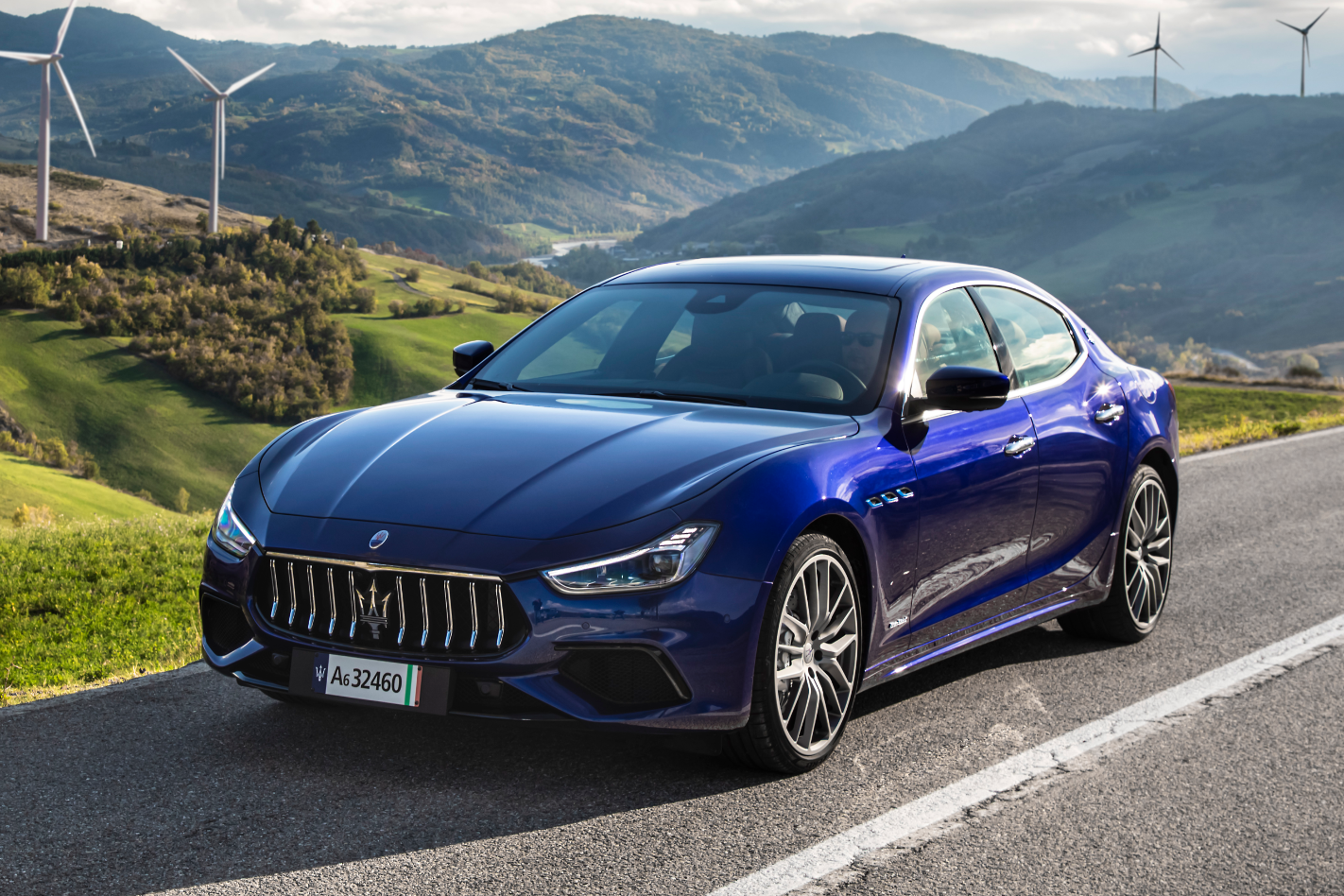
And, thanks to the battery sitting over the car’s rear axle, the Hybrid sedan’s weight distribution is said to be vastly improved, which Maserati claims will lead to a more dynamic and capable chassis.
The powertrain in question is the same as the one found in the new Levante Hybrid SUV, albeit with a slightly different state of tune.
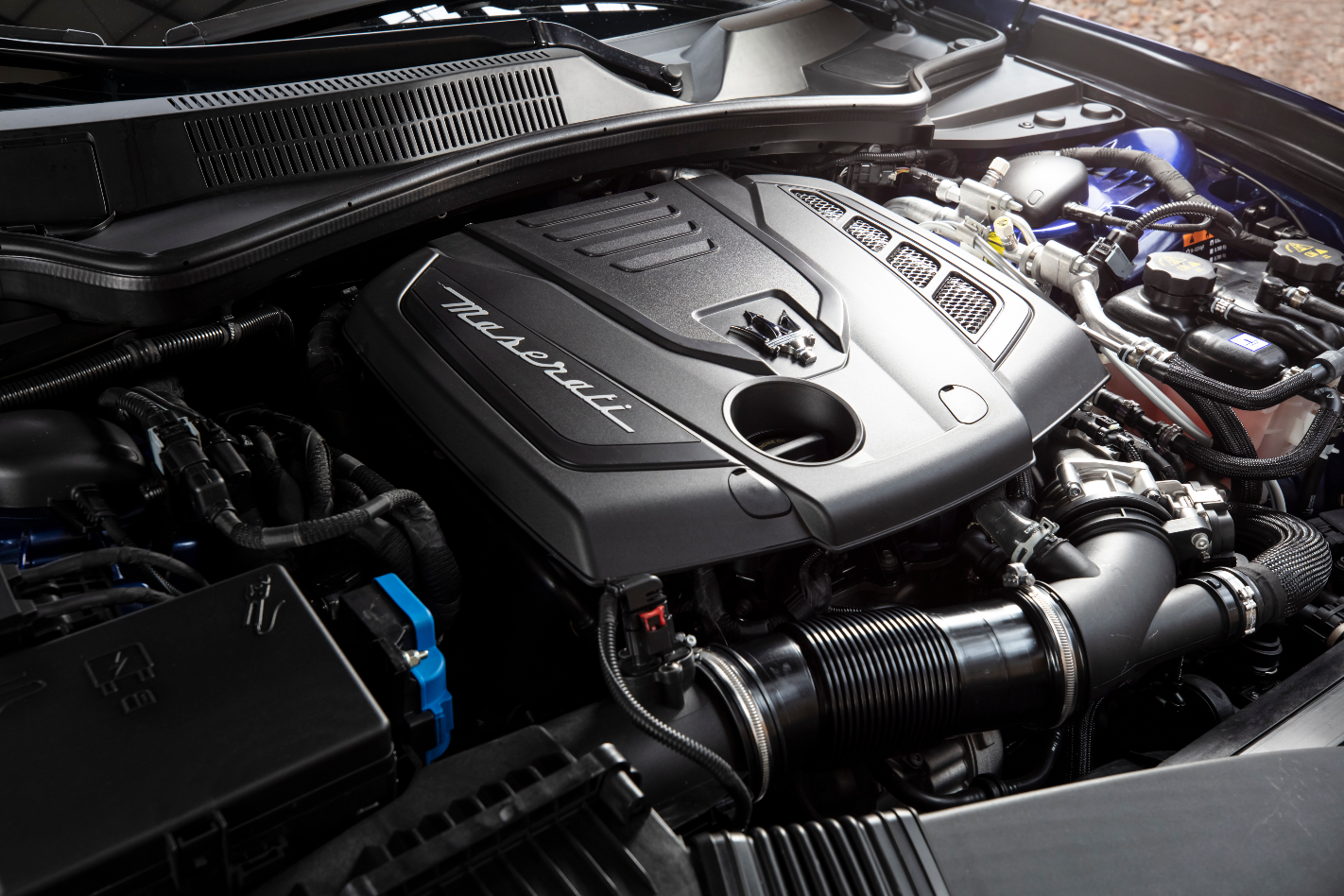
The turbocharged 2.0-litre four-cylinder petrol engine and mild-hybrid 48V battery pack produce a combined 246kW and 450Nm.
Drive is sent to the rear wheels through ZF’s ubiquitous eight-speed torque converter auto and a mechanical limited-slip differential.
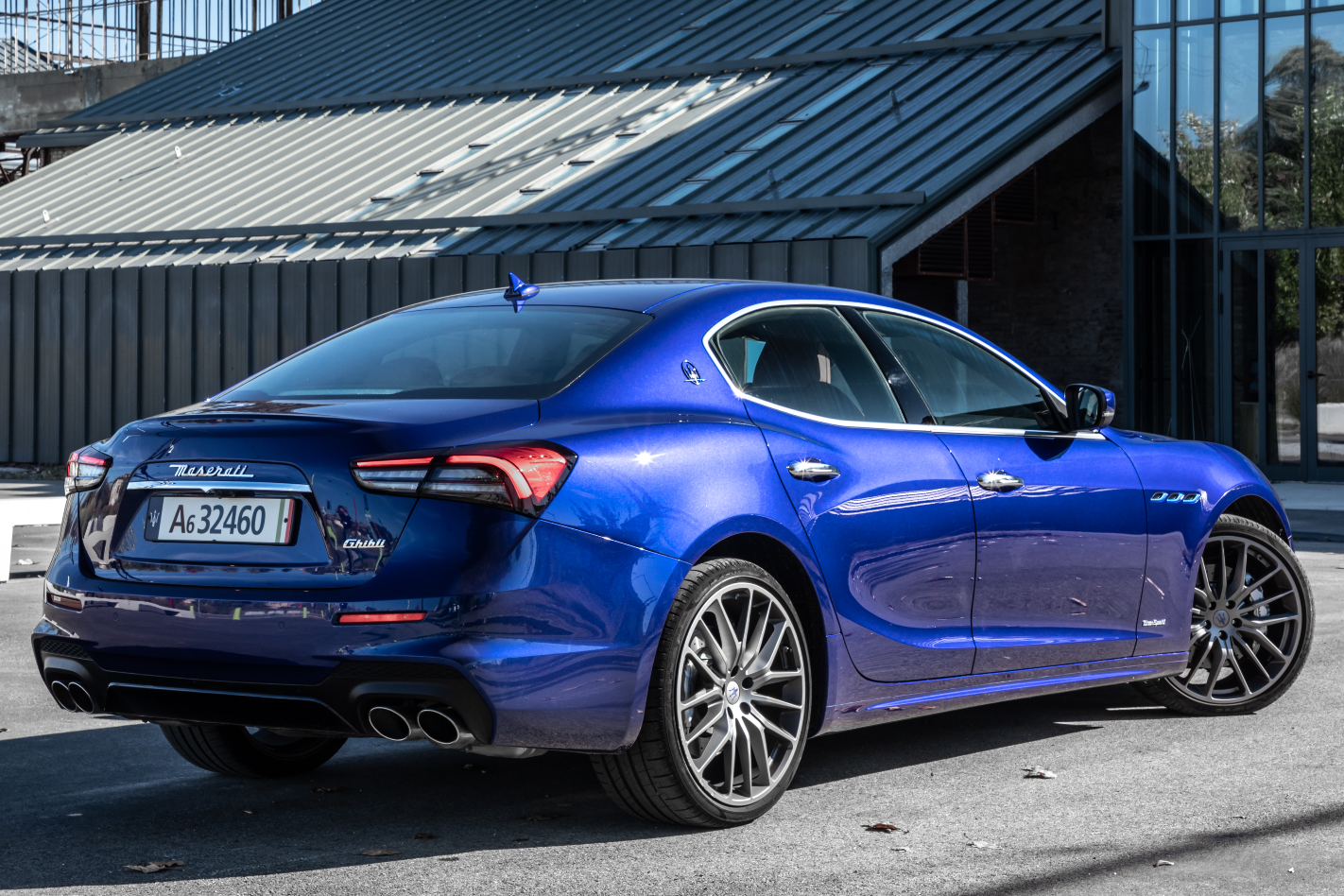
The 0-100km/h sprint comes up in a brisk 5.7 seconds, and flat-out the hybridised Ghibli will shift its 1950 kilogram kerb weight all the way to a limited 255km/h top speed.
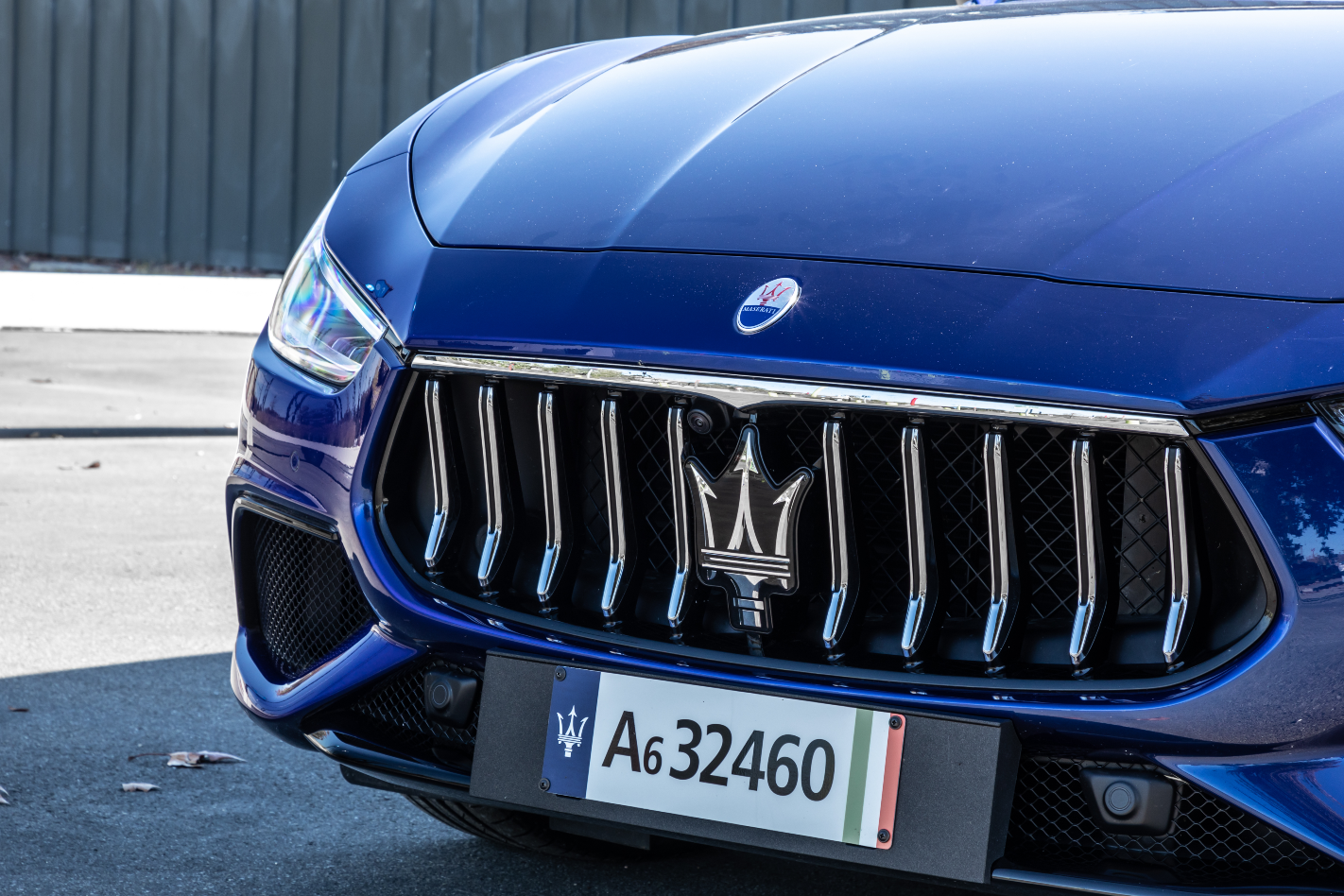
The electrified four-door also scores a newly refreshed grille, front bumper, and a reconfigured taillight design that incorporates stylistic cues that harken back to the ‘boomerang’ tail-lights found on the 3200GT.
Splashes of blue, signifying the car’s hybridised roots, can also be found on the triple side air ducts, C-pillar logo and brake calipers.
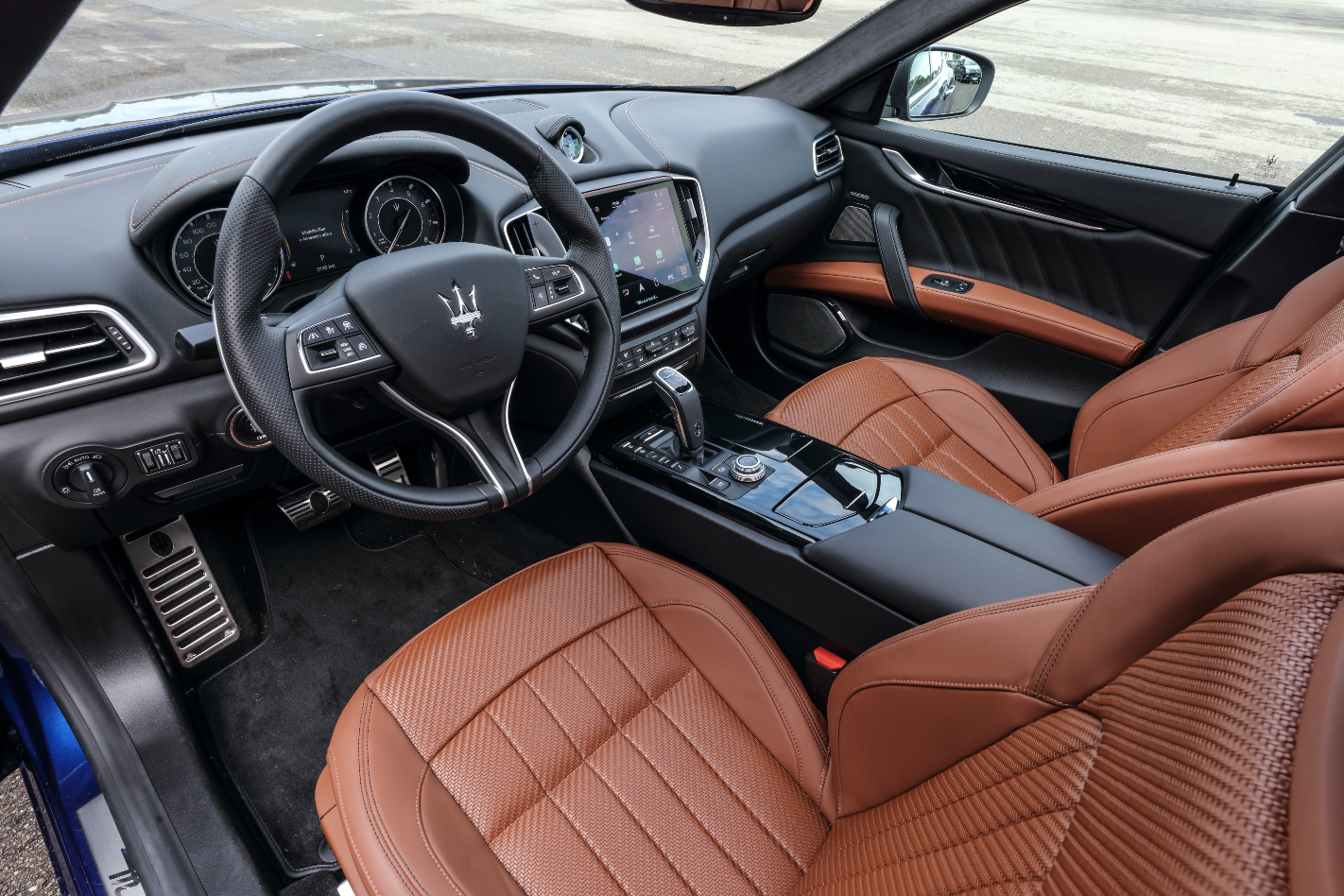
Inside, occupants are greeted by a new, centrally mounted HD digital infotainment display that has grown from 8.4 to 10.1-inches.
The big screen runs Maserati’s Intelligent Assistant multimedia system, which has been developed in conjunction with Android Automotive to deliver an intuitive and personalised user experience.
The 2021 Maserati Ghibli Hybrid will set Aussie buyer’s back $139,990 before on-road costs and is on sale right now.
MORE: Ghibli stories MORE: All Maserati stories
The 2021 Honda SUV E:Prototype has been unveiled at the Shanghai Auto Show, with a production-ready version of the high-riding EV set for a second-quarter launch in 2022.
It’s clear the concept is based on the next-generation Honda HR-V, with heavily revised front and rear styling.
This has sparked speculation that Honda’s yet-to-be-launched HR-V could be coming to certain markets with a fully electric model, as well as a petrol-hybrid and 1.5-litre DOHC i-VTEC petrol-powered model.
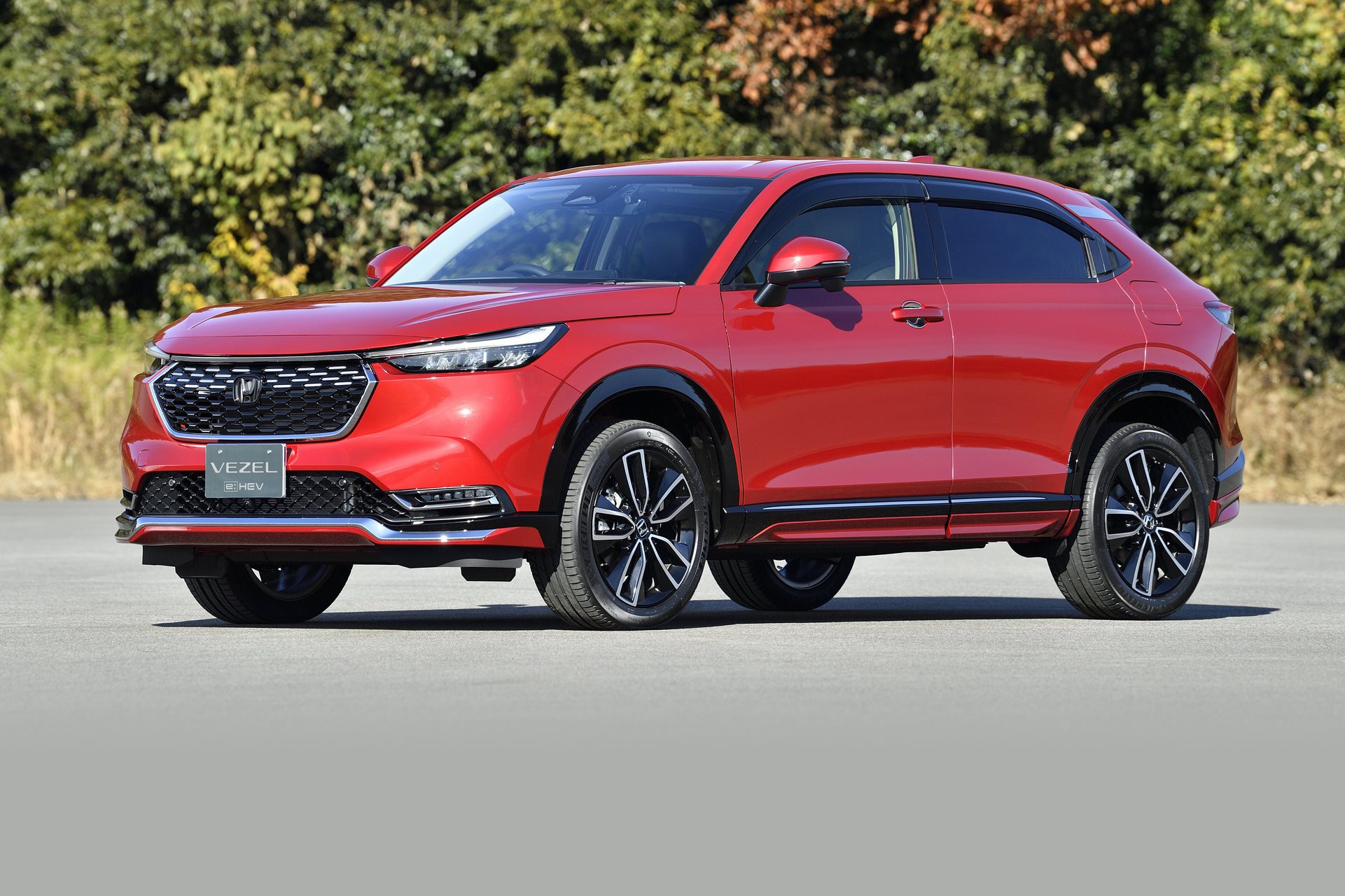
Above: Honda’s next-generation HR-V small SUV.
Honda says the new E:Prototype will be the first of ‘10 Honda-brand EV’ models to be launched in the Chinese market within the next five years.
Given last year’s deal between Honda and General Motors, it is likely the production-ready E:Prototype will utilise GM’s Ultium battery technology, similar to what we’ve already seen on vehicles like GMC’s new Hummer EV SUV.
Styling has been thrust firmly into the avant-garde category, especially when compared with the new HR-V, which by comparison looks quite pedestrian.
There’s an ultra-slim strip of LED lights running the length of the E:Prototype’s high bonnet line – a styling trick that is fast becoming commonplace in new electric vehicles.
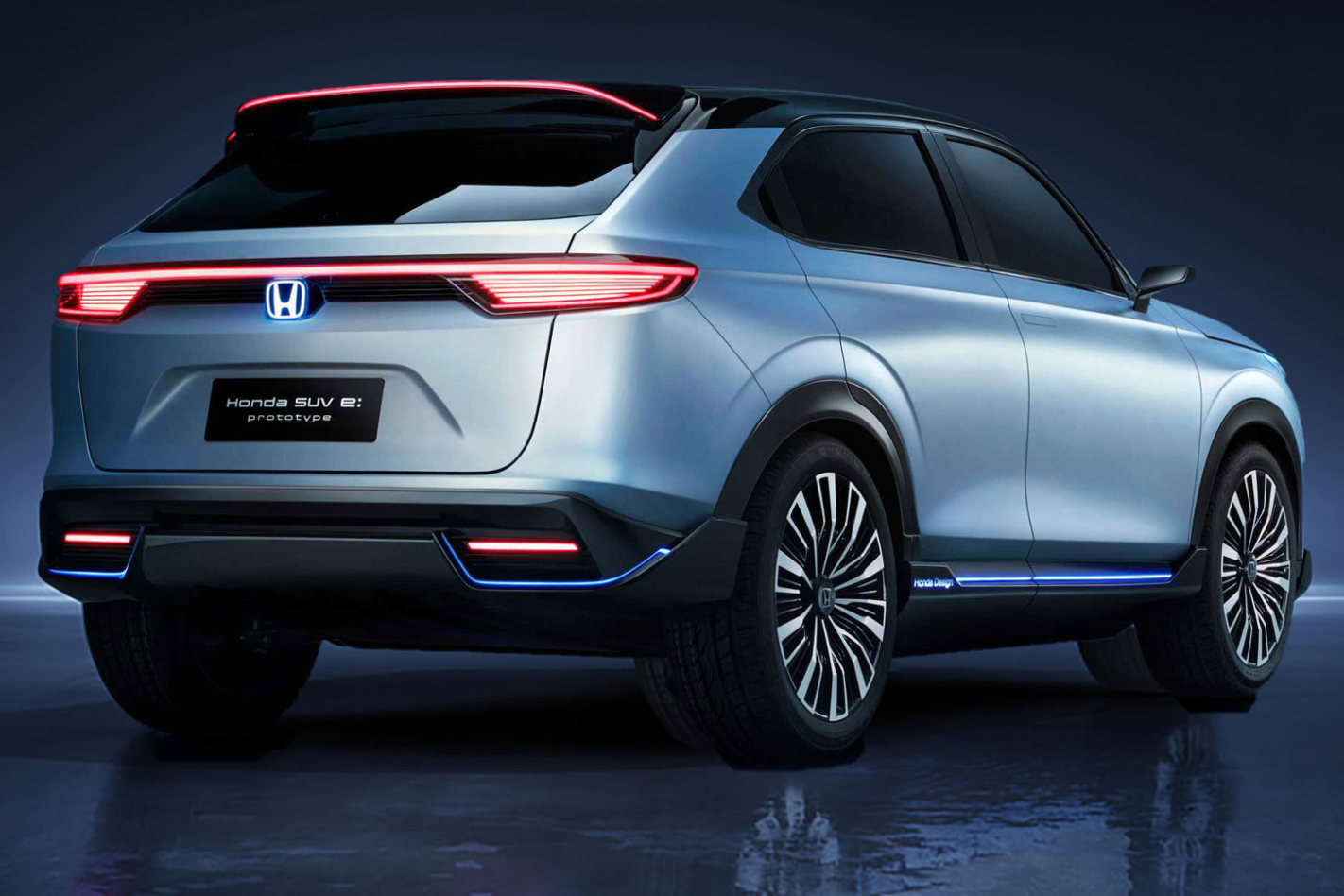
And a blanked-off front fascia devoid of a typical grille only accentuates the modish looks, further communicating its electric vehicle status.
At the back, a similarly minimalist design approach has been taken, with a single red LED brake light strip spanning the tailgate and matching another red LED configuration found on the roof’s prominent rear spoiler.
Honda has yet to confirm any further details about the E:Prototype such as battery size, number of electric motors, power or driving range, but you can expect those details to be revealed closer to the production car’s 2022 release date.
MORE: HR-V stories MORE: All Honda stories
Tesla’s show stand at the Shanghai Auto Show was dealt a significant public relations blow yesterday after an angry protester slipped past barriers around a Model 3 and proceeded to stand on the car’s roof.
The protester, a former Tesla owner, wore a white t-shirt with the red Tesla logo on it and a slogan above it that read “brakes lost control” in Mandarin.
She also yelled that both herself and her family had nearly died in their Tesla Model 3 after it suffered brake failure and crashed.

Photo credit: Twitter – @ShanghaiEye
Event security worked to cover the disgruntled protester with umbrellas, but those efforts proved futile, as the determined demonstrator snatched the umbrellas from the security guards’ hands, throwing them away in anger while yelling “Tesla brakes lost control”.
She was then unceremoniously dragged from the roof of Australia’s favourite electric vehicle, before being whisked away by more security.

Photo credit: Twitter – @ShanghaiEye
According to Bloomberg News, Tesla officials said the protester “is widely known for having repeatedly protested against Tesla’s brake issue”.
The crash that both she and her family were involved in was investigated by Tesla at the time of the incident, however, the automaker found that the braking and driver assistance systems were operating correctly at the time of the 120km/h impact.
Tesla also told Bloomberg that it “places great emphasis” on consumer rights, and the EV maker had tried to provide an amicable solution to their customer’s objections.
This latest snafu comes just one day after news broke that two men had died in a Tesla Model S that had ploughed into a tree in Texas.
MORE: Model 3 stories MORE: All Tesla stories
