
MG Motor Australia has announced pricing and specifications for the upgraded 2025 MG5 small sedan, which is now in MG dealerships. Important safety changes have been made to the 5 and it’s now priced from $32,990 drive away for the MY25 Essence.
Originally announced last year, the upgrades to the MG5 include a wider range of active safety features, including a greater range of autonomous emergency braking (AEB) to cover pedestrians and turn-across vehicles, as well as adaptive cruise control and lane keeping assistance.
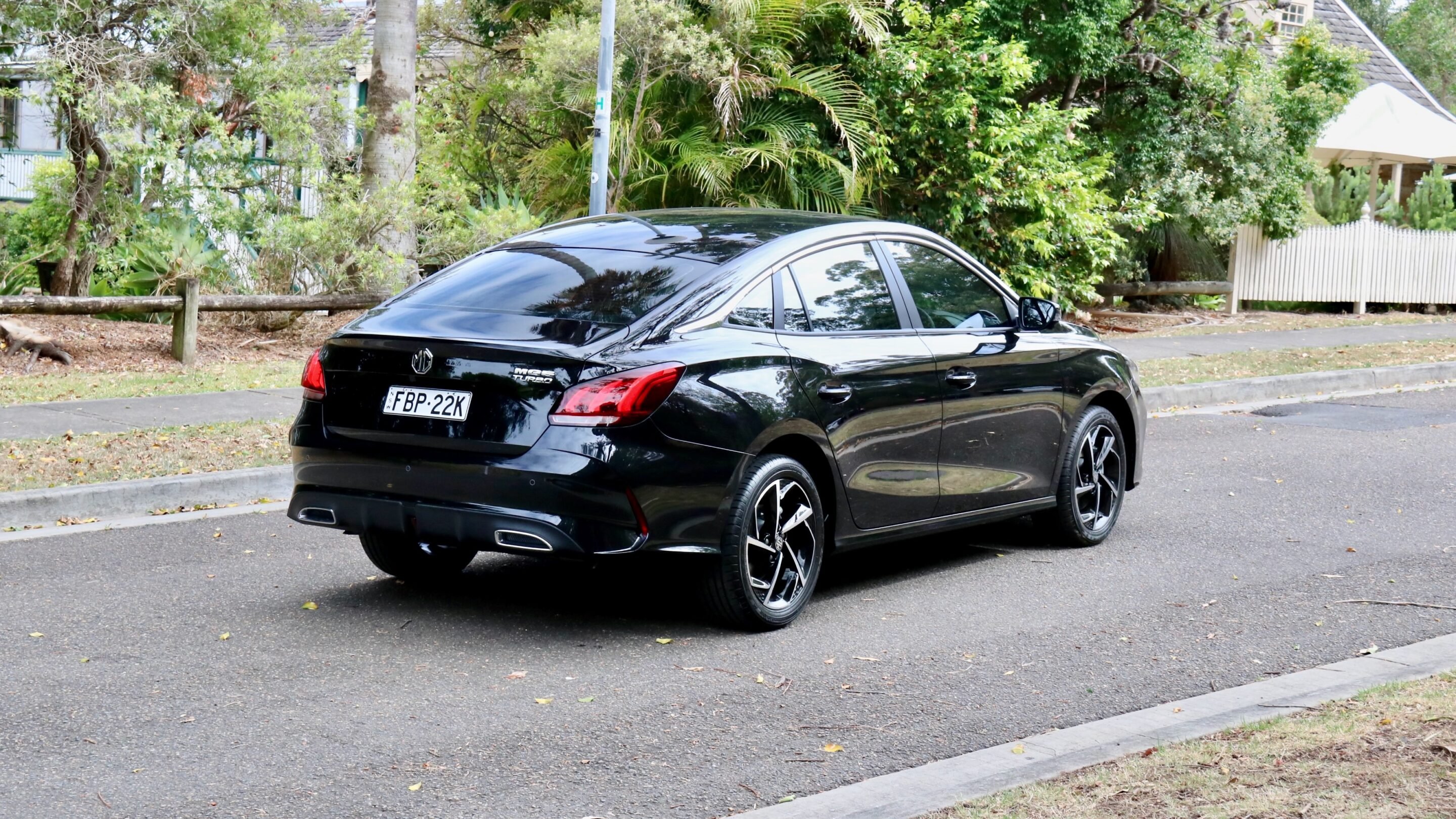
The brand has also added features such as seatbelt reminders, front and rear outboard seatbelt pre-tensioners and front and rear whiplash restraints. Otherwise, the MG5 Essence is unchanged compared to the 2024 model.
Under the bonnet, the MG5 Essence’s 119kW/250Nm turbocharged 1.5-litre four-cylinder petrol engine and seven-speed dual-clutch transmission continues as before – the naturally aspirated 84kW 1.5-litre engine in the former Vibe is no longer available.
The turbocharged engine is rated at 6.4L/100km for combined fuel consumption and 149 g/km for CO2 emissions. It needs 95RON premium unleaded fuel, and features a 50-litre fuel tank.
2025 MG5 pricing (drive away)
Essence: $32,990
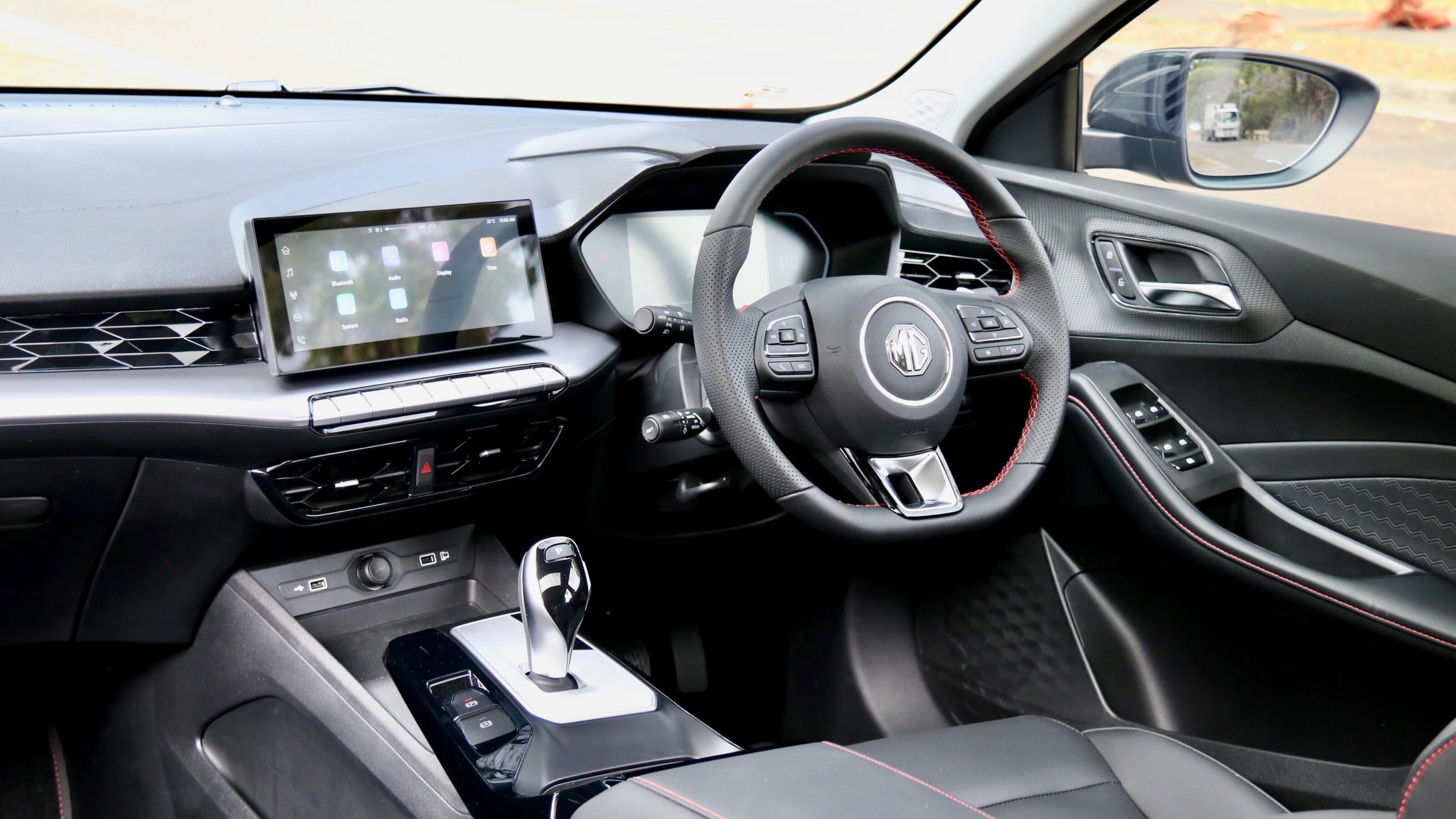
2025 MG5 Essence standard equipment:
- 17-inch alloy wheels
- Dusk-sensing automatic LED headlights
- Keyless entry with push button start
- Heated/auto-folding door mirrors
- Sunroof
- Synthetic leather upholstery
- Six-way electric driver’s seat with manual lumbar adjustment
- Synthetic leather steering wheel with paddle shifters
- Electronic air-conditioning with rear air vents
- 10-inch infotainment touchscreen
- Wired Apple CarPlay and Android Auto
- AM/FM radio
- Bluetooth calling and audio streaming
- 3x USB-A ports
- Six-speaker sound system
- 3-mode steering adjustment (urban, normal and dynamic)
- Eco and normal driving modes
MG5 Essence safety equipment:
- 6x airbags
- Autonomous emergency braking with pedestrian and turn-across traffic detection (new)
- Adaptive cruise control (new)
- Lane keeping assistance (new)
- Seatbelt reminders (new)
- Front and rear outboard seatbelt pre-tensioners (new)
- Front and rear whiplash restraints (new)
- 360-degree camera
- Rear parking sensors
- Tyre pressure monitoring
The updated 2025 MG5 is entering local MG dealerships now, priced from $32,990 drive away.
Ford Vice Chair John Lawler has offered a frank assessment of the internal combustion engine’s (ICE) future within the company’s long-term strategy at the recent 2025 Bernstein Strategic Decisions Conference.
His remarks, first reported by Automotive News, suggest Ford may be rethinking its traditional approach to in-house powertrain development, hinting at greater reliance on external partners for engines and transmissions in the years ahead.
Lawler emphasized a fundamental shift in consumer attitudes: “I don’t think people view powertrains like they did 30 years ago, when horsepower, displacement, and torque defined a car’s identity. That perception has largely faded.”
He argued that as ICE development becomes increasingly cost-intensive and less of a market differentiator, consolidation is inevitable.
While Ford remains committed to producing its EcoBoost engines and 8- and 10-speed automatic transmissions for at least the next three years, Lawler’s comments imply that beyond that timeline, the company may expand its use of outsourced components. Any such transition would likely not take effect before 2028, given current labour agreements.
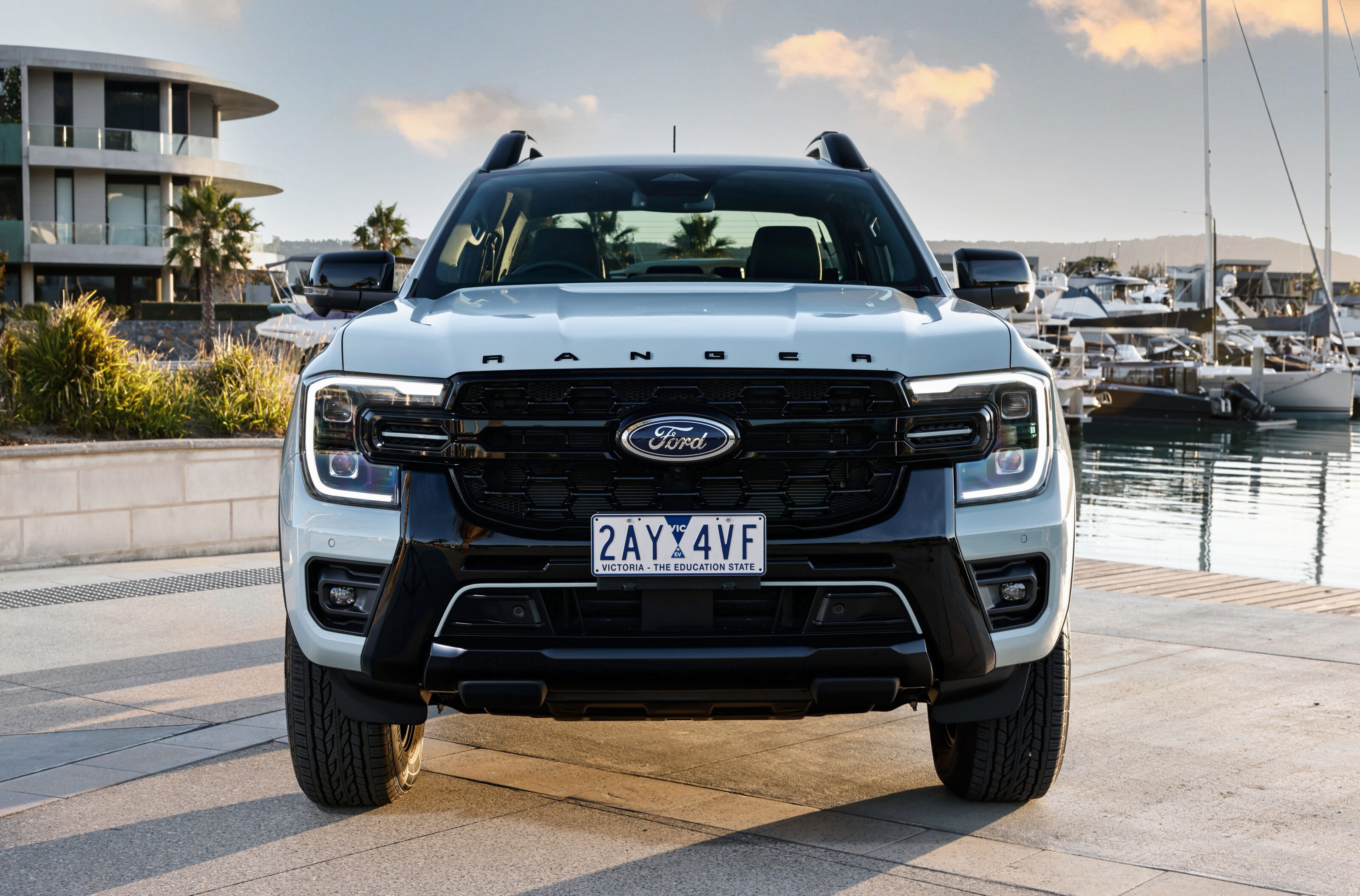
The company already has a precedent for this model in Europe. Ford’s Transit Connect, though branded with EcoBoost and EcoBlue labels, uses Volkswagen-developed powertrains. Similarly, Ford’s Explorer and Capri EVs ride on VW’s MEB platform. These partnerships demonstrate that branding and engineering can diverge without diluting consumer trust – an approach Ford may replicate across more segments.
Industry-wide trends further support this pivot. Stringent emissions regulations are making ICE development less attractive, particularly as consumers increasingly prioritise tech features, safety, and design over engine specs.
Lawler noted that the enthusiast market, once captivated by engine innovation, is shrinking amid the rise of SUVs and electrification.
While Lawler affirmed that combustion engines “aren’t going away anytime soon,” Ford’s evolving strategy may eventually phase out proprietary ICE development in favour of more flexible, collaborative models – a sign of both economic pragmatism and the changing automotive landscape.
The contenders
Winner – KGM Musso
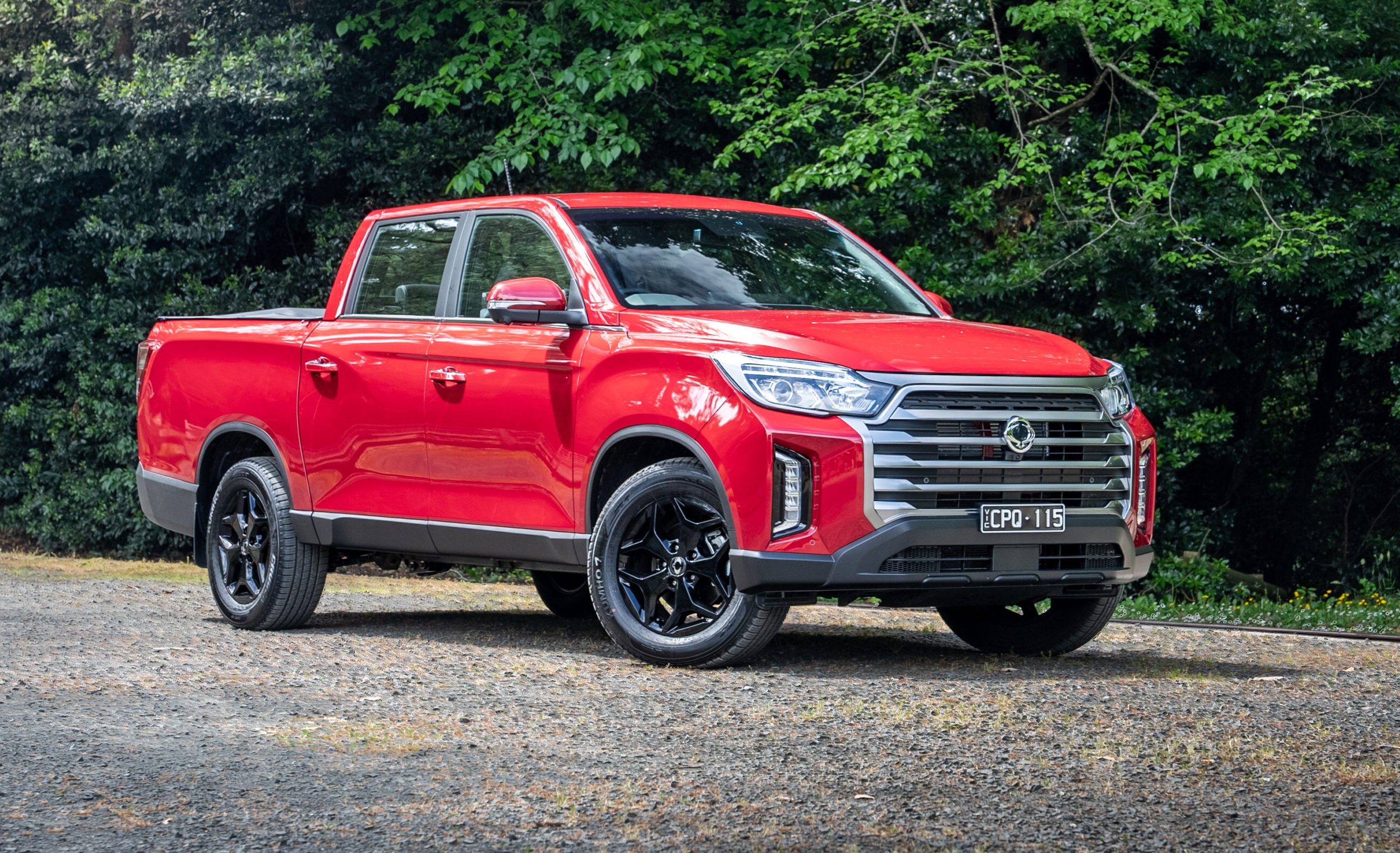
- Price: From $38,000 drive away (ELX) to $44,200 drive away (Ultimate)
- Drivetrain/economy/CO2 emissions: 2.2L turbo-diesel: 133kW/400Nm, 6-speed auto, 4WD, 8.6-9.0L/100km, 226-236g/km
- Dimensions: Up to 5409mm long, 1950mm wide, 1855mm tall, 3210mm long wheelbase
- Towing capacity/GVM/GCM: 3500kg/2880-2980kg/6380-6480kg
- Warranty/roadside assistance/service intervals: Seven-year/unlimited km, five years of roadside assistance, annual/every 15,000km
- Five-year service cost: $2298 ($459 per year)
| Driving | |
|---|---|
| Interior | |
| Practicality | |
| Overall value |
Things we like
- Excellent value for money
- Optional XLV pack adds further capability
- Great warranty and service package
Not so much
- More grunt would be appreciated
- No more manual option
- Outdated lap-only rear middle seatbelt
If you’re looking for a good all-round ute that won’t break the bank, we think that the KGM Musso should be at the top of your test drive list. Not only is it excellent value for money, but it’s also quite comfortable, good to drive, well equipped across the range and spacious on the inside.
Priced from just $38,000 drive away for the entry level ELX, even with the optional extended length XLV package and the optional Luxury Package for features such as a sunroof and even heated outboard rear seats, the top-spec Musso Ultimate doesn’t touch $50,000 drive away. Remember when utes used to be that cheap?
Under the bonnet of the Musso range is a 2.2-litre turbo diesel engine paired to a six-speed automatic transmission and a part-time four-wheel drive system. Making 133kW/400Nm outputs (420Nm in XLV variants), it’s outshone in the grunt department by many rivals – we’d love to see its Rexton SUV sibling’s 148kW/441Nm tune applied, and eight-speed auto fitted – but it’s still quite a willing drivetrain that’s quite refined for the segment.
One big plus of the KGM Musso for buyers for whom space is a chief consideration in assessing a ute? The extra 300mm bed length that the XLV versions afford.
The Musso isn’t perfect as it only has a lap sash seatbelt for the middle rear seat and there’s no single cab or manual transmission options, but the KGM Musso is a great option if you’re after a value-priced ute that just does its job well. That it’s covered by a long warranty and isn’t expensive to service is just the cherry on top.
JAC T9
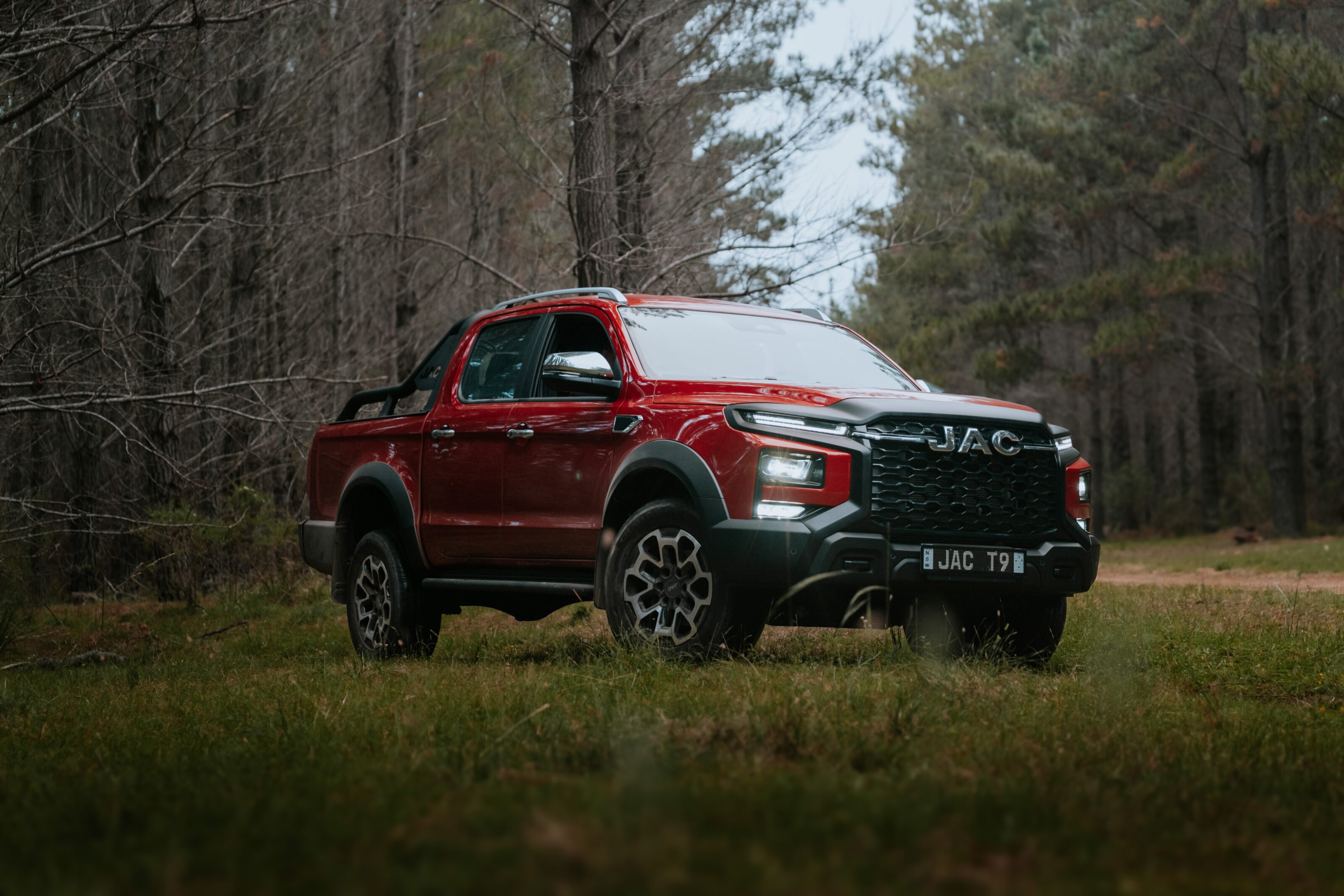
- Price: From $42,662 plus on-road costs (Oasis) – $45,620 +ORC (Haven)
- Drivetrain/economy/CO2 emissions: 2.0L turbo-diesel: 120kW/410Nm, eight-speed auto, 4WD, 7.6L/100km, 202g/km
- Dimensions: 5330mm long, 1983mm wide, 1920mm tall, 3110mm long wheelbase
- Towing capacity/GVM/GCM: 3200kg/3100kg/5630kg
- Warranty/roadside assistance/service intervals: Seven-year/unlimited km warranty, seven years of roadside assistance, annual/15,000km
- Five-year service cost: $2133 ($426 per year)
| Driving | |
|---|---|
| Interior | |
| Practicality | |
| Overall value |
Things we like
- Excellent value for money
- Great warranty and service package
- Feature-loaded across the range
Not so much
- Needs more grunt
- Rivals can tow more
- Ride quality needs finessing
The JAC T9 is a brand new product to the Australian market, having launched locally earlier this year. If offers not quite the same level of capability as segment leaders, but it is priced significantly less than them at just $42,662 plus on-road costs for the entry-level Oasis.
Under the bonnet of the T9 is a 120kW/410Nm 2.0-litre turbo-diesel engine that’s mated to a ZF eight-speed automatic transmission, which is noticeably less grunt than most competitors and as a result, its 3200kg braked towing capacity is 300kg less than its main rivals. On the road, the T9 is surprisingly refined and comfortable, though the ride quality is too stiff.
Inside the T9 is a good quality and feature-packed cabin that compares well to rivals. Centre of the cabin is a large 10.4-inch touchscreen with features such as Apple CarPlay and Android Auto and it’s easy to use, though could feature more kit like satellite navigation. The 7.0-inch digital driver’s display is small, however, and could use more functionality.
The T9 range is covered by a seven-year/unlimited km warranty with seven years of roadside assistance and five years/75,000km of servicing costs $2133 or $426 per annum, which is low in the segment. Overall, there are some clear improvements that need to be made to the JAC T9: more grunt for more on-road and towing performance and a smoother ride quality are the big ticket items. But if they’re no issue to you, the JAC T9 is worth consideration against more expensive rivals.
GWM Cannon
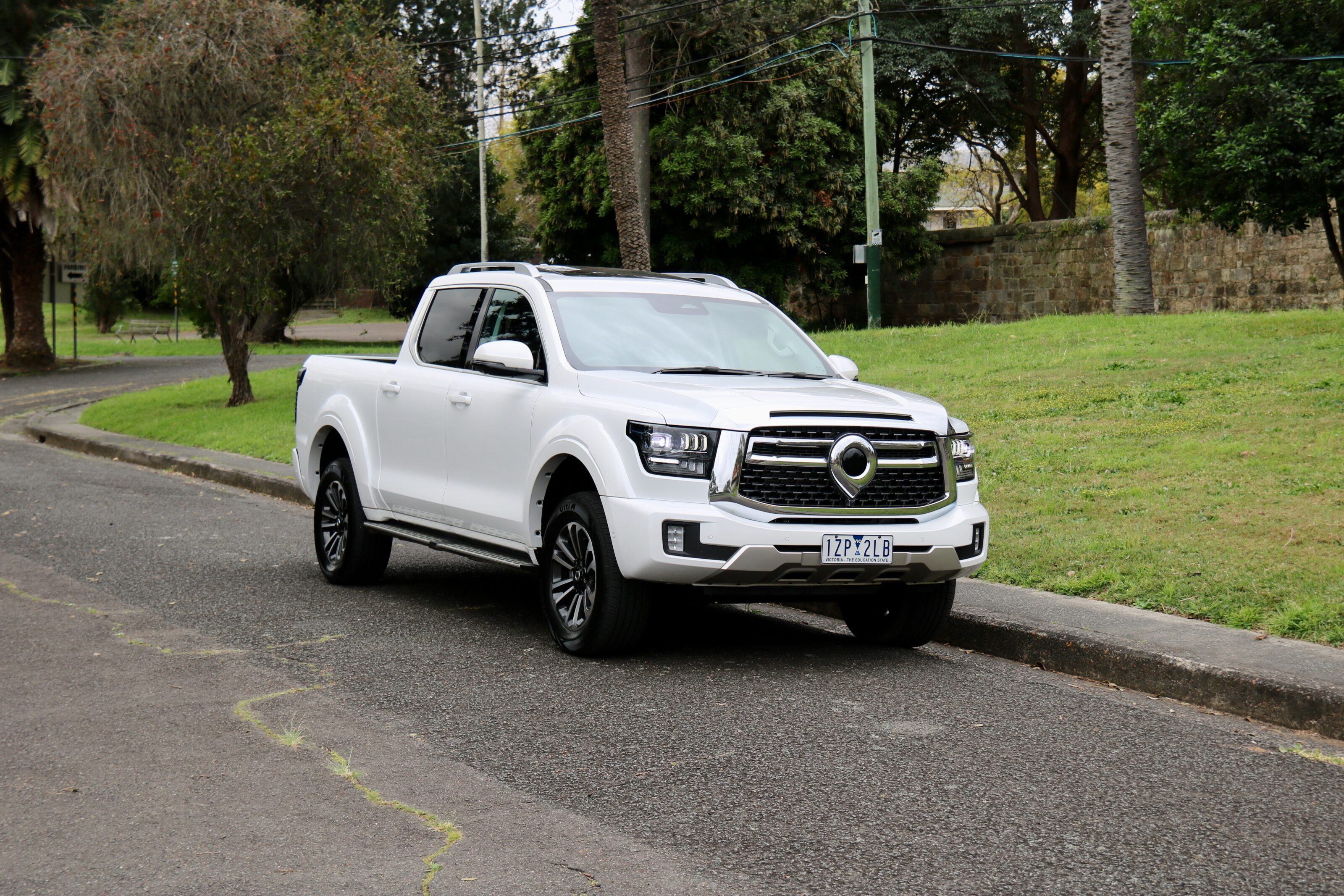
- Price: From $35,490 drive away (Premium 4×2 single cab) to $50,990 drive away (XSR 4×4 dual cab)
- Drivetrain/economy/CO2 emissions: 2.0L turbo-diesel: 120kW/400Nm, 8-speed auto, 2WD or 4WD, 7.6-8.1L/100km, 199-214g/km; 2.4L turbo-diesel: 135kW/480Nm, 9-speed auto, 4WD, 8.4L/100km, 221g/km
- Dimensions: 5416-5703mm long, 1947mm wide, 1884-1997mm tall, 3230mm long wheelbase
- Towing capacity/GVM/GCM: 3200kg -3500kg/3050kg – 3225kg/5590kg – 6300kg
- Warranty/roadside assistance/service intervals: Seven-year/unlimited km, five years of roadside assistance, yearly/first 10,000km and then every 15,000km afterwards
- Five-year service cost: $2065-$2530 ($413-$506 per year)
| Driving | |
|---|---|
| Interior | |
| Practicality | |
| Overall value |
Things we like
- Very well priced across the range
- Wide range of variants
- Surprisingly high quality interior
Not so much
- Stiff ride quality
- Strange service intervals
- Active safety systems need refinement
When the GWM Ute – as the Cannon was known then – arrived on the scene in 2021, it set a new level of value in the ute segment priced from just $35,490. Since then, GWM has updated the Cannon with a pretty serious facelift earlier this year with a more powerful engine, an updated interior and more features. Pleasingly though, the Cannon’s value equation is still excellent – the top-spec XSR is only $50,990 drive away.
Under the Cannon’s bonnet is either a 2.0-litre or a beefier 2.4-litre four-cylinder turbo-diesel engine, with the 2.0L mated to an eight-speed auto and the 2.4L a nine-speeder, to ensure that you’re always in the power band accessing the full 480Nm of torque. Driving the Cannon is a totally fine experience, with light steering and good refinement, though the ride is too stiff.
Inside the Cannon is a great quality and seemingly luxurious (for the segment) interior with a lot of soft touch materials and good practicality. The 12.3-inch touchscreen is responsive and features wireless phone connectivity, while the rear seat is roomy enough for two adults.
The GWM’s seven-year/unlimited km warranty is one of the best in the ute segment, while its service intervals are a bit off though servicing isn’t expensive. Overall, the GWM Cannon presents as a great value and good all-round ute that deserves consideration if you’re after a bargain.
LDV T60
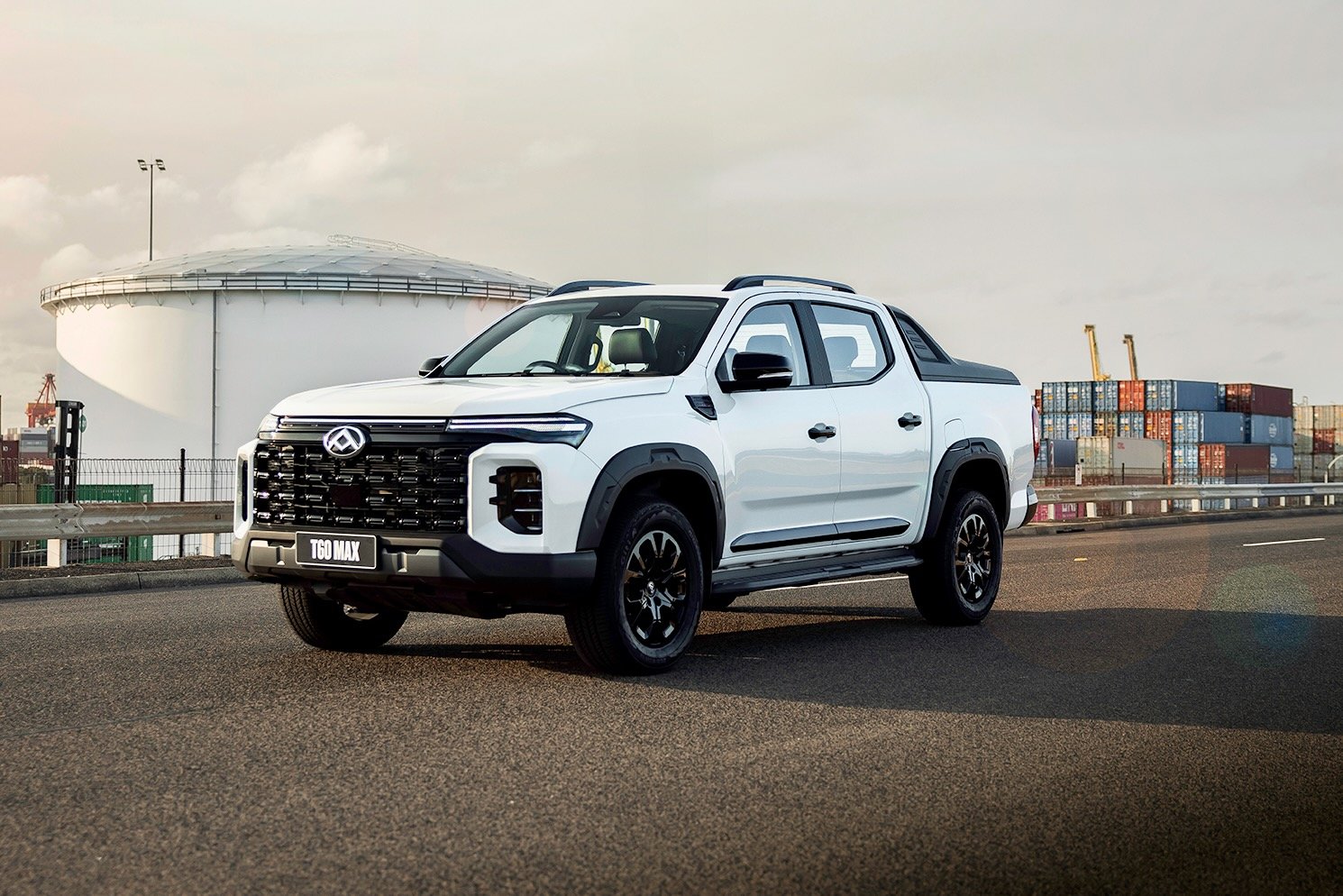
- Price: From $38,990 drive away (Pro) – $46,990 drive away (Mega Tub Plus)
- Drivetrain/economy/CO2 emissions: 2.0L twin-turbo diesel: 160kW/500Nm, eight-speed auto, 4WD, 7.9-8.1L/100km, 207-214g/km
- Dimensions: 5365-5710mm long, 1900-1926mm wide, 1815mm tall, 3155-3490mm long wheelbase
- Towing capacity/GVM/GCM: 3500kg/3050-3150kg/6250-6350kg
- Warranty/roadside assistance/service intervals: Seven-year/200,000km warranty, five years of roadside assistance, check up at six months/5000km, then annual/15,000km
- Five-year service cost: No capped price servicing
| Driving | |
|---|---|
| Interior | |
| Practicality | |
| Overall value |
Things we like
- Punchy 2.0-litre turbo-diesel engine
- Nicely appointed cabin
- Excellent value for money
Not so much
- No capped price servicing program
- Loud and unrefined engine
- AEB not standard on some variants
The LDV T60 has been on the Australian market for some time now, and has just received another update aimed at keeping it fresh. It received a futuristic new interior, an uprated twin-turbocharged diesel engine and updated styling to give it a more butch exterior look.
LDV also gave the T60 a new multi-link coil-spring rear suspension set up for a greater ride comfort, and it’s definitely more comfortable than the pre-updated model, especially in urban driving. Its new twin-turbo diesel engine boasts healthy figures in the segment: 160kW of power and 500Nm of torque, while it’s mated to an excellent ZF eight-speed automatic transmission.
While the LDV T60 has a long seven-year/200,000km warranty with five years of roadside assistance, there’s no capped price servicing plan so dealers decide how much it will cost to service. That makes it tough for those trying to budget the running costs of their new vehicle.
Overall, the LDV T60 presents an interesting option in the ute segment, particularly if you’re value-focused. While some models are missing important safety tech, its service costs are unknown and its new – admittedly gruntier – twin-turbocharged diesel is unrefined and loud, it still has a lot going for it such as its tweaked design, new dashboard and improved ride quality.
Mahindra S11 Pik-Up
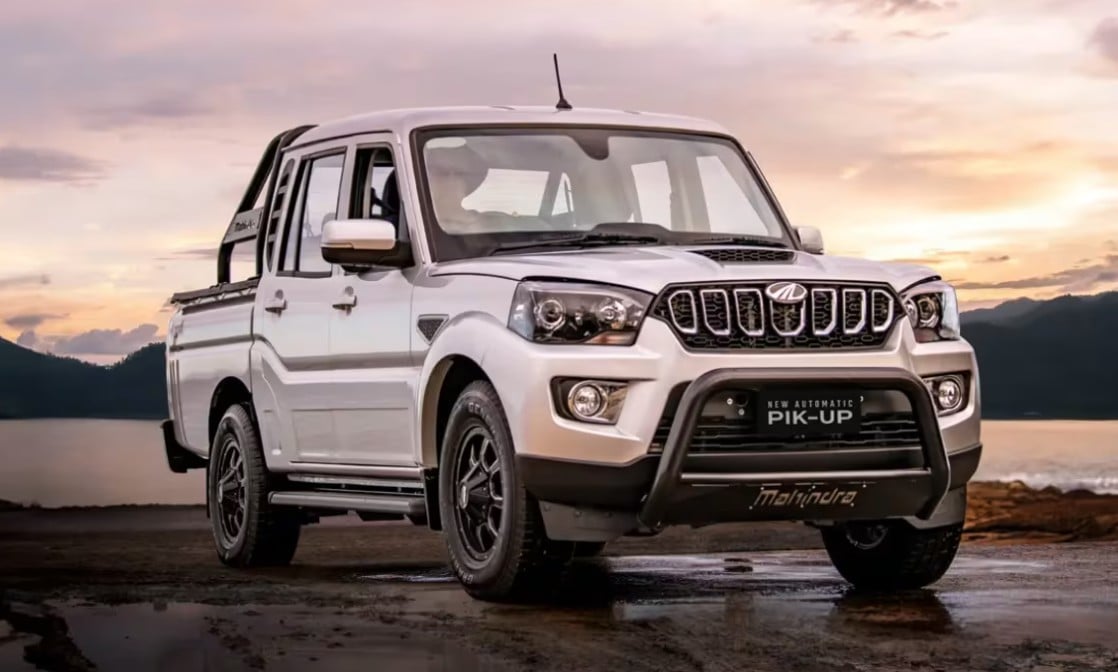
- Price: From $39,990 drive away
- Drivetrain/economy/CO2 emissions: 2.2L turbo-diesel: 103kW/320Nm, six-speed auto, 4WD, 9.3L/100km, TBC CO2
- Dimensions: 5175mm long, 1820mm wide, 1915mm tall, 3040mm long wheelbase
- Towing capacity/GVM/GCM: 2500kg/3150kg/TBC
- Warranty/roadside assistance/service intervals: Five-year/150,000km warranty, five years of roadside assistance, first service at 1,500km, then 10,000km and every 15,000km afterwards
- Four-year service cost: $2296 ($574 per year)
| Driving | |
|---|---|
| Interior | |
| Practicality | |
| Overall value |
Things we like
- Value priced
- Willing turbo-diesel engine
- Off-road talent
Not so much
- Barely any active safety features
- Less warranty than other Mahindra models
- Strange service schedule
It’s no surprise to see some utes here that cost upwards of $100,000 and how many of them will actually get to work isn’t likely to be many. On the other end of the scale is the Mahindra S11 Pik-Up that’s priced from under $40,000 drive away and was designed to work.
The S11 Pik-Up’s braked towing capacity of 2500kg is 1000kg off its most capable rivals, and its 103kW/320Nm 2.2-litre turbo-diesel engine is also someway off rivals. But its off-road ability is greater than what a lot of rivals could manage as well.
Mahindra covers the S11 Pik-Up with a five-year/150,000km warranty with five years of roadside assistance, which is curiously less than its other products like the XUV700. Its service pricing isn’t cheap either at $574 per year for the first four years.
Overall, the Mahindra S11 Pik-Up isn’t going to challenge its main rivals on standard equipment, capability or performance but that isn’t really the point. If you’re after a no-nonsense work vehicle that can handle what you throw at it, it’s a good choice – especially if you don’t want to wait for a Toyota LandCruiser 70 Series.
Chery Australia has announced the arrival of the new TIGGO 4 Hybrid, an electrified addition to its award-winning compact SUV line-up.
Scheduled to land in local showrooms from July 2025, the new hybrid model will offer Australian drivers an eco-friendly yet practical option at an accessible price point.
The Urban variant of the TIGGO 4 Hybrid will start at $29,990 driveaway, while the top-tier Ultimate model will retail for $34,990 driveaway. This move positions the hybrid SUV as one of the most competitively priced in its segment.
Under the bonnet, the TIGGO 4 Hybrid features a 1.5-litre petrol engine in a series-parallel hybrid configuration, engineered to deliver an impressive combined fuel economy of 5.4L/100km.
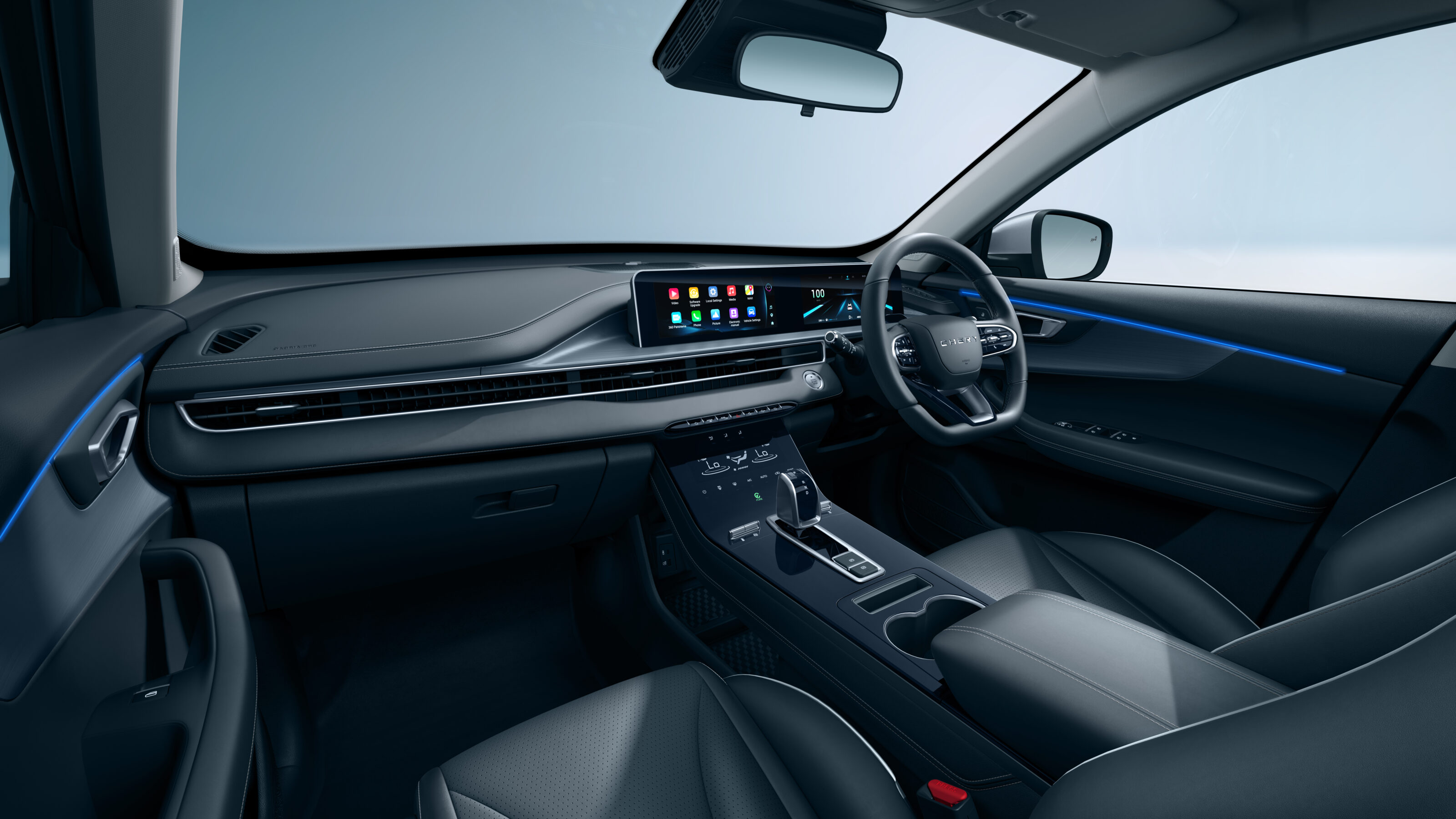
Designed with urban efficiency and weekend versatility in mind, the vehicle is offering the promise of smooth hybrid performance along with contemporary style and everyday functionality.
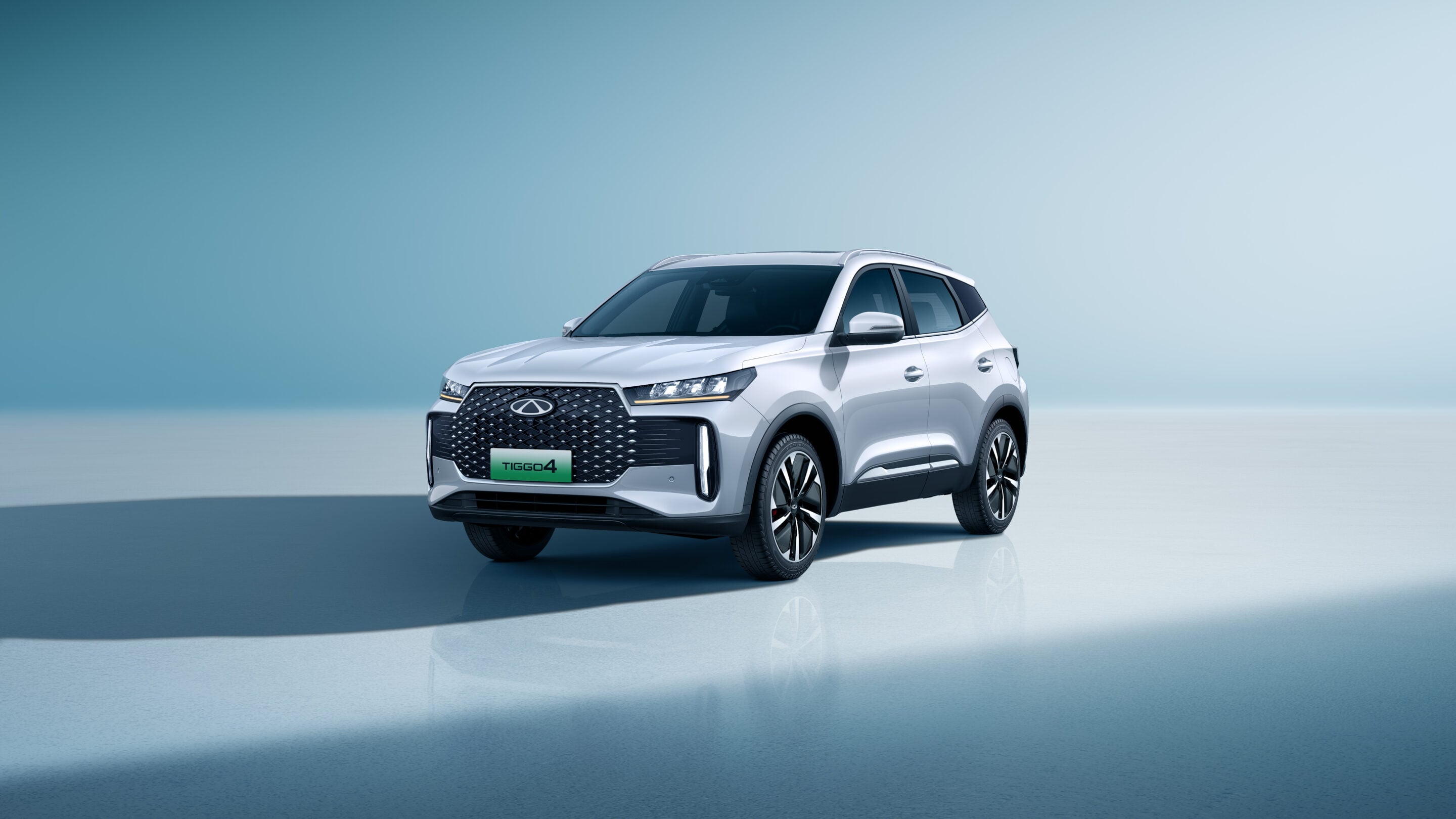
“Adding hybrid power to our most accessible SUV is a natural next step in making advanced technology available to more Australians,” said Lucas Harris, Chief Commercial Officer at Chery Australia. “The TIGGO 4 Hybrid combines smart design, real-world efficiency and unbeatable value – all in one package.”
Full specifications for the new model are expected to be released closer to launch. In the meantime, Chery’s hybrid debut in the TIGGO 4 range signals a broader push toward electrified offerings in the Australian market.
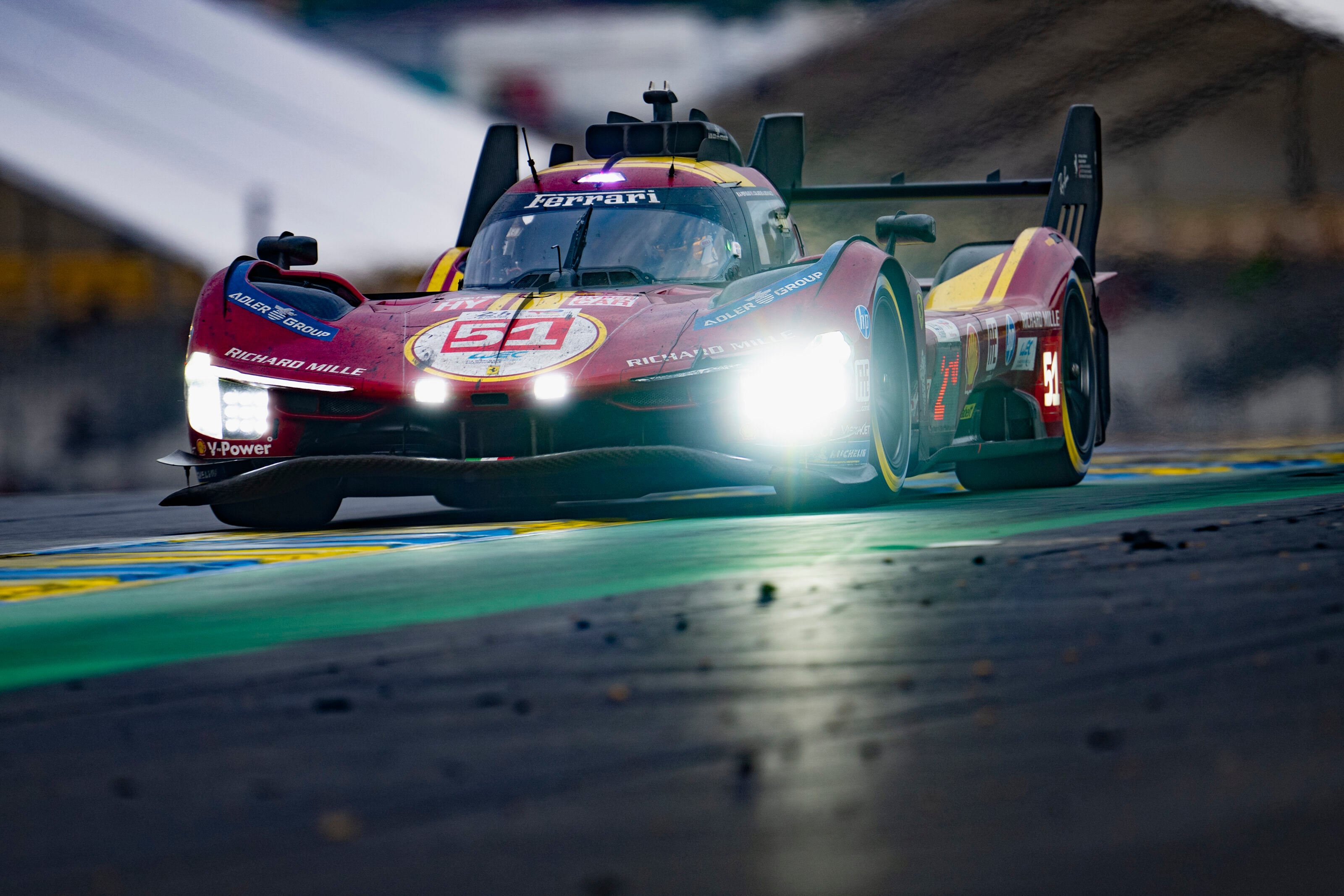
Ferrari etched another glorious chapter into its motorsport legacy with a third consecutive overall victory at the 24 Hours of Le Mans, clinching the 2025 edition of the iconic endurance race in emphatic style.
The #83 Ferrari 499P, run by the privateer AF Corse team, took the chequered flag, marking not only the Scuderia’s 12th overall win at La Sarthe, but also the first privateer triumph since 2005.
Driven by Robert Kubica, Yifei Ye, and Phil Hanson, the #83 entry wrote itself into the record books with a trio of firsts: Kubica became the first Polish winner, Ye the first Chinese victor, and Hanson joined a select group of British drivers – only the third to win for Ferrari since its maiden victory in 1949.
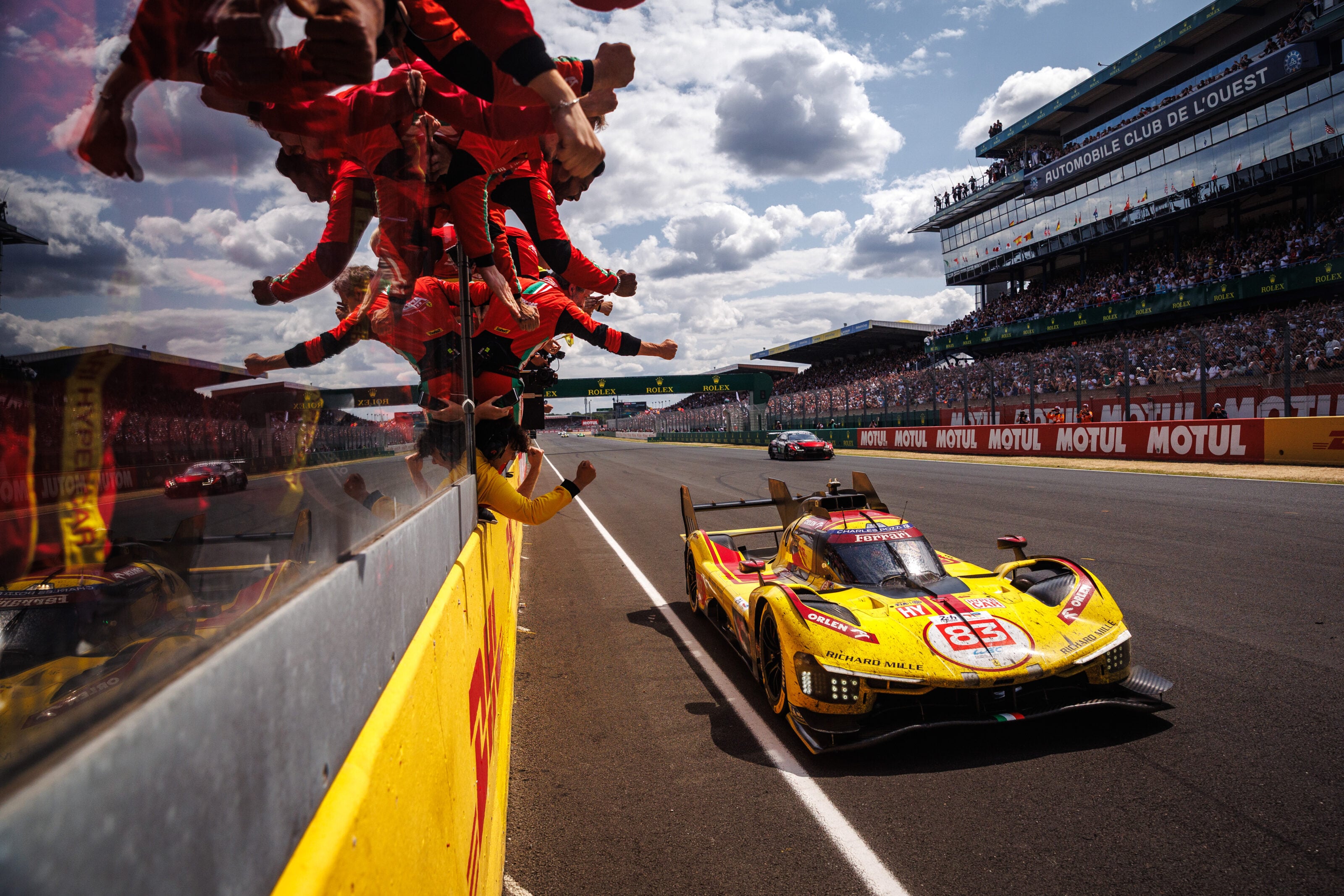
The result capped a remarkable story of redemption for Kubica and Ye, who had previously suffered late-race heartbreak in 2021 due to a mechanical failure, and for Ye again in 2023, when he crashed while leading in a privateer Porsche.
The win completes Ferrari’s Hypercar-era hat-trick following factory team victories in 2023 and 2024 with the #51 and #50 cars respectively. This time, however, the AF Corse squad claimed the spoils in a race that many had expected to be far more closely contested. Despite fierce competition from Alpine, Toyota, BMW, Cadillac, and Porsche, Ferrari’s dominance was rarely in doubt, particularly after the first few hours.
Pre-race hopes for a varied battle were fueled by a Cadillac front-row lockout and strong qualifying from Porsche and BMW, while Ferrari’s best-placed car started only seventh. But suspicions of Ferrari “sandbagging” proved accurate. The red cars surged through the field, eventually leading a 1-2-3 train after five hours. However, penalties and a single safety car reshuffled the deck overnight, leaving the #83 as the lone frontrunner by dawn.
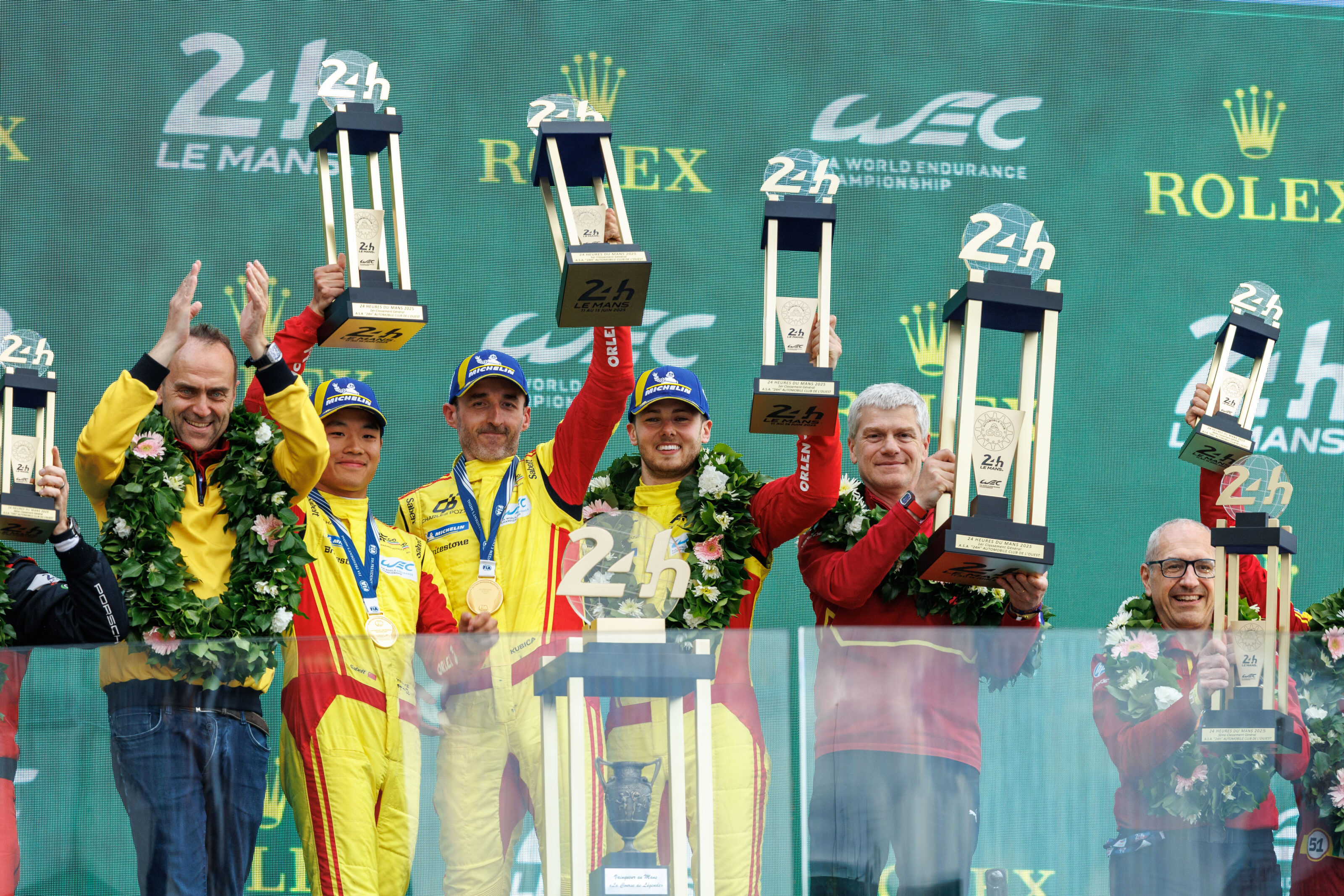
A defining moment came when Alessandro Pier Guidi spun the #51 Ferrari into the gravel, costing it the lead and elevating Ye to the front. Kubica then delivered a relentless three-and-a-half-hour closing stint –despite a failed cooling system – to keep Porsche’s Kevin Estre at bay in the charging #6 963. Though the Porsche closed the gap, Ferrari held firm, with Estre’s heroics only good enough for second. The #51 Ferrari rounded out the podium.
The victory cements Ferrari’s resurgence at the pinnacle of endurance racing and underscores its dominance in the World Endurance Championship, where it has now won every round in 2025. For rivals, the wait for Hypercar glory continues – while Ferrari basks in a three-peat that will echo through Le Mans history.
Chevrolet is poised to take a bold new step for one of its most famous models with the impending debut of the Corvette Zora, a hybrid hypercar that promises to be the most powerful and technologically advanced Corvette ever produced.
Named in honor of Zora Arkus-Duntov – the visionary engineer often referred to as the “father of the Corvette” – the Zora is set to make its official unveiling on June 17, 2025.
In an Instagram post on its official channel featuring just the date – 6.17.25 – and the Corvette flags transformed into a stylized X, a caption underneath reads: “The hype is real. A new Corvette is coming.”
Building upon the formidable foundation of the 2025 Corvette ZR1, which boasts a 5.5-litre twin-turbocharged LT7 V8 engine delivering 794 kW and 1122 Nm, the Zora integrates an electric motor on the front axle, derived from the Corvette E-Ray’s hybrid system.
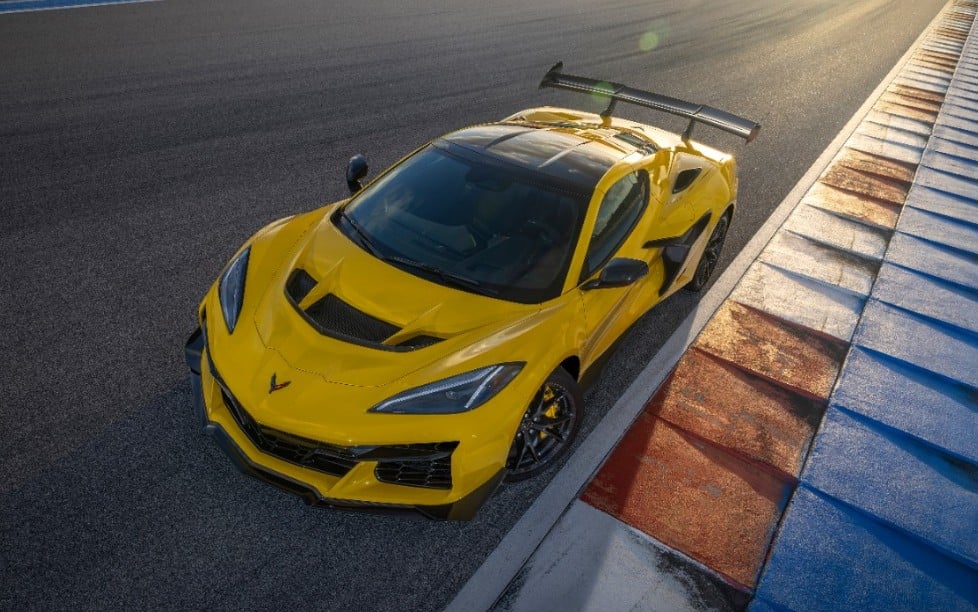
The addition of the front-mounted electric motor not only amplifies power but also introduces all-wheel-drive capabilities, enhancing traction and handling. This set-up is anticipated to enable the Zora to accelerate from 0-100km/h in under 2.0 seconds, positioning it competitively against elite hypercars.
Spy shots have captured camouflaged prototypes of the Zora undergoing rigorous testing at the Nürburgring, often alongside benchmarks like the Ferrari SF90 Stradale. These images reveal distinctive features, including a unique radiator configuration to accommodate the hybrid system, aggressive aerodynamic elements, and a prominent rear spoiler.
While official pricing has yet to be announced, industry analysts estimate that the Zora will command a premium over the ZR1, potentially starting around US$204,995. This price point reflects its position as the flagship model in the Corvette line-up.
The Corvette Zora represents a significant milestone in Chevrolet’s evolution, blending traditional American muscle with modern hybrid innovation.
General Motors (GM) has taken a major step back from its once-bold pledge to sell only electric vehicles (EVs) by 2035, opting instead for a more balanced production strategy. The Detroit automaker revealed this week that it will invest $4 billion in expanding production of petrol-powered vehicles, a move industry analysts see as effectively shelving the original EV-only ambition.
Though GM continues to assert its belief in an “all-EV future,” the new investment signals a recalibration in response to changing political, economic, and consumer dynamics. “They’re not abandoning EVs, but this investment shows they no longer see 2035 as a realistic target,” said Sam Abuelsamid, an auto analyst at Detroit-based research firm Telemetry told Politico.
GM’s revised strategy reflects broader challenges in the EV sector. Since the company unveiled its goal in 2021, momentum has slowed. The initial optimism under the Biden administration, which introduced EV incentives and green infrastructure plans, has given way to a more conservative stance under President Trump. Federal support for EVs has been reduced, new tariffs have been introduced, and public enthusiasm has cooled, prompting automakers to hedge their bets.
Despite the strategic pivot, GM reported 37,000 EVs sold in Q1 2025, securing its position as the second-largest EV seller in the U.S. behind Tesla. Still, analysts suggest the 2035 pledge was more symbolic than practical. “It was always aspirational,” said independent analyst Alan Baum. “They’ve outperformed many competitors, but policy gaps and market reluctance are limiting growth.”
GM’s current restructuring includes relocating production of petrol vehicles from Mexico to U.S. plants to dodge new tariffs. The company’s Orion plant in Michigan will now handle full-size SUV and pickup production, while the Equinox will shift to Fairfax, Kansas, and the Blazer to Spring Hill, Tennessee.
Meanwhile, EV manufacturing will continue at Factory Zero in Detroit, though it is operating below capacity. That plant will produce electric Silverados, Sierras, Escalades, and the Hummer EV. The upcoming Chevrolet Bolt reboot will be built in Fairfax.
In another telling sign, GM recently cancelled plans to produce electric motors in Buffalo, New York, redirecting nearly $900 million into V-8 engine production instead. These investments suggest GM expects internal combustion engines to remain part of its lineup well beyond 2035.
“Given the current market and regulatory climate,” Abuelsamid concluded, “GM’s pivot is not surprising – it was always a long shot.”
Viva Energy has unveiled Australia’s first publicly accessible, commercial-scale renewable hydrogen refuelling station at its Geelong Energy Hub, marking a new milestone in the country’s energy transition.
The new facility is set to become the centrepiece for a fleet of hydrogen-powered, zero-emission commercial vehicles servicing the Geelong region.
With the inclusion of hydrogen fuel cell electric vehicles (FCEVs) such as prime movers, buses, and rubbish trucks, the project is designed to showcase how hydrogen can play a vital role in decarbonising Australia’s heavy vehicle fleet.
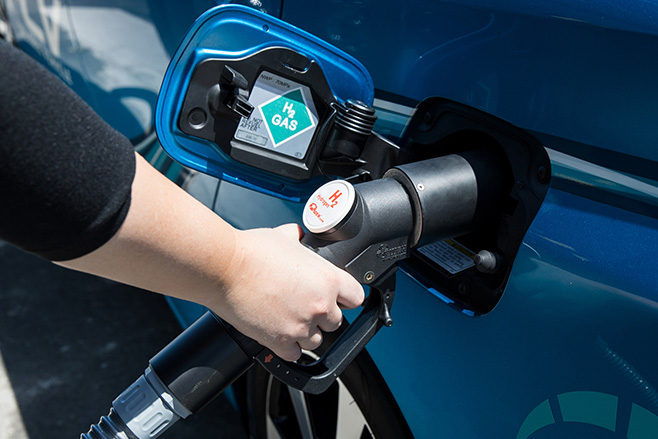
A cornerstone of the initiative is the on-site 2.5-megawatt electrolyser, which produces renewable hydrogen using recycled water from Barwon Water’s Northern Water Plant. This makes the Geelong site not only a hydrogen hub but a model of circular resource use.
The station also offers fast-charging facilities for commercial electric vehicles, integrating hydrogen and battery-electric technologies at one site. Diesel refuelling remains available as part of multi-fuel offering to support a gradual transition to net-zero emissions.
Viva Energy’s approach included securing demand ahead of infrastructure development. Four major partners – Toll Group, CDC (ComfortDelGro Corporation Australia), Cleanaway, and Barwon Water –committed early to hydrogen adoption with support from the Australian Renewable Energy Agency (ARENA). These organisations have introduced hydrogen-powered vehicles into their operations in the Geelong region, underlining the project’s practical viability.
Chief Strategy Officer Lachlan Pfeiffer said the initiative demonstrates Viva Energy’s broader strategy to diversify its energy portfolio. “By providing hydrogen as an alternative fuel, we are aiming to reduce emissions and contribute to the development of a more sustainable heavy transport sector in Australia,” he said. Pfeiffer noted that collaboration with government, industry, and local communities was critical to the project’s success.
The launch event was attended by Deputy Prime Minister Richard Marles and Victorian Minister for Climate Action, Energy and Resources Lily D’Ambrosio, highlighting the project’s national significance.
FAST FACTS:
- Electrolyser capacity: 1000kg of hydrogen per day – currently the largest in Australia.
- Hydrogen dispensing: 300kg in under two hours; designed to refuel at least 10 trucks consecutively.
- Project funding: $34 million from ARENA and $1 million from the Victorian Government.
- Commercial reach: Ability to sell hydrogen to other commercial customers.
Viva Energy plans to announce additional hydrogen partners soon, broadening the hub’s impact across Australia’s clean transport landscape.
After years of absence, Peugeot’s revered GTi badge returns in electrifying fashion with the unveiling of the new E-208 GTi – the first true performance model from the brand since the Peugeot Sport Engineered era.
Known for its rich hot hatch heritage spanning four decades, Peugeot is steering clear of crossovers this time, embracing a more traditional (and enthusiast-approved) performance hatchback layout – this car is inspired by the 1984 Peugeot 205 GTi.
What sets the new GTi apart is its all-electric heart. Built on the same platform as the Alfa Romeo Junior Veloce and Abarth 600e, the E-208 GTi delivers a thoroughly modern performance punch while staying true to its roots.
It features a front-mounted electric motor producing 206 kW, propelling the car from 0-100 km/h in just 5.7 seconds, with a top speed of 180 km/h.
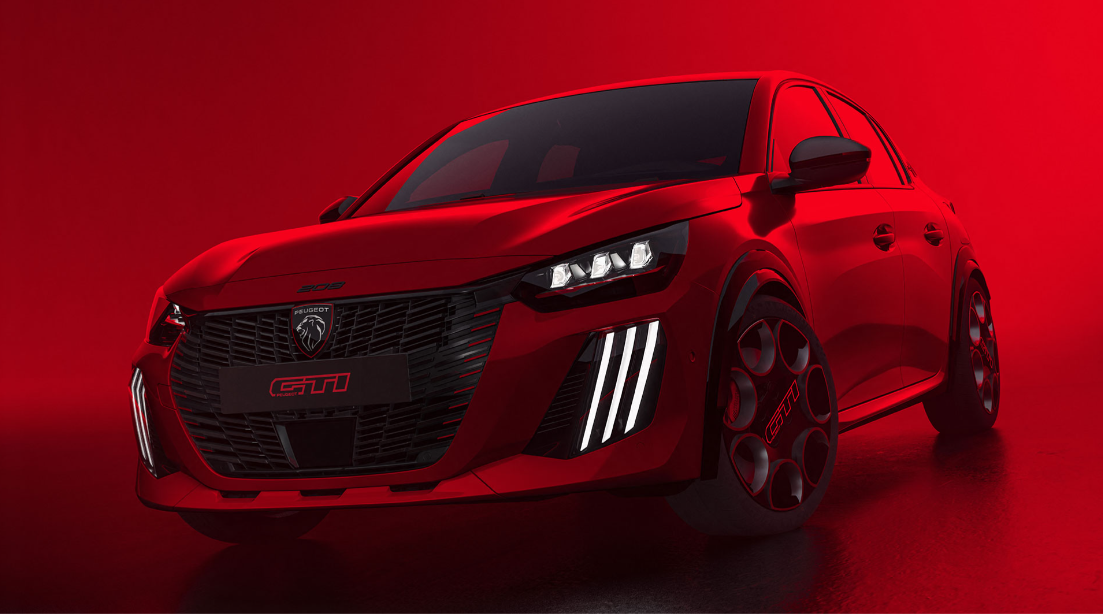
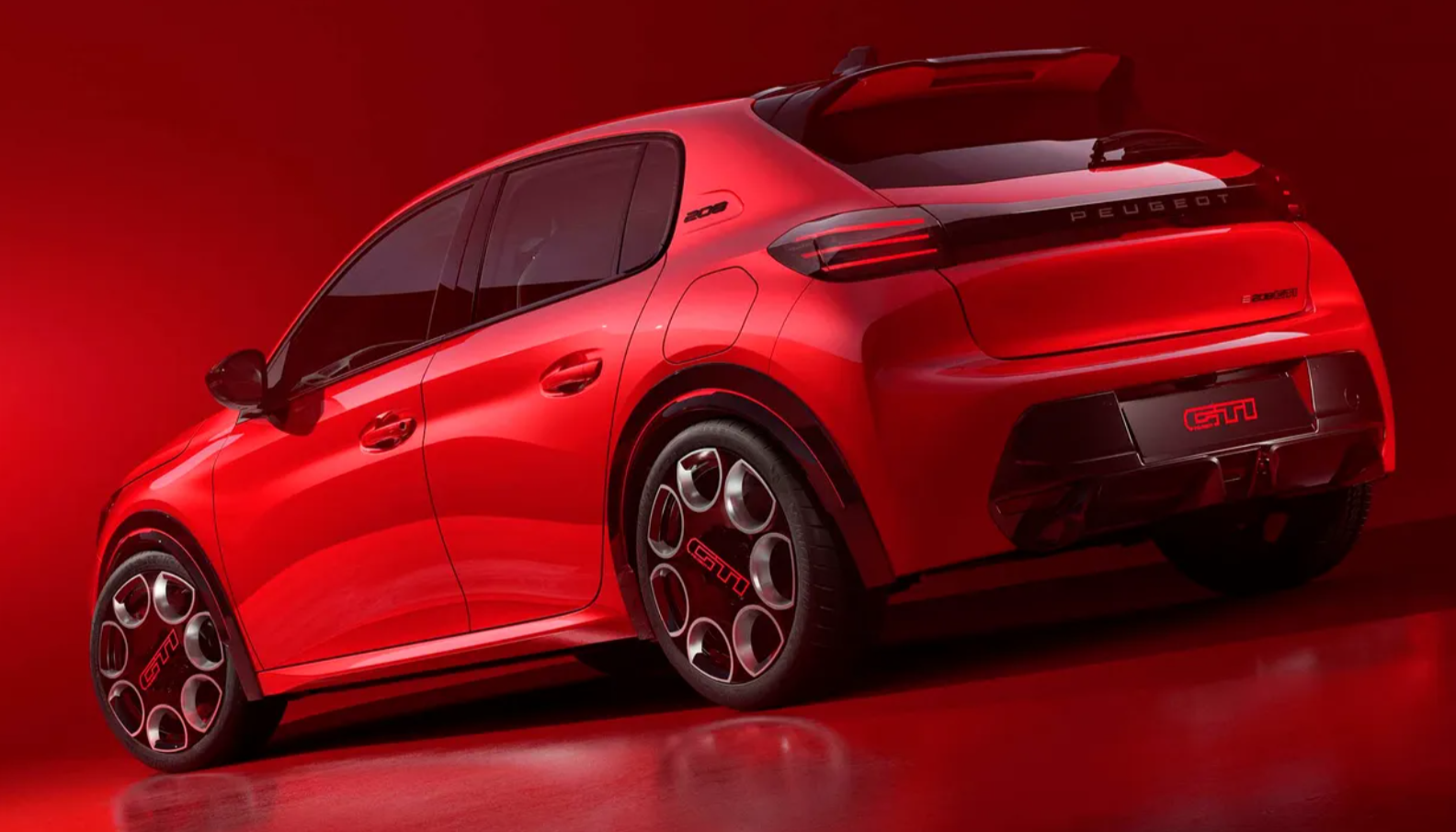
The E-208 GTi retains the 54 kWh battery found in the standard E-208, offering a WLTP-rated driving range of 350 kilometres. But this is more than just a powertrain upgrade. Peugeot engineers have given the car a full performance makeover, including a limited-slip differential, sports suspension with specific hydraulic stops, and a ride height lowered by 30 mm. For improved handling, the front and rear tracks have been widened by 56mm and 27mm respectively.
Peugeot has wrapped Michelin Pilot Sport Cup 2 tyres around uniquely styled 18-inch alloy wheels – a modern homage to the pepperpot wheels from the iconic 205 GTi 1.9. Not just for looks, these wheels also aid in brake cooling. Additional visual tweaks include muscular wheel arches, red accents in the grille and headlights, and a prominent rear spoiler that signals the car’s sporty intent.
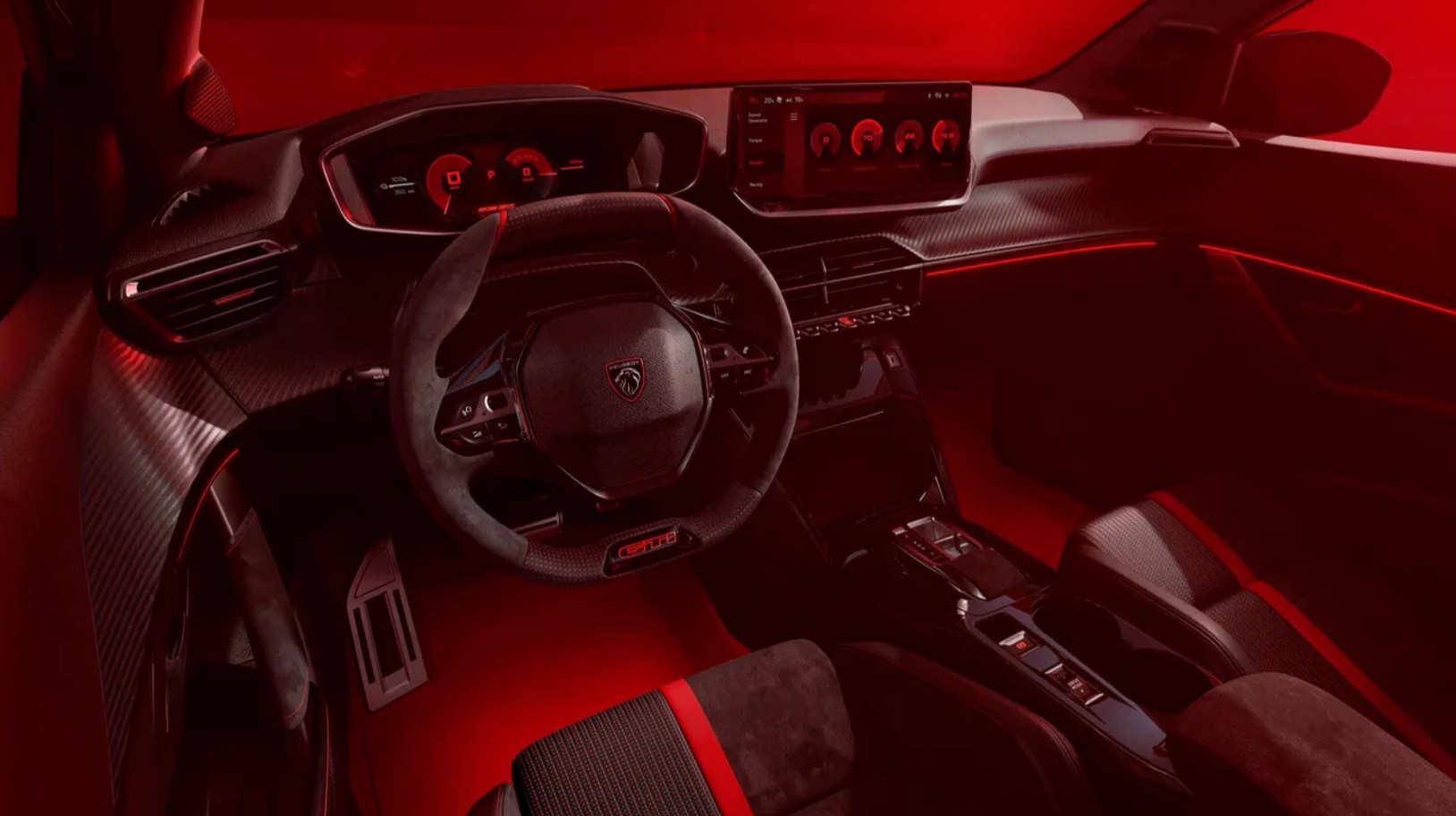
Inside, the cabin features GTi-branded performance seats with retro stitching, as well as red detailing on the i-Cockpit steering wheel, maintaining a visual link to the car’s lineage while embracing a modern aesthetic.
Peugeot has yet to announce official pricing or a launch date, but the E-208 GTi is expected to hit showrooms before the end of 2025. Will electric tech give make the E-208 GTi a thrilling new chapter in the GTi story? Time will tell.
This was a scoop so fantastic that few readers believed it.
Did Holden really conjure an electric-powered supercar, a rival for the Bugatti Veyron, that also just happened to be a ute?
All true. And here’s the proof.
Until now, the Wheels, September 2016 cover story scoop, revealed by Toby Hagon after sighting a grainy image of the car on a GM Facebook page, has only been seen in digitally enhanced copies created from the video.
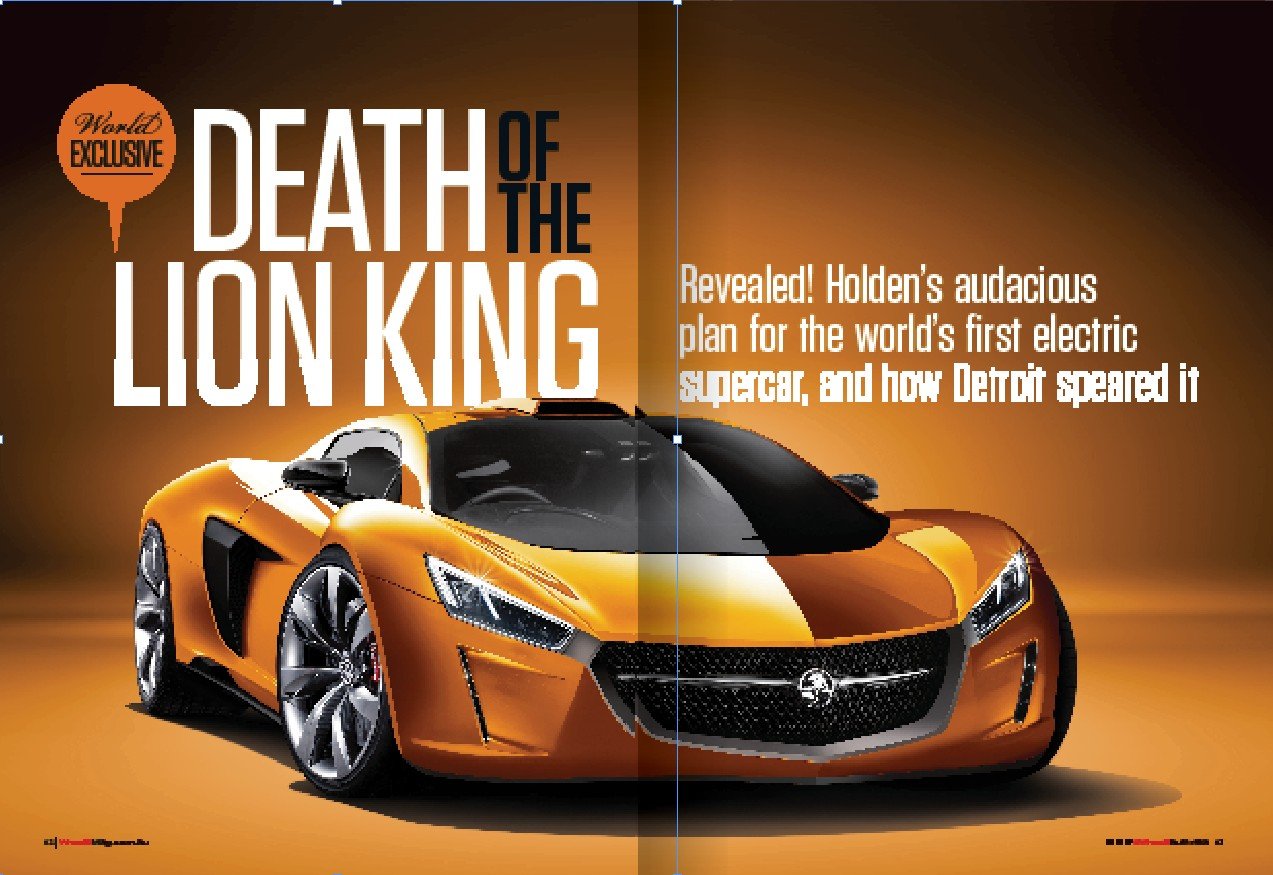
Now, thanks to research by the archivists within GM’s American Heritage Centre, we can confirm the existence of Holden’s outrageous skunk works Super Ute program by laying bare photographs of the models developed during the creative process. The scale models – first one-third, then Holden’s full-size clay, plus another handmade, full-size hard model built in Detroit – confirm that the project was, for a time in 2007-2008, at least semi-serious. They also verify the remarkable accuracy of Wheels’ images.
The story of the Super Ute goes back to 2006, two years before General Motors was to celebrate its centenary. GM asked each of its global brands, not least Holden, to create a show or concept car to be displayed at an international centenary event planned for Florida in 2008. Tony Stolfo, then Holden’s design boss, asked his team for ideas – wild or otherwise – for Holden’s contribution. The gates were open, and the designers took every opportunity to express their fantasies.
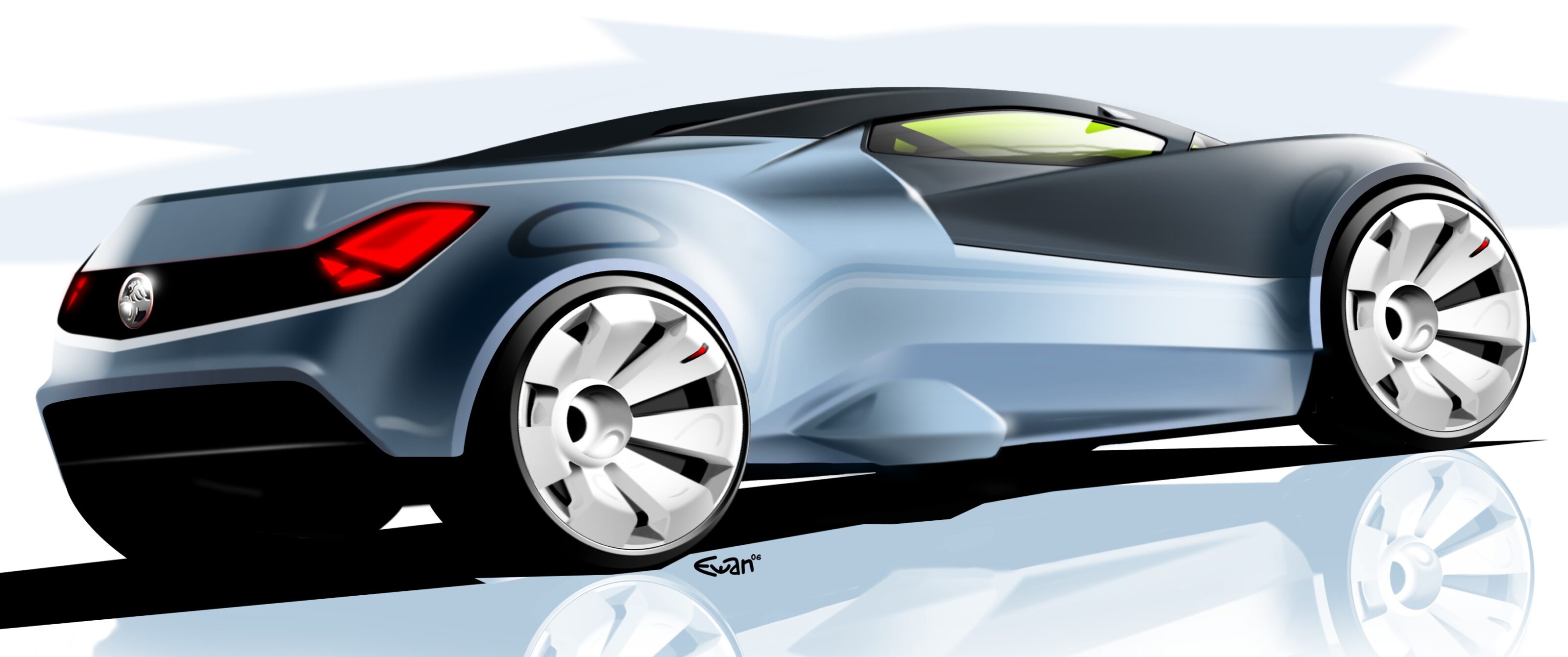
Ewan Kingsbury, then a young Holden designer, wondered if it was possible to combine the idea of an EV supercar that merged sleekness with a level of practicality that invoked Australia’s much-loved ute body style.
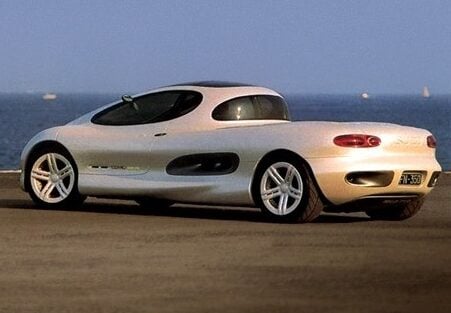
The idea wasn’t original; Kingsbury remembered Isuzu’s 1991 Como F1 concept. Styled by Simon Cox, who later designed several memorable Cadillac concept cars (Cien, Converj), the Como was powered by a new Isuzu 3.5-litre V12 (intended for Lotus’s F1 car), mounted amidships. More importantly, in Kingsbury’s mind, Como also featured an elongated and covered tray area behind the engine to essentially create a ute.
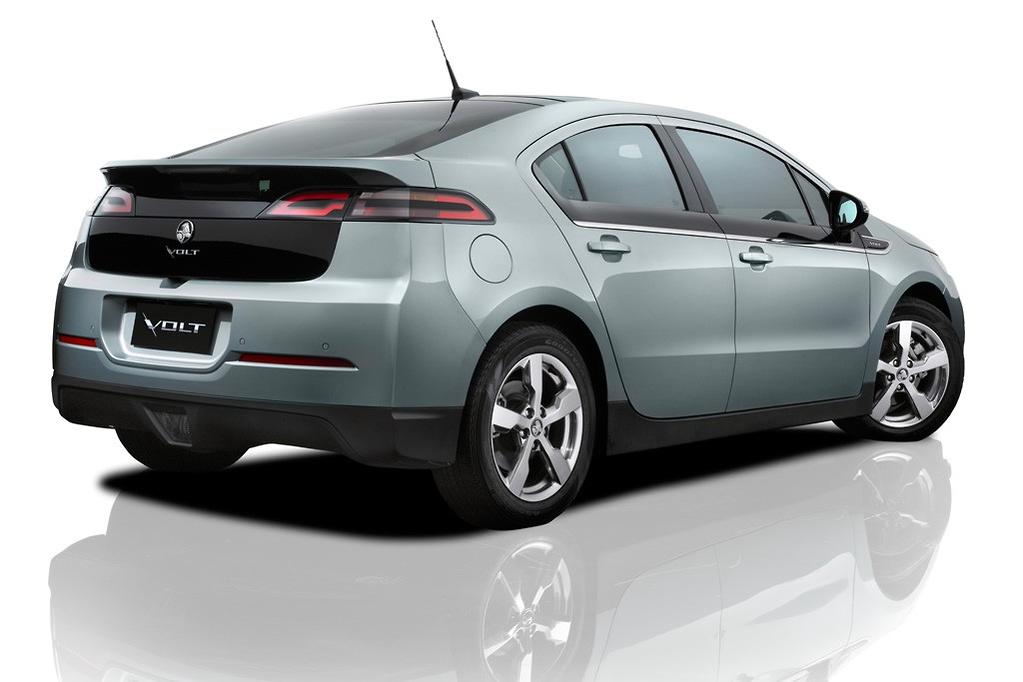
Ewan, aware that GM’s Chevrolet division was working on a revolutionary plug-in hybrid and
extended range EV vehicle, that became the Chevrolet Volt, pondered the possibility of using this powertrain for his supercar. The Volt, first shown as a concept in 2008, took three years to reach production in 2011. Kingsbury wanted to combine two Volt powertrains, with one electric motor at the front and one at the rear, in his supercar. (The Volt was briefly sold in Australia as a Holden from December 2012).
His radical supercar sketches, proudly wearing a bold Holden lion badge, attracted the attention of
Peter Hughes, his manager. Quickly, two other Holden designers – Andrew Harrison and Warrack Leach – were sketching the same theme, based around Kingsbury’s concept. The idea was sold up the design chain to Stolfo. Julian Broadbent, director of Holden’s advanced portfolio planning, became involved on the technical side. Richard Ferlazzo, Holden’s last design boss, remembers there were discussions around the powertrain. If not an EV, why not a V12? This stillborn engine layout, cultivated by Michael Simcoe, for an ultra-long wheelbase limousine Holden (or even a Cadillac) and created by the amalgamation of two Holden Alloytech V6s on a common crankshaft to create a possible 7.2-litre 12-cylinder engine, was briefly considered during the VE Commodore’s development. At Holden in the 2000s (at least until the GFC), nothing was too ambitious.
“In 2007, we were thinking about the future of Holden,” says Kingsbury, “beyond the VE, beyond a bogan burner, we wanted something with a sporting cache.”
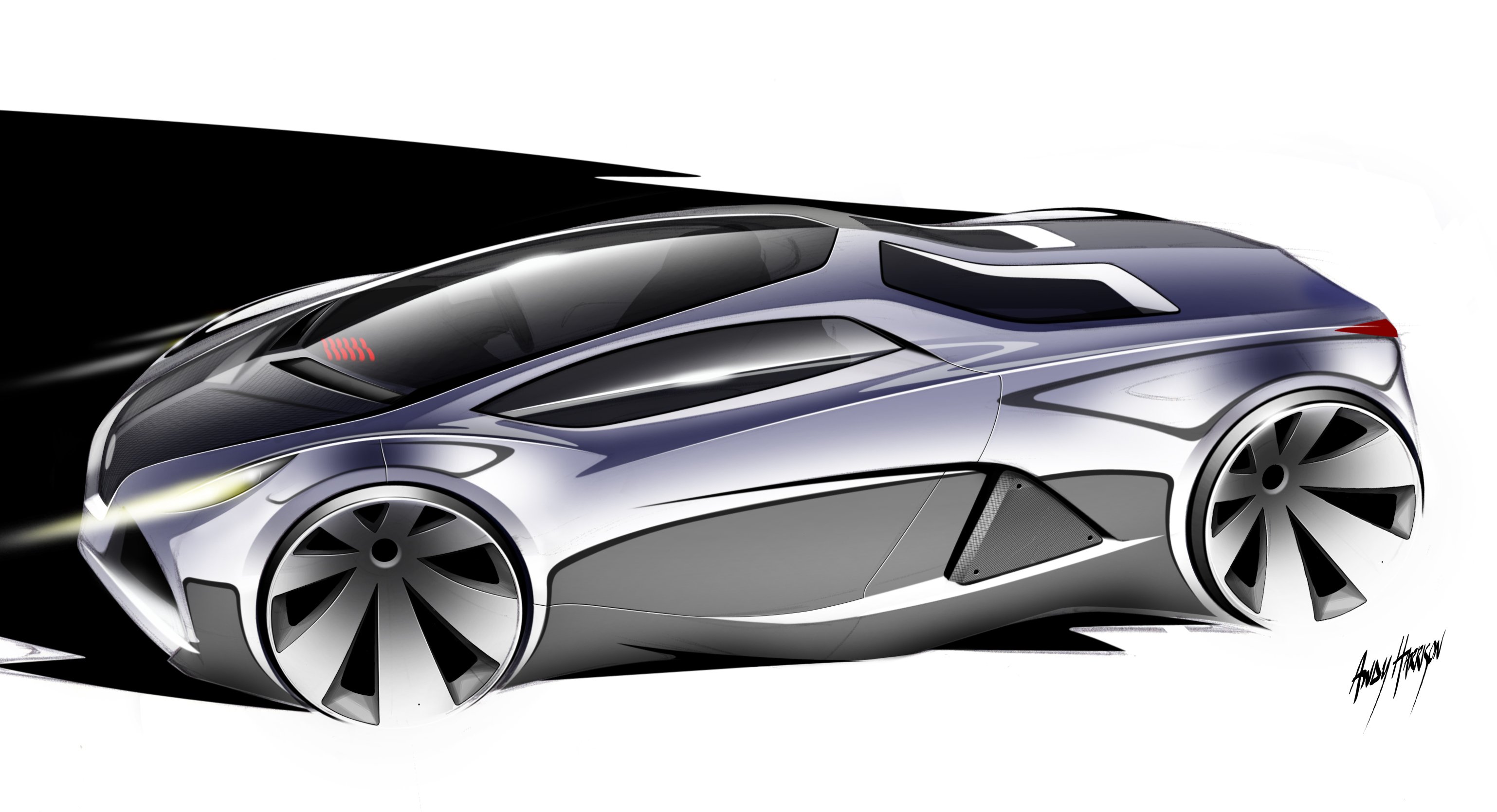
At the time, despite losses in the years immediately preceding the Global Financial Crisis, Holden under new CEO Mark Reuss (now GM’s President), was optimistic, its design and engineering groups openly searching for new ideas, especially in exploring alternative propulsion solutions. Design, having for decades been positioned within engineering, was now included in design boss Ed Welburn’s global
organisation and he increasingly encouraged pioneer advanced design solutions. Post the GFC, Holden
design would go on to create a long list of proposals for GM’s overseas brands, including a few that were made public like the Opel Excite GT concept, and Buick Avista and Avenir show cars.
“We wanted something that was super low, a sports car, yet not just another supercar…what about a
super ute?” says Ferlazzo today. “Almost an (automotive) pun, something that was iconically Australian, yet didn’t fit our portfolio.”
Eventually, after much debate, it was decided to combine the three different designer sketches in creating the model to take to the scale model stage: Kingsbury’s cab-forward nose, Harrison’s midsection and Leach’s stretched rear end.
The result, with its tiny front and rear overhangs and radical, rear-hinged lift-up scissor doors, was pure and extreme supercar. Except that its profile proportions with its extended tail mirrored a Commodore ute. Because it was an EV, few intakes – that add enormously to drag – were required, meaning the coefficient of drag could be kept remarkably low, though as far as we can gather no wind tunnel tests were performed. On looks alone, you’d expect to see a longitudinally mid-mounted monster V12 housed in the extended rear. Instead, under the small, bath-like tray area, would be a bank of lithium-ion batteries. The idea was to have the Volt’s modest 1.4-litre four-cylinder engine behind the two-seat cabin and ahead of the batteries. Wombat would be recharged by this onboard power source, just like the Volt.
Hagon believes the decision to use the Volt generator and electrical architecture was “a tactical move to prove to Detroit that Holden could work within the carmaker’s globalisation framework”.
It was Hughes and Kingsbury who came up with the Wombat label for their Ferrari-beating concept.
“It was a joke,” says Kingsbury, “but people started to call it Wombat and that’s what it became. It wasn’t really a ute, the tray was so shallow.”
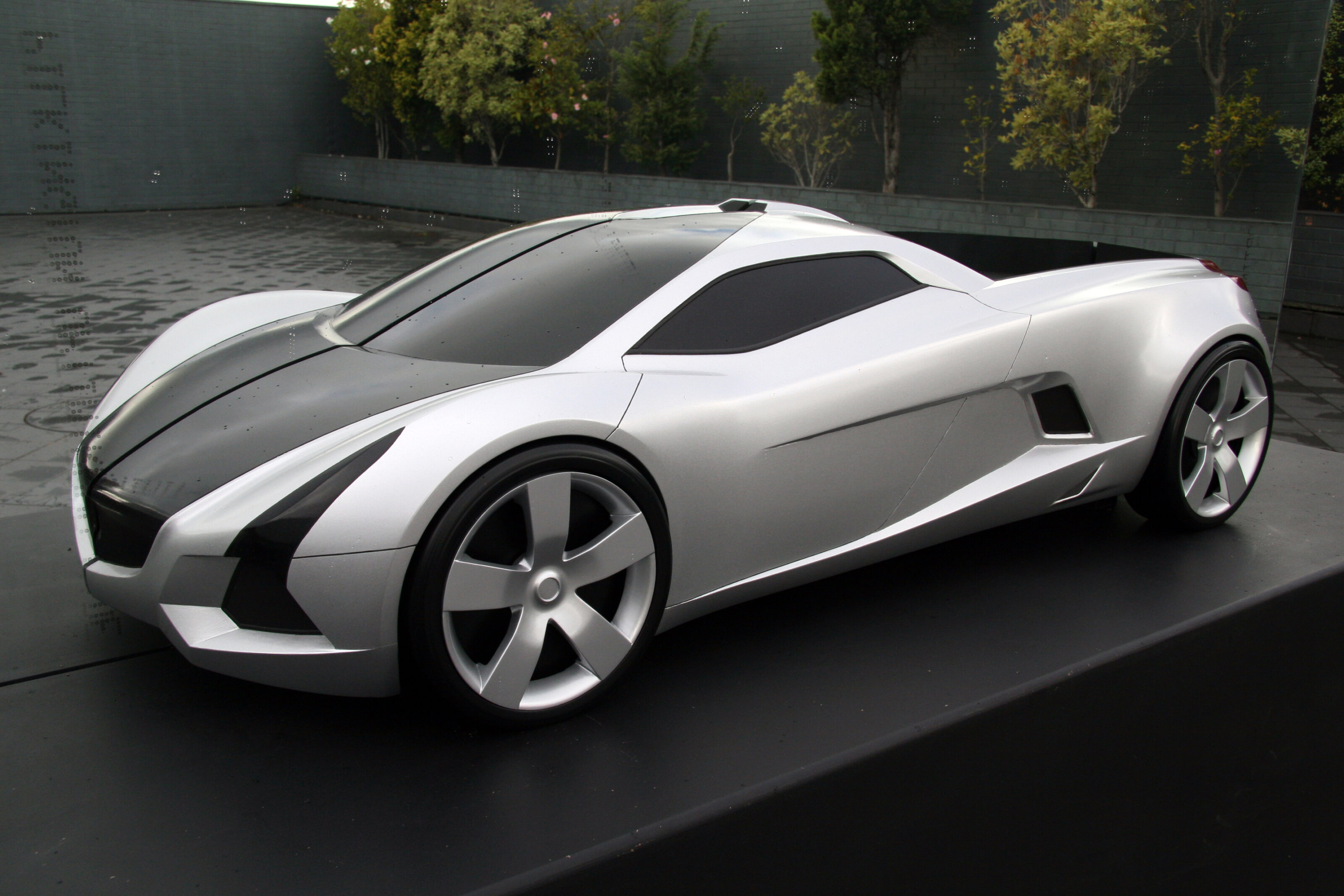
Harrison and Broadbent took over the project, though Ferlazzo says it was never an official program, and in 2007 a silver one-third scale model was built in Holden’s Port Melbourne studios before being photographed in design’s famous courtyard. When the green light was given to develop a full-size rolling clay model, Kingsbury, remembering the wild 1969 Holden Hurricane concept, decided Wombat should resurrect the Hurricane’s orange exterior colour.
Built with technical support from Ken Rutherford, a former F1 engineer (Benetton and Arrows) who now runs M-Sport Design in Melbourne, the full-size model wore 22-inch wheels wearing 365mm wide rear rubber (the fronts were smaller), was just 106cm high, over two metres wide and just under five metres in length. Engineering simulations revealed that Wombat would be capable of hitting 100km/h in just 2.3 seconds, two-tenths faster than the Bugatti Veyron, then the world’s fastest supercar, and only 0.15 behind Ferrari’s new F80. Top speed? It’s not known if GM did any simulations, but conservatively, we’d say at least 300km/h.
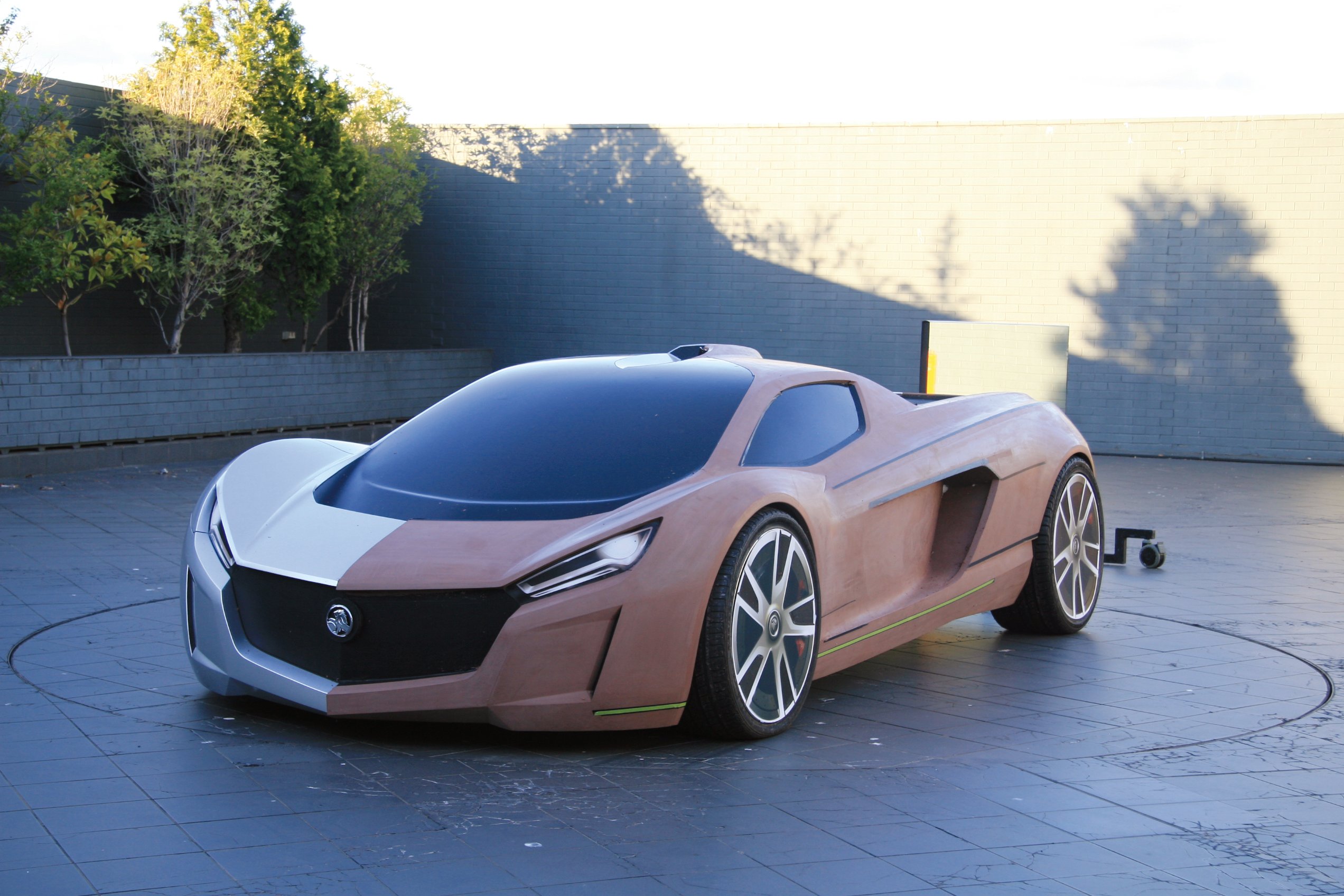
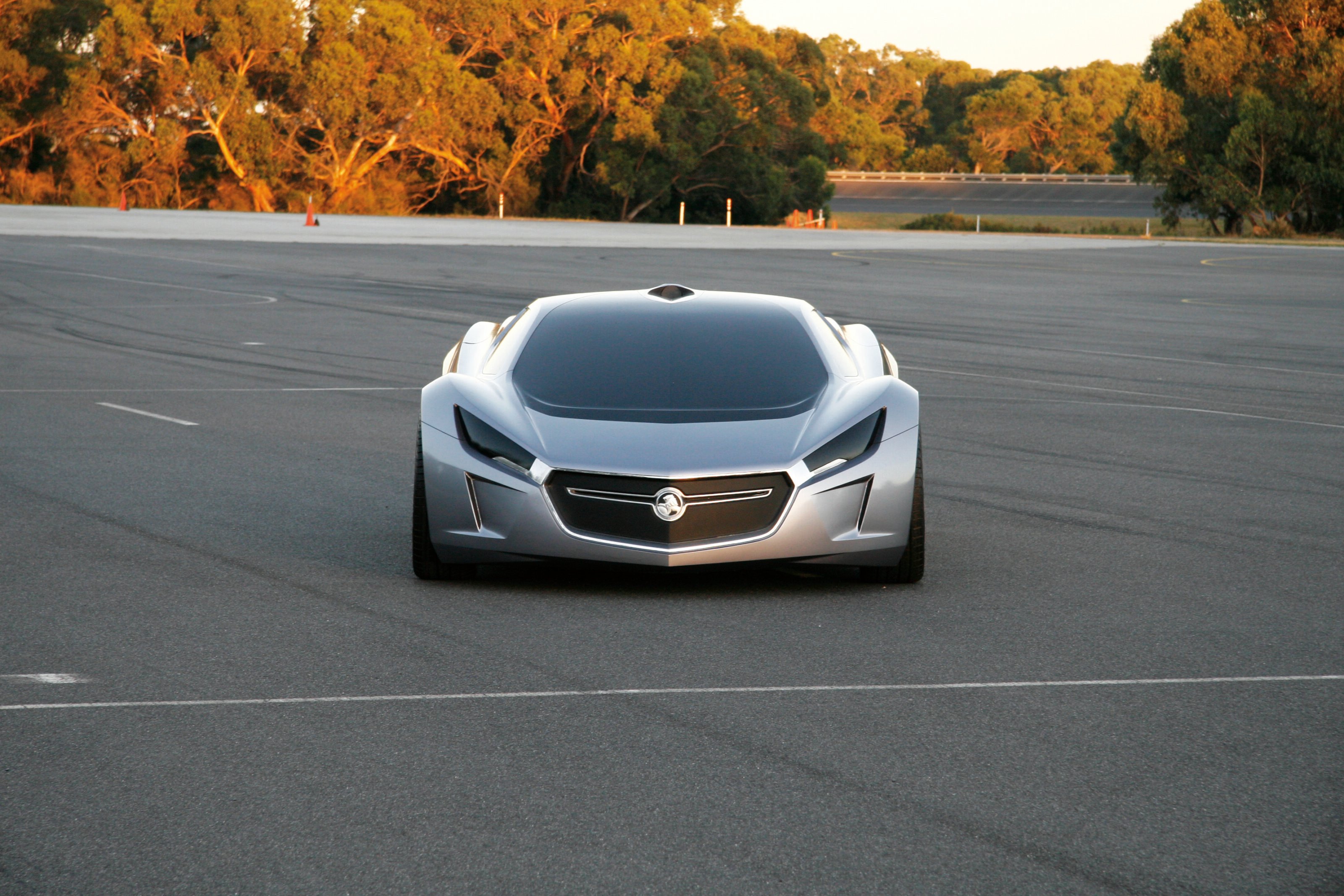
The orange full-size clay was trucked to Lang Lang, Holden’s proving ground, to be photographed and
reviewed by senior management on the skid pan. The decision was taken to cautiously proceed with the project. However, a seating buck was never built, so the doors were not real and could not be opened. The designers sketched interiors, but these came to nothing.
Bob Lutz, then GM’s global product boss and a firm supporter of Holden’s role as GM’s home of rear wheel drive development, saw the full-size clay in 2008. Predictably, it was Lutz who advocated for a production version that he believed could also be badged Cadillac, Opel and Chevrolet as well as, of course, Holden. Welburn also monitored development from Detroit and ensured Holden’s full-size clay was digitally scanned for any future CAD-CAM developments.
In late 2008 Lutz, seeing Wombat as an ideal hero car to sit beside the Volt in GM’s global showrooms, approved for the digital data to be transferred to Detroit to be made into a hard model. (It’s believed that Holden’s full-size clay was recycled in Australia, though it may have been one of the models lost in floods that later devastated the basement of Holden’s Technical Centre). The hardboard model was machined out of Ureol, a type of board material of polyurethane and epoxy resin, known for its use in modeling and tool making. This model, built to motor show standards, is believed to have been shown to senior GM brass at a leadership summit in 2008 or 2009. Kingsbury admits to never seeing this model. Still, respecting Holden’s Hurricane heritage, the American Wombat was also finished in gold.
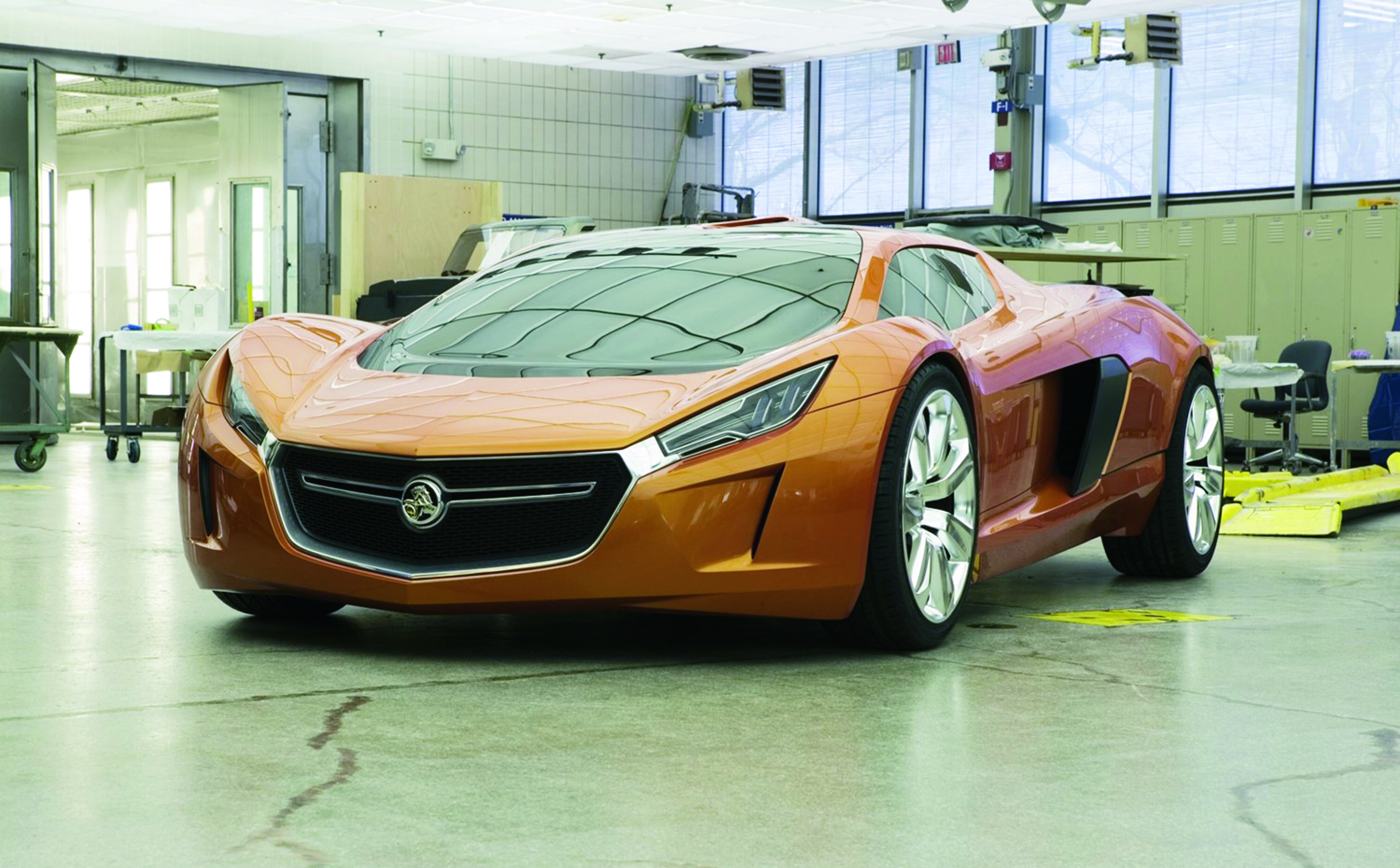
Hagon quoted one Holden insider saying, “We’d sourced batteries, electric motors….all the components needed to build the vehicle. We did a lot of the architectural validation and simulation work.”
But it was not to be. After decades that saw GM’s market share inexorably decline from a peak of over 50 per cent during the 1960s to just over 20 per cent in 2008, and losses grow, GM filed for bankruptcy protection on June 12, 2009. High fixed costs and debt, combined with falling sales, forced GM to seek a government bailout. A new company was formed and brands such as Pontiac, Saab, Saturn and Hummer were abolished, while many global production programs were eliminated. Narcissistic projects like Wombat, unable to bring in serious money, were ended.
Realistically, at least in my view, the concept of a supercar truck was not just outrageous, but ridiculous. There’s a reason why Isuzu didn’t proceed with Como and it’s not just because the 477kW (640bhp at 12,500rpm) V12 was too expensive to build at a time when Japan’s economy was in free fall. Nobody, not even if it’s badged Ferrari, is going to be interested in a supercar ute. Isuzu or Holden, the idea is contradictory and just plain silly.
Yet Wombat proves, again, the enormity of what Australia lost with the end of local manufacturing and Holden’s highly productive and enormously creative local design studio and advanced engineering sector. In part, the revolutionary electric supercar, intended to showcase Holden’s design and engineering talents within GM’s world, achieved its aim but arrived just as General Motors was declared bankrupt. In such circumstances, Wombat had no chance.
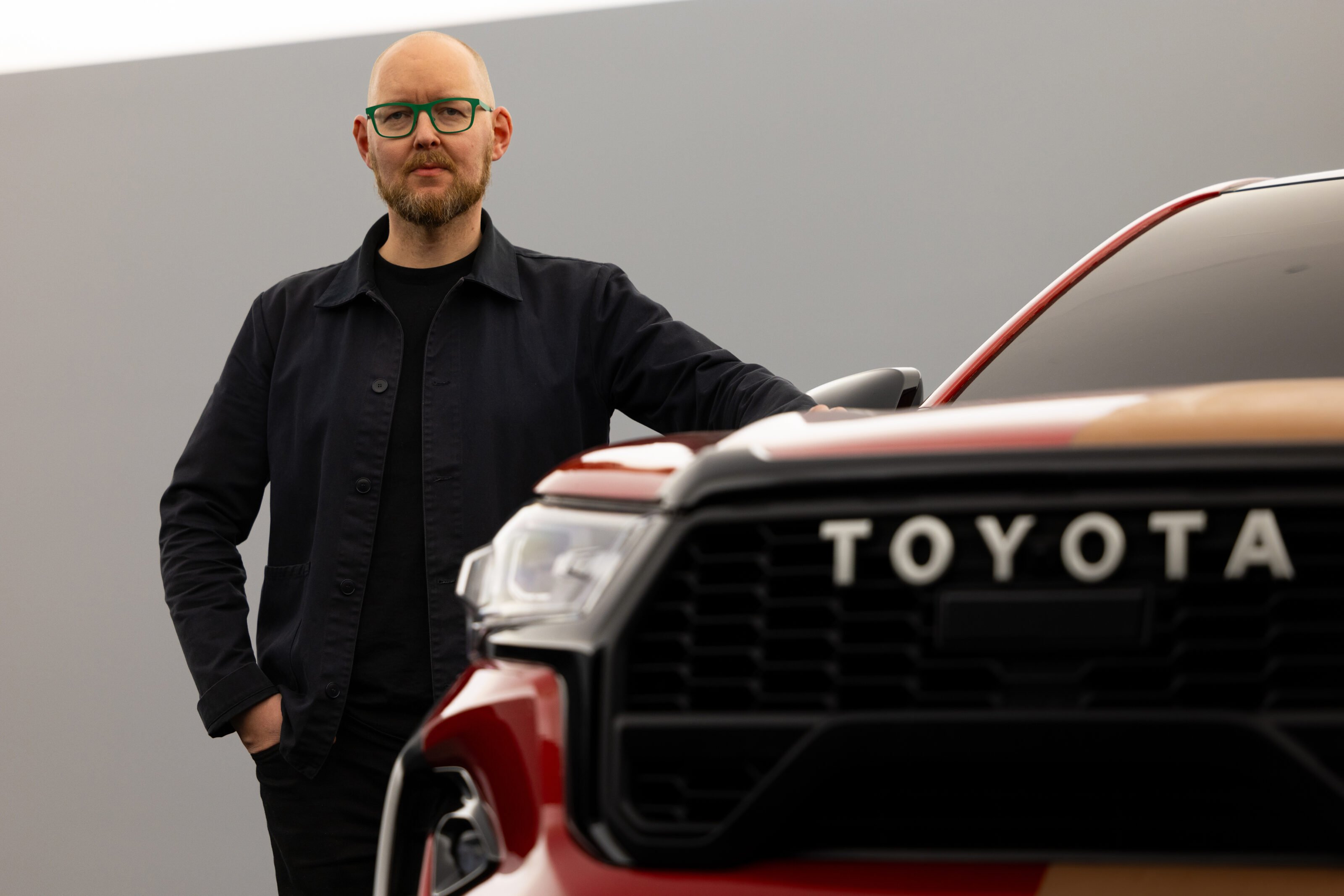
Does the full-size model survive in GM’s huge heritage fleet? Christo Datini, who heads GM’s archive told me, “I checked the inventory of vehicles/properties retained then placed in Australian museums by GMA. The Wombat does not appear on it.”
What happened to the young designers responsible for Wombat? Kingsbury is now creative design manager at Toyota Australia and has worked on vehicles like the GRS Hilux, the Yaris facelift and a Toyota taxi for India; Warrack Leach moved from Holden to become a design manager at Ford Australia in 2019; while Andrew Harrison is exterior design manager at Bentley having shifted to the UK in 2013. To confirm his enthusiast credentials, Kingsbury’s daily drive is a Lexus NX, but he keeps a Series 2 Lotus Elise for track days.
This article originally appeared in the June 2025 issue of Wheels magazine. Subscribe here.
