Classic Wheels

Gallery 1
First published in the April 1974 issue of Wheels magazine, Australia’s best car mag since 1953. Subscribe here and gain access to 12 issues for $109 plus online access to every Wheels issue since 1953.
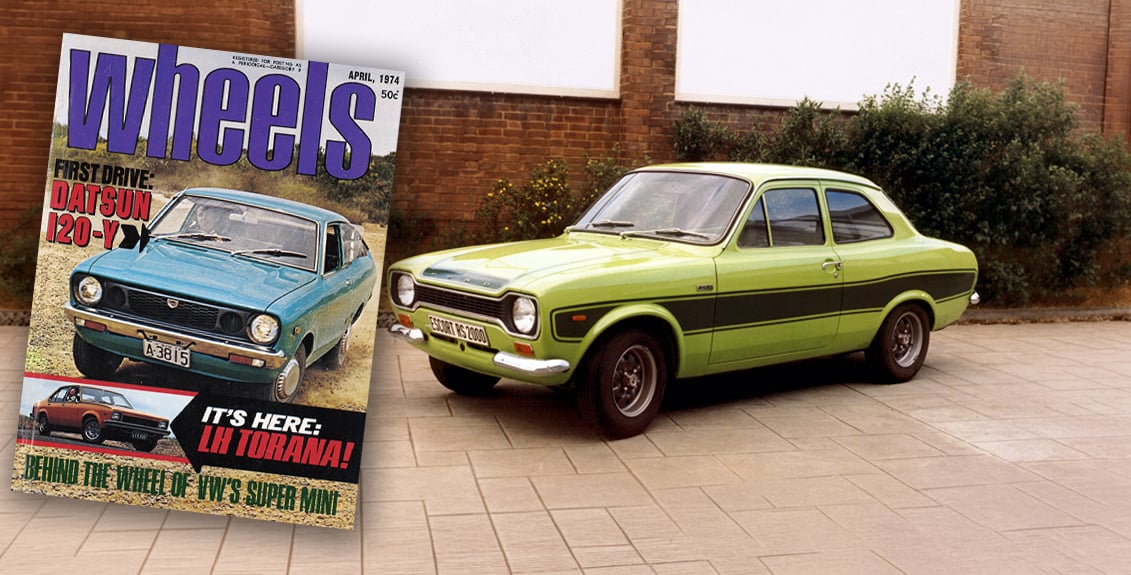
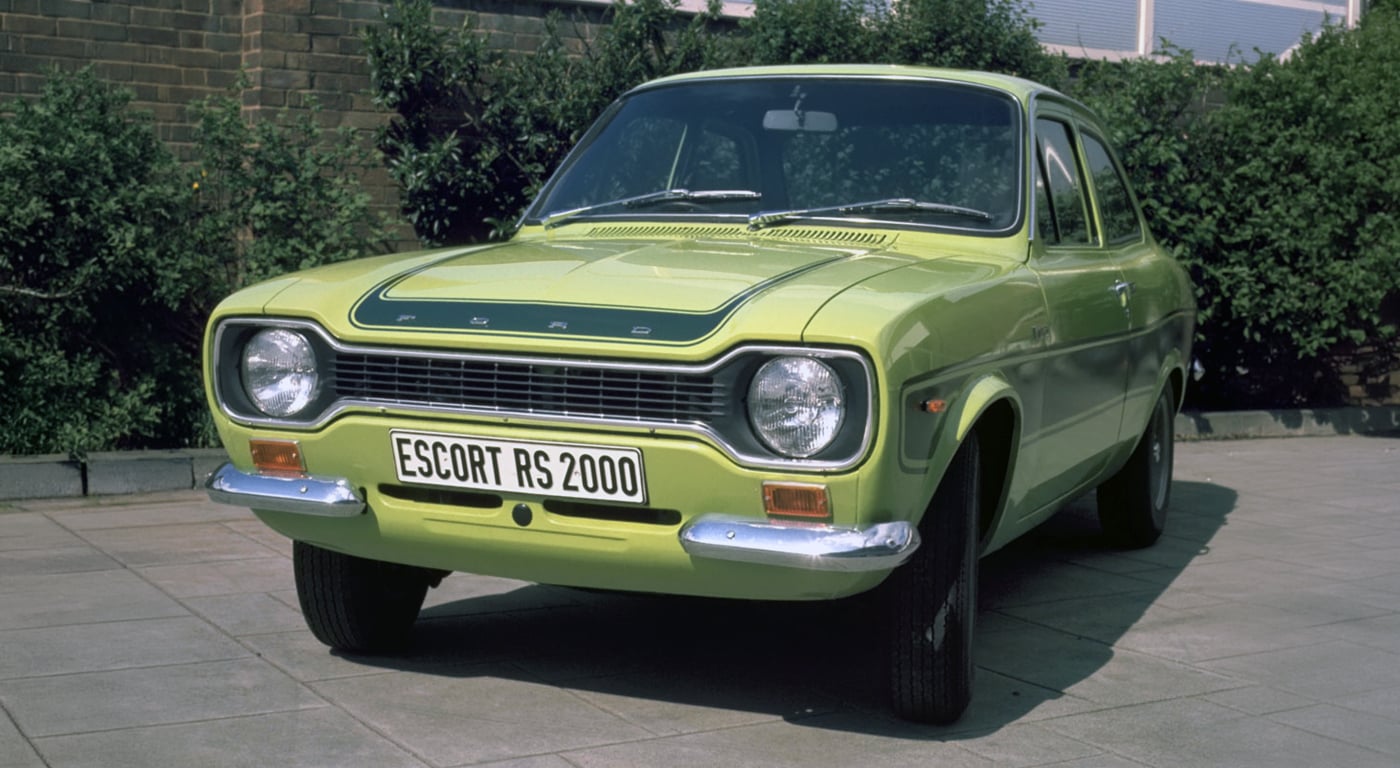
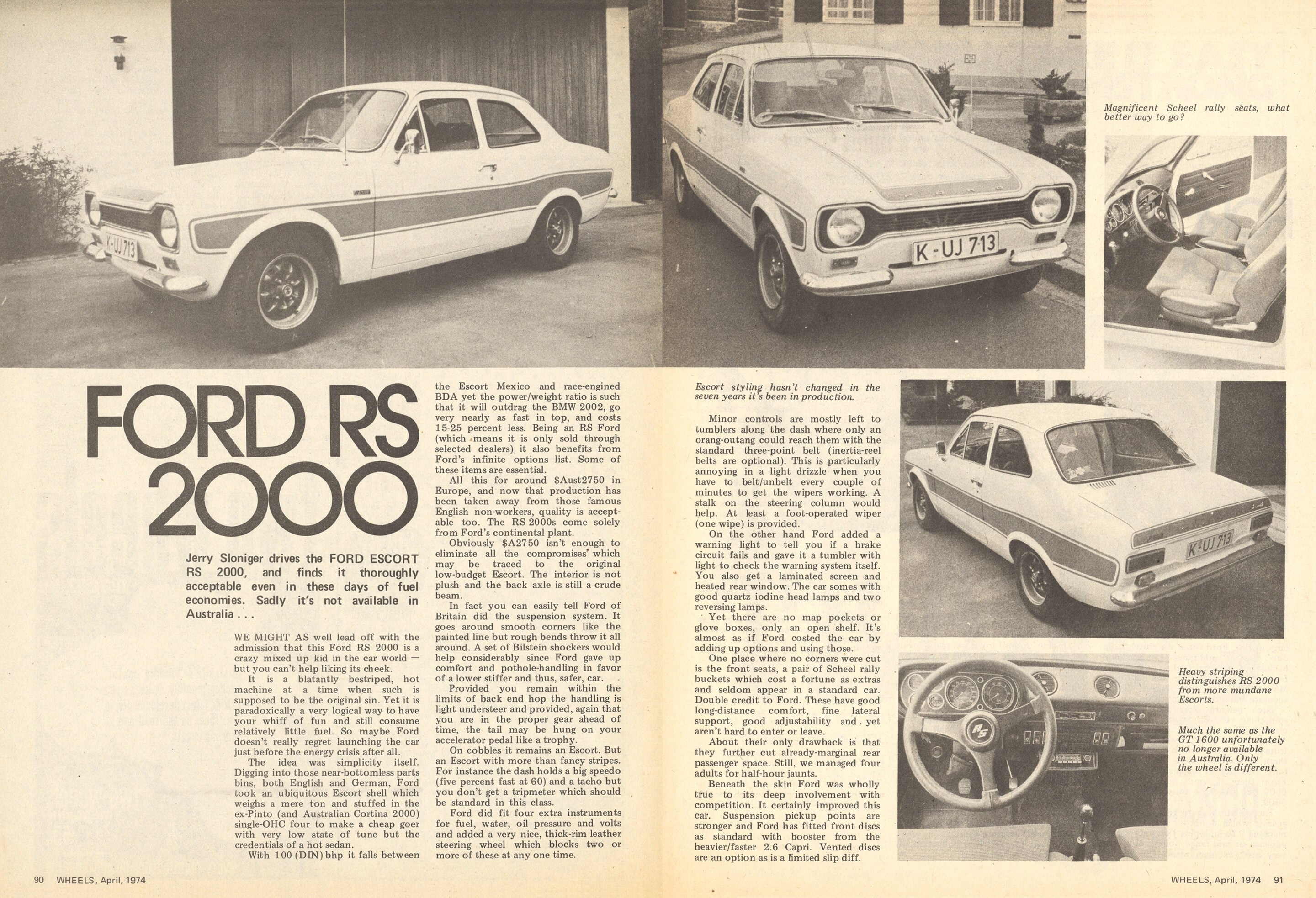
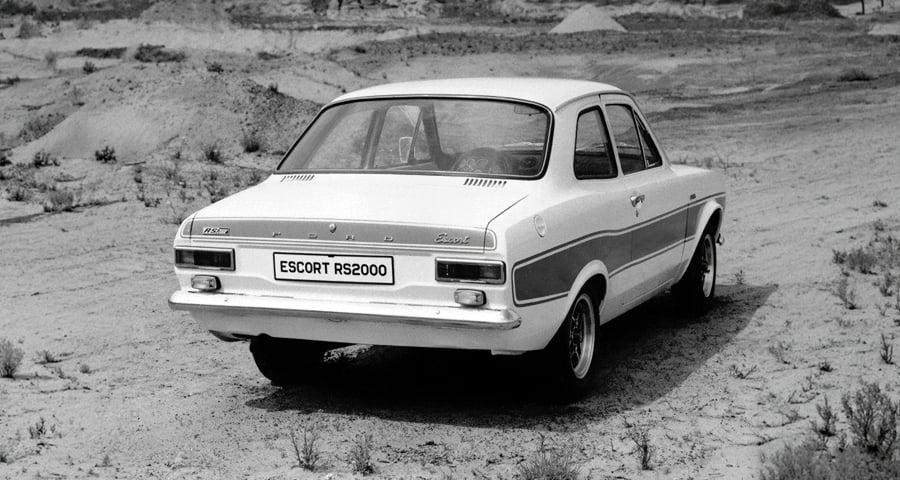
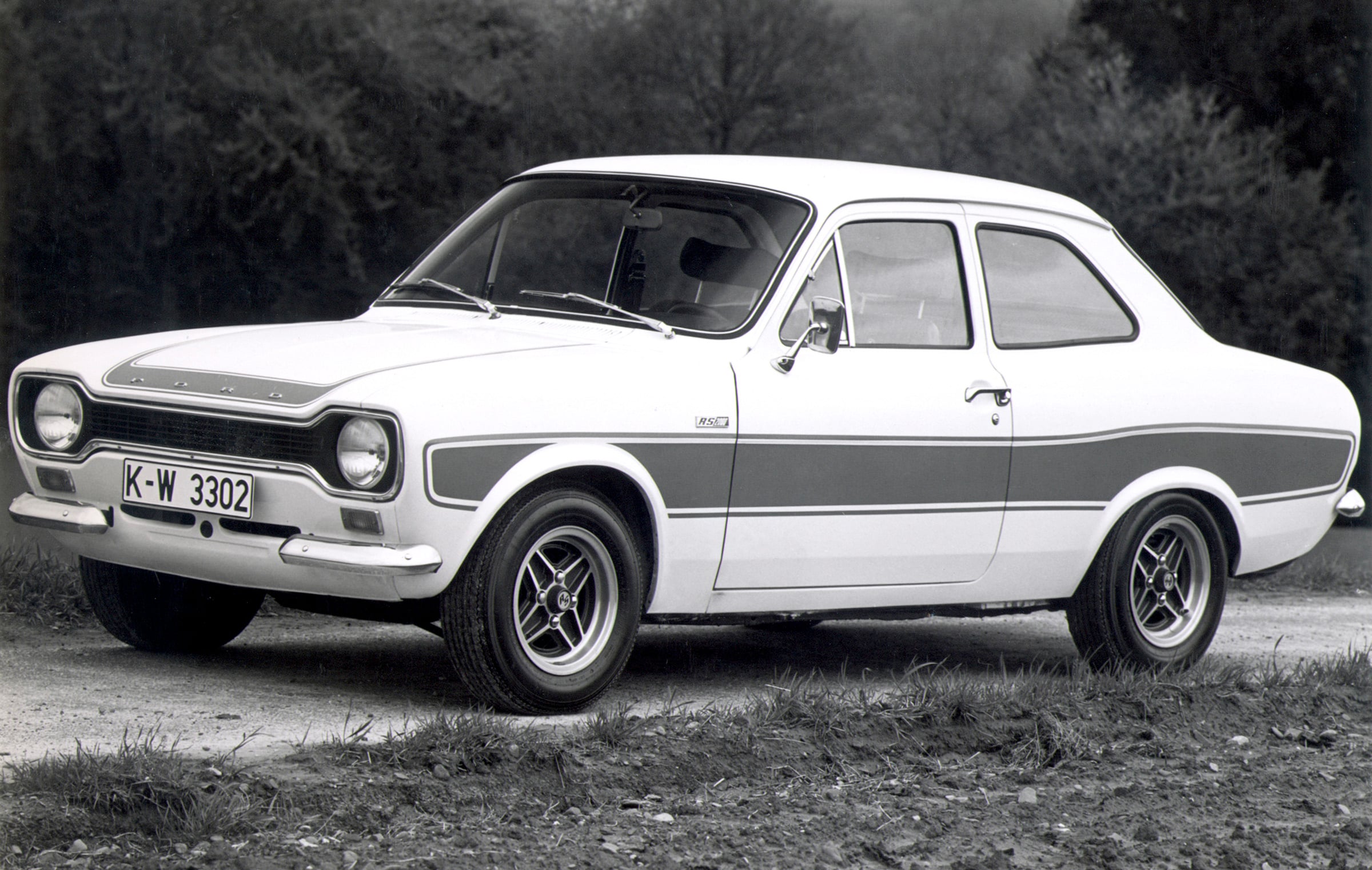
We might as well lead off with the admission that this Ford RS2000 is a crazy mixed up kid in the car world – but you can’t help liking its cheek.
It is a blatantly bestriped, hot machine at a time when such is supposed to be the original sin. Yet it is paradoxically a very logical way to have your whiff of fun and still consume relatively little fuel. So maybe Ford doesn’t really regret launching the car just before the energy crisis after all.
1
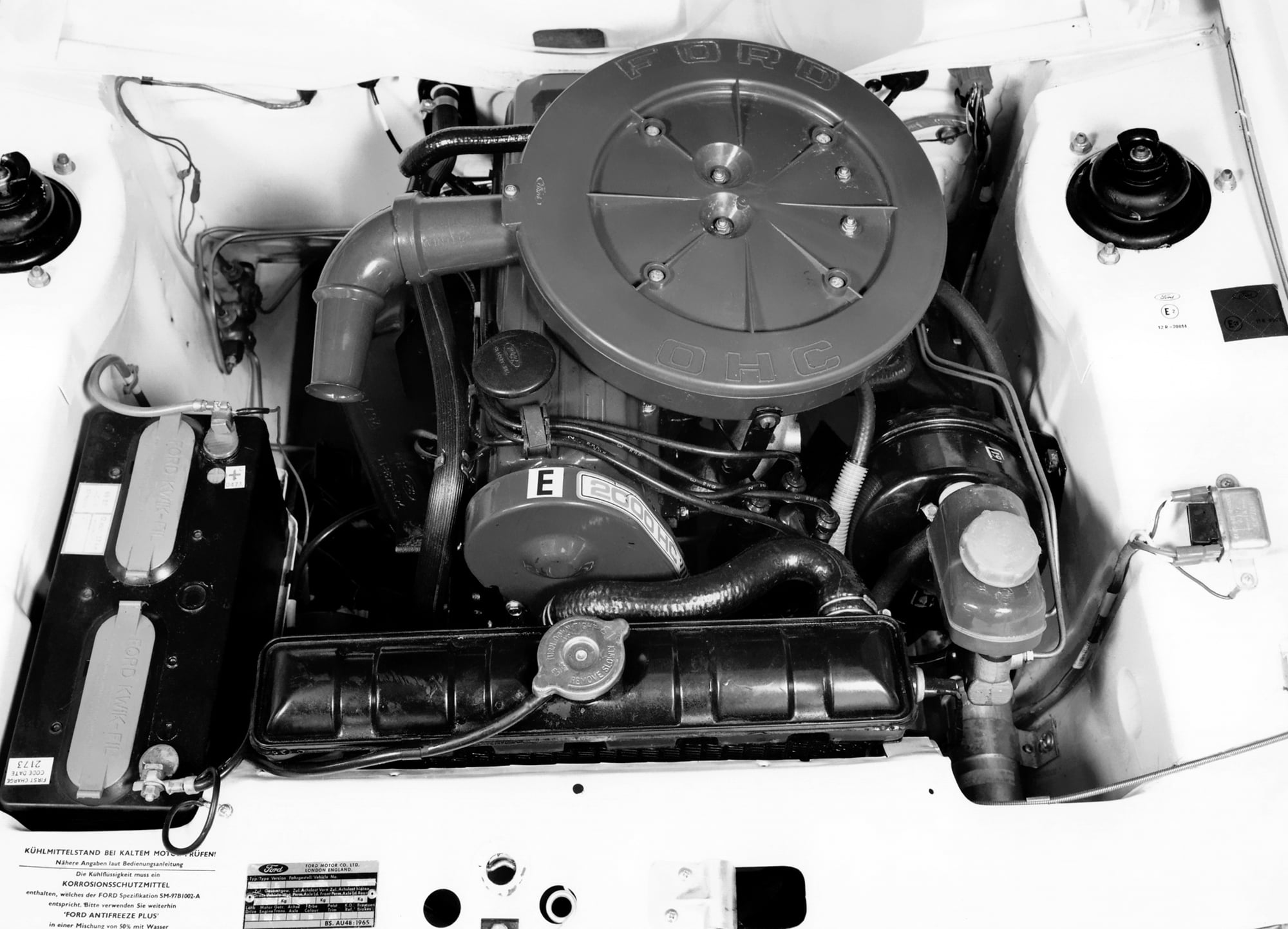
The idea was simplicity itself. Digging into those near-bottomless parts bins, both English and German, Ford took an ubiquitous Escort shell which weighs a mere ton and stuffed in the ex-Pinto (and Australian Cortina 2000) single-OHC four to make a cheap goer with very low state of tune but the credentials of a hot sedan.
With 100 (DIN) bhp it fails between the Escort Mexico and race-engined BDA yet the power/weight ratio is such that it will outdrag the BMW 2002, go very nearly as fast in top, and costs 15-25 per cent less. Being an RS Ford (which means it is only sold through selected dealers), it also benefits from Ford’s infinite options list. Some of these items are essential.
All this for around A$2750 in Europe, and now that production has been taken away from those famous English non-workers, quality is acceptable too. The RS2000s come solely from Ford’s continental plant.
Obviously A$2750 isn’t enough to eliminate all the compromises which may be traced to the original low-budget Escort. The interior is not plush and the back axle is still a crude beam.
1
In fact you can easily tell Ford of Britain did the suspension system. It goes around smooth corners like the painted line but rough bends throw it all around. A set of Bilstein shockers would help considerably since Ford gave up comfort and pothole-handling in favor of a lower, stiffer and thus, safer, car.
Provided you remain within the limits of back end hop the handling is light understeer and provided, again that you are in the proper gear ahead of time, the tail may be hung on your accelerator pedal like a trophy.
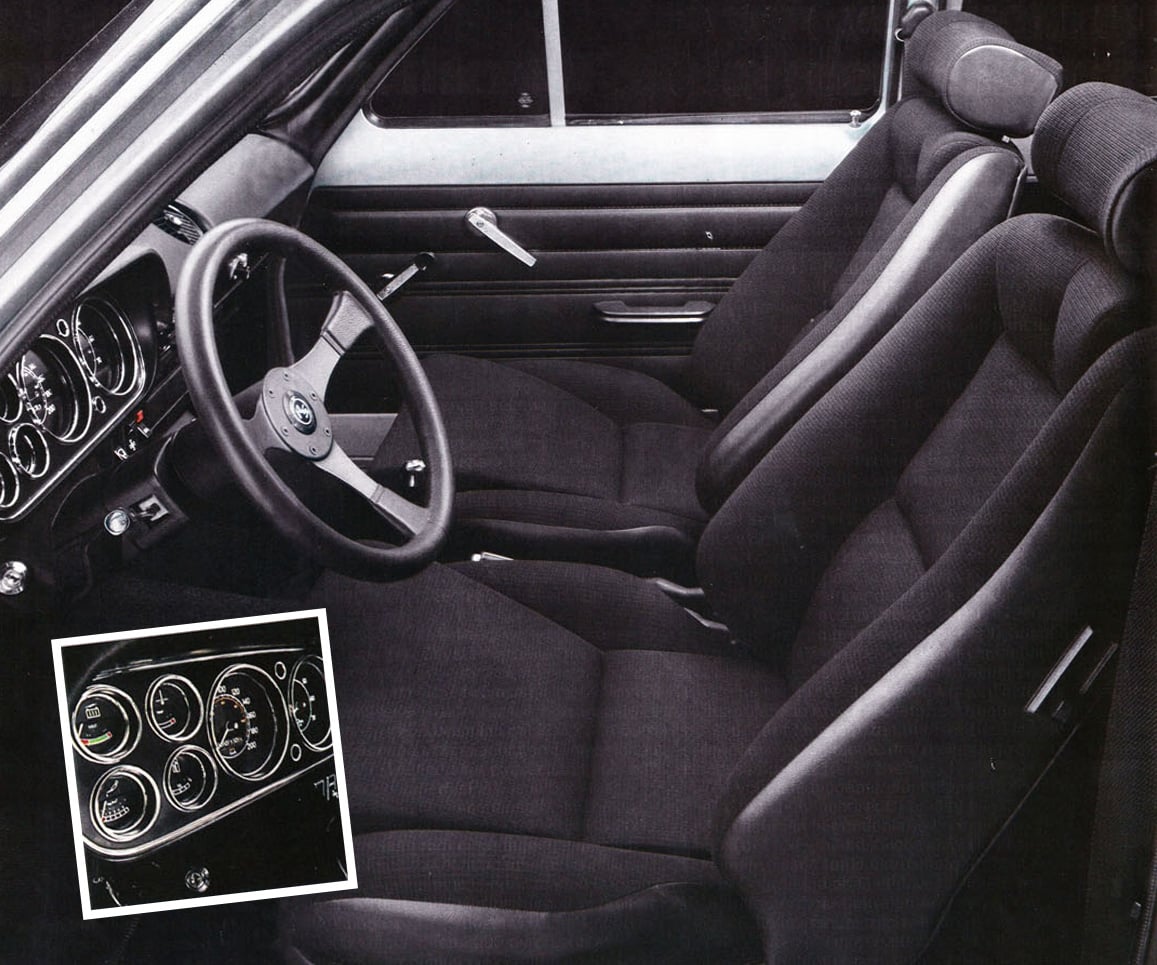
On cobbles it remains an Escort. But an Escort with more than fancy stripes. For instance the dash holds a big speedo (five per cent fast at 60) and a tacho but you don’t get a tripmeter which should be standard in this class.
Ford did fit four extra instruments for fuel, water, oil pressure and volts and added a very nice, thick-rim leather steering wheel which blocks two or more of these at any one time.
1
Minor controls are mostly left to tumblers along the dash where only an orang-outang could reach them with the standard three-point belt (inertia-reel belts are optional). This is particularly annoying in a light drizzle when you have to belt/unbelt every couple of minutes to get the wipers working. A stalk on the steering column would help. At least a foot-operated wiper (one wipe) is provided.
On the other hand Ford added a warning light to tell you if a brake circuit fails and gave it a tumbler with light to check the warning system itself. You also get a laminated screen and heated rear window. The car comes with good quartz iodine head lamps and two reversing lamps.
Yet there are no map pockets or glove boxes, only an open shelf. It’s almost as if Ford costed the car by adding up options and using those.
One place where no corners were cut is the front seats, a pair of Scheel rally buckets which cost a fortune as extras and seldom appear in a standard car. Double credit to Ford. These have good long-distance comfort, fine lateral support, good adjustability and yet aren’t hard to enter or leave.
About their only drawback is that they further cut already-marginal rear passenger space. Still, we managed four adults for half-hour jaunts.
1
Beneath the skin Ford was wholly true to its deep involvement with competition. It certainly improved this car. Suspension pickup points are stronger and Ford has fitted front discs as standard with booster from the heavier/faster 2.6 Capri. Vented discs are an option as is a limited slip diff.
The RS2000 is lowered an inch, has negative camber in front and is fitted with wider 5½ inch pierced steel rims with good wide radials. Steering is light and precise.
To handle the extra power of the large engine, Ford fitted the clutch from one of the mid-range Consuls and backed it up with the outstanding four-speed gearbox from the big Capri. Movements are very short, ultra-accurate and a constant pleasure. Such newness may also have had something to do with a lack of elasticity.
1
One would expect two litres to pull from ground zero in such a light car, but there is nothing below 2500 and the only real action comes above 4000. From there it winds right on out to 6500 but gets very noisy indeed above 5000.
Part of the laggard feel is the Ford gearing which doubtless aids the car in reaching 110mph-plus but only at the expense of mid-range pulling ease. The very low first gear masks this lack at stop lights but then there is a vast gap to second.
The car starts immediately from cold if the driver follows Ford’s drill, and breathes easily, taking sudden throttle changes without a murmur.
Driving round town returned over 20mpg while the 2000 did an easy 27 cruising in speed-limited Germany. Used hard, the car still returns some 23mpg which renders the nine gallon tank size highly useful.
4
The body style has been around quite a while now but this one generated less wind noise than earlier models. Only turbulence from the outside mirror was really loud.
Just as it stands the RS2000 from Ford is a fine way to feel sporting without feeling wasteful, it is taut, looks mean, and lets us recall the days of glory without overworking our ecological conscience. If competition should return to Europe it will be the budget racer’s starting point.
Not bad for a hybrid collection of parts out of a common bin.
Ford Escort RS2000 specification
| Engine | 1993cc single-OHC inline four-cylinder |
|---|---|
| Power | 74.6kW @ 5700rpm |
| Torque | 146.5Nm @ 3750rpm |
| Transmission | 4-speed manual from Capri 2.6; rear-wheel drive |
| Wheels | 5½ in. steel rims-with 165 SR 13 radial tyres |
| Dimensions (l/w/h/wb) | 3985/1572/1468/2354mm |
| Weight | 916.2kg |
| 0-60mph (97km/h) | 9.0sec |
| Top speed | 180km/h |
| Fuel consumption (on test) | 8.8L/100km |
Follow WhichCar/Wheels on Google
Click the button below to make WhichCar by Wheels a preferred source for your news.

We recommend
-
 Features
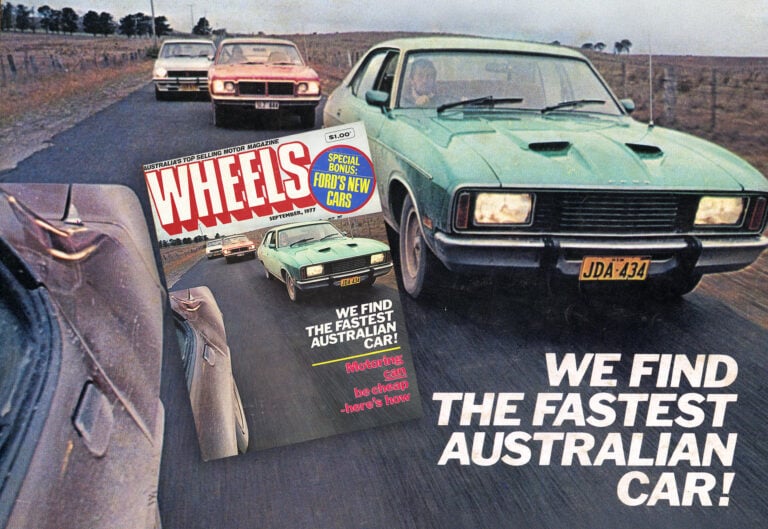
From the Wheels archives: We find the fastest Australian car
In September 1977, Wheels settled the argument about what is the fastest Australian car once and for all.
-
 Ford Falcon
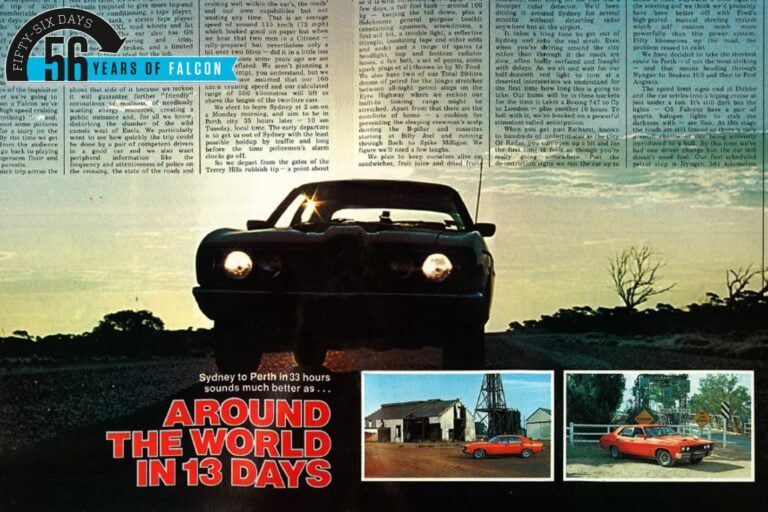
1977 Ford XC Falcon drives from Sydney to Perth
Sydney to Perth in 33 hours sounds much better as …Around the world in 13 days
-
 Classic Wheels
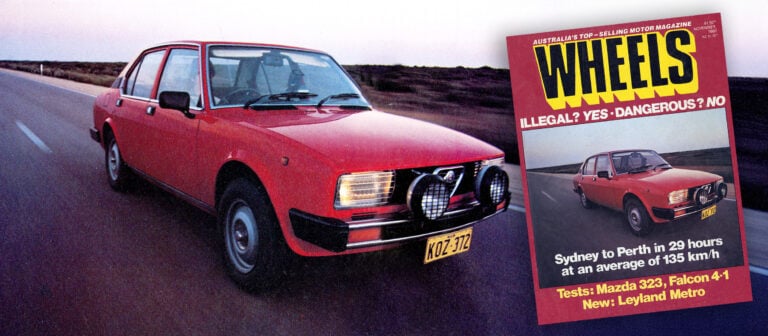
From the Wheels archive: Illegal? Yes. Dangerous? No! Sydney to Perth in 29 hours
How we smashed our previous across-Australia record run by three-and-a-half-hours in an Alfa Romeo Alfetta.