News

Gallery 1
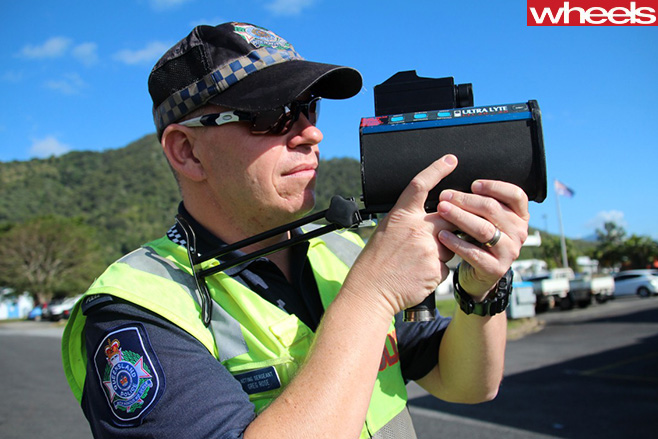
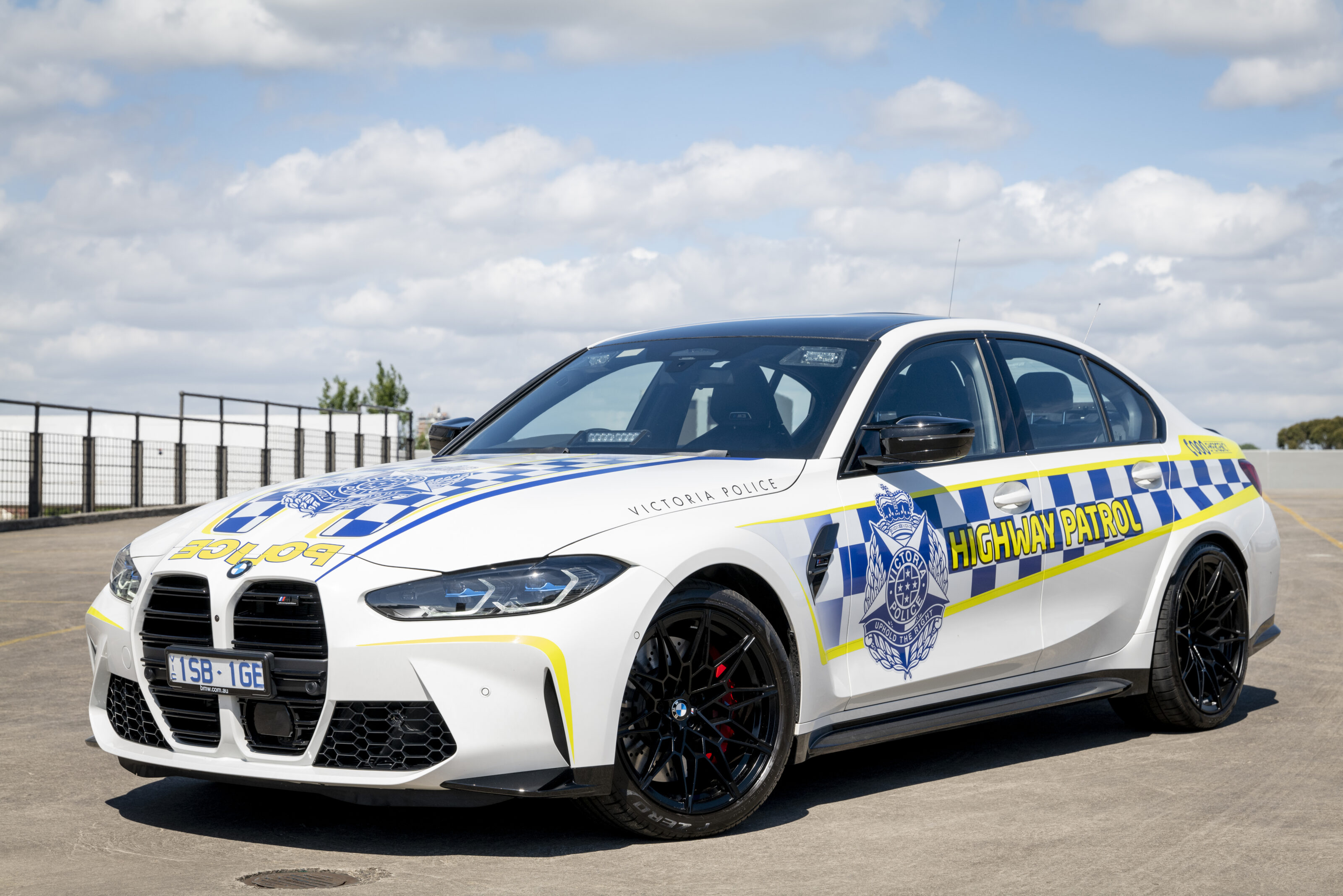
One in four or 25 per cent of Australian drivers warn other motorists about the presence of law enforcement by flashing their headlights despite the practice lying in a legal grey area.
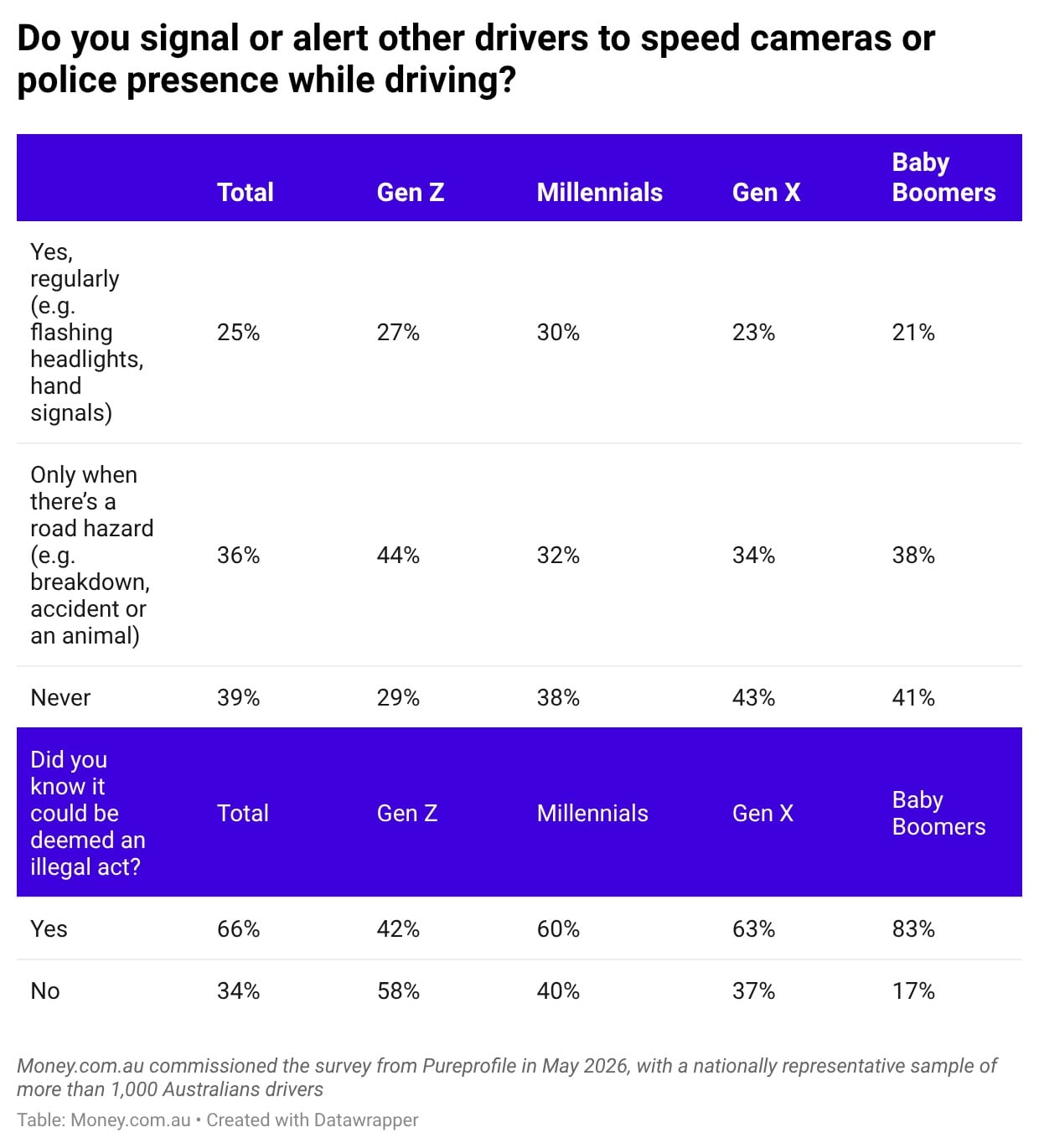
That’s the finding from a survey of 1000 Australian drivers by financial comparison tool Money.com.au, which also found that 36 per cent only signal when there’s a genuine road hazard, like an accident, breakdown or animal on the road.
According to Money, it also found that 25 per cent regularly warn other drivers about speed cameras or police presence, 39 per cent never signal other motorists at all and among drivers who do signal, 66 per cent are aware the practice could be illegal.
Money‘s Head of Insights, Sean Callery, says the findings reveal a significant gap between what drivers consider common courtesy and what the law may allow. “Many drivers flash their headlights to help fellow motorists avoid a fine, and some see it as the Australian thing to do. But the irony is that the gesture itself could backfire because of this driver-to-driver courtesy. Drivers trying to save someone else from a costly penalty could find themselves on the receiving end of one instead,” he said.
“For some Aussies, there’s a stronger case for warning drivers about a hazard ahead than a speed camera. If alerting another motorist of an accident, a stranded vehicle or an animal on the road, many would see that as both a road safety benefit and a way to avoid potentially costly vehicle damage.”
3
Among drivers who signal other motorists, two-thirds are aware that the practice could be considered illegal in some circumstances. The remaining 34 per cent said they were unaware of the potential legal implications.
According to Money, while there’s no law that explicitly prohibits drivers from flashing their headlights to warn other motorists, the Australian Road Rules (ADRs) state that drivers must not use their vehicle’s lights in a way that dazzles or is likely to dazzle another road user. Drivers are also prohibited from using high-beam headlights when travelling within 200 metres of a vehicle ahead or an oncoming vehicle.
The survey also revealed differences between age groups. Millennials are the most likely generation to regularly warn other drivers about speed cameras or police presence, with 30 per cent admitting they do so. That’s compared with 27 per cent of Gen Z, 23 per cent of Gen X and 21 per cent of Baby Boomers.
1
However, Gen Z drivers (44 per cent) are the most likely to use headlight flashes or other signals to warn fellow motorists about genuine road hazards rather than speed cameras or police presence. They are followed by Baby Boomers (38 per cent), Gen X (34 per cent) and Millennials (32 per cent). Gen X drivers are the most likely to keep to themselves on the road, with 43 per cent saying they never signal other motorists about speed cameras, police presence or road hazards. That’s higher than Baby Boomers (41 per cent), Millennials (38 per cent) and Gen Z (29 per cent).
The full results of Money’s survey can be found here.
Follow WhichCar/Wheels on Google
Click the button below to make WhichCar by Wheels a preferred source for your news.

We recommend
-
 Reviews
2026 Toyota RAV4 Cruiser review: The people’s choice improves… mostly
The big-selling Toyota RAV4 returns with more technology and updated hybrid power. Can the new Cruiser spec remain the medium SUV to beat?
-
 Features
10 high-performance versions of cars with humble beginnings
You may think of most of the cars on this list as mundane appliances, but that didn’t stop some extreme versions from being spun from their humble underpinnings.
-
 Features
Most fuel efficient petrol/diesel medium SUV models on the market: Top 10
Are you searching for a new medium SUV, but don't want any form of electrification? Here are the 10 most fuel efficient models you can currently buy.