Reviews


Gallery 1
8.2
/10
Score
Score breakdown
8.0
Safety, value and features
8.0
Comfort and space
8.4
Engine and gearbox
7.8
Ride and handling
8.0
Technology
Things we like
- Tremendous all-round grunt
- Superior unladen ride quality
- Top-class tech and cabin comfort
Not so much
- Too bespoke for the market?
- Less nimble than other Ranger variants
- Some shunting in low-range
Within the Ford fanbase in Australia the nameplate ‘Super Duty’ might not have the same weight and recognition it does in the States. Over there, it’s a serious sub-segment for the most hardcore segment of the market – full-size trucks.
Affix the words Super Duty to an F-Truck and it’s an admission that the truck is ready to get to work in a heavy-duty sense. Uprated chassis strength, uprated carrying capacity, capability and tow ratings.
Now, Ford Australia has decided to unleash the same Super Duty capability in its widely successful Ranger – a 4WD medium-size truck that shows absolutely no sign of slowing down anytime soon. And, according to Ford, it means big business here, too. In a sign of what Ford can still do in this country, this is very much an Australian designed Super Duty. One that had to make a serious business case to get the tick of approval from head office.
1
In short, what Super Duty means is more capability. It comes with a gross vehicle mass of 4500kg, a gross combined mass of 8000kg and a braked tow capacity of 4500kg. Factor in payload ratings of 1982kg for the Single-Cab, 1885kg for the Super-Cab and 1825kg for the Double-Cab (based on minimum kerb weight for the vehicle) and you’ve got a bona fide workhorse.
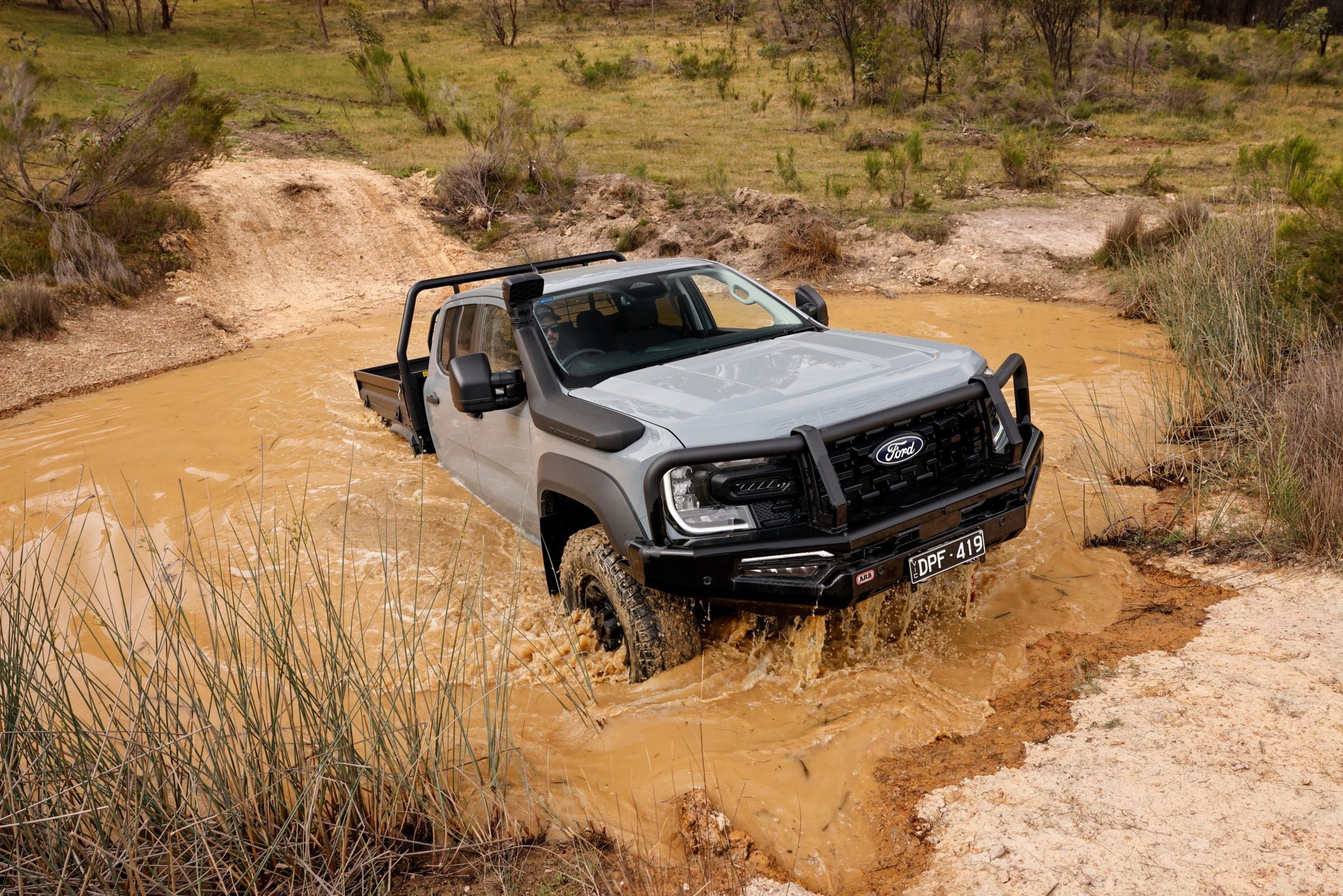
Ranger Super Duty will ford deeper water, climb harder, descend easier and lug weight around better than any other Ranger in the model range. It’s unashamedly targeted at fleet buyers and rural workers, with Toyota’s ageing 70 Series in its sights. On that score, when it comes to technology and driveability, Ranger Super Duty leaves the venerable LandCruiser in a cloud of outback dust.
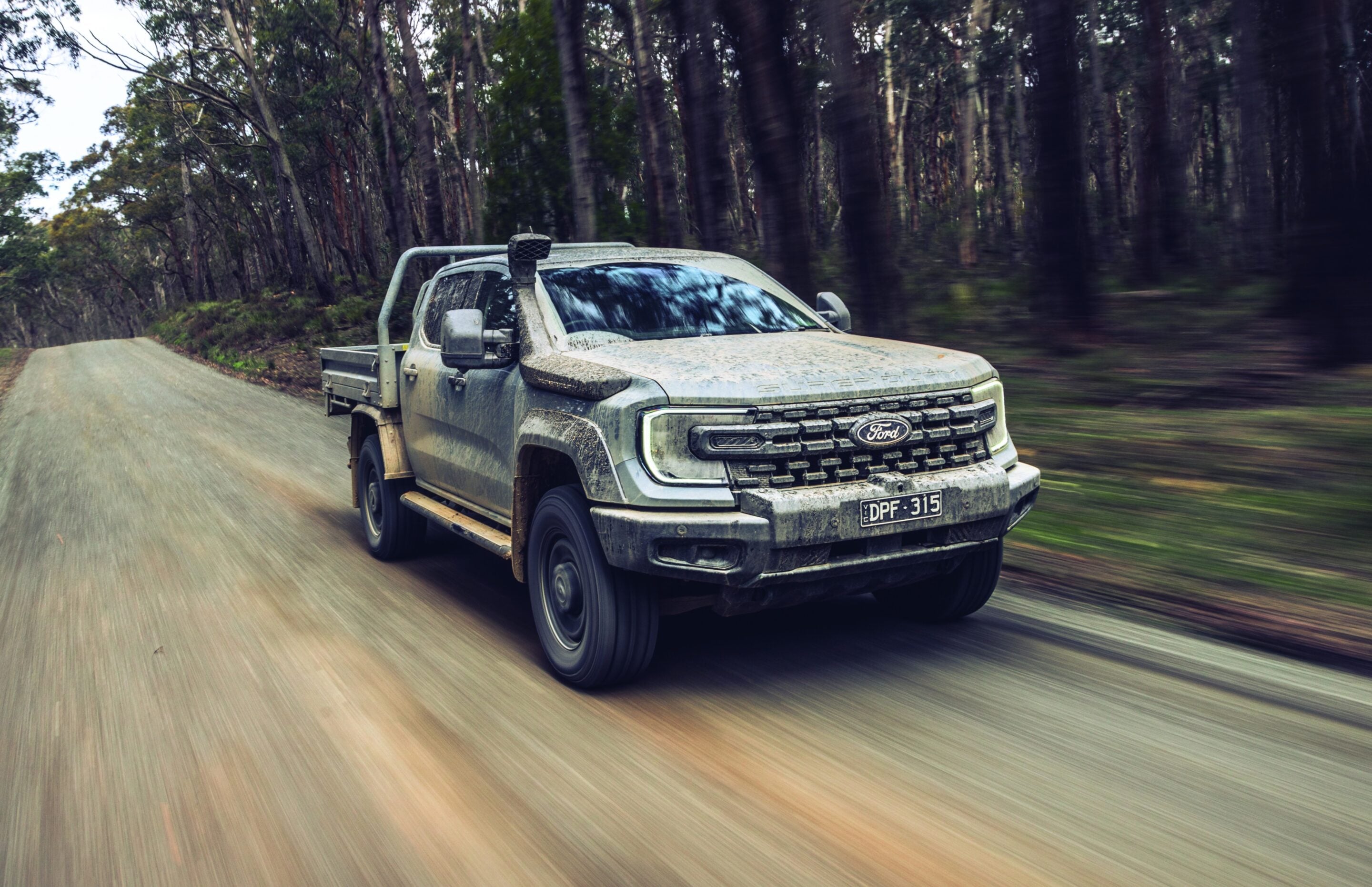
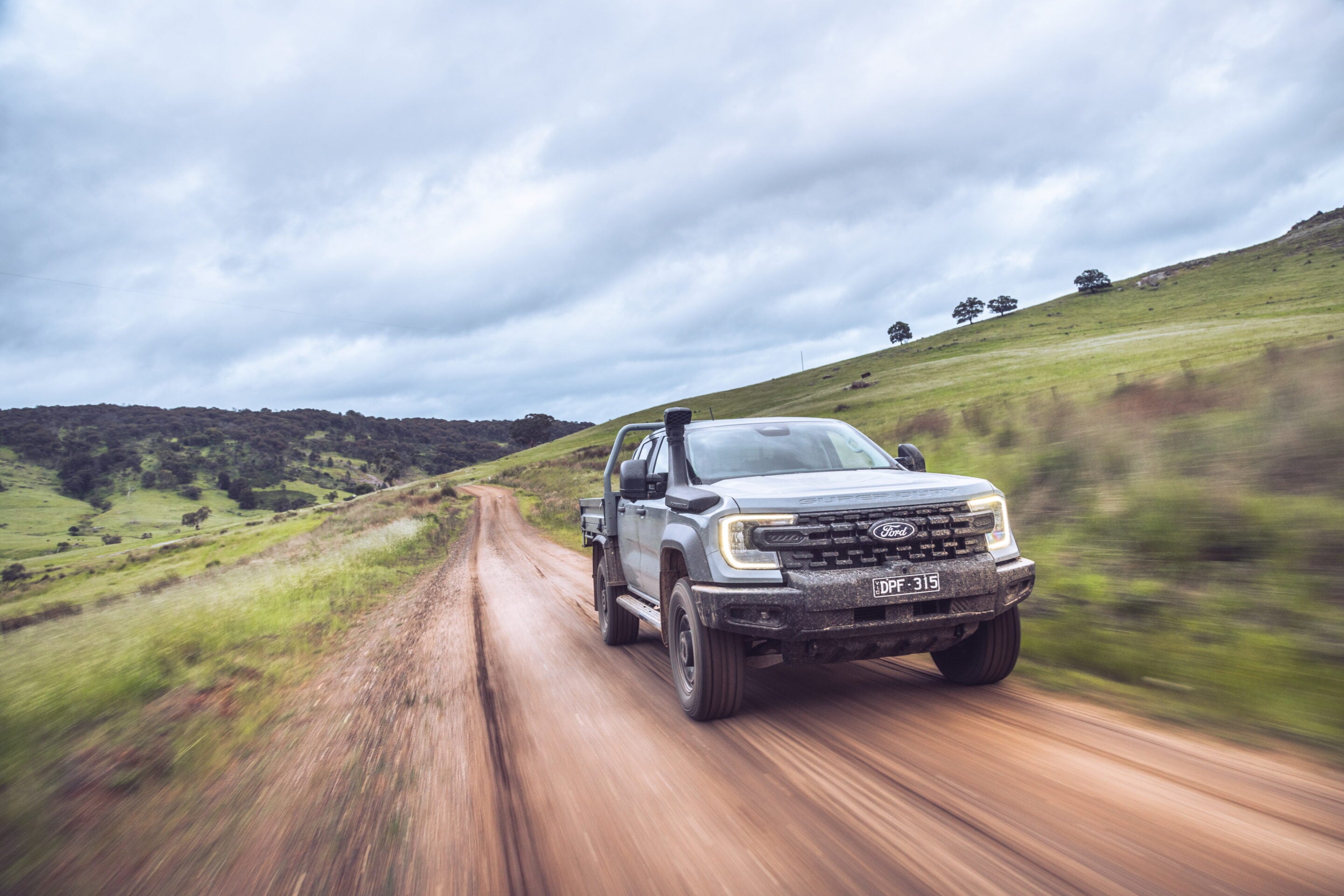
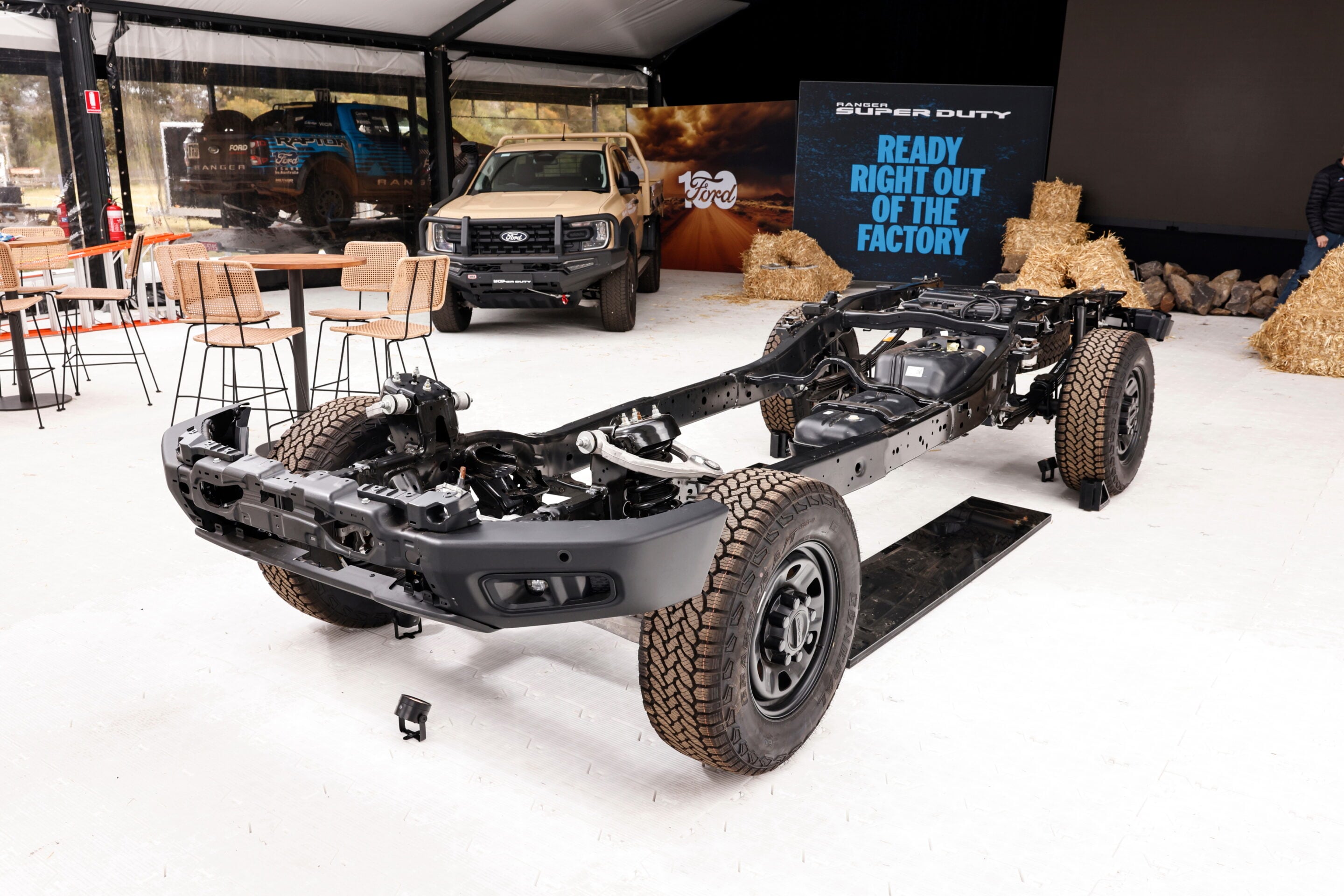
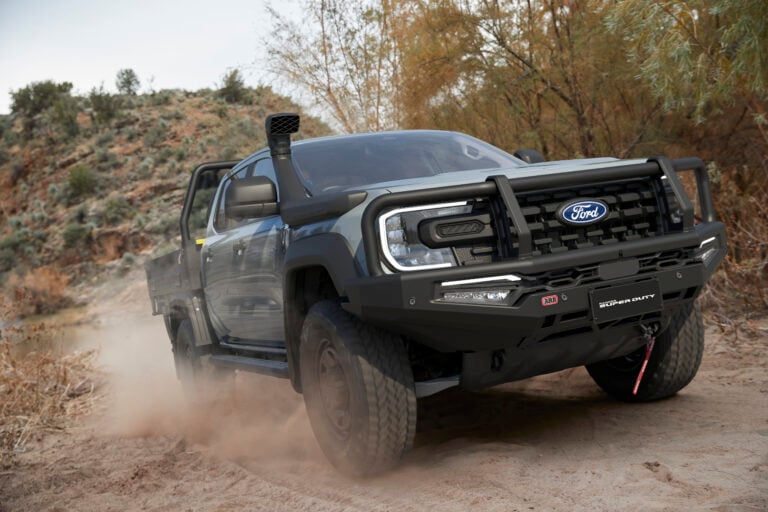
If you’re buying a 4WD for work, looks should be irrelevant, but it’s worth noting the Super Duty looks tough – really tough. It’s fatter, wider, and more formidable on the road than a regular Ranger of any kind, and only six per cent of the chassis is carryover from the regular Ranger, such is the level of engineering involved. The higher ride height, hefty steel wheels, General Grabber all-terrain rubber and snorkel all bring the kind of aftermarket appeal so many buyers in this segment go looking for – usually at great expense, and without the factory warranty.
2
That element is reinforced by Ford involving the aftermarket in the planning and execution of the finished product. As such, you’ll be able to access a variety of high-quality canopies from the likes of Norweld (a Wheels favourite), for example, at the time of purchase. The same goes for work equipment, bull bars and other customisation options. It means if you buy a Super Duty for a specific purpose, you’ll be able to set it up to do exactly what you need it to do from the get-go.
As the name indicates, the spec sheet is very much focused on robust work for Super Duty and one of the changes is a hefty 130L fuel tank. The single-cab we drove had 1021.7km on the odometer, which included running in and plenty of decent off-road work, for an indicated average consumption of 12.9L/100km. That’s actually sharp, especially with so much low-range work under its belt. It means you’re likely to get at least 1000km from a tank of diesel on an easy cruise.
The 3.0-litre, turbo-diesel V6 has been de-tuned a little to deliver 154kW at 3250rpm and 600Nm at 1750rpm across the range. Interestingly, the Super Duty never feels fast, in the way a Ranger Raptor does, rather it feels lazy and effortless. When towing, you’ll need an enthusiastic right boot on the freeway when you’re facing a long uphill grade, and it does need to work up near the redline to keep the road speed up. Around town, off-road, or unladen though, it’s an effortless cruiser, with clear shifting through the 10-speed auto with full-time 4WD available.
1
You do get selectable driving modes, and low-range of course, and off-road we did notice some shunting through the driveline in low-range when crawling down a gnarly decline. It didn’t seem to upset the Ranger, but the noise was a little disconcerting.
As to how Ranger Super Duty behaves off-road, it will do way more than anything the average owner will ever ask of it, with ease. Its wading depth of 850mm would have most of you turning around looking for another alternative.
Without a doubt, the most impressive aspect of the Super Duty’s broad skillset, for us, is the quality of the unladen ride. That remains the case across single, super and dual cabs. We tested all three variants on-road, off-road, laden, unladen and even while towing. Raptor aside, most dual cabs need some weight in the tray to settle the ride down, but not the Super Duty. Given what it is capable of carrying, the unladen bump absorption, body control, insulation and ability to settle quickly after a big impact are as good as any in the segment.
Behind the wheel of a single-cab for a run down one of Victoria’s great twisty roads – the kind of road that would unsettle even the best luxury sedan or SUV – and I’m genuinely staggered at the way in which the Super Duty can handle mid corner bumps, ruts, and potholes, with barely a register into the cabin. You can tip it into a corner (4WD auto for the win) with precision and know that it will stay on the line you’re asking of it, without any difficulty whatsoever. No one will ever drive their work truck like this, but the fact you can is quite staggering.
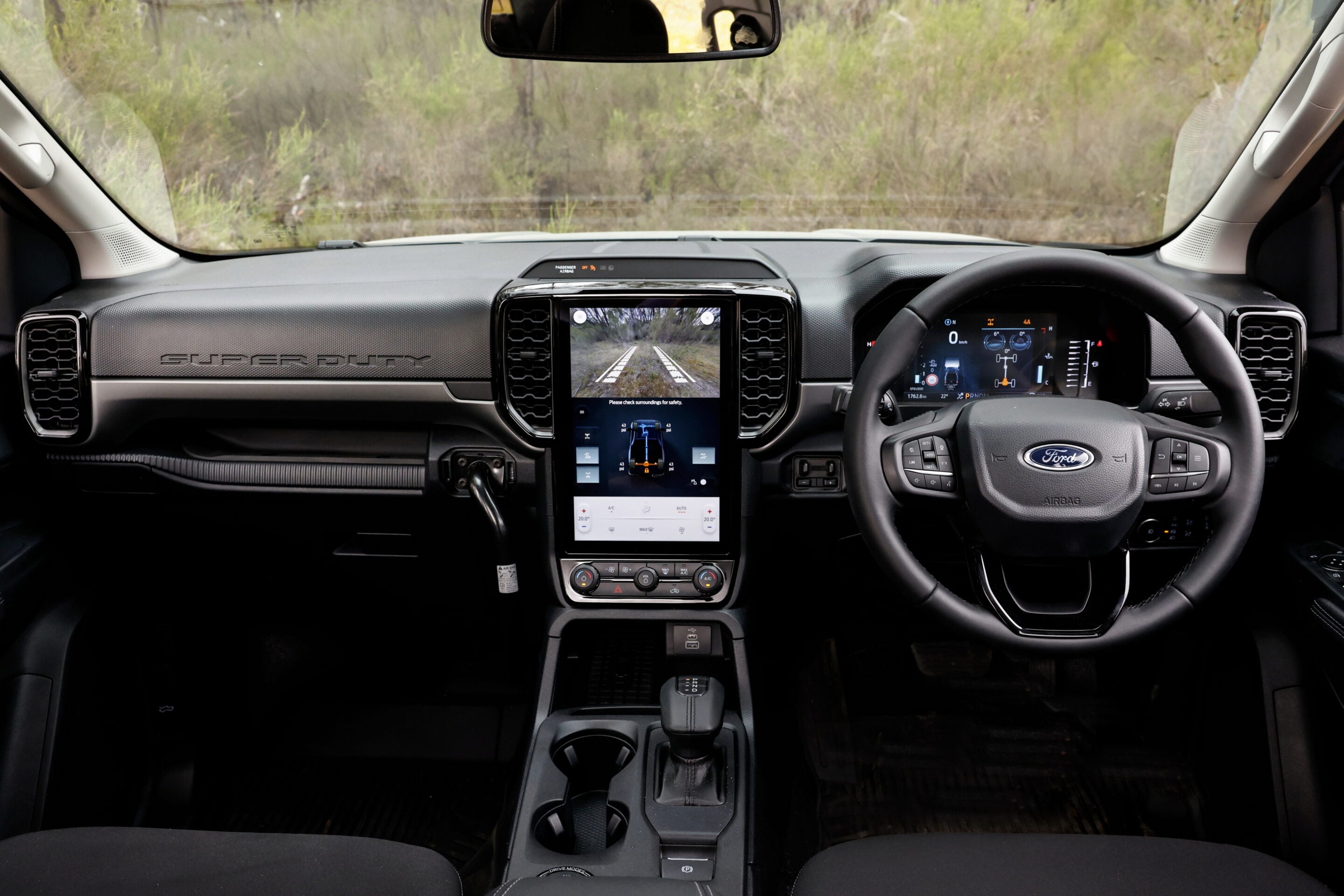
The comfort level inside the cabin – even the lack of wind noise given the snorkel whistling away at your right ear, and all-terrains – is impressive. There’s some noise there, for sure, but it’s a lot quieter than we expected it to be.
1
The technology inside the cabin, connectivity, comfort, space and storage, are all significantly better than the rudimentary nature of a regular truck offering. Even the seats and the level of adjustment you can get (even inside the single cab) make a mockery of that offered by competitors. Those of you in rural areas, who cover long distances, will do it with ease in the Super Duty.
You might wonder about Ford’s motivation for offering the Super Duty – given the amount of time, money and engineering that needs to go into producing a bespoke variant within an already broad model range. It’s a good question. Especially when you factor in the availability of the F150. According to Ford, it has had a lot of interest in a smaller truck – smaller than the full-size US trucks – that will do what the bigger trucks can do. Smaller means it’s easier to park, easier to drive, and cheaper to run. That’s certainly the case for the tens of thousands of Aussies now looking to hitch up a large van and hit the road. And why not attack a gap in the market if you see one? Can’t criticise Ford Australia for that.
Who will buy a Super Duty? Certainly fleet managers will look at it, as will those working the land. However, we at Wheels reckon plenty of city buyers will want one because it looks tough as nails. And it’s capable – really capable.
1
This article first appeared in the 2025 Yearbook issue of Wheels. Subscribe here and gain access to 12 issues for $109 plus online access to every Wheels issue since 1953.
8.2
/10
Score
Score breakdown
8.0
Safety, value and features
8.0
Comfort and space
8.4
Engine and gearbox
7.8
Ride and handling
8.0
Technology
Things we like
- Tremendous all-round grunt
- Superior unladen ride quality
- Top-class tech and cabin comfort
Not so much
- Too bespoke for the market?
- Less nimble than other Ranger variants
- Some shunting in low-range
Follow WhichCar/Wheels on Google
Click the button below to make WhichCar by Wheels a preferred source for your news.

We recommend
-
 Comparisons
Ford Ranger Super Duty vs Toyota LandCruiser 70 Series: Spec Battle
Ford’s Ranger Super Duty takes aim at Toyota’s long-serving LandCruiser 70-Series, promising greater towing capacity and modern features while challenging the LC70’s rugged, no-frills appeal.
-
 News
News2026 Ford Ranger Super Duty: Ford details pricing of heavy-duty accessories and specs for its new workhorse
Official accessory range and detailed features highlight capability, integration, and durability of the coming work ute.