Reviews

Gallery 1
Overview
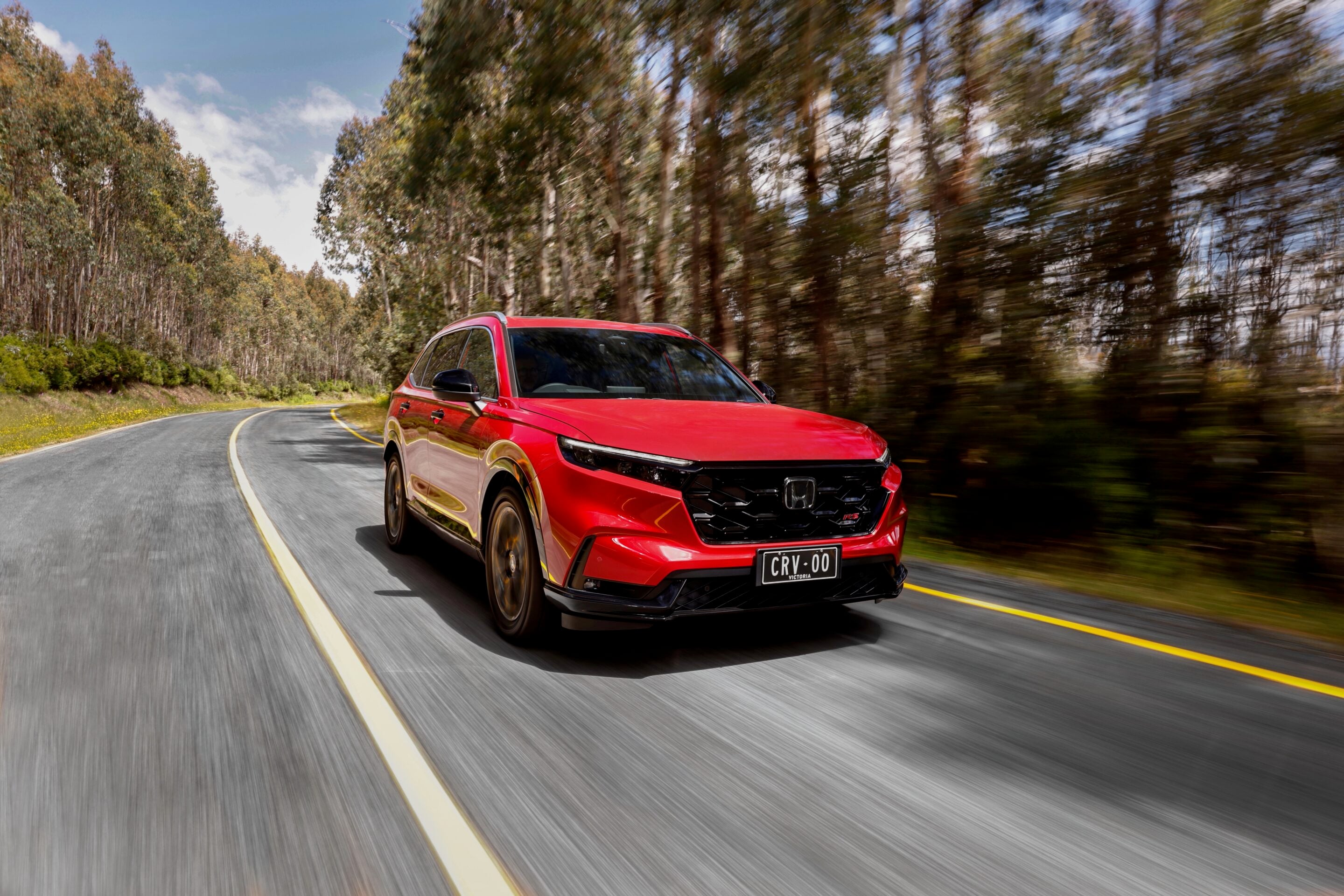
You know the score. Medium SUVs are the most popular passenger car segment and Toyota dominates, latterly with an outdated RAV4 that was well due for the update it has now received. Meanwhile, it’s fair to say quietly, Honda has been tweaking it’s already-excellent CR-V, a premium take on the segment, without the premium price tag. Is this updated CR-V hybrid strong enough to take on RAV4? Honda’s boss in Australia thinks so and he’s set his team the challenge to chase down the segment leader.
The medium SUV segment is a fierce battleground, and you could argue it was pioneered by Toyota and the RAV4. That vehicle has grown – as has the segment with it – and now just about every manufacturer has at least one option in a category that allows them to claim market dominance if it can succeed.
The news from this first drive of the CR-V is very much focused on pricing and specification. It’s big news too, with the price of admission dropped by a significant $10,000, three new variants, standard AWD for the e:HEV RS grade, and hybrid power standard on all but two variants across the six model grade range. That means hybrid power now steps from one to four CR-V variants within the range. Factor in the first five years of servicing costing just $199 each year, and Honda has a very competitive value proposition on its hands.
2
How much is the Honda CR-V?
Buyers can choose from six different variants within the CR-V range, with the price of hybrid technology costing $49,900 drive away. Or, $44,900 drive away is all it takes to get into a CR-V, without the hybrid powertrain, while the range-topping e:HEV RS AWD costs $64,400 drive away.
| CR-V VTi X | $44,900 (up $3000) |
|---|---|
| CR-V e:HEV X | $49,900 (new) |
| CR-V e:HEV L | $53,900 (new) |
| CR-V VTi L7 | $54,900 (up $1400) |
| CR-V e:HEV LX AWD | $58,900 (up $1400 vs old non-hybrid VTi LX) |
| CR-V e:HEV RS AWD | $64,400 (up $4500 vs old RS FWD) |
We drove 2WD and AWD hybrid models at launch, and if you’re looking to be smart about how you spend your hard-earned, the entry hybrid is absolutely the way to go. Crucially, it doesn’t feel like a stripped-down, base model either.
You don’t really need AWD in this segment, either, so keep that in mind if you’re looking to be sharper about how much you spend. It’s also worth notingthat while the entry-grade car is compelling for less than 45 grand drive away, WhichCar by Wheels would recommend the extra spend to get into the hybrid, especially if you’re planning on longer term ownership.
1
What engine does the Honda CR-V hybrid have?
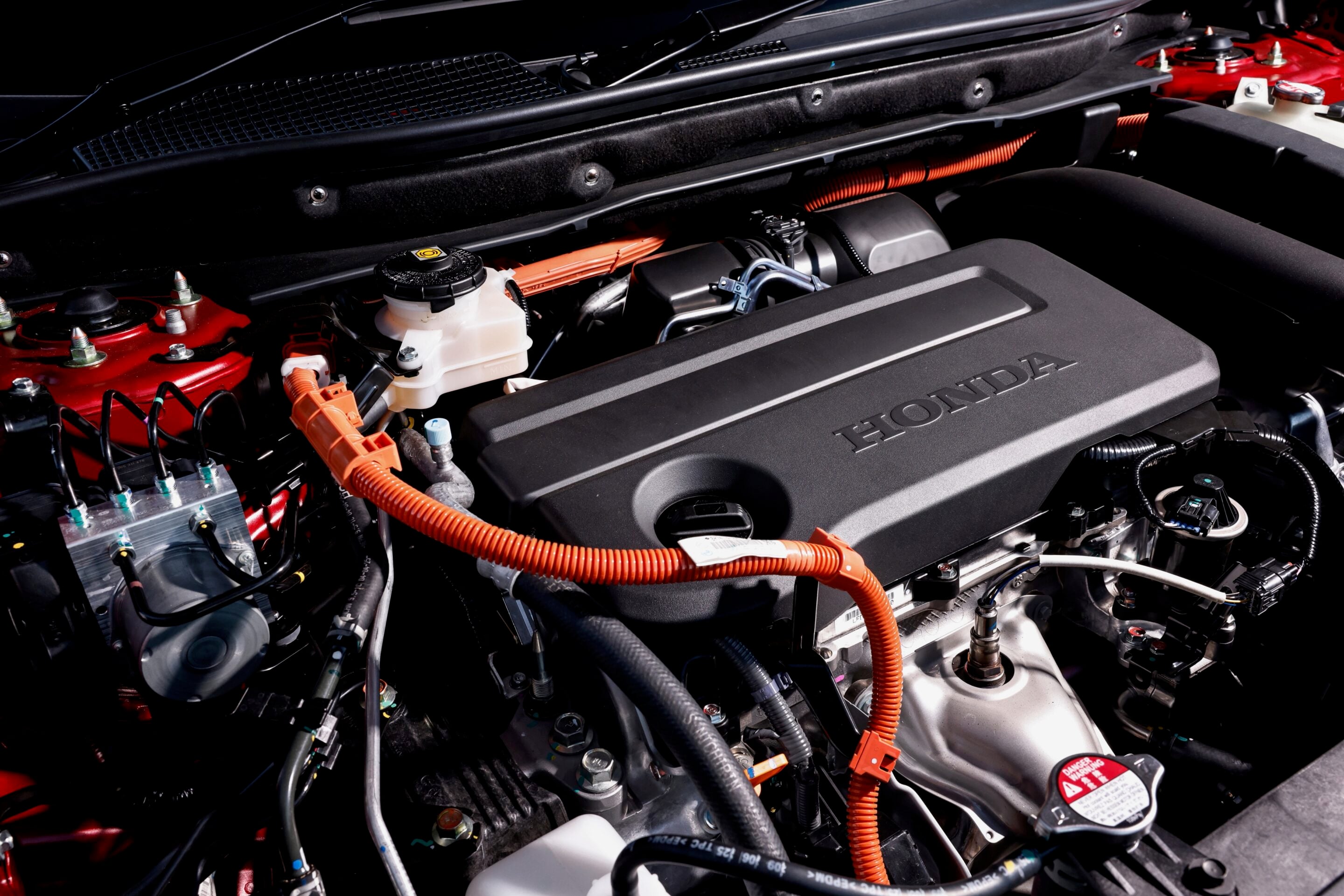
Hybrid power means efficiency, with Honda claiming just 5.5L/100km on the combined cycle for the FWD model and 5.7L/100km for the AWD model. The powertrain is a 2.0-litre, naturally aspirated four-cylinder petrol engine, with a single electric motor and E-CVT automatic. Combined outputs are a useful 135kW and 335Nm.
The battery is a 1.1kWh lithium ion high-voltage pack and can power the CR-V at low speed for short distances. If you opt for the non-hybrid CR-V, you get a 140kW/240Nm, 1.5-litre turbocharged petrol four-cylinder engine and a regular CVT automatic.
Is there anything interesting about the CR-V’s design?
You’ll be familiar with the styling of the Honda CR-V. The focus both inside and out is the way in which Honda has delivered an SUV that looks premium, feels that way from inside the cabin, and perhaps most crucially, feels like you’ve spent more money than you actually have.
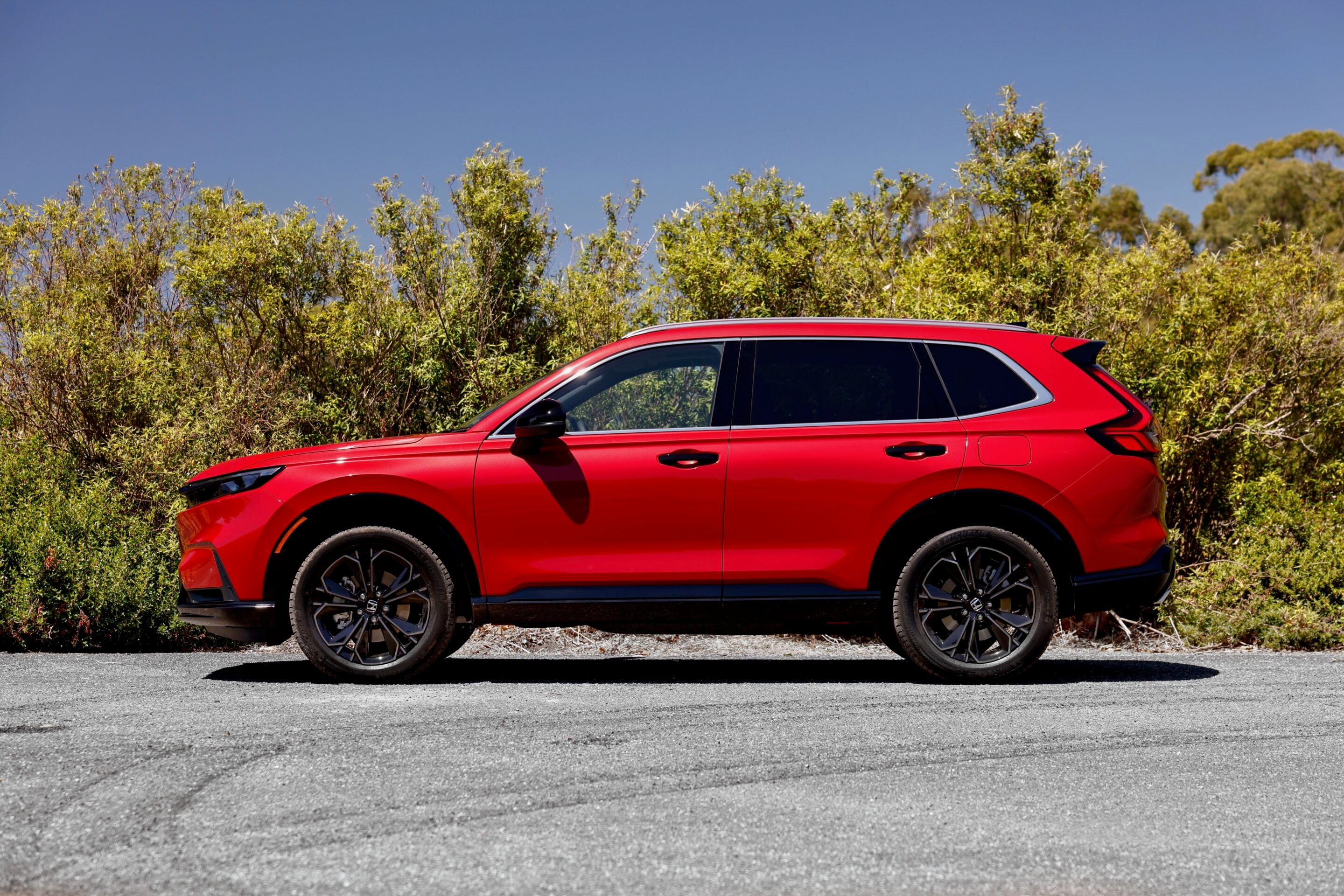
What’s most interesting is when you see the CR-V on the road, you instantly know it’s a Honda. In a sea of somewhat bland SUV blobs, the Honda’s clean lines, elegant profile and sharp lighting signatures ensure that it stands out.
4
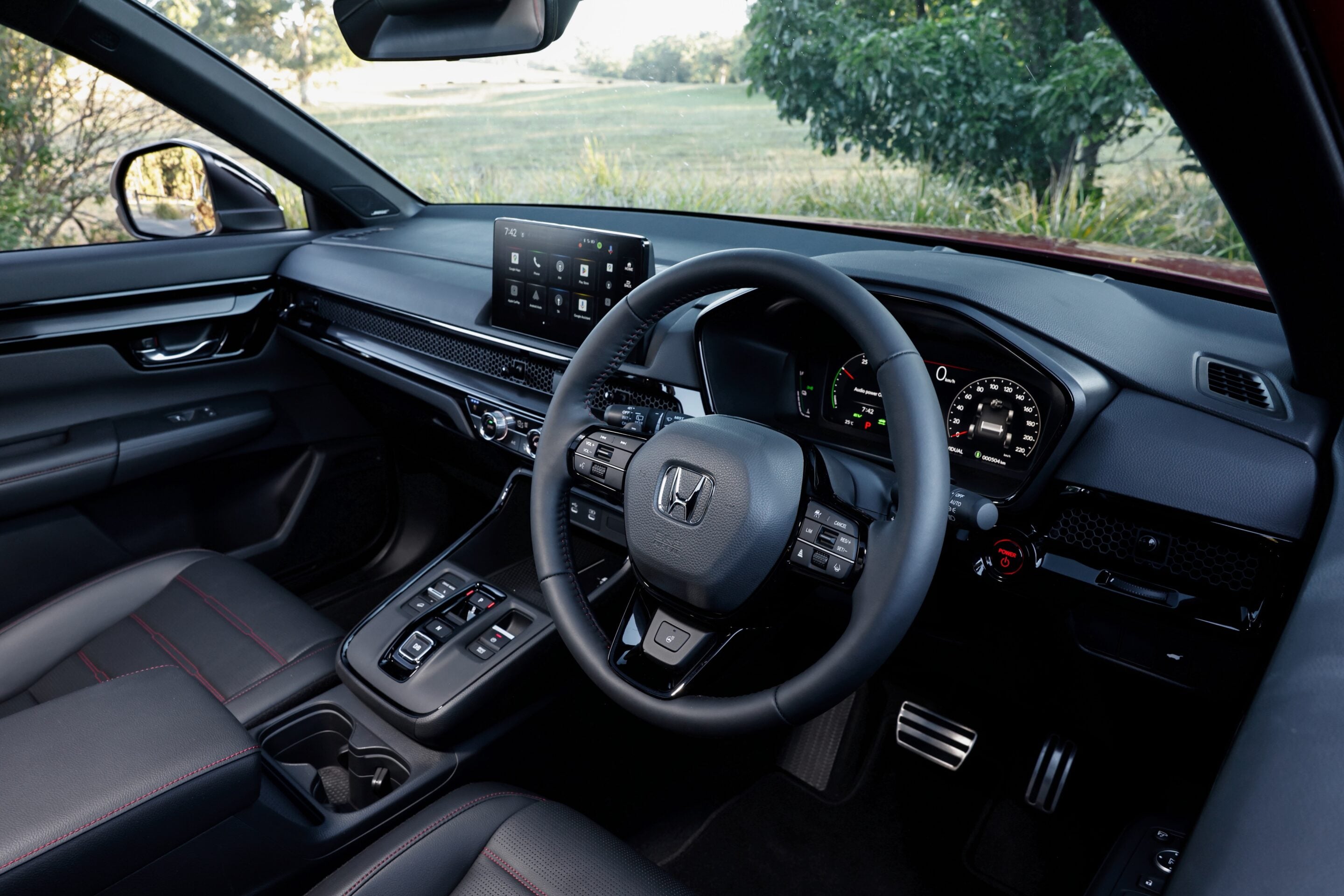
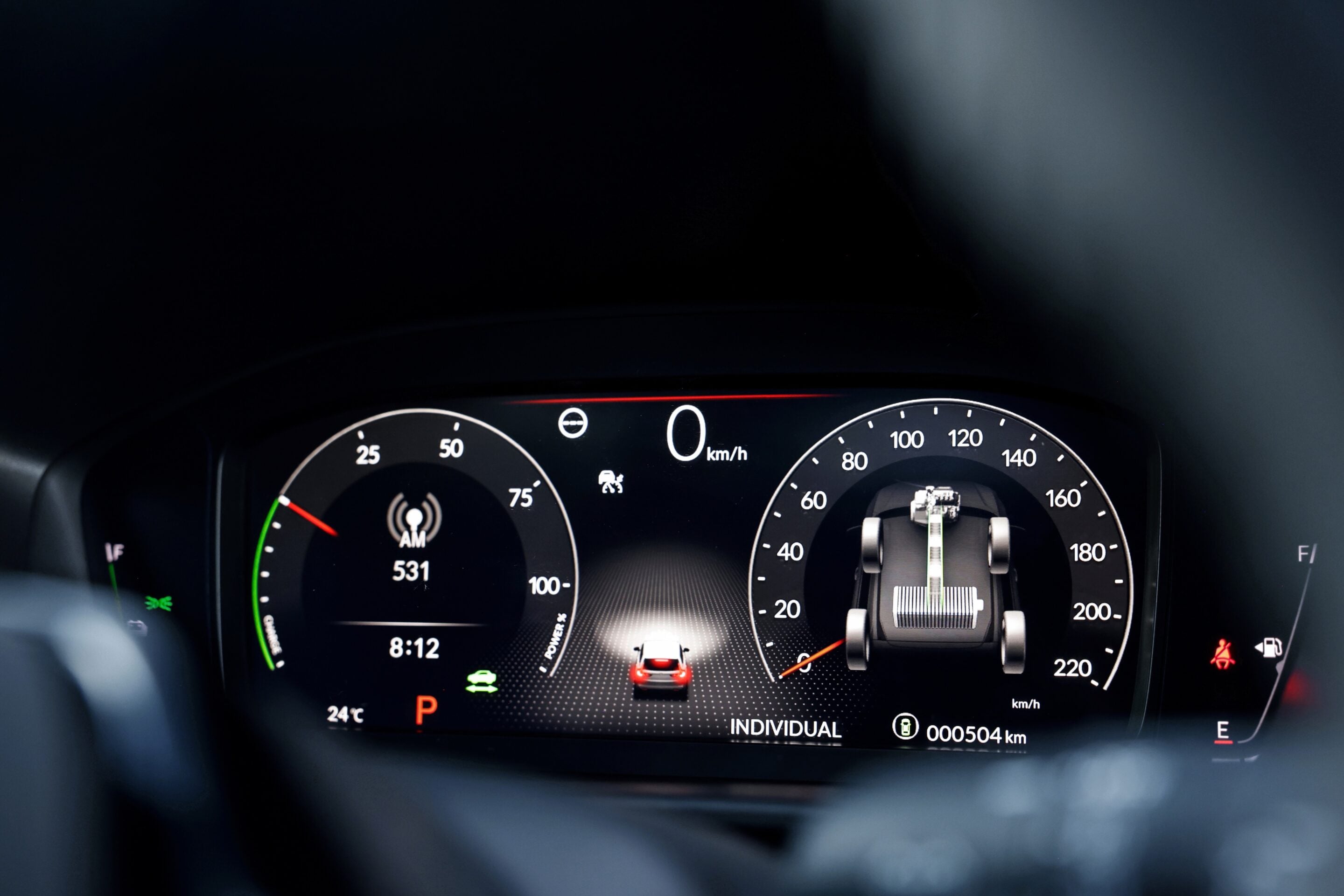
Inside the cabin, it’s comfortable, roomy and practical. For example, Honda’s infotainment screen isn’t as big as some, at 9.2 inches, but if you’re not in the car to watch TV, and a screen of this size displays exactly what you need clearly, why does it need to be any bigger? Physical buttons and switches for the main controls are appreciated, and the 10.2-inch widescreen digital driver’s display is a good one – clear and delivering the information you want in an easy to decipher way.
Go back to the Honda Jazz and its Tardis-like cabin, and you’ll remember that Honda has a way of making a lot out of a little. In that sense, the cabin execution is excellent. Storage aplenty means devices, bottles, wallets and keys are accommodated, and wireless charging sits next to another phone storage shelf, so two can be safely held without flying around the cabin.
The seats are excellent with plenty of room in the second row, and even the cloth trim in the most affordable grades is beautifully finished and comfortable. The most affordable hybrid still gets Honda’s clean centre console shift selection arrangement, steering wheel paddles, front door acoustic glass, and a leather-trimmed steering wheel.
A good few hours in the seat on a drive out into rural Victoria illustrated the CR-V’s chops as a road trip companion beyond it’s competence in the city serving time for the daily commute. It’s easy to understand why Aussies love this segment as much as they do, and the CR-V deserves to be considered up there with the best of them.
5
What technology comes with the Honda CR-V?
Apple CarPlay and Android Auto are standard – wired or wireless – and we tested both at launch. Wireless allows you to use the wireless charging, and both were flawless on test. Switch over to cabled, and you don’t need to charge wirelessly but the connection remained rock solid. It’s again worth noting that although the screen is smaller than some, I love the simplicity of the operation, and the clarity of the information it displays. Up front, you’ve got two USB-C outlets to keep devices charged up on the go.
Step up through the range and you add tech like a 360-degree camera, auto-dimming rear-view mirror, four-way power adjustable passenger seat – eight way adjustable driver is standard – and auto dipping passenger side mirror when in reverse gear.
The range-topper gets a head-up display, panoramic sunroof, ventilated front seats, heated outboard rear seats, a heated steering wheel, and individual drive mode functionality. While you undoubtedly get more when you spend more, it’s worth noting again here, that the base CR-V doesn’t feel cheap, in any way.
What’s the Honda CR-V Hybrid like to drive?
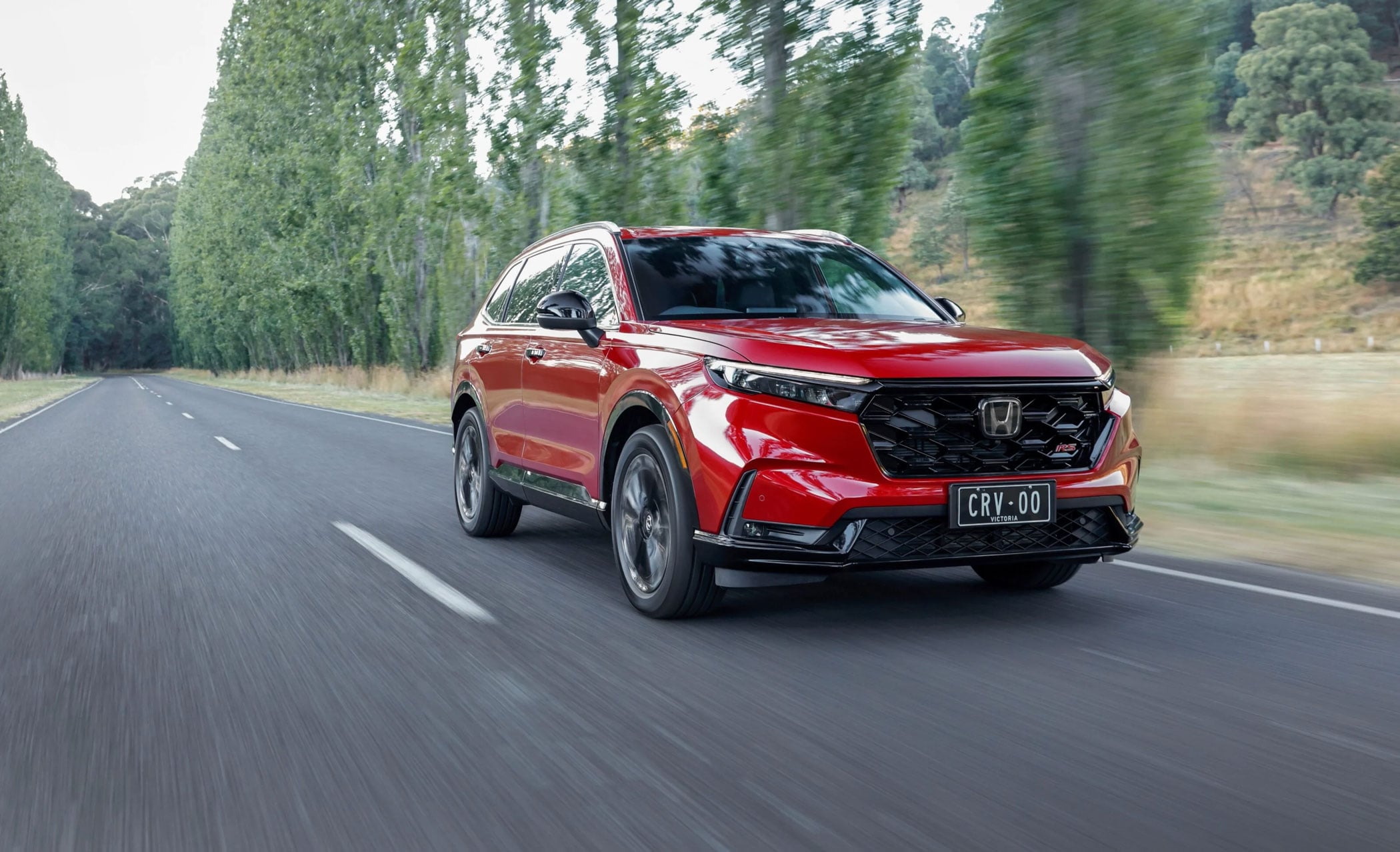
In one sense, I hate it when the marketing spin hits the mark, because then we can’t criticise the fantasy that is otherwise pedalled. However, we must also concede when a manufacturer has lived up to its own hype. And here, Honda has absolutely nailed it. The advertising campaign for the hybrid CR-V will focus on how smooth it is, and that’s the word that best describes everything about it.
The way the electric motor and petrol engine work in concert is fantastic, quiet, almost imperceptible and smooth – there’s that word again. What it means, is you get a drive experience that is serene at any speed. The powertrain being so quiet means the cabin is as quiet. And that makes for a relaxing drive at any speed on any road.
1
While the power and torque figures won’t pin you back in your seat when you nail the throttle pedal, they get the CR-V moving rapidly enough to outpace modern traffic if you need to get away from the lights or dart into a side street across traffic. The ride quality, bump absorption and chassis control are all excellent, once again ensuring the CR-V’s positioning as a luxury alternative without the luxury price.
If insulation, competence, and all-round quality are the hallmarks of premium motoring, Honda has delivered with this CR-V, ably assisted by the efficient hybrid system. We loved the bump absorption of the most affordable hybrid’s 18-inch gloss black wheels with chubby tyres, but even stepping up to the AWD RS with its 19-inch gloss black rims only saw a slight firming of the ride over nasty bumps.
Whether your driving is mainly around town transporting the family to and from school, negotiating peak hour on your way to the office, or longer distance B-road touring, the CR-V is positioned to handle all of them with ease, and certainly for us, it’s comfort on country roads is a considerable bonus.
How much fuel does the hybrid CR-V use?
Honda quotes 5.7L/100km for the AWD on the combined test cycle, and on rural roads up to 100km/h, with a decent push through the twisty sections, I couldn’t push the average consumption beyond 6.3L/100km. Back in city traffic, the life readout was showing 5.4L/100km – in other words, impressively efficient in the real world.
What’s the verdict on the Honda CR-V hybrid?
Honda’s boss in Australia reckons this hybrid CR-V has the armoury to take on RAV4 for segment honours and on paper, that’s a fair assessment. What’s most impressive is the way that plays out in the real world. Back to back testing awaits, but the hybrid CR-V is an impressive medium SUV.
It looks stylish, is efficient in the real world, feels premium inside the cabin, and delivers the sense that you’ve paid more than you did at the dealer. All those factors add up to a genuinely impressive medium SUV. It’s a tough segment, there’s no doubting that, but the hybrid CR-V is as good as, if not better than, any of them.
3
Specs
| Engine | 2.0-litre, N/A petrol, four-cylinder, single electric motor |
|---|---|
| Peak power | 135kW |
| Peak torque | 335Nm |
| Transmission | E-CVT auto |
| Fuel consumption (claimed) | 5.5L/100km |
| CO2 emissions (claimed) | 125g/km |
| Fuel type | 91 RON |
| Dimensions (l/w/h/wb) | 4704mm/1866mm/1681mm/2700mm |
| Boot space | 580L to 1600L (second row folded) |
| Warranty | Five years/unlimited kilometres |
| Servicing costs | $199 per year (five years) |
| On sale | Now |
Follow WhichCar/Wheels on Google
Click the button below to make WhichCar by Wheels a preferred source for your news.


We recommend
-
 Reviews
2026 Honda Prelude: Early review of the hybrid coupe as it returns after two decades
Reborn two-door pairs Civic-based hybrid power with Type R hardware, but prioritises comfort and efficiency over outright pace.
-
 Features
The Wheels Interview: Honda Australia boss, Jay Joseph, hits the reset button
Honda Australia CEO Jay Joseph is a company man through and through. Paul Gover sat down with the 25-year brand veteran to talk all things Honda, Formula One and how he plans on turning around the Japanese maker’s local fortunes.
-
 News
NewsNew CR-V will take the fight to RAV4: Honda Australia boss
Honda Australia boss Jay Joseph says the CR-V has the integrity of product, the price and value proposition, and the quality to be sitting neck and neck with RAV4 on the sales charts.