Reviews

Gallery 1
8.2
/10
Score
Score breakdown
8.0
Safety, value and features
8.0
Comfort and space
8.0
Engine and gearbox
9.0
Ride and handling
8.0
Technology
Things we like
- Over 700km of driving range
- Exemplary road manners and handling
- Retro grille is a winner...
Not so much
- ... but will divide opinion
- Electric platform too good for Australia's charging infrastructure
- Some wind noise at highway speeds
Overview
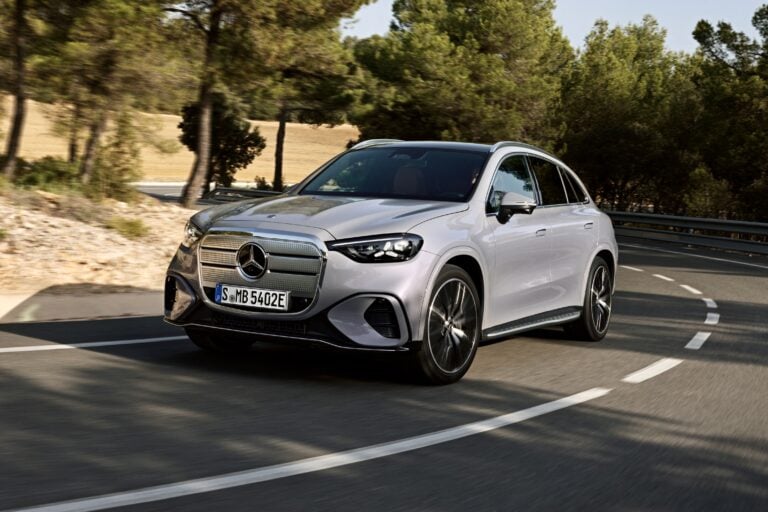
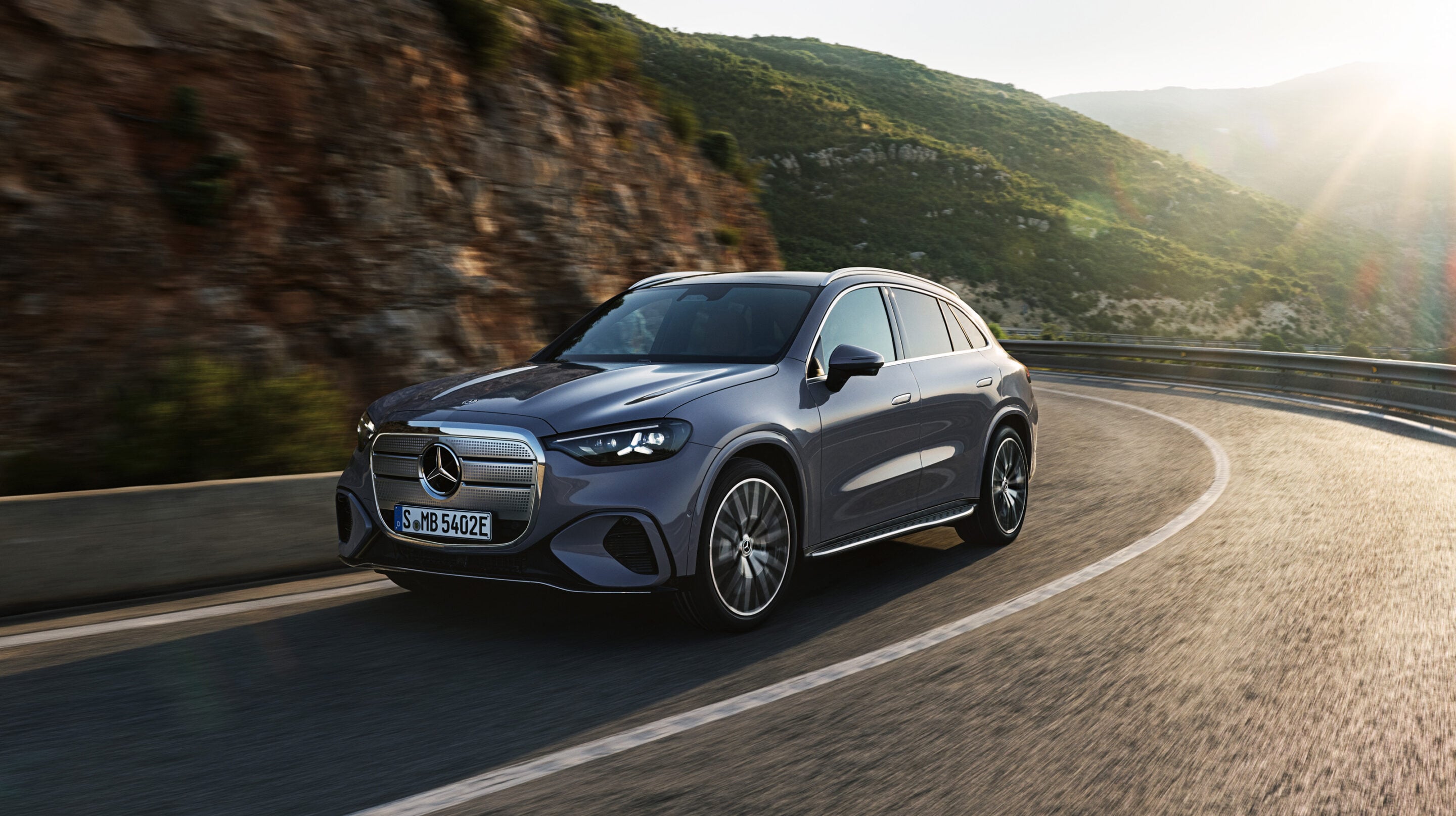
It might look like a regular GLC mid-size SUV, but the all-new Mercedes-Benz GLC with EQ Technology – to give it its wordy full name – is anything but ordinary.
The GLC electric (to give it a more palatable and easy-to-understand moniker) joins the wider GLC line-up this year and promises “up to” 713km of driving range and 800-volt electric architecture that can add 303km of range from a 10-minute charge, providing you have access to a 330kWh fast charger. Which we – mostly – don’t, in Australia.
1
The new GLC slots into the brand’s range of EVs under the larger EQE. Keen-eyed readers will note the shift away from EQ prefix that has, up until now, underpinned Mercedes-Benz’s electric vehicle naming convention. It fronts the brand’s future strategy to integrate electric variants into its core model range rather than having a standalone sub-brand.
Perhaps learning a lesson from its Stuttgart neighbours over at Porsche, the GLC electric will not replace M-B’s popular petrol GLC range. Instead, it will join the line-up alongside existing petrol variants, although the two models are alike in name only, the battery-powered GLC built on Mercedes-Benz’s new MB.EA electric vehicle architecture, the first under its new EV strategy. Next up will be the C-Class electric, slated for a 2027 arrival.
How much is the GLC electric?
Final details on specification and pricing are still to be revealed although from what we learned at the GLC electric’s global launch in Portugal, there are likely to be rear-wheel and all-wheel drive variants with varying trim levels.
We won’t know which models, nor how much they cost, until closer to the local launch later this year,
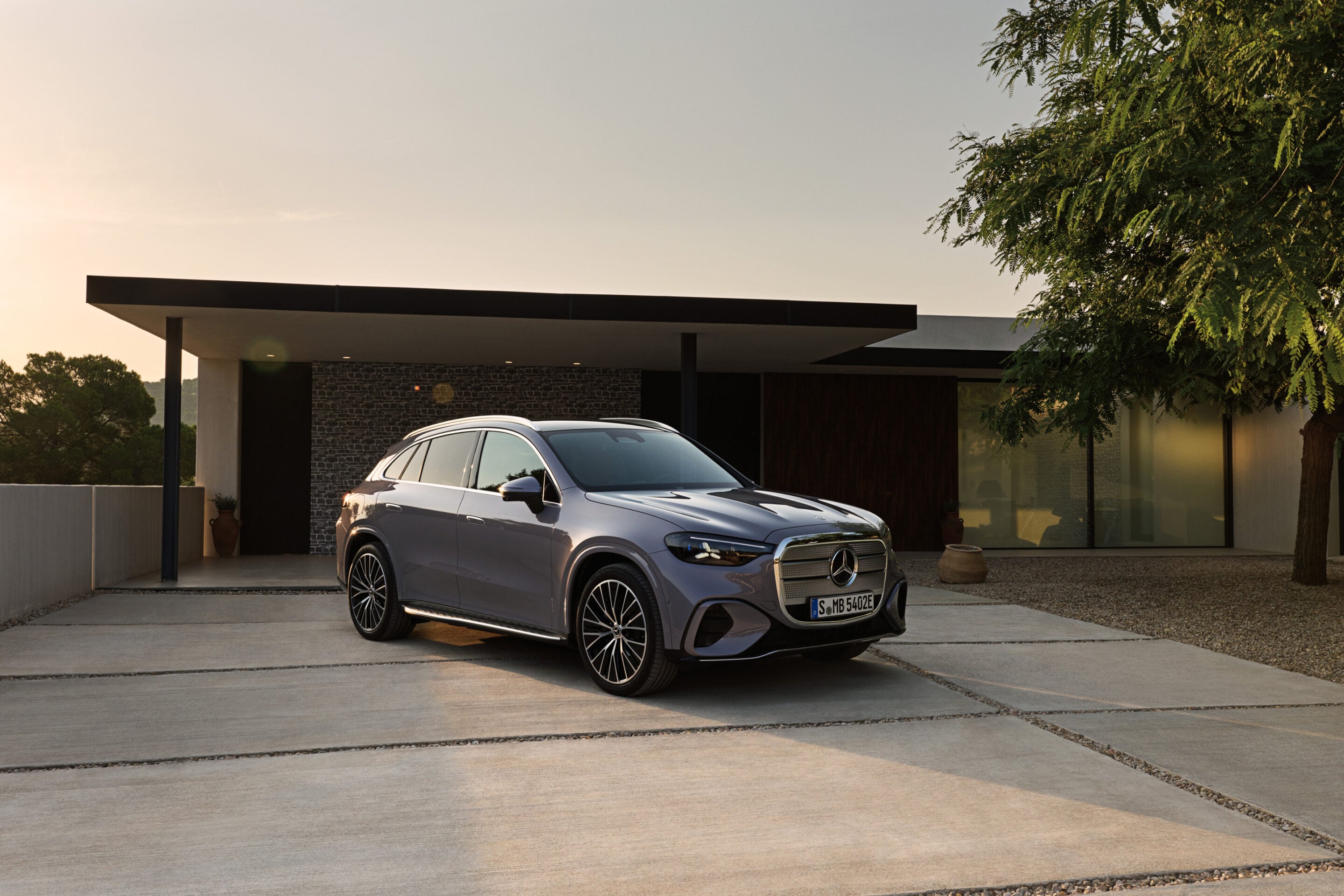
Mercedes-Benz presented what is likely to be the range-topping GLC 400 4Matic with EQ Technology at the global launch.
2
Powered by two electric motors – one at each axle – the GLC 400 claims total outputs of 360kW and 800Nm, good for a 0-100km/h claim of just 4.3 seconds. A 94kWh modular battery array is good for a range of around 713km, according to Mercedes-Benz.
Charging is capped at 330kW resulting in a 10-80 per cent charge time of just 22 minutes or, as Mercedes-Benz was keen to point out, adding 303km of range in just 10 minutes which sounds good on paper (and it is) but with Australia lagging in EV infrastructure, buyers can realistically expect longer charge times on the more commonly available 75-150kW charging stations scattered throughout the country.
Is there anything special about the GLC electric’s design?
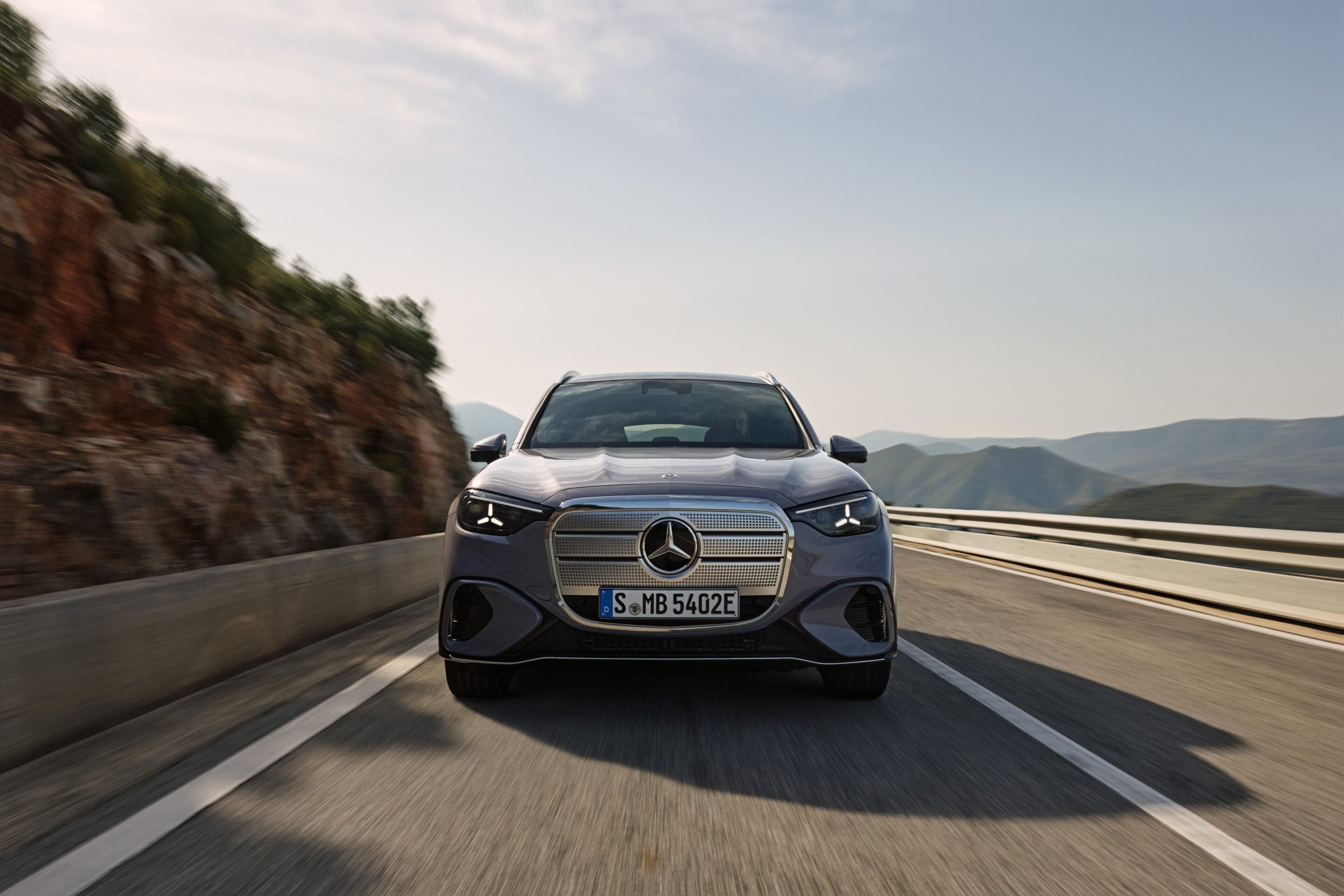
Mercedes-Benz has channeled the past when looking to connect the GLC electric to the future. The most obvious display is out front, where the 1970s-inspired ‘grille’ gives more than a passing nod to Bruno Sacco’s brilliant design that faced Benzes of all colours from the mid-1970s through to the late-90s.
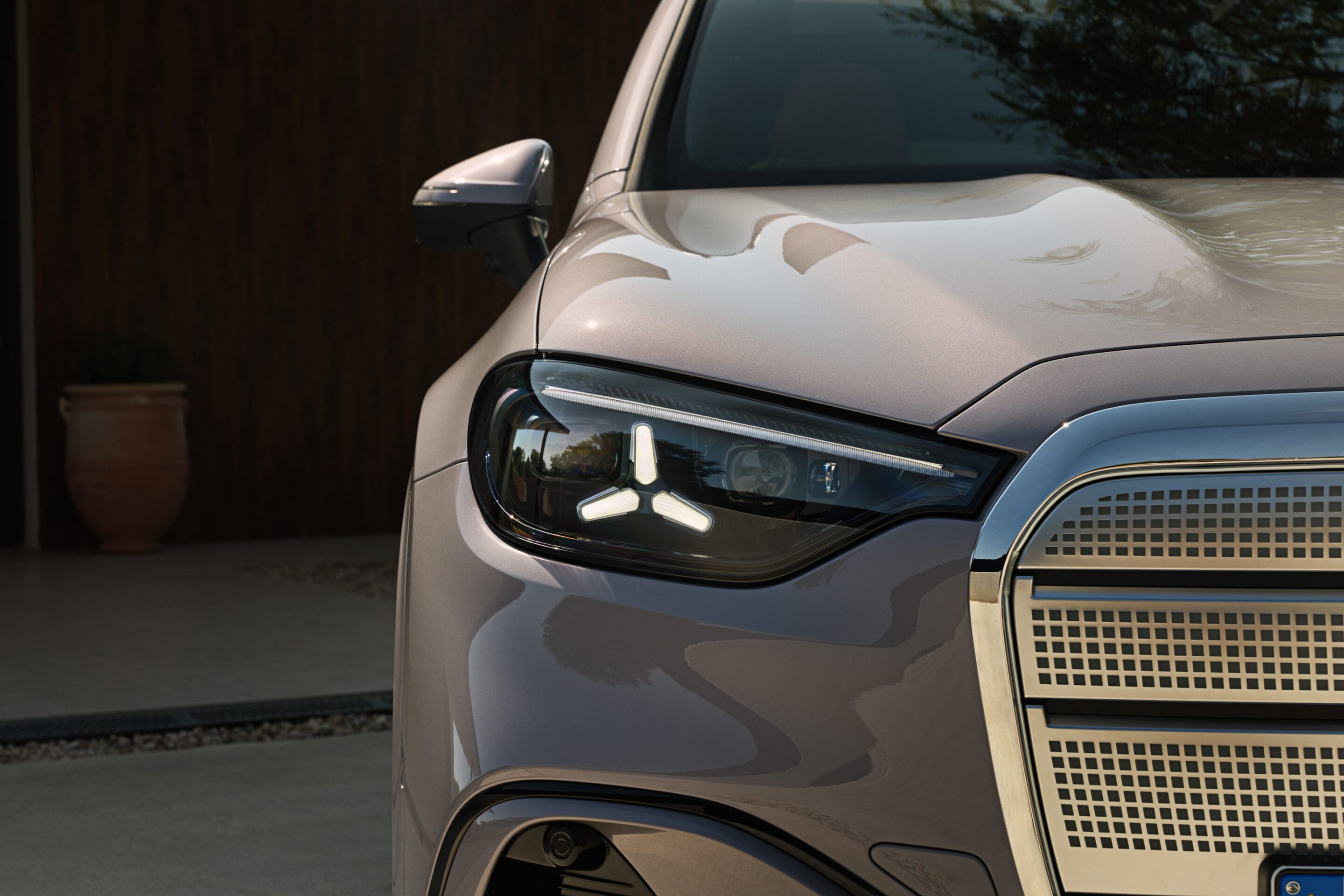
2
It’s a stunning modern interpretation of Sacco’s original design that imbues the new GLC with a comfortable familiarity. The chrome surround is peak Mercedes grille while inside, 942 individual backlit dots give the appearance of traditional mesh. It looks sensational, and even more so with the optional animated light-sequence on start-up.
A pronounced power bulge graces the bonnet, somewhat incongruously, but it lends the GLC electric a tougher stance on the road.
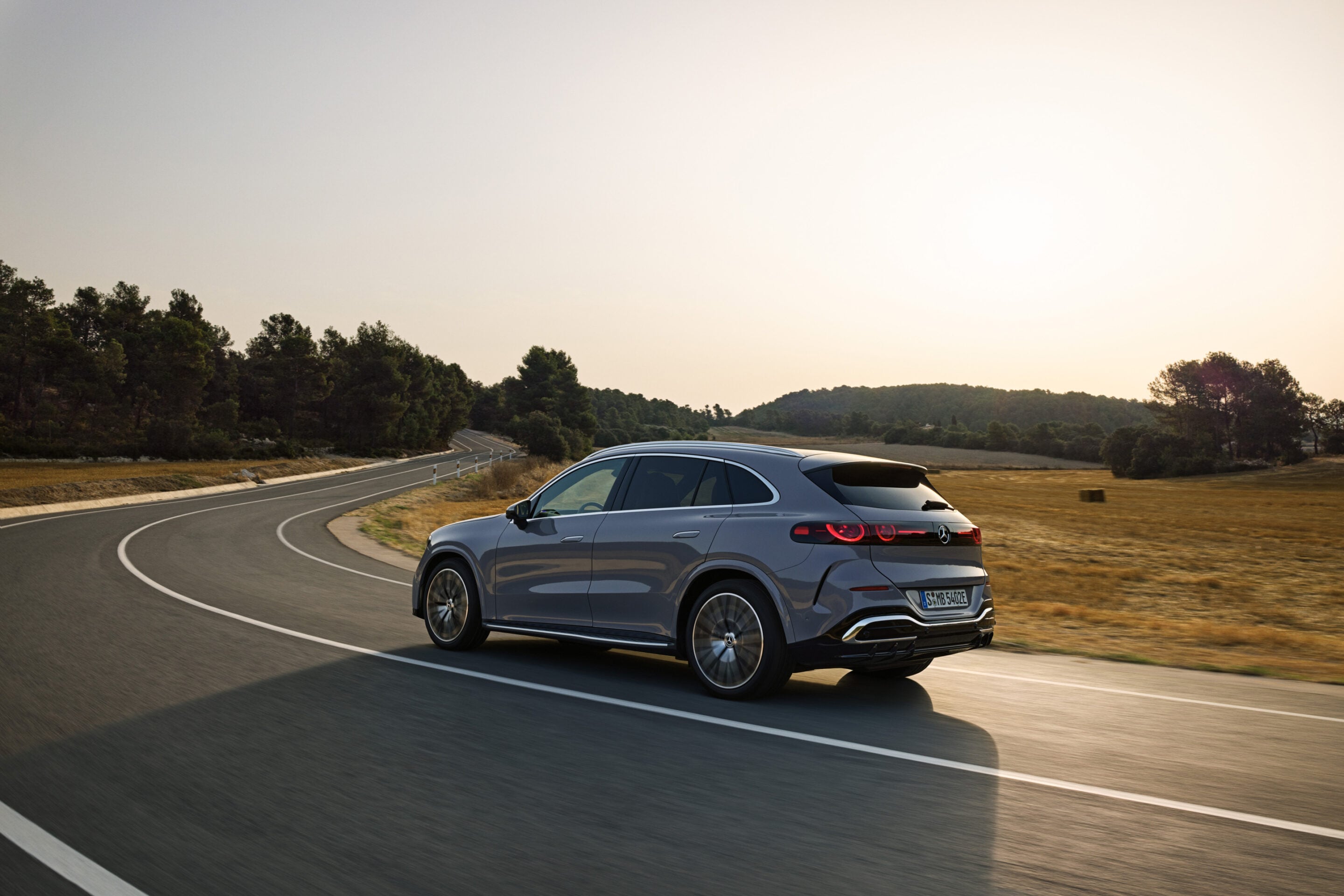
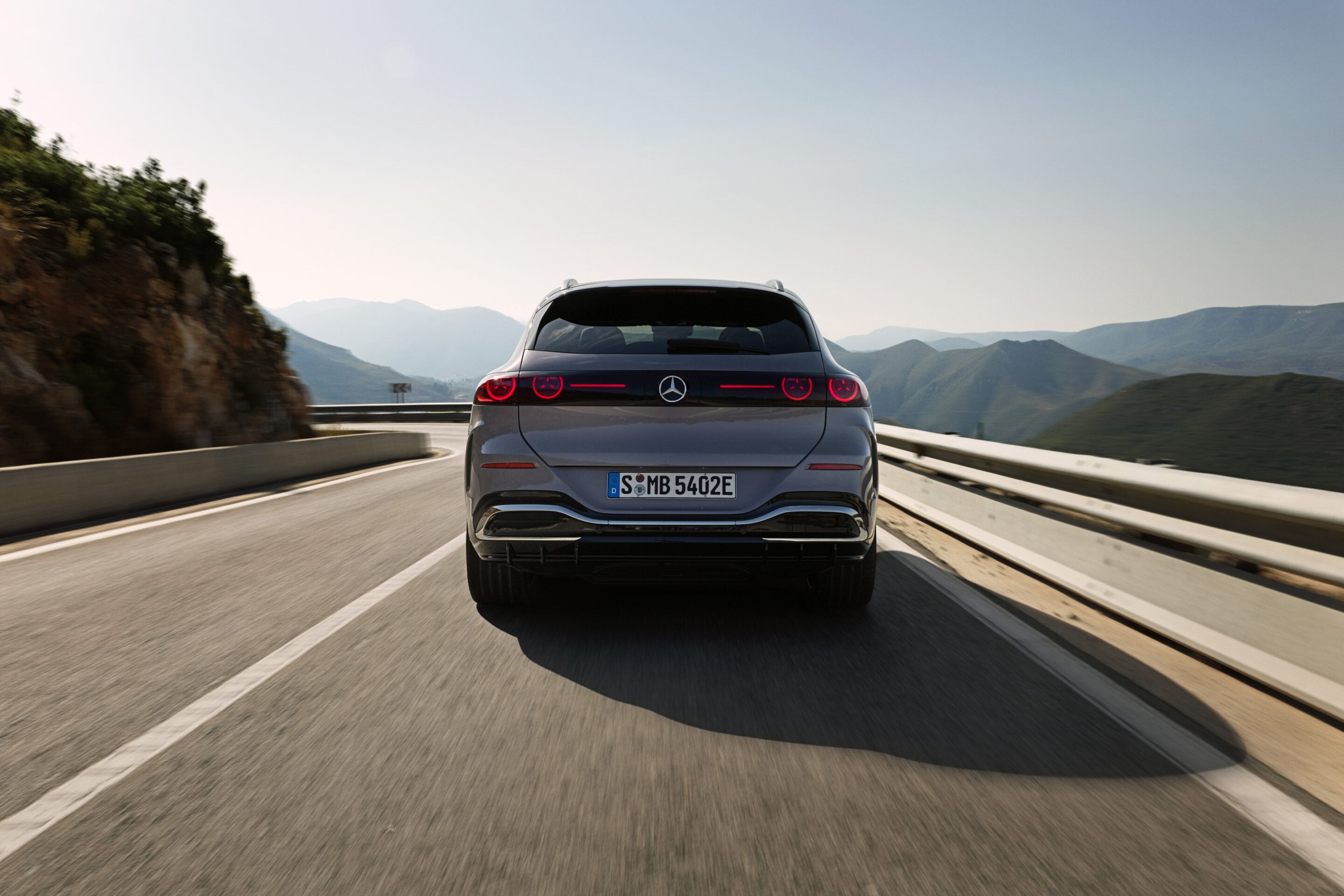
Around the back, a full-width light-bar bookended by circular tail-lights featuring a three-pointed star motif are, again, a departure from petrol versions, lending the GLC its own distinctive character.
What’s the cabin of the GLC electric like?
While it shares a badge with its petrol sibling, the GLC electric is significantly – and visibly – longer (by 71mm), taller (+44mm) and sitting on a longer wheelbase (+84mm). That translates to increased comfort inside where head- and leg-room are noticeably improved over petrol GLC variants, especially in the second row.
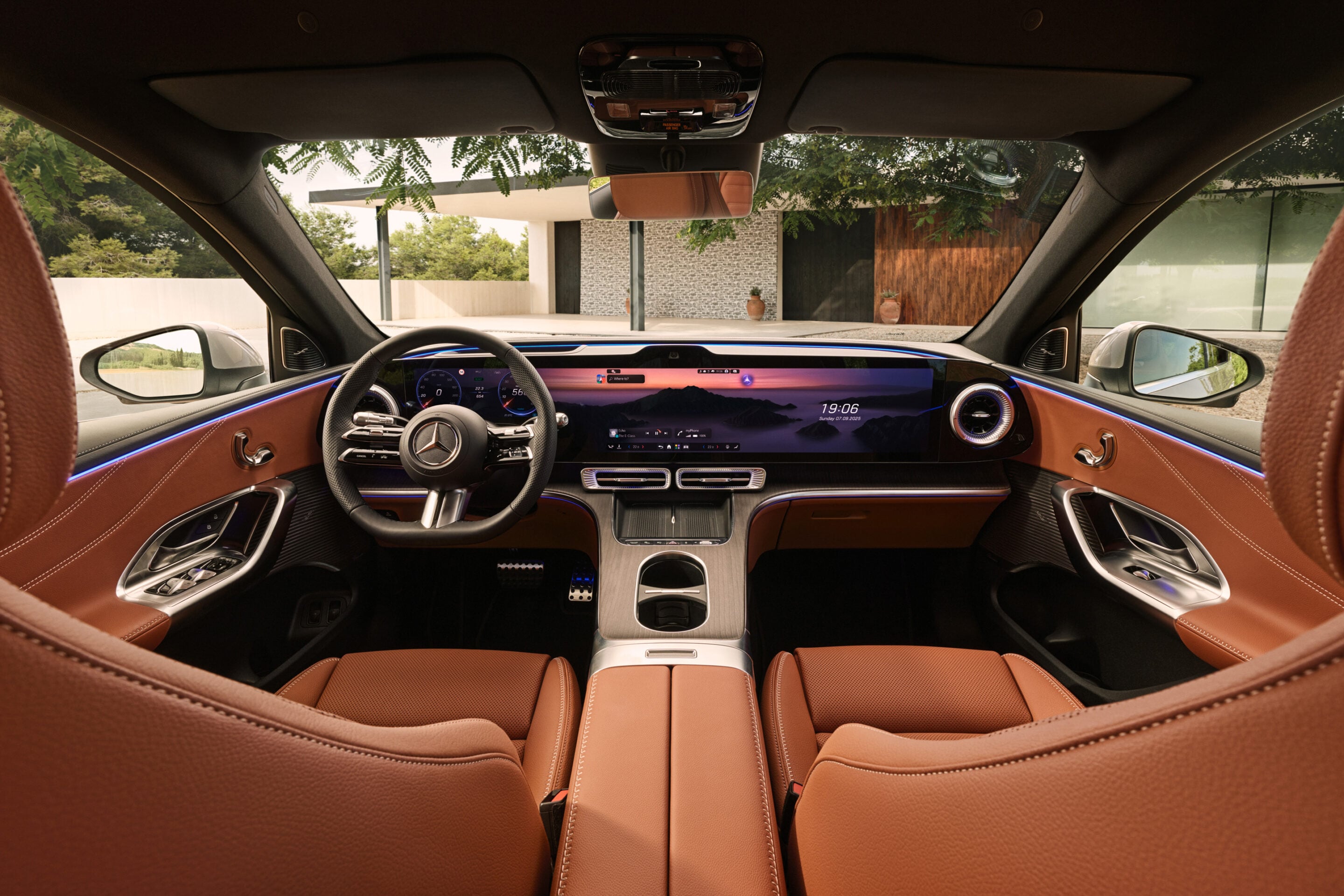
2
Mercedes-Benz calls its interior design philosophy ‘Sensual Purity’, describing it as a blend of emotion and intelligence. Putting aside the marketing-speak, the cabin of the new GLC oozes luxury, with the kinds of plush materials buyers expect at this end of the premium market, the standout the sumptuous Nappa leather interior trim of our test car at launch. A certified vegan interior is available as a no-cost option and certainly, having looked and touched the animal-friendly artificial leather up close, you’d be hard-pressed to tell the difference.
Our test car came fitted with Beech brown wood inlays that sound chintzy on paper, but are actually warm and elegant and a reminder of Mercs of old.
The Comfort seats of our test car (Sports buckets are available as an option), live up to their name with good support, including under-thigh, and decent bolstering to hold you snugly in place while second-row comfort is excellent.
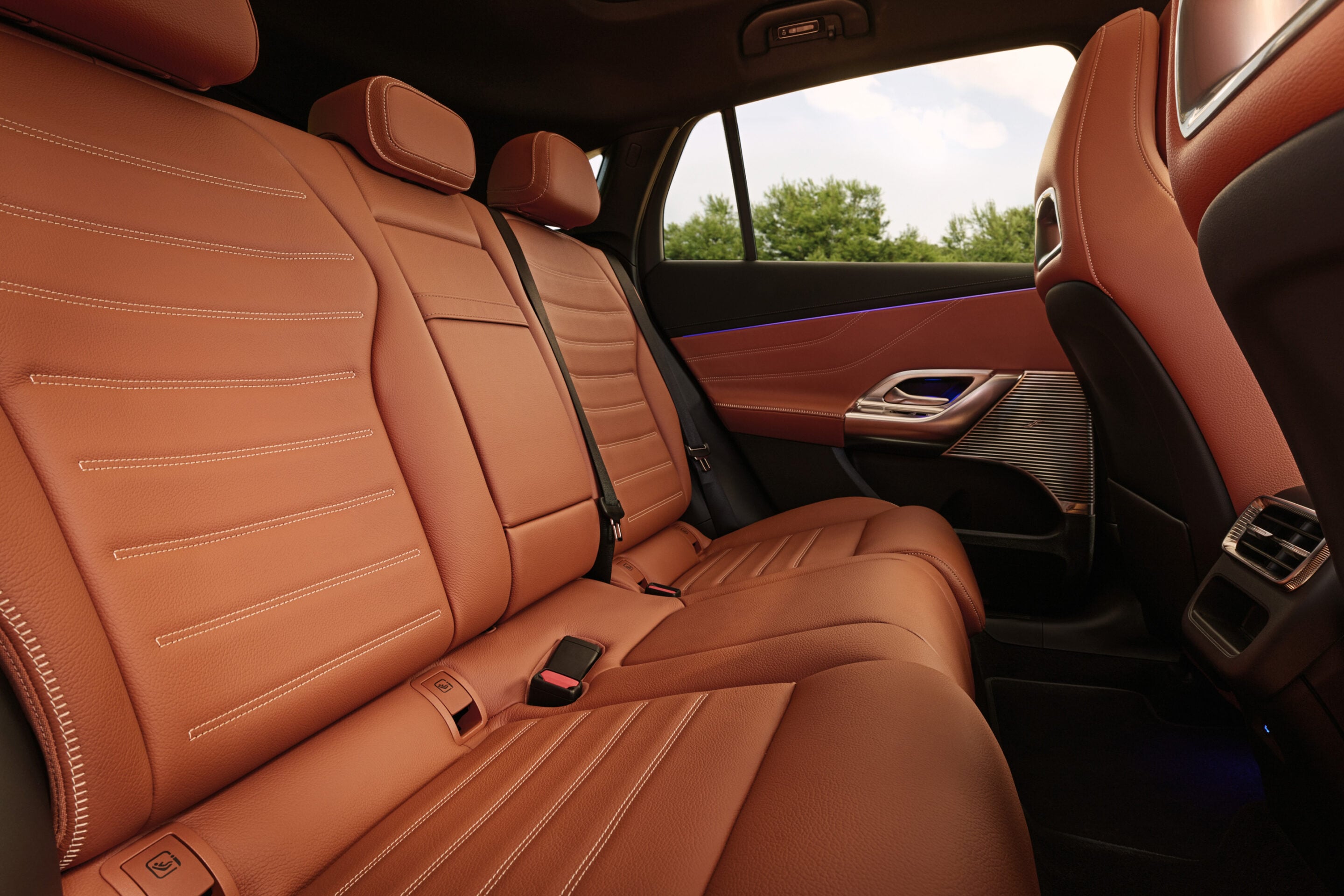
2
With a flat floor in row three, there’s room enough for three people to sit across the second row in comfort, with good toe-, knee- and leg-room while head-room is also generous, despite the presence of a panoramic sunroof running the length of the cabin.
Luggage capacity has increased over petrol models, the GLC electric quoting 570 litres with the second row in use (petrol models get 545 litres), expanding to a generous 1740 litres with row two stowed away, a whopping 250 litres more than GLC petrol. Additionally, a generous ‘frunk’ under the bonnet brings a further 128 litres, easily enough space for a couple of overnight bags (we tested it).
What technology comes with the GLC electric?
The centrepiece of in-cabin tech is a new 39.1-inch full-width hyperscreen, the largest ever fitted to a Mercedes-Benz. That’s 99.3cm in our language and it’s a behemoth, seamlessly integrating the main infotainment screen with a digital driver display.
It runs Merc’s new MB.OS operating system and it’s immediately clear (having had plenty of experience with the older MBUX) that the new setup is sharper to respond, more intuitive to use and an all-round better integration of technology. While unconfirmed, it’s likely to be optional in Australia.
Apple CarPlay and Android are standard as is Bluetooth connectivity and satellite navigation. Our test car came fitted with an optional 16-speaker Burmester sound system as well as Dolby Atmos which takes audio quality to concert hall levels. It truly is remarkable and if you haven’t experienced it yet, I recommend you do.
What’s the GLC electric like to drive?
There’s plenty to like about the GLC electric on the road, and most of it starts with the 360kW and 800Nm available under your right foot. Zero to 100km/h in 4.3 seconds speaks to an SUV that holds little back and true enough, when the opportunity presents itself, the mid-size SUV hauls its not inconsiderable 2535kg kerb weight with ease.
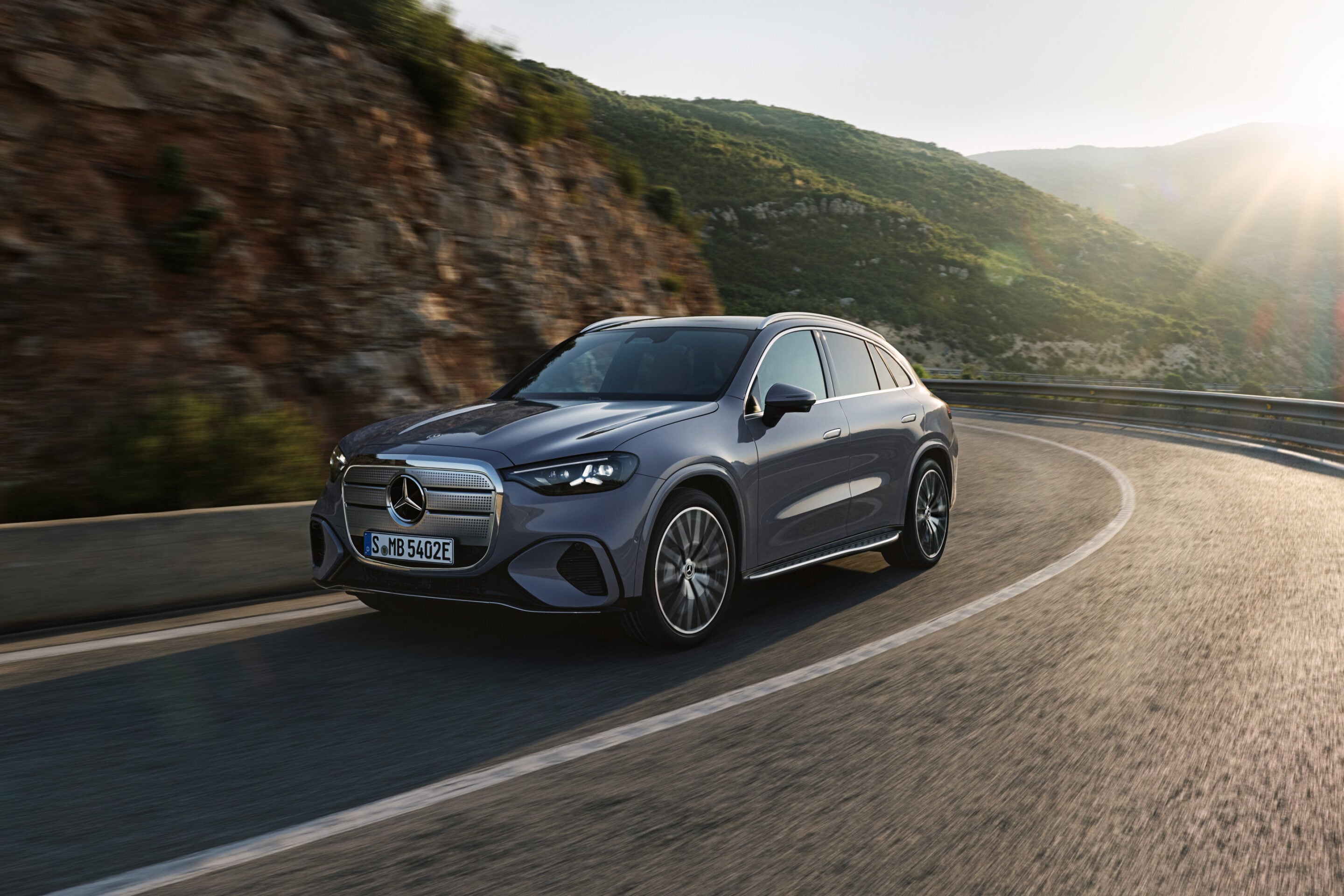
2
But it’s no one-trick pony. Thanks to its twin electric motors, the GLC is ostensibly all-wheel drive. The caveat here is that in normal traffic conditions, particularly those encountered in day-to-day urban environments, the front axle decouples from the drivetrain leaving the rear electric motor to do all the work.
This results in, according to Mercedes-Benz, efficiency gains that help it achieve its WLTP lab-tested 713km of range. Step on the ‘gas’ however, and the front motor responds in milliseconds to do its fair share of the work, not that you notice any change in the overall smooth driving characteristics of the GLC electric.
Road manners on M-B’s intelligent air suspension (Airmatic) makes a decent fist of damping out road nasties, insulating occupants from not only the bumps and lumps of patchwork-quilt road surfaces, but also, commendably, keeping road noise at bay. Only at highway speeds does a little bit of wind noise, mainly from around the A-pillars and wing mirrors, make its presence felt in the cabin. Crank up the Dolby Atmos, however, and you won’t hear a thing.
Cleverly, the Airmatic system uses a variety of data sources to ensure ride quality is maintained no matter the conditions. Using Google Maps in conjunction with Mercedes-Benz (patent-pending) car-to-X cloud-based system, the Airmatic system knows in advance when there are obstacles – such as potholes or speed humps – on the road ahead and will adjust damping accordingly while the GLC’s inbuilt sat-nav will alert the driver of those obstacles well in advance. It works too, helpfully triggering warnings on at least two occasions over our test drive.
1
The road loop at launch covered a variety of road and traffic conditions – from suburban traffic, to motorway running and one glorious and beguiling stretch of mountainous back-roads where the GLC electric delivered on peak enjoyment.
Four-wheel steering – the rears can turn up to 4.5-degrees – ensured the GLC electric handled corners with aplomb, the mid-sizer remaining flat and composed during more spirited driving. The steering itself was nice and direct, true on-centre and responsive to even minor adjustments.
Brake pedal feel through what M-B calls its One-Box system is surprisingly natural and progressive, despite, or maybe because of, the presence of energy regeneration. Mercedes-Benz claims that during normal driving conditions, the GLC’s brakes will use regenerative braking 99 per cent of the time, harvesting precious electrons to feed back into the battery and maximise range. It’s a testament to Merc’s engineers that you won’t feel the transition between regenerative and friction braking, not something that can be said about some of these types of systems.
1
There are four levels of regen, from D- (maximum recuperation, or essentially one-pedal) to D (standard) and D+ (no recuperation), all accessed via the steering wheel-mounted paddle-sghifters. Additionally, a D Auto setting provides ‘intelligent recuperation’ where the system decides the optimal level of braking. We left it primarily in D for standard which provided some regenerative braking without diluting the pleasure of our spirited driving adventure through the mountains of the Algarve.
What’s the verdict on the GLC electric?
And that’s the thing about the new Mercedes-Benz GLC 400 4Matic with EQ Technology. On the surface, it’s a thoroughly modern medium SUV with plenty of room for the nuclear family and their luggage.
Quiet and comfortable on the road, thoroughly modern and luxurious inside, the GLC electric also delivers a healthy dollop of driving pleasure, thanks to its myriad intelligent systems that combine for a smooth, engaging and enjoyable experience behind the wheel.
Specs
| Model | 2027 Mercedes-Benz GLC 44 4Matic with EQ Technology |
|---|---|
| Price | TBC |
| E-motor | Twin electric motors |
| Battery | 94kWh |
| Range | 713km (WLTP, claimed) |
| Peak power | 360kW |
| Peak torque | 800Nm |
| Transmission | Two-speed automatic, AWD |
| 0-100km/h | 4.3 seconds |
| Top speed | 210km/h |
| Energy consumption | 18.9-14.9kWh/100km (claimed) |
| Weight | 2535kg (kerb) |
| L/W/H/W-B | 4845/1913/1644/2972mm |
| Warranty | 5yr/unlimited km (vehicle) |
| On sale | Q4, 2026 |
8.2
/10
Score
Score breakdown
8.0
Safety, value and features
8.0
Comfort and space
8.0
Engine and gearbox
9.0
Ride and handling
8.0
Technology
Things we like
- Over 700km of driving range
- Exemplary road manners and handling
- Retro grille is a winner...
Not so much
- ... but will divide opinion
- Electric platform too good for Australia's charging infrastructure
- Some wind noise at highway speeds
Follow WhichCar/Wheels on Google
Click the button below to make WhichCar by Wheels a preferred source for your news.