
Reviews

Gallery 1
7.4
/10
Score
Score breakdown
8.0
Safety, value and features
8.0
Comfort and space
7.0
Engine and gearbox
7.0
Ride and handling
8.0
Technology
Things we like
- ST-L spec represents solid value for money
- High quality interior materials
- Spacious and practical, particularly in the rear seat
Not so much
- Surprisingly firm low-speed ride
- Performance is adequate, but nothing spectacular
- Superior hybrid drivetrain is a steep expense
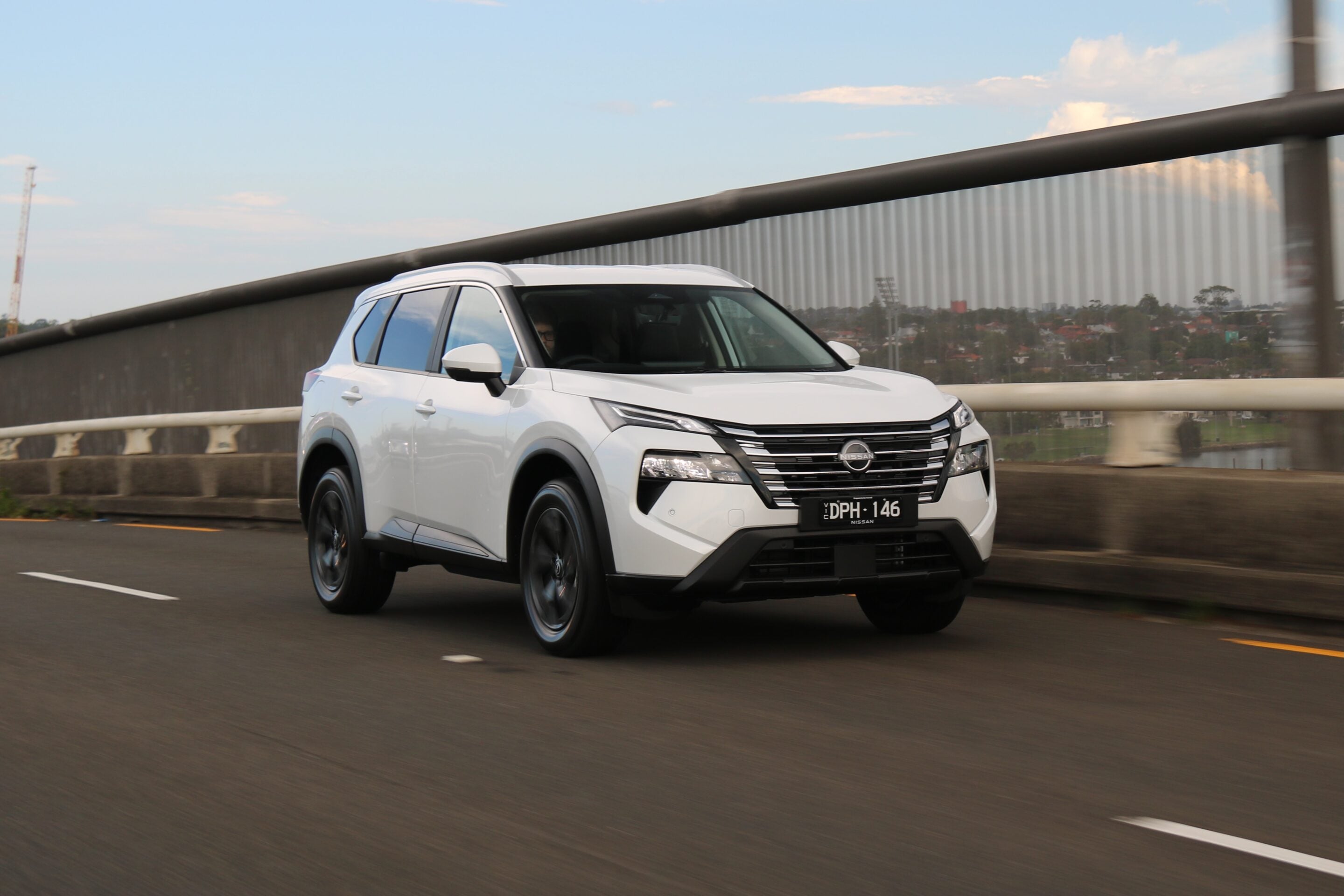
Recently given a mid-life facelift, the 2026 Nissan X-Trail faces stiff competition in the mid-size SUV segment, where 312,000 units were sold in Australia in 2025 – a 9.2 percent increase on 2024 – led by the Toyota RAV4 with more than 51,000 sales.
The X-Trail’s update brought revised styling, new standard equipment across the range and longer service intervals, making it one of the more practical mid-size SUV choices among more than 30 options on the market. What else recommends it?
How much does the X-Trail ST-L cost to buy?
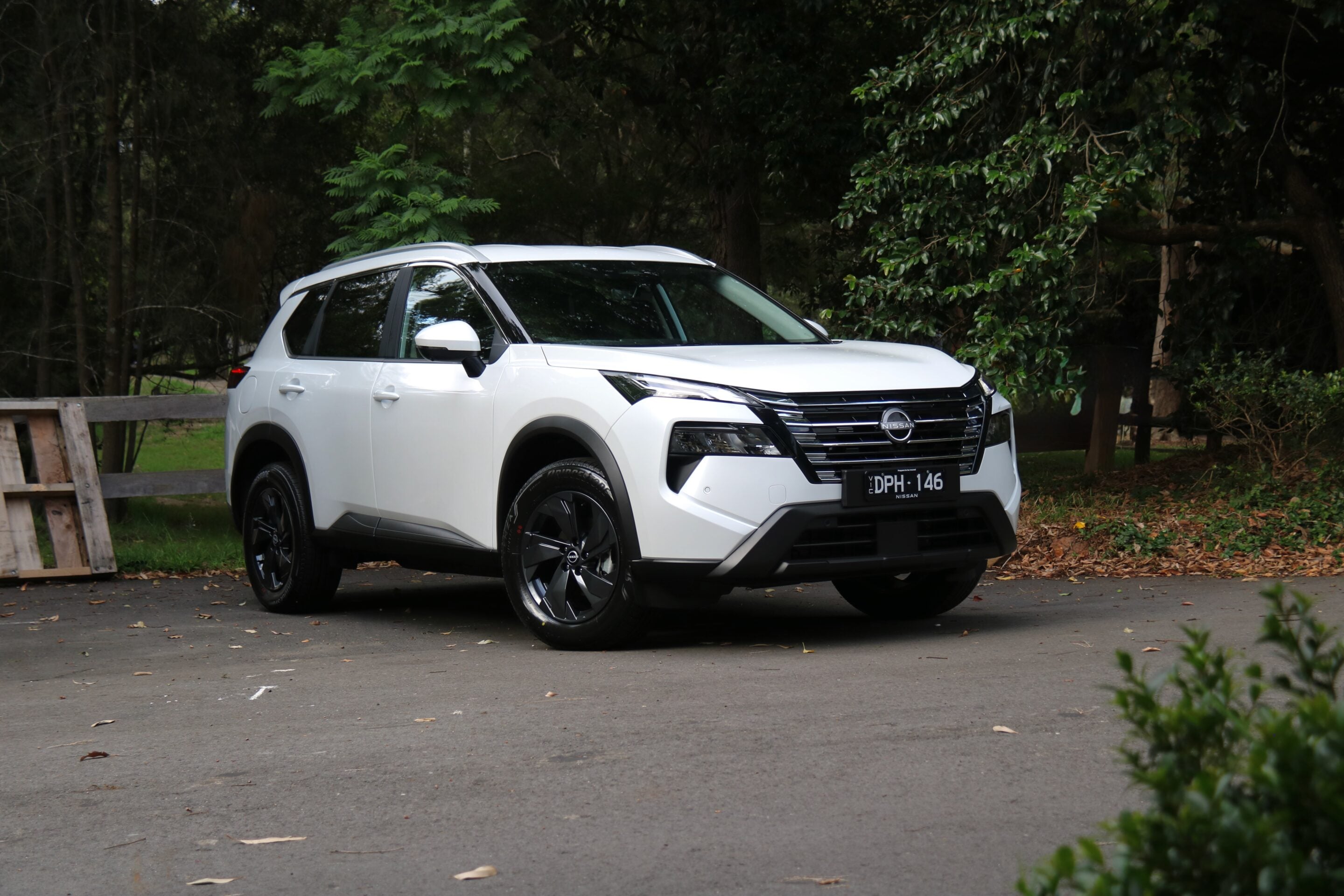
The 2026 Nissan X-Trail range kicks off at $38,140 plus on-road costs for the entry-level ST, and here we’re testing the second-from-base ST-L in its most affordable five-seat configuration. The X-Trail range, in a higher specification with a hybrid drivetrain and all-wheel drive, hits $58,215 before on-road costs, but regardless of model, it’s quite good value for money in the mid-size SUV segment.
4
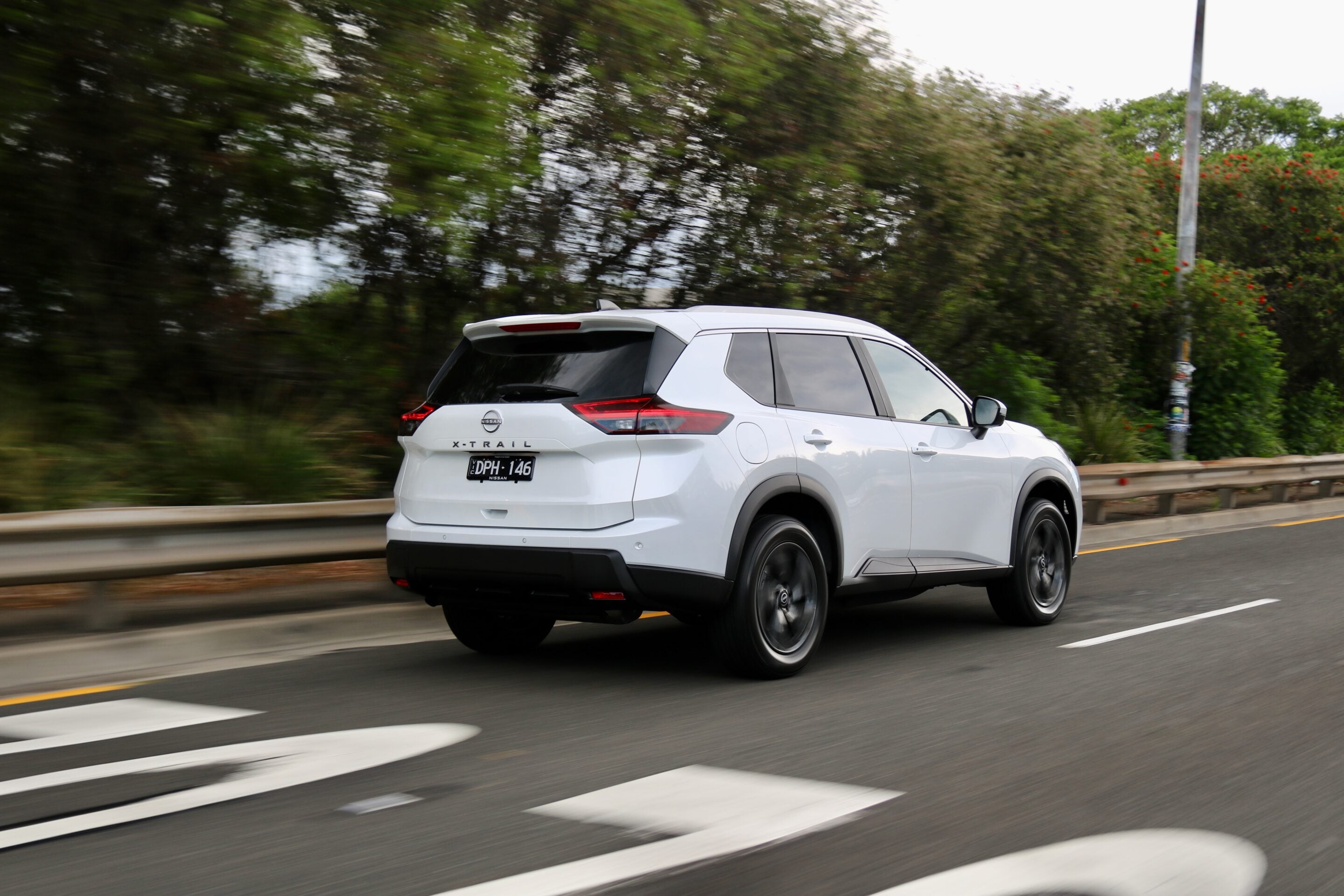
Take the five-seat two-wheel-drive ST-L we tested. It’s priced at $42,615 before on-road costs (or around $47,000 drive away, depending on which state you live in) and it’s well equipped with features like 18-inch wheels, automatic LED exterior lighting, rain-sensing wipers, ‘leather-accented’ upholstery, heated and electric front seats, a 12.3-inch touchscreen, a wireless phone charger and a full suite of active safety features. You’ll find a comprehensive equipment list at the bottom of this page.
The X-Trail ST-L 2WD’s closest rival is the $43,100 (plus on-road costs) Mazda CX-5 G25 Touring 2WD. While they share a lot of kit, against the CX-5 the sharper priced X-Trail adds features like a larger 12.3-inch touchscreen with live services, rear privacy glass, heated and electric front seats, leather upholstery and a 360-degree camera. It’s a similar story with the $45,100 (plus on-road costs) Hyundai Tucson Elite, which is also more expensive than the X-Trail ST-L but similarly equipped.
How practical is the X-Trail ST-L?
The cabin of the current shape ‘T33’ X-Trail has been one of the best all-rounders in the mid-size SUV segment since its 2021 release, thanks to the high quality, impressive practicality and easy-to-use technology. The brand didn’t update much inside the X-Trail’s cabin with the mid-life update and it’s still one of the best options for practicality in the segment.
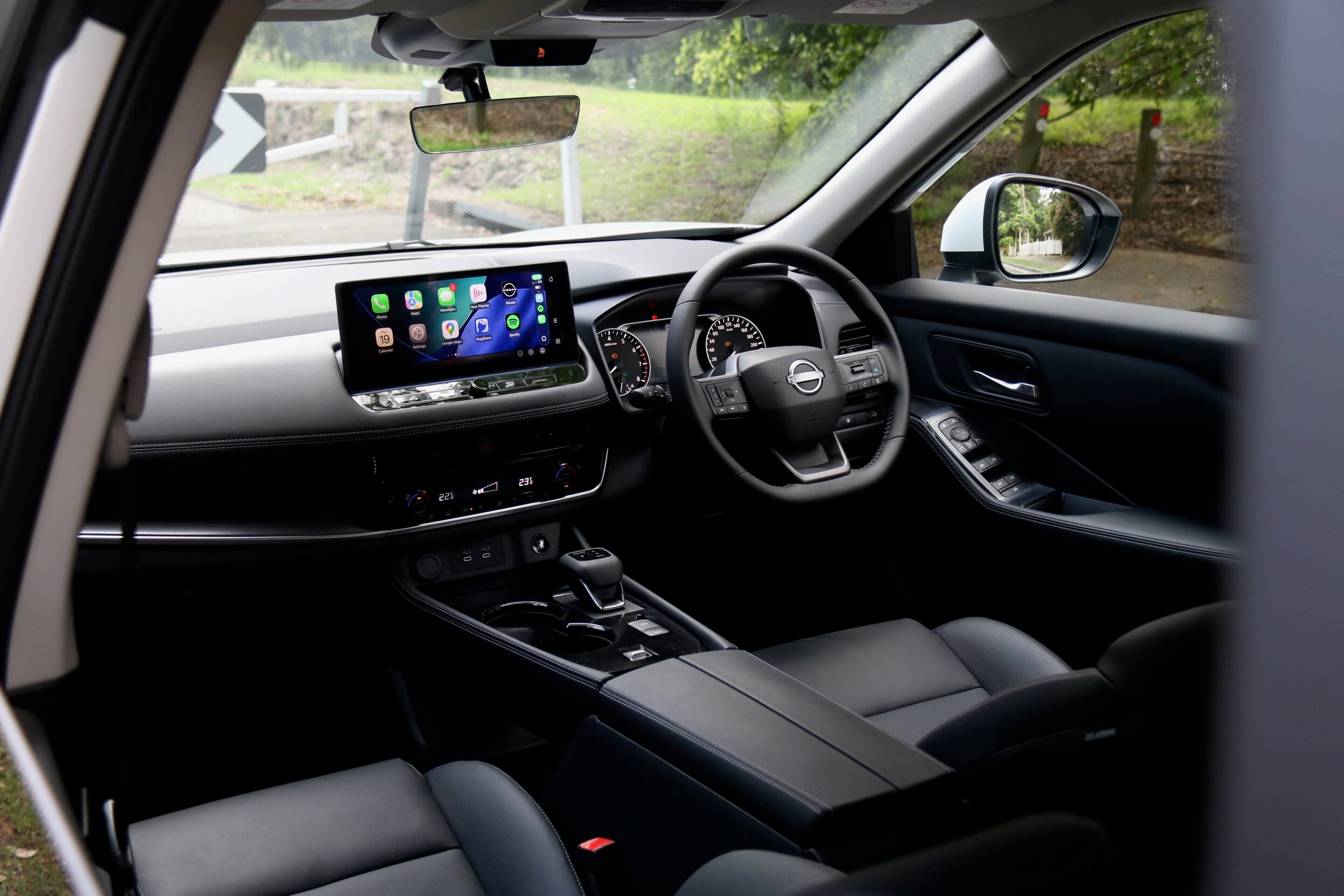
Material quality is impressive thanks to soft stitched leather-like trims around the cabin, textured wood-like centre console trim and tight switchgear.
A 12.3-inch touchscreen is fitted to the entire X-Trail range, which is easy to use and sharp to look at. It could be a bit faster and oddly doesn’t feature inbuilt sat-nav, but the wireless Apple CarPlay and Android Auto is easy to connect. Pleasingly for usability, it still features shortcuts on the driver’s side with smartphone mirroring on the screen. The separate buttons for features like the 360-degree camera further help with practicality, as do the separate climate control below.
5
Storage space is handled by large door bins, a big central box underneath the centre armrest, a large tray underneath the centre console and an open tray with the – quite effective – wireless phone charger.
Occupants in the rear seat of the X-Trail will be quite comfortable as it’s one of the most spacious in the mid-size SUV segment. For starters, the doors open to 90 degrees, which is great for getting child seats in and out, and the door opening itself is quite wide. The seats slide and recline for more space and both legroom and headroom is impressive, and much more plentiful than the CX-5. Amenities include USB charging ports, air vents, map pockets, door pockets and a central armrest.
Behind the rear seats lies a large 575 litres of space, which is 36 litres larger than the Tucson and 137 litres larger than the CX-5. Helping practicality further is Nissan’s ‘Divide-N-Hide’ cargo management system, which allows for – as the name suggests – both dividing and hiding of items in the boot.
Fold the rear seats and space isn’t quite as impressive at 1396 litres (the Tucson holds 1860L) but it’s still a large area and the seats fold flat and in a 40:20:40 split too. Beneath the boot floor lies a space-saver spare. In terms of a well-rounded cabin, the X-Trail is an excellent mid-size SUV.
How fuel efficient is the X-Trail ST-L?
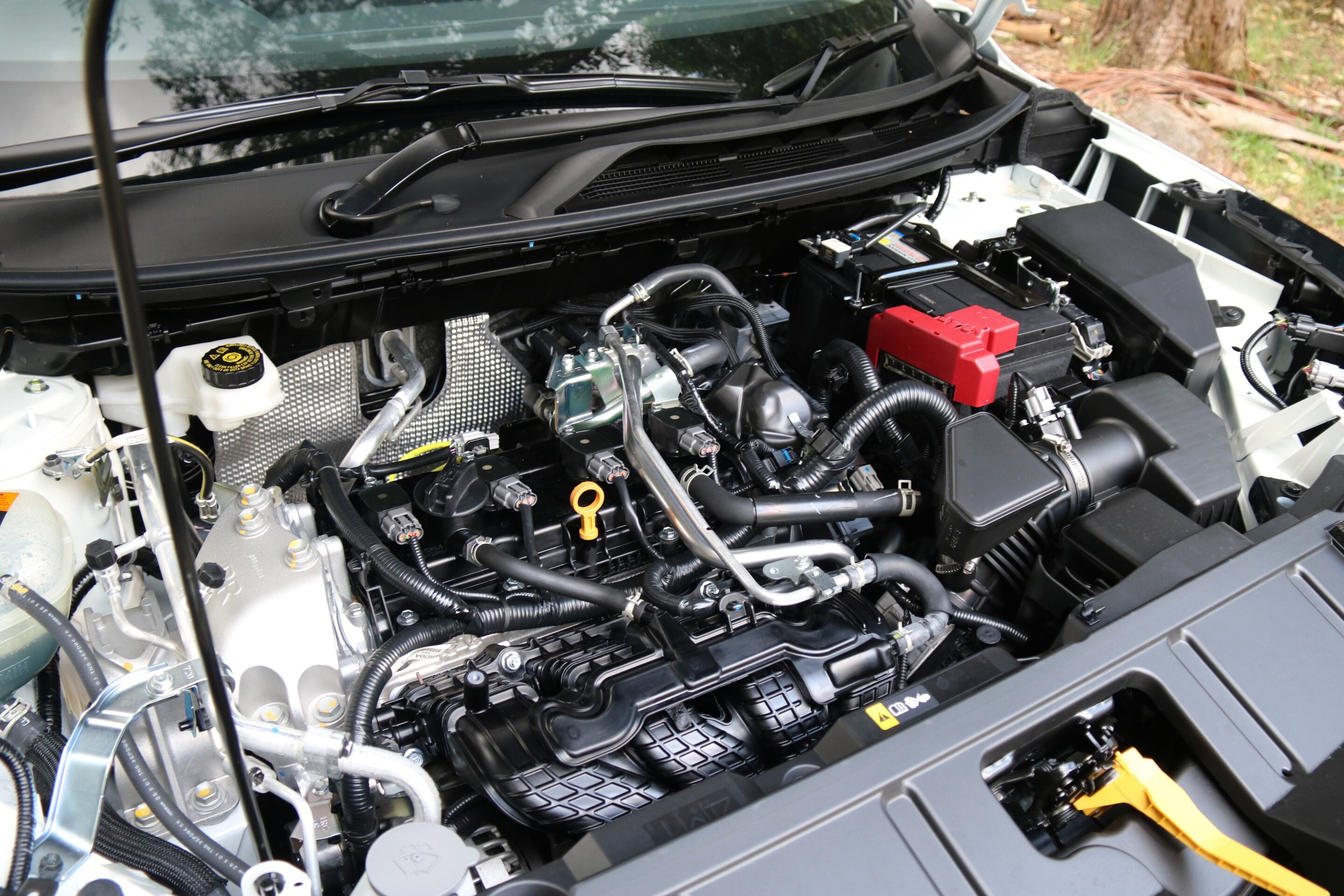
All petrol X-Trails are fitted with a naturally-aspirated 2.5-litre four-cylinder petrol engine making reasonable outputs of 135kW and 244Nm. A CVT automatic transmission is standard, while both front-wheel drive (five-seater) and all-wheel drive (seven-seater) drivetrain configurations are available. The ST-L and above can also be had with Nissan’s ‘e-Power’ hybrid system, mated as standard with all-wheel drive and only five seats in this market.
5
It’s true that there are more exciting drivetrains available in the mid-size SUV class with more performance or refinement, but the X-Trail’s petrol engine is par for the course for everyday use. It can be a little loud under full throttle, and nailing the throttle hardly pushes you back into your seat, but again, it’s adequate for its intended audience. Nissan doesn’t claim a 0-100km/h time for the X-Trail, but it’s sharp enough not to feel slow in the cut and thrust of daily traffic. In other words, it’s more than acceptable for most buyers and the e-Power hybrid X-Trail is a stronger performer if you so desire.
The CVT is also inoffensive during all the different driving scenarios we deal with in urban areas. We’ve seen big improvements in the type, and the X-Trail’s ‘box is a good example. Its seven stepping points – to replicate a gearbox with actual gears – performs solidly, and using the paddle shifters to control them makes a meaningful difference. Is it as responsive as the six-speed auto in the CX-5? Of course not, but it’s still a good attempt to make a CVT feel normal.
Combined claimed fuel consumption for the petrol X-Trail ST-L five-seat is 7.4L/100km and after a week of mostly urban driving, we achieved 8.7L/100km. That included a 5.3L/100km long highway run, so it can be quite efficient in the right situation. The hybrid e-Power adds both performance and refinement to the X-Trail range, but it’s also a $6200 more expensive, so do your sums to work out which drivetrain suits you best.
What is the X-Trail like to drive?
For most buyers, the X-Trail is a solid choice when it comes to the driving experience. For its likely intended daily duties, it nails the basics: the visibility is good, the steering weighting is light at urban speeds, and it’s quite easy to drive and park thanks to the clear 360-degree camera. The active safety features are also working away in the background without grating – the speed limit warning doesn’t make noise and the lane keeping assistance is subtle – as well. Unlike many rivals. Nissan’s ‘ProPilot’ adaptive lane guidance also steers quite accurately.
However, there are some areas that need improvement. The low speed ride on our test car was quite firm and smaller bumps were felt through the cabin more than expected, while the steering feedback is also too light for our liking at highway speeds. A CX-5 is more fun to drive, and a Tucson is a better all-rounder when it comes to the ride and handling balance.
What warranty covers the X-Trail ST-L?
The entire Nissan range is covered by a five-year/unlimited km warranty that can be extended up to 10 years/300,000km with annual servicing at a Nissan dealership. If owners adhere to that condition, Nissan’s warranty is one of the longest on the new car market.
4
Five years/75,000km of servicing costs $1995 or $399 per service, and with the facelift, Nissan extended annual service intervals to 15,000km (up from shorter 10,000km) to match rivals. For reference, a CX-5 Touring costs $2240 to service over the same period, and its warranty finishes after five years.
Should I buy a Nissan X-Trail ST-L?
It’s frequently overlooked in discussions on the segment leaders, but we think the Nissan X-Trail ST-L is worth close consideration for those wanting a solid, family-friendly mid-size SUV. It’s good value for money in the segment, well equipped, quite practical and can benefit from coverage by one of the longest new car warranties in Australia.
Counting against it are a fine (but not overly noteworthy) drivetrain, firm low-speed ride quality and a steep hybrid premium, but all things considered, we think that the X-Trail deserves far more attention.
X-Trail ST-L specifications:
| Model | Nissan X-Trail ST-L five-seat 2WD |
|---|---|
| Price | $42,615 plus on-road costs |
| Engine | 2488cc naturally aspirated four-cylinder petrol |
| Power | 135kW (@ 6000rpm) |
| Torque | 244Nm (@ 3600rpm) |
| Transmission | CVT automatic, front-wheel drive |
| Claimed combined fuel consumption | 7.4L/100km |
| Combined CO2 emissions | 174g/km |
| Fuel type/tank size | 91RON regular unleaded, 55 litres |
| Dimensions (L/W/H/WB) | 4690/1840/1725/2705mm |
| Bootspace | 585 litres (rear seats up), 1396 litres (rear seats folded) |
| Tare mass | 1546kg |
| Braked towing capacity | 2000kg |
| Warranty | 5-year/unlimited km, extendable up to 10-year/300,000km with dealer servicing |
| 5-year/75,000km service cost | $1995 ($399 per service) |
| On sale | Now |
X-Trail ST-L standard features:
- 18-inch alloy wheels with a space-saver spare
- Dusk- and rain-activated LED exterior lighting
- Rain-sensing automatic wipers
- Keyless entry with push button start
- Roof rails
- Rear privacy glass
- Heated and auto-folding mirrors
- Leather-accented upholstery
- 10-way electric front seats with heating
- Leather-wrapped steering wheel with paddle shifters
- Dual-zone automatic climate control with rear air vents
- 7.0-inch digital driver’s display
- 12.3-inch touchscreen
- NissanConnect connected car services
- Wireless Apple CarPlay and Android Auto
- AM/FM/DAB+ digital radio
- Bluetooth phone and audio streaming
- Six-speaker sound system
- 4x USB charging ports
- Wireless phone charger
- ‘Divide-N-Hide’ cargo management system
- 40/20/40-split rear seat with sliding
- 7x airbags
- Autonomous emergency braking with junction assist and pedestrian/cyclist detection
- Adaptive cruise control with ‘ProPilot’ adaptive lane guidance
- Lane keeping assistance
- Blind-spot monitoring
- Rear cross-traffic alert
- Driver attention monitoring
- Rear door alert
- Auto high beam
- Traffic sign recognition
- Tyre pressure monitoring
- Front and rear parking sensors
- 360-degree camera
7.4
/10
Score
Score breakdown
8.0
Safety, value and features
8.0
Comfort and space
7.0
Engine and gearbox
7.0
Ride and handling
8.0
Technology
Things we like
- ST-L spec represents solid value for money
- High quality interior materials
- Spacious and practical, particularly in the rear seat
Not so much
- Surprisingly firm low-speed ride
- Performance is adequate, but nothing spectacular
- Superior hybrid drivetrain is a steep expense
Follow WhichCar/Wheels on Google
Click the button below to make WhichCar by Wheels a preferred source for your news.

We recommend
-
 News
NewsThe worrying trend for Japanese car brands in Australia
Sales of cars from Japanese brands in Australia are trending downwards in the face of a new-brand-and-model onslaught from China.
-
 Features
Next SUVs we’re looking forward to in 2026
From BMW to Nissan, Toyota and Cadillac, the next batch of SUV launches we're excited to drive in 2026....
-
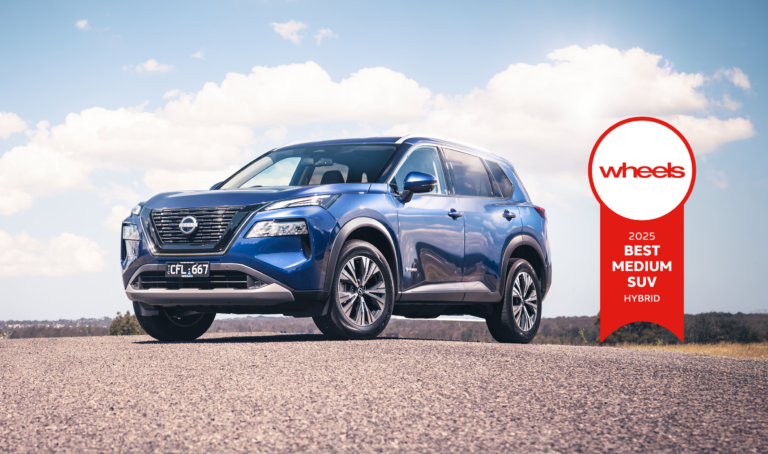 Best Medium SUVs
Best Medium SUVs 2025: Hybrid
From Nissan’s innovative e-Power to Subaru’s new Forester Hybrid and MG's popular HS, these SUVs combine fuel efficiency, space and comfort, redefining practicality and performance for families in 2025.
