
Tinted and reflective plate covers are readily available online, but legal experts are warning that fitting one could leave Australian drivers on the wrong side of the law if it obscures their number plate.
Principal Lawyer at Astor Legal in Sydney, Avinash Singh, explains when tinted number plate covers become illegal, the penalties drivers could face for using them, and why claiming ignorance is unlikely to be a defence.
According to Avinash, “Tinted or reflective number plate covers are not automatically illegal, but they become unlawful if they obscure the plate or make it difficult to read.”
“The exact requirements vary between states, but in most jurisdictions, number plates must remain clearly visible and legible from up to 20 metres away, including New South Wales, Victoria and Queensland.”
So what happens if someone installs a tinted cover to avoid speed cameras or tolls? According to Avinash, the consequences can extend well beyond a standard traffic infringement.
“If police can prove a driver deliberately modified their number plate to avoid detection by speed cameras or toll roads, they could potentially face the criminal offence of perverting the course of justice,” he said. “That offence carries a maximum penalty of 14 years’ imprisonment.”
How difficult is it for the police to prove that intent? According to Avinash, investigators would need evidence showing the driver deliberately installed the cover to evade detection.
“The strongest evidence would typically be statements made by the driver, or written communications such as text messages or emails indicating the purpose of modifying the number plate was to avoid being identified.”
Although tinted number plate covers remain widely available for purchase online, Avinash says responsibility ultimately rests with the driver.
“That these products are sold does not make them legal to use. These offences are generally ones of absolute liability, meaning a driver cannot rely on not knowing the law as a defence. The responsibility remains with motorists to ensure their number plates are clearly visible and comply with the requirements in their state.”
Australia’s VFACTS new vehicle sales for June 2026 have been revealed, and it was a month that produced big numbers and big surprises. A total of 140,058 new vehicles were sold in Australia in June 2026, which was the biggest-selling month ever and the first time over 140,000 units were registered.
The Tesla Model Y was the biggest-selling car on 8072 registrations, while BYD delivered 18,881 units, very nearly toppling Toyota which registered just 243 units more.
BYD’s record result was no doubt helped by the BYD Zhengzhou cargo ship, which arrived in Australia in early June carrying almost 5000 BYD and Denza vehicles. At 52,335 units to the end of June, BYD’s sales increase has been quite noteworthy, as it’s up by a massive 29,980 units or 124.1 per cent compared to this time in 2025.
BYD’s top-selling model was once again the Sealion 7 electric SUV on 4730 units and placed fourth for the month, but the Shark 6 plug-in hybrid ute was not far behind on 3398 units and placed sixth. Behind those were the Atto 2 (2482 units), Sealion 6 (2218 units) and Sealion 8 (1961 units).
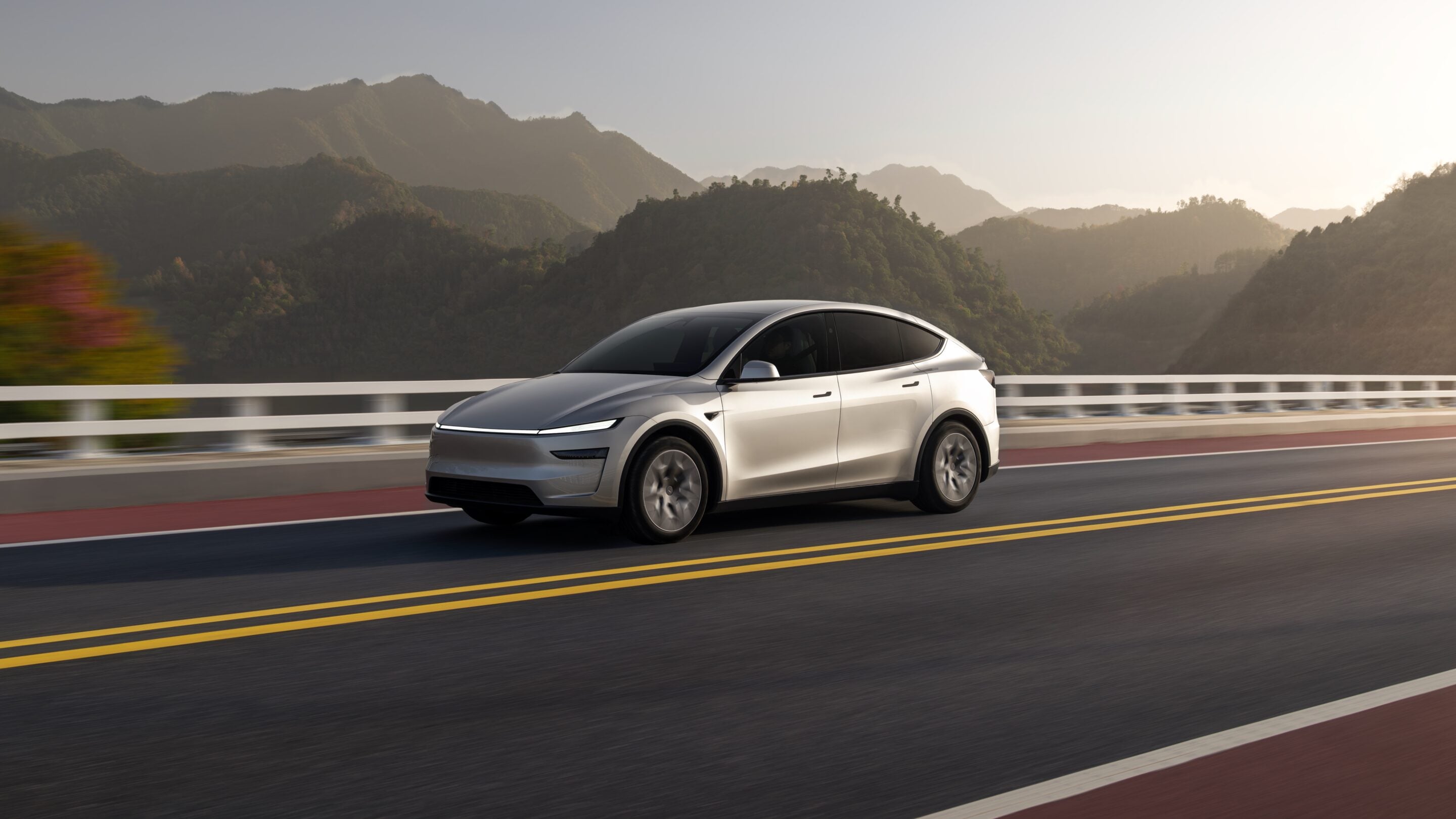
In other news for the month of June 2026, almost 25 per cent of new vehicle sales were electric, and for the second time ever — the first being May 2026 — an electric vehicle topped the sales charts. Almost 50 per cent of new vehicle sales in June 2026 — 49.5 per cent — were electrified, likely helped by still-high fuel costs as a result of the conflict in Iran.
Toyota’s result of 19,124 registrations was down by 5.4 per cent compared to June 2025, with the HiLux ute (5175 units) and RAV4 medium SUV (4115 units) its best sellers.
Ford finished third for the month on 9181 sales (- 9.1 per cent on June 2025), with the Ranger ute placed second on 5999 units, and with Tesla (8670 units) and Kia (8005 units) rounding out the top five.
As for year to date sales, Toyota leads with 95,141 units (-24.1 per cent), BYD sits in second place with 52,335 units (+141.1 per cent), Ford is ranked third with 42,296 units (-10.6 per cent), Kia fourth with 41,846 units (+2.5 per cent) and Mazda fifth with 40,502 (-17.3 per cent) units.
Top 10-selling brands in Australia in June 2026:
- 1) Toyota: 19,124 (-5.4% compared to June 2025)
- 2) BYD: 18,881 (+131.5%)
- 3) Ford: 9181 (-9.1%)
- 4) Tesla: 8670 (+88.9%)
- 5) Kia: 8005 (+2.5%)
- 6) Hyundai: 7480 (-11%)
- 7) Mazda: 7278 (-22.6%)
- 8) GWM: 6104 (+11.7%)
- 9) MG: 5001 (+28.4%)
- 10) Chery: 4505 (+49%)
Top 10-selling models in Australia in June 2026:
- 1) Tesla Model Y: 8072 (+133.5% compared to June 2025)
- 2) Ford Ranger: 5999 (-4.7%)
- 3) Toyota HiLux: 5175 (-16.5%)
- 4) BYD Sealion 7: 4730 (+163.5%)
- 5) Toyota RAV4: 4115 (+70%)
- 6) BYD Shark 6: 3398 (+13.5%)
- 7) Isuzu D-Max: 2740 (-12.2%)
- 8) Hyundai Kona: 2505 (+0.8%)
- 9) BYD Atto 2: 2482 (new)
- 10) GWM Haval Jolion: 2446 (+22.3%)
GWM Australia has confirmed that the Ora 5 ‘Touring’ electric wagon will join the local line up, either late this year or early in 2027.
While technical details remain scarce, GWM Australia confirmed the full-battery electric version of the GMW Ora 5 hatch would joining the local line-up with a 71kWh battery pack.
GWM Australia also confirmed it was looking at introducing a plug-in hybrid version of the Ora 5 Touring but that the initial focus would remain on full EV.
“The vehicle will most likely come, potentially with two powertrains, but certainly EV,” GWM Australia’s chief operating officer, John Kett, told Whichcar by Wheels. “There’a also a plug-in hybrid version that we are still working our way through. So if they were to land, it will be either side of the new year… but it’s definitely going to happen.”
GWM Australia offered a sneak peak of the Ora 5 Touring, although was adamant that any images shown to the media remained ‘off the record’ for now. Our artist’s impression at the top of this story does offer a hint of what the Ora 5 Touring might look like.
What we do know is that the wagon version measures in at 4758mm long, 1833mm wide and 1630mm tall. It will be fitted with a 71.1kWh battery.
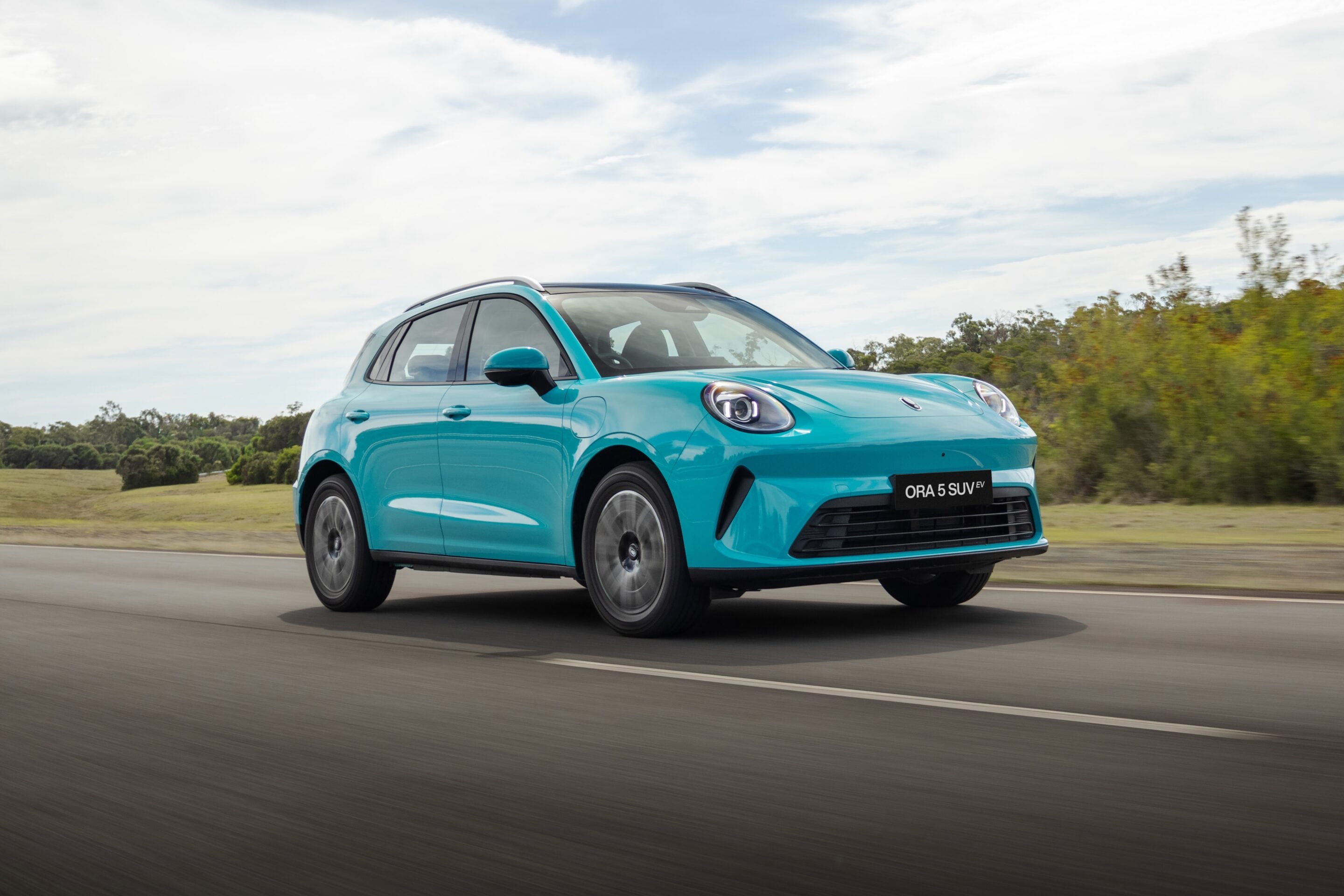
That makes it significantly larger than the just-launched Ora 5 small SUV (pictured, above) which stops the tape at 4471mm long, 1833mm wide and 1641mm tall with a 58.3kWh battery pack offering a claimed 435km of range (WLTP).
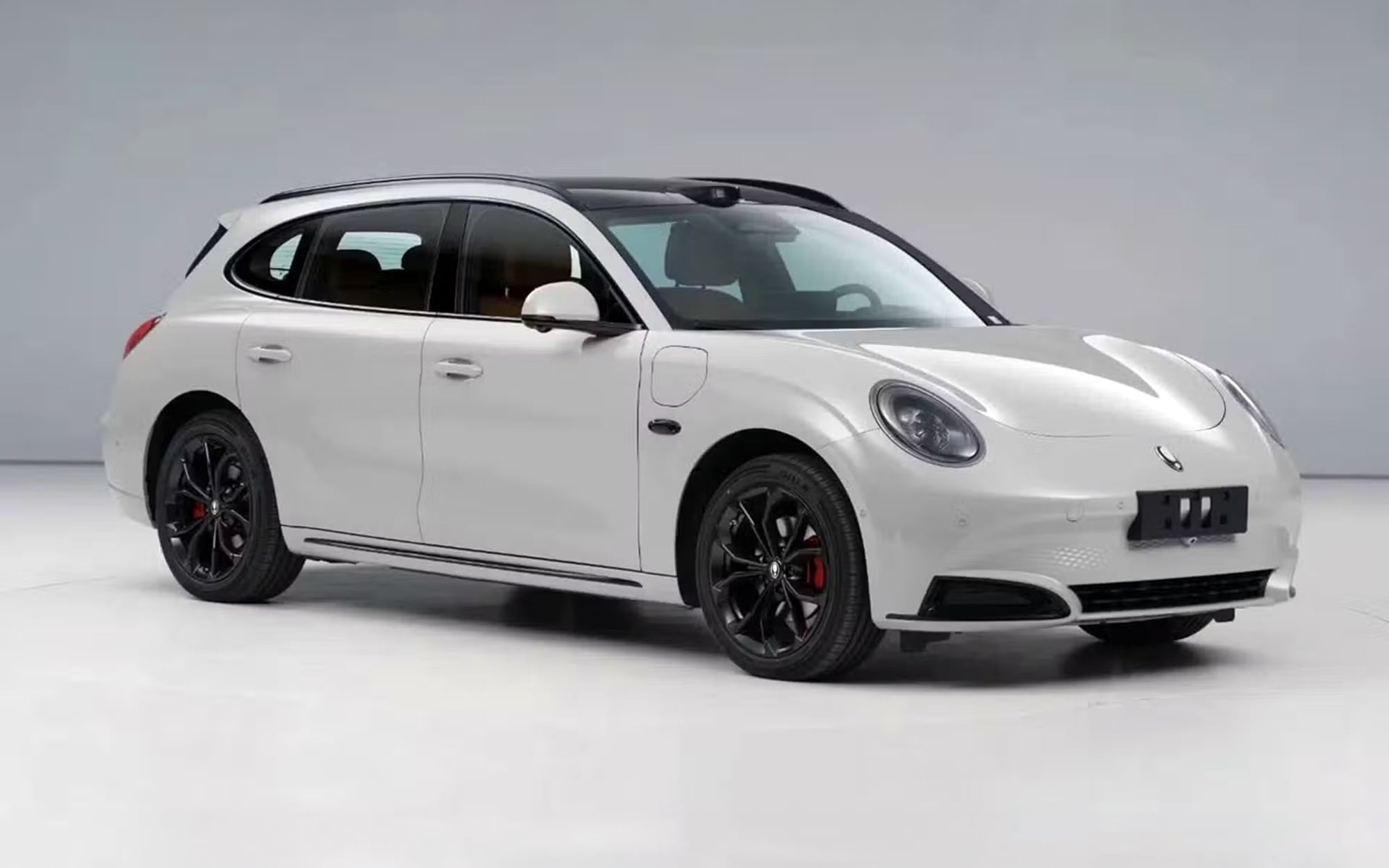
GWM has also tested the waters with an electric station wagon, taking the covers of its Ora 07 long-roof prototype (above) at the Shanghai Motor Show in 2025. It’s set to launch in its domestic market in the latter half of this year, although there has been no confirmation on whether the 07 Touring is destined for international markets.
Copper cabling has long been a target for opportunistic thieves, and now Australia’s EV charging network is the most recent target.
As reported by The Australian, EV charging stations are under attack as thieves hone in on the copper-heavy cabling used on public fast chargers.
With the demand for copper increasing, driven by a rising demand for electronic devices dependent on the metal, values for the metal have surged.
An EV fast-charger cable contains around 2.3kg of copper, worth around $30 at present.
Over the last few weeks, a Tesla Supercharger site at Raymond Terrace, NSW was targeted. PlugShare users reported that four of the 12 chargers at the location were out of order, but as of July 1st, the site has been restored to working order.
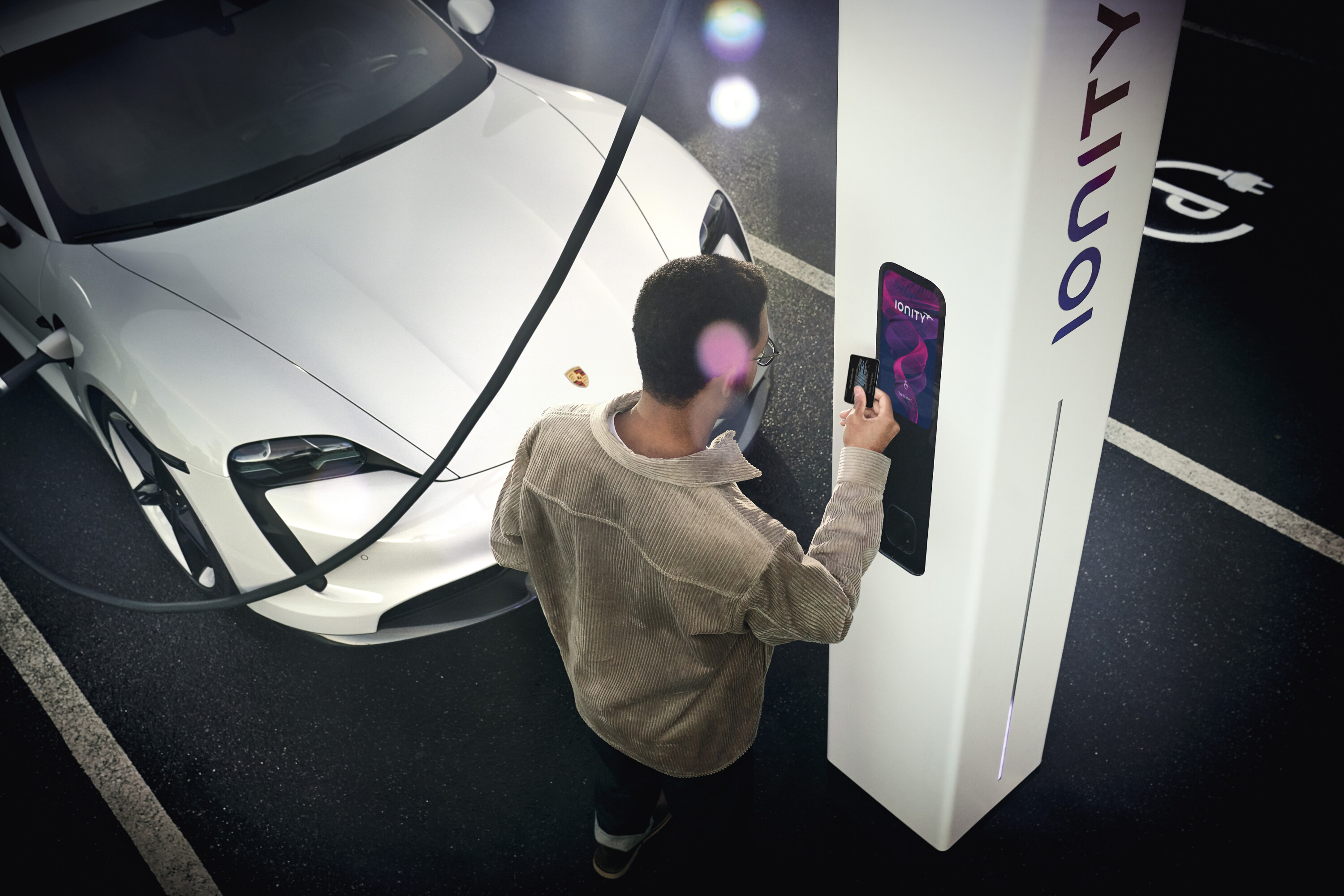
Later, Newcastle City Council in NSW revealed that two of its fast chargers had been targeted, with thieves successfully stealing the charging cables and forcing the chargers out of service until replacement parts arrive.
Most recently, chargers at West Gosford and Kincumber have also been reported as out of action, believed to be the result of similar attacks.
These latest attacks join a growing number of targeted EV chargers, with thefts on the rise across 2025 and 2026, accelerating as the price of copper pushed upwards.
In an effort to counter the theft risk, charging provider Evie Networks has begun trialling a system called CableGuard, which includes a reinforced protective sleeve to prevent theft and a forensically-traceable liquid that marks suspects, tools, and vehicles in the event cables are removed.
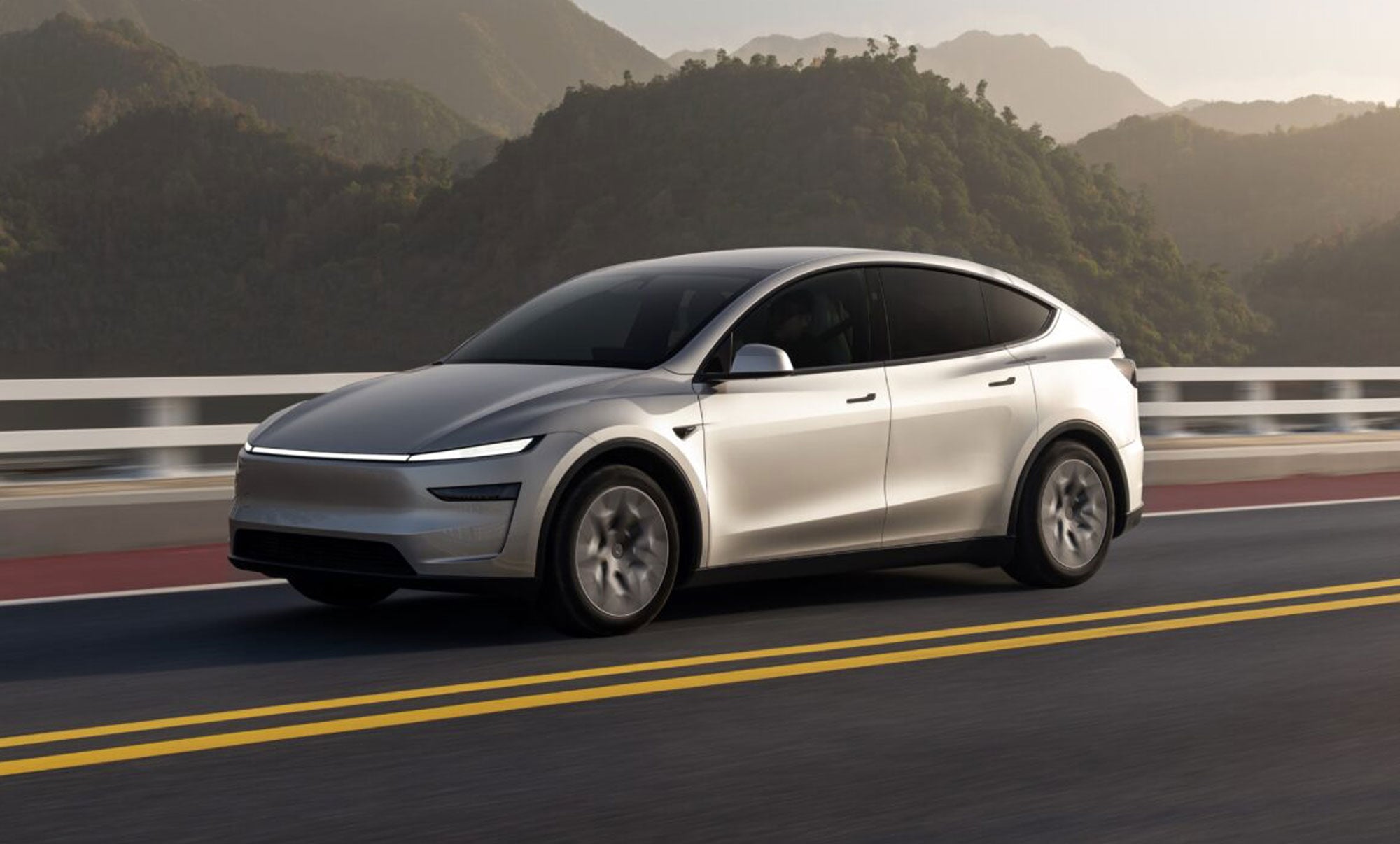
Copper thefts are also on the rise at building sites, with the National Electrical and Communications Association indicating that construction contractors are already raising quotes, factoring in the likelihood of theft, and insurance coverage is often too expensive to warrant adding to policies.
Attempted theft from an active electrical substation in Browns Plain, Queensland, left 13,000 homes without power after an attempt was made to cut an 11,000-volt cable.
The Australian Institute of Criminology estimates the cost of metal theft in Australia exceeds $100 million annually.
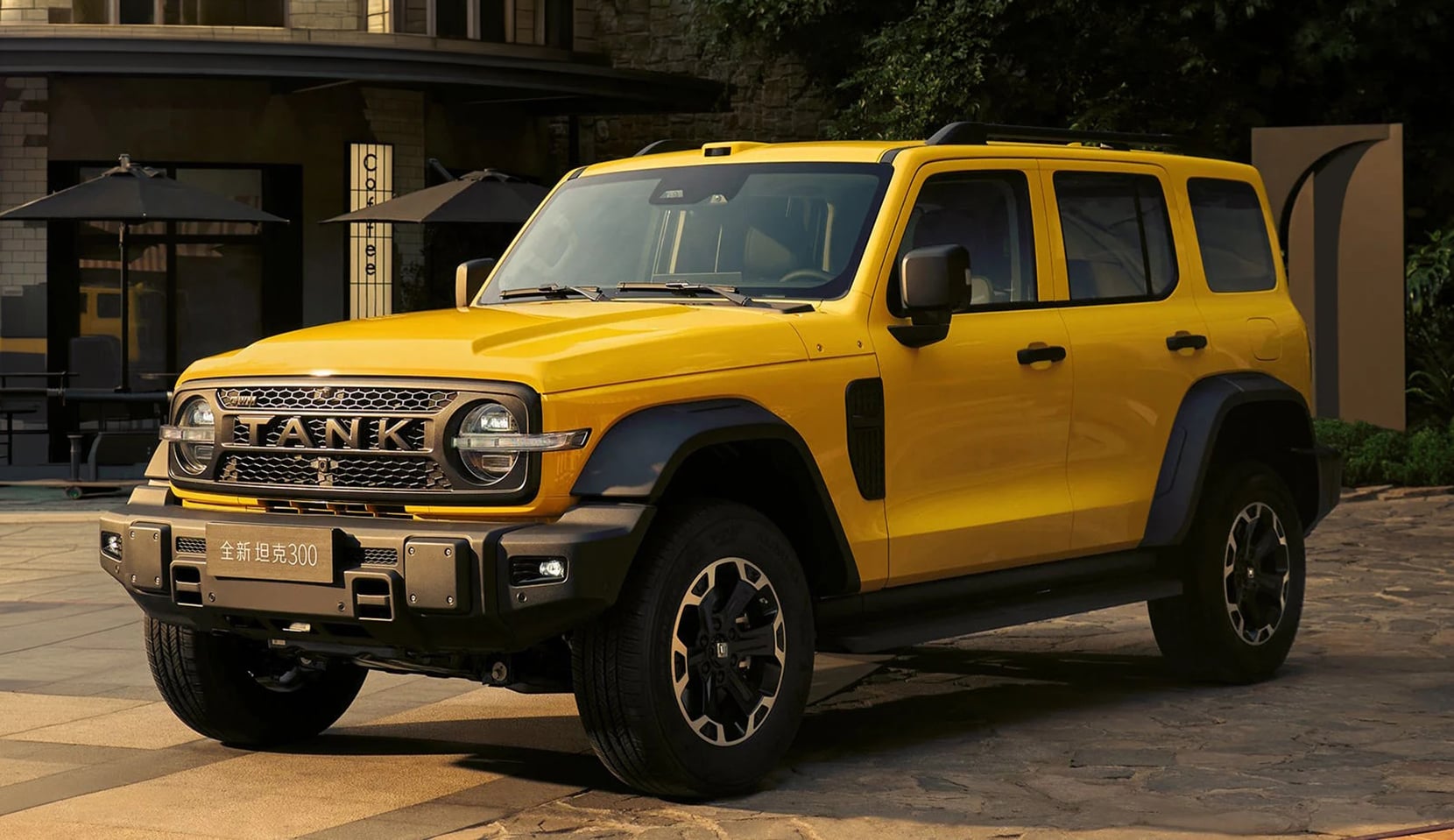
The 2027 GWM Tank 300 has been revealed in China, sporting both a longer wheelbase, a bigger plug-in hybrid battery for a longer electric-only range, and more than double the power of the current model.
However, the updated model is unlikely to make its way to Australia any time soon, according to a GWM Australia spokesperson who told Whichcar by Wheels it was only for the Chinese domestic market for now, although did suggest it would be considered in the future.
“We’re aware of it, we knew it was coming but it’s domestic market only at this stage,” said the spokesperson. “That car is on our radar, but it’s not available to us just yet.”
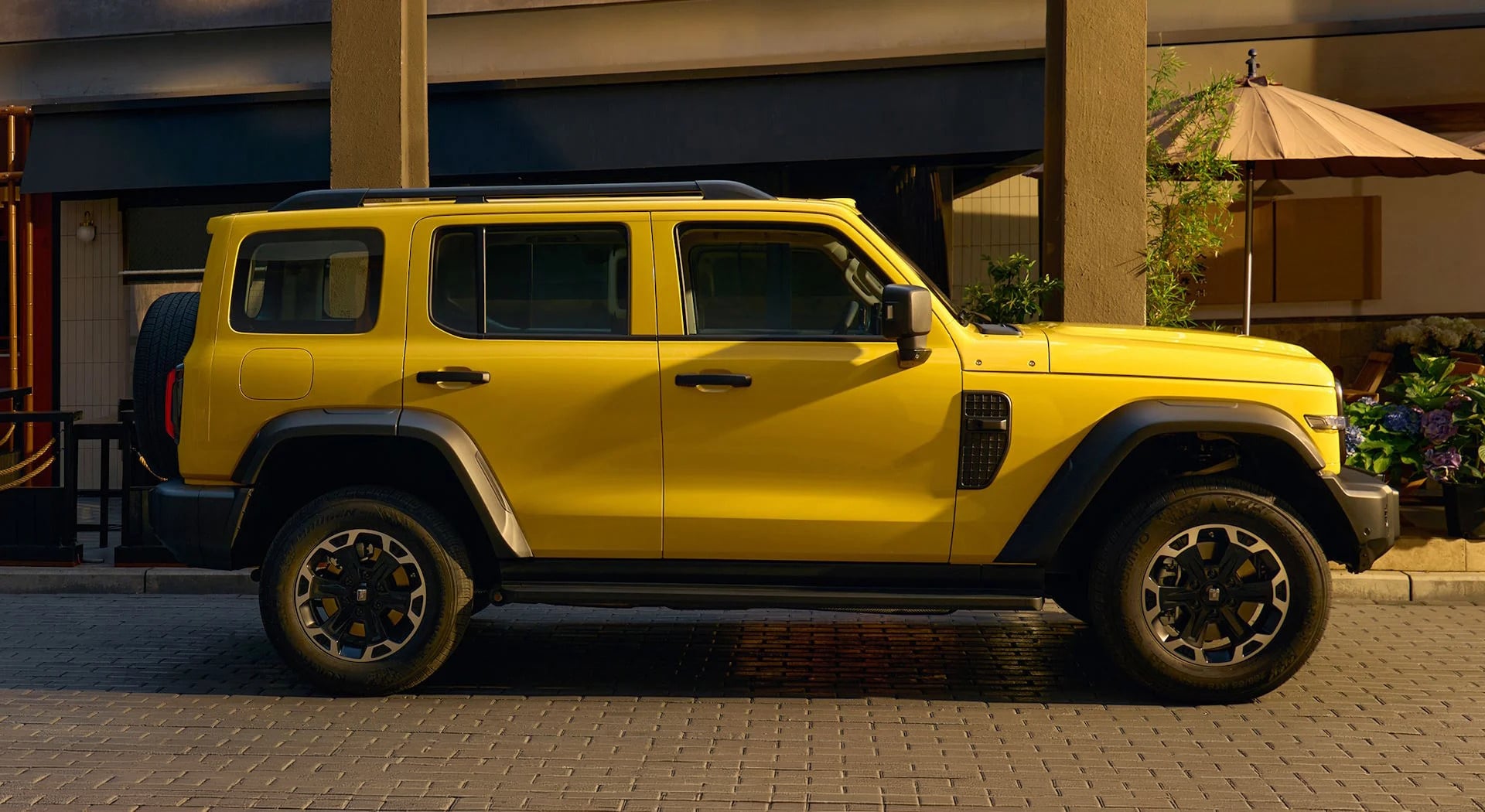
Styling details from the A-pillar back are largely familiar, but GWM has restyled the front end and pushed the front axle forward, equipping the Tank 300 with an extended wheelbase.
Up front, the 2027 Tank 300 now wears a revised grille with two thin horizontal bars and a mesh infill, in place of the current three-bar version fitted locally. The stylised T badge has been replaced with a T-A-N-K wordmark, and for the first time, a smaller GWM logo is included on the grille.
The bonnet appears unchanged, but the front guards have been revised to accommodate the relocated front axle. A new guard vent sits aft of the front wheels, and the cowl panel between the bonnet and windscreen has been extended to bridge the gap.
The wheelbase of the Tank 300 grows from 2750mm currently to 3010mm with the update (+260mm), but overall length has had a smaller growth spurt from 4750mm to 1886mm (+136mm) based on Chinese specifications, which differ slightly from those of Australian models.
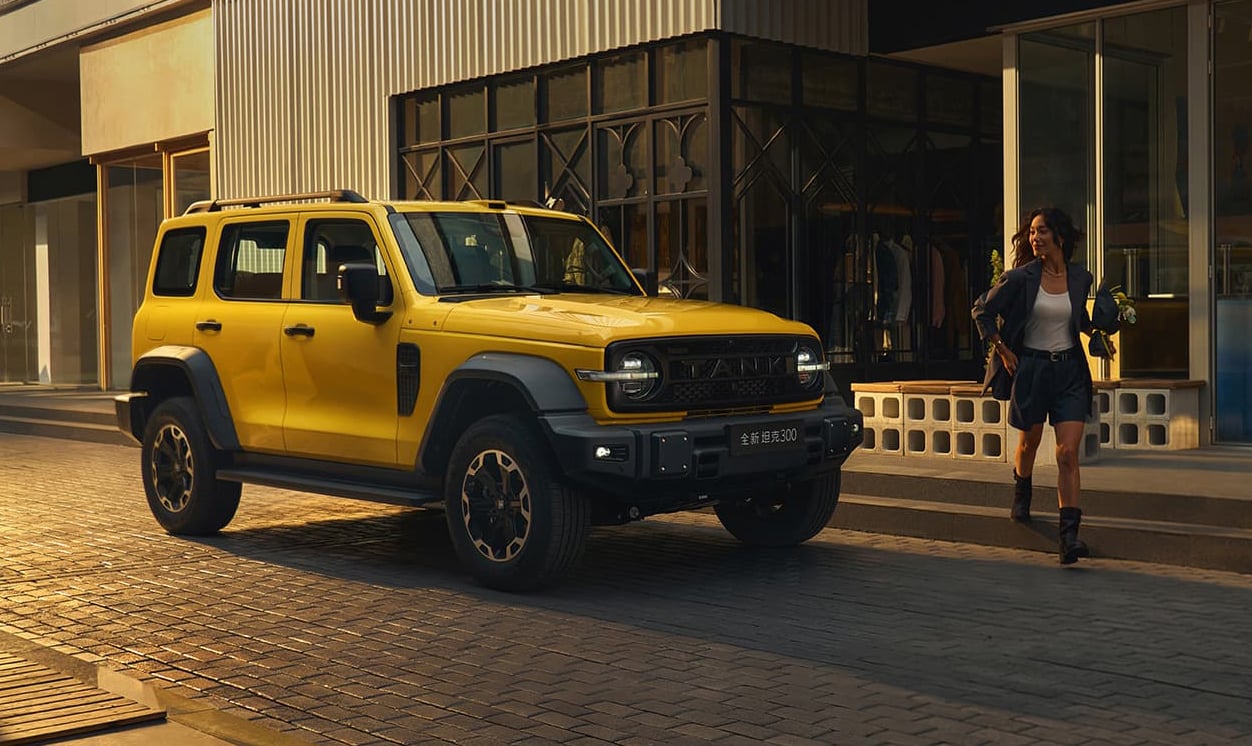
The headline change under the skin is the addition of a new long-range plug-in hybrid (PHEV) model, with a 59.6-kilowatt-hour battery enabling an EV-only driving range of 200km, based on WLTC testing.
Called the Hi4-Z, the new PHEV model pairs its electric system with a 2.0-litre turbo petrol engine. The carryover Hi4-T PHEV model, equipped with a smaller 37.1kWh battery and 105km, continues matching the specifications of the Tank 300 PHEV sold in Australia (which quotes a 115km range here, under NEDC testing).
Combined power outputs for the Tank 300 Hi4-Z have not yet been revealed, but in the larger Tank 400 sold in China, the same drivetrain is rated at 635kW, more than double the Hi4-T currently sold in Australia, which is rated at 300kW.
Other engines in the Chinese line-up include a 3.0-litre turbocharged petrol V6, not sold in Australia, as well as the 2.0-litre four-cylinder turbo petrol and 2.4-litre four-cylinder turbo diesel sold here.
Interior changes see a new dash and centre console fitted, including a much larger infotainment screen, repositioned air vents and climate controls, dual wireless chargers, and a gear selector that moves from console-mounted to steering column-mounted.
Restructuring efforts have, so far, seen the Nissan close factories, reduce production complexity, and streamline the development of new models in an effort to reduce operating costs and restore profits.
While not an official part of Nissan’s published Re:Nissan recovery plan, the Japanese company’s CEO, Ivan Espinosa, has admitted that Nissan’s focus on low-margin, high volume fleet sales has had a damaging ipact on the brand in North America.
In an interview with Reuters, Espinosa revealed that Nissan was actively trying to distance itself from its rental fleet dependency.
“Before, it was like, okay, we want volume, volume, volume.” Espinosa said. “This is not a good way of operating a car company.”
Nissan’s North American operations over the last decade have seen the brand turn to generous discounts and promotional offers designed to sustain volume, with a focus on sales to low-margin outlets like rental car companies and fleet sales.
Espinosa admitted that, as the company reshapes itself, its US sales strategy would see it “stay away” from the rental market. America’s massive rental car market has contributed over 1 million new car sales annually (across all brands) in 2023 and 2024.
Fleet turnover sees cars, on average, traded to the used car market after 18 to 24 months, usually with between 80,000 to 130,000km, according to car rental comparison site, Car Genius. The resulting market trend sees private buyer resale values harmed, and brand reputations for fleet favourites take a beating.
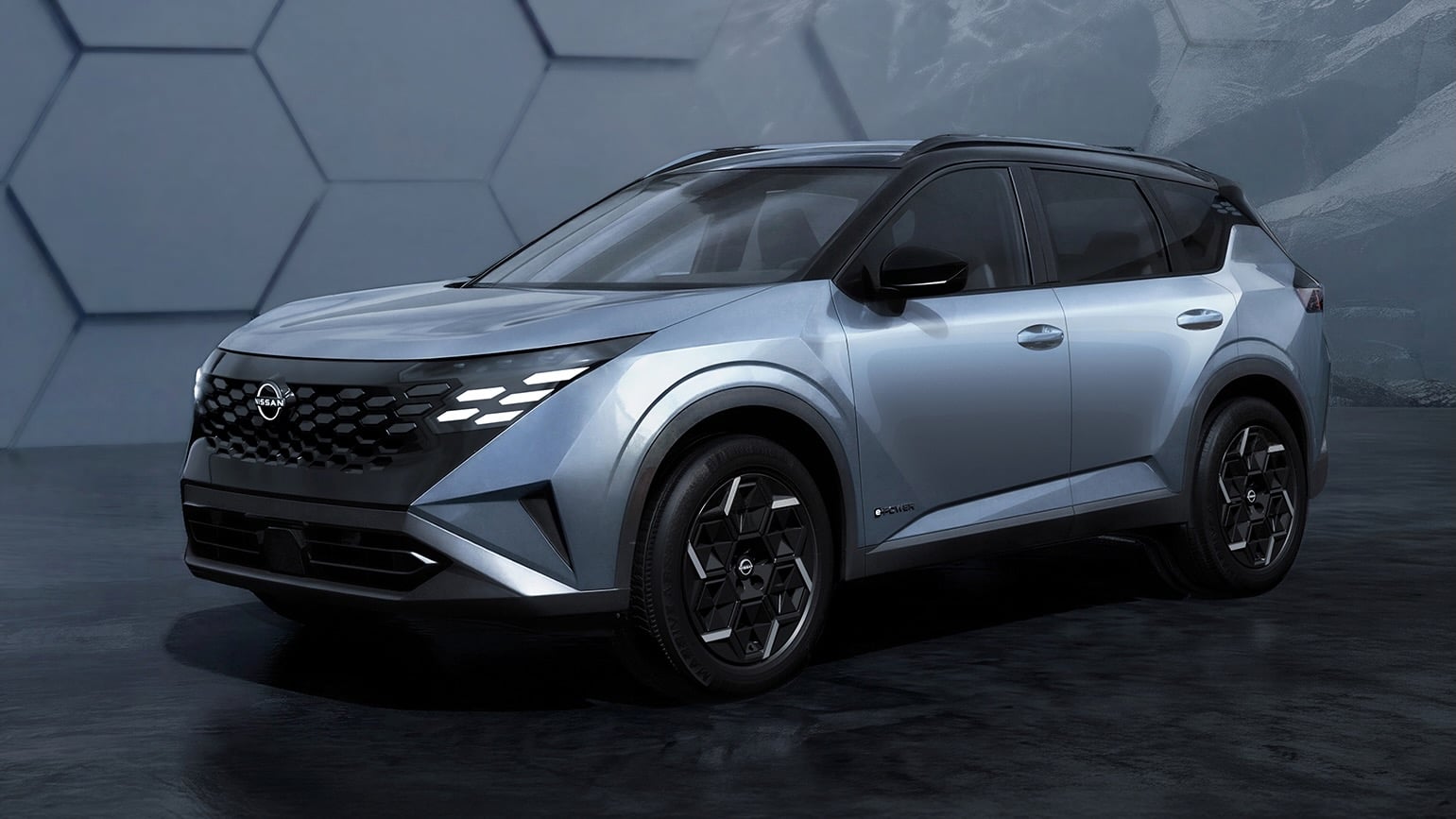
Nissan’s US product plans also play a role in the change, with the company planning larger, high-margin models including as many as four body-on frame SUVs that could push Nissan out of the price-sensitive fleet market.
Nissan’s first major launch as part of its revival plan will come next year, with a new generation X-Trail, sold as the Rogue in the USA, which will introduce the brand’s e-Power hybrid system for the first time in that market.
The troubling track record for Ford as the USA’s most recalled automaker has seen it receive the dubious honour of being “the most problematic vehicle that Americans keep buying anyway.”
Brown & Crouppen, a law firm specialising in road accidents, analysed recall data over the last five years, weighted against sales performance.
The results come from a weighted formula based on recalls per 100,000 cars sold (at 35 per cent), fatal crashes per 100,000 cars sold (35 per cent), a vehicle’s NHTSA safety rating (15 per cent), total sales (15 per cent) and monthly online search volumes (10 per cent). All information is tracked over five years from 2020 to 2025.
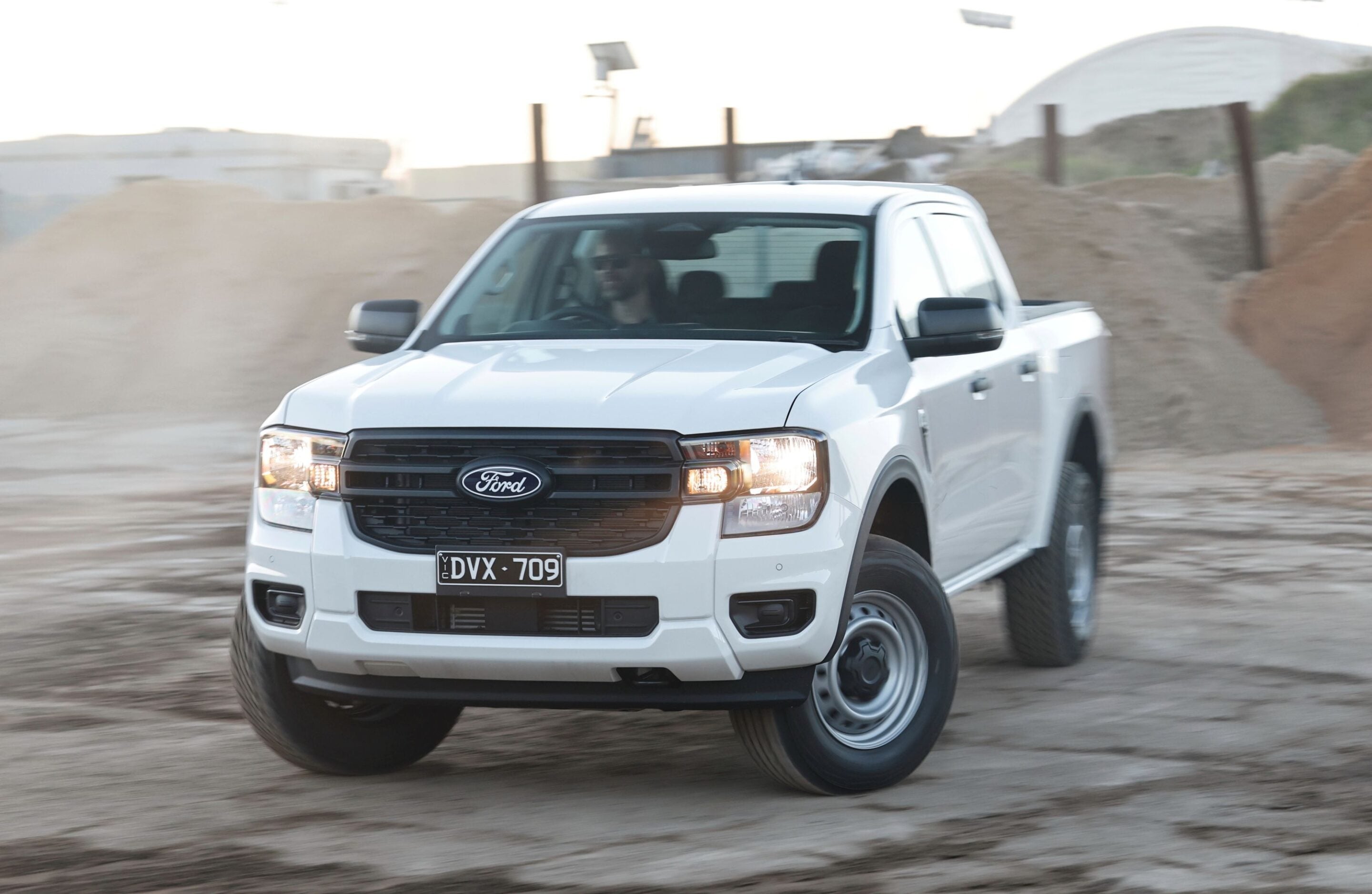
The complex data set gives the Ford Ranger the highest ranking, with a risk-adjusted demand score of 98.99. Second place went to the Ford F-150 – America’s best-selling new commercial vehicle – with a risk-adjusted 84.59 score.
The Nissan Altima was ranked third (79.27), the Mercedes-Benz C-Class came fourth (72.19), and the Porsche Taycan finished fifth (70.94). Of note, the Taycan had the highest number of recalls per 100,000 vehicles, at 187.53. Conversely, the Nissan Altima had the lowest recall rate of the top five, at 1.39 per 100,000.
The Taycan, meanwhile, had the lowest number of fatal crashes, at 10.56 per 100,000 vehicles, while the Ranger had the most, with 484.43.
This latest report comes as a blow to Ford, currently battling a slide in quality and investing heavily in restoring the reputation of both the Ford brand and its luxury Lincoln division.
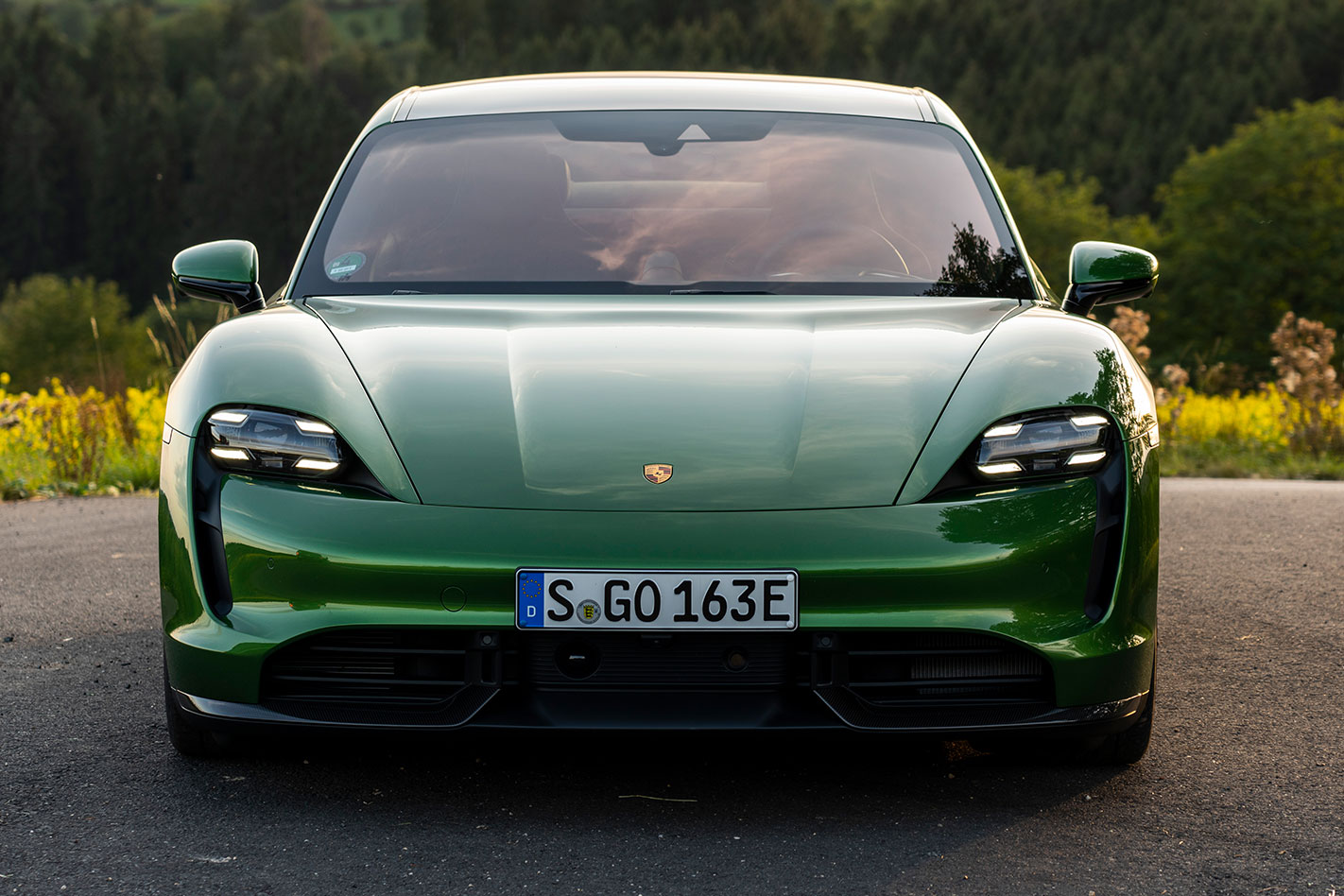
Ford has revised factory operations, increased quality control inspections at North American factories, and introduced AI-assisted technology to identify and rectify potential problems before cars reach customers.
Recall data compiled by the National Highway Traffic Safety Administration (NHTSA) in 2025 revealed that Ford had the most unique recalls of any brand, with 3086 entries in the NHTSA’s recall listings, followed by Chevrolet with 2127 and Mercedes-Benz with 1860.
In the first six months of 2026, Ford Motor Company has issued 53 recalls in the US, more than double the 19 each issued by General Motors and Stellantis. Most recently, Ford announced a recall for over 740,000 vehicles, including the F-150, for a transmission defect that could lead to a roll-away situation.
After a teaser last week and a long development phase, the production version of the McMurtry Spéirling Pure electric track car has been revealed ahead of the first deliveries commencing later this year. Now even more capable than the pre-production models that set numerous records like the quickest ever run at the Goodwood Hill Climb, the Spéirling Pure is so fast that it’s been described as “like driving on fast forward.”
The first version of the Spéirling originally debuted at the 2021 Goodwood Festival of Speed and in 2022 set the record for the hill climb at just 39.08 seconds. Since then, it’s set more lap records, including at the Top Gear Test Track at just 55.9 seconds — or, around four seconds faster than the previous record holder, a Renault F1 car — and beat a Mercedes-AMG One around Hockenheim by over 14 seconds.
The Spéirling has also driven upside down, a feat completed thanks to its ‘Downforce-on-Demand’ system that’s basically a vacuum on the rear axle. Because of that, it generates a massive 2000kg of downforce and can reach up to 3g in corners and under braking, according to its maker. It’s this feature that allows it to stick to the road and punch out such incredible performance numbers and fast times.
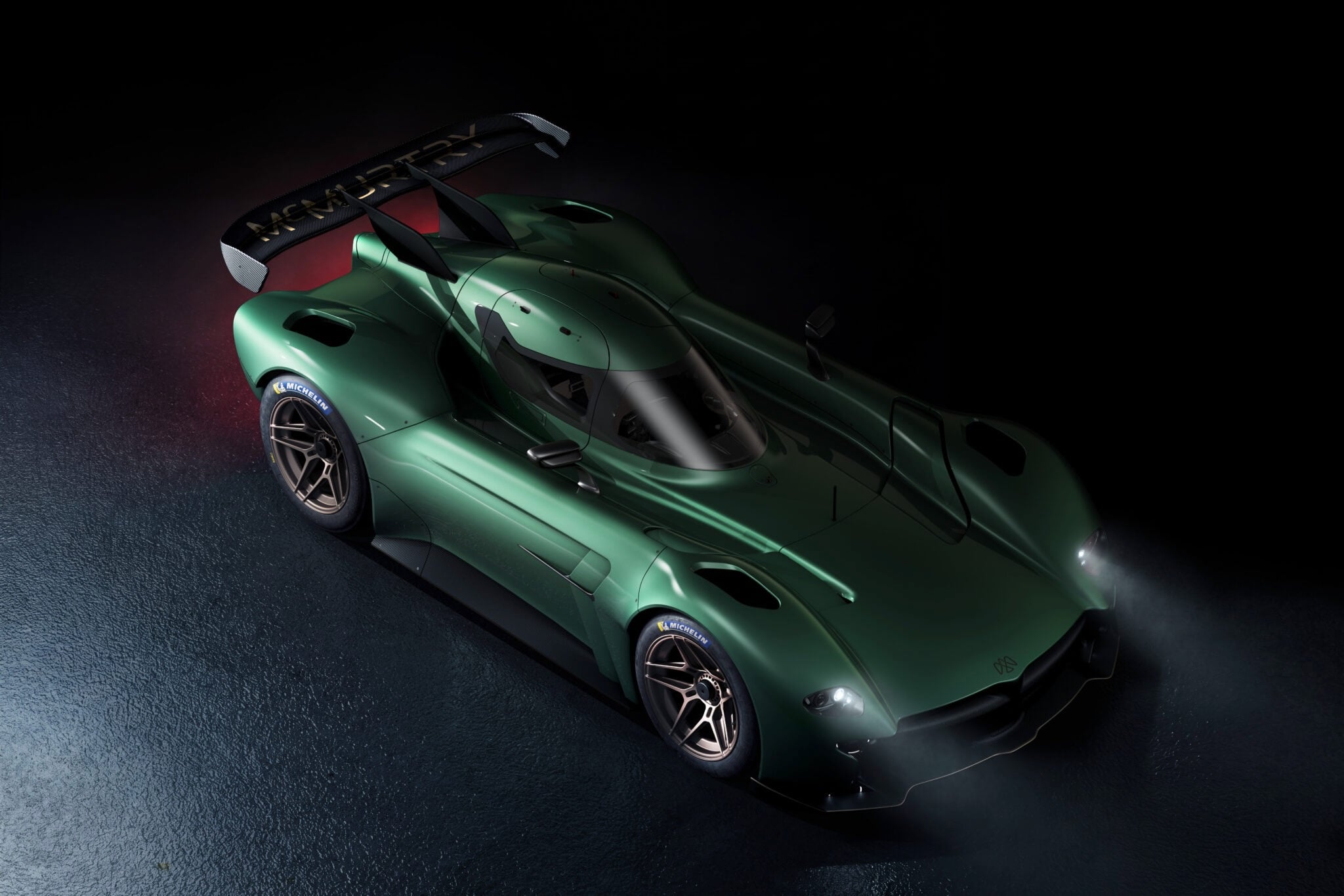
Using a twin-motor electric set up making 1000bhp (746kW) of power, the Spéirling Pure sprints to 100km/h in just 1.6 seconds and on to a top speed of around 306km/h (190mph).
The other statistics are equally as impressive: The Spéirling Pure weighs 1350kg (kerb), can be charged at up to 350kW for a full charge in around 20 minutes with a full charge lasting around 48km at LMP2 driving pace and can even fit somebody who’s six foot seven tall.
Compared to the pre-production models, the production Spéirling Pure uses a larger 100kWh battery and to accommodate it, an 80mm-longer body with a redesigned carbon fibre monocoque.
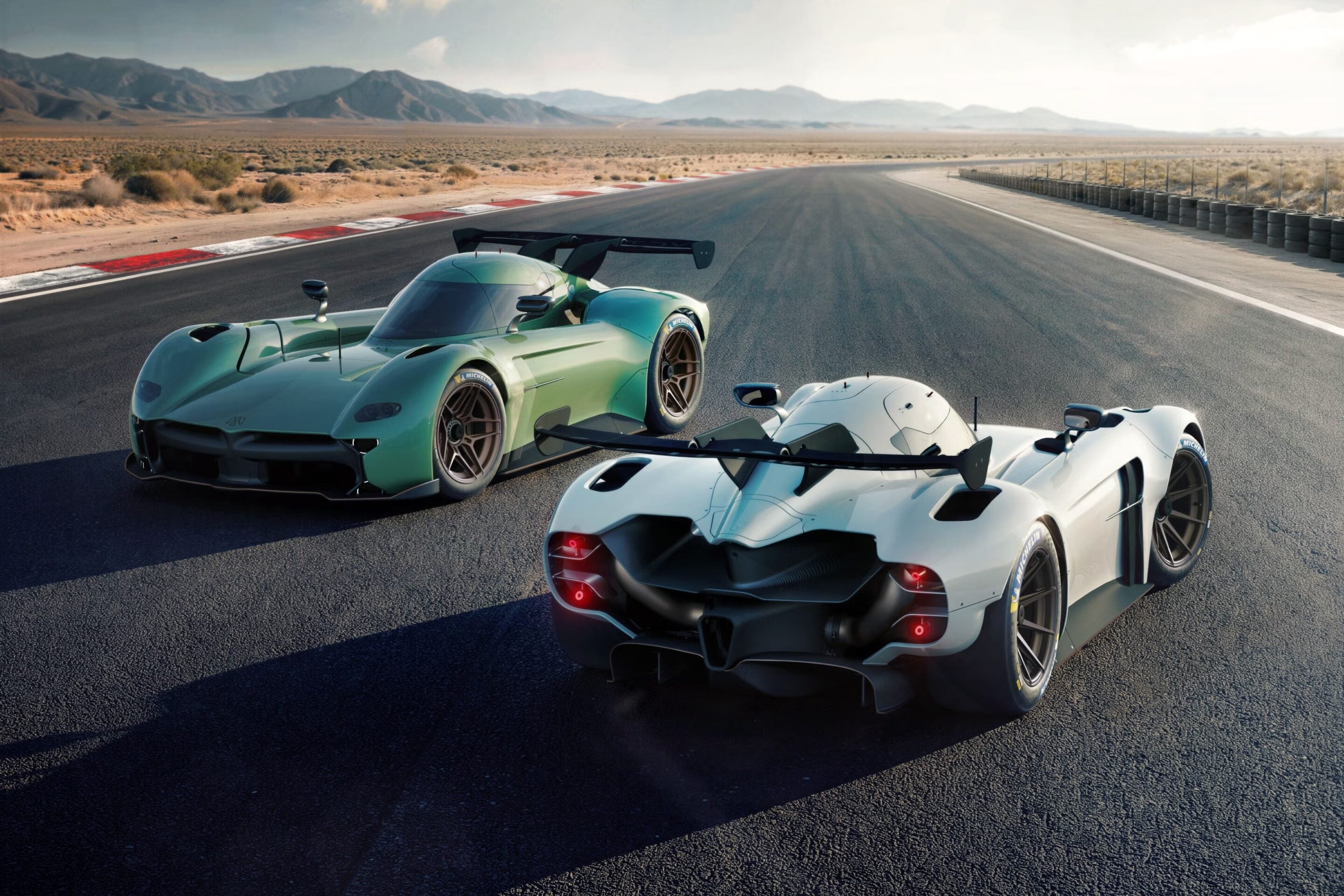
Because of the longer body, there’s now also more cabin space with more storage space for a helmet, while the company has also integrated lighting and easier access for servicing. According to McMurtry, around 95 per cent of its components are new compared to pre-production examples.
Pricing for the McMurtry Spéirling Pure in the UK starts at the equivalent of around A$1.9 million before options, and the company reportedly has over 25 orders already. Australian prospects are unknown, but we’re hoping to see one lapping — and no doubt setting records — at circuits like Phillip Island soon.
Thanks to their insane practicality, people movers have long been the smartest choice for large families, and while it’s not as popular as its Kia Carnival cousin, few do the job better than the Hyundai Staria. Already one of the segment’s standout offerings thanks to its cavernous cabin and cool futuristic styling, the facelifted model has introduced a luxurious new Lounge flagship.
It’s also the only Staria available with Hyundai’s 180kW 1.6-litre turbo-petrol hybrid powertrain, pairing greater efficiency with a more refined driving experience. But is this premium people mover the luxury family hauler to beat, or are buyers better served elsewhere?
How much does the Staria Lounge cost to buy?
The updated Staria range starts at $54,300 plus on-road costs for the entry-level model called just ‘Staria’, and that’s for either the 3.5-litre petrol V6 or 2.2-litre four-cylinder turbo-diesel. Above that sits the $73,740 +ORC Lounge, which is solely available in new hybrid form, and is the only hybrid model available.
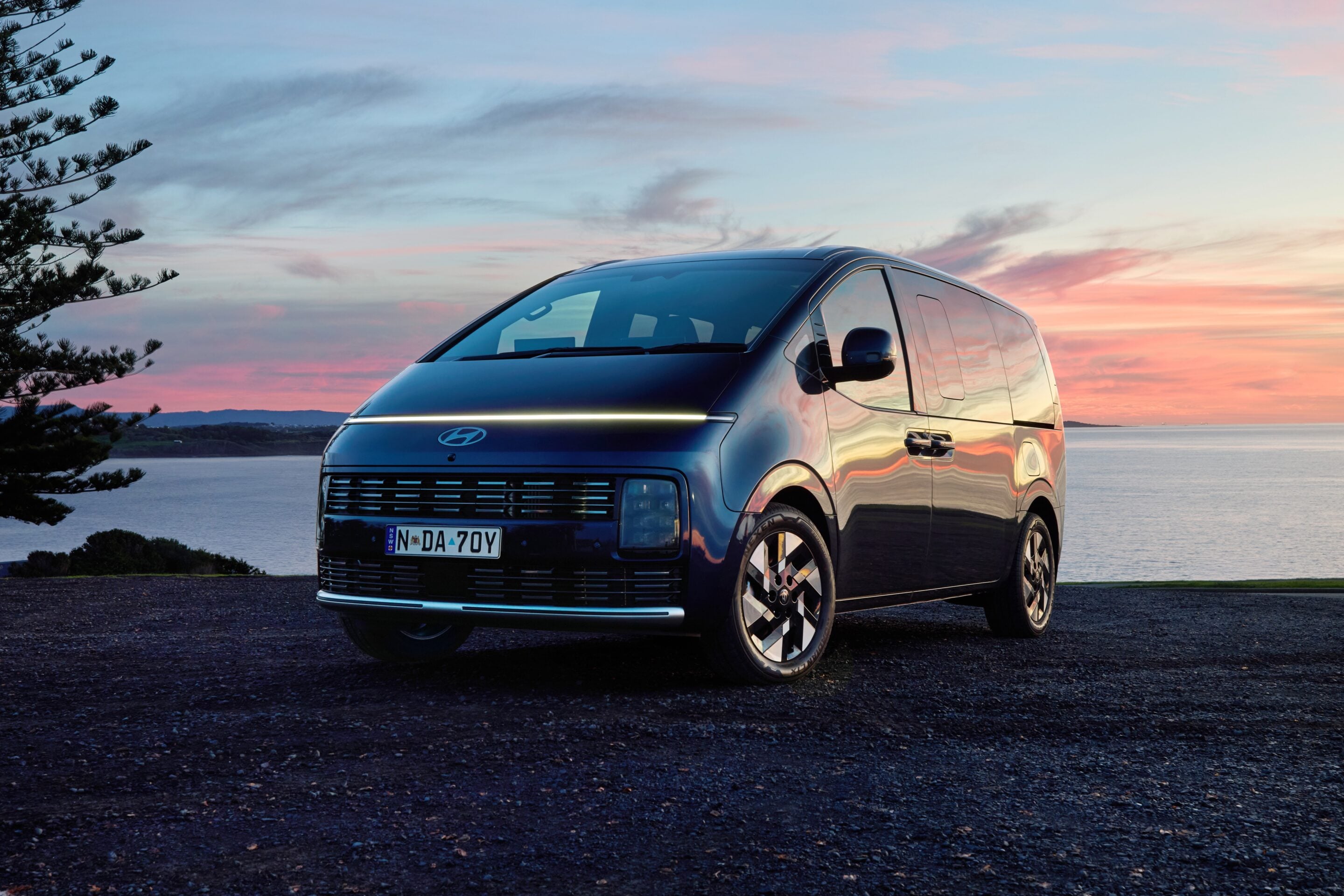
Those familiar with the pre-updated Staria range will note that the previous mid-spec Elite is no longer available, while the previous top-spec Highlander is also gone with the new Lounge a step up on that. As a result, there’s a massive almost-$20,000 price gap between models, and an equally massive gap in standard equipment as well.
Compared to the base model, the Lounge adds a whole host of features, including dual sunroofs, Nappa leather upholstery, electric front seats, captain’s chairs in the second row with electric adjustment and heating and ventilation, cameras for the blind-spot monitoring and a 360-degree camera. Plus, the aforementioned hybrid drivetrain.
Staria Lounge standard features:
- 18-inch alloy wheels
- Dusk-sensing automatic LED exterior lighting
- Rain-sensing automatic wipers
- Keyless entry with push button start
- Dual sunroofs
- Heated/auto-folding mirrors
- Electric tailgate
- Dual electric sliding doors
- Rear privacy glass
- Dual-zone automatic climate control (one zone for the front and one for the rear)
- Heated leather steering wheel
- Nappa leather upholstery
- Heated front seats with 12-way driver/eight-way front passenger electric adjustment
- Heated and cooled second row captain’s chairs with eight-way electric adjustment
- Heated and cooled third row seats
- 12.3-inch digital driver’s display
- 12.3-inch touchscreen with over-the-air updates
- Wireless and wired Apple CarPlay and Android Auto
- Satellite navigation
- AM/FM/DAB+ digital radio
- Bluetooth calling and audio streaming
- 14-speaker Bose sound system
- Wireless smartphone charger
- 6x USB-C charging ports
- Ambient lighting
- 7x airbags
- Autonomous emergency braking
- Adaptive cruise control
- Lane keeping assistance with adaptive lane guidance
- Blind-spot monitoring with rear cross-traffic alert (with braking)
- Safe exit assist
- Driver attention monitoring
- Traffic sign recognition
- Auto high beam
- 360-degree camera
- Blind-spot camera
- Front, side and rear parking sensors
- Tyre pressure monitoring
- Anti-theft alarm
Competition to the Staria Lounge is not plentiful in Australia, with only the related Kia Carnival ($56,310 +ORC for the base model, but $76,840 +ORC in equivalent GT-Line spec) or the much more expensive Lexus LM ($163,520 +ORC) offering a hybrid drivetrain. If you’re willing to expand your drivetrain hunt to a plug-in hybrid, there’s the GAC M8 ($76,590 +ORC), while the electric Zeekr 009 ($115,900 +ORC) and electric or turbo-diesel Mercedes-Benz V-Class (from $120,000 +ORC) are also available.
As a luxury MPV, the Staria presents good value for money. For example, it’s better equipped and larger than the [eight-seat] Carnival GT-Line, but it’s also $3100 less expensive. Then compared to something like the V-Class or LM, it’s at least $45,000 less expensive, but more spacious inside. We think the price gap between the base model and Lounge is still too much — or there should be at least one model in the middle — but as before, the Staria still presents good value for money.
How fuel efficient is the Staria Lounge?
There are three drivetrains available in the Staria people mover range: the 200kW/331Nm 3.5-litre petrol V6 or 130kW/430Nm 2.2-litre turbo-diesel previously available, or a new 180kW/304Nm 1.6-litre turbo-petrol hybrid. Like the other drivetrains, the hybrid uses an automatic transmission (a six-speeder, like in the Santa Fe and Tucson) and is front-wheel drive.
The hybrid’s big advantage comes at the fuel pumps: while the petrol V6 is rated at 10.5L/100km on the combined cycle and the diesel 7.0L/100km, the hybrid improves fuel use to 6.5L/100km. In the real world, in a variety of driving on the launch program on Sydney’s Northern Beaches, we achieved 7.6L/100km. In a more run in car on flatter terrain, we’d likely get even better numbers.
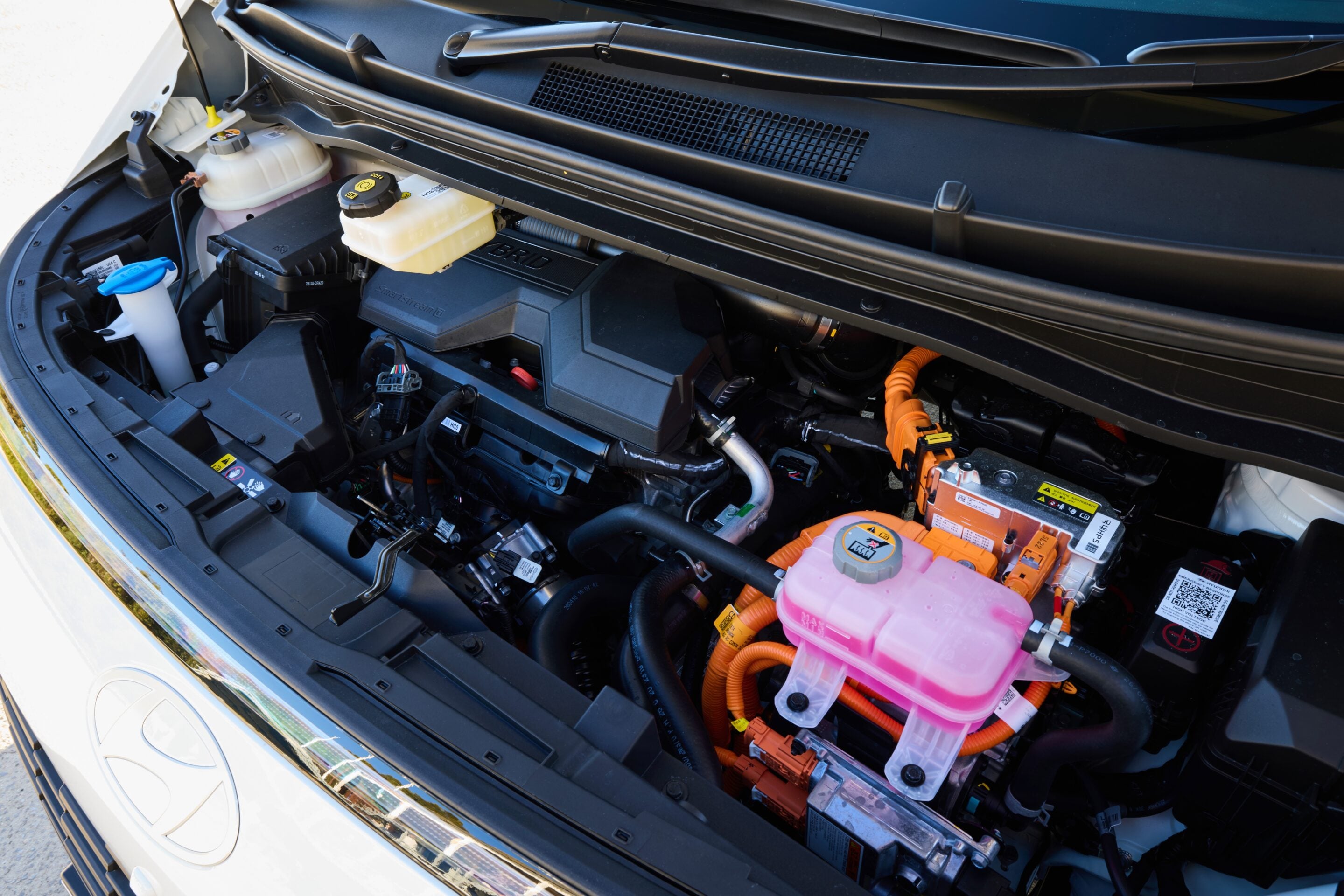
The hybrid drivetrain is definitely the pick in the Staria range. People movers like the Carnival and the V-Class have traditionally used turbo-diesel engines, which provide ample performance and good fuel economy, but they’re hardly the most refined engines out there. The hybrid not only provides superior performance to the diesel — it makes 50kW more power, for example — but it’s also a lot more refined, with none of the turbo-diesel clatter we’ve become used to in people movers. If you’re looking to tow with your Staria, like the Staria Load van, the hybrid cannot tow, so V6 or diesel it is for you.
On the road, the Staria Lounge is impressively refined for road noise too and is quite serene, especially when running in electric mode, some of which is due to the enhanced noise insulation in the updated model. Part of the update also included retuned shock absorbers and we noticed that the front suspension is quite absorbent but the rear is a bit too stiff over even smaller bumps. It’ll likely soften with more aboard, and was still entirely comfortable, but just something to note.
How luxurious is the Staria Lounge?
Firstly, let’s discuss the most obvious transformation point with the Lounge and that is the second row captain’s chairs. Called ‘relaxation seats’ by Hyundai, they’re very comfortable and highly electrically adjustable too. They also feature both heating and ventilation, and although there’s no rear-mounted display for business meetings, there is a huge panoramic glass roof to keep kids entertained.
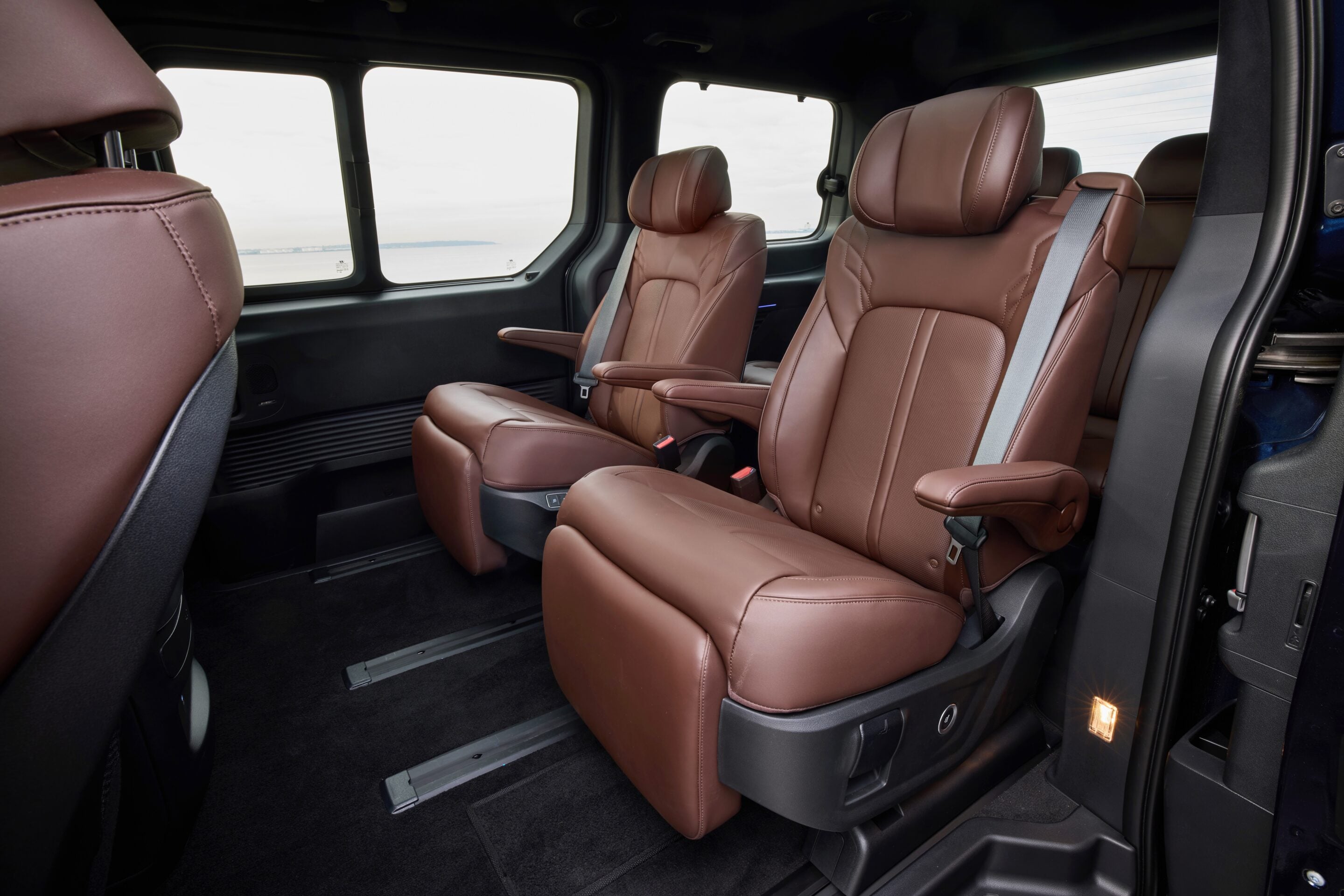
If you’re a family and use child seats, those captain’s chairs will be used for child seat duty because — like the standard Staria models — there are no child seat points at all in the third row, which is disappointing. For reference, a Kia Carnival features child seat points in its third row, and it’s a missed opportunity for Hyundai to not do the same for the Staria.
In the cabin front of the Staria Lounge is still such a spacious and practical space. There are plenty of storage spots around the cabin, including the massive centre bin and clever lower storage, like where the wireless phone charger is located, as well as the cool cup holder to the right of the driver’s display.
Thanks to 12 ways of electric adjustment, the driver’s seat comfort is excellent, and the high driving position is commanding. Visibility is good for a people mover, thanks to its large mirrors, big windows and — unfortunately only on the Lounge — very useful 360-degree and blind-spot cameras. The Lounge’s quality is also a nice step up compared to other Staria models thanks to the high quality Nappa leather trim, which is available in three colours, and even the suede pillar and roof lining. Lush!
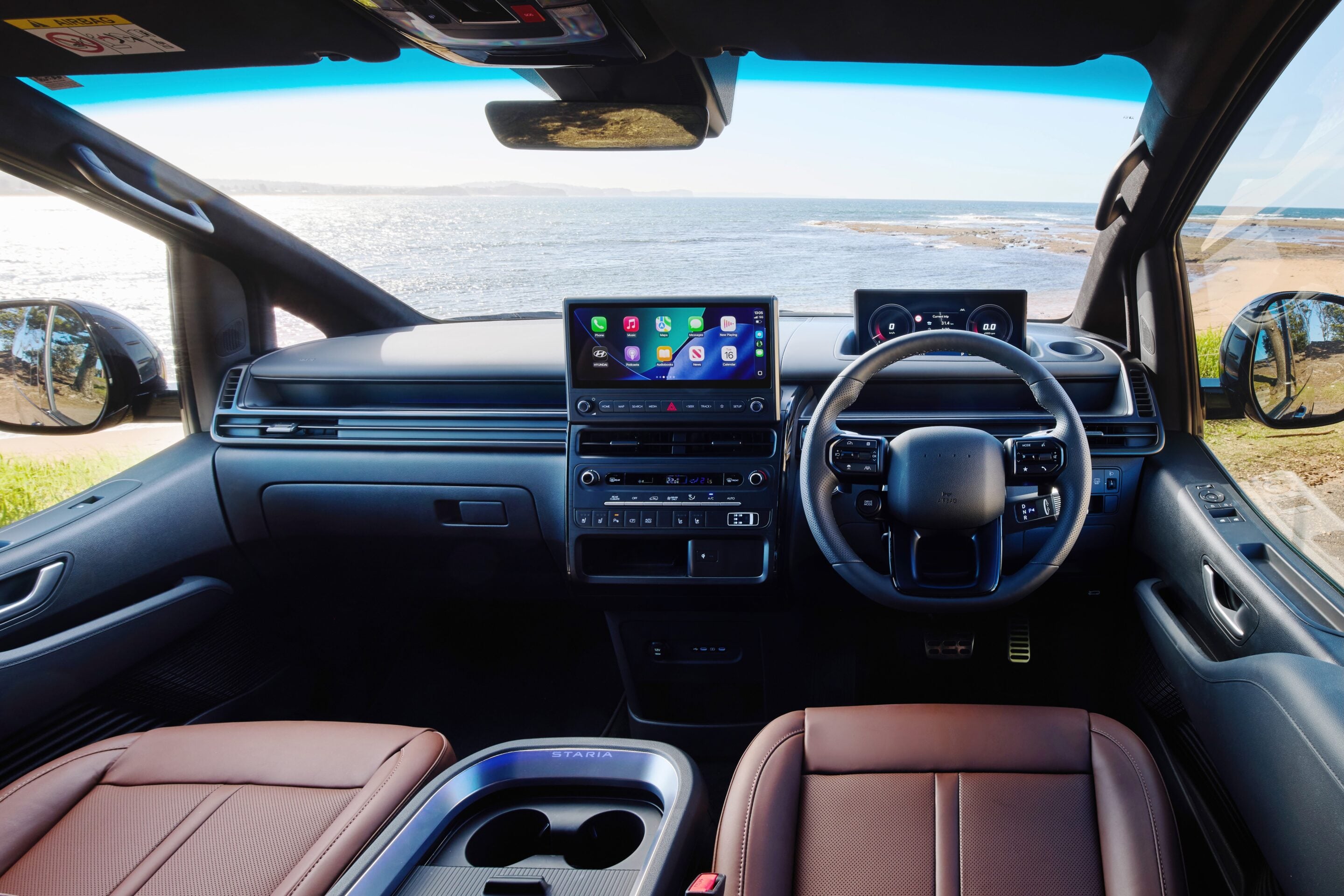
Hyundai’s ‘ccNc’ infotainment software was another recent addition to the Staria range, and it’s really modernised the cabin nicely. Featuring on all models with kit like wireless Apple CarPlay and Android Auto, sat-nav, DAB+ digital radio and Bluetooth calling and audio streaming, it’s very simple to use. The 14-speaker Bose sound system is also punchy, and we appreciate features like the in-car camera so that parents can really see who hit who in the back.
How much does the Staria Lounge cost to service?
For private buyers, the Staria Lounge is covered by Hyundai’s five-year/unlimited km warranty, which can be extended to seven years in total if serviced through a Hyundai dealership. Having said that, if it’s used for commercial purposes, the mileage switches to 160,000km instead. Regardless of useage, the hybrid battery is covered for eight years or 160,000km.
Five years of servicing the Lounge costs $2439 ($488 per service on average), which is less expensive than the diesel but the diesel’s annual service intervals are 5000km longer at 15,000km.
Should I buy a Hyundai Staria Lounge?
It’s clear that Hyundai has tried to make the Staria as luxurious as something like a Palisade Calligraphy with the new Lounge model, and in some ways, it’s worked. The second row captain’s chairs are very comfortable and very adjustable and the Nappa leather used is high quality, making the Lounge certainly feel more special inside than a regular Staria, and indeed a Kia Carnival GT-Line.
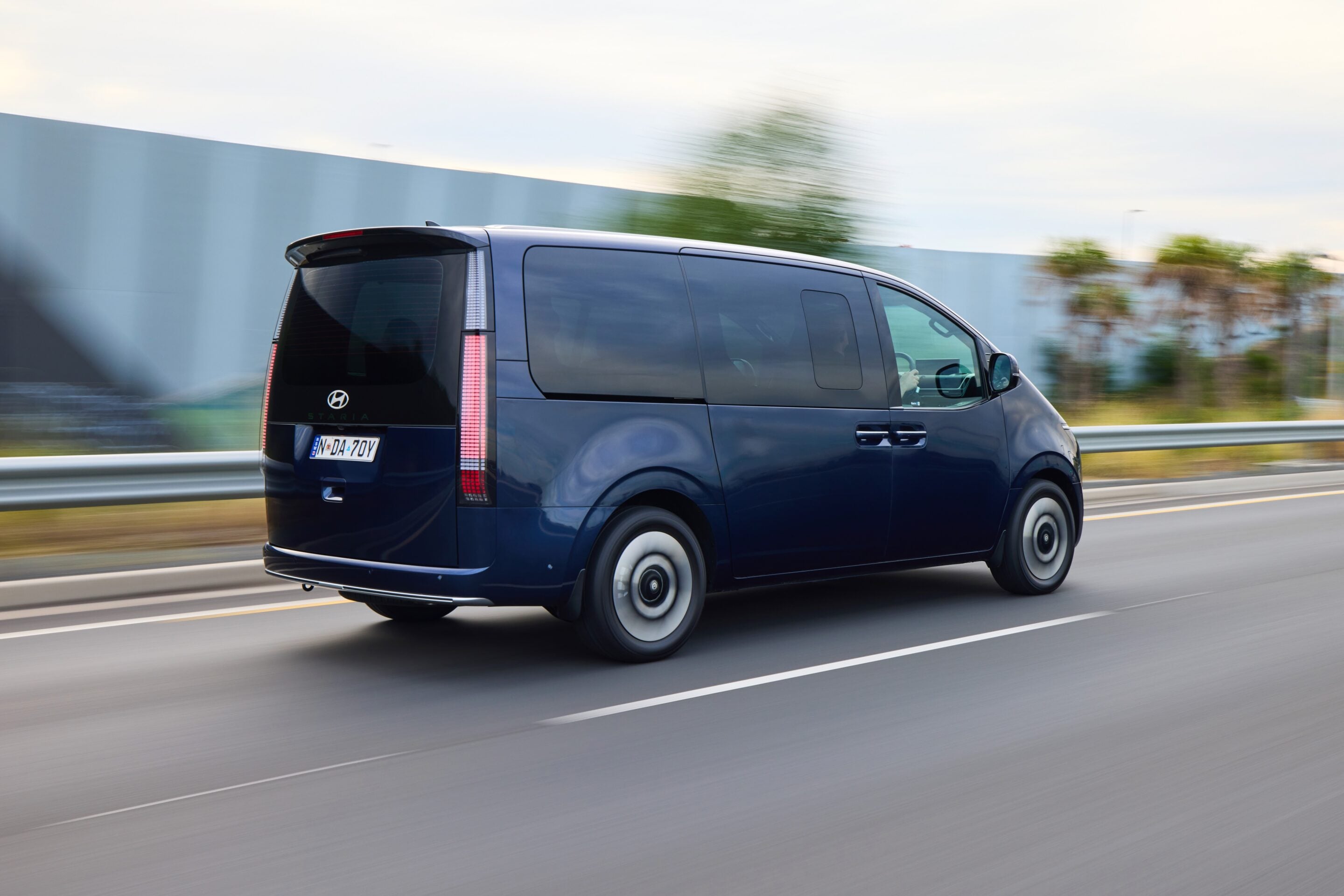
The new hybrid powertrain also adds welcome refinement and impressive fuel efficiency to the overall package. Compared to rivals, the Staria Lounge is also good value for money as not only is it huge inside, but it’s very well equipped as well. Having said that, there is a huge gap in both price and equipment between regular Staria models and the Lounge, and the Lounge’s ride quality is a bit too firm. The Hyundai Staria is a great people mover, as it was before, but we’re now hoping to see the excellent hybrid drivetrain filter down to a lower-spec model in the range.
Staria Lounge specifications:
- Car: Hyundai Staria Lounge
- Price: $73,740 plus on-road costs
- Drivetrain: 1598cc turbocharged four-cylinder turbo-petrol hybrid
- Peak power: 180kW
- Peak torque: 304Nm
- Transmission: Six-speed automatic, front-wheel drive
- Claimed combined fuel consumption: 6.5L/100km
- Claimed combined CO2 emissions: 147g/km
- Fuel type/tank size: 91 RON regular unleaded, 65 litres
- Dimensions (L/W/H/WB): 5253/1997/1990/3273mm
- Boot capacity: 117 – 431 litres
- Kerb weight: 2378kg
- Warranty: Five-year/unlimited km or five-year/160,000km for commercial use (car), eight-year/160,000km (battery)
- Five-year service cost: $2439 (average of $488 per annum)
- On sale: Now
Until recently, Australia’s van market has largely been dominated by diesel power, with electrification arriving only in the form of a few electric and plug-in hybrid commercial vehicles. Hyundai is looking to change that with the new Staria Load Hybrid, which is the country’s first hybrid van without the need to charge. Considering the popularity of hybrid drivetrains in other types of vehicles, it’s a surprise that no car maker has previously offered in in Australia.
Promising lower fuel consumption and added refinement compared to diesel rivals without the range anxiety of an EV, the Staria Load Hybrid aims to bridge the gap between traditional diesel workhorses and an increasingly electrified future. But is hybrid technology enough to give it an edge in Australia’s medium commercial van segment? Let’s find out.
How much does the Staria Load cost to buy?
Pricing for the updated Staria Load range starts at $49,990 plus on-road costs for the diesel (+$2250 on the pre-updated model) and $53,490 +ORC for the new hybrid. Above the base model once again is the Staria Load Premium, which is priced from $61,240 +ORC, which is $8500 more expensive than the previous Premium, though it’s now powered by hybrid and not diesel power.
A fully electric Staria Load variant is also due later in 2026, with pricing yet to be announced.
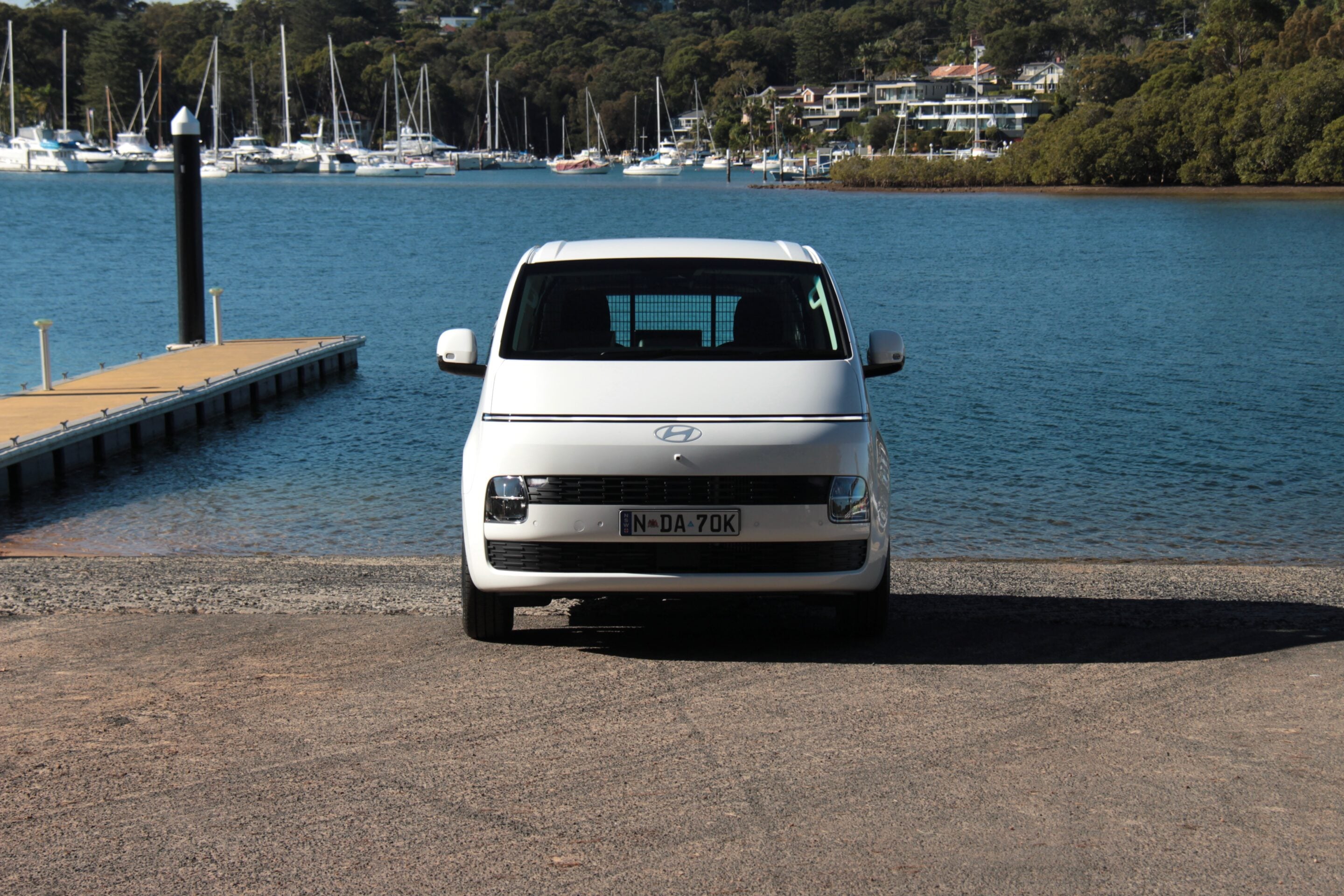
The main competitors to the Staria Load are the Toyota HiAce (priced from $53,880 plus on-road costs as an automatic, and only available as a turbo-diesel despite Toyota’s long history with hybrid tech) and Ford Transit Custom (from $56,890 +ORC). Both vans are big sellers as well, and also offer a wide range of talents in the van segment. Plus, if you’re after electrification and can charge your van regularly, the Transit is available in both electric and plug-in hybrid forms — though, not a regular hybrid just yet.
2026 Hyundai Staria Load pricing
- Diesel: $49,990
- Hybrid: $53,490
- Electric: TBC
- Premium Hybrid: $61,240
The new hybrid drivetrain is unique in the van segment, and is a welcome addition. There are both fully electric and plug-in hybrid drivetrains offered in other van products locally, but this is the first time a hybrid has been offered in a van. As such, it’s in a class of its own for value, and remains relatively sharply priced against the diesel. Having said that, the $7750 premium for the, uh, Premium is a lot.
Thankfully, the Staria Load is well equipped for a van, especially with active safety features. Buyers will find everything they could need in an entry-level van, including auto-folding mirrors, a leather steering wheel, manual air-conditioning (automatic climate control in the hybrid), a 12.3-inch touchscreen with sat-nav and wireless smartphone mirroring and a long list of safety kit.
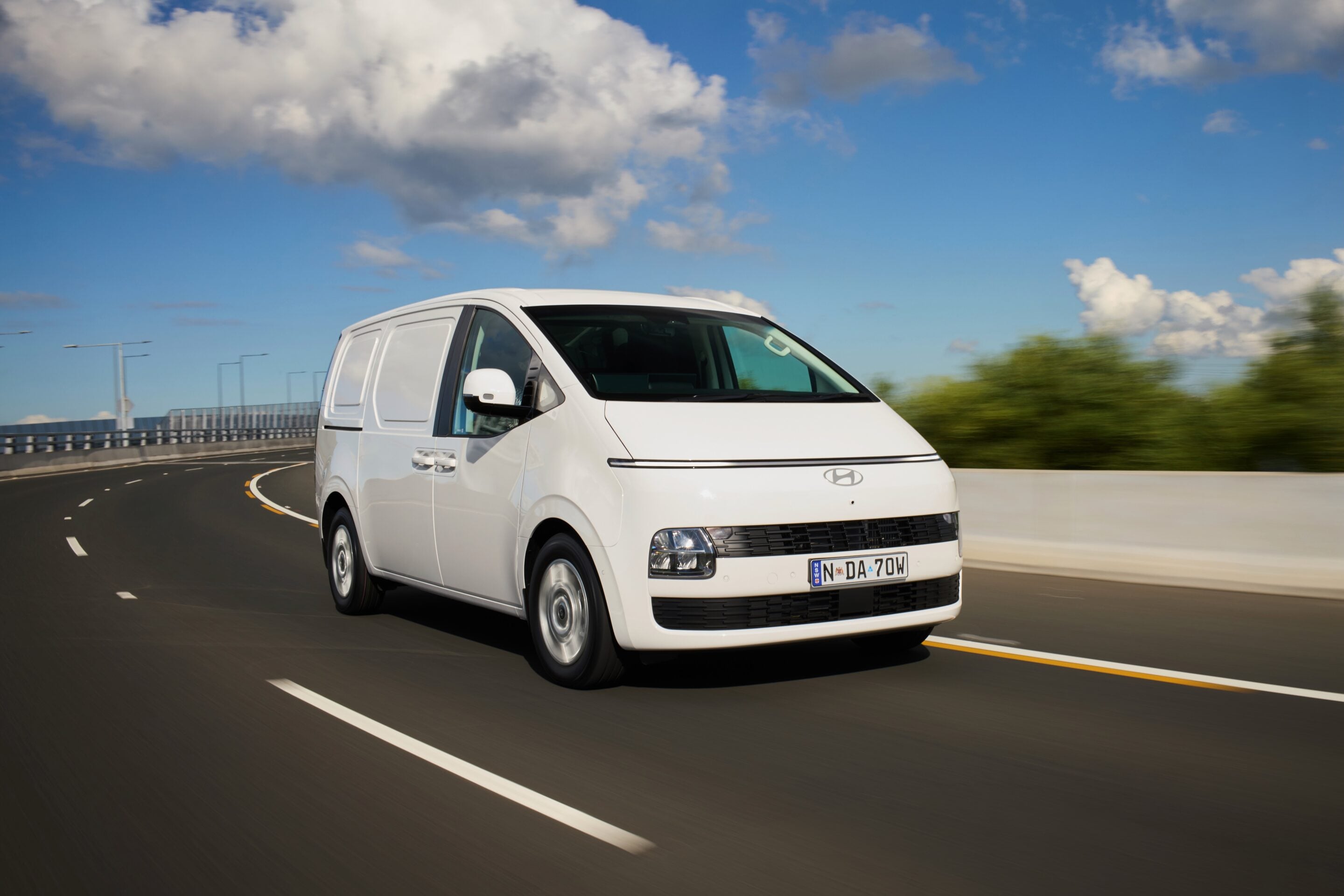
Above the regular Load, the Premium adds features like 17-inch alloy wheels, a 360-degree camera, heated steering wheel, heated seats, LED exterior lighting, an electric tailgate and Hyundai’s cool blind-spot cameras. The Premium does add a lot of cool features — some of which we think should be standard on the base Load, like LED lighting — but does the extra $7750 transform it into an even more capable van? We don’t think so, so it’s not a necessary extra spend.
Staria Load standard features
- 17-inch steel wheels
- Dusk-sensing automatic halogen headlights
- Heated/auto-folding mirrors
- Keyless entry with push-button start and remote window control
- Leather steering wheel
- Manual air-conditioning (Hybrid adds single-zone automatic climate control)
- 4.2-inch driver’s display
- 12.3-inch touchscreen with over-the-air updates
- Bluelink live services
- Wireless Apple CarPlay and Android Auto
- Satellite navigation
- AM/FM/DAB+ digital radio
- Bluetooth calling and audio streaming (multiple devices at once)
- Five-speaker sound system
- 2x USB-C charging ports
- Wireless smartphone charger
- Rubber cargo mat
- 7x airbags
- Autonomous emergency braking
- Adaptive cruise control
- Lane keeping assistance with adaptive lane guidance
- Blind-spot monitoring with rear cross-traffic alert (with braking)
- Safe exit assist
- Driver attention monitoring
- Auto high beam
- Reversing camera
- Front and rear parking sensors
- Tyre pressure monitoring
Staria Load Premium model adds over Staria Load
- 17-inch alloy wheels.
- Full-sized alloy spare wheel
- LED headlights and tailights, including scrolling rear indicators and rear fog light
- Horizon garnish light
- Heated front seats
- Heated steering wheel
- Highway driving assist (HDA)
- Front, side and rear parking sensors
- 360-degree camera
- Power opening tailgate
- Electrochromic mirror (ECM)
- Blind-spot camera
- 12.3-inch digital driver’s display
- Remote smart parking assist system
How fuel efficient is the Staria Load?
There are two drivetrains available: the 130kW/430Nm 2.2-litre turbo-diesel previously available or the new 180kW/304Nm 1.6-litre turbo-petrol hybrid. Both use automatic transmissions (an eight-speed in the diesel and six-speed in the hybrid) and both are front-wheel drive. The diesel is rated at 7.0L/100km on the combined cycle, while the petrol-hybrid improves fuel use to 6.5L/100km. On the launch program carrying 350kg of weight in the back, we achieved 7.3L/100km over various driving conditions in the hybrid, which is impressive.
Aside from some electric and plug-in hybrid offerings, vans are traditionally powered by diesel engines and while the hybrid isn’t amazingly more efficient on paper, it does punch out 50kW more power than the diesel, making it feel noticeably stronger on the road, even with a 350kg load in the back like we experienced on the launch program. While the hybrid doesn’t offer as much torque as the diesel (304Nm versus 430Nm), the instant torque from the electric motor does a lot to help.
One of the biggest benefits of electrified vans is the added refinement. Diesel engines have come a long way in their noise, vibration and harshness (NVH) and the Load’s diesel is much more refined than the 2.8-litre turbo-diesel in the Toyota HiAce, but the petrol hybrid drivetrain in the Staria Load is a revelation in comparison with its relatively quiet atmosphere, even at full throttle. Of course, the open rear means that it’s not too quiet for road noise, but it’s still fine.
Hyundai says that it’s retuned the front shock absorbers and generally improved the ride for the updated model and while we didn’t get to spend a huge amount of time in it at launch, the Staria Load, previously already a good van to drive, is even better now. Sure, it’s no sports car and a Ford Transit Custom remains the most car-like medium van to drive, but the Staria Load feels more nimble than its size would suggest and its steering is nicely weighted and quick for a van as well.
How practical is the Staria Load?
It’s a van, so quite practical indeed. We aren’t sure why more people aren’t buying vans as they offer far more practicality than utes that sell in far larger numbers than they do. Having said that, the Staria Load, thanks to its smaller size, is not quite as capacious inside as a Toyota HiAce, nor the long wheelbase Ford Transit Custom.
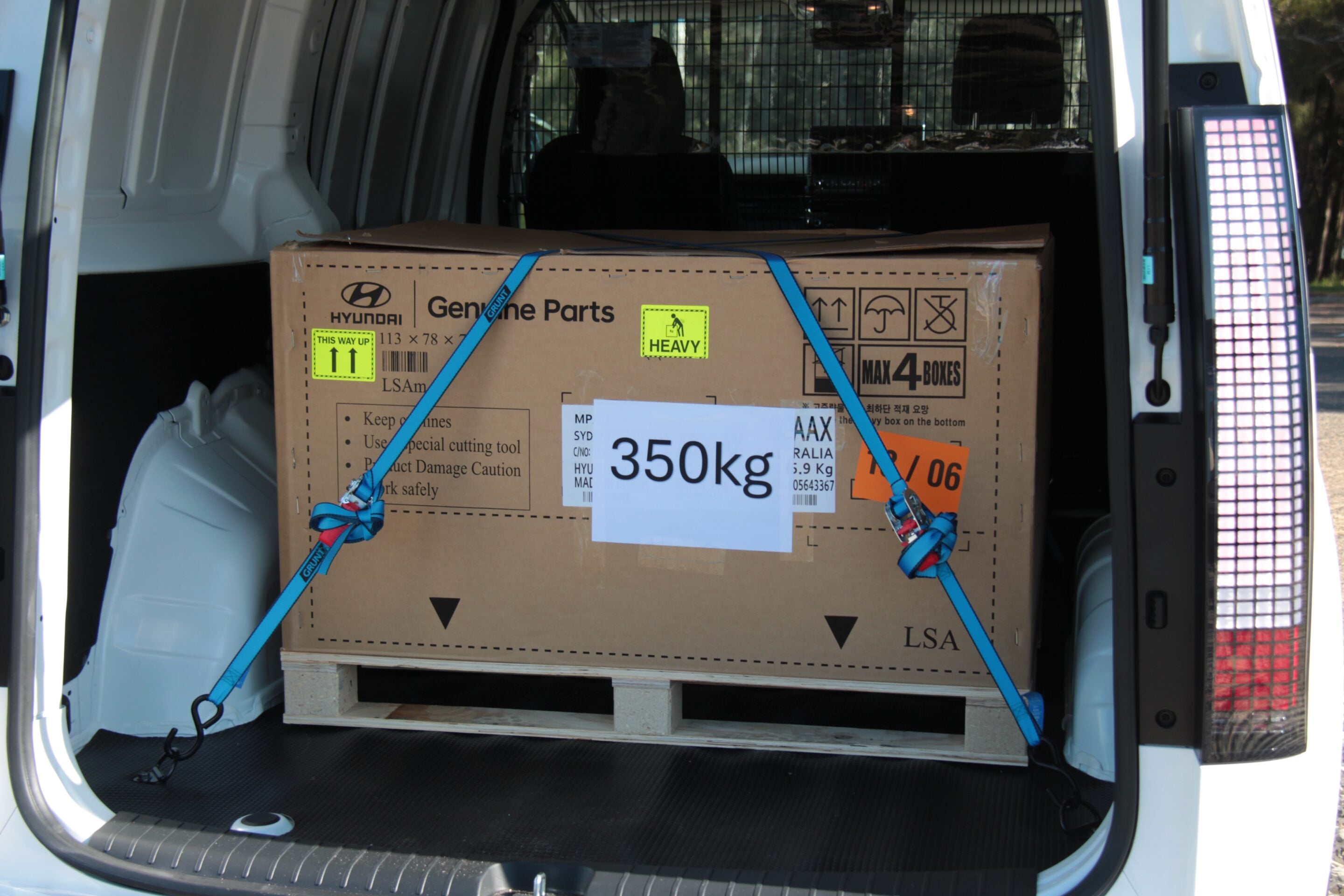
Hyundai claims the Load carries a huge 4935 litres of cargo in the rear, while its 2607mm long cargo bay is generous for the segment. Payload is rated between 997kg and 1039kg, depending on the variant, down on its most obvious, albeit larger, rivals. Staria diesel is rated to tow 2500kg with a braked trailer.
There’s also one big caveat for the hybrid: it’s not rated to tow at all. Hyundai’s product planners are confident that wouldn’t deter many buyers based on their market research on who drives Staria Loads, but we think that it’s still a shot in the foot for the hybrid. We hope it changes soon.
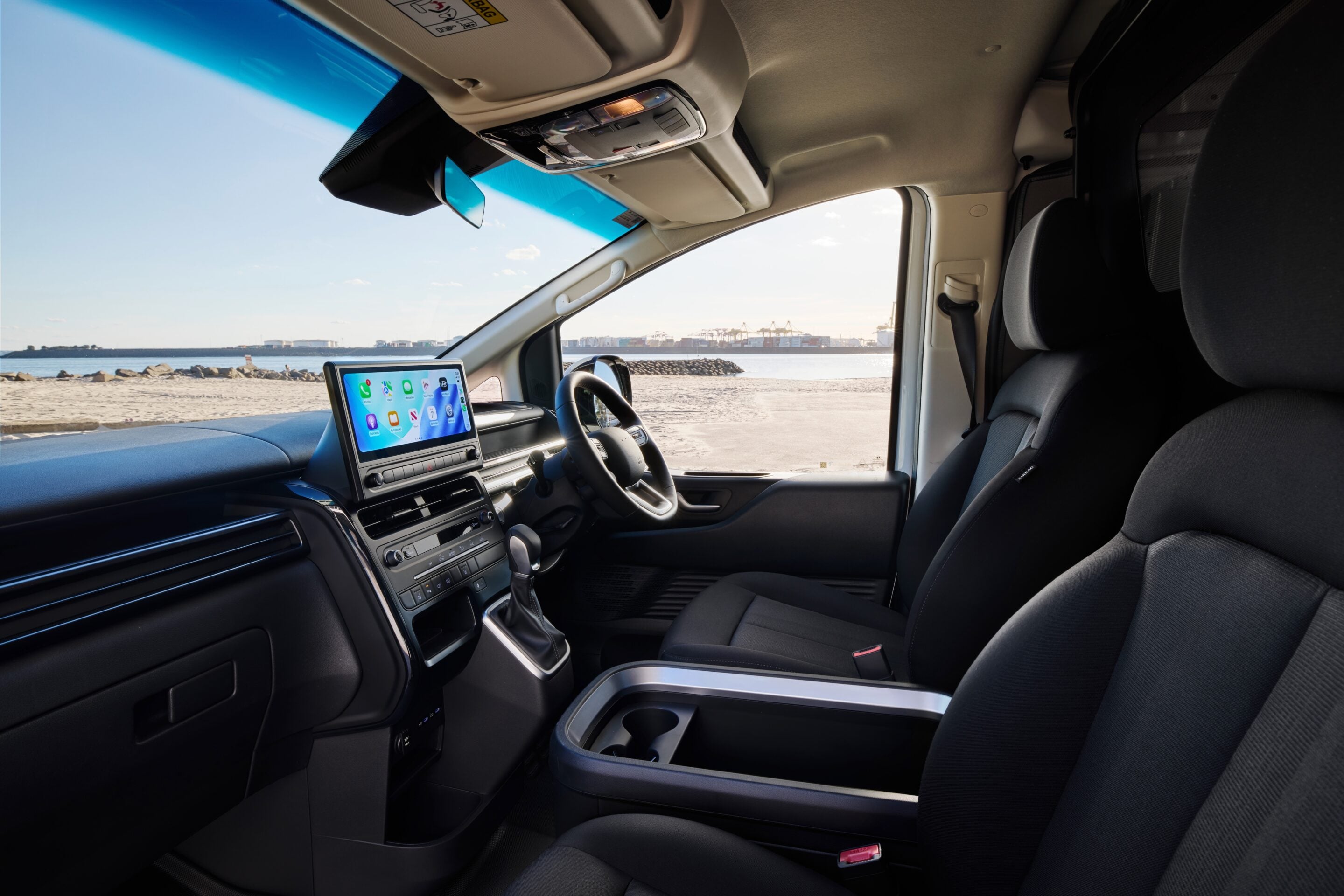
Moving forward to the cabin of the Staria and it’s still quite a spacious and practical space. There are plenty of storage spots around the cabin, including the massive open centre bin and clever lower storage, like where the wireless phone charger is located. Seat comfort is fine too, and the high driving position is commanding. Visibility is good for a van, thanks to its large mirrors and — unfortunately only on the Premium — very useful 360-degree and blind-spot cameras.
Hyundai’s ‘ccNc’ infotainment software was another recent addition to the Staria Load, and it’s modernised the cabin nicely. Featuring on all models with kit like wireless Apple CarPlay and Android Auto, sat-nav, DAB+ digital radio and Bluetooth calling and audio streaming, it’s very simple to use and for somebody that has already experienced a new model Tucson or Santa Fe, there’s no learning to be done because it’s the exact same system used in those SUVs.
How much does the Staria Load cost to run?
The Staria Load is covered by Hyundai’s five-year/160,000km commercial warranty, which is less than the unlimited distance that its non-commercial vehicles enjoy (which can be extended up to seven years if serviced at a dealer).
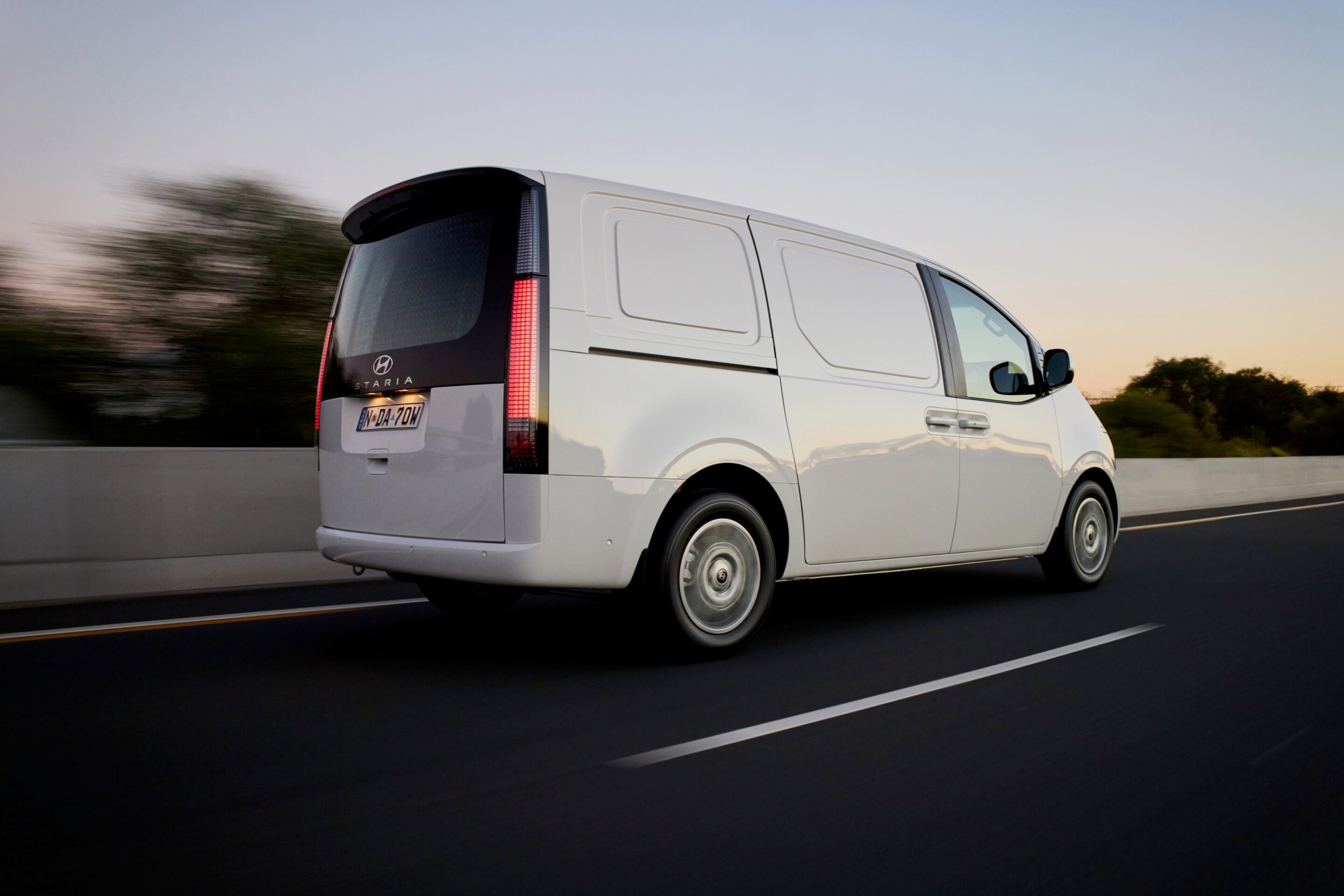
Five years of servicing costs $2659 ($531 per service on average) for the diesel and $2439 ($488 per service on average) for the hybrid, though the hybrid’s service annual intervals are shorter than the diesel’s by 5000km at just 10,000km. While that may seem expensive, it’s cheap compared to both the Toyota HiAce ($3650 for five years with six-monthly service intervals) and Ford Transit Custom diesel ($3300 for five years with annual intervals).
Should I buy a Hyundai Staria Load?
As Australia’s first hybrid van without a plug, the Hyundai Staria Load Hybrid marks an important step forward for the commercial vehicle market. It delivers meaningful fuel savings in the real world without asking buyers to change the way they use their vehicle. Its comfortable cabin, refined driving experience and generous standard equipment also impress, as does its lower starting price than its main rivals.
The only real negative to the hybrid drivetrain is its non-existent towing capacity, which may deter some. But for those who aren’t bothered, the Staria Load Hybrid is a compelling new benchmark in the segment. Plus, if you are looking to tow with your Staria Load, the excellent turbo-diesel is still available. Regardless of the drivetrain, the Hyundai Staria Load is still a great choice for a van — no wonder it recently won Wheels Best Medium Commercial Van 2026.
Staria Load specifications:
- Car: Hyundai Staria Load
- Price: From $49,990 plus on-road costs (diesel), $53,490 +ORC (hybrid)
- Drivetrain: 2.2-litre four-cylinder turbo-diesel or 1.6-litre four-cylinder turbo-petrol hybrid
- Peak power: 130kW (diesel), 180kW (hybrid)
- Peak torque: 430Nm (diesel), 304Nm (hybrid)
- Transmission: Eight-speed automatic (diesel), six-speed automatic (hybrid), front-wheel drive
- Claimed combined fuel consumption: 7.0L/100km (diesel), 6.5L/100km (hybrid)
- Claimed combined CO2 emissions: 183g/km (diesel), 147g/km (hybrid)
- Fuel type, tank size: Diesel (diesel), 91 RON regular unleaded (hybrid), 75 litres (diesel), 65 litres (hybrid)
- Dimensions (L/W/H/WB): 5253/1997/2000/3273mm
- Cargo space dimensions (L/W/H): 2607/1640/1436mm
- Cargo space: 4935 litres
- Kerb weight: 2063kg (diesel), 2091kg (hybrid)
- GVM: 3060kg (diesel), 3130kg (hybrid)
- Payload: 997kg (diesel), 1039kg (hybrid)
- Braked towing capacity: 2500kg (diesel), no towing rating for the hybrid
- Warranty: Five-year/160,000km
- Five-year service cost: $2659 (diesel), $2439 (hybrid)
- On sale: Now
