Best Large SUVs

Gallery 1
Contenders
- Volvo EX90
- Genesis GV80
- Mercedes-Benz G-Class
- BMW iX
- Land Rover Range Rover Sport
- Audi Q8
- BMW X7
- Lexus LX
- Porsche Cayenne
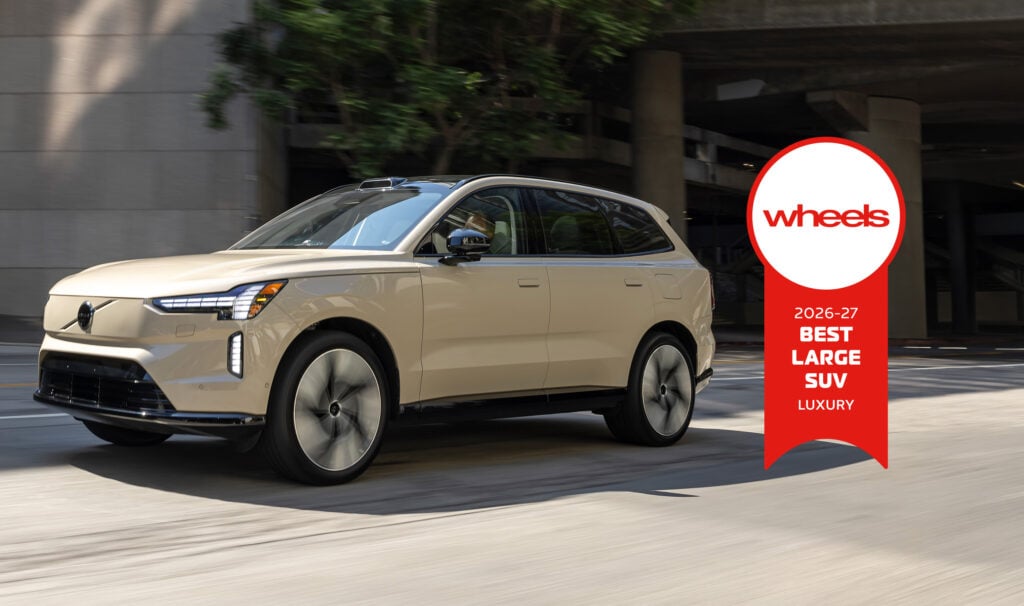
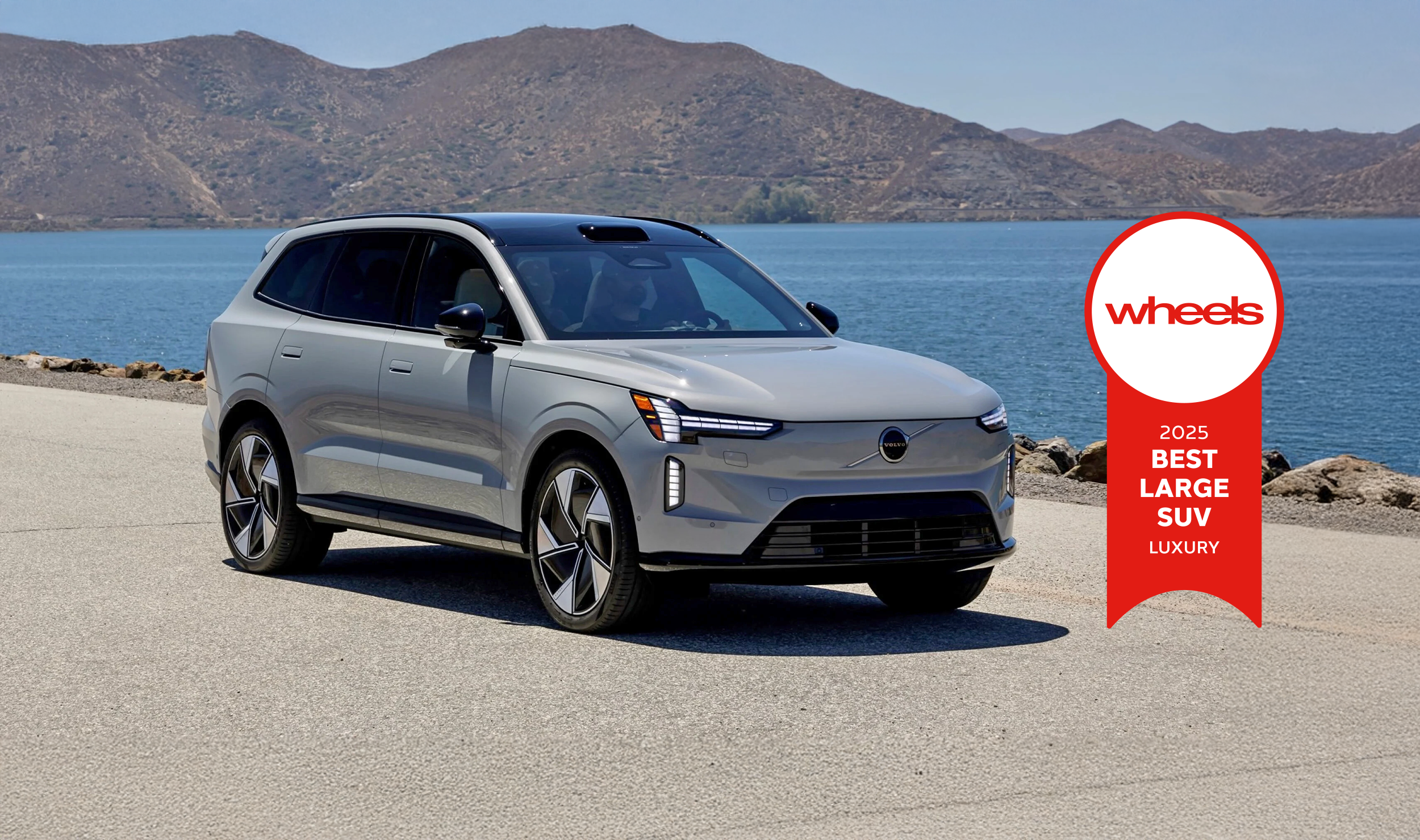
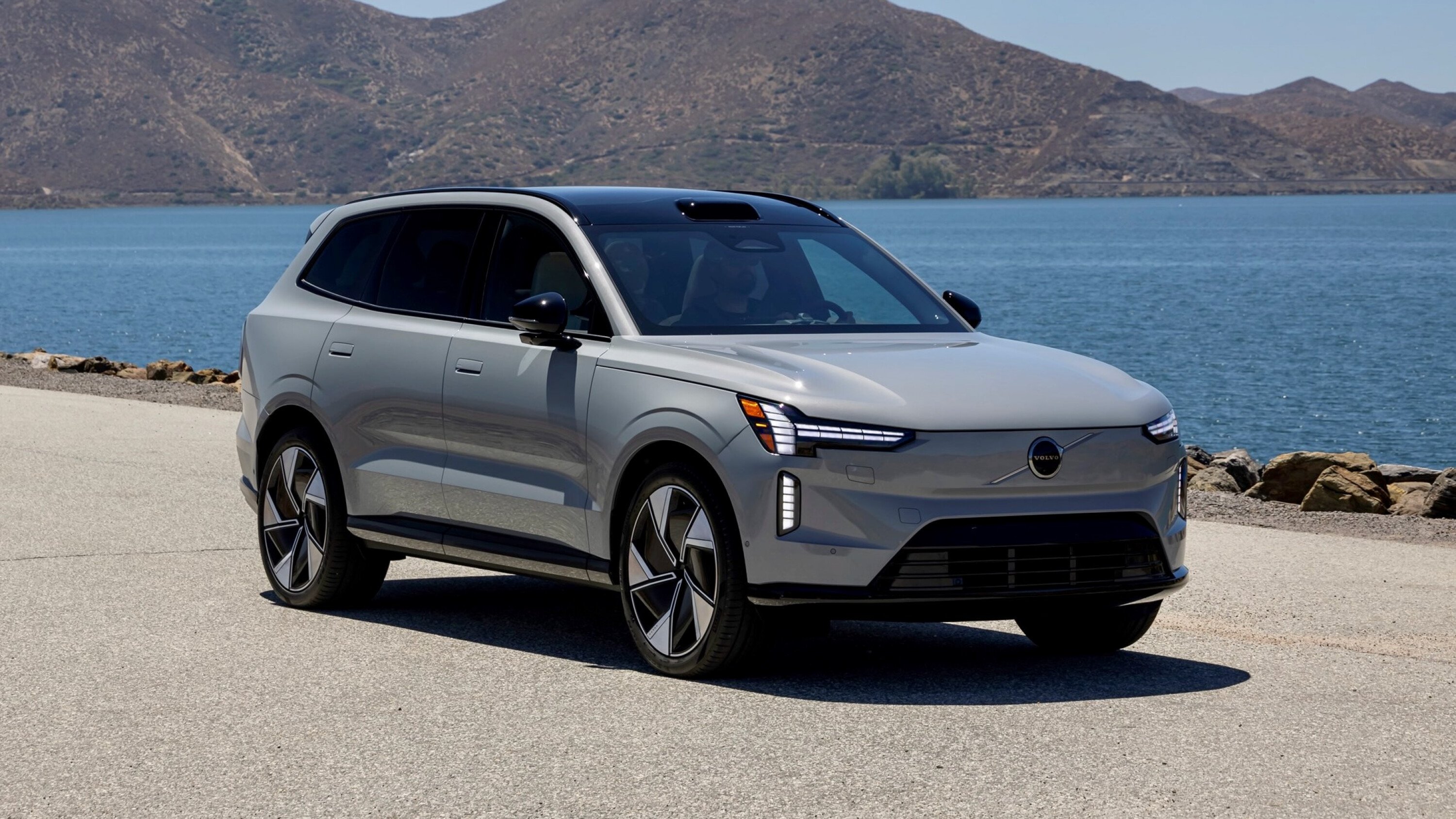
Winner – Volvo EX90
1
Price: From $124,990 plus on-road costs
Battery size/claimed range: 111kWh/570km (NEDC)
Drivetrain: Dual-motor electric, 300kW/770Nm (Twin) 380kW/910Nm (Performance)
Dimensions (length/width/height/wheelbase): 5037/1964/1747/2985mm
Bootspace: 324L (third row up), 697L (third row folded), 2135L (third + second row folded) + 46L
front boot
Warranty/roadside assistance/service intervals: Five-year/unlimited km, five years (extendable up
to eight years in total), annually/every 15,000km
Five-year service cost: included in the cost of the car
| Driving | |
| Interior | |
| Practicality | |
| Overall value | |
Things we like
- Interesting cabin and materials
- Very practical, as you’d expect for a Volvo
- Competitive performance and range
Not so much
- XC90 offers a cleverer and richer-feeling interior
- Not cheap to buy
- Too much functionality controlled through the central screen
For a brand that was once only known for its boxy wagons, Volvo is doing big business from its
SUV range nowadays. In fact, in Australia at least, it now only offers SUVs, its S60 and V60
Cross Country models now no longer available to order. The EX90 is the latest Volvo SUV offering
in Australia, one that’s quite similar to the popular XC90 but with a crucial detail: it’s electric.
Available in two models with a single 111kWh battery for the moment, the EX90 provides the
XC90’s excellent performance but with a silent drivetrain. A dual-motor set up is standard, with either
300kW/770Nm outputs in the entry-level Twin or an even stronger 380kW/910Nm in the upper-
spec Performance. Range? That’s up to a claimed 570km (NEDC), or more than enough to quell
any range anxiety, plus the EX90 is capable of handling up to 250kW DC charging for a claimed 10-
80 per cent charge time of 30 minutes.
With its standard adaptive dual-chamber air springs and adaptive damping – at least in Ultra
Performance guise – the EX90 proves surprisingly adept at tackling whatever the road conditions
throw at it, even when riding on 22-inch wheels. The dampers offer soft and firm settings, but even
in firm mode, the EX90 is still quite comfortable. The EX90’s cabin quality is elevated in quality,
with tactile finishes, slick digital screens that control everything to do with the car, subtle light-
coloured wood inlays and synthetic leather upholstery, neatly combined with classy tech and textural
warmth.
As you’d expect for a Volvo product, the EX90 is extremely practical and capable of holding seven
adults with more than enough space in each row, though not quite as much as an XC90. Still, that’s
a high standard to try and match because the XC90 is one of the best seven-seaters on the market
and behind the third row lies 342 litres of bootspace, which opens up to a massive 2135 litres with
both the second and third rows folded. We love the electric lowering and raising third row too, and
the integrated child seat in the middle rear seat.
All in all the EX90 is an impressive package, from its huge interior, lovely driving experience and keen
performance, to its above average charging capability and impressive interior finishes. There is way too much functionality controlled through the touchscreen and some of the interior finishes aren’t up to the high standard of the XC90 but overall, Volvo’s first electric large SUV is well engineered and well priced.
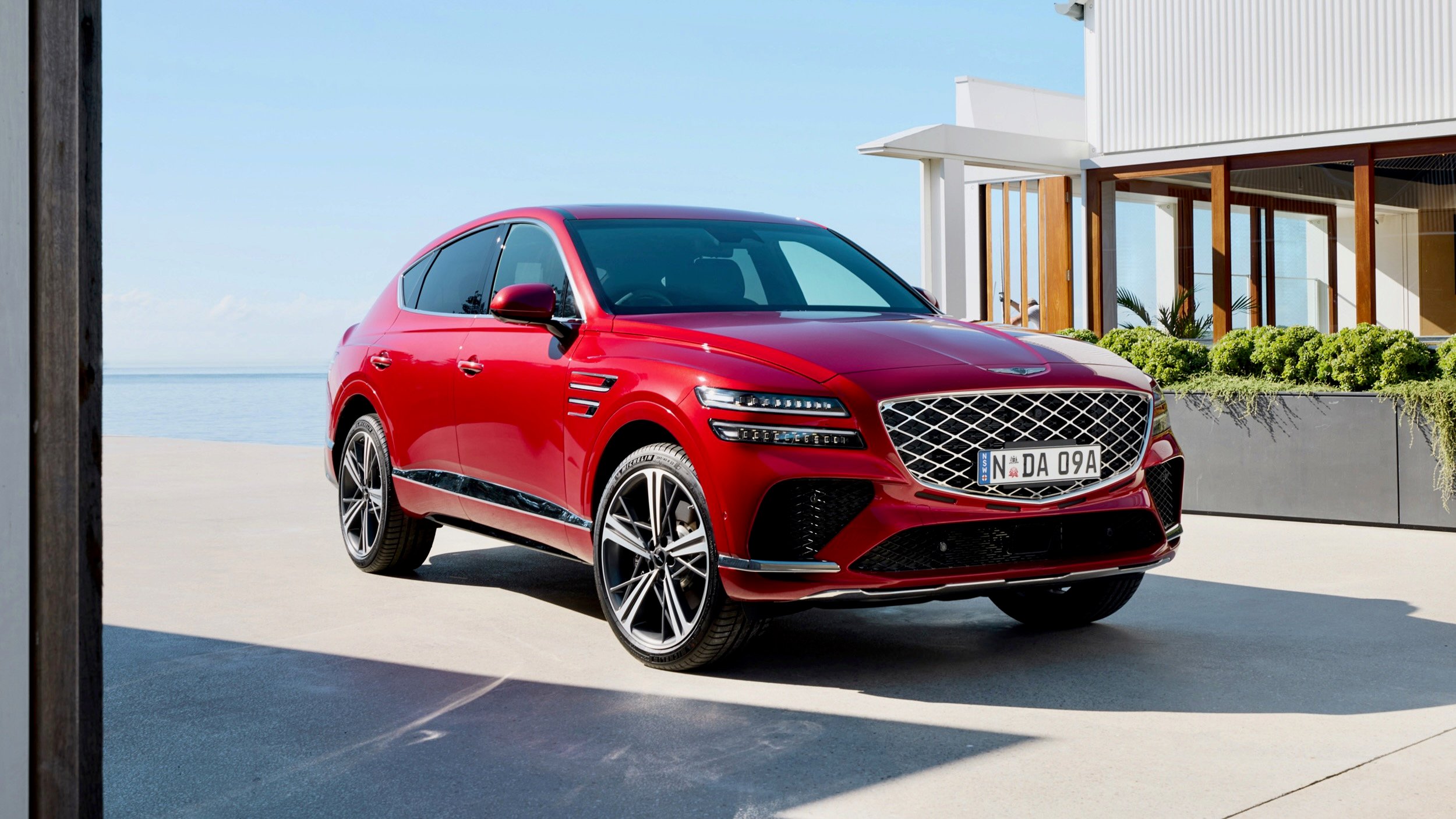
Genesis GV80/GV80 Coupe
1
Price: From $129,114 plus on-road costs
Drivetrains/fuel economy/CO2 emissions: 3.5-litre twin-turbo petrol V6, 8-speed auto,
279kW/530Nm, 11.9L/100km, 272g/km
Dimensions (length/width/height/wheelbase): 4940/1975/1710-1715/2955mm
Bootspace: 735L (seats up), 2147L (seats folded), Coupe: 644-1033L
Warranty/roadside assistance/service intervals: Five-year/unlimited km, five years, annual/every
10,000km
Five-year service cost: Included in the price
| Driving | |
| Interior | |
| Practicality | |
| Overall value | |
Things we like
- Absolutely loaded with standard equipment
- Handsome and blingy exterior styling
- Superb interior quality, many trim colours available
Not so much
- Third row of seats is very small
- Very thirsty petrol engine, no hybrid option
- Diesel six no longer offered
Genesis is slowing growing in Australia, measured by product line-up, dealership locations and word-of-mouth reputation. Its GV70 mid-sizer SUV is its best-selling model, with the GV80 large SUV sitting in second place. The GV80 was recently given a mid-life update, adding appeal in this segment.
As we’ve seen with other Genesis products, the GV80’s cabin quality is fabulous – at higher-end
BMW and Mercedes-Benz levels of fabulous. In the GV80’s case, there are plenty of expensive-
feeling materials everywhere you look, from the sumptuous Nappa leather upholstery to the
damped switchgear, the GV80 looks and feels expensive inside. The facelifted model’s huge new
OLED 27-inch display with a touchscreen portion for the infotainment looks and feels impressive,
with its calmly minimalist layout, long list of features and general ease of use.
As it should, for a car starting at almost $130,000 plus on-road costs, right? There’s no question
that the GV80 is not cheap, but in this company, it is good value for money and offers a lot of
luxury feel throughout. Unlike its German competition, the GV80 offers only three optional extras:
matte paint, a six-seat layout (wagon only, not the coupe) and a rear-seat entertainment system.
Everything else is standard equipment.
For the mid-life update, only one engine choice remains for the GV80 range: a 279kW twin-
turbocharged 3.5-litre V6 petrol engine, mated to an eight-speed automatic transmission and all-
wheel drive. It’s a lovely unit with creamy power delivery and excellent refinement, but it’s quite
thirsty and there’s no hybrid drivetrain available yet. The former smaller 2.5-litre four-cylinder and
3.0-litre V6 turbo-diesel powerplants are no longer available.
The GV80 wafts comfortably down the road with barely any road noise, and a well-judged
suspension set up that was revised for the updated model with better body control than before. It’s
not as sporty as an X5, but it is more relaxing to drive. Add in Genesis’ free five-year servicing plan
and while the GV80 isn’t cheap, it is good value for money and as a large SUV, it’s an excellent
product that should make you think twice about an X5 or GLE.
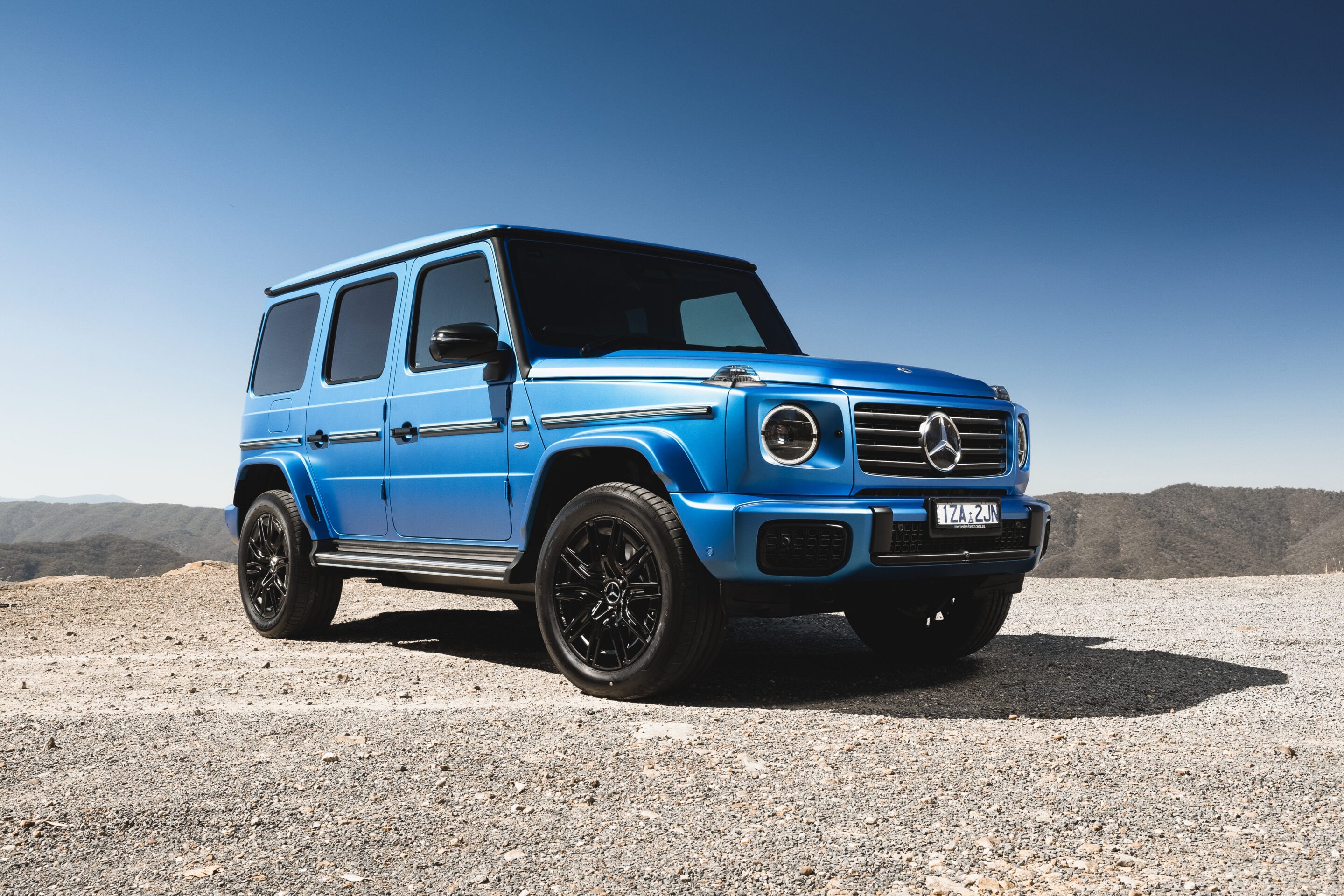
Mercedes-Benz G-Class
1
Price: From $249,900 plus on-road costs
Drivetrains/fuel economy/CO2 emissions: 4.0L twin-turbo petrol V8, 9-speed auto, 430kW/850Nm, 15.3L/100km, 350g/km (AMG G 63); Dual motor AWD, 432kW/1164Nm, 116kWh battery, 473km range (WLTP) (G 580 with EQ Technology)
Dimensions (length/width/height/wheelbase): 4873/1984/1979/2890mm
Bootspace: 640L (seats up), 2010L (seats folded)
Warranty/roadside assistance/service intervals: Five-year/unlimited km, five years, annual/every
20,000km
Five-year service cost: $4670, $8260 (AMG G63)
| Driving | |
| Interior | |
| Practicality | |
| Overall value | |
Things we like
- Iconic G Wagen styling but with an available silent twist
- Excellent performance on and off the road
- Impressive drivetrains with stonking performance
Not so much
- Not cheap to buy or service
- Not very efficient with either petrol or electric power
- Slow AC charging for the EV variant
It was inevitable that the iconic Mercedes-Benz G Wagen would feature in the luxury section of the
Wheels Best Large SUVs as it’s been an icon of style, design and prestige for its almost-60 year production run. While it’s been brought further into the 21st century thanks to the addition of a new electric variant, the G Wagen’s traits are clear: go anywhere capability, massive performance and comfort, and a tech-filled luxurious cabin experience.
Two G Wagen models are available in Australia: the twin-turbo V8 AMG G 63 making 430kW of
power and the new electric G 580 with EQ Technology that uses a quad-motor set up making 432kW of power and massive 1164Nm of torque. For performance, the G 63 hits 100km/h in just 4 seconds, and the electric variant is not far behind at 4.7 seconds – not bad for something that weighs over three tonnes.
The two G Wagen variants are almost identical from the outside with their distinctive boxy shape.
But while the exterior appears business as usual, the G 580 is very different mechanically: there’s
a massive 124kWh battery under the floor (116kWh is useable) for a claimed 473km of range
(WLTP). You get independent suspension up front and a solid rear axle, and four independently
controlled electric motors and a low-range gearset for each one.
It’s this quad-motor set up that gives the G 580 the excellent off-road capability that you’d expect
from the G Wagen, but adds new features such as the G-Turn (this rotates the vehicle by 720
degrees on the spot on unpaved surfaces) and G-Steer (this reduces the turning circle at up to
25km/h). But both have excellent off-road ability, as you’d expect from a G Wagen.
Inside is typical of the class: plenty of leather, a masculine feeling and a lot of tech thanks to dual
12.3-inch displays. As you’d expect for a Mercedes product, it’s very comfortable with very
supportive seats and plentiful storage as well – its boot measures 640L with the seats up and a
huge 2010L with them folded. The ‘G-Roar’ artificial sound gives a digital V8 burble, adding more
to the G 580 experience if you want it, while the G 63 features it naturally from its wonderful V8.
Overall, the latest Mercedes-Benz G-Class presents a curious and appealing chapter in the story
of the iconic G Wagen. Not only is the G 63 typically powerful, torquey and capable off-road, but
the new electric G 580 adds even more torque and clever new off-road tricks for its own take on
the classic. The Mercedes-Benz G-Class is just as appealing and luxurious as ever, but
now with available electric power.
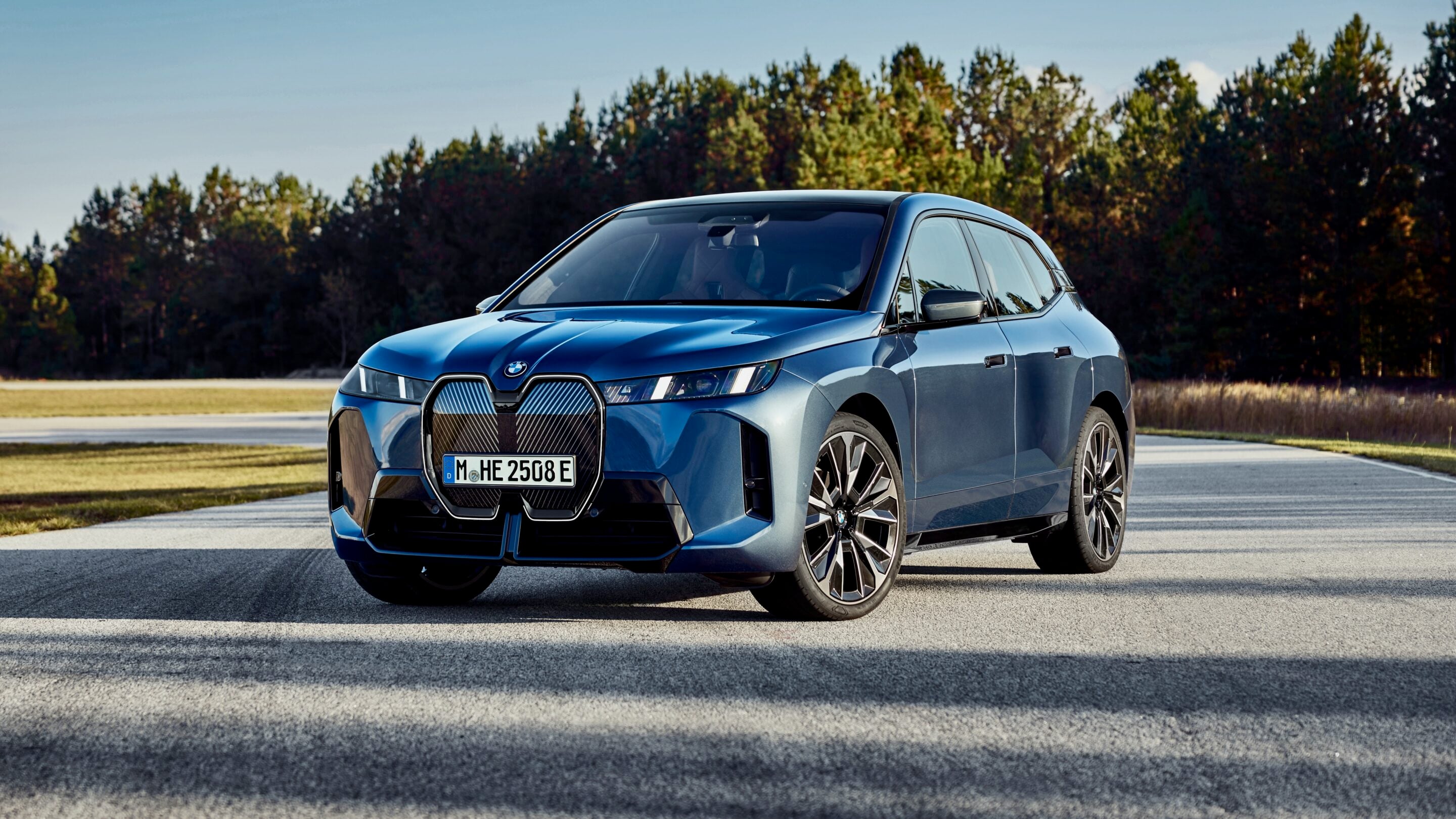
BMW iX
1
Price: From $142,900 plus on-road costs
Battery size/claimed range: 94.8kWh/602km (WLTP)
Drivetrain: Dual-motor AWD, 300kW/700Nm
Dimensions (length/width/height/wheelbase): 4965/1970/1695/3000mm
Bootspace: 500L (seats up), 1750L (seats folded)
Warranty/roadside assistance/service intervals: 5-year/unlimited km, three-years, annual/every
15,000km
Six-year service cost: $3475
| Driving | |
| Interior | |
| Practicality | |
| Overall value | |
Things we like
- Excellent comfort and refinement
- Loaded with tech that works well
- Stonking performance, awesome claimed range
Not so much
- Minimalist interior may look cheap to some
- Average charging speed
- Only one model available currently
It’s been on sale in Australia for almost four years now, but we’re still not used to the BMW iX’s look. Certainly divisive, the iX has been the subject of many unkind online comments but those of us who look beyond a car’s stying will be pleased, as the iX is an accomplished electric large SUV.
Recently updated with more range and power, the only iX model to be offered in Australia for now is the xDrive45, which is priced from $142,900 plus on-road costs. It features a 94.8kWh battery for a claimed WLTP range of 602km, which feeds a dual-motor all-wheel drive drivetrain making 300kW of power and 700Nm of torque. Peak charging speed is an average 150kW, however, and a 10 to 80 per cent charge takes as little as 34 minutes, according to BMW.
On the road, the BMW iX impresses with a soothing and relaxing driving experience, and it can also handle well for a vehicle this size. With 300kW on tap, the iX xDrive45 offers performance that’s more potent than you’d expect for its entry level status, while its claimed 600km range is healthy as well.
The cabin of the iX is the epitome of minimalist, with its lack of hard buttons and big open space on the dashboard, but the quality is excellent with high quality leather trims and switchgear used throughout. BMW’s latest iDrive system is fully featured and can take a while to get used to, but is easy to use once you’ve learned its quirks. Rear seat space is impressive – especially given that there’s no third row of seating – while the 500-litre boot is reasonable, but could be larger.
The BMW iX is an impressive car, especially thanks to its mid-life facelift that gave it a lot more power and more driving range. Its interior may look cheap, but its materials are rich in quality, and it’s both comfortable and quite practical. On the road, it impresses with an excellent ride quality and strong performance, though its charging speeds could be improved to back up that long range.
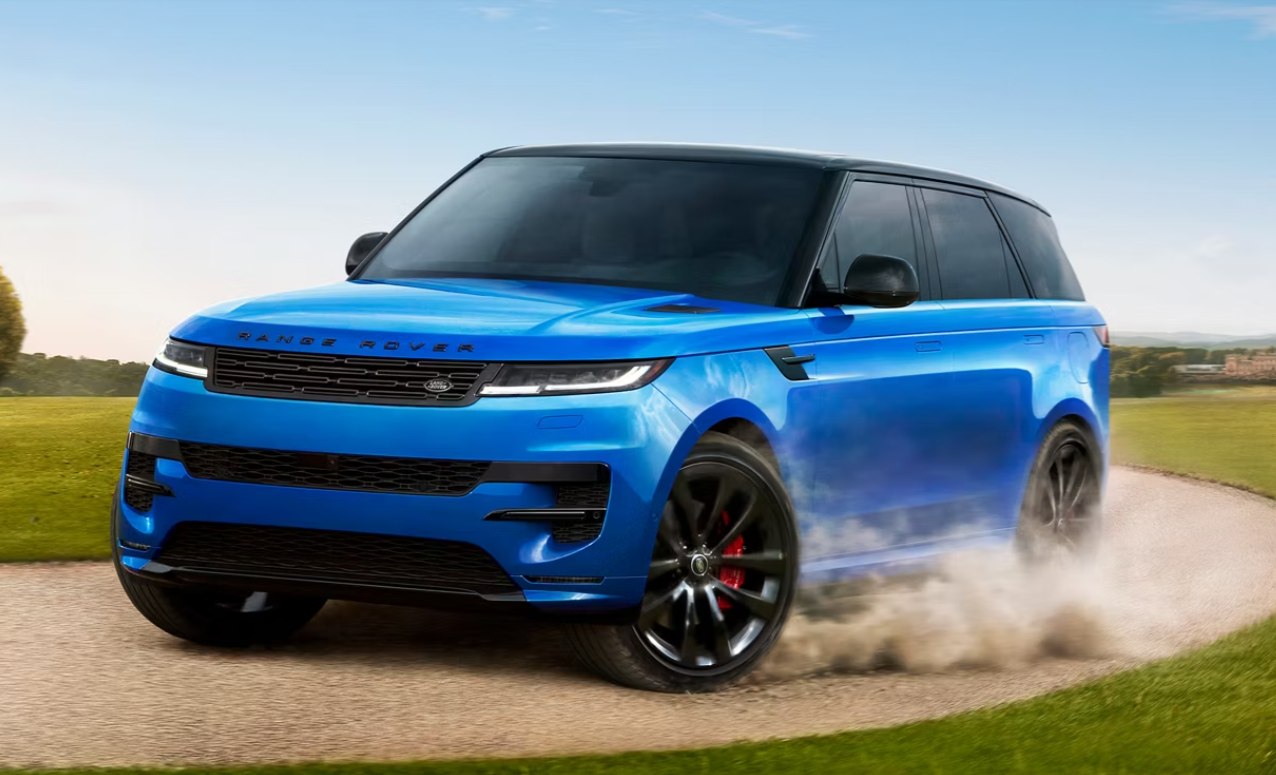
Land Rover Range Rover Sport
1
Price: From $140,807 plus on-road costs
Drivetrains/fuel economy/CO2 emissions: 3.0L inline six turbo-petrol, 8-speed auto, 265kW/500Nm, 9.6L/100km, 224g/km (P360); 3.0L inline six turbo-petrol, 8-speed auto, 294kW/550Nm, 9.6L/100km, 224g/km (P400); 3.0L inline six turbo-diesel, 8-speed auto, 183kW/600Nm, 7.3L/100km, 192g/km (D250); 3.0L inline six turbo-diesel, 8-speed auto, 221kW/650Nm, 7.3L/100km, 224g/km (D300); 3.0L inline six turbo-diesel, 8-speed auto, 258kW/700Nm, 9.6L/100km, 224g/km (D350); 3.0L turbo inline six PHEV, 8-speed auto, 338kW/660Nm, 1.6L/100km, 38g/km (P460e); 4.4L V8 turbo-petrol, 8-speed auto, 390kW/750Nm, 11.1L/100km, 258g/km (P530); 4.4L V8 turbo-petrol, 8-speed auto, 467kW/750Nm, 11.7L/100km, 258g/km (P635)
Dimensions (length/width/height/wheelbase): 4970/2025/1814/2998mm
Bootspace: 647L (seats up), 1860L (seats folded)
Warranty/roadside assistance/service intervals: Five-year/unlimited km, five years, annual/every
20,400km (diesel)/30,000km (petrol)
Five-year service cost: $3900 (petrol + PHEV), $4900 (V8 petrol), $3900 (diesel)
| Driving | |
| Interior | |
| Practicality | |
| Overall value | |
Things we like
- Luxury feel inside, amazingly comfortable
- PHEV’s solid EV range
- Very capable on and off-road
Not so much
- Seven seat option no longer available
- Not cheap and options push the price even higher
- 2.7-tonne weight can be felt when driving
With over two million sales to date, the Range Rover Sport has been a sales phenomenon for its maker and the third generation is the most talented version yet. There’s a wide range of engine choices, from the entry-level 3.0-litre turbo-diesel to the high-performance V8 in the SV models, but the P360e plug-in hybrid is the only drivetrain that offers zero emissions driving capability.
Pairing a turbocharged 3.0-litre inline six petrol engine with a 160kW electric motor, the drivetrain makes 338kW/660Nm outputs for a claimed 5.4-second 0-100km/h sprint. Yet thanks to its 38.2kWh battery, the Range Rover Sport P360e is capable of a claimed 126km of electric driving range (WLTP), and it can be DC fast charged up to 50kW for a full charge in under an hour.
On the road, the Range Rover Sport P360e displays a good dual personality: it can waft along in typical Range Rover fashion, but thanks to its adaptive air suspension, can hunker down to become something much sportier for a backroad blast. Choose the optional Stormer Handling Package and rear-wheel steering is added for even sportier handling. Yet, again as you’d expect for a Range Rover, its off-road capability is awesome and it can go pretty much anywhere.
The interior of the Range Rover Sport is sumptuous and leather-lined. Its new 13.1-inch ‘Pivi Pro’ is fully featured, even with live services and inbuilt apps such as Spotify, and its screen quality is very high resolution. The front seats are insanely comfortable and 22-way electric adjustment, while rear seat and boot space is impressive at 835 litres with the rear seats up, and 1860 litres with the rear seats folded. Those upgrading from the previous Range Rover Sport will note that there’s unfortunately no longer a seven-seat option.
If you’re after a vehicle that can quite literally do it all with a luxurious and practical cabin, the Range Rover Sport P360e is a great option – for a price. It provides 126km (WLTP) of electric driving range, quick charging, strong performance, a luxurious driving experience that can turn sporty or insanely off-road capable at the touch of a button and handsome styling. It’s not cheap, nor is it a lightweight, but that’s no surprise given just how much it can do.
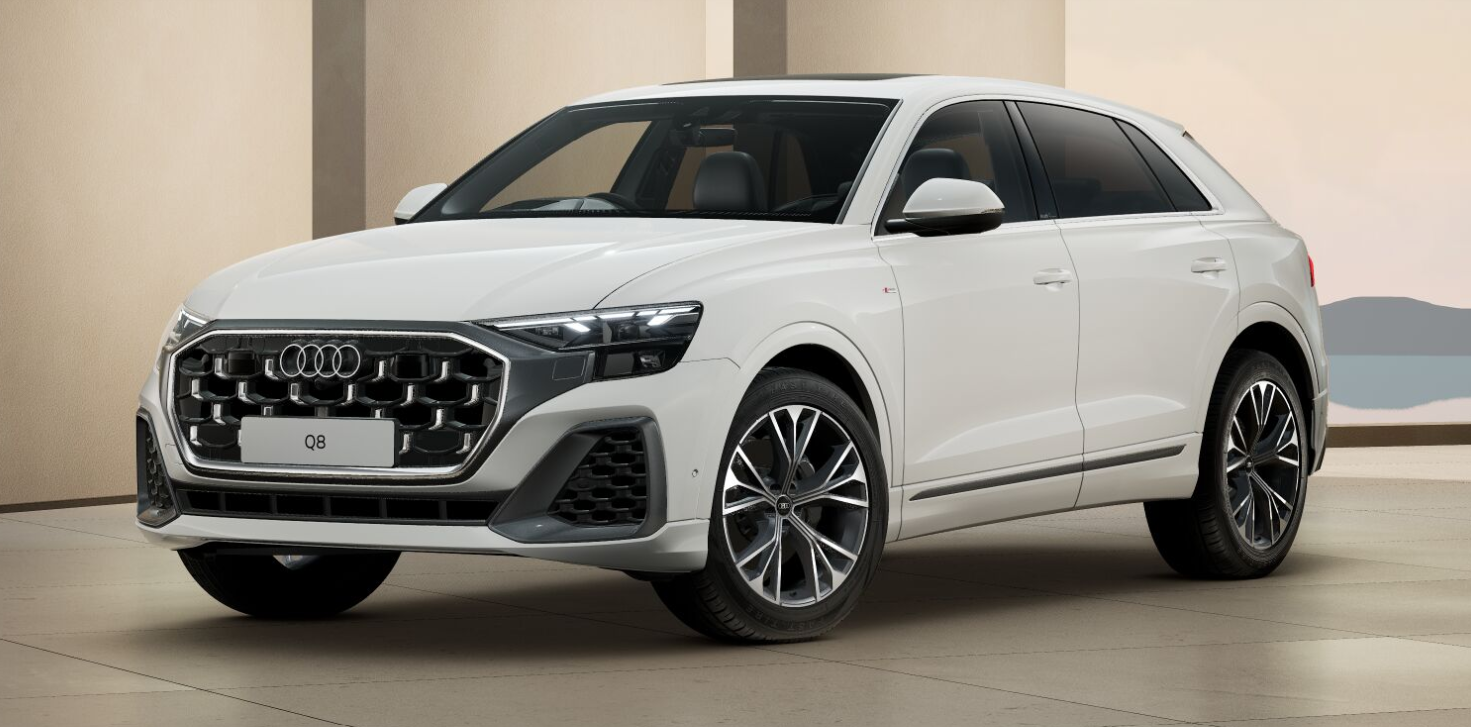
Audi Q8
1
Price: From $143,415 plus on-road costs
Drivetrains/fuel economy/CO2 emissions: 3.0-litre V6 turbo-petrol, 8-speed auto, 250kW/500Nm, 9.2L/100km, 210g/km (55 TFSI); 3.0-litre V6 turbo-diesel, 8-speed auto, 210kW/600Nm, 7.1L/100km, 188g/km (50 TDI); 3.0-litre V6 turbo-petrol plug-in hybrid, 360kW/700Nm, 1.8L/100km, 40g/km (60 TFSI e); 4.0-litre twin-turbo petrol V8, 8-speed auto, 373kW/770Nm, 11.9L/100km, 272g/km (SQ8); 4.0-litre twin-turbo petrol V8, 8-speed auto, 471kW/850Nm, 12.2L/100km, 277g/km (RS Q8)
Dimensions (length/width/height/wheelbase): 5006/1995/1691/3005mm
Bootspace: 605L (seats up), 1755L (seats down)
Warranty/roadside assistance/service intervals: Five-year/unlimited km, five years, annual/every
15,000km.
Five-year service cost: $3570 (Q8), $4600 (SQ8), $4690 (RS Q8)
| Driving | |
| Interior | |
| Practicality | |
| Overall value | |
Things we like
- Great performance, no matter which engine is chosen
- Handsome styling, lovely interior
- Spacious despite coupe-like styling
Not so much
- PHEV’s electric range could be longer
- Feels heavy from behind the wheel
- No seven-seat option available
If you’re searching for a large German SUV, Audi currently has two to offer you: the seven-seat Q7, or its sexier more coupe-like five-seater Q8 sibling. The Q8 launched globally in 2018 as Audi’s take on the coupe SUV segment, but unlike competitors such as the BMW X6, it went for a more hatchback-like roofline and not the coupe roof we’d become used to, giving the Q8 superior practicality. Its styling also gave it a more sporting character than the Q7 that it shares so much with.
Under the bonnet of the Audi Q8 is a range of turbocharged engines: a 3.0-litre V6 in either petrol or diesel forms, a plug-in hybrid using the petrol V6 and an electric motor and a 4.0-litre V8 in both the performance SQ8 and high-performance RS Q8 variants. All Q8 models feel heavy from behind the wheel, but still give a luxurious driving experience. The performance of the SQ8 is excellent, while the RS Q8 is positively bonkers.
The cabin of the Q8 is lovely. Quality is excellent thanks to rich leather trimmings all over the dashboard and doors, as well as tactile switchgear and high-resolution displays. The front seats are quite comfortable and feature a lot of adjustment, while visibility is good despite the high belt line. The 12.3-inch touchscreen uses the brand’s MMI operating system, which isn’t the latest in the Audi line-up, but still looks good and is easy to use.
Thanks the use of the Q7’s platform, the Q8 is spacious for four adults and five will be fine as well. Three adults will be fit comfortably across the Q8’s wide rear bench, and both leg- and headroom is good despite the Q8’s lowered roofline compared with the Q7. The boot of the Q8 measures a large 605 litres with the seats up and a massive 1755L with them folded, and the rear seats fold almost flat for trips to furniture stores and the tip.
The Audi Q8 range presents a tempting luxury large SUV thanks to its excellent performance, lovely cabin, ample practicality and handsome styling. Counting against it are a heavy driving feel, it’s price and that it’s not available with seven seats, which some buyers might expect for the price. But style isn’t meant to be cheap and the Q8 is a rich-feeling luxury SUV.
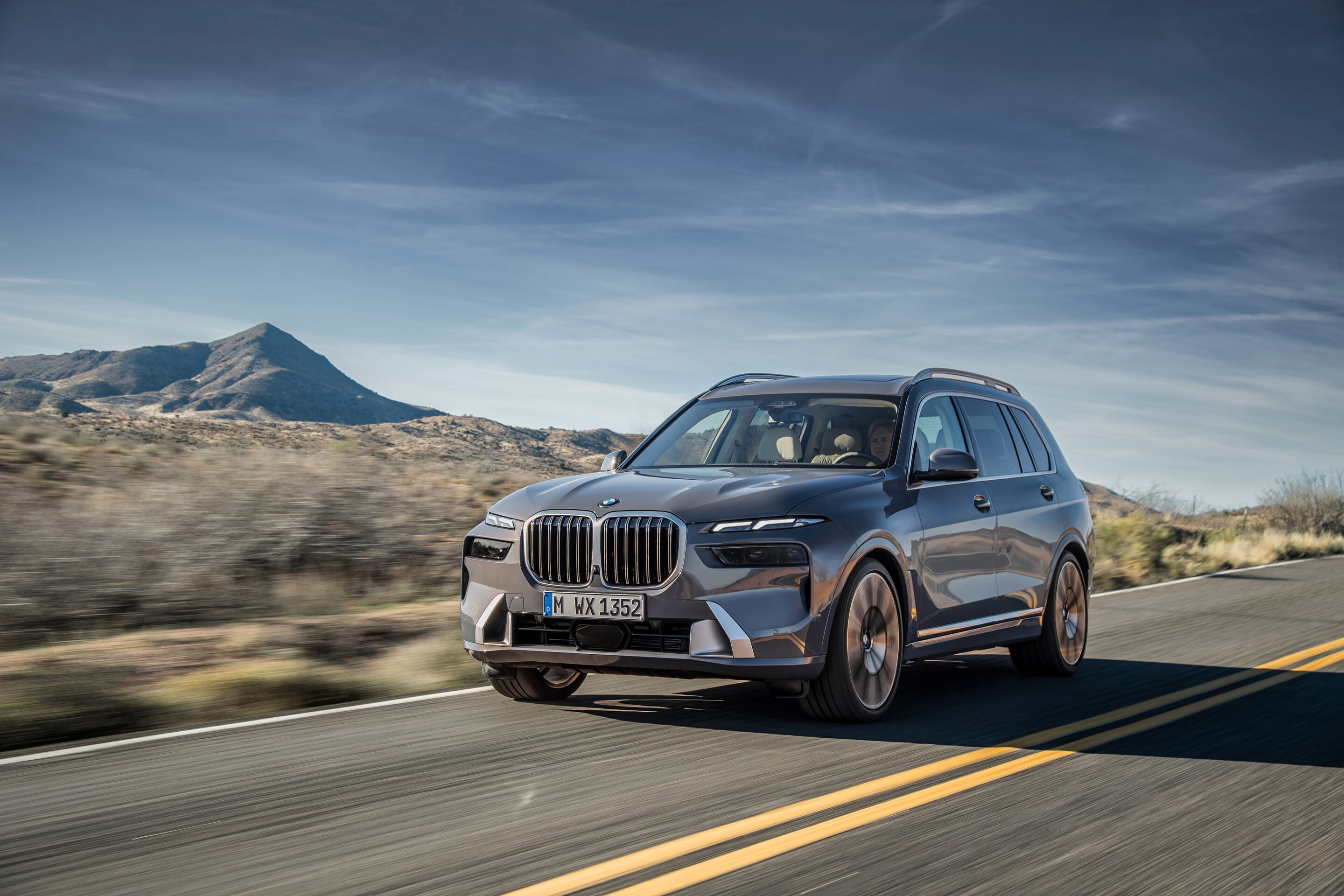
BMW X7
1
Price: From $172,500 plus on-road costs
Drivetrains/fuel economy/CO2 emissions: 3.0L six-cylinder turbo-petrol, 8-speed auto, 280kW/520Nm, 9.7L/100km, 221g/km (40i); 3.0L six-cylinder turbo-diesel, 8-speed auto, 259kW/720Nm, 8.0L/100km, 210g/km (40d); 4.4L twin-turbo petrol V8, 8-speed auto, 390kW/750Nm, 12.2L/100km, 277g/km (M60i)
Dimensions (length/width/height/wheelbase): 5181/2000/1835/3105mm
Bootspace: 300L (third row up), 2120L (third + second rows folded)
Warranty/roadside assistance/service intervals: 5-year/unlimited km, three-years, annual/every
15,000km
Five-year service cost: $4075
| Driving | |
| Interior | |
| Practicality | |
| Overall value | |
Things we like
- Huge interior space
- Excellent quality
- Grunty engines across the range
Not so much
- No proper hybrid drivetrain options
- Not cheap to buy, noticeably more expensive than pre-updated model
- Firm low-speed ride on standard 22-inch wheels
Several car companies have been busy over the past decade adding more and more SUVs to their
line-ups, with BMW now offering seven for buyers to choose from. The largest on offer is the X7, which debuted in 2018 as a plus-size X5 with seven full sized seats and even higher quality finishes inside to help justify its more expensive pricetag.
In the current X7 range, three drivetrains are available in Australia: the 280kW/520Nm 3.0-litre inline six turbo-petrol 40i, the 259kW/720Nm 3.0-litre inline six turbo-diesel 40d or the 390kW/750Nm 4.4-litre twin-turbo petrol V8 M60. Each offers strong grunt but reasonable fuel efficiency for its size. The X7 is generally quite good to drive with handling that’s way better than you’d expect for such a large vehicle, though its low speed ride is quite firm thanks to huge 22-inch wheels – and 23s are optional too.
Inside the X7 is a luxurious and well made cabin that’s full of the latest BMW in-car technology, such as its latest dual-screen infotainment and driver display layout. The quality is impressive, with plenty of soft touch leather surfaces surrounding occupants. In a lot of ways, the X7 is a match for the 7 Series limo, such is its use of lovely materials throughout its cabin.
Moving rearwards, the X7 offers a huge cabin that can easily accomodate seven adults. Row two offers impressive headroom and legroom, while the feeling of space is further enhanced by the optional captain’s chairs in the second row. In the third row, legroom isn’t as plentiful, but headroom is still impressive and the amenities on offer are impressive with air vents, charging ports and cup holders. Lowering and raising the seats is easy thanks to electric power, and once the third row is folded, 750 litres of space is on offer – that opens up to 2120L with the middle row folded too, which is easily large enough for a trip to Ikea.
The BMW X7 justifies its existence with its huge interior space, lovely cabin quality, long list of standard equipment, gutsy drivetrains and engaging handling. It could be more comfortable at lower speeds, and there’s no proper hybrid or plug-in hybrid option yet, but the X7 is a great halo SUV product for the BMW brand.
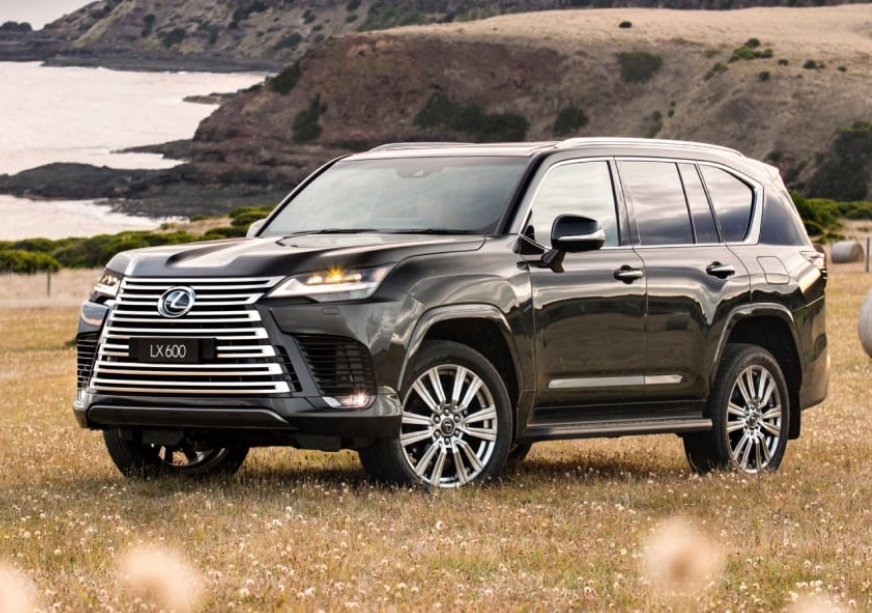
Lexus LX
1
Price: From $155,976 plus on-road costs
Drivetrains/fuel economy/CO2 emissions: 3.3-litre V6 turbo-diesel, 10-speed auto, 227kW/700Nm, 8.9L/100km, 235g/km (500d); 3.4-litre V6 turbo-petrol, 10-speed auto, 305kW/650Nm, 12.1L/100km, 275g/km (600)
Dimensions (length/width/height/wheelbase): 5100/1990/1885/2850mm
Bootspace: 174L (third row up), 710L (third row folded), 1871L (third + second rows folded)
Warranty/roadside assistance/service intervals: Five-year/unlimited km, three years, every six
months/10,000km
Five-year service cost: $5950
| Driving | |
| Interior | |
| Practicality | |
| Overall value | |
Things we like
- Typically excellent Lexus refinement
- Fabulous cabin quality
- Extremely comfortable
Not so much
- Hybrid model not yet sold locally
- Thirsty petrol engine
- LandCruiser 300 Series twin is cheaper
The Toyota LandCruiser is arguably the most legendary off-roader the world has ever seen, especially when it comes to longevity. Luxury? Not so much, but that’s where Toyota’s luxury brand Lexus comes in with the LX, which is its version of the LandCruiser. Manufactured since 1995 but sold in Australia from 1998, the LX has successfully carved its own niche as a luxury go-anywhere off-road SUV.
There are two engine options for the Lexus LX in Australia, both turbocharged V6s: a 227kW/700Nm 3.3-litre diesel and a 305kW/650Nm 3.4-litre petrol, with both using a 10-spee automatic transmission with power being sent to all four wheels. A hybrid version of the petrol engine is offered in some markets overseas, but is yet to be confirmed for Australia. The LX is excellent off-road, and relaxing to drive on it thanks to its height-adjustable air suspension and plethora of off-road features designed to keep it going in tough terrain.
Inside the LX is a clear step up in materials compared to the LandCruiser, and it feels subtle, refined and luxurious. Infotainment is handled by a 12.3-inch touchscreen with Apple CarPlay and Android Auto, as well as sat-nav and live services – plus, there’s a smaller 7.0-inch touchscreen below for the HVAC controls. The 2400-watt 25-speaker Mark Levinson sound system is excellent as well, with a lot of both clarity and punch.
Depending on model chosen, both five- and seven-seat layouts are available – or, somewhat uniquely, a four-seat model called the Ultra Luxury with a limo-like rear seat layout. Regardless of layout, the LX is spacious in all rows of seating and extremely comfortable as well. It’s also practical: behind the second row of seats is a huge 710 litres of space, which expands to 1871 litres with the second row folded.
Like the LandCruiser, the LX is covered by a five-year/unlimited km warranty and also must be serviced every 10,000km or six months (whichever comes first). The short service schedule and thirsty petrol engine with no hybrid model yet available are the biggest downsides to the Lexus LX as it continues its reputation of a luxurious go-anywhere off-roader. Its quality is excellent, its drivetrains are punchy, it’s very comfortable and even though it’s not cheap, it’s very well equipped across the range. While it’s more expensive than its LandCruiser 300 Series twin, it’s more luxurious enough to warrant the extra spend.
Porsche Cayenne + Cayenne Coupe
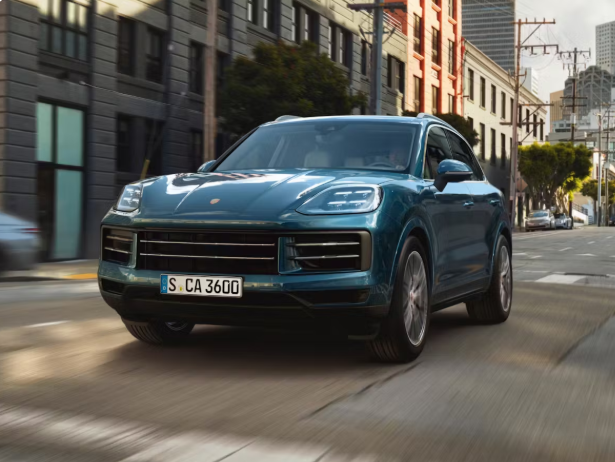
1
Price: From $144,900 plus on-road costs
Drivetrains/fuel economy/CO2 emissions: 3.0-litre V6 turbo-petrol, 8-speed auto, 260kW/500Nm, 10.4L/100km, 238g/km; 3.0-litre V6 turbo-petrol plug-in hybrid, 8-speed auto, 346kW/650Nm, 1.9L/100km, 44g/km; 4.0-litre V8 turbo-petrol, 8-speed auto, 349kW/600Nm, 12.3L/100km, 281g/km (S); 3.0-litre V6 turbo-petrol plug-in hybrid, 8-speed auto, 382kW/750Nm, 2.0L/100km, 43g/km (E-
Hybrid); 4.0-litre V8 turbo-petrol, 8-speed auto, 368kW/660Nm, 12.3L/100km, 280g/km (GTS); 4.0-litre V8 turbo-petrol plug-in hybrid, 8-speed auto, 544kW/950Nm, 2.5L/100km, 57g/km (Turbo
E-Hybrid); 4.0-litre V8 turbo-petrol, 8-speed auto, 485kW/850Nm, 12.5L/100km, 285g/km (Turbo GT)
Dimensions (length/width/height/wheelbase): 4930/1983/1698 (1678 for the coupe)/2895mm
Bootspace: 772L (seats up), 1708L (seats folded), coupe: 621L/1502L
Warranty/roadside assistance/service intervals: 3-year/unlimited km, three years, annual/every
15,000km
Five-year service cost: No capped price servicing
| Driving | |
| Interior | |
| Practicality | |
| Overall value | |
Things we like
- Strong performance across the range
- Handsome styling, lovely interior
- Wonderful to drive in any spec for a large SUV
Not so much
- Huge model range can be confusing
- Options make the price skyrocket
- Lacklustre service and warranty
With almost 1.5 million sold since its inception in 2002, the Porsche Cayenne is the best-selling model the company has ever produced. It shocked the world upon its reveal, but the reality is that if you’re after a large SUV that drives like a sports car, the Porsche Cayenne is the best choice – as it has been since it went on sale. The third generation currently in showrooms is arguably the best Cayenne yet, thanks to its wider range of drivetrains – including no less than three plug-in hybrid options – that all offer strong performance, while both traditional SUV and coupe bodystyles are also available.
Porsche offers a wide range of drivetrains with the Cayenne range, with 3.0-litre V6 and 4.0-litre V8 petrol engines the core units available. Buyers can then add extra power or plug-in hybrid power – or, in the case of the Turbo E-Hybrid, both – but all use an eight-speed automatic transmission and all-wheel drive system.
The pick of the range for us would be the Cayenne S, with its 349kW/600Nm outputs and drivetrain character that warrants the extra spend over the base Cayenne. Regardless of the model chosen however, Cayenne’s ride and handling balance is superb for a large SUV, even in the entry-level model, while the Turbo GT is one of the fastest and most dynamic SUVs around.
Inside the Cayenne boasts a revamped interior that debuted in 2024, with new screens, higher quality
materials and redesigned HVAC and gear selector controls that make the cabin easier to interact with. The screens are razor sharp and quick to use, while buyers can also choose an optional passenger side screen for entertainment that the driver can’t see from behind the wheel.
Quality inside the Cayenne is excellent, while both rows of seating are comfortable and practical, though the coupe bodystyle features less headroom. The boot of the Cayenne measures from 772 litres (coupe: 621L) with the seats up, which is quite large, and folding them down unlocks over 1700 litres of space (1500L in the coupe).
Porsche’s best-selling model continues to sell well thanks to its sporty dynamics, big range of engines, quality cabin with sharp tech and a lot more practicality than you’d expect from the brand. Sure, its entry pricing isn’t cheap, and nor are its options – you can easily add $50,000 to the price – and the service and warranty package is lacking too, but the Cayenne manages to easily uphold its reputation as the Porsche of SUVs.
Follow WhichCar/Wheels on Google
Click the button below to make WhichCar by Wheels a preferred source for your news.

We recommend
-
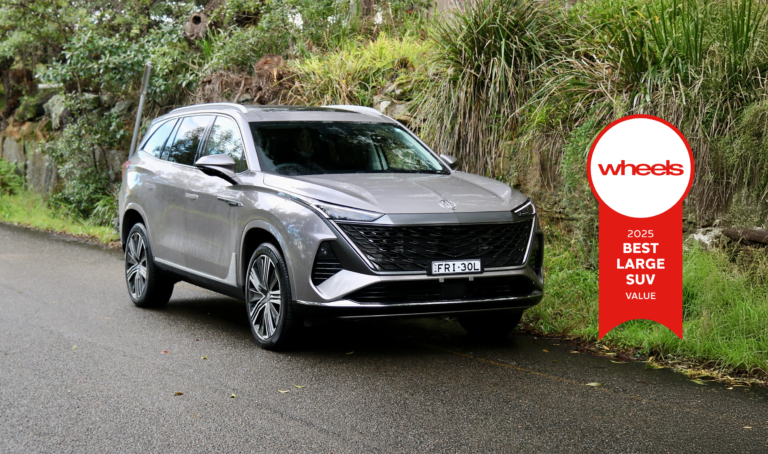 Best Large SUVs
Best Large SUVs 2025: Value
The first category in our Wheels Best Large SUVs 2025 recognises those vehicles offering the right combination of standard features, tech, space, power and driveability for the price.
-
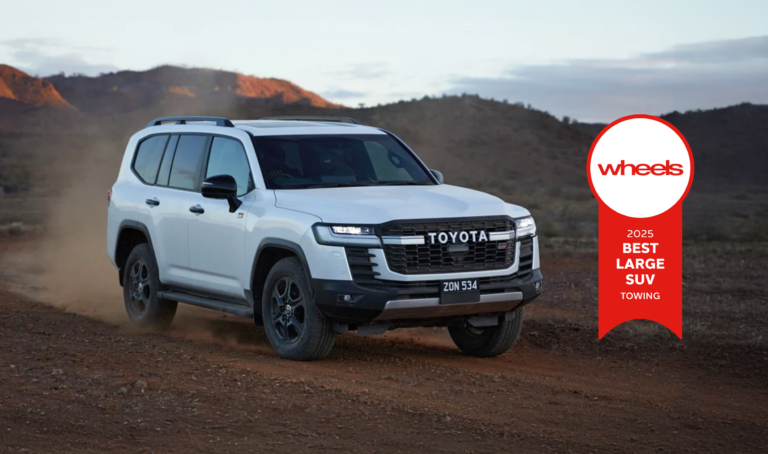 Best Large SUVs
Best Large SUVs 2025: Towing
The caravan, the fully laden trailer – for when you need to haul a load, these are the best options among the large SUVs on the market.
-
 Best Large SUVs
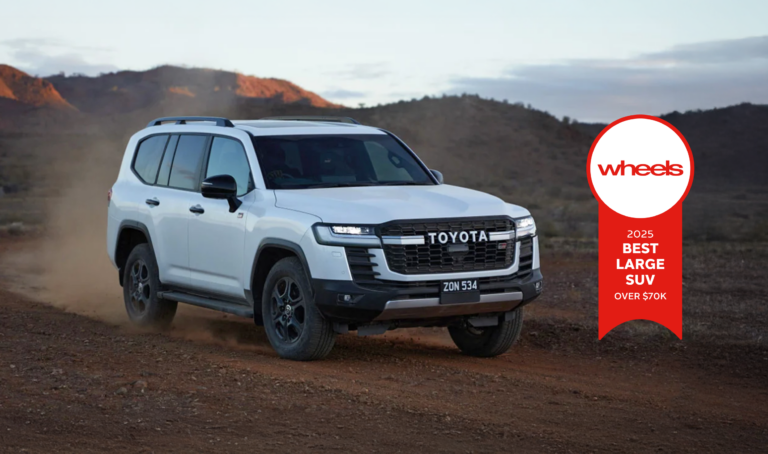
Best Large SUVs 2025: Over $70K
Wheels' Best Large SUVs 2025: Over $70K – see our standout after assessing practical cabins, latest technology, performance and all-round capability in the higher price bracket.
-
 Best Large SUVs
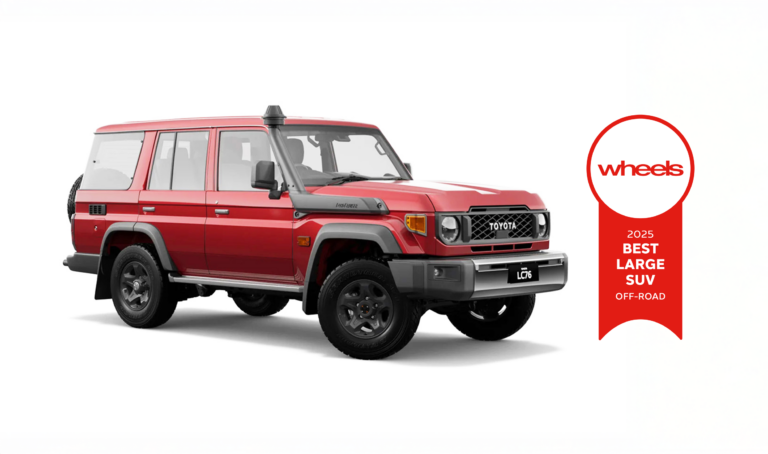
Best Large SUVs 2025: Off-road
Our Best Large SUVs 2025: Off-road combine power, space, and rugged capability, offering families and adventurers refined comfort, advanced technology, and confidence on any off-road terrain.