
The full and final details of Tesla’s next new model are yet to be revealed, but information supplied to the US Environmental Protection Agency (EPA) gives a preview of the mechanical and battery tech included.
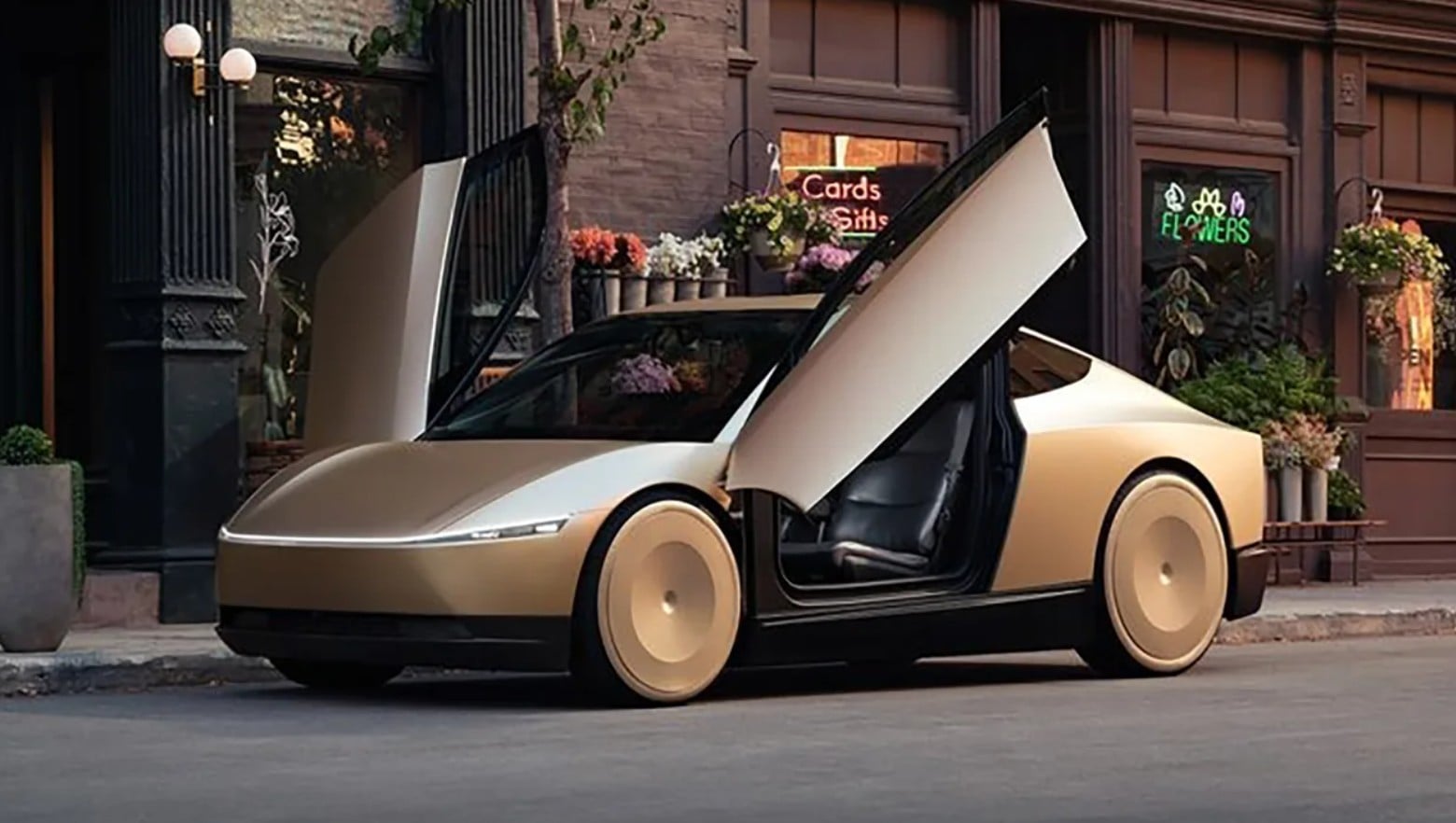
First revealed in October 2024, the Tesla Cybercab promised to arrive as a fully autonomous two-seat coupe. Despite its swoopy profile, the new model is intended as a self-driving taxi, rather than a sports car, and is claimed to operate without a steering wheel or pedals.
Whether or not the production version delivers on that self-driving claim remains to be seen, but information filed with the EPA reveals what to expect from the drivetrain of the new model.
The Cybercab will be the first Tesla model powered solely by a front motor, with a 162kW output listed. Conflicting information presented by the EPA does list the drive mode for testing as ‘all-wheel drive’, but this inconsistency is widely regarded as an input error.
Up to this point, Tesla models have been either rear-wheel drive or all-wheel drive.
Gross battery capacity for the Cybercab is listed at 53.3kWh, resulting in an EPA lab-tested maximum range of 673km (418.2 miles). To represent a more accurate real-world figure, the EPA applies a 30 per cent estimate reduction to account for elevation changes, weather, headwinds and the like, bringing the expected range closer to 471km.
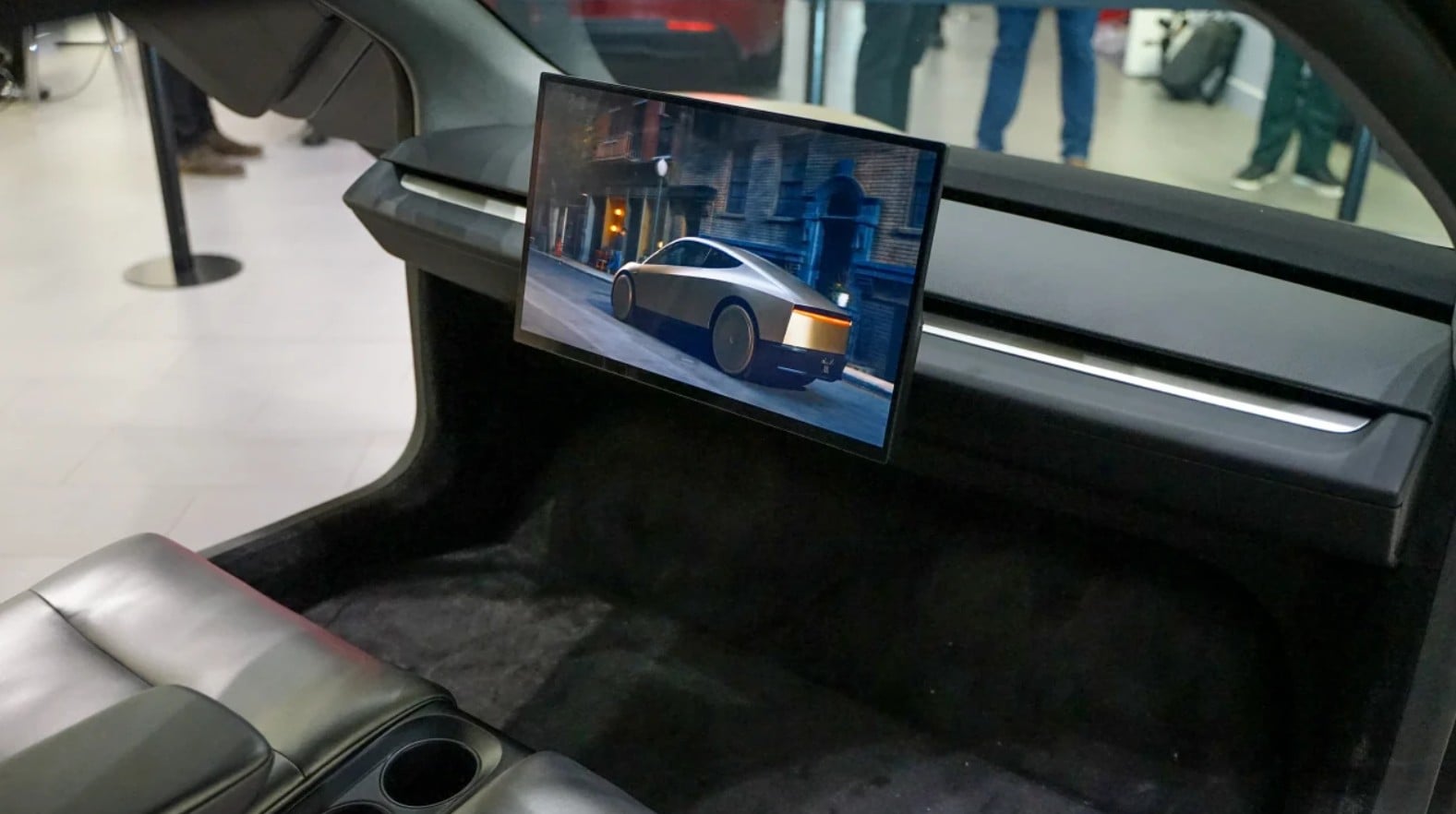
Details on charging speeds and recharge times have not yet been revealed, but at the model’s 2024 preview, the Cybercab was promised with wireless charging, to allow it to be used without operator input, and shown without a charge port that would give it access to Tesla’s high-speed Supercharger network.
Despite the emphasis on its purpose as a self-driving taxi, the Cybercab, estimated to be slightly more than 4.4 metres in length, or slightly shorter than a Toyota Corolla Cross, only includes seating for two but has a rear hatch that covers a large cargo hold. Tesla appears to have prioritised aero efficiency over utility with the coupe design.
Kerb weight is light, reported to the EPA at 1412kg, making it about the same weight as a base model Mazda 3 hatch in Australia (1418kg). Tesla’s current lightest model is the Model 3 Premium RWD sedan, which lists a 1761kg weight.
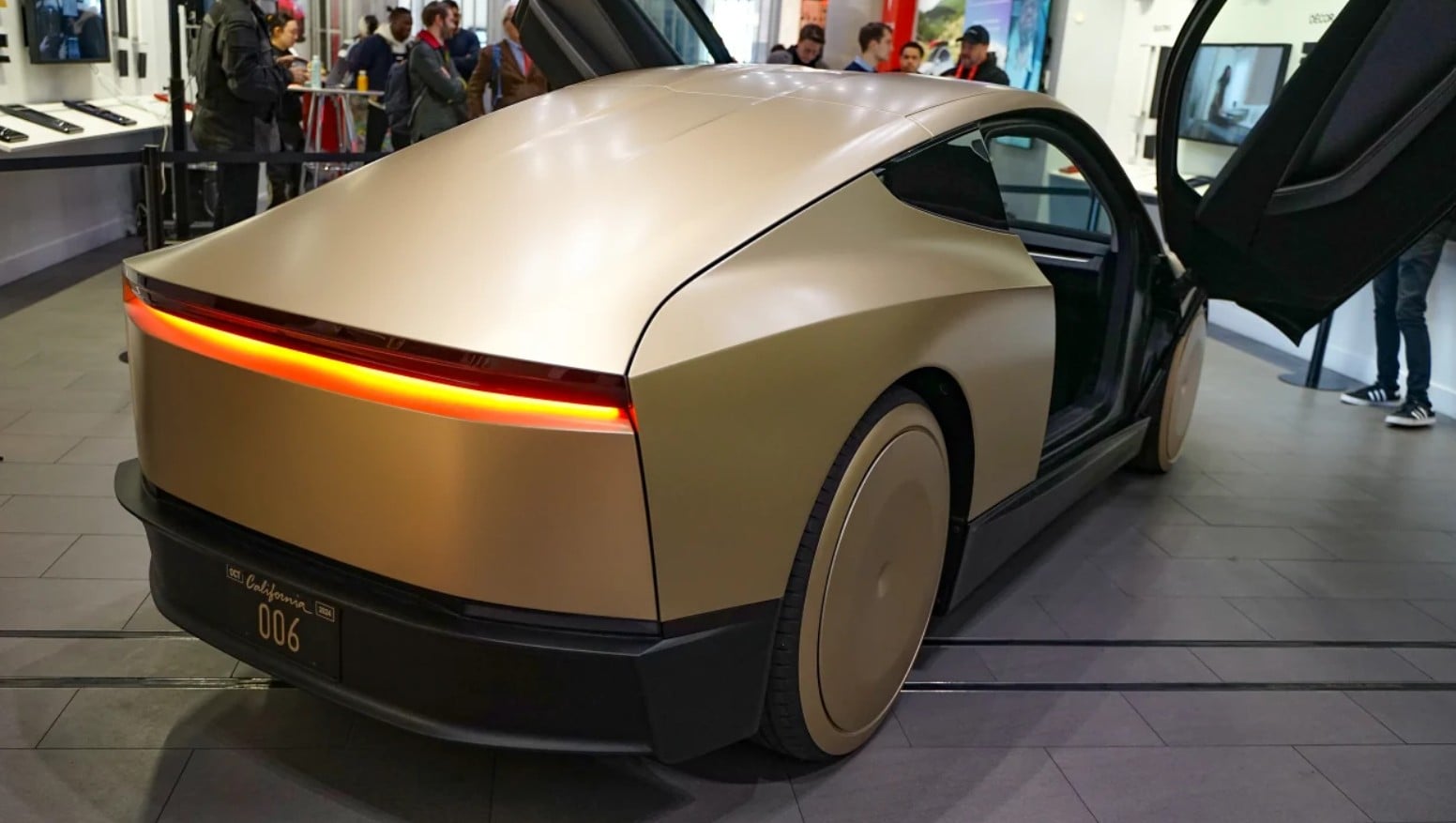
This latest information suggests that the Cybercab may be on track to launch by 2027, in line with Tesla CEO Elon Musk’s statement when the model was first presented. An expected starting price of US$30,000 (A$42,760) was announced in 2024, but as with other Tesla presentations, the final figure may change before the model reaches production.
For years, plug-in hybrid vehicles promised the best of both worlds, but often came with a hefty price premium that put them out of reach for many buyers. But with the recent onslaught of Chinese ‘super hybrid’ models, plug-in hybrids are now far more accessible than they once were. One example of more recent PHEV affordability is the Chery Tiggo 7 Super Hybrid, which is actually the cheapest plug-in hybrid SUV on the Australian market.
But is its strong value equation alone enough to make it stand out in an increasingly competitive segment? Let’s find out.
How much does the Tiggo 7 Super Hybrid cost to buy?
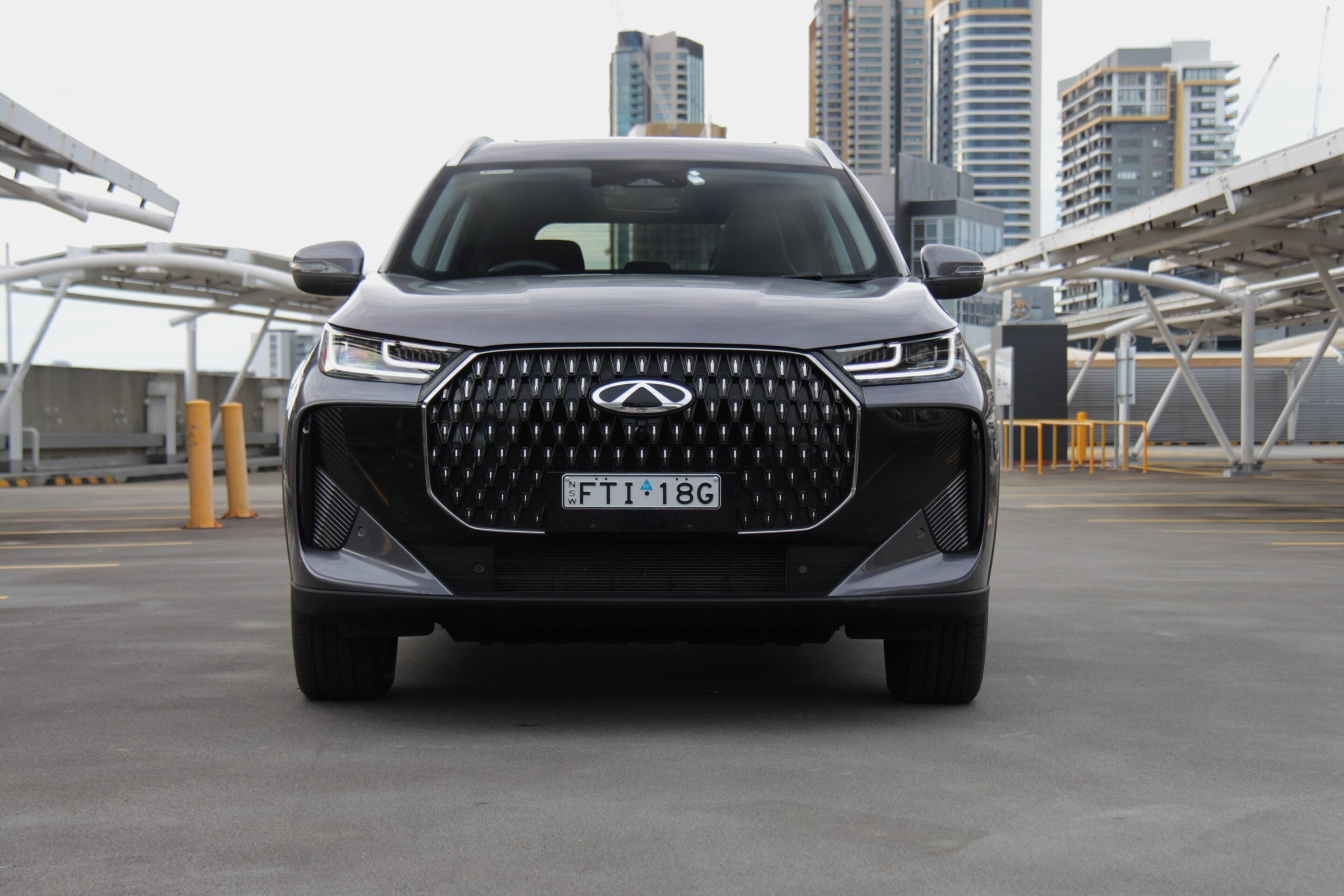
The Tiggo 7 sells well in Australia because of its low pricing – the entry-level petrol Urban is priced from just $29,990 driveaway – and the plug-in hybrid ‘Super Hybrid’ is no exception. Pricing starts at $34,990 driveaway for the lower-spec Urban and $38,990 driveaway for the upper-spec Ultimate.
Pricing comfortably under $40,000 for a well equipped and practical plug-in hybrid medium SUV is a bargain and it’s no surprise to see Chery moving units in greater numbers in recent times.
2026 Chery Tiggo 7 pricing (driveaway):
| Urban | $29,990 |
|---|---|
| Ultimate | $33,990 |
| Super Hybrid Urban | $34,990 |
| Super Hybrid Ultimate | $38,990 (tested for this review) |
| Rhino 5-door automatic | $47,490 (new) |
Having said that, there are also more rivals arriving to challenge the Tiggo 7. Since it launched in Super Hybrid form, new nameplates like the BYD Sealion 5 (priced from $33,990 plus on-road costs, so around $37,500 driveaway) and Geely Starray EM-i (priced from $37,490 plus on-road costs or around $41,000 driveaway) also launched onto the market.
Plus, there’s also the GWM Haval H6 in and MG HS available, both of which can be purchased in either Toyota-style regular hybrid or plug-in hybrid form. That decision comes down to personal preference as, for example, you can buy the new extended range version of the Starray with its claimed 136km WLTP EV driving range, but it will also cost you around $45,000 driveaway. Even though the Tiggo 7 Super Hybrid’s range isn’t as long as that, its pricing is also comfortably underneath.
How far can the Tiggo 7 Super Hybrid drive on a full charge?
The Tiggo 7 Super Hybrid features an 18.4kWh LFP battery, giving it an NEDC-rated electric-only range of 93km and a claimed total driving range of 1200km, both of which are healthy for a bargain medium SUV. In reality, we drove the Tiggo 7 Super Hybrid on a highway for our range testing and achieved 69km of pure electric range, and a trip to Yass and back to Sydney (around 600km) still returned half a tank of fuel afterwards, giving truth to Chery’s total range claim.
Chery claims a combined fuel consumption average of 1.4L/100km. Our trip to Yass, mostly at above 100km/h with some in-town driving as well, gave an average of 5.2L/100km (including the 69km of electric driving range). Considering that plug-in hybrids are theoretically at their worst in highway driving and that a regular hybrid medium SUV like a RAV4 will give similar if not worse consumption in similar conditions, it’s remarkable to see such low figures. Of course, add more charging and/or urban driving into the mix and consumption will fall even further.
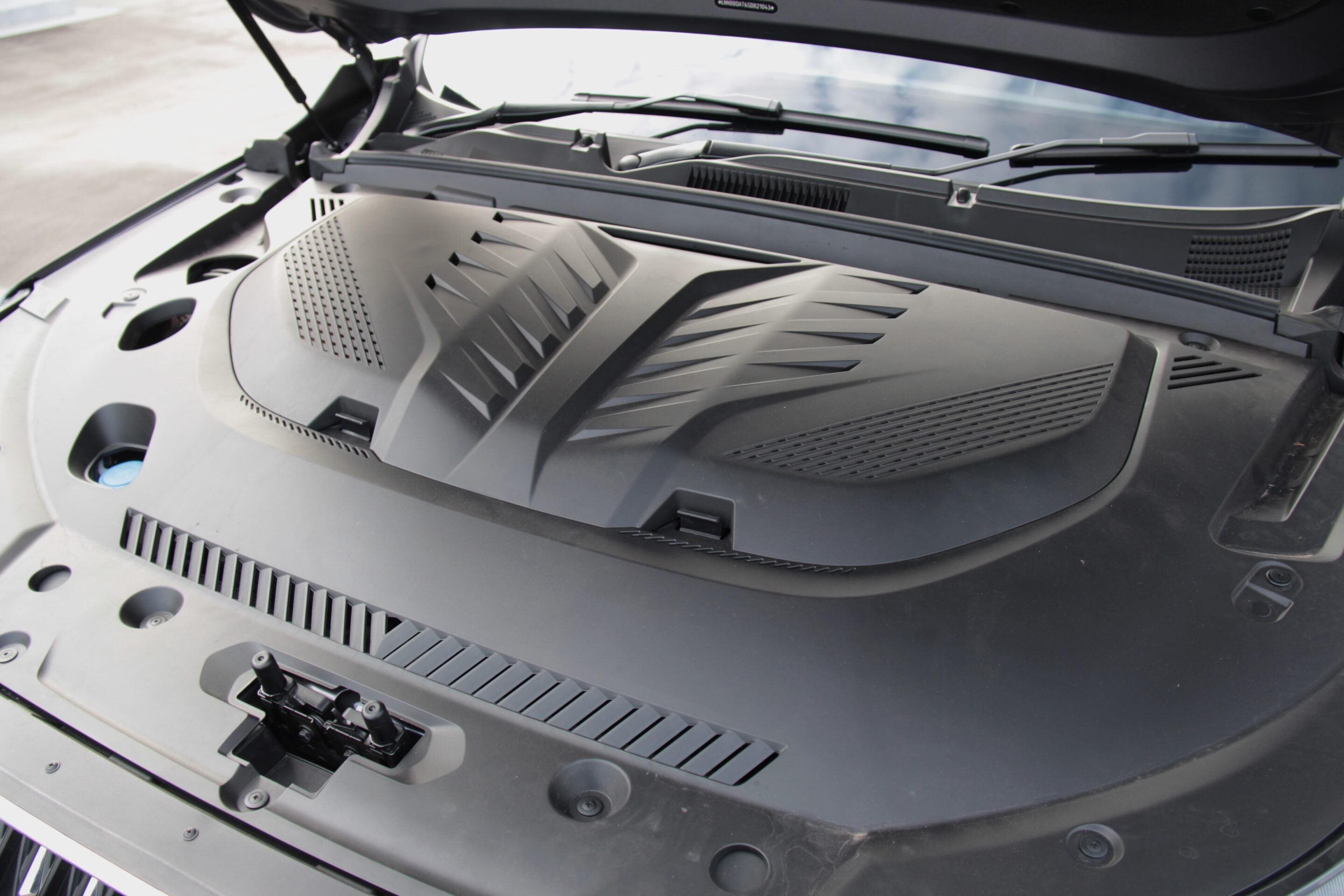
Importantly for those who don’t have regular access to charging infrastructure, the Tiggo 7 Super Hybrid can be DC fast charged at up to 40kW, and Chery claims that a 10-80 per cent charge takes around 20 minutes at that speed. But it can also be AC charged at up to 7.4kW for a full battery charge in under three hours, which is perfect for those wanting to charge it overnight.
The Tiggo 7 Super Hybrid’s drivetrain combines a 105kW/215Nm turbocharged 1.5-litre four-cylinder petrol engine with a 150kW/310Nm front-mounted electric motor. Chery doesn’t quote combined figures, so if you think adding them together is the answer, well, no. The electric motor does most of the propulsion, giving the Tiggo 7 Super Hybrid a peppy and torquey feel most of the time – the petrol engine will kick in largely at highway speeds to charge the battery or provide extra grunt, and when it does, it’s quite refined. In fact, the Tiggo 7 is quite refined in general, with little in the way of road or engine noise.
Is the Tiggo 7 Super Hybrid good to drive?
As for dynamics, the Tiggo 7 Super Hybrid could still be improved. The steering is the biggest bugbear, offering not much in the way of feel… it’s just too artificial to give a proper sense of connection to the front wheels. The ride quality could also offer more consistency – around town, it’s a bit too firm so that even smaller bumps are felt more than they should be, but the body control is then a bit too soft so it takes a bit too long to settle after bumps. It’s better at highway speeds where it’s less bothered by even smaller bumps.
Thankfully, the Tiggo 7 Super Hybrid’s active safety features are more refined than when Chery first launched the model locally. In particular, the lane keeping assistance was too sensitive and always tried to fight you for control when it thought something was wrong, but it’s calmed down since then and was much less bothersome than previous iterations on our roadtrip to Yass.
How practical is the Tiggo 7 Super Hybrid?
The Tiggo 7 Super Hybrid offers a practical and surprisingly high quality cabin given its bargain pricing. Almost every surface in the front cabin is covered by a soft-touch plastic or synthetic leather trim, while the switchgear is also good quality and feels nice to touch. It’s also a practical space with big door bins, a large box underneath the centre armrest, open trays on top of the centre console and an under-bridge tray that’s large (it’s also where the in-car hammer lies, to smash the windows in the event of submersion).
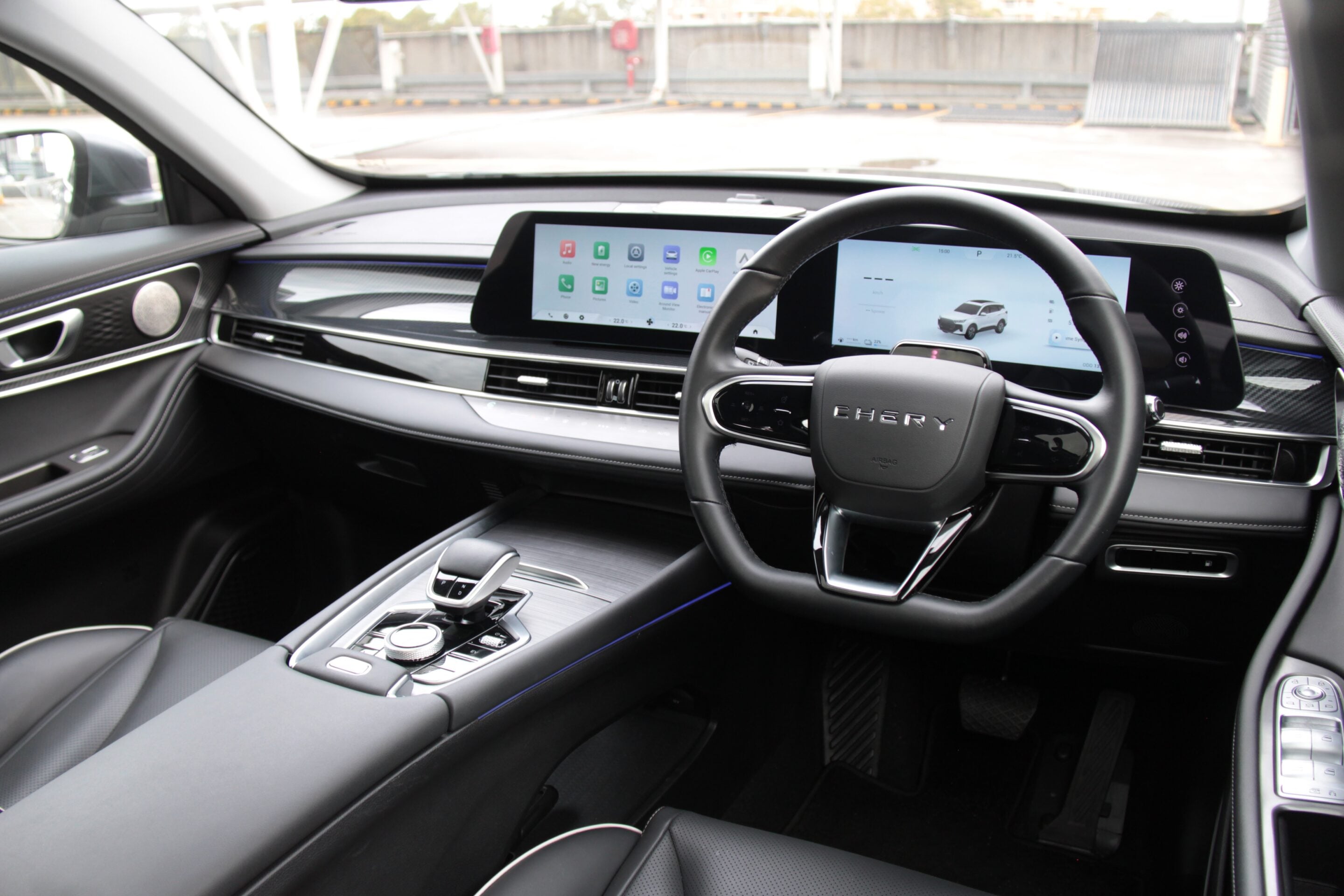
Dual 12.3-inch displays are standard and integrated into one curved screen that looks good. They’re easy to read and screen quality is good as well, though their layout is initially a bit confusing. There are haptic touch buttons underneath the screen for the climate control, as well as a few hard buttons on the centre console, but more actual buttons would be appreciated to help user-friendliness. There’s also no home button, which is frustrating because it takes a few extra button presses if using CarPlay to get back into the home screen.
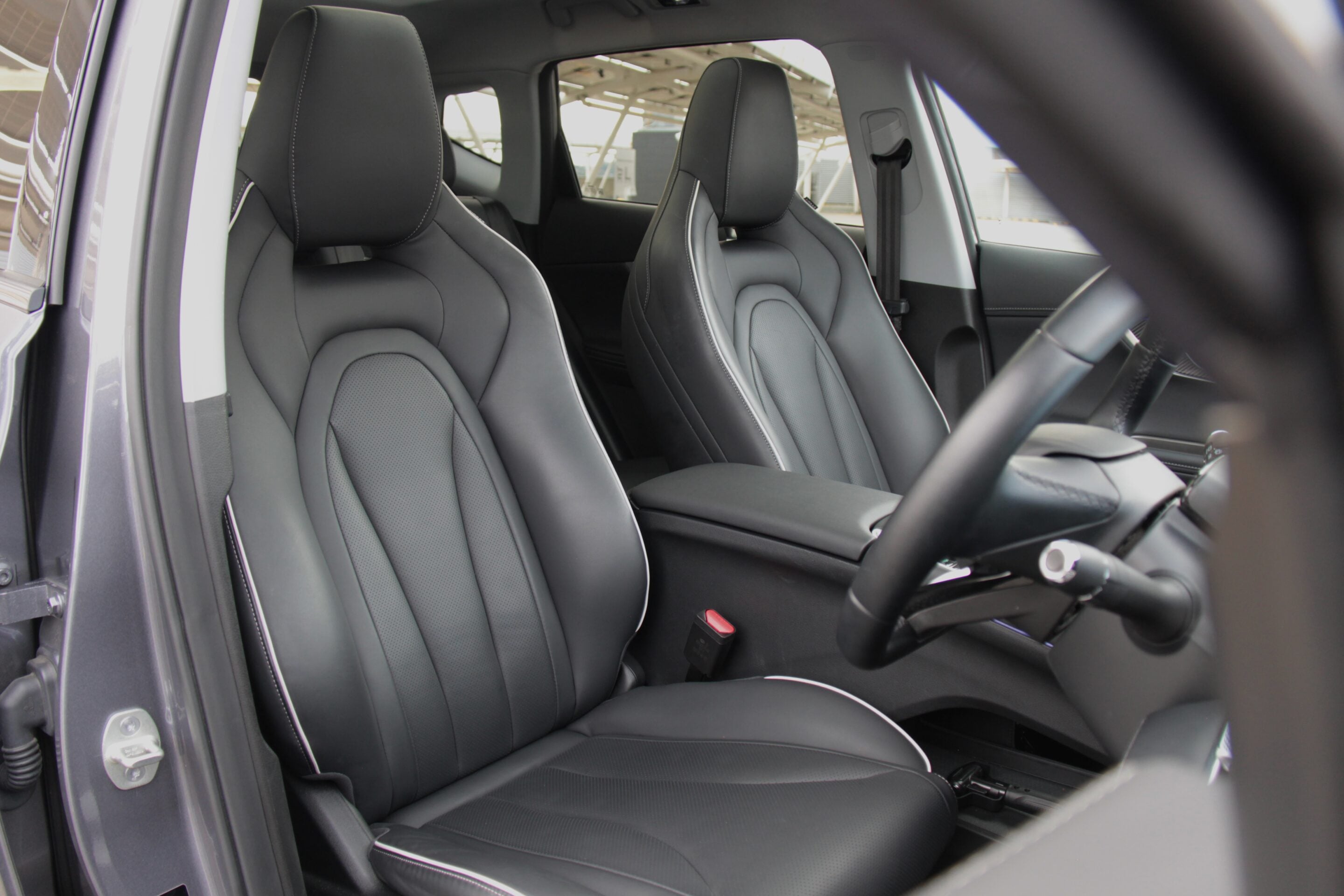
Front seat comfort is generally fine, even on longer trips like our 700km day, though under-thigh angle adjustment would be great, as would lumbar adjustment. While we’re on the seating, it takes at least three or four button presses to activate the seat heating and cooling, which is too many.
Rear seat space is not as plentiful as larger competitors like the H6, but two six-footers such as myself would be fine. Features include door and map pockets, a central armrest with cupholders, a single USB port and rear air vents, which is fine. The panoramic sunroof also lets a lot of light in, but features a proper cover so that summer sun won’t be too much of an issue.
The Tiggo 7 Super Hybrid’s boot measures 565 litres with the rear seats up and 1396 litres with the seats folded, which is a good size considering that it’s a bit smaller on the outside than most medium SUVs. The boot itself is long and flat, and features under-floor storage, though because of the battery, there’s no spare wheel, just a tyre repair kit. Annoying, but hardly unusual for 2026.
How much does the Tiggo 7 Super Hybrid cost to service?
Over the first five years, the Tiggo 7 Super Hybrid is quite frugal to service at just $1595 or $319 per year, and its annual service intervals are every 15,000km.
As for warranty, Chery covers the Tiggo 7 with a long seven-year/unlimited km warranty with an eight-year/unlimited km warranty for the hybrid battery. Twelve months of roadside assistance is also included, which is extended by a further 12 months with each dealer service up to seven years in total.
Should I buy a Chery Tiggo 7 Super Hybrid?
Including on-road costs, the Chery Tiggo 7 Super Hybrid is currently the cheapest plug-in hybrid that you can buy in Australia and that alone makes it stand out in a crowded market. Plus, it’s also quite practical, well equipped, offers an impressive electric-only range and fuel efficiency, it’s cheap to run and features an attractive and good quality cabin. These qualities will undoubtedly earn it friends.
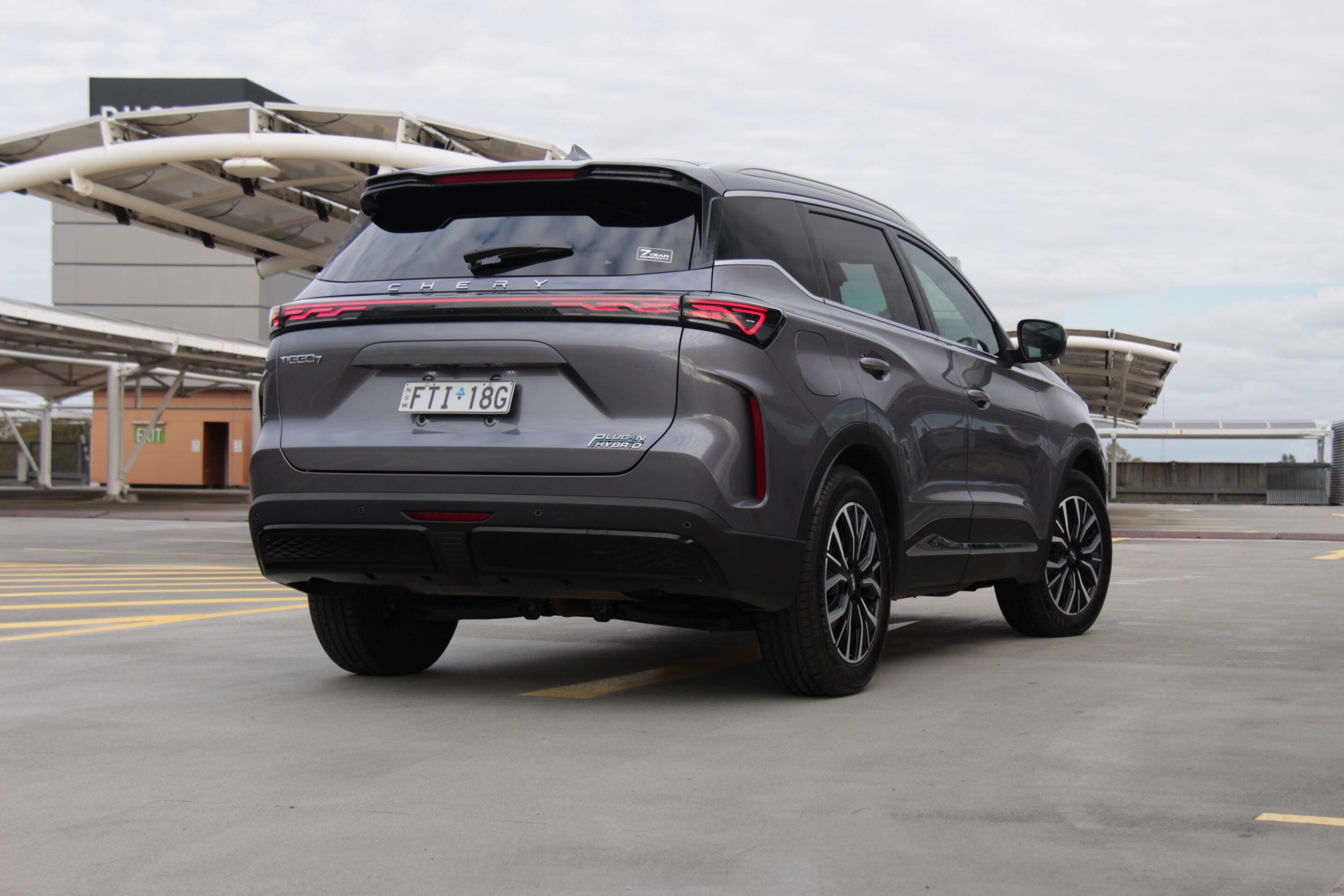
On the flip side, its low-speed dynamics even on smooth road surfaces could be improved. The ride is too firm and even smaller bumps are felt too strongly in the cabin, and the steering is too assisted as well.
Overall, there’s clear appeal to the Chery Tiggo 7 Super Hybrid – not only can it cost very little to buy and run, but it’s also a good all-rounder for the typical urban family.
Tiggo 7 Super Hybrid Ultimate standard features:
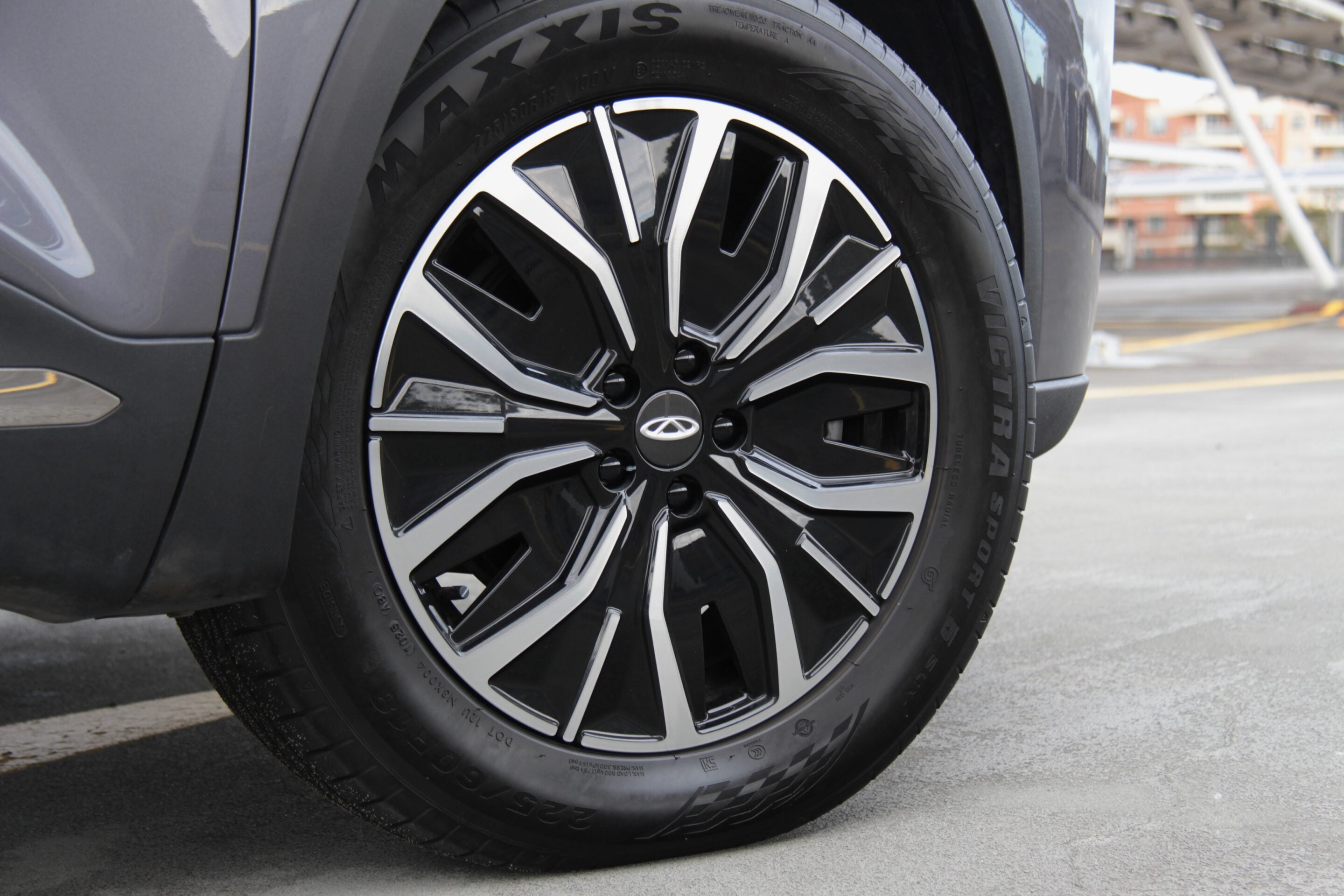
- 18-inch alloy wheels (with a tyre repair kit)
- Dusk-sensing automatic LED exterior lighting
- Rain-sensing automatic wipers
- Keyless entry and start with remote start
- Rear privacy glass
- Panoramic sunroof
- Roof rails
- Electric tailgate
- Heated and auto-folding mirrors
- Synthetic leather steering wheel
- Synthetic leather upholstery
- Heated and ventilated electric front seats with driver’s memory functionality
- Dual-zone automatic climate control with rear air vents
- 12.3-inch digital driver’s display
- 12.3-inch touchscreen
- Wireless Apple CarPlay and Android Auto
- AM/FM/DAB+ digital radio
- Eight-speaker Sony sound system
- Wireless phone charger
- 3x USB ports, 2x 12V sockets
- Colour-selectable LED ambient cabin lighting
- 8x airbags
- Autonomous emergency braking
- Adaptive cruise control with traffic jam assist
- Lane keeping assistance with adaptive lane guidance
- Blind-spot monitoring
- Rear cross-traffic alert
- Door open warning
- Rear collision warning
- Driver monitoring
- Traffic sign recognition
- Front and rear parking sensors
- 360-degree camera
- Tyre pressure monitoring
Tiggo 7 Super Hybrid Ultimate specifications:
| Price | $38,990 driveaway |
|---|---|
| Drivetrain | 1499cc turbocharged four-cylinder plug-in hybrid |
| Engine outputs | 105kW/215Nm |
| E-motor outputs | 150kW/310Nm |
| Battery | 18.4kWh LFP |
| Transmission | Single-speed, front-wheel drive |
| 0-100km/h | 7.0-7.5 seconds (approx.) |
| Claimed electric range | 93km (NEDC) |
| Peak charge speed | 7.4kW (AC), 40kW (DC) |
| Claimed 10-80% charge time | 20 minutes |
| Claimed combined fuel consumption | 1.4L/100km |
| Claimed CO2 emissions | 33g/km |
| Fuel type/tank size | 91 RON regular unleaded, 60 litres |
| Dimensions (L/W/H/WB) | 4535/1864/1702/2653mm |
| Boot capacity | 565 litres (rear seats up), 1396 litres (rear seats folded) |
| Kerb weight | 1825kg |
| Warranty | Seven-year/unlimited km (car), eight-year/unlimited km (battery) |
| Five-year service cost | $1595 ($319 per year) |
| On sale | Now |
This year marks a significant milestone for BMW M, celebrating 40 years of its iconic M3 as well as the 10,000th delivery of an M3 in Australia. To celebrate those two milestones, BMW Australia has launched a unique game of skill to win a snow and ice driving experience in New Zealand.
The game itself involves predicting what specification and where the 10,000th M3 will be sold, with entrants required to configure an M3 on BMW’s website before entering the competition.
The prize is a once-in-a-lifetime opportunity to experience the BMW M3 in its natural environment at the BMW M Snow & Ice Experience, which is held at the Southern Hemisphere Proving Ground located between Queenstown and Wanaka on New Zealand’s South Island.
The prize includes return airfares, two nights’ accommodation and helicopter transfers to the proving ground (weather permitting).
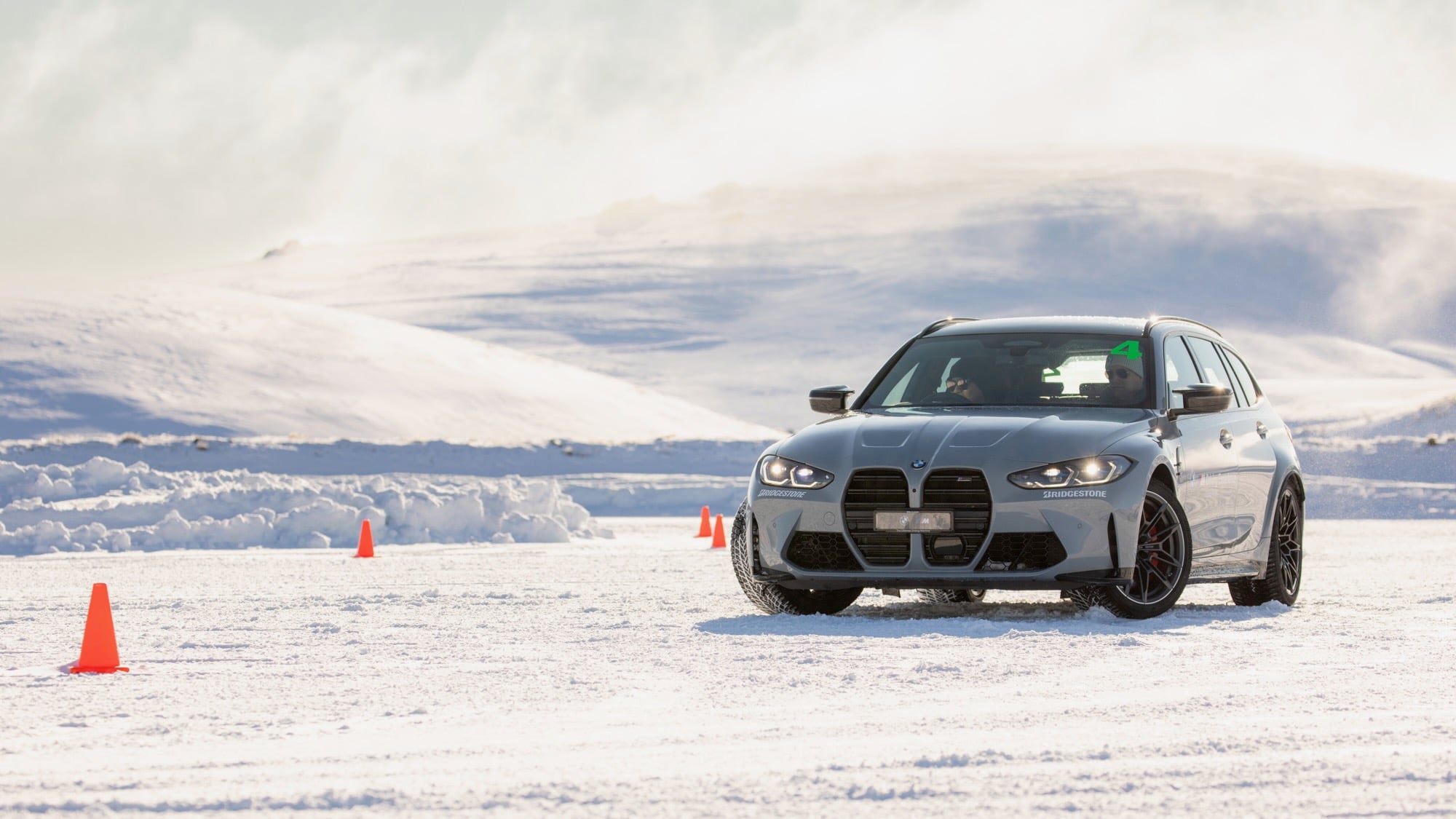
Rather than just entering a competition, participants are invited to predict the exact specification of Australia’s 10,000th BMW M3. Using the BMW online configurator, entrants must build what they believe will become this milestone vehicle, selecting the correct model variant and exterior colour. They must also predict the Australian state in which the vehicle will be delivered and the date of delivery.
The competition opened on June 17, 2026 and closes on June 30, 2026, and the entrant who most accurately predicts the 10,000th BMW M3 based on model variant, exterior colour, state of sale and delivery date will win the ultimate BMW M experience.
As with all BMW M Driving Experience courses, the instructional element is designed to improve skills for drivers of all abilities, with safety remaining the number one priority. The experience includes motorkhana, drag sprint, barrel race and drifting activities using a fleet of the latest BMW M high-performance road cars, culminating in a high-speed passenger ride in a BMW M3 alongside a globally certified BMW M instructor.
Visit BMW M Models: The Ultimate Driving Machine to enter the competition and view its terms and conditions.
About 18 months before the Y62 Nissan Patrol launched, Nissan’s then media manager made me an offer I couldn’t refuse. He knew I was headed to the US to cover the mega SEMA (Specialty Equipment Market Association) show in Las Vegas, and wanted me to get behind the wheel of the Nissan Titan pickup. “I want you to get a sense of what the engine’s about,” he said.
That 5.6-litre V8 was soon to become not just the motivation for the Patrol that would go on sale locally, but also the basis of Nissan’s short-lived entry into the V8 Supercar championship. And what an engine it was. The Titan I drove from LA to Las Vegas and back was fitted with a factory performance intake and sports exhaust, and sounded like a banshee howling at redline, matched only by the evocative burble at low rpm. It was, as the best V8 engines have always been, brilliant.
Fast forward to 2026, and it’s fast approaching the time where we say goodbye to that iconic V8. Think of where V8s have become popular, what they have powered, their flexibility and longevity, and its hard to argue there’s a more significant internal-combustion engine in automotive history. And the Patrol’s 5.6-litre is one of the best.

Not long after that experience with the Titan in the US, I was lucky enough to test (off-road) a LHD version of the Patrol brought out to Australia for final evaluation. Finally, Nissan fans had a flagship 4WD that could compete on a level playing field with Toyota’s all-conquering LandCruiser. And compete it did, remaining popular even as it nears its end having been taken to every dusty corner of the Australian continent, just as the best 4WDs should be.
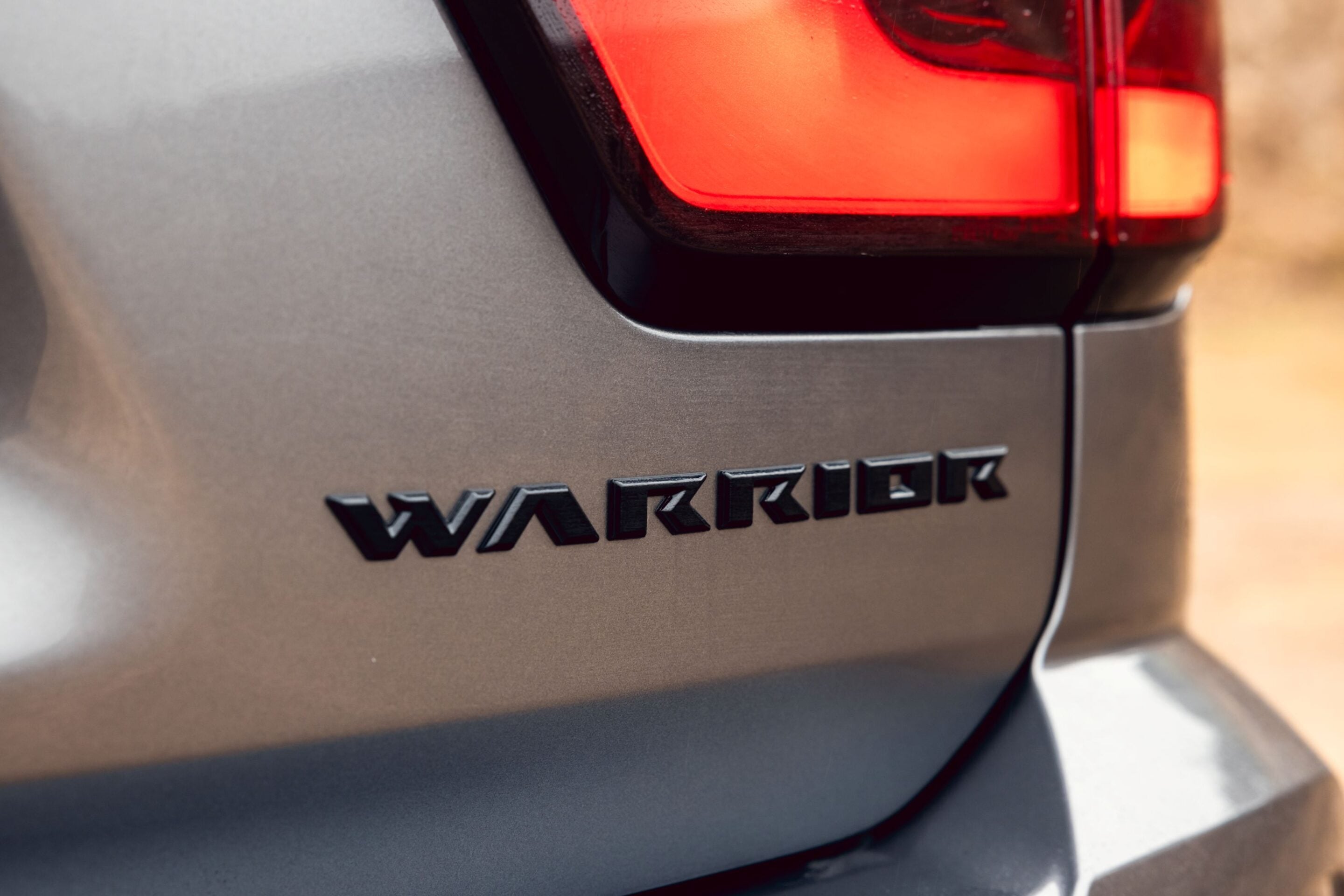
Shortly after Nissan closes the doors on its production, so too will Premcar, the Aussie business that tweaks the Patrol to produce its own Patrol Warrior version. Toughened up and modified in the way the off-road community would do, its a track-ready touring 4WD with full factory warranty.
For Nissan, and fans of the brand, the question turns to what next? Much was made of Toyota’s move from V8 power to V6 power for its iconic LandCruiser. By much, I mean a hell of a lot of negativity. Speak to a Toyota fan and they’ll tell you the greatest engine ever assembled (of all time, anywhere on earth) is a variation of the final inline six diesel that powered LandCruiser in this country. Those same fans who lamented the introduction of the V8, however, then bemoaned the end of the V8 – especially for the 70-Series, which was to get – shock, horror – a four-cylinder.
How much difference do you reckon that’s made to Toyota’s sales? Almost none. The 300-Series remains popular despite the eye-watering price, and the 70-Series continues to quite literally chug away in every corner of the continent regardless of what’s under the bonnet. In other words, if you’re a Toyota fan and you want either a flagship off-roader, or rugged 4WD, you’re buying one, regardless of the engine.
Nissan will be hoping the same thing happens with the next Patrol, which will be powered by a 3.5-litre, twin-turbo V6 petrol engine paired to a nine-speed automatic. With 317kW and 700Nm, there’s little doubt the new fire-breather, derived from the GT-R, has enough mumbo to do what Patrol buyers will want.
Is it more efficient than the naturally-aspirated V8 in the real world? Probably not, but it doesn’t matter as perception is all the rage in these environmentally conscious times, and a V6 ‘seems’ better than a V8.
The way I look at it, thanks to its popularity you can still buy a V8 Patrol if that’s what you really want. They will always be available on the second-hand market. But the inevitable had to happen, whether we like it or not, and the marching of time means the V8 was always headed for the exit door in this instance.
Nissan’s Patrol has, since the launch of the Y62, always seemed like remarkably good value. Even as prices rose, the level of standard equipment and the comfort you got for the price tag ensured it always felt like genuine value for money. Here’s hoping the Y63, powered by a different engine as it may be, maintains the status quo.
Australian pricing and specifications for the Forthing Taikon 5 electric and range-extender hybrid medium SUV have been announced ahead of the first deliveries commencing later this month. Priced from $36,990 driveaway in hybrid form and $38,990 driveaway for the electric variant, the Taikon 5 is the first model from newcomer Chinese brand Forthing, which is part of the Dongfeng Motor Group. Forthing is launching in Australia backed by Ateco Group, which also imports Ram Trucks, Maserati, Renault and LDV products locally.
Two powertrain options will be sold in the Australian-spec Taikon 5: Either a range-extender plug-in hybrid like the Leapmotor C10 or a fully-electric version with up to 437km of WLTP-rated range. The range-extender combines a 75kW/130Nm 1.5-litre naturally aspirated petrol engine with a 120kW/420Nm electric motor driving the front wheels.
The engine never directly powers the wheels, instead, acts as a generator to charge the 31kWh LFP battery once it’s been drained. Charging the Taikon 5 REEV can be done at up to 40kW (DC) or 3.5kW (AC), with a claimed 30 to 80 per cent fast charge time of approximately 30 minutes. The claimed WLTP electric range of the Taikon 5 REEV is an impressive 170km, and its total claimed range is 937km.
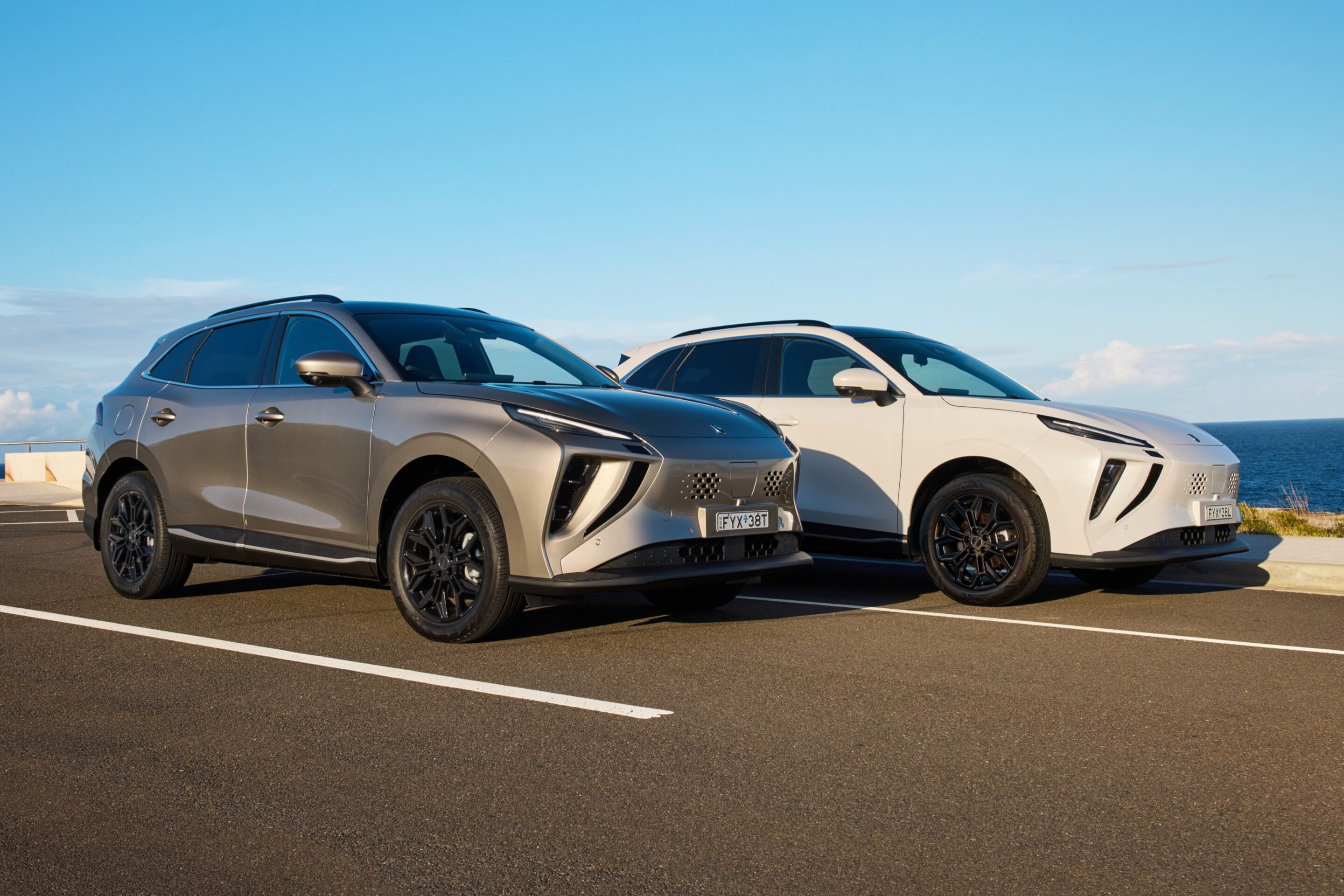
Meanwhile, the electric Taikon 5 uses a 150kW/340Nm front-mounted electric motor that draws power from a 64kWh LFP battery. It can be DC fast charged at up to 80kW and a 30 to 80 per cent fast charge takes a claimed 30 minutes, while the Taikon 5 BEV’s claimed WLTP range is 437km.
Measuring 4600mm long, 1860mm wide, 1700mm tall and riding on a 2715mm long wheelbase, the Taikon 5 is sized similarly to the Geely EX5, which is one of its closest competitors. The Taikon 5 REEV’s kerb weight is 1820kg, with the BEV adding 100kg to that.
Ateco has also announced Forthing’s local warranty, which sees its products covered for seven years or 200,000km (whichever comes first). The Taikon 5’s service intervals are 12 months/15,000km (whichever occurs first) for the range extender, and 12 months/20,000km (whichever occurs first) for the BEV, with pricing yet to be announced.
2026 Forthing Taikon 5 pricing (driveaway):
- Range Extender Hybrid Luxury: $36,990
- BEV Luxury: $38,990
- Range Extender Hybrid Exclusive: $40,490
- BEV Exclusive: $42,490
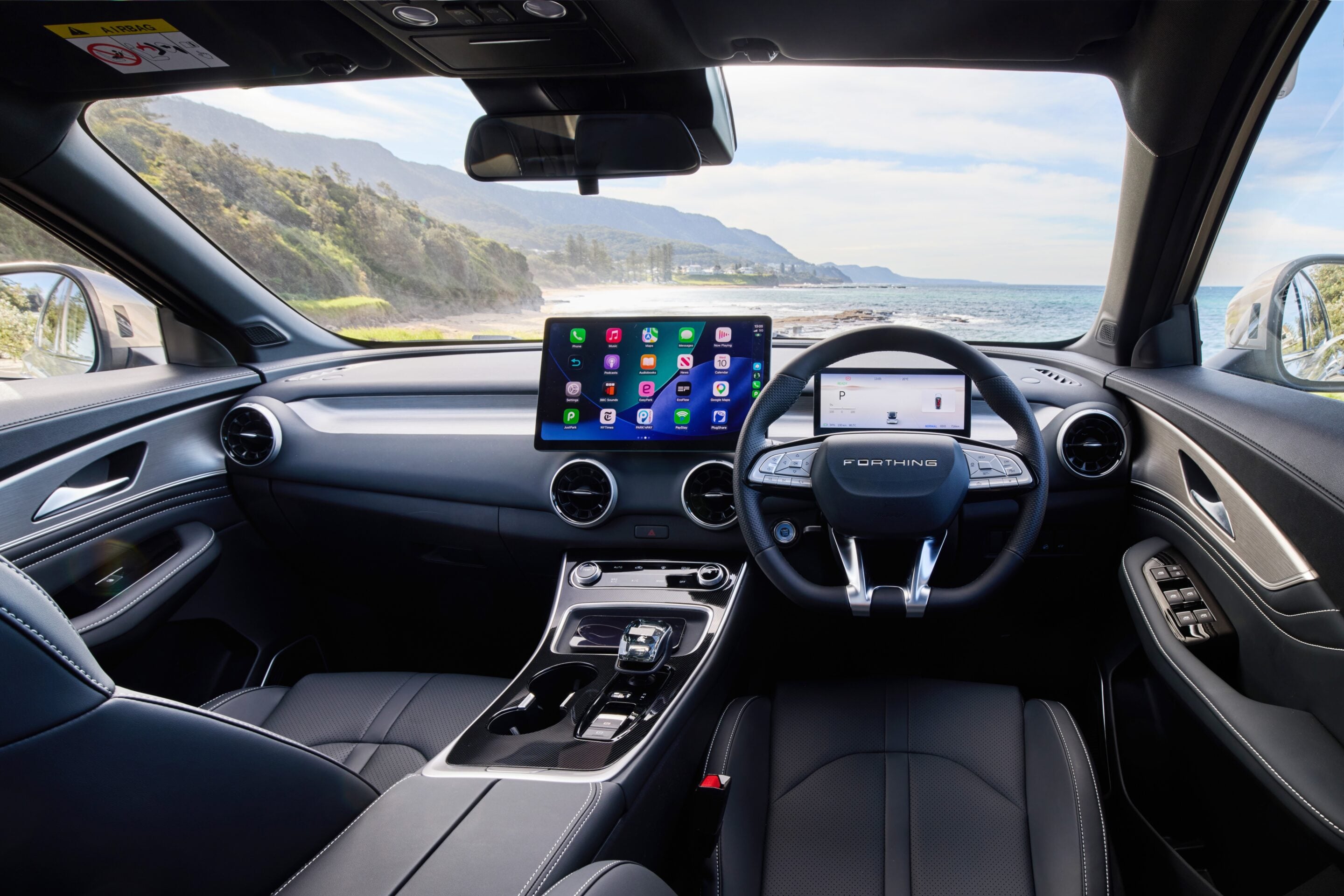
Forthing Taikon 5 Luxury standard features:
- Dusk-sensing automatic LED exterior lighting with scrolling rear indicators
- 19-inch alloy wheels
- Remote central locking with keyless start (Range Extender) or push button start (BEV)
- Heated exterior mirrors
- Synthetic leather upholstery
- 10-way electric adjustment for the driver seat
- Ventilation and massage functions for the driver seat
- 4-way electric adjustment for front passenger seat
- 8.8-inch driver information display
- 14.6-inch infotainment screen
- FM/AM and digital radio
- Wireless Apple CarPlay and Android Auto
- Four-speaker audio system
- Electric parking brake
- Crystal-style gear selector
- Vehicle-to-load (V2L) capability up to 3.5kW
- 6x airbags
- Autonomous emergency braking
- Lane departure warning
- Lane keep assist
- Front and rear collision warning
- Blind-spot monitoring
- Rear cross-traffic alert
- Door exit warning
- Adaptive cruise control
- Traffic sign recognition
- Rear parking sensors
- Reversing camera
- Tyre pressure monitoring
Taikon 5 Exclusive model adds to Luxury:
- Power tailgate
- Front parking sensors
- Rear privacy glass
- Power-folding side mirrors
- Wireless phone charger
- Leather steering wheel
- 360-degree ‘panorama’ view camera
- Panoramic sunroof with front opening section
- Six-speaker audio system
- Space-saver spare tyre and wheel jack kit (BEV)
Calls for a more uniform approach to road user funding have emerged as part of a NSW Government inquiry into its proposed road user levy.
At present, the NSW Government has proposed that electric vehicles (EVs) and plug-in hybrids (PHEVs) should be charged per kilometre to account for the impact on road maintenance.
Currently, fuel excise on petrol and diesel contributes to general revenue collected by the Federal Government and distributed for federally funded infrastructure, including road maintenance. The system, currently, does not directly fund roads based on fuel excise revenue collected.

With EVs avoiding traditional fuelling, and PHEVs theoretically using liquid fuels at a reduced rate, the NSW government has proposed that new energy vehicles should be charged at 2.974 cents per kilometre for EVs (including hydrogen fuel cell EVs) and a slightly lower 2.379 cents/km for PHEVs.
The Victorian Government trialled a similar user-pays system, introduced in 2021. A two-year legal challenge eventually saw the charge deemed unconstitutional by the High Court of Australia, which found the charge functioned as an excise – a levy that can only be implemented at a federal, not state, level.
In order to avoid a similar outcome, the NSW inquiry is seeking alternatives that would allow the road user charge to come into effect.
Among the proposals, a universal road user charge, which would be based on vehicle weight and charged according to distance driven. This new charge would, however, take the place of fuel excise.
In that instance, fuel – taxed equally across the country – would become markedly cheaper in NSW unless all states and territories agreed to adopt similar systems. The change would then switch the federally collected revenue model to a state-based system.

The proposal has the support of the NRMA, which sees a road user fee as a way to balance the road funding model without stifling EV adoption.
The Electric Vehicle Council, meanwhile, claims the opposite and has proposed that an EV user charge not be implemented until EVs make up 30 per cent of Australia’s national vehicle fleet. Currently, EVs represent around 2 per cent of vehicles nationally, with the proposed tipping point expected to take another 10 years.
At present, the NSW road user charge is proposed with a start date of July 1, 2027, but the inquiry is ongoing and set to resume from July 29, 2026.
To commemorate 75 years in the UK, Porsche has unveiled a limited edition version of the 911 GT3 with bespoke styling touches.
Based on the 911 GT3 with Touring Package, a 51-car run of the Earls Court 51 Edition model will be available to British buyers.
The design is a callback to Porsche’s original 356 model, resulting in the selection of the more toned-down styling of the GT3 Touring, not to mention its availability with a manual transmission.
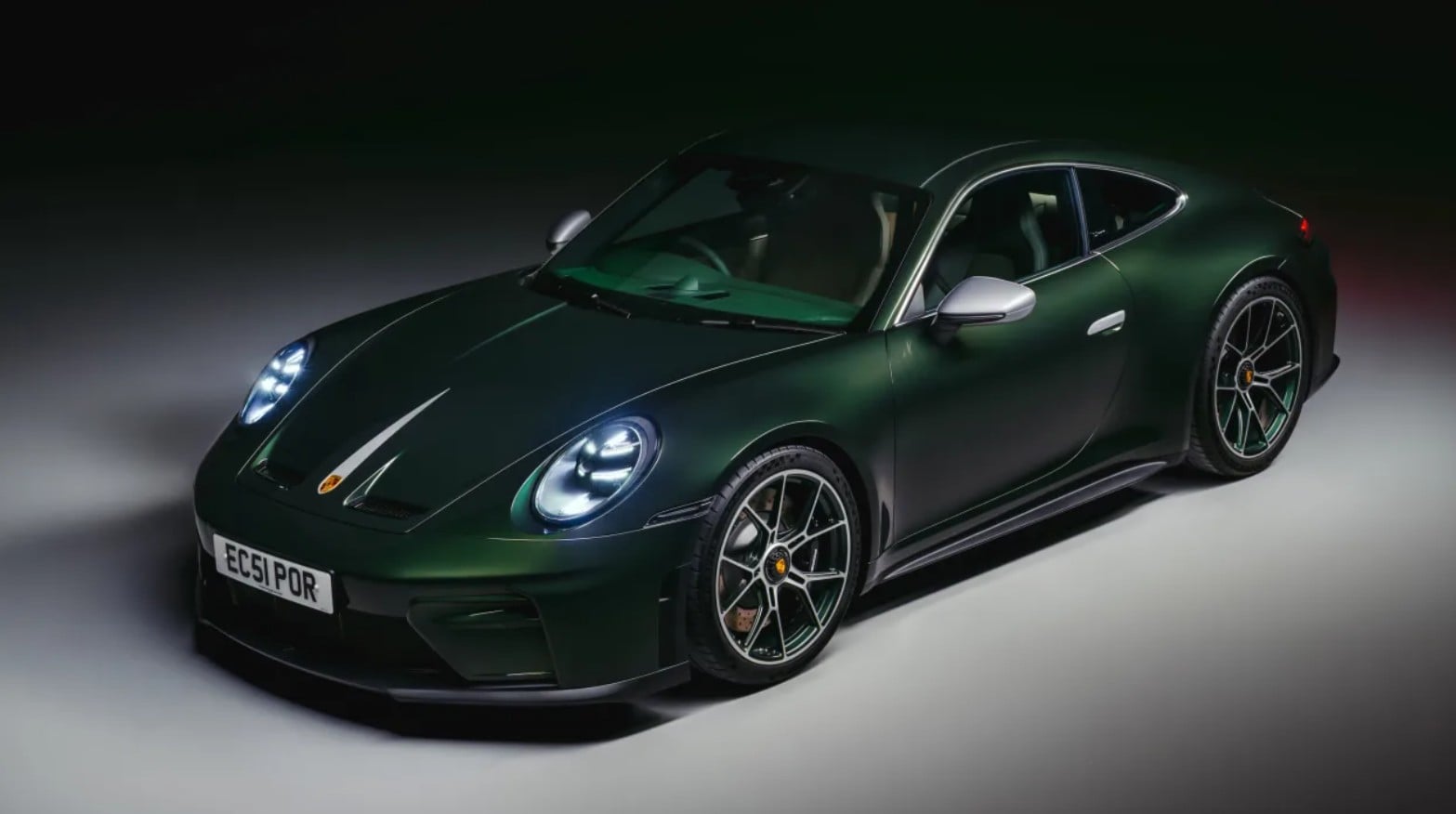
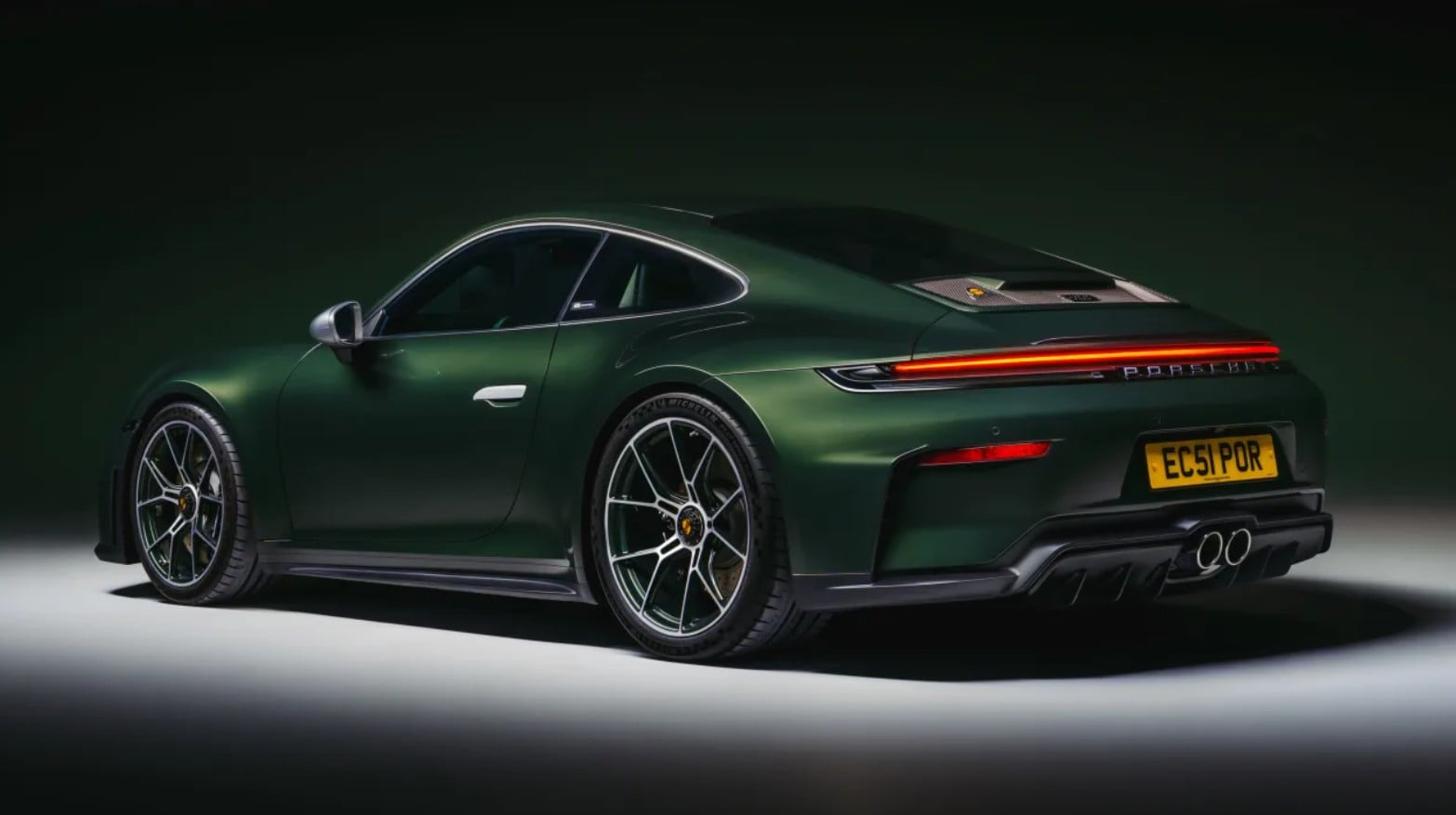
Another connection to the first showing of the Porsche brand at the 1951 Earls Court Motor Show is the choice of colour, with a uniquely developed Earls Court Green metallic connecting the modern car to one of the six 356s first presented at the motor show.
Other styling details for the GT3 Earls Court 51 Edition include bonnet stripes, door handles, and mirror caps in Brilliant Silver, ‘Earls Court 51’ badging on the engine cover and B-pillars, two-tone GT3 wheels in Earls Court Green with a painted Brilliant Silver facing, gloss black brake calipers, a body colour-matched front apron, special edition LED puddle lamps, HD-matrix LED headlights and a special indoor car cover featuresing the Earls Court Edition logo.
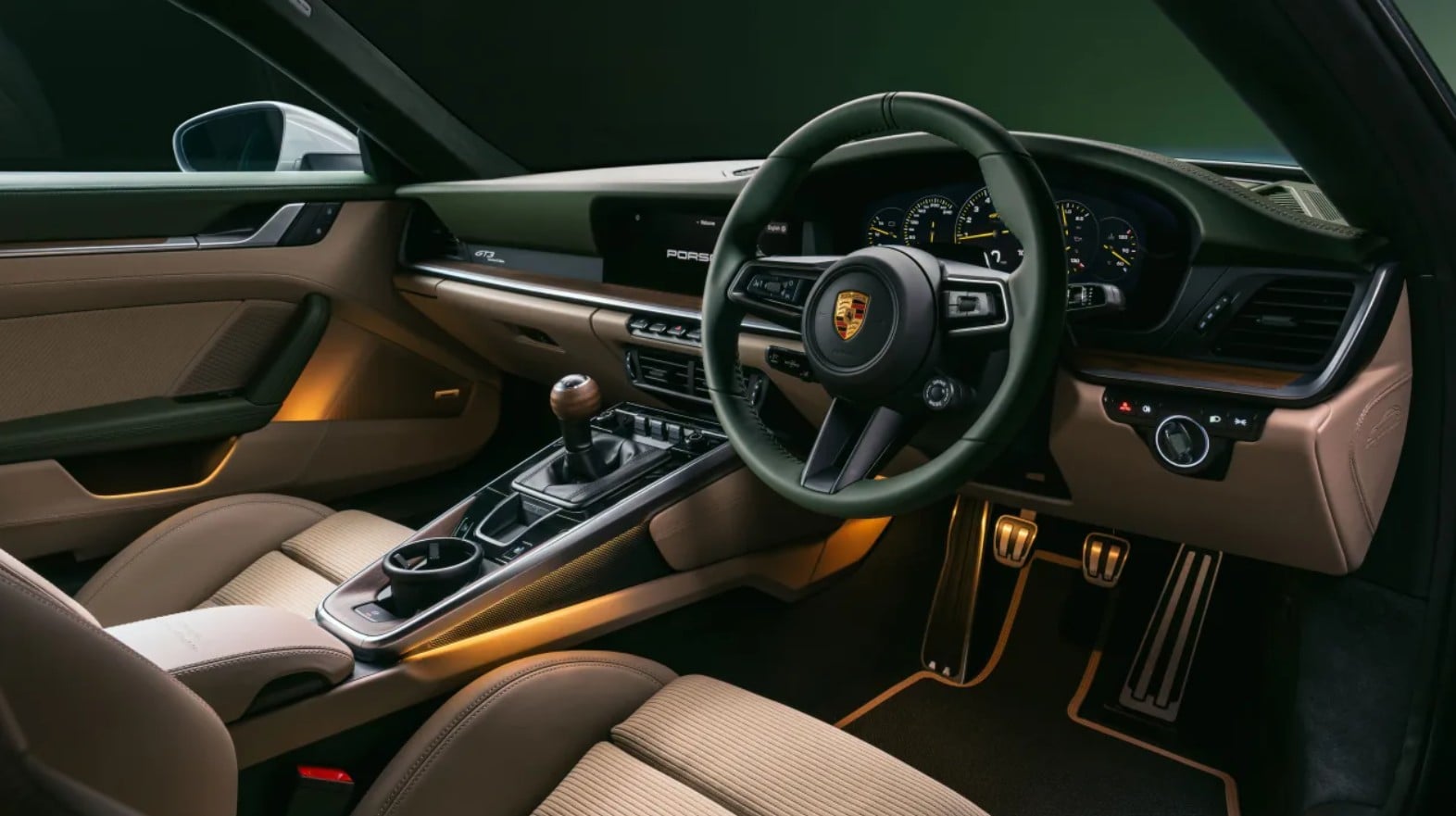
On the inside, Porsche has trimmed the Earls Court 51 Edition cars in Night Green and Chalk Beige leather, fitted adaptive sports seats with corduroy inserts and embossed Earls Court logos, and fitted wood dashboard trim with the ‘Earls Court 51 Edition’ motif.
Other interior changes include a matching Night Green owners manual sleeve, dashboard trim with an embossed 356 silhouette, Union Jack motifs on the sun visors, illuminated door sills with ‘GT3 Earls Court 51 Edition’ wording, and a wood-topped gear lever.
As well as the custom-configured vehicles, owners will also be presented with a Porsche Design Chronograph watch, featuring a dial inspired by the instruments from a 356, a matching Night Green Weekender soft bag, a 1:18 scale model of the 911 GT3 Earls Court 51 Edition, and a coffee table book detailing the development and build process for the special edition model.
Porsche Cars GB will also unveil a restored 1951 356, similar in specification to the cars presented in 1951.
The car itself has previously been displayed at Porsche’s UK head office and belonged to British racing driver Betty Haig. The left-hand drive model was first imported to the UK in the 1950s, finished in silver with a red leatherette interior.
Porsche has modified the car, now finished in Earls Court Green, with a Night Green and Chalk Beige interior plus a wooden gear lever and wood trim on the doors designed to align with the look of the anniversary special editions.
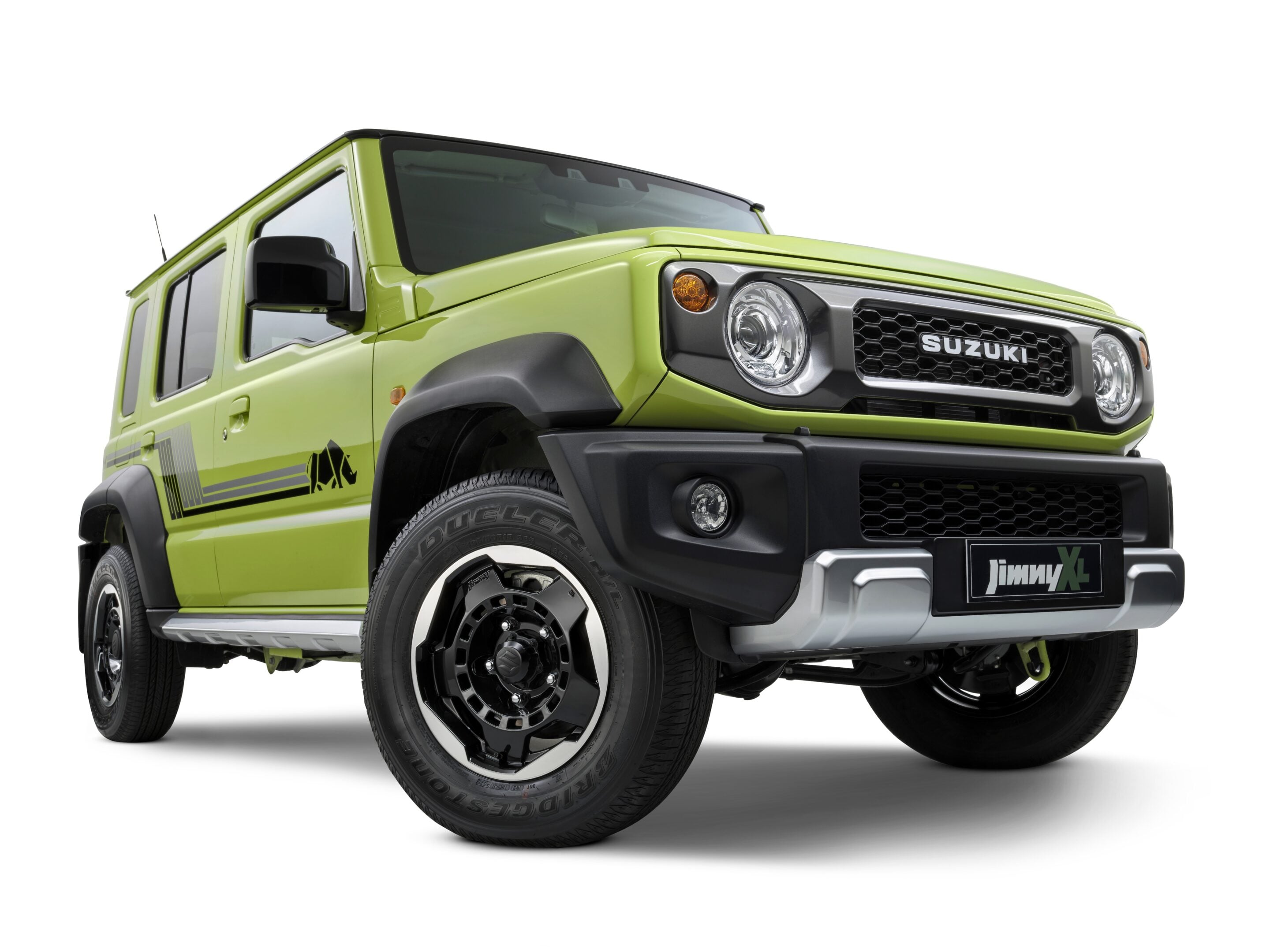
Suzuki Australia has announced a new special edition Jimny Rhino, which is now available to order in Australia. The Rhino is based on the five-door XL model and it adds a number of cosmetic upgrades compared with the standard model. Priced from $44,990 plus on-road costs, the Rhino asks $7500 more than the standard XL, and a full $13,000 more than the entry-level Jimny Lite.
The headline feature of the Rhino is the ‘Kinetic Yellow’ paint colour, which isn’t available on the regular XL, and is the only available colour option for the Rhino, paired with a black roof. There are unique decals on the sides of the Rhino, with “exclusive Rhino-themed side decals featuring a charging rhino motif accompanied by twin stripes that sweep rearward from the iconic Rhino logo.” The ‘サイ’ at the rear is the word rhino written in Japanese script.
Other exterior features include new 15-inch alloy wheels, satin silver side skirt and front bumper trims, a “heritage” front grille that’s available on other Jimny models as a dealer-fit accessory, mud flaps, a rhino badge on the rear and even LED puddle lamps.
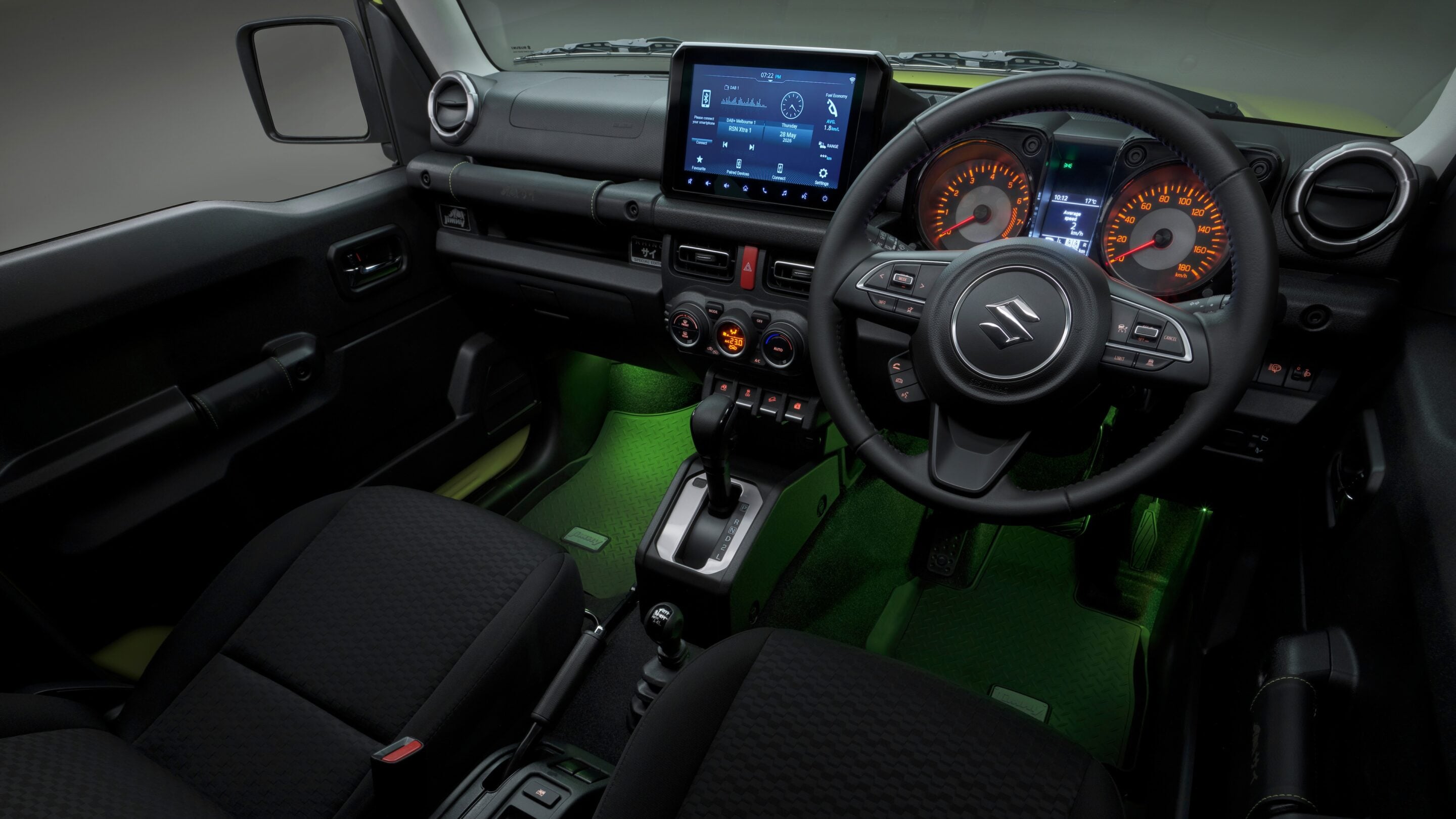
Inside, there are also upgrades to the Rhino, including black leather trims on the door handles and grab handles, a laser-etched Rhino logo and silver accents on the air vents and gearbox surround. Manual models also gain a retro-design shifter.
There is also LED ambient lighting — which can be set to the same Kinetic Yellow as the exterior colouring — as well as a four-speaker Pioneer audio upgrade and rubber floor mats.
Finally, each Jimny Rhino will also receive a ‘Rhino Go Pack’ with merchandise including:
- Rhino-branded metal key presentation case
- Rhino-branded key chain
- Bucket hat with Rhino Special Edition logo embroidered in Kinetic Yellow stitching
- Portable lantern with Rhino Special Edition logo in Kinetic Yellow
- Drink bottle with Rhino Special Edition logo
- Rhino-branded blanket
- Rhino-branded thermos tumbler
- Rhino-branded cooler box
- Portable Bluetooth speaker with Rhino Special Edition logo
- Rhino Rations: Koko Black 9-piece Dark Chocolate Pistachio praline box presented in a bespoke Rhino Special Edition branded sleeve
The Rhino’s new equipment is in addition to the standard features on the Jimny XL, which include dusk-sensing automatic LED headlights, remote central locking, heated/electric-folding mirrors, single-zone automatic climate control, a 9.0-inch touchscreen with wireless Apple CarPlay and Android Auto, autonomous emergency braking, lane departure warning and a reversing camera. The automatic also features adaptive cruise control.
Because the Rhino gives no mechanical upgrades to the standard Jimny, the 75kW/130Nm 1.5-litre naturally aspirated four-cylinder petrol engine remains unchanged, as does its part-time four-wheel drive system and either five-speed manual or four-speed automatic transmission options.
2026 Suzuki Jimny pricing (plus on-road costs):
| Lite 3-door 5-speed manual | $31,990 |
|---|---|
| Jimny 3-door 5-speed manual | $33,990 |
| Jimny 3-door 4-speed automatic | $36,490 |
| XL 5-door 5-speed manual | $34,990 |
| XL 5-door 4-speed automatic | $37,490 |
| Rhino 5-door manual | $44,990 (new) |
| Rhino 5-door automatic | $47,490 (new) |
The Suzuki Jimny Rhino is now available to order, except in Queensland and Northern New South Wales, where the company uses a different distributor.
A significant update for the Geely EX5 electric mid-size SUV has been revealed through the Chinese Ministry of Industry and Information Technology with updated styling, more power and even a switch to a rear-wheel drive drivetrain that replaces the current model’s front-wheel drive layout. It’s yet to be confirmed for markets outside of China, though given the popularity of the current EX5 in Australia, we’re expecting it to launch locally eventually.
Outside, the updated EX5 sports new front end styling with a new bumper design for a bolder and more characterful look. The side air intakes have been made larger than the current model, and a satin chrome finish has been added as well.
There are new alloy wheel designs in both 18- and 19-inch sizing, while the EX5 has also gained regular door handles to comply with new Chinese regulations banning the pop-out handles that feature on the current EX5. At the rear, the EX5 is largely unchanged, aside from the Geely name now spelt underneath the tailights.
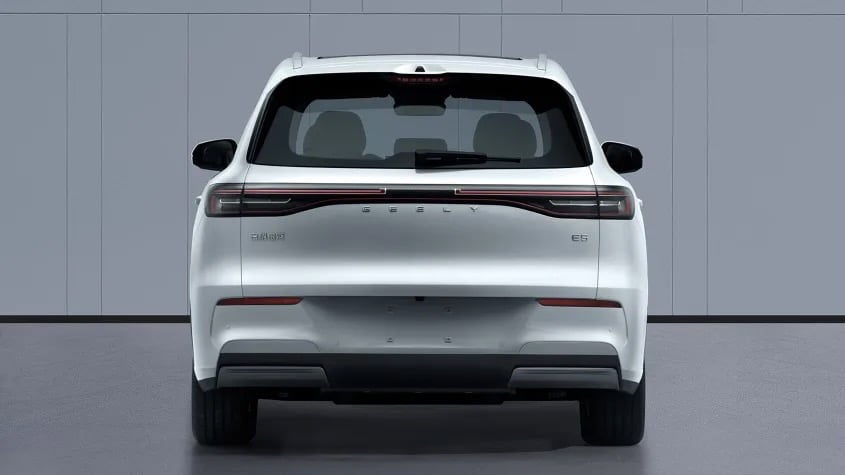
We can also spot a LiDAR sensor on the roof, which suggests that the EX5 will gain a Level 3 autonomous driving system in its home market, but that likely won’t spread to the Australian market.
Under the skin, the EX5 has gained a new 245kW motor, which is a lot more powerful than the current 160kW unit, and it’s now located on the rear axle and not the front. Geely is yet to confirm if the bump in power will improve acceleration, but the top speed has reportedly risen from 175km/h to 200km/h.
The Chinese documents did not confirm battery sizes, but the current EX5 uses 68kWh battery in Australia with a claimed WLTP range of between 450km and 475km. Smaller 50kWh and 60kWh batteries are offered in overseas market EX5s as well.
Geely Australia is yet to comment on the updated EX5 and if it will be sold locally, but we’d be surprised if we didn’t see it before the end of 2026.
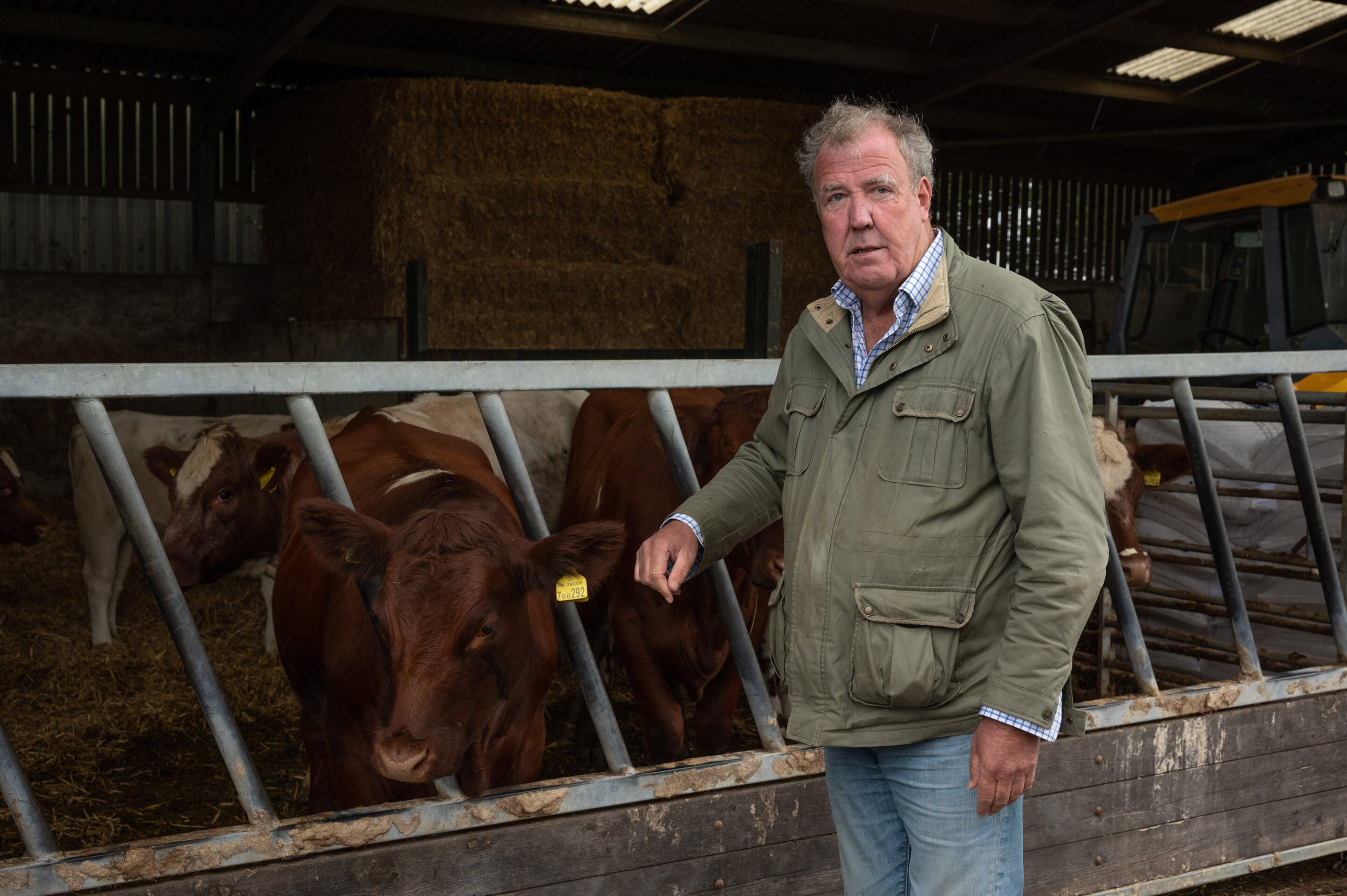
Jeremy Clarkson has revealed he has been diagnosed with cancer, with the former Top Gear and The Grand Tour presenter sharing the news during the latest season of Clarkson’s Farm.
The 66-year-old disclosed the diagnosis during an emotional conversation with farm manager Kaleb Cooper in one of the final episodes of the Amazon Prime series.
Clarkson explained that the cancer was discovered following medical testing earlier this year and described it as aggressive, although detected at an early stage.
“I’ve got cancer,” Clarkson told Cooper while discussing the year’s farming challenges.
According to Clarkson, doctors identified the illness after he underwent a biopsy following a medical examination. He said treatment would likely take place during a critical period on the farm, creating further challenges during an already difficult year.

The diagnosis comes after a series of well-publicised health issues for Clarkson. In late 2024, he revealed he had undergone heart surgery after experiencing symptoms linked to coronary heart disease, a condition he also referenced during the Clarkson’s Farm episode.
“So we started the year and I had coronary heart disease and ended it with me with cancer,” Clarkson said.
The television personality was recently the subject of the Wheels Interview, talking about the continued success of Clarkson’s Farm and his evolving relationship with motoring, farming and life away from television’s traditional studio environment. The series has become one of Amazon’s biggest global hits, introducing Clarkson to a broader audience beyond the automotive enthusiasts who first came to know him through Top Gear.
Clarkson said he had been aware of the diagnosis since May and was hopeful treatment would be successful, with further medical testing scheduled to monitor his progress.
Ahead of the release of the final episodes, Clarkson warned viewers they would be markedly different from the show’s usual tone.
“Ordinarily, we try to keep the show light and cheerful,” he said in a video shared on social media. “The final two episodes are a difficult watch.”
Clarkson’s Farm has become known for its mix of humour, agricultural challenges and personal moments, but the latest season is set to reveal one of the most significant challenges Clarkson has faced both on and off screen.
