
Best Large SUVs

Gallery 1
Contenders
- Hyundai Santa Fe Hybrid
- Kia Sorento Hybrid
- Chery Tiggo 8
- Mazda CX-80
- Audi Q8
- BMW X5 xDrive50e
- Range Rover Sport
- Land Rover Defender
- Lexus RX350h, RX450h+ and RX500h
- Toyota Kluger
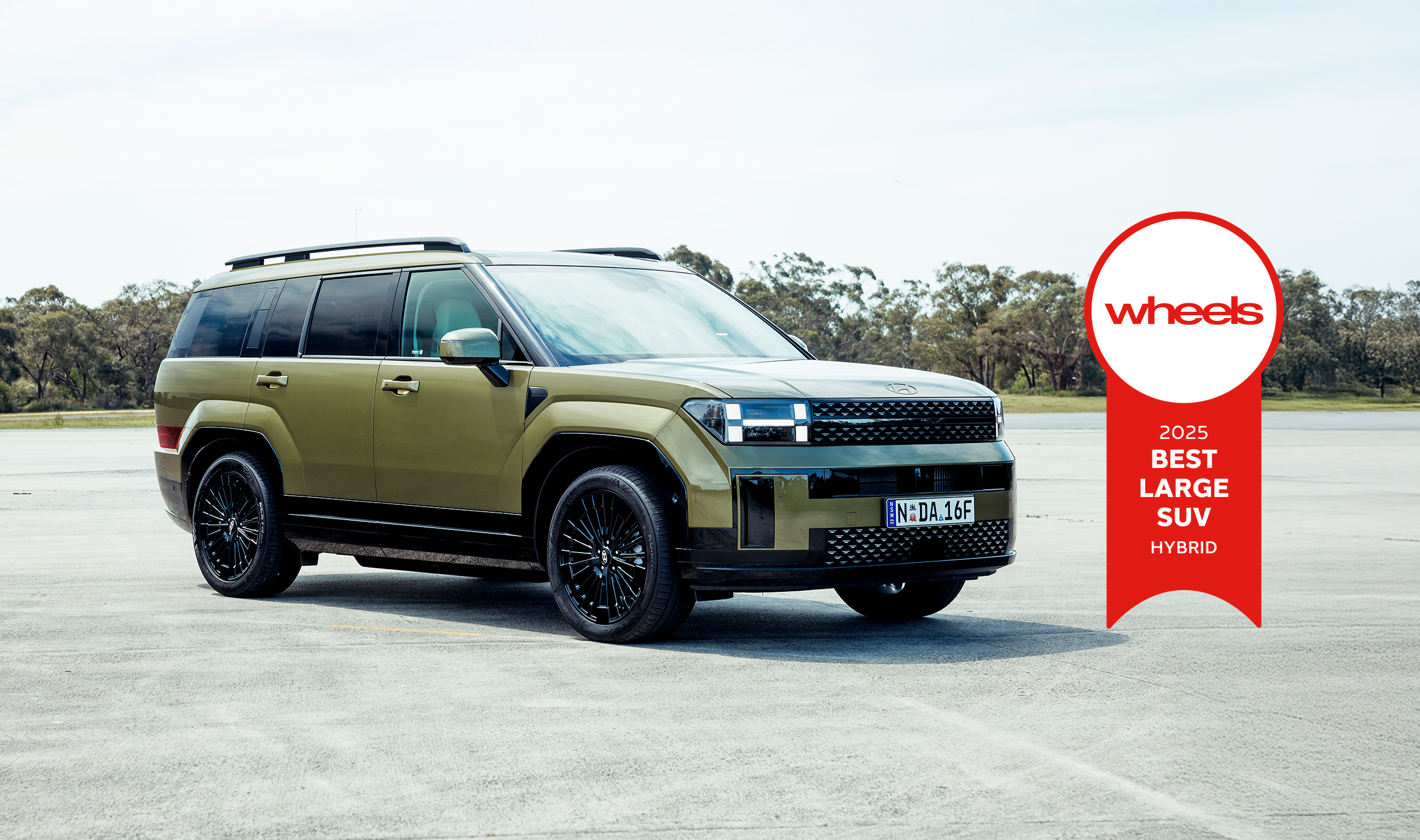
Winner – Hyundai Santa Fe Hybrid
1
Price: from $57,000 plus on-road costs
Drivetrains/fuel economy/CO2 emissions: 1.6-litre four-cylinder turbo-hybrid, 6-speed auto, 173kW/367Nm, 5.6L/100km, 128g/km
Dimensions (length/width/height/wheelbase): 4830/1900/1770/2815mmBootspace: Unknown (third row up)/628L (third row folded)/1949L (third + second row folded
Warranty/roadside assistance/service intervals: Five-year/unlimited km, service-activated,
annual/every 10,000km
Five-year service cost: $2439
| Driving | |
| Interior | |
| Practicality | |
| Overall value | |
Things we like
- Distinctive styling
- Spacious and practical cabin
- Loaded with kit across the range
Not so much
- Calligraphy model’s pricing is getting up there
- Lazy response in eco mode
- Toyota hybrids are more efficient
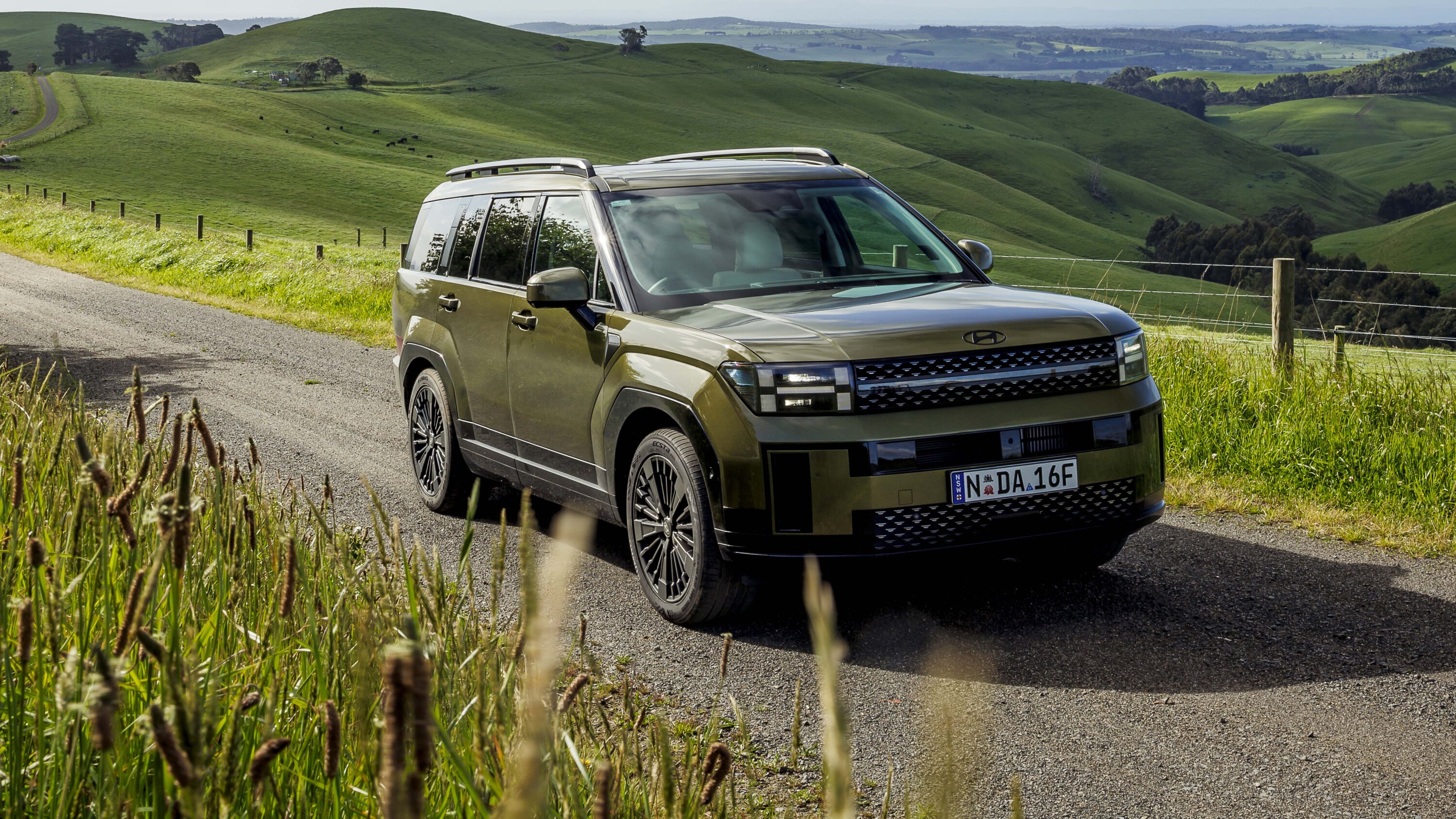
If you’re searching for a bold and distinctive-looking family SUV, look no further than the Hyundai Santa Fe. While the previous four generations were some of Hyundai’s best products over the years, none of them were especially interesting to look at. Enter generation five and its funky, boxy shape, making it certainly one of the most instantly recognisable large SUVs on the market.
Inside, the Santa Fe offers a spacious and practical cabin that feels well thought out by its designers. Each row has more than enough space for adults, with the third row a noticeable improvement on the previous Santa Fe and more spacious than key rivals such as the Kia Sorento. The cabin also features thoughtful details such as the dual wireless smartphone charger in the centre console, ample storage throughout and easy-to-use technology.
There are two available drivetrains in Australia: a turbocharged petrol 2.5-litre four-cylinder unit making 213kW of power, or a 173kW 1.6-litre turbo-petrol hybrid. Both engines are available as front-drivers in the base model but are otherwise paired to all-wheel drive throughout the range, and every Santa Fe model is quite comfortable and relaxing to drive, with a well tuned ride quality and light steering. The boxy styling helps with visibility as well.
Hyundai’s five-year/unlimited km warranty covers the Santa Fe, and its service costs are reasonable at a maximum of $2439 for five years/75,000km, though its warranty looks short against some other manufacturers on the market. Counting against the Santa Fe is that it’s not cheap at the higher end of the model range, the drivetrain response in eco mode is sluggish, and the 2.5T’s lazy dual-clutch transmission can stumble a bit in low-speed driving.
But otherwise, the Hyundai Santa Fe proves to be a very worthy large SUV thanks to its insanely practical cabin, value for money, long list of equipment, comfortable driving experience and reasonable running costs. That it also looks unique and characterful is only a bonus for those wanting a more distinctive family chariot to keep ahead of the Joneses.
Kia Sorento Hybrid + PHEV
1
Price: From $70,330 plus on-road costs
Drivetrains/fuel economy/CO2 emissions: 1.6-litre turbo four-cylinder hybrid, 6-speed auto, 169kW/350Nm, 5.4L/100km, 122g/km; 1.6-litre turbo four-cylinder PHEV, 6-speed auto, 195kW/350Nm, 1.6L/100km, 36g/km
Dimensions (length/width/height/wheelbase): 4815/1900/1695/2815mm
Bootspace: 179L (third row up)/608L (third row folded)/1996L (third + second row folded)
Warranty/roadside assistance/service intervals: Seven-year/unlimited, up to eight years,
annual/every 15,000km
Five-year service cost: $3009 (hybrid), $3409 (PHEV)
| Driving | |
| Interior | |
| Practicality | |
| Overall value | |
Things we like
- Both hybrid and plug-in hybrid drivetrains on offer
- Lovely to drive thanks to local tuning
- Well equipped across the range
Not so much
- PHEV is expensive to buy and service
- Hybrids only at the top of the model range
- Third row of seating is not huge
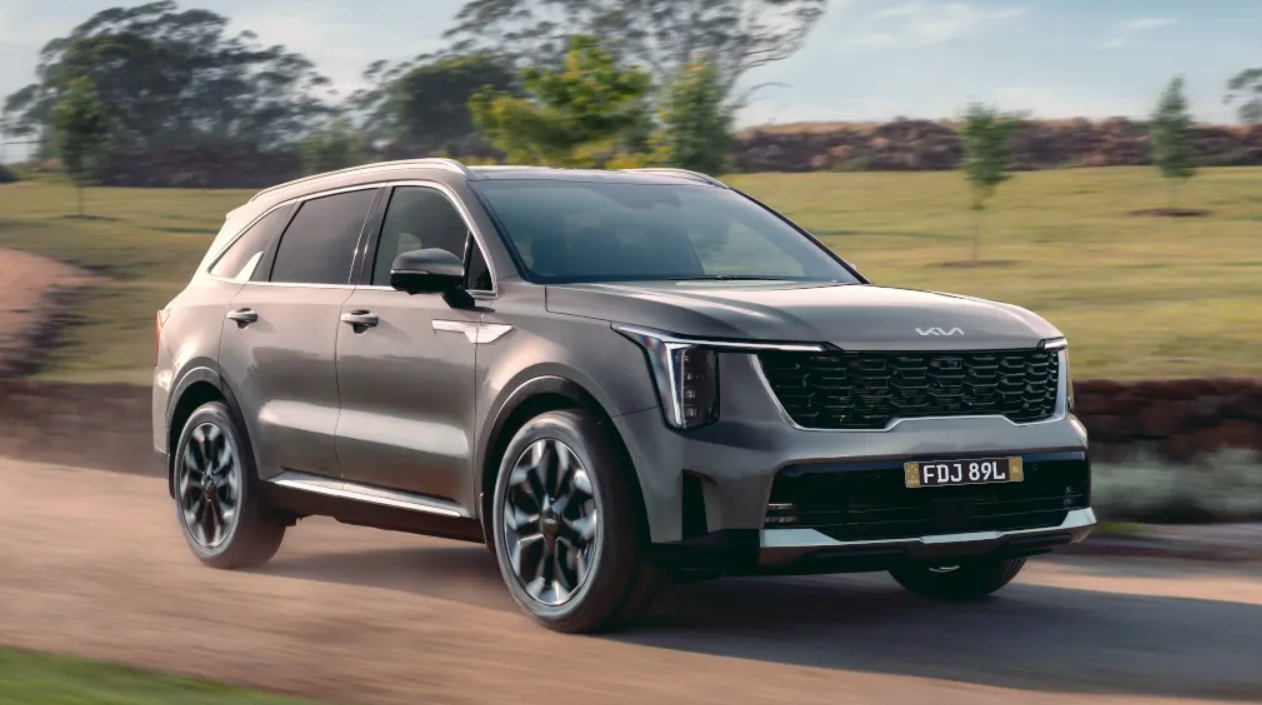
Kia is absolutely killing it at the moment with an impressive line-up that is – deservedly – winning it big sales in Australia. While products such as the new Tasman ute and EV9 electric upper large SUV take all the headlines, the Sorento seven-seat SUV does a lot of heavy lifting in sales – so far this year, it’s Kia’s third-best selling vehicle with over 5000 sold to the end of June. So what’s so good about the Sorento?
Starting at $50,880 plus on-road costs for the entry-level Sorento S with a 3.5-litre petrol V6 and a front-wheel drive drivetrain, the Sorento range offers strong value for money. But we still think that top-spec models are solid value for money thanks to their very long lists of standard kit. While a GT-Line hybrid is around $80,000 drive away, it’s also absolutely loaded with features.
Four drivetrains are available with the Sorento: the aforementioned V6, a 2.2-litre turbo-diesel and two 1.6-litre hybrid options, one a regular hybrid and one a plug-in unit with up to 68km of electric driving range (WLTP). About 80 per cent of buyers in Australia choose the diesel, as it’s punchy, fuel efficient and unlike the V6, is mated to an all-wheel drive system. More would choose the hybrid if it were offered in lower grades, but alas, it’s limited to the top-spec GT-Line for now.
Thanks to Kia’s local ride and handling tuning, the Sorento drives very well for the segment. Its ride quality is tuned well with a taut but comfortable feeling, especially at higher speeds – plus, it handles well for a big seven-seater SUV. Even enthusiasts will be happy from behind the wheel.
The Sorento’s cabin is good quality, with its new infotainment screens – introduced with the mid-life facelift – impressively slick to use and well-featured. Storage space in the front cabin is excellent, with plenty of spots to hide trinkets, and it’s a similarly positive story moving rearward with ample space in the second row and enough space for kids in the third row.
It’s easy to see why the Kia Sorento has become one of the brand’s best selling cars in Australia. It’s covered by a long warranty, it’s great to drive, has a range of models and drivetrains, a lot of standard equipment and a practical interior. More hybrid availability would be great as the petrol V6 is thirsty and diesel fuel isn’t suited to everybody, and the PHEV is expensive. Nevertheless, the Sorento is a great product worthy of strong consideration in this segment.
Chery Tiggo 8 Super Hybrid
1
Price: From $45,990 drive away
Drivetrains/fuel economy/CO2 emissions: 1.5-litre turbo four-cylinder plug-in hybrid, 255kW/525Nm, CVT, 1.3L/100km, 30g/km
Dimensions (length/width/height/wheelbase): 4724/1865/1718/2694mm
Bootspace: 117L (third row up), 479L (third row folded), 739L (third + second row folded)
Warranty/roadside assistance/service intervals: Seven-year/unlimited km, 12 months (renewed
with each service up to seven years in total), annual/every 15,000km
Five-year service cost: $1495
| Driving | |
| Interior | |
| Practicality | |
| Overall value | |
Things we like
- Very sharply priced and well equipped
- Two drivetrain choices, both with good performance
- PHEV gives 95km of claimed EV range
Not so much
- Boot and third row aren’t huge
- Suspension and driver aids need finessing
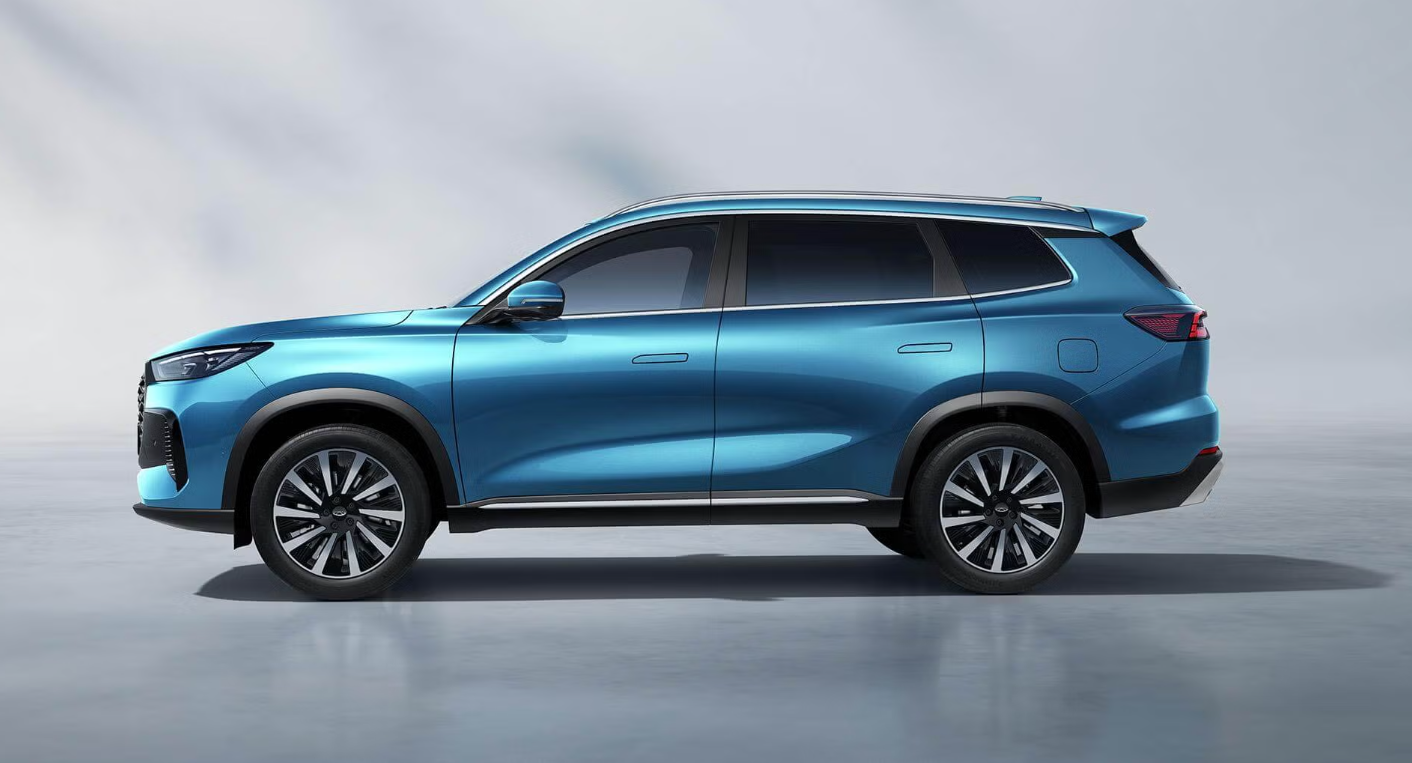
If you’re looking for the ultimate bargain seven-seater large SUV in Australia, look no further than the Chery Tiggo 8 Pro Max. Priced from just $41,990 drive away (or, thanks to a manufacturer’s special, currently $38,990 drive away) the Tiggo 8 Pro Max is excellent value for money and even the entry-level Urban features equipment such as heated and ventilated front seats, a 360-degree camera and a full suite of active safety features.
But there’s more to the Tiggo 8 Pro Max than its low pricing, with a well finished cabin that is comfortable and well featured with tech. A dual 12.3-inch screen set up is easy to use and looks impressive – especially for the price – and the physical buttons located underneath the screen and on the centre console make it easier to use. The Tiggo 8 Pro Max’s cabin is also practical, with ample space in the first and second rows of seating, though the third row is small, as is the boot with all the seats in place. However, with them all folded, it’s quite large.
The Tiggo 8 offers one hybrid drivetrain in Australia: a 255kW 1.5-litre turbo plug-in hybrid, with both providing more than ample performance. The PHEV also offers an impressive 95km of electric driving range before the petrol engine even switches on, and a claimed overall range of more than 1200km.
On the road, the Tiggo 8 Pro Max is quite refined with low road noise levels, though its suspension and active safety features need some finessing. The ADAS systems are over sensitive and the suspension needs more refined damping to better deal with low speed bumps. The steering also lacks feel, but it is perfectly light for urban driving. The 360-degree camera that’s standard across the range is impressively high definition for the price as well.
There’s definitely more to the Chery Tiggo 8 Pro Max than just its excellent value equation thanks to its good quality interior finishes and tech, strong powertrains and refined driving experience. The new plug-in hybrid drivetrain also provides a healthy EV driving range, and over 1200km of total driving range too. It’s not perfect thanks to its small boot and third row, need for finessing of the driver assistance systems and suspension, and thirsty petrol engine. But if you’re after a bargain large SUV, just be assured that there’s much more to the Chery Tiggo 8 Pro Max than just its low pricing and healthy equipment levels.
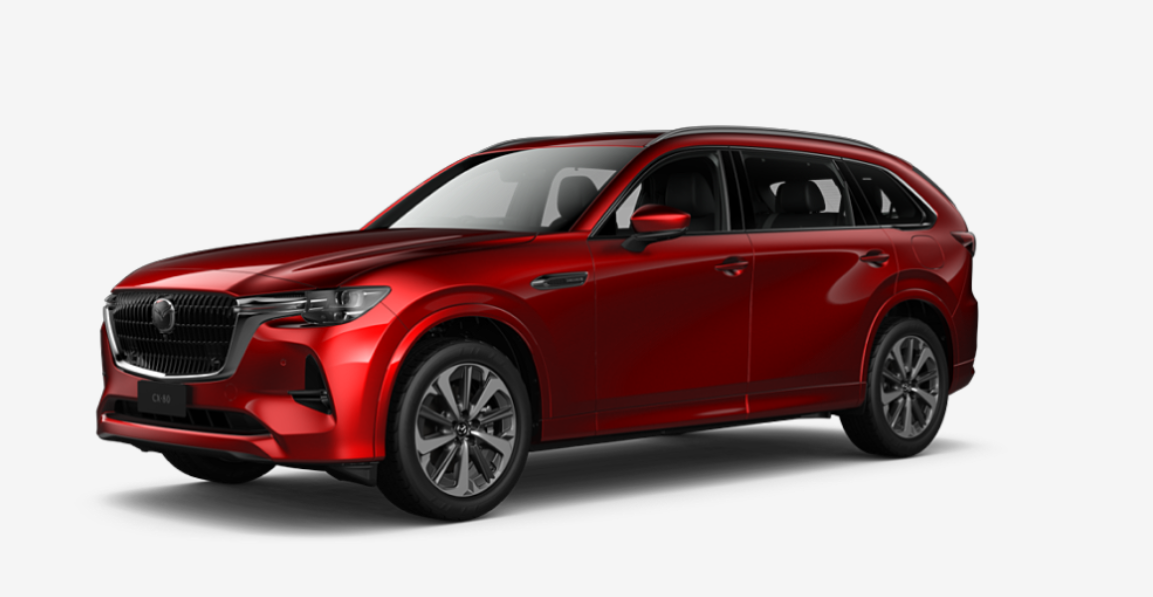
Mazda CX-80 P50e plug-in hybrid
1
Price: From $76,245 plus on-road costs
Drivetrains/fuel economy/CO2 emissions: 2.5-litre four-cylinder PHEV, 8-speed auto, 245kW/500Nm, 2.7L/100km, 64g/km (P50e PHEV)
Dimensions (length/width/height/wheelbase): 4990/1890/1710/3120mm
Bootspace: 258L (third row up), 566L (third row folded), 1971L (third + second rows folded)
Warranty/roadside assistance/service intervals: Five-year/unlimited km, five years, annual/every
10,000km (diesel) – 15,000km (petrol)
Five-year service cost: $2686
| Driving | |
| Interior | |
| Practicality | |
| Overall value | |
Things we like
- Punchy plug-in hybrid powerplants
- Good value for money
- Excellent cabin quality
Not so much
- Powertrain and ride quality need further refinement
- Expensive service costs
- No spare wheel across the range
Mazda’s new quartet of large SUVs – the CX-60, CX-70, CX-80 and CX-90 – is a worthy group but we think that the CX-80 is the best so far. That’s largely thanks to its value equation – a punchy turbo-six seven-seater large SUV with Mazda build quality priced from under $60,000 has got to be a winner. But it also boasts improved ride quality and refinement over its siblings, which were developed earlier.
Inside the cabin is a carbon copy design of the other models. with good quality across the range and large displays that are easy to use. Comfort is quite good, even in the base model, with cloth upholstery and manually adjustable seats, while the ergonomics are great thanks to liberal use of physical buttons throughout the cabin. The base model Pure’s hard cabin plastics are disappointing, however, and buyers must step up to the Touring model to receive soft ones.
The CX-80’s long wheelbase has produced great results: the second row of seating is huge, and the third row can seats adults comfortably, further helped by amenities back there such as air vents, charging ports and cup holders. The boot is also large, even with the third row of seats in place – though there’s disappointingly no spare wheel in any CX-80 model.
Mazda is offering one plug-in hybrid powertrain for the CX-80, with two mild hybrid petrol and
diesel options also available. Just the petrol ‘G40e’ is offered in the base CX-80 Pure, but every
model above that offers all three drivetrains. The plug-in hybrid is fast and sounds appropriately
raspy and may be more cost effective to run versus other CX-80 drivetrains for you thanks to its
claimed 65km EV driving range, though it is a lot more expensive upfront to buy and it can’t be DC
fast charged, limiting charging appeal.
The driving experience is more positive than its siblings, though the ride quality is a bit too sharp and the gearbox could be more refined as well. Still, at highway speeds it’s very quiet in respect to road noise levels. Drawbacks? Mazda’s five-year warranty could be improved in length, plus it’s not cheap to service, but the Mazda CX-80 is a solid choice in the large SUV segment thanks to its sharp value for money, practical cabin that can seat seven adults comfortably, punchy drivetrains that can also be quite fuel efficient and keen handling for a seven-seat SUV.
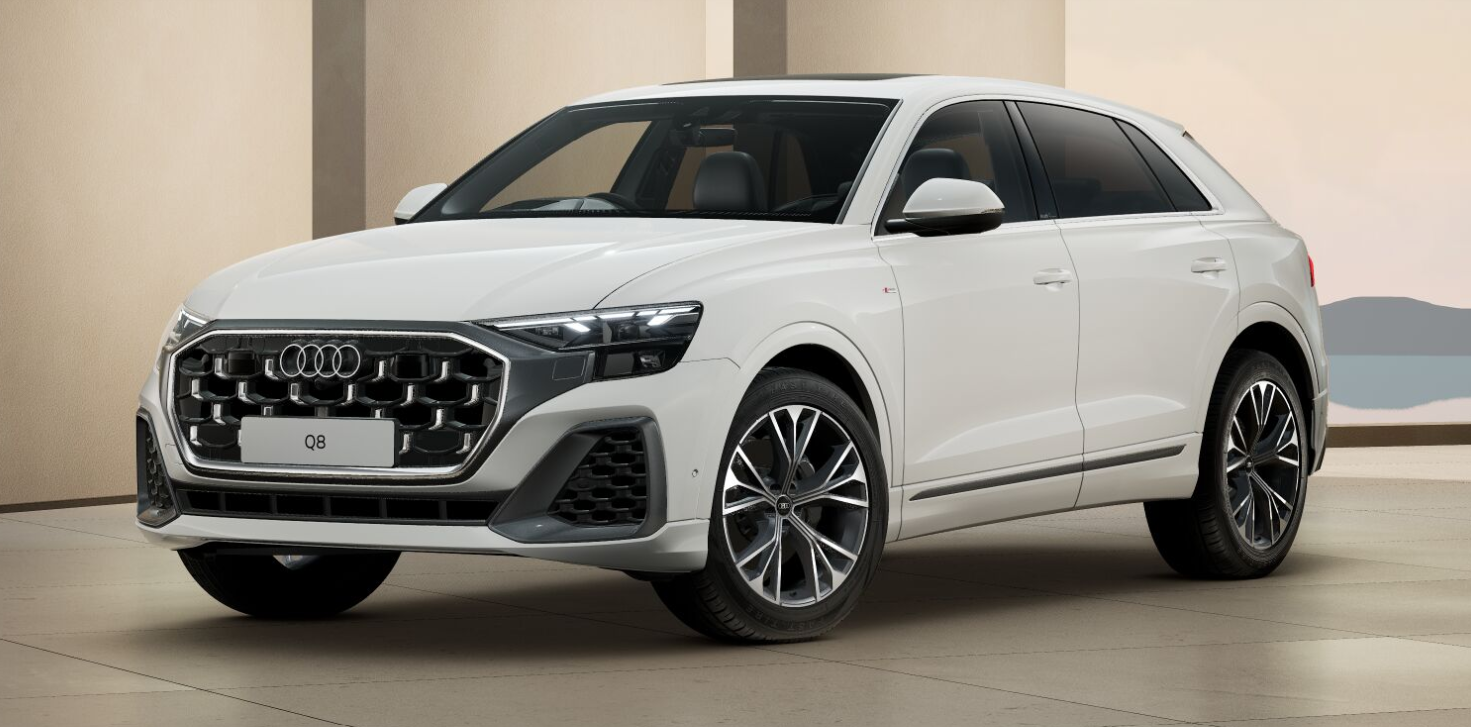
Audi Q8 60 TFSI e
1
Price: From $154,284 plus on-road costs
Drivetrains/fuel economy/CO2 emissions: 3.0-litre V6 turbo-petrol plug-in hybrid, 360kW/700Nm, 1.8L/100km, 40g/km
Dimensions (length/width/height/wheelbase): 5006/1995/1691/3005mm
Bootspace: 605L (seats up), 1755L (seats down)
Warranty/roadside assistance/service intervals: Five-year/unlimited km, five years, annual/every
15,000km.
Five-year service cost: $3570
| Driving | |
| Interior | |
| Practicality | |
| Overall value | |
Things we like
- PHEV offers strong performance
- Handsome styling, lovely interior
- Spacious despite coupe-like styling
Not so much
- PHEV electric range could be longer
- Feels heavy from behind the wheel
- No seven-seat option available
If you’re searching for a large German SUV, Audi currently has two to offer you: the seven-seat Q7,
or its sexier more coupe-like five-seater Q8 sibling. But considering this is the hybrid section of the
awards, it’s only the Q8 that’s available in Australia with its 360kW V6 plug-in hybrid system – it
used to be available here in the Q7, but was shelved years ago.
Under the bonnet of the Audi Q8 60 is a turbocharged 3.0-litre V6 mated to an electric motor for
360kW/700Nm peak outputs. Thanks to a 17.9kWh battery, the Q8 60 TFSI e offers a claimed 47km of electric driving range (WLTP) and is rated at just 1.8L/100km with the battery full. On the road, the PHEV Q8 feels heavy, more so than its petrol and diesel siblings, thanks to its extra 245kg of weight over the petrol model. Its ride is firm as well, and could be more comfortable.
The cabin of the Q8 is lovely, however. Quality is excellent thanks to rich leather trimmings all over
the dashboard and doors, as well as tactile switchgear and high-resolution displays. The front seats are quite comfortable and feature a lot of adjustment, while visibility is good despite the high belt line.
Thanks the use of the Q7’s platform, the Q8 is spacious for four adults and five will be fine as well.
Three adults will be fit fine across the Q8’s wide rear bench, and both leg- and headroom is fine.
The boot of the Q8 measures a large 605 litres with the seats up and a massive 1755L with them
folded.
The Audi Q8 60 TFSI e presents a tempting hybrid large SUV thanks to its excellent performance, reasonable EV driving range, lovely cabin, ample practicality and handsome styling. Counting against it are a heavy driving feel thanks to the extra weight of the PHEV system, that it’s not cheap and that it’s not available with seven seats, which some buyers might expect for the price.
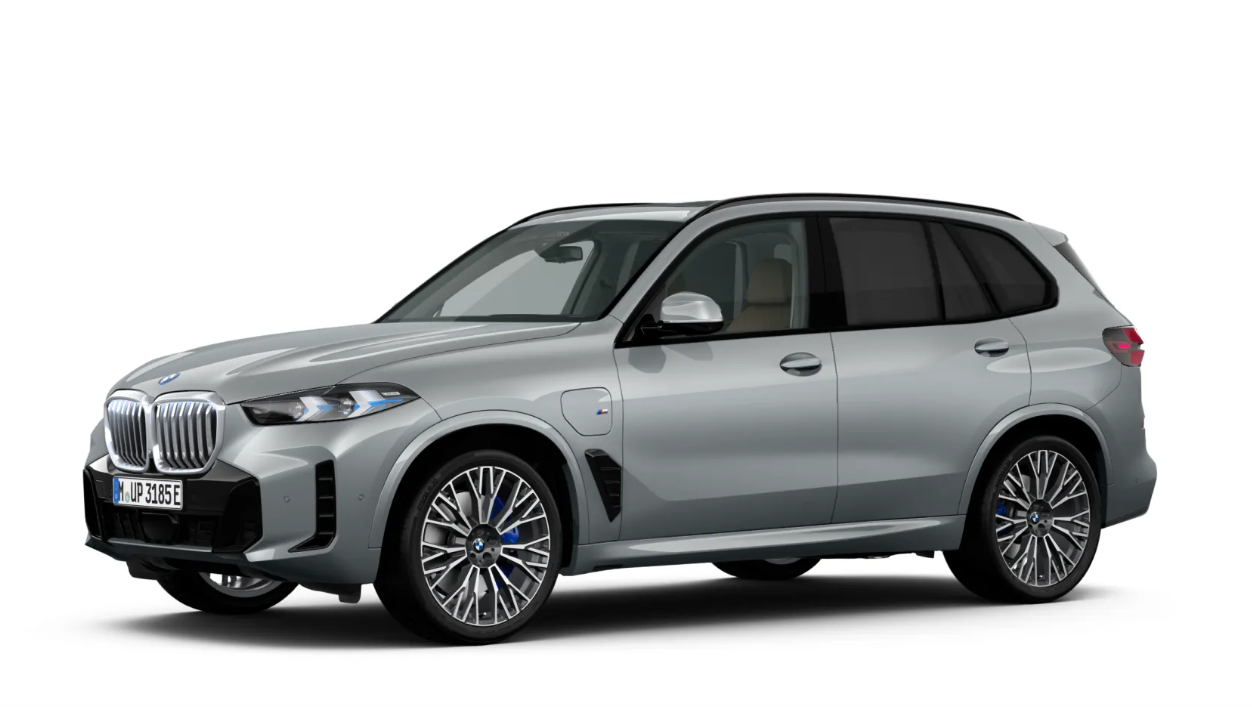
BMW X5 xDrive50e
1
Price: From $153,600 plus on-road costs
Drivetrains/fuel economy/CO2 emissions: 3.0L six-cylinder turbo plug-in hybrid, 8-speed auto, 360kW/700Nm, 1.9L/100km, 41g/km
Dimensions (length/width/height/wheelbase): 4935/2004/1755/2975mm
Bootspace: 500L (seats up), 1720L (seats folded)
Warranty/roadside assistance/service intervals: 5-year/unlimited km, three-years, annual/every
15,000km
Five-year service cost: $3275
| Driving | |
| Interior | |
| Practicality | |
| Overall value | |
Things we like
- The regular SUV dynamic benchmark
- Wide range of powertrains
- Excellent refinement
Not so much
- Third row of seats an expensive option
- Much more expensive than it used to be
- Ordinary steering feel
If you want the definition of a sales success, the BMW X5 is a good place to start. Since its debut in 1999, the company has sold over three million of them, including 75,000 in Australia. In some places, X5s are very common, and that’s easy to see why: for many buyers, it was the default large premium SUV and until the Porsche Cayenne came along, it was the only SUV that real drivers would want to go near.
Nowadays, the smaller X3 is the most popular BMW product worldwide – and that’s no surprise given that it’s larger than the first X5 was – but there’s still plenty to like in its larger sibling. If you’re looking for a driver’s SUV, the X5 is one of the best; even the entry-level 30d just handles in a way that so many competitors cannot match. The BMW of SUVs, if you will.
The range of engines is great as well, with the entry-level petrol and diesel sixes refined and punchy, the plug-in hybrid can cover a long 94km on electric power (WLTP) and the V8 used in both the M60i and full fat M Competition is very fast. All use an eight-speed automatic transmission and BMW’s ‘xDrive’ all-wheel drive system.
The cabin of the X5 is excellent quality, with expensive-feeling materials used throughout. The central touchscreen dominates the cabin experience and while it could be easier to use, screen quality is excellent and it’s very well featured with the usual wireless smartphone mirroring, sat-nav with live traffic and live services such as weather and an app store.
If you’re searching for a large SUV that’ll leave you smiling with every drive, the BMW X5 is a great option. Its driving dynamics are excellent in the segment, and its performance – regardless of model chosen – is impressive. The cabin quality is superb and filled with useable tech, though it doesn’t have a third row of seating as standard. If you can afford it, the BMW X5 is still one of the best large SUVs, just as it was all those years ago.
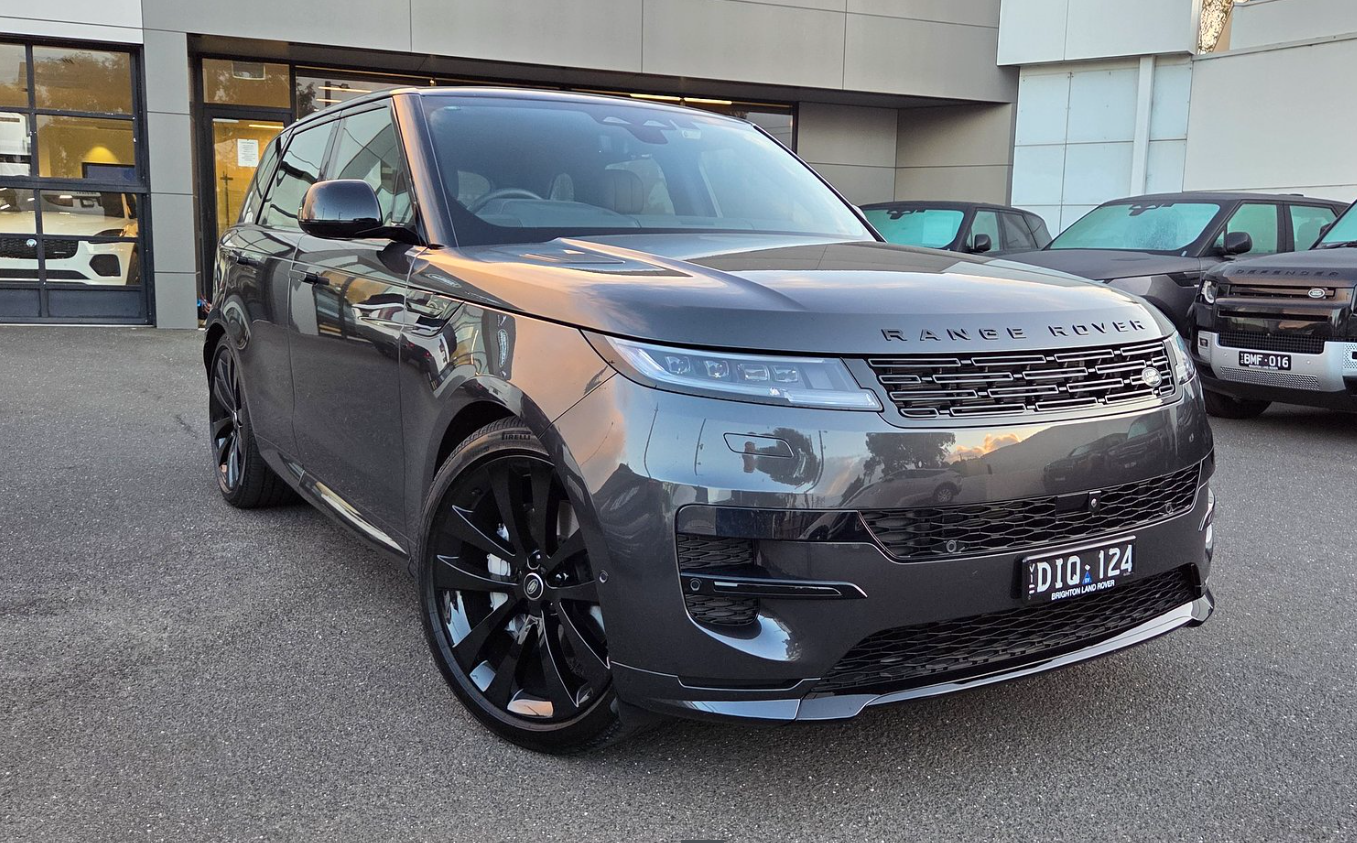
Land Rover Range Rover Sport P460e
1
Price: From $181,018 plus on-road costs
Drivetrains/fuel economy/CO2 emissions:
3.0L turbo inline six PHEV, 8-speed auto, 338kW/660Nm, 1.6L/100km, 38g/km
Dimensions (length/width/height/wheelbase): 4970/2025/1814/2998mm
Bootspace: 835L (seats up), 1860L (seats folded)
Warranty/roadside assistance/service intervals: Five-year/unlimited km, five years, annual/every
30,000km
Five-year service cost: $3900
| Driving | |
| Interior | |
| Practicality | |
| Overall value | |
Things we like
- Luxury feel inside, amazingly comfortable
- PHEV’s solid EV range
- Very capable on and off-road
Not so much
- Seven seat option no longer available
- Not cheap and options push the price even higher
- 2.7-tonne weight can be felt when driving
With over two million sales to date, the Range Rover Sport has been a sales phenomenon for its
maker and the third generation is the most talented version yet. There’s a wide range of engine
choices, from the entry-level 3.0-litre turbo-diesel to the high-performance V8 in the SV models, but
the P360e plug-in hybrid is the only drivetrain that offers zero emissions driving capability.
Pairing a turbocharged 3.0-litre inline six petrol engine with a 160kW electric motor, the drivetrain
makes 338kW/660Nm outputs for a claimed 5.4-second 0-100km/h sprint. Yet thanks to its 38.2kWh battery, the Range Rover Sport P360e is capable of a claimed 126km of electric driving
range (WLTP), and it can be DC fast charged up to 50kW for a full charge in under an hour.
On the road, the Range Rover Sport P360e gives a good dual personality: it can waft along in
typical Range Rover fashion, but thanks to its adaptive air suspension, can hunker down to
become something much sportier for a backroad blast. Choose the optional Stormer Handling
Package and rear-wheel steering is added for even sportier handling. Yet, again as you’d expect
for a Range Rover, its off-road capability is awesome and it can go pretty much anywhere.
The interior of the Range Rover Sport, as you’d expect for a Range Rover, is sumptuous and
leather-lined. Its new 13.1-inch ‘Pivi Pro’ is fully featured, even with live services and inbuilt apps
such as Spotify, and its screen quality is very high resolution. The front seats are insanely
comfortable and 22-way electric adjustment, while rear seat and boot space is impressive at 835
litres with the rear seats up and 1860 litres with the rear seats folded. Those upgrading from the
previous Range Rover Sport will note that there’s unfortunately no longer a seven-seat option.
If you’re after a vehicle that can quite literally do it all with a luxurious and practical cabin, the
Range Rover Sport P360e is a great option – for a price. It provides 126km (WLTP) of electric
driving range, quick charging, strong performance, a luxurious driving experience that can turn
sporty or insanely off-road capable at the touch of a button and handsome styling. It’s not cheap,
nor is it a lightweight, but that’s no surprise given just how much it can do.
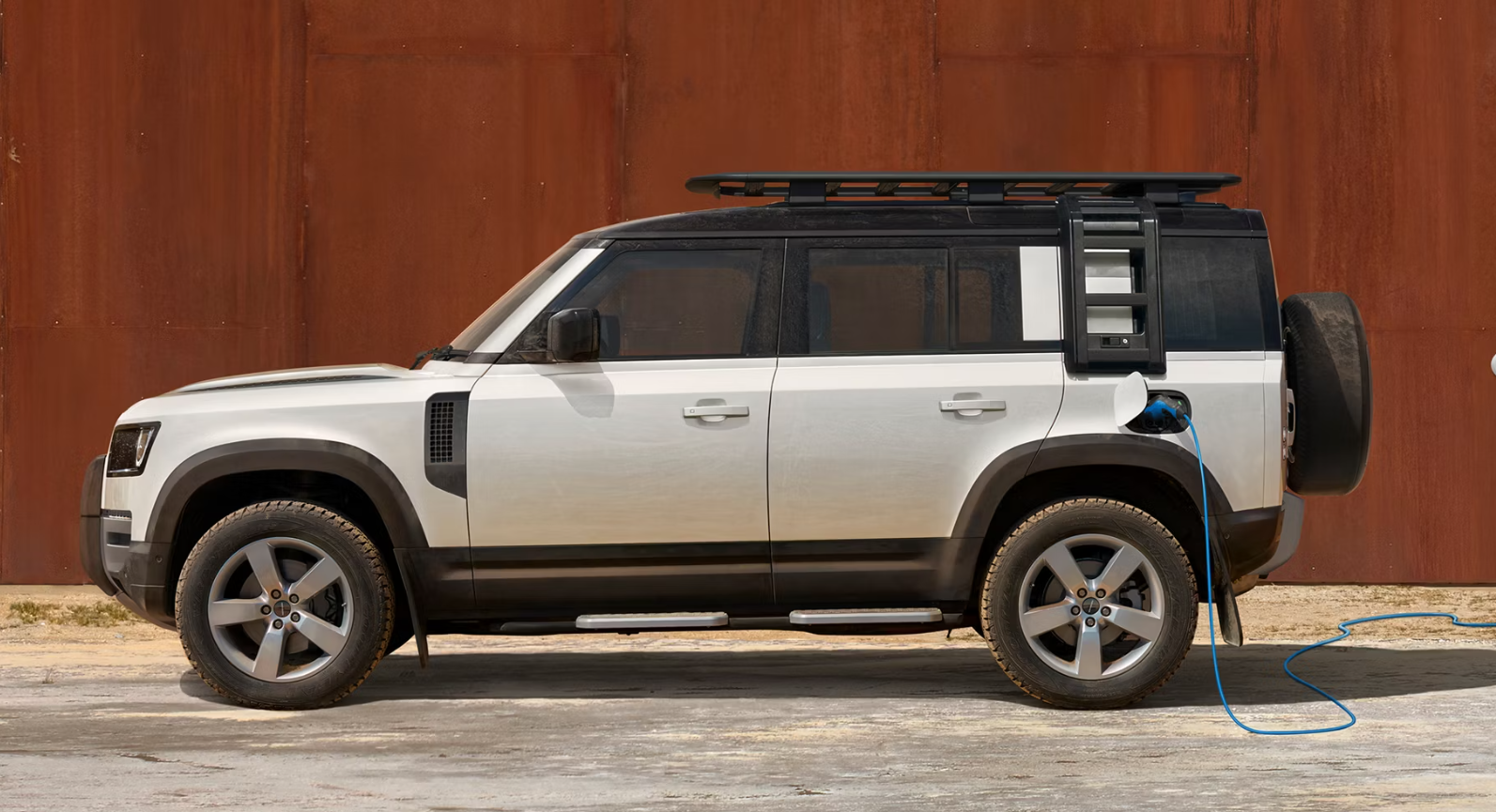
Land Rover Defender 110 P300e
1
Price: From $131,100 plus on-road costs
Drivetrains/fuel economy/CO2 emissions: 2.0L turbo four-cylinder PHEV, 8-speed auto, 221kW/625Nm, 3.4L/100km, 78g/km
Dimensions (length/width/height/wheelbase): 5035/1996/1970/3022mm
Bootspace: 1075L (seats up), 2380L (seats folded)
Warranty/roadside assistance/service intervals: Five-year/unlimited km, five years, annual/every
20,400km
Five-year service cost: $3300
| Driving | |
| Interior | |
| Practicality | |
| Overall value | |
Things we like
- Fashionable handsome design
- Spacious and practical cabin
- PHEV has good electric driving range
Not so much
- PHEV can’t be had with optional third row of seats
- Gets expensive with options
- Tailgate opens sideways and not upwards
With almost 2500 sold this year alone in Australia to the end of July, the Land Rover Defender
range has given a big boost to the brand’s fortunes globally and it’s easy to see why as it’s very in
vogue. Just look at it: it’s funky, stylish and very fashion-forward. Yet, unlike a lot of cars aimed at the more fashionable among us, there’s significant depth to the Defender’s abilities. Which is no
doubt part of the reason as to why it’s so popular.
As you’d expect for a Land Rover product, the Defender’s off-road ability is one of the best on the
new car market with plenty of off-road features to help once the going gets tough, including
multiple driving modes and a low-range transfer case. Yet on the road, the Defender is pleasant to
drive and even in the least powerful models, the drivetrains are silky smooth– or quite rapid, in the
case of the V8 models like the wild P635 Octa.
The interior of the Defender is a bit more utilitarian than the flashy exterior might suggest, but it’s
very practical with a huge centre console area with plenty of storage options. The central
touchscreen features the brand’s latest ‘Pivi Pro’ software and is easy to use. Rear seat space is
impressive, though less so if the third row is optioned – if you’re likely to carry passengers back
there often, we’d suggest the longer Defender 130 or its Discovery sibling.
Land Rover covers the Defender range with a five-year/unlimited km warranty and a five-
year/102,000km service plan cost ranges from $3300 to $3900, depending on the drivetrain. It’s
easy to see why the Land Rover Defender is just so popular globally: in addition to being a
fashionable item that’s a ‘must have’, it’s got a broad range of talent from its refined driving
experience, practical cabin, excellent off-road ability and wide range of drivetrains. It’s not cheap to
buy in any form – let alone the higher-end models – but that’s clearly no issue as they’re quite
popular, and it’s easy to see why.
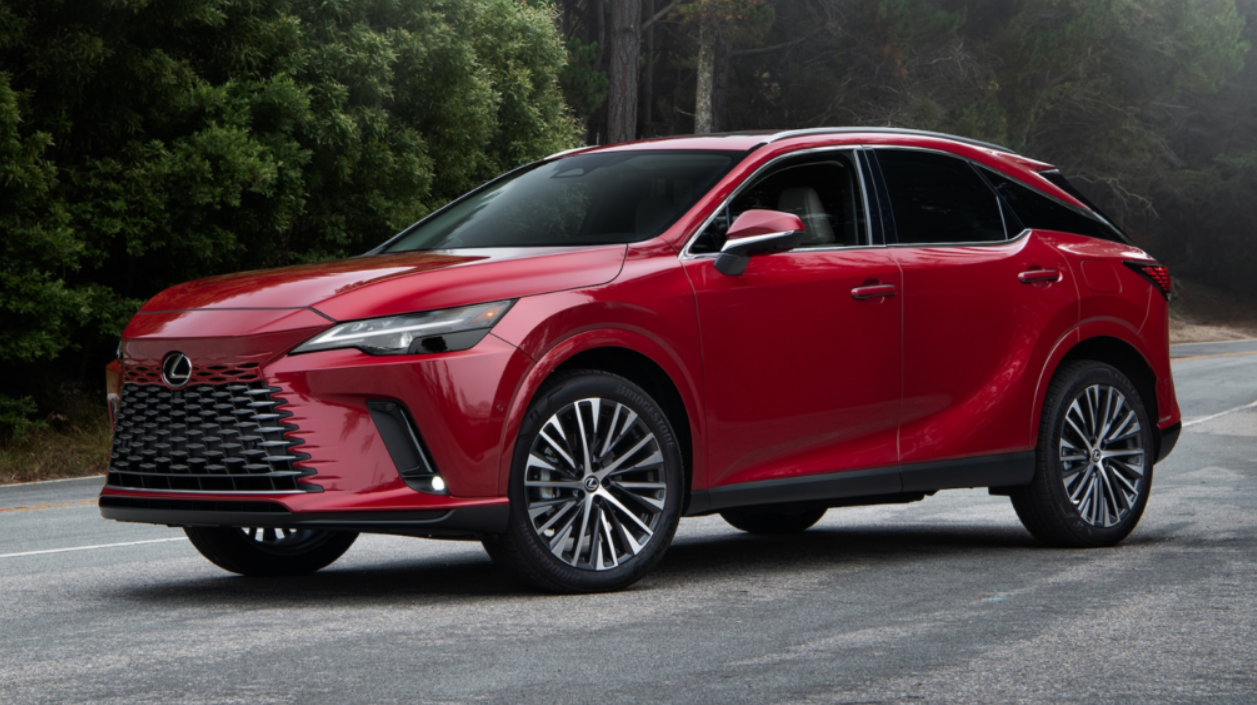
Lexus RX
1
Price: From $93,285 plus on-road costs
Drivetrains/fuel economy/CO2 emissions: 2.5-litre four-cylinder hybrid, CVT, 184kW, 5.0L/100km, 114g/km (RX350h); 2.5-litre four-cylinder PHEV, CVT, 227kW, 1.3L/100km, 29g/km (RX450h+); 2.4-litre four-cylinder turbo hybrid, 273kW, 6.5L/100km, 148g/km (RX500h)
Dimensions (length/width/height/wheelbase): 4890/1920/1695/2850mm
Bootspace: 612L (seats up), 1678L (seats folded)
Warranty/roadside assistance/service intervals: Five-year/unlimited km, three years, annual/every
15,000km
Five-year service cost: $3475
| Driving | |
| Interior | |
| Practicality | |
| Overall value | |
Things we like
- Relaxing to drive, very comfortable
- Fabulous seats
- Excellent refinement
Not so much
- Interior design and quality could be better
- Vague steering feel
- Big model range can confuse
The Lexus RX, originally launched globally in 1998, is the brand’s most popular model ever with over 3.5 million produced. Signficantly, the first RX was less expensive to buy than the German competition, yet loaded with standard equipment – an MO that has made Lexus very popular globally.
The current shape RX is the fifth generation of the badge, and is the biggest model yet. Longer, wider and lower than the previous model, the RX offers four drivetrains, with hybrid (RX350h and RX500h), plug-in hybrid (RX450h+) and turbo-petrol (RX350) variants all on offer. Prices start at $93,285 plus on-road costs for the entry-level RX350h Luxury, rising to $130,950 +ORC for the top-spec RX500h F Sport Performance, which are all quite a lot less than the BMW X5 or Mercedes-Benz GLE.
Like parent company Toyota, hybrids are a big focus with Lexus and in the RX range, regular hybrid, turbocharged hybrid and new plug-in hybrid drivetrains are available. Most buyers will choose the 184kW RX350h, with its combined fuel consumption of just 5.0L/100km, but even the powerful 273kW RX500h uses just 6.5L/100km on the combined cycle.
On the road, the RX range is relaxing to drive, with excellent refinement and a comfortable ride, even with the 21-inch wheels on more expensive models. The RX’s cabin is also very refined, and makes for a strong first impression with lovely seats and excellent quality, though search further and you’ll find some cheaper plastics on the doors and lower centre console. Screen quality, however, is excellent and easy to use, and the two-row RX is spacious.
Good value for money, refined driving experience, spacious cabin and wide range of powerplants, including lots of in-vogue hybrid choice – it’s easy to see why it’s a popular model. Add in the service, reliability and resale value that the brand is known for, and the Lexus RX remains a solid large SUV choice.
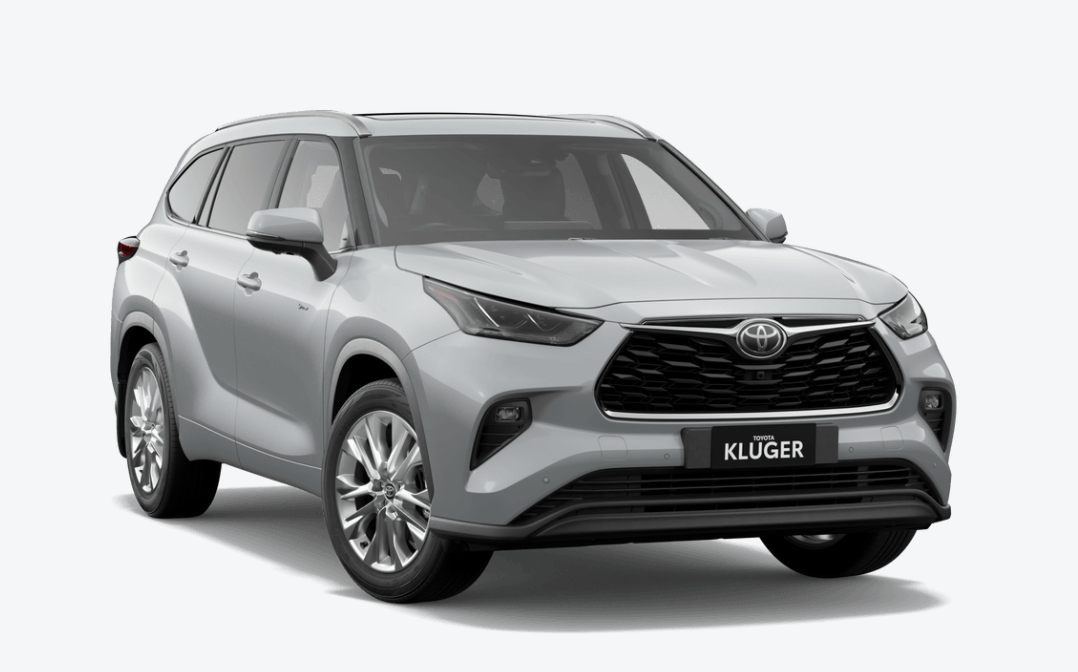
Toyota Kluger
1
Price: From $62,410 plus on-road costs
Drivetrains/fuel economy/CO2 emissions: 2.5-litre four-cylinder hybrid, CVT auto, 184kW,
5.6L/100km, 128g/km
Dimensions (length/width/height/wheelbase): 4966/1930/1755/2850mm
Bootspace: 241L (third row up), 1150L (third row folded)
Warranty/roadside assistance/service intervals: Five-year/unlimited km, no roadside assistance,
annually/every 15,000km
Five-year service cost: $1400
| Driving | |
| Interior | |
| Practicality | |
| Overall value | |
Things we like
- Excellent hybrid drivetrain and efficiency
- Relaxing to drive
- Well equipped
Not so much
- Third row feels small thanks to tiny windows
- Expensive throughout the range
- Cabin quality could be better
The Toyota Kluger has been one of the best-selling seven-seat SUVs in Australia since it first
landed in Australia in 2003 and now in its fourth generation, that popularity has not slowed down.
Prices start at $62,410 plus on-road costs for the entry-level GX and rise to more than $90,000
once on-road costs are included. Three models are available: GX, GXL and Grande.
While it launched with a 3.5-litre petrol V6 and a 2.5-litre hybrid drivetrains, the V6 was replaced
with a torquier 2.4-litre turbo petrol, but nowadays the hybrid is the only available option. It provides
ample grunt with 184kW on offer, but also excellent fuel consumption at a claimed 5.6L/100km. All
new Kluger models in Australia are equipped with an all-wheel drive system.
On the road, the Kluger is extremely comfortable with a soft suspension set up that gives it an
excellent ride quality. It’s quite easy to drive, with quick steering and good visibility, and all the
controls are well weighted. The front cabin is quite practical with ample storage space, though
material quality is a bit lacklustre, especially in the top-spec Grande.
Third row seating could be better as well. Access is excellent thanks to the sliding middle seat, but
there are no child seat points in the rear and the small windows make it feel smaller than it is. The
second row is huge, however, and three adults will be more than comfortable. Amenities include a
third climate zone, air vents, map pockets and large door pockets.
Competition is tough, but the Toyota Kluger’s practicality, low running costs, ample performance
from its hybrid powertrain and comfortable driving experience continue to win it many fans in
Australia. The next generation of Kluger is likely not far off, and we’re hoping it has a more
spacious feel and higher quality materials inside, but the current model is still a great family car.
Follow WhichCar/Wheels on Google
Click the button below to make WhichCar by Wheels a preferred source for your news.

We recommend
-
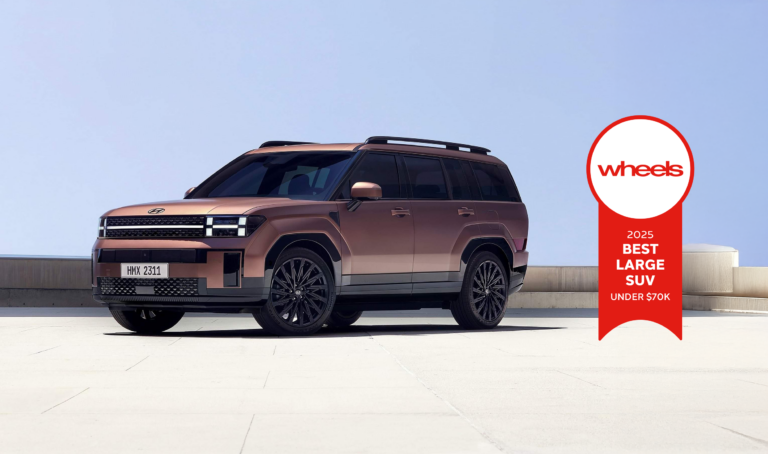 Best Large SUVs
Best Large SUVs 2025: Under $70K
Wheels Best Large SUVs 2025: Under $70K highlight affordable, spacious options for families which offer up to seven seats, versatile practicality and strong value for money.
-
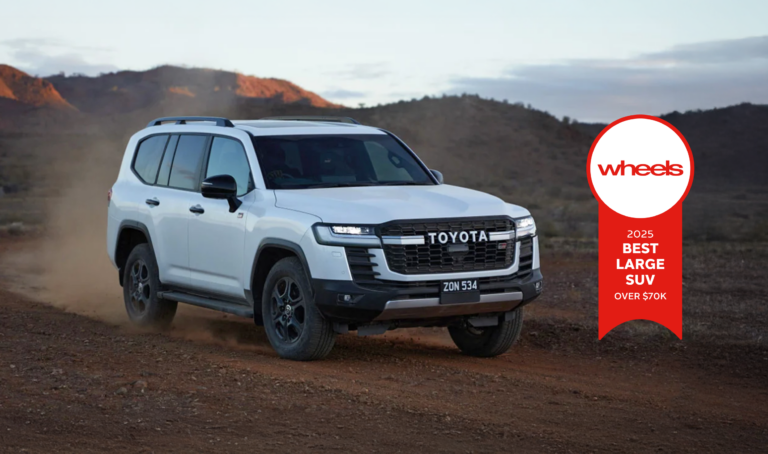 Best Large SUVs
Best Large SUVs 2025: Over $70K
Wheels' Best Large SUVs 2025: Over $70K – see our standout after assessing practical cabins, latest technology, performance and all-round capability in the higher price bracket.
-
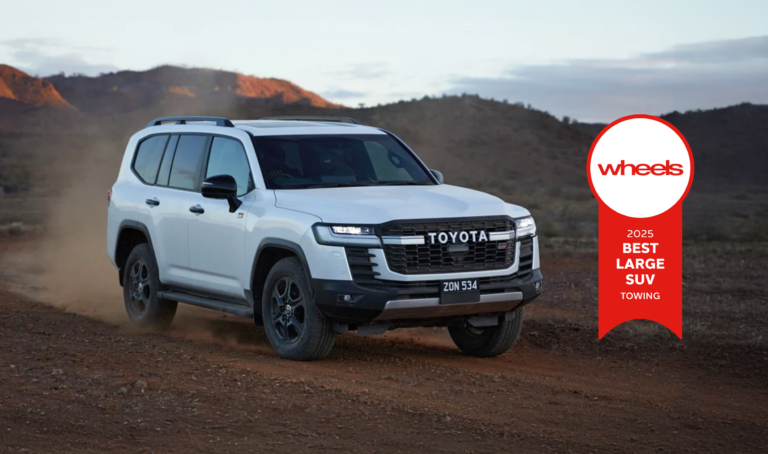 Best Large SUVs
Best Large SUVs 2025: Towing
The caravan, the fully laden trailer – for when you need to haul a load, these are the best options among the large SUVs on the market.
-
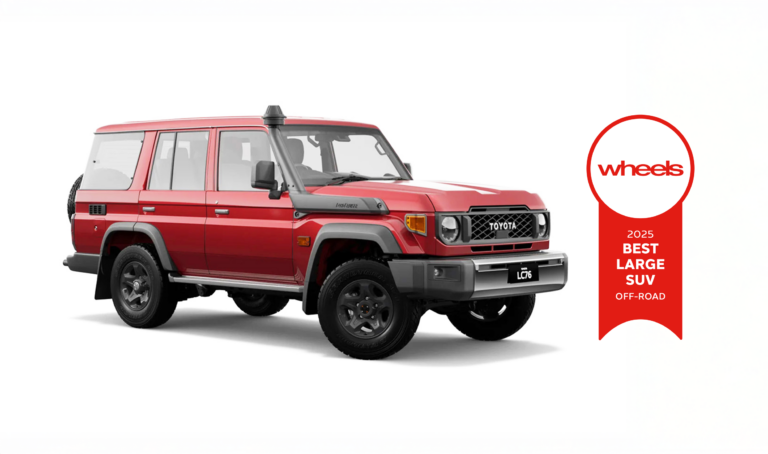 Best Large SUVs
Best Large SUVs 2025: Off-road
Our Best Large SUVs 2025: Off-road combine power, space, and rugged capability, offering families and adventurers refined comfort, advanced technology, and confidence on any off-road terrain.
-
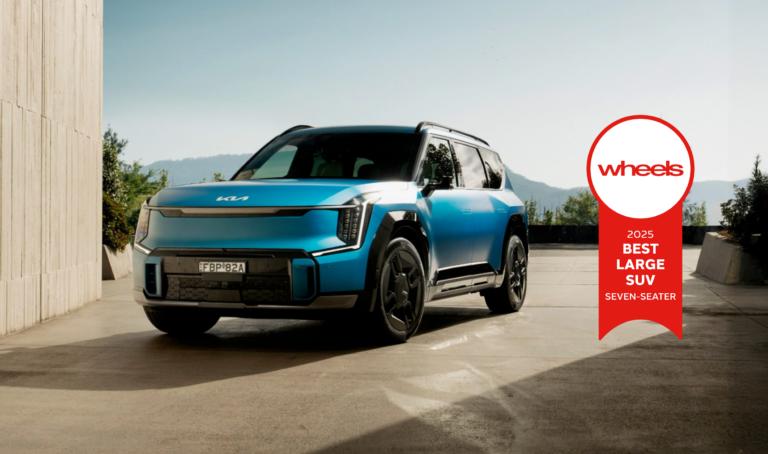 Best Large SUVs
Best Large SUVs 2025: Seven-seater
Here's our pick of the Best Large SUVs 2025: Seven seater in Australia, balancing space, comfort, versatility and everyday practicality for growing families.
-
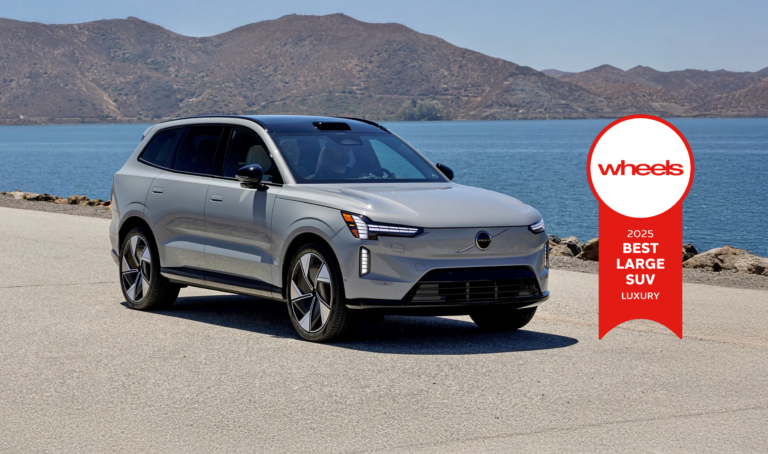 Best Large SUVs
Best Large SUVs 2025: Luxury
Wheels' Best Large SUVs 2025: Luxury, where craftsmanship, technology and comfort combine to deliver premium driving experiences.
