Features

Gallery 1
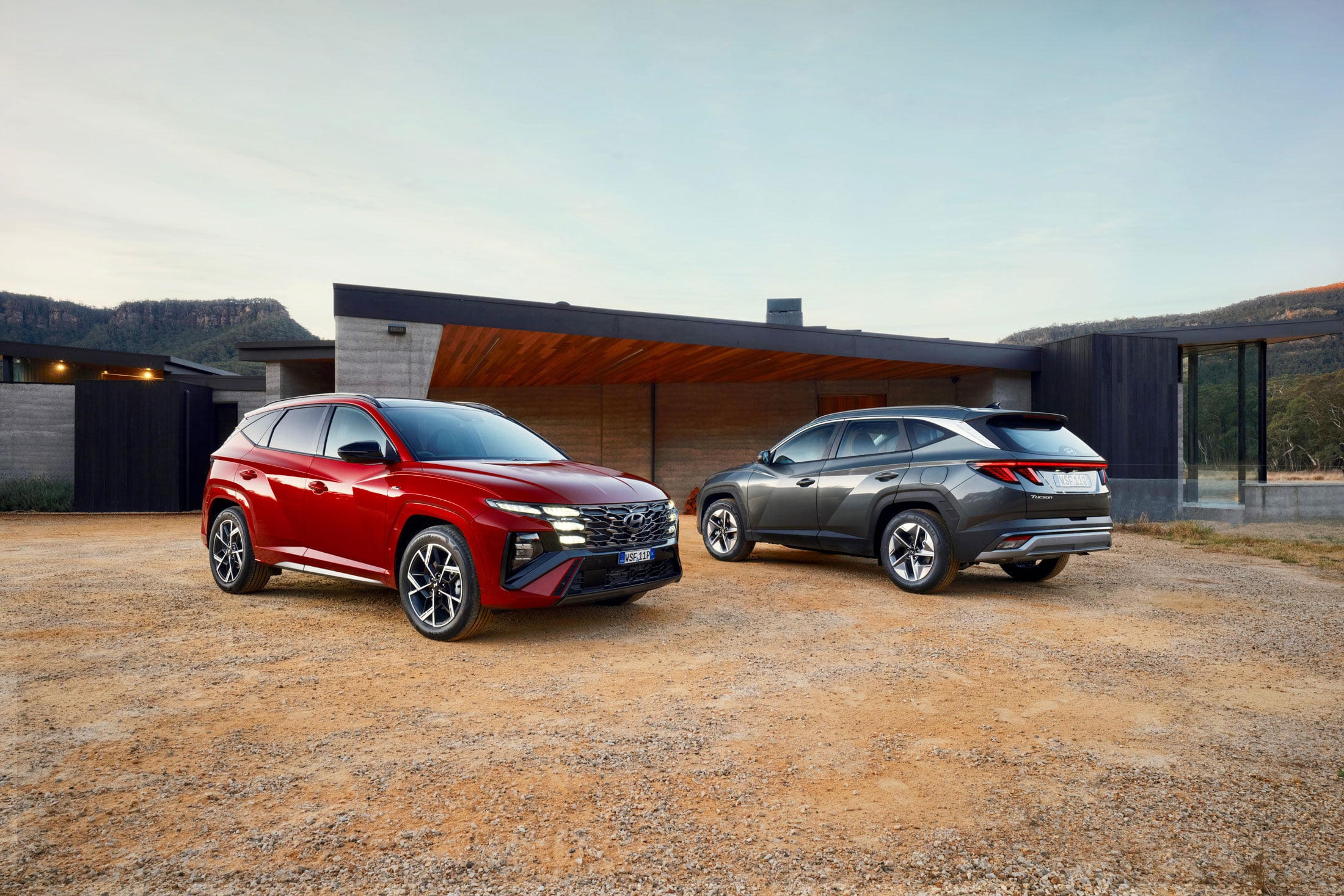
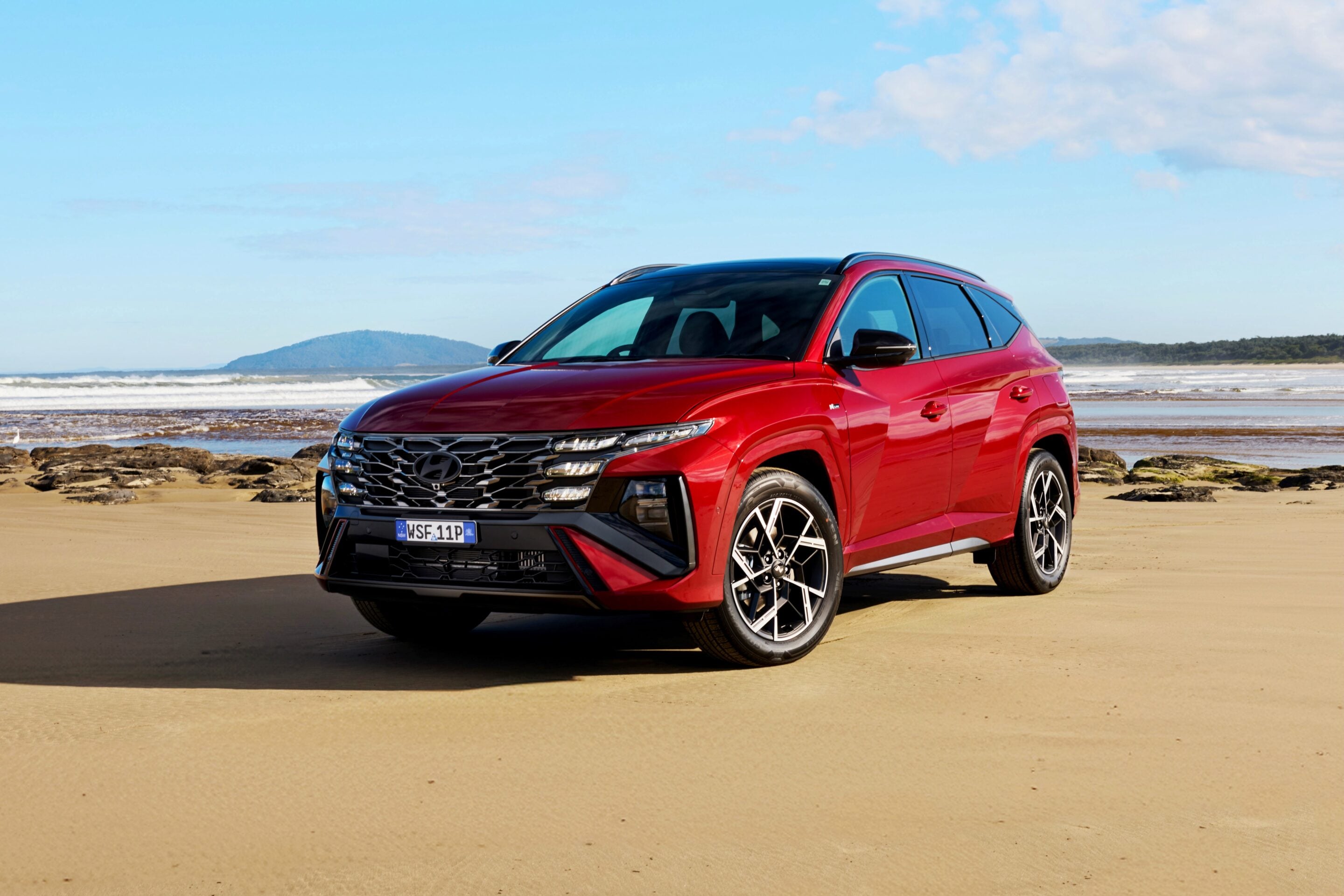
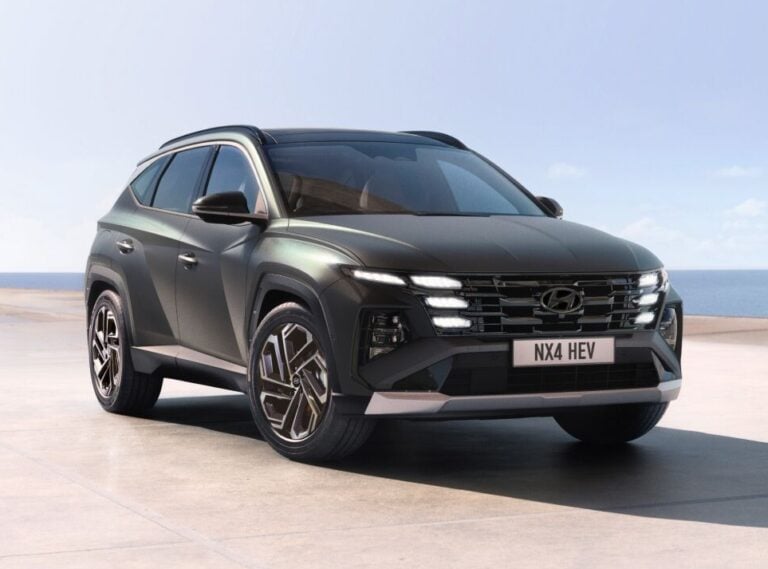
While most of our spec battles at WhichCar by Wheels involve comparison of two rival products in the same segment, it’s also instructive to do one between variants of one popular model to see which suits your needs. With that in mind, if you’re searching for a mid-size SUV, which Hyundai Tucson should you buy?
The Tucson won the Wheels Best Medium SUV 2025 thanks to a variety of factors, including its value, efficient hybrid drivetrain, long list of features, awesome practicality and pleasant driving experience. If that piqued your interest in the Tucson, the question runs to which you should buy: the entry-level or top-spec Premium?
3
Pricing
2026 Hyundai Tucson pricing (plus on-road costs):
- Tucson 2.0L 2WD: $38,100
- Tucson 1.6T hybrid 2WD: $42,600
- Elite 2.0L 2WD: $43,100
- Elite 1.6T hybrid 2WD: $48,100
- Elite N Line 1.6T hybrid 2WD: $50,600
- Elite 1.6T hybrid AWD: $50,600
- Elite N Line 1.6T hybrid AWD: $53,100
- Premium 1.6T hybrid AWD: $58,100
- Premium N Line 1.6T hybrid AWD: $59,600
| Tucson 2.0L 2WD | Tucson Premium hybrid AWD | |
|---|---|---|
| Starting price | $38,100 plus on-road costs | $58,100 plus on-road costs |
| Premium paint | $750 – $1000 extra | $750 – $1000 extra |
| Warranty | Five-year/unlimited km (+ two extra years if serviced at Hyundai) | Five-year/unlimited km (+ two extra years if serviced at Hyundai) |
| Service intervals | Annually/every 15,000km | Annual/every 15,000km |
| Five-year service cost | $1871 ($374 per year) | $2042 ($408 per year) |
| Roadside assistance | 12 months, extended another 12 months with each dealer service | 12 months, extended another 12 months with each dealer service |
Dimensions
Regardless of model chosen, the Tucson is a decently-sized medium SUV with ample room for at least four people and their luggage. In hybrid form, the Tucson has one of the largest boots in the segment at 582 litres with the seats up and a huge 1903 litres with them folded.
Despite not featuring a battery or rear differential, the petrol drivetrain’s boot is actually 43 litres smaller and that’s because it – almost uniquely in the segment – features a full-size alloy spare wheel versus the hybrid’s space saver.
| Tucson 2.0L 2WD | Tucson Premium hybrid AWD | |
|---|---|---|
| Length | 4640mm | 4640mm |
| Width | 1865mm | 1865mm |
| Height | 14665mm | 1665mm |
| Wheelbase | 2755mm | 2755mm |
| Weight | 1495kg | 1686kg |
| Luggage space | 539/1860 litres | 582/1903 litres |
Equipment
Of course, the more expensive model is bound to feature more standard features than the entry level car. But the Tucson Premium is particularly well equipped in the segment, offering seemingly everything you could ever want in a mid-size SUV. Highlights include leather trim, heated/ventilated front seats, a heated leather steering wheel, dual-zone automatic climate control, 19-inch alloy wheels, a panoramic sunroof and five USB-C chargers with a wireless phone charger as well.
That’s not to say that the base model Tucson is badly equipped, far from it, but it does have less kit as you’d expect for $20,000 less. Instead of leather trim, there’s cloth, smaller wheels, basic reflector LED headlights, manual wipers and no sunroof. But there’s still access to the Bluelink app to remote start the car, electric lumbar adjustment, climate control with rear air vents and five USB-C ports. The Premium justifies its extra spend here, but the base model is still well equipped for its positioning.
| Tucson 2.0L 2WD | Tucson Premium hybrid AWD | |
|---|---|---|
| Wheels | 17-inch alloy with a full-size alloy spare | 19-inch alloy with a space-saver spare |
| Headlights | LED reflector | LED projector with adaptive high beam |
| Wipers | Manual | Rain-sensing automatic |
| Front seat adjustment | Six-way manual driver with electric lumbar adjustment, four-way manual passenger | 10-way electric driver with memory, 8-way electric passenger |
| Upholstery | Cloth | Leather (with heated and ventilated front seats, and heated rear seats) |
| Steering wheel | Leather | Leather (with heating) |
| Push button start | Yes (with remote start) | Yes (with remote start) |
| Climate control | Dual-zone automatic with rear vents | Dual-zone automatic with rear vents |
| In-car charging | 5 x USB-C (front and rear) | 5 x USB-C (front and rear), wireless charger |
| Sunroof | No | Panoramic |
Powertrains
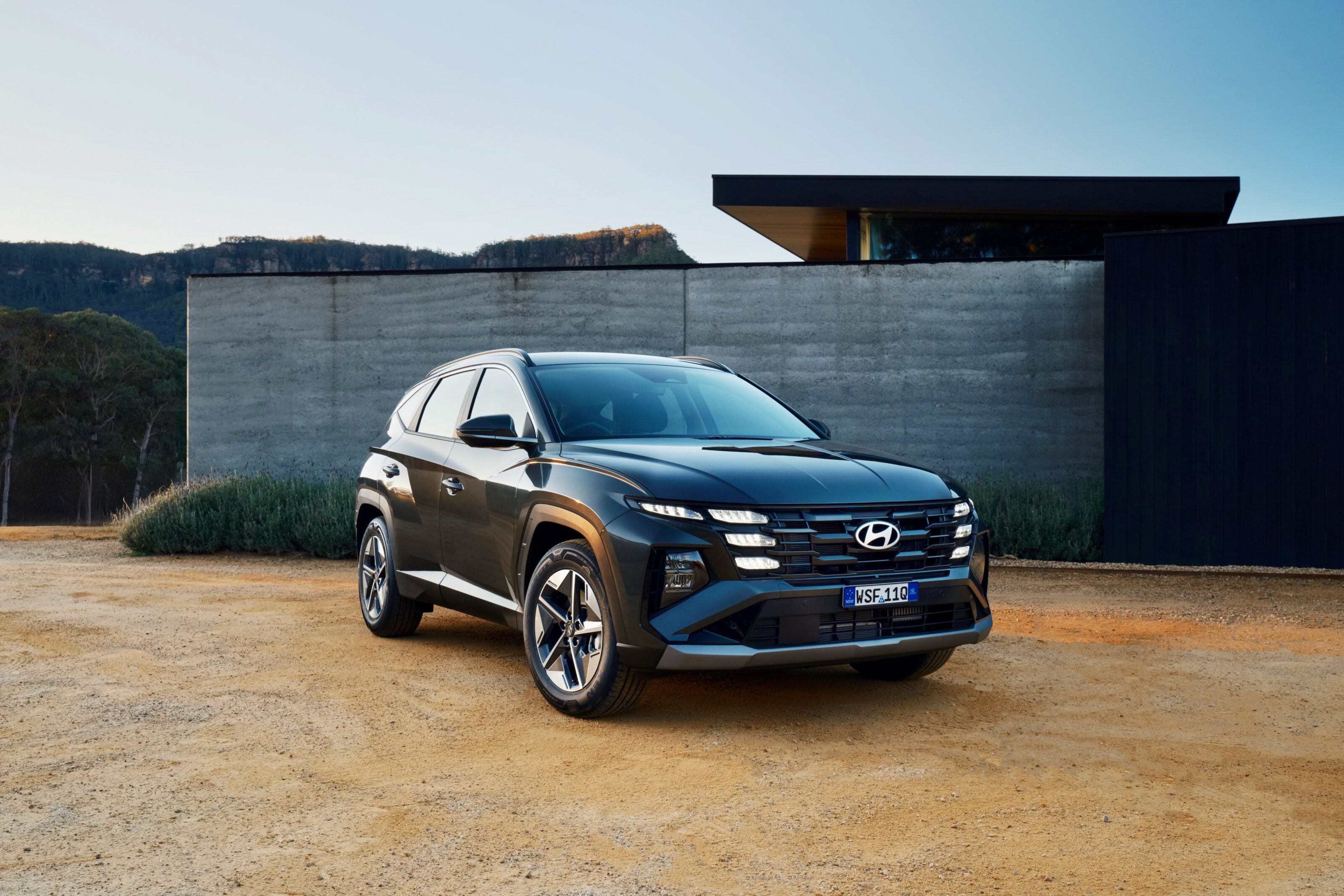
For the 2026 model year, Hyundai Australia is only offering two powertrains in the Tucson range: a naturally aspirated 2.0-litre or a turbocharged 1.6-litre turbo hybrid. While the hybrid is available in each Tucson model, the 2.0-litre petrol engine is limited to the base and mid-spec Elite.
4
Both use a six-speed automatic transmission as standard, and while the petrol is front-drive only, Elite buyers can choose the hybrid in front- or all-wheel drive and the Premium is all-wheel drive only. Despite pushing out a lot more grunt, the hybrid is also significantly more fuel efficient with a 5.3L/100km claim versus the petrol’s 8.1L/100km claim. The hybrid also emits a lot less: 121g/km versus 184g/km and the benefits of the hybrid drivetrain are so clear, we wonder why Hyundai is offering the petrol engine.
| Tucson 2.0L 2WD | Tucson Premium hybrid AWD | |
|---|---|---|
| Engine | 2.0-litre four-cylinder petrol | 1.6-litre turbocharged four-cylinder hybrid |
| Peak outputs | 115kW/192Nm | 172kW/367Nm |
| Combined fuel consumption | 8.1L/100km | 5.3L/100km |
| Transmission | Six-speed automatic | Six-speed automatic |
| Claimed emissions | 184g/km | 121g/km |
| Fuel type/tank size | 54 litres/91RON regular unleaded | 52 litres/91RON regular unleaded |
Safety
The Tucson range earned a five-star ANCAP rating in 2021 when this generation was released and since then, Hyundai has only added to its standard safety list. Regardless of the model, the Tucson is very well equipped with safety features – kit like AEB, adaptive cruise control, blind-spot monitoring, rear cross-traffic alert, driver attention monitoring, front and rear parking sensors and a reversing camera are standard.
Stepping up to the Premium does add more safety features, but they’re not necessarily must-haves. Above the base Tucson, the Premium adds a blind-spot camera, 360-degree camera, adaptive high beam and automatic low-speed rear braking – all are nice to have, but not exactly necessary when the entry Tucson is otherwise so well equipped on the safety front.
| Safety | Tucson 2.0L 2WD | Tucson Premium hybrid AWD |
|---|---|---|
| Airbags | Seven | Seven |
| Adaptive cruise control | Yes (with stop and go) | Yes (with stop and go and navigation guidance) |
| Autonomous emergency braking | Yes (with car, pedestrian, cyclist, direct oncoming and intersection monitoring) | Yes (with car, pedestrian, cyclist, direct oncoming and intersection monitoring) |
| Lane-keep assist | Yes (with adaptive lane guidance) | Yes (with adaptive lane guidance) |
| Blind-spot monitoring | Yes | Yes (with a camera system) |
| Rear cross-traffic alert | Yes (with braking) | Yes (with braking) |
| Driver attention monitoring | Yes | Yes |
| Parking sensors | Front and rear | Front and rear (with automatic low speed rear braking) |
| Reversing camera | Yes | Yes (360-degree camera) |
| ISOFIX | Outboard rear seats | Outboard rear seats |
Technology
Part of the mid-life update for the current generation Tucson that launched in 2025 was a big interior redesign with a new dashboard layout and new technology. All Tucson models now feature a 12.3-inch touchscreen with wireless Apple CarPlay and Android Auto, as well as AM/FM/DAB+ digital radio, though the base model is not equipped with satellite navigation.
Impressively, all Tucson models are equipped with the company’s ‘Bluelink’ live services with over-the-air updates and remote functionality through a smartphone app. Owners can also unlock, lock and start their Tucson using its remote key feature, which is quite handy. Above that, the Highlander adds a 12.3-inch digital instrument cluster, as well as navigation and a punchy Bose sound system.
| Tucson 2.0L 2WD | Tucson Premium hybrid AWD | |
|---|---|---|
| Driver’s display | 4.0-inch with analogue gauges | 12.3-inch digital |
| Touchscreen | 12.3-inches | 12.3-inches |
| Satellite navigation | No | Yes (with live traffic) |
| Radio | AM/FM/DAB+ | AM/FM/DAB+ |
| Smartphone mirroring | Wireless and wired Apple CarPlay and Android Auto | Wireless and wired Apple CarPlay and Android Auto |
| Sound system | Six-speaker | Bose eight-speaker |
Conclusion: Which Hyundai Tucson should you buy?
Choice is a great thing to have and with the Hyundai Tucson, there’s a pleasing one to make. Unlike some other mid-size SUVs, hybrid power is available in each model so that those with perhaps smaller budgets will still have access to it. Though it is a steep $4500 upgrade, it’s still worth the extra spend because it’s much quicker, more refined and more efficient than the 2.0-litre petrol engine.
As for which model Tucson to buy is dependent on your budget and your needs. Is a panoramic sunroof a need for your next car? If so, the Premium is the only model in the line-up you can buy. Do you need leather upholstery? It’s minimum mid-spec Elite for you. Considering just how much extra equipment the Premium adds, and that it’s standard with the hybrid drivetrain, we think it justifies its $20,000 extra spend. But regardless, the Tucson is great value for money in any spec level and it’s currently the best mid-size SUV on the market.
Follow WhichCar/Wheels on Google
Click the button below to make WhichCar by Wheels a preferred source for your news.

We recommend
-
 Best Medium SUVs
Best Medium SUV 2025: Overall winner, Hyundai Tucson
Hyundai’s fourth-generation Tucson takes out Wheels’ Best Medium SUV 2025, combining hybrid-focused efficiency, family-friendly comfort, advanced tech and strong value to secure its place among Australia’s top-selling SUVs.
-
 Best Medium SUVs
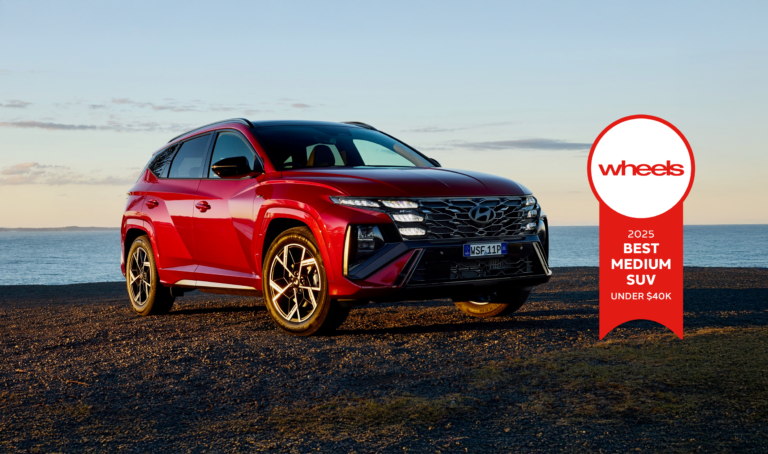
Best Medium SUVs 2025: Under $40K
Affordable yet capable, these medium SUVs priced under $40K demonstrate that Aussie families don’t need to compromise on space, efficiency, safety or comfort when car shopping in 2025.
-
 Reviews
Top 10 biggest mid-size SUV boots
They dominate the new car market but for buyers who prize storage space, what are the top 10 mid-size SUVs when it comes to boot size? The answer may surprise you...