Features

Gallery 1
Another Middle East conflict has spiked fuel prices around the country and consumers are once again winching at the prospect of filling up theirs vehicle. As such, changing vehicles for a more fuel efficient option is no doubt being considered by many of us. But what if you don’t want to consider an electric or plug-in hybrid option? Can vehicles without those power sources still be fuel efficient? Of course they can. Here are the most fuel efficient plugless vehicles in each segment:
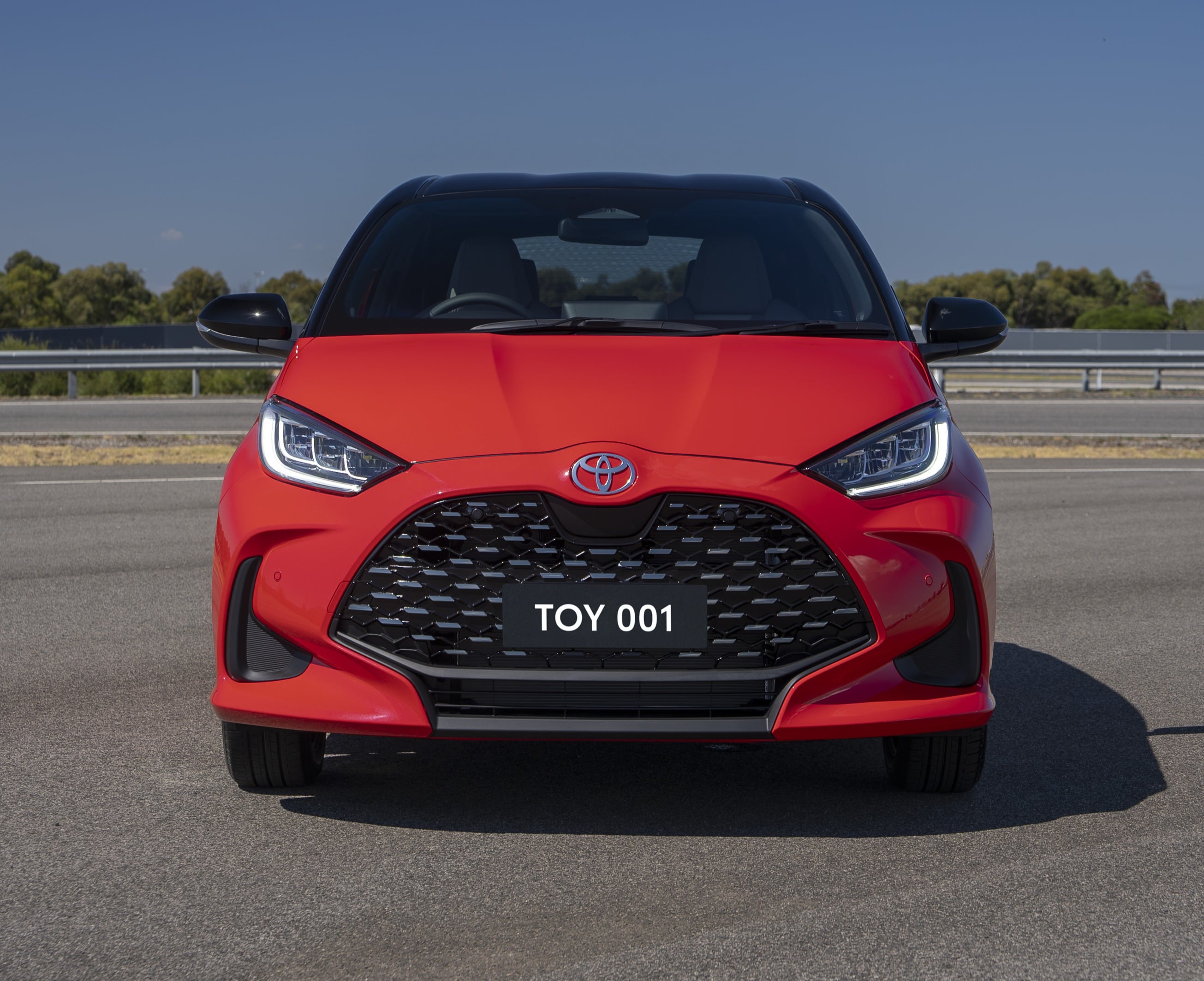
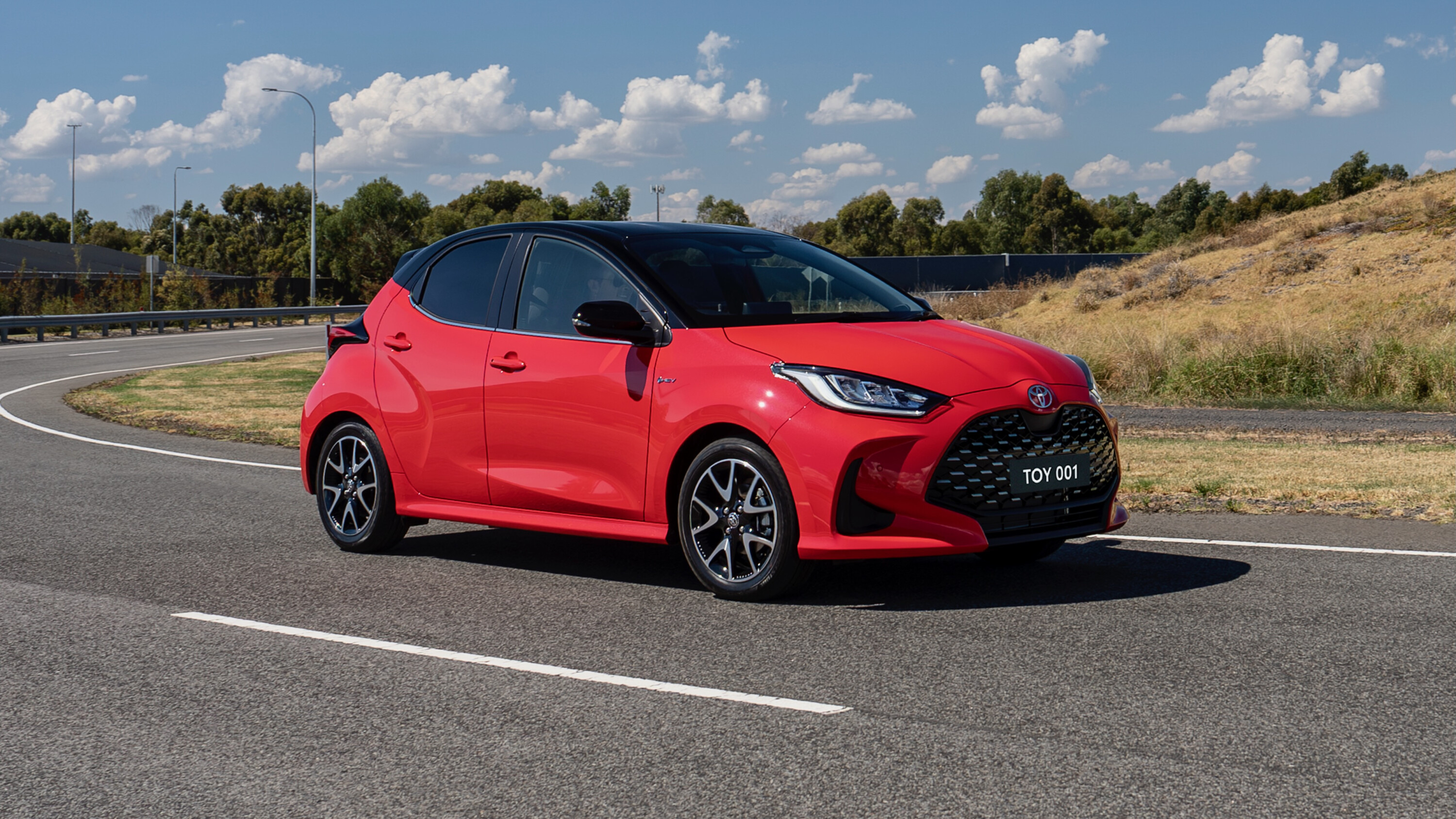
Light: Toyota Yaris
3
Price: From $28,990 plus on-road costs
Drivetrain: 85kW 1.5-litre hybrid, eCVT, front-wheel drive
Claimed combined fuel consumption: 3.3L/100km
Australia’s most fuel efficient car without a plug is the Toyota Yaris, which is capable of an incredible combined fuel consumption of just 3.3L/100km. That’s thanks to its small size, but also its 85kW 1.5-litre three-cylinder hybrid system, which is very efficient but also surprisingly punchy as well. Pricing for the Yaris starts at $28,990 plus on-road costs, so it’s not the cheapest option, but it is a very efficient one.
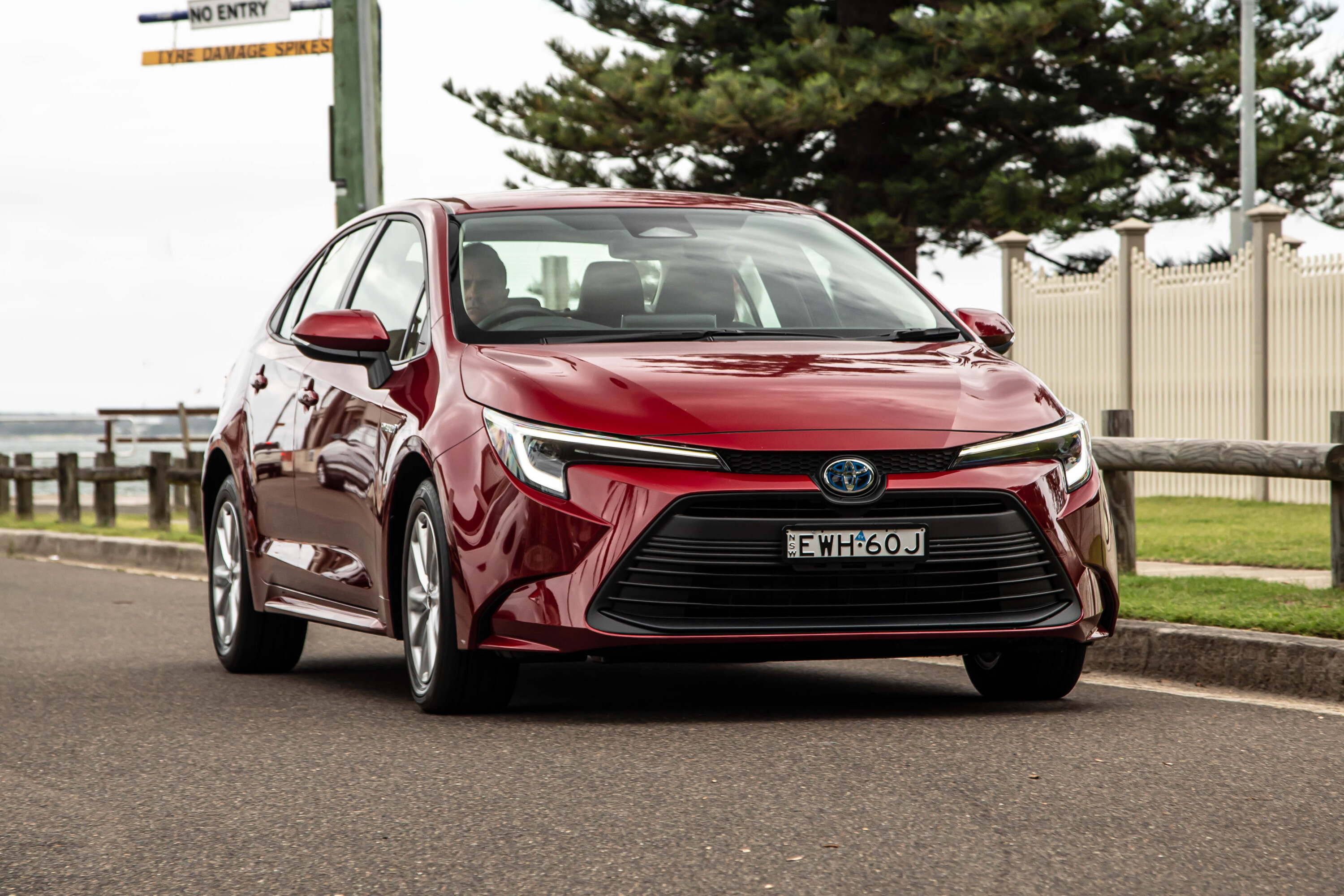
Small: Toyota Corolla sedan and Hyundai i30 Sedan hybrid
6
Price: From $32,585 plus on-road costs (Corolla), from $33,250 plus on-road costs (i30)
Drivetrain: 103kW 1.8-litre hybrid, eCVT, front-wheel drive (Corolla), 104kW/265Nm 1.6-litre hybrid, six-speed dual-clutch, front-wheel drive (i30)
Claimed combined fuel consumption: 3.9L/100km
Just above the Yaris in consumption is its larger Corolla sedan sibling, which uses a larger 1.8-litre hybrid system making 103kW of power but using just 3.9L/100km of fuel. Hyundai‘s i30 sedan hybrid uses a slightly smaller 1.6-litre hybrid system with a six-speed dual-clutch transmission making one more kilowatt in total at 104kW. Regardless, both the Corolla sedan and i30 sedan are practical, well equipped and great options to lessen fuel consumption without using a plug.
Medium: Toyota Camry
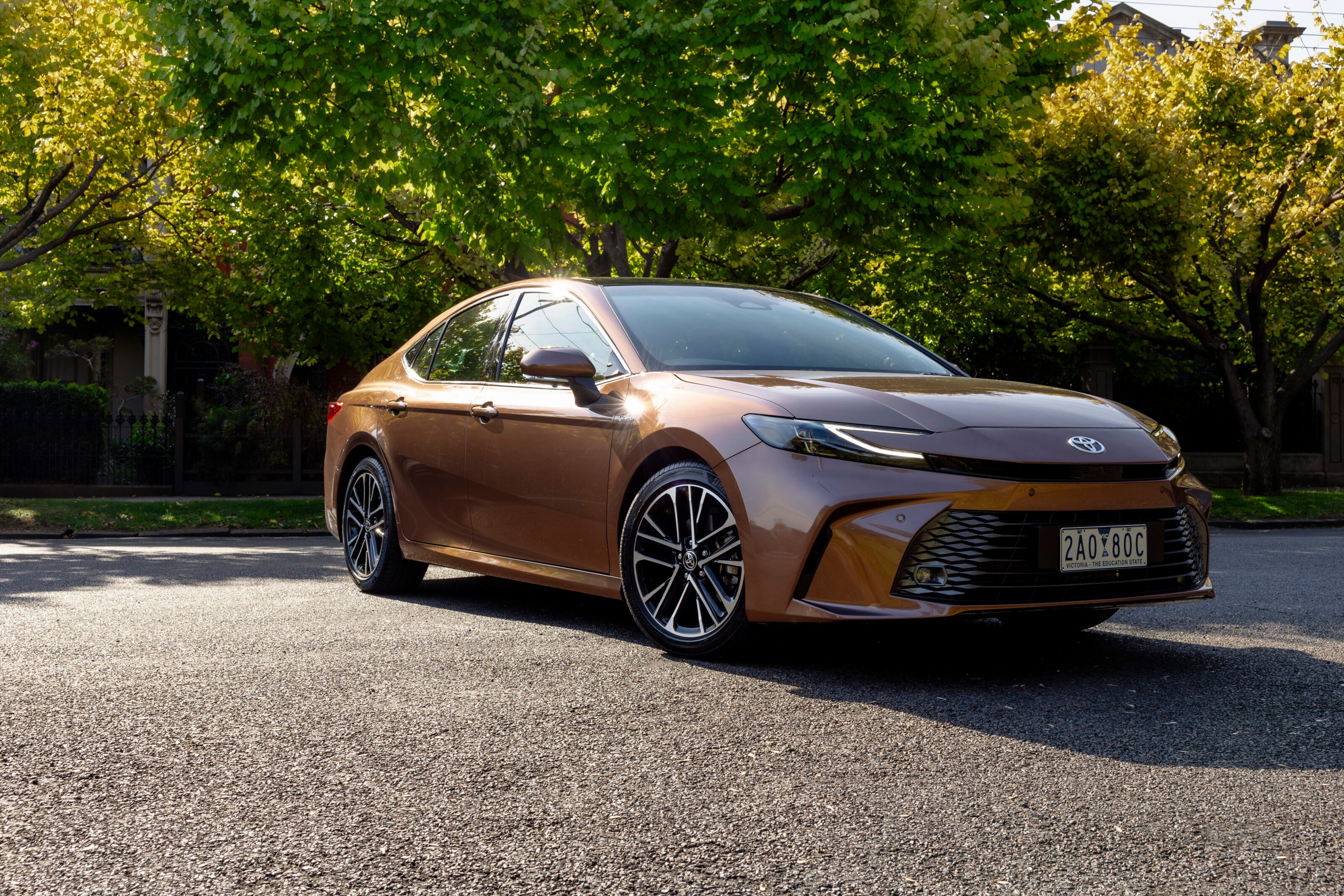
3
Price: From $39,990 plus on-road costs
Drivetrain: 170kW 2.5-litre hybrid eCVT, front-wheel drive
Claimed combined fuel consumption: 4.0L/100km
Somehow, thanks to Toyota‘s hybrid magic, a big sedan like the Camry can use just 4.0L/100km on the combined cycle. That’s despite featuring a large 2.5-litre engine – obviously combined with a hybrid system in this case – making 170kW and providing ample performance. The Camry is also hugely spacious inside, well equipped and drives quite well too.
Large: BMW 540d
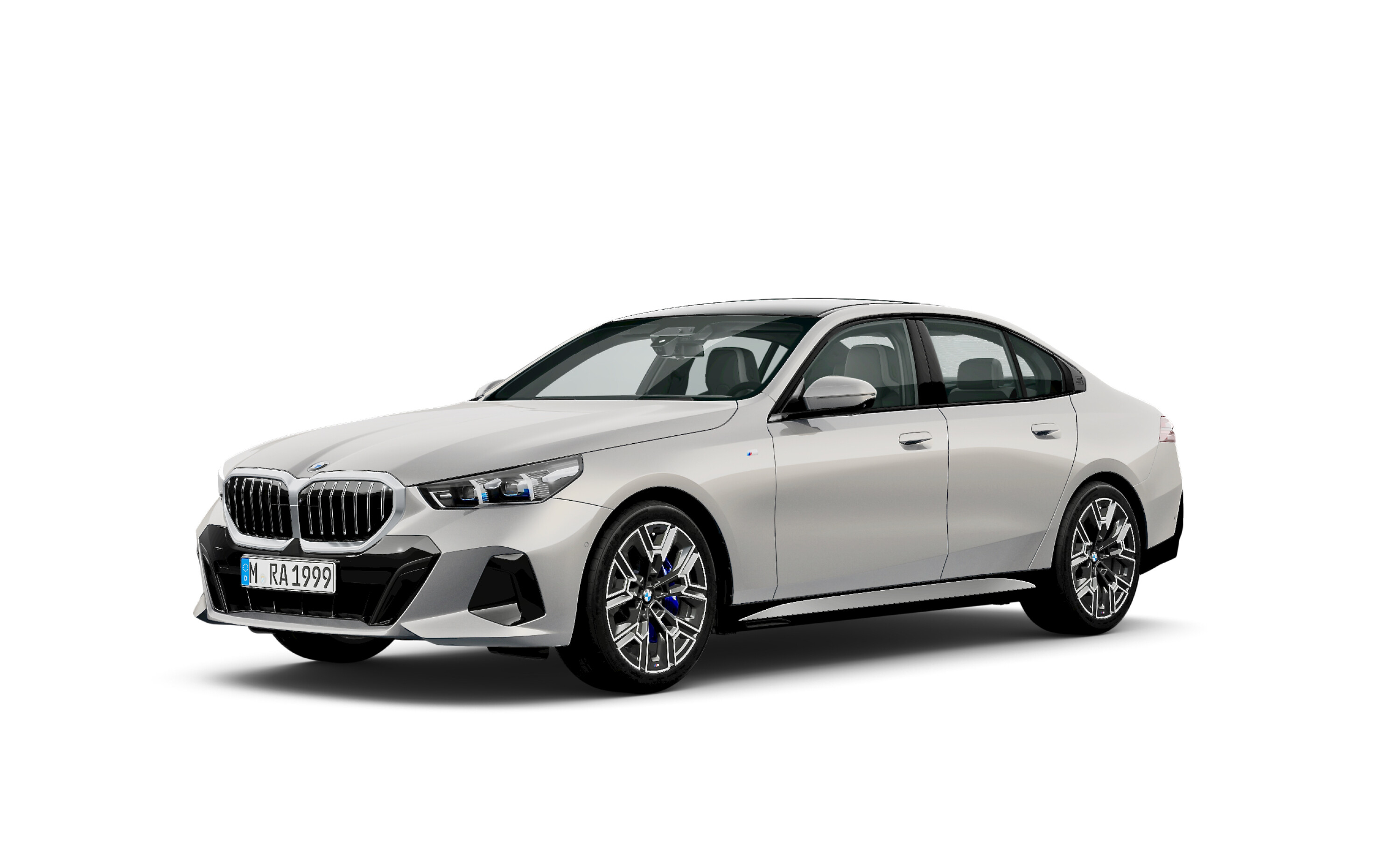
3
Price: From $136,900 plus on-road costs
Drivetrain: 210kW/700Nm 3.0-litre turbo-diesel, eight-speed auto, all-wheel drive
Claimed combined fuel consumption: 6.5L/100km
If you’re seeking the most fuel efficient large car, the BMW 540d is your choice and oddly enough, the only diesel passenger car on this list. In this case, it’s a lovely 210kW 3.0-litre straight six turbo-diesel, making strong 210kW/700Nm outputs – yet, it’s also capable of a 6.5L/100km combined fuel consumption rating and on highway trips, it’ll use a lot less than that. The only thing that would make it better would be offering a wagon, eh BMW Australia?
People movers: Kia Carnival hybrid
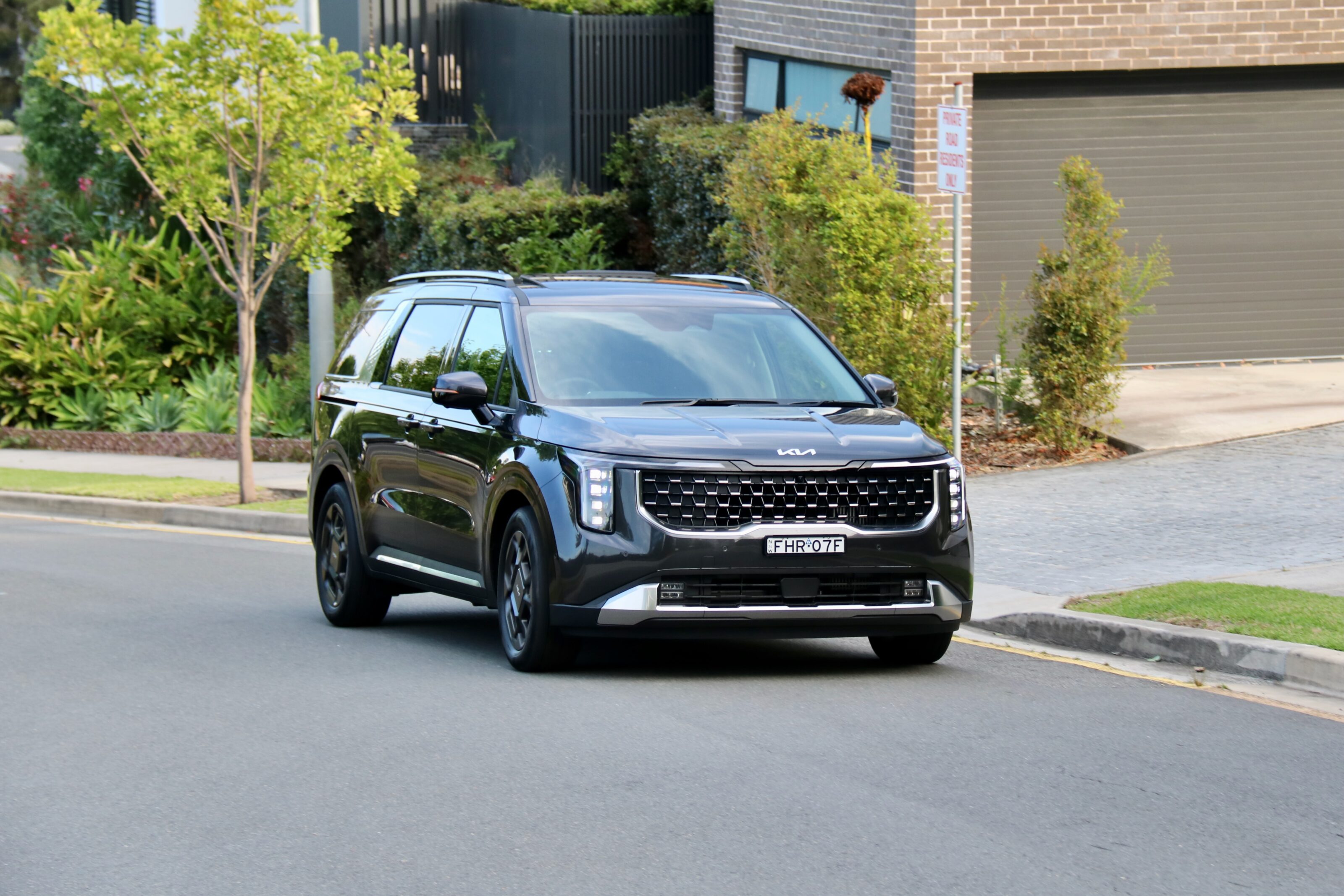
3
Price: From $56,100 plus on-road costs
Drivetrain: 180kW/366Nm 1.6-litre turbo-hybrid, six-speed auto, front-wheel drive
Claimed combined fuel consumption: 5.8L/100km
The Kia Carnival received Kia‘s punchy hybrid system relatively recently with great results. Using just 5.8L/100km on the combined cycle, it’s easily the most efficient large people mover on the market. That it can carry eight people and their stuff in comfort while providing excellent efficiency is even better. The Carnival also offers an efficient 2.2-litre turbo-diesel option (6.5L/100km), but for those wanting to use their Carnival in mostly urban driving, the hybrid is the way to go.
Small SUV: Toyota Yaris Cross
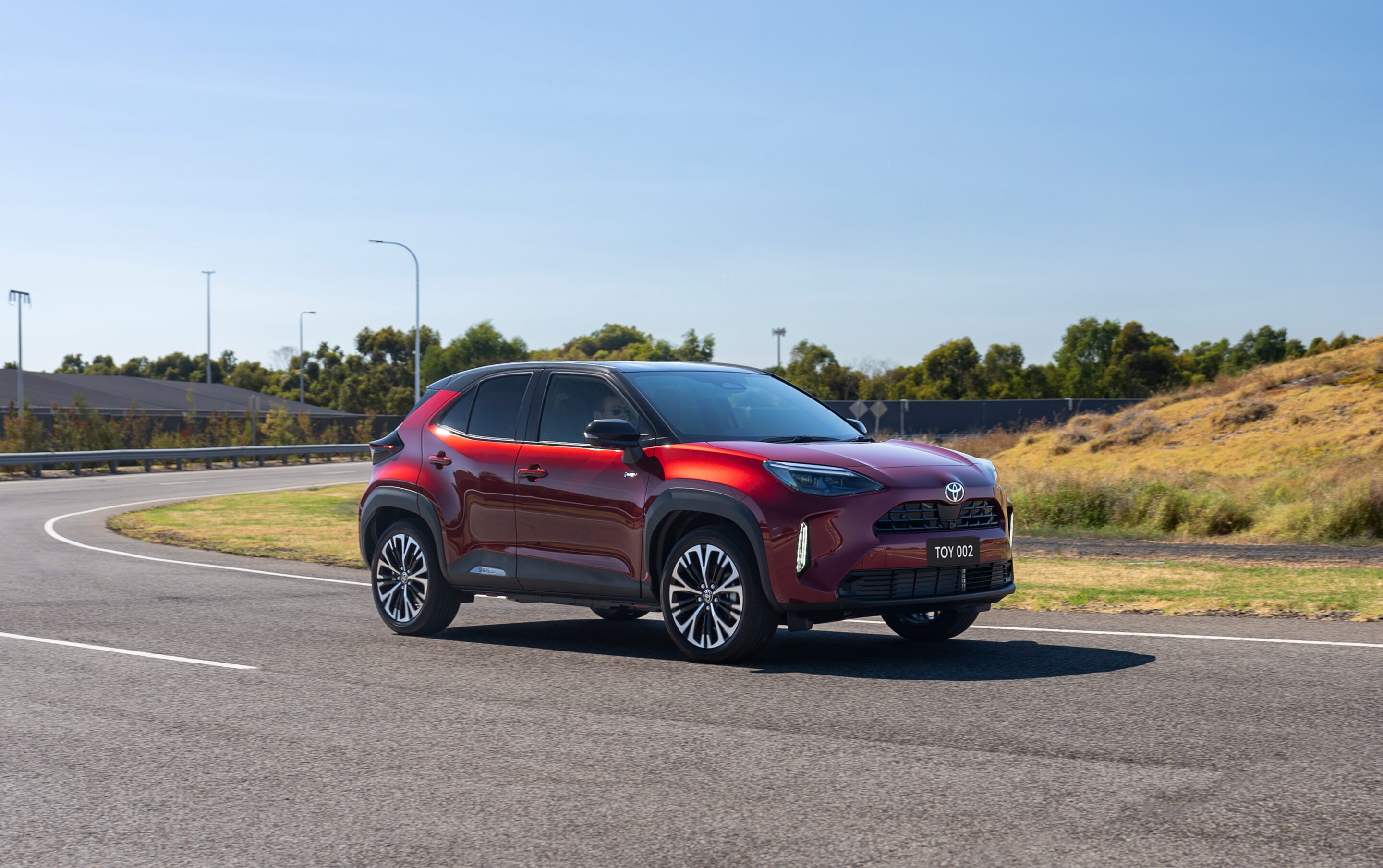
3
Price: From $31,790 plus on-road costs
Drivetrain: 85kW 1.5-litre hybrid, eCVT, front- or all-wheel drive
Claimed combined fuel consumption: 3.8L/100km
Like its Yaris light hatchback sibling, the most fuel efficient small SUV in Australia is the Toyota Yaris Cross, which is capable of a low 3.8L/100km on the combined cycle. Like the Yaris, it uses a 1.5-litre hybrid drivetrain making a reasonable 85kW of power, while both front- and all-wheel drive drivetrains are available – the latter with a separate electric motor for the rear axle – for those who need the choice. The Yaris Cross is also roomy, drives well and is well equipped, especially with safety features.
Medium SUV: Toyota RAV4
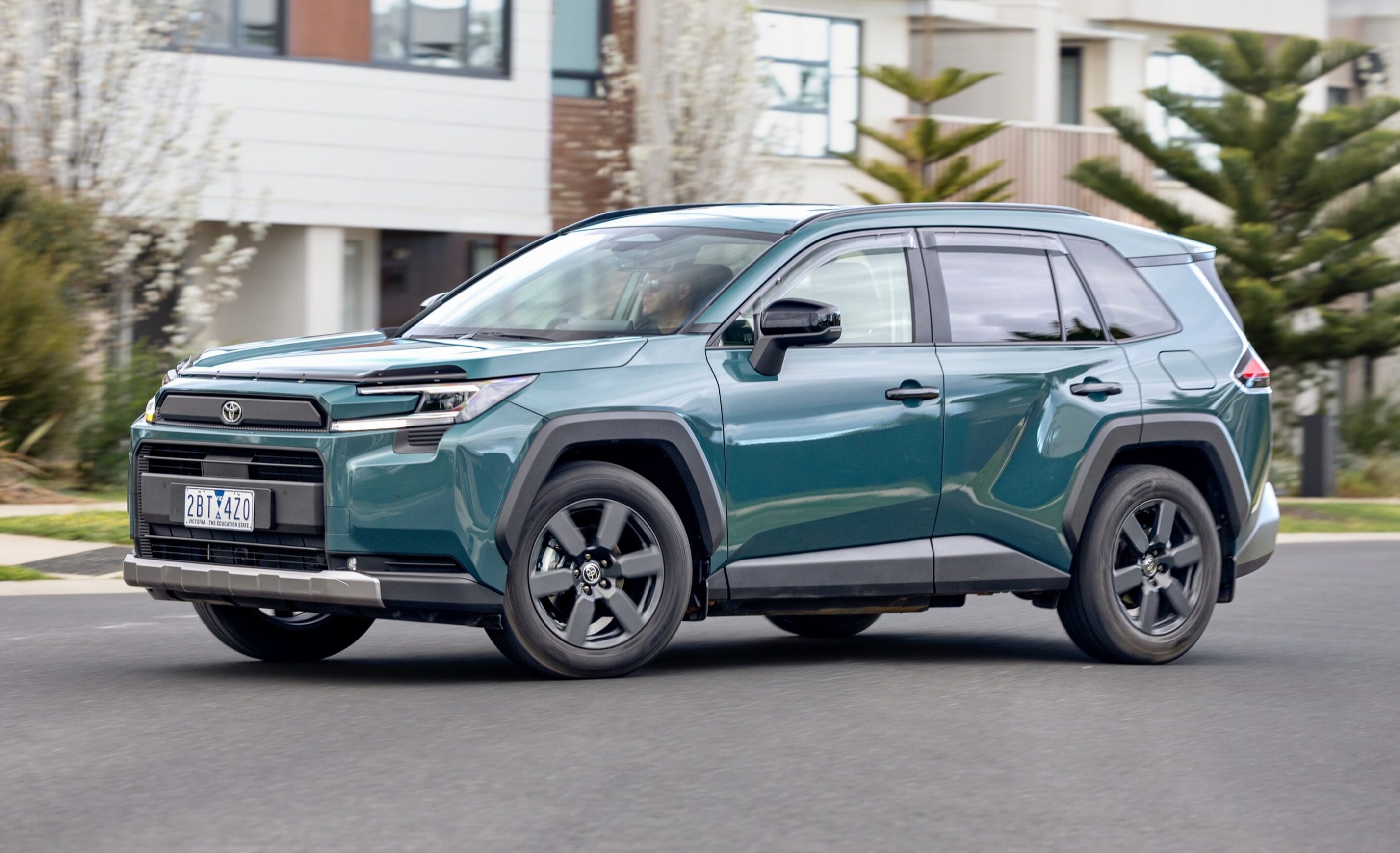
3
Price: From $45,990 plus on-road costs
Drivetrain: 143kW 2.5-litre hybrid, eCVT, front- or all-wheel drive
Claimed combined fuel consumption: 4.7L/100km (old model, new model expected to be identical or less)
The Toyota RAV4 is the world’s best-selling mid-size SUV and for good reason: While many rivals used to not offer hybrid options – many now do – the RAV4 hybrid was capable of sub-5L/100km fuel use reliably without any trouble. As such, most people bought the hybrid and now it’s the only drivetrain option in the range. The new-generation RAV4 is about to launch and although we don’t know its fuel consumption rating just yet, we’re expecting it to be the same 4.7L/100km as the old model or less.
Large SUV: Toyota Kluger and Hyundai Santa Fe hybrid
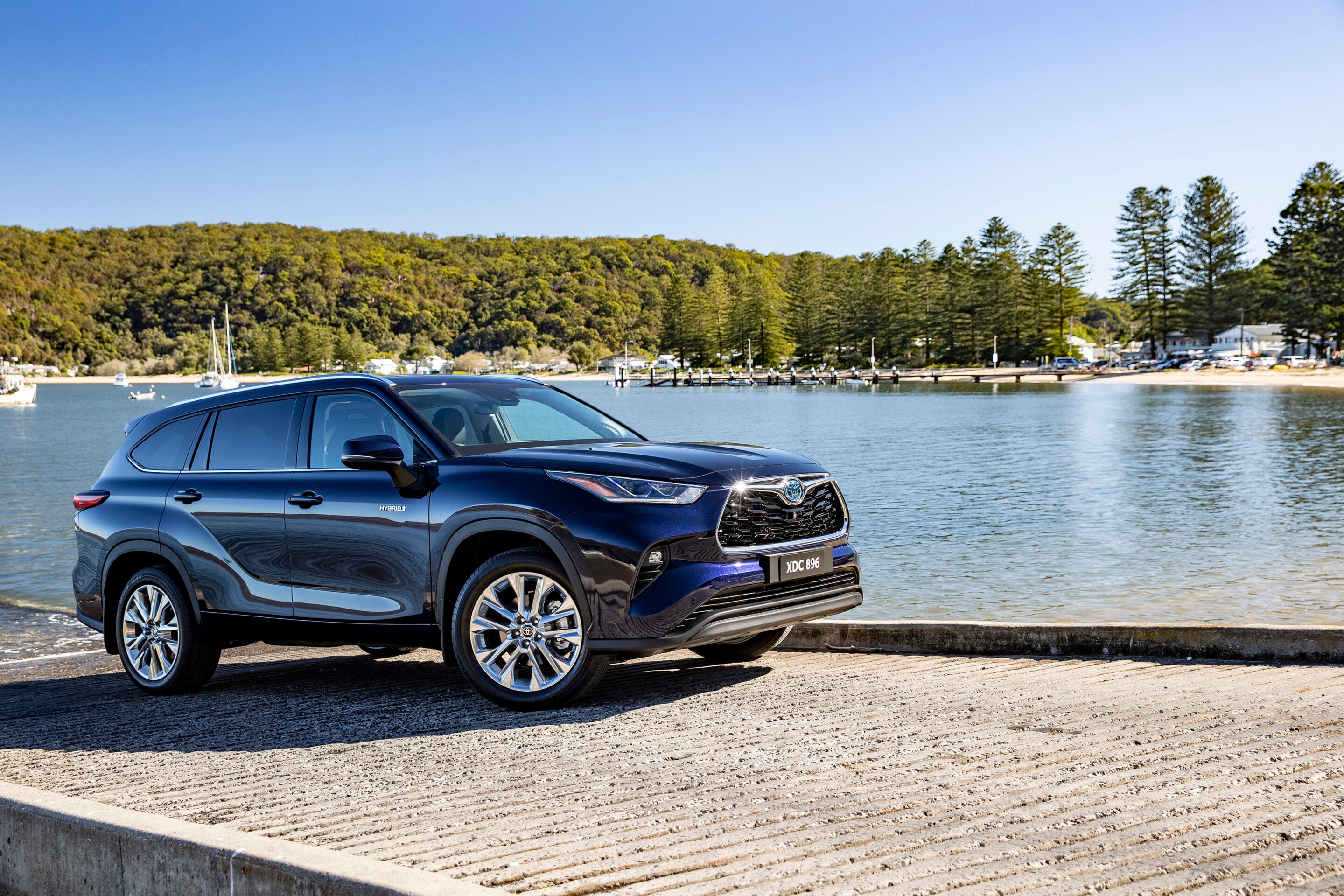
6
Price: From $62,410 plus on-road costs (Kluger), from $57,650 plus on-road costs (Santa Fe)
Drivetrain: 184kW 2.5-litre hybrid, eCVT, all-wheel drive (Kluger), 172kW/367Nm 1.6-litre turbo-hybrid, six-speed auto, front- or all-wheel drive (Santa Fe)
Claimed combined fuel consumption: 5.6L/100km
You can probably sense a theme here: Toyota is capable of making very fuel efficient cars that don’t need a plug. The Kluger hybrid large SUV is the latest example, capable of just 5.6L/100km on the combined cycle and carrying seven in comfort. But Hyundai has also entered the fray with a very efficient large SUV: The hybrid Santa Fe, which is rated the same as the Kluger on the combined cycle. Both options are comfortable, good to drive and good quality, though the Hyundai is better value.
Performance: Mazda MX-5

3
Price: From $42,640 plus on-road costs
Drivetrain: 135kW/205Nm 2.0-litre petrol, six-speed manual, rear-wheel drive
Claimed combined fuel consumption: 6.8L/100km
The Mazda MX-5 is one of the last pure sports cars on the new car market, and it’s also the most efficient. Rated at 6.8L/100km on the combined cycle, the MX-5 uses a 135kW/205Nm 2.0-litre four-cylinder petrol engine with one of the best six-speed manual gearboxes we’ve ever seen.
Dual-cab ute 4×4: Isuzu D-Max SX 2.2L and Mazda BT-50 XS 2.2L
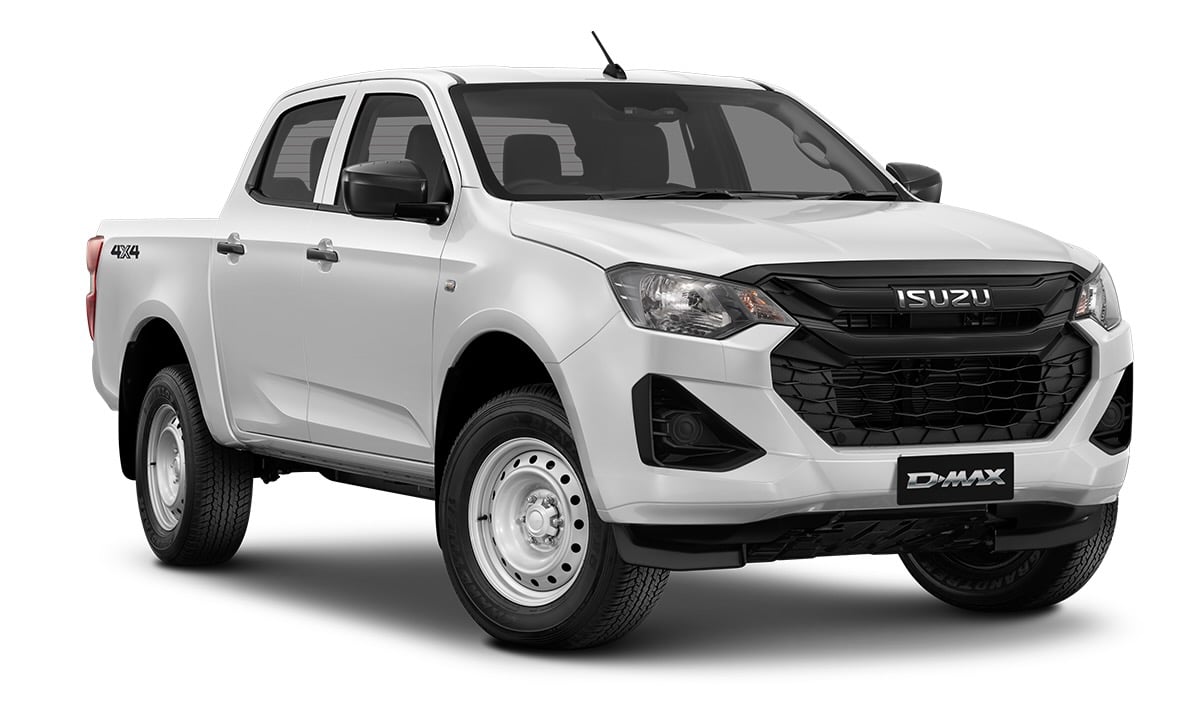
6
Price: From $52,200 plus on-road costs (D-Max), $55,220 plus on-road costs (BT-50)
Drivetrain: 120kW/400Nm 2.2-litre turbo-diesel, eight-speed automatic, four-wheel drive
Claimed combined fuel consumption: 6.6L/100km
Isuzu – and partner Mazda – introduced a new 2.2-litre turbo-diesel engine into the D-Max ute, MU-X large SUV and BT-50 last year. Replacing the former 1.9-litre unit as the entry engine in each range, the new 2.2-litre donk is more powerful (120kW versus 110kW) and torquier (400Nm versus 350Nm), as well as more fuel efficient, rated from just 6.6L/100km. A new eight-speed automatic transmission is also fitted, making the 2.2-litre engine more driveable than the former 1.9-litre unit as well.
Follow WhichCar/Wheels on Google
Click the button below to make WhichCar by Wheels a preferred source for your news.


We recommend
-
 Advice
The best ways to save fuel as prices rise and supply tightens
As fuel prices reach record highs around the country thanks to the Iran conflict, there are plenty of ways to try and reduce fuel usage that don't involve buying a new car.
-
 Features
Hybrid vehicles can reduce fuel use during record high prices – so which are the best options?
The latest conflict in the Middle East has seen fuel prices spike and the possibility of further rises to come, so what are the best hybrid vehicles to lessen your spend on filling your car?
-
 Features
Petrol prices could yet go higher... so which EV should you look at?
Fuel could still go higher in price as a result of the conflict in the Middle East. For many potential car buyers it looks a good time to ditch fossil fuel-powered vehicles altogether and buy an EV, so which should you be looking at?