
Prices exclude mandatory on-road costs and dealer delivery fees, but include the Luxury Car Tax (LCT).
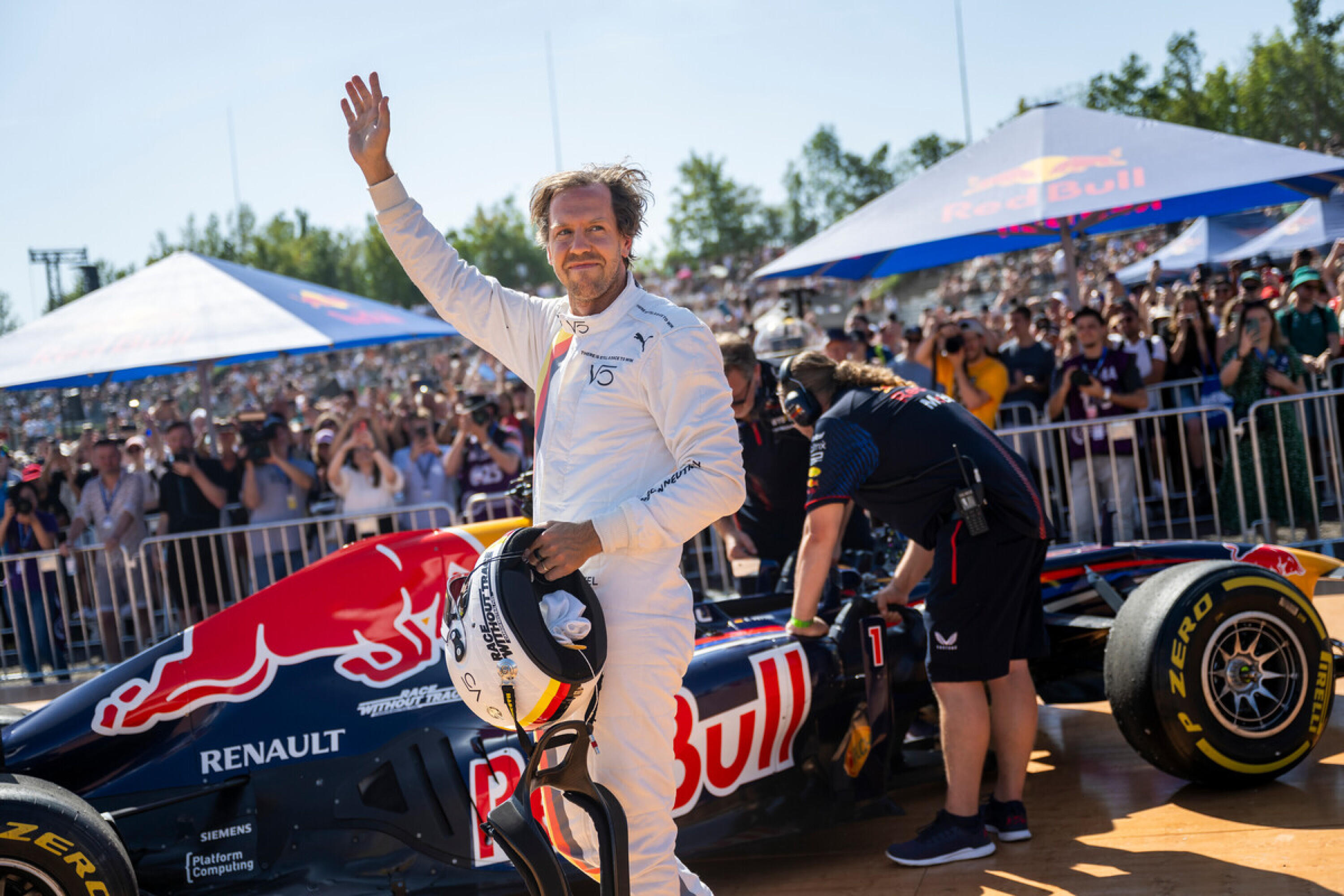
After having been away from Formula 1 for almost two years, Sebastien Vettel’s grin couldn’t be wider as he slid back into one of the Red Bull Formula 1 cars that gave him so much success.
What’s more, Vettel and a brace of F1 royalty would return F1 cars to the most formidable circuit on the planet for the first time in 37 years.
2
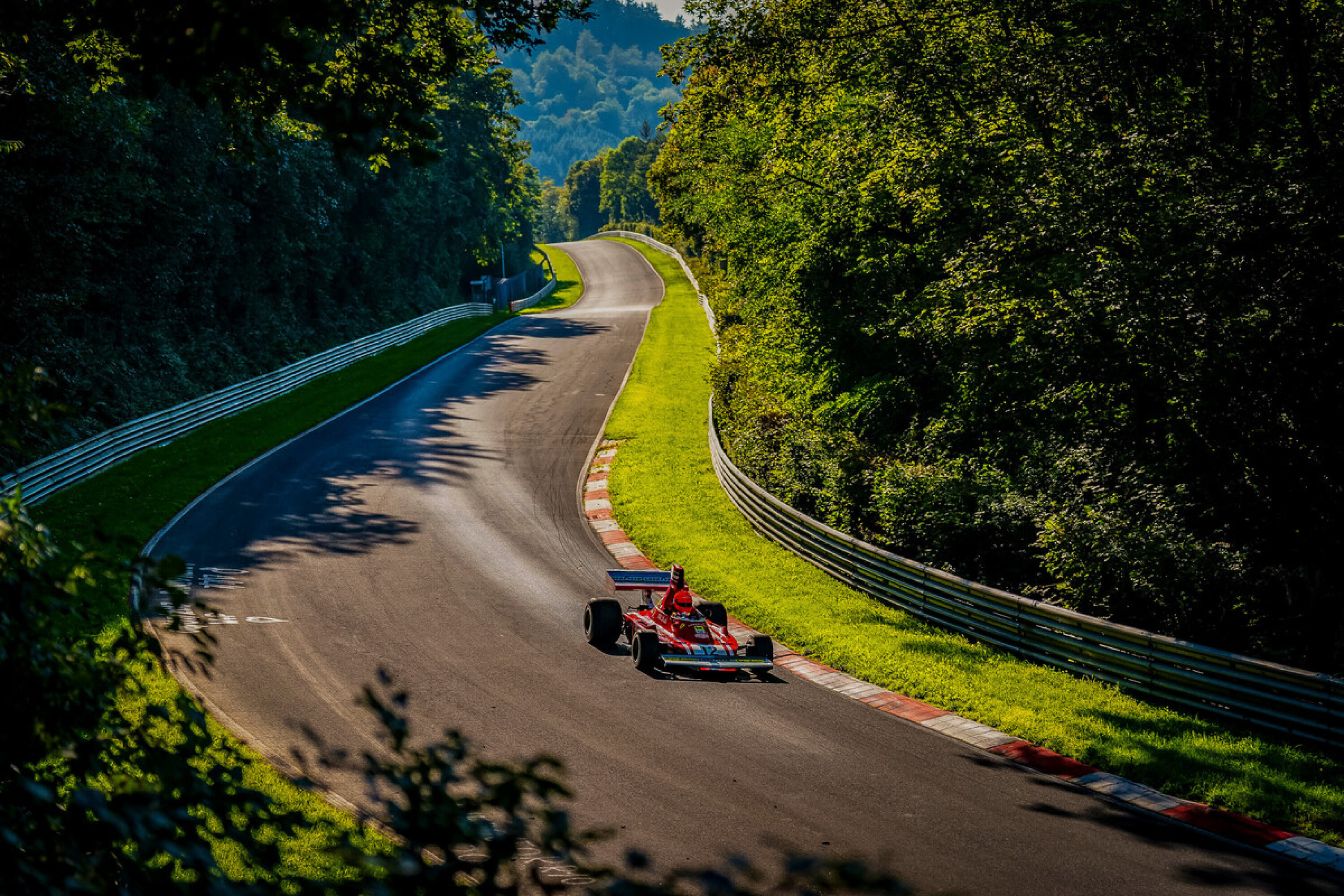
Aboard the RB7 which he used to claim the 2011 championship, Vettel – joined by David Coulthard who subbed for the injured Daniel Ricciardo – accompanied famous racers including Gerhard Berger in a 1995 Ferrari 412 T2, Ralf Schumacher in a race-winning 2003 Williams-BMW FW25 and Mattias Lauda in a Ferrari 312 B3-74 raced by father Niki in 1974 in lapping the 20.83km Nordschleife circuit as part of the Red Bull Formula Nürburgring Festival.
“The car was very nice. The sound is great… the car was very nice, very different in these cars,” Vettel said in an Instagram Live video broadcast.
“Half the crew were there [from 2011] when we had the mega year. The seat still fits, pedals are right, all that together brings back a lot of memories.”
The demo laps at the Nurburgring over the weekend marked the first time in ten years that a modern Formula 1 car has circulated the Nordschleife, which was last used for a Grand Prix in 1976.
2
Vettel, who famously sold off his Ferrari collection after being dropped by the team in 2020, has spent some of his retirement in the seat of some of his own incredibly impressive collection of F1 cars which include a 1992 Williams FW14B and a 1993 McLaren MP4/8.
Like the cars run at the weekend’s demo event, the older machines now use synthetic fuel, a subject close to the four-time world champion’s heart.
“I feel like I’m in a time capsule. Lots of memories came back,” said Vettel. “Everything fits together here today – including the fact that we now use synthetic, ie CO2-neutral fuel.”
Vettel said that the cars need no changes to run the fuel, and that their drivability and performance is unaffected.
“Motorsport is my great passion and I want to preserve the sport. Fuels can be produced synthetically and serve as a substitute,” he said.
“This may not be the only solution, but it is part of the solution. It is important that we all realize that we have to do something, and the best thing is [that] you don’t feel any difference in the car; it’s just as much fun.”
The Korando has been in production in various forms since the 1980s and according to SsangYong, the brand brand is listed in the Guinness Book of Records as Korea’s longest surviving name plate. The most recent generation of the Korando was launched in 2019.
These days there is no shortage of medium SUVs, just take a look outside to see for yourself.
But with money on everyones mind, let’s see if this affordable SUV will be able to get in amongst segment heavyweights.
1
Pricing and features
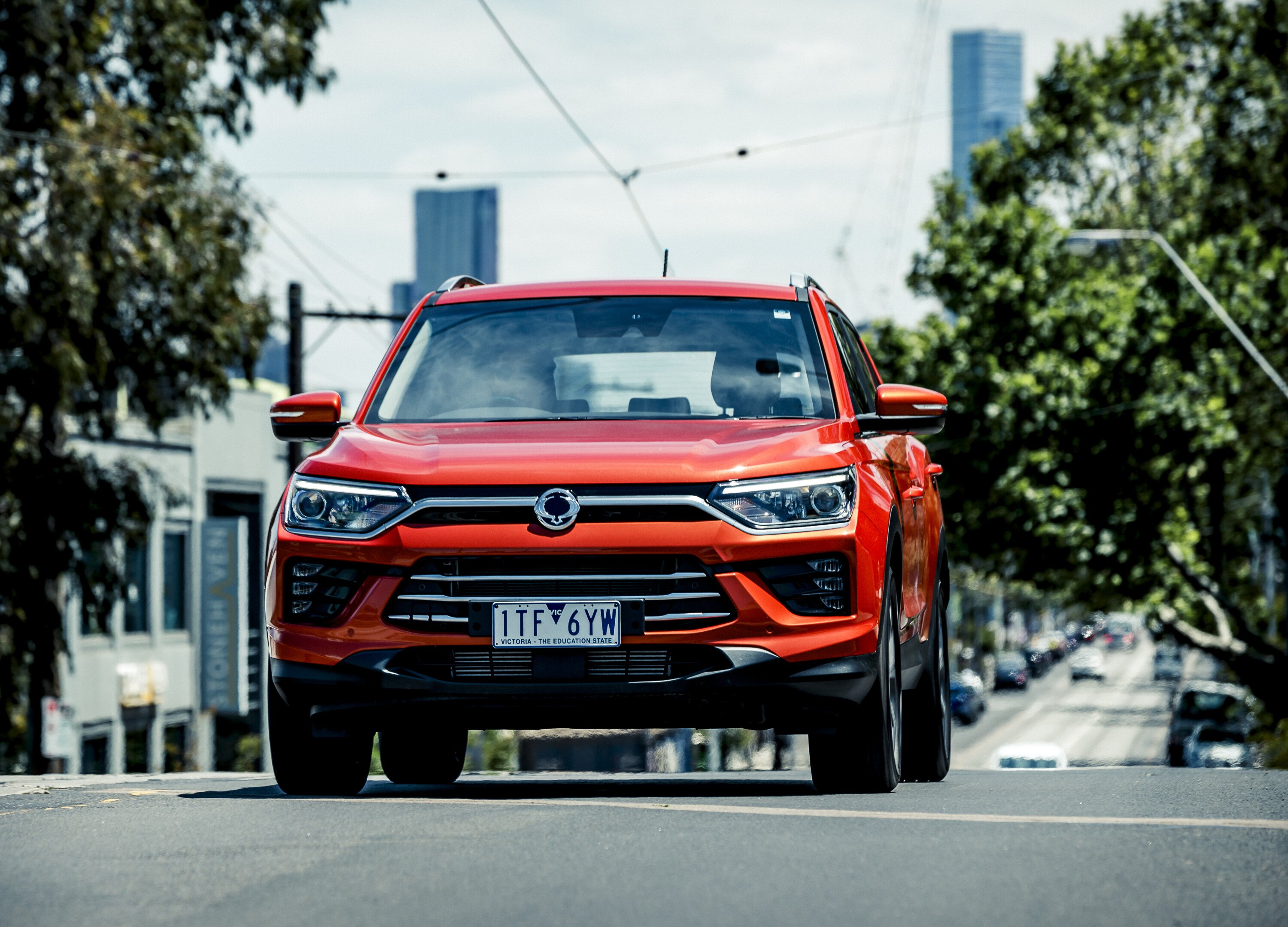
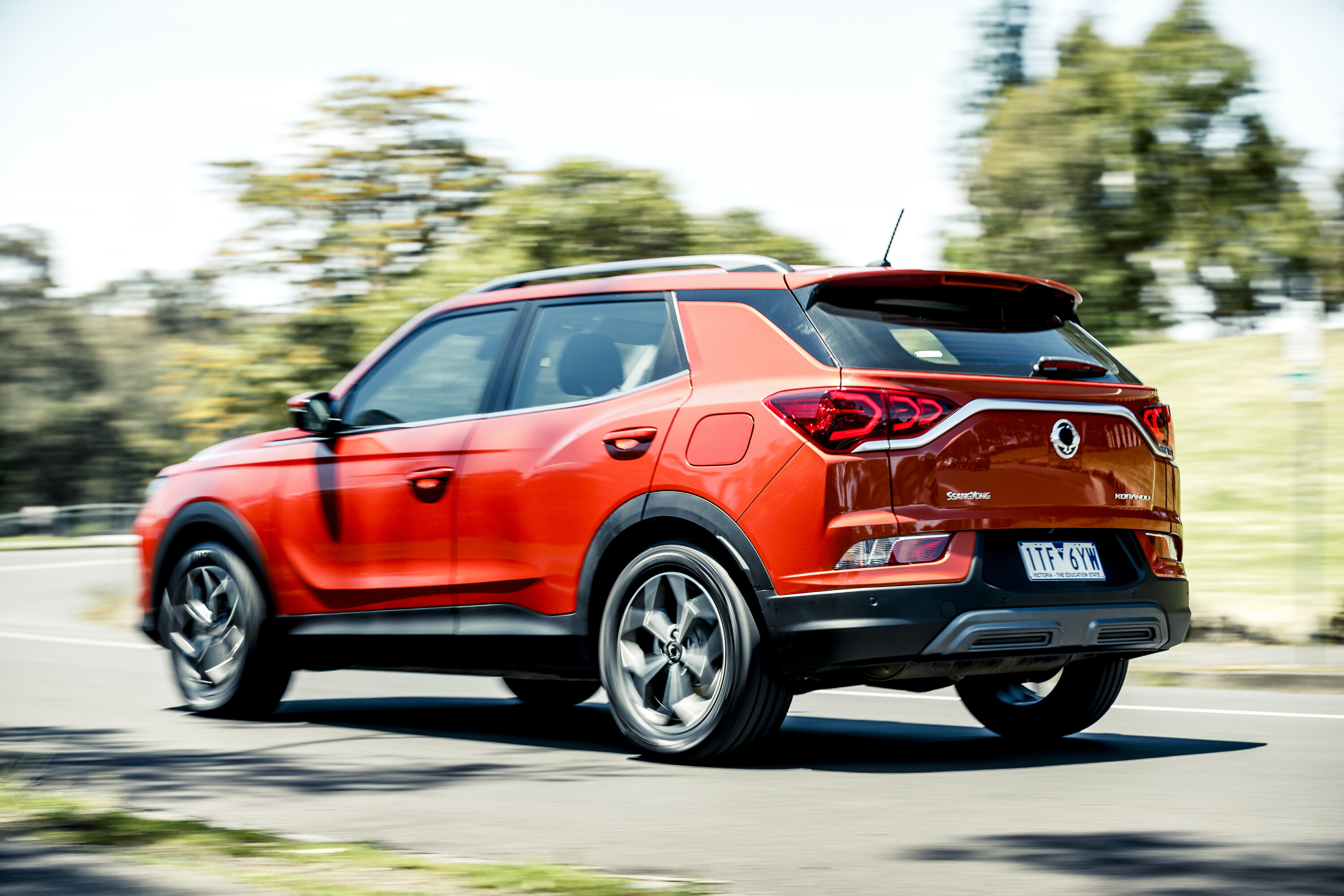
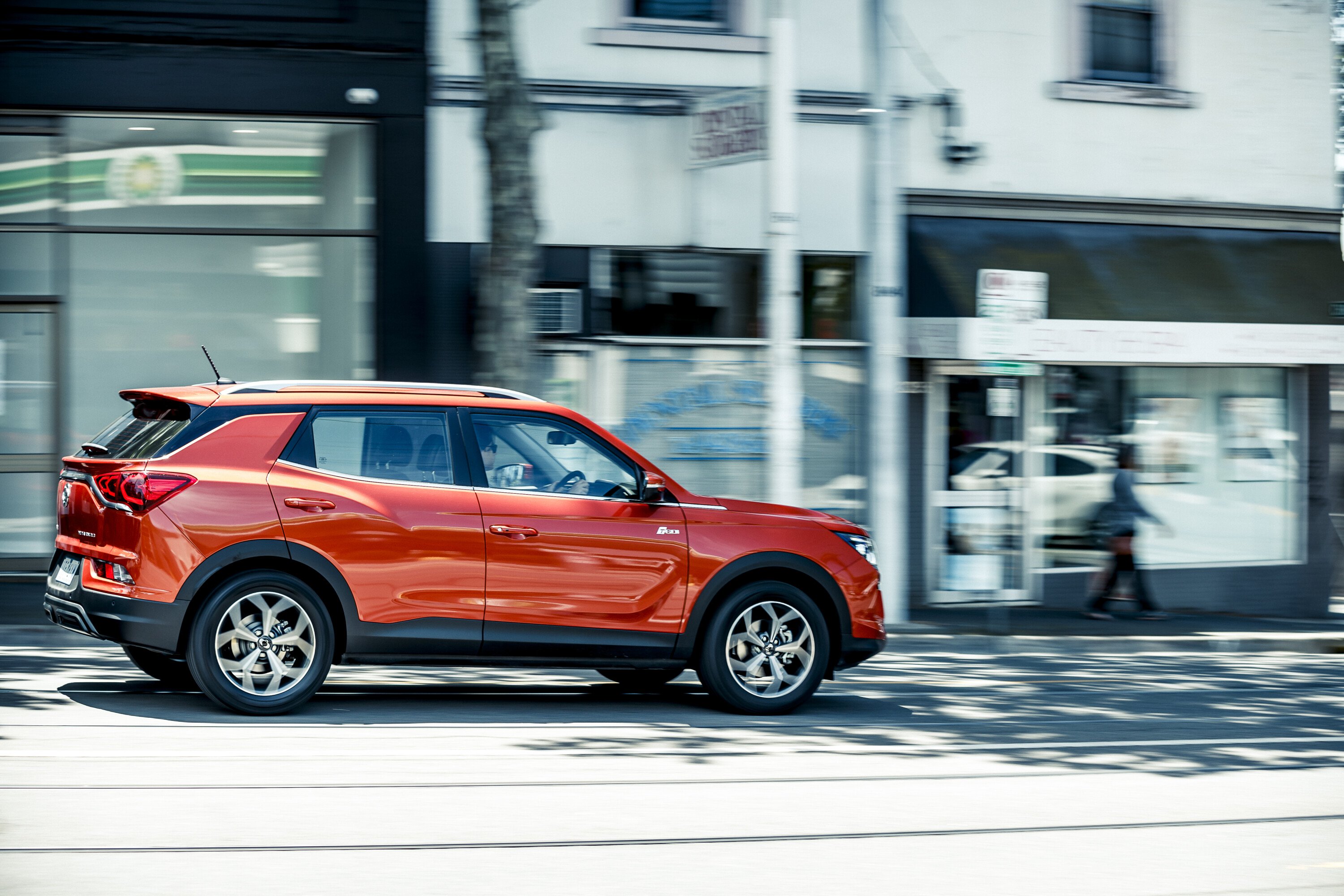
The Korando – positioned as a key player in SsangYong’s lineup – offers a lot of car for its price. Its contemporary exterior, characterised by sharp lines and LED lighting, sets it apart in a crowded segment.
Drive-away prices range between $30,990- $37,990 for EX, ELX and Ultimate variants. All share the same 1.5-litre turbo engine producing 120kW and 280Nm, and are paired to a 6-speed automatic transmission.
1
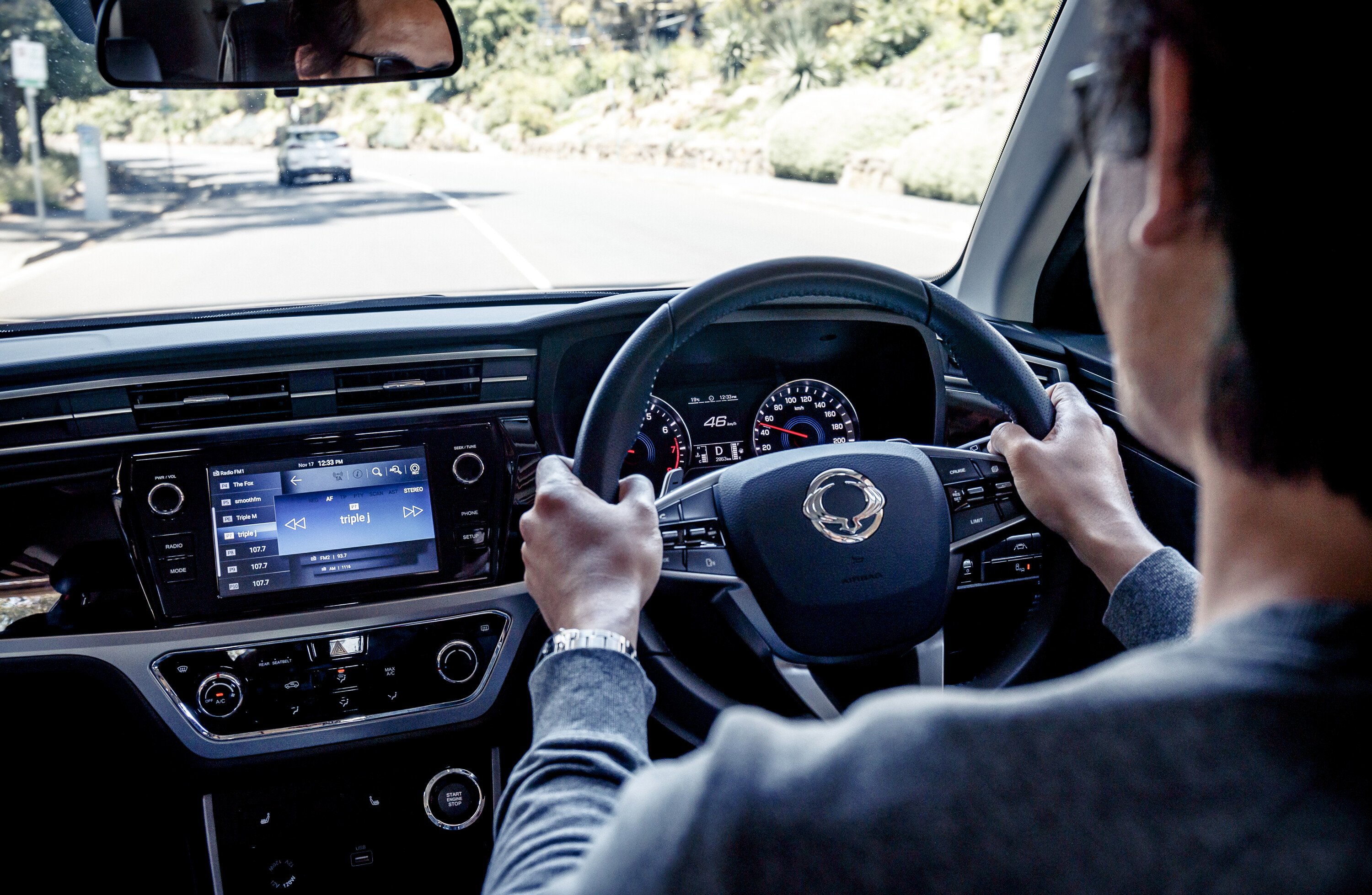
Inside, the Korando impresses with its spaciousness and quality. The entry level EX comes in strong with features such as 17-inch alloy wheels, rain sensing front wipers, auto-folding door mirrors and an 8-inch touchscreen with Apple CarPlay and Android Auto.
Moving up to the ELX will get you 18-inch alloys, heated front seats, a leather steering wheel, an electric park brake, push button start, LED DRLs and front & rear parking sensors.
The range-topping Ultimate adds 19-inch alloy wheels, privacy glass, leather seats, heated leather steering wheel, sunroof, power adjustable front seats, power tailgate and a 10.25-inch digital information cluster.
1
Safety
The Korando received a 5-star ANCAP rating – including an 86% score for child occupant protection – covering the model until December 2025.
Safety is a priority, with features like 6-airbags, autonomous emergency braking, lane-keeping assist and front collision warning as standard.
Moving up to the ELX will add blind spot detection and rear cross traffic alert, while the Ultimate also adds adaptive cruise control and lane centre following assist.
Key rivals
The mid-size SUV segment is filled with established names, making it a tough battleground:
1
Should I put it on my shortlist?
The 2023 SsangYong Korando is a compelling option for those looking for a fresh alternative in the compact SUV segment.
While it might not have the brand heritage of some of its rivals, it offers a unique blend of style, features, and value.
If you’re in the market for a well-rounded SUV that doesn’t break the bank, the Korando deserves a spot on your shortlist.
MORE
Everything Ssangyong
MORE
Midsize SUVs
The dual-cab ute market is fiercely competitive, but the SsangYong Musso aims to carve out its niche in Australia.
With a blend of style, practicality, and prominently value, the 2023 Musso is SsangYong’s statement that is working to compete with the big players.
But does it have the chops to stand out in an already crowded and well-spoken for segment?
1
Pricing and features
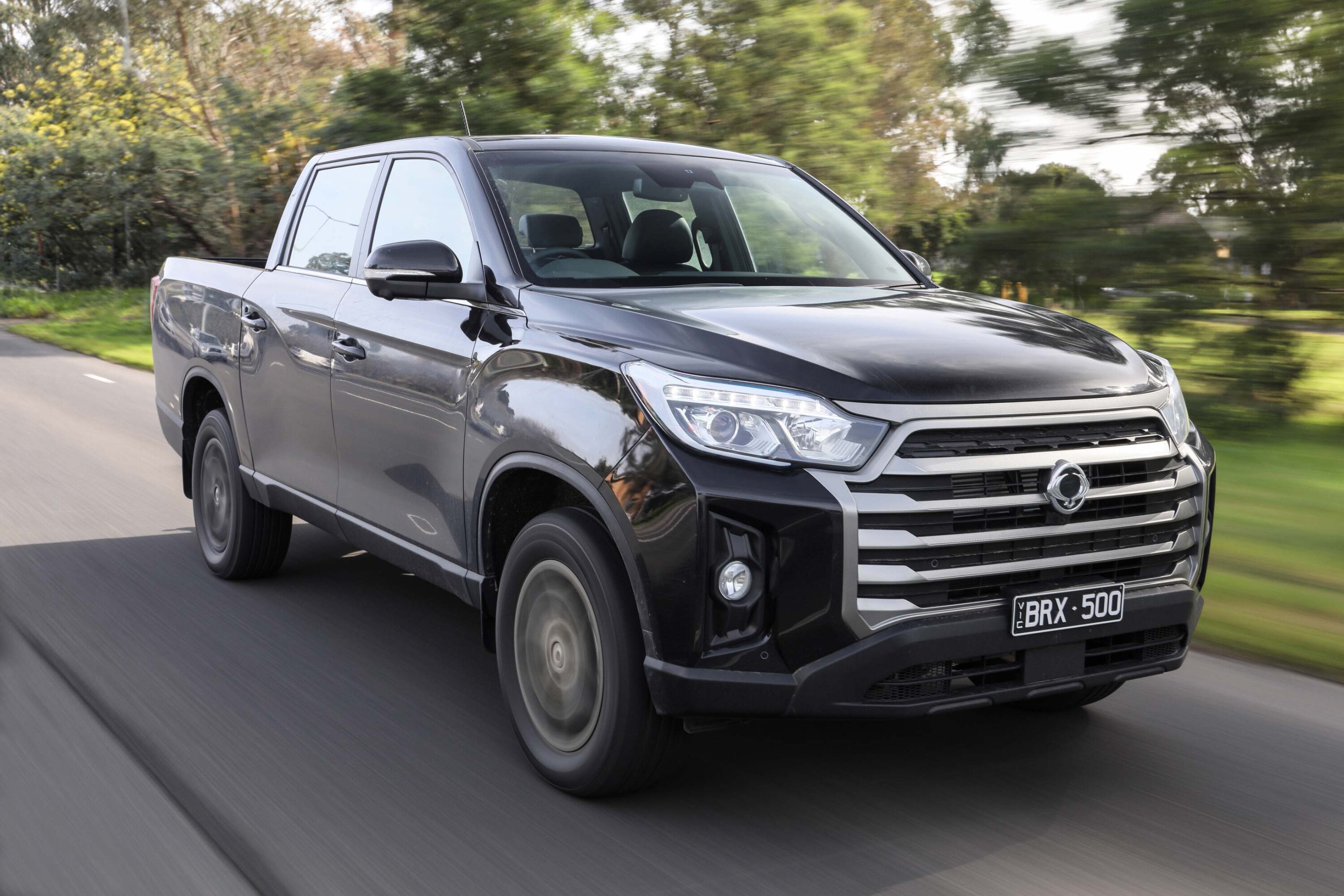
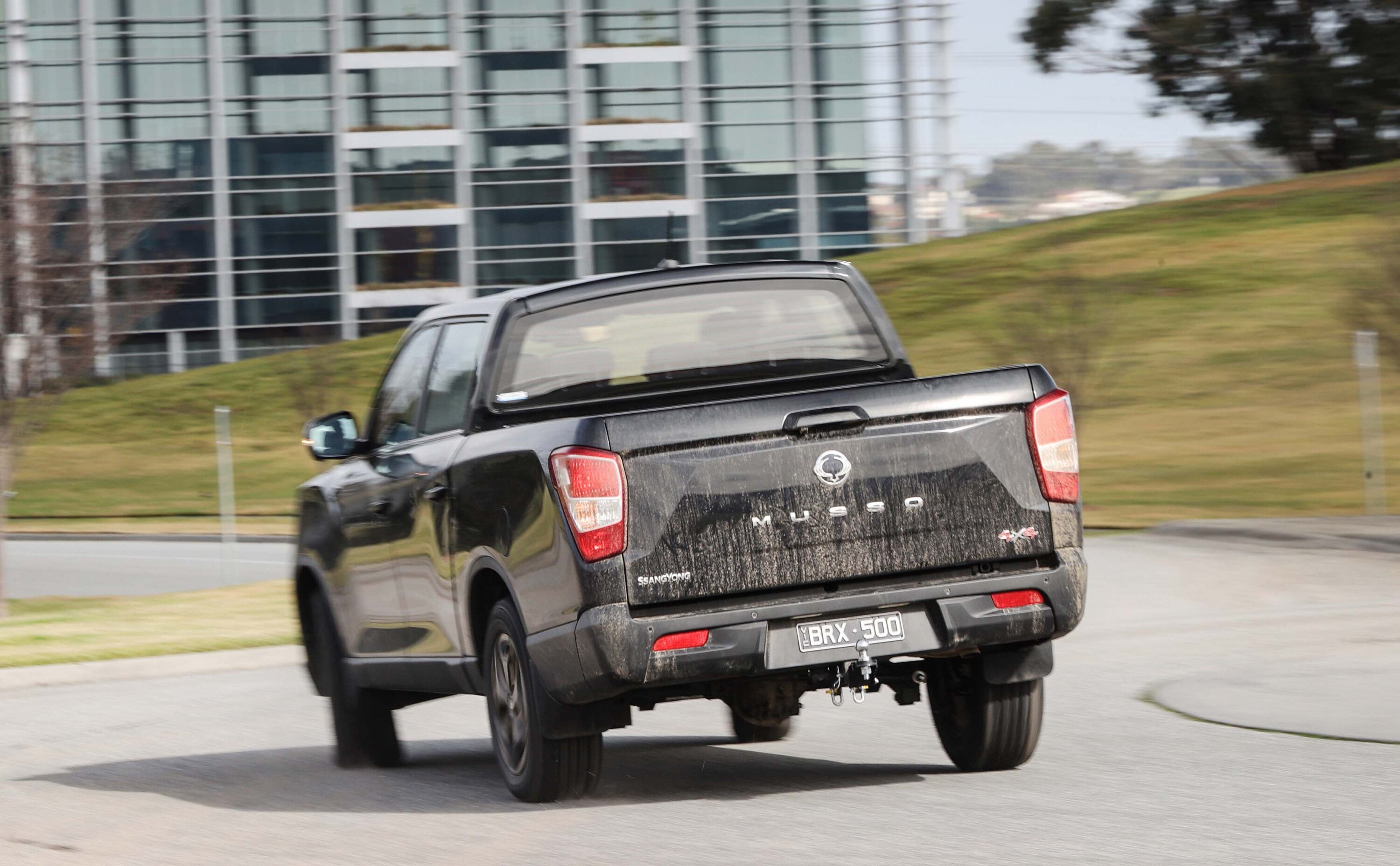
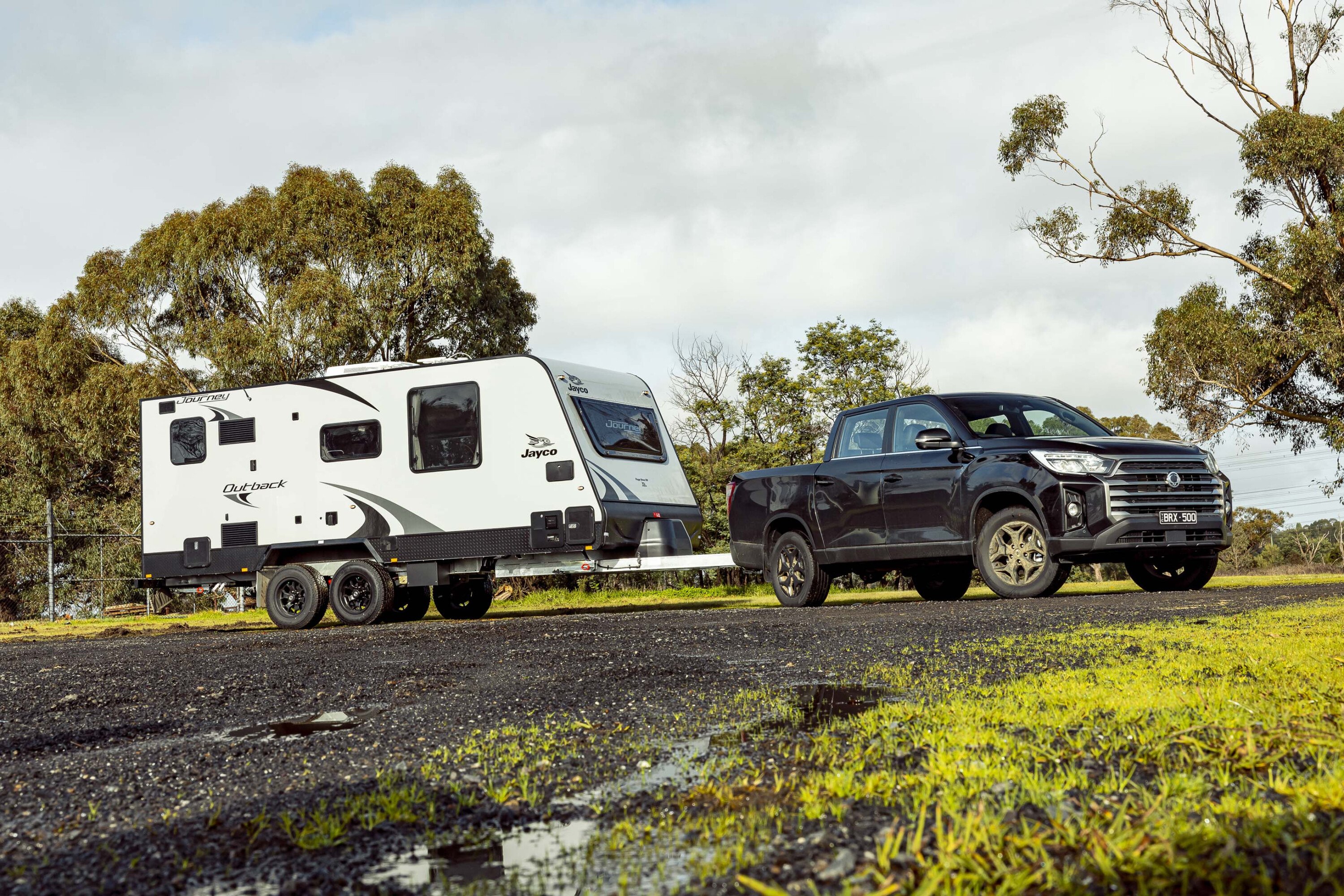
The Musso – being SsangYong’s flagship dual-cab– offers a lot for its price point. Its bold exterior is complemented by alloy wheels, LED DRLs and a functional design.
Starting from $36,790 drive-away the SsangYong dual-cab ute is available in two grades: ELX and Ultimate with a range of option packs adding specifications like a longer tub and luxury features like a sunroof.
Both variants are paired to a 2.2L turbo diesel engine with part-time 4×4 configurations, producing 133kW and 400Nm. ELX is available with a manual or 6-speed automatic transmission.
1
Towing capacity is rated at 3500kg across the range.
Inside, the Musso surprises with its level of comfort and features. The infotainment system offers essential connectivity with an 8″ touchscreen housing Apple CarPlay and Android Auto, while the cabin materials and design feel a cut above some rivals in the same price bracket.
Practical features like a reversing camera, air conditioning, and multiple USB ports add to its appeal. Safety hasn’t been overlooked, with features like forward collision warning and lane departure warning coming standard.
1
Safety
The Musso has not received an ANCAP rating however the vehicle is equipped with standard safety such as 6 airbags, driver attention warning and AEB with forward collision alert.
Moving up to the Ultimate will add features such as blind spot warning, rear cross traffic alert and lane change-collision warning.
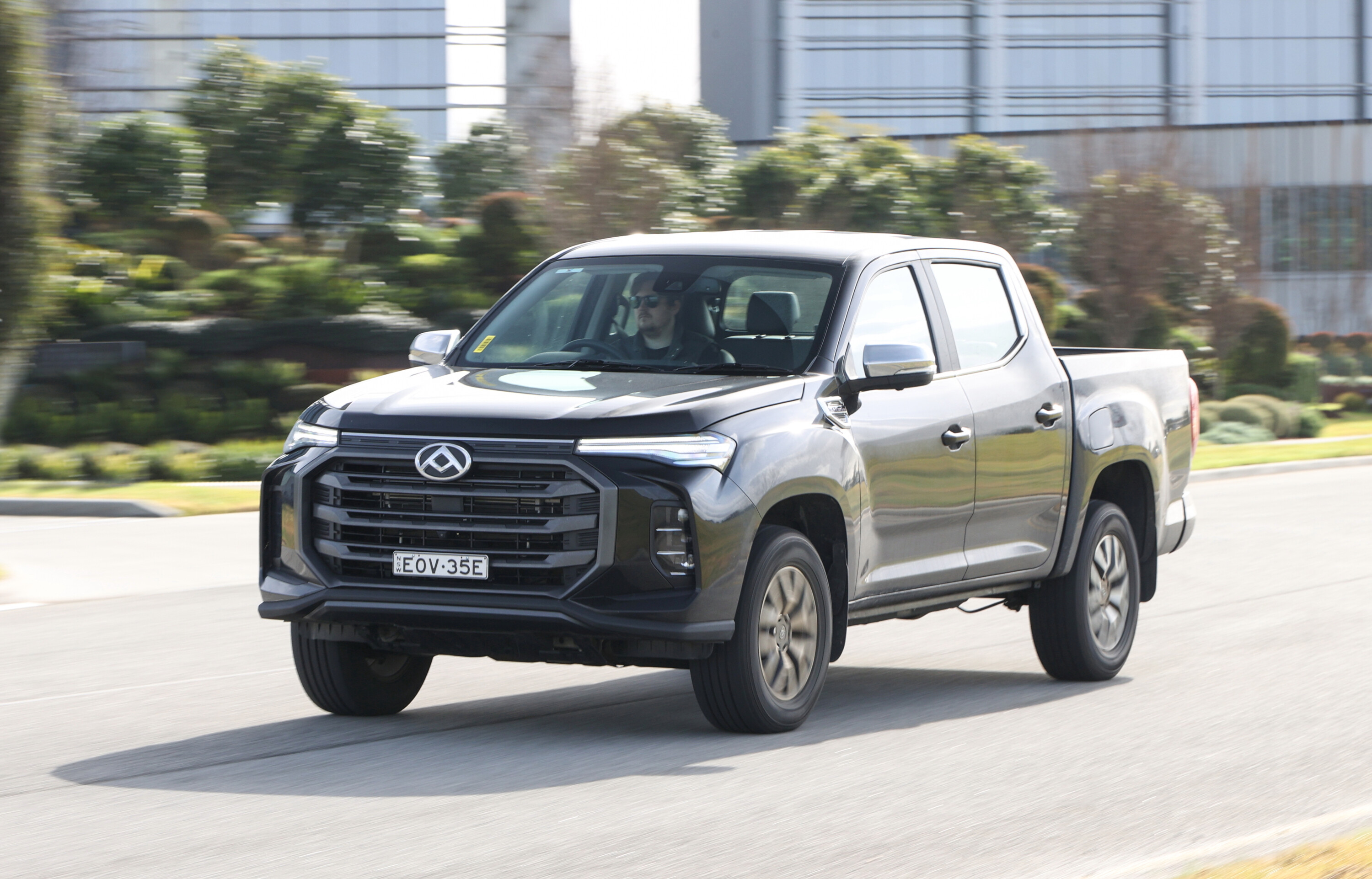
Key rivals
The pick-up segment is filled with established names, making it a tough battleground:
1
Should I put it on my shortlist?
The 2023 SsangYong Musso is a pick-up that shouldn’t be overlooked.
While it might not have the brand recognition of some of its rivals, it offers a compelling blend of features, style, and value.
For those seeking a well-equipped pick-up without breaking the bank, the Musso is definitely worth a closer look.
MORE
Everything Ssangyong
MORE
Ute Buyers Guide
Snapshot
- Skoda is aware it’s moved upmarket in pricing
- This isn’t the end to affordable Czech cars and a cheaper Fabia is on the way
- Continued focus on ICE models will keep prices down
Skoda’s CEO has stated that the brand is now at “eye-level” with Volkswagen on price but admits the business still needs to offer affordable cars with petrol engines for years to come.
The last few years have seen unprecedented challenges for all car brands, and some of the decisions made at Skoda – particularly in Australia – have raised eyebrows. A Fabia that costs twice as much as the last version is just one example of prices creeping up to VW, and even approaching Audi levels.
The Czech brand’s CEO, Klaus Zellmer, said he understands that Skoda’s position is different today from what has been expected of the ‘budget’ player in years gone by.
Skoda is not going to get into a race to cancel all of its non-EV options
1
“I think we’re now on eye level,” he said. “We want to spread horizontally to increase our footprint in the market and cover big audiences, and not step on each other’s feet all the time.”
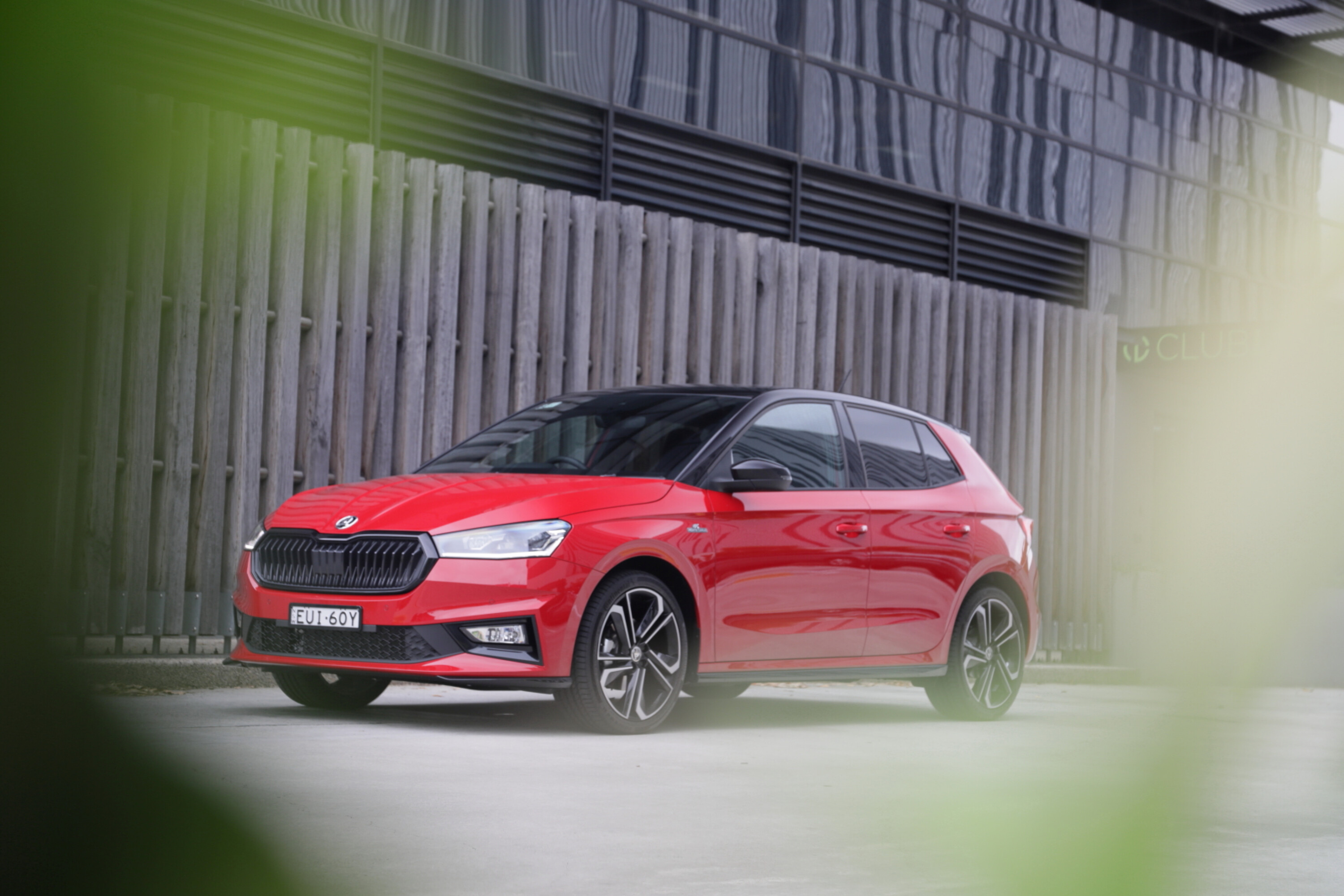
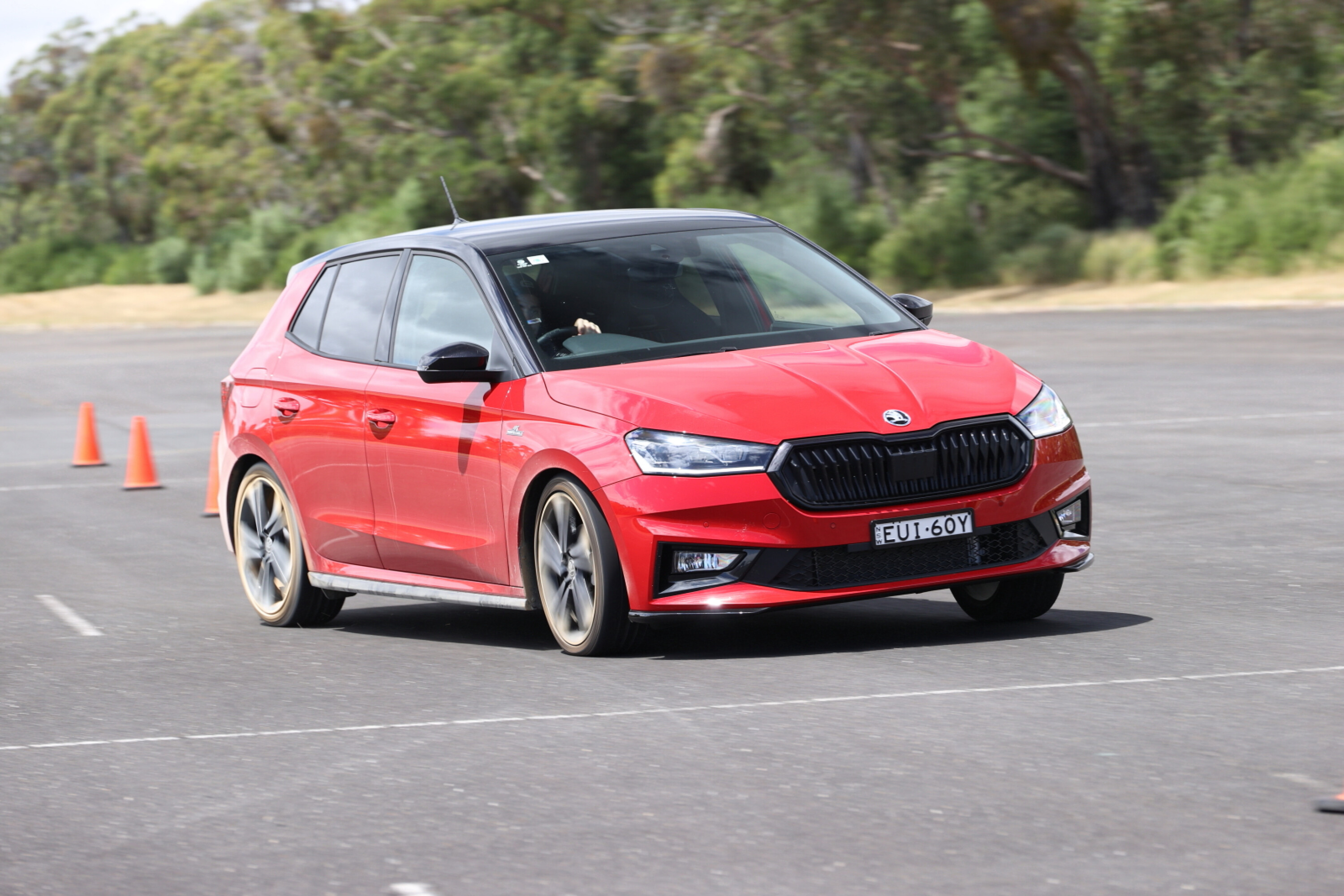
Zellmer’s comment indicates the brands have found themselves interfering in each other’s market spaces in recent times – and there is still evidence of this in Australia, where the entry-level Volkswagen Polo 85TSI ($28,990 before on-road costs) is cheaper than the Skoda Fabia ($38,990 drive-away) which is only offered in a single high-spec Monte Carlo variant.
On paper, the Fabia is even dearer than a base Audi A1 30 TFSI ($34,250 before on-road costs, or about $39K drive away). Though, to be fair to Skoda’s offering, it packs power and equipment more in line with the circa-$42K drive-away A1 35 TFSI.
1
Regardless of the nitty gritty, Mr Zellmer confirmed that Skoda Australia needs to adjust its positioning.
“I know that Fabia has a different price in Australia. We covered that, we need to bring in more derivatives, not just the Monte Carlo. I’m very aware of that,” he said, confirming a more affordable model would arrive. However, as Skoda Australia boss Michael Irmer has stated previously, it won’t be a basic car with steel wheels as expectations have changed about what is expected of the Skoda brand in the 2020s.
1
Global chief Zellmer said that petrol powertrains, and internal combustion engines as a whole, will help Skoda maintain its position as a more affordable option in years to come. He added that Skoda is not going to get into a race to cancel non-EV options like some other brands in the VW Group.
“There used to be a competition when you were asking that question to car manufacturers, they would say 2028 or 2027,” he said of the previous plans to kill off all the ICE models in some brand portfolios.
“No, I don’t care. It’s the consumers that will decide, and of course legislation,” he said.
“Europe has said 2035. Okay. We can plan with that. But before that, consumers will decide based on package, charging infrastructure, their psychology, range anxiety – you know, all the preferences that happen. Our responsibility as a car manufacturer is to cater for those preferences”, he said.
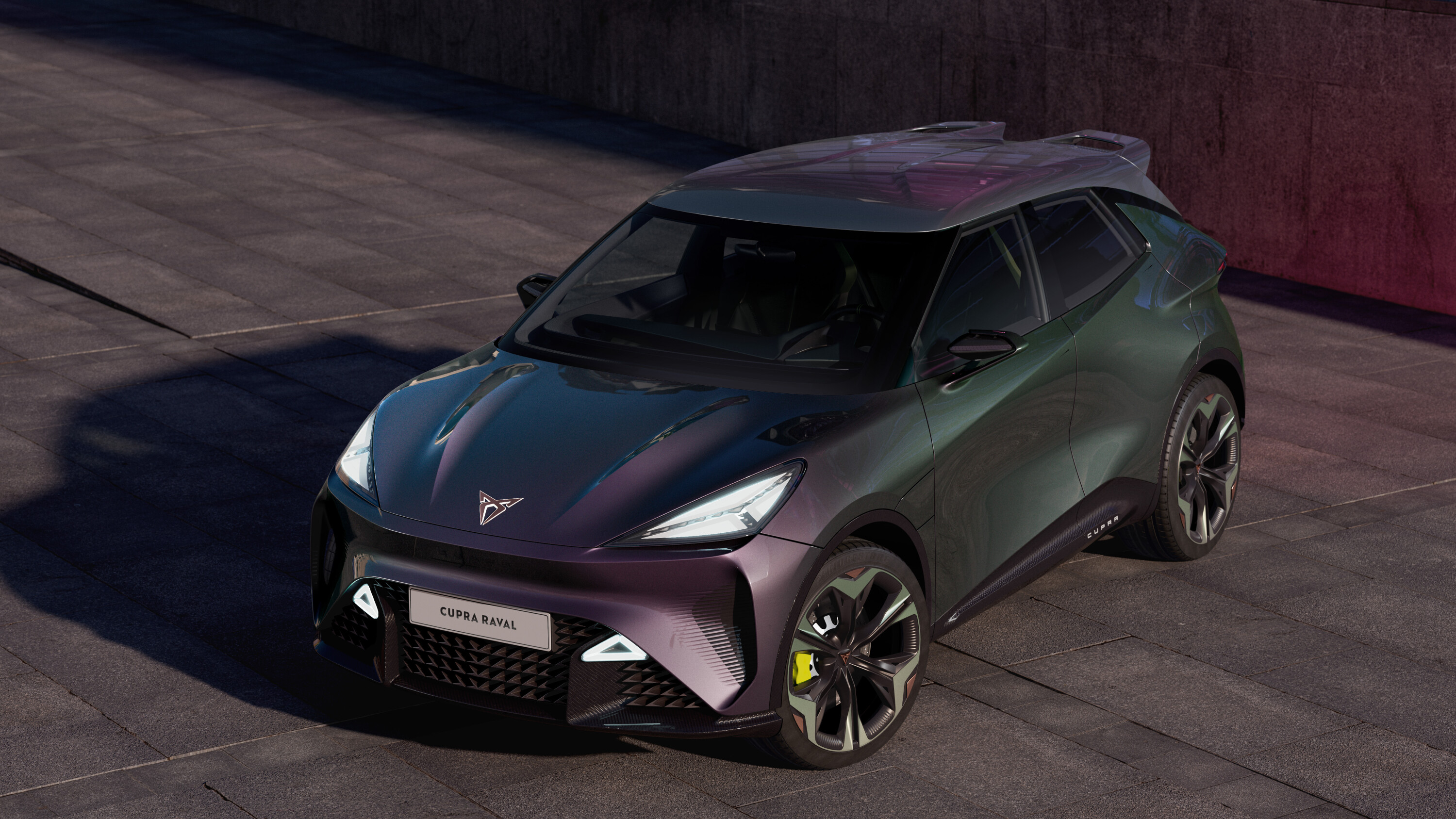
Following the existing Enyaq and forthcoming ‘Elroq’ SUVs, Skoda will launch an ‘affordable’ small EV on the VW Group’s MEB Small platform. It will be one of four compact models built on these underpinnings alongside the VW ID. 2, a higher-riding version of that Volkswagen likely known as ID. 2 X and the Cupra Raval.
MORE
Everything Skoda
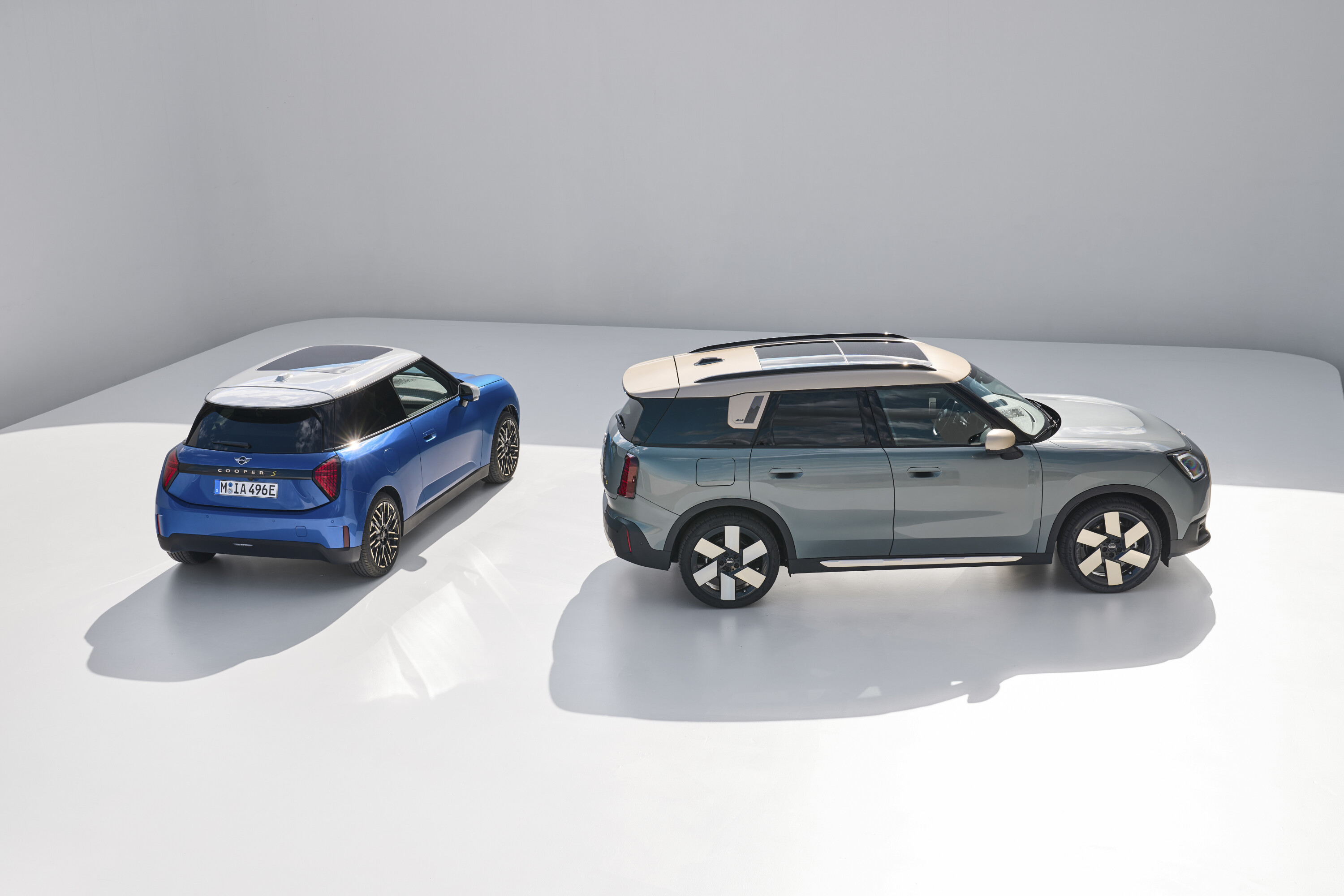
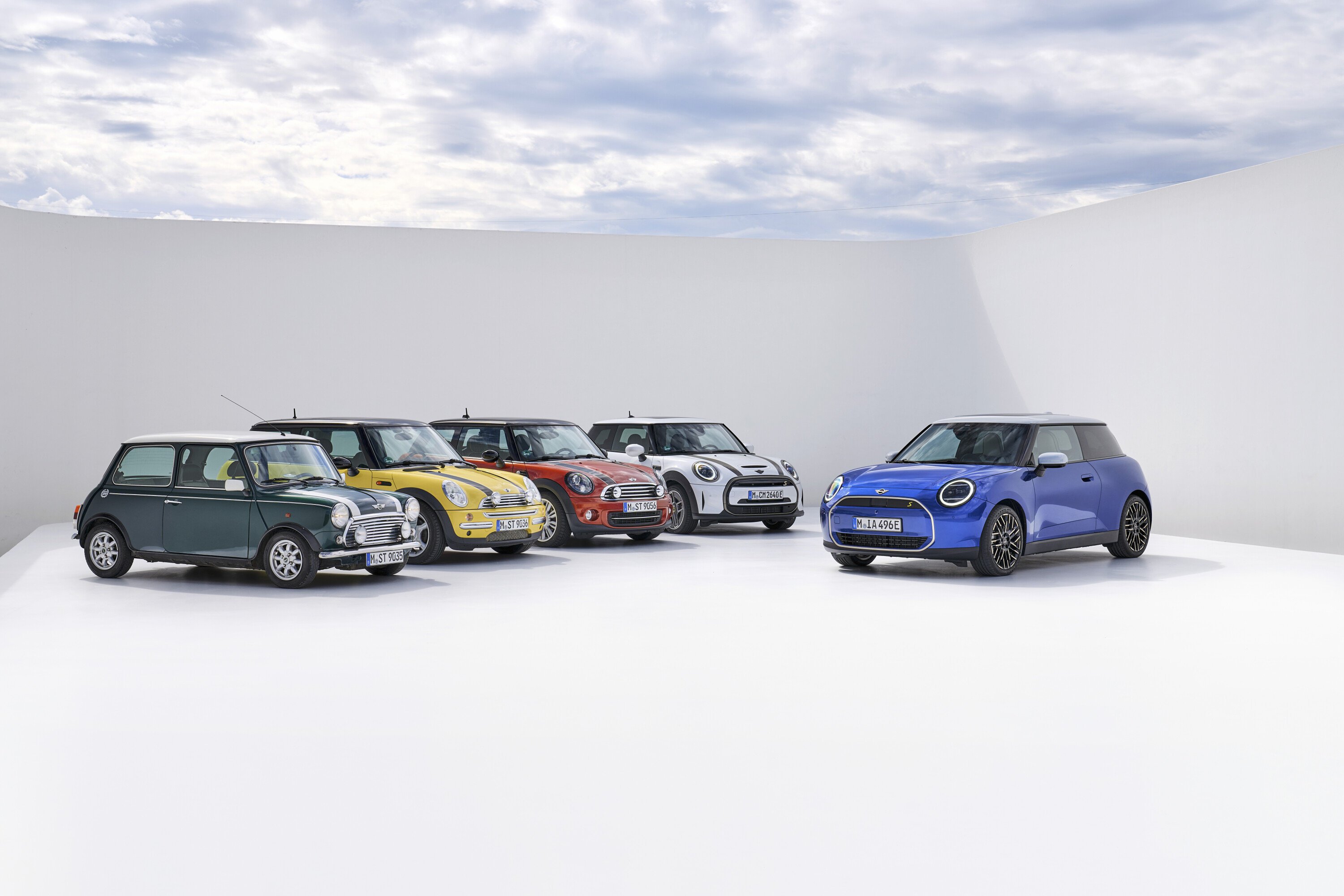
Mini’s freshly revealed all-new electric generation is bringing a world of possibilities to the English brand, with a whole host of new models under consideration to join the Cooper hatch and Countryman.
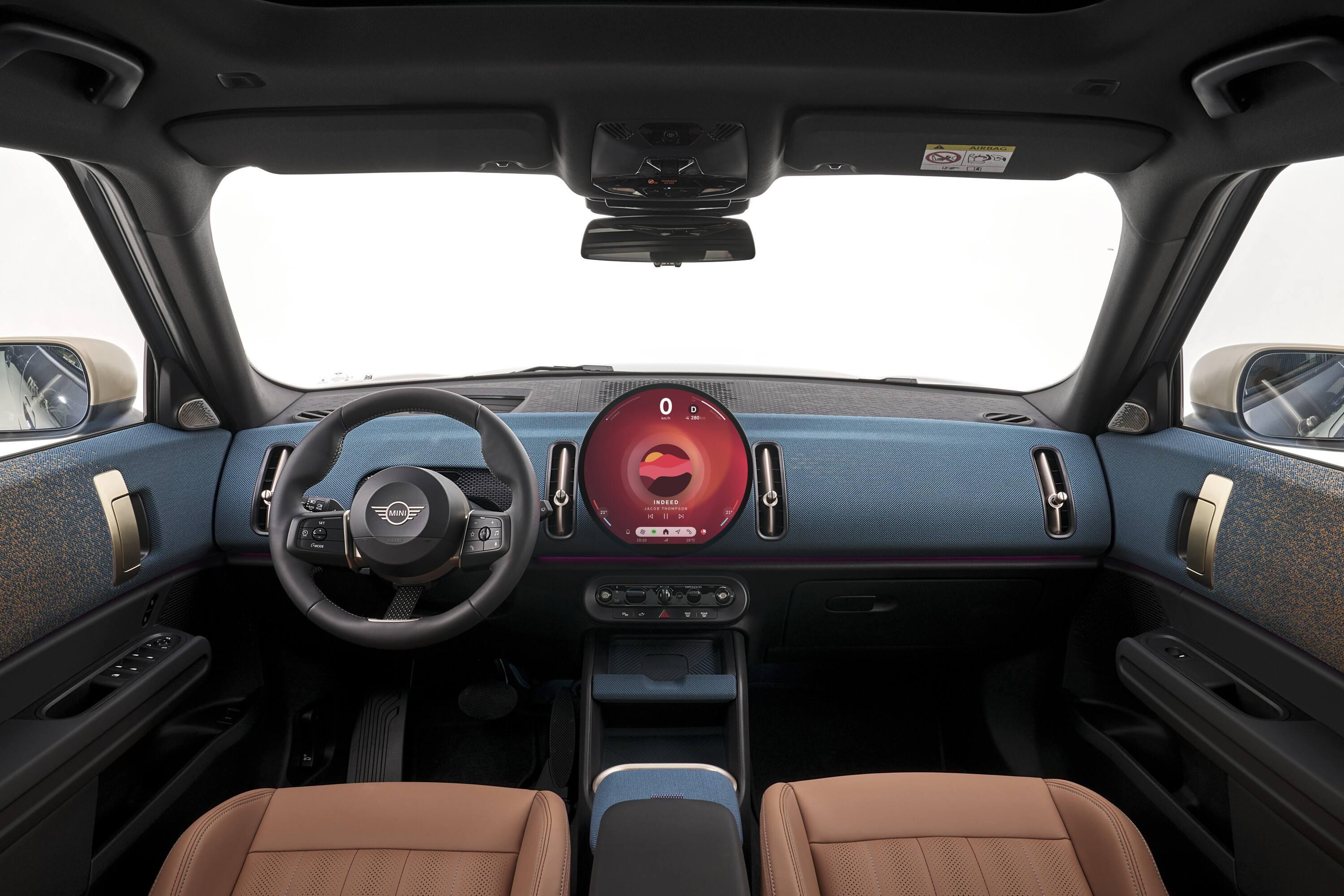
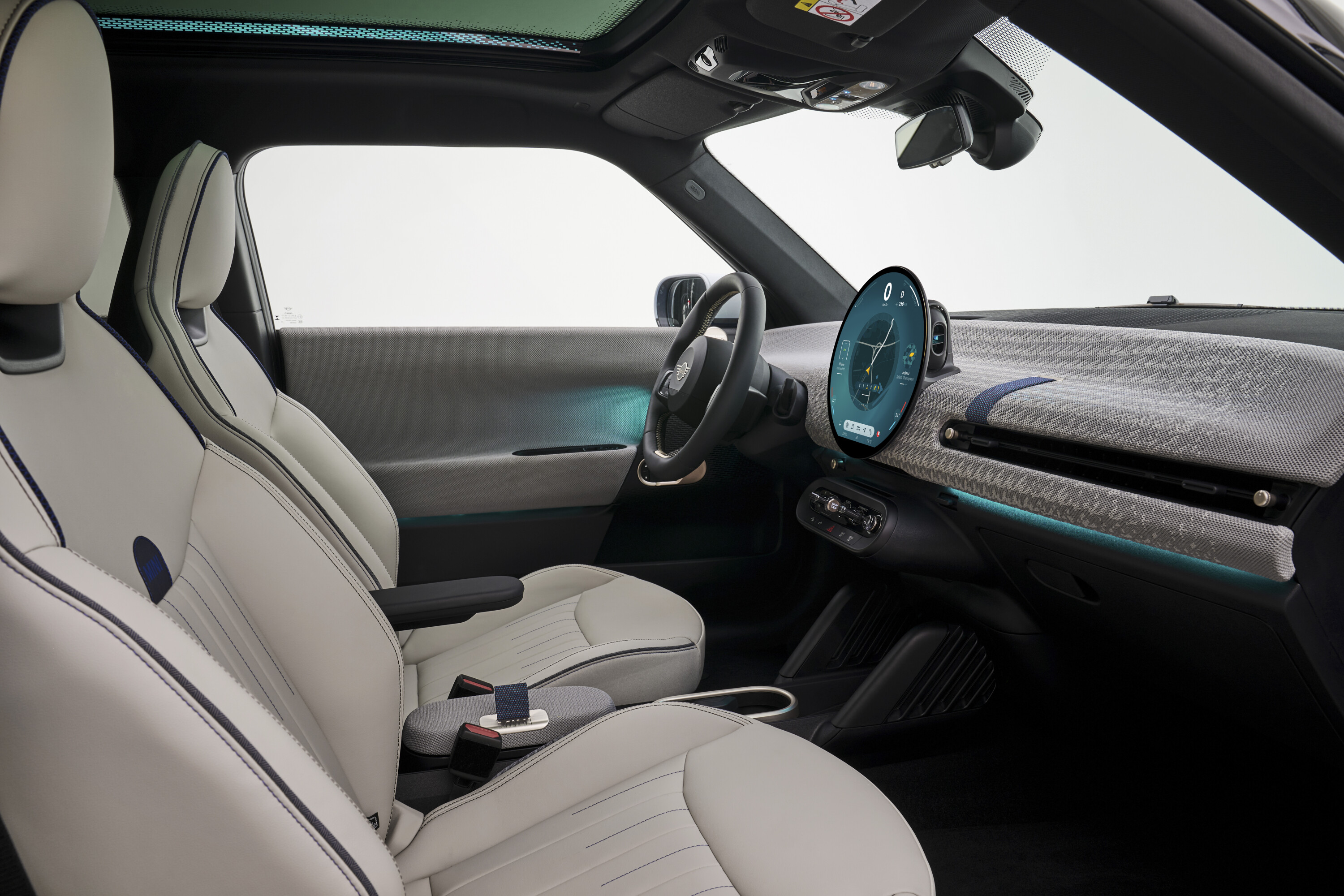
With a pure-electric architecture underpinning the new Cooper three-door hatch and a platform borrowed from the BMW iX1 for the new Countryman, Mini’s new sandbox will spawn numerous parallel model lines in the coming years and perhaps even a sub-brand.
The company is not at point to confirm which vehicles will join the pioneering pair, but has revealed that it has multiple directions to pursue including retro revivals, previously unexplored segments and even larger Mini models.
1
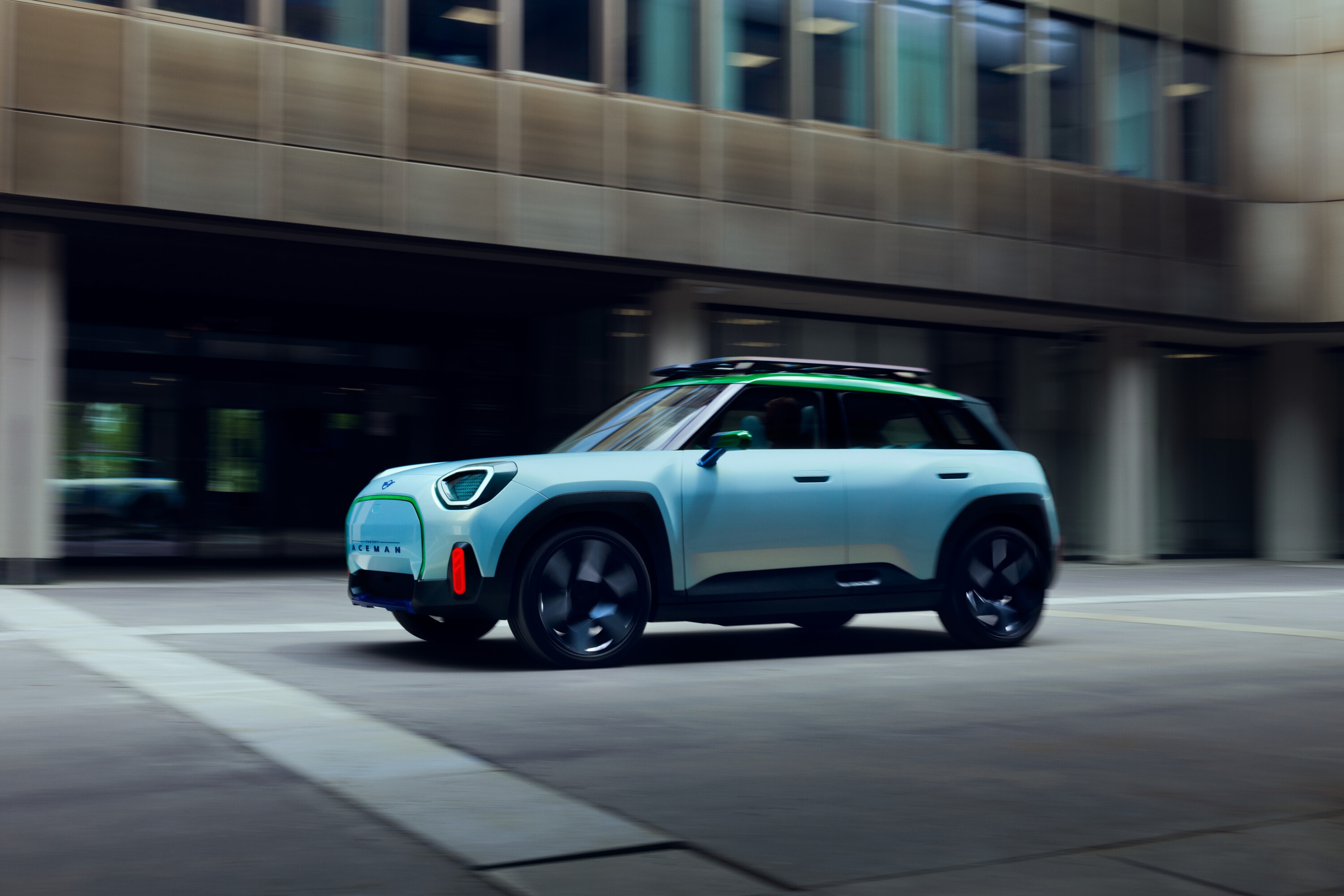
Speaking at the reveal of the new Mini family in Munich, Mini brand head Stefanie Wurst confirmed the Aceman would form a third member of the family but the new models would not stop there.
“If you look into different body types we have a classic three-door and five-door and convertible, we have the large Countryman and smaller SAV five-door electric Aceman,” she said. “I think there are more body types available.
“Mini is a very strong brand and a lot of new concepts maybe under a new umbrella are possible.”
One such possibility is a return of the Moke and when asked if the iconic bantamweight adventure Mini might be resurrected, Wurst said the name had been very recently discussed inside Mini walls.
1
“I think it’s a great idea. It fits the Mini brand very well and it’s also possible if you think of an addition or variation of a Countryman, that would be a great concept.
“I’m not sure if we own the name but we were researching it a couple of weeks ago. If we wanted to re-own it we probably could.”
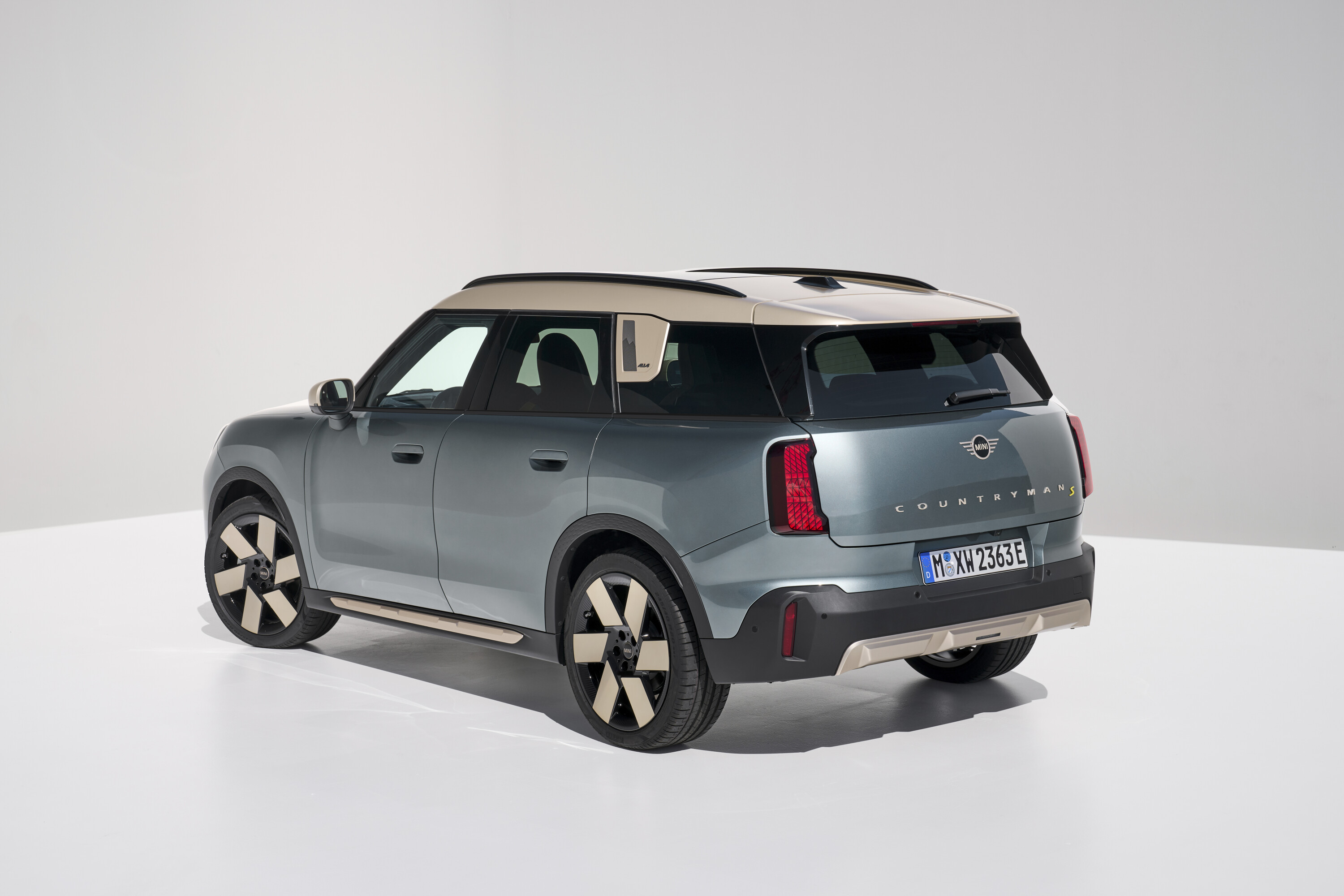
With the discontinuation of the Clubman, Wurst explained that the company would have only one large model in its ranks and finding derivatives that could take the new Countryman as their basis was a high priority.
“Currently we have a Clubman and a Countryman but in the future we will only have the Countryman. The goal is to work with the Countryman as much as we can. We have two big Minis but in the future we will only have one so we have to make use of this car as much as we can.”
1
Also on the cards is a larger Mini model that could introduce the company’s first model for more than five occupants.
Most likely will be a production version of Mini’s 2021 concept which showcased a model similar in philosophy to Volkswagen’s ID Buzz.
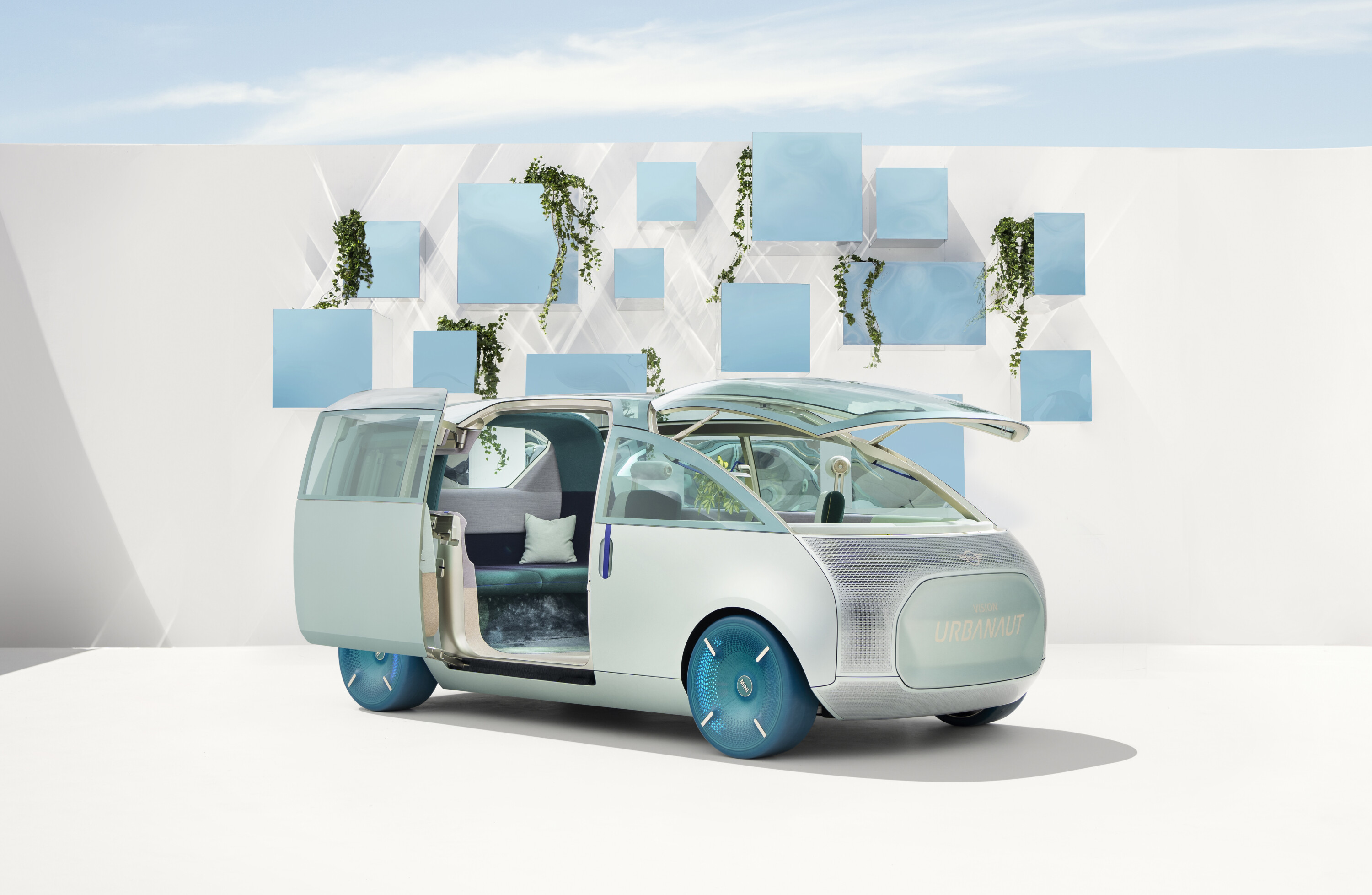
When asked if the Mini brand could support a model that would compete with Mercedes’ small MPV/SUV models EQB and GLB, Wurst responded “That style, no, but we had a concept called Urbanaut.”
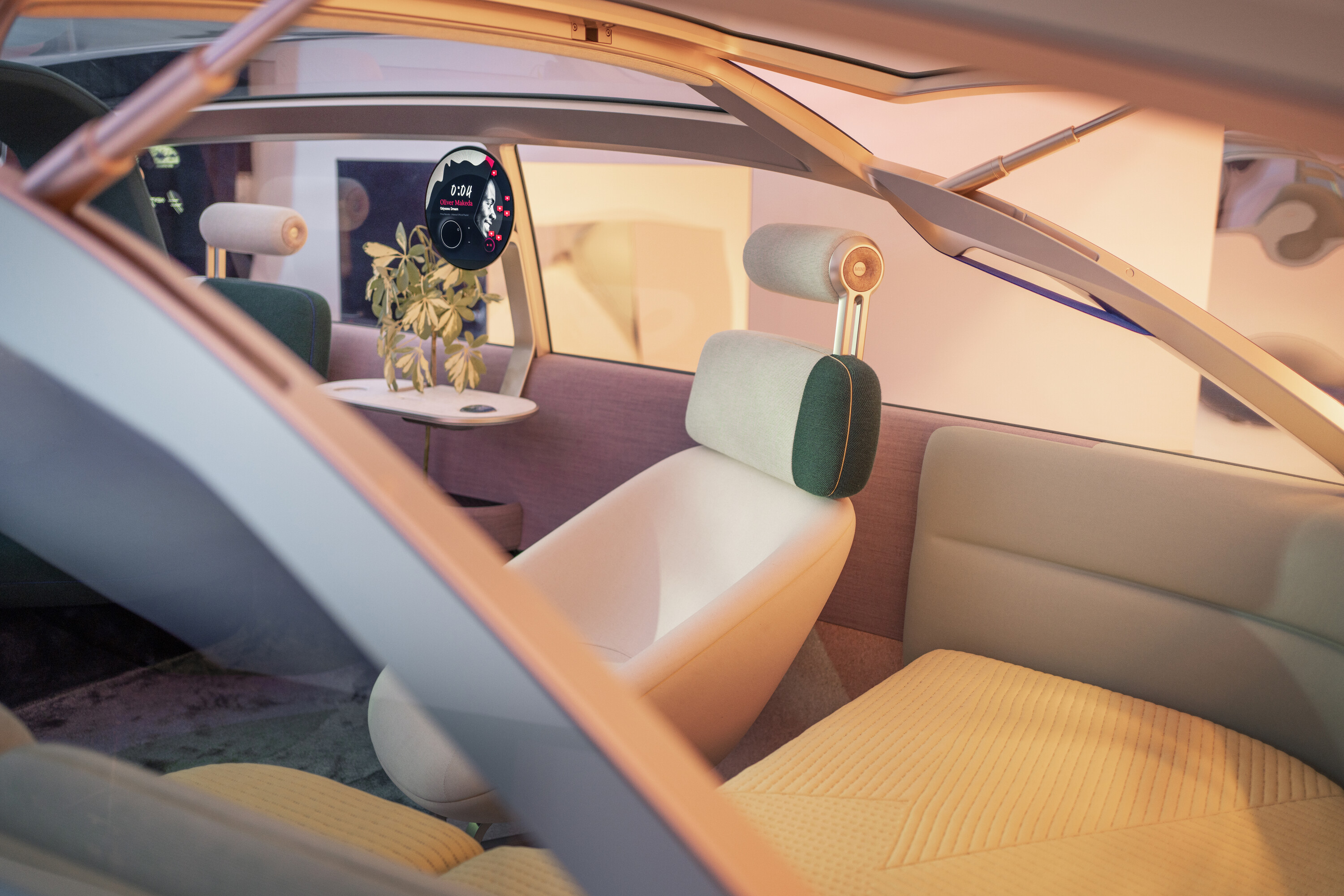
This van-like concept, said Wurst, could become the biggest Mini yet with space for more than five occupants or a load of equipment for those looking to have a mini home away from home.
2
“It was a great concept for Mini,” she said. “Urbanaut is definitely an interesting concept.
“Urbanaut wasn’t very specific on seat capacity but it had a lounge area so instead of doing that you could also imagine a bigger seating capacity.”
Mini head of design Oliver Heilmer boosted the prospects of a production version of the Urbanaut even further.
“We constantly look into different markets and customer groups to get a sense of what could be the next proper character in the Mini family,” he said.
1
“The Urbanaut wouldn’t be an MPV it would be more about how you use the space. It was designed to use the space while it was standing still.
Intriguingly though, the company might be mulling a new sub-brand to accommodate larger Minis and avoid cluttering the more compact model lines with bigger vehicles that might confuse brand messaging.
When asked if a Mini model could grow too big to be a Mini, Wurst said it was something the company was careful to avoid, and a strategy on how to grow the brand into larger territory without alienating customers was under discussion.
“I personally think we’ve reached a good size, yet I think when we launch a larger Mini or an extended Countryman, I don’t know if this is still a Mini.
1
“I would rather go on a new innovative concept that is more unexpected and surprising because Mini is about doing things a different way. Instead of going a larger wheelbase, I would much rather go for a different concept.”
The company has almost limitless past heritage models to chose from including sedans such as the the Austin Maxi and Morris 1100, or even the off-road focused concept Twinny to name just a handful of more likely candidates.
Either way, Wurst confirmed that no new car would be given the free light unless it could be unique and unlike anything existing.
“I think that’s possible (small sedan) but it would have to be something that looks very Mini despite its longer shape.
1
“As we are getting closer to a BMW concept here, my answer would be the same as for the multi-seater – we would rather have our own unique concept rather than something BMW already has.
“I’m not excluding it, but if we launched it, it would have to have something specifically Mini that a BMW or other small sedan doesn’t have.”
Finally, a return of the Mini convertible is another, perhaps less surprising model we can expect to arrive in the coming years.
Wurst explained that, while Australia missed out on the exclusive electric version available alongside the Mini Cooper SE hatch in Europe, Australia wouldn’t forgo a second generation of the zero-emissions soft top.
1
“I really tried to cover Australia with the electric convertible but it wasn’t possible with only 999 (worldwide) but I think there’s a lot of possibilities on the way with the body types we have now. This one would be a great addition.”
Whatever the fun-focused brand has planned to introduce alongside the refreshed line-up, it won’t happen until its trio have settled into their various global markets
“We can’t even imagine what other concepts might be in-house that we could also launch because Mini is about very smart and fun urban mobility. We’re always open for new concepts but we have a lot to do with the transition.
“We have to slice the elephant. We cannot do everything at the same time because we’re on a very busy road”.
MORE
Everything Mini
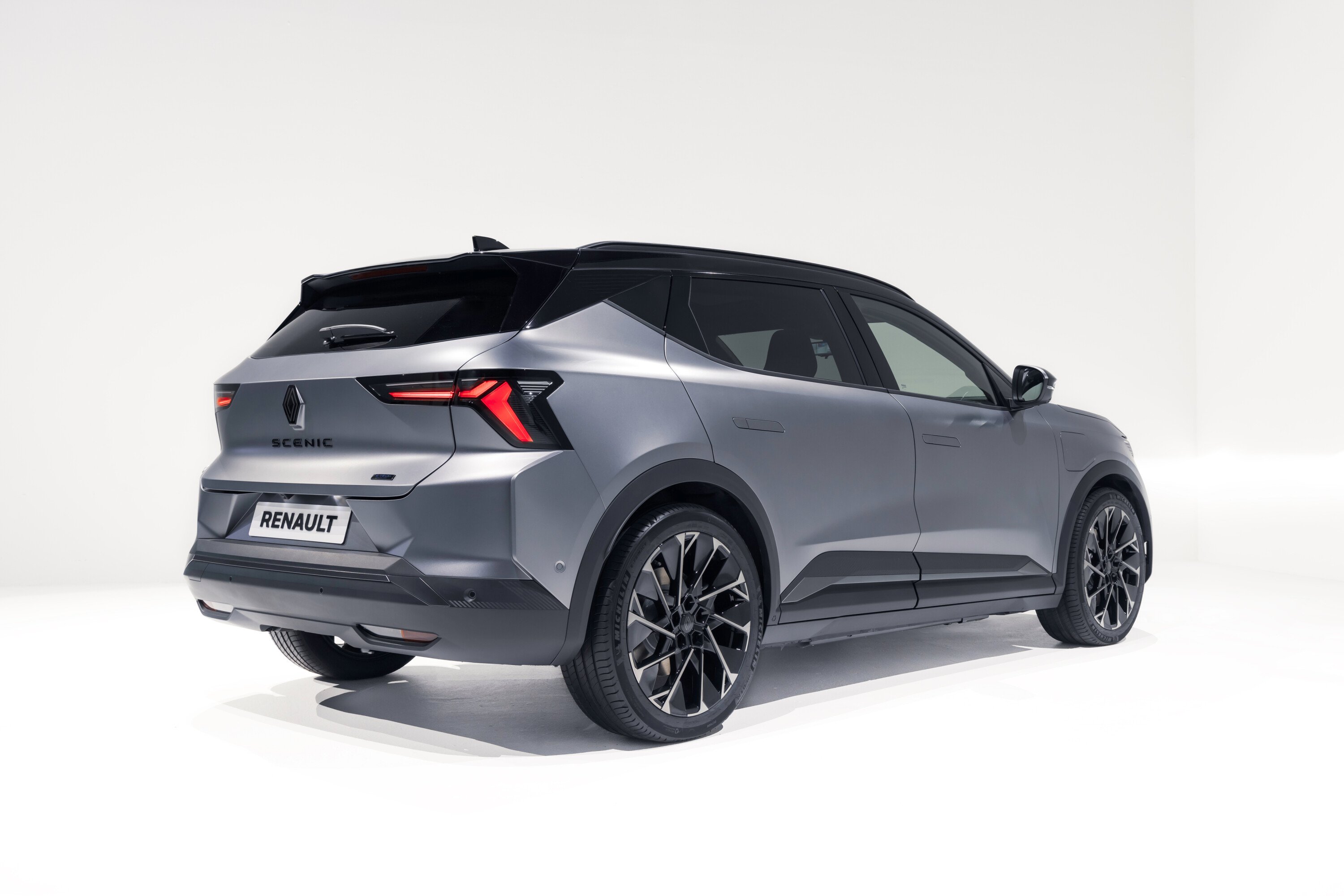
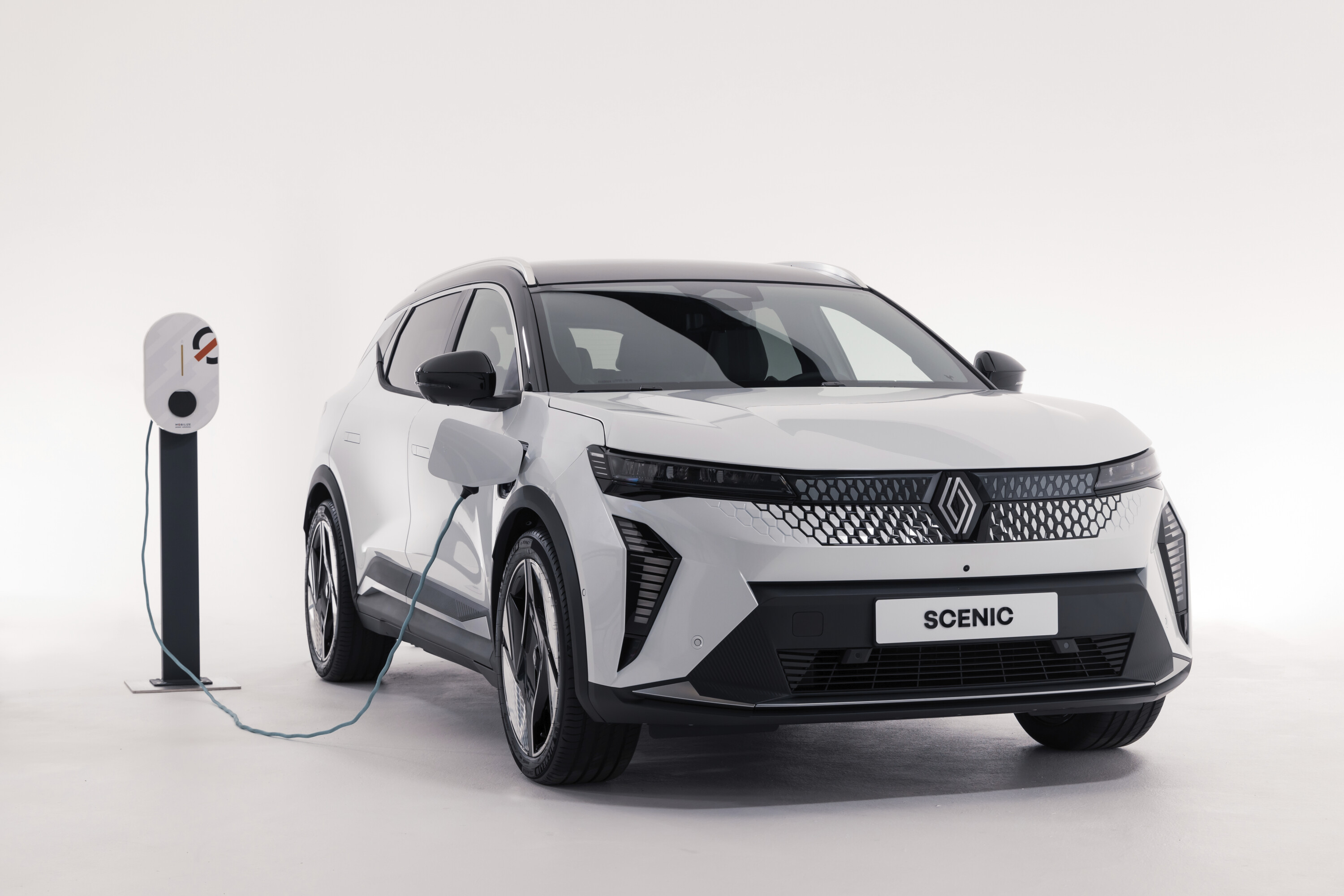
The 2024 Renault Scenic E-Tech has debuted as a small electric SUV – and it could come to Australia.
Snapshot
- 2024 Renault Scenic E-Tech revealed
- MPV replaced by small electric SUV after 27 years
- Not ruled out for Australia
Revealed at the 2023 Munich motor show, the Scenic E-Tech is said to retain its “pioneering and family-friendly DNA”, with a longer wheelbase than before and up to 620 kilometres of WLTP-rated driving range.
First introduced in 1996 as a Megane-based small multi-purpose vehicle, the Scenic retained this body style across three generations until the last model ended production in 2022, with the nameplate now re-purposed for its fifth generation as an all-electric SUV.
It follows the recent introduction of the sixth-generation Renault Espace as a mid-size hybrid SUV – a larger, seven-seat version of the Nissan Qashqai-based Austral – replacing the large MPV.
1
The Scenic – and its Scenic RX4 four-wheel-drive derivative – was sold in Australia between 2001 and 2009, and the name could return to local shores with the Scenic E-Tech.
“We are excited by the Renault Scenic E-Tech and could see it working in Australia if it’s made available to our market in right-hand drive,” said a Renault Australia spokesperson.
“As always, each potential model then needs to go through an internal business case to justify Renault’s investment to comply with Australia’s unique design rule requirements.”
1
Under the skin, the Scenic E-Tech is based on the same CMF-EV platform as the Megane E-Tech and Nissan Ariya, both due in Australia in 2024. It has a “compact battery supplying up to 87 kWh” and an electric motor with “up to 160kW”.
Measuring a compact 4470 millimetres long, 1860mm wide and 1570mm tall, with a 2780mm wheelbase, the Scenic E-Tech is similar in size to the BYD Atto 3 small SUV rather than the larger Tesla Model Y, the world’s best-selling electric vehicle.
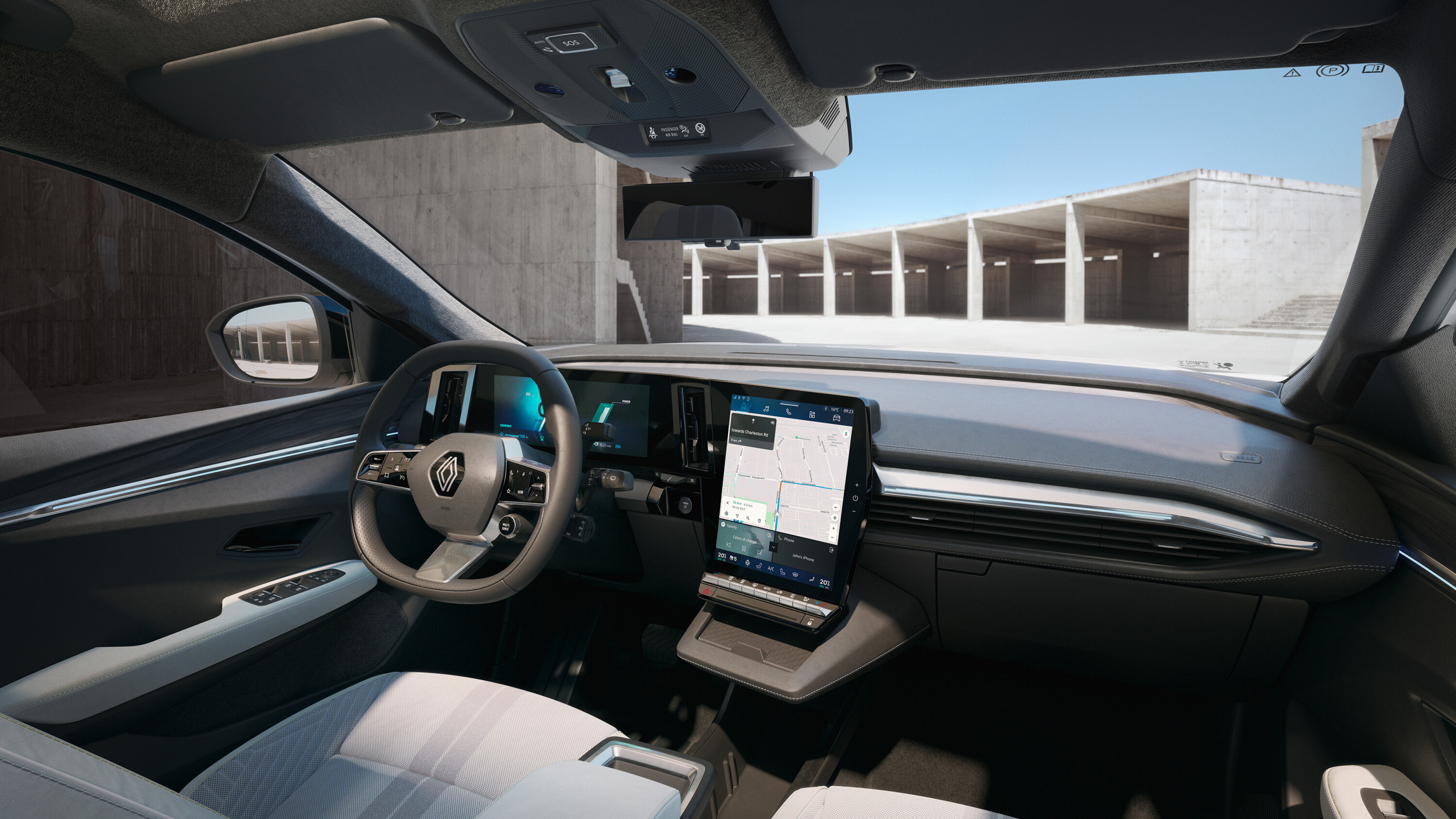
Inside, the Scenic E-Tech is almost identical to the electric Megane, with a 12.3-inch digital instrument cluster ahead of the driver and a 12-inch OpenR Link infotainment system powered by Android Automotive 12, allowing for Google’s built-in features.
1
Wireless or wired Apple CarPlay and Android Auto support is retained, while the system supports over-the-air software updates, “AI-generated suggestions”, and voice control.
Like the Rafale, the Scenic E-Tech has polymer-dispersed liquid crystal technology for the panoramic sunroof that can darken and lighten, similar to the Porsche Taycan and BMW iX.
Renault said up to 24 per cent of the vehicle’s materials are recycled, and 90 per cent of “its mass – including the battery – is recyclable”.
1
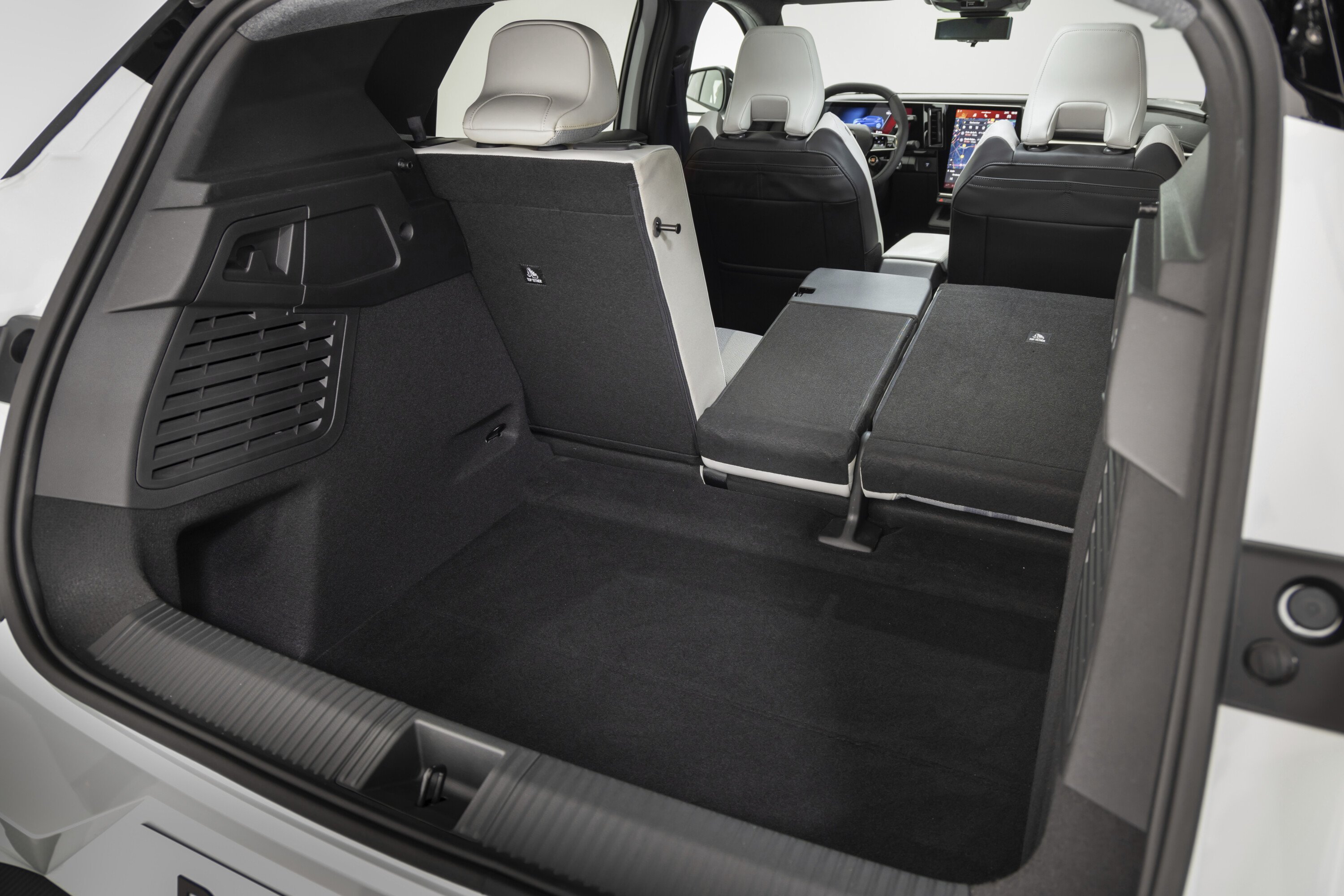
The Esprit Alpine range-topper features 20-inch wheels and recycled fabric upholstery made from used plastic bottles and seatbelts.
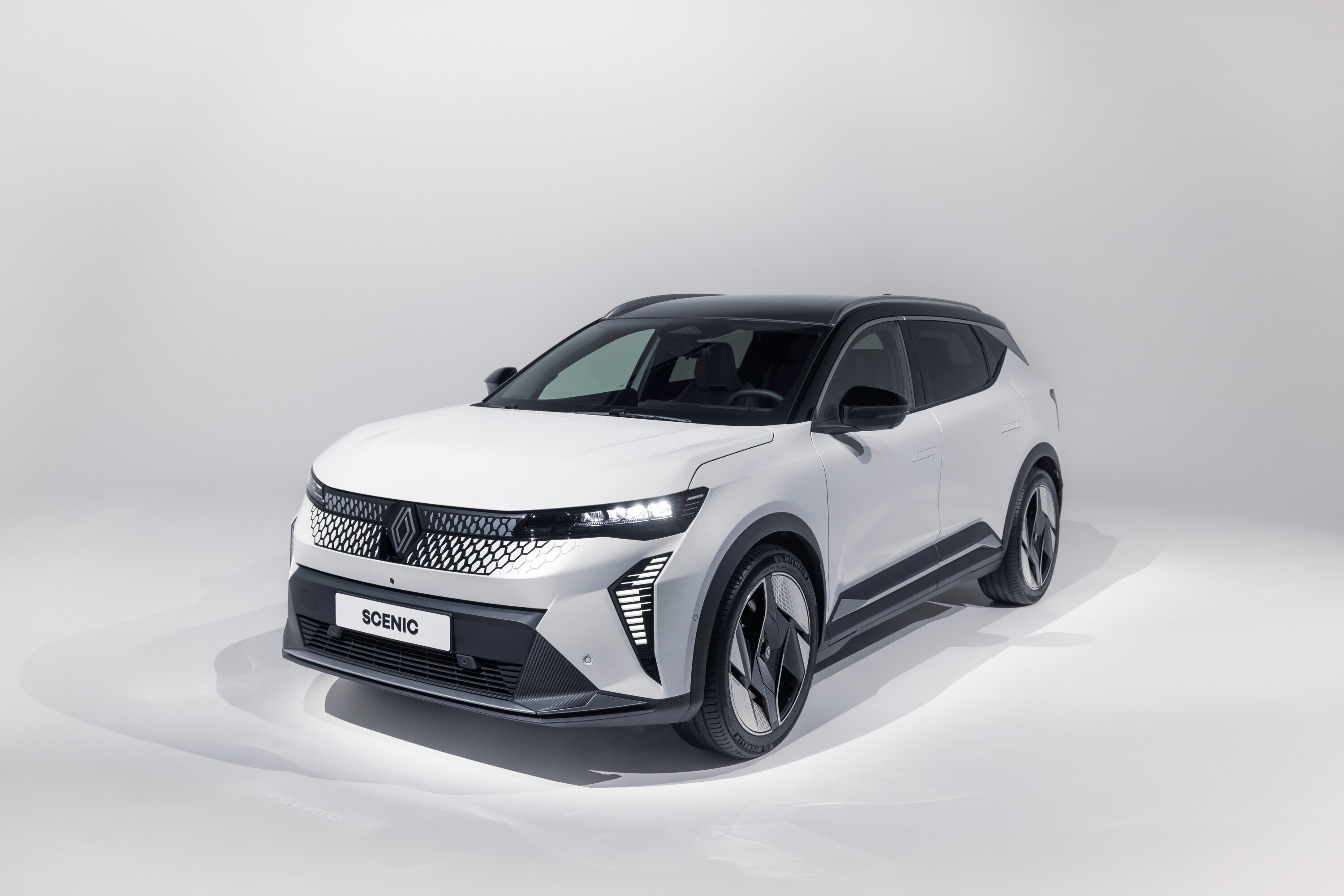
The 2024 Renault Scenic E-Tech electric SUV will be built in France alongside the Megane E-Tech and reach the European market early next year. It has yet to be confirmed for Australia.
Could the Scenic E-Tech replace the Koleos?
Despite being replaced by the new Espace in Europe, Renault Australia’s top-selling vehicle, the Koleos, will continue in its current form in Australia until the end of next year, with no direct successor currently announced.
Renault Australia general manager, Glen Sealey, previously told Wheels “[Koleos] production will run through this year, through next year. And after that, we don’t know”.
1
Three right-hand drive options are available in Europe that could replace Koleos locally: the smaller Austral which replaced the Kadjar once sold in Australia, the new Rafale coupe SUV, or the Scenic E-Tech.
Renault has yet to confirm right-hand drive production for the Espace – including for the United Kingdom, where it has a higher market share.
MORE
Everything Renault
Ferrari has revealed pricing for the 296 GTS – a roofless version of the GTB supercar.
Utilising the same electric-boosted 3.0-litre turbo-petrol 120o V6 powertrain configuration, the $668,146 supercar develops 610kW and 740Nm.
The mid-ship 296 GTS sends its power to the rear wheels via an eight-speed dual-clutch automatic and is able to race from 0-100km/h in 2.9 seconds and onto a top speed in excess of 330km/h.
With a 7.5kWh battery, the roadster is capable of travelling around 25km on electric-only propulsion. It also demands a seriously hefty premium over the fixed-roof 296 GTB which continues at its starting price of $568,300 before on-road costs.
2023 Ferrari 296 pricing
| Variant | Price (before on-road costs) |
|---|---|
| 296 GTB coupe | $568,300 |
| 296 GTS convertible | $668,146 |
Our original story, below, continues unchanged.
June 2022: Ferrari 296 GTS roadster revealed
Snapshot
- 2023 Ferrari 296 GTS roadster announced
- Folding hardtop offers open-air driving in 14 seconds
- Plug-in hybrid V6 produces 610kW/740Nm and 25km of electric driving
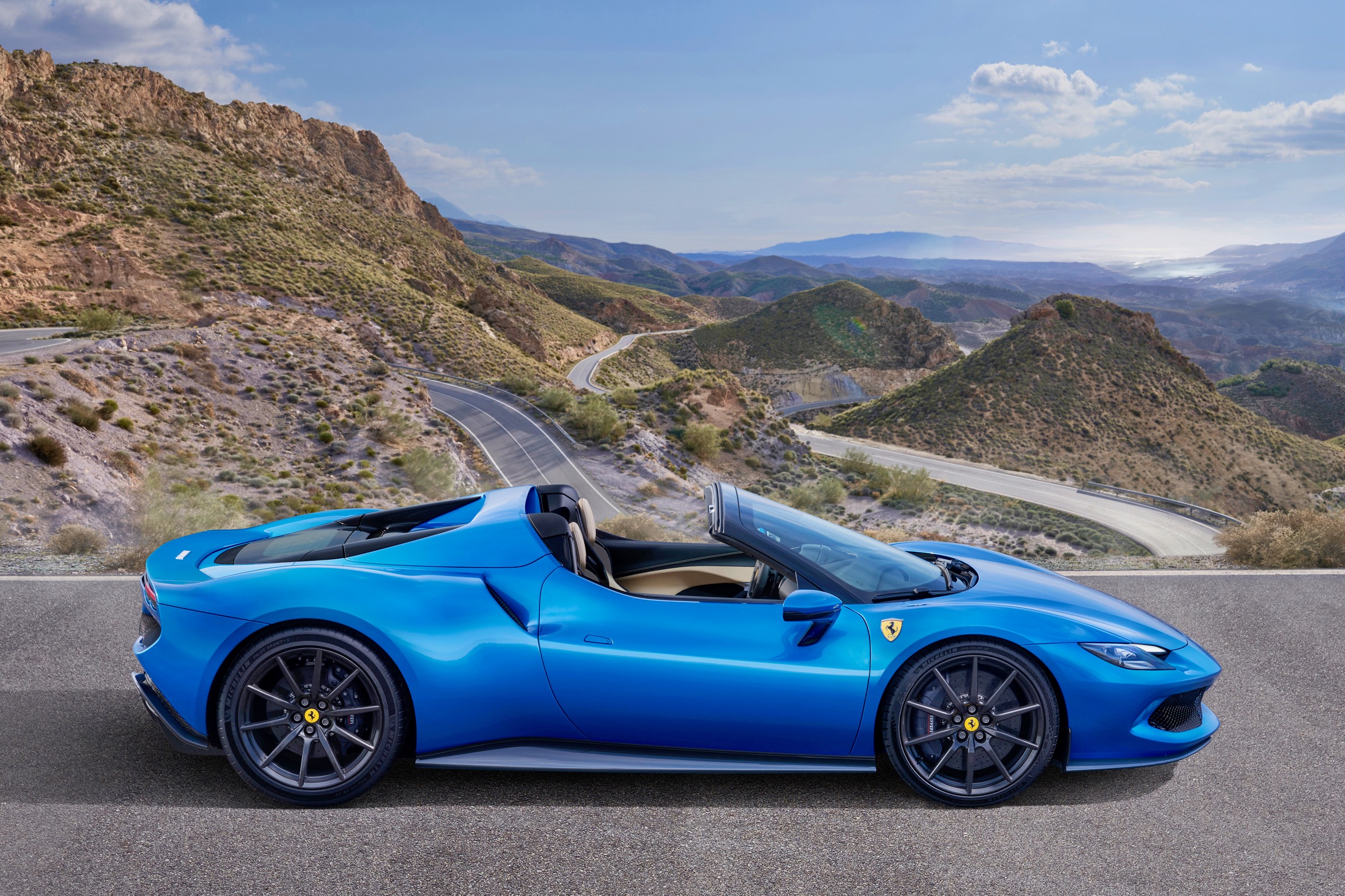
The 2023 Ferrari 296 GTS was unveiled overnight, offering buyers an open-air driving experience with up to 25km of pure-electric driving range.
Ferrari’s new 296 GTS is the roadster version of the 296 GTB coupe, and like its sibling, is powered by a plug-in hybrid 3.0-litre turbocharged V6 producing 610kW and 740Nm.
The mid-mounted engine sends power to the rear wheels through an eight-speed dual-clutch automatic transmission with paddle shifters.
5
Part of its performance is thanks to a 122kW/315Nm electric motor mounted between the engine and gearbox, fed by a 7.5kWh lithium-ion battery, which helps to get the roadster to 100km/h from a standstill in a claimed 2.9 seconds.
Top speed is said to be more than 330km/h.
The 296 GTS offers a folding hardtop, which can be raised or lowered in 14 seconds at speeds of up to 45km/h, while a height-adjustable rear glass screen reduces wind buffeting for occupants.
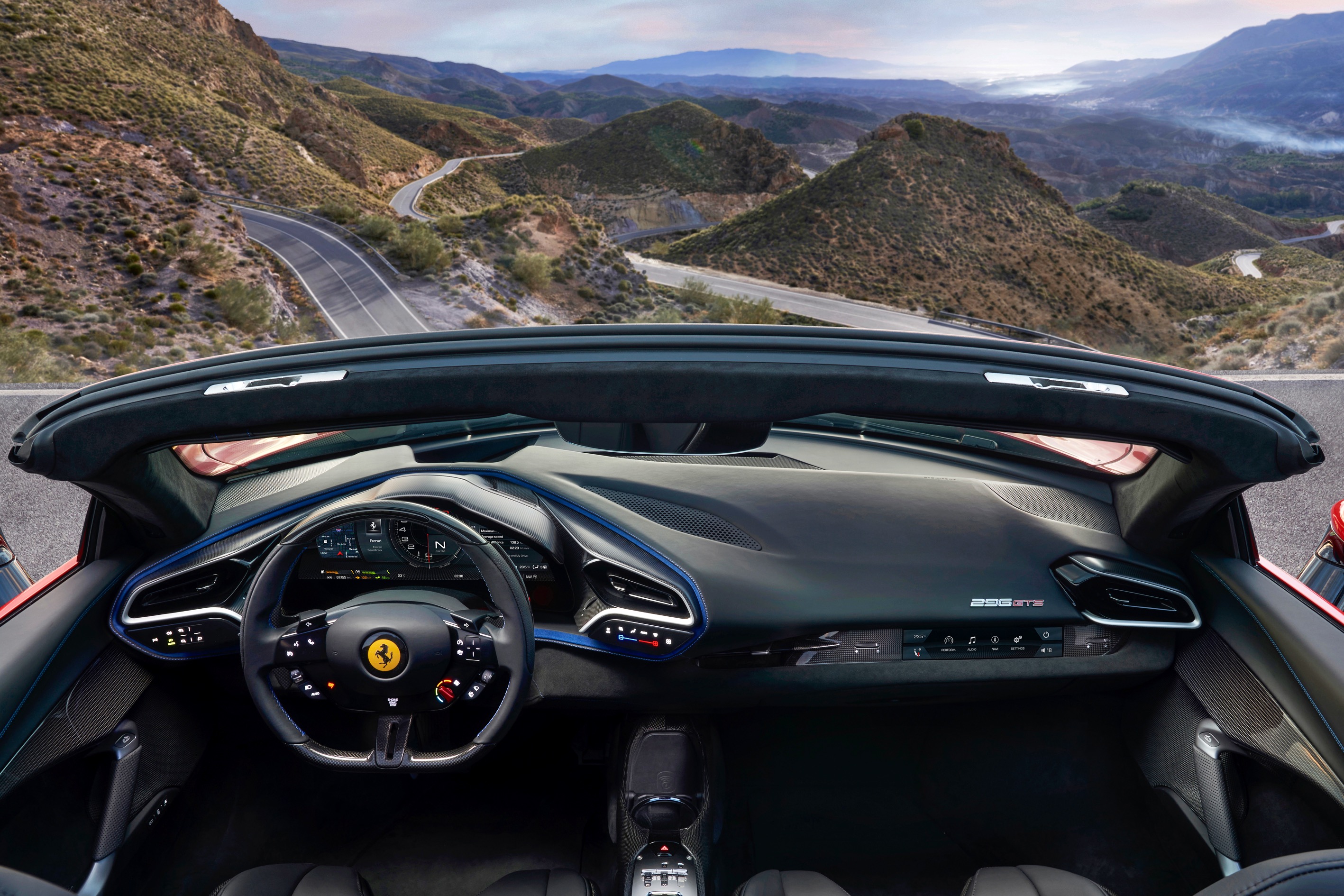
On the road, the driver can choose from four individual driving modes with the steering wheel-mounted eManettino switch: default Hybrid mode, pure-electric eDrive, Performance, and Qualify mode for maximum power.
6
Buyers can also option the Assetto Fiorano package, which reduces weight by 8kg, adds carbon-fibre aero for an additional 10kg of downforce, and gains adjustable Multimatic shock absorbers, as well as an optional livery inspired by the Ferrari 250 Le Mans.
Exact pricing and specifications for the 2023 Ferrari 296 GTS are yet to be announced, but expect a healthy premium over the GTB’s price-tag of $568,300 before on-road costs, not including the Assetto Fiorano package.
MORE
All Ferrari stories
The facelifted 2024 Audi Q8 SUV debuted at the Munich motor show.
Snapshot
- 2024 Audi Q8 facelift revealed
- Mid-life update adds new tech, tweaked looks, third-party apps
- Due in Australia in mid-2024
Not to be confused with the renamed Audi Q8 E-Tron electric SUV (previously E-Tron), the internal-combustion Q8 large SUV – the slant-backed five-seat sibling to the three-row Q7 – has received a mid-life update following its 2018 launch.
“We are excited to see the facelifted Q8 family Down Under, and at this stage, we anticipate their Australian launch to be mid-2024,” said an Audi Australia spokesperson.
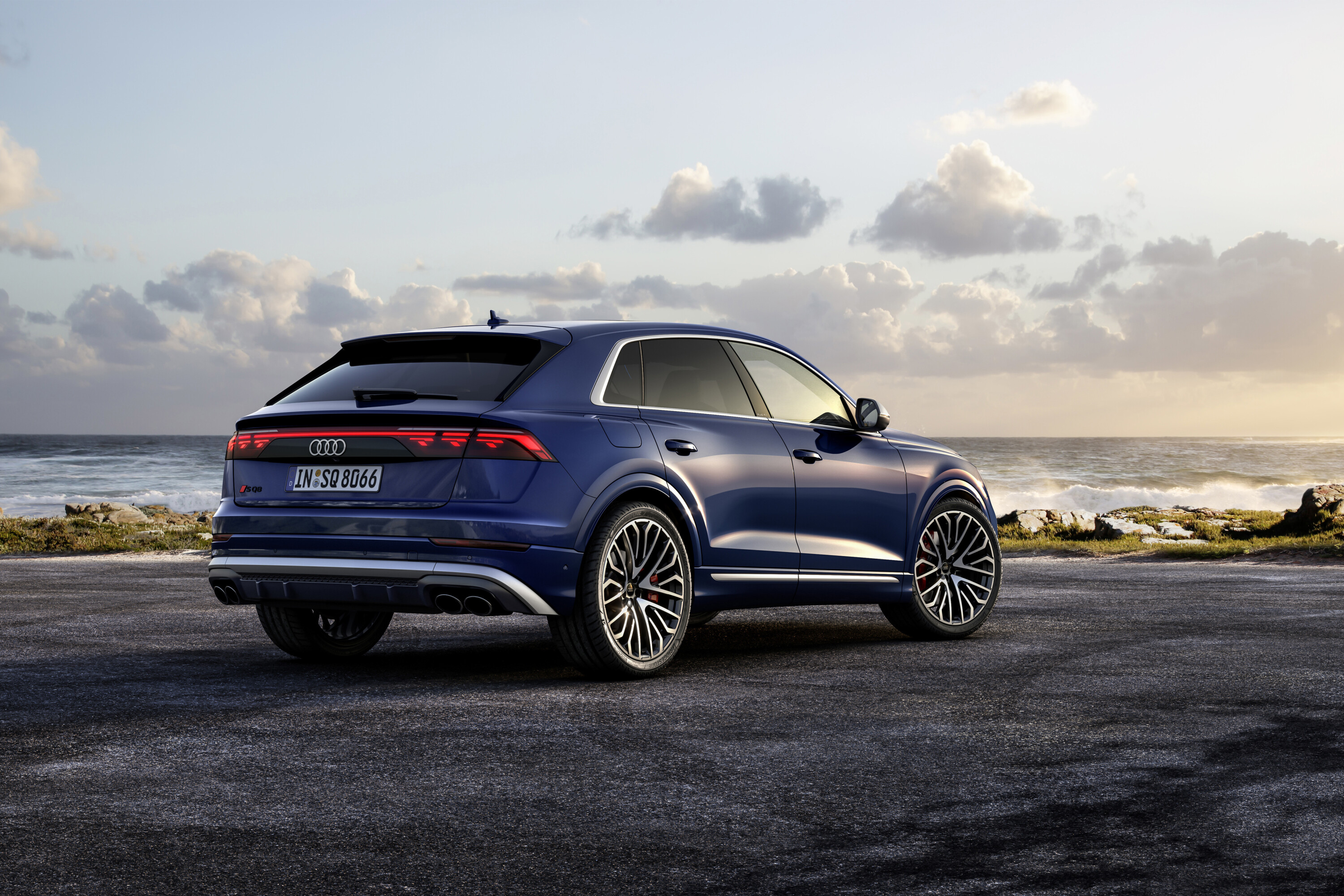
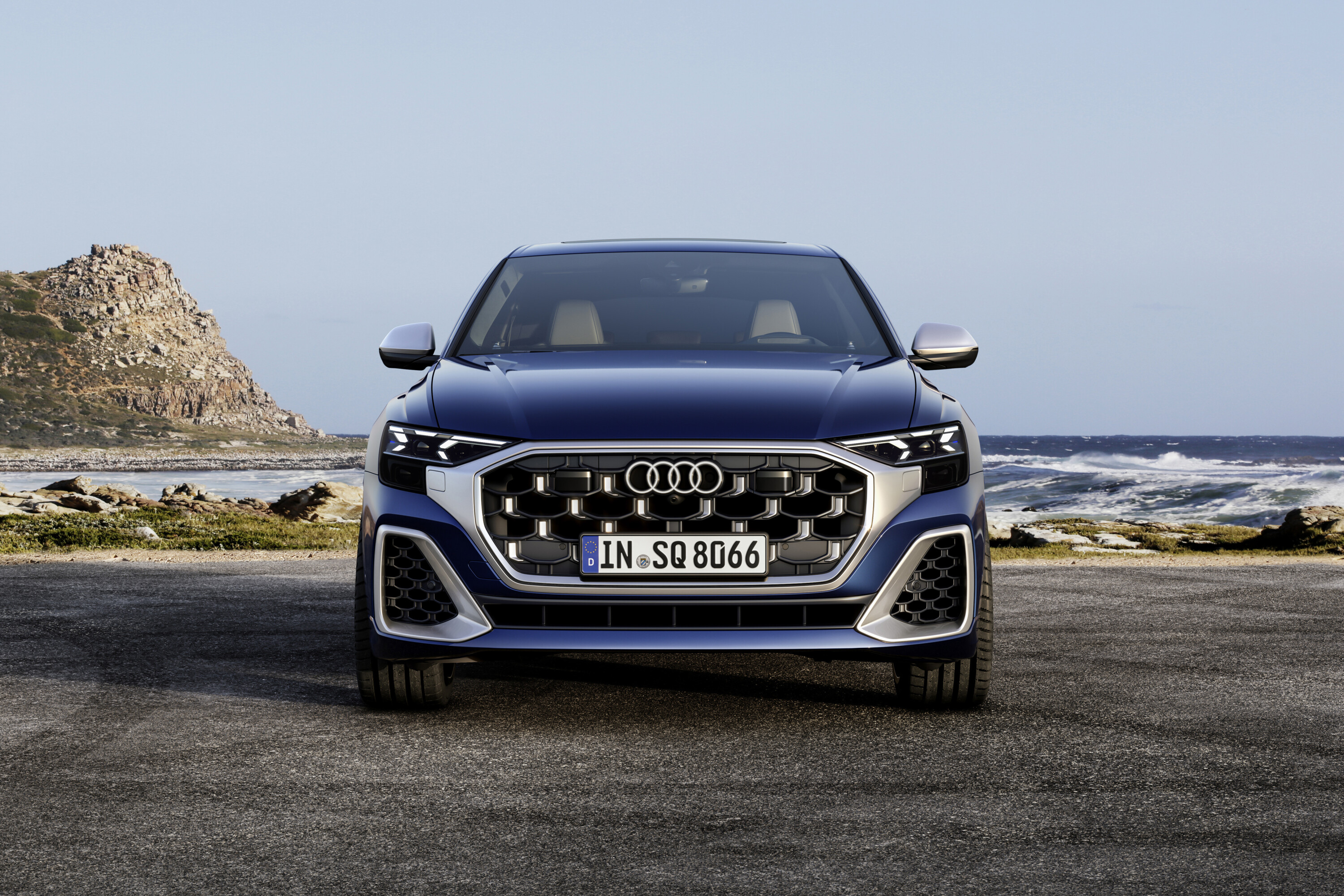
Outside, the updated Q8 wears redesigned front and rear bumpers, a new ‘octagon’ grille design’ with vertical inlays, and visible exhaust pipes for standard models in place of the faux units.
1
The illumination system has new high-definition matrix-LED headlights with laser high-beam technology and four user-selectable light signatures.
Digital OLED tail-lights – first seen on Q5, A8 and forthcoming Q6 E-Tron – with four selectable rear light designs feature on the new Q8.
Audi has introduced new wheel choices between 21 and 23 inches and three new colour options: Sakhir gold, Ascari blue and Chili red.
1
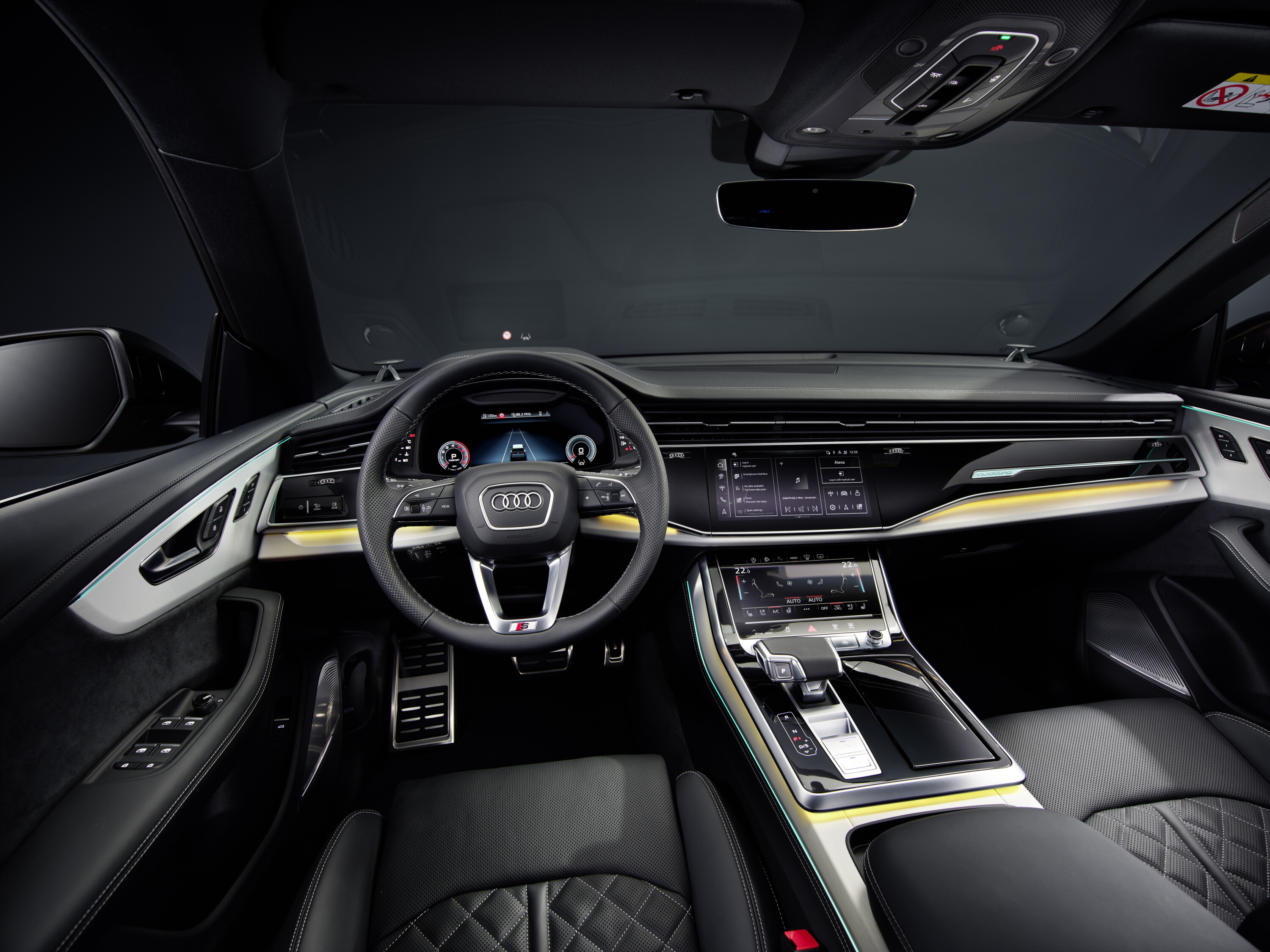
The updated Q8’s cabin features new decorative inlays and seats with contrast stitching. The MIB 3 infotainment system now supports third-party applications – including Spotify and Amazon Music – and the digital instrument cluster is enhanced to display additional driver assistance-related details.
Under the bonnet, the 2024 Audi Q8 retains its existing powertrain options, including the 210kW/600Nm 3.0-litre turbo-diesel V6 50 TDI and 250kW/500Nm 3.0-litre turbo-petrol 55 TFSI available in Australia.
Both models continue with a 48-volt mild-hybrid system and eight-speed automatic transmission.
1
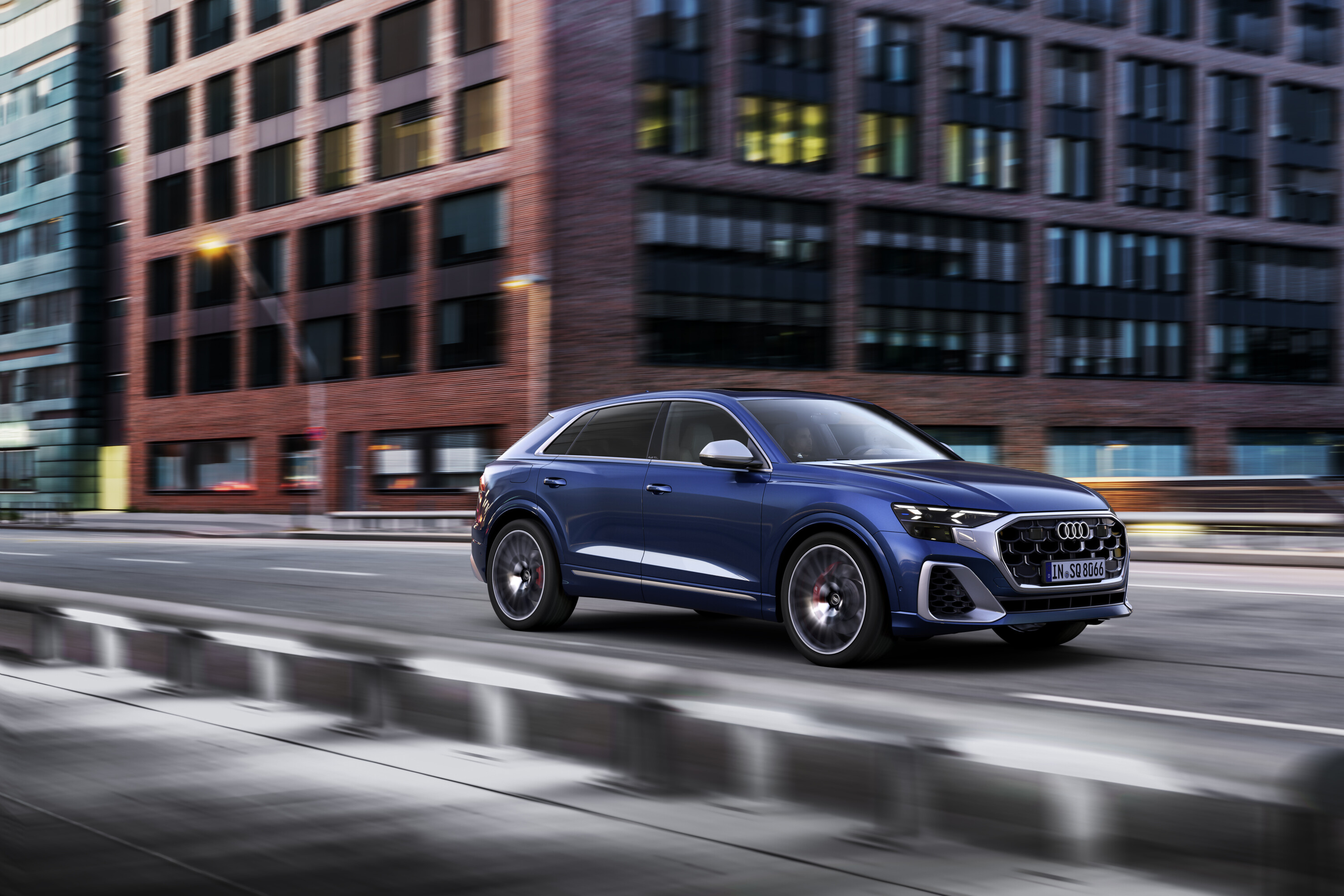
Specific enhancements for the sportier SQ8 variant include an L-shaped, honeycomb-look grille, a redesigned front spoiler and rear diffuser, and newly optional 23-inch wheels.
As before, the SQ8 has a 4.0-litre twin-turbo V8 engine delivering 373kW and 770Nm. It does not include a mild-hybrid system but features cylinder deactivation technology.
The 2024 Audi Q8 is currently open for orders in the European market. The RS Q8 performance SUV has yet to receive an update.
1
Audi Australia has confirmed the updated Q8 is due to arrive in local showrooms mid-next year.
The Audi Q8 is priced between $132,269 for the 50 TDI and $219,069 for the RS Q8, both before on-road costs.
VFACTS new-car sales data reveals 328 examples of the Audi Q8 were sold in Australia year-to-date, compared to 605 units of the related Porsche Cayenne Coupe, 526 Mercedes-Benz GLE Coupes, 399 BMW X6s and 342 Range Rover Velars.
MORE
Everything Audi
The Australian Tax Office (ATO) has issued a new determination that clarifies the Luxury Car Tax (LCT) application for goods-carrying vehicles, including one of Australia’s most popular car types, the dual-cab ute.
LCT – a legacy of an era where Holden and Ford still built cars on Australian soil – is applied to motor-powered road vehicles designed to carry a load of less than two tonnes and fewer than nine passengers.
The tax is applied to new cars sold over the ATO-designated threshold of $76,950, or $89,332 for fuel-efficient vehicles.
1
Commercial vehicles that are designed for the principal purpose of carrying goods used for business or trade are not subject to LCT, while motor homes and campervans are also exempt.
A new determination called LCTD 2023/1 Luxury car tax: how to determine the principal purpose of a vehicle [↗] clarifies the decision-making process around commercial vehicles, offering a simplified formula to determine whether LCT applies to the sale price of a particular vehicle.
“Where the simplified method is used, the [Australian Tax] Commissioner will only apply compliance resources to determine whether the requirements set out under that method have been satisfied,” the determination reads in part.
1
“The Commissioner will otherwise not apply compliance resources to determine whether the vehicle is a luxury car. This compliance approach is consistent with the Commissioner’s long-standing approach to the issue.”
Payload v passengers
The revised method uses a calculation that looks at seating capacity and goods-carrying capacity, and is particularly pertinent to dual-cab utes and modified vehicles.
In essence, the passenger carrying capability of the vehicle must be less than 50 per cent of the load capability.
1
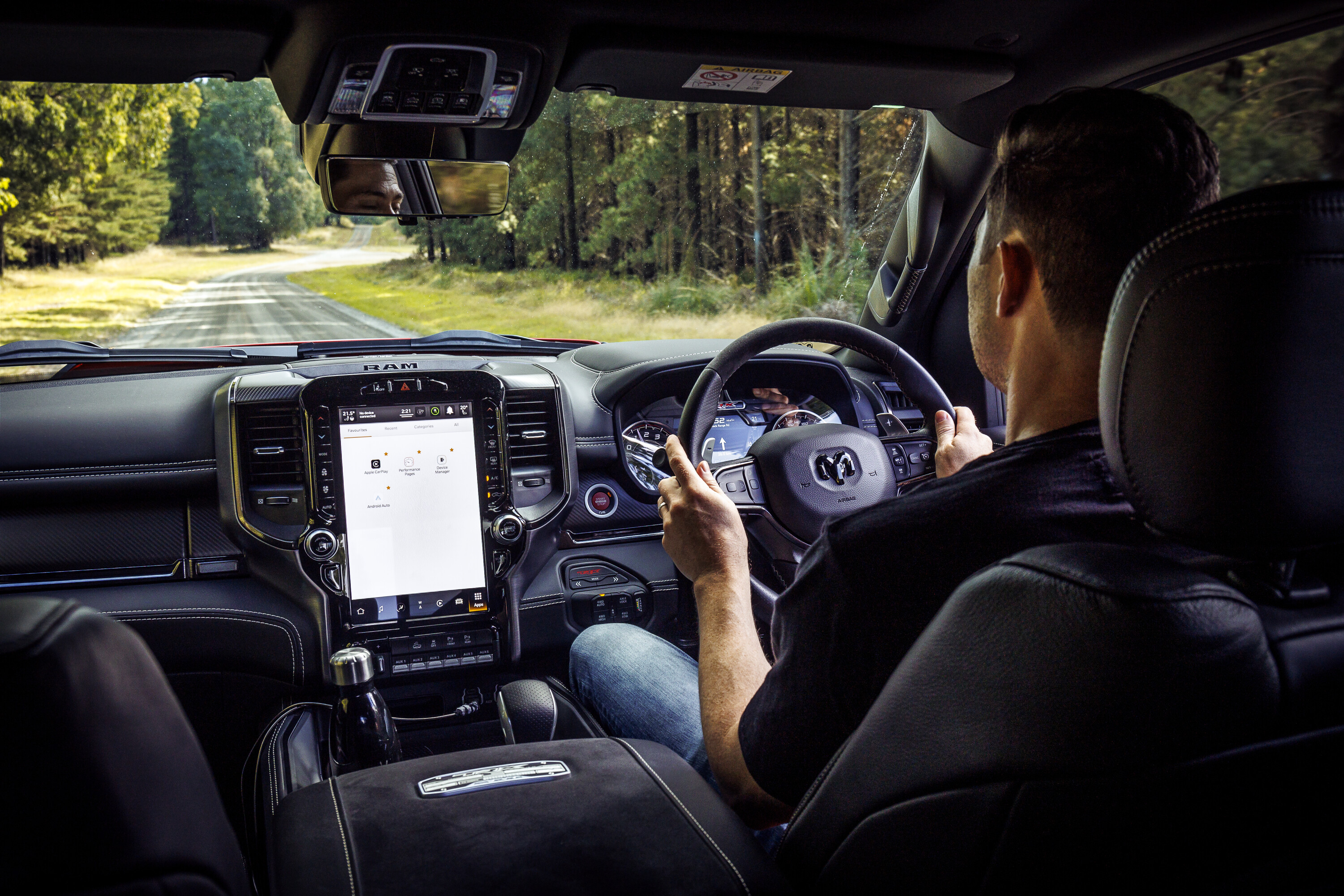
‘Passenger carrying capacity’ is the number of seating positions multiplied by 68kg, and the number of seating positions includes the driver’s seat.
The ‘load carrying capacity’ is determined as the difference between the gross vehicle mass (GVM) as specified by the manufacturer and the unladen mass, which is different to and does not include the towing capacity.
The ATO defines ‘unladen mass’ as the mass of the vehicle in running order, unoccupied and unladen with all fluid reservoirs filled to nominal capacity including fuel, and with all options fitted and standard equipment.
1
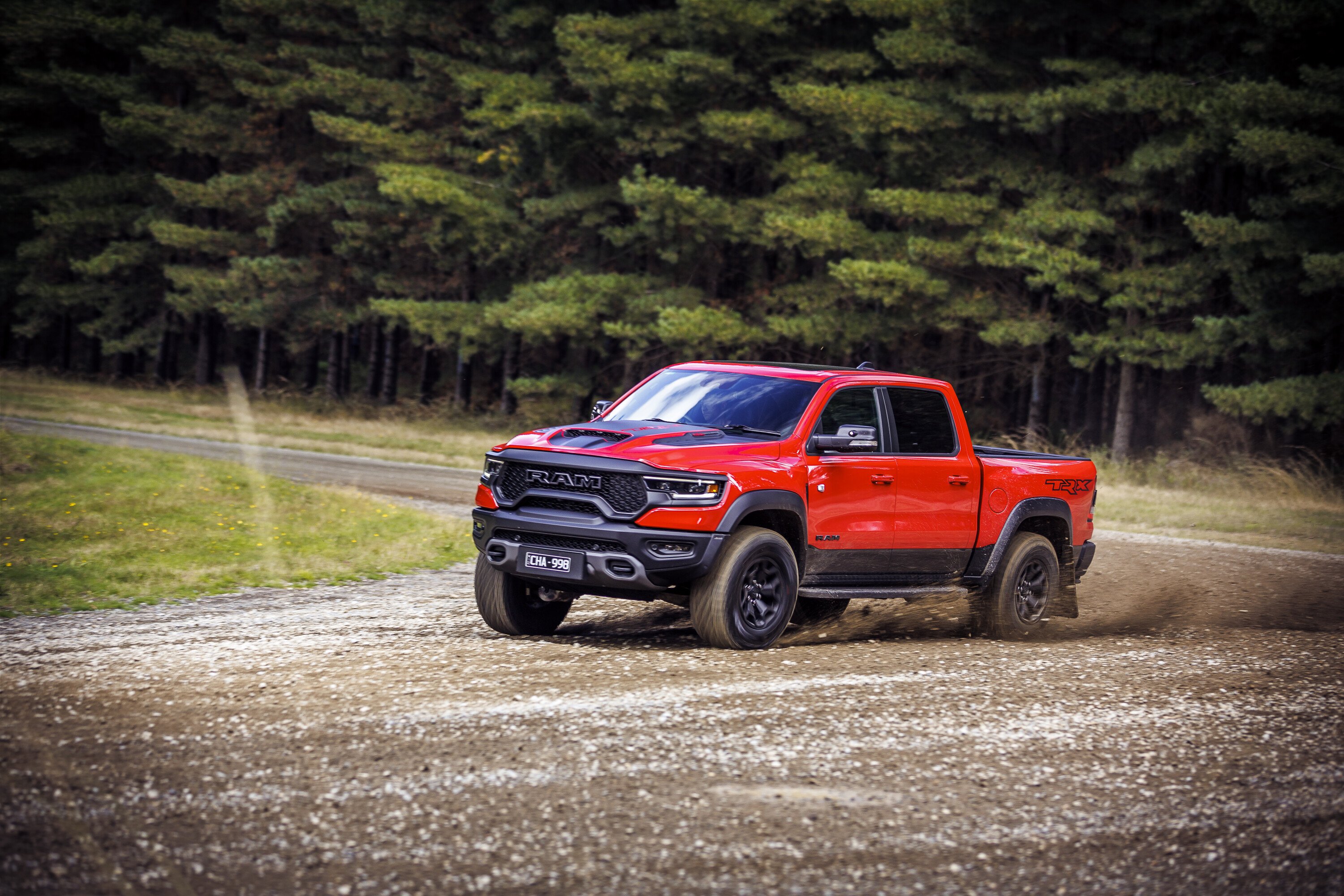
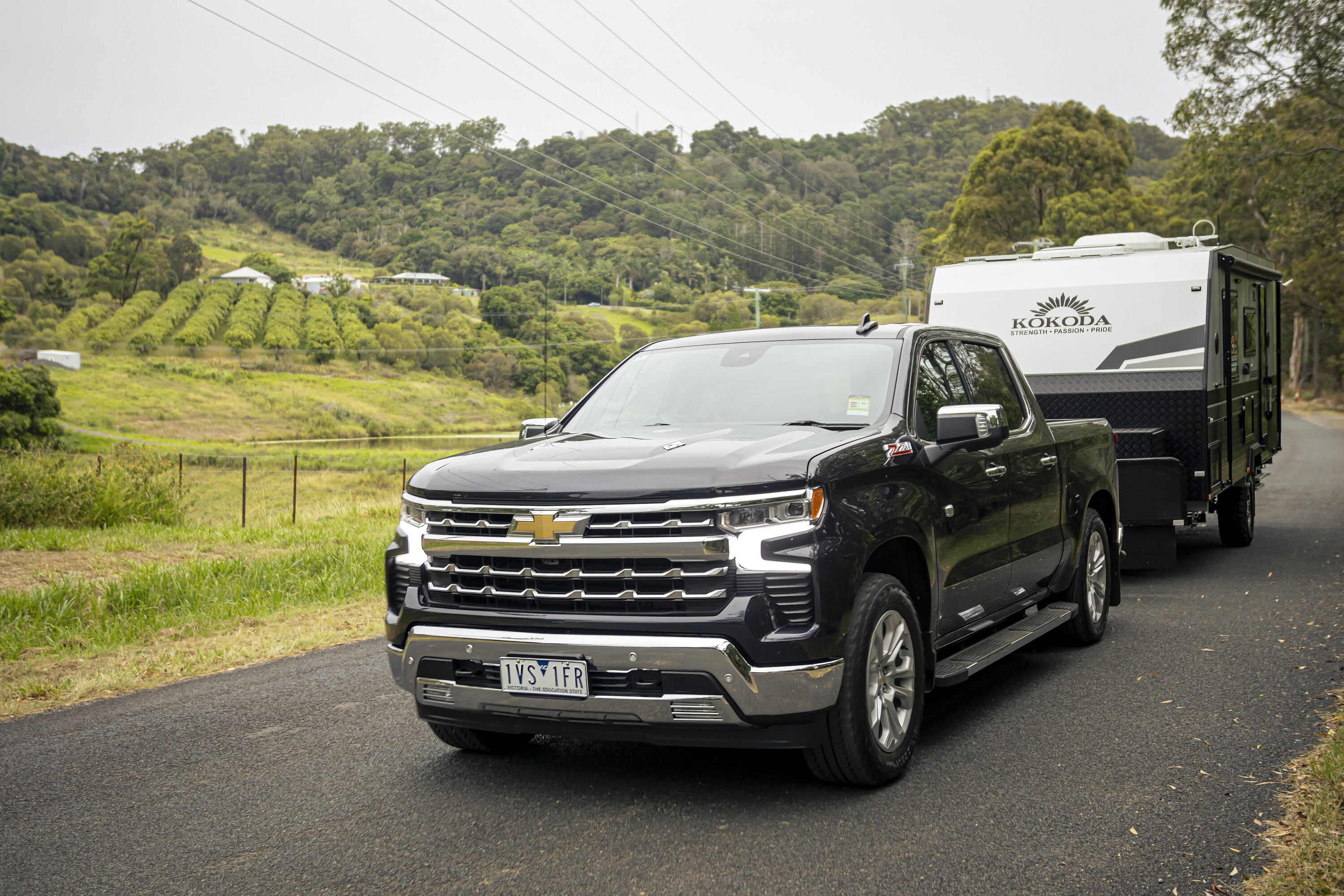
Given that the passenger carrying capacity for every dual-cab ute on sale today is thus 340kg, the ATO determination doesn’t change the fact that even the most expensive utes on sale today are LCT-exempt.
This means that Australia’s dearest hay haulers, including the $86,790 Ford Ranger Raptor (717kg payload), the $73,990 Toyota HiLux GR Sport (794kg) and the $68,265 Nissan Navara Pro-4X Warrior (952kg) – will remain exempt from luxury car tax.
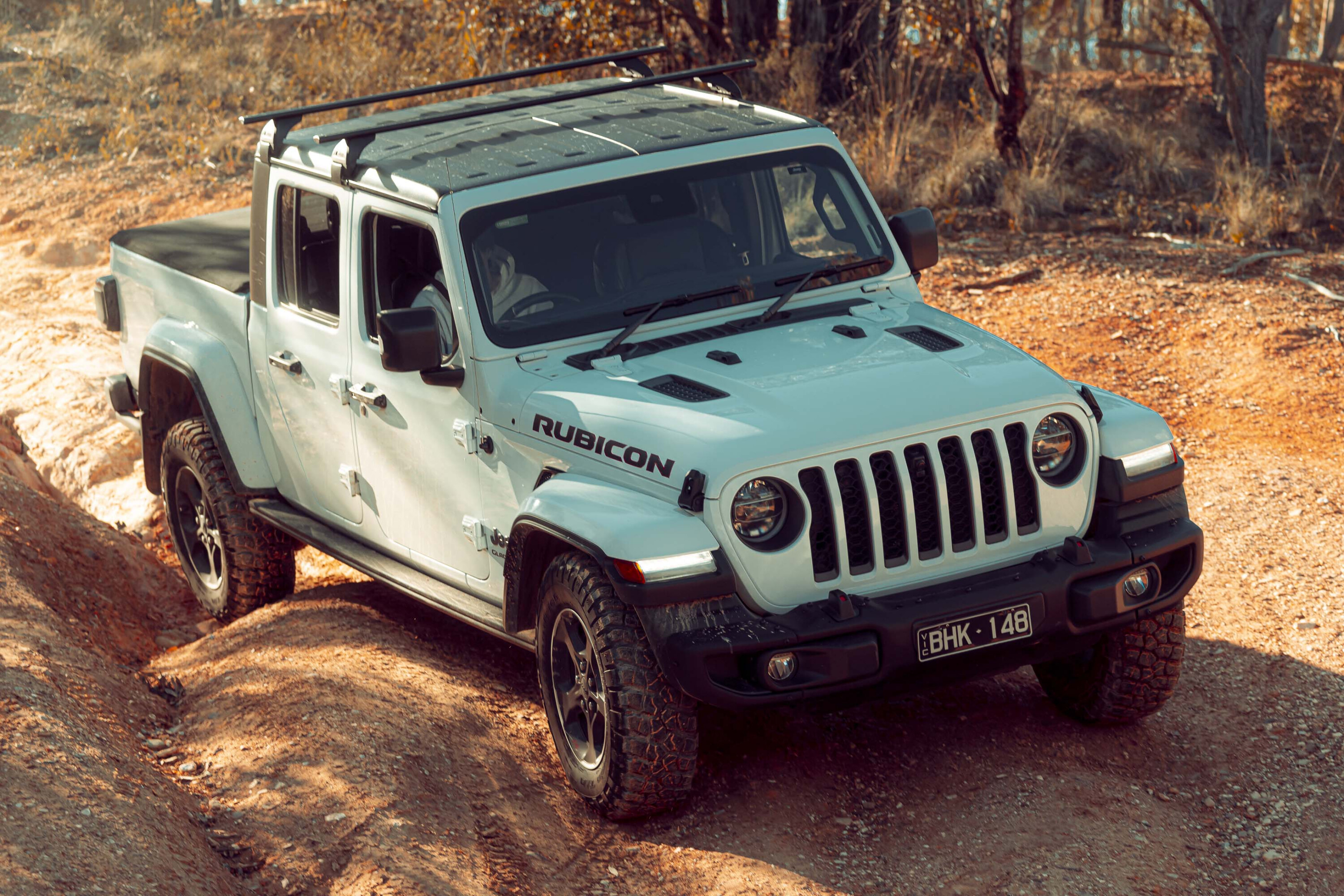
Despite its relatively low 693kg payload figure, even the $87,250 Jeep Gladiator Rubicon passes muster with five people aboard.
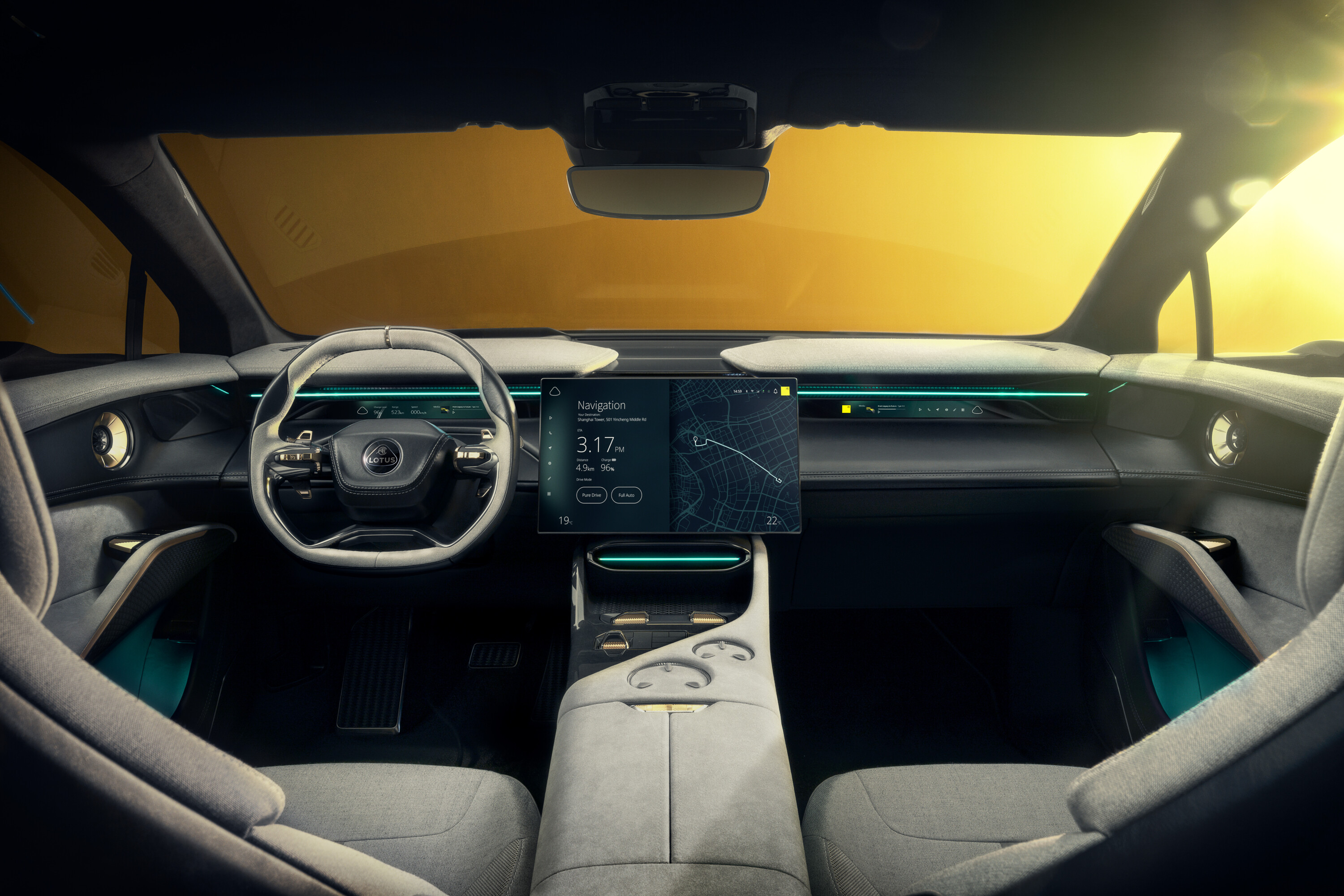
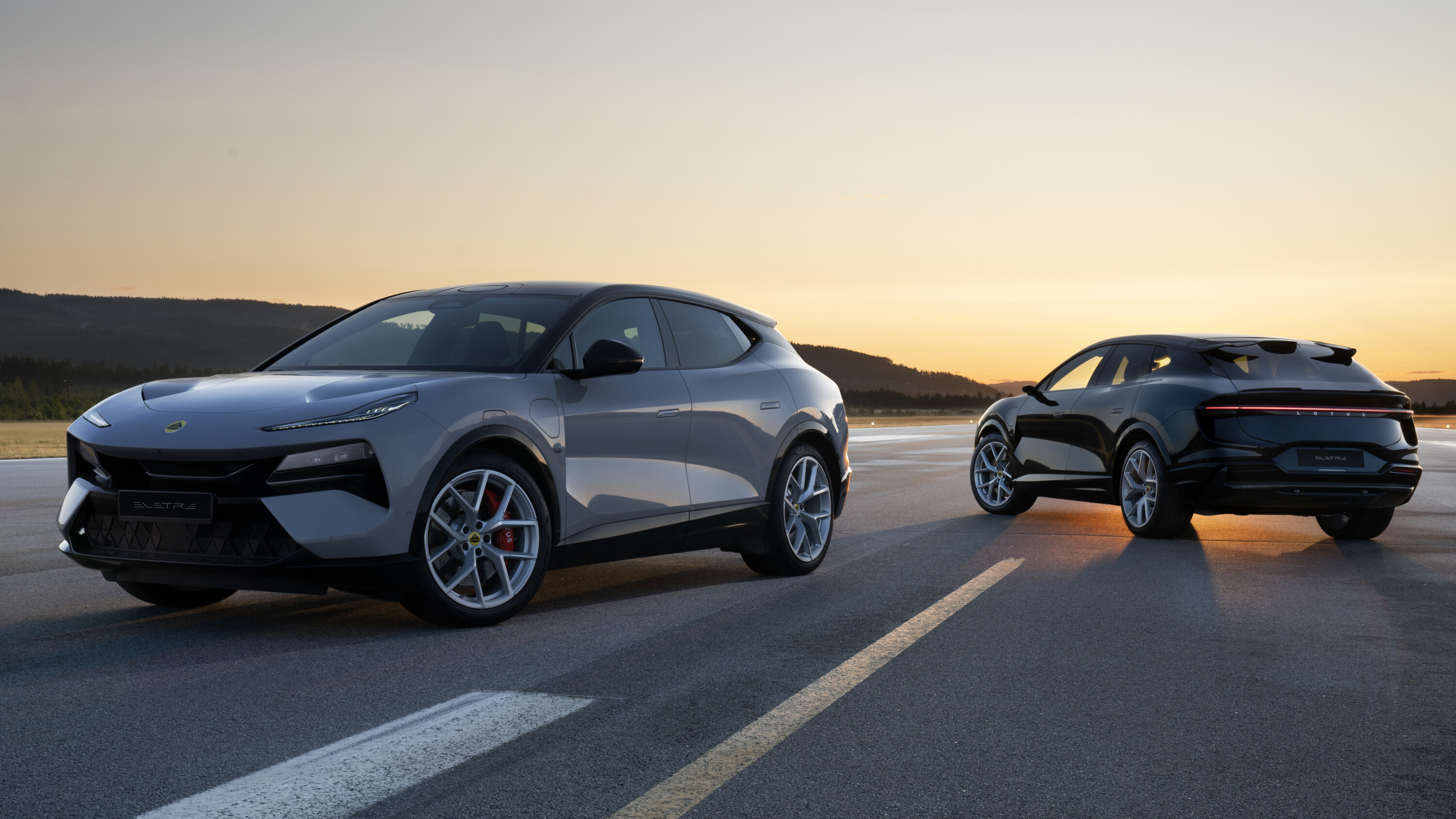
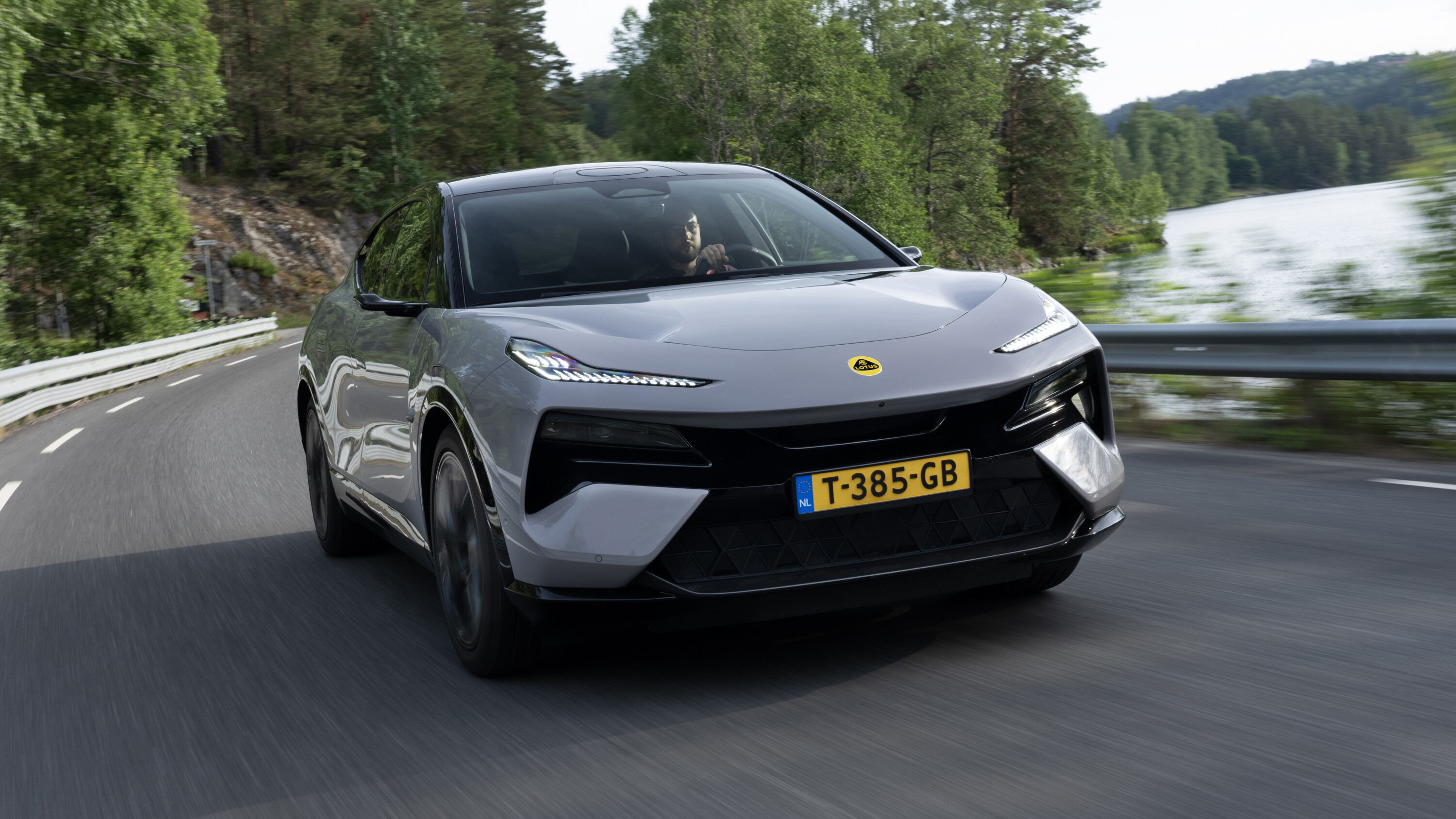
The Lotus Eletre will mark the British brand’s first high-end electric SUV and all-new model under Chinese owner Geely, when it lands in Australia in the second quarter of 2024 (April to June inclusive).
Snapshot
- Lotusu2019s first electric SUV launching Q2 2024
- High-end price tag, interior and tech
- First model to mark British brandu2019s new chapter under Geely
Priced from $239,000 before on-road costs, the Eletre will rival premium and high-performance five-seater large electric vehicles, including the BMW iX, Porsche Taycan Cross Turismo, and upcoming Macan EV.
It adopts the all-new Lotus-developed Electric Premium Architecture (EPA), which will be shared with the Emeya electric sedan when it joins locally in 2025, and is made at Geely’s Wuhan factory in China.
Three Eletre variants are offered
All feature dual permanent magnet electric motors, all-wheel drive, and a lithium-ion battery based on an 800-volt class architecture.
Lotus claims it recharges from 10 to 80 per cent in 18 minutes on a 350kW DC station.
| 2024 Lotus Eletre key specs | Eletre | Eletre S | Eletre R |
|---|---|---|---|
| Usable battery size and type | 109kWh Li-ion | ||
| Claimed driving range (WLTP) | 600km | 490km | |
| Max AC / DC charging speed | 22 / 350kW | ||
| Recommended charging limit | TBA | ||
| Power / torque | 450kW / 710Nm | 675kW / 985Nm | |
| Transmission | Single-speed | Two-speed | |
| Drive type | AWD | ||
| Claimed 0-100km/h acceleration | 4.5 seconds | 2.95 seconds | |
1
The Lotus Eletre is backed by a five-year / 150,000km vehicle warranty and an eight-year / 200,000km battery warranty.
It’s classed as a large electric SUV and measures in at 5103mm long, 2231mm wide, and 1630 to 1636mm high (depending on the wheel size).
It has a 3019mm wheelbase and a 0.26 drag coefficient, but unlike Lotuses of years past, it isn’t lightweight – with a kerb mass of between 2490 to 2640kg, depending on the variant.
There’s 688 litres of boot space in the standard five-seater configuration, which expands to 1532 litres when the rear seats are folded. A 46-litre frunk storage space is available under the bonnet.
JUMP AHEAD
1
2024 Lotus Eletre pricing
| Model | Pricing |
|---|---|
| Eletre | $239,000 |
| Eletre S | $269,000 |
| Eletre R | $315,000 |
1
2024 Lotus Eletre features
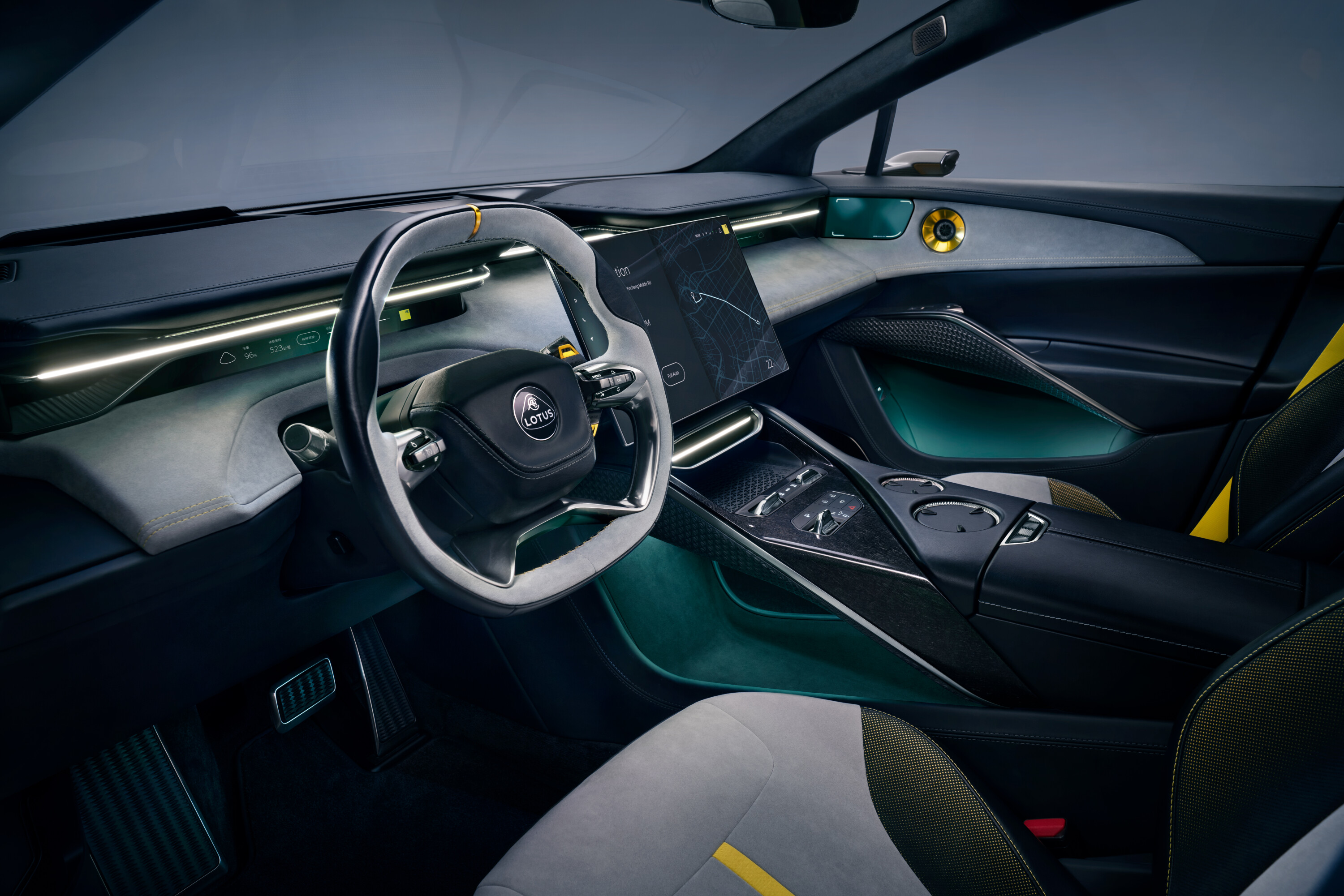
The base Lotus Eletre features dual electric motors and a 109kWh usable lithium-ion battery providing up to 600km claimed WLTP driving range.
Lotus Cars Australia has only released preliminary features for the base Eletre, with final specifications still to be confirmed.
| 2024 Lotus Eletre (preliminary) standard featuresu00a0 | |
|---|---|
| 22-inch alloy wheels in 10-spoke silver diamond design | Frameless windows |
| Michelin Pilot Sport tyres | Illuminated flush exterior door handles and puddle lights |
| 15.1-inch OLED central touchscreen with over-the-air (OTA) software update capability | Black-painted roof and wing mirrors |
| Wireless Apple CarPlay and wireless Android Auto | Matrix LED headlights and LED tail-lights |
| 5G cellular connectivity with wireless internet hotspot function | Heated, power folding wing mirrors with memory function |
| Built-in maps, voice control, and mobile app connectivity | Auto-dimming frameless rear view mirror |
| 12.6-inch driveru2019s instrument display with 29-inch augmented reality head-up display | Hands-free electric tailgate |
| 12.6-inch front passengeru2019s display | 12-way electrically adjustable front seats with memory function |
| 8.0-inch rear passenger display | Active air suspension, continuous damping control |
| Qi wireless charging pad, NFC, and USB-C charging ports | LiDAR safety assist sensors |
| 15-speaker KEF Premium Audio | Auto emergency braking and rear collision warning |
| Card key and smartphone keyless entry/exit | Blind-spot monitoring |
| Four-zone auto climate control | Front and rear rear cross-traffic assist |
| Type 2 to Type 2 (Mode 3) portable AC charging cable | Lane-centring and lane-keep assist |
| 360-degree camera system | Front and rear parking sensors |
| Door open warning | Traffic sign recognition |
| Driver attention monitoring | |
1
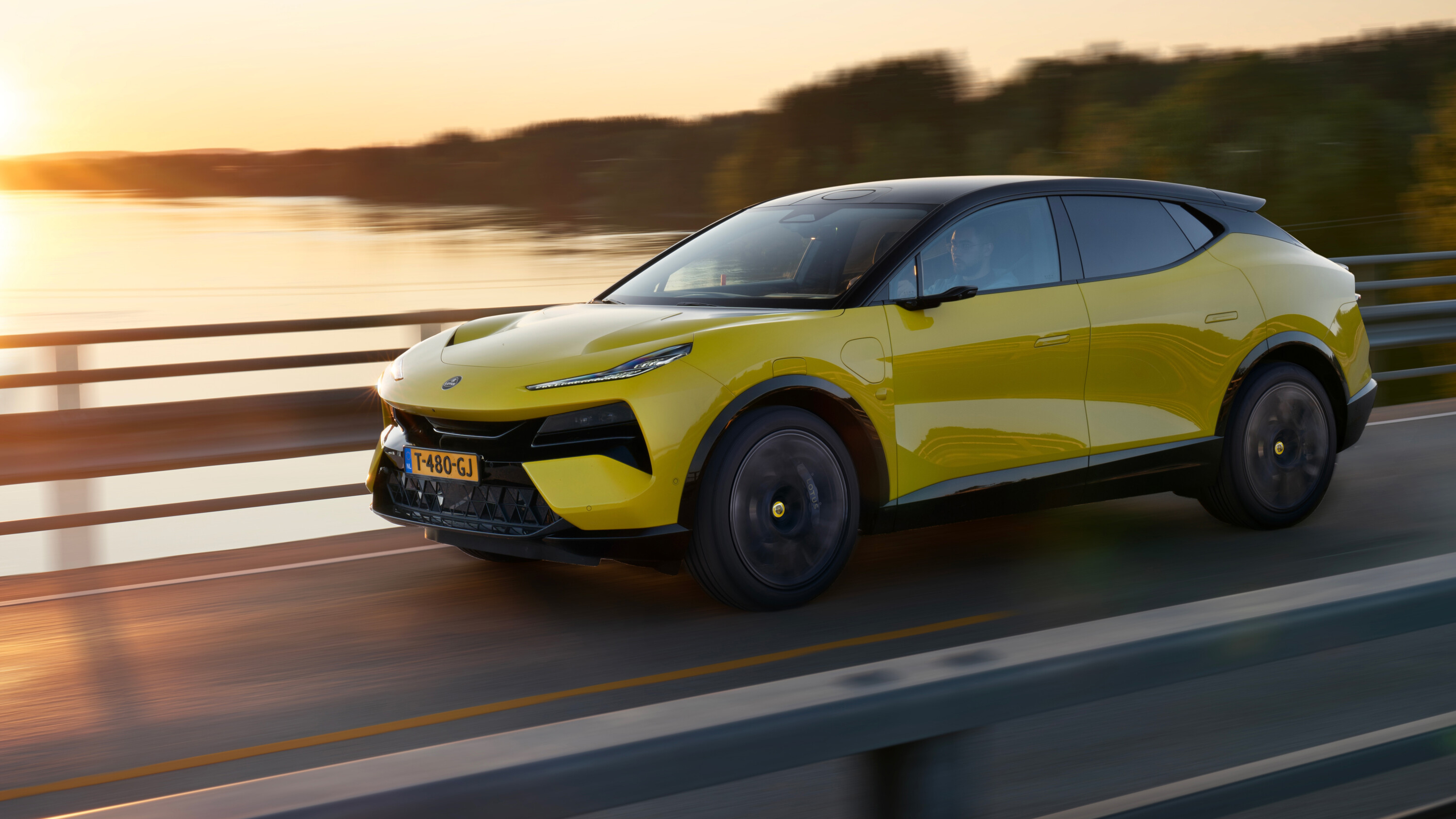
The Lotus Eletre S has the same drivetrain and battery.
| 2024 Eletre S features (In addition to base Eletre) | |
|---|---|
| 22-inch forged alloy wheels in 10-spoke grey diamond design | Heated wiper nozzles |
| Pirelli P-Zero tyres | Four-way electrically adjustable steering wheel column with memory function |
| Soft close doors | Rear tinted privacy glass |
| 23-speaker KEF Reference Audio | |
1
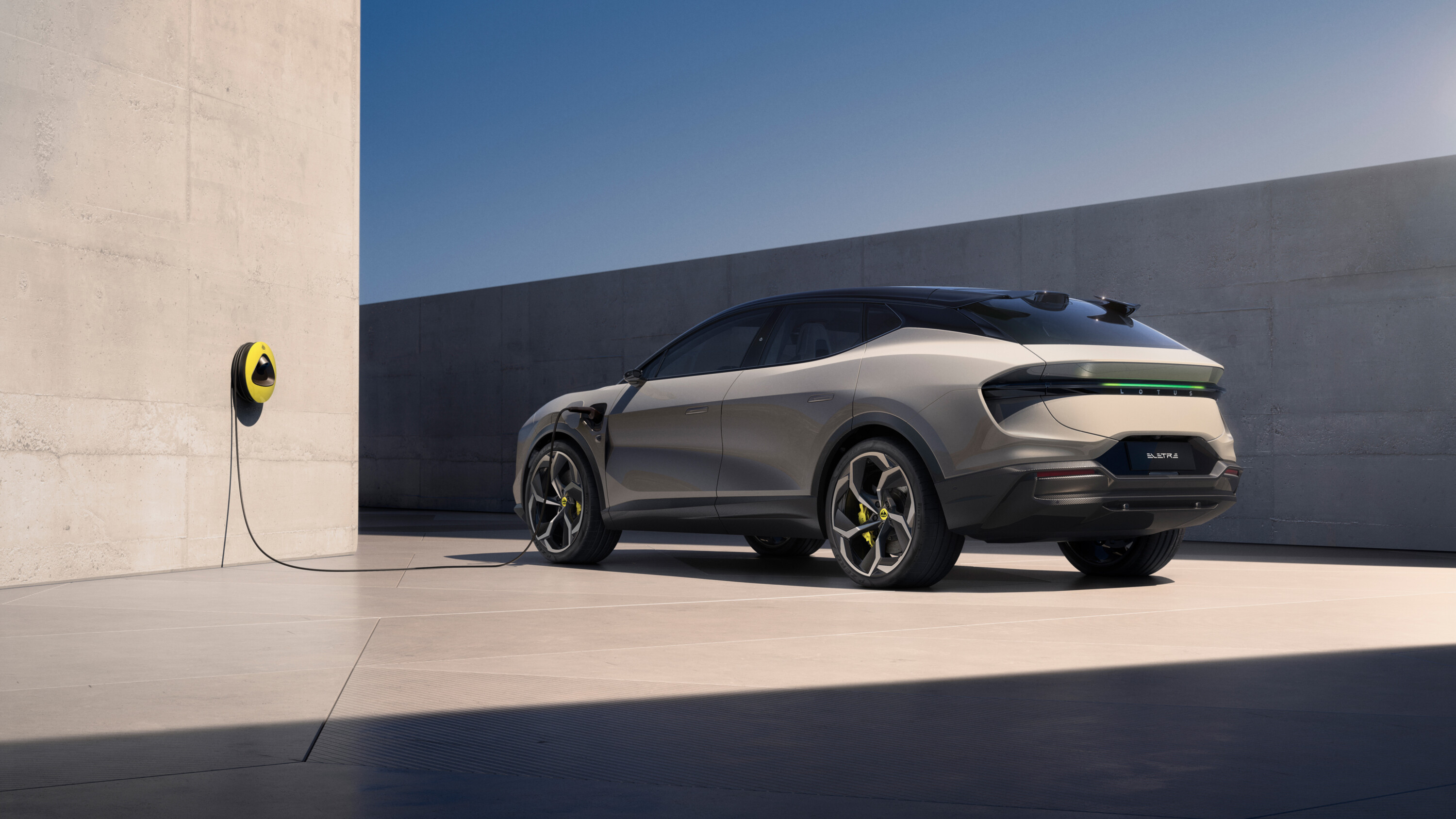
The Lotus Eletre R increases power and introduces a two-speed transmission, but reduces claimed WLTP range to 490km.
| 2024 Eletre R features (In addition to Eletre S) | |
|---|---|
| 22-inch forged alloys in 10-spoke gloss black design | Rear-wheel steering |
| Pirelli P-Zero Corsa tyres | Track mode |
| Intelligent anti-roll control | Carbon pack |
1
Colours
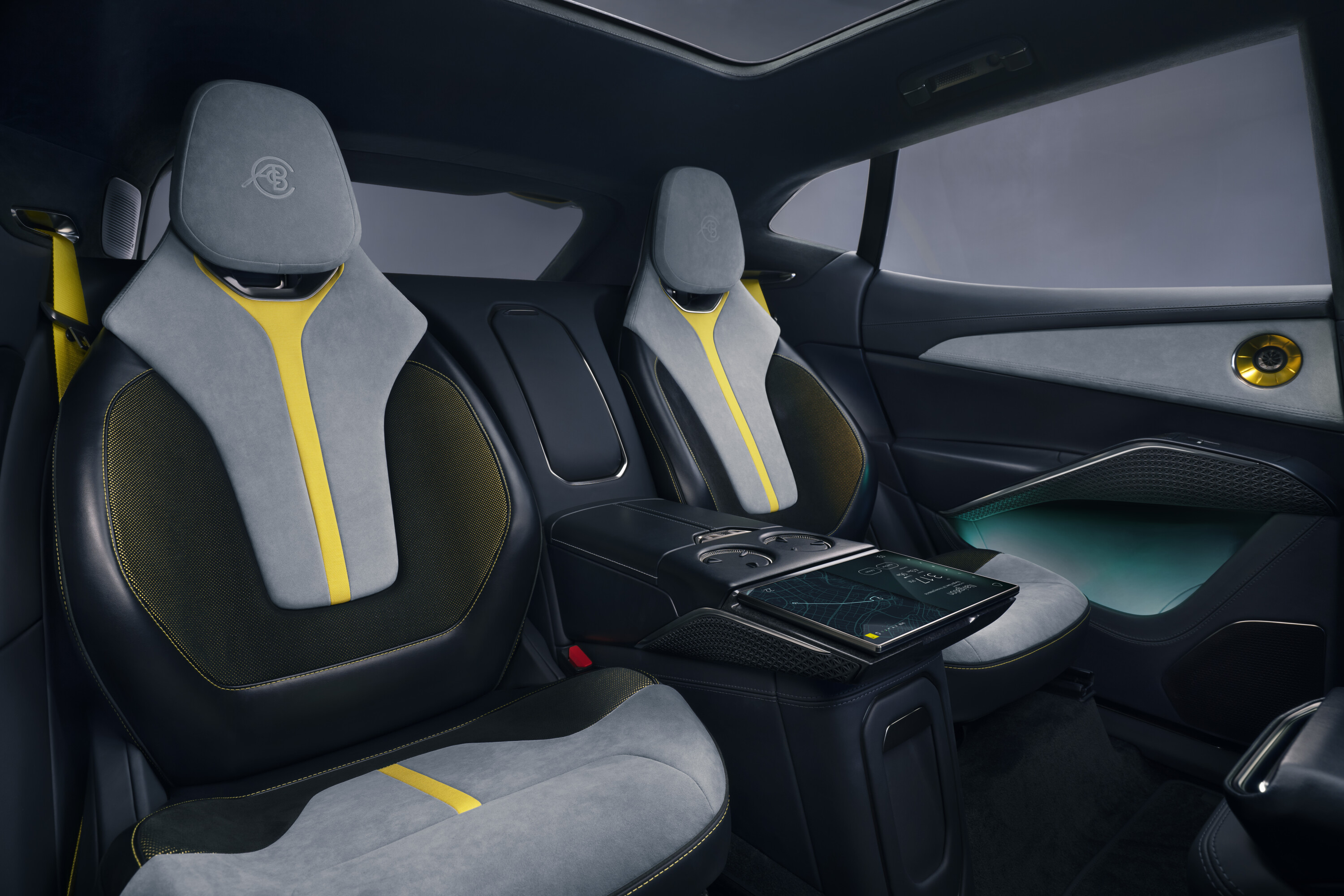
Six exterior colours are available across the Lotus Eletre line-up, but pricing hasn’t been detailed.
| 2024 Lotus Eletre exterior colours | |
|---|---|
| Natron Red | Kaimu Grey |
| Galloway Green | Blossom Grey |
| Solar Yellow | Stellar Black |
1
Options
A range of individual and option packs are available for the Lotus Eletre line-up via its online configurator.
This includes the interior colour, a four-seater ‘executive’ configuration, wheel designs, camera wing mirrors, fixed panoramic glass roof, automatic parking, and a more advanced adaptive cruise control highway assist system.
MORE
Everything Lotus
