
Australians’ love affair with the SUV continues, the form accounting for 60.4 per cent of total new vehicle sales up to May this year, an increase on 55.8 per cent over the same period in 2024.
That figure speaks to their practicality, their extra ride height and perceived all-round functionality over a regular car. But like everything, pricing of SUVs is creeping higher along with their popularity.
To get attention and gain a foothold in the Australian market, newer brands such as Chery and Geely are turning out product that undeniably represents value-for-money, whether you’re considering a small, mid-size or large SUV. Here’s our run-down of some of the current best value options…
SMALL SUVs
Chery Tiggo 4
Price: from $23,990 drive away
Engine: 1.5-litre turbo-petrol, 108kW/210Nm, CVT auto, front-wheel drive
Combined fuel consumption: 7.4L/100km
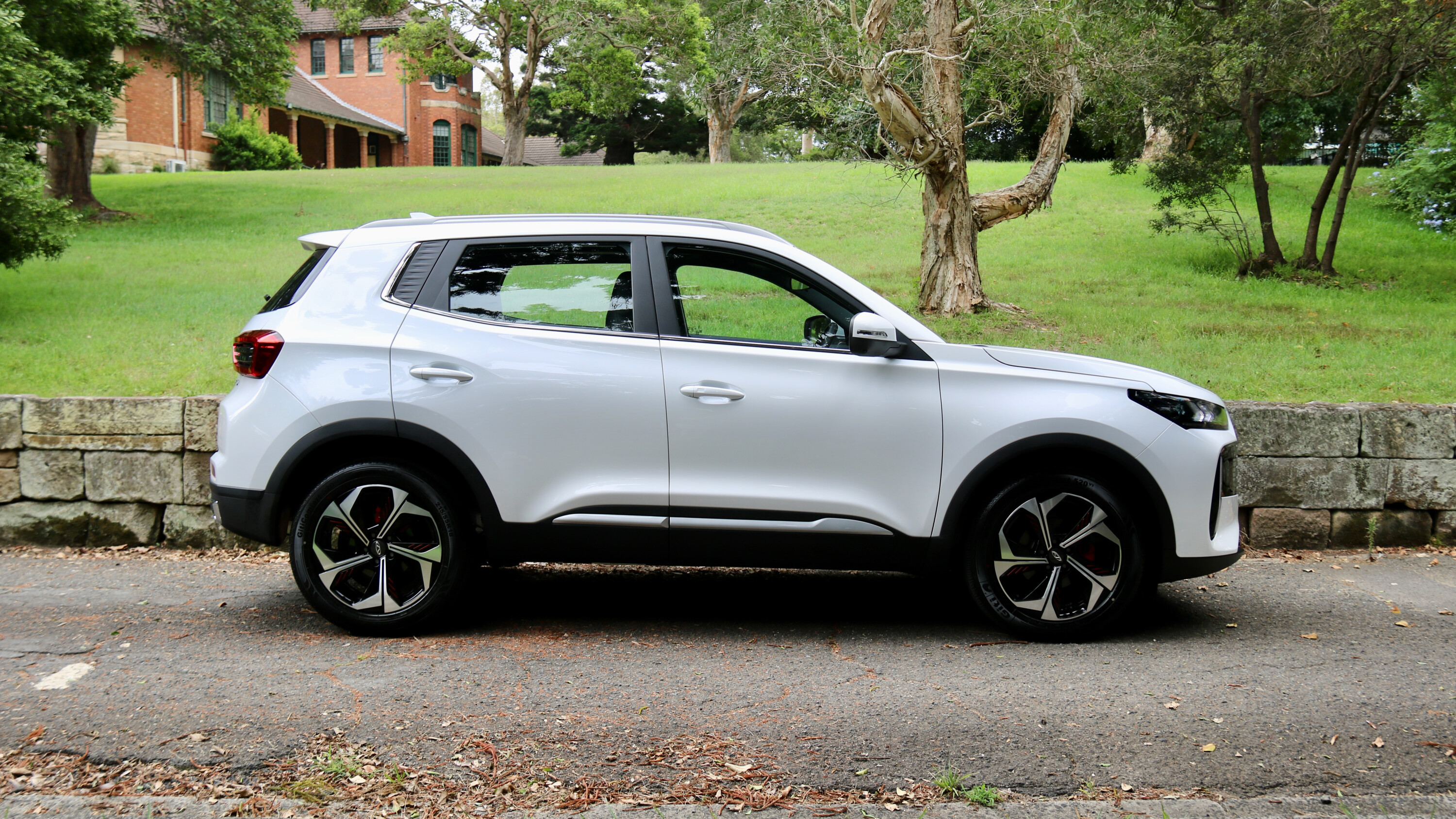
Despite launching as recently as late 2024, the Chery Tiggo 4 had already sold over 6200 to the end of May 2025. What is the appeal of this compact model?
Pricing starts at just $23,990 for the entry-level Urban with the top-spec Ultimate adding only $3,000 to the price. Even with premium paint, the most expensive Tiggo 4 Pro is comfortably under the $30,000 threshold – and unlike the pricing of most rivals quoted here, that includes all on-road costs.The Tiggo 4 Pro’s seven-year/unlimited km warranty with up to seven years of roadside assistance is long, too, while the first five years of servicing only costs $1,400.
In addition to that, even the entry-spec car is well equipped with features like automatic LED lighting, a dual 10.25-inch layout and dual-zone automatic climate control. The upper-spec Ultimate adds luxury features such as a sunroof.
The whole Tiggo 4 range is powered by a turbocharged 1.5-litre petrol engine mated to a CVT automatic transmission, while its driving experience is soft and comfortable. It’s spacious for its size as well, while its quality is great for the price. If you’re after a great value SUV, the Chery Tiggo 4 should towards the top of your list.
MG ZS
Price: from $29,990 drive away
Engine: 1.5-litre naturally aspirated or turbocharged petrol 81kW/140Nm or 125kW/275Nm, CVT
auto, front-wheel drive
Combined fuel consumption: 6.7-6.9L/100km
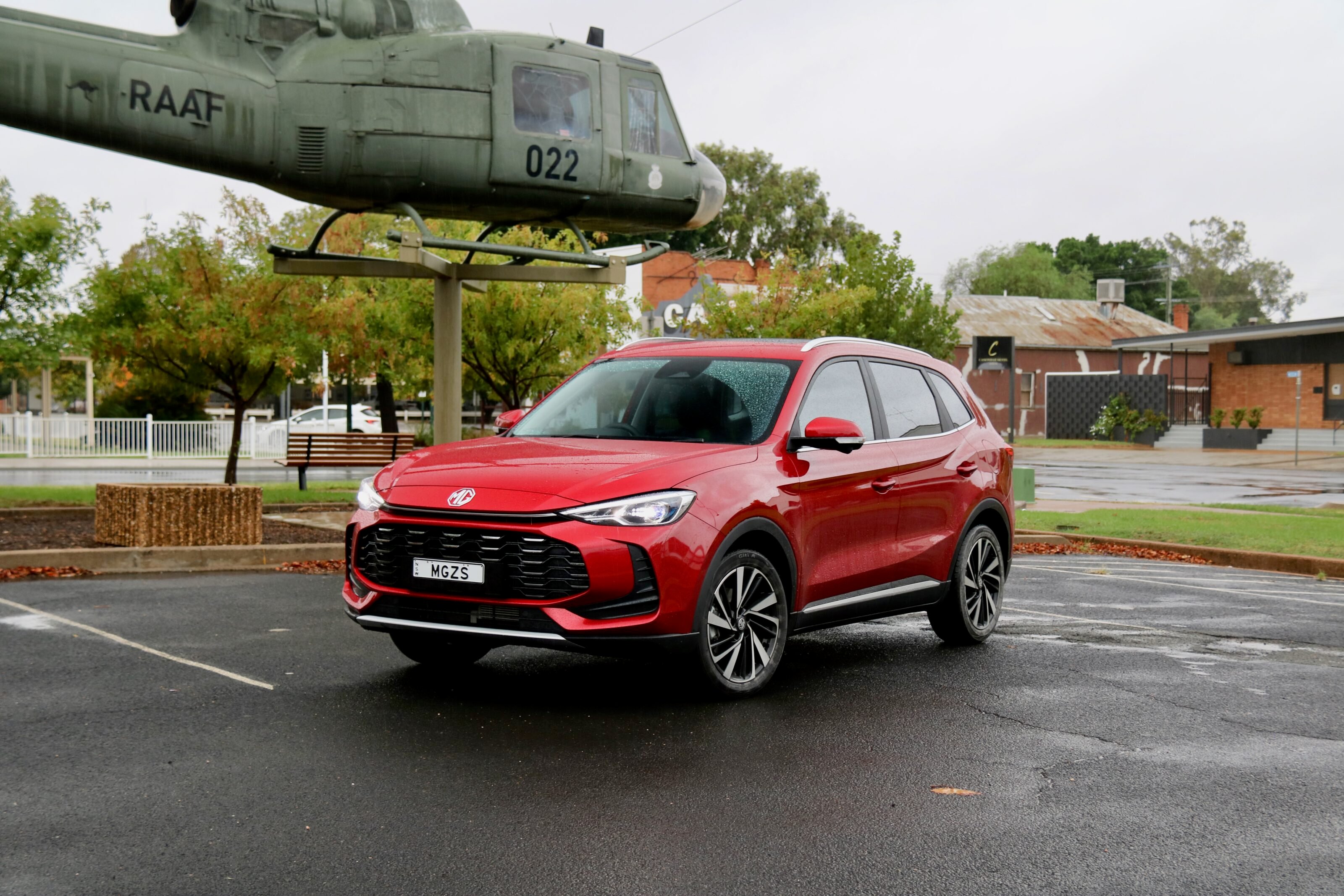
The MG ZS range recently won Wheels’ Best Small SUV award for 2025, including the best sub-$30k segment… and for good reason: it’s a great all-rounder and its value equation is strong, as we’ve come to expect from a modern MG product. Pricing starts at just $25,990 for the entry-level Excite, with the upper-spec Essence priced at $28,990 and the Essence Turbo at $30,990 – all those prices are driveaway, by the way.
The standard equipment list across the range is strong with even the entry-level Excite equipped with a full active safety suite with autonomous emergency braking, adaptive cruise control and lane keeping assistance.
Move up the range and features such as a panoramic sunroof, synthetic leather upholstery, a 360-degree camera and a large 12.3-inch touchscreen are added and even the top-spec Essence Turbo’s 18-inch wheels, automatic climate control and driving modes come in at under $31,000 drive away.
The new ZS is a big improvement overall on the ZST it replaces when it comes to the driving experience, feeling more mature and comfortable from behind the wheel. The cabin is good quality and spacious for the segment, as is the 443-litre boot. Add in MG’s 10-year/250,000km warranty and it’s easy to see why the ZS is one of the best value SUVs on the market.
MGS5 EV
Price: from $40,490 drive away
Battery/range: 40.2kWh/430km (WLTP)
Motor: 160kW/320Nm
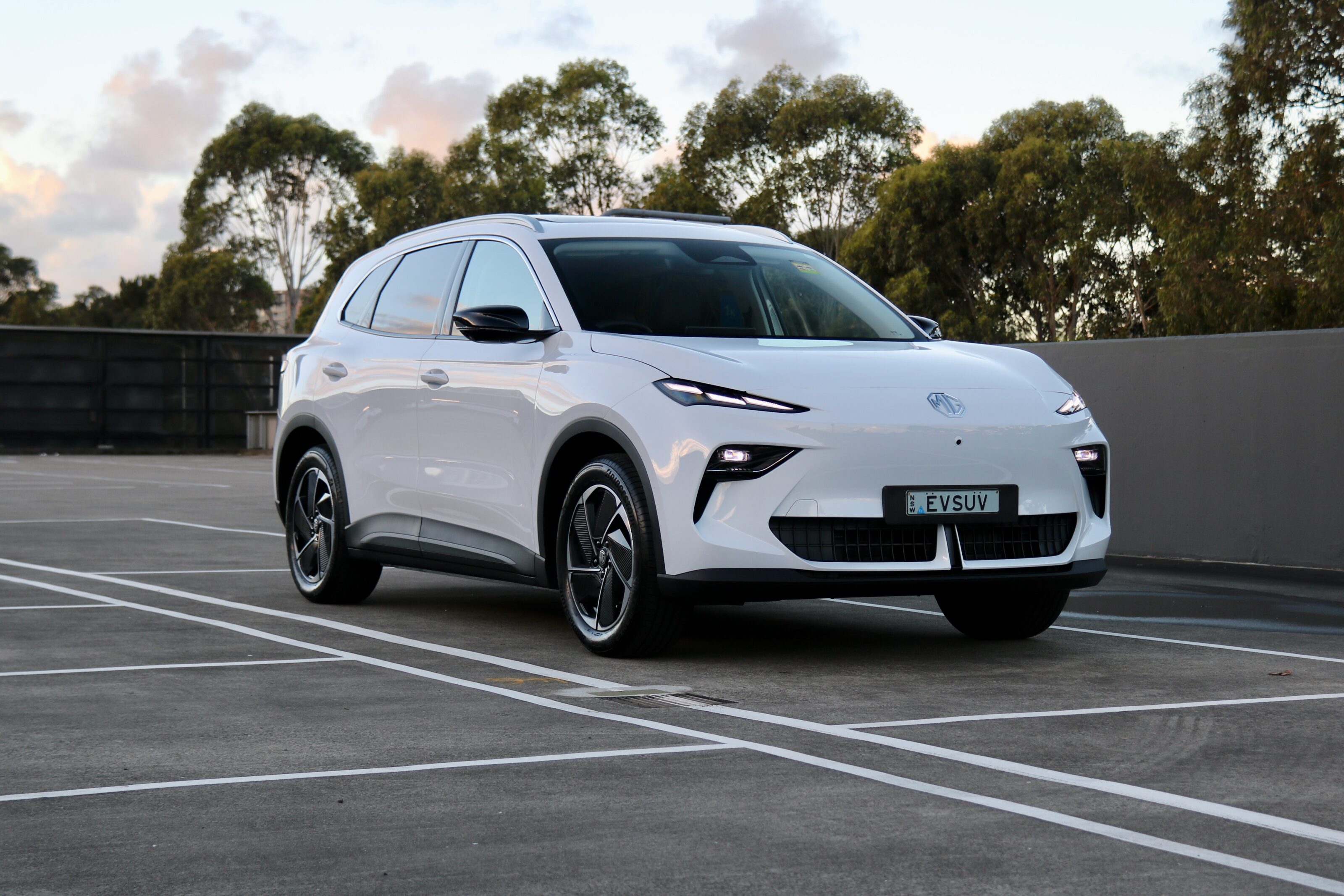
Why include two MG small SUVs in a best value list? Well, while the ZS is great value for a small petrol SUV, the new MGS5 EV offers the same for an electric small SUV, priced from just $40,490 drive away. More generally, it’s just a very good product that drives well, is spacious. practical and well equipped.
There are two S5 models on offer in Australia: the base model Excite and top-spec Essence, and both are available with either a 49kWh or 62kWh battery for up to 430km of WLTP-rated range.
The Excite is equipped with features such as 17-inch wheels, automatic LED lighting, automatic climate control, a 12.8-inch touchscreen with wireless smartphone mirroring and a full suite of active safety features. The Essence then adds an electric tailgate, a 360-degree camera, synthetic leather trim, an electric driver’s seat and a wireless phone charger.
At the top of the range currently, the MGS5 EV is priced at $44,990 drive away, which is great value for money considering how much equipment it features as standard, as well as its excellent all-round capability. Plus, MG covers the S5 with a 10-year/250,000km warranty and five years of servicing costs $1967 – and it also has long 25,000km service intervals as well. Among the newcomer small electric SUVs, the MGS5 EV is one of the best value on offer.
MID-SIZE SUVs
Chery Tiggo 7
Price: from $29,990 drive away
Engine: 1.5-litre turbo-petrol, 137kW/275Nm, 7-speed dual-clutch auto, front-wheel drive
Combined fuel consumption: 7.0L/100km
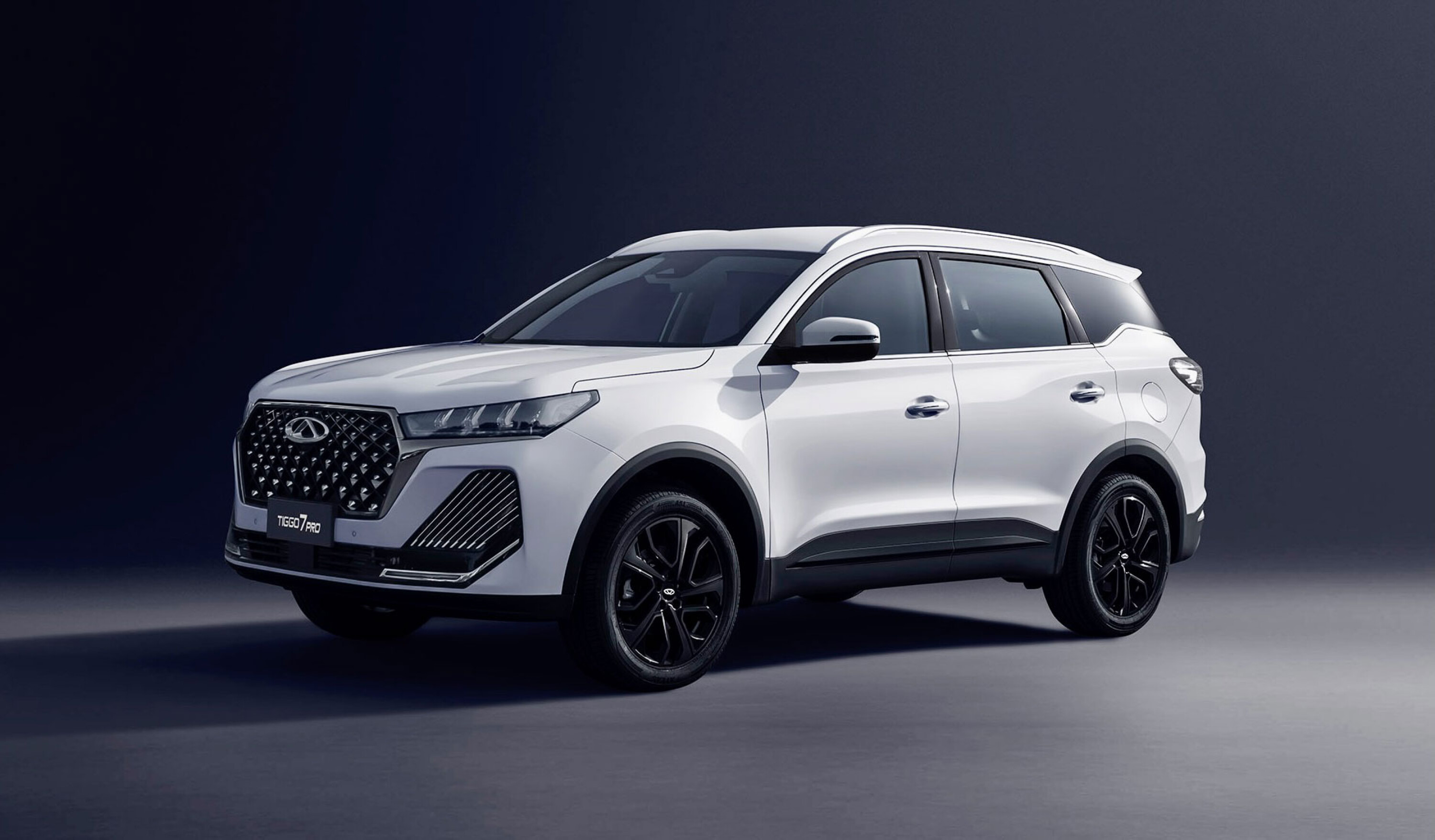
Chery’s mid-size SUV sits above the popular Omoda 5 and Tiggo 4 models in the line-up. The range was recently simplified to just two models with pricing now starting from $29,990 drive away for the entry-level SE, but even the higher-spec SE+ is still only $33,990 drive away. Chery is also about to launch a plug-in hybrid Tiggo 7 priced from just $39,990 drive away.
Standard equipment highlights include 18-inch alloy wheels, dual 12.3-inch touchscreens, wireless Apple CarPlay and Android Auto, dual-zone automatic climate control, an eight-speaker Sony sound system and a lot of active safety kit, including a front centre airbag, autonomous emergency braking, adaptive cruise control, lane keeping assistance and a reversing camera.
The Tiggo 7 Pro’s cabin is nicely finished and practical, while the 549-litre boot is also large for its size. Chery’s seven-year/unlimited km warranty is standard, as is seven years of capped price servicing. Overall, it’s a value-packed mid-size SUV.
GWM Haval H6
Price: from $33,990 drive away
Engine: 2.0L turbo petrol, 150kW/320Nm, 7-speed dual-clutch automatic, 2WD
Combined fuel consumption: 7.4L/100km
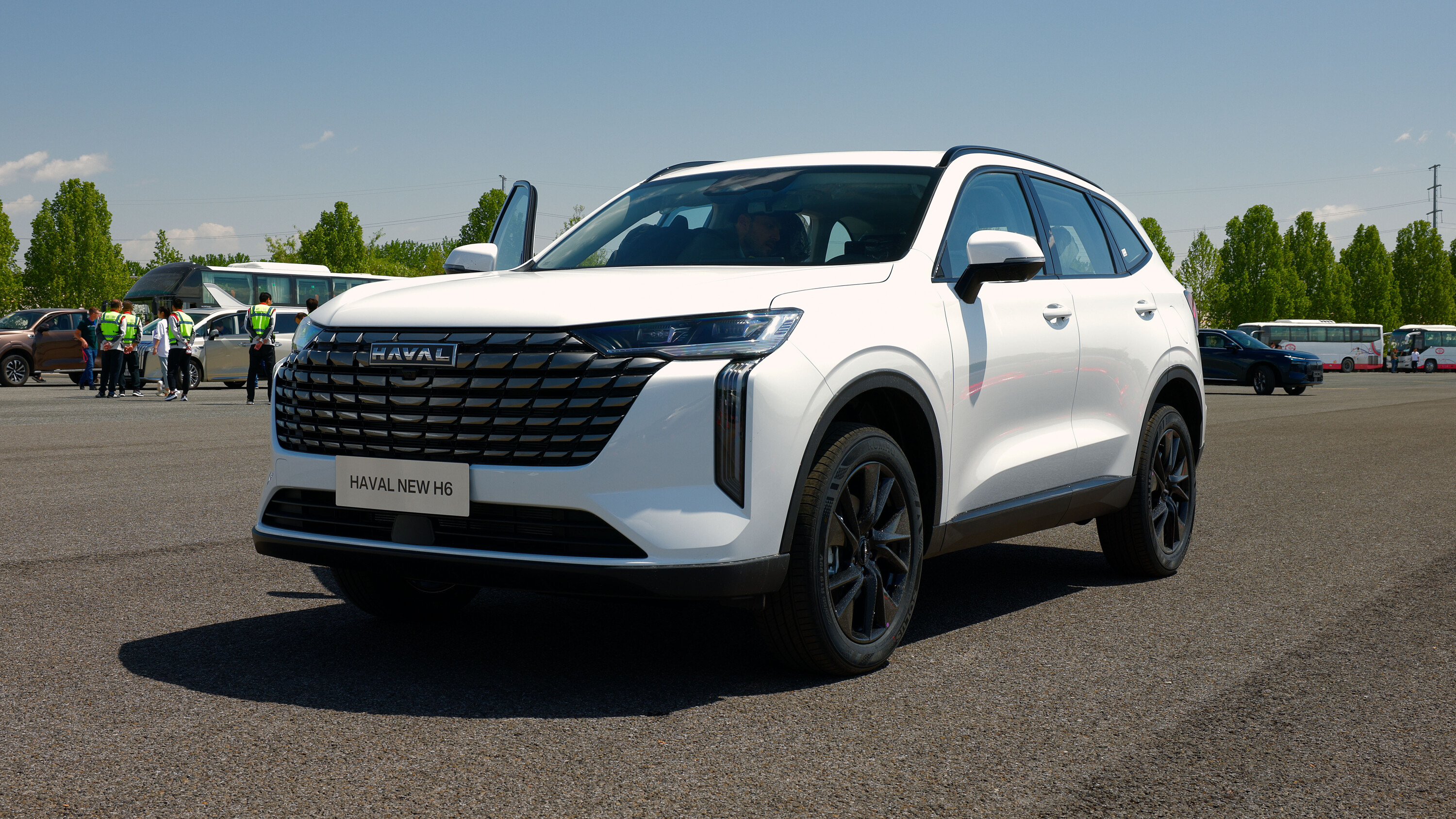
The GWM Haval H6 is one of the most practical mid-size SUVs you can buy. With a huge 600-litre boot and a spacious rear seat, it can easily take what your family has to throw at it – but priced from just $33,990 drive away, it also undercuts the majority of its rivals.
While the entry-level H6 is not quite as well equipped as rivals, it still features a 10.25-inch touchscreen and digital driver’s display, Apple CarPlay and Android Auto, keyless entry with push button start, a central airbag and a suite of active safety features like autonomous emergency braking, adaptive cruise control, lane keeping assistance and a reversing camera.
We’d definitely spend the extra $3000 to get to the mid-spec Lux for features like a leather steering wheel, auto-folding mirrors, roof rails, an electric driver’s seat and a 360-degree camera.
Regardless of petrol H6 model chosen, a gutsy 150kW/320Nm 2.0-litre turbo-petrol engine is standard equipment, as is a seven-speed dual-clutch transmission. A hybrid drivetrain is also available up the range, if that’s what you’re looking for.
The H6 is covered by GWM’s solid seven-year/unlimited km warranty and though its service intervals are strange, service pricing is cheap. All of that, plus the H6’s spacious and good quality cabin, mean that it’s a strong contender in the mid-size SUV segment. If you’re value-focused, it’s a great option.
Geely EX5
Price: from $40,990 plus on-road costs
Battery/range: 40.2kWh/up to 430km (WLTP)
Motor: 160kW/320Nm
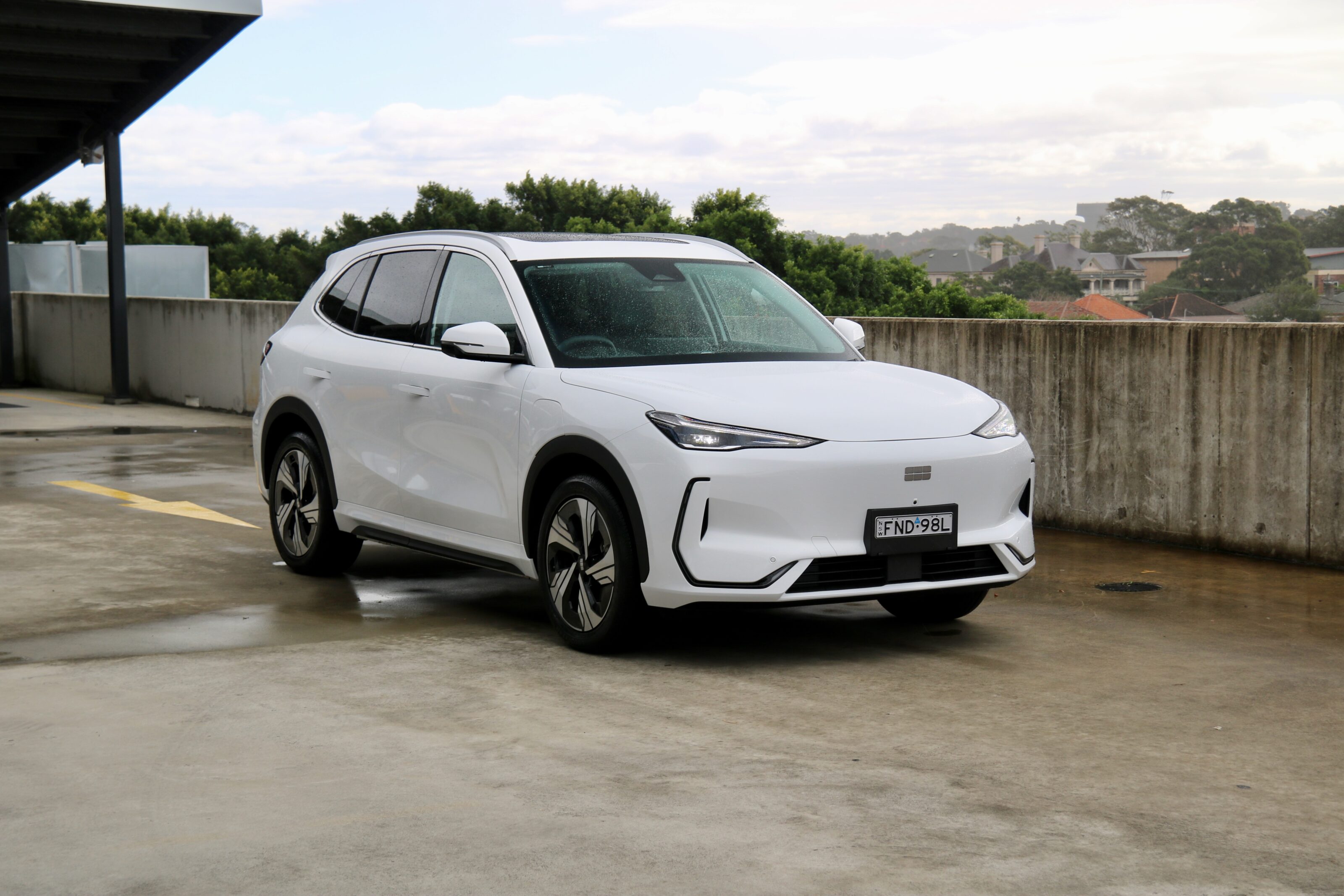
Newcomer Geely launched its new EX5 electric mid-size SUV in Australia earlier this year at a very low price: just $40,990 plus on-road costs for the entry-level Complete, or around the same price as a second-from-base petrol Mazda CX-5 that features a lot less standard equipment.
Using a 40.2kWh battery for up to 430km of WLTP-rated range, the EX5 features a 160kW/320Nm electric motor for a healthy sub-7 second 0-100km/h acceleration time. It’s also quite spacious inside thanks to its flat floor and while the boot may seem small on paper, it feels larger in real life thanks to its massive under-floor storage section.
But the value equation of the EX5 is its biggest attraction as even the entry-level Complete is loaded with features such as synthetic leather upholstery, electric front seats, a huge 15.4-inch touchscreen with live services and a full suite of active safety features.
For an extra $4000, the upper-spec Inspire further adds larger wheels, a panoramic sunroof, heated and ventilated front seats and a punchy 1000-watt 16-speaker sound system. The EX5 is covered by a seven-year/unlimited km warranty with the first five years of servicing costing $1487 (though you can save money by pre-purchasing it). Overall, the Geely EX5 is one of the best value cars on the new car market – it also just happens to be electric.
LARGE SUVs
Chery Tiggo 8 Pro Max
Price: $38,990 drive away
Engine: 2.0-litre turbo-petrol, 180kW/375Nm, 7-speed dual-clutch auto, two-wheel drive or all-
wheel drive
Combined fuel consumption: 8.1-8.7L/100km
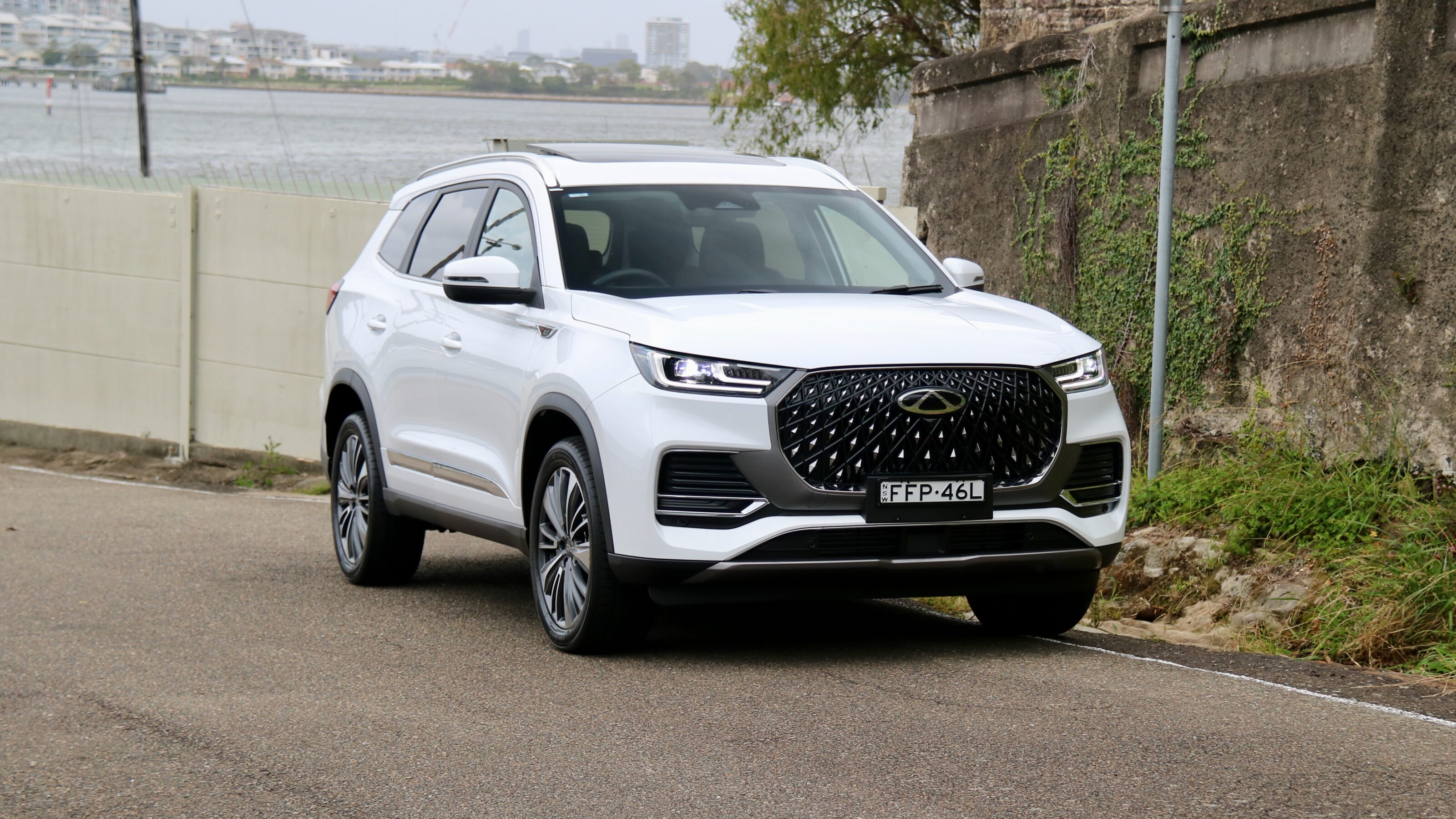
The Chery Tiggo 8 Pro Max is undoubtedly one of the best value seven-seat SUVs on the market today, priced from just $38,990 drive away for the entry-level Urban. It features a classy cabin, a long list of standard equipment, a solid driving experience with a grunty turbo-petrol engine and a long warranty with inexpensive servicing pricing.
Currently, there are three Tiggo 8 Pro Max models available: Urban, Elite and Ultimate AWD, each using the same 180kW/375Nm 2.0-litre turbo-petrol engine with a seven-speed dual-clutch transmission, though a new plug-in hybrid option with up to 95km of electric driving range will go on sale next month as well.
Standard equipment on the Urban includes 18-inch wheels, synthetic leather trim, an electric driver’s seat with memory functionality, heated and ventilated front seats, dual 12.3-inch displays and a full suite of active safety features. The mid-spec Elite adds third-row air vents and a power tailgate, while the top-spec Ultimate further adds larger 19-inch wheels, a Sony sound system, a panoramic sunroof and privacy glass.
Chery covers the Tiggo 8 Pro Max with a seven-year/unlimited km warranty and the five-year service cost is just $1495. Overall, Chery plays the value card strongly in the Australian market and the Tiggo 8 Pro Max is the strongest value product it sells. For under $40,000 drive away, you get a practical, good quality and well equipped seven-seat SUV that has a long warranty and cheap servicing, making it strong value for money.
Mahindra XUV700
Price: from $39,990 drive away
Engine: 2.0-litre turbo-petrol, 149kW/380Nm, 6-speed auto, front-wheel drive
Combined fuel consumption: 8.3L/100km
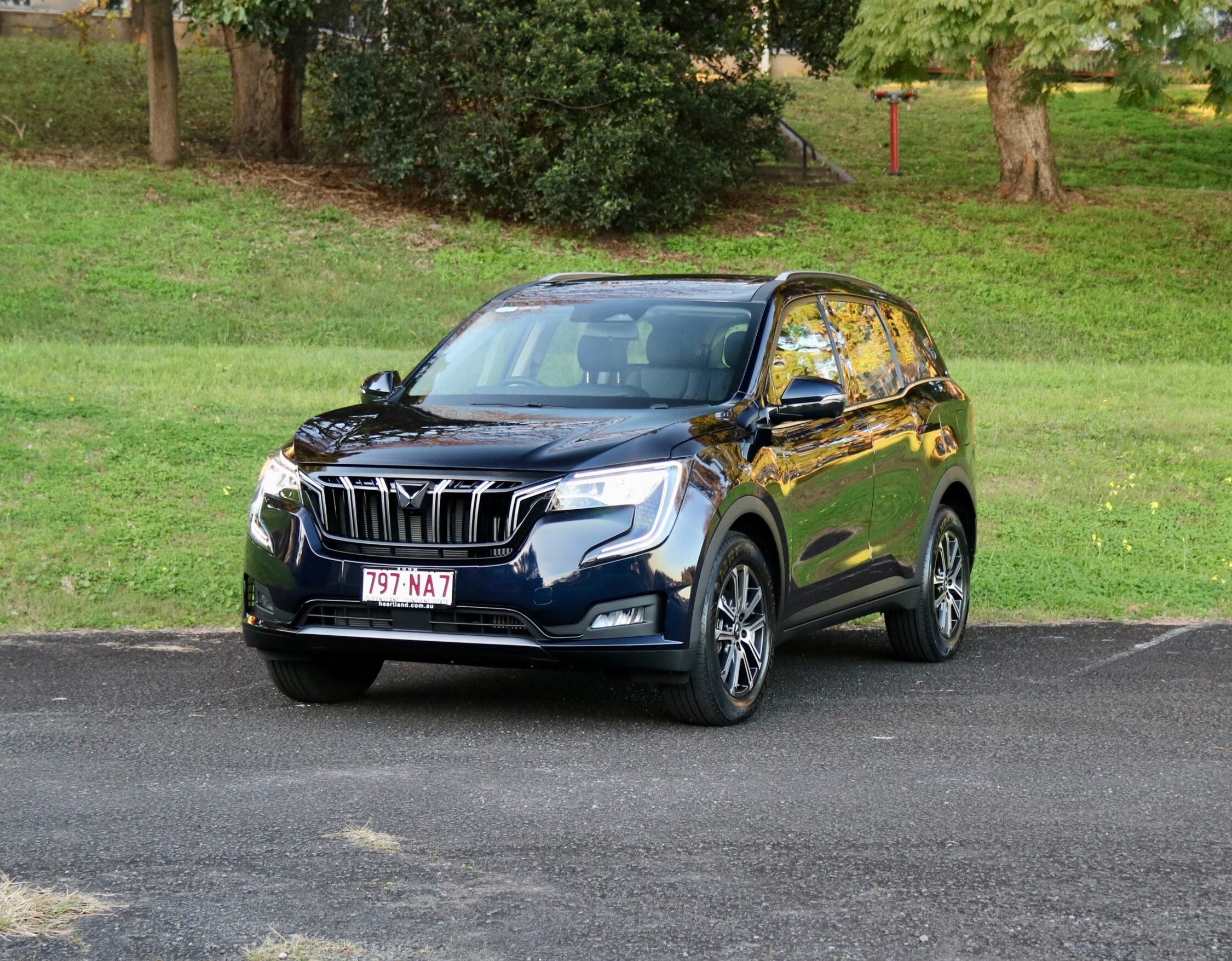
The Mahindra XUV700 is a top value large-sized SUV priced from just $39,990 drive away for the entry-level AX7 and offering seven seats, making it ideal for larger families. There is also a top-spec Black Edition for only $43,990 – again, that’s driveaway.
A gutsy turbocharged 2.0-litre petrol engine sits under the bonnet mated to a smooth six-speed automatic transmission.
Standard equipment is generous with features like 18-inch alloy wheels, leatherette upholstery, six-way electric driver’s seat adjustment with memory, a panoramic sunroof, dual 10.25-inch screens, Apple CarPlay and Android Auto and a suite of active safety features such as autonomous emergency braking, adaptive cruise control and a reversing camera.
The XUV700’s interior is modern, good quality and practical. While Mahindra doesn’t provide space figures, it’s estimated to hold around 150 litres behind the third row, with folding those seats adding another 500L to the total – or more than enough for your family. Add in the seven-year/150,000km warranty and the XUV700’s overall value is strong.
Skoda Kodiaq
Price: from $56,990 drive away
Engine: 2.0-litre turbo-petrol, 140kW/320Nm, 7-speed dual-clutch, all-wheel drive
Combined fuel consumption: 9.2L/100km
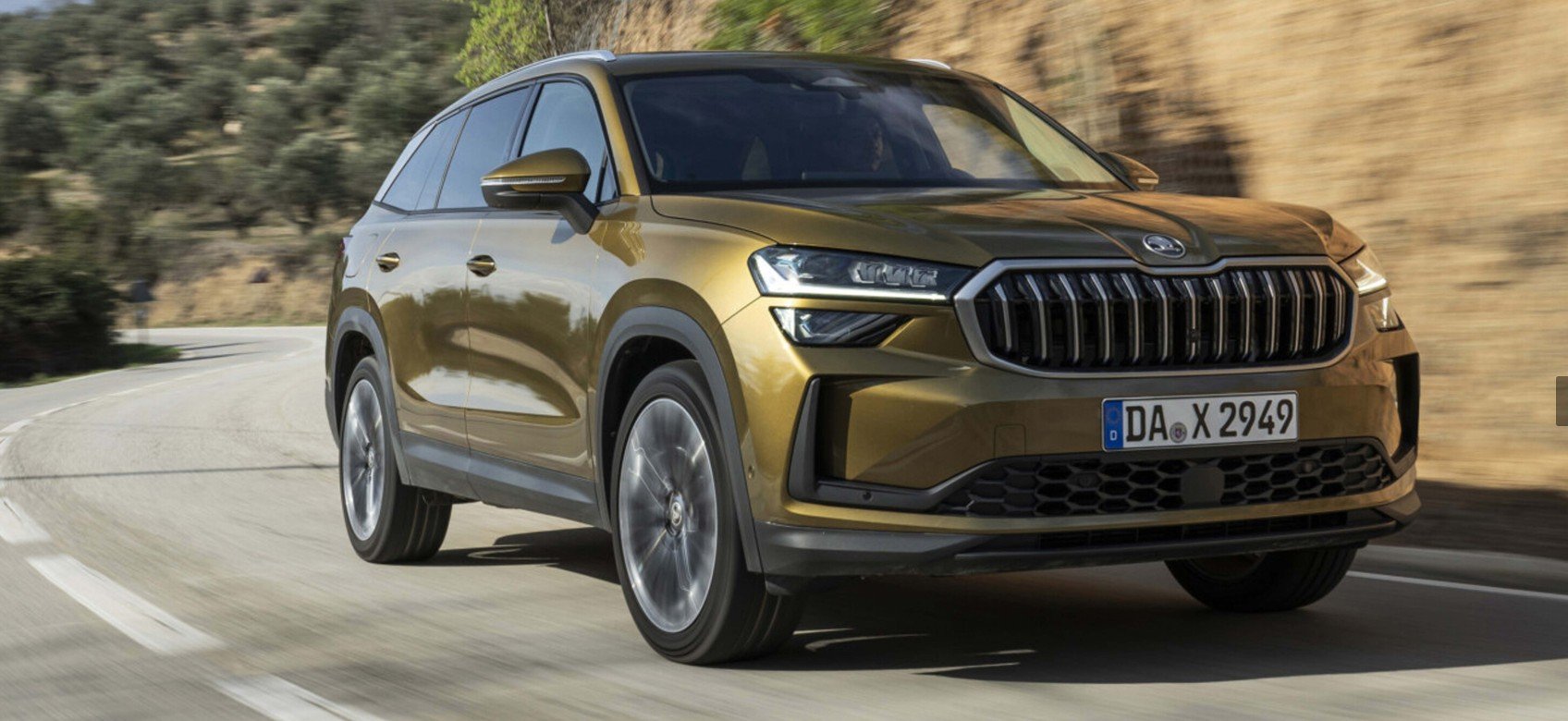
Since its arrival in Australia in 2007, Volkswagen-owned Czech brand Skoda has offered good value for money across its range and the new-generation seven-seat Kodiaq, launched earlier this year, is priced from just $56,990 drive away.
While that’s priced higher than other seven-seat SUVs here, it’s also less than key rivals such as the Hyundai Santa Fe and yet, it’s also better equipped. The Kodiaq also drives well, and its cabin is sensibly designed and of excellent quality.
Standard equipment on the entry-level Kodiaq Select includes 19-inch alloy wheels, leather upholstery, an electric driver’s seat with memory, heated front seats, tri-zone automatic climate control, a 13-inch touchscreen with sat-nav and wireless smartphone mirroring, a full suite of active safety features and an abundance of Skoda’s ‘simply clever’ features such as rubbish bins in the front doors, an umbrella and even a windshield washer reservoir.
The Kodiaq range is powered by a gutsy 140kW 2.0-litre turbo-petrol engine mated to a seven-speed dual-clutch transmission and all-wheel drive, while its driving dynamics are typically well-tuned as you’d expect for a European car. Added to that is Skoda’s seven-year/unlimited km warranty, which is very competitive and is the longest for a European manufacturer.
Volkswagen has revealed a higher-performance Golf GTI, with the new Golf GTI Edition 50 created to celebrate 50 years of the brand’s hot hatch. With more performance and enhancements to the dynamic package, the Edition 50 is the fastest ever production Volkswagen around the Nurburgring with a lap time of 07:46:13.
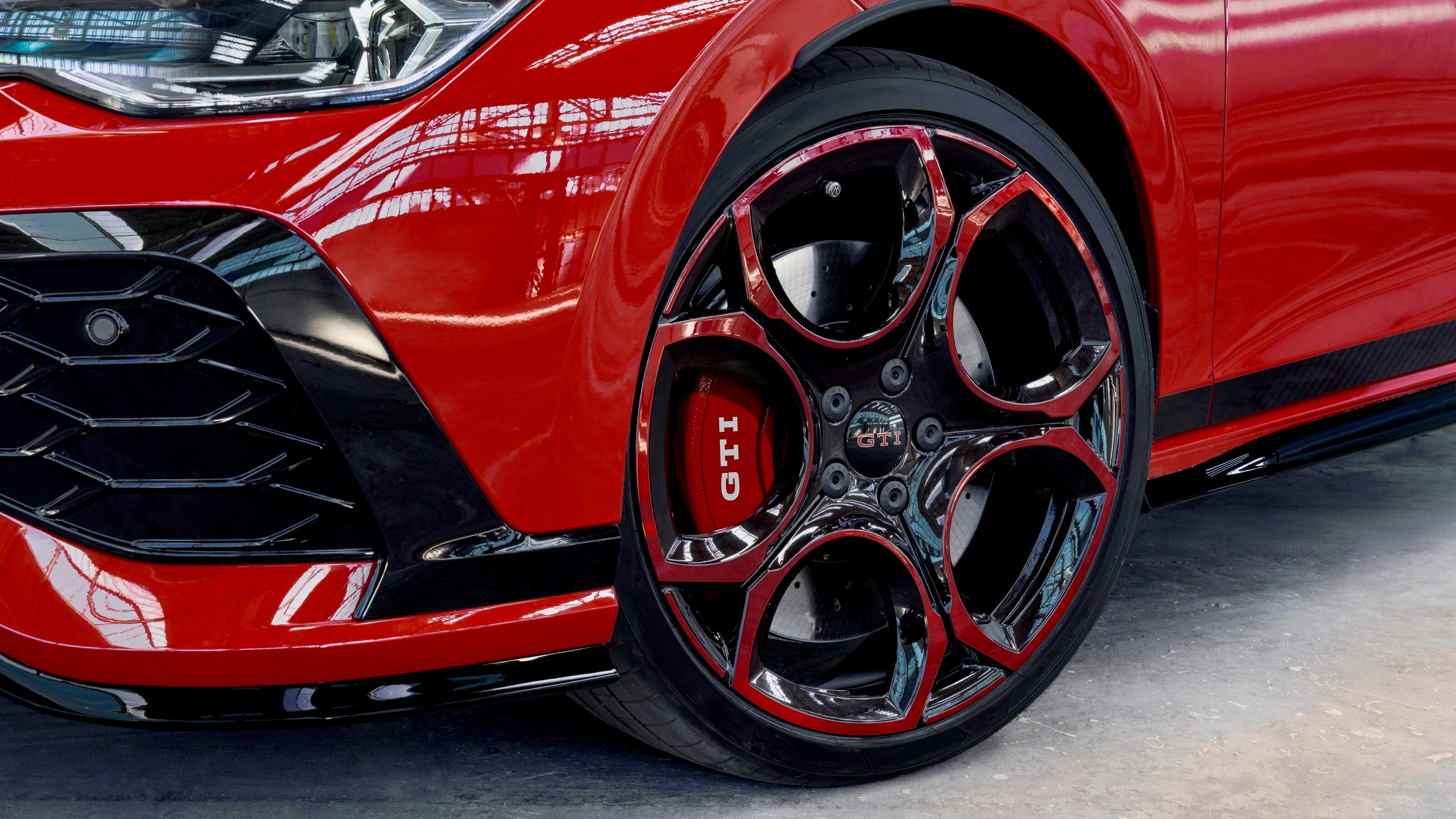
On the exterior of the Golf GTI Edition 50 are a number of special touches, including multiple Edition 50 badges, black detailing, a side stripe and a red finish for the wheels. Buyers will get to choose from white, grey, black and two unique colours: a dark green and the brand’s classic ‘Tornado Red’.
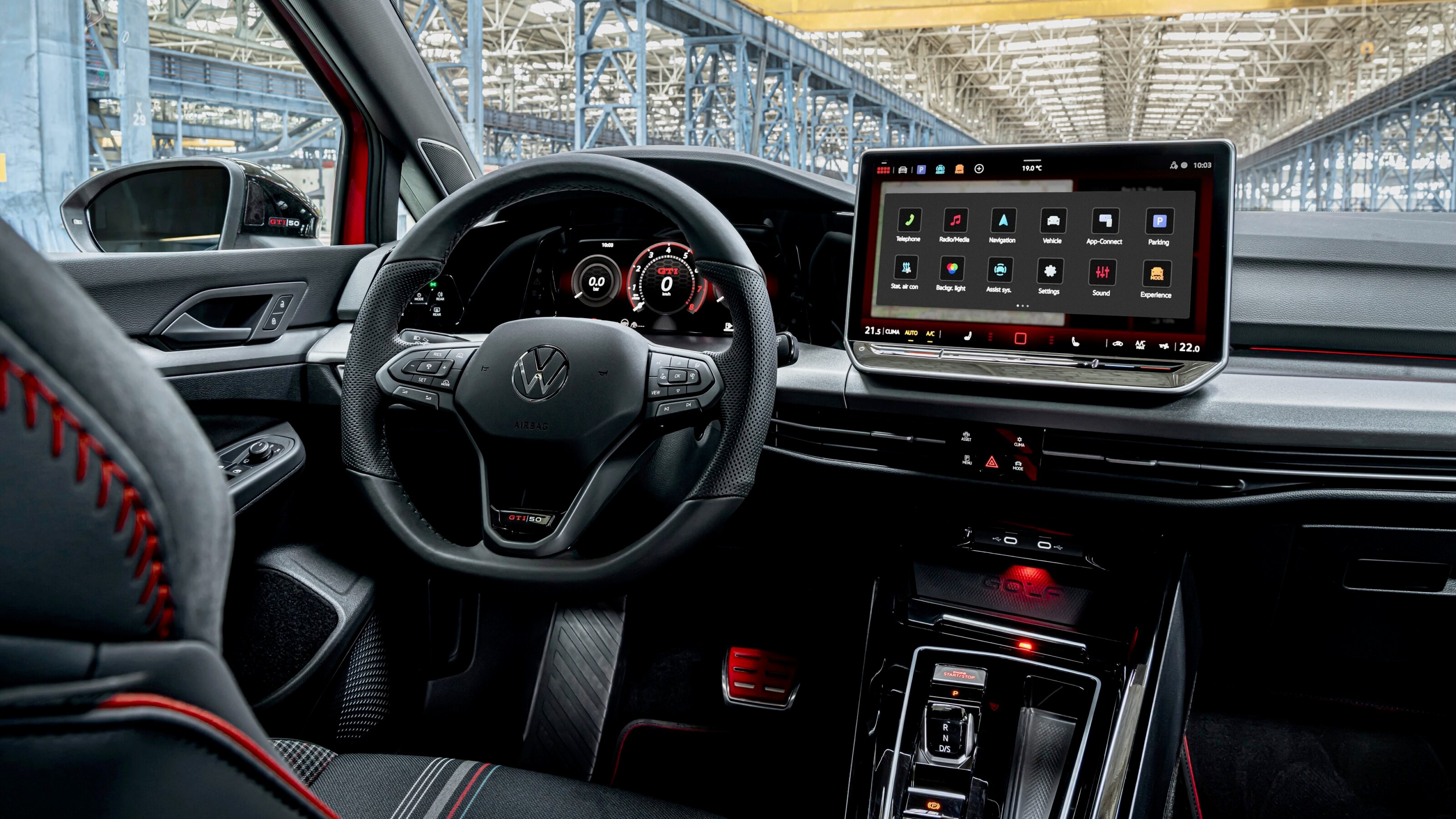
Inside the GTI Edition 50 is a special plaid trim for the sports seats, more Edition 50 logos and even red pedals.
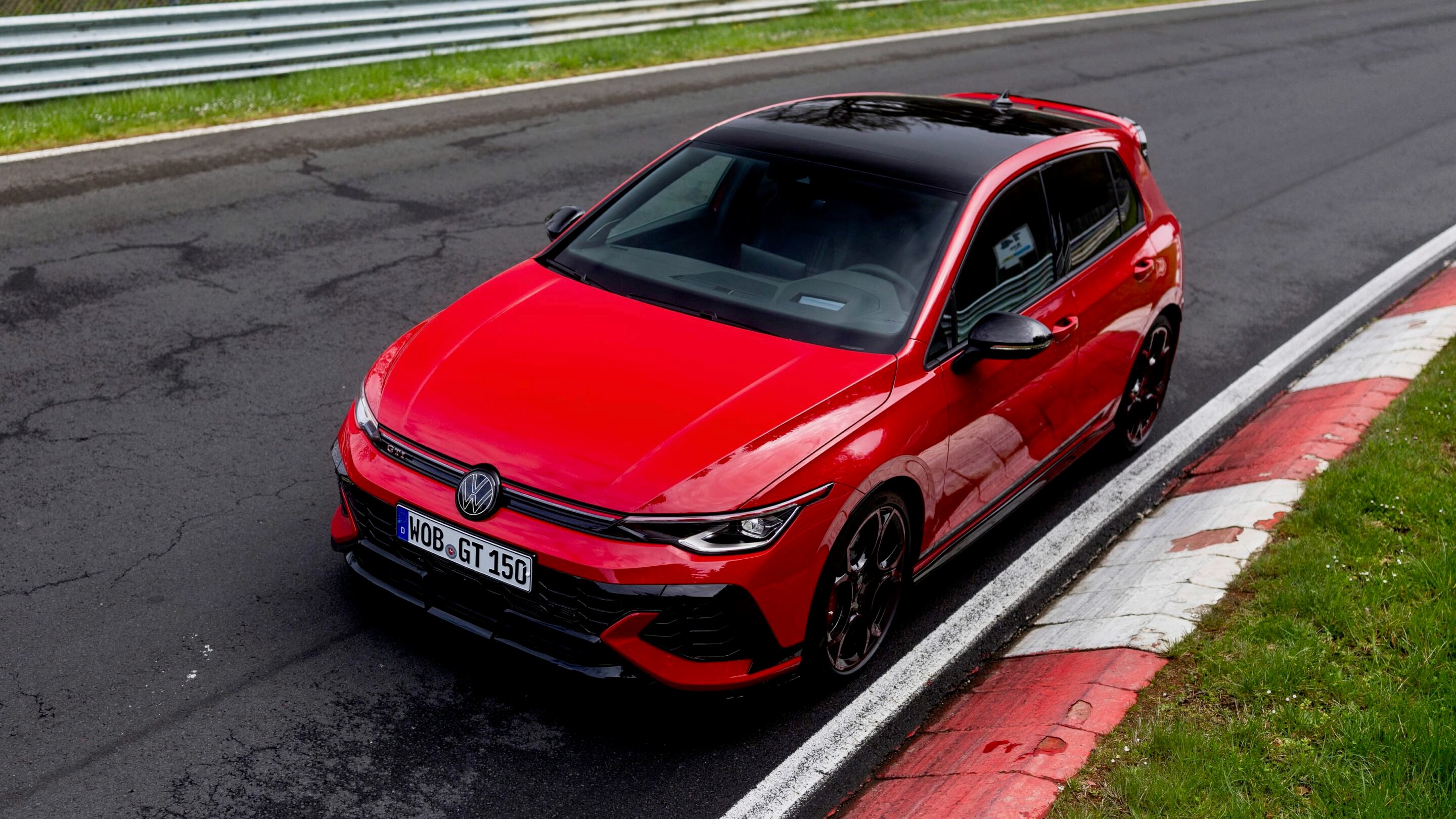
Volkswagen has tuned the Golf GTI’s ‘EA888’ 2.0-litre turbo-petrol engine to make 239kW of power and 420Nm of torque – 44kW and 50Nm more than the standard GTI and only 6kW less than the Golf R. The added performance gifts the Edition 50 with a 5.5-second sprint to 100km/h and a top speed of 270km/h – 0.4 second and 20km/h improvements on the standard GTI.
More than just added performance, the GTI Edition 50’s chassis has also been revised with 15mm lower suspension and new settings for the steering, adaptive dampers and limited-slip differential.
For buyers wanting even more performance, an optional Performance Package is available on the Golf Edition 50 and that includes lowered suspension by a further 5mm, revised spring and damper settings and significantly increased negative front camber with stiffer upper suspension mounts.
Also included in the Performance Package are new Bridgestone Potenza Race semi-slick tyres, which were developed for the special GTI. The tyres are 1.2kg lighter each than previous-generation Potenza Races, and the wheels are also 3kg lighter each than a standard GTI.
A new lightweight R-Performance exhaust system with a titanium rear silencer is also fitter, though buyers can save a further 11kg by ticking the box for the optional Akrapovic system.
The Volkswagen Golf GTI Edition 50 will go on sale in early 2026 in Europe, with Australian plans yet to be confirmed.
It’s not just its relentless popularity with new car buyers that makes it obvious why the Ford Ranger has been crowned as the overall winner of Wheels’ Best Dual-Cab Ute award for 2025. It’s available drivetrains – including the new plug-in hybrid – its driving dynamics, interior, practicality, toughness and even its ergonomics mean the Ranger beats its competition hands-down.
Price: From $36,880 plus on-road costs (XL Hi-Rider 4×2 Single Cab), up to $90,440 +ORC (Raptor)
Drivetrain/economy/CO2 emissions:
2.0L turbo-diesel: 125kW/405Nm, 6-speed auto, 2WD or 4WD, 7.6L/100km, 199g/km;
2.0L twin-turbo diesel: 154kW/500Nm, 10-speed auto, 4WD, 7.2L/100km, 189g/km;
3.0L turbo-diesel: 184kW/600Nm, 10-speed auto, 4WD, 8.4L/100km, 222g/km;
3.0L turbo-petrol (Raptor): 292kW/583Nm, 10-speed auto, 4WD, 11.5L/100km, 262g/km;
2.3L turbo-petrol PHEV: 207kW/697Nm, 10-speed auto, 2.9L/100km, 66g/km
Dimensions: Up to 5380mm long, 1918mm wide, 1926mm tall, 3270mm long wheelbase
Towing capacity/GVM/GCM: 2500kg–3500kg/3130kg–3350kg/5370kg–6400kg
Warranty/roadside assistance/service intervals: Five-year/unlimited km, 12 months of roadside assistance with each dealer service up to seven years in total, annually/every 15,000km
Five-year service cost: $1,516 ($303 per year)
| Driving | |
|---|---|
| Interior | |
| Practicality | |
| Overall value |
Things we like
- Easily the best ute to drive
- Wide range of variants and engines
- Intuitive and practical interior
Not so much
- No variant is particularly cheap to buy
- No more manual option
- Rear seat not huge for adults
One of our favourite things about the Ranger is the way it drives for Australian conditions. Ford Australia were integral to the design and development of the Ranger and that can be seen in the way it drives: for a ute, its ride and handling balance is excellent. It’s also impressively comfortable, no matter which model you choose, and it’s more satisfying to drive than key rivals such as the Toyota HiLux and Isuzu D-Max.
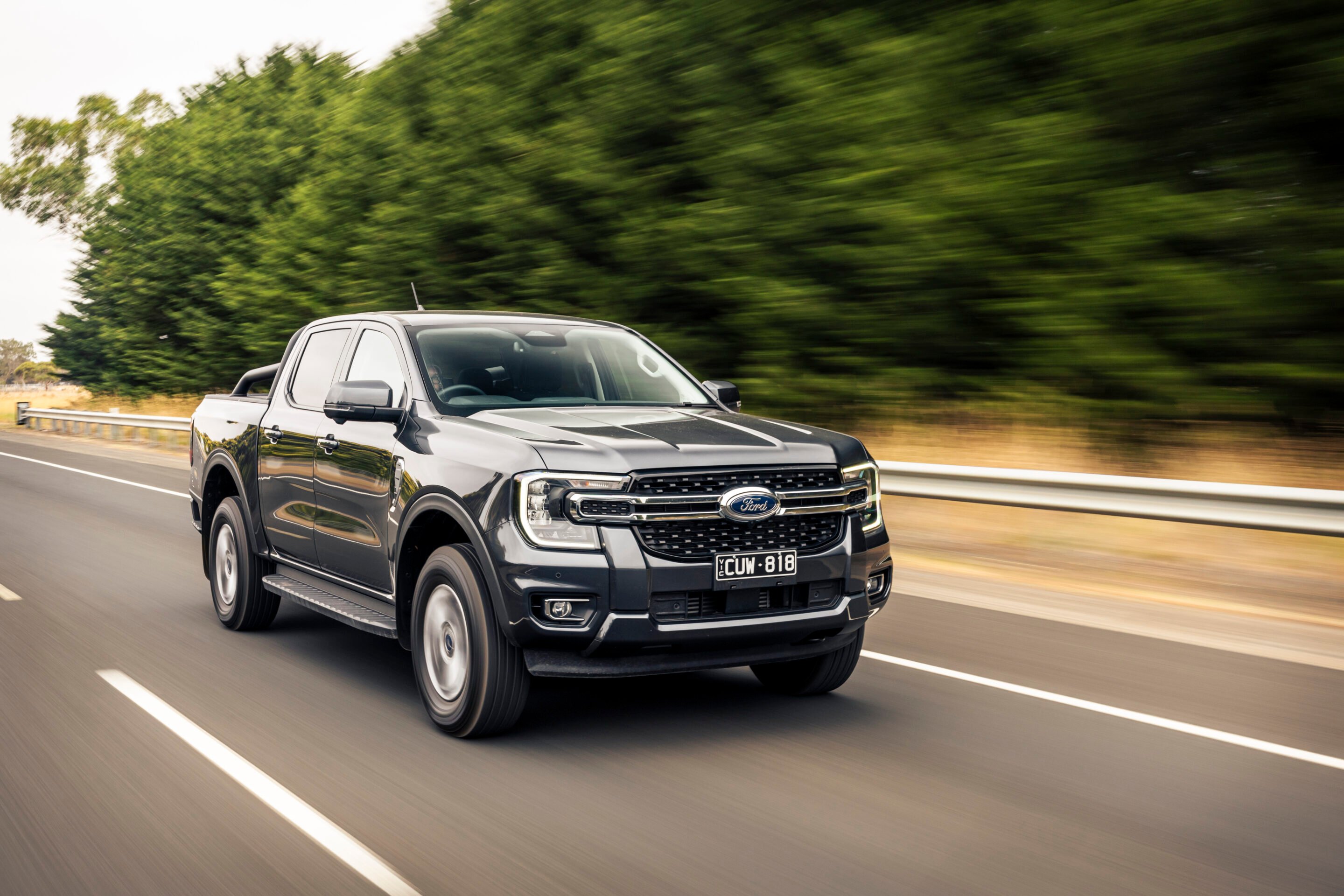
The number of variants are also a huge attraction – from the entry-level XL to the top-spec fire-breathing Raptor, each Ranger model is well equipped and although it can be more expensive than key rivals, we think it still represents solid value for money. Ford is also adept at reading the market and has added special editions such as the Tremor for even more off-road ability. In addition to that, its five-year capped price servicing is some of the least expensive in the segment.
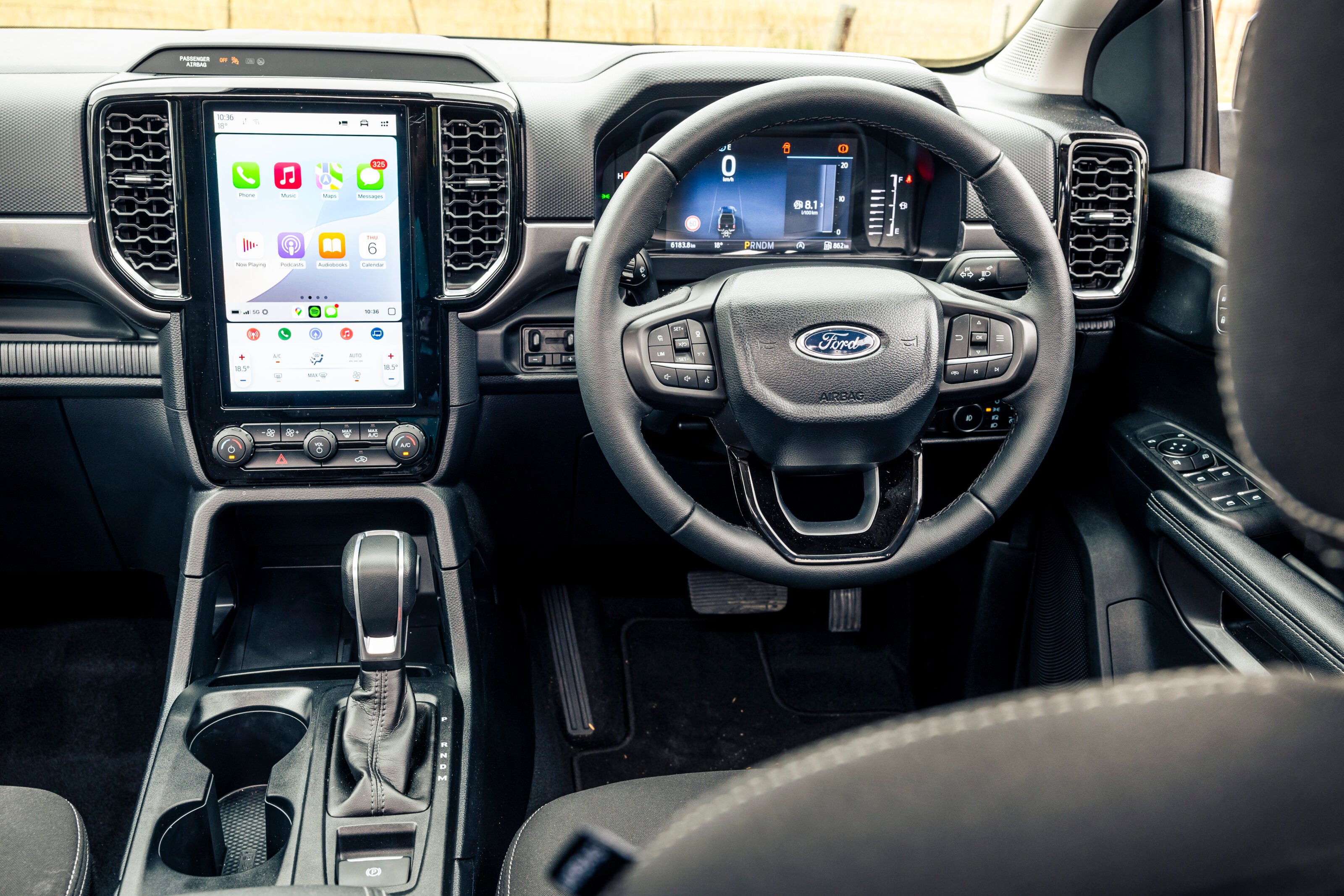
The interior of the Ranger is among the best in class and full of clever features, such as the genius ‘fries holder’ cut out ahead of the gear selector sculpted for – what else – a packet of Maccas’ fries. Every model has a large portrait touchscreen that’s quite easy to use and features hard buttons for more practicality, while there’s also plenty of storage space. While there are some utes that are larger in the rear seat, the Ranger is still mighty comfortable back there.
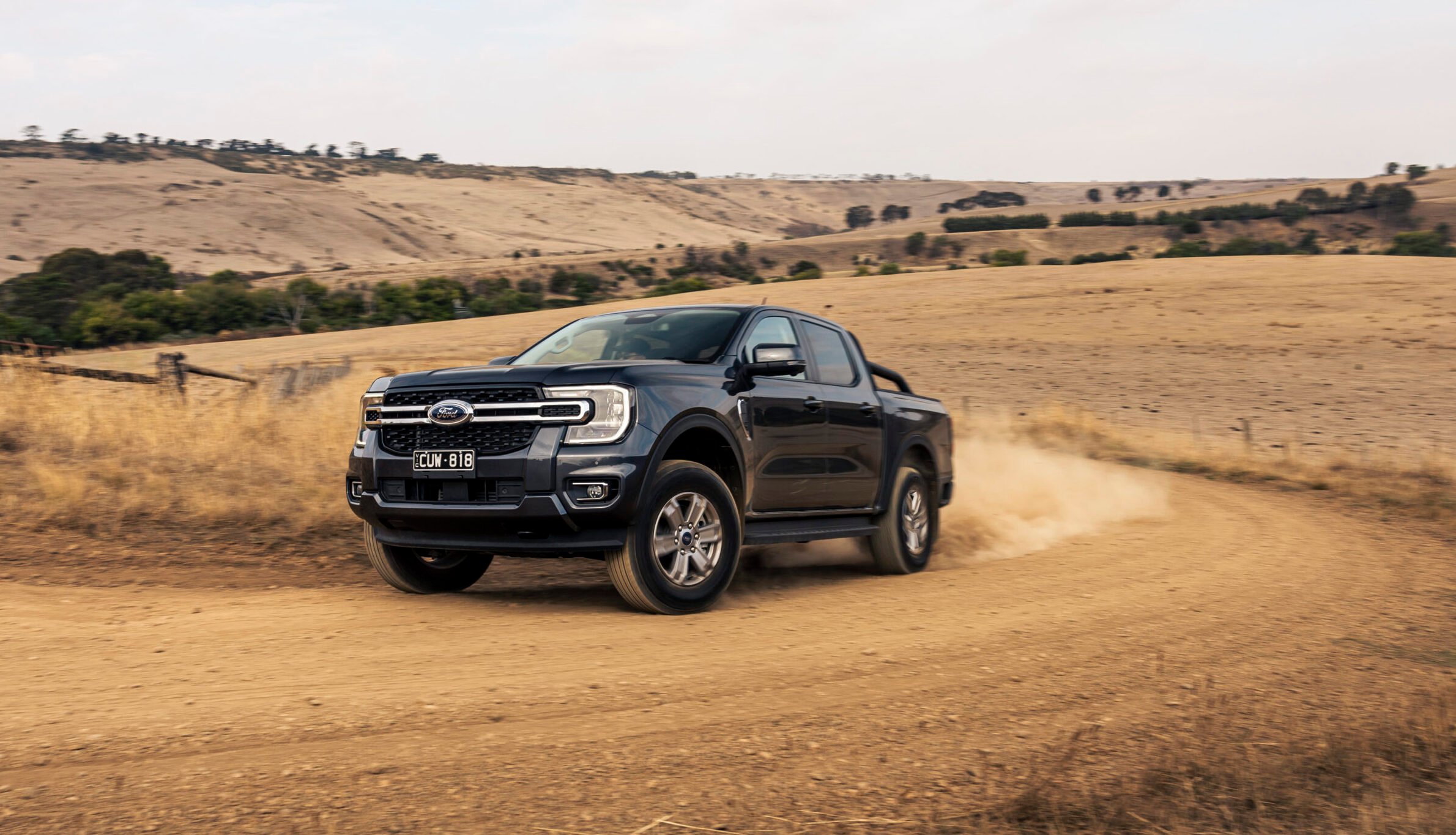
Regardless of model chosen, the Ranger’s drivetrains are excellent for the category, particularly the superb 3.0-litre V6 turbo-diesel that also adds a clever four-wheel drive system. But even the 2.0-litre diesels in entry-level models are gusty, and the new plug-in hybrid drivetrain is quick and provides a reasonable electric driving range and, cleverly, power in the rear tray off which to operate tools and camping gear.
With its strong off-road ability, 3.5-tonne braked towing capacity across the mainstream range, excellent driving dynamics for the segment, a whole host of standard features on every model – including a lot of clever towing and off-roading features – and a wide range of specs to choose from, the Ford Ranger is unsurprisingly a winner in market and a worthy victor of this year’s Wheels’ Best Dual-Cab Ute.
Contenders
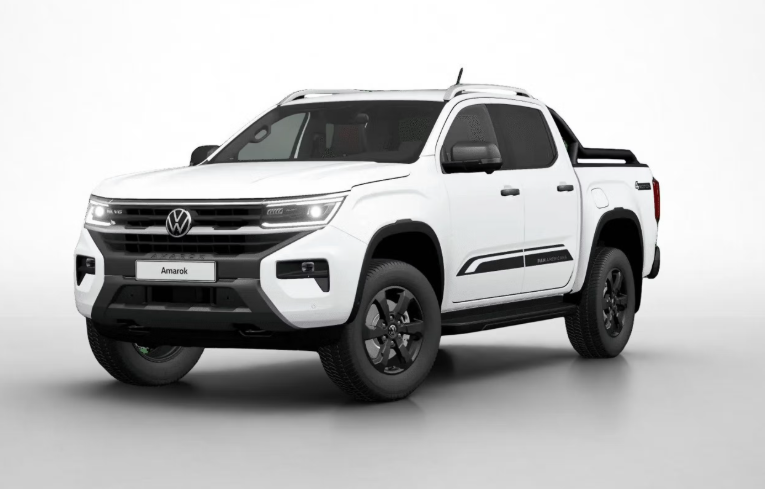
Winner: VW Amarok PanAmericana
- Price: From $54,490 plus on-road costs (TDI405 Core) to $82,990 +ORC (Aventura)
- Drivetrain/economy/CO2 emissions: 2.0L turbo-diesel: 125kW/405Nm, 6-speed auto, 4WD, 8.0L/100km, 211g/km; 2.0L twin-turbo diesel: 154kW/500Nm, 10-speed auto, 4WD, 7.2L/100km, 189g/km; 3.0L turbo-diesel: 184kW/600Nm, 10-speed auto, 4WD, 8.4L/100km, 222g/km; 2.3L turbo-petrol: 222kW/452Nm, 10-speed auto, 4WD, 9.7L/100km, 222g/km
- Dimensions: Up to 5362mm long, 1917mm wide, 1884mm tall, 3270mm long wheelbase
- Towing capacity/GVM/GCM: 3500kg/3230kg – 3350kg/6200kg – 6400kg
- Warranty/roadside assistance/service intervals: Five-year/unlimited km, 12 months of roadside assistance extended with each dealer service, annual/every 15,000km
- Five-year service cost: $1900 ($380 per year)
| Driving | |
|---|---|
| Interior | |
| Practicality | |
| Overall value |
Things we like
- Great to drive, punchy engines – including hot hatch-like TSI452
- Simple model range: dual cab and 4WD across the range
- Best in class cabin quality
Not so much
- No more manual option
- Rear seat not huge for adults
- No plug-in hybrid or single cab
If you’re a little less price-sensitive when it comes to choosing a dual-cab ute, it becomes genuinely difficult to make a case against the Volkswagen Amarok. It’s an astonishingly polished package that is one of the most aspirational choices in the entire sector. But does that mean it’s a ute for people who don’t really like utes?
Not really. While there might be other choices that would be your go-to if your weekend fun involved mud ruts so deep that your diff does a decent impression of a ploughshare, the Amarok is nevertheless a lot more versatile than its sophisticated look and feel initially suggests. Under the skin, it’s much the same as the existing Ford Ranger, so it’s clearly a well-engineered package that’s designed specifically with Australian conditions front and centre of mind.
Buyers largely choose from the 125kW 2.0-litre turbodiesel TDI405 models, the 150kW 2.0-litre twin-turbodiesel TDI500 variants or the V6 turbodiesel TDI600 models, but where the Amarok has offered a key point of difference over its cousin with the Blue Oval badge is that it also offers the 2.3-litre petrol TSI452 powerplant. If you’re dead set against diesel but want these underpinnings, the $79,990 TSI452 Aventura was – hulking Ranger Raptor aside – the only show in town, but the addition of this engine with plug-in hybrid boost to the Ford’s range erodes Volkswagen’s USP here.
No great issue. The Amarok is still a better looking thing than the Ranger, with a nicer interior and the price step up isn’t perhaps as great as you might expect, with around $2k separating the entry-level Ford and Volkswagen V6 variants. That’s a relatively modest sum to apply some creative man-maths to.
Downsides? There are fewer physical controls for the air conditioning than the Ranger gets, with most of the functions incorporated into the reskinned infotainment system. You also don’t get an app to allow for the likes of remote monitoring, diagnostics, vehicle locating or over-the-air updating.
There is a feel-good quality to the Amarok that Volkswagen does very well. Choose, say, a mid-range Style version and it features leather-effect inserts on the dash and door cards and grippy microfibre ‘ArtVelour’ seating upholstery. It even gets matrix LED headlights, which you’ll value on those late drives home on country roads.
The Amarok makes all kinds of sense if you need a ute, but don’t want to shoulder many of the downsides that come with ute ownership. If you don’t think driving a ute means putting up with crude controls, second-rate interior materials and a poor ride, it makes a compelling case.
Ford Ranger Raptor
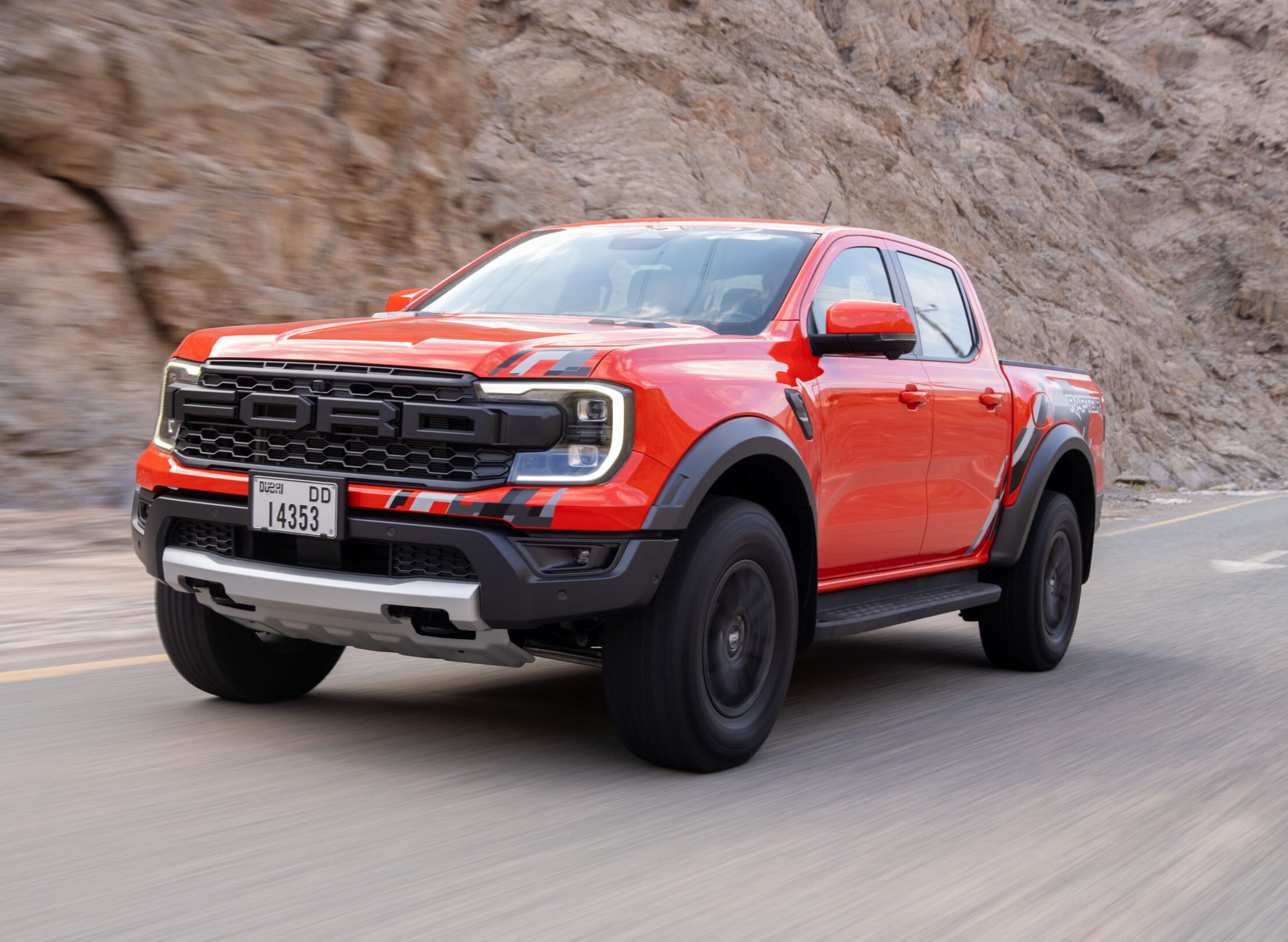
- Price: From $90,440 plus on-road costs
- Drivetrain: 3.0L V6 petrol engine, 292kW/583Nm, 10-speed auto
- Combined fuel economy, CO2 emissions, fuel type: 11.5L/100km, 262g/km, 98RON
- Warranty: Five year, unlimited kilometre
- Five-year service cost: $1645 ($329 per year)
| Driving | |
|---|---|
| Interior | |
| Practicality | |
| Overall value |
Things we like
- Built like no other ute
- Gutsy V6 petrol engine
- Tested on world’s toughest terrain
Not so much
- Doesn’t come cheap
- You’ll wince at the bowser
- Others offer a better rig for big fit-outs
Think Raptor and you probably have some super-saturated vision of big utes bounding over dunes in Baja, but the Australian reception to the Ford Ranger Raptor has been almost as euphoric. There’s a solid reason for that and it’s one that’s tough for any rival to replicate. It’s a truly big-budget item that’s been designed by Australians in Australia for the Australian market. Yes, it’s screwed together in Thailand, but we genuinely do lay claim to the genesis of the world’s straight-out-of-the-crate off-road ute and that’s something we should be enormously proud of.
Back in the March 2025 issue of Wheels, Daniel Gardner had the opportunity to drive the Ranger Raptor, F-150 Raptor and the Bronco Raptor back to back on the dunes of the UAE, and he returned utterly convinced that the Ranger was the wieldiest, toughest and most capable package, so we certainly don’t need to tug the forelock to the US mothership.
The unique and near-indestructible rear end with its specific subframe, the Fox 2.5” Live Valve internal bypass shock absorbers, the electronically controlled front and rear diff locks, the 850mm wading depth, the clever and useful selectable drive modes (which include damper settings), Ford’s Trail Control (effectively a low-speed cruise control for off-road use) and the monster 17-inch BF Goodrich KO2 high performance A/T tyres give the Raptor incredible off-road capabilities, especially for a vehicle with what some off-road greybeards would see as the inherent caveat of independent front suspension. It also features 285mm of ground clearance a 32° approach angle, 24° breakover angle and 27° departure angle allow.
A snorkel and a front bar may be the only aftermarket accessories you’d ever need to get to some fairly remote places on the map. And you’d certainly want to be in nothing else to cover kilometre after kilometre of red centre washboard.
Due to issues surrounding payload, we’d look to a leaf-sprung ute if we wanted to build a serious overlanding rig, but if you just want something that’s absolutely good to go bush straight off the forecourt, nothing really gets close to the Ford Ranger Raptor.
Nissan Navara Warrior
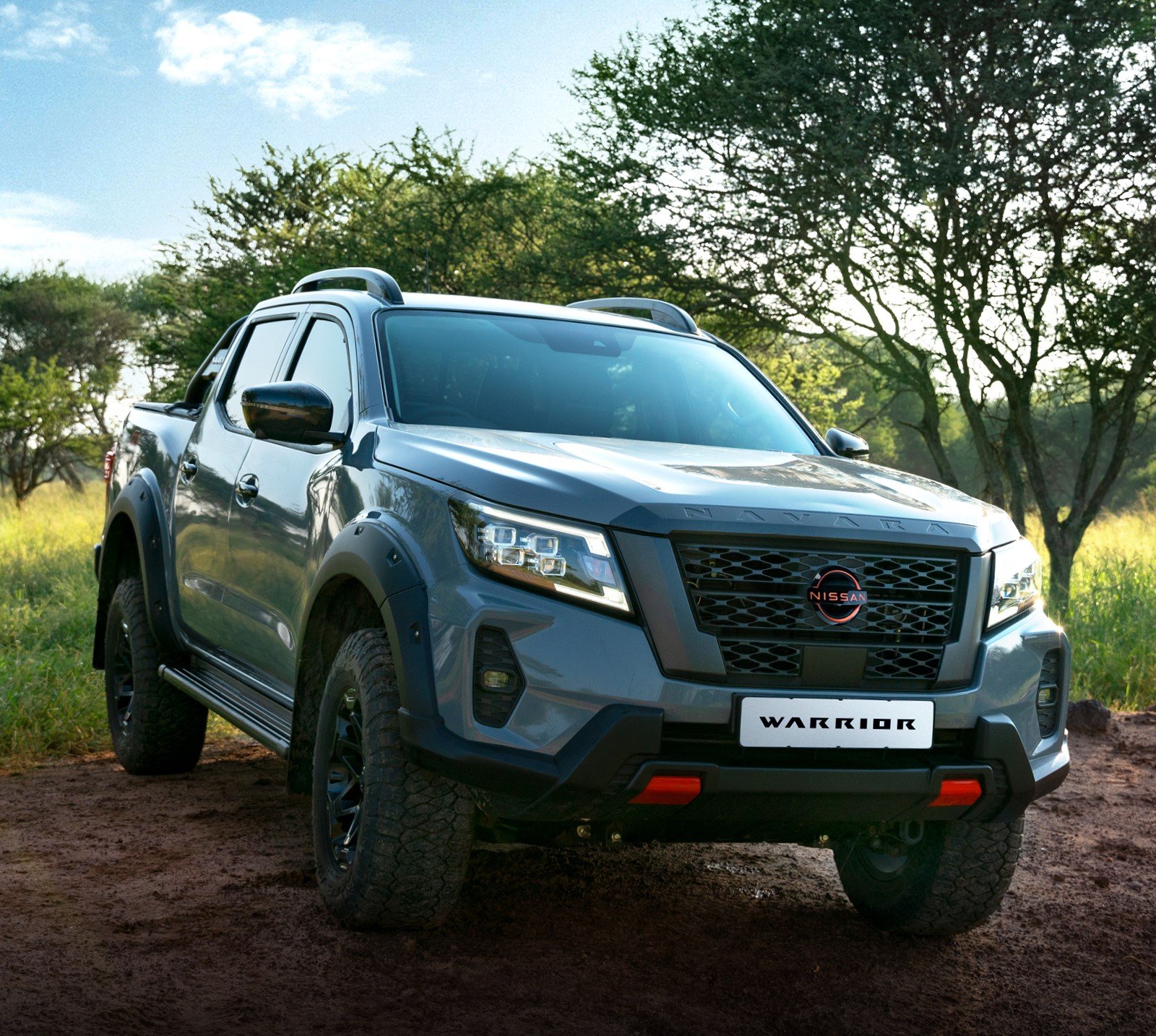
- Price: From $58,750 plus on-road costs
- Drivetrain: 2.3L 4-cyl turbodiesel engine, 140kW/450Nm, 6-speed manual/7-speed auto
- Combined fuel economy, CO2 emissions, fuel type: 7.6L/100km, 200g/km, diesel (SL auto)
- Warranty: Five year, unlimited kilometre
- Five-year service cost: $2495 ($499 per year)
| Driving | |
|---|---|
| Interior | |
| Practicality | |
| Overall value |
Things we like
- Re-engineered in Australia by Premcar
- Manual gearbox option
- Great standard tyres
Not so much
- Feels dated inside
- No seat heating even on PRO-4X model
- Low range selection can be fussy
Congratulations to Nissan for identifying that not everyone is ready or able to drop $90k on a Ford Ranger Raptor and that a budget alternative, offering much of the Ford’s capability at two-thirds of the price, could well find a ready market. And so it has proven.
Whereas the Raptor is unapologetically over-engineered, Nissan has taken a more pragmatic view regarding the Navara Warrior. Like the Ford, it’s built in Thailand, but from there it comes to Australia and is stripped back and worked up by Premcar in Melbourne.
The ground clearance is lifted by 40mm to 260mm and the track splays from 1570mm to 1600mm. The approach angles improves from 32 to 36 degrees, and the the suspension now features revised spring and damper rates for improved isolation and compliance. A bigger jounce bumper has been fitted to reduce shock pathways into the cabin at full suspension travel. That’s on top of all the gear such as a winch-compatible front bar, broader fender flares, meaty Cooper AT3 rubber, a 3mm steel underbody protection plate and a red front bash plate.
There’s even a respectable payload available – up to 961kg for the manual PRO-4X and 952kg for automatic versions. Not everyone’s a fan of rowing their own gears out in the rough stuff, but there’s a hardcore of off-road drivers who like that feeling of control, the mechanical simplicity and the challenge of right gear, right time. And choice has to be a good thing, right?
In practice, the Navara Warrior feels nigh-on unstoppable and there’s no real acclimatisation process to getting to grips with the drive controls. There’s even an old-school handbrake bar, which we love. The seating position takes a bit of getting used to, as there’s no reach adjustment for the steering column, and the low range system prefers to have no load on it and be on flat ground to engage and, as we all know, that’s not always a given. The fairly useless and largely cosmetic sports bar of the Warrior Pro-4X variant also limits access to the front tie-downs. Other gripes? Seat heating would come in handy for winter high country jaunts and the infotainment seems a bit off the pace. The fuel gauge can also be a little vague. It’s also worth noting that there’s no stock of the base SL Warrior manual on hand right now.
No, it’s not as sophisticated as a Ranger Raptor and nowhere near as fast, but if you value reliability and no-nonsense common sense engineering for your off-road ute, the Navara Warrior ticks all the right boxes.
Isuzu D-Max Blade
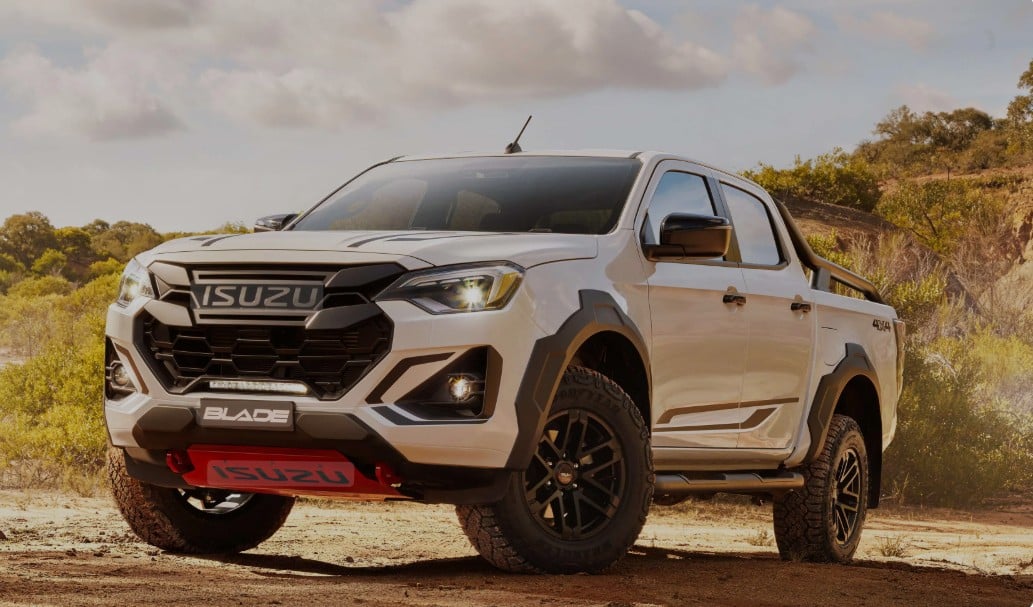
- Price: From $77,990 drive away
- Drivetrain: 3.0L 4-cyl turbodiesel engine, 140kW/450Nm, 6-speed auto
- Combined fuel economy, CO2 emissions, fuel type: 8.0L/100km, 207g/km, diesel
- Warranty: Six years, 150,000 kilometre
- Five-year service cost: $2245 ($449 per year)
| Driving | |
|---|---|
| Interior | |
| Practicality | |
| Overall value |
Things we like
- Re-engineered in Australia by Walkinshaw
- Tried and trusted drivetrain
- Worthwhile and well-chosen suspension upgrades
Not so much
- More grunt would have been nice for the money
- Extrovert exterior treatment
- Availability is limited
While there’s a lot to be said for the effectiveness of Isuzu‘s D-Max Blade, originality probably isn’t its key asset. It effectively follows the pathway that Nissan took with the Navara Warrior models, bringing a well-considered base ute to an Australia specialist – in this case Walkinshaw – which undertakes a fundamental re-engineering of its suspension and off-road accessories.
There’s little to complain about the D-Max Blade’s off-road abilities, but its Achilles heel may well be the value proposition. Whereas Nissan offered the Navara Warrior in both a ritzy PRO-4X and a more utilitarian SL version, Isuzu has positioned the D-Max Blade as a model at the top of the range with just about every bell and whistle available crow-barred in. That means a drive-away price of nigh-on $78,000, when a little $50k can buy you a D-Max with the same 4JJ1 3.0-litre diesel powerplant. In percentage terms that’s quite the uptick.
The bits that matter are the 29mm lifted suspension featuring Monroe 35mm MTV twin-tube dampers. The Blade runs on 275/65R17 Goodyear Wrangler Duratec RT all-terrain tyres, and there’s an extra 32mm of track width compared with a more familiar D-max LS-U model. There’s also underbody protection in the form of a steel plate that doubles the usual D-Max’s 1.5mm gauge to 3.0mm. There’s even a cross-braced eight-tonne load rated recovery point system. Rough Terrain mode also tamps down throttle sensitivity for those moments when the vehicle’s bouncing its way over truly awful terrain.
Buyers get 244mm of ground clearance and approach breakover and departure angles of 29.2, 25.2 and 19.2 degrees respectively. It’s a well engineered and wisely chosen set of upgrades that deliver a decent uptick in off-road capability for the already burly D-Max. You’re also buying a whole heap of stuff like embroidered headrests, scuff plates, identification plaques, Basalt Black detailing, decals, exclusive mud flaps and a vast list of such tinsel, so it would have been very welcome had Isuzu also offered the Blade off-road package on a more affordable variant without all the aesthetic extras.
With its leaf-sprung rear end and near-indestructible chain-driven 3.0-litre diesel engine, the beauty of the D-Max Blade is that it brooks no surprises with Aussie drivers who know and trust the D-Max. It’ll get you where you need to go and back again. It might not do so in the most comfort or in the quickest time, but there’s a lot to be said for rugged dependability in this wide, brown land and the D-Max Blade has that in spades.
Motorists in New South Wales are being urged to pay close attention to their speed, with major changes to road enforcement coming into effect from July 1.
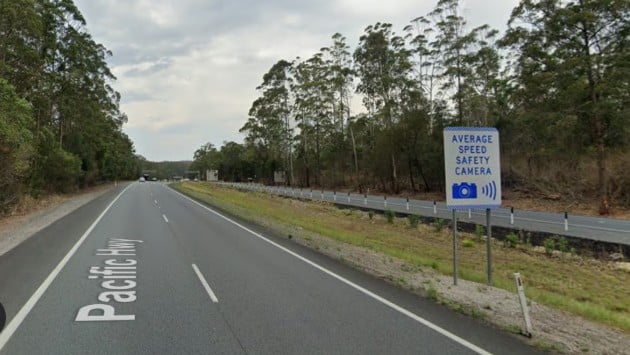
Two key average speed camera locations – until now operating in trial mode – will begin issuing fines to light vehicle drivers, marking a significant shift in the state’s road safety approach.
These cameras, located on the Pacific Highway between Kew and Lake Innes (15 km) and on the Hume Highway between Coolac and Gundagai (16 km), will become the first in NSW to enforce average speed limits for cars and light vehicles. Previously, all average speed detection systems in the state targeted heavy vehicles only.
Unlike traditional speed cameras, these systems calculate a vehicle’s average speed over a distance by recording the time it passes two checkpoints. If the calculated average speed exceeds the legal limit, a fine and demerit points will apply.
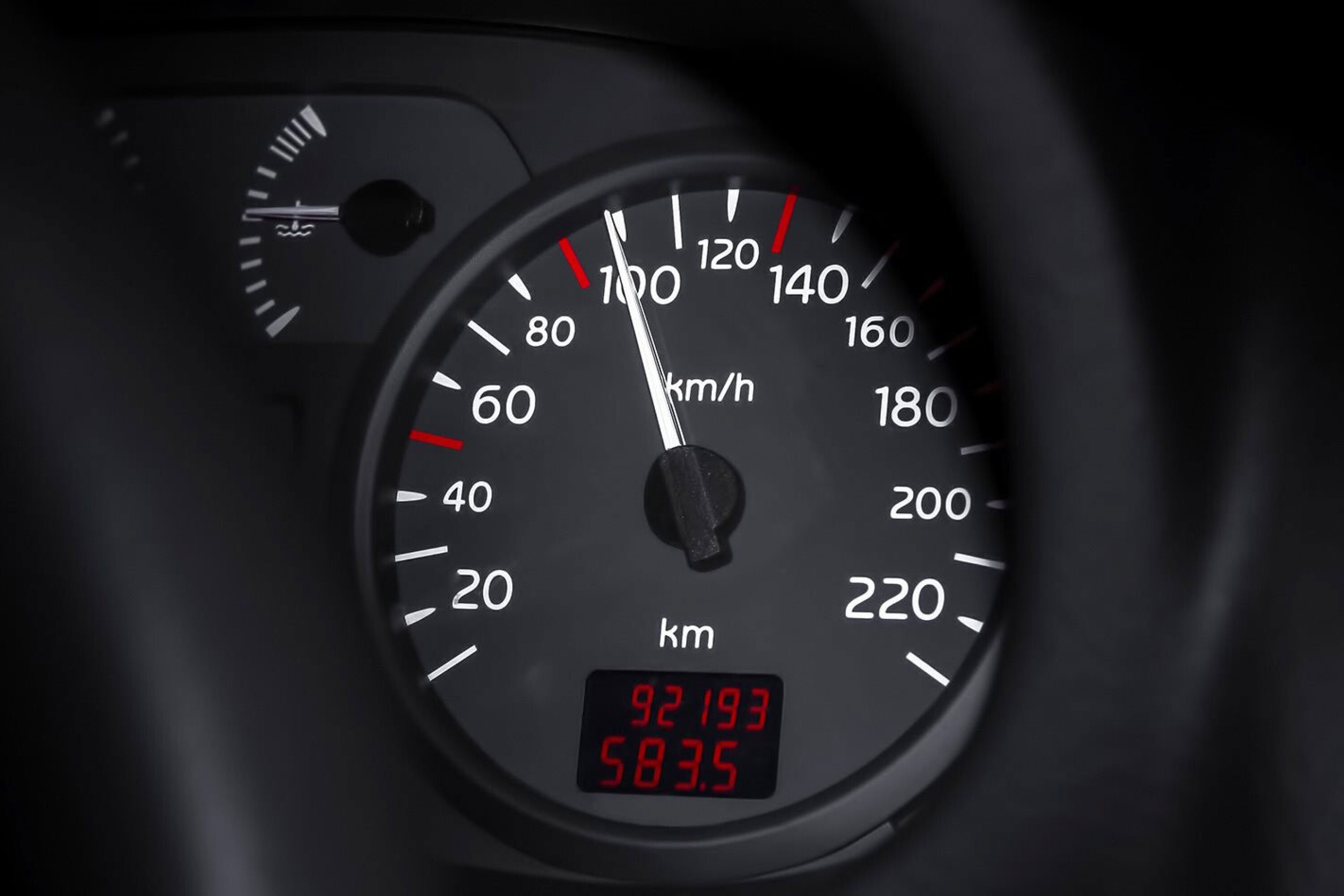
Penalties can be severe, with fines for light vehicle drivers ranging from $145 and one demerit point (for under 10 km/h over the limit) to $2959 and six demerit points (for speeding over 45 km/h above the limit). Learner and P-plate drivers face harsher penalties at the lower thresholds, and all fines may increase from July 1 in line with the Consumer Price Index (CPI).
Transport for NSW says the initiative is intended to save lives by encouraging consistent speed compliance across long stretches of road. “Average speed safety cameras are designed to prevent speeding over distance – not just at camera points,” a spokesperson said.
However, not everyone agrees with the approach. Lawyer Hayder Shkara told Yahoo News the system would penalise “everyday drivers” who unintentionally drift above the limit.
“This doesn’t stop the hoon who slams the brakes when they see a cop – it catches the driver going a few kilometres over during long trips,” he told Yahoo News. He also raised concerns that drivers might become overly focused on their speedometer at the expense of broader road awareness.
With letters sent to local residents and public notices online, authorities are warning all motorists to be aware of the new rules – and ensure they’re driving within the limit when enforcement begins July 1.
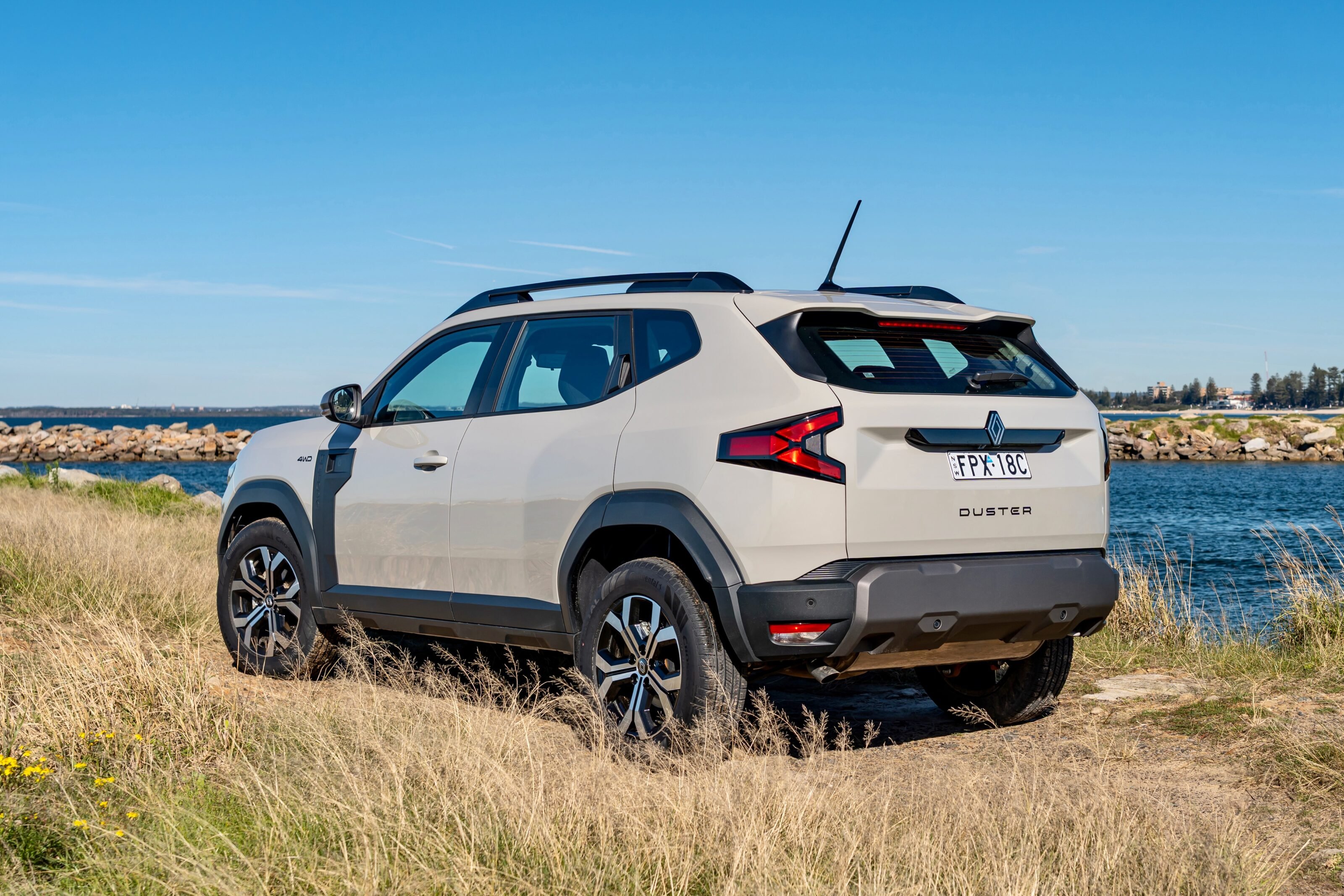
Renault has announced that the first two examples of its new Duster small SUV have arrived in Australia ahead of a July on sale date. So far, the brand has announced that two models will be offered with two different drivetrains, including an all-wheel drive model with a manual transmission. Local pricing is expected to be announced soon.
The two examples are now testing locally ahead of release, but also to test a new range of off-road specific accessories such as a Rhino-Rack rooftop tent and modular roof platform.
The Renault Duster measures 4345mm long, 1921mm wide, 1650mm tall and rides on a 2657mm long wheelbase. Its ground clearance is up to 212mm.
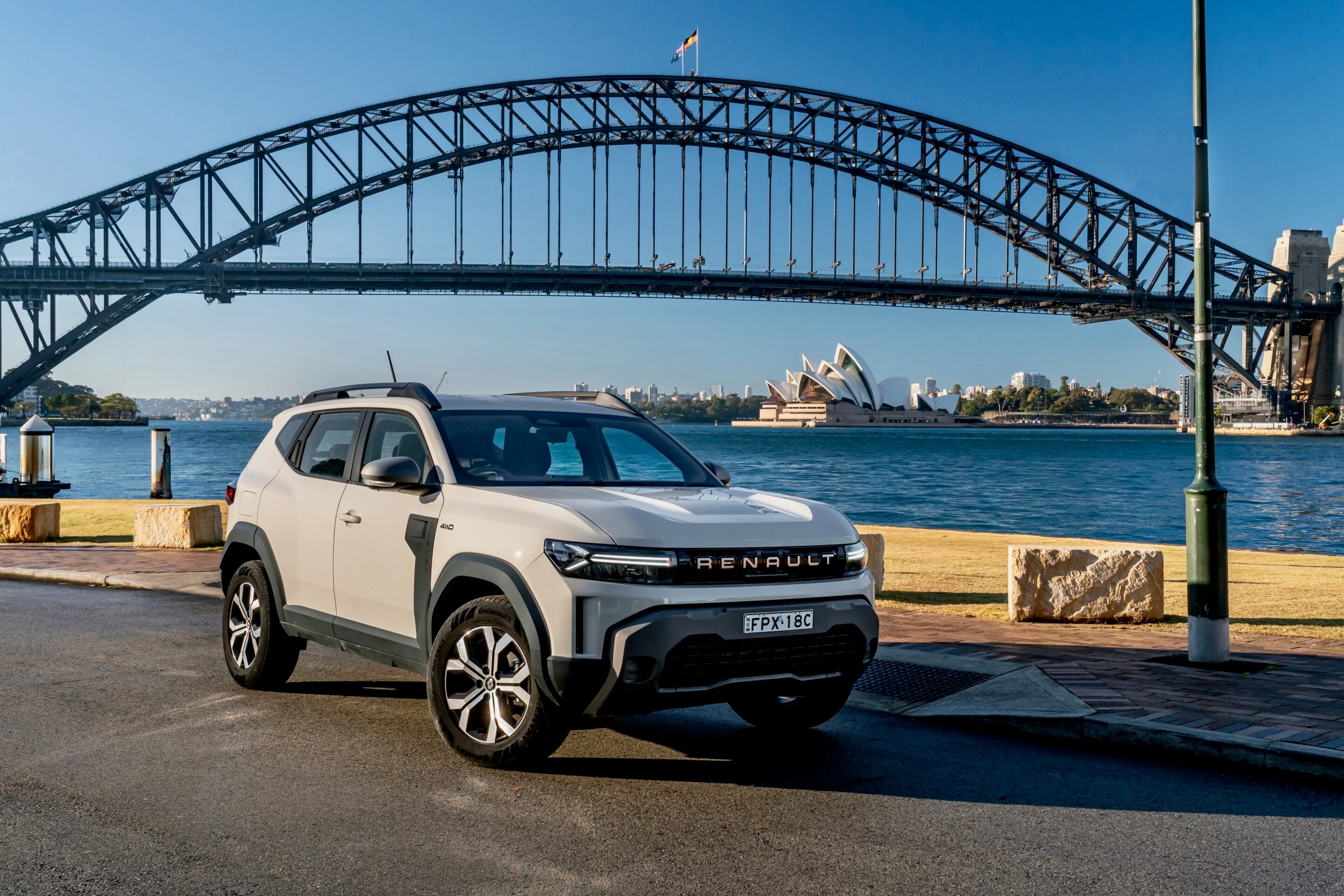
“Unlike many other vehicles in the small SUV segment, the Renault Duster has a level of genuine off-road ability for those who want to escape the urban jungle,” said Renault Australia General Manager, Glen Sealey.
In Australia, two drivetrains will be initially available for the Renault Duster: a 113kW/250Nm 1.3-litre four-cylinder turbo-petrol engine mated to a seven-speed dual-clutch transmission and front-wheel drive, or a mild-hybrid 96kW/230Nm 1.2-litre three-cylinder turbo-petrol engine mated to a six-speed manual and all-wheel drive.
According to Renault, two models will be available, as will seven exterior body colours.
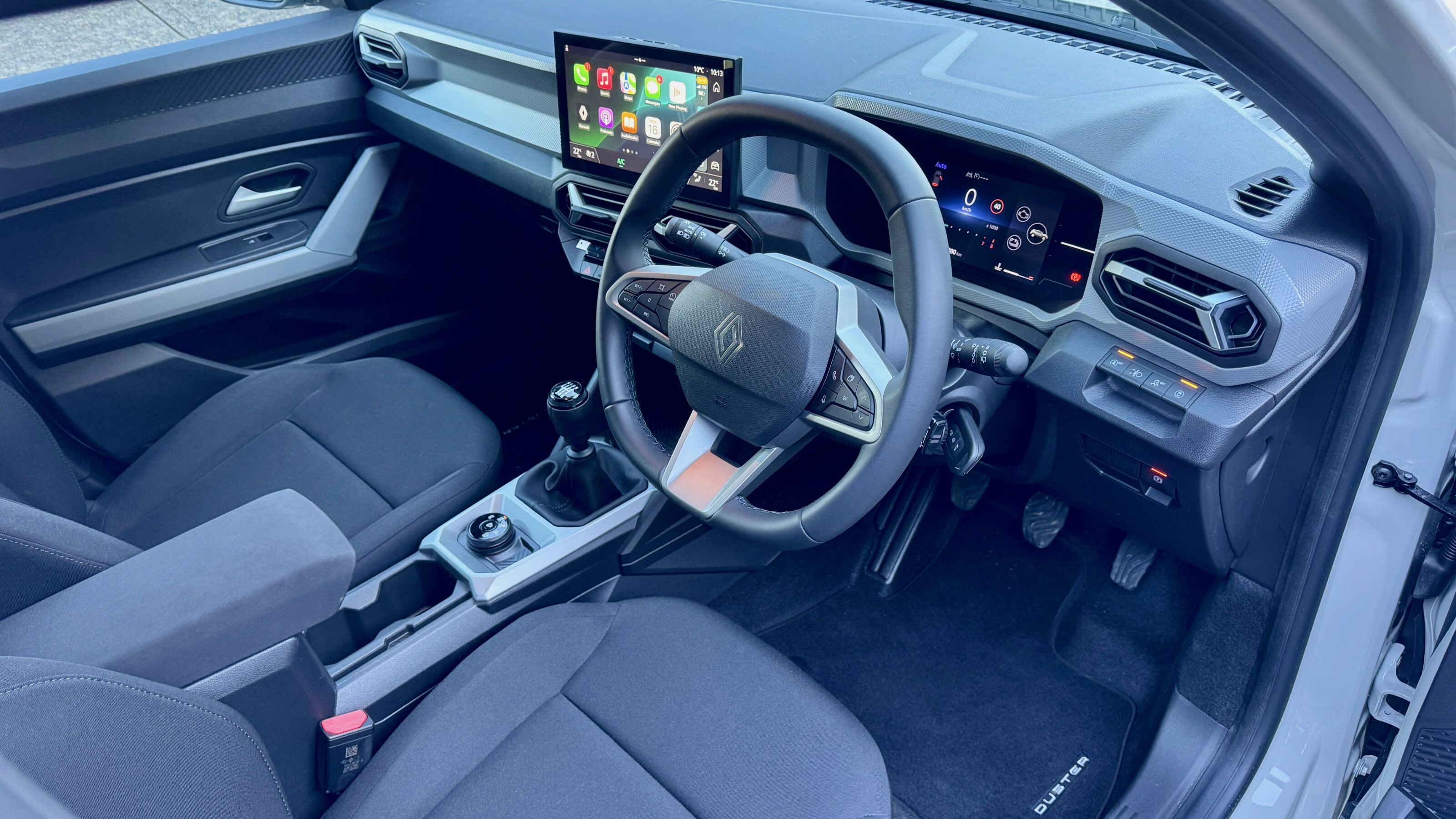
Key Renault Duster available features:
- LED headlights with Y-shaped daytime running lights
- 7-inch digital driver’s display
- 10.1-inch touchscreen
- Apple CarPlay and Android Auto
- Autonomous emergency braking
- Driver attention alert
- Traffic sign recognition
- Lane keeping assist
- Blind-spot monitoring
- Rear/multi-view cameras (depending on specification)
- Five driving modes (4×4 only)
- Hill descent control (4×4 only)
The Renault Duster is due to go on sale in Australia from next month, with local pricing and
specifications due to be announced before then.
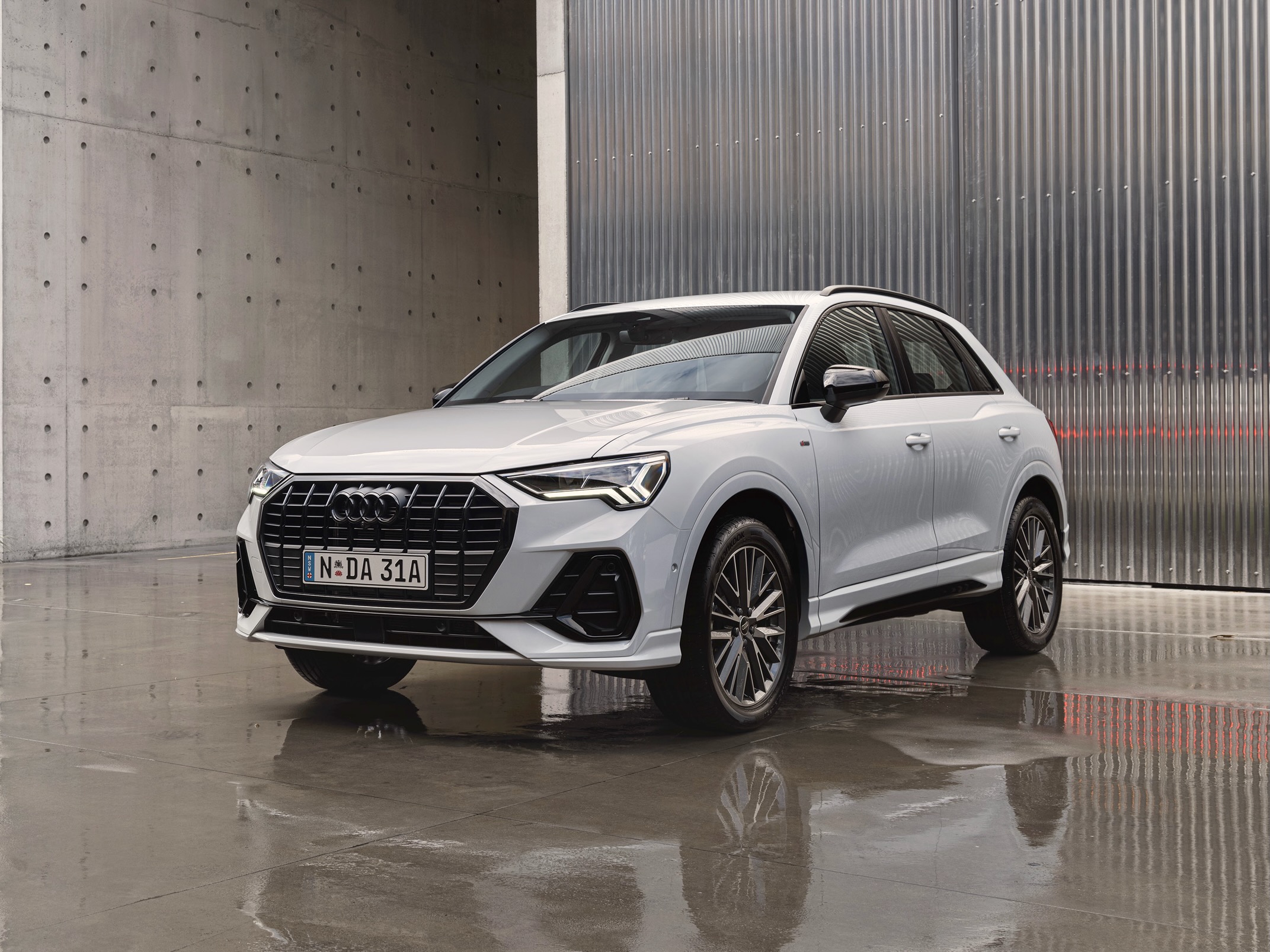
Audi Australia has announced new S Line Edition special models for the A1 hatchback and Q2 and Q3 small SUVs. Based on the 35 TFSI models in each lineup, the new editions add sportier exterior styling and more standard equipment for enhanced value for money.
Priced from $41,800 plus on-road costs, the Audi A1 S Line Edition is priced $2,600 higher than the A1 35 TFSI on which it’s based, yet according to Audi, adds more than $7000 of extra value through new equipment.
On top of the A1 35 TFSI’s standard equipment, the S Line Edition adds sportier S Line exterior styling with gloss black highlights such as the mirror caps and badging, black 17-inch alloy wheels, adaptive LED headlights and LED tailights with scrolling indicators.
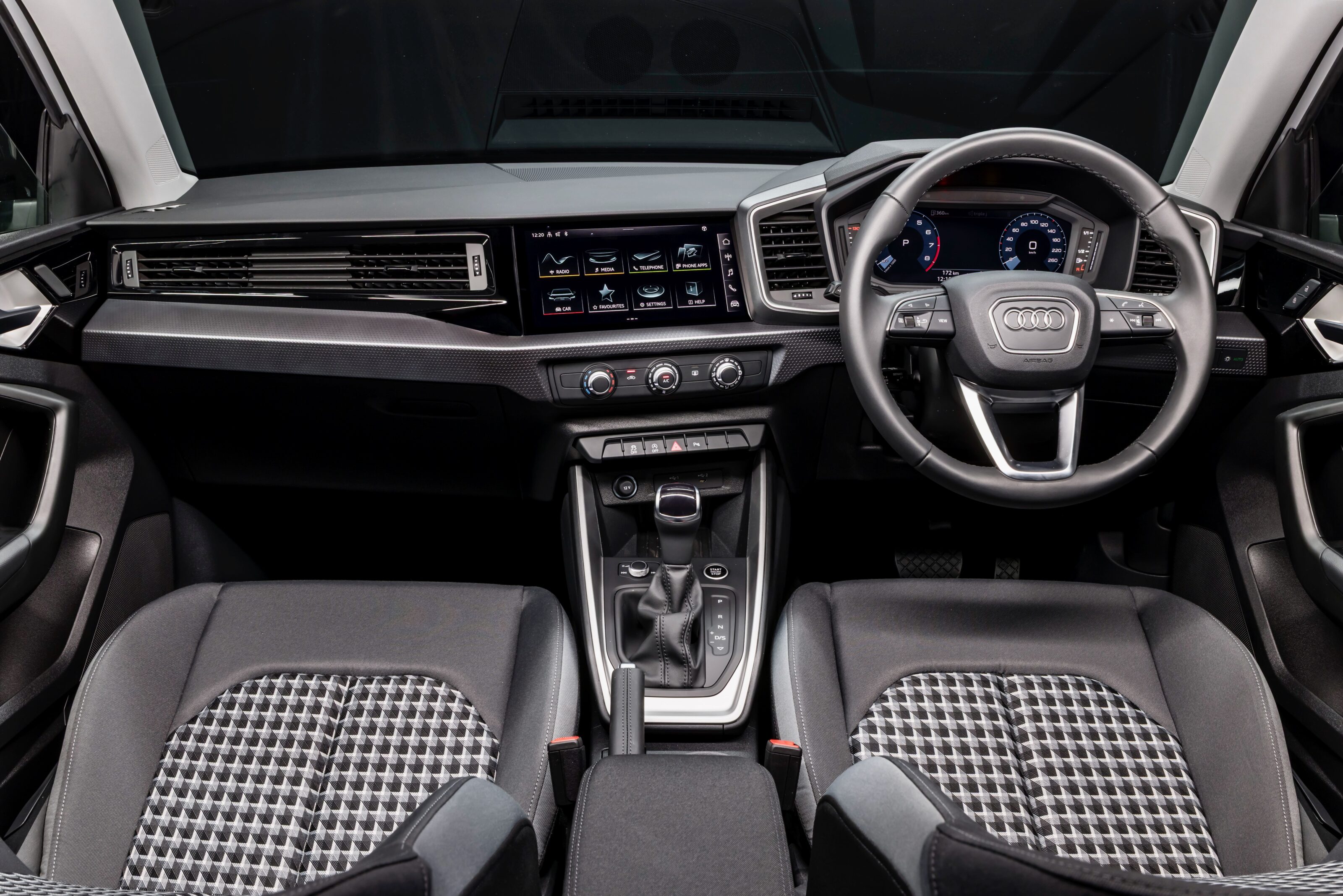
Inside, the A1 S Line Edition features front sports seats with lumbar adjustment in ‘Derby’ upholstery, though buyers can choose leather for an additional $1500. Heated seats, dual-zone automatic climate control and selectable LED ambient lighting are also available as part of the $1000 Comfort Package.
The same value enhancement goes for both the Q2 and Q3 S Line Editions. Priced from $50,900 +ORC, or $1500 above the Q2 35 TFSI, the Q2 S Line Edition adds sportier exterior styling with gloss black exterior detailing and 19-inch alloy wheels.
Q2 S Line Edition buyers can also choose the $2150 Comfort Pack with heated seats, an auto-dimming rear mirror, auto-folding exterior mirrors, privacy glass and a 180-watt sound system. The Q2 S Line Edition is available in Progressive red, Glacier white, Mythos black, Navarra blue and Daytona grey paint finishes.
Finally, the Q3 S Line Edition adds the same sportier exterior styling and detailing, as well as 20-inch alloy wheels and premium paint finishes with the illuminated S Line door sills also added.
Audi S Line Edition pricing (plus on-road costs):
| A1 35 TFSI | $41,800 |
|---|---|
| Q2 35 TFSI | $50,900 |
| Q3 35 TFSI | $58,500 |
| Q3 35 TFSI Sportback | $62,000 |
The special edition Audi S Line models are now on sale in Australia, with first deliveries due to
commence soon.
Smart has added a new “Styled by Mercedes-Benz” statement to its official brand communications as part of a new celebration of part-Mercedes ownership before its new #5 mid-size SUV launches locally later this year.
Originally launched by Mercedes-Benz in the 1990s, Smart is now half owned by Chinese giant Geely and all its products use Geely mechanicals but, as the brand suggests, are styled by Mercedes.
According to Smart, Mercedes-Benz has had direct design input to every new Smart model, from the exterior and interior design to the build quality and materials used inside.
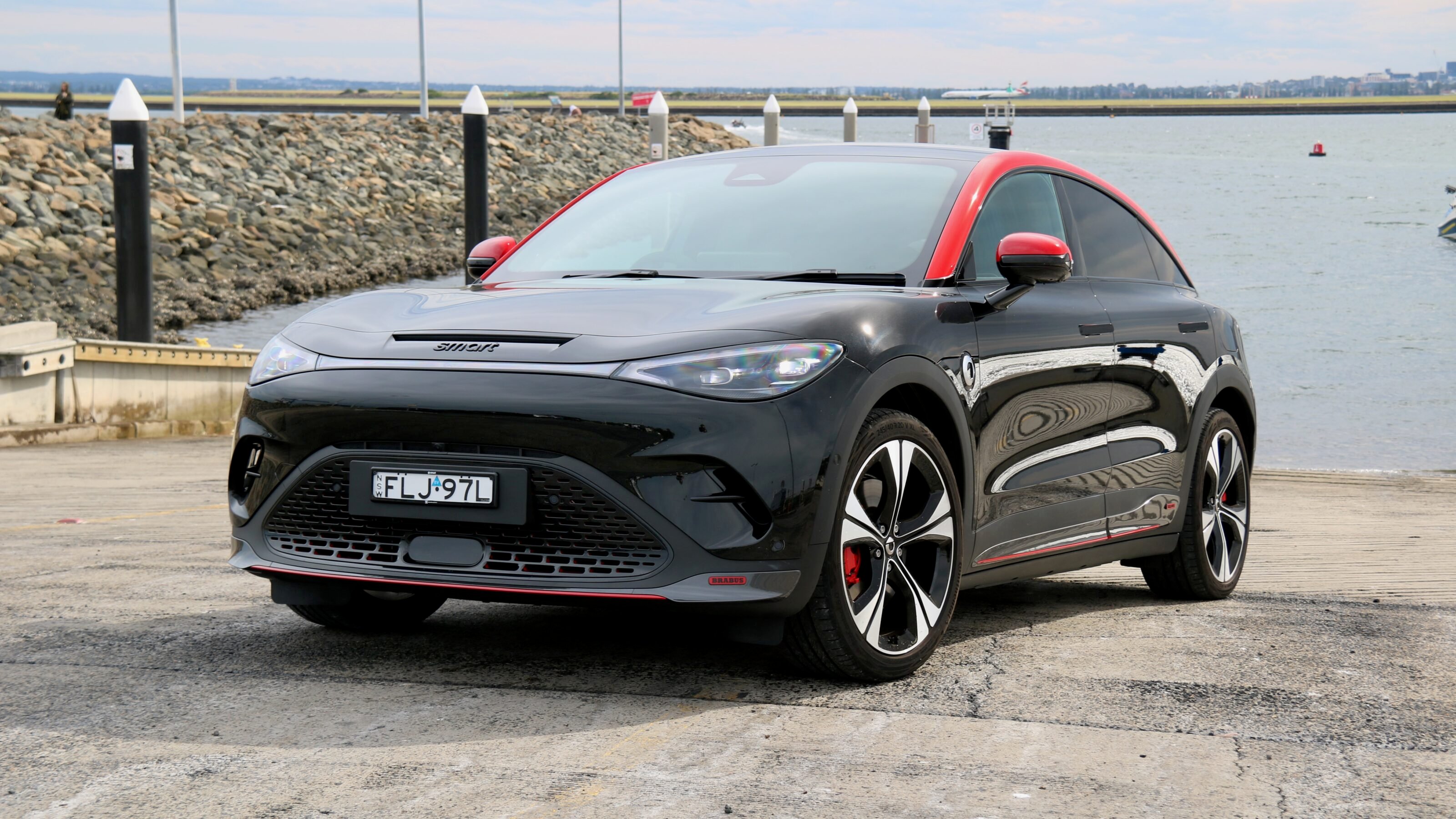
At the global media premier of the Smart #5 in Byron Bay NSW late last year, Mercedes-Benz Chief of Design for Smart, Kai Sieber, outlined the design DNA for the Smart range. “The three keywords were, love, pure and unexpected. I believe we have achieved that with pure and elegant streamlined exteriors, even for the more outdoor focused #5, and achieved a perfect balance of aesthetics and aerodynamics.”
“We have worked on creating a whole new sensation of space inside the cabins, combining superior room efficiency with unique design features that create and emotional connection and a feeling of premium comfort. We have also added unexpected touches to both exterior and interior design; from the recessed door handles to the way the worked to make driving and interacting with the car as natural and immersive as possible.”
The Smart #1 and Smart #3 ranges have been available in Australia since late 2024 and its latest product, the #5 mid-size SUV, will be launched by year’s end. The #5 is the largest model the brand has ever produced and in top-spec Brabus form , makes a massive 475kW of power and hits 100km/h in just 3.8 seconds.
Local pricing and specifications for the Smart #5 will be announced closer to its late 2025 Australian release date.
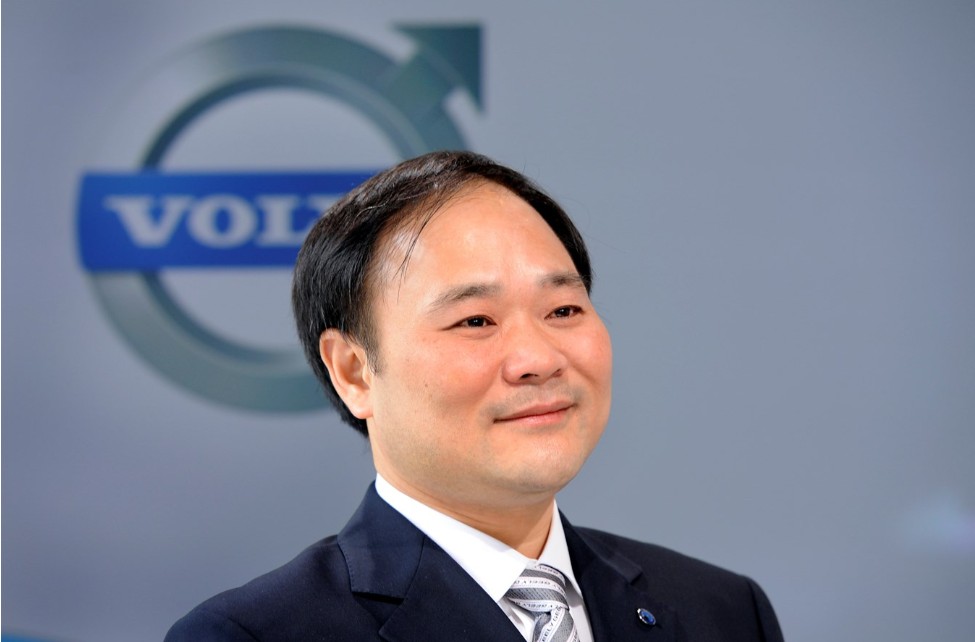
Geely Holding Group chairman and founder Li Shufu has issued a stark warning about the global electric vehicle (EV) market, cautioning that the industry is facing a period of “serious overcapacity.”
Speaking at an automotive forum in Chongqing recently, as reported by Reuters, Li announced that Geely would refrain from building new manufacturing plants or expanding capacity at existing facilities, in a bid to avoid adding to the growing glut of vehicle production.
Geely, a major player in the automotive world, owns brands including Geely Auto and Volvo Cars, and has stakes in Polestar, Smart and Lotus. Li’s comments reflect broader anxiety within China’s automotive sector, which has seen an intensifying price war as manufacturers compete aggressively for market share.
With domestic demand softening, many Chinese automakers are increasingly looking to foreign markets to offload excess supply.
Prominent Chinese carmakers such as BYD, Chery Auto, and Great Wall Motor have already ramped up international expansion, establishing factories in markets like Southeast Asia, South America, and Eastern Europe.
However, this global push has also prompted concerns from foreign regulators and industry leaders, particularly in the European Union and United States, over potential oversaturation and competition with local producers.
Geely, for its part, is taking a collaborative approach to overseas manufacturing. In February, the company announced plans to utilize Renault’s existing production facilities in Brazil rather than construct new plants. The move includes taking a minority stake in Renault’s local business.
While Reuters reported in April that Chinese regulatory approval for the partnership had been delayed, Geely later stated that the cooperation was proceeding successfully.
Li’s remarks underscore a critical moment for the EV sector: while governments and consumers continue to back electrification, the rapid scaling of production risks creating more supply than the market can absorb. His call for restraint may serve as a signal to peers in China and beyond that sustainable growth should take precedence over expansion for expansion’s sake.
Australian Treasurer Jim Chalmers is actively exploring two major reforms in electric vehicle (EV) policy: the introduction of a national road‑user charge (RUC) and the phasing out of the fringe benefits tax (FBT) exemption for EV buyers.
In a recent address to the National Press Club, Chalmers confirmed that a road‑user charge is now high on the reform agenda, aimed to replace fuel excise revenue lost as Australians transition to EVs.
With fuel excise generating $15.7 billion in 2023–24, a projected shortfall of around A$470 million is expected from 2024–25.

Instead of taxing fuel, the proposed RUC would charge drivers based on kilometres travelled, offering a fairer, mileage-based system. Chalmers indicated the federal government will coordinate with states and territories – like NSW and Western Australia, which plan their own schemes – to implement a national framework.
State-level trials have already begun: Victoria introduced a per-kilometre charge in 2021, which was ruled an unconstitutional excise by the High Court, forcing a refund of around A$7 million.
NSW aims to implement a charge by 2027 or once EVs make up 30 per cent of new car sales.
While debate continues on design – likely involving odometer or GPS tracking – the Australian Automobile Association supports RUC provided the revenue is ring‑fenced for road infrastructure.
The FBT exemption to encourage EV uptake is also under the microscope. This incentive costs the budget around half a billion dollars annually, and critics argue it subsidises wealthier EV buyers who do not directly contribute to road infrastructure via fuel taxes.
A current benefit exempts EV novated leases under the luxury car threshold from fringe benefits tax (FBT), worth approximately $4700 per employee on a $50,000 vehicle.
However, this exemption is expected to come under review by mid-2027, in line with evolving EV uptake.
