
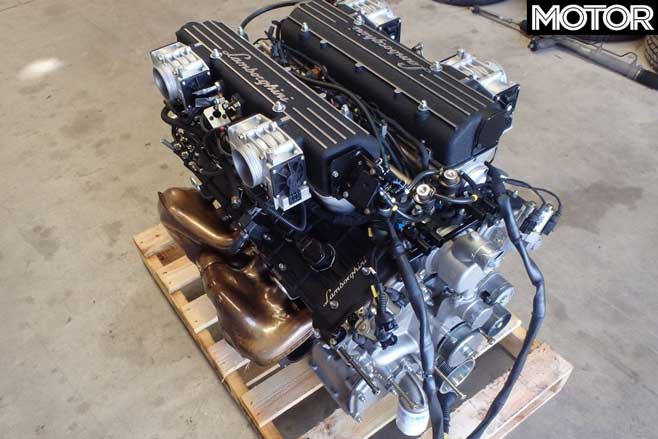
A complete V12 from a Lamborghini Murcielago has gone up for sale in Australia, priced at a fairly reasonable $44,989.
The 6.2-litre engine is from a 2005 Murcielago Roadster, which has apparently only travelled 7052km, though the seller describes the engine as being “as new”.
The same can’t be said for the car, which appears to have suffered a nasty tussle with something evidently stronger than its front and its windshield.
Luckily for the eventual buyer, the engine includes a lot of the peripherals that would likely be a challenge to find in new condition otherwise – inlet manifold, throttle bodies, fuel rail, wiring harness, and even the exhaust manifolds.
This essentially means, if you’ve got something that’ll fit it and an immense amount of skill or patience, a Lambo V12 engine swap isn’t entirely out of the question.
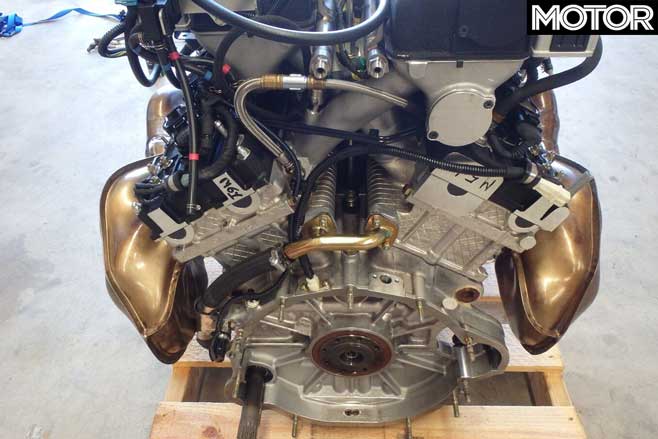
But if $45K seems too steep, there’s another option. That option is also a Murciélago V12. There are currently two ‘Murci’ engines for sale in Australia, but the second one’s in slightly less than ‘as new’ condition.
With a sump cracked in two places and a fair heft of its peripherals missing (there’s no throttle body, exhaust or inlet manifolds, flywheel, clutch, coils, alternator, starter, or compressor according to the listing), this engine is more a ‘fixer-upper’ than a ready to rock motor. Oh, and it’s got two rather gnarly sump cracks.
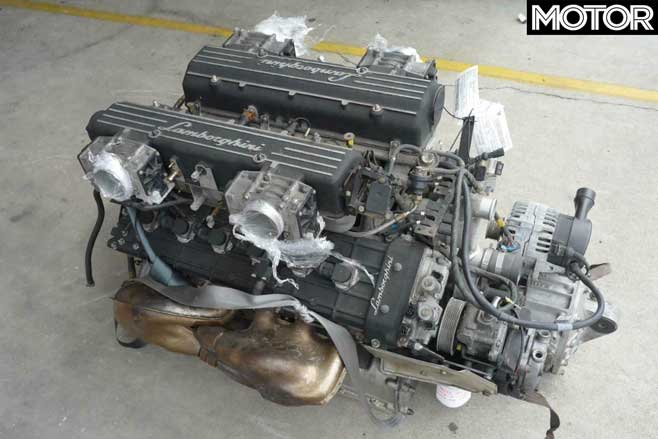
But it’s also a fair bit cheaper at $36,075. Worth it? It depends how badly you want a V12 in your… well, what would you put it in? Let us know below!
As first drive reviews have recently revealed, the new Ford Shelby Mustang GT500 is more than just built for the straight-line.
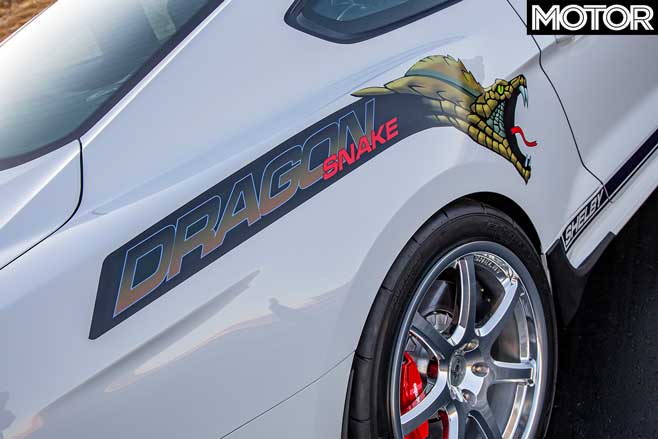
Our reports from American soil attest to Ford’s new muscle car flagship being a well-rounded package on road and track, however for those of the drag racing disposition, American tuner Shelby American has reimagined a Mustang GT500 for the drag strip with the Shelby GT500 Dragon Snake concept.
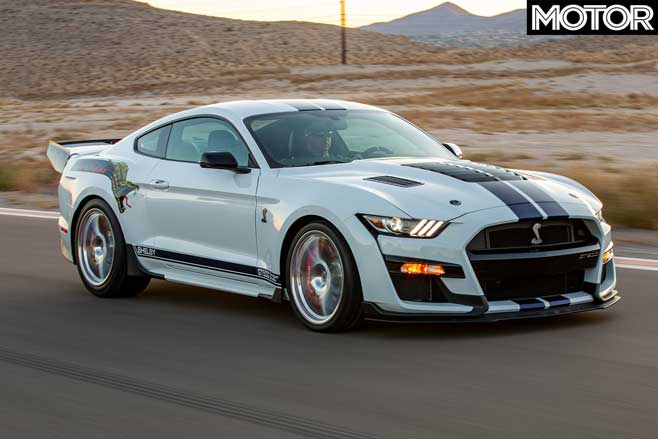
Revealed at SEMA 2019, the Dragon Snake features a retuned version of the GT500’s 5.2-litre supercharged V8 fitted with a Shelby supercharger upgrade and a full exhaust system, raising its power output from 567kW to “597kW+”.
In addition to that, Shelby recalibrated the Dragon Snake concept’s dual-clutch transmission, revised its suspension, installed lightweight glass, and modified the bodywork, all in the interest of bolstering its straight-line acceleration.
The Dragon Snake name too is a homage to Shelby American’s drag racing version of the Shelby Cobra of the 1960s, which was known as the ‘Dragonsnake’.
“The 2020 Shelby GT500 is truly amazing in stock configuration, but we wanted to explore its pure acceleration capabilities,” says Vince LaViolette, vice president of operations and chief of R&D for Shelby American.
“So we worked closely with Ford Performance and other partners to create the ultimate ‘weapon of track destruction’ in the quarter mile.”
On a related note, the Dragon Snake concept wasn’t the only Shelby American concept at SEMA 2019, with the tuner also unveiling the Shelby Super Snake Sport F-150 concept.
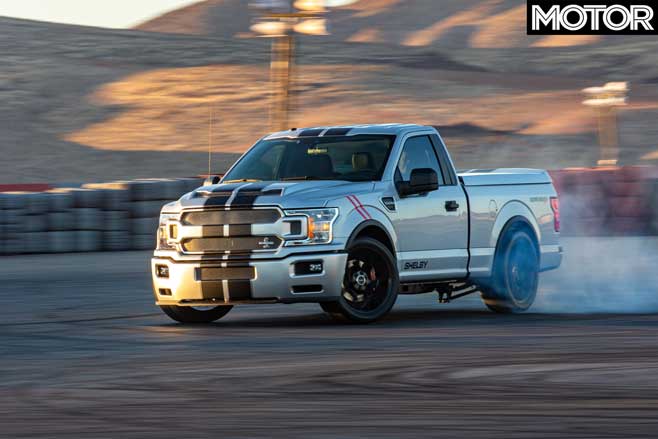
Based on the two-door version of Ford’s popular F-150 pick-up truck, the Super Snake Sport F-150 was built in response to “enthusiast requests” and meant to capture the “spirit of the great 1960s muscle cars”.
The concept pick-up features a 563kW supercharged V8 engine, Shelby-specific Borla exhaust system and lowered suspension, and uprated brakes.
That being said, Shelby American hasn’t released any performance figures for the Dragon Snake concept and Super Snake Sport F-150 concept, or details of its availability to customers.
Who is Tetsuya Tada? Well, he’s ‘Mr 86’, of course.
Tada joined Toyota as a graduate software engineer; ABS and traction control were his bread and butter. After stints in Japan’s frosty northern island of Hokkaido and at Toyota’s Higashi-Fuji research facility, he spent three years in Europe validating road and race cars.
Later, as a chief engineer, he spent over a decade developing a bevy of largely soulless boxes for Toyota to sell to the masses, until being relieved of that in 2007 and handed the somewhat more stimulating task of overseeing creation of the 86.
Here’s four life lessons he has picked up during his career:
As a child, I often bought and read Japanese car magazines, such as Motor Fan and Auto Sports, while most other children were reading manga comics. Perhaps this was the influence of my father. He was passionate about cars; he took part in rallies and let me serve as his co-driver. During that time, I made a huge effort to learn rally terms and write pace notes. I also experienced what it felt like to win. Based on these experiences and others, it was natural for me to also want to drive cars.
The first car I bought was an AE86. Unmodified, it had strong understeer and would not stop once it broke traction and started to drift. It was a challenge to make turns that way. But it was fun to do the modifications to the car myself and then use driving techniques to overcome the weaknesses of the car. I think this is the background of why I like cars.
When it comes to developing cars, the master is [the late] Isao Tsuzuki, the chief engineer of the previous A80-generation Supra. Tsuzuki took the time to teach me what car development was all about. Although, the first development team I was part of was for a family car called the Raum. While working on developing this car, I tried to think about it from a customer’s point of view. This led to reviewing some items which I took for granted, such as why is the steering wheel round? Do customers really understand the meaning of the warning lamps in the dashboard? While many of these questions are common sense to engineers, they may not be interpreted in the same way by the customer.
In fact, this experience helped later in the development of the 86. Another question that came up was: “Do sports cars need to be fast?” You see, in the planning phase, sometimes our focus was not on things like speed, meaning that sometimes it seemed our plans lacked common sense. In the end, however, I think we succeeded in developing an 86 that was different from a traditional sports car, as we wanted drivers to take control of the car and pursue overall excitement, rather than being in pursuit of absolute speed or time on a circuit, typical at the time.
Many people are involved when it comes to making a car. At one point, Toyota often heard from stakeholders that, “Toyota cars are boring”, or “Toyota designs its cars based on majority votes and decisions”. Hearing this was hard, and my personal desire was to help change this perception.
In fact, the 86 was the first car design that was not based on a committee decision system. By that time, the company had set a rule stating that we would not be able to move forward with a car design unless the vehicle received above a certain score at the design review committee. An unfortunate side effect of a rule like this was that sometimes a unique or particularly radical sports car design, for example, wouldn’t make it to the next step. Although not easy, in the case of the 86, we were able to change the design process to where we would only discuss the design with the President instead of the committee. The same process has been followed over the course of development of the new-gen Supra.
People often talk about how fun it must be to develop sports cars. They imagine that we often travel to tracks to test all the various sports cars from around the world. While there is some of that, it is less than perhaps five percent of the development process. However, developing sports cars is harder than that of normal cars, in my opinion. Customers demand performance, and the car often requires many exclusive parts at low volume, meaning that it can be difficult to make a profit.
Most of the time during development, in fact, is dedicated for day-to-day, normal, shop-type work. Of course, sports cars are gorgeous, but there are so many challenges that we must address prior to even getting close to launching it. We, the engineers behind the car, are happy if the customers driving the sports car take the time to think about the efforts behind its development.
There are many indexes that show the performance of sports cars, but that is not enough to describe how fun it is to drive them. What’s more, good cars need to make you smile when you drive. We have been developing our cars with such feelings.
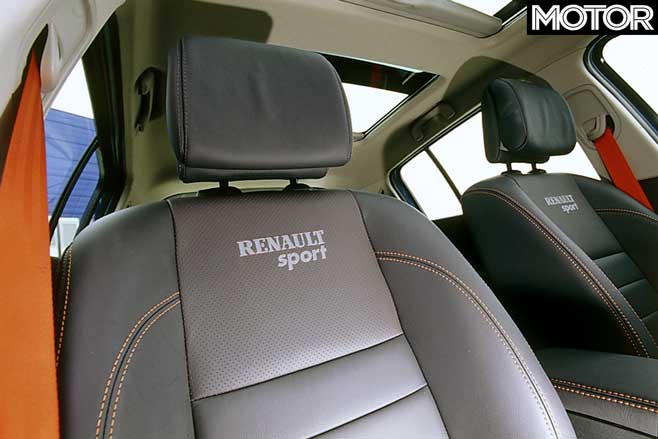
The orange seatbelts could be out to start something. Photographer Brunelli plain didn’t like ’em. Me? I kind of think that if you’ve got to fit something into a car and you can make a feature of it, then go for it. Especially if it’s orange seat-belts.
This review was originally published in MOTOR’s November 2004 issue
The point is, the turbocharged Renault Sport Megane 225 is, just like that, simply going to polarise folks, not least because it’s dangerously in-yer-face. Dangerously, that is, because those with the readies to partake of such a moderately-sized, five-door delicacy are potentially pretty conservative.
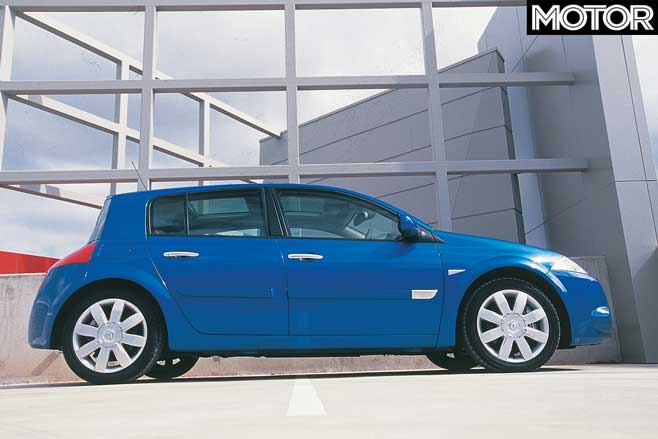
However, for the rest of us non-stiffs, the Megane Turbo is a refreshing cause for mirth for all those reasons. Ok, maybe not the credit-card ignition which insists you have the motor running before you can wind down a window or listen to the stereo. But the other stuff? Yeah, it’s kind of funky.
The fun non-conformity starts when you open the door. Its front pews are great; its dual sunroofs mean the interior is light and airy; and the soft, perforated leather trim pleasing, but the rest consists of grey plastic of about four different coarseness levels – five, if you count the speaker grilles.
A stereo-control wand hidden from sight by the tiller is one of the Megane’s glitches, as is the fact that the front sunroof gobbles up headroom for anybody approaching six foot.
Hit the starter button next to the ignition-card slot and the two-litre turbo-mill blaps into life and idles like any other modern four-banger.
Out on the road, the gear ratios are fairly long, but well matched to the way the engine makes its torque (100km/h in sixth equals just 2250rpm). Its shift is quick and deadly accurate, and its engine is an absolute gem.
With plenty of turbo-rush and that huffy, force-fed feeling letting you know it’s fit, the Megane’s power delivery is a gas. Then you check the spec sheet and discover there’s a man-sized 165kW on tap at 5500rpm and no less than 300Nm of grunt at 3000. Same as a Subaru WRX. My oh my.
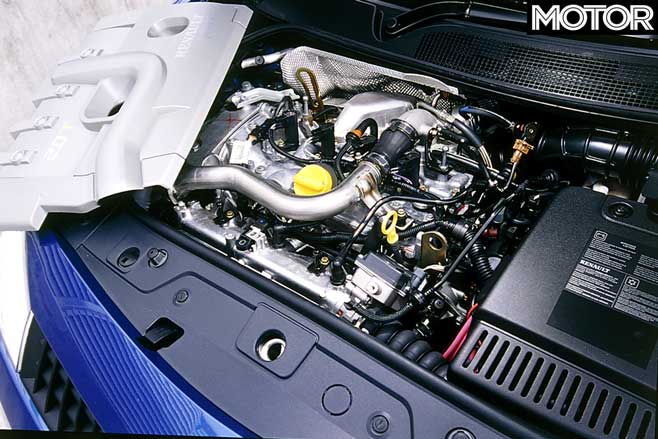
Boost comes on strong around 1800rpm, and even at B-road speeds in sixth, there’s boost and urge to be had for the asking.
The torque curve feels almost entirely flat, and while that doesn’t stop the power welling up, it does mean you can be a ratio either side of the ‘right’ gear and still stir up some action.
Things get a bit noisy beyond about 5500rpm, but such is the mid-range pork and you don’t really need to go there.
Lag is almost non-existent, and if this is where modern turbos are going, bring it on. The chassis, however, exhibits some torque steer in lower gears and a serve of push if you go in too hot. Traction control patches things up for you, but ultimately, the limit just isn’t as hot as most of us would like.
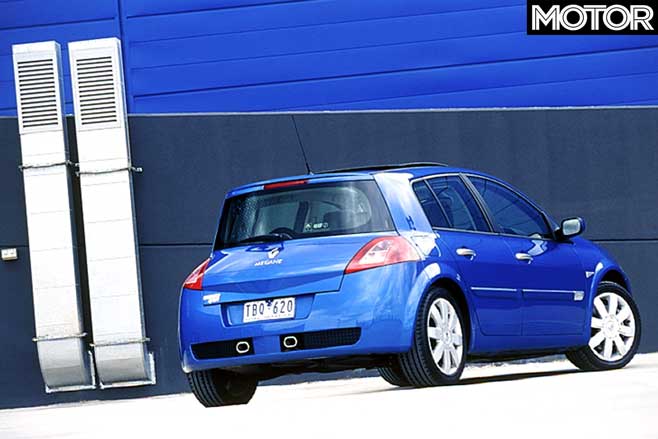
If you turn the traction off, it switches itself back on at about 50km/h. Bugger. But even if you could lock it out, the non-committal front end would apply its own ceiling, anyway. Whichever way you cut the deck, the Megane is pushy at the limit and that limit isn’t Everest-high.
Clearly, the Megane Turbo isn’t going to appeal to club-racers, but it will to those who want a snappy, nay, ball-tearing, package that says ‘Hey, I’m different’. Maybe Renault’s not that wide of the mark after all.
2004 Renault Sport Megane 225 specs ENGINE: 2.0-litre 16-valve turbo POWER/WEIGHT: 165kW/1361kg DRIVE: front-wheel PRICE (2004): $42,990
ONE OF THE most surprising revelations when you drive HSV’s converted and imported Chevrolet Camaro ZL1 is how mild mannered it is when not at full attack.
The ride is compliant – comfortable actually – and even that big 6.2-litre supercharged lump of V8 settles right down. It’s still a bit tricky to see out of, but anyone could easily drive it on a daily basis. To a certain kind of customer, it could be refined almost to a fault.
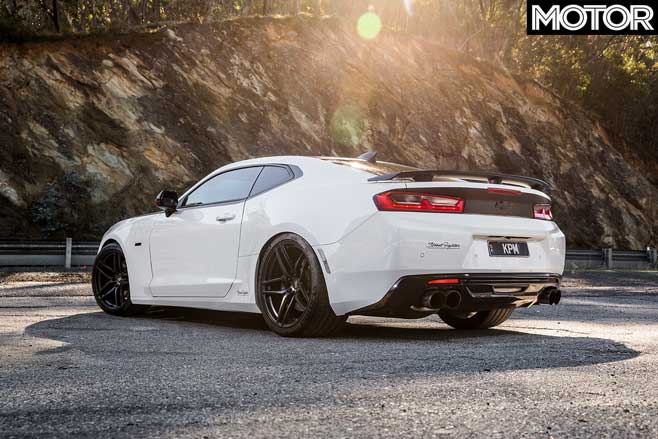
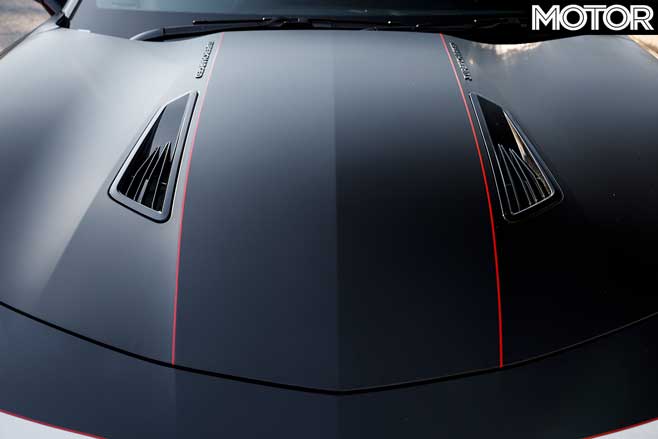
This person may have imagined the ZL1 to have a bit more mongrel. To be a bit ruder, to throb at idle like it’s never had neighbours, to be a bit more unwieldy to drive, something to be tamed. And for this person, the aftermarket-conjured StreetFighter SF750S might be more to their liking.
Offered by well-known producers KPM Motorsport in Adelaide, the StreetFighter SF750S takes a stock 339kW/617Nm 6.2-litre naturally aspirated V8 Chevrolet Camaro 2SS and supercharges it to a thumping 560kW/995Nm. More specifically, a hearty 2.9-litre Whipple twin-screw blower is bolted to the top of the pushrod, cast aluminium donk, inverted, with an air-to-water intercooler on top of the supercharger.
Unlike a milder 650-horsepower package, the 750 horsepower – hence the name; S means Street – requires an overhauled direct-injected fuel system with bigger injectors, high-pressure pump and low-pressure in-tank pump.
Curiously, KPM Motorsport keeps the stock cam and says it’s more than up to the job for the 750 spec, although for customers keen on that lopey attitude – or more power down the track – will be glad to hear KPM has its grinds on the shelf ready to go. So it’s blower, fuel system, exhaust and an ECU recalibration and basically away you go.
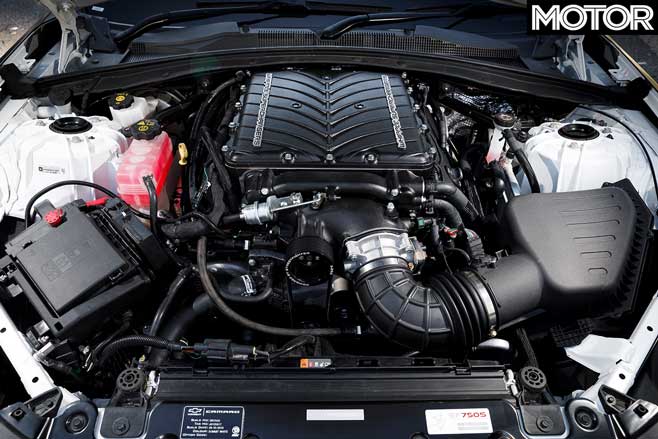
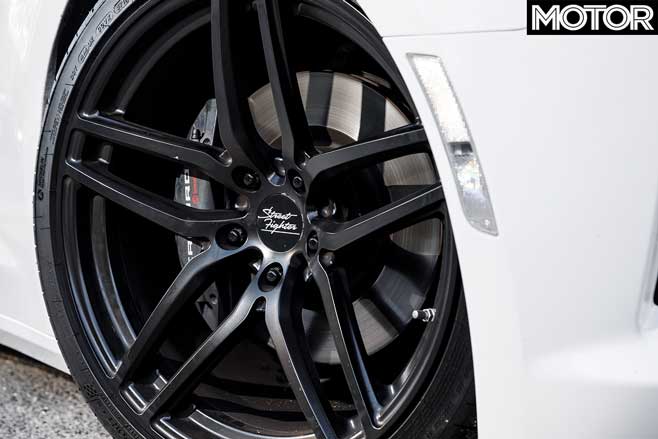
Other modifications made to our test car include H&R lowering springs, which perch the menacing 2SS mere millimetres above optional 20-inch fully forged aluminium StreetFighter Dominator wheels. And you can have whatever tyres you want, more or less.
There’s also a full 3.0-inch stainless steel StreetFighter exhaust made at KPM’s own premises in South Oz. If you want the livery, you can order it, of course. But you get as standard a serial number and plaque with build date of the package.
For the supercharger and exhaust, KPM asks $27,990, which includes fitment at a specialist workshop in your state and a three-year/100,000km limited driveline warranty. KPM will fit the kit to any Camaro less than five years old and also provides all necessary documentation for ADR compliance – meaning that, yes, Constable, she’s 100 per cent street legal.
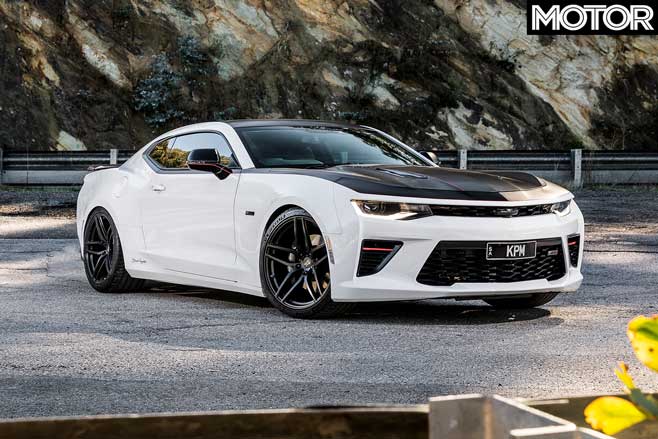
Walking up to the SF750S you can’t help but tense up slightly, as this is one car that looks like it’s going to give you a black eye if you say the wrong thing. The stance and wheel fitment is bang-on and lends the 2SS a visual aggression that makes the stock car look a bit, well, soft.
It’s all fairly standard kit inside, but then you start it up and the fettled LT1 V8 clears its throat, loudly, down the tailpipes. And then the fun begins.
We had the opportunity to test the SF750S’s acceleration on the front straight of The Bend Motorsport Park. Over multiple runs, and with aggressive semi-slick rear tyres, the big, bad SF750S managed a best of 12.1sec over 400 metres.
On the same day, and in the same conditions, a stock ZL1 recorded 11.73sec. Even getting as much heat into the rear tyres as possible, the SF750S just wouldn’t hook up as hoped. No doubt it would match and possibly best the ZL1, although you’d need more than the 30 minutes we had. With a properly prepared surface and the perfect run, mid-11s may even be possible.
What the numbers don’t tell you, though, is the SF750S has a vastly different character to the ZL1. If the ZL1 is a leather jacket, then the SF750S is a jet-black hoodie.
This is an eye-openingly fast car with enormous power and all the effortless first- and second-gear wheelspin you could ever want. And, though this is an LT1, all the V8 noises of your sweetest LS dreams. The SF750S scratches that very specific modern muscle-car itch in a way only this kind of car can.
Let’s start with the noise. It sounds absolutely wicked. There’s a menacing lope at idle, which can turn into a fevered intake snarl in about half a second as rear wheels effortlessly spin up into wheelspin.
There’s the perfect mix of intake and deep, thumping exhaust bellow, with lots of supercharger whine. Some high-rpm intake hoarseness aside, this car does not know how to make a limp noise. For lovers of V8 notes, it truly satisfies.
The SF750S has the acceleration to match the noise too. Traction is seriously limited in first and second gears so it’s not until the show is rolling that the SF750S slings itself down the road, hurled by a startling, linear tidal wave of supercharged torque as the eight-speed auto does its best to transmit all that power. It’s scary fast.
Be in no doubt, the SF750S is all about that engine. And it’s a total drug, having you reach for the bottom of the throttle pedal again and again like some lab rat hopelessly addicted to pressing a little paddle in return for a sweet secretion.
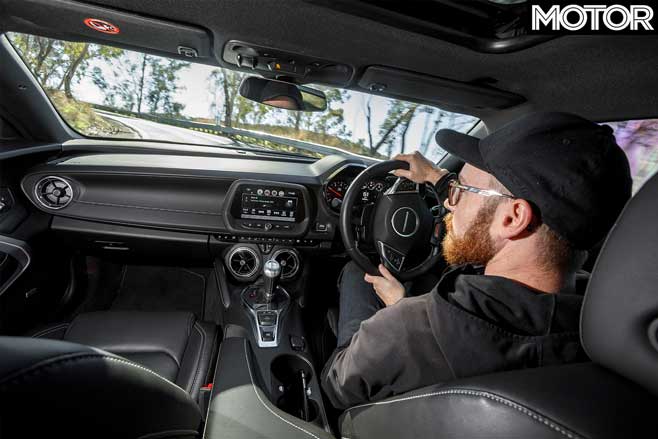
All the controls feel spot-on; the Camaro’s front-end even somehow feels better than we’ve felt before, without as much of the obvious artificial heaviness we’ve gotten used to. Be it the tyres, the lower roll centre or what, the steering satisfies. It’s fast enough and allows you to accurately lean into (on this car) the hugely grippy 285/30 front and 305/30 rear Michelin Pilot Sport 4Ss, which are a good match for it in street guise.
Cornering speeds will surprise you, there is that much lateral grip. But again and again you find yourself abandoning any dynamic investigations – this is not a Porsche Cayman or a hot hatch – and instead exploring degrees of throttle-steer out of corners with ever-larger radii. Controllable as all hell too, thanks to all that power, a responsive throttle and a rear cradle with a solid-mounted feeling, connecting your right foot intimately with the rear tyres. Holy moly, it’s fun.
We would caution those wanting to take this high-horsepower cruiser into the corners – or to a track day – to discuss suspension and brake upgrades, as frankly the items on this car were only just up to the job the engine had given them.
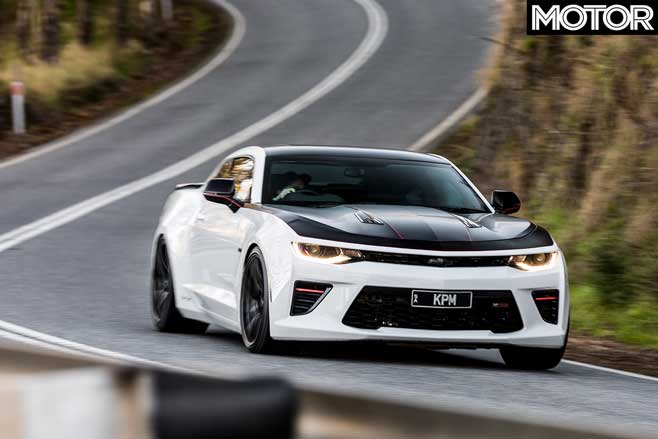
The H&R lowering springs, while offering a flat cornering stance on fast, smooth corners, quickly find themselves hopelessly out of their depth on choppy roads, as you bounce around all over the place. KPM offers a coilover kit and is looking at offering ZL1 brakes – both would be worthwhile upgrades.
Back at more relaxed speeds, credit to the package for retaining more OE manners than you’d expect for such a heavily modified vehicle. At an urban amble the blown LT1 is perfectly behaved, driveable and tractable, lazily loping around on small throttle inputs.
Combined with the smooth, eight-speed torque-converter auto with a character familiar to all American muscle-car transmissions, the SF750S is an amazing cruiser. The exhaust even quietens down nicely.
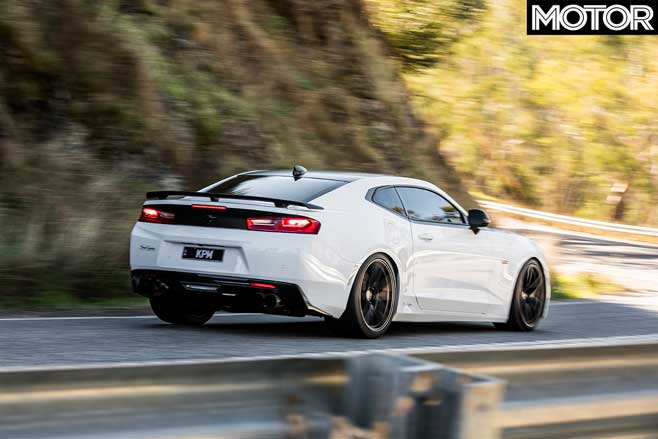
At the end of the day, the SF750S is one very fun and exciting muscle car. It’s been enhanced where it needed enhancements. It’s a beast, but one that is easily tamed over time, though never to the point that the challenge ends, even if said challenge is mostly to do with getting all those horsies to the bitumen.
The SF750S eggs you on like a devil on your shoulder – making you worry about being admitted into a clinic if you ever sold it – but most of all the StreetFighter treatment unleashes an outlaw character seemingly repressed in stock Camaros, ZL1 included. And for a specific kind of person, that’s all the appeal a car like the SF750S needs.
STREETFIGHTER SF750S SPECS
Engine: 6162cc V8, OHV, 16v, supercharged Power: 560kW at 6300rpm Torque: 995Nm at 4000rpm Weight: 1710kg 0-100km/h: 3.1sec (claimed) Price: $27,990 (excl. car)
UPDATED 10 November – In a further blow to DJR Team Penske’s 2019 Bathurst 1000 campaign, the team has been slapped with a further $30,000 fine after officials determined the engine used in practice and qualifying by eventual winner Scott McLaughlin fell outside the category’s rules.
This takes the total fines from the Bathurst 1000 event to $280,000.
“Following the Event, Engine 009, which was used in Car #17 in Practice Sessions 1 to 7, in Qualifying for Race 25 and in the Top 10 Shootout (and then replaced prior to the Warm Up for Race 25), was examined by Supercars Technical personnel and the valve lift in a number of cylinders was found to have exceeded the maximum permitted valve lift prescribed by the ESD for Car #17,” read a Supercars official report issued during the Sandown 500.
The engine – which was changed after overheating issues – was impounded along with three other engines from the event, and it wasn’t inspected until after the recent Gold Coast race.
Five cylinders of the eight exceeded the mandated valve lift threshold, according to Supercars media.
McLaughlin has been stripped of his Bathurst pole position, with Tickford Racing’s Chaz Mostert promoted into the spot in the record books.
McLaughlin (below) and co-driver Alex Premat have also been banished to the rear of the grid from fifth for the start of the 500km enduro.
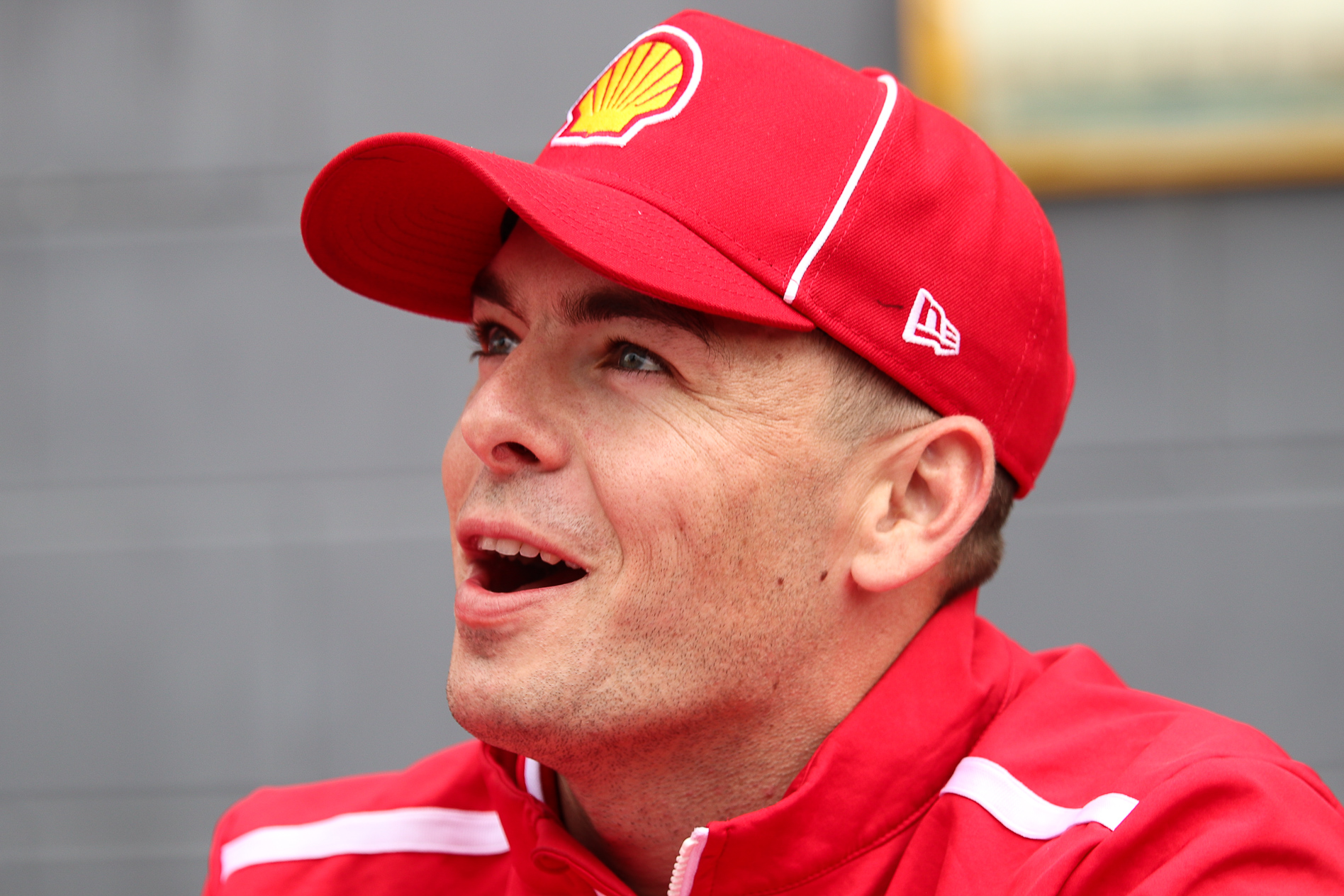
The team issued a statement that confirmed that the engines used during the race passed all inspections but admitted that the qualifying engine in car 17 fell foul of the rules.
“We can only conclude that either the engine wasn’t measured properly when it was initially assembled or the damage that occurred in the engine contributed to a change to the maximum valve lift in the forward cylinders,” read a statement from the team.
The team also pointed out that the steward’s report confirmed that there was “clearly no intent from our team to circumvent the rules”, and that there was “no evidence that we benefited from any performance advantage”.“We apologise to Scott, Alex, our partners and our supporters, and we will continue to focus on winning our second consecutive Virgin Australia Supercars Championship,” concluded the statement.
McLaughlin can wrap up his second title a round early by simply completing the Sandown 500.
The engine breach adds to the pain for Supercars juggernaut DJR Team Penske, which has been slammed with the biggest fine ever seen in the sport’s history.
The team has been found to have breached the International Sporting Code of motorsport’s governing body, the FIA, after an incident during the 2019 running of the Bathurst 1000 enduro, won by Team Penske driver Scott McLaughlin.
McLaughlin’s teammate, Fabian Coulthard, was instructed by the team to slow down on lap 134 of 161, in response to a safety car deployment. He was in third place in the race at the time, while McLaughlin led the field from Red Bull Holden arch-rival Jamie Whincup.
Though the team’s communications to Coulthard at the time talked of debris on the track and a possible water temperature issue with his car, the resultant slowdown ensured that his teammate could gain a time advantage on the field as the race drew to a close.
More Supercars stories
- Ford’s $10,000 podium stunt
- Winning ugly: the new Mustang Supercar
- Why there is no Camaro on the Supercars grid
- Could Penske Indy 500 winners pair up for Bathurst?
“Look, I am not sure if that made the difference to who won the race,” Roger Penske, the majority owner of DJR Team Penske, told media after the race.
“We can look at it and talk about it but it is secondary as far I am concerned when you think about it.
“Everyone had a chance, and the two top duelled it out in the end and the outcome was what we wanted.”
“It was a directive from the team,” Coulthard told supercars.com.
“The team said to me ‘take extreme caution, the engine is hot’.
“I’m actually reading my phone now and I’m getting smashed [on social media] for something I’ve been told to do.
“I’m a little bit pissed off. I did what I was told and I’m getting murdered for it.”
Other members of the Supercars fraternity have been less kind, with many labelling the tactic as cheating, and accusing Team Penske of using Coulthard as a “sacrificial lamb” for McLaughlin’s first Bathurst 1000 win.
Eugene Arocca, who heads the FIA’s appointed motorsport arm in Australia, CAMS, has said the fine – $100,000 of which is suspended pending good behaviour until the end of the year – will go towards improving safety in the sport.
“The penalty issued today regarding the breach of the ‘FIA International Sporting Code Appendix B’ reflects the serious nature of the incident that took place at the Supercheap Bathurst 1000,” said Arocca in a statement.
“It is also important to note that the money received from the fine will go directly into the Supercars’ Fines Fund, which is used exclusively for safety research and programs, as well safety-related infrastructure, such as the development of in-car warning systems.”
Arocca also acknowledged Team Penske’s cooperation with the investigation.
“I would also like to acknowledge DJR Team Penske’s co-operation with all requests from our stewards throughout this process,” he said.
“After reviewing data from Car #12 following the Bathurst 1000 with the Stewards and Deputy Race Director, DJR Team Penske accepts the penalties issued related to the FIA International Sporting Code,” read a brief statement from the team.
“The team will be making no further comment at this time.”
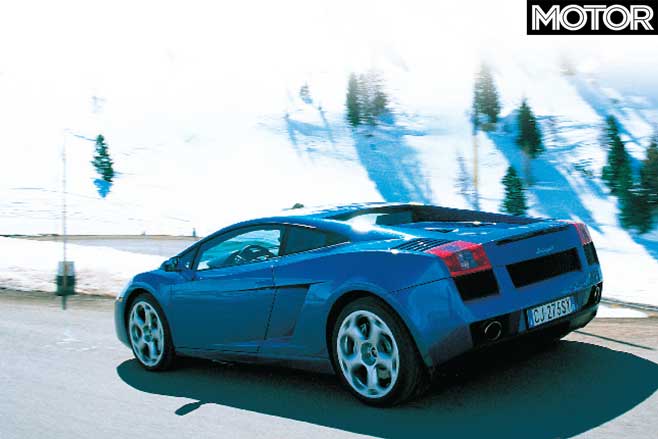
I’m feeling a bit overdressed as I exit Bologna airport. My attire is meant for sub-zero temperatures, but today the sun is shining and the thermometer is climbing above 20 degrees, which is why the taxi drivers study me with the kind of hesitant curiosity a polar bear would get at Bondi. And they don’t even know the worst part yet. I’m here to collect a Lamborghini Gallardo. Nice one, indeed. Except this one is fitted with winter tyres.
This feature was originally published in MOTOR’s November 2004 issue
The winter tyres fitted to the Gallardo are manufactured by Pirelli and in the same dimension as the standard P-Zero’s – 235/35 and 295/30 ZR19’s front and rear, respectively. It’s not so much a gimmick as a statement from Lamborghini, and one that would have had zero credibility without parent company Audi lurking in the shadows.
Lamborghini’s ambitions for the Gallardo include Porsche 911-reliability, and that means you should be able to drive your Gallardo all year round. And that means offering winter tyres. Never mind that most Gallardos will still hibernate in a heated garage, because so do most 911s. But just imagine using a Lambo for the blast to the slopes in Comptina d’Abruzzo and a weekend of all kinds of powdered substances. That’s where I’m going, in case you wondered.
There’s little doubt Audi is the main reason Lamborghini is still among us. Even if it means that, from time to time, the family ties will strain your patience. Driving a Gallardo on the Autostrada, it’s a matter of seconds before you have an Audi RS-something on your tail. Or an A3 TDi in front of you, charging like a bat out of Ingolstadt to show he can go just as fast. Which he can’t. These days nothing gets Audi owners’ juices flowing like the sight of a Lamborghini. They act like – well, like they own it. Worse still, I can’t lose them.
Development driver Giorgio Sanna warned me that with temps this high, the winter tyres would make the Gallardo lack stability on full song. In fact, it would be best to limit its speed to 160km/h, or I’d run the risk of frying the rubber before reaching the snow in the Italian Alps. Restraining yourself from making full use of that V10 requires the discipline of a Tibetan monk.
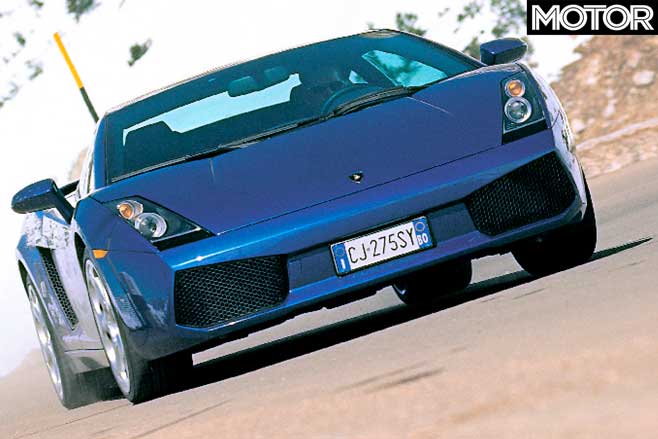
The 90-degree V10 is a phenomenal engine, even if its soundtrack isn’t what you’d expect. It’s nothing like the high-pitched Formula One wail, but more like a classic V8 rumble with a couple of extra cylinders crafted onto it, getting increasingly more soprano as its revs climb. On the Autostrada, it gets quite noisy once you arrive at 160km/h, but then settles down again above 200. And there’s still another 109km/h to the maximum velocity.
Like the scissor-doors on the Murciélago, all-wheel drive has evolved into a Lamborghini characteristic, and Gallardo uses the same Viscous Traction system first seen on the Diablo. In normal conditions, 70 percent of the power is directed to the rear wheels.
The Viscous Traction, which is self-regulating and completely mechanical, can send as much as 80 percent to the rear, or split the power equally between the two axles when the going gets slippery. But as far as off-road capabilities are concerned, nothing that ever came out of Sant’Agata can match the Lamborghini I’m about to rendezvous with. It’s massively powerful. It’s all-wheel drive and no, it’s not an LM002.
Ferruccio Lamborghini always regarded motor racing as a waste of both time and money. It’s a little-known fact, then, that Lamborghini has built more single-seaters than Ferrari. Thousands of them, in fact, even if it would be fair to say they were a bit, well, agricultural. I’m driving one right now, and even if you’ve never heard of it before, it says Lamborghini on the engine cover and the fighting bull sits proudly on its nose, just as it does on the Gallardo.
It’s called the R6.165 S – which is not as sexy as Murciélago, of course, especially when you learn that 165 is the power output. But this thing will dwarf anything to ever come out of Sant’Agata. The R6 has four-wheel drive, a 40-speed ’box, weighs a massive 5.7 tonnes, and musters a Gallardo-crushing 683Nm from just 1400rpm.
Top speed? Well, top speed is such a meaningless value, isn’t it? If you must know, v-max is a mundane 40km/h. As a matter of fact, the press kit highlights the R6’s ability to crawl along at 0.45km/h as one of many great advantages – probably so you can drive around your farm slow enough to watch things grow.
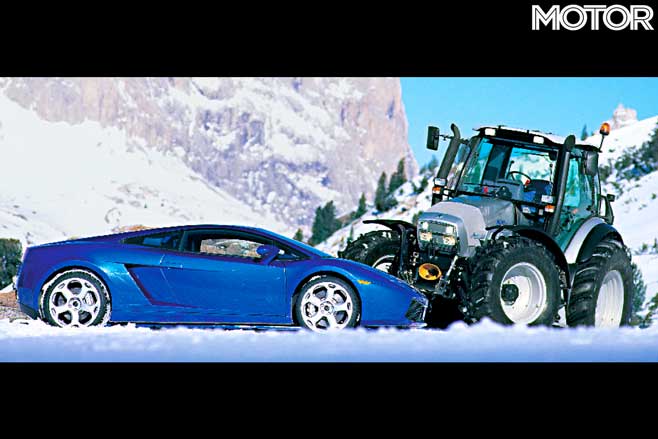
A Lamborghini R6 demonstrates beyond a shadow of a doubt that speed and road safety aren’t linked together. I’m driving slow enough to be passed by a funeral procession, and yet I’ve never posed a greater danger to other road users. From the cabin of this three-metre-high beast, you can see the chunky front tyres rotating and ready to carve up oncoming traffic. Imagine turning around a hairpin and have something bearing down on you that should be confined to a Monster Truck arena. It wiped the smile straight off the face of the guy in the yellow Audi RS4.
The obvious question lingers, of course. What do the Lamborghini R6 and the Lamborghini Gallardo have in common? Well, nothing and everything. In the early seventies, Ferruccio sold Lamborghini Trattori, along with Automobili Lamborghini, after 11 years of building cars and 26 years of building tractors. Today, the two share nothing but the name and the trademark. But without the tractors there never would have been a sports car carrying the name of Lamborghini. It was, after all, in a corner of the tractor factory that the very first 350 GTV prototype came to life in 1963.
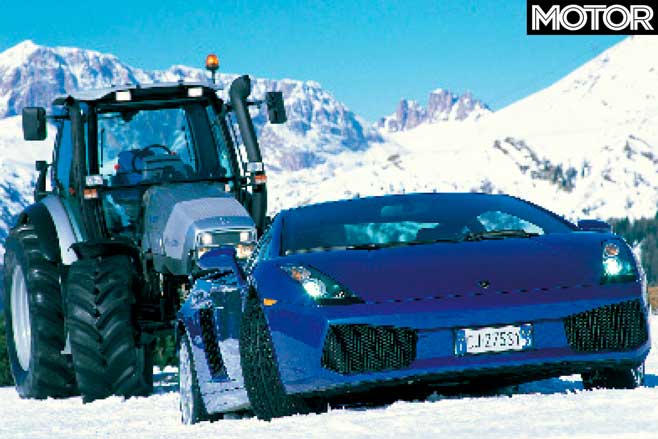
But it nearly came to an end in 1965, when Ferruccio set his eyes on a lucrative government contract to build helicopters. A handful of prototype L-59 choppers were built, but then Ferruccio was presented with the Miura, and decided that staying on the ground might be best after all.
Good thing he did, too. Without the tractor, I might have been forced to abandon the Gallardo in a snow bank somewhere around Canazei. Despite winter tyres and four-wheel drive, it got stuck. For a seven-litre turbo-diesel straight-six, though, towing a 1450kg Gallardo is hardly worth mentioning. And suddenly the crawling system makes sense, the R6 pulling its little brother free at a feather-light 0.45km/h.
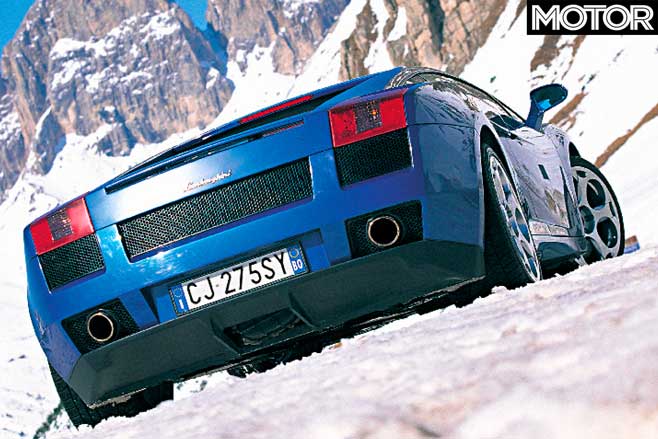
You find yourself strangely endeared to this gentle giant. It will lift four tonnes with its front fork, which will teach your neighbour not to put his 4X4 in front of your driveway. It literally ploughs through everything, and runs over obstacles as if they weren’t even there – which, of course, after the R6 has been through, usually they’re not.
The R6 is something for the man who thought he had everything, but is missing the hilarious thrill that 5.7 tonnes of tractor can provide. And I’ve saved the best bit for last, of course. If you don’t see yourself in a tractor, just remember one thing. This is one Lamborghini in which to have the most devilish fun. And you’re guaranteed never to get a speeding ticket.
Snow Job
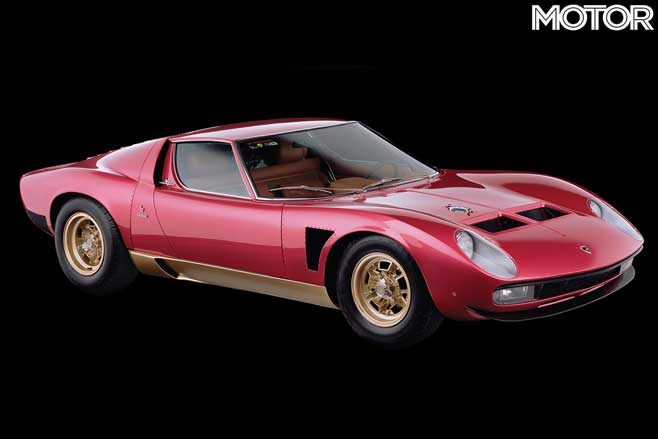
Before the Gallardo and Murciélago, only once has Lamborghini fitted snow tyres to one of its cars. It was a Miura SV J made for the Shah of Iran and it was delivered to the Shah’s St Moritz winter retreat by legendary Lambo test driver Bob Wallace.
Even with its studded tyres, the 309kW SV J must have been close to undriveable on the wintery roads and it says plenty for Wallace’s ability that he delivered the car without a mark. Even so, after sliding around St Moritz a few times, the Shah quickly lost interest.
After the Iranian revolution of 1979, the Miura was confiscated and left unused for years, unlike another of the Shah’s Miuras, which was fitted with driving lights and used for “government business”. The SV J was not heard of again until Hollywood actor Nicolas Cage bought it in 1997 for a record-breaking $690,000. Cage sold it on a few years later.
Ordinarily, at this point of the year we would be waiting with bated breath for the arrival of a new Forza Motorsport title. Since the introduction of the Forza Motorsport series in 2005, we’ve come to expect a new iteration every two years, with the spin-off Forza Horizon games appearing in the year in-between.
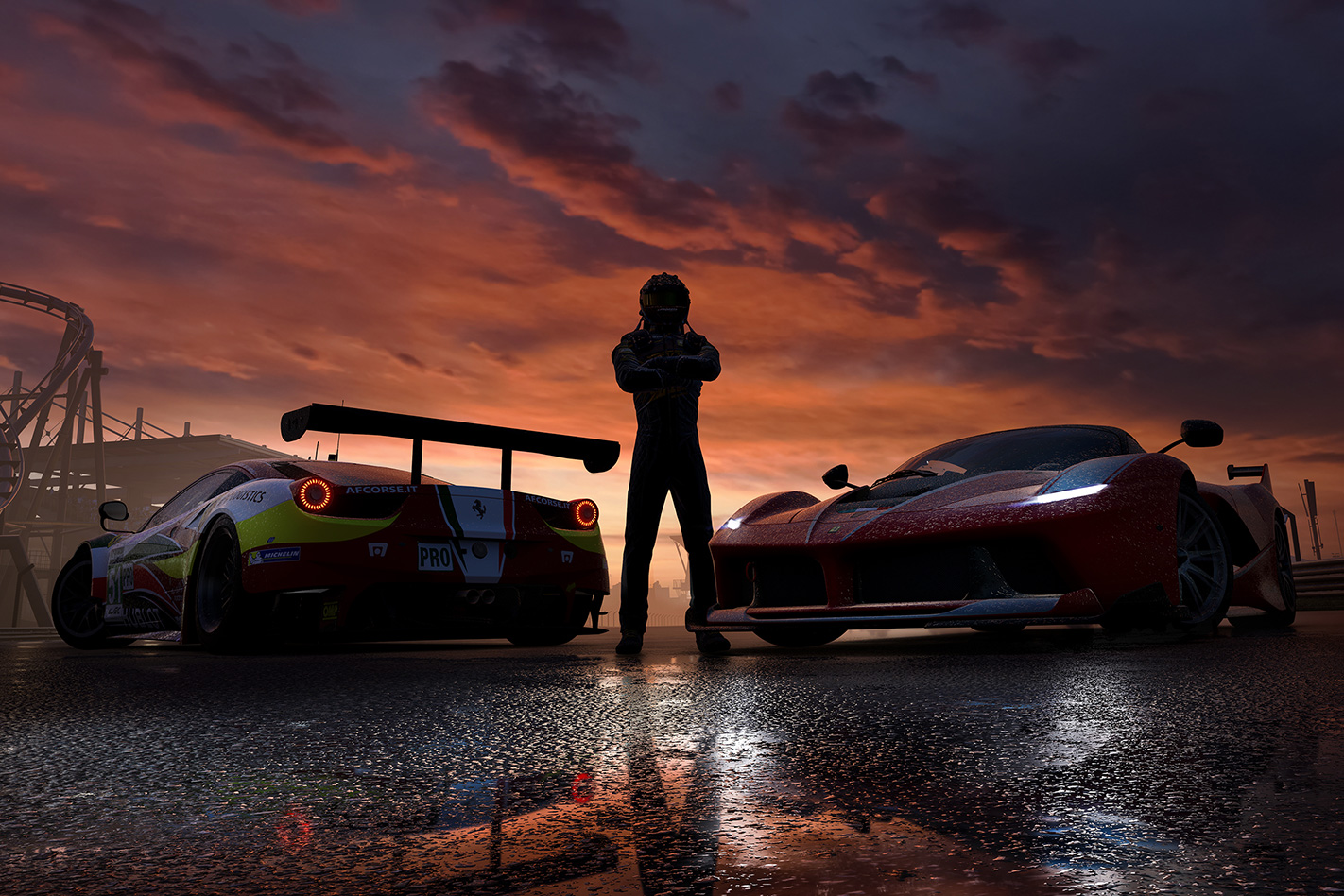
But we won’t get Forza Motorsport 8 this year, as expected. Turn 10 Studios, who create the Forza Motorsport series, are instead focused on expanding the current Forza Motorsport 7 (FM7) game that’s been around since late 2017, still providing updates almost two years later. It’s also expected that the next Forza Motorsport instalment was delayed to become a launch game for the next generation Xbox console which is due to debut in late 2020.
So seeing as we’re still some time away from the next one, and the fact that periodic updates have seen the game evolve since its launch, how does Forza Motorsport 7 stack up two years after its release date?
What do you need for Forza Motorsport 7?
All Forza games are Microsoft exclusives and as such, are only available one the Xbox One or Windows 10 (PCs are now supported).
How much does Forza Motorsport 7 cost?
The standard game now costs $49.95 after being out for some time. It’s sold from the Microsoft store and is available for download, but you can also get a good deal on used copies in stores like JB Hi-Fi and EB Games.
What’s it like to play Forza Motorsport 7?
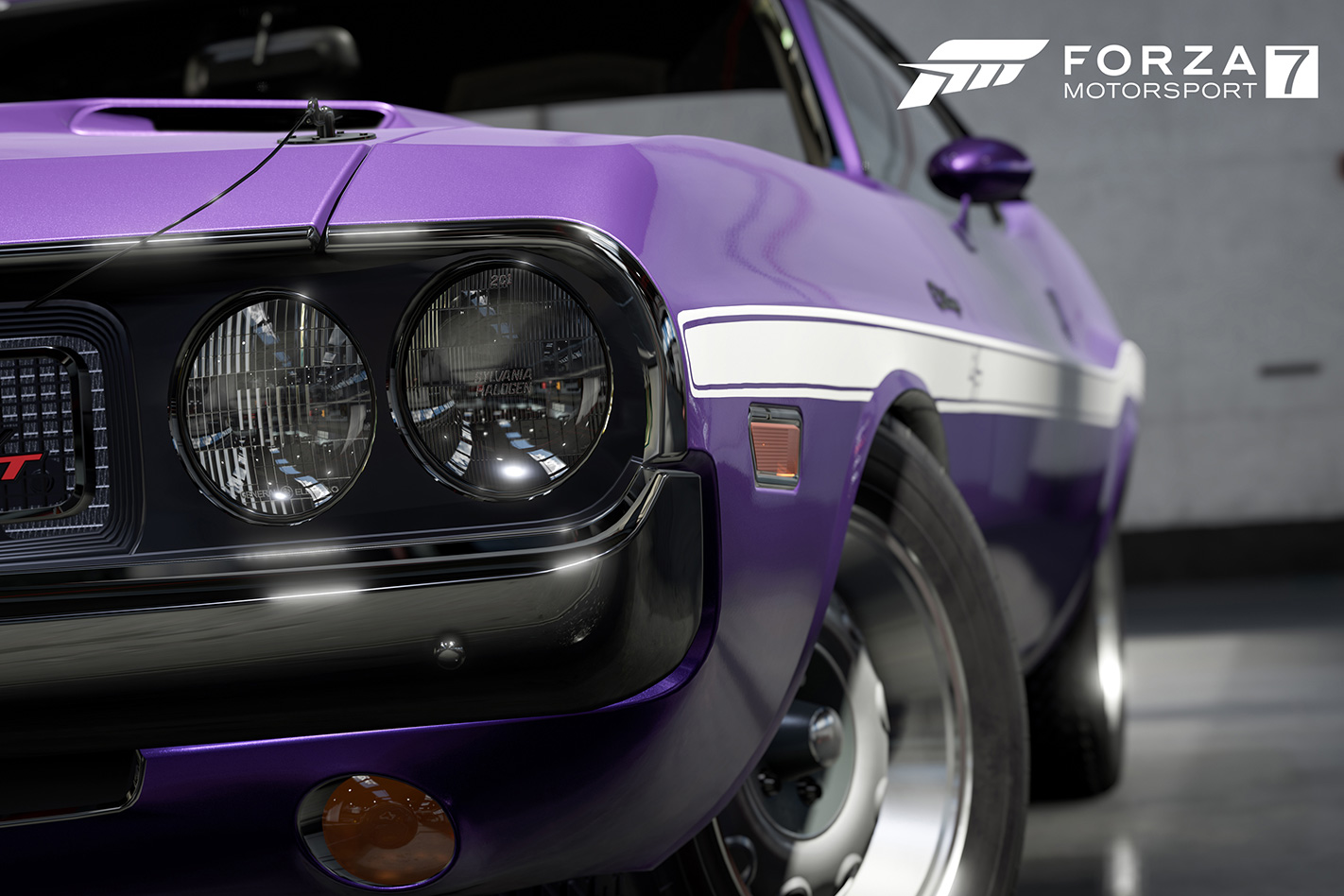
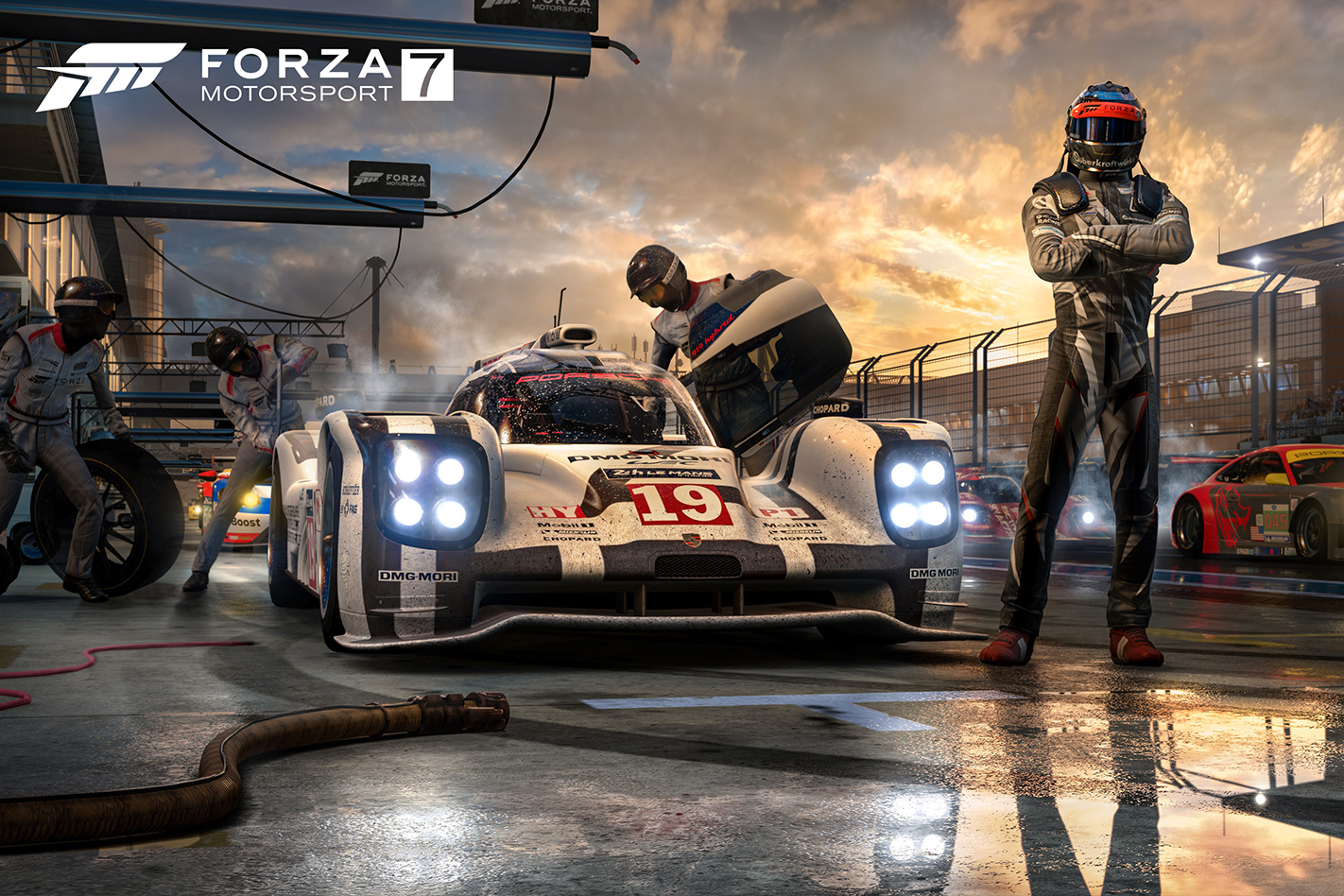
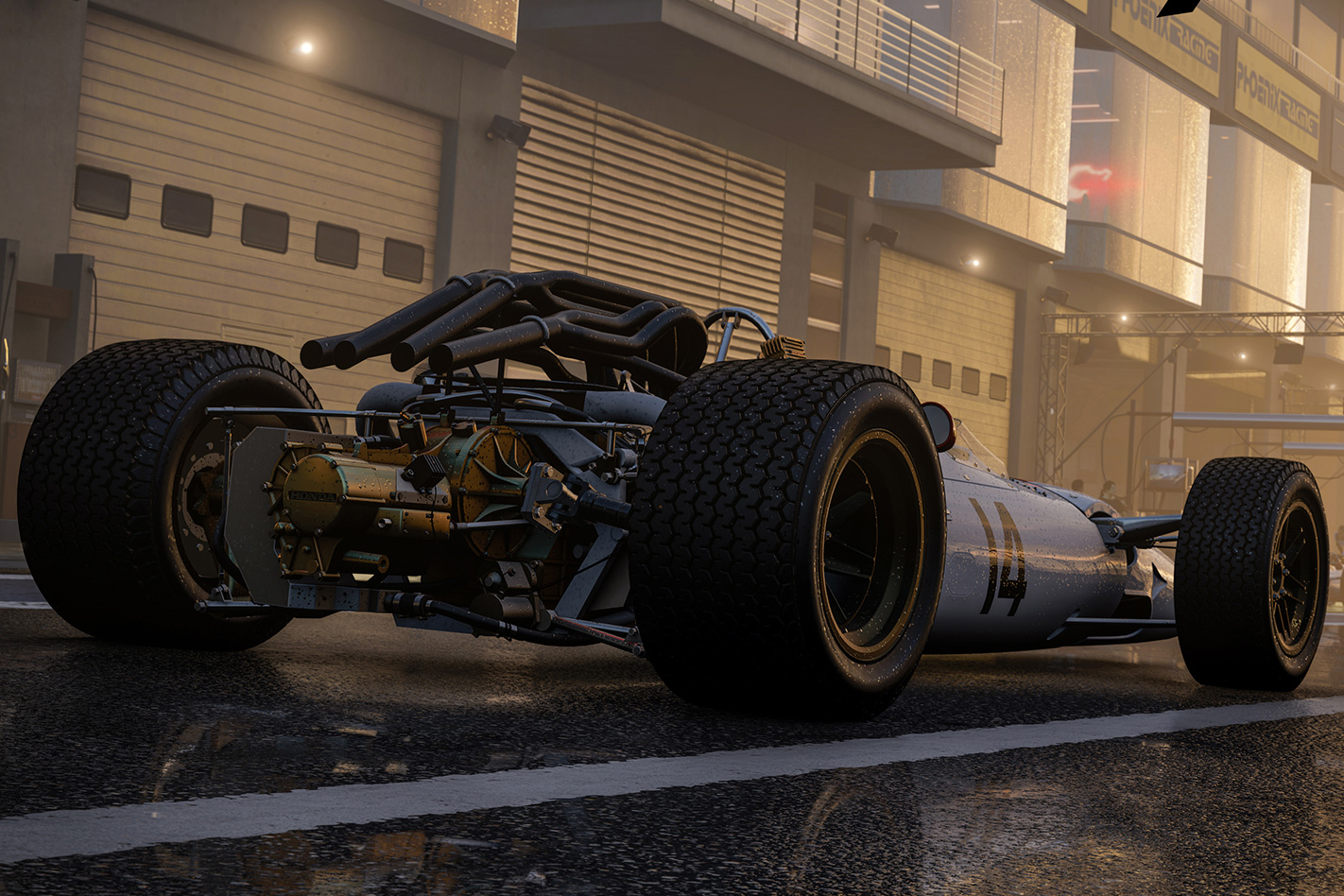
Well if one thing still amazes, the phenomenal imagery from the game still impresses to this day. Graphics were thoroughly overhauled for the game, and whether you’re playing on Xbox One or Windows 10, the game looks stunning on-screen. Additionally, Microsoft says playing on the more powerful Xbox One X steps up the quality too, adding ultra-high definition graphics and 60 frames per second goodness.
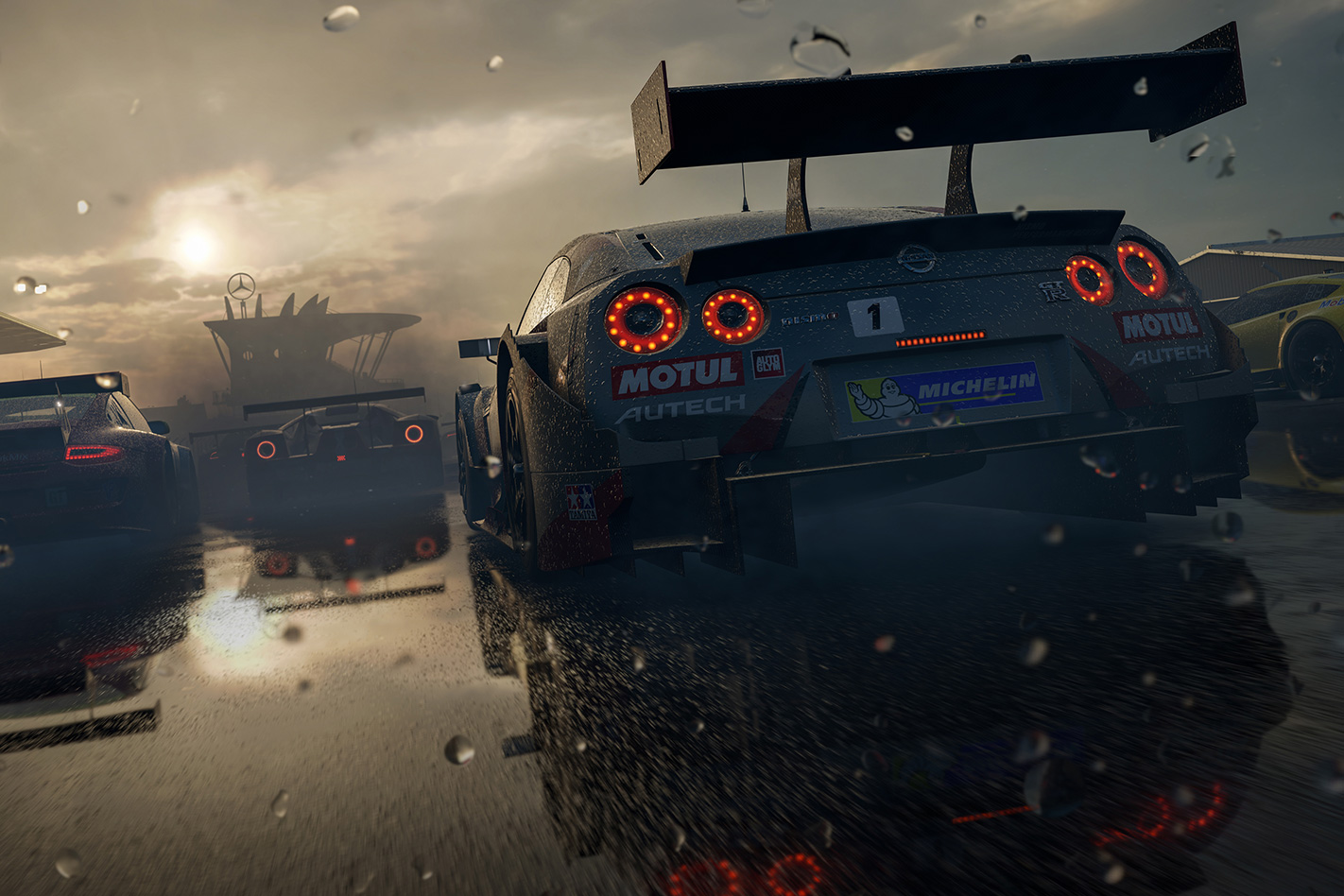
Some of the detail isn’t quite up to the same standard as other, newer racing games, but for a two year old game it still punches above its weight.
One area that’s seen a definite improvement is the quality of sound modelling. It all feels very lifelike, and the game developers have done their best to recreate the various sounds involved in motorsport. The whooshing of turbos is now more pronounced, the snap of a straight-cut gear swap is well-represented and the sound signature of each car is invariably unique.
The breadth of variety on offer expands on previous titles too, with an overhauled campaign mode that takes pride of place, but additionally there are a number of spin-off events that you can participate in too. The campaign itself is fairly regimented compared to previous titles, with players forced to compete in successive championships before you progress to the next one.
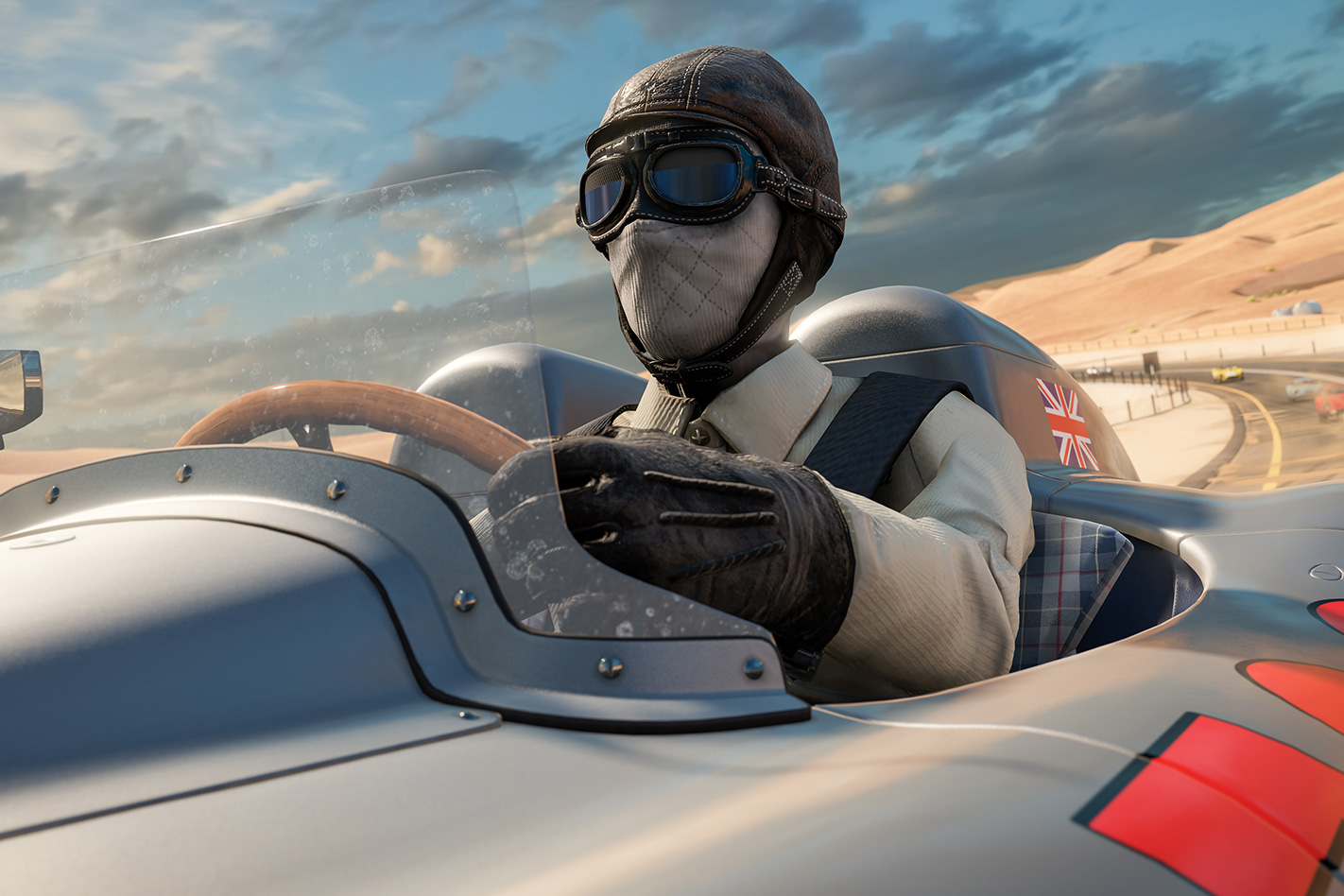
It’s a theme that continues into content side of things too, as with Forza Motorsport 7 you now must unlock a lot more content like cars and races rather than going gangbusters from the get-go.
Speaking of the cars, FM7 features more cars than any previous title and almost double that of Forza Motorsport 6, its predecessor. Keen Forza diehards will notice the cover car of the game, the Porsche GT2 RS, signifies that the German manufacturer’s cars are now available as standard, rather than only available via expansion packs as previously.
Conversely, the series has also said goodbye to Toyota for the time being – we hope to see it back in Forza Motorsport 8, however.
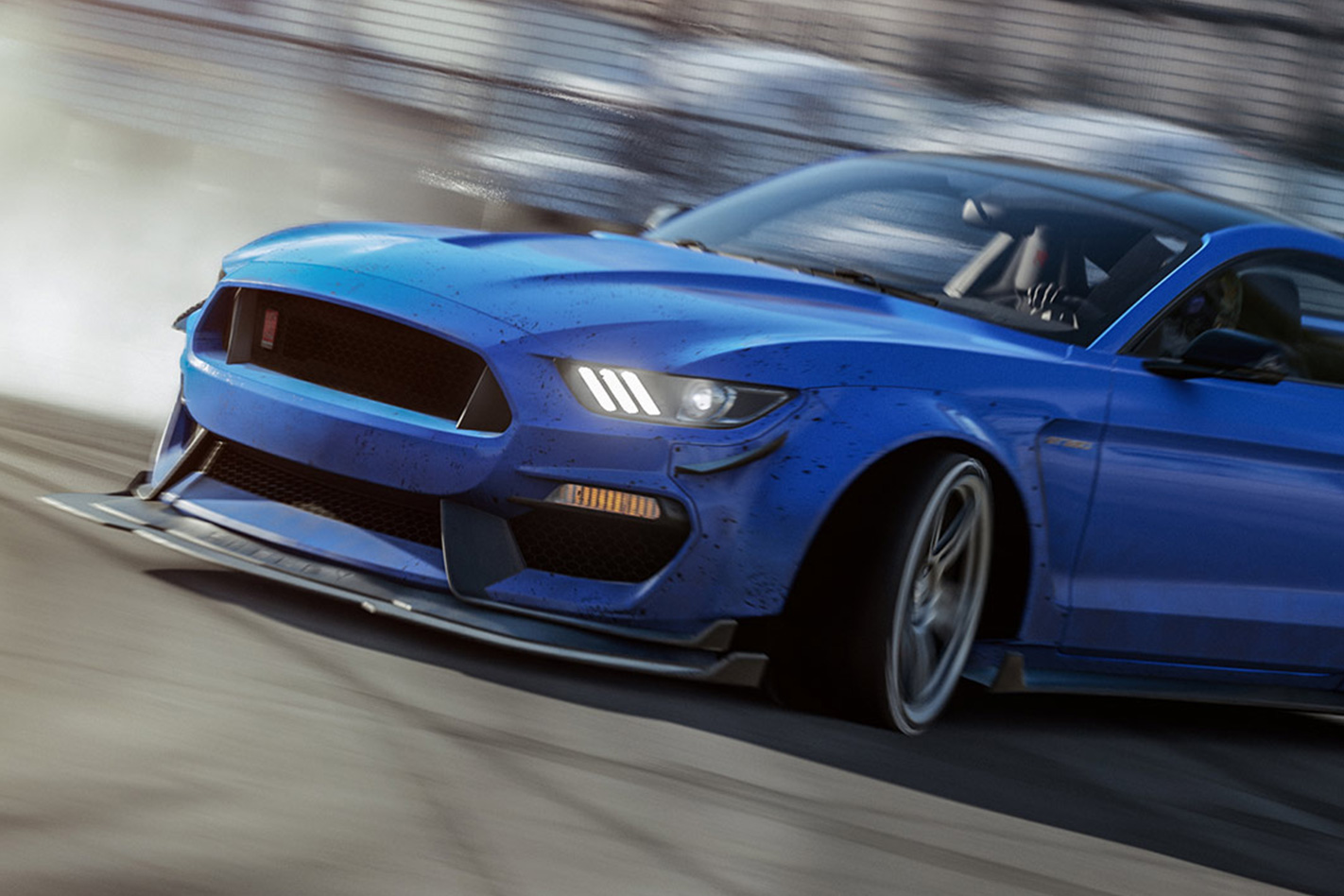
Despite there being more than 700 cars on offer, a lot of content is recycled from previous games like the fact that there’s the same Nissan GT-R Black edition from 2013 that’s been in the past five games, rather than an all-new model from the game launch year.
There’s more than 30 tracks on offer too, which is good to see. A few new racetracks (whether real or fictional) make their debut, while old favourites return as well.
One of the most visually pleasing new features of FM7 is the advent of dynamic weather. While previous games did feature different weather types, in FM7 the weather can change in-game, on the fly. It’s quite cool as not only does it look amazing having thunderous weather roll in, it also creates a strategic challenge for players to deal with by forcing them to change their driving style to suit the incoming wet weather.
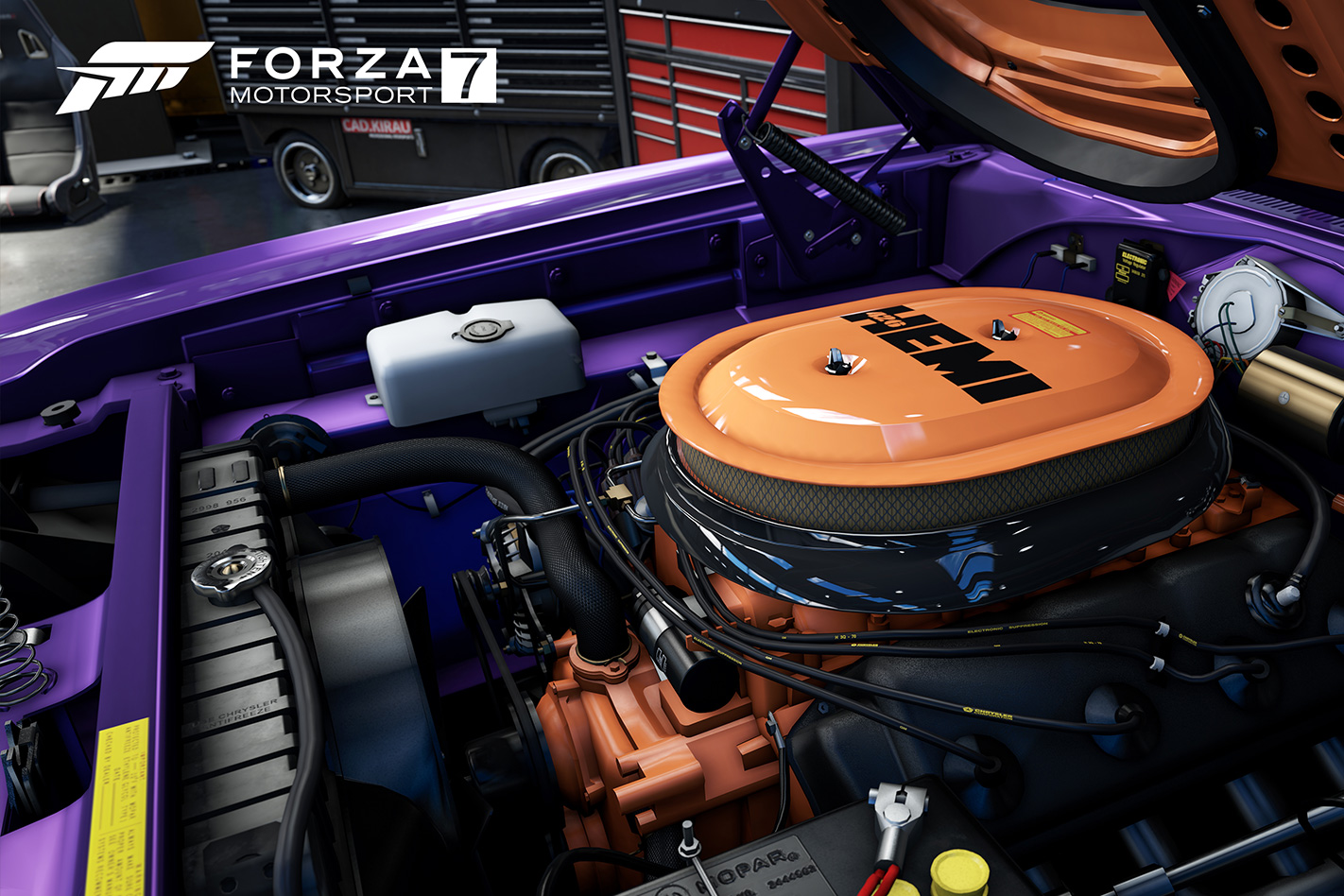
It’s a fairly easy game to get involved in, with varying levels of player capability catered for well. Whether you’re a newbie to the franchise or a veteran, you start with off slow and can make the game more difficult depending on your preference. FM7 introduces a number of new driving aids like friction assist which ensures a car’s behaviour stays the same over varying surfaces, but that and other driving aids can be turned off once you get settled.
While it mightn’t be quite as hardcore as something like iRacing or as user-friendly as the Need for Speed series, Forza Motorsport still strikes its own accord by offering ease of access to newbies, while simultaneously supplying some proper sim-like effects that can really teach you how a car behaves.
It’s a great place to learn the cause and effect of applying too much power coming around a corner, or to learn your stopping distances or similar. Each input directly translates into a commensurate reaction from the car, and when you get something right, it feels like a genuine pleasure.
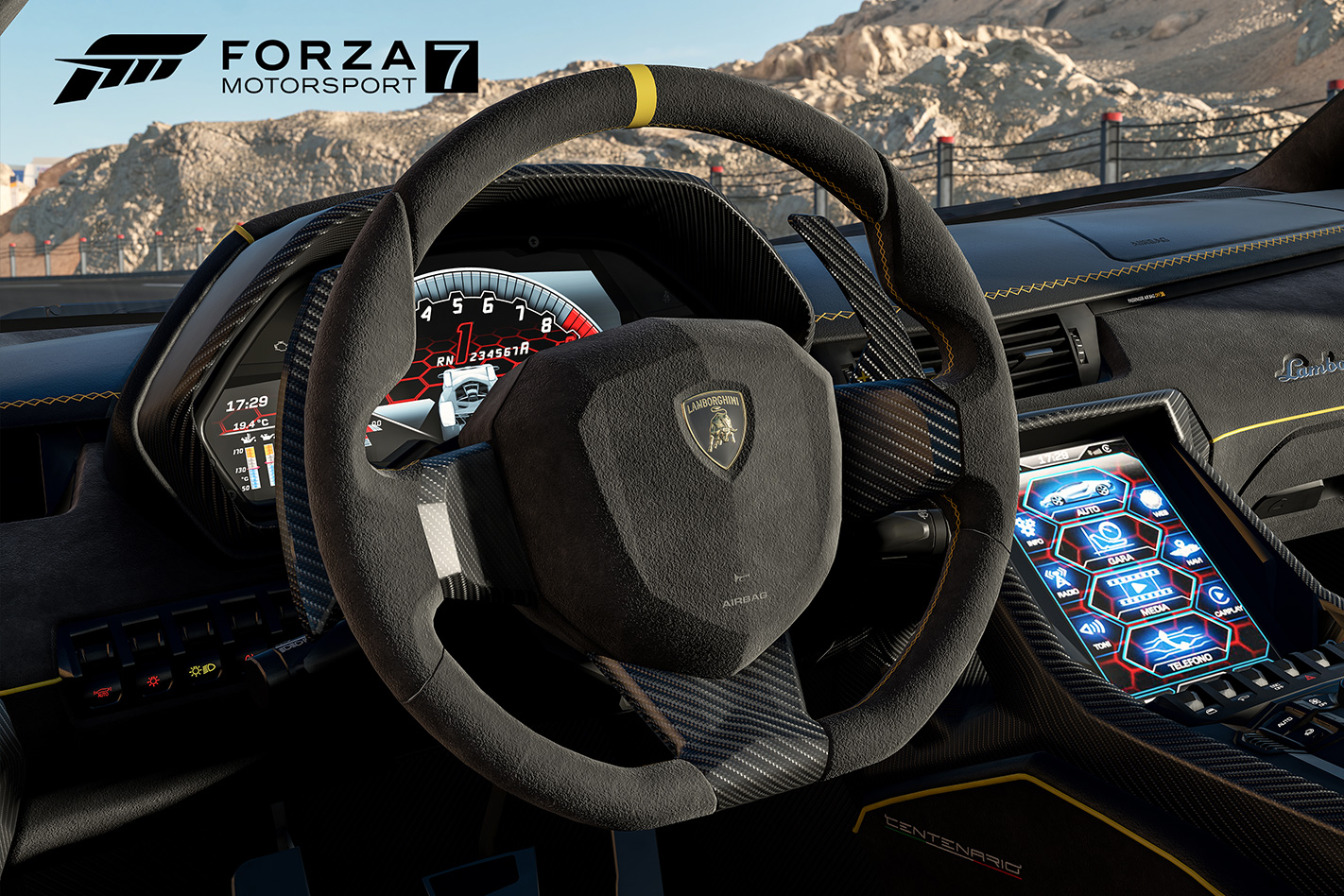
Similarly, changes you make to your car – whether they be performance or tuning related – have real consequences when you get back out on track and you do notice a difference.
You start the campaign by hearing about what it takes to be a motorsport success, and learn about having to make your way up through the ranks of various series before being handed the reins for a demonstration.
From there, the progression through the storyline is fairly structured with your ‘drivatar’ having to complete certain championships successively. Luckily there’s a wide amount of variety within these championships, but nonetheless you can’t ‘choose your own adventure’ like you could before.
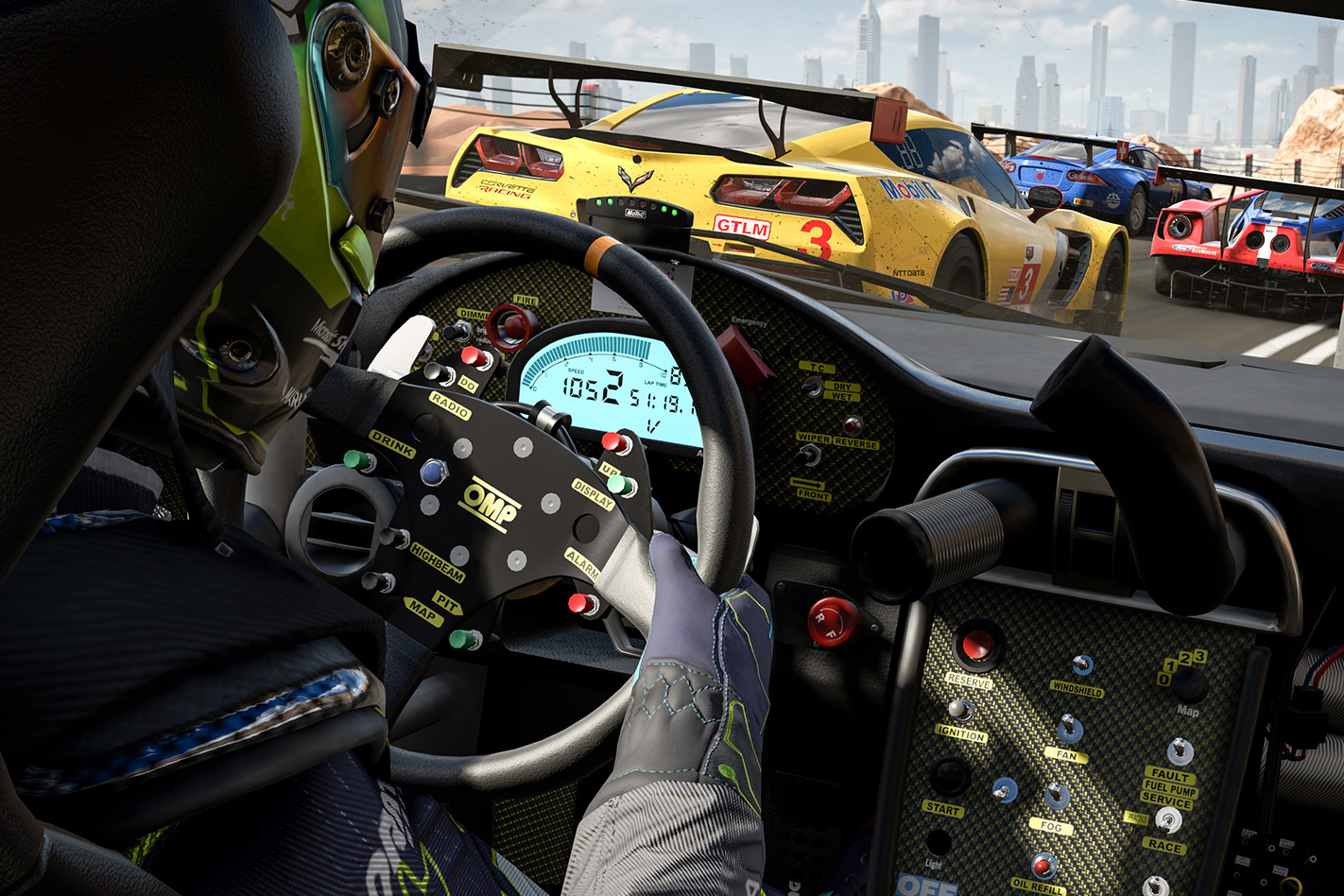
This can sometimes cause you to lose interest in progressing, as you have to spend time and in-game credits competing in classes that you don’t like – which can in turn cause you to turn off.
The driving itself is fairly on par with what we’ve come to expect from the series, but thankfully, at least from our perspective, it’s easier to pull yourself out of oversteer without immediately snapping back the other way and spinning out.
The player is also treated to an extra dose of detail and realism, with cars now vibrating and shaking more when going at speed. Monster down Conrod straight of Mount Panorama at 300km/h in a GT3 car and you’ll notice the subtle flexing of carbon fibre wings and even things like windscreen wipers jostling up and down. Cool, albeit minute details like this show the immense attention to detail Turn 10 has impressed upon the game.
Is Drift 19 the game oversteer addicts have been waiting for?
Are there any downsides to Forza Motorsport 7?
What isn’t so cool is the fact that you now have to level up your collector status in order to be eligible to purchase a number of cars. It means you have to be invested enough and skilled enough to progress before you can enjoy the freedom to spend your in-game credits the way you want.
Additionally, qualifying for races is now more involved, with the introduction of ‘homologation’ which means you have to tune your car a certain way in order to be able to compete in a number of events. One the one hand, this is a good thing because it ensures a level playing field, but then again you have to spend extra time and money prepping your car for a race you mightn’t care about.
We also mourn the loss of ‘prize spins’ which gift you free stuff at the end of every level. In their place are ‘loot boxes’ which you can spend your in-game credits on and try for something more expensive than what you bought the loot box for. But, most of the time you end up spending a few hundred thousand credits and get something useless like a modified Subaru BRZ or similar.
The artificially intelligent competitors you race against are fairly dumb at the start of the race, with a lot more jostling for position and trading paint than before, but they settle after a few corners and are intelligent enough to leave racing room. AI difficulty levels can be varied as well as their aggressiveness.
Navigating the menu systems will come as a change to Forza regulars, with the process not as fluid as it could be and they present a bit convoluted which, in addition to long load times, can drain some of the excitement before you get going.
Verdict
To their credit, Turn 10 has created an enduring game that still holds oodles of content to work through and there’s still a huge amount of players racing online so you won’t be on your own.
But for the most part, if you’re an Xbox gamer (or even on PC) and you still haven’t picked up this title in the two years since it’s launched, it’s still worth a buy – especially at a discounted rate if you can find it.
Click on the photo at the top of the story to flick through an entire gallery of stunning Forza Motorsport 7 images.
Toyota has decided to make sure everyone know the Supra is still a car for tuners to play with, just like its predecessors. So, the brand showed up to the 2019 SEMA show with no less than nine different versions of the Toyota GR Supra.
Toyota’s US marketing VP Ed Laukes says 2019 has been “momentous” for Toyota, explaining the reason for so enthusiastically celebrating the new Supra.
“The eagerly anticipated 2020 GR Supra stole the show when it debuted at the North American International Auto Show in Detroit, and this year marks the 40th anniversary of Toyota Racing Development.
“From NHRA drag racing and drifting to the NASCAR and IMSA racing series, TRD continues to push the limits of what a Toyota can do.”
Without further ado, here are the cars Toyota is celebrating with.
GR Supra Heritage Edition
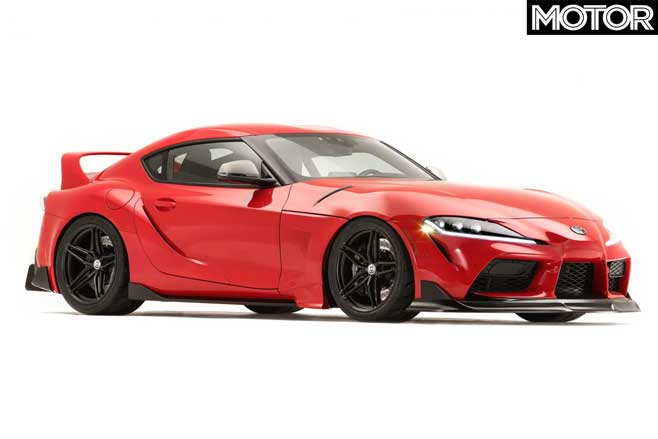
Laukes himself was so keen to celebrate the Supra, he modified one. As part of a friendly competition with NASCAR commentator Rutledge Wood (dubbed GRudge Match build-off), Laukes created the Heritage Edition as a nod to the MkIV Supra that’s become iconic.
Visual cues aside, the Heritage also hides a 373kW version of the B58 straight-six turbo under its bonnet, with open-wheel racing derived rear suspension and a set of lowered adjustable coilovers.
GR Supra HyperBoost Edition
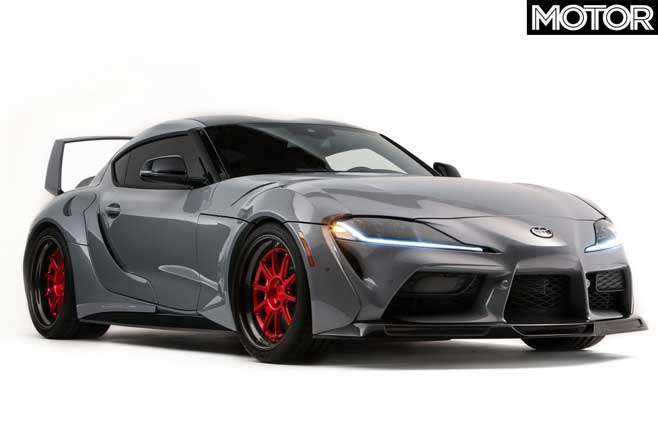
The competitor to the Heritage, Rutledge Wood’s ‘dream’ Supra is less visually aggro but more potent in terms of outputs.
“I was excited for the return of the Supra for 2020, but I was thrilled at the chance to build one for the SEMA Show to go up against the GR Supra that Ed Laukes’ team put together,” Rutledge says.
The aptly named HyperBoost wins the power war with 559kW thanks to a new Garrett turbo and a fresh exhaust design.
Toyota GR Supra GT4
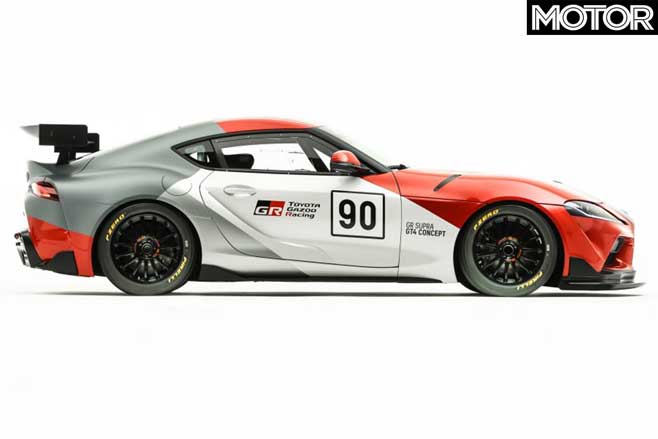
This already-revealed concept is confirmation from Toyota that it will launch the GR Supra GT4 as a proper racing car in 2020, hoping to “shake up the competition and foster growth and interest among privateer racers.”
With factory engine and transmission, albeit with a motorsport ECU, the GT4 isn’t a massive step away from the road car. It does, however, have competition-spec coil-overs and Toyota racinganti-roll bars, along with stronger brakes and lightweight Oz racing wheels.
TCD GR Supra 3000GT Concept
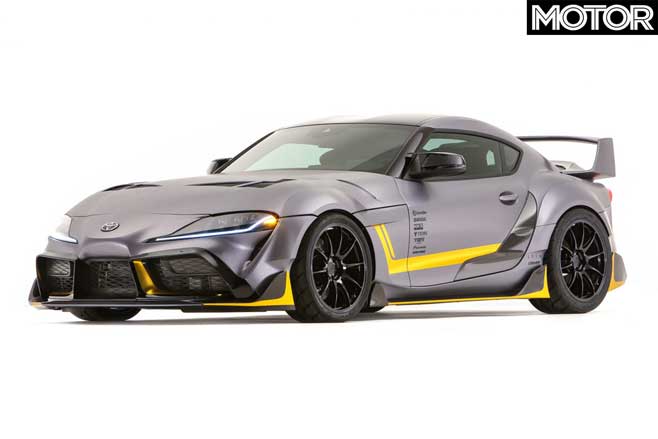
This retro-looking concept by Toyota Customizing & Development (TCD) is a nod to the 1994 TRD3000GT the TCD team created as a limited edition widebody version of the MkIV Supra.
The original bodykit was released in “celebration of the Supra’s success in the All-Japan Grand Touring Car Championship.”
Changes to this car according to Toyota are limited to styling and interior changes, though lighter wheels and Brembo GT-S Monobloc brakes are the exception.
TCD GR Supra Performance Line Concept
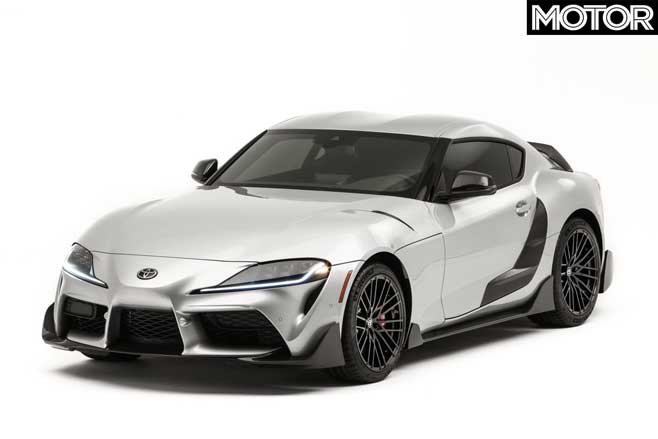
A carbon fibre aero pack is the biggest change for this Supra, having been designed by TCD as a more road-friendly and attainable body alteration to the new GR Supra.
“The GR Supra is a driver’s car so the aerodynamics should contribute to the overall balance and handling of the vehicle,” says project lead Heru Adi Nugroho.
“The concept body parts with larger winglets increase downforce for improved high-speed driving and handling while offering a more eye-catching appearance.”
Toyota Genuine Accessory Team GR Supra ‘Wasabi’
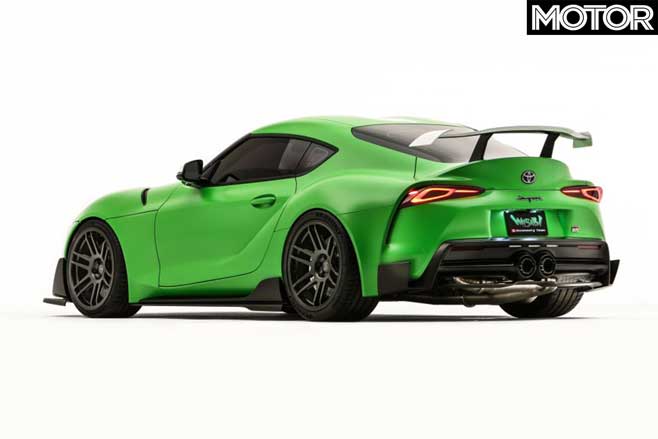
Toyota says the ‘Wasabi’ build focuses on “enhancing performance without compromise,” however there’s no mention of any actual performance modifications. Well, not in terms of drivetrain work, anyway.
An exterior package with spoiler, a set of 20-inch forged aluminium wheels, Michelin Pilot Sport 4S tyres, a set of Brembos, plus Öhlins adjustable dampers and a strut tower brace appear to be the most significant modifications to the Wasabi.
NASCAR Xfinity Series Supra
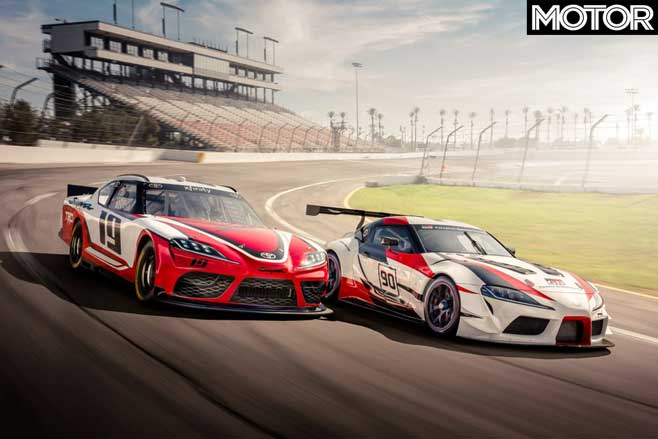
The Xfinity series Supra, which is a competitor in NASCAR’s feeder series, has already been seen. In fact, it’s already been racing. Toyota is keen to note that driver Christopher Bell “holds the top spot in the driver standings with his no. 20 Supra for Joe Gibbs Racing in the NASCAR Xfinity Series.”
2020 GR Supra Pace Car
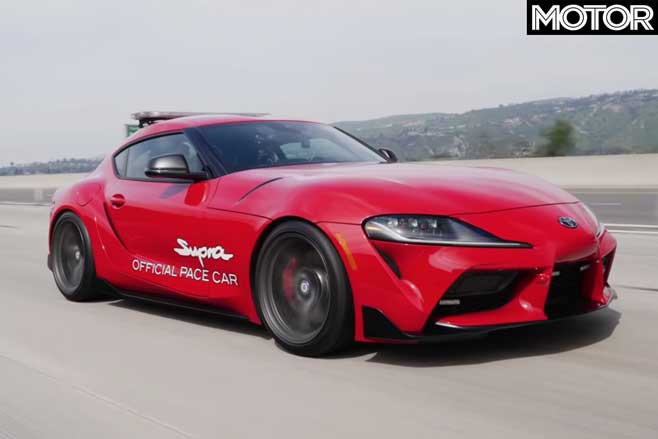
Speaking of the Xfinity Series – here’s its 2019 Pace Car!
This is essentially a stock Supra with a roof-mounted light bar, adjustable coil-overs, and upgraded brakes.
GR Supra Racing Concept
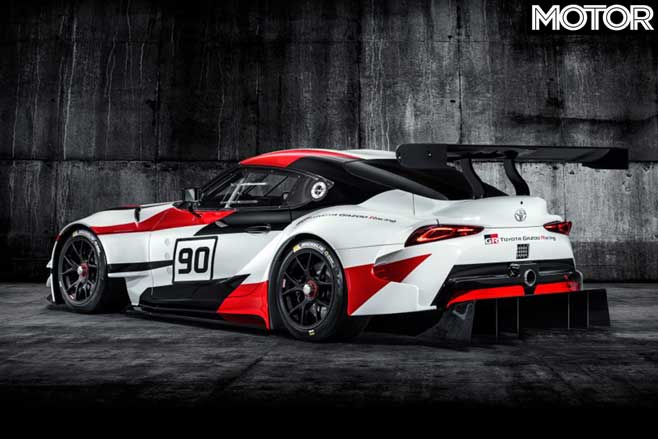
One of the oldest Supras on show was this, the GR Supra Racing Concept which was revealed in Geneva back in early 2018.
It was one of the first looks at the new Supra we’d had, and its styling turned out to be a pretty accurate indication of what we could expect.
So, which is your favourite? Let us know in the comments below!
Time can move slowly at Maranello. Every decision within Ferrari’s hallowed headquarters requires a Janus-like focus on the future with a deferential nod to the past. Models morph gently across generations and it’s often only with the benefit of hindsight that genuinely pivotal models can be identified. The Ferrari F355 is one such car.
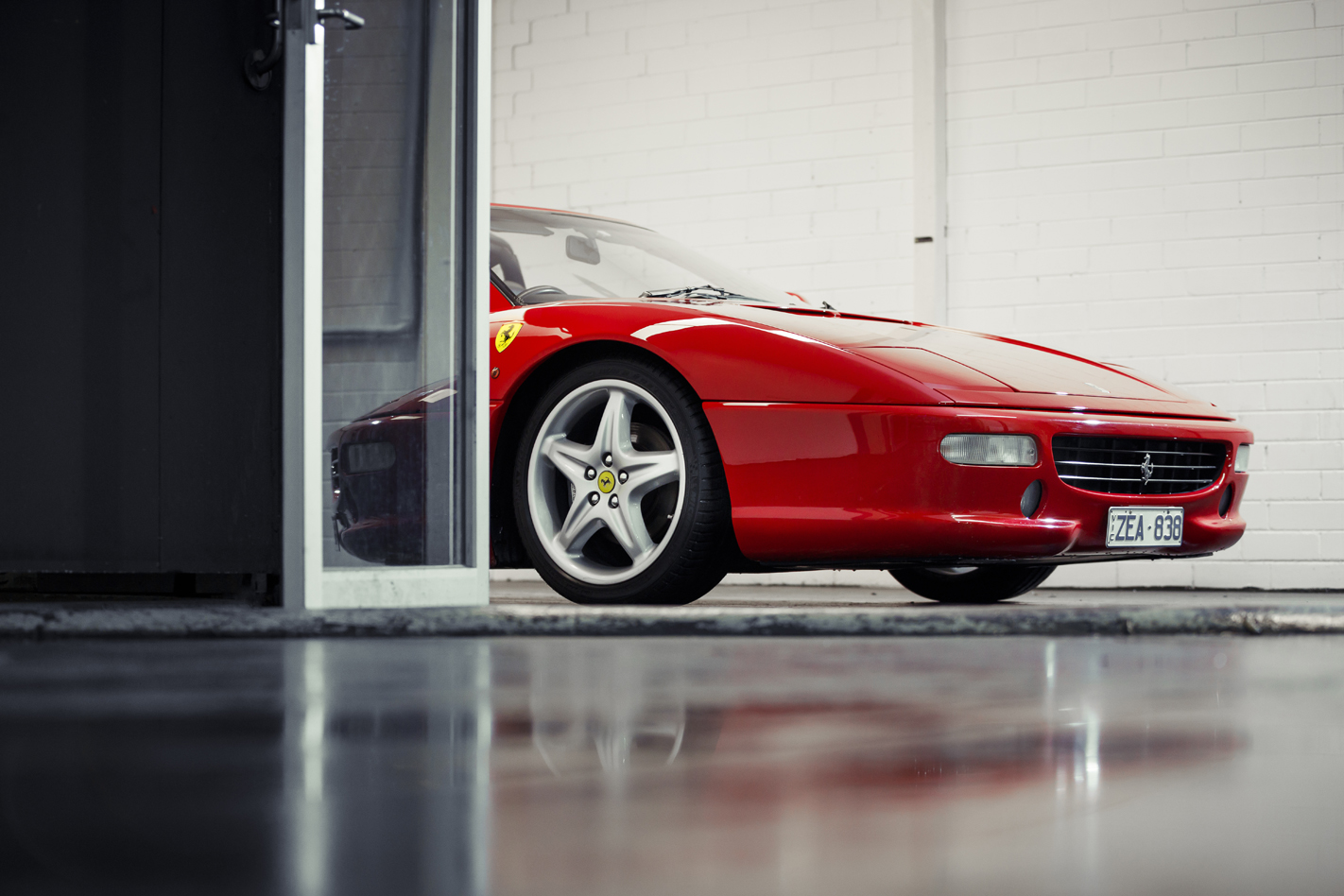
At the time of its introduction in 1994, it promised to be little more than a fairly extensive refresh of the much-maligned 348. It was, in fact, a changing of the guard. Before the F355, V8 Ferraris had a certain place in the hierarchy. They provided a taster of the excitement and charisma of the senior 12-cylinder supercars at a more affordable price point. The F355 fundamentally changed the focus of Ferrari’s road-car division. The mid-engined V8 became the point of the spear, the dynamic exemplar around which the rest of the product line pivoted.
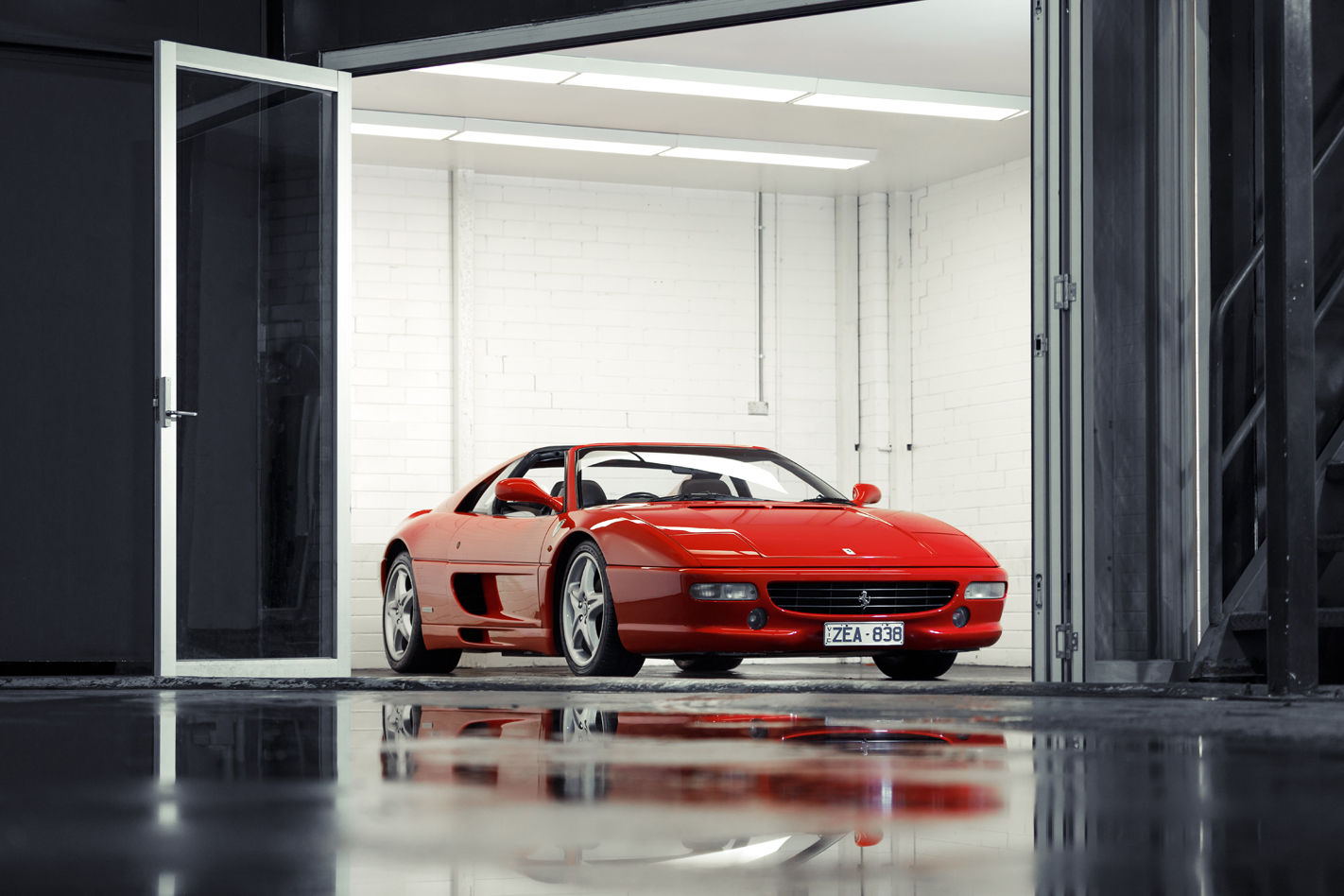
Of course, you could point to a whole host of other reasons why the F355 marked a change in the way Maranello did things. It was the final hand-built production Ferrari, yet it was the first to lean on computer-aided design. It was the first V8 in the post-Enzo Ferrari era and was the last V8 to feature pop-up headlights. It was the first Ferrari to be fitted with a robotised ‘F1’ transmission and the last to rely on a steel monocoque chassis. But it was what the F355 meant that resonates today.
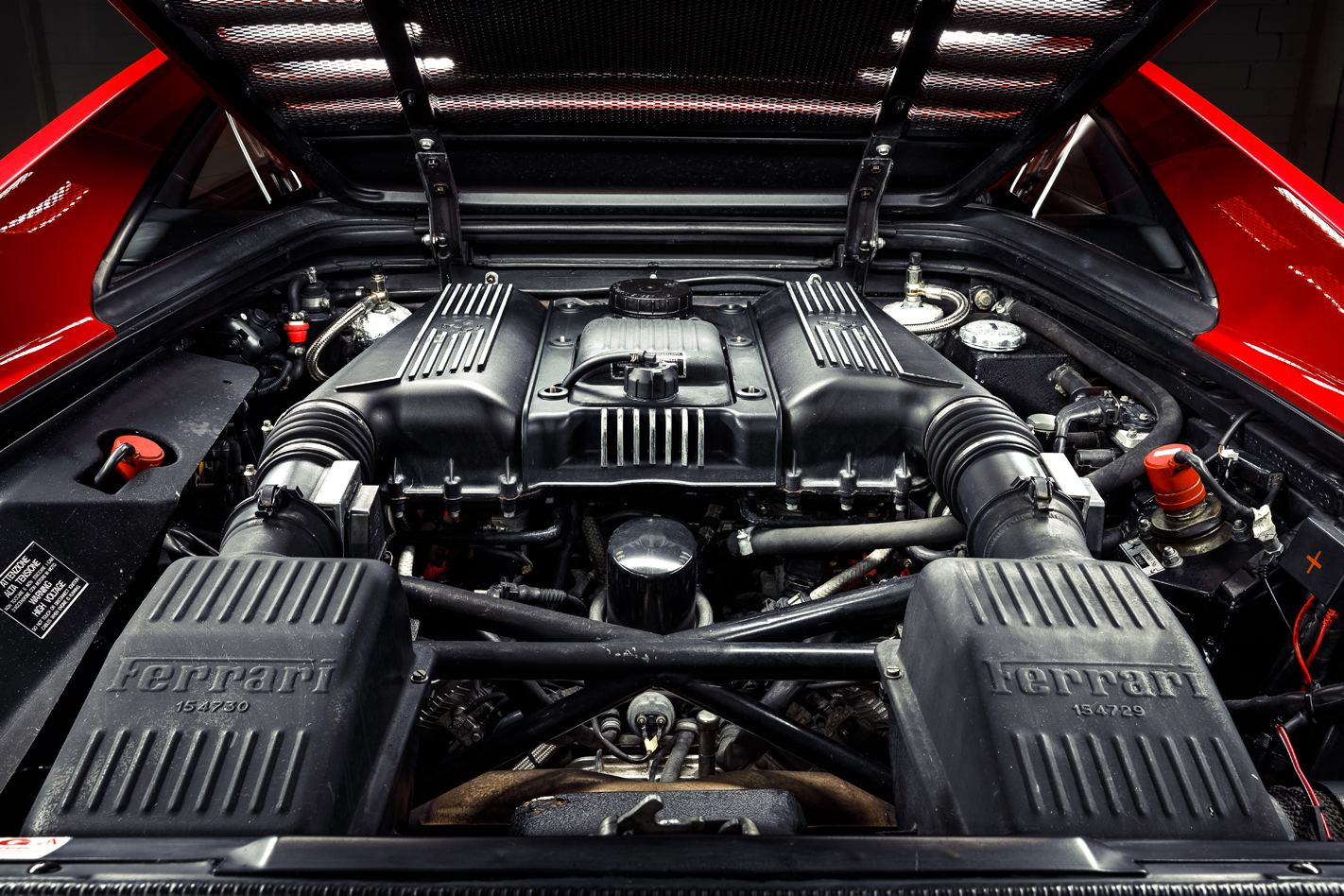
Peter Robinson was quick to clue into this. “The cheapest Ferrari is also the quickest Ferrari,” he noted in Wheels’ first drive (August 1994), going on to ponder the relevance of the 12-cylinder flagship, the 512TR. Around the Fiorano circuit, the F355 was fully seven seconds quicker than the 348 and three seconds quicker than the 512TR. Of course, having the most efficient normally aspirated engine in the world helped its cause. The five-valve head, titanium rods, forged pistons and twin exhaust systems lifted power from the 3496cc V8 to an unprecedented – for a naturally aspirated engine – 80kW per litre, eclipsing even the 76.8kW/L of the McLaren F1.
Although the form factor of the 348 remained, virtually everything else changed. The roof, glass and front guards were carried over but every other external element was new. And with good reason. Testarossa side strakes were certainly striking when they were originally penned in the early ’80s, but the 348’s beslatted flanks looked passé more than a decade later. The replacement program for the 348 began in 1990, just as the Honda NSX arrived on the market. One year later, Luca di Montezemolo arrived at Ferrari and, upon seeking advice from test drivers who had benchmarked the Honda, tore up the plans for the company’s response, ostensibly a more powerful 348. He also inherited the 456GT program in its late phase of development, but the F355 represented a way for di Montezemolo to underscore his bona fides and create a lasting impression.
“I started in December ’91,” recalls di Montezemolo. “After Italia ’90 [the soccer World Cup project he oversaw] went so well, I had given myself a present and bought a 348. It was terrible. So I’m at the first meeting as CEO and I asked to be presented with our range. ‘Okay, we have the Testarossa, we have the 348 – very good car, innovative, eight cylinders,’ and I said, ‘Please stop. This is a shit car. So don’t say this to me; I am a client, I know what this car is like.’”
Berlinetta coupes and the car featured here, the F355 GTS targa, were launched first, at a strangely muted press event coming shortly after Ayrton Senna lost his life at Imola. Senna had lunched with di Montezemolo at his home prior to the race and pledged to explore a release from his Williams contract in order to join the scuderia.
The 348 Spider continued into 1995, making way mid-year for the soft-top F355 Spider. An F355 Challenge model appeared in late 1995, for the Ferrari Challenge race series. The mechanicals were left unchanged but brakes, suspension and tyres were upgraded to track spec, along with exhaust and cooling enhancements. Between 1995 and 1998 the Challenge gradually grew more track-focused, with 108 cars eventually produced, of which 28 were right-hand drive. All featured the manual six-speed transmission, despite the debut in 1997 of the F1 paddleshift sequential ’box.
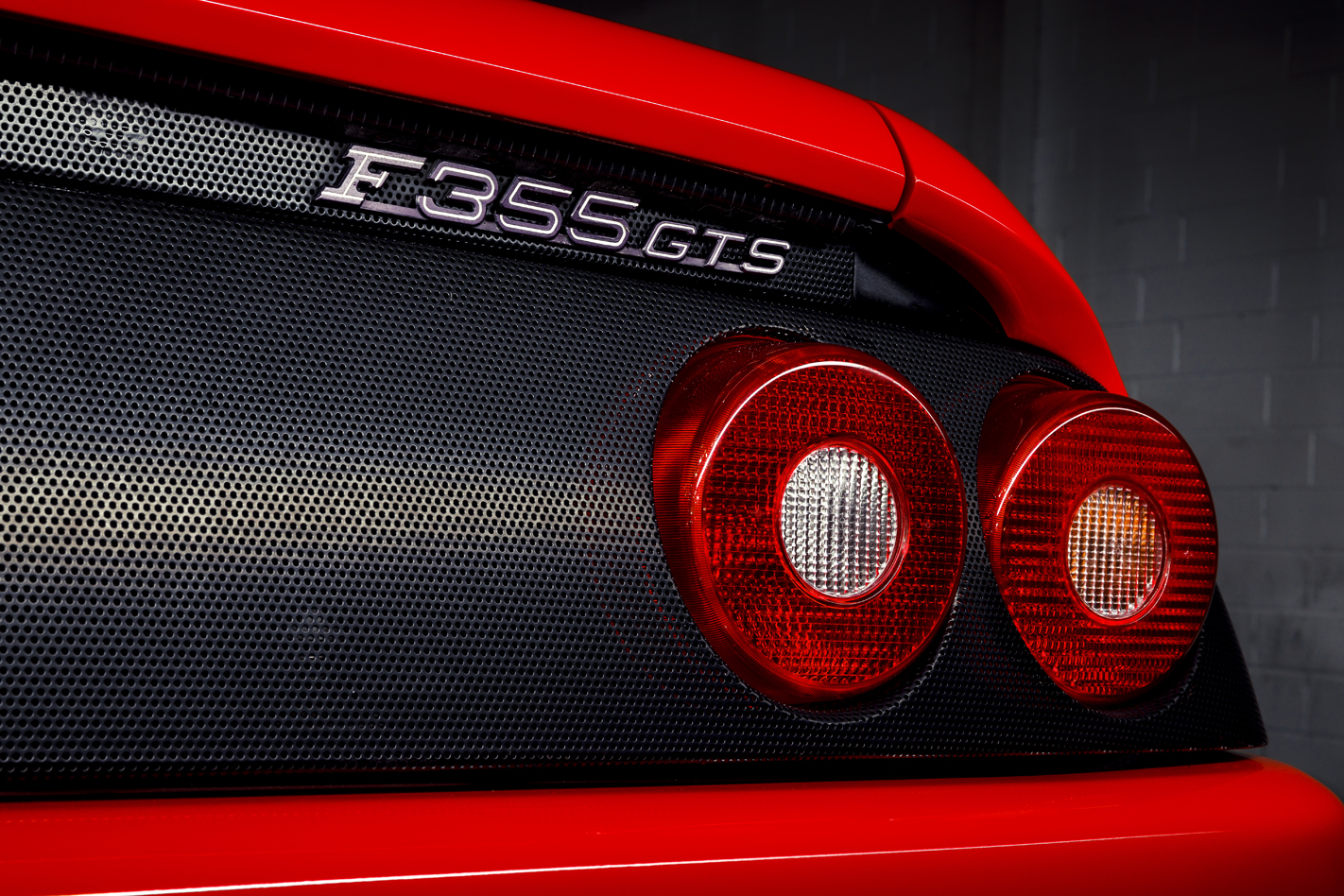
In the context of its contemporaries, the F355 was a rocketship. Ferrari claimed an ability to hit 100km/h in 4.7 seconds, which put it on par with ‘proper’ V12 supercars like the Lamborghini Diablo and bettered circuit emigres like Porsche’s fearsome 993 Carrera RS 3.8. Maranello’s famously optimistic claims weren’t too far off the mark either. Former Le Mans winner Paul Frère tested an F355 Berlinetta at 4.9 seconds to 60mph and 13.3 for the quarter-mile. Frère claimed Paolo Martinelli’s F129B V8 was “probably the best sports-car engine ever made.”
It’s worth noting that not all of these engines are created equal. Or rather their electronics aren’t. When the F355 launched it featured Bosch Motronic 2.7 engine control system, with dual mass-air-flow sensors, two fuel pumps and a duet of lambda sensors. These early 2.7 models feel a good deal livelier and more aggressive in their throttle response than the later Motronic 5.2 models, introduced in 1996, which are cleaner and have a noticeably smoother idle. At the same time, the delicate three-spoke steering wheel was changed for a chubby airbag-equipped item. It seems F355 aficionados aren’t hugely safety-focused because most would prefer the early 2.7 cars with simpler OBD1 electronics.
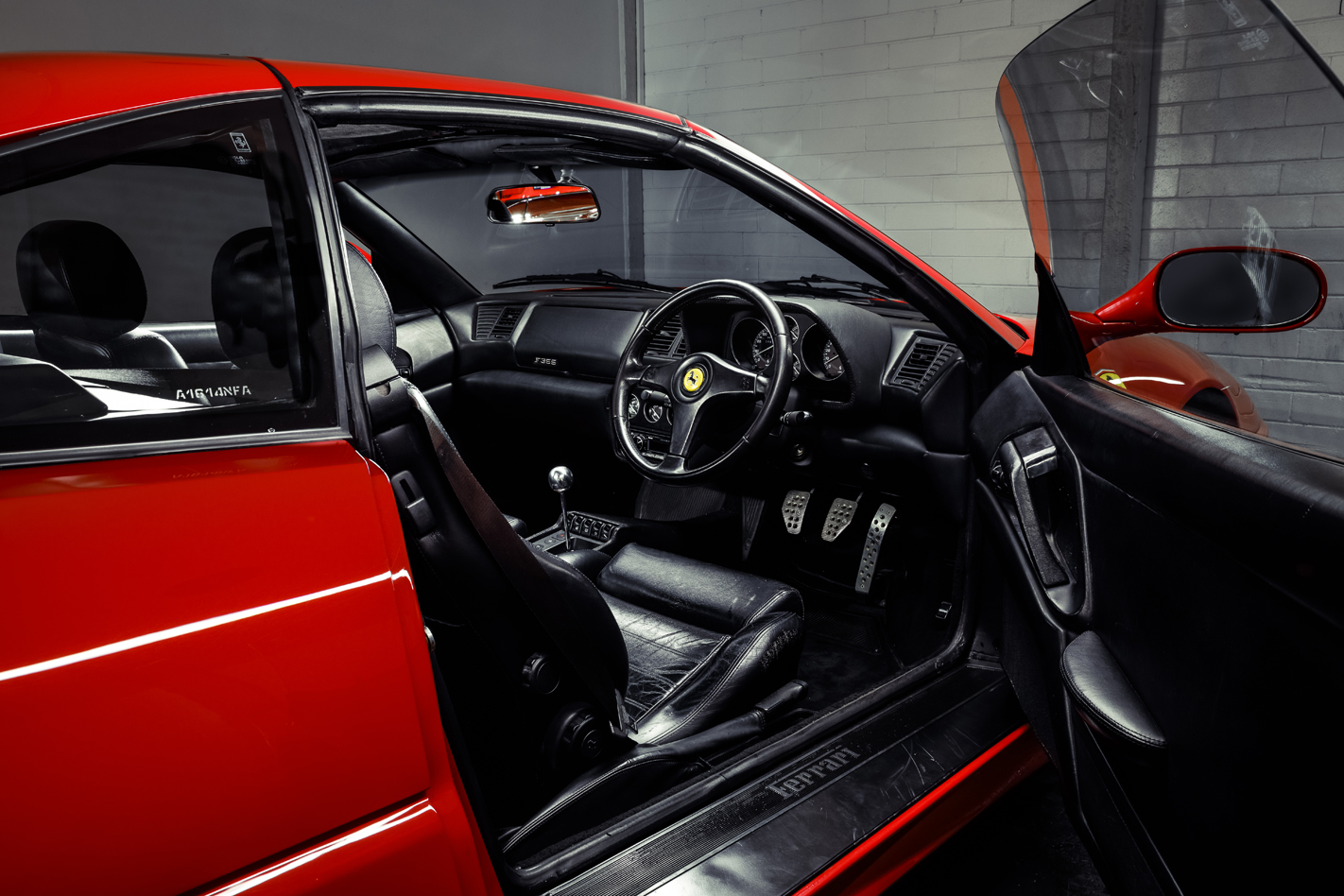
That’s not to say that the F355 is a straightforward ownership proposition. As beautiful as they are, it’s unlikely many owners would recommend a used example to a close friend. What goes wrong? There are myriad ways to land yourself a big bill. That’s why many potential used buyers, as seduced as they were by the F355’s styling and soundtrack, migrated to either the older 328 or the newer 360 Modena.
There are five key problems to look out for. The first is rust, most specifically corrosion at the bottom of the coupe and targa’s roof buttresses where they meet the rear wing. This is caused by a chemical reaction where aluminium and steel meet, which then results in cracking. The solution is a one-off lead treatment, or just buy a Spider and give the issue a swerve.
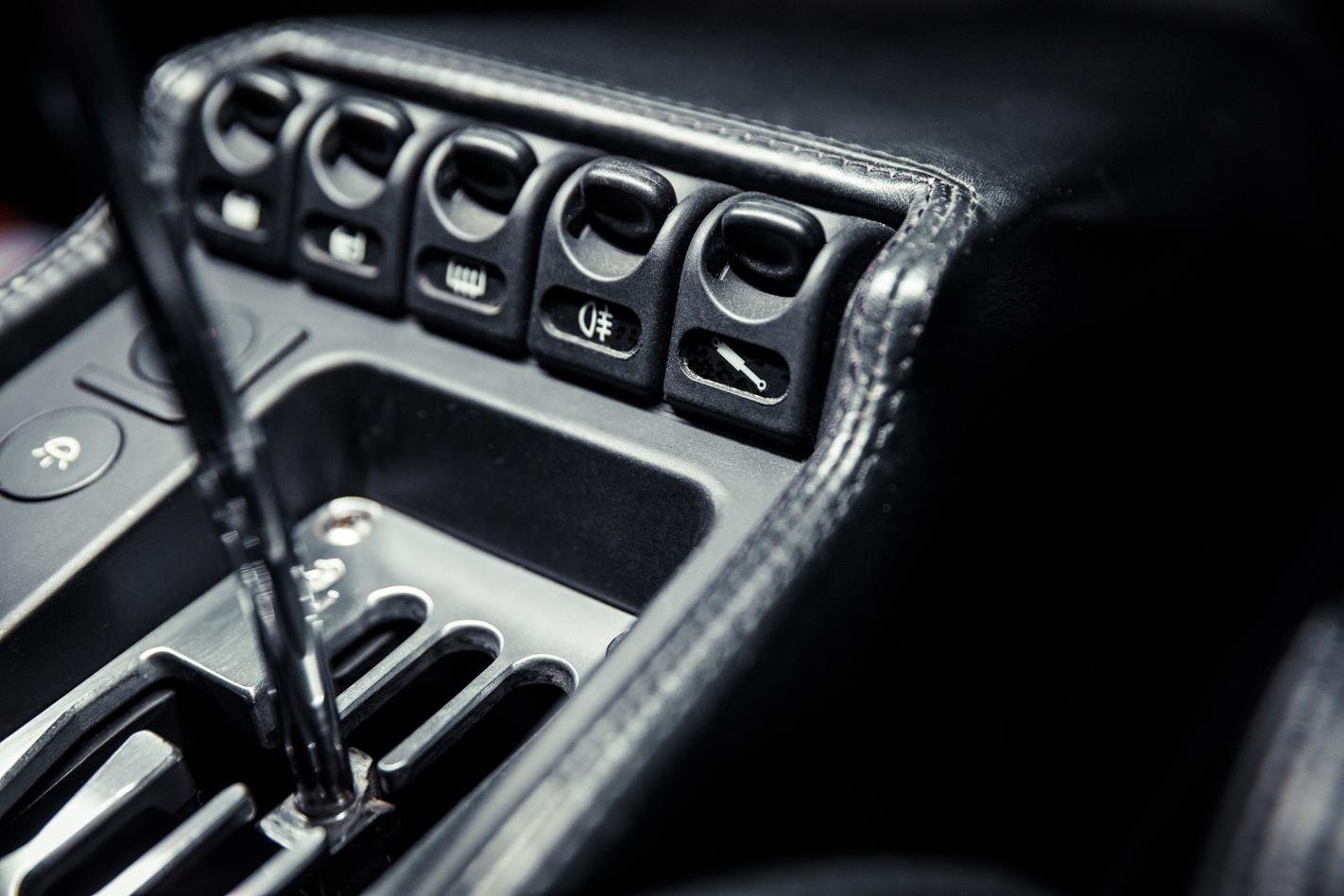
The interior plastics are another recurrent issue. In short, the rubberised thermoplastic covering on much of the switchgear degrades over time, becoming sticky and rubbing away. It’s an issue of age and not UV exposure as NOS items that are still in the box suffer the same fate. There are companies that can strip and plastidip the offending parts but it’s a tedious process. Likewise the leather atop the dash and airbag cover can shrink and crack, especially in hot climates. Many replace the leather with Alcantara which is hardier and reduces windscreen reflections.
The big-budget item that is virtually a lottery is when the F355’s exhaust manifolds will give up the ghost and crack. Factory replacements are the thick end of $20K, but aftermarket manufacturers offer better alternatives for half that. The issue usually arises at between 35,000 and 55,000 kilometres, and if one side goes, the other will fail shortly thereafter. In short, they’re too thin, using 2mm-gauge metal rather than the 4mm-thick walls of specialists like Tubi or Capristo.
Worn valve guides are another recurrent F355 issue. The factory initially used bronze valve guides and Ferrari reckons that about 20 percent of 1995MY cars would experience excessive valve guide wear and poor engine compression as a result. This has given early valve trains an exaggerated reputation for fragility. Most affected cars will be fixed now. However, even with the newer valve guides introduced post-95, problems arose. A bad batch of valve guides also found its way into 97/98MY cars. Valve pitting is also an issue on F355s that aren’t used regularly.
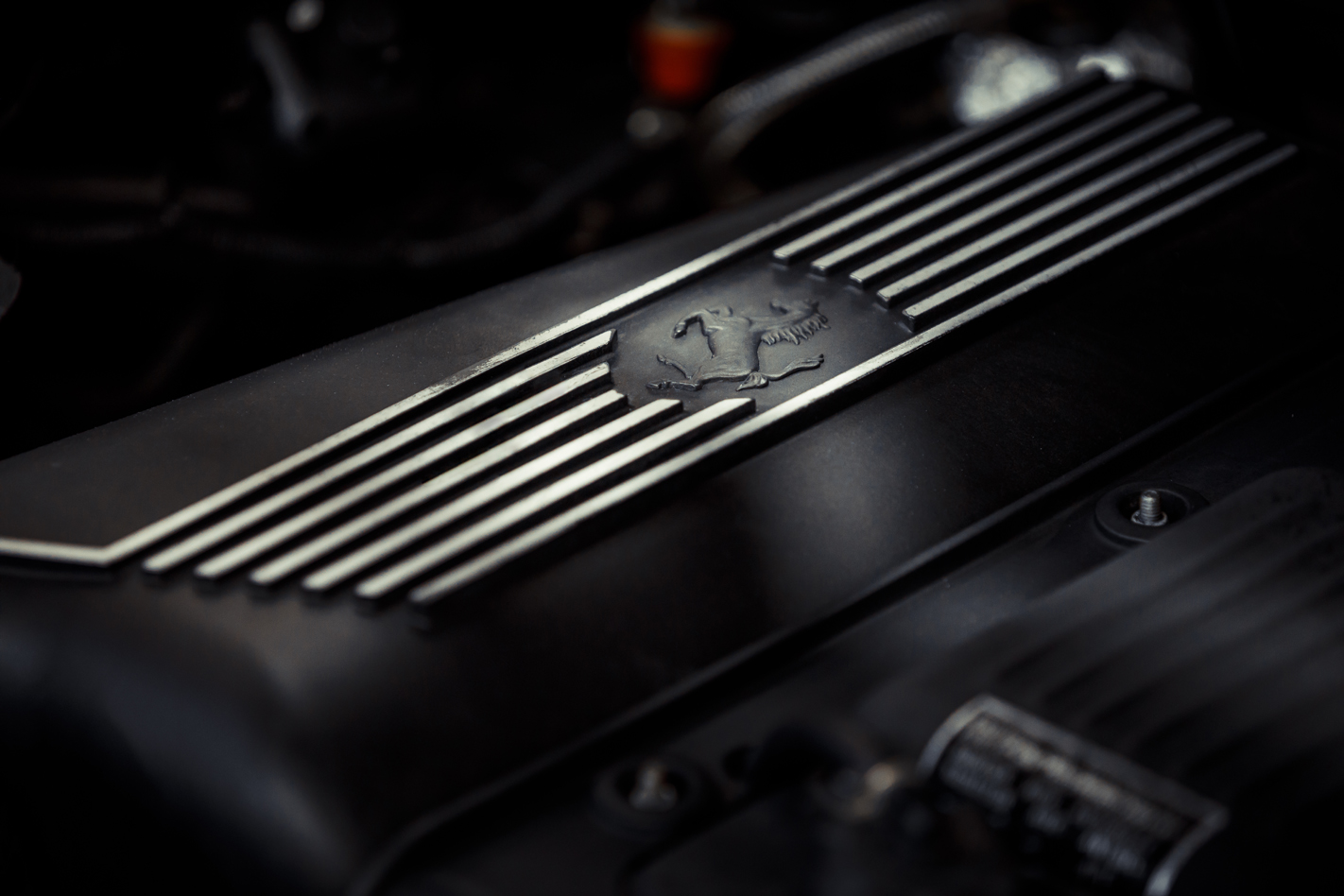
The final caveat is just the general high cost of service. The Propulsore Completo – Ferrari’s name for the engine and transaxle – fit snugly onto a subframe that needs to be removed from the car for routine belt servicing every 36 months. Wise owners will also schedule a major service to coincide, which will cost upwards of $10,000.
Fortunately there’s a significant amount of F355 expertise out there. This was the first Ferrari to achieve 10,000 sales but it pays to recognise that despite it now costing BMW M3 money to buy, it still requires an Italian-exotic maintenance budget. The way it drives still stands up. In fact, it’s a better fit for today’s driving than many modern supercars which feel overtyred and underinvolving at sensible speeds. The F355 represents a high-water mark: perfectly proportioned, wonderfully charismatic, achingly beautiful and, by modern supercar standards, tiny. There’s a fairly high bar to be recognised as a great Ferrari. The F355 clears it with ease.
The Ferrari F355 by the numbers:
Fast Fact
One of the rarest F355 models is the runout Serie Fiorano, launched in March ’99. Just 104 were produced, all in the Spider body style. In total 100 went to the US, three were sold in Europe and one went to South Africa. Brakes, steering and suspension were upgraded to near-Challenge spec.
Who owns one?
John H- Victoria
“I owned an F355 Spider for over 10 years. It was fairly well exercised and most of the major issues were addressed. I remember the exact moment that I realised I was in for a colourful ownership experience. It came on the morning after I bought the car when the battery was as flat as a pancake. You need to remove the front wheel to get to the battery. The manual is no help. It was outsourced to Pininfarina and it’s a work of glorious fiction, telling you that the battery’s in the luggage bay. Pininfarina should probably stick to drawing cars. I did the maths and realised that 30,000km of Uber rides were cheaper than driving the F355. Still worth it.”
Specs
Model: Ferrari F355 GTS
Engine: 3496cc V8 (900), dohc, 40v
Max power: 280kW @ 8250rpm
Max torque: 363Nm @ 6000rpm
Transmission: 6-speed manual
Weight: 1440kg
0-100km/h: 4.7sec (claimed)
Price: $275,000 (1995), from $180,000 now
