
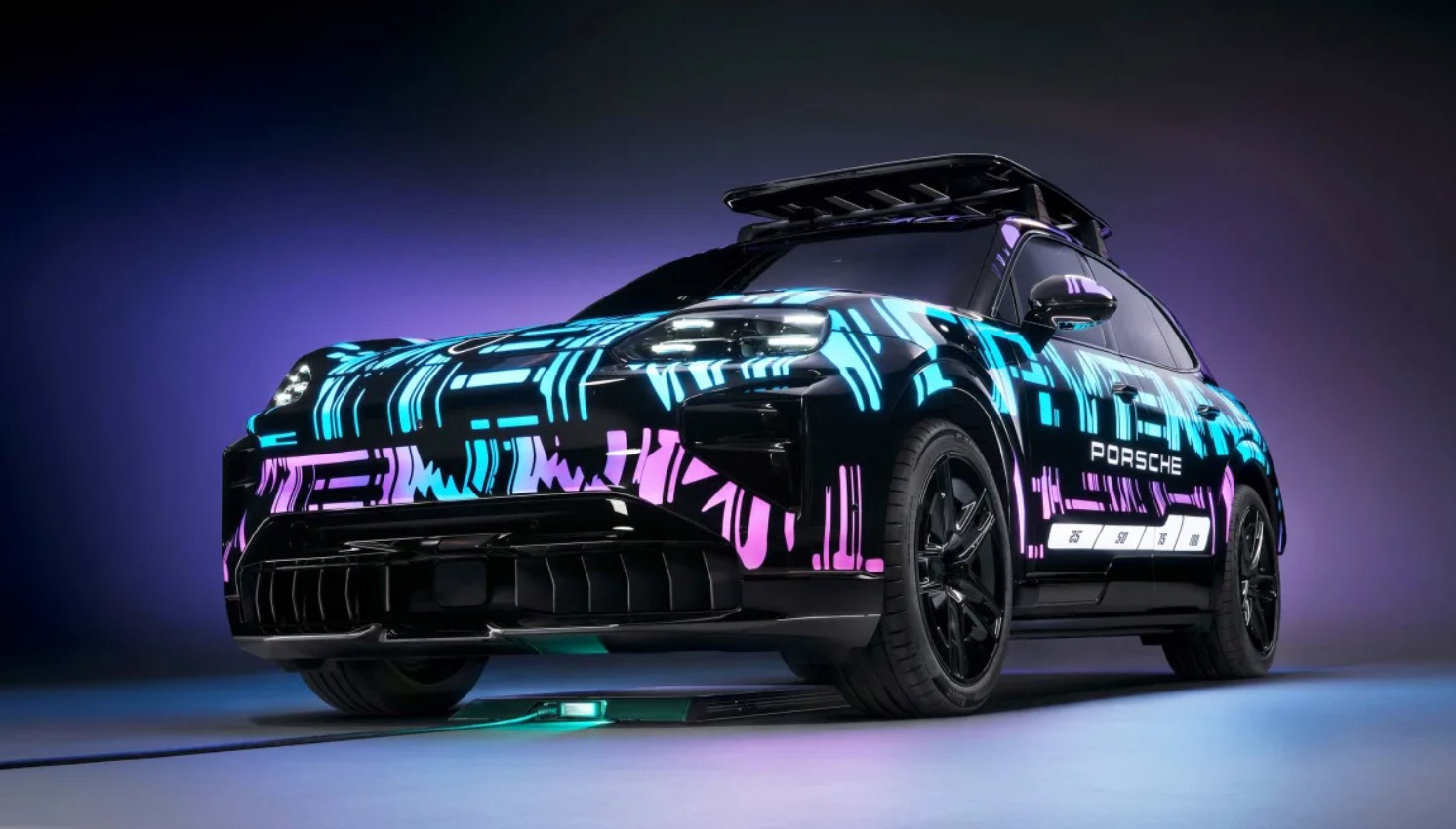
Porsche will use this year’s Munich Motor Show to unveil its first all-electric Cayenne, and while much attention will focus on its size, styling and performance, it is the charging technology that sets it apart.
The Cayenne EV will be the first production car equipped to wirelessly recharge its high-voltage battery using an inductive floor pad. Unlike the everyday smartphone pads found in many cars, this system transfers power directly to the vehicle’s main traction battery.
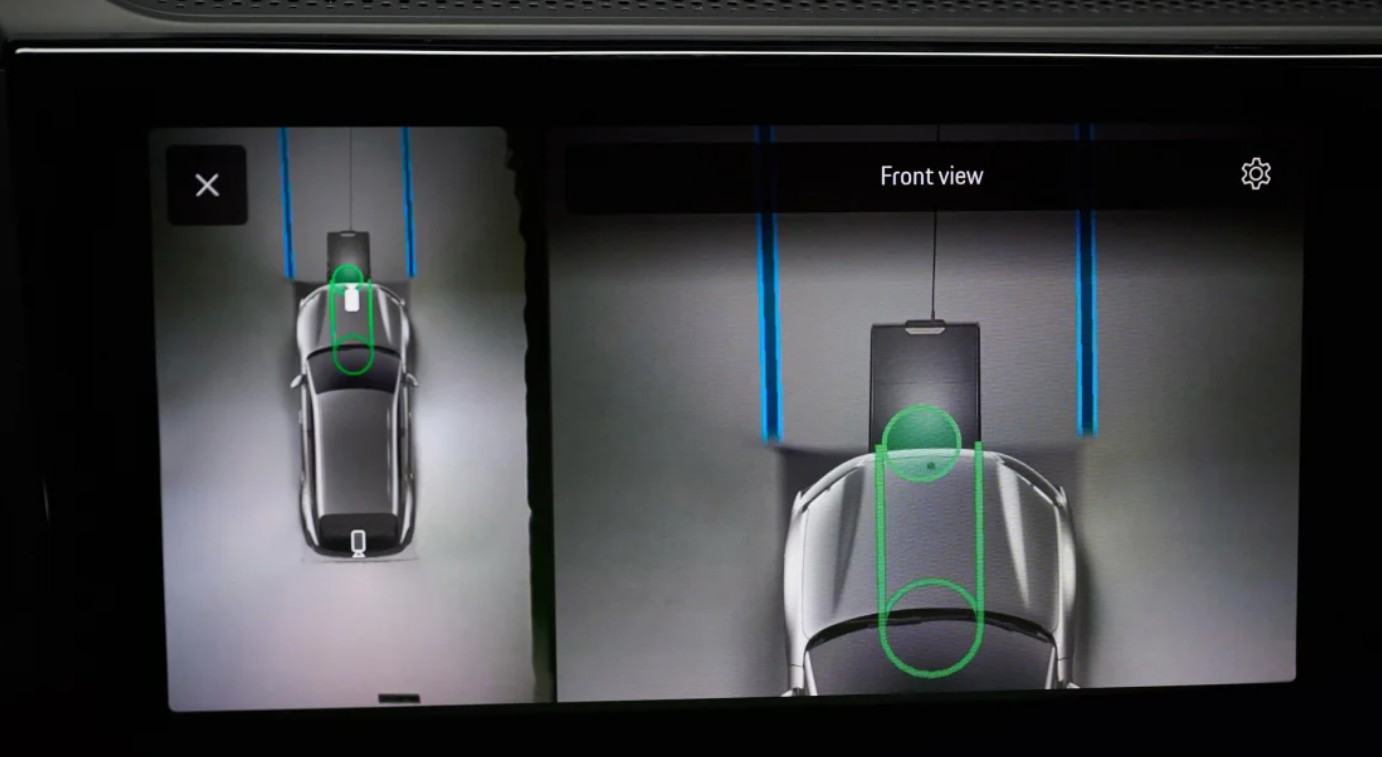
The charging plate, designed for home use, measures 117cm by 78cm and stands six centimetres high. Owners connect the unit to mains power and simply park the Cayenne EV over the pad, ensuring it aligns between the wheels.
To maintain efficiency – Porsche says it can reach up to 90 per cent – the SUV is able to lower itself closer to the plate, minimising the gap between hardware and vehicle. The kit, weighing about 50kg, includes safety systems that halt charging if a foreign object or living creature is detected on the surface.
The wireless setup delivers 11kW of charging power, suitable for overnight replenishment of the Cayenne’s large battery. For faster turnaround, the vehicle is also compatible with 400kW rapid charging, allowing a 10 to 80 per cent top-up in around 15 minutes.
While inductive charging has been trialled by other brands, including Tesla and Volvo, Porsche will be the first to put it on sale, citing research that shows roughly three-quarters of owners charge at home. Hardware to enable wireless charging will be available through Porsche Centres.
The electric Cayenne will sit alongside petrol-powered models rather than replace them, expanding the brand’s SUV line-up. Coupe and SUV body styles will be offered, with base “4” models and high-output “Turbo” versions at launch.
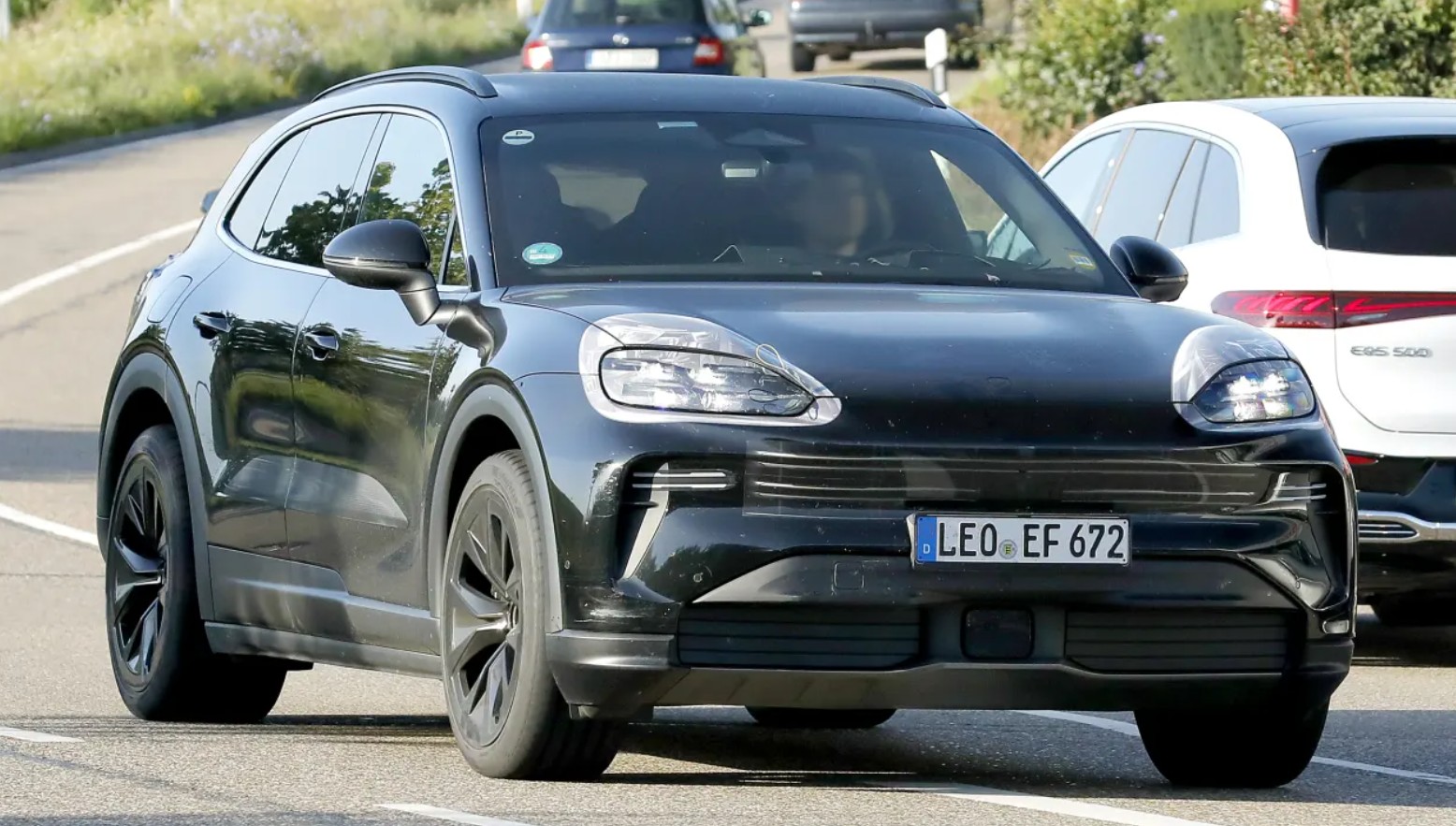
The EV shares Porsche’s 800-volt PPE platform with the Macan Electric but introduces updates such as Active Ride Control, rear-wheel steering and enhanced air suspension. Power outputs are expected to start around 400bhp, with Turbo models approaching 800–900bhp (596kW-671kW) to match rivals from Mercedes-AMG, Audi and BMW.
Design changes include integrated high-mounted headlights, a re-sculpted light bar at the rear and frameless windows. Inside, the cabin will move to a largely digital interface with multiple displays and increased passenger space thanks to a flat floor.
Pricing has not yet been confirmed, but with the Macan Electric starting near £70,000 (A$144,227) in Europe, the Cayenne EV is expected to exceed the £100,000 (A$206,100) mark when sales begin.
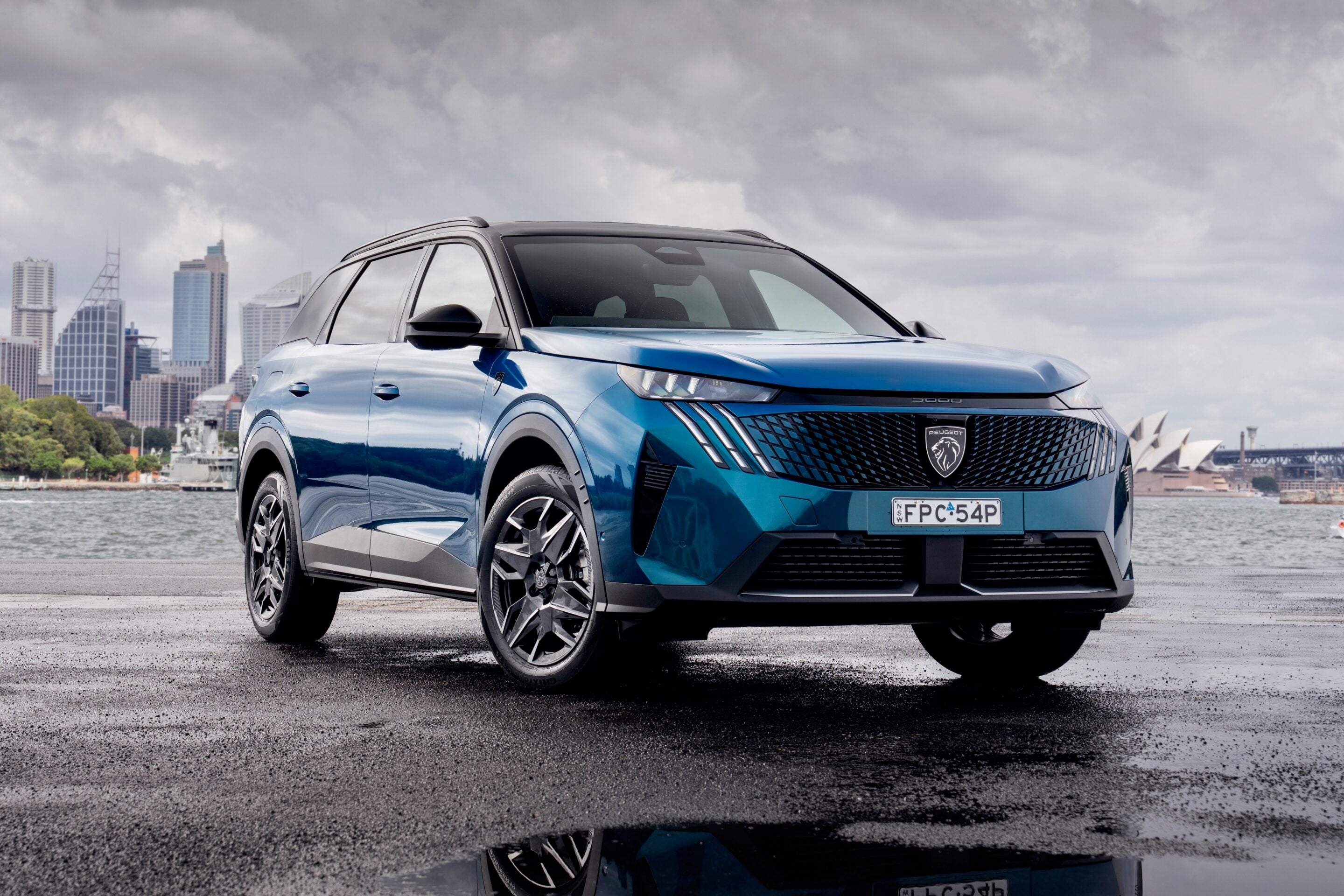
Peugeot is on a product offensive in Australia, launching new and updated versions of its line-up, including important new SUVs like the 3008 mid-sizer. All of the new models are fitted with a new hybrid drivetrain with low claimed fuel consumption to assist its NVES compatibility.
The latest to launch is the third-generation 5008 seven-seat large SUV, building on the previous generation with a futuristic new look inside and out.
There are two 5008 models offered in Australia: the entry-level Allure ($54,990 plus-on road costs) and the top-spec GT Premium tested here ($67,990 +ORC). Equipment levels are impressive and on the GT Premium include 19-inch wheels, Nappa leather trim, tri-zone automatic climate control, a 21-inch curved display, wireless smartphone mirroring, live services and safety features such as adaptive cruise control with traffic jam assist, a 360-degree camera and adaptive high beam.
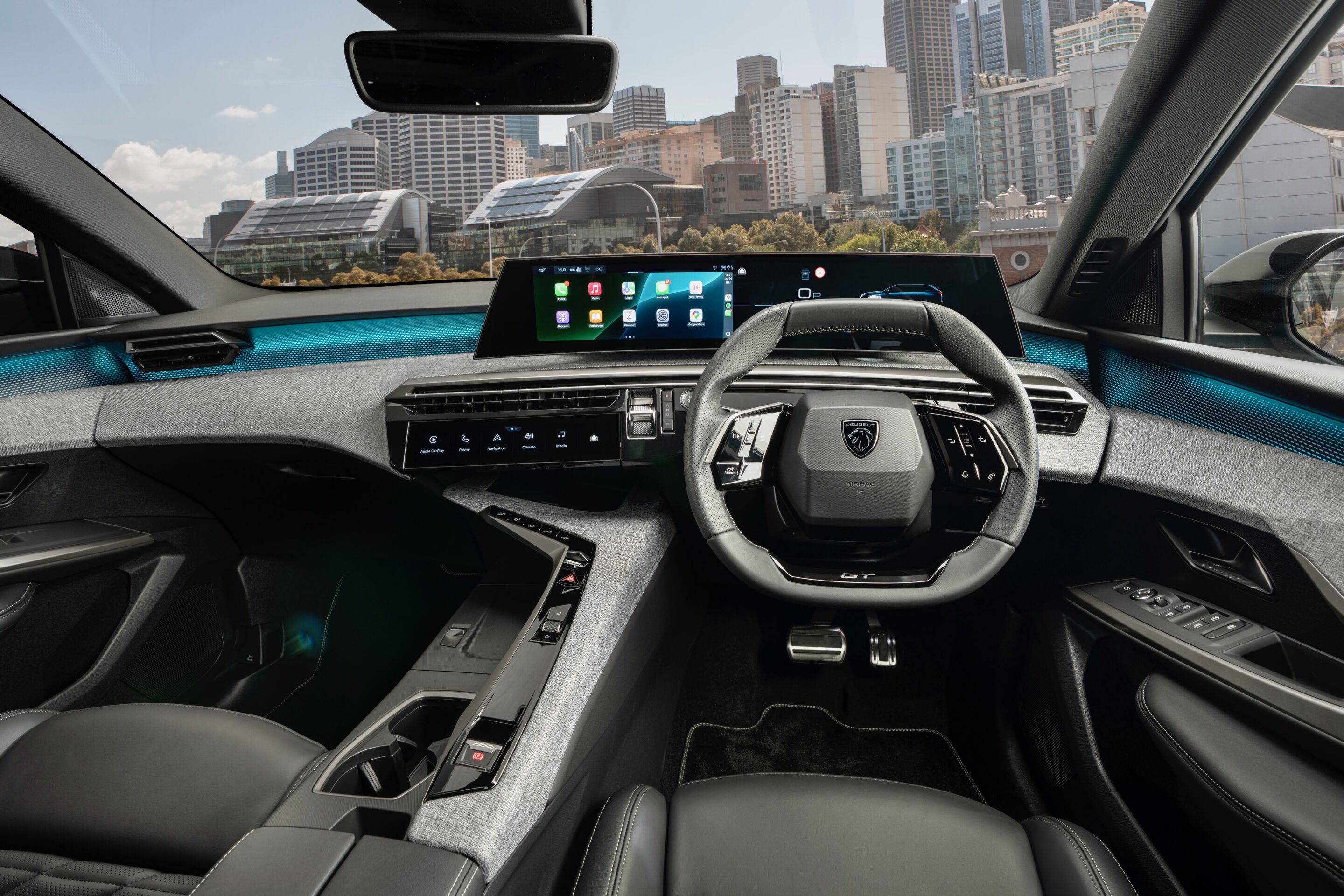
As we’ve seen from Peugeot products over the past 10 years, the interior of the 5008 sets a high standard for non-luxury brands with exotic design and high-end materials not found on many other modern cars.
A 21-inch curved display dubbed ‘i-Cockpit’ incorporates the infotainment and driver’s displays, and impresses with sharp graphics. But the vast majority of the 5008’s features are also controlled through it, including a lot of the climate control, and the layout takes time to get used to. Peugeot is clearly aware of this as there’s a second screen below with shortcuts and buttons on the centre console to control some features more easily, but it’s still not easy to wrap your head around.
Supportive and comfortable front seats are one of the highlights of the 5008 and the multi-point massage is one of the best on the market. There are multiple modes, with the cat’s paw option all you need – once you burrow through menus to activate it. The 5008’s cabin practicality is excellent, which is unusual for French cars.
The middle row of the 5008 easily handles two adults and leg- and headroom is ample. Amenities include a third climate zone, heated outboard seats and window shades. Two ISOFIX and three top-tether points handle child seat duties and moving rearward to the third row is easy thanks to the fold and slide middle row – two kids will be fine back there. Cup holders, airbags and a 12V socket feature but no air vents.
There’s 348 litres of bootspace behind the third row, opening up to 952 litres with the third row folded and a huge 2232 litres with the second row folded too. There’s no spare wheel, just a tyre repair kit.
While the previous-generation 5008 used a 1.6-litre turbo-petrol engine, the new model uses a downsized 1.2-litre three-cylinder turbo-petrol engine with a hybrid system with and six-speed dual-clutch transmission, powering only the front wheels. Europe gets PHEV and EV variants too, but not Australia as yet.
The 5008’s 107kW peak power is fine for town driving, especially with the 51Nm boost in electric torque from 0rpm, though more would be appreciated for higher speeds. While the drivetrain is officially a 48V mild-hybrid, it’s actually capable of moving the 5008 on electric power alone like a proper hybrid. Otherwise, the engine handles the propulsion and does its work with a characterful thrum that’s never intrusive.
Peugeot claims that the 5008 uses 5.1L/100km on a combined cycle and we achieved 6.8L/100km, which is a good result for a seven-seater, though similar to the more powerful and larger Hyundai Santa Fe Hybrid in our testing. The 19-inch alloy wheels give a firmer ride at lower speeds than expected but the 5008’s ride is otherwise comfortable and its handling is fun for a large SUV.
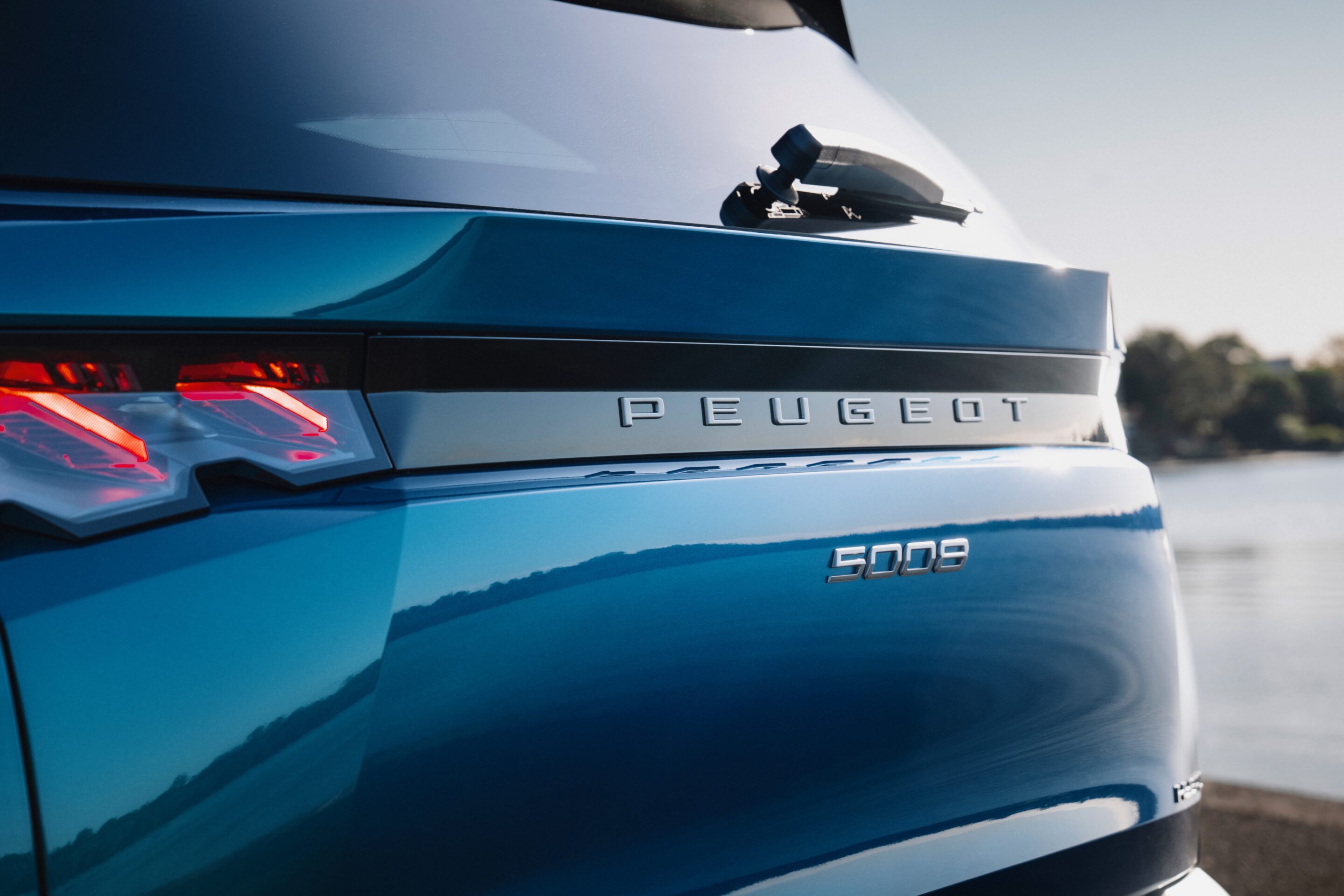
The 5008 is covered by a five-year/unlimited km warranty with five years of roadside assistance. Five years/75,000km of servicing costs $2889, while a pre-paid service package costs an inexpensive $1995, or $399 per year.
Sitting at the smaller end of the segment, the 5008 still impresses thanks to its gorgeous interior, great driving experience and long equipment list. Rivals such as the Skoda Kodiaq and Hyundai Santa Fe are quicker and more commodious, but the 5008 has more character and feels elevated inside. It won’t suit all buyers, but if you’re after a stylish seven-seater, the Peugeot 5008 is well worth consideration.
Specs
| Model | Peugeot 5008 GT Premium |
|---|---|
| Price | From $67,990 plus on-road costs |
| Engine | 1.2-litre 3-cylinder turbo-petrol 48-volt mild-hybrid |
| Engine outputs | 100kW/230Nm |
| Electric motor outputs | 15.6kW/51Nm |
| Peak combined power | 107kW |
| Transmission | Six-speed dual clutch, front-wheel drive |
| Claimed 0-100km/h time | 11.3 seconds |
| Top speed | 197km/h |
| Fuel consumption (claimed/as tested) | 5.1L/100km, 6.8L/100km |
| Claimed CO2 emissions | 116g/km |
| Fuel type/tank size | 95RON premium unleaded, 55 litres |
| Dimensions (l/w/h/wb) | 4790/1895/1735/2890mm |
| Bootspace | 348L (third row up), 952L (third row folded), 2232L (third + second rows folded) |
| Tare weight | 1671kg |
| Warranty/roadside assistance/service intervals | 5-year/unlimited km, five years, annual/every 15,000km |
| Five-year service cost | $2889, pre-paid service pack: $1995 |
| On sale | Now |
Ford engineers have put the upcoming Ranger Super Duty through extensive water testing, confirming the heavy-duty ute can handle 850 millimetres of water at controlled speeds.
The program began at Ford’s You Yangs Proving Ground near Geelong, where a concrete water bath capable of being filled to more than a metre deep allowed systematic testing in repeatable conditions. Program engineer Drew O’Shannassy said each stage of testing provided new insights.
“We started shallow – 50 millimetres – because each depth tells a different engineering story,” he explained.
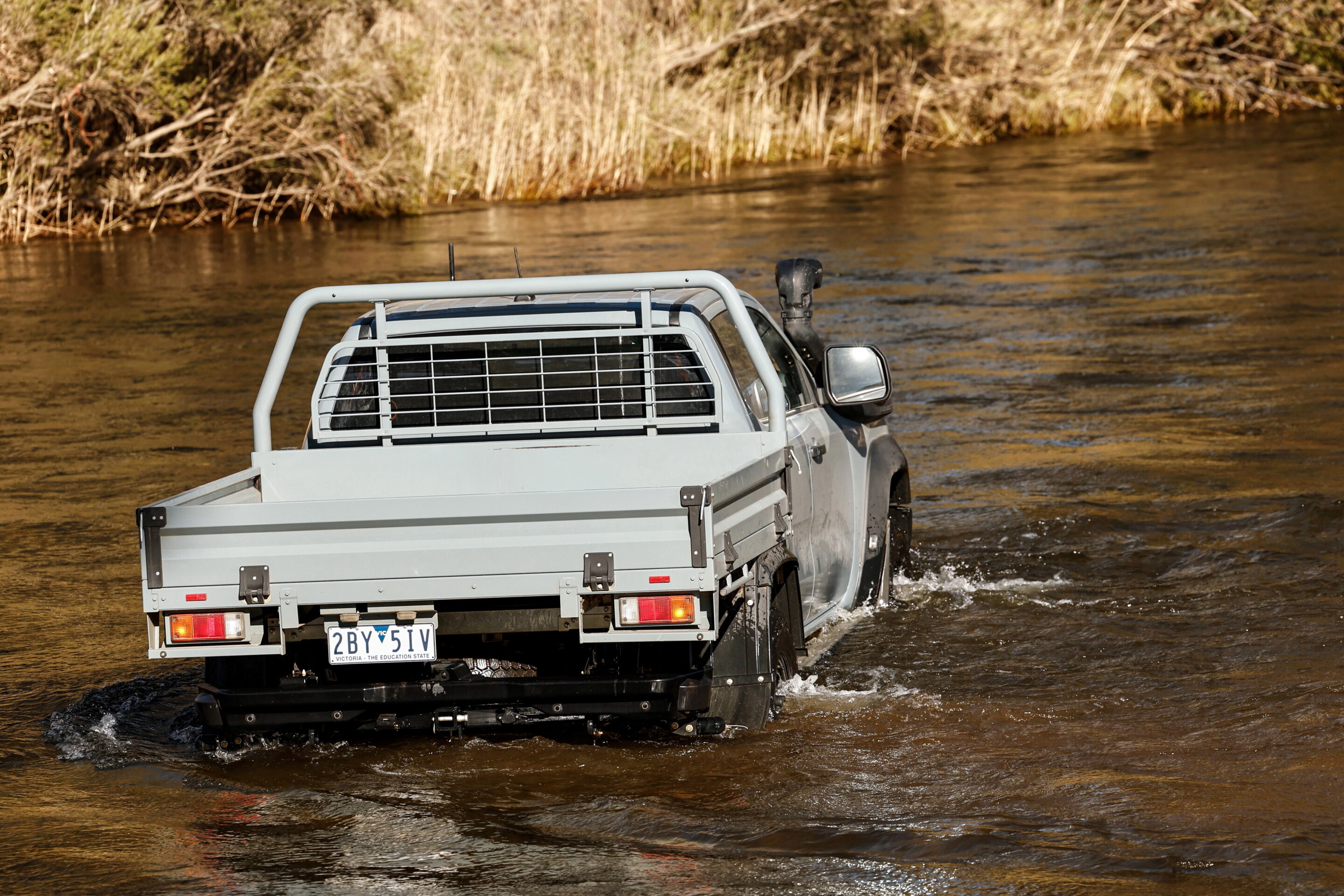
Shallow crossings helped assess the durability of components under the vehicle, while deeper runs focused on sealing for the intake and other systems. Engineers also measured the significant forces acting on the vehicle during deep wading, ensuring every seal prevented water intrusion.
Months later, the team took prototypes to the Crooked River Track near Dargo, a route featuring 27 consecutive river crossings. Unlike the controlled test bath, river conditions varied by depth, flow rate and bottom surface, providing the ultimate real-world validation.
“The first crossing always gets your heart pumping,” vehicle integration engineer Tim Postgate said. “You’ve done the maths and the lab work, but watching the truck’s nose dip into rushing water makes it real.”
Across all 27 crossings, the Super Duty maintained its targeted wading depth. Key system breathers, including those for the transmission and differentials, were positioned safely above the 850mm level, while a factory-fitted Safari snorkel provided secure airflow.
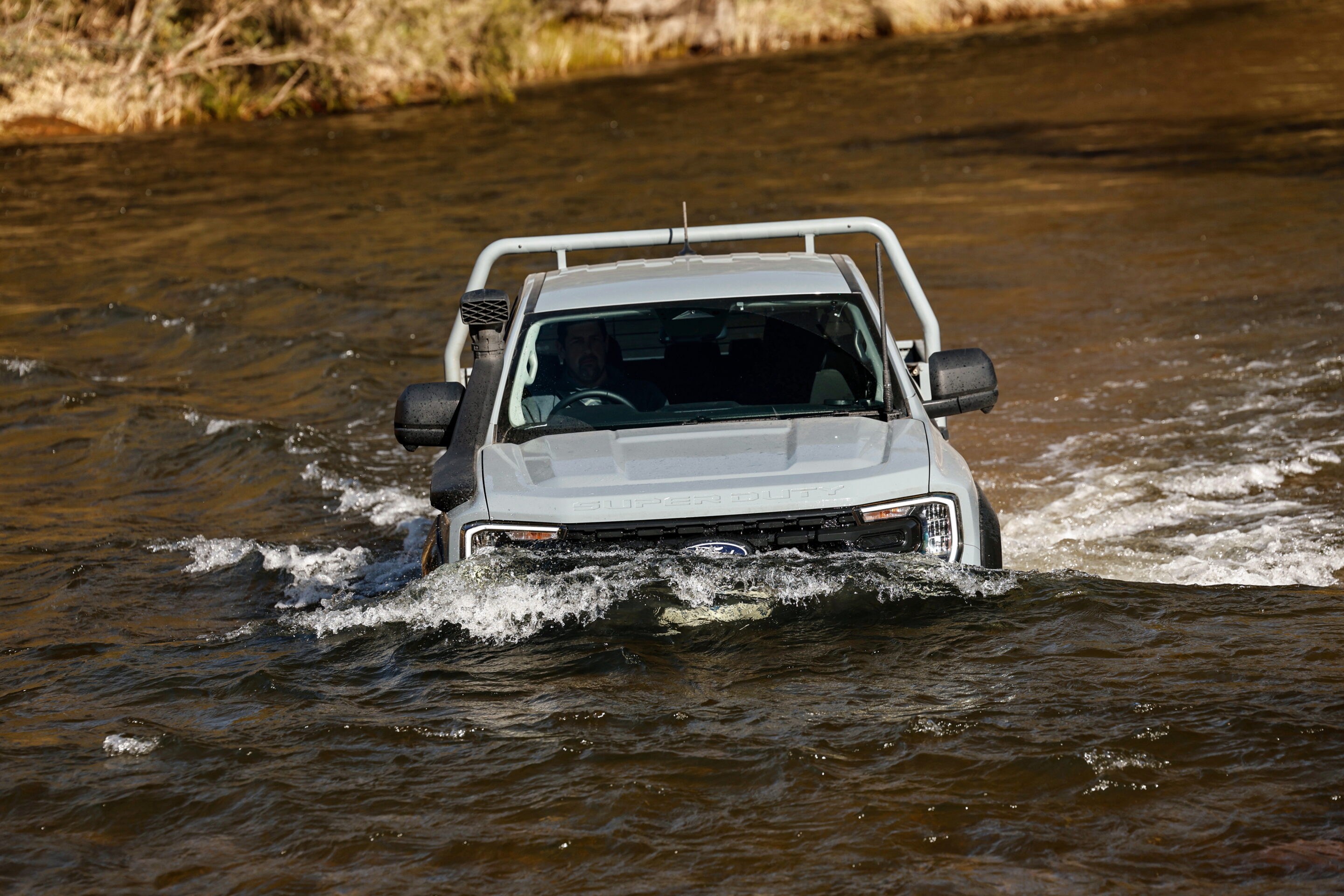
The snorkel itself was the product of a collaboration between Ford designers and off-road specialists Safari. Chief designer Max Tran said the goal was integration without compromising performance.
“We wanted something that looked like it belonged from day one,” he said. The result was a snorkel that optimised airflow while blending with the truck’s styling.
Final validation at Crooked River confirmed the combined design and engineering effort. For Ford, the testing was about more than proving capability on paper.
“These features aren’t for show,” Postgate said. “They provide peace of mind for customers facing the unexpected realities of nature.”
The Ranger Super Duty is due to launch in Australia in early 2026.
Mercedes-Benz Vans Australia has unveiled a limited-edition Sprinter to celebrate three decades of the brand’s light commercial vehicle. Just 30 examples of the 30th Anniversary Edition will be offered locally, available exclusively through online ordering.
Launched globally in 1995, the Sprinter has become a mainstay of the van market, known for its flexibility across commercial and private applications. The anniversary model builds on this reputation by combining practical upgrades with unique styling touches aimed at customers seeking adventure and versatility.
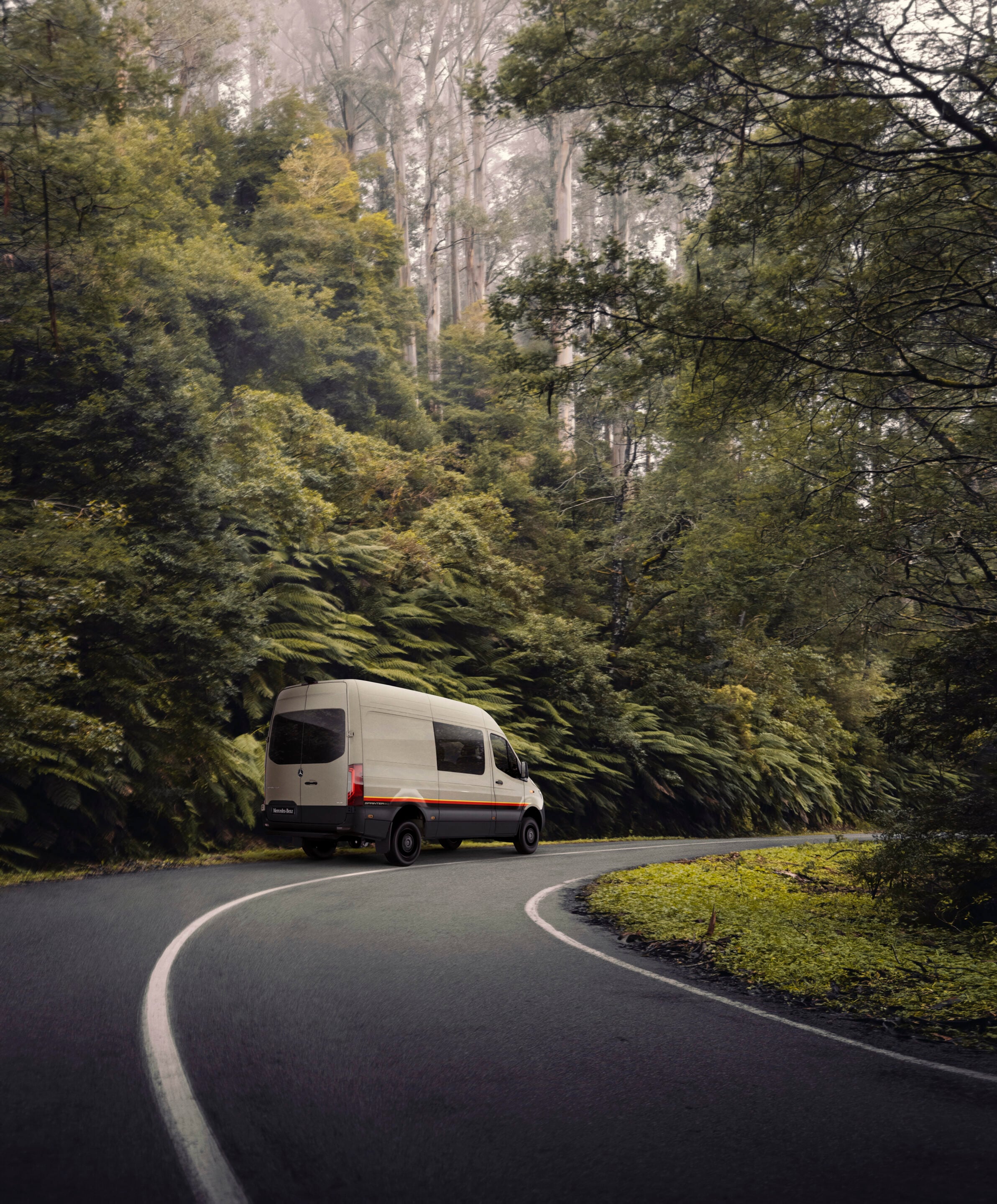
Based on the Sprinter 419 Mid Wheelbase Panel Van, the commemorative edition gains a high roof, all-wheel drive system, and a five-seat crew cab package to accommodate up to five occupants. Rear speakers, luxury panelling, and tinted rear windows are included to enhance passenger comfort and privacy.
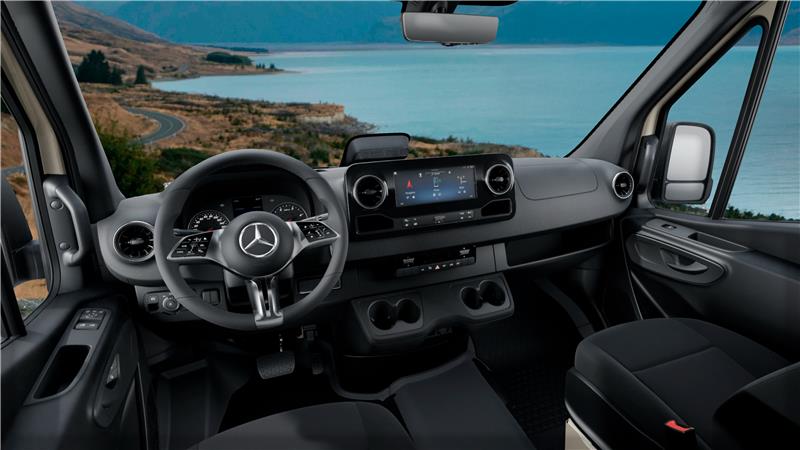
The interior is fitted with durable wood flooring, while exterior changes include black steel wheels, a chrome radiator grille, and exclusive “SPRINTER30” graphics in Pebble Grey. Sill panel blackouts and distinctive badging further distinguish the model.
Technology features are also expanded. A 360-degree camera, digital rear-view mirror, and navigation system are standard, alongside LED performance headlamps and taillamps, plus fog lamps with a cornering light function.
Diane Tarr, Managing Director of Mercedes-Benz Vans Australia, said the model celebrates both the Sprinter’s legacy and its role in customer lifestyles.
“The Sprinter has been a cornerstone of our success for decades. This special edition is a tribute to its enduring legacy and a celebration of the adventurous spirit of our customers,” she said.
Mercedes-Benz says the additional equipment amounts to more than $25,000 in extra value. The Manufacturer’s Recommended List Price (MRLP) is $105,931 including GST, excluding on-road costs such as registration and stamp duty.
Orders for the Sprinter 30th Anniversary Edition are open now via the Mercedes-Benz Vans Australia website, and will remain available until 1 October 2025 or until all 30 units are sold.
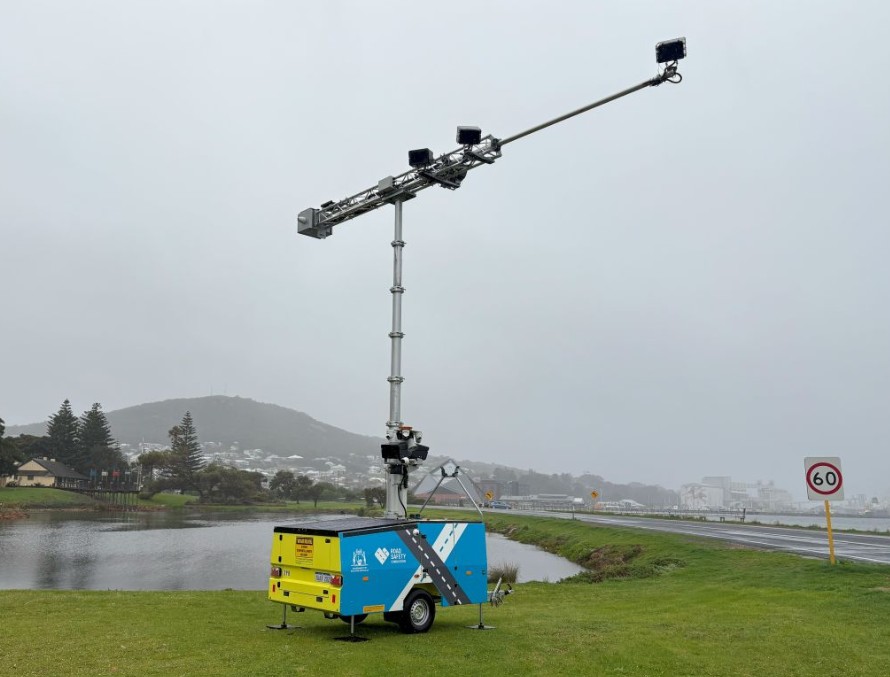
Western Australian motorists are being warned that new artificial intelligence-enabled safety cameras will begin issuing fines from October 8, ending the cautionary trial phase introduced earlier this year.
The state’s six safety cameras, positioned across the Perth metropolitan area, Great Southern and Mid West regions, were activated on January 26 in trial mode. During that period, more than 275,000 drivers received warning notices for offences such as illegal mobile phone use and seatbelt breaches.
Police Minister Reece Whitby said the trial period allowed drivers time to adjust their behaviour, but it is now time for the technology to be used as a deterrent.
“Moving to enforcement marks a significant step forward in our efforts to reduce trauma and save lives on Western Australian roads,” he said.
Authorities report that since the cameras were introduced, there has been a notable reduction in offences. Mobile phone detections from trailer-mounted cameras have fallen by 60 per cent, while fixed cameras have recorded a 33 per cent drop.
From October, fines will apply depending on the seriousness of the offence:
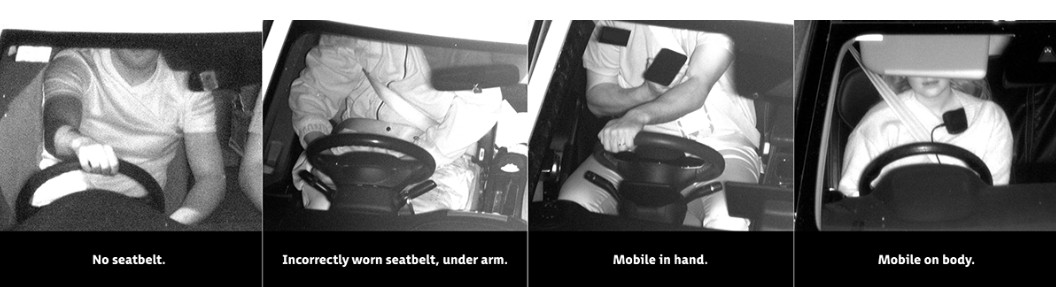
- Mobile phone use: $500 and 3 demerit points for holding or touching a phone; $1,000 and 4 demerit points for sending texts, emails or accessing social media while driving.
- Seatbelt offences: $550 and 4 demerit points for an unrestrained driver, rising by $100 for each additional unrestrained passenger. Carrying four or more unrestrained passengers can result in a $900 fine. Passengers aged 16 or over found without a seatbelt face a $550 penalty.
Road Safety Commissioner Adrian Warner emphasised the life-saving importance of seatbelts.
“Seatbelts are proven to save lives, but they must be worn and worn correctly. Over the past decade, about 20 per cent of those killed on WA roads were not wearing a seatbelt,” he said.
Revenue from the camera program is directed into the Road Trauma Trust Account, which funds projects aimed at reducing deaths and injuries on WA roads.
With 2.2 million licence holders across the state, authorities say the message is simple: wear a seatbelt properly and keep your phone out of reach.
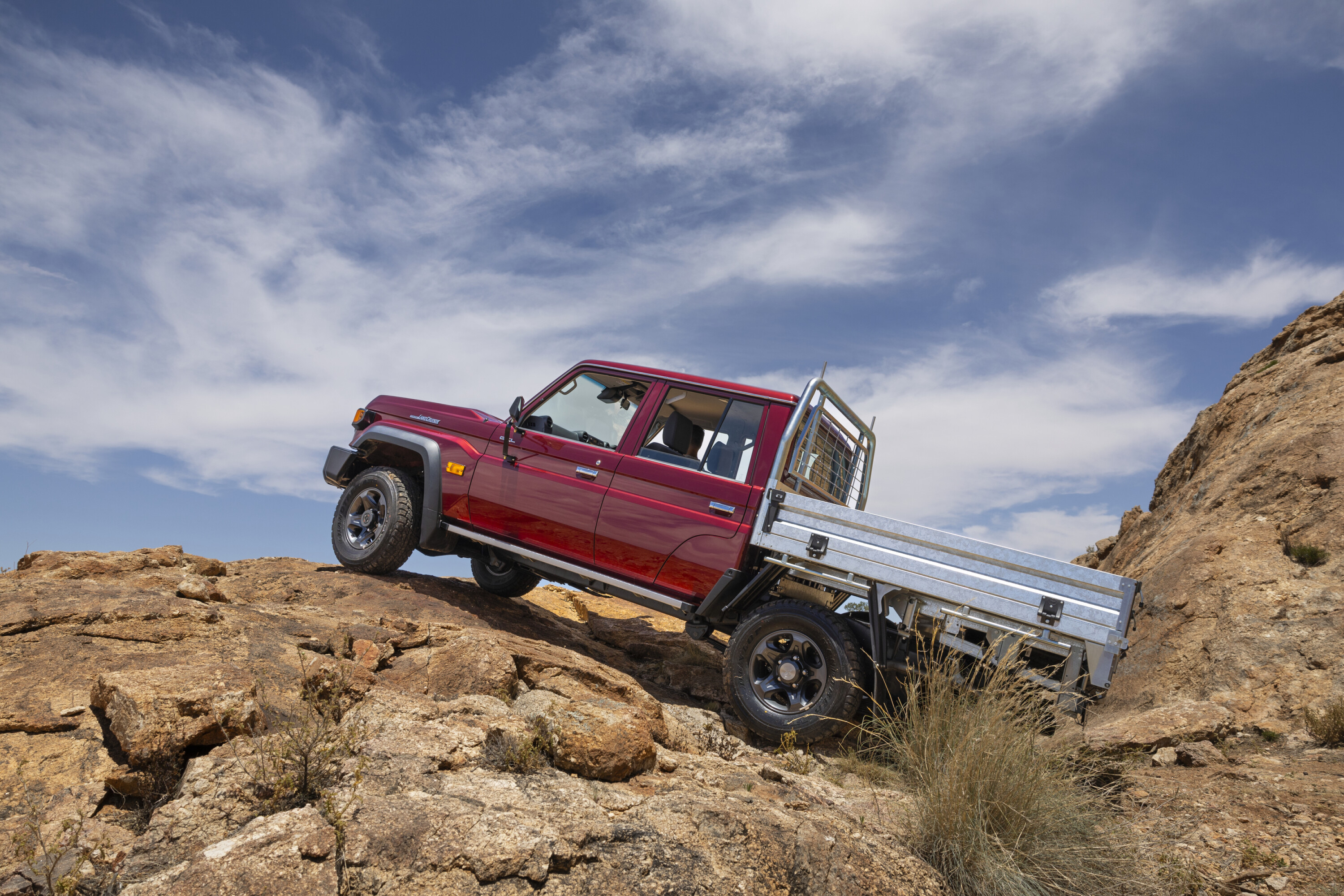
The Toyota LandCruiser 70-Series is like an automotive crocodile. Ancient in its DNA, it has nevertheless evolved sufficiently to not just survive in modern times but thrive, its popularity leading to length wait times.
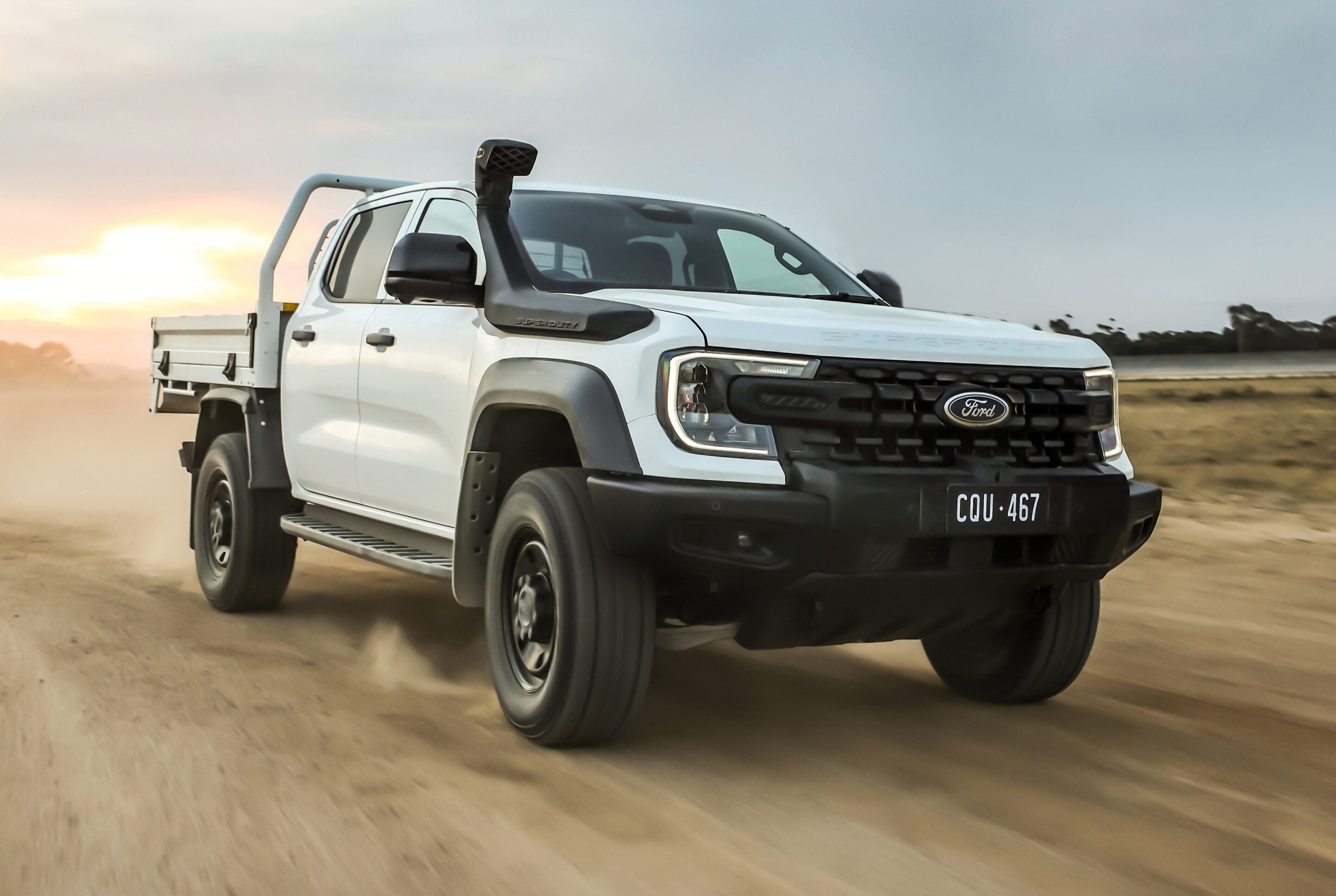
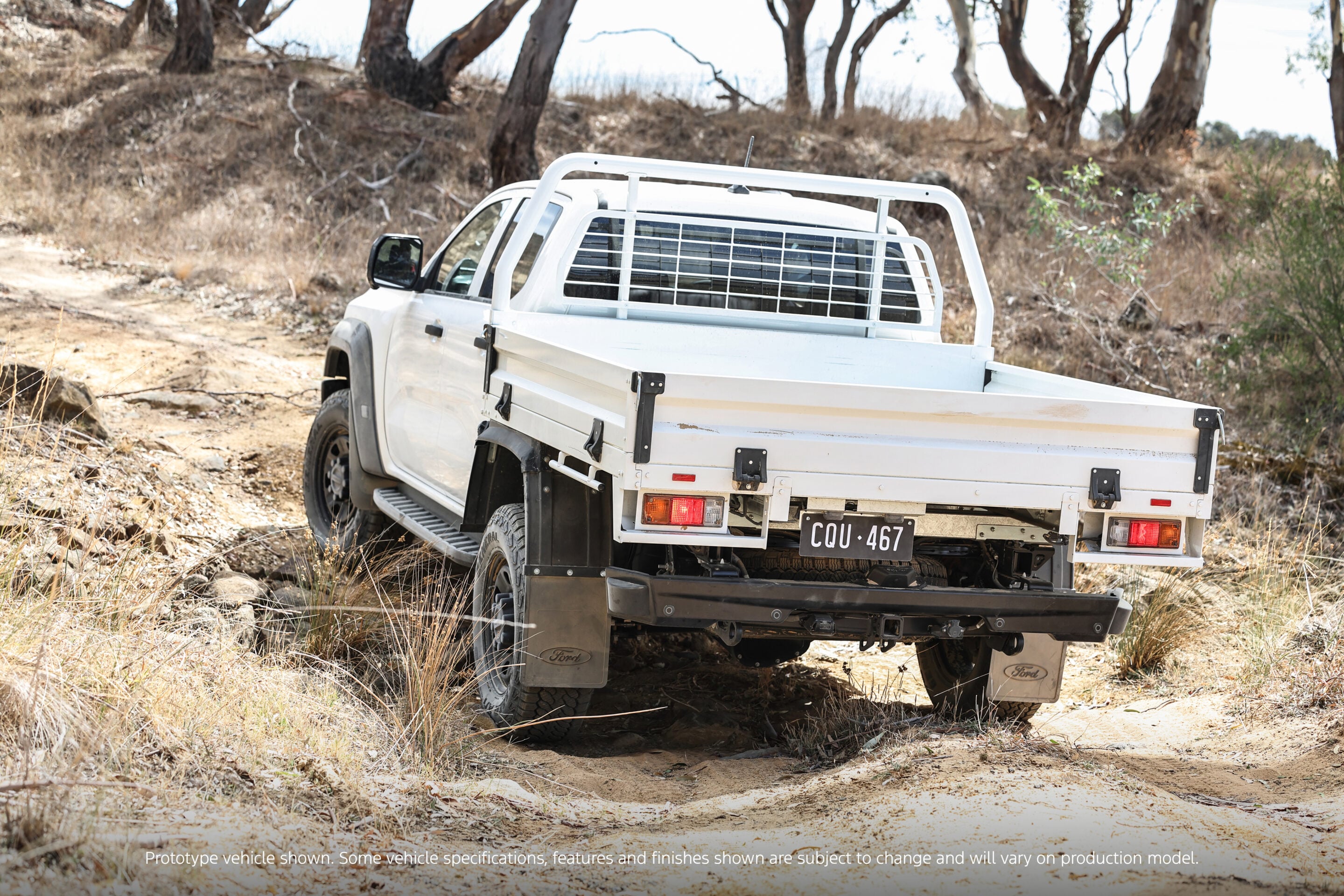
But Ford thinks there is a better way. By beefing up its Ranger to Super Duty spec, it wants to make significant inroads into the fleet market including mining, emergency services and councils, as well as anyone who needs to tow or carry Really Big Heavy Stuff.
While we’ve only seen the Super Duty in pre-production prototype guise so far, this is how it stacks up on paper against Toyota’s venerable 70-Series.
Pricing
Ruggedness doesn’t come cheap with both the Ford Ranger Super Duty and Toyota LandCruiser 70-Series nudging (or breaching) the $100,000 mark on road, depending on which variant you select.
The Ford is offered in one specification but three body styles and the price is exclusive of a tray, which adds between $5966-$8166 to the final price, while any colour other than white (grey, silver, tan or black) adds $750. Other options include rock sliders and a dual battery system ($1850 each) or carpeted floors ($1500), vinyl mats being standard.
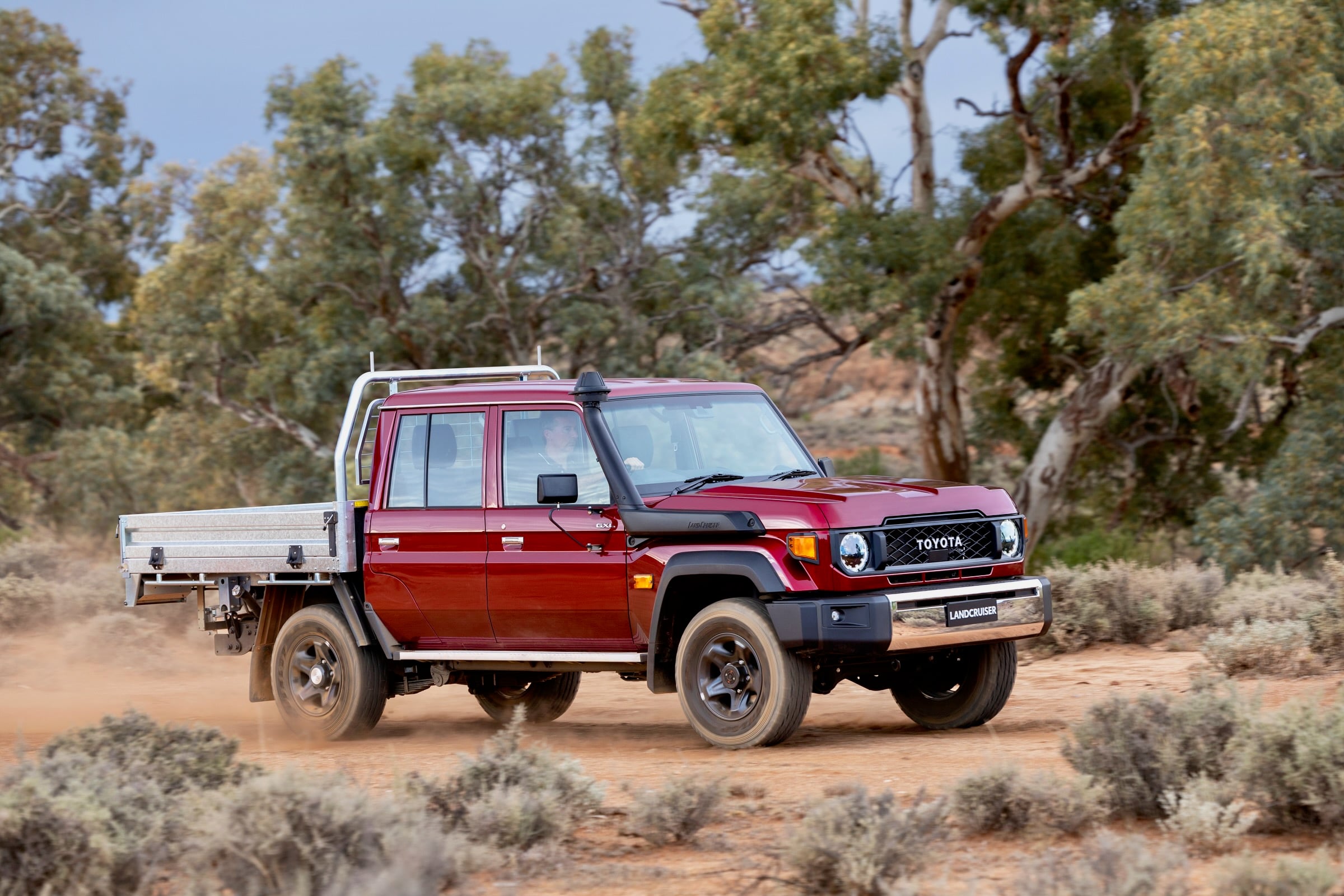
In ute guise the 70-Series can be had as a Workmate in single- or dual-cab and manual or auto, as a single-cab automatic GX, or GXL once again in single- or dual-cab and manual or auto.
Prices include a heavy-duty steel tray, locking diffs are standard on the GXL but optional on other variants and while white and tan are standard, all other colours (red, blue, black and silver) are another $675.
The LC70 is also available as a Troop Carrier and Wagon, but for the purposes of this article we’ll focus on the tray-back variants.
| Variant | Price |
|---|---|
| Ford Ranger Super Duty Single Cab | $82,990 |
| Ford Ranger Super Duty Super Cab | $86,490 |
| Ford Ranger Super Duty Double Cab | $89,990 |
| Toyota LC70 Workmate Double Cab | $77,300 (m)/$79,300 (a) |
| Toyota LC70 GX Single Cab | $78,800 |
| Toyota LC70 GXL Double Cab | $81,500 (m)/$83,500 (a) |
Equipment
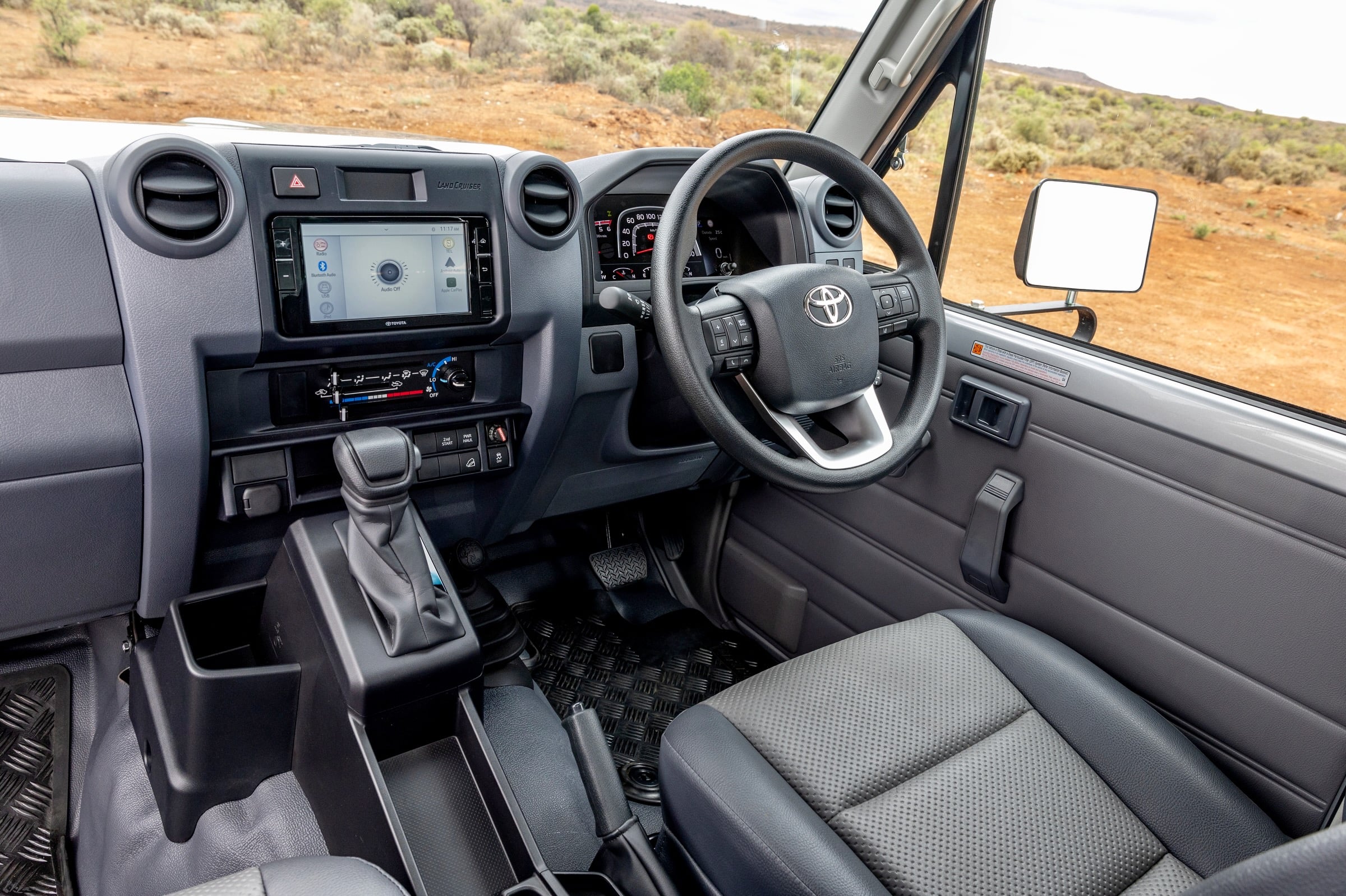
It’s fair to say the Toyota LandCruiser 70-Series subscribes to the minimalist philosophy of interior design. Seats in vinyl (WorkMate) or cloth (GXL) trim, air conditioning and all-weather floor mats is about it, though the GXL does get carpeted floors.
There’s now a 6.7-inch touchscreen infotainment system with USB charging ports, AM/FM radio, Bluetooth and wired smartphone mirroring (Apple CarPlay and Android Auto) available, though only a two-speaker stereo for your entertainment.
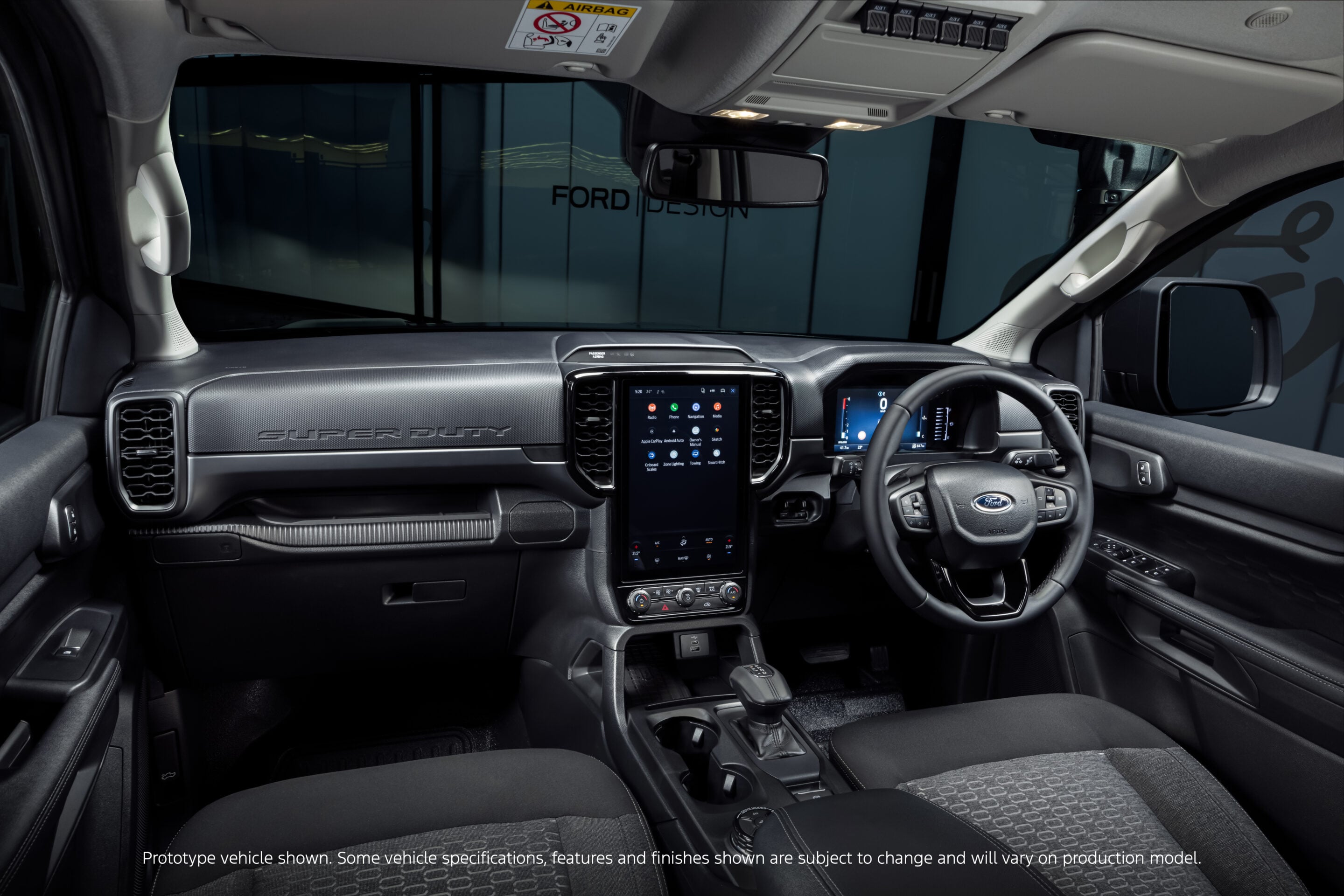
Ford will offer the usual SYNC4 infotainment system on a large portrait touchscreen with its wireless smartphone mirroring, though it’s not yet clear what regular Ranger spec level the Super Duty will align with in terms of satellite navigation, digital radio and the like.
By most standards the rest of the cabin is fairly basic, with vinyl floor mats and manually adjustable cloth seats (eight-way driver, four-way passenger). The XLT that arrives later will have a few more frills, but the Super Duty, like the LC70, is primarily aimed at work, not play.
Towing and Payload
This is why the Ford Ranger Super Duty and Toyota LandCruiser LC70 exist, to carry and tow heavy stuff across all manner of terrain. It’s also here that Ford has decided to comprehensively one-up Toyota.
The LC70 can tow a max of 3500kg braked and its Gross Combined Mass (GCM) is such that its maximum payload remains unaffected even when hauling.
The same can’t be said of the Ranger, partly because its maximum braked towing capacity is a whopping 4500kg. At this maximum the payload is reduced to under a tonne, but when driving unhitched the Super Duty’s payload approaches almost two tonnes thanks to the 4500kg GVM.
One bit of tech you won’t find in the Toyota is onboard scales, accessed through the infotainment screen to estimate payload weight as items are added. For the LC70, you’ll need to find a weighbridge.
| Ford Ranger Super Duty | Toyota LandCruiser LC70 | |
|---|---|---|
| Kerb Weight | 2518-2675kg | 2130-2185kg |
| Gross Vehicle Mass | 4500kg | 3510kg |
| Max Payload | 1825-1982kg | 1325-1380kg |
| Max Braked Towing | 4500kg | 3500kg |
| Gross Combined Mass | 8000kg | 7010kg |
| Payload at Max Towing | 825-982kg | 1325-1380kg |
Powertrains
Plenty lamented the loss of the 4.5-litre V8 turbodiesel in the Toyota LandCruiser LC70, but the reality is the four-cylinder is a superior engine in all respects bar perhaps soundtrack. Available with either a six-speed automatic or five-speed manual, it produces 150kW/500Nm, though the manual is limited to 450Nm.
Making the Ford Ranger Super Duty’s EU6-compliant has cost it some 30kW (dropping to 154kW), but torque remains at 600Nm with a 10-speed automatic the only available gearbox. Extra cooling has also been added.
Both cars use a 130-litre fuel tank for extra range but while the LandCruiser claims 9.6L/100km on the combined cycle for the LC70, Ford has yet to provide a claim for the Ranger and isn’t duty bound – pardon the pun – to do so as it’s classified as a light truck.
| Ford Ranger Super Duty | Toyota LandCruiser LC70 | |
|---|---|---|
| Engine | 3.0-litre V6 turbodiesel | 2.8-litre four-cylinder turbodiesel |
| Outputs | 154kW/600Nm | 150kW/500Nm (manual 450Nm) |
| Gearbox | 10-speed automatic | Six-speed automatic/five-speed manual |
| Fuel consumption | N/A | 9.6L/100km |
| Fuel tank | 130 litres | 130 litres |
Safety
You might not know to look at it, but the Toyota LandCruiser LC70 is fitted with Toyota’s latest active safety equipment including autonomous emergency braking with pedestrian and cyclist (daytime only) detection, speed sign assist and lane departure warning.
However, while the dual-cab has front driver and passenger airbags, only the single-cab has curtain and driver’s knee airbags in order for it to pass the safety requirements of its predominantly fleet customer base.
Ford has not yet confirmed safety specifications for the Ranger Super Duty but we expect that it will feature the full complement of airbags – nine in total – as well as all the active safety equipment including adaptive cruise control, autonomous emergency braking, lane keep and departure warning, blind-spot monitoring and much more.
Driving
There are some questions here as we haven’t yet driven the Ford Ranger Super Duty, though it’s not a huge stretch to imagine it’ll drive in a relatively similar manner to the standard Ranger V6.
However, will its dynamics hold up with the substantial increase in weight? Will the steering suffer controlling 33-inch tyres? Perhaps more important than its dynamics for the target market, how will the 3.0-litre V6 turbodiesel cope hauling up to eight tonnes?
It’s still likely to drive better than the Toyota LandCruiser LC70, with its sluggish performance, slow steering, ponderous handling and choppy ride. That all sounds harsh, but on-road refinement isn’t the 70-Series’ strongpoint and given its popularity, it seems that’s just how its customers like it.
Off road
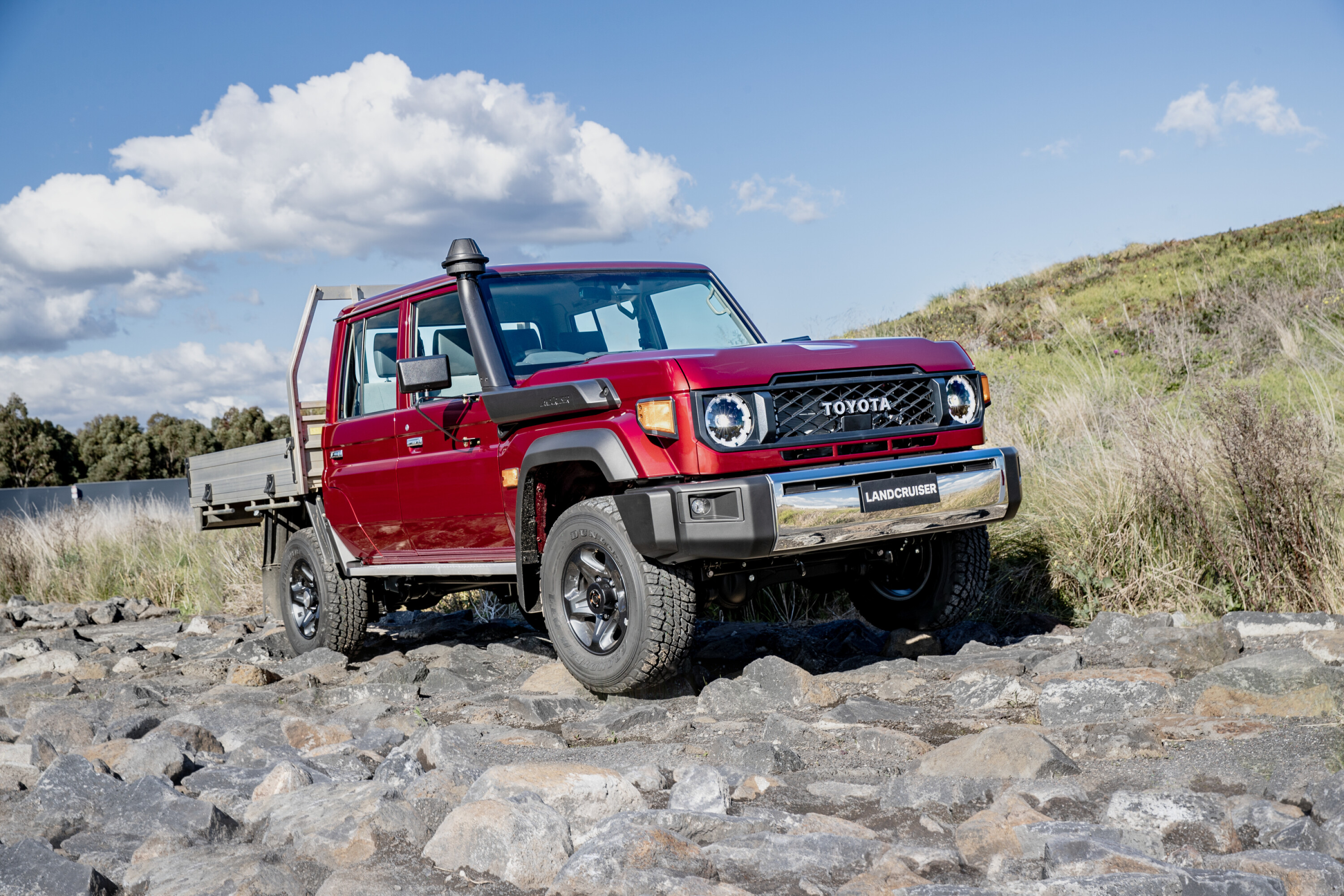
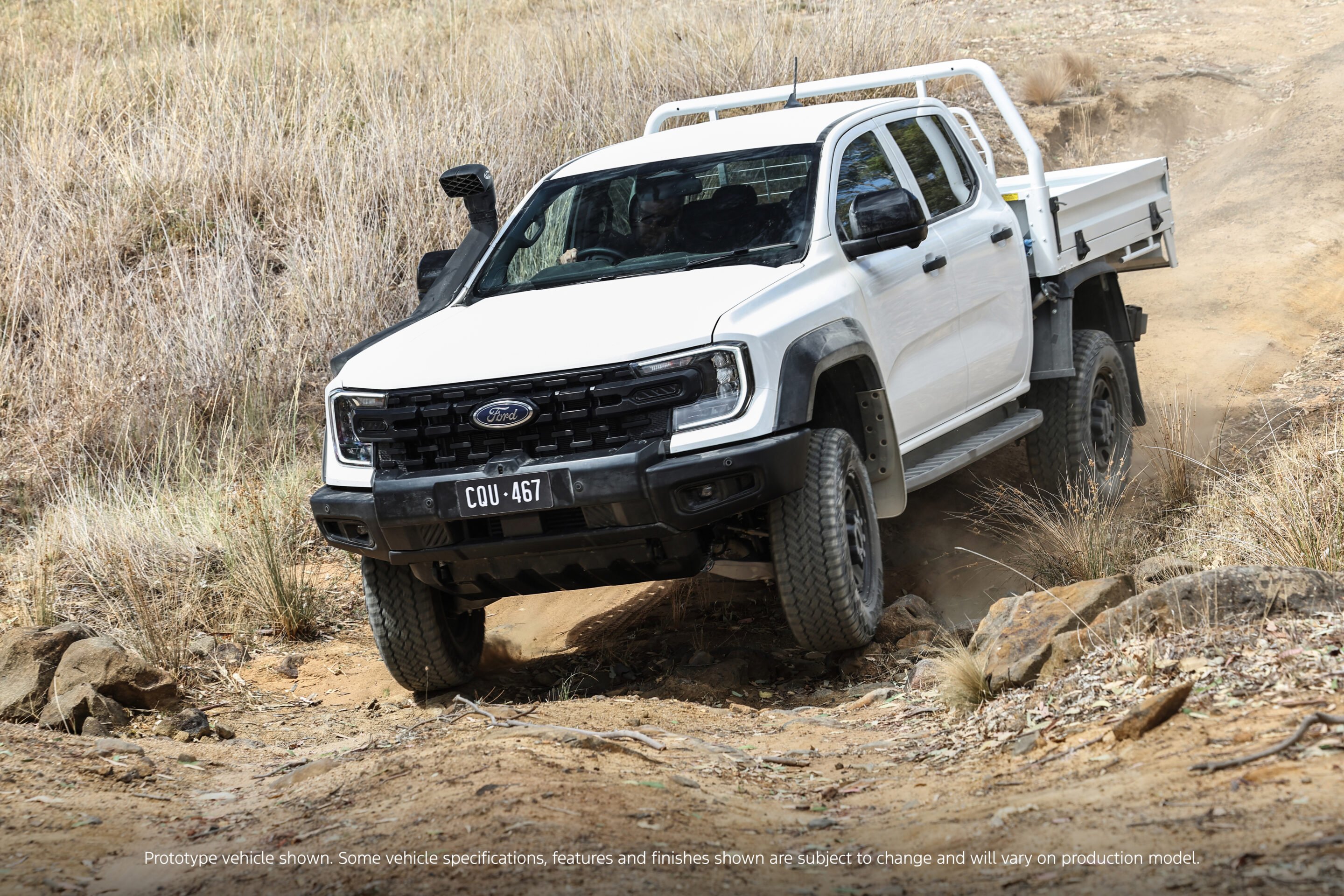
With standard snorkels, dual diff locks and around 300mm of ground clearance, there aren’t too many places the Ford Ranger Super Duty and Toyota LandCruiser LC70 will fail to take you.
The Ranger offers 299mm ground clearance as a single cab, 297mm as a super cab and 295mm as a double cab, though an 850mm wading depth maximum is common to all and there is stronger underbody protection, upgraded axles and thicker driveshafts.
Toyota doesn’t claim a wading depth for the LC70, but the WorkMate has 317mm of ground clearance and the GXL 302mm. One potential hurdle for the LandCruiser is the rear track is around 100mm narrower than the front, so won’t always happily follow the same wheel ruts.
The take-outs
The Toyota LandCruiser LC70 will continue to remain extremely popular. Its loyal customer base love it for its rugged simplicity and no-frills charm, so to criticise for lacking X and Y is to miss the point somewhat.
However, the volume of pre-orders received suggests the Ford Ranger Super Duty will soon have a substantial fan club of its own. It’s a unique offering in the market thanks to its uprated towing and hauling capabilities while retaining modern conveniences.
We’ll find out for sure how the two compare when the Ford launches in early-2026.
Toyota has confirmed its all-new, sixth-generation RAV4 will arrive in Australia in the first half of 2026, introducing two hybrid powertrains, new multimedia technology and advanced safety systems.
For the first time, Toyota will offer a plug-in hybrid (PHEV) locally, alongside its familiar hybrid range. The new GR Sport will headline the line-up as the performance-focused flagship, while the PHEV will also be available in the XSE grade, in both two-wheel drive (2WD) and all-wheel drive (AWD) configurations.
Expanded Range and Powertrains
The six-grade line-up will include GX, GXL, XSE, Edge, Cruiser and the new GR Sport. Entry-level GX, mid-tier GXL and Cruiser will all be offered in both 2WD and AWD hybrid forms, producing 143kW from Toyota’s fifth-generation 2.5-litre hybrid system.
The AWD-only Edge retains its adventure-focused positioning, while the XSE adds premium features and will also be offered with the PHEV powertrain.
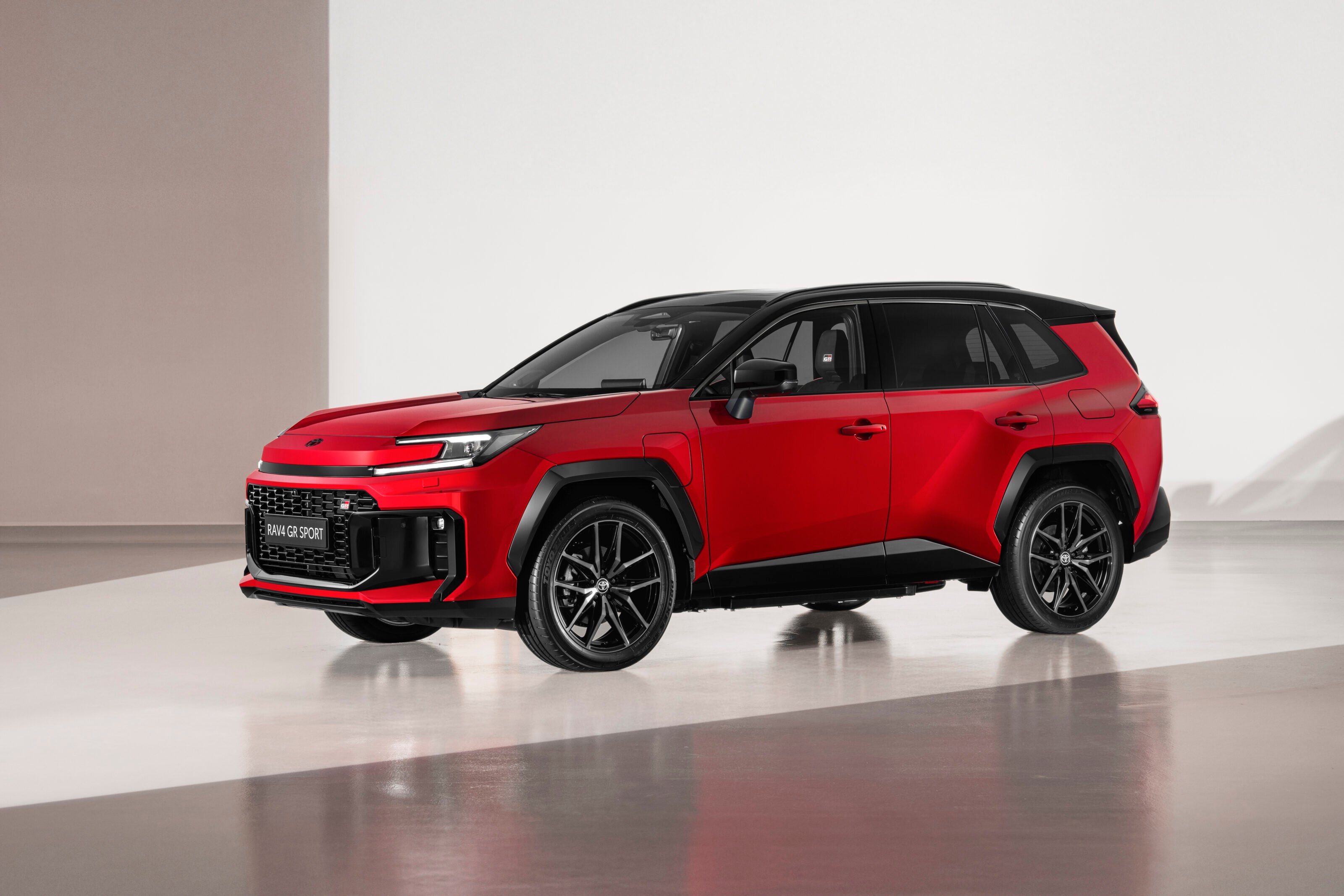
As the new flagship, the GR Sport PHEV AWD uses a sixth-generation 2.5-litre hybrid engine, front and rear electric motors and a 22.7kWh battery, producing a combined 227kW – the most powerful RAV4 to date. The system allows EV-only operation in some conditions and features GR-specific tuning, widened wheel track, upgraded dampers and a stiffer rear brace.
The XSE PHEV employs a single-motor front-drive system or dual-motor AWD set-up, with outputs of up to 200kW. Both PHEV variants also include a 1500W inverter to power small appliances.
Safety and Technology
All models will gain expanded Toyota Safety Sense, with new front cross-traffic alert, improved blind-spot monitoring and lane-trace assist. The pre-collision system now detects bicycles and motorcycles, while a three-dimensional panoramic monitor aids manoeuvring.
Toyota’s Arene-based multimedia system debuts in the RAV4, enabling faster processing, over-the-air updates and a new 10.5-inch interface with enhanced voice control. A 12.3-inch digital cluster is standard across the range.
A fresh colour palette includes Massive Grey, Urban Rock, Feverish Red, Dusty Bronze and Daintree Green, alongside carryover shades. Selected grades, including XSE, will offer two-tone black roof options.
Further specifications and pricing will be announced closer to launch, with the new RAV4 range set to broaden its appeal in a segment it has consistently dominated in Australia.
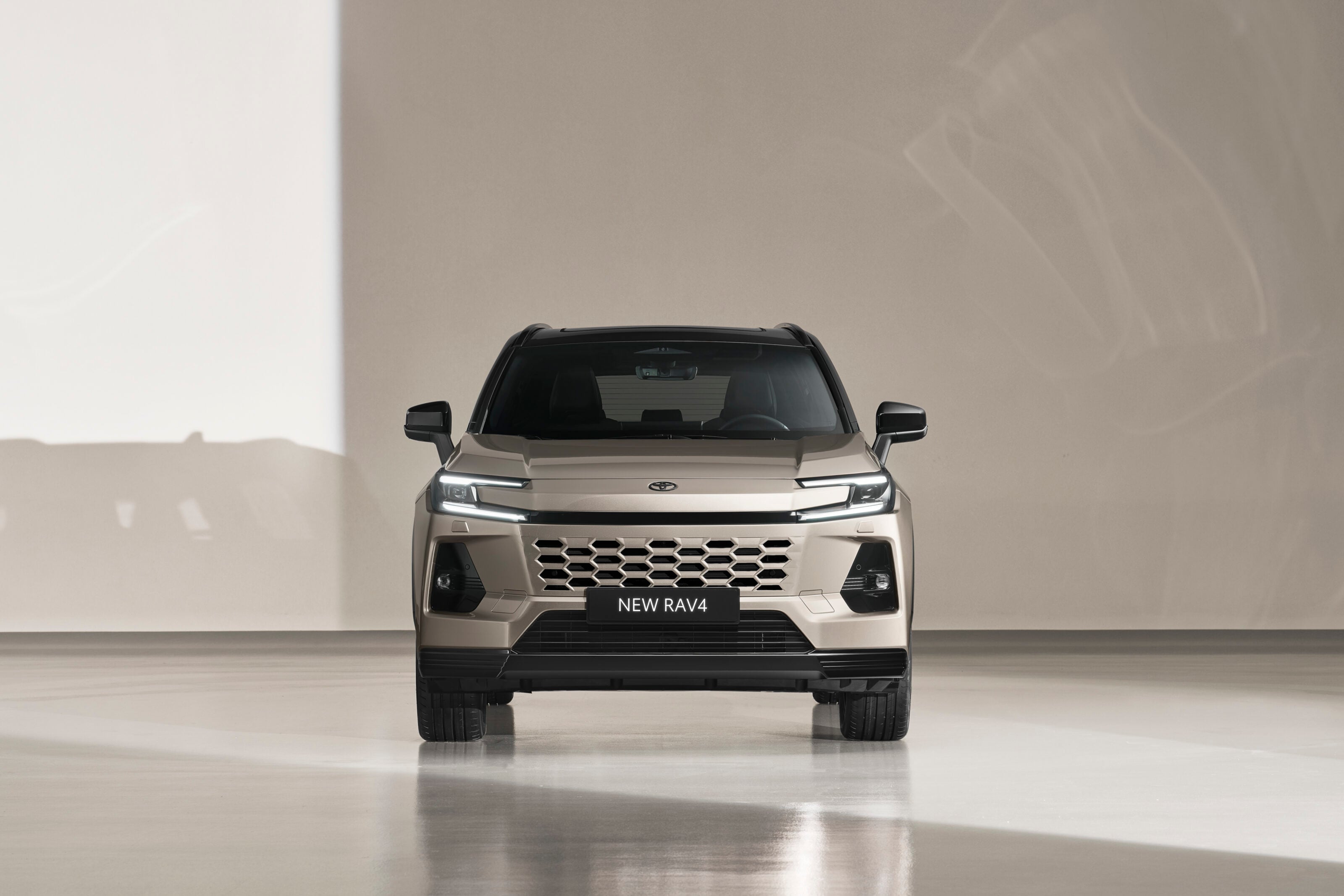
| HEV 2WD | HEV AWD | PHEV 2WD | PHEV AWD |
|---|---|---|---|
| CRUISER | CRUISER | GR SPORT | |
| XSE | XSE | XSE | |
| EDGE | |||
| GXL | GXL | ||
| GX | GX |
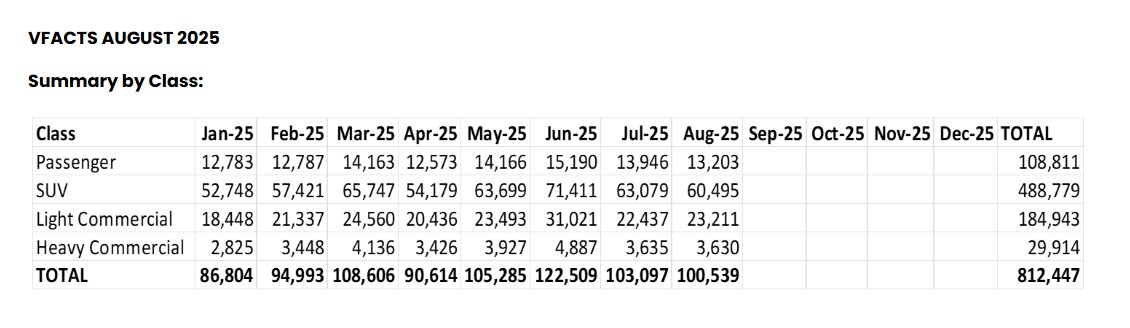
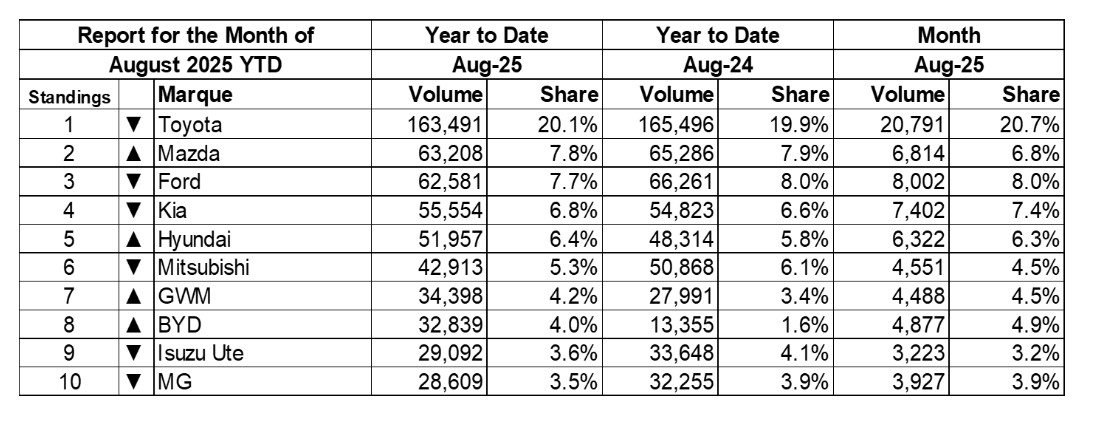
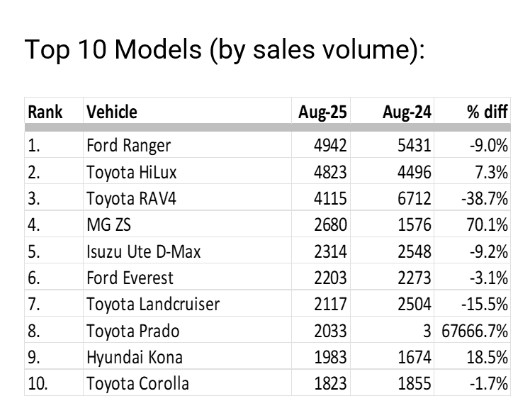
Australians purchased 100,539 new vehicles in August 2025, making it the second strongest August on record. The milestone month also marked the first time four Chinese carmakers – BYD, GWM, MG and Chery – all ranked in the national top 10.
In total, 20,070 Chinese-made vehicles were sold during August, a 67 per cent increase compared with the same month in 2024.
Federal Chamber of Automotive Industries (FCAI) chief executive Tony Weber said the results reflected the pace of change in the sector.
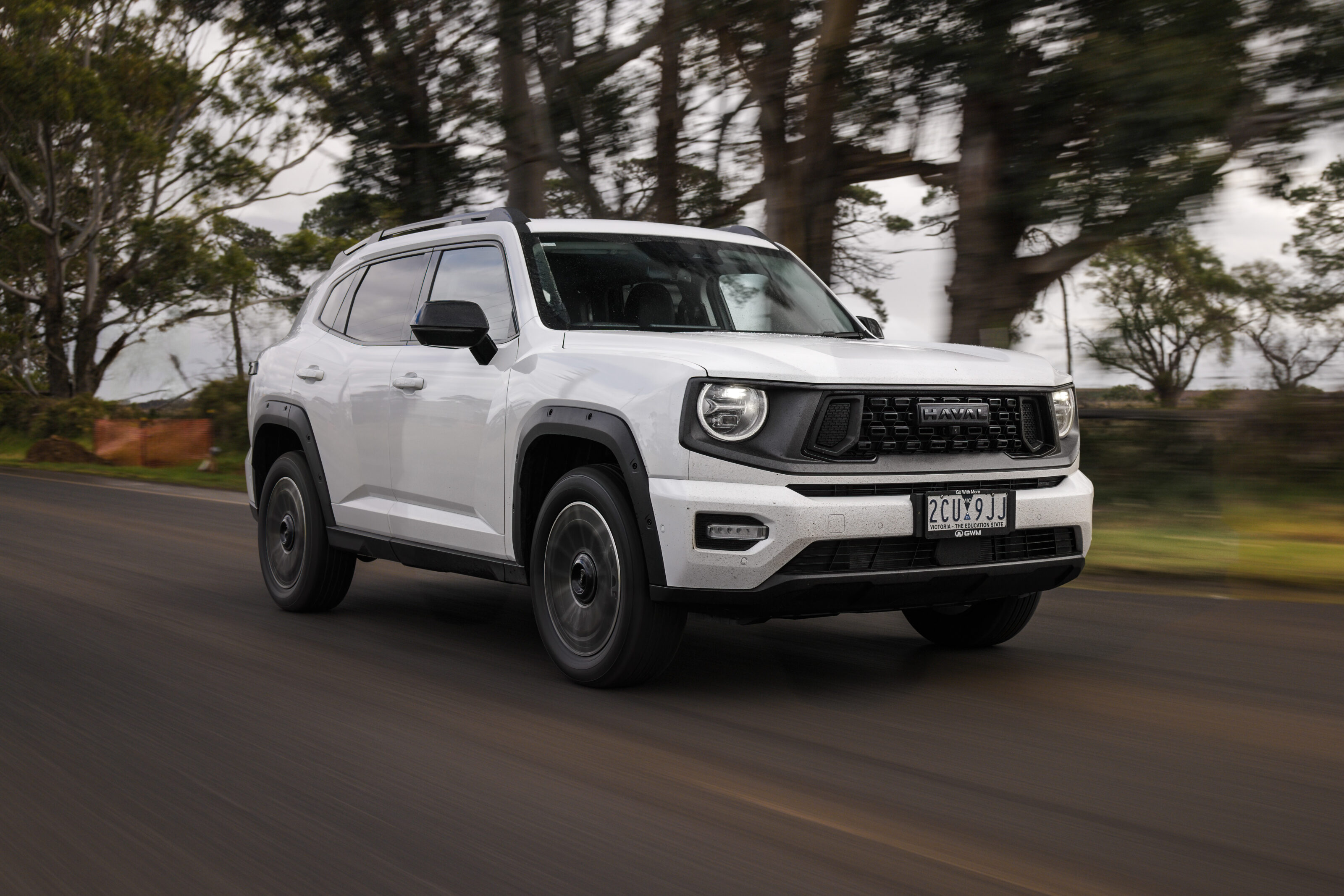
“The presence of four Chinese brands in the top 10 illustrates the continuing evolution of the automotive landscape in Australia. Consumers have an extraordinary range of vehicles to choose from – more than 400 models, including around 100 EVs,” he said.
SUVs remained the dominant category, with 60,495 sales in August, representing 60 per cent of the market. Passenger car sales fell to 13.1 per cent, with year-to-date figures down 25 per cent compared to last year.
Electrified vehicles continued to grow in share. Battery-electric vehicles made up 6.8 per cent of sales, while plug-in hybrids accounted for 3.9 per cent.
Year-to-date, 812,447 vehicles have been sold nationally, a modest decline of 2.1 per cent from the 830,226 recorded in the same period of 2024.
Ahead of this week’s Council of Treasurers meeting, Weber reiterated FCAI’s support for a nationally consistent road user charge.
“As the number of electrified vehicles increases, governments must support a smooth transition away from fuel excise. A road user charge is needed to provide an enduring revenue stream to support road and recharging infrastructure,” he said.
Toyota remained the overall market leader with 20,791 sales, followed by Ford (8,002), Kia (7,402), Mazda (6,814) and Hyundai (6,322).
Across the states and territories, results were mixed. Sales rose in the ACT (up 20.7 per cent), Victoria (up 3.8 per cent), NSW (up 2.4 per cent), Queensland (up 2.8 per cent) and WA (up 1.6 per cent). Declines were recorded in the Northern Territory (down 7.8 per cent), South Australia (down 6.0 per cent) and Tasmania (down 3.1 per cent).
Mercedes-Benz Australia has added another plug-in hybrid to its local line-up, unveiling the GLC 350 e 4MATIC SUV, on sale from 3 September 2025 priced from $99,900 (MRLP).
The new variant joins the GLA 250 e and C 350 e introduced earlier this year, extending EQ hybrid technology across more of the brand’s most popular models.
The GLC 350 e combines a four-cylinder petrol engine with an electric motor for a total system output of 230 kW and 550 Nm. It can travel up to 132 km (NEDC) on electric power alone and reach 140 km/h without using petrol. Three driving modes – Electric, Battery Level and Hybrid – are accessible via DYNAMIC SELECT, while a haptic accelerator pedal guides efficient transitions between power sources.
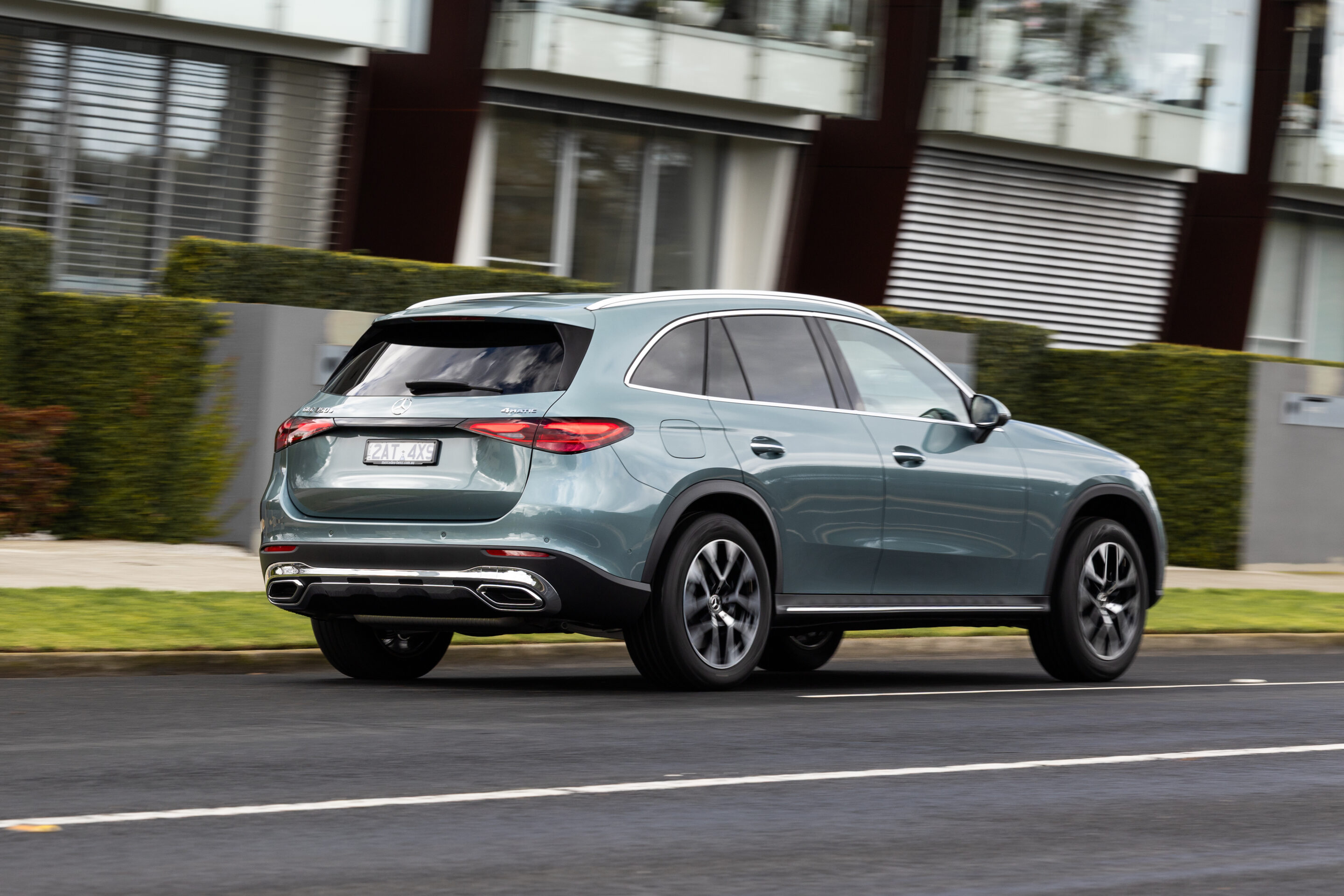
Standard features include AVANTGARDE exterior styling, privacy glass, metallic paint and aluminium-look side steps. A rear axle self-levelling suspension system ensures a consistent ride height regardless of load.
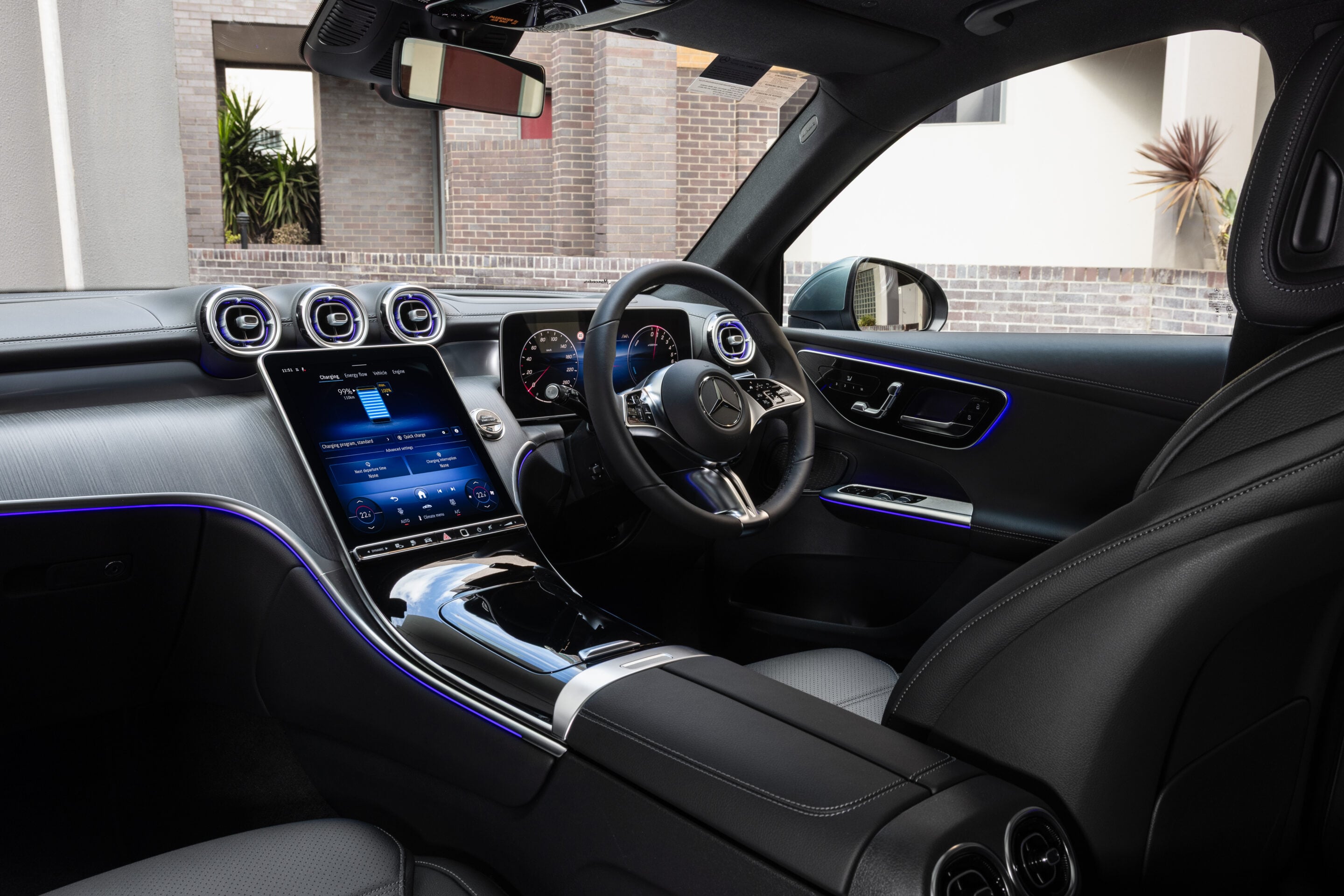
Inside, the AVANTGARDE interior brings heated memory front seats with lumbar support, ambient lighting, a head-up display and panoramic sunroof. Connectivity includes Apple CarPlay, Android Auto, wireless phone charging, digital radio and a fingerprint scanner. Design touches include illuminated door sills and a chrome interior package.
Charging options allow flexibility: 11 kW AC charging enables a full recharge in about two hours, while an optional 55 kW DC fast-charging package can restore 0–80 per cent capacity in around 20 minutes. Two cables are provided for wallbox, public and home charging.
Optional Packages
Three option packs are available: the Sport Package ($6,000 MRLP) adds AMG Line styling, larger front brakes and 20-inch wheels; the Night Package ($1,300) darkens exterior elements when combined with Sport; and the Plus Package ($7,600) bundles driver assistance systems, Burmester® 3D audio, DIGITAL LIGHT, enhanced vehicle protection and MBUX augmented reality navigation.
The addition of the GLC 350 e 4MATIC underscores Mercedes-Benz’s ongoing strategy to broaden electrification across its range, offering customers more efficient choices without compromising on equipment or capability.
The gradual decline of the hot hatch over the decade has been heartbreaking to watch with legendary models from former big hitters in the class such as Renault and Ford no longer produced.
Unfortunately, the coming years will likely see more of the same as the world shifts further to electrification.
Thankfully there are still some great hot hatches such as the iconic Volkswagen Golf GTI, now marking 50 years of sporting practicality.
Recently updated enough to gain extra .5 in its generational name, the Mk8.5 Volkswagen Golf GTI aims to right the wrongs of its Mk8 predecessor, most notably that model’s confusing infotainment system and a backward step in quality compared with the Mk7.5 it replaced. The Mk8.5 has also introduced sharper styling, physical steering wheel buttons and new standard features such as an even larger touchscreen in a bid to keep it fresh.

Now priced from $58,990 plus on-road costs, the Mk8.5 is $2900 more expensive than the Mk8, but the additional equipment and things you can’t see but definitely feel such as the extra power and fruitier exhaust only add to the GTI’s value equation.
Other standard kit for the Mk8.5 GTI includes 19-inch alloys, LED exterior lighting with an illuminated front VW badge, adaptive dampers, tri-zone automatic climate control, a 12.9-inch touchscreen, wireless smartphone mirroring, sat-nav, a 10.2-inch digital driver’s display, 30-colour cabin ambient lighting, a chunky leather steering wheel with paddle shifters and safety features such as nine airbags, AEB, adaptive cruise and lane guidance, blind-spot monitoring with rear cross-traffic alert and adaptive high beam.
The trademark GTI tartan trim? It’s thankfully still present, though buyers can spend an extra $3900 to add leather trim, heated and ventilated front seats and an electric driver’s seat with memory.
Other options include $300 ‘Kings Red’ metallic paint, a $1900 sunroof and a $2000 Sound and Vision Package with a 360-degree camera, head-up display and 480W Harman Kardon audio. Unlike many cars, the GTI’s talent doesn’t improve with options, so it’s easy to get away with an unoptioned example, as our test car was.
While some may wince at the $60k+ drive away pricing of the GTI, the formerly-$40k bargain Hyundai i30 N is now a minimum $55,000 drive away proposition. Want an i30 N Premium with metallic paint? That’s almost $60,000 drive away, and while the i30 N is more powerful, the price gap between the N and GTI has shrunk considerably.

Under the bonnet of the Mk8.5 Golf GTI is the VW Group’s charming ‘EA888’ 2.0-litre turbo-four, in this tune making 195kW of power and 370Nm of torque. It’s the most powerful standard GTI ever, now quick enough for a 5.9-second 0-100km/h sprint and top whack of 250km/h. Adding to the quick feel are the instant shifts from the seven-speed dual-clutch transmission, which slurs at low speeds but is otherwise faultless. Volkswagen claims the Golf GTI will use 7.2L/100km of 95RON premium unleaded, and we achieved 8.4L/100km in our mixed testing.
The Mk8 set a new standard for dynamics for the Golf GTI thanks to its then-new ‘Vehicle Dynamics Manager’ central control system for the chassis, stability control and differential lock. The Golf GTI’s handling and agility was taken to new heights and became quite a serious hot hatch option, so have things changed with the Mk8.5? Well, thanks to some minor changes to the suspension, it’s actually even better than before.
The adaptive dampers have been reworked and now offer a total of 15 different settings, from soft and compliant to too stiff and reactive for Australia’s variable-quality roads. It can be left to pre-set comfort and sport modes, but playing with the individual mode adds extra magic to the GTI experience. Just a bit stiffer than the middle feels about right for bump absorption and body control for fast driving, while the steering only adds weighting – not feel – in its sport mode, so leave that to how you want it.
An i30 N is still ultimately more old school and fun than the GTI – the Golf is just too refined, and we love it for that – but the 15kW boost in power and snappy DSG ‘box make for a surprisingly fast hot hatch with high grip limits. Plus, unlike an i30 N, when it’s back in comfort mode and in A to B driving, it becomes a regular Golf with its excellent refinement and easy to drive nature. Small wonder that the GTI makes up such a big portion of overall Golf sales.

The interior of the Mk8.5 Golf has been improved compared with the Mk8, with a quicker and easier to use infotainment system now housed in a larger 12.9-inch touchscreen, as well as new physical buttons for the steering wheel replacing the former touch capacitive ones. There have been minor trim changes and the digital driver’s display has also been upgraded – it overall feels more expensive inside than the Mk8, though still not quite to the highs of the luxurious Mk7.
The new 12.9-inch touchscreen – as we saw in last month’s test of the lower-spec R-Line – has been greatly improved for the Mk8.5 with quicker reaction times, a reworked menu layout and more shortcuts such as the temperature panel on the bottom of the screen for easier usability. It’s well featured too, but some layout issues remain and we wish it had a volume knob and not a slider. Hopefully the new Tiguan’s switchable volume knob and drive mode selector can be fitted to the Golf at some stage.
A hallmark of the model, the Mk8.5 GTI is practical with plenty of storage options up front, including huge flock-lined door bins and a configurable central cup holder section. Two adults will be more than fine in the rear seat, enjoying amenities such as a separate climate zone, sectioned map pockets and charging ports. The 374-litre boot is slightly smaller than a i30 N, but almost double the size of a GR Corolla, and folding the rear seats unlocks a healthy 1230 litres for trips to Ikea.
A five-year/unlimited km warranty covers the Golf range, with the included 12 months of roadside assistance extended a further 12 months with each dealer service. Servicing the Golf GTI is expensive, with a $4170 bill for the first five years/75,000km, or $834 annually, which can be lessened slightly to $3570 with a pre-paid service pack.

There’s never been a better handling, well-rounded Volkswagen Golf GTI than the Mk8.5. Sure, the material quality still doesn’t reach the highs of the Mk7, but the cabin is more practical, loaded with tech features and it’s still very comfortable. It’s also the most dynamic, fun and fast regular Golf GTI yet thanks to its revised adaptive dampers, trick differential and power boost to 195kW. If you want a hot hatch that does everything from taking the kids to school, carrying flatpack furniture or facilitating a backroad blast, the answer – once again – is the Volkswagen Golf GTI. Enjoy it while you still can.
Specs
| Model | Volkswagen Golf GTI |
|---|---|
| Price | From $58,990 plus on-road costs |
| Drivetrain | 1984cc turbocharged 4-cylinder |
| Peak power | 195kW (@ 6500rpm) |
| Peak torque | 370Nm (@ 1600rpm – 4300rpm) |
| 0-100km/h (claimed) | 5.9 seconds |
| Top speed (claimed) | 250km/h |
| Transmission | 7-speed dual-clutch, front wheel drive |
| Combined fuel economy (claimed/as tested) | 7.2L/100km, 8.4L/100km |
| CO2 emissions/fuel type | 163g/km |
| Fuel type/tank size | 95RON regular unleaded, 50 litres |
| Dimensions (l/w/h/wb) | 4289/1789/1472/2631mm |
| Boot size | 374 litres (seats up), 1230 litres (seats folded) |
| Kerb weight | 1435kg |
| Warranty | Five-year/unlimited km |
| Five-year service cost | $4170 (PAYG), $3570 (pre-paid) |
| On sale | Now |

