
Big Brother is watching you, Melbourne.
If you drive, cycle or even walk along the streets, your every move is being recorded into a black box that will allow VicRoads and other parties to analyse the recordings.
Mind, we’re not talking about every nook and cranny on the street – yet – but Melbourne has launched a number of connected-everything programs that can record sensor, camera and cellular information.
In one of those projects, VicRoads is leading a first-of-its-kind system in Australia using sensors to detect vehicle and pedestrian movements.
According to VicRoads vehicle and motorcycling policy manager, James Soo, it is a technology that’s not in use anywhere else in the country.
“That particular project is with Omni-Aware and is a consortium of partners we work with,” Soo told Wheels.
“We’ve invested $2 million for them to install an array of Lidars, which are basically laser sensors on an intersection that would help detect all roads users, how they interact, and help identify near miss and potential collisions so that you can also create a safety warning message to the driver.
“It is really one of the groundbreaking types of technology that no one else has actually entered into. Not sure about the world, but definitely in Australia. We haven’t heard of something else happening in this space.”
As further clarification, the data will be collected in a ‘black box’ according to a statement from VicRoads:
“Black box functionality will improve safety and prevent future crashes by allowing VicRoads to closely analyse data collected, the factors that contributed to accidents and seeing how these incidents could be prevented in the future.”
The term black box also describes a device that will be fitted to new cars soon. Following European Union and United Nations legislation, Australia is in line to make some of the same technology mandatory in new cars such as alcohol and drug detectors, speed limiters and a device that records all of that information.
The sudden introduction of data recording devices in the automotive industry is bringing a bevy ideas for the way it can be used, but there are concerns over privacy. In some instances it is not clear where the information is stored, or how and with what security it is kept.
Melbourne University is also championing a world-first program named AIMES (Australian Integrated Multimodal EcoSystem). It is described as “a world-first living laboratory based on the streets of Melbourne.”
In a 101 video, the University of Melbourne says that using a “mesh of smart sensors, we’re connecting and tracking the movement of individual pedestrians, cyclists, and multimodal traffic to the cities transport system of intersections, tram ways, bus and traffic signals.”
The program is operated in close collaboration with government and leading Australian and global industry partners.
Soo says that the first AIMES area in Carlton is a segway to creating a driverless urban environment.
“There are test beds that are available, there is the AIMES test bed that is in Victoria right now in Carlton which we are partner of. It is worth noting that Victoria is the only state that has a permit scheme that allows autonomous cars on our roads so we just launched the ADS permit scheme late last year that allows for high level technology, a high level of automated driving to be on our roads.
“We obviously go through an intensive safety management plan to understand what they are going to be doing and work through that.”
“That’s an area we are heavily focused on, we are very active in working with the National Transport Commission, the NTC, in working to develop the future regulation reform on autonomous vehicles. We definitely hope this trial plus all the other trials we are conducting will better inform us to develop this reform.”
The newly found need to introduce driverless vehicles quickly in Australia is bringing with it a crossover between collecting the data a driverless car needs to operate autonomously and tracking the habits of real drivers without consent.
Recently, VicRoads partnered with Telstra and Lexus to trial 4G cellular vehicle-to-vehicle and vehicle-to-infrastructure technology. The technology is able to use the data collected from vehicle and pedestrian monitoring and communicate with vehicles.
“We will be operating on metropolitan roads as well as the regional roads, so metro roads will be around the CBD and South Melbourne area and the regional roads will be just north of Geelong.
“Having done it on the test track is one thing but having to understand the other aspect of it we have to understand the limits of the technology.”
The Duke of Richmond’s driveway has become a popular place to dynamically debut a new performance car, which is just what Audi Sport did with its new customer racer, the 2020 Audi R8 LMS GT2.
Sitting atop the list of its customer racing offerings, Audi’s new car is a naturally aspirated 470kW version of the halo supercar which is only available with 449kW in road-going form as the R8 V10 Plus.
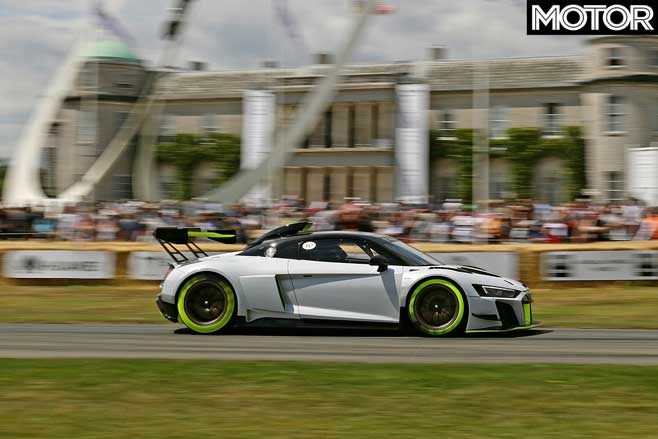
With its dry weight of 1350kg and a slew of aerodynamic enhancements, the R8 GT2 is as potent as it looks, with Audi Sport’s head, Oliver Hoffmann, calling it the peak of customer racing cars for the four-ringed brand.
An Audi space frame built from an aluminium-CFRP (carbon fibre-reinforced plastic) hybrid design is wrapped in a body that incorporates ground effects, with a huge air intake in front and a ram-air intake above the roof to take advantage of the airflow for engine cooling and power production.
A seven-speed dual clutch ‘S Tronic’ gearbox helps put that power to the ground via the rear wheels, with Audi claiming the GT2 puts around 28 per cent more power down than the GT3 version of the R8.
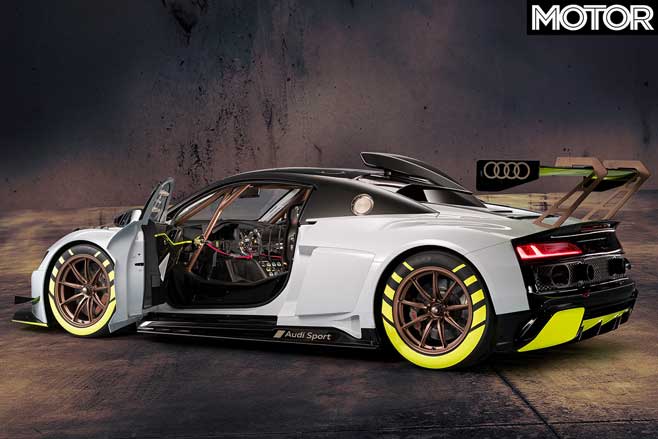
While the R8 GT2 is being touted as the most advanced LSM customer race Audi has built, the brand’s customer racing boss says there’s nowhere for it to actually race in a championship just yet.
“At this juncture, there are no championships yet, but international series are being planned at least in Europe and in North America,” says Chris Reinke.
“Stéphane Ratel Organisation (SRO) has established itself as a worldwide architect of GT racing over the past quarter of a century and created many attractive platforms in America, Europe and Asia, plus even a global racing series in the form of theIntercontinental GT Challenge.
“I’m sure that SRO will make the GT2 class a success as well.”
Mercedes-Benz has detailed its incoming range of CLA models, leading with the CLA200 coupe which will open the range at $59,500 before on-road costs.
While the local CLA range will expand to include the sportier CLA250 and CLA35 AMG variants later this year and the CLA45 AMG in early 2020, the sole offering for the time being will be the entry-level CLA200.
Promising a mammoth technological upgrade from the last CLA and more interior space than before, the CLA200 coupe will also borrow the 120kW/250Nm 1.3-litre turbocharged 4-cylinder engine from its A200 cousin.

Dimensionally, the incoming four-door coupe CLA measures 48 millimetres longer and 53mm wider than the outgoing generation, corresponding to a more capacious and comfortable interior.
Speaking to the design of the new CLA, Chief Design Officer Gorden Wagener believes the look “is compelling for its perfect proportions, which are very close to the initial design sketches: a long, stretched bonnet, a compact greenhouse, a wide track with flared wheel arches, and our typical GT rear end with a pronounced ‘Coke-bottle shoulder.’”

In its default specification, the incoming CLA will now receive the AMG line exterior styling package, automatic climate control, sports seats, ambient lighting, digital radio and Apple CarPlay and Android Auto as standard. Joining the current range of Mercedes-Benzes with the brand’s cutting-edge MBUX infotainment suite, it’ll also receive a pair of 10.25-inch configurable widescreens.
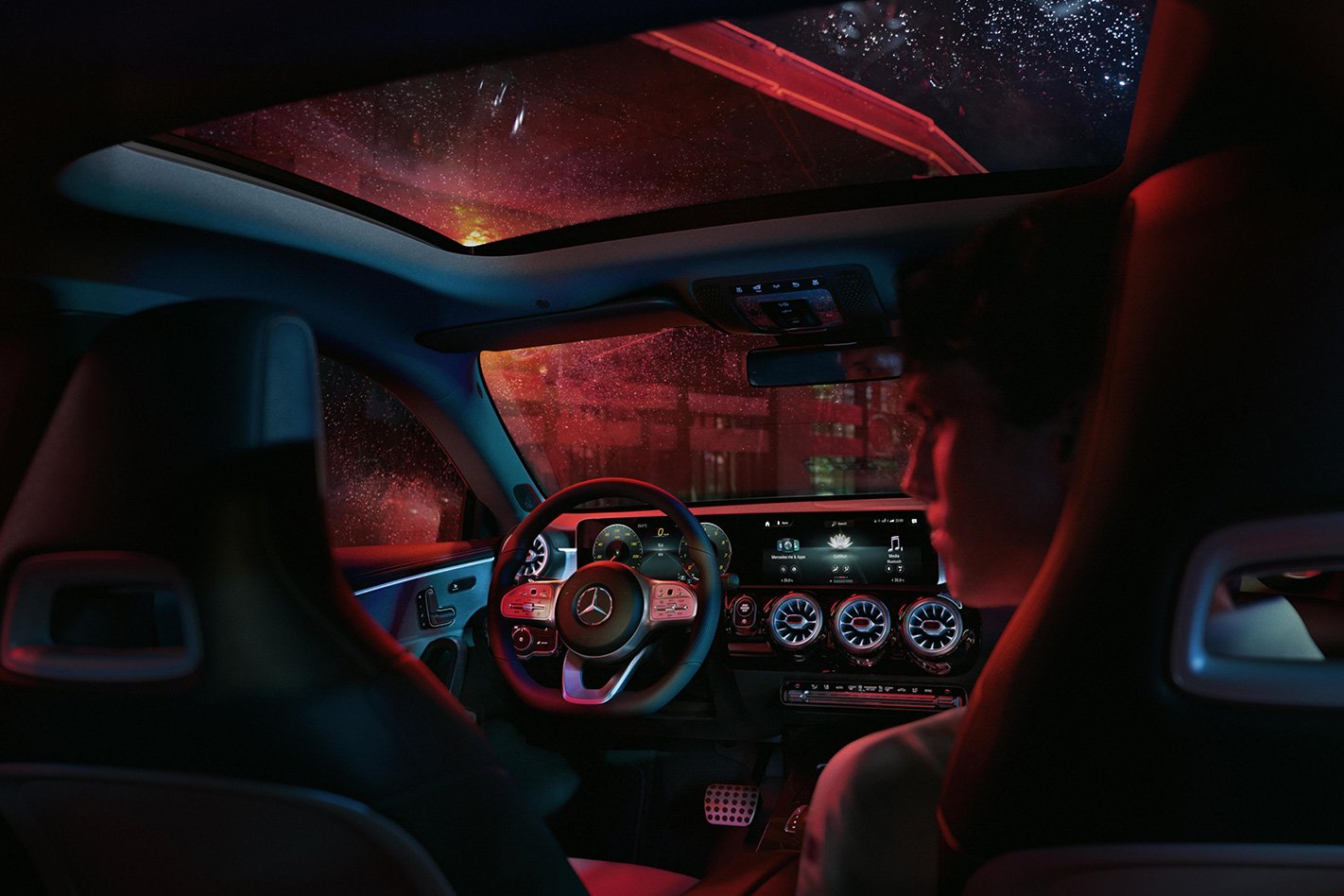
A comprehensive list of safety features will also be standard, with nine airbags, active brake assist, adaptive high beams, lane-keep assist and blind-spot assist equipped.
Get spendy and you can option a Vision package that includes Mercedes’ MULTIBEAM LED headlights with adaptive high beam, a glass sunroof and 360-degree parking cameras for $2490. Audio and HiFi can be improved with a $2490 Communications package which adds a 12-speaker Burmester sound system and heads-up display, while the interior trim can be enhanced with black open-pore wood, climatised front seats and Lugano leather upholstery for $2990.
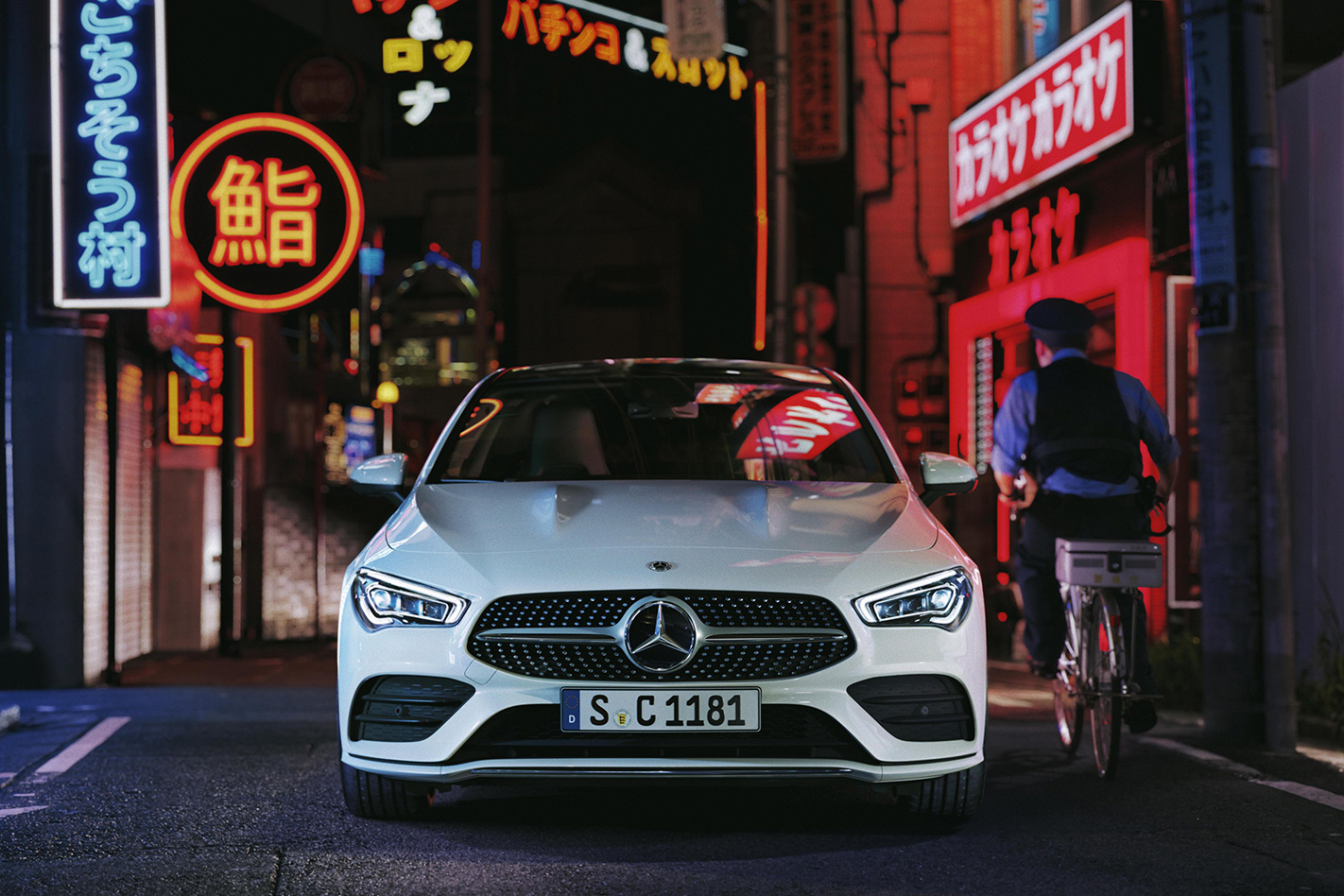
The sole CLA200 will be joined by the CLA250 and CLA35 AMG in Q4 of this year, with the recently announcing CLA45 S with 310kW to debut early in 2020.
2020 Mercedes-Benz CLA200 pricing:
- CLA 200 ($59,500 MRLP)
- Vision package ($2490)
- Communications package ($2490)
- Exclusive package ($2990)
Peter Hanenberger, Mike Simcoe, Tony Stolfo, Max Wolff, Denny Mooney and Ewan Kingsbury, a 23-year-old designer just off the plane from the UK. These six blokes all played a major part in dreaming up, designing and making a reality this concept for Holden, which, despite using a name from the past, was accidentally prophetic about today.
At one point called the XP54 (experimental prototype from Holden’s Studio 54), the 2004 Holden Torana TT36 concept was smaller than the Commodore, featured a liftback boot and took design inspiration from Europe. Sound familiar?
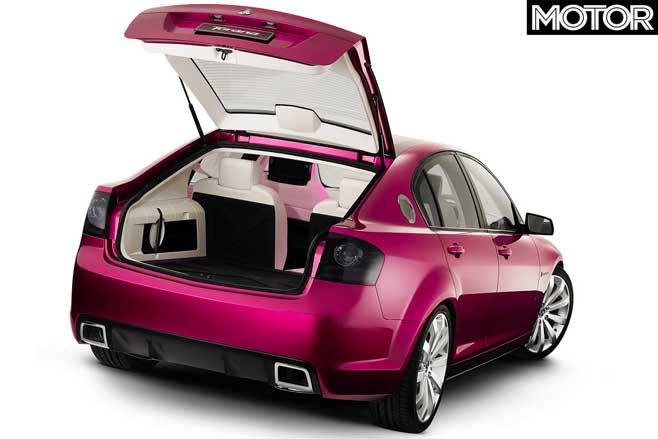
While it would be easy to draw comparisons between the Torana concept and the ZB Commodore, the TT36 was in fact a design precursor to the VE Commodore, and was not (according to Kingsbury) related to the similarly sized Holden Vectra of the time, despite comparisons made by this very magazine after the concept was revealed in 2004. About the only thing Vectra about it was its doorhandles.
Under the bonnet resides the reason for the TT36’s name, an ‘experimental’ twin-turbocharged 3.6-litre Alloytec V6 from GM’s arsenal, hooked up to a six-speed manual from the V8-powered SS. Holden compared the TT36’s power-to-weight ratio to that of an A9X, despite not having revealed the concept’s weight.
The TT36’s ‘ManGenta’ exterior paint wasn’t exactly designed to be commercially viable, but it’s inside where things get really bizarre. White leather for a concept car is no big deal – depreciation doesn’t matter in a car that’s not going up for sale – but the dash! White with black accents and bright pink neon lights. Holden’s colour and trim team called it “nu luxury” based on forecast fashion trends. It was actually inspired by Star Wars stormtroopers.
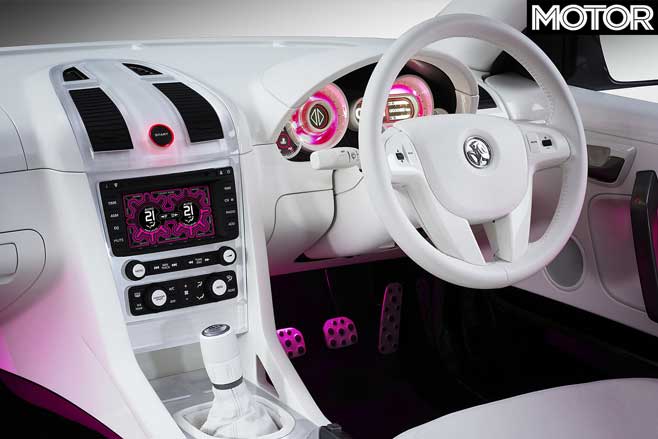
Holden’s Torana TT36 concept continues to fascinate whenever it is displayed. It presently resides in the Trafalgar Holden Museum in Gippsland, Victoria.
2004 HOLDEN TORANA TT36 CONCEPT SPECS Engine: 3564cc V6, 24v, twin-turbo Power: 280kW Torque: 480Nm 0-100km/h: 5.3sec (est.)
ANDREAS PREUNINGER is one of us. A car guy. An enthusiast. A driver.
He also just happens to be the long-serving head of Porsche’s GT division, which means he’s nicely plugged in to what the future of sportscars looks like.
And in good news for people who care about driving, Preuninger says two of the things we love most – namely the manual gearbox and high-revving naturally-aspirated engines – have a strong future that will last for at least another decade.

In fact, speaking to Wheels at the launch of the second-generation Cayman GT4, Preuninger went so far as to say that companies moving away from those technologies are making a blunder.
“I think we have an advantage in the market over the competition because everybody has skipped and deleted the atmospheric engine and deleted even the manual gearbox. That’s a mistake! Because if you look at the take rates on the GT model side, in some markets half of the cars are manual and everybody is longing for a car like this with a normally aspirated, high revving engine,” he enthused.
“It’s not an A-to-B means of transportation. It’s something you do for yourself, it’s something you do for pleasure and in that case it’s a healthy car, it’s like medicine because everybody is grinning and that’s healthy.”
Music to our ears, that is. And don’t think that Preuninger is stuck in the past either. He’s excited about Porsche’s first electric car, the Taycan, and believes the advent of EVs needn’t spell the end of performance cars as we know them.
“I’m sure there will be a lot of garages where a Taycan is parked next to a GT3 RS and it’s no contradiction,” he told us. “The good thing that we [Porsche] decided to do is not to neglect one for the other.”
Preuninger is very conscious of ever tightening emissions laws – he says it’s these, not mechanical limitations, that will determine the power outputs of future GT department engines – though he’s equally aware of the shortcomings of EVs when it comes to delivering the sense of analogue connection his cars are famous for.
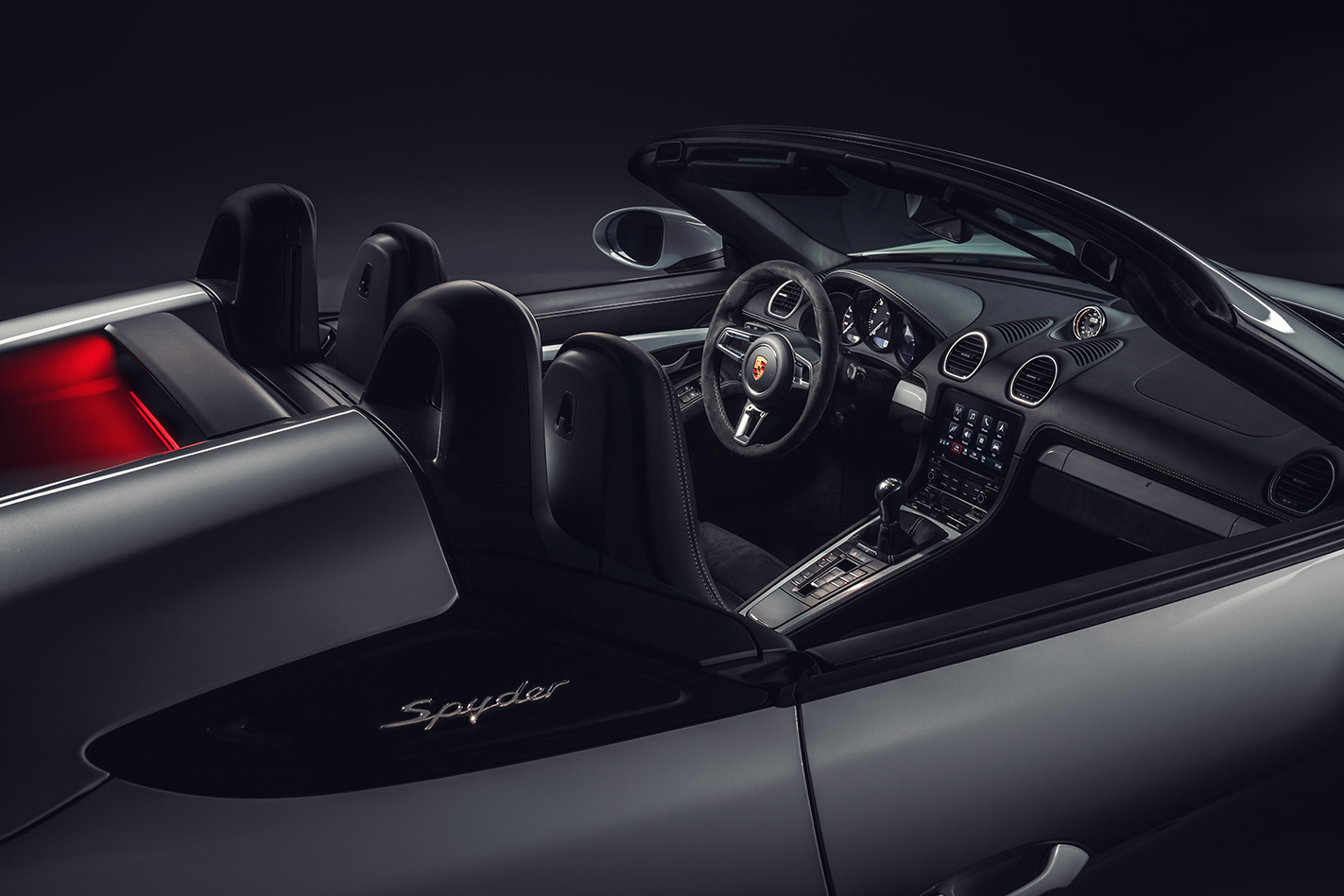
“I think everybody takes notice and understands that we have to help on the automotive side to get emissions down, and I think for a car that’s used mainly in the city, in the big urban areas and isn’t used for the long-halls, then an electric car is perfect. It’s great!
“But the expectation might not be that it’s a thing I have the urge to drive just for the sake of driving. For that hobby instrument, we want GT cars to be alive as long as possible.
“I think they’ll be asking for that type of car [GT models] in 10 years as well, why should they change their mind over night? And it’s a big customer base and we have to look after everybody, from the younger ones to the older ones to the hardcore enthusiasts as well.”
Preuninger confirmed that despite his personal appreciation of the benefits of EV powertrains, Porsche’s GT department has no plans to fettle with the Taycan.
“No. We’re in different departments with different missions. We have good contact, we’re a relatively small company still and we talk a lot and we share our experiences and most of the people who work at Porsche are absolute car nuts. So we exchange cars with the Taycan team, but we’re not involved in any electric approach or project right now.”
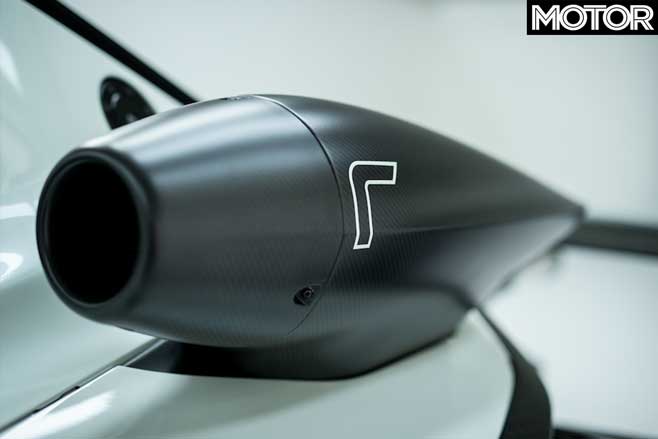
With 26kW more, 25kg less, and a more advanced construction, the new BAC Mono R is the next step in the British supercar brand’s evolution.
BAC’s new Mono R made its debut at the Goodwood Festival of Speed, with all 30 of its production run having already sold out before that.
The Mono R is powered by a Mountune-developed 2.5-litre four-cylinder turbo engine, which produces 254kW and redlines at 8,800rpm.
It’s also, according to BAC, “the first production car in the world fully incorporating the use of graphene-enhanced carbon fibre in every body panel,” which is part of the reason it’s lighter than its predecessor.
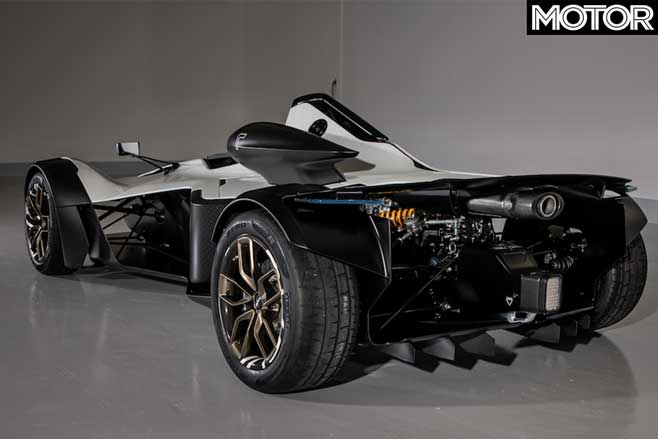
BAC also says the magnesium chassis and transmission components, titanium exhaust system, lightweight AP Racing brake calipers, and carbon floor all help keep weight low, with carbon-ceramic brakes specifically saving 2.55kg in unspring weight per corner.
A total of 44 carbon parts from the previous Mono had also been re-styled to better suit the R. All up, it weighs just 555kg.
BAC design director Ian Briggs says it’s the first time BAC has designed something new in more than a decade.
“Not only have we become a multi-product brand for the first time, but we’ve done so with a truly remarkable feat of engineering, design and innovation in the Mono R.
“Mono R has been many, many years in the making, with thousands upon thousands of hours of research and work going into it – and we believe we’ve found the perfect formula for creating the most extreme Mono in the flesh and under the skin.”
And while the new Mono R is the most extreme of its kind so far, the brand has more in the pipeline.
Product development boss Neill Briggs says the new Mono R is a preview of what’s yet to come from BAC.
“This car is the ultimate benchmark-setter in terms of design, engineering and performance; that much is evident from the fact we sold out our full run of 30 models almost immediately to our very lucky current customers, who have a real treat in store when they get behind the wheel.”
It’s a bright and cloudless day in Hanover, Germany, but up ahead is a tight corner that’s sopping wet. Now to do something that goes contrary to instinct: to accelerate toward it and turn in at a speed that would feel somewhat over-ambitious even if the road were bone dry.
I’m at the wheel of an Alfa Romeo Giulia, and I’ve given the accelerator a hefty shove to get it to just a hair under 80km/h. We’re heading downhill too, and as we approach the corner we can start to see the water that’s constantly flowing across the road. This doesn’t feel sensible.
However, as I begin to turn the Alfa’s steering wheel in what would otherwise feel like a futile attempt at car control, something curious happens – the car starts to slow itself down, and the stability control intervenes much earlier than expected to maintain traction. Bizarrely, we have the internet to thank for that.

We’re at a test track as the guest of Continental, the tyre and electronics-manufacturing giant, and the demonstration we’ve just experienced – for a piece of technology it calls Preview ESC – is just one of many at the company’s 2019 TechShow. It’s also one of the most intriguing applications for internet connectivity in cars.
The concept behind Preview ESC is relatively easy to grasp. By giving a car information about how slippery the road up ahead is, the car’s stability control system can therefore adjust its settings to pre-emptively neutralize any dangerous conditions like speed or steering angle. In essence, it turns stability control from being a system that simply reacts to danger, to one that can anticipate it and plan for it. It’s like riding a rollercoaster blindfolded versus riding with your eyes open – if you can see what’s coming up, you can tense your body to avoid getting whiplash.
And the data that makes it all work is crowdsourced. Preview ESC works in conjuction with another Continental innovation that also debuted at the 2019 TechShow, a data-rich mapping service called eHorizon, which uses data from cars and trucks to build up a dynamic picture of what’s happening on the road network. Everything from accidents, slow traffic, weather events and changes in road friction can be handled by eHorizon, and it’s the road friction data that makes Preview ESC work.

For the demonstration, it was a Mercedes-Benz E-Class that drove through the wet road ahead of us that supplied that data. That information about the road’s slipperiness, gleaned from the Benz’s wheel speed sensors and its own stability control system, was then transmitted to the eHorizon server in Frankfurt via a wireless internet connection, which then sent that information to our Alfa Romeo in mere seconds.
From that point, the car estimates a maximum safe speed to negotiate the hazard and, if the car is going too fast, adjusts the speed ahead of time. From the driver’s seat it all felt quite smooth and safe, despite it being run on development software in a prototype vehicle. It wasn’t faked either – playing around with the speed and line of entry saw the system respond differently, and later on we were able to see the data gathered by the sensor-equipped car on an eHorizon console, as it happened.

It’s cool technology, and one that could definitely help save lives in areas with lots of rain, snow or icy roads – or even in the event of an oil spill – but it requires a few things to happen first.
For one, manufacturers will need to get on board with Continental’s eHorizon platform, and given it’s only just come into being that’s likely going to take a while. Secondly, there will need to be a meaningful number of cars connected to that data-sharing network for its full utility to be realized, and thirdly the wireless internet infrastructure will need to be robust, widespread and fast enough to allow the system to function to its fullest potential. That said, Continental says eHorizon can work on existing 4G cellular internet connections, and the much faster 5G network isn’t a prerequisite.
But if all of those boxes can be ticked, Continental’s internet-enabled stability control could be one big step towards the ever-elusive ideal of the “uncrashable car”.
If you were paying attention to social media over the weekend, chances are you might’ve caught a glimpse of this year’s Goodwood Festival of Speed.
Equal parts static car show and on-track action, the Festival of Speed is best known for exhibiting some of the world’s most special cars on a flying pass up the Duke of Richmond’s driveway.
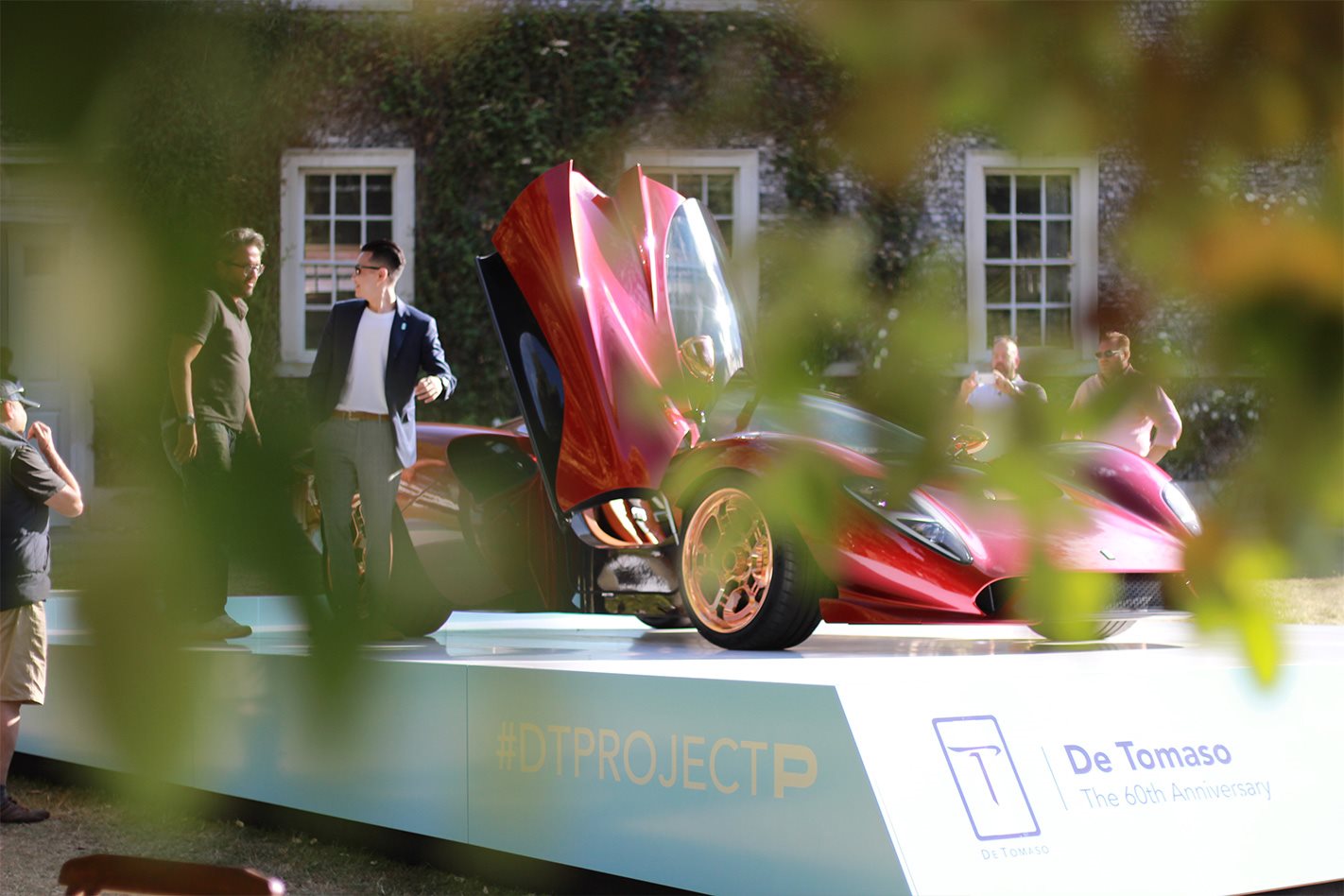
Those lucky enough to attend were treated to the best metal the automotive world can offer, in what can only be described as a unique “rolling road show”. And one of those lucky attendees was Wheels Editor Alex Inwood, who has given us a glimpse at what goes on at the fabled driveway with his trusty camera.
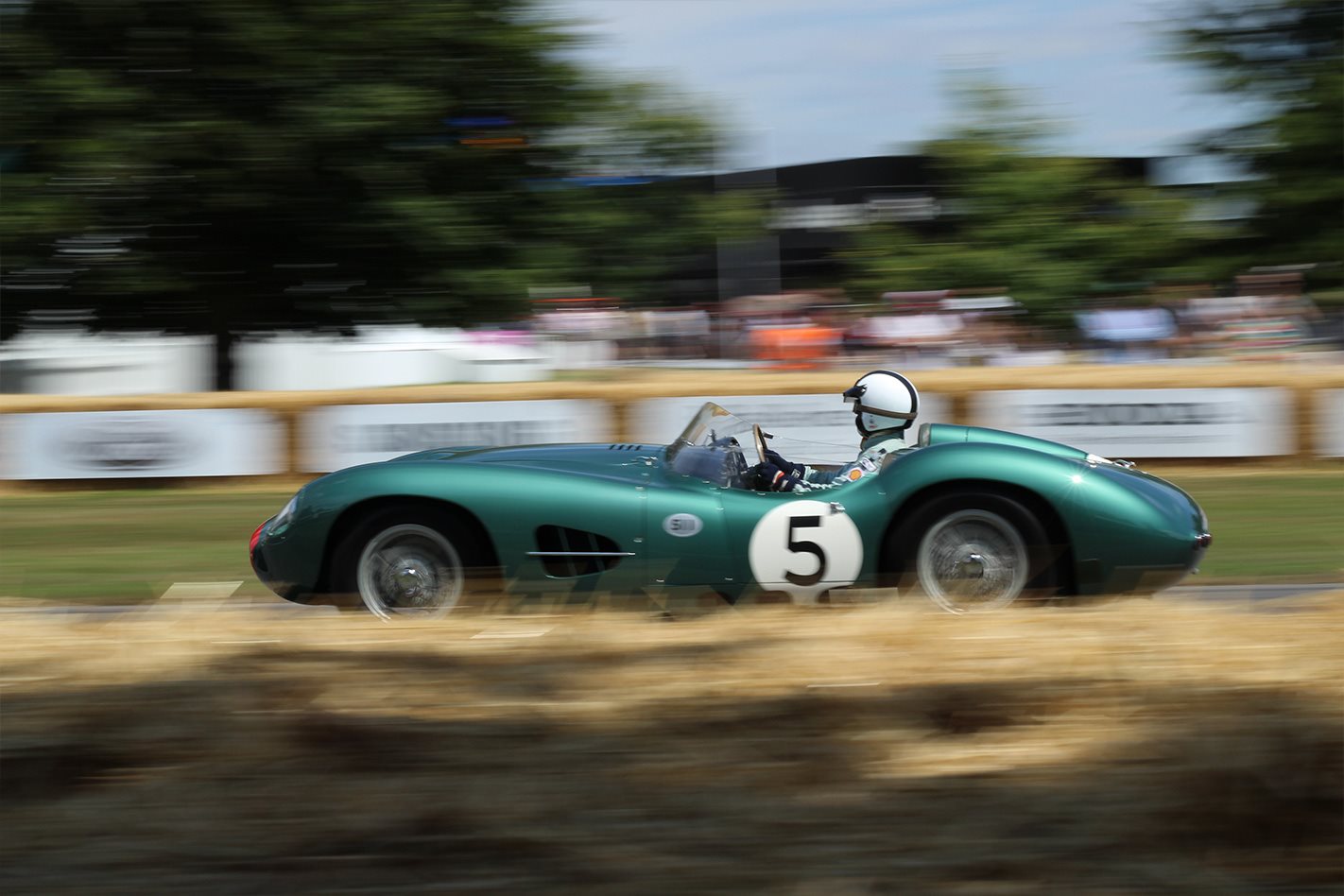
If you haven’t had a chance to check out what went down, peek at Inwood’s best photos from on-the-ground in the gallery above.
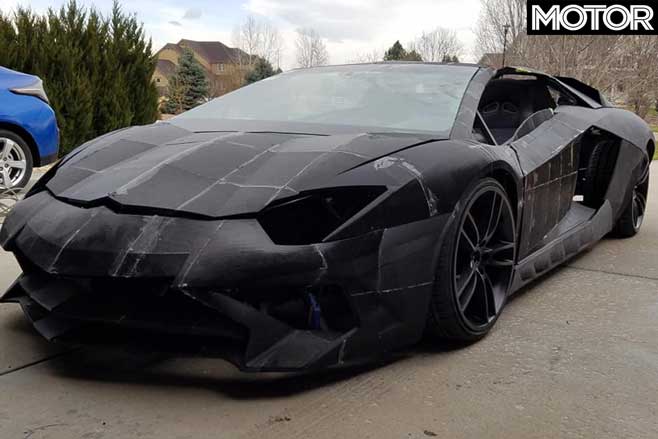
The term “garage-built supercar replica” usually reeks of fibreglass glue and an unfortunate Toyota MR2 donor car buried beneath it, but that isn’t the case for Sterling Backus and his ongoing project, scratch-building a replica of the Lamborghini Aventador out of 3D-printed parts.
Though the premise might sound far-fetched enough to be the imaginations of a Tim Keen column, this 18-month ongoing passion project started out from a Forza Horizon 3 gaming session Backus had with son.
“My son said he loved the Aventador and wondered if it was possible to build one. He did not need to twist my arm too much!” Backus tells MOTOR.
A self-confessed gearhead, Backus, who is a PhD physicist (so that’s Dr Backus) who designs lasers for research and an adjunct professor at Colorado State University, always wanted to build a supercar himself.
“Originally we were going to build it out of steel on a buck, but seeing how far 3D printing had come, we decided to 3D print the car instead,” he continues.
Being your average neighbourhood garage operation, Backus doesn’t have the billion-dollar resources full-fledge manufacturers could wield when it comes to 3D-printing whole parts.
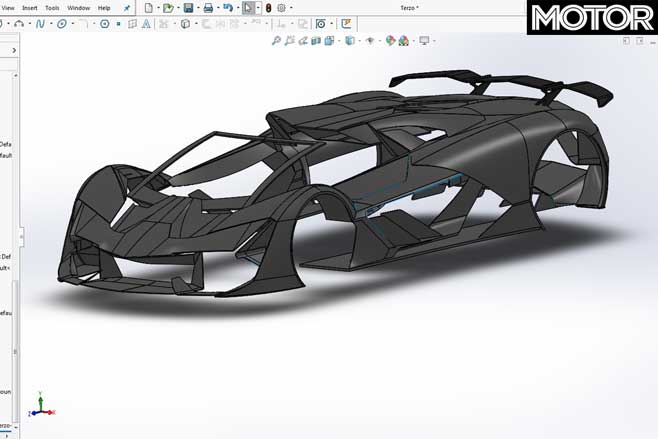
Instead Backus designs the panels on Solidworks, a 3D design program, and prints each panel in small pieces using three 3D printers he bought from Amazon. From there he glues each panel together, with some panels fixed unto a steel frame underneath.
To give the larger body panels that “single-piece” look and better structural strength, Backus painstakingly wraps the parts in proper carbon-fibre Kevlar (not your average automotive vinyl wraps), and seal them in place with a vacuum encapsulation method he learnt from YouTube using store-bought tools.
“I had no prior experience in 3D printing or encapsulating the parts. The encapsulation was based on skinning techniques I saw on YouTube,” says Backus.
“Since this is going to be a one-off project, encapsulating the parts made sense, and it also adds some sound-deadening properties to it. I am kind of winging it.”
From there the panels are attached to a tubular steel frame chassis that he designed and built himself. While it is no Aventador-like carbon-chassis structure, Backus designed the chassis with a front and rear “cantilever coil-over suspension system”, which is similar in design principle to the Aventador’s inboard suspension setup.
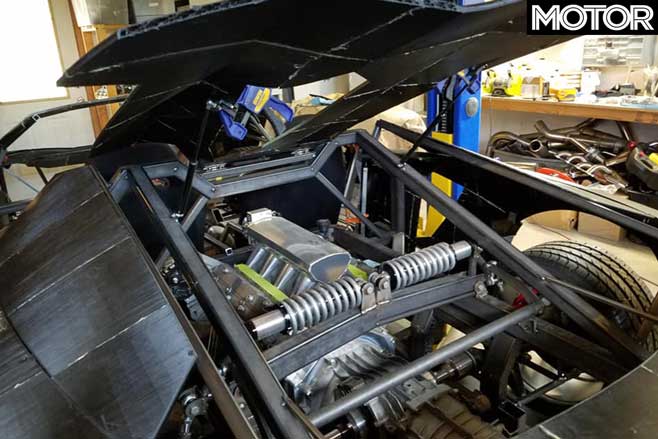
At the supercar’s heart lies a LS1 V8 engine lifted from a 2003 Chevrolet Corvette with two turbochargers strapped onto its side for good measure, and mated to an inverted Porsche 996 911 transaxle.
While Backus 3D-printed the Aventador’s taillights and complex parts such as the rear diffuser and front bar, built much of the chassis, and assembled the running gear, there are some parts that he couldn’t fabricate himself.
“I sourced used or cheap new Lamborghini parts such as the door windows, rear view mirror, side mirror glass, marker lights, latches and strikers for the doors, and wiper arms from the internet,” explained Backus. “Some parts from Audis were also sourced, such as the steering wheel and some switches.”
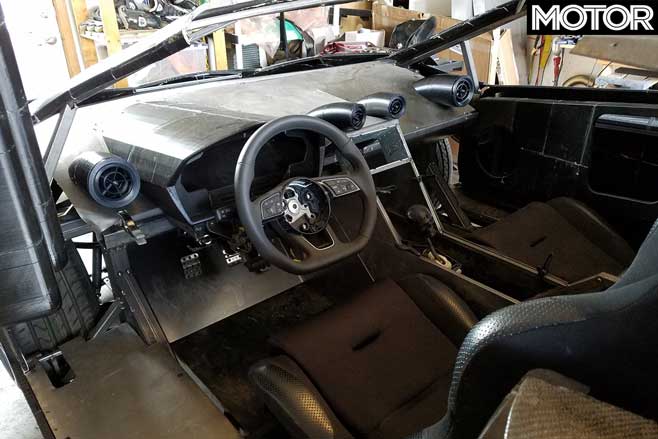
While this sounds all too complicated just to scratch-build a supercar replica, Backus says the whole replica is being built on a budget of “under USD$20,000” (under AUD$29,000), which is just a fraction of a real Aventador’s Stateside price of USD$420,000 and not to mention the invaluable experience of building your own car.
“We have a long way to go in finishing the car. We have had our ups, and downs, but the journey has been a ton of fun!” said Backus.
Follow Sterling Backus’ entire supercar build process at his YouTube channel and Facebook page.
The Wheels Verdict: Exhuming the Genesis and giving it a modest refresh and rebadge doesn’t seem a formula for success, but there’s a small market niche – and small is all that Genesis needs right now – that will adore the formula of this relaxed and refined highway cruiser.
WHAT IS THE GENESIS G80?
Let’s start at the beginning. Not with the Big Bang, but with an event shortly thereafter when Hyundai launched the Genesis sedan. That car arrived in Australia badged as the Hyundai Genesis in 2014, made a small ripple with private hire operators and then quietly disappeared a couple of years later. It’s recently been refreshed and Genesis is now the make, not the model. The engine is largely unchanged as is the car’s relaxed personality.
WHY WE’RE TESTING IT
The big drawcard of Genesis’ launch in Australia is the G70 sports sedan, but the company also had some G80s for us to drive so we decided to have a pedal in one to see whether this refreshed version has what it takes to rival cars like the BMW 5 Series and Mercedes-Benz E-Class.
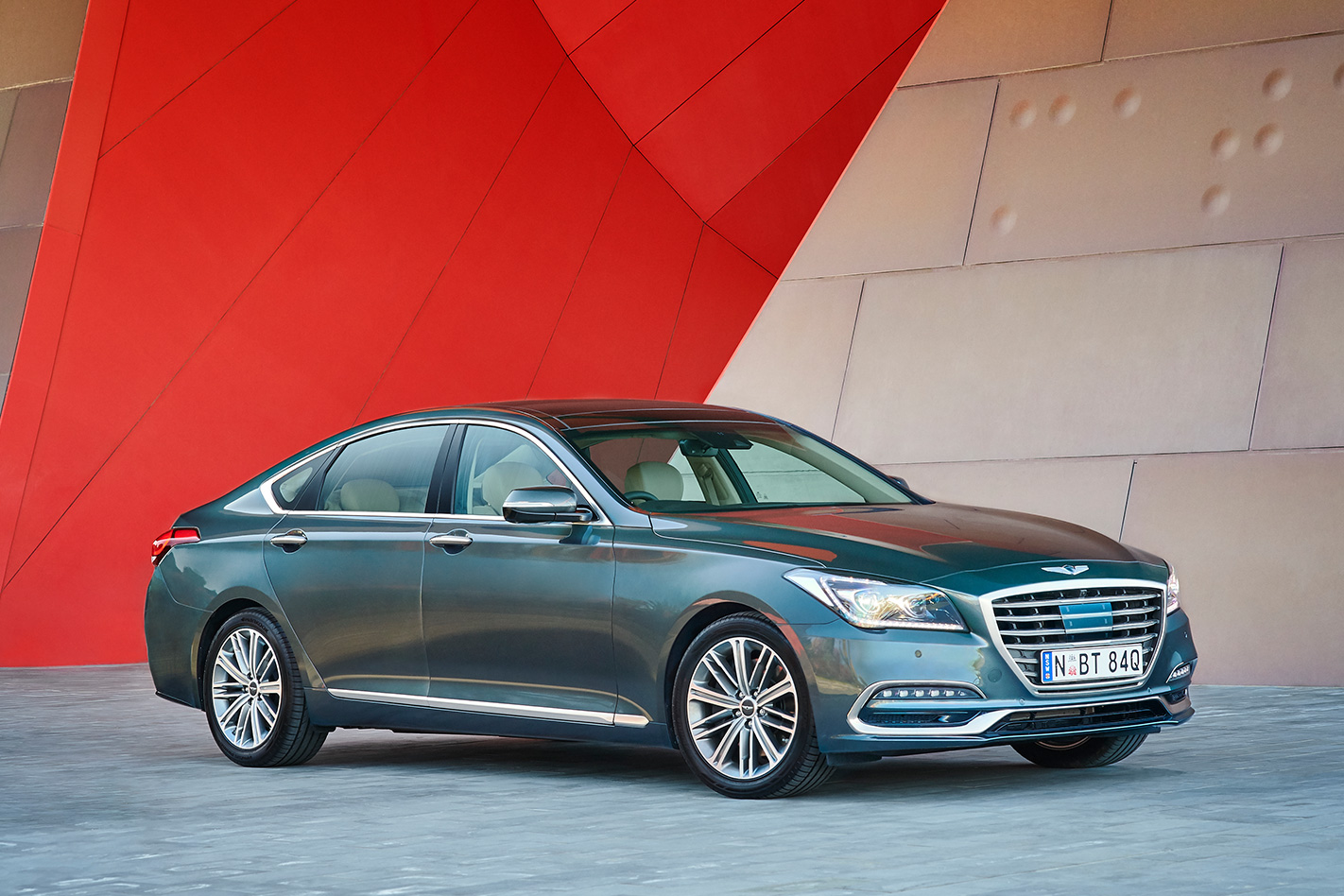
GENESIS G80 REVIEW
A question has been vexing me lately. While we attempt to be meritocratic in the way we judge cars here at Wheels, it nevertheless remains the case that some cars – entirely independent of their objective attractions – are endearing and some just aren’t so much. Take this Genesis G80 for example. If pushed, it would be pretty easy to come up with a fairly lengthy list of its shortcomings yet to drive the thing (gently) is to love it. At the other extreme, you might well have a car like Volkswagen’s Golf R: objectively brilliant, but the recipient of respect rather than adoration.
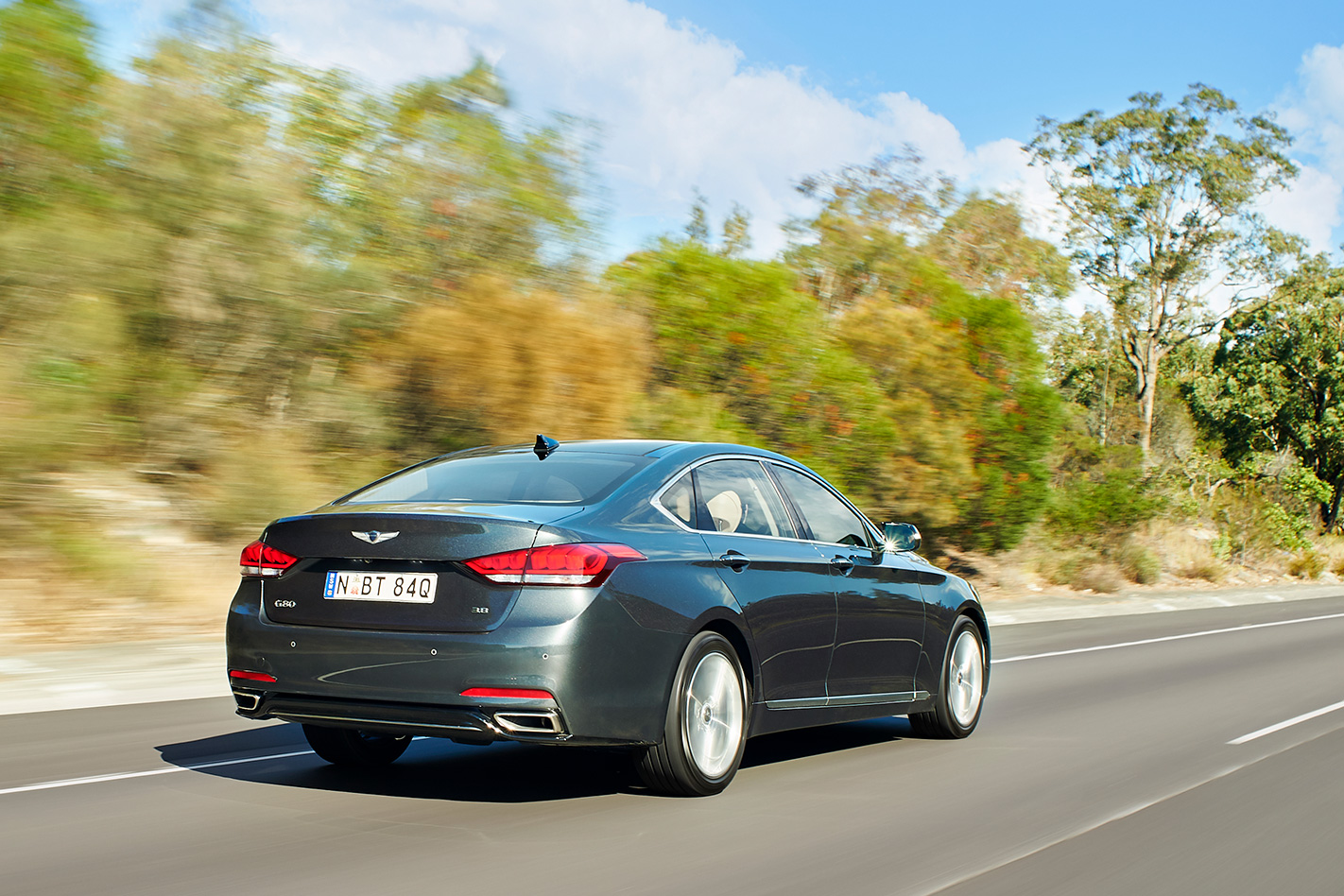
So what is it that’s so charming about the Genesis G80, a car which is a strange sort of automotive zombie? Its progenitor appeared in 2014 as the Hyundai Genesis, a flagship model that sold to private hire operators looking for a cheap and reliable alternative to the premium German marques, but which quietly disappeared at some point last year. Now it’s back, renamed the Genesis G80 and it has been the beneficiary of a facelift.
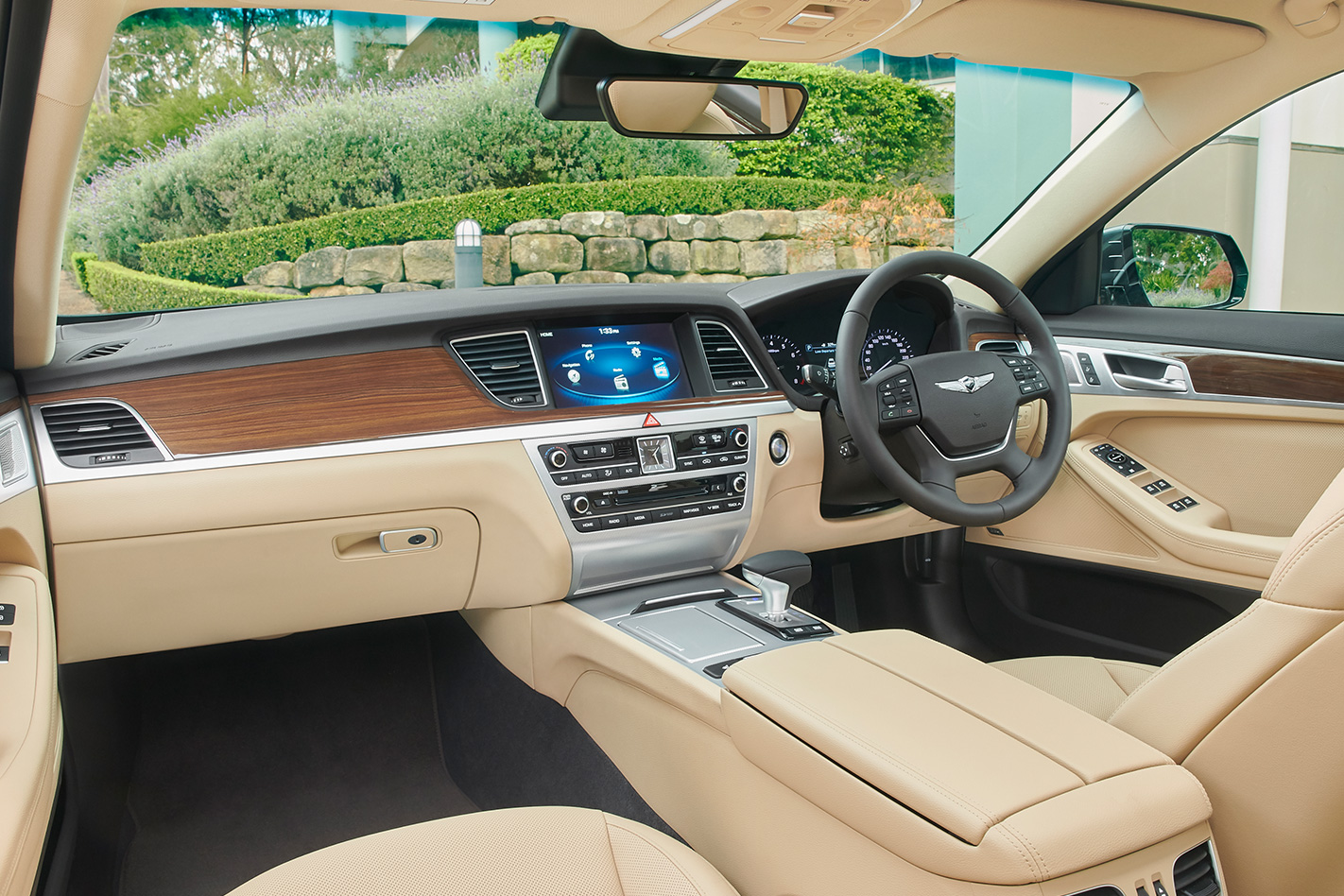
Some things haven’t changed a great deal. It’s still powered by a version of the Lambda 3.8-litre V6, an engine that can trace its roots to the 2006 Hyundai Grandeur. The shape is broadly familiar, the infotainment system still feels a couple of generations out of date and, like the old Hyundai Genesis, the grille still wears an ugly swatch of clear plastic for its front-mounted radar.
Slipping behind the wheel evokes a déjà vu moment too. The seats are big and comfortable, the dashboard logically laid out and that crucial first five metres as you pull away reveal a smooth and polished power takeup via the eight-speed transmission, slick, almost friction-free steering and truly excellent refinement. If there’s a better car for less than $100k for going very slowly, I’m struggling to think of it.
The 232kW lump isn’t equipped with any form of forced induction, so makes its peak power at a heady 6000rpm. Likewise, the torque peak of 397Nm comes at a fairly nosebleed 5000rpm so the G80 isn’t a car that feels particularly rapid when being driven at the long-stroke, low involvement cadence of the rest of its dynamics. Genesis quotes 6.5 seconds to 100km/h which feels a little optimistic and few will be inclined to put that claim to the test. The engine can run on 91RON regular unleaded petrol and buyers can expect to see 10.4L/100km, a little down on the old car’s 11.4L/100km claim.
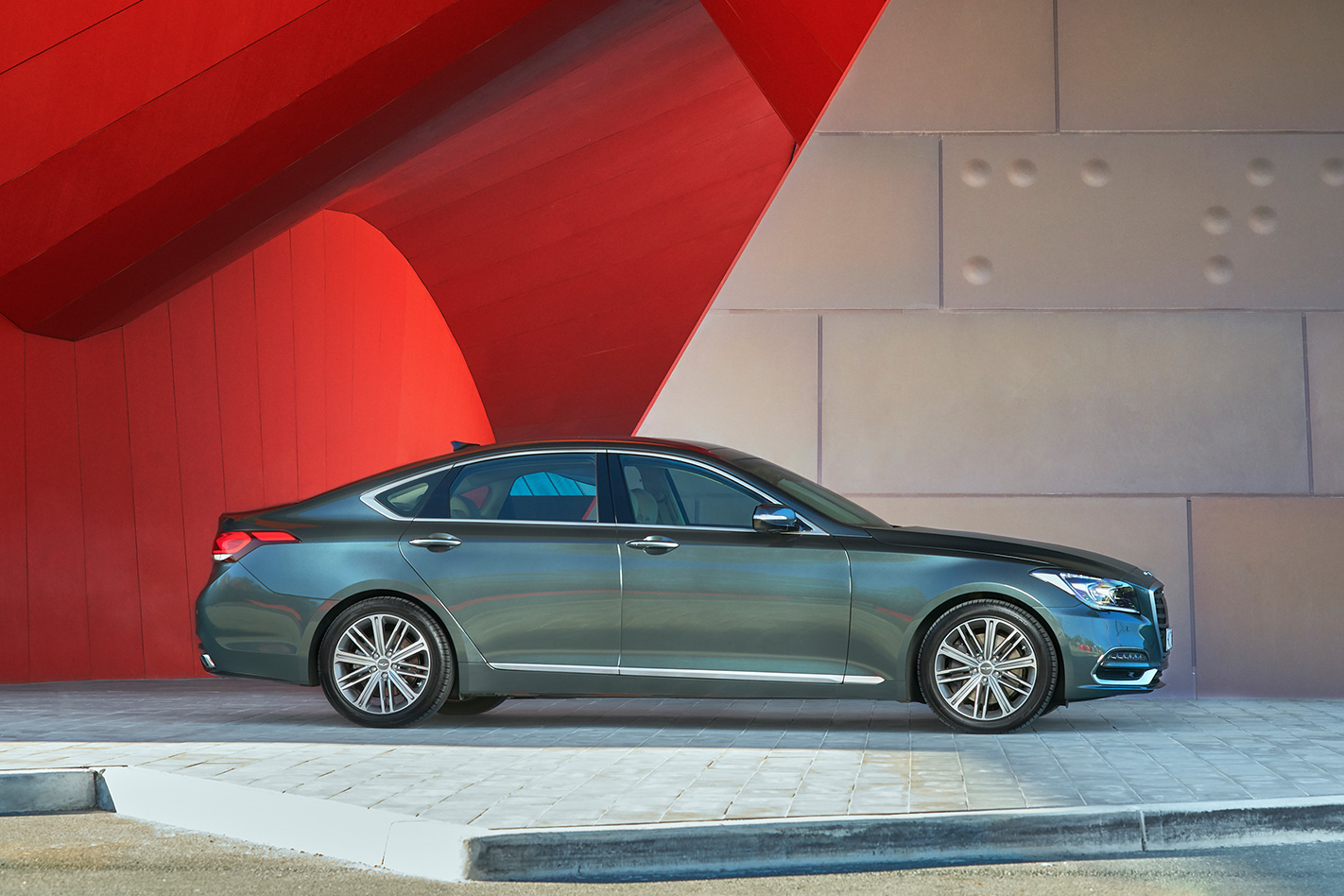
The range kicks off with an entry level car and then steps up through Sport Design, Ultimate and then the flagship Ultimate Sports – a blend of the other two trims. Anything but the entry-level car comes with 19-inch wheels that degrade the G80’s primary attraction, namely its relaxed and absorbent ride, so smart buyers will ask Genesis to put the 18-inch wheels and tyres of the entry-level car onto the upper spec models. Or, better still, just stick with the base model. It’s ludicrously well-equipped with gear like adaptive suspension, full LED adaptive light pack, leather and aluminium interior trims, a 17-speaker 900W Harman stereo, heated front seats, a powered rear window curtain, adaptive cruise, a 9.2-inch multimedia system that includes a 27GB hard disc drive, Genesis LED logo puddle lamps and so on. The infotainment system is old, however, and doesn’t feature any form of smartphone mirroring. The satellite navigation destination entry system is also clumsy and fussy.
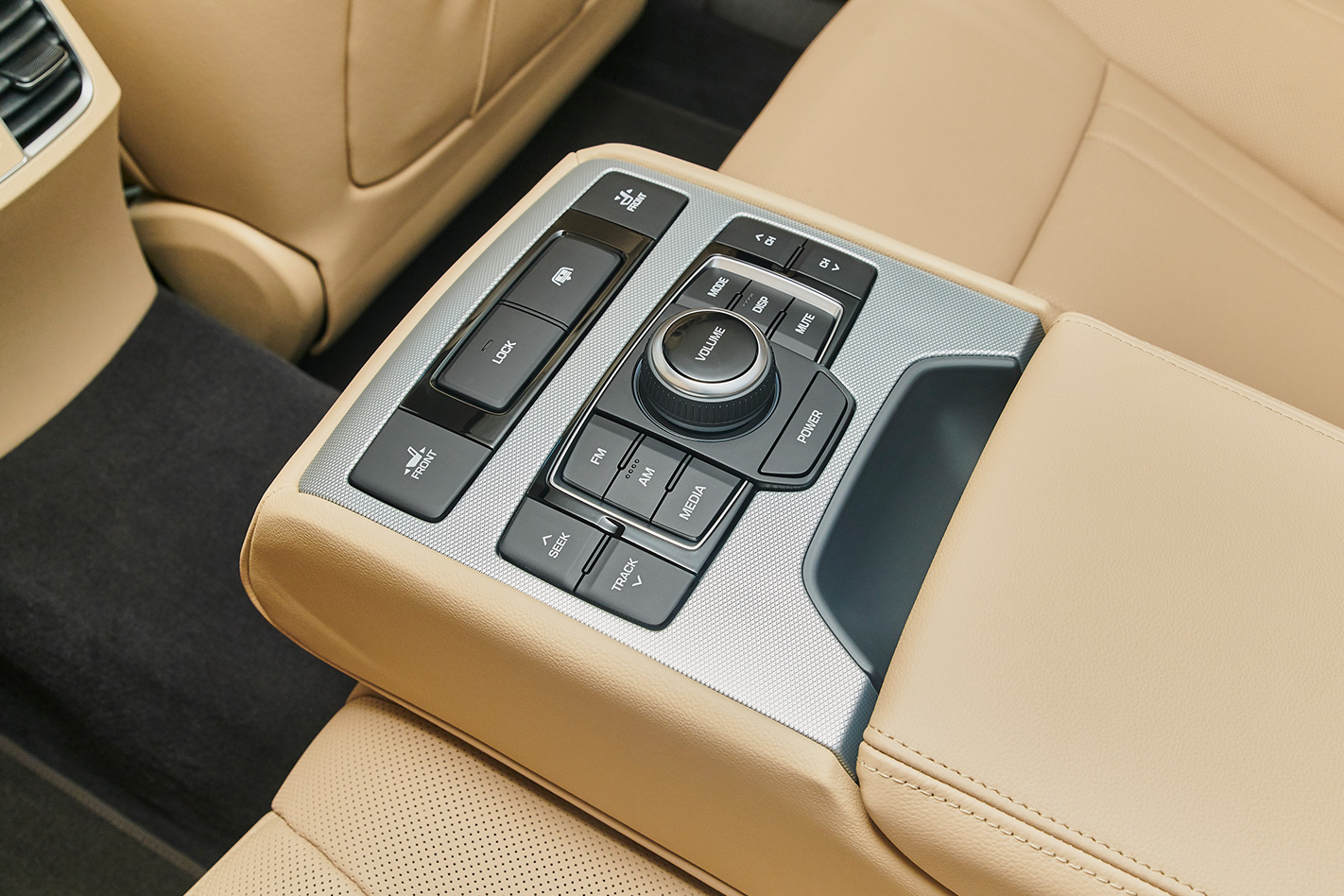
The cabin feels exceedingly well-built, free of squeaks and rattles and finished with some good quality materials. There’s a lovely pale Alcantara headliner in light grey that switches to a darker tone for the window rolltops. There’s a brilliantly-designed inclined wireless phone charging pad that keeps your phone right on the charging hotspot. The heated steering wheel is one of the few features that might genuinely tempt me out of the base car. That and the seat coolers. Rear legroom is excellent, and if you’re ever offered a lift in one of these, aim for the kerbside passenger seat as you’ll then be able to control the seat ahead of you from the back. The rear seats have an element of recline and also feature full media control in the centre stack. Specify the optional $3k twin-pane panoramic sunroof, however, and headroom becomes extremely pinched in the rear. It’s fine up front, but if you’re buying the car to carry passengers, give the moonroof a miss. The 493-litre boot is big enough to swallow a serious long-haul baggage allowance.
Of more importance is the after sales and care package that’s supplied with the car. This comes with a caveat, though. The G80’s set to be replaced at some point in 2020 and, at the moment, it’s only available in one Sydney-based factory-owned dealership. Part of that scheme also includes a list price that offers no scope for negotiation. You front up between $68,900 to $92,900 plus on-roads dependent upon trim level, which is an increase of $8900 to $10,900 model-for-model over the prior Genesis. Yes, the branding has changed, the suspension has enjoyed a few tweaks and there’s now an electronic gear shifter, but that’s quite an impost given that the G80’s effectively already on run-out. Where the old car gave private hire operators a generous discount of around 20 percent off list, the latest version doesn’t afford any benevolence.
With an online ordering process already in place, Genesis has set out to make ownership as simple as possible. G80 customers enjoy a five-year warranty, five years of free servicing, no haggle pricing, a valet arriving at your house to deliver you a courtesy car and pick up your vehicle for scheduled services and there’s also tempters like five-year mapping updates, five-year roadside assist and a home delivery test drive service. Having just finished top of JD Power’s Initial Quality survey in the US, it’s likely that most G80s will, in five years’ time, feel about as fresh as they do when they roll off the forecourt.
It’s said that Donald Trump is a poor man’s idea of a rich man, and there could be an accusation levelled at the Genesis G80 that it’s a naïf’s concept of a luxury sedan. But even if it’s a little gauche in some of its aesthetic execution, there’s genuine substance to the G80 and it excels at its admittedly rather narrow remit. Best of all, it’s likeable. While it’s worth doing all of the sums around the cost of ownership over five years, it’s unlikely that too many G80 customers are going to regret their purchases at the end of that tenure. We’ll call that a qualified thumbs up.
GENESIS G80 VS RIVALS
Mercedes-Benz E-Class, BMW 5-Series, Audi A6, Lexus IS
GENESIS G80 PRICE AND SPECS AUSTRALIA
- Model: Genesis G80
- Engine: 3.8-litre V6 petrol
- Max power: 232kW @ 6000rpm
- Max torque: 397Nm @ 500rpm
- Transmission: Eight-speed automatic
- 0-100km/h: 6.5sec
- Price: from $68,900
- On sale: Now
