
Hyundai’s luxury sub-brand Genesis launches in Australia this month and it has a tall order ahead to make ground on the European establishment. Marques such as BMW, Mercedes-Benz and Audi. And then there is its close Japanese rival Lexus.
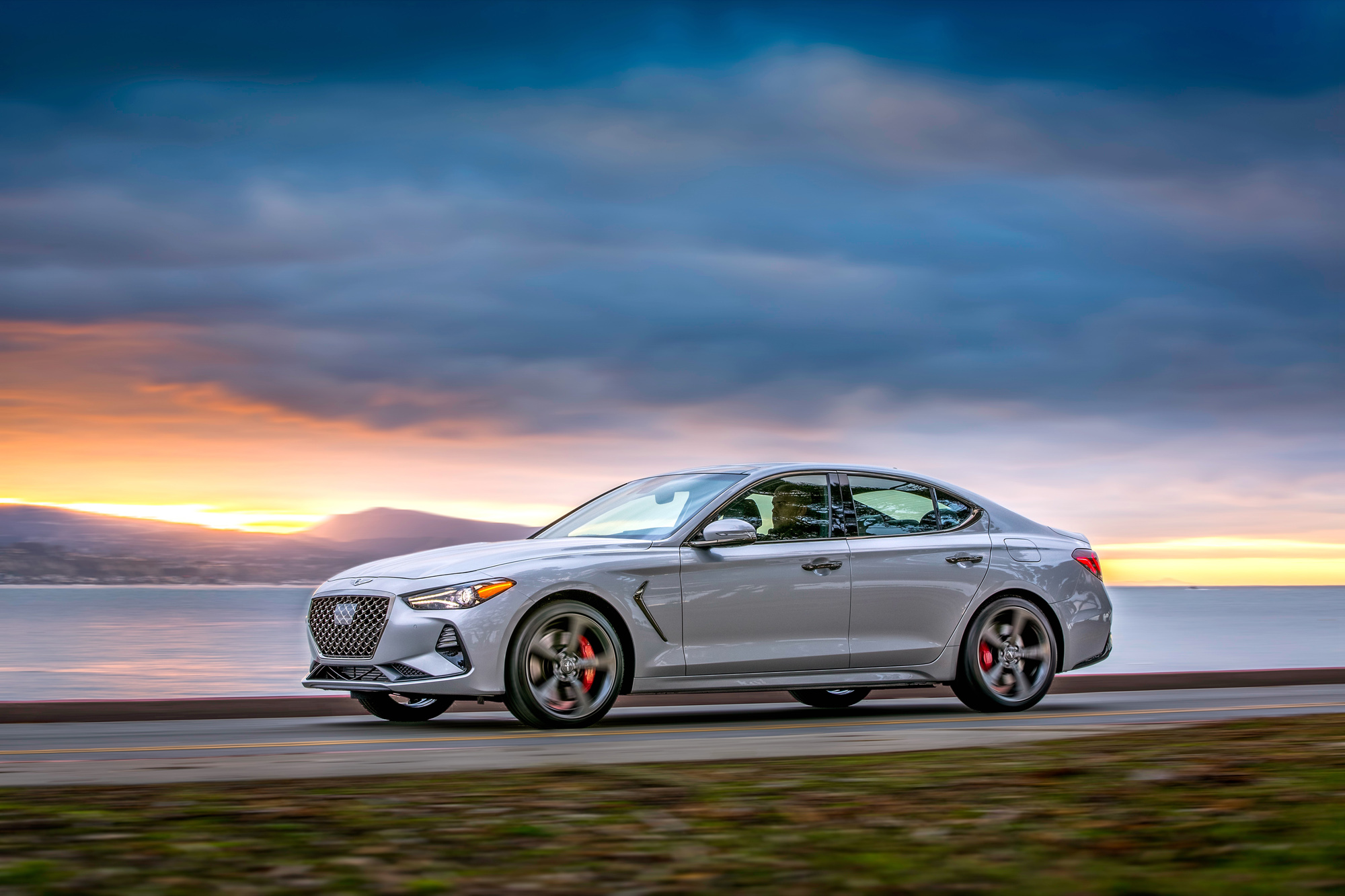
But if Genesis can achieve what its South Korean parent Hyundai has Down Under in recent years, it too will further transform buyers’ perception of Made in Korea. And according to brand chief of Genesis Motors, Manfred Fitzgerald, it is that very origin that will set it apart
The former Lamborghini design and brand boss says Genesis won’t work if it is merely a copy of what others are already doing. His aim is to establish a brand that goes beyond being just a car manufacturer.
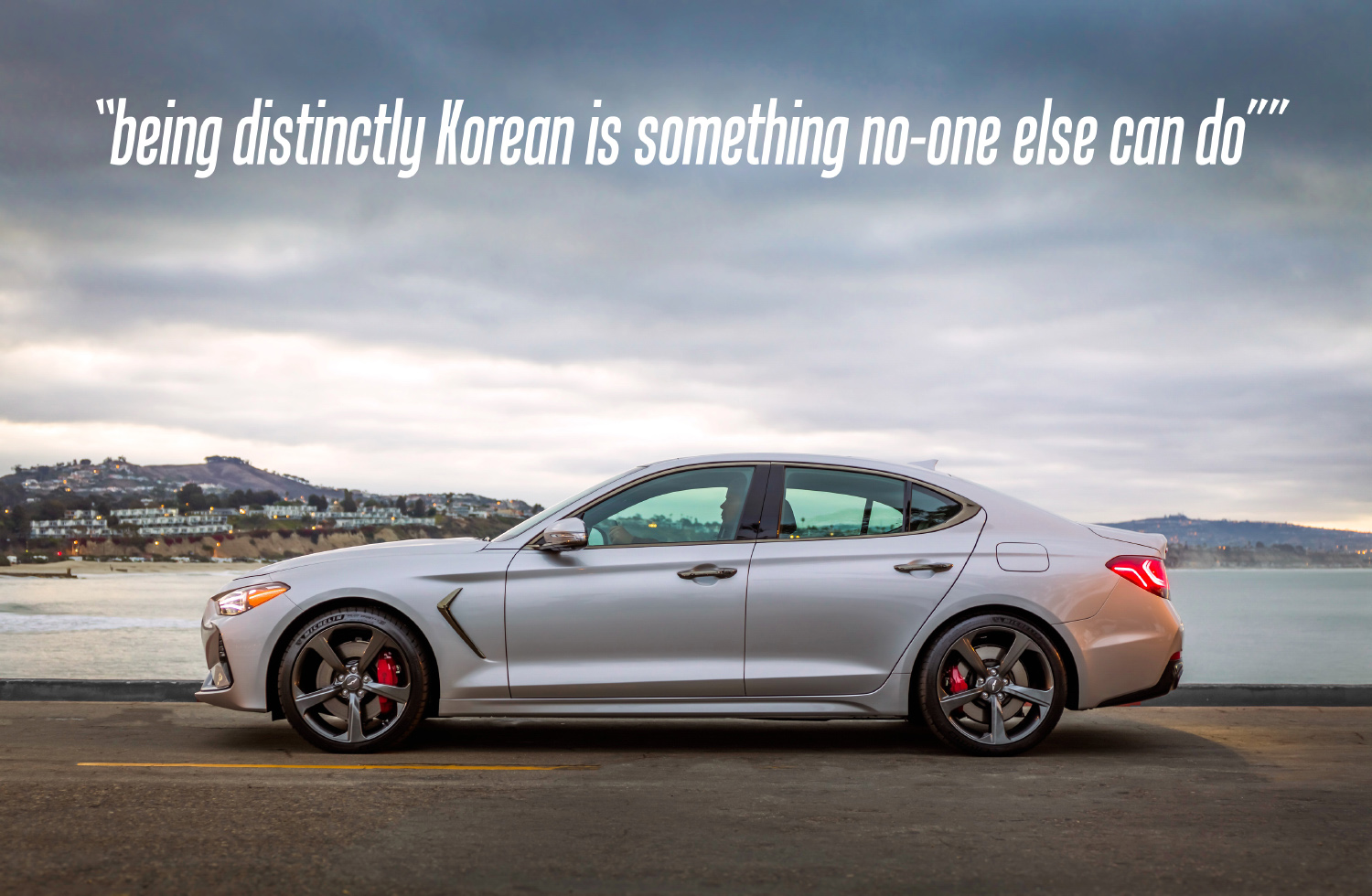
“We must explore all avenues,” he says. “That’s the most important thing to define our DNA.”
He mentions audacity, and a need to be bold and progressive. Fitzgerald might surprise some people when he declares proudly that “being distinctly Korean is something no-one else can do” in that segment. He wants Made in Korea to be a massive positive for the brand. His aim is to make Genesis a world luxury brand force that generates enormous pride in all Koreans.
He needs not remind us the Hyundai Motor Group is a global sales force, the group registering as one the fastest growing volume car makers over the past 15 years or so. It is the world’s fifth-largest by sales. Locally, Hyundai has made giant strides from humble beginnings to assert itself as a global sales force, number three behind Toyota and Mazda. Its associate brand Kia sixth with a bullet.
Their sales successes haven’t come without resonating strongly in consumer dependability and quality polls – excellent platforms on which to build a luxury brand, which is what Toyota did with Lexus.
But don’t expect Genesis to be as conservative and derivative as was Lexus in its formative years.
Hyundai (and with it Genesis) has never been afraid to park jingoism to raid the motor industry talent pool around the globe. Hyundai group design chief, Luc Donckerwolke worked with Fitzgerald at Lamborghini. They, along with Albert Biermann, the former boss of the BMW M performance division who has a vital engineering role overseeing the group’s performance development, head up a formidable executive clutch of foreigners at Hyundai/Genesis.
Believing those who dare can win, Genesis certainly has the chance to be bold, to rethink the car for younger generations who haven’t been connecting enthusiastically with luxury cars as we know them. The design team is young and international. Fresh materials will be explored.
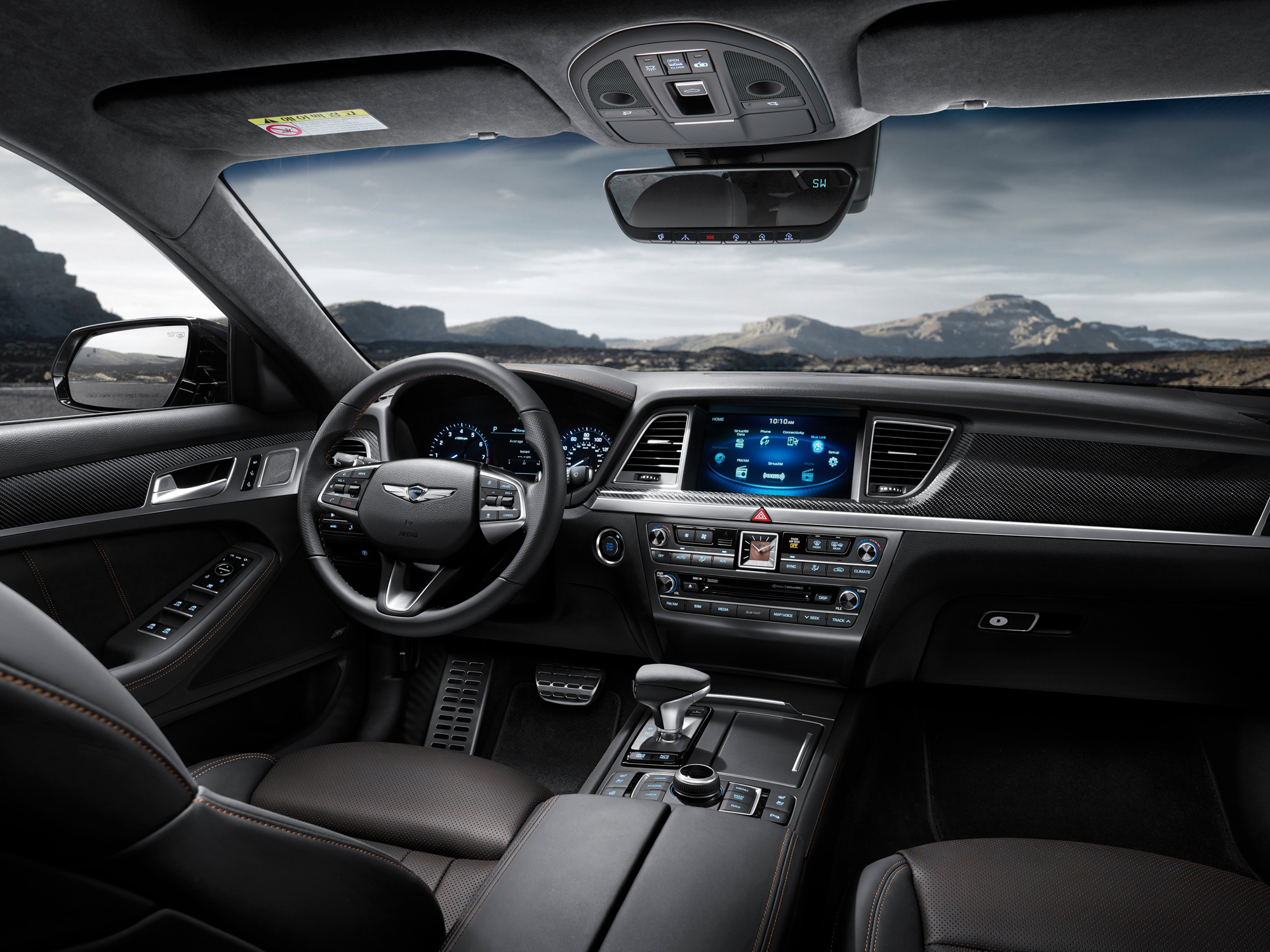
Fitzgerald has an unruffled though infectious passion for his brand. “Our models will be doing great things in design, have their own character and speak to different people who have different necessities and desires.
“It’s not only about hardware. What we’re trying to do is have a holistic approach to the brand. Yes, product is the most important but it doesn’t end there.”
He says he needs to constantly ask how Genesis can enhance the owner experience for the customer. Customers will be kings and queens.
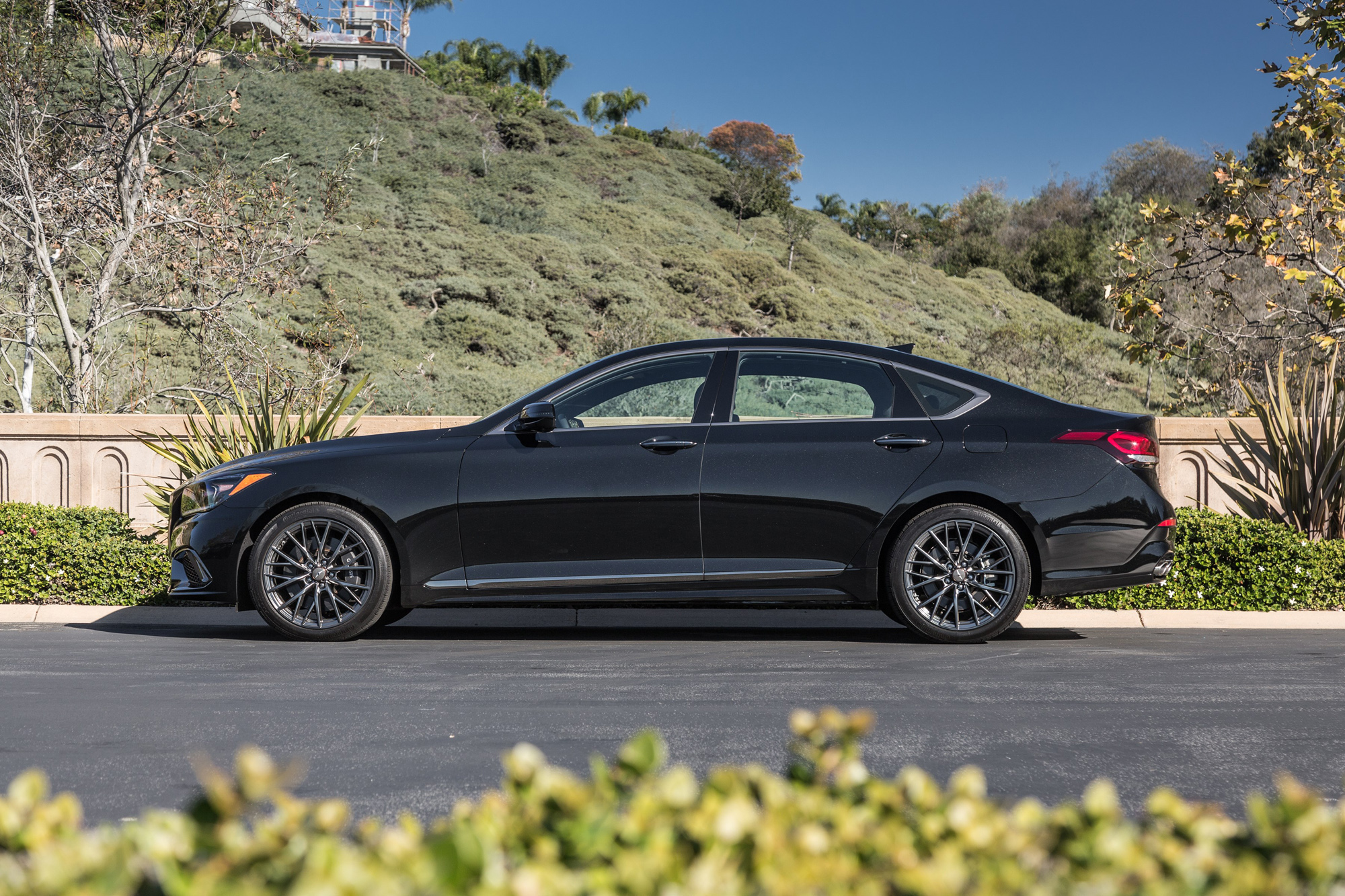
Fitzgerald visualises many more opportunities to engage with customers: “It’s not always related to the core product – the car,” he says.
“We want to go beyond that. There are so many different touchpoints. We are looking at the kaleidoscope for a different speckle. Other angles. Other opportunities.”
Somewhat mysteriously, he says it’s a segment where there’s an opportunity of making an interpretation of many, many services and aspects of business, to become part of customers’ lives. Service, he says, must be provided on eye level, with dignity.
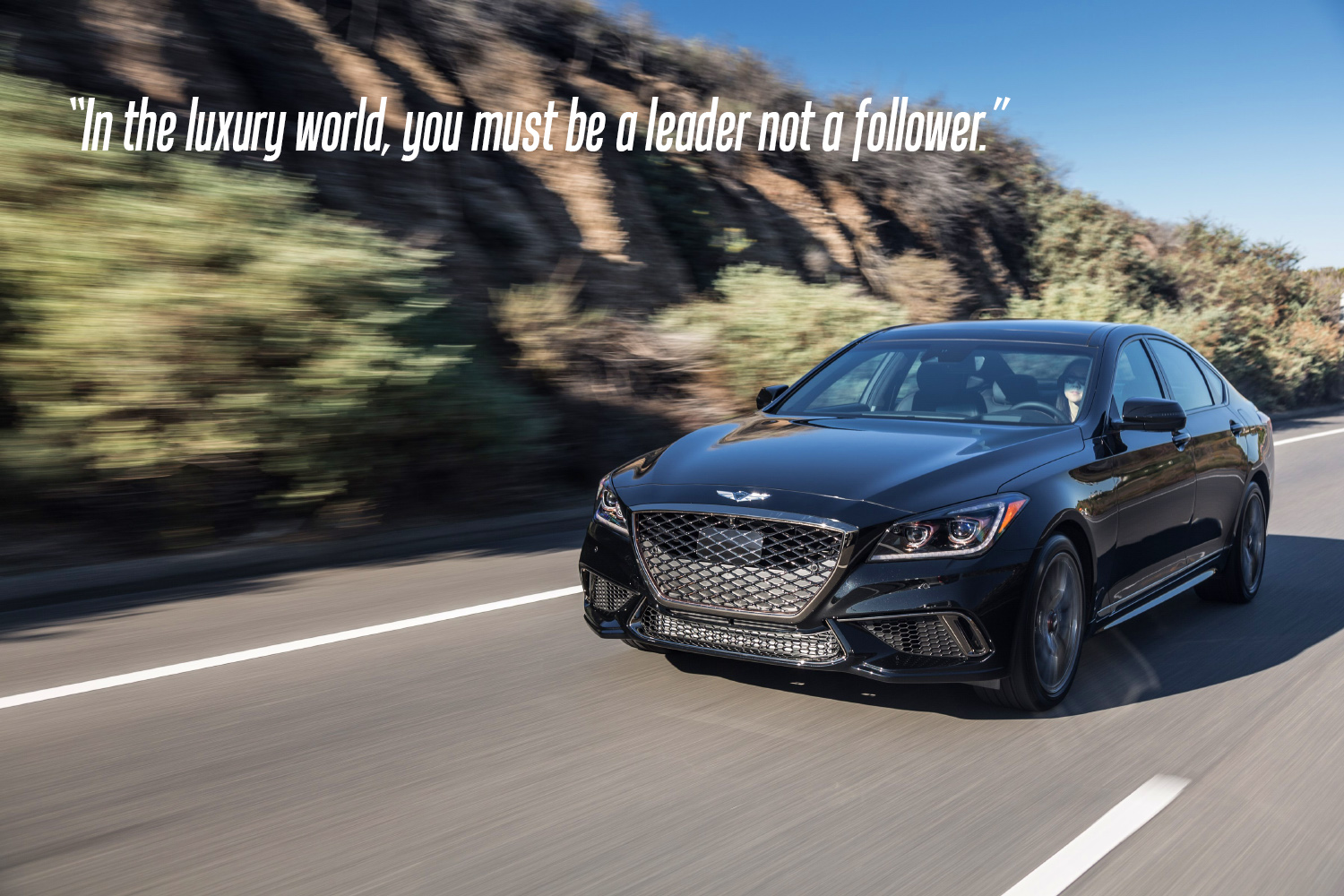
“There are so many good cars out there [in the luxury sector]. We have set out not to follow the path of others with one vehicle and having it different sizes, scaling it up or down,” adds Fitzgerald in a barely disguised shot at BMW.
“We’re living in fascinating times,” says Fitzgerald. “Nothing is so clear-cut anymore. We have to hedge our bets.
“In the luxury world, you must be a leader not a follower.”
If you like the idea of a BMW 8 Series but need proper back seats, there’s good news – the 2020 BMW M850i Gran Coupe is the solution. That, or one of its lesser 8 Series Gran Coupe siblings.
Developed alongside the BMW 8 Series coupe as well as the M8 GTE racer, the Gran Coupe shares plenty of the primary specifications with the former and draws on the technical development of the latter.
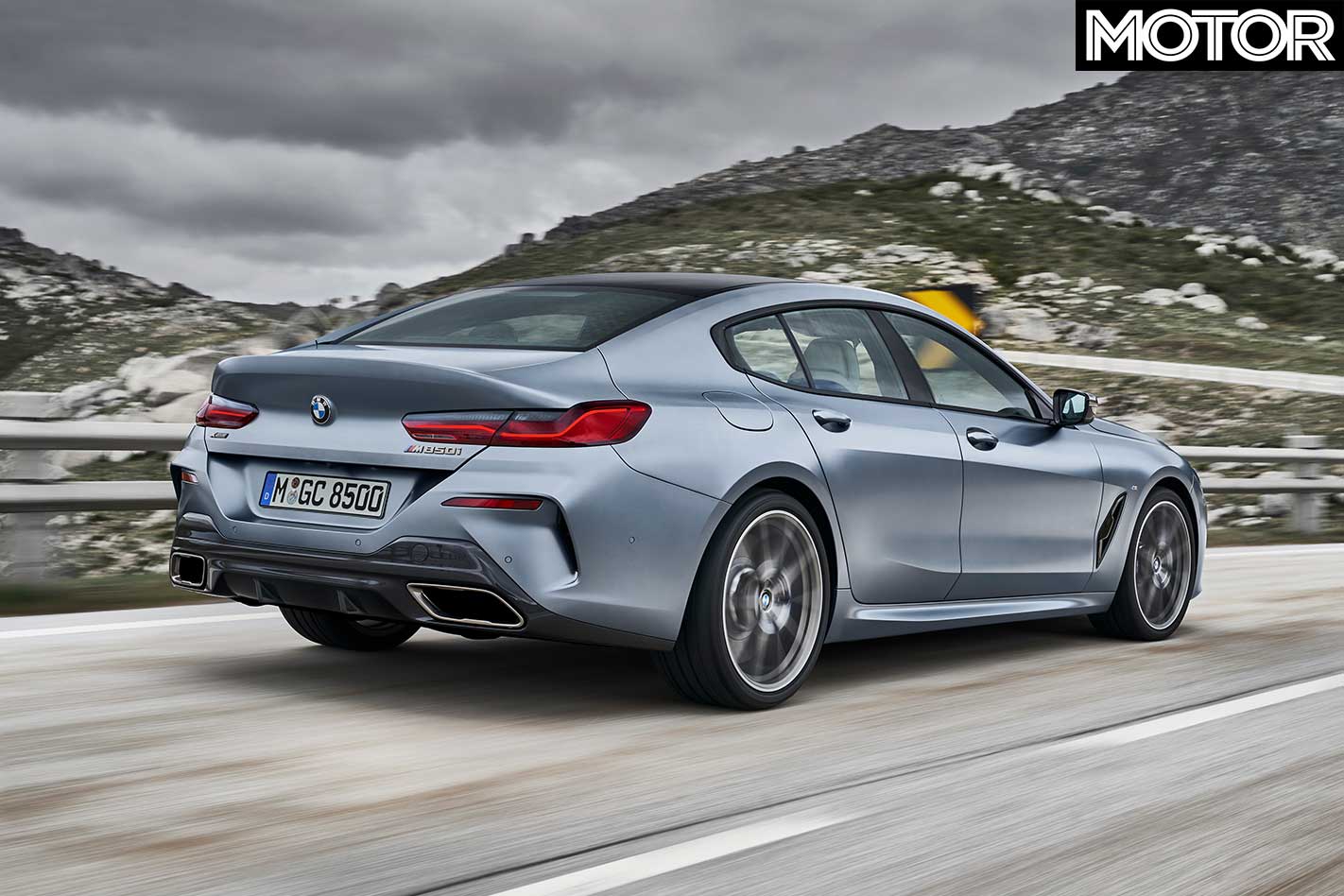
While the engines available in the coupe are shared with the Gran Coupe – the turbocharged 3.0-litre petrol six in rear drive or xDrive AWD, a turbo diesel 3.0-litre six, and the twin-turbo 4.4-litre V8 in the M850i – the dimensions, weights and features provide the main points of difference between two and four-door 8 Series models.
The V8-powered M580i xDrive Gran Coupe, for example, still makes 390kW and 750Nm from 5500rpm and 1800rpm respectively, but weighs an extra 105kg, leaving it just five short of two tonnes.
That extra weigh comes in the form of more convenience, with 20-litres more luggage space, a wheelbase longer by 201mm and an overall length 231mm longer… and also two more doors.
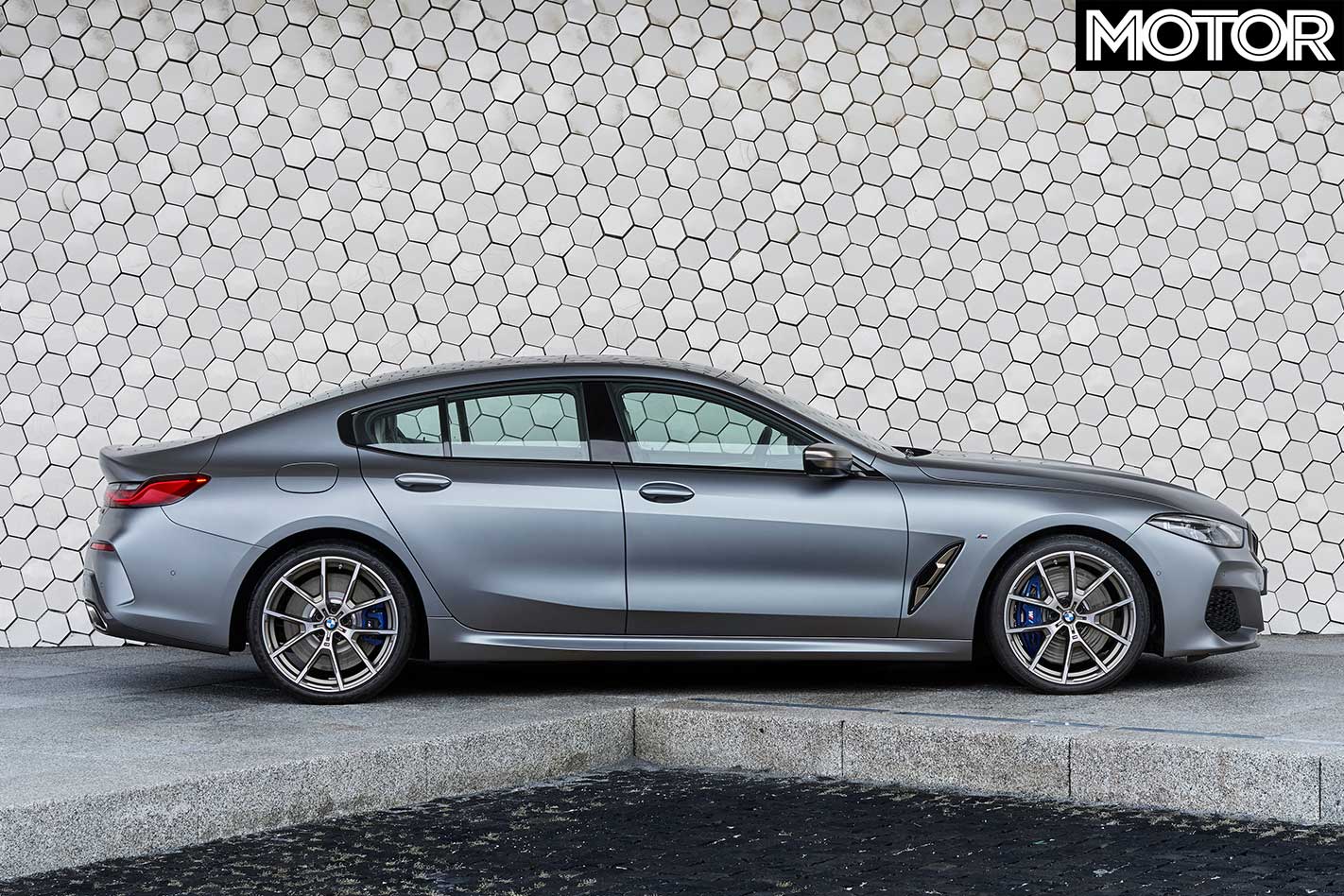
If you need that extra rear seat space from your 8 Series, you’ll also be giving up two tenths on the sprint to 100km/h, which takes 3.9 seconds in the M850i Gran Coupe.
BMW says the Gran Coupe will launch internationally from September this year, though BMW Australia is yet to make an announcement specific to the local market.
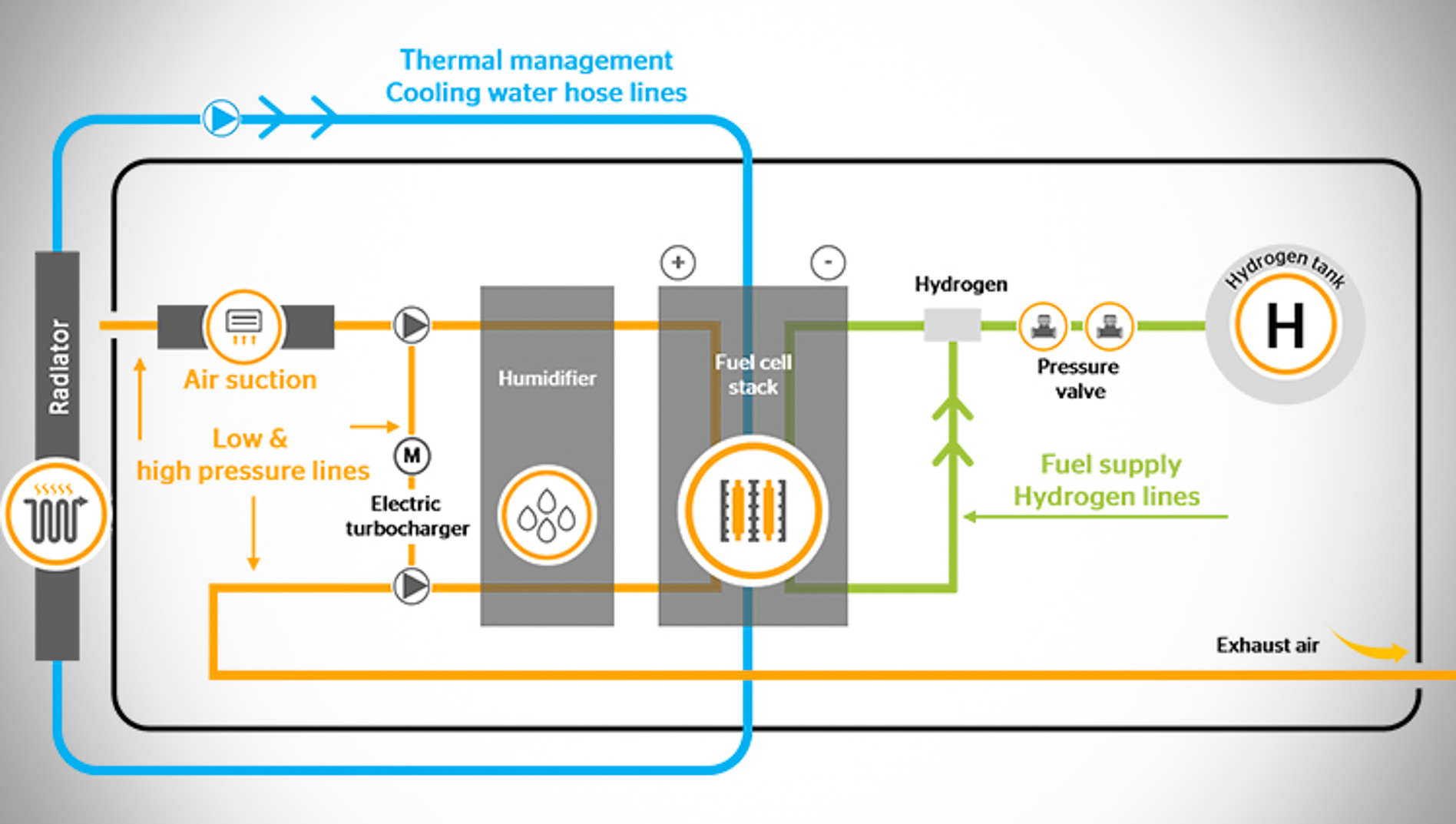
Global automotive giant Continental is pushing forward on fuel cell technology for passenger cars, despite the surge in interest for battery-powered electric vehicles.
Speaking with WhichCar at its giant proving ground in Uvalde, Texas, Continental’s senior vice president and head of research and development, Boris Mergell, said that the company is currently working on fuel cell technology, calling it an “easy solution” in relation to achieving lower carbon dioxide emission targets.
He explained that as a tyre manufacturer, the company works to a usage triangle that encapsulates mileage/dry handling, rolling resistance and wet driving performance.
“That’s the target conflict, and if you focus very much on rolling resistance, then at some point you compromise with mileage,” he said. “And you have to set your internal target because otherwise you are pulled into the CO2 debate.”
He then added that using technology like longer range fuel cells instead of batteries removes the CO2 aspect, allowing the company to focus on improving longevity and wet weather performance.
“With battery technology, you have the [shorter] range again as a topic for rolling resistance,” he explained. “The lower the rolling resistance, the longer you can drive. For the fuel cell, this would be the same, but finally, you have a longer range, and then you are a bit more free again in playing with the target mileage.”

Just a quarter of Continental’s business is devoted to tyres, with the vast majority dedicated to vehicle electronics and accompanying technologies. Mergell confirmed that the company is working on fuel cell technology, calling it a “mature technology” in a “growing segment”.
“You can see that some of our customers like Toyota already have a model in the market [the Mirai], Honda is testing, and Hyundai have models. Mercedes is looking into it. The next step is about the infrastructure side, with gas stations, where there are enough places to refuel.
Continental’s vice president of research and development for replacement worldwide Burkhard Wies (below) is also keen on the technology. “It’s more interesting than batteries. But that’s all a personal opinion,” he said.

He also talked about a new brake-by-wire system that will roll out on new BMWs from 2020.
Continental worked with Alfa Romeo in 2015 to produce a brake-by-wire system for the Giulia that used a hugely oversized brake booster to reduce response time between the brake pedal and the caliper by two-thirds over a conventional hydraulic set-up, but the new system is more refined.
“It combines the vacuum booster into one system,” said Wies. “You can find it soon in all BMWs. It’s really a cool, clever system the [Continental] Frankfurt guys have developed.
“This system offers you the possibility to do a second fallback position, because we have no engine anymore, so no vacuum. It’s a good feature to use in every autonomous car, so you have two brake systems with one as a redundancy.”
A typical car’s brake circuit is divided into two, so if one ‘side’ fails, the other can act in its place, which is known as a redundant system.
Burkhard said that it was a big challenge for the team.
“This not done so easily,” he said. “Thirty years there was the first prototype, it never came up to market. Now it’s doable.”
Continental’s R&D facilities span 45 locations in 56 countries around the world, with more than 2000 staff working across more than 500 projects.
Australian customers were given the chance to start the process of buying the highly-anticipated 2019 Toyota GT Supra today.
Reservations for the 2019 Toyota GR Supra opened at midday, but just 17 minutes later Toyota Australia posted to its official twitter account that the entire first batch (of three) was now spoken for.
“The first allocation of orders was fulfilled very quickly,” a Toyota Australia spokesperson told Wheels.
Toyota says “approximately 100” vehicles were made available in the first reservation batch, with the next chance for customers to secure a Supra set for July 17 – 27 days from now.
It is expected another 100 will be up for grabs in the second round of reservations – though Toyota wouldn’t confirm specific figures – with the third and final batch of orders accounting for the remaining cars of Australia’s “about 300” vehicle allocation.
“The ordering system will re-open in 27 days but we can’t confirm how many allocations will be available. We’d like to think it will be around 100 but we’re trying to see if we can allow for more,” a spokesperson said.
Customers that did successfully get an allocated slot were required to place a $1000 fully-refundable reservation fee.
Toyota will now begin its randomised ballot procedure for the first 100 reservations, with customers placed in a queue and given the opportunity to complete the registration process that includes picking specification and colour of their Supra.
Following this, a $4000 deposit is required to secure the order for one of the under 300 Supras expected to land in Australia in the first 12 months.
However, just because a customer secured a reservation spot doesn’t mean they are guaranteed to take delivery of the exact specifications they desire, as the trim and colour combination could be snapped up by a buyer earlier in the queue.
“There might be an opportunity in the ballot system for others as we try to match first and second preference picks with the spec available,” the spokesperson explained.
“We can’t guarantee everyone will get what they want. They might need to wait for the chosen specification.”
The most affordable 2019 Supra variant is the GT, which costs $84,900; while the GTS will set you back $94,900. There are seven colour options to choose from, with GTS buyers able to option an alcantara and leather upholstery and Nurburg Matte Grey paint for $2500 each.
“Once customers do not need to drive anymore…then the question is what kind of things can we offer to customers inside this car,” proclaimed Boris Meiners, senior director of Audi China’s Digital Business and Customer Experience to Reuters at the CES Asia trade show just days ago.
If you’re not paying attention, it could seem like a pretty straight-down-the-line, corporate sales-y kind of statement – and I’m sure to many hoards of futurists distracted by the glossy veneer of all things robotic and shiny at this week’s tech tradeshow CES Asia, it might have been.
But that is until you really think about what this means, “when we don’t drive anymore”. Take away the steering wheel, feeling of control and the joy of driving, and the only act that remains is the experience of being driven. Annnd sorry to be the messenger of our impending dystopia (again), but that is the future we have to look forward to. Unless, of course, you’re talking about the rise of electric scooters…. But I digress.
It might be hard to believe, considering we now hold technologies like anti-fatigue sensors, lane departure warnings and driver reviver reminders so dear, not to mention the fact we spend thousands on government campaigns to hark the same message: Pay attention! Eyes on the road!
But in a future where autonomous mobility could be the norm, carmakers might have another new problem on their hands – how to stop occupants from getting bored! [It’s unclear whether or not books or music will be part of this new future…]
At CES Asia this week, it was revealed that manufacturers like Nissan, Honda, Hyundai and Audi are seriously looking to virtual reality (VR) and augmented reality (AR) as a form of in-car infotainment – particularly once/if Level 4 autonomy becomes a reality.
Audi first demonstrated its interest in VR and AR when it announced its newest subsidiary, Holoride, an in-car VR entertainment solution (and carsickness cure, apparently) at CES in Las Vegas earlier this year. At CES Asia, however, the German brand took that a step further by demonstrating how it could turn the car into a fully immersive experience, using the car’s hydraulic suspension to add motion to a film or game.
There was also a demonstration that showed how a car that was accelerating or going around corners would use physical movement in conjunction with a VR experience – like diving or swimming with whales.
Nissan, however, said it wanted to create an emotional connection between the ‘driver’ and the car, offering goggles that featured an interactive animation that could communicate with all occupants of the vehicle.
Since China is the world’s largest market for self-driving cars, CES also saw many an autonomous car debuted at the trade show – watch the video below to check out some of the concepts.
What do you think of these future concepts? Are you for kicking back and letting the soft glow of artificial light wash over you while you commute or would you rather rise up against the machines? Tell us in the comments below!
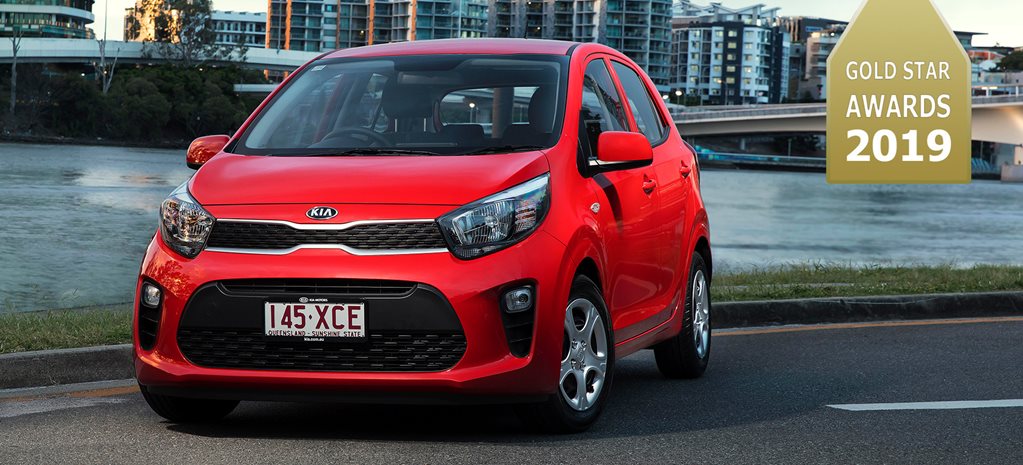
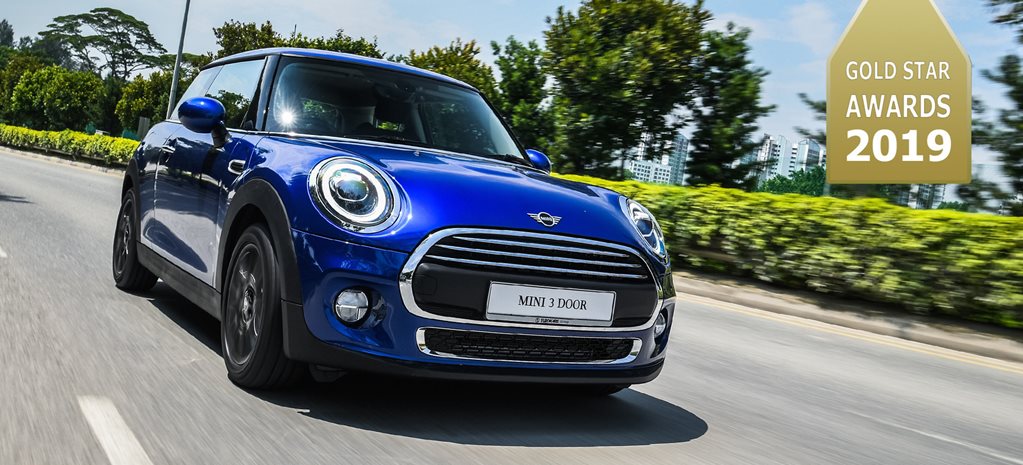
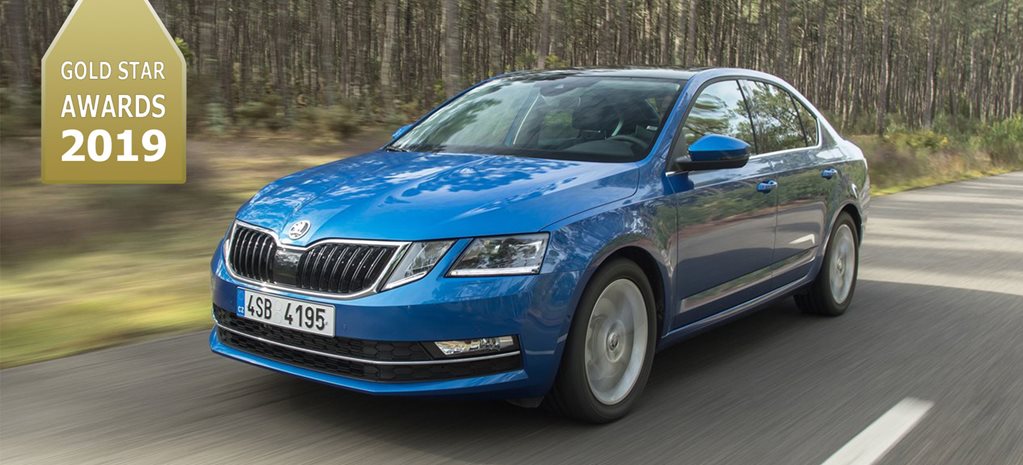
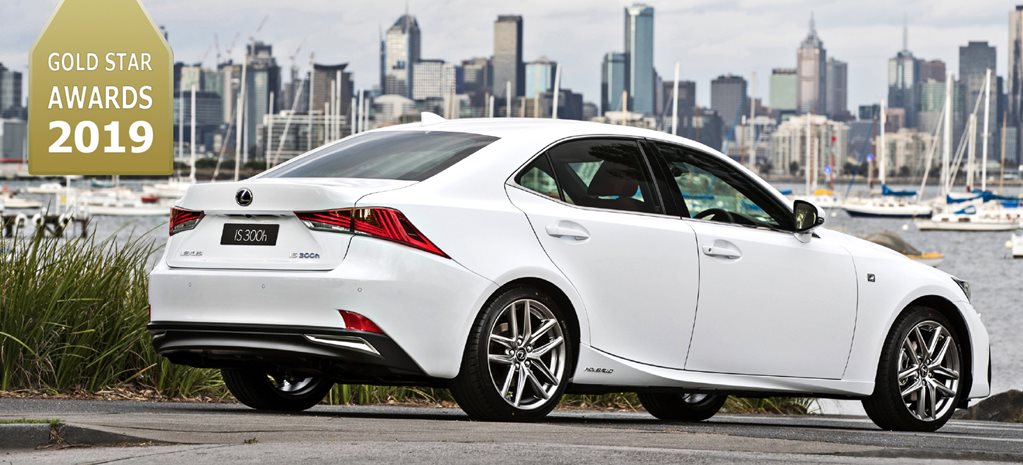
2019 Gold Star Award winners
If you want the absolute cheapest car to own, what should you buy? Wheels‘ Gold Star Awards answers that question by calculating the costs of ownership for every car on the Australian market across ten different categories – small SUV, medium SUV, large SUV (7 seater), premium SUV, dual-cab ute, mainstream hatch, premium hatch, mainstream sedan, premium sedan and performance car.
The result is three finalists and one winner in every segment, bringing new car buyers advice on the cheapest and best value cars to own. Given the numbers don’t account for driveability and evaluation of the vehicle itself, we’ve also included what Wheels would pick if it were our money.
Click through to see all the finalist and winners below.
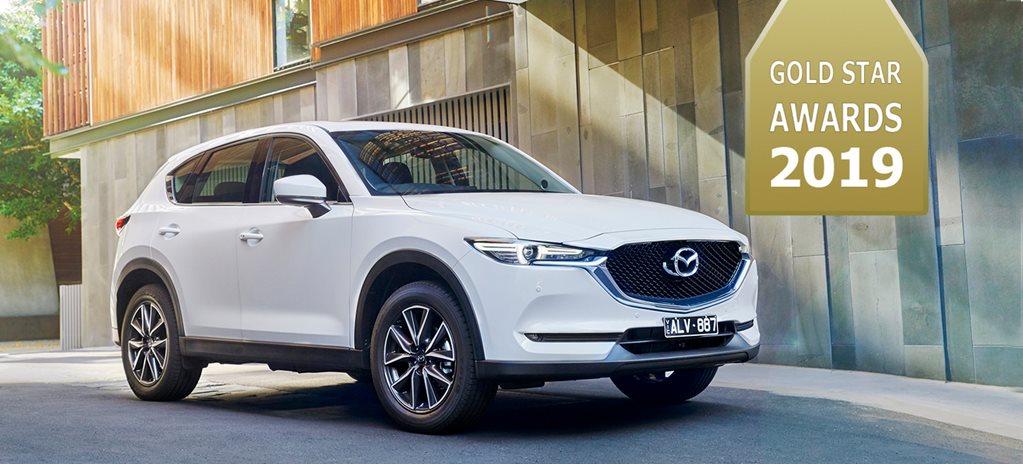
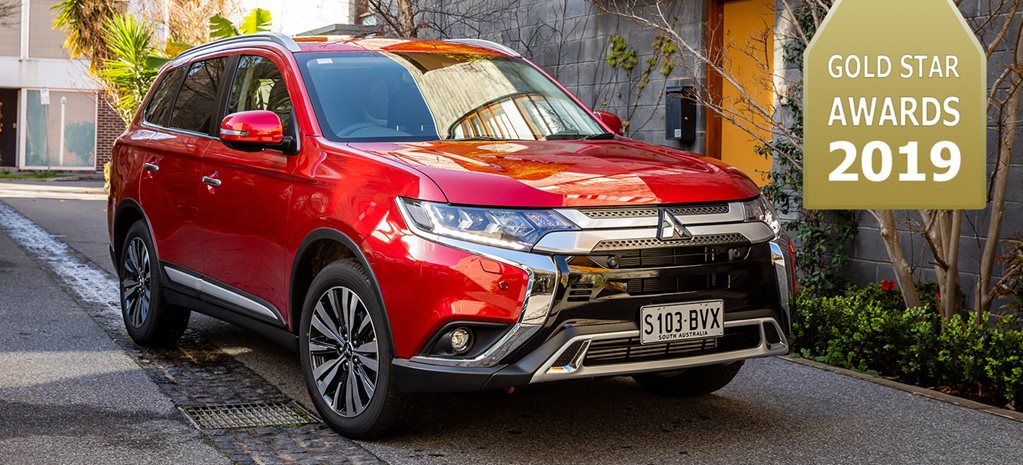
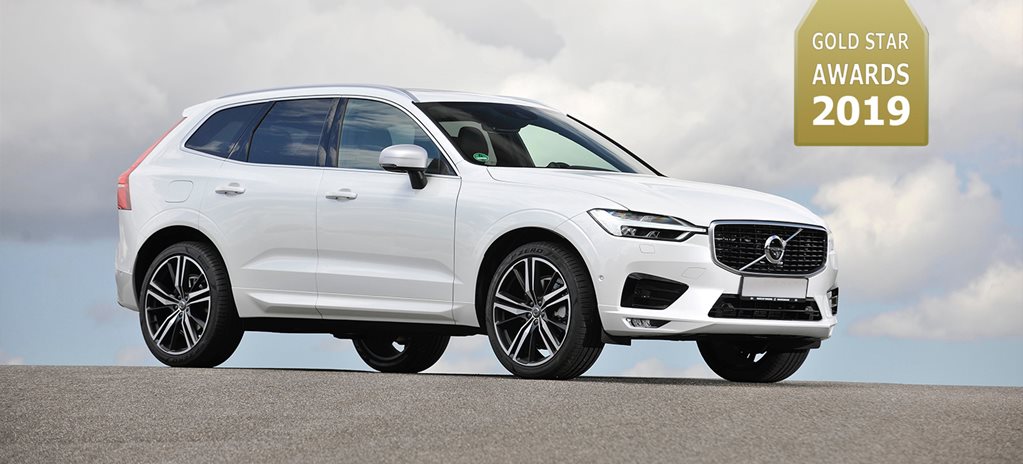
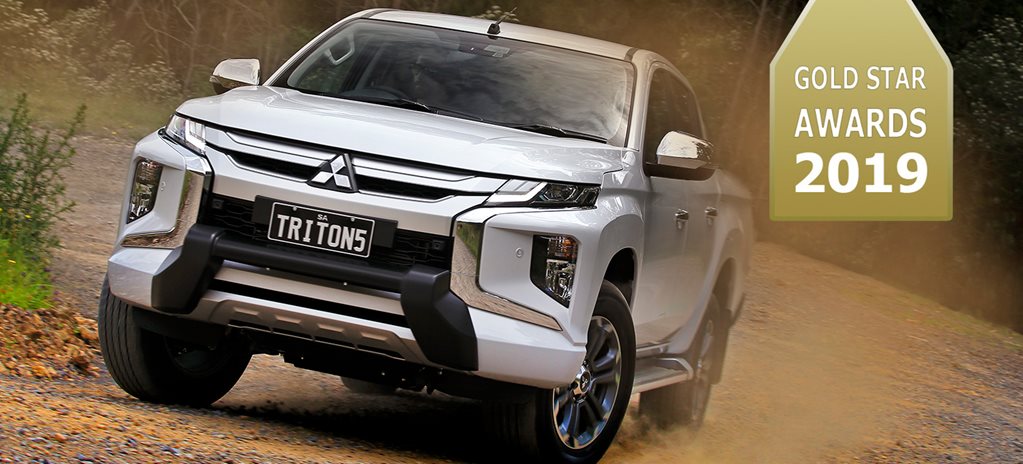
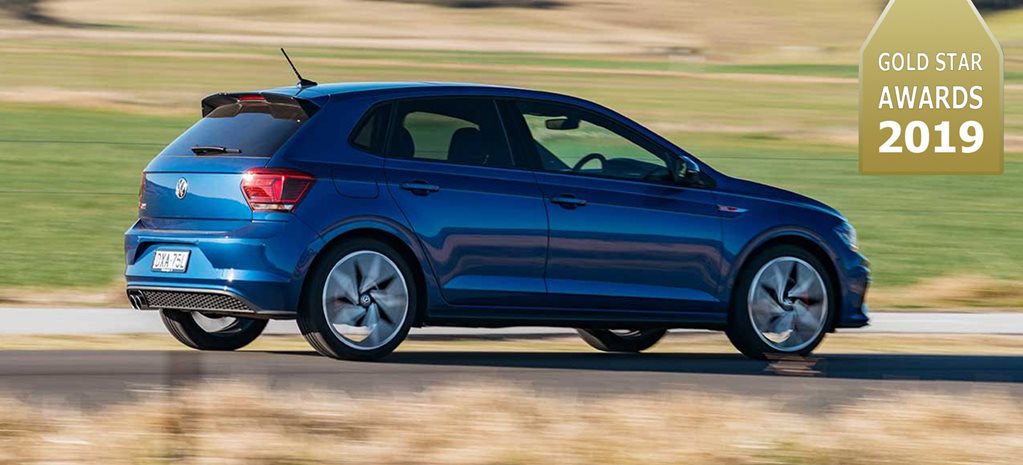
What is the Gold Star Awards?
Often, the only real cost people think about when buying a new car is the big one – the purchase price. But once you fork out the dough, there are countless other hidden costs that start racking up the moment you leave the car yard.
We’re talking things like servicing costs which can vary greatly, comprehensive insurance that is different for every model, and fuel, which depending on if the car is diesel or petrol and how much it consumes, could end up costing over 50 percent more to run at the bowser.
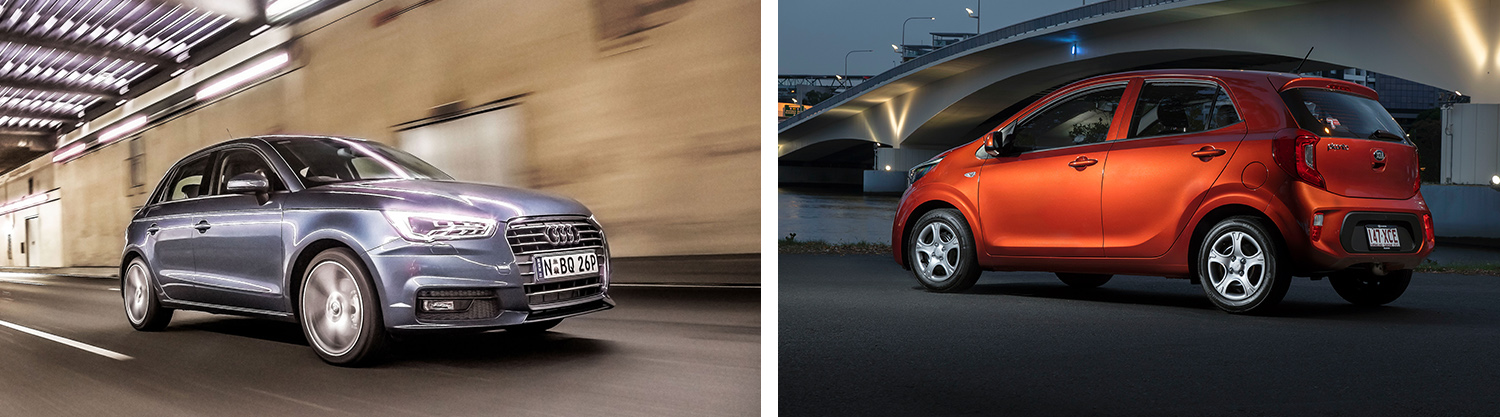
And finally, there’s the biggest cost of ownership for most new cars – depreciation. Or, the amount of value a car loses each year as a percentage of its original purchase price.
Combining all of these costs over three years, Wheels has calculated the best value car to own in eight different segments. It’s named the Gold Star Awards.
Wheels has announced the top three contenders and winning car in the following segments, representing the best value cars you can buy this year:
- Small SUV
- Performance
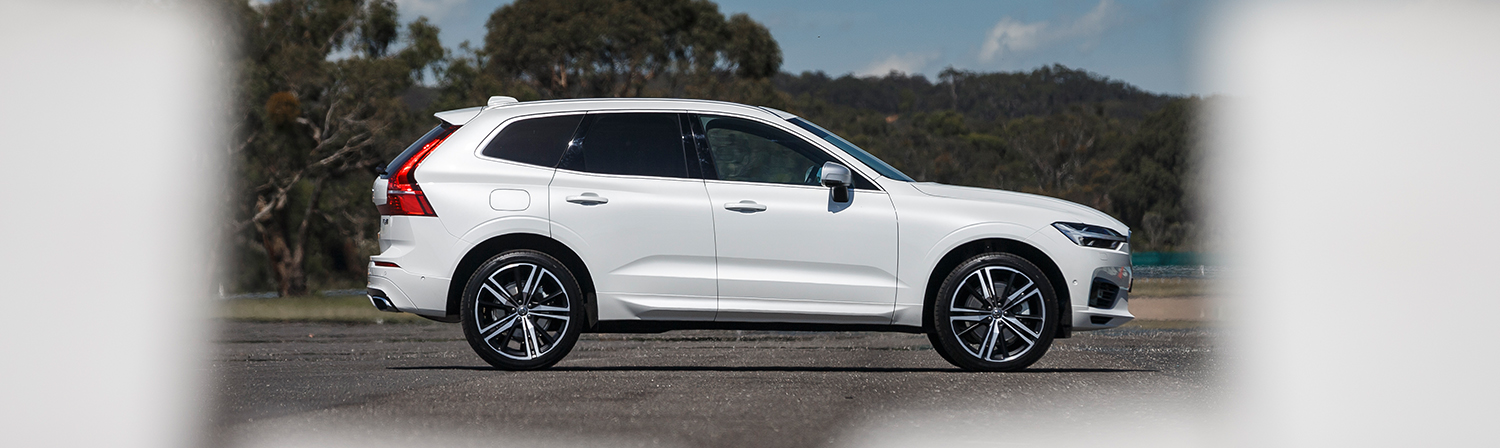
Crunch go the numbers

Here are the categories Wheels uses to calculate the best value car to buy in Australia.
Depreciation: The biggest cost of ownership for most new cars. Of the 2000-plus cars number-crunched, Glass’s three-year retained value figures ran as low as 33 percent for the worst depreciators, to as high as 69 percent for something like Toyota’s LandCruiser GXL.
Insurance: We used comprehensive insurance quotes obtained online from Budget Direct for a 35-year-old male living in Chatswood, NSW, Rating One for life, no finance, with the vehicle declared for private use.
Fuel: Annual fuel cost has been calculated on ADR combined-cycle consumption figures – not real-world, but a good base for comparison. Annual distance travelled is taken as the ABS Australian average of 14,000km, and fuel prices on the day were used.
Purchase price: Most new-car buyers set out with a budget in mind, so the survey is divided into price brackets. The real cost of owning the car is depreciation, which is where purchase cost comes into our value analysis.
Real cost: It’s relatively easy to put a representative number on the three-year cost of depreciation, fuel and insurance, so the total of these running costs equates to 80 percent of a car’s score.
Servicing costs: Widespread fixed- or capped-price servicing schemes would make it possible to compare car servicing costs, but for the fact they’re not universal. We can score service intervals; a longer interval may result in less expense and increases convenience, so it takes the maximum 10 points.
Warranty: Yes, a seven-year warranty gives greater peace of mind compared with a shorter one. However, it’s impossible to put a hard cost on what an extra-long warranty is worth; it only translates into cash if something fails and is fixed without cost. Accounts for 10 points out of 100.
The Wheels pick: This is to assist all of you who don’t always follow your accountant’s advice. Still with an eye firmly fixed on the bottom line, this is the model we reckon nails a sweet spot for driving enjoyment, comfort, and value … if you can stretch to it.
A fast car can earn a brand respect, but it can also earn it a lot of money. Take these examples.
Mercedes-Benz has its AMG-Line. Volkswagen its R-Line. And Ford its ST-Line. They’re strategies that transpose the style of its faster cars on slower ones to boost their appeal. In the same vein, and perhaps after fewer hero cars, Hyundai has forged the i30 N-Line from its full-blooded N.
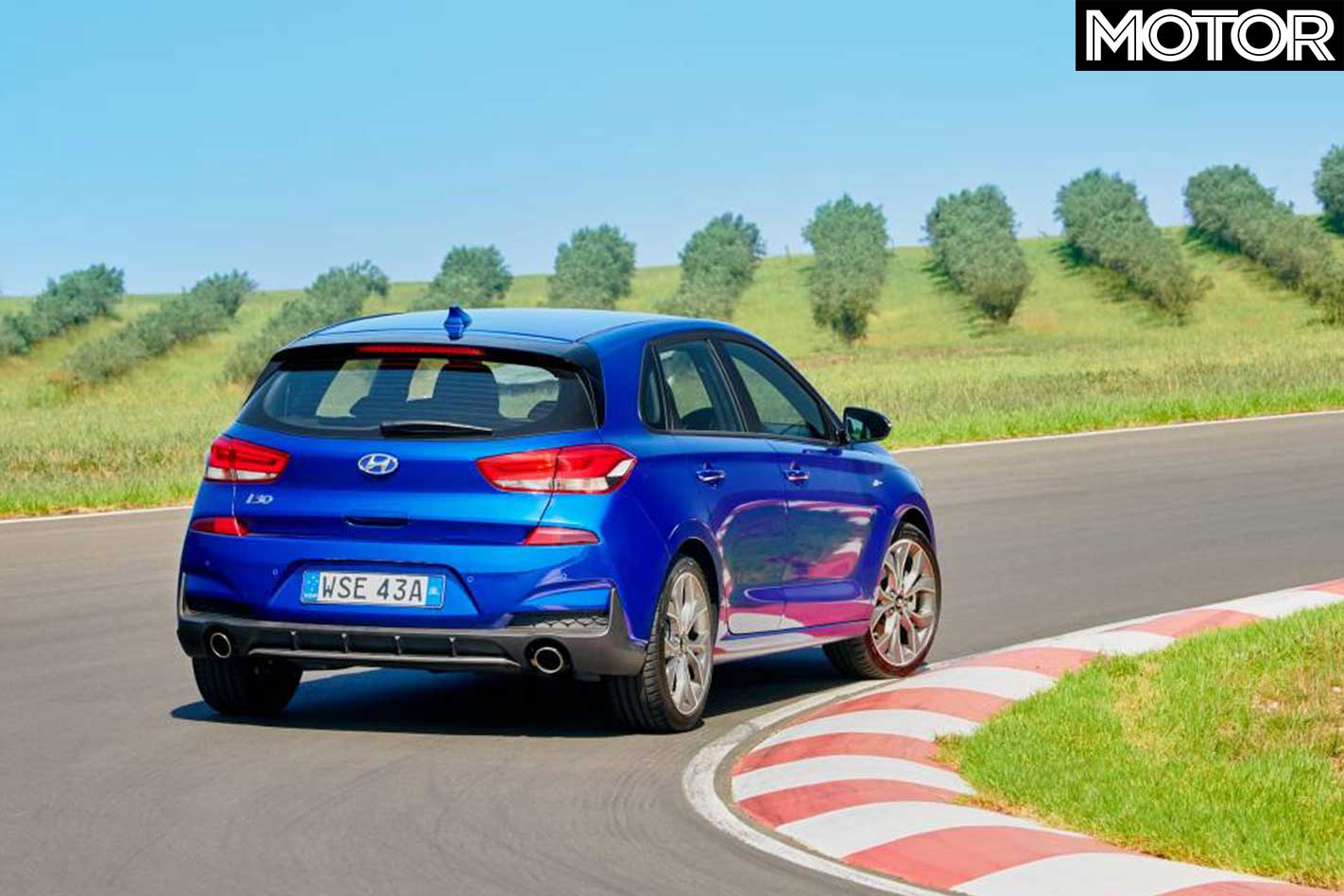
As a crucial step between its regular and performance car range, its new warm hatch replaces the old SR model and capitalises on its relation to the N by mimicking its style and, as Hyundai’s marketers would like you think, its performance.
How so? It still retains the SR’s turbocharged 1.6-litre inline four and multi-link suspension arrangement but upgrades its rubber from Hankook to Michelin’s Pilot Sport 4 S. The suspension’s been retuned as well.
At first glance, the N-Line visually apes its full blooded brother with amazing similarity. Its front bumper is almost a one-for-one replica, with vented channels on its sides and a spec front lip. Just ignore the blocked off grilles.
The rear apron is the same deal, with N-style dual exhaust tips in place of the single-side arrangement in Europe. The only visible difference is it swaps out the functional diffuser for a fake one.
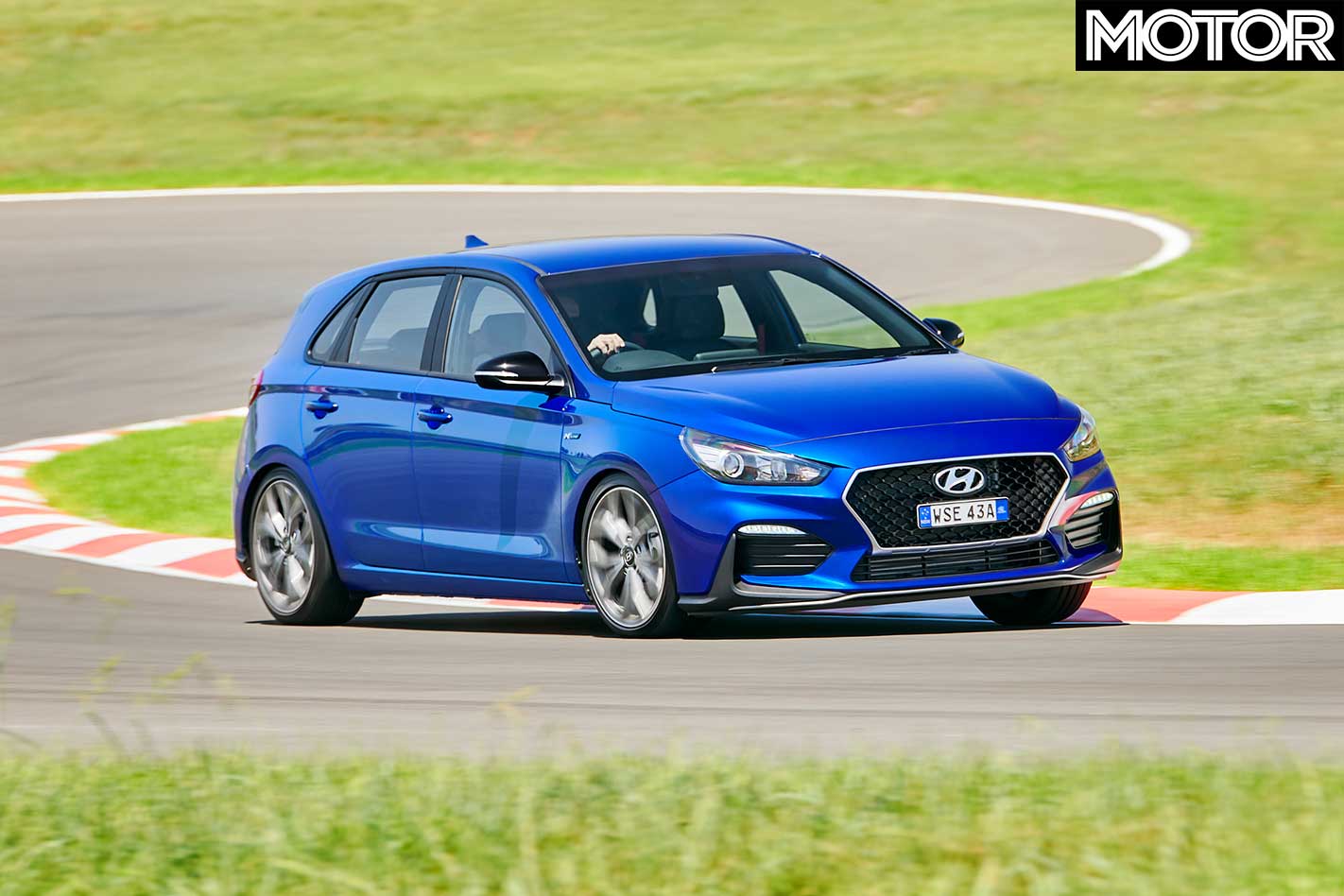
Elsewhere the GTI-esque red accents and badges (the only things that identify an N from N-Line quickly) have been rinsed off and it rides on new, interesting looking 18-inch wheels.
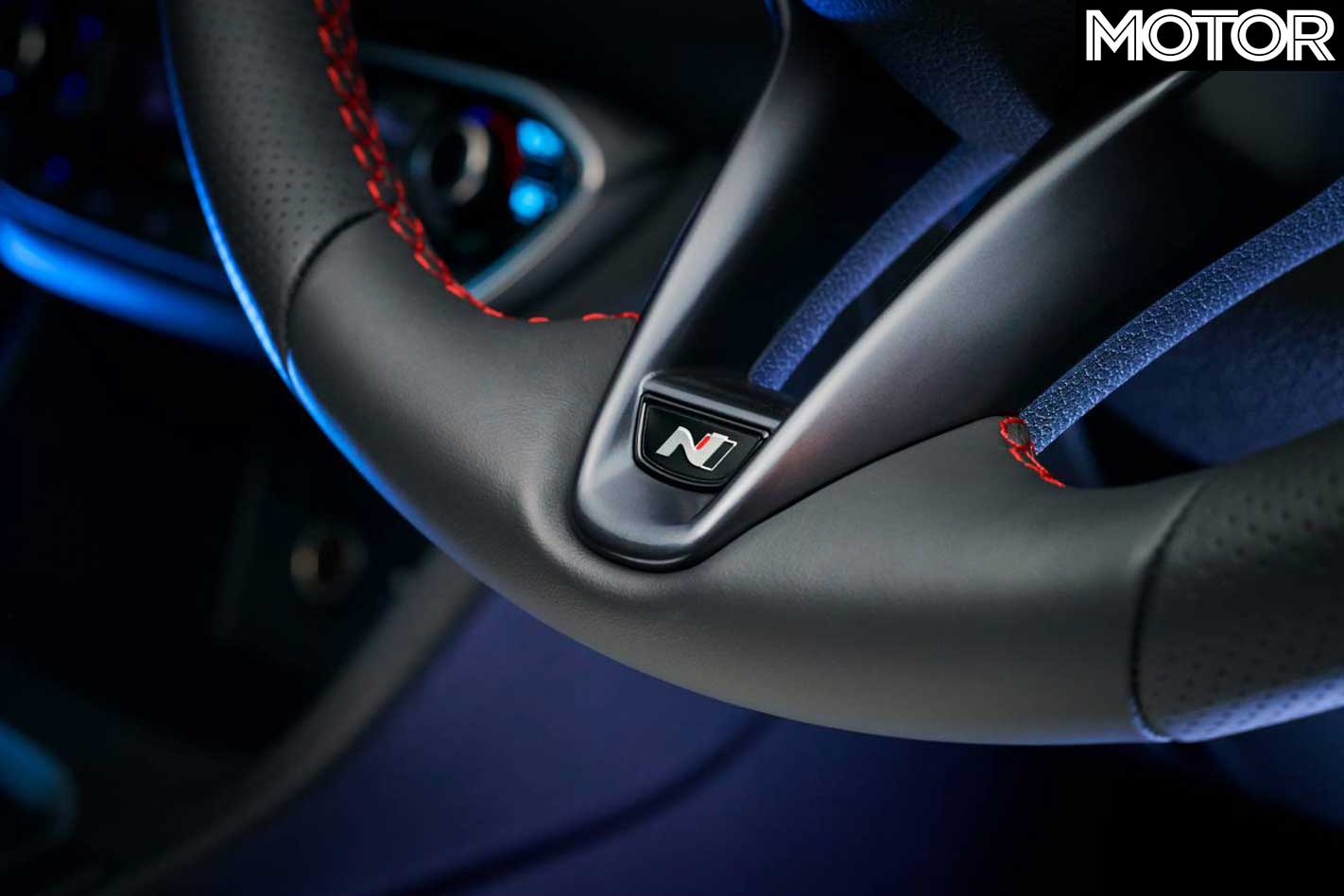
Meanwhile, inside, it borrows the N’s steering wheel (minus the mode buttons) and restyles its seat trim. The extensive red stitching and colours are also a constant reminder it’s trying to fool you it’s an N turned down by a few notches.
Now that might be closer to the truth when you tick the box for a six-speed manual transmission. Ours packs a seven-speed dual clutch that adds another 44kg to the manual’s 1315kg kerb weight figure.
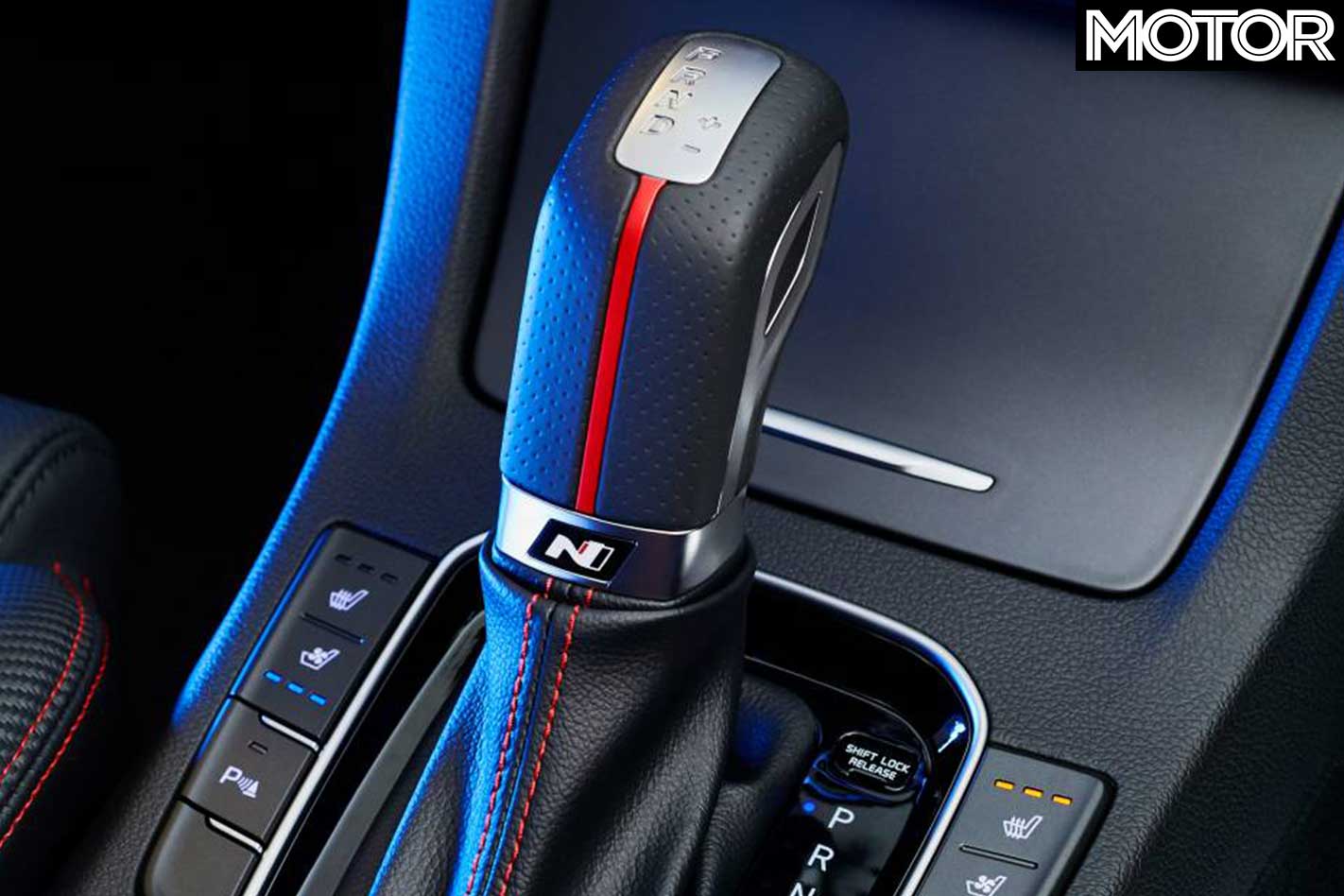
Still, the DCT’s rated to handle the engine’s full 150kW/265Nm and in reality the N-Line charges forward with meaningful pace, shifting swiftly (and automatically) when revs reach 6000rpm or just beyond it.
The sound that follows is largely uninspiring, only transforming from a muffled buzz to a throatier thrum when you engage Sport mode.
Luckily, its cornering abilities are more entertaining. The steering is fluid, nicely weighted and precise, while that rear multi-link suspension arrangement combines with good tyre grip to poise the chassis from turn-in and up until its cornering limits.
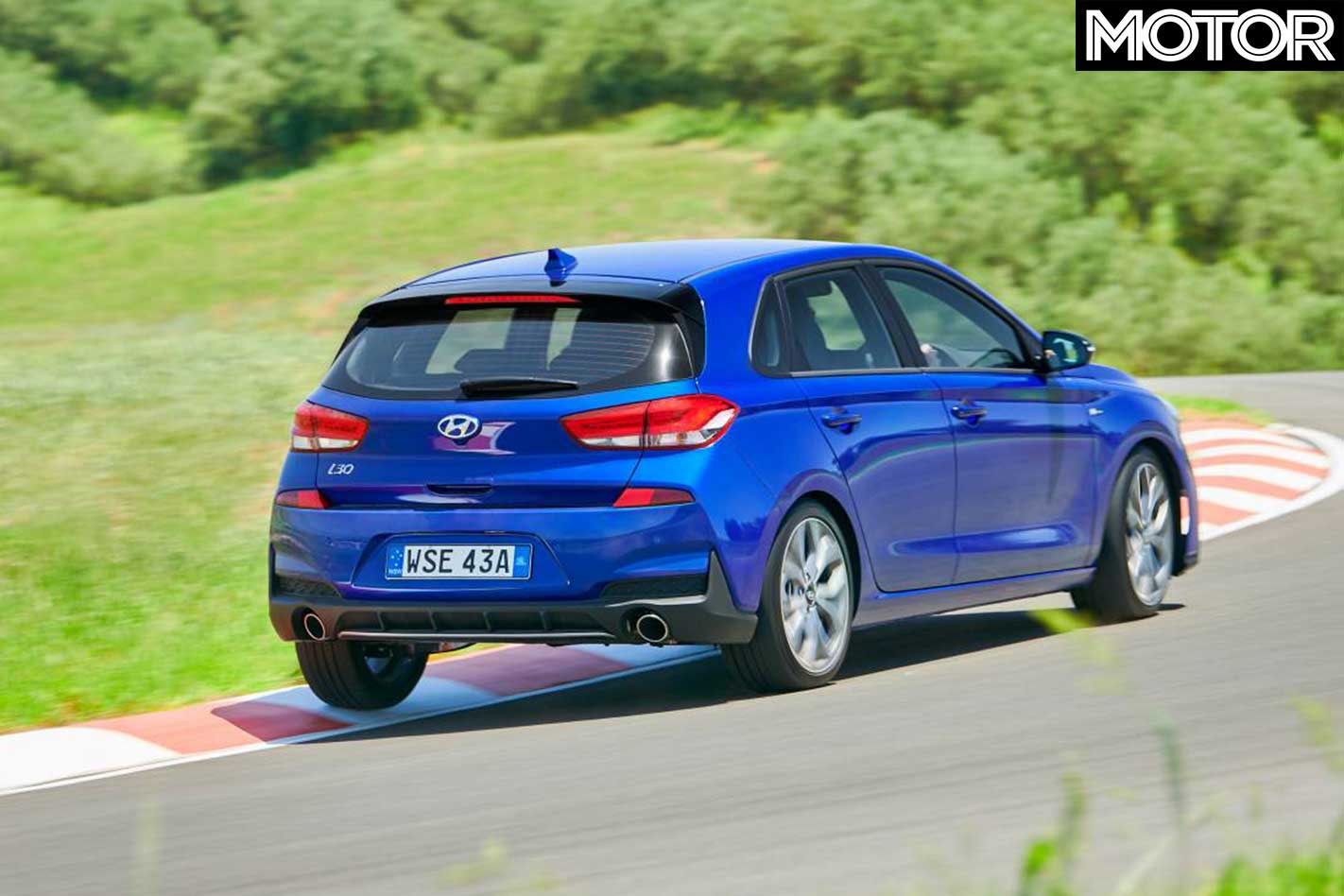
Mark downs? The brakes are fairly weak, but offer good feel, and things only get scrappy under power when the open-diff lets the inside wheel spin. The steering’s prone to kick back even on the unloaded wheel as well.
But as far as warm hatches go the i30 N-Line is as involving and unflappable as they come. It blends performance and comfort together well, and bolsters these strengths with a welcome cabin flair and handsome looks.
Of course, we’d always recommend the $39,990 full blown N if you have the money, but the $13K discount on the manual N-Line, or $10K for the automatic, is attractive for the budget conscious.
Hyundai might have hastily watered down its hero car’s brand for cash, but it a welcome addition.
2019 HYUNDAI i30 N-LINE SPECS Engine: 1591cc inline-4, DOHC, 16v, turbo Power: 150kW @ 6000rpm Torque: 265Nm @ 1500-4500rpm Weight: 1344kg 0-100km/h: 7.2sec (claimed) Price: $29,940
Best value car award
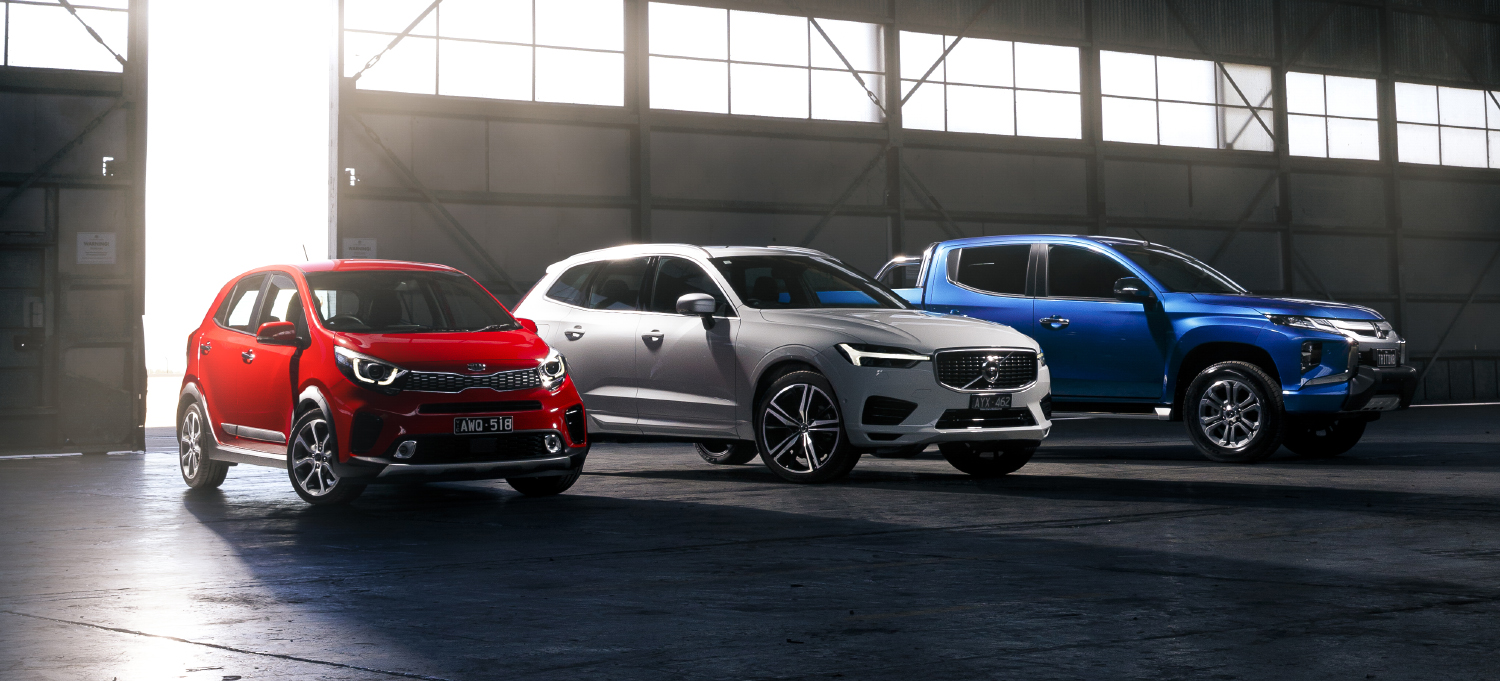
Wheels’ Gold Star car award uses data such as depreciation and running costs to calculate what the best value new cars in eight different segments are. To understand how we calculate the numbers and what considerations were put into the algorithm, read the 2019 Gold Star Car Award 101 here.
The top 3 performance car contenders
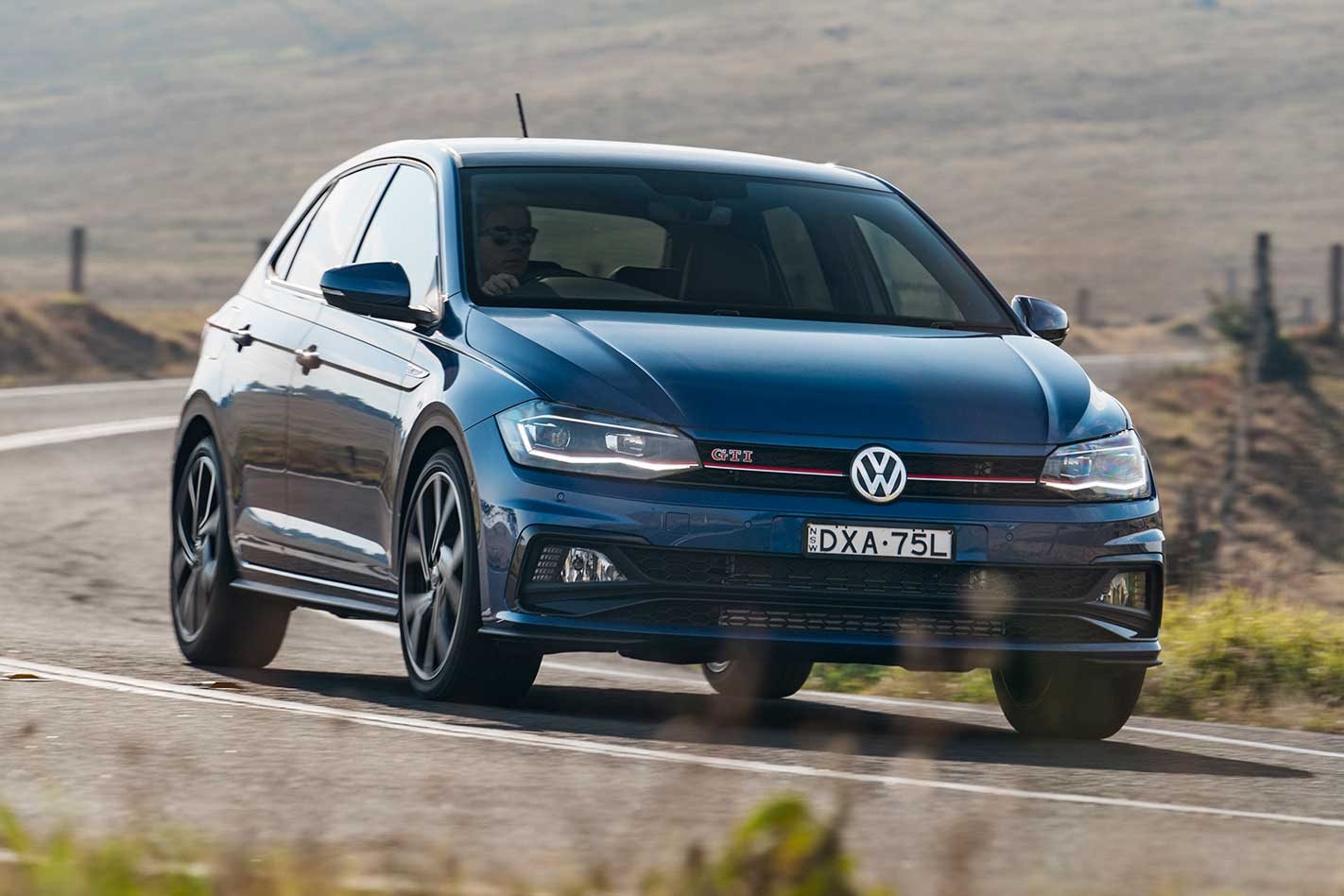
- Volkswagen Polo GTI
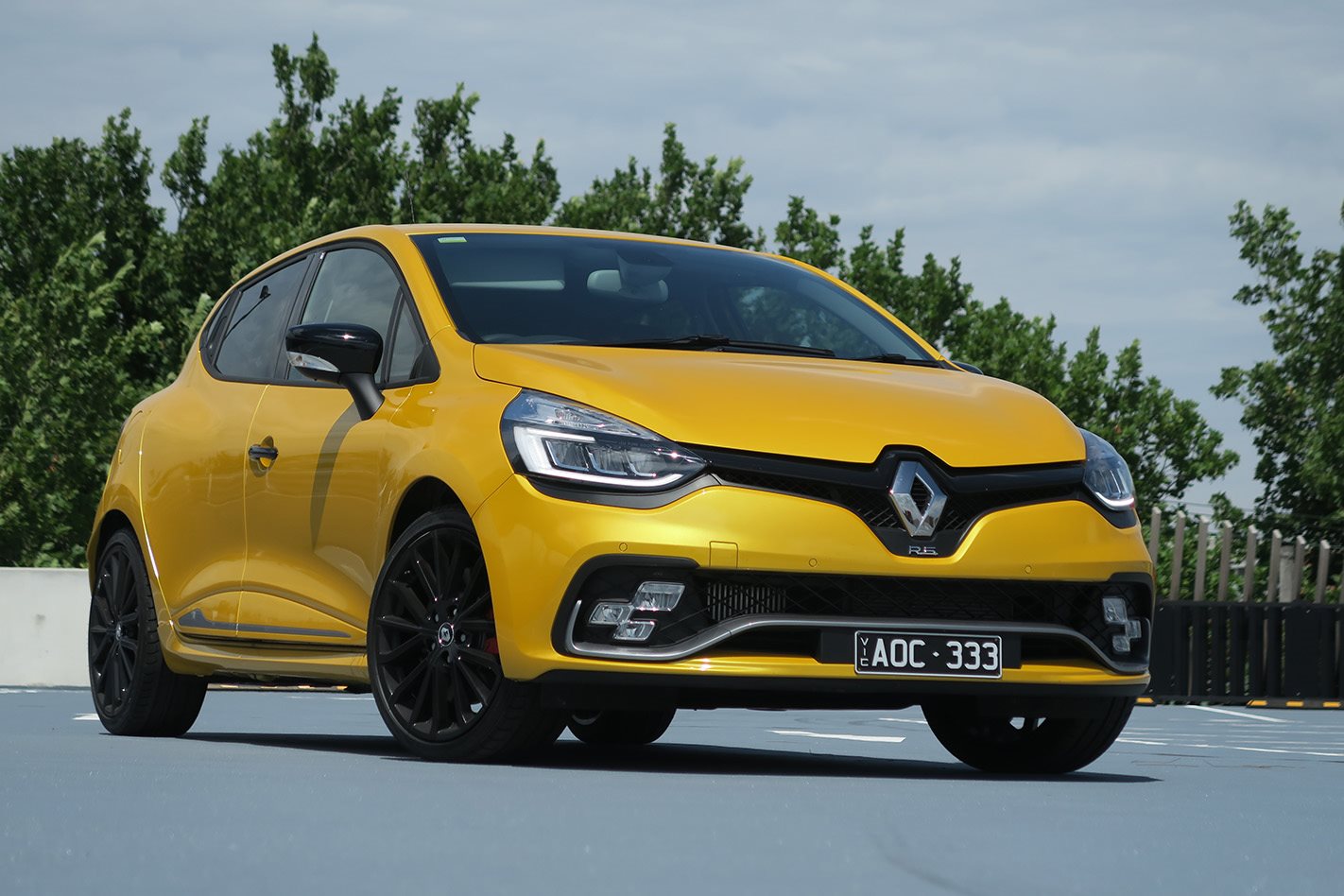
- Renault Clio RS 200
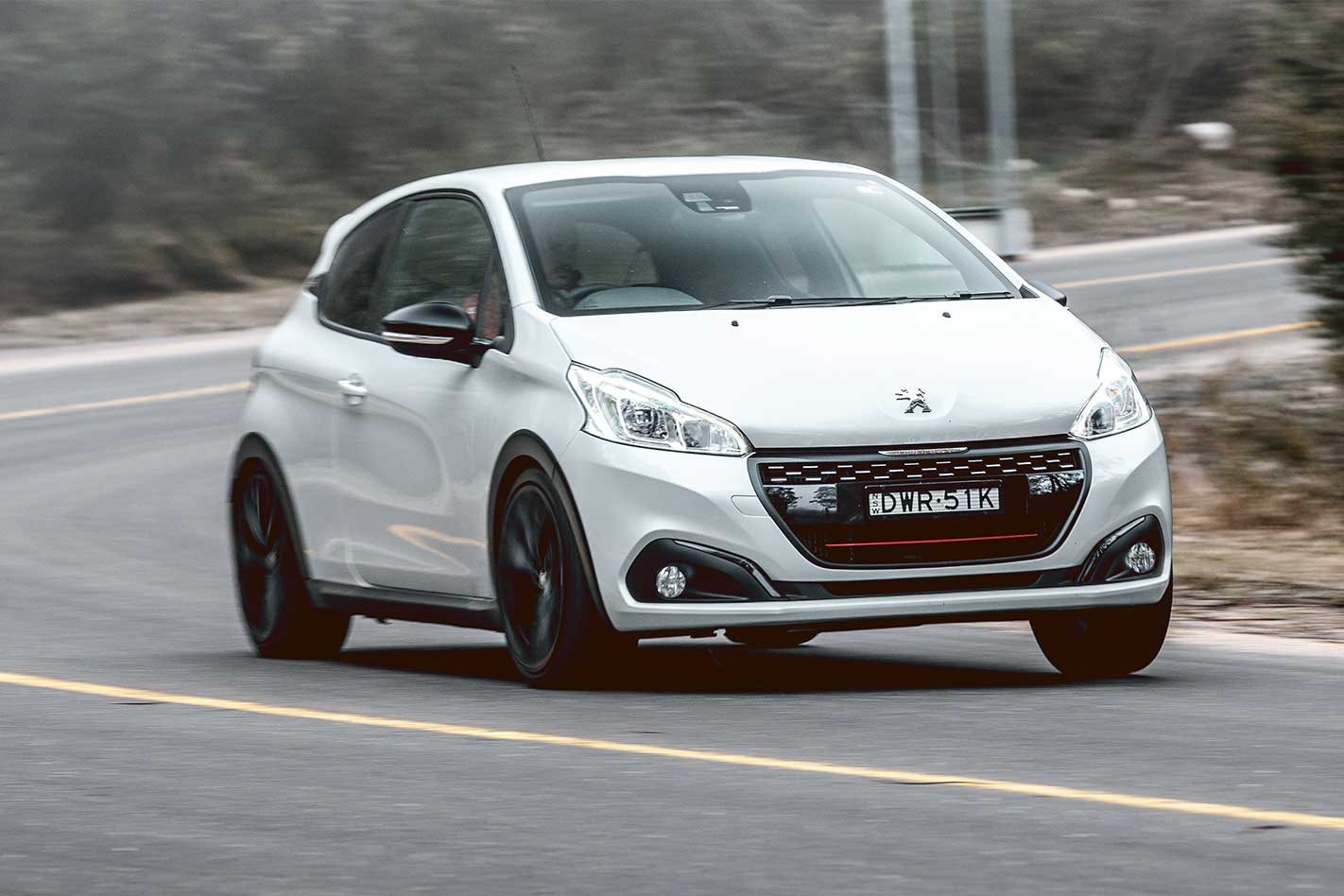
- Peugeot 208 GTI
What the numbers said
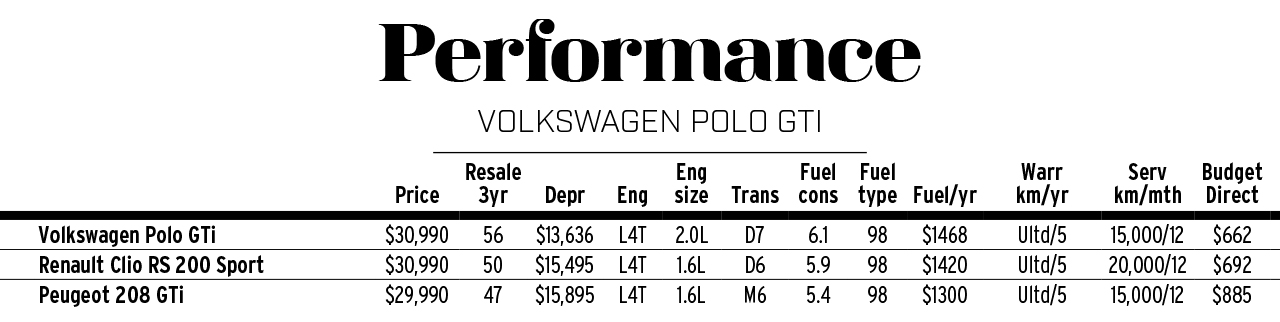
Just as hyper-hatches own the $75K-plus Performance category for value, the humble hot-hatch is the dominant force in the sub-$75K hi-po segment. Turbocharged light hatches took out all three podium spots, relegating any sort of rear-drive sports car variety (in the form of the Toyota 86 and Mazda MX-5) to also-rans, as well as ousting the Hyundai i30 N.
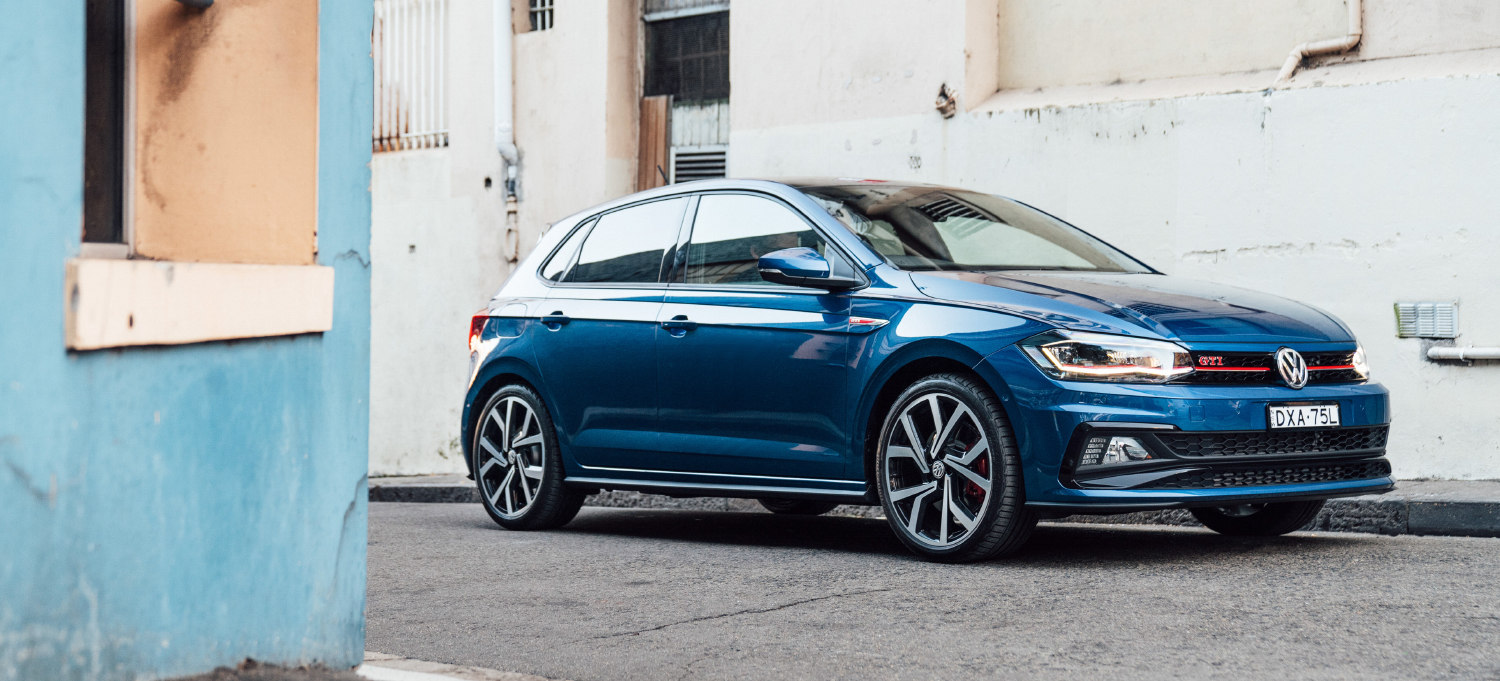
The hi-po placegetters are all in the $30K ballpark, but the Polo hangs on to substantially more of that outlay than rivals with a tidy 56 percent three-year resale figure. It’s the least costly to insure too, at $662/year for comprehensive cover.
Wheels’ pick
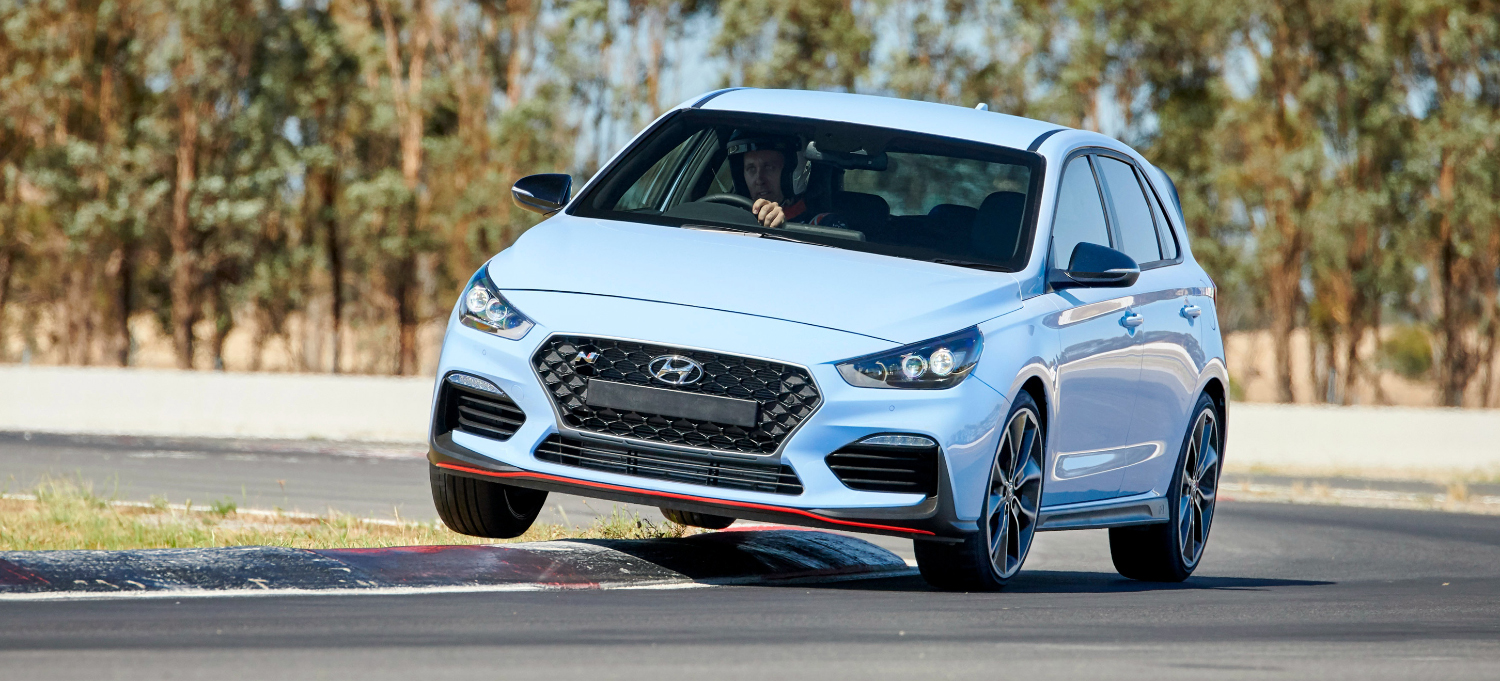
Hyundai i30 N $39,990
Despite pricing itself out of contention for the win against the $30K trio, Hyundai’s first go at a hot-hatch is a cracker, and won our 2018 mega-test at the ltra-challenging Haunted Hills circuit in Victoria. Beyond a well-sorted chassis, it has a feisty engine that makes all the right noises.
In the list of things we didn’t know we wanted, but are glad exist, is a Tesla Model 3 ute.
It comes courtesy of YouTuber Simone Giertz, who has built an electric ute to do environmentally-friendly circle work in the paddock.
Giertz is well known for her amateur robots and is affectionately known as “The Queen of Shitty Robots”.
Instead of waiting for Elon Musk and Tesla to stop buying toilet rolls and get onto manufacturing its long-promised pick-up, Giertz and her team took matters into their own hands.
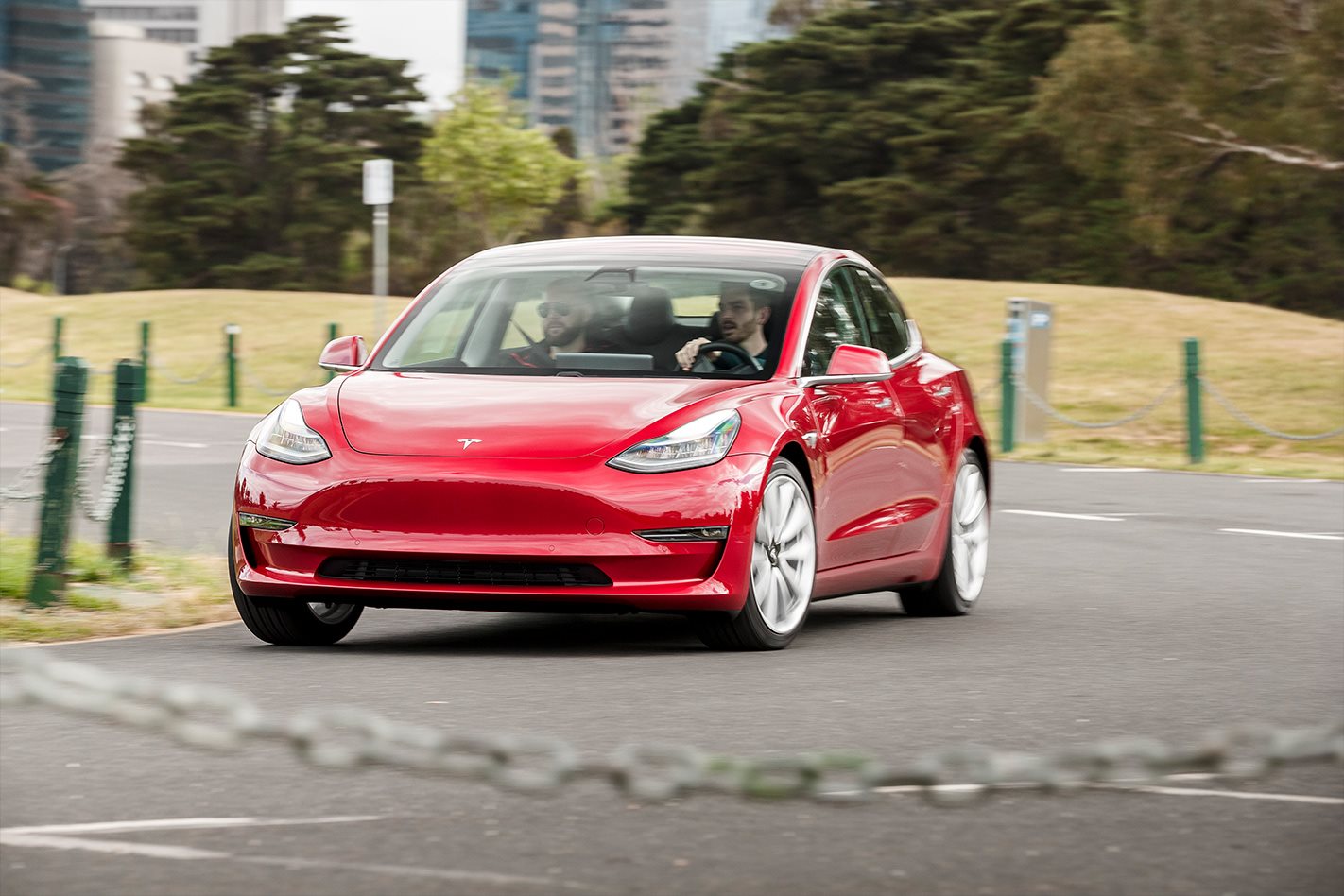
“I got tired of waiting for Tesla to release their pickup truck, so I made my own. And I named it Truckla,” she wrote in the description of a fake ad for the Tesla Model 3 ute.
A Model 3 was chosen as the donor car for its steel body and cheap entry point.
To construct the first Tesla ute, the Model 3 was stripped of its body panels, with a truck bed mocked up and then built.
Elon Musk might really be from the future
The end result is actually rather well finished, and reminds us of the Holden and Ford utilities which define the genre.
It wouldn’t be a true ute if it was unable to perform dirt-flinging circle work, but thankfully Giertz obliges with some dusty donuts.
“I don’t know if this is going to the smartest or most stupid thing I am ever going to do,” she says in the opening to the 31-minute video of the ute’s construction.
It’s the smartest Simone, definitely the smartest. Side note, can we drive it?
You can watch the lengthy build process in the video below:
Though it notches up its seventh birthday this year Renault’s all-electric Zoe compact hatchback has received its first major update to see it into 2020. It’s due to arrive in Australia some time that year, however precise timing, pricing and specifications have yet to be locked in.
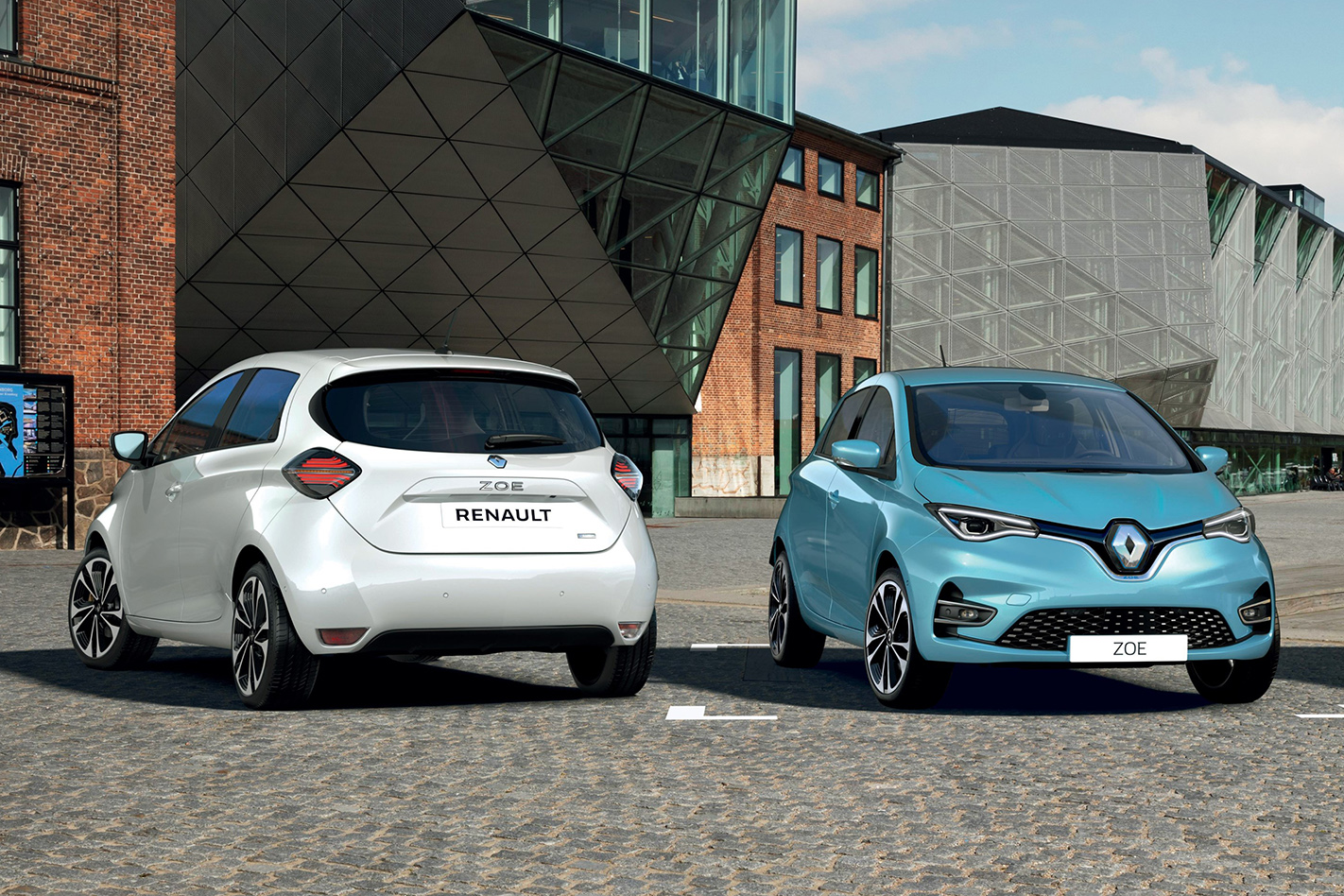
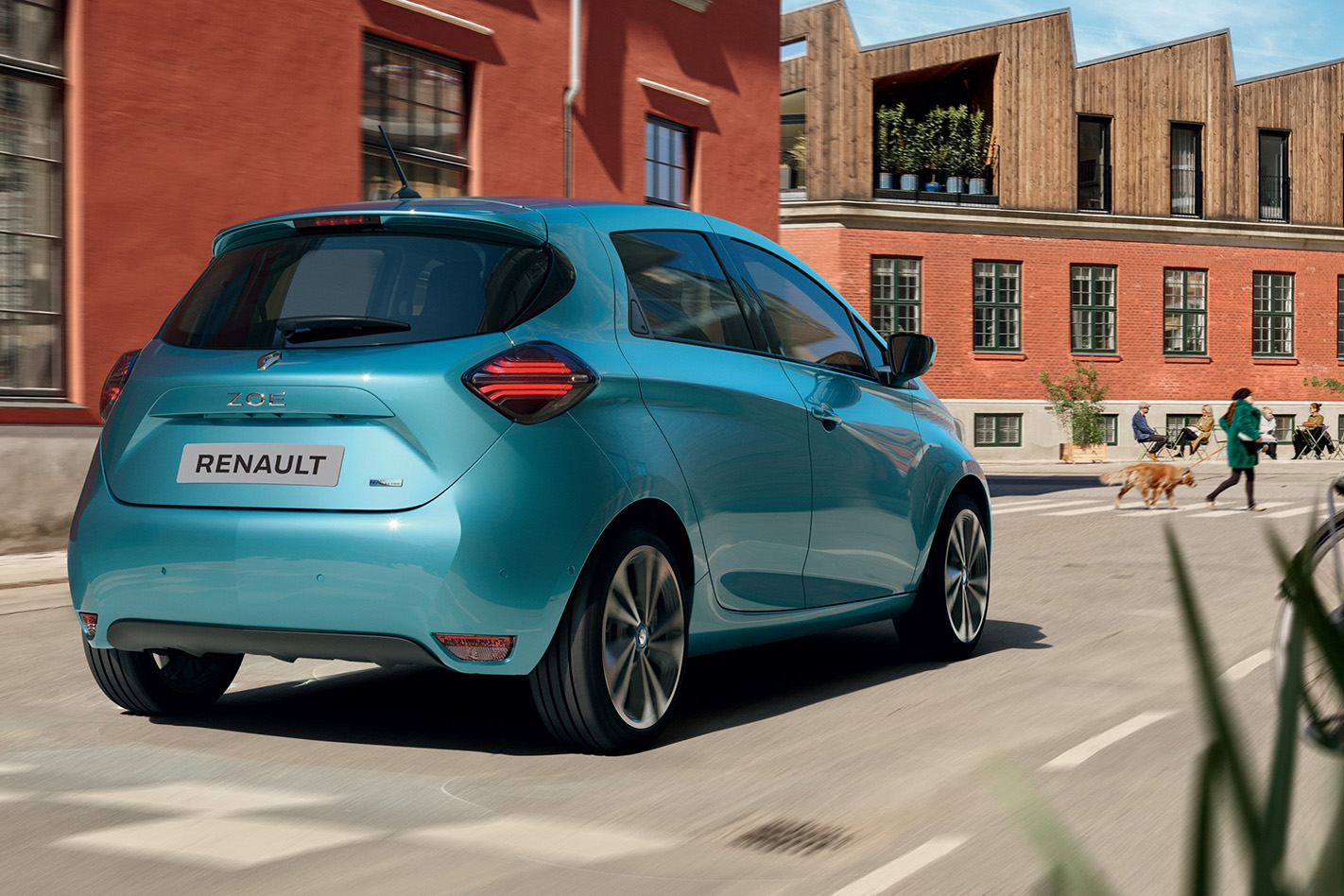
Sheetmetal largely carries over (with the exception of the bonnet), however new wheel designs, larger headlamps and a recontoured front bumper set the 2020 Renault Zoe apart from its predecessors visually. It’s under the skin, however, where the more meaningful upgrades have been applied.
The lithium-ion battery’s capacity gets upsized to 52kWh, while the electric motor has been beefed up to 100kW and 245Nm – increases of 11kWh, 32kW and 20Nm respectively compared the Zoe that’s presently on sale in Australia. That means that not only is the 2020 Zoe significantly more powerful than before, but it can travel a greater distance on a full charge as well.
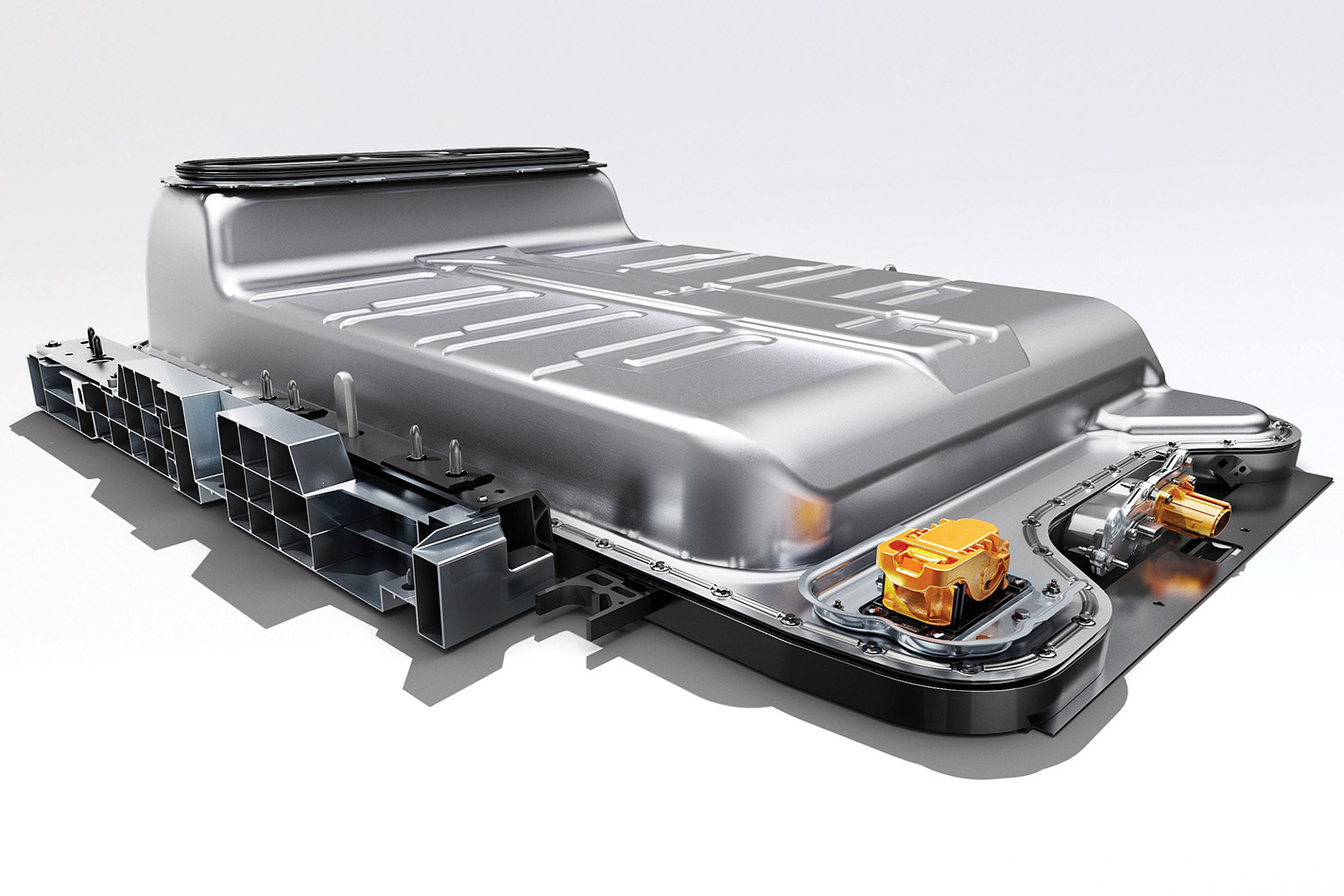
While the current model is able to travel for a handy 300km in real-world conditions before its battery is depleted, the updated model flaunts a 390km single-charge range – a 30 percent improvement.
A high-regen “B” mode has also been added, which increases the amount of energy recouped during deceleration, and allows the driver to regulate their speed more easily by using just the accelerator pedal alone.
How does the Renault Zoe drive? Read our review
A lower-output 80kW motor will also be available in Europe, though it’s not yet apparent whether that option will be coming to Australia as well.
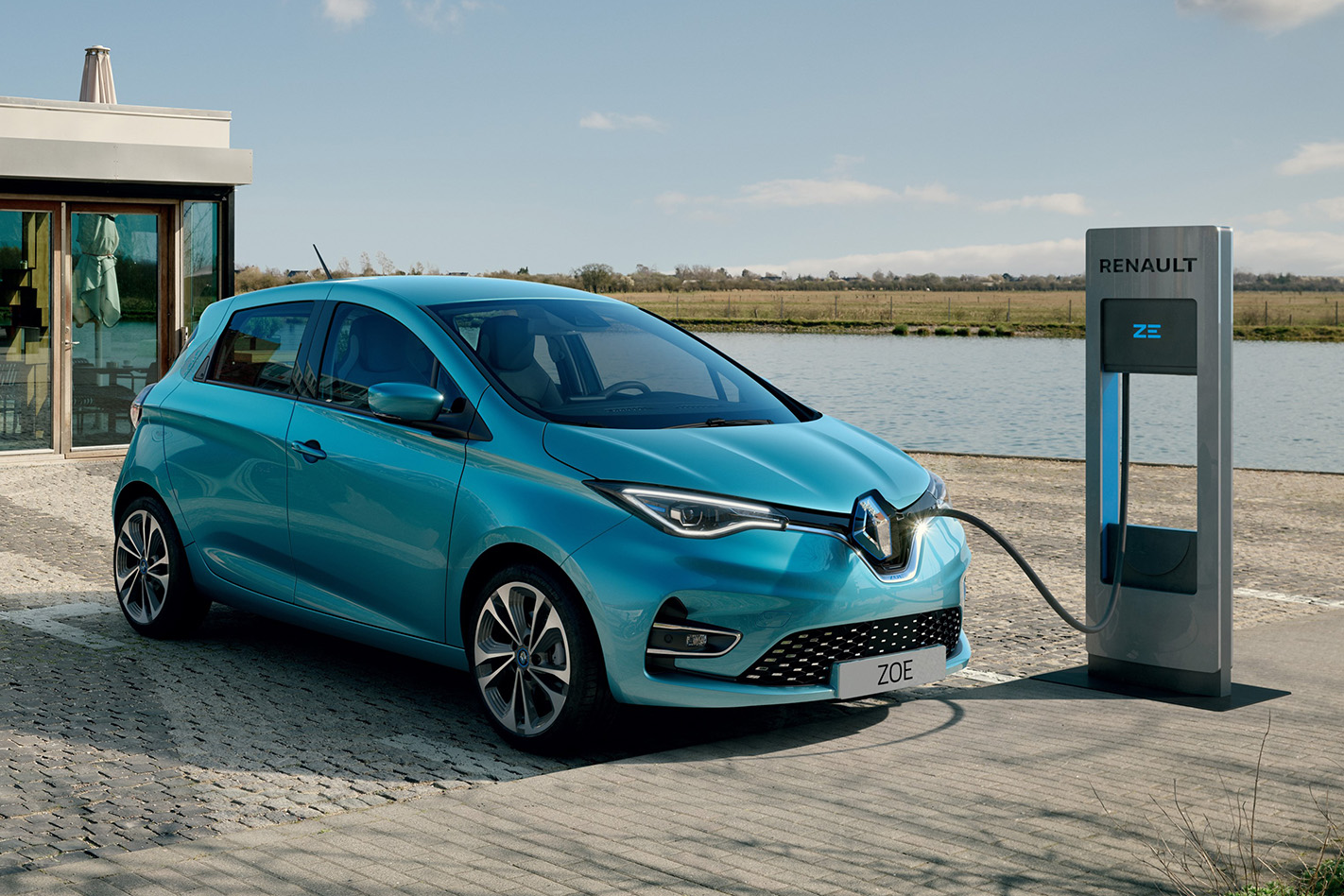
Thanks to a new 50kW DC charging option, the 2020 Zoe will be able to throw about 145km-worth of electricity into its battery in just half an hour if used with a compatible fast-charging station. On a 7kW wall box, typical full-charge times come in around 9 hours and 25 minutes.
The cabin has had a more dramatic makeover than the exterior. A new steering wheel dramatically modernises the driver’s immediate environment, but it’s the huge 10-inch electronic instrument panel and the 9.3-inch vertically-oriented infotainment screen that are the biggest leap forward.
The dash and centre console have been completely redesigned as well, such that the new Zoe’s cabin is almost unrecognisable next to that of the old one.

The ventilation controls are modernised and use a more intuitive three-dial format, the transmission lever loses the dorky soap-bar look of the old car and there are soft-touch textile inserts on the dash pad to impart some visual texture.
Android Auto and Apple Carplay will be offered in Europe, as will a wireless phone charger, though it’s not clear precisely which features will be coming our way.
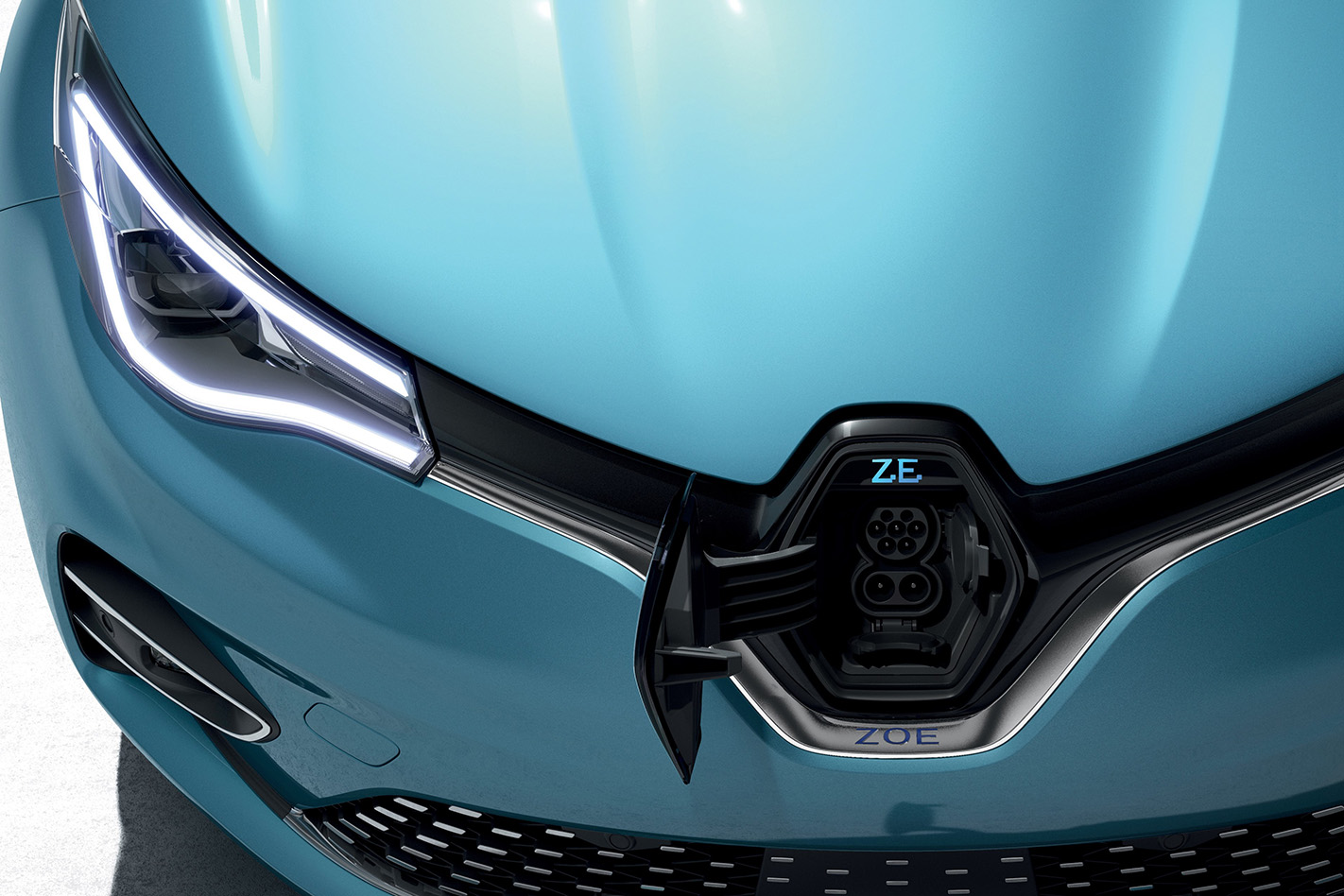
AUSTRALIA
Renault Australia has confirmed that it will be bringing the updated Zoe to its showrooms in 2020 with the new 52kWh battery and 100kW motor, however a company spokesperson says specific timing, price and equipment levels are still far from finalised.
To date, around more than 50 percent of Australian Zoe sales have been to private buyers since it went on sale, which is a surprising proportion given it was originally introduced under a direct-to-business sales model, before retail sales were opened up to the private market last year with a $51,990 price tag.
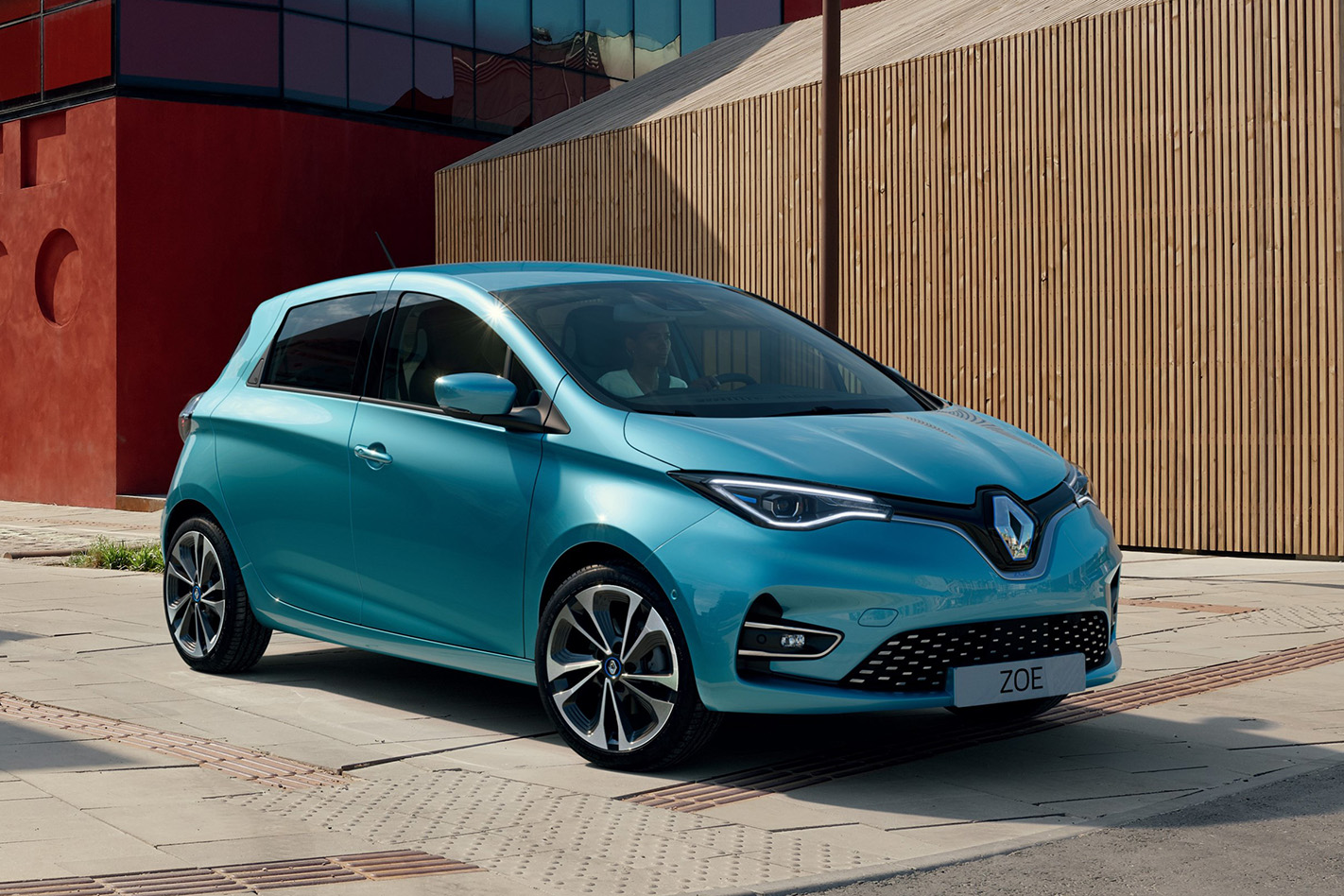
However, it has so far been a slow seller. Since launch, only 52 Renault Zoes have been sold in this country, and Renault says production availability has been a limiting factor. More vehicles are set to arrive, but with a sizable retail price for a light-segment hatchback the Zoe’s limited sales are somewhat understandable.
When its more powerful, longer-legged replacement arrives, another problem will also appear – due to vehicle homologation rules that limit sales of passenger cars with no side airbags, Renault will be restricted to selling just 100 Zoes each calendar year.
