
IT’S GETTING harder to be a car enthusiast by the day. Soaring levels of congestion, declining levels of courtesy, rising fuel prices, ever more oppressive enforcement of regulations, punitive car taxes and a negative public image are constantly working against us. It’s no wonder getting a driver’s licence is no longer an automatic choice for many young people.
But in the right car, on the right road, there’s something about driving that’s a special kind of therapy. What constitutes the ultimate driver’s car is the subject for pub banter to keep groups of car nerds out all night. But there is no question that every great driver’s car should compel its owner to do one thing: grab the keys and drive.
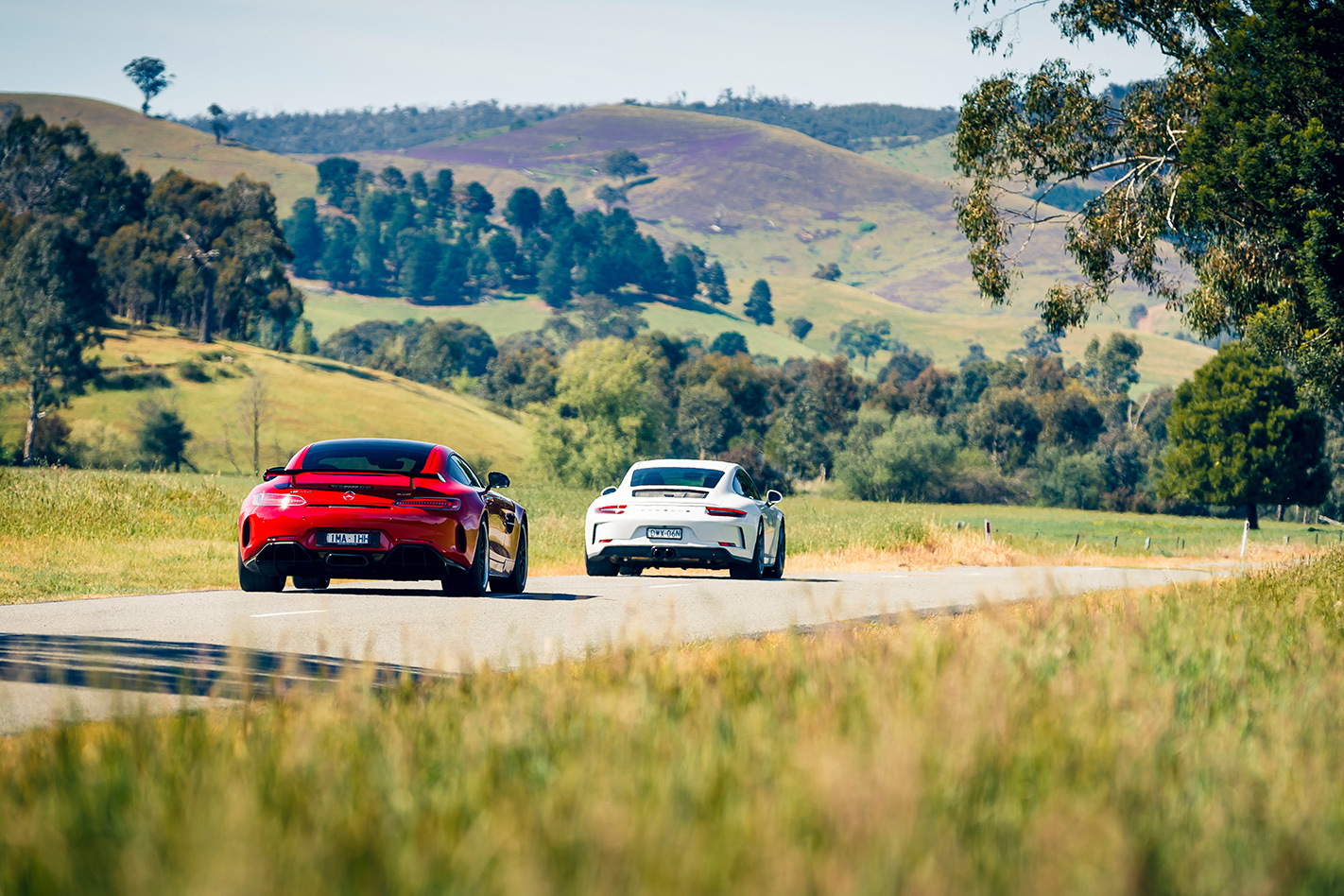
For a lot of people, the Porsche 911 is the consummate driver’s car. Its evergreen appeal is owed in large part to a set of fundamental ingredients that remain unchanged even after decades of development. It’s the yardstick by which other sports cars are measured, and in the guise we have here, its purity is arguably at its most distilled.
Late in 2017, Porsche became particularly displeased with market speculators flipping limited edition 911 Rs at a profit. One take on the GT3 Touring option pack is that it’s Porsche having the last laugh, by giving buyers of new GT3s a 911 R-alike package without the mark-up.
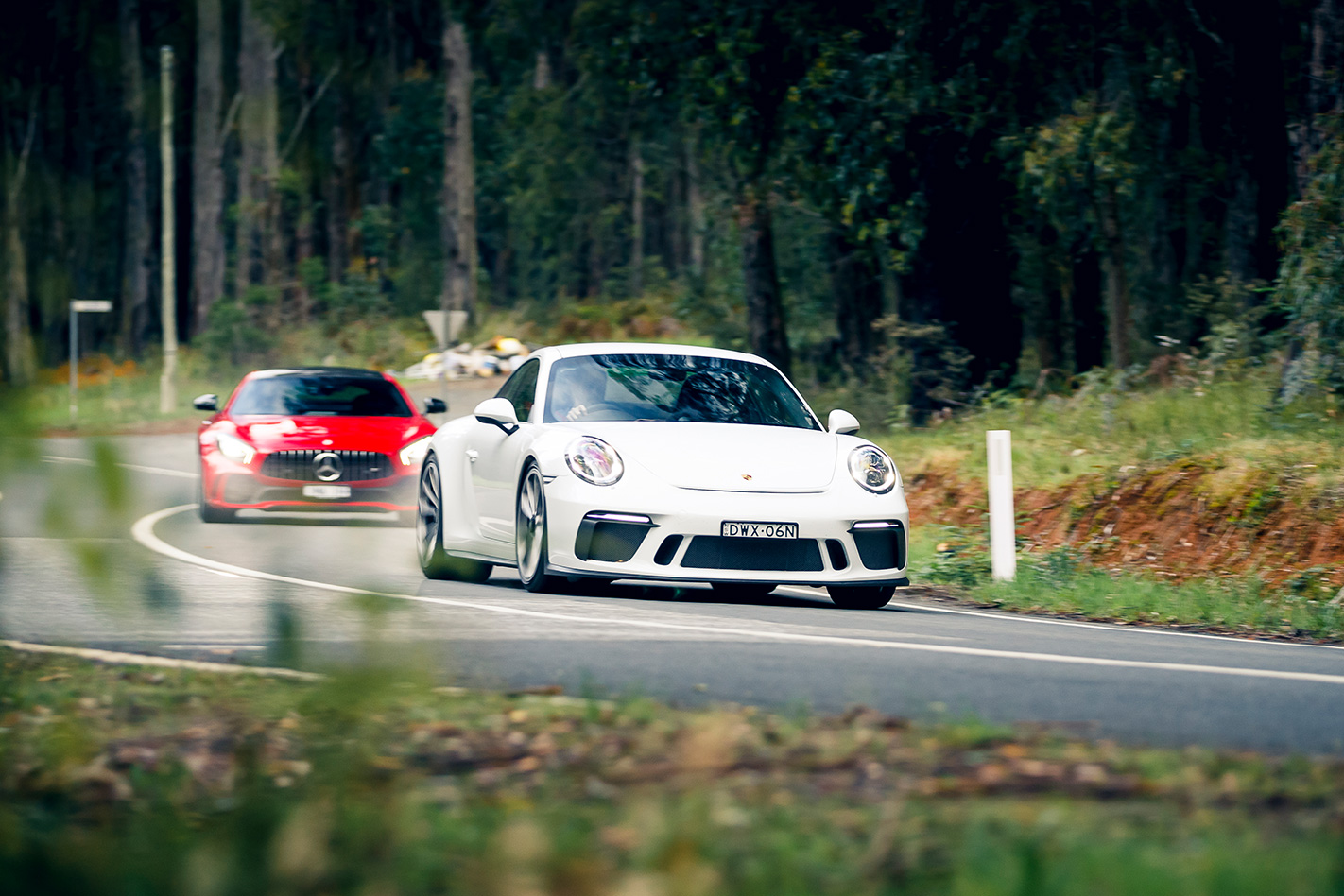
Behind the rear axle sits an awe-inspiring 368kW/460Nm 4.0-litre naturally aspirated flat-six and the same six-speed manual as in the 911 R. But the Touring pack deletes the GT3’s roll cage, harnesses, and – most notably – rear wing. In Carrara White over satin aluminium centre-lock wheels, it might be the most beautiful 911 money can buy.
Beautiful is not a word you’d choose to describe its flamboyant challenger. The Mercedes-AMG GT R is rude. In Jupiter Red – surely the best colour available – it’s a retina-grabbing showstopper oozing supercar presence.
No other iteration of AMG’s second, clean-sheet sports car is more powerful. Its 4.0-litre twin-turbo V8 wrecking ball produces 430kW and 700Nm, with maximum torque delivered across a broad 3600rpm span starting from just 1900rpm. It is the antithesis to the peaky, rev-hungry GT3, bundled into a performance chassis with race-derived active aerodynamics.
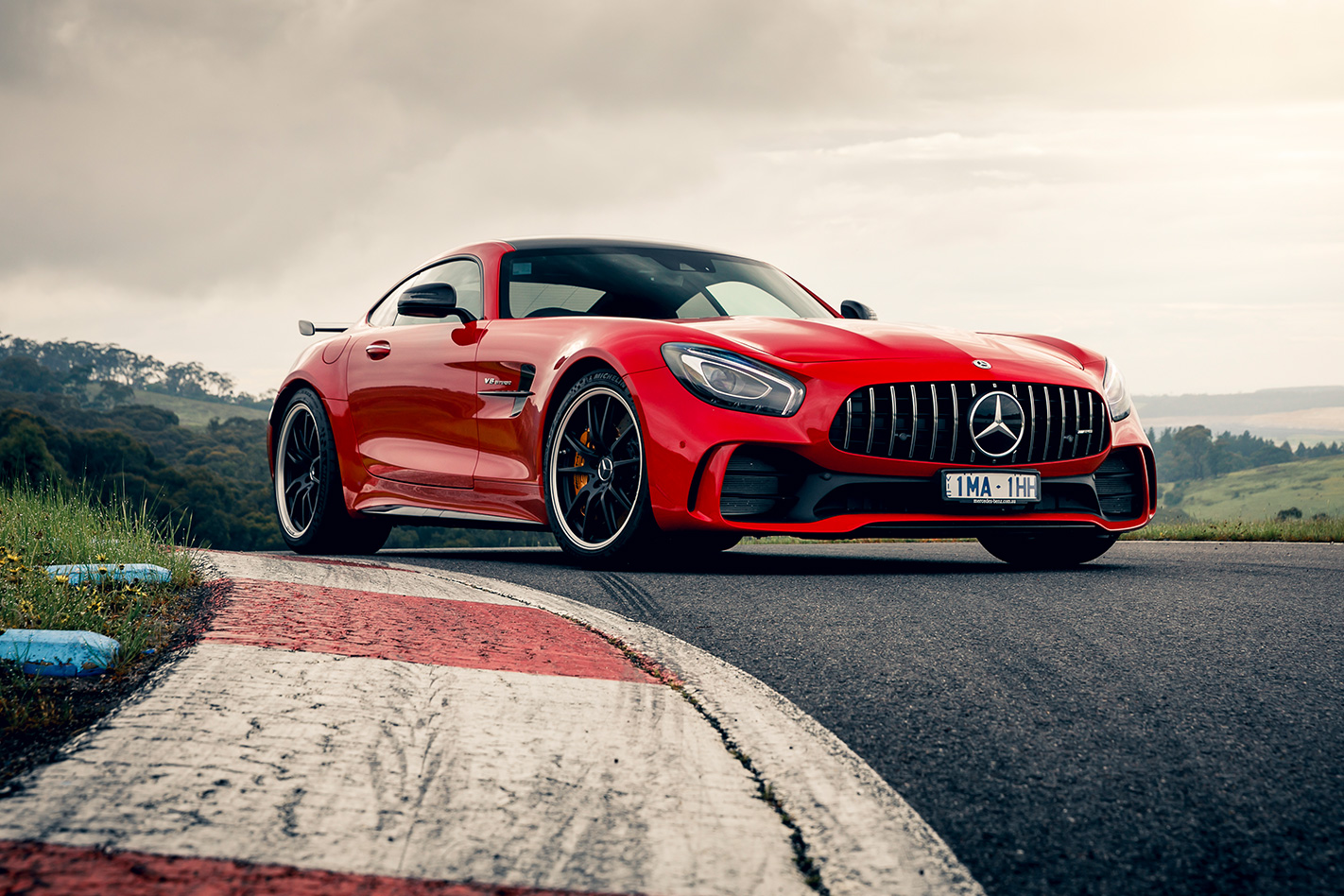
The GT R looks especially spectacular from the rear. Its broad wing lines up perfectly with the turret, and a trio of exhaust outlets sit within an enormous diffuser inspired by GT3 racers. Side-by-side with the pared-back 911, it’s strange to think these cars come from the same city.
As tested, the prices of these two are separated by just $6199. The GT R is more expensive at $372,129, but their base prices are drastically different. The Porsche is some $24,000 cheaper there, but nobody is buying a GT3 Touring without adding options, and it’s all too easy to rack up a significant bill with only light box-ticking. Our GT R, on the other hand, is relatively standard. Carbon-ceramic stoppers ($17,500) and forged wheels ($3500) are the only items added.
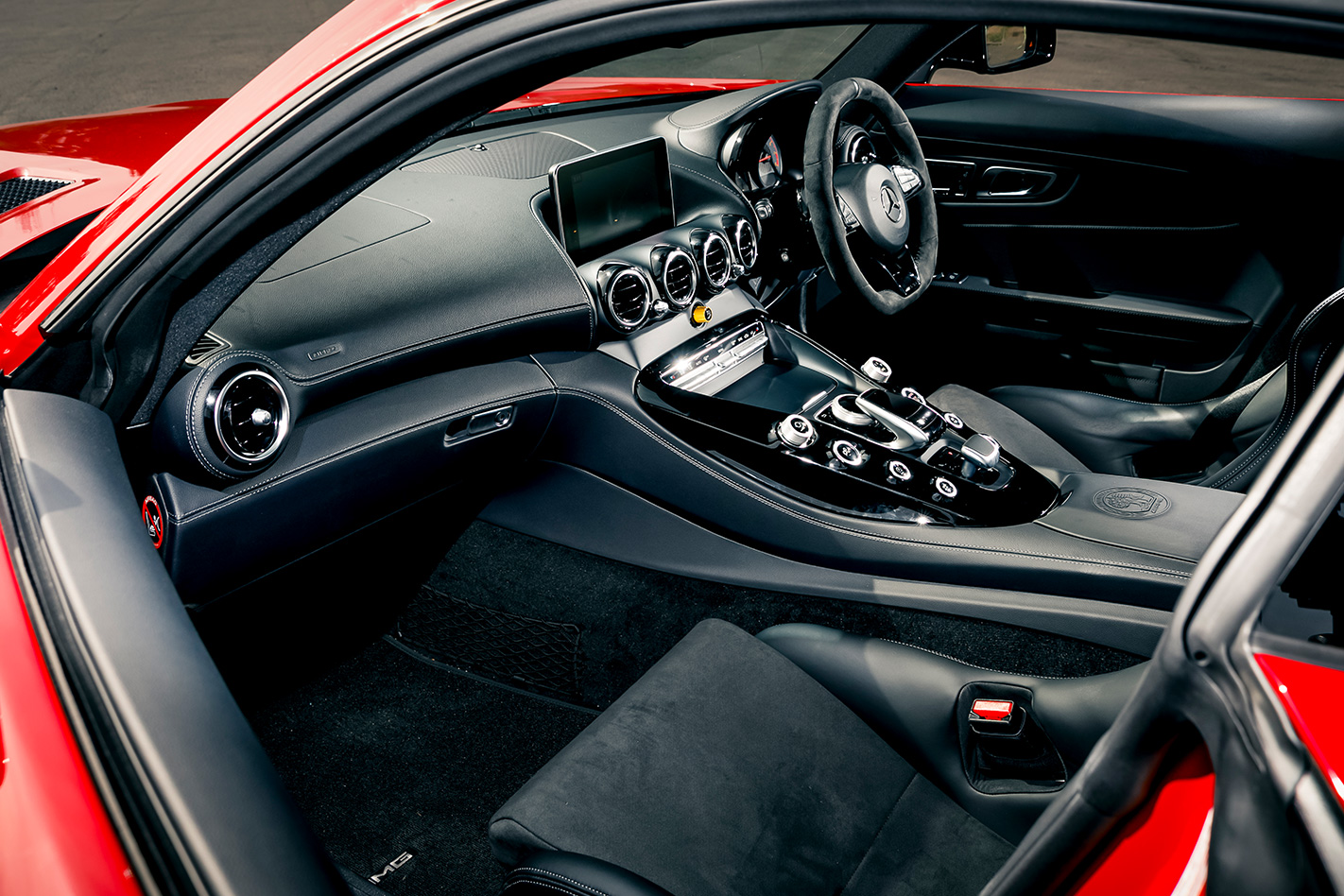
Fixed-back bucket seats are a no-cost option, though they’re canted back a little further than those in the Porsche and don’t quite provide the perfect driving position. Chunky shoulder bolstering also gets in the way of the GT R’s awkwardly positioned shifter, which is wedged way back in the transmission tunnel where only stumpy T-Rex arms can get at it.
Some packaging compromises are dictated by the proportions of the AMG’s monstrous drivetrain. The GT R is a V8 skateboard with a cabin shrink-wrapped to the top of it. There’s limited space inside around the tree-sized centre console that hides a torque tube for the seven-speed transaxle. Anything tucked into the tiny cubby near the back gets warmed to serving temperature.
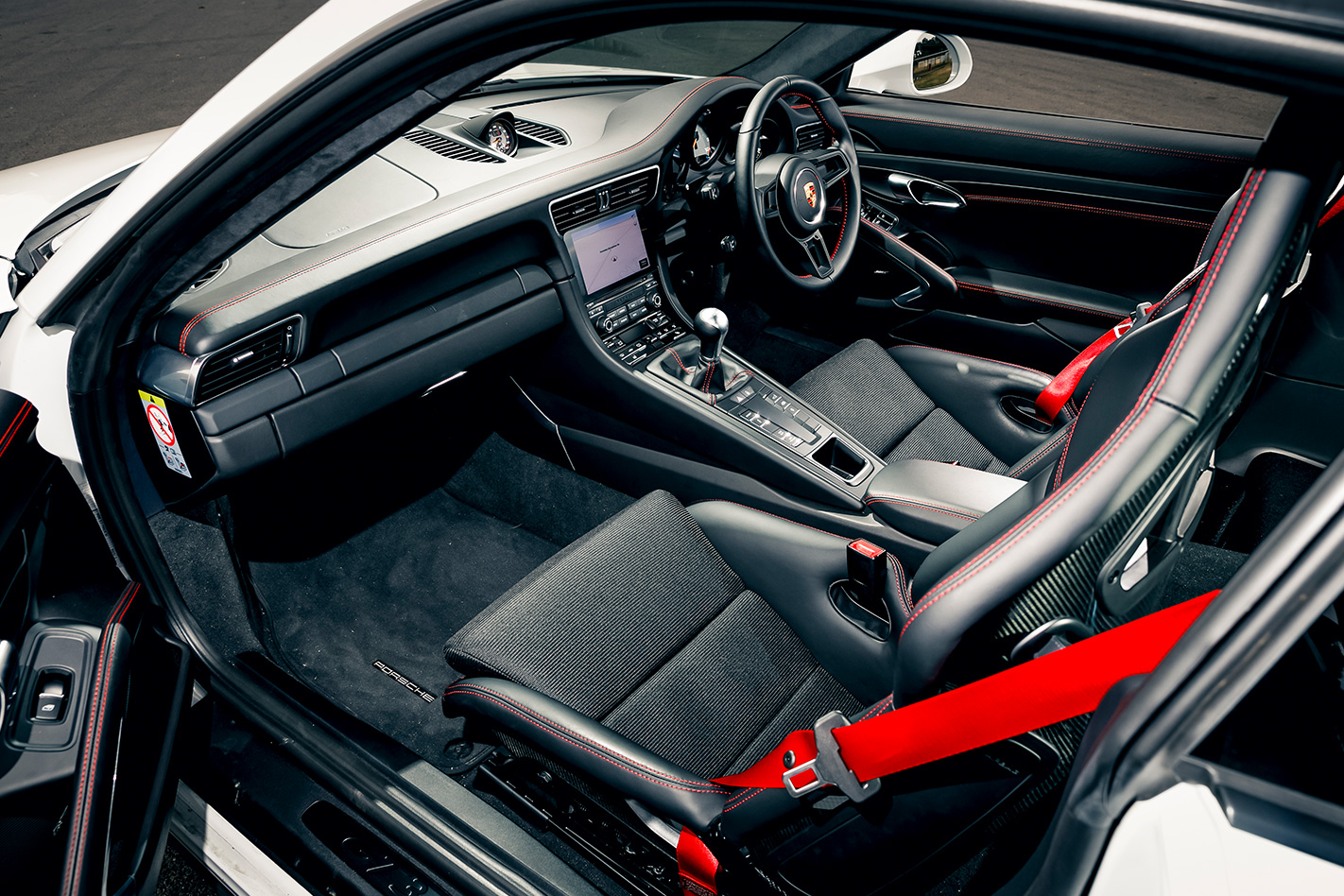
Conversely, the GT3 is an ergonomic masterpiece inside. It guides the driver’s hands to inadvertently rest in the ideal driving position on a perfectly sized steering wheel. Porsche’s engineers simply have this mastered. No other cabin is as finely honed, and a connection forms before the car turns a wheel.
The GT R takes a little more acclimatisation. Gazing down the long hood it feels deceptively large, when it is in fact shorter than a C-Class, but sitting near the rear axle and telegraphing steering commands to the remote front-end is initially disconcerting, especially when things get moving as quickly as they do.
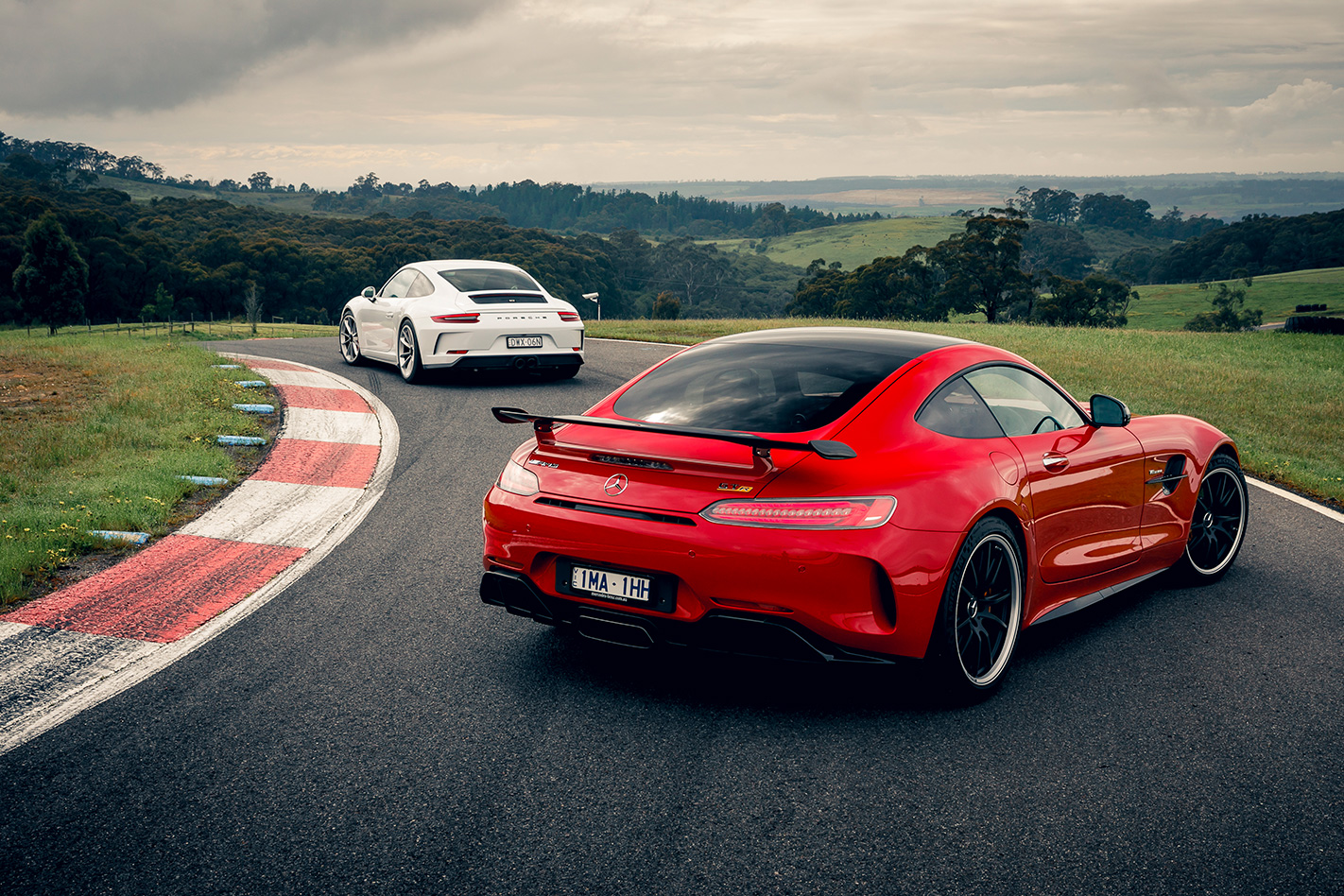
The AMG’s appetite for tarmac is utterly ferocious. With enough traction, three digit speeds are dialled up in mere moments. The official claim for a perfect launch is 0-100km/h in 3.6sec, but once into its stride the GT R is even more impressive. Clever electronic systems precisely judge available grip before feeding in everything it has on tap. Hooked up and hammering, the GT R is a runaway train of colossal Teutonic brawn that feels as though it could slide out from beneath you.
The Porsche’s engine has an entirely different character. Given its racing pedigree and top-end performance focus, its flexibility is remarkable. The 4.0-litre pulls cleanly from low revs and charges forcefully towards redline, building intensity with each gearshift. In a straight-line sprint the GT3 is slightly slower to three figures at a claimed 3.9sec, but its superior grip often leaves the GT R looking flummoxed.
Power and torque ramp with engine speed to peaks much higher in the rev range than the GT R’s. Maximum twist arrives at 6000rpm, full power hits at 8250rpm, and getting there is an utter thrill, with the shrieking flat-six seemingly mounted to the driver’s spine. It fizzes through a twilight zone between 7000 and 9000rpm like an overclocked dentist’s drill that won’t stop spinning. Nailing a perfectly timed upshift as the needle reaches the frenzied limit of its arc is among the sweetest feelings a driver can experience.
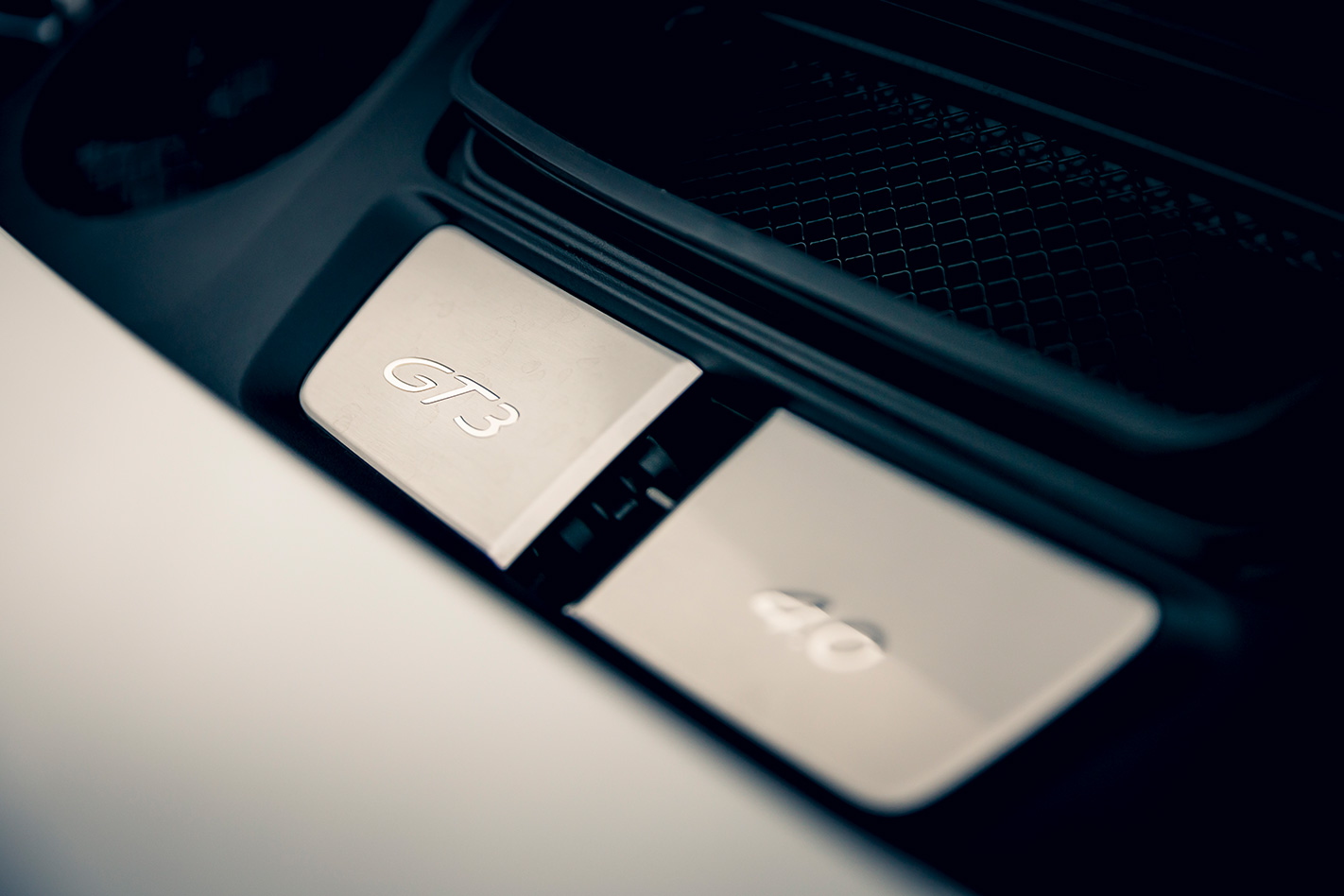
Everything about the GT3 is geared to get to nine grand, and that has an immediate effect on the way you drive it. Distances between corners become a game of mental processing power; with the goal to reach redline with enough room left to pin the brakes and clip the apex before launching at the next one.
Acoustics hard-wired into the cabin dictate the GT3 experience just as much as the outright speed. A baritone note vibrates the cabin furniture at idle, then morphs, with more revs, into a deep bellow that hardens at 4000rpm and picks up yet more volume. There’s an intoxicating level of detail in the GT3’s soundtrack that never gets old.
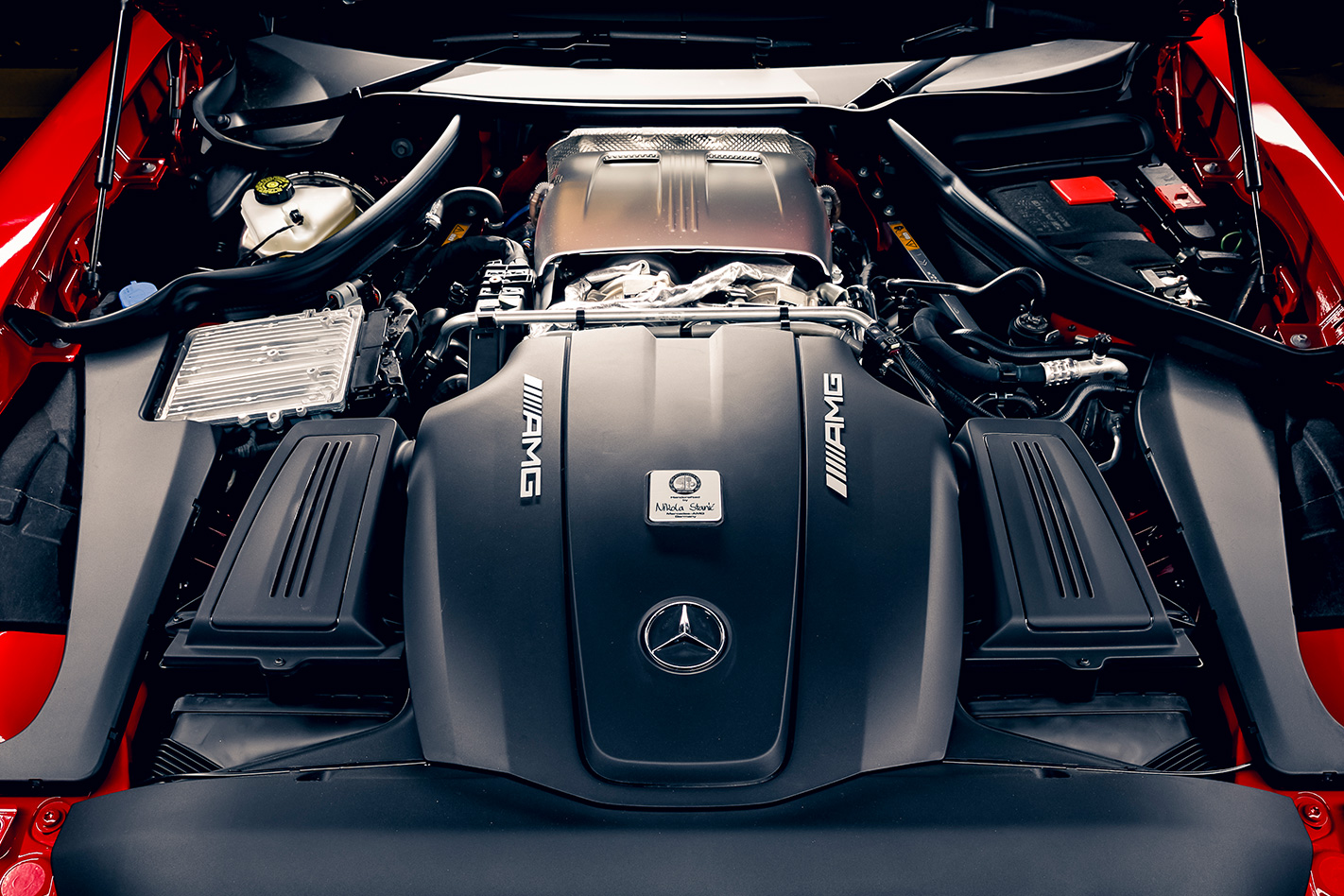
The AMG’s aural accompaniment is a cacophony of an entirely different spectrum. How anybody could live with the whirr of an electric car after hearing either of these two is beyond me. The GT R snarls like lions baying for blood, especially when launching from a standstill using its Race Start function. But it’s much more than a straight-line weapon.
Pushing through turns the GT R’s front-end grip is phenomenal. It sticks with unwavering commitment, assisted by a four-wheel-steering system that adds low-speed agility and high-speed stability. With familiarity the GT R seems to shrink and become easier to place, and the initial remoteness of its steering rack melts away. From lock-to-lock the AMG’s steering is quicker and lighter than the Porsche’s, yet feels more artificial in its assistance; as do the brakes, though their stopping power is huge.
The GT R is a marked step above a regular GT S, with a surprisingly broad and approachable performance window. Barrel it into a corner at whatever speed and it has the tools to sort it out on the fly.
Competent electronic aids make it a doddle to slide around, too. The Porsche is much less willing to cut lurid shapes, and asks to be driven quite differently. It demands intelligence and anticipation from the driver to deliver its best results. Power understeer is there to greet those who aren’t set up before a corner and patient with the throttle. Get it right, though, and the 911’s traction on corner exit is incredible.
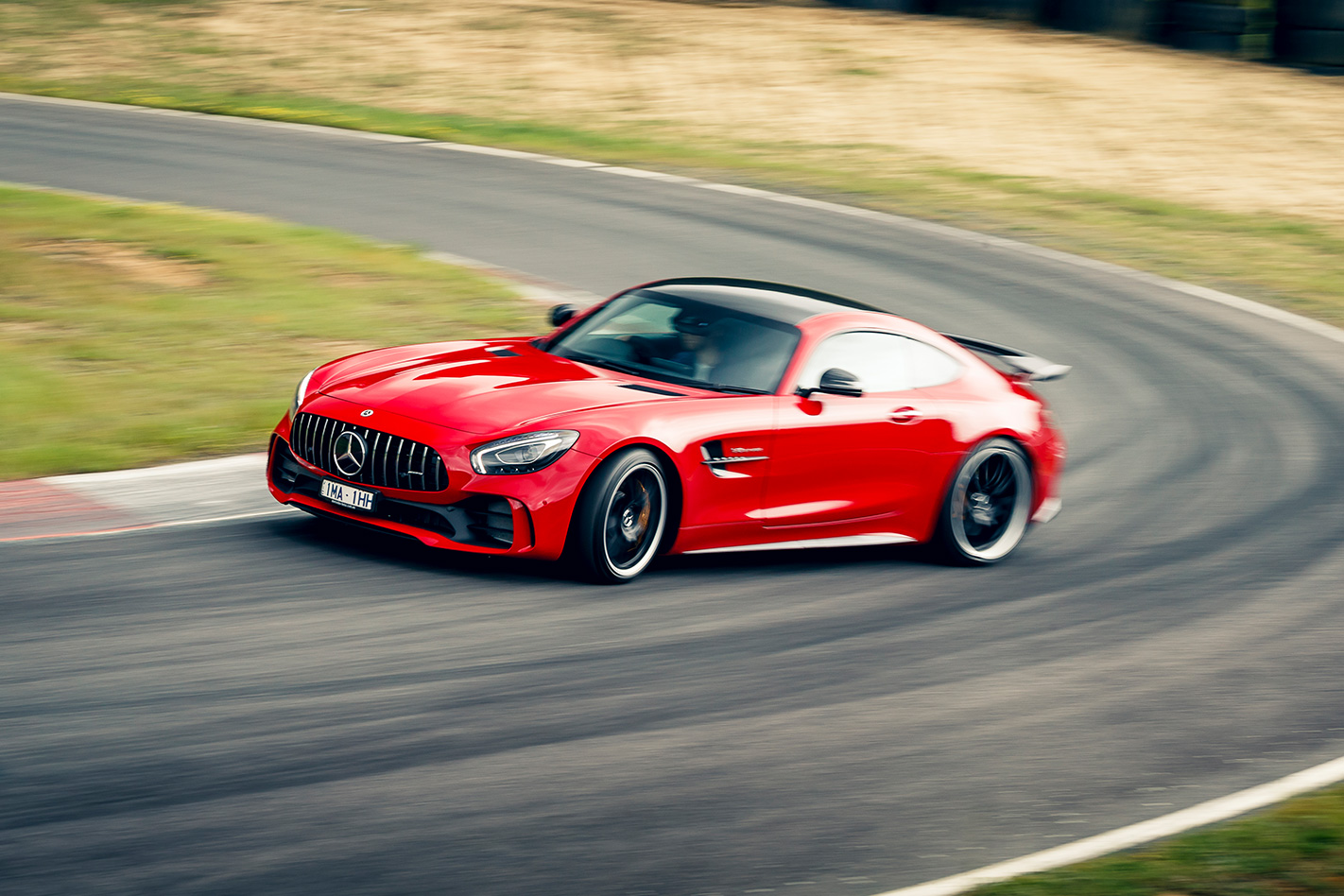
The GT3 relies on precision inputs, which makes the driver somehow more integral. That often means accepting that you are the bottleneck in its performance envelope, but the rewards are on another level. It has a mechanical immediacy and authenticity that is fully engrossing.
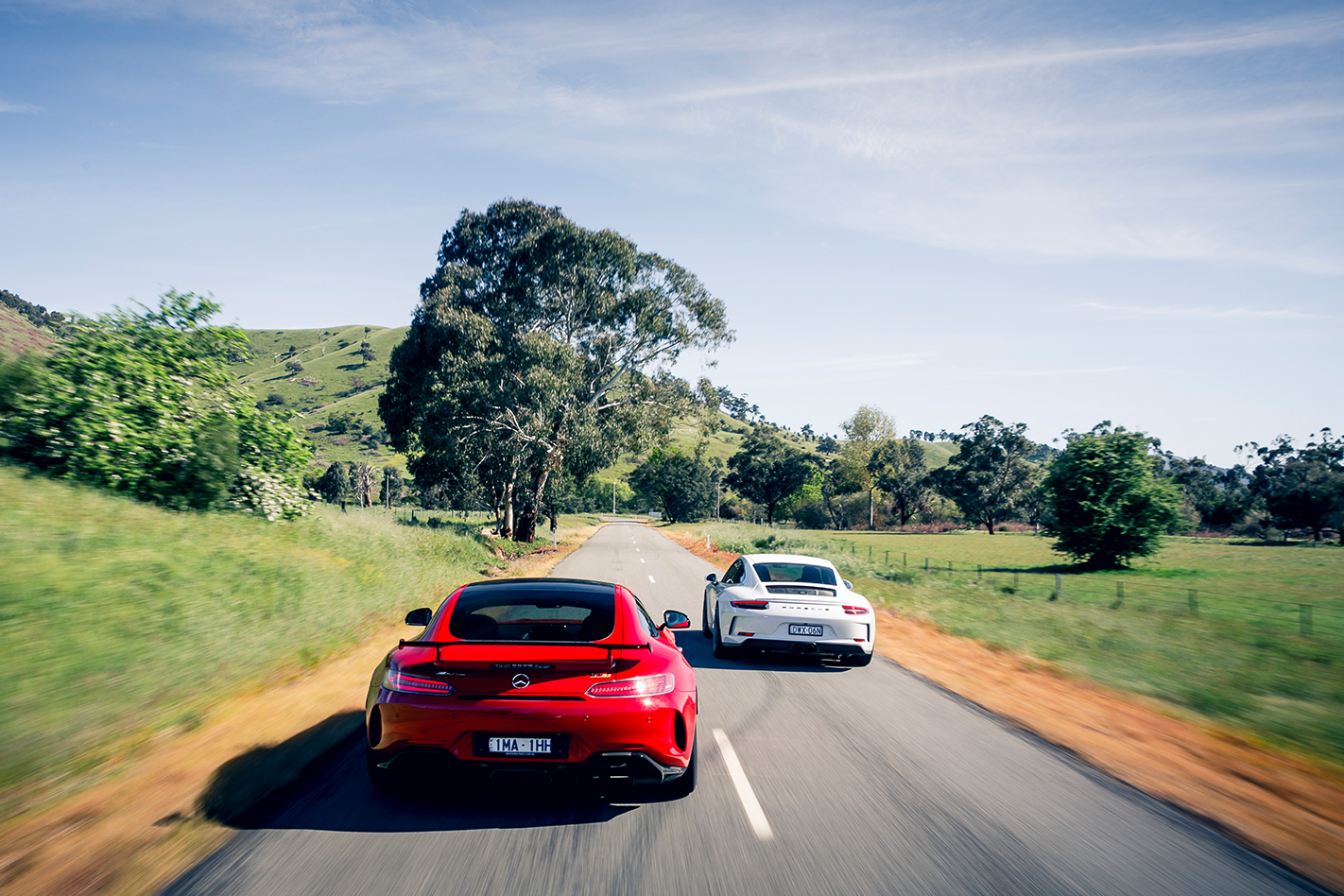
At 100km/h on a fast backroad the mood inside each of these cars is entirely different. The GT R feels totally unstressed lapping up corner after corner with minimal exertion. That it has acceptable ride comfort is a huge surprise given the stiffness of other AMG GT variants. There’s a cruising talent to this GT that its track-focused appearance doesn’t immediately suggest.
Conversely, the highly strung GT3 is always standing to attention and bubbling with an energy that can’t be dialled back. It’s a bit of a confused thing, this GT3 Touring. Some rough and ready characteristics are expected from the regular, be-winged race car with numberplates. But its brake squeal, drivetrain shunt and ride stiffness don’t fit with the Touring part of its name. Calling it that implies a softness – a touring ability – that it just doesn’t have. But that doesn’t make it any less brilliant as a driver’s car.
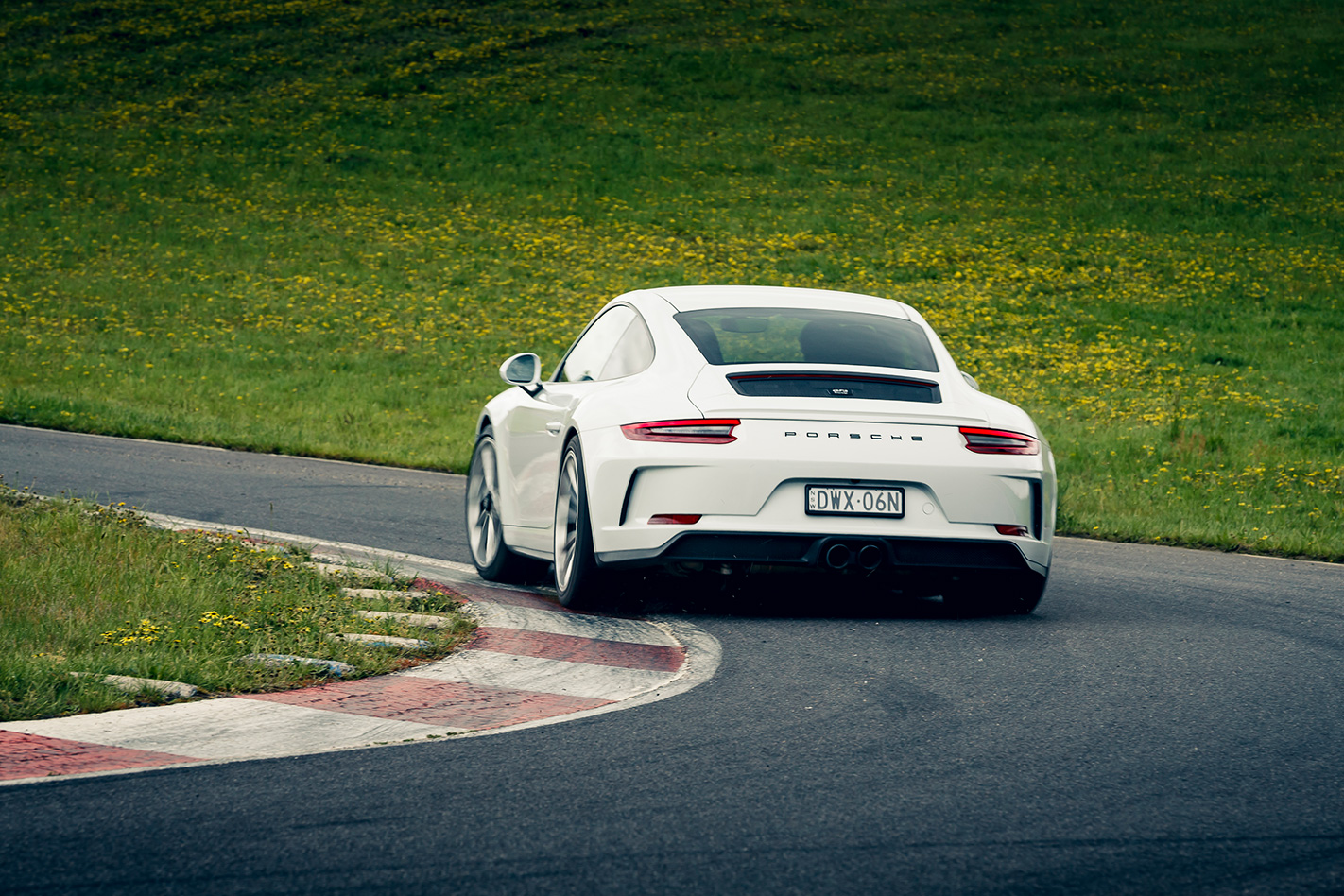
A greater level of tactility and connectedness is what the Porsche ultimately has working in its favour over the AMG. There are some easily quantified advantages too, not least of which is their relative fuel use. The GT3 wasn’t exactly a miser at 15.9L/100km over our test, but the GT R needed 20.6L/100km. And you could practically hear it guzzling in the wetness of its exhaust note; as though forearm-sized fuel lines were hosing the combustion chambers with 98 RON.
The GT R’s ability to deliver a heavyweight blow is the quality that makes it a thoroughly compelling proposition. It somehow feels stronger, a little bit more pliant, and as though it has more in reserve. A degree of sensitivity and feedback is still to be found by AMG’s engineers, but what they have developed is a much more complete package than its hot-rod theatrics might have you think. For some, it will be the better choice, with a demeanour that’s easier to live with and a more casual approach to going ridiculously fast. The Porsche is completely undiluted by comparison. It seems to run on a knife edge, and ultimately delivers the sharper, more alert driving experience.
That pure, mechanical sweetness instils in the GT3 Touring a final level of involvement and satisfaction that makes it the most accomplished in the art of driving for its own sake.
Autonomous cars cannot arrive soon enough. It’s time to get people who don’t give a damn about driving, and who can’t drive to save their lives, out of the driver’s seat.
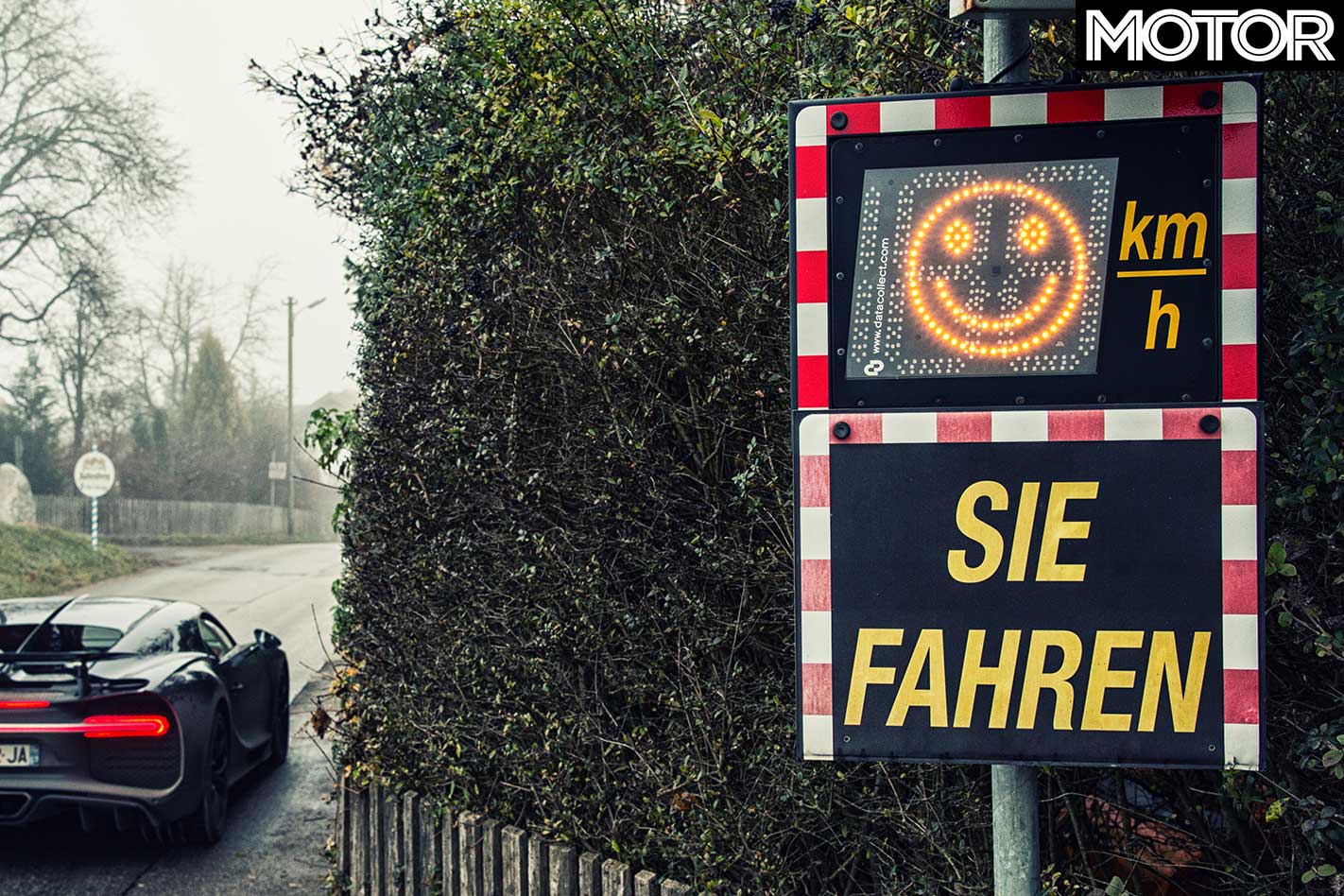
I don’t know if you heard this month the startling news the European Union plans to introduce speed limiters in all new cars sold from 2022. Now, this is one of those things where people read the headline and develop their opinion prior to reading the article.
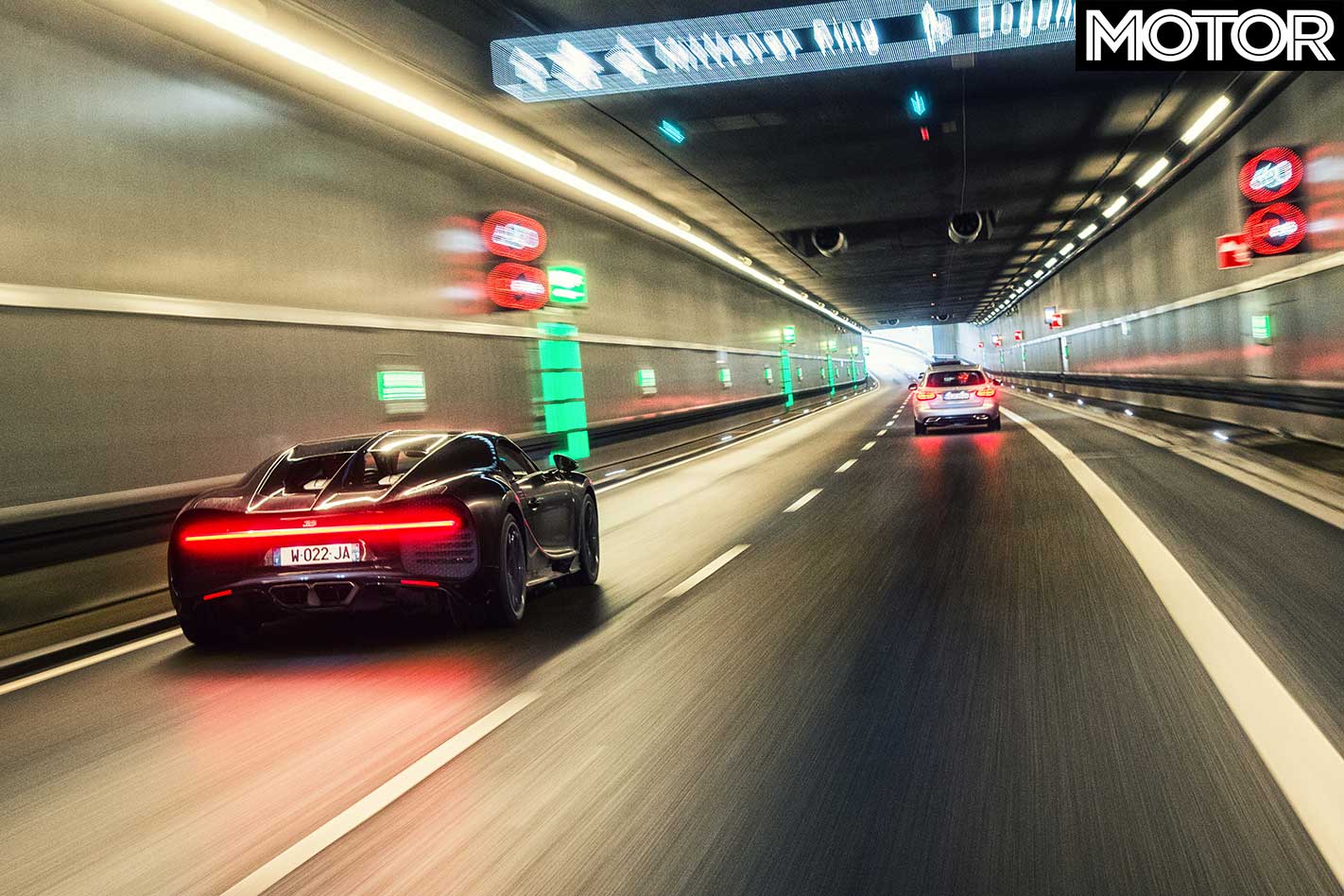
There are important caveats. Under the rules, new vehicles would use GPS and sign recognition cameras to know the posted speed limit, and then it will ‘assist’ drivers to keep under that limit. The driver can override the limiter by pushing the accelerator presumably through a detente, a safety feature that already exists in cars with manually operated speed limiters. A full on/off switch is also envisaged for the system, at least initially.
New cars would also be fitted with a ‘black box’ recording your every move – this is the more worrying development frankly, given the propensity for data to be transmitted to authorities, whether you’ve been in a crash or not.
Australia is expected to mirror the EU in introducing these supposedly game-changing, road toll-reducing technologies, which also include an ‘alcohol interlock’ and distraction detection. It’s easy to stoke the usual Orwellian fear of a Big Brother watching our every move, protecting us from ourselves. But, really, it is a little bit like that, let’s be honest.
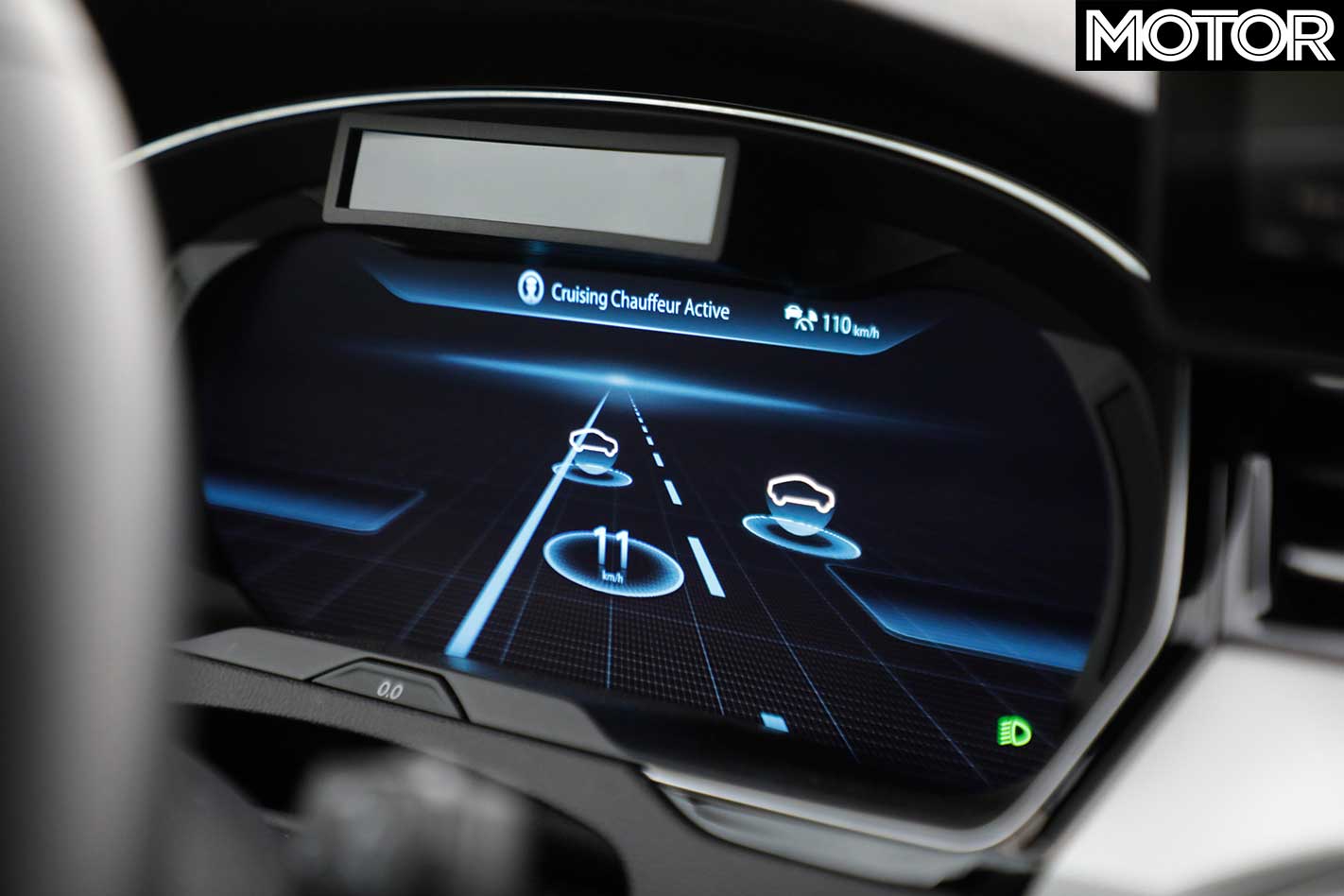
And it all has to do with the fact that members of the public, on the whole, perceive operating a car as a chore and go out of their way to give as little of their energy to the task as possible. At which point they are surprised when they crash and seek immediately to lay blame on another party, to protect a misguided sense of themselves being an exceptional driver, when in fact they’re anything but.
There are two types of people on the road – those who will tell you they’re an above-average driver and that everybody else is garbage; and liars. This is so predictable it’s almost boring.
It’s time to take these people, so disinterested in the genuine joy, challenge, and journey of self-improvement that is driving, not off the roads, but out of the driver’s seat. I’m over this transitional period of technology – active-emergency braking, lane-change assist (where the car steers you back into the lane), anything that may apply the brakes or steering on your behalf. And, now, technologies that force you to agree with whoever has set the speed limit.
I am starting to dream of public roads where those most ambivalent towards driving, and who are the biggest danger to themselves and others – those motivating the development of all these so-called safety technologies – are put in the back seat as a computer assumes chauffeur.
There, they can mindlessly refresh their social media feeds at their heart’s content, or watch entire seasons of Netflix shows – whatever, so long as they’re not dozing at a red light in front of me or putting a quarter of their car in my lane.
Of course, there is no regulatory guarantee people like you and me, who can take the wheel safely, will still one day be allowed to share the roads with computers, and perhaps I should be careful what I wish for. But if it can be possible to have ol’ C-3PO dawdling in the correct lane at a too-low speed limit, and sees me coming better than its occupant would, let’s try to hurry this autonomous thing up.
You know that old trope of ‘been there, bought the t-shirt’? Well, if you’re one of the lucky 600-700 estimated ‘Future Astronauts’ who have dropped US$250,000 on a space flight with Virgin Galactic, instead of a neon t-shirt to match your light dusting of solar radiation, the souvenir en vogue is a Range Rover. Because, of course it is.
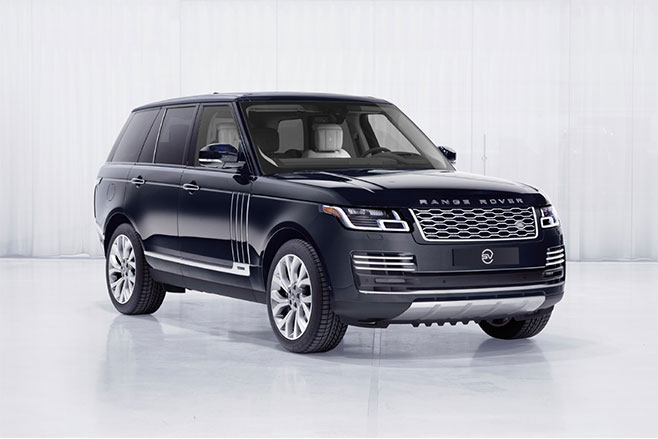
The latest model to emerge from Land Rover Special Vehicle Operations (SVO), the Range Rover Astronaut Edition is perhaps the most exclusive Range Rover yet created. Only available to those who are signed up to fly with Virgin Galactic, the SUV arrives as part of the ongoing partnership between Virgin Galactic and Land Rover.
Now, we’re talking about a very discerning customer here – so this is no re-badged Rangey. The exterior is finished with a “Zero Gravity Blue” paint inspired by ‘the depth and intensity of the night sky’ and features exclusive badging all over. The kitsch Virgin Galactic rocket motif features heavily in the car, most notably appearing as a large puddle light and stitched into the headrests. In addition, the ‘DNA of Flight’ logo, a graphic showing the rocket evolving from a bird is seen on the carbon fibre front console and debossed onto the rear armrest.
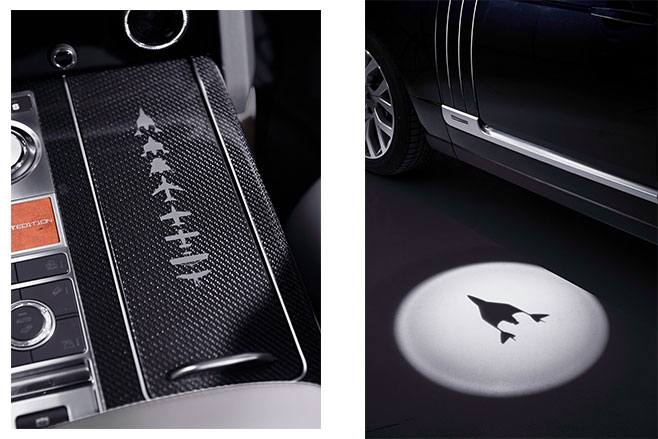
The real showpiece, though? The cup holder inserts. Prior to flying, ‘Future Astronauts’ will have discs crafted out of wood from the landing skid of Virgin Spaceship Unity’s 2018 flight. One of the discs will read ‘see you up there’ and the other will have flight details inscribed. When that status changes to ‘Astronaut’, owners will have the discs replaced with ones from their own flight’s landing skid which will be personally inscribed with “specific details of a life-changing experience”.
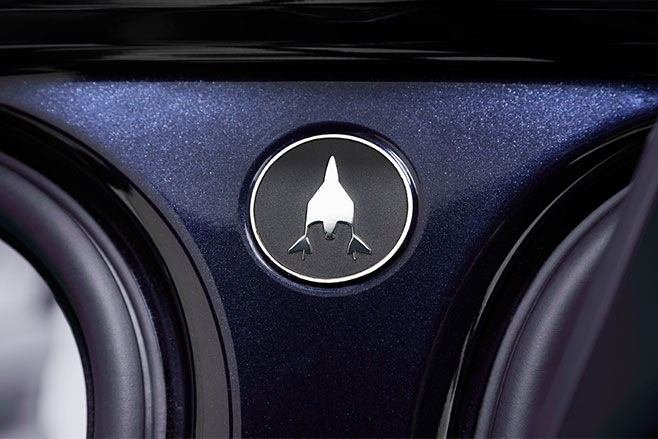
The Astronaut Edition will be available in two powertrains, Land Rover’s 297kW P400e plug-in-hybrid (PHEV) or 380kW 5.0-litre P525 supercharged V8. It’s not yet been revealed how much it is, but we bet it won’t be far off the cost of the flight.
This may be one of the most exclusive special editions ever made, but it’s certainly not the most bizarre! Click through the gallery above to see more of the weirdest limited editions ever made.
What other weird special editions are out there? Share your favourites in the comments below.
BMW has confirmed it will build a celebratory model to mark the 35th anniversary of its M-fettled 5 Series in the form of the 2019 BMW M5 ‘Edition 35 Years’, or ‘Jahre’ if you’re a traditionalist.
With only 350 to be built worldwide, its potential allocations are small and its pricing yet to be confirmed, but BMW has revealed its specifications.
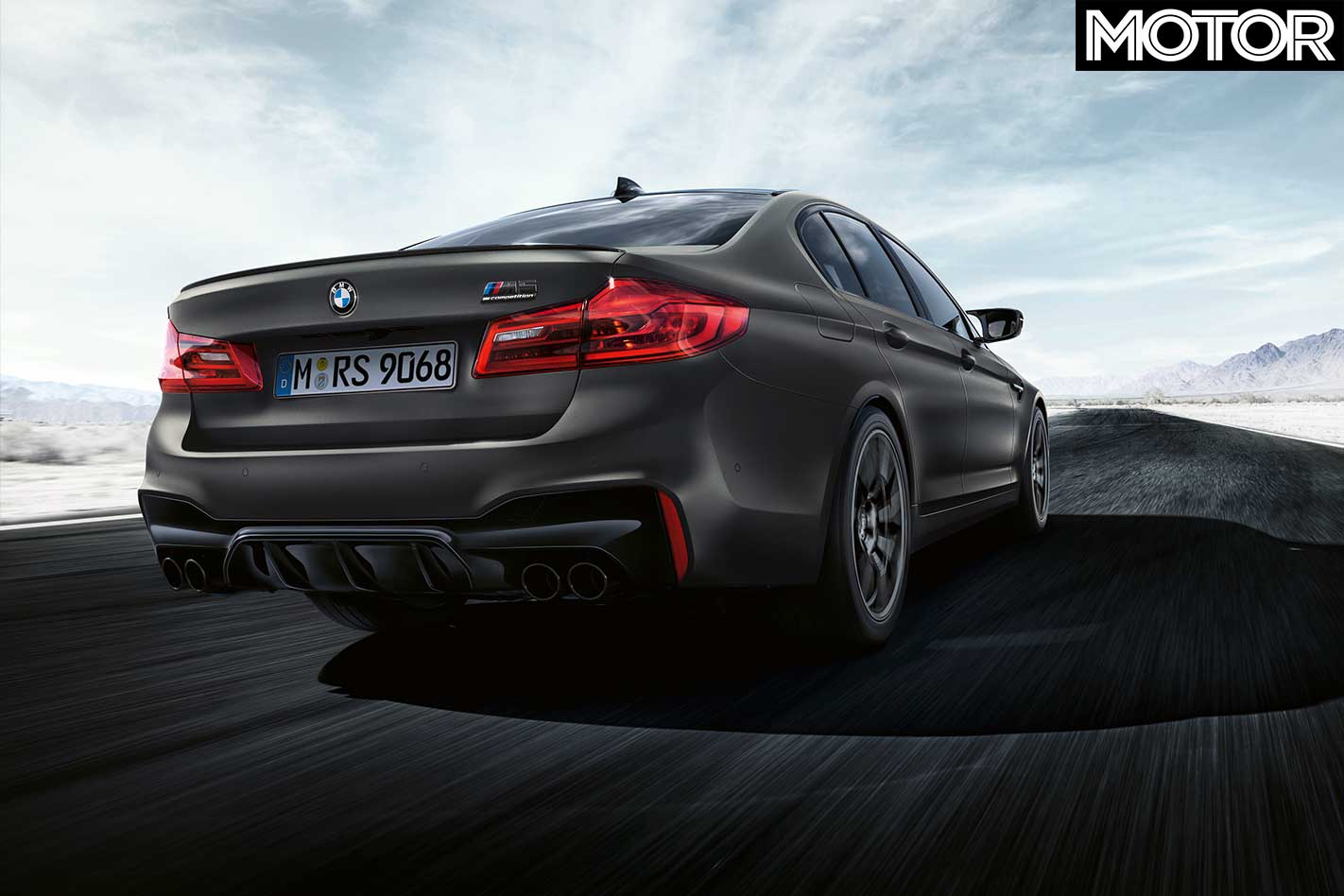
Unfortunately, it bears the same specifications as a variant that already exists:
“The resulting M feeling and the exclusive character of the high-performance sports sedan come to life with particular intensity in the BMW M5 Edition 35 Years.
“The point of departure for the configuration of the Edition model is provided by the BMW M5 Competition.”
This means a twin-turbocharged 4.4-litre V8 packing 460kW and 750Nm of grunt, and a potent 3.3 second to 100km/h sprint claimed by BMW – though MOTOR has tested this to a best of 3.78 seconds.
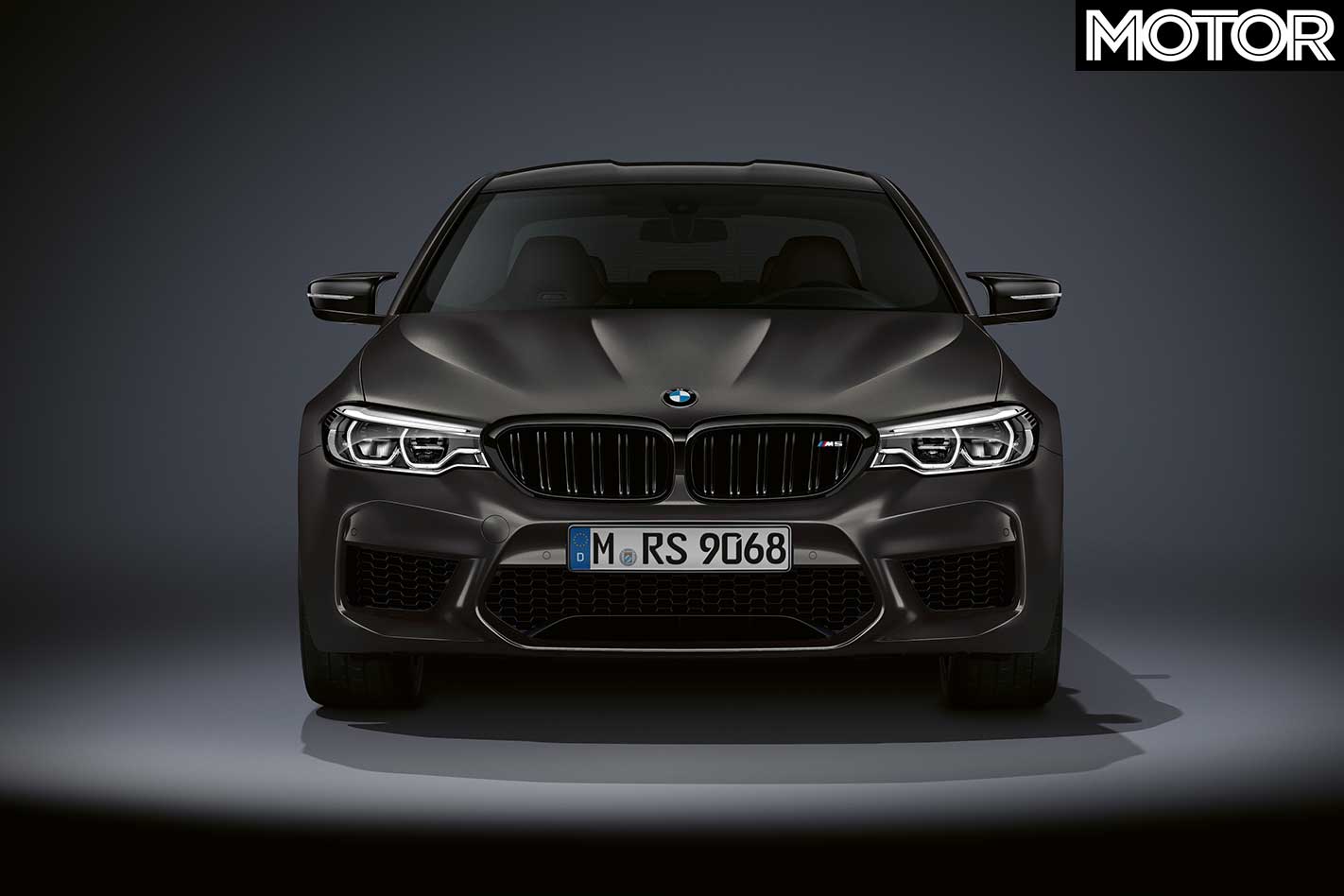
Where the BMW Edition 35 Years/Jahre differs from the Competition is in its fitout and design elements.
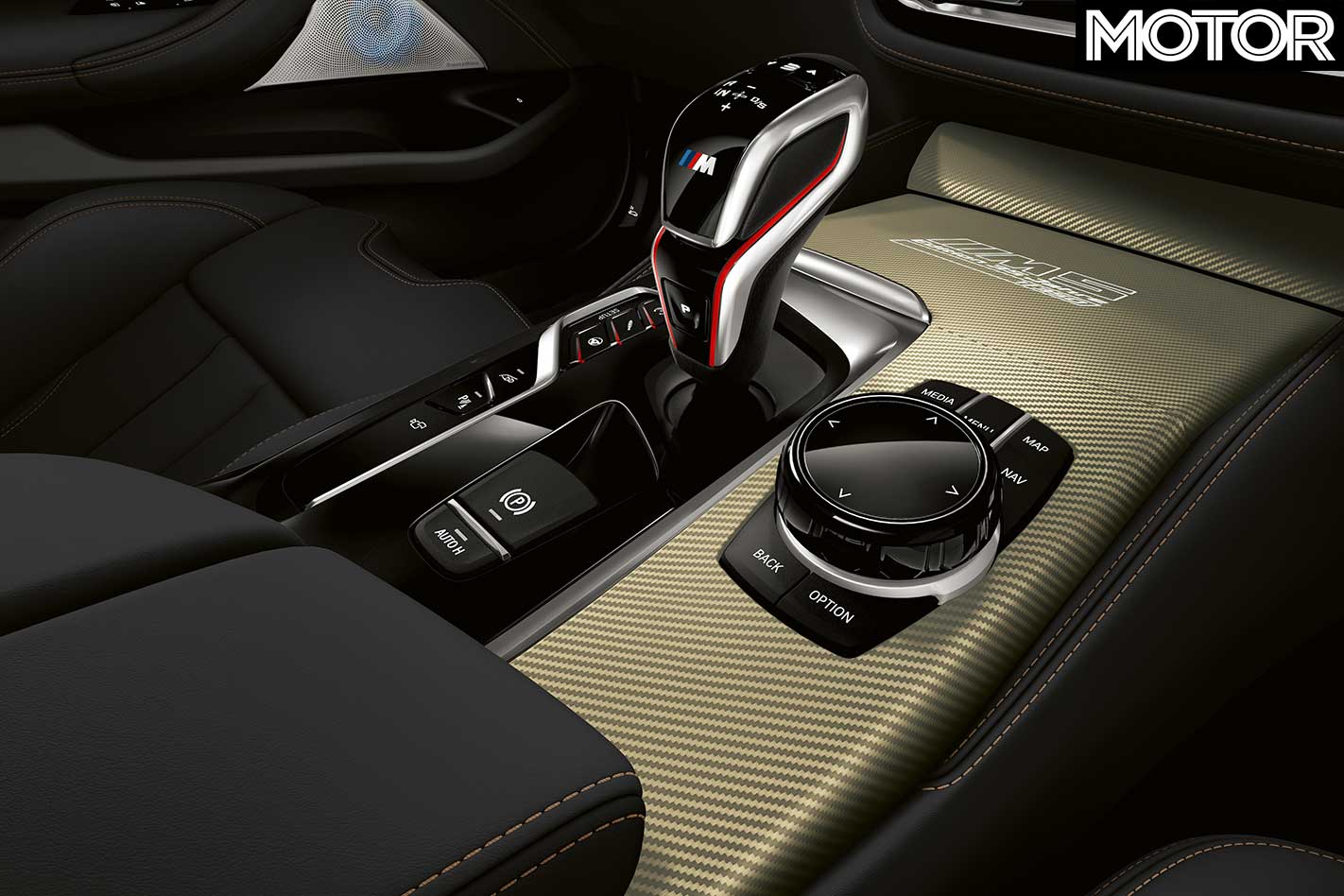
Most notably is the use of gold-anodised carbon ‘structure’ in the interior, which provides a stark contrast from the otherwise brooding colour scheme in blacks and dark greys.
‘M5 Edition 35 Jahre 1/350’ is also found in large print in the centre console on top of the storage compartment cover.
The firs E28 M5 revealed in 1984, with an engine borrowed from BMW’s M1 supercar. A 3.5-litre inline six was good for 210kW/340Nm, and BMW claimed it was the fastest sedan on the planet.
Since, it has gone through five other generations, being powered by a variety of inline sixes, V8s, and even a V10.
MOTOR has contacted BMW Australia and awaits confirmation of localised pricing and availability.
The way Australian state governments fine drivers is broken.
Surprisingly, I’m not talking about the tactics used to nab misbehaving drivers, nor the single-minded focus of our road safety message – though both of those things do need changing. Instead, I’m talking about the literal fines we hand out to drivers caught doing the wrong thing.
This was highlighted for me recently when a co-worker was fined during a trip to Germany earlier in the year.
The infringement? Driving 6km/h over the speed limit.
The fine? A whopping €15, or roughly $24 Aussie dollarydoos.
To give that a little context, if he had been caught doing the same thing in his home state of Victoria, it would have been a $201 fine in the mail. That’s a whopping $177 difference, or a 737 percent increase.
While I’d love for fines to be as cheap as they are in Germany, I’m also aware that penalties are meant to serve a purpose in deterring drivers from offending.
It’s here that Australia’s system falls short, and is unfairly punishing a certain part of the community.
Income inequality continues to be a growing problem locally, with the top one percent of income earners holding as much wealth as the bottom 70 percent of all households.
Our fines are a flat rate for all, with no consideration for if the monetary cost is a deterrent at all.
For example, people on Newstart currently receive $277.85 a week, or roughly $14,448 a year.
The average weekly wage for an adult in Australia that works full-time in November 2017 was $1567.90 before tax, while the median figure was $1261 a week, or $65,577 a year.
Someone bringing home $100,000 a year has an income of $1923 a week.
You cannot tell me that each of the hypothetical earners above that would be deterred to the same level when receiving a $201 fine. For some, it could mean not eating for the week, while others can simply shrug it off as an inconvenience.
But fear not, because there is another European country that has a system for fining drivers that is both fair and a deterrent – Finland.
The Finnish system uses a ‘day fine’ system, and uses a formula which takes into account the driver’s monthly income (determined after taxes) and the number of dependents the offender provides for.
The system also has a ‘fine floor’ that ensures the cost of the infringement doesn’t fall too close to zero, which would risk reducing the deterrence to a point where the penalty is no longer effective.
It’s a system that states and territories in Australia should follow to build a more equitable system.

NSW’s Labor party proposed means testing drivers during a state conference in 2018. That proposition suggested changing the $109 fine for low range speeding in NSW to $36 for the lowest income earners, while the highest income bracket would pay $312.
Running a red light – a $415 fine in the country’s most populous state – would range from $166 to $1455.
The figures for the new fines were calculated by The Australian Institute (TAI), and were based on mean disposable incomes. The lowest of the five brackets was for those with a disposable income of $14,092, while the highest was $76,684 a year.
How will this affect revenue? Frankly, I don’t care, and if the government was actually serious about improving road safety, it wouldn’t either. But the reality is, governments do care, as nothing is done without considering the cost to the budget.
Thankfully, according to the TAI’s report, an extra 12 percent would be added to coffers across Australia under the Finnish system. Specifically, NSW would see a 15 percent increase, Queensland 14 percent, the Northern Territory 23 percent, and Tasmania a whopping 57 percent. South Australia’s revenue would decrease by 26 percent.
South Australia ruled out implementing a ‘sliding scale’ for speeding fines earlier this year. While deciding to reject a fairer system, the state’s Treaser Rob Lucas told the ABC an increase to speeding fines, vehicle registration, and licensing fees was being considered to help offset a budget deficit of $517 million.
South Australian drivers are consistently the most frequently fined in the country on a per-capita basis. In 2017 the state raised $101 of revenue from speeding fines for each resident. For comparison the most heavily fined state outright, Victoria, raised just $59 per person.
The lowest income earners are already hurt by our current fine system, and a similar change to what was proposed in NSW would not change that. However, currently the richest members of society are able to shrug off our fines as a mere monetary inconvenience. Increasing our current fines to more appropriately deter the highest income earners would only hurt lower income members more.
As TAI’s paper stated, “For a driver earning a million dollars per year, a $150 traffic fine is of little consequence. For a low income earner, it can be a serious setback.”
It’s time to make driving, and fines, a fairer experience for all.
Following the lead of other revenant sports car manufacturers including TVR and Alpine, Italian brand De Tomaso has announced it will reveal its first model in 15 years at the upcoming Goodwood Festival of Speed.
It’s one of the many enthralling things Andy, Dan and Scott discuss on this week’s WhichCar Weekly podcast.
Paradoxically, the trio also chat about talented drivers. Nature, nurture or is talent simply the perceived product of planets aligning and good fortune? How does money and work ethic factor in the identification of raw talent and is it the reason the panel found careers in journalism and not racing? The boys will get to the bottom of it.
Taking out the show, Dan wants to talk about the exciting new TCR racing series that’s coming to Australia this weekend – and it’s not entirely for the obvious reason. With so much lacklustre motorsport choice already competing for attention each weekend, find out why this newcomer has the potential to go off.
If you’re on the go you can find WhichCar Weekly on all manner of podcast apps including iTunes and Podbean, please rate, subscribe and leave a review! You can also follow the day-to-day happenings of the WhichCar team on Facebook, Twitter and Instagram @whichcarau.
Listened to the show? Help us out:
- Leave a note in the comment section below.
- Leave a review on Apple Podcasts/iTunes
- Subscribe to our podcast
Downsizing engines is about as fashionable today as kale-crusted cronuts (or whatever else millenials are scoffing these days), but while Mercedes-AMG has turned its back on its delicious 6.2-litre atmo V8 and Volvo has thrown a 2.0-litre turbo four-pot in its S60 Polestar sports sedan, there are still a few choices for those whom size is everything.
Be warned though: you’ll need megabucks for most of these. Tiny turbo motors might be fine for the great unwashed, but the top end of town still puts significant value on the size of their engines.
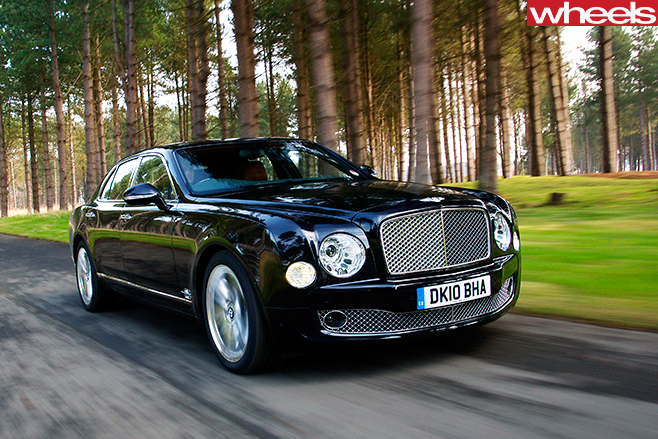
With a monstrous 6.75 (or six and three-quarters, as Bentley prefers to call it) litres of displacement being filled by a pair of turbochargers, the Mulsanne makes 377kW and a meaty 1020Nm of torque to haul its lardy 2.7 tonne body around. And haul it does: the big Mulsanne can rocket to 100km/h from standstill in a brisk 5.3 seconds.
2. Rolls-Royce Phantom – 6749cc, $950,000
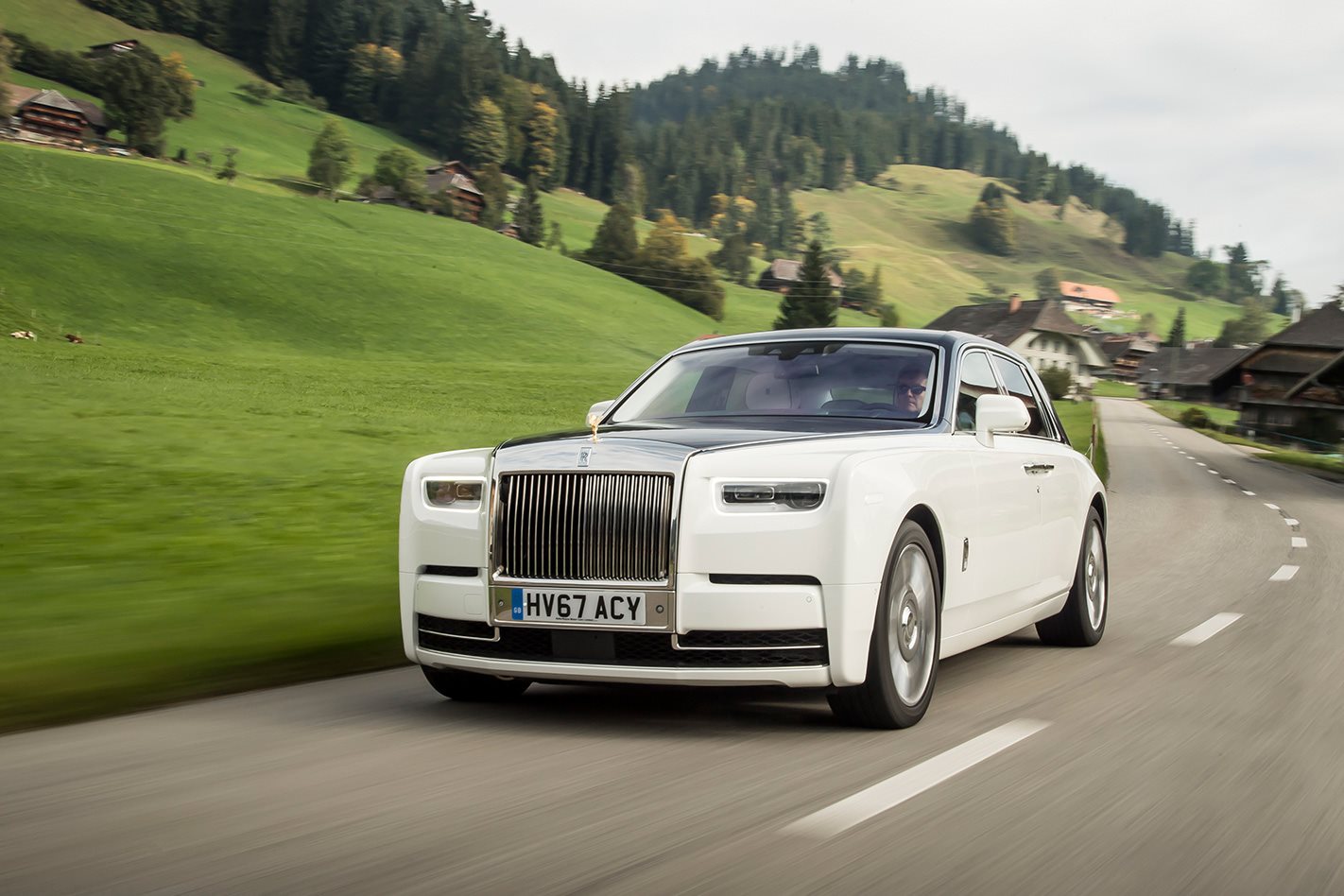
The limo love doesn’t stop with the Mulsanne, with rival Rolls following just 3cc behind the Bentley with a direct-injected 6.75-litre V12 thumping away under its alloy bonnet.
The outputs aren’t as impressive as the Bentley’s turbo V8, but with 338kW of power and 720Nm of twist the big Roller can still boogie its way to 100km/h in a hot hatch-like 5.9 seconds – not bad for a luxury car that tips the scales at 2649kg in its slimmest form.
3. Rolls-Royce Wraith – 6592cc, $595,000
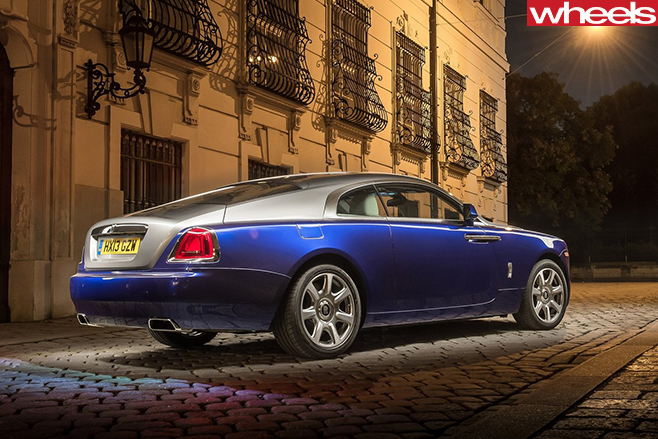
The Wraith is the two-door sibling to the “entry level” Rolls-Royce Ghost and boasts a 465kW/800Nm twin-turbo V12 to propel its ultra-wealthy occupants to obscene speeds. How quick? All of that V12 muscle is enough to get the 2.4-tonne Wraith to triple-digit velocities in just 4.6 seconds – just a tenth of a second behind a BMW M2 Pure.
4. Lamborghini Aventador LP770-4 SVJ – 6498cc, $949,650
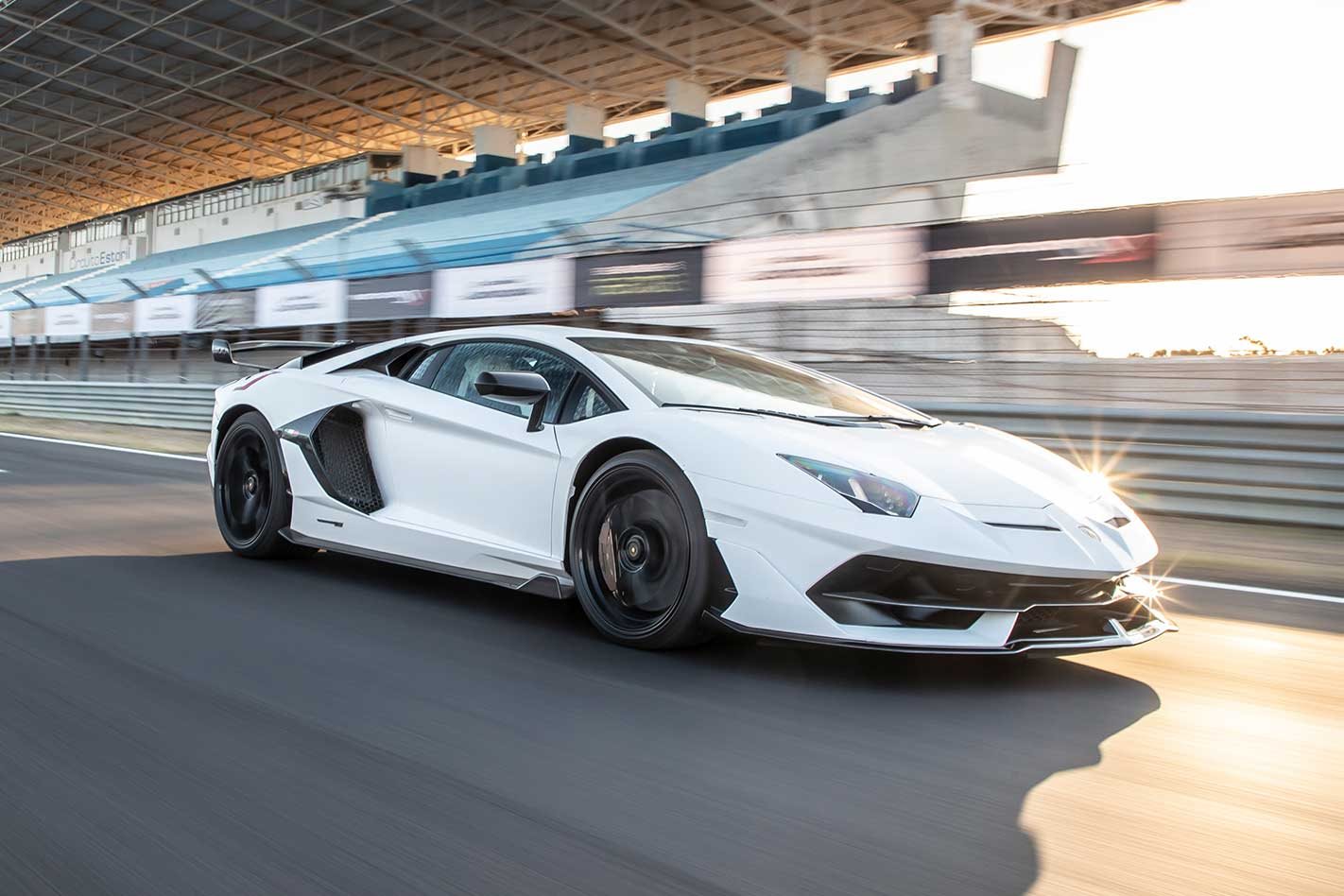
Now we’re getting serious. The Lamborghini Aventador Superveloce takes a 6.5-litre V12 and winds it up to a full-blooded 566kW and 720Nm – all without the aid of turbochargers.
It’s brutally quick. The zero-to-hundred stat is just 2.8 seconds, and thanks to a clever AWD system it’s got grip for days. Shame about that single-clutch automated manual gearbox though.
5. Chrysler 300 SRT Core – 6430cc, $65,000
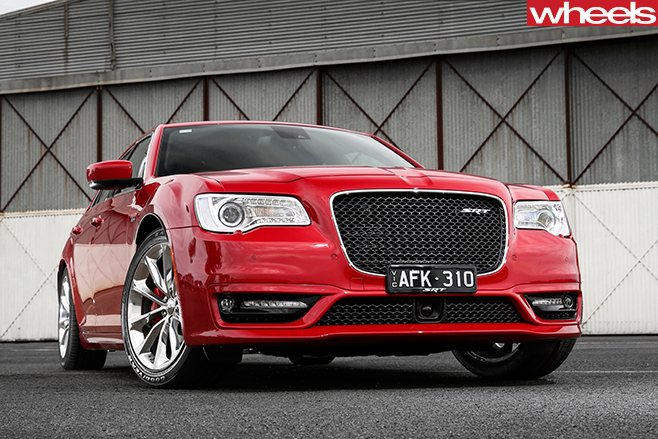
It also sports more ‘cubes than its main rivals from Holden and HSV, both of which have “only” 6.2 litres to play with. With 350kW of all-American power and 637Nm of freedom-loving torque it comprehensively outguns the Holden SS (as it should, given the $20k price gap), as well as pretty much everything else around South of the $80,000 mark.
Honourable mentions:
Aston Martin One-77 – 7312cc (V12), 559kW/750Nm
Only 77 examples of Aston’s mega-exclusive One-77 hypercar were built and only one ever came to Australia, but yes, for a brief period you could actually buy a 7.3-litre road car.
Ram 3500 – 6690cc (Cummins diesel I6) 276kW/1084Nm
Fiat-Chrysler’s Ram Trucks arm does nothing but make gigantic utilities, and few are more massive than the Ram 3500. Measuring more than six metres in length, the Ram 350 packs an equally gargantuan 6.7-litre diesel inline six under its bonnet that generates a whopping 1084Nm of torque. FCA doesn’t bring it here, but if you’ve got about $140,000 you can get a RHD-converted one in your driveway – provided it’s big enough.
Chevrolet Silverado – 6587cc (Duramax diesel V8), 296kW/1037Nm
GM’s local arm Holden doesn’t distribute any of The General’s mega-utes from Chevy or GMC, but local importers will sell you RHD-converted examples of the Silverado and its GMC Sierra twin. 6.6 litres of turbodiesel grunt are yours for the taking, but you’ll pay around $140,000 for that 1000Nm+ torque figure.
Three years since the last Aussie-built Ford Falcon rolled down the line at Broadmeadows with an engine produced nearby in Geelong, the Blue Oval has confirmed both of the iconic assembly sites have been sold.
Construction and property developer Pelligra Group has purchased both the sites for an undisclosed amount, though it was reported Ford was asking over $75 million for the assets. In a press release issued today, Ford said it had chosen Pelligra for its “appreciation for the significance” of the plants, with the historic relevance of both locations to be memorialised.
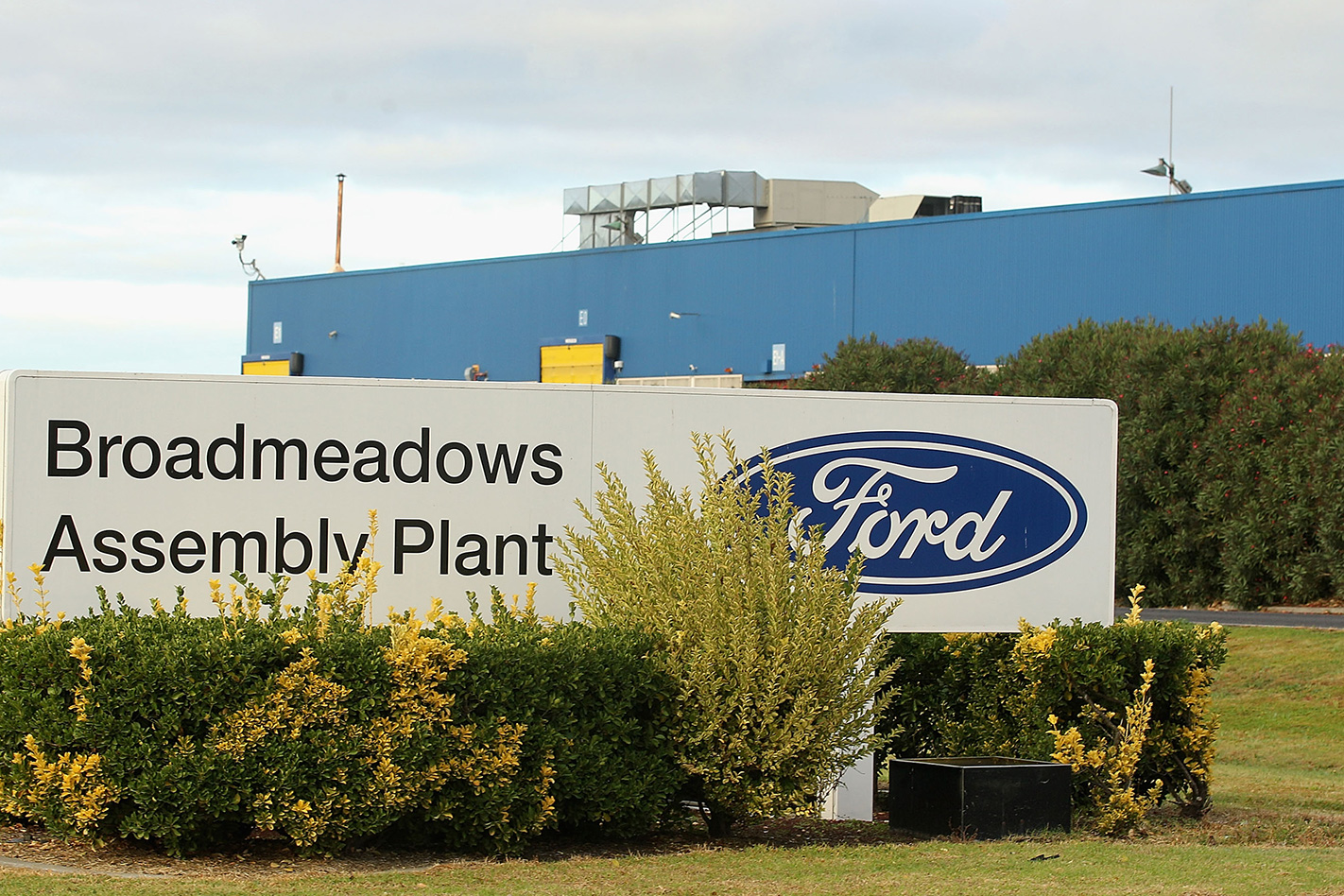
The Melbourne-based developer will rename the sites Fortek Geelong and Assembly Broadmeadows, injecting over $500 million to revamp the areas into new technology and industrial centres. The project will generate up to 2000 jobs initially and Pelligra expects the new industrial complexes will generate 4000−5000 jobs in the next 5-10 years.
“Pelligra has a strong track record of projects that deliver jobs and rejuvenate communities. Our intention with Fortek Geelong and Assembly Broadmeadows is the same; we are committed to … start work on site within a year,” said Pelligra chairman, Ross Pelligra.
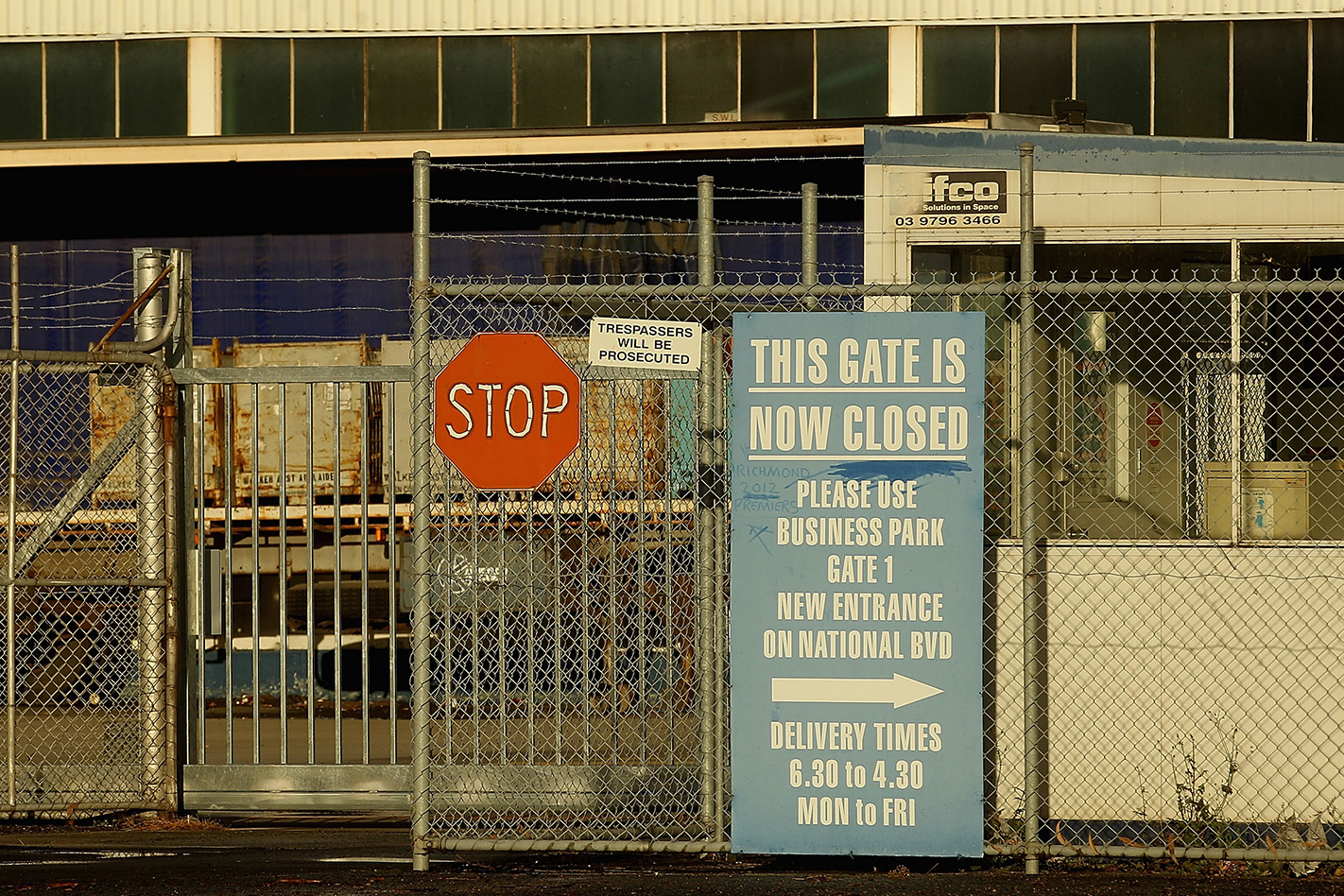
“Fortek Geelong and Assembly Broadmeadows are significant historical manufacturing sites.Through our investment in the area, we intend to help rejuvenate and grow the local community, and create industry leading hubs with world class innovation, engineering, and manufacturing on site.”
Holden sold its Elizabeth production plant to the same developer in late-2017, which was renamed Lionsgate and also repurposed into an industrial hub.
Ford will subdivide the 100-hectare plots and keep its design, engineering and research centres operational, including its You Yangs Proving Grounds outside Lara.
“Ford’s Geelong and Broadmeadows sites have played a central role in the history of Australia’s auto industry as centres of technical excellence, and have been part of the fabric of the local communities for generations,” said Ford Australia CEO, Kay Hart.
“We are pleased that Pelligra Group will build on Ford’s ongoing engineering and design presence by adding new opportunities for innovation, ideas and business in Geelong and Broadmeadows.”
Want a good look at the 2020 Ford Focus ST wagon? Of course you do, because a hot hatch with room for surfboards and a dog is our kind of car.
Ford Europe released photos of the stretched ST this morning, confirming that it’ll build a Skoda Octavia RS-hunting chariot beside the hatch version.
Take a good look at our photo gallery above and let us know what you think.
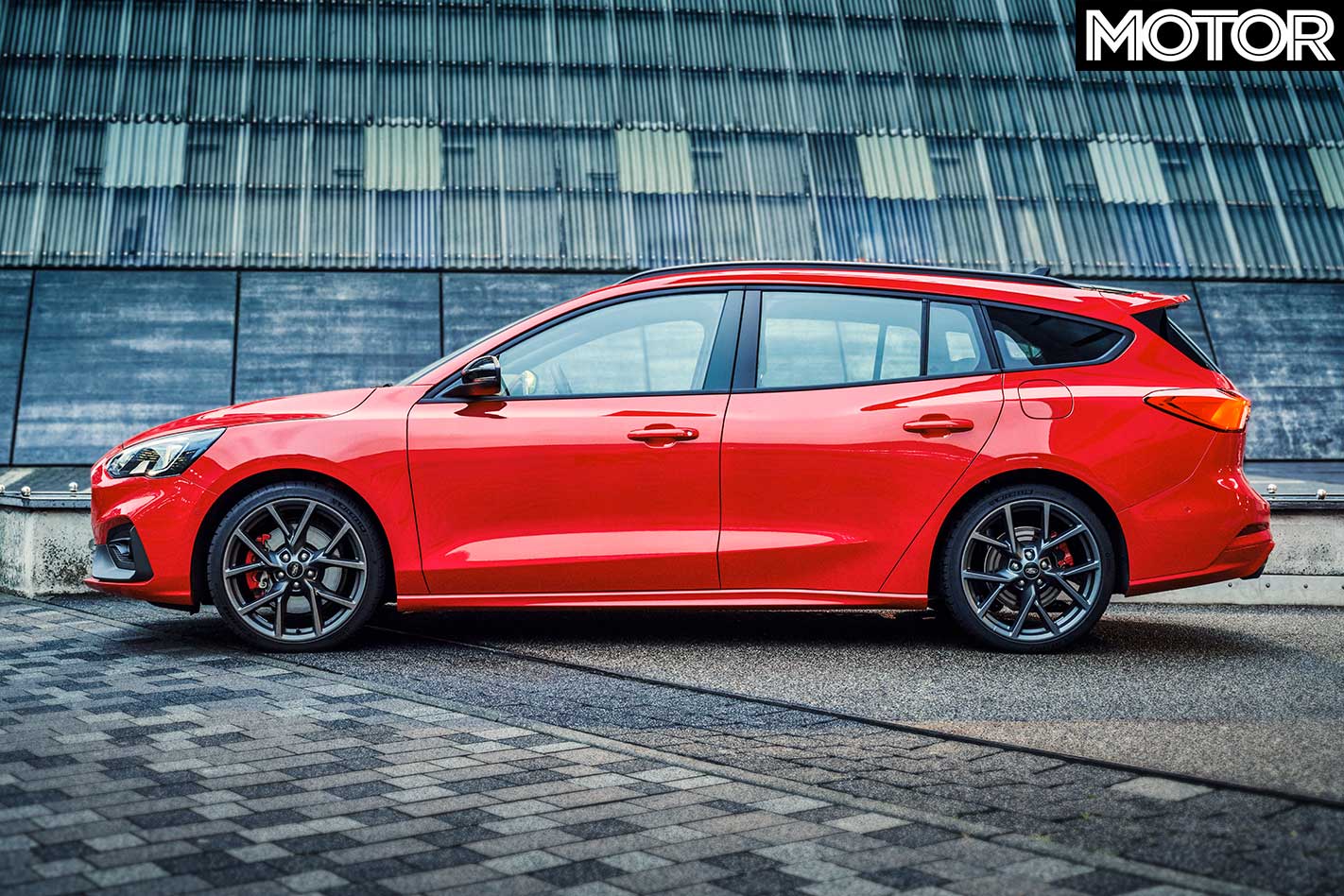
It’ll start construction this European summer, which is our winter, but without specifications, performance figures or measurements it’s hard to compare its performance to the hatch.
Luckily, though, we know it will drive pretty well. After all, the wagon shell’s multi-link rear suspension is rumoured to feature in the ST hatch, so you can bet it’ll deliver similar handling.
Ford’s also confirmed it’ll score the same turbo 2.3-litre inline four cylinder, rated at 206kW, mated to a six-speed manual and seven-speed ‘automatic’.
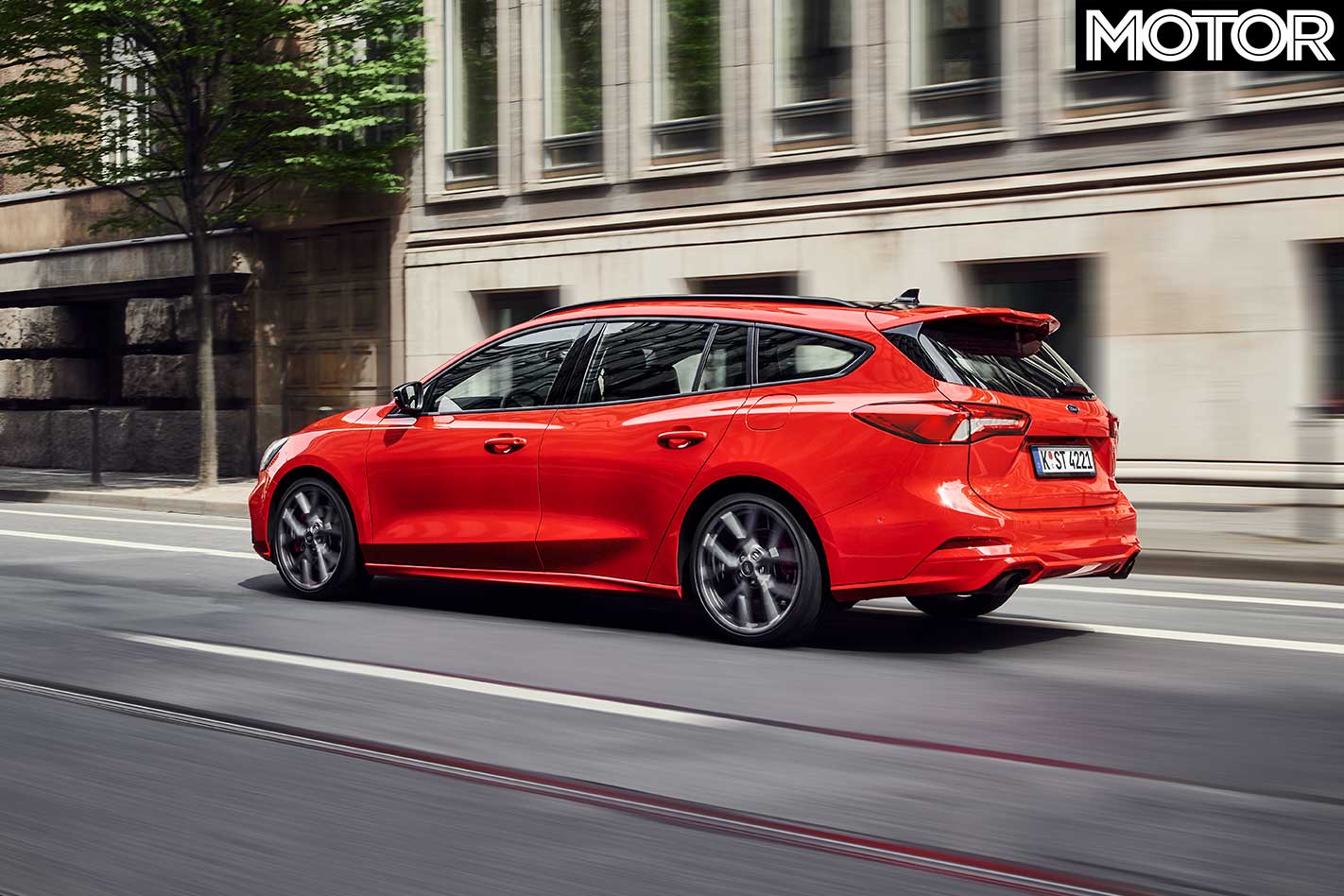
Along with that it’ll use an electronically controlled front differential, rev-matching and selectable drive modes. And there’ll be a 140kW turbo 2.0-litre diesel version if you’re lugging more than a couple kids.
The first Ford Focus ST wagon missed Australia, sadly, and we’re awaiting an answer from Ford on whether that’s the case again when the hatch version arrives early next year.
In the meantime, here’s an ST wagon gallery for you to flick through. Enjoy.
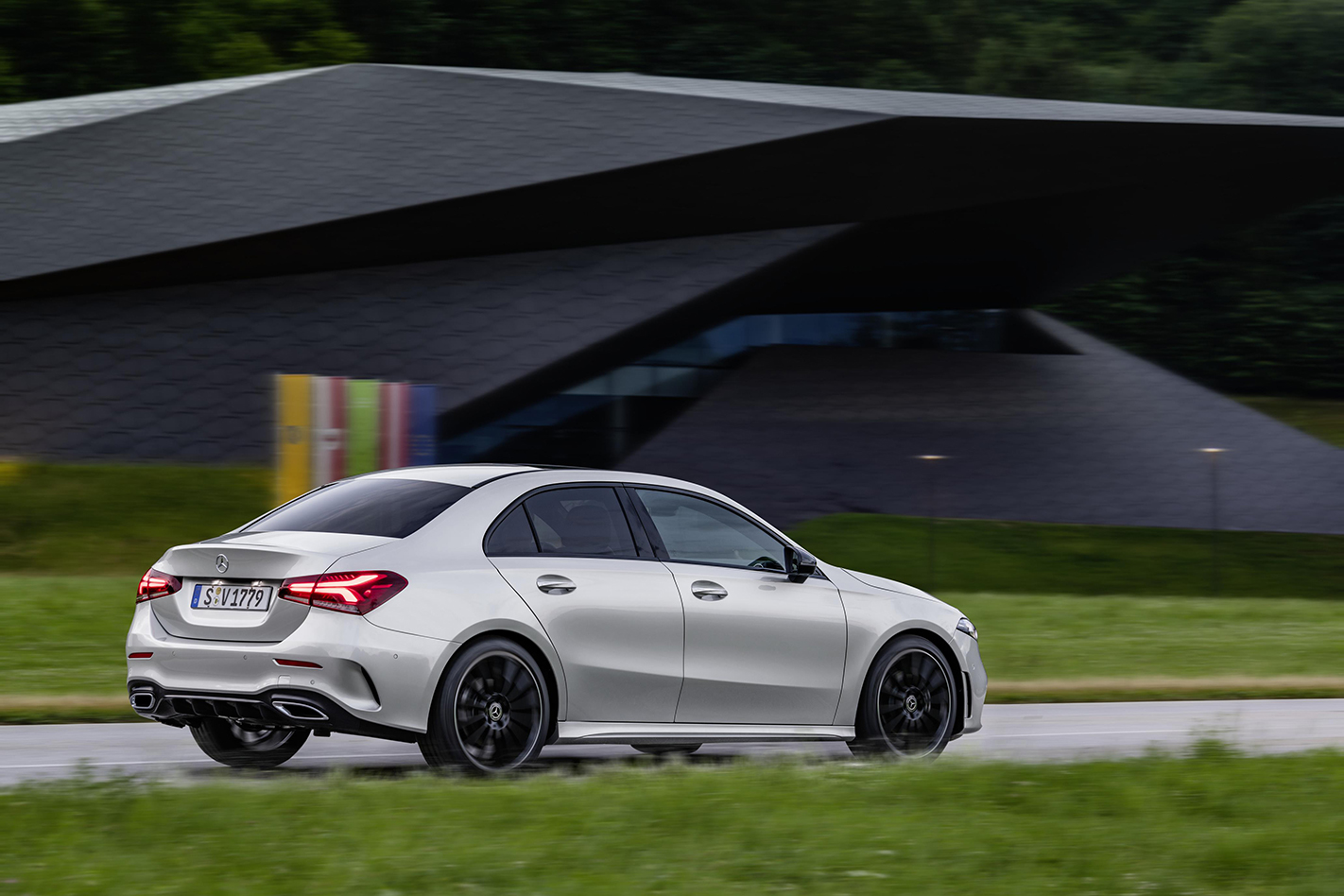
The long-awaited sedan versions of the rejuvenated Mercedes-Benz A-Class premium small-car will arrive in Aussie showrooms next month with a higher price tag than their hatch counterparts.
The A180 and A200 (pictured) sedans are priced at $44,990 and $49,400 respectively, more than $2000 more than the five-door A180 ($44,300) and A200 ($47,200) that are already available.
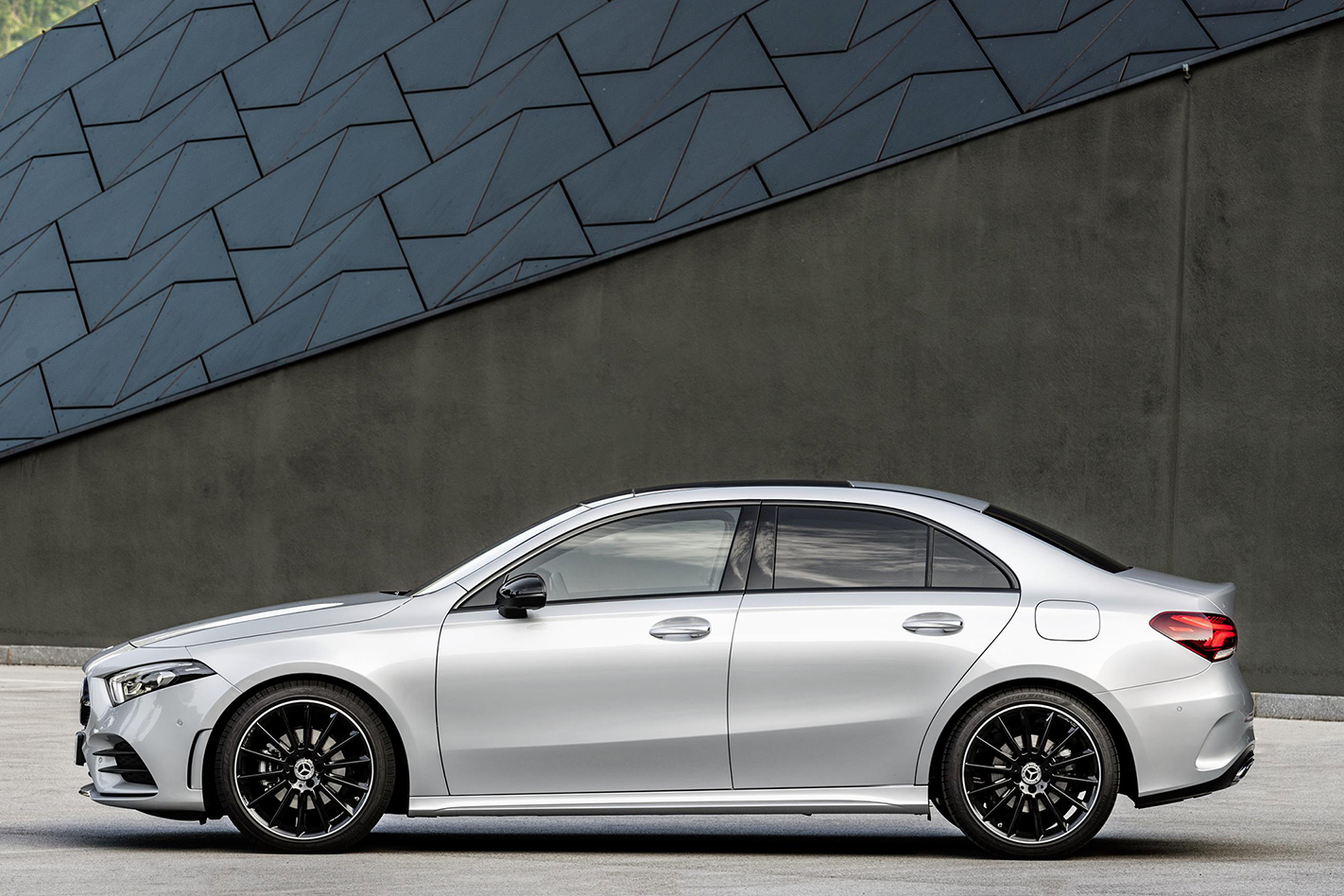
That extra cost brings some additional sheetmetal and space over the hatches, plus an additional 60-litres of boot space that takes capacity to a handy 430 litres.
Equipment levels and powertrains are otherwise identical to the hatch, which is one of the most advanced Mercedes-Benz models ever built in terms of connectivity and active safety. Headlining the tech, each variant is equipped with the brand’s advanced MBUX voice-activated vehicle control system.
The entry-level A180 sedan shares the hatchback’s 100kW/200Nm 1.3-litre turbocharged four-cylinder petrol engine, paired with a 7G DCT seven-speed automatic transmission.
Official combined fuel consumption is unchanged at 5.7L/100km despite the sedan’s slipperier lines that according to Benz produce less drag than any other passenger vehicle
Inside, the MBUX system features a head-up display and twin side-by-side 10.25-inch digital screens, with satellite navigation, touchpad, and ‘Hey Mercedes’ voice control all included as standard.
One of the world’s safest small cars, it’s also equipped with autonomous emergency braking, active parking assistance, lane-keeping assistance, traffic sign recognition, blind-spot monitor, and front and rear parking sensors.
Other key standard features include DAB+ digital radio, a nine-speaker audio system with 225-watt output, 17-inch alloy wheels, Artico faux-leather upholstery, climate control, smartphone integration, sports steering wheel, paddle shifters, and keyless start.
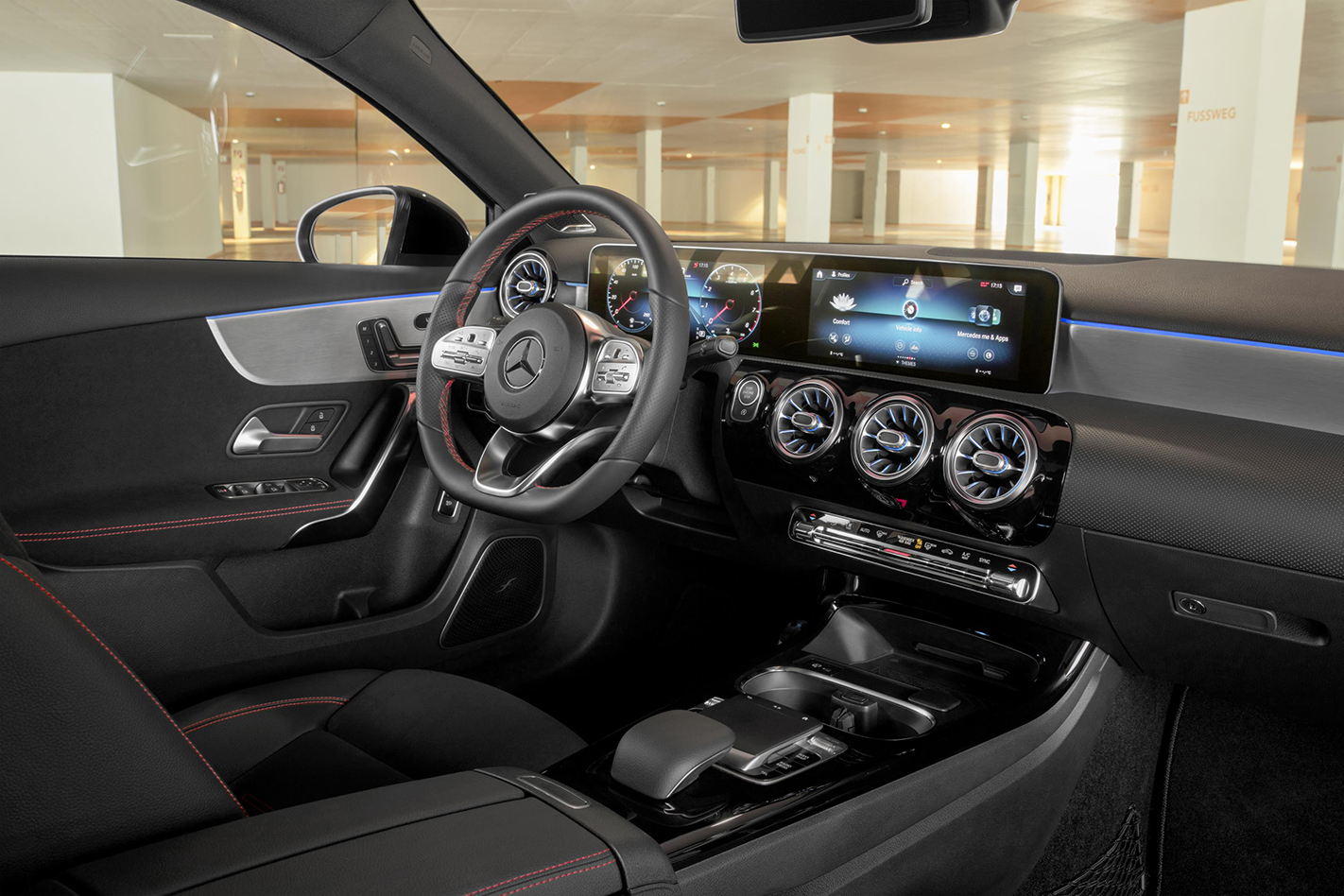
Stepping up to the A200 sedan bumps the 1.3-litre engine’s output up to 120kW/250Nm for a more engaging drive with no change to fuel economy.
It also gains 18-inch alloys, more up-market interior styling (above), twin-pipe chrome-tipped exhaust system, driver’s seat lumbar support, folding rear armrest, adaptive high beam, and wireless phone charging.
The A-Class sedan rollout begins with the A200 in June followed by the A180 in August. The more performance focused A250 and AMG A35 versions are expected to arrive before the end of the year, with local pricing to be revealed closer to launch.
2019 Mercedes-Benz A-Class pricing
- A180 hatchback – $42,300
- A180 sedan – $44,990
- A200 hatchback – $47,200
- A200 sedan – $ 49,200
- A250 hatchback – $49,500
