
New to Wheels Car of the Year?
Read the COTY 101.
If you were to contextualise the Bentley Continental GT in boxing terms, its ‘tale of the tape’ is so impressive you could almost imagine it being called out by a ring announcer: “In the blue corner, weighing in at 2244kg, punching out 467kW from 12 cylinders, and yours for $422,000, it’s the brawling bouncer from Brrrrr … itaaaaain!”
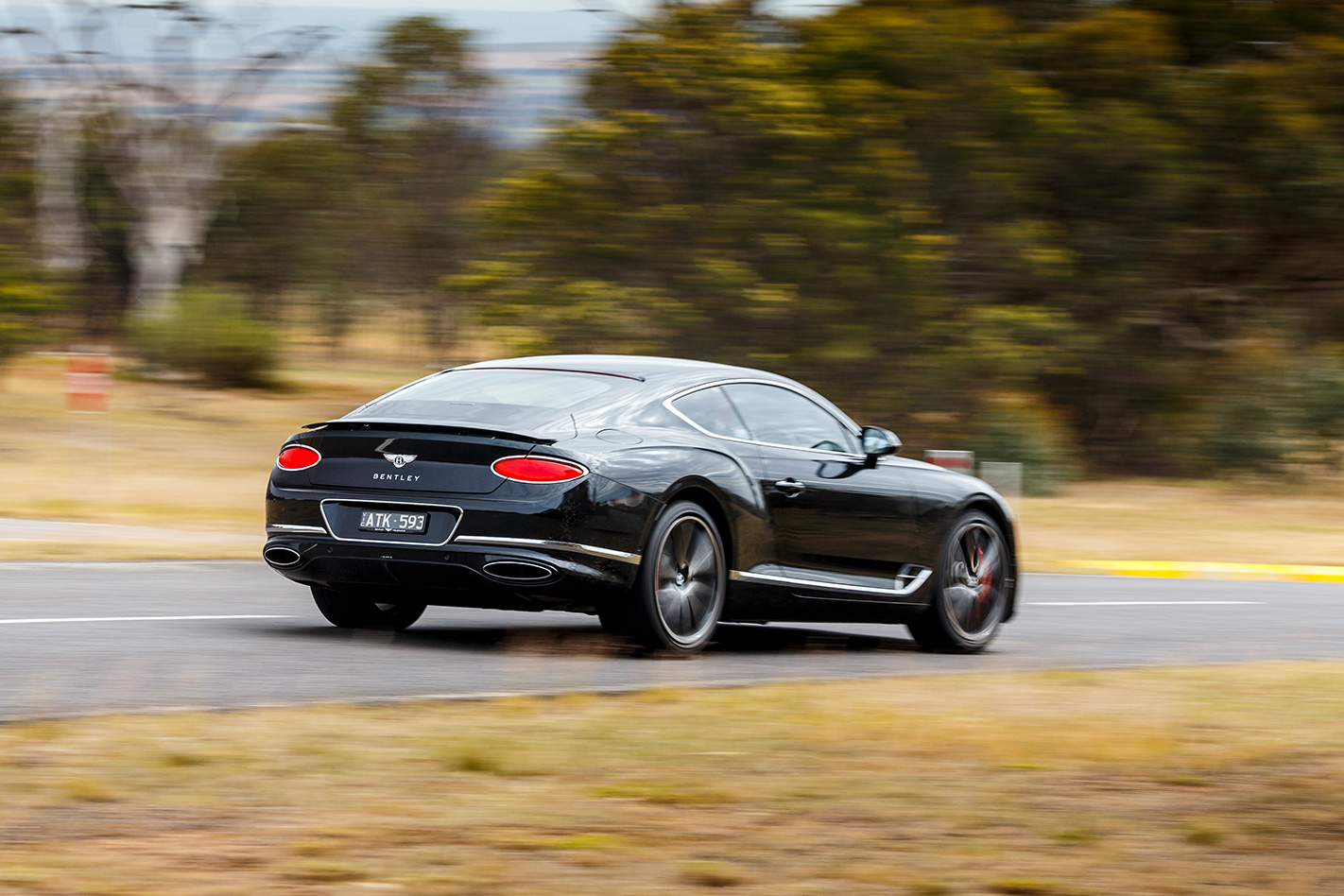
Those latter numbers made this easily the most powerful and expensive car in the 2019 COTY field, but the dollar figure is only the undercard to the options list, which did this super coupe no favours in terms of value. The optional Naim audio system alone is the price of a basic VW Polo; all up, this particular Conti rolled in with a tag just over $539,000, not including taxes and on-roads.
It fared more strongly in terms of technological advancement. Thanks to Bentley’s place in the VW Group, the third-gen Conti is built on the MSB platform that underpins Porsche’s Panamera; its electrical architecture is a 48-volt system that supports active anti-roll bars, while its vast rear quarter panels are hydroformed from a single piece of aluminium. The revised W12 is also 18 percent more efficient.
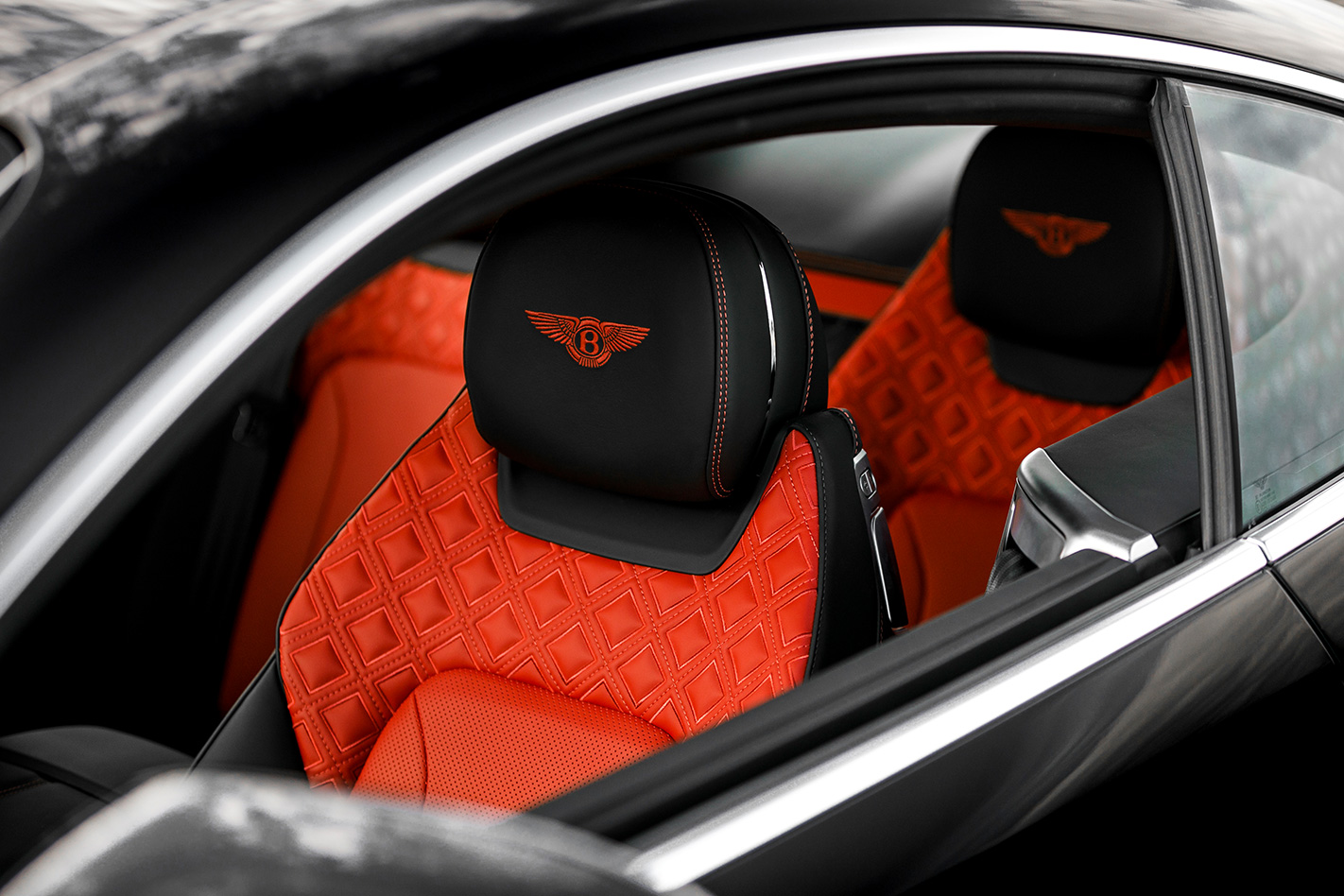
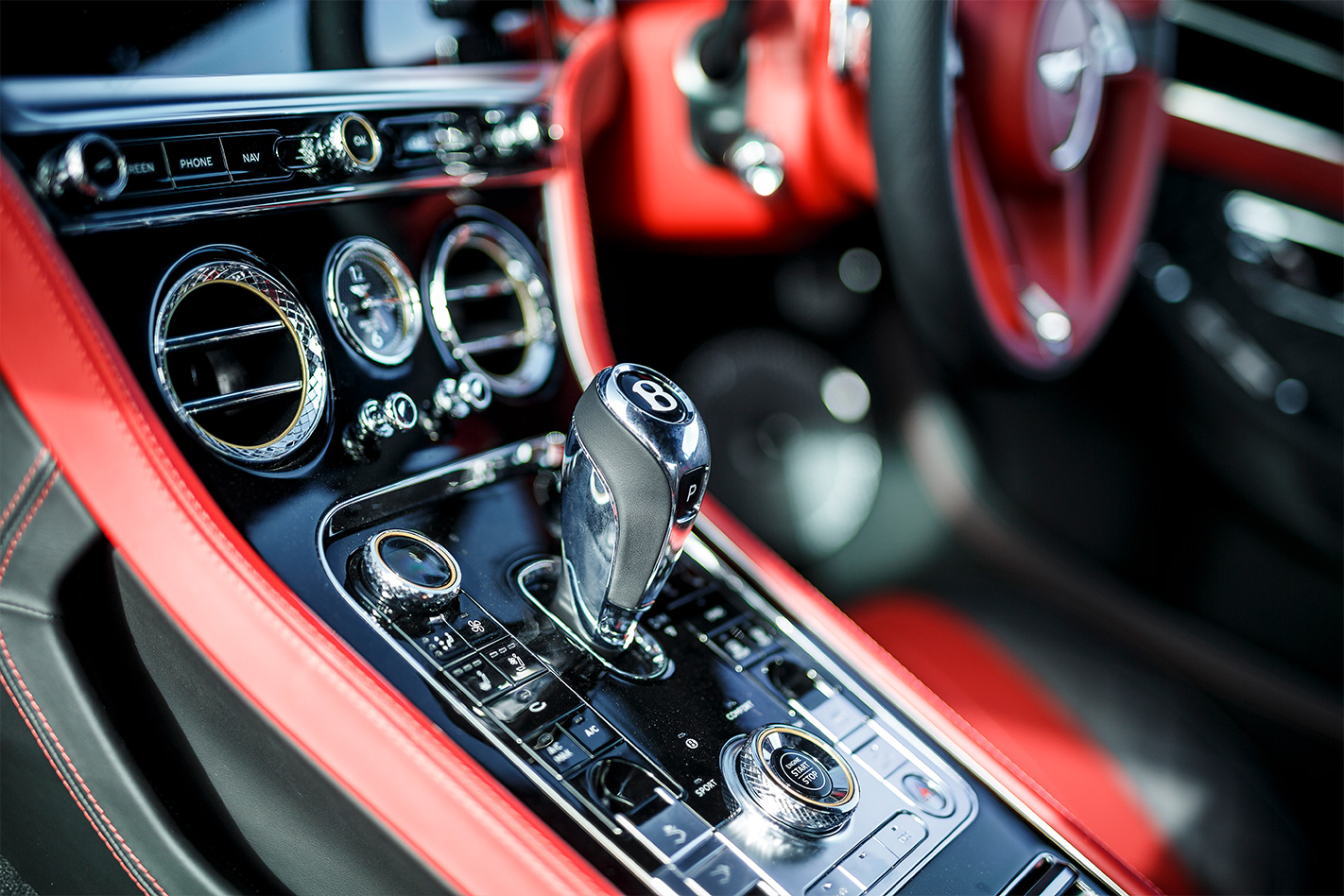
Further, albeit predictable, praise came for the interior’s sense of occasion and attention to detail. The exquisite knurling of control knobs and the ‘organ-stop’ operation of the air vents were not missed by the judges. Although not everyone was enamoured by the taste of whomever it was that specced the test car: “I could live without the ‘Mel & Kim knicker drawer’ interior colour scheme,” commented Enright.
2019 Bentley Continental GT Convertible revealed
What was not disputed was its sublime refinement. “That cabin is so well insulated, it feels as though you’re in Maxwell Smart’s Cone of Silence,” observed Inwood. So yes, wind and road noise are brilliantly suppressed, and, at least until well past its mid-range, so is engine noise. The W12 delivers such silken, effortless shove, it almost seems to transcend the explosive principles of internal combustion. In brisk touring mode, it’s as though there’s some electromagnetic force involved, whipping the car along with barely an audible murmur. Only when really chasing the redline are you deemed worthy of enjoying the distant, distinctly different warble emitted by the W12 layout.
That whopper of an engine is now backed by an eight-speed dual-clutch transmission, a choice which had several judges questioning its appropriateness in a car which puts such an emphasis on refinement. “Not as smooth in low-speed driving as it needs to be,” was the broad consensus.
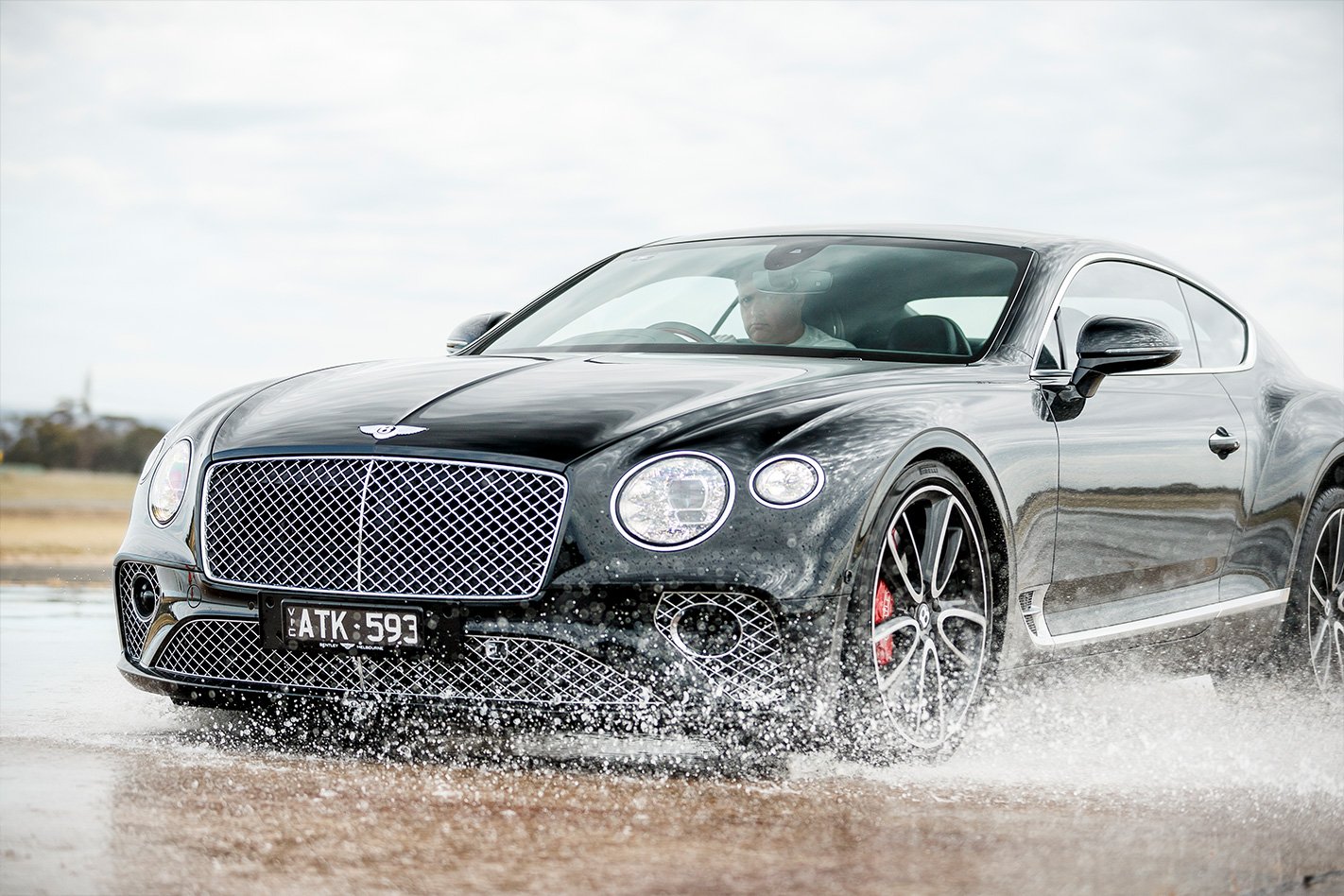
As for high-speed driving, that demands respect, purely because of the velocity-mass equation. The judges agreed that the chassis was deeply capable, but the strength of the engine and power-down ability was such that the car was almost always travelling faster than the driver might momentarily estimate. Really vigorous pedalling would see the chassis run out of compression damping on the plunging back section of the durability circuit, putting this judge’s eyes on stalks.
Ultimately, though, it was law of diminishing returns and punch-drunk-inducing options prices that knocked out this Great British bruiser.
Dear WhichCar team – We are looking to replace our 2015 Ford Falcon XR6 but there is nothing obvious that fits the bill. My husband and I have loved the car since we bought it new. It’s got heaps of go, has been great for long trips with the whole family (we have two kids) and it has never let us down. We have held on to it longer than most of our previous cars but the kilometres are getting high and there’s no 2019 Falcon! What do we do?
Our budget is about what we paid for the XR6 – $40,000. We don’t do quite as many long trips with kids anymore and, while I’ll be the main driver, we would both like something that is still fun to drive and big enough for four when we need it.
Vicky, Victoria Park, VIC
Hi Vicky,
You are certainly not the first Falcon owner to encounter this roadblock Vicky! Not only has the Falcon been out of production since 2016, slipping large sedan car sales have been impacting the options available to customers from all brands.
If you are after something directly comparable in size to the Ford and in sedan form, your options are limited.
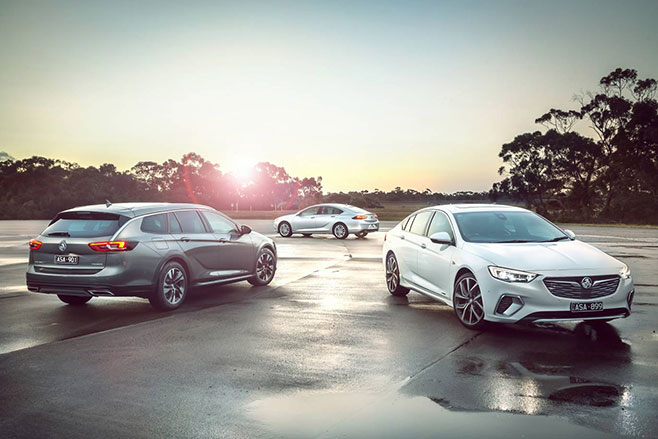
If you don’t mind jumping to Ford’s arch-rival brand, the Holden Commodore is still available offering plenty of space for up to five adults, while a choice of turbo four-cylinder or 3.6-litre V6 petrol engines offer plenty of power. Bodystyles include a fastback style hatch or wagon and pricing kicks off from about $34,000 or $40,790 for the cheapest V6, which also adds all-wheel drive.
You might be surprised to hear that Toyota’s Camry is now better than ever to drive and, while it technically fits into the mid-sized segment, its Tardis-like interior would likely suit your purposes and there’s a surprisingly beefy V6 version that costs from $37,390.
As another Japanese mid-size wildcard, you might also look at the Infiniti Q50, which costs from about $55,000 and is heavily laden with luxury features, plenty of technology and offers rear-wheel drive for fun handling.
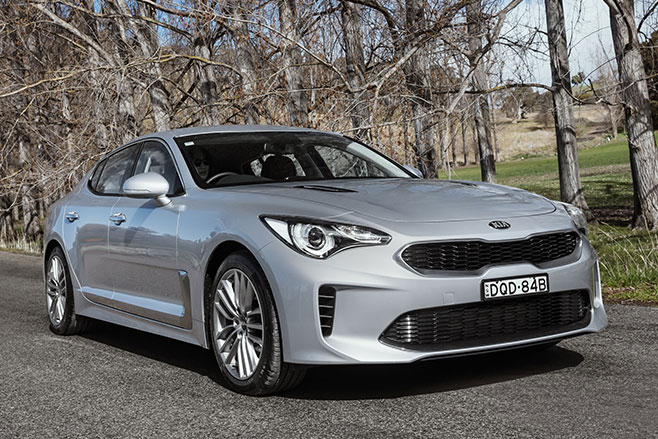
Or how about this? Kia’s Stinger is often lauded in mighty 3.3-litre turbocharged V6 form but it has a 2.0-litre turbo sibling that starts from $45,990 and also offers rear-wheel drive, a sporty chassis and looks that will turn heads. Despite its coupe-like profile, it has four doors, there’s a spacious second row of seats and it comes with Kia’s class-leading seven-year warranty and roadside assistance.
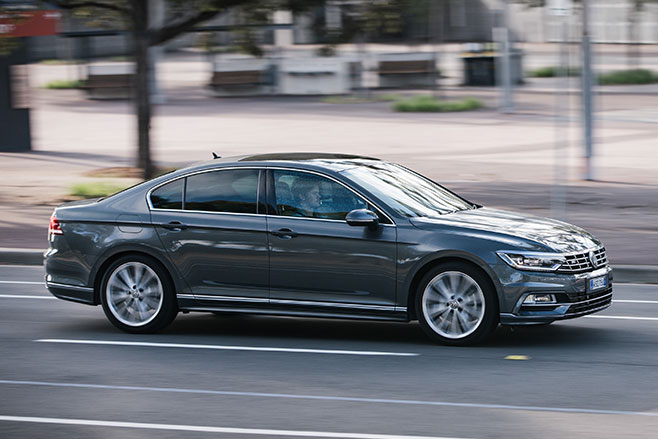
Finally, you should certainly have a look at the Volkswagen Passat and its mechanically related Skoda Superb sibling. The Volkswagen is on offer with very efficient but surprisingly powerful petrol and diesel engines and there’s a wagon version if you ever need to haul larger loads. It costs from around the $37,000 mark, which is a very affordable way into German car ownership.
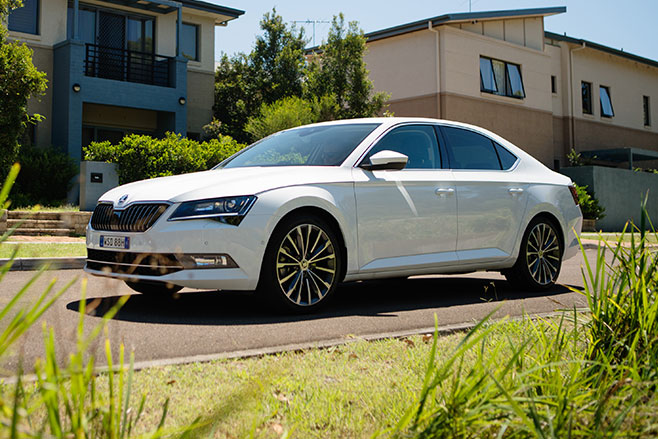
The Skoda is also on offer with efficient 2.0-litre turbo engines and both wagon and sedan bodies, but our pick is the $51,790 206TSI which comes with the same engine as the potent Volkswagen Golf R coupled to all-wheel drive for some brilliant road-holding and fun at the wheel.
If nothing fits the brief in the large sedan market, you might consider sliding one way or the other into a slightly different class of car, especially if your circumstances have changed since you bought the XR6.
Many families are now looking to large SUVs as the family car – good examples include the Hyundai Sante Fe, Kia Sorento and Skoda Kodiaq, while dual-cab utes are finding favour with other families as the one vehicle that can do it all.
If this sounds like it might work for you then the Volkswagen Amarok, Holden Colorado and Mitsubishi Triton are great value, while Ford’s Ranger is definitely worth a look and would enable you to stay loyal to the Blue Oval – though none will really give you the sporty appeal that your XR6 had.
The first thing you notice when you walk into the Supercar Club may well be a Ford GT. Or a Ferrari F430 or an Ariel Atom or even a Segway. The second thing you notice is the wine selection.
This feature was originally published in MOTOR’s December 2008 issue
This is clearly my kind of club. Yours too, might I suggest, if the notion of buying a serious Phwaaarrr Car ever invades your otherwise sensible melon. Because, for considerably less than the depreciation and running costs of a single sunny-day plaything, you can pick from a whole fleet of ’em whenever you want … and let someone else wear the worry the rest of the time.
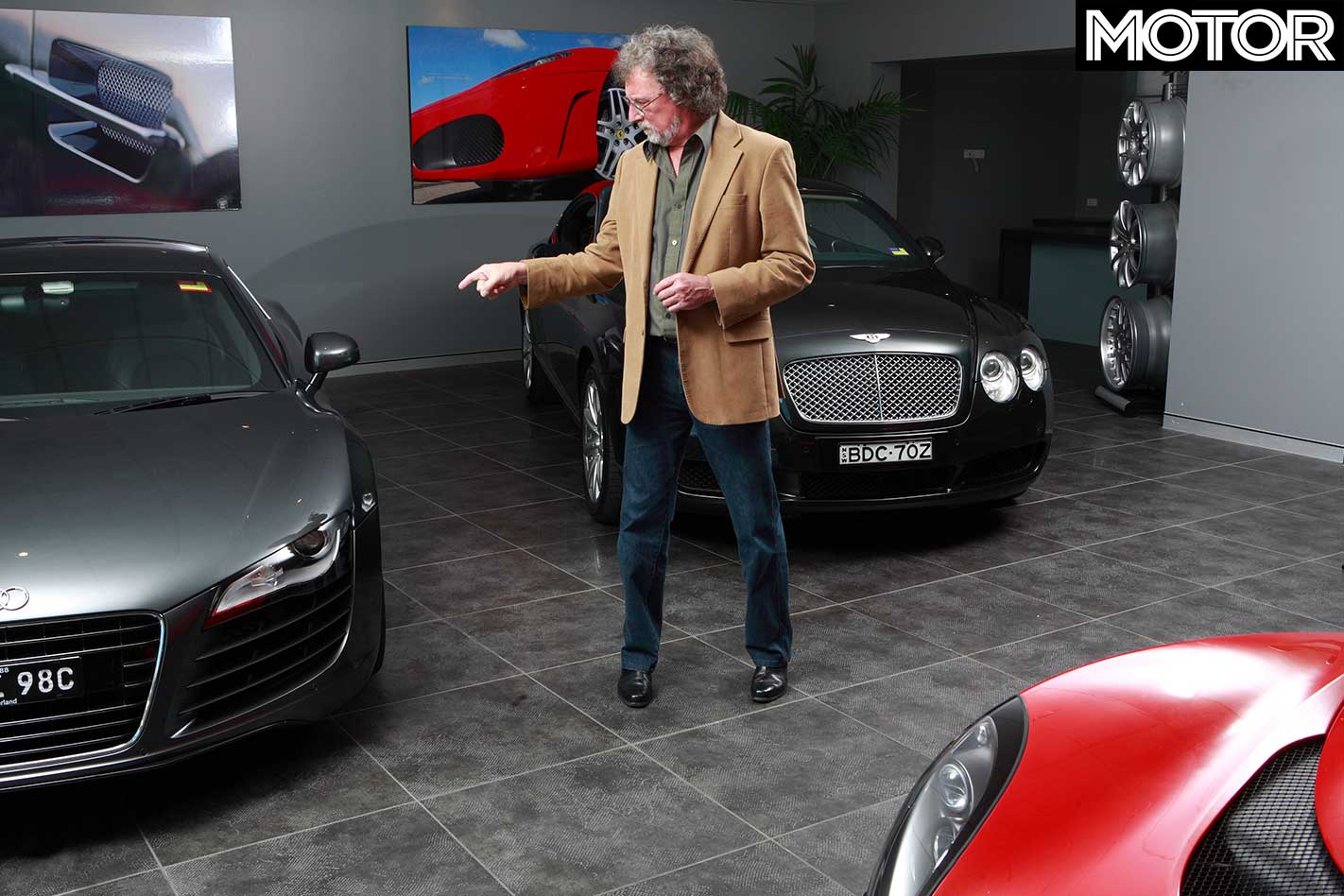
‘Certain’, of course, denotes cost. And the club offers six different levels of points consumption ranging from the likes of a Lotus Elise up to a Lamborghini LP640. Then there’s the share option in a bazillion-buck Bugatti Veyron, but better for the marriage you buy Fiji.
Anyway, it’s a pleasure scanning the offerings at the clubhouse until the arrival of Photographer Bean in his coffee-stained kiddie-hauler both lowers the tone and raises the imperative that Sir might care to bags something and be gone at his earliest convenience.
Indeed he might. And while it’s fun to play ‘Do we do Lambo…?’ for a minute or two, I already know what I want today, and that’s a Bentley Continental GT. And while I’d like you to think that 411kW, 650Nm and claimed numbers like 4.6, 13.2 and 318 are behind the choice, they’re not.
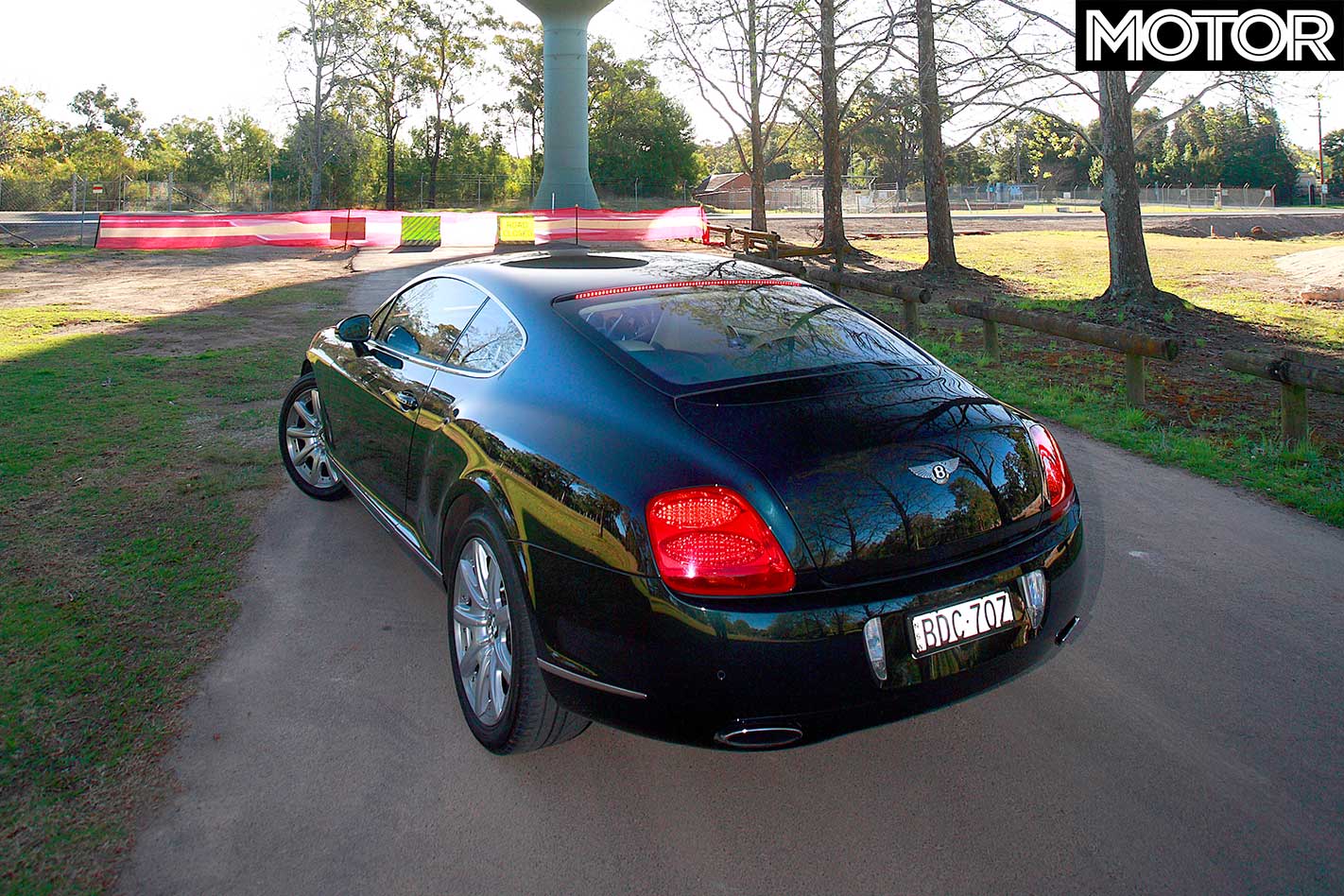
Other cars available here can match or better those figures, but that’s their limitation. Because if you’re not wringing the neck of a Porsche or Ferrari, you’re wasting its time. The DNA of such cars leaves no latitude in their character. Brilliant, ballistic and uncompromising, anything less than ferocity in their public passage can only be attributed to the driver’s shortcomings and I’m not up for that sort of nudity today.
A Bentley, however, is a state of mind. Options of cruising or bruising are more profound in this car than in any other on Earth (hot-rodded Mercs included) and the pleasure of any journey is bound to be amplified not only by the extremes of the Continental GT’s capabilities but also by their width. So the driver’s mood rather than the car’s character sets the agenda and that’s exactly what I want today. And the Supercar Club’s existence makes that choice possible.
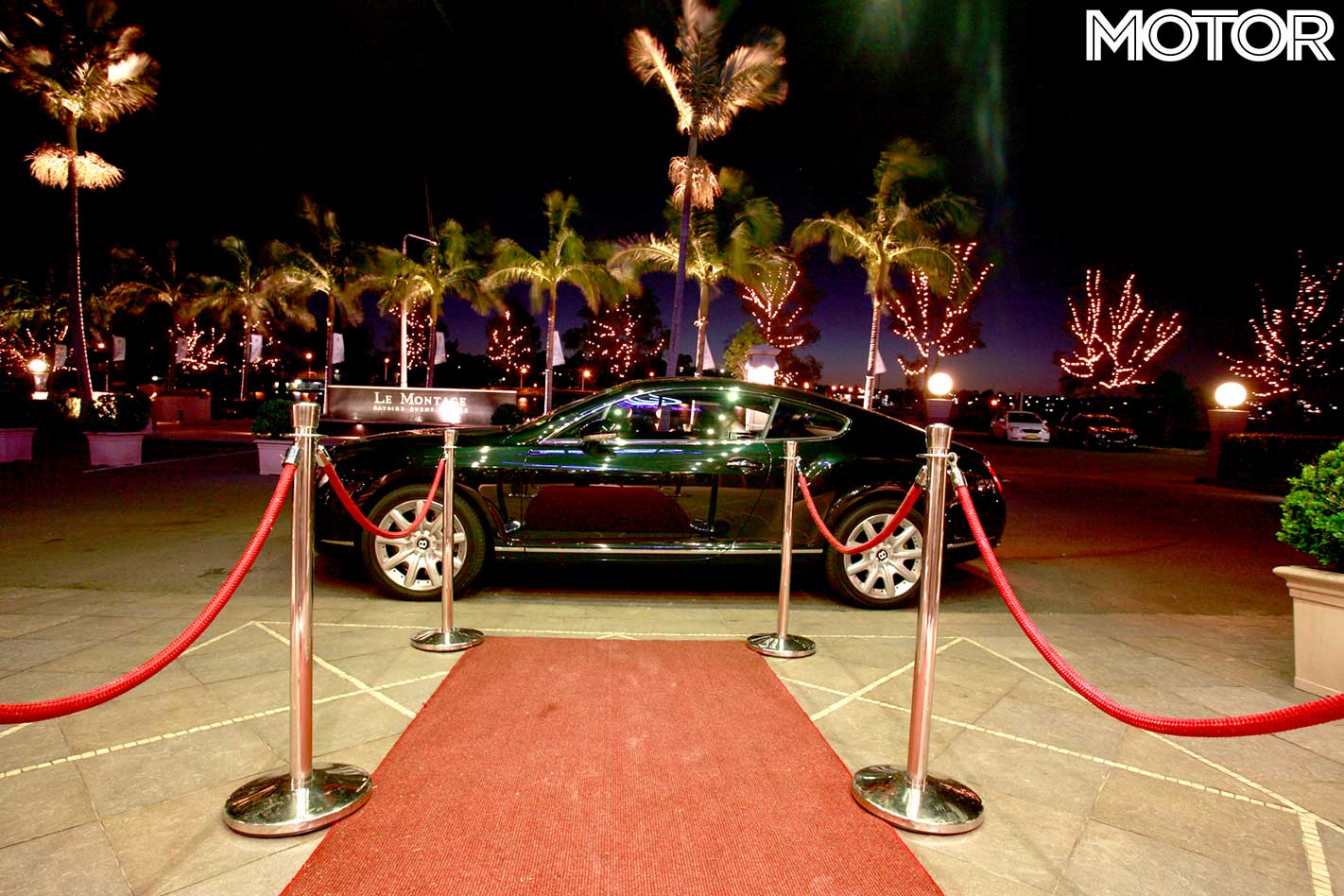
Not only possible but, let’s be honest, probably much more pleasurable than the alternative. Had I been bright enough, in my youth, to place a bet that Bentley would be owned by Volkswagen while World War II diggers still roamed the planet, I’d now be wealthy enough to own both cars. But I’m guessing that only one of them wouldn’t frequently drive me to a frothing fury. Because, despite Bentley’s ownership, the Continental GT is still both very beautiful and British-built and a lifetime’s experience of that combination doesn’t breed optimism.
But that’s not a problem for members. Any eccentricities will be attended to by others. God knows how you access anything in the boiler room − God and the club, I’m guessing − but I don’t care and neither will you.
Instead, we may admire the many positives mercifully unafraid, and as Bean rattles around committing last art while the thing’s still clean, I savour the subtleties of the lovely two-door shape. Details such as the headlight/taillight treatments and the beautiful integration of the rear window are masterful, but even more impressive is the underlying integrity. Traditionally, a pillarless configuration exhibits compromise such as noticeable rear-panel deflection when the door is closed (as any Charger owner will attest, yes Morley?).
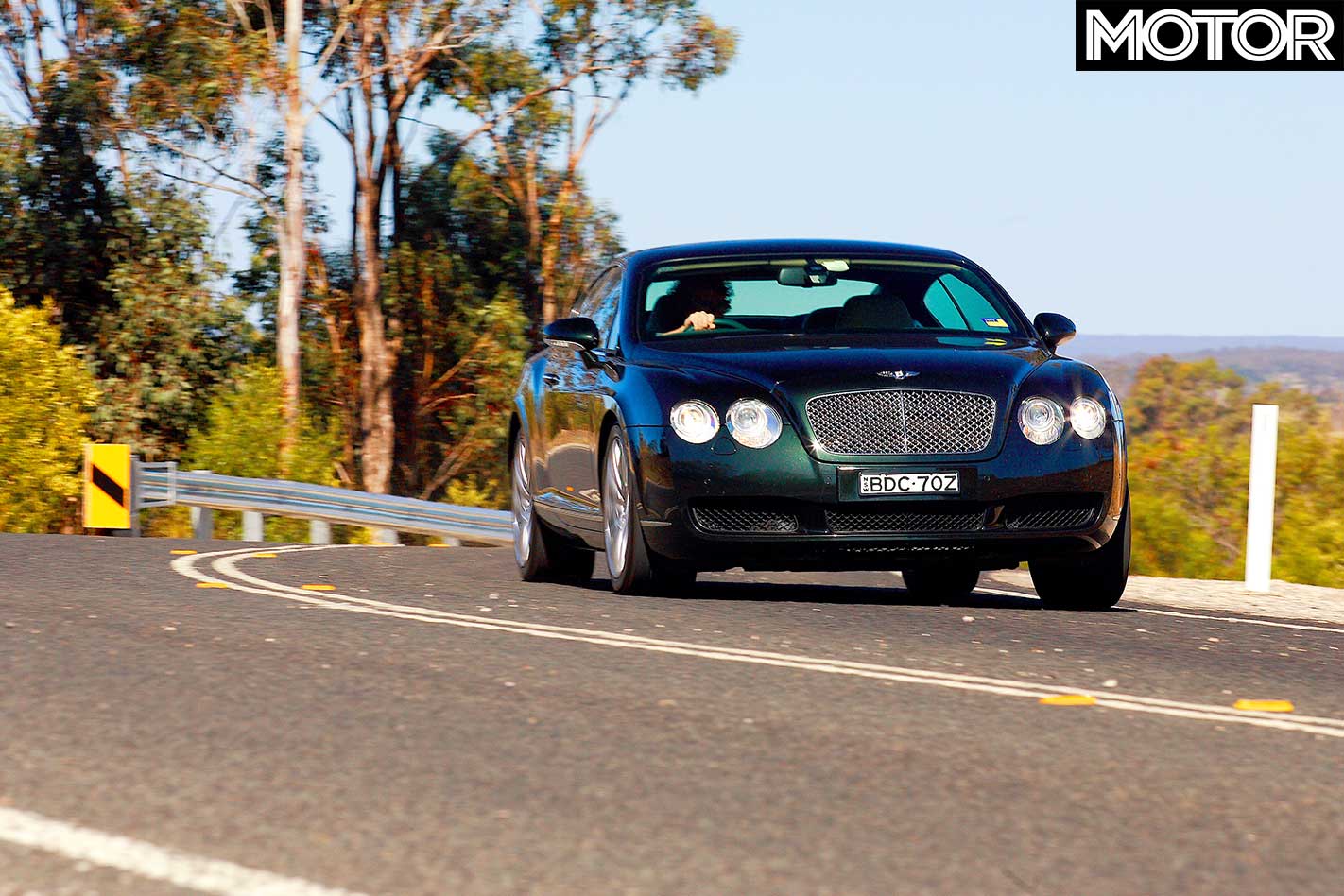
But this is Bentley, so not a millimetre’s movement. And the door-opening conflict between rear-seat access and seatbelt reach is defused by seats strong enough to allow the belt’s direct mounting. That locomotive strength permeates everything − from door handles that a lesser company might use as structural members to solid metal switchgear − and reminds me of one of the marque’s more spectacular moments in history: the Blue Train race of 1930.
And that decides the day. We, my soon-to-be graduating daughter and I, will cross Mount Razorback, and, beyond the Thirlmere Rail Heritage Centre, we will celebrate the splendid rural Wollondilly roads of my own childhood and the last picnic of hers. In a Bentley state of mind.
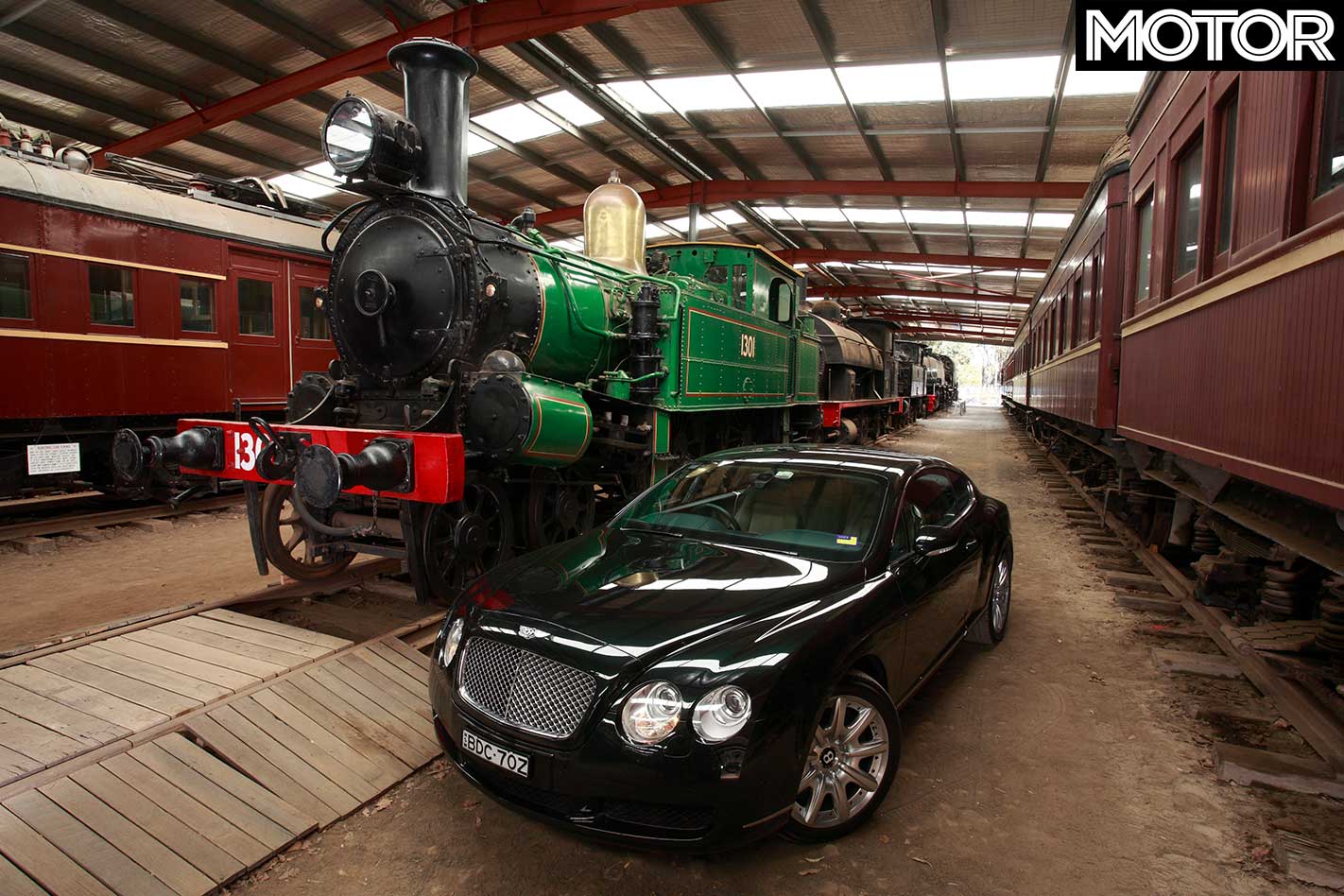
The acceleration is simply astonishing. It may be expressed in numbers but is almost impossible to describe. Nothing so big and plush should generate forces like this. Okay, the Germans and Italians can do it too, but you’re expecting that when it happens; have probably shifted down, got the revs right. Got a grip. But plant the pedal halfway up a hill road in a Continental GT and it’s like experiencing an earthquake while seated in the Ritz.
Not that full noise is needed all that often on these roads. But on the mannerly byways beyond Picton, the Bentley, as expected, inspires the selection of pace with the growing surety that, whatever the chosen clip may be, there are always reserves available. Huge reserves. And both how much and how you draw from them is entirely optional.
Leave the six-speed auto gearbox to do its stuff, and it won’t disappoint. You can use the paddles if you want (and everyone will, I suspect). Once. But to second-guess judgement of this quality is not really to anybody’s benefit. There are needier things back at the clubhouse for that.
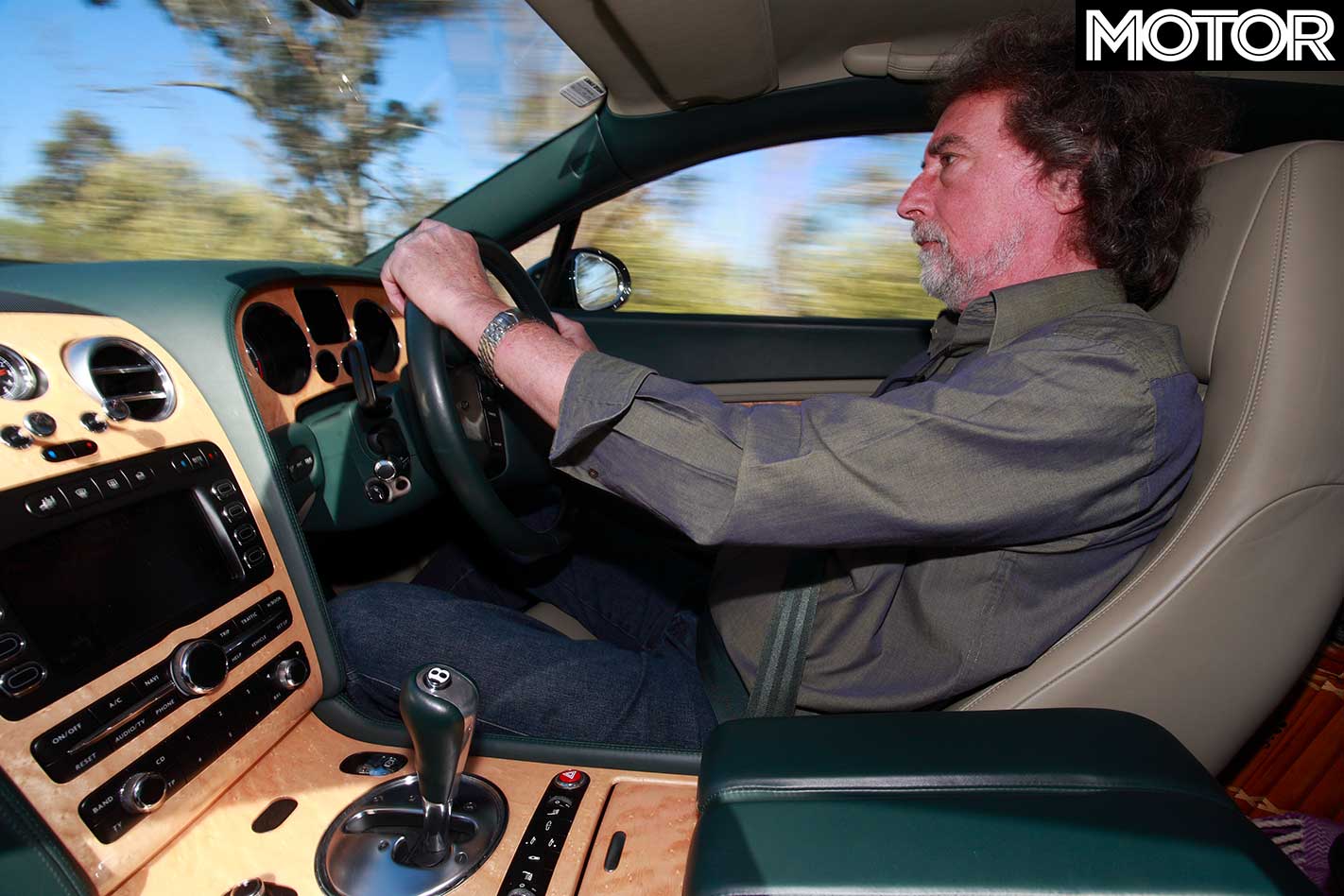
Delight, instead, in the billet build quality reflected in the ride’s balance, and the interior ambience of cow and coachwood that very few marques (and none at all built beyond Britain, sorry) can create without parody.
And savour even those details that are parody − the starter button, the Breitling clock and the organ-stop vent controls − because no one does them better. In truth, beneath all the beauty, some of the doings are sufficiently complex that you’re going to need to take it out more than once to figure everything out but, hey, that’s what you’ve got those points for.
Today, though, we learn enough to enjoy both the car and each other’s company completely. And as we dine beneath the oak planted near the site of the original Anthony Hordern’s tree on Razorback, still bearing that company’s slogan that I saw so many times in my childhood – ‘While I Live, I’ll grow’– I can only hope its message reaches my own child, too.
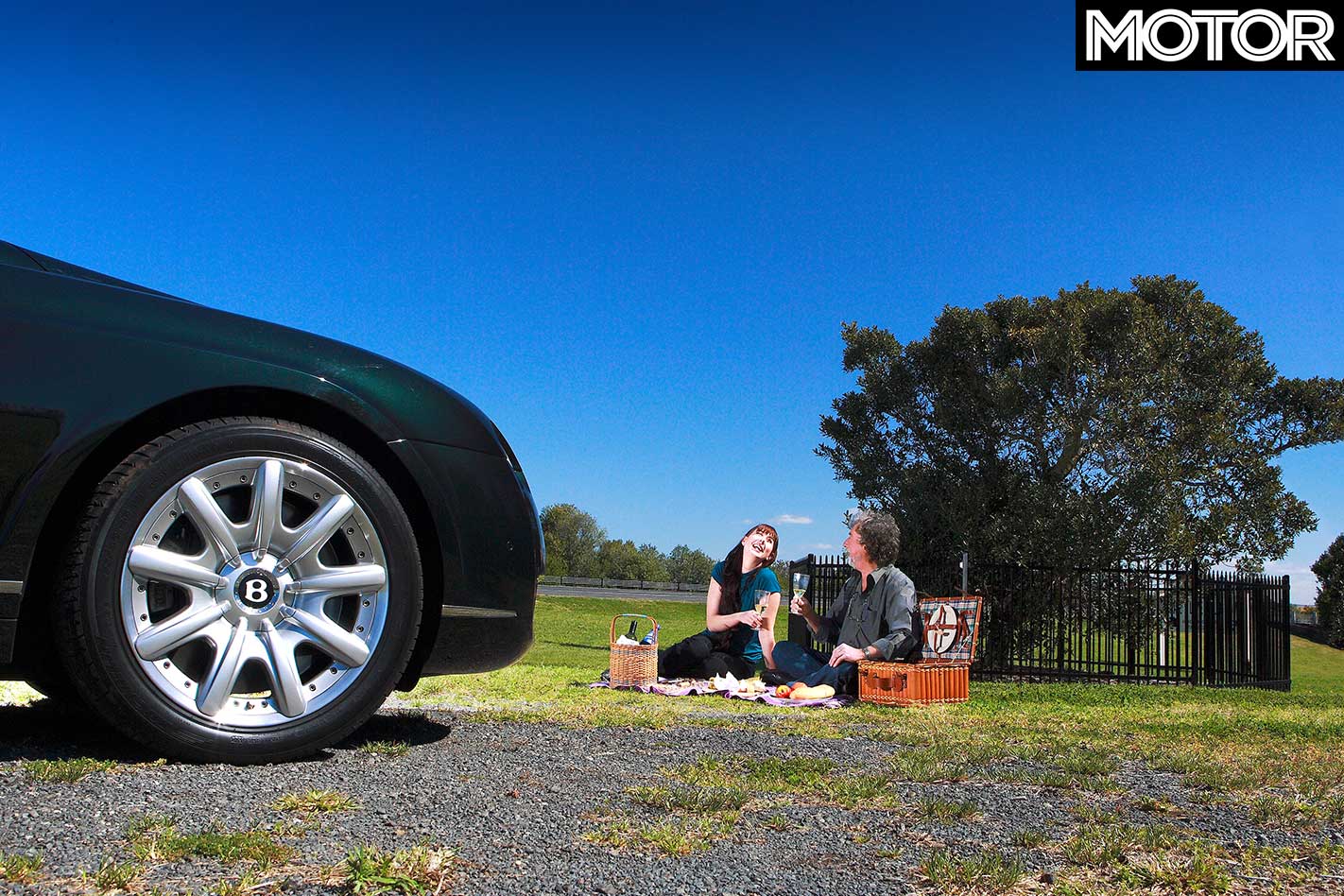
Certainly, though, the Bentley needs no further growth. At 2350kg (plus picnic basket) it’s imperfectly agile, and neither the size nor mass reflect its true hospitality. For all of both, it’s really only a two-seater − accommodation and access rendering the rear beneath dignity − and nor is this the limit to its flaws. But none of them keep it from being my favourite, special-day, cross-country car of all.
So appeasing that imbalance is the real benefit of the Supercar Club. Because it allows the supping of each fantasy-wagon just long enough to appreciate its joys and not long enough to be irritated by its failings. And when, at last, there’s a way to love the Best of British without having to live with it, that’s my kind of club, indeed.
Train Barrier

Of all the Bentley Boys, none outshone Woolf Barnato (pictured, right), who, with the confidence of inheritance and the competence of three Le Mans wins, became chairman of Bentley in 1925.
The greatest Bentley of all was the 6.5-litre, produced primarily for racing and used every day by Barnato, who, at a party in 1930, was sufficiently proud of it to wager that, with both leaving Cannes at 17:45 the next day, his car could arrive in London before the exclusively first-class French Le Train Bleu had arrived at Calais. Racing through the night, the Bentley reached the coast the next morning and, crossing the Channel by ferry, arrived at the Conservative Club in London at 15:20. Le Train Bleu arrived at Calais station at 15:24.
Commemorated in Terence Cuneo’s famous painting, the feat shaped a generation’s respect for Bentley. And my own.
This is a 1982 Zastava 750, which has been turned into a tribute to the Fiat-Abarth 1000 TCR. Don’t worry, we’ll explain.
‘What is a Zastava 750, and why is someone selling one online?’ is probably a good place to start.
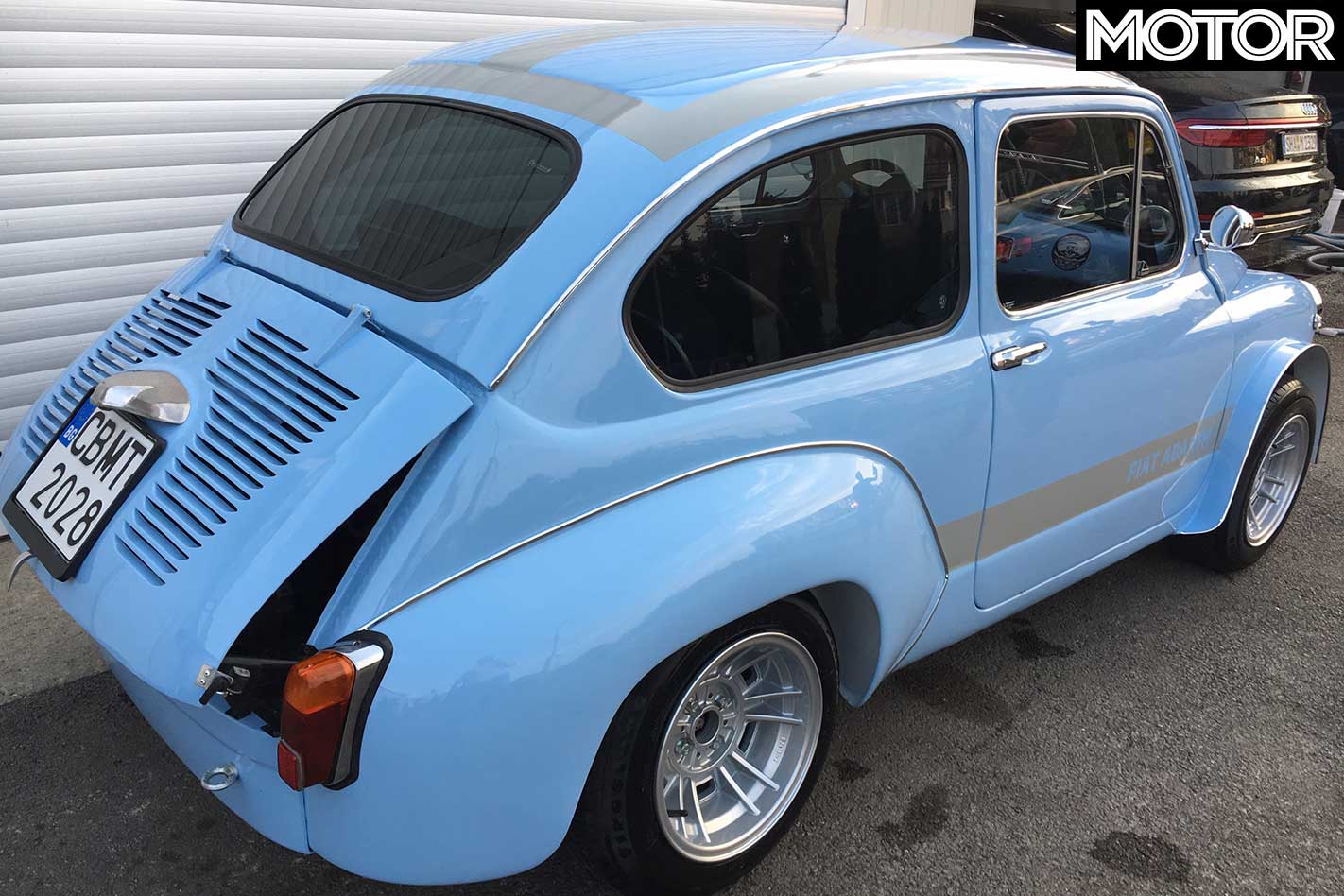
Fresh out of 1982, this Serbian-built, Fiat-based automobile is the product of a company which started out making weapons in the 1800s, then started making cars in the 1950s as Zastava Automobiles until the company went bankrupt in 2017.
You might even know Zastava in the form of the Yugo, based on the Fiat 127.
Next, what’s a Fiat-Abarth 1000 TCR? Take a look for yourself!
With a 982cc inline four-cylinder engine, two Weber carburettors, and peak power of around 80kW developed at 8200rpm, a sub-600kg car can be quite the little weapon.
The video above should provide a little evidence of that.
Back to the car that’s up for grabs at BringATrailer, which is a mix of the two – a tribute to the 1000 TCR built on the base of a Zastava 750.
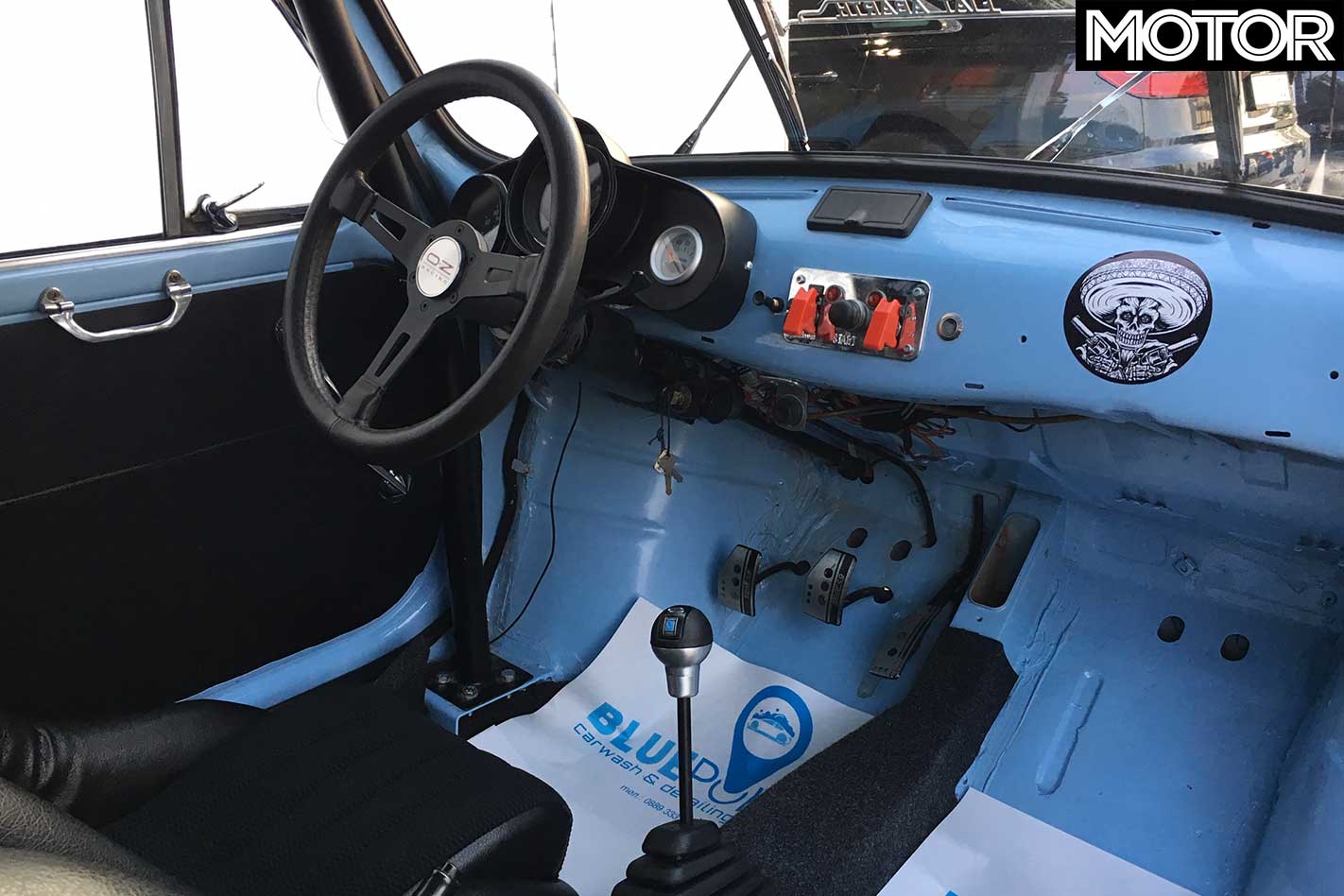
Acquired by the builder in 2018 in Macedonia, the car received a restomod that turned it into the quasi-TCR pictured.
A 903cc inline-four and a 5-speed manual gearbox live within this particular car, rather than the 1.0-litre of the original.
Not content with just a style change, the tribute car also features upgraded suspension with independent rear suspension, transverse leaf springs and updated struts, as well as shocks, upgraded control arms, and better bushings.
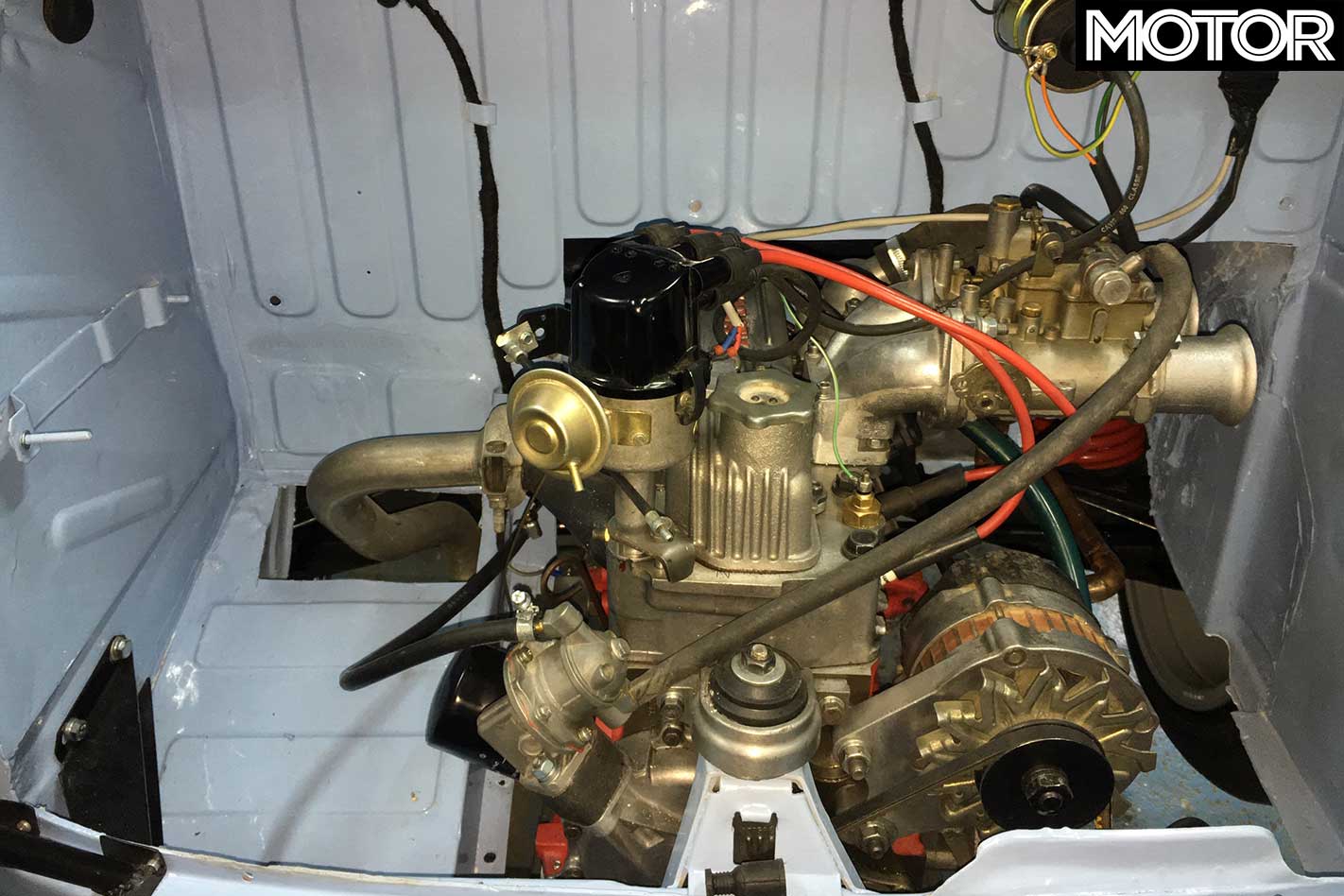
Brakes were replaced with new rotors and pads up front and new drums at the rear.
Currently, the car is located in Belgium and listed on BaT for just USD$1,000 (~AUD$1400), but a week left of bidding means there’s plenty of time for that to change.
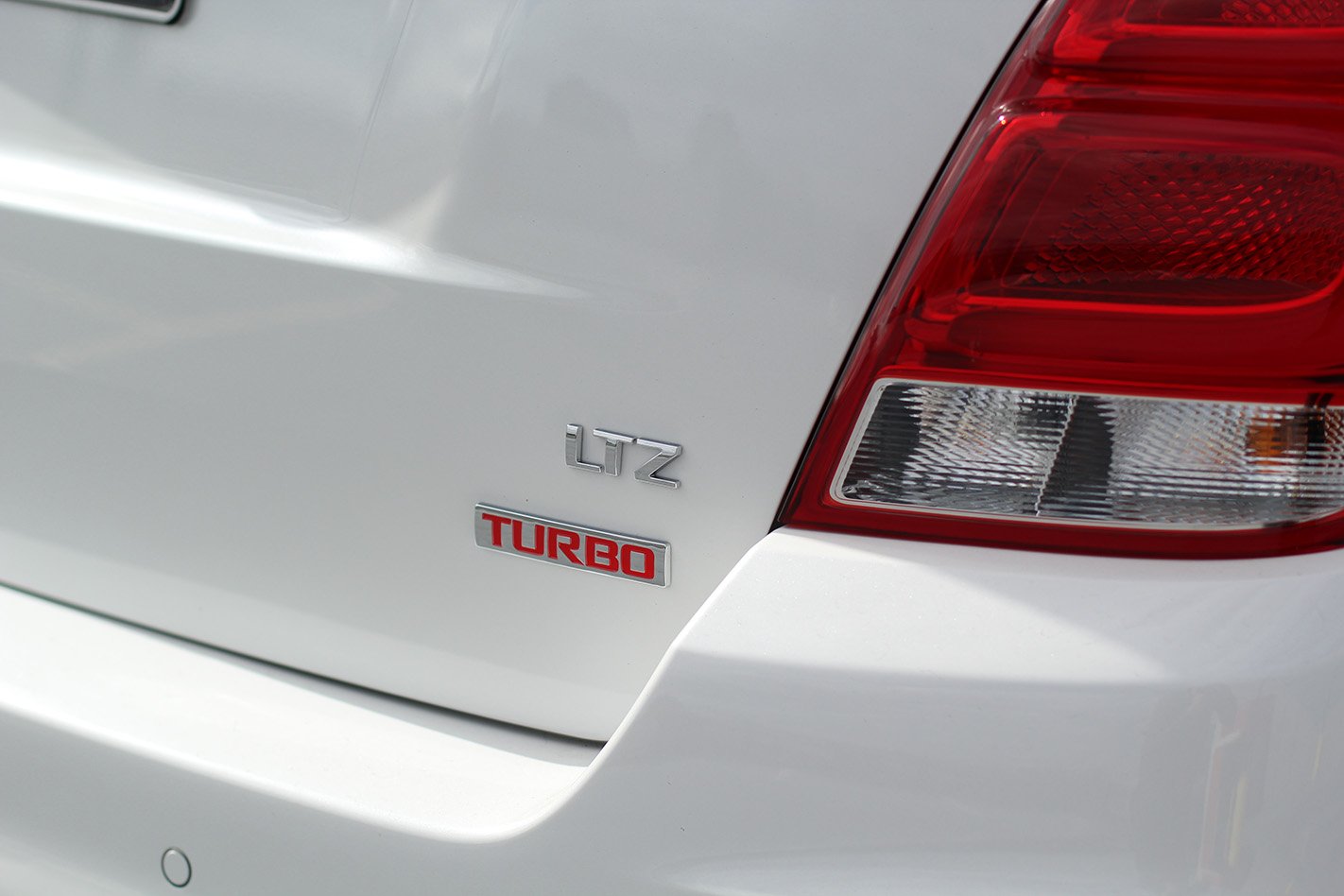
It’s a tough segment these days, the small SUV category, and the Trax has been playing in it for a long time now. Does it still have what it takes to keep up with the pack?
What is it?
The Holden Trax was one of the first modern compact SUVs to enter the market, but, with the current generation having gone on sale way back in 2013, the Trax’s time in showrooms now works against it.
It’s not the oldest option in the segment – that award goes to the thoroughly ancient Mitsubishi ASX, but there are now a myriad of other, much fresher options for buyers to choose from. It’s a tough market for a car that’s now six years old.
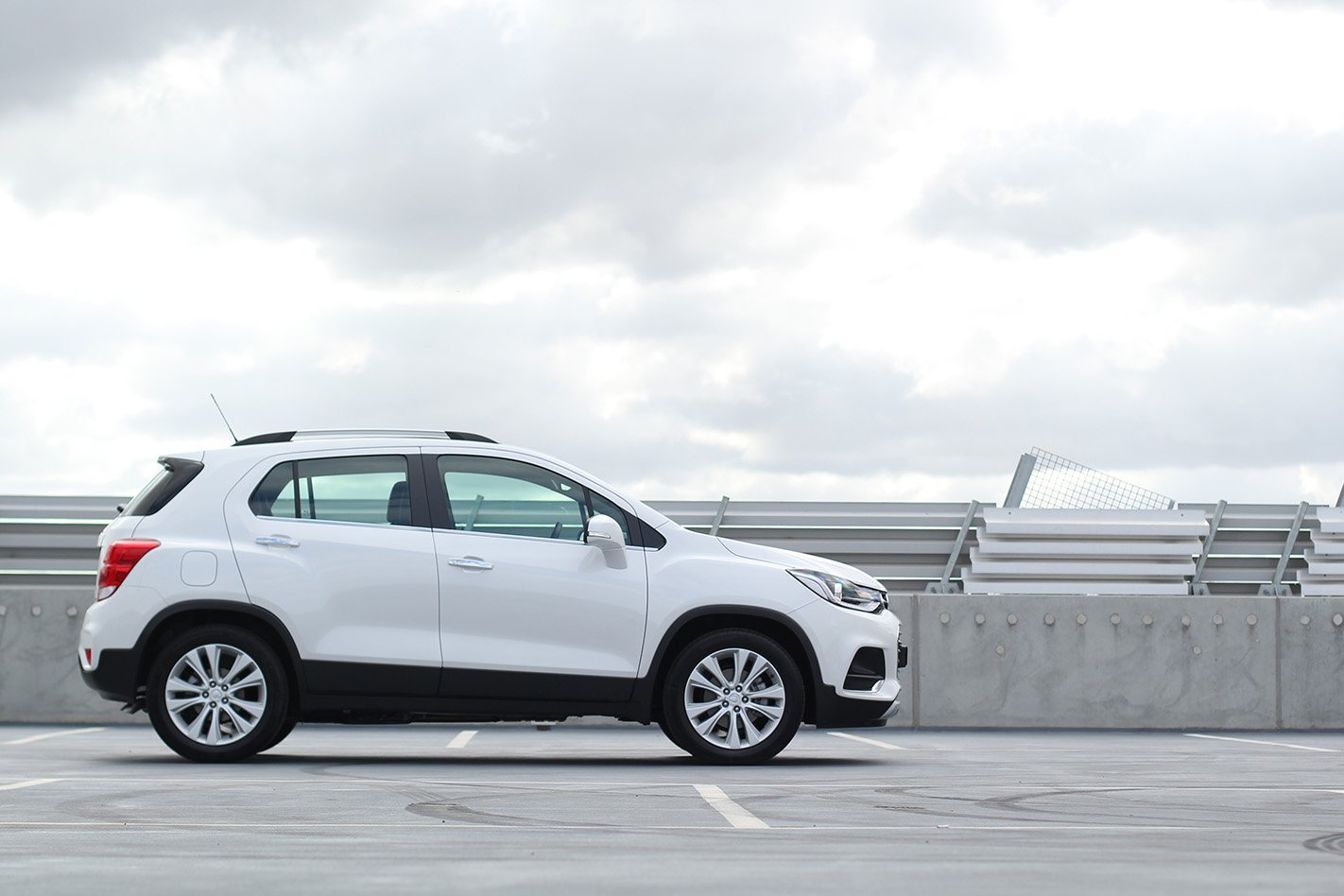
How much is the Holden Trax LTZ?
The LTZ is the highest grade available in the Trax range, and retails for $30,490 before on-road costs. It sits at the high end of the compact SUV market, but nevertheless undercuts top-spec versions of the Honda HR-V, Hyundai Kona, Mazda CX-3 and Nissan Juke.
Who is it for?
While lower-spec versions of the Trax are more attainable for buyers looking for their first car, or who are upsizing to an SUV from a conventional small hatch or sedan, the Trax LTZ will probably find more favour among older folks looking to downsize from a bigger SUV or sedan/wagon.
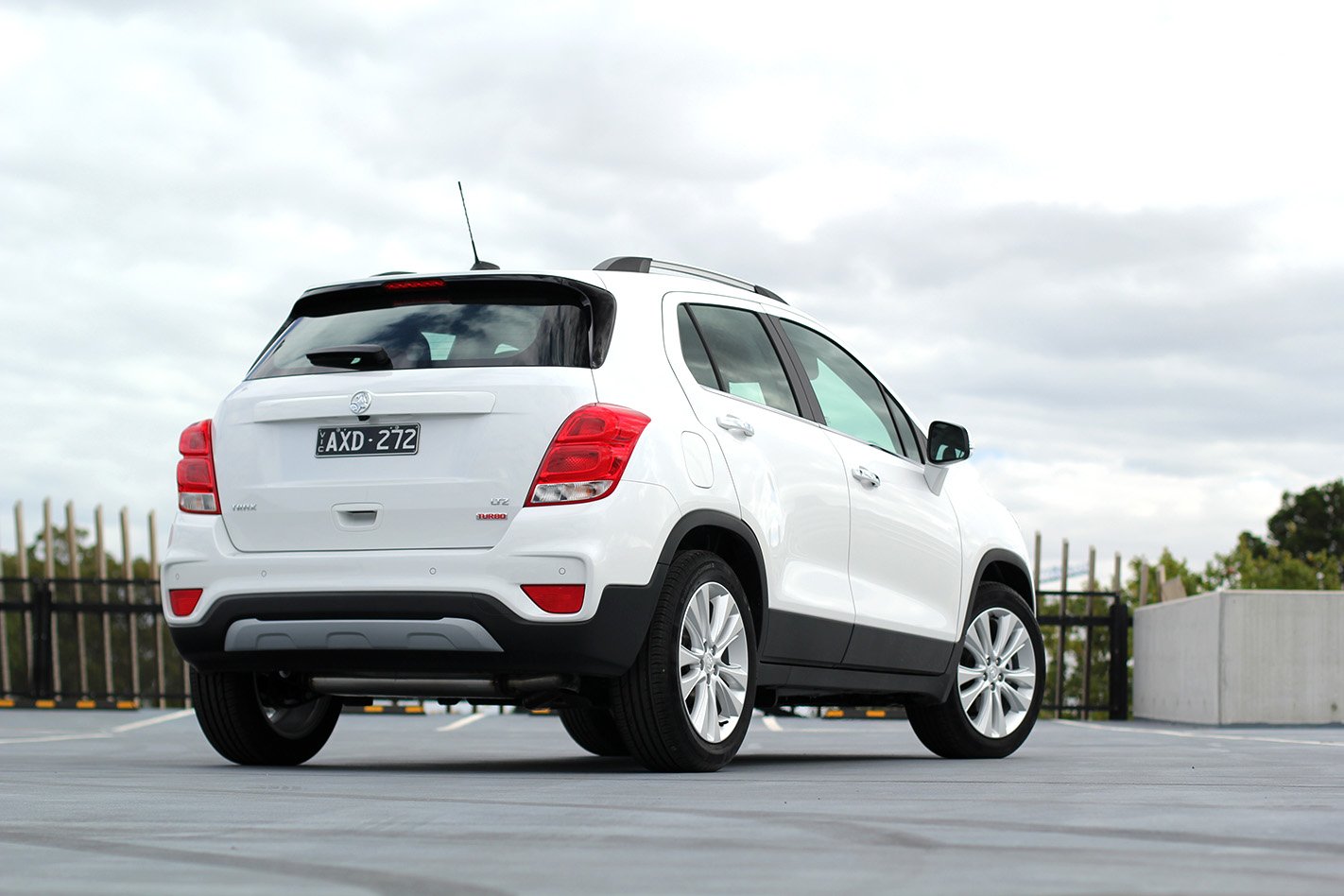
Whatever the case may be, though, the bulk of those buyers will likely be drawn to the Trax’s very tall seating position, which affords the driver a jacked-up vantage point without requiring the mass or expense of a full-size SUV.
Is the Holden Trax LTZ easy to live with?
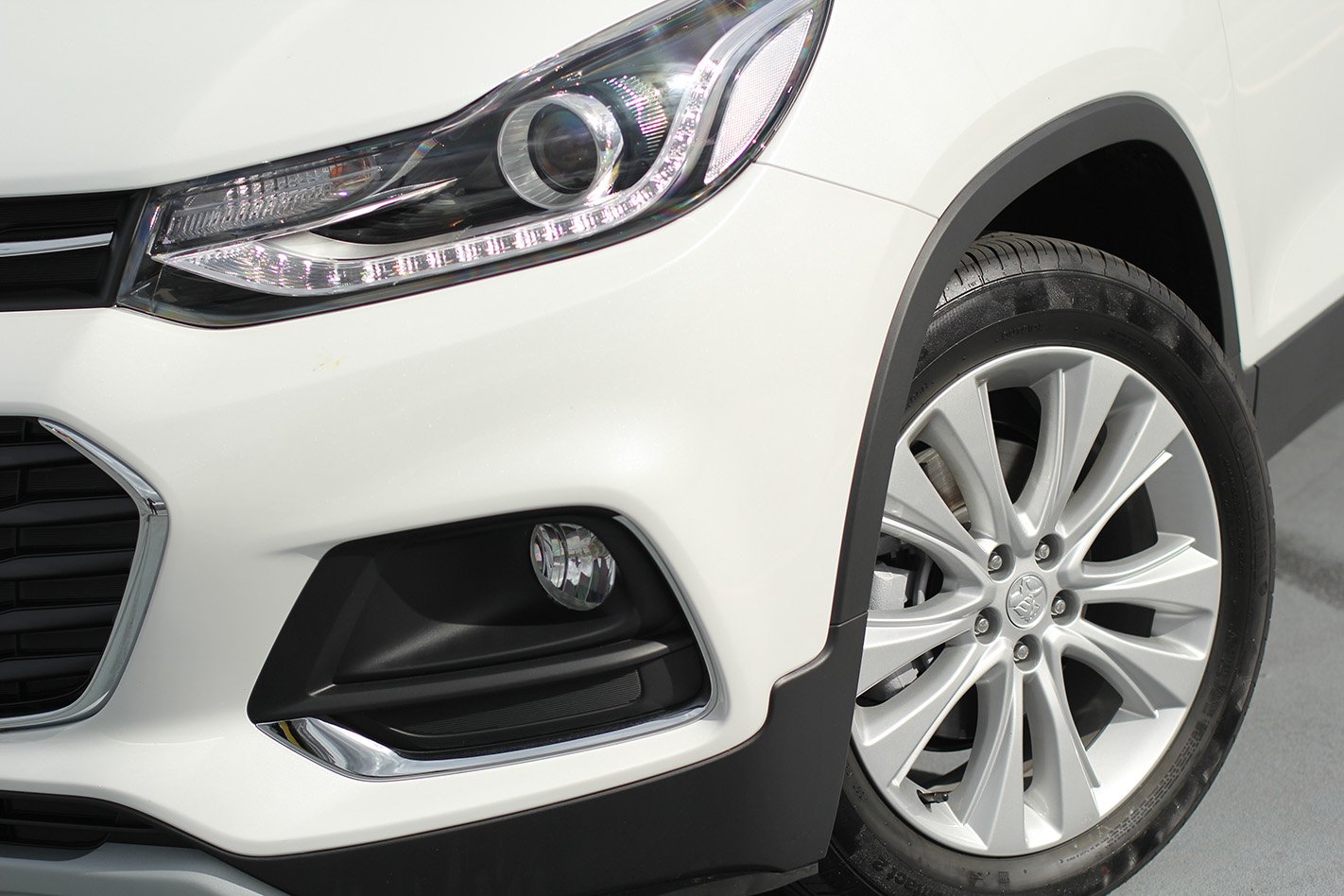
The Trax’s footprint on the road is modest, roughly equivalent to that of the average small hatchback like a Corolla. The biggest dimensional difference, however, is height – the Trax is incredibly tall.
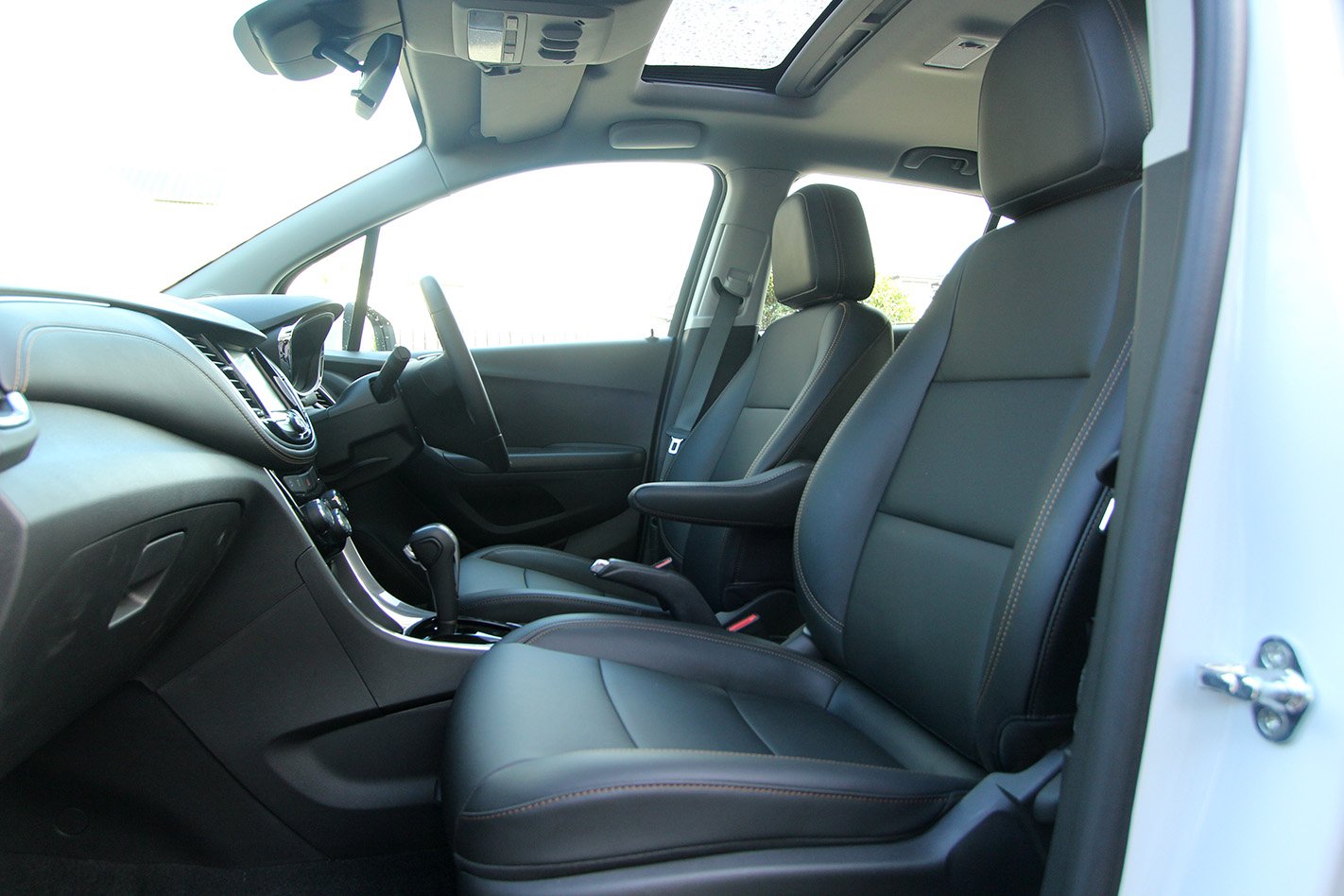
And that’s really the Trax’s calling card. Its elevated body and high seating position allows the driver a commanding view of the road ahead, while also giving easy access to the rear seat for strapping in kids. For many people considering an SUV, a high H-point – or the height of a seated occupant’s hips above the road – is paramount.
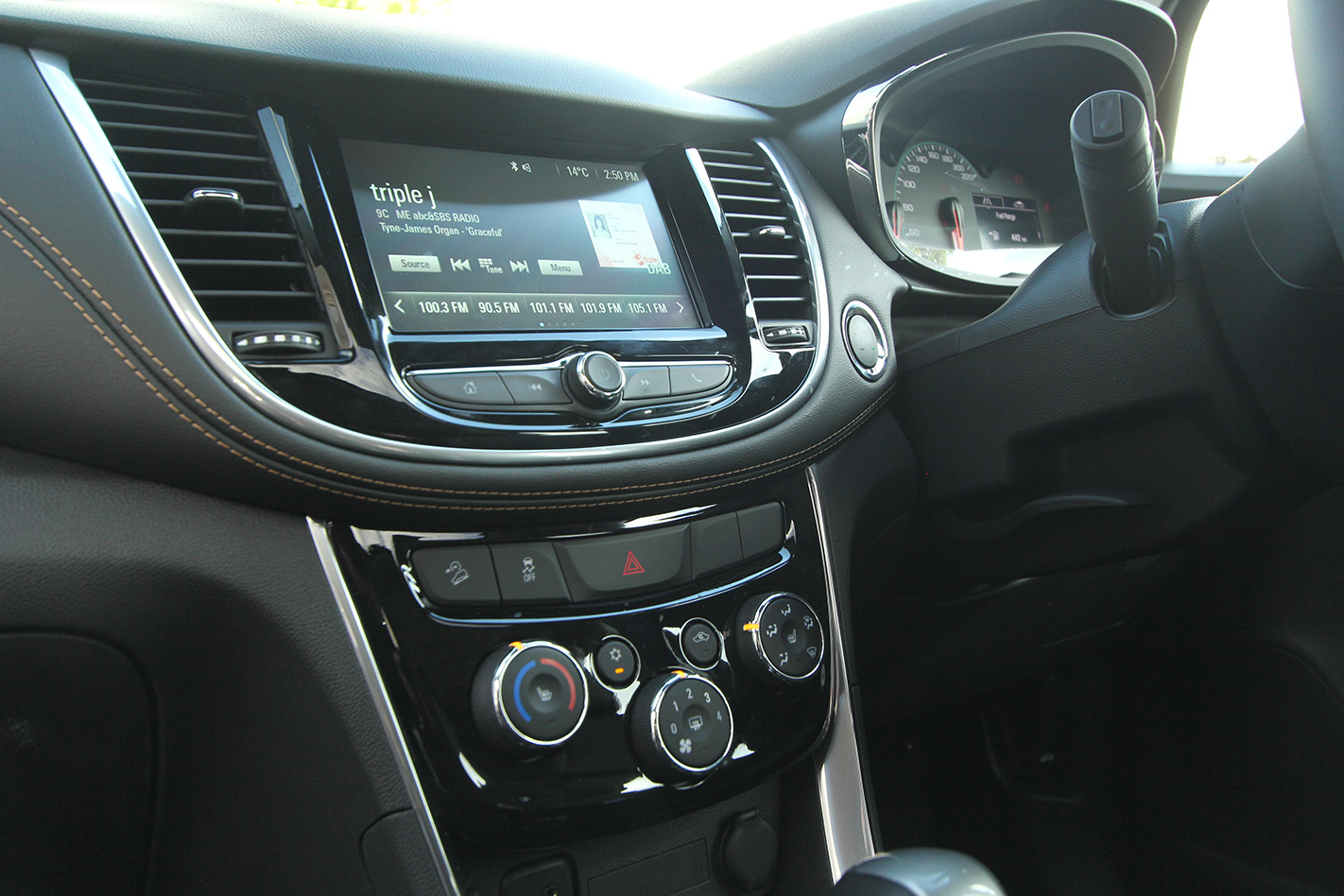
The LTZ is equipped with faux-leather upholstery which admittedly isn’t too bad as far as synthetic hide goes, and there’s reasonable comfort from the front seats – which are heated in the LTZ too.
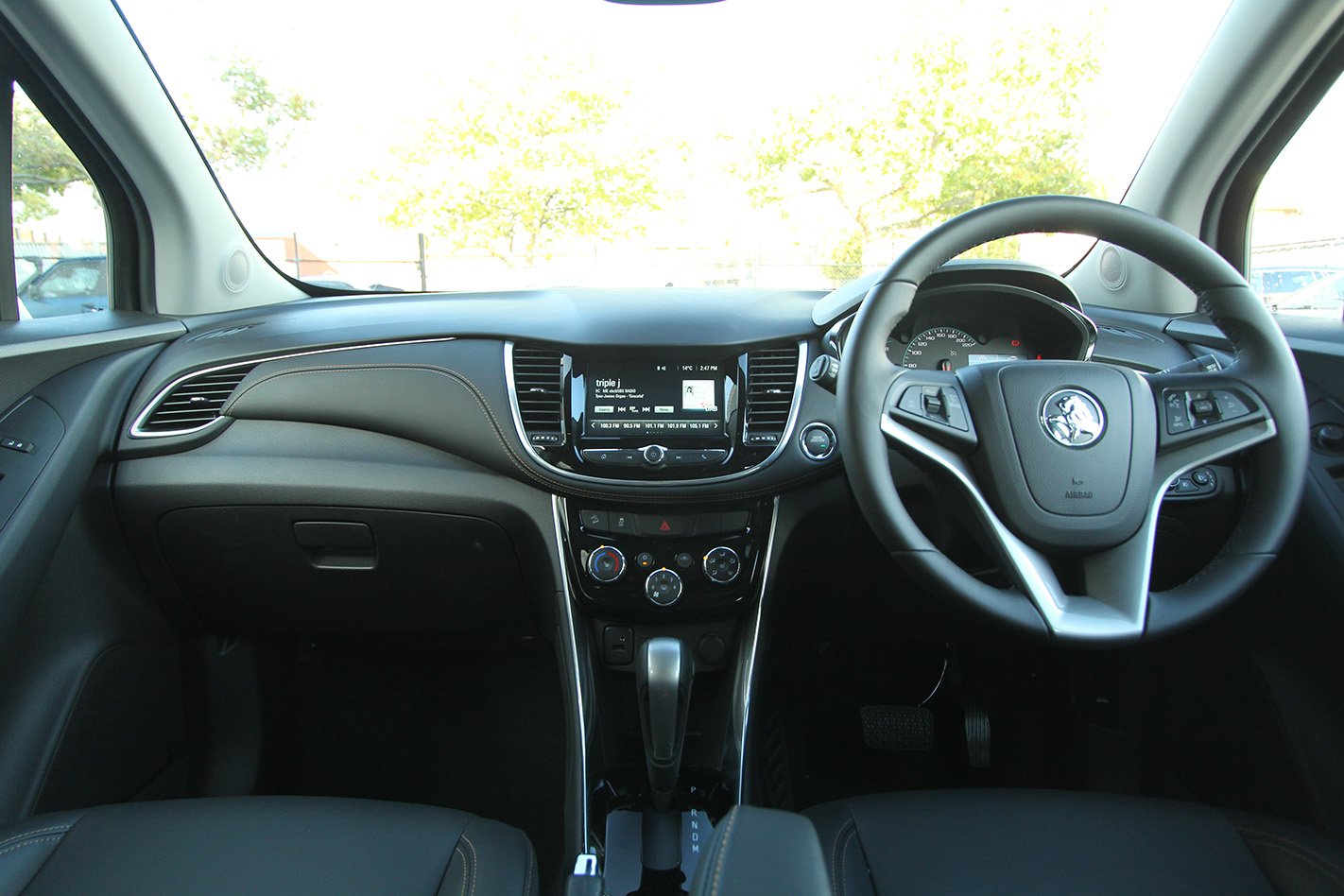
Cabin width isn’t huge though, given the Trax’s light car underpinnings, and that serves to only enhance the car’s feeling of tallness. Even with the LTZ’s standard sunroof eating away a little bit of available headroom, you could probably still get away with wearing a top hat.
Rear seat comfort is poor, however. A very upright seating position with flat and horizontal seat cushions means it’s not a space you’d want to be in for any great length of time.
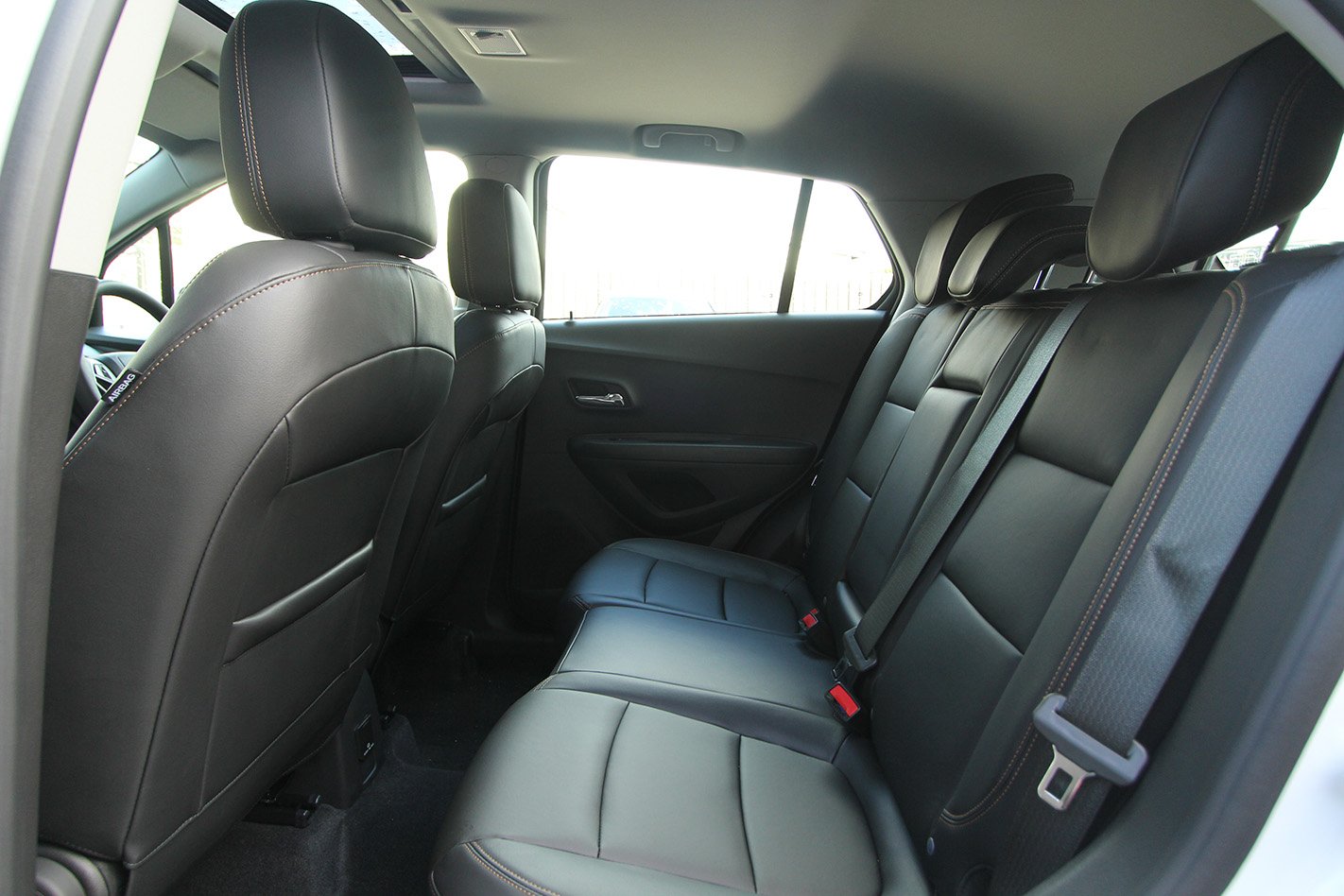
However, rear passengers do at least get padded armrests, generous legroom, plenty of headroom, a good view out the side glass, small door pockets for storage and a fold-down centre armrest with a pair of cupholders.
Oh, and there’s also a 230-volt household-style power outlet on the back of the centre console. That’s not a feature you’ll commonly find at this end of the SUV segment, and it means you could conceivably plug in – and use – whatever light-duty household appliance you wish. We question the wisdom of anyone who elects to plug in a sandwich press or hair straightener into their Trax, but it’d be perfect for charging up something like a laptop during a long drive.
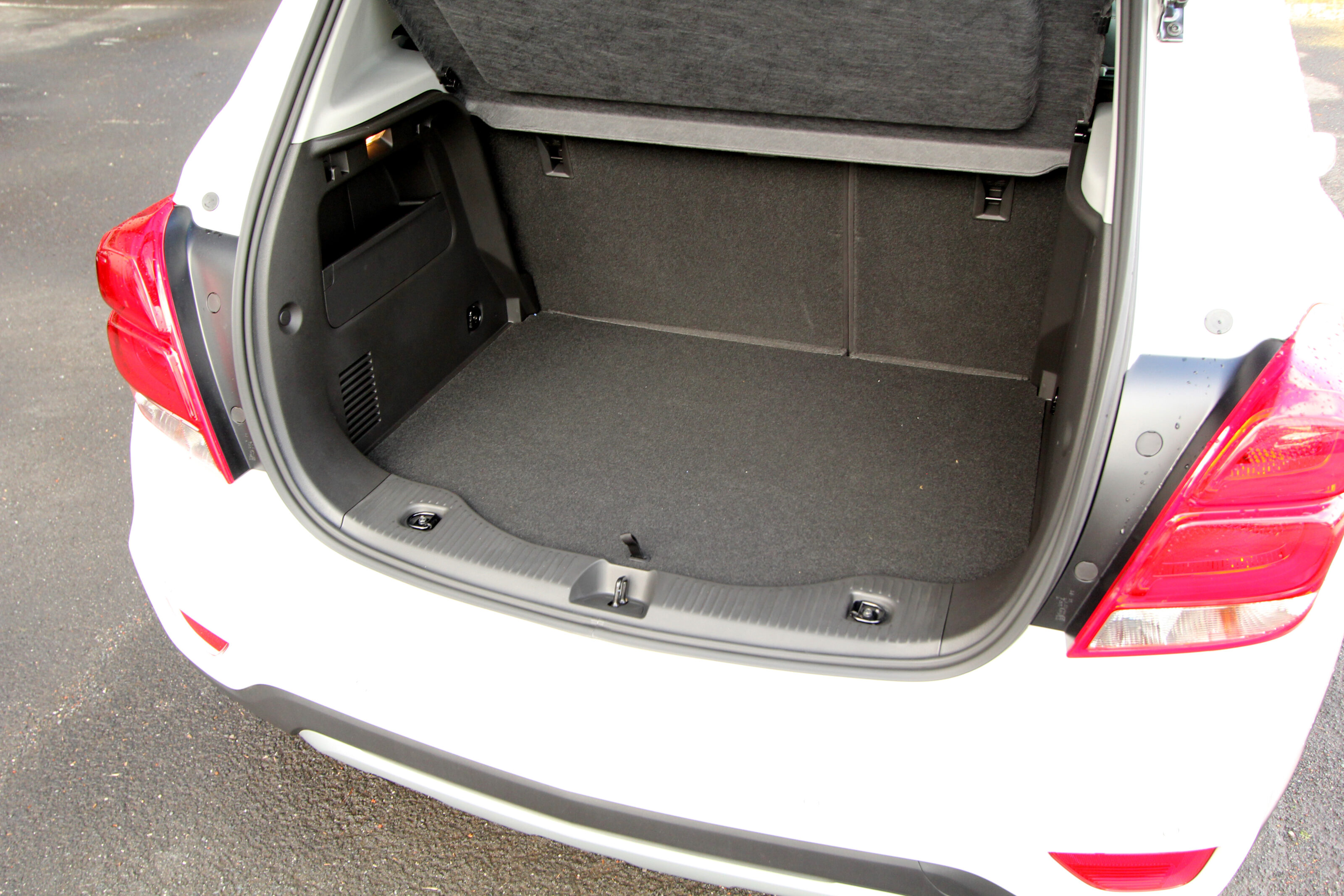
There are other thoughtful features too, like a quartet of shopping bag hooks in the boot (a very much underrated feature), and a full-size steel spare wheel beneath the boot floor. The 356-litre boot is also a useful size, especially for empty-nesters or singletons who don’t need to pack a pram or other large luggage on a regular basis.
However, those positives are let down by a cabin design that not only looks old, but lacks a cohesive style. It’s dated, and the organic bulges of the Trax cabin plastics are nowhere as appealing as the more thoughtfully designed Mazda CX-3 or Toyota C-HR.
How well does the Holden Trax LTZ drive?
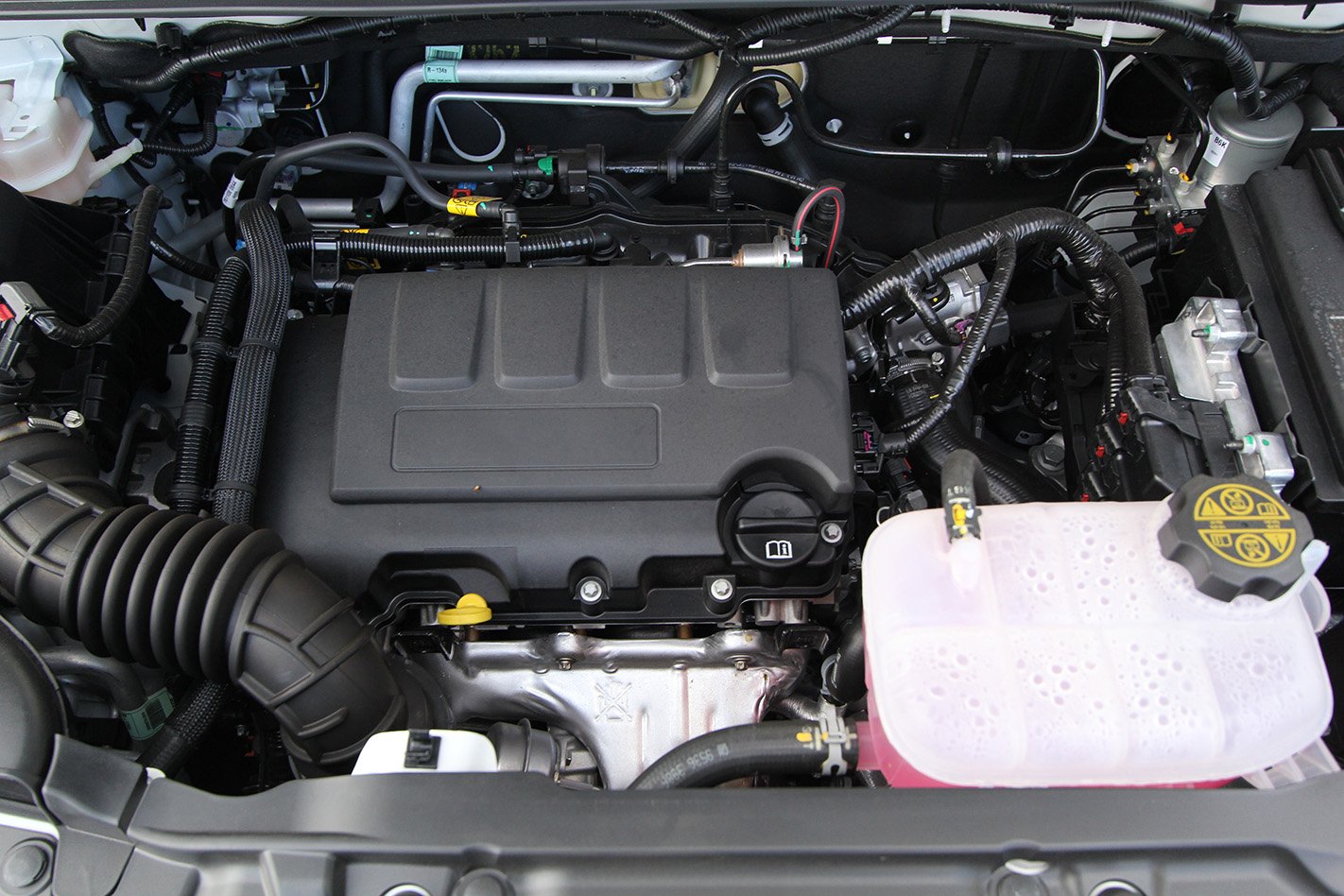
Powered by a 1.4 litre turbo with 103kW and 200Nm, the Trax LTZ has a generally relaxed nature when motoring around town and suburbs. The engine develops plenty of torque down low, and the calibration of its six-speed automatic works well to exploit that.
However, it’s not quite so impressive when you need to put a little more pep in its step, with the engine becoming coarse and noisy at high rpm and the engine being reluctant to kick down and provide you with that extra thrust.
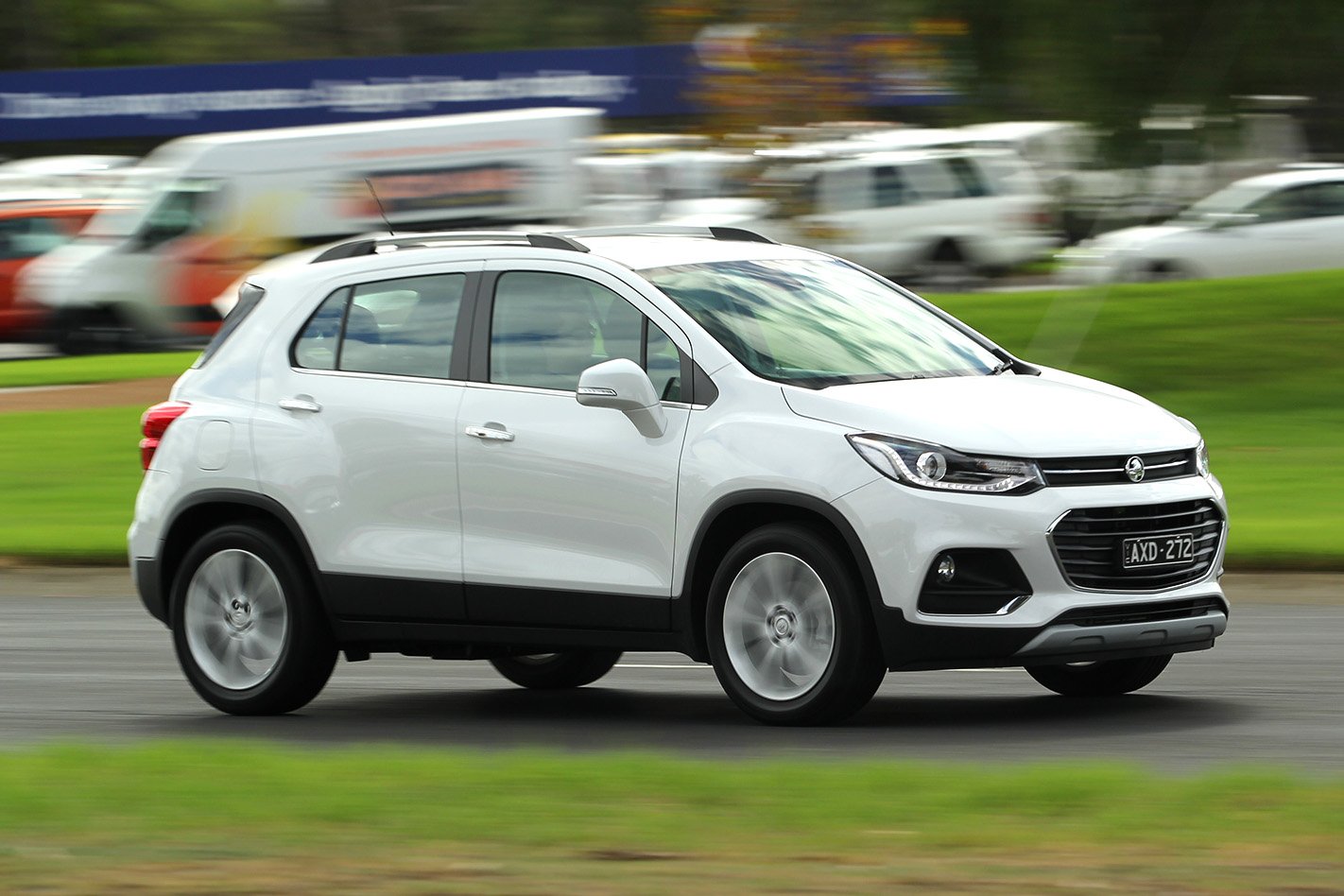
Weighing in just under 1.4 tonnes, the Trax is also heavier than you’d expect what is essentially a high-riding front-wheel drive hatchback to weigh, and it’s that mass that blunts its performance.
That said, the Trax LTZ actually handles quite well. A well-tuned suspension and surprisingly accurate steering means there’s actually some enjoyment to be had if the road gets twisty, and taut body control translates into stable and predictable handling – this SUV definitely doesn’t wallow like a boat in choppy waters.
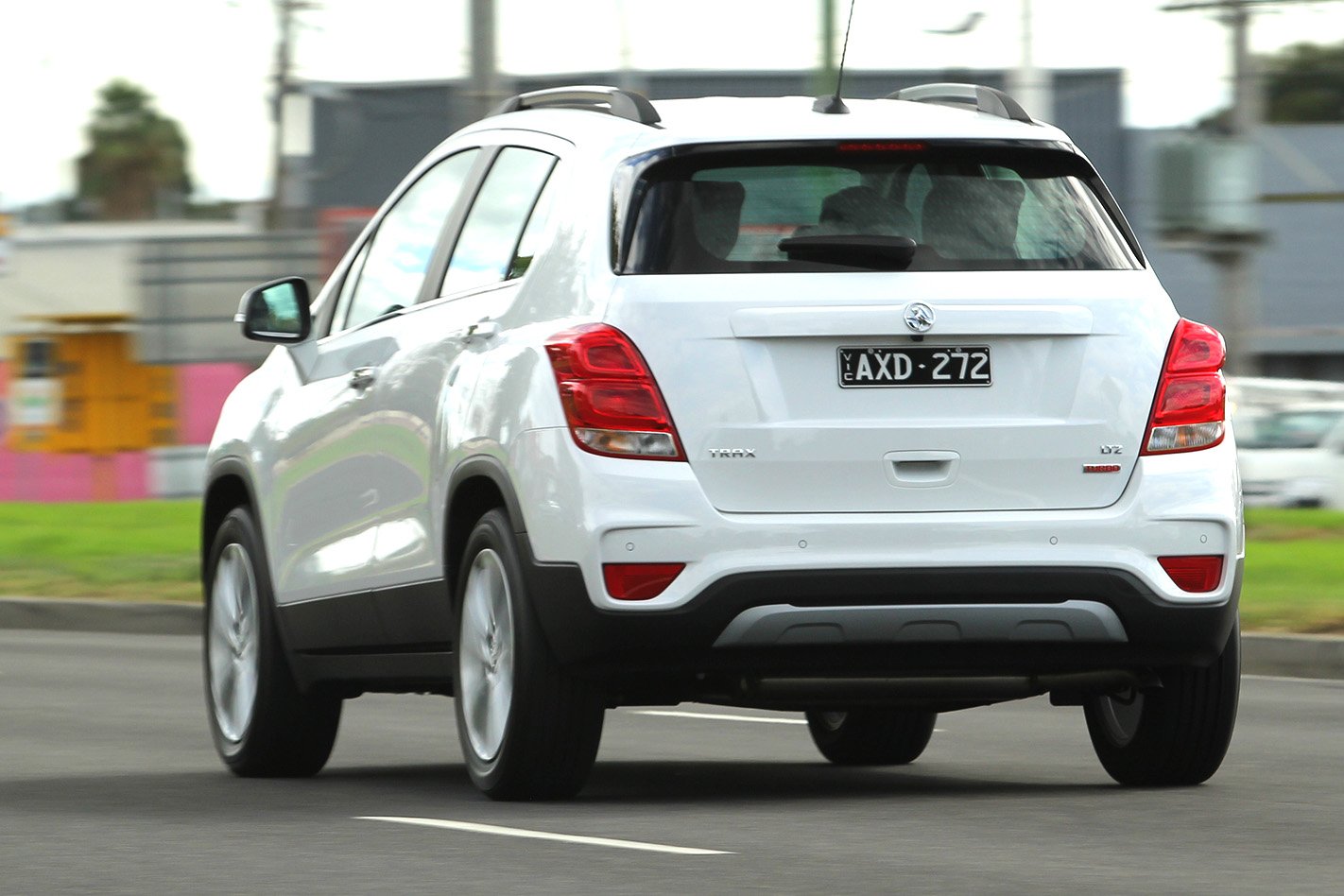
But the other side of that coin is an overly firm ride on urban roads. You’ll sense a restlessness with this suspension as it wants to react to every bump, no matter how minor, which can get tiring the longer you spend behind the wheel.
Ride comfort, then, could certainly be improved – rivals like the Honda HR-V, Mazda CX-3 and Toyota C-HR do it better.
Verdict
The Trax is showing its age somewhat, and while it’s a decent buy in less-expensive lower grades, the top-spec LTZ isn’t quite as competitive as it should be given what else now exists in the segment.
It handles roads well and boasts a generously-sized cabin, and that tall seating position will no doubt be a huge drawcard for many small SUV shoppers. Lacklustre engine performance and a stiff ride takes some of that sheen away though, as does a feature fit-out that’s a little inconsistent (why seat heaters, but no climate control?).
On the whole, it’s a middle-of-the-road performer, with a few virtues that are cancelled out by a corresponding number of minuses. Its price is on the wrong side of $30K, but for some the fact that it boasts a good amount of equipment and plenty of space for a little less money than rival range-topping compact SUVS might be enough to earn the Trax LTZ a spot on their shortlist.
The Mazda 3 has gone upmarket with svelte looks, class-leading equipment and a price to match but is that what customers of one of Australia’s most popular segments want? (1:55) The WCW team sets out to analyse premium car evolution and reveal why a Toyota Camry is no longer the car for people who don’t want a car.
Next, the boys move onto a different evolving car phenomenon – segment saturation. (12:00) From a time when each manufacturer offered a handful of sedans, perhaps a wagon and, if you were lucky, a coupe, today’s ranges are stuffed full of niche variants within niche segments.
| Read next: Mazda 3 first drive
Who is the worst offender and where will it all end? Dan has a theory that is typically hyperbolic but he might just be right on this one.

Taking out the show this week, Tony makes his WCW debut to talk about a brace of Jaguars in the south of France. (22:45) Following on from the announcement that JLR will pare back its ridiculously large line-ups (we chatted about it last week), Tony gets behind the wheel of the new XE mid-sized sedan of which there are just two variants… for now.
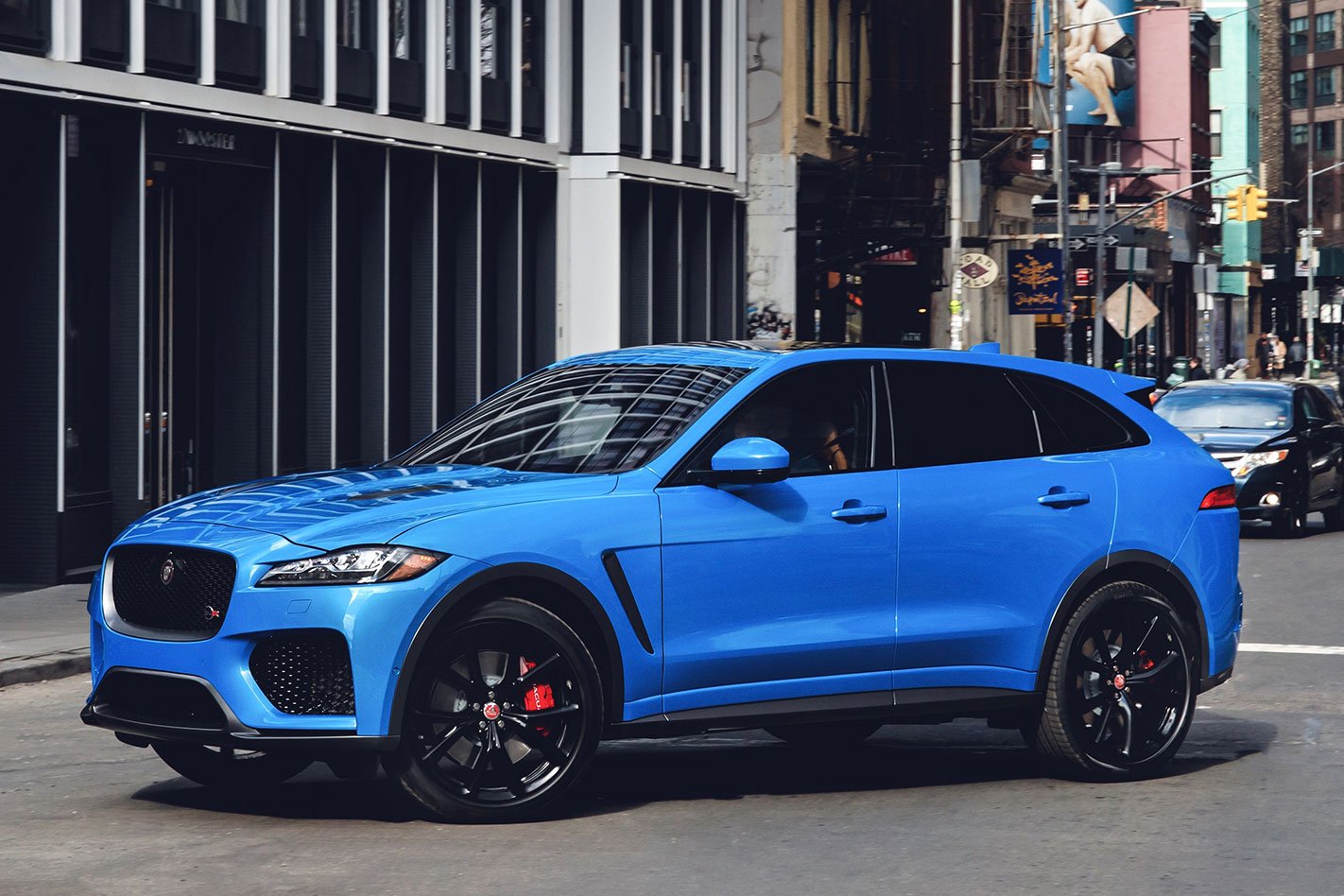
After that, the he takes the new flagship of the F-Pace large SUV range for a blast to find out if the SVR is a high-performance revelation and perhaps the company’s supercharger swansong.
If you’re listening on the go you can catch WhichCar Weekly on the iTunes or Podbean apps, please subscribe and leave us a rating and a review! You can also follow the day-to-day antics of the WhichCar crew @whichcarau on Facebook, Twitter or Instagram.
Listened to the show? Help us out:
- Leave a note in the comment section below.
- Leave a review on Apple Podcasts/iTunes
- Subscribe to our podcast
Volkswagen is looking to take the electric lap record at the Nürburgring using its Volkswagen I.D R racer.
The current record of 6:45.90 is the target, set by the Nio EP9, meaning the I.D R has been redeveloped to suit the conditions of the Green Hell as opposed to the lofty heights of Pikes Peak, where it found success last year.
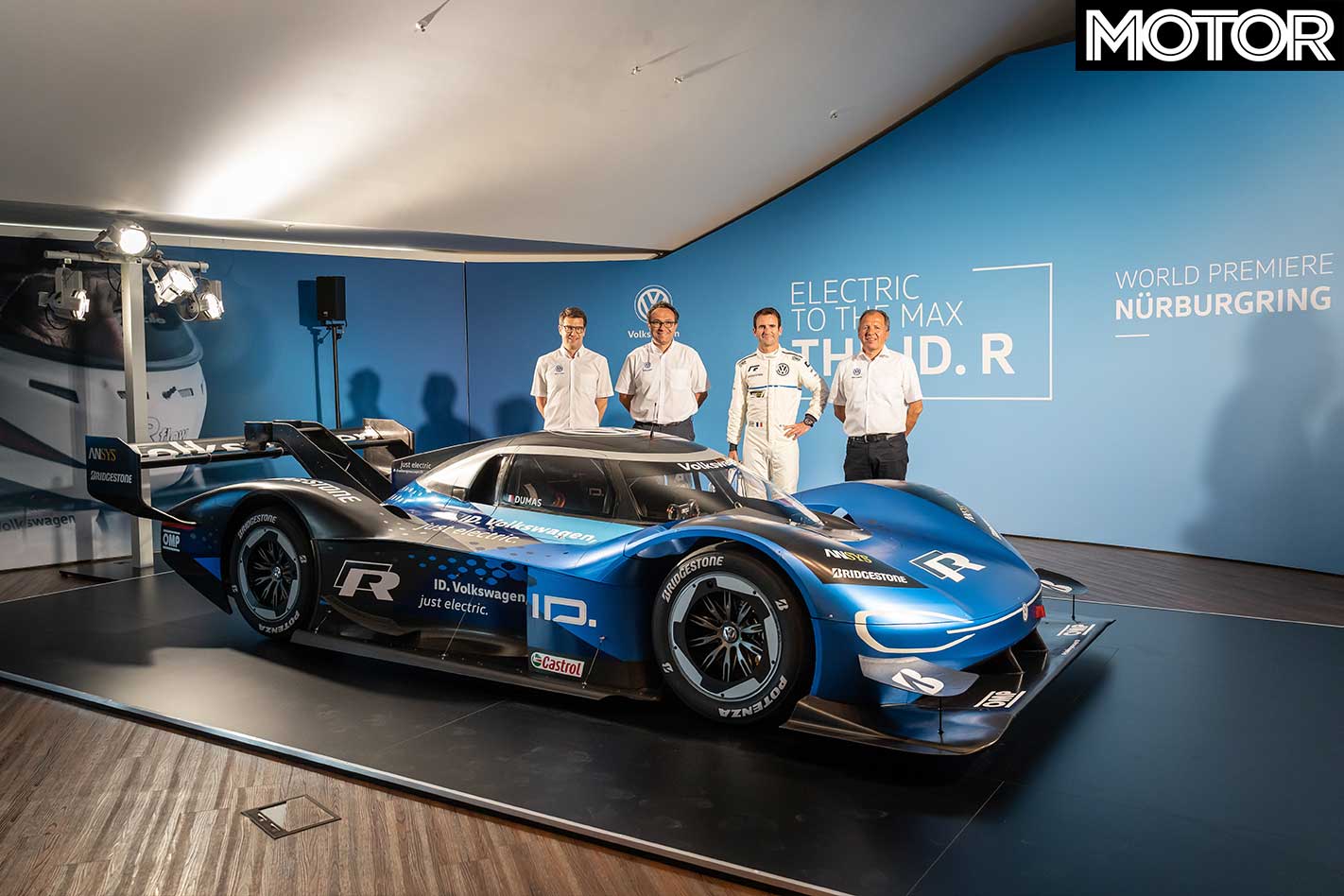
François-Xavier Demaison, Technical Director of Volkswagen Motorsport, says the changes made to the I.D R are heavily focused on downforce, though is power systems also needed retuning.
“Last year, the number of turns and the thin air at Pikes Peak demanded maximum downforce,” says Demaison.
“On the Nordschleife lap, the I.D R will reach an average speed of more than 112mph (180.2km/h), with a top speed on the straight of up to 168mph.
“We have therefore developed a completely new aerodynamic package using DRS, the drag reduction system known from Formula 1, as well as optimising the energy management, which controls the power output of the two electric motors and energy recovery under braking.
“In contrast to Formula 1, the DRS on the I.D R serves not to overtake, but to improve efficiency.
“The I.D R has a very powerful drivetrain. The DRS helps to use this performance with lower energy consumption, so that it can continue being deployed for the entire lap of the Nordschleife.”
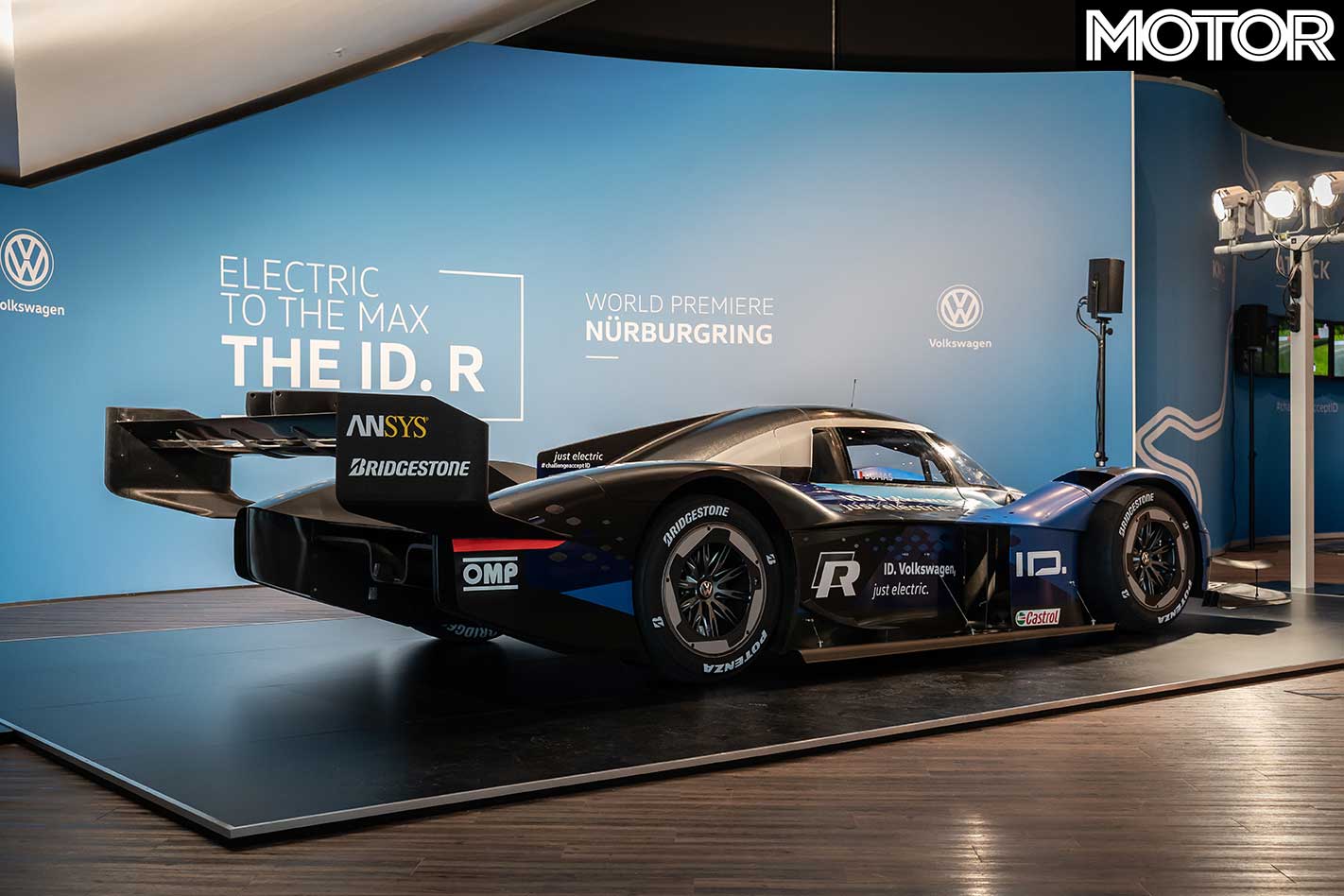
With approximately 500kW and 650Nm at its disposal, the 1100kg I.D R is capable of running to 100km/h in just 2.25 seconds.
Last year at Pikes Peak, it used this capablility to set a new 7:57.148 record with Romain Dumas behind the wheel, lending his skills as a three-time (now four) outright winner at the Race to the Clouds.
Dumas will again pilot the I.D R, now utilising his four wins at the 24-hours of Nürburgring race.
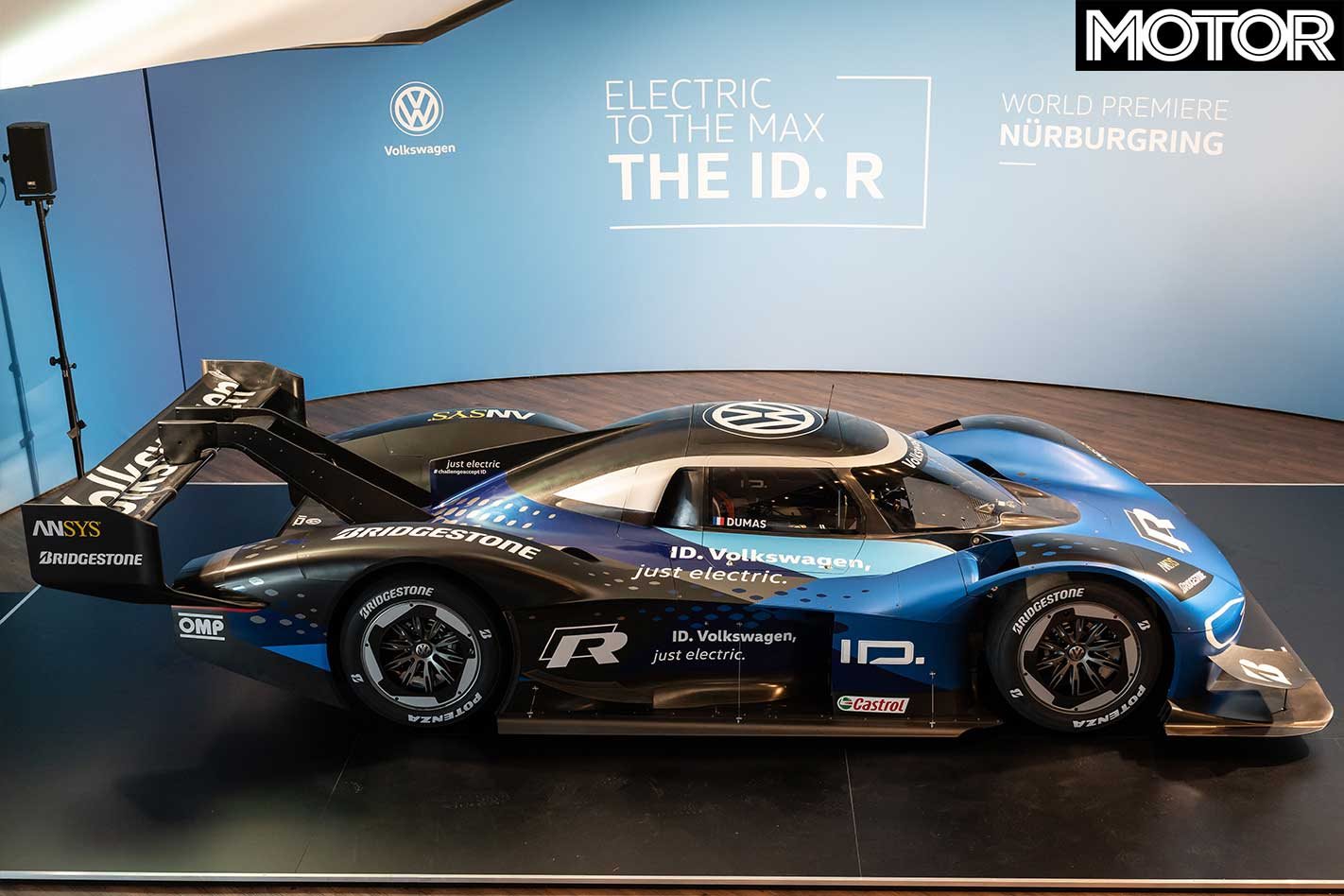
“I have already driven the Nordschleife with the ID. R on the simulator countless times,” says Dumas
“But you only get the true feeling from the incredibly high cornering speeds when you’re on the actual track.
“The extent to which the ID. R has been continuously developed compared to 2018 is impressive. I can’t wait to finally drive the ID. R on the Nordschleife.”
Volkswagen also says it will make the I.D R available to drive in the free-to-play racing simulator RaceRoom.
As far as fair fights go, this one may raise an eyebrow from both the bookies and the managers of both combatants.
In the blue corner is the box-fresh, fourth-generation Ford Focus, a car Blue Oval insiders tout as “the best Ford we’ve ever built.”
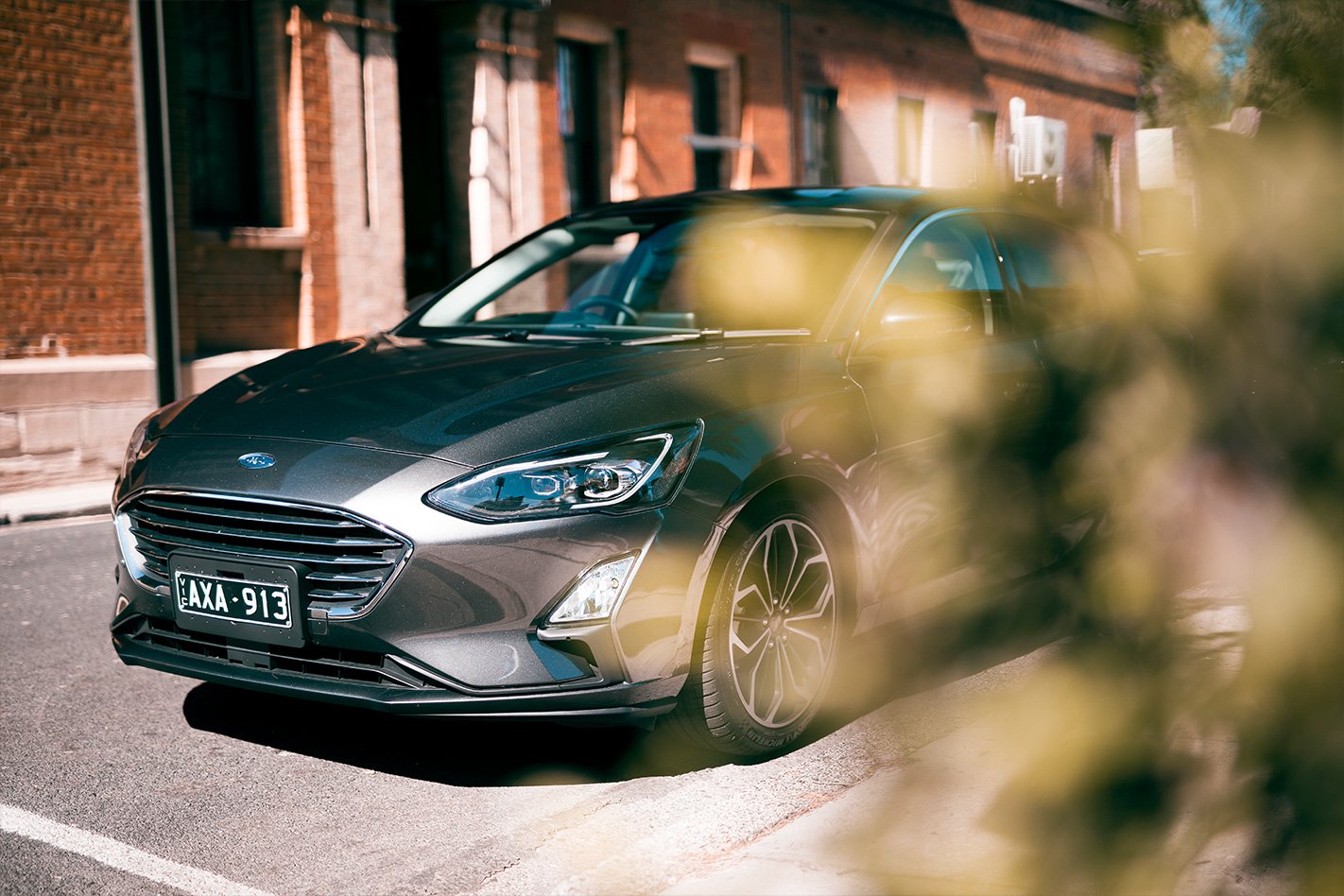
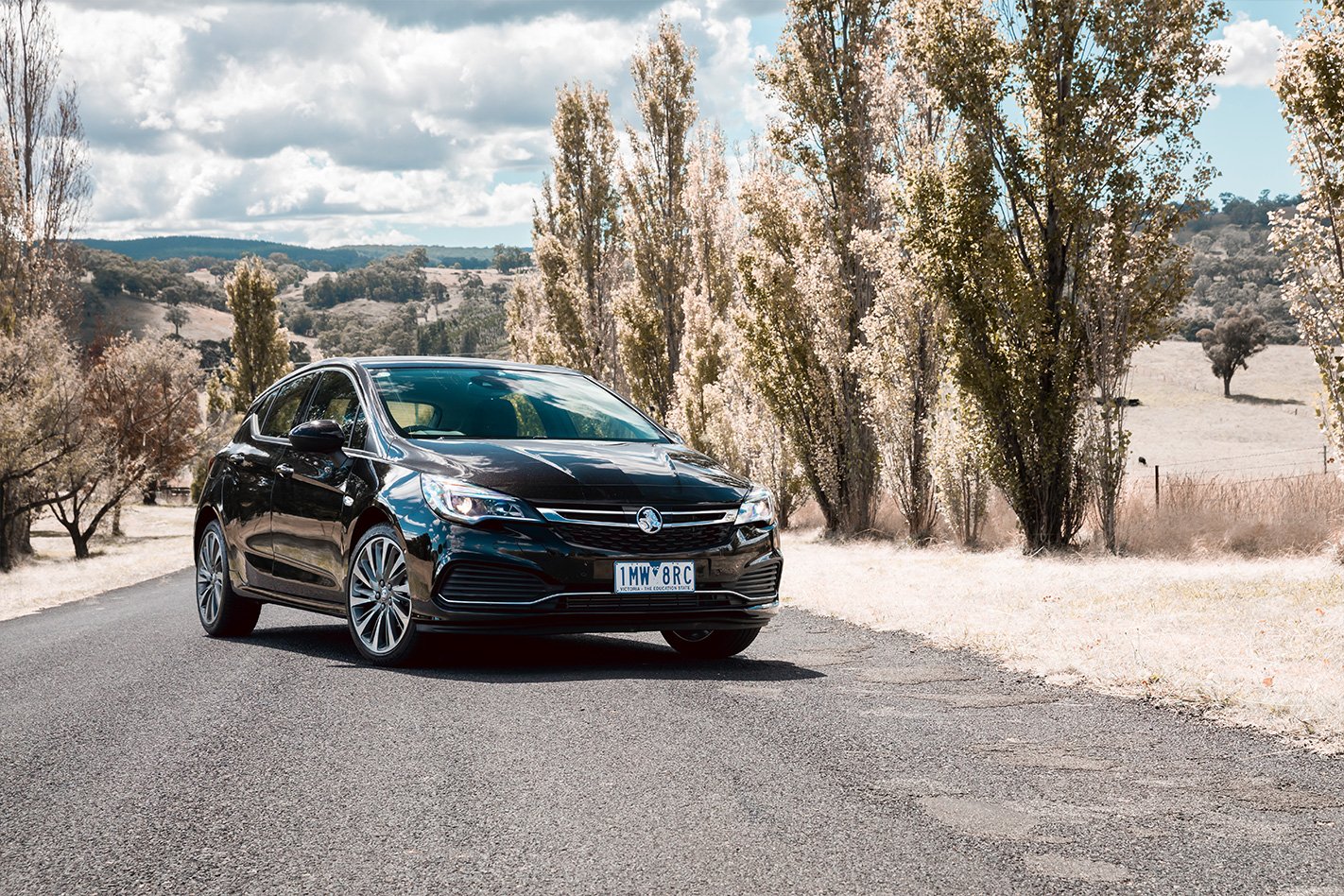
In the red corner we have the seventh-generation Holden Astra, an accomplished small car, no question, but three years older than the Focus, and a perennial underachiever on the Aussie sales charts compared to class rivals like Corolla, Mazda 3 and VW Golf.
So is this a clear case of fresh is best? Or does the slightly greying Holden have the stamina and smarts to stoush with the sprightly Ford? There’s the bell, let’s get it on.
Price and Equipment
Our top-spec $34,490 Titanium includes tasty inclusions like a wi-fi hotspot, wireless charging and remote-activated windows. But there’s no driver’s seat memory while adding a sunroof and head up display add $2K and $300 extra respectively. With $650 metallic paint and $1K self-parking, our Focus commands $38,440.
Our Astra RS-V lists at $31,740, but that quickly ramps to $36,280 with the inclusion of a $4K Innovations Pack bringing Opel’s excellent adaptive LED matrix headlights, sunroof and adaptive cruise, plus $550 for metallic. Auto up/down electric windows, powered front seats and rear centre armrest aren’t available, but auto parking and remote starting are fitted, as is a punchy 147kW/300Nm 1.6-litre four-pot turbo/six-speed auto combo.
Interior and Comfort
First slight letdown with the Focus is its interior. In isolation, there’s plenty going for the Titanium – not least the plentiful space, storage and ventilation, as well as sufficient vision, comfy seats and simple, logical control layout. And though dated to look at, Ford’s SYNC3 multimedia interface still works fine. But the dash screams budget at this lofty price point like it’s meant for a Fiesta, with lower-quality materials than anticipated in many areas; the instrumentation – while comprehensive – possesses zero flair, and the rear of the cabin seems from a lower grade, with no face-level vents and some noise intrusion. The interior is an amalgam of two design proposals and it shows.
The opposite applies inside the Astra, since Opel clearly worked to a single vision. It looks from a bygone era, and on the move, there’s even more tyre roar intrusion than expected and chatter over bumps is palpable.
But as a box-ticking exercise, the cabin is purposeful, comfortable and spacious, and the seating adequate front and rear. That said, the cabin’s second row seems cold and barren compared to even that of the Focus, with bottom-drawer plastics, AWOL vents and no centre armrest. And up front, weirdly, the left-side occupants’ legs must angle slightly askew to the right.
Engine and Performance
The Holden is the noisiest of this pair, but at least the Astra’s rousing din is somehow in keeping with the prodigious performance on offer. Make no mistake; the Astra delivers warm-hatch performance, tearing through each speed increment faster than the Ford by some margin (though with 6000km on the odo against the Ford’s 2000km, the Astra had the advantage of a well-run-in engine.)
Hence it was quick against the stopwatch. At 60km/h, the Holden was a full second ahead of the Focus; at 100km/h the gap blew out to 2.0sec, and by 140km/h, the divide ballooned by over 4.5s. Lusty and eager to break traction in the lower gears, the Astra’s 1.6 turbo roars into life and storms from point to point. RS-V may as well stand for ‘Rocket Ship Velocity’ in this context.
Okay, 0-140km/h is interesting for comparative context, but perhaps not so relevant in the real world. What is relevant is the overtaking ability – the crucial 80-120km/h measure. Here the Astra continues its dominance: just 4.3sec on the wrong side of the road, compared to 5.9sec for the Focus.
It’s worth reiterating that the barely run-in Focus was, at 8.7sec to 100km/h, half a second shy of our ST-Line’s results several weeks earlier. But like the latter, the three-pot turbo Titanium’s seat-of-the-pants reactions feel much brawnier than what the stopwatch says. Feisty off the line and punchy through the gears, thanks in part to eight well-chosen auto ratios, the Ford feels lively and responsive. And while its 9.5L/100km average consumption was nothing to get excited about, it was 1.8L/100km less thirsty than the Astra, which glugged down the premium brew at a test-average of 11.3L/100km. Trust us, your numbers will almost certainly be more parsimonious than this.
Ride and Handling
If you’re a keen driver, don’t be put off by the Ford’s performance deficit compared to the Astra. The Focus begs to be belted along, goaded on by a chassis with an almost supernatural ability to feel both ultra-light on its feet and rooted to terra firma. Though not quite as acute as that of the slightly lower, more-tautly suspended ST-Line, the Titanium’s talkative helm remains meaty yet lean, while acute handling agility and seamless cornering control – aided by unobtrusive electronic traction tuning – are further plus points.
However, while all this suggests the old multi-link rear may not be missed after all, the vaunted ride suppleness endemic to this series evaporates on the 18-inch wheel and (quality Michelin Pilot Sport) tyre package, replaced by an unwelcome, uncharacteristic firmness that brings lumpiness at odds with the Titanium’s upmarket aspirations.
The tearaway RS-V delivers a driving experience that really is dominated by its engine. That’s not to say it lacks dynamic appeal, but its steering is not as consistently weighted nor tactile as that of the Focus, and its chassis tune is likewise not quite as deftly honed to deal with lumpy Aussie roads. Yet the Astra can be hustled through sweeping bends with bridled accuracy, for fast, occasionally scrappy fun that is its own wayward joy. Yes, there’s some torque-steering tugging at the wheel as you mash the throttle out of tight turns, and you’ll likely feel as well as hear what’s going on below, but it’s rarely unpleasant.
Winner
Rowdy and a tad unsophisticated the rapid RS-V may be, it nevertheless remains a small-hatch charmer, with a can-do attitude and easy accessibility that helps the Astra ascend above its dated interior. The Opel-based Holden deserves to be on every shopping shortlist, and its price advantage of over $2000 as tested here also sees it land extra scoring points against the Ford.
The Ford leaves us with slightly mixed feelings. This Titanium spec model doesn’t quite have the dynamic appeal of the excellent ST-Line, falling short for ride comfort, while failing to lift the patchy cabin’s interior presentation sufficiently to justify the extra spend. It’s what we feared – an inferior rear suspension mated to oversized wheels and ill-judged specification. This is the underachiever of the latest Focus line-up, but it still does possess many great traits instilled in the model line, including a willing powertrain, superb steering and smart packaging. All of which are just enough to get the nod over the Astra, but by a smaller margin than we would have initially predicted.
New to Wheels Car of the Year?
Read the COTY 101.
THE ALFA Romeo Giulia finished in one of the podium positions at last year’s COTY which had cranked up expectations of the Stelvio. It’s fair to say that the presence of the Giulia Quadrifoglio helped sprinkle 375kW worth of fairy dust across the more prosaic models in the sedan’s range but the Stelvio arrived without that level of top cover, with the Stelvio Q flagship failing to make our shores in time for this year’s event.
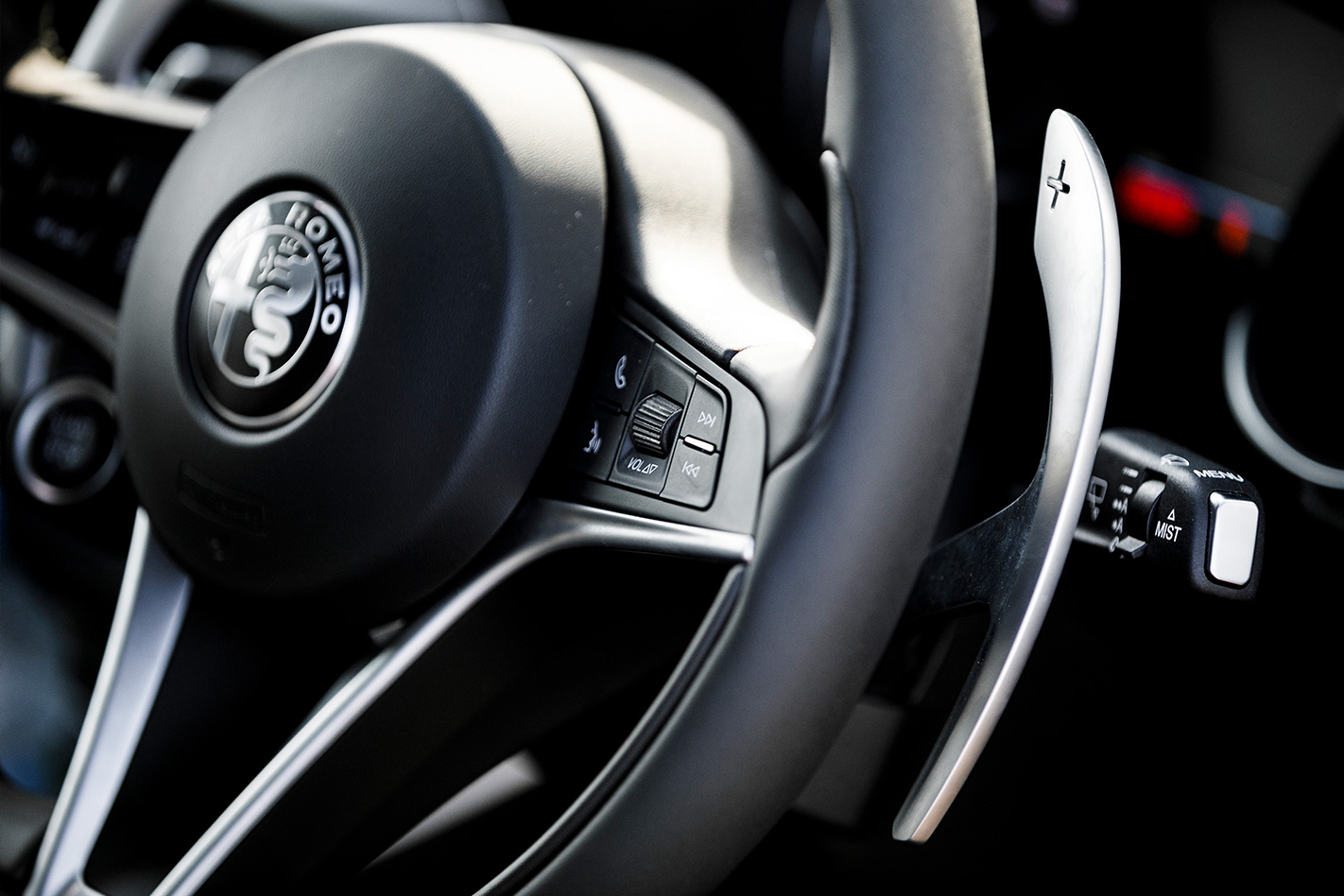
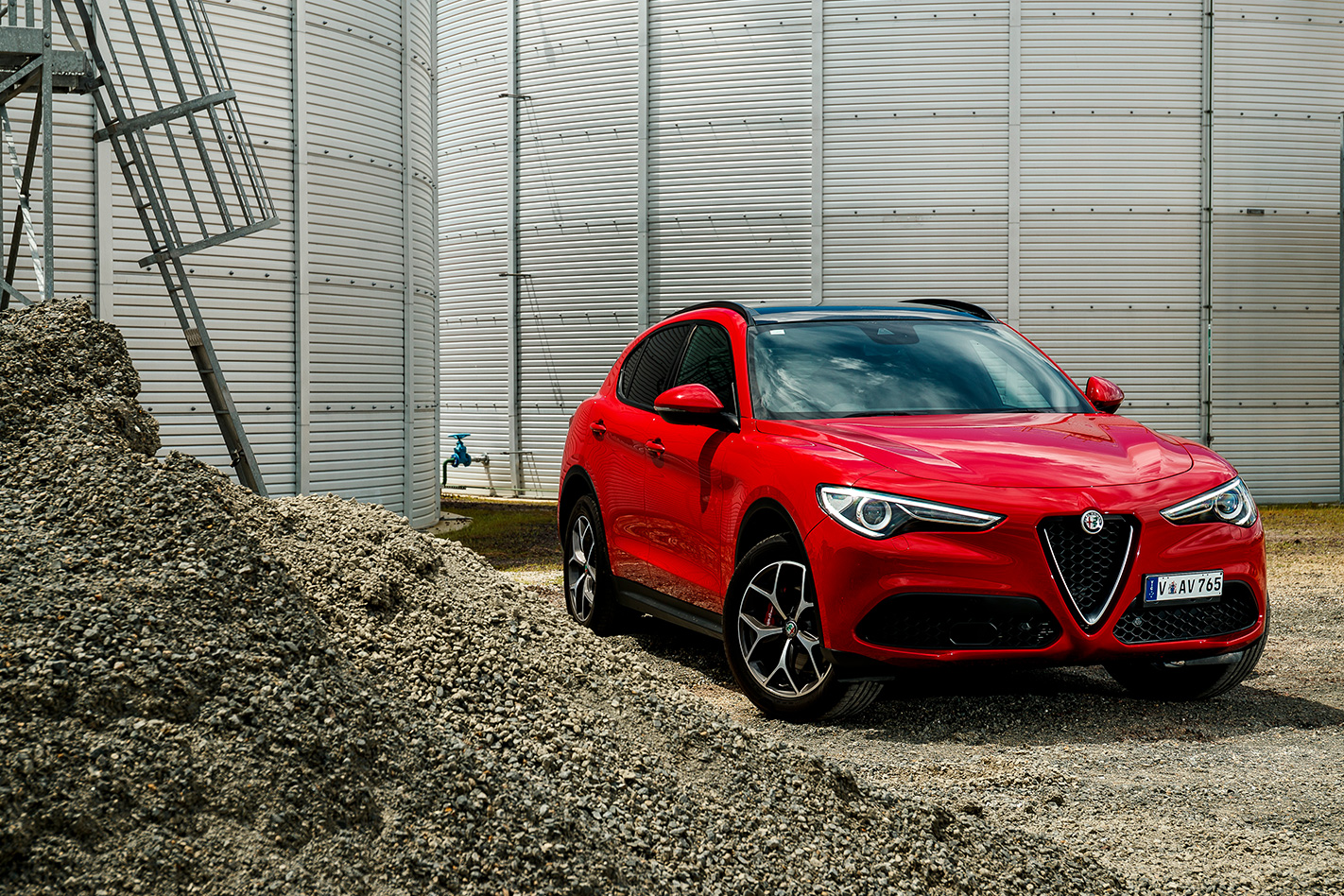
Even had that all-wheel-drive rocket been present, I’m not sure it would have influenced the judging panel to any great degree. The Stelvio adds all-wheel drive and hatchback practicality, but in the demerit column are a distinctly firm ride, poor rear-seat space, and a cabin that lacks the sort of sheen and polish that distinguishes the best sports SUVs in its class. ‘Underwhelming’ was the word that popped up time and again in judges’ notes when assessing interior finish.
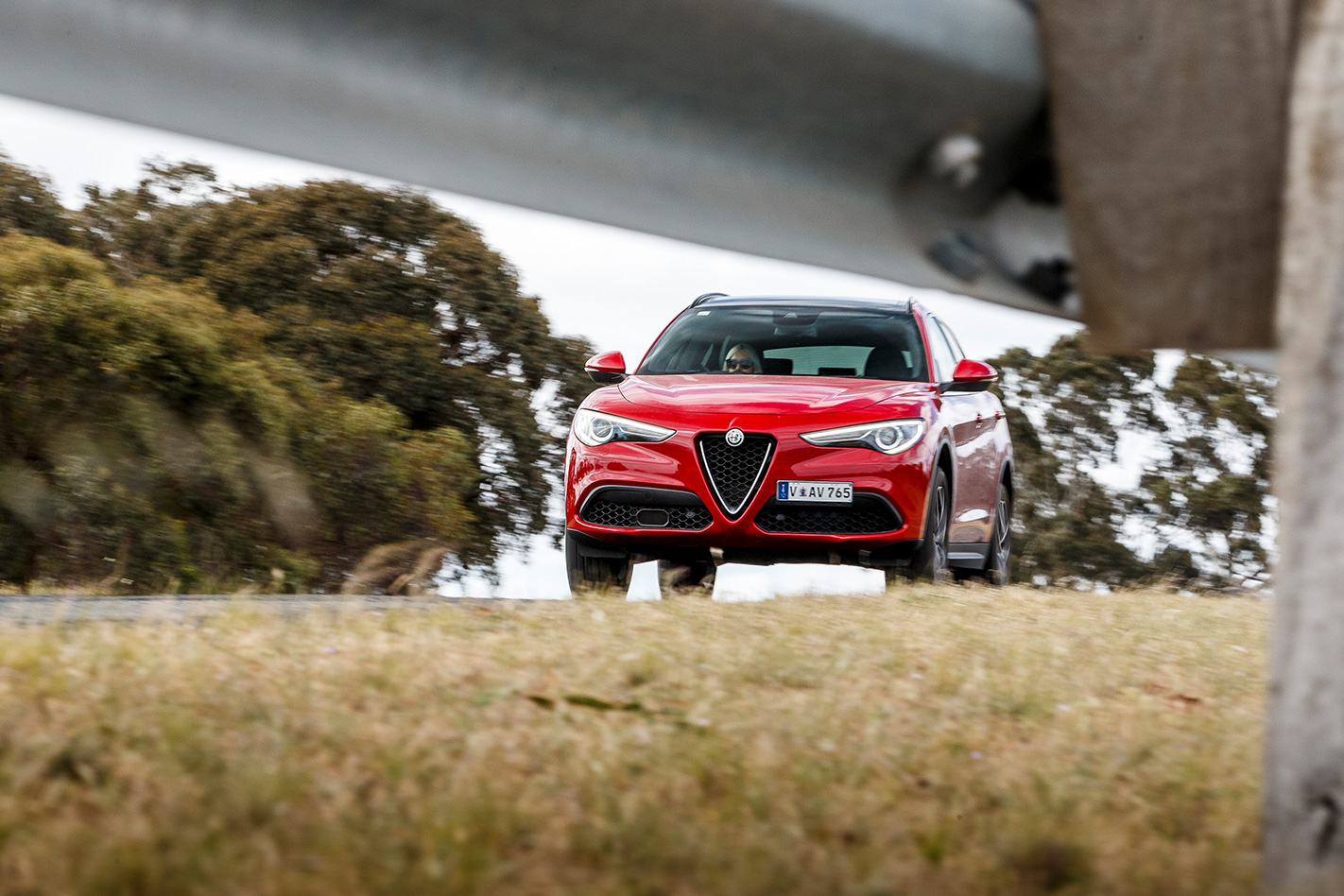
Of course, it’s entirely understandable that Alfa Romeo chose to build an SUV off the Giorgio platform rather than pursue the limited number of buyers who hankered after a low-slung Giulia wagon. The stated aim of the chassis team was to make the high-riding and heftier Stelvio drive just like a Giulia but, sadly, it just doesn’t. It can’t. Physics can be a pesky impediment to ambition.
It’s nevertheless a riot to pedal around the You Yangs’ gnarlier tracks and you could make a case for the Stelvio as something for singles or couples with no kids who just want to rapidly haul a bunch of sports gear with them.
That’s if they can see value in the pricing. The Stelvio Ti was a hefty $11K more than the diesel, but felt barely any quicker in the real world. Even the oil burner, with its suite of First Edition options, didn’t seem stellar value. “Doesn’t feel $75K” noted Inwood, while Faulkner thought it felt “like a Fiat 500X with some new bits”. The fact that you can buy a Mercedes-Benz C300 wagon for about this price is all the context you really need here.
The cabin has a curious propensity to ring like a bell over some surface imperfections, the ultra-rapid steering divided opinion and the touchy brakes proved similarly divisive. The petrol engines are rev-capped for emissions purposes, so neither of them can sing quite the way you’d hope.
Nevertheless, what was in no doubt was the Stelvio’s ability to cover ground at pace. Body control is excellent as long as the road surface is good, but the SUV lacks the Giulia’s subtle adjustability when you really get after it. That slightly inert edge to its on-limit handling is probably safe and wise, but when combined with its lugubrious styling, its shortcomings in four-up packaging and its comparative lack of interior polish versus key rivals, we found ourselves hankering for the sedan that so deservedly made it to the final round last year.
The Stelvio emerges as an interesting and worthy addition to the performance-SUV canon, but a COTY contender? Not by a long chalk.
What’s in the garage?
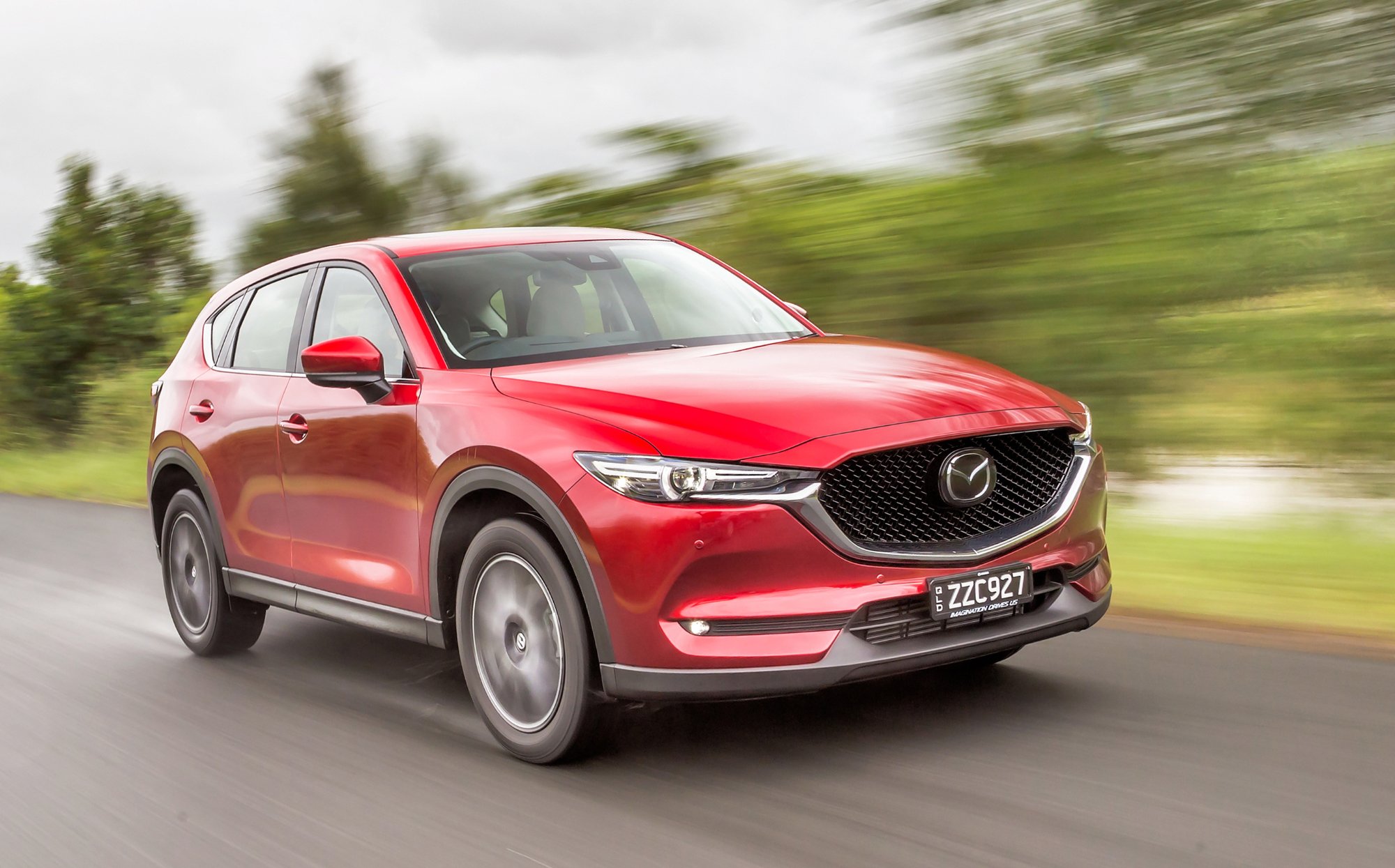
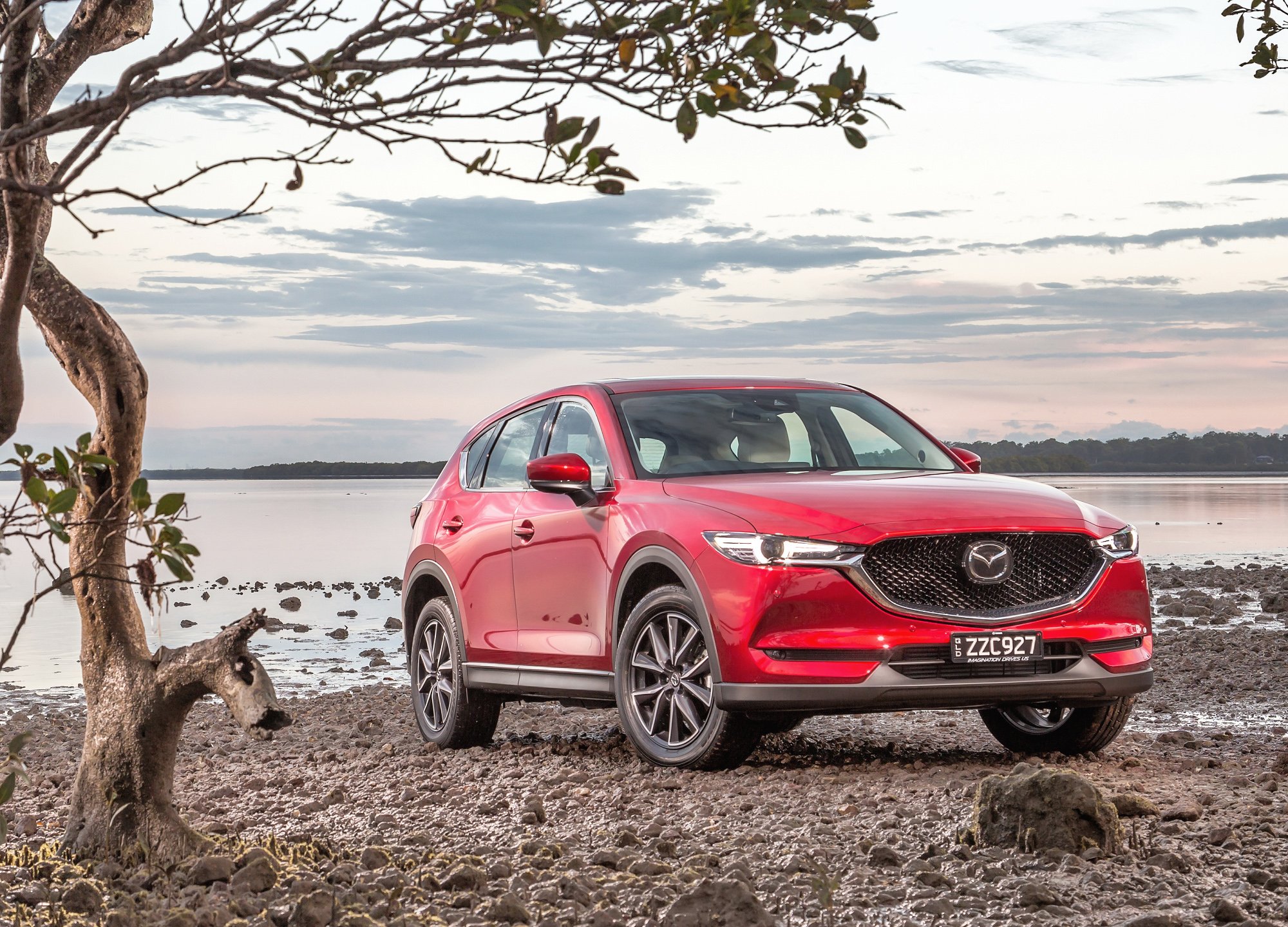
It’s a bit of a staple in the Wheels garage this week. The Mazda CX-5 is one of Australia’s favourite family SUVs and we’d recently booked it for a big comparison review that you’ll see in the June issue. Subscribers and regular readers will have quite something to look forward to there, but in the meantime, we thought we’d bring you a quick review on this upspec all-wheel drive CX-5 GT.
What we reckon

Cameron Kirby
Staff Journalist
| While no one is buying a mid-size SUV for its performance credentials, the new 2.5-litre turbo gives the CX-5 some much needed punch off the line for buyers that prefer petrol over diesel. But where this spec CX-5 really excels is by providing a premium feel, for a mainstream cost. Sitting in the cabin is a comfortable, almost luxurious, experience, with supreme everyday liveability. Truly the Golden Retriever of SUVs. |

Andy Enright
Deputy Editor
| Mazdas seem to share a common DNA in the way they tackle a road, aside from the CX-5. It’s the one car in Hiroshima’s line up that I’ve never really bonded with in terms of ride and handling. That said, I can certainly see why it’s so popular as most family buyers aren’t really interested in the finer nuances of cornering dynamics. For them, practical considerations like features, reliability, practicality and value are far higher up the priority list and the CX-5 certainly doesn’t disappoint there. My question to Mazda is why can’t we have both? |

Alex Rae
Online Editor
| Despite nearly double the torque output of many others in class, the CX-5 remains polite and tidy on throttle response and is in no way unwieldly. It remains polite everywhere else; the interior is well presented, it’s roomy front and back, and looks pretty sharp on the road despite nearing the end of its current generation. The boot’s a bit small – an oddity for vehicles as big as SUVs – but it’s mostly well-bred. |
Specs and compared to rivals
u00a0 | Mazda CX-5 GT | Kia Sportage GT Line | Honda CR-V VTi-LX |
Price | $46,970 | $44,790 | $44,290 |
Engine | 2.5L turbo 4cyl | 2.4L turbo 4cyl | 1.5L turbo 4cyl |
Output | 170kW/420Nm | 135kW/237Nm | 140kW/240Nm |
Transmission | 6spd AT | 6spd AT | CVT |
Fuel | Petrol | Petrol | Petrol |
Efficiency (combined) | 8.2L/100km | 8.5L/100km | 7.4L/100km |
Drivetrain | 4×4 | 4×4 | 4×4 |
ANCAP rating | 5 star | 5 star | 5 star |
Warranty | 5 years/unlimited | 7 years/unlimited | 5 years/unlimited |
Service Interval | 12 months/10,000km | 6 months/10,000km | 12 months/10,000km |
Seats | 5 | 5 | 5 |
Wheel size | 225/55 R19 | 245/45 R19 | 235/60 R18 |
Boot space | 442L | 466L | 522L |
Length | 4550mm | 4485mm | 4596mm |
Width | 1840mm | 1855mm | 1855mm |
Height | 1680mm | 1645mm | 1689mm |
Wheelbase | 2700mm | 2670mm | 2660mm |
Weight | 1720kg | 1688kg | 1630kg |
Towing capacity braked | 2000kg | 1500kg | 1500kg |
Front suspension | MacPherson strut | MacPherson strut | MacPherson strut |
Rear suspension | Multi-link | Multi-link | Multi-link |
Country of origin | Japan | Korea | Japan |
Review
Power and performance
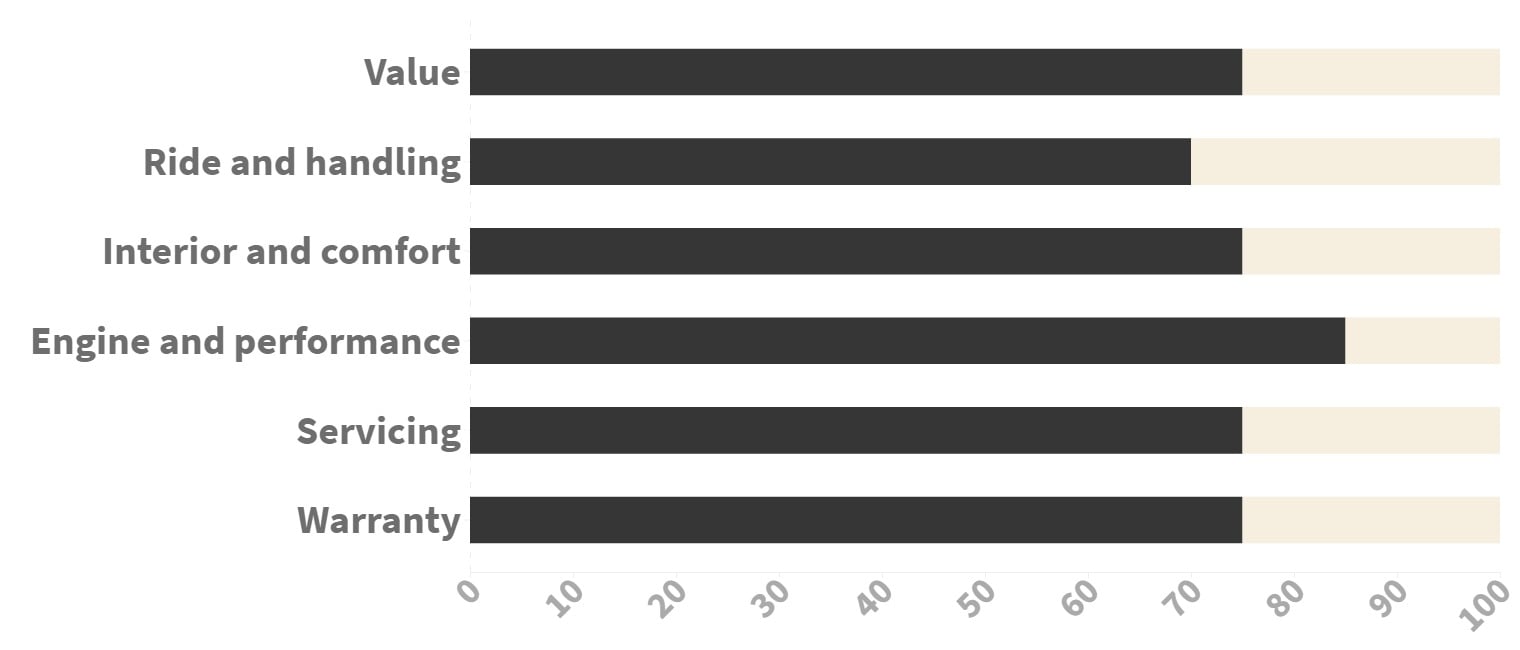
The 2.5-litre turbo lump plumbed into the business end of this CX-5 is a great leveller. Compared to the better of its rivals posted here, it enjoys a monster 180Nm torque advantage. That means that you’ll rarely have to extend it in order to extract crisp acceleration. Overtaking manoeuvres can be performed safely and swiftly, your fuel consumption isn’t going to be devastated by tapping into that surge of torque, and the CX-5’s towing ability is in excess of many cars in the next class up.
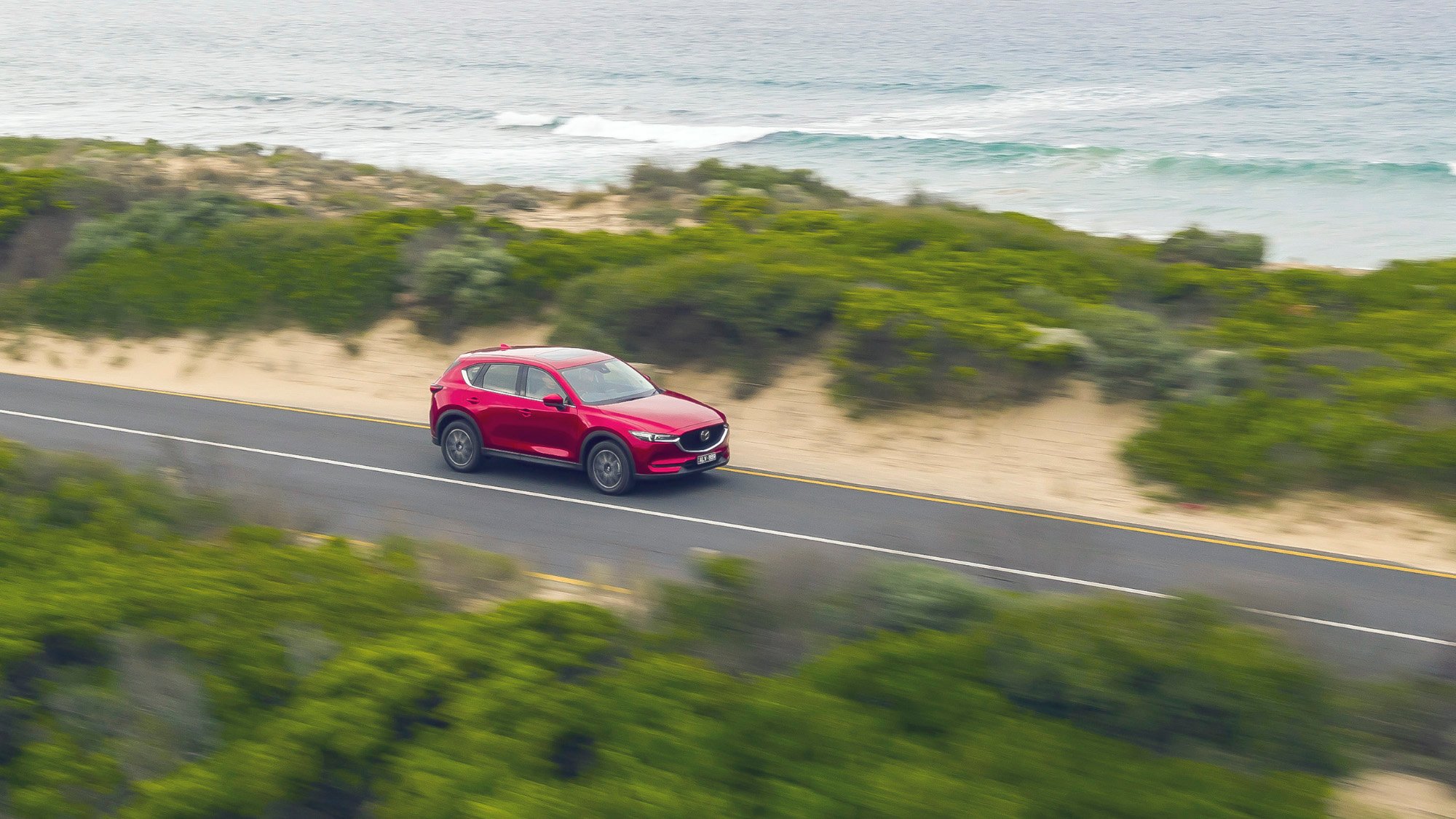
Should you really want to give the car everything off the line, Mazda reckons it’ll accelerate from zip to 100km/h in little over seven seconds, which is plenty. Fuel it up with 98RON juice and the computer map will let you have 186kW. While six gears in the automatic transmission seems the bare minimum these days, such is the spread of torque available, that you really don’t hanker after more ratios. The CX-5 GT has you covered here. The CX-5’s issue with holding a gear too long in Sport mode is also addressed, with a broad spread of torque from just 2000rpm meaning that the car upshifts a little earlier and sounds a good deal more refined as a result.
The CX-5 GT wears its all-wheel drive credentials lightly, and with a modest 200mm of ground clearance and decidedly road-biased tyres (like all of its rivals in this class) it’s more suited to safety and security on wet roads and dirt tracks than crossing the Simpson.
Ride and handling
Bushes, ball joints and anti-roll bars have all been optimised for the fitment of the powerful 2.5-litre engine, while clever G-Vectoring Control Plus technology automatically feathers the throttle and brakes while cornering to boost stability. The CX-5 still doesn’t quite feel all of a piece through bends in quite the same way as the best handling cars in this sector, but it nevertheless offers acceptable ride quality for such a powerful vehicle on such low profile rubber. The steering is generally low effort and there’s not too much in the way of annoying head-too on well-surfaced roads, but you do get a bit of bump and thump feeding back into the cabin from the suspension.
Interior and comfort
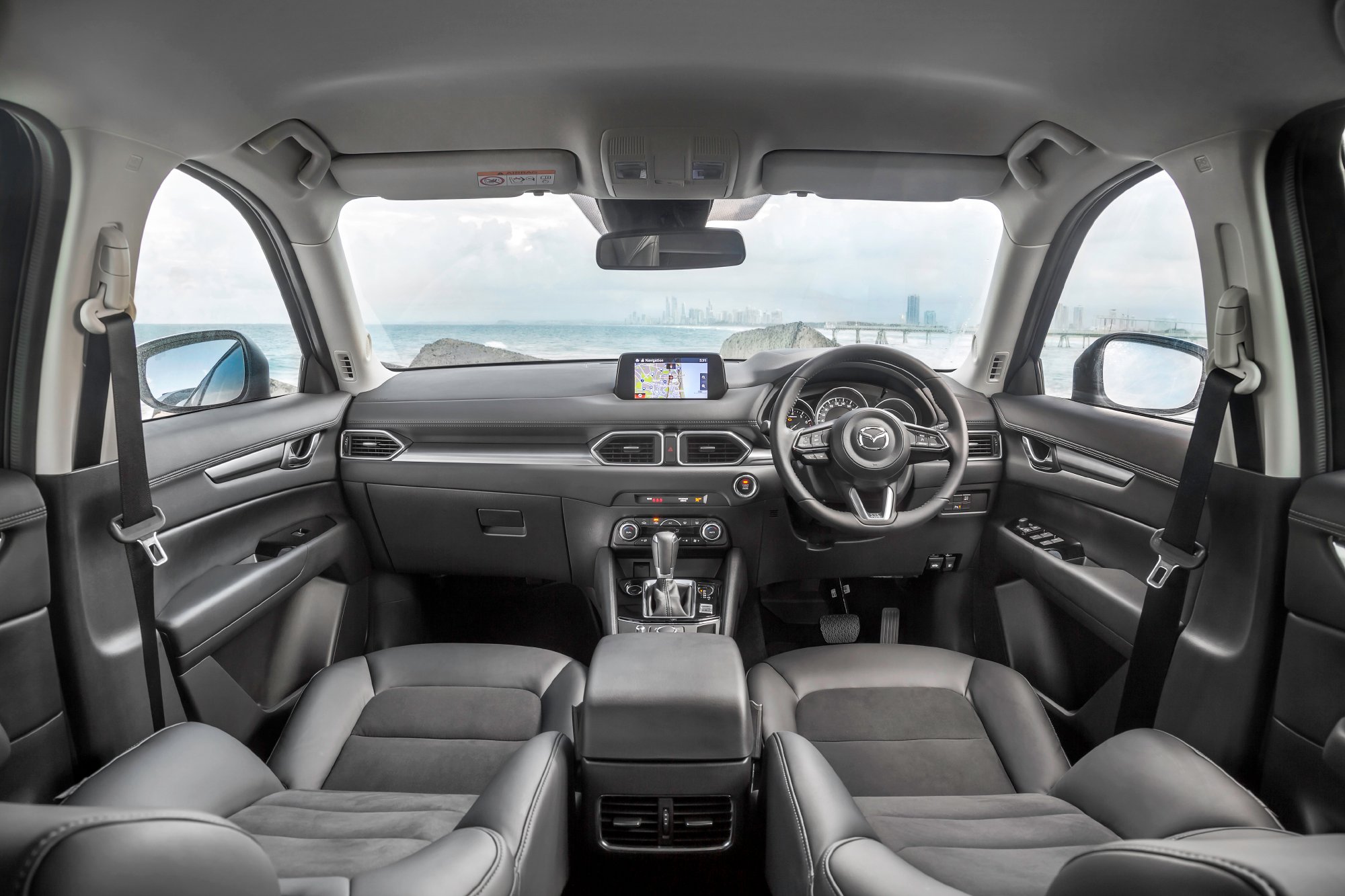
As we’ve seen from the new Mazda 3 and CX-30 models, the company is starting to talk a subtly different design language and the CX-5 feels like the last of the old cabin architecture. Ergonomically, it still holds up, but some of the details can look a bit staid. The lack of a digital speedo and the small infotainment screen might turn a few buyers off, but everything is easy to operate and the controls are ergonomically sound. The colour palette’s not the most exciting though.
There’s a decent amount of space inside too, with the 40/20/40 rear bench allowing a stack of flexibility and an almost flat boot floor. The sloping tailgate nibbles into ultimate boot space which, at 442 litres, is far from the best in class. Levers to drop the rear seats on both sides of the luggage bay are a thoughtful touch, as is the cargo cover that clips onto the tailgate.
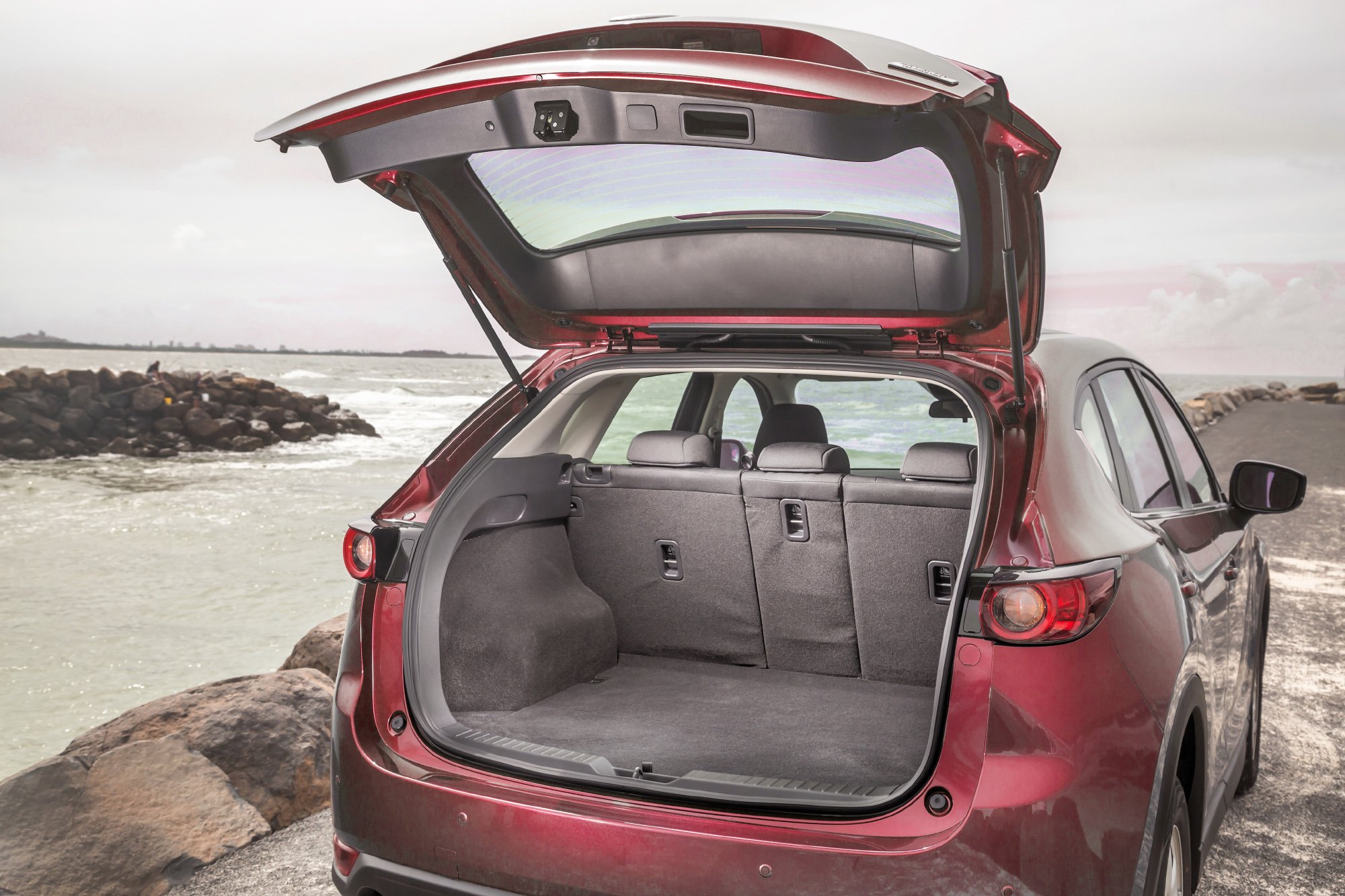
Apple CarPlay and Android Auto are on offer, so smartphone mirroring shouldn’t be an issue, but you will have to put up with the faff of cables. A Bose 10 speaker stereo is fitted as standard to the GT and it’s fairly good, while a multitude of stowage points, a pair of rear air vents, a reclining rear seat and chubby seat bolsters all count in the GT’s favour.
The front seats are simple and supportive, whereas the rear two pews are thin fold-flat supports that will likely serve most time out of the way so that the diminutive 85L ‘boot’ can claim some extra space. At least the seats are ISOFIX compatible and there’s decent legroom for small kids.
Scoring
Verdict
Sales of the CX-5 here in Australia have demonstrated that Mazda has been able to forensically dissect just what domestic buyers want. The GT might be at the sportier end of the CX-5 range, but it still adheres to that formula. Should you want a car that ticks all of the family boxes but gives you a world of options beneath your right clog, the 2.5-litre turbocharged CX-5 GT certainly earns a solid recommendation to us. Our only caveats are that it could perhaps ride better and/or steer a little more adroitly. Given what we’ve seen of the next-gen Mazdas, we wonder if this car will also date quicker than Hiroshima might hope. The family fundamentals are so good, however, that a CX-5 GT 2.5 turbo will remain in strong demand.
