
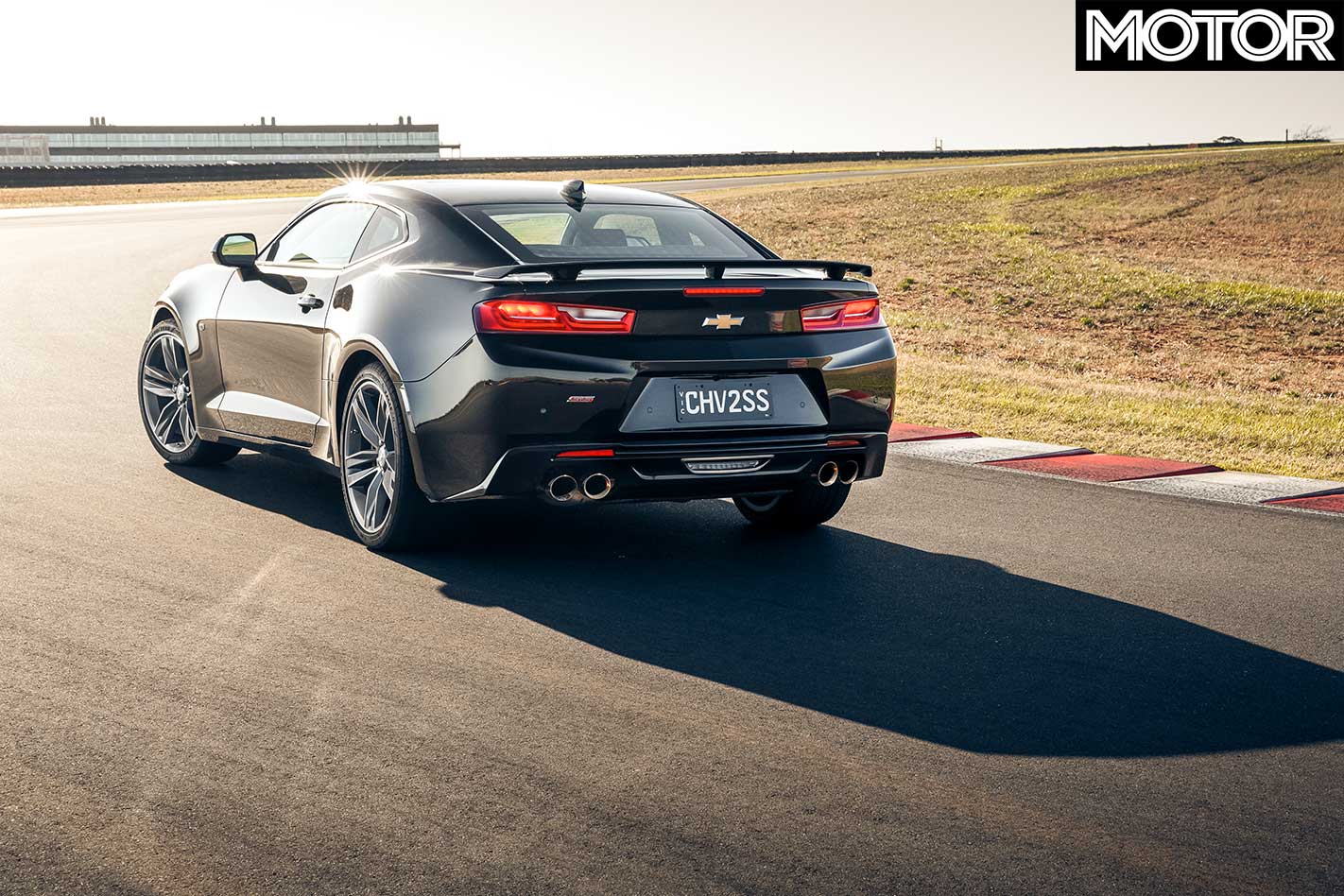
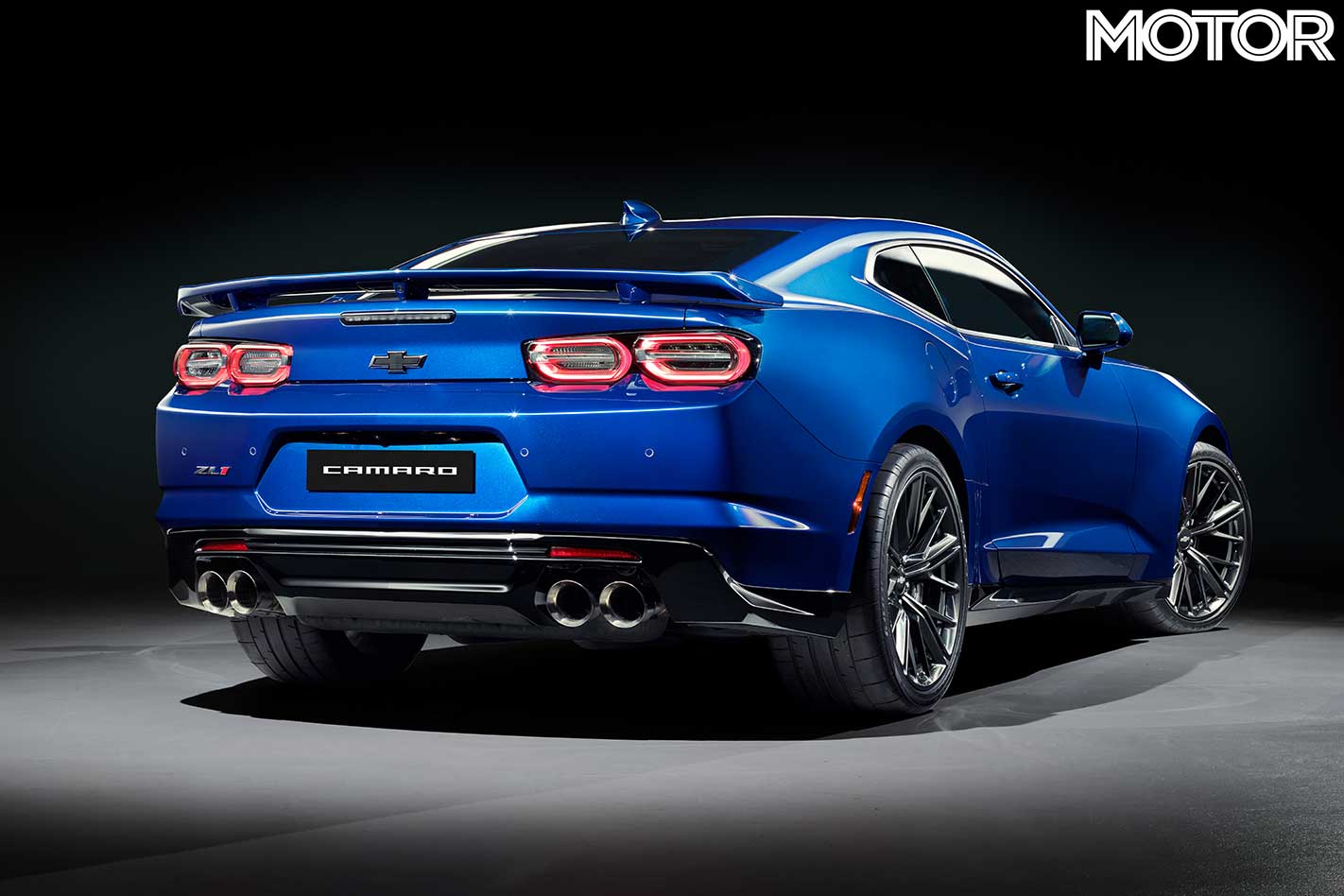
It’s the sad reality of any contest that someone has to come last and at PCOTY 2019 that dubious honour goes to the Chevrolet Camaro. It’s unlikely to placate the disappointed folks at HSV, but we prefer to think of it as 11th – as Morley says, it beat everything that’s not here. The Chevy is also an enjoyable muscle car that’s unlikely to disappoint anyone in the market for such a thing.
PCOTY is not a comparison test per se, but given the similarity between the Camaro and Mustang in intended function, it’s inevitable comparisons will be drawn between the two. However, while the two are rear-drive V8 coupes tugging at emotional heartstrings, each delivers a remarkably different driving experience.
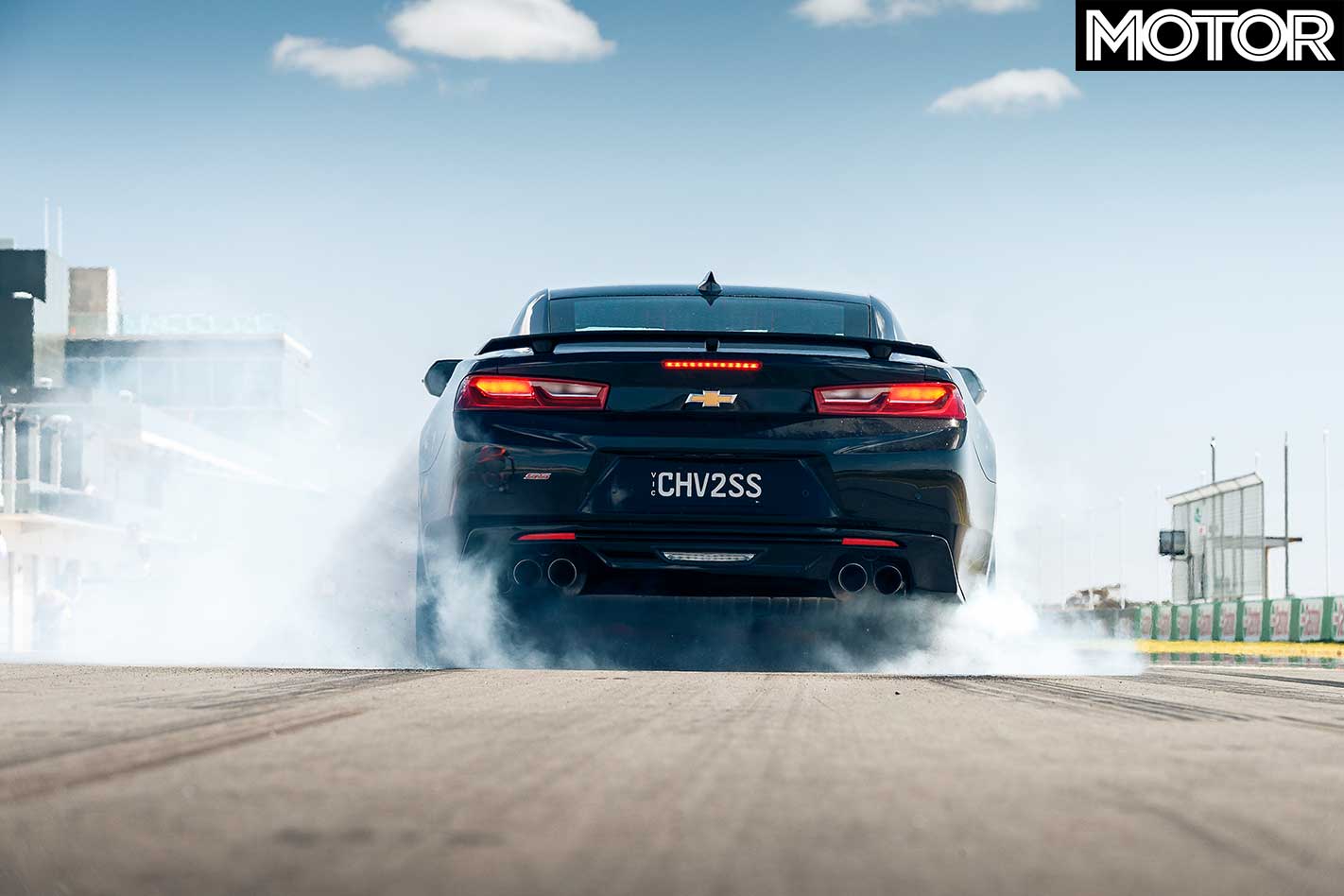
The Camaro is much more of a traditional muscle car. Its 6.2-litre LT1 V8 feels lazier, producing peak power at 5700rpm, but compensates with massive mid-range torque, not to mention a thunderous soundtrack.
There’s greater body roll in corners and less precision to the handling, yet the firm ride is a constant reminder of its sporting intentions. The steering is very heavy in its standard mode and only gets more so if you adjust it; thankfully, it can be adjusted independently of the powertrain.
There’s the sense HSV’s ride and handling team would love to get their hands on the Camaro – cushion the ride, lighten the steering, sharpen its responses – particularly as there is such an impressive base to work with.
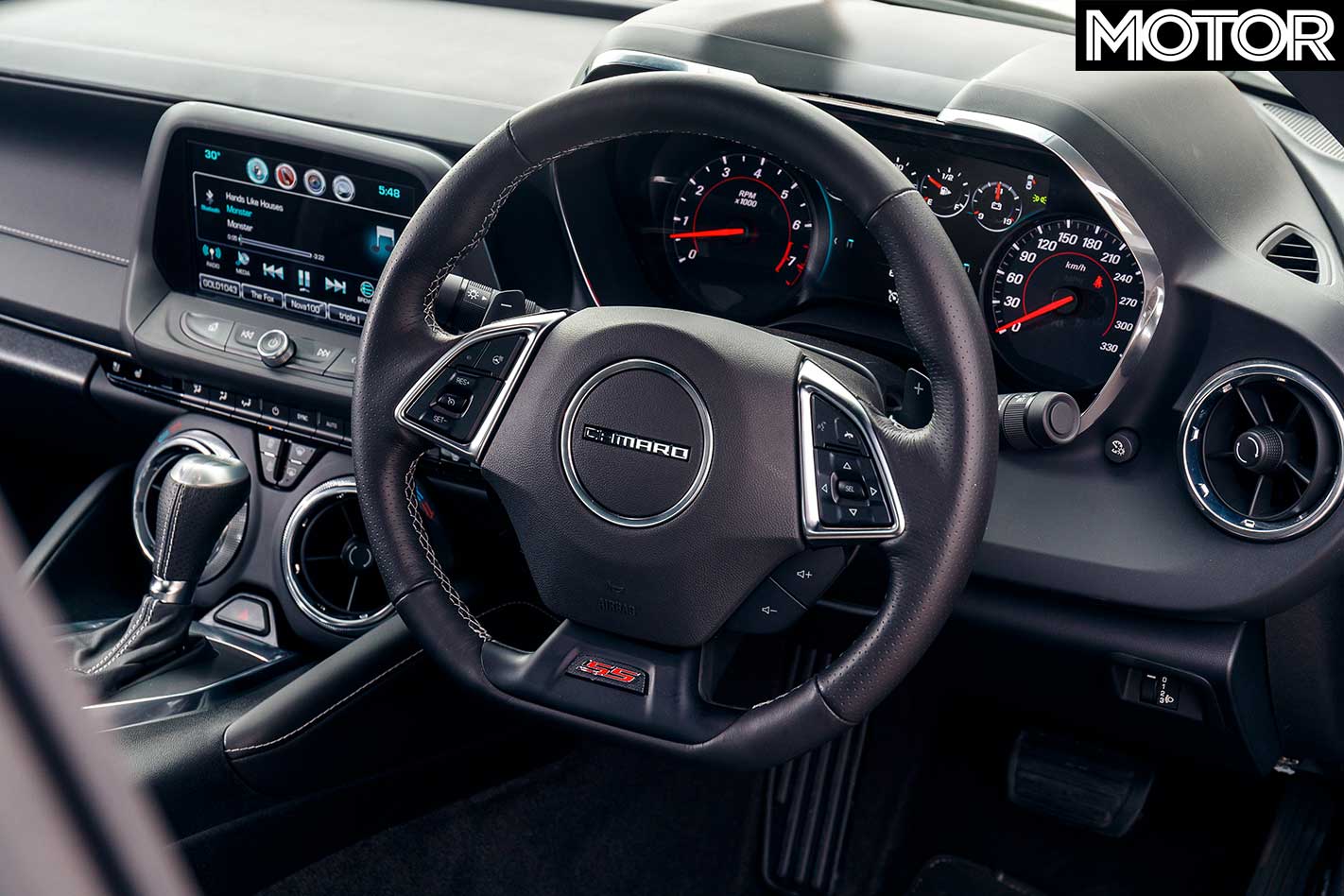
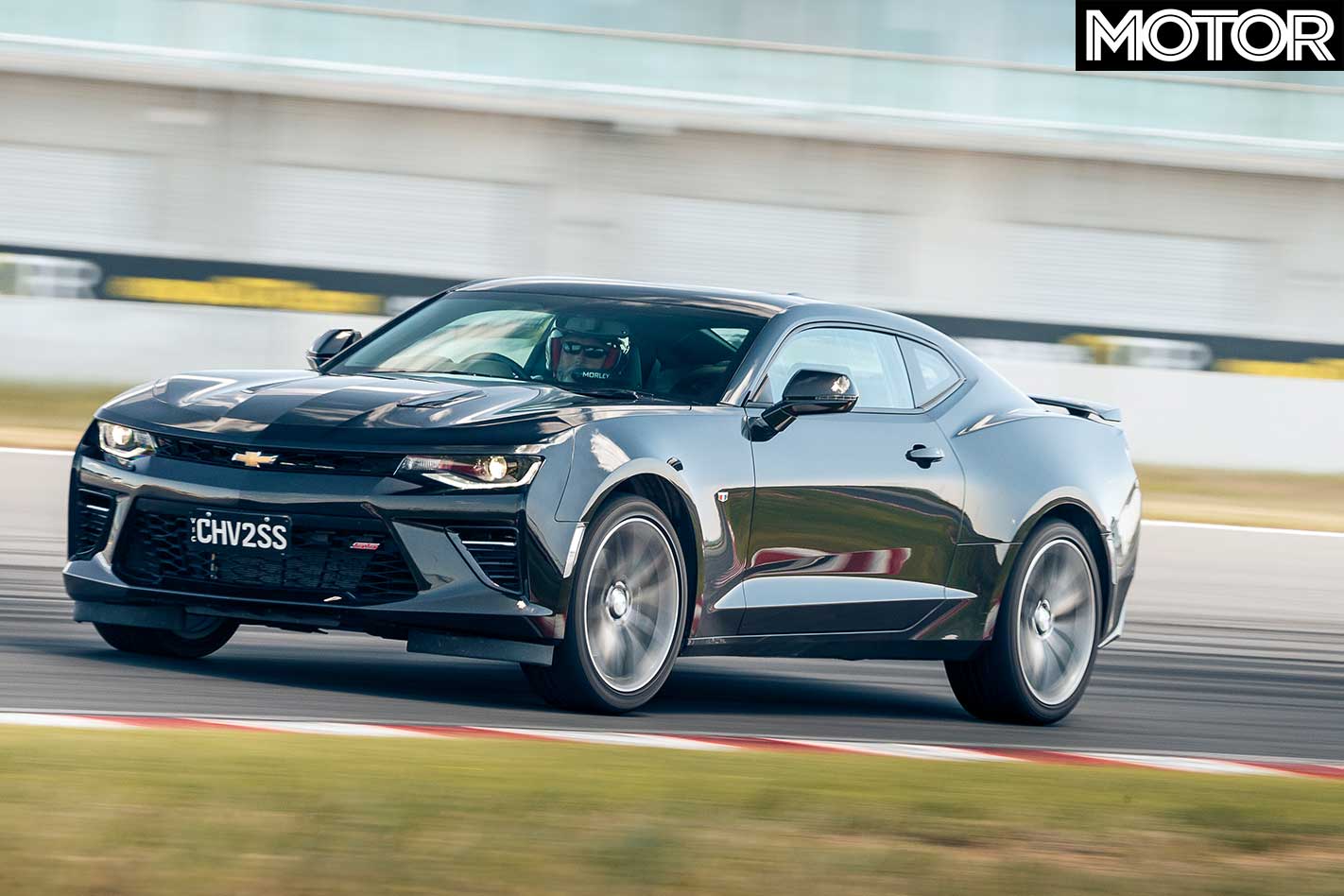
While it feels big and heavy, the Chevy is benign and adjustable when driven hard; on track it was the pick of the muscle cars for me, purely because its softness gave it an adjustability the Mustang lacked. It also happily soaked up the abuse; even the brakes held up well.
Unfortunately, circuit work only exacerbated the Camaro’s biggest flaw – its transmission. This eight-speed auto is one of the most frustrating gearboxes ever encountered, more often than not ignoring seemingly reasonable downshift requests with the obstinacy of a surly teenager.
Even left to its own devices it would wait until throttle was applied on corner exit before picking the appropriate gear. Hopefully the MY19 Camaro’s new 10-speed is quicker-witted.
In the final reckoning, the Chevrolet proved itself a very good car, but not a great one. It scored well across most of the criteria without being a stand out in any area, but its ride and visibility hampered its liveability score and the value equation is a struggle.
When you see how much work goes into converting the Camaro, it’s remarkable HSV can offer it at $85,990, but when its abilities are so similar to a car costing up to $20K less, it’s always going to come off second best.
The Numbers
2019 CHEVROLET CAMARO 2SS SPECS: Engine: 6162cc V8, OHV, 16v Power: 339kW @ 6000rpm Torque: 617Nm @ 4600rpm Weight: 1710kg 0-100km/h: 4.73sec 0-400m: 12.72sec @ 186.35km/h The Bend lap time: 1min 31.0sec Price: $85,990
Judge’s Rank
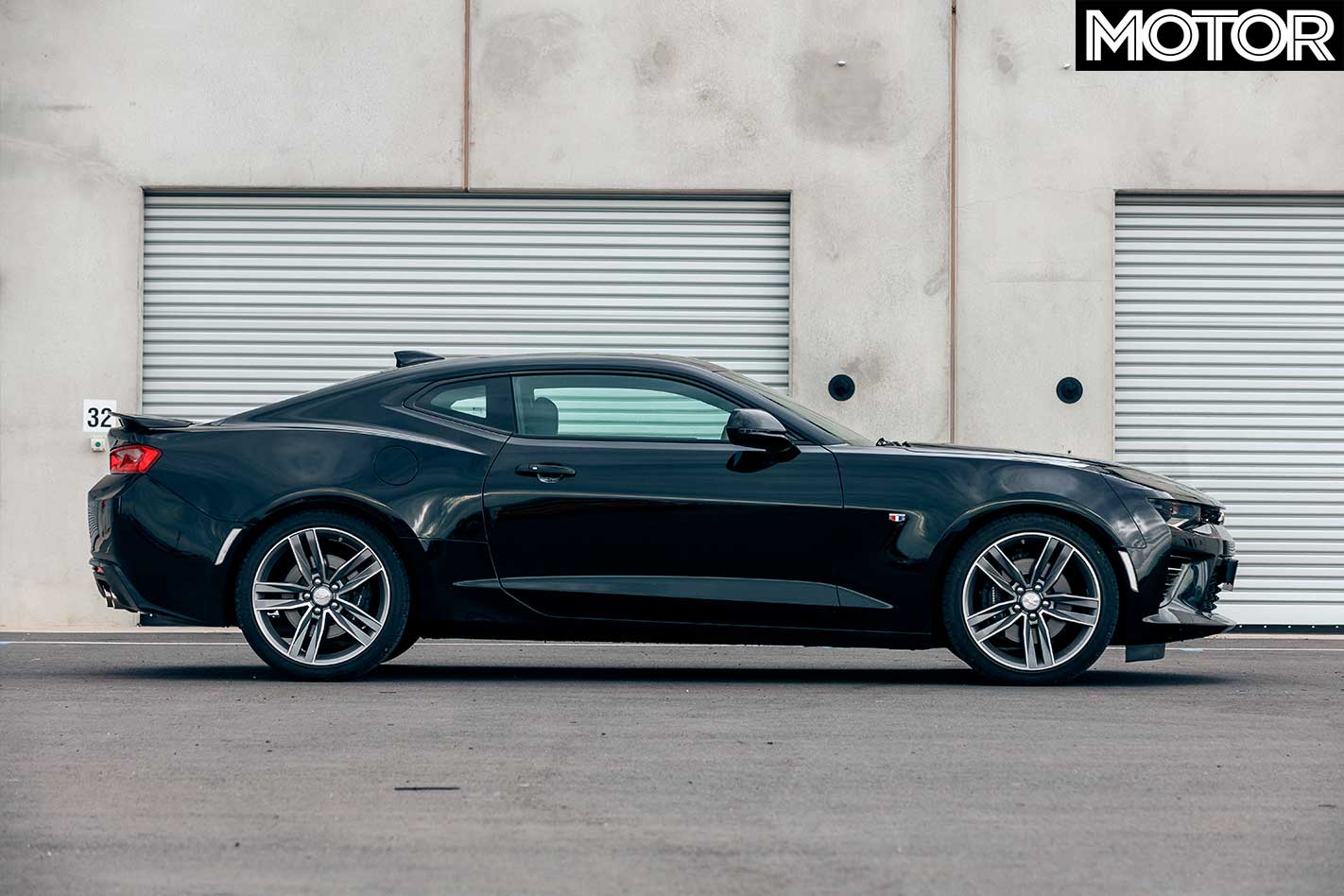
Dylan Campbell – 10th “If your only desires are a thumping V8 in a svelte body, you’ll love the Camaro.”
Louis Cordony – 11th “A reincarnated coupe Commodore SS, with some working issues.”
David Morley – 11th “Wasn’t my favourite, but those who ‘get’ it will buy it.”
Scott Newman – 9th “Great looks, grunty engine, fun chassis, just needs a gearbox.”
Rick Kelly – 10th “Great to look at, enjoyable to drive, old-school drivetrain.”
PCOTY 2019 Scoring
| Judges | DC | LC | RK | DM | SN | Total |
| Performance | 15.5 | 11.5 | 14 | 15 | 15 | 71 |
| Dynamics | 14.5 | 10 | 12 | 13 | 14 | 63.5 |
| Accessibility | 7 | 7.5 | 7 | 7 | 8.5 | 37 |
| Liveability | 6.5 | 4 | 6 | 6 | 6 | 28.5 |
| Value | 7 | 4.5 | 8 | 6 | 6 | 31.5 |
| X Factor | 7.5 | 6.5 | 6 | 8 | 8 | 36 |
| Total | 58 | 44 | 53 | 55 | 57.5 | 267.5 |
1. Porsche Cayman
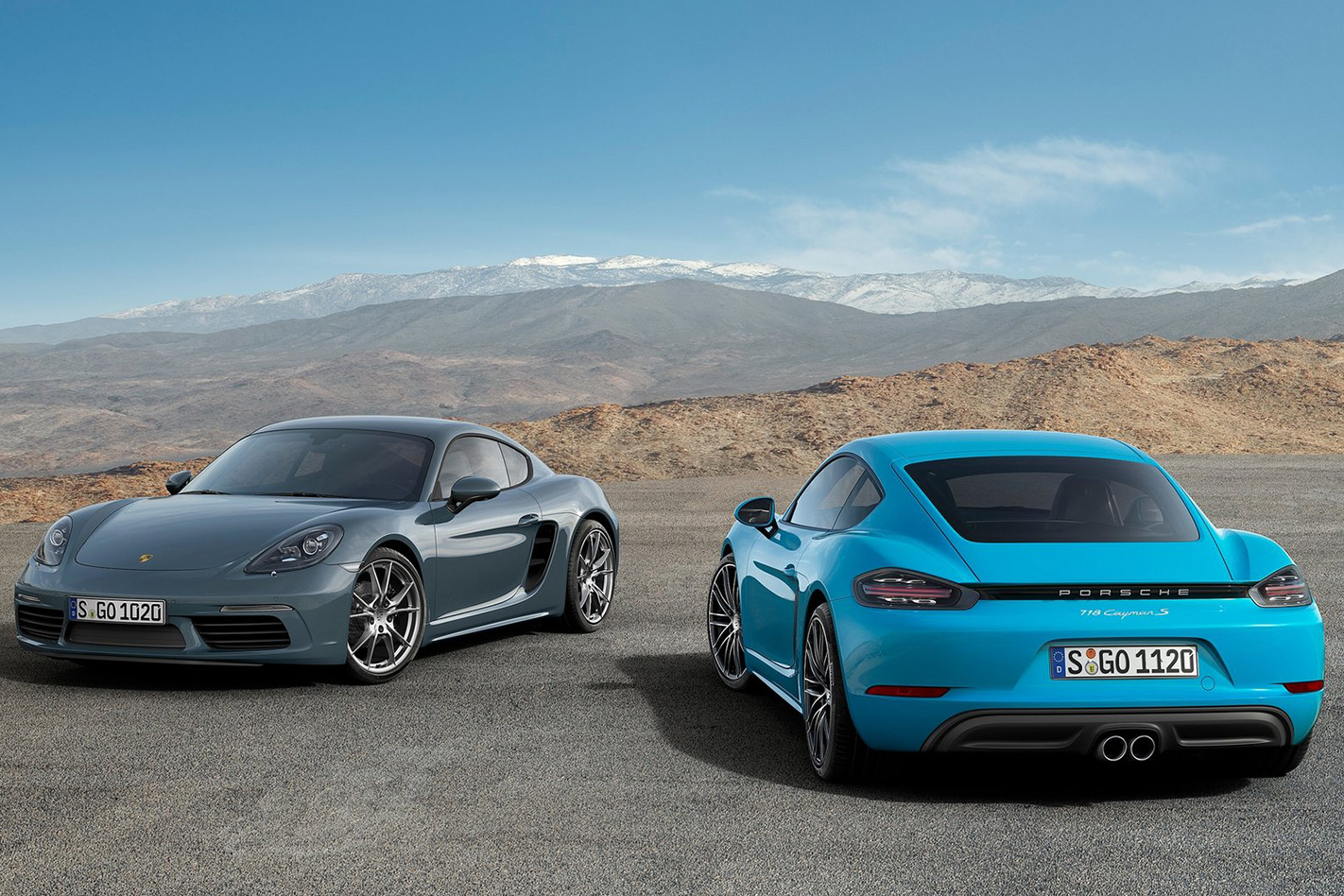
“Number one? Porsche Cayman – the latest one,” comes the emphatic response. “For me, Porsche represents industrial products: the best,” he adds. “Ferrari? Not so industrial, it’s like an art whereas Lotus is like a craft,” he explains. “Because I’m an industrial engineer, I see Porsche as my benchmark; my mentor.”
2. Alfa Romeo 4C
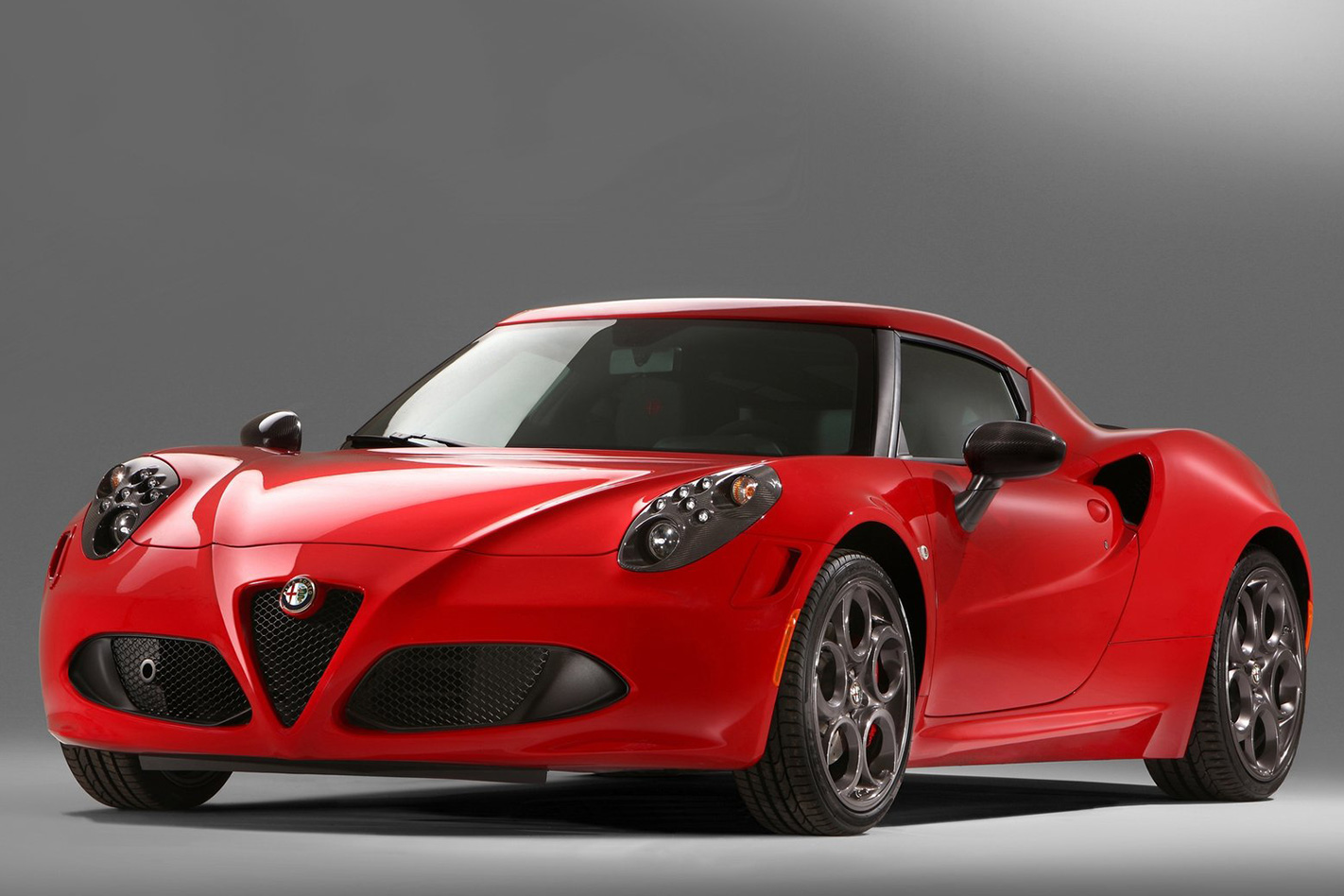
“Dangerous, dangerous, dangerous! I like that sense of danger,” says Tada, alluding to the glamour and raciness of the marque’s image. He’s a good deal more agnostic when it comes to particular models but, in a common theme, defaults towards the lightest and simplest. “I think the Alfa Romeo 4C is pretty good.”
3. Aston Martin Vantage
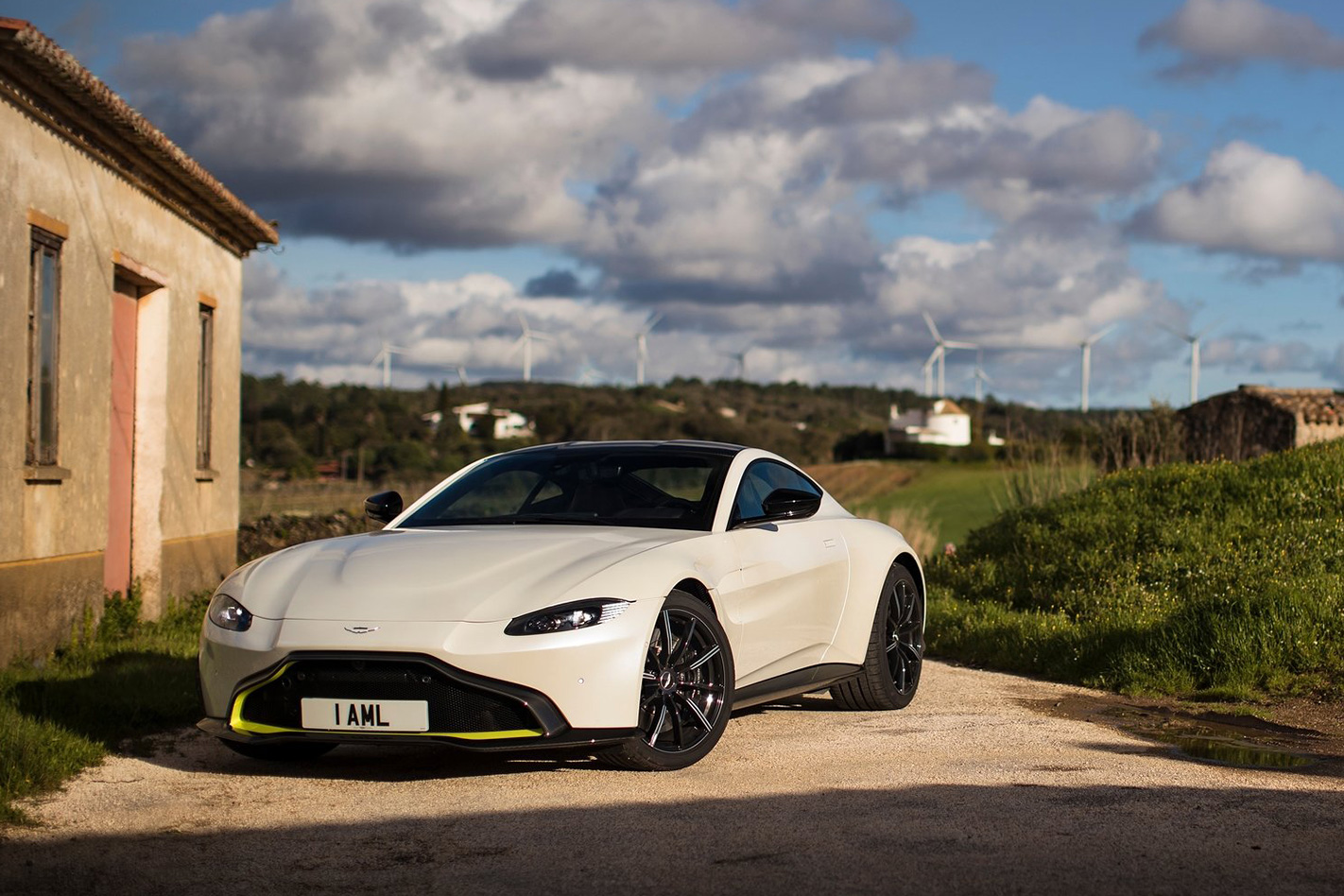
The European theme continues with another punchy performance coupe. “I like the very British feel of Aston Martin,” says Tada. “Particularly the Vantage. The engine sound is so right. You don’t even need to drive it,” he smiles. “Just the sound of the engine excites me.”
Polestar has revealed its second challenger to the electric performance car market, rolling out the all-electric Polestar 2 compact fastback.
Pitted as a direct rival to Tesla’s Model 3, the Polestar 2 is said to bring electric performance to a broader audience than the highly exclusive Polestar 1 coupe.
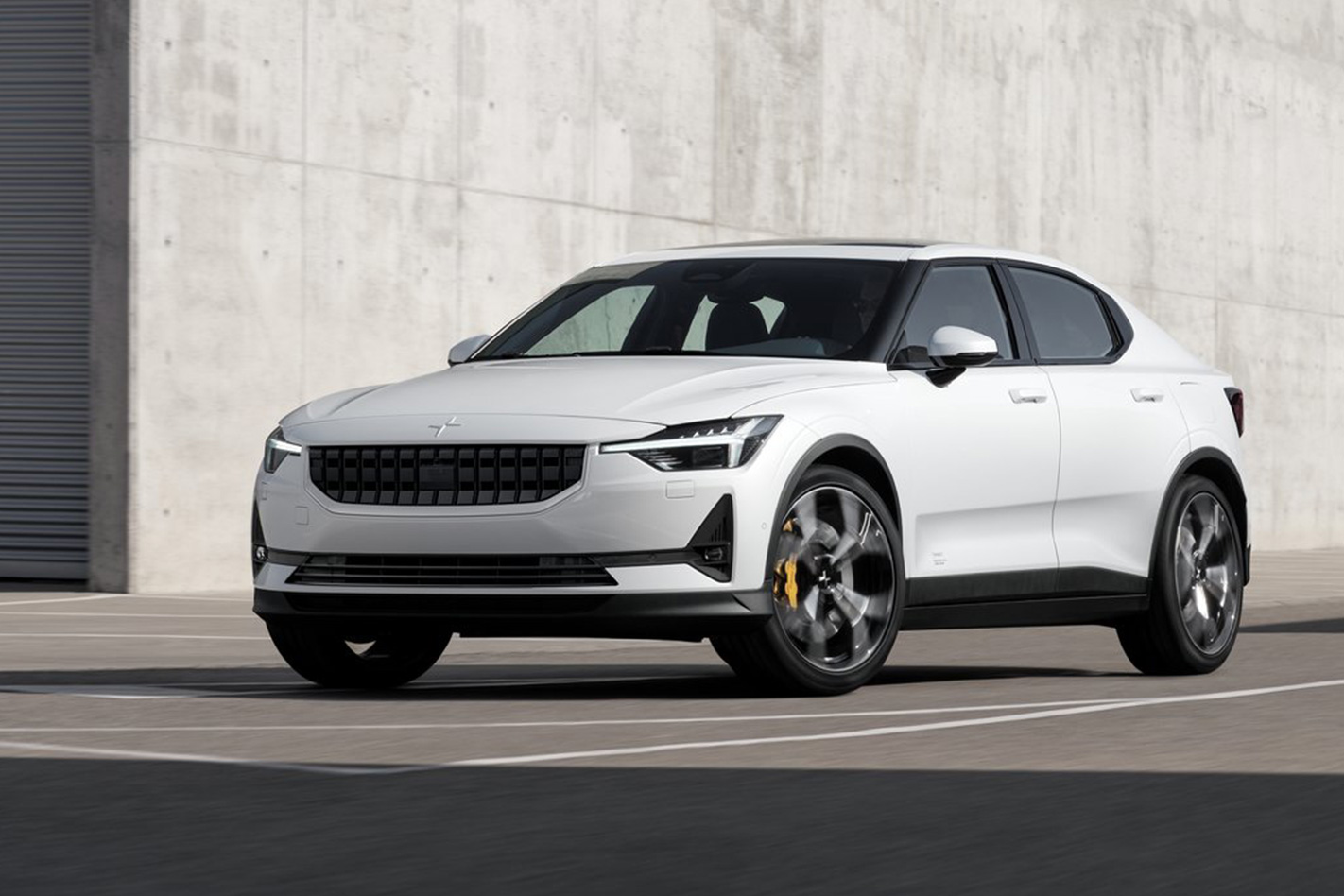
The five-door fastback shape is built on Volvo’s Compact Modular Architecture platform (CMA), which also services the Wheels Car of the Year-winning Volvo XC40 small SUV, but substitutes the combustion engine, fuel tank and exhaust with a pair of electric motors and intelligent battery packaging for what Volvo claims is exceptional refinement. Road noise is reduced by 3.7dB thanks to the chassis-integrated battery pack, which also reinforces structural rigidity of the whole car.
The Polestar 2 features twin electric motors and a 78kWh battery capacity which, according to Polestar, enables a single-charge range of 500km. The brand is also working hard to provide in-car and mobile-based solutions to charging the car, suggesting hassle-free access to the world’s largest public charging networks.
Polestar insists performance is a great deal of the brand’s identity, stating the all-wheel drive electric powertrain will propel the Polestar 2 to 100km/h in less than 5 seconds thanks to the 300kW and 660Nm outputs.
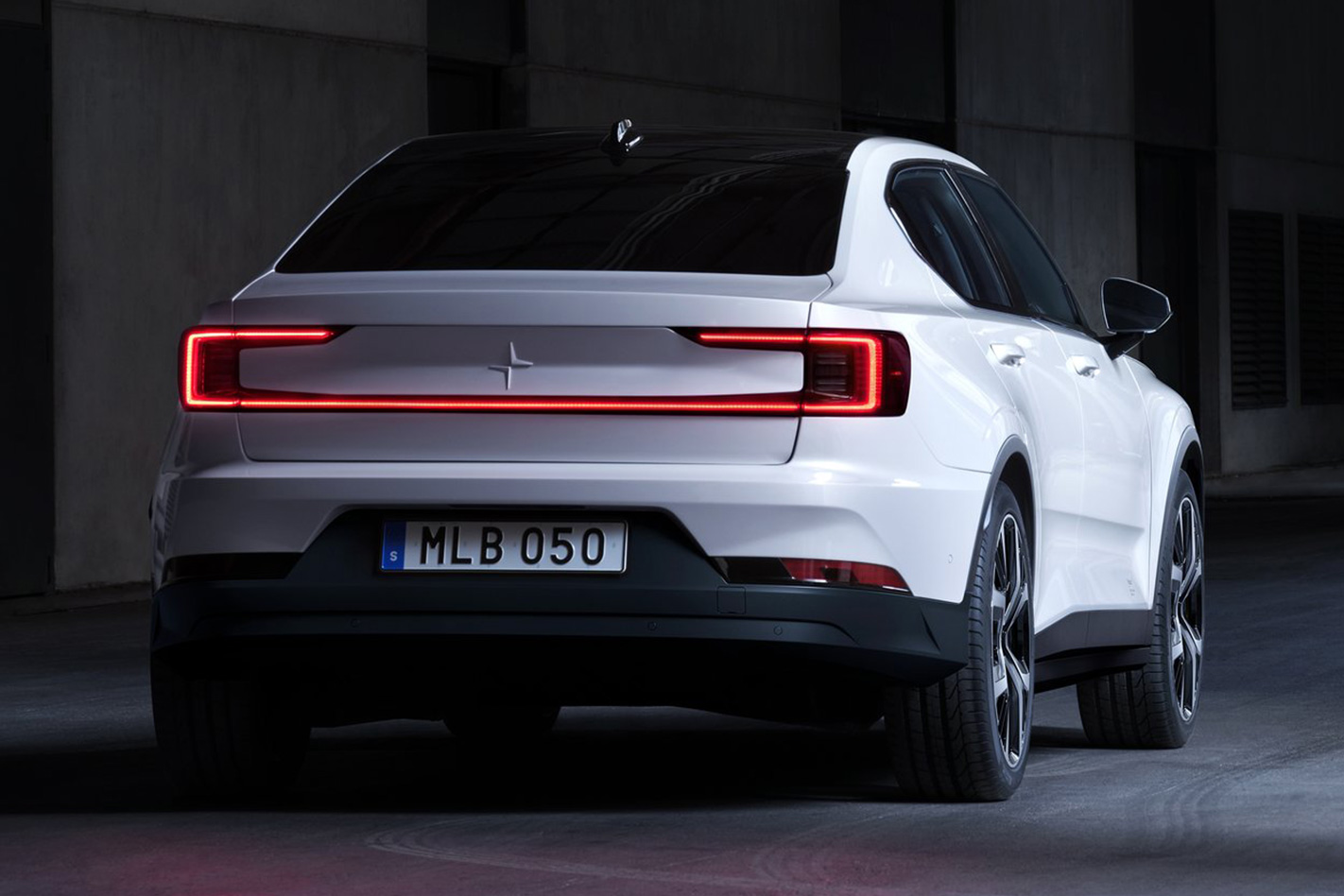
Not enough? You can enhance the Polestar 2’s performance further by optioning the Performance Pack that adds Öhlins dampers, Brembo brakes and unique 20-inch forged wheels.
On the inside, the Polestar 2 will be one of the first cars to debut an Android-specific infotainment system via an 11-inch touchscreen. Providing an adaptable digital interface for apps and vehicle functions, Google services add to the driving experience by lending Google Assistant, in-built Google Maps and the Google Play Store.
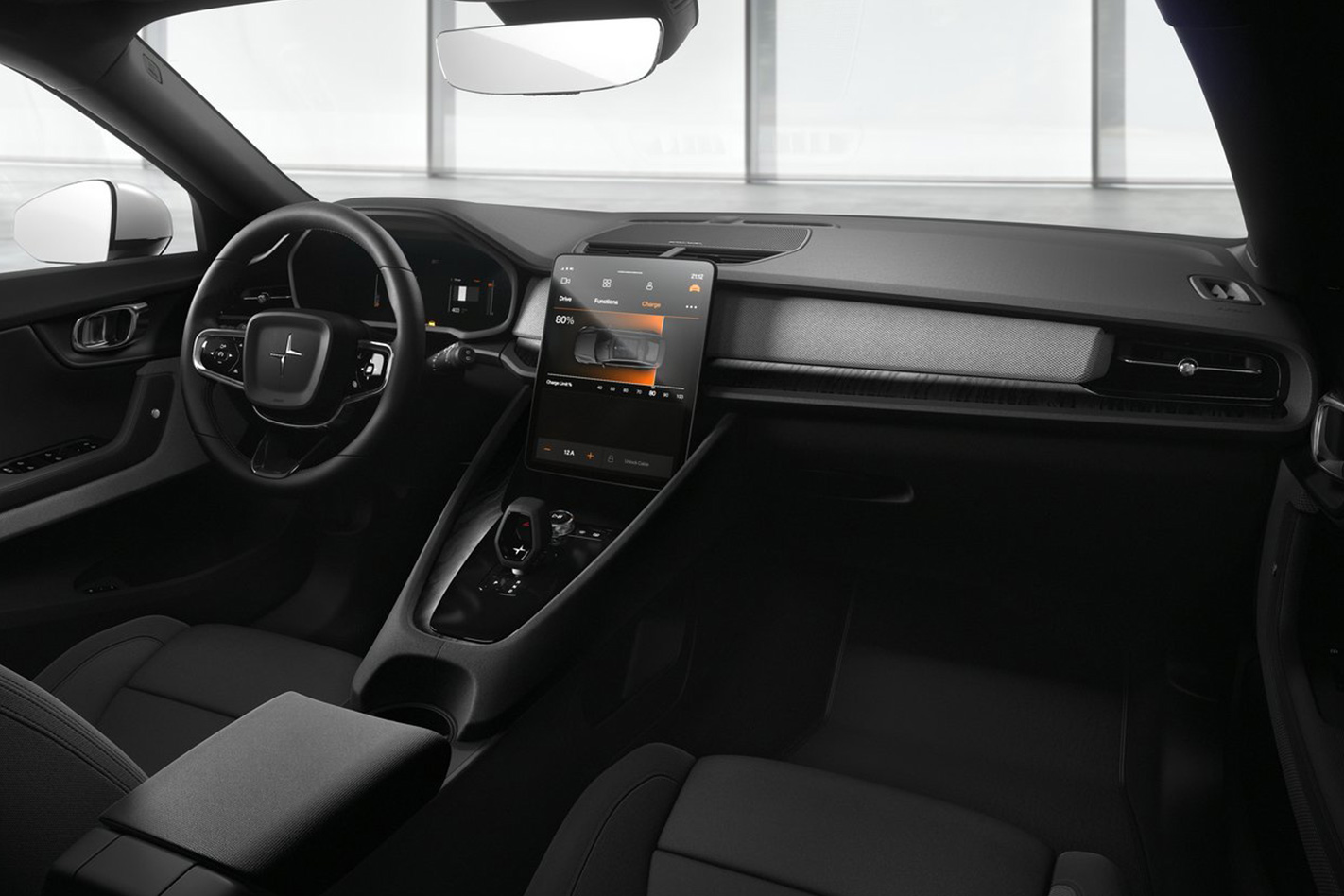
You’ll be able to use your phone as a key too, aiding people who car-share and allowing owners to stay connected to their car while they’re away.
This will be the first volume model for the upcoming brand, with Polestar CEO Thomas Ingenlath saying “as an electric performance brand, and through the forthcoming launch of a portfolio of fully electric cars, Polestar is determined to address the world’s air quality challenges.”
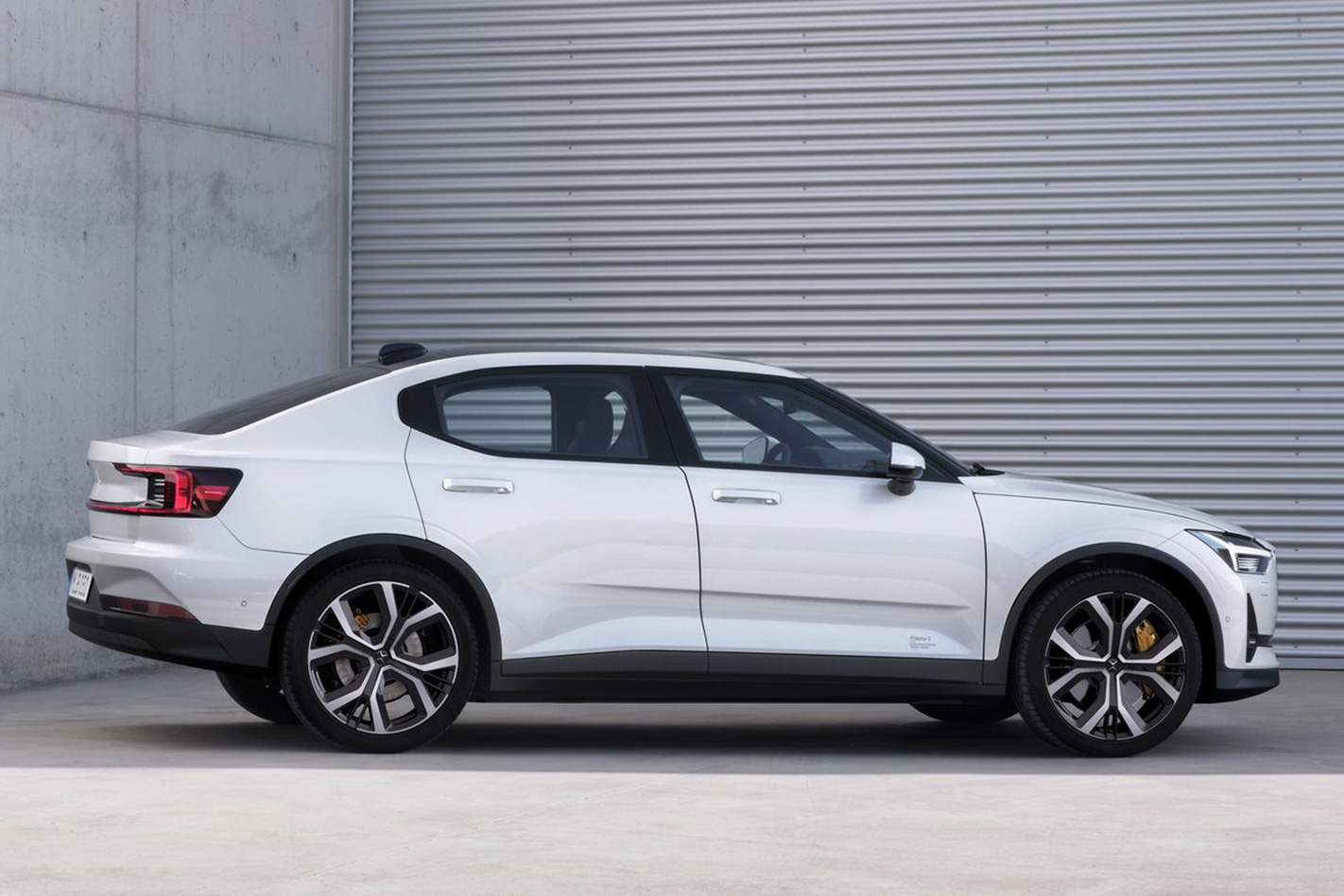
They’re serious about sustainability too, ensuring the standard interior is vegan-friendly with “progressive textiles” for their “forward-thinking audience”.
Priority markets for the new EV include China, North America and Europe, but Australia shouldn’t lose hope just yet as it will be produced in left- and right-hand drive from early 2020.
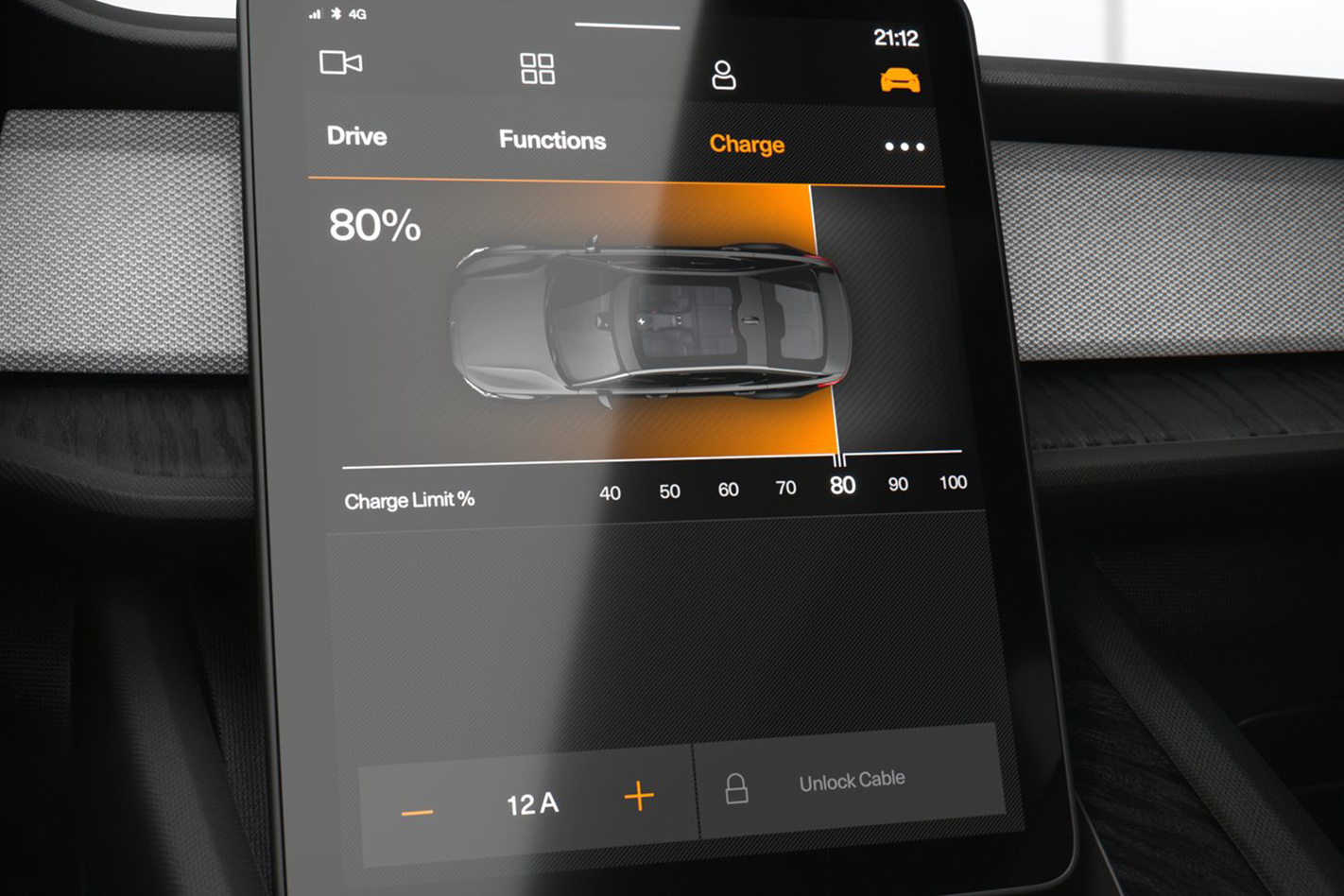
Polestar 2 will be shown in full to the public at the Geneva Motor Show from March 5 onwards.
The dust has settled for this week when it comes to big, breaking news – and that’s allowed us all to catch our breath. Still, it doesn’t mean it was a particularly quiet one. Here’s five of our best stories from the week in no particular order.
Ford’s legal letter leaks
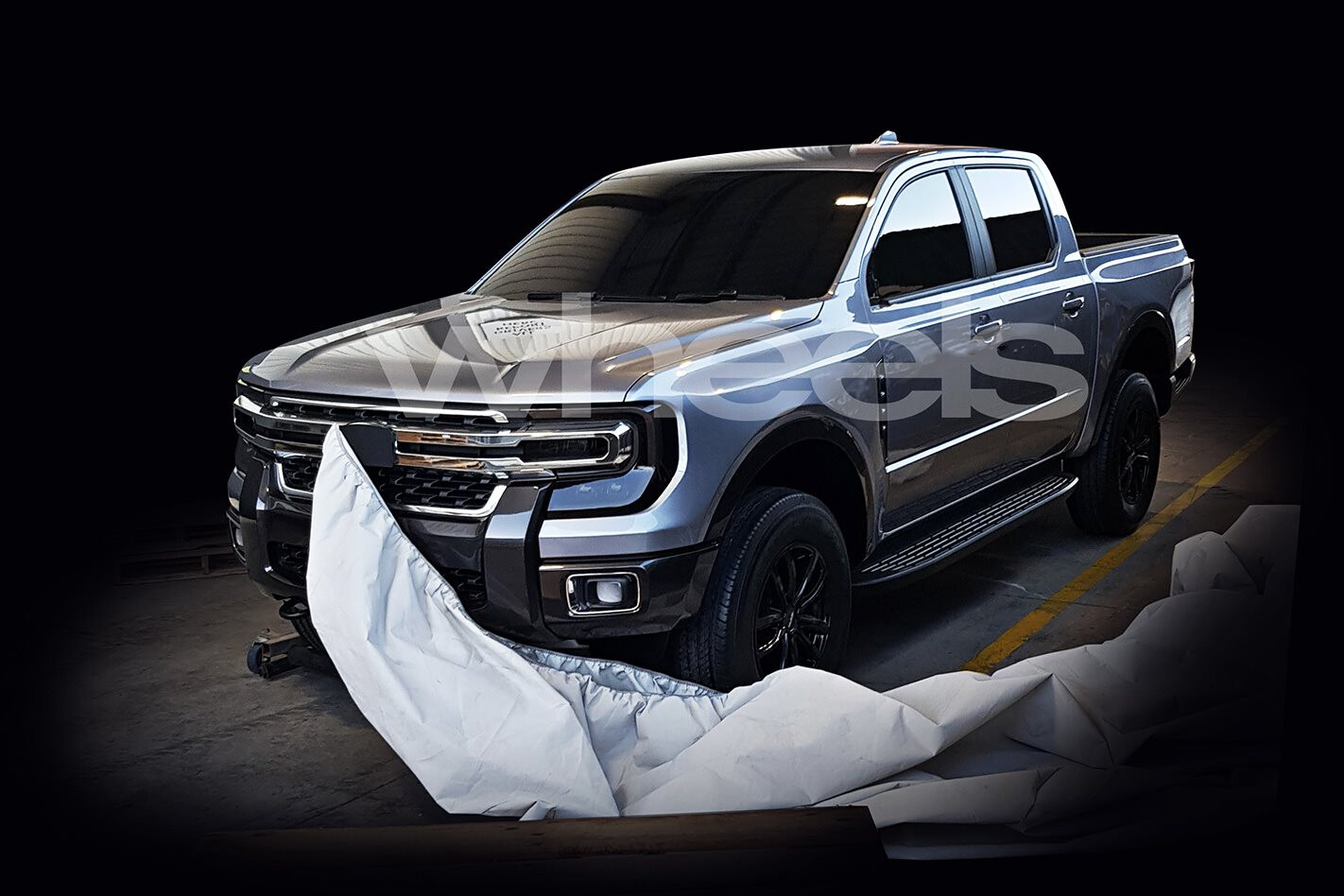
You’d be aware of the scoop pics that allegedly lift the lid on the next Ford Ranger. Well, Ford went one step further… and basically confirmed it to be true. Talk about an own goal…
When it comes to the press office of a big car company, rule one of fight club (or unauthorised leaks) is to not talk about fight club (or unauthorised leaks). Rule two should be ‘don’t, for the love of Pete, issue a Cease and Desist letter’. But Ford did exactly that, thereby giving Wheels a second story, and the original story a bump.
Porsche’s poor week
When it comes to poorly planned PR outcomes, Porsche is usually pretty immune. Issue new 911 press release and watch the praise roll in. However, the updated Macan launch this week saw not one, but two pretty sizeable gaffs marked against its name.
First is the fact that Porsche expects Macan owners to fork out an extra $2140 for AEB, when buyers of Kia’s humble $14,190 Picanto S have it thrown in for free. ‘Ah, but only 20 percent of people request it,” said Porsche.
The second one was interesting – and, as I understand it, set phone lines between Australia and Germany running red hot. Porsche also announced that its new six-cylinder petrol engine was to be fitted with an Australian-first petrol particulate filter. ‘Are you sure?’ we said. ‘Ah… well… ah, no we’re not,’ came the sheepish answer.
Look, it’s not as bad as Maserati inviting all and sundry on a launch for a Quattroporte variant that hadn’t had its name approved yet, then subsequently asking everyone who’d written stories to kindly unwrite them the next day, but it’s a pretty solid blue from a usually rock-solid operation.
Chev Camaro cashes up
A story that broke overnight heralds the next step in the Chevrolet Camaro journey – and it’s a $160k buy-in for the range-topping ZL1. That’s a lot of moolah… as I write, everyone’s having their say about it, but my gut feel is that HSV – importers and converters of the Camaro – will probably do all right with the more expensive, more exclusive ZL1 than the less convincing 2SS.
The crew at Motor and Wheels have thrown up tonnes of cool stories around the two cars, and it’s definitely worth checking out how the ZL1 compares against the last great supercharged Holden Commodore W1.
Ferrari’s firm stance
“We aren’t doing an SUV,” said about 19 people at a recent Ferrari event we attended. “Yeah, but…” we’d start, and we’d be waved down with an Italian gesture, or have a double espresso shoved in our hands. The fact is that Ferrari is trying to change the message about what it’s actually making, and that’s a more practical Fezza for a new age.
I get it, and I applaud what the company is trying to achieve; change the messaging enough times and it might sink in. My fear is that the ubiquitous term is too ingrained in all of our thick skulls for the Italian supercar maker to easily change our minds.
So what is Ferrari going to make? Not sure yet, but it won’t be especially cheap, it will have all-wheel-drive, it won’t have a V12, it will have a V6 turbo or V8 turbo, and it won’t have a tall ride height. Other than that, we’ll all have to wait…
And finally…
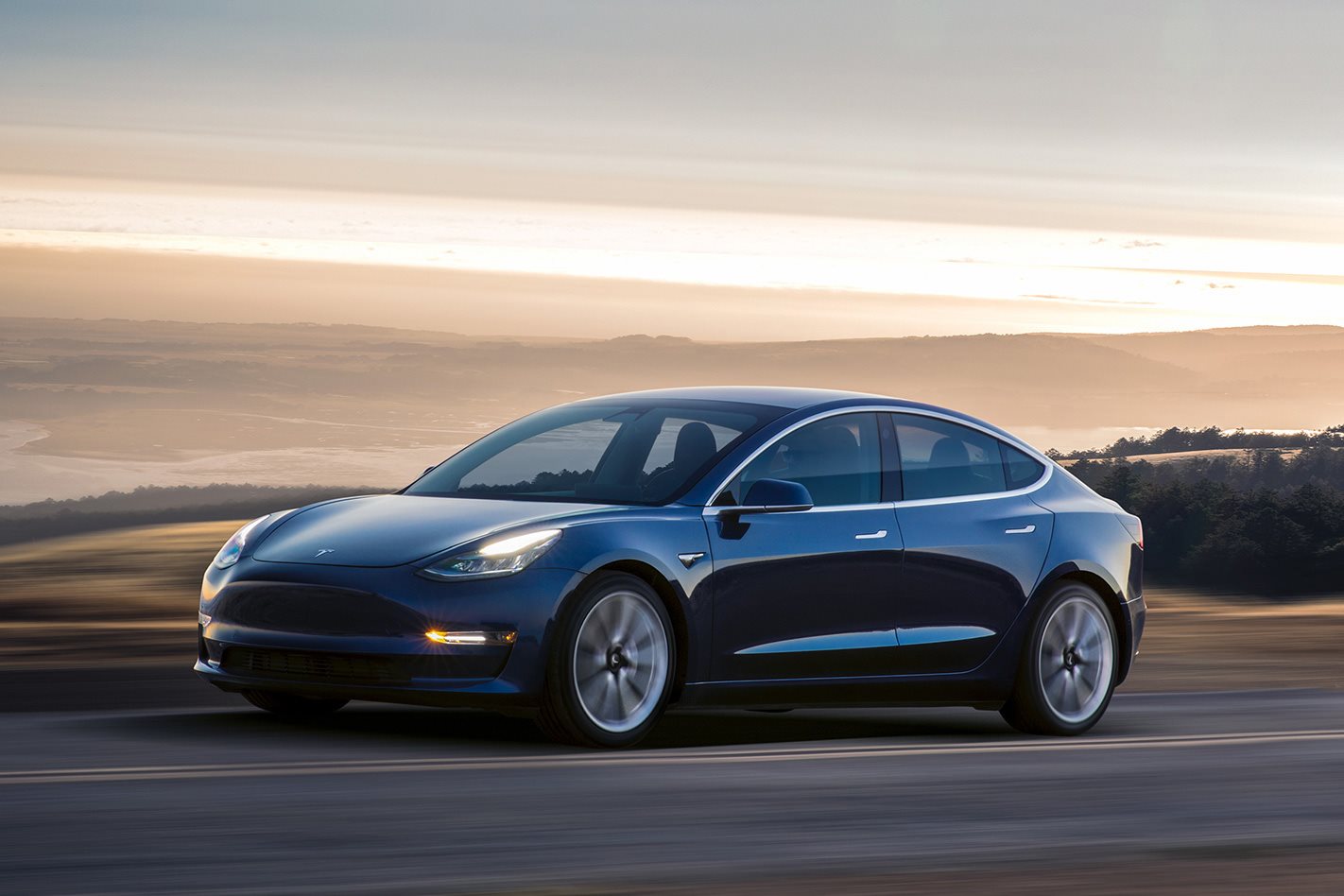
Tesla… what a brand. So many pixels burned for so few cars and car sales. Our contribution to the morass this week? Well, even though the Model 3 is the best-selling electric car in the world, the shine has rubbed off with its owners. Influential US website Consumer Reports has even changed its previously favourable recommendation it issued in 2018, citing inconsistency issues across areas like glass defects and electronics.
And this is all before right-hand-drive Model 3s even make it to Australia…
WE ALL got rather excited about the Honda Urban EV Concept when it was first revealed in Frankfurt in 2017.
Finally, here was the non-dorky electric city scoot that would be exactly the sort of breakout vehicle that would kickstart the urban EV revolution. It looked great, with big wheels, bold surfacing, a spectacular interior and deft detailing. We tempered the enthusiasm a little by reminding ourselves that it would change for production, but when the productionised car appeared this week, few were prepared for how insidiously the design influence of a potato had crept into the stylists’ work. It’s far from the first time this has happened, so to try to contextualise the Urban EV’s position in this pantheon, we round up the more egregious concept to production failures.
Honda Urban EV
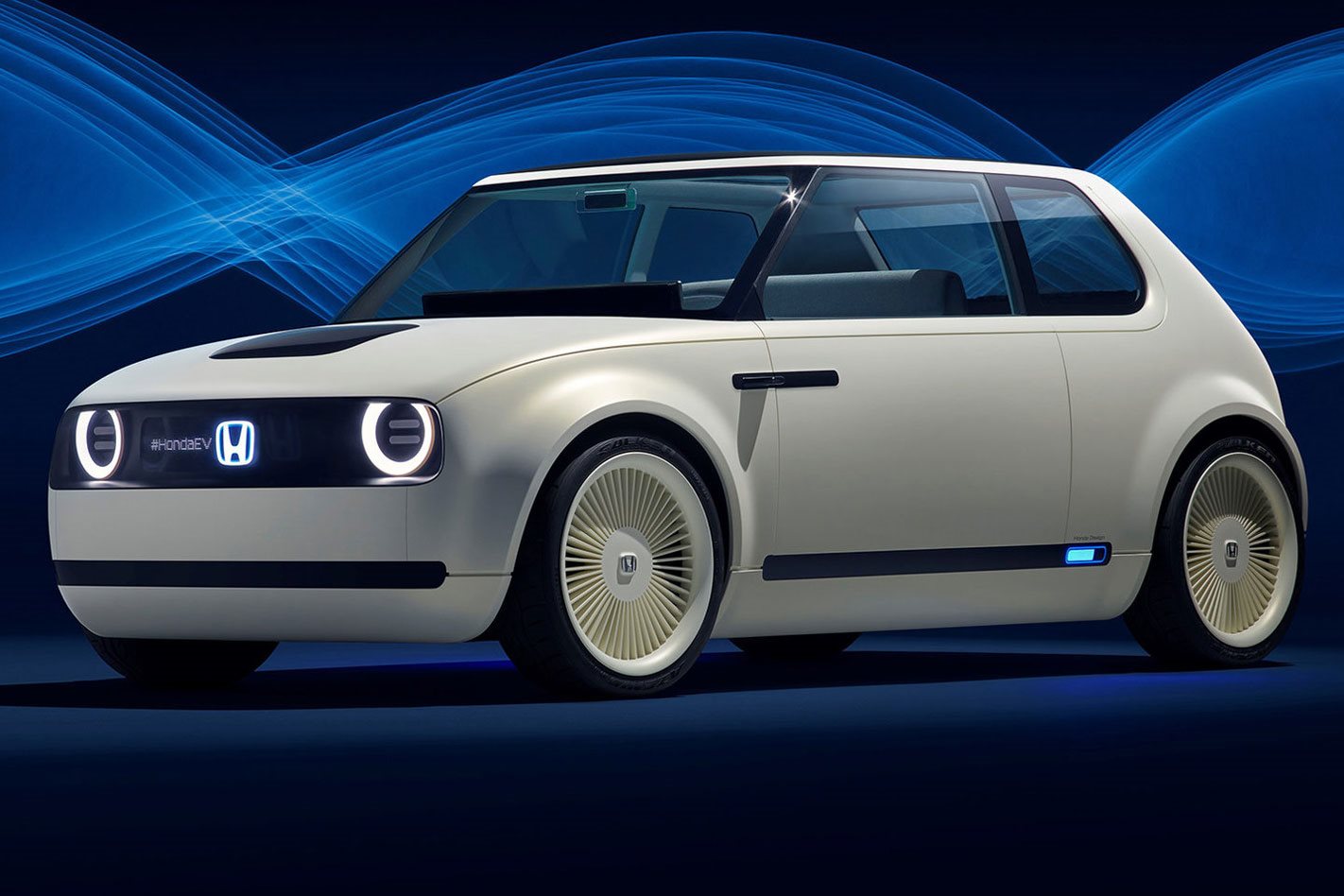
Had we just been presented with the production version of the Urban EV, we might have been mildly impressed. Compared to what went before, however, it’s a huge disappointment. Much of the tension has gone from its shape, the wheels look feebly meagre and the body rubbing strips and sweep of the camera mirrors have been excised. In short, it looks like almost any other supermini that’s been given a facelift rather than something that looked genuinely genre-defining. Shame.
Alfa Romeo Brera
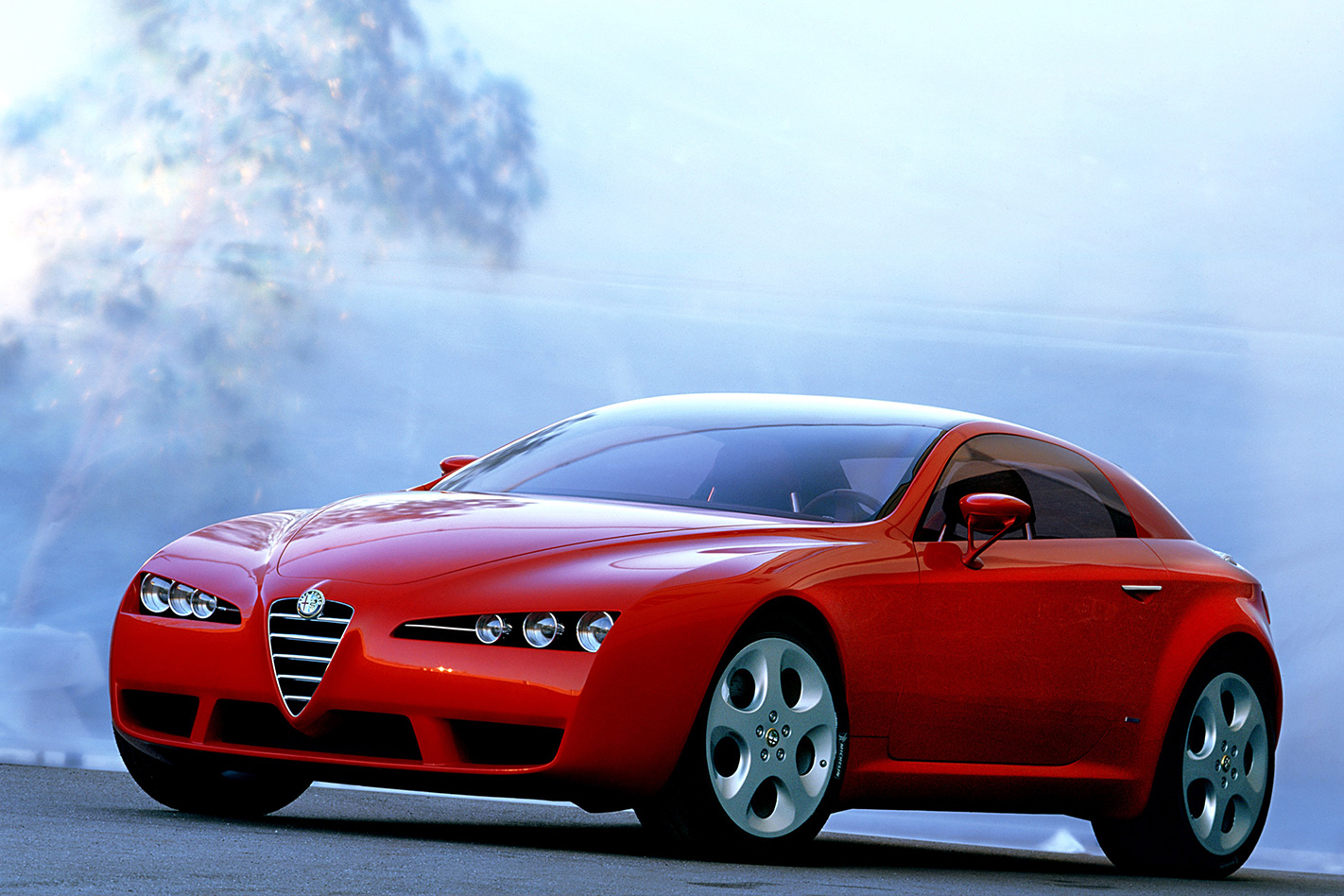
There’s no subtle way to say this. The Alfa Romeo Brera Concept was pure sex. Low, with long doors and a rakish cab-back silhouette, it was everything Alfa owners had demanded after the gooby-eyed front-wheel drive Type 916 GTV (1992-2004). The Italdesign Brera was unveiled at Geneva in 2002 and promised a return to classically beautiful proportions. Of course, the upward opening doors and carbon fibre body wouldn’t make production, but this, remember, was a car with a front-mid mounted 4.0-litre Maserati V8 that drove the rear wheels. The reality, when it appeared at the same show three years later was notably fatter and frumpier. More unforgiveably, it was front-wheel drive, with all-wheel drive offered for upper-spec models. Nowadays, the Brera is becoming one of the forgotten Alfas, the original show car’s mantle having been taken up by the limited run 8C Competizione in 2007.
Dodge Avenger Concept
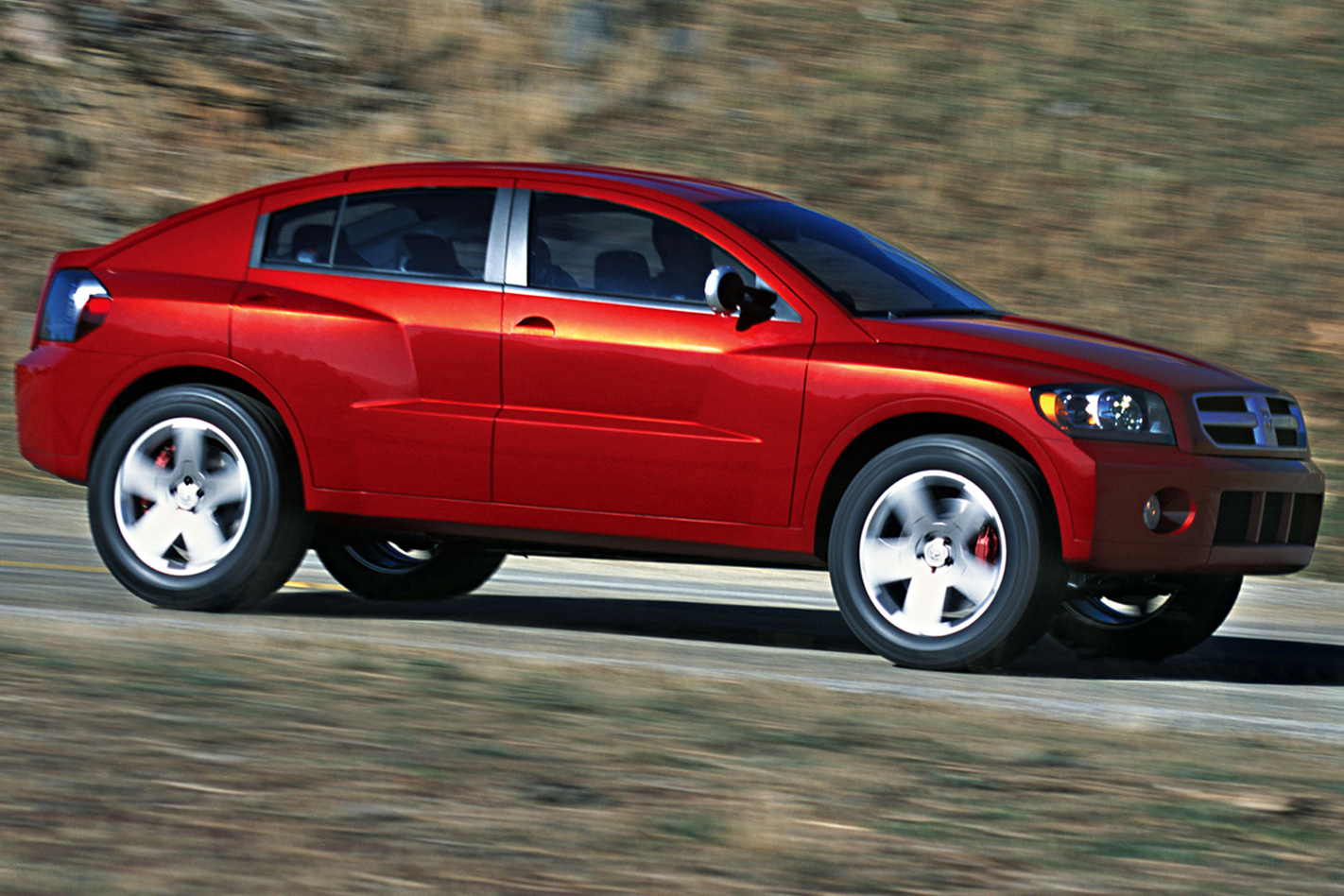
We all know the 2007 Dodge Avenger. What, you don’t? It was that thing that looked all mean and moody but which had a plastic dungeon interior and was shipped to most world markets with a gonad-deficient four that hawked up 115kW. It was a genuine one or two star car with crummy electronics, a ghastly four-speed auto and dreadful fit and finish. It could all have been so different. The original concept, which debuted at the 2006 Paris Show, was cut from very different cloth. The Neon replacement ditched the three-box design, and instead offered a mean crossover look and feel on chunky wheels, the design channelling Dodge Truck at the front and a little Bauhaus in the sweeping curves. Okay, so perhaps today we’re suffering a little crossover and SUV overload, but back in 2003, it was absolutely the right shape at the right time.
Pontiac Sunfire
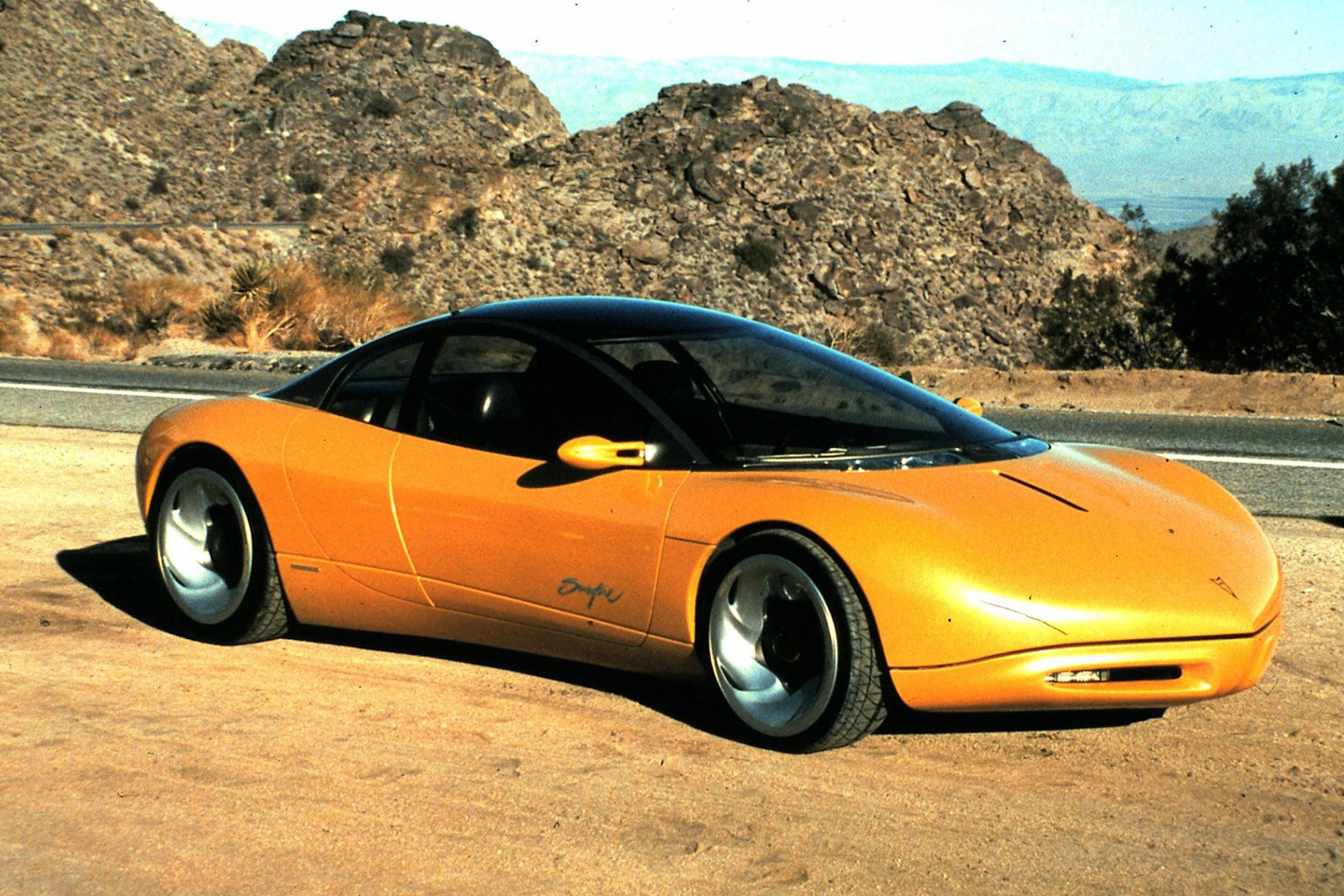
We’re really not sure where to go with this one, as barely a single detail carried over from the concept. Based on the ancient J-body platform, which was already 13 years old when the production Sunfire appeared in 1994, the car ‘enjoyed’ two facelifts in its 11 year production run. The 1990 concept featured a head-up display, mini suicide rear doors and touch sensitive panels to access the vehicle. It looked great, with its slinky coke-bottle flanks and floating glasshouse. We can only imagine the frustrations of its designers as it was gradually metamorphosed into a top heavy carbuncle for production.
Citroen C3
For many of us, our pets are our children. Our fur family comes first – though if some tiny humans come along, the pets are forced to take a back seat, in both senses of the word.
But while we secure our children in expensive car seats, and may make sure our loose luggage is safely stowed, our pets often are not.
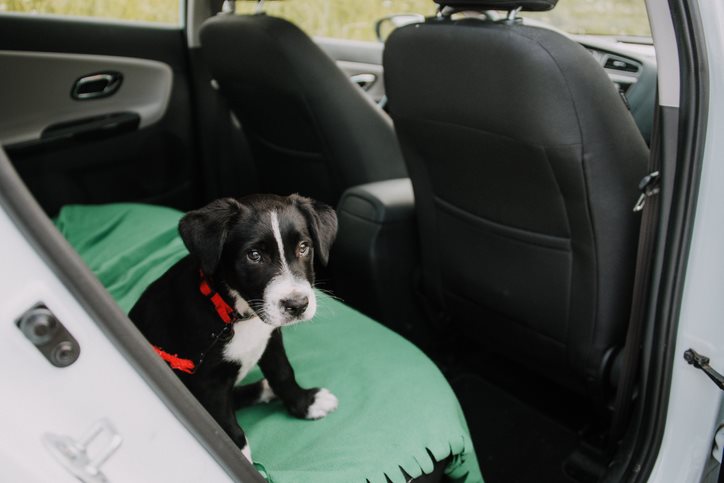
Bigger dogs usually end up in the backs of wagons and SUVs; lap dogs in laps, and cats in darkened boxes where they can yowl their frustrations. But are they strapped in and secured? Well, they should be.
Pet stores will typically have a travel section where you can purchase restraints, carriers and covers, and most manufacturers will have bespoke cargo barriers for their models.
One must dig a little deeper to find the specialty items – and dig deep into the pockets to pay for them.
There are some fantastic new products on the market that are designed to not only safely strap our furry friends in, but also make their journeys first-class.
Even better, many of the funky items listed below can be found at stores run by organisations such as the RSPCA (World For Pets), which not only has many variations of travel devices for different animals, but 100 per cent of the profits go to the RSPCA. Awesome.
HARNESS RESTRAINT SYSTEMS (Small to extra-large dogs)
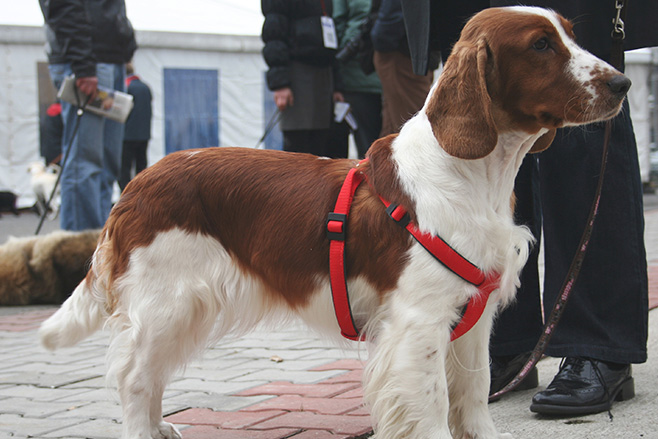
There are restraints; then there are restraints that have been crash tested in labs to a standard that matches child and adult systems.
While short swivelling leads that clip directly on to the collar are cheap and easy to use, it’s going to garrotte your pooch in an accident.
The best restraint device for any dog is a harness. You need to find one that attaches to the seatbelt low at the dog’s back to keep the dog in an upright position in the event of a crash.
It is illegal in some states to have a dog on your lap or unrestrained in the back of a Ute (it should be illegal in all states), so the money spent on safety could pre-empt an expensive fine.
Check out:
Ruffwear is our fave. They even have Youtube video of their crash simulations with test dummies from sausage dog to Alsatian size, proving how effective their harnesses are.
The Ruffwear Load-Up Harness is not cheap at around $140, but gets the tick of approval from crash simulations and high-quality/high-tensile materials.
It also offers the dog more freedom to move along the line of the seatbelt, which won’t work as well for dogs who love climbing in to the front seat, and the buckles are a tad fiddly, but it’s easily one of the best on the local market.
CAGES AND CARRIERS (small to medium pets)
There are so many carriers on the market for your pet, from temporary fold-away cardboard jobbies to a full nest with heat packs for the pampered pooch (see below).
The light, compact carriers must be restrained, or they risk becoming airborne. When looking for a carrier, make sure it can either fit within the seatbelt, or have anchor points to secure the cage.
This is where some of the more ludicrous contraptions fall short. You can buy booster seats for your pet (seriously), which either lash to the seat and float a foot or so above the thigh cushion, or are big cubes which raise the animal (dog) up higher so it can see out the windows.
These should not be used without a safety harness. In the event of an accident, there will be nothing to stop your dog from becoming a bird!
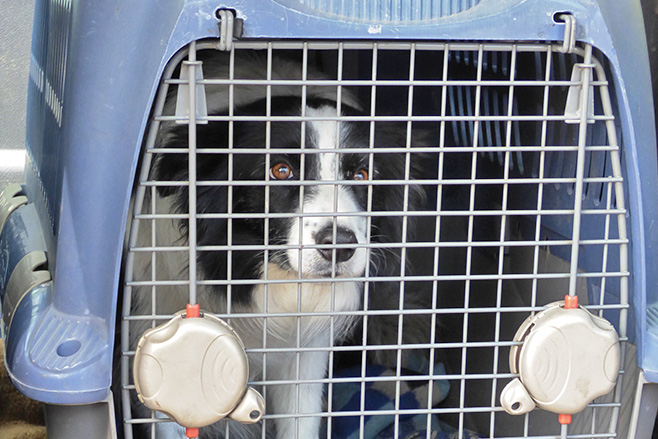
Check out:
For a simple eco- and pet-friendly carrier that folds away to nothing, it’s hard to go past carriers like the PetFace Eco Carrier.
CARGO BARRIERS
There are two main types of cargo barriers for pets on the market; one to separate the front and rear seats, and one separates the rear seats from the boot area on wagons and 4WDs (these can’t be used on a two-door – it’s a harness for you).
With the latter, it is best to check out the manufacturer’s offerings before considering an aftermarket device. While this can be an expensive option, nothing will fit your car as well, and likely won’t look as good either.
Cargo barriers aren’t just handy for the pets, of course, but are practically a must for big trips with passengers and particularly kids in the rear seats, preventing luggage from coming into the forward cabin during heavy braking or an accident.
When looking for a barrier between the front and second row to stop enthusiastic puppies from jumping up front, make sure you measure between headrests and the base of the seats to get a well-fitting device, and look for the products with either clear or light mesh windows that do not obstruct rearward vision.
Check out:
For big strong canines, the Walky Guard is an award-winning universal cargo barrier.
Smaller dogs may try to come through the centre console area – try the Bergan Barrier which has a see-through window and mesh around the back of the centre console for a universal fit.
HSV is back in the supercharged game thanks to the announcement it will convert the 2019 Chevrolet Camaro ZL1 for the Australian market.
For a bit of fun, we thought we’d look back at its last supercharged car, the mighty HSV GTSR W1 and see how the two compare.
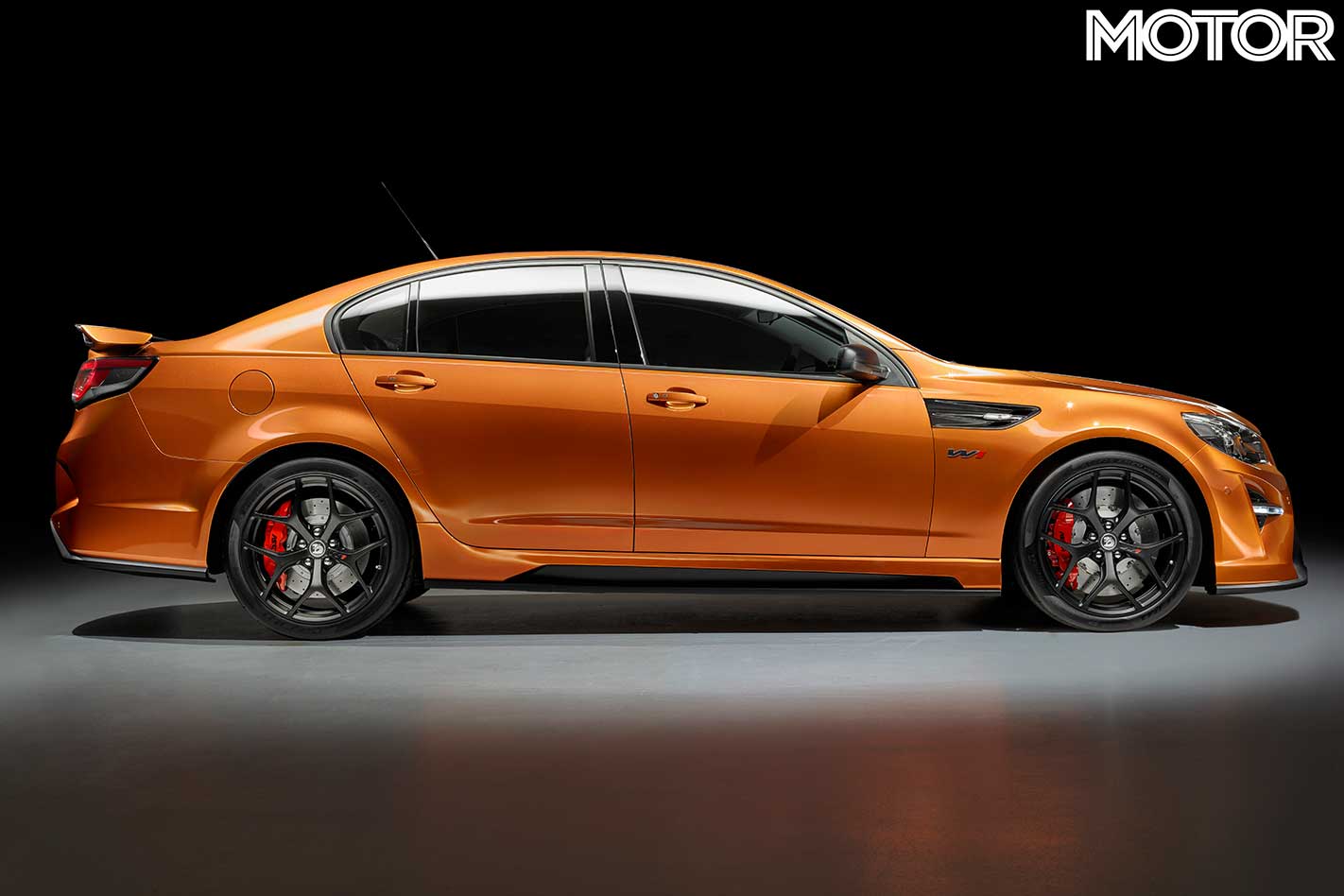
Let’s start with the last of the Aussie big bangers. The GTSR W1 used a 6.2-litre supercharged V8 dubbed the LS9 which first appeared in the C6 Corvette ZR1.
Thanks to a 2.3-litre supercharger forcing 9.7psi of boost it produces 474kW/815Nm and safely revs to 6600rpm thanks to titanium conrods and inlet valves, forged steel bearing caps and forged aluminium pistons.
In comparison, the Camaro ZL1’s LT4 engine is a new-generation design. It has exactly the same capacity as the LS9, 103.25mm bore and 92.0mm stroke resulting in a swept volume of 6162cc.
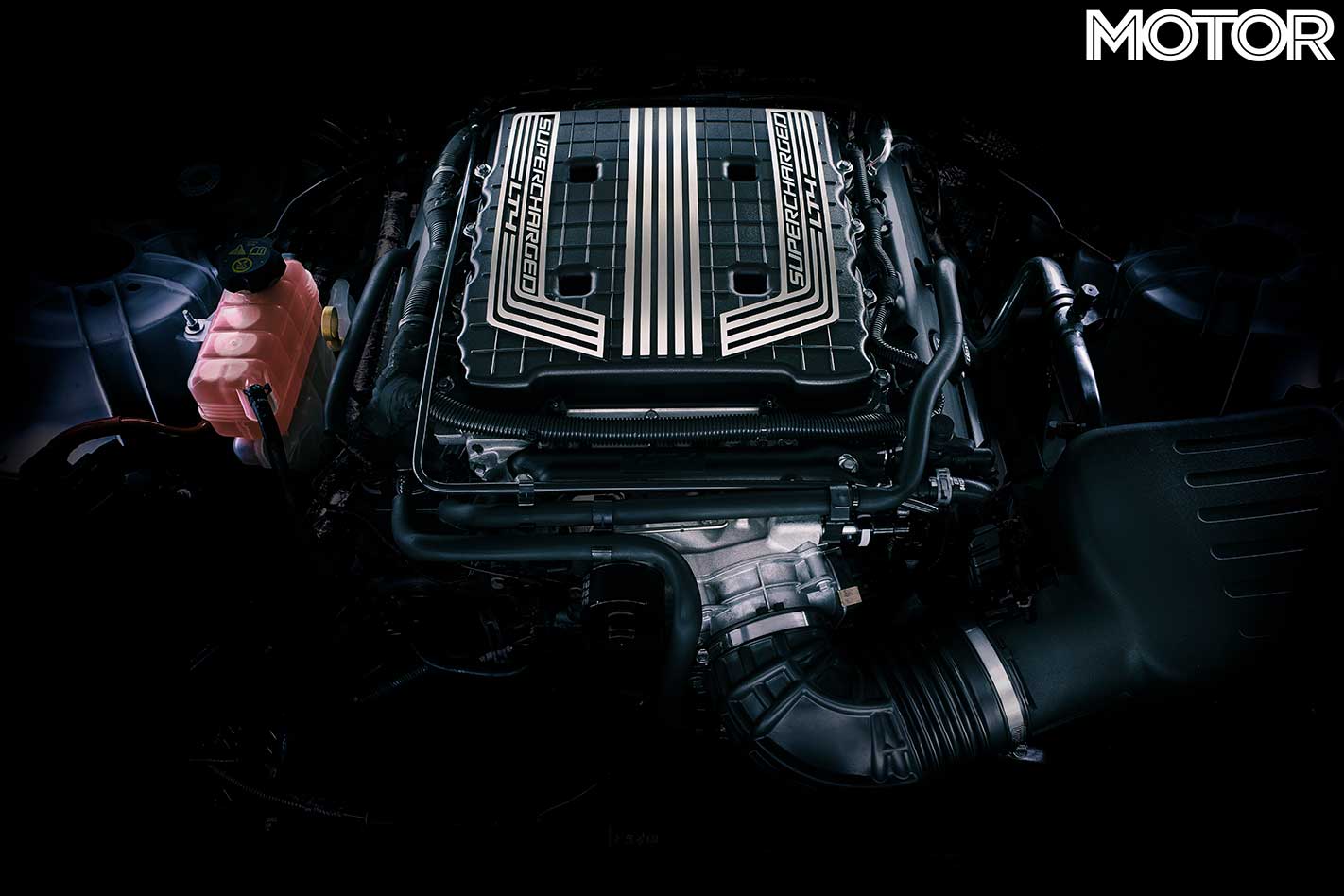
It uses a smaller 1.7-litre supercharger but spins it harder (20,000rpm vs the LS9’s 15,000) to generate 9.4psi. This is less boost than the LS9, but the LT4’s higher compression ratio (10:1 vs 9.1:1) allows it to produce 485kW/881Nm.
The ZL1 will be available as either a six-speed manual or a 10-speed automatic, whereas the W1 was only available as a six-speed manual. The Camaro has a decisive weight advantage at 1761kg for the manual and 1789kg for the automatic, compared to the W1’s 1895kg.
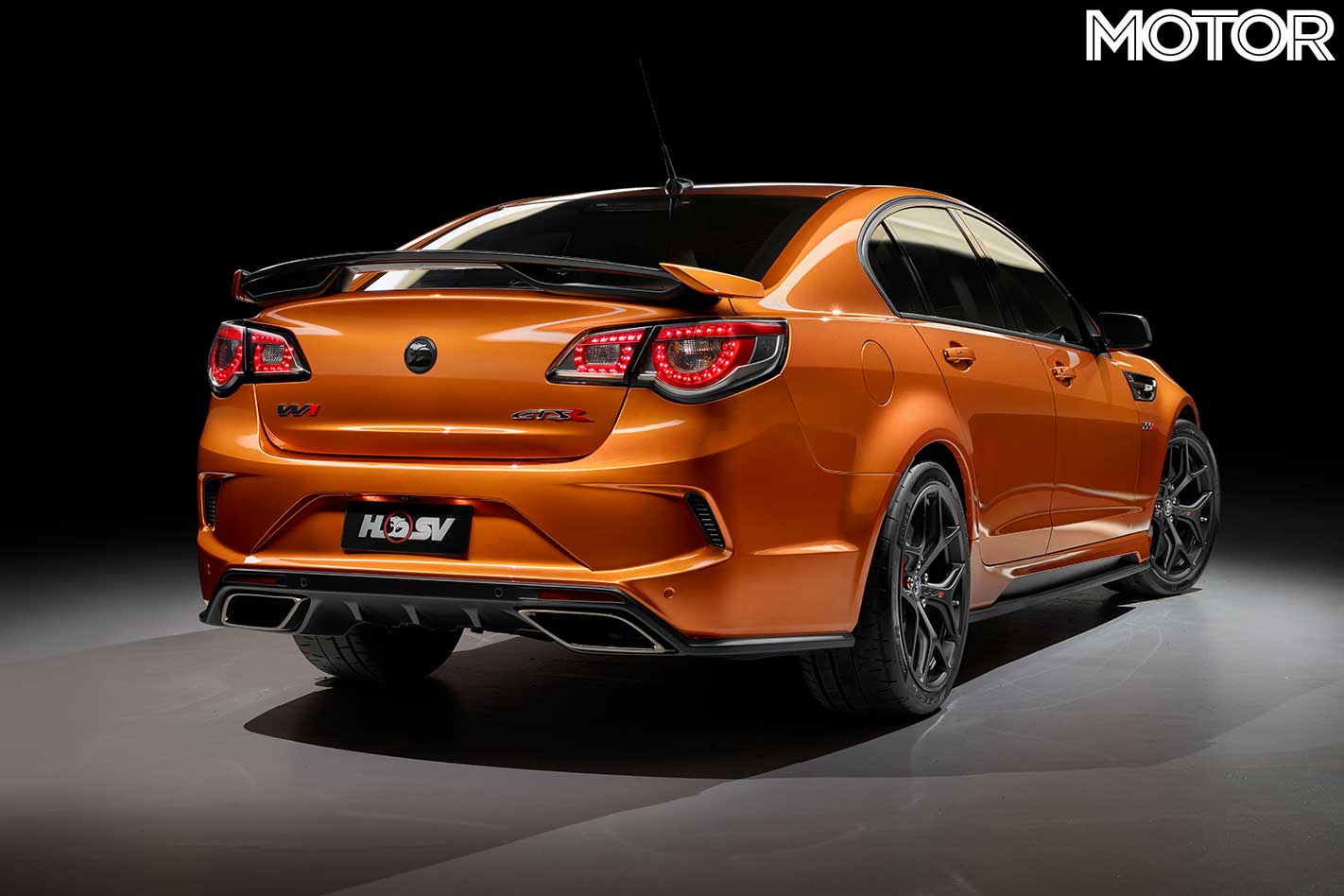
This is primarily because the two-door Camaro is the smaller car. At 4812mm long, 1897mm wide, 1330mm tall on a 2811mm wheelbase, it undercuts the four-door W1 by 232mm/2mm/138mm and 104mm respectively.
As such, acceleration honours go to the American. The best figures we extracted from a W1 were 4.16sec to 100km/h and a 12.18sec quarter mile at 195.68km/h, pretty much bang on the claims.
While we haven’t run numbers on the Camaro yet, its claims are next level. The 0-60mph sprint takes 3.5sec, so we’ll be looking for a 0-100km/h figure in around 3.7-3.8sec, while the quarter mile is eaten up in 11.4sec at 204.5km/h. Serious stuff.
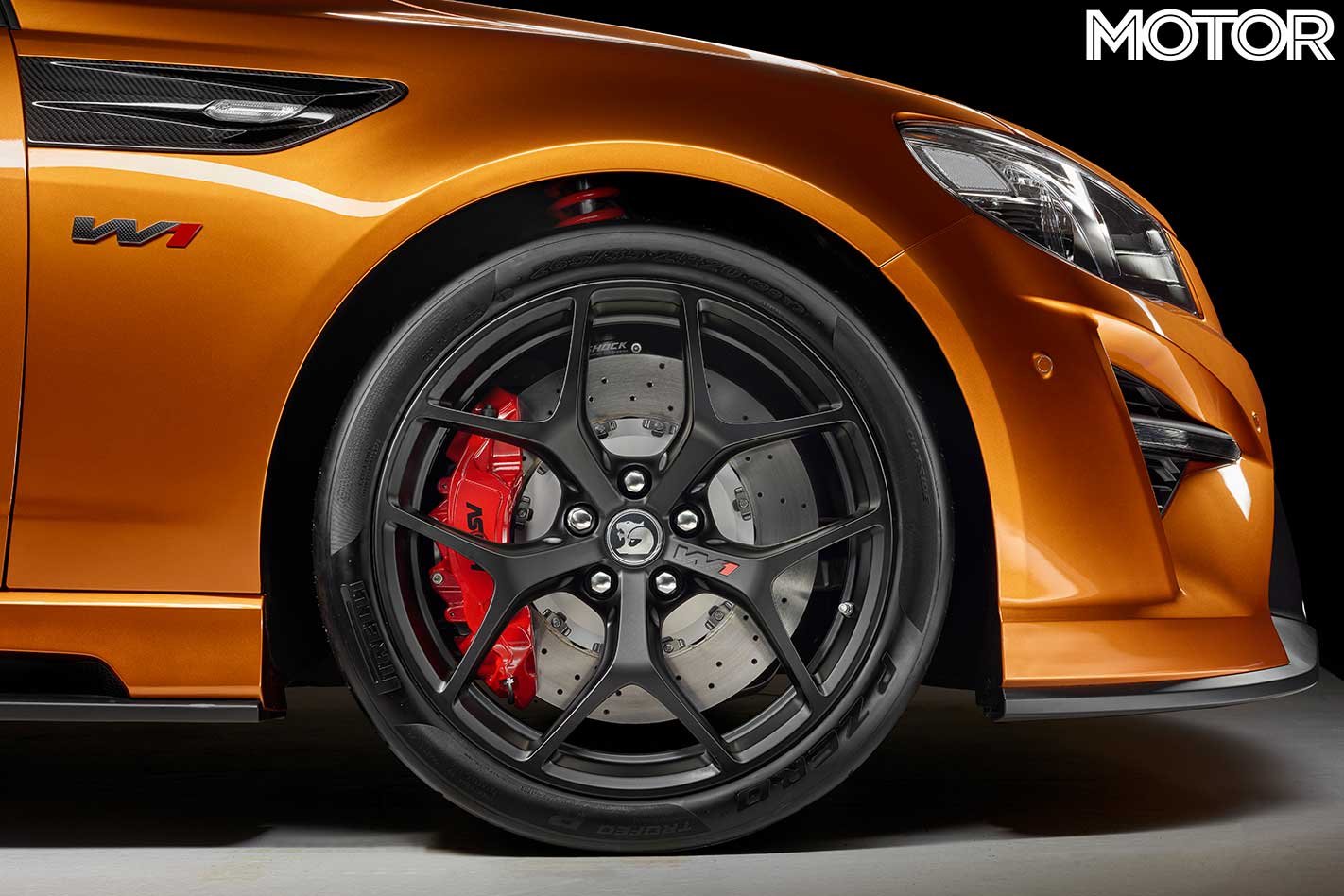
Equally serious are the chassis upgrades of each car. The W1 rung everything out of the Commodore platform with bespoke Supashock dampers, 20-inch wheels measuring 9.0 inches and the front and 10 inches at the rear with 265/35 and 295/30 Pirelli P Zero Trofeo Rs front and rear respectively.
Combined with its simply enormous brake package, which consists of 410mm floating rotors with six-piston calipers at the front and 372mm rotors with four-piston calipers at the back, it had serious circuit cred.
Not that the ZL1 is lacking. It has an even bigger footprint, with 20 x 10.0-inch front wheels and 20 x 11.0-inch rears wrapped in Goodyear Eagle F1 Supercar 3 tyres measuring 285/30 at the front and 305/30 at the rear.
It can’t match the W1 in the braking department with 390mm front discs and six-piston calipers and 365mm rears with four-piston calipers, but counters with more technology, including an electronically controlled limited-slip diff and magnetic ride control adaptive dampers.
The Chevrolet Camaro ZL1 and HSV GTSR W1 are very different cars but have a very similar goal in life. We look forward to discovering if Chevy’s mighty muscle car can carry the torch when we drive the ZL1 later this year.
Hyundai is set to launch a special edition of its medium-sized SUV, the Tucson, as it looks to recover sales ground in the hard-fought segment.
Formerly a top-three seller, the Tucson has drifted in recent months to sit fifth in the medium SUV category at the end of January 2019, behind cars like category leader Mazda’s CX-5, the Subaru Forester and Toyota RAV4.
Hyundai Australia’s new director of marketing, Bill Thomas, says that the Tucson is not doing as well as the company hoped, but points to the general softening of car sales across 2018 as a potential reason for the slip.
“We’re not comfortable with where it’s sitting, sales-wise,” he told WhichCar. “We’ve got an advertising campaign coming out next month in the middle of March, which will help.”
Thomas also revealed that Hyundai would launch a special edition model in the coming weeks in an attempt to boost the five-door, five-seat SUV’s fortunes.
“We’ve also got a special edition coming out. Again, it’s a few weeks away, but we’re looking at just revamping that lower model segment, and we think a special edition with some nice wheels and a good entry [price] point would do us good,’ he said.
Currently, the Tucson starts at $28,150 plus on-road costs for a manual gearbox-equipped, petrol-powered Go variant.
However, Thomas confirmed that the special model would not be an N-Line model, in the same guise as the recently repositioned i30 N-Line. “N-Line? No. Not at this point,” he said.
The N-Line has been previewed by Hyundai’s European arm this week ahead of the Geneva Motor Show, with two teaser images revealing a tweaked front bumper with new LED lights, N Line badges and leather sports seats with red stitching.
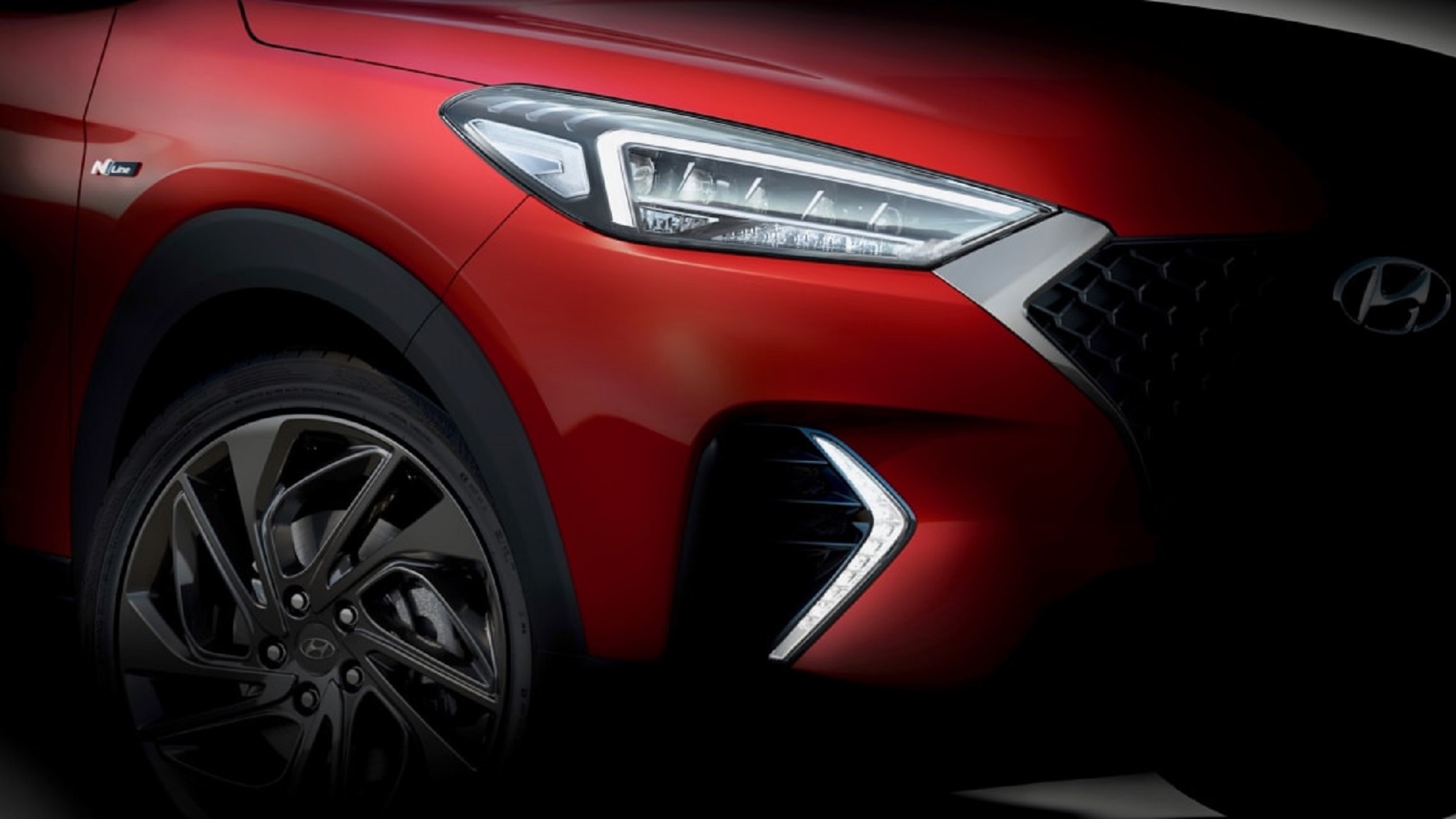
Hyundai Tucson N-Line concept
Thomas, however, scotched the suggestion that the company is set to introduce a performance version of the Tucson – or of any other SUV in the Hyundai line up – any time soon.
“The strategy’s always been to do the core cars first and establish a reputation with your hot hatch,” said Thomas. “Make sure that you’re known for capability at that point with a core car, and then you can extend it.
“I think coming out with an SUV this early would be like a cash grab. I don’t think that’s appropriate. I think you’d really need to establish your credibility first with a hot hatch and the build the end brand from there.”
To celebrate 10 years of the Audi 5.2-litre V10, the Ingolstadt carmaker has revealed the aptly named Audi R8 V10 Decennium.
Primarily a design special, rather than one bestowed with a performance edge, the Decennium is limited to 222 units.

Most noticeable on the car pictured is the dark theme featuring an exclusive-to-Decennium matte Daytona Grey, with bronze 2-inch milled wheels and blacked-out badging to match the gloss black front lip, sills, and diffuser.
The rather dark exterior design theme continues into the cabin, finished entirely in black featuring gloss carbon fibre accents, black leather, Alcantara, and contrasting copper-coloured stitching.
A ‘Decennium’ logo can be found just in front of the gear selector, while the same ‘10 Decennium’ design can be seen on the scuff plates and projected onto the ground from the doors’ puddle lamps.
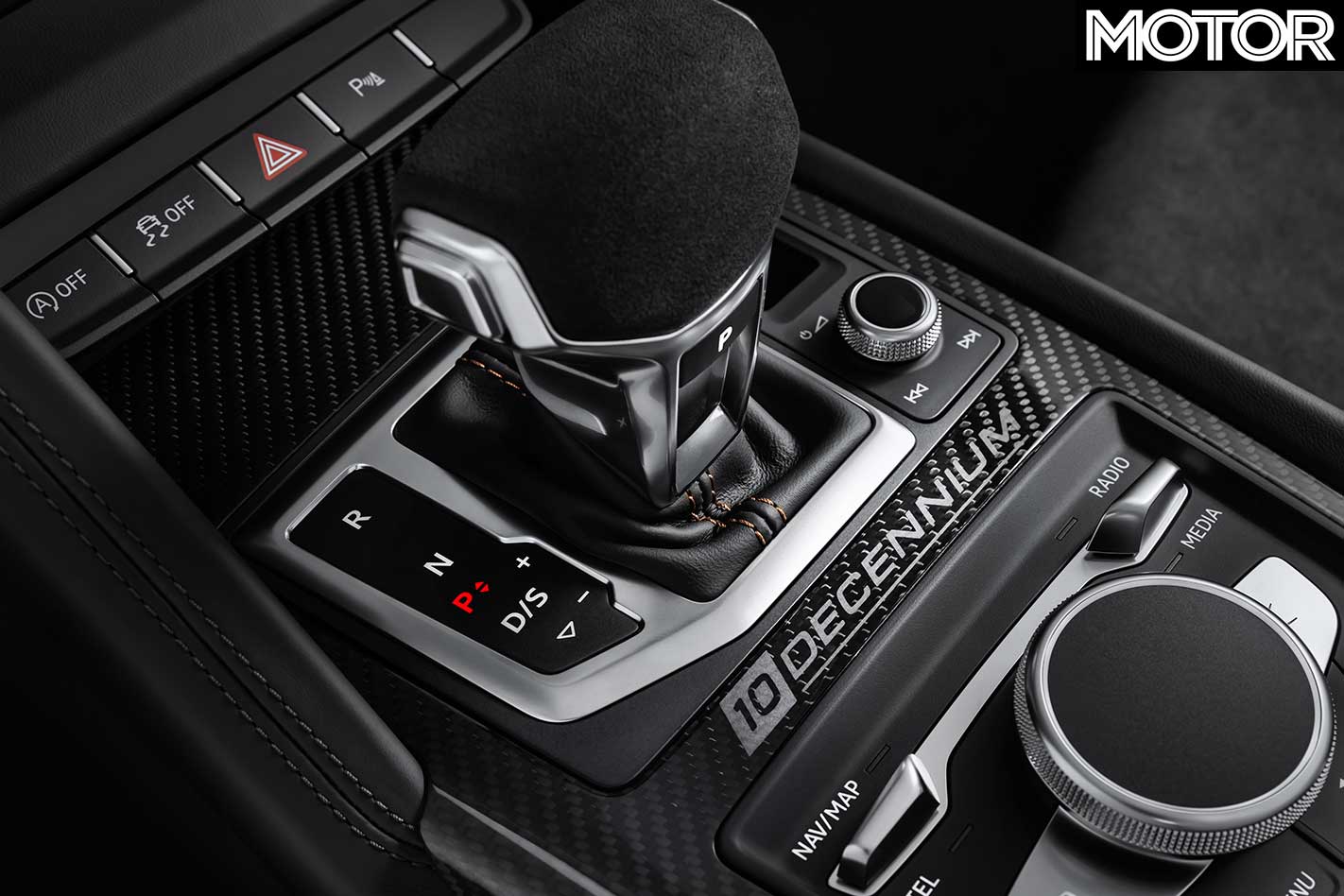
The Audi R8 V10 Decennium features the same 456kW/580Nm tune from its atmo 5.2-litre V10 as the recently revealed 2019 Audi R8 Performance, though its set to cost an additional 11 per cent over the price of that model in Germany.
MOTOR has contacted Audi Australia to find out whether any of the 222 units would be seen locally, but has not yet received word back.
The Audi R8’s V10 heart
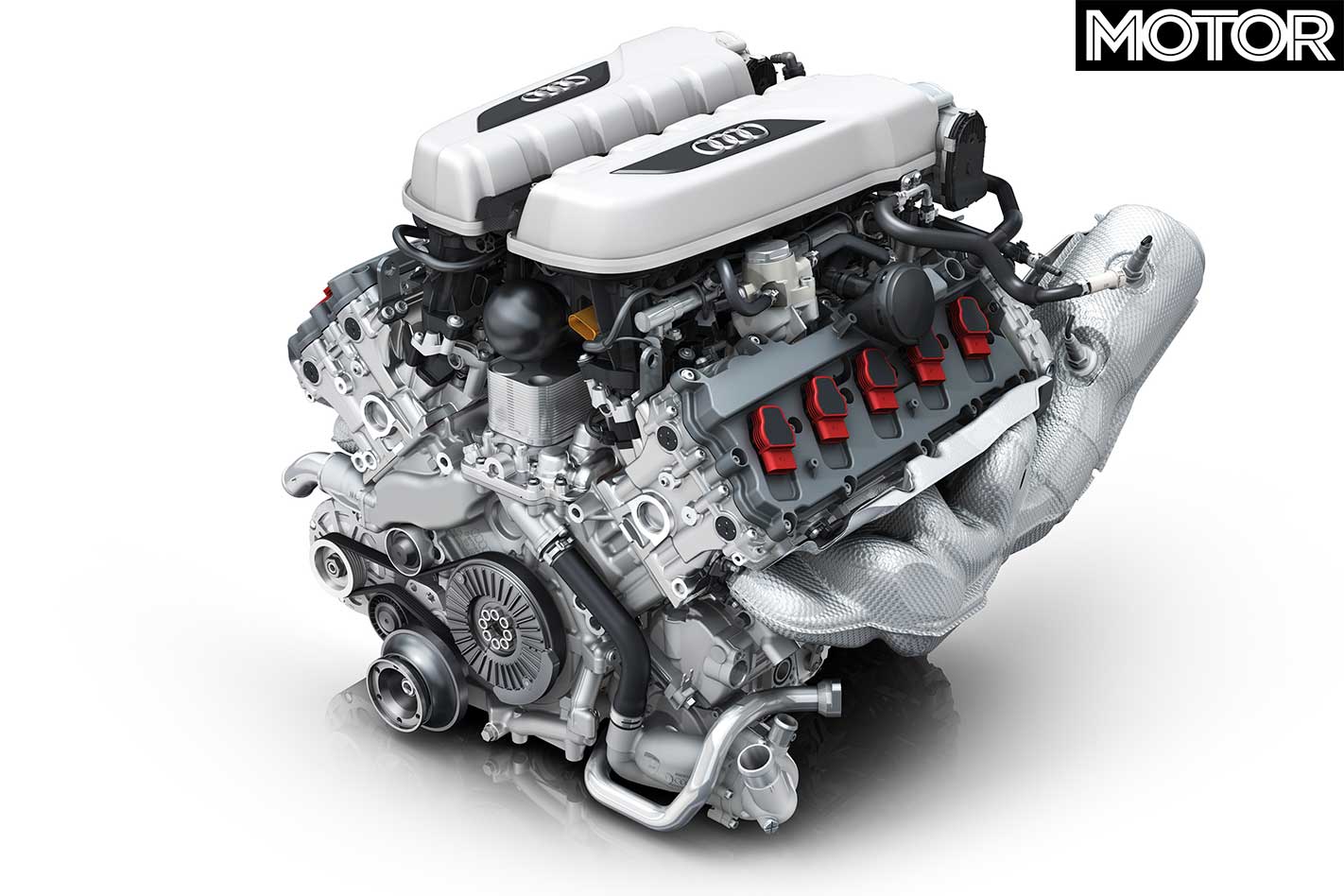
The V10 engine being celebrated by this model dates back, well… a decade, and in its first form made 386kW in the 2009 Audi R8.
By 2010 the Audi R8 GT was good for 412kW, while the R8 V10 Plus produced at least 404kW from 2012 onwards.

In 2015, when the second-generation R8 was released, the re-worked 5.2-litre V10 was making either 397kW in its lower tune, or 449kW as the R8 V10 Plus.
This year, the tunes are both upped to 419kW and 456kW, which will arrive in the Decennium and the 2019 Audi R8 Performance.
If you’ve wondered how savage Subaru’s early WRC Imprezas might be once freed from regulation, behold this video of Alistair McRae smashing the Leadfoot Hillclimb record.
The Scottish rally driver returned to the world’s ‘other’ famous driveway race at Rod Millen’s property in Hahei, New Zealand, to defend his outright 2017 and 2018 wins.
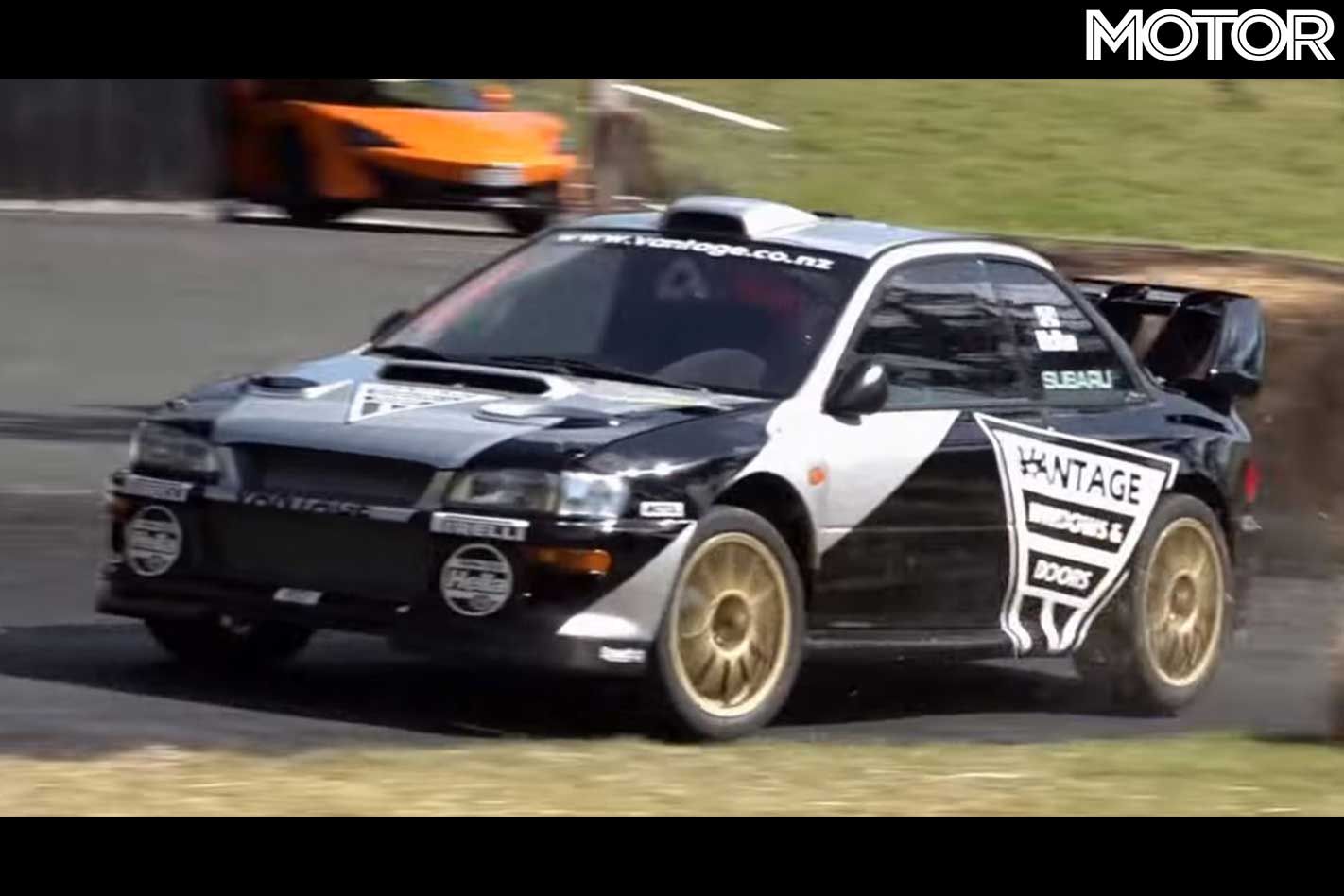
In a purpose built ex-WRC 1998 Subaru Impreza spitting out somewhere around 600kW in race trim, he claimed the outright win with a 47.99 second run, the fastest time in its history.
No creature comforts like a fancy automatic transmission were at his disposal. Nor does he rely on wild aerodynamics for tarzan-like grip. Instead, he wrestles the rally car along the 1.6km driveway while banging through a six-speed manual transmission and adding opposite lock when that turbocharger wakes.
Half the time it looks like it wants to launch off the course, but McRae stays in complete control, edging the Impreza to road’s limits and displaying the talent associated with his name. His brother Colin drove a ’98 WRC Impreza before switching to Ford.
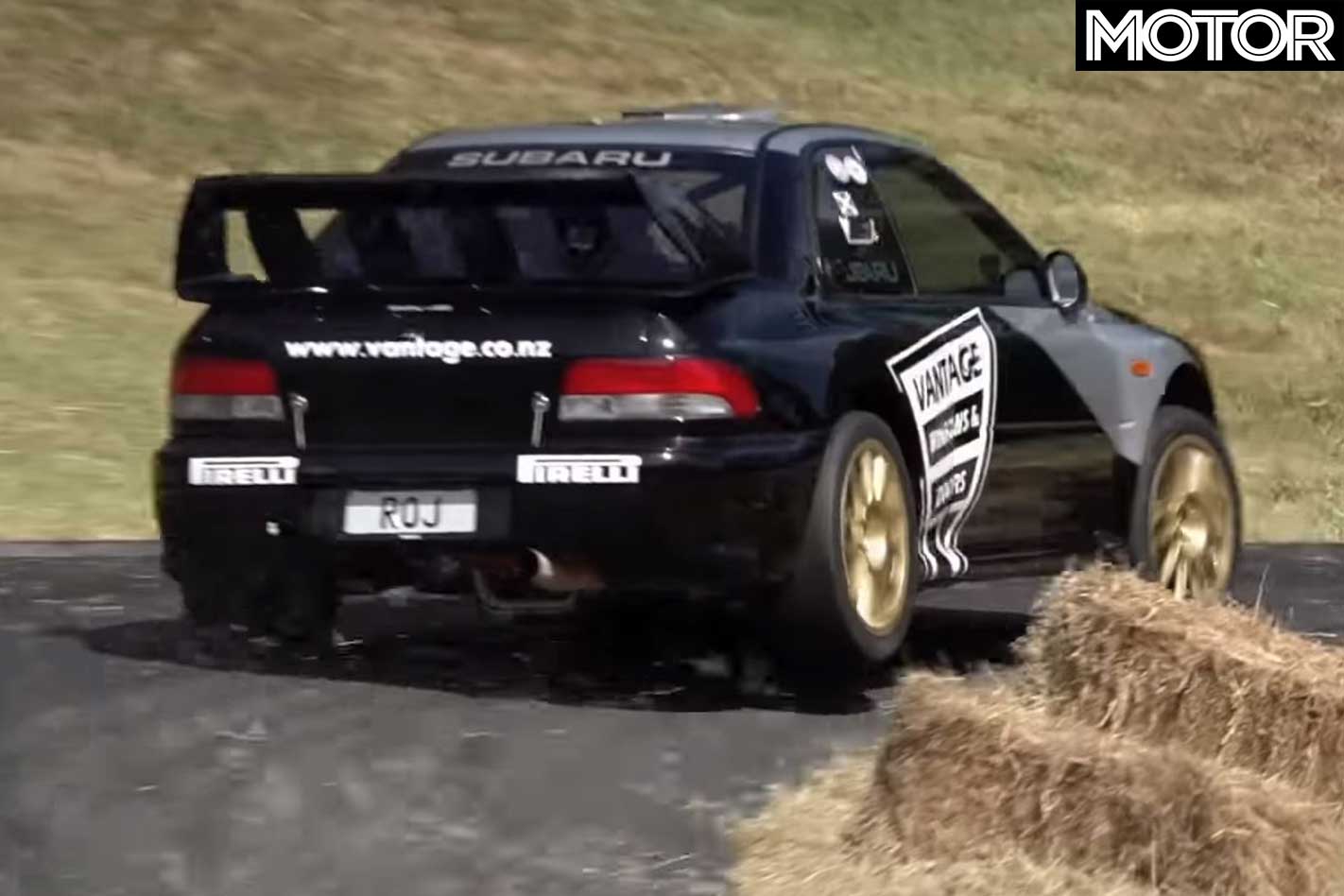
This particular car was built by Prodrive for an official WRC campaign. At the hands of Juha Kangas it was crashed at the Rally of New Zealand, and then sold to Possum Bourne who rebuilt it for the Race to the Sky in 2001.
After Bourne’s unfortunate death in 2003, another WRC driver, Kenneth Eriksson wrestled it at the Race to the Sky until 2007. McRae drove it first for the 2015 event and won, the first time since Possum did with the car in 2001.
While we don’t know its exact specification, Vantage Motorsports in 2015 reportedly shoved 42psi of boost into its forged 2.0-litre boxer’s to produce 636kW. With only relatively tiny 18-inch tyres to tame that, it explains McRae’s furious bouts of opposite lock.
