
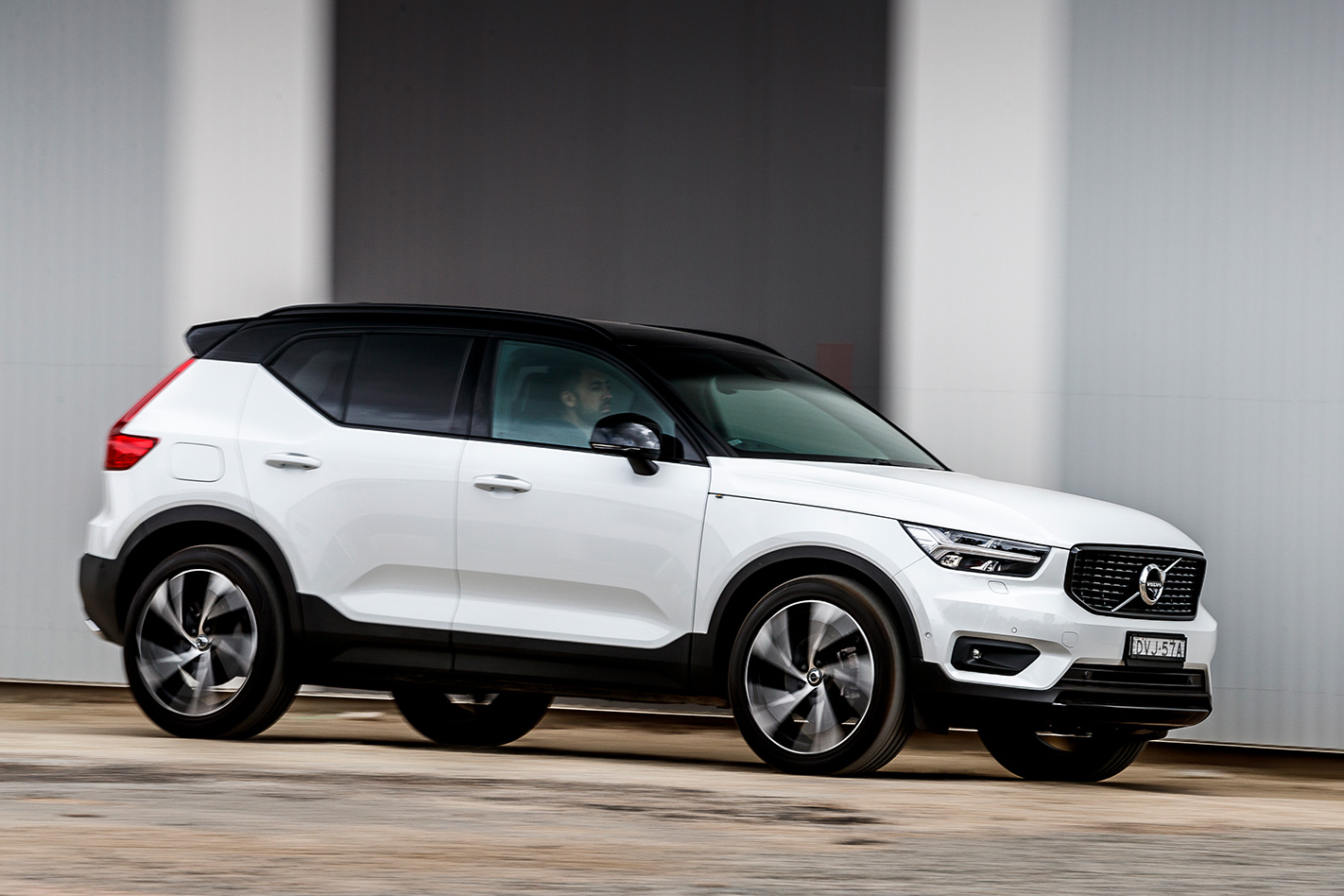
TOUGH little robot. That’s the design philosophy behind the Volvo XC40 and those three words neatly encapsulate everything you need to know about the stance and detailing of the Swedish baby SUV.
It has a certain attitude. It’s punchy. And if it can appropriate just a bit of the all-conquering XC60’s special sauce, it’s right up there with a clear shot at the title.
Of course, there will be some who sniff and claim that because Geely’s money is bankrolling Volvo, that this is somehow a Chinese car. Much like GM’s money made the Holden Torana an intrinsically American car or that Renault’s euros means that the next-gen Nissan GT-R will spawn a rebadged revival of the Fuego. All patently ridiculous notions.
The XC40’s charms aren’t hard to see. Against key rivals such as the BMW X1 and Audi Q2 it feels, and indeed is, half a size bigger. It also feels anything but built down to a price, sharing the same vast portrait-oriented infotainment system and quality touch points as its more expensive siblings.
one year on from its COTY victory
What’s more, the XC40 has another string to its COTY bow too. The competition is judged against five criteria, and we judge on the range as a whole, rather than just an individual model. In other words, COTY rewards strength right across the board, and the XC40 scores in that regard. There’s not a weak link in the line up from bottom to top.
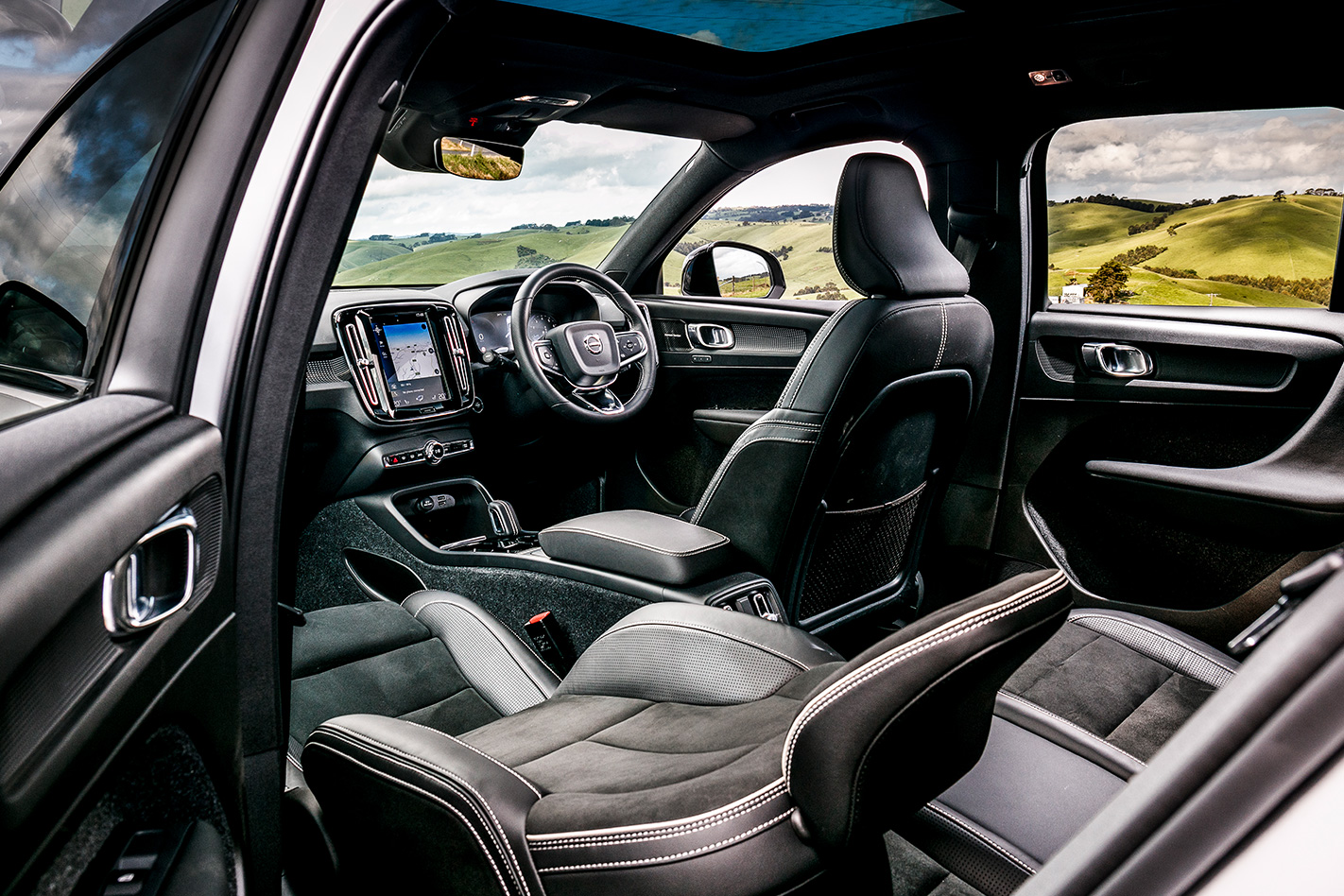
Unlike some manufacturers, who’ll slot in a poverty-spec model just to drive footfall into dealerships, knowing that everybody who inquires will be upsold to something pricier by some shiny-suited salesman, you could happily buy the entry-level XC40 with no options and feel you’d done a whole lot better than okay.
Volvo’s reputation for safety needs little embellishment. When EuroNCAP first tested the car, it gained a 97 percent score for adult protection, and the joined the XC60, S90 and V90 as the only cars to have ever achieved perfect scores in all three autonomous emergency braking test categories.
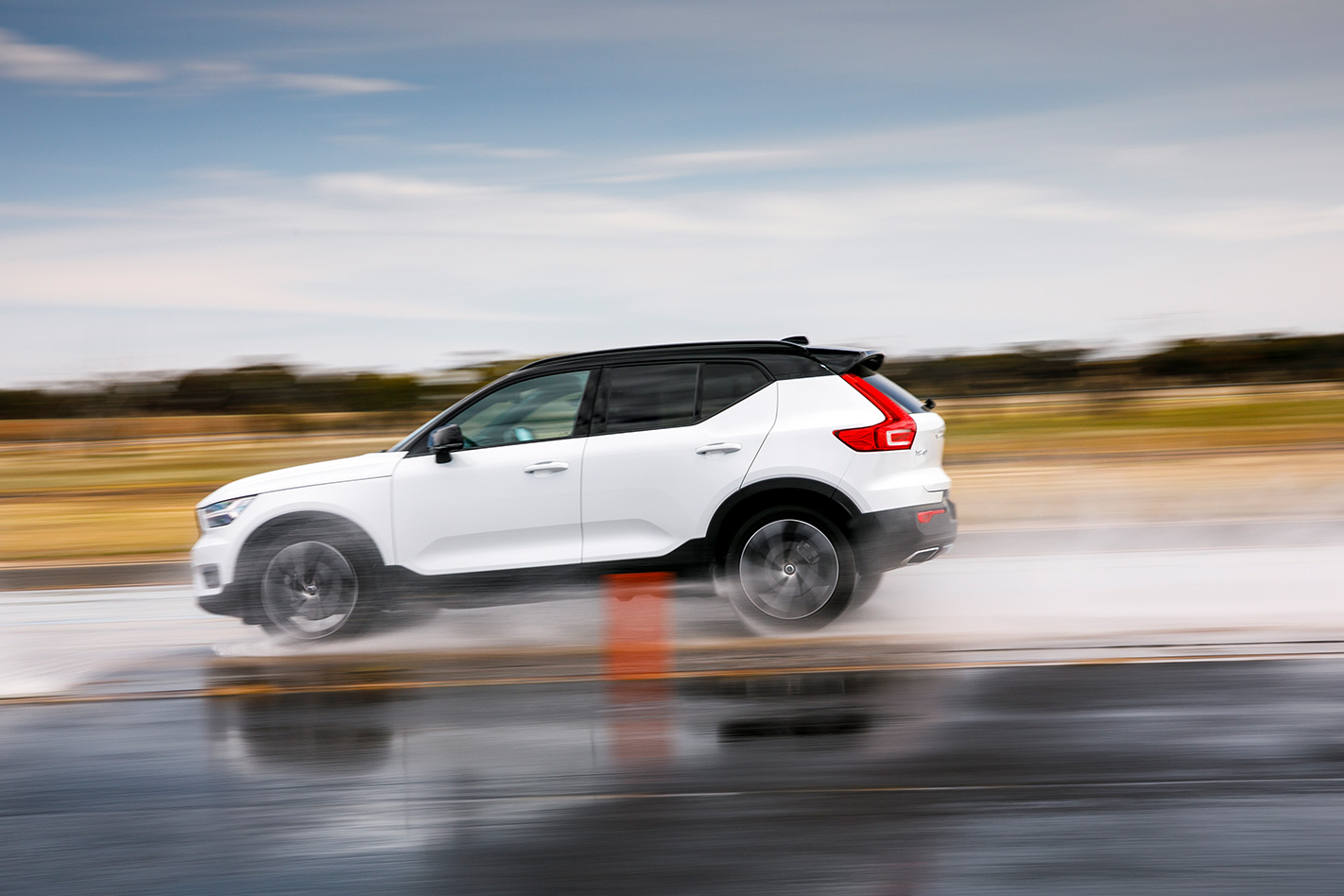
So the tough little robot is certainly in with a chance of sweeping all before it. In March it claimed the coveted European Car of the Year crown by a huge margin. Can it add Australia’s most prestigious award to its haul of silverware? To find out, be sure to check in on whichcar.com/wheels on the night of Wednesday, January 30.
IT SPEAKS volumes when you’ve left a $200k Audi with 250kW in the COTY car park and the rest of the judges are wondering why the $17,990 Volkswagen Polo 70 TSI isn’t back yet.
Short answer, because it’s one of the few cars here that feature a manual gearbox, it’s skinny 15-inch tyres screech hilariously around the proving ground’s Basic Durability Course and there’s a refreshing joy in finding a car this cheap so much fun. And other Polos are available.
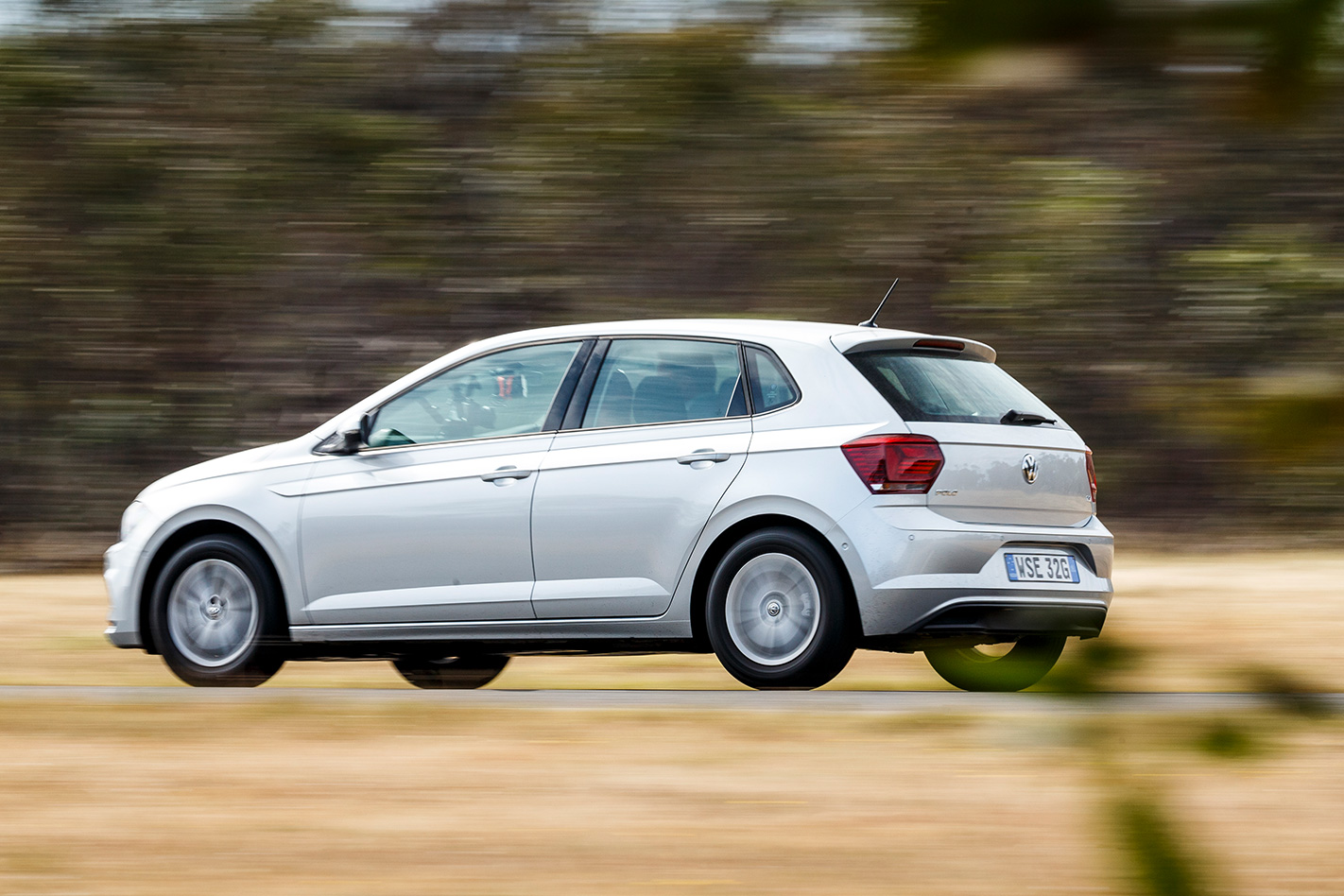
Of course, there’s more to the Volkswagen Polo than just driving it like an airport parking valet. We ran the Polo against the pick of its rivals in May last year and its margin of victory was almost embarrassing.
The contents page directed readers to the “Teutonic trouncing’ on page 86 and the Suzuki Swift, Citroen C3, Mazda2 and the Skoda Fabia were given pause to consider that there was a good deal more involved in class leadership than perhaps they’d bargained for.
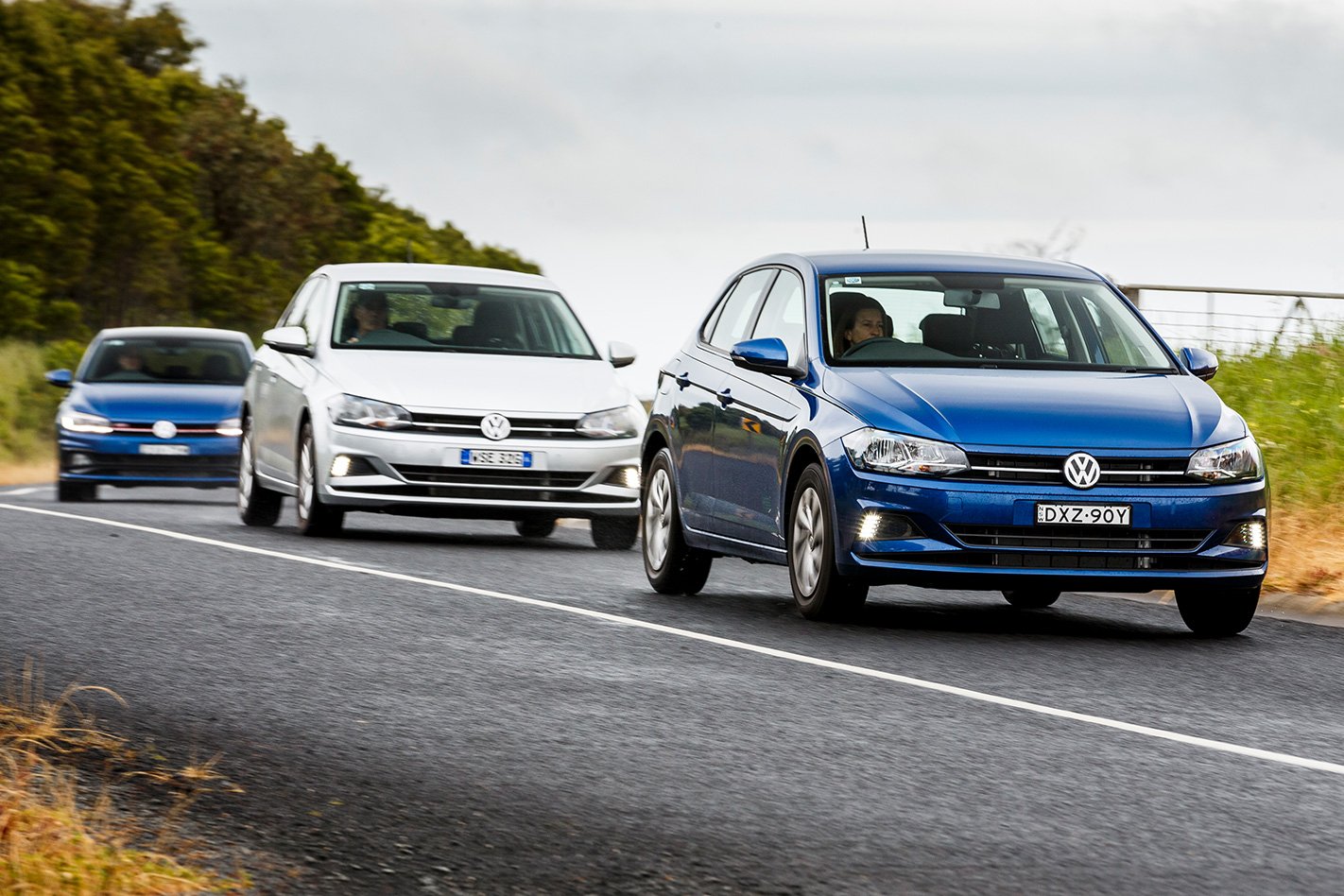
I’m not sure I’ve ever been involved in a more one-sided comparo. “It shouldn’t come as any surprise that the best handling, most polished, most spacious, quickest, most economical and best value car wins this test,” we opined, and it’s exactly these qualities that have propelled the Polo into challenging for pole at this year’s COTY.
It excelled at the proving ground, progressing as many big names fell by the wayside. It seemed to have little in the way of an Achilles heel and murmurs began circulating that the Polo could go all the way. To find out if it can claim the big gong, be sure to direct your browser to whichcar.com/wheels on the night of Wednesday, January 30.
Ahhhh, Las Vegas. Not my favourite town, if I’m honest. It’s a study in contrasts, a real snapshot of the US condition, and a joint that’s hard to resolve if you’re not there to stick copious amounts of booze in your maw and squander the kids’ inheritance on a ‘sure thing’.
Take the main downtown tourist precinct, for example. Impossibly clean, music piped from simply hundreds of hidden speakers and an almost forced air of frivolity and fun, as strip club touters force business cards on you from every corner and you pinball between hordes of wide-eyed college kids and meandering tourists just to get a bite to eat.
Yet our minders express a desire that perhaps we shouldn’t really wander too many blocks away from the main drag…
As well as a gambling mecca for the gullible, Vegas is also a conference town; hence our visit to Sin City. We’re here for the Consumer Electronics Show, which is slowly morphing into a motoring show in its own right. Hey, it’s warmer than Detroit, at least. Having checked out the new CLA, it’s time to get the hell out of Nevada.
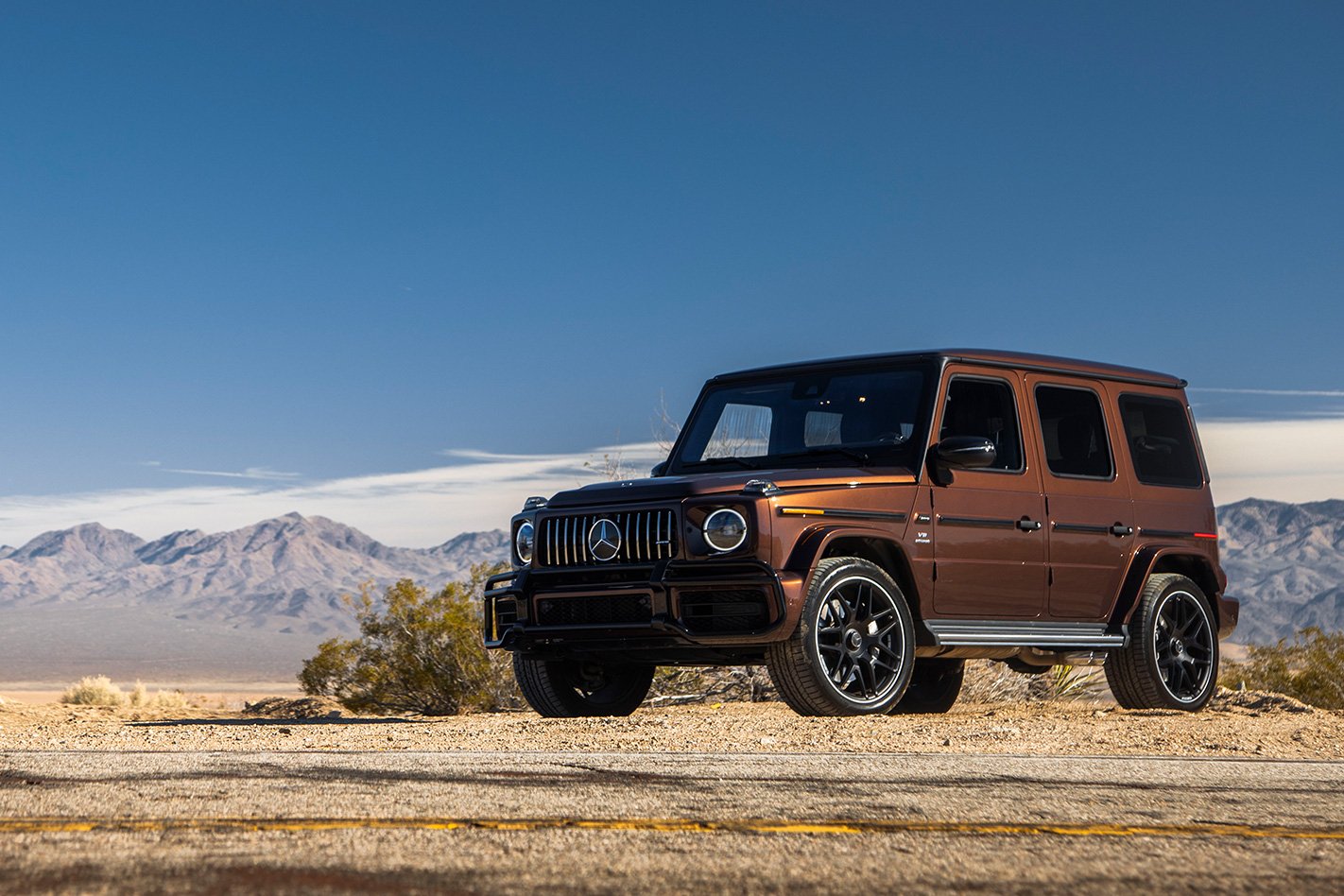
Thankfully, we’re bypassing the rows of slot machines in Vegas’ McCarran Airport departure hall (nope, not even kidding), and making tracks to Los Angeles in Merc’s new G63.
And when I say new, I mean new. Everything from active lane keeping, adaptive cruise control, sophisticated AEB front and rear, blind spot warning with pedestrian detection and a lot more has been added to the G-Class, thanks to significant revisions under its boxy body.
These include worked-over chassis rails, proper rack-and-pinion steering that replaces the ancient recirculating ball set up of the old car, a new multi-link front suspension system that replaces the former solid axle, and a brand new centre locking diff that’s backed up by a nine-speed automatic.
The body is completely new as well, despite its 1980s looks, and the interior has also been completely redone. It’s a dead ringer for the old car, but it’s thoroughly new in every respect.
As we assemble in the garage of our garish hotel, probably the single most interesting thing about the $270,000 G63 is just how faithfully Mercedes-Benz has replicated the shape of the previous rig. It’s within millimetres of the old car’s dimensions in every direction, and there’s not an element that has been missed in the update.
Take the indicators on the front guards, for example. They hark back to the first 1980s car, and are designed to be completely submersible. On the new car, they’re also designed to collapse into the body of the car should a pedestrian be unlucky enough to hit one.
Even the rolled boot and door hinges on the old car have been replicated, but they’ve been redesigned for greater strength and better fit. (Oh, and don’t get excited by the bull bars fitted to our pressers – it’s a US market thing that Australia doesn’t get.)
It’s a 500km-plus jaunt to downtown LA today, so we are soon on Las Vegas Boulevard, dodging Hyundai sedans and minibuses with photographer Mike hanging out the window. Nothing says ‘US road trip’ like a fake Eiffel Tower, right?
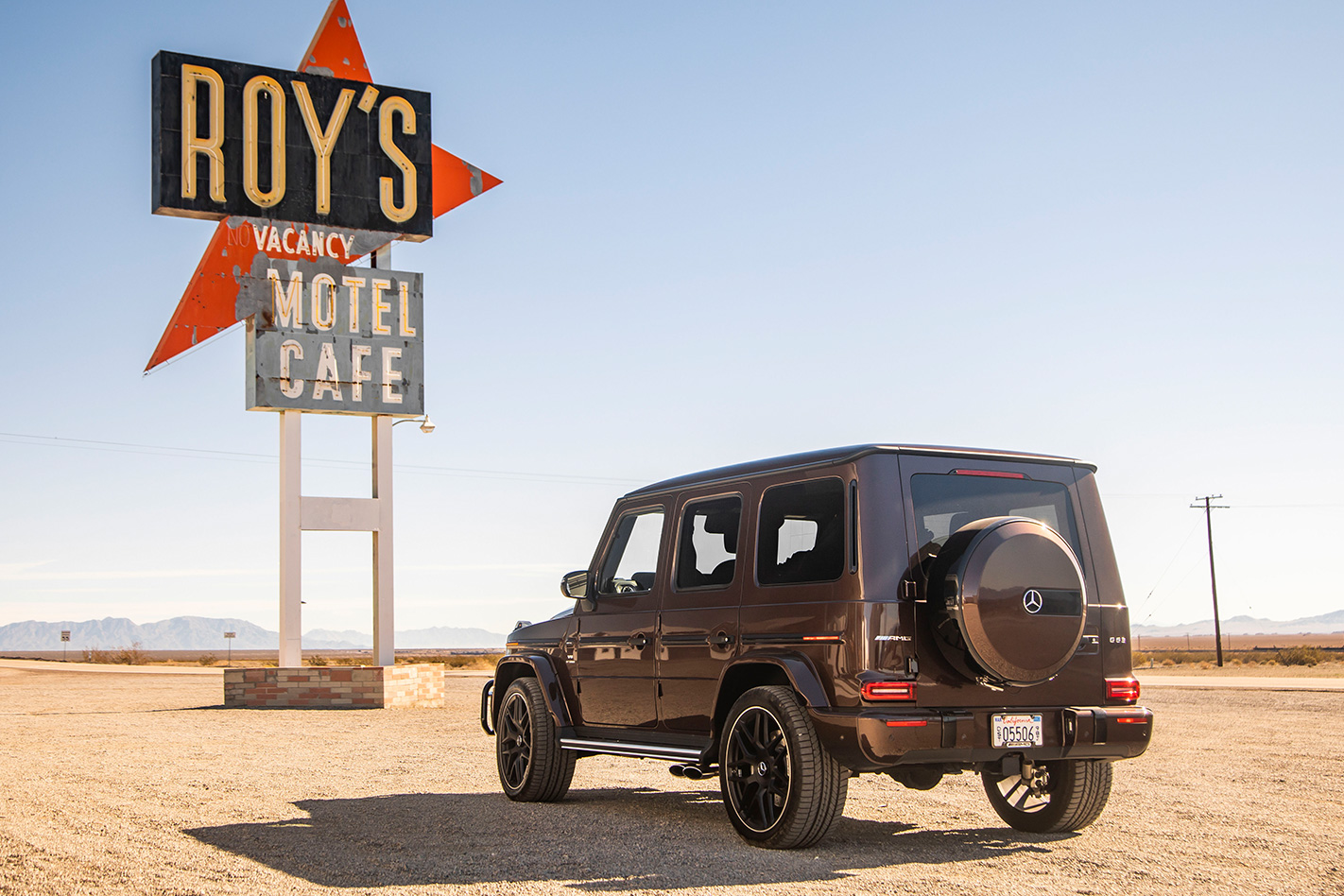
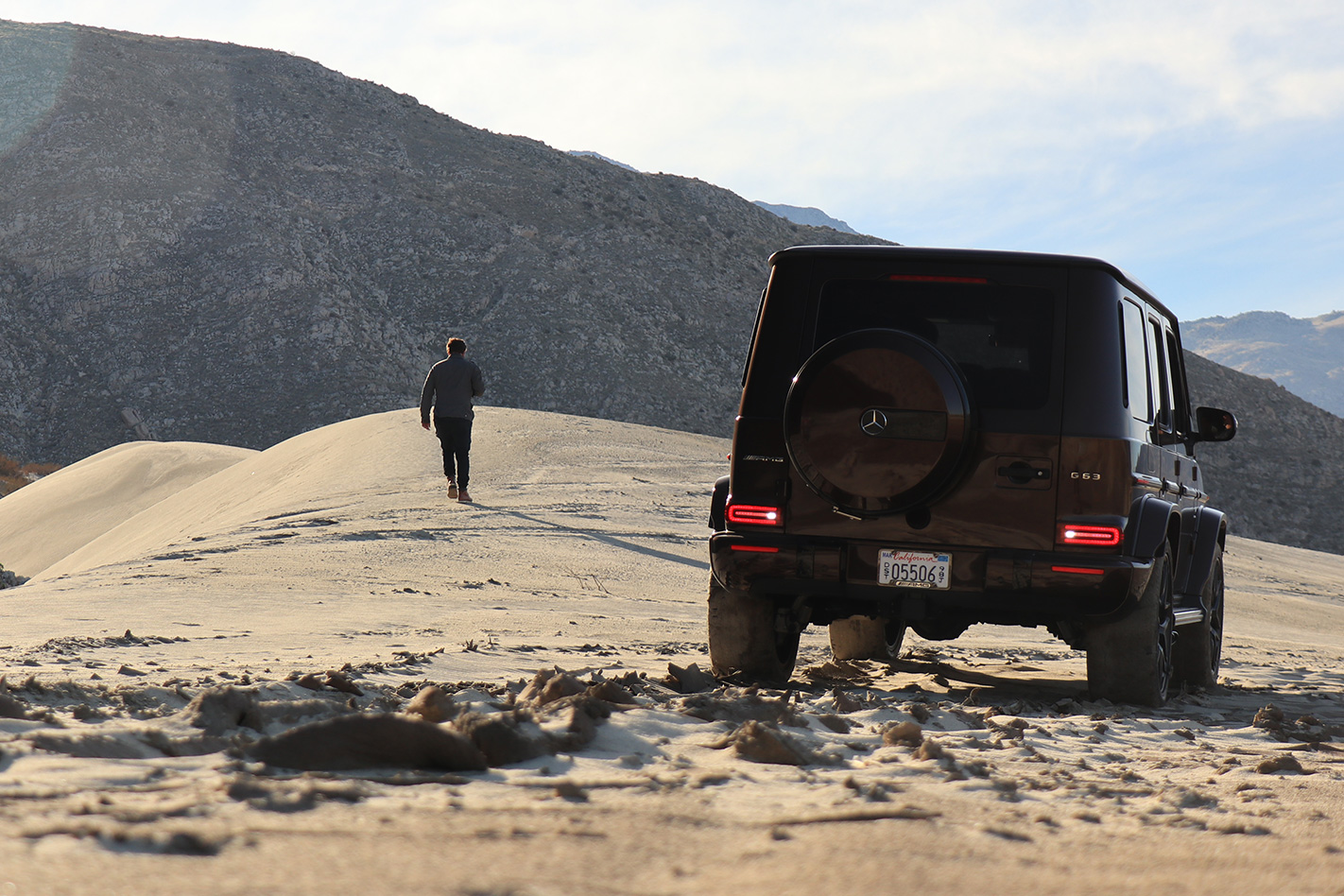
We soon turn off the main drag and head out through the Mojave Desert, stopping for a quick… well, not much at a place called Roy’s Diner. The proprietor does a good line in Twinkies, but the NRA ball cap and tangible MAGA vibe saw us hightail out of there for the much more genteel – some might say ‘hippy’ – surrounds of Joshua Tree. A leisurely lunch (black and tofu burger, if you must know), and Mike directs us up an access road to get the G63 a little dirty.
The divide between genuine off-road ability and real-world on-road talent used to be so much clearer… but now, with the arrival of properly quick SUVs like BMW’S X6 M, the Porsche Cayenne Turbo and the Range Rover Sport SVR, that divide is muddier.
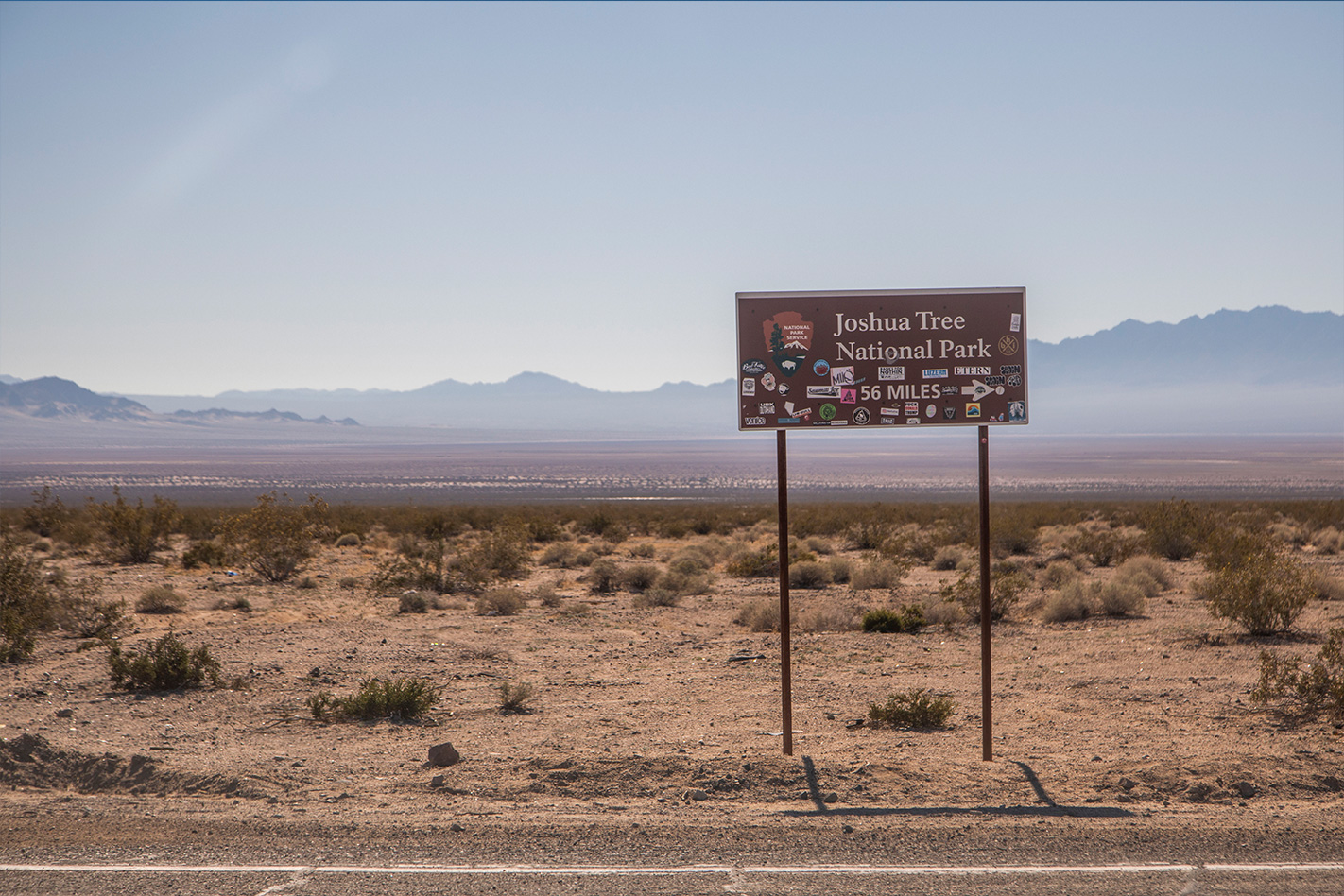
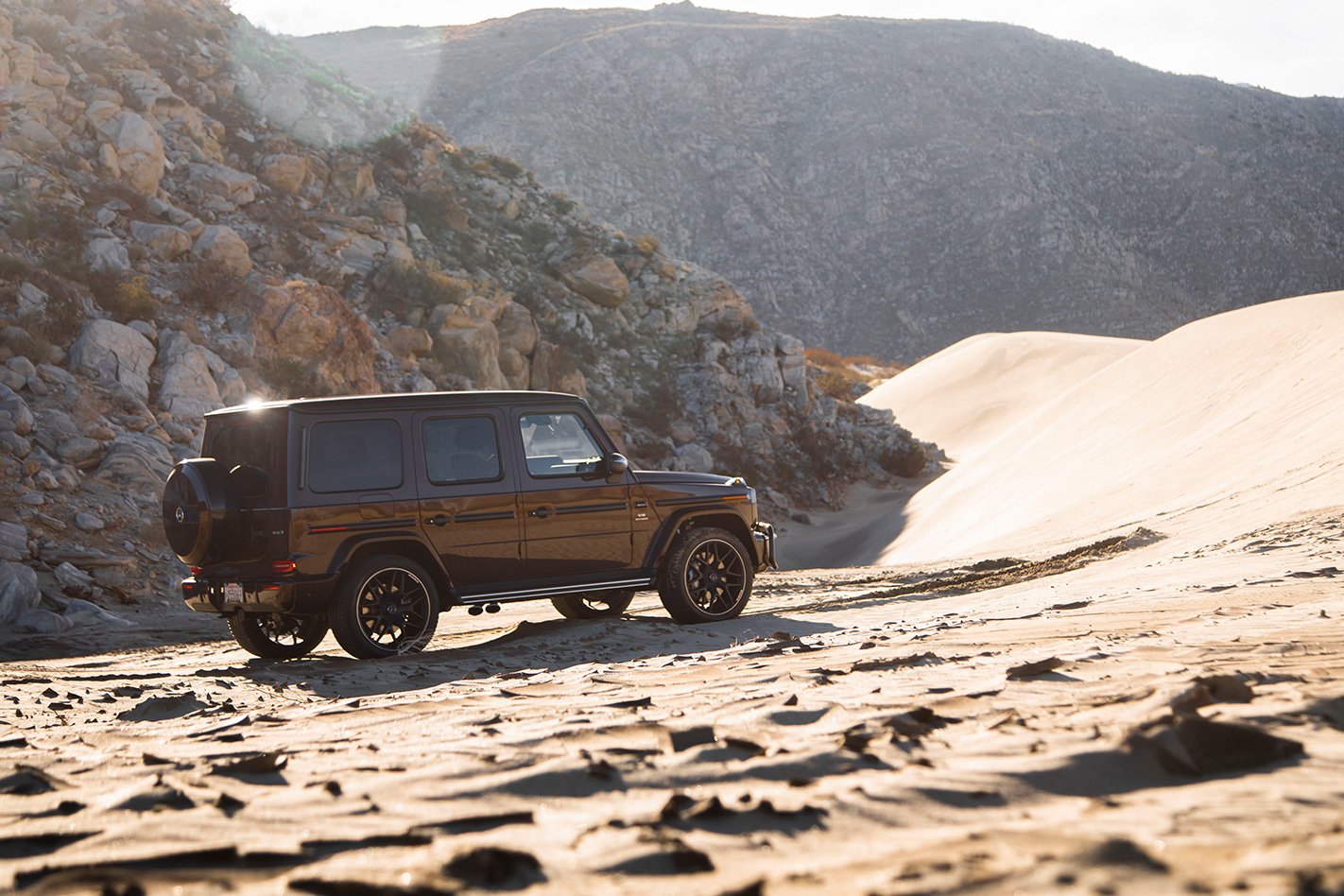
I’d suggest that the big Merc tops the class when it comes to taming the dirt though. Its breadth and depth of ability in loose, steep terrain is nothing short of otherworldly; never have I experienced a stock 4×4 breeze over properly nasty terrain with such quiet disdain.
On road-going 21-inch rims and at road-going pressures, the G63 managed to confound our best ham-fisted attempts to get bogged in shin-deep sand, while its ability to ratchet up rocky terrain is also properly good.
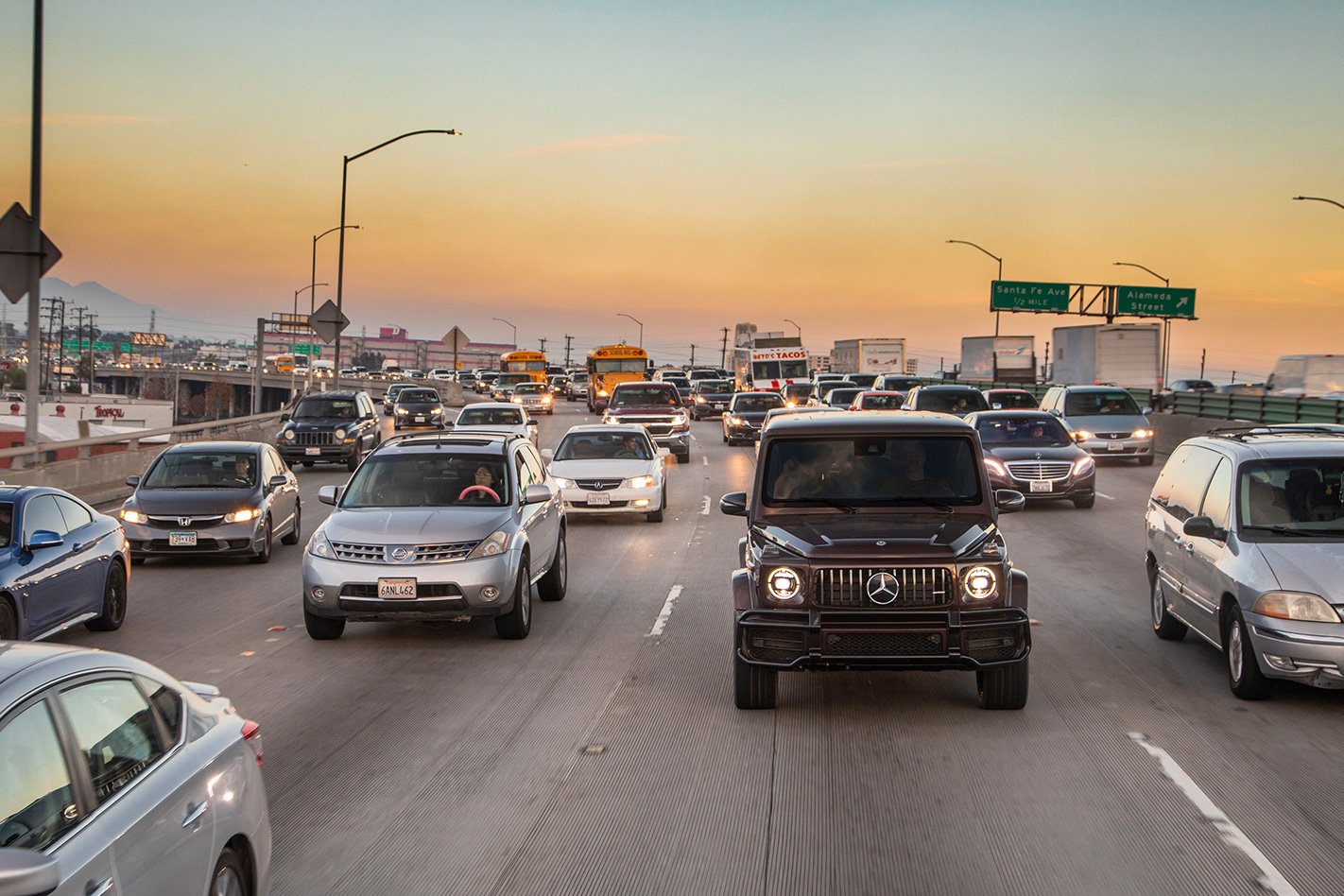
It can then pack those abilities away and reveal a turn of pace that reminds me of a Jeep Grand Cherokee Trackhawk. The G63’s side-exit exhausts adds brute menace and ominous thunder to an already incredible 4.0-litre V8 soundtrack, while its sheer turn of eye-watering pace – in something that physically can’t go faster than 220km/h thanks to air resistance – is both hard to comprehend and easy to love.
Its revised suspension set-up has turned the Geländewagen’s road-going behaviour from ridiculously poor to positively sublime as well, with genuinely meaningful steering feedback and astonishing body control for a 2.5-tonne brick, not to mention its riotously amusing turn of fearsome speed.
The last schlep into LA proper is a long one, which allows me to let the G63 do some of the work. Its interior treatment brings in the best from across the group, including the twin dash screens and comfortable front seats, but second-row passengers still want for a bit of leg room despite the G’s size.
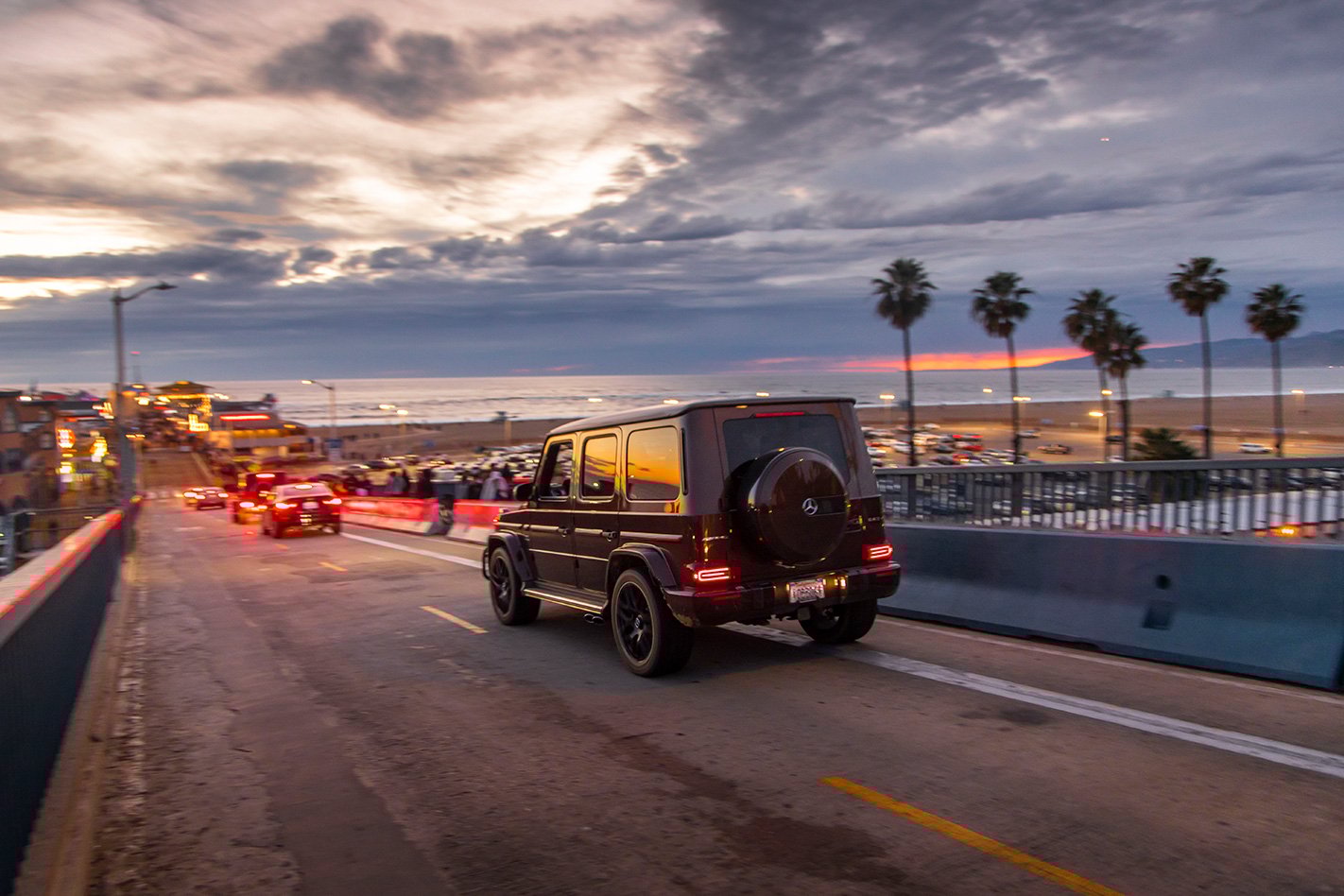
Still, as we roll into LAX like low D-list celebs, it’s easy to regard the G63 as a success for Mercedes. It might sell 20,000 all year all over the world, and it really didn’t need to bother building a new one, but it did, and it did it properly. The result is an iconic 4×4 that knows how to put on a show. Maybe Vegas wasn’t such a bad place to start the trip after all.
With the FPV GT-P finishing mid-pack at PCOTY and the HSV ClubSport R8 cracking the fabled Top Six, the GT wasn’t drawing many backers on this comparo – until we drove it.
This feature was originally published in MOTOR’s May 2005 issue
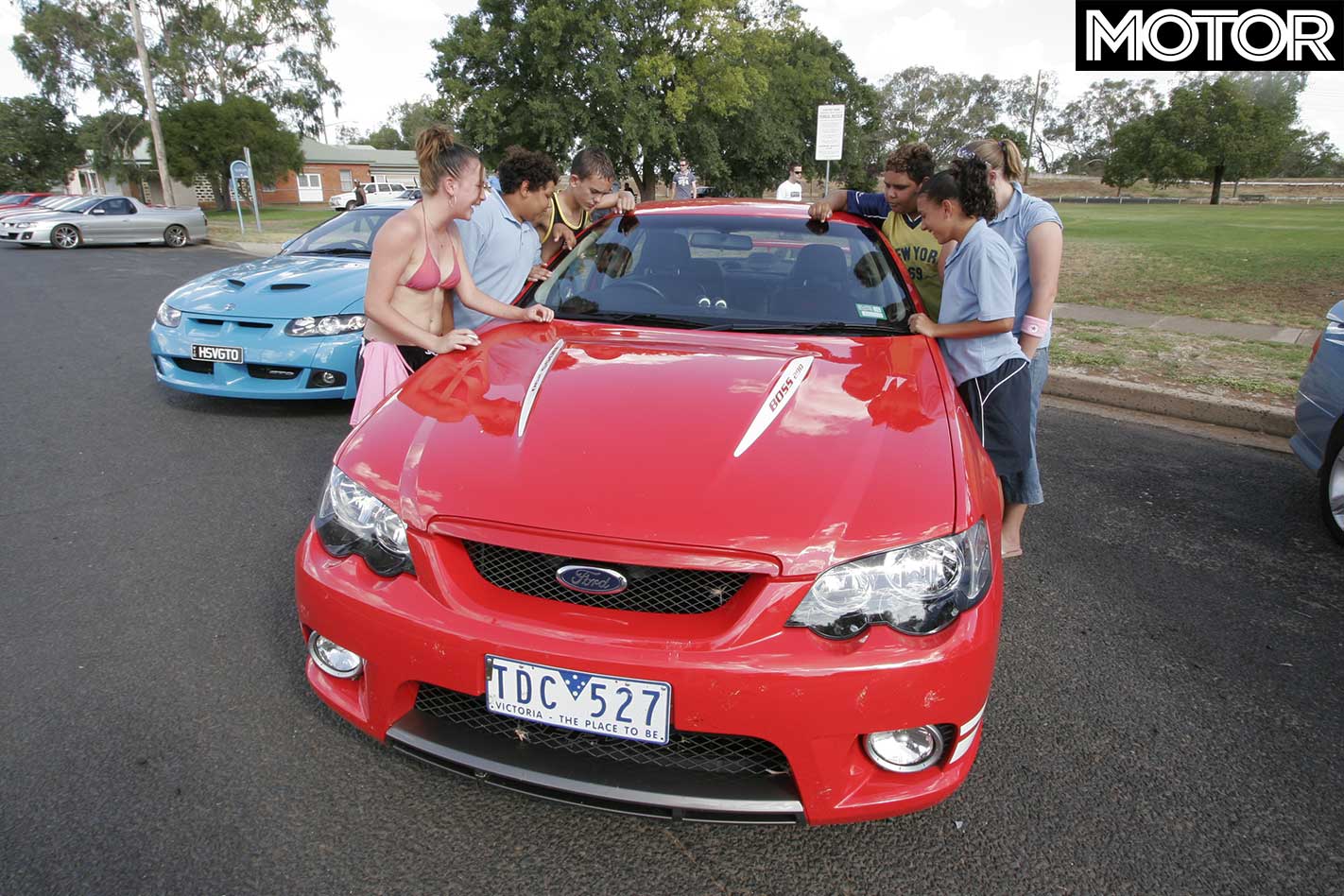
Without a doubt this GT is the fastest Ford I’ve ever driven. The thing is a genuine jet and for most of the data gathering day, the blood red Boss sat right at the top of the leader board, starting with a dominating performance on the C&V dyno.
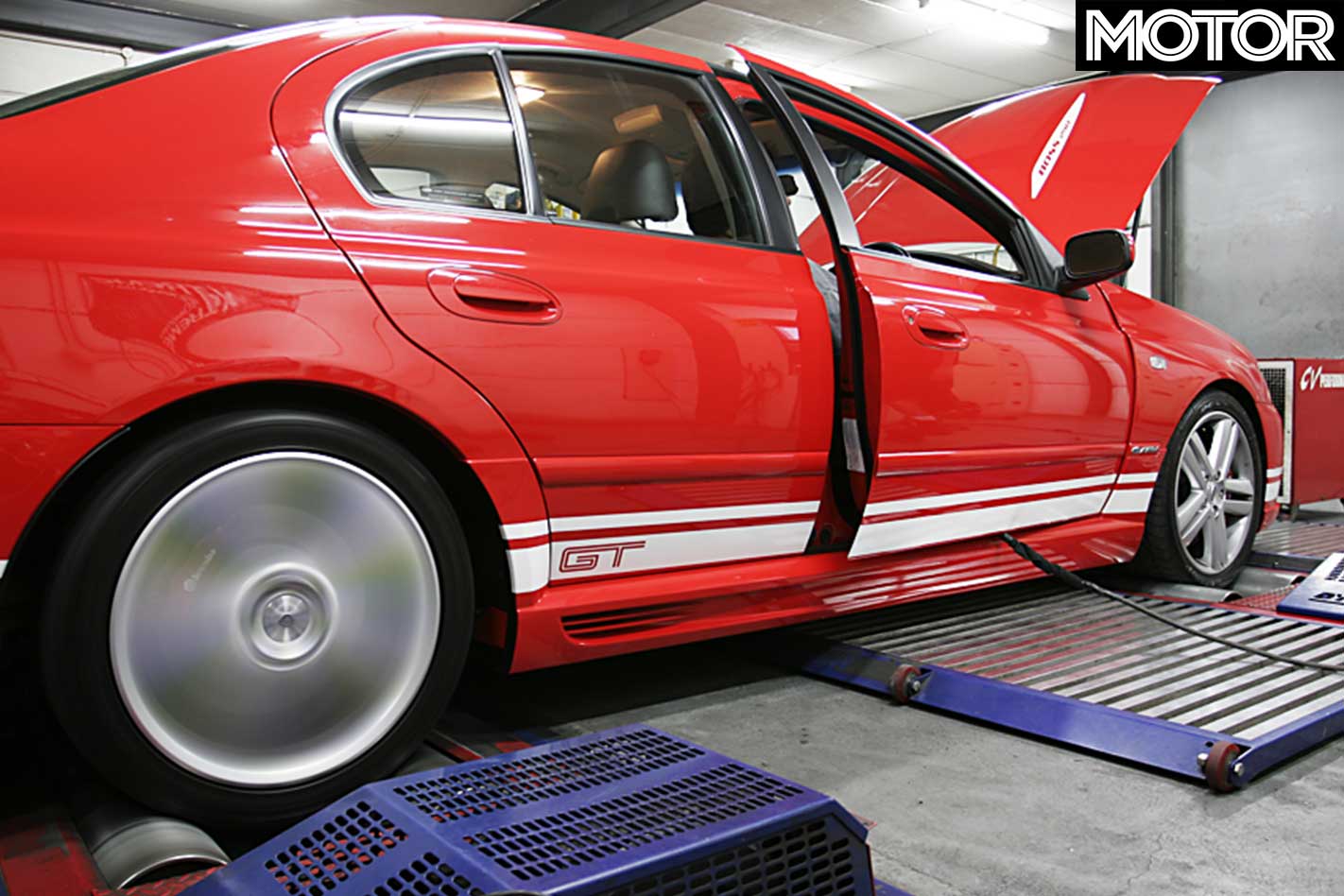
Just when you think nothing with Made-in-Australia stamped on the chassis can hold a candle to this GT – at least in a straight line fight – you jump into the 6.0-litre ClubSport and are forced to redefine top-end rush.
The Gen IV’s extra 300cc fills the low down gaps in the power delivery that’s now more prominent in the Gen III, and runs another 1000rpm harder than the quad-cam, four-valve 5.4-litre Boss. It’s the best of both world’s and has so much flexibility that third gear stretches from 40km/h to a haul-the-mail 140km/h. Which is a good thing, because the heavy six-speeder doesn’t exactly encourage frequent swapping.
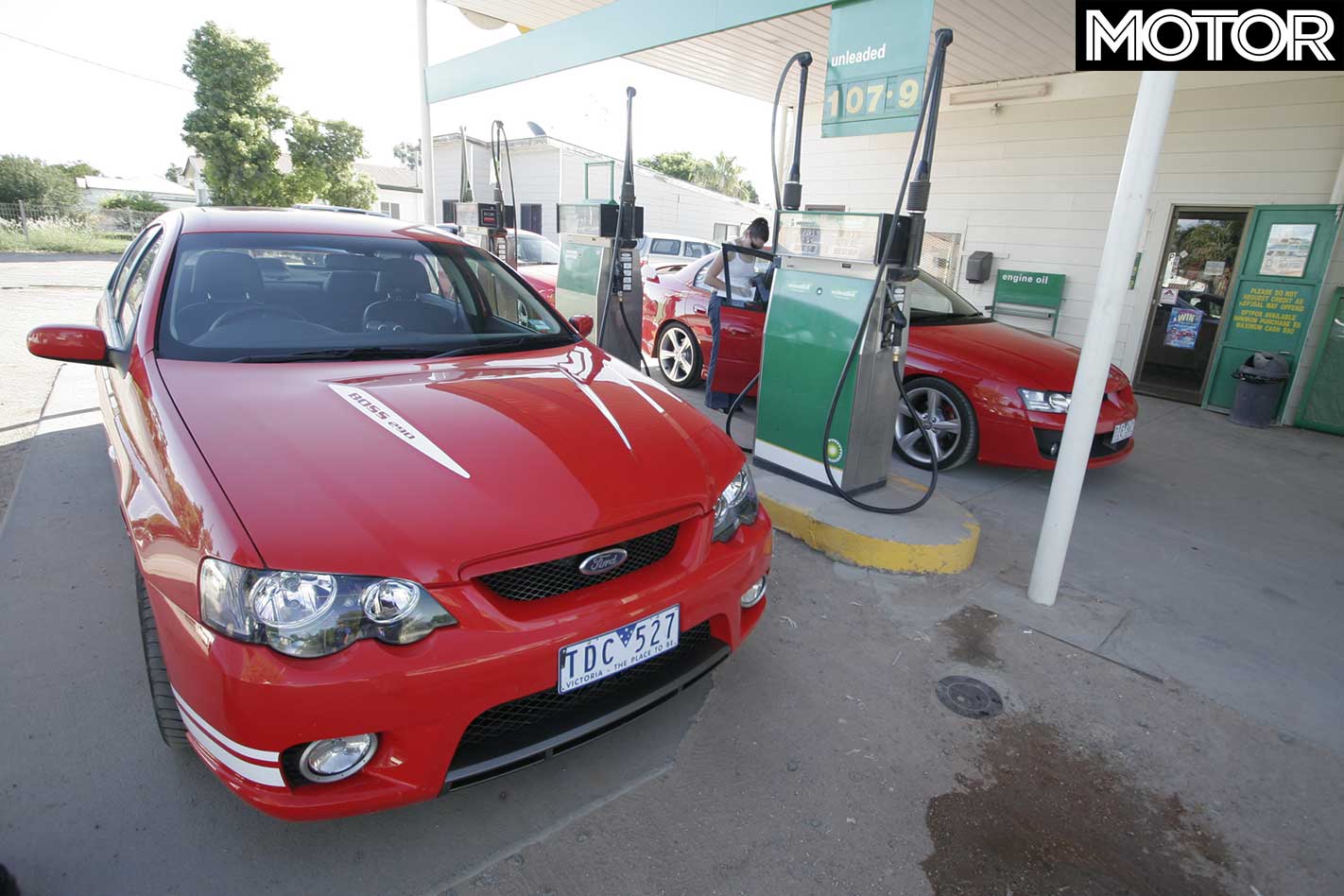
The shift action of the Ford version of the Tremec six-speed ’box is a little sweeter than that found in the ClubSport, but all Fords have driveline shunts and clunks, making slow speed crawling a pain in the ear and backside. Overall, there is not a world-class gearbox among this entire 13 car field.
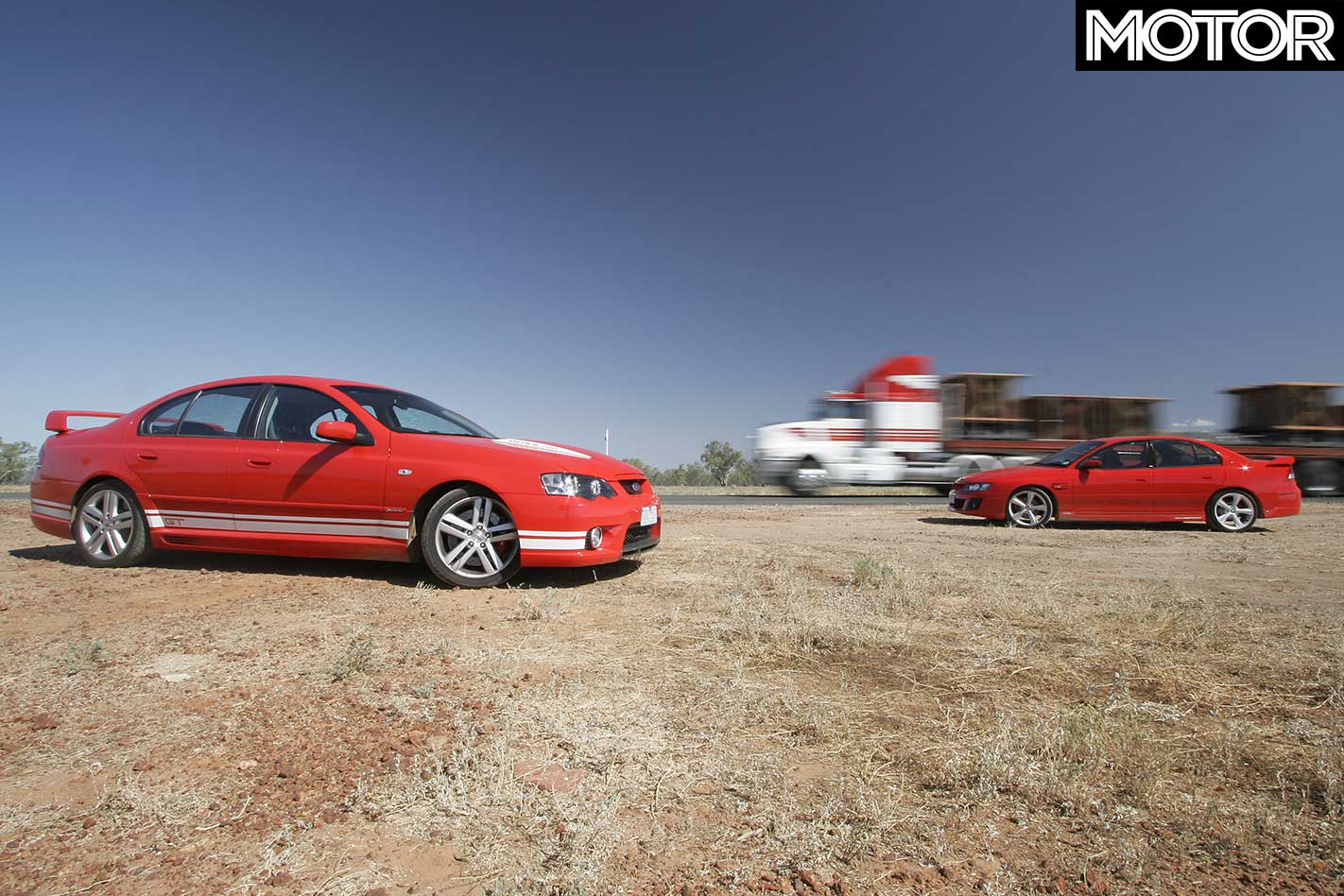
The suspension tune of both cars is an adequate reflection of their respective names. The GT really is a Grand Tourer, with a softer set-up giving the FPV a superior ride quality. Taut and tied down, the ClubSport cannot match the ride of the GT, but it’s not exactly harsh or crashy either. Wind up the wick, and the soft GT starts to float and sharp turn-ins are heralded by alarming pitching in the nose. Start to fling the HSV about, and it simply hunkers down and gobbles up the action.
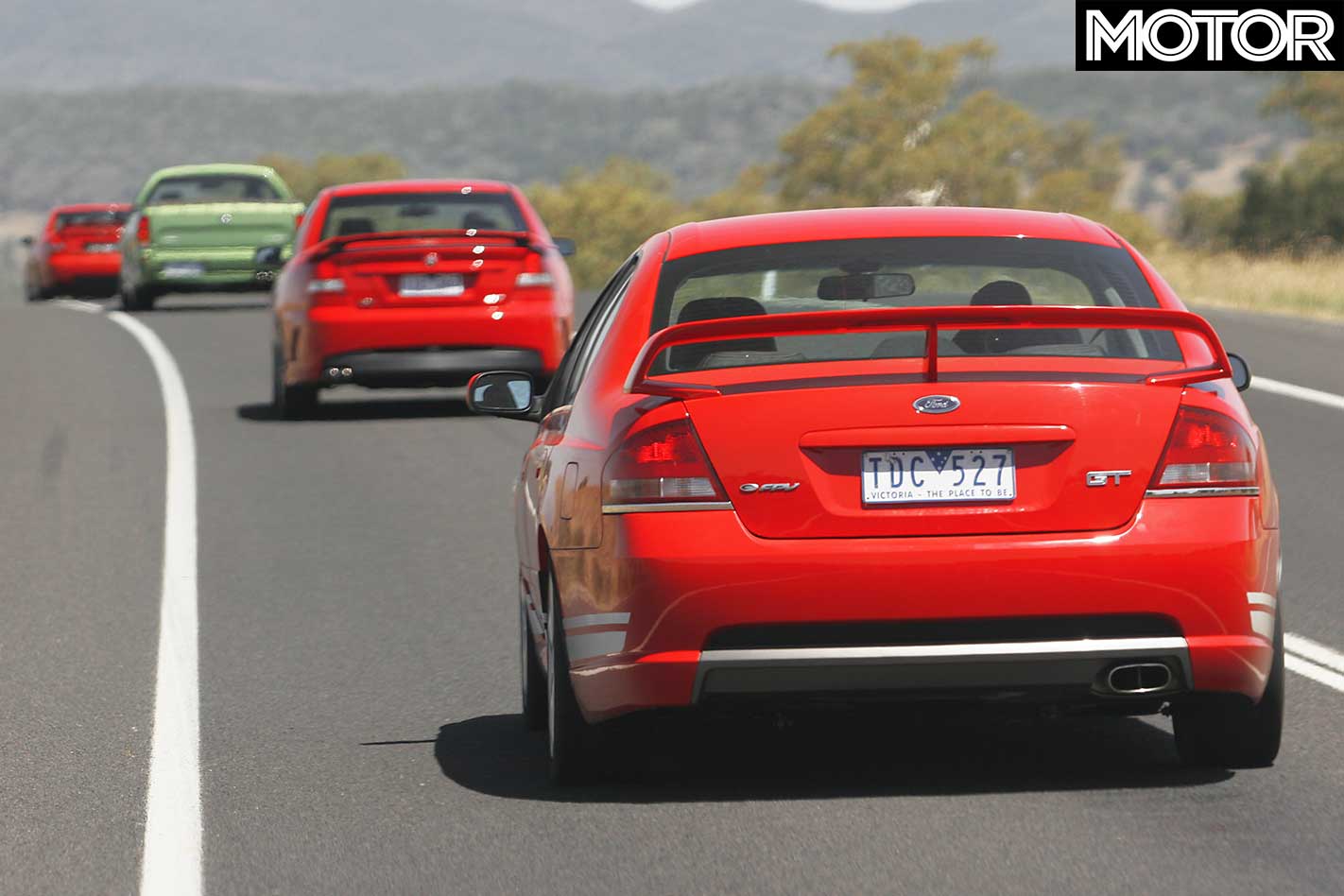
Many judges and helpers felt the GT was a much bigger and heavier car than the Clubbie. And when things get interesting (as they’re bound to with the best part of 300kW) the ClubSport is the more willing ally.
For me, it’s a hard one to split especially given how evenly matched they are on raw numbers, but in the real world, the ClubSport is the bigger weapon. It’ll lunge forward on a sniff of throttle (something the Gen III version still can’t manage) and won’t give up until you’re in lock-me-up territory.
Still, we can see that many will be seduced by the GT’s combo of grunt, ride quality and that sonorous engine note. But when it comes to muscle, it’s hard to argue with a car that’ll demolish the first 100km/h in mid-fives, cross the quarter deep into the 13s, and run on to a proven 270km/h top whack. And the Clubbie does all this for a not unreasonable 60 grand.
Fast Facts
| u00a0 | Falcon GT | Clubsport |
| Engine | 5.4L V8, DOHC | 6.0L V8, OHV |
| Power | 290kW @ 5500rpm | 297kW @ 6000rpm |
| Torque | 520Nm @ 4500rpm | 530Nm @ 4400rpm |
| Weight | 1835kg | 1696kg |
| Fuel consumption | 14.69L/100km | 13.80L/100km |
| Price | $67,895 | $61,850 |
Dyno Results
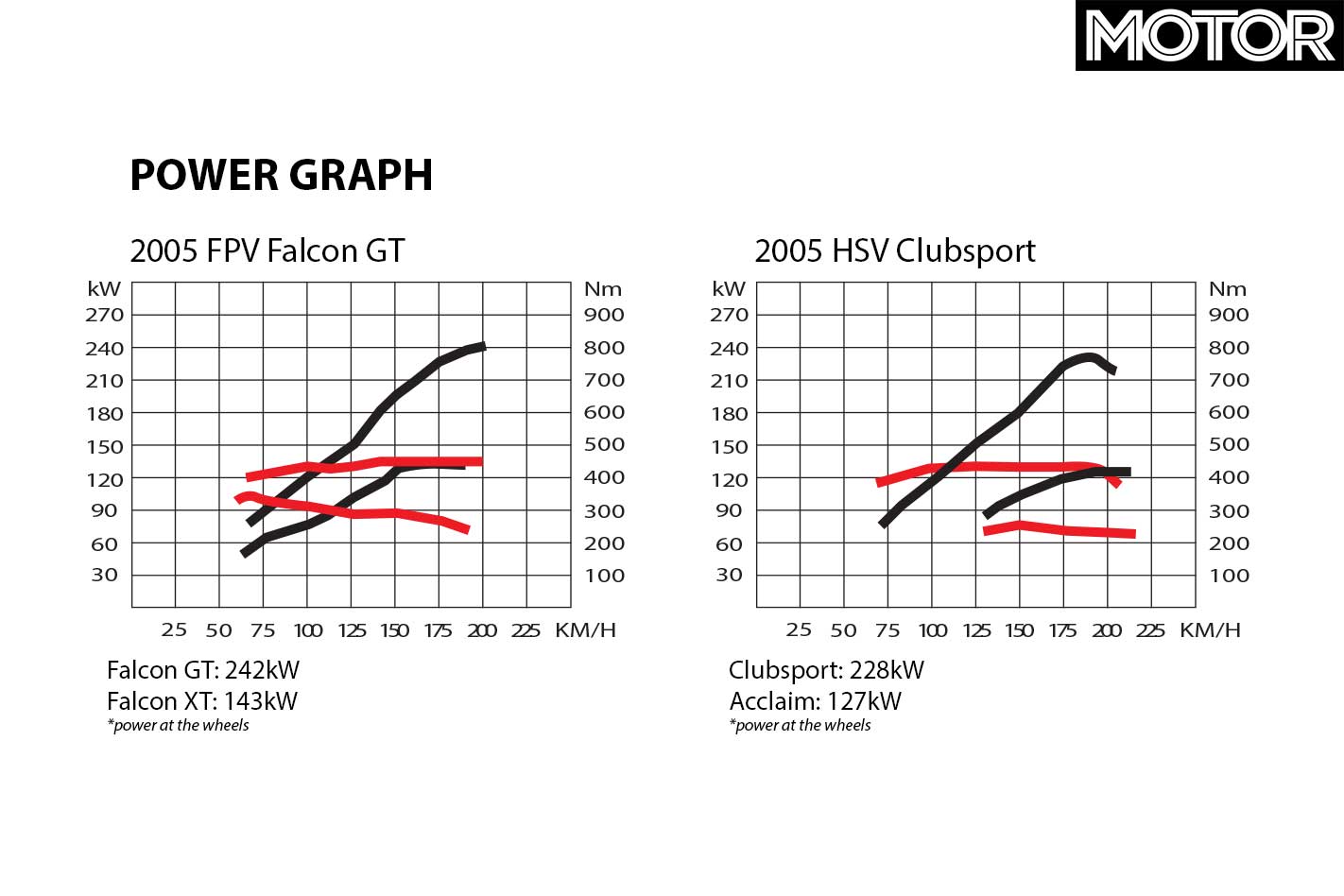
The Clubbie’s almost ladder-like power and table-top torque curves were impressive, until the GT’s incredible mid-range bulge gave it a clear gain to the limiter, just where it starts to level off. A good 15-20kW up on what it theoretically should produce.
Drag Run
| u00a0 | Falcon GT | Clubsport |
| 0-10km/h | 0.42sec | 0.44sec |
| 0-20km/h | 0.87sec | 0.86sec |
| 0-30km/h | 1.42sec | 1.35sec |
| 0-40km/h | 1.91sec | 1.84sec |
| 0-50km/h | 2.42sec | 2.27sec |
| 0-60km/h | 2.86sec | 2.74sec |
| 0-70km/h | 3.69sec | 3.38sec |
| 0-80km/h | 4.36sec | 4.29sec |
| 0-90km/h | 5.15sec | 4.92sec |
| 0-100km/h | 5.86sec | 5.65sec |
| 0-110km/h | 6.88sec | 6.19sec |
| 0-120km/h | 7.85sec | 7.02sec |
| 0-400m | 13.88sec @ 170.3km/h | 13.61sec @ 174.6km/h |
The Clubbie, like the GT, just kept getting quicker, eventually nailing a sharp 13.61secs at 174.6km/h for the quarter. The ‘310kW’ GT was the fastest GT we’ve tested, with a 13.88secs at 170.3km/h.
Track Results
| u00a0 | Falcon GT | Clubsport |
| Lap Time | 1min 56.99sec | 1min 55.96sec |
| Top Speed | 206km/h | 211km/h |
The Clubbie was plenty stable and, thanks to its 6500rpm limit, always felt powerful. Great power-down. The GT, on the other hand, was quick down the straight but not sharp through the corners – it was always on or over the limit of adhesion and oversteer.
Judges’ Scores
2005 FPV Falcon GT
| Judges | JT | DE | DM | PC | LB |
| Performance/10 | 9 | 9 | 8 | 9 | 8 |
| Dynamics/10 | 8 | 8 | 7 | 5 | 8 |
| Driveability/10 | 7 | 6 | 7 | 6 | 9 |
| Value/10 | 10 | 8 | 5 | 5 | 9 |
| Total/40 | 34 | 31 | 27 | 25 | 34 |
| GRAND TOTAL | 151/200 | ||||
2005 HSV Clubsport – WINNER
| Judges | JT | DE | DM | PC | LB |
| Performance/10 | 9 | 9 | 9 | 9 | 9 |
| Dynamics/10 | 9 | 9 | 7 | 8 | 9 |
| Driveability/10 | 8 | 7 | 6 | 8 | 9 |
| Value/10 | 10 | 9 | 6 | 6 | 9 |
| Total/40 | 36 | 34 | 28 | 31 | 36 |
| GRAND TOTAL | 165/200 | ||||
If you thought the Lamborghini Urus wasn’t already excessive enough, German tuner Manhart is on the same page.
Where the twin-turbo V8-powered Urus normally puts out 478kW and 850Nm from its 4.0-litre Audi-derived engine, Manhart tuned the bent eight to extract 597KW and 980Nm.
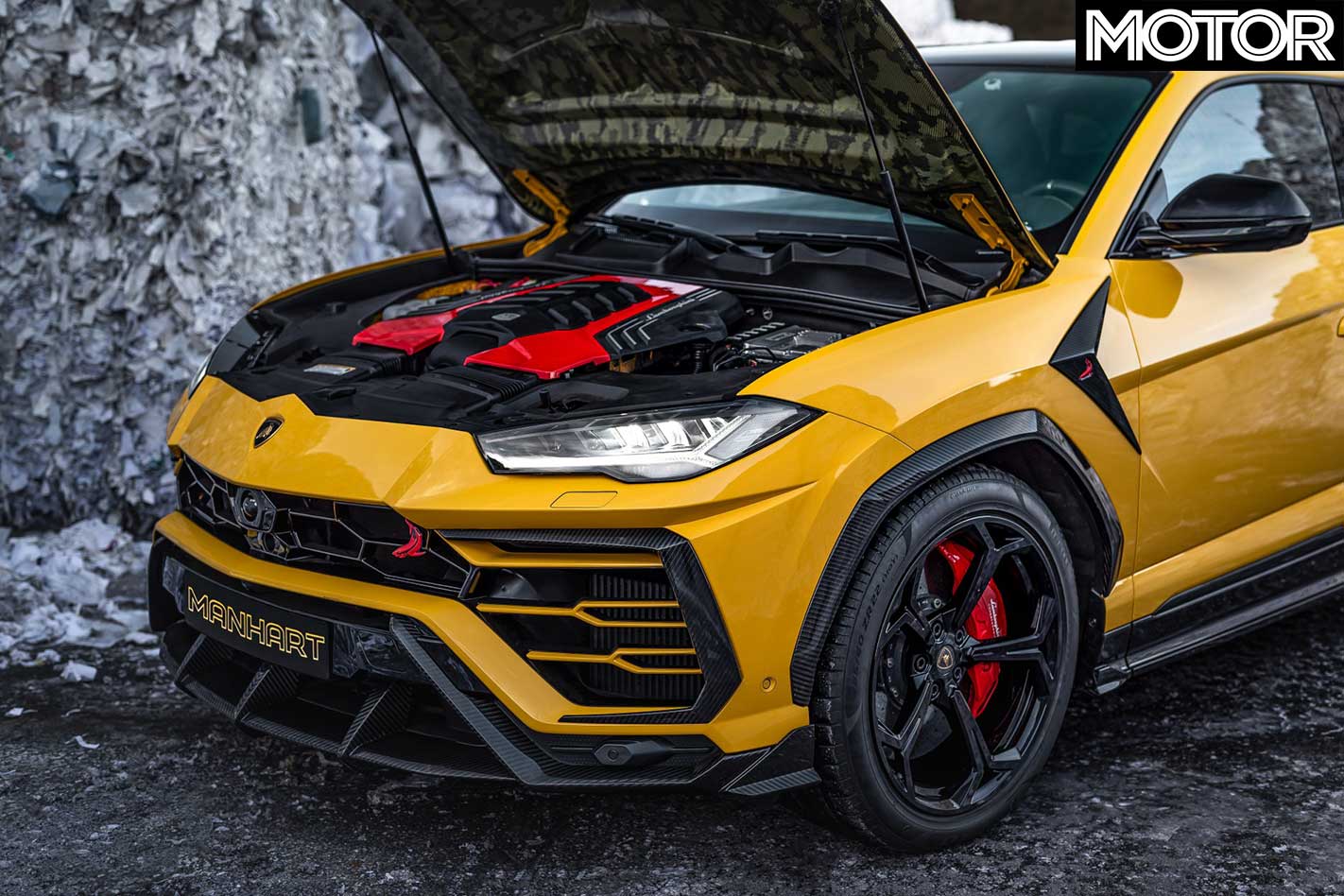
This means Manhart has gifted the Urus an additional 119kW and 130Nm. That’s not far from adding a 1.5-litre MX-5 on top of the Urus’ outputs.
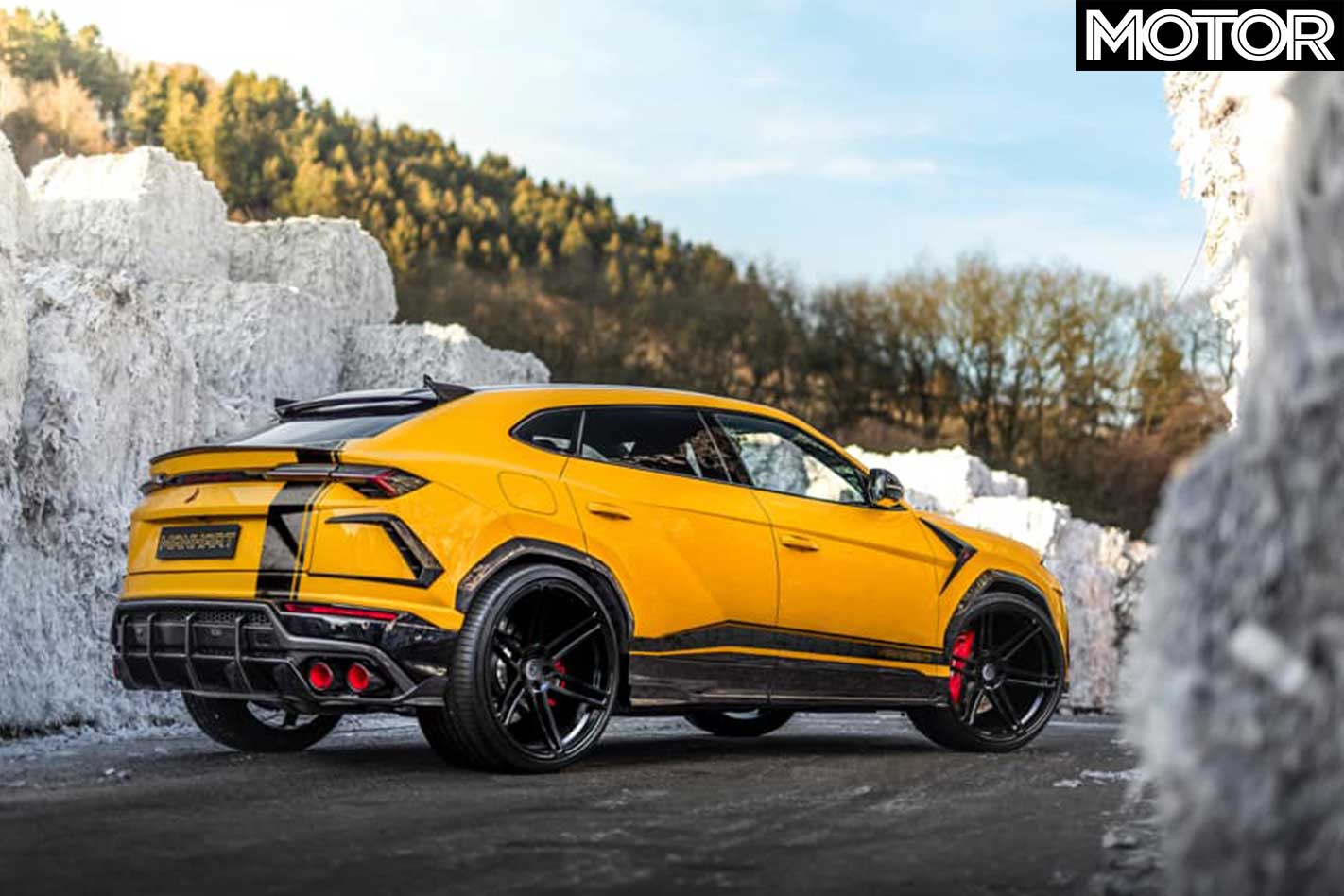
On top of that, Manhart has enlisted Russia-based Topcar Design to supply the style, resulting in an outwardly loud body that seems to amplify the Urus’ already unsubtle looks.
Topcar’s photos of the Urus 800 feature a clean yellow paintjob, but Manhart’s Facebook page features edited black accents and a more dramatic finish on the photo. Bumblebee, is that you?
While Manhart will often design its own body kits, Topcar’s carbon-laden splitters and diffusers suit the aggro-Urus well.
If the name Manhart sound familiar, you might have heard it in reference to a wide array of other tuned models produced by the company. Manhart’s main game is, however, tuning BMW Group models.
But where companies like Alpina will create a plush (yet fast) car with a BMW as its base, Manhart doesn’t do subtle… as you can see in the Urus.
Take the Manhart MH1 S Biturbo as an example. Does a BMW 1 Series need an extra turbocharger and 343kW? Of course not, but Manhart did it anyway.
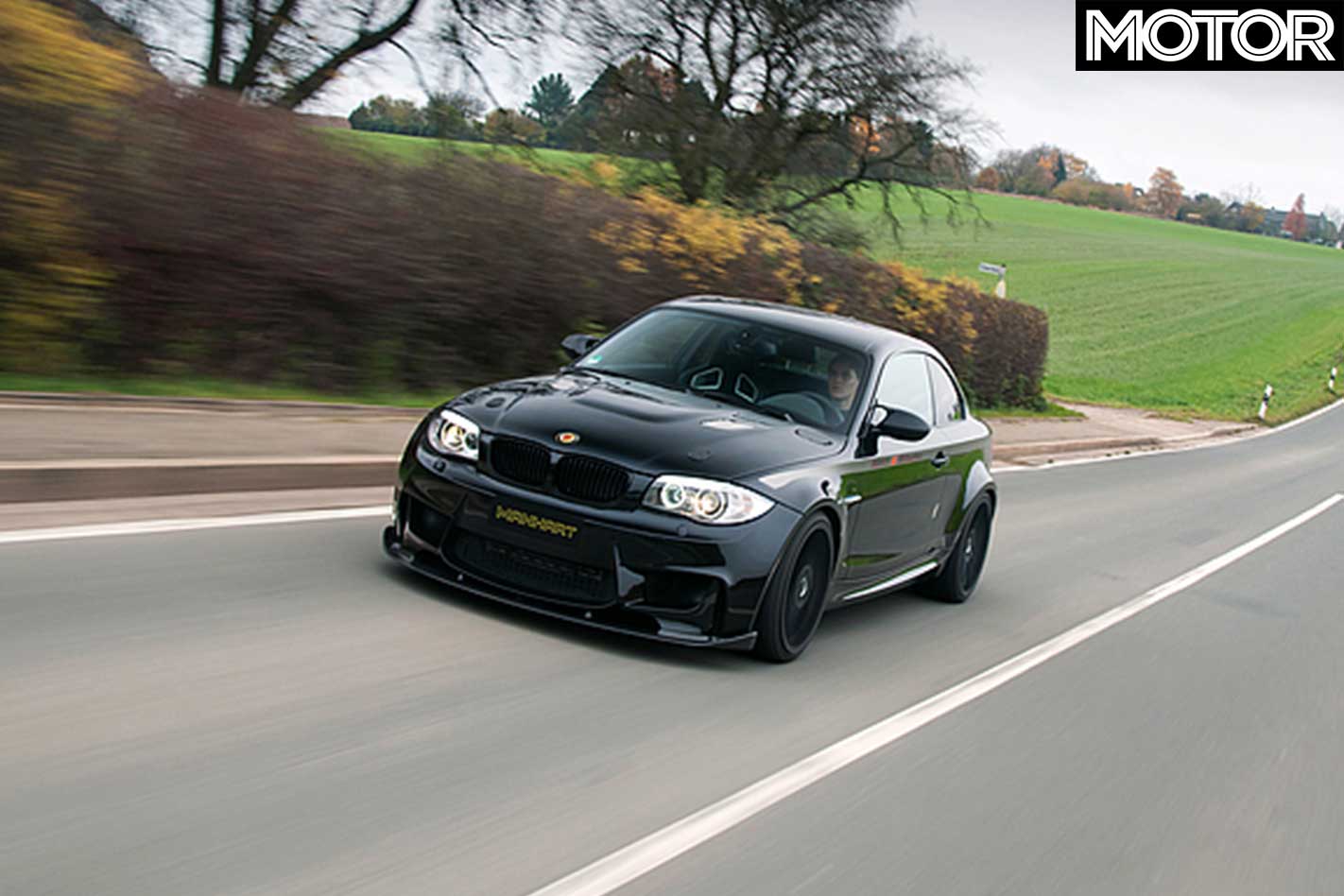
The N54 straight six (which also produces 606Nm in this application) turns the One into a little terror, and Manhart’s custom bodywork doesn’t hide that.
Manhart is yet to reveal more information about the Urus 800 officially, but MOTOR will be keeping a close eye on the German tuner.
Some of Australia’s most popular cars are highly susceptible to ‘keyless theft’ by thieves using cheap electronic equipment purchased online, according to a European study.
The German General Automobile Club (ADAC) has tested 237 keyless model variants that can unlock and start automatically if the key fob is close by, such as in your bag or pocket.
The study, published on UK consumer site Which?, found that at least 230 cars could be tricked into thinking the car was close enough to unlock – and in many cases start – the car.
This form of theft is called relay attack, which works by placing a router-like box next to the vehicle and another close to where you leave your key, such as at your front door. The second box acts as a relay that strengthens the radio signal from the key fob to the car, which in many cases results in being able to open the door and start it.
These included popular current models dating as far back as 2014 including the Honda HR-V, Hyundai i30, Hyundai Tucson, Mazda 3 and CX-5, Mitsubishi Outlander, Opel Insignia (Holden Commodore), Subaru XV and Forester, and Volkswagen Golf.
In most cases, these were higher-spec variants, with cheaper versions still requiring traditional keys, or key fobs that only work by manually pressing a button, unaffected.
According to the full list of vehicles tested, the issue affects many other popular brands available in Australia were affected including Alfa Romeo, Audi, BMW, Citroen, Fiat, Ford, Kia, Lexus, Mini, Mercedes-Benz, Nissan, Peugeot, Renault, Skoda, Suzuki, Tesla, Toyota and Volvo.
Many cars with smart keyless entry and start that aren’t on the list could also be affected.
BMW and Mercedes-Benz have both addressed the issue with its latest models by adding motion sensors to their key fobs so that they only produce a signal to open or start the car when it’s moving. This means the thieves shouldn’t be able to hack the signal when the key is safely stored at home.
And while all brands are working to improve their theft safeguards, vehicle safety and security organisations calling on manufacturers to implement safeguards for existing models.
Of the vehicles tested, only the Range Rover, Land Rover Discovery and Jaguar I-Pace were protected from keyless theft, thanks to Jaguar Land Rover stepping up the security of its keyless models after a spate of thefts around the world.
According to Which?, the keyless fobs for these models use ultra-wide-band (UWB) technology that can very accurately determine the distance between the key and the car, so the car can’t be tricked by the relay attack.
The hacking has been associated with a 40 per cent spike in car thefts in the UK since 2016. Because they can’t be restarted without the key close by, it’s likely most of the stolen cars were either broken up for parts or shipped overseas, where they could be paired with a new electronic key.
Fortunately, relay attack still appears to be very rare in Australia, where more than half of the 52,858 vehicle thefts in 2017 were a result of keys stolen in burglaries (37 per cent) or keys left in cars (18 per cent).
Cars being stolen without keys accounted for 14 per cent of thefts here, but these were mostly older cars falling victim to old-school hotwiring.
It’s also worth noting that vehicle theft in Australia has dropped markedly during the past two decades, from 126,871 in 1995-96, thanks to new technology such as immobilisers and keyless entry.
Preventing relay attack theft
Some brands such as Mercedes-Benz and Mazda can switch off the keyless entry system, meaning you have to press the button to unlock the door.
If you’re worried about such theft, contact your car’s manufacturer to see if it has steps to protect your car.
Alternatively, keep your key out of sight at home and as far away from the exterior of the home as possible.
Keeping the key fob in a sealed metal box can also block the signal produced by your key.
America’s biggest day of the sporting year, the Super Bowl, is upon us once again, with the blockbuster game gracing US televisions this Sunday. While it may not mean a whole lot to Australians, those of us in the WhichCar office certainly get a kick out of watching some of the car commercials that play during the ad breaks.
A 30-second ad spot during the game costs, on average, a whopping AU$7 million, and that’s before you even start production of the ad itself. Companies spend tens of millions of dollars on creating these ads that are watched by more than 100 million Americans and almost 200 million people worldwide.
Car manufacturers are by far the biggest spenders, too, and whether it’s casting Hollywood A-listers, licensing iconic songs or forking out for top-dollar cinematics, they get their message out there.
So, ahead of this year’s advertisement-extravaganza, we whipped around the office to garner some of our favourites over the past two decades.
Nissan, With Dad (2015)
Nissan pulls on the heart strings by tying in emotion to racing, and the bond that’s shared between different generations of car enthusiasts. This father/son racing dynamic gave us a lump in our throat and put us on the brink of tears. We’re not crying. You’re crying!
Audi R8, Godfather (2008)
Way back when the first Audi R8 was unveiled, Audi introduced their hero car to the world by creating an entertaining parody of The Godfather. We won’t say much, but it involves replacing a horse’s head in the bed. See for yourself.
Honda Ridgeline, New Truck to Love, (2016)
Sometimes ads don’t need to have much of a narrative or make sense, because this Honda Ridgeline ute commercial involves singing sheep that harmonise to Queen’s Somebody to Love… and it’s thoroughly entertaining.
Ford GT, The One (2005)
Any time you involve the legendary director and celebrated car enthusiast Jeff Zwart, you’re in for a good film. Ford got Zwart to direct the release of its 2005 Ford GT commercial, and by combining expert cinematography and phenomenal driving by Rod Millen, you score yourself one jaw-dropping ad.
Hyundai, First Date (2016)
Celebrities are no stranger to peddling products, and car companies like Hyundai take full advantage of comedian Kevin Hart’s character to show its Genesis large sedan in action on his daughter’s first date.
Toyota Prius, The Longest Chase (2016)
We can’t tell if Toyota is seriously trying to make its Prius look cool, or if it’s just content in having a laugh at its own expense… but this ad of a Toyota Prius getaway car is thoroughly entertaining.
Volkswagen Passat, The Force (2011)
A renowned favourite, Volkswagen’s 2011 ad features a miniature-sized Darth Vader attempting to use the The Force on everyday objects around the house when lo and behold, his father pulls up in a brand new Passat and his power magically turns the mid-size sedan’s engine on.
Audi Clean Diesel, Green Police (2010)
The year is 2010, and Audi shows that the ‘Green Police’ have taken control of society and are ridding our streets of wrongly-recycled rubbish, over-indulgent spa users and plastic abusers. But the Clean Diesel Audi A3 TDI is spared. Ohhhh, the irony. At least we got a good ad out of it.
Mercedes-AMG, Born to be Wild (2017)
In Mercedes-AMG’s 2017 Easy Rider throwback, Peter Fonda now drives a Mercedes-AMG GT C Roadster and parks his old biker-buddies in at a rural diner. If there was anyone that was ever going to get away with such a heinous crime, it’s Peter Fonda.
Chrysler, Imported from Detroit (2011)
In the most expensive Super Bowl ad to date, Chrysler creates a short film to re-establish itself as a luxurious brand despite being from the ‘hood. Detroit native Eminem even makes an appearance.
Do you have a favourite car-related Super Bowl ad? Let us know in the comments below
Back in Australia Andy gets behind the wheel of a nice sensible Jeep with lots of practical features and room for the whole family … and more power than a Lamborghini.
See the full episode: Watch at tenplay.com.au (AU) or primetv.co.nz (NZ)
While in Japan, Dan attends the 40th birthday celebrations of the rotary engine with a anniversary celebration like no other, hosted in the shadow of Mount Fuji.
See the full episode: Watch at tenplay.com.au (AU) or primetv.co.nz (NZ)
We fly to Japan where Daniel is trying to find out why the Mazda MX-5 roadster has been such a world-wide hit. It’s like learning what makes someone tick by meeting their parents.
See the full episode: Watch at tenplay.com.au (AU) or primetv.co.nz (NZ)
